Teacher guide for the Bleach Power Lab, containing instructional strategies for students with ID, discussion prompts, and differentiation tips. Includes a section on how to explain the concept of an oxidizer.
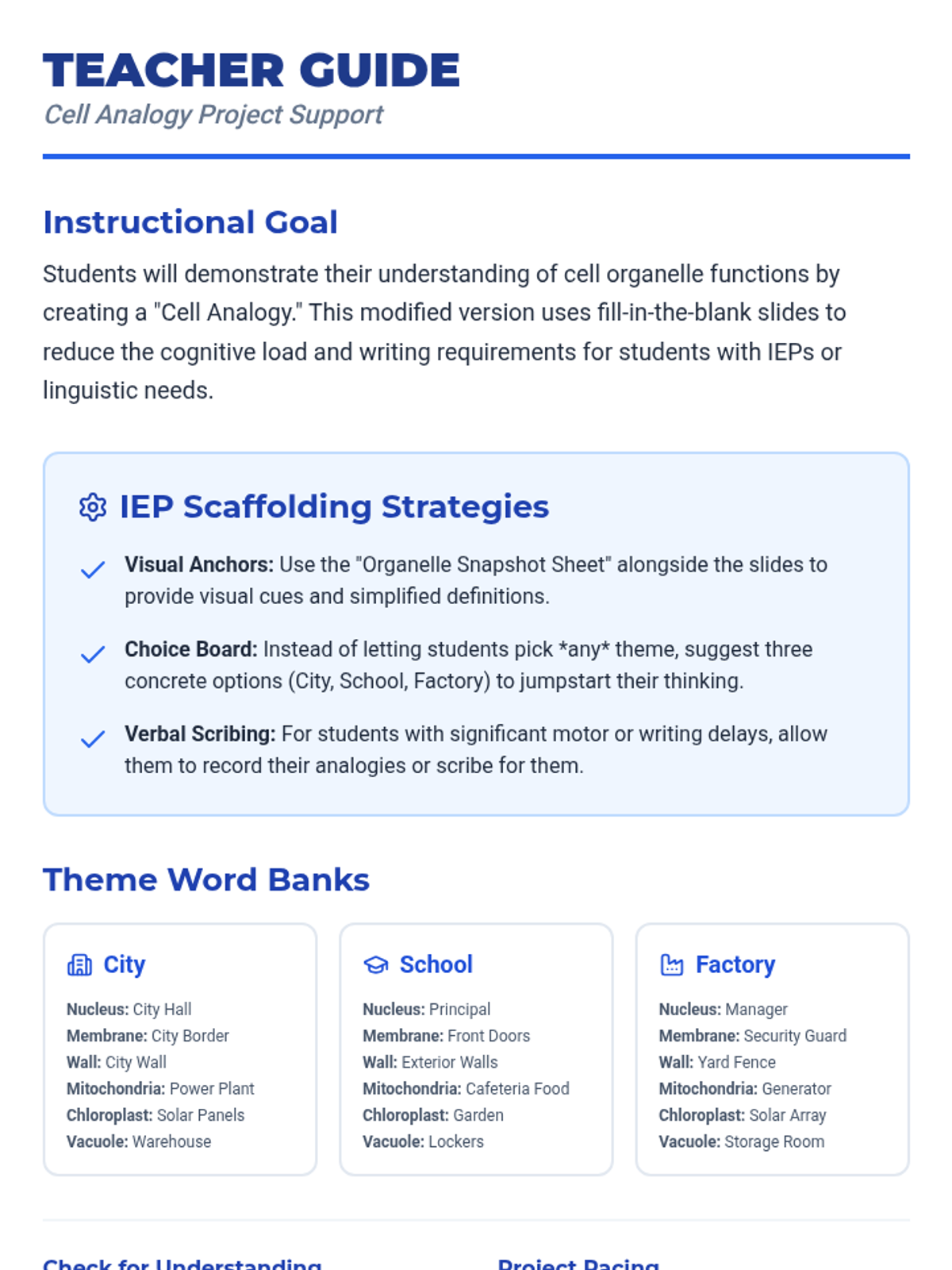
A teacher-facing facilitation guide providing IEP scaffolding strategies, theme-specific word banks, and discussion prompts for the cell analogy project.
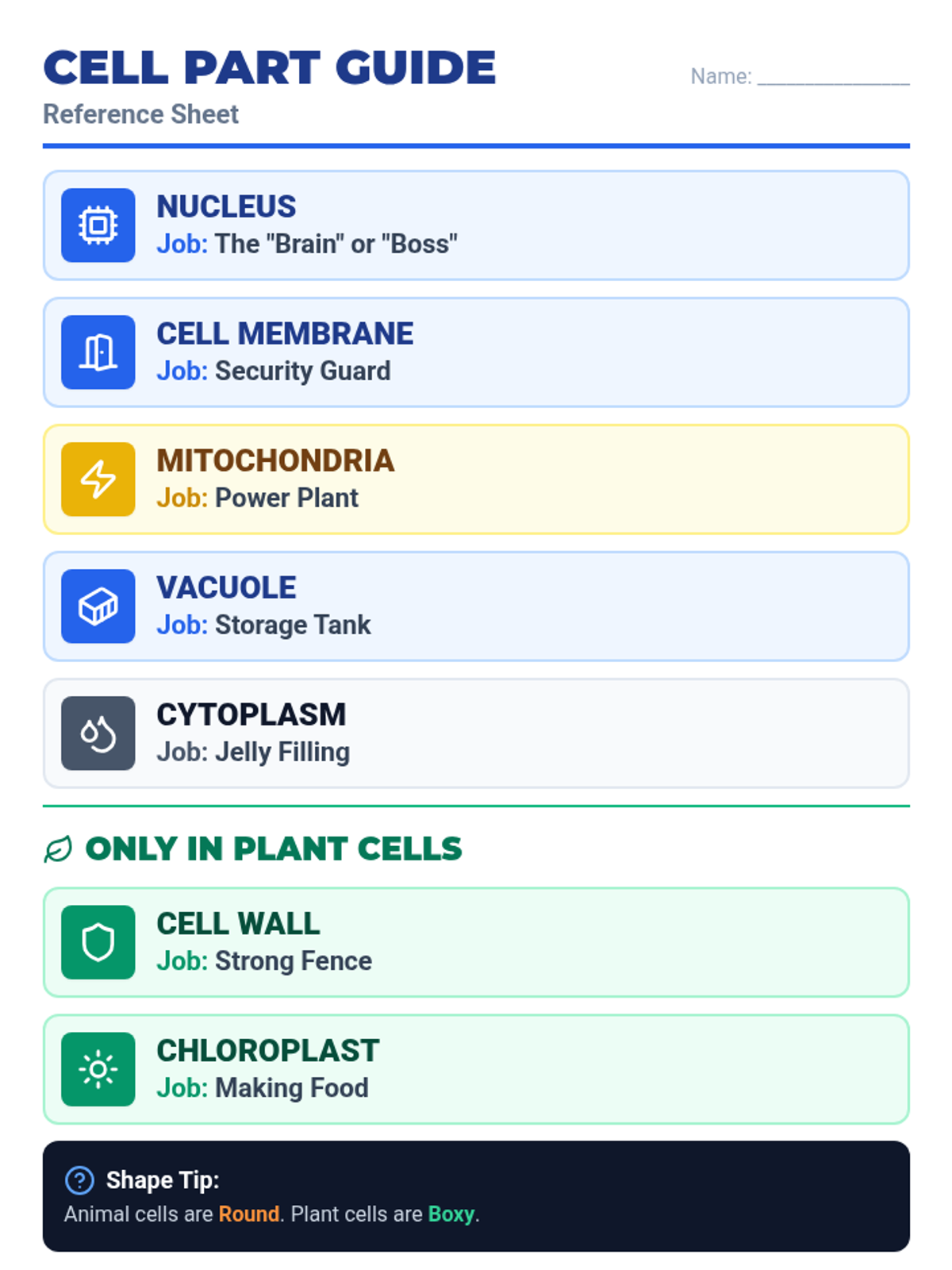
A simplified one-page visual reference sheet with large icons and minimal text to help IEP students identify organelle functions for their cell analogy projects.
A set of simplified fill-in-the-blank slides designed for IEP students to complete a cell analogy project, featuring high-contrast visuals, minimal text, and large student work areas.
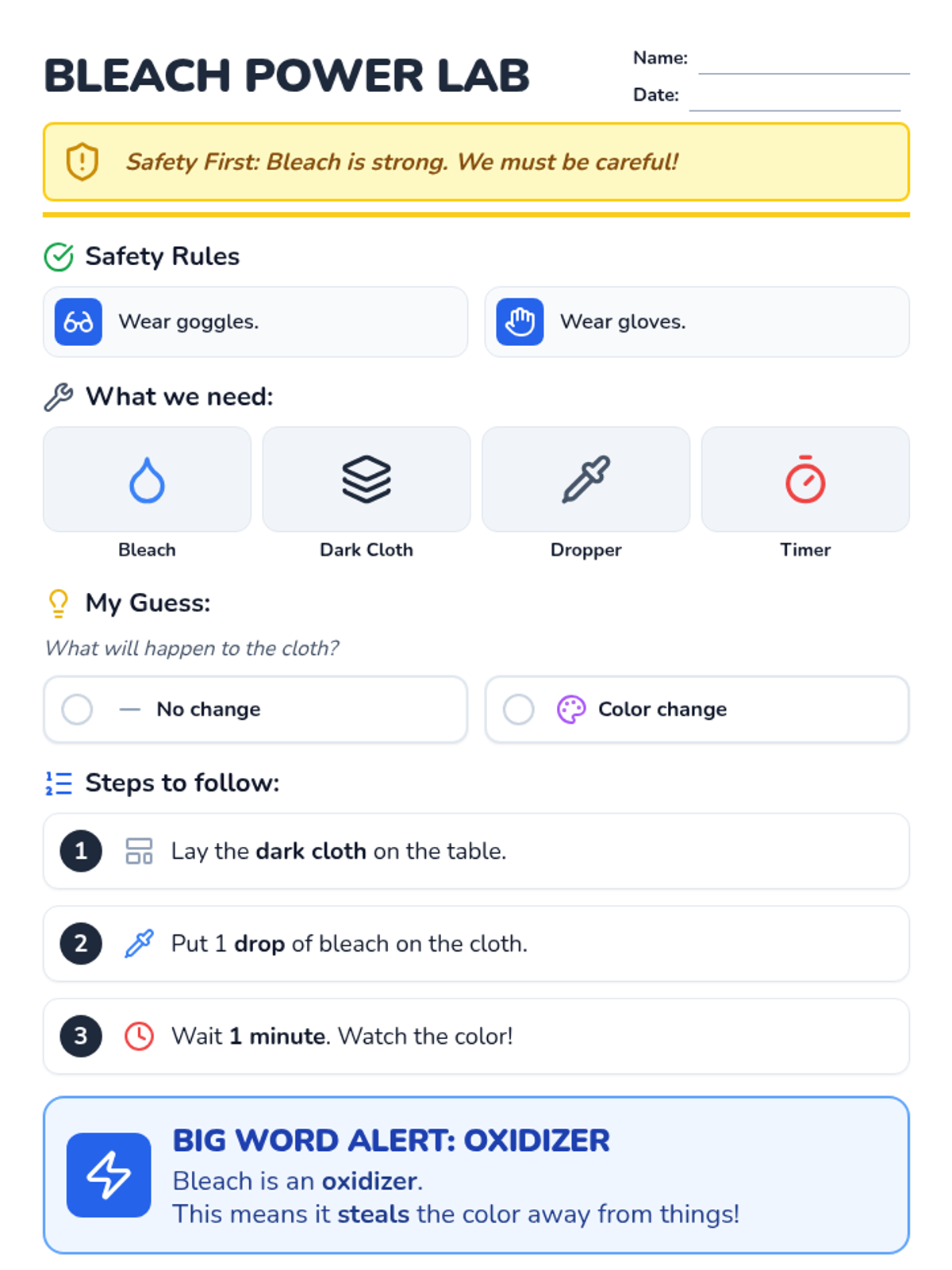
A highly visual lab procedure worksheet for high school students with ID, featuring step-by-step instructions with picture support, safety rules, and observation boxes for drawing results. Updated with a simple hypothesis section and explanation of what an oxidizer is. Both drawing boxes now use matching icons for visual consistency. Final safety summary is optimized to fit on two pages.
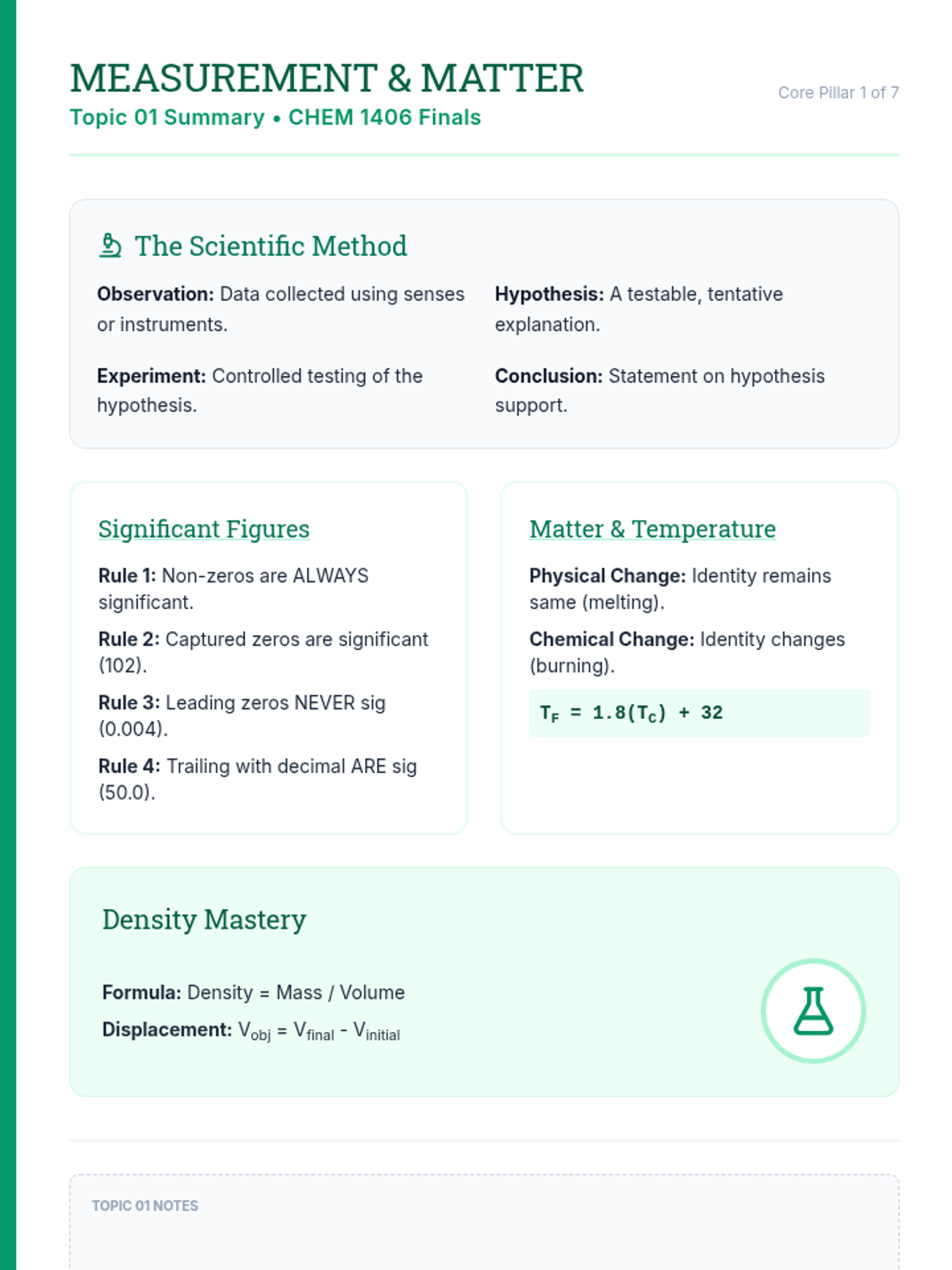
A consolidated 7-page study booklet covering all core pillars of the CHEM 1406 final exam, designed for easy printing and review.
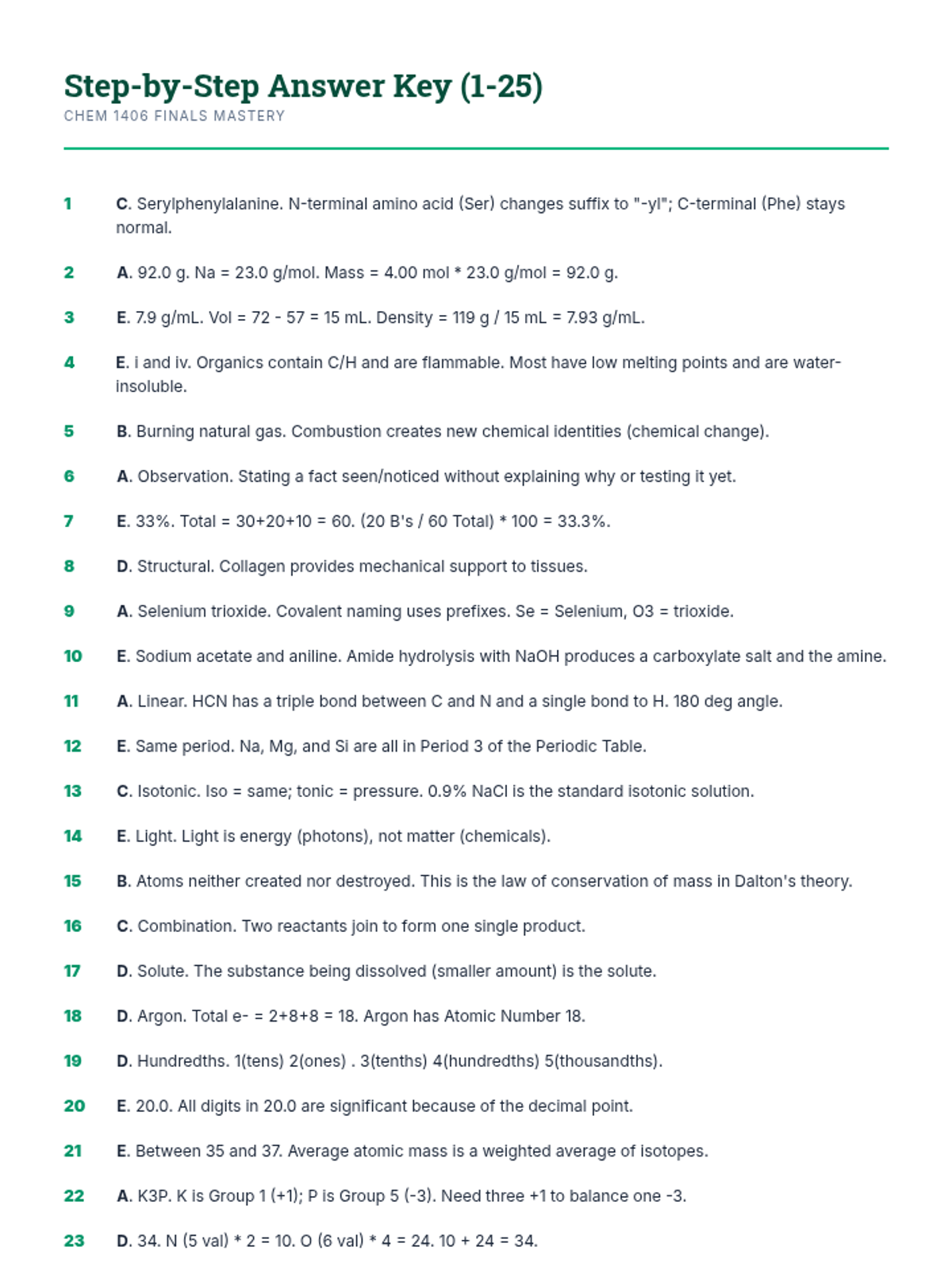
A detailed answer key for the comprehensive final review, providing step-by-step logic and mathematical breakdowns for every question.
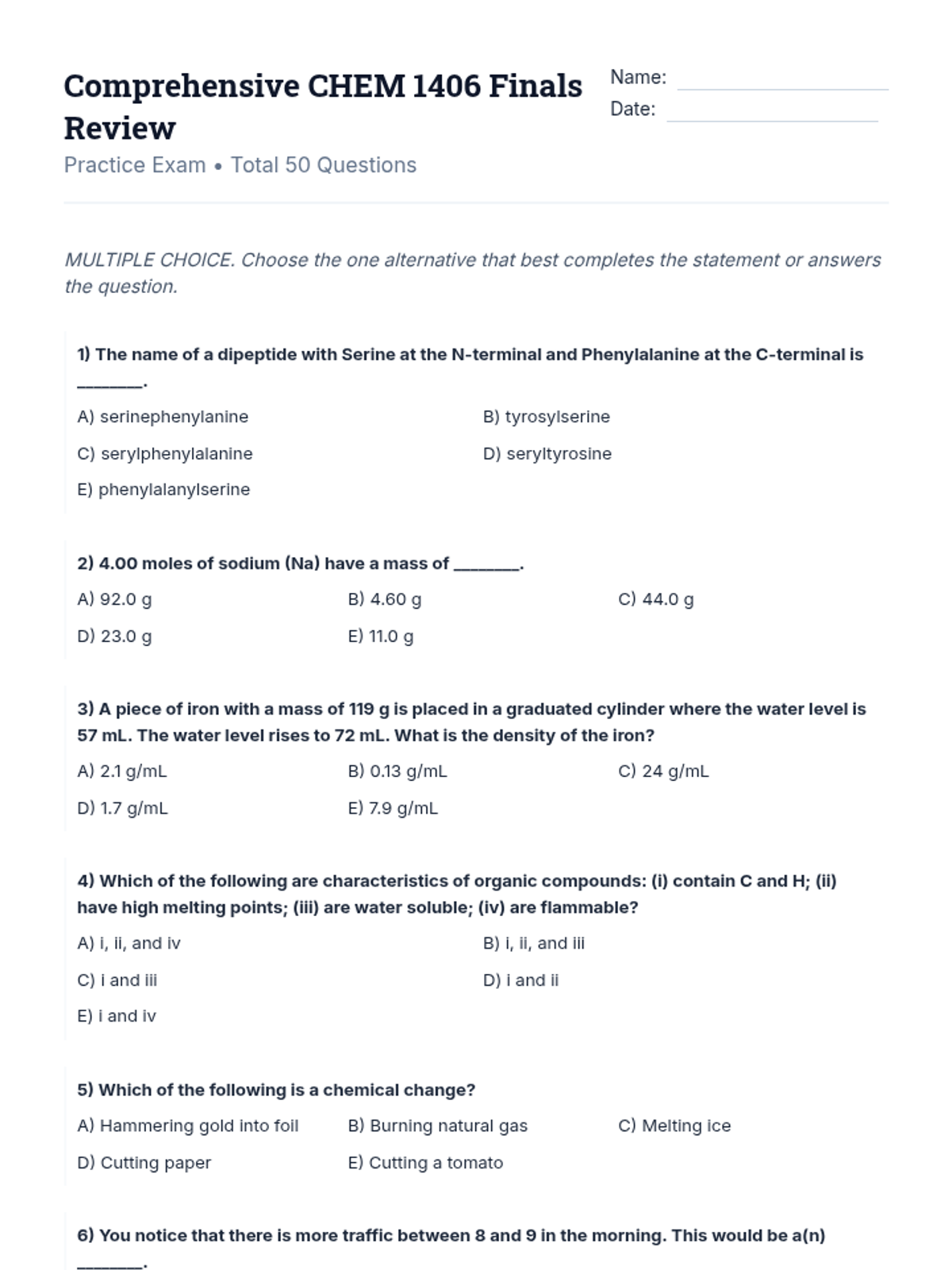
A full 50-question multiple-choice practice exam for CHEM 1406, mirroring the content and difficulty of the provided final comprehensive exam.
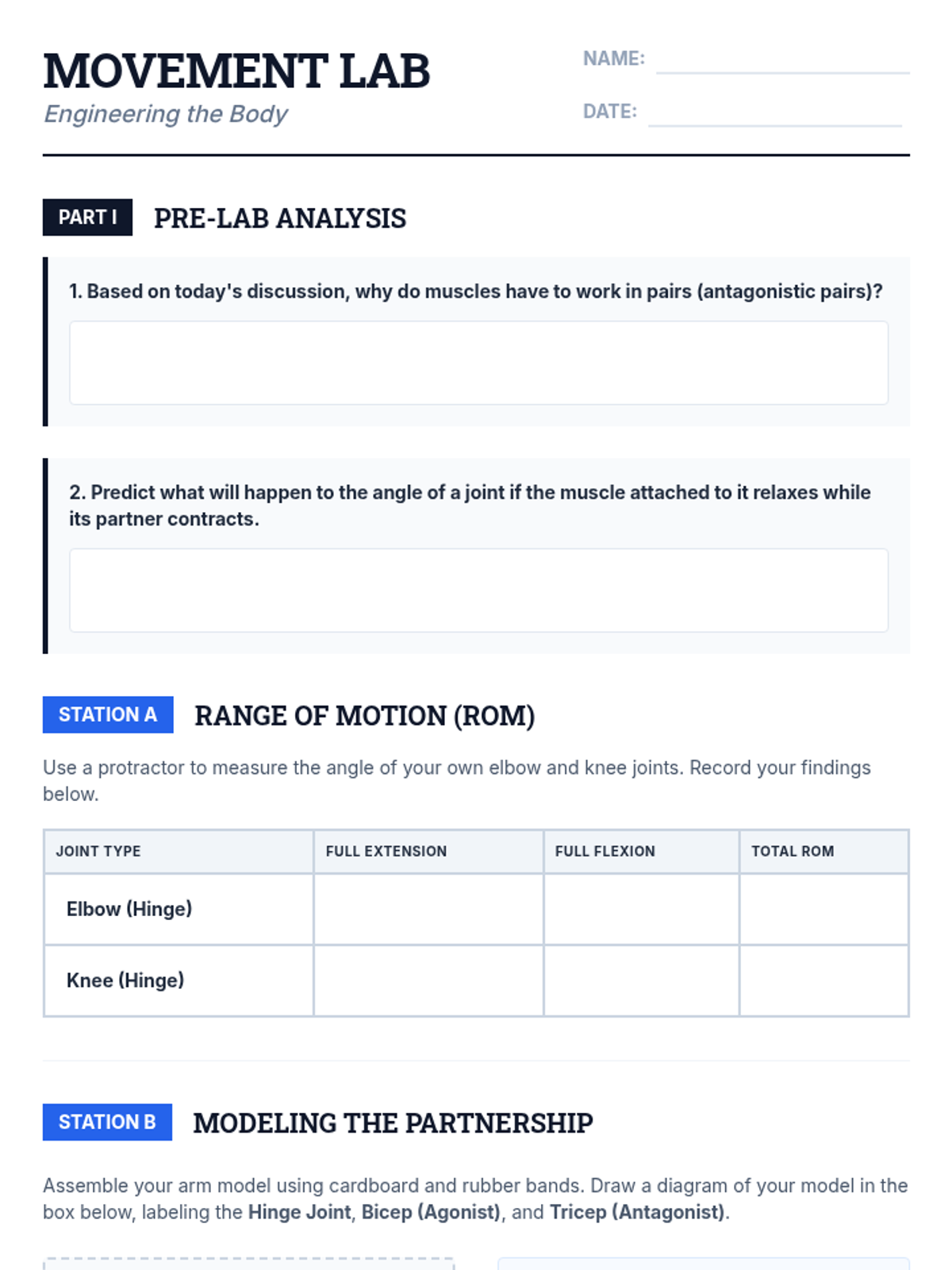
A student-facing lab report for the Movement Lab, including pre-lab questions, data collection tables for range of motion, and modeling analysis for antagonistic muscle pairs.
A visually striking slide deck for introducing the musculoskeletal system, focusing on the mechanical partnership between bones as a structural frame and muscles as engines.
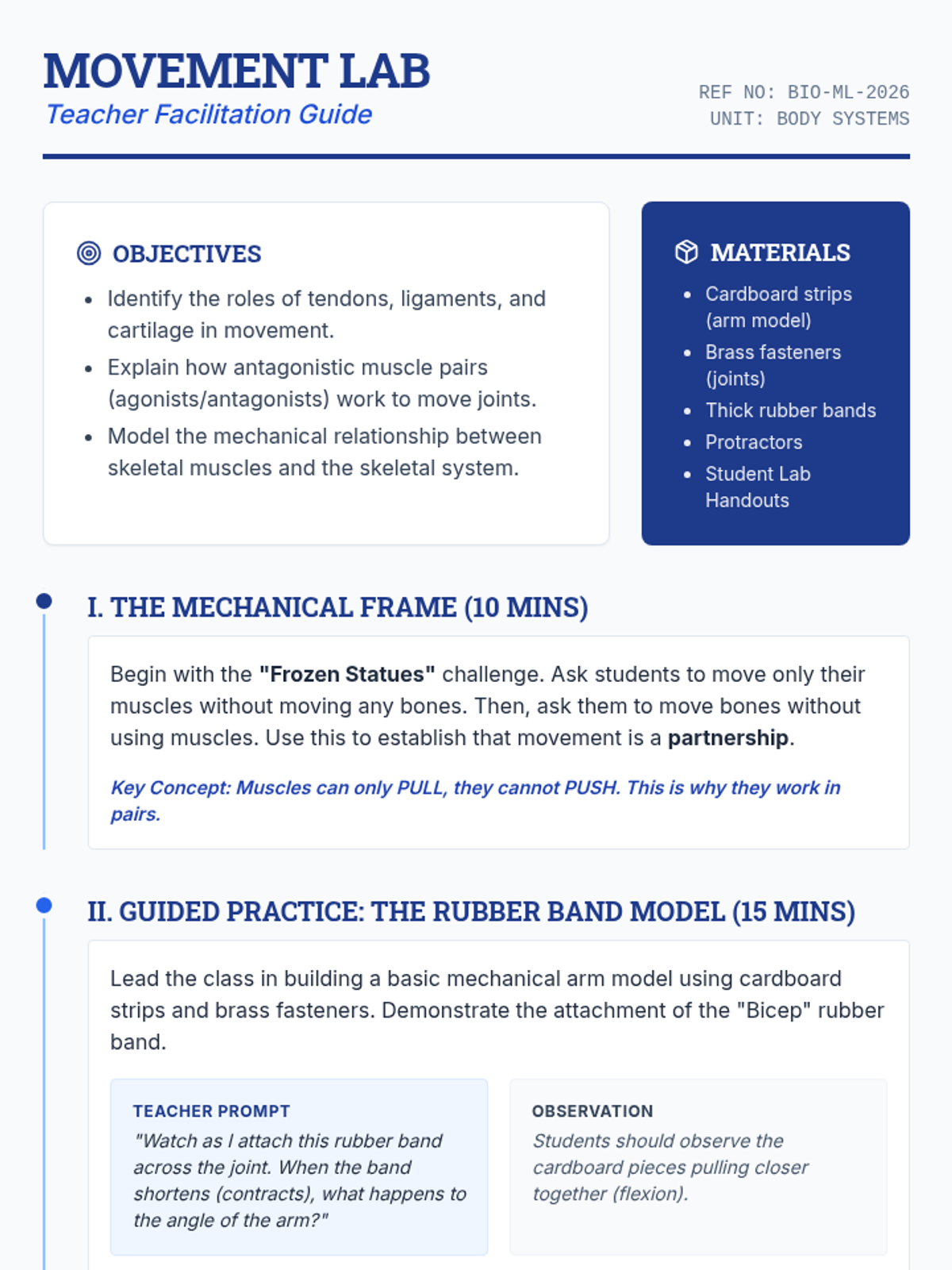
A detailed teacher's facilitation guide for the Movement Lab, outlining the lesson flow from the initial hook to hands-on modeling and final mechanical analysis of the musculoskeletal system.
A comprehensive consolidated participant logbook for the 'CS is the Superpower' sequence. Includes a high-impact cover page, sequence matrix, core content integration map, and all 9 participant logs (Lessons 1-7 plus optional modules). Features a dedicated 'Buggy Cards' page for the Debugging activity and a final notes section for ideation. Optimized for single-page printing per log with improved legibility.
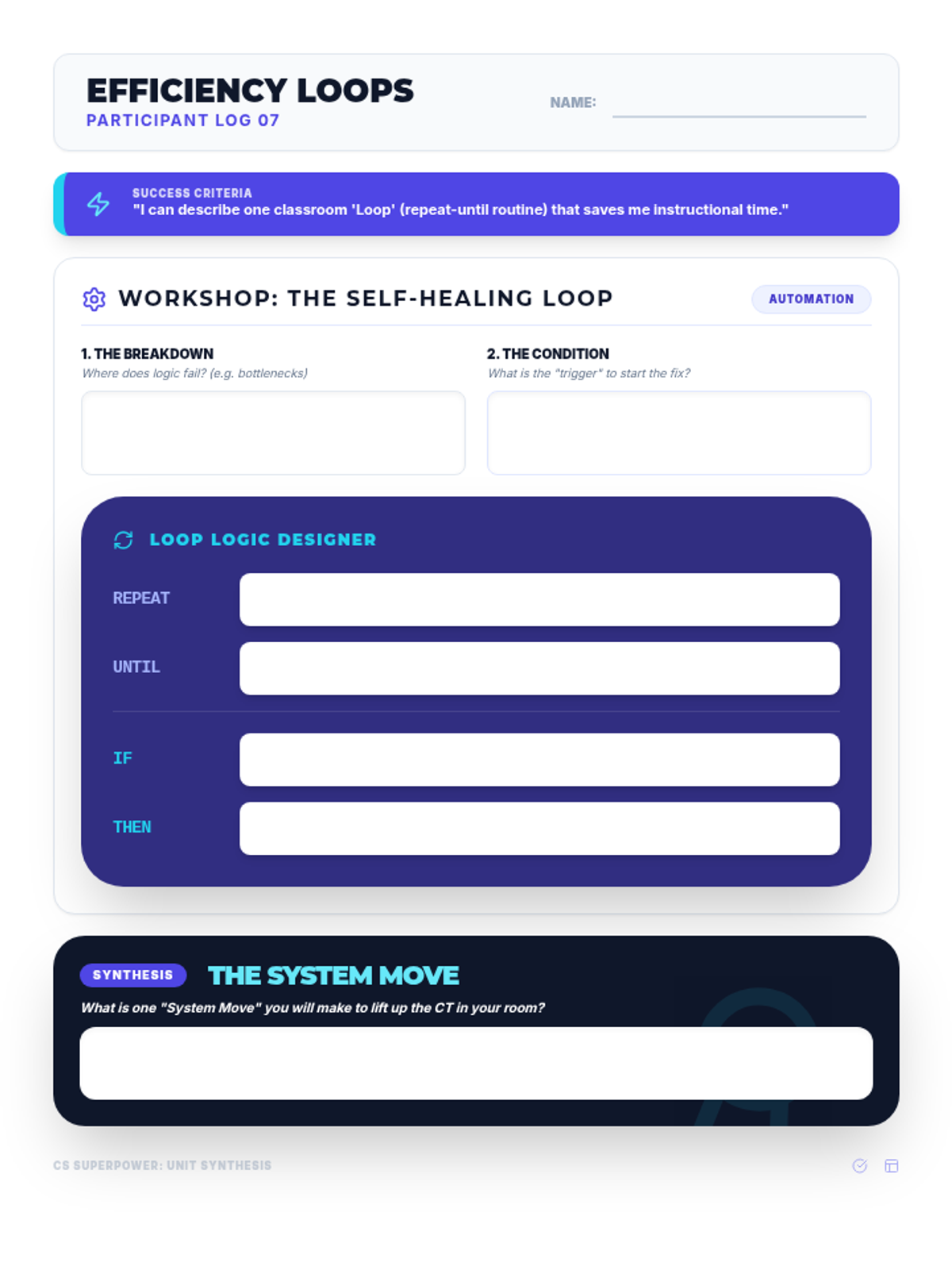
A participant handout for Lesson 7, featuring a visual 'Loop Logic Designer' for Repeat-Until classroom systems and a final synthesis commitment area for the Architect Mindset. Optimized for single-page print layout with white handwriting areas. Includes improved contrast and stacked logic boxes. Includes fix for overlapping layout and footer cutoff.
A 5-slide presentation for Lesson 7, illustrating the concept of Automation and its application in classroom routines through the 'Efficiency Loop' framework. Includes a final synthesis linking all 6 computational thinking pillars.
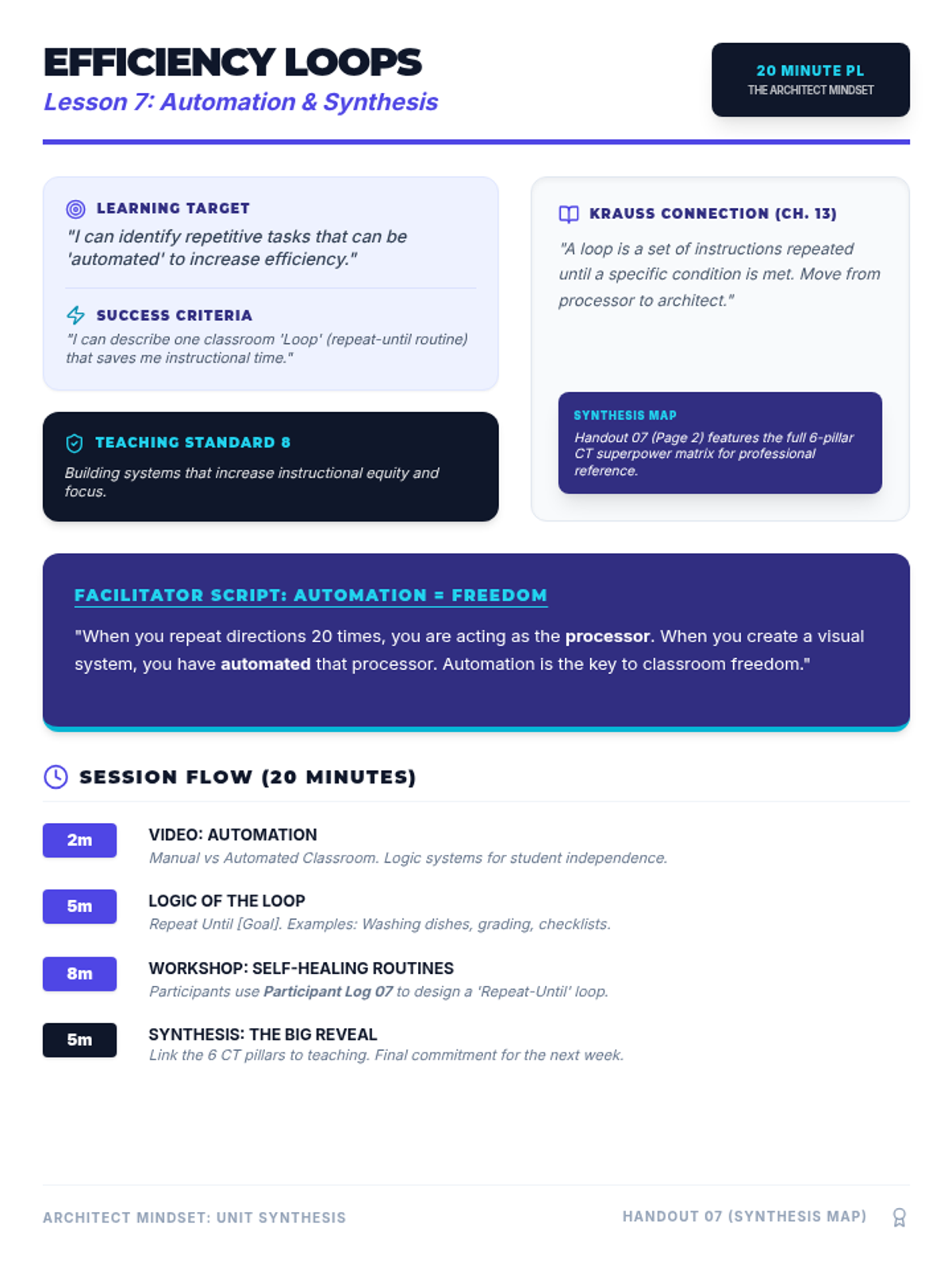
Updated facilitation guide for Lesson 7 (Automation), featuring a detailed 20-minute PL flow, facilitator script, connections to Iowa Teaching Standard 8, and the master handout copy. Includes explicit Success Criteria, Krauss Ch. 13 links, and the final unit synthesis matrix. Includes fix for page 2 header and word spacing.
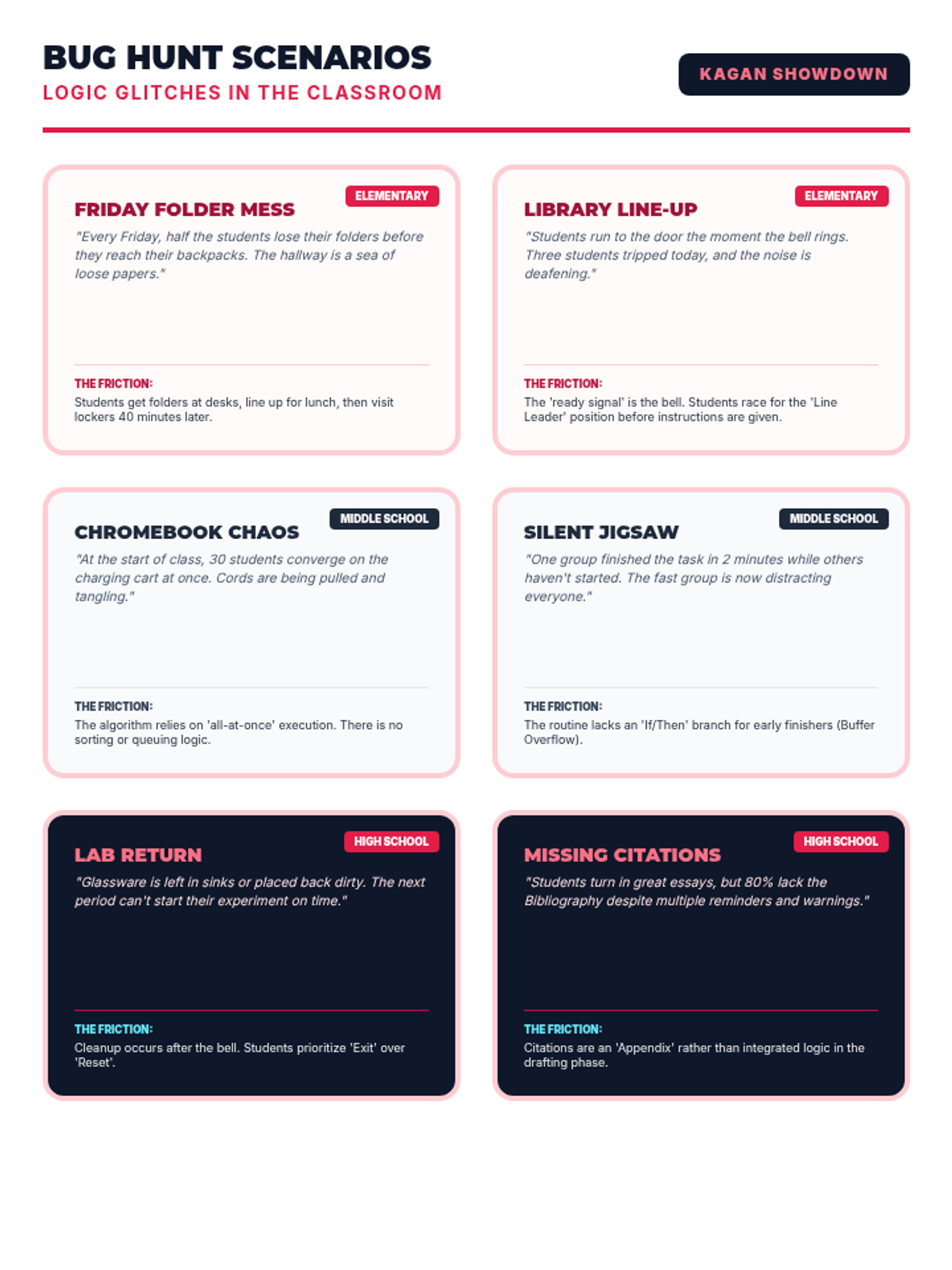
A set of 10 'Buggy Cards' for the Lesson 6 Debugging activity. Scenarios include routine and academic glitches across elementary, middle, and high school levels, designed for use with the Kagan Showdown strategy. Corrected layout and text cutoff issues.
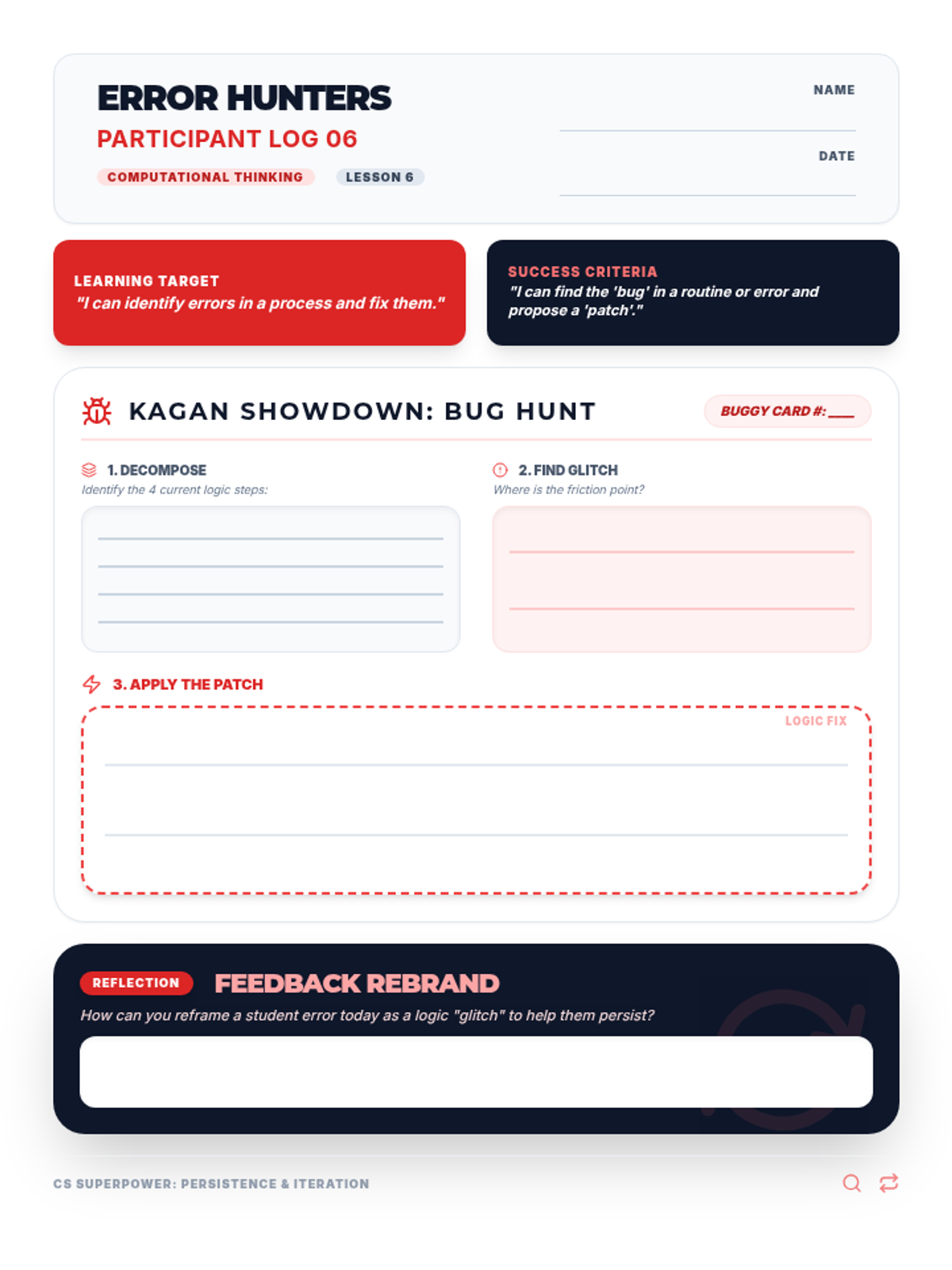
Updated participant handout for Lesson 6 (Debugging), featuring a 'Bug Hunt' sequence editor, a glitch identification area, and space to apply 'patches' to failing routines. Includes a reflective formative assessment for reframing student feedback. Optimized for single-page print layout with improved handwriting space and font tracking. Includes Success Criteria and ruled lines for organized responses.