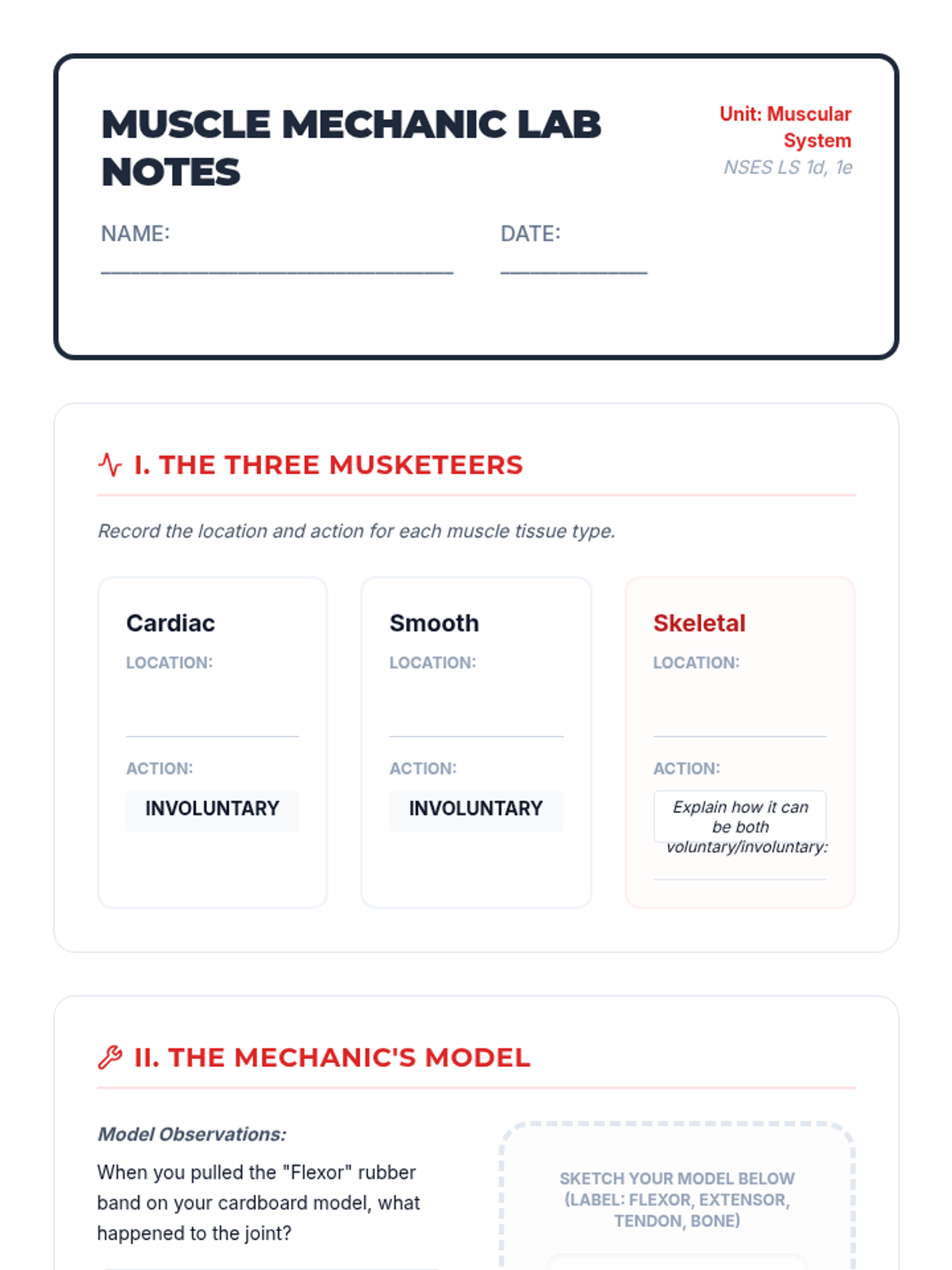
A student-facing lab report for the Movement Lab, including pre-lab questions, data collection tables for range of motion, and modeling analysis for antagonistic muscle pairs.
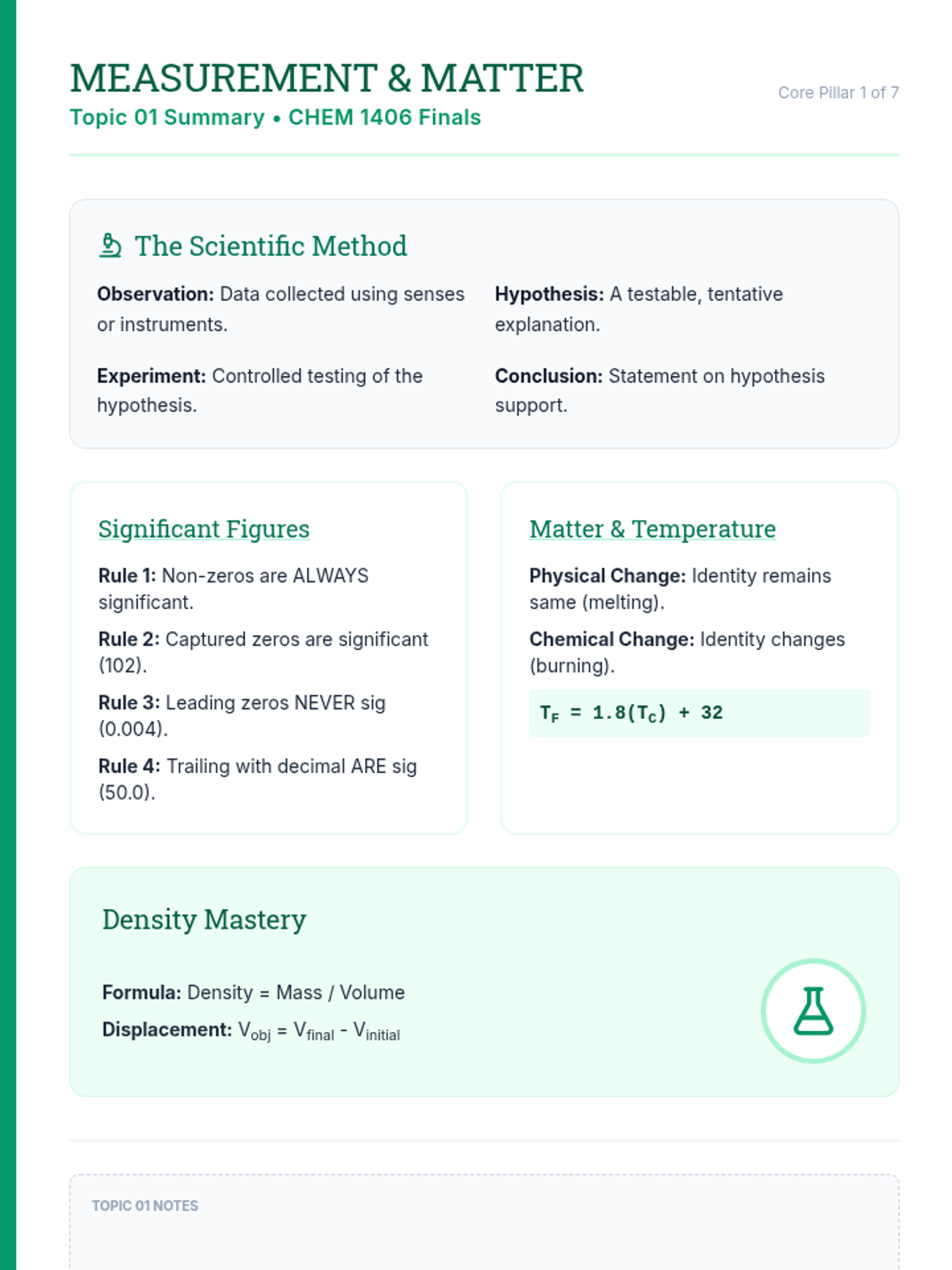
A consolidated 7-page study booklet covering all core pillars of the CHEM 1406 final exam, designed for easy printing and review.
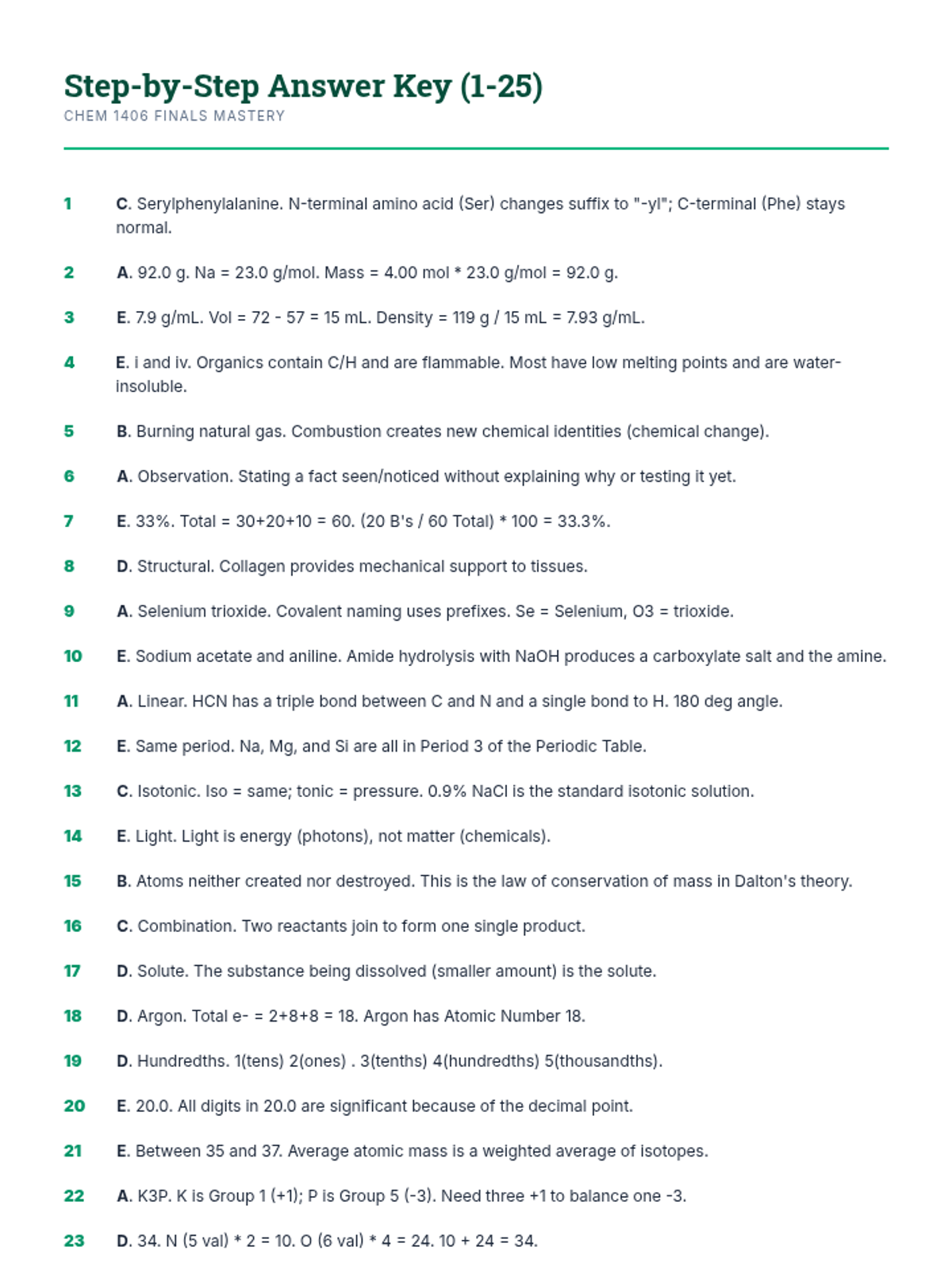
A detailed answer key for the comprehensive final review, providing step-by-step logic and mathematical breakdowns for every question.
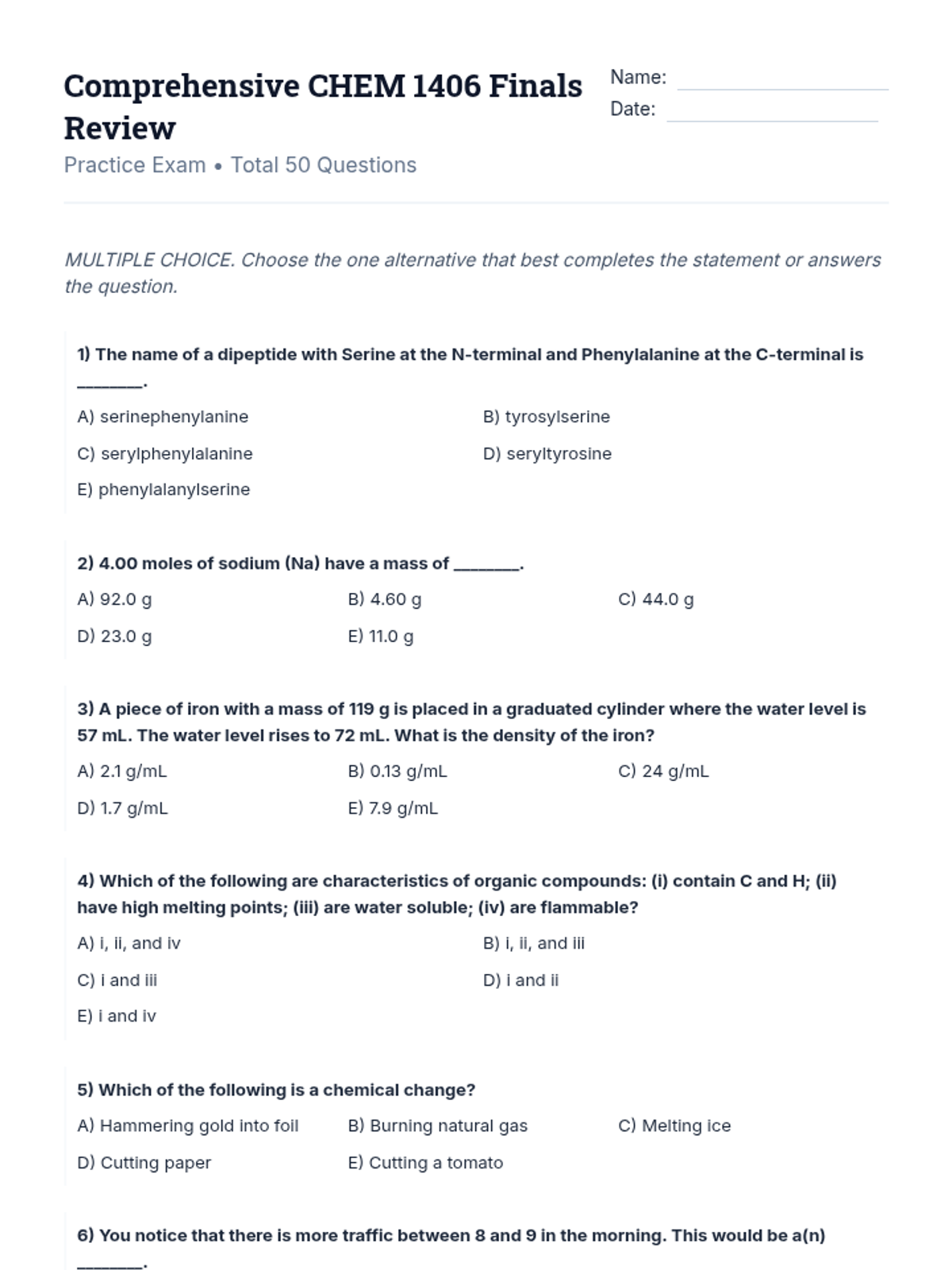
A full 50-question multiple-choice practice exam for CHEM 1406, mirroring the content and difficulty of the provided final comprehensive exam.
A visually striking slide deck for introducing the musculoskeletal system, focusing on the mechanical partnership between bones as a structural frame and muscles as engines.
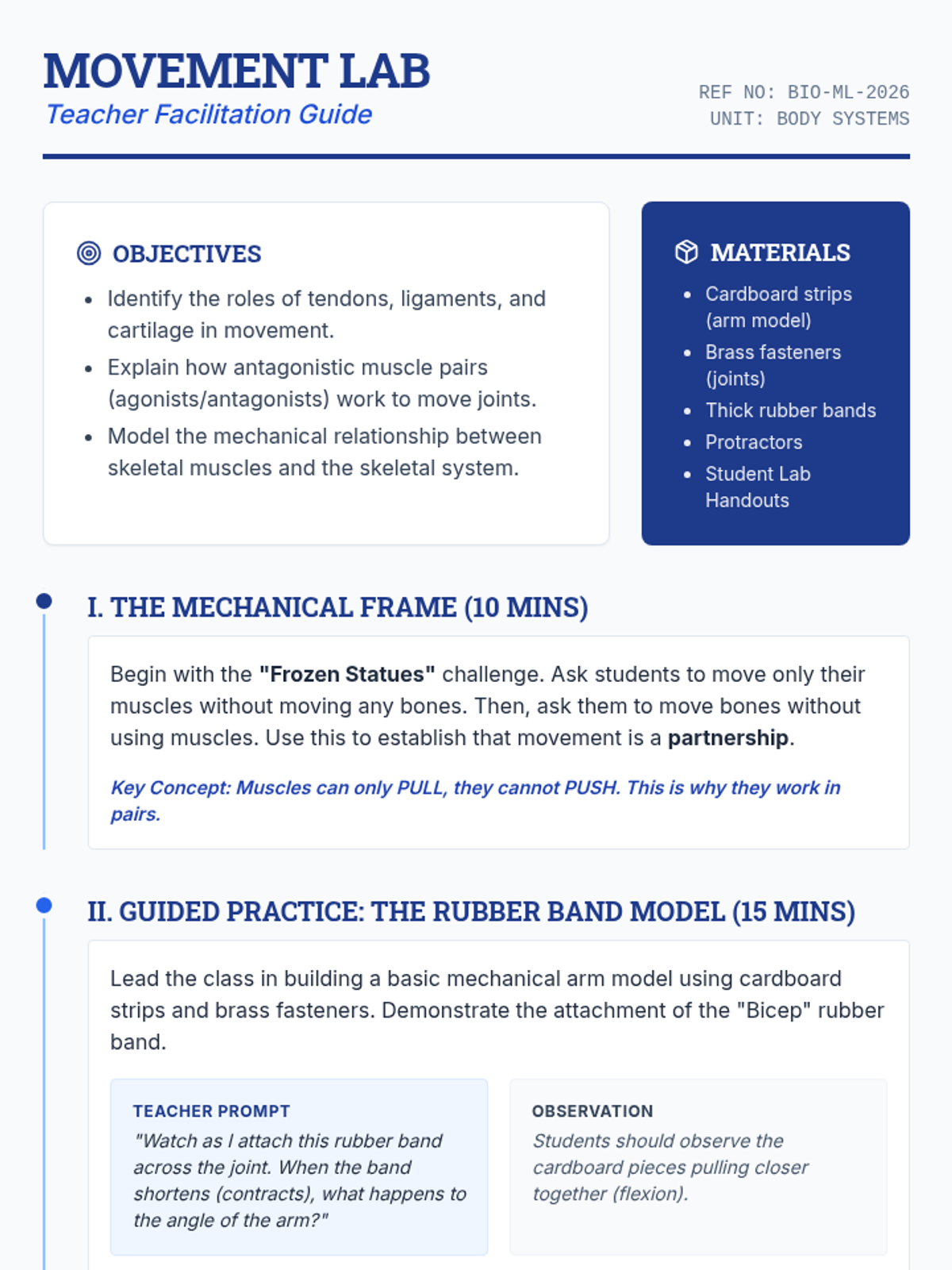
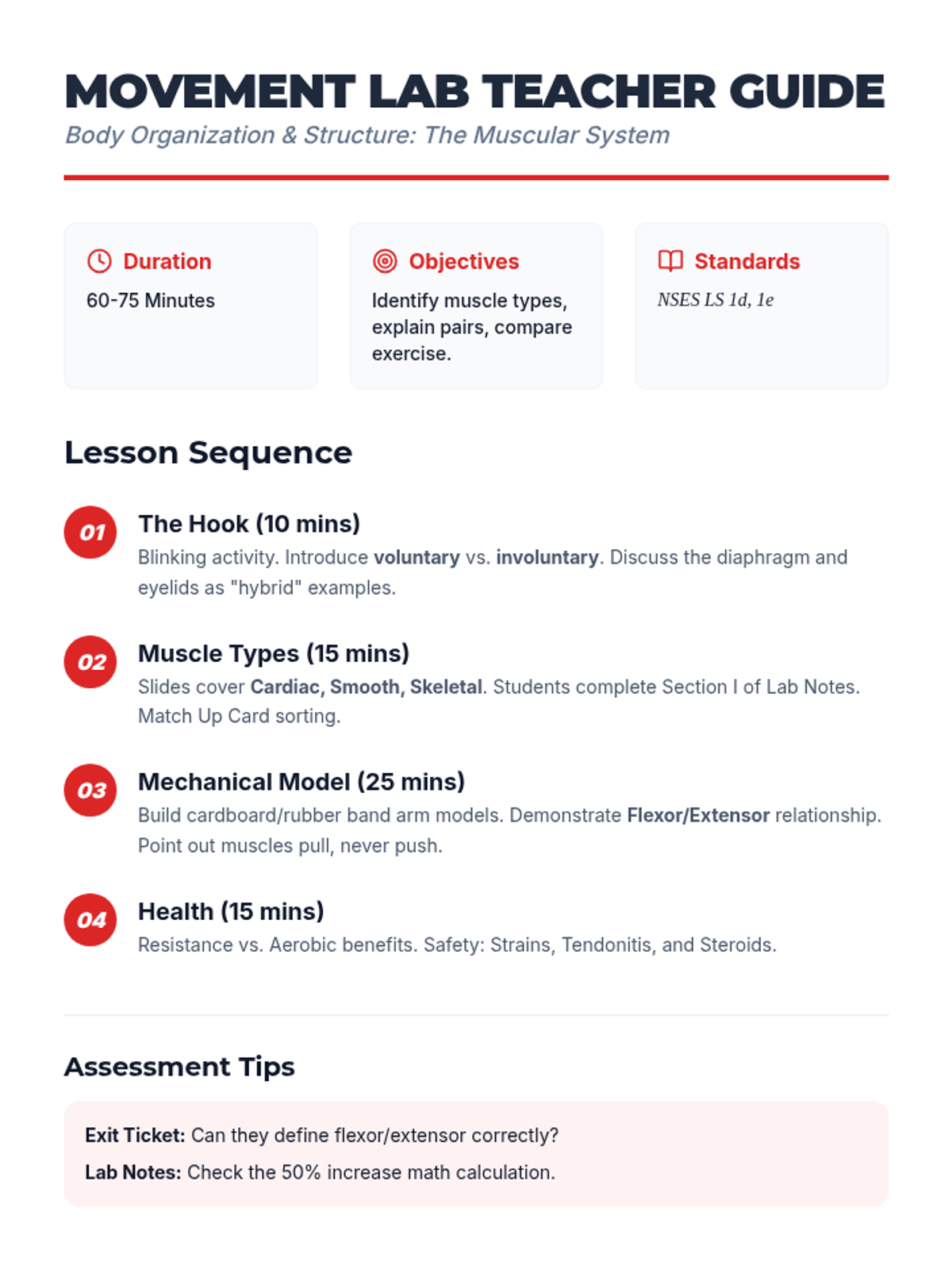
A detailed teacher's facilitation guide for the Movement Lab, outlining the lesson flow from the initial hook to hands-on modeling and final mechanical analysis of the musculoskeletal system.
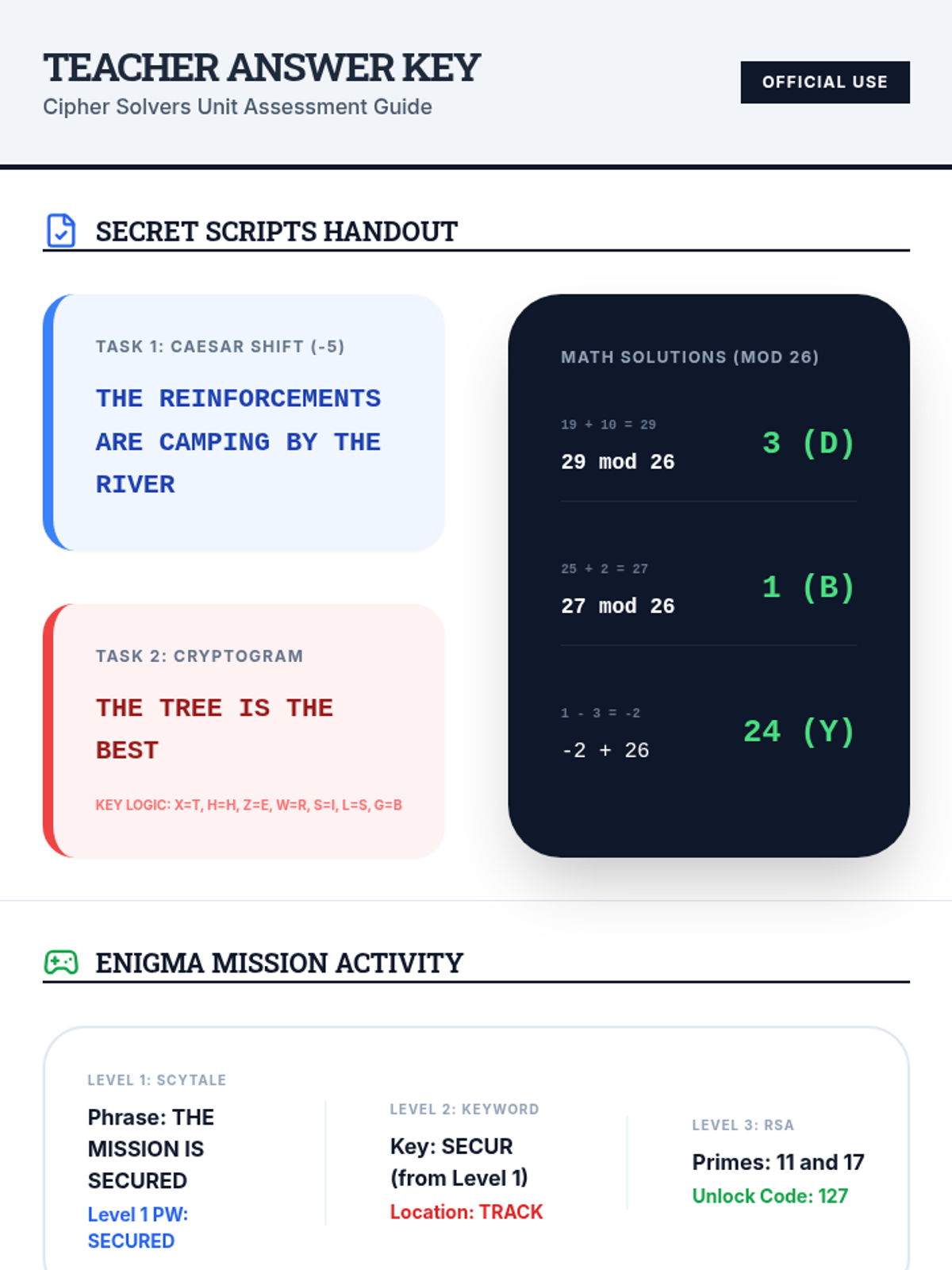
A teacher resource providing the answer key for the Caesar shift, cryptogram, and modular arithmetic exercises, alongside the mission solutions and facilitation tips for the Enigma Mission game.
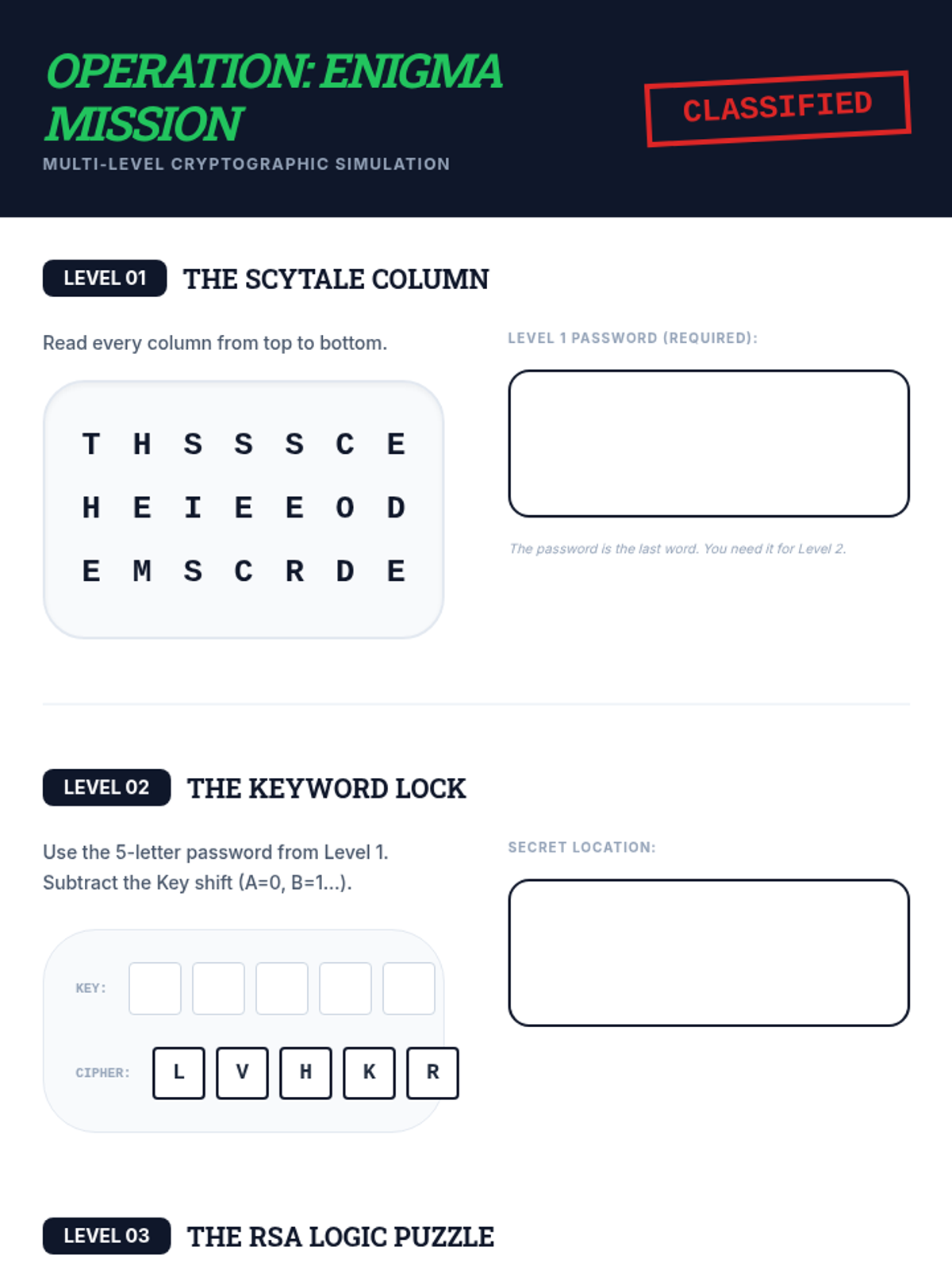
An immersive three-level cryptography game where students decode a Scytale script, solve a keyword cipher using a discovered password, and complete an RSA-inspired prime number logic puzzle to "unlock" a digital vault.
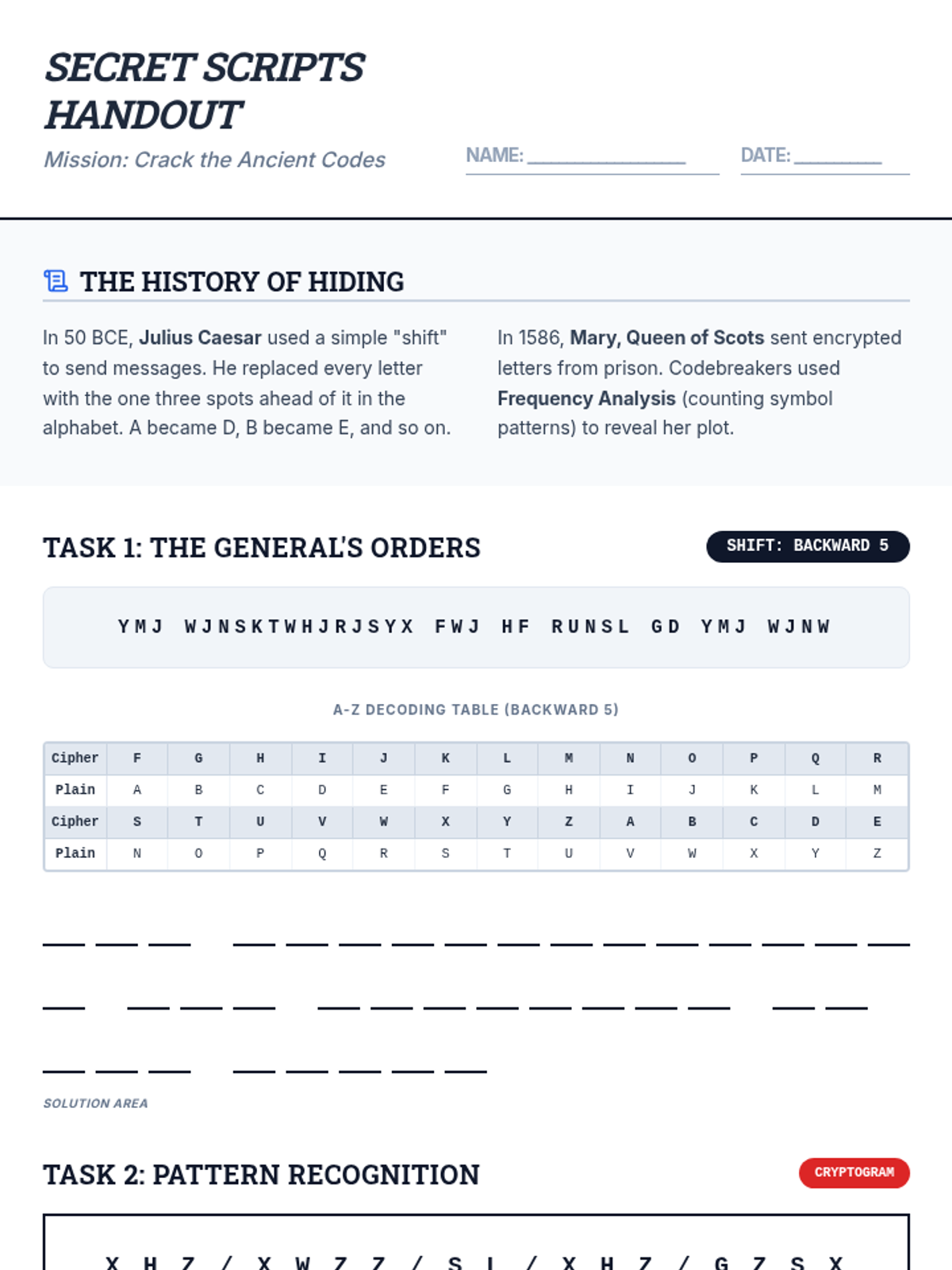
A student handout featuring a historical reading on cryptography, a Caesar shift decryption task, a frequency analysis cryptogram challenge, and mathematical exercises involving modular arithmetic.
An engaging slide deck introduction to cryptography, covering ancient substitution ciphers like the Caesar shift, the math behind frequency analysis, and the evolution into modern digital encryption using prime numbers.
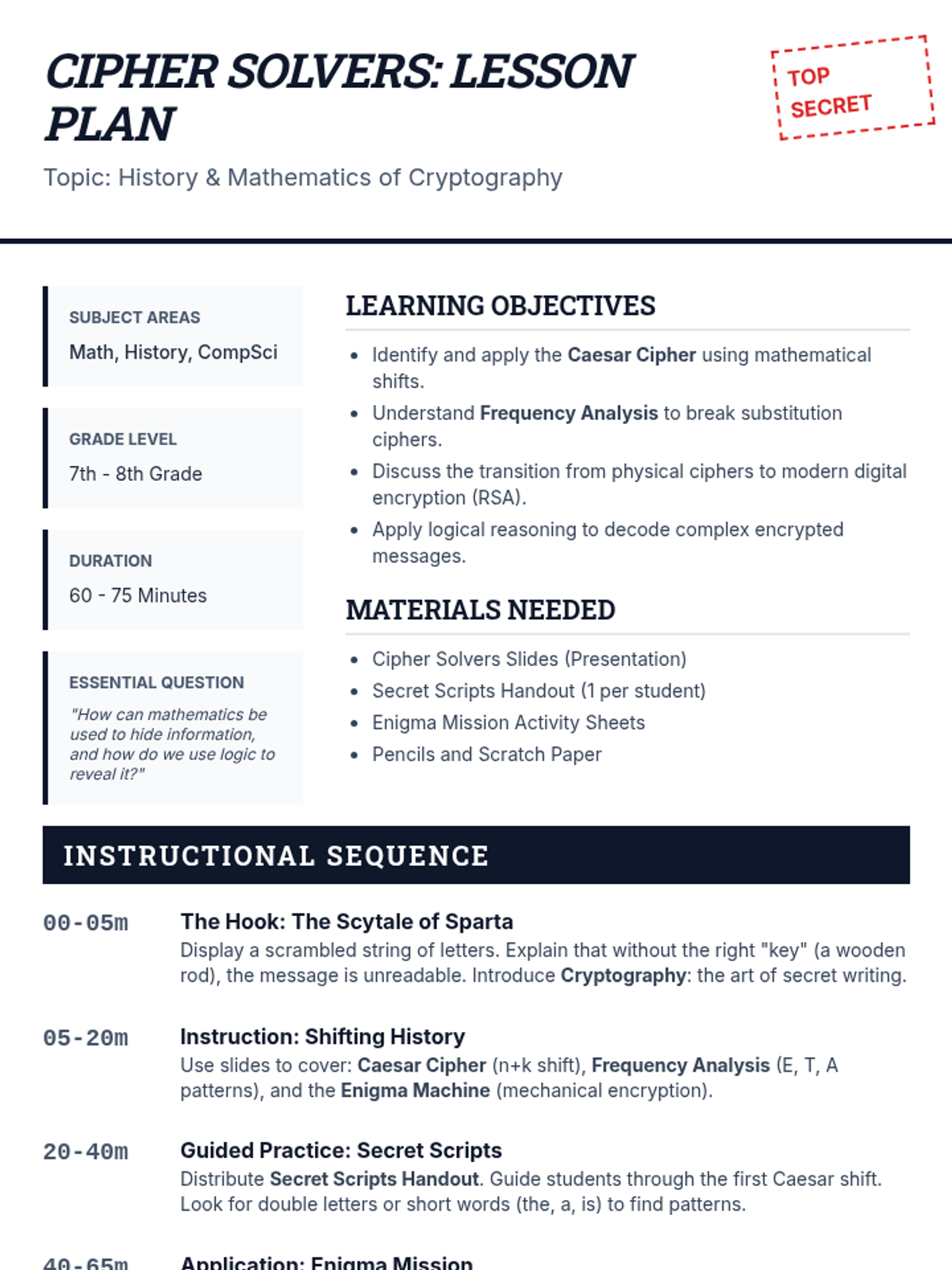
A comprehensive teacher's lesson plan for teaching cryptography, featuring learning objectives, a detailed instructional sequence from ancient times to modern digital security, and differentiation strategies for middle school students.
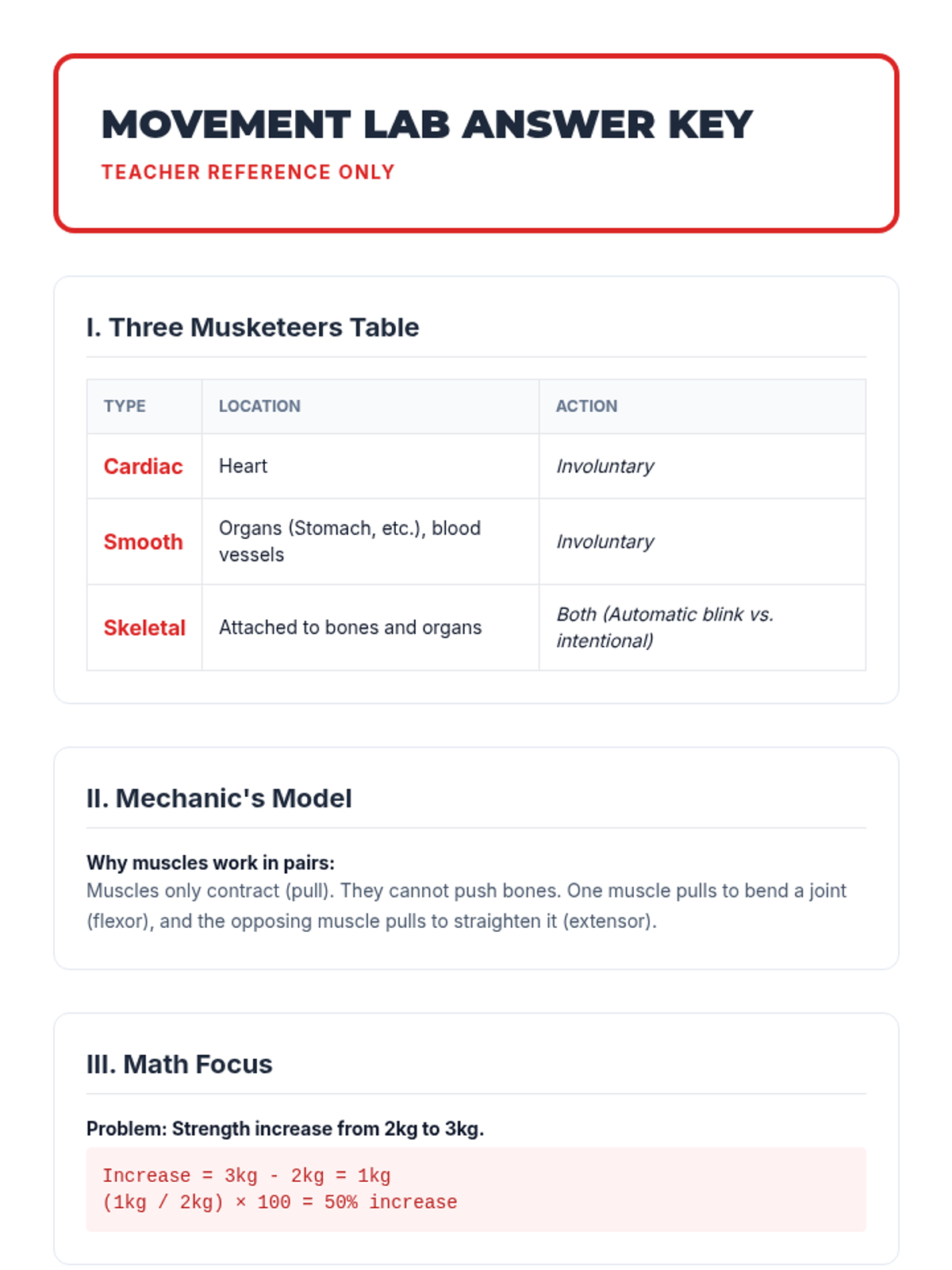
An answer key for "The Movement Lab" materials, including lab note tables, model explanation, math focus solutions, and hazard definitions.
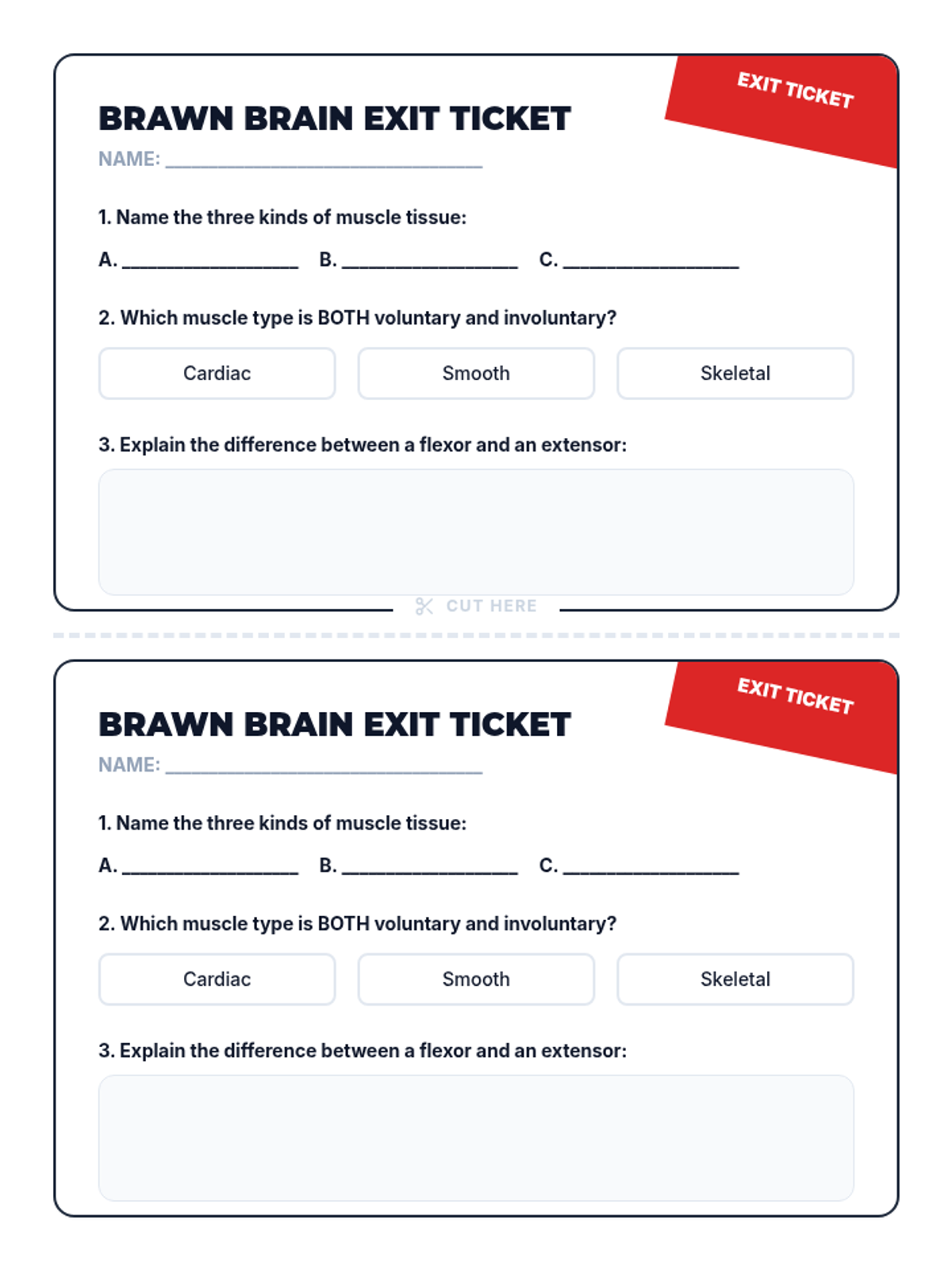
A dual-copy exit ticket for quick assessment of student understanding regarding muscle types, pairs, and connectivity.
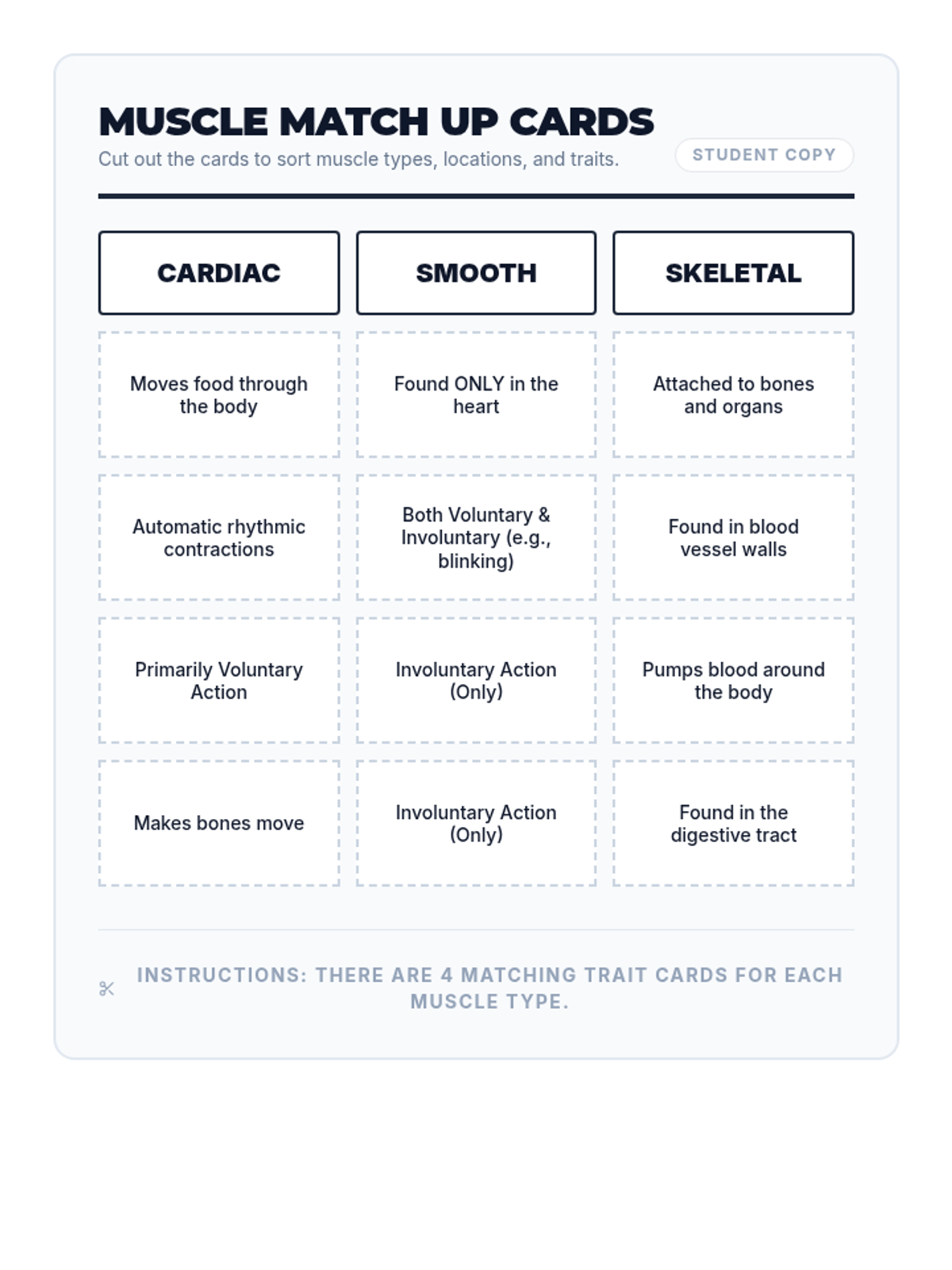
A set of sorting cards for student groups to categorize muscle types by their location, function, and voluntary/involuntary status.
A student lab manual for "The Movement Lab", featuring guided notes on muscle types, a hands-on model observation area, and a math focus on muscle strength percentage increase.
A visually engaging slide deck covering the three types of muscle tissue, muscle pairs (flexors/extensors), and the benefits of resistance and aerobic exercise.
A comprehensive teacher's guide for "The Movement Lab" lesson, including pacing, hands-on activity instructions, and discussion prompts for teaching the muscular system.