A comprehensive teacher's lesson plan for teaching cryptography, featuring learning objectives, a detailed instructional sequence from ancient times to modern digital security, and differentiation strategies for middle school students.
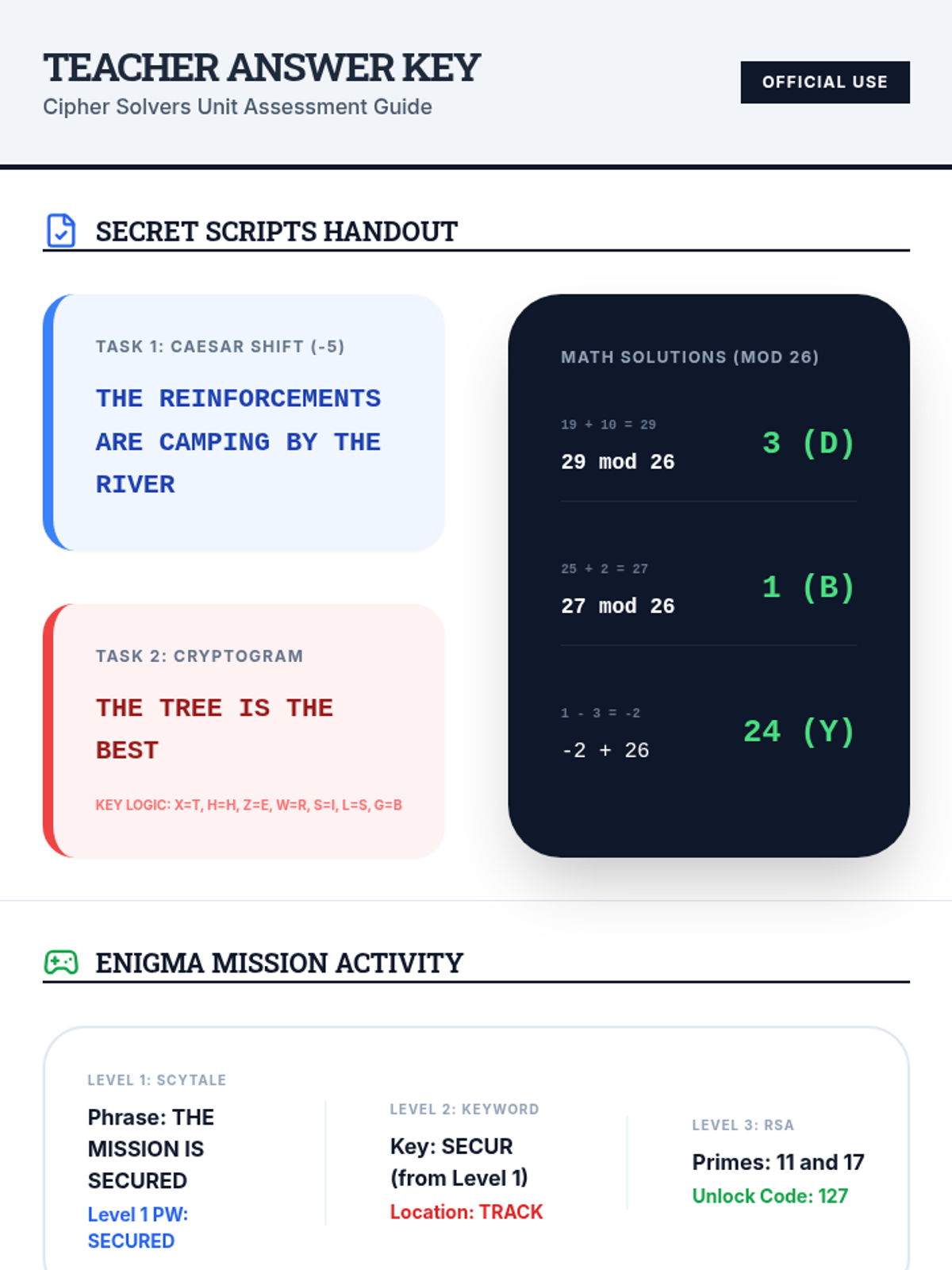
A teacher resource providing the answer key for the Caesar shift, cryptogram, and modular arithmetic exercises, alongside the mission solutions and facilitation tips for the Enigma Mission game.
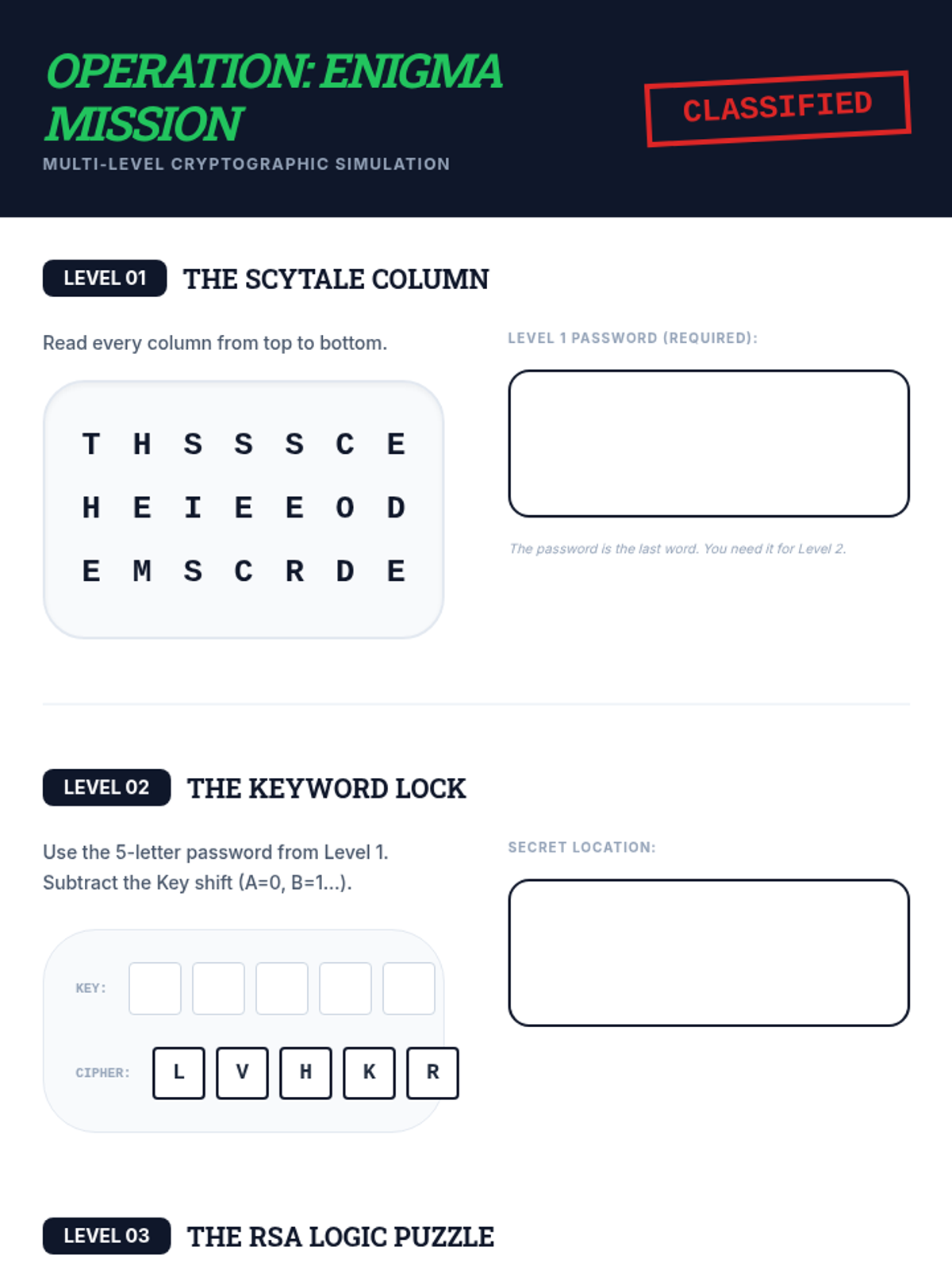
An immersive three-level cryptography game where students decode a Scytale script, solve a keyword cipher using a discovered password, and complete an RSA-inspired prime number logic puzzle to "unlock" a digital vault.
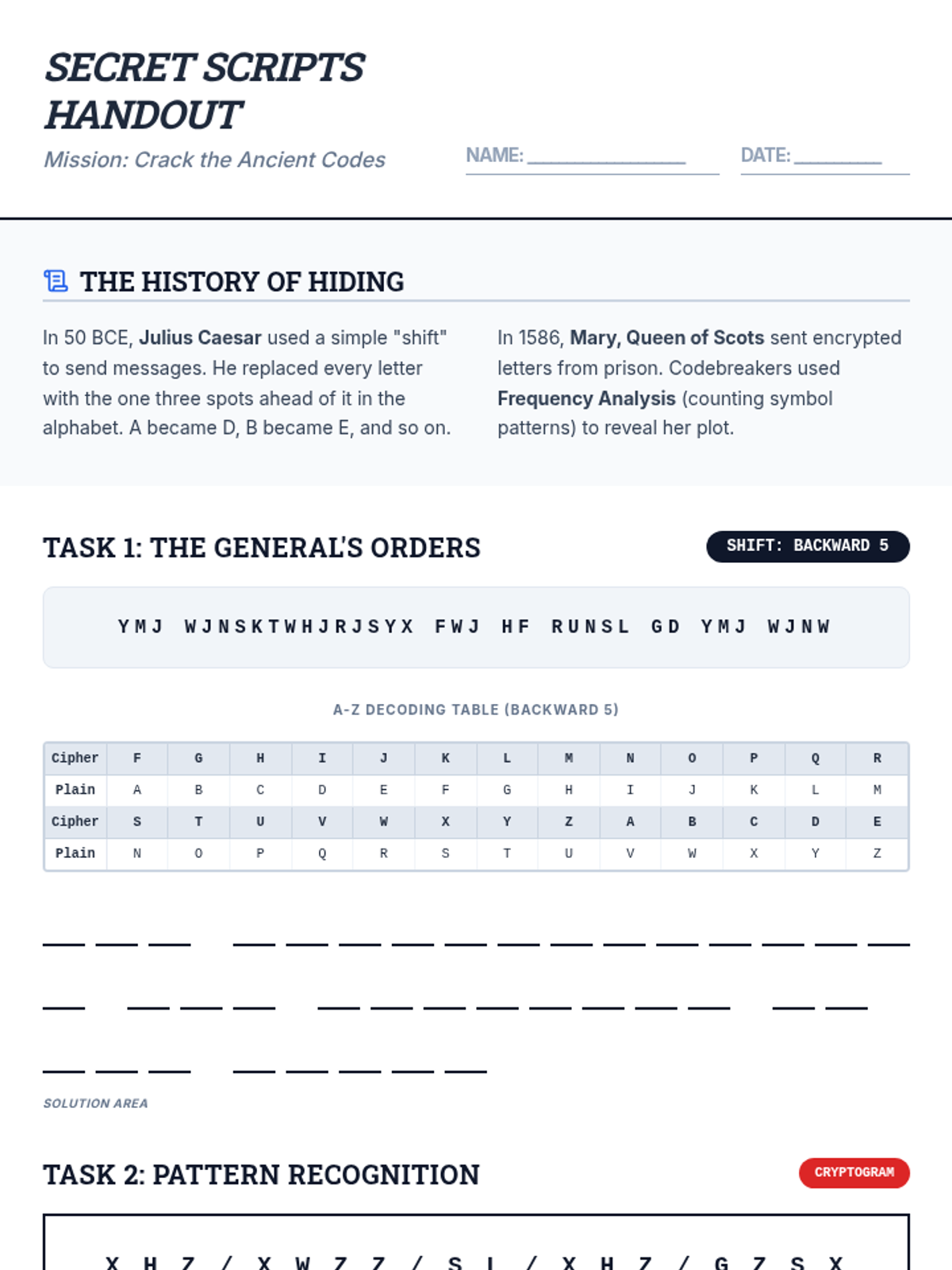
A student handout featuring a historical reading on cryptography, a Caesar shift decryption task, a frequency analysis cryptogram challenge, and mathematical exercises involving modular arithmetic.
An engaging slide deck introduction to cryptography, covering ancient substitution ciphers like the Caesar shift, the math behind frequency analysis, and the evolution into modern digital encryption using prime numbers.
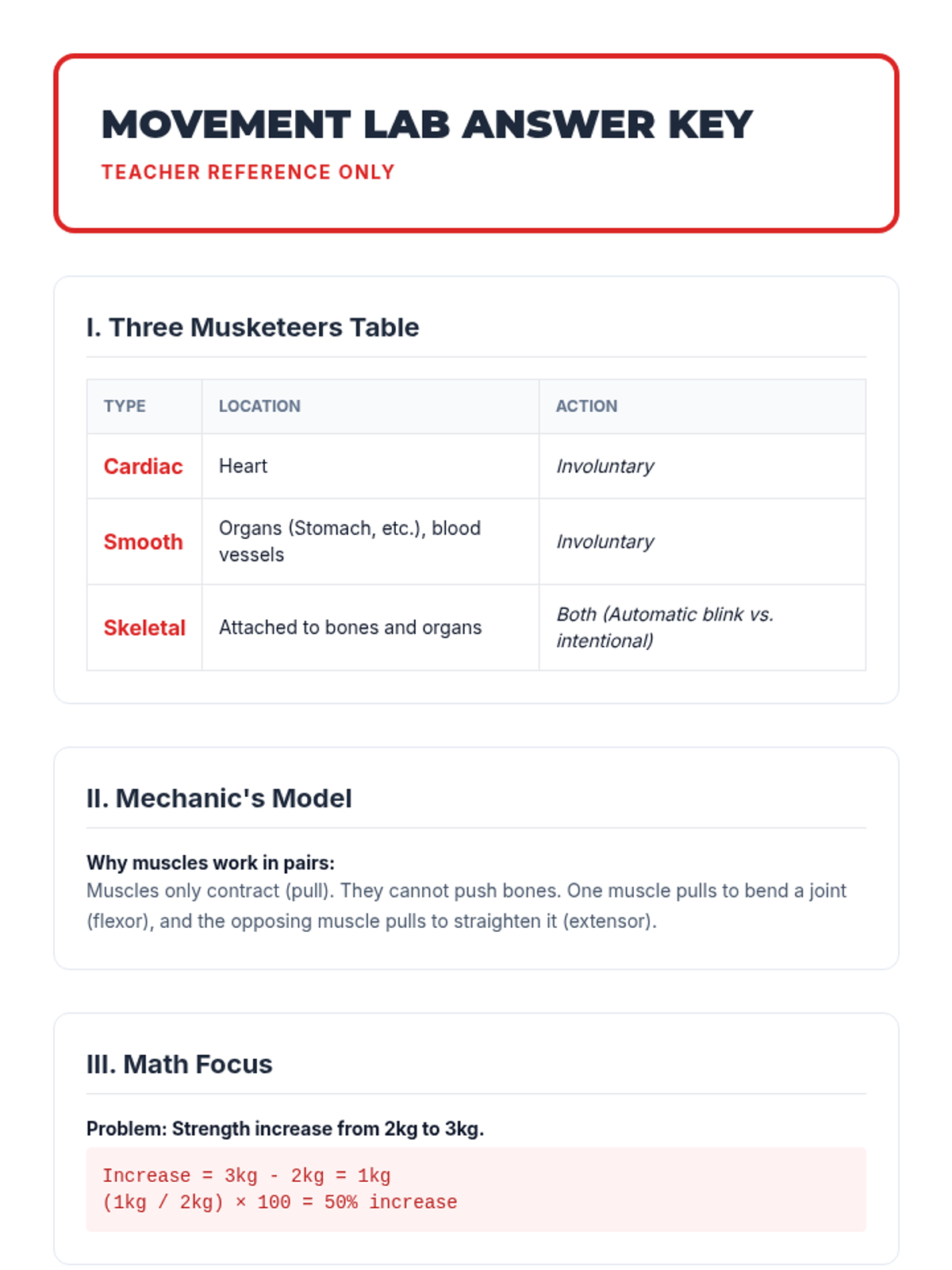
An answer key for "The Movement Lab" materials, including lab note tables, model explanation, math focus solutions, and hazard definitions.
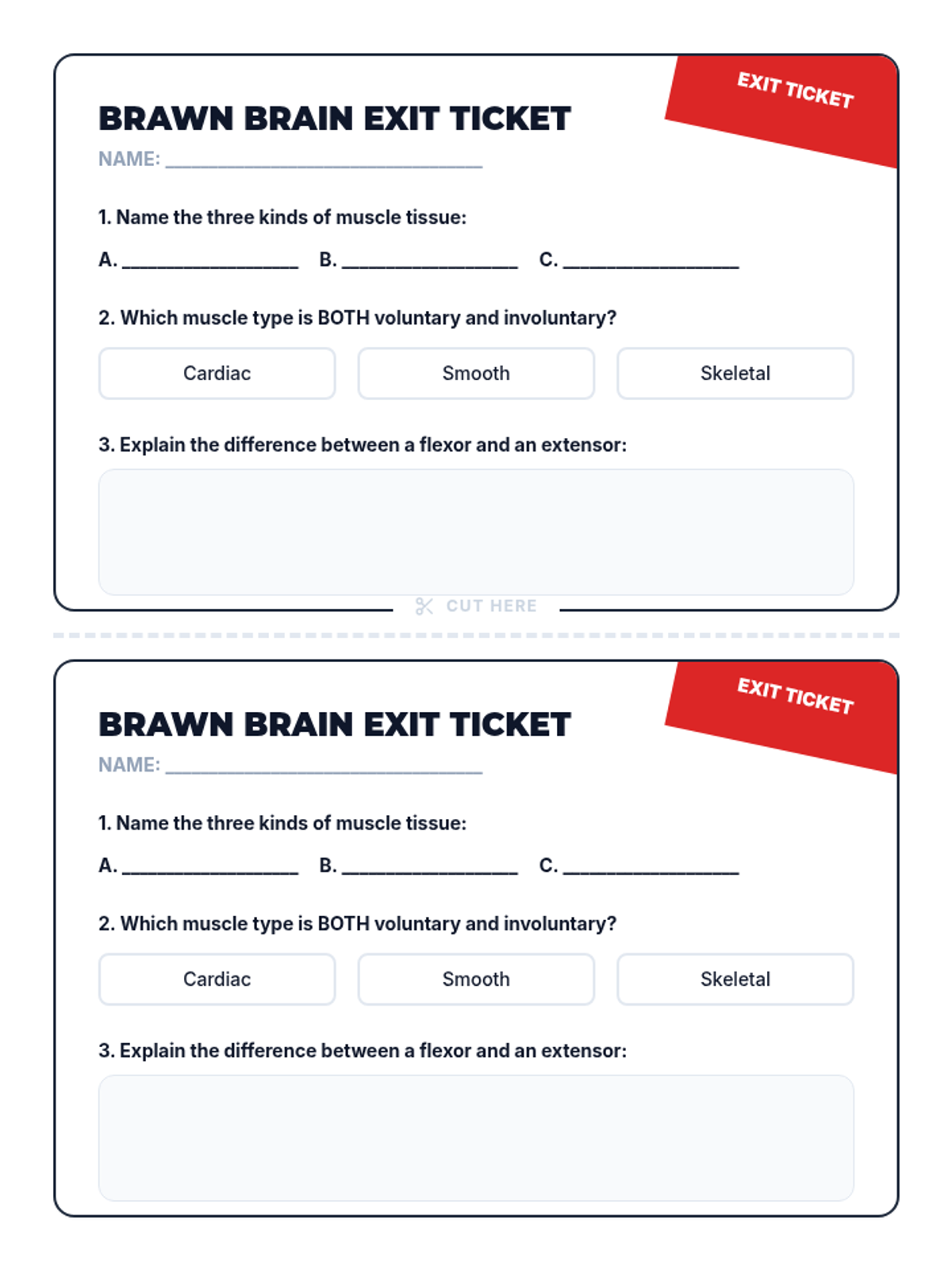
A dual-copy exit ticket for quick assessment of student understanding regarding muscle types, pairs, and connectivity.
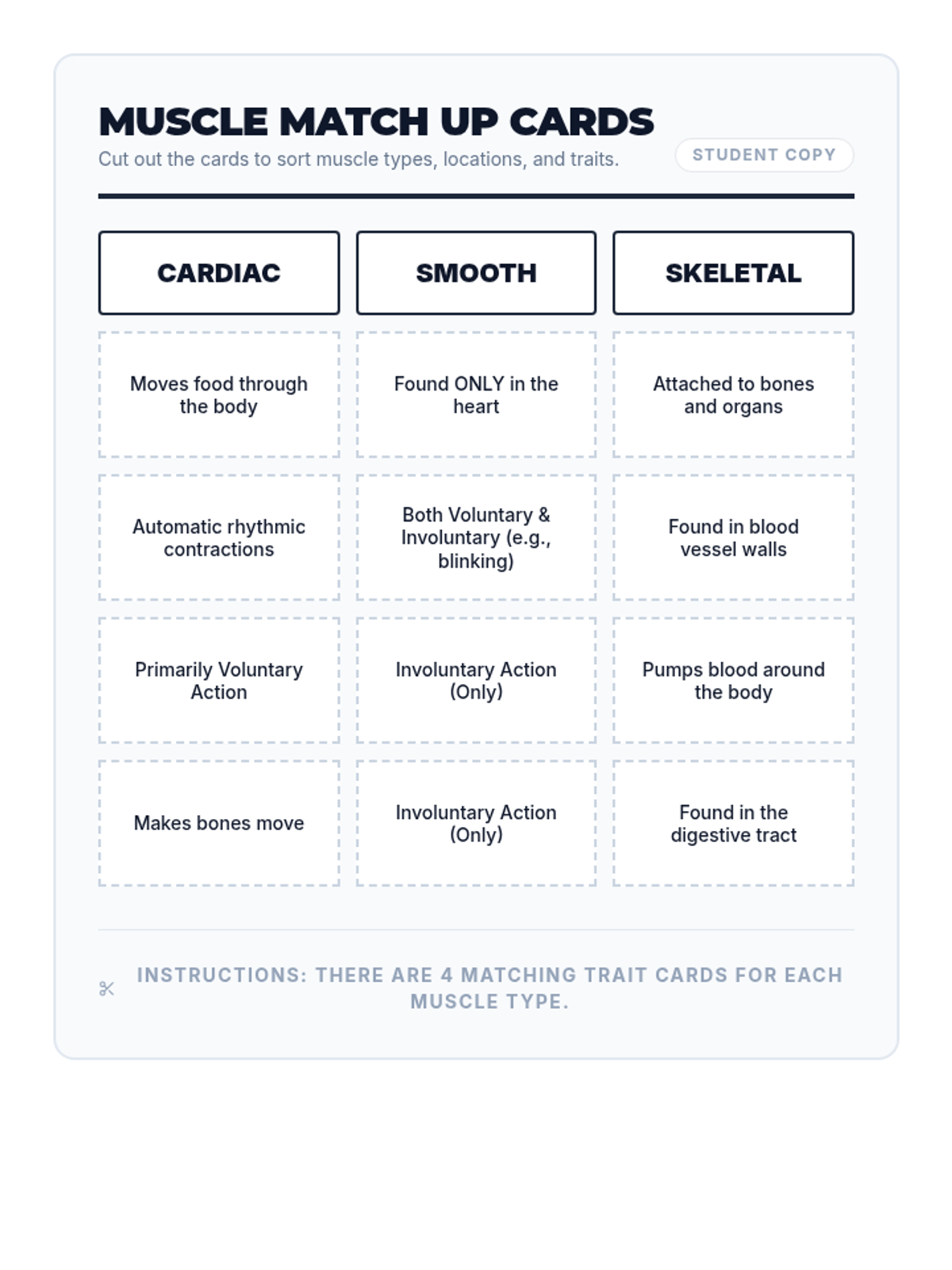
A set of sorting cards for student groups to categorize muscle types by their location, function, and voluntary/involuntary status.
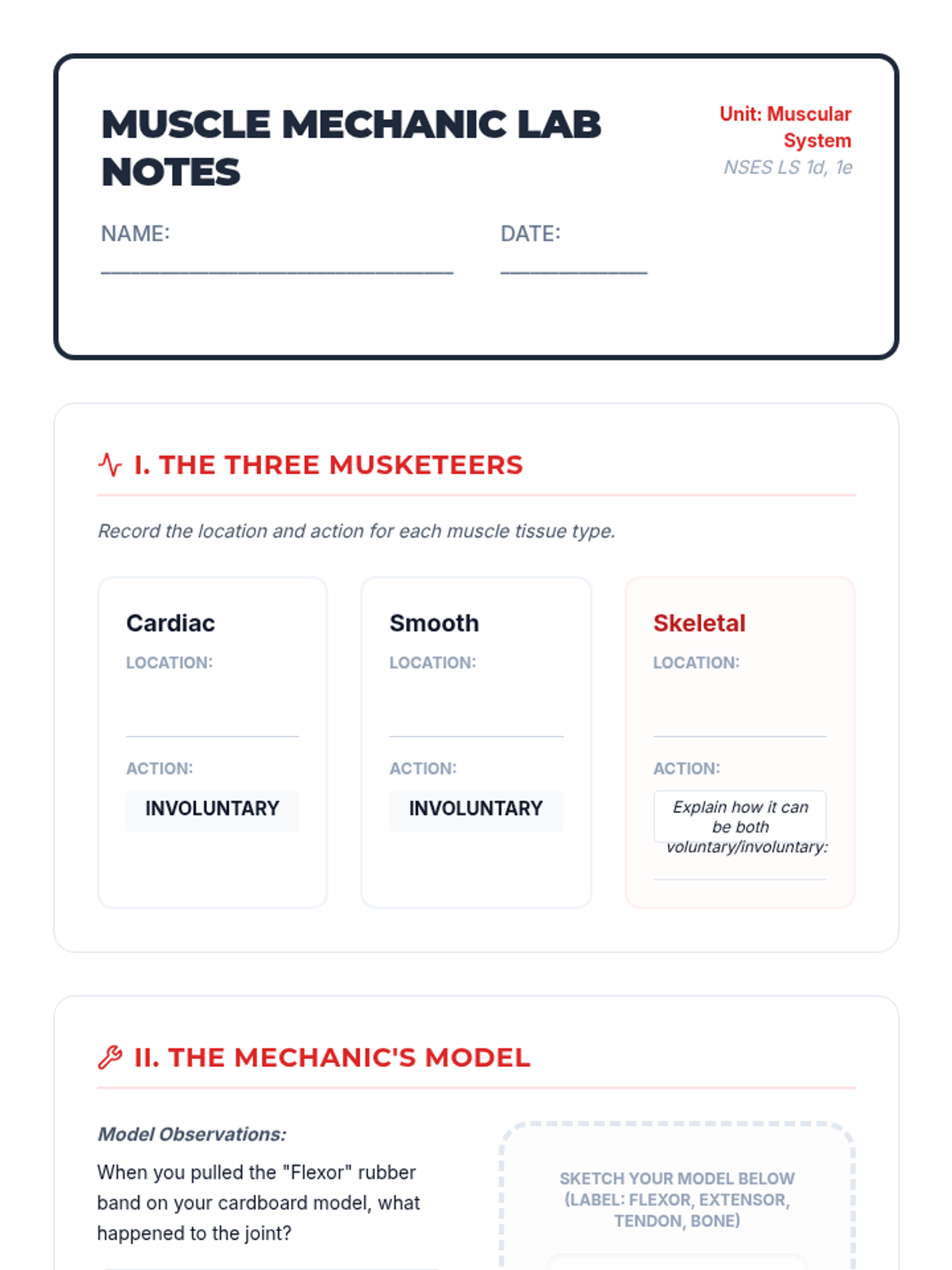
A student lab manual for "The Movement Lab", featuring guided notes on muscle types, a hands-on model observation area, and a math focus on muscle strength percentage increase.
A visually engaging slide deck covering the three types of muscle tissue, muscle pairs (flexors/extensors), and the benefits of resistance and aerobic exercise.
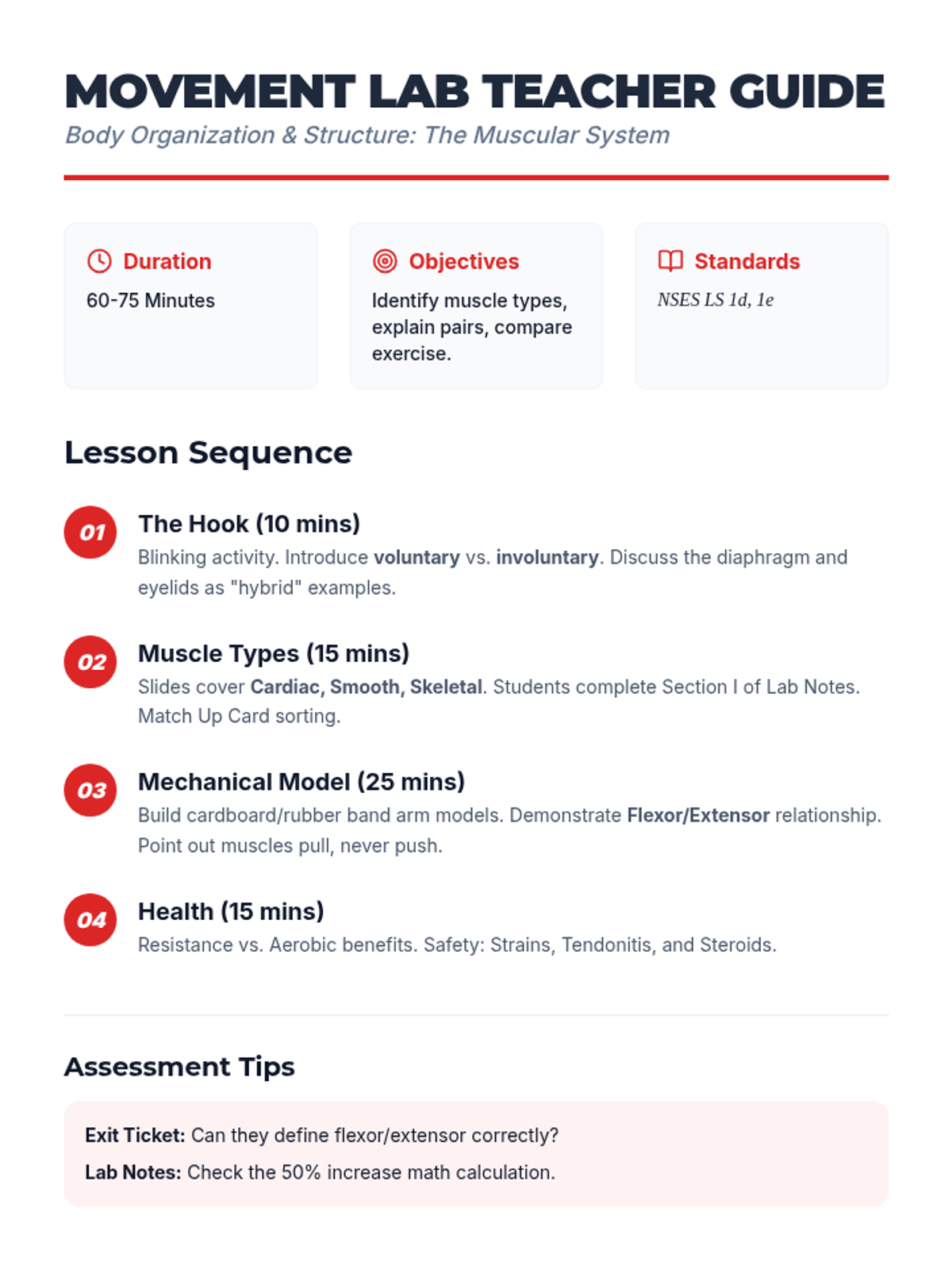
A comprehensive teacher's guide for "The Movement Lab" lesson, including pacing, hands-on activity instructions, and discussion prompts for teaching the muscular system.
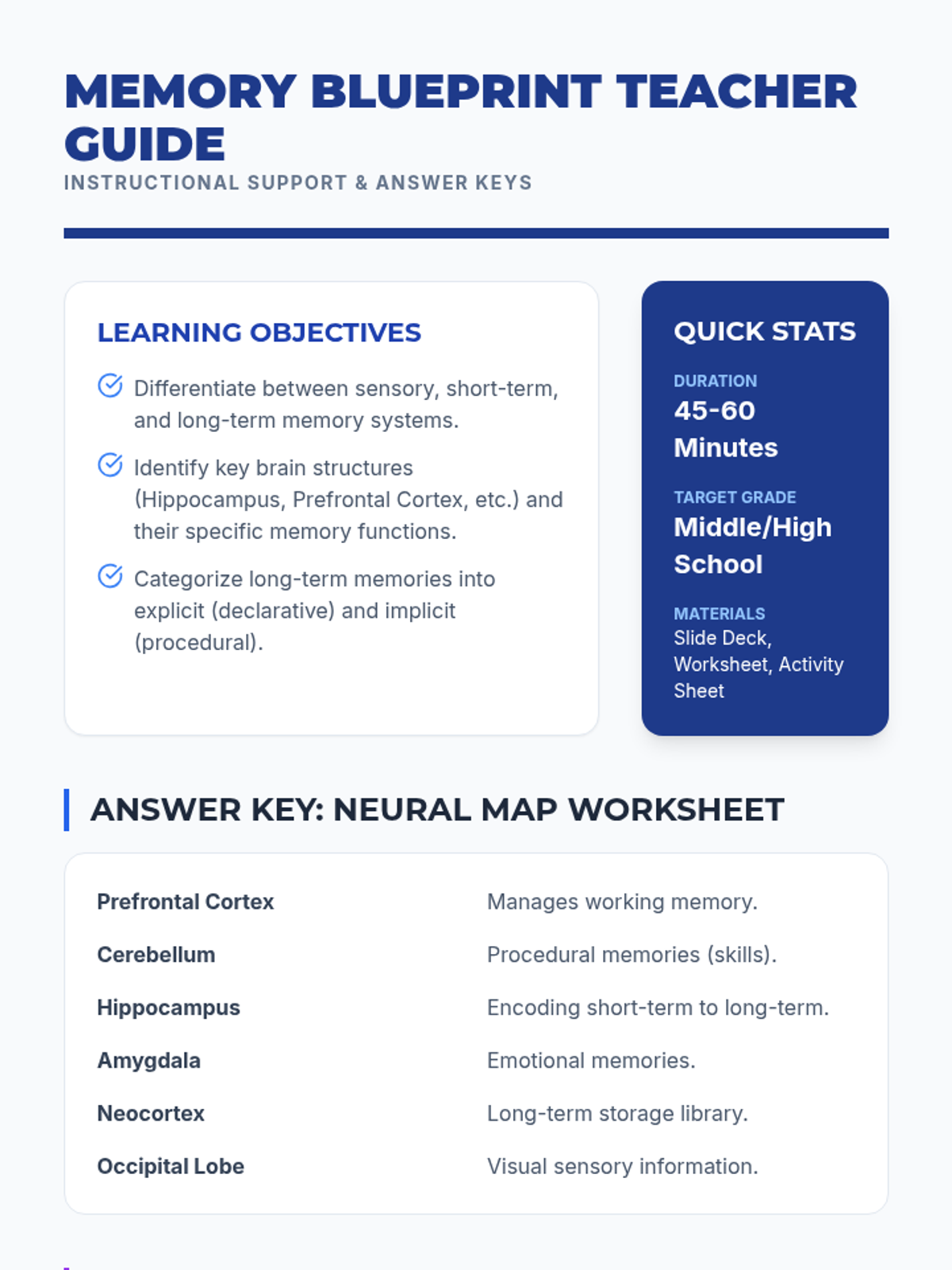
An essential guide for teachers providing pedagogical support, detailed answer keys for all student activities, and strategies for addressing common student misconceptions about memory systems and brain functions. Revised for improved layout and polished answer keys.
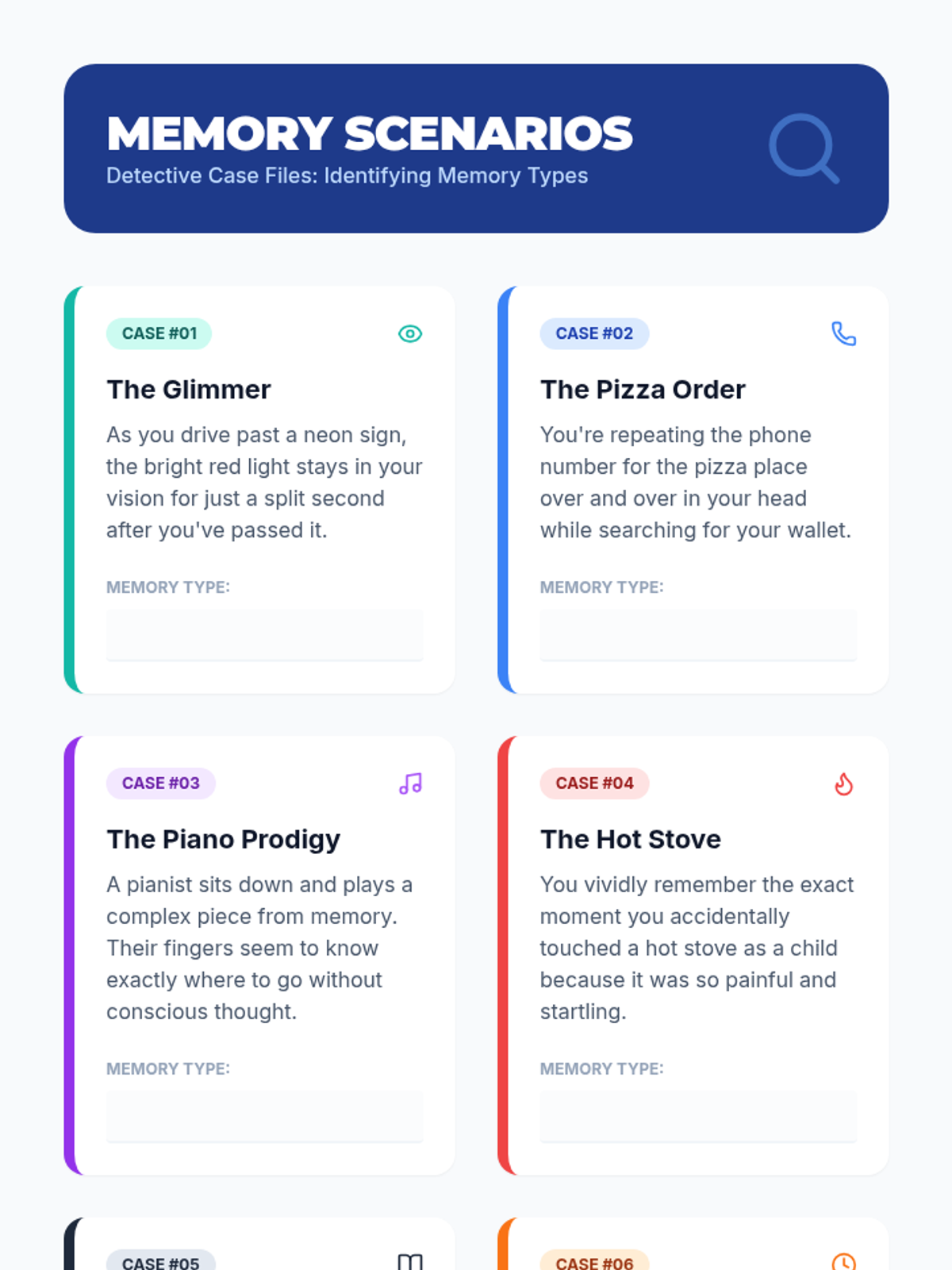
A student-facing activity sheet featuring six real-world scenarios. Students act as 'Memory Detectives' to identify the specific type of memory being used in each case and explain the neurological basis for their choices.
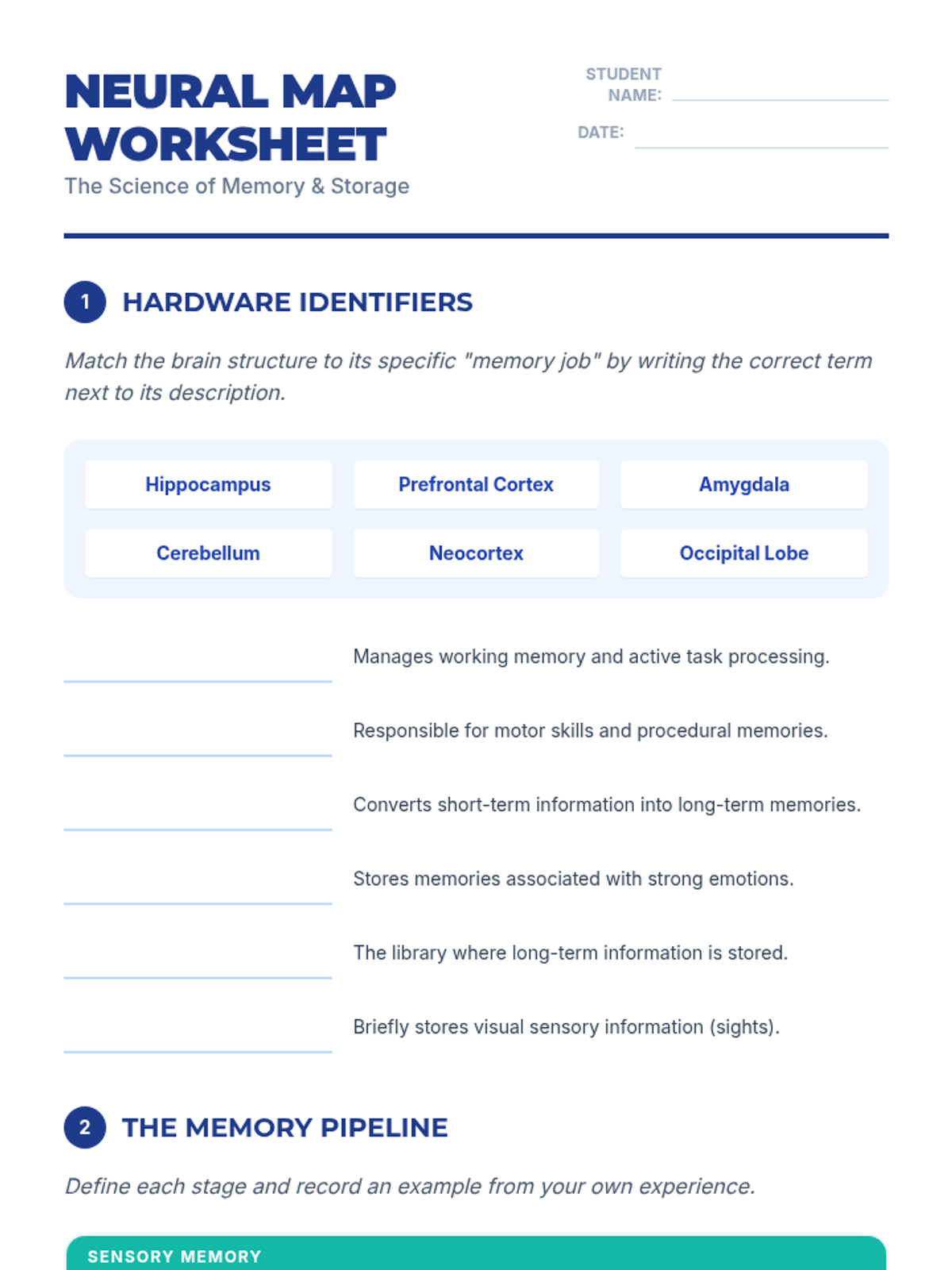
A comprehensive worksheet for students to identify brain structures and categorize different types of memories. Revised for better flow, consistent matching options, and optimized writing spaces.
A dynamic slide deck explaining the three stages of memory and the key neurological structures responsible for processing and storing information. Includes a high-quality educational video and interactive check-for-understanding slides. Revised for better visual clarity and student assessment.
A professional cover page for the Human Body Systems Mission Log unit, including spaces for student information and standard badges. fit for one page.
A comprehensive teacher answer key for all five human body system multiple-choice worksheets. with a professional cover page. consolidated for two pages.
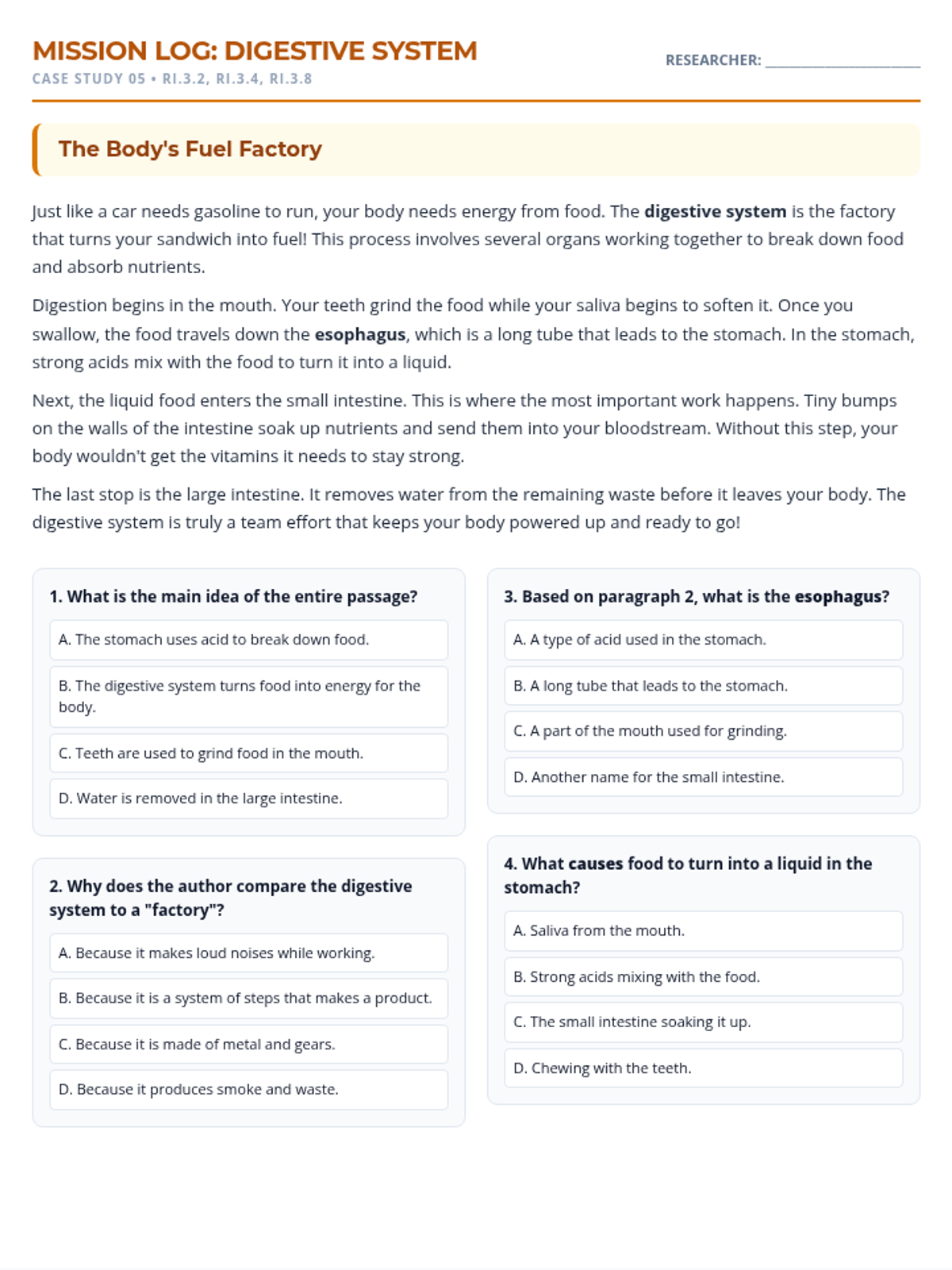
A 3rd grade reading comprehension passage and worksheet about the digestive system, featuring 8 multiple-choice questions aligned to NC ELA EOG standards. consolidated for two pages.
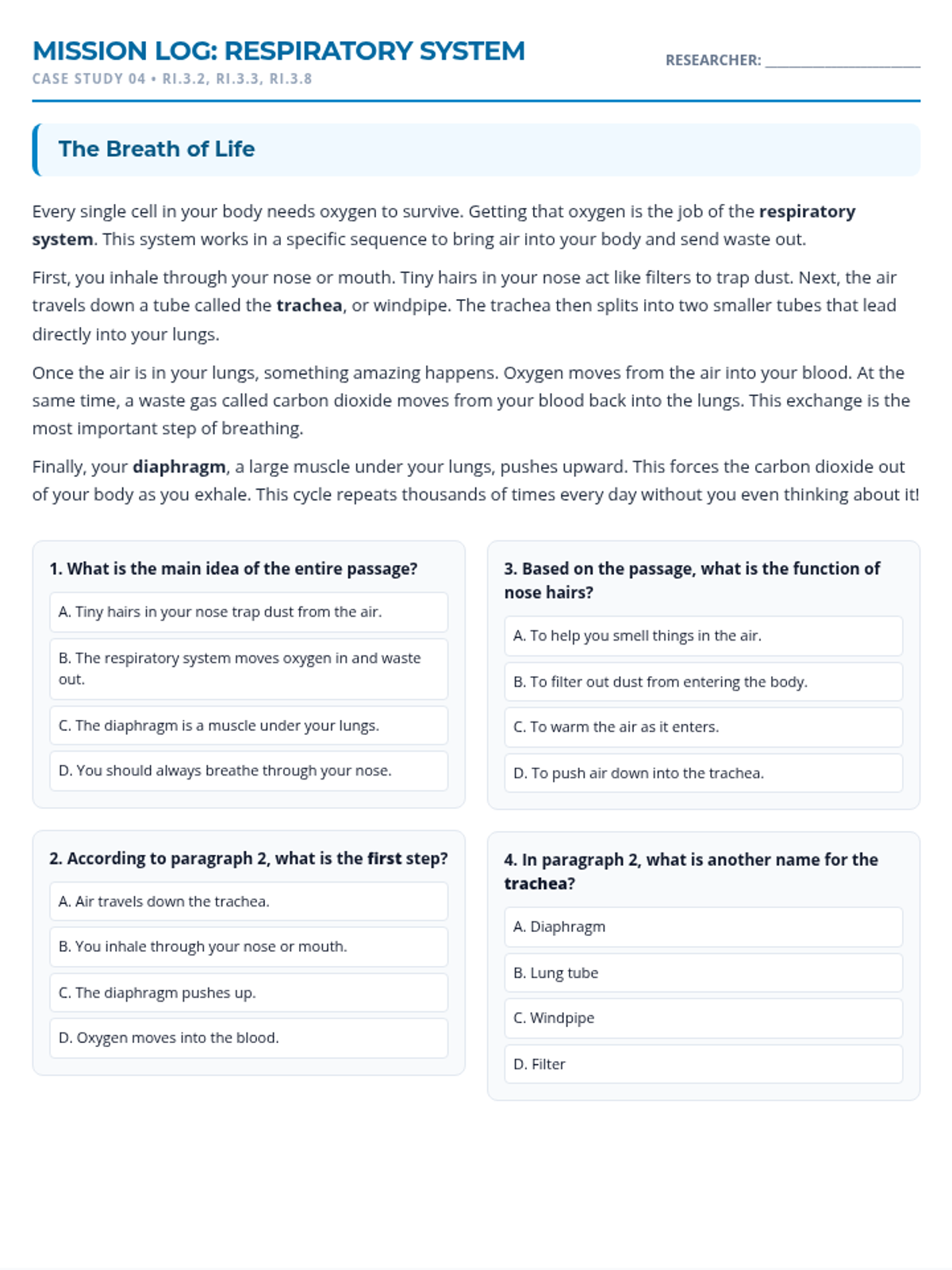
A 3rd grade reading comprehension passage and worksheet about the respiratory system, featuring 8 multiple-choice questions aligned to NC ELA EOG standards. consolidated for two pages.
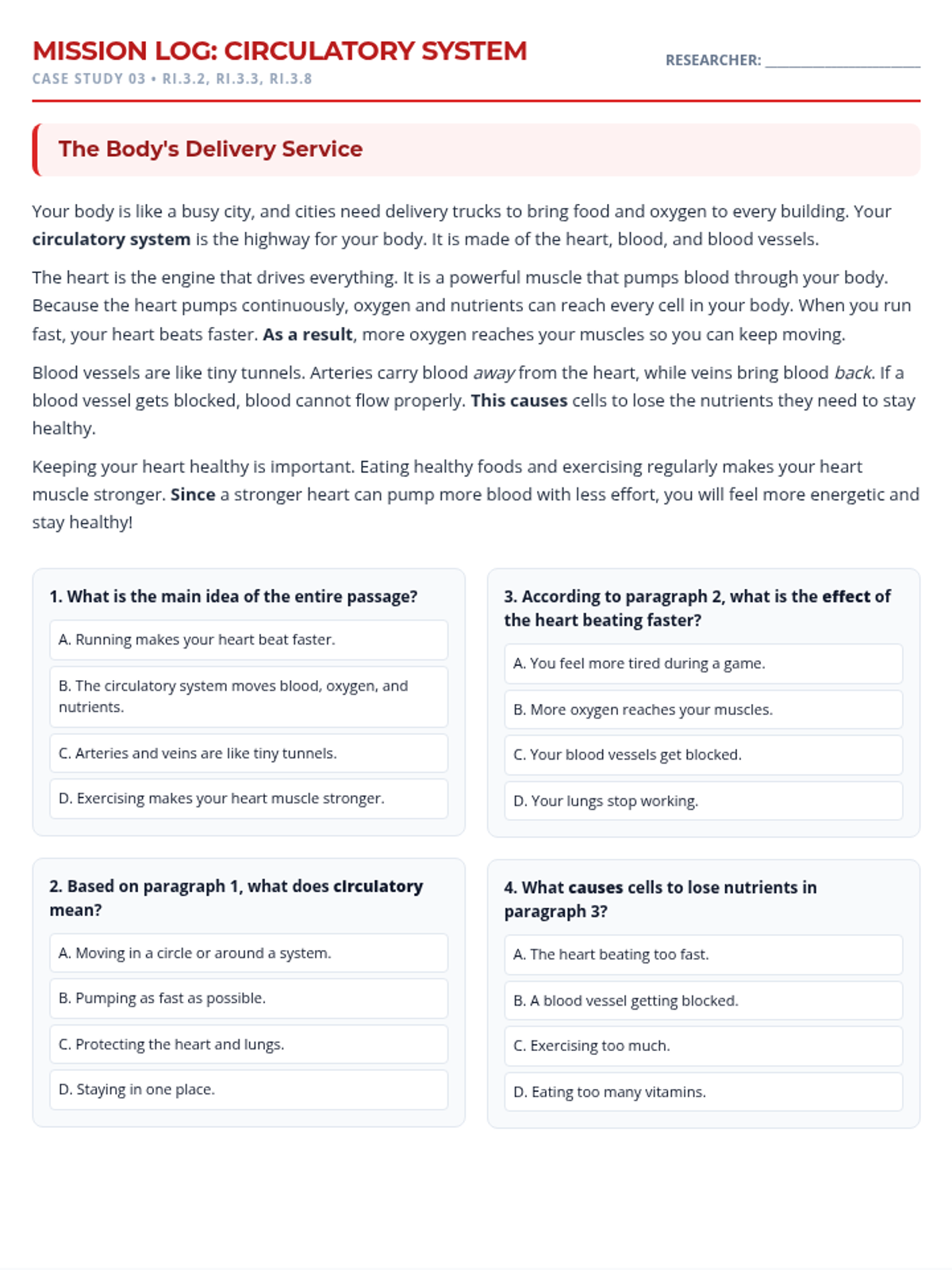
A 3rd grade reading comprehension passage and worksheet about the circulatory system, featuring 8 multiple-choice questions aligned to NC ELA EOG standards. consolidated for two pages.
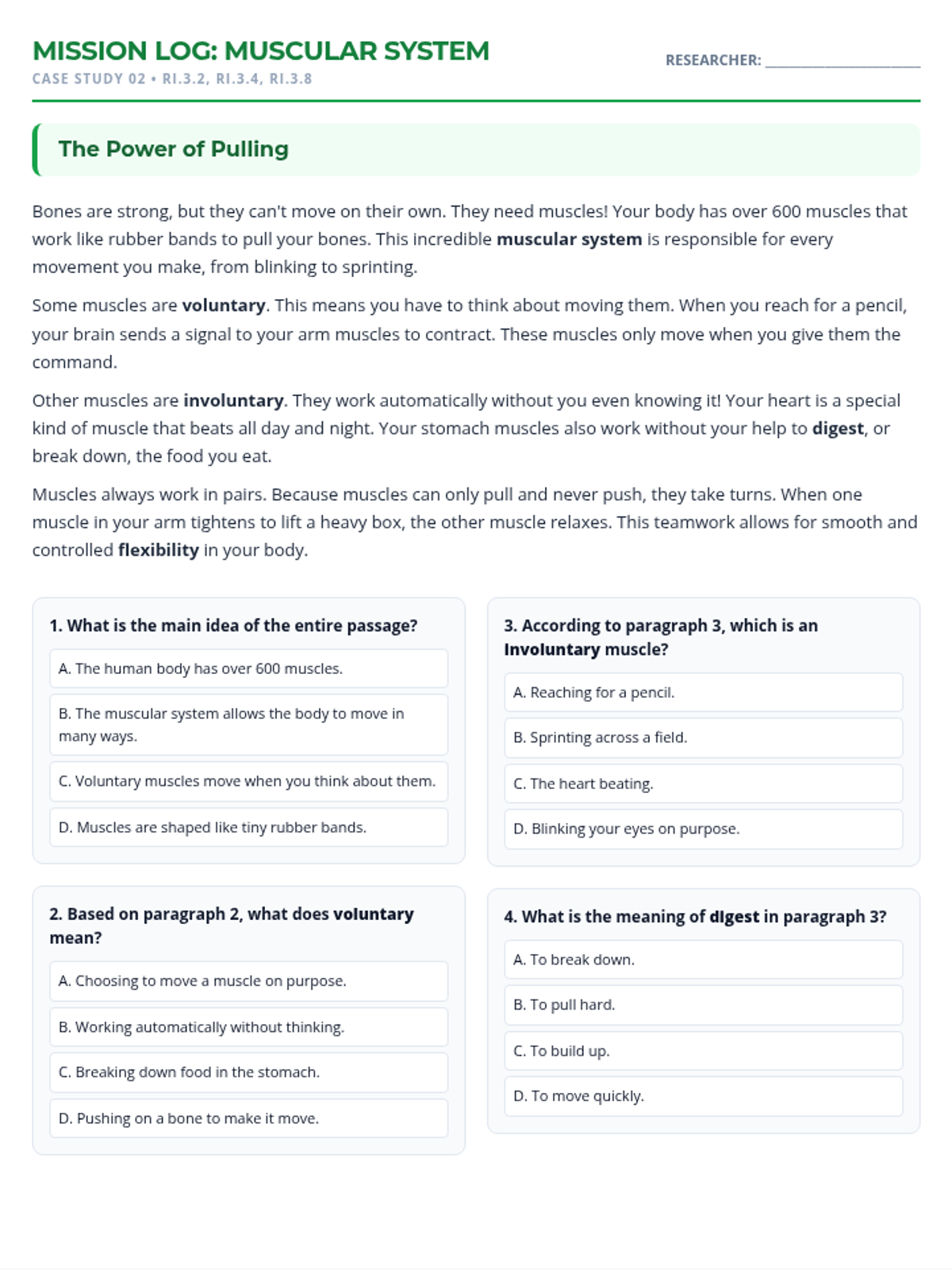
A 3rd grade reading comprehension passage and worksheet about the muscular system, featuring 8 multiple-choice questions aligned to NC ELA EOG standards. consolidated for two pages.
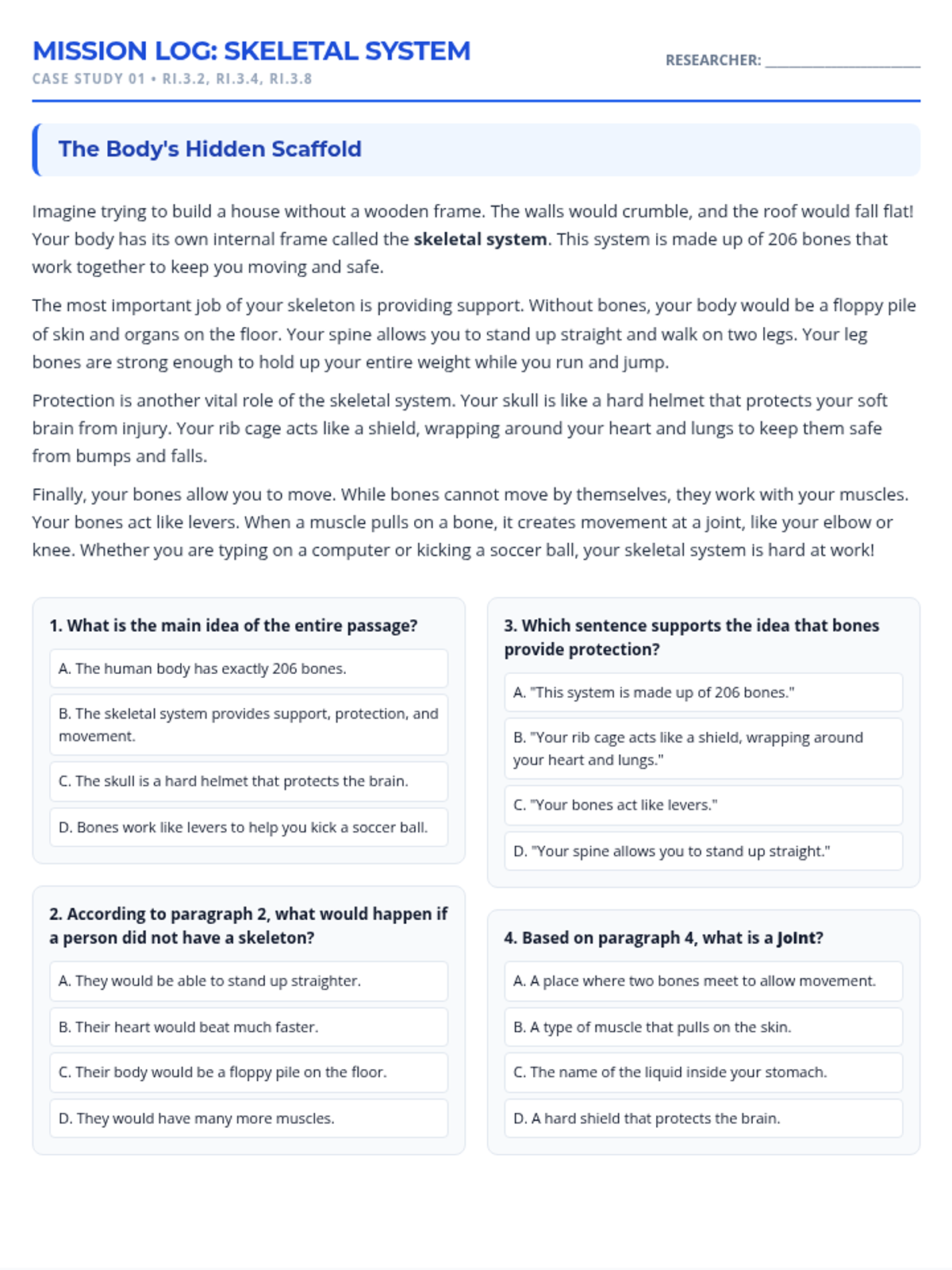
A 3rd grade reading comprehension passage and worksheet about the skeletal system, featuring 8 multiple-choice questions aligned to NC ELA EOG standards. consolidated for two pages.
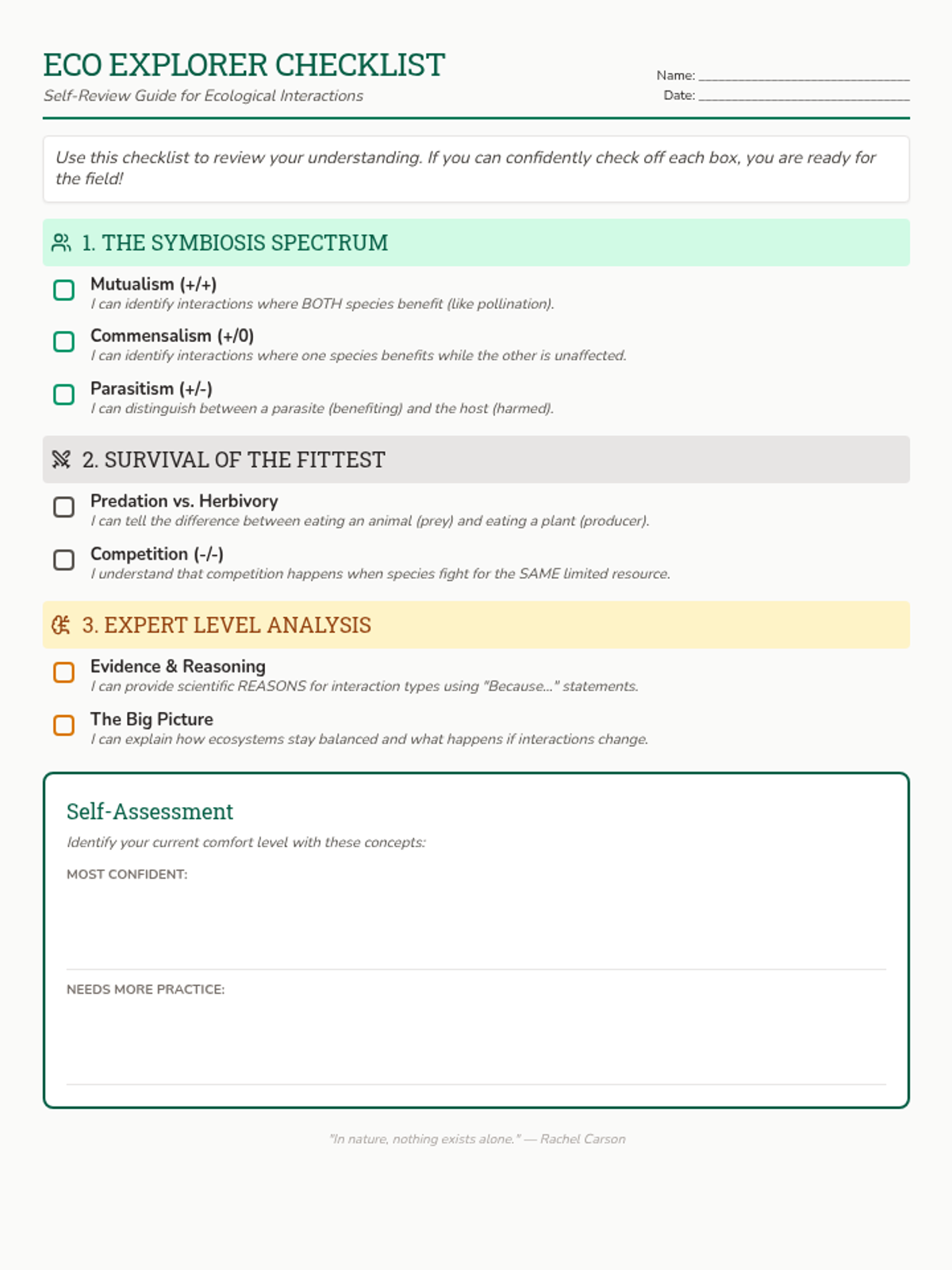
A self-assessment checklist for students to review ecological interaction concepts. Revised to fit on a single page with expanded student work areas for reflection.
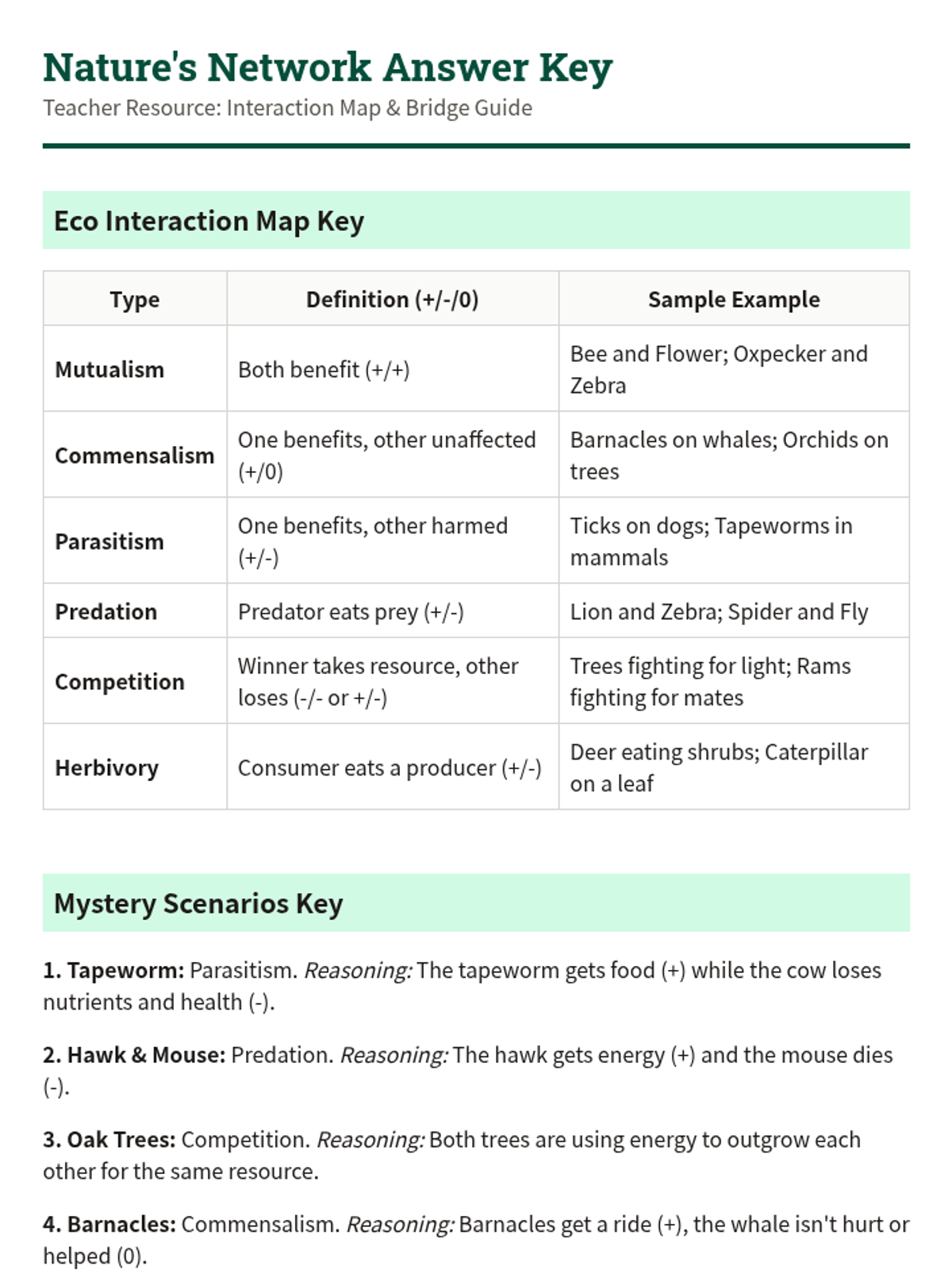
An answer key for the Nature's Network lesson materials, providing definitions, examples, and expected reasoning for the graphic organizer, matching scenarios, and exit ticket.
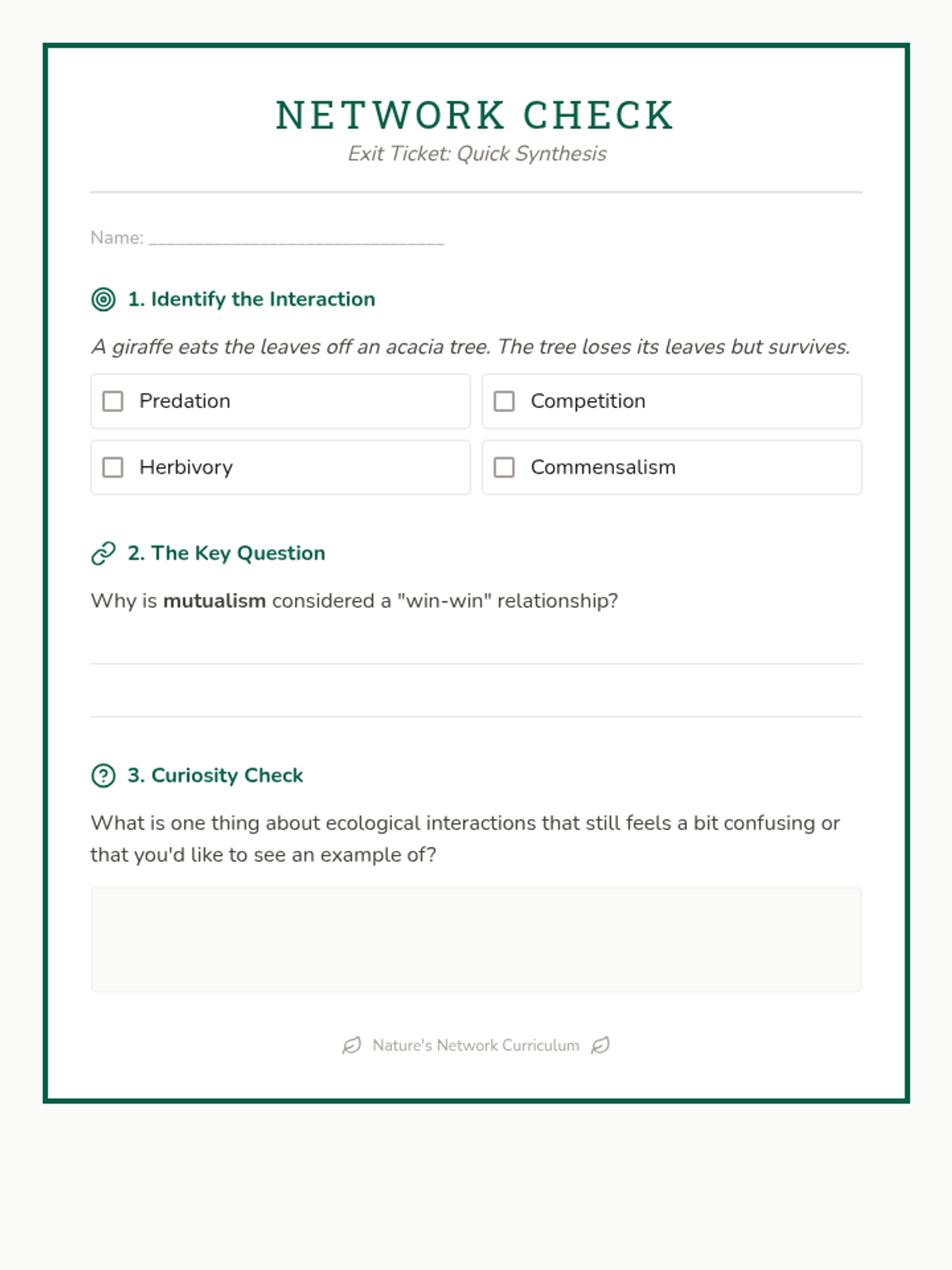
A concise exit ticket for checking student understanding of ecological interactions. Features a multiple-choice scenario, a short explanation prompt, and a "muddiest point" question for teacher feedback.
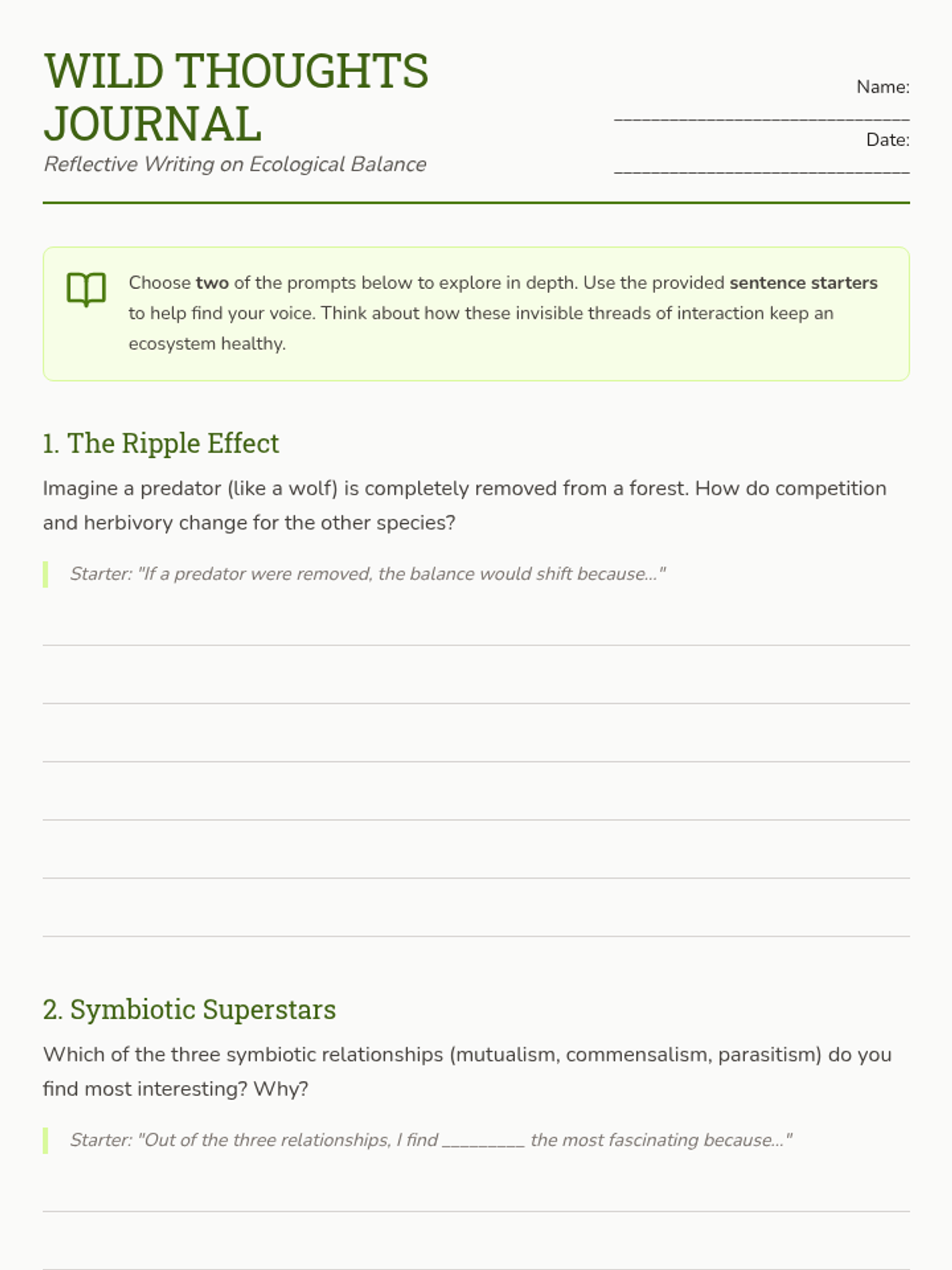
A reflective journaling worksheet for ecology students featuring expanded student writing areas and improved layout to keep prompts and their work areas together. Revised to pull decorative footer back onto the final content page.
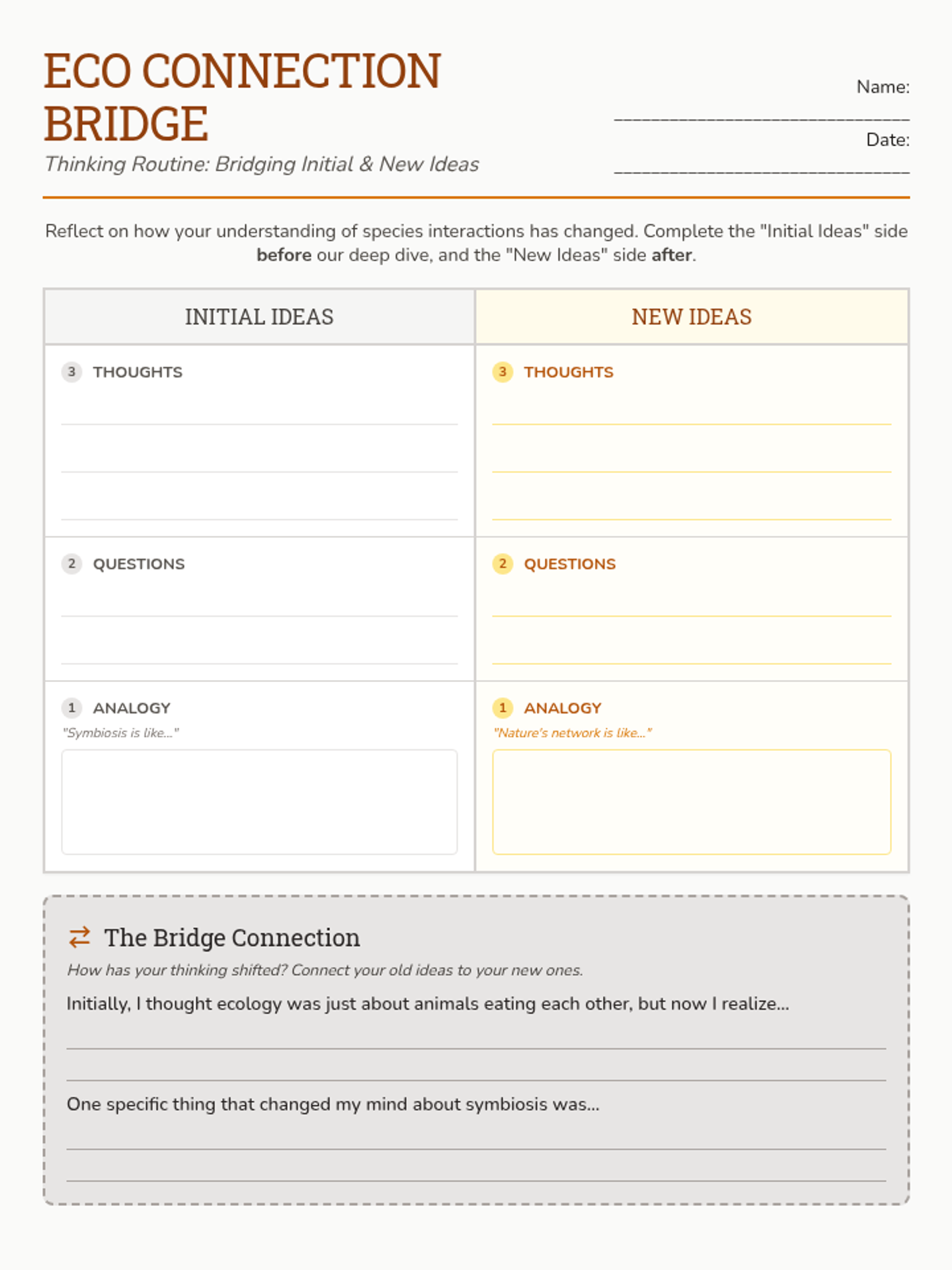
A 3-2-1 Bridge thinking routine worksheet focused on ecological interactions. Revised for optimized layout to ensure the entire routine fits on a single page, with larger analogy boxes and clearer student response lines.
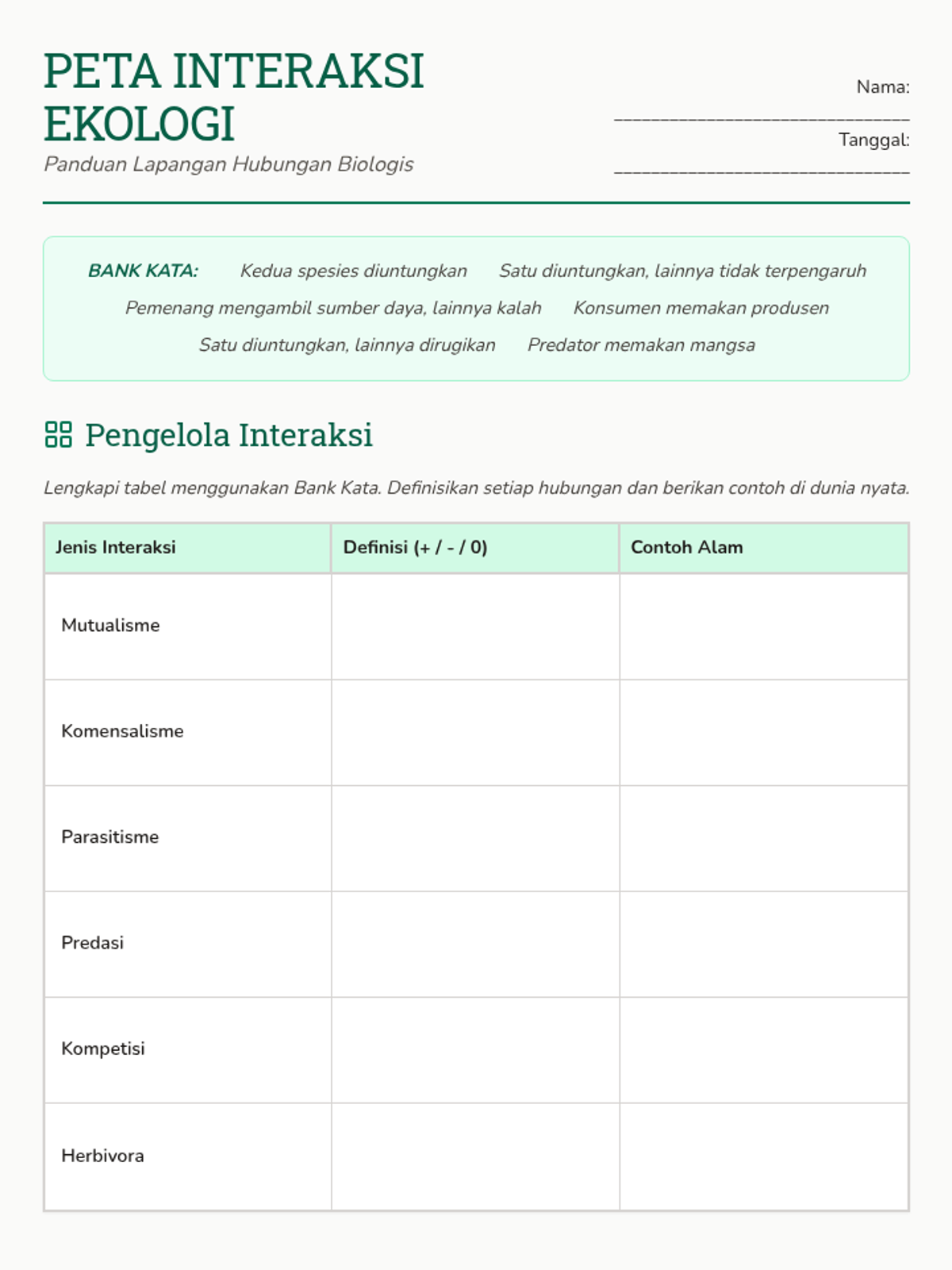
A graphic organizer worksheet designed for 7th-grade students to categorize and define ecological interactions. Revised for better flow: Word Bank is now placed before the table, and scenarios have expanded reasoning space on a clean second page.
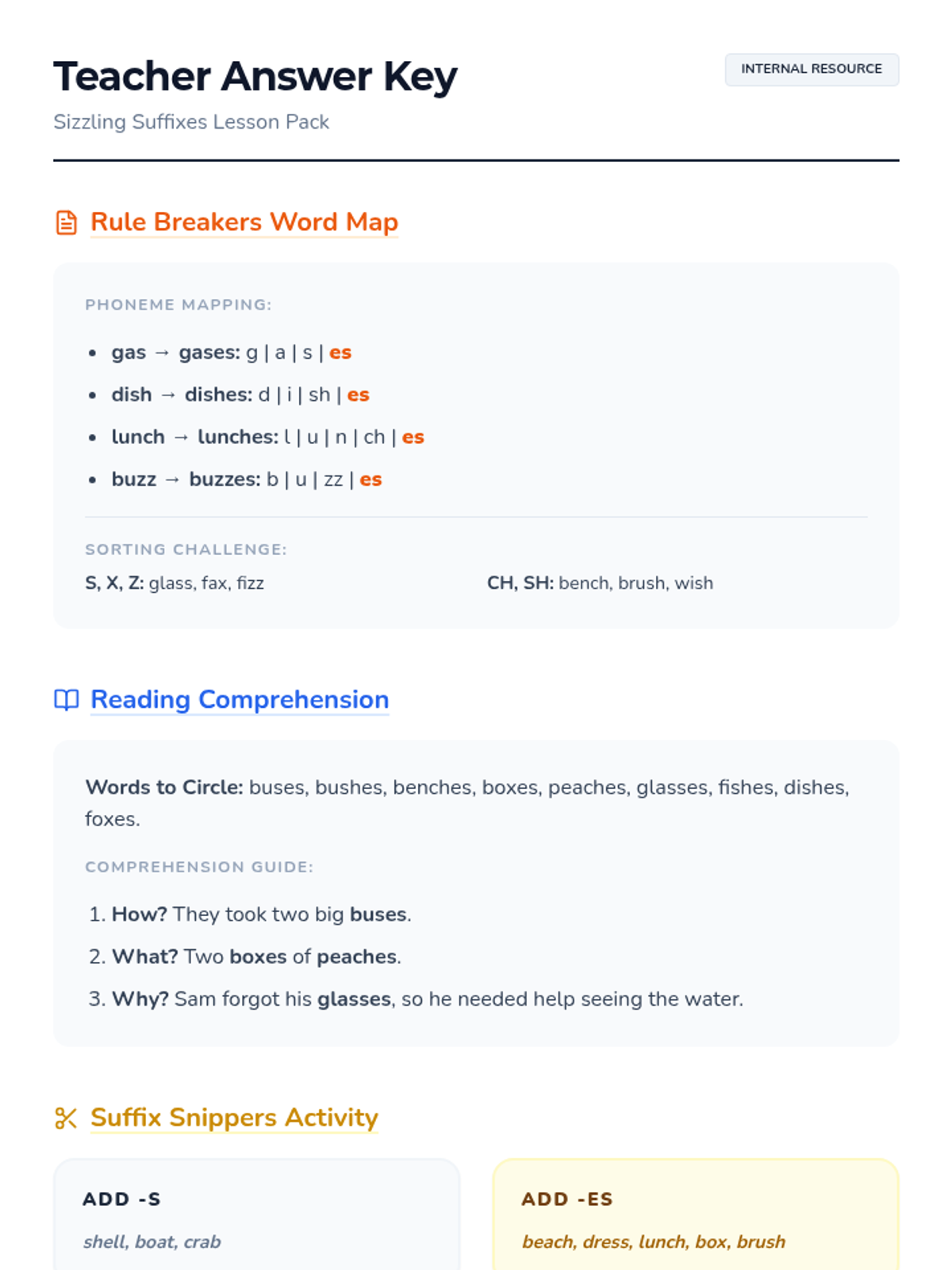
A complete answer key for the Sizzling Suffixes lesson, providing solutions for the word map, reading comprehension, and sorting activity.
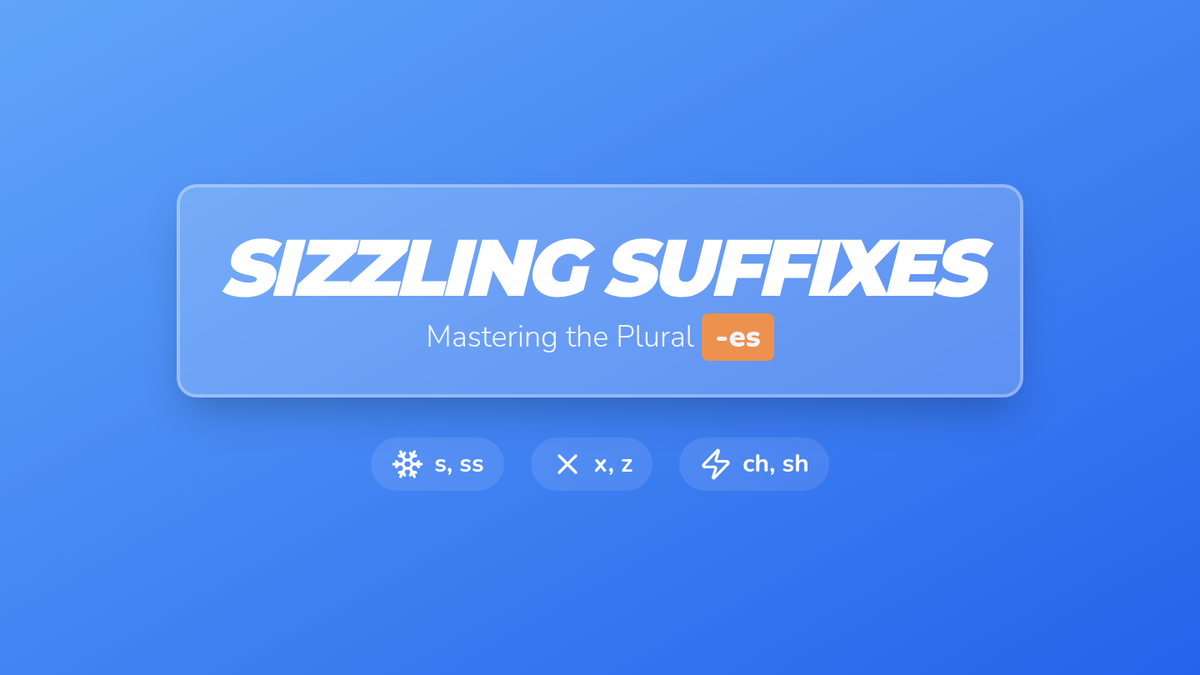
Instructional slides for teaching the -es plural suffix rule. Covers the 'rule breaker' endings (s, x, z, ch, sh), the change in syllable count, and includes visual practice examples.
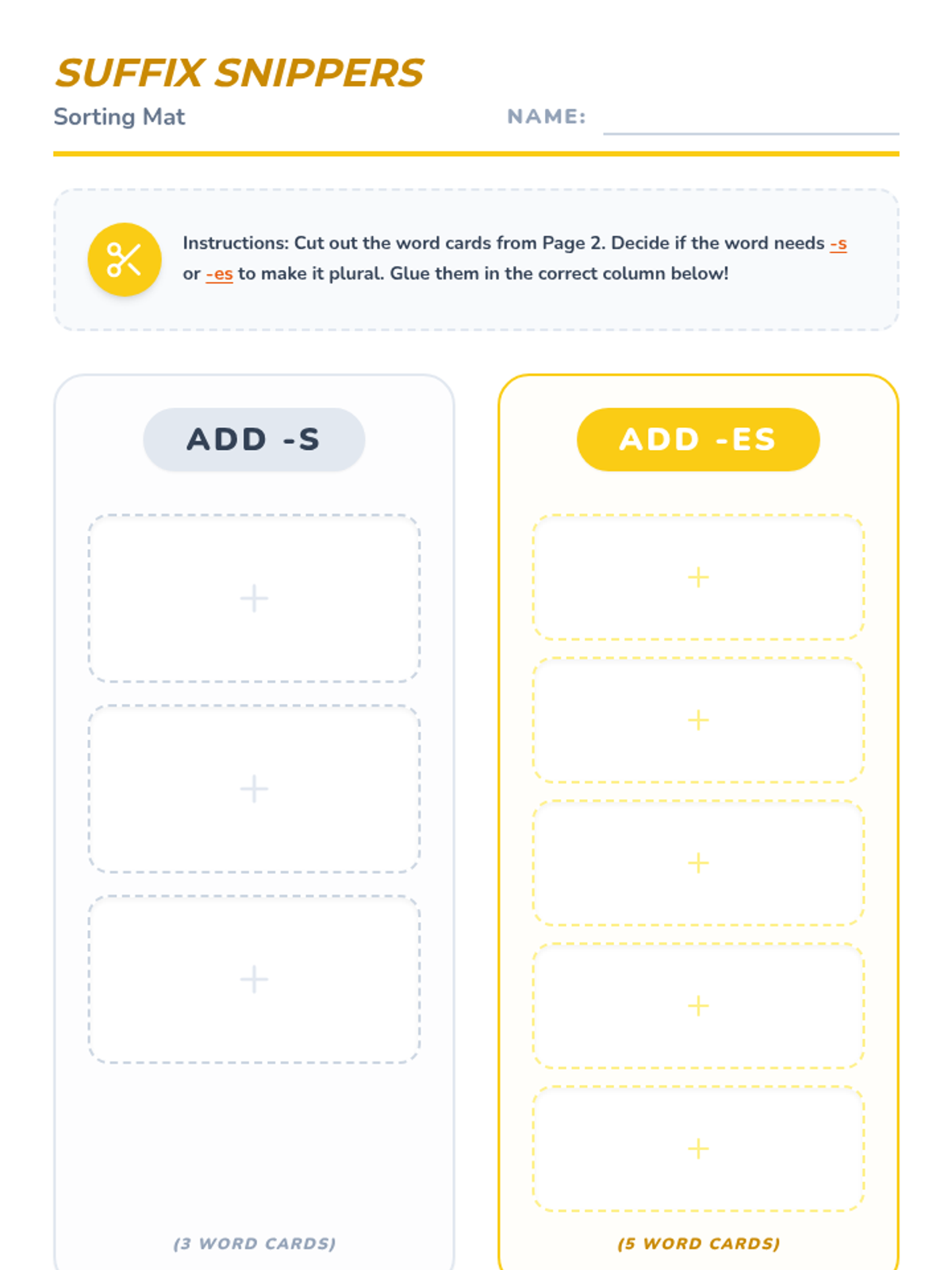
A cut-and-paste activity where students sort base words into 'Add -s' and 'Add -es' categories. Includes a sorting mat and a page of illustrated word cutouts.
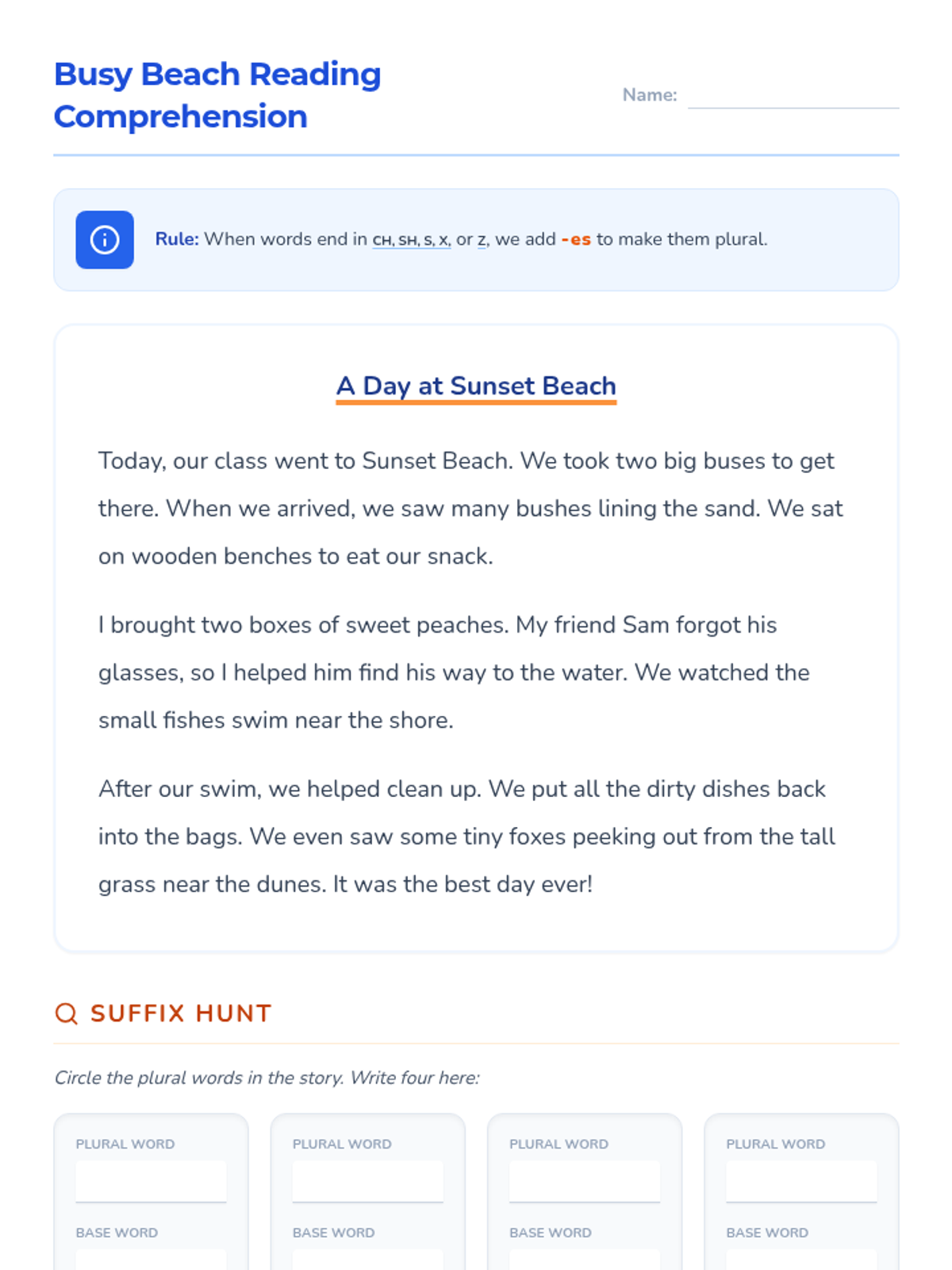
A reading passage titled 'A Day at Sunset Beach' filled with -es plural words. Includes a suffix hunt activity and comprehension questions to reinforce reading and application of the plural rule.
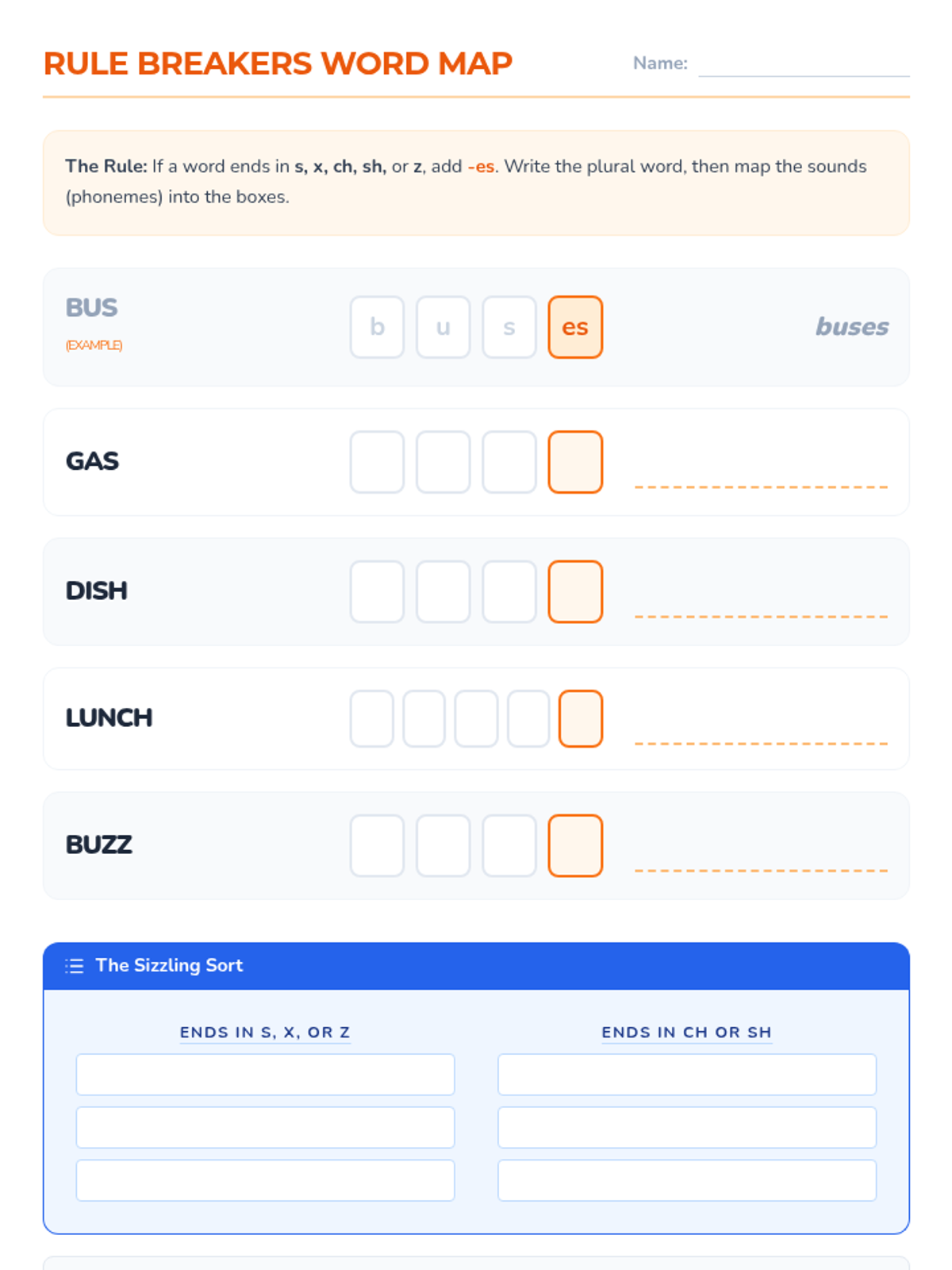
A word mapping and sorting worksheet focusing on the -es plural suffix rules for words ending in s, x, ch, sh, and z. Students practice mapping sounds and categorizing words.
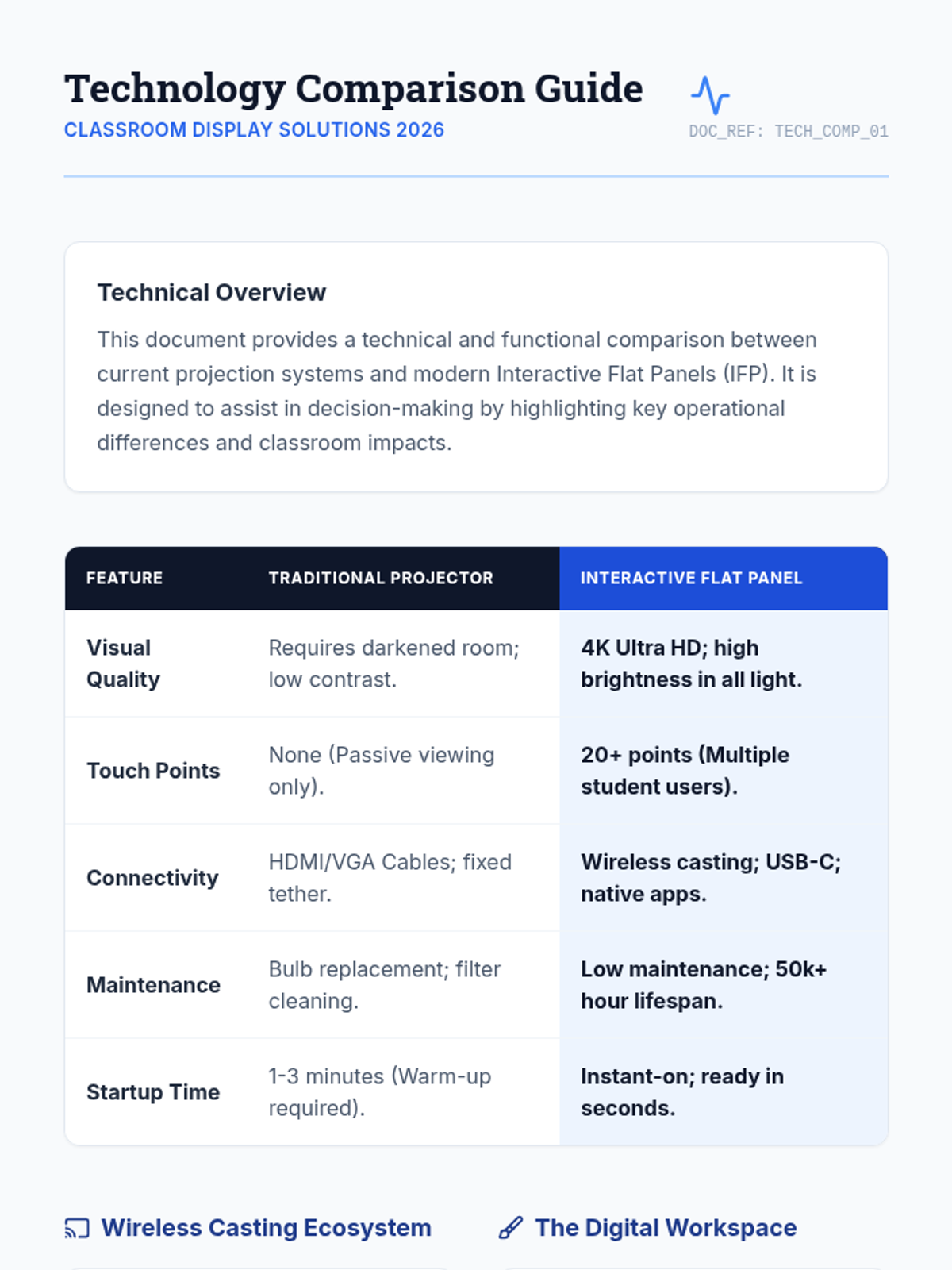
A technical data sheet and comparison guide that provides an objective analysis of Interactive Flat Panels versus traditional projection systems. Ideal for administrators focused on hardware specs and long-term value.
A high-impact slide presentation designed to visually demonstrate the benefits of interactive classroom technology to administrative stakeholders. Focuses on wireless sharing and digital whiteboarding.
A professional and persuasive formal memo addressed to a supervisor, outlining the pedagogical benefits and key features of interactive flat panels for the classroom.