A student safety plan worksheet for adults with IDD. Allows them to identify and record their "Circle of Trust"—specific individuals they can go to for help. Uses clear visuals and writing prompts for personalization.
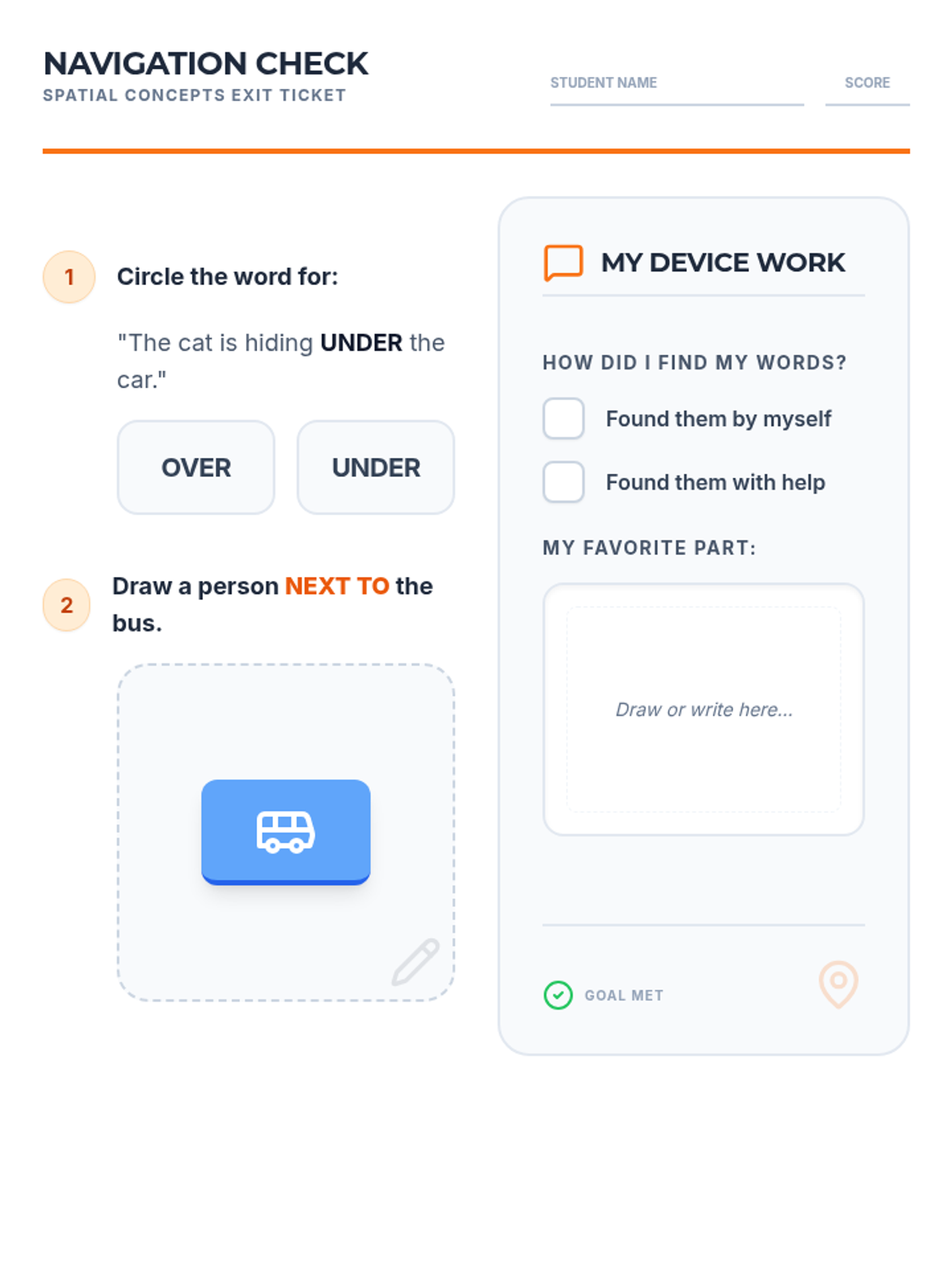
Exit ticket for assessing student comprehension of spatial concepts and self-reflection on AAC device navigation. Features a split layout for academic task and functional self-assessment.
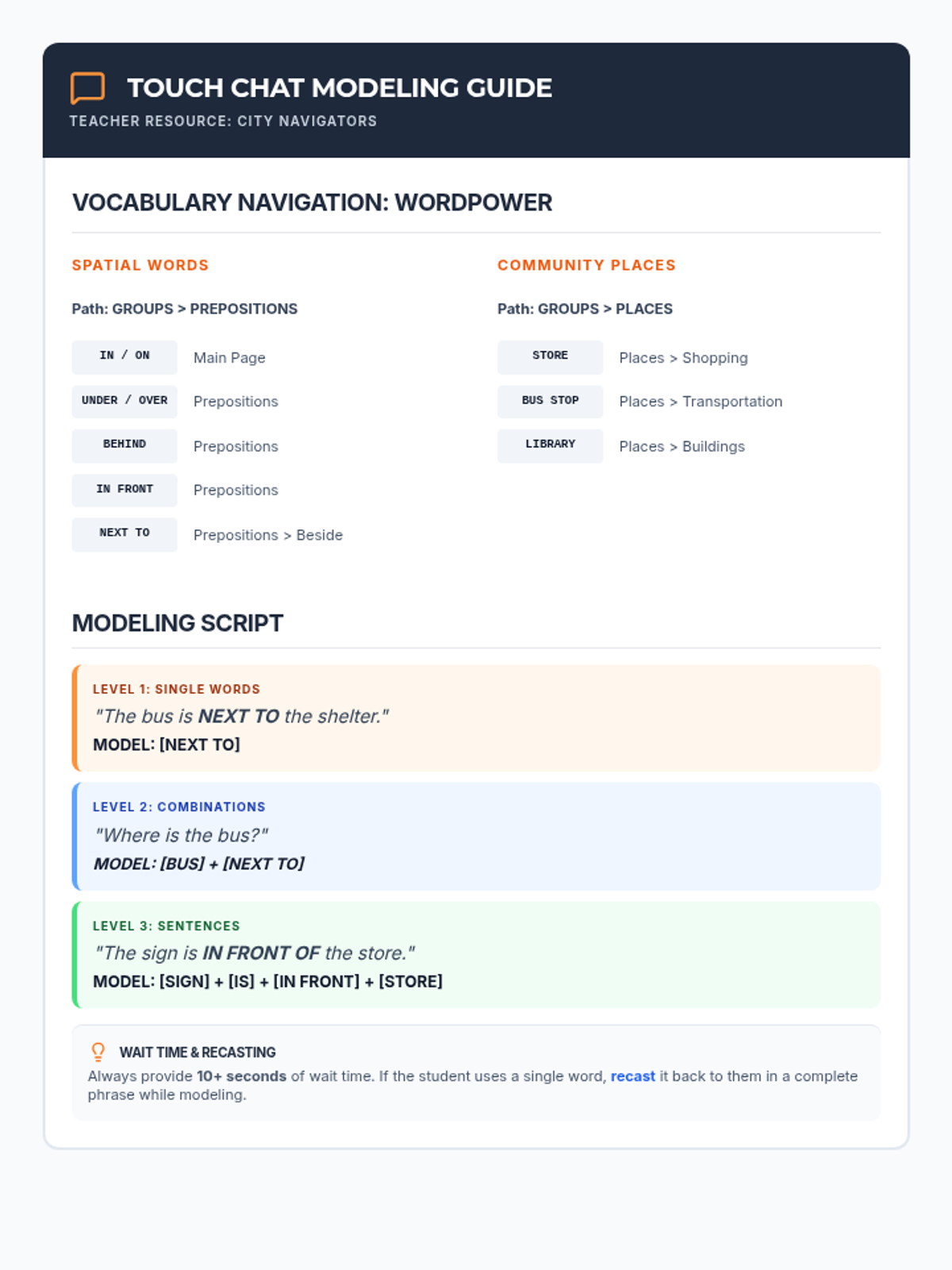
Instructional guide for teachers to model spatial concepts using Touch Chat with Wordpower. Includes specific navigation paths for vocabulary and a tiered script for Aided Language Input.
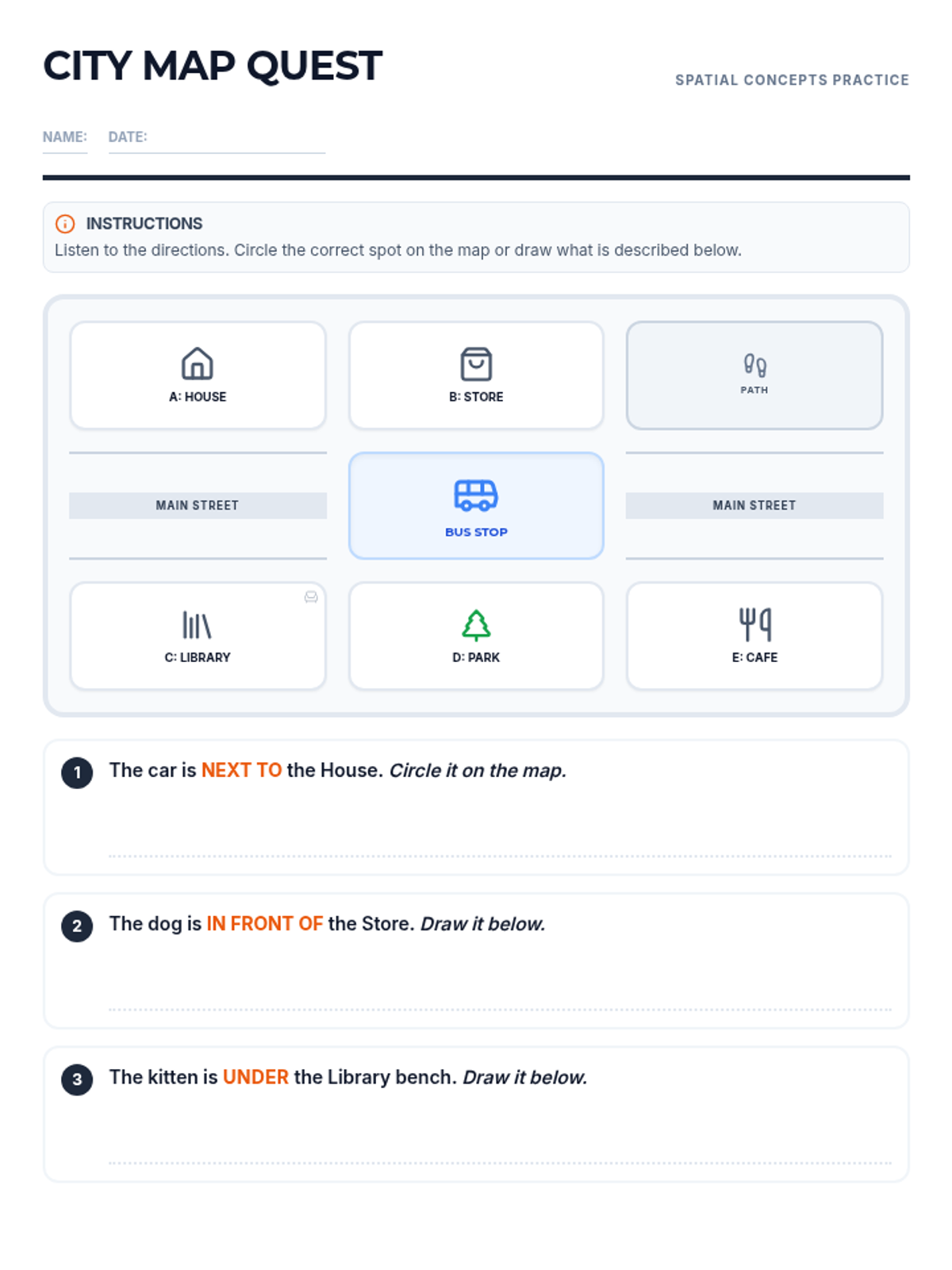
Student worksheet featuring a simplified community map for practice following directions with spatial concepts. Includes clear visual markers and space for recording answers.
Visual presentation for City Navigators lesson introducing spatial concepts and community vocabulary. Large icons and high contrast text designed for middle school students with AAC needs.
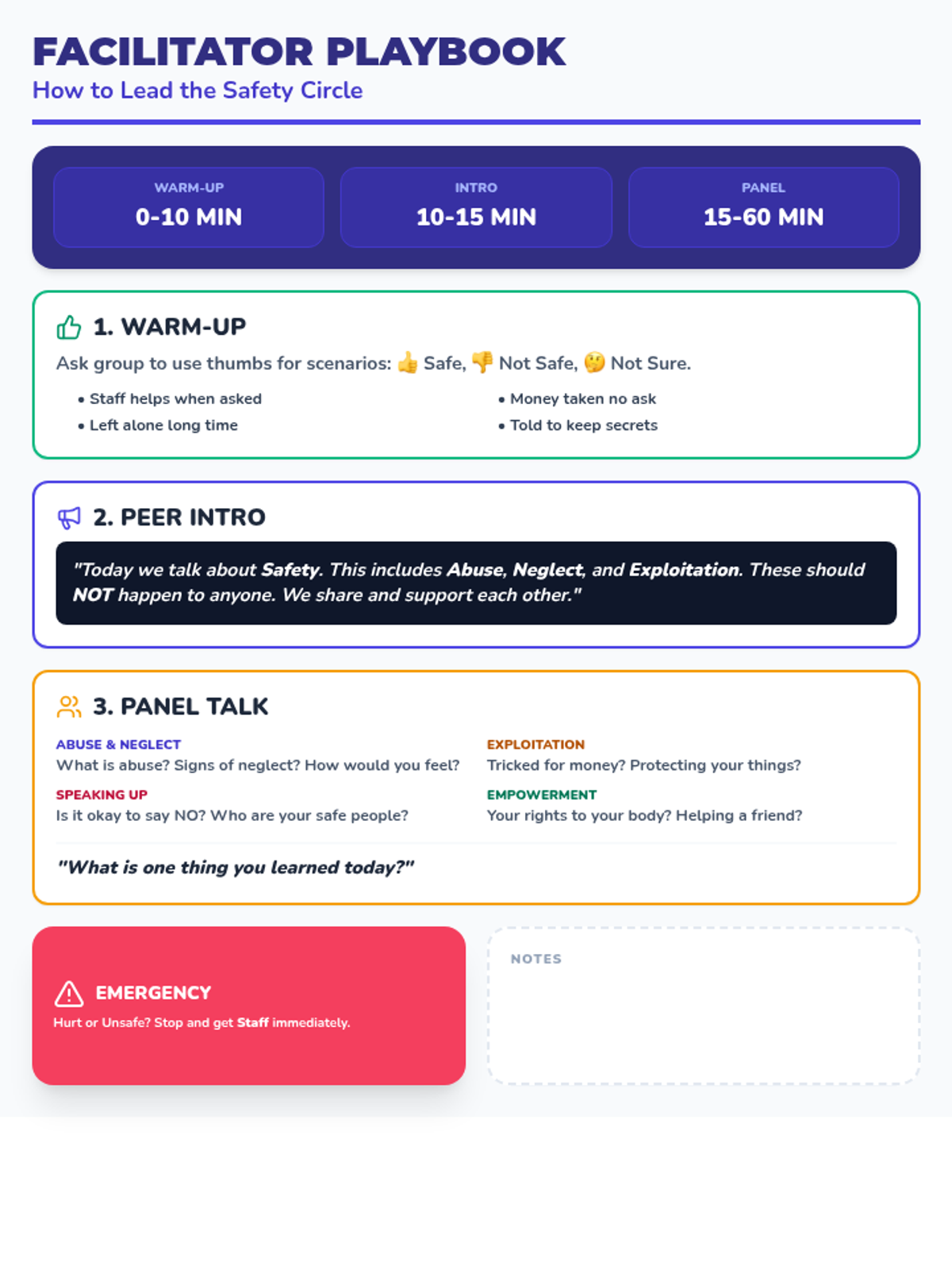
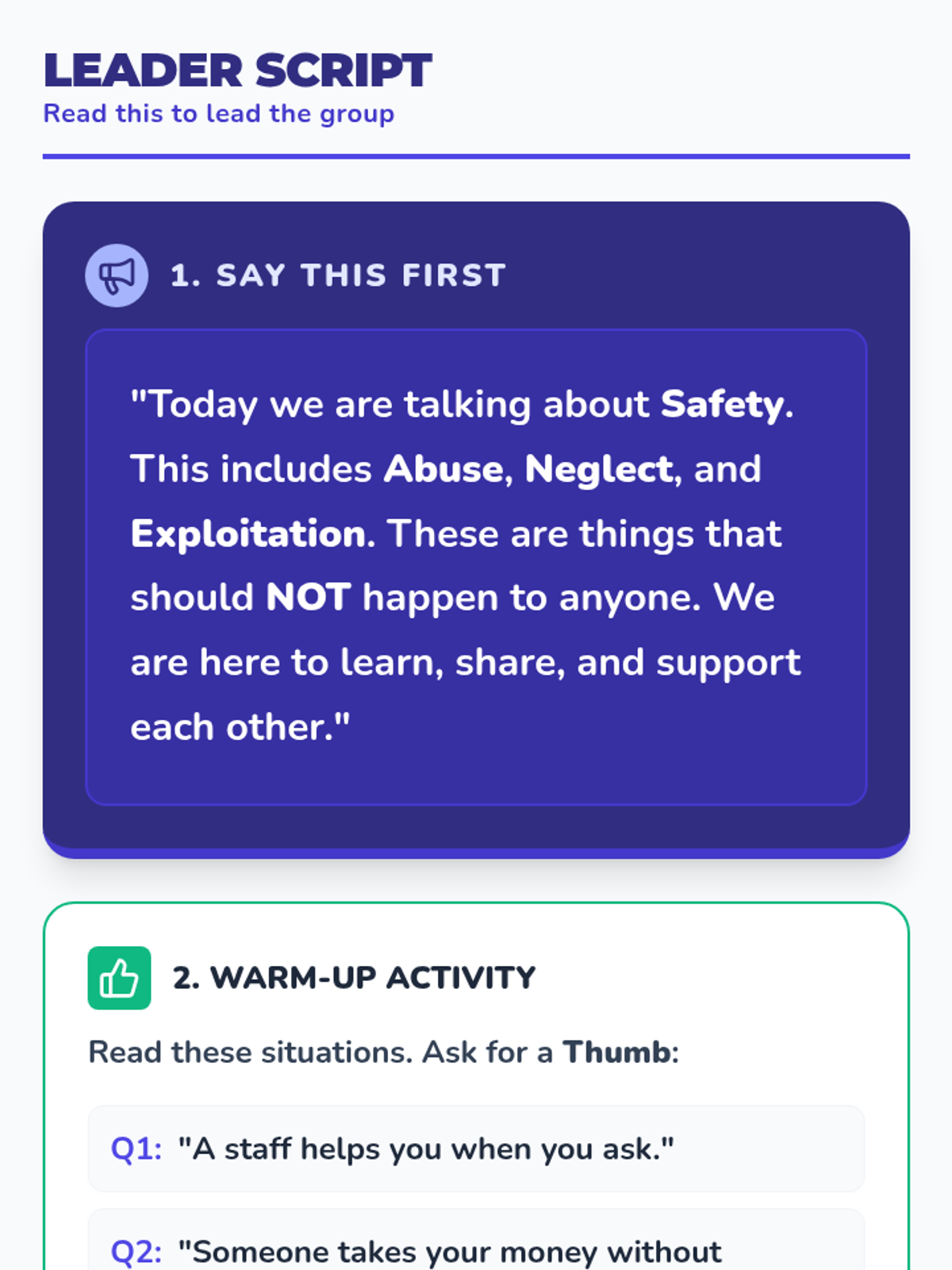
Facilitator playbook with detailed activity steps, script summaries, and discussion prompts. Optimized to fit on a single page for quick reference during peer-led sessions.
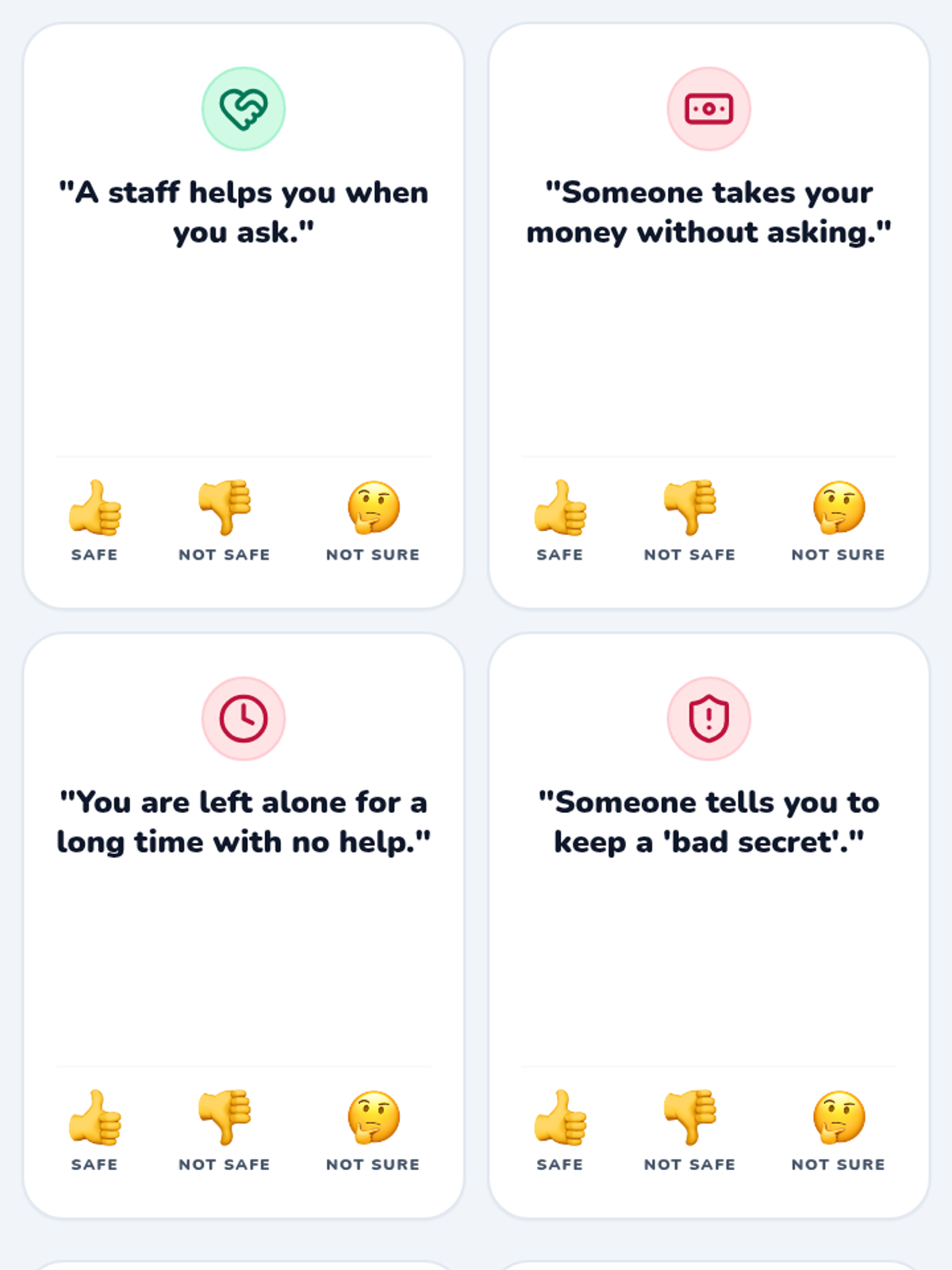
Large situation cards for the "Safe or Not Safe?" warm-up activity. Featuring diverse scenarios with clear icons and uniform answer choices (Safe, Not Safe, Not Sure) to facilitate group interaction and discussion.
A structured talking guide for peer leaders, featuring a simplified introductory script, warm-up instructions, and a curated list of discussion questions on abuse, neglect, and exploitation. Designed with large, bold text for high readability.
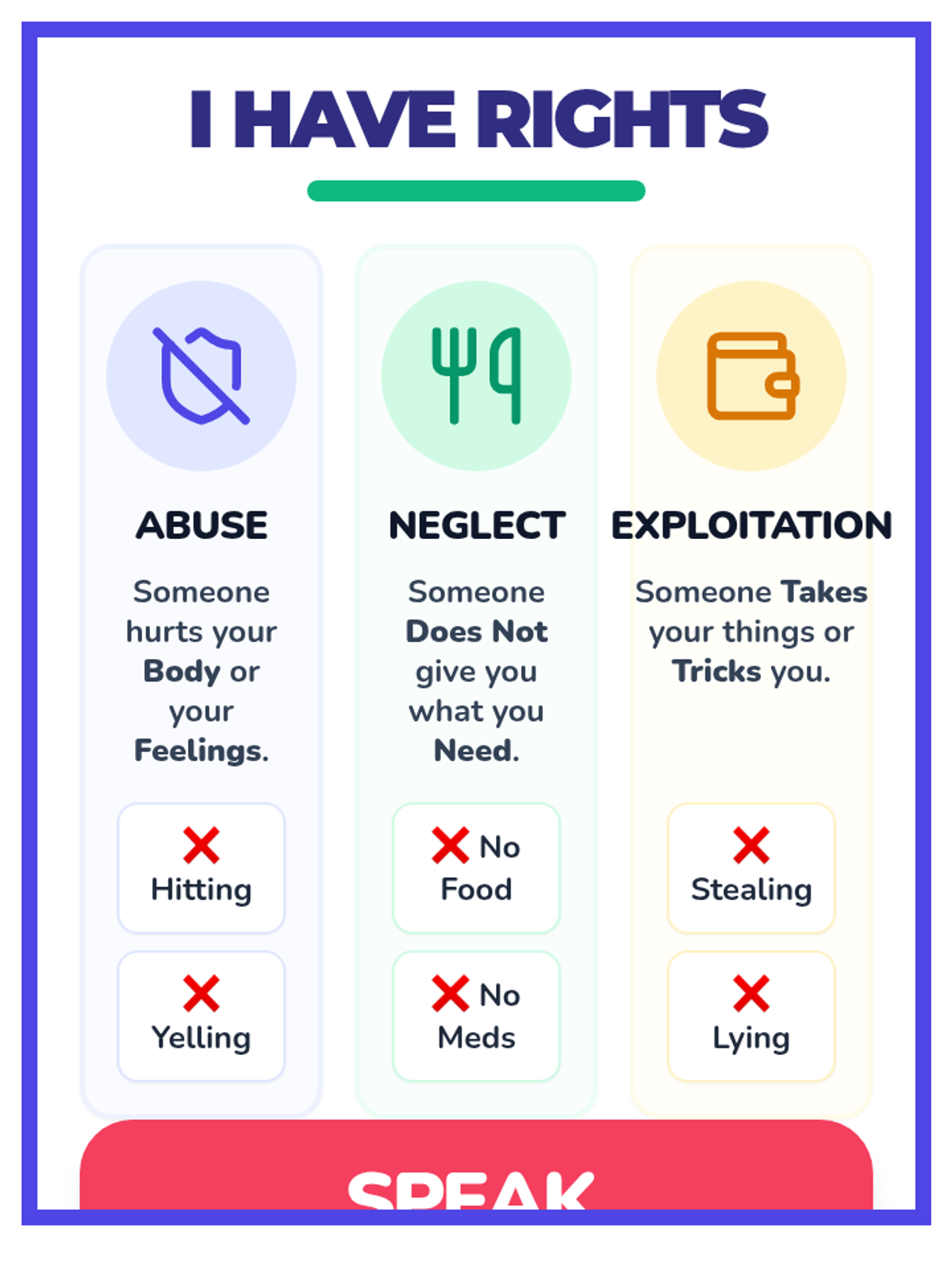
A high-visibility visual reference poster for adults with IDD defining abuse, neglect, and exploitation with simple language, bold keywords, and clear icons. It serves as a central anchor for advocacy discussions.
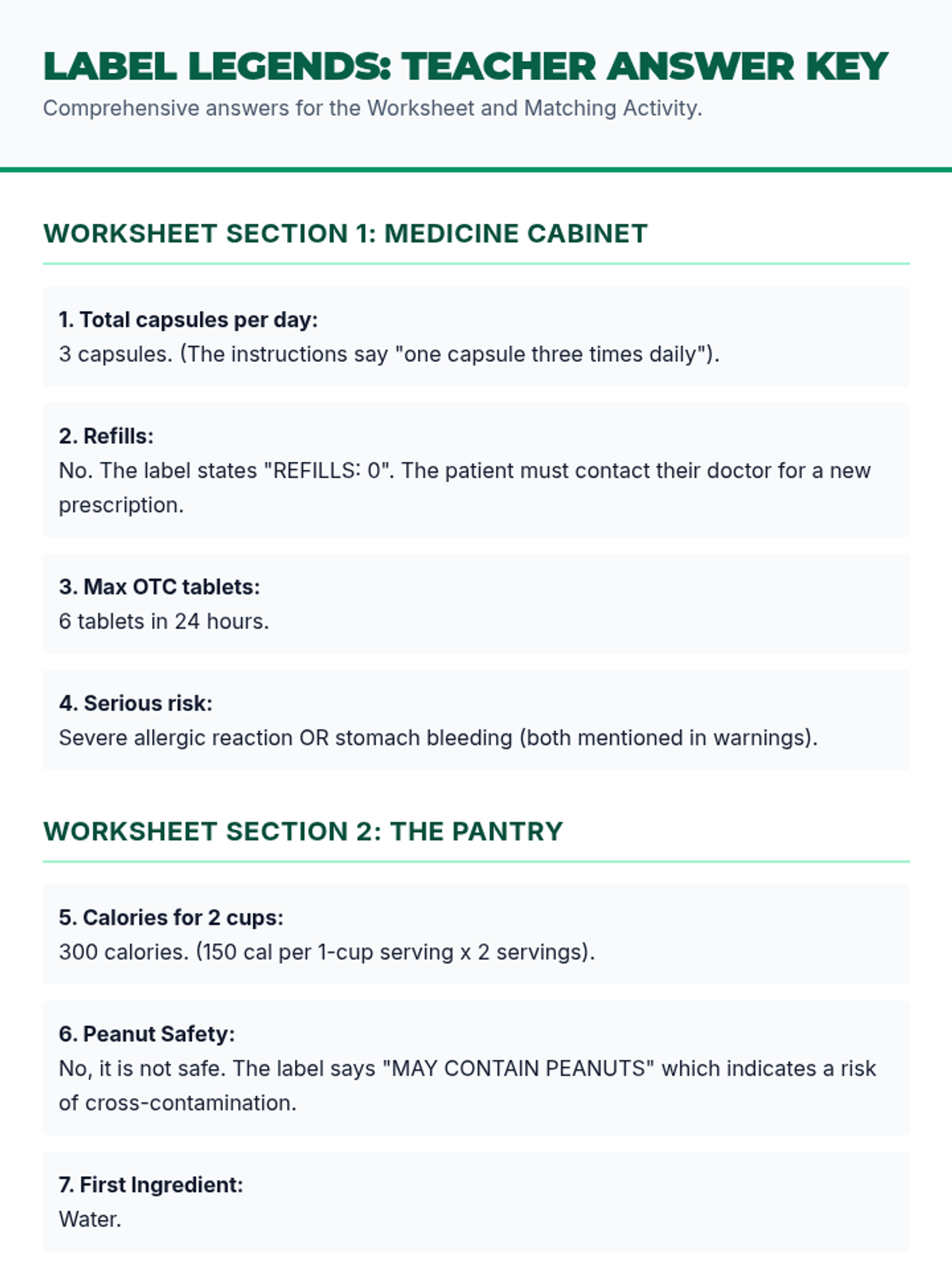
A comprehensive teacher answer key for the Label Legends worksheet and matching activity, providing clear guidance for grading and discussion.
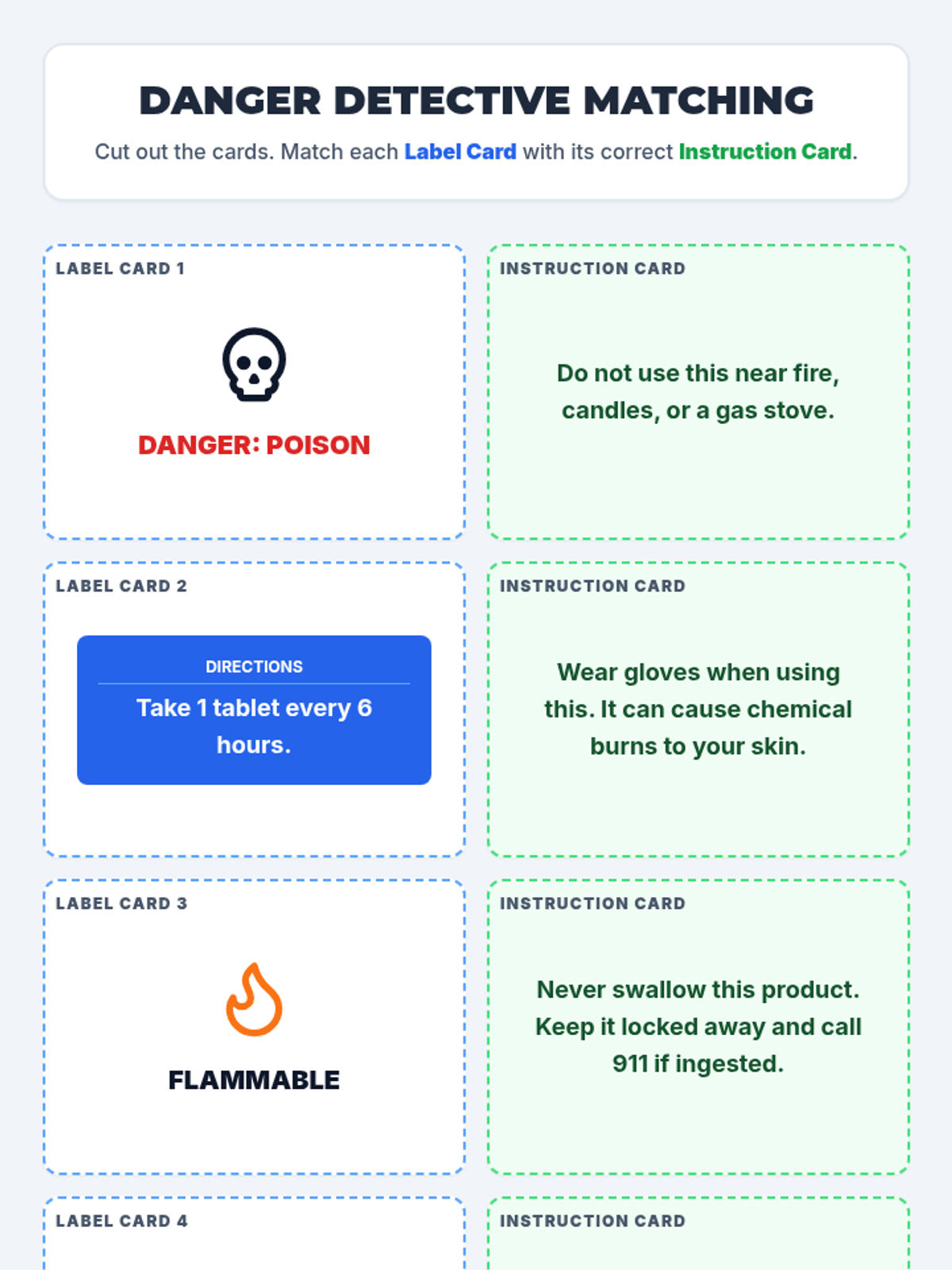
A matching activity for life skills students to practice connecting safety symbols and label instructions to their real-world meanings and required actions. Instruction cards are randomized for challenge.
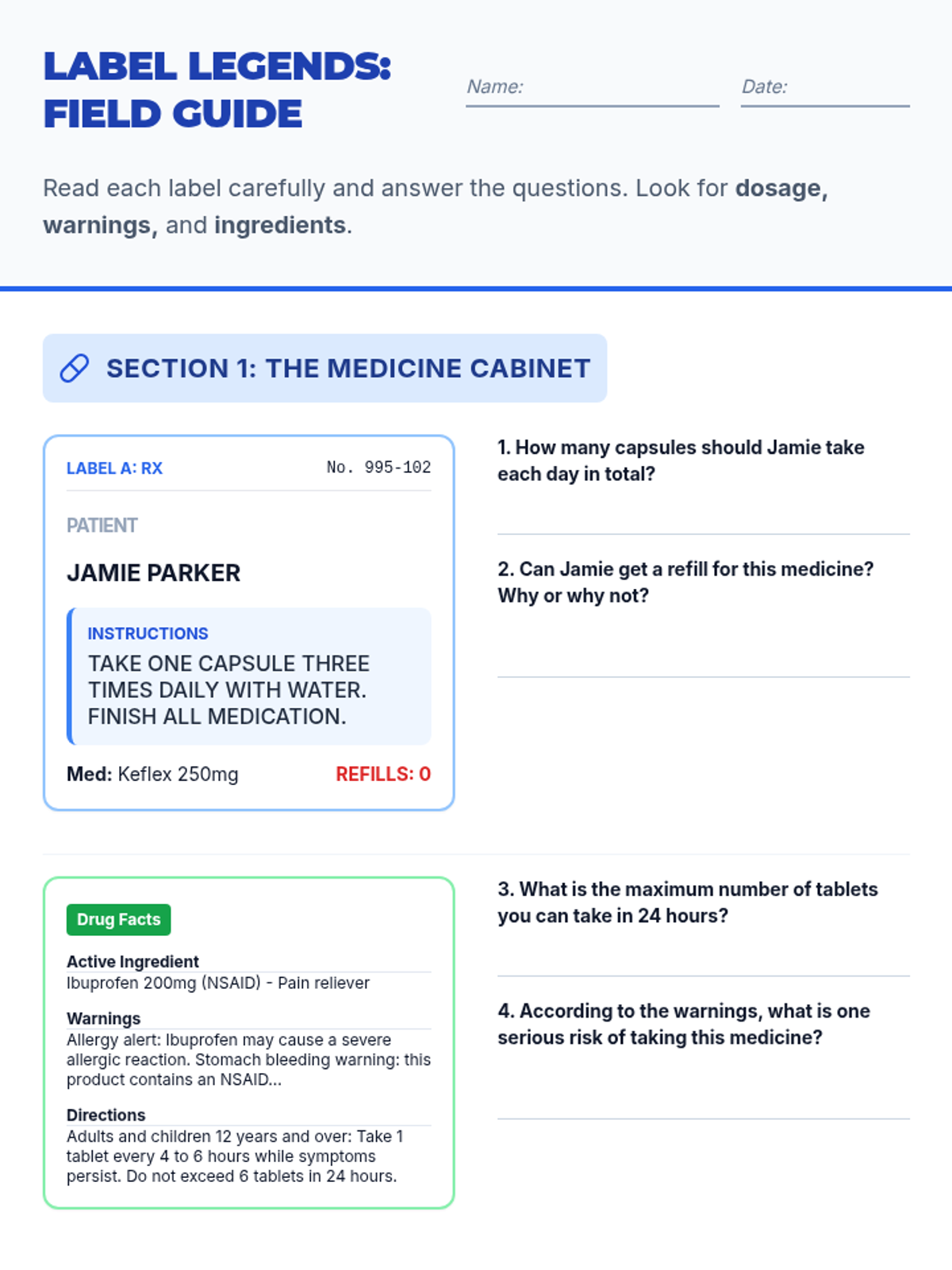
A functional reading worksheet containing simulated medication, nutrition, and household chemical labels with comprehension questions. designed for life skills students to practice independent living skills.
A visual guide to reading and understanding everyday labels, including prescriptions, OTC medications, nutrition facts, and cleaning product safety warnings. Features high-contrast designs and clear icons for accessibility.
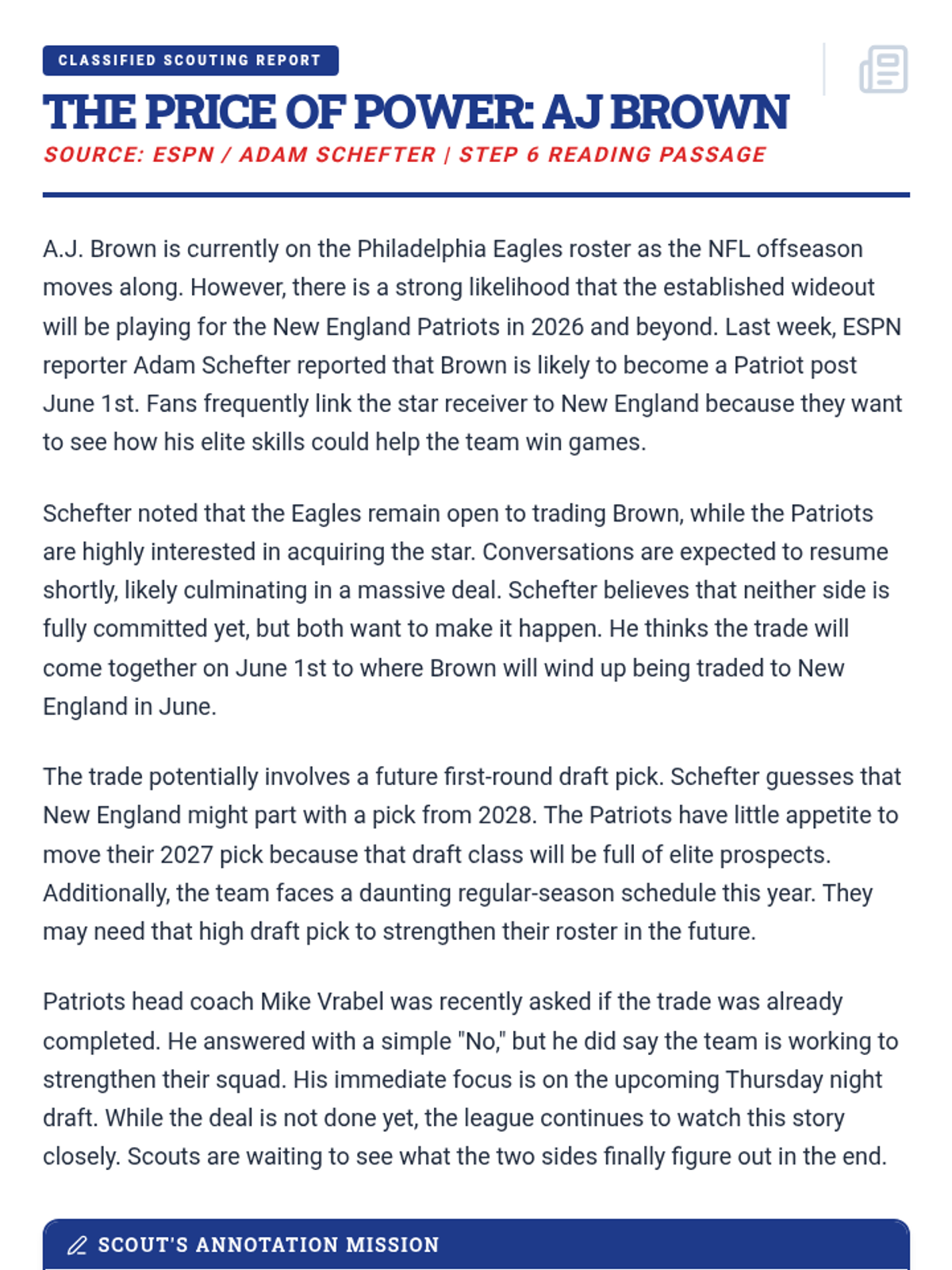
A clean 4-paragraph reading passage based on the AJ Brown trade news, specifically formatted for student annotation of Wilson Step 6 multisyllabic word patterns.
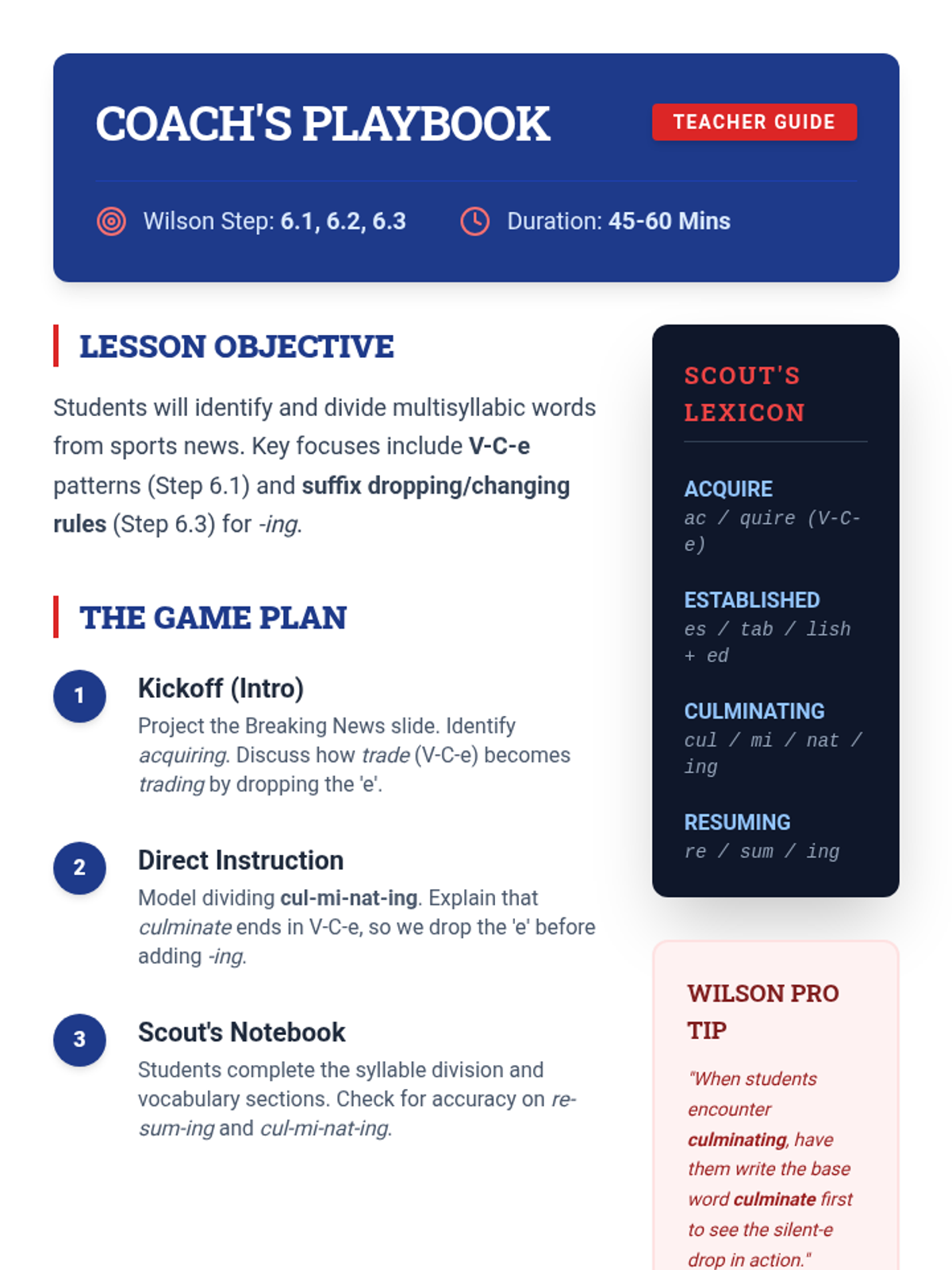
A teacher guide for the Gridiron Grammar lesson. It includes instructional steps for teaching Wilson Step 6 word division, discussion questions based on the AJ Brown trade article, and a vocabulary lexicon.
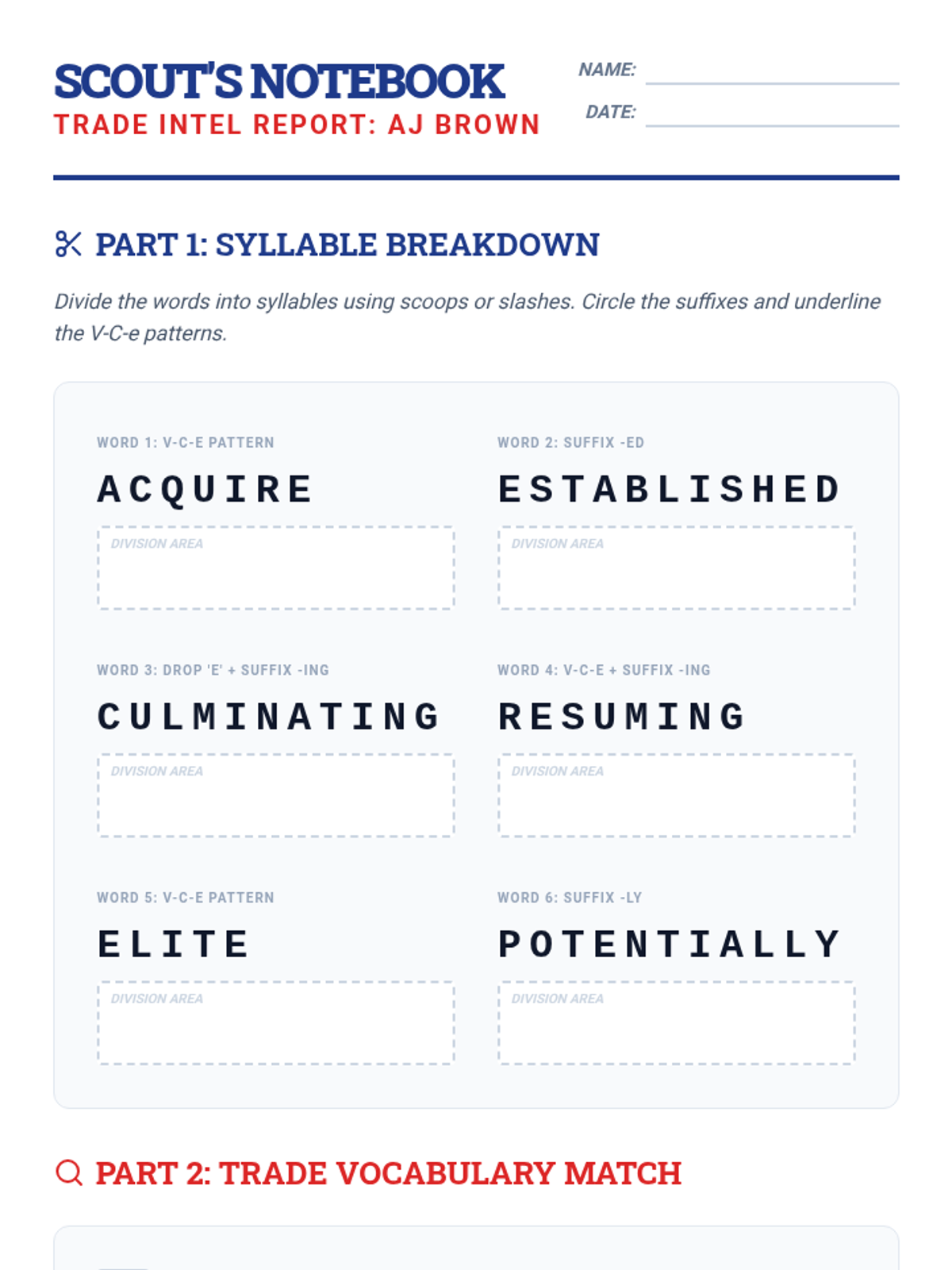
A student worksheet focusing on Wilson Step 6 skills. Includes syllable division practice for multisyllabic words like CULMINATING and RESUMING, vocabulary matching, and reading comprehension questions.
A slide deck for a Wilson Step 6 lesson. It covers multisyllabic word division (V-C-e and suffixes like -ed, -ly, -ing) using football-themed examples and vocabulary from the AJ Brown trade article. Includes specific Tier 2 vocabulary slides and the reading passage.
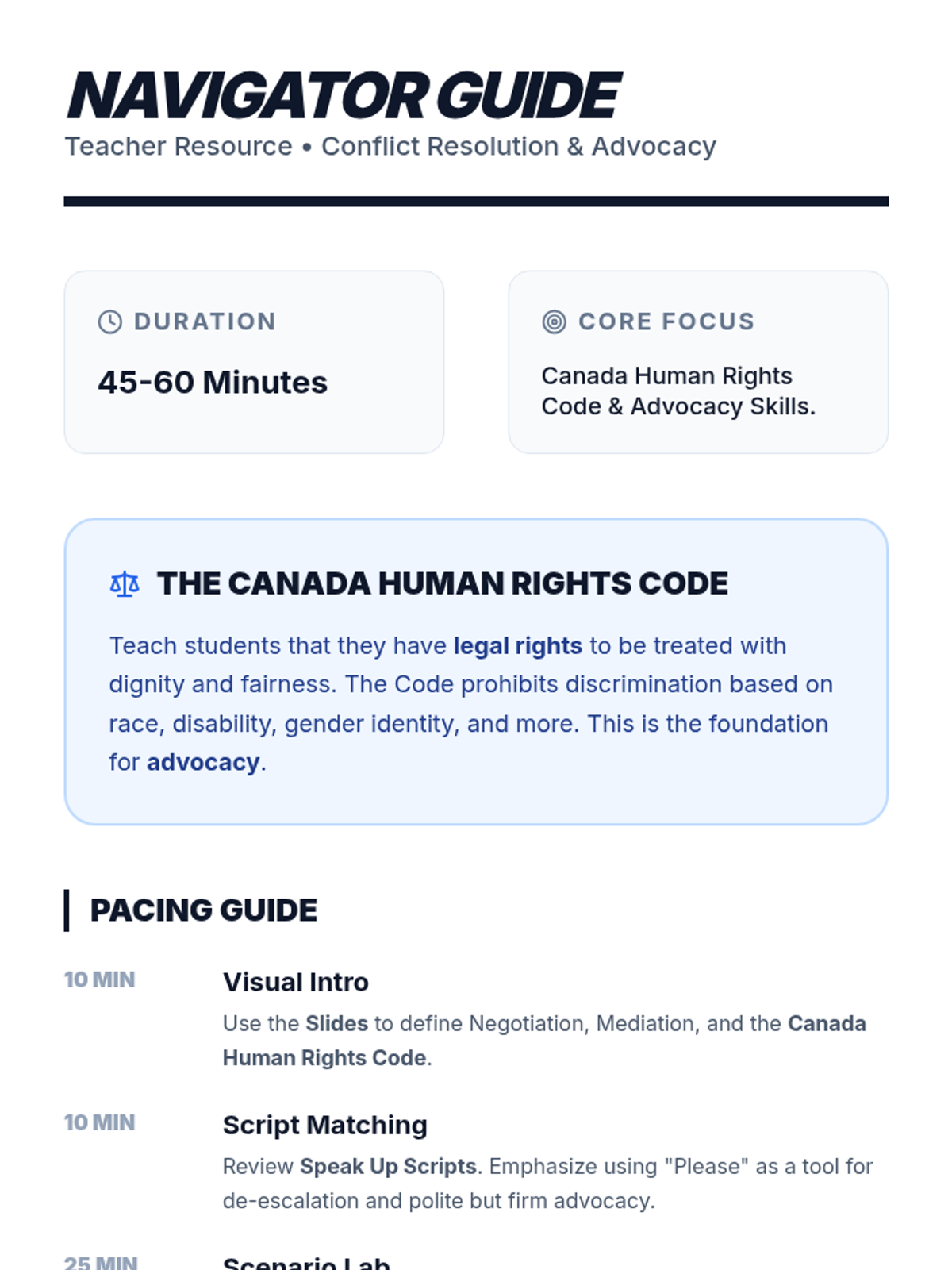
A teacher's guide for the "Conflict Navigators" lesson, providing instructional strategies for teaching advocacy through the lens of the Canada Human Rights Code.
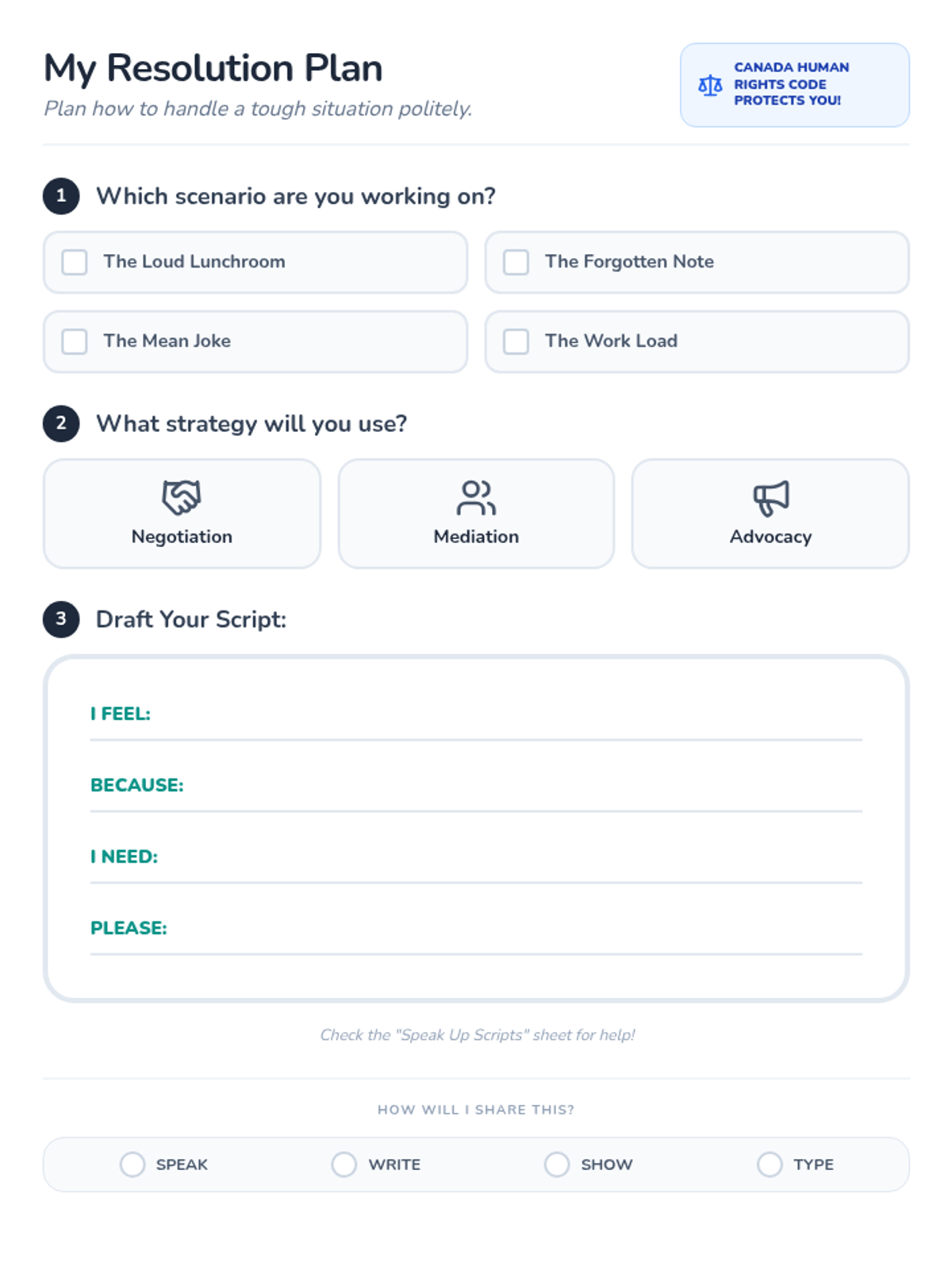
A student worksheet for planning a response to a conflict or advocacy scenario. Updated with the "please" formula, Canada Human Rights Code references, and uniform strategy colors. Space for student writing increased.
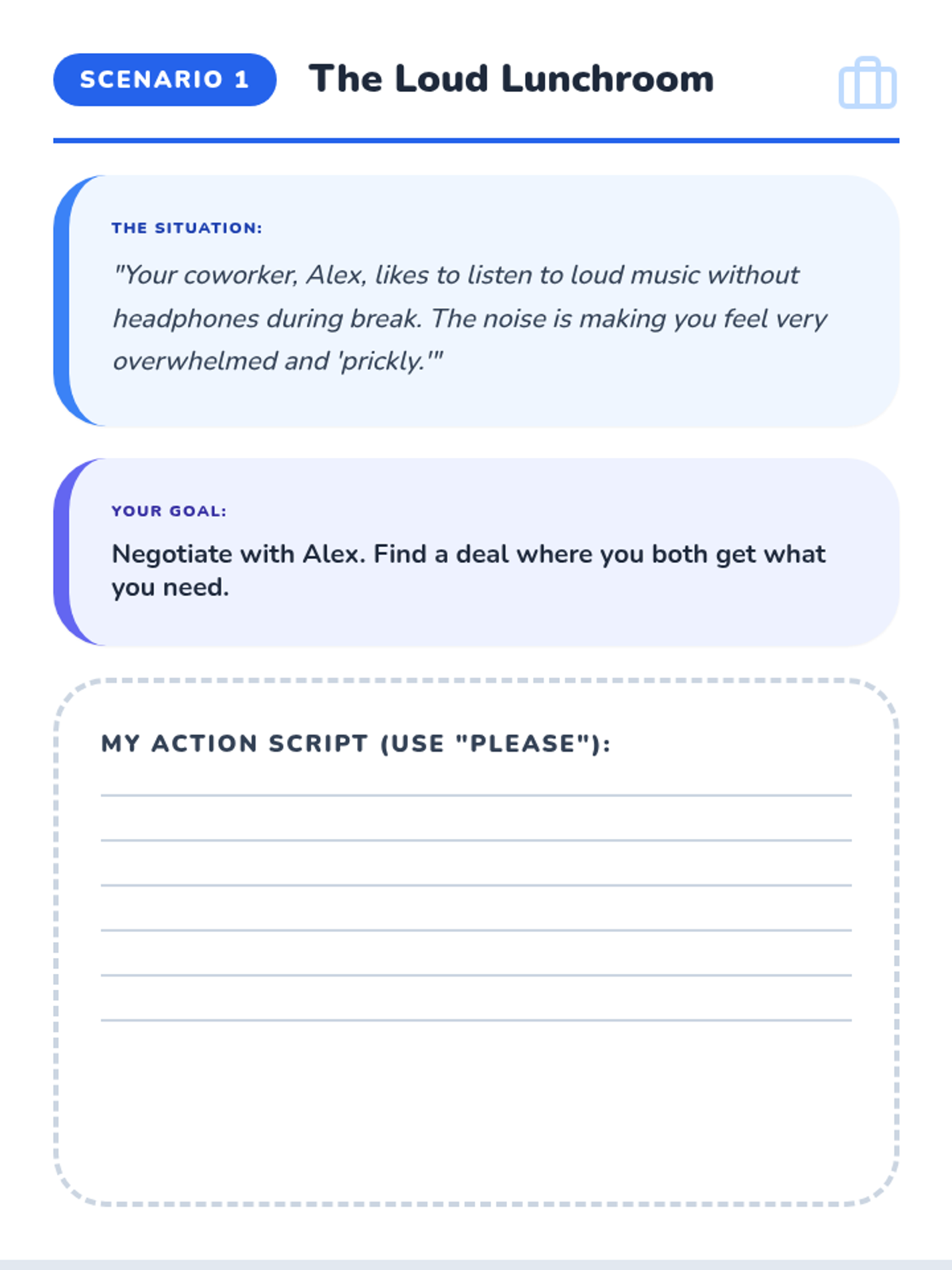
A set of role-play scenario activity sheets focusing on real-world workplace and post-secondary conflict and advocacy situations. Updated with Canada Human Rights Code references.
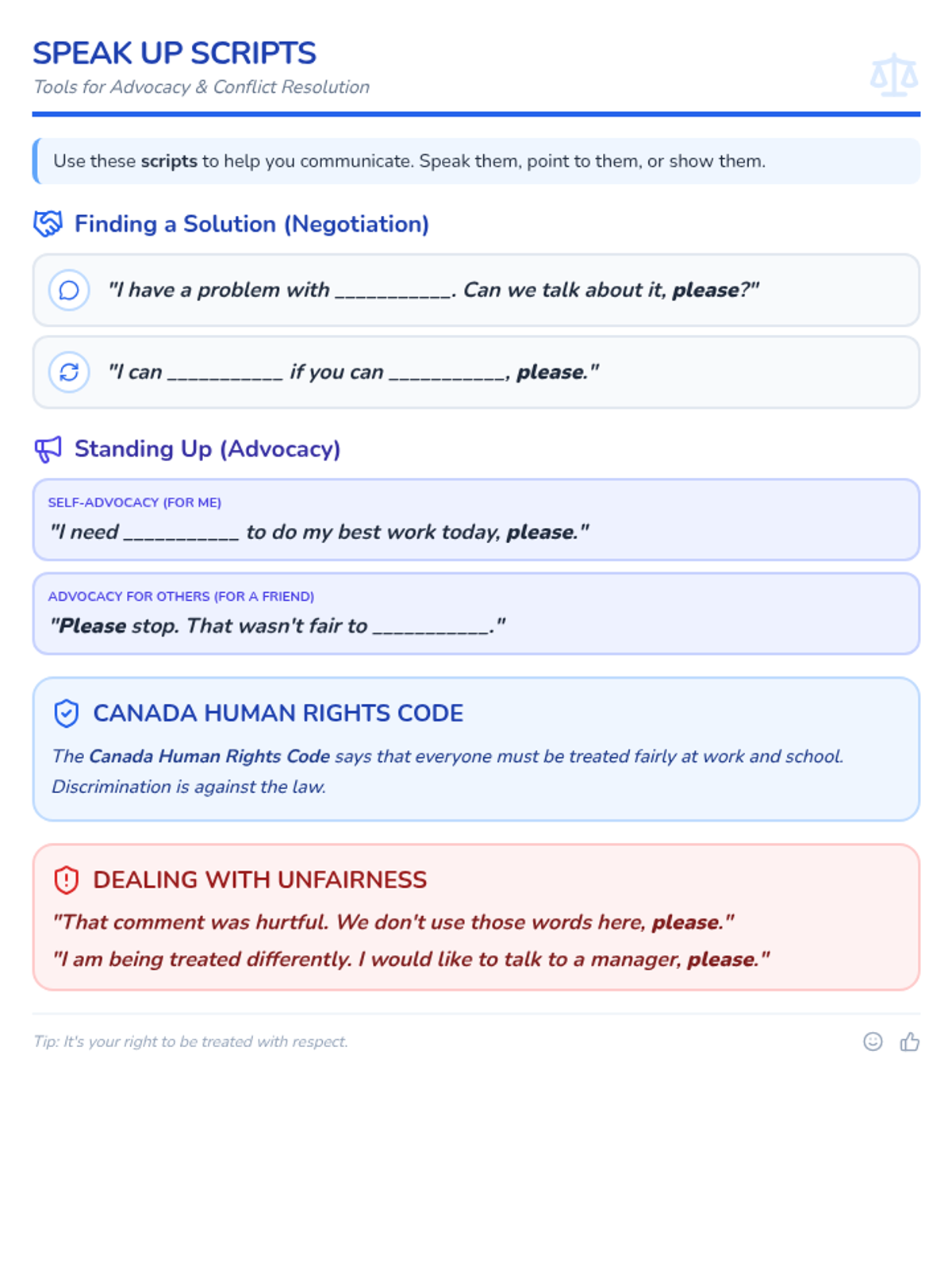
A reference sheet providing scripted phrases for students to use during conflict resolution or advocacy situations. Updated with Canada Human Rights Code references and polite language. Underscores shortened and typo fixed.
A slide presentation for high school students with autism and learning disabilities, covering conflict resolution strategies (negotiation, mediation) and advocacy (self and others) in workplace and post-secondary contexts. Updated with Canada Human Rights Code references and improved script formula.
A professional slide deck for parent presentations, covering the neurobiology of dyslexia, reading impact areas, and myth-busting with a focus on Chapter 2 of the MA Guidelines.
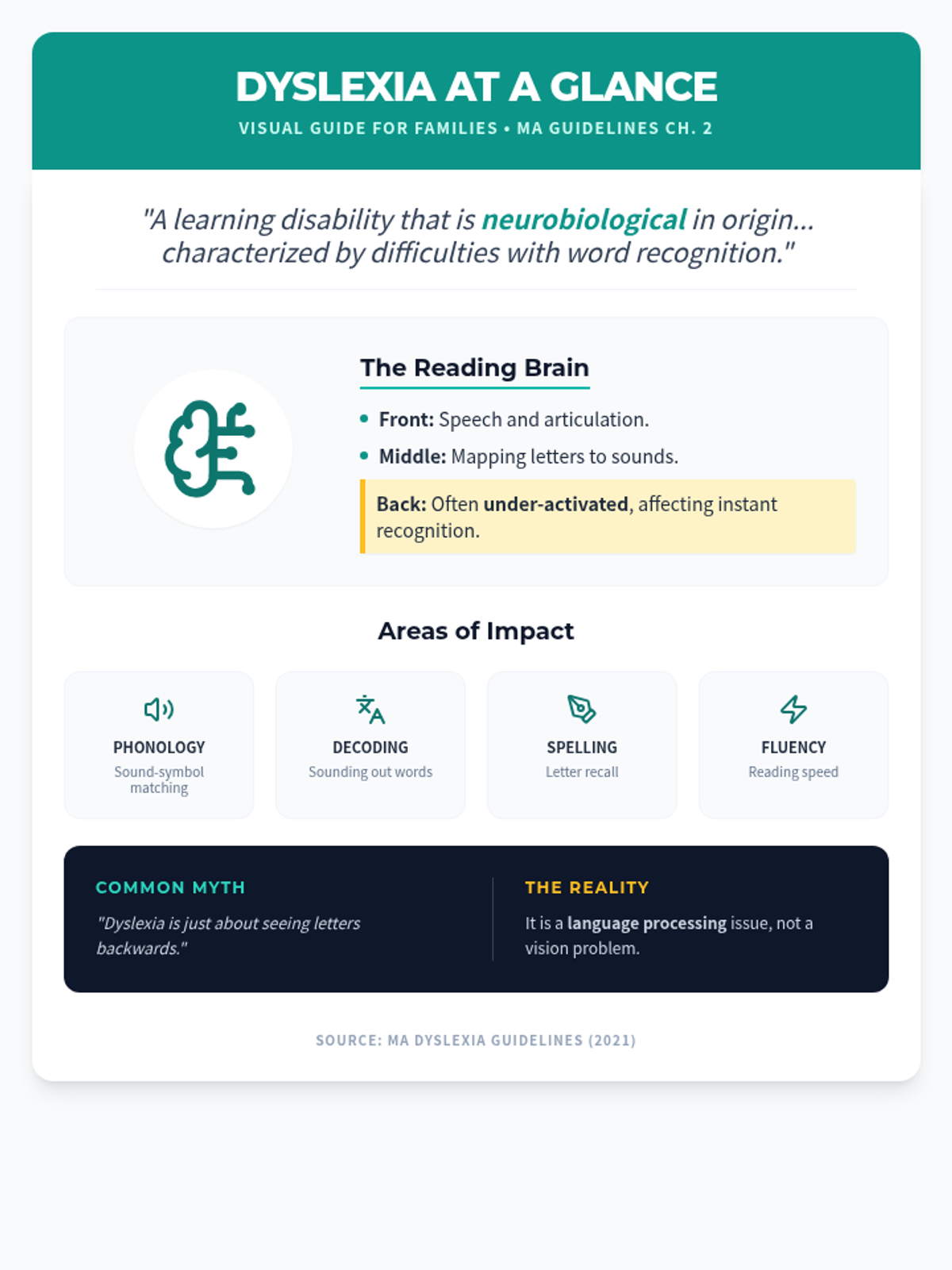
A visually engaging infographic summarizing the core concepts of dyslexia, including brain processing, reading impact areas, and debunking common myths for parents.
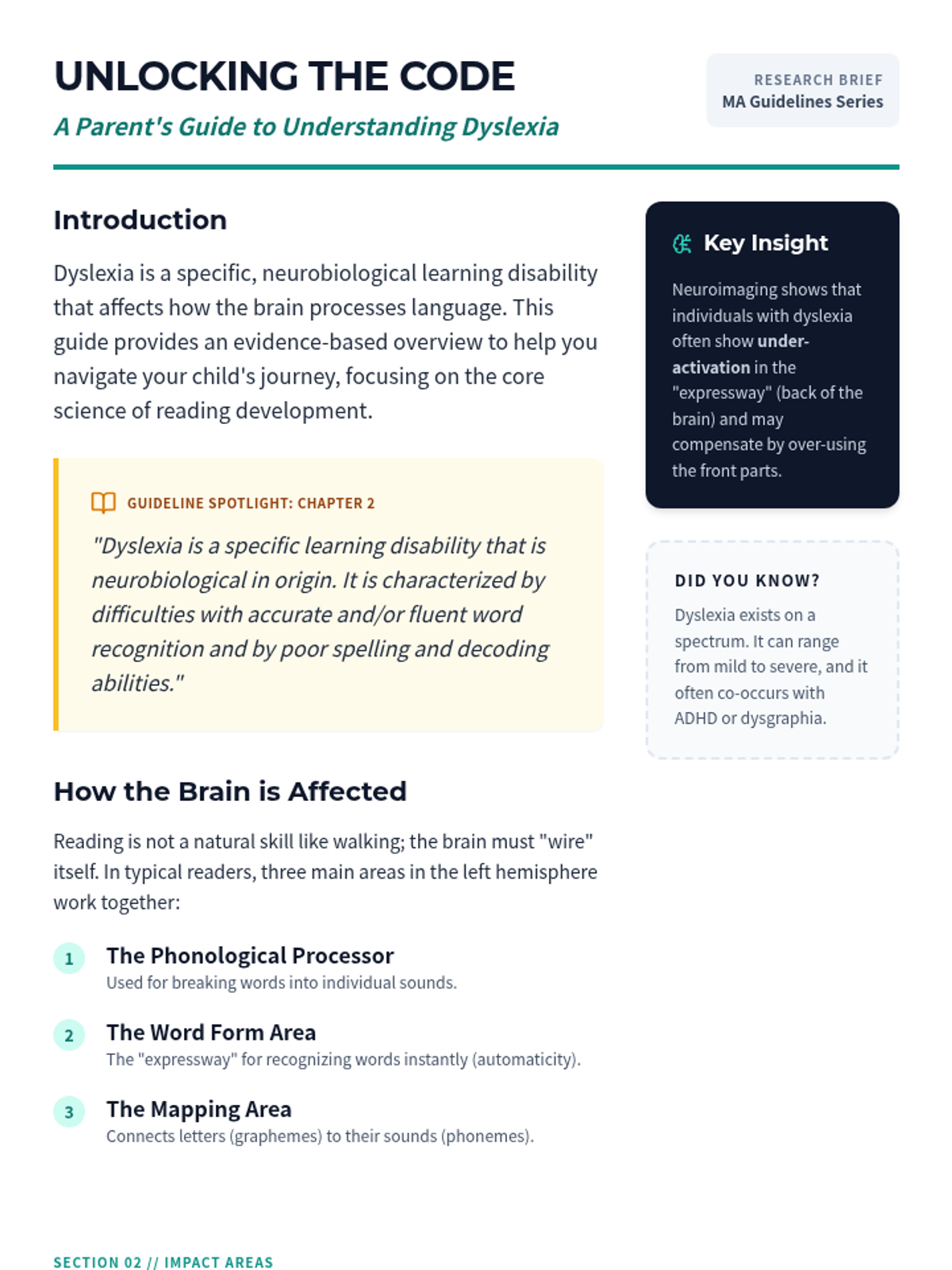
A professional 3-page white paper for parents, detailing the neurobiology of dyslexia, areas of reading impact, and debunking common myths using evidence from the Massachusetts Dyslexia Guidelines.
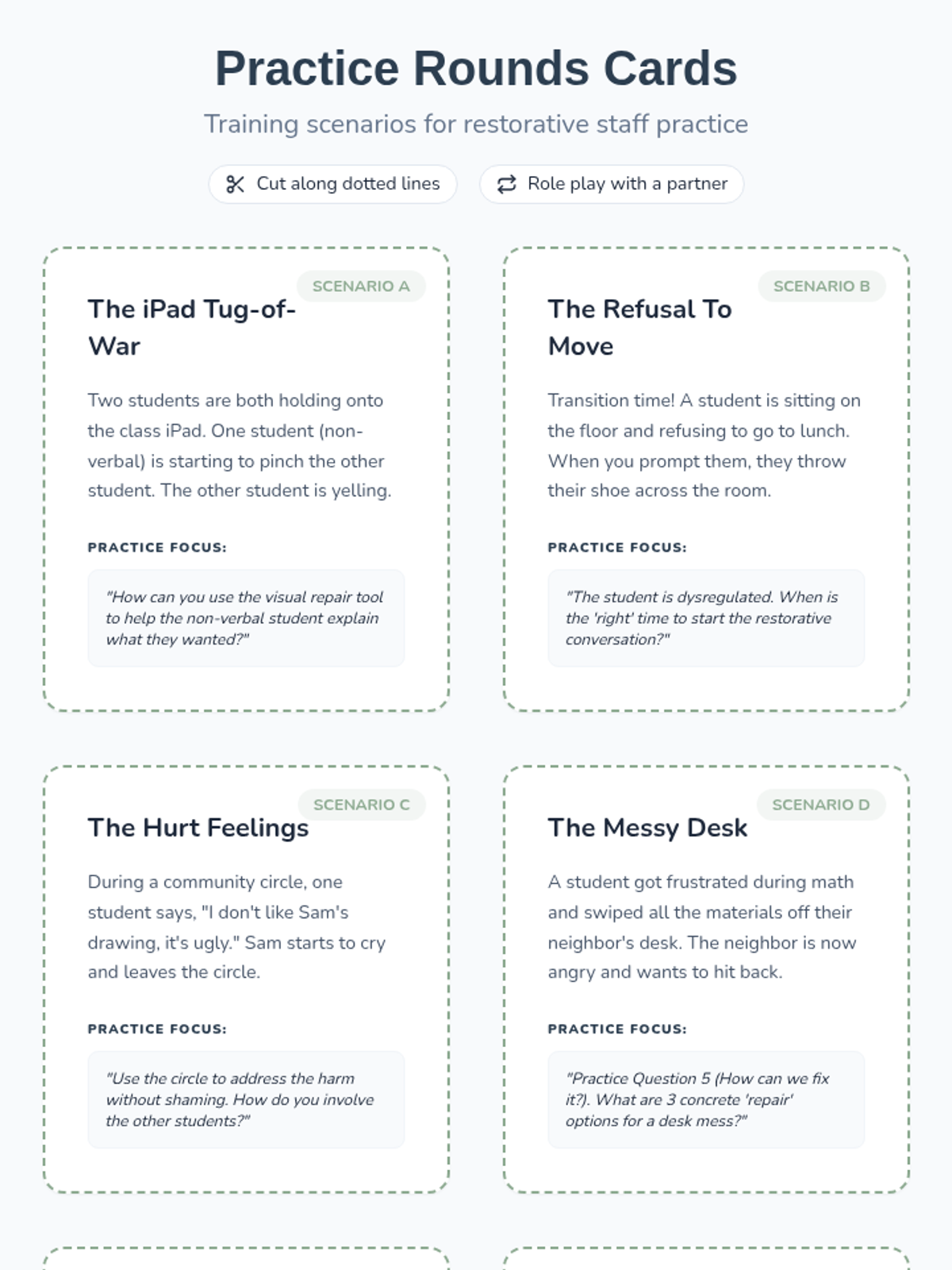
A set of six role-play scenario cards for staff training. Each card presents a common special education classroom challenge. Revised to ensure cards stay on one page and remove all placeholder text.
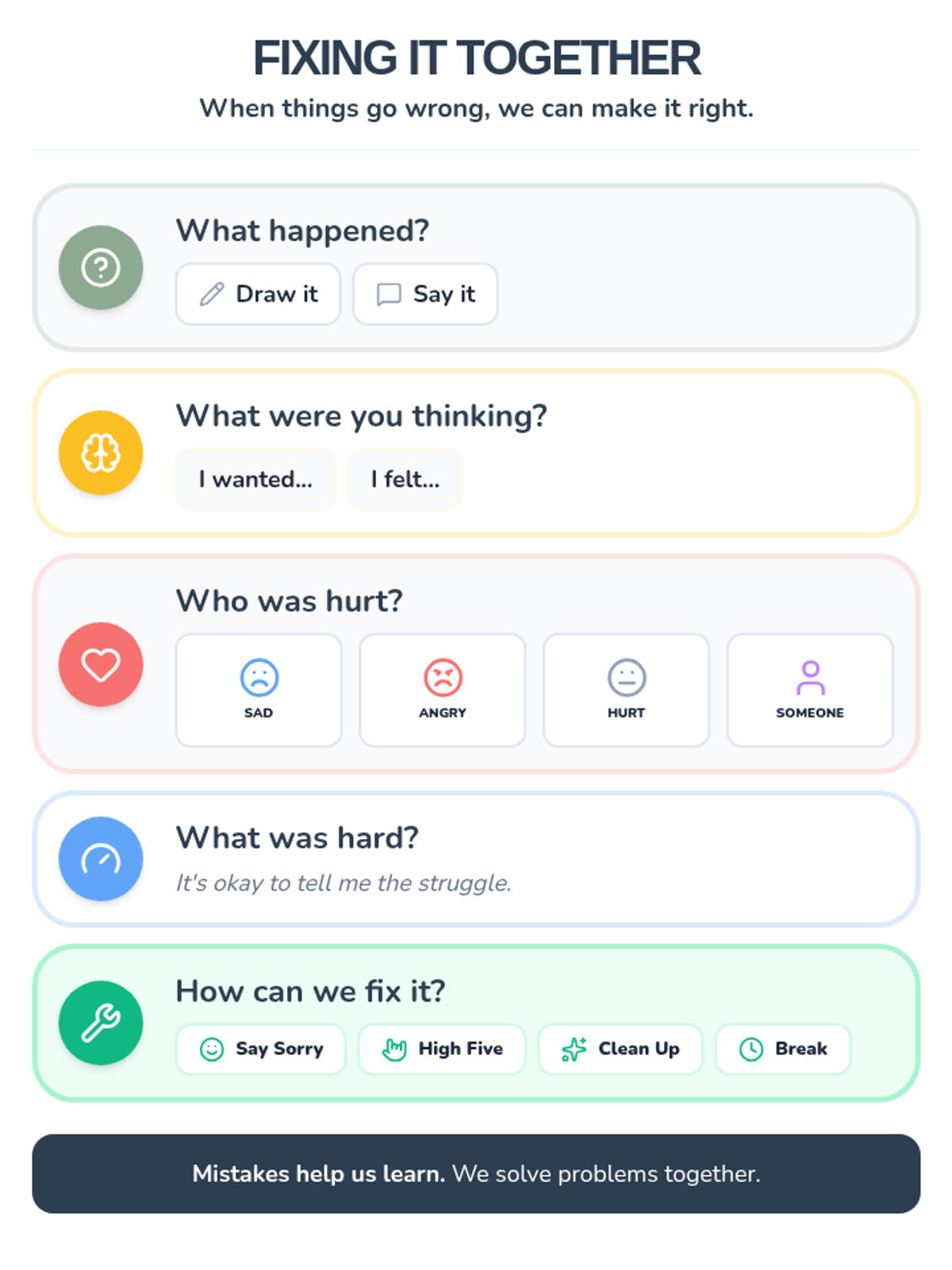
A student-facing visual aid for restorative conversations. Uses simplified language, large icons, and clear steps to guide students through the 5 repair questions. Revised for single-page printing and larger interactive targets.