A matching activity for life skills students to practice connecting safety symbols and label instructions to their real-world meanings and required actions. Instruction cards are randomized for challenge.
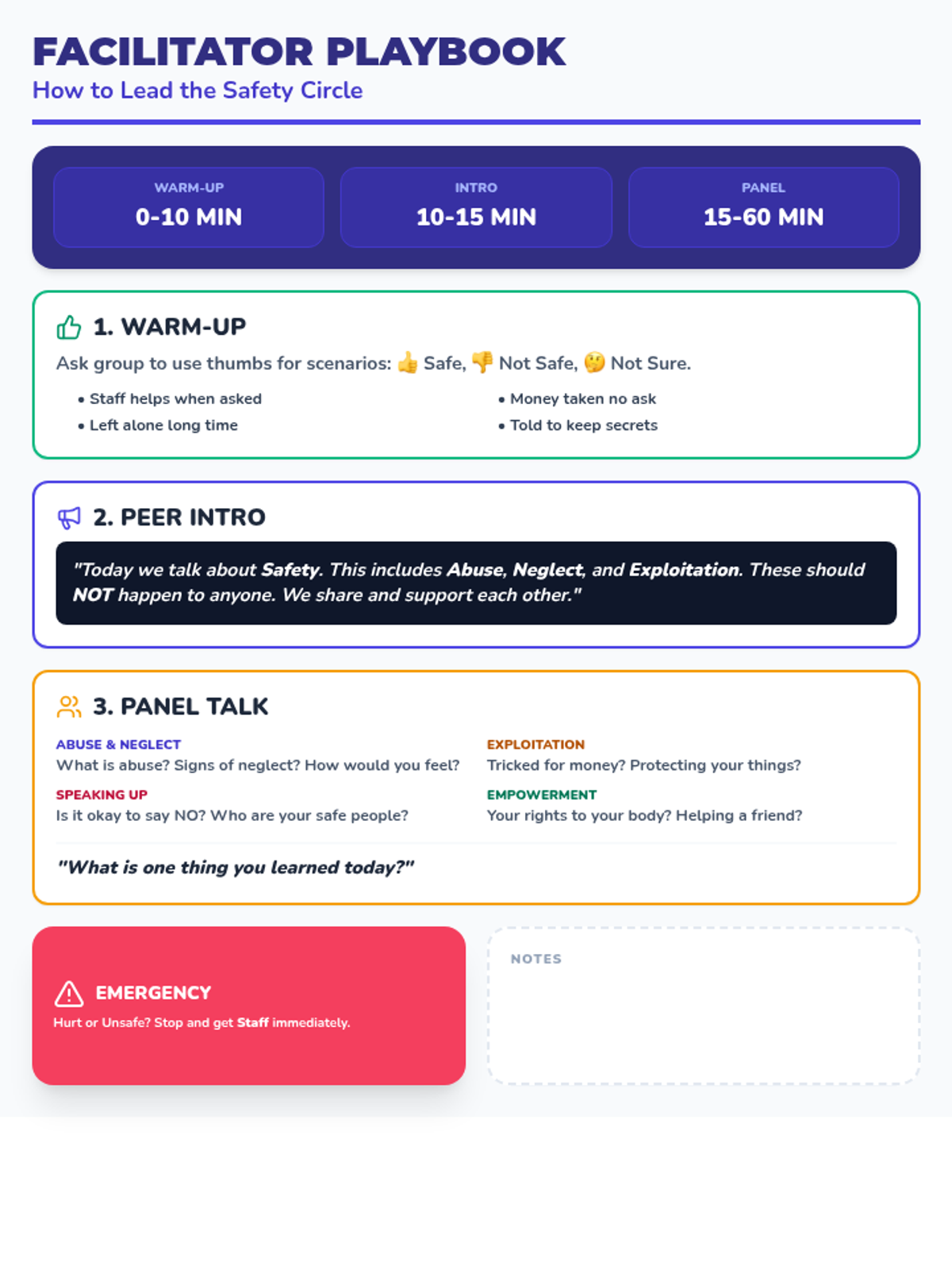
Facilitator playbook with detailed activity steps, script summaries, and discussion prompts. Optimized to fit on a single page for quick reference during peer-led sessions.
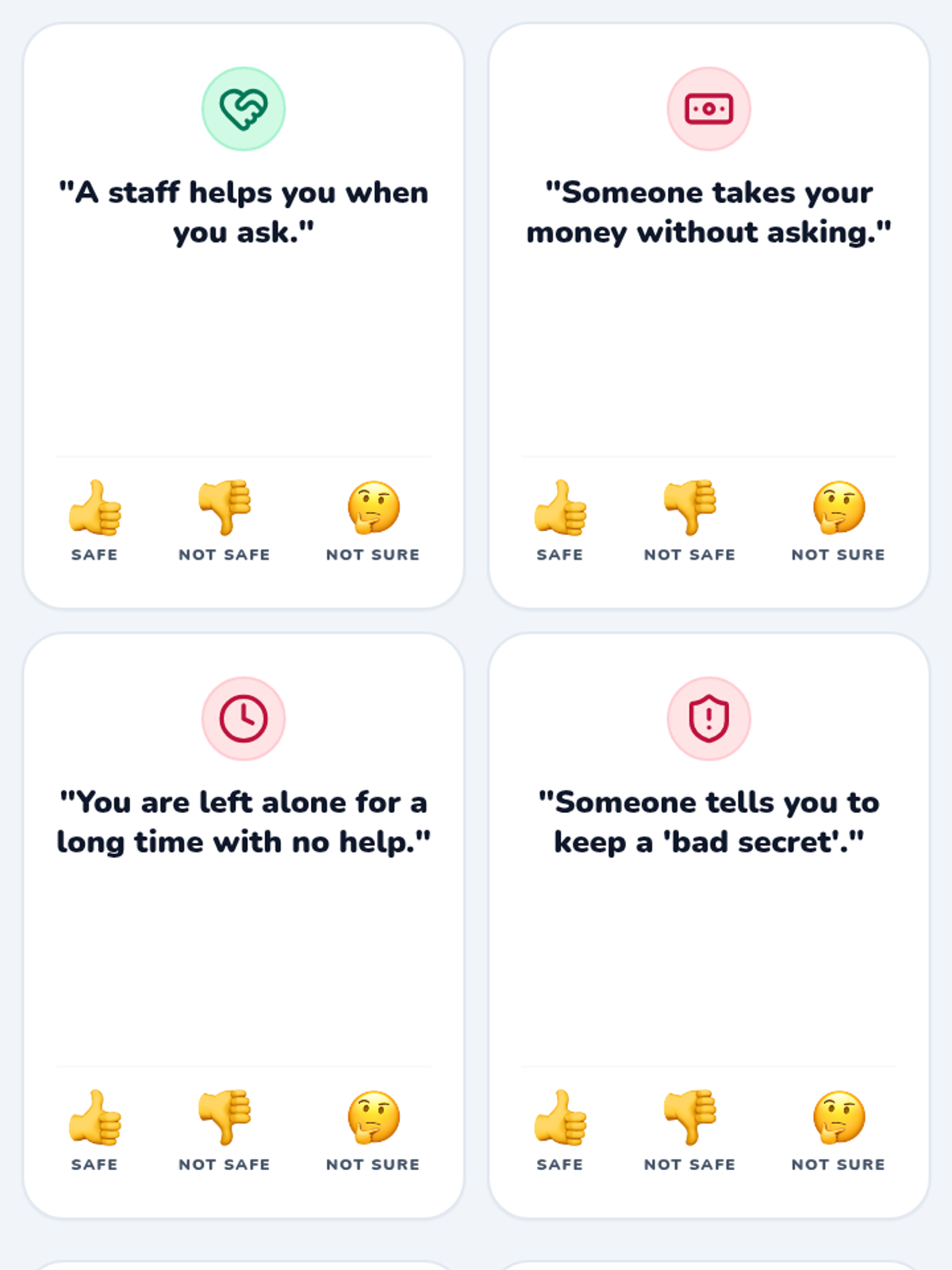
Large situation cards for the "Safe or Not Safe?" warm-up activity. Featuring diverse scenarios with clear icons and uniform answer choices (Safe, Not Safe, Not Sure) to facilitate group interaction and discussion.
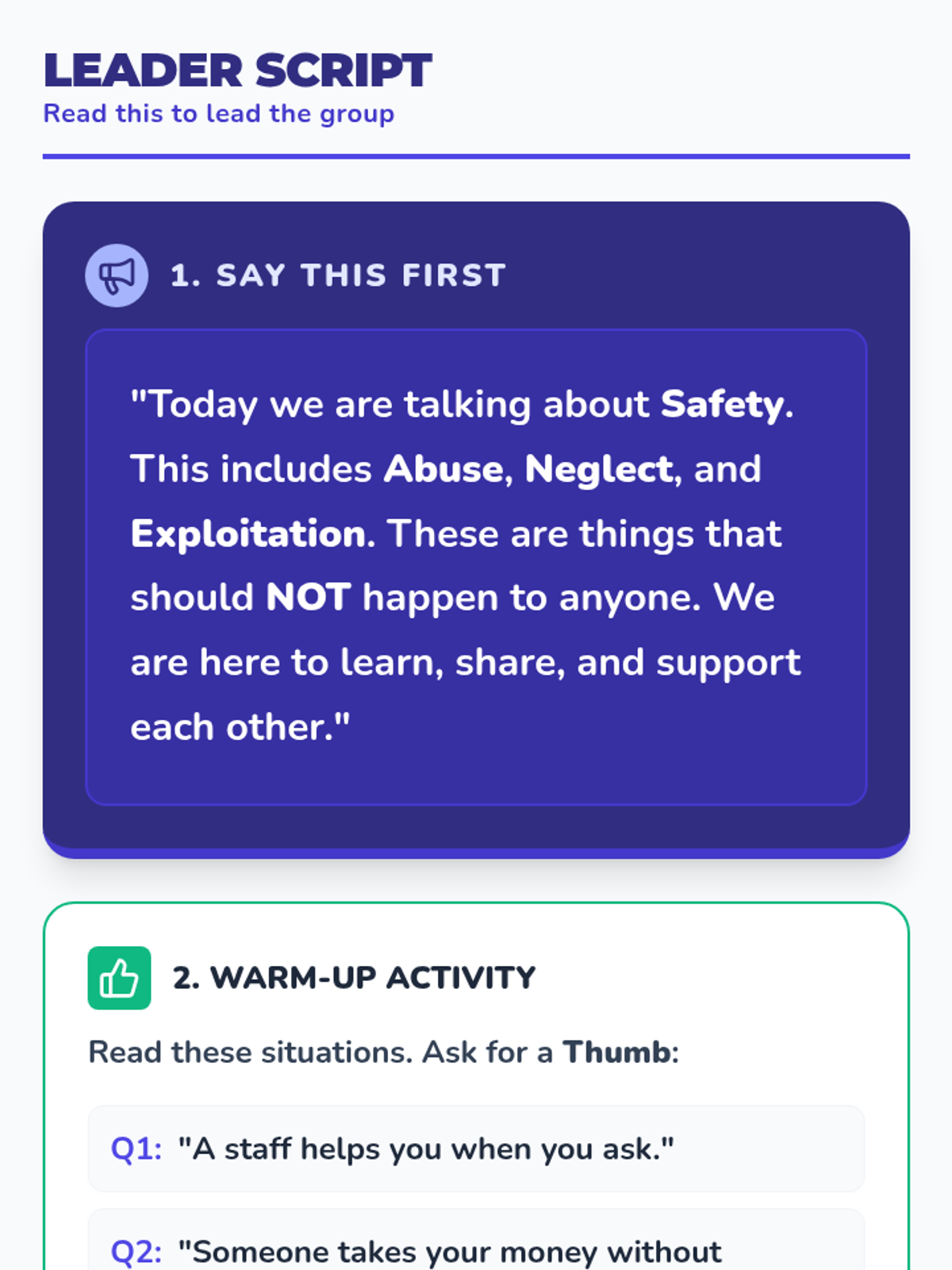
A structured talking guide for peer leaders, featuring a simplified introductory script, warm-up instructions, and a curated list of discussion questions on abuse, neglect, and exploitation. Designed with large, bold text for high readability.
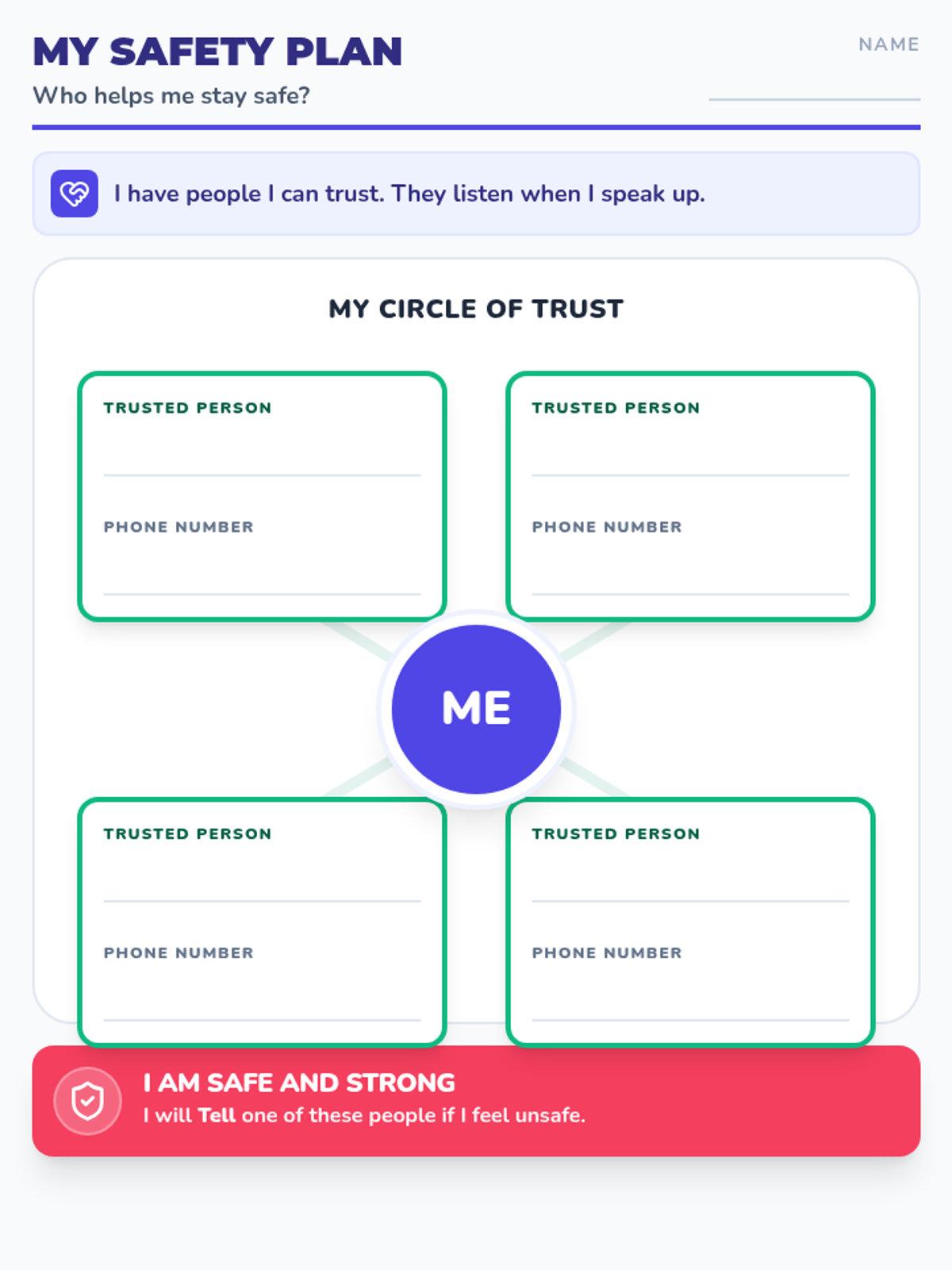
A student safety plan worksheet for adults with IDD. Allows them to identify and record their "Circle of Trust"—specific individuals they can go to for help. Uses clear visuals and writing prompts for personalization.
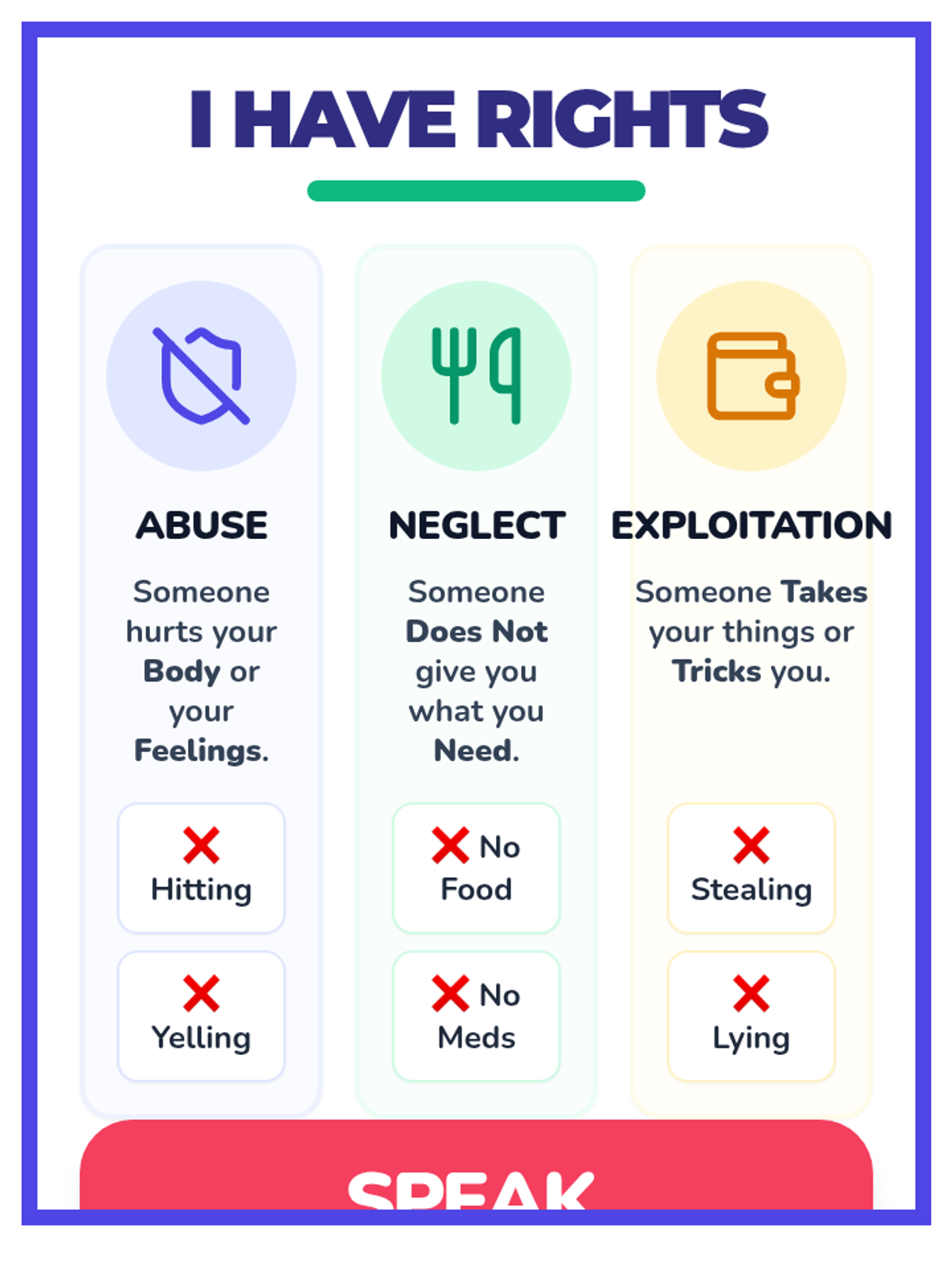
A high-visibility visual reference poster for adults with IDD defining abuse, neglect, and exploitation with simple language, bold keywords, and clear icons. It serves as a central anchor for advocacy discussions.
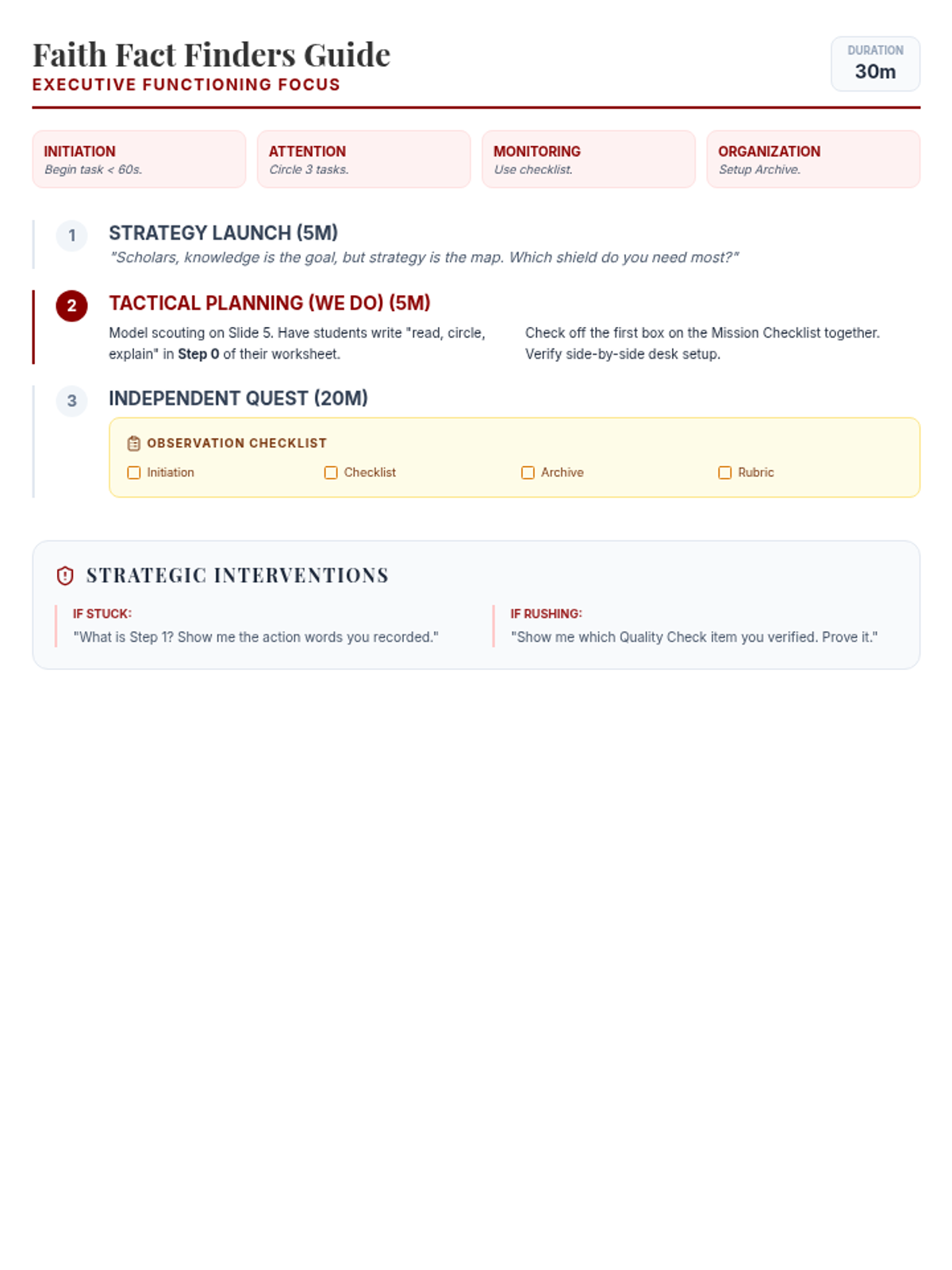
A condensed teacher facilitation guide for 'Faith Fact Finders', providing specific instructions for the 'We Do' guided practice and observation tips for executive functioning data collection.
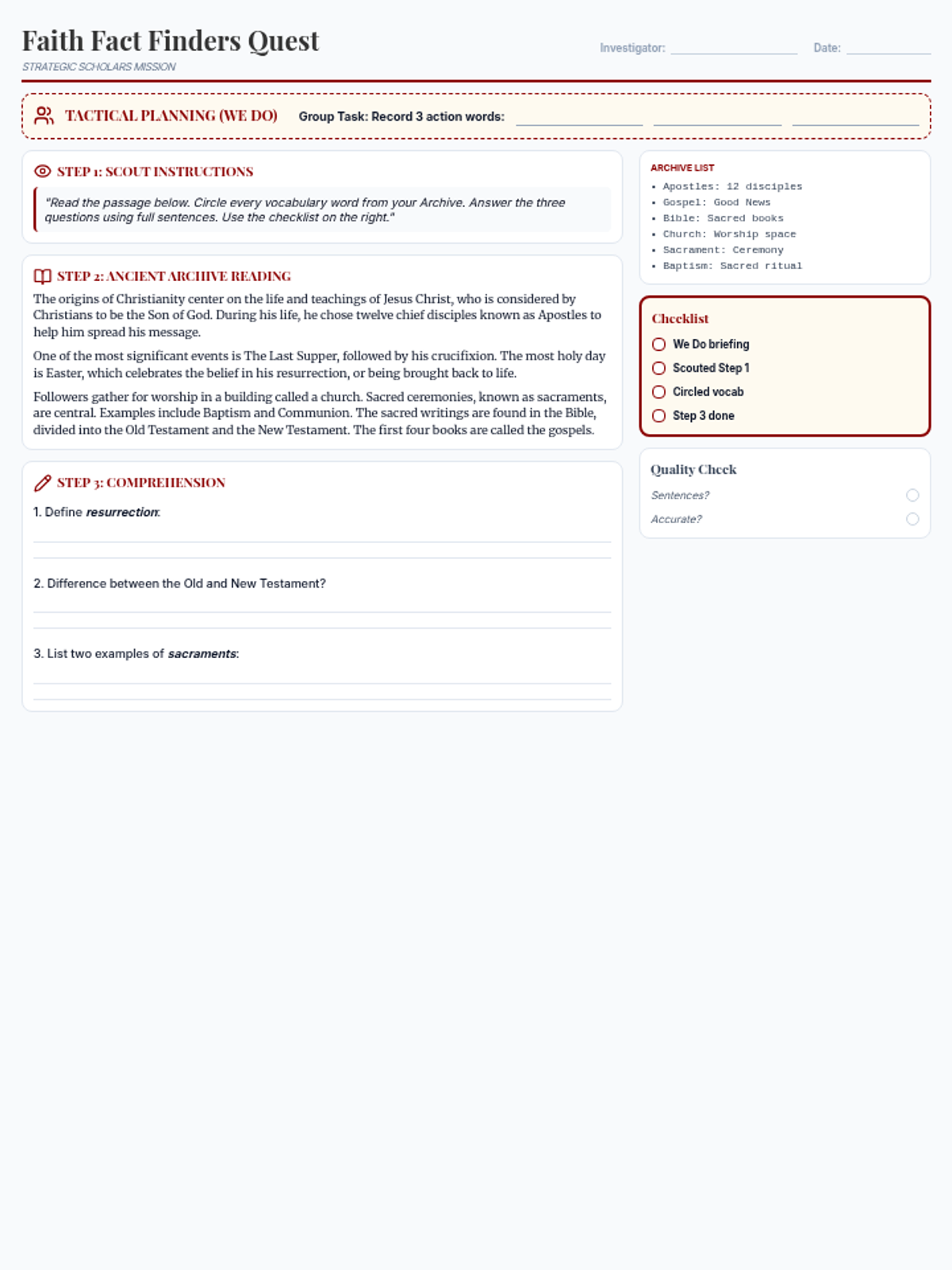
A condensed, single-page reading comprehension worksheet for 'Faith Fact Finders' with a whole-group 'Tactical Planning (We Do)' section, improved sidebar alignment, and optimized writing spaces.
Updated visual guide for the 'Faith Fact Finders' lesson, now including a whole-group 'We Do' section to practice identifying instructions and using the mission checklist before independent work.
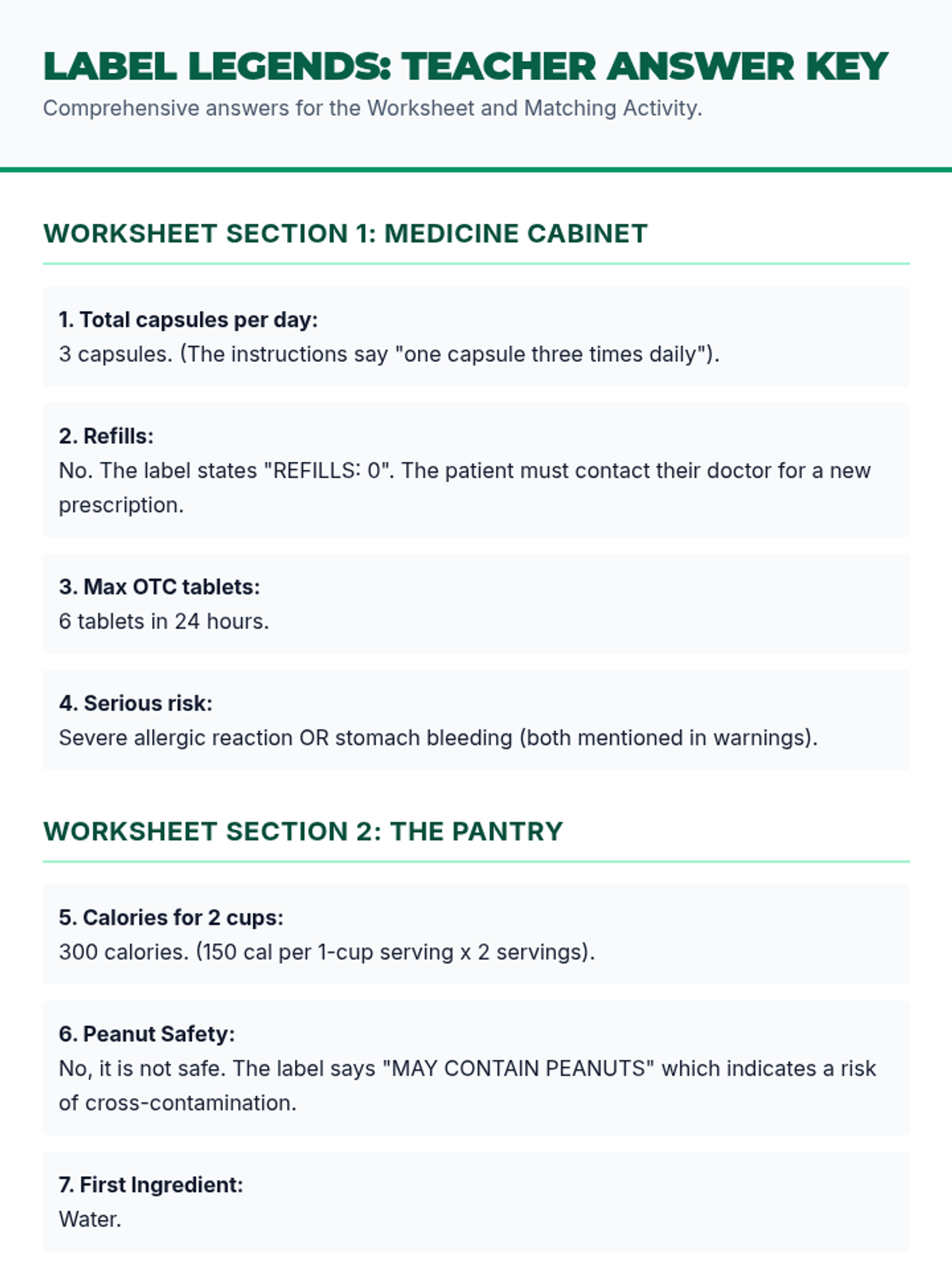
A comprehensive teacher answer key for the Label Legends worksheet and matching activity, providing clear guidance for grading and discussion.
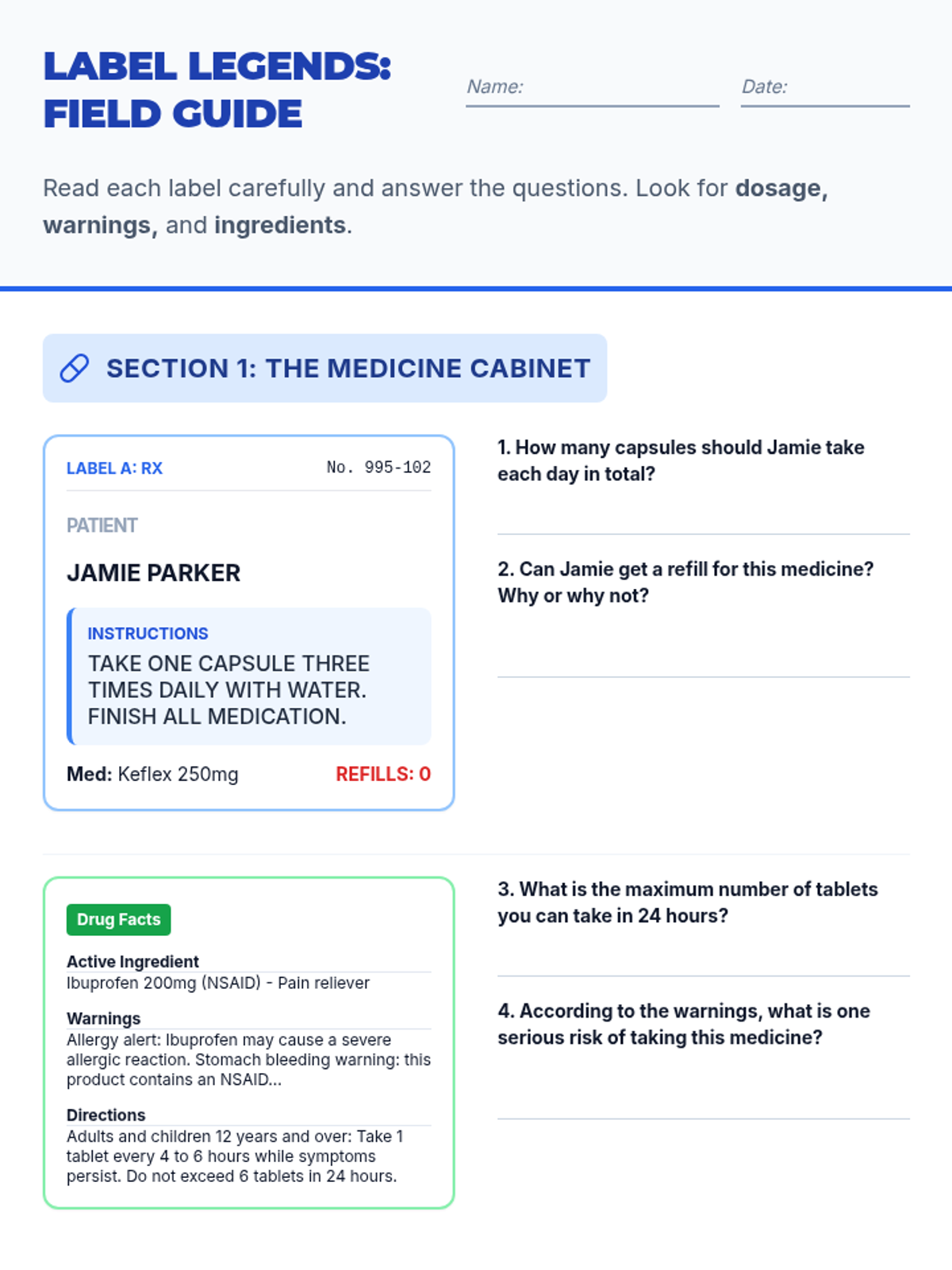
A functional reading worksheet containing simulated medication, nutrition, and household chemical labels with comprehension questions. designed for life skills students to practice independent living skills.
A visual guide to reading and understanding everyday labels, including prescriptions, OTC medications, nutrition facts, and cleaning product safety warnings. Features high-contrast designs and clear icons for accessibility.
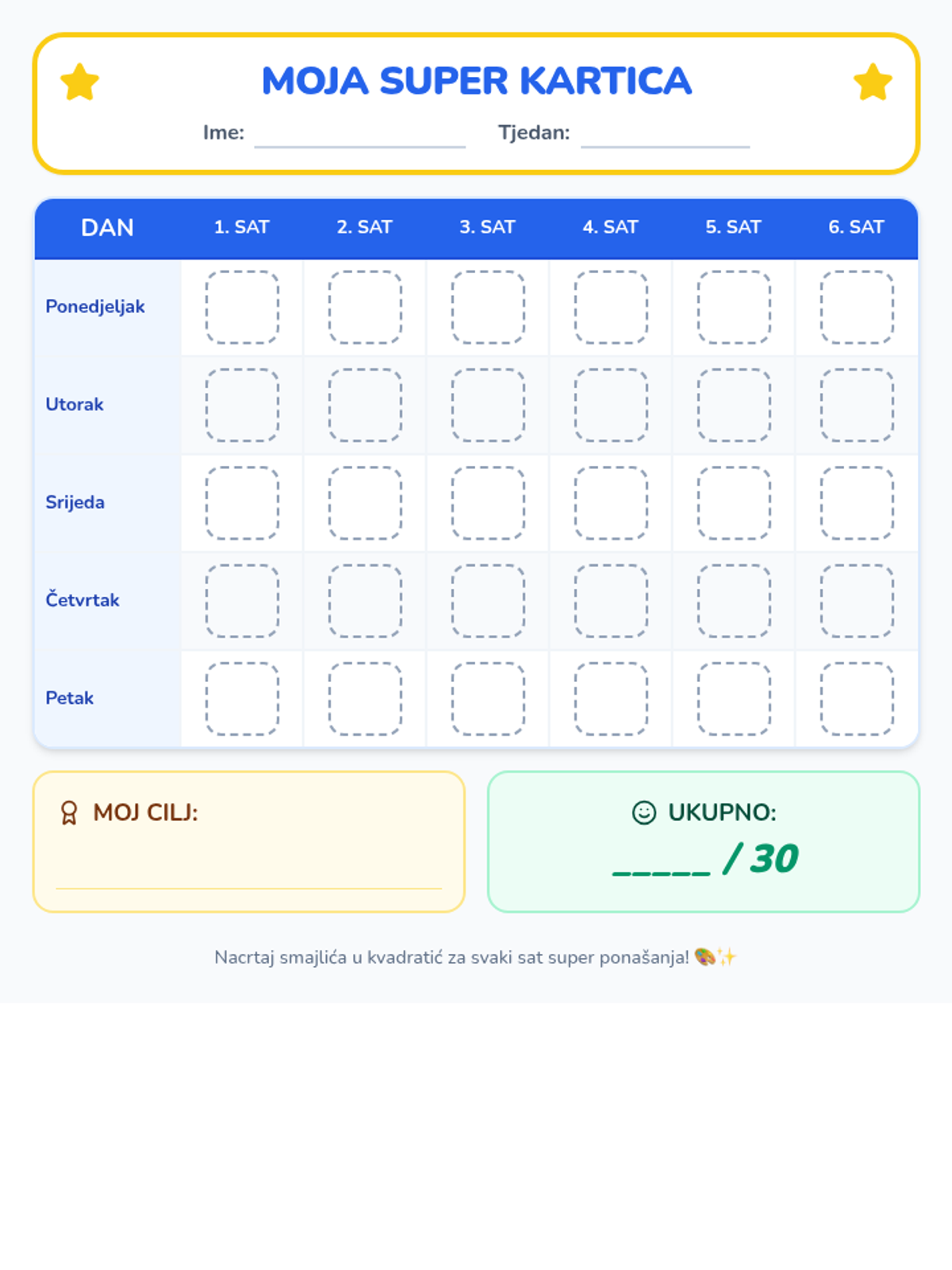
Tablica lijepog ponašanja za učenike osnovnih škola. Sadrži dane u tjednu i stupce za 6 školskih sati s prostorom za crtanje smajlića. Optimizirana za print s visokim kontrastom.
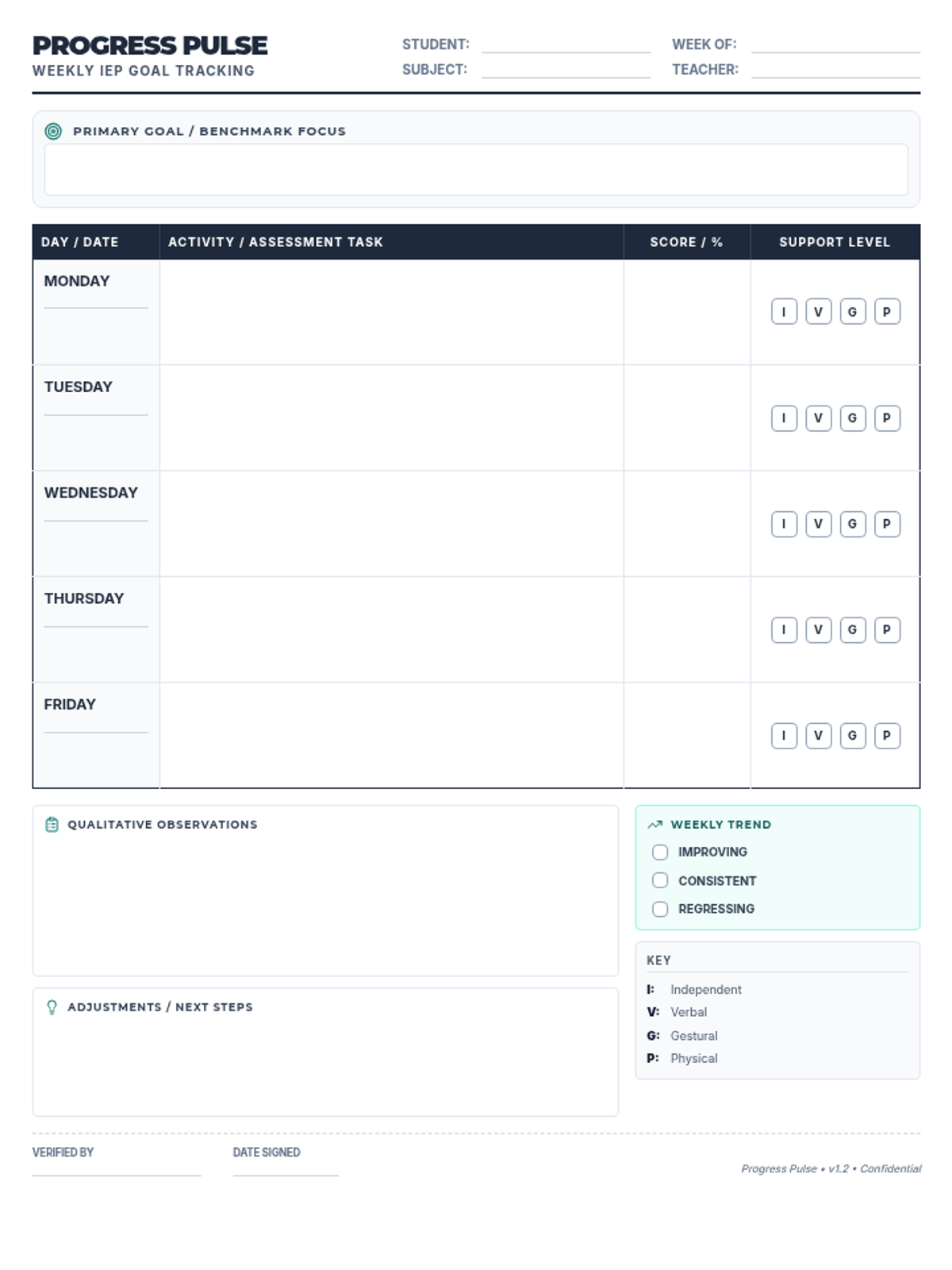
A weekly academic progress monitoring data sheet for individual students with IEPs. Features a structured daily tracking table (Monday-Friday) for goals, prompts, and scores, along with dedicated sections for qualitative observations, next steps, and progress trends. Optimized for single-page printing.
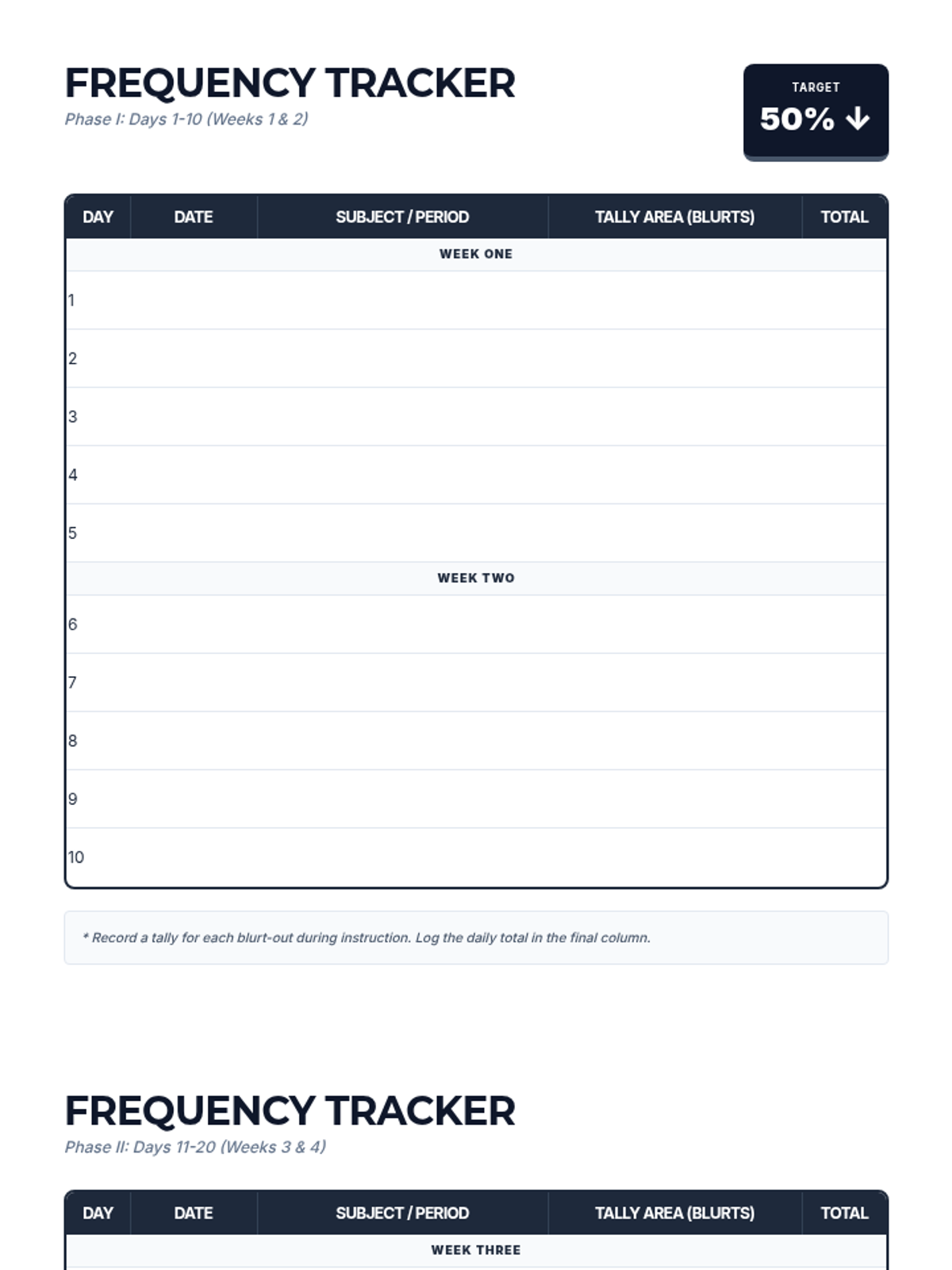
A progress monitoring tracker and visualization tool used to record daily blurting frequency and track the 50% reduction goal over four weeks.
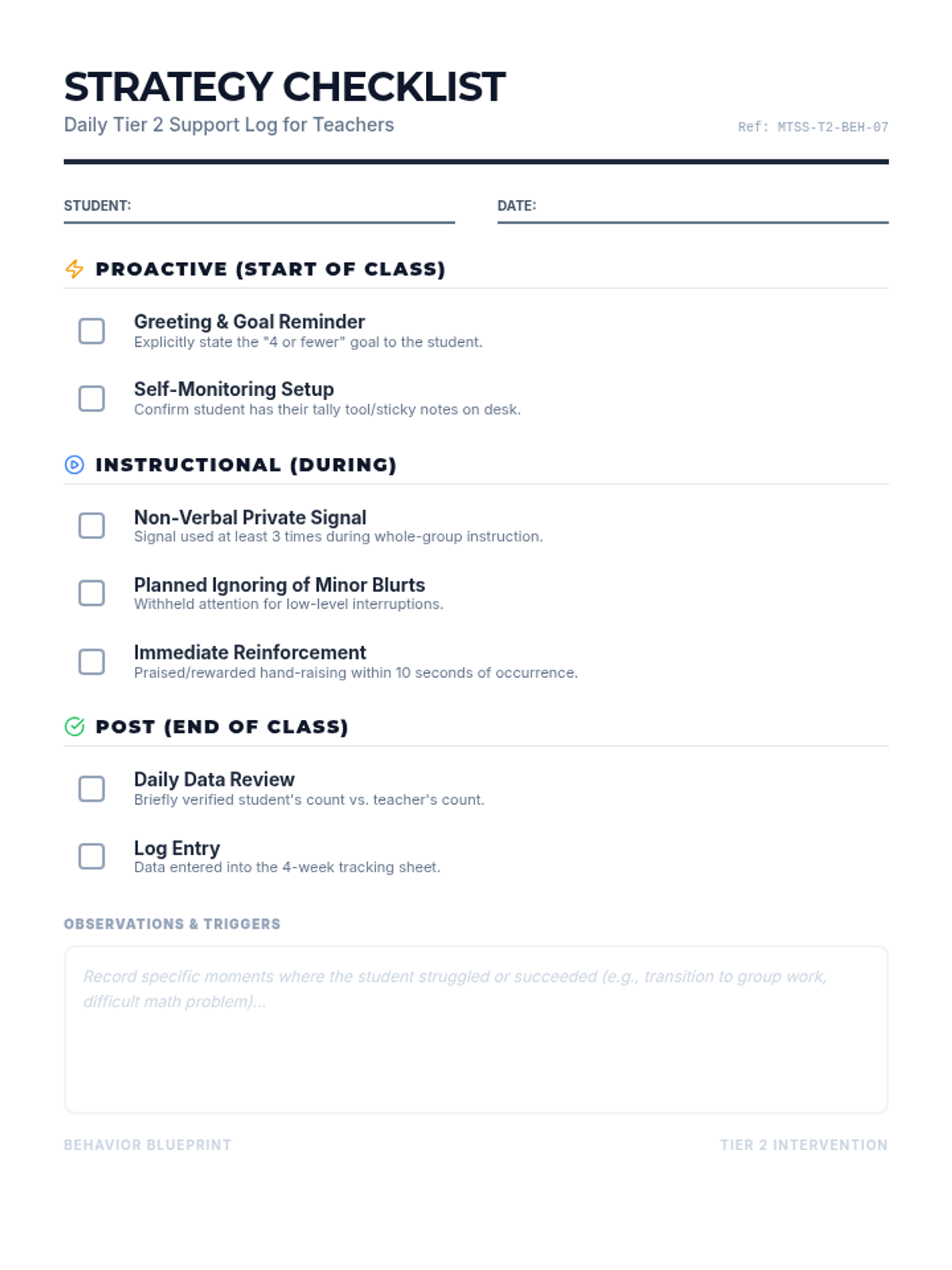
A practical daily checklist for teachers to track implementation of Tier 2 behavioral strategies and record student data.
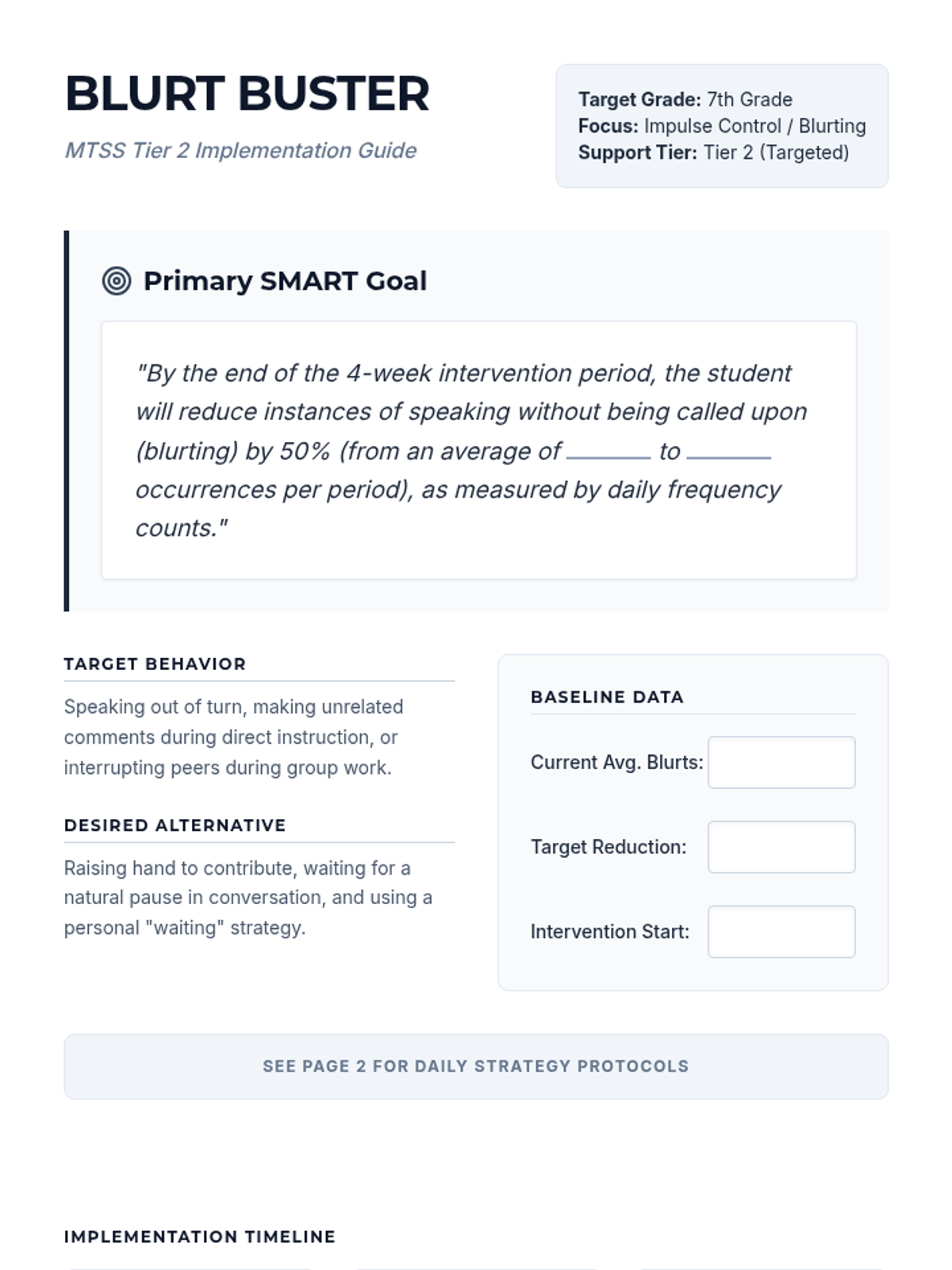
A comprehensive implementation guide for school staff detailing a Tier 2 MTSS goal and specific strategies for reducing student blurting behaviors.
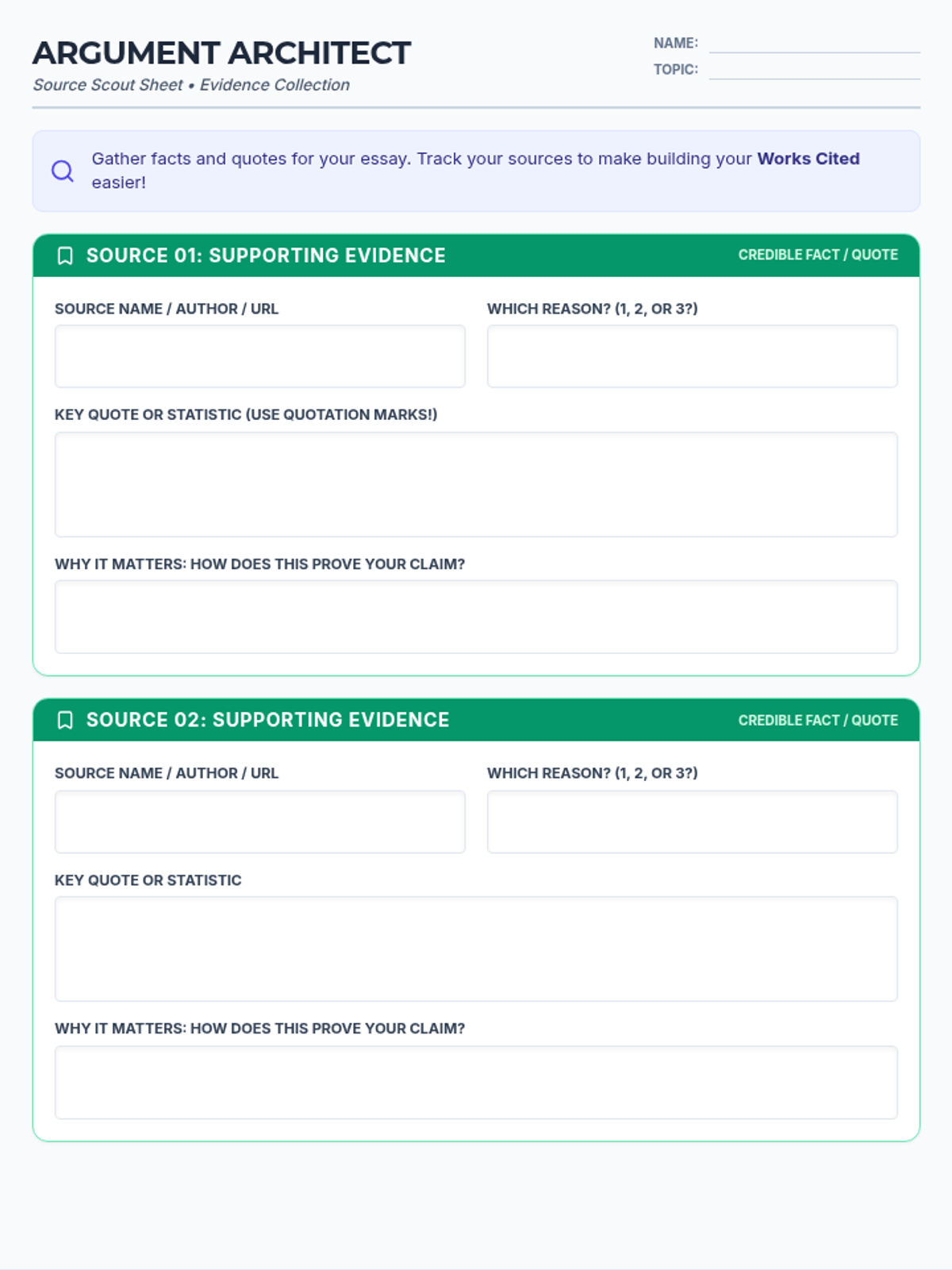
A 2-page evidence tracking worksheet for argumentative research. Provides structured zones for 3 supporting sources (quotes, analysis, citations) and a dedicated section for researching a counterargument and planning a rebuttal. Designed with large writing areas and clear visual cues for students with SLD/ADHD. Labels updated for better contrast and legibility. Uniform box-style input areas for consistency.
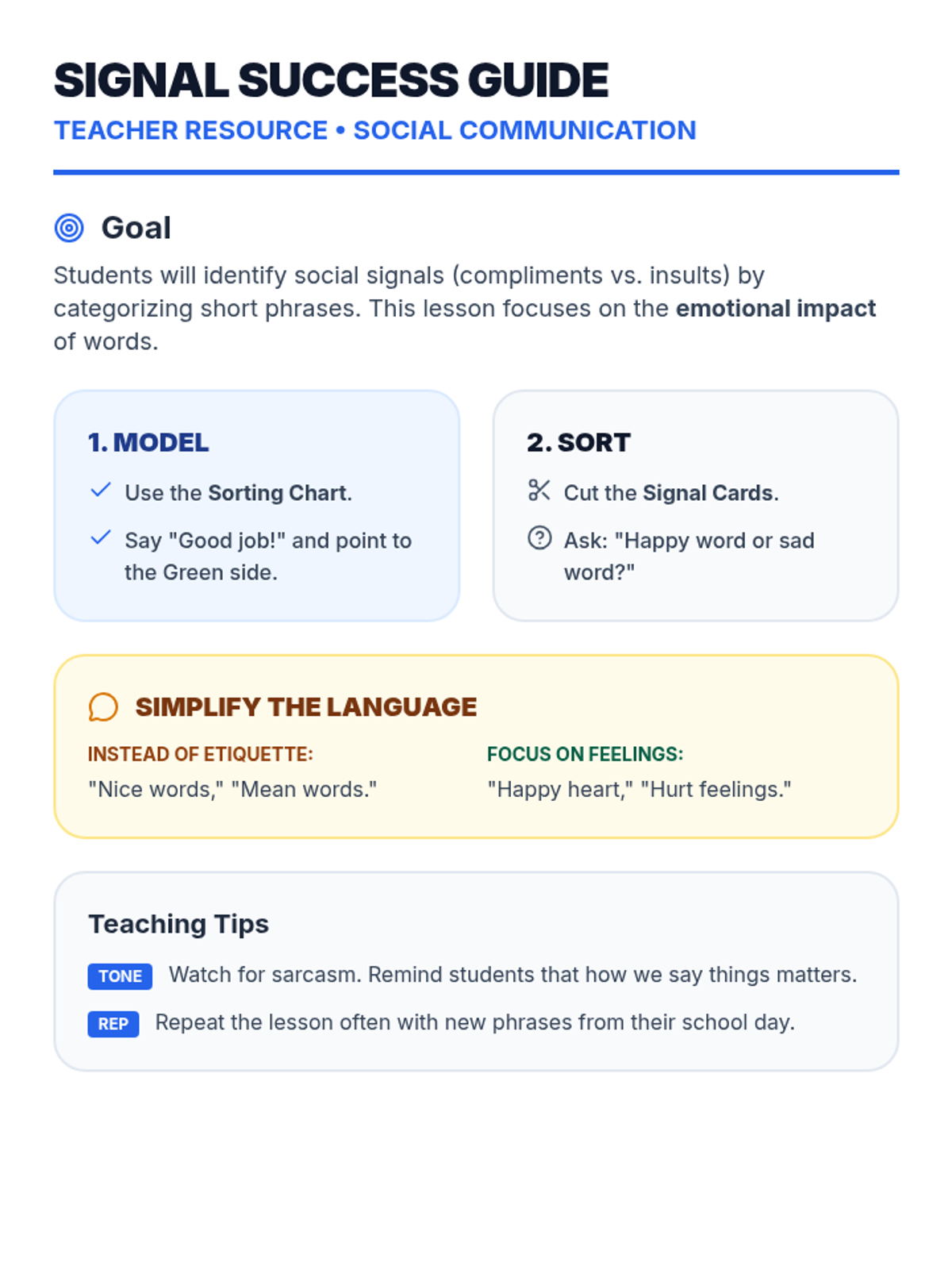
A teacher guide providing concrete strategies for teaching social signals to students with intellectual disabilities. Includes step-by-step instructions and simplified language tips.
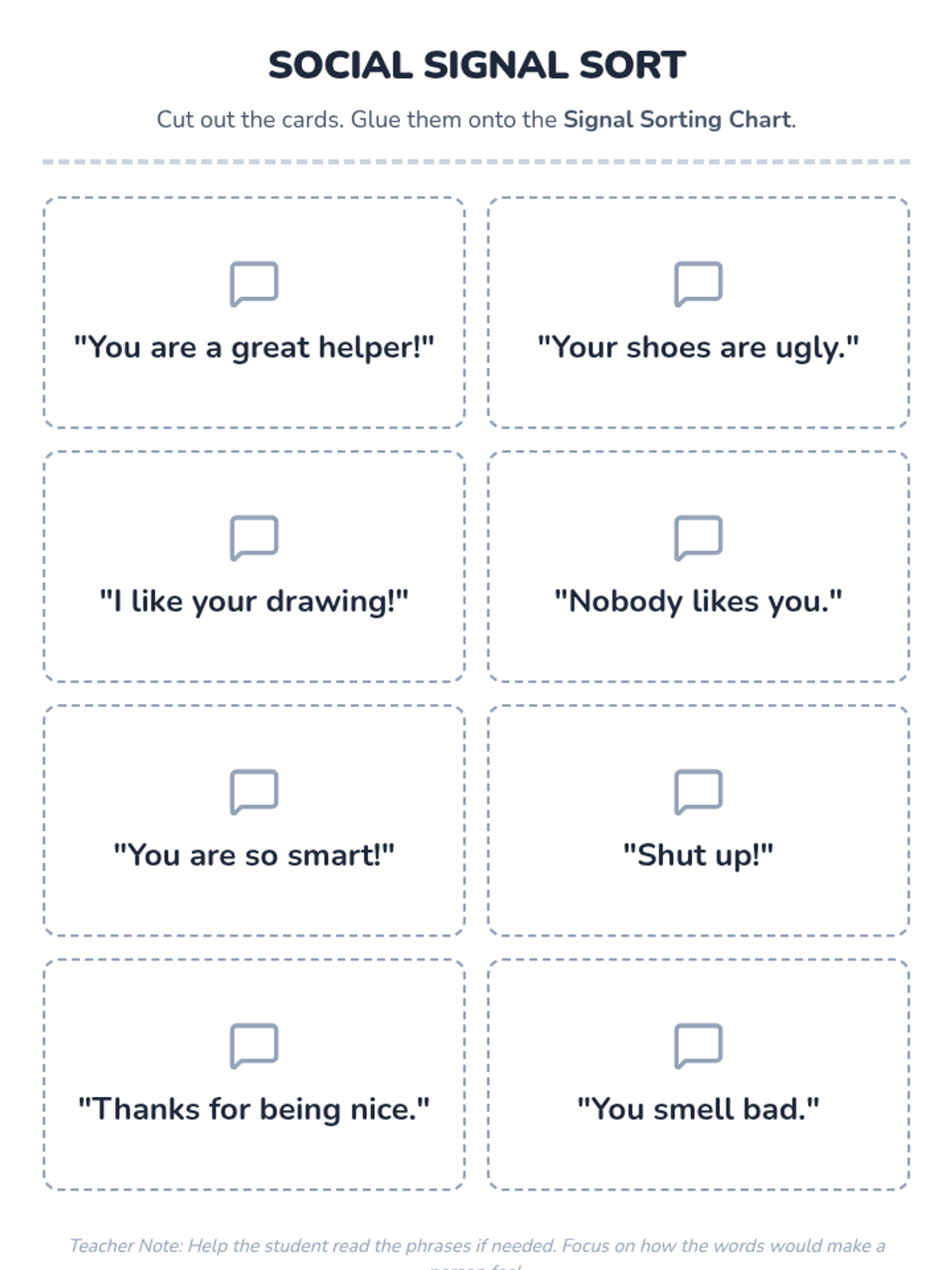
A set of sorting cards for hands-on practice. Students cut out phrases and sort them into compliments or insults to reinforce social understanding.
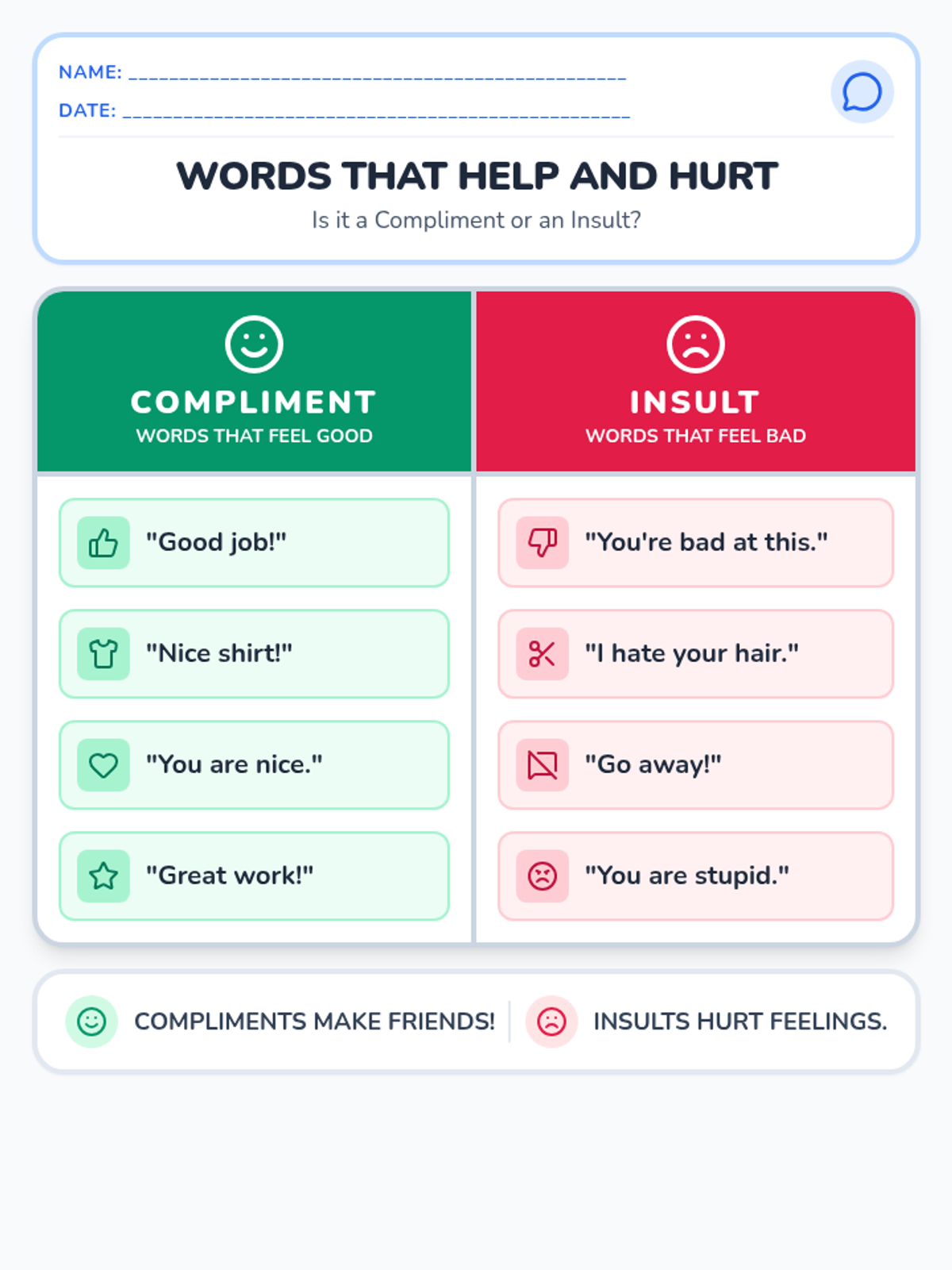
A high-contrast visual T-chart using icons and simple text to help students distinguish between compliments and insults. Includes color-coding (green for positive, red for negative) and relatable junior high examples.
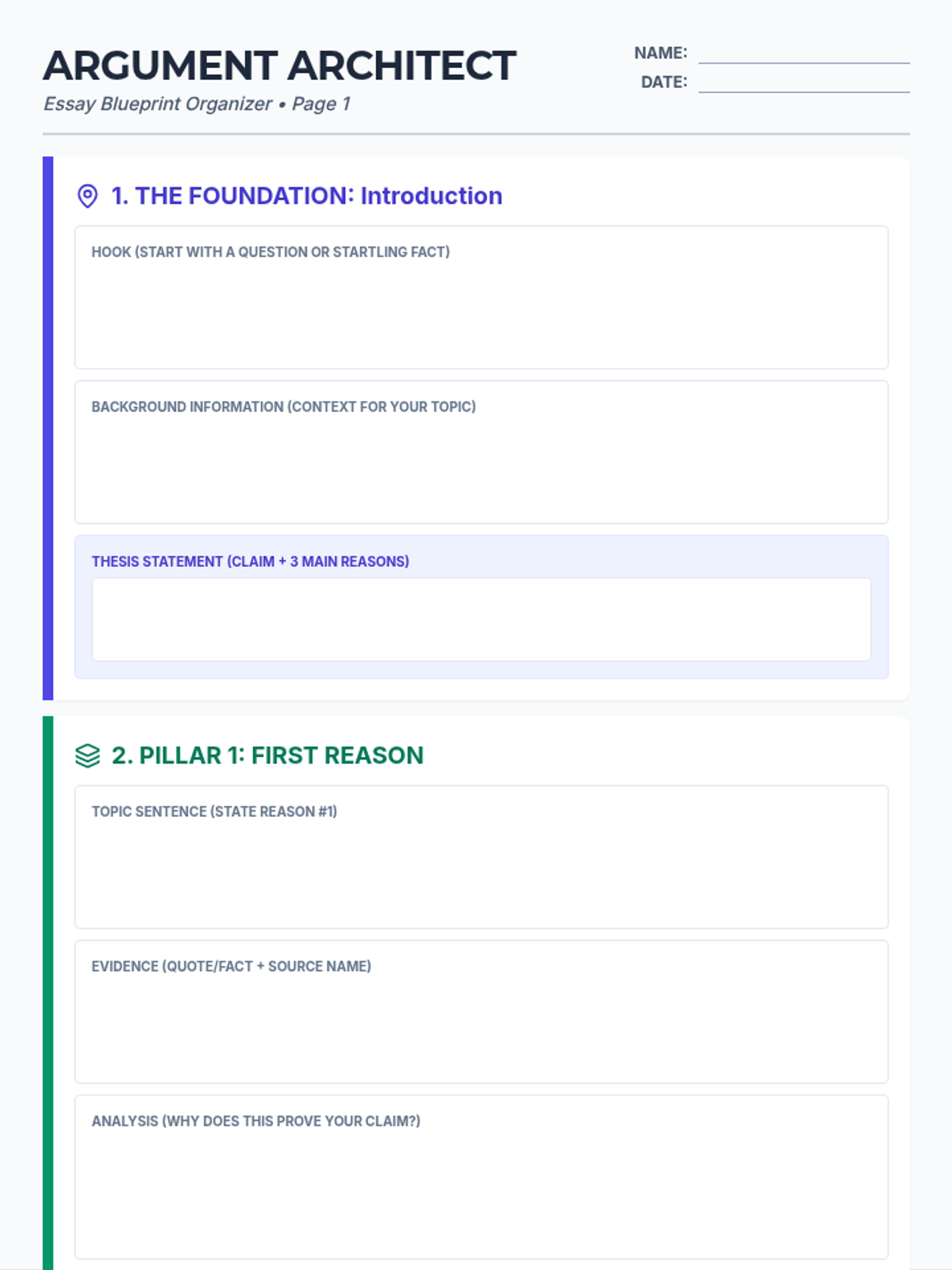
A comprehensive 4-page master packet for an argumentative essay. Includes a structured graphic organizer for the introduction, 3 body paragraphs, counterclaim, and conclusion, followed by a final page containing academic sentence starters and a requirements checklist. Designed with clear visual boundaries and generous work areas for students with SLD and ADHD. Final page font sizes optimized for better readability.
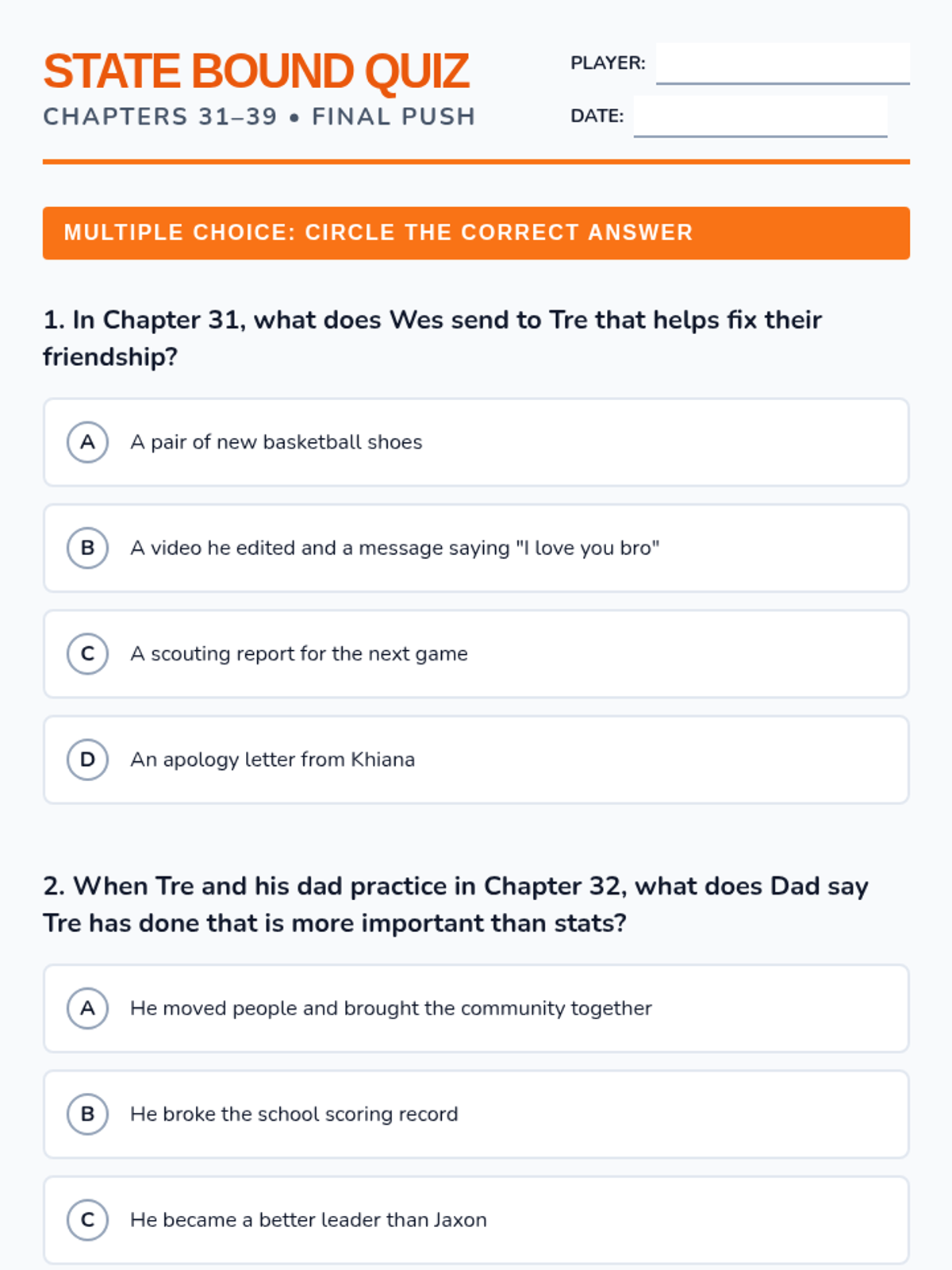
A 10-question multiple choice test for Chapters 31-39 of Rez Ball, focusing on the Regional Championship, the team pact, and the recruitment of Tre by the Gophers. Spaced over 3 pages for readability.
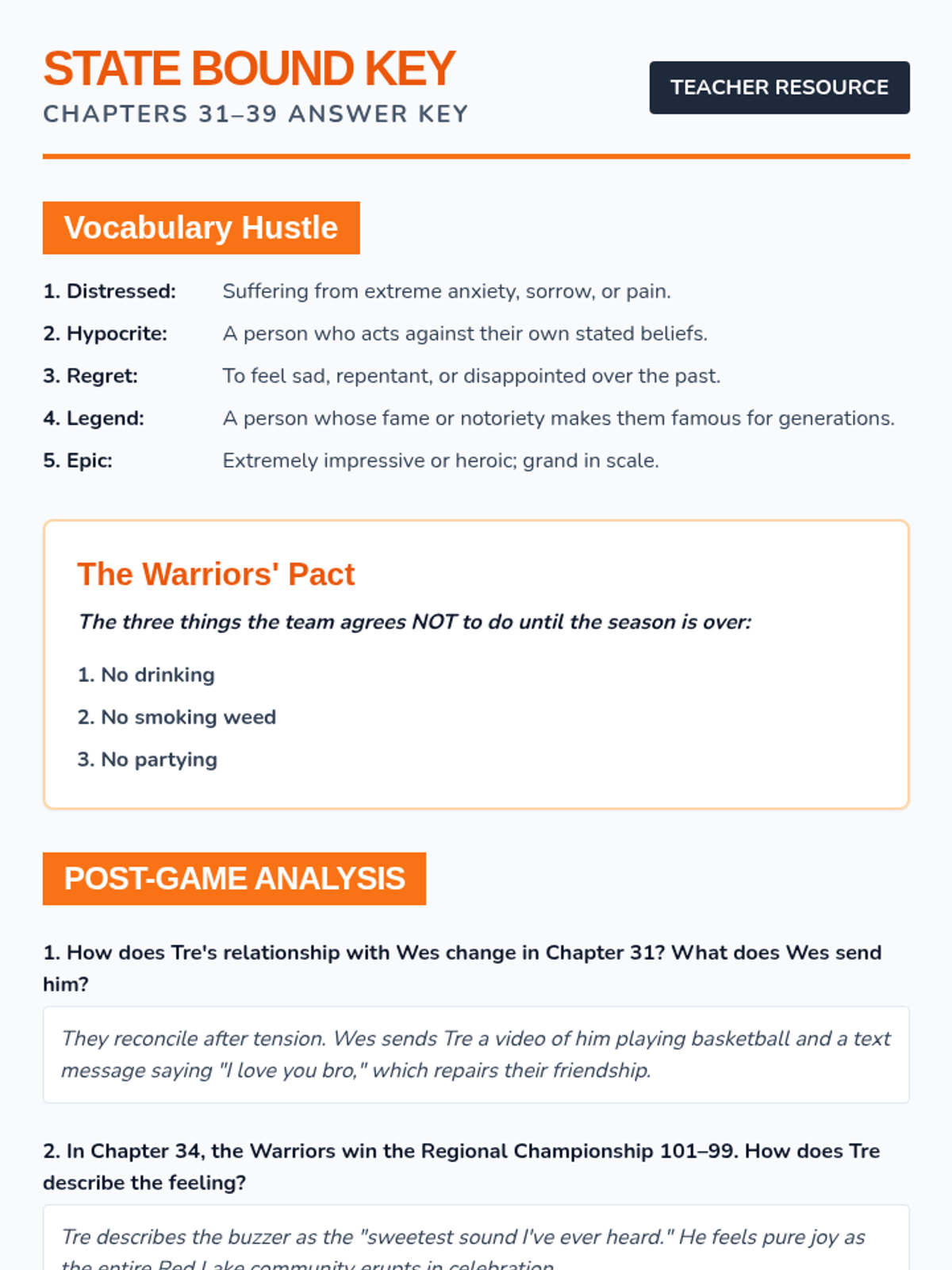
An answer key for the Chapters 31-39 State Bound Notes Worksheet, providing vocabulary definitions, pact details, and summary points for comprehension questions. Revised for alignment and clarity.
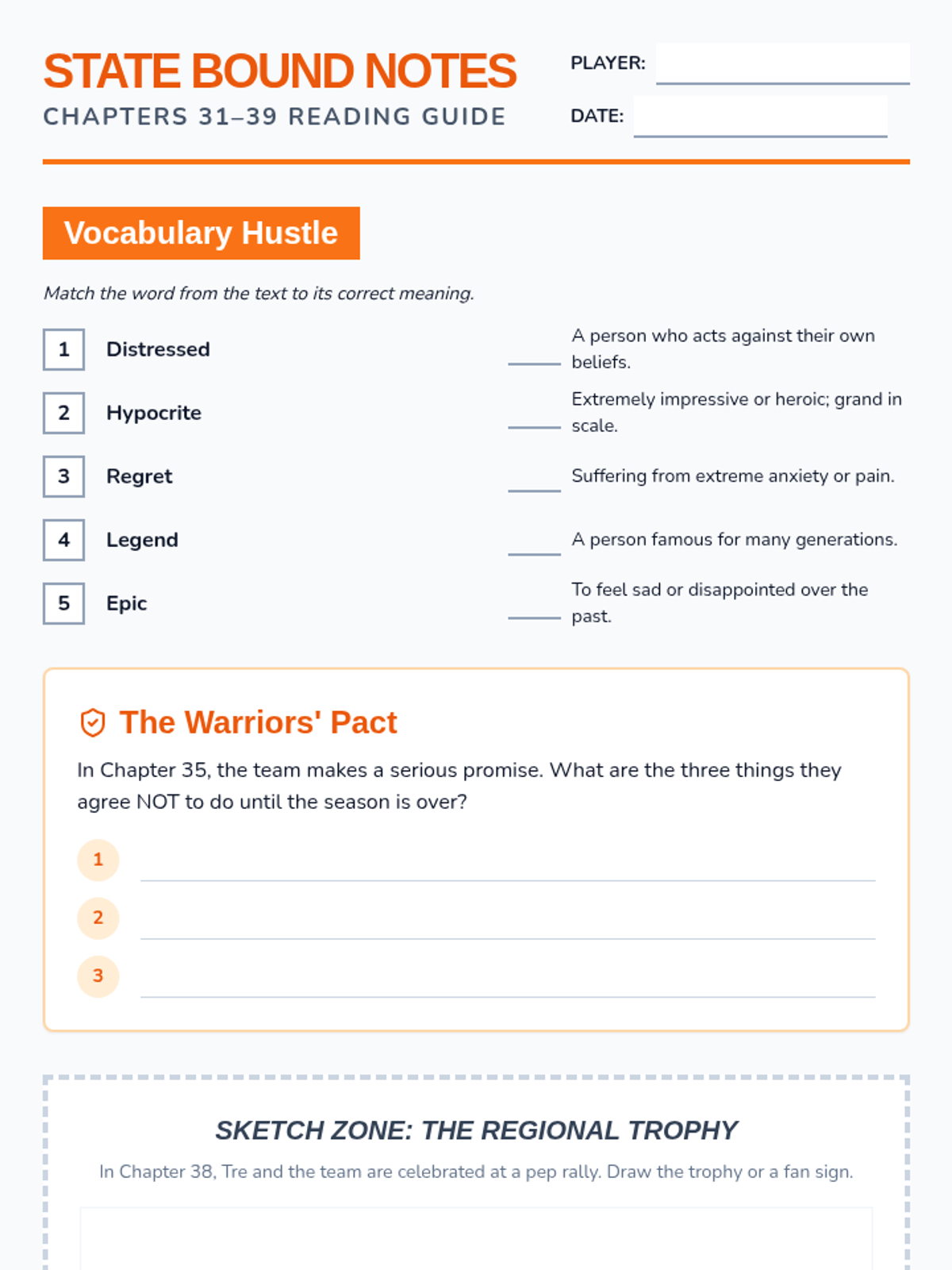
A two-page student reading guide for Rez Ball Chapters 31-39, featuring vocabulary matching, a "pact" identification section, sketch zone, and comprehension questions focused on the Regional Championship and recruitment. Revised for better page breaks and contrast.
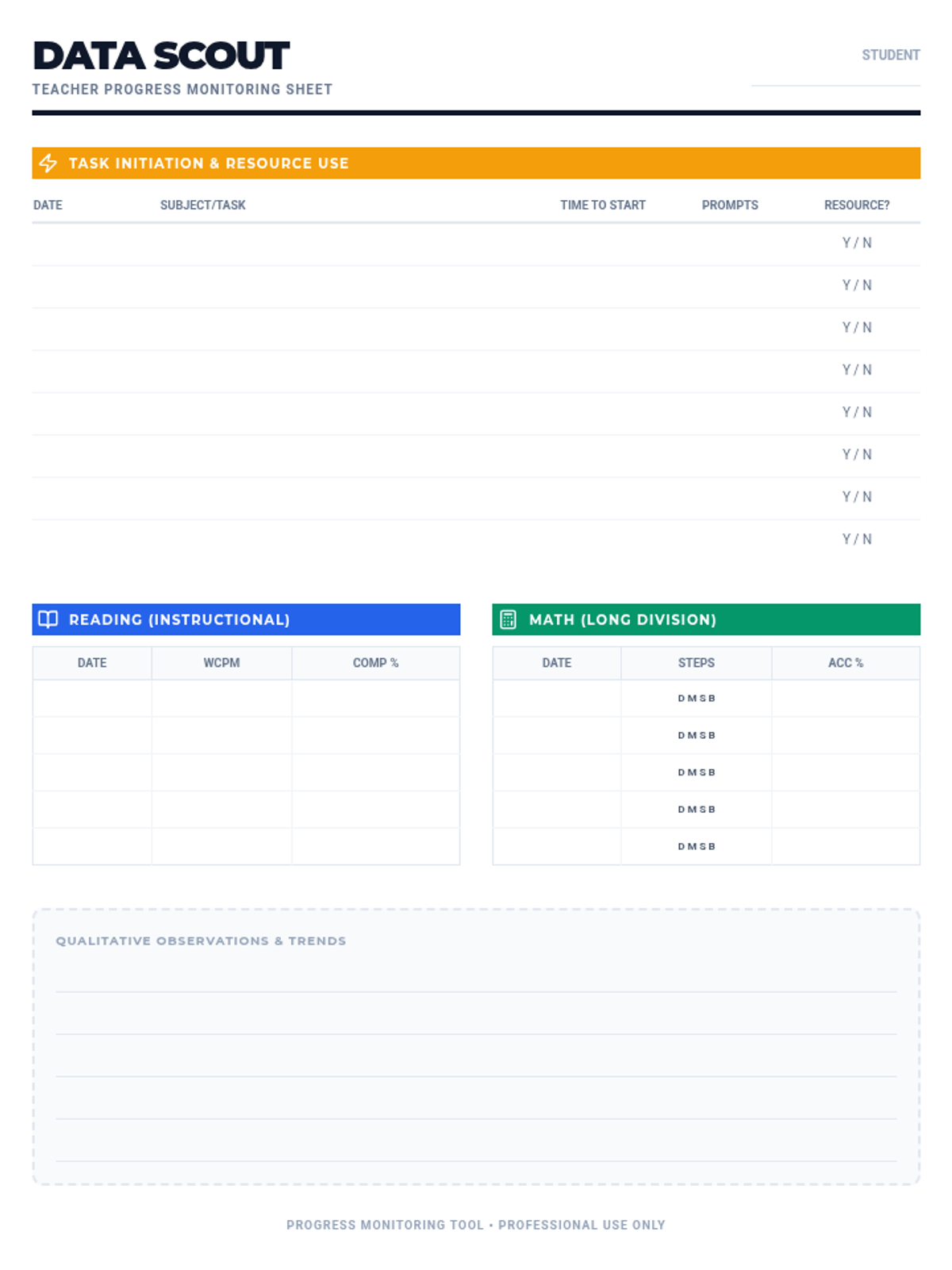
A comprehensive progress monitoring tool for teachers to track task initiation, resource usage, reading fluency, and math accuracy.
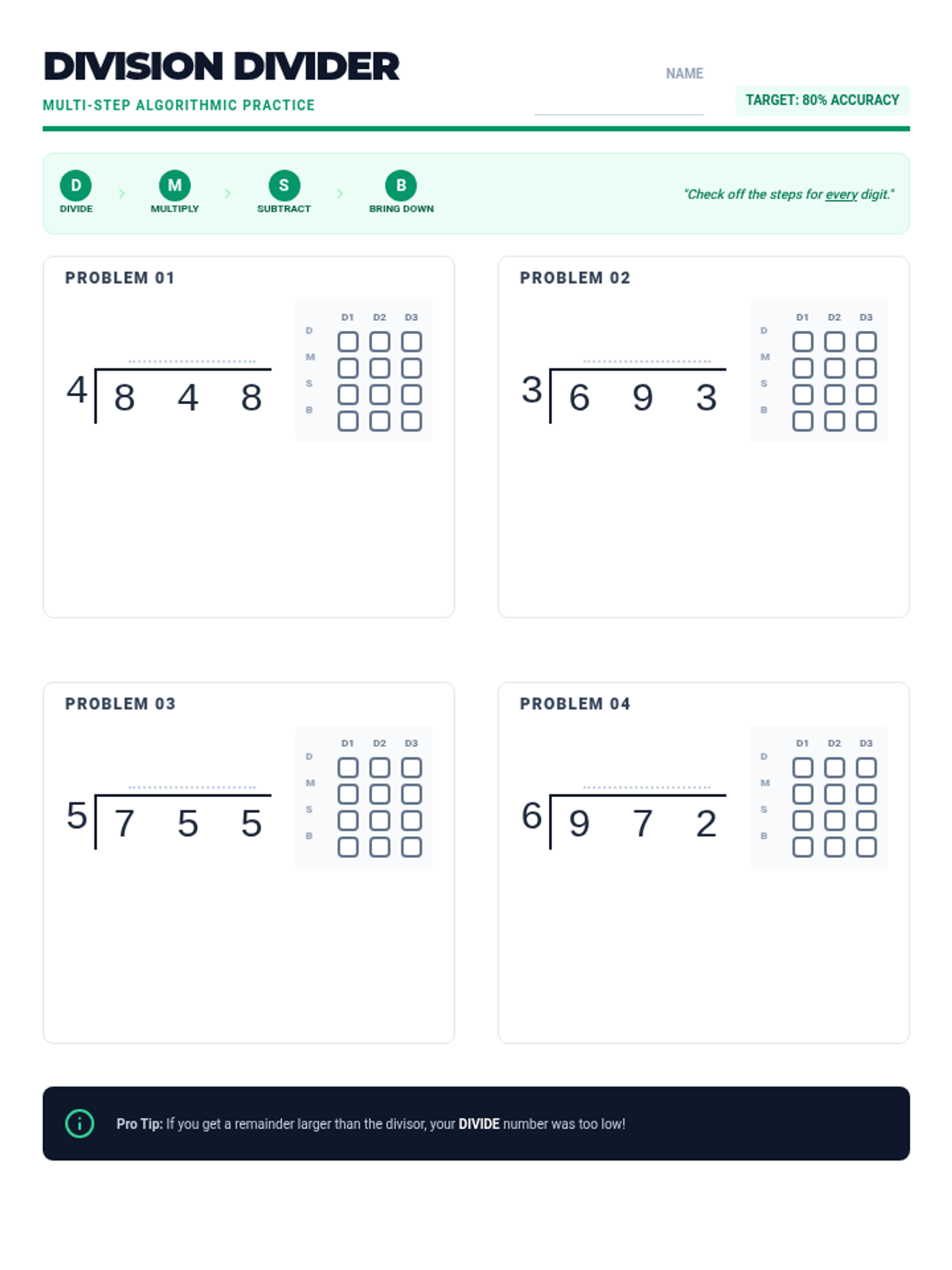
A scaffolded math worksheet for long division featuring integrated checklists for every problem to support multi-step processing and task focus.
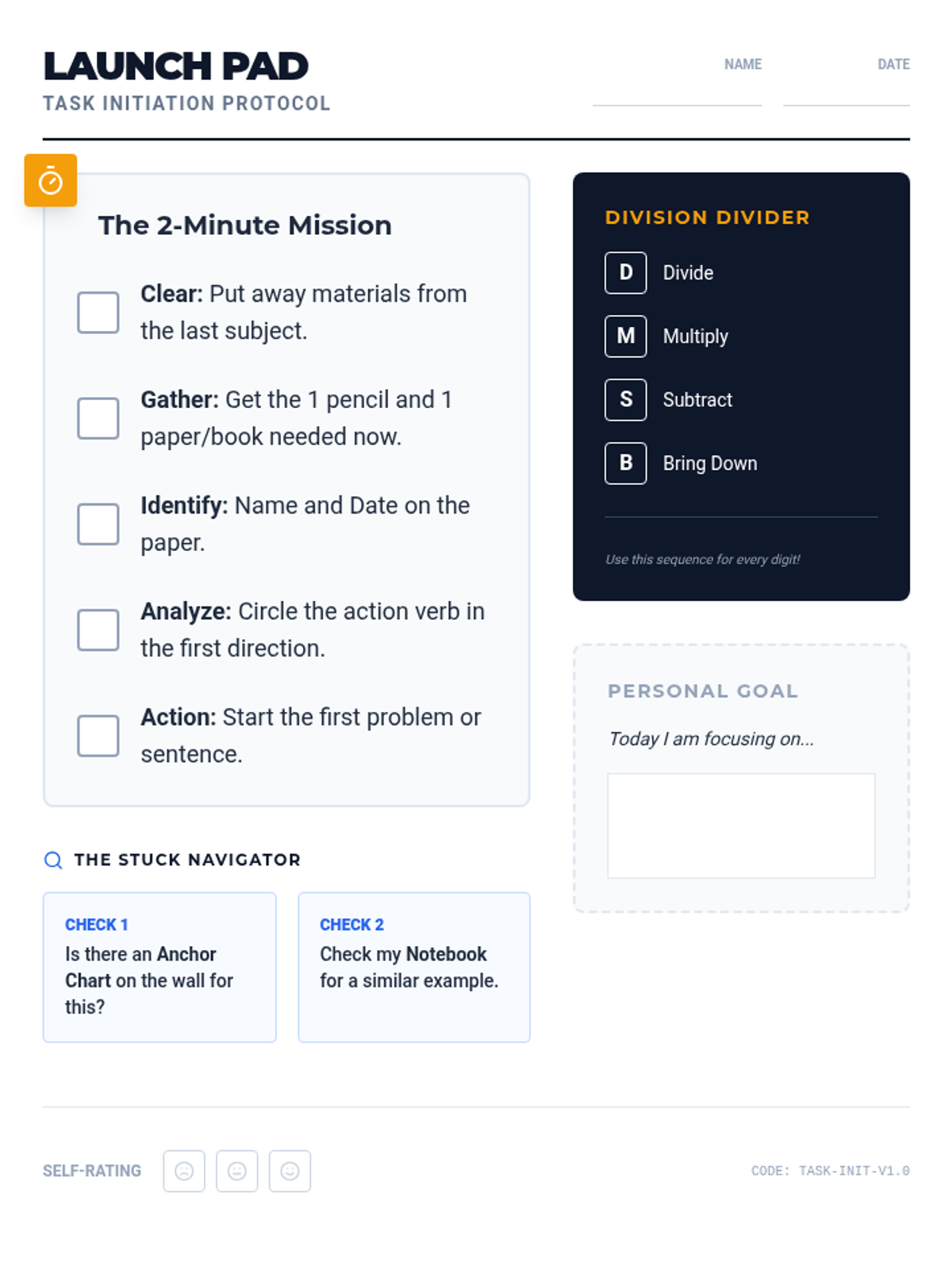
A student-facing desk reference checklist designed to support task initiation, resource-seeking, and multi-step math problem solving.
A student-friendly visual guide for executive functioning strategies, including task initiation techniques and resource-seeking behaviors.