Visual introduction slides for Market Math lesson, featuring addition and subtraction concepts with grocery-themed icons and clear, large text for instructional clarity.
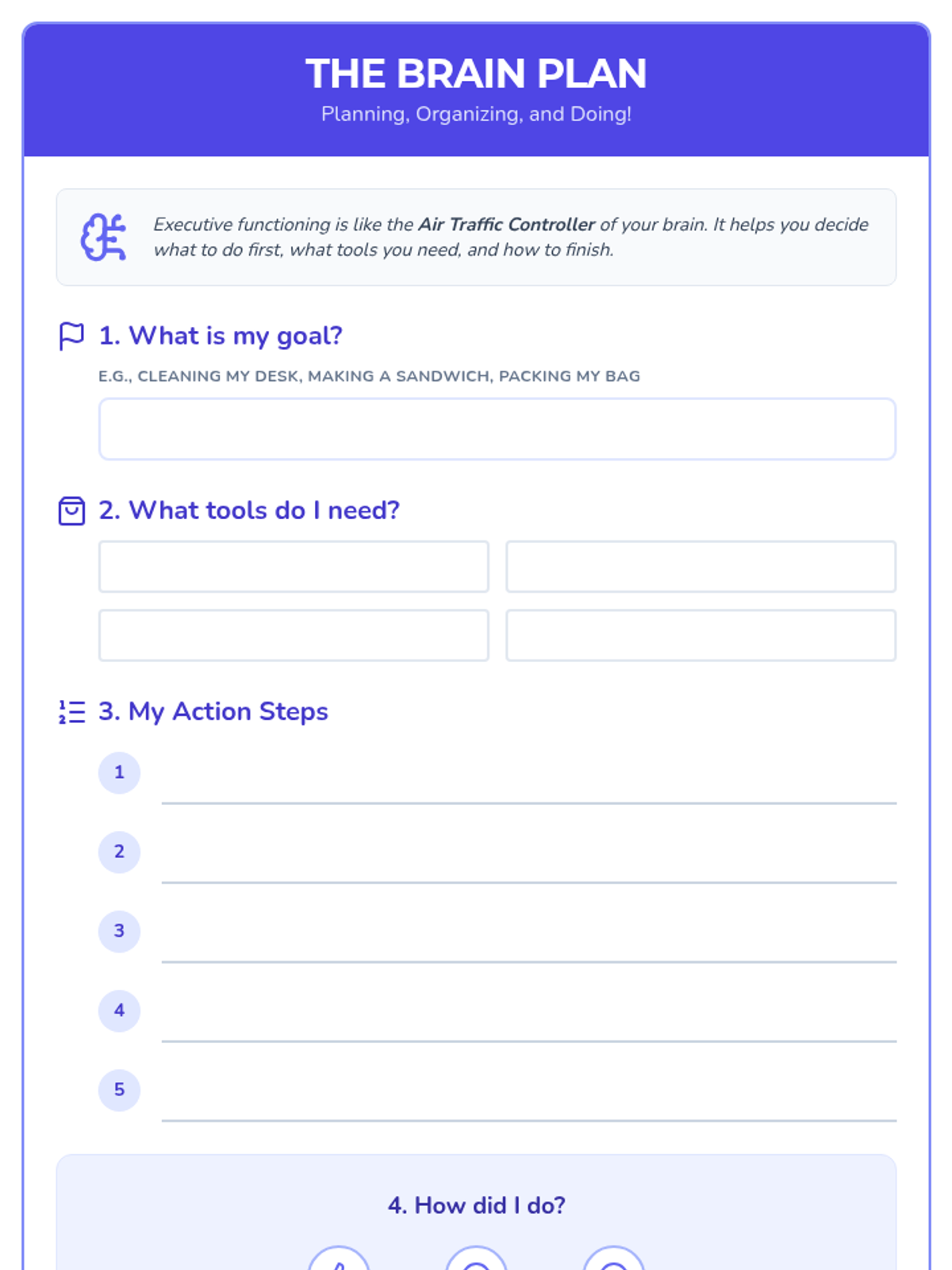
A task-planning worksheet for executive functioning skills. Revised with more steps, improved layout, and clearer instructions.
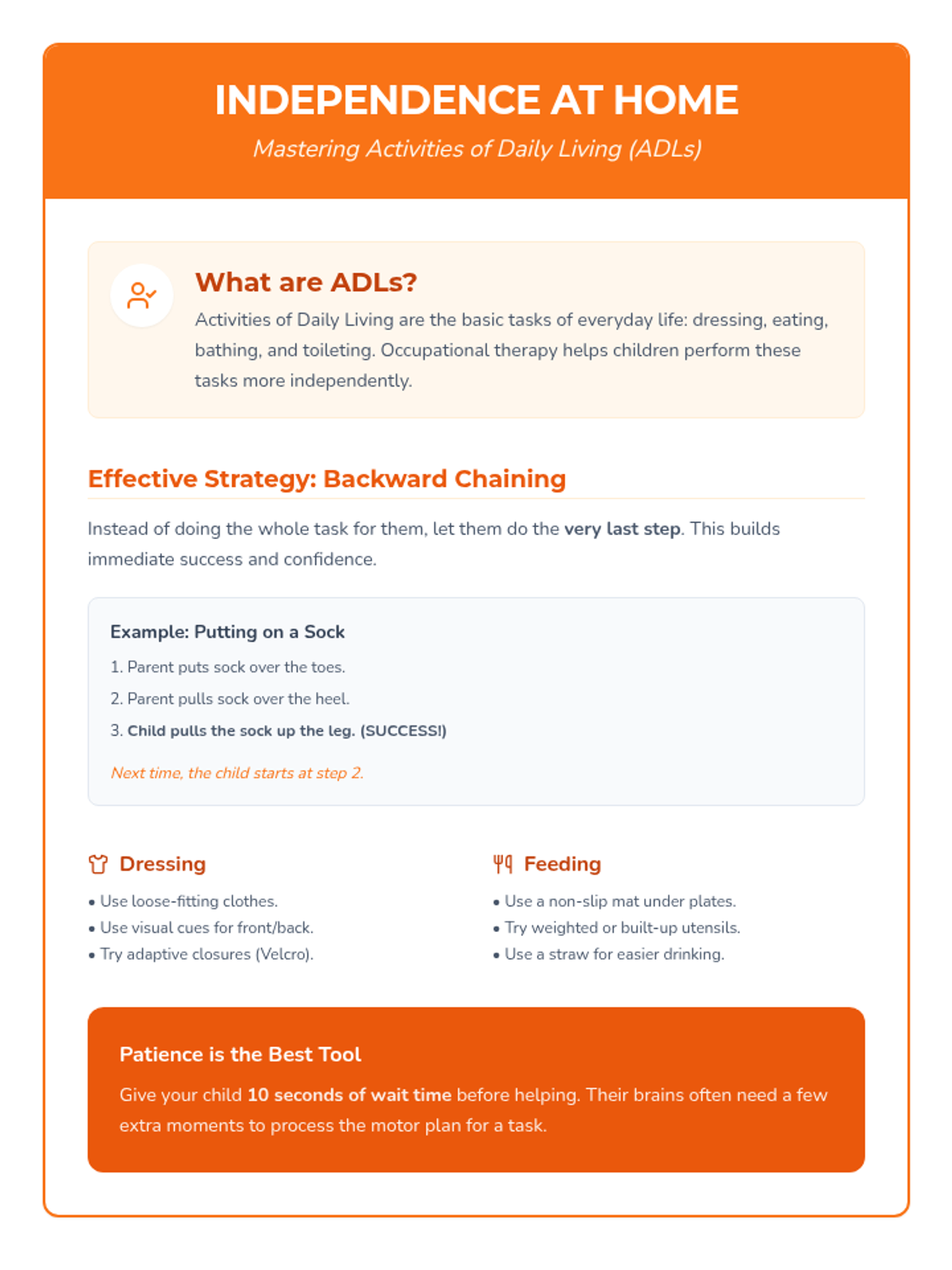
A parent-focused guide on supporting Activities of Daily Living (ADLs) using strategies like backward chaining and task modification.
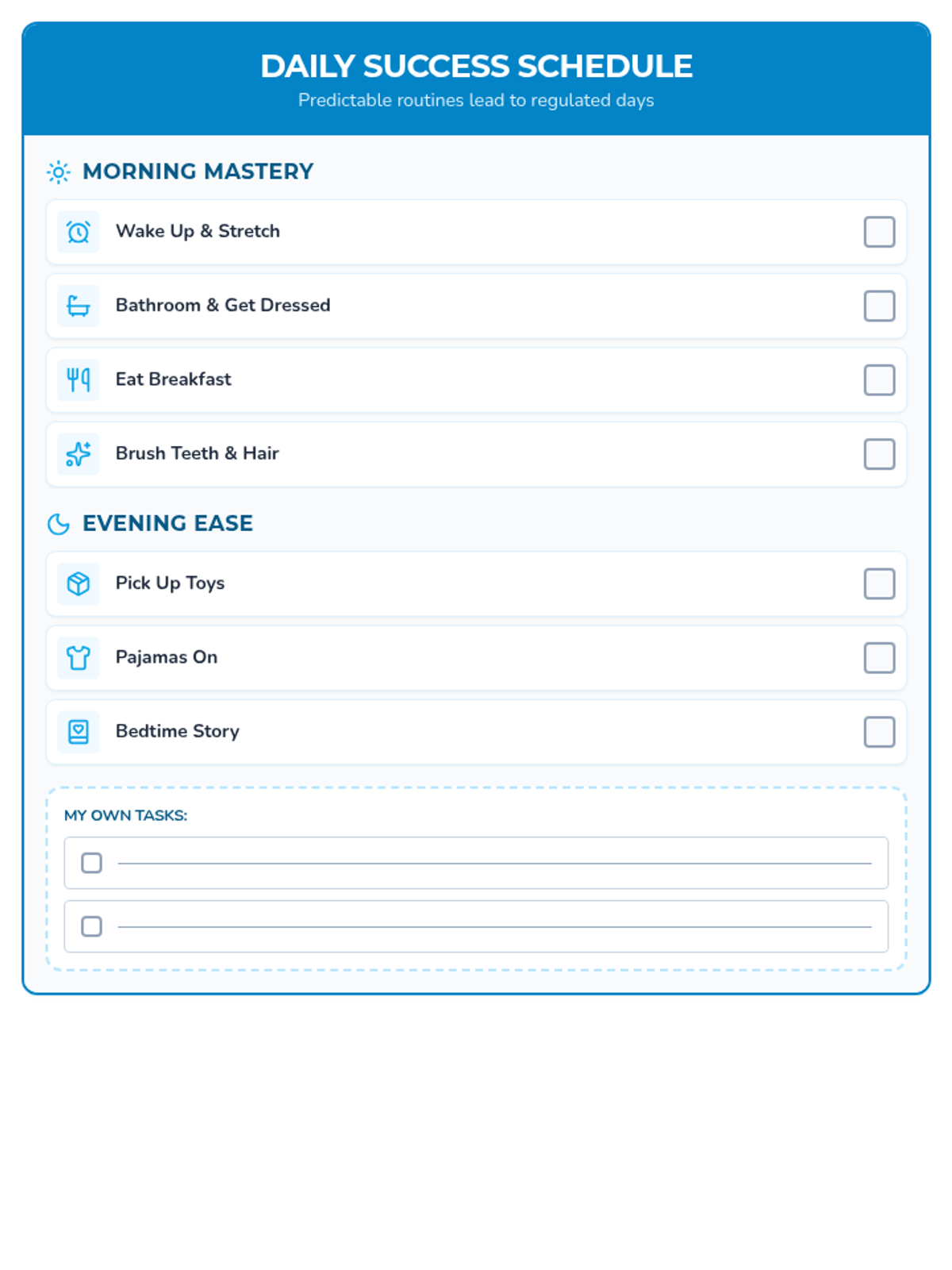
A visual schedule template for morning and evening routines. Revised for layout consistency and print visibility.
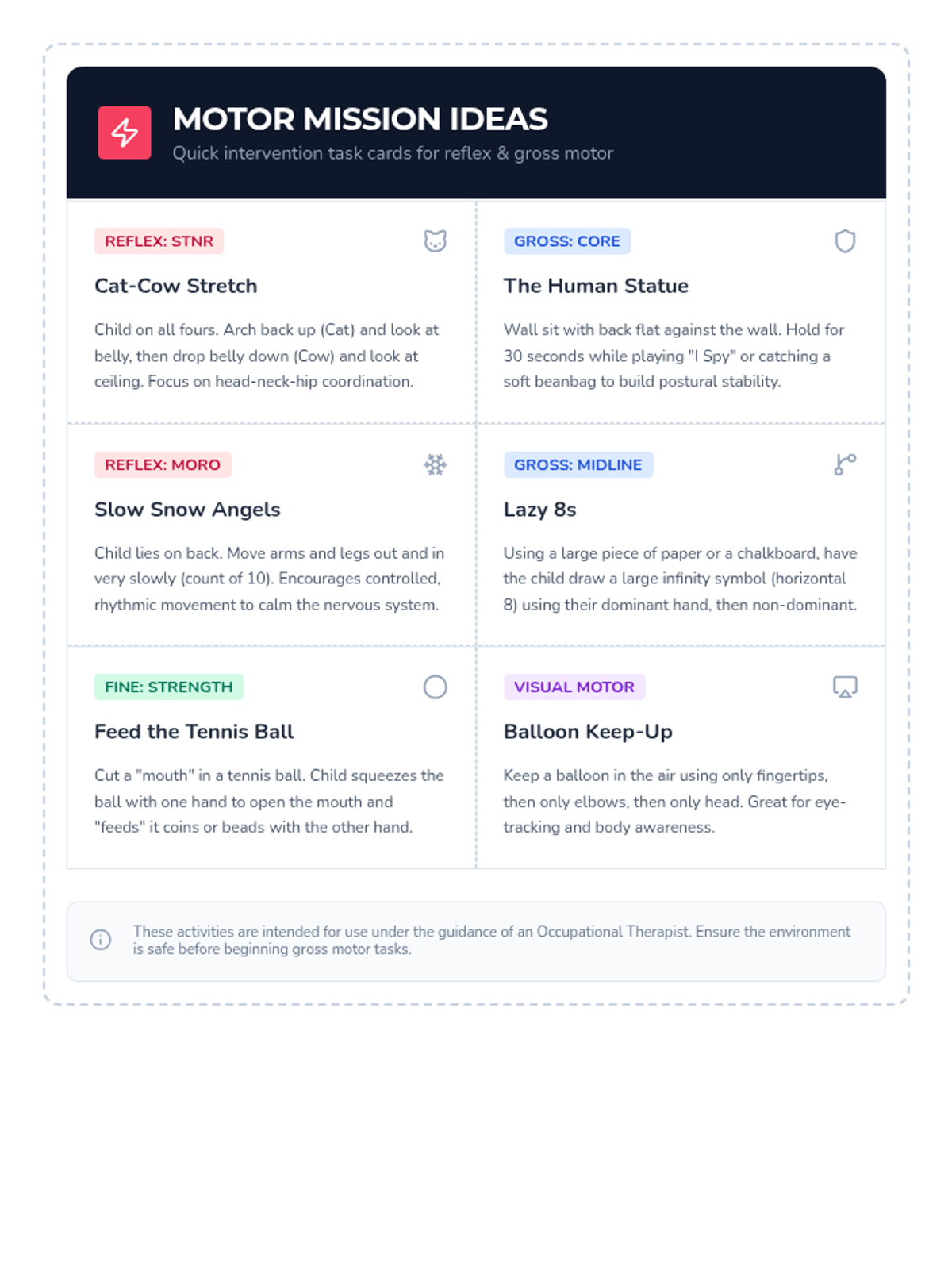
A teacher/clinician resource containing six intervention task cards for primitive reflex integration, gross motor strengthening, and visual-motor coordination. Revised with cutting guides.
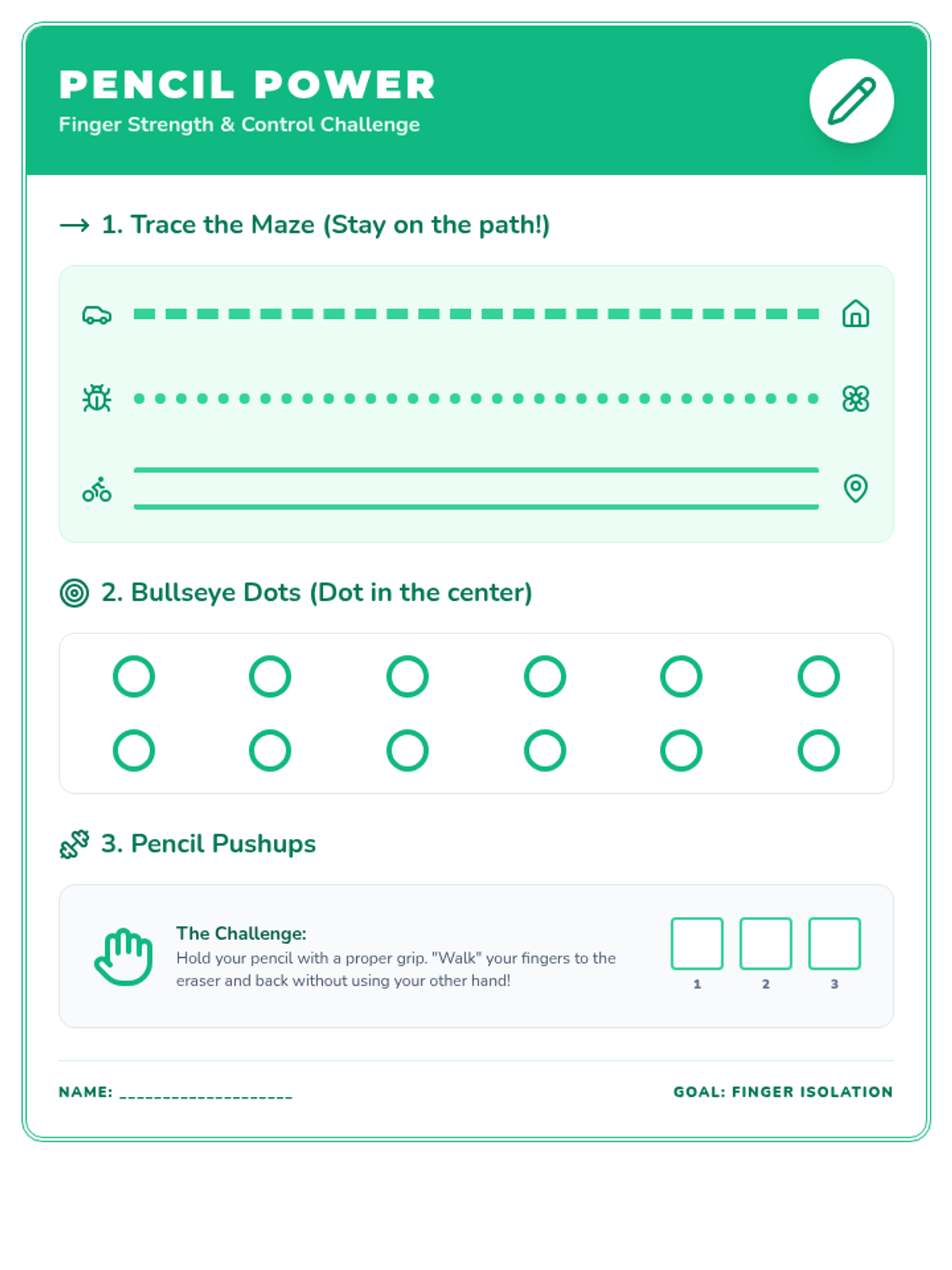
A fine motor precision worksheet targeting pencil control, visual-motor coordination, and in-hand manipulation. Revised for better visibility and layout.
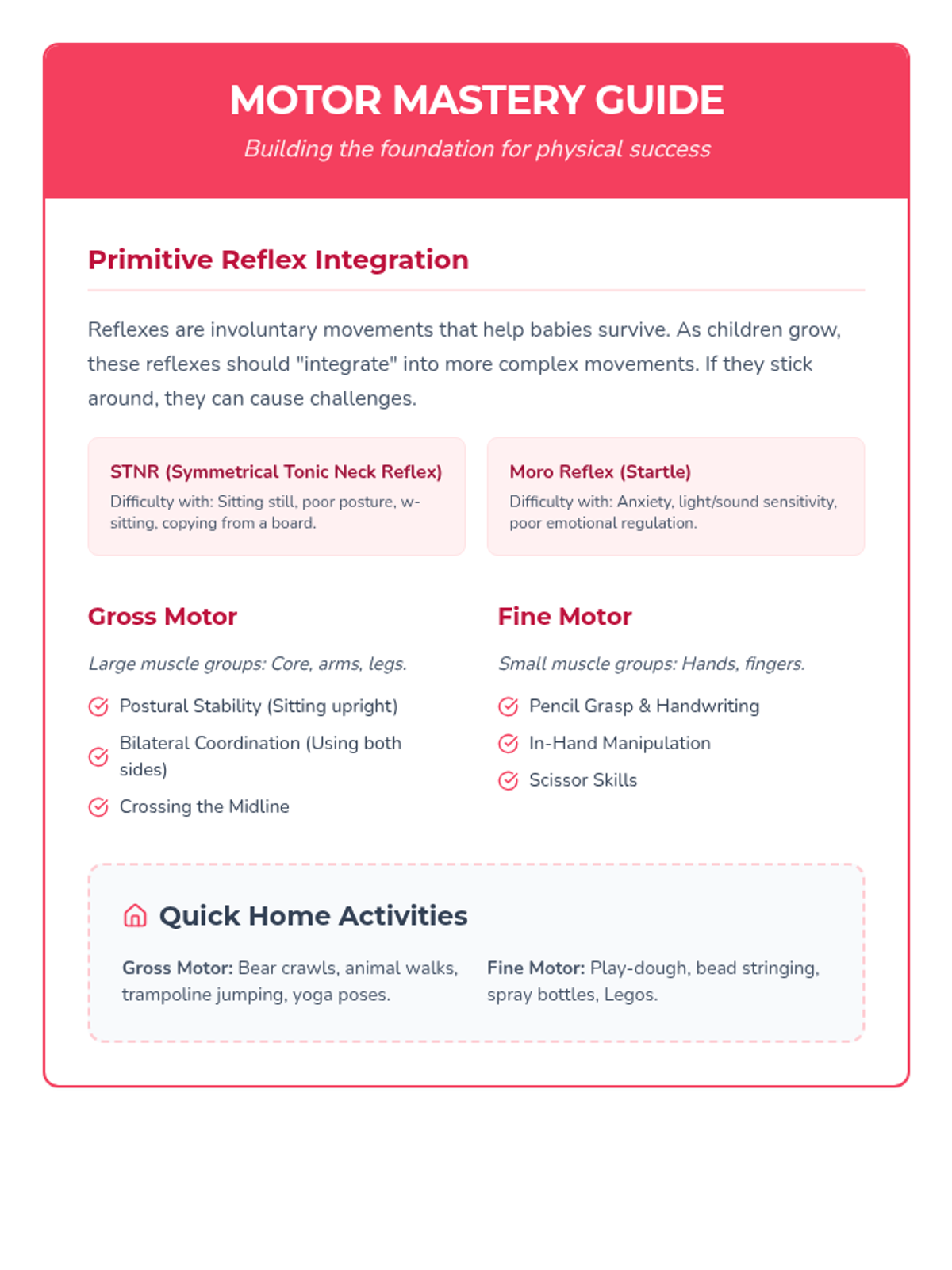
A guide for parents covering primitive reflex integration, the difference between gross and fine motor skills, and functional activities for home development.
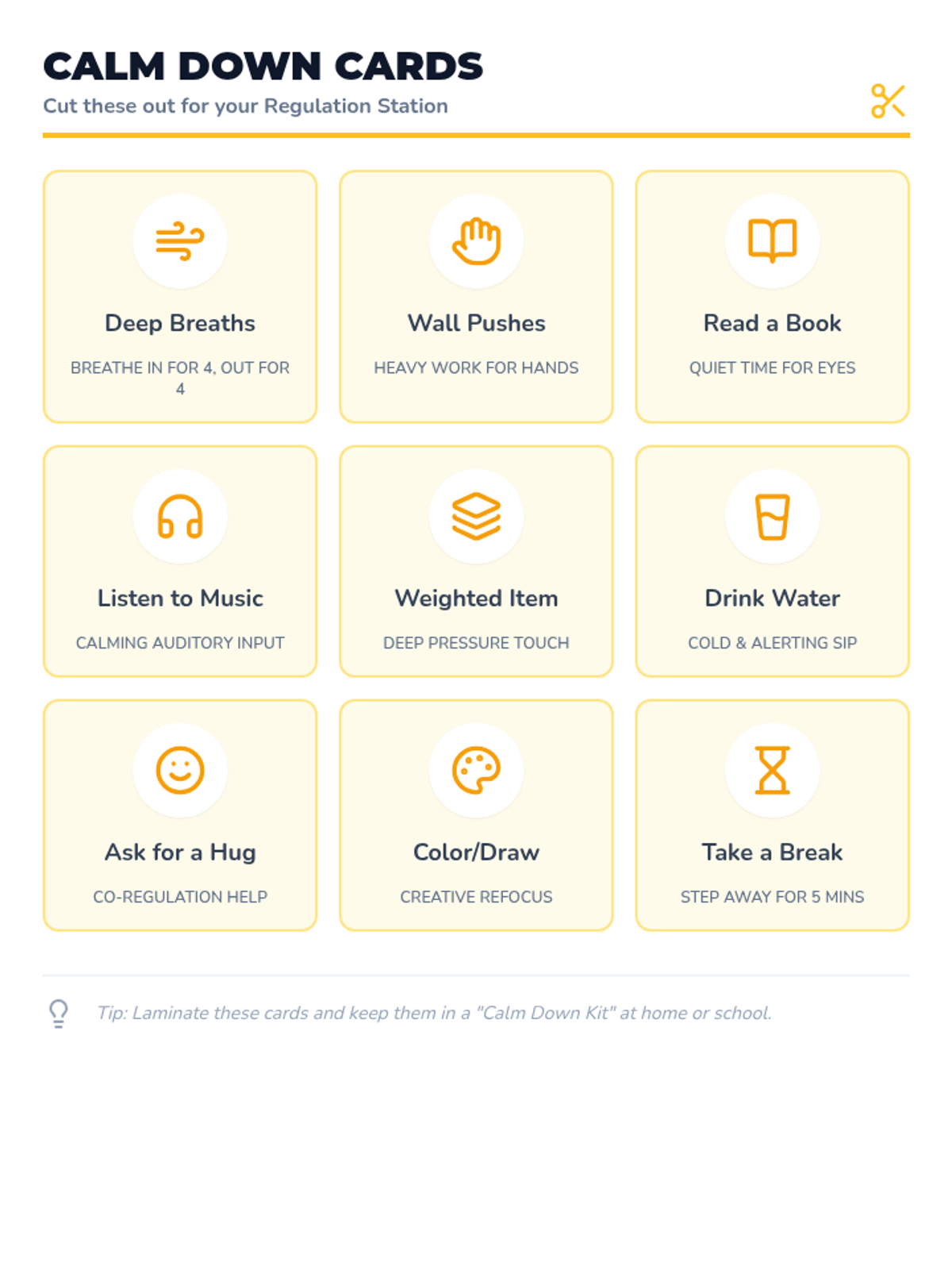
A set of nine printable visual strategy cards for children to use when they need to self-regulate or find a 'calm down' activity. Revised for improved legibility.
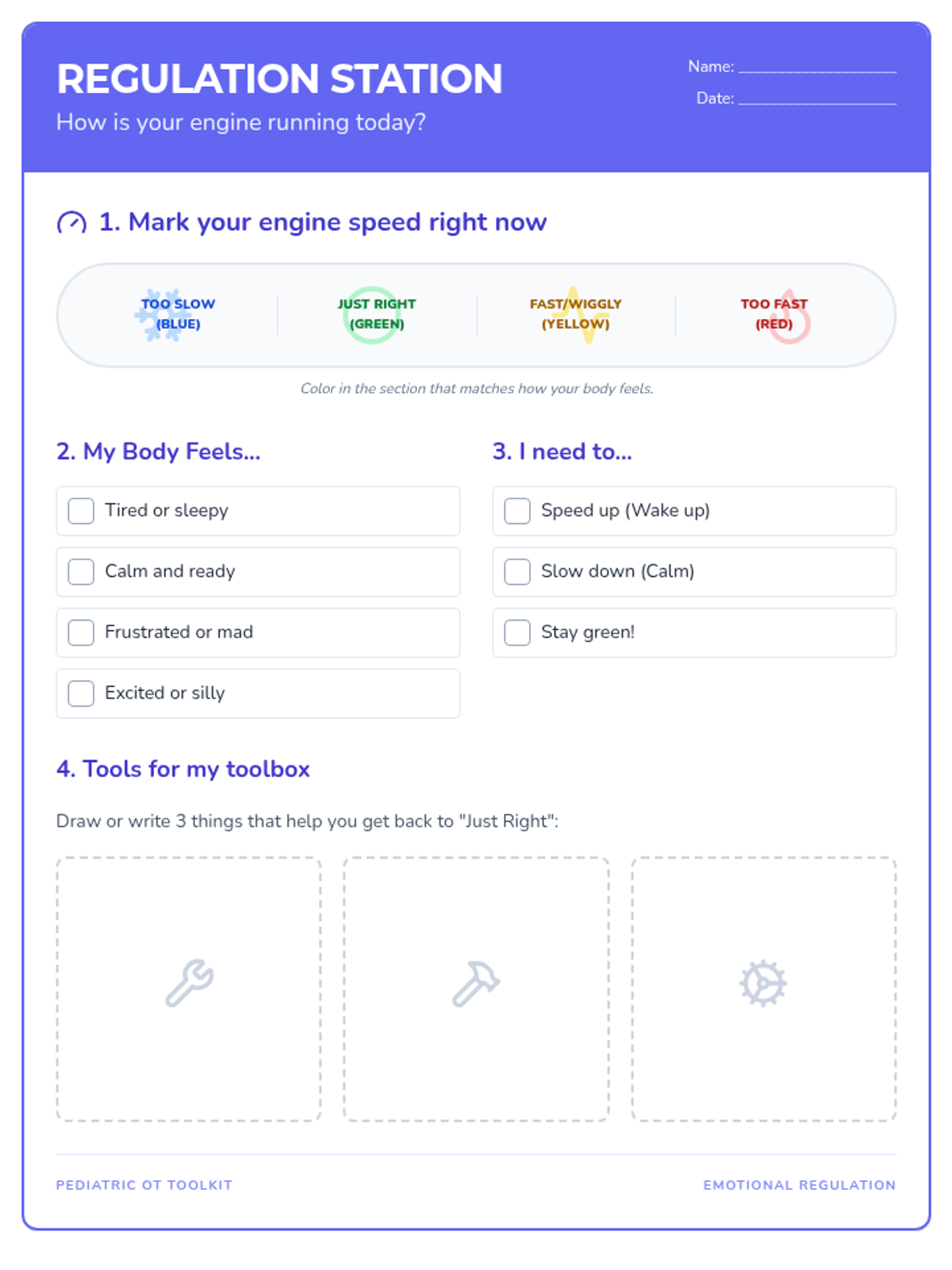
A student-facing self-regulation worksheet that uses an 'engine' metaphor to help children identify their arousal level and select appropriate coping tools. Revised for better contrast and layout.
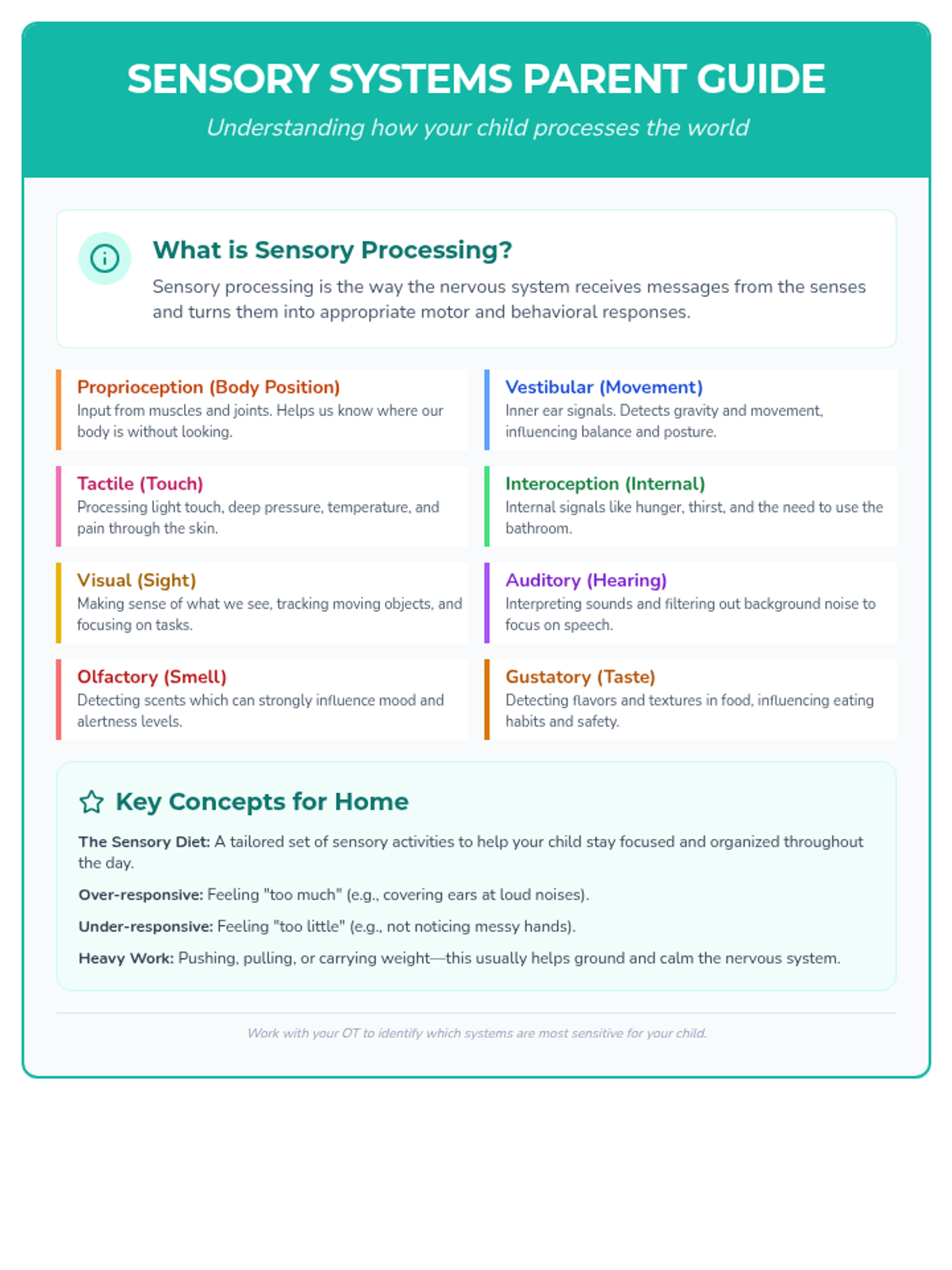
A concise, visually organized guide for parents explaining all 8 sensory systems and common OT terminology like 'sensory diet' and 'heavy work'.
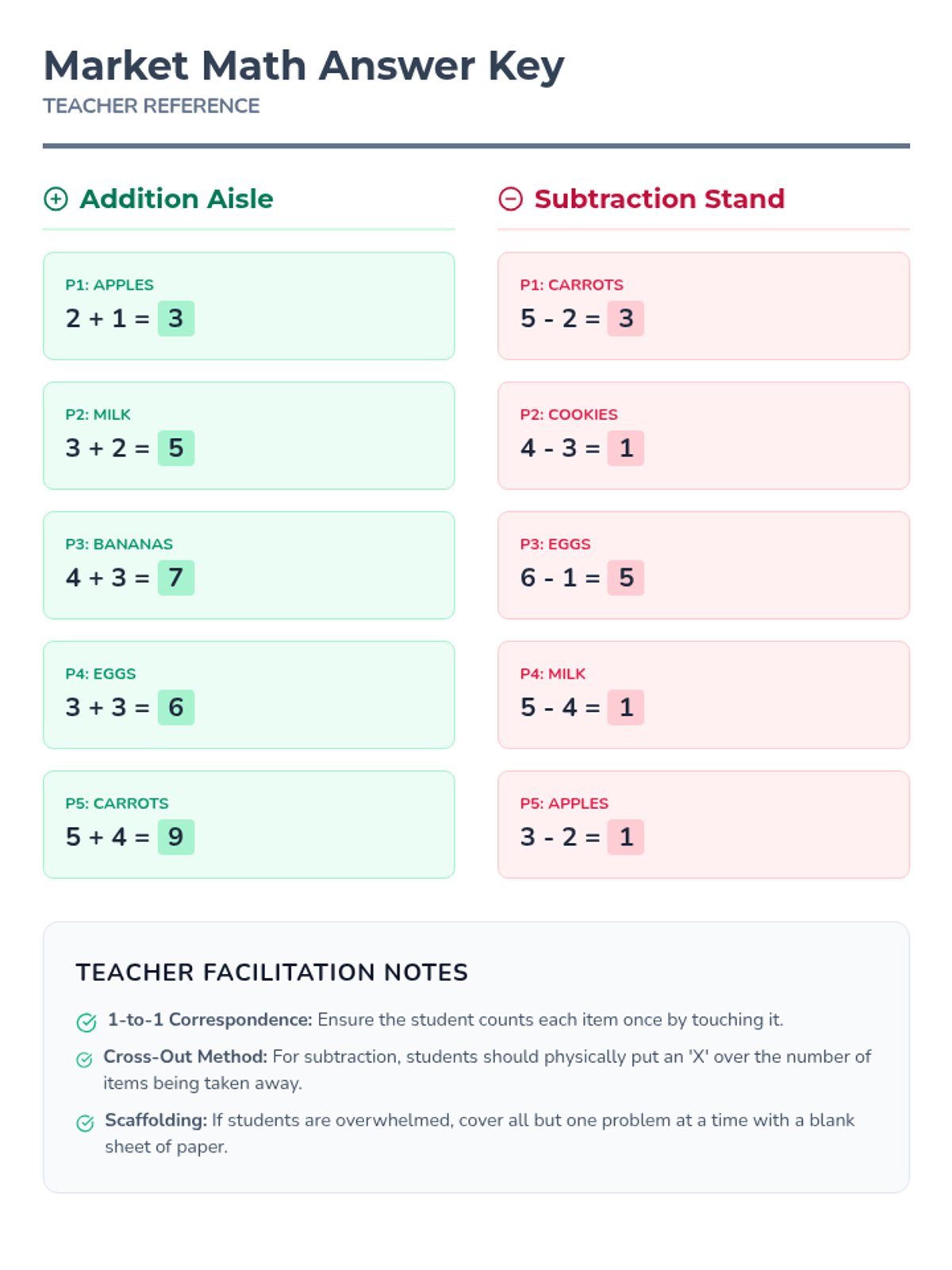
Consolidated answer key for Market Math addition and subtraction worksheets, including teacher scoring notes and tips for student support.
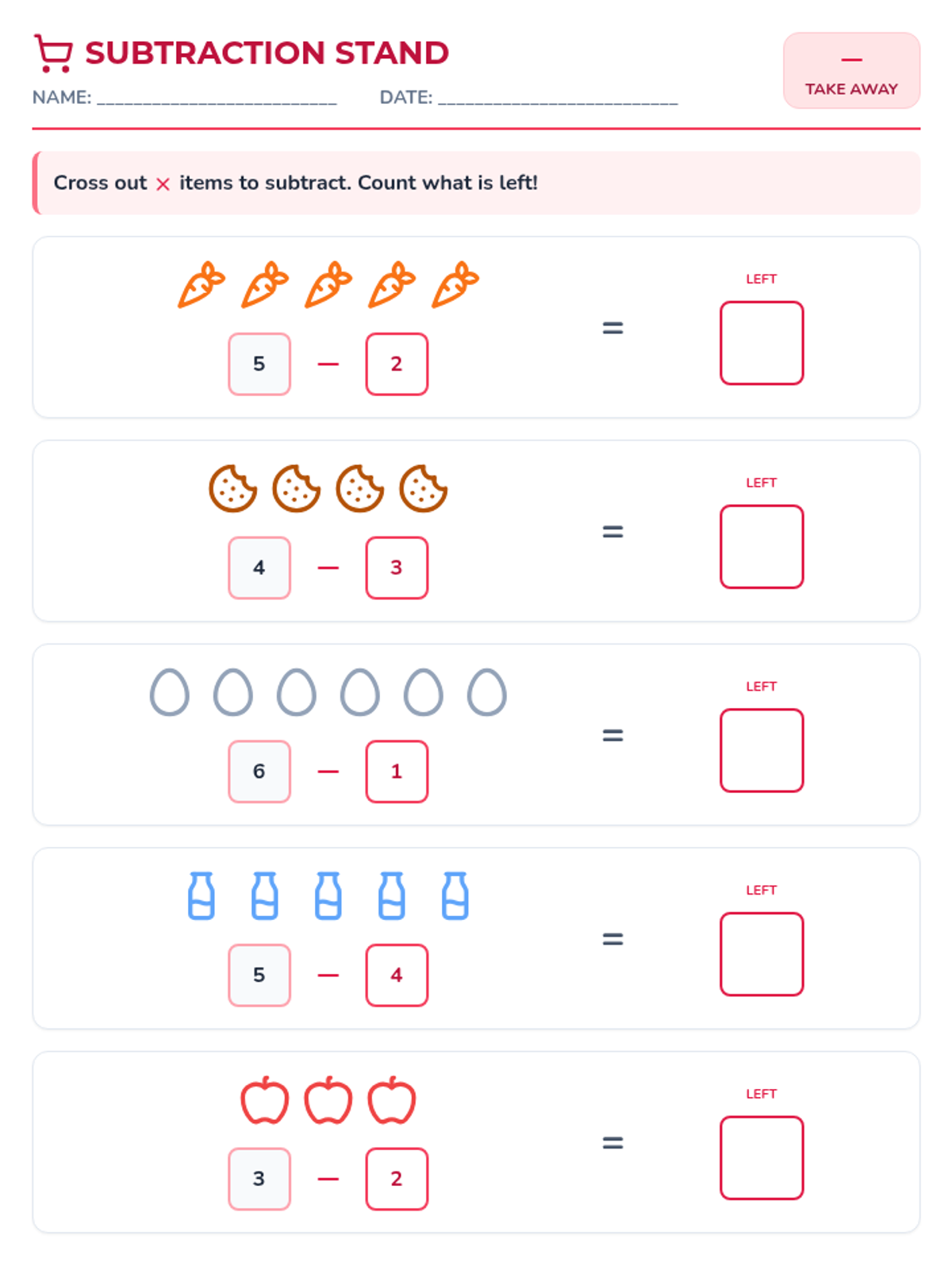
Guided subtraction worksheet for students, using a cross-out method with visual icons to help students find the difference within 10.
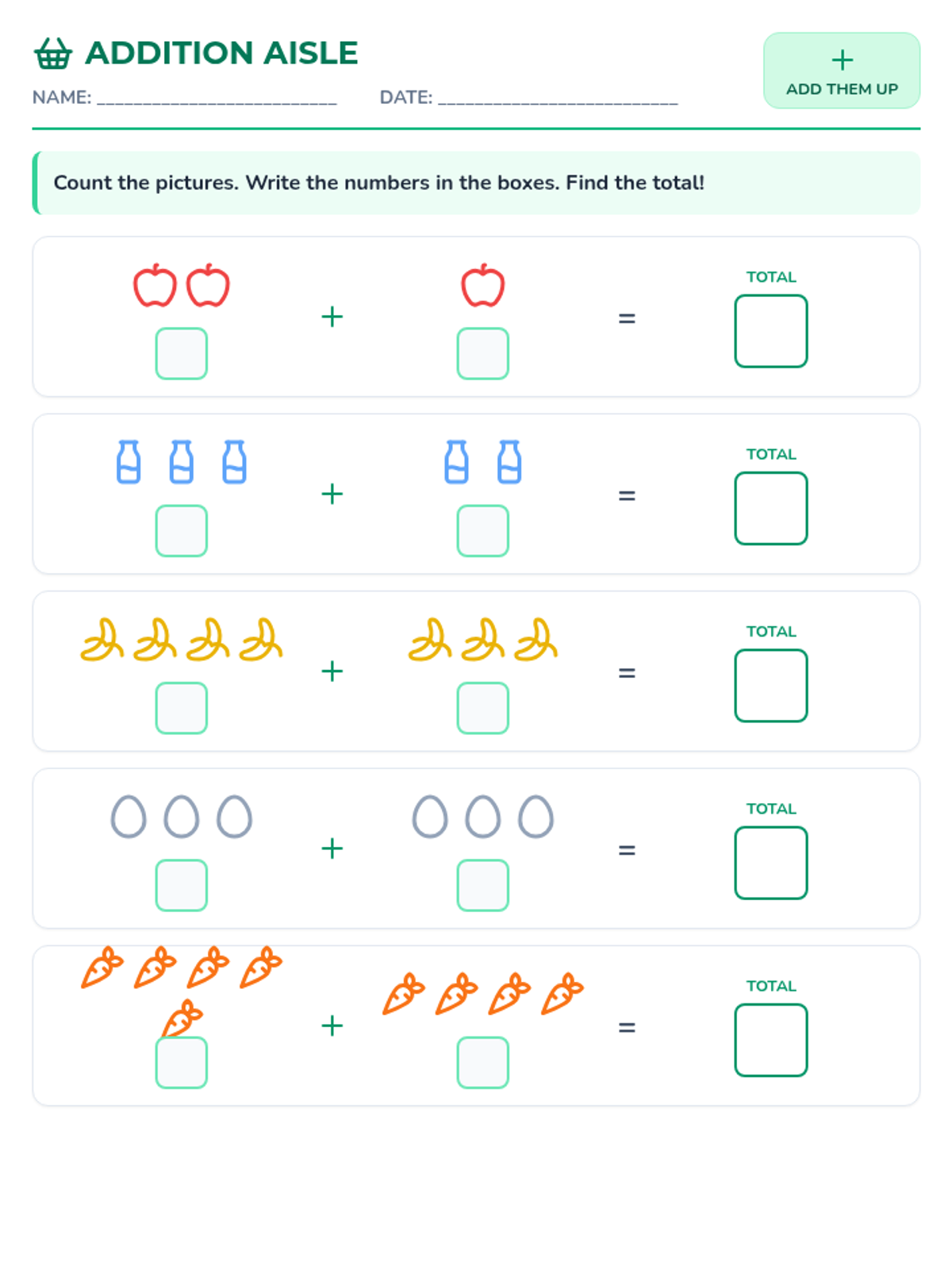
Guided addition worksheet for students, featuring visual item icons and designated work areas to support counting and calculation within 10.
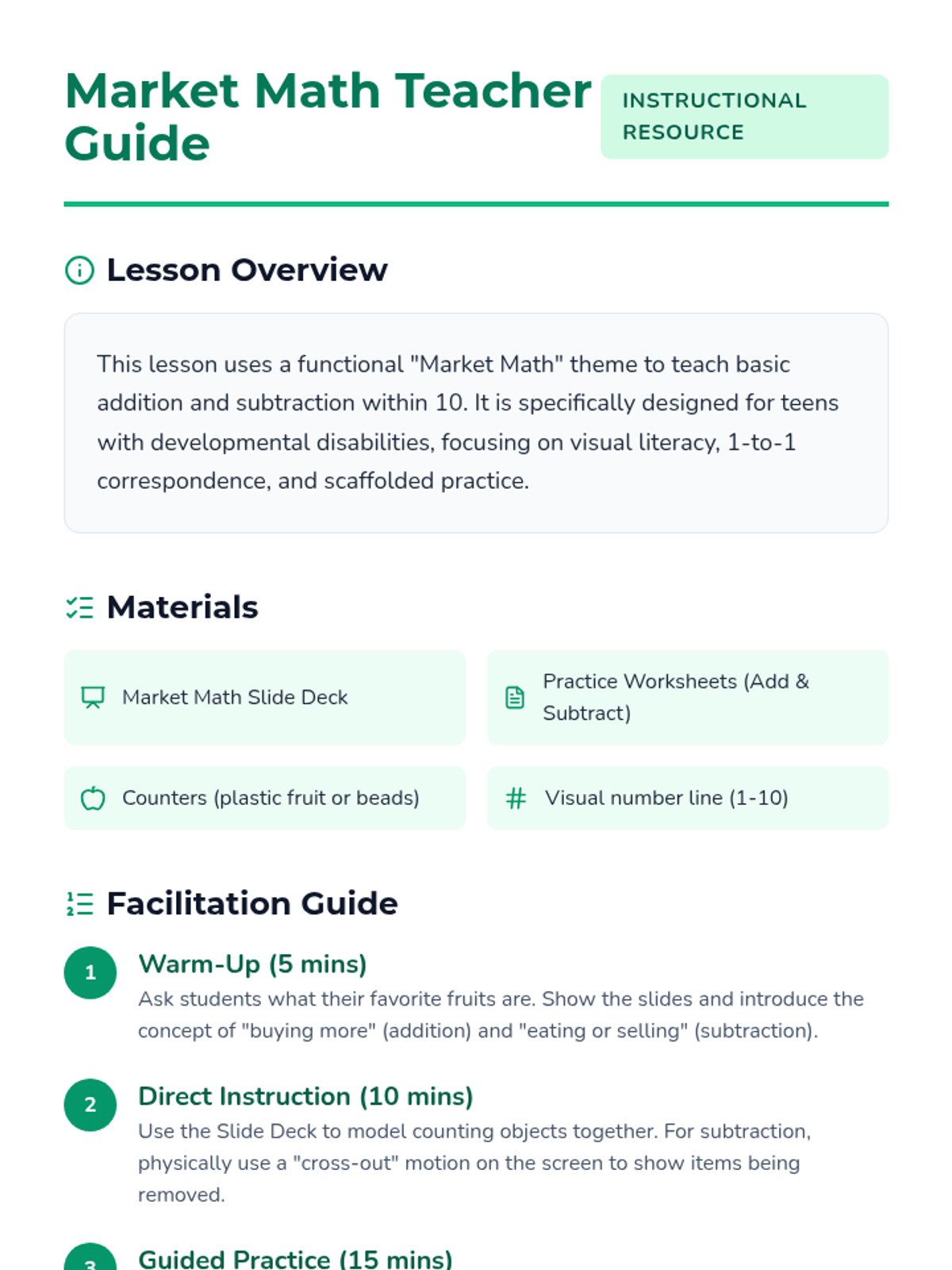
Comprehensive teacher guide for the Market Math lesson, including instructional steps, materials list, and differentiation strategies for students with developmental disabilities.
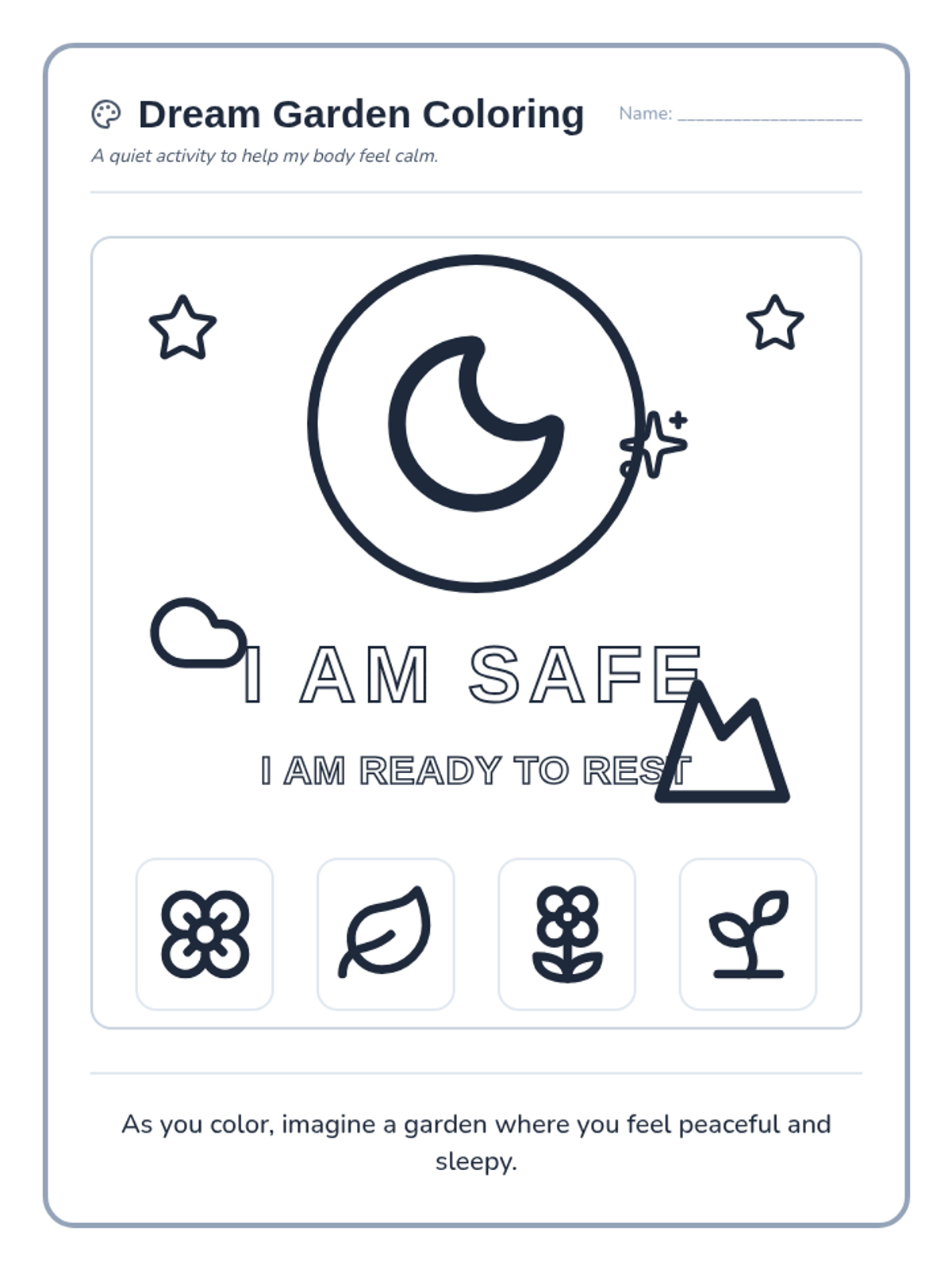
A calming coloring page with large, bold outlines and positive affirmations to serve as a low-demand bedtime activity.
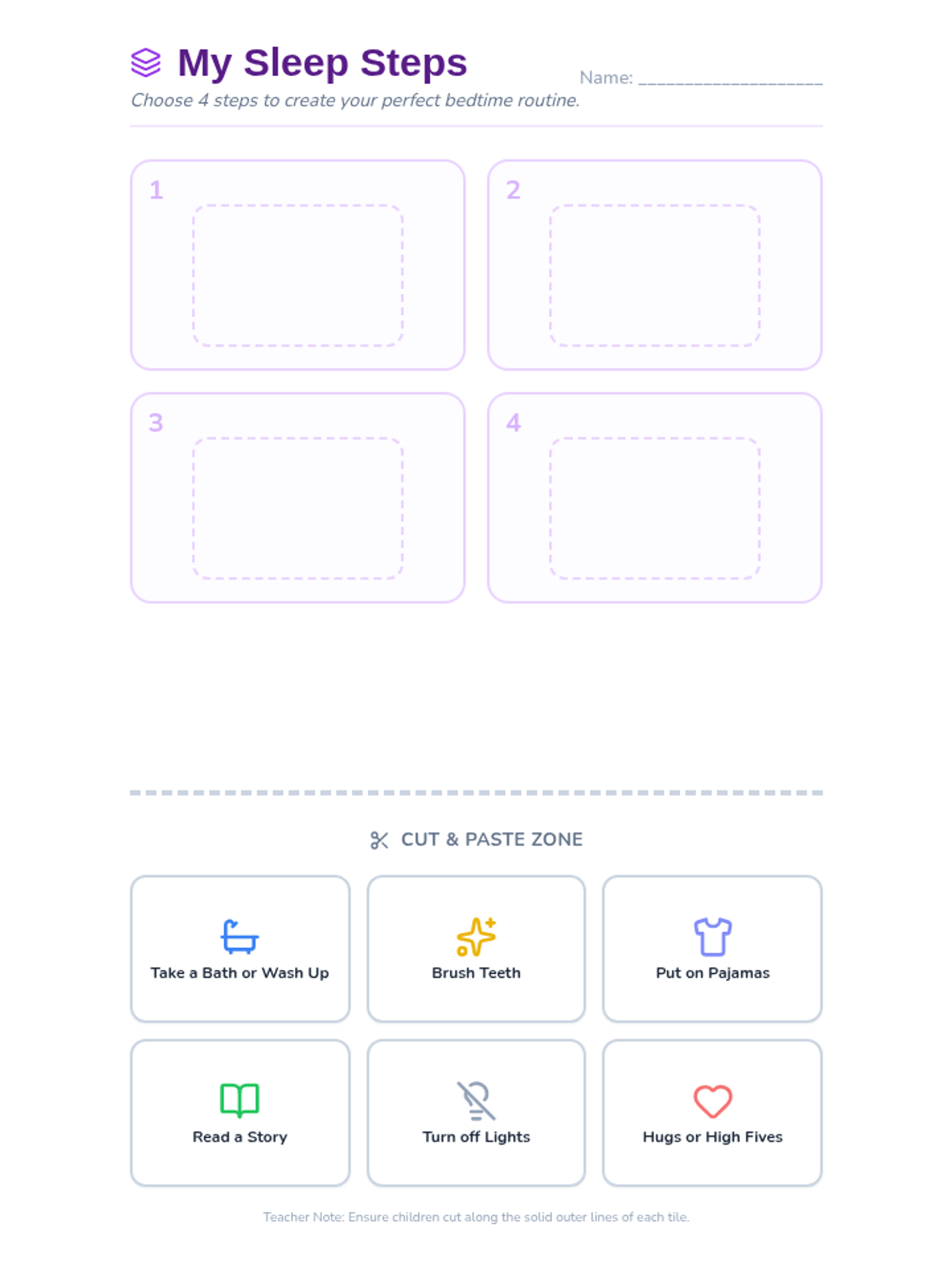
A hands-on cut-and-paste activity to help children sequence their own personal bedtime routine, reinforcing predictability and control.
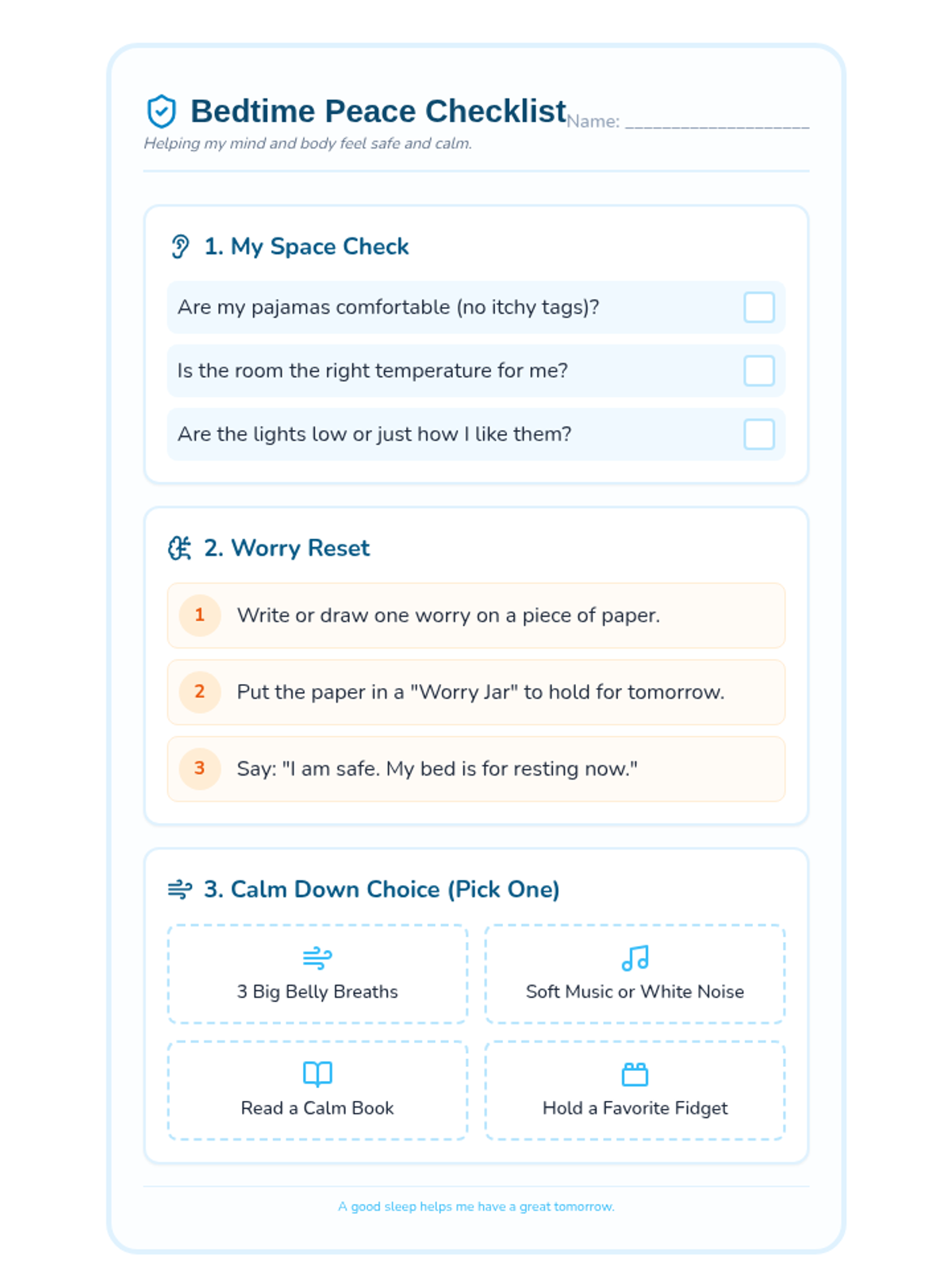
A visual checklist focusing on sensory comfort and anxiety-reduction techniques for bedtime, specifically designed for neurodivergent children.
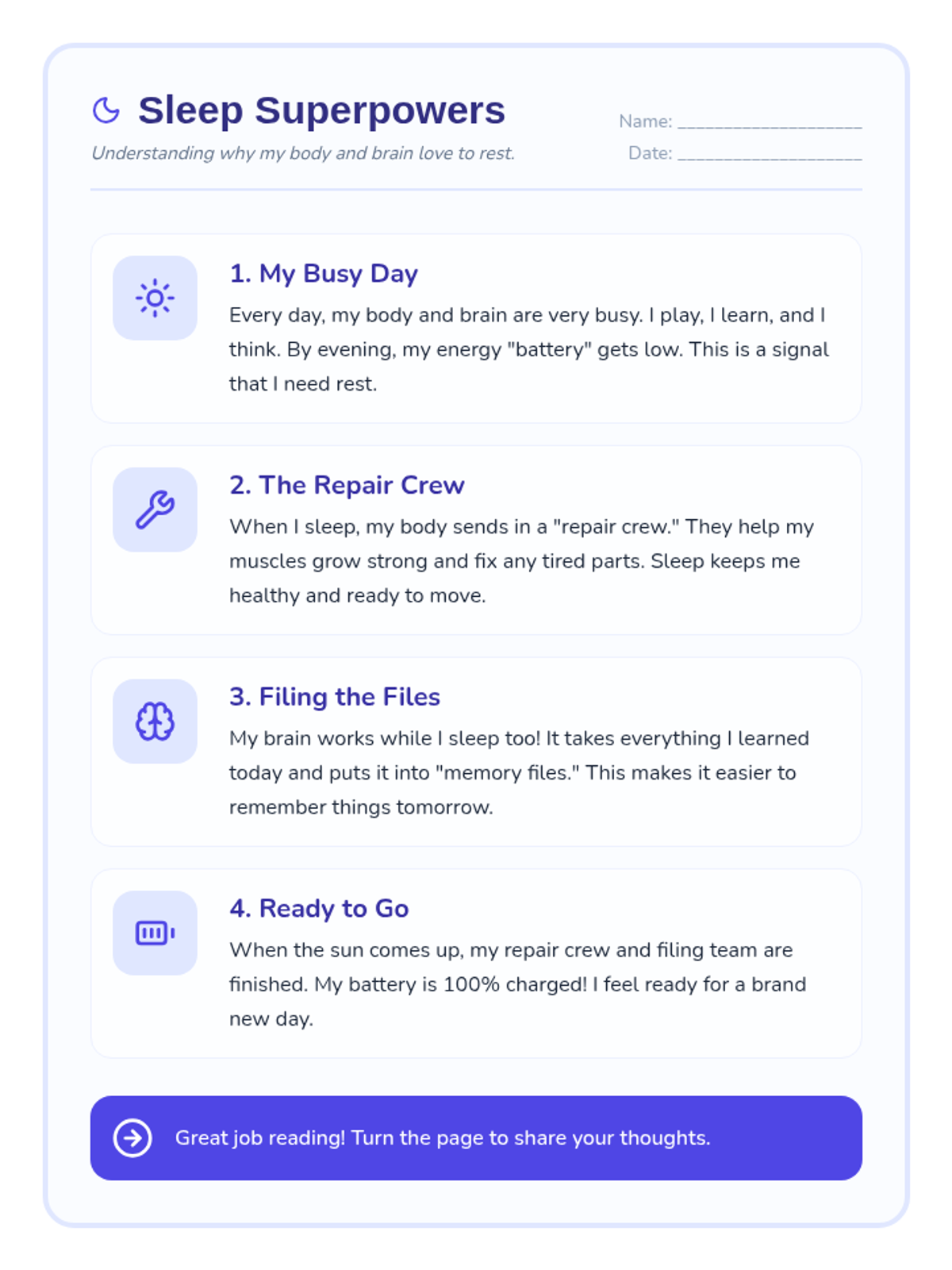
A social story and reflection worksheet designed to help children with autism understand the biological importance of sleep through simple metaphors like 'battery charging' and 'filing memories'.
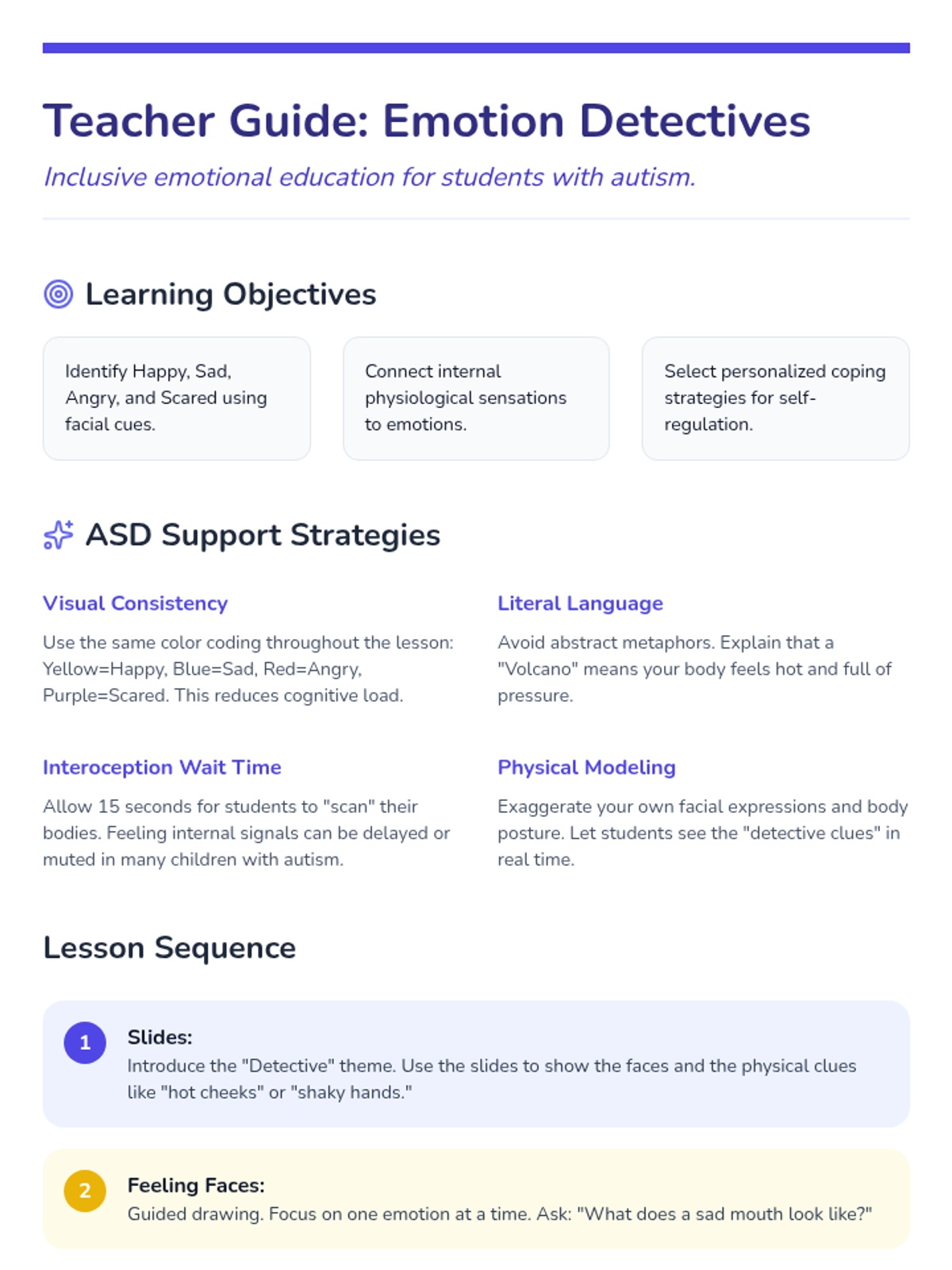
A comprehensive instructional guide for teachers providing pedagogical strategies for autism-inclusive emotional education, including pacing and differentiation tips.
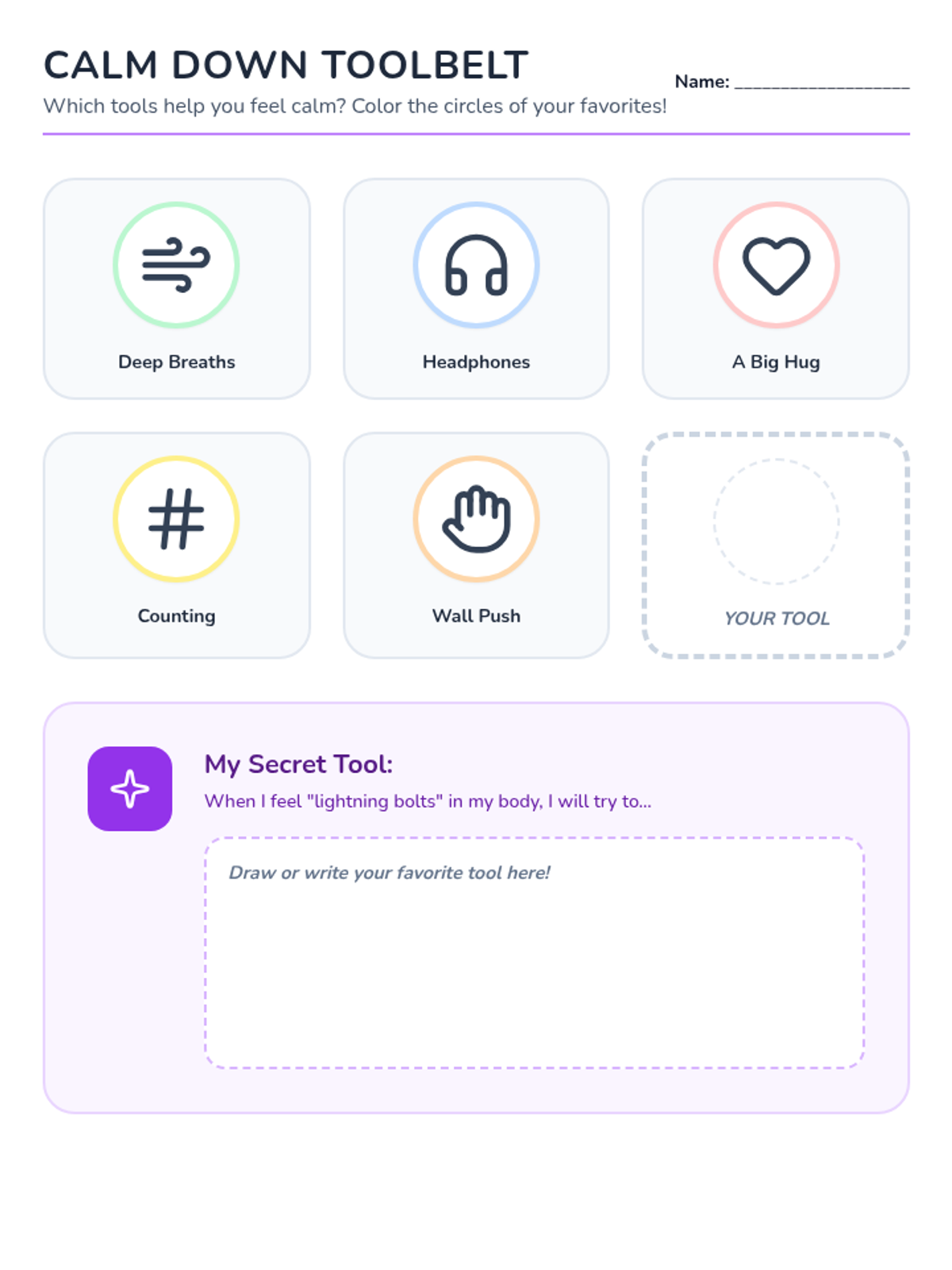
A coping strategies menu where children can identify and color the self-regulation tools that work best for them, featuring a blank space for personalized tools.
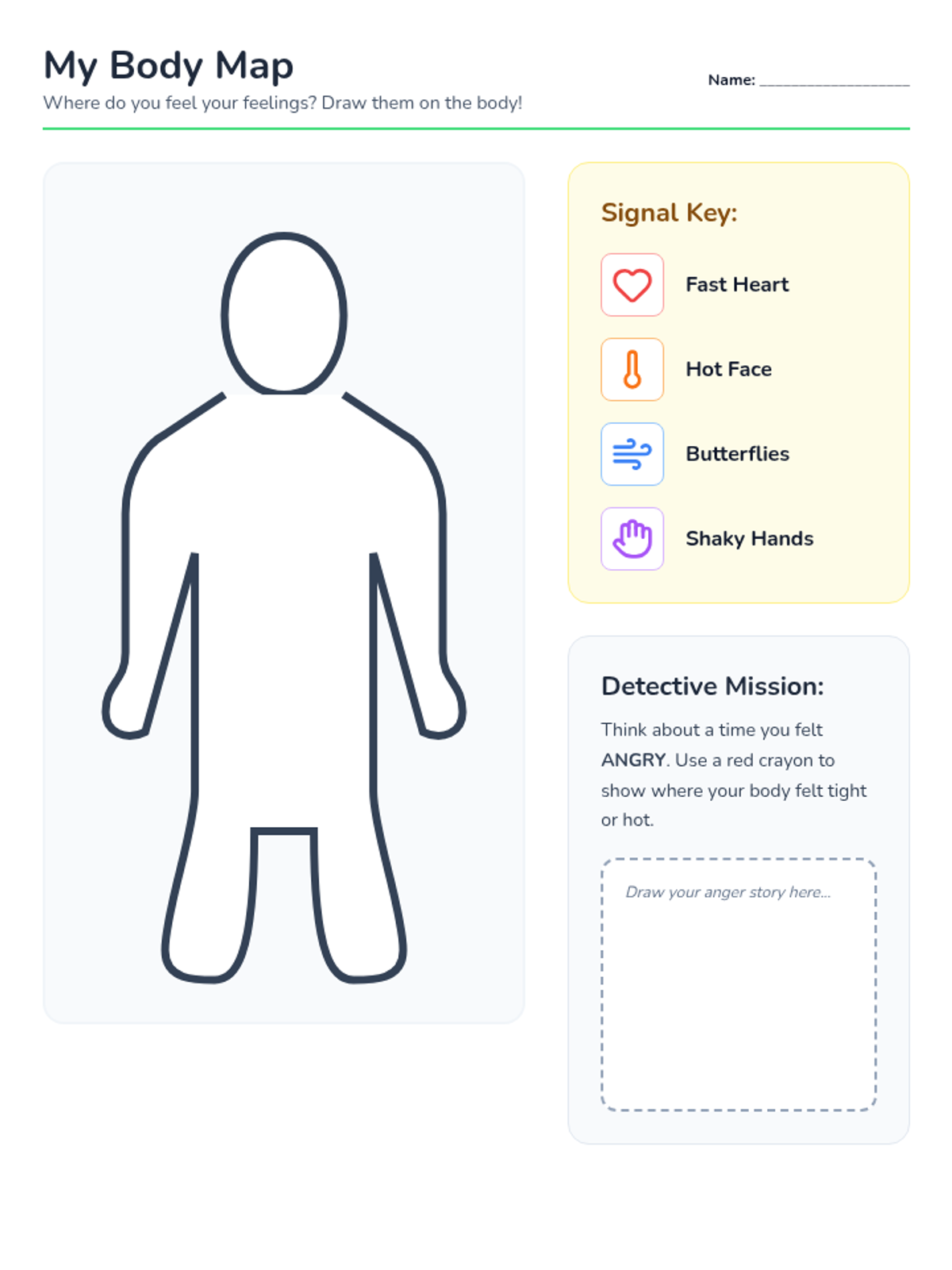
A body outline activity where students can visually map their physical responses to different emotions, specifically designed for visual learners.
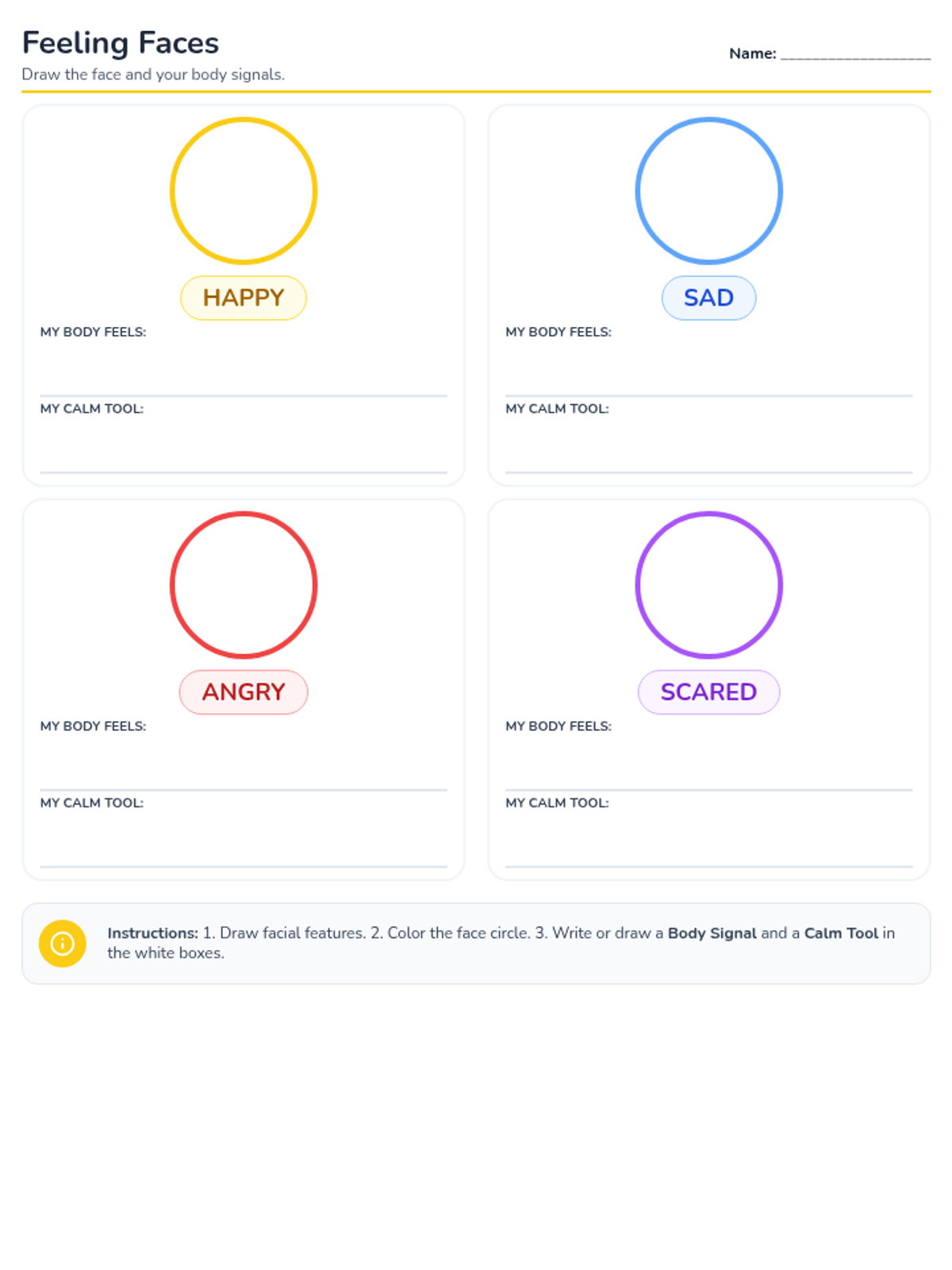
A coloring and drawing worksheet for identifying four basic emotions, with large circular areas for drawing facial expressions and color-coded labels.
A vibrant, high-contrast slide deck to introduce seven-year-olds to the concept of identifying emotions through visual clues and body signals.
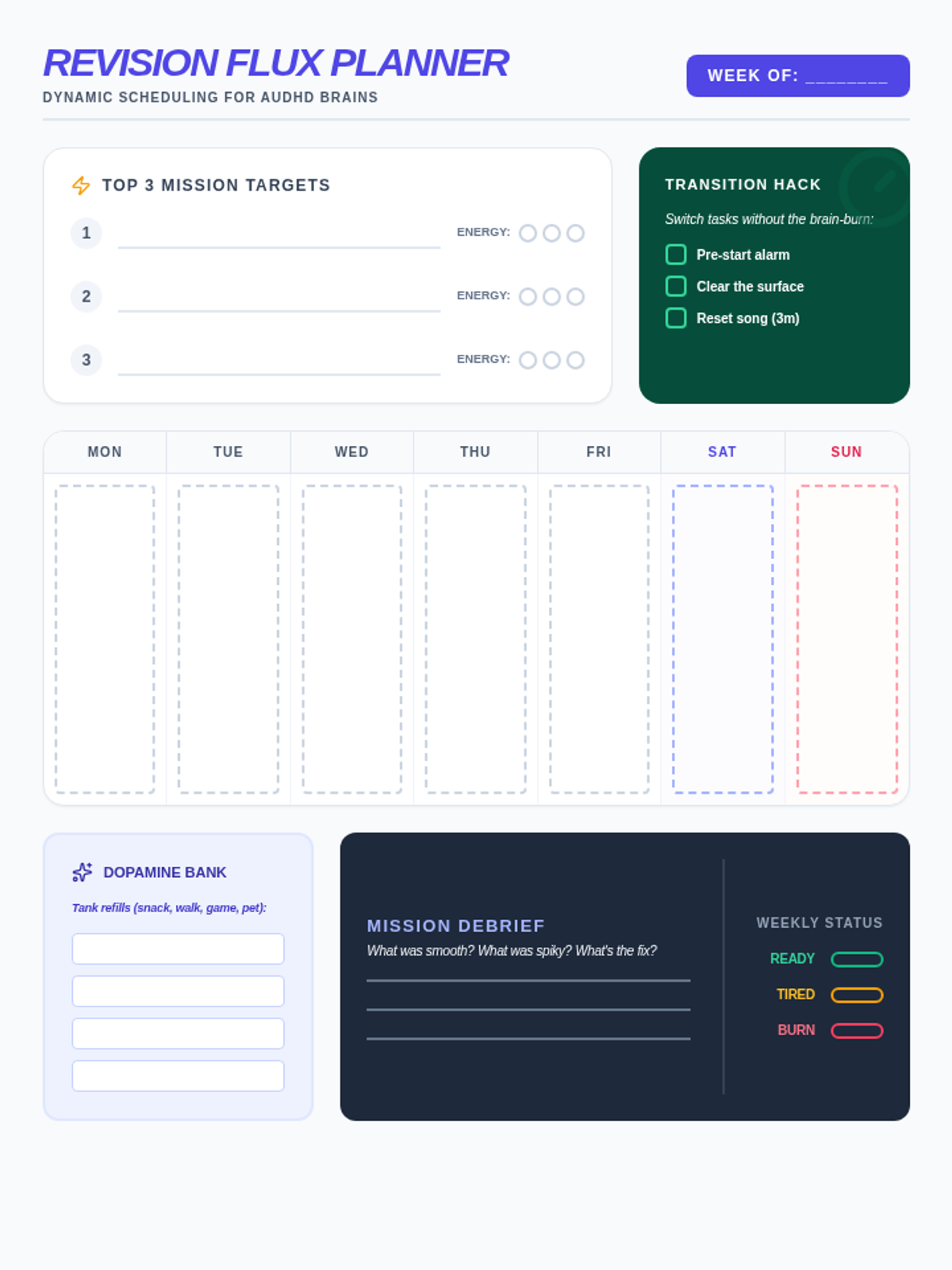
A weekly revision planner designed for AuDHD teenagers, focusing on energy budgeting, transition windows, and dopamine-based rewards rather than rigid time-blocking.
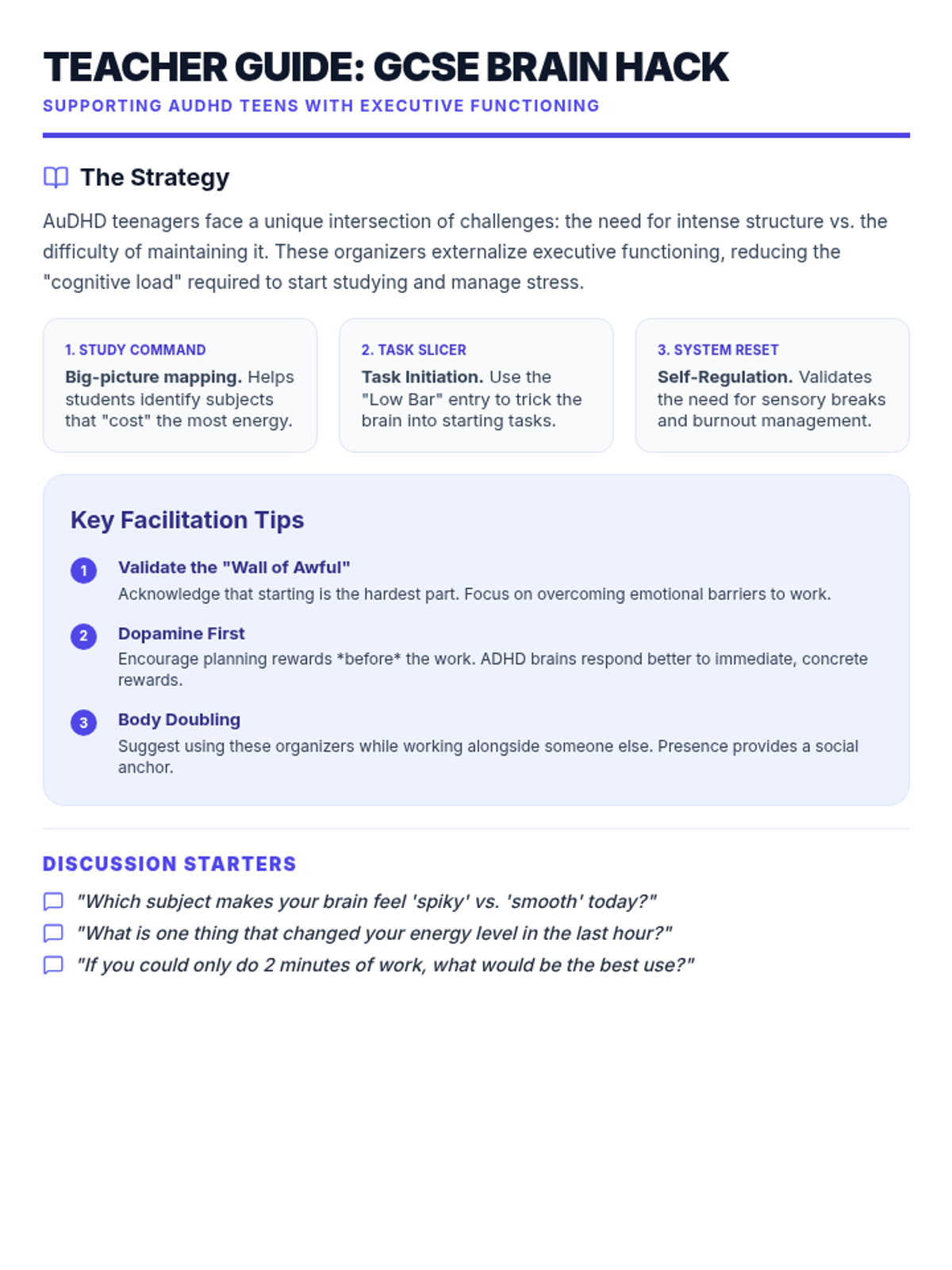
A guidance document for teachers and parents on how to effectively use the Brain Hack graphic organizers to support AuDHD teenagers with GCSE preparation, focusing on cognitive load and emotional regulation.
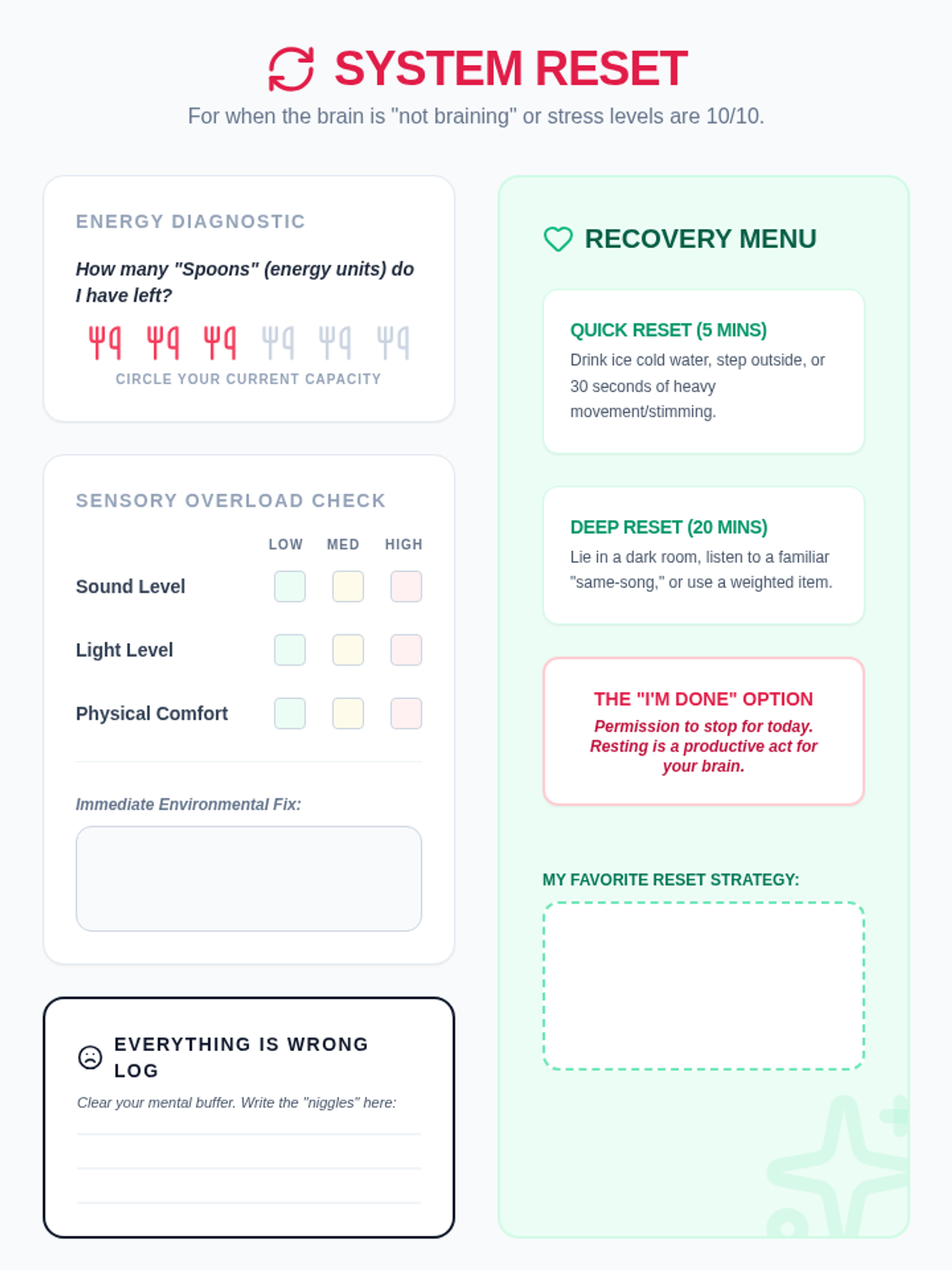
A graphic organizer focused on emotional regulation and sensory management for AuDHD teenagers, helping them diagnose energy levels, sensory overload, and choose appropriate recovery strategies.
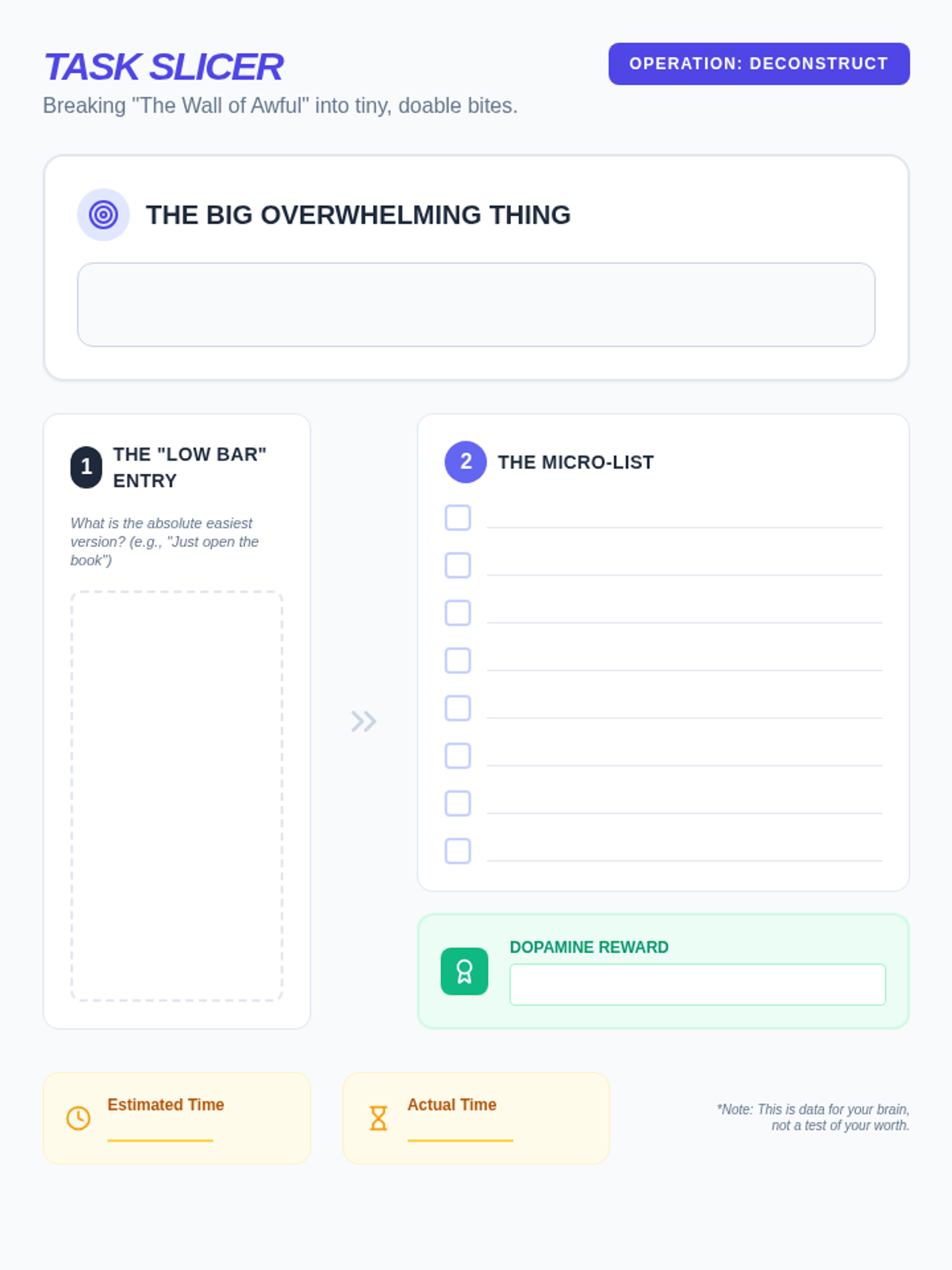
A task-decomposition graphic organizer for AuDHD students to break down overwhelming GCSE study topics into micro-tasks, including a 'low-bar entry' strategy and time-tracking data.