An answer key for the Labyrinth Lexicon Worksheet, providing clear solutions for all vocabulary exercises. Revised for better readability and to prevent orphaned headers.
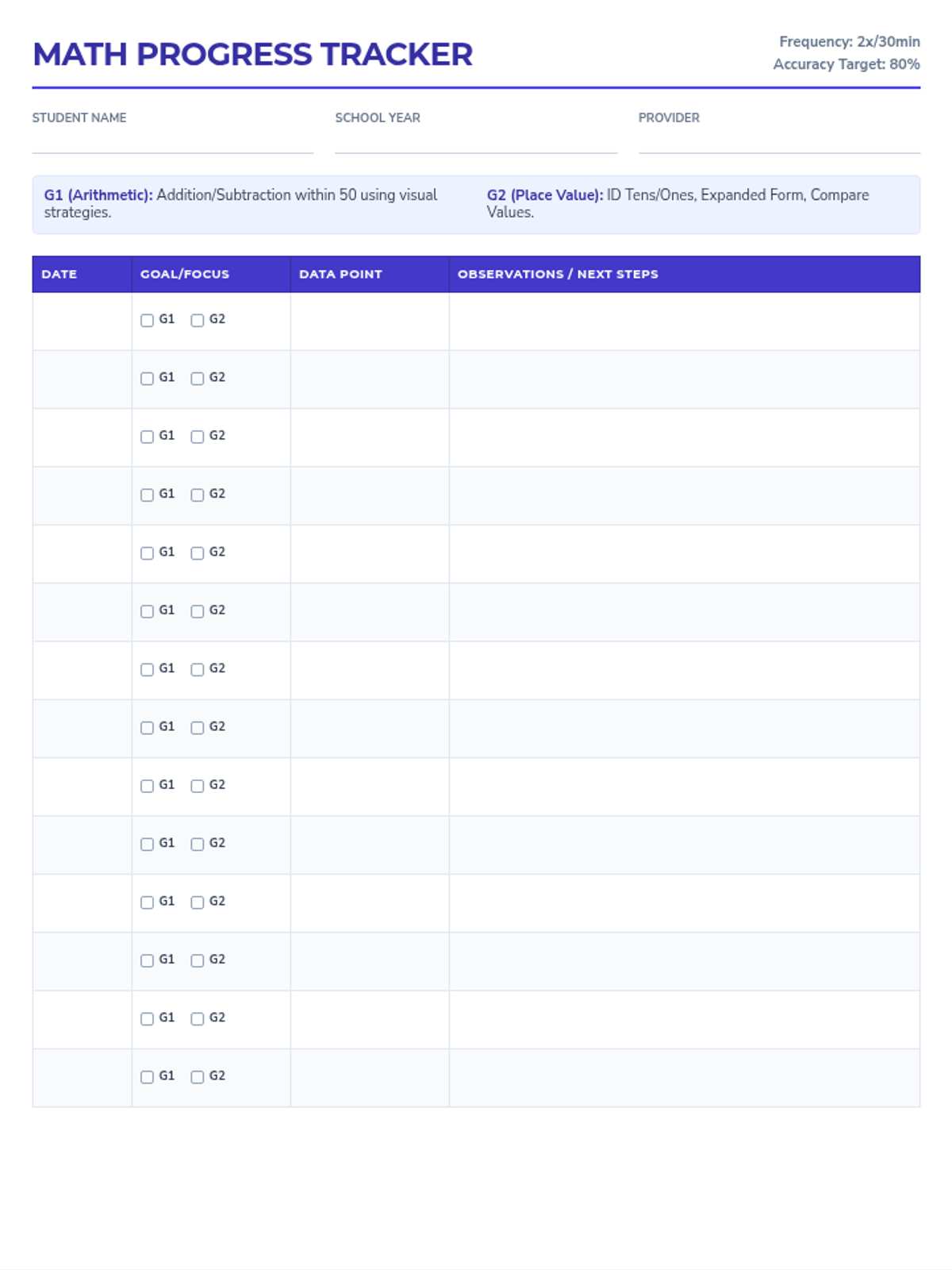
A dual-purpose tracking document containing a daily service log for arithmetic and place value instruction alongside a quarterly progress monitoring table and visual graphing area.
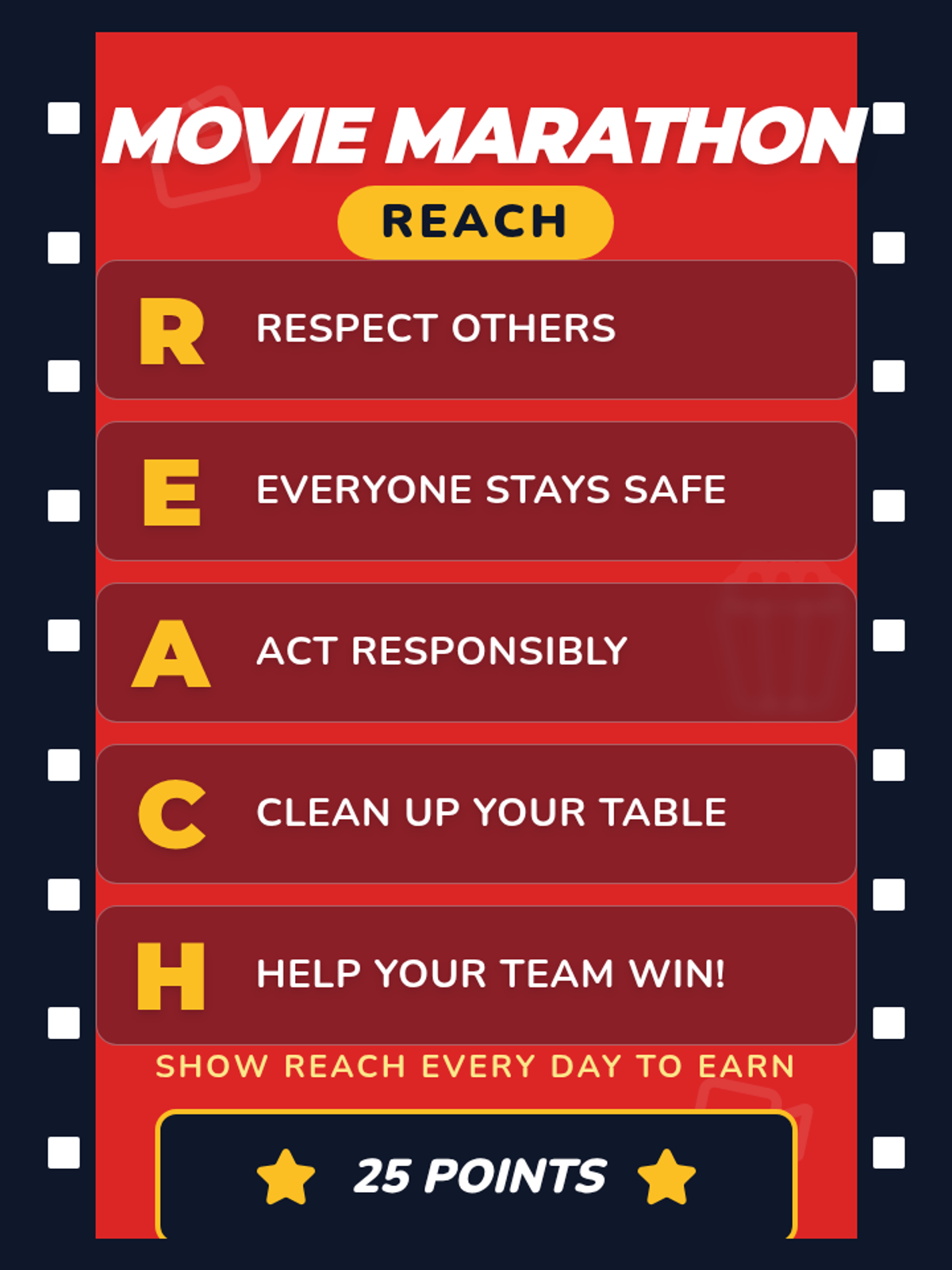
A bold motivational poster using the REACH acronym (Respect, Everyone safe, Act responsibly, Clean up, Help team) to encourage students to earn their movie reward.
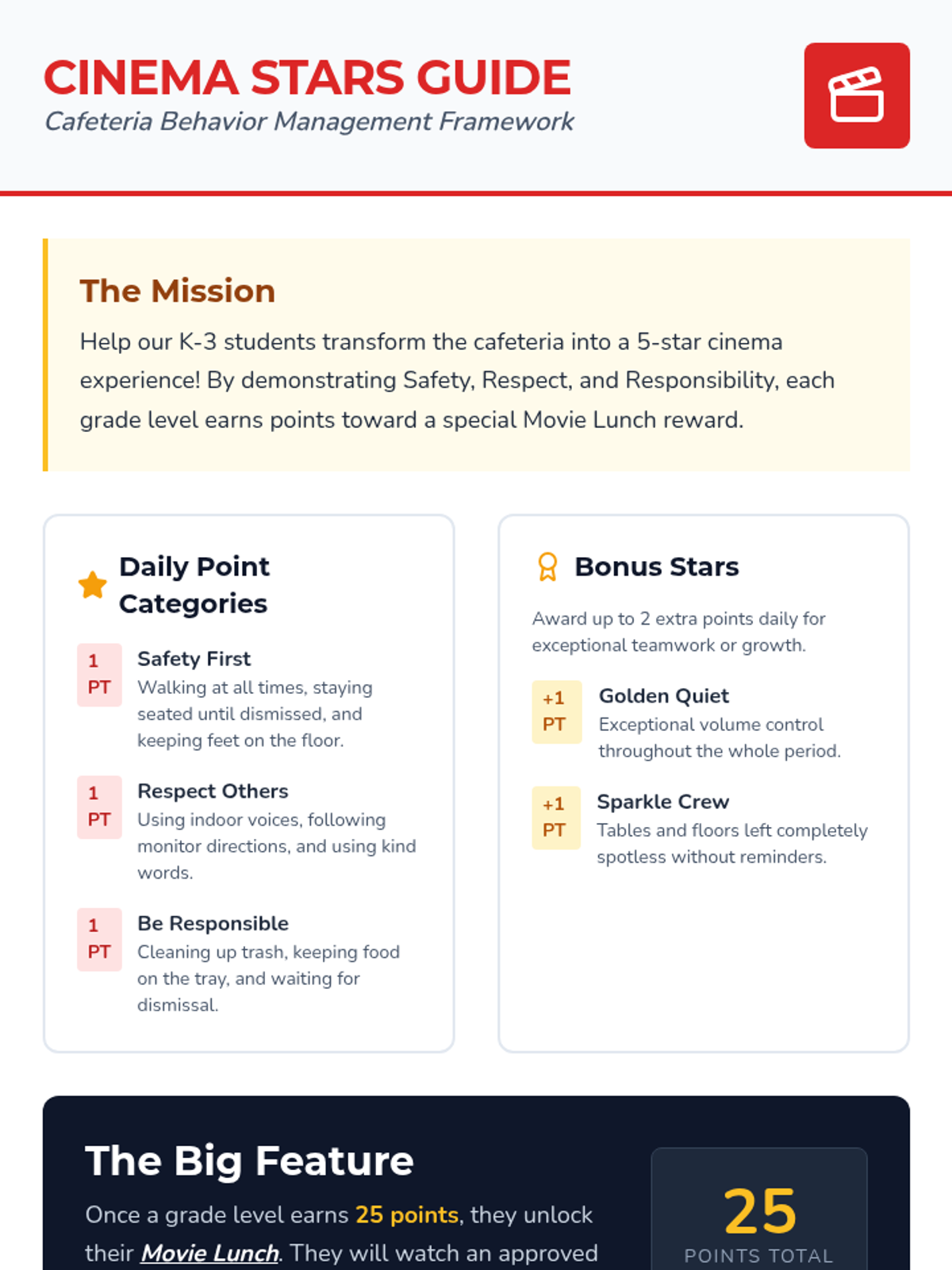
Engaging slides to introduce the Cafeteria Cinema Quest system to K-3 students, explaining how to earn points for Safety, Respect, and Responsibility. Updated with start date April 27.
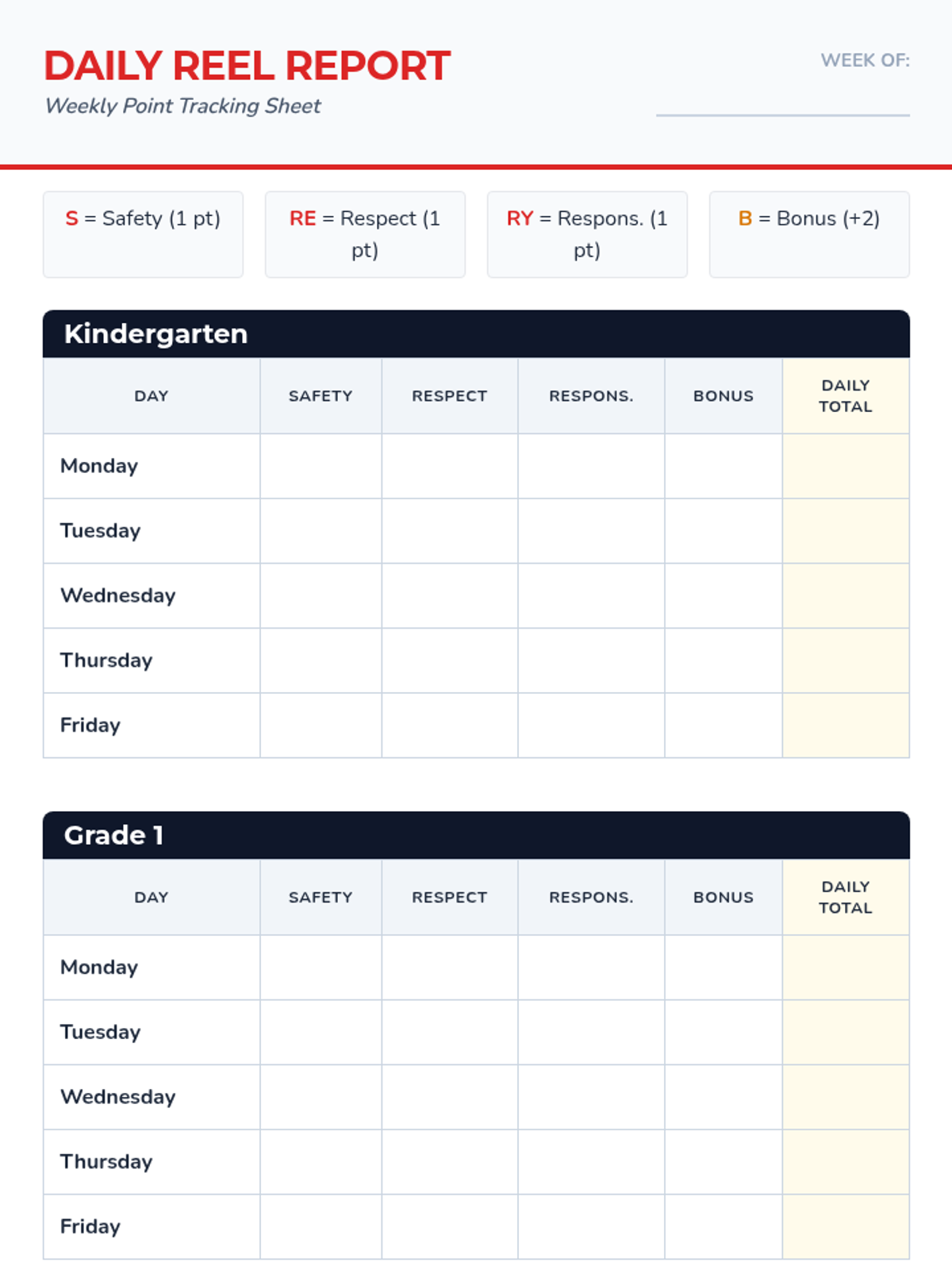
A simple weekly scorecard for cafeteria monitors to track daily points for Safety, Respect, and Responsibility for each grade level.
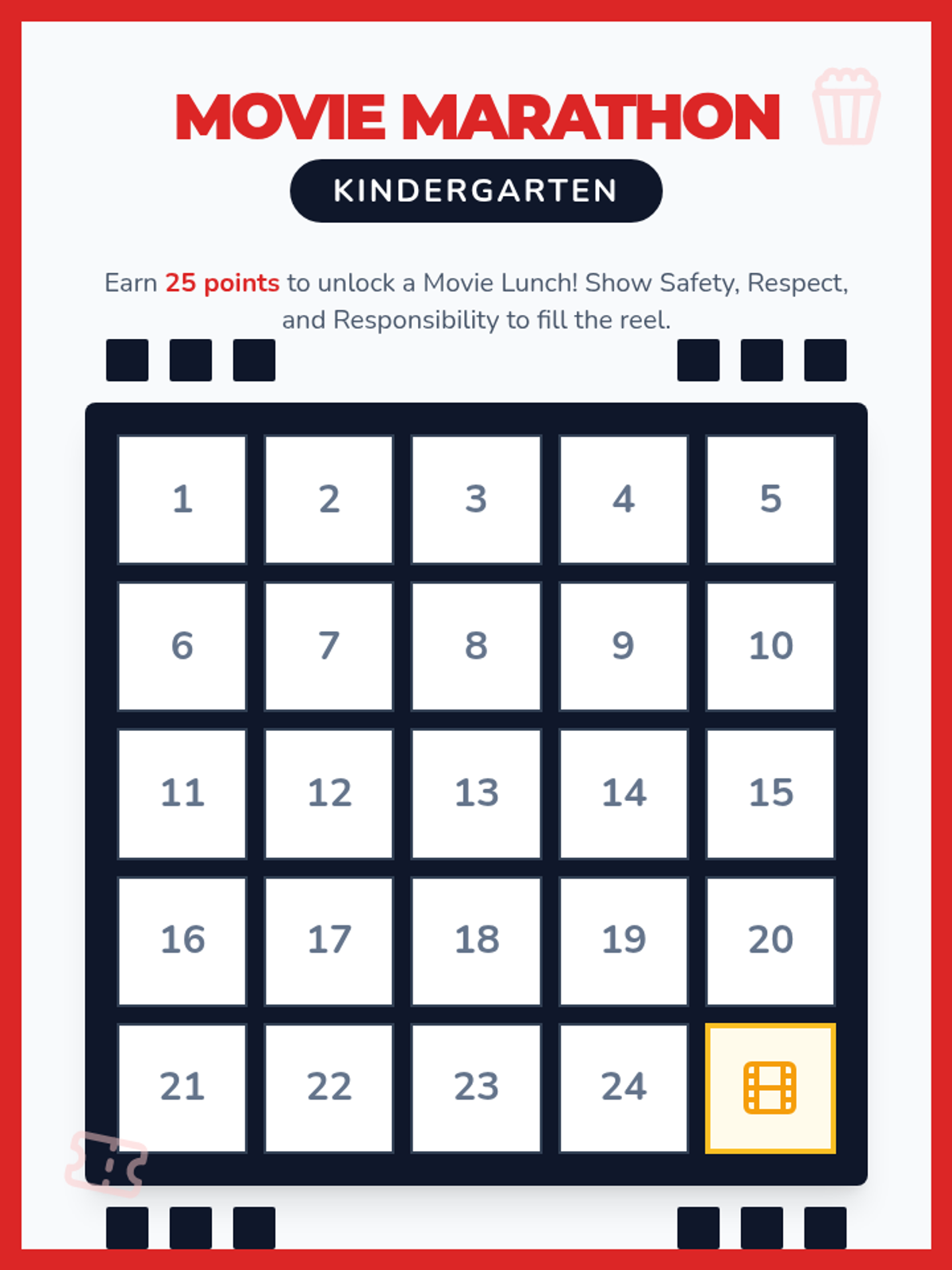
Large-format printable progress trackers for grades K-3 and the 'Reach' group, featuring a 25-frame film strip loading bar to visually monitor behavior points earned.
A concise guide for cafeteria monitors and teachers outlining the 5-point daily scoring system for Safety, Respect, and Responsibility to earn a movie reward.
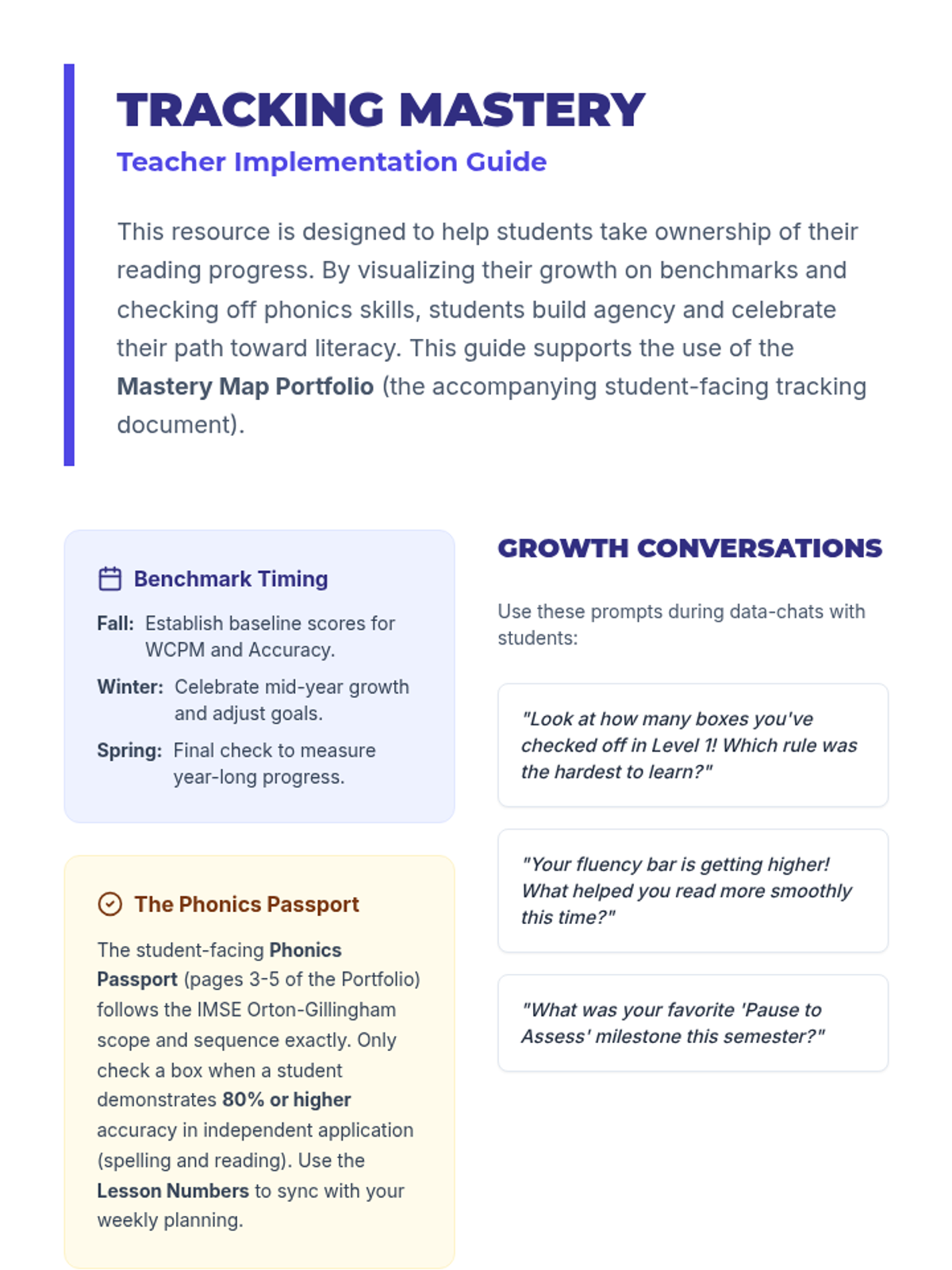
A teacher guide for implementing the Mastery Map Portfolio, including proficiency reference charts for WCPM and advice for facilitation growth conversations with students. Includes corrected page references to the student portfolio.
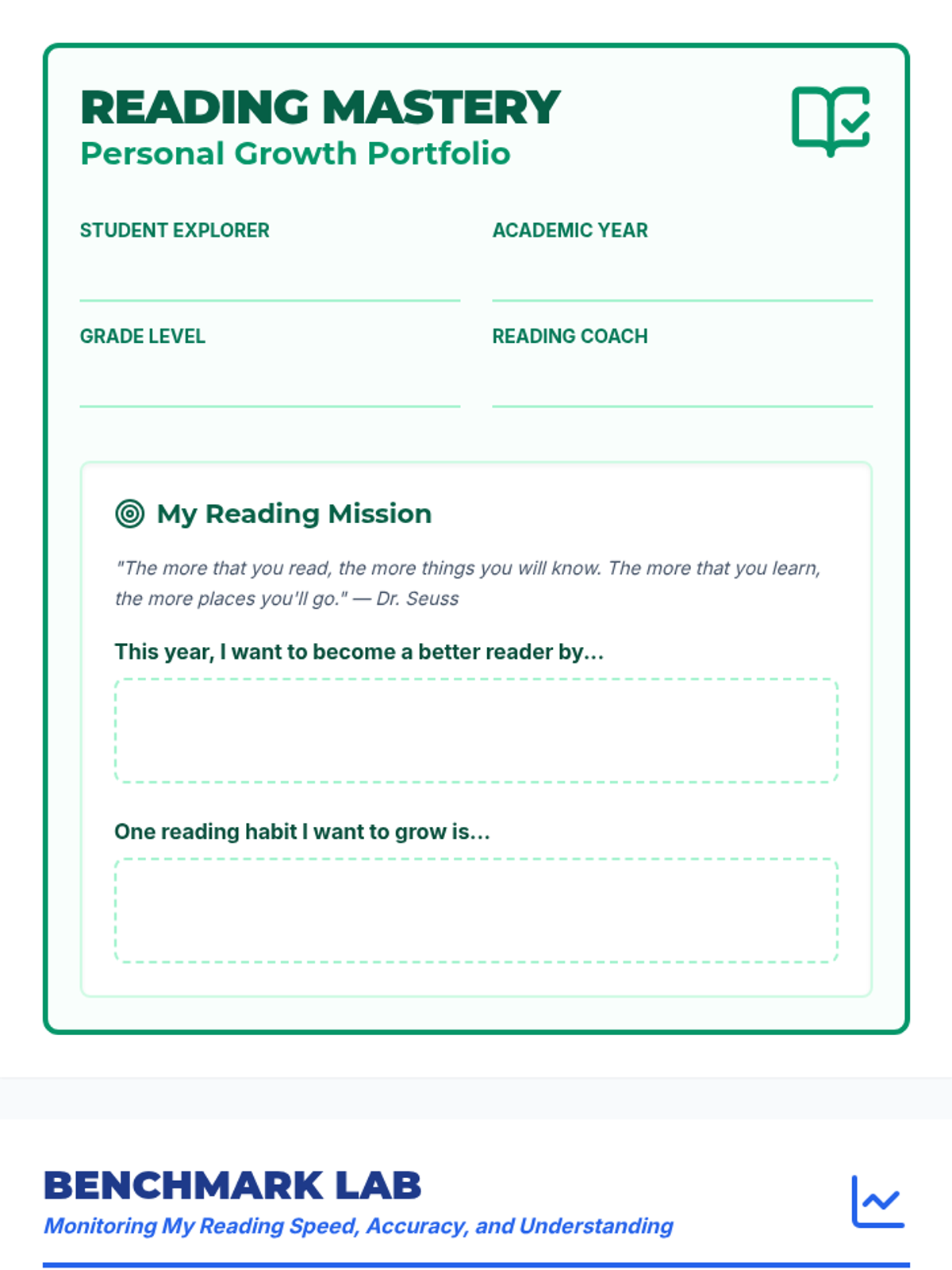
An updated version of the portfolio with optimized Kindergarten page spacing to ensure it fits on a single page while maintaining large font sizes for other grade levels. Vertical gaps and padding in the Kindergarten section have been tightened. High-visibility borders and balanced whitespace ensure a professional look.
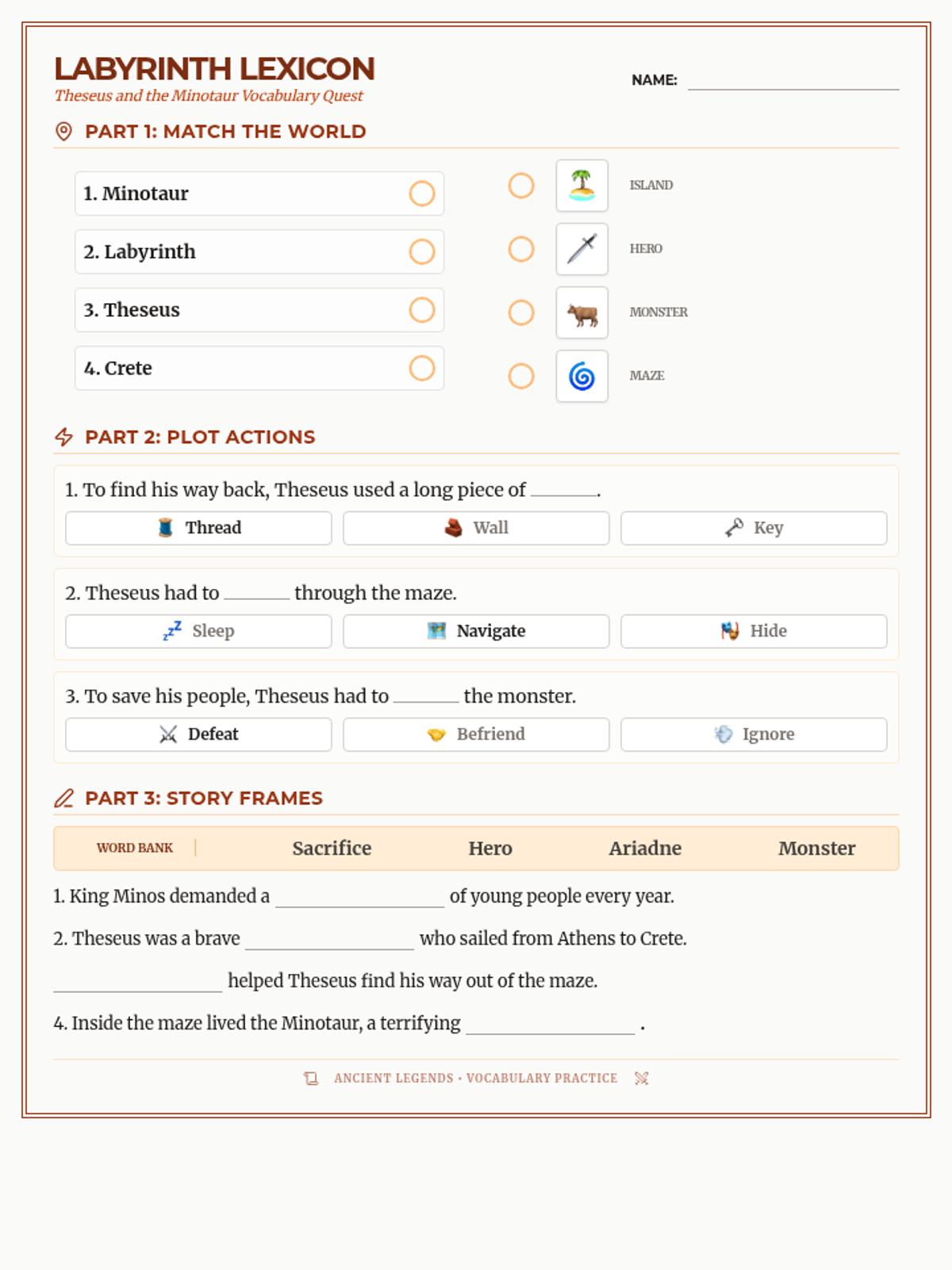
A modified vocabulary worksheet for 'Theseus and the Minotaur' featuring picture matching, multiple-choice questions with visual cues, and sentence frames with a word bank. Designed for accessibility and clarity with an ancient Greek theme. Revised to fit on a single page with improved layout and contrast.
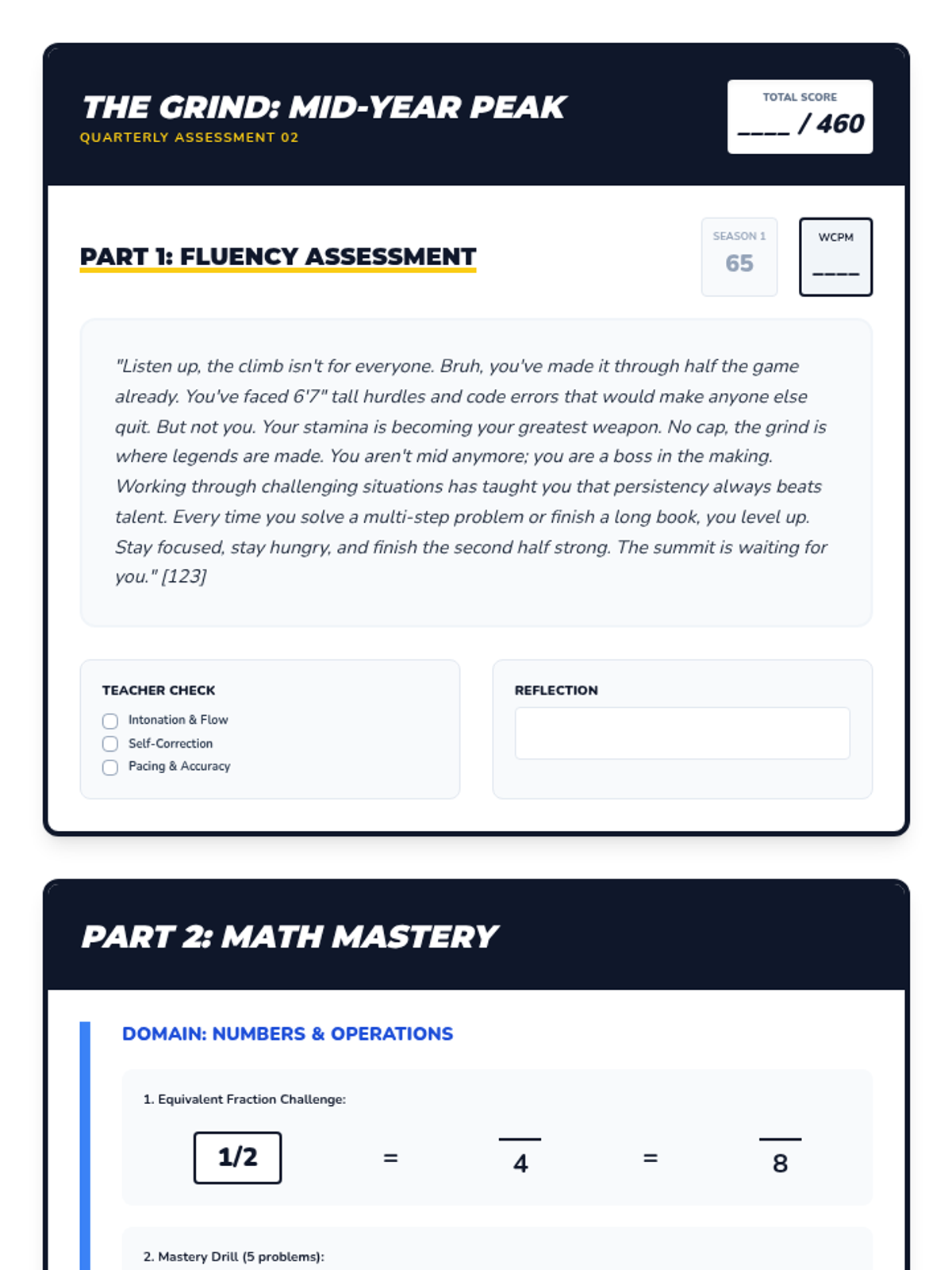
The mid-year assessment (Season 2) for the intervention program. Features a 123-word fluency passage, equivalent fraction challenges, multi-digit multiplication, and multi-step algebraic equations. Revised for layout stability and proper page breaks. Fixed backslash issues. Fixed equation wrapping and scratch space. Consistently grouped sections to avoid split headers.
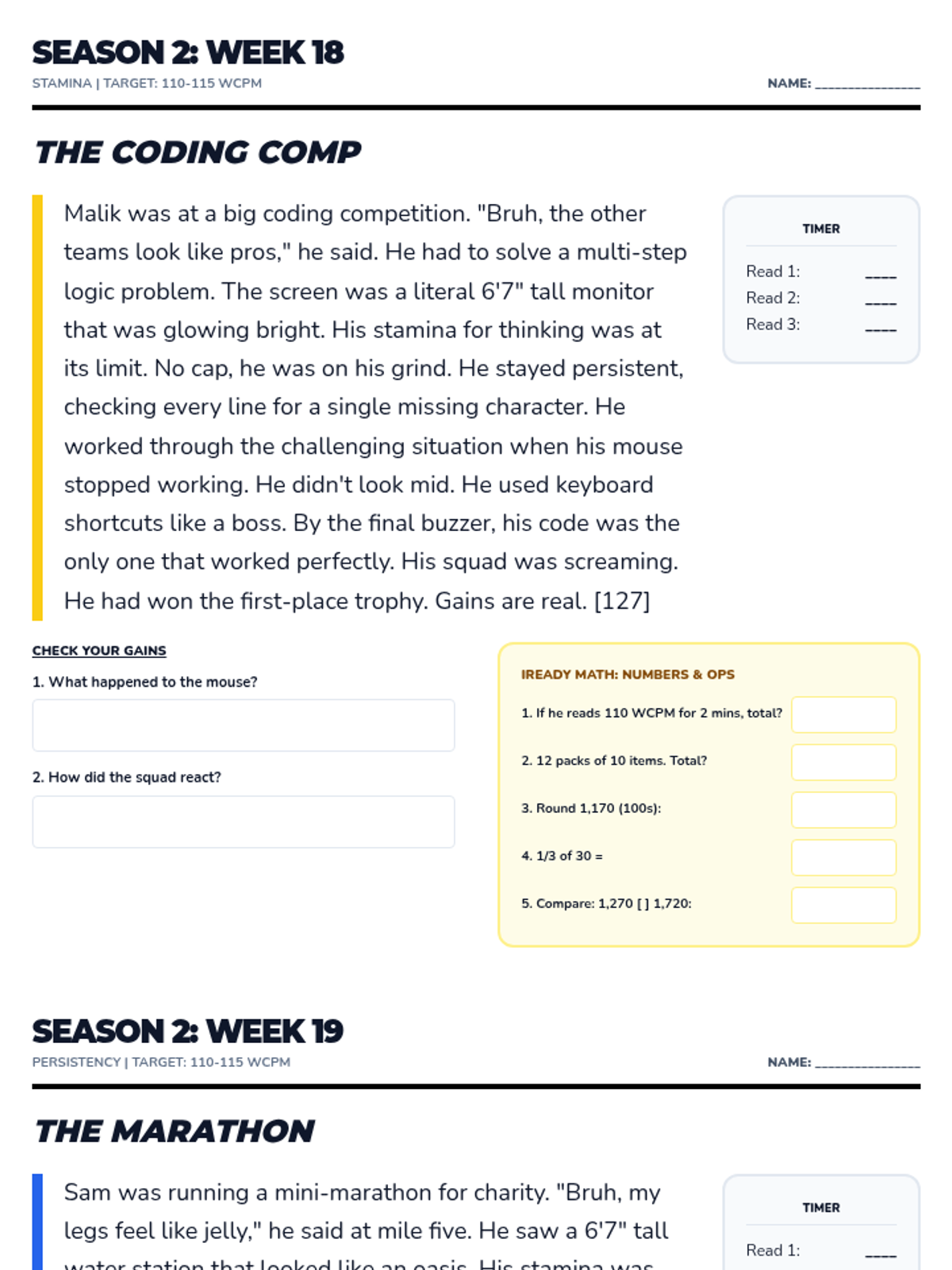
Reading passages for weeks 18-20 of Season 2. Continues the high-interest narrative of "The Grind" with increased WCPM targets and integrated iReady math challenges. Each week is self-contained. Concludes Season 2. Revised for layout and backslash issues. Increased math problem count to 5 per week. No fixed heights to prevent overlap. Fixed math logic in Wk 18.
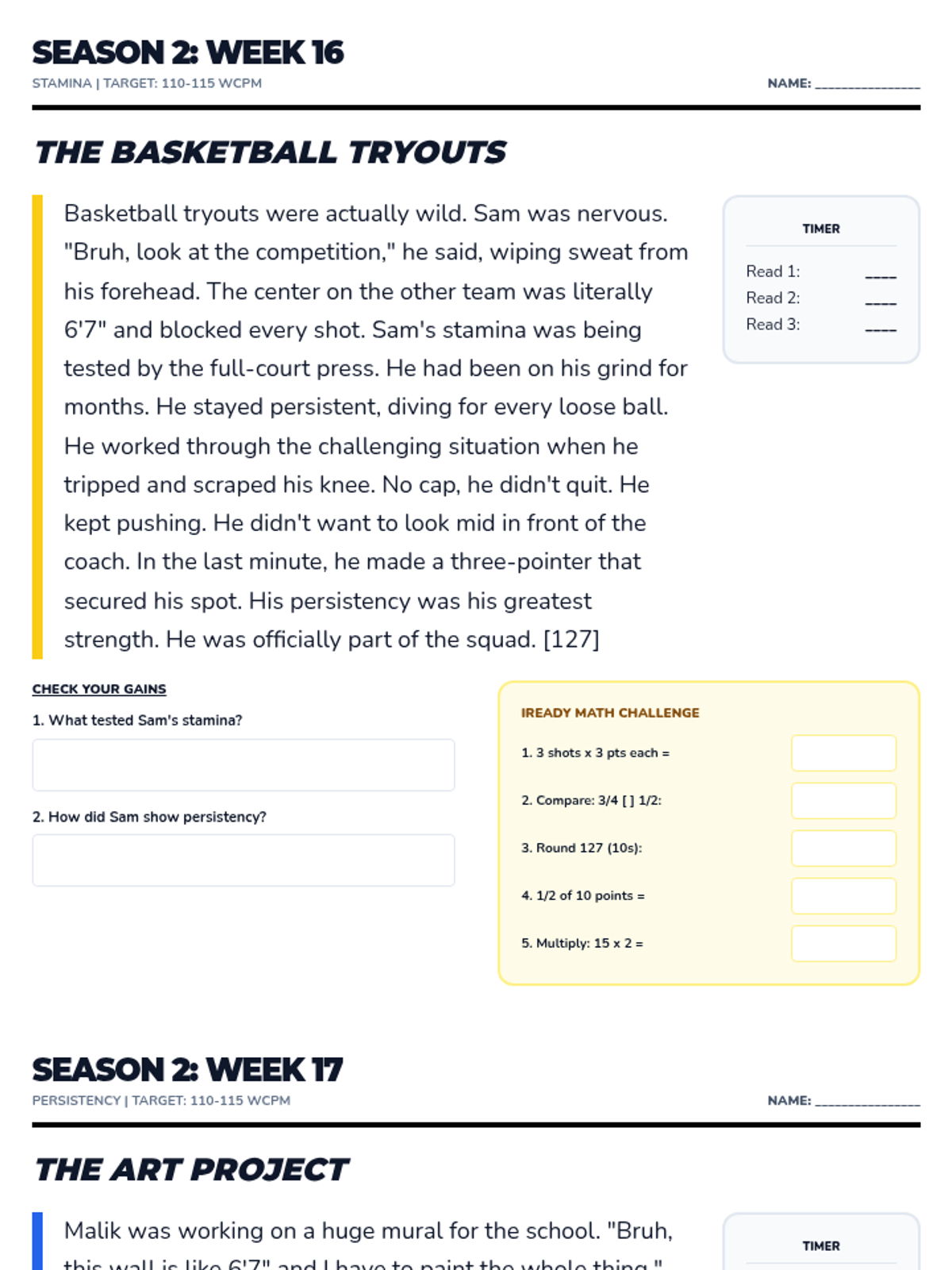
Reading passages for weeks 16-17 of Season 2. Continues the high-interest narrative of "The Grind" with increased WCPM targets and integrated iReady math challenges. Each week is self-contained. Focuses on sports and art. Revised for layout and backslash issues. Increased math problem count to 5 per week. No fixed heights to prevent overlap. Fixed Name contrast.
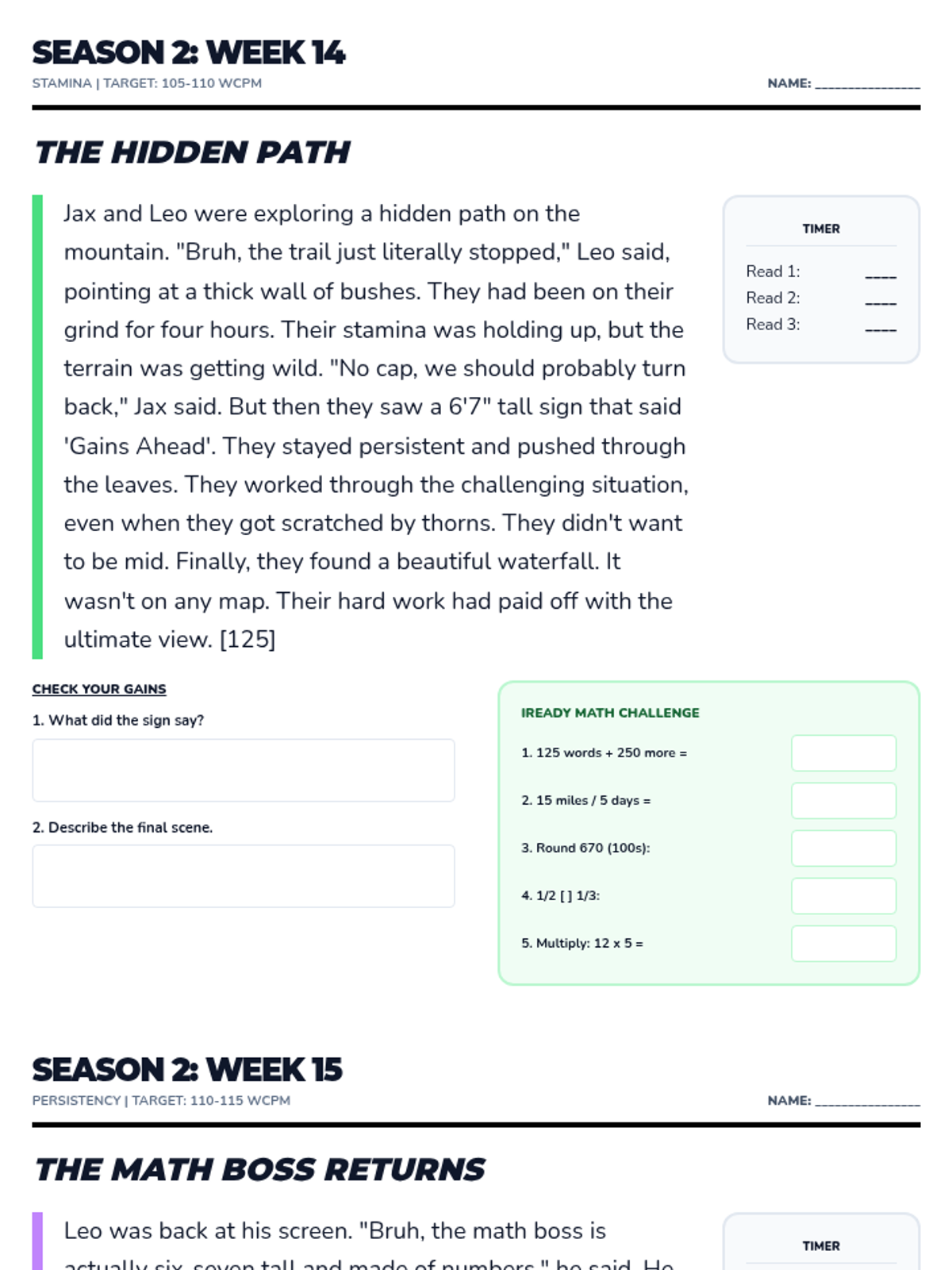
Reading passages for weeks 14-15 of Season 2. Continues the high-interest narrative of "The Grind" with increased WCPM targets and integrated iReady math challenges. Each week is self-contained. Focuses on the halfway milestone. Revised for layout stability and proper problem counts. Fixed backslash issues. Increased math problem count to 5 per week. Increased passage length for Week 15.
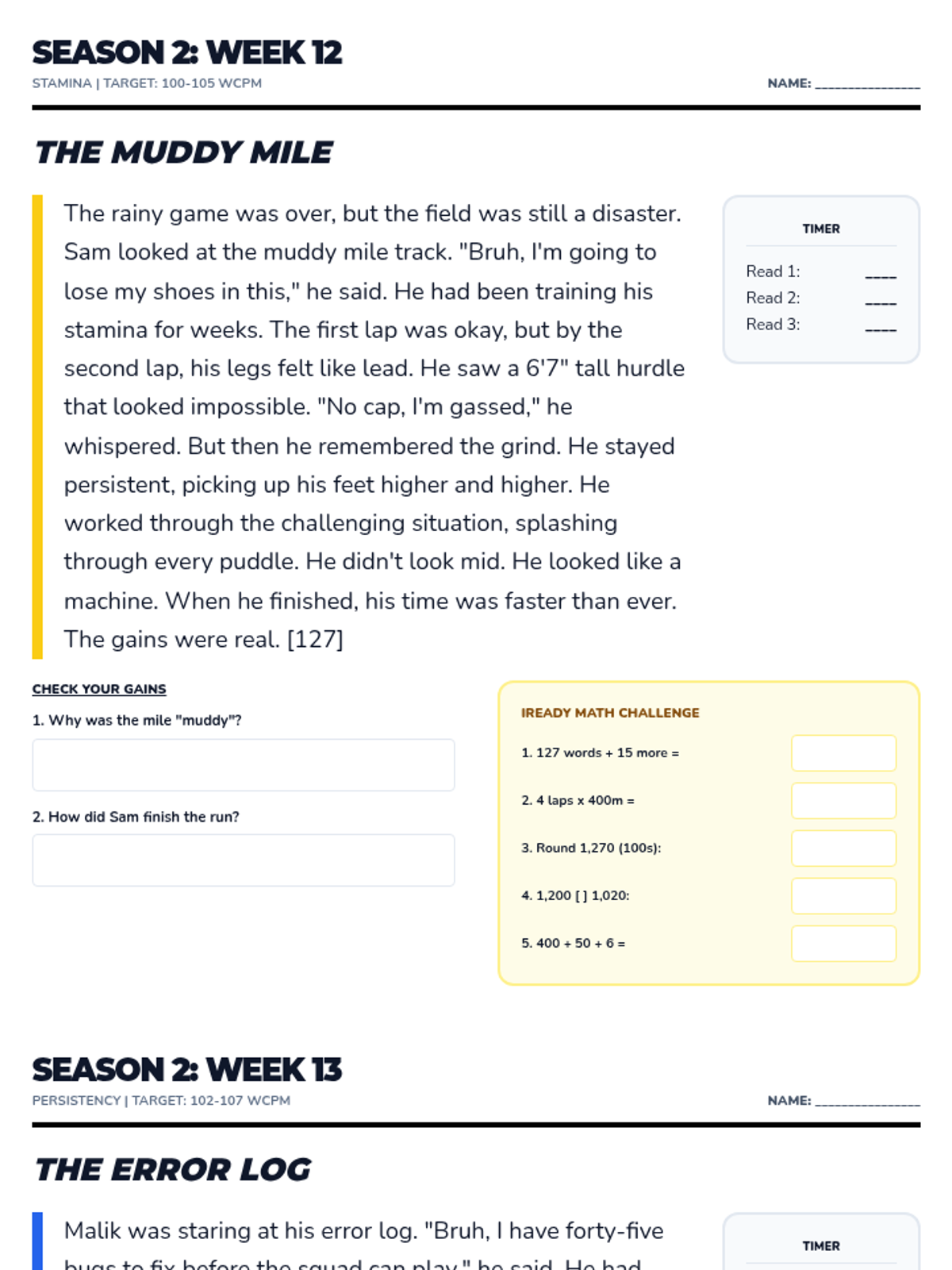
Reading passages for weeks 12-13 of Season 2. Continues the high-interest narrative of "The Grind" with increased WCPM targets and integrated iReady math challenges. Each week is self-contained on its own page for better readability. Increased math problem count to 5 per week. No fixed heights to prevent overlap. Fixed backslash issues. Standardized timer labels.
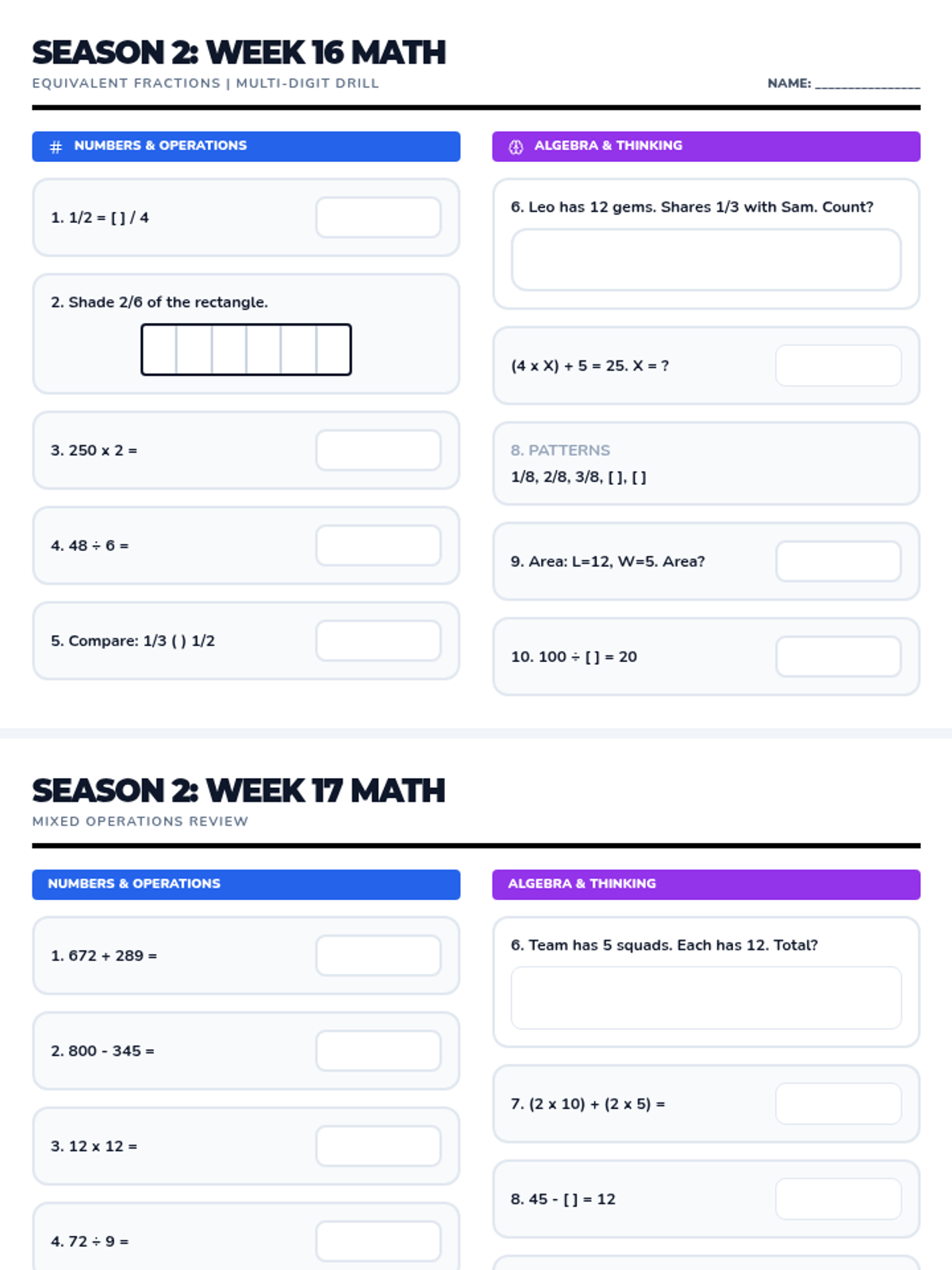
The final half of Season 2 math practice (Weeks 16-20). Focuses on equivalent fractions, mixed operations, multi-step word problems, and season review. Maintain high-interest "The Grind" theme with modern slang. Revised for layout stability and proper problem counts. Standardized answer boxes. Added tick marks to number lines. Fixed equation wrapping.
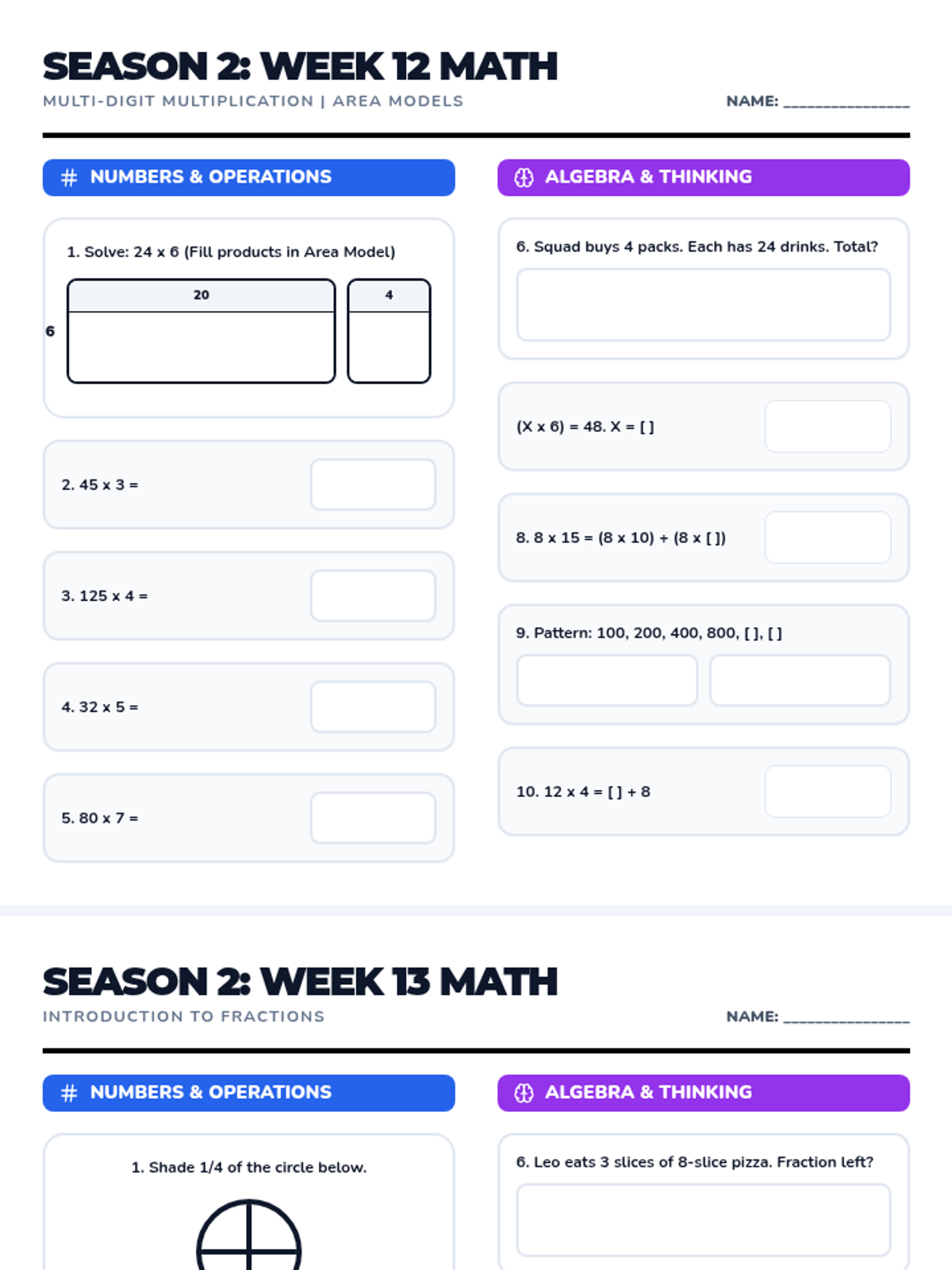
The second set of Season 2 math practice (Weeks 12-15). Focuses on area models, multi-digit multiplication, introduction to fractions, and multi-step word problems. Maintain high-interest "The Grind" theme. Revised for layout stability and proper problem counts. Standardized answer boxes. Added tick marks to number lines. Fixed area model labeling. Standardized border colors.
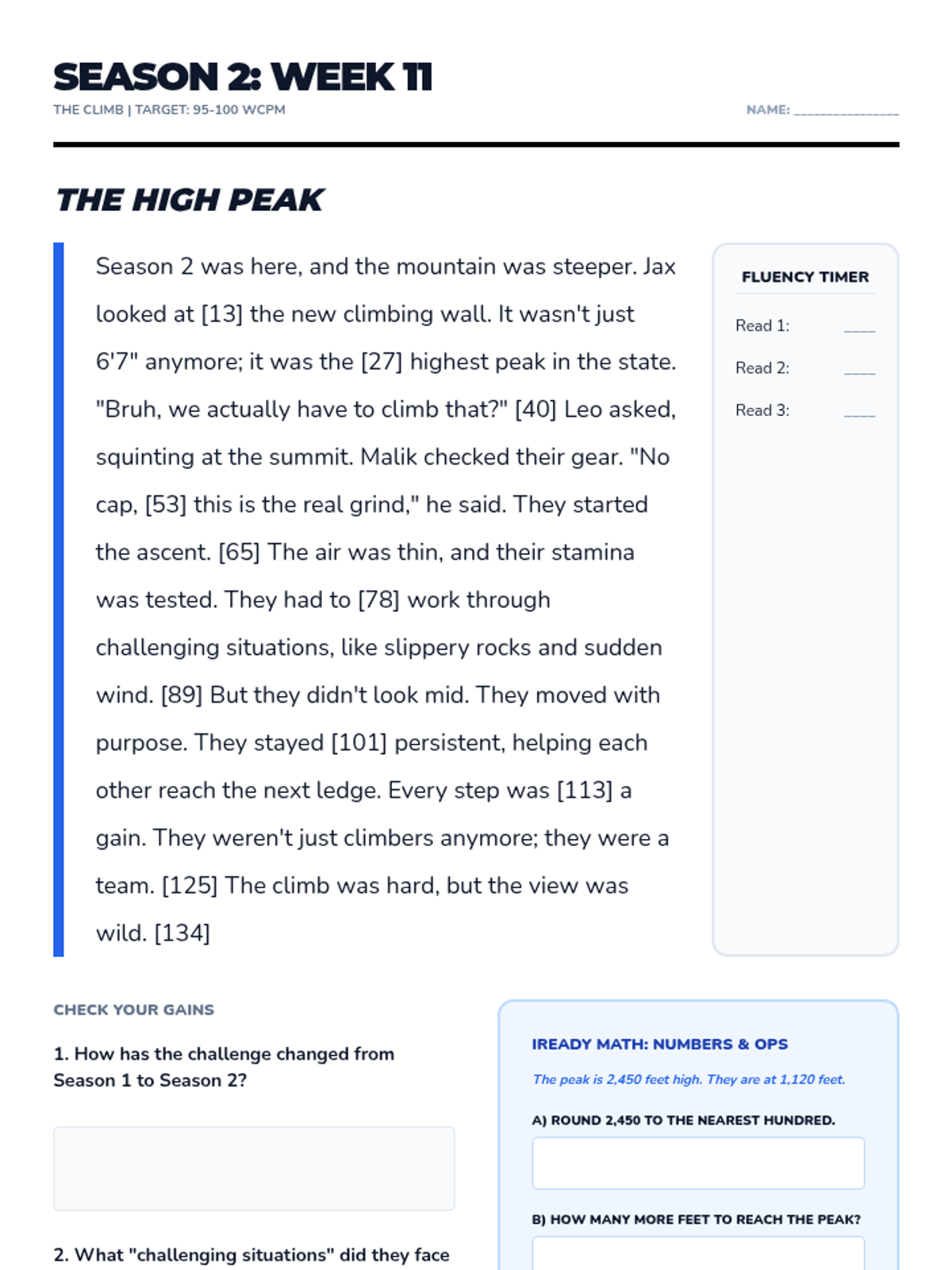
Reading passage for week 11. Introduces Season 2 complexity with longer sentences and more advanced vocabulary. Maintains the "Grind" narrative.
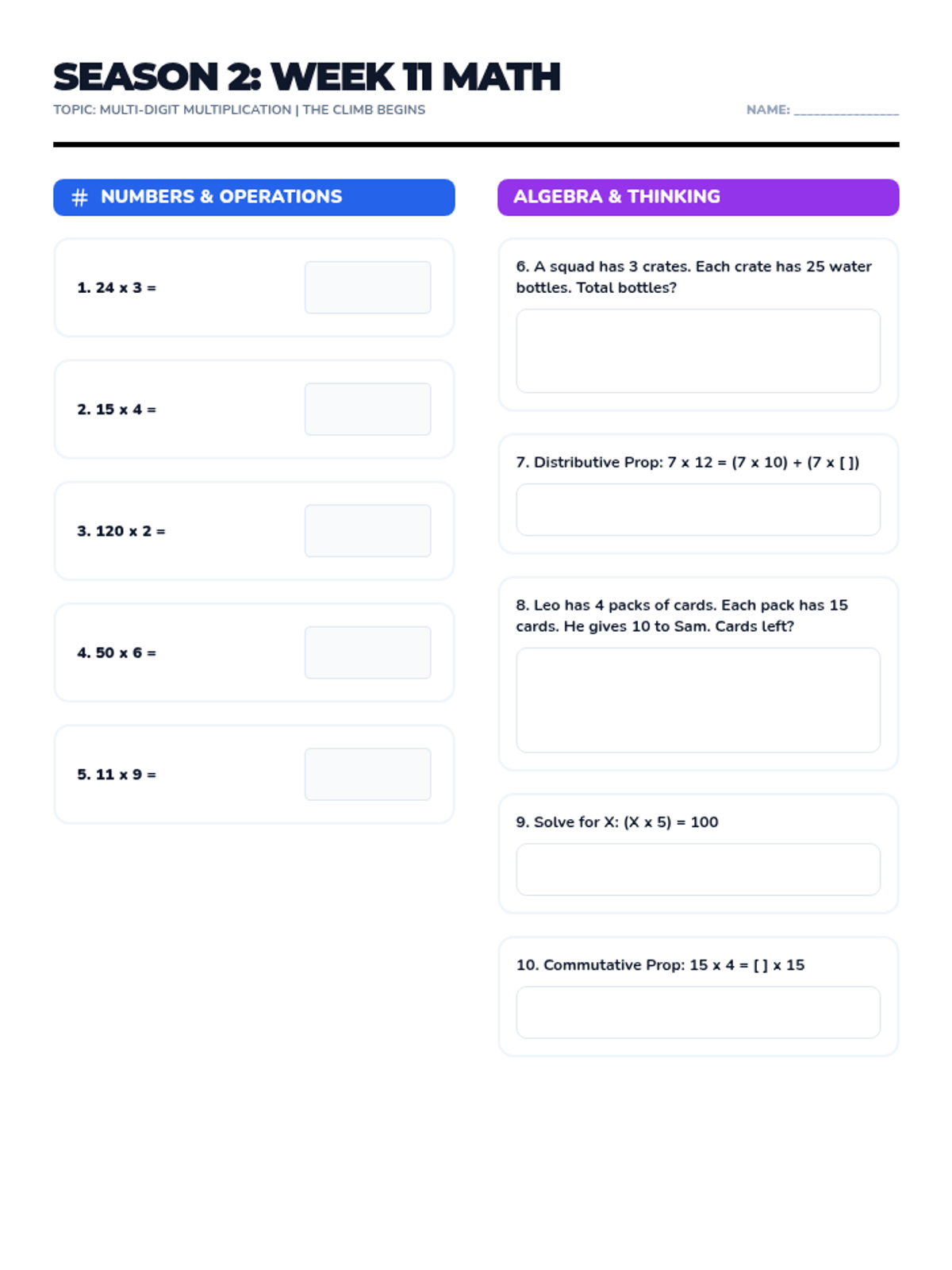
The first week of Season 2 math practice. Transitions into multi-digit multiplication and more complex multi-step algebraic problems. High-interest theme maintained with "The Grind" logic.
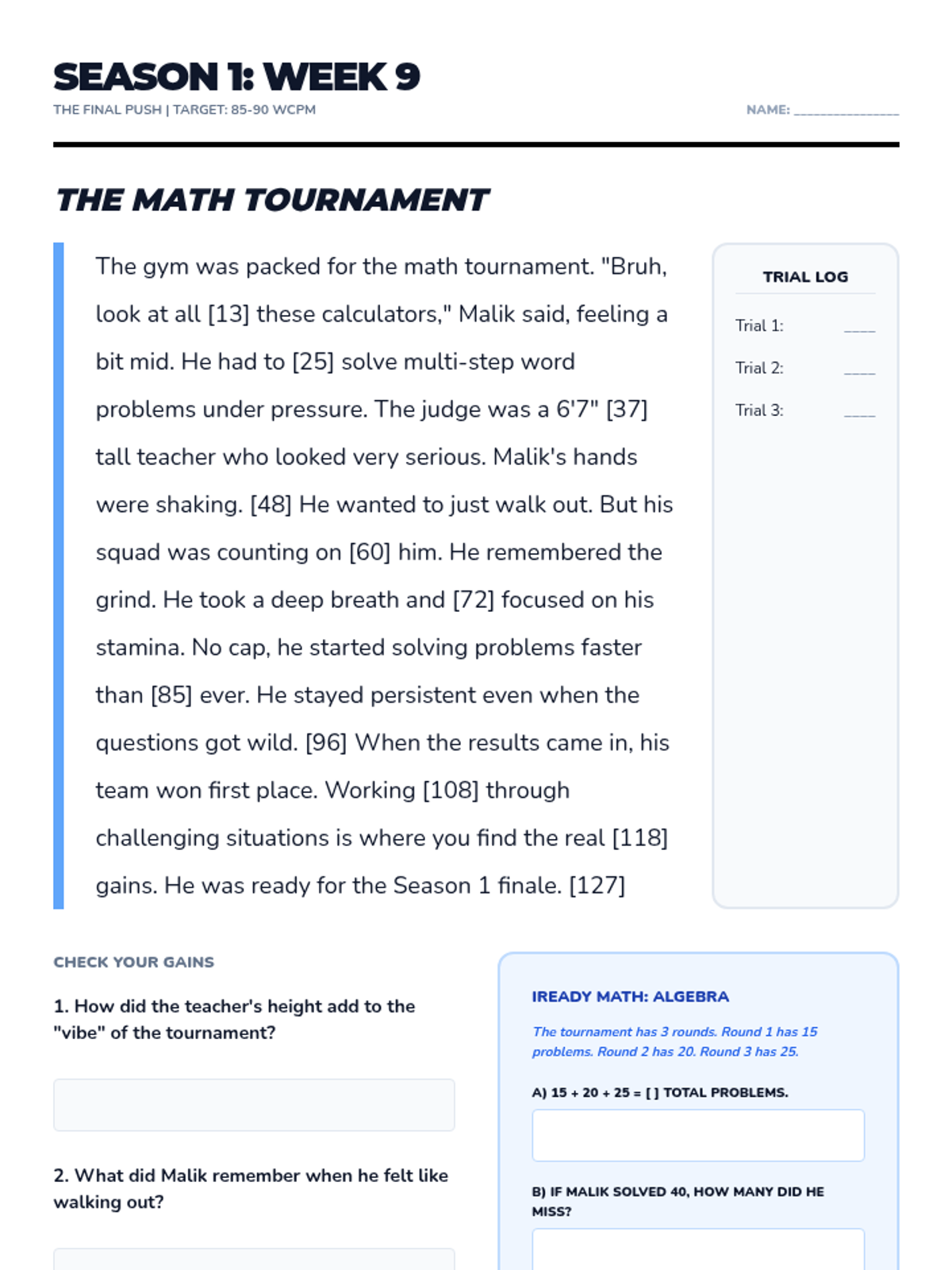
Reading passages for weeks 9-10 of the foundation season. Focuses on stamina and persistency through relatable stories about math tournaments and season finales. Includes high-interest slang and integrated iReady math tasks. Each week is self-contained for readability.
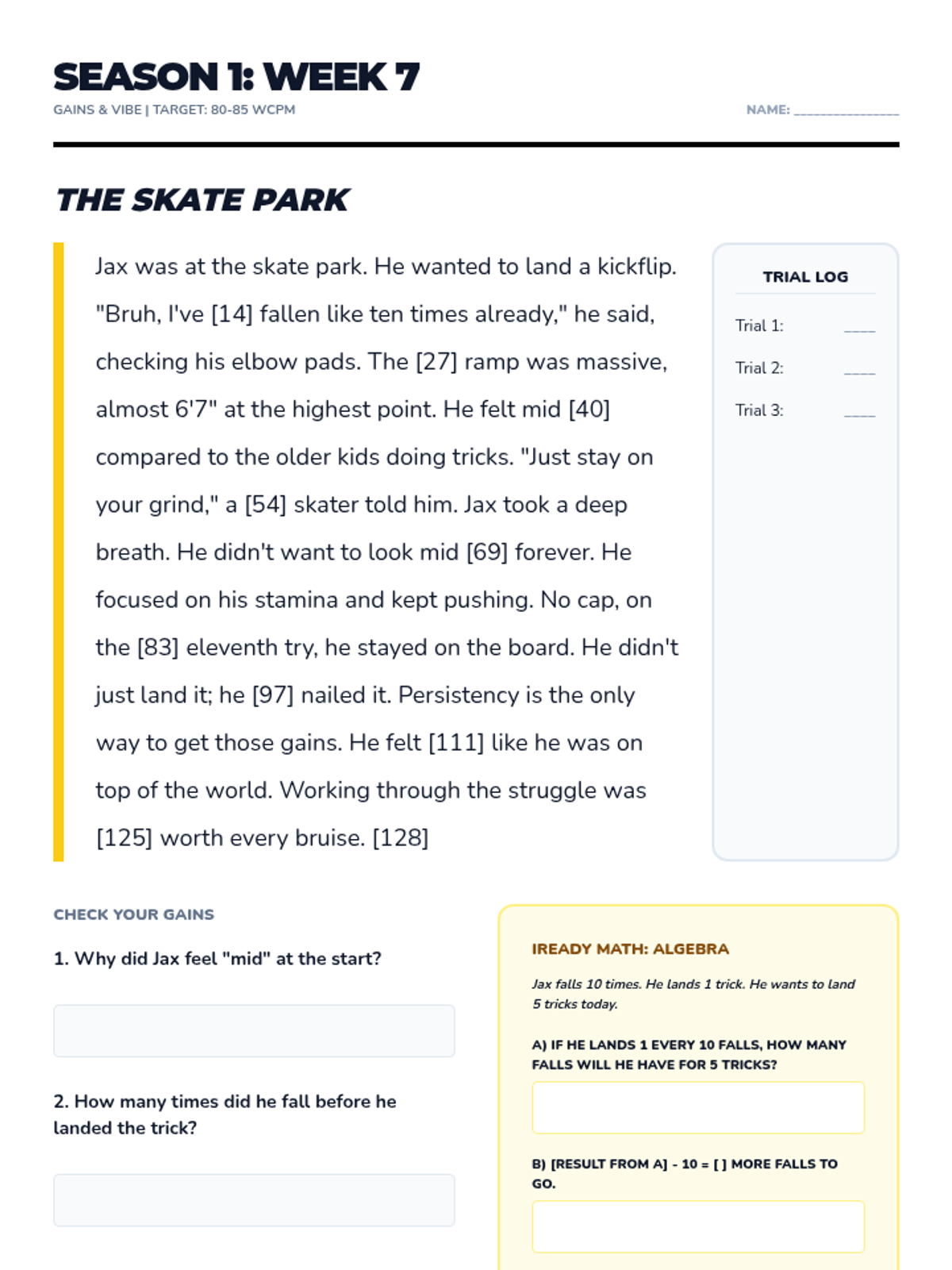
Reading passages for weeks 7-8 of the foundation season. Focuses on stamina and persistency through relatable stories about skating and reading. Includes high-interest slang and integrated iReady math tasks. Each week is self-contained for readability.
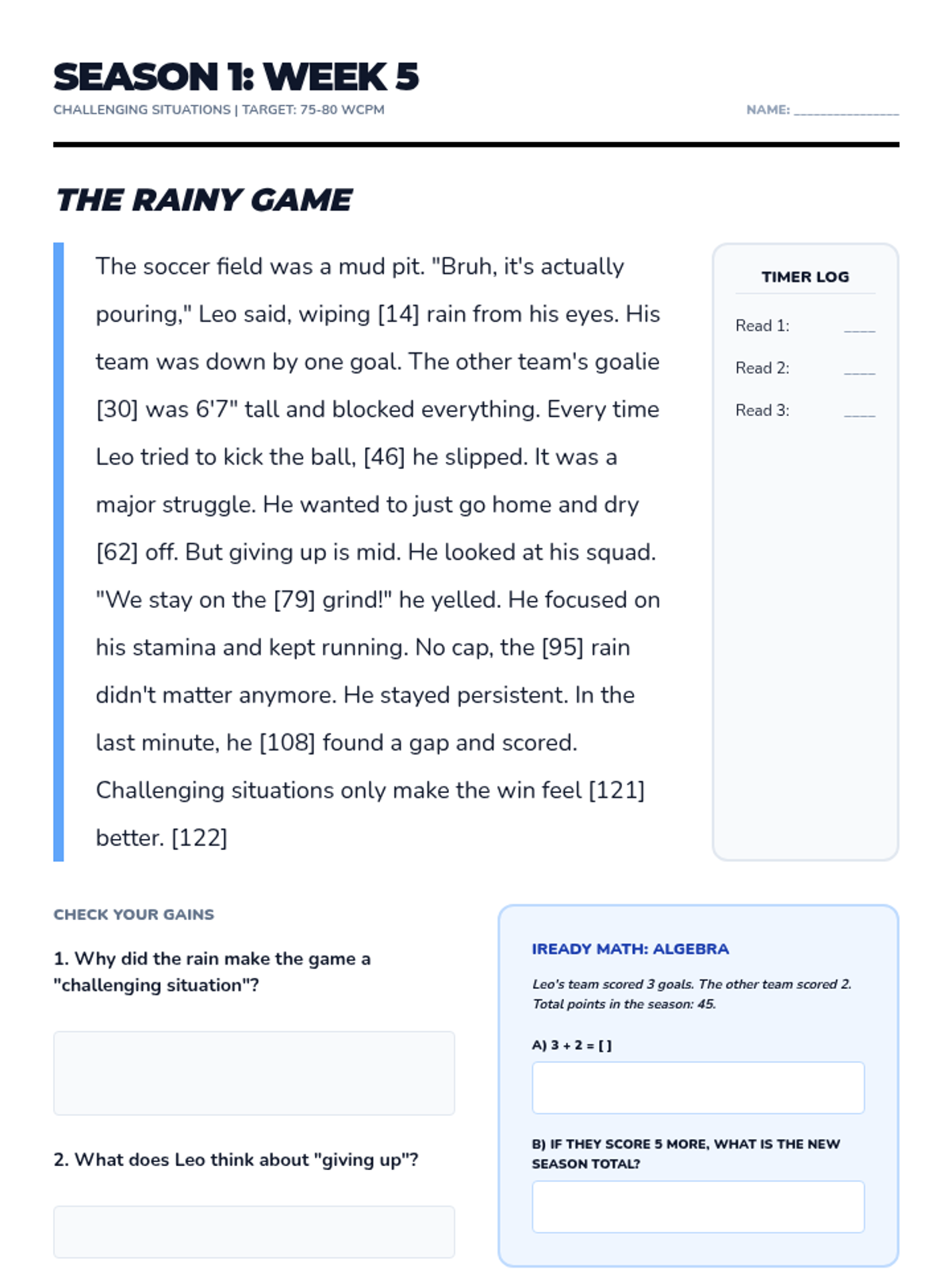
Reading passages for weeks 5-6 of the foundation season. Focuses on stamina and persistency through relatable stories about sports and coding. Includes high-interest slang and integrated iReady math tasks. Each week is self-contained for readability.
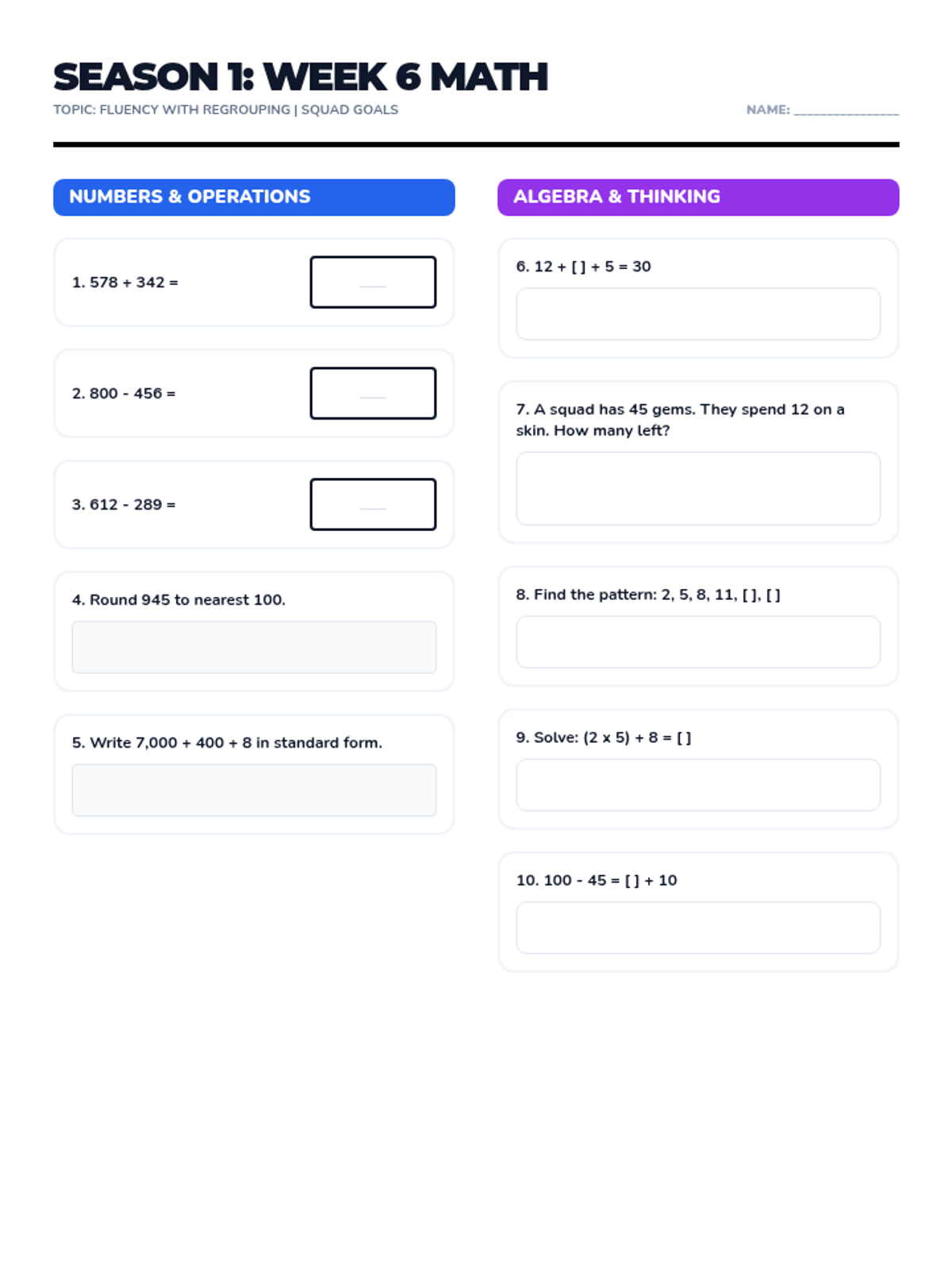
The second half of Season 1 math practice (Weeks 6-10). Covers multi-digit operations, division facts, area models, and multi-step word problems. Maintain high-interest "The Grind" theme with modern slang for a rising 4th grader.
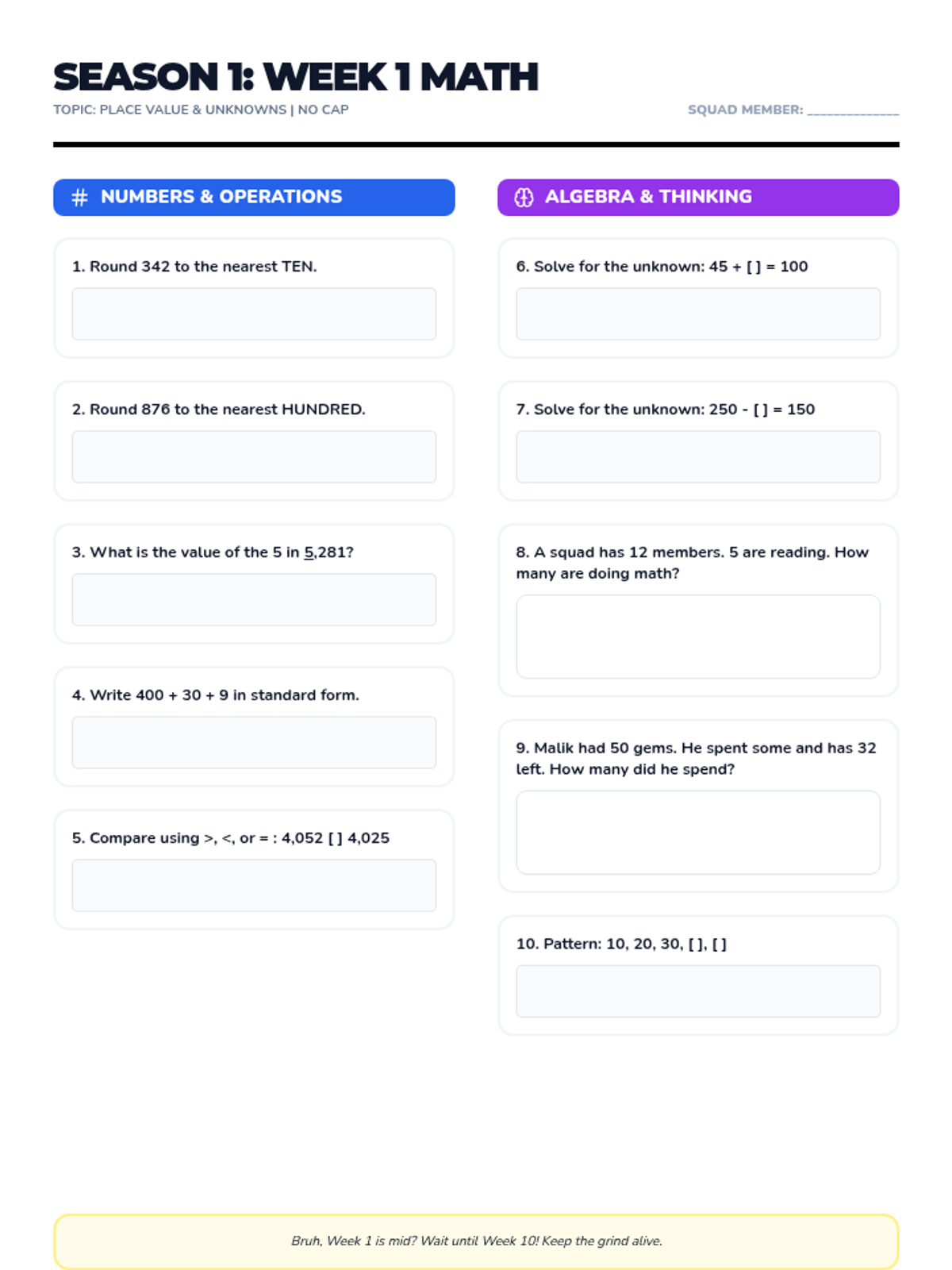
The first 5 weeks of math practice sessions for the intervention program. Each week features 10 problems split between Numbers & Operations and Algebra & Thinking, designed for a rising 4th grader with a high-interest "The Grind" theme.
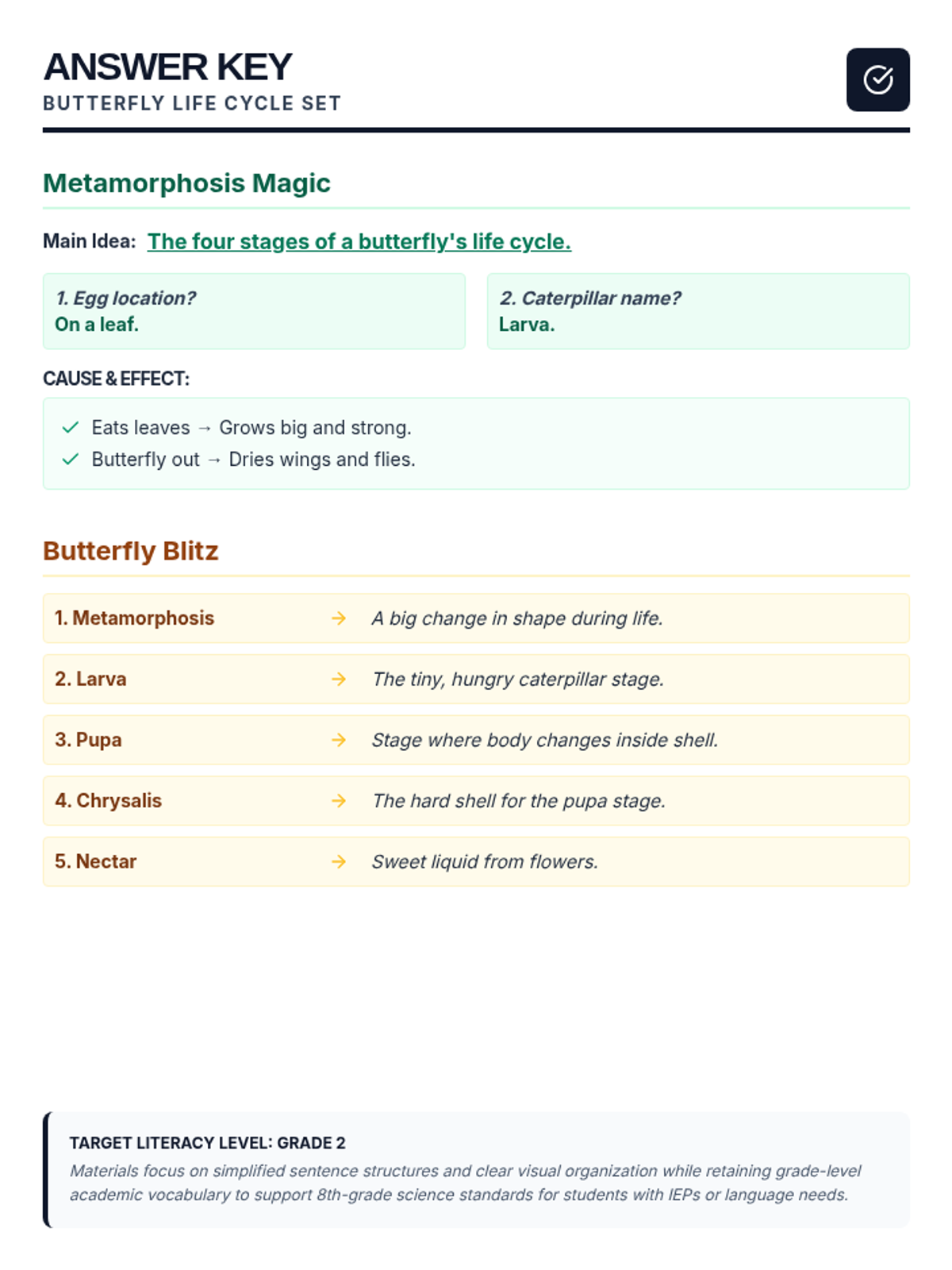
An answer key providing solutions for the butterfly life cycle reading passage, cause-and-effect matching, and vocabulary matching activities.
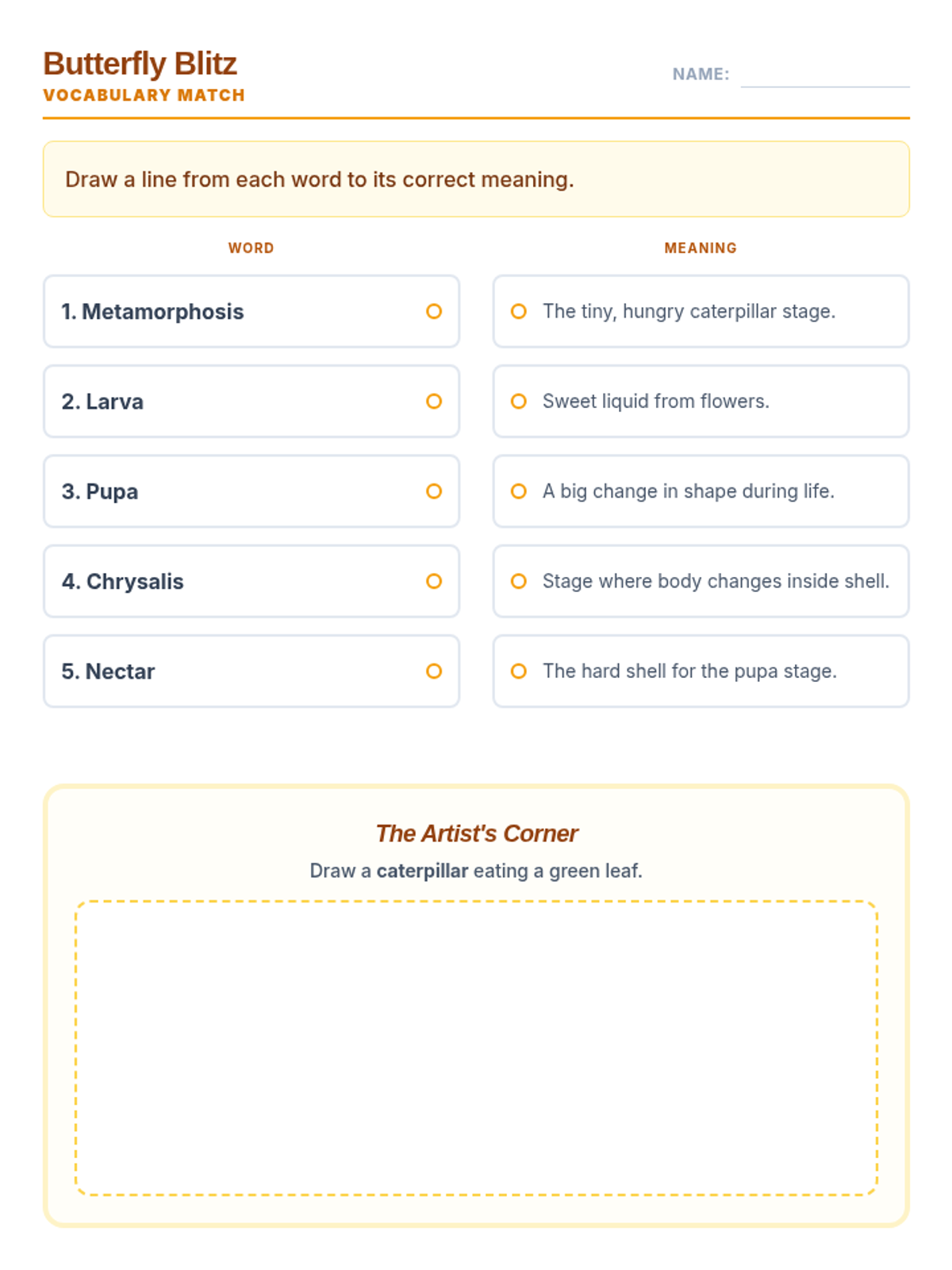
A vocabulary matching worksheet where students connect life cycle terms like metamorphosis and chrysalis to their definitions, followed by a drawing activity.
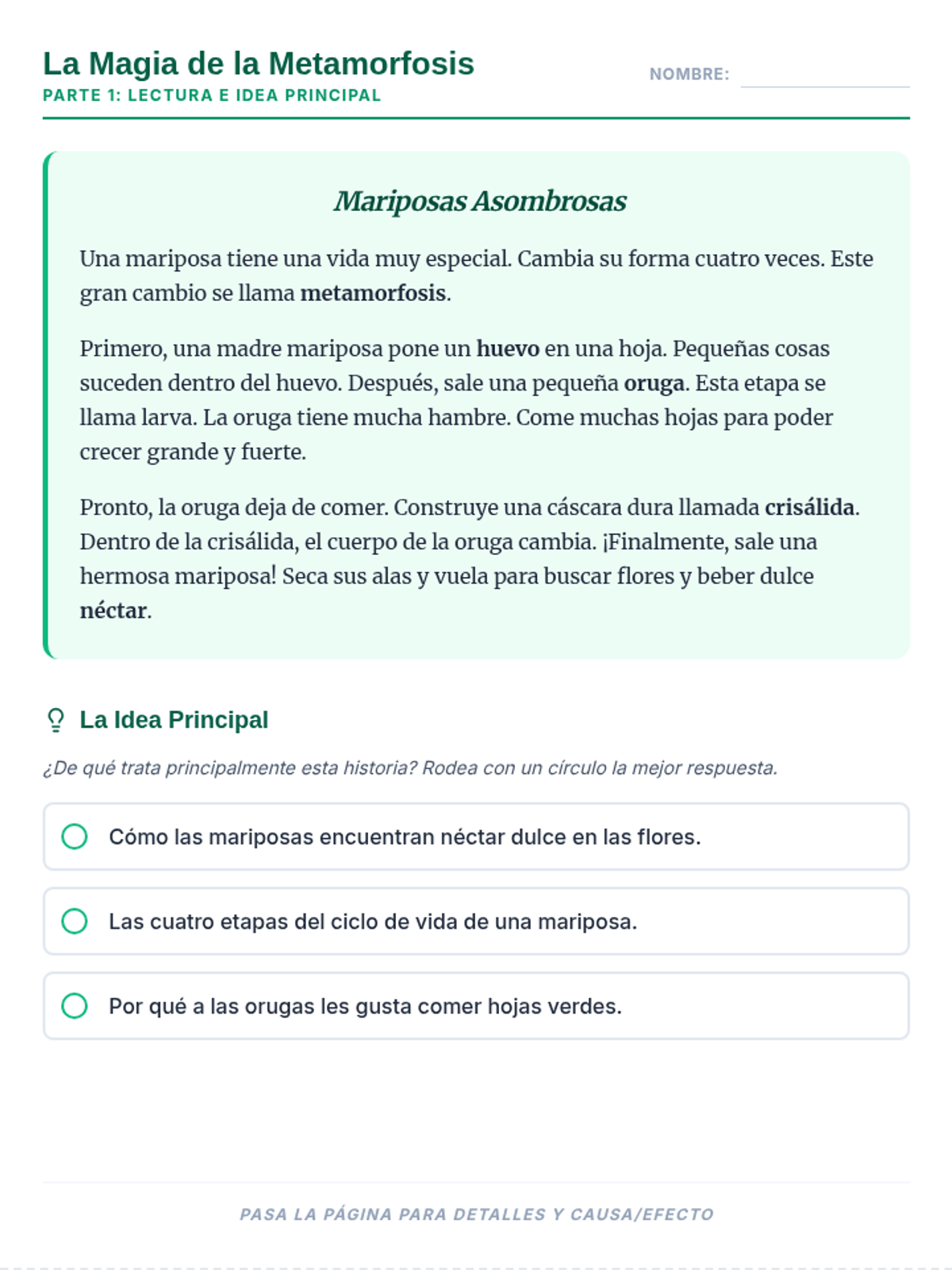
A reading comprehension worksheet featuring a simple passage about the butterfly life cycle, followed by main idea, detail retrieval, and cause-and-effect questions, with a dedicated reflection page.
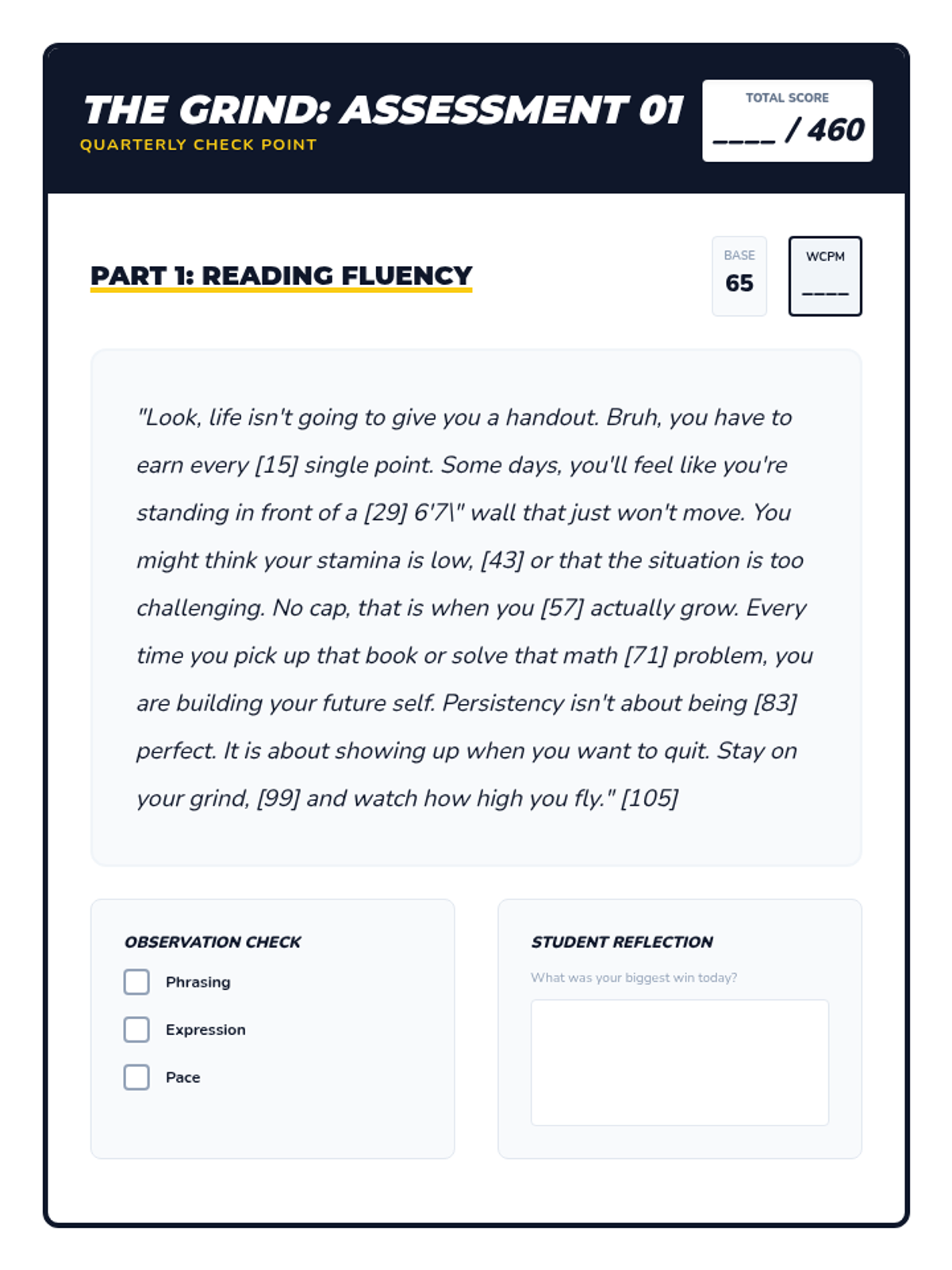
A quarterly assessment for Season 1. Revised with stable page breaks, clear checkboxes, improved math alignment, and spacious work areas for handwriting. Includes fluency passage and iReady-aligned math tasks. Math problems now feature cleaner solution boxes instead of text underscores. Consolodated to 2 pages. Revised for alignment and spacing.
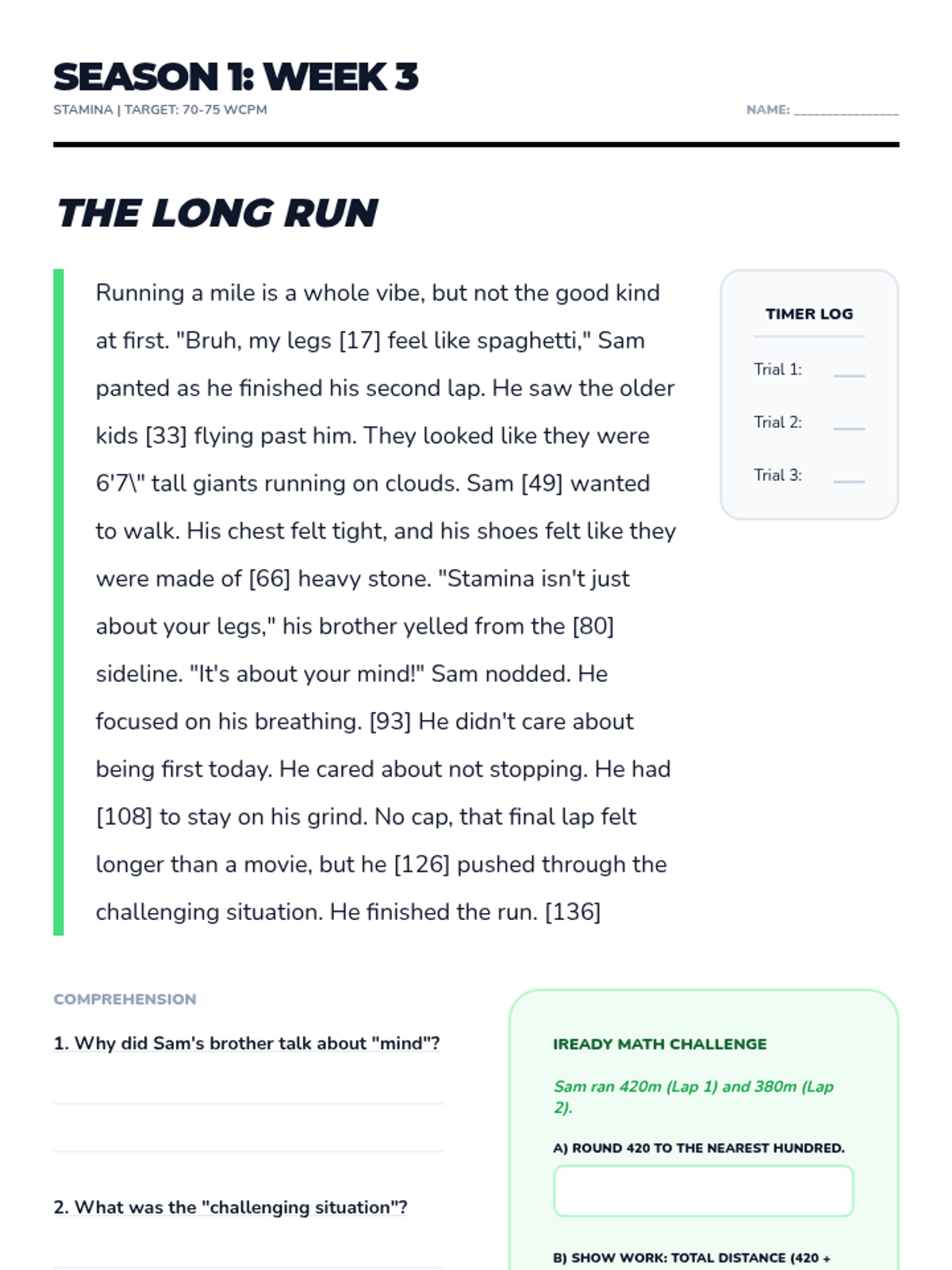
Weekly reading passages for weeks 3-4 of the foundation season. Focuses on stamina and persistency through relatable stories about sports and gaming. Revised for layout stability and work area space. Each week is self-contained on its own page for better readability. No fixed heights to prevent overlap.
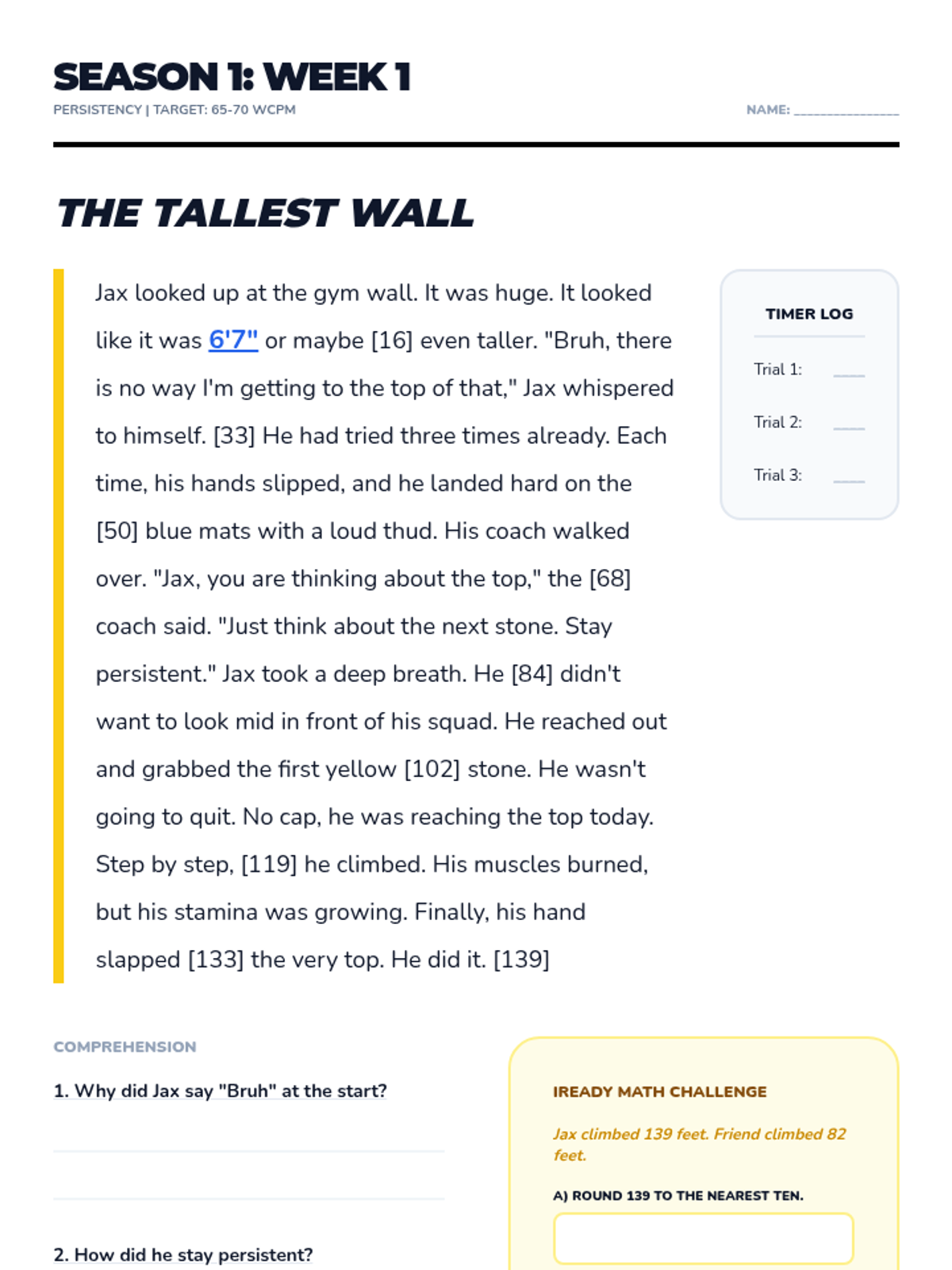
The first set of weekly reading passages (Weeks 1-2) revised for layout stability, clear work areas, and proper slang usage. Includes high-interest stories about persistency and stamina with integrated iReady math challenges. Each week is self-contained on its own page for better readability. No fixed heights to prevent overlap.
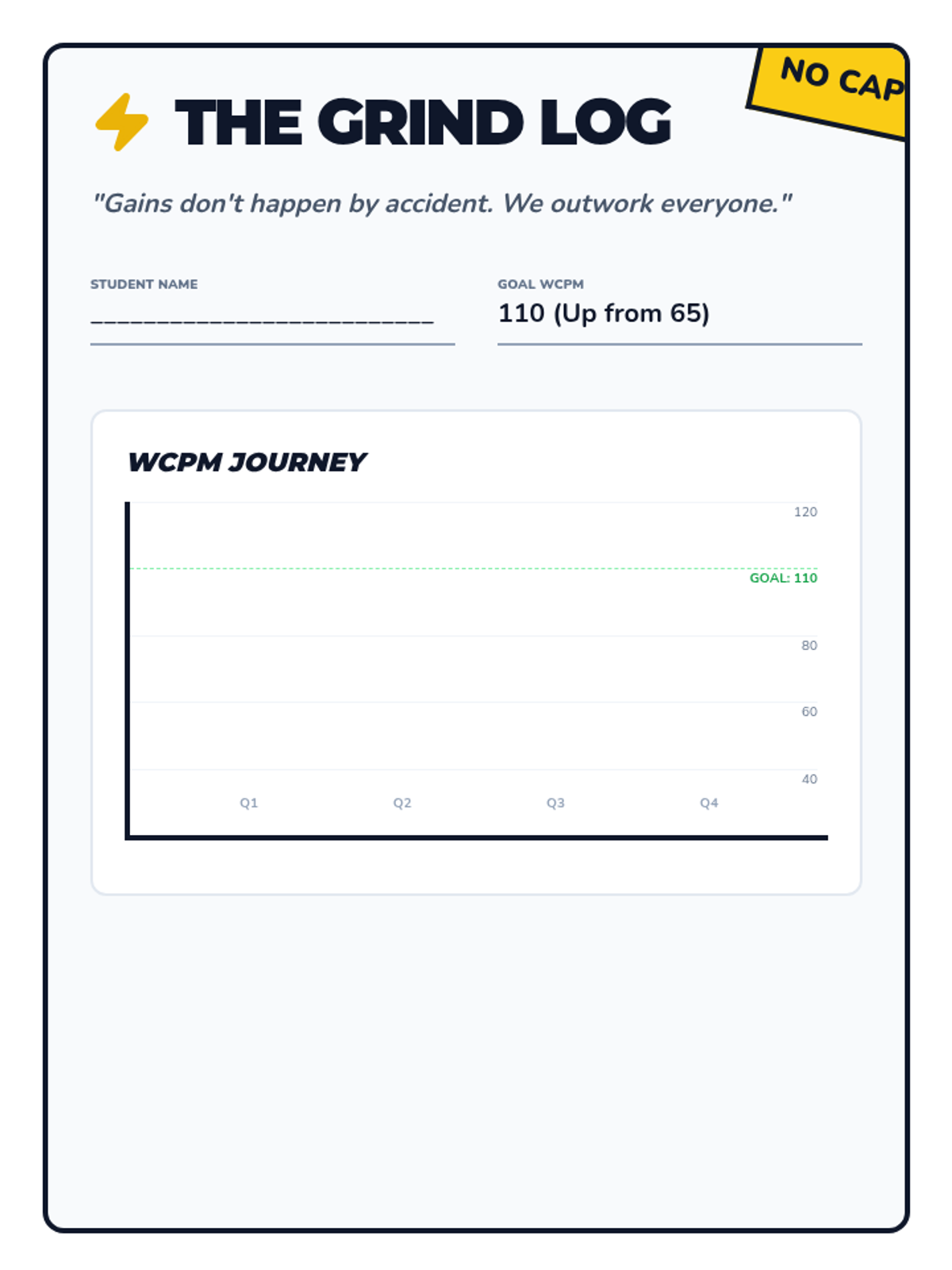
A comprehensive 40-week service log, reading fluency tracer, and iReady math skills checklist for Numbers & Operations and Algebra. Designed with a high-energy "The Grind" theme featuring modern slang and clear progress monitoring tools. Expanded to include full 40-week logging space across 6 pages.
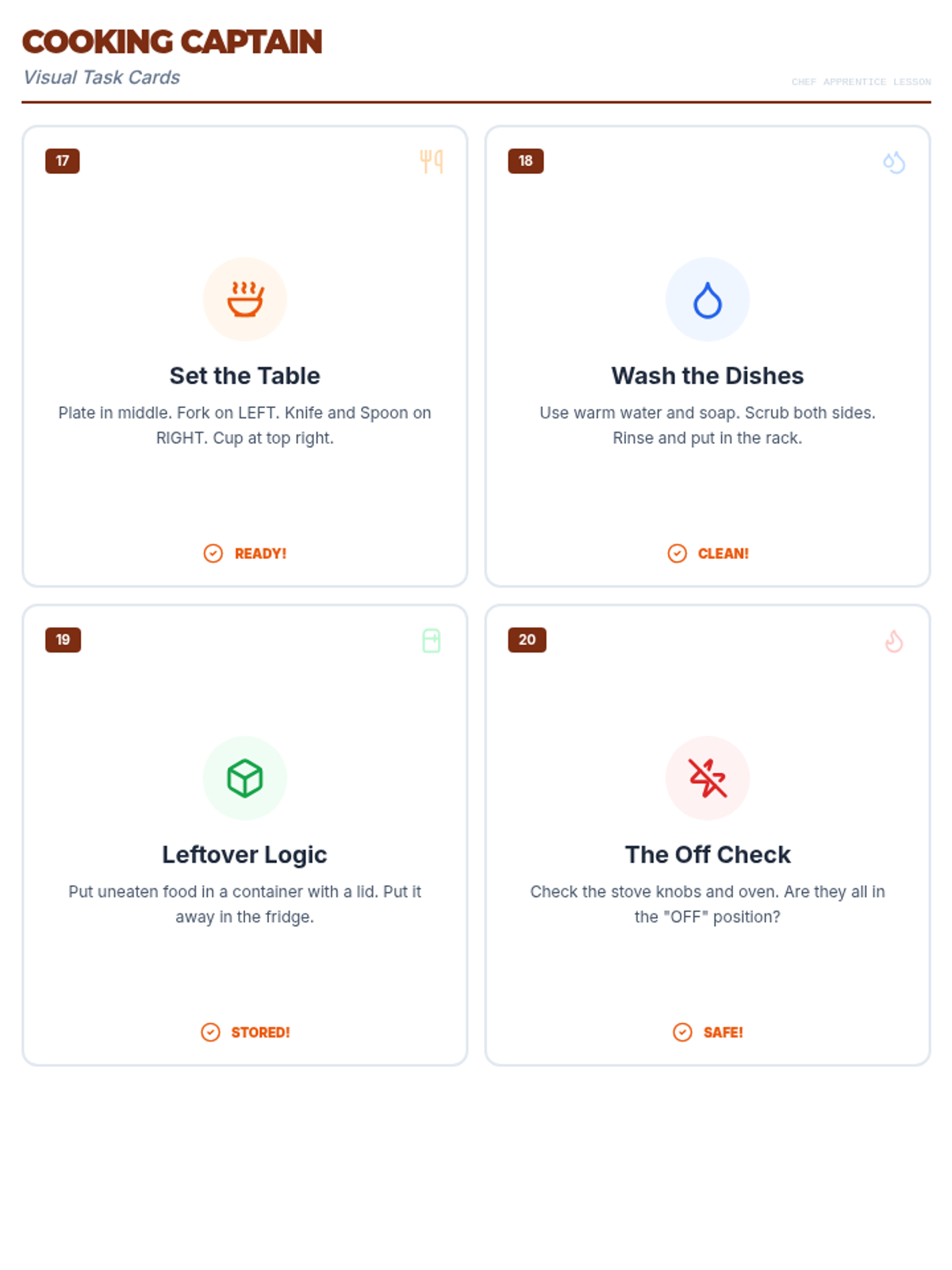
Four task cards for kitchen management: setting the table, washing dishes, storing leftovers, and final safety checks.
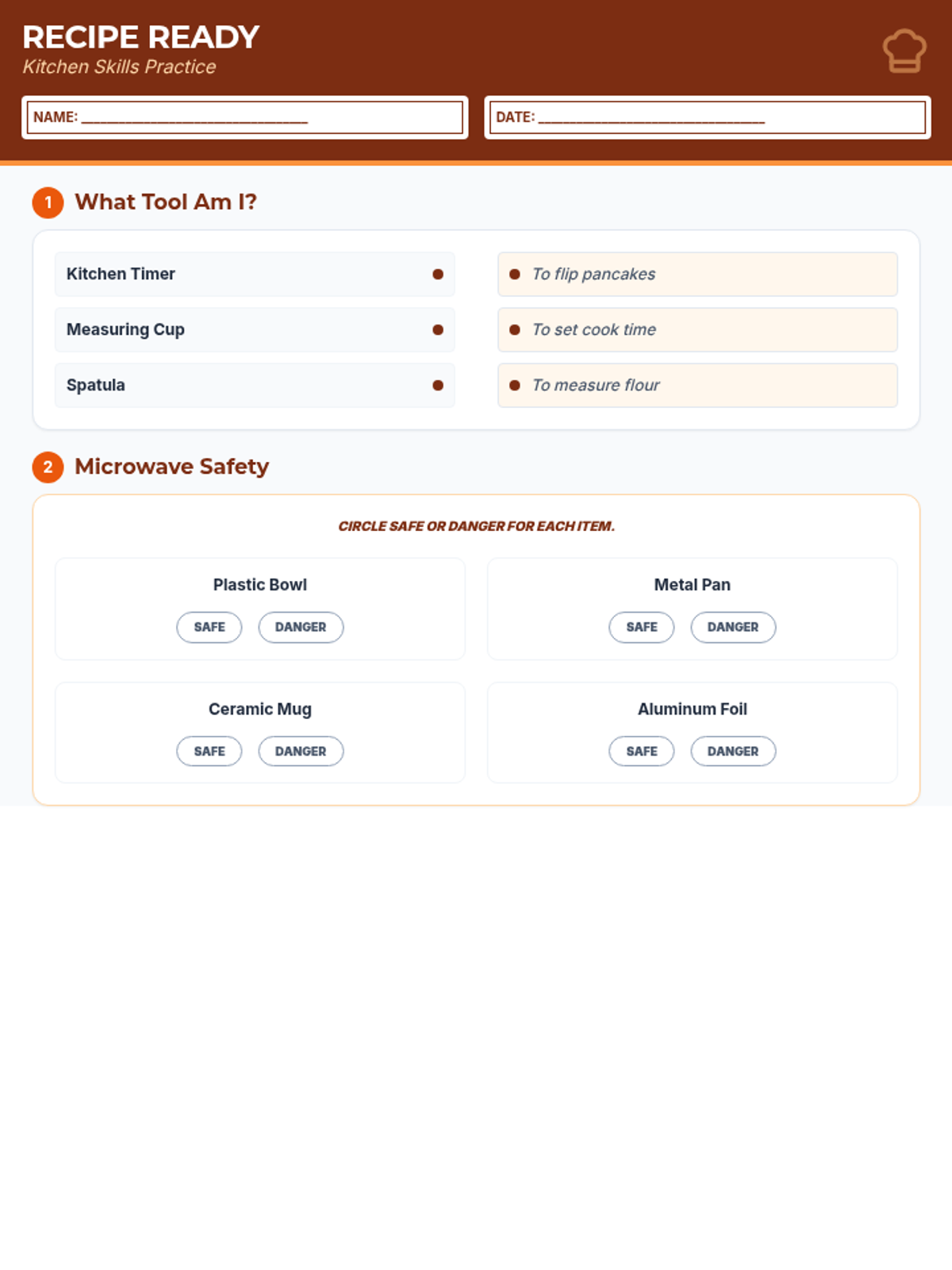
A kitchen skills worksheet covering tool matching and microwave safety (identifying microwave-safe vs. dangerous items).
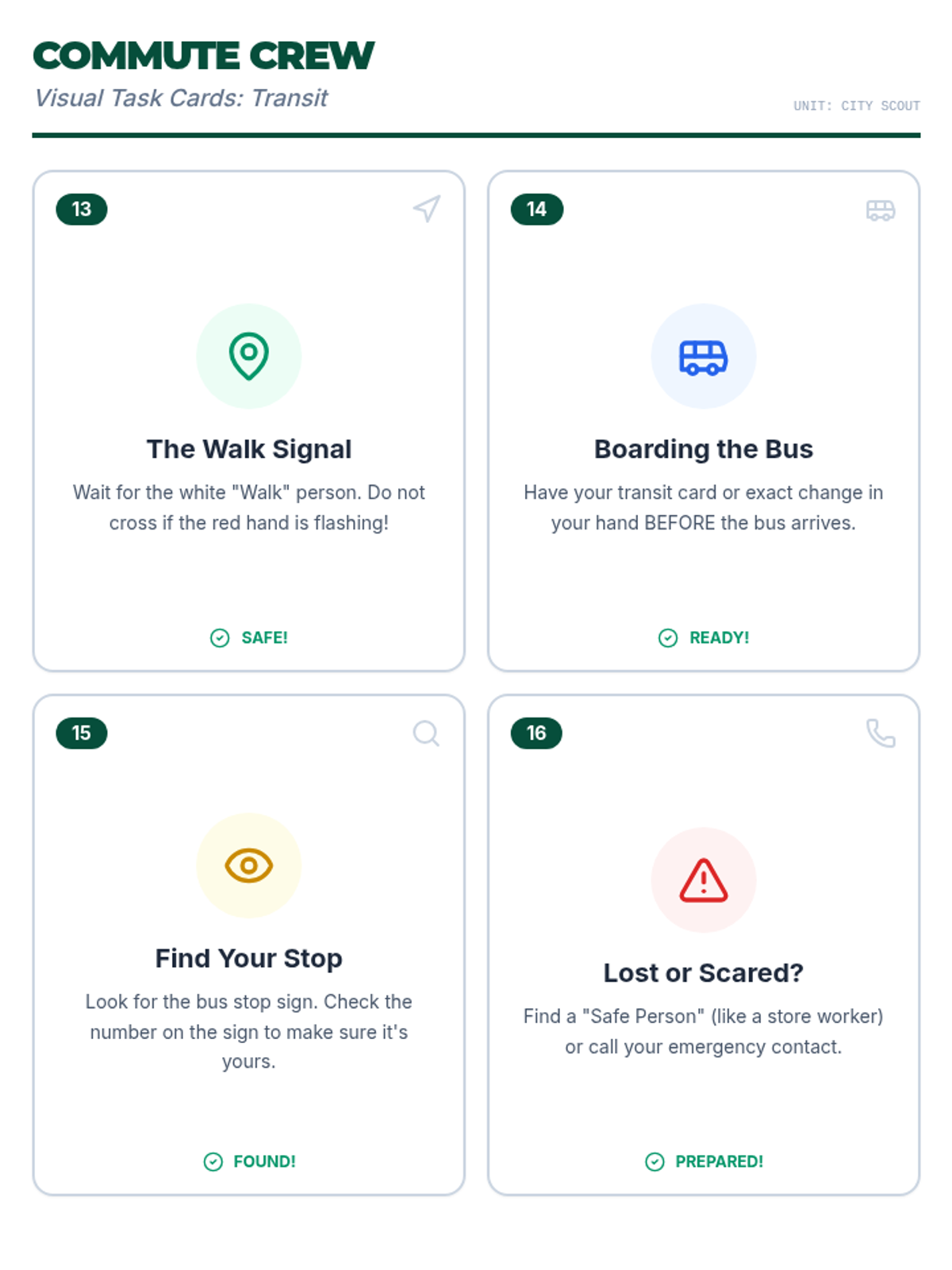
Four task cards for community navigation, focusing on crossing signals, bus boarding, stop identification, and seeking help.
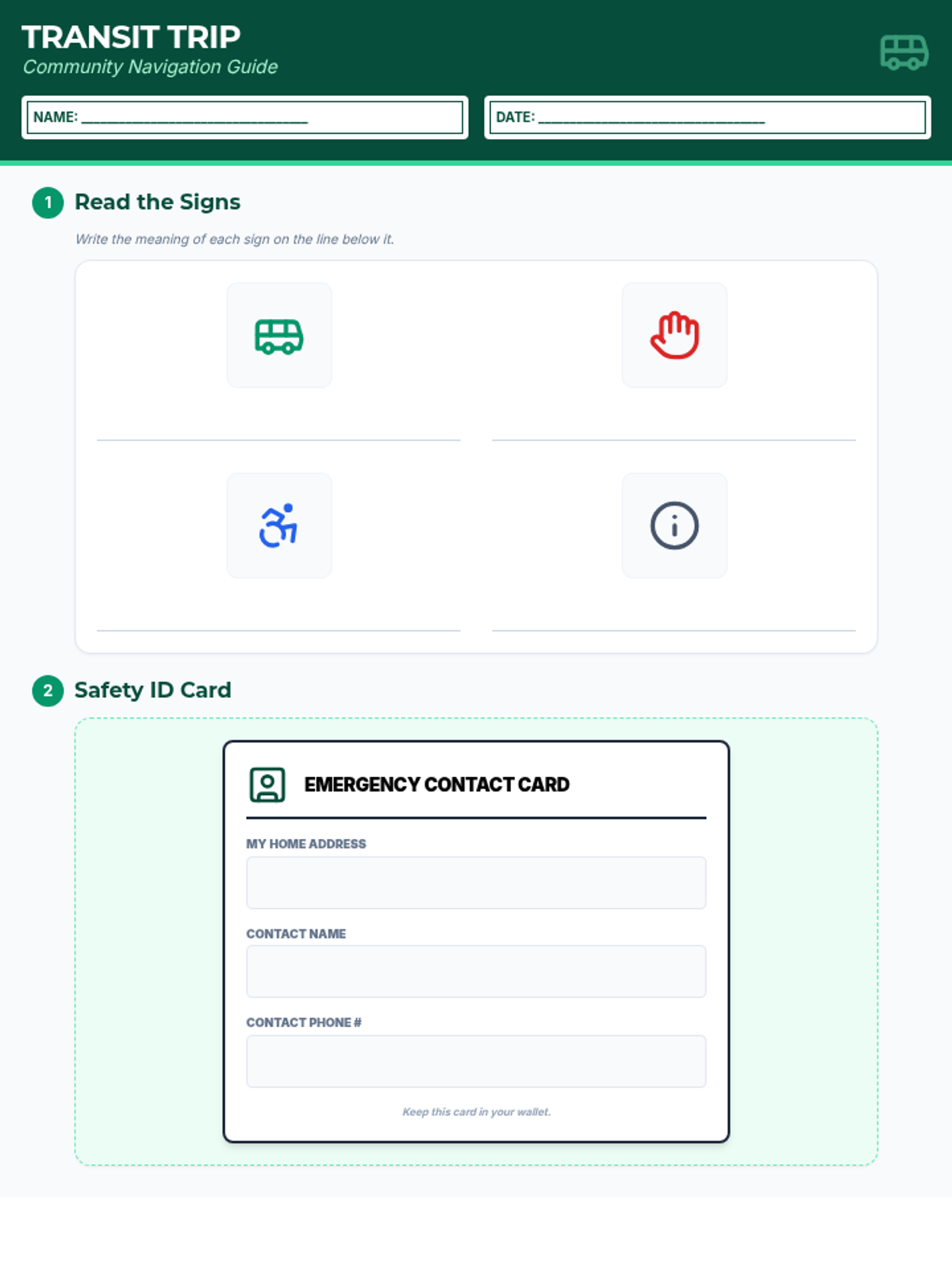
A community navigation worksheet featuring sign identification and an emergency contact card for students to complete.
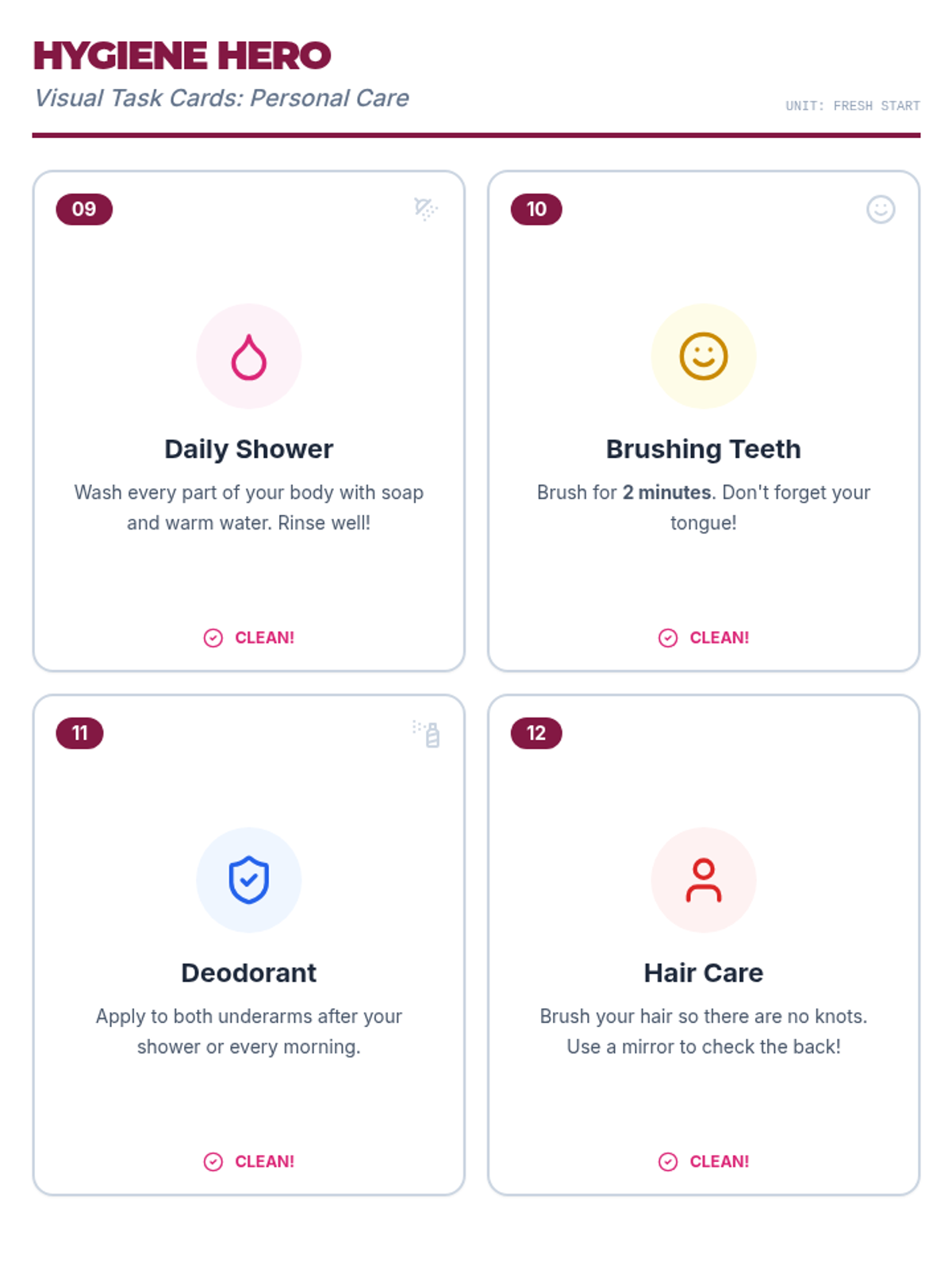
Four task cards detailing critical hygiene steps: showering, teeth brushing, deodorant application, and hair care.
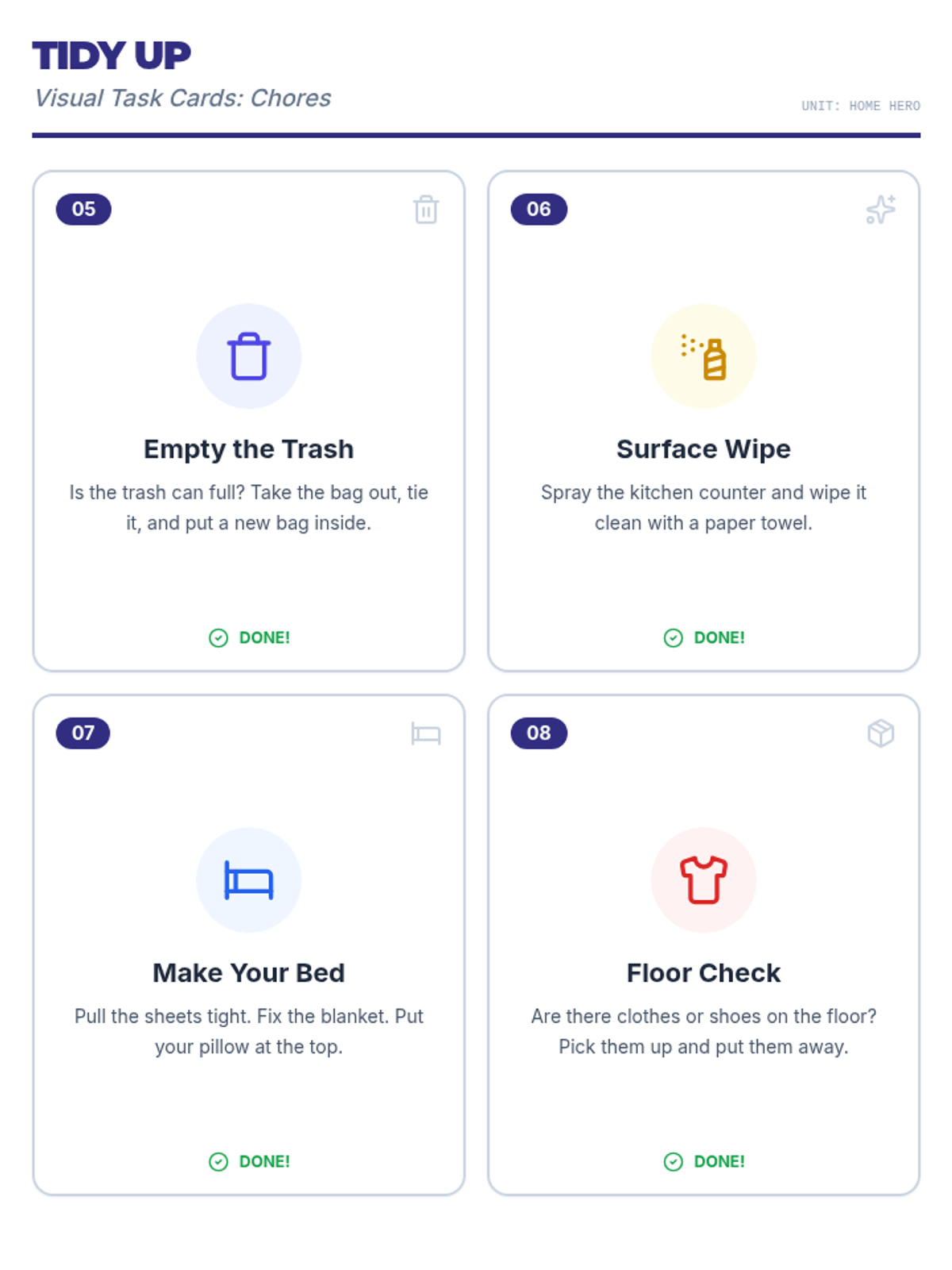
Four actionable task cards for essential household chores: trash disposal, surface cleaning, bed making, and tidying floors.
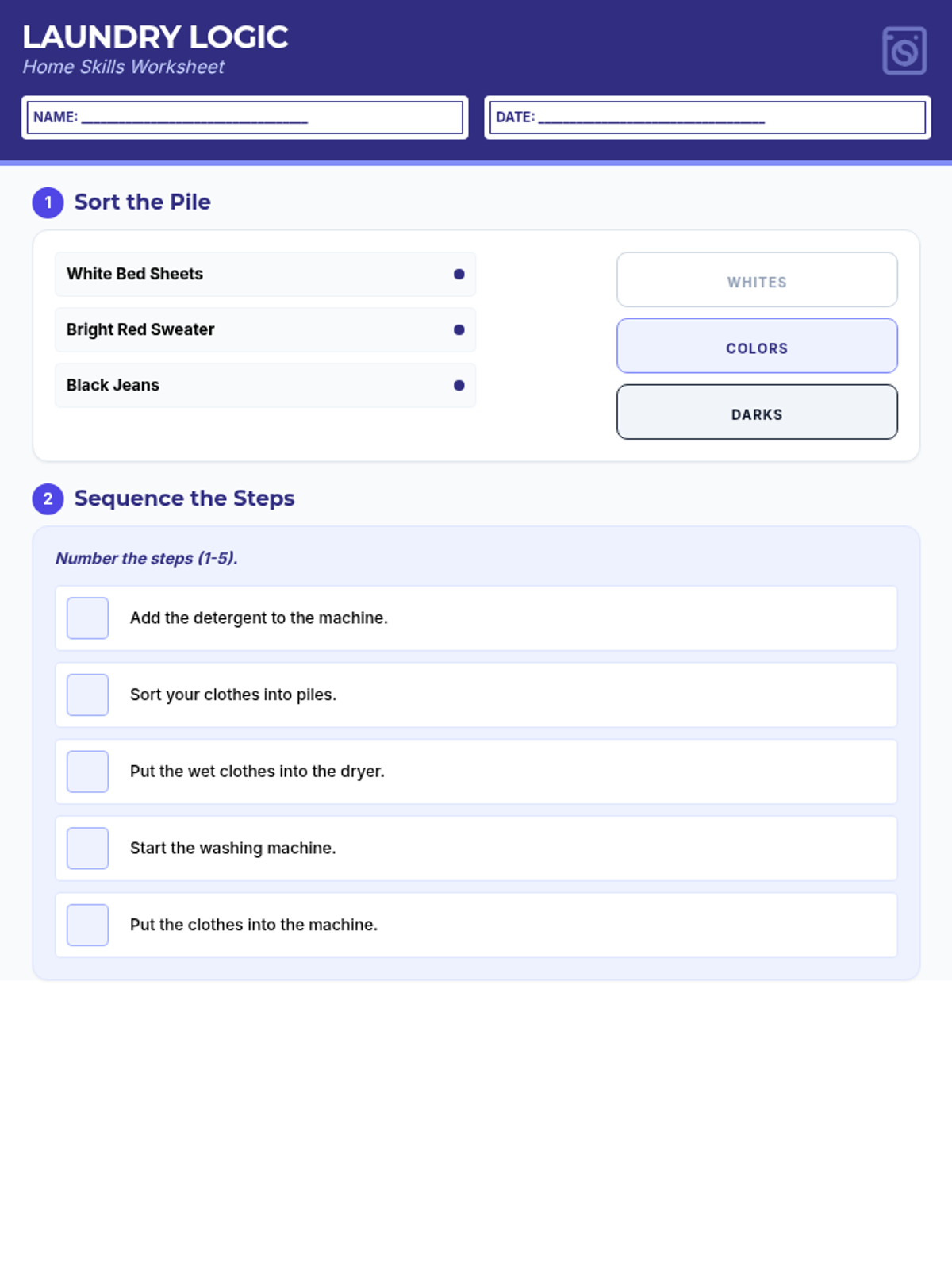
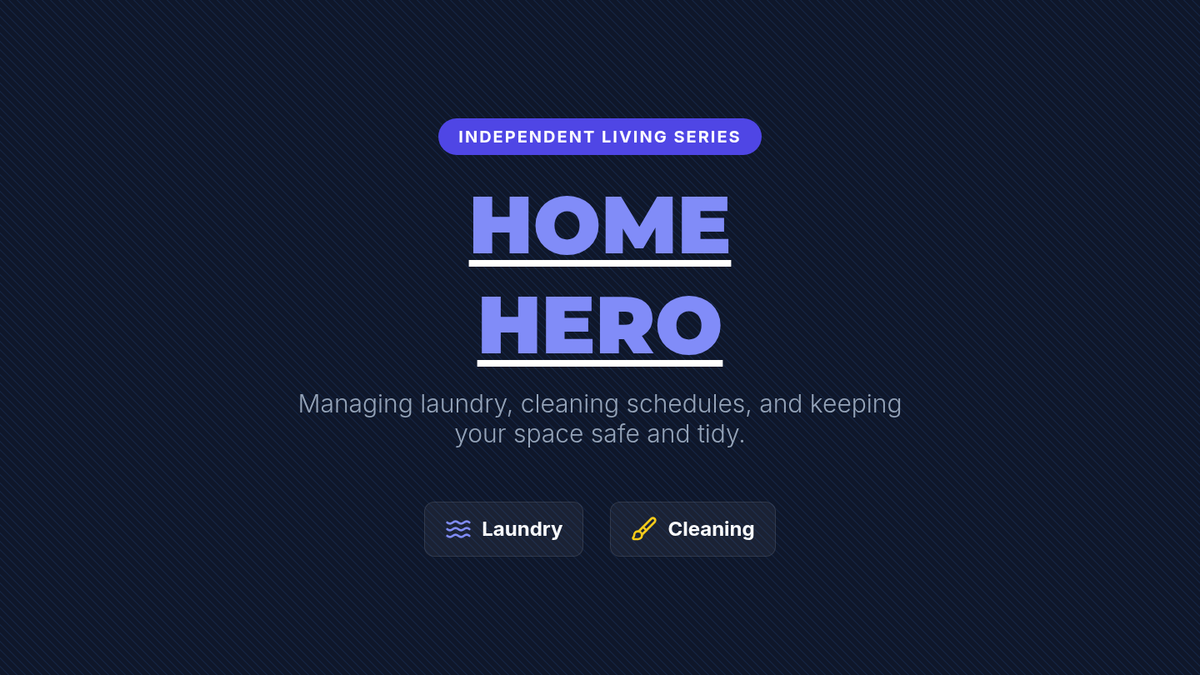
A one-page visual laundry worksheet focusing on sorting clothes by color and sequencing the steps of using a washing machine.
A 4-slide instructional presentation covering laundry sorting, cleaning tool identification, chemical safety, and daily/weekly chore schedules.
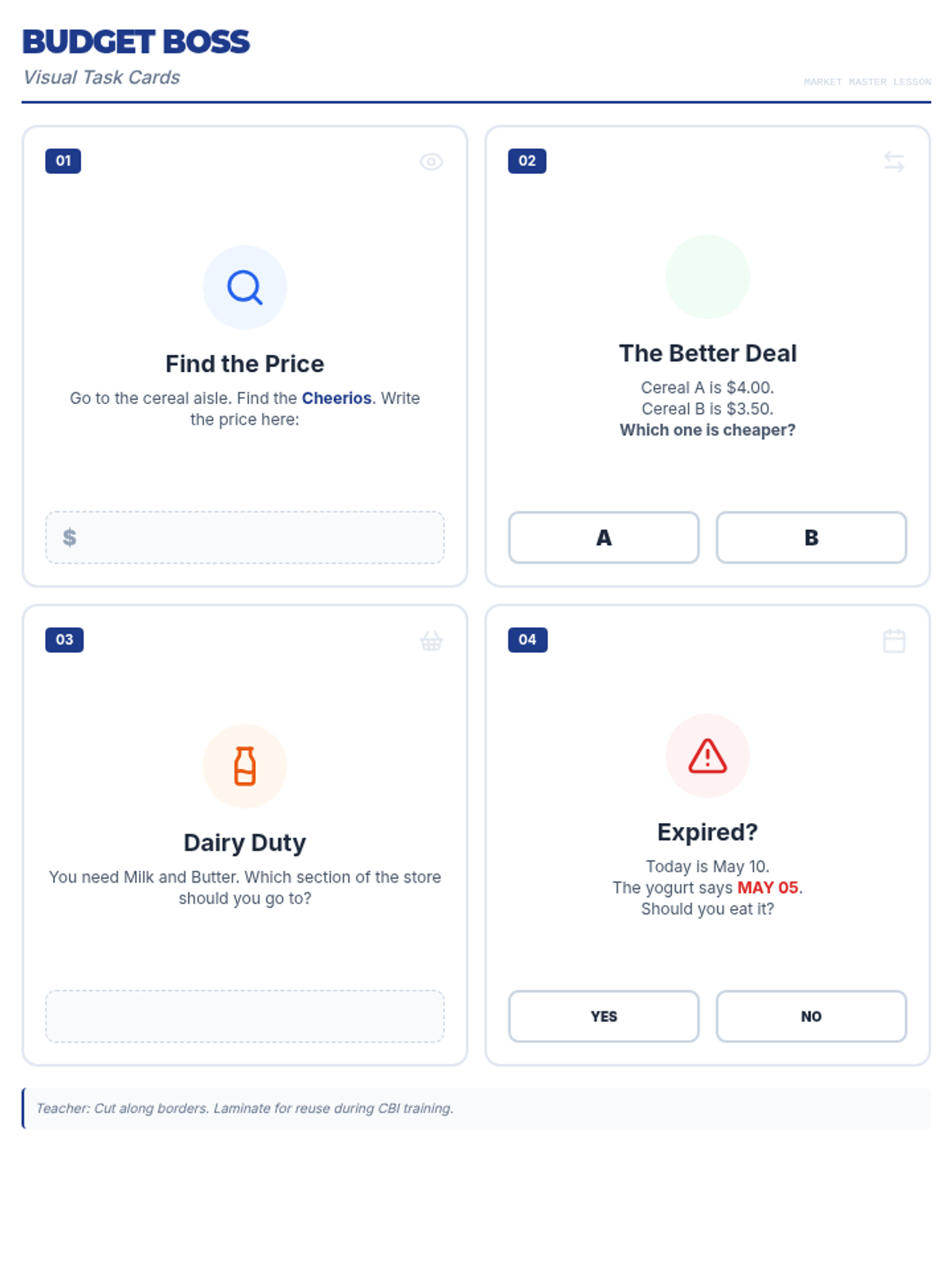
Four visual task cards for hands-on shopping practice, covering price finding, comparisons, store navigation, and checking expiration dates.
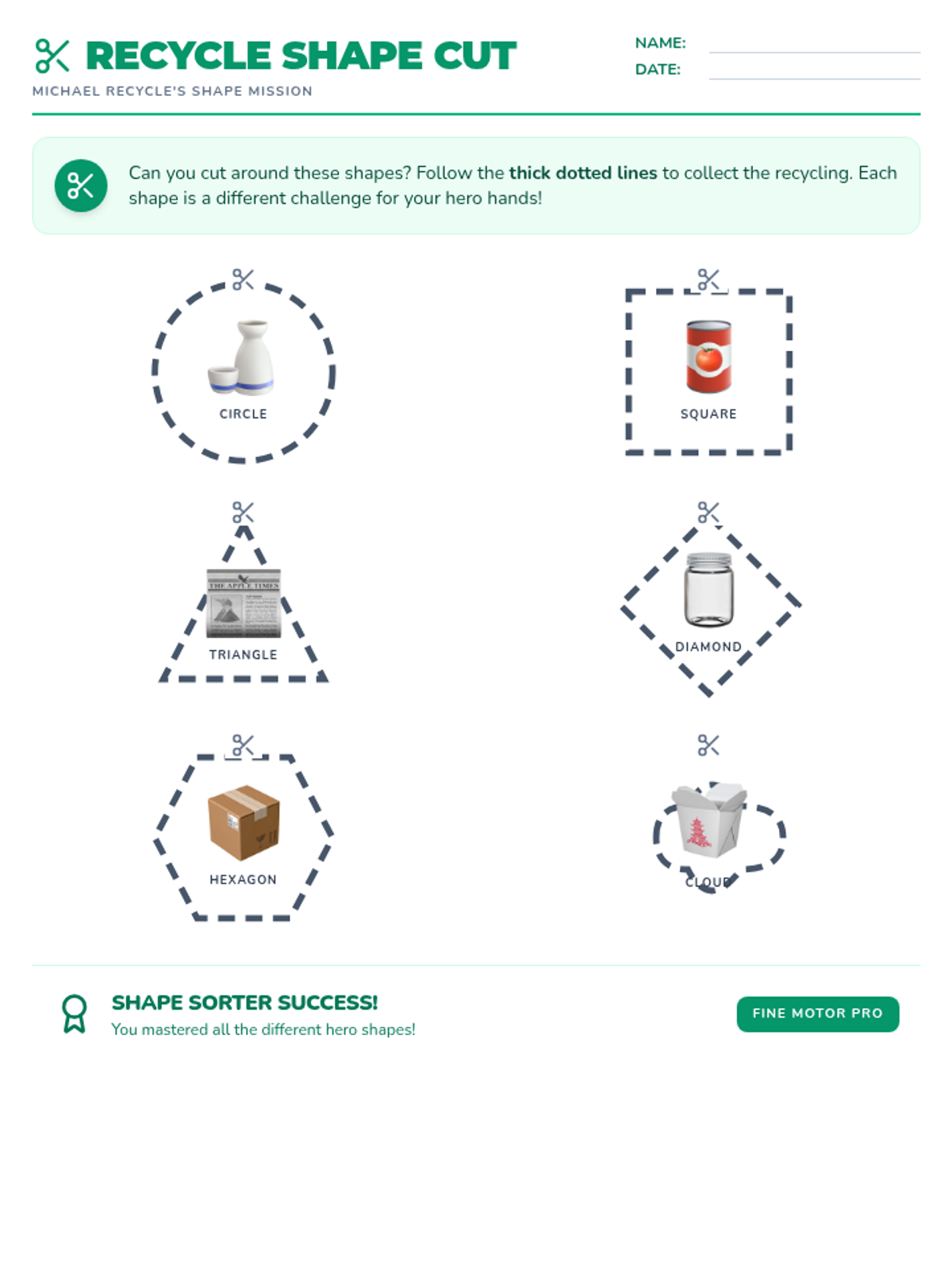
A fine motor skill worksheet where students practice cutting along thick dotted lines of various geometric shapes (circle, square, triangle, etc.) containing recyclable items.
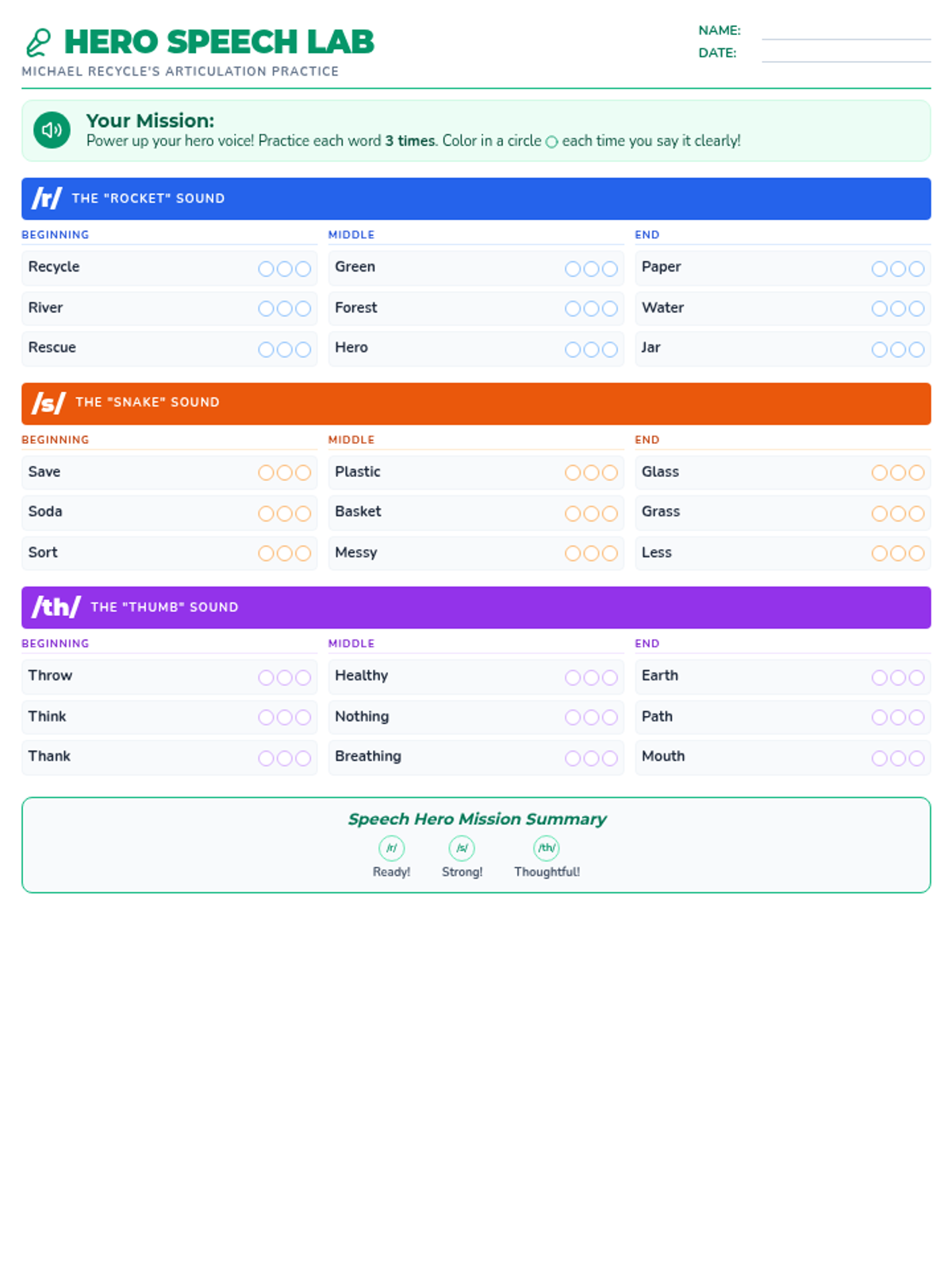
An articulation practice sheet featuring /r/, /s/, and /th/ sounds in initial, medial, and final positions, themed with Michael Recycle vocabulary.
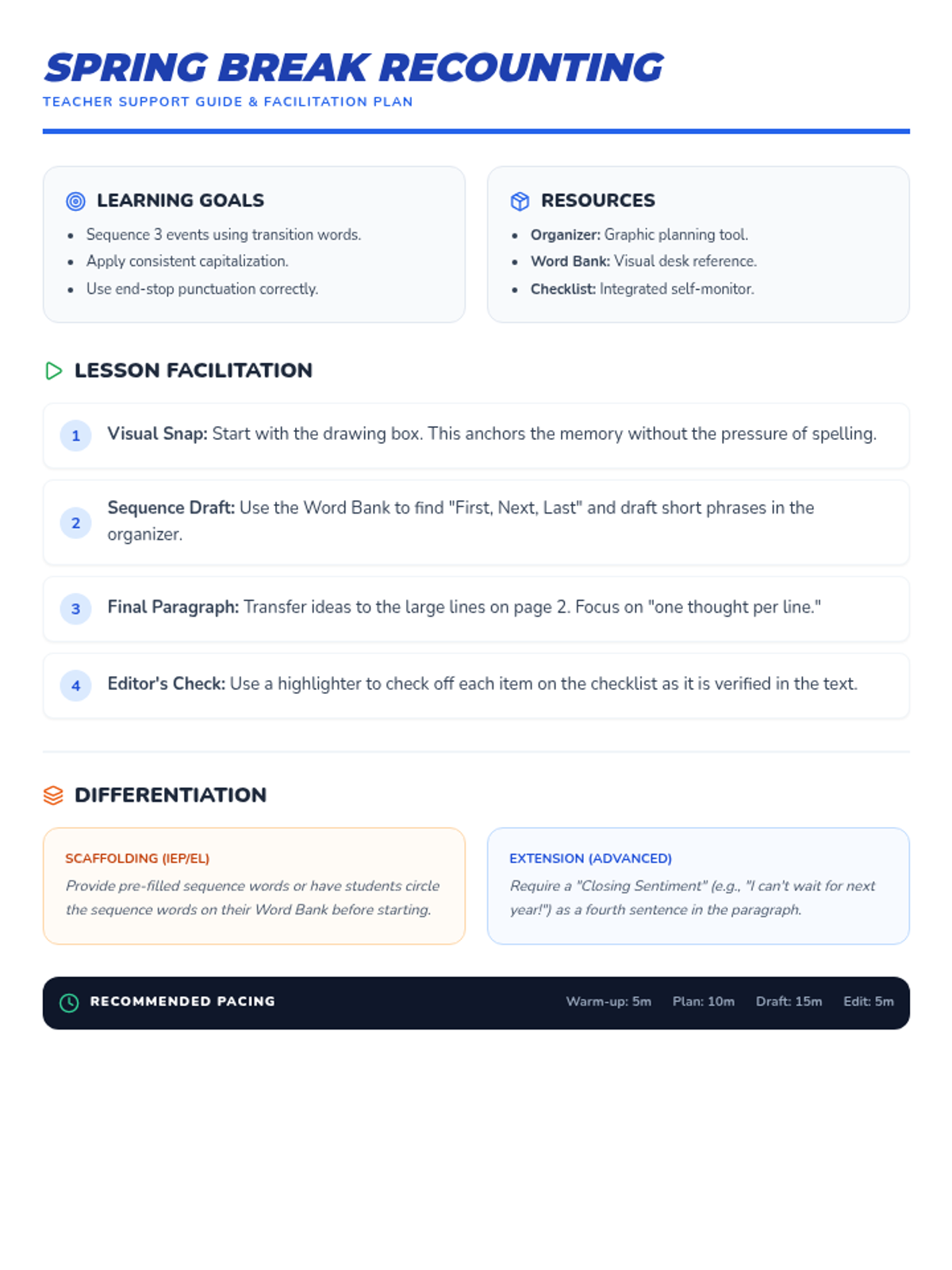
A guide for teachers to facilitate the spring break writing lesson, including learning objectives, instructional steps, and differentiation strategies for diverse learners.
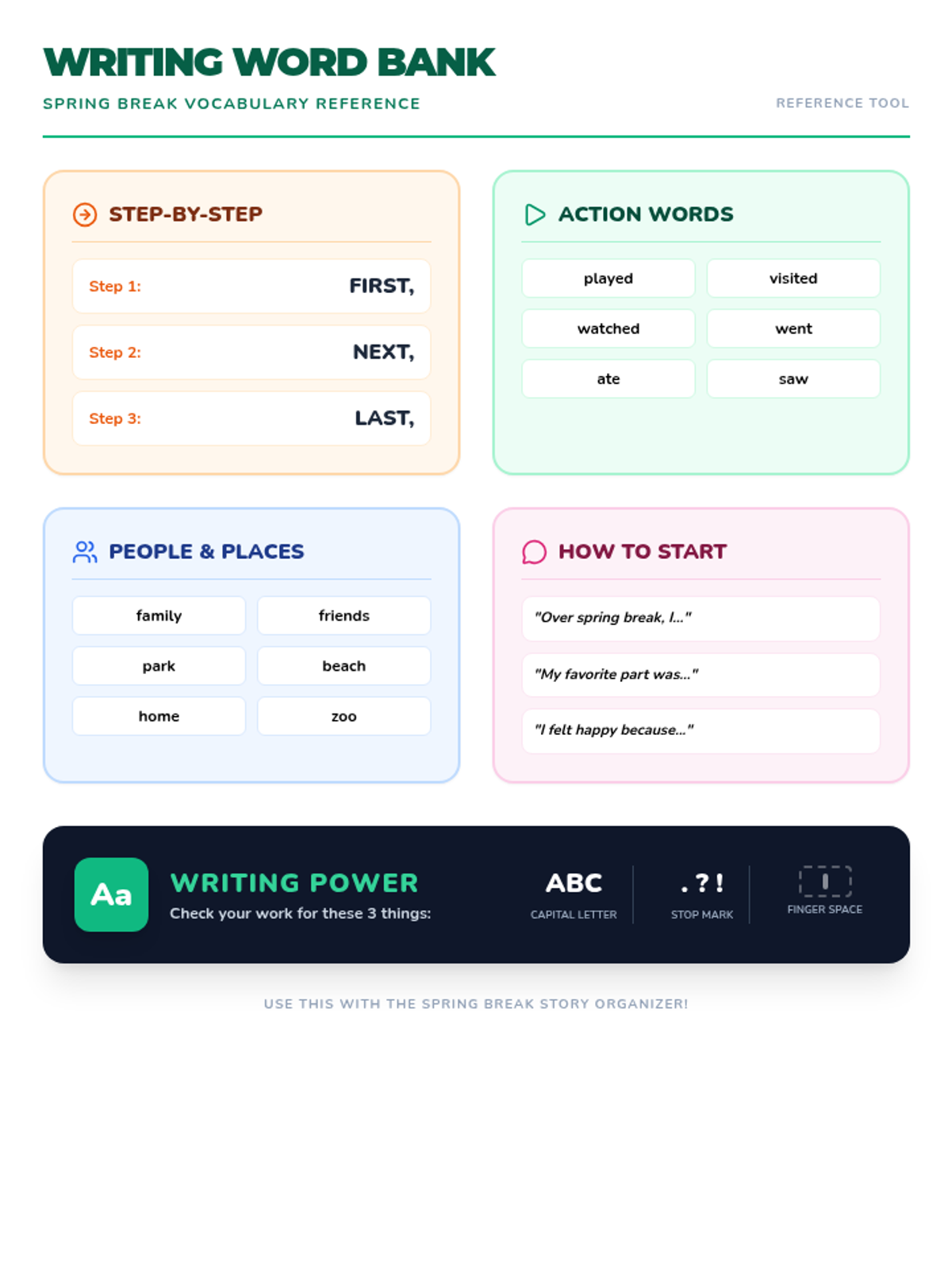
A vocabulary reference sheet and word bank for spring break writing, featuring action words, places, feelings, and sentence starters to support IEP students.
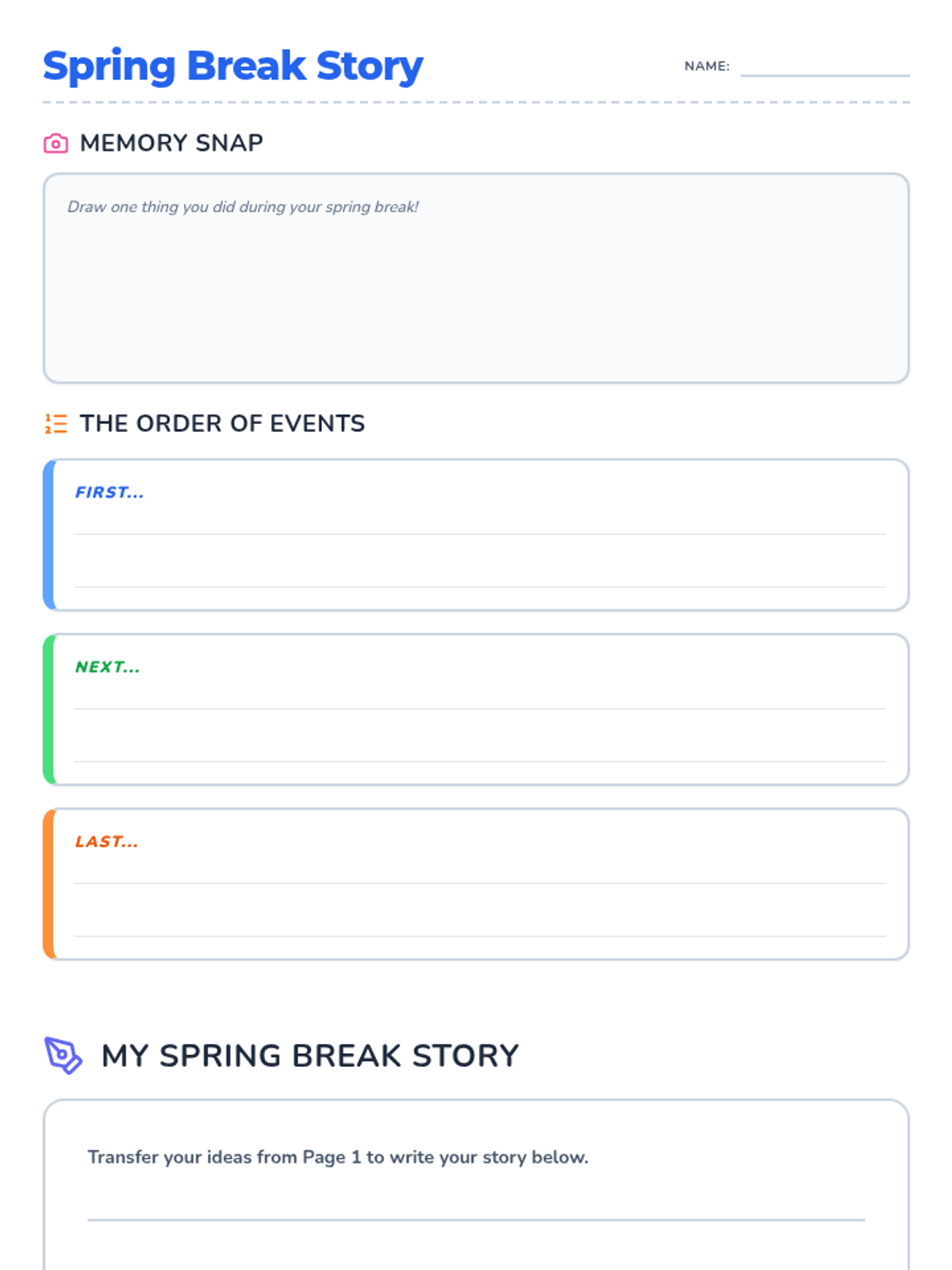
A structured paragraph graphic organizer for IEP students to recount their spring break activities, focusing on sequencing (First, Next, Last) and self-monitoring for punctuation and capitalization.