A fine motor skill worksheet where students practice cutting along thick dotted lines of various geometric shapes (circle, square, triangle, etc.) containing recyclable items.
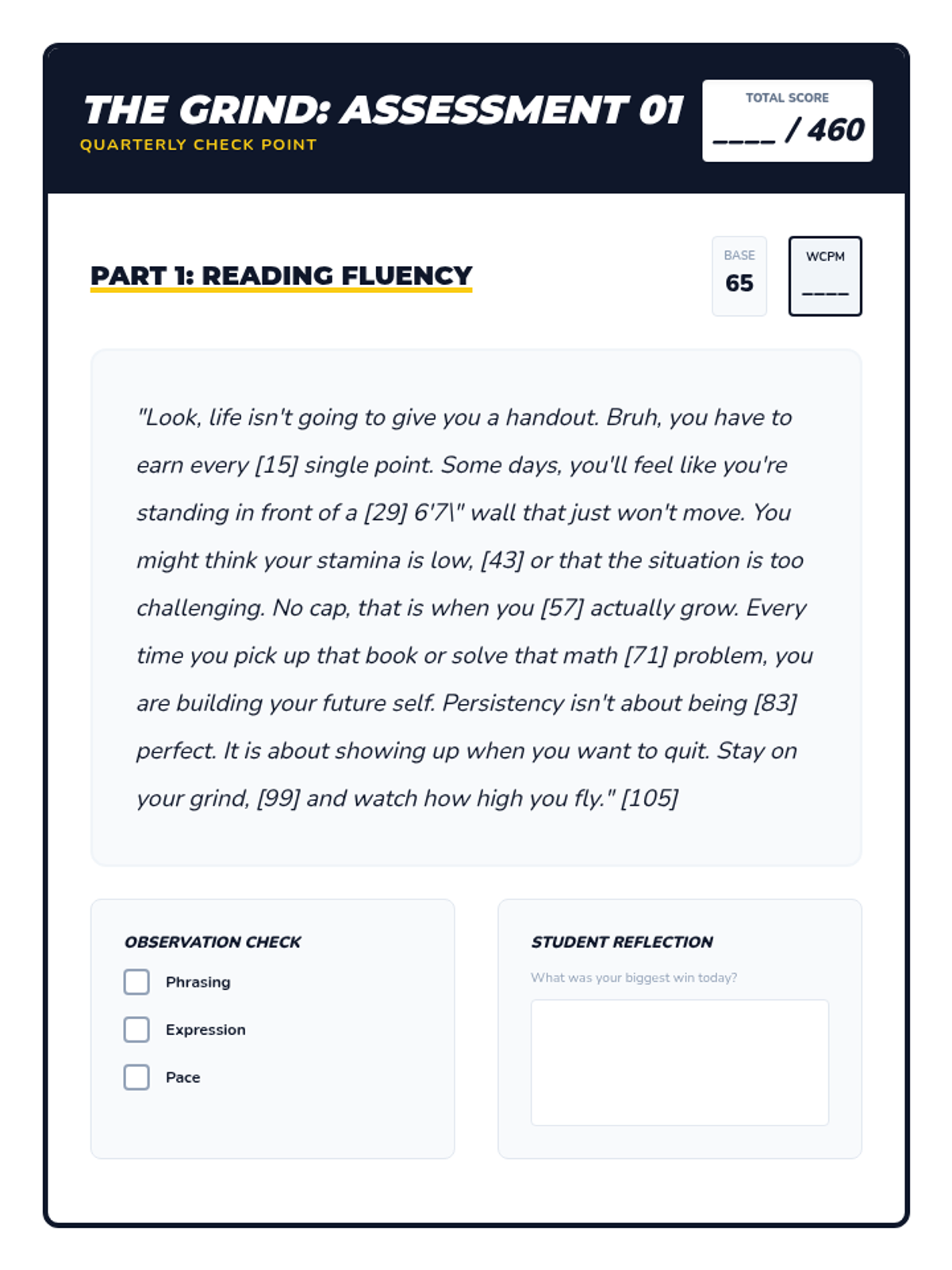
A quarterly assessment for Season 1. Revised with stable page breaks, clear checkboxes, improved math alignment, and spacious work areas for handwriting. Includes fluency passage and iReady-aligned math tasks. Math problems now feature cleaner solution boxes instead of text underscores. Consolodated to 2 pages. Revised for alignment and spacing.
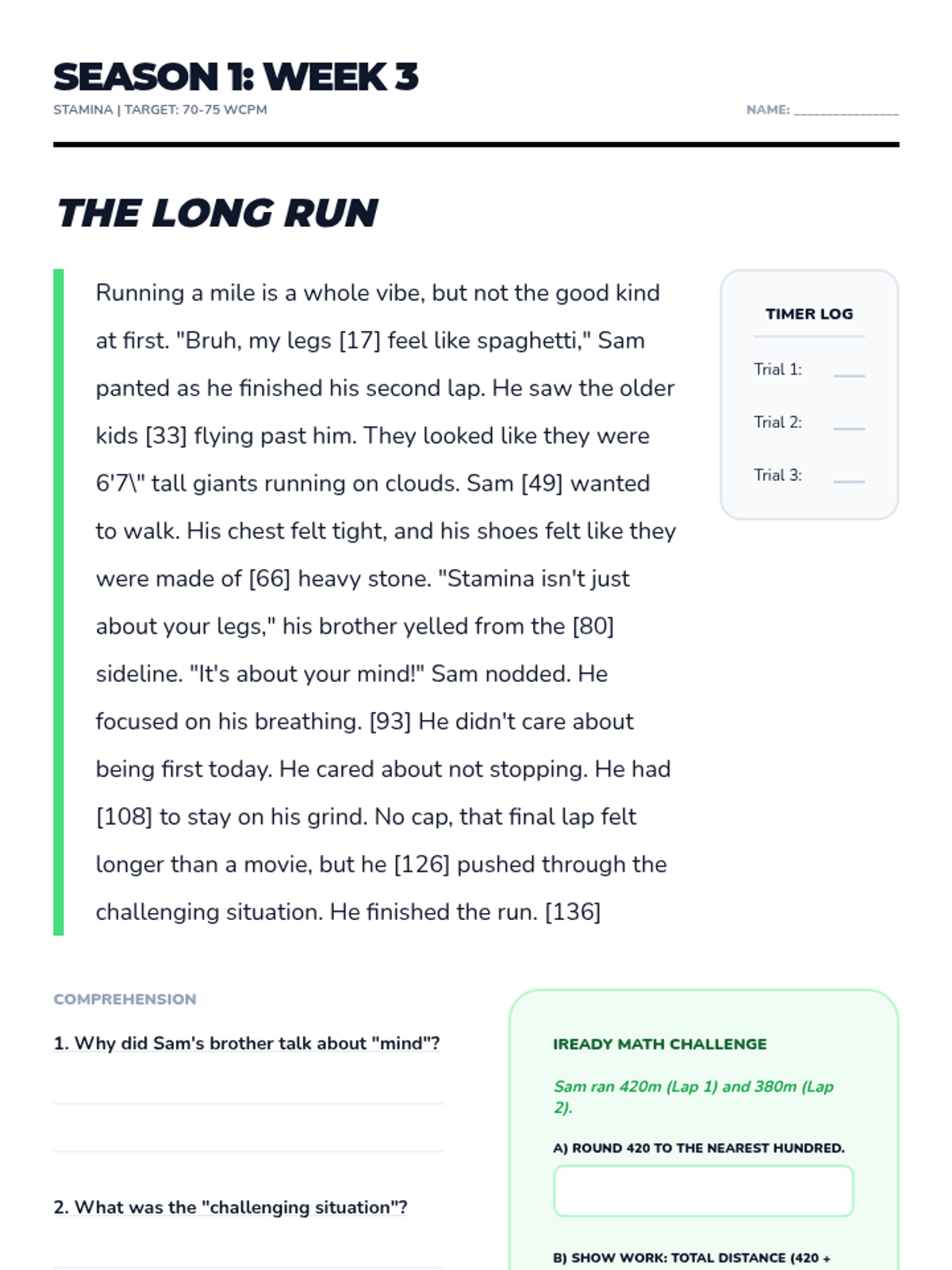
Weekly reading passages for weeks 3-4 of the foundation season. Focuses on stamina and persistency through relatable stories about sports and gaming. Revised for layout stability and work area space. Each week is self-contained on its own page for better readability. No fixed heights to prevent overlap.
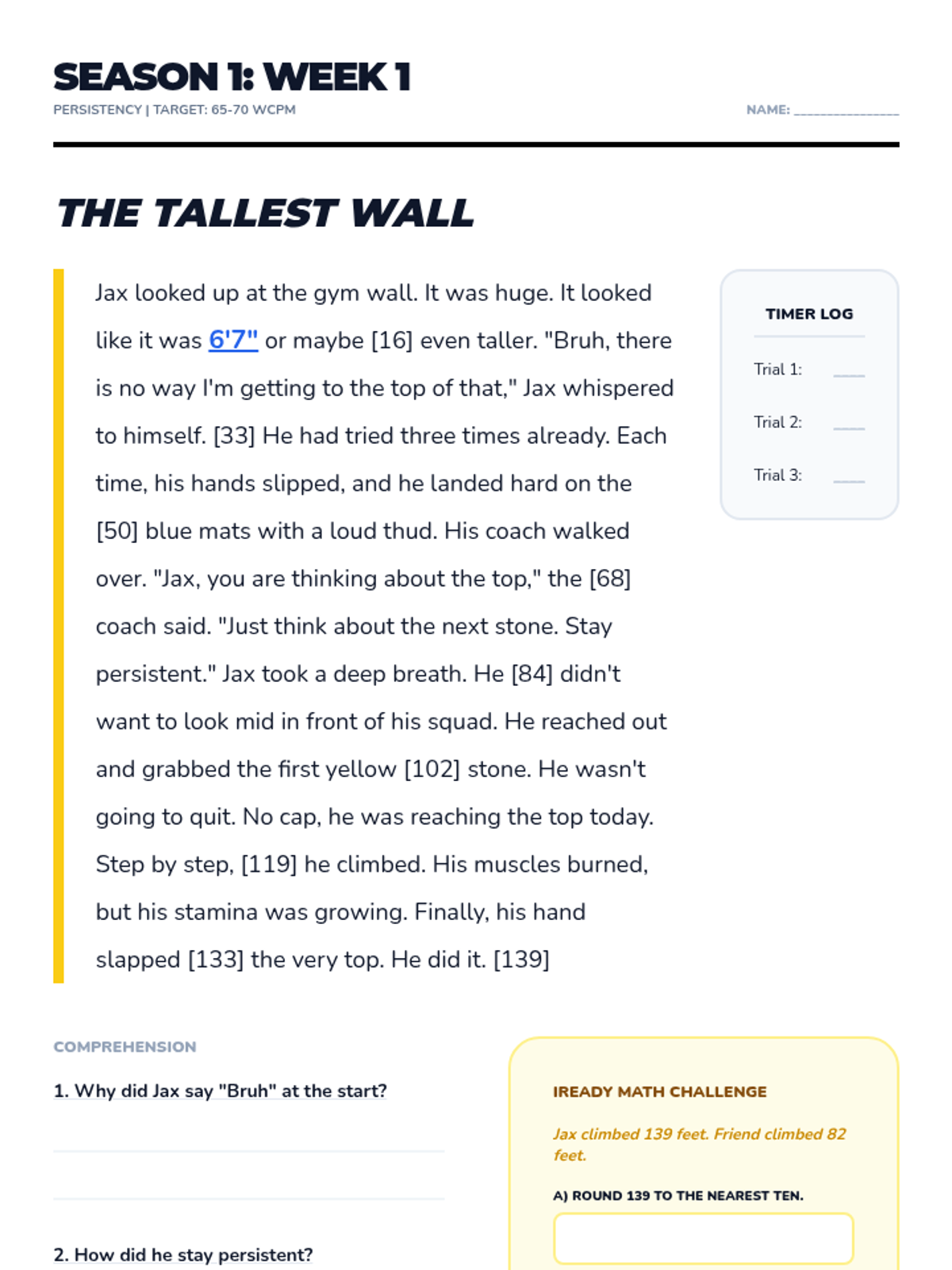
The first set of weekly reading passages (Weeks 1-2) revised for layout stability, clear work areas, and proper slang usage. Includes high-interest stories about persistency and stamina with integrated iReady math challenges. Each week is self-contained on its own page for better readability. No fixed heights to prevent overlap.
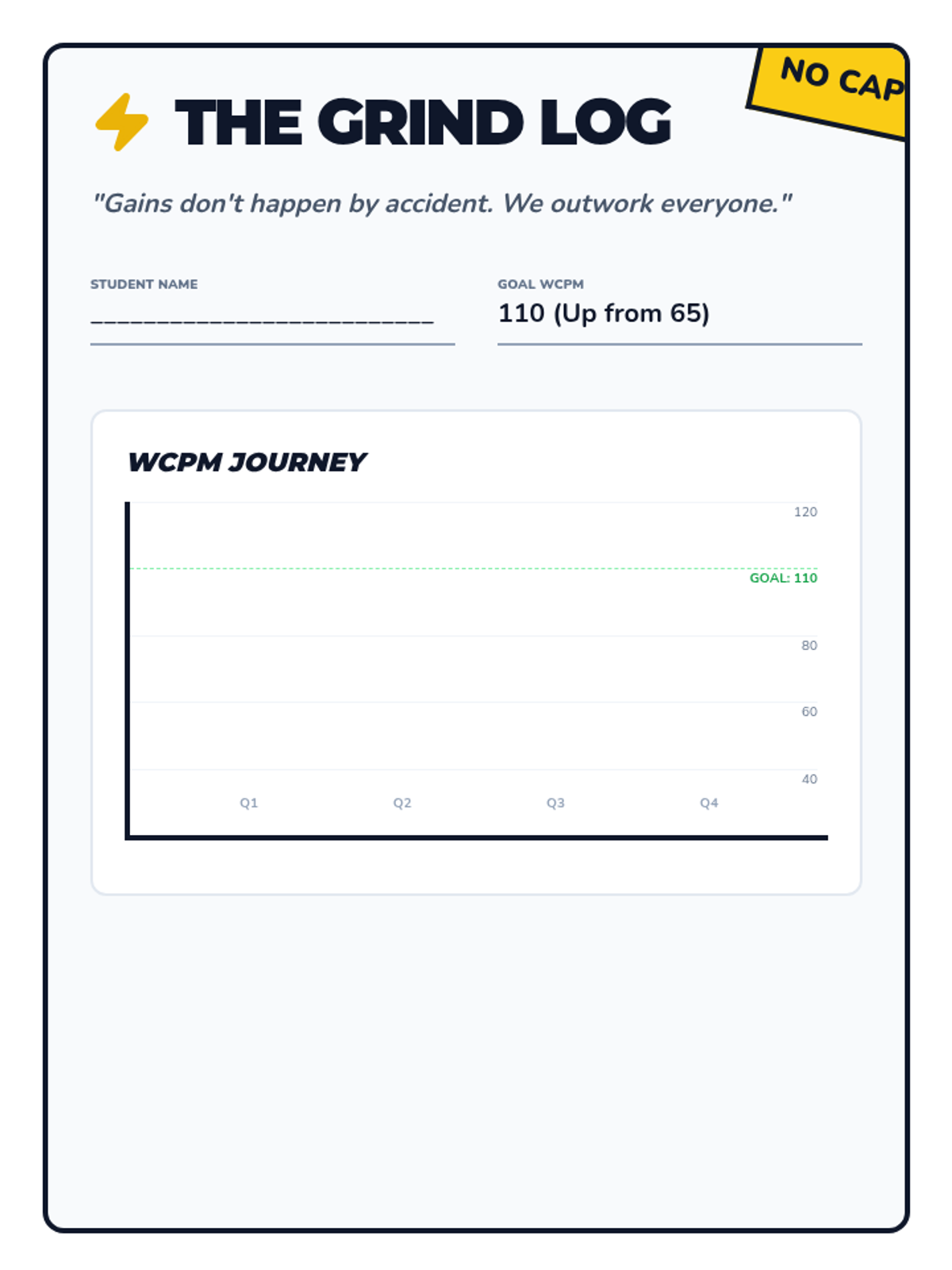
A comprehensive 40-week service log, reading fluency tracer, and iReady math skills checklist for Numbers & Operations and Algebra. Designed with a high-energy "The Grind" theme featuring modern slang and clear progress monitoring tools. Revised for layout consistency and checkbox rendering.
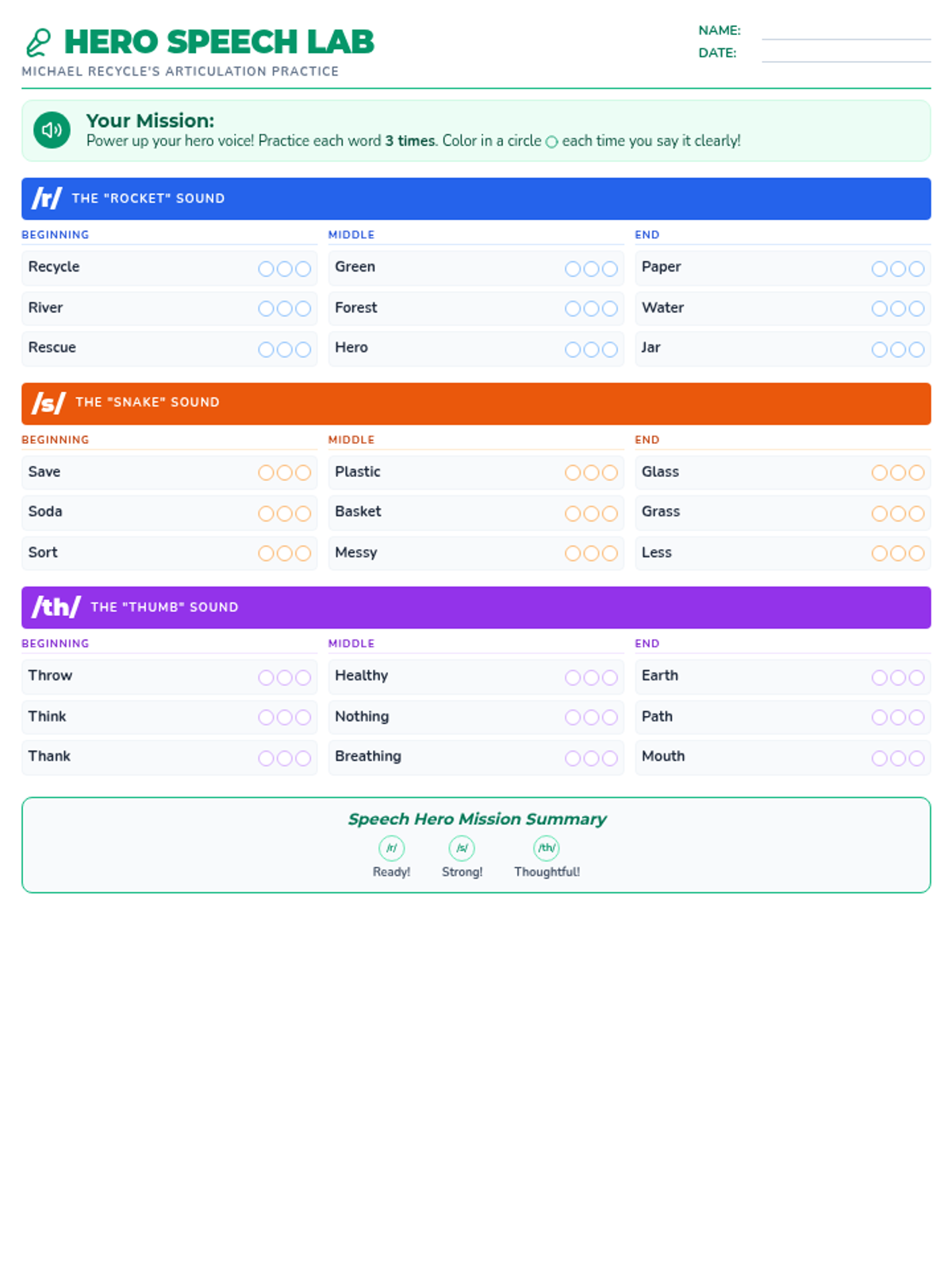
An articulation practice sheet featuring /r/, /s/, and /th/ sounds in initial, medial, and final positions, themed with Michael Recycle vocabulary.
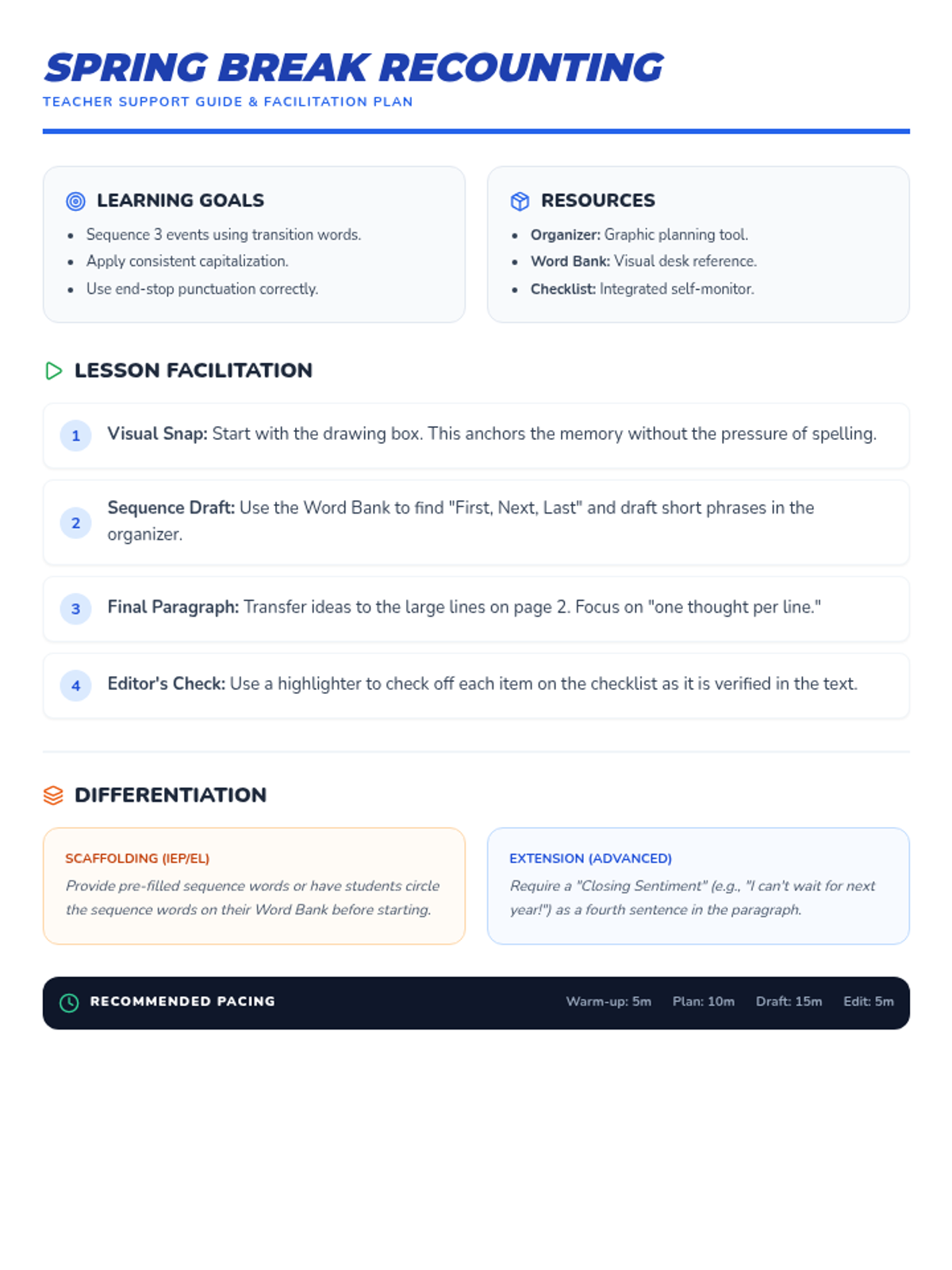
A guide for teachers to facilitate the spring break writing lesson, including learning objectives, instructional steps, and differentiation strategies for diverse learners.
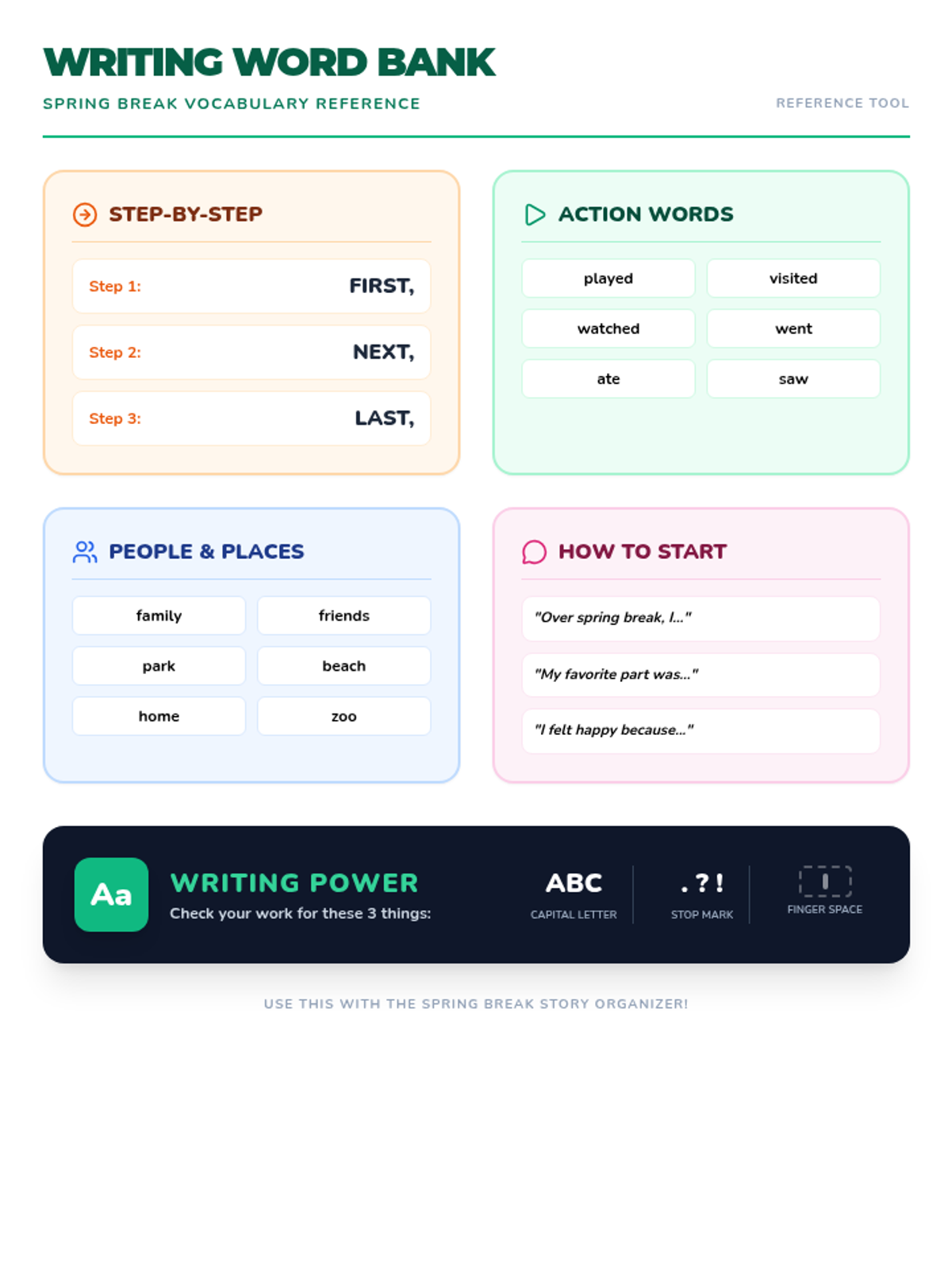
A vocabulary reference sheet and word bank for spring break writing, featuring action words, places, feelings, and sentence starters to support IEP students.
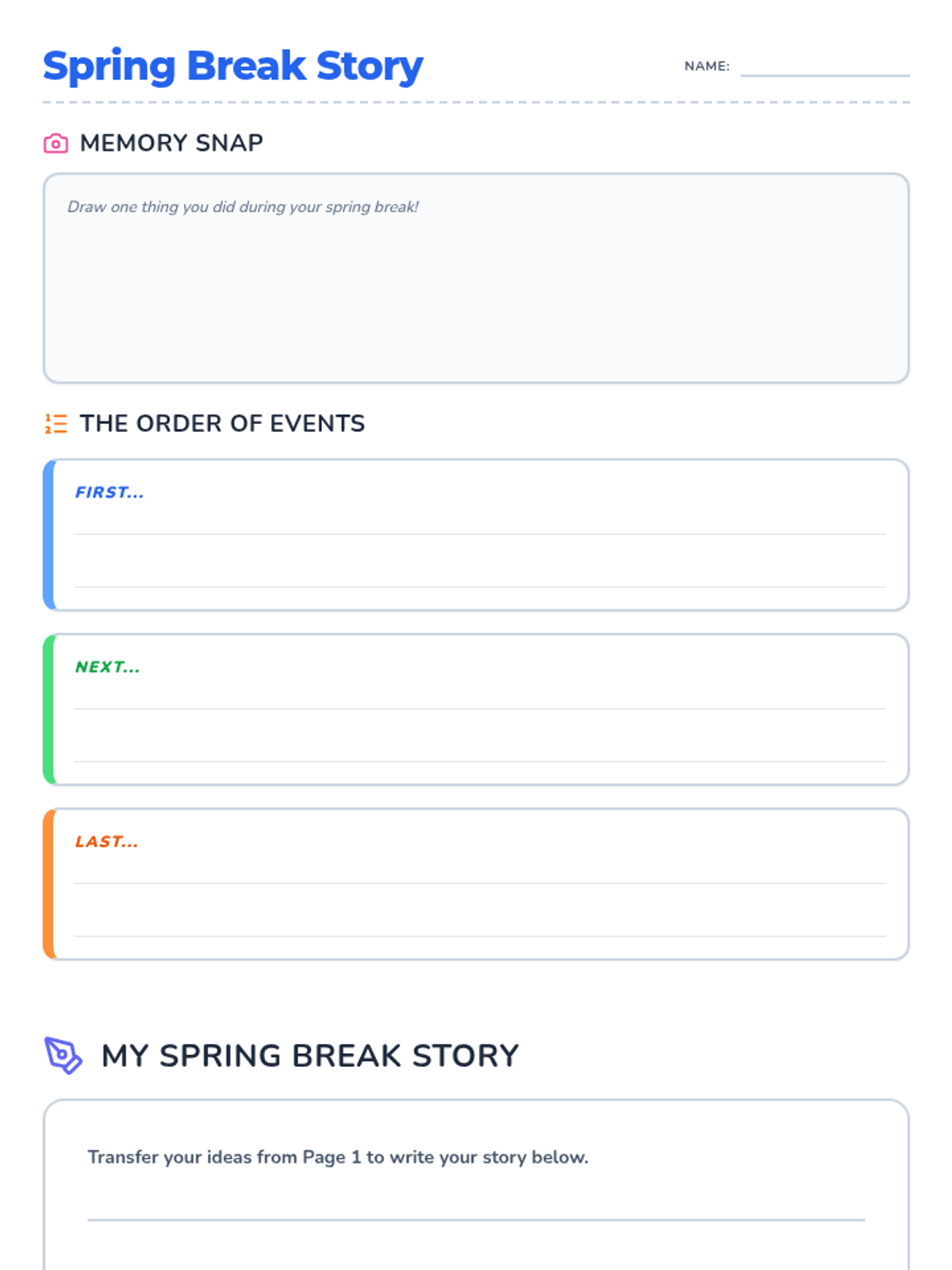
A structured paragraph graphic organizer for IEP students to recount their spring break activities, focusing on sequencing (First, Next, Last) and self-monitoring for punctuation and capitalization.
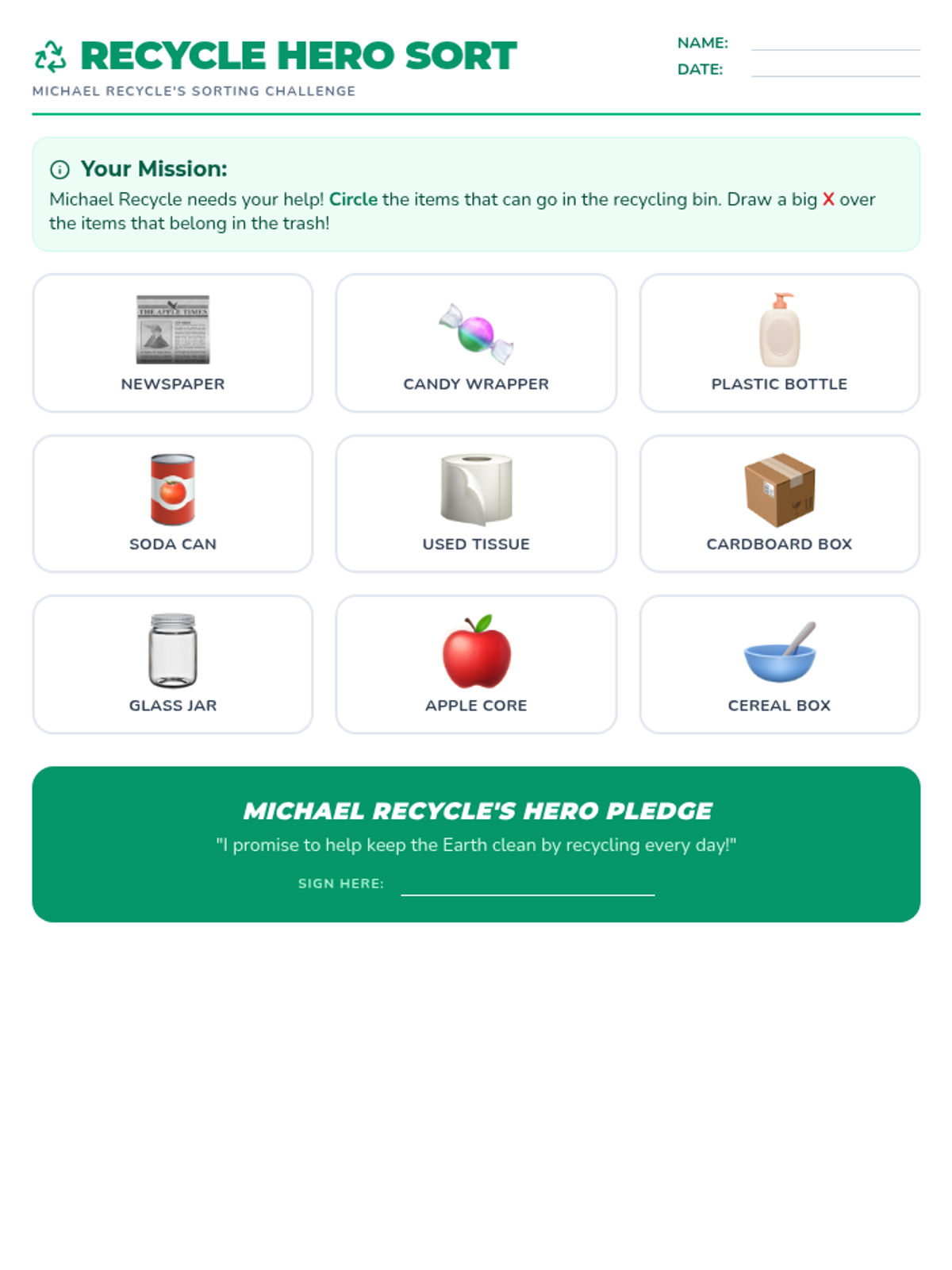
A visual sorting activity where students circle recyclable items and cross out trash, themed around Michael Recycle.
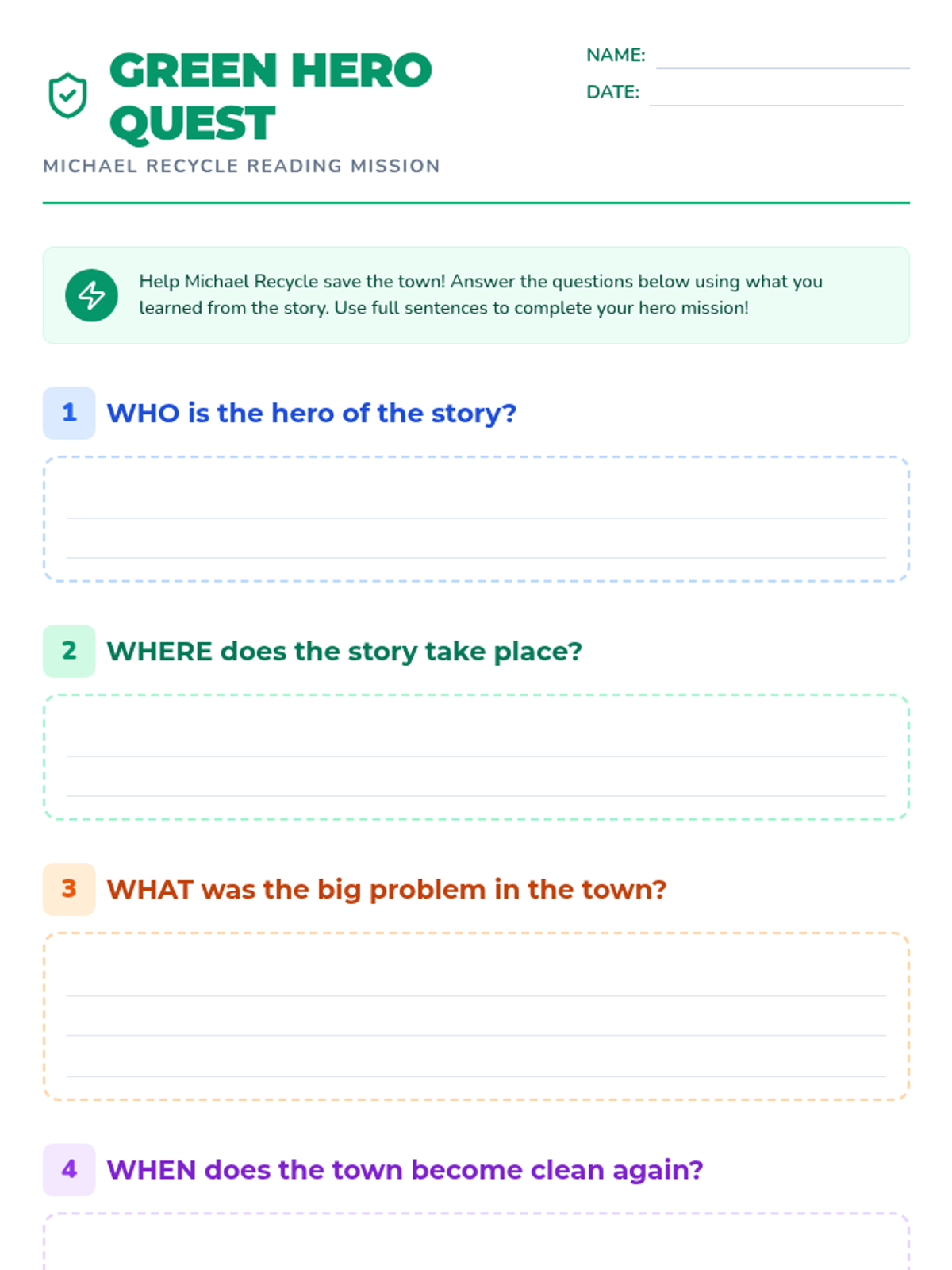
A student worksheet focusing on the 5 WH-questions for Michael Recycle, including a creative drawing space.
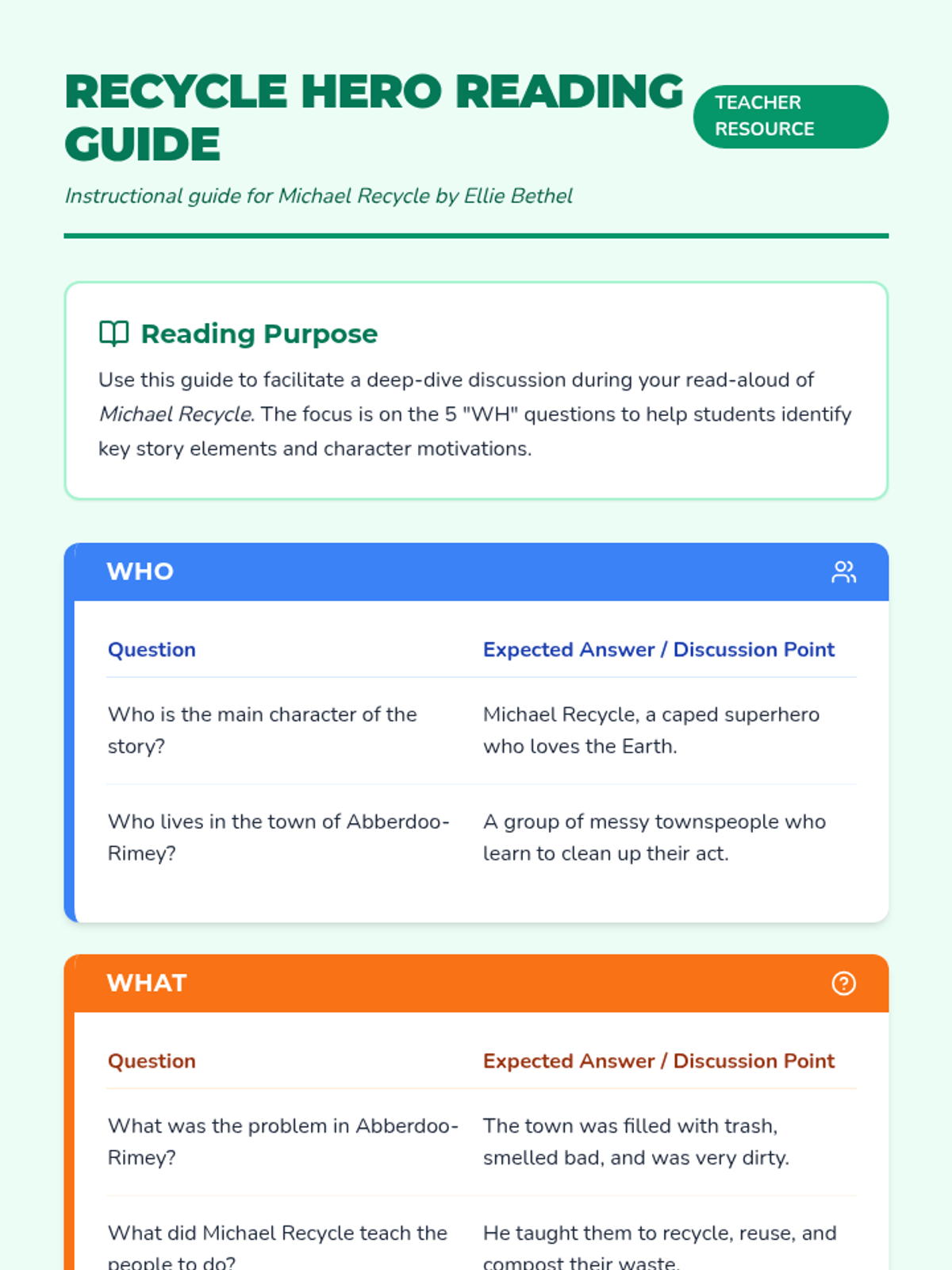
A teacher's guide featuring Who, What, Where, When, and Why questions to facilitate discussion during a read-aloud of Michael Recycle.
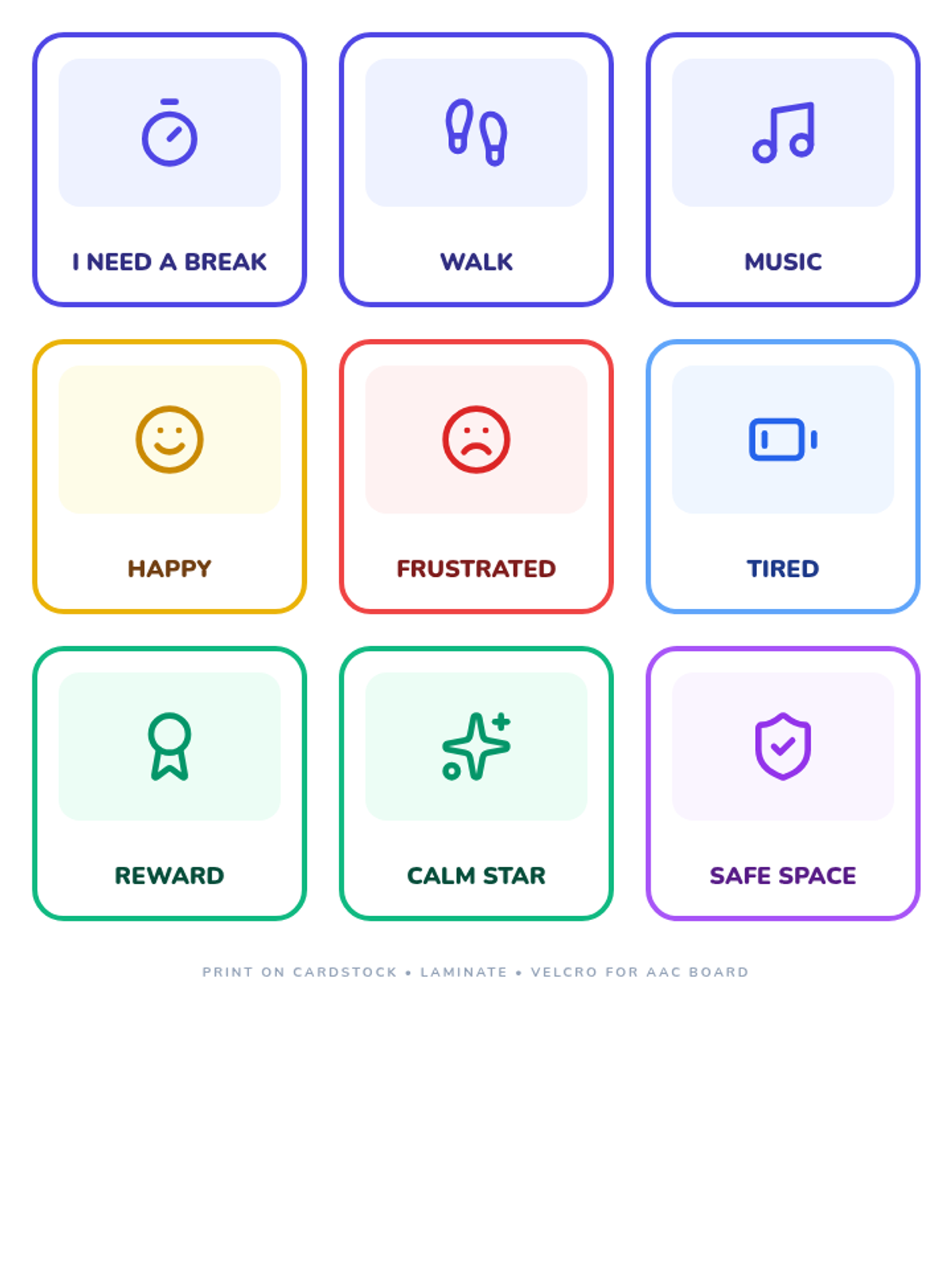
A set of nine printable visual cards featuring "Star Navigator" cartoon characters (emoji-based) for communication, emotions, and mindfulness. Color-coded by category for a 1st-grade student.
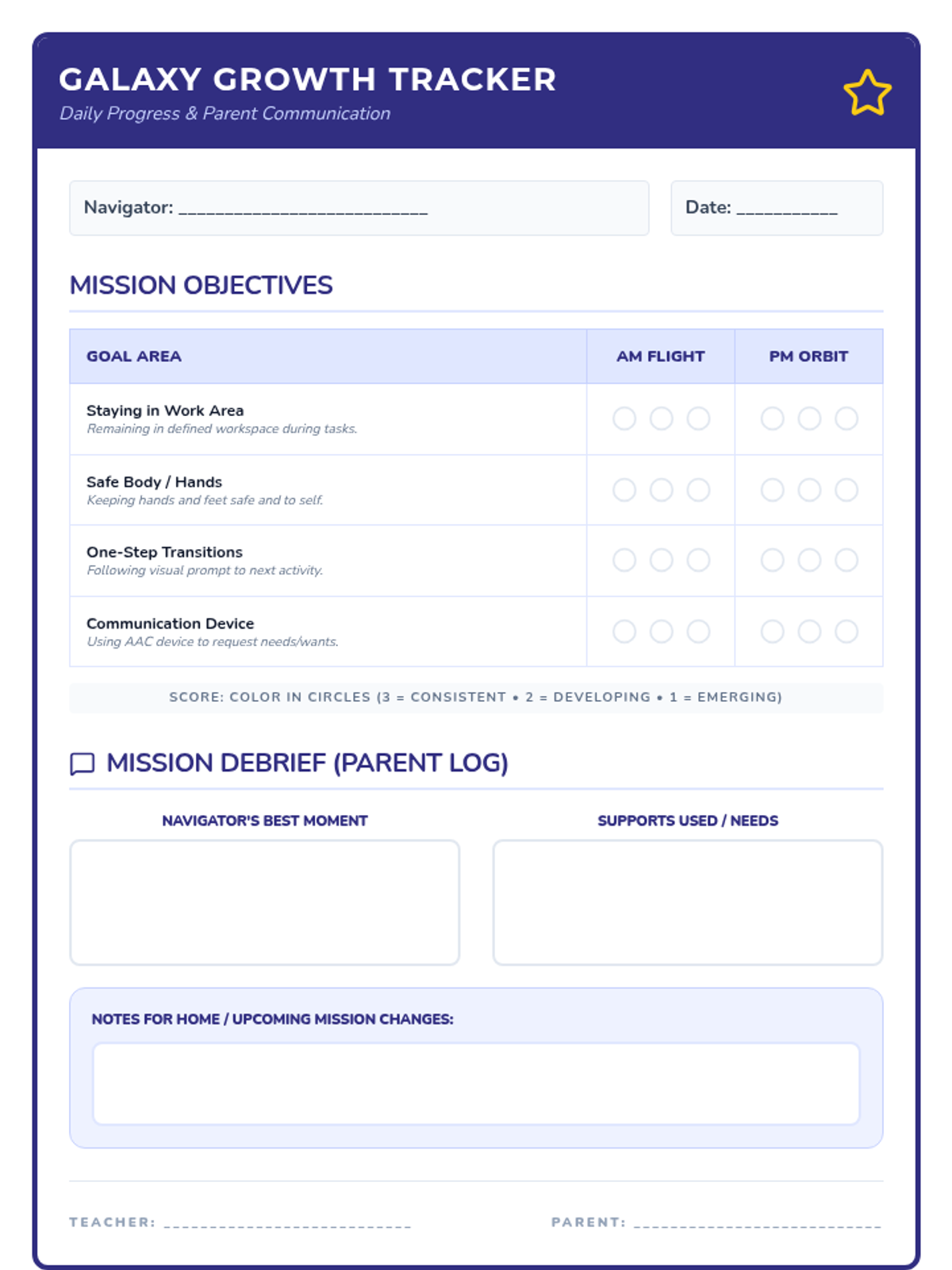
A daily behavioral tracker for a 1st-grade student, focusing on four specific goals (staying in work area, safe body, transitions, and device use). Includes a section for parent communication.
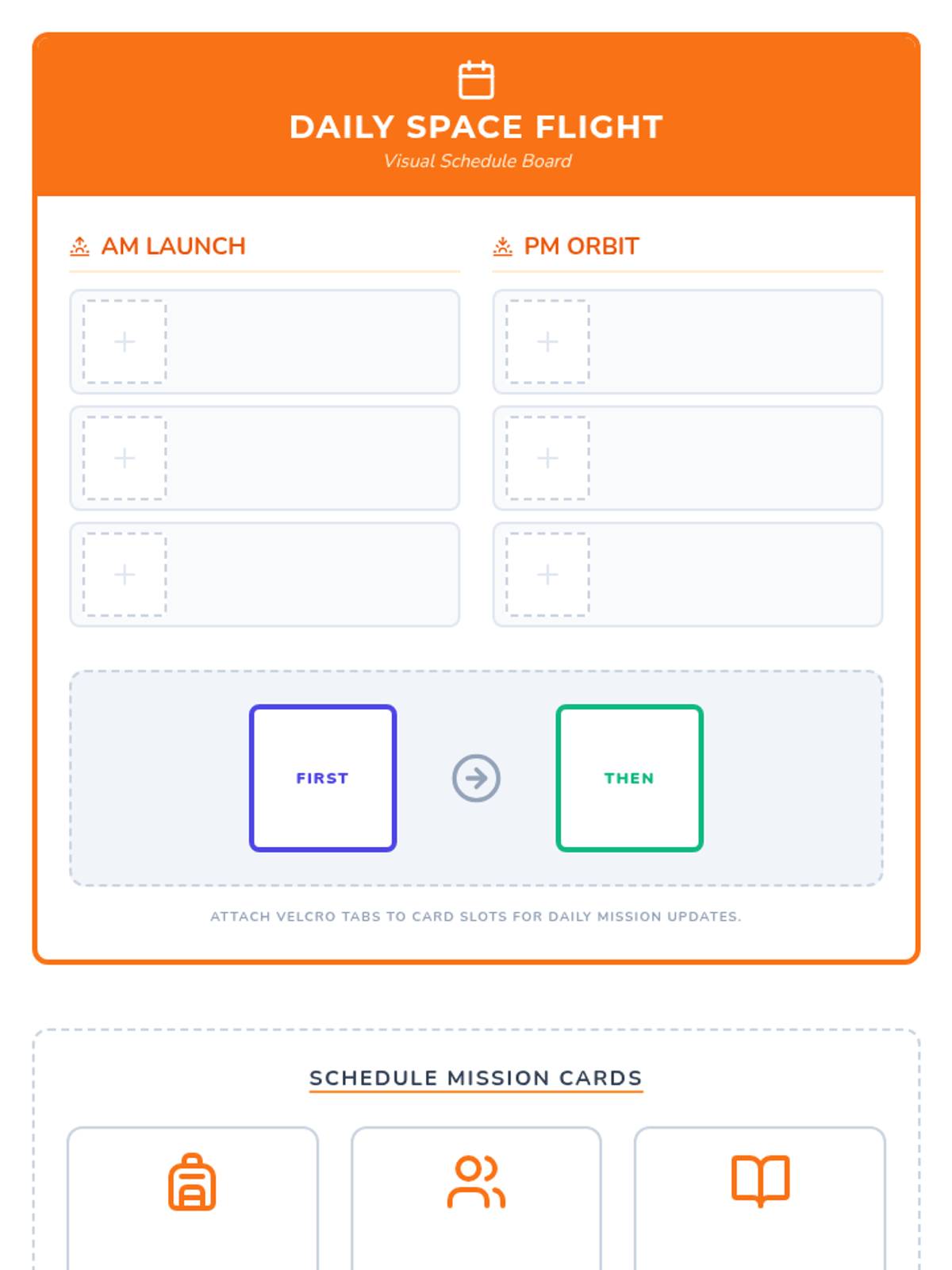
A visual schedule board with a space theme, featuring morning and afternoon blocks and a large "First/Then" workspace for immediate task reinforcement. Includes a sheet of printable schedule icons with cartoon characters.
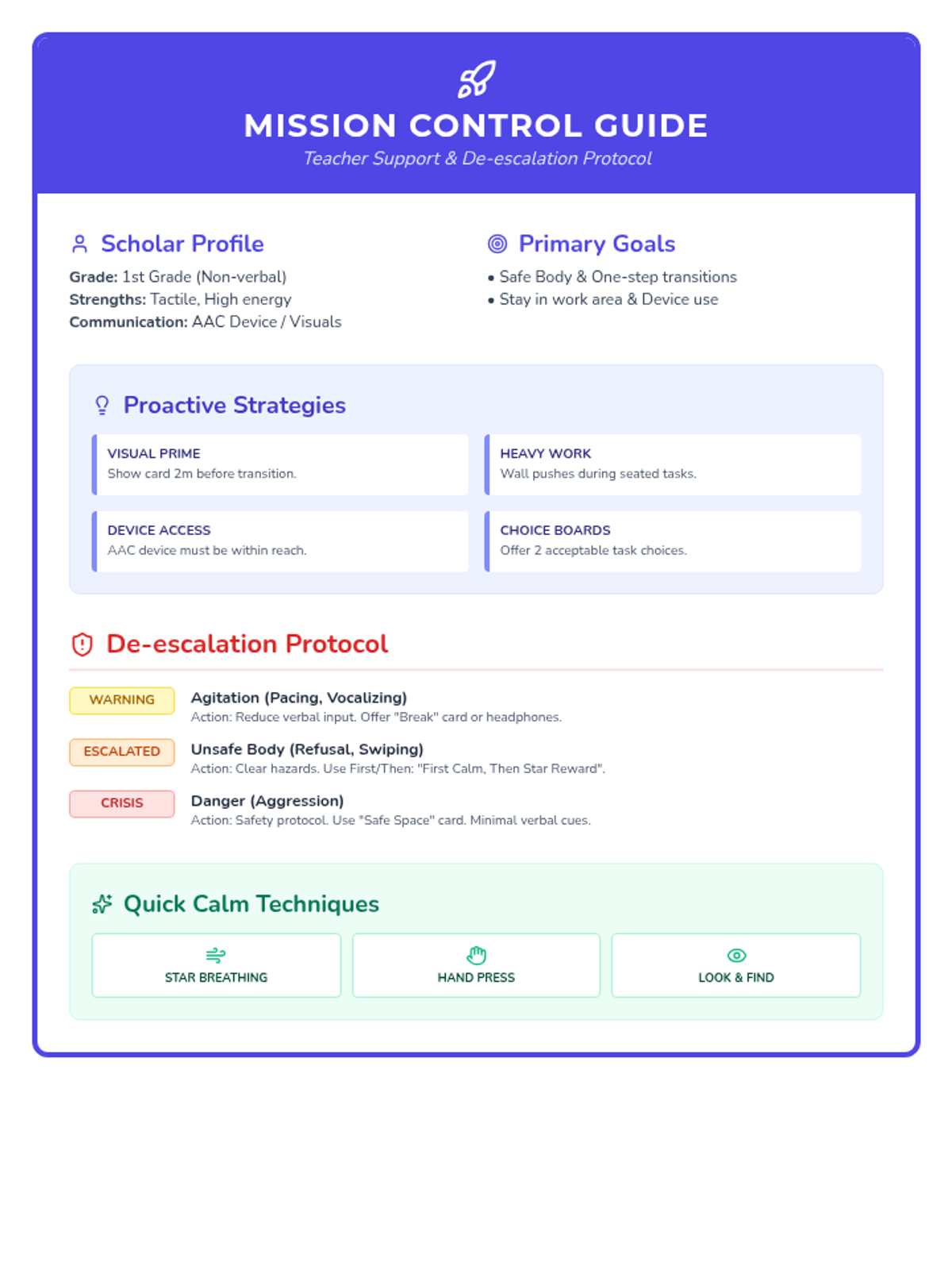
A one-page teacher reference guide containing a student profile, proactive instructional strategies, a three-level de-escalation protocol, and quick mindfulness techniques for immediate use.
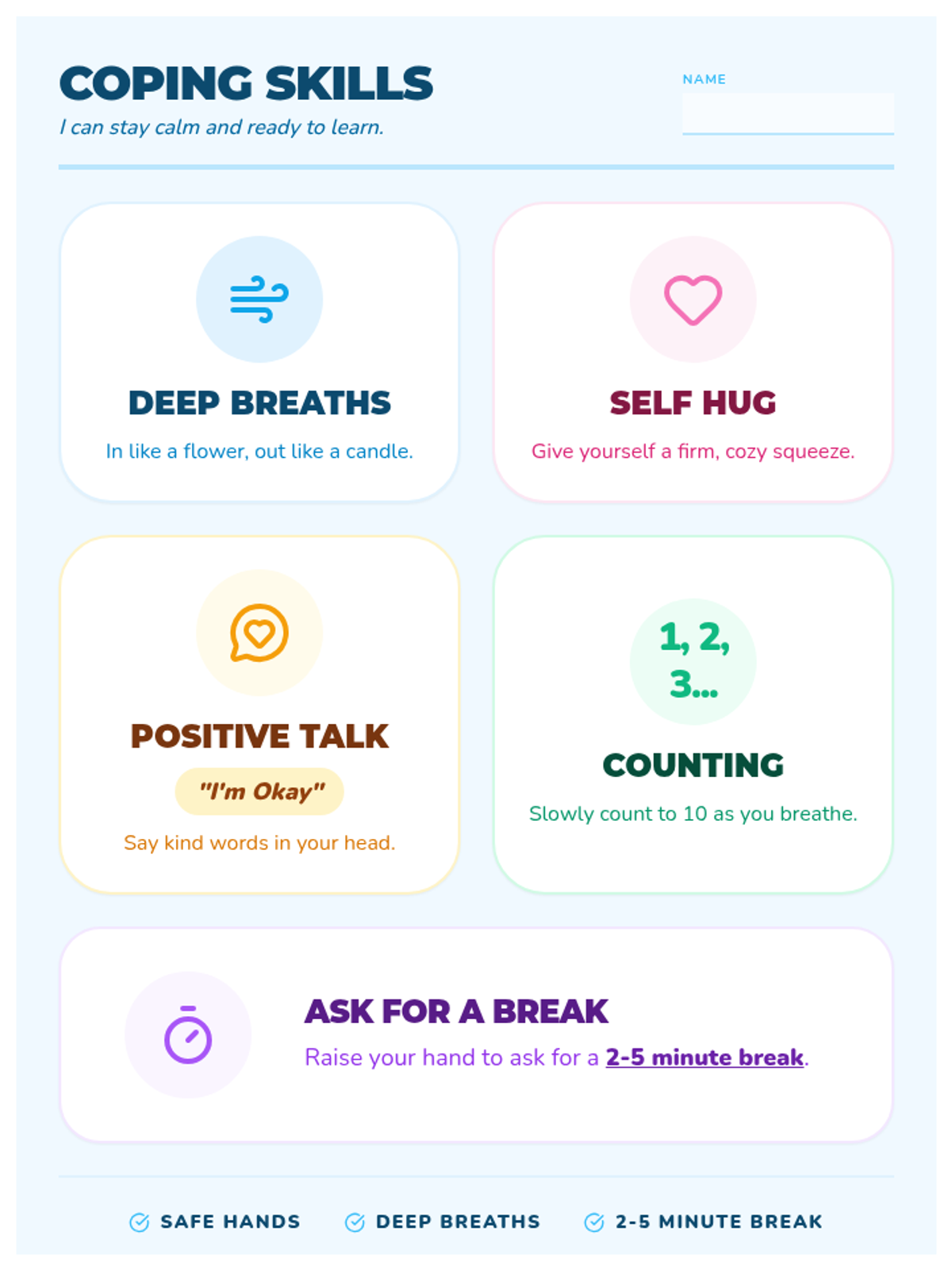
Expanded multi-page visual guide for coping strategies. Features a two-part layout: the first two pages focus on specific card-based strategies, while the final two pages are full-page posters. Every page prominently features the core trio: Safe Hands, Deep Breaths, and the 2-5 Minute Break reminder.
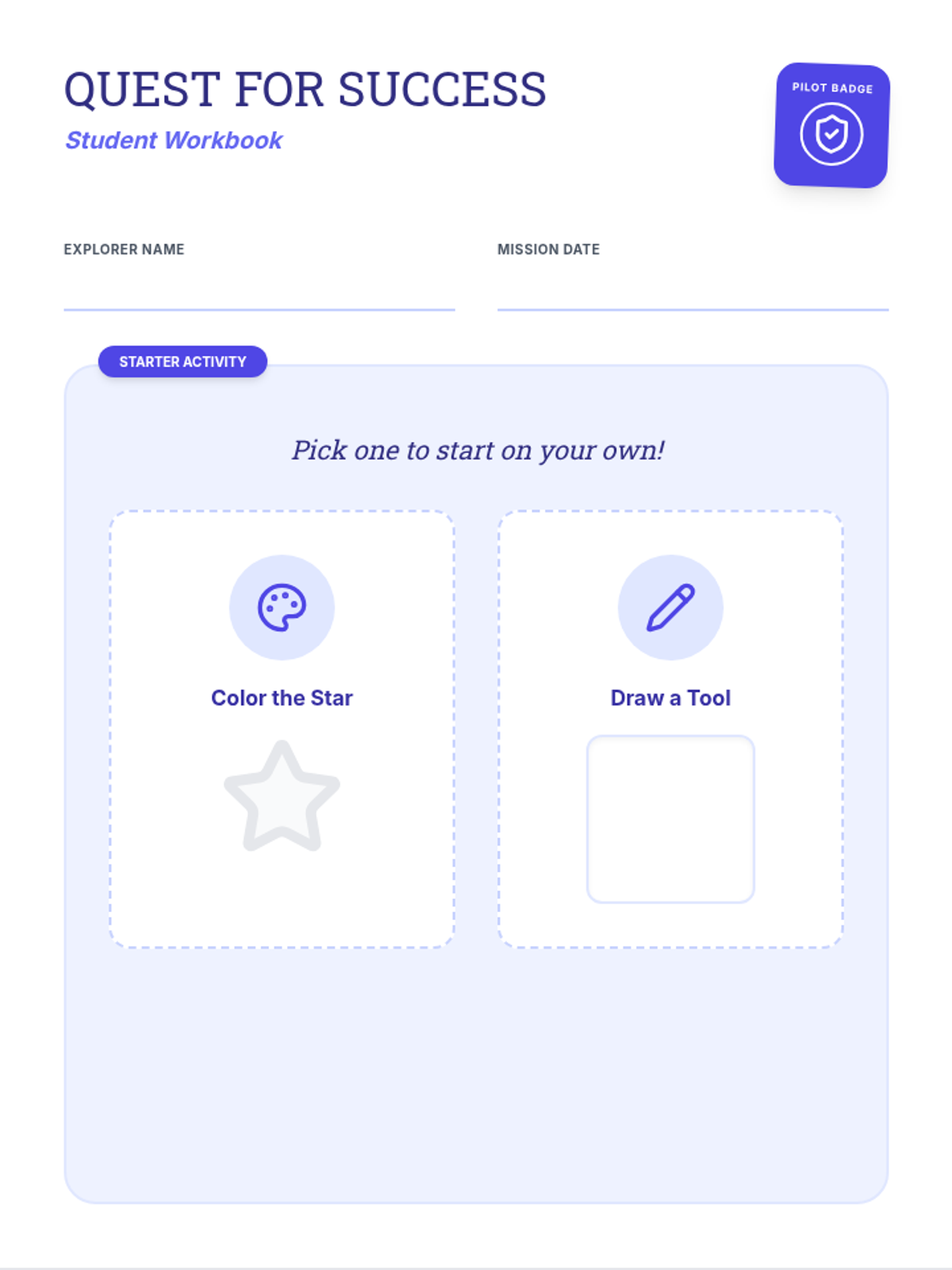
A student-facing workbook for 1st graders featuring a warm-up activity, two 3-step tasks with visual checklists, self-monitoring markers, and a sentence starter for task persistence.
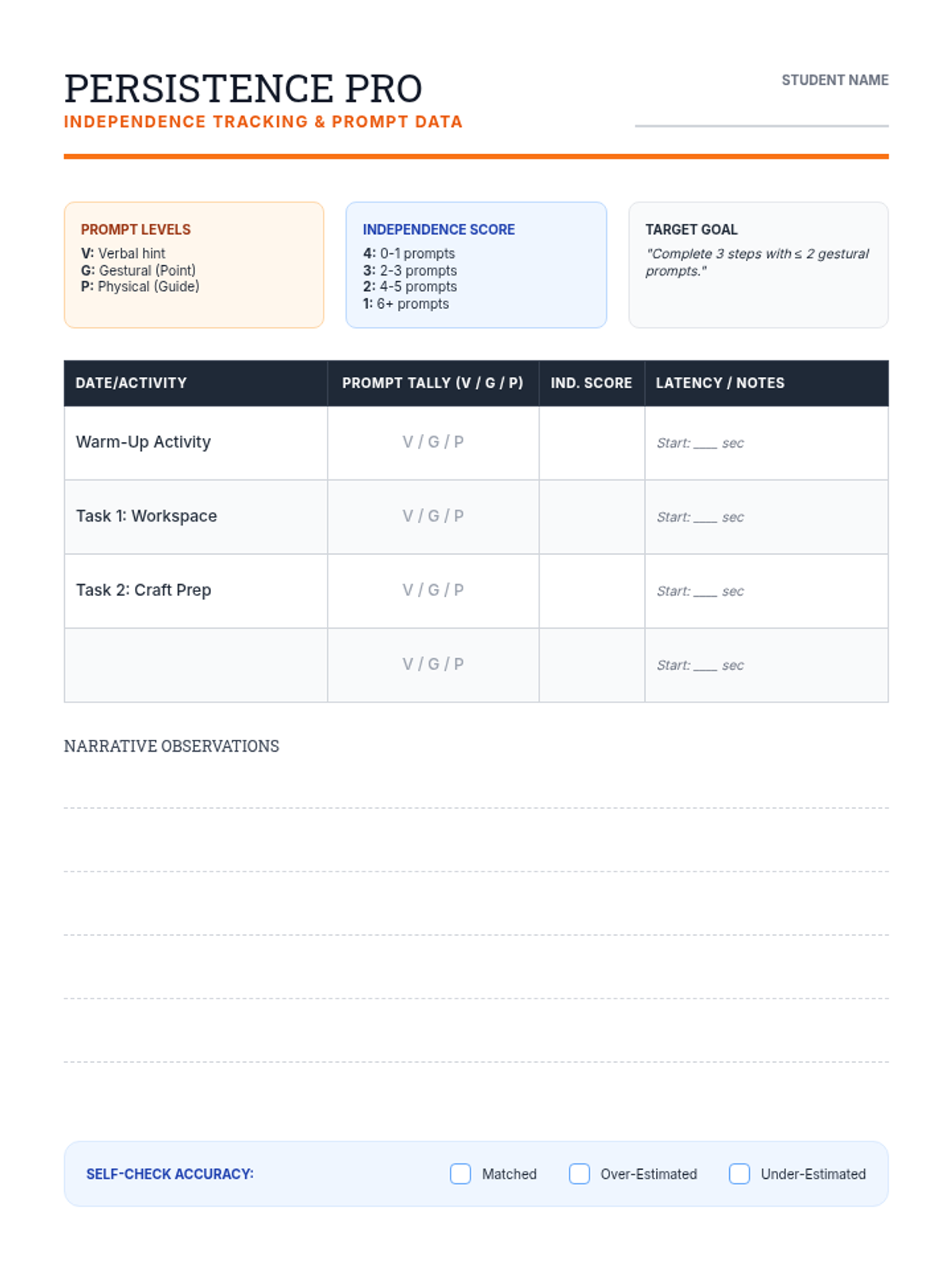
A specialized data collection sheet for tracking student prompt frequency and independence levels across multi-step tasks, including a grading rubric and room for narrative observations.
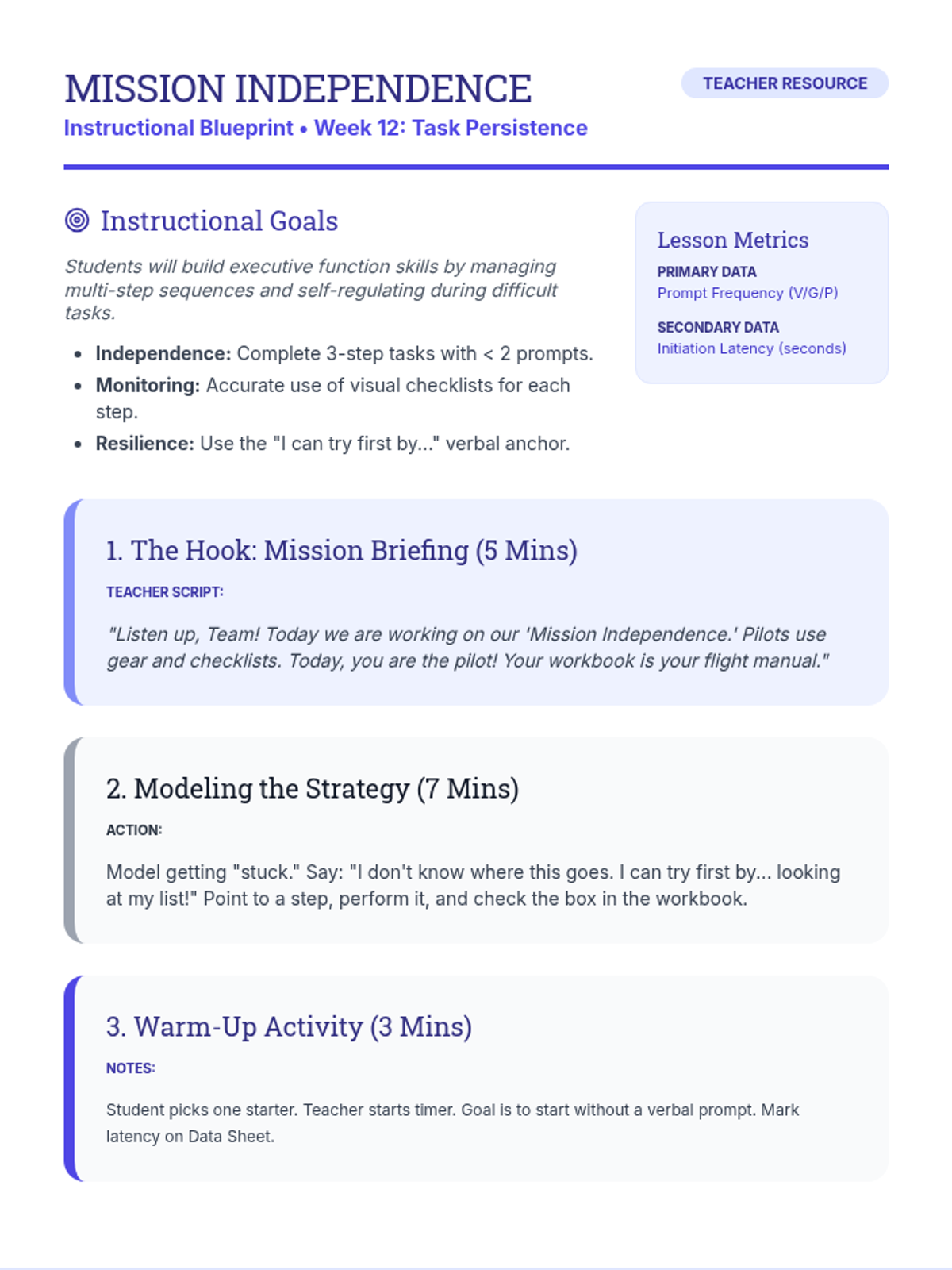
A comprehensive facilitator guide for teachers, providing a detailed script, instructional notes, and a structured timeline for a lesson on task persistence and independence.
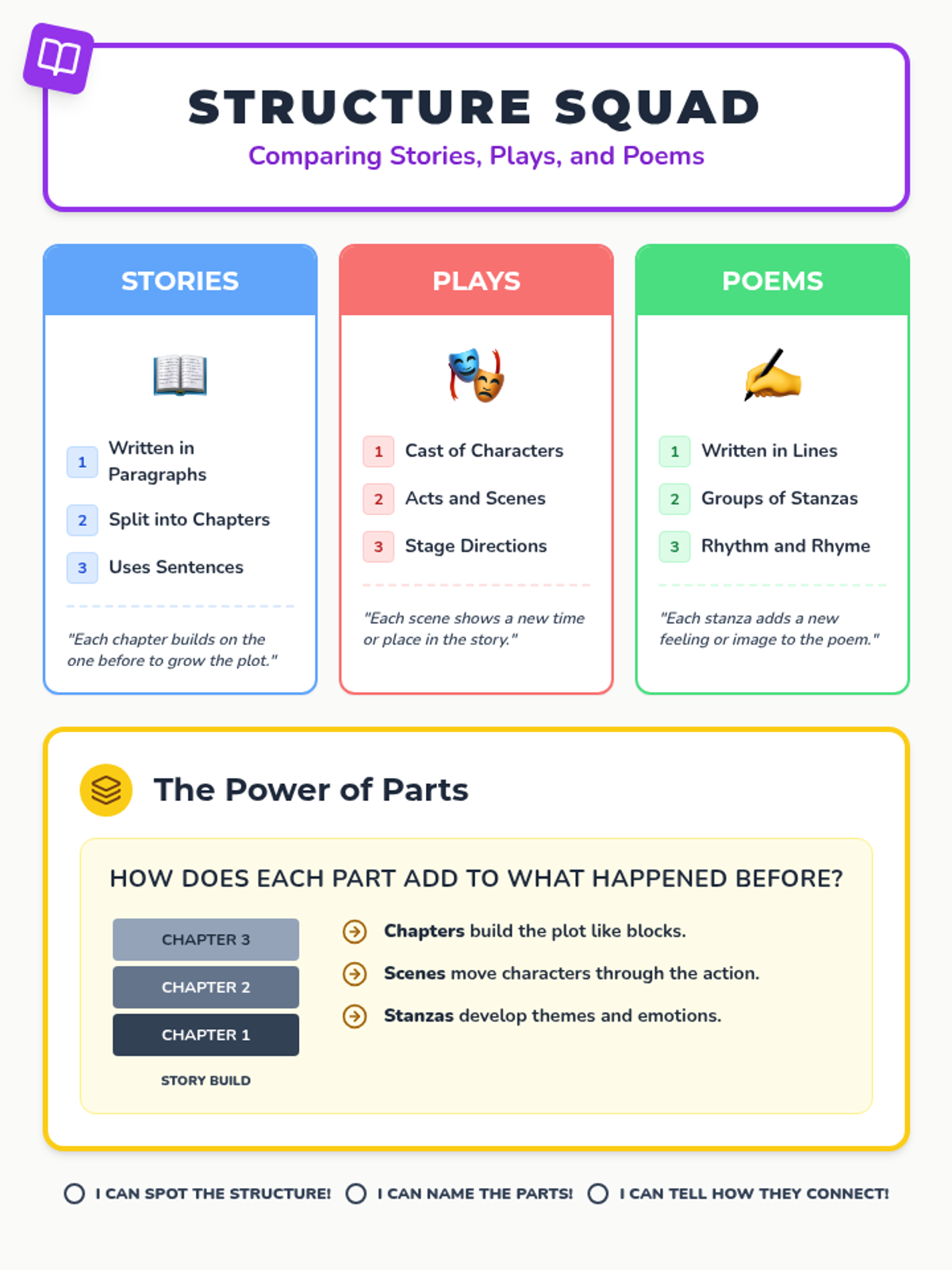
A comparative anchor chart for elementary students highlighting the structural differences between stories, plays, and poems. Revised for higher text contrast and legibility.
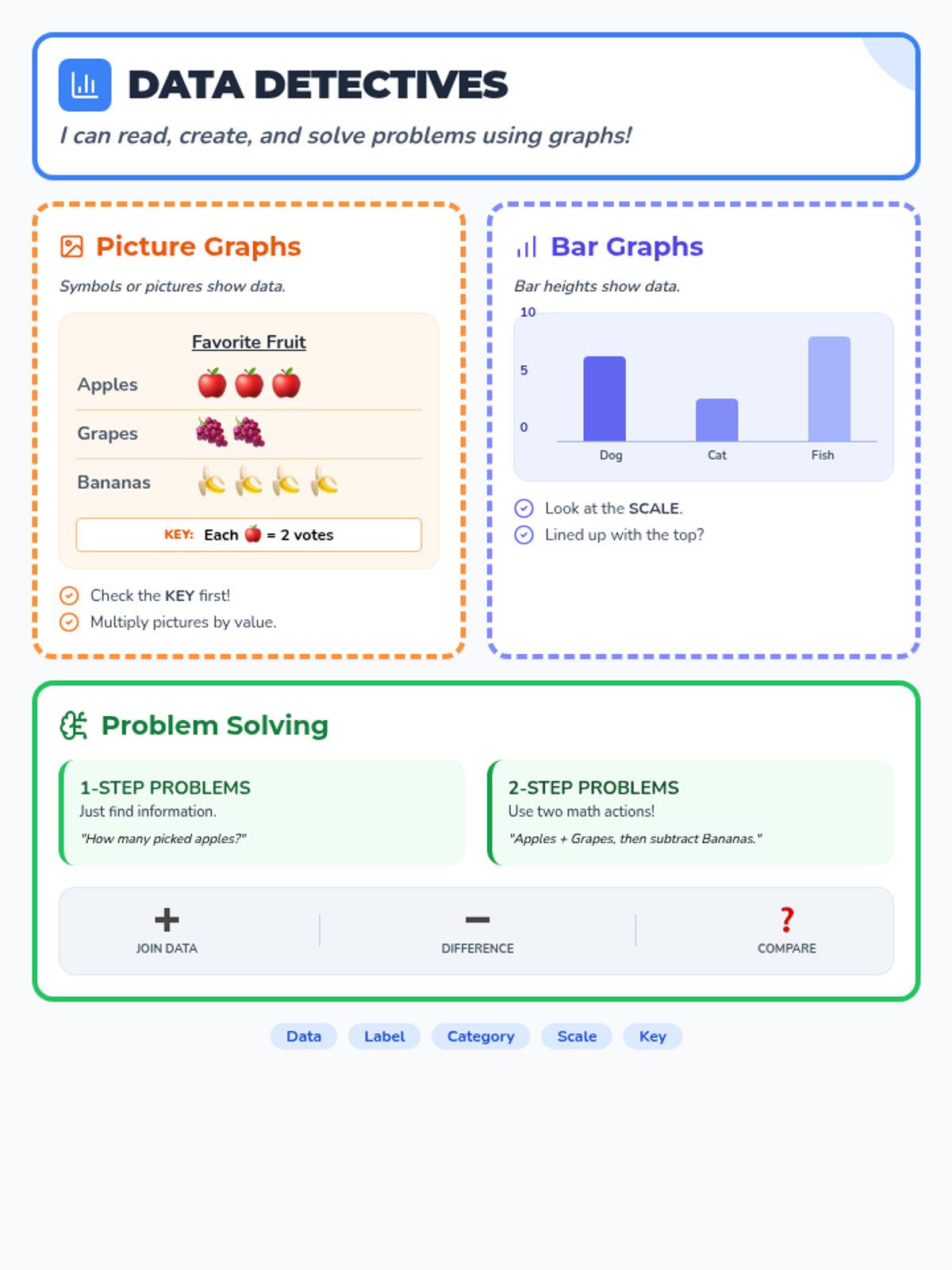
A visual anchor chart for elementary students covering picture graphs, bar graphs, and strategies for solving one- and two-step data problems. Revised to fit on a single page.
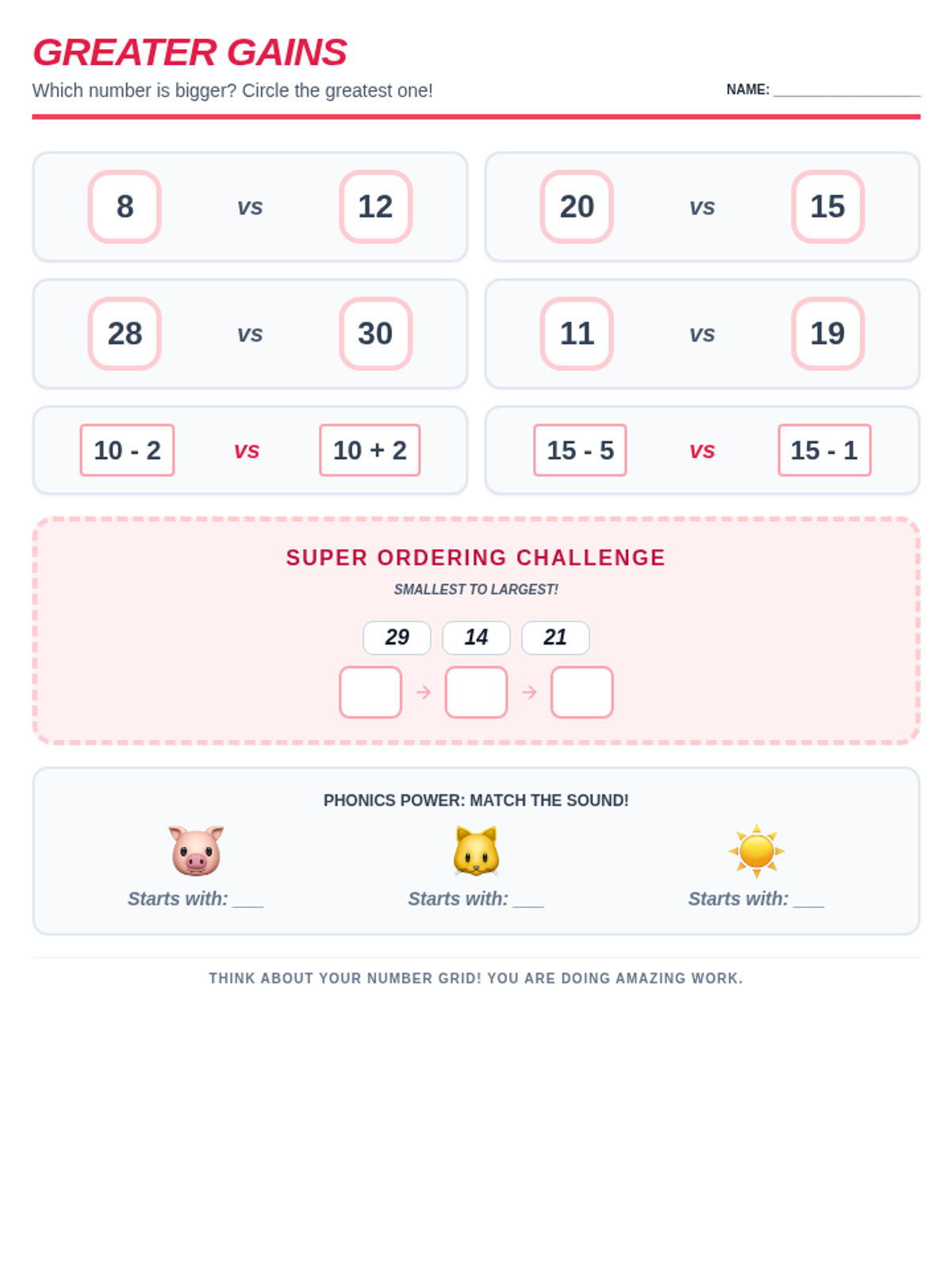
A comprehensive number comparison worksheet featuring greater-than identification, subtraction comparison, ordering challenges, and a phonics-based initial sound matching section.
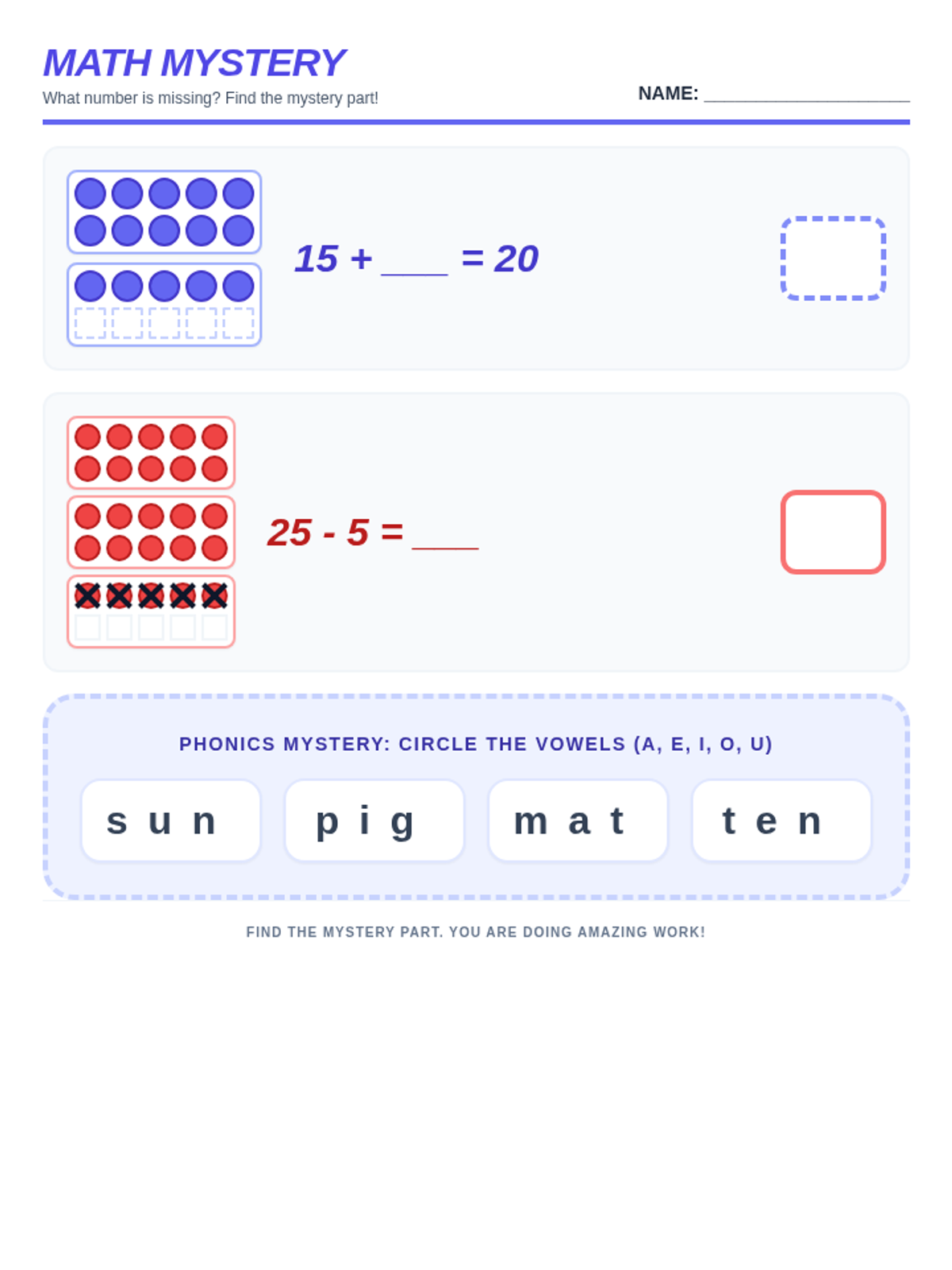
An advanced missing addends and subtraction worksheet that uses ten-frames for numbers up to 30, with an integrated vowel-identification phonics section.
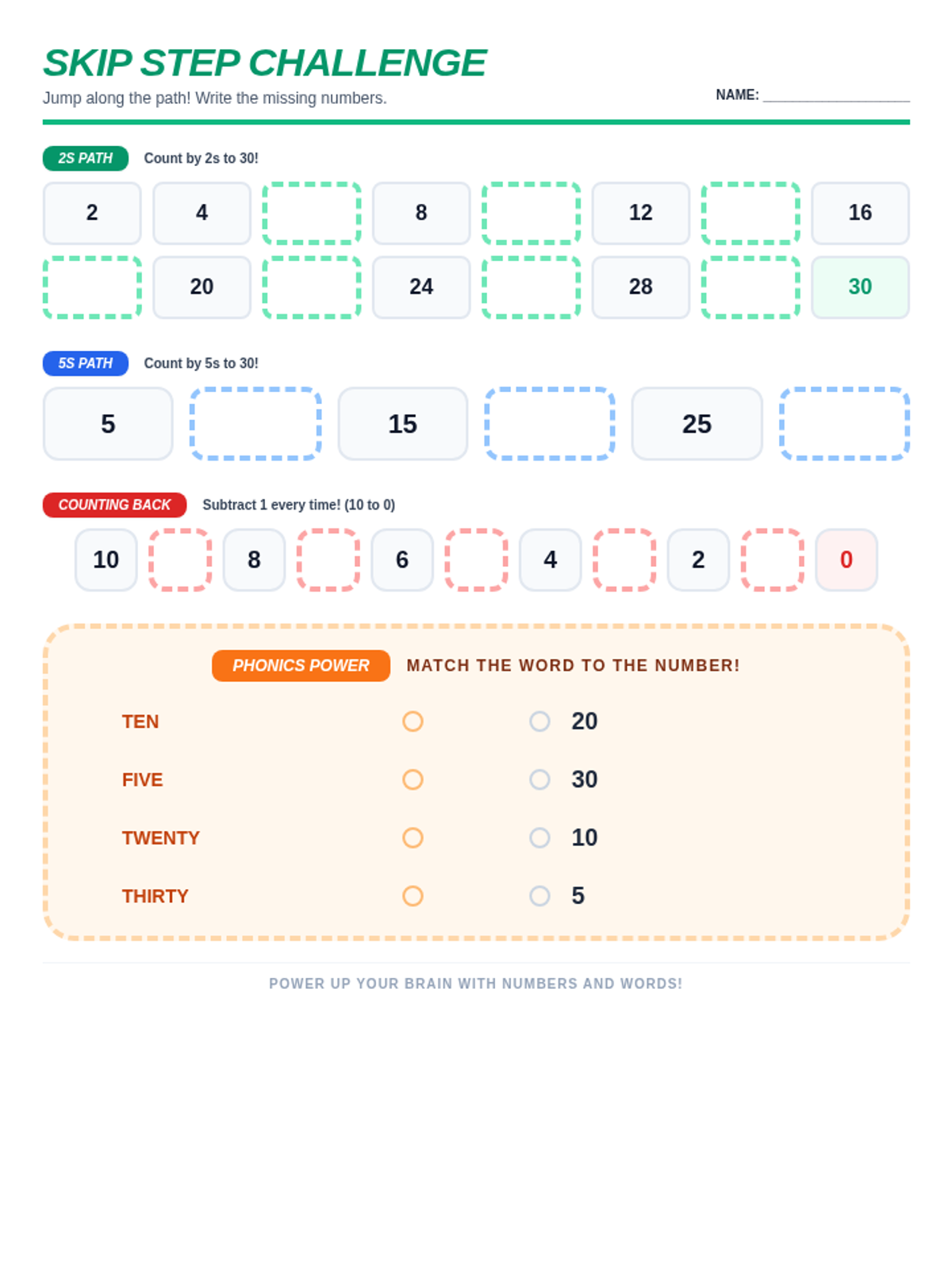
A comprehensive skip counting worksheet challenging the student to count by 2s, 5s, and backward, with an added number-word phonics matching section.
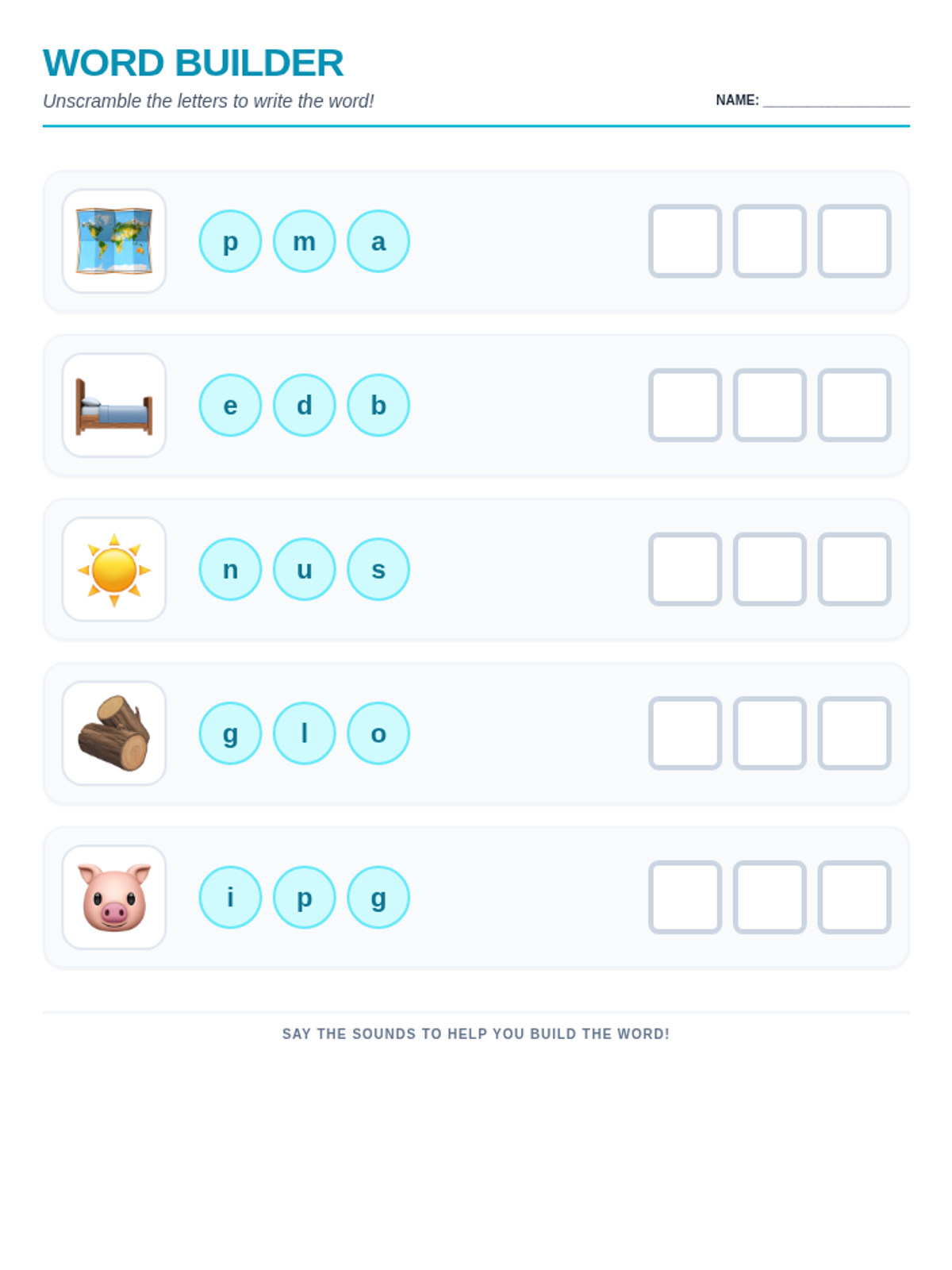
A CVC word building activity where students unscramble letters to correctly spell words matching the provided picture prompts.
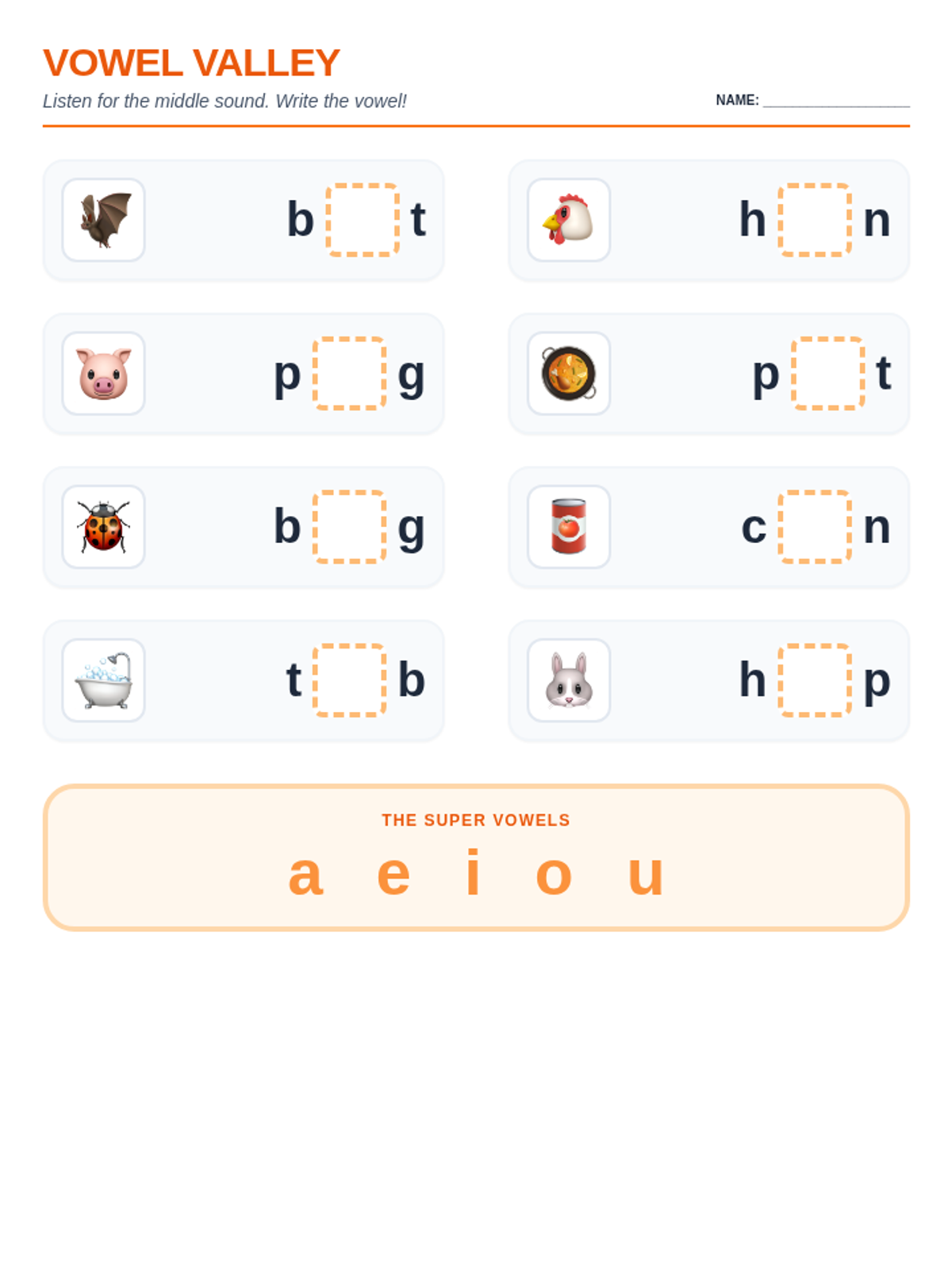
A vowel-focused phonics worksheet where students identify and write the missing middle vowel sound for CVC words.
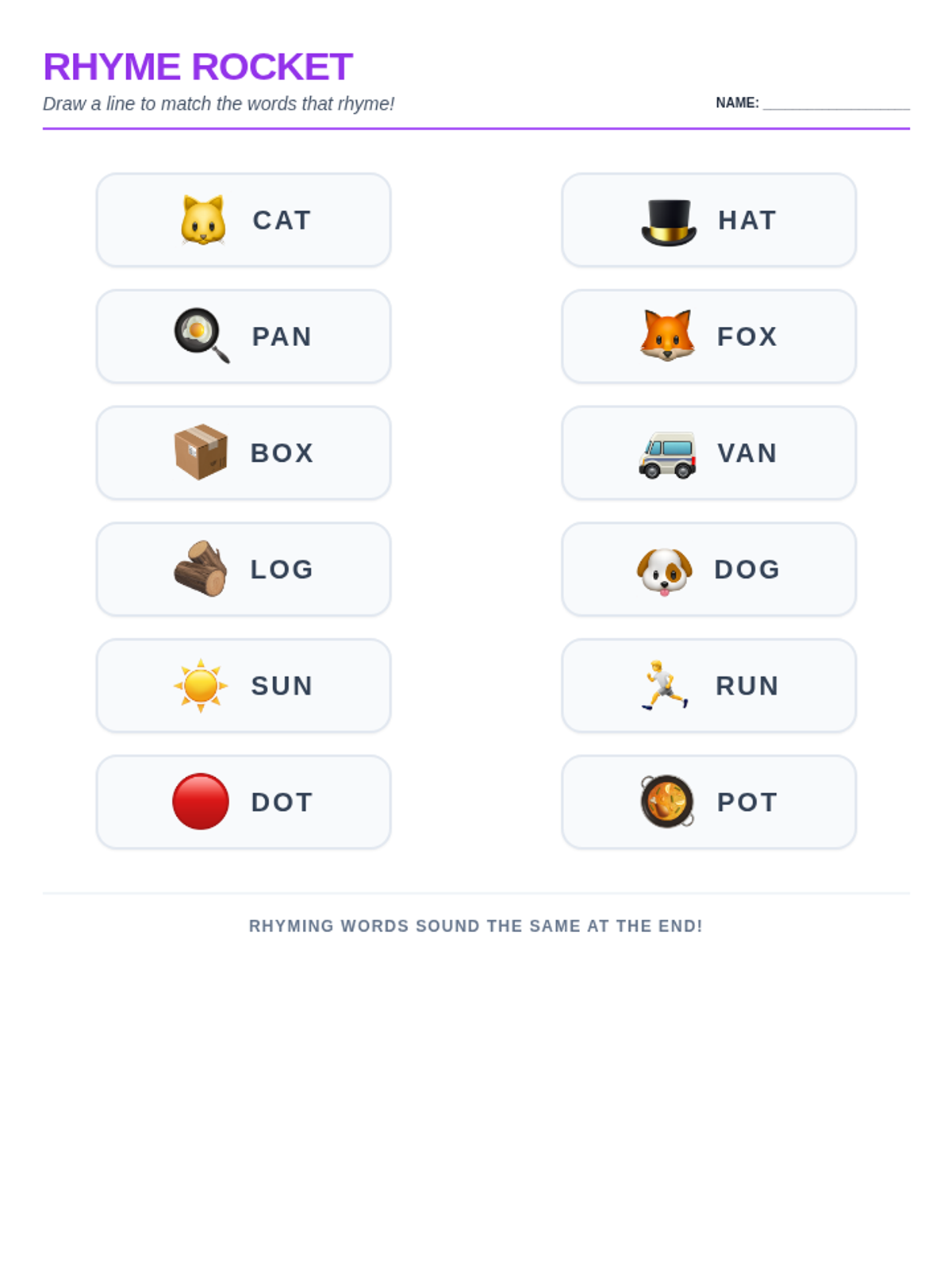
A CVC rhyming worksheet where students match words with similar ending sounds using clear picture cues and text.
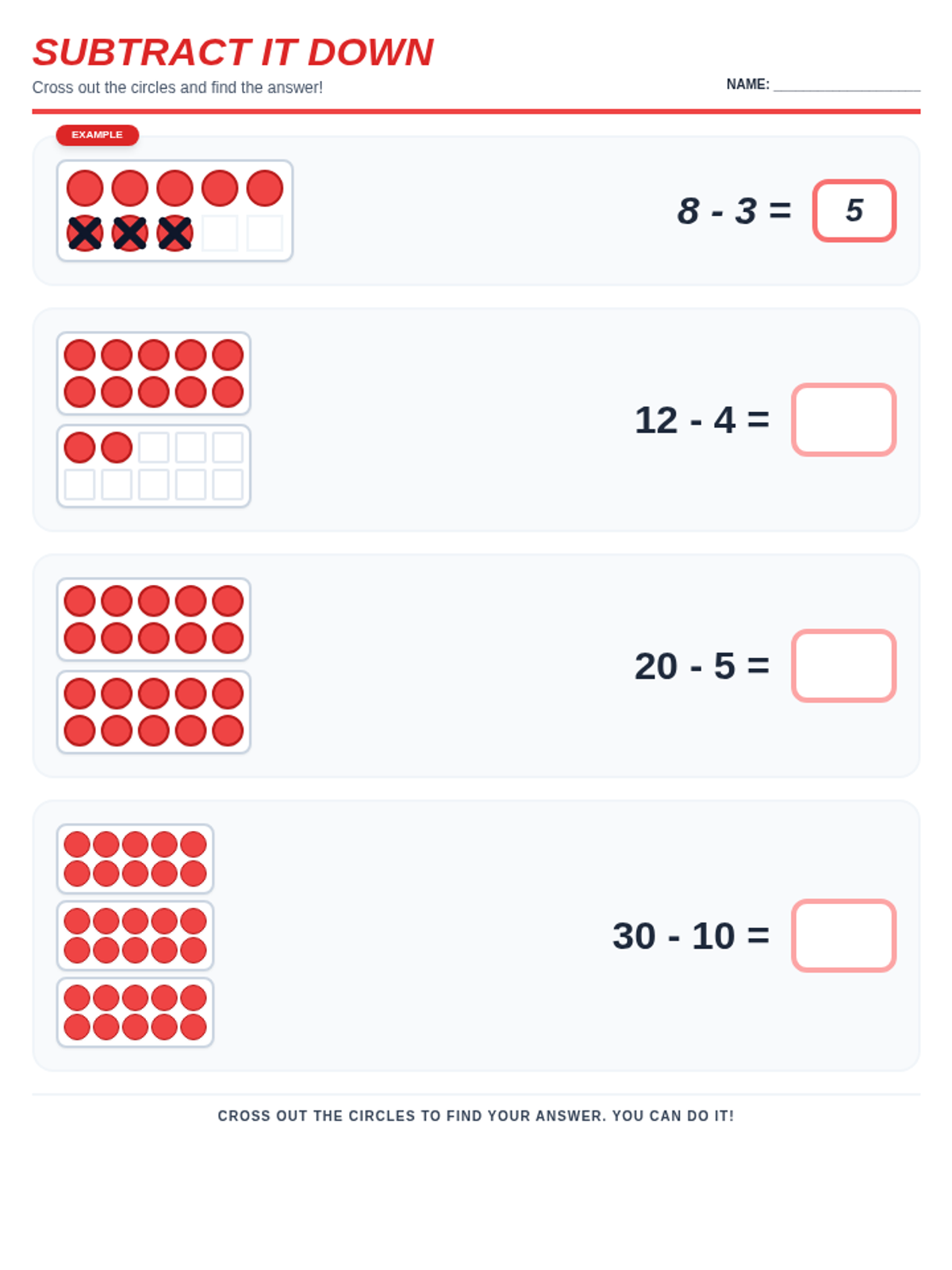
A basic subtraction worksheet (within 30) featuring visual representations (counters in ten-frames) to support conceptual understanding of subtraction.
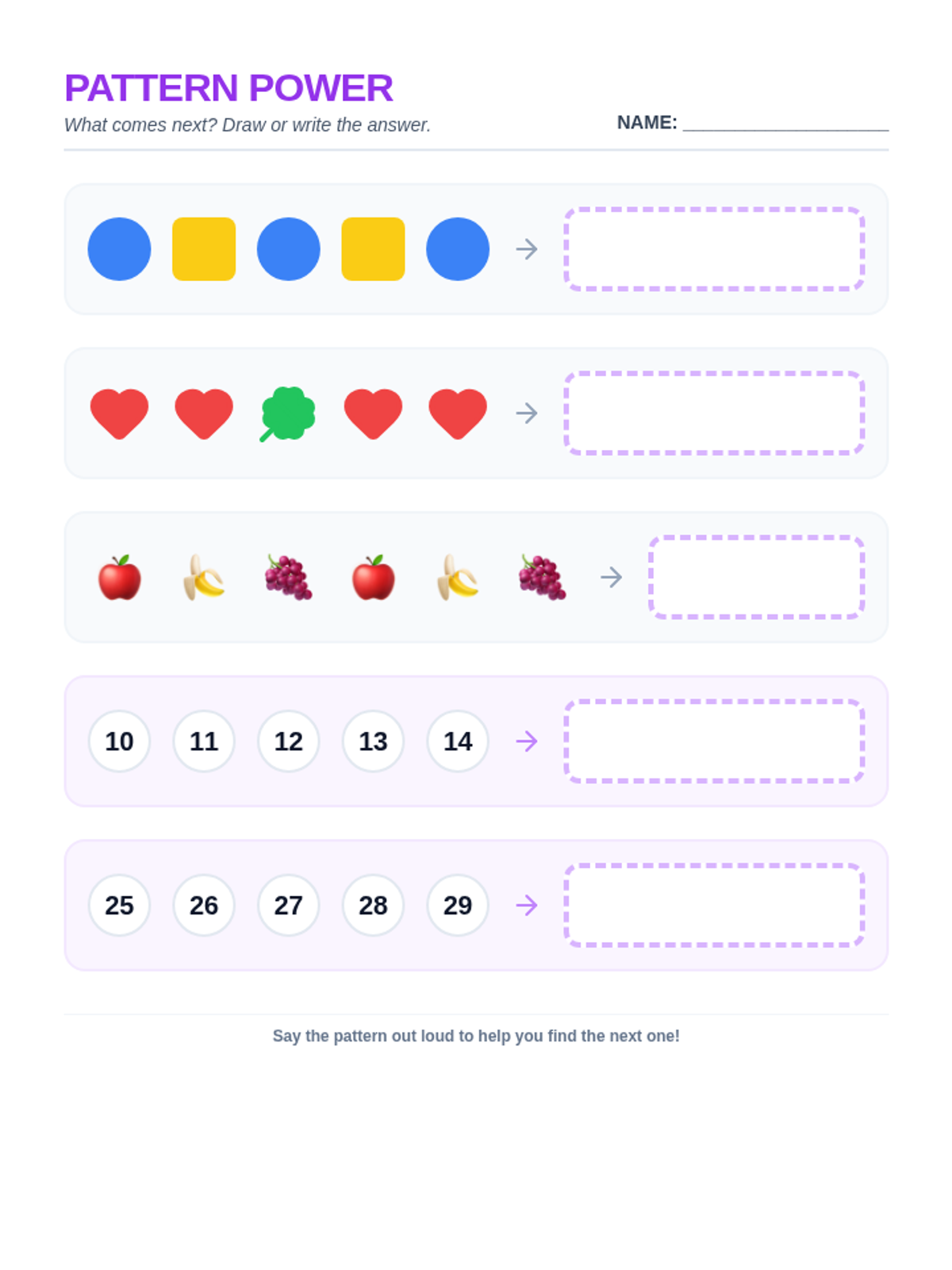
A pattern completion worksheet that focuses on visual patterns (AB, AAB, ABC) to develop logic and sequencing skills in an independent format.
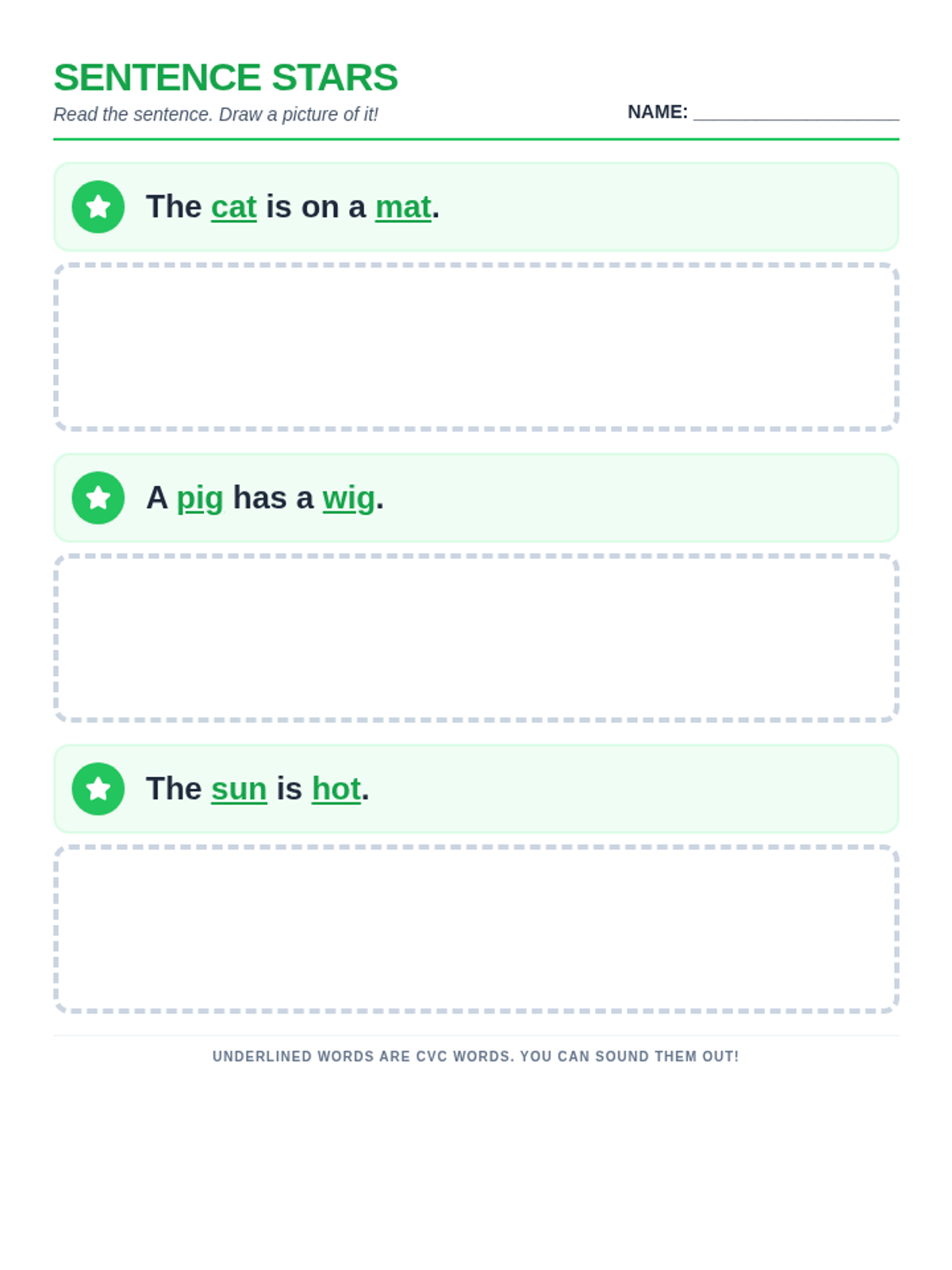
A literacy worksheet where students read simple CVC-based sentences and draw a corresponding picture, promoting reading comprehension and visualization.