A vocabulary matching worksheet where students connect life cycle terms like metamorphosis and chrysalis to their definitions, followed by a drawing activity.
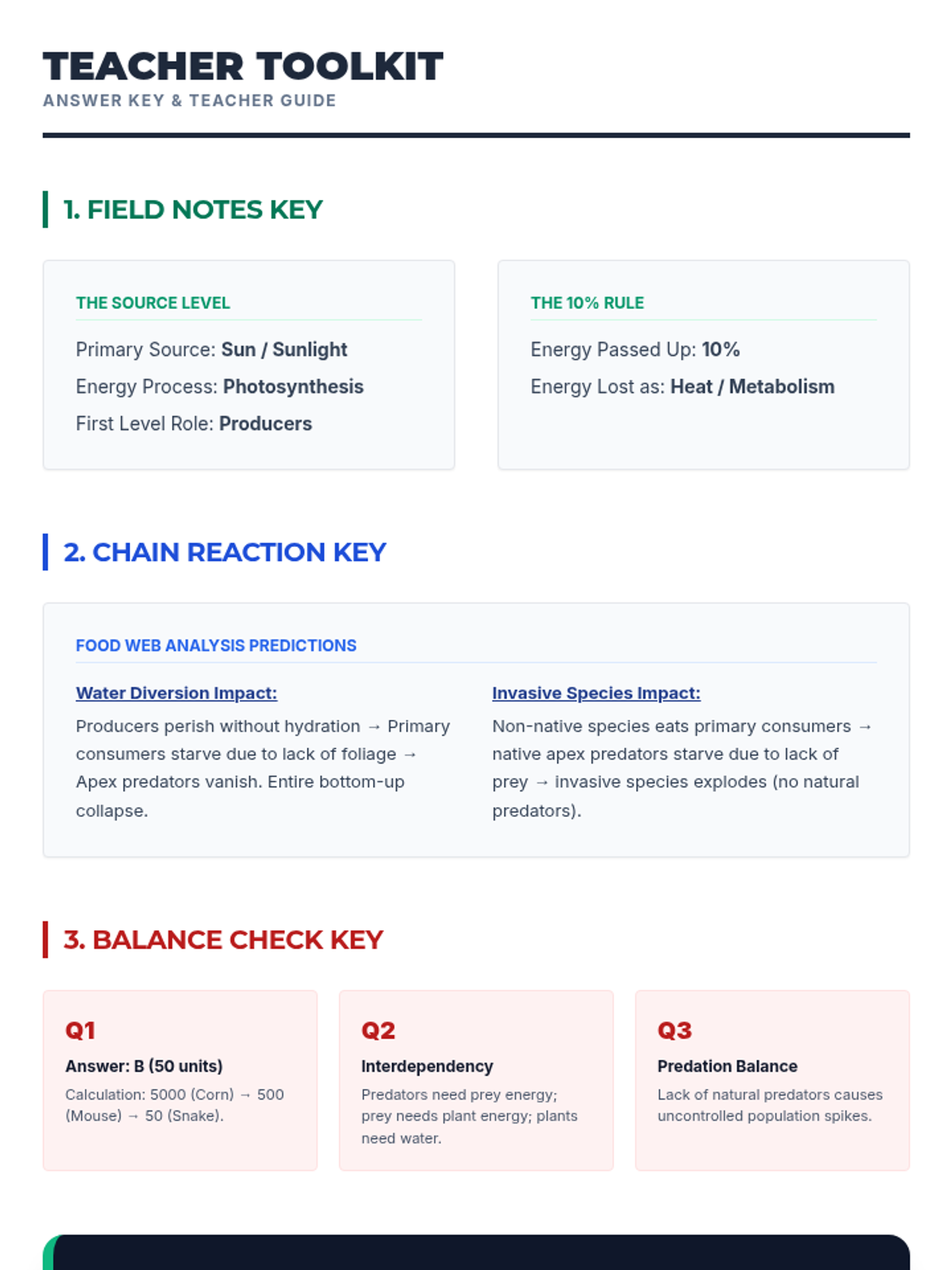
Comprehensive answer keys and teacher facilitation notes for all student materials in the Wild Web Balance lesson.
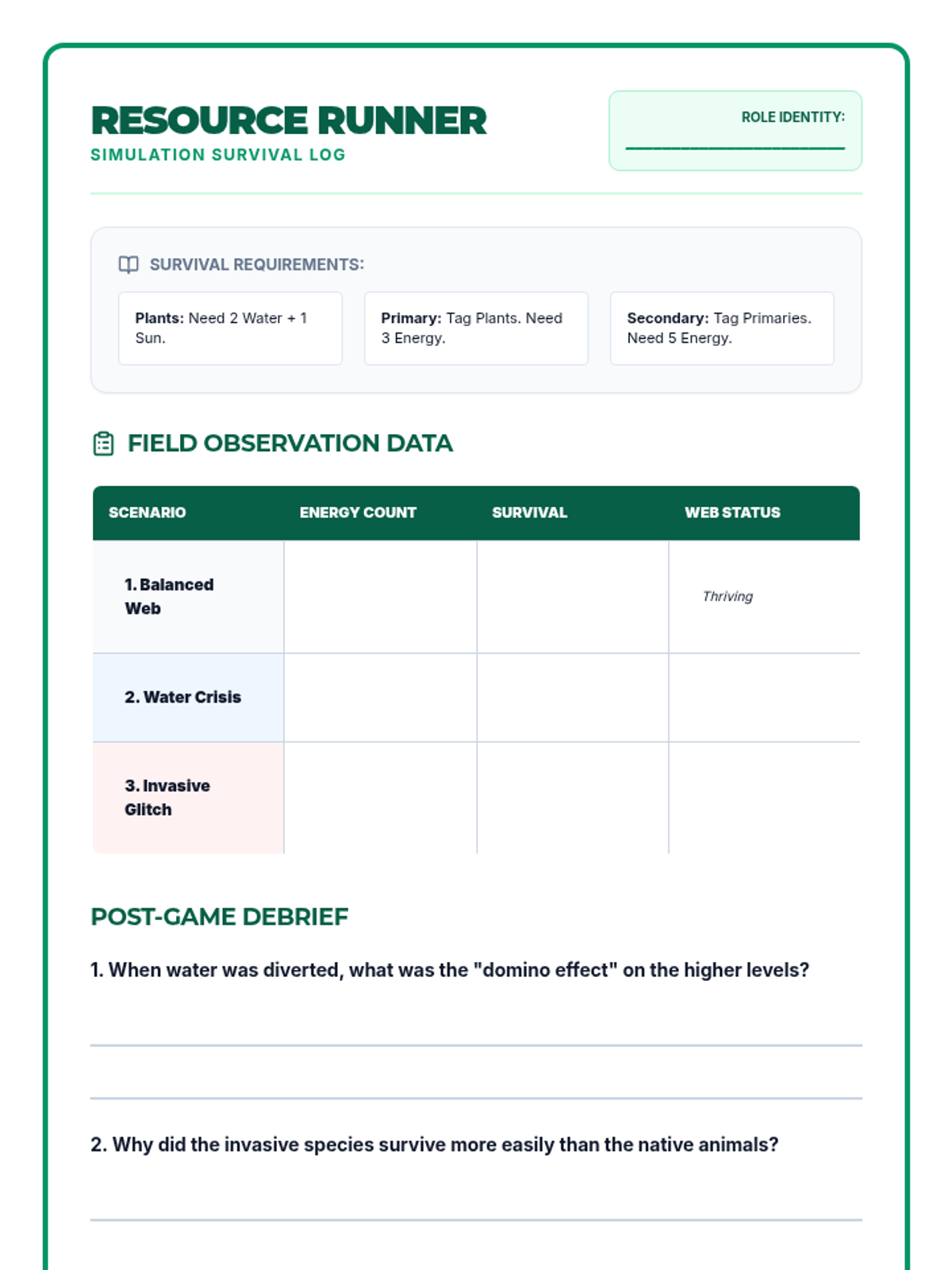
A data-collection worksheet for the "Resource Runner" simulation, allowing students to track their survival through various environmental scenarios.
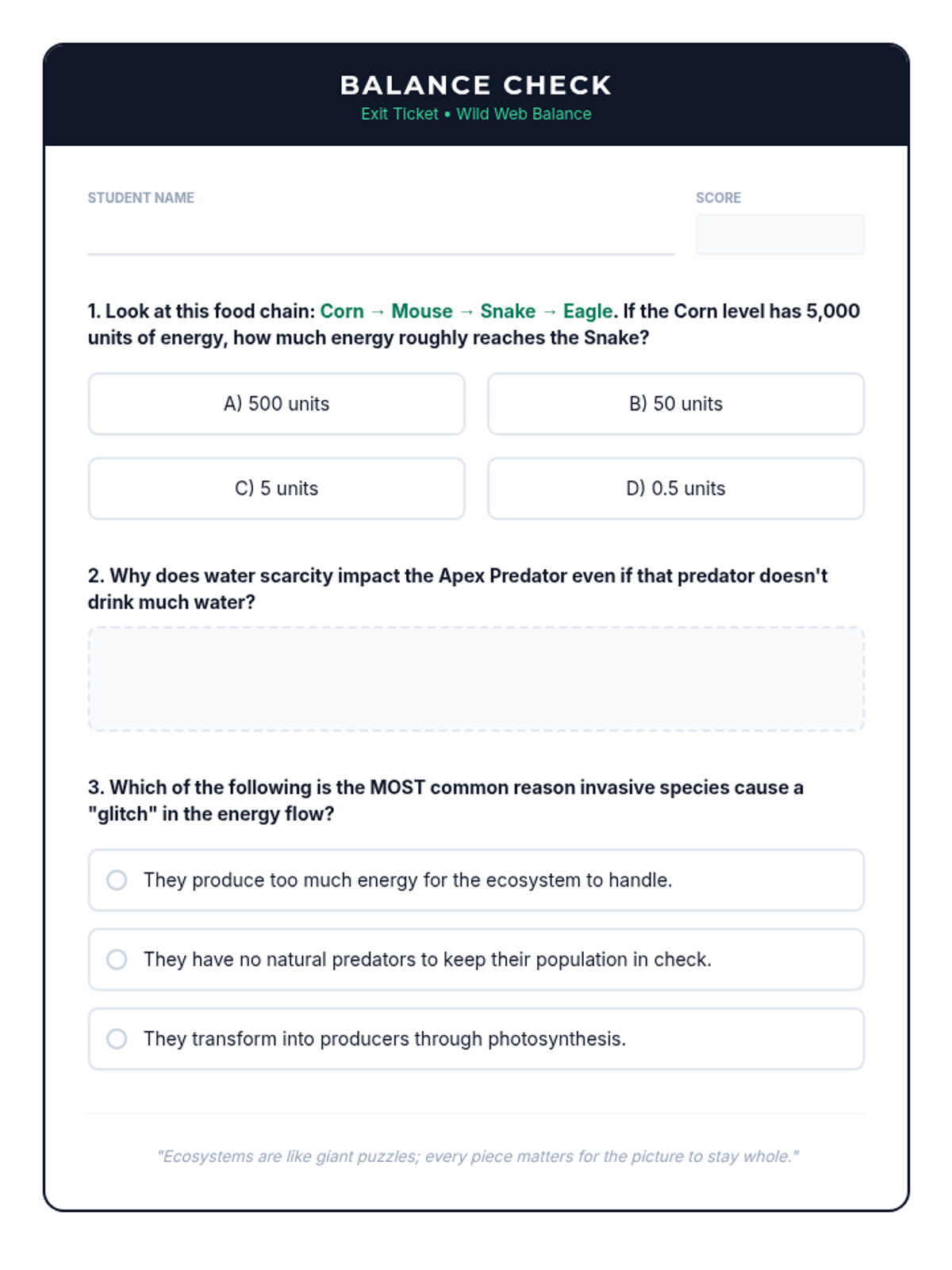
A quick individual assessment checking for understanding of the 10% rule, the impact of water scarcity on food chains, and the role of invasive species.
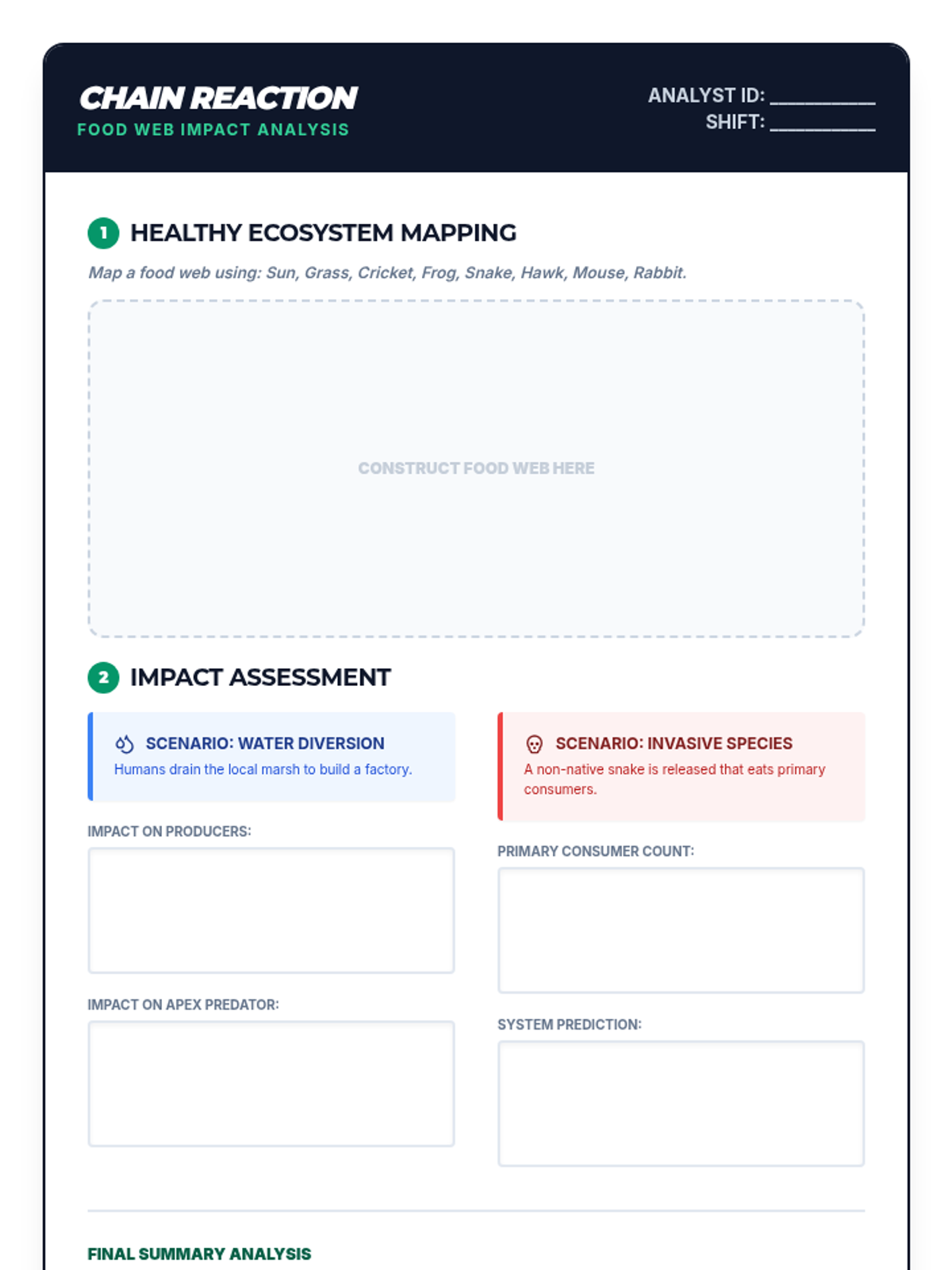
A high-engagement graphic organizer where students map an ecosystem food web and perform "What If" impact analysis on human-caused environmental disruptions.
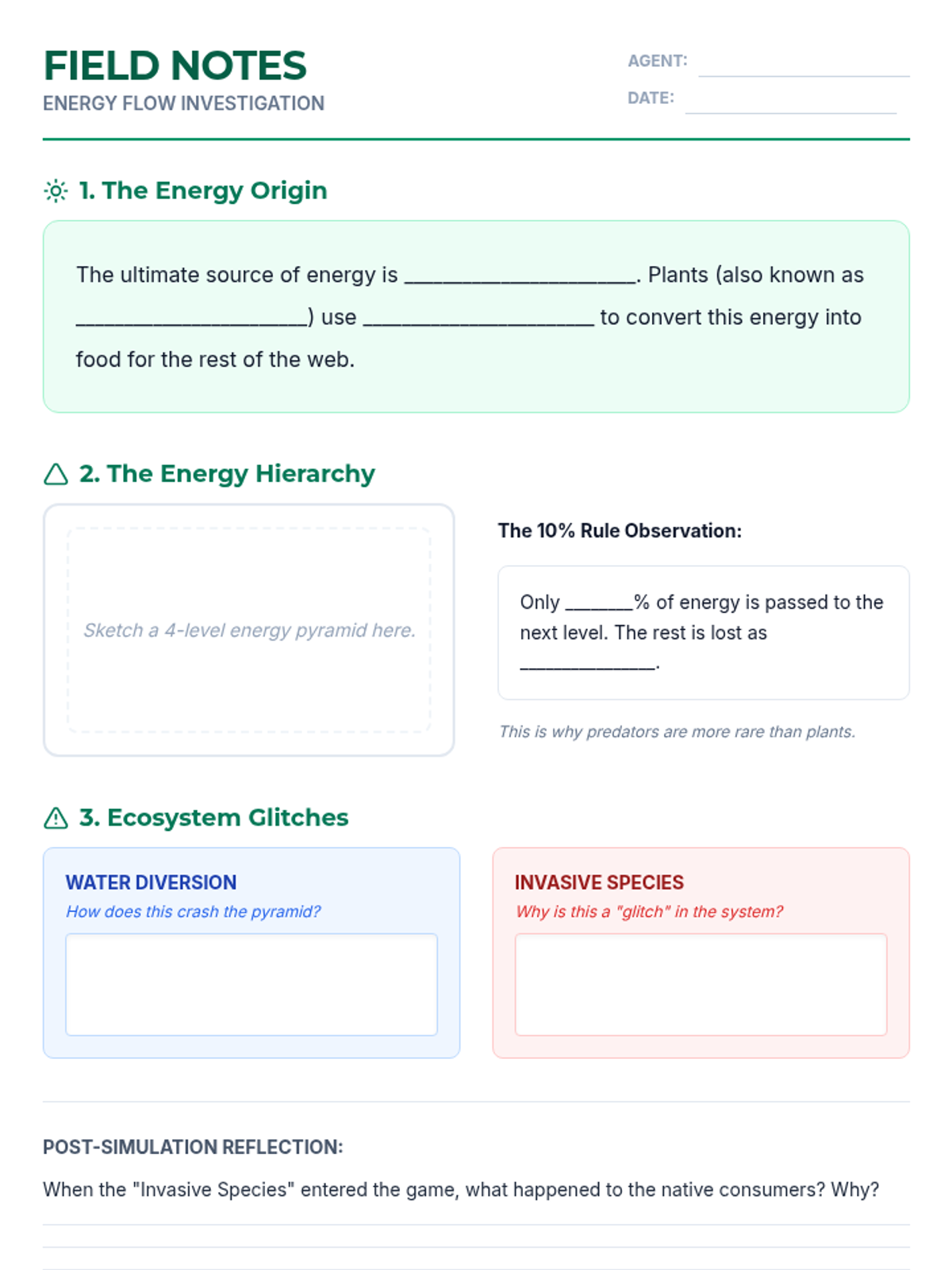
Guided notes for students to complete while following the slide presentation, featuring fill-in-the-blank sections, a pyramid sketching area, and reflection prompts.
A visual presentation covering the energy pyramid, the 10% rule, and the negative impacts of water diversion and invasive species on ecosystem balance.
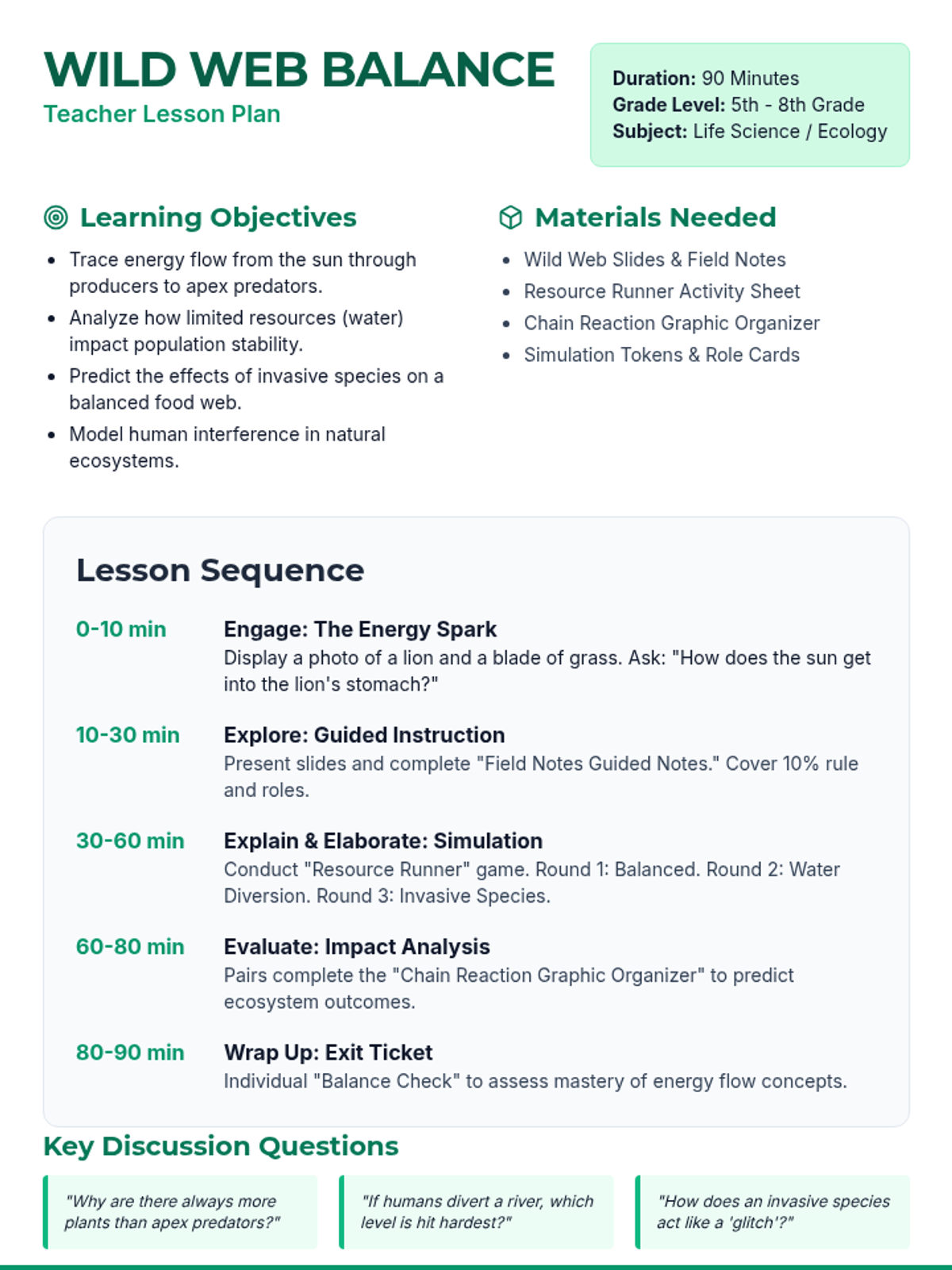
A detailed lesson plan for teaching energy flow in food chains, featuring a three-round "Resource Runner" simulation that models balanced ecosystems, water scarcity, and invasive species impact.
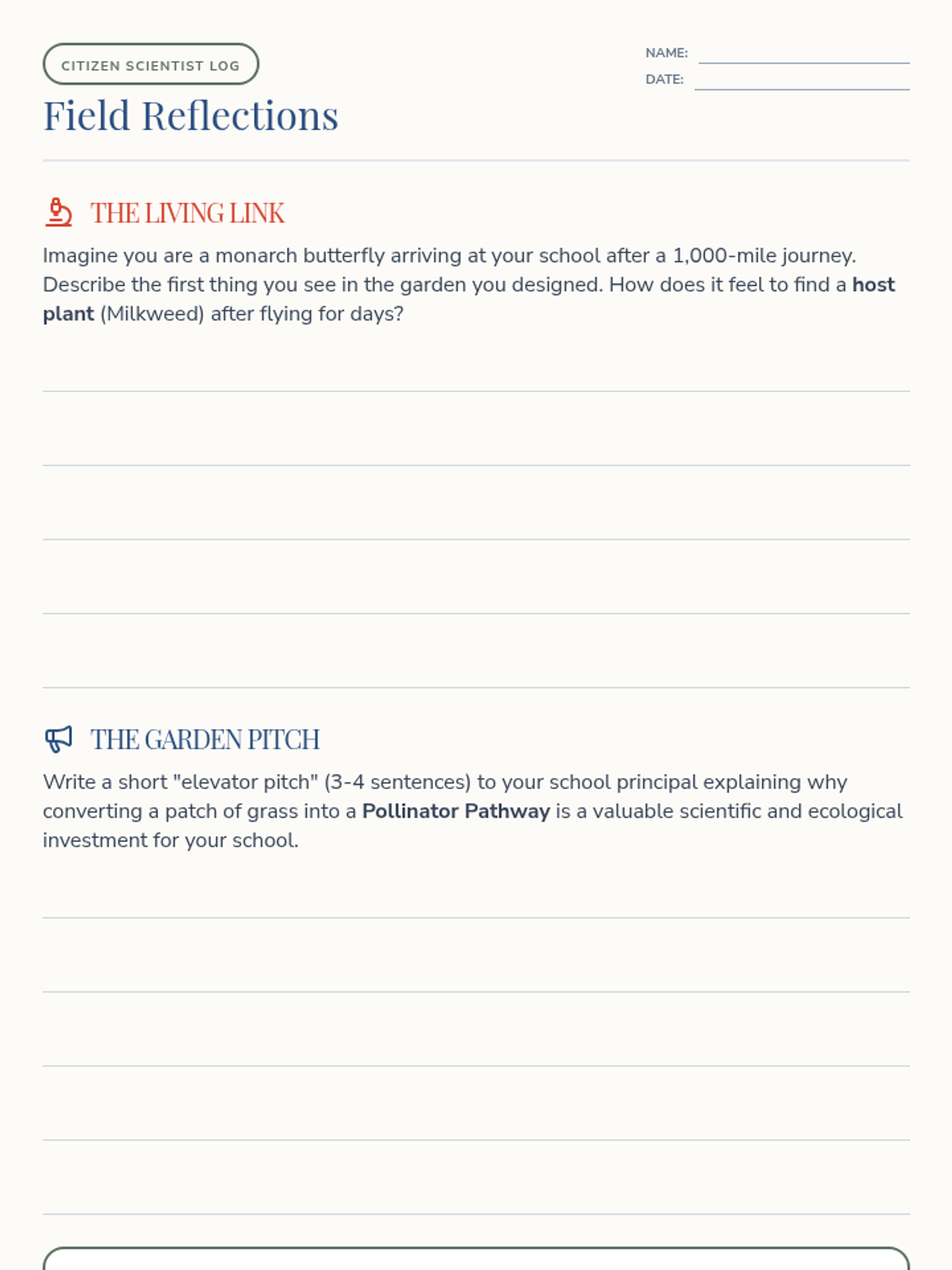
A reflective journal sheet where students synthesize their learning by writing from the perspective of a pollinator and crafting a persuasive pitch for environmental action at their school.
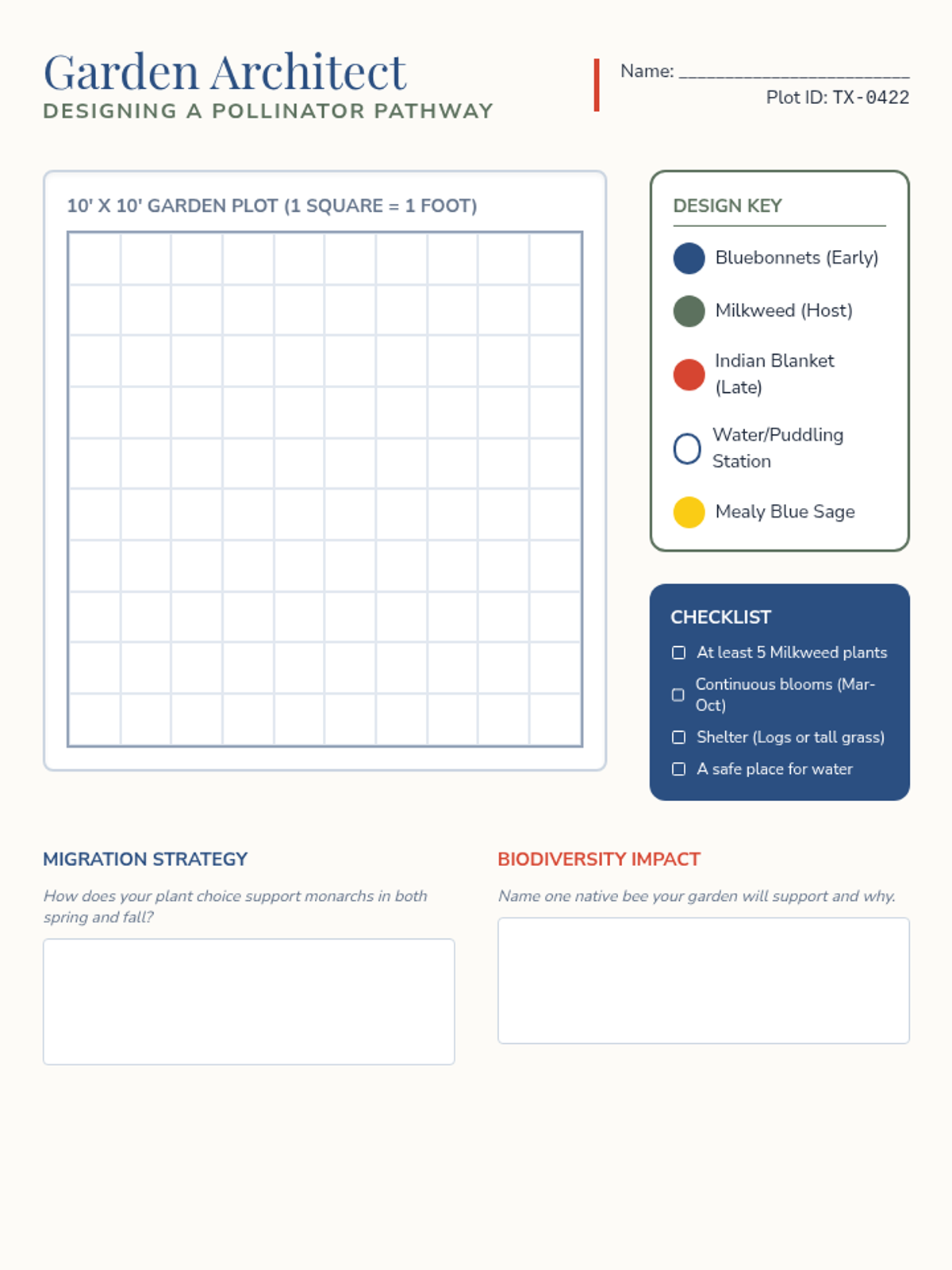
An interactive design worksheet where students use a grid to architect a 10x10 foot pollinator garden, selecting specific native plants and features to support local biodiversity.
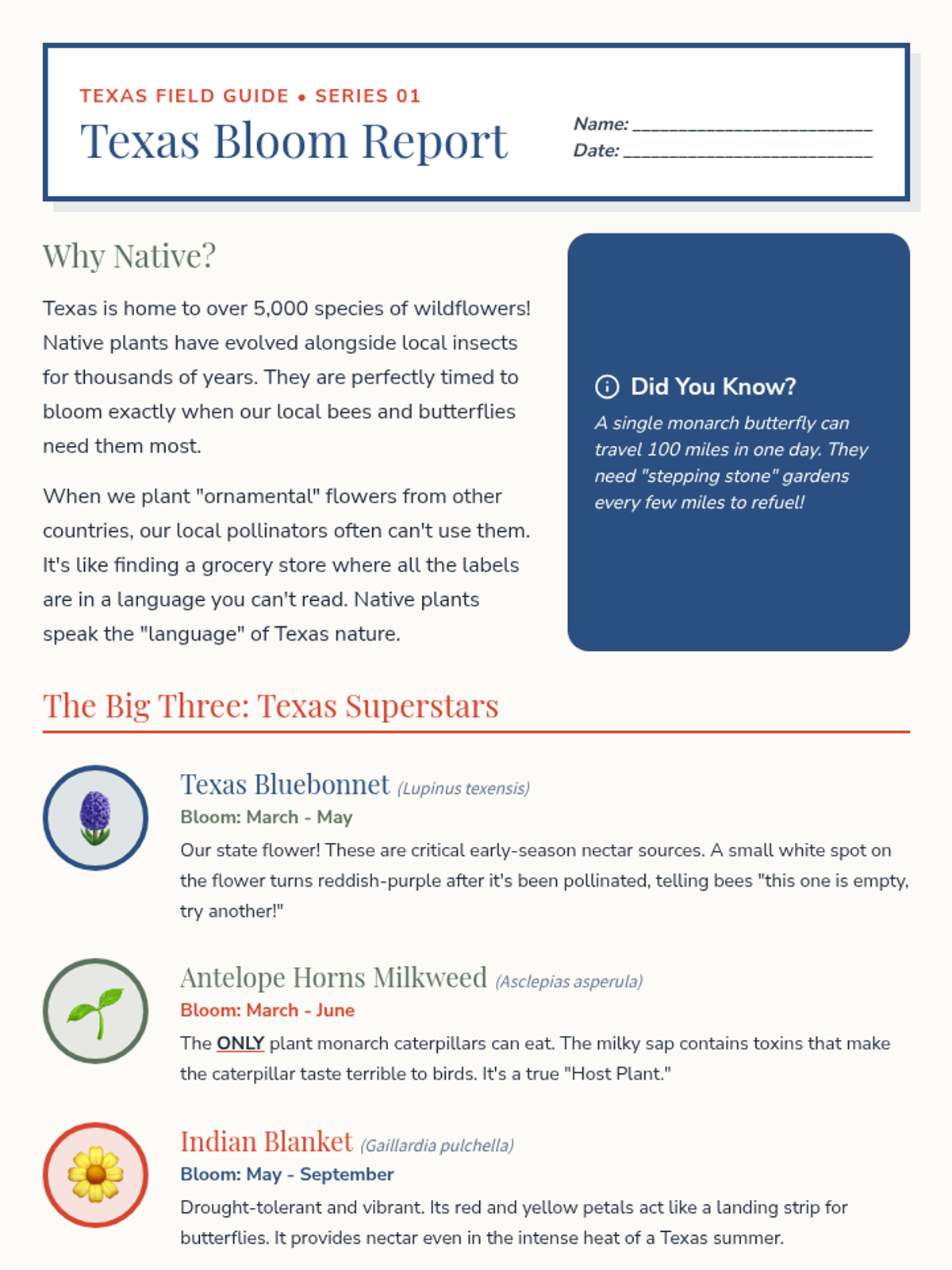
An informative reading passage for students that details the ecological importance of native Texas wildflowers, focusing on Bluebonnets, Milkweed, and Indian Blankets as essential resources for pollinators.