A guide for teachers providing instructional strategies, prompting hierarchies, and lesson pacing specifically for teaching fractions to 3rd-grade students with Down Syndrome.
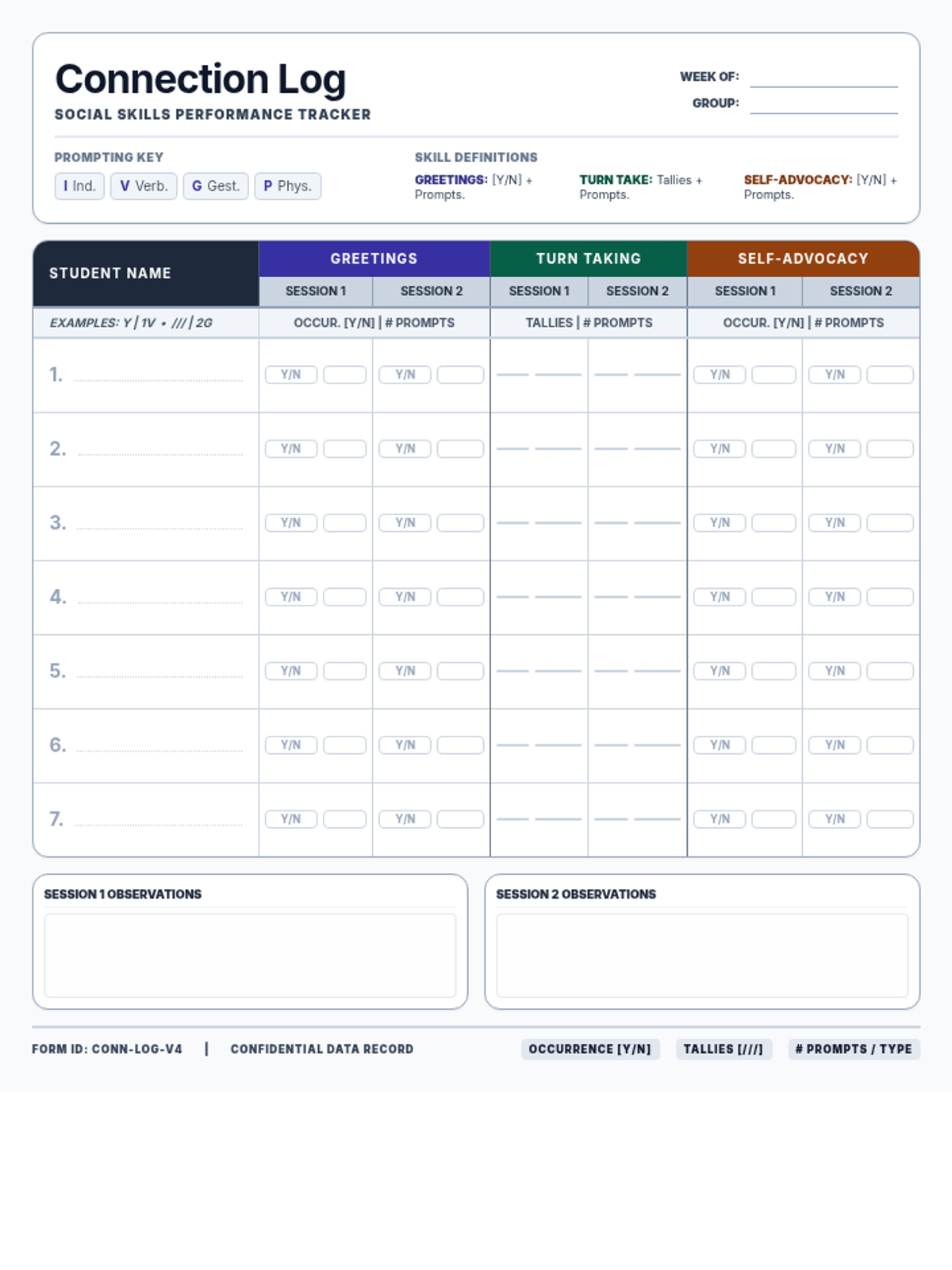
A professional data collection sheet for a 7-student social skills group. It features specific tracking for three skills over two sessions: Y/N and # Prompts for Greetings and Self-Advocacy, and Tallies and # Prompts for Turn Taking.
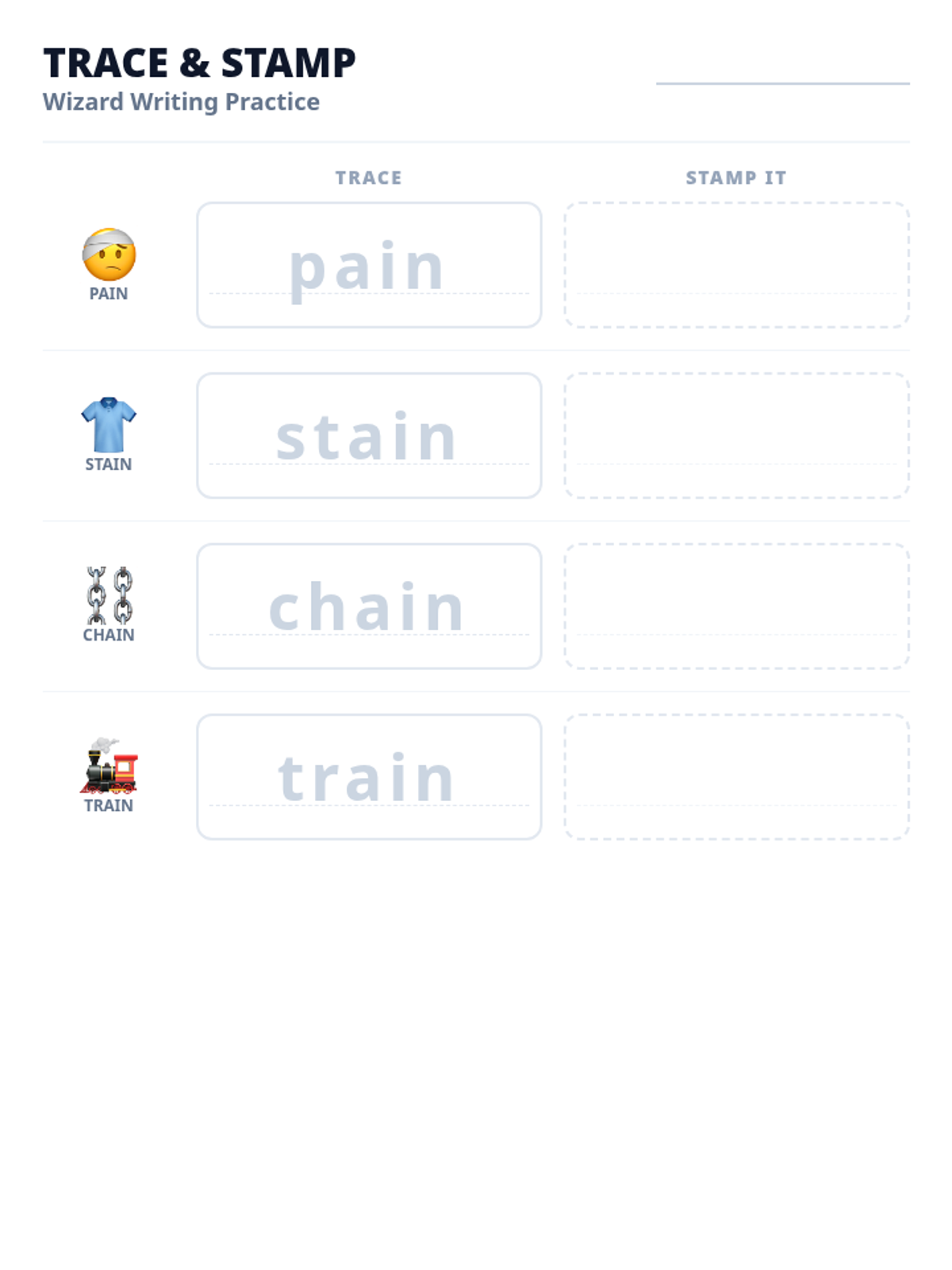
A multi-sensory tracing and stamping worksheet for the 'ai' word group. Supports fine motor development and phonetic word building.
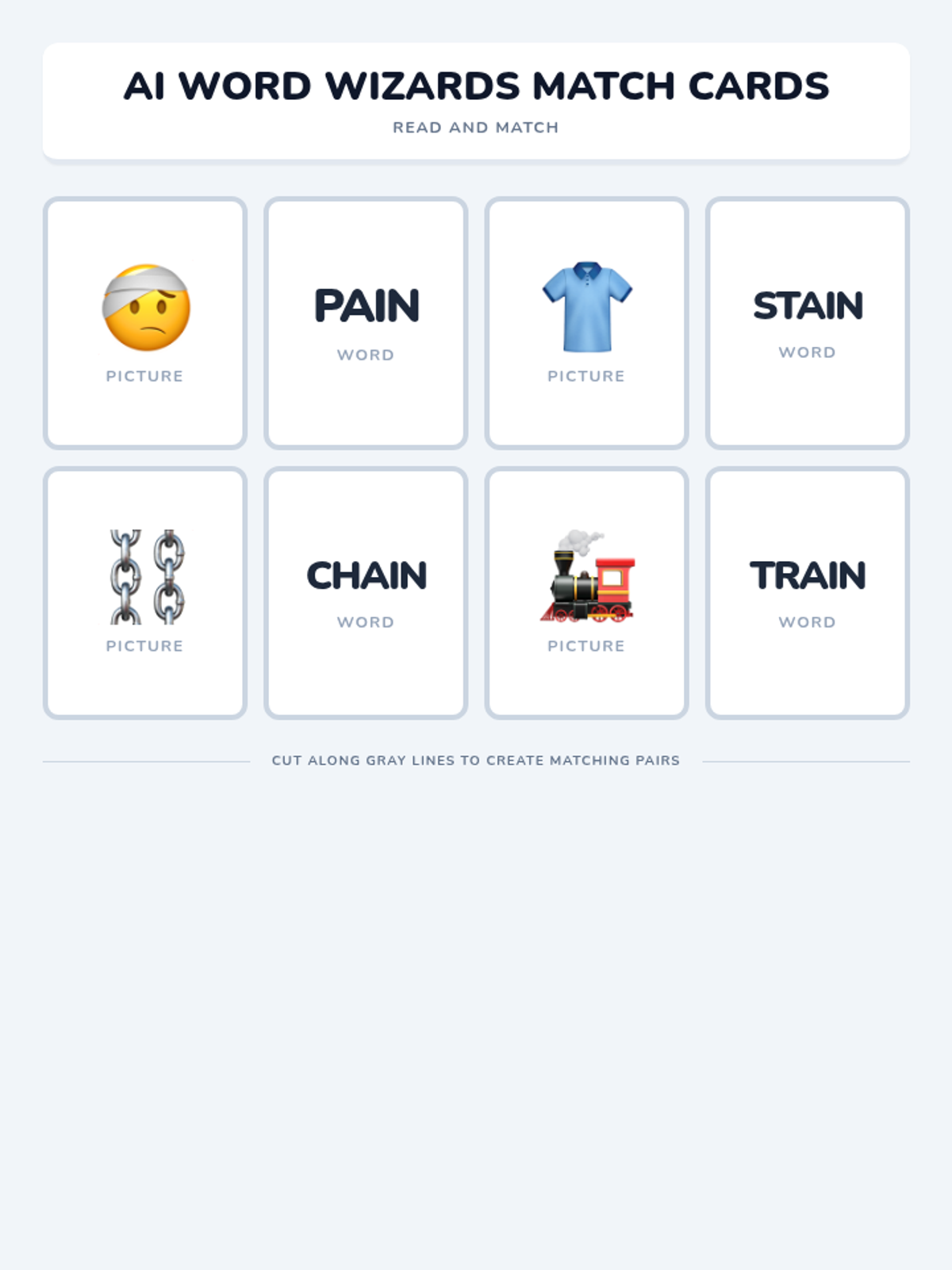
Matching cards for 'ai' words (pain, stain, chain, train). Features uniform borders to ensure students focus on word recognition and picture association.
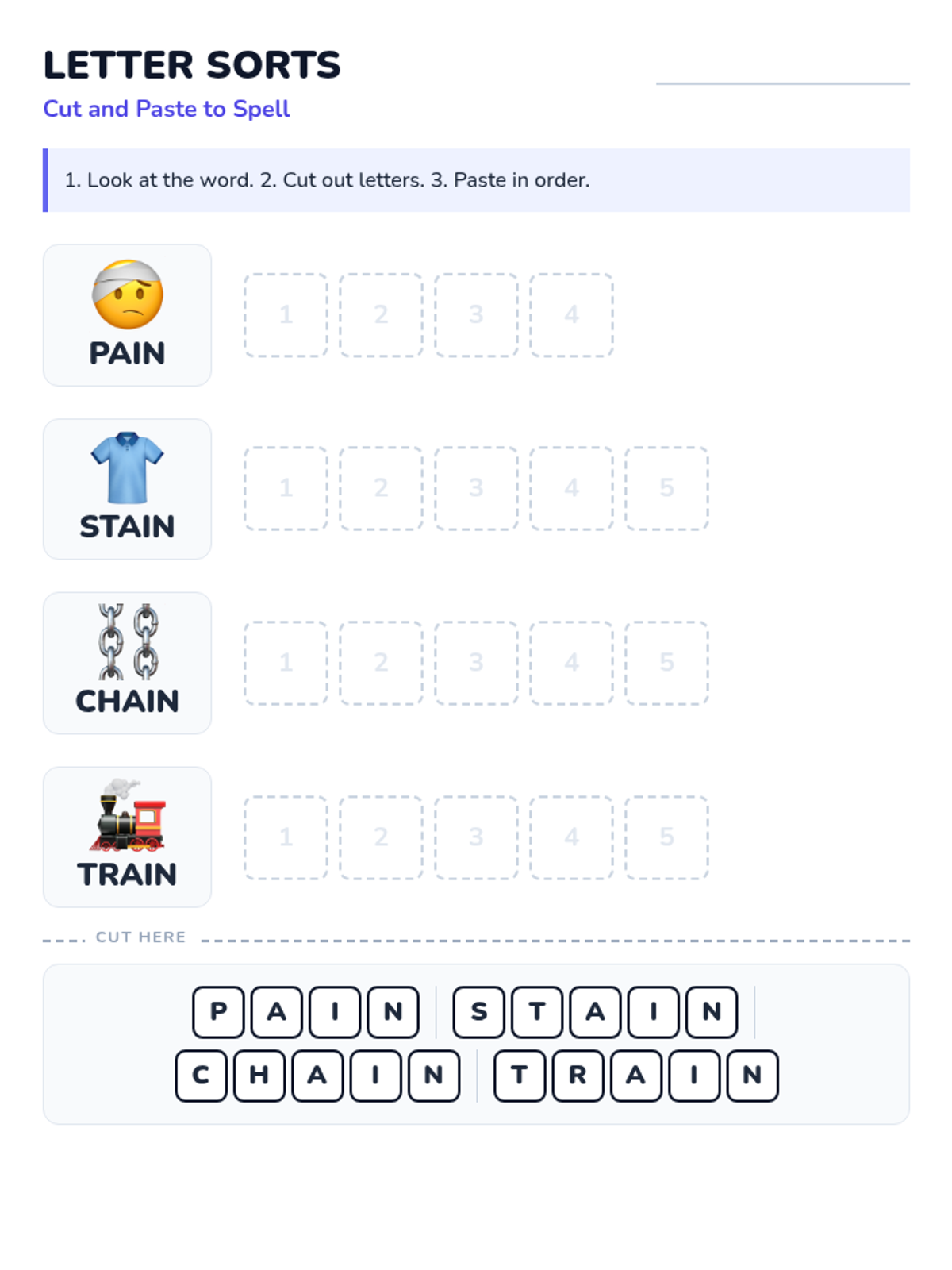
A cut-and-paste letter sorting activity for the 'ai' words: pain, stain, chain, and train. Designed for tactile learning and letter-order practice.
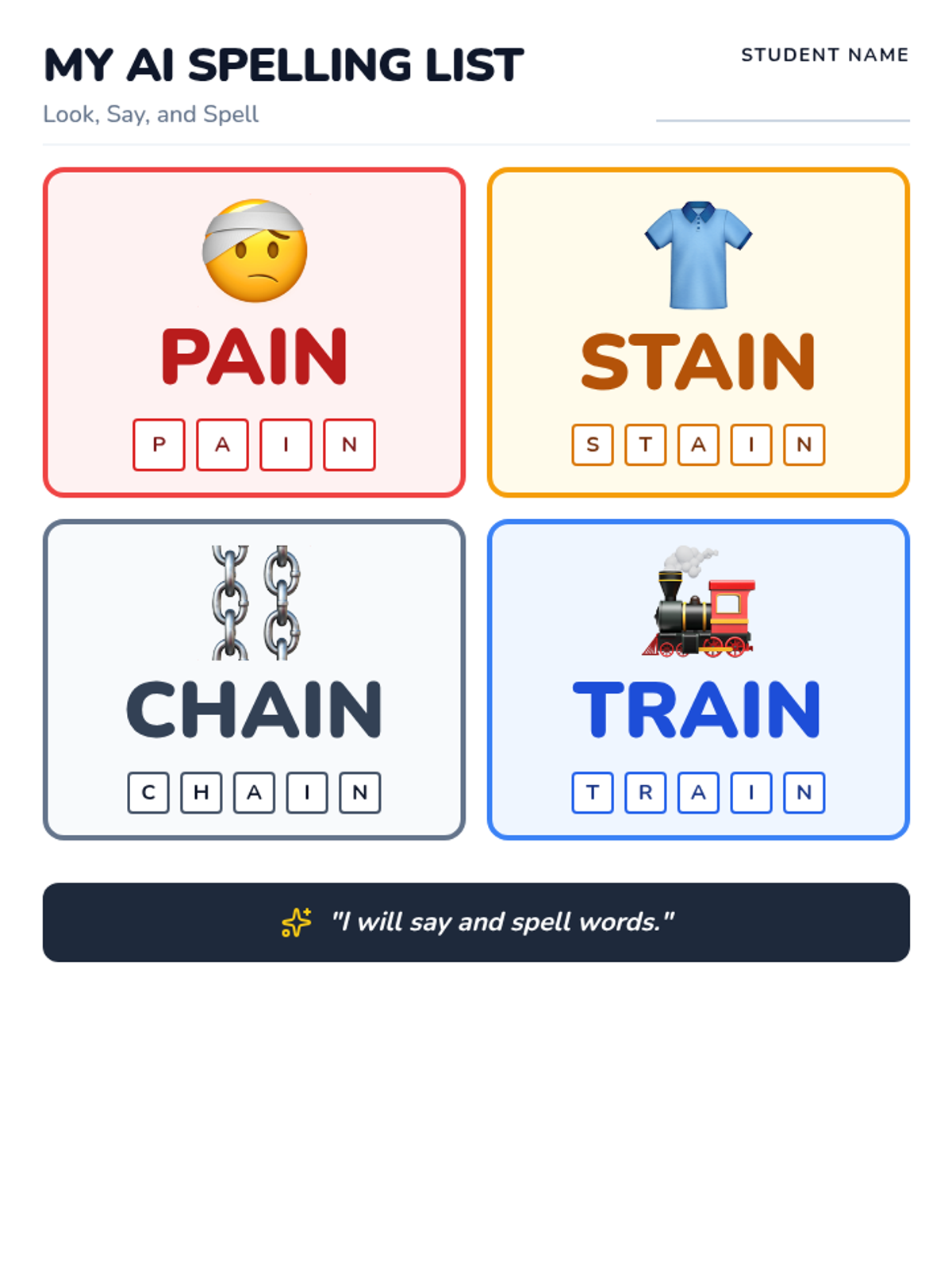
A visual spelling list for the 'ai' words: pain, stain, chain, and train. Includes emoji support and letter-by-letter breakdowns.
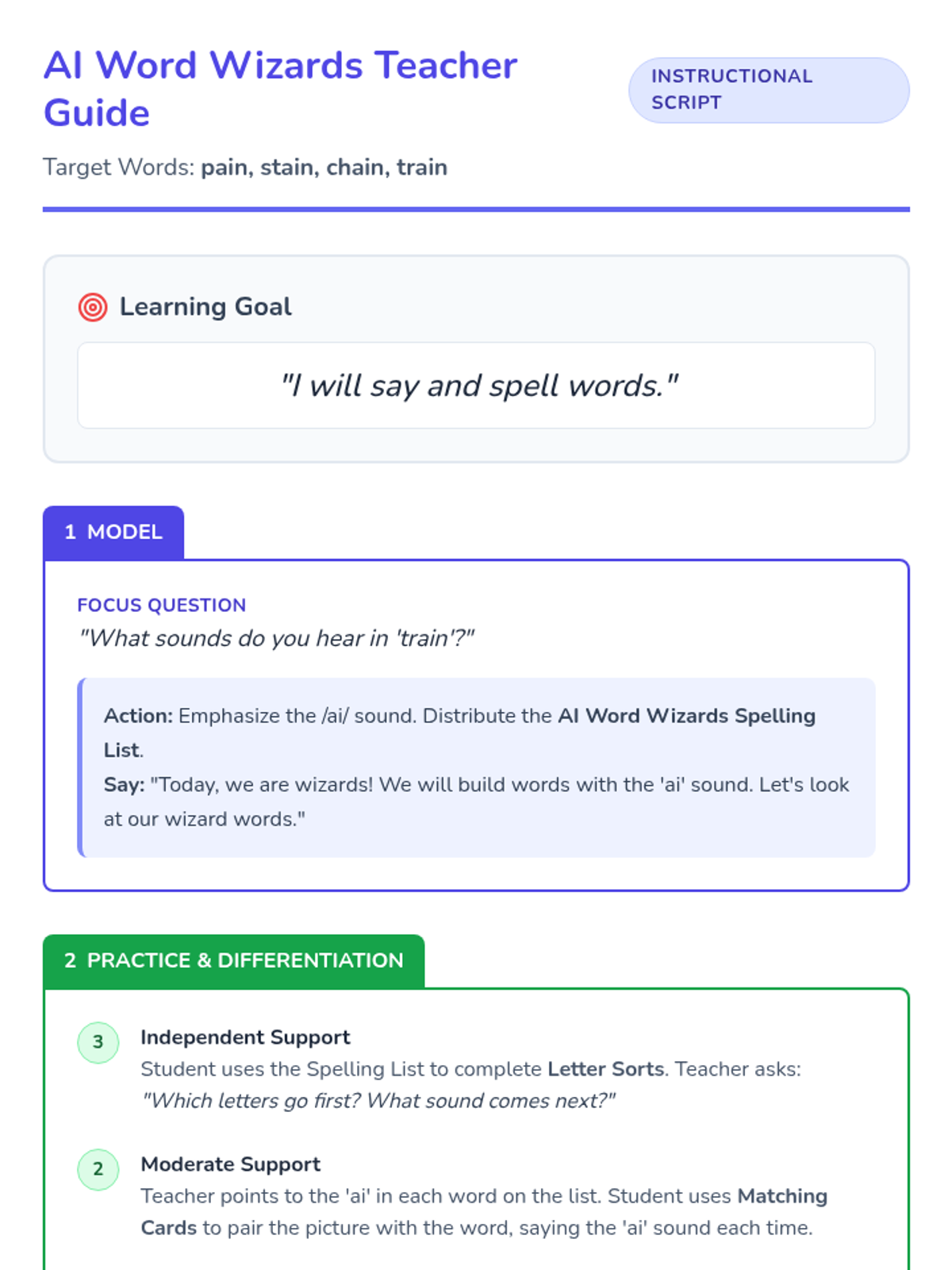
An instructional guide for teachers using the Model-Practice-Review framework to teach 'ai' words (pain, stain, chain, train) to students with moderate intellectual disabilities.
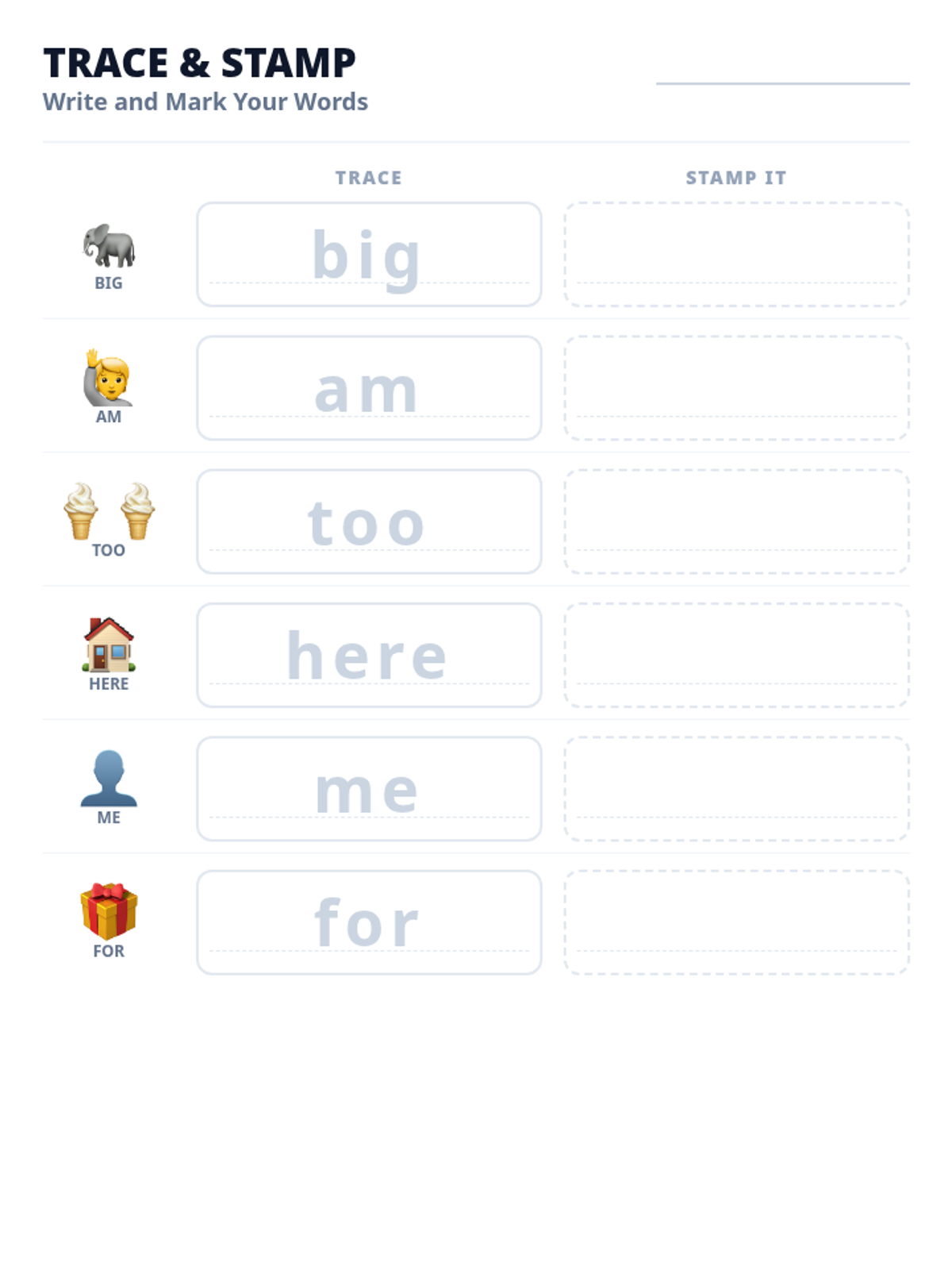
A multi-sensory worksheet for tracing and stamping high-frequency words. Improved contrast for tracing text and white backgrounds for better pencil visibility.
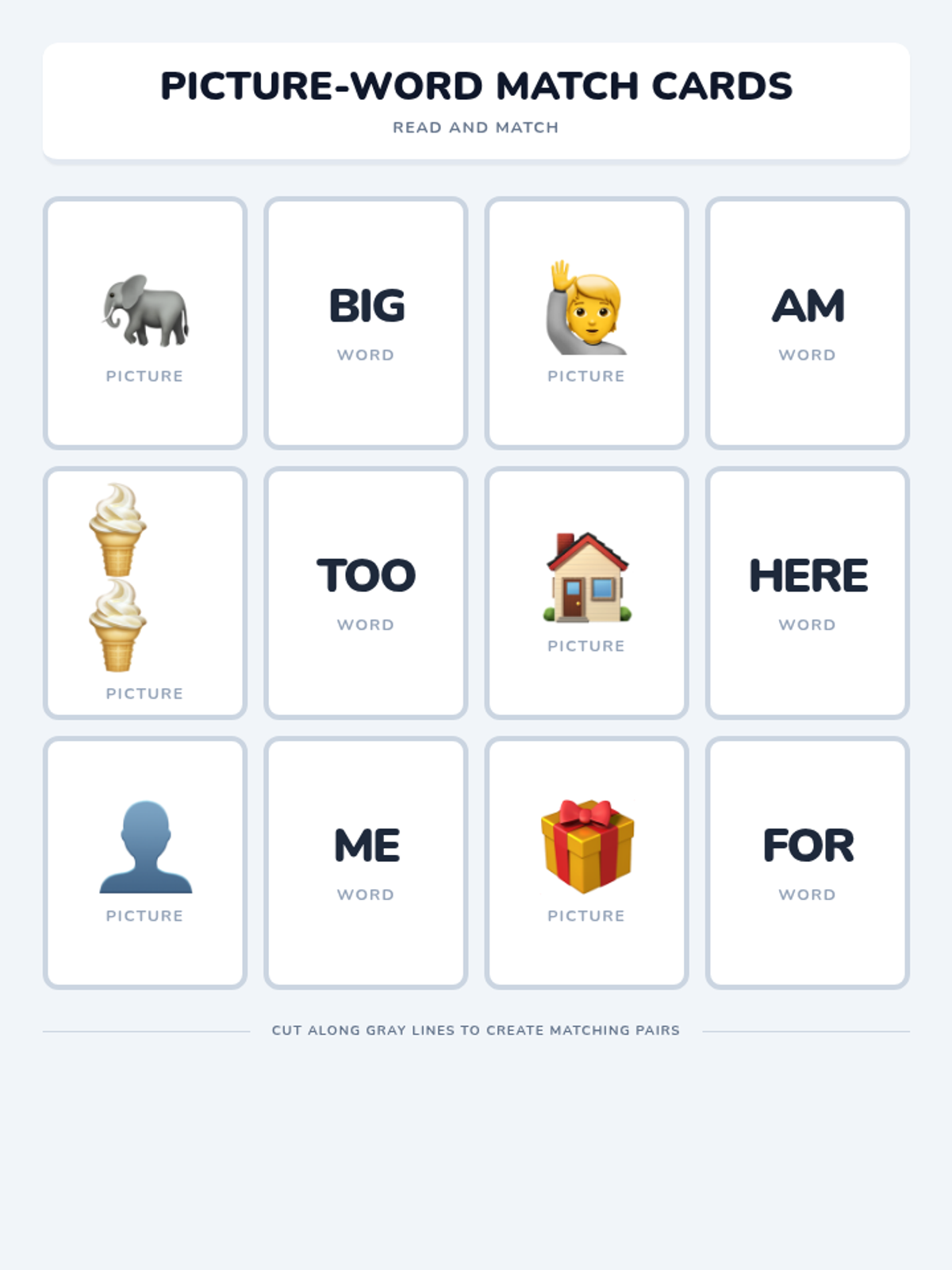
Matching cards featuring large emoji pictures and bold word labels. Uniform borders ensure students focus on content rather than color shortcuts. Layout optimized for a single page.
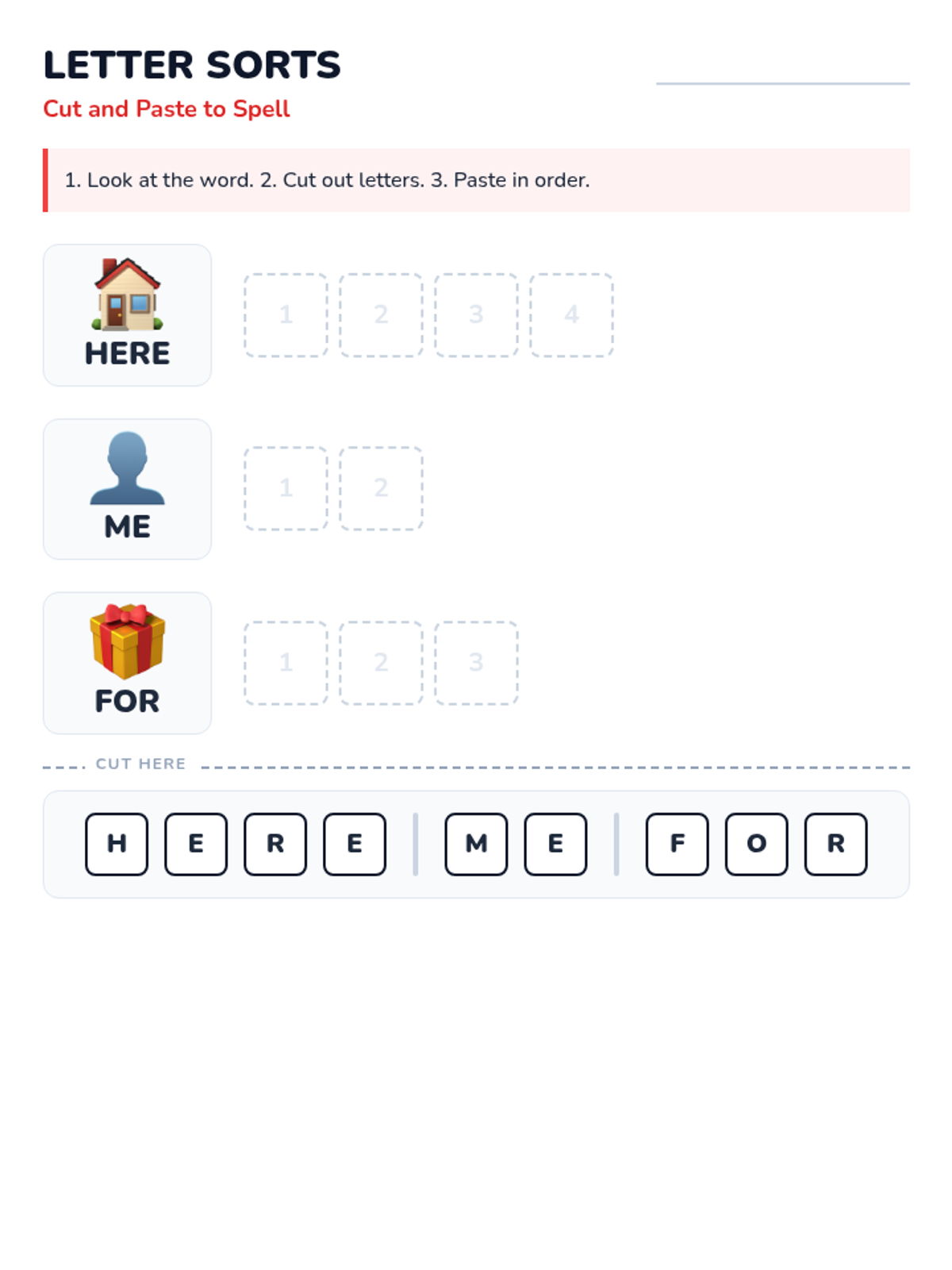
A cut-and-paste letter sorting activity for the words 'here', 'me', and 'for'. Improved layout to keep letters on the same page and ensured consistent letter casing.
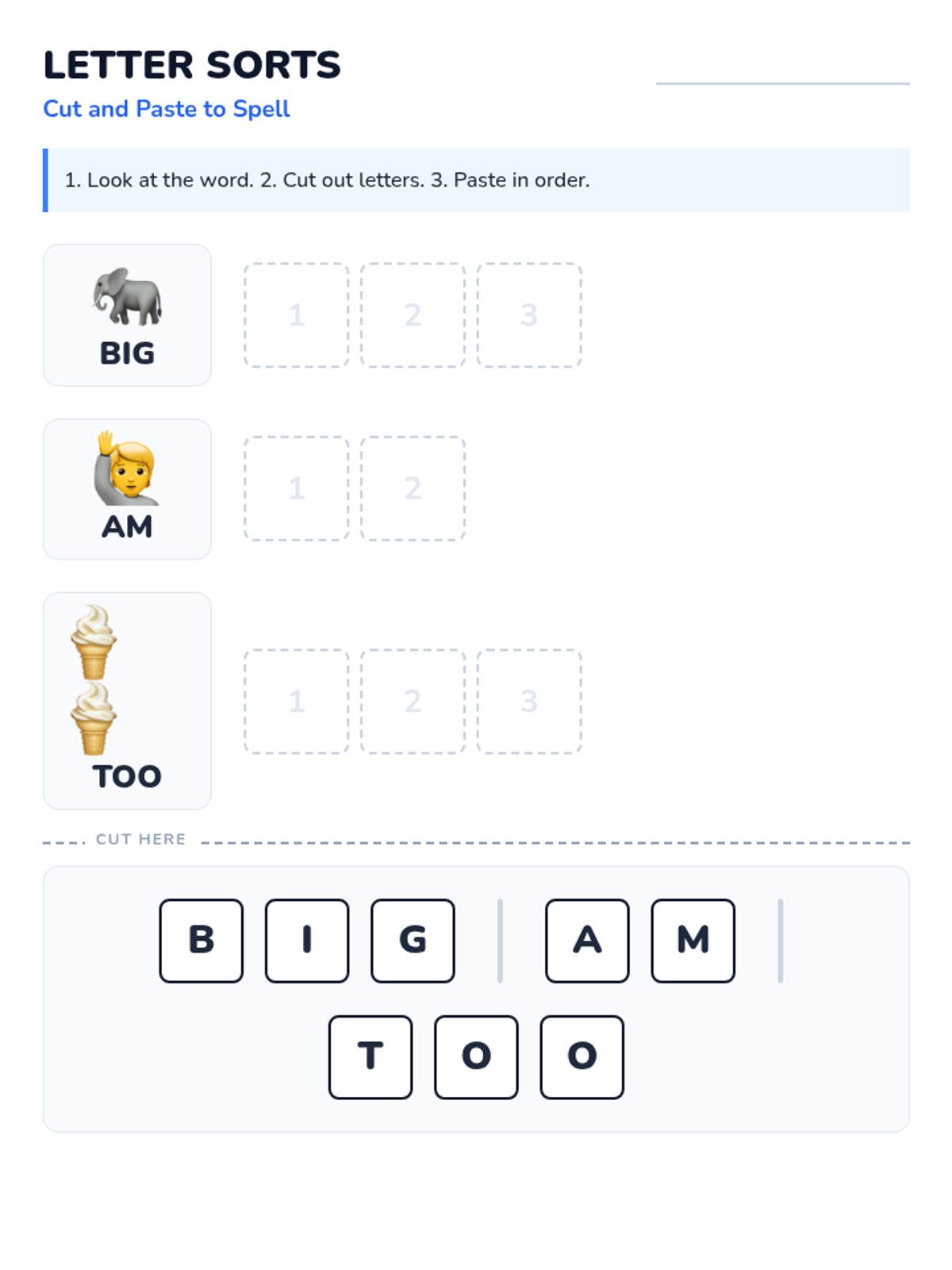
A cut-and-paste letter sorting activity for the words 'big', 'am', and 'too'. Improved layout to keep letters on the same page and ensured consistent letter casing.
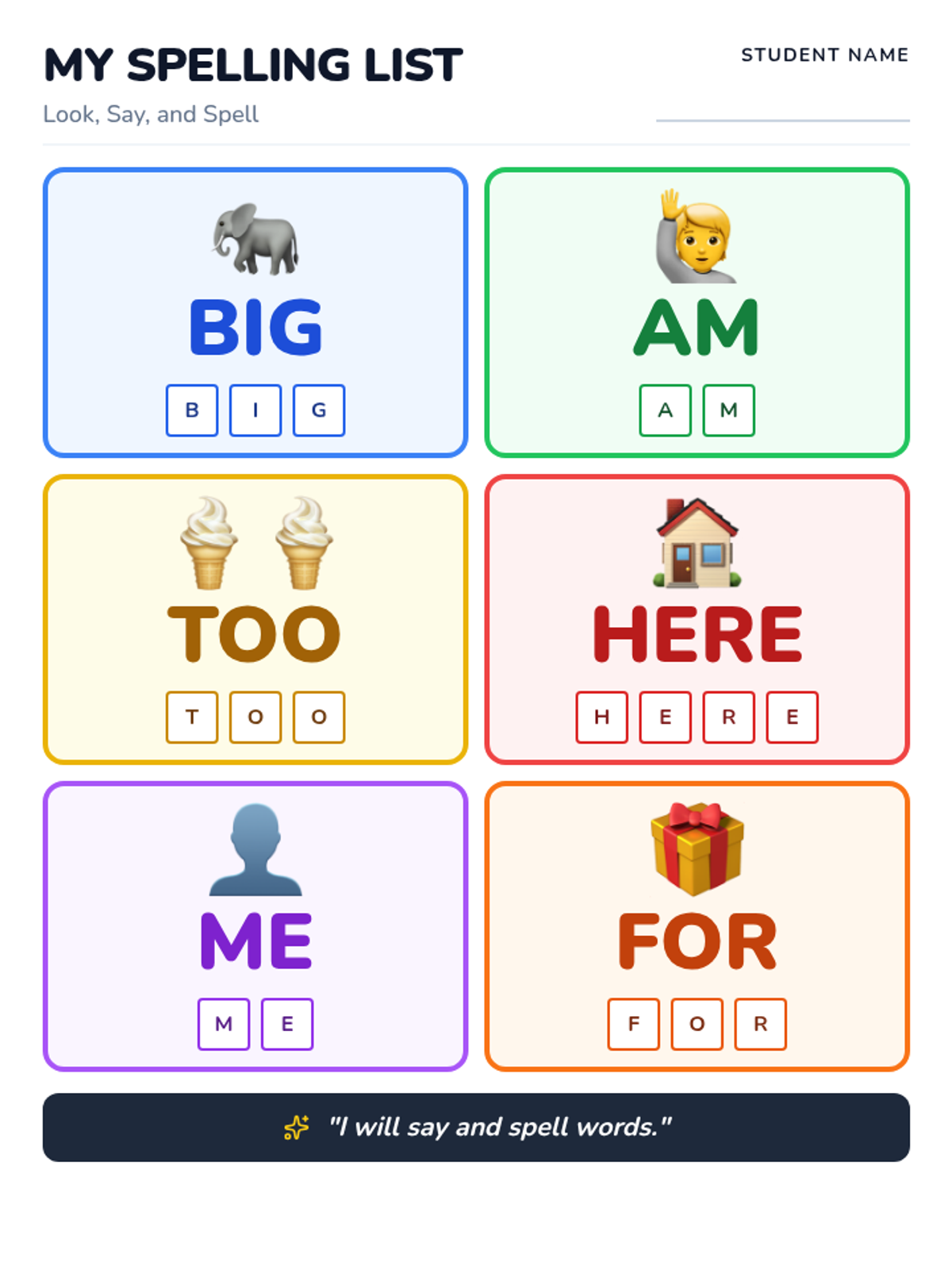
A visual spelling list featuring large text, emoji-based picture supports, and letter-by-letter breakdowns for students to reference. Updated for better visibility and layout.
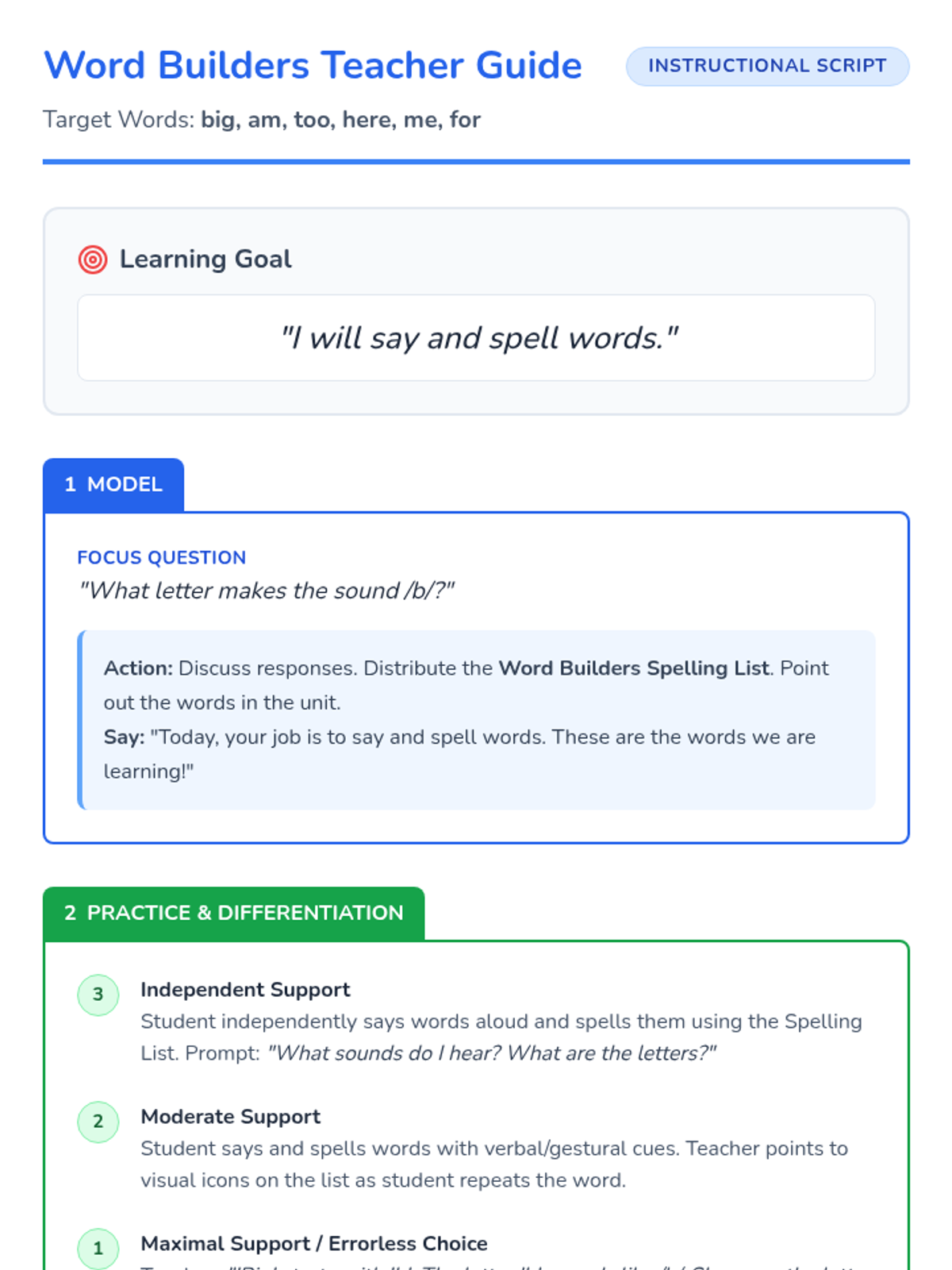
An instructional guide for teachers using the Model-Practice-Review framework to teach high-frequency words to students with moderate intellectual disabilities.
A professional slide deck for parent presentations, covering the neurobiology of dyslexia, reading impact areas, and myth-busting with a focus on Chapter 2 of the MA Guidelines.
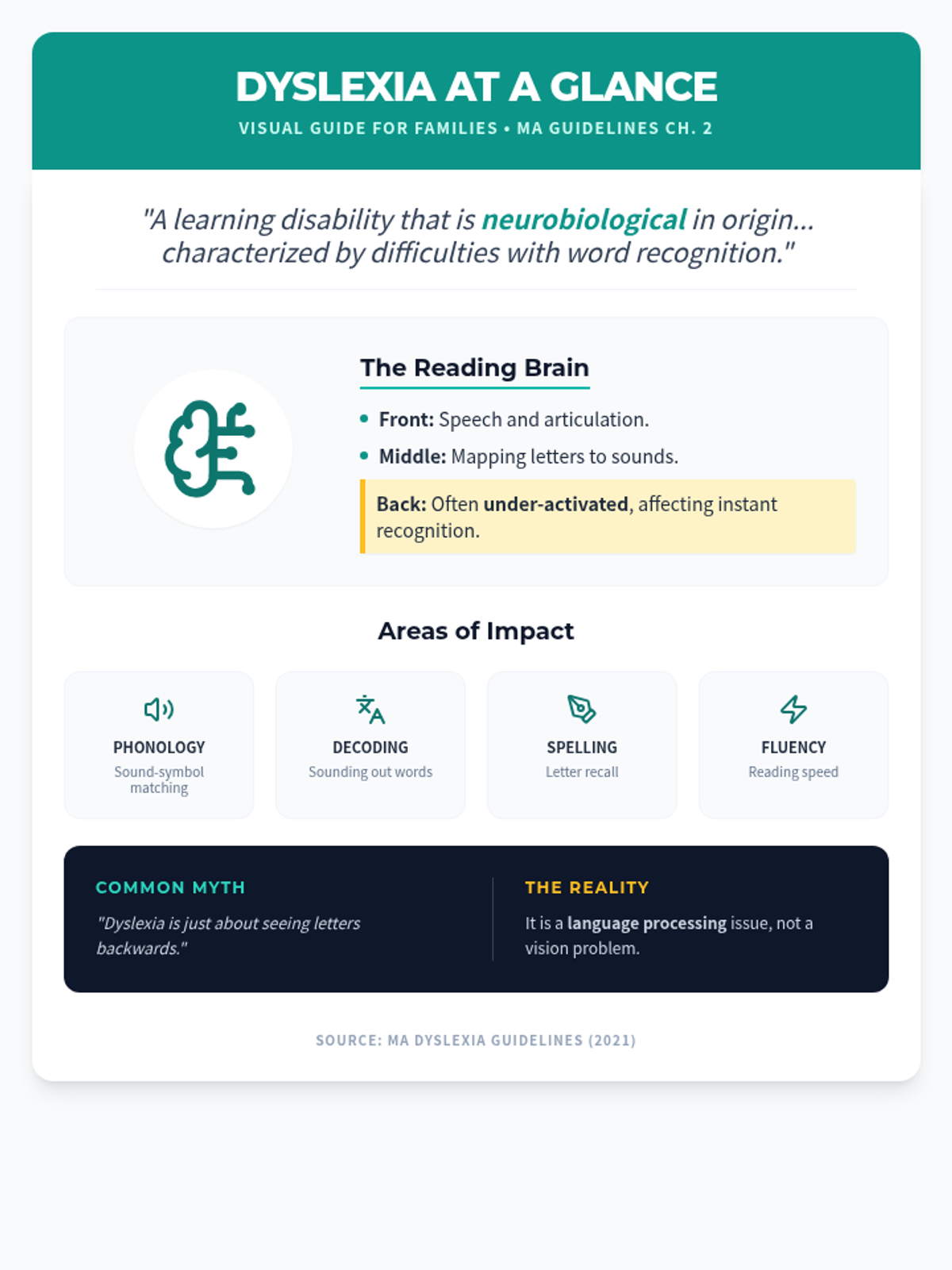
A visually engaging infographic summarizing the core concepts of dyslexia, including brain processing, reading impact areas, and debunking common myths for parents.
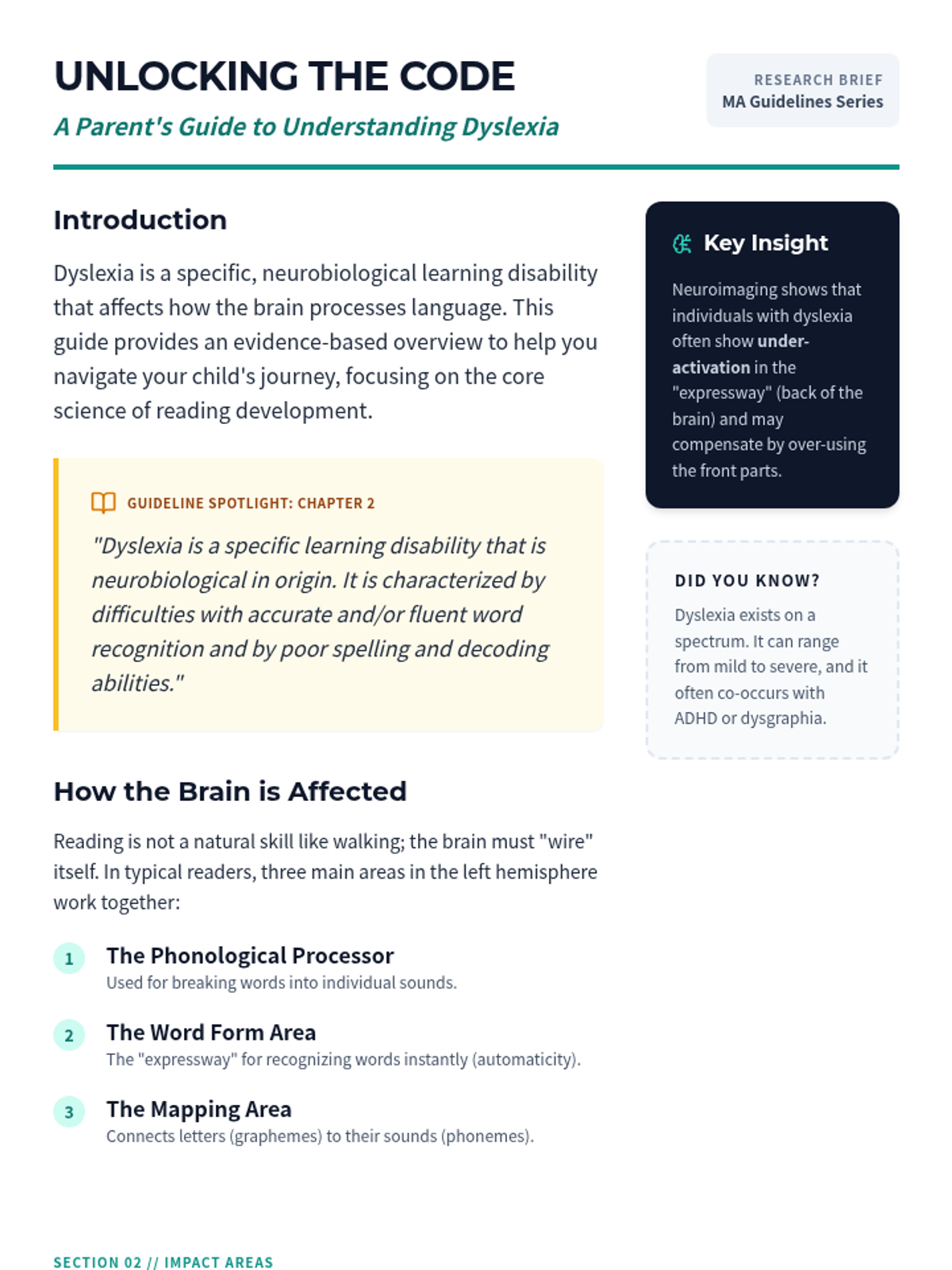
A professional 3-page white paper for parents, detailing the neurobiology of dyslexia, areas of reading impact, and debunking common myths using evidence from the Massachusetts Dyslexia Guidelines.
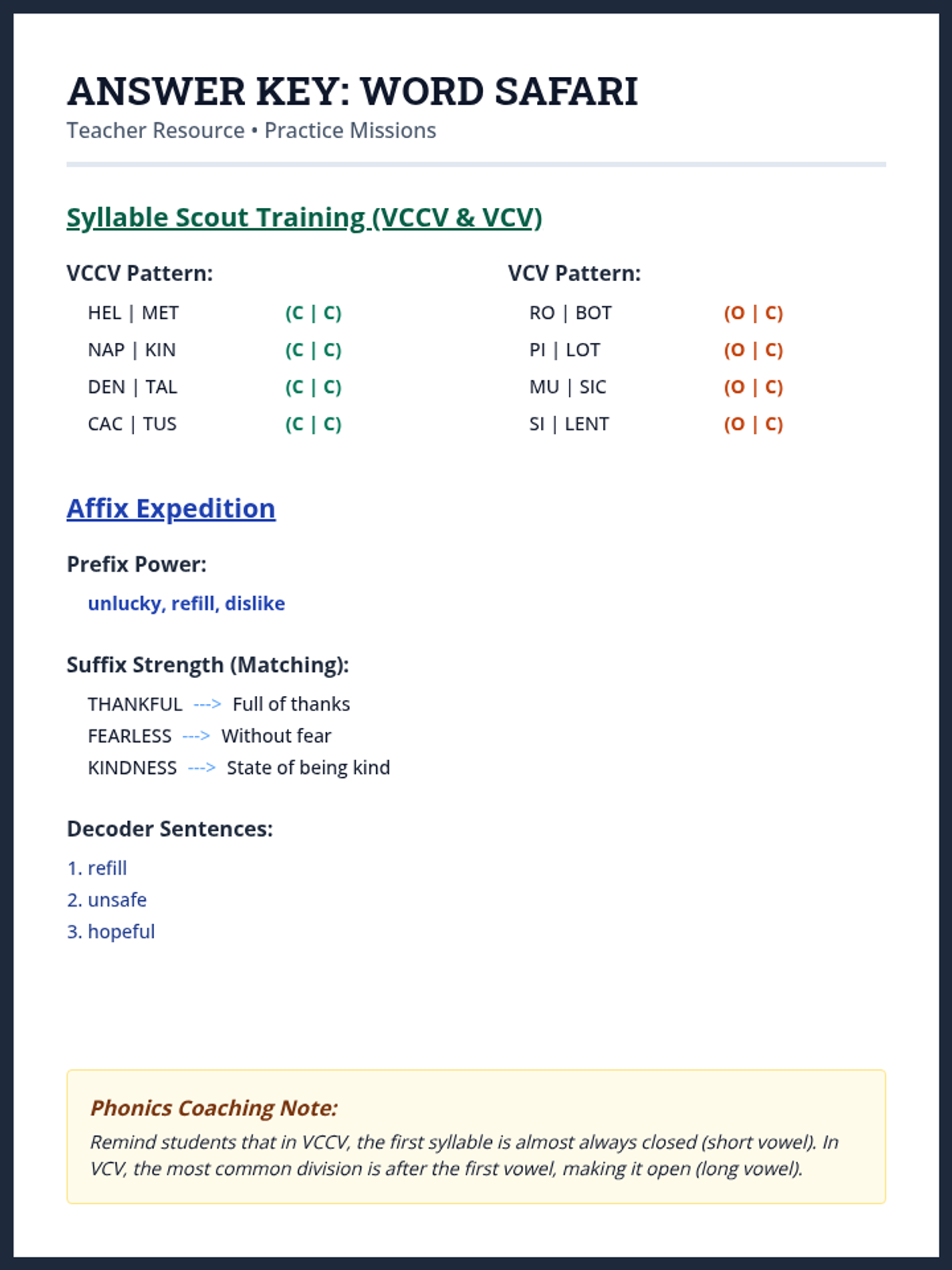
An answer key for the Word Safari Practice Worksheet, covering syllable division and affix building. Updated for consistency with the practice sheet.
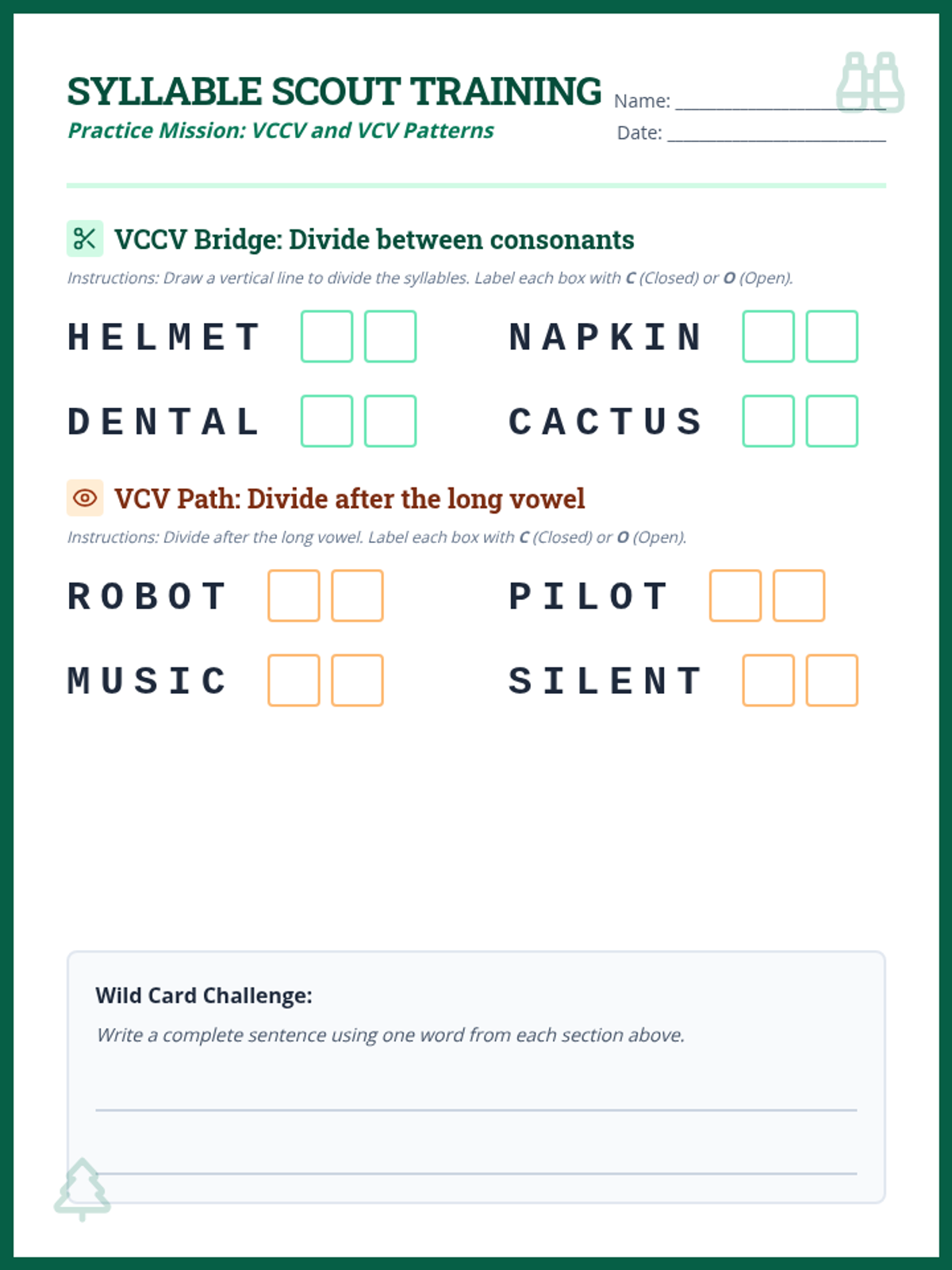
A two-page practice worksheet for syllable division (VCCV and VCV) and affix building (prefixes and suffixes) with a safari explorer theme. Improved spacing and clean student work areas. Corrected scrambled definitions and affix sentence consistency.
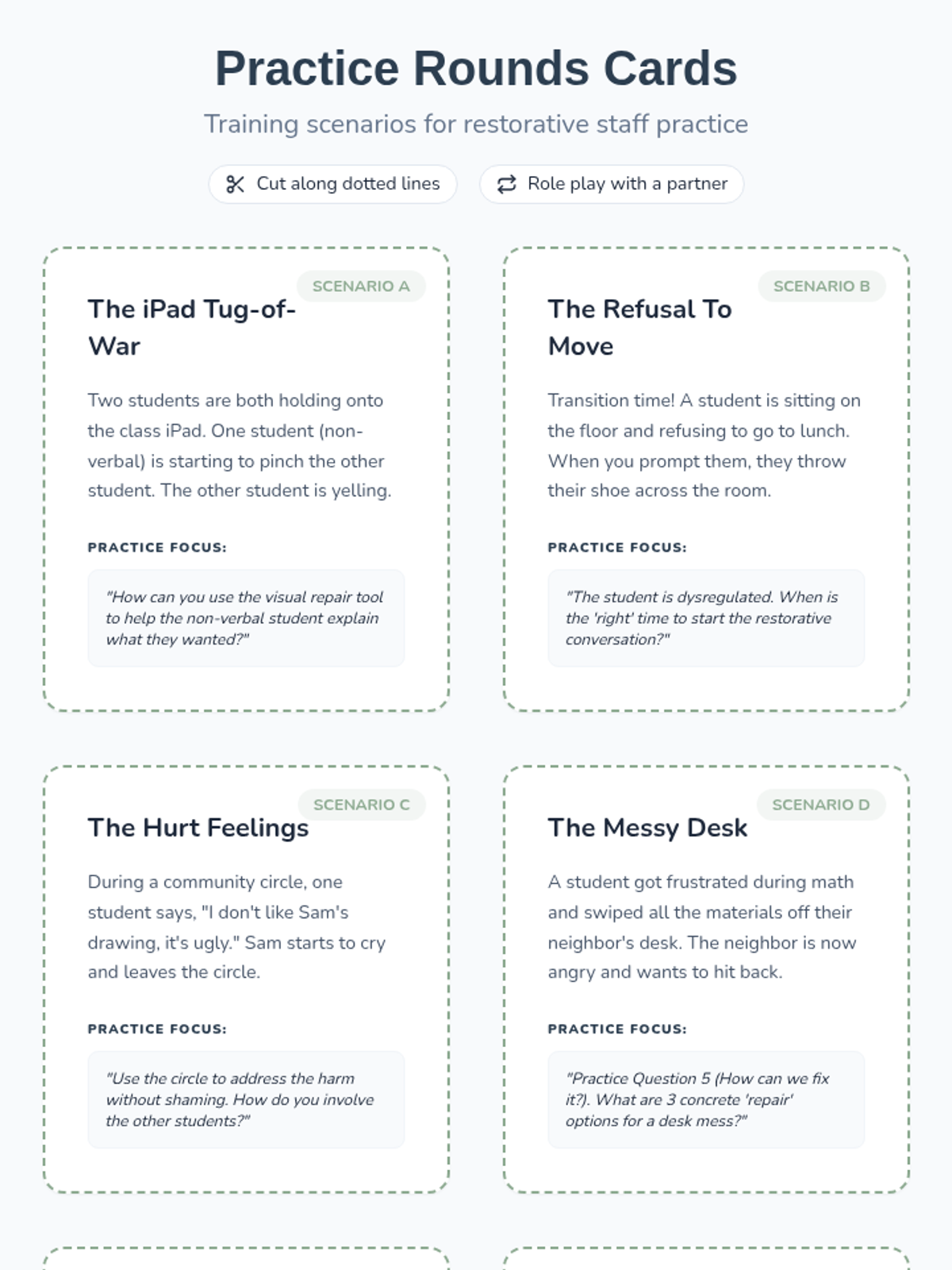
A set of six role-play scenario cards for staff training. Each card presents a common special education classroom challenge. Revised to ensure cards stay on one page and remove all placeholder text.
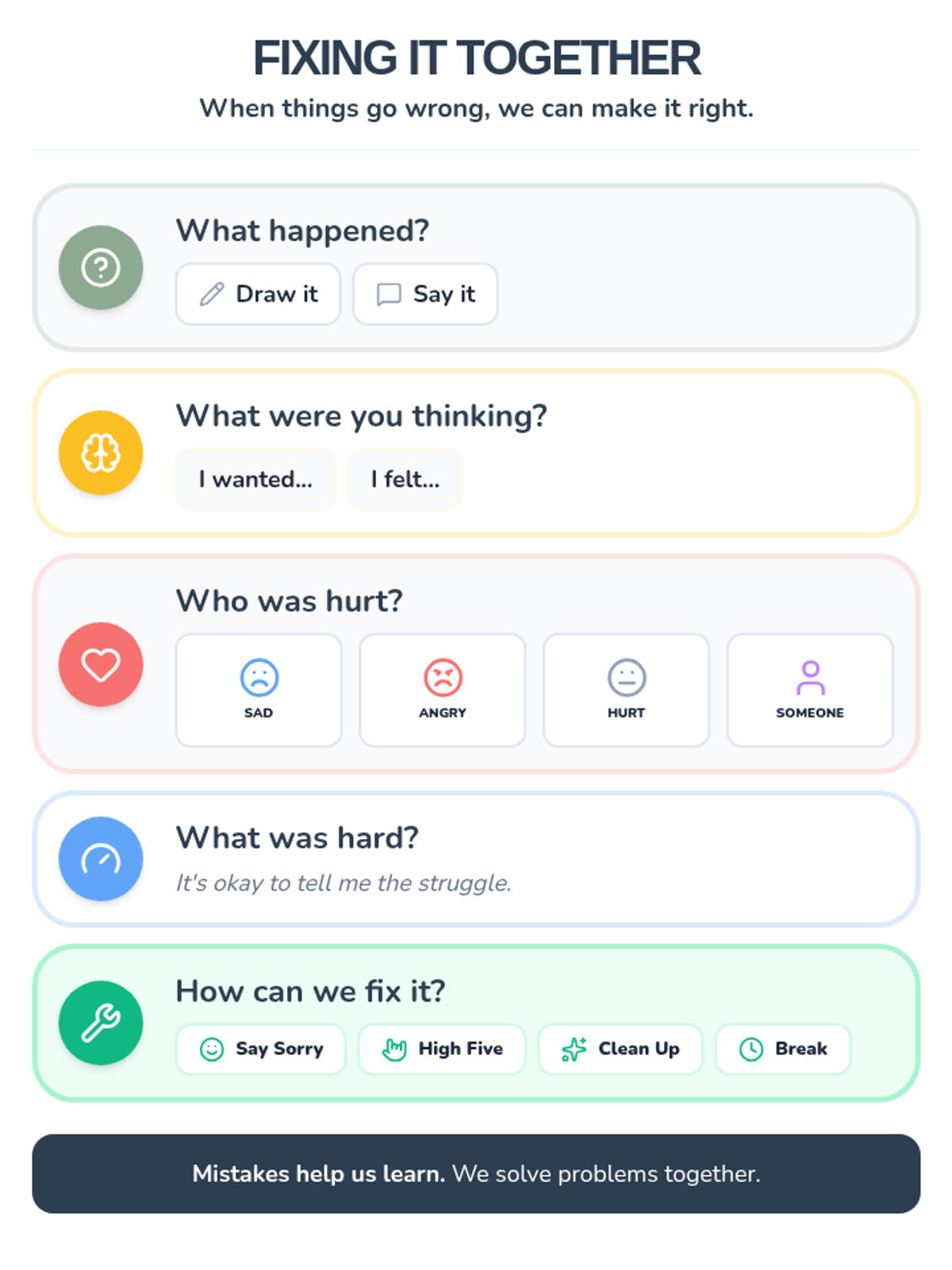
A student-facing visual aid for restorative conversations. Uses simplified language, large icons, and clear steps to guide students through the 5 repair questions. Revised for single-page printing and larger interactive targets.
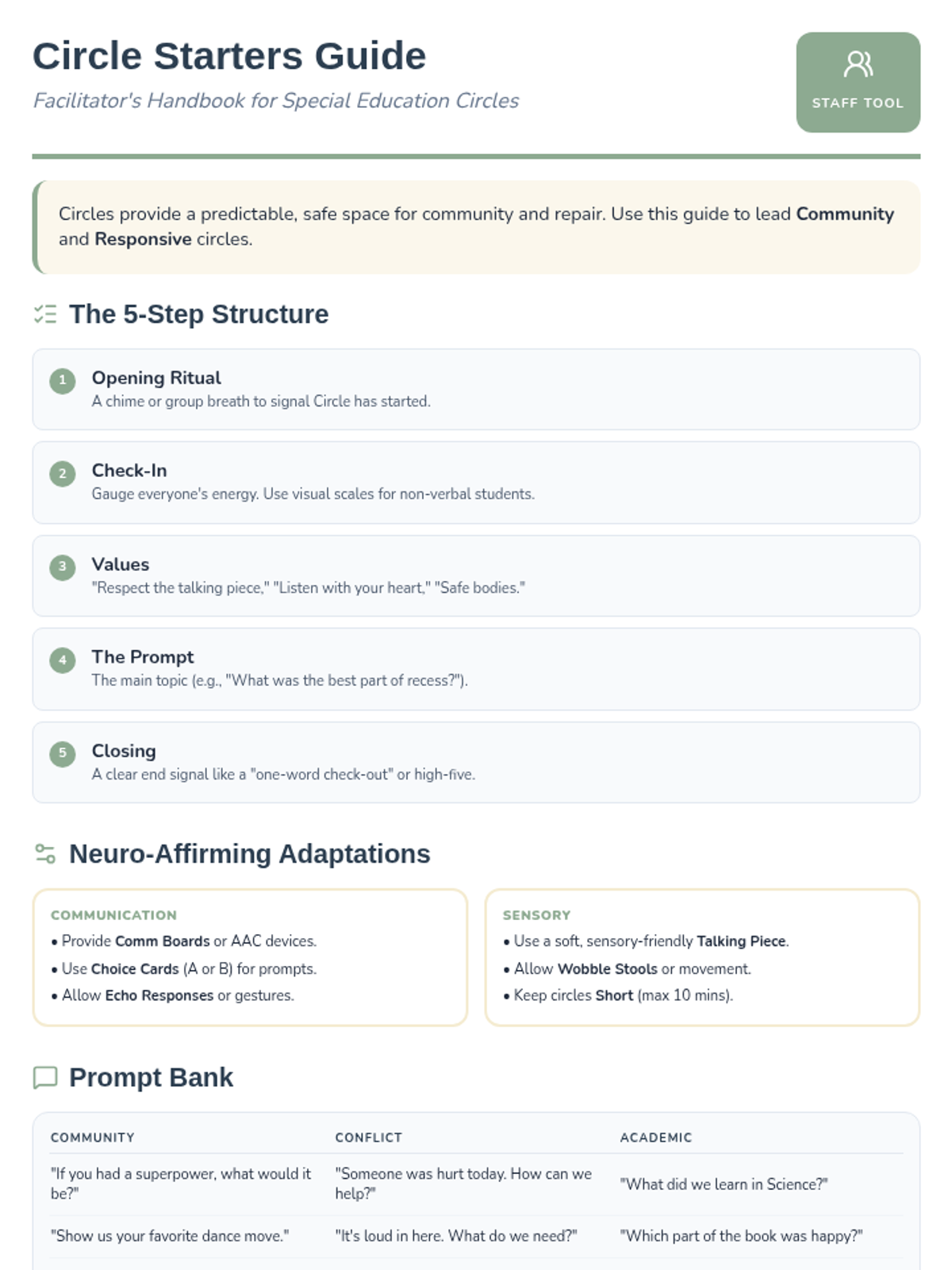
A facilitator's guide for staff on how to structure and implement restorative circles. Includes a 5-step structure, specific neurodiversity-affirming adaptations (communication and sensory), and a bank of circle prompts. Revised to ensure all content fits on one page and avoids awkward breaks.
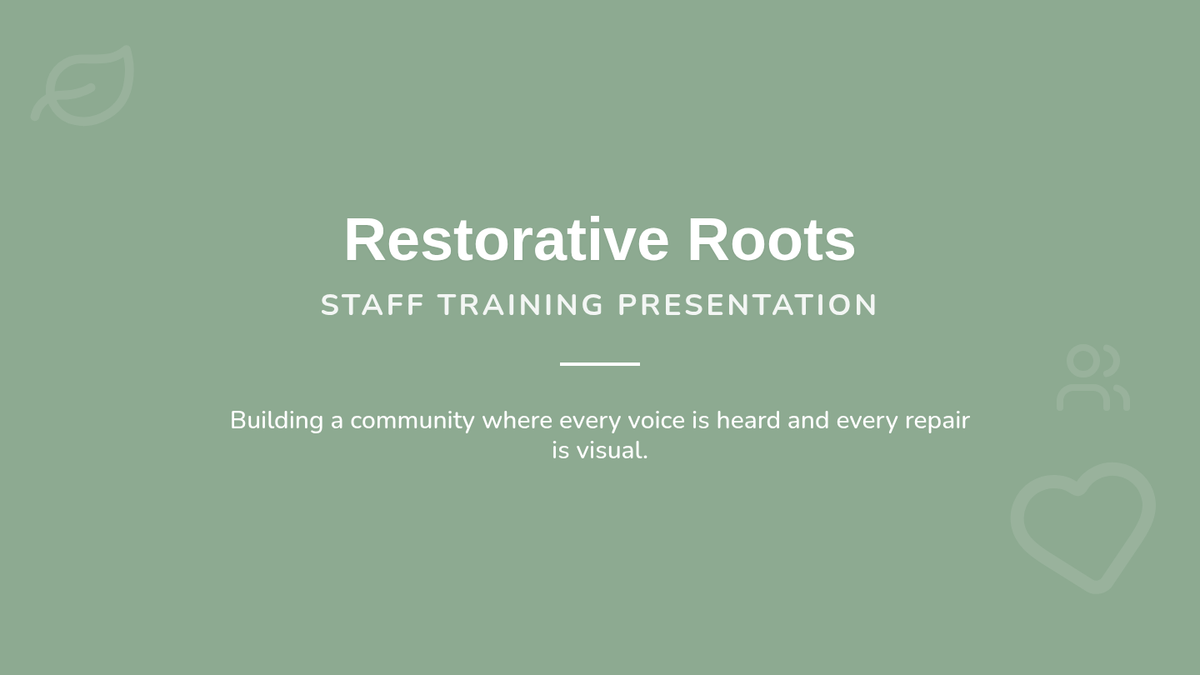
A comprehensive staff training slide deck on implementing restorative practices in special education. Focuses on the shift from punitive to restorative mindsets, specific adaptations for neurodiverse learners, and simplified repair questions. Revised for better contrast and includes a workshop practice slide.
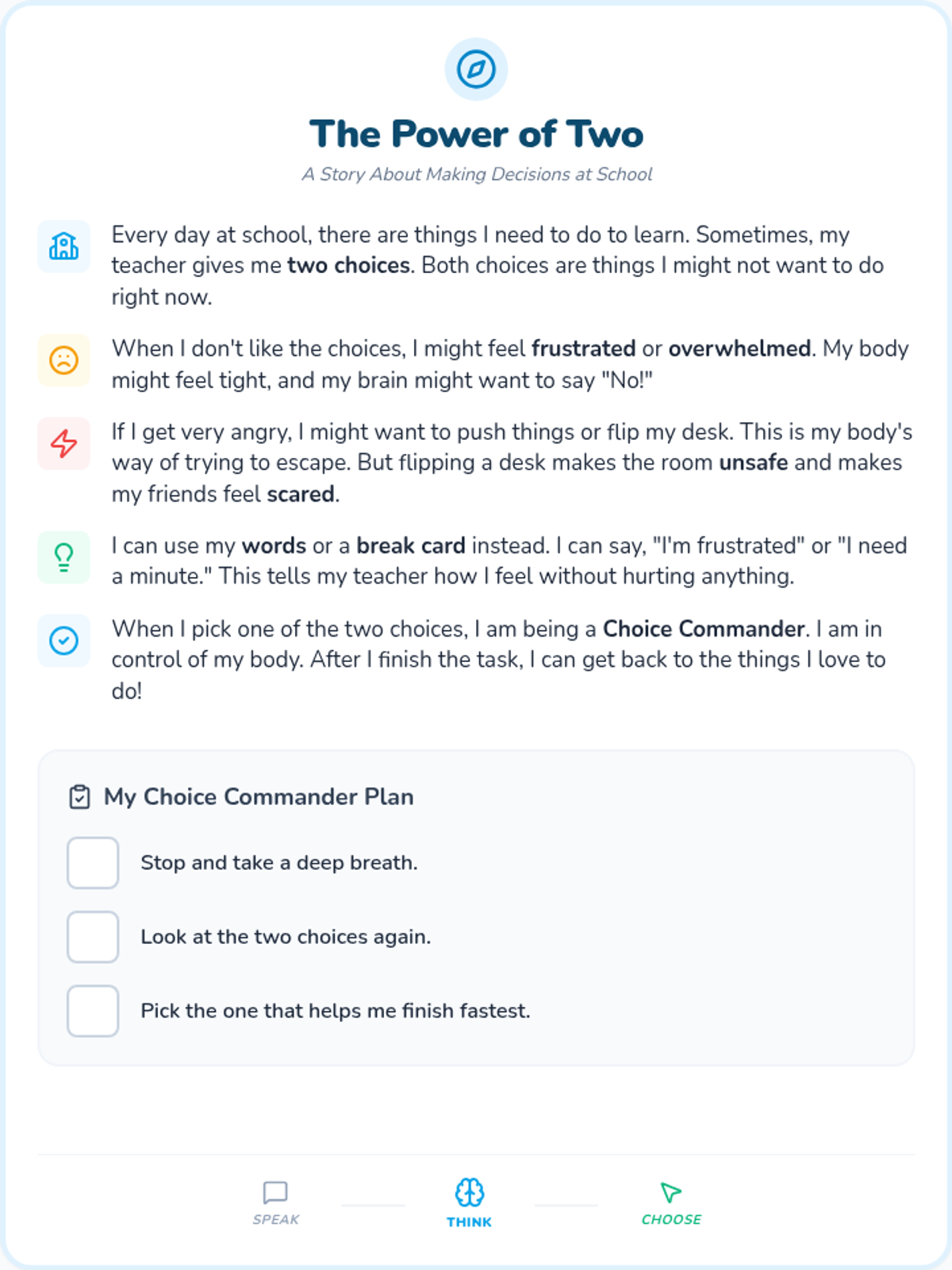
A combined resource featuring a social story to help students manage choice-based frustration and a behavior reflection worksheet for processing desk-flipping incidents.
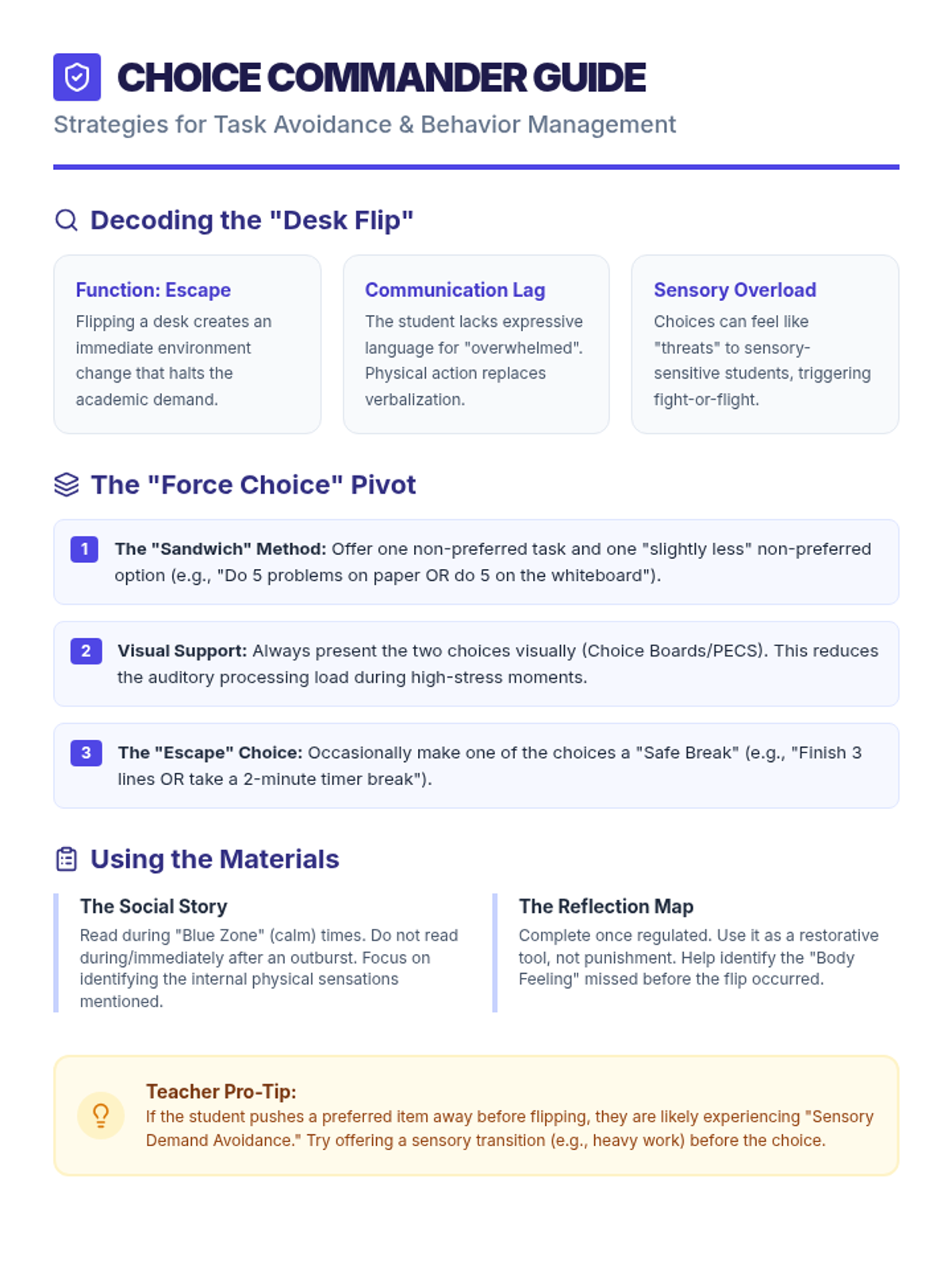
A comprehensive teacher-facing guide providing insights into the functional behavior of desk-flipping, as well as specific instructional strategies for implementing forced-choice interventions.
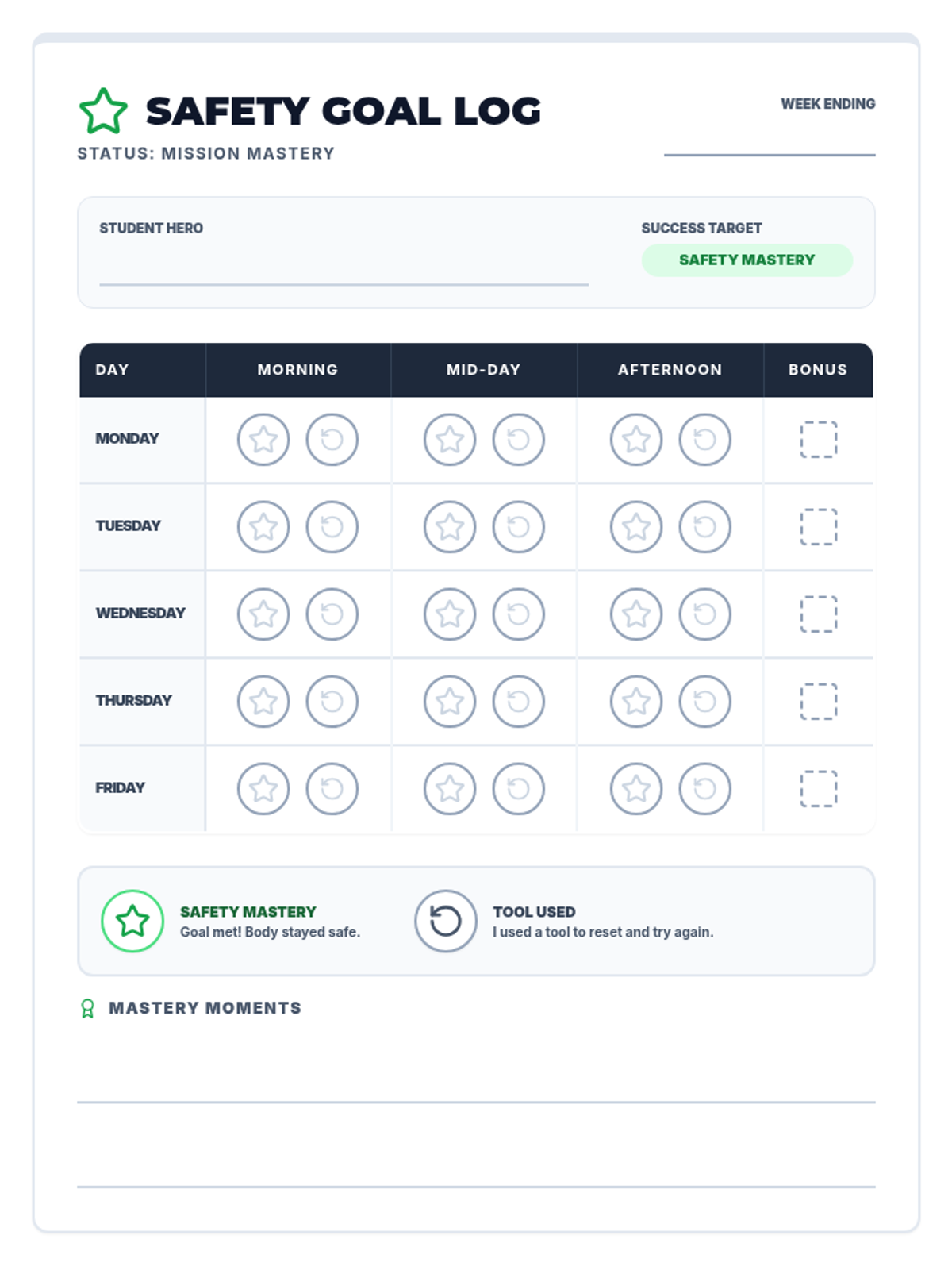
A purely positive, goal-oriented 'Safety Mastery' tracking log for 4th graders. It replaces the smile/frown system with 'Star' (Mastery) and 'Reset' (Tool Use) icons to encourage self-regulation and skill building.