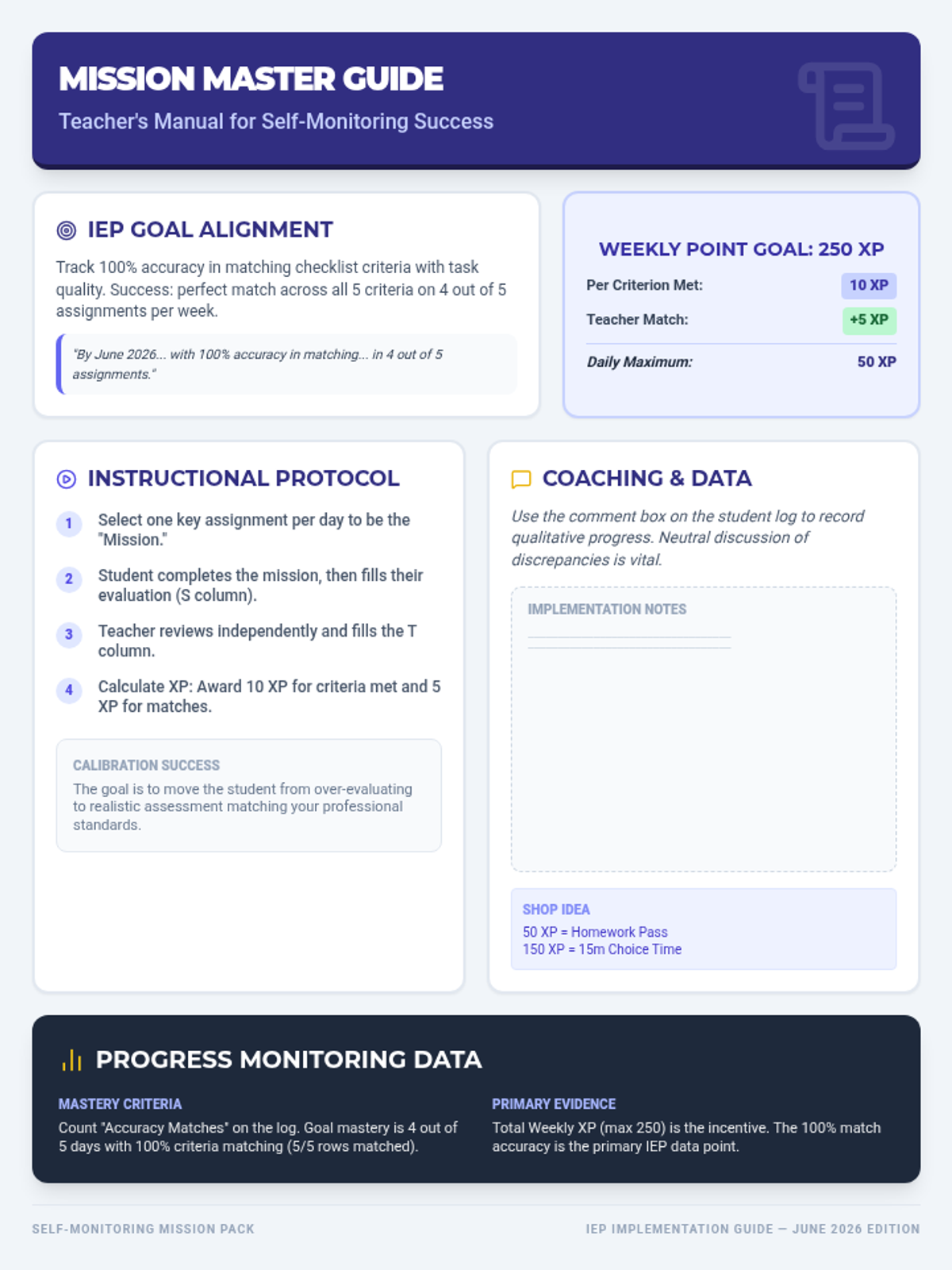
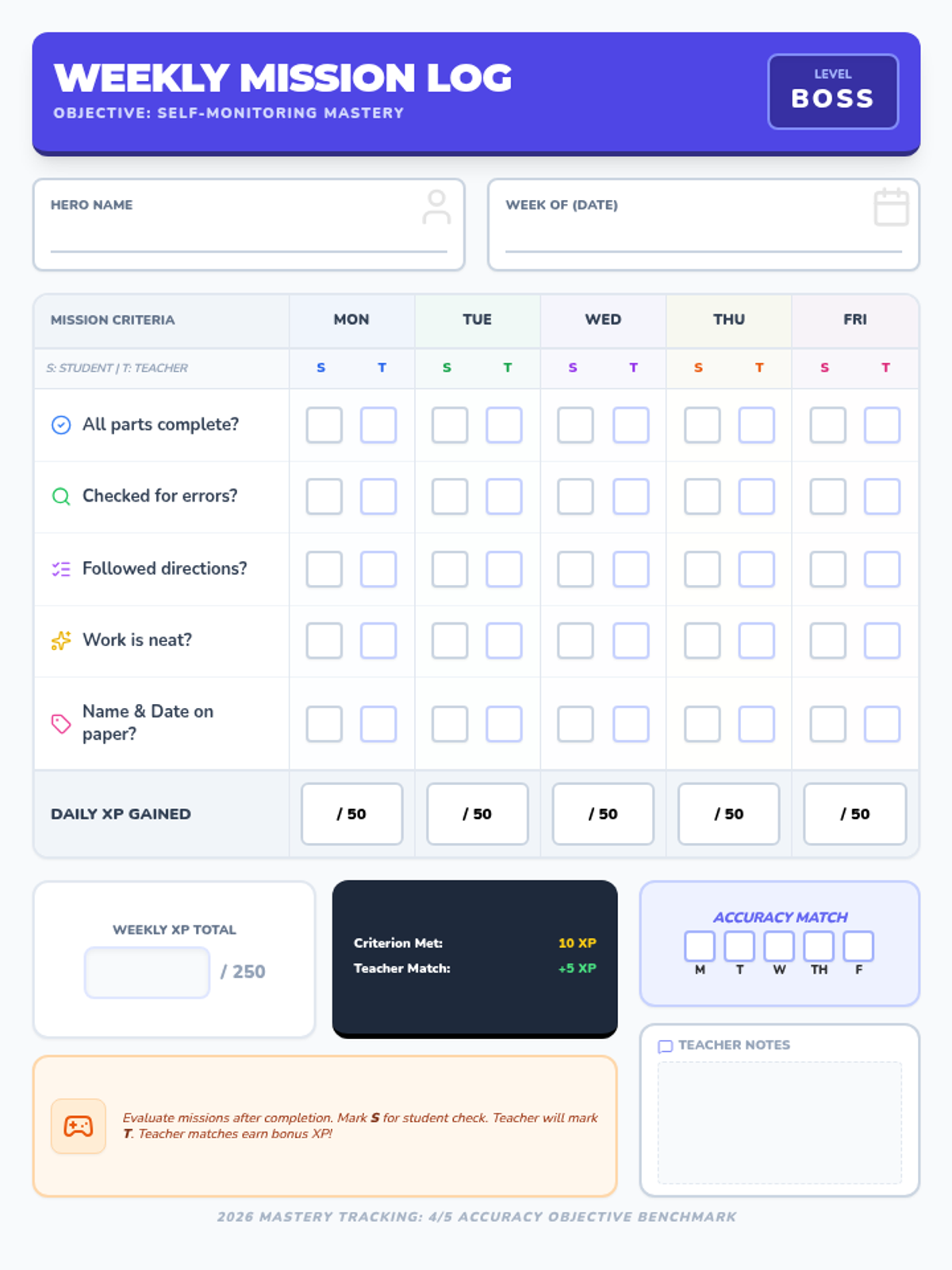
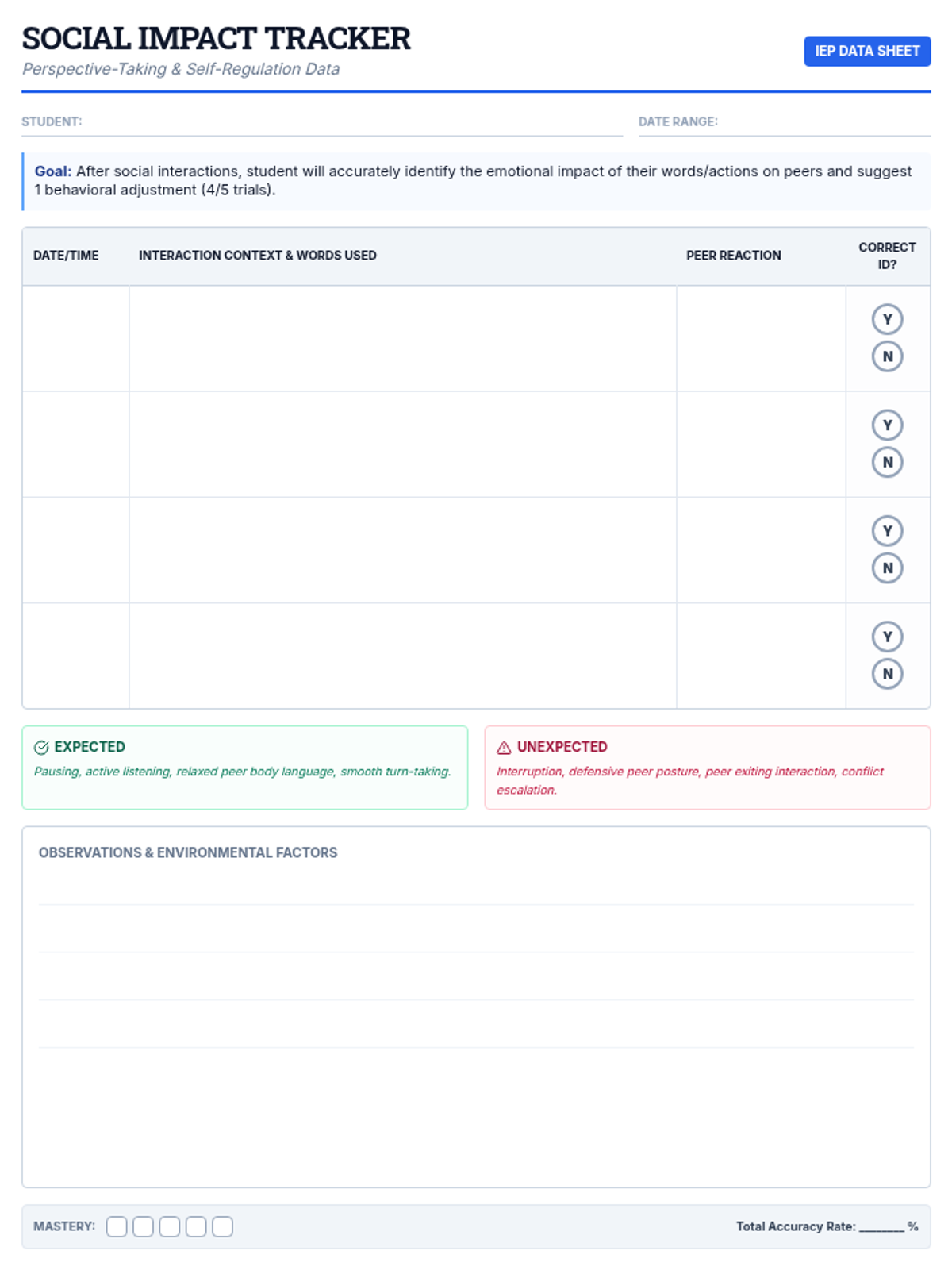
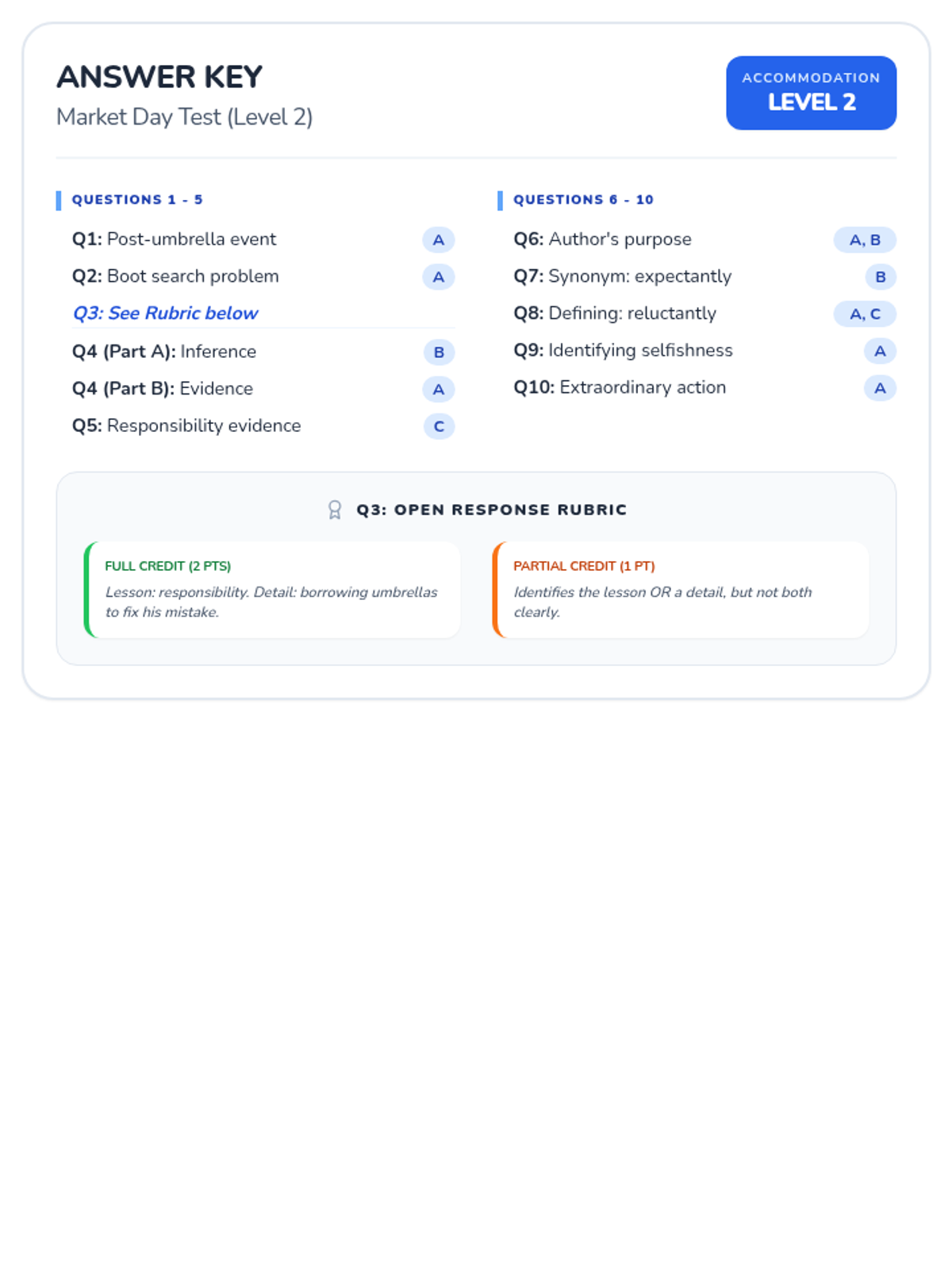
Teacher guide for Lesson 5, including a final assessment rubric, post-presentation feedback prompts, and strategies for transferring text-to-speech skills to other subjects.
A student-facing tracking checklist to monitor behavioral readiness and administrative requirements for field trip eligibility.
A formal behavior contract for students and parents to sign, detailing the specific expectations and consequences for field trip eligibility.
A high-impact classroom poster summarizing the four core behavioral expectations for field trip eligibility using a bold, explorer-themed visual style.
A detailed behavioral rubric for middle school students to determine their eligibility for a field trip, featuring four levels of achievement across key conduct categories.
A set of small, cuttable reference cards for the student to carry, featuring the Calm Protocol steps on one side and grounding strategies on the other.
A formal safety plan for the student, detailing the 'Calm Protocol' activation steps, safe space locations, and trusted contacts to ensure safety during high-stress moments.
A teacher-facing instructional guide providing context on the student's emotional disability and home life, along with specific co-regulation strategies and a response plan for classroom teachers.
A personalized worksheet for a 6th-grade student to identify their unique early warning signs of dysregulation and select specific grounding strategies and mantras to use in the classroom.
A modern, high-impact slide deck for a 6th-grade student that explains emotional dysregulation as a 'power surge' and introduces key grounding strategies like square breathing and the 5-4-3-2-1 technique.
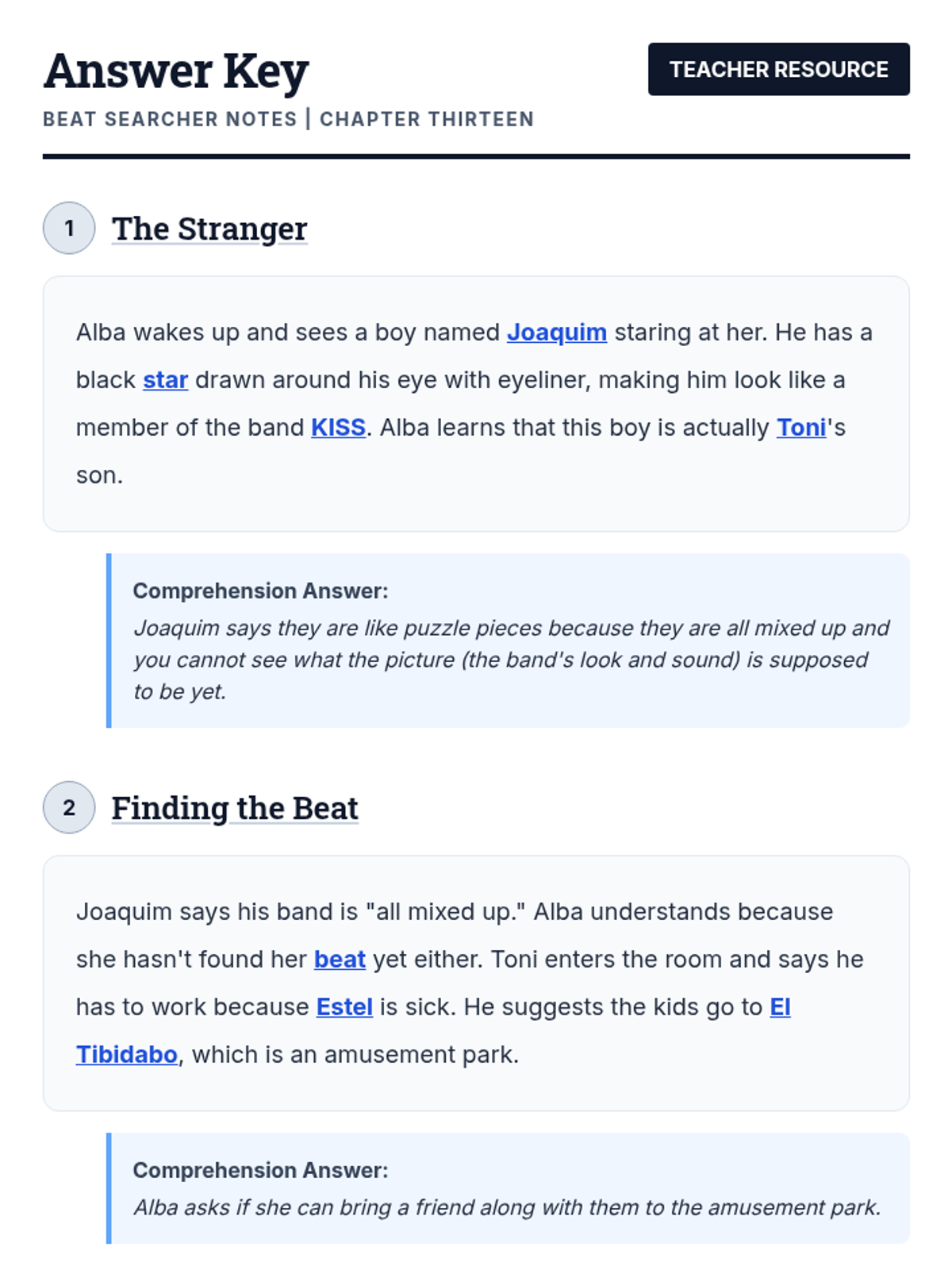
The master answer key for the Logic Blueprint Worksheet, providing correct categorizations for phonics, sight word placement, and sample compound sentences.
Updated Foreman's Instruction Guide now featuring a clear Gradual Release Blueprint (I Do, We Do, You Do) to assist the teacher in lesson delivery within a 15:1 intervention setting.
A student worksheet designed as an architectural blueprint, featuring a CVCE vs. CVC sorting task, a cloze activity for sight words (spell, story, very, year), and a sentence-matching exercise to practice compound sentences.
An instructional slide deck with an architectural theme, focusing on CVCE phonics logic, high-frequency sight words (spell, story, very, year), and the structure of simple and compound sentences.
A student reflection worksheet for the Mind Lab lesson. It includes space for video comprehension, personal reflection on metaphors, and an extension activity where students create their own metaphor for a specific feeling.
Printable reference cards for small group work. Each card explains one of the four main ADHD metaphors (Secretary, Whiteboard, Race Car, Sunburn) and provides a specific goal for the poster activity.
A comprehensive teacher's guide containing the lesson goals, a 45-minute pacing schedule, the randomized word lists for the working memory game, and a detailed response key for the video-based metaphors.
Engaging instructional slides for the Mind Lab lesson, featuring the 'How to (Explain) ADHD' video, visual breakdowns of key metaphors (Secretary, Whiteboard, Race Car), and activity instructions.
A student-facing journal designed for deep reflection and note-taking during the lesson. It includes sections for warm-up, vocabulary definitions, video observations, simulation feedback, and a long-form paragraph reflection.
A comprehensive 10-slide presentation deck that guides students through the ADHD metaphor lesson, featuring embedded video, interactive discussion prompts, and visual explanations of neurobiological concepts.
A comprehensive teacher's guide for the Mind Lab lesson, including a lesson timeline, discussion anchors, vocabulary definitions, and facilitation tips for teaching ADHD metaphors to 4th-6th graders.
A high-contrast, professional data collection sheet designed for recording 1-step directions and WH-question responses using a clean tally system.
A quick, two-problem assessment to check student understanding of moving decimals in division, featuring a self-reflection section.
Teacher's answer key for all practice problems in the Decimal Division Mastery lesson, including both standard and scaffolded worksheets.
A scaffolded practice worksheet for special education students that includes a step-by-step checklist for each division problem, supporting self-monitoring and procedural fluency.
A practice worksheet for special education students to apply the 'Decimal Jump' technique, focusing on moving the decimal point and placing it correctly in the quotient.
A visual anchor chart designed for special education students, providing a clear, step-by-step guide on how to move decimals during division using high-contrast colors and simple language.
High-contrast flashcards for common part signs: ed, er, ou, ow, st. Ideal for students with low vision.
High-contrast flashcards for the 'ch' group of contractions: ch, gh, sh, th, wh. Designed for tactile or visual practice.
Final mastery assessment for the 9-week Braille sequence, featuring pattern recognition and a comprehensive dictation challenge.
Week 7 practice pack for common part signs (ed, er, ou, ow, st), including pattern matching and writing mastery.
Week 4 practice pack for the 'ch' group of contractions, focusing on identification, tracing, and simple word building (ch, sh, th).
A teacher-facing dictation key for Weeks 1-3, providing word lists, practice sentences, and a short mastery passage for evaluating the student's Braille contraction skills.
A set of high-contrast, printable flashcards for the 'and', 'for', 'of', 'the', and 'with' contractions. Features large print and dot patterns for BLV accessibility.
Week 1 student practice pack for the 'and' group contractions, featuring pattern recognition, tracing/writing practice, and fill-in-the-blank sentences.
A comprehensive 9-week roadmap for teachers, outlining the instructional cycle, target contractions, and teaching strategies for BLV students.
A visual "dashboard" that allows the student to set a goal for their work session and track their progress through non-academic stages to evaluate self-regulation and goal-setting skills.
A set of printable task cards that challenge students to sort objects based on different attributes (color, function, size) to assess categorization skills.
A visual, step-by-step assembly guide that assesses a student's ability to inventory materials and follow a sequence of instructions for a non-academic task.
A comprehensive teacher's guide and scoring rubric for assessing organizational skills through non-academic tasks, including observation criteria and facilitation strategies.
An open-ended, sketch-focused version of the mission organizer for the "Creator Path." Provides a flexible "Creative Zone" for students to map ideas through drawing or symbols.
A student-facing tracker for the "Sprint Path," allowing them to break a task into 2-minute bursts followed by a 2-minute reset. Includes a menu of pre-selected reset activities.
A student-facing guide for the "Team Path," allowing them to observe a peer or teacher as a low-pressure way to engage with a task. Includes guided observation questions and a transition plan to trying a small part themselves.
A student-facing log for the "Voice Path," providing a structured way to plan a verbal response or presentation instead of writing. Includes space for key points and audience selection.
A student-facing menu of choices that provides multiple "paths" for completing tasks. Designed to reduce demand avoidance by offering autonomy over how work is approached.
A graphic organizer designed for students to manage focus and tasks. Includes sections for breaking down tasks into "micro-missions," identifying potential distractions, and setting reset rewards.
A professional guide for school staff on trauma-informed approaches. It covers the neurobiology of trauma, environmental triggers, de-escalation scripts, and executive functioning supports. Updated to include strategies for managing demand avoidance and autonomy-seeking behaviors.