Student reflection journal for Lesson 5, guiding them through summarizing their research findings and reflecting on their journey from decoding frustration to digital independence.
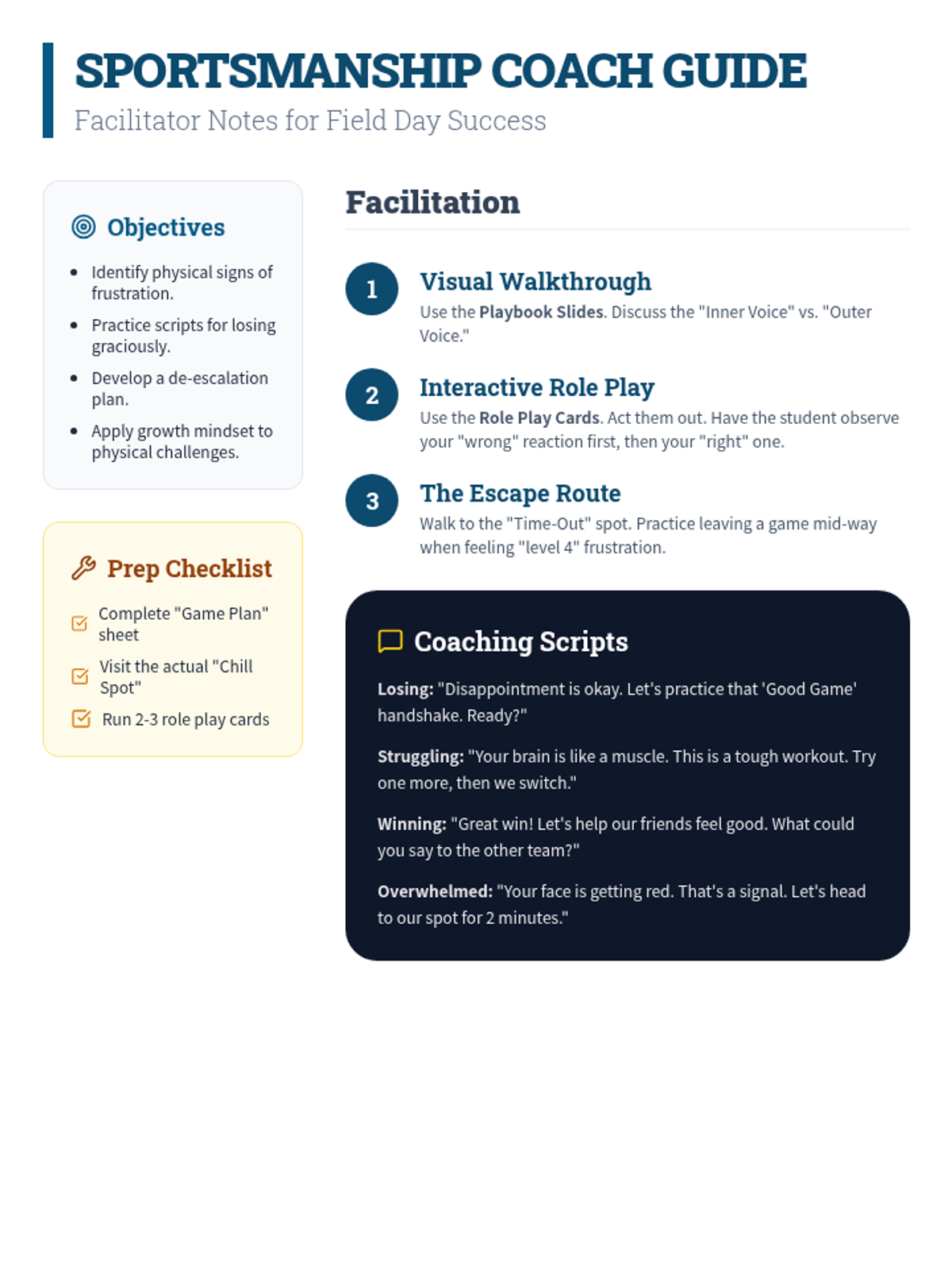
A revised teacher guide for Field Day sportsmanship coaching, now with optimized page layouts and break-inside-avoid containers to ensure a single-page view.
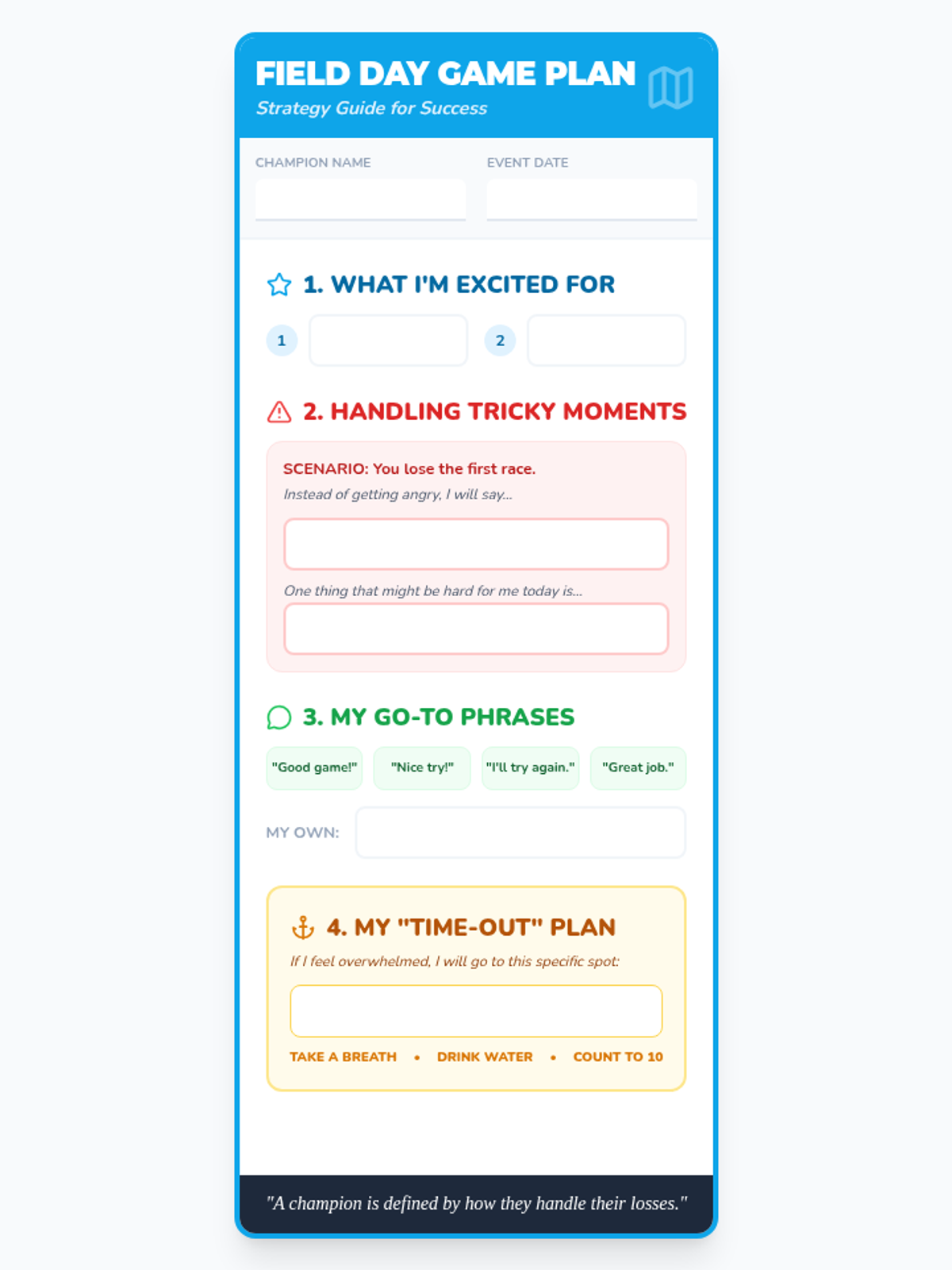
A final revision of the Field Day Strategy Sheet, now condensed with fixed heights and optimized spacing to ensure it fits perfectly on a single page while maintaining large, student-friendly input areas.
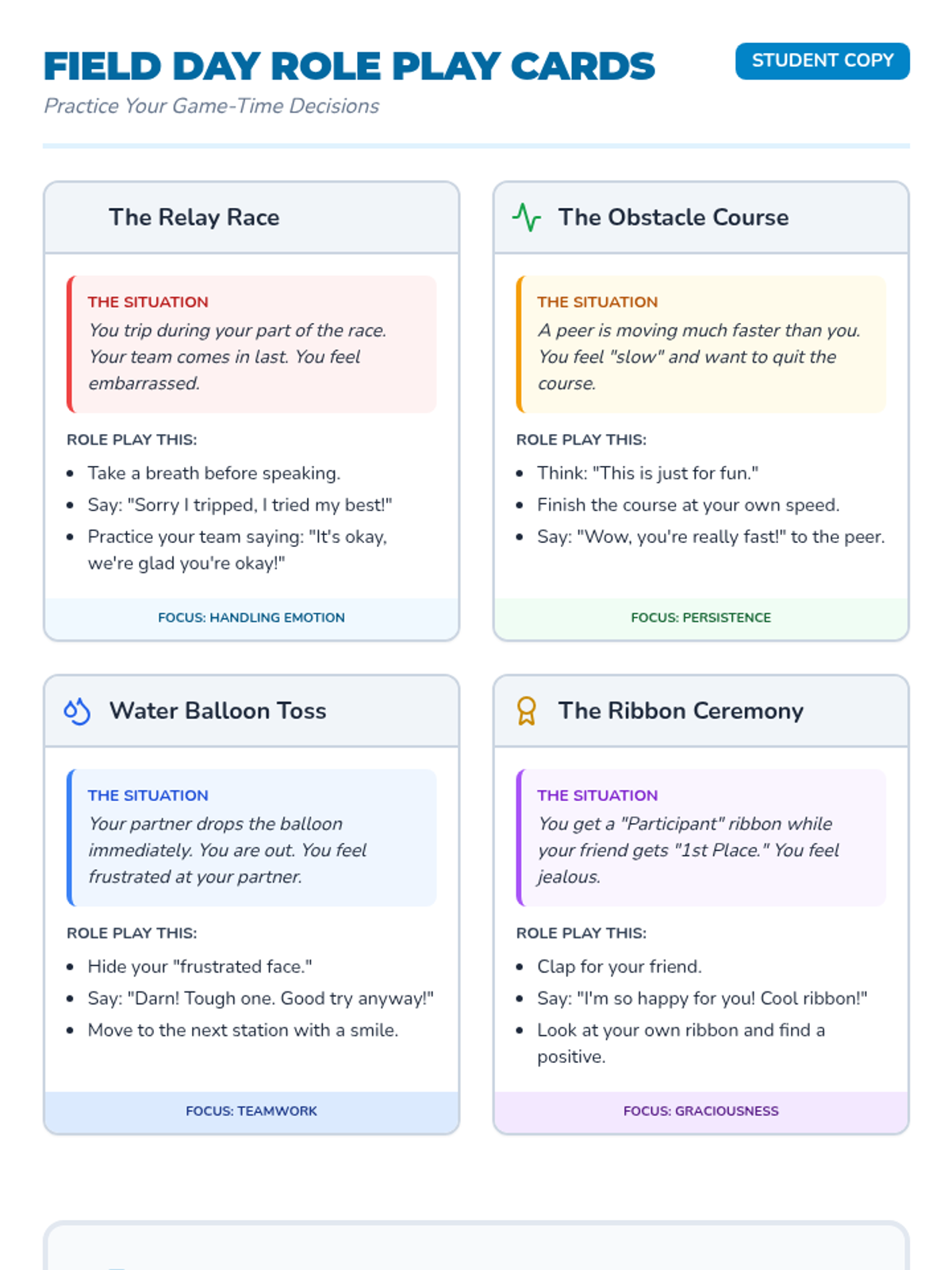
A revised set of role-play scenario cards for students with ASD, now featuring improved page breaks, corrected fixed heights, and larger response areas for handwriting.
A revised set of instructional slides for 6th-grade students with ASD, now with corrected typos and improved punctuation for clarity.
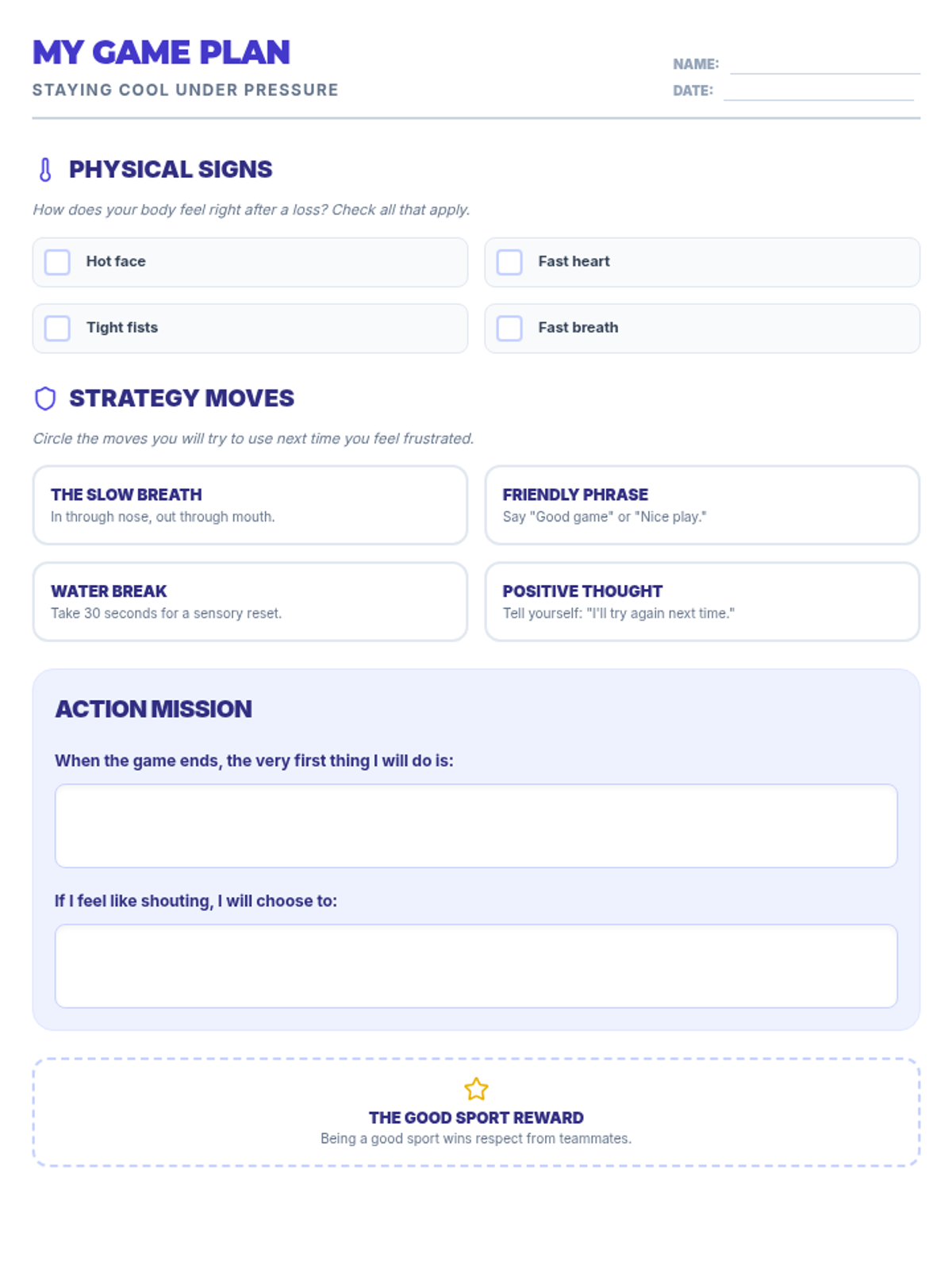
A reflection worksheet for students to identify their physical signs of frustration and select specific sportsmanship strategies to use during competitive play.
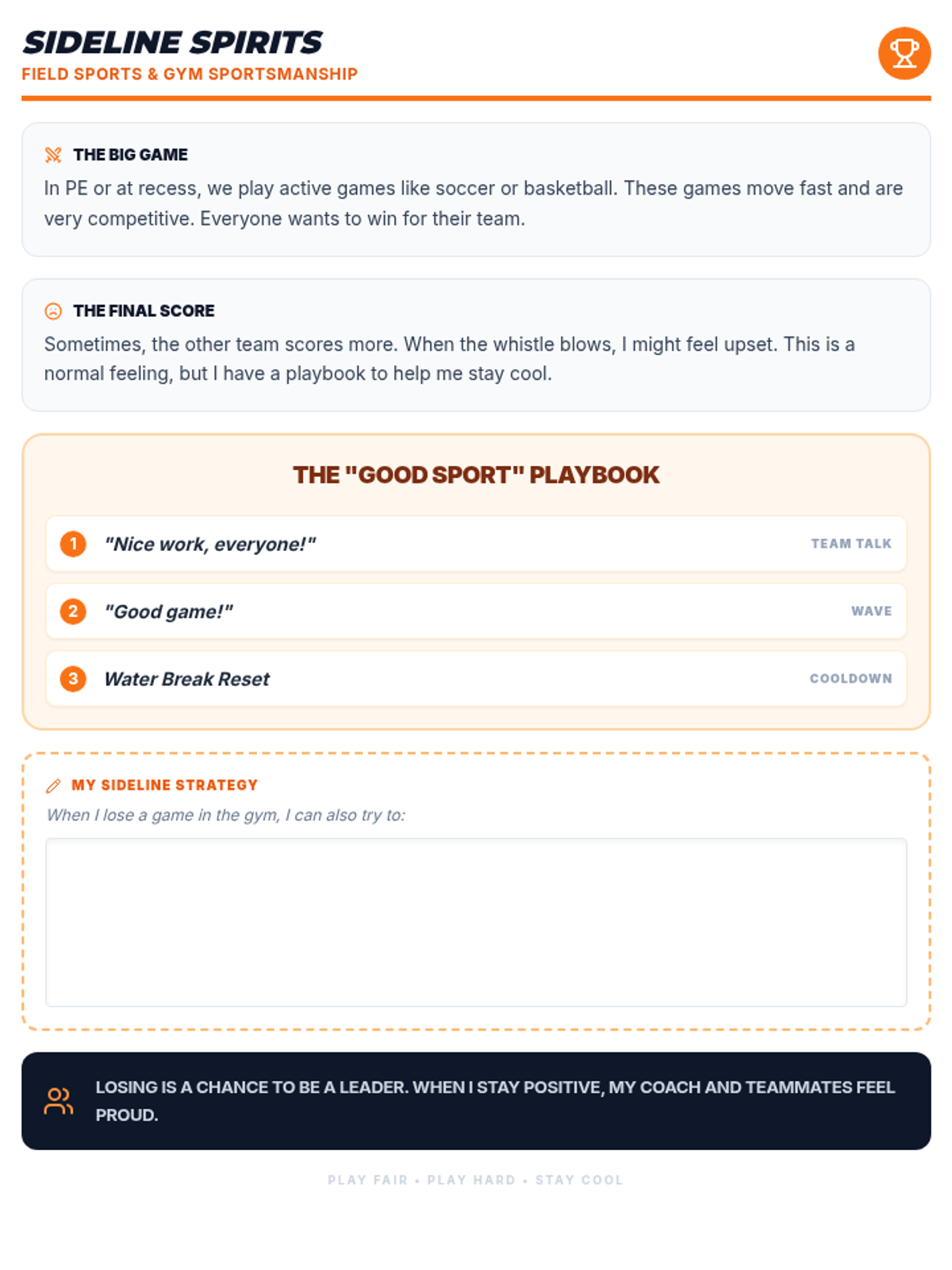
A sports-themed social story for 6th graders with ASD focused on field games and gym class. It provides a 'Good Sport Playbook' for managing post-game emotions on the field.
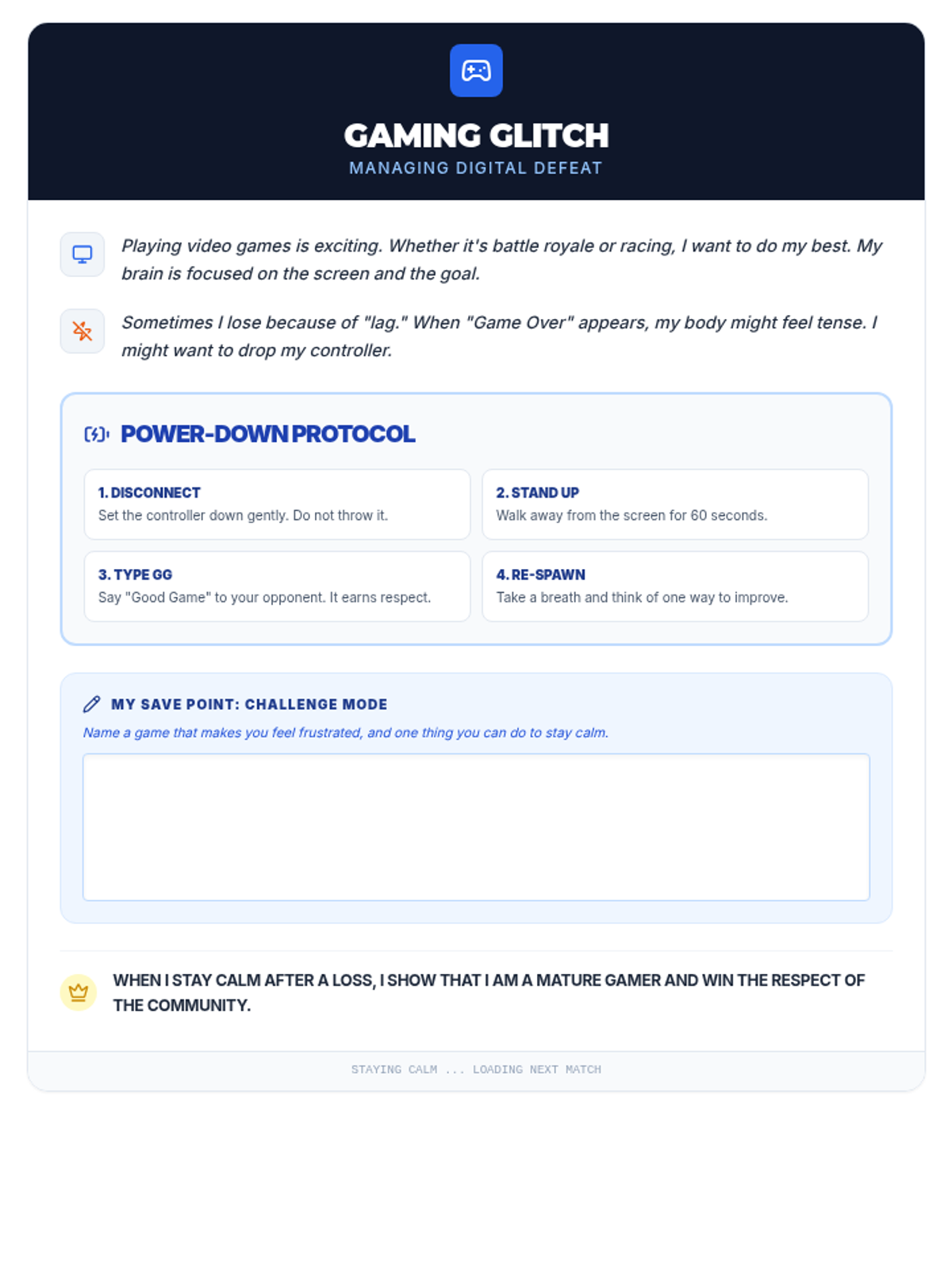
A digital-themed social story for 6th graders with ASD focused on video game sportsmanship. It addresses common triggers like lag and provides a 'Power-Down Protocol' for managing frustration.
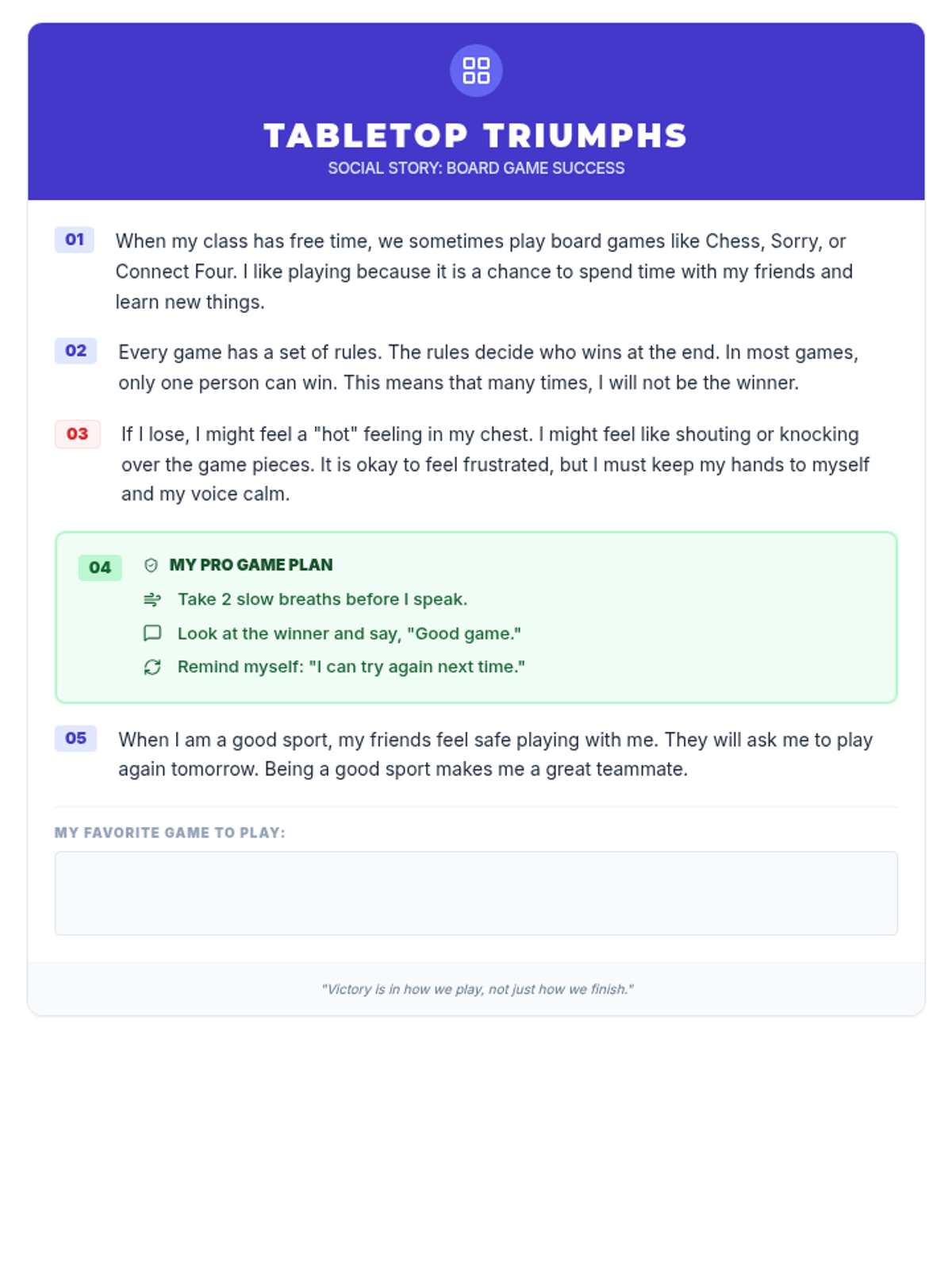
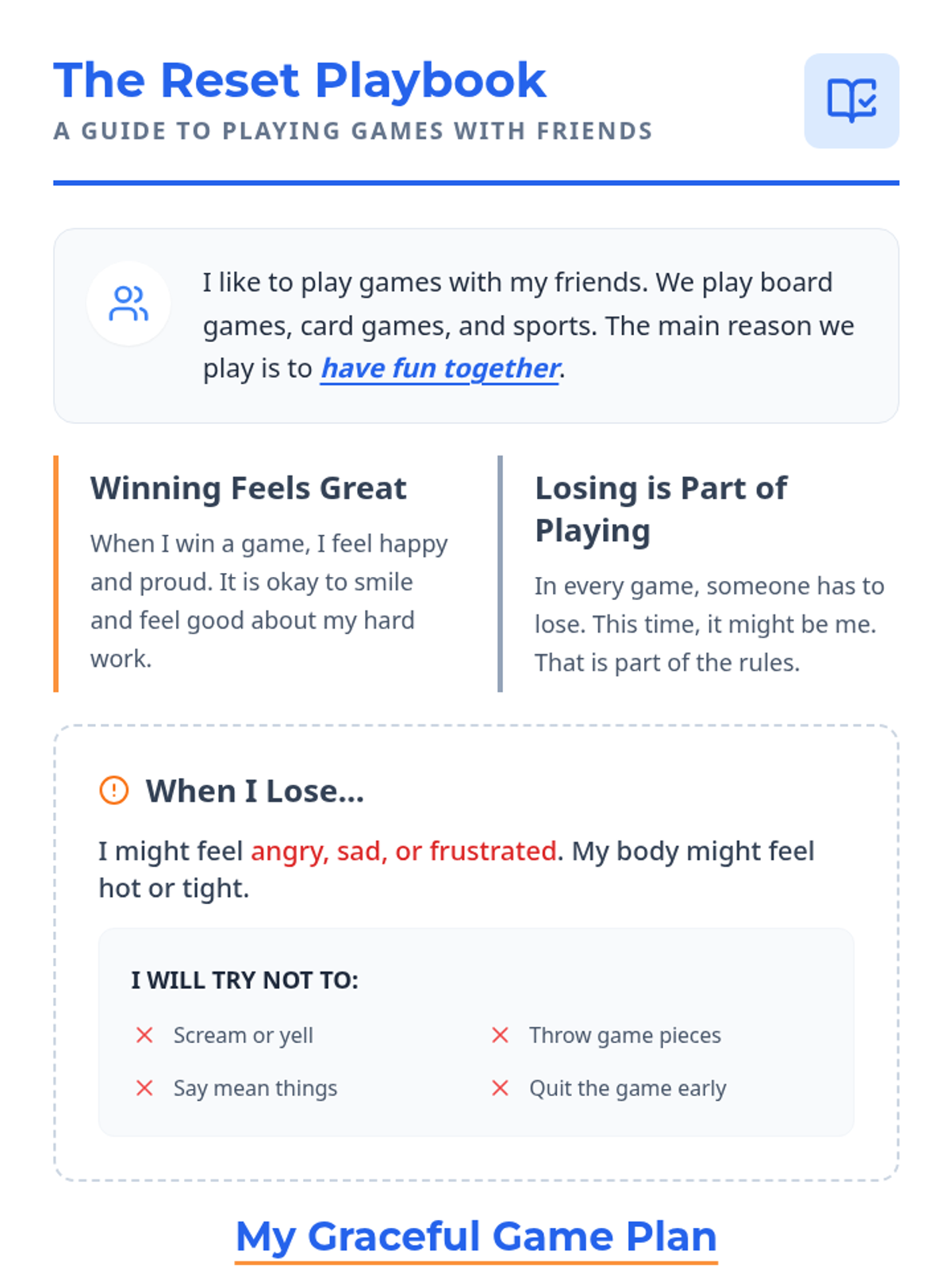
A social story for 6th graders with ASD focused on board game sportsmanship. It covers the reality of losing, acknowledging feelings of frustration, and provides a clear strategy for being a good sport.
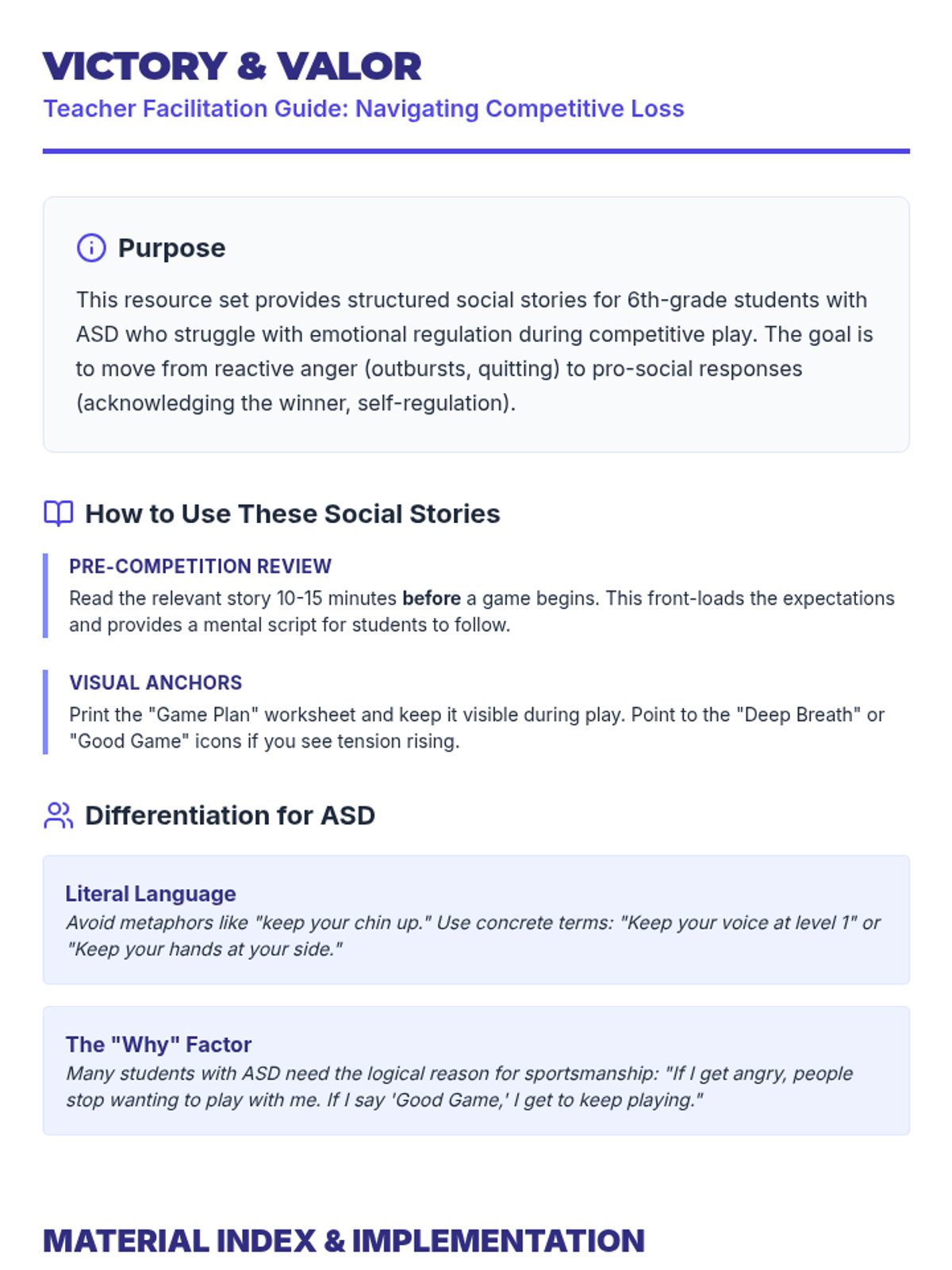
A teacher facilitation guide for the Game Face lesson, providing strategies for using social stories with students with ASD, including differentiation tips and an index of materials.
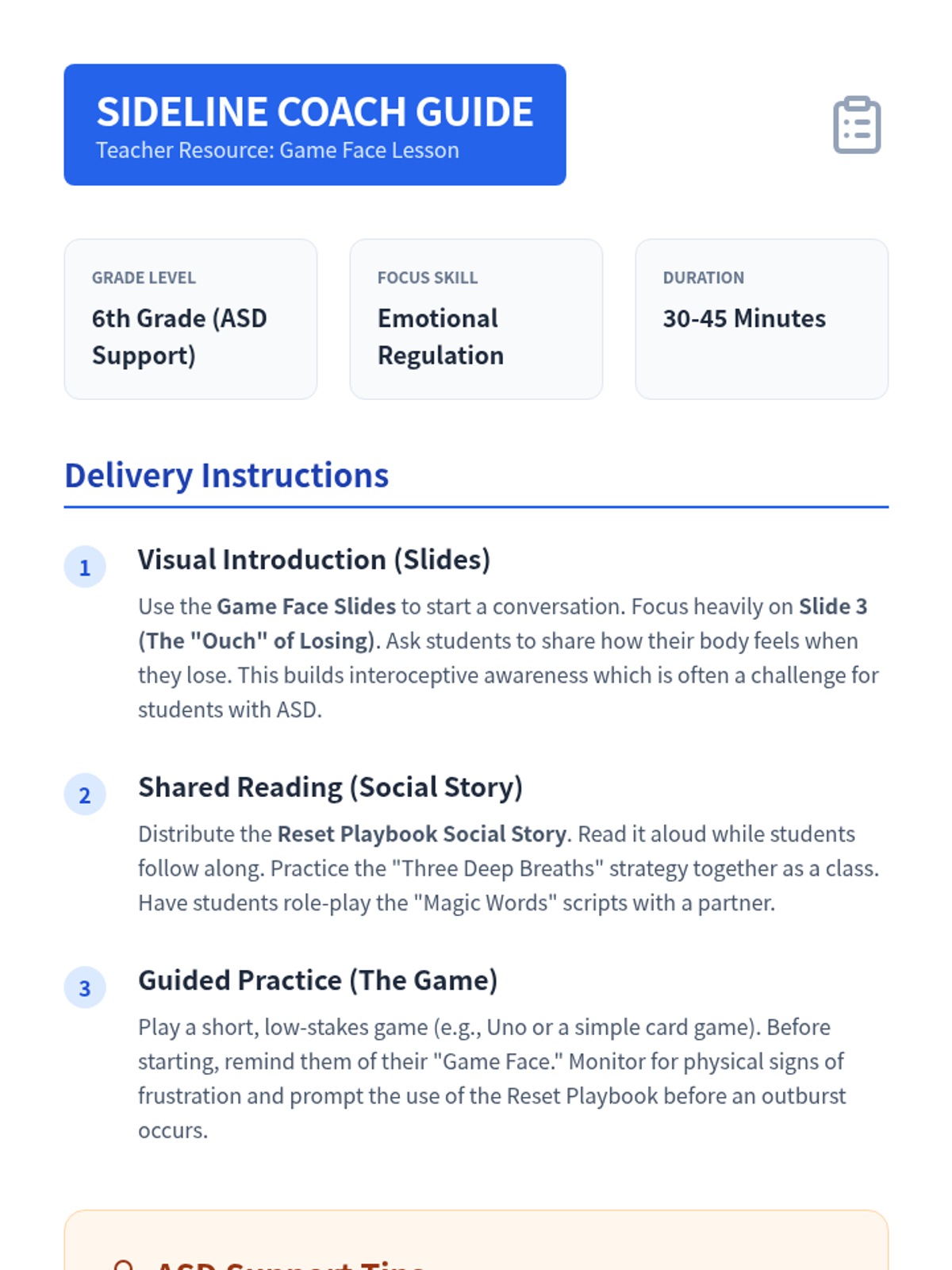
A teacher guide providing instructional steps, differentiation strategies, and delivery tips for the Game Face lesson, specifically tailored for 6th-grade students with ASD.
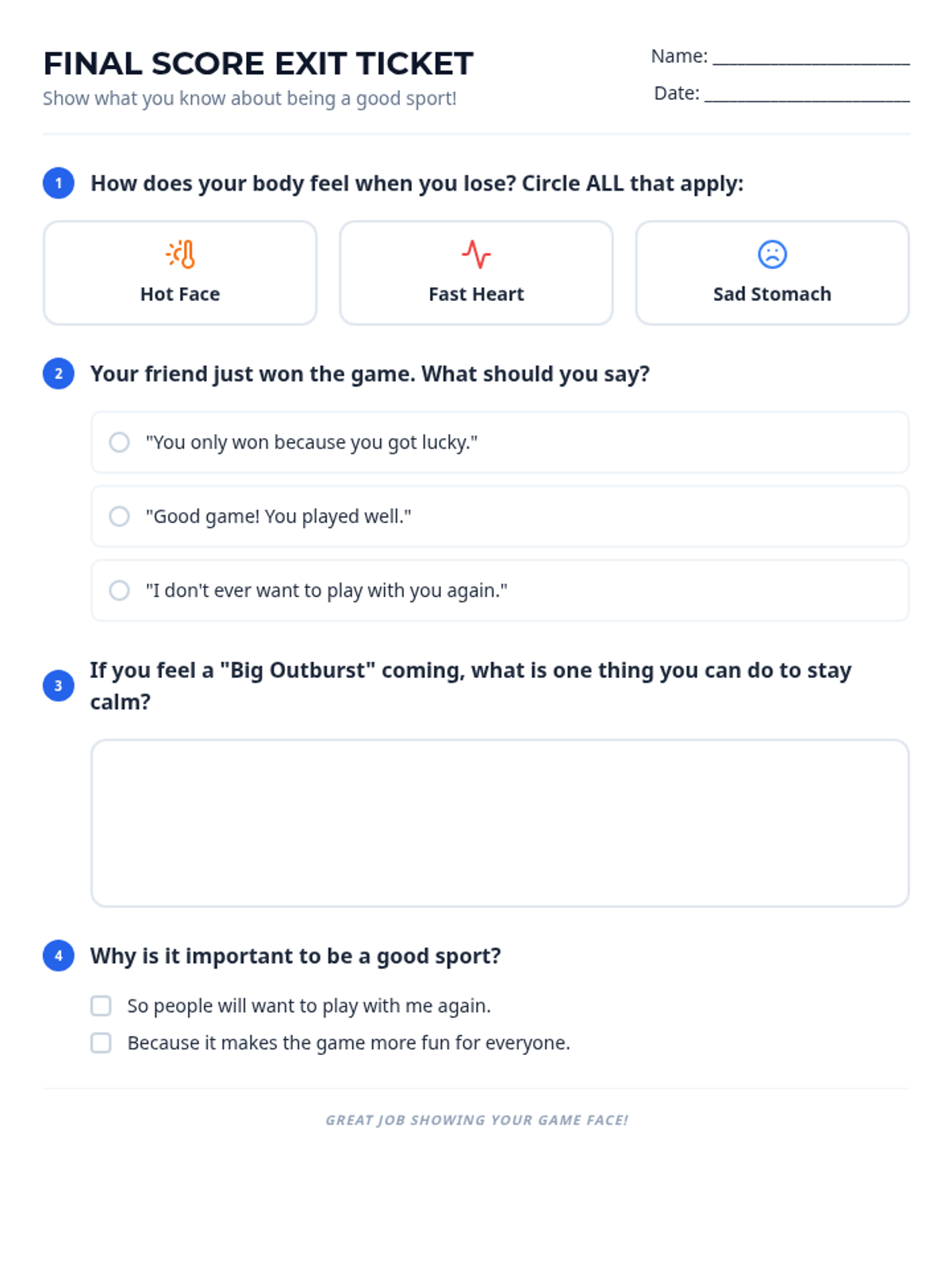
A printable exit ticket for 6th-grade students to assess their understanding of graceful losing, recognizing physical cues of frustration, and identifying appropriate social responses.
A structured social story document for 6th-grade students with ASD, focusing on the steps to take when losing a game, including breathing exercises and appropriate social scripts.
A visual slide deck teaching 6th-grade students with ASD about sportsmanship, recognizing the physical signs of frustration when losing, and providing concrete scripts for graceful reactions.
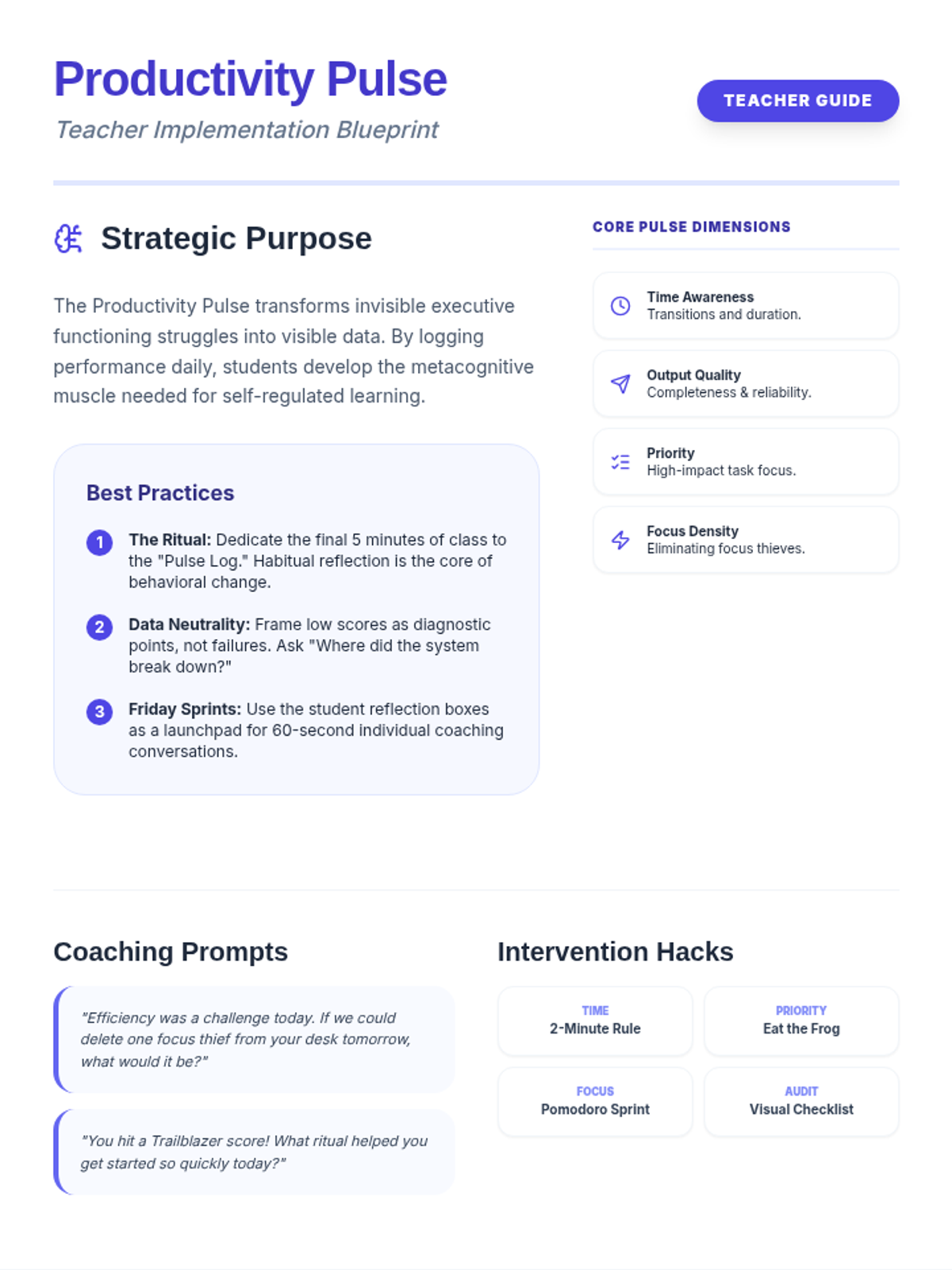
A comprehensive three-page toolkit including a teacher implementation guide, a daily performance log with a visual tracker, and a growth-focused 5-point proficiency rubric for executive functioning skills.
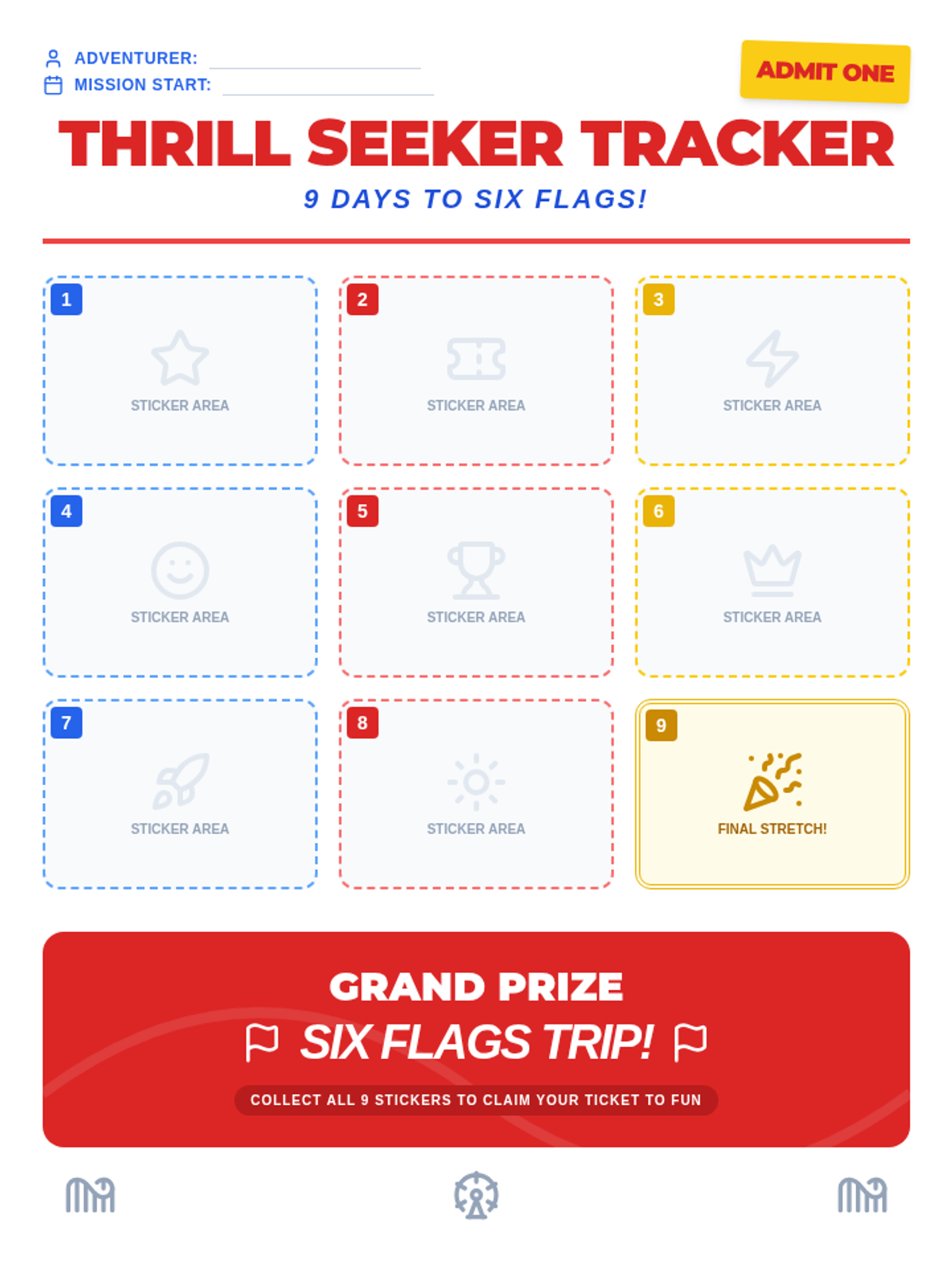
A 9-day sticker tracker for students to earn a trip to Six Flags, featuring a fun amusement park theme with numbered boxes for daily progress. Revised to fit on a single page.
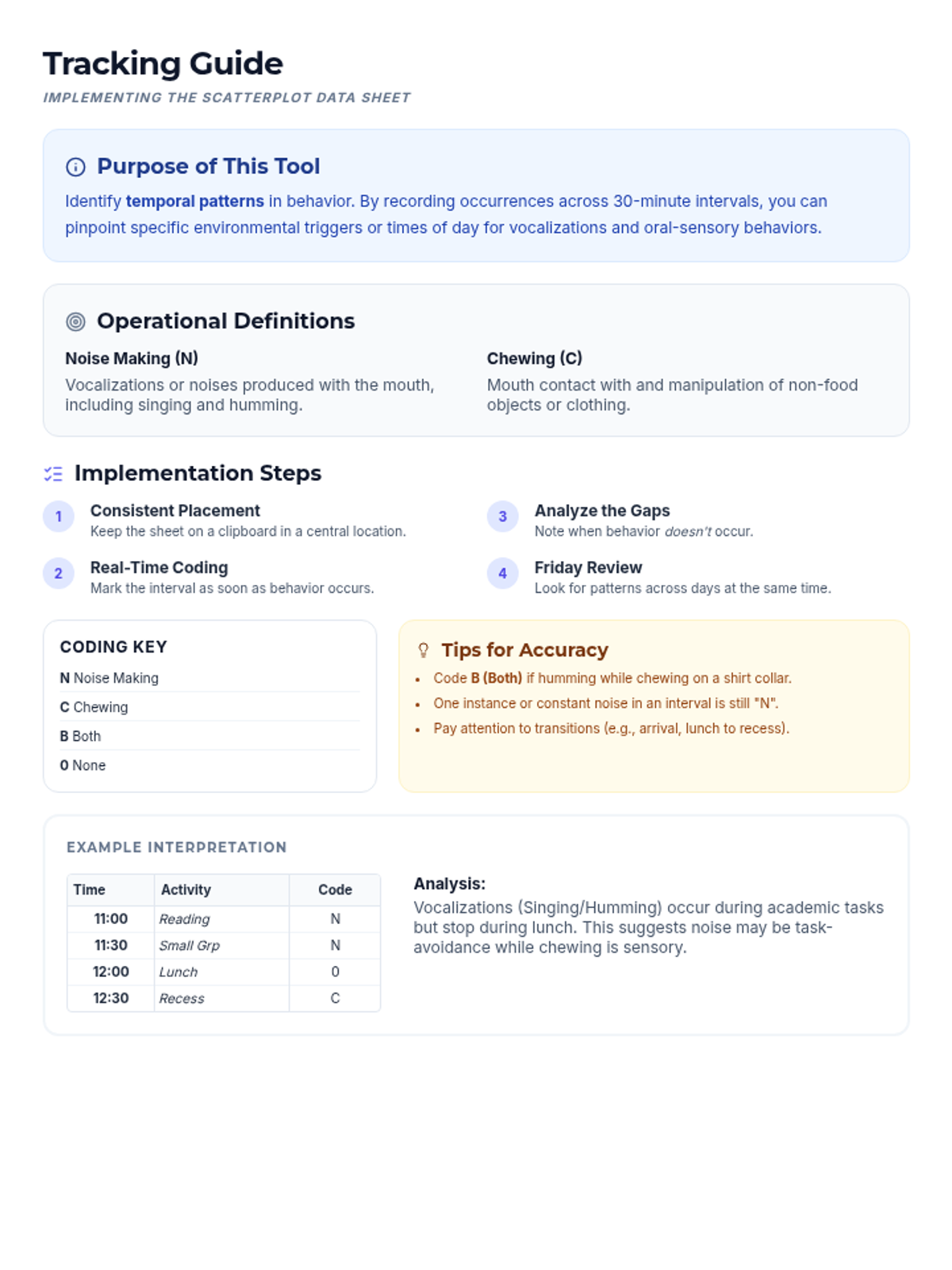
A teacher-facing resource explaining how to effectively implement and analyze the Scatterplot Data sheet, updated with refined behavioral definitions.
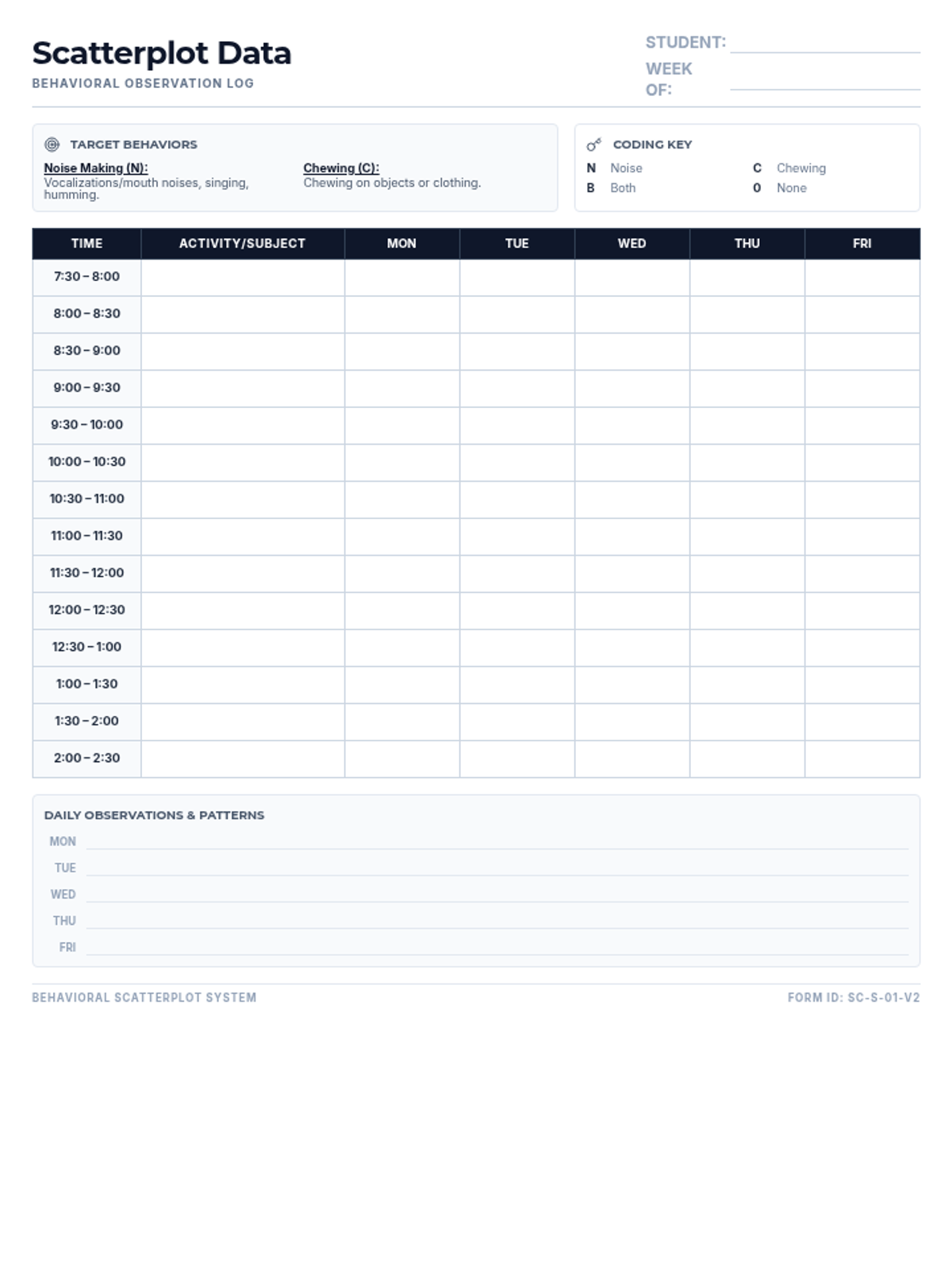
A professional scatterplot data sheet designed to track noise-making (vocalizations, mouth noises, singing, humming) and chewing (objects or clothing) behaviors in 30-minute intervals.
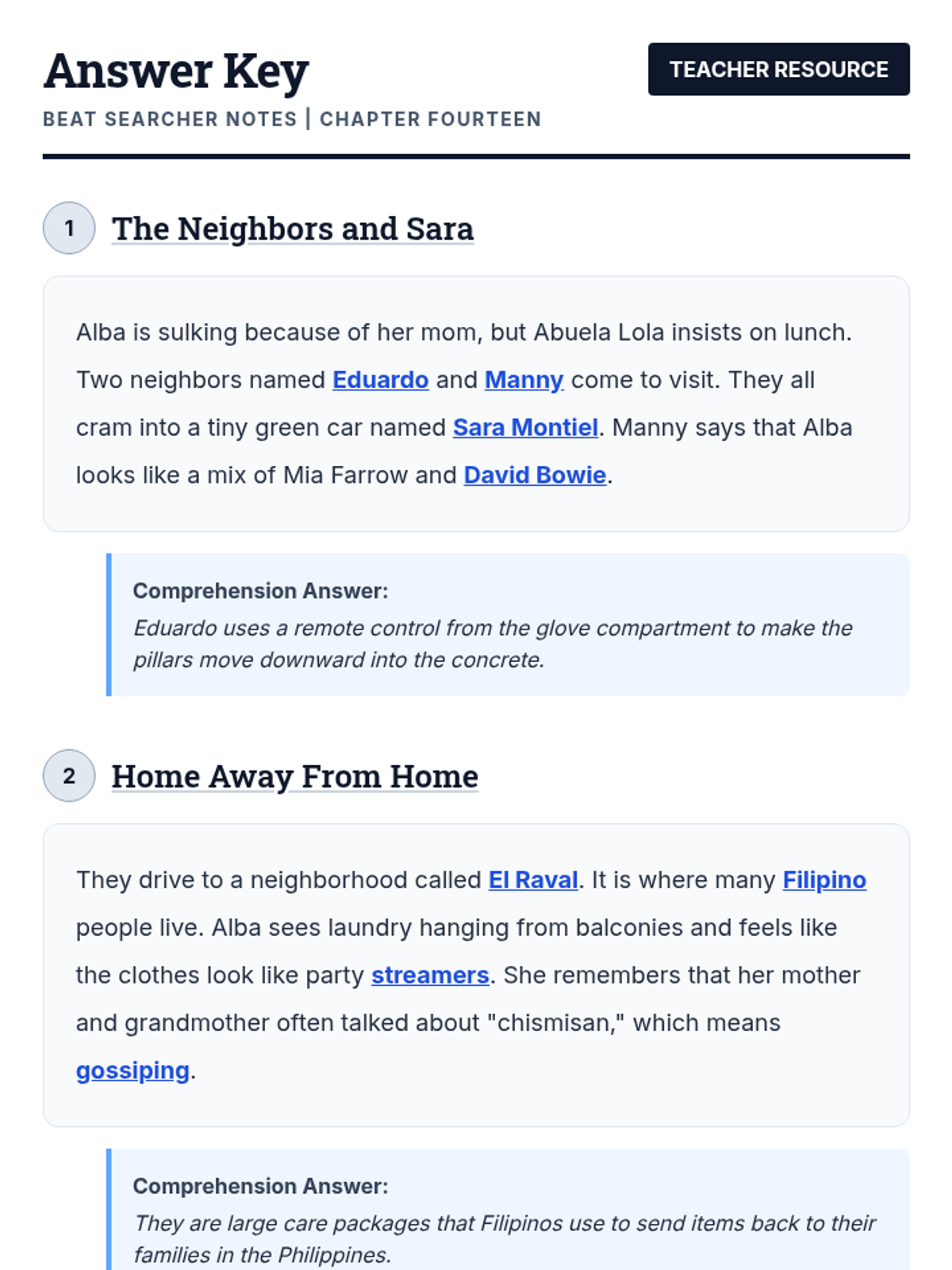
Teacher's answer key for the Chapter 14 note sheet, providing correct fill-in-the-blank responses and sample comprehension answers. Revised to ensure consistent page breaks.
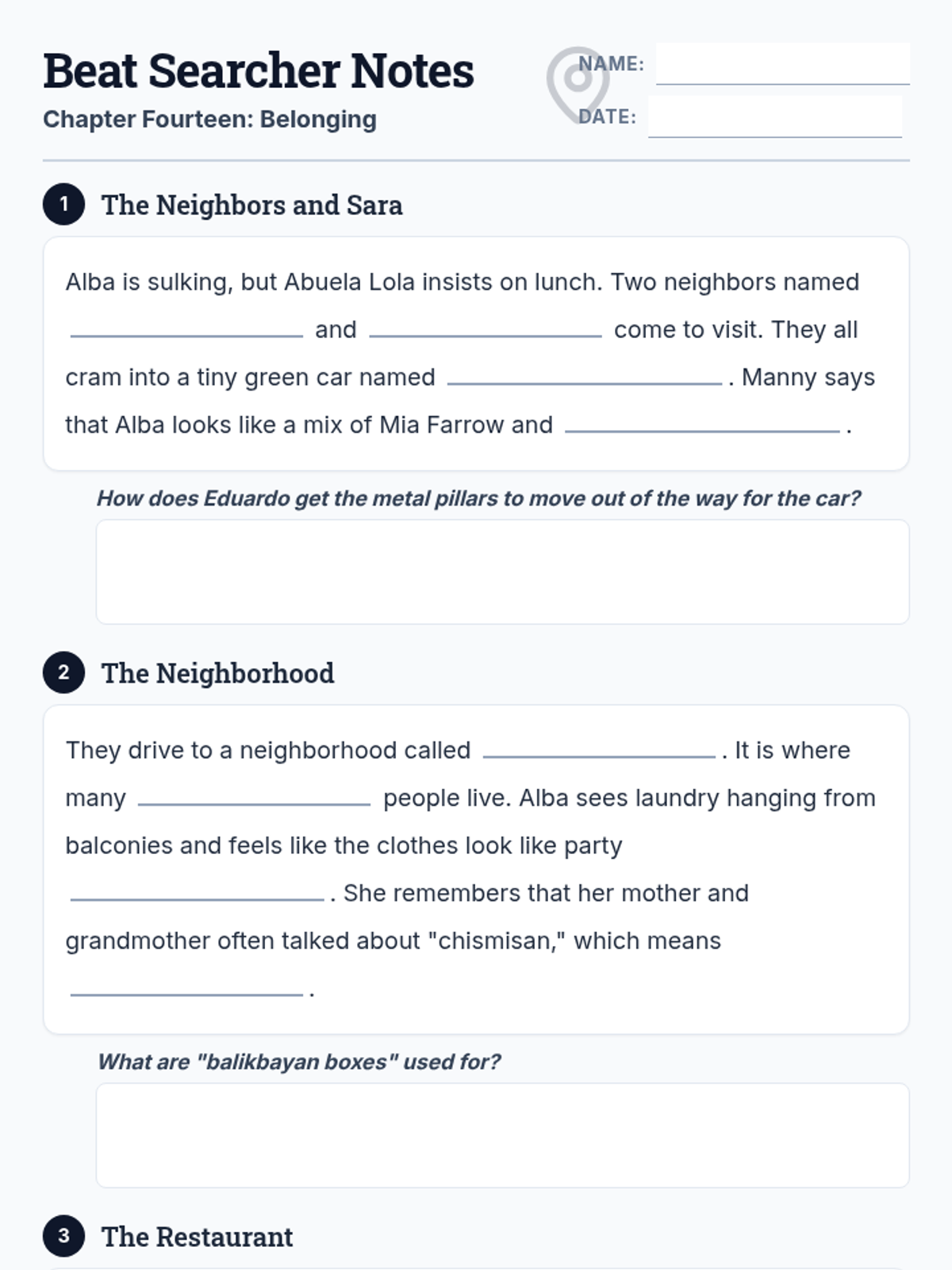
A sequenced guided note sheet for Chapter 14, featuring fill-in-the-blank summaries and targeted comprehension questions designed for special education support. Revised to fit on a single page with better spacing and handwriting room.
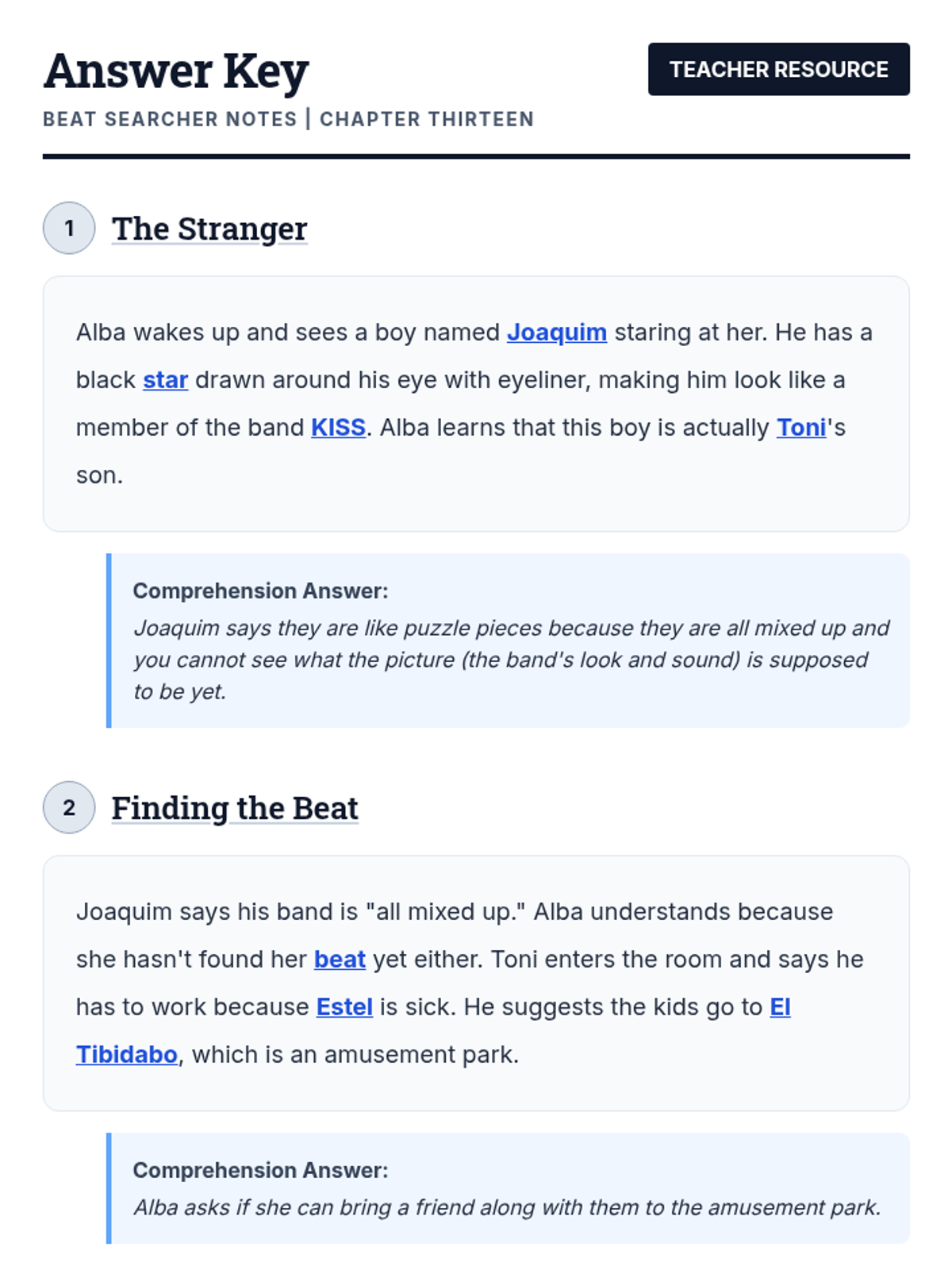
Teacher's answer key for the Beat Searcher Notes Worksheet, providing the correct fill-in-the-blank responses and sample answers for the comprehension questions.
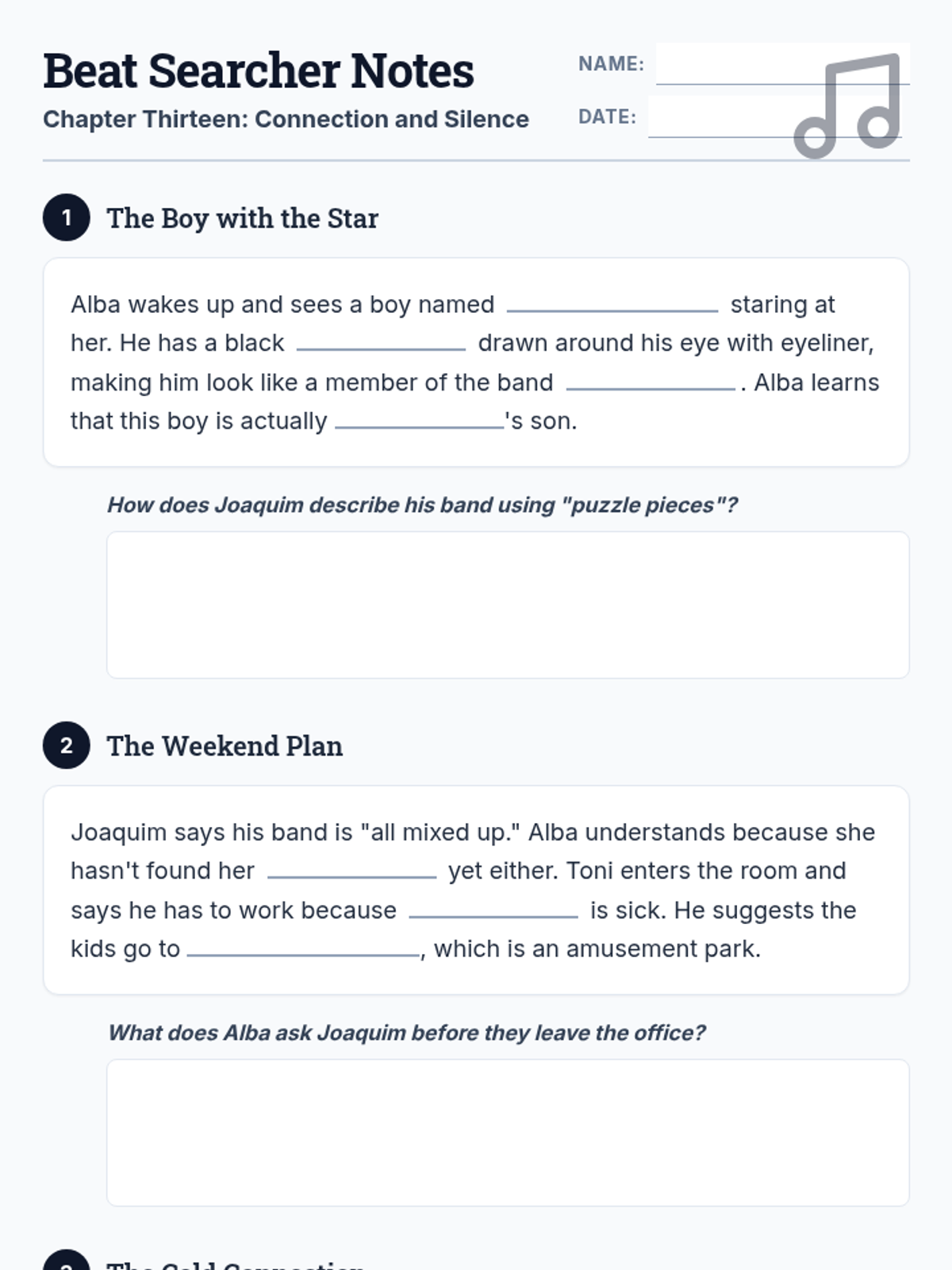
A sequenced guided note sheet for Chapter 13, featuring fill-in-the-blank summaries and targeted comprehension questions designed for special education support. Revised to improve page breaks, text alignment, and layout density to fit on fewer pages.
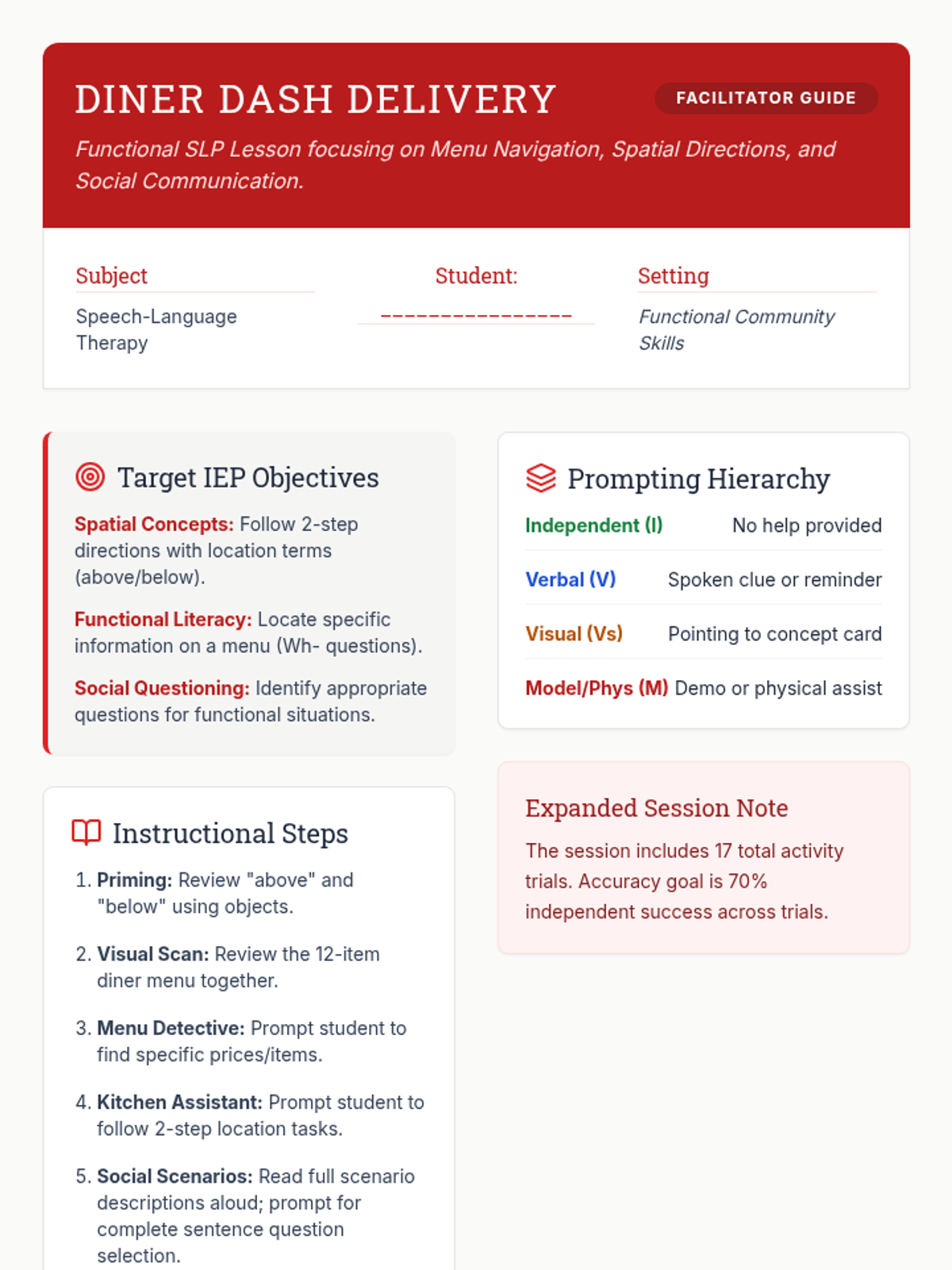
A comprehensive teacher lesson plan and data tracking sheet for a functional SLP lesson. Includes a reference menu and tracking for 17 total trials across spatial, literacy, and social communication goals. NOW UPDATED FOR EXPANDED MENU.
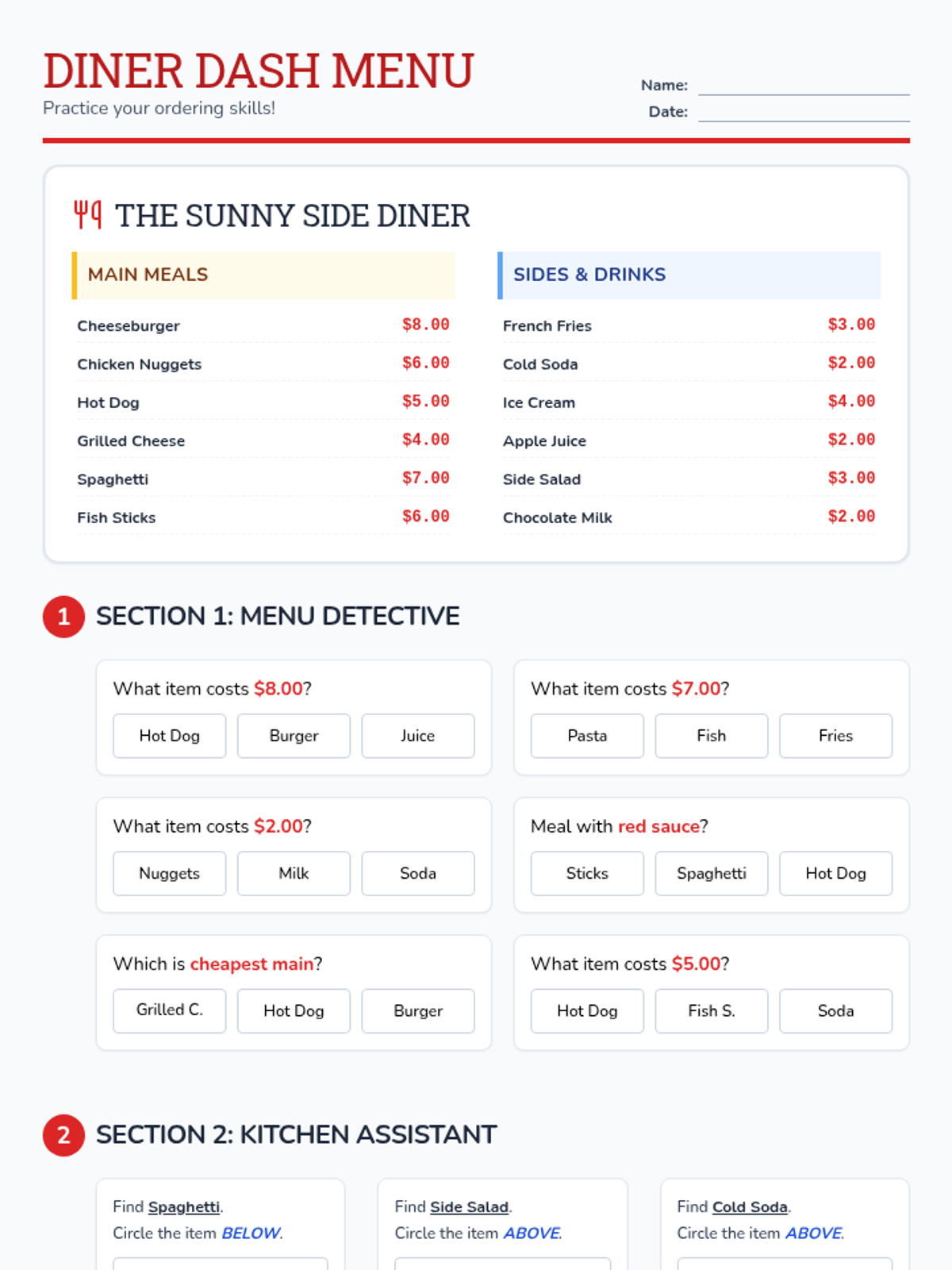
A visual restaurant worksheet for middle school students with autism, focusing on menu reading, following 2-step location directions (above/below), and choosing appropriate social questions. Includes 6 Menu Detective questions and 6 Kitchen Assistant tasks with enlarged font sizes and clear spatial logic.
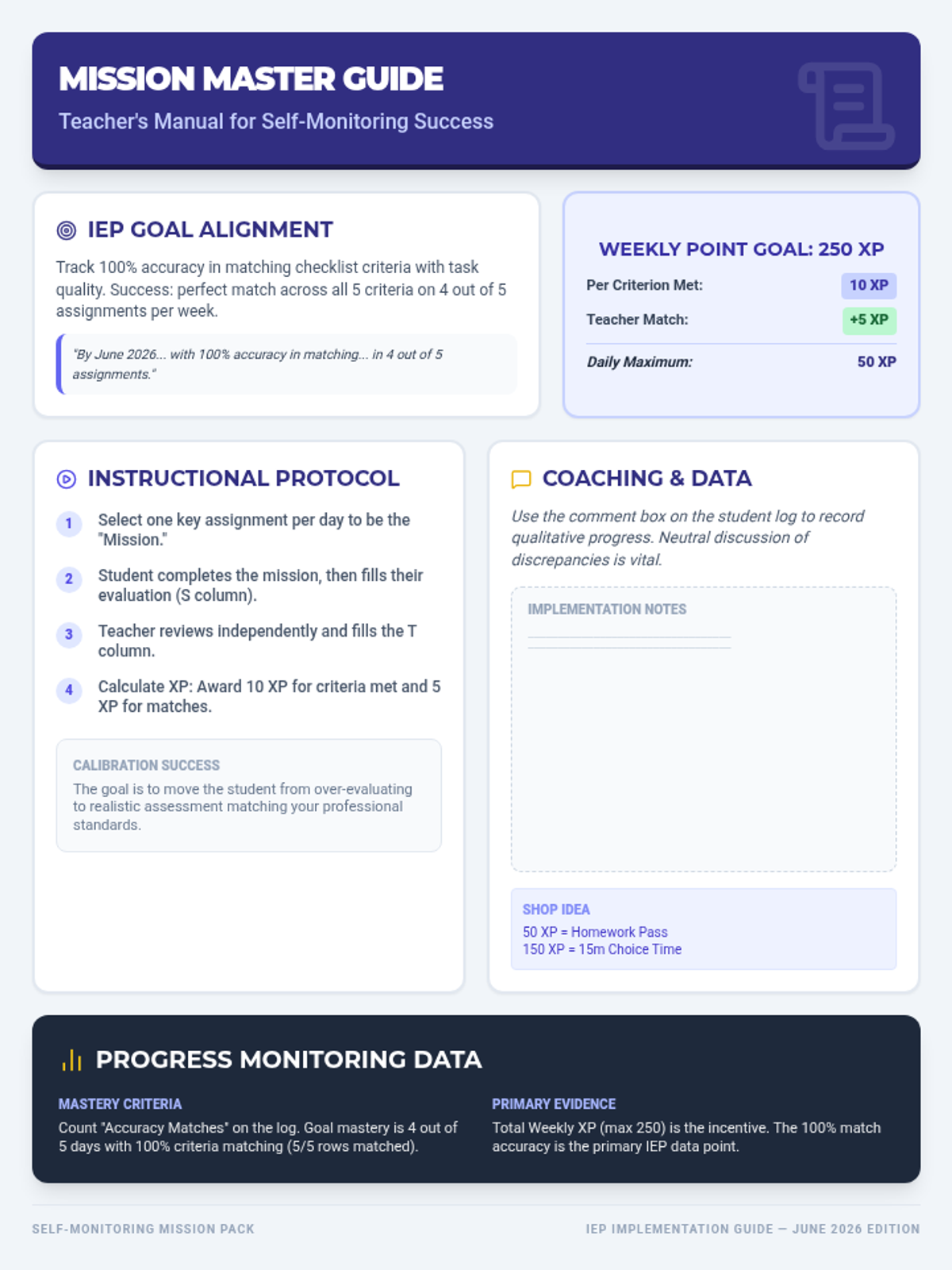
A professional teacher guide for implementing the Weekly Mission Log. It includes instructions for deployment, a detailed breakdown of the point system (XP), calibration tips for accuracy matching, and guidance on using the logs for IEP data collection. Tightened to fit one A4 page.
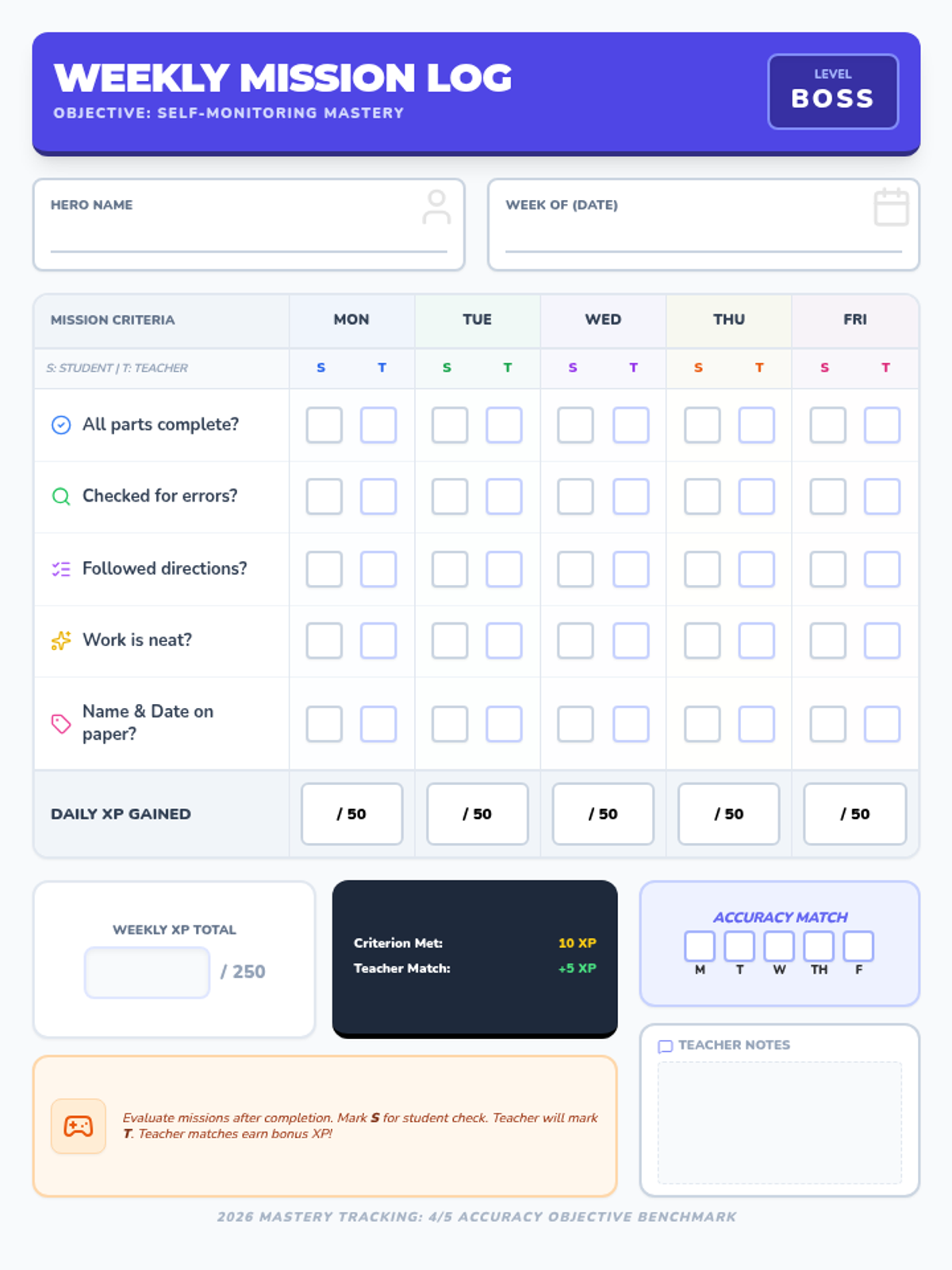
A video game-themed weekly self-monitoring log. It allows a student to track task completion and quality across five days (Monday-Friday) using the five IEP-aligned criteria, featuring a dual-check system for student and teacher accuracy validation. Points are scaled to a weekly total of 250, and a teacher comment area is included.
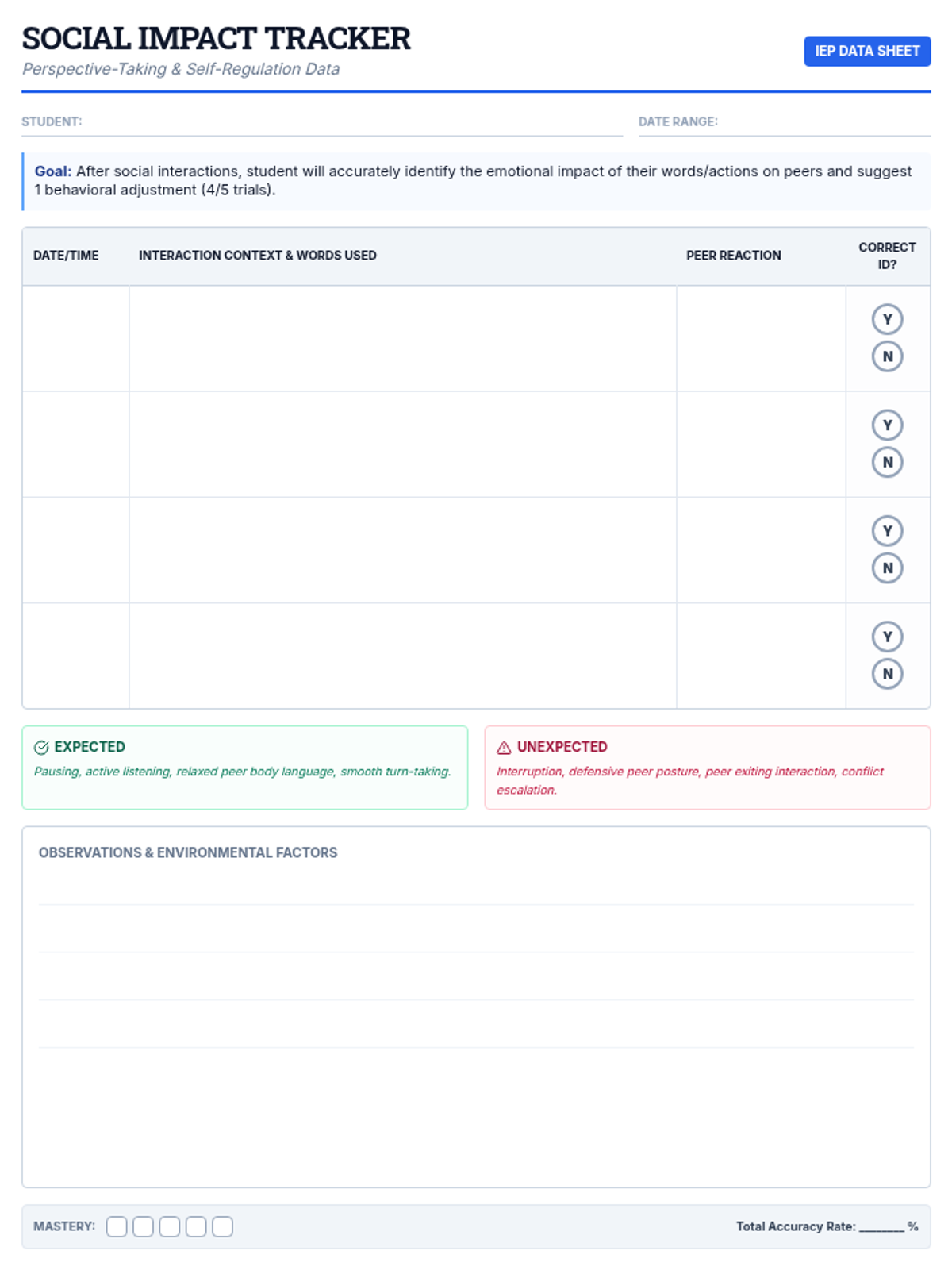
An updated IEP goal data tracking sheet for social-emotional learning. It features a streamlined, single-page layout with a structured data table for tracking perspective-taking, a circling-based accuracy key, and condensed behavior outcome references for easier teacher use.
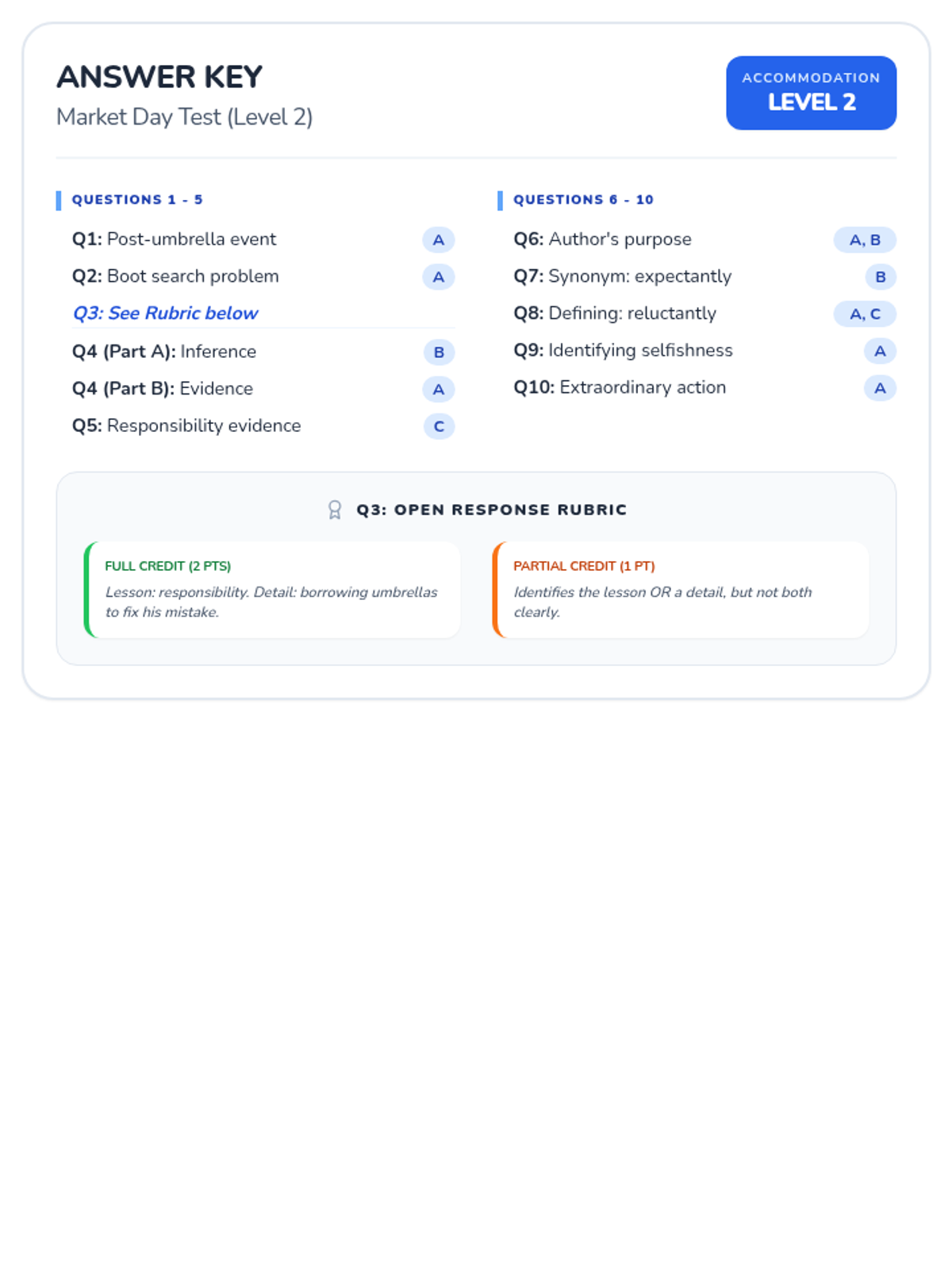
Teacher-facing answer key and grading rubric for the Level 2 modified Market Day ELA test, providing alignment for 10 questions including open-response and multi-select items.
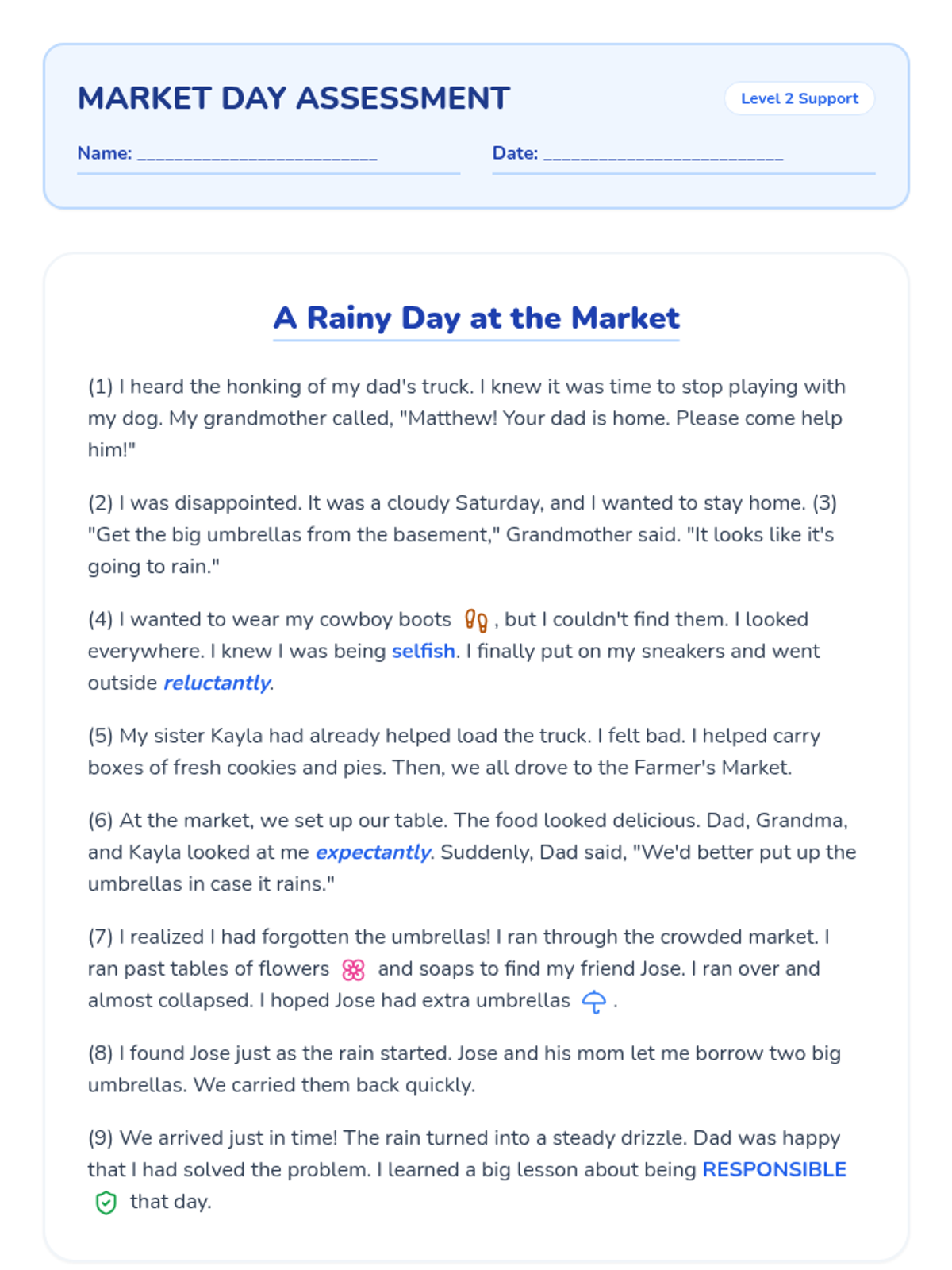
A Level 2 modified ELA assessment featuring a simplified but descriptive reading passage, 3-choice questions, and targeted visual scaffolding for key vocabulary. It maintains higher rigor than the Level 3 version while still supporting IEP accommodations.
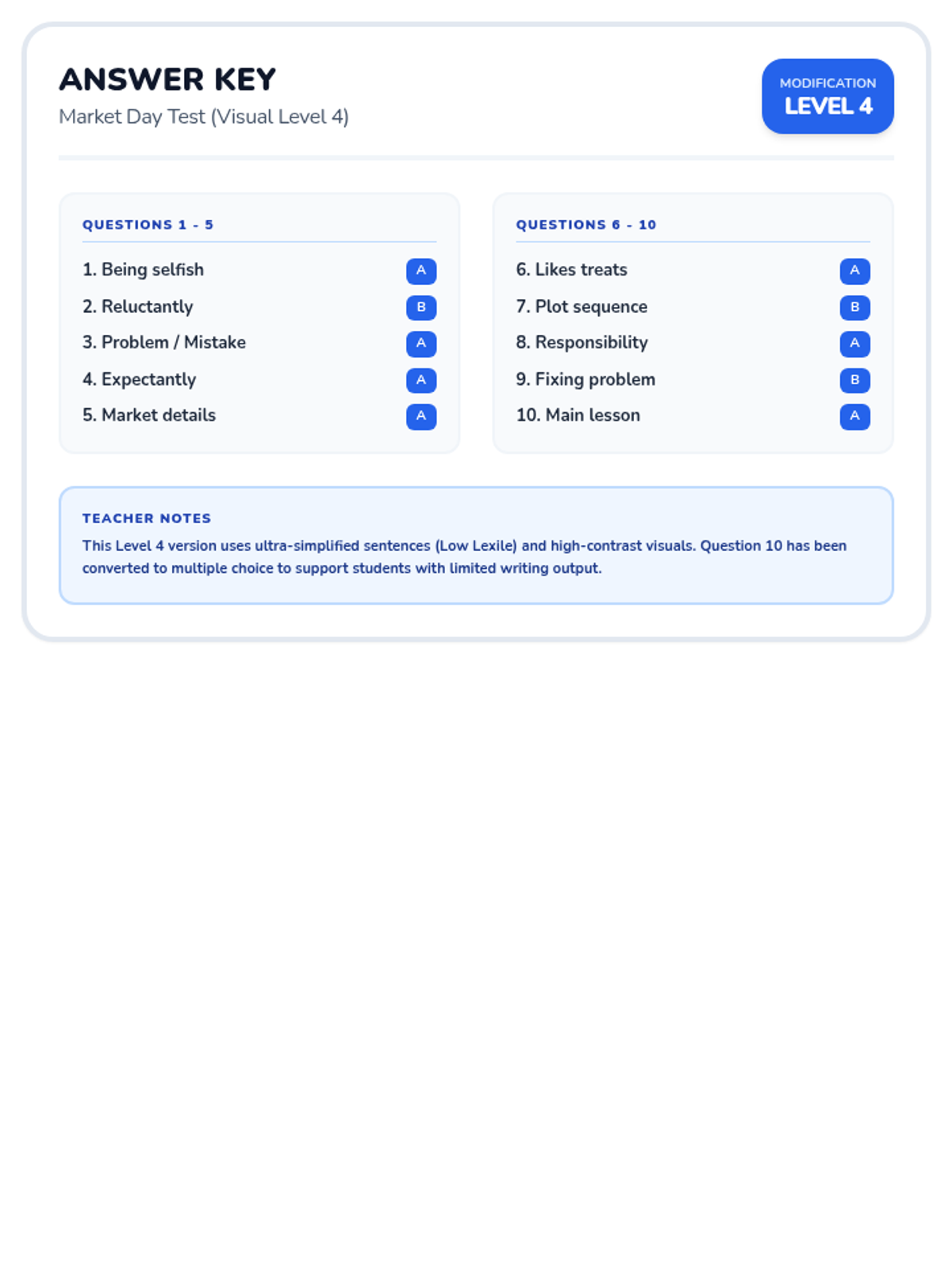
Teacher-facing answer key for the Level 4 visual-modified Market Day ELA test, clearly aligned with the ultra-simplified text segments and updated question format.
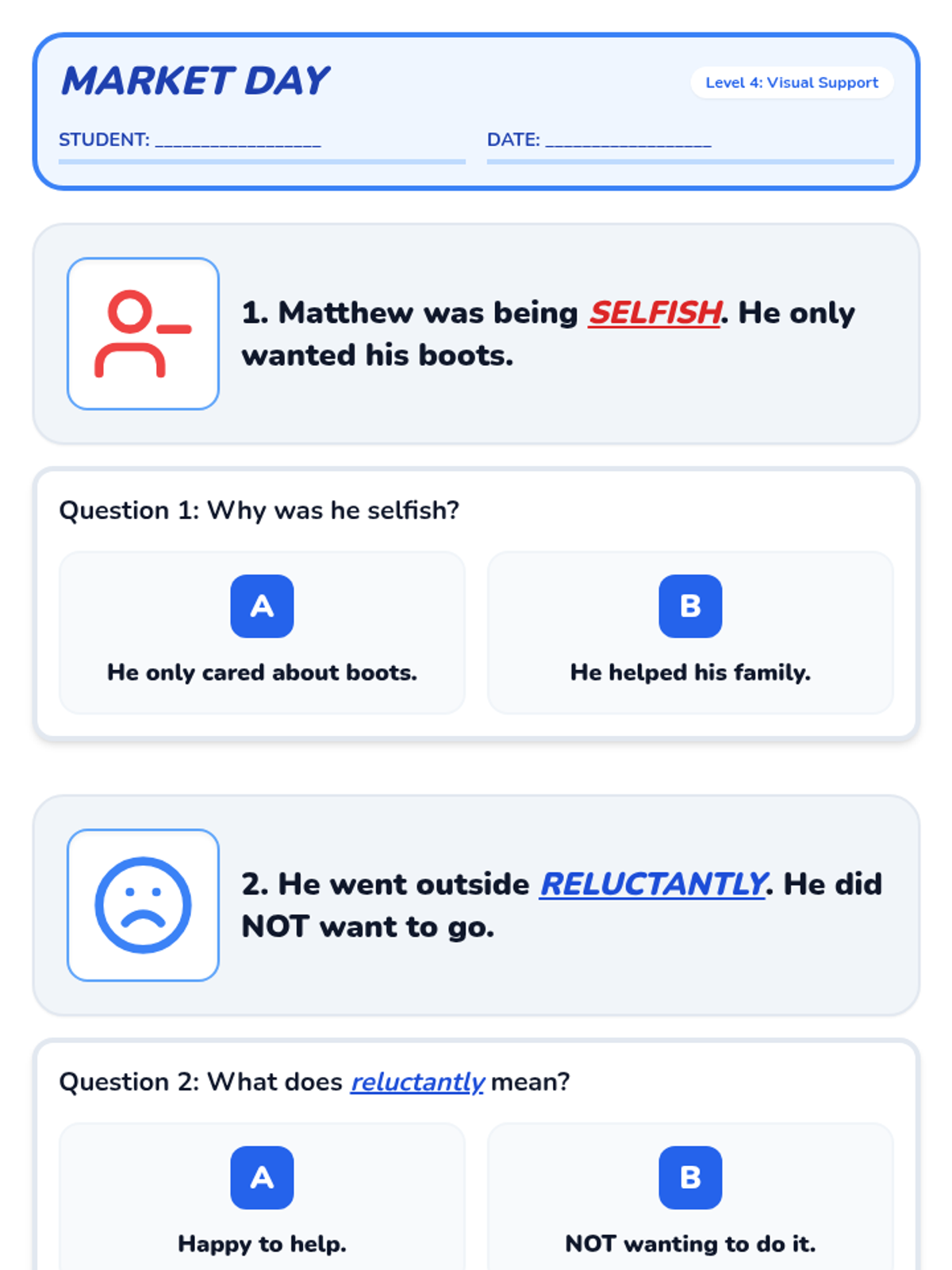
An ultra-simplified ELA assessment for Level 4 IEP support. Each story segment is reduced to one high-impact sentence paired with a large icon. Questions are 2-choice with visual framing and minimal text to ensure maximum comprehension and accessibility.
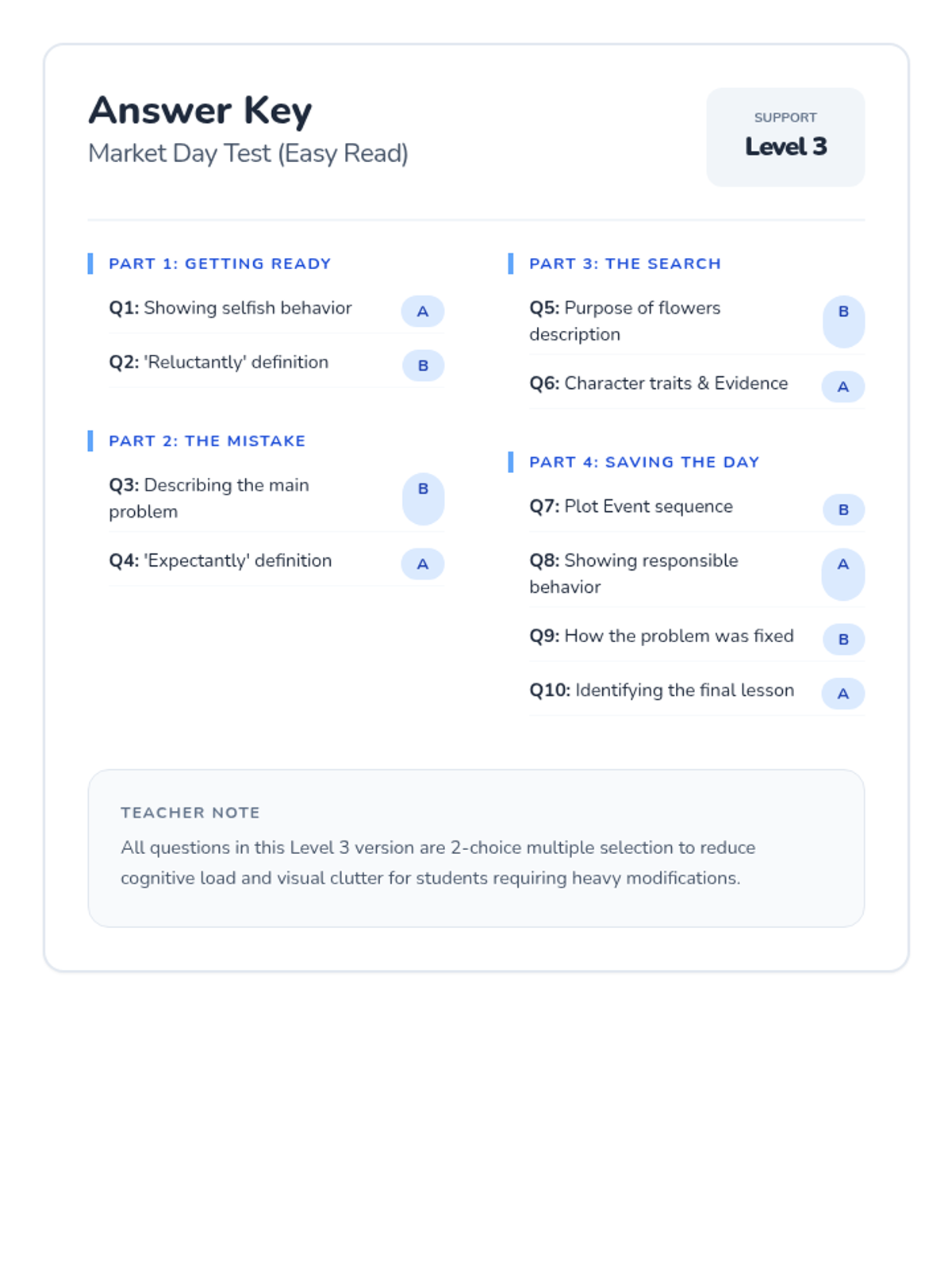
Teacher-facing answer key for the ultra-simplified Market Day ELA test, updated to match shuffled answers and expanded descriptions for teacher ease.
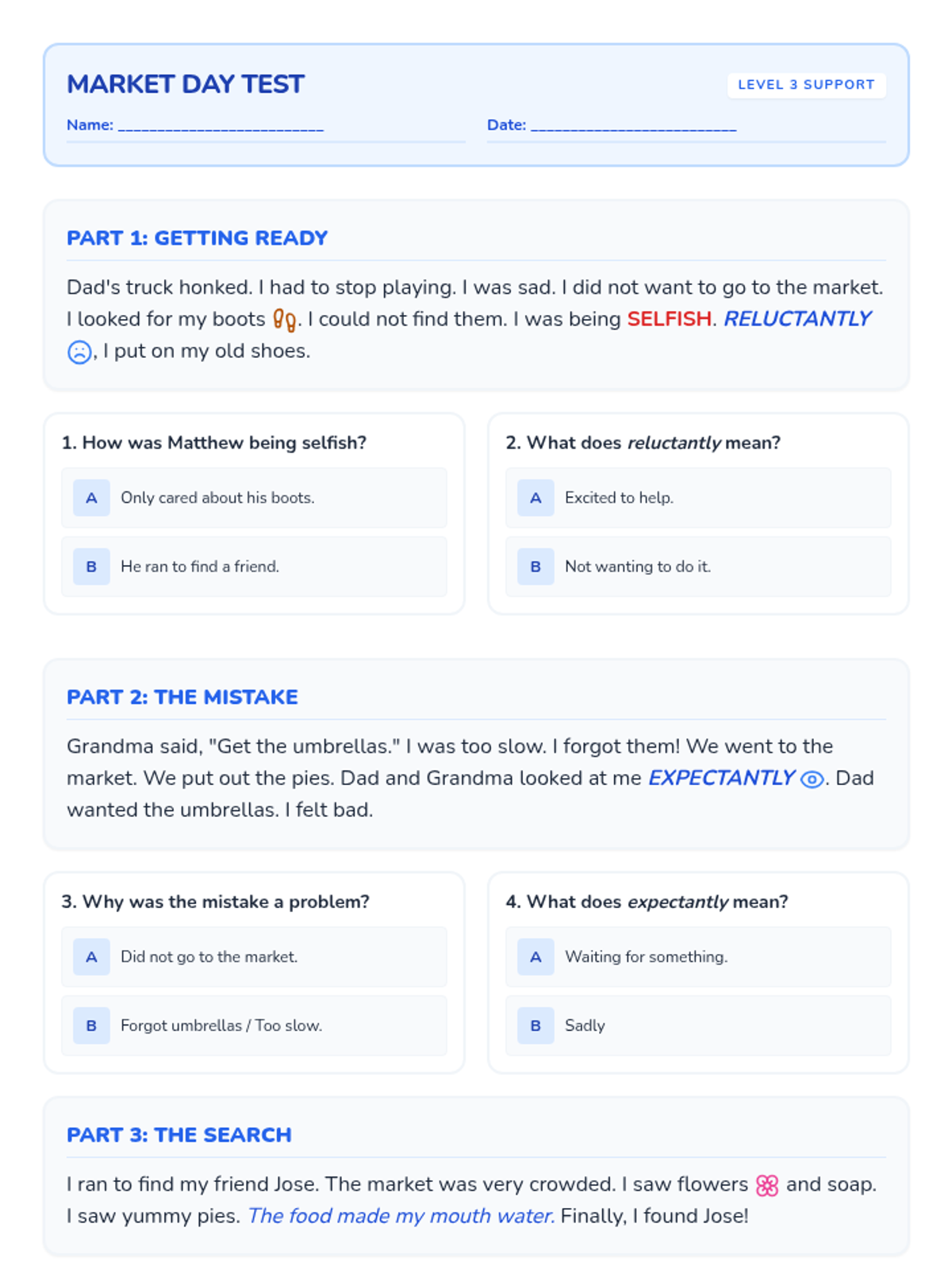
An easy-read version of the Market Day ELA test, using very short sentences, high-frequency words, and 2-choice questions. It maintains the "Read and Answer" structure with heavy visual scaffolding for vocabulary. All choices use uniform styling.
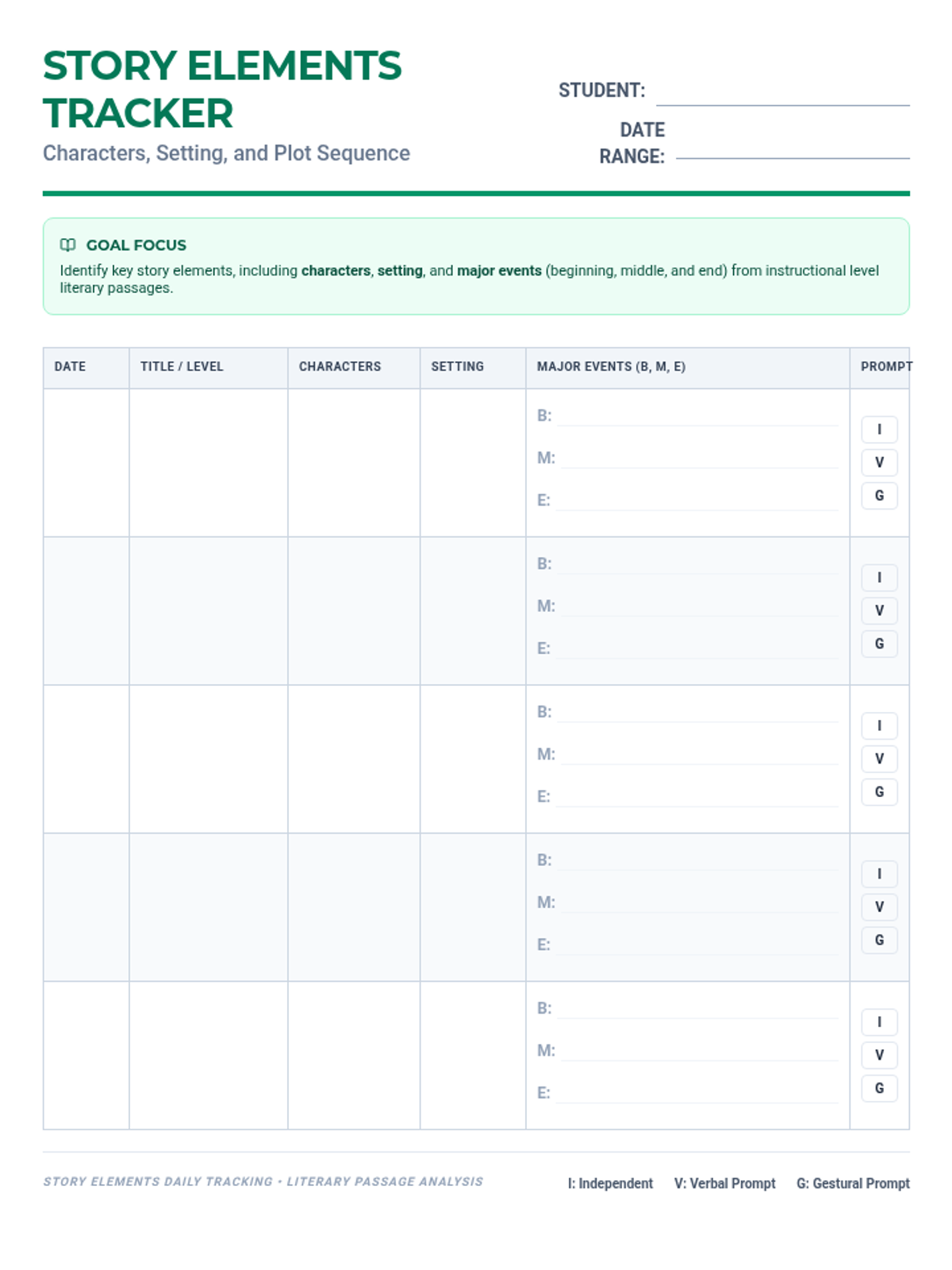
A targeted daily tracking sheet for identifying characters, setting, and plot sequence (Beginning, Middle, End) in literary texts. Includes dedicated space for each element and a prompt level key.
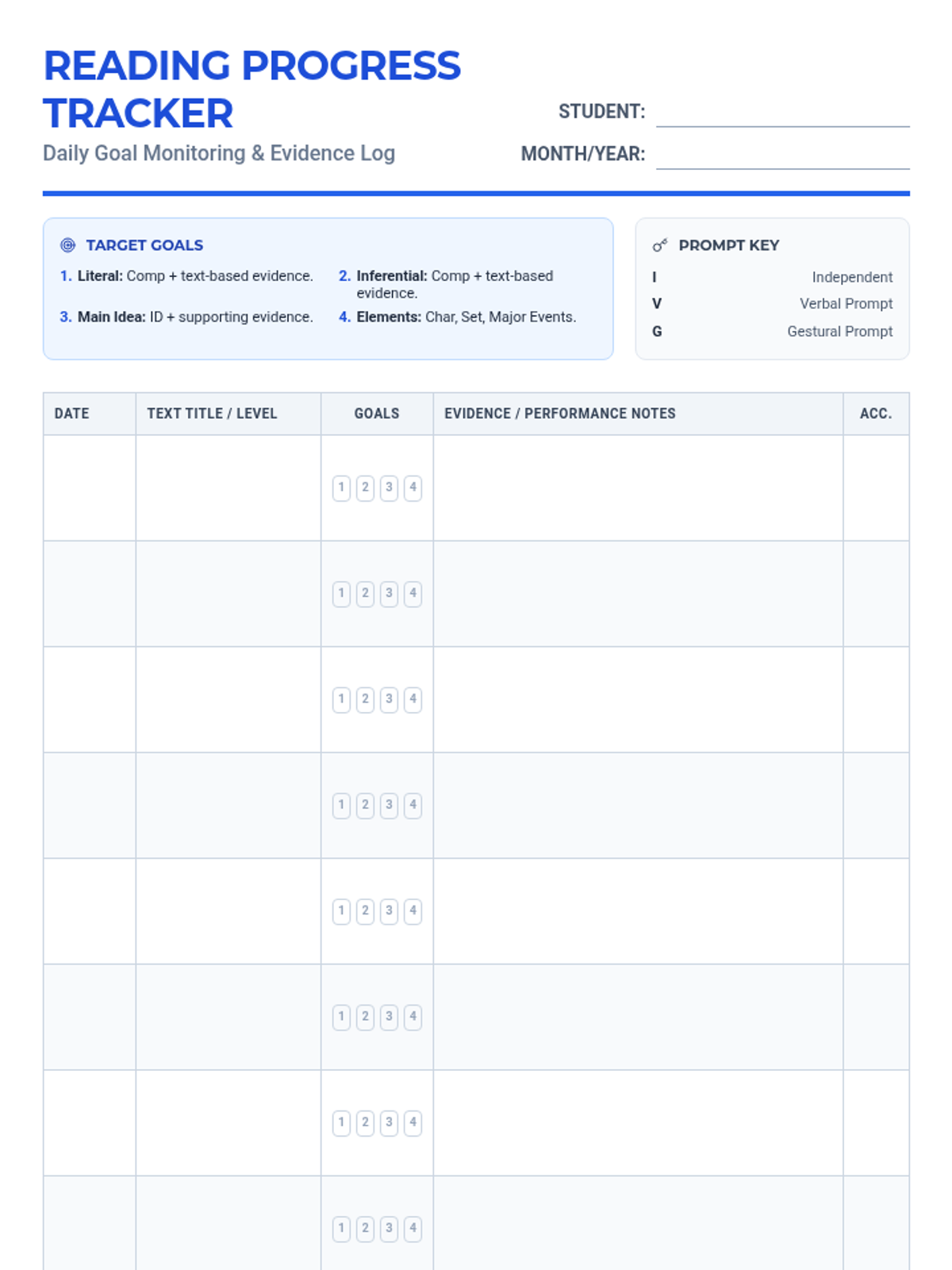
A professional daily tracking data sheet for monitoring four specific reading comprehension goals, including literal/inferential comprehension, main idea, and story elements. Increased space for evidence notes and consolidated reference key.
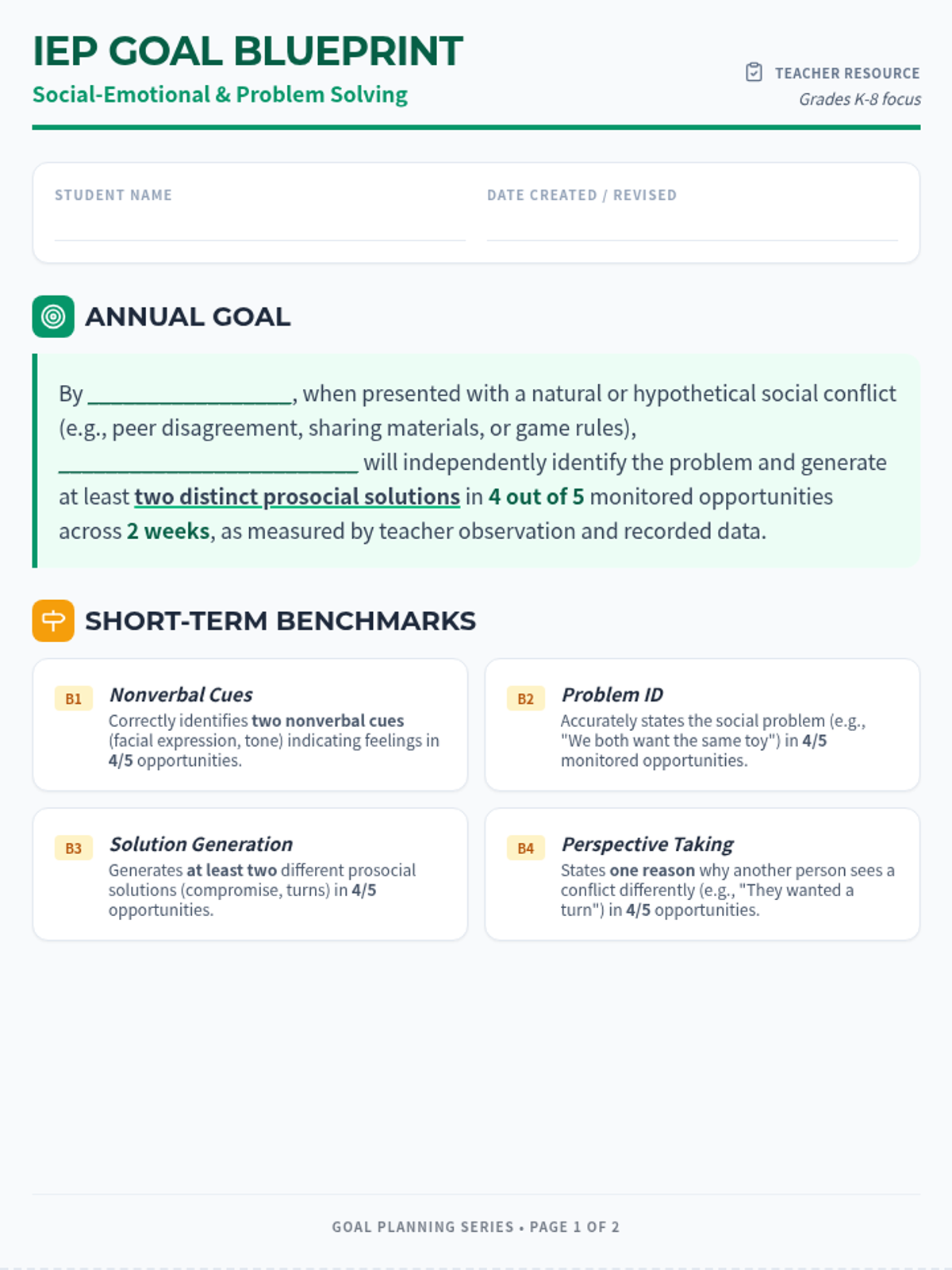
An IEP Goal Blueprint focused on social problem solving. It includes a SMART annual goal with fillable blanks, four scaffolded benchmarks (including nonverbal communication and perspective taking), and a comprehensive data tracking table.
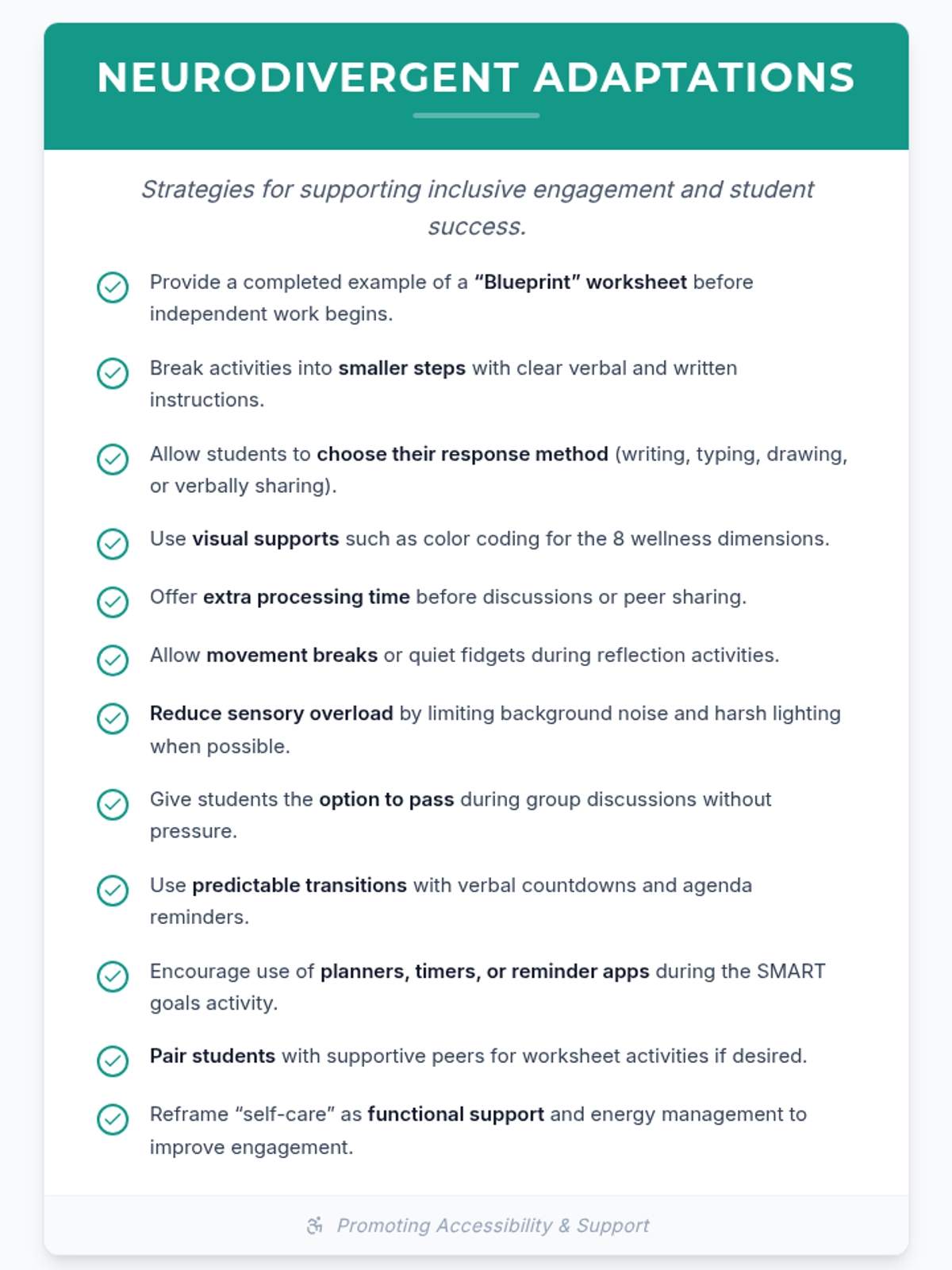
A clean, professional checklist of neurodivergent adaptations for teachers, styled to match the provided attachment with high-contrast teal headers and visual checkmark icons. Adjusted for single-page fit.
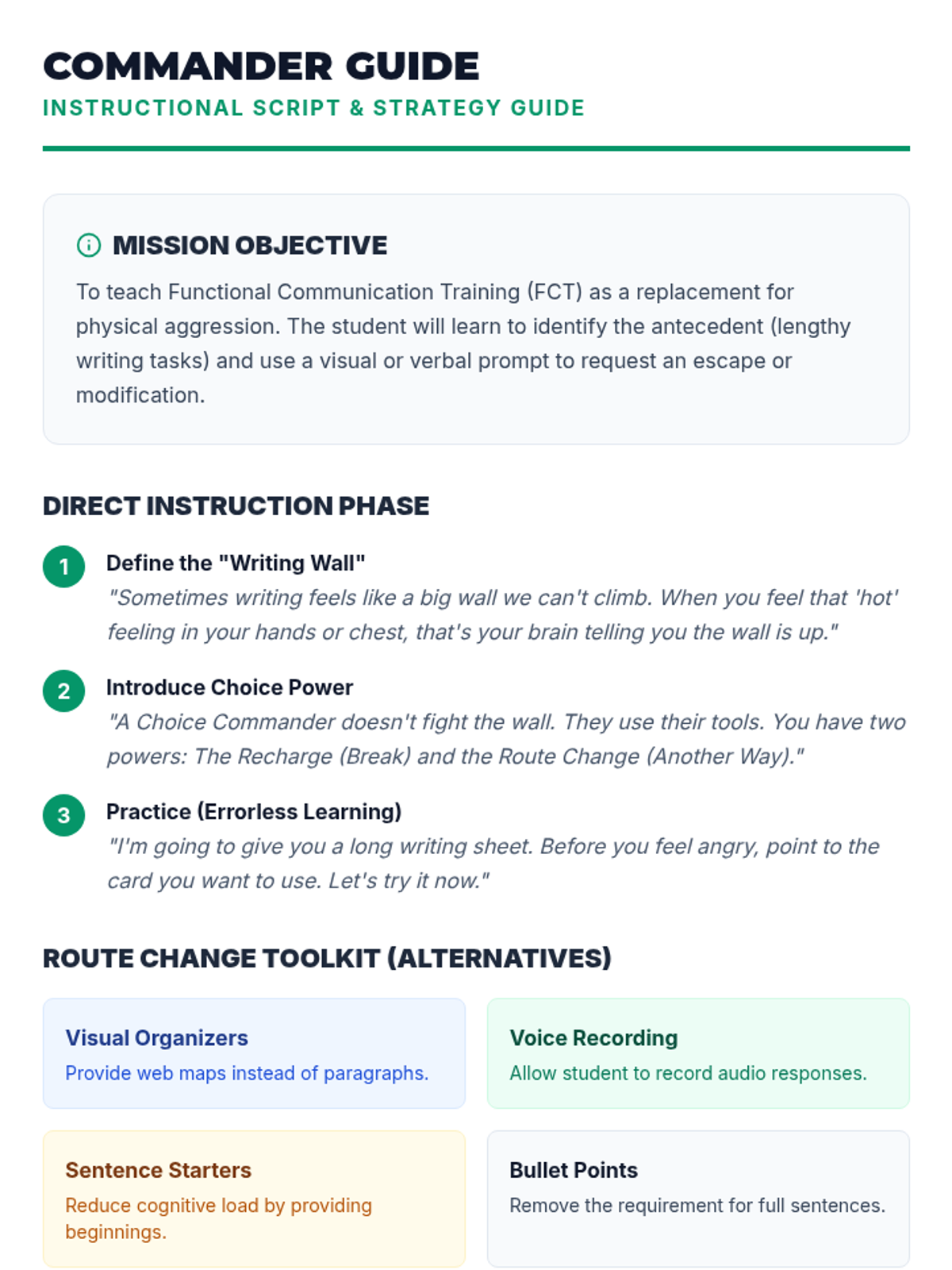
A teacher-facing resource for the 'Choice Commander' lesson. It provides instructional scripts for Functional Communication Training, a toolkit for writing modifications, and a simple data tracking table to monitor the student's progress.
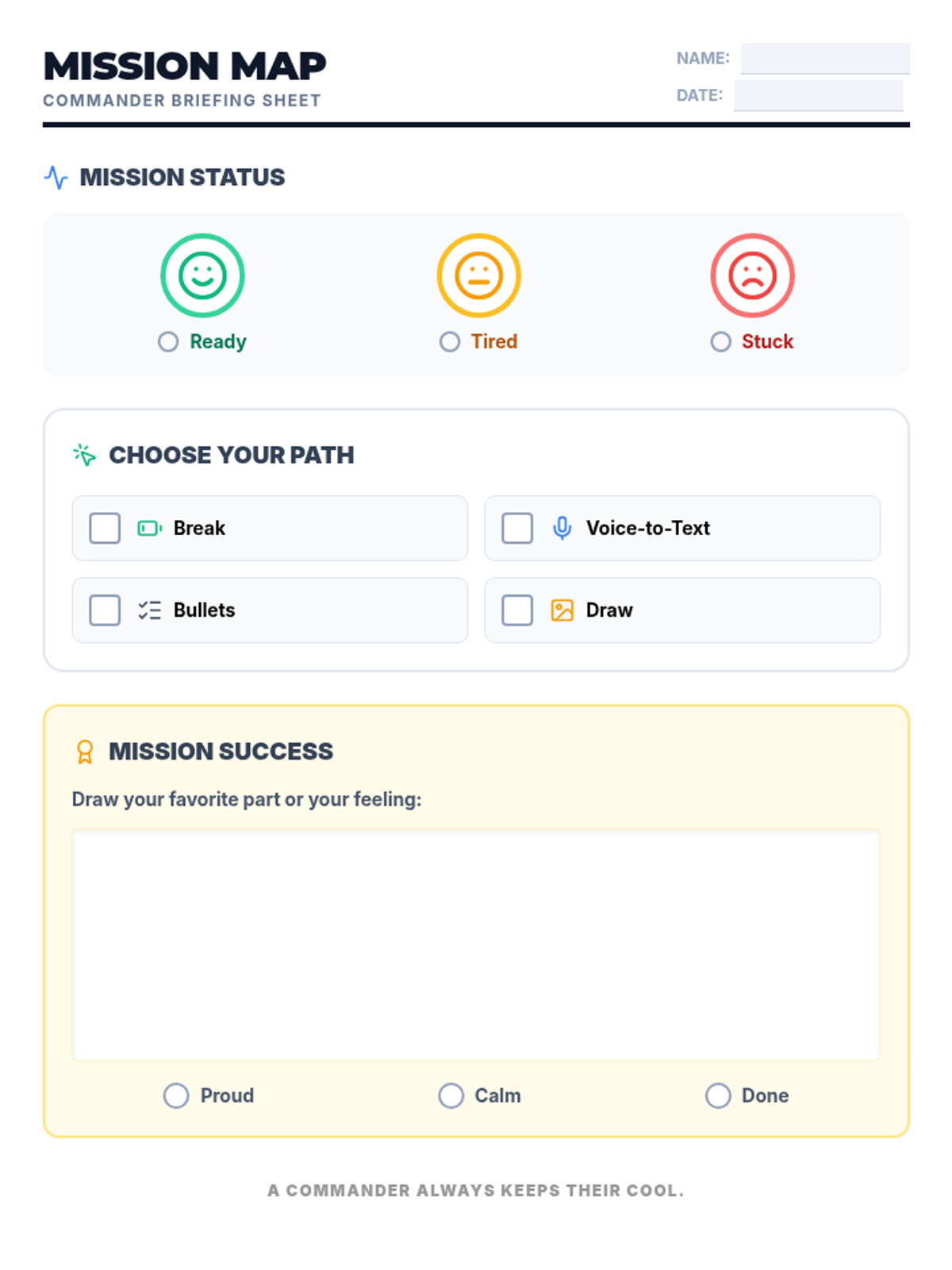
A low-writing 'Mission Map' worksheet for the student. It uses visual check-ins, checkboxes for choosing alternative tasks, and a drawing area for reflection. This version is optimized for single-page printing with clear selection markers.
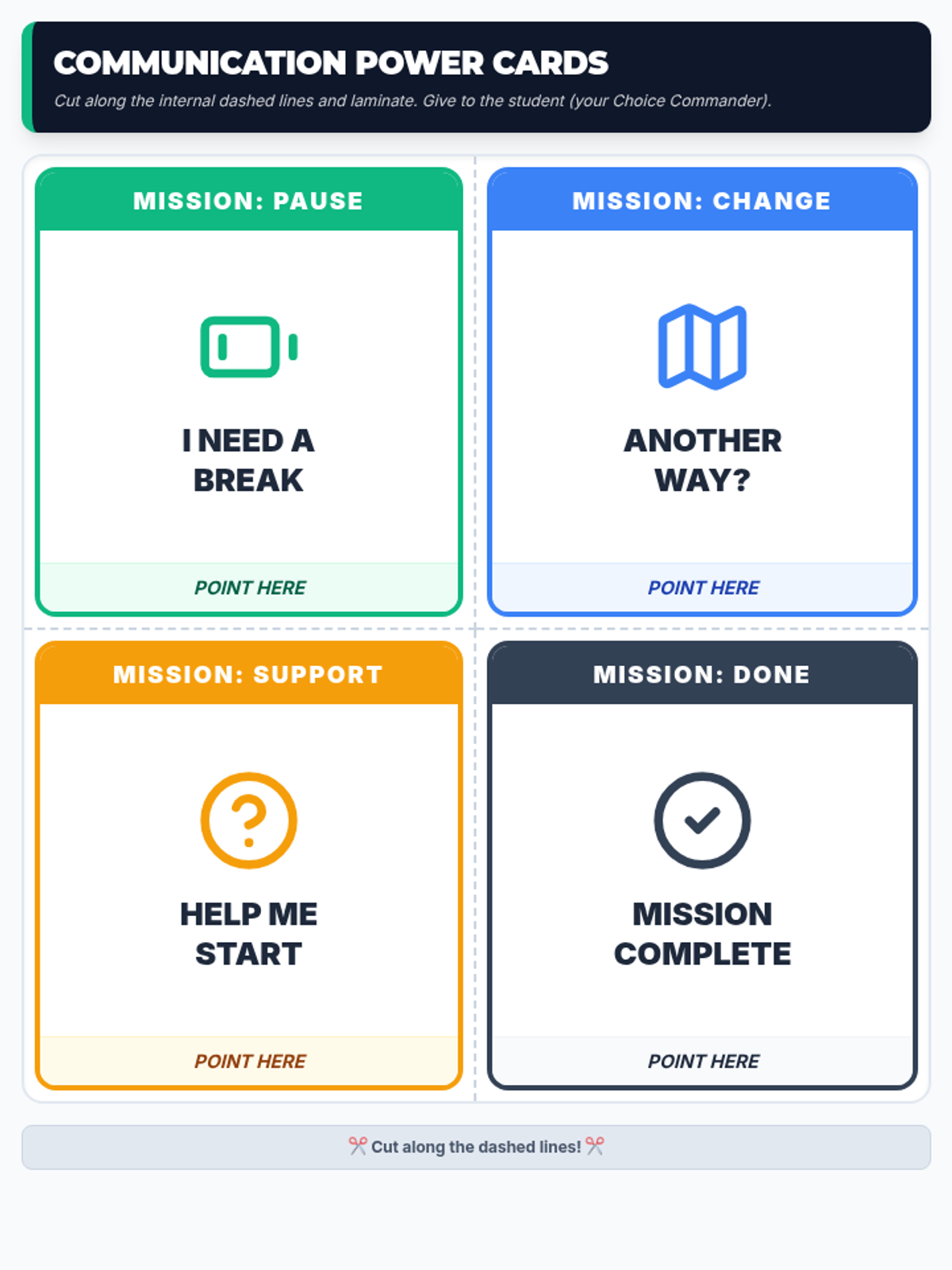
A printable set of visual communication cards for an autistic student. The cards feature clear icons and minimal text to help the student request a break, an alternative task, or help without resorting to physical aggression. This version includes internal cut guides and optimized sizing to fit on one page.
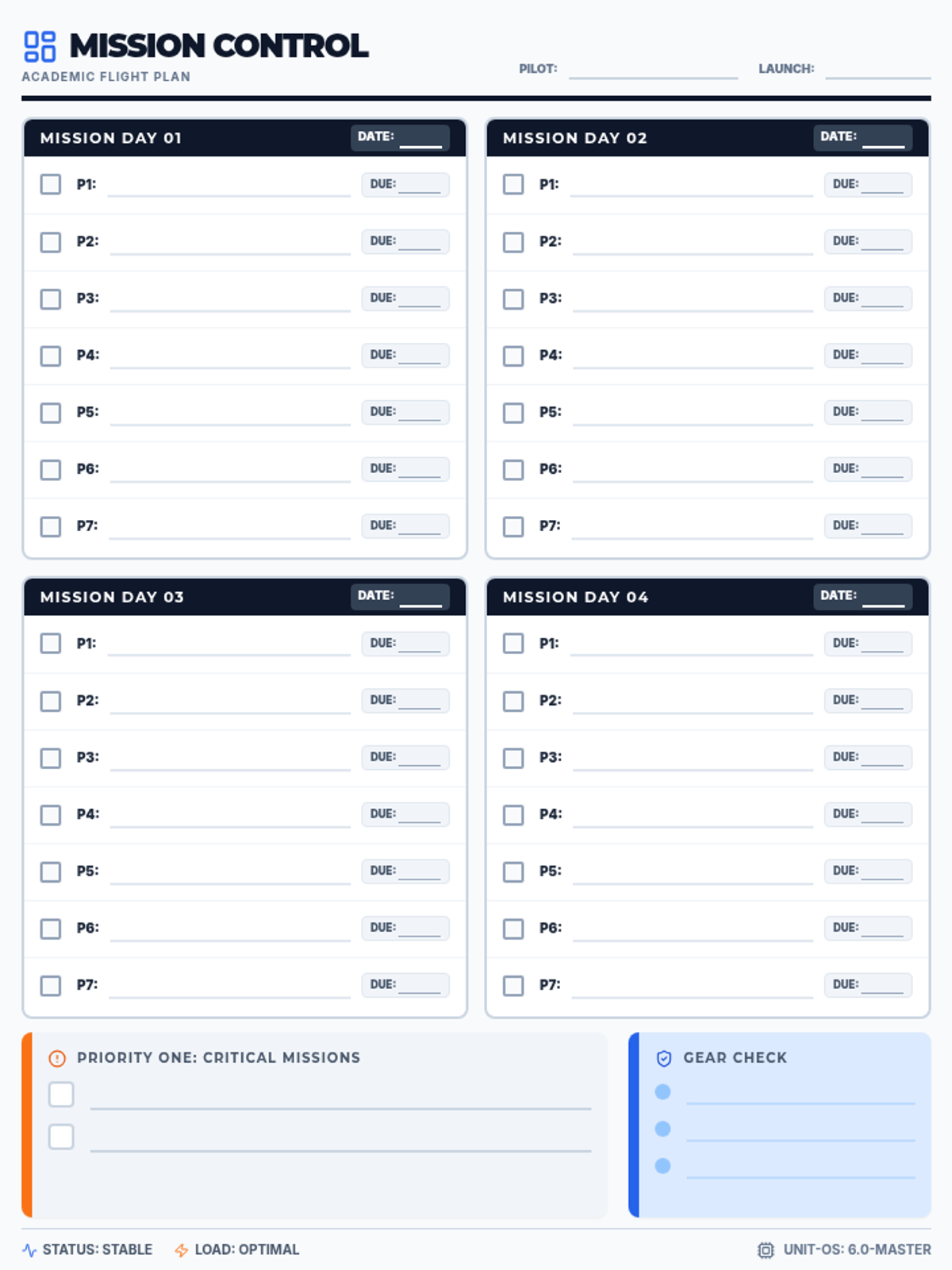
A 4-day academic organizer designed for students with executive functioning challenges, featuring a structured 7-period grid for tracking assignments and due dates within a 'Mission Control' theme.
A set of presentation slides titled 'Choice Commander' designed to teach an autistic student to recognize writing frustration and use replacement behaviors like requesting breaks or alternative tasks. The slides use a mission-based theme with large text and clear visuals for accessibility.
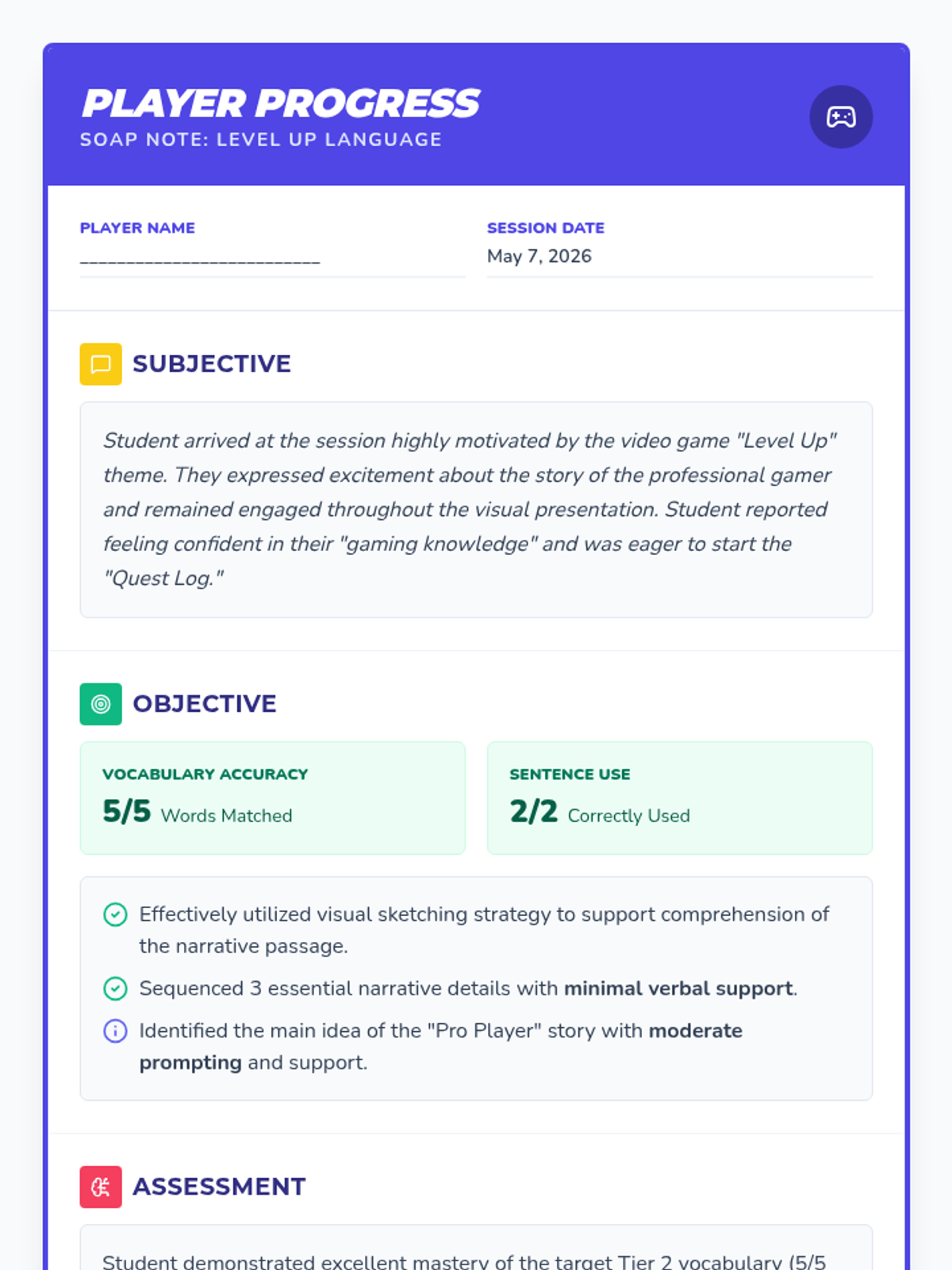
A single-paragraph narrative SOAP note for the Level Up Language lesson, integrating student performance data (vocabulary, sketching, sequencing, and main idea) into a cohesive professional summary.