A scaffolded practice worksheet for special education students that includes a step-by-step checklist for each division problem, supporting self-monitoring and procedural fluency.
A short assessment for Wilson Reading Step 5.2, including marking practice, word/sentence dictation areas, and a teacher-led reading check.
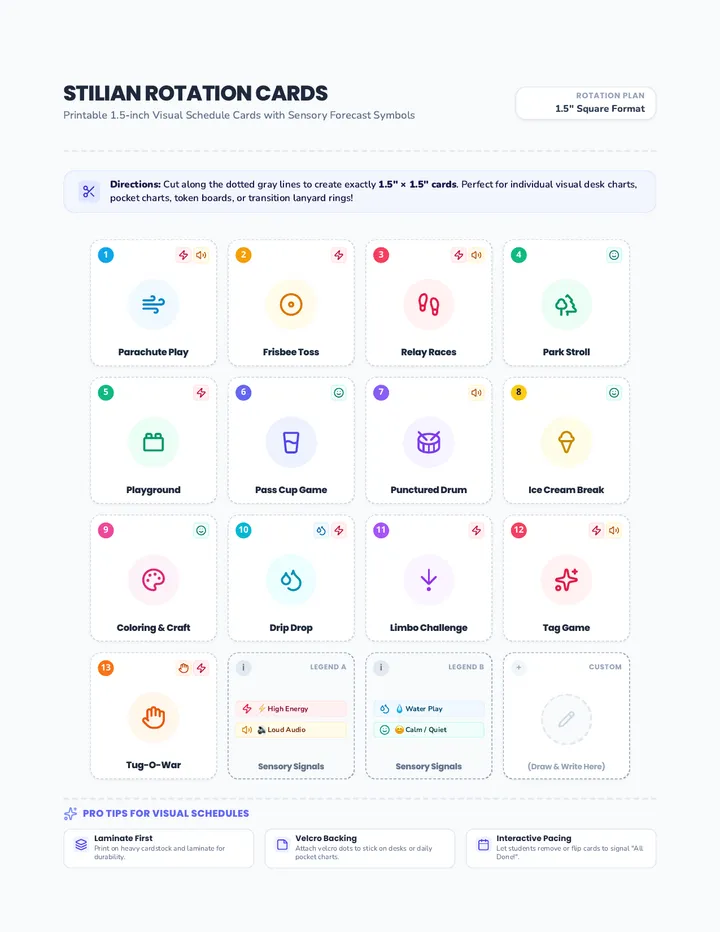
Printable sorting cards for multi-syllabic words, designed for students to categorize words by their first syllable type (Open vs. Closed). Fits Wilson Reading Step 5.2.
A student worksheet for Wilson Reading Step 5.2 focusing on scooping and dividing words with open syllables. Includes division practice, nonsense syllable identification, and sentence reading.
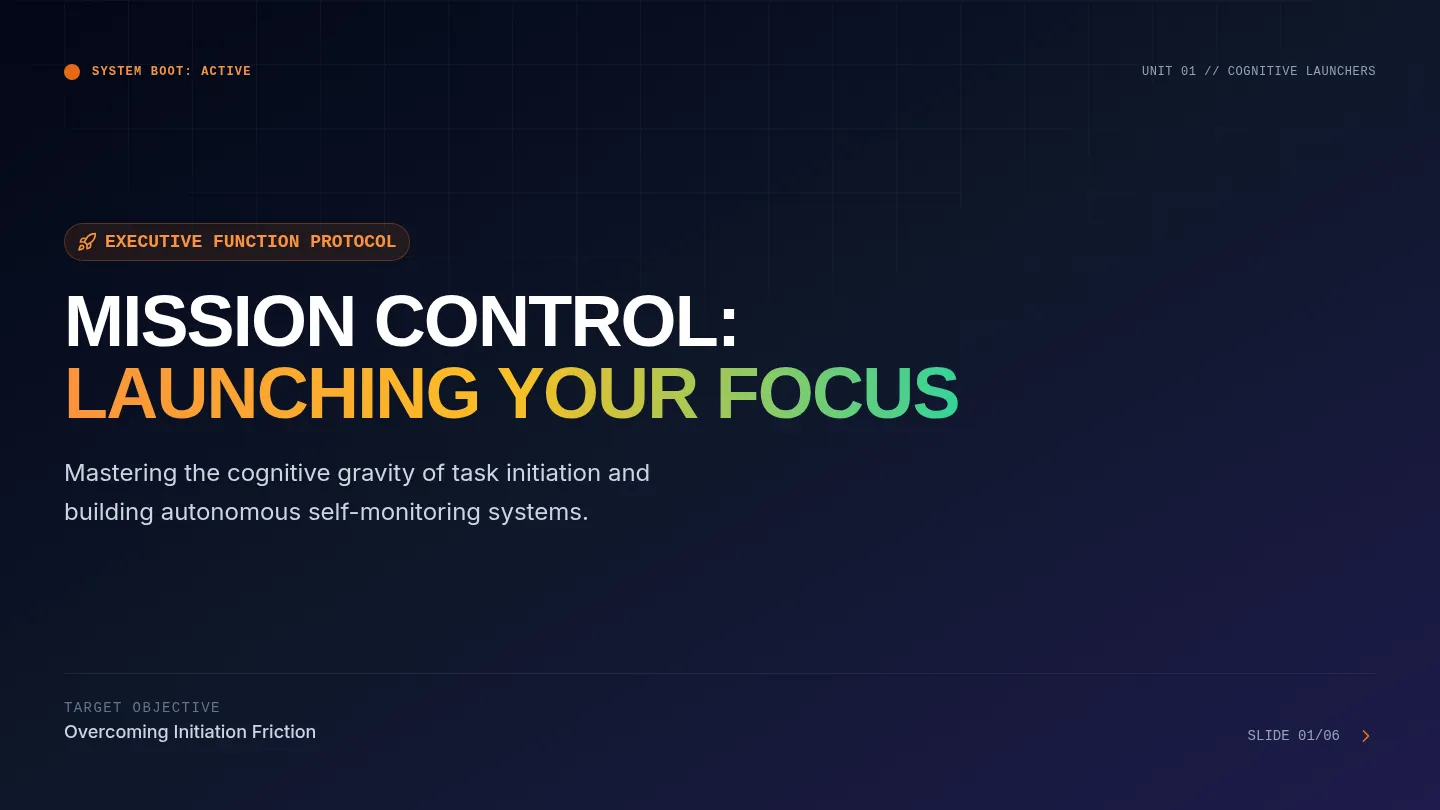
Instructional slides for Wilson Reading Step 5.2, featuring the detective-themed "Syllable Secrets" aesthetic. Covers the open syllable rule, v/cv division, and marking strategies.
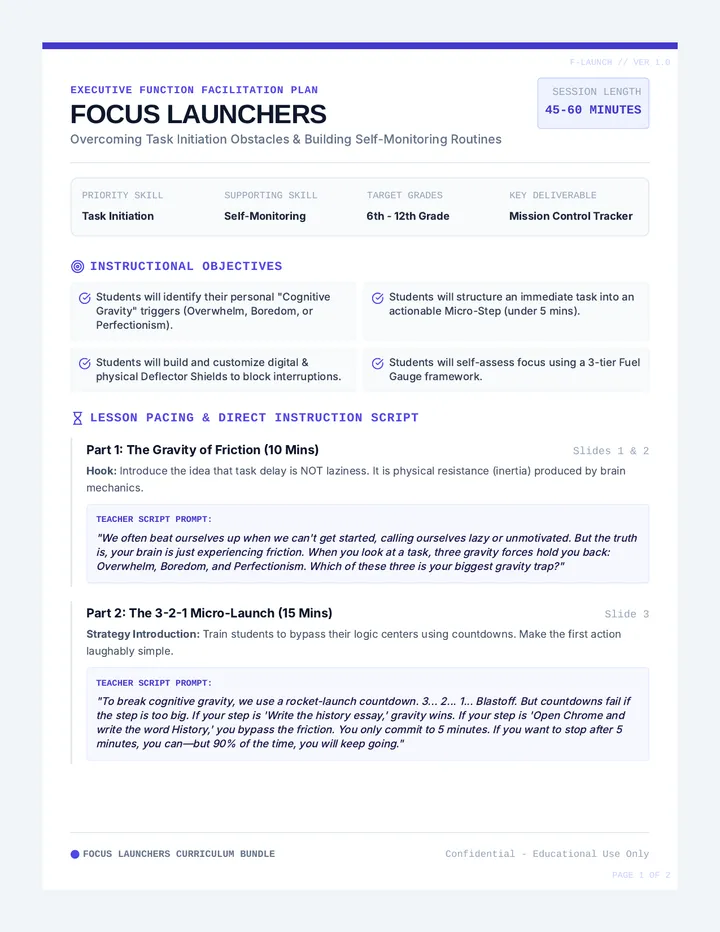
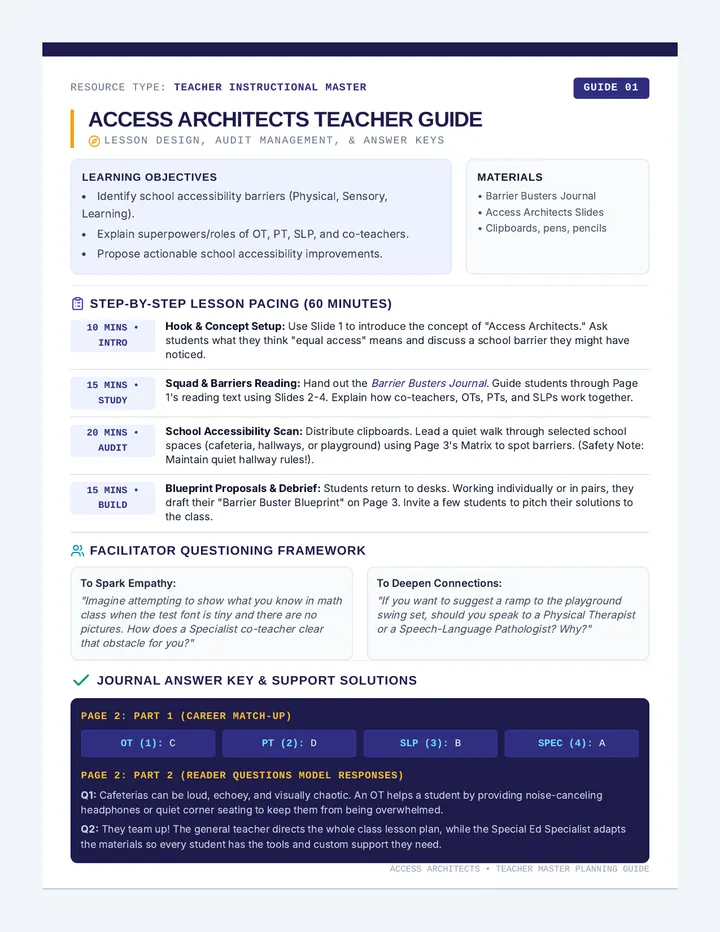
A comprehensive week-long teacher facilitation guide for Wilson Reading Step 5.2, including daily pacing, warm-up ideas, and a master word bank.
Bengal Tiger-themed teacher guide for facilitating the Tiger Tracker CICO system, including scoring protocols and reflection strategies.
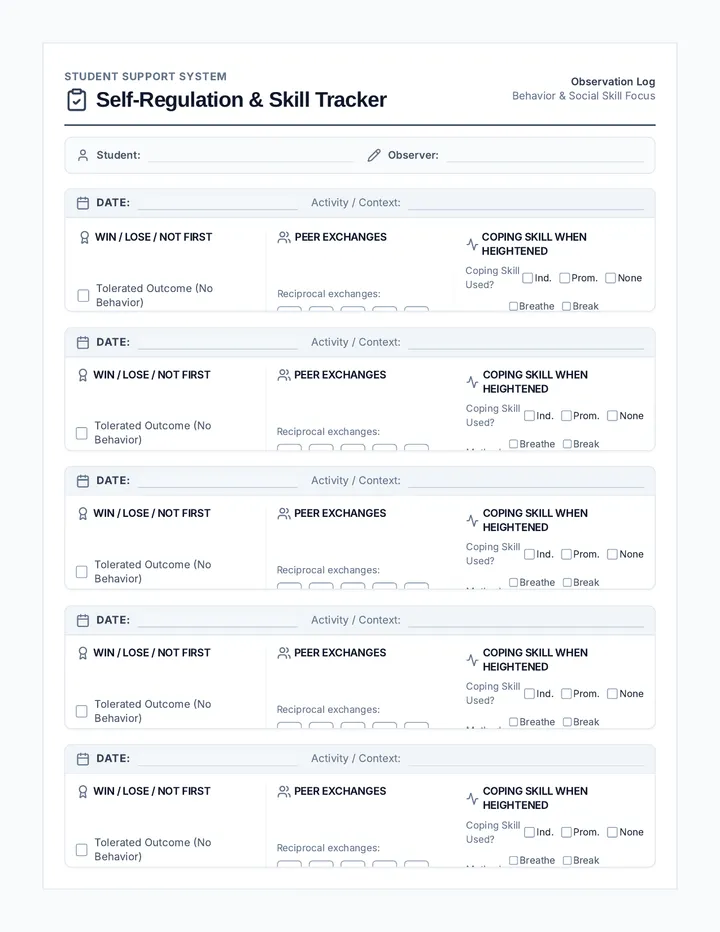
Updated Tiger-themed daily behavior tracking sheet with reflection areas for wins and obstacles, featuring a Bengal Tiger aesthetic.
An assessment tool to evaluate a student's ability to request repetition or clarification in practical life scenarios, featuring multiple-choice and open-response sections.
Differentiated communication cards and recipe-themed game scenarios to facilitate the Recipe Relay activity, supporting participatory, supported, and independent learners.
Visual aids for the Recipe Relay lesson, introducing the concept of clarification, the 'Echo Toolbox' strategies, and game rules with high-visibility text for 5th grade learners.
Updated lesson plan for 5th grade students focused on requesting repetition and clarification, now featuring higher-order thinking questions based on Bloom's Taxonomy.
A visual identification worksheet where students circle icons to categorize conversation topics as "Social Mode" (private/home) or "Professional Mode" (work-appropriate). Replaces the cut-and-sort with a more accessible circling format.
An answer key for the Professional Filter Worksheet, providing correct answers and rationales for workplace-based boundary decisions.
A comprehensive facilitator guide for the Professional Protocol lesson, featuring key vocabulary definitions, facilitation tips for diverse learners, and detailed discussion prompts for each workplace and community scenario.
A 2-page worksheet for young adults to practice identifying professional vs. personal boundaries in workplace scenarios. Includes multiple-choice questions and short-answer writing practice with a high-contrast, professional layout.
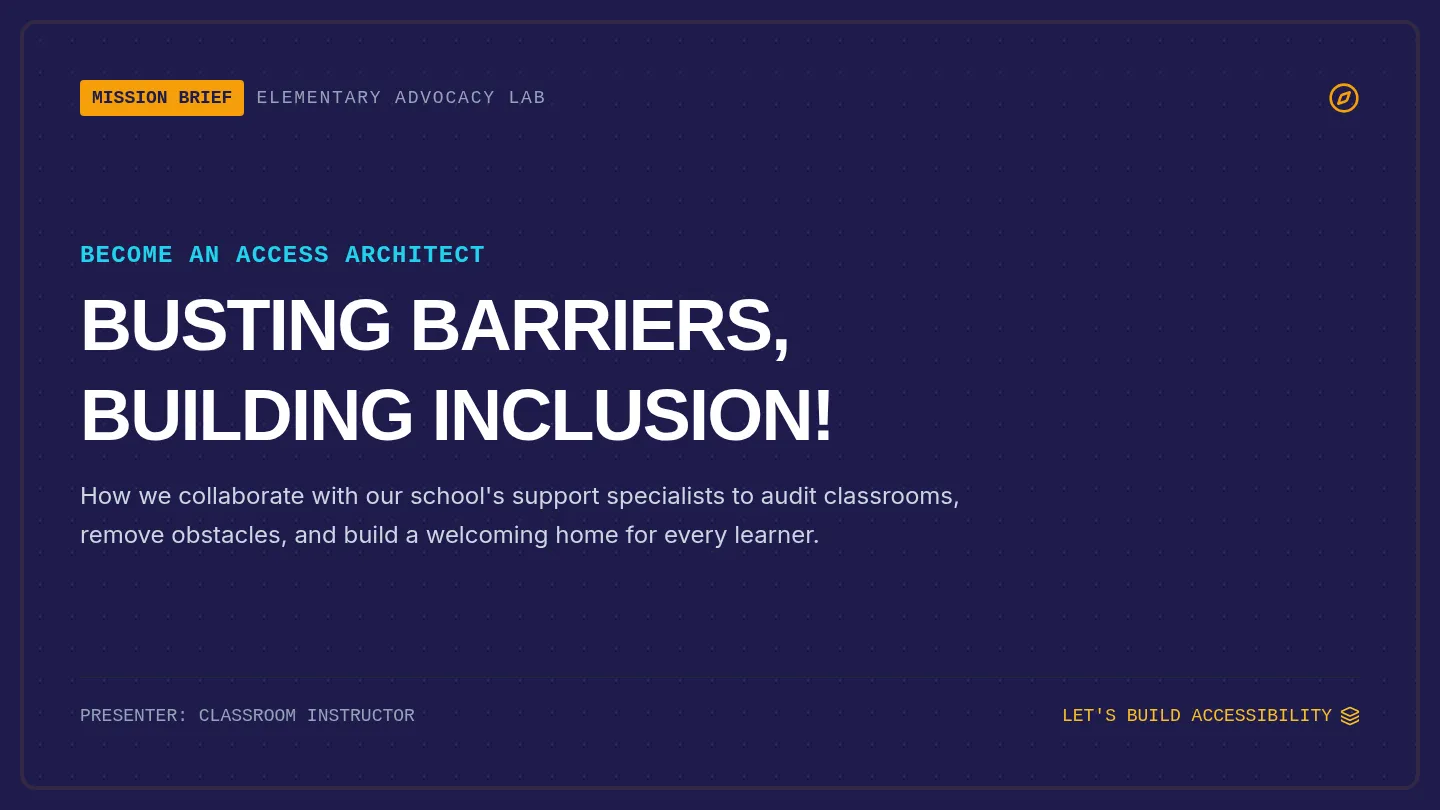
A 16-slide presentation for young adults (18-22) with cognitive disabilities, focusing on professional boundaries in the workplace and community. Features high-contrast blueprint-style visuals, adult-centric scenarios, and clear instructional scripts for workplace interactions.
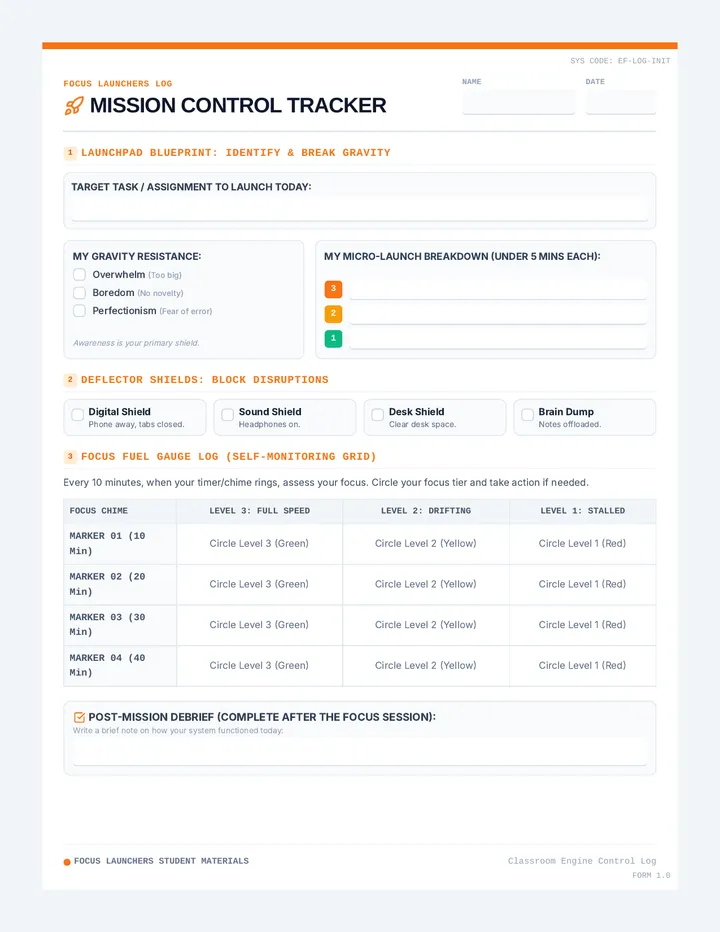
Updated Mission Control Guide for teachers, now including instructions on how to facilitate the "Mission Analysis" reflection and debrief session with the student.
Updated Mission Tracker CICO sheet for a 3rd grade student, featuring a dedicated "Mission Analysis" section for self-reflection on goal success, wins, and obstacles.
A comprehensive teacher resource explaining how to implement the Mission Tracker CICO system, including goal setting, scoring, and daily routines.
Updated daily behavior tracking sheet with a robust "Mission Analysis" section for reflecting on successes (what went right) and challenges (what went wrong).
A student-facing tracking checklist to monitor behavioral readiness and administrative requirements for field trip eligibility.
A formal behavior contract for students and parents to sign, detailing the specific expectations and consequences for field trip eligibility.
A high-impact classroom poster summarizing the four core behavioral expectations for field trip eligibility using a bold, explorer-themed visual style.
A detailed behavioral rubric for middle school students to determine their eligibility for a field trip, featuring four levels of achievement across key conduct categories.
A realistic grocery shopping simulation featuring a "Main Street Market" circular and a $40 shopping trip log. Optimized for 8.5x11 printing with clear margins and structured workspaces for students with intellectual disabilities or autism.
The final substitute teacher guide for the "Real World" Market Mission lesson. Includes timing for both the whole-number missions and the decimal-based grocery simulation, with specific guidance on calculator use and needs-vs-wants prioritization.
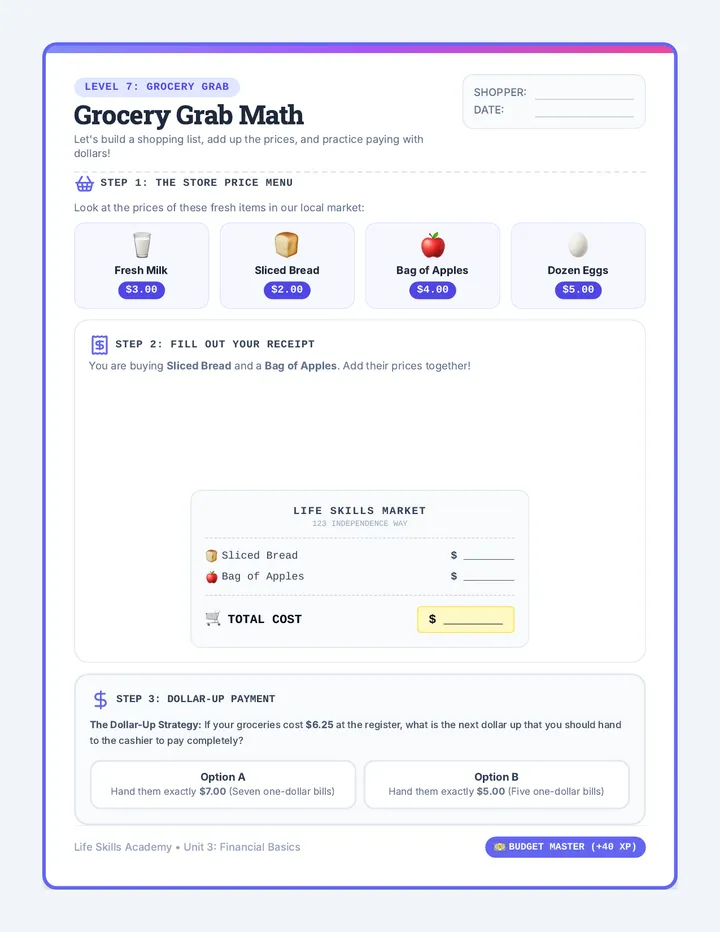
An updated answer key for the Market Mission activity, now including solutions and instructional strategies for the realistic "Grocery Grab" simulation. It details essential item costs, provides example totals, and introduces "Real World" teaching methods like the Dollar-Up approach.