A reference handout for educators outlining core differentiation strategies across content, process, product, and learning environment. Includes practical tips for implementing low-prep adaptations in the classroom.
A visual presentation deck to introduce students to various vocational tasks. Includes large icons, 2-4 word phrases, and emoji rating visuals for group discussion.
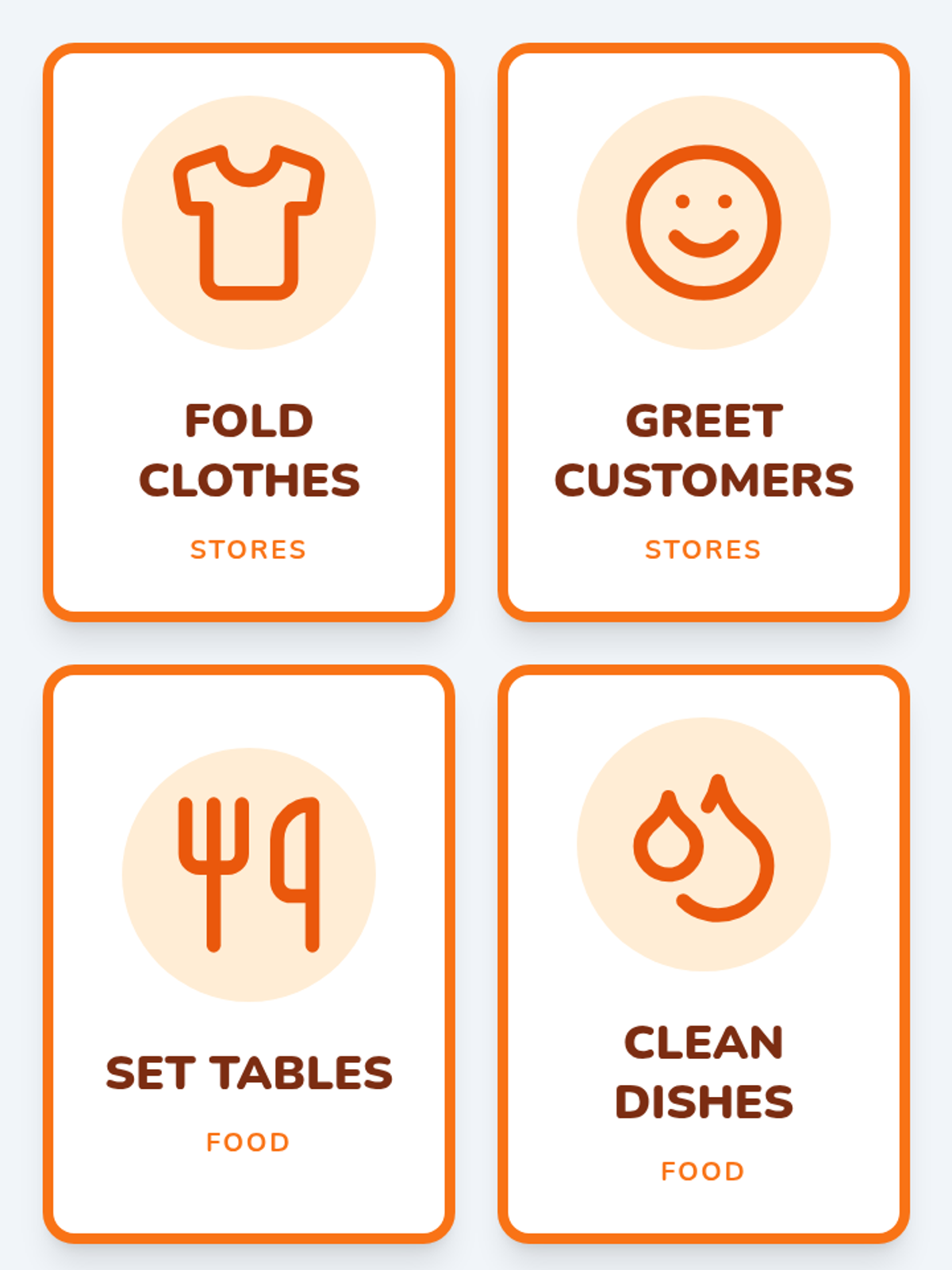
A set of 16 visual task cards for hands-on vocational sorting. Each card features a job task, large icon, and simple text for students with low reading levels.
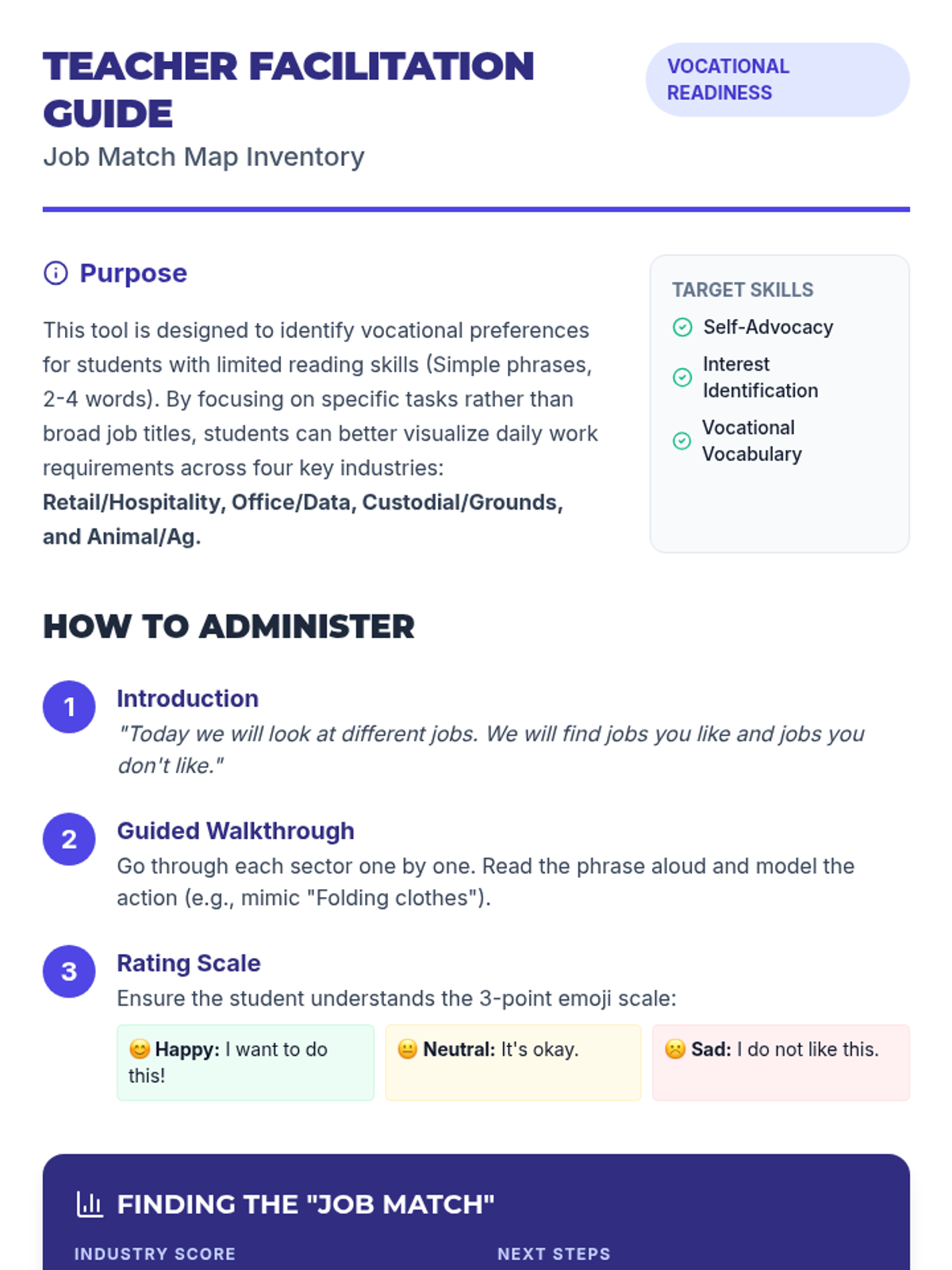
An instructional guide for educators to facilitate the Job Match Map Inventory. Includes administration steps, scoring tips, and extension ideas for low-reading-level students.
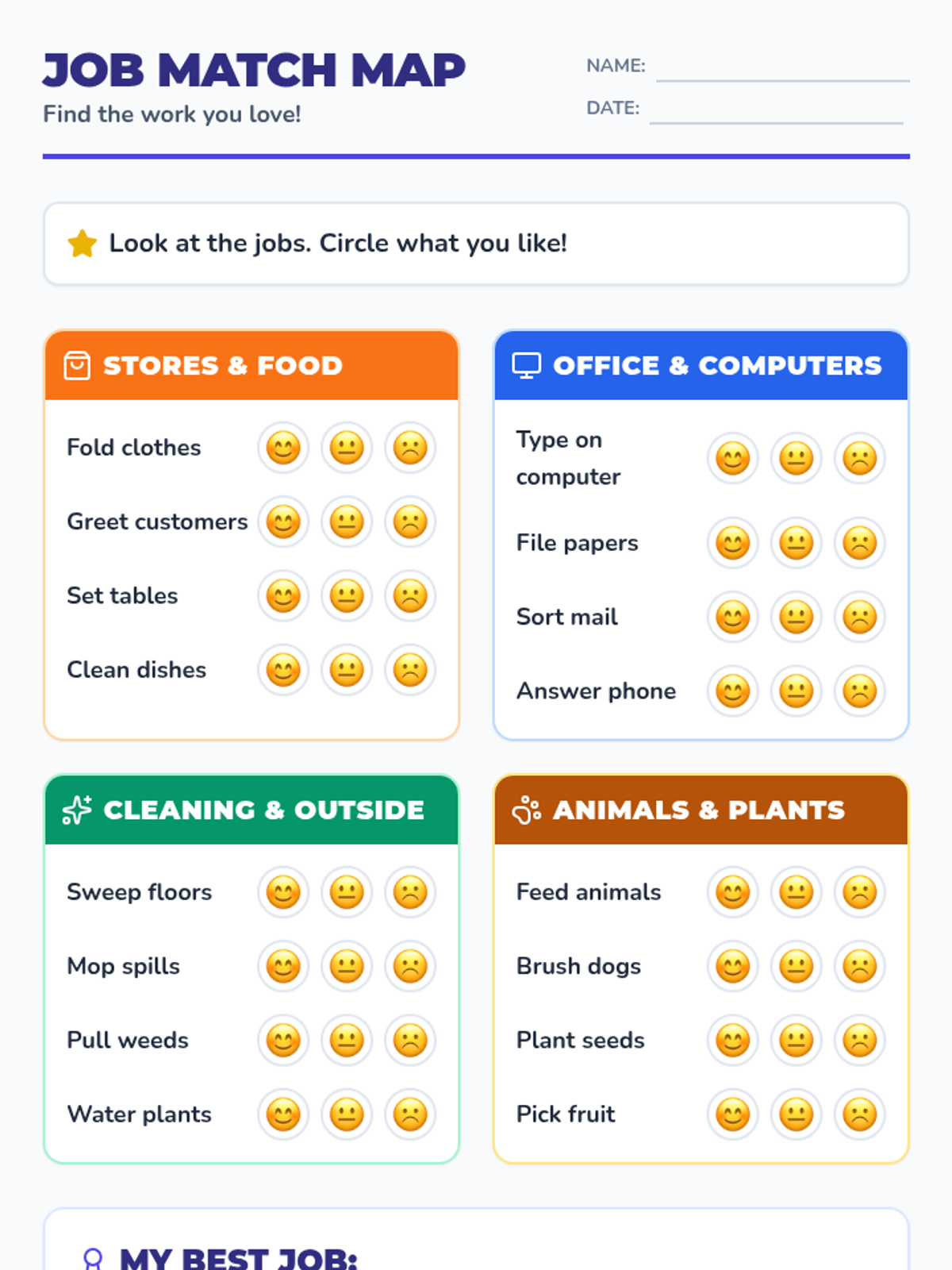
A visual interest inventory for students with low reading levels. Features 16 job tasks across four industries with simple emoji-based rating scales.
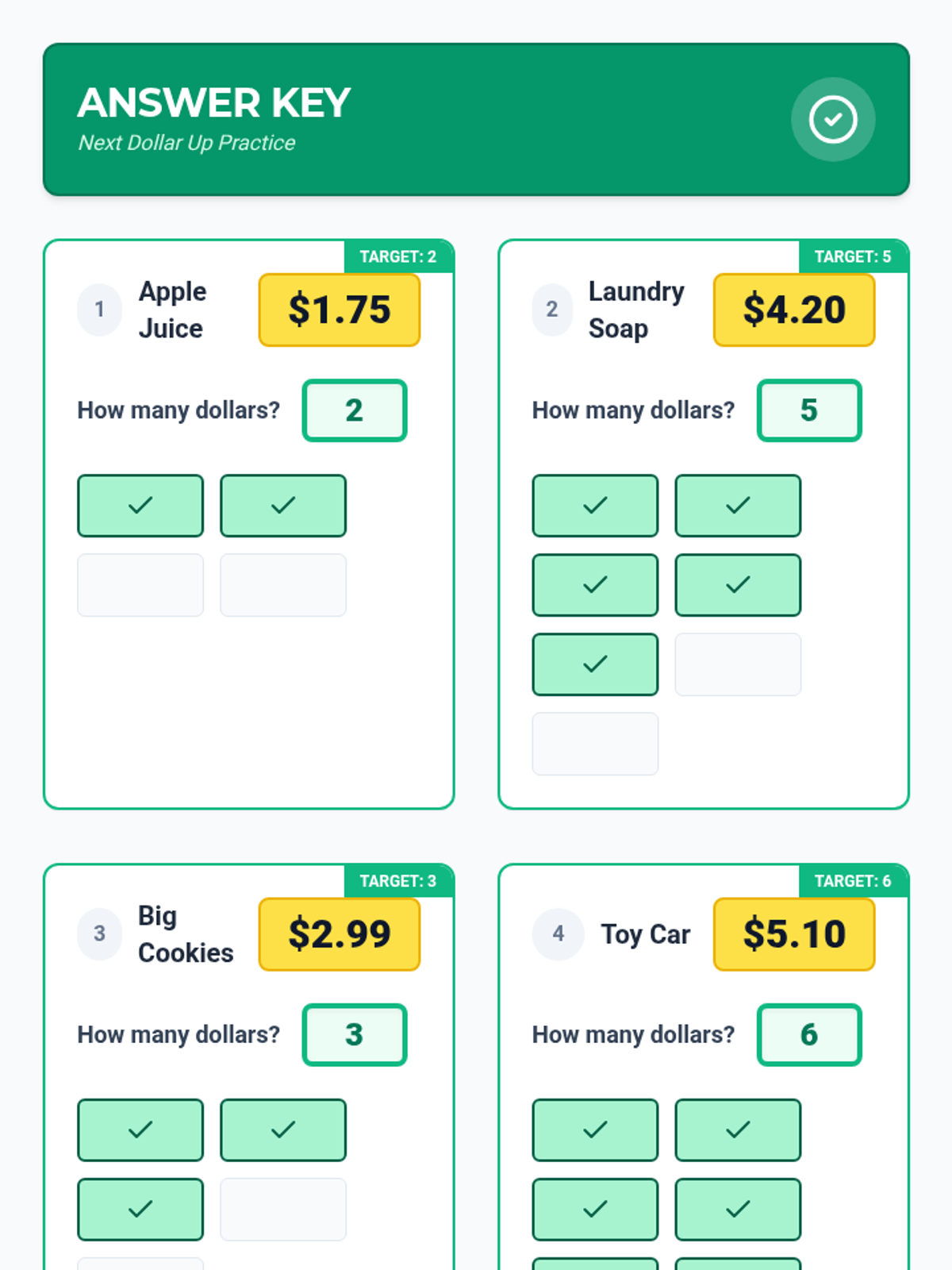
A teacher answer key for the Price Tag Worksheet, showing the correct number of dollars for each item.
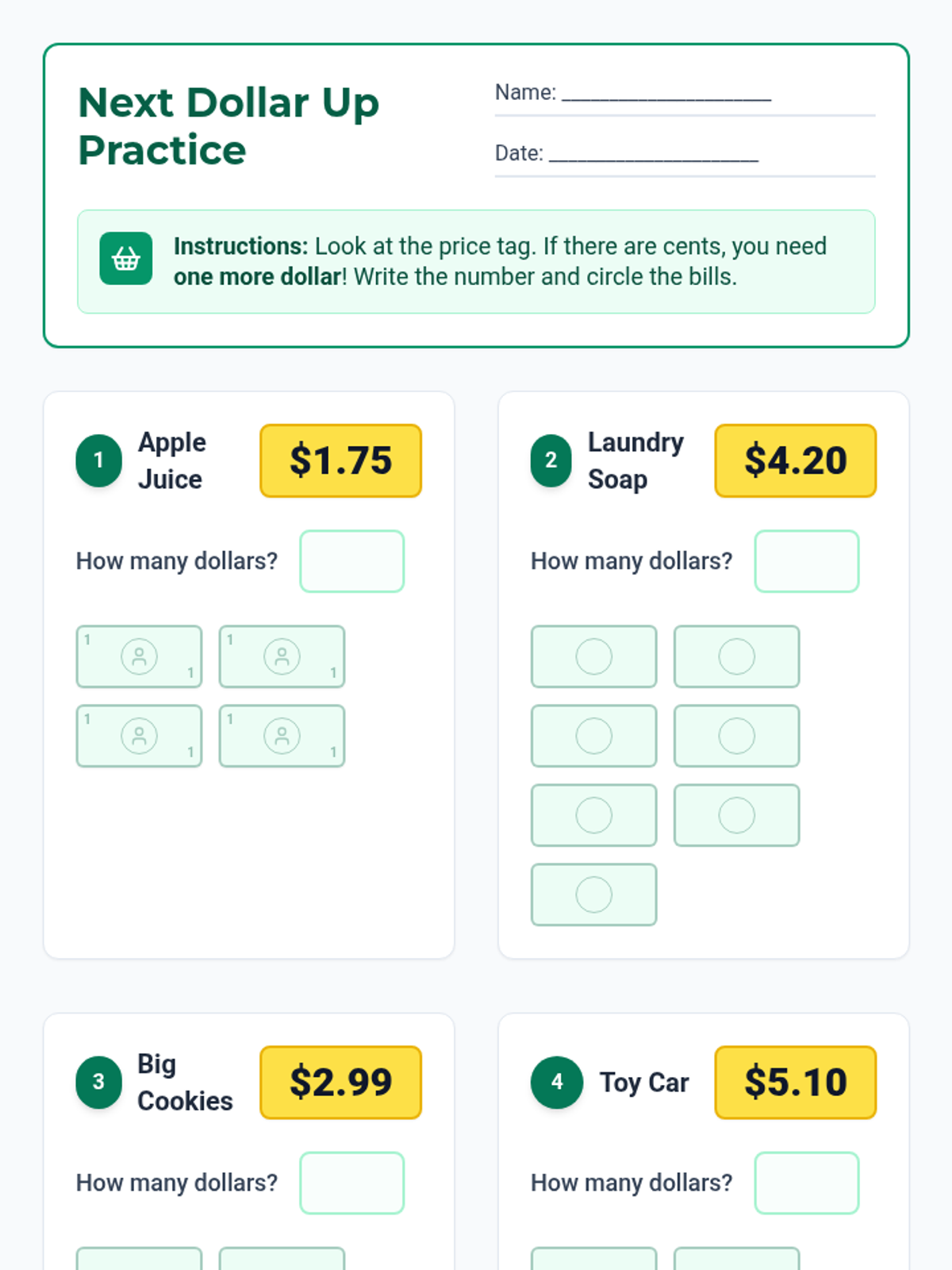
A student worksheet featuring grocery items with price tags where students must determine the 'Next Dollar Up' and identify the correct number of bills.
An instructional presentation teaching the 'Next Dollar Up' strategy with visual steps and realistic bill representations.
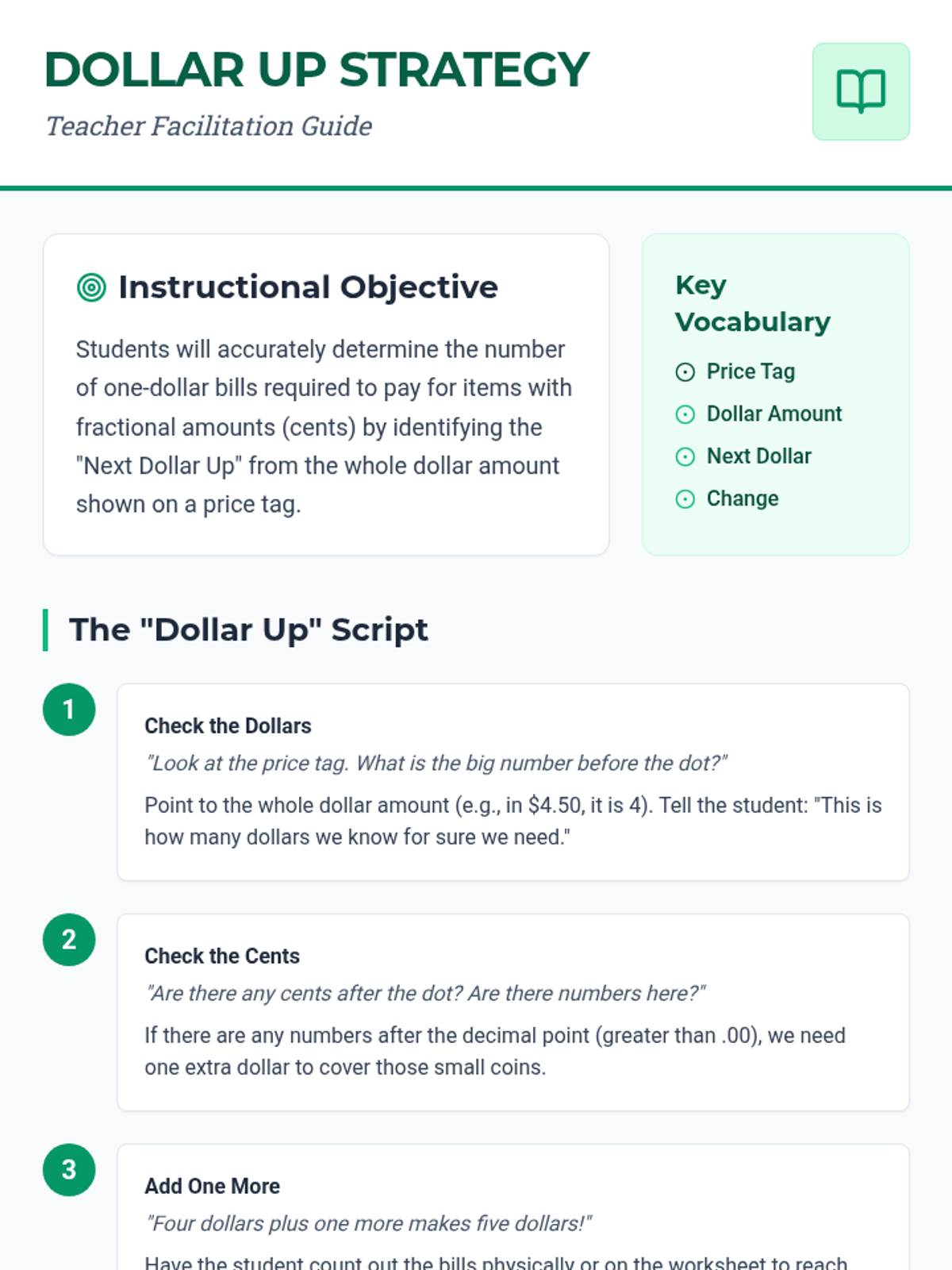
A comprehensive teacher guide for instructing students on the Next Dollar Up method, including objectives, scripted prompts, and common student misconceptions.
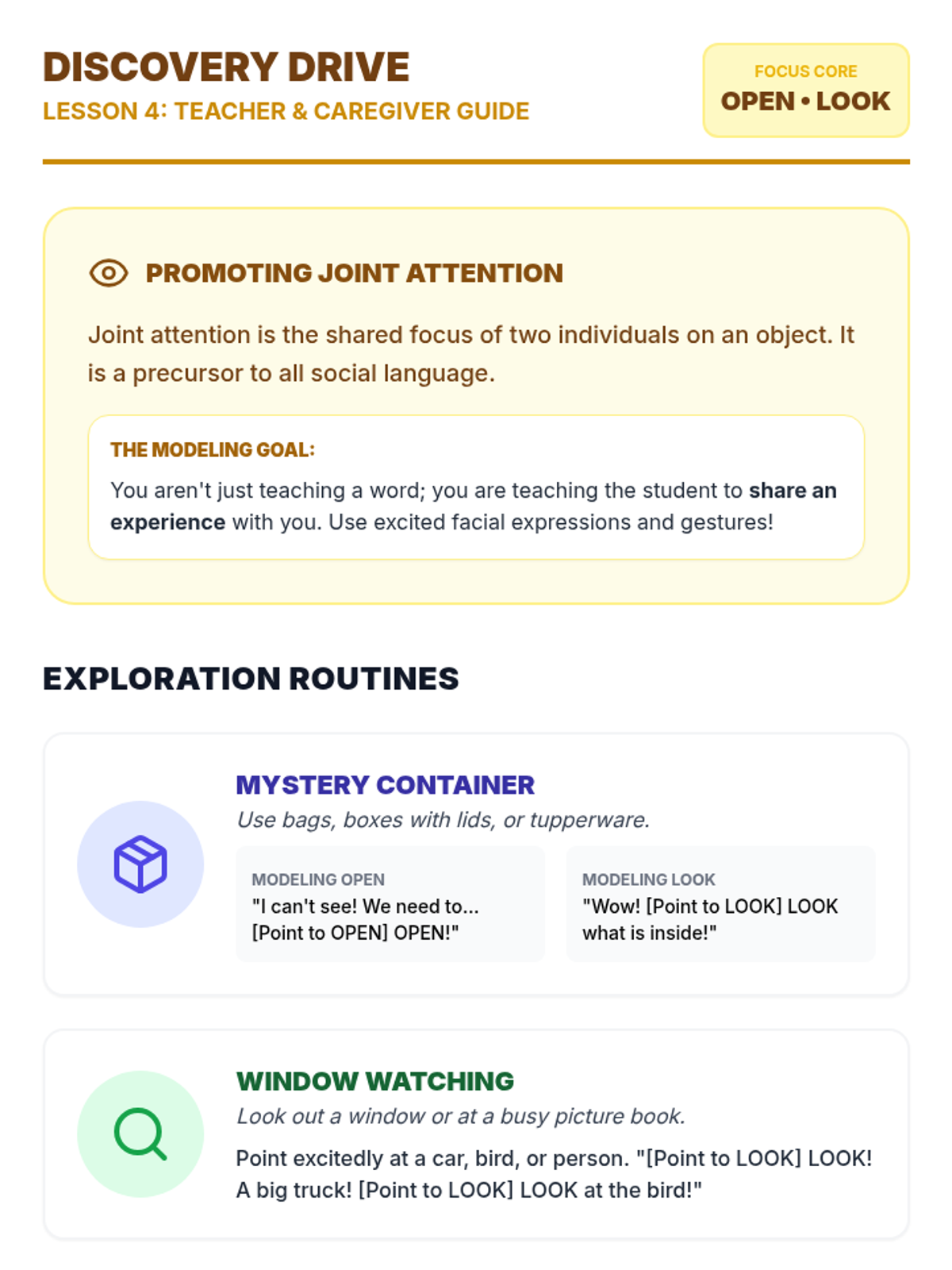
A teacher guide for Lesson 4 focused on joint attention and exploration routines using the core words 'Open' and 'Look'.
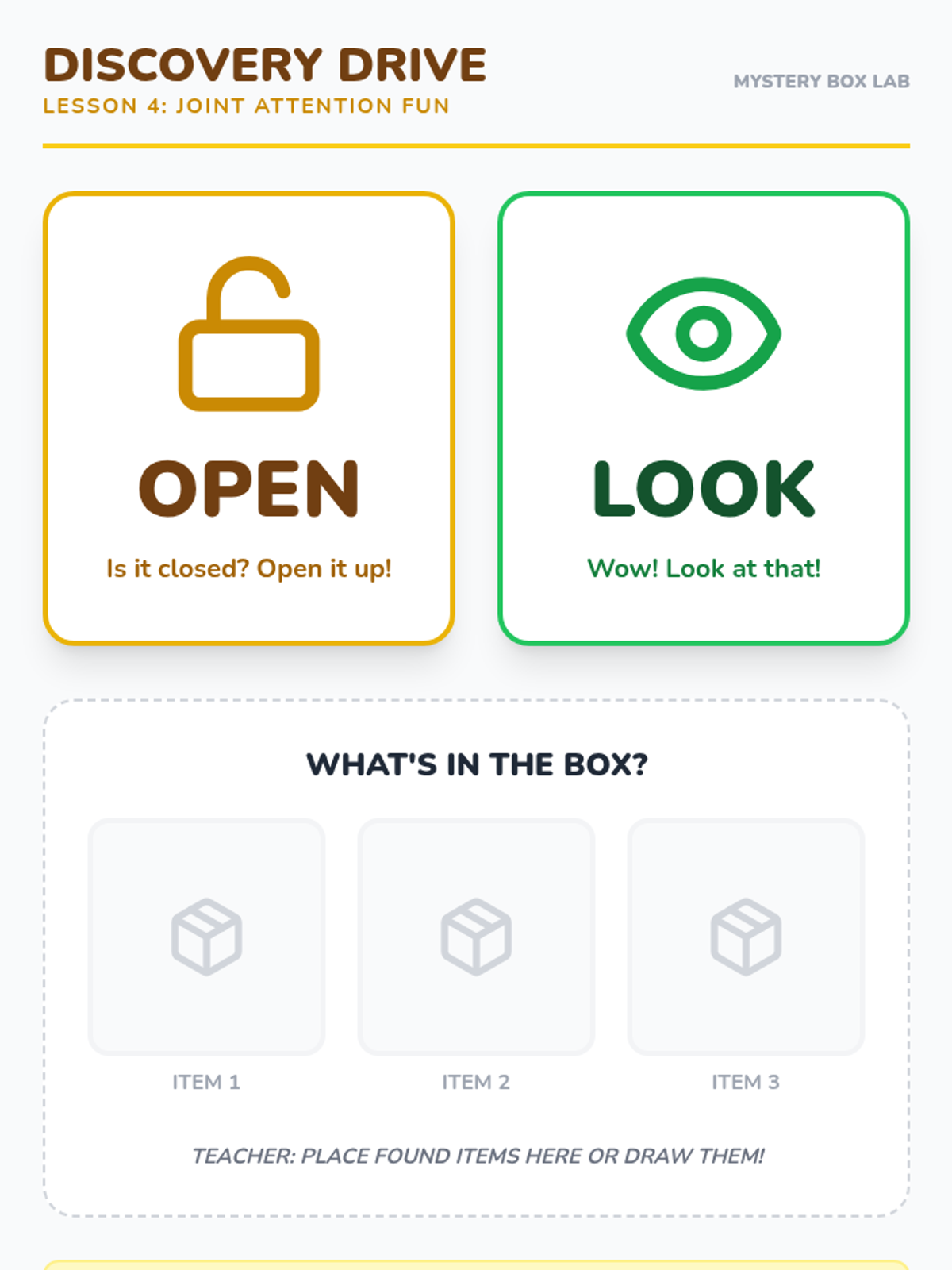
A student activity sheet for joint attention exploration, featuring large visual prompts for 'Open' and 'Look' alongside a mystery box tracking area.
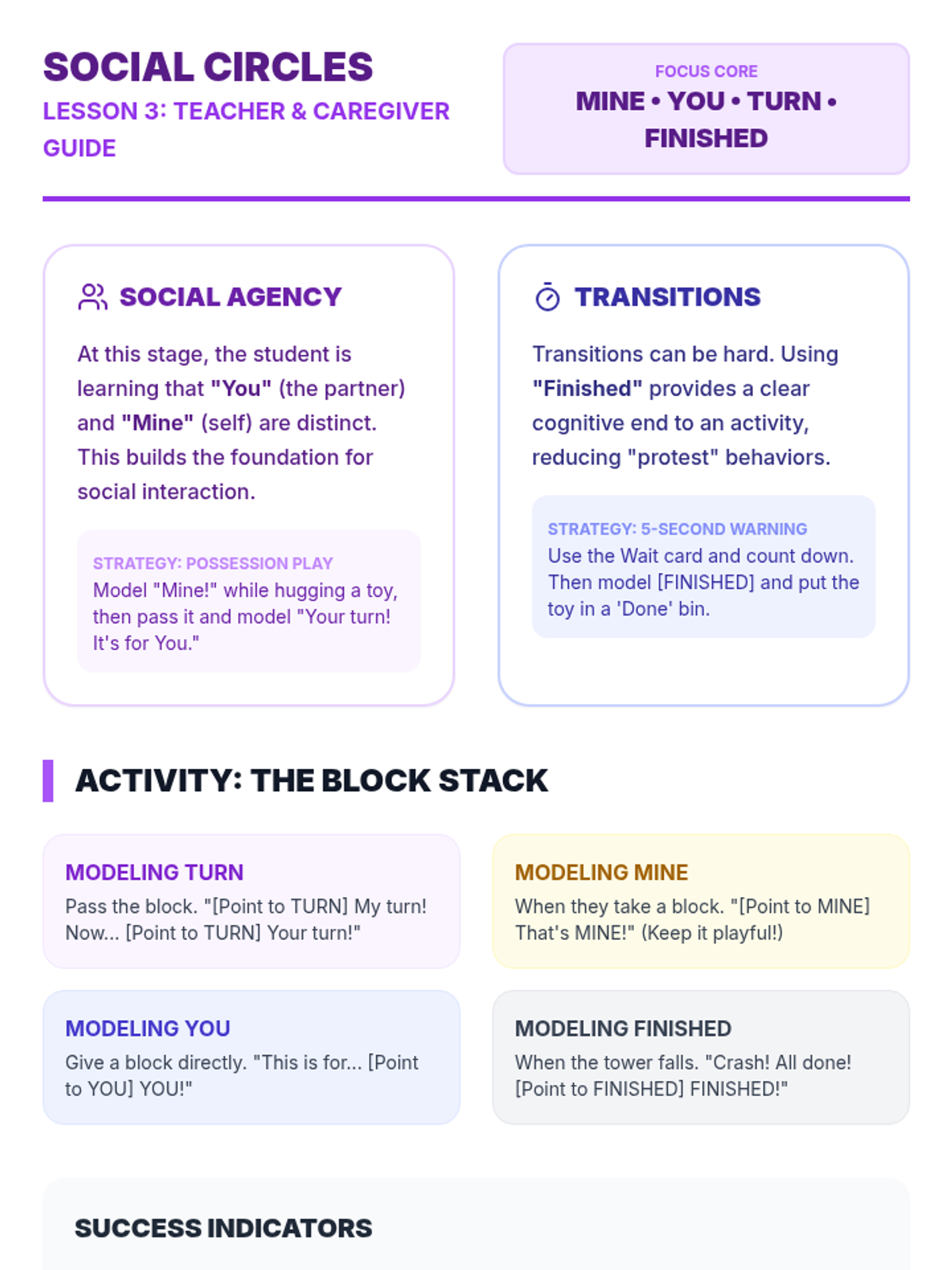
A teacher guide for Lesson 3 focusing on social interactions, turn-taking, and transition management using core words 'Mine', 'You', 'Turn', and 'Finished'.
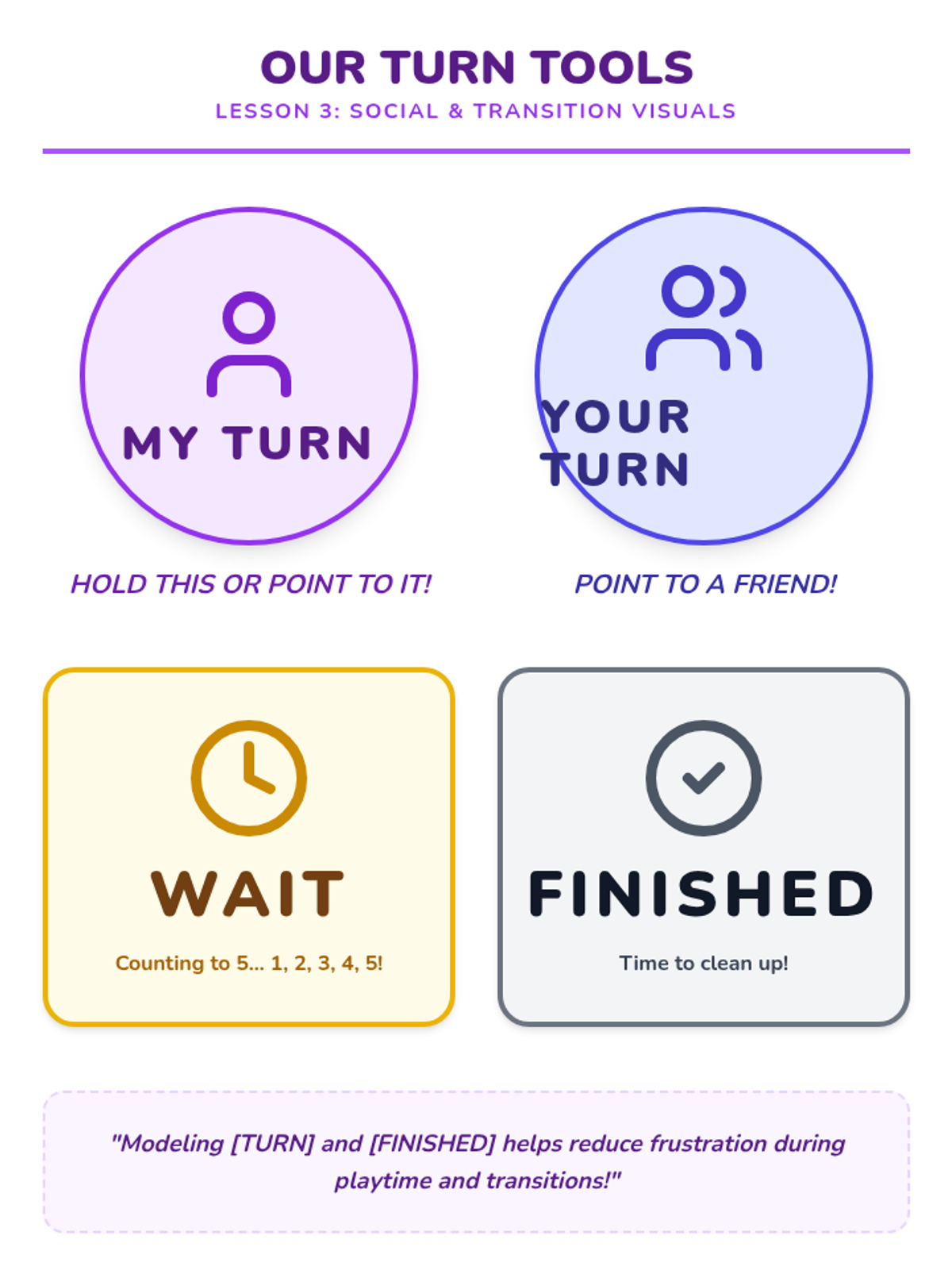
Visual aids for turn-taking, waiting, and finishing activities, specifically designed to support the core words 'Mine', 'You', 'Turn', and 'Finished'.
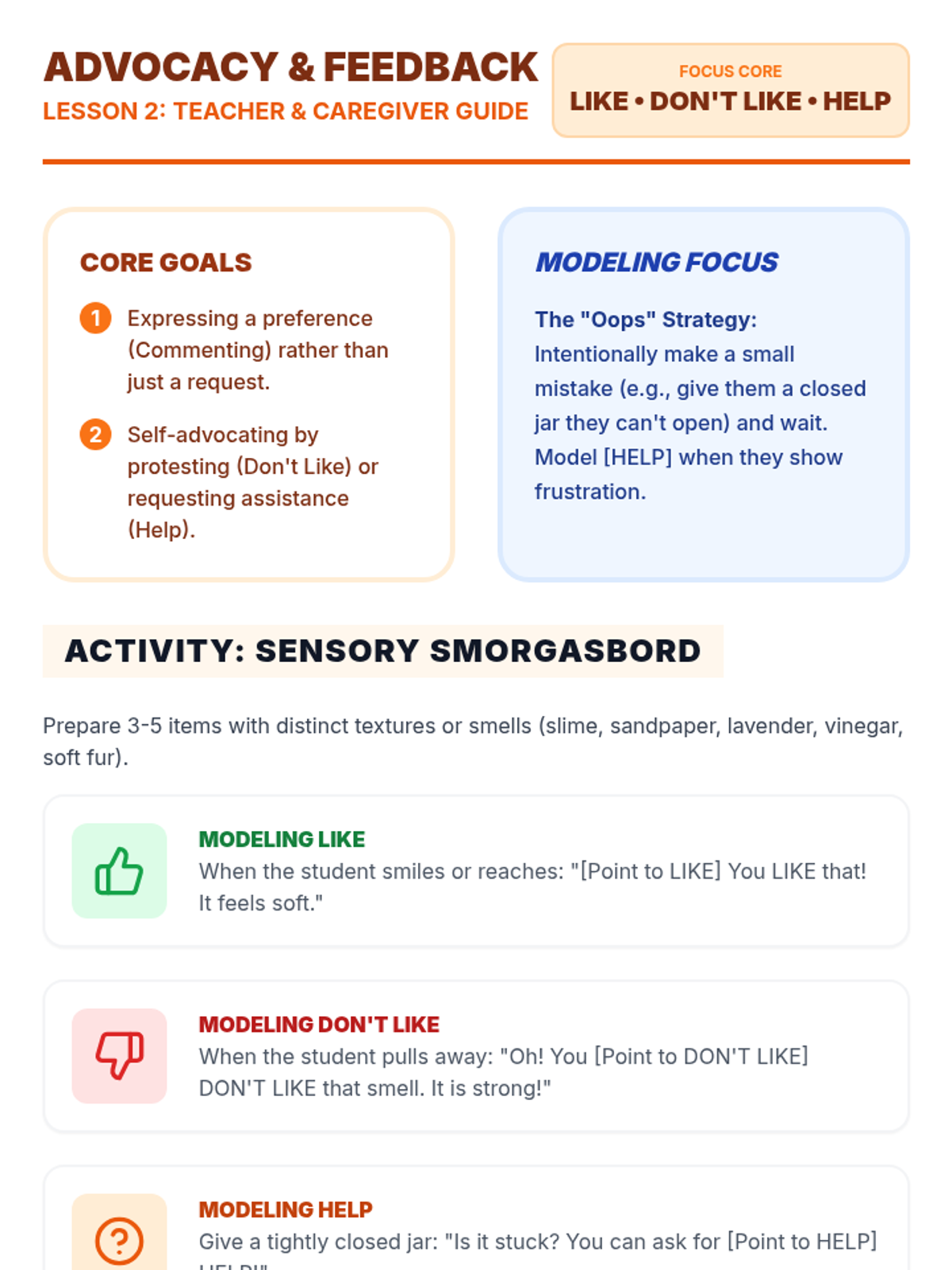
A teacher resource guide focused on modeling preferences and self-advocacy (Like, Don't Like, Help), featuring the 'Oops Strategy' and sensory exploration activities.
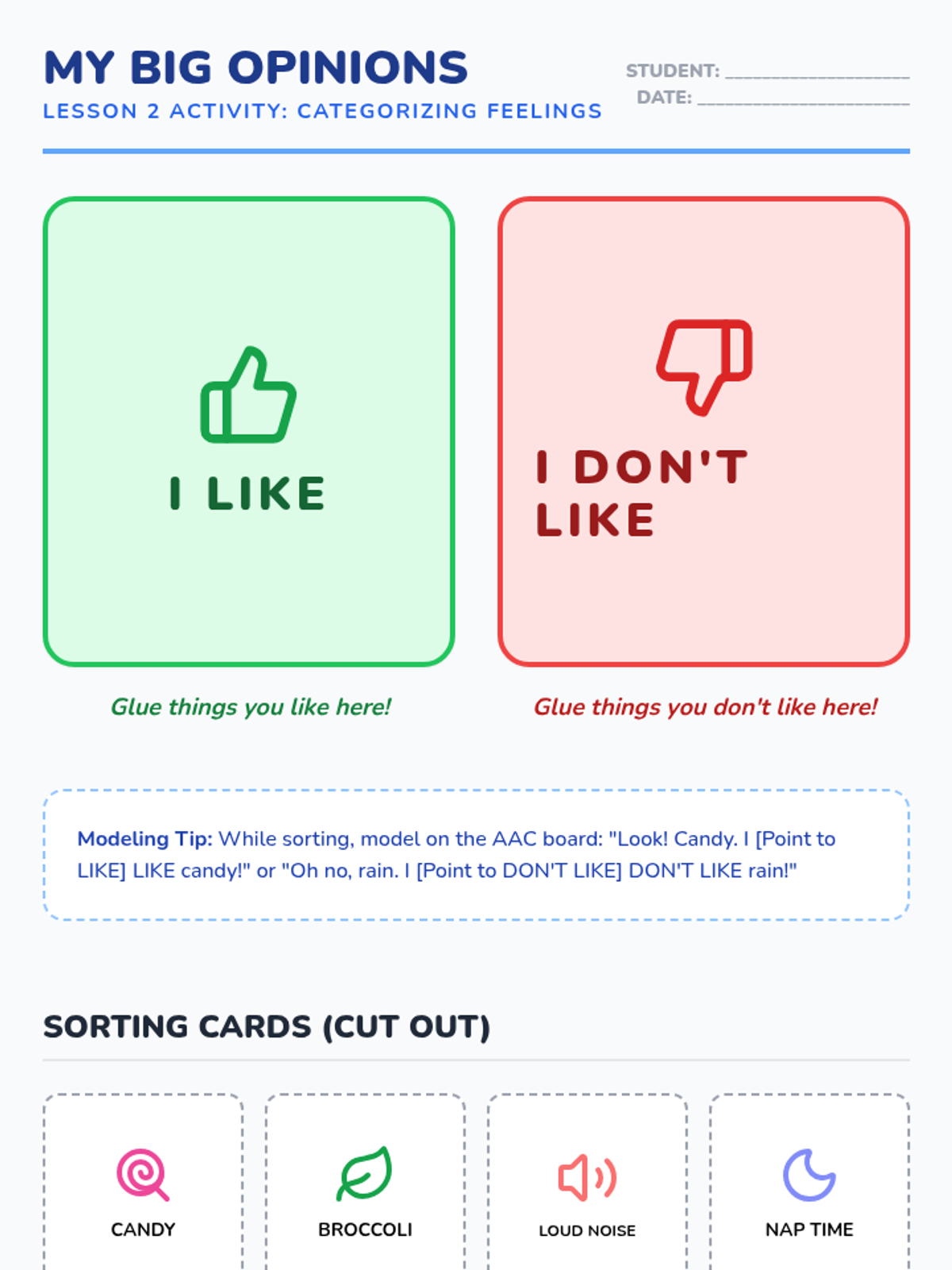
An engaging student worksheet for categorizing preferences into 'Like' and 'Don't Like', featuring 8 cut-out sensory and activity cards to practice commenting and self-advocacy.
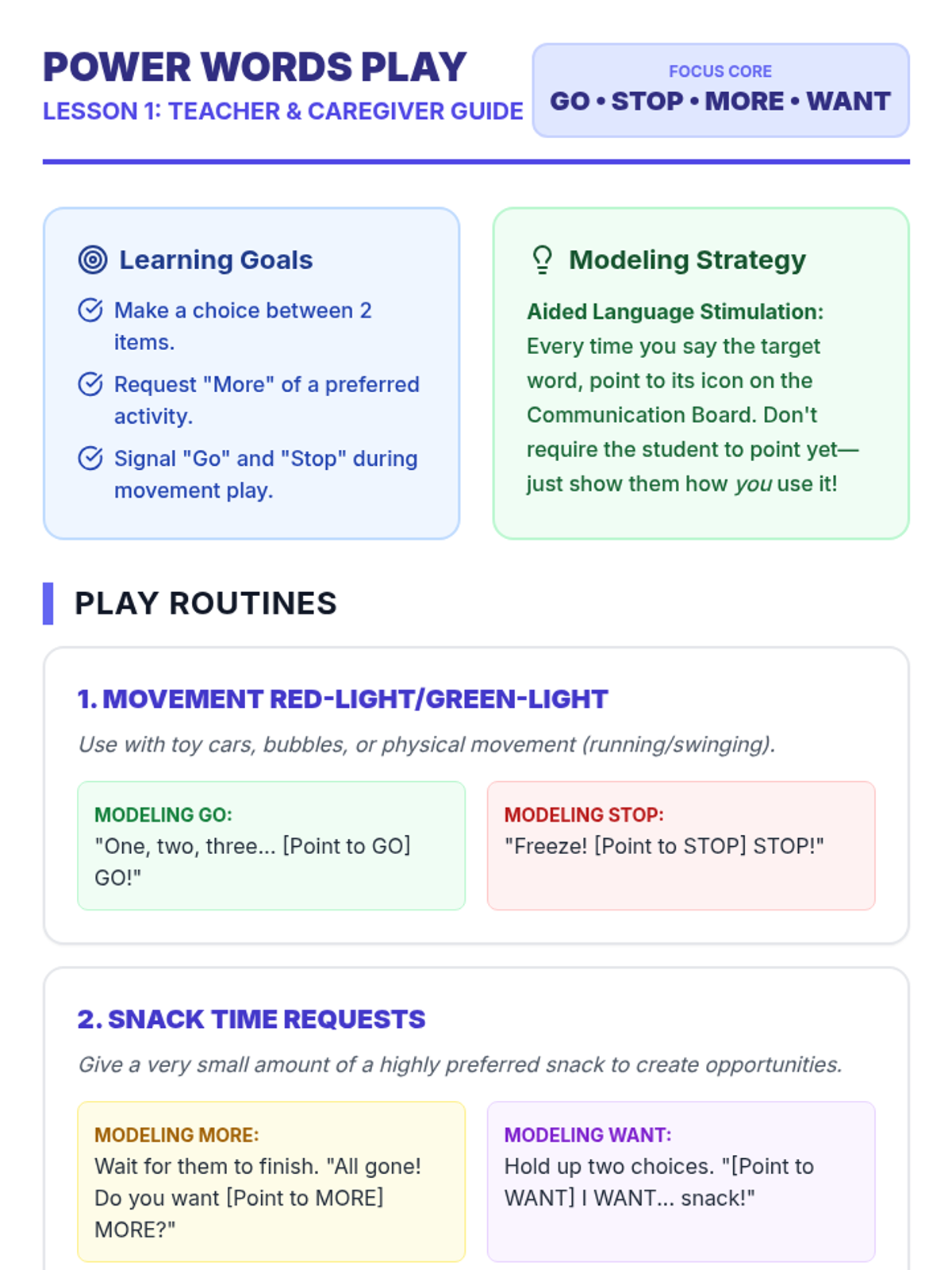
A teacher-facing instructional guide for Lesson 1, detailing specific play routines and modeling strategies for the core words 'Go', 'Stop', 'More', and 'Want'.
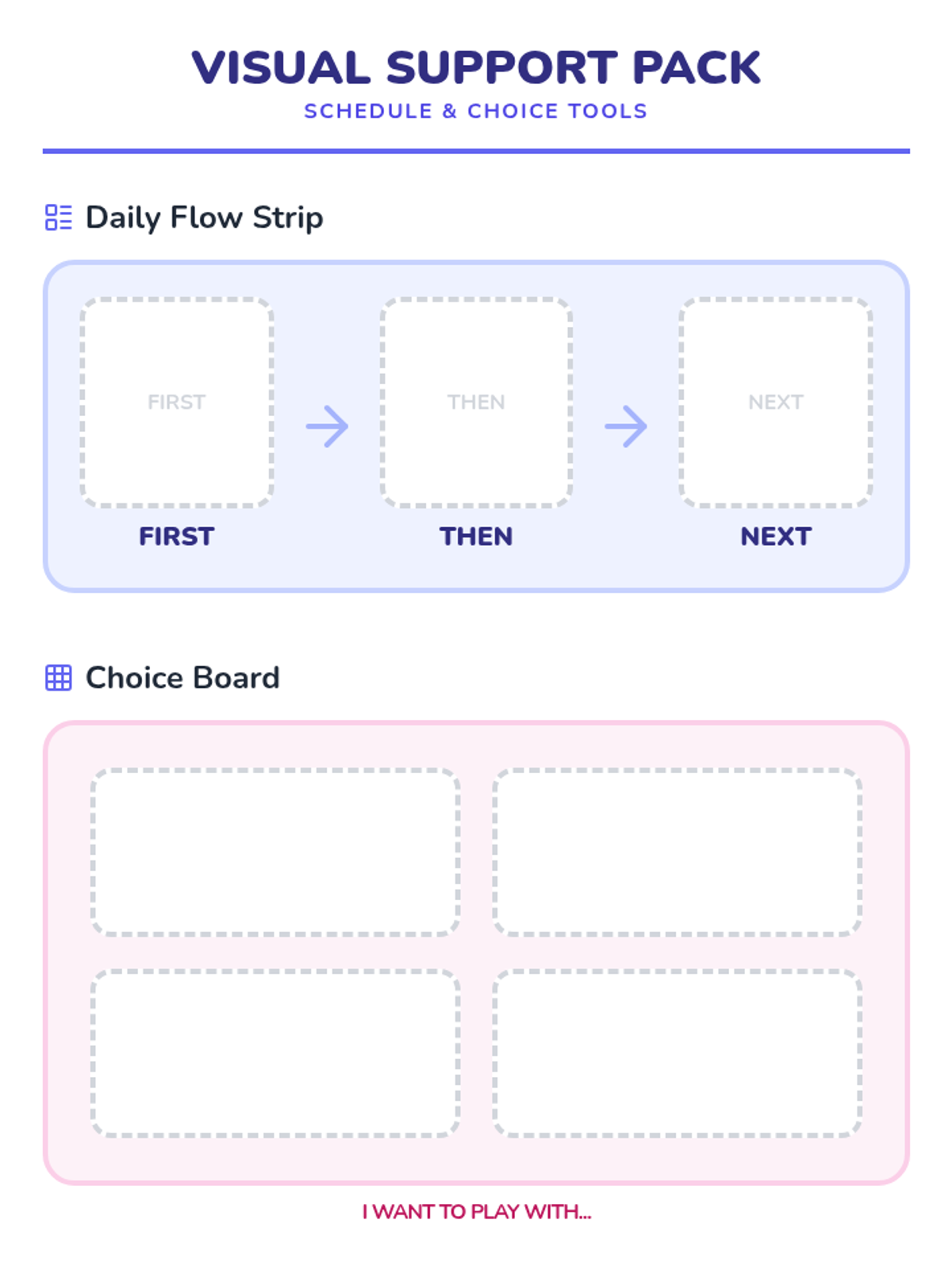
Essential visual supports for daily routines, featuring a First-Then-Next schedule strip, a customizable choice board, and 12 fringe vocabulary cut-out cards for activities and needs.
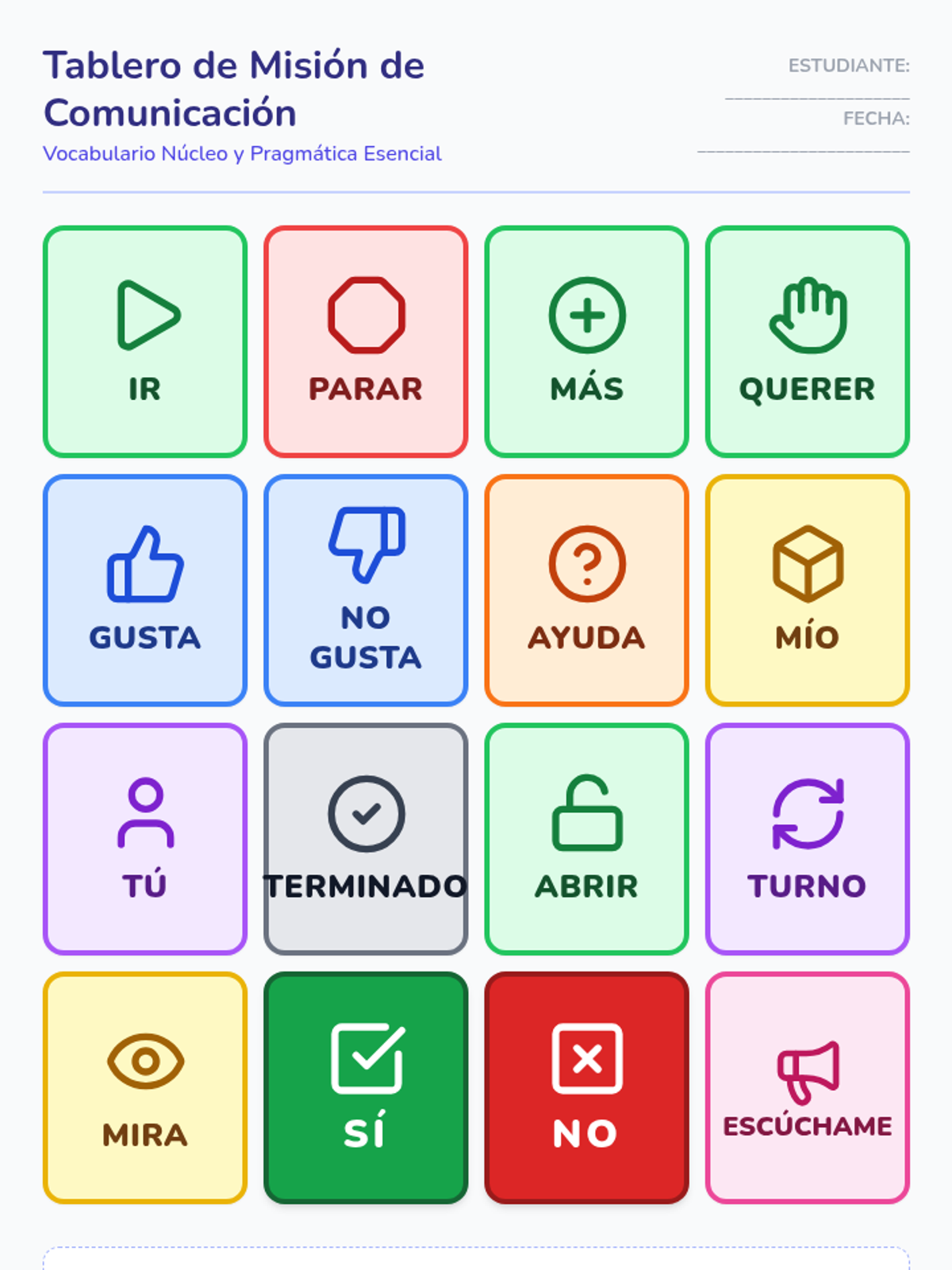
A high-contrast, color-coded communication board featuring 12 essential core words plus functional pragmatics like 'Yes', 'No', and 'Listen to Me' to support emerging AAC users.
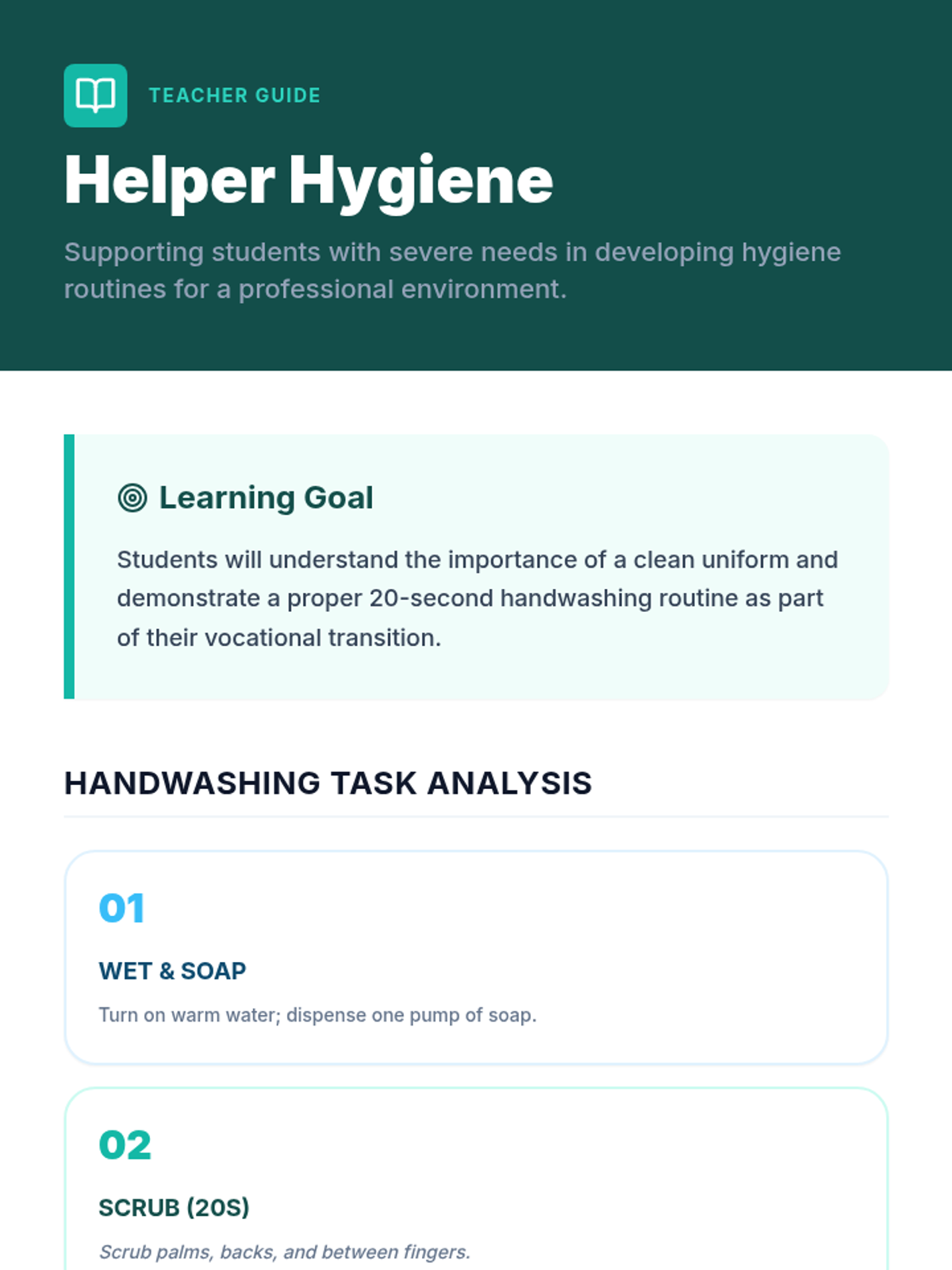
A facilitation guide for the "Helper Hygiene" lesson, including task analysis, prompting strategies, and instructional tips for teaching the helper hygiene routine to students with severe special needs.
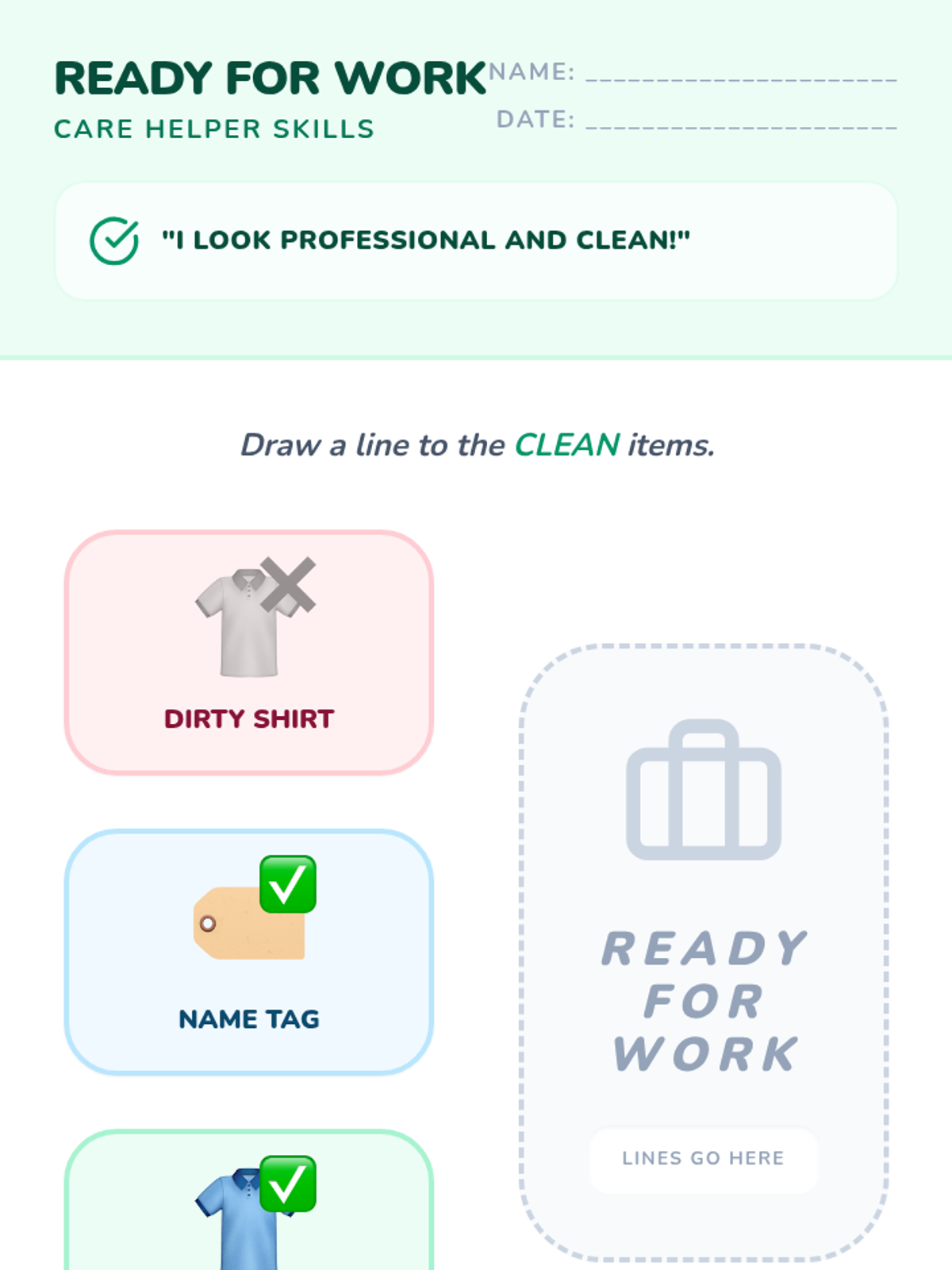
A visual vocational worksheet for students with severe special needs to identify clean versus dirty uniform items and perform a personal mirror check before starting their shift.
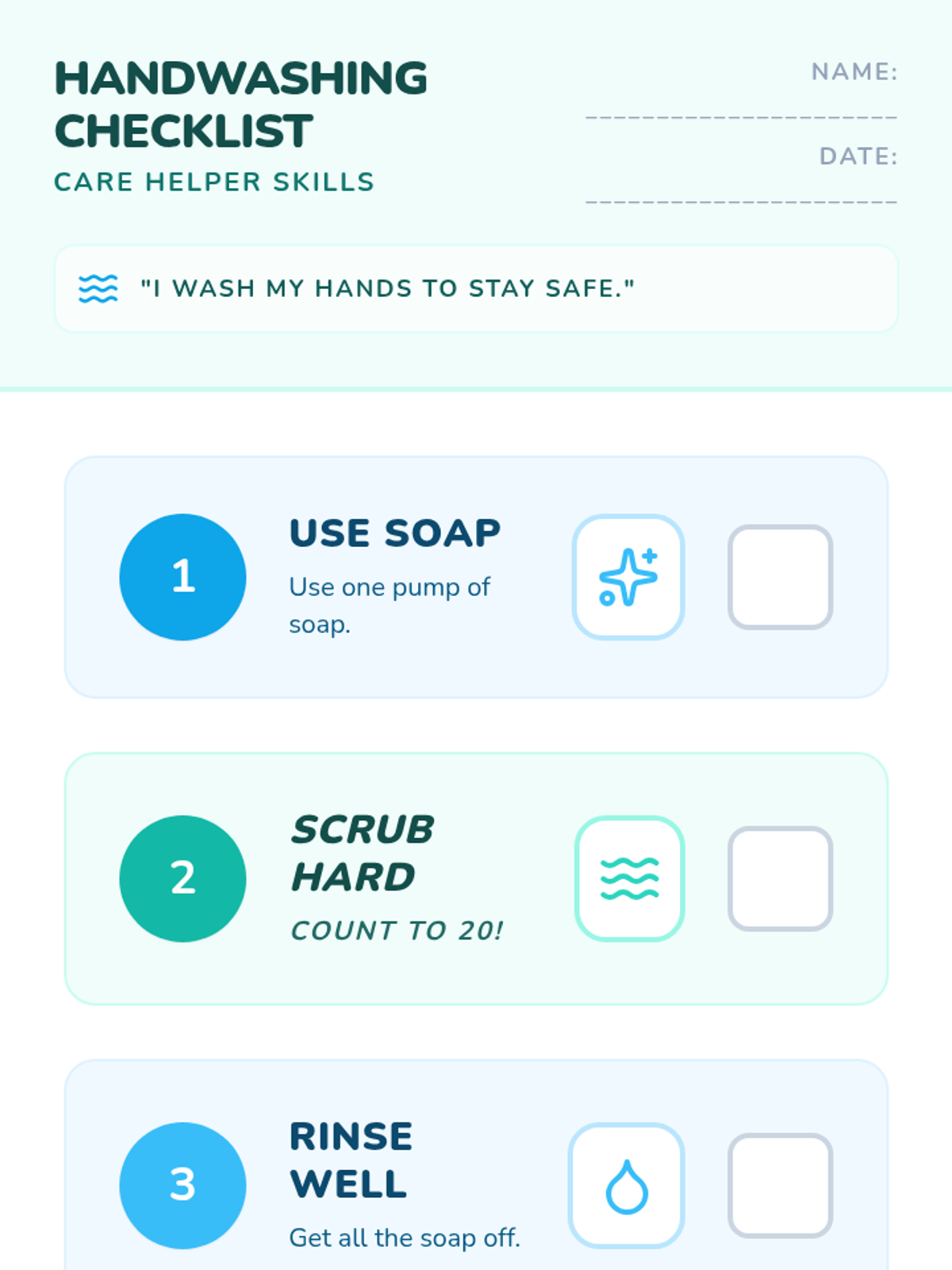
A visual step-by-step checklist for students with severe special needs to follow the handwashing routine. Features large icons, 4 simple steps, and a 20-second countdown focus.
A 7-slide visual guide for students with severe special needs on helper hygiene and handwashing. Focuses on the care helper uniform, the 20-second scrub rule, and the importance of germ prevention.
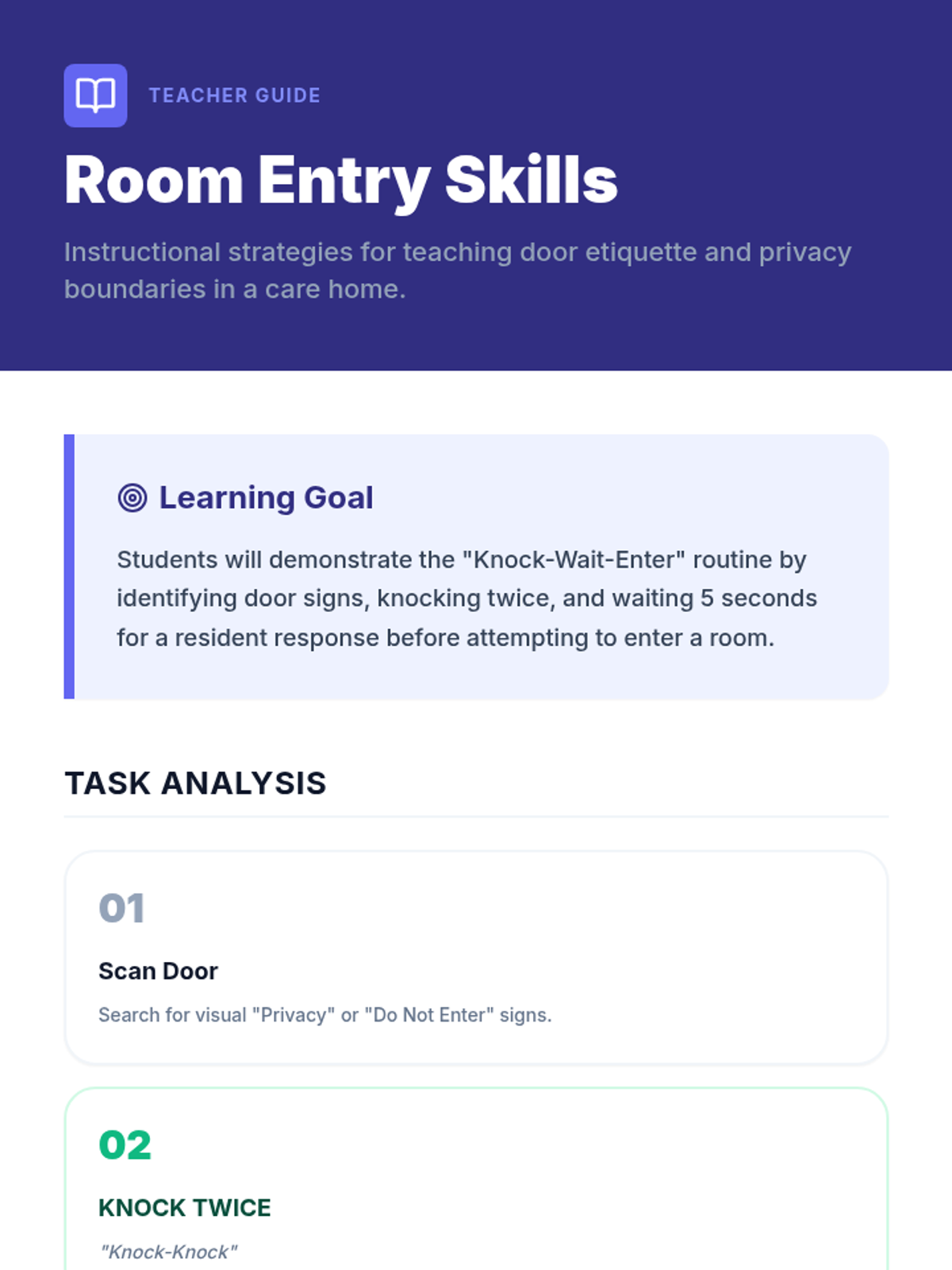
A facilitation guide for the "Room Entry Skills" lesson, including task analysis, prompting strategies, and instructional tips for teaching the room entry routine to students with severe special needs.
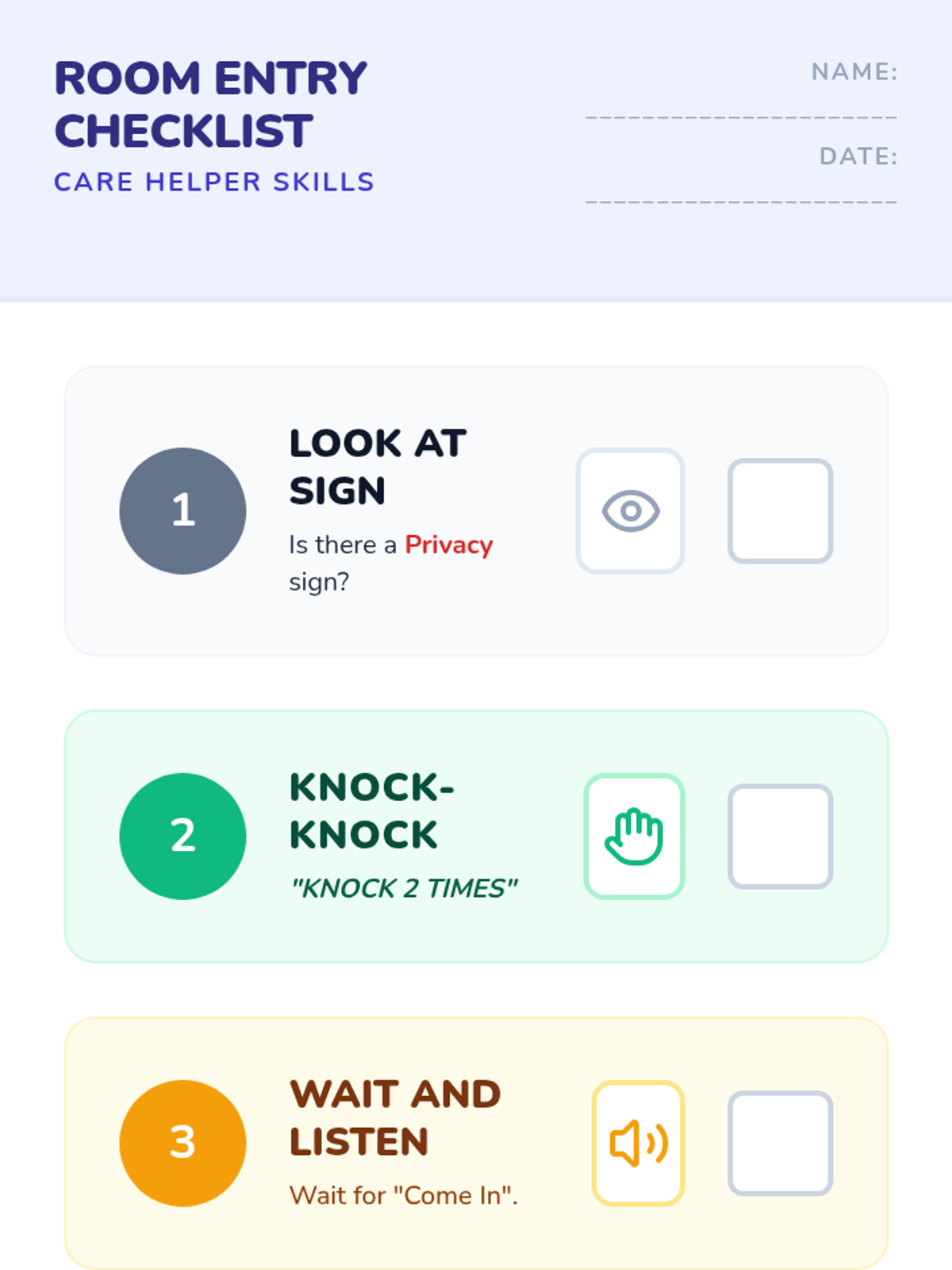
A practical step-by-step checklist for students with severe special needs to follow when entering a resident's room. Includes clear icons, large font, and a self-check section for independence.
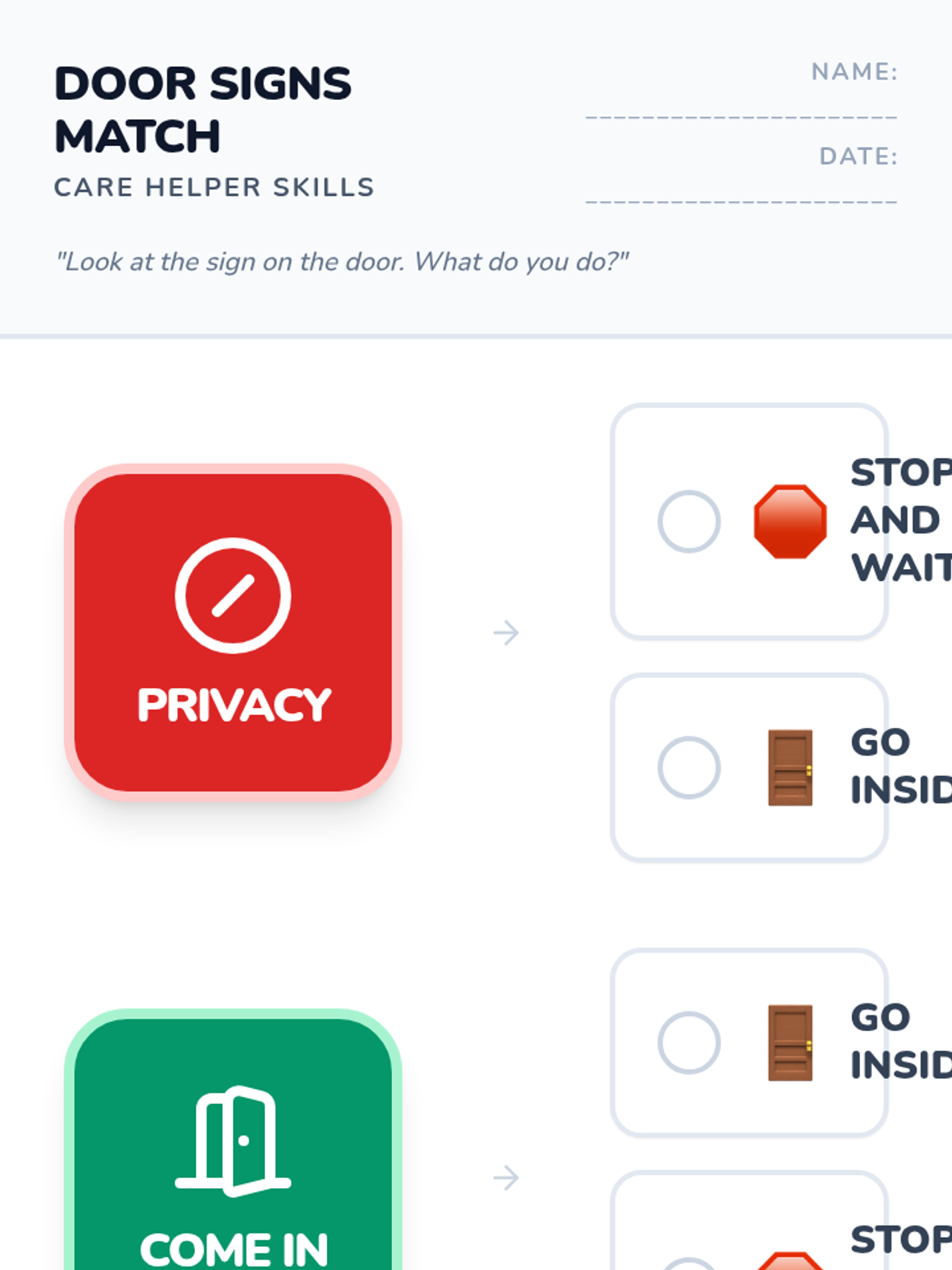
A visual matching activity for students with severe special needs to identify the correct action for 'Privacy' and 'Come In' door signs. Features large icons, high-contrast colors, and clear workspaces.
A 7-slide visual guide for students with severe special needs on the routine for entering a resident's room. Focuses on privacy signs, the "Knock-Knock" rule, and waiting for permission.
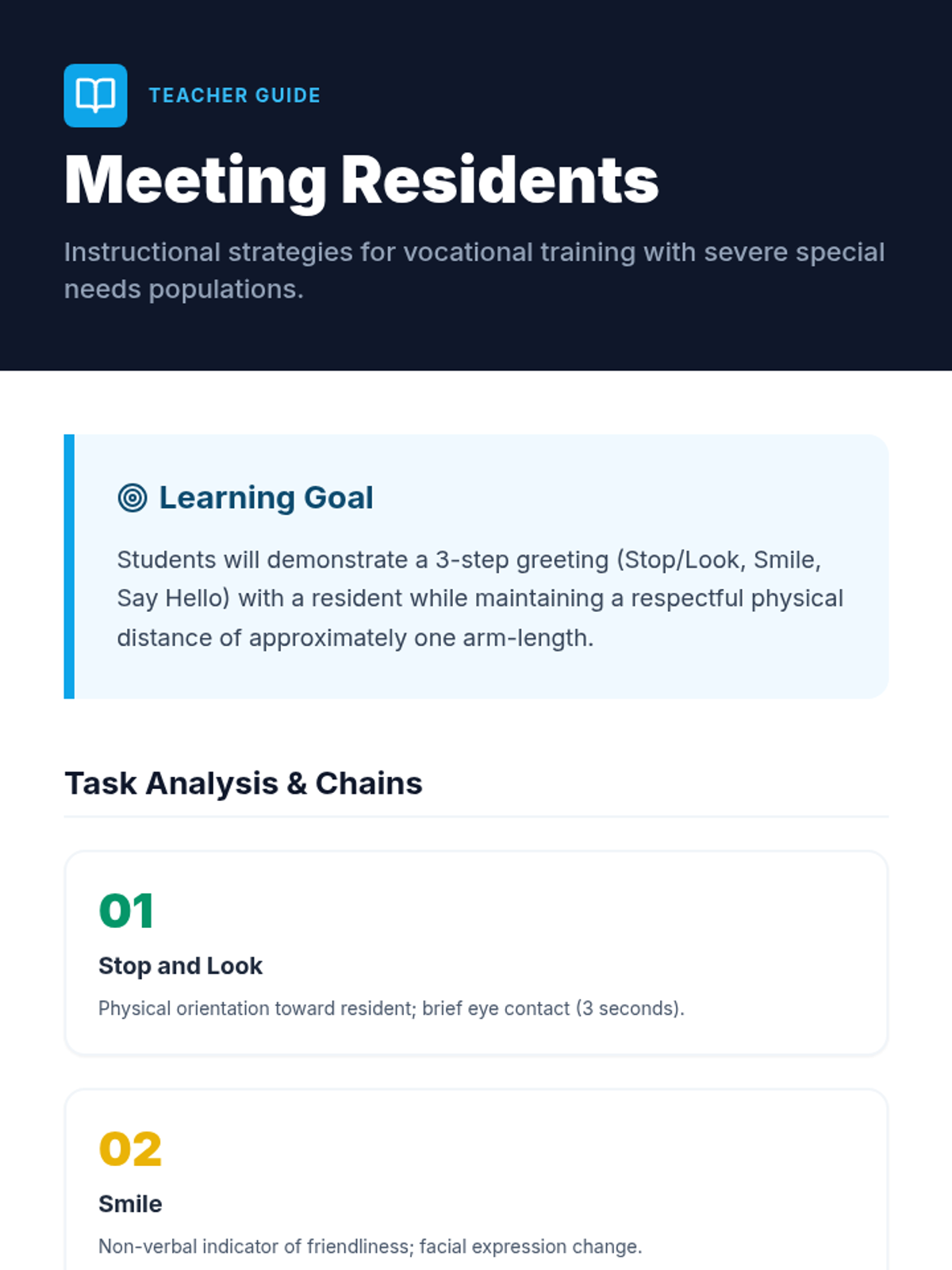
A comprehensive facilitation guide for the "Meeting Residents" lesson, including task analysis, prompting hierarchies, and a pacing guide specifically tailored for post-graduate students with severe special needs.
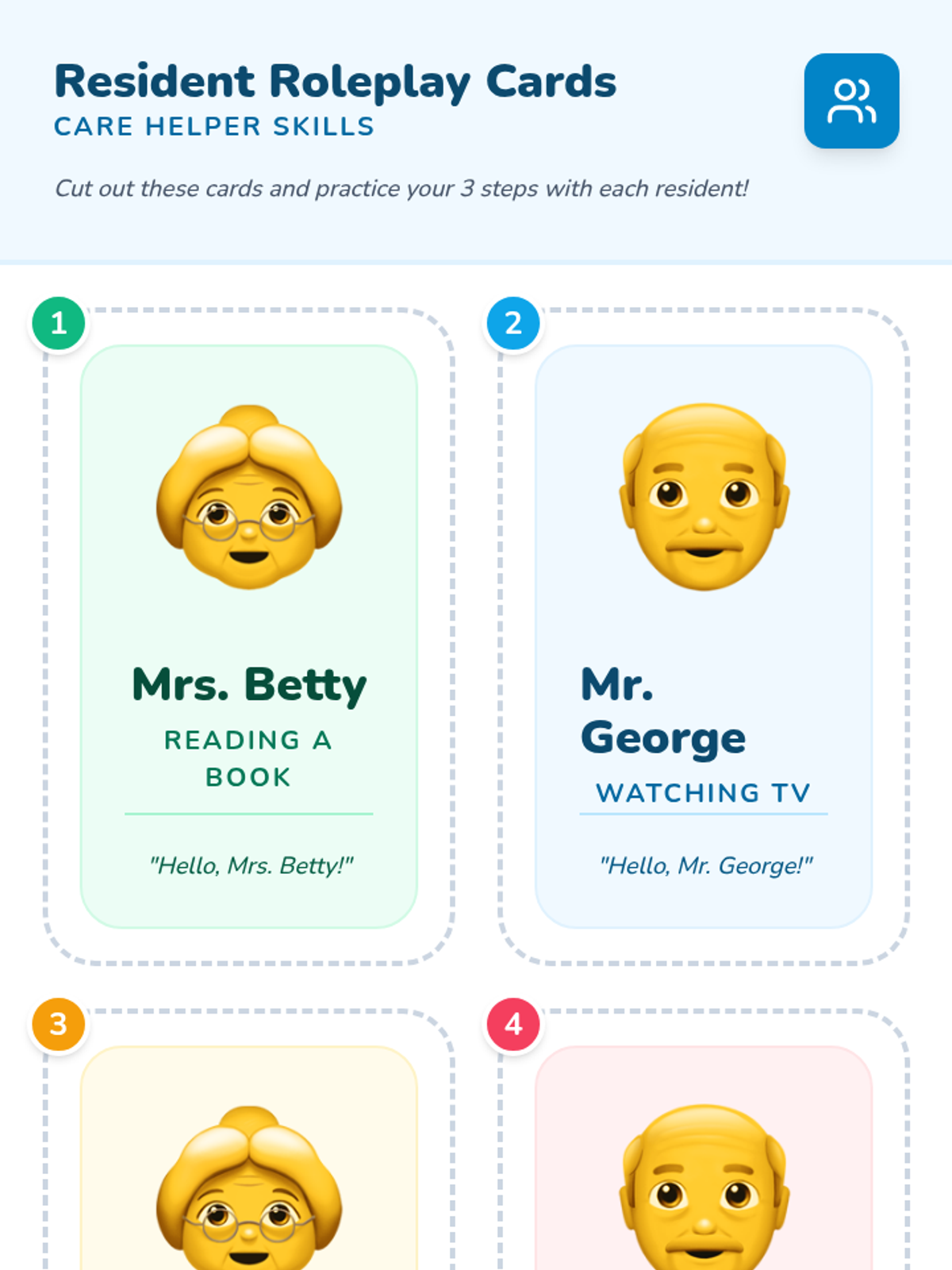
A set of 8 printable roleplay cards featuring diverse resident scenarios for students to practice greeting skills. Includes clear visuals, name tags, and a "Wait/Quiet" challenge card to teach social boundaries and situational awareness.
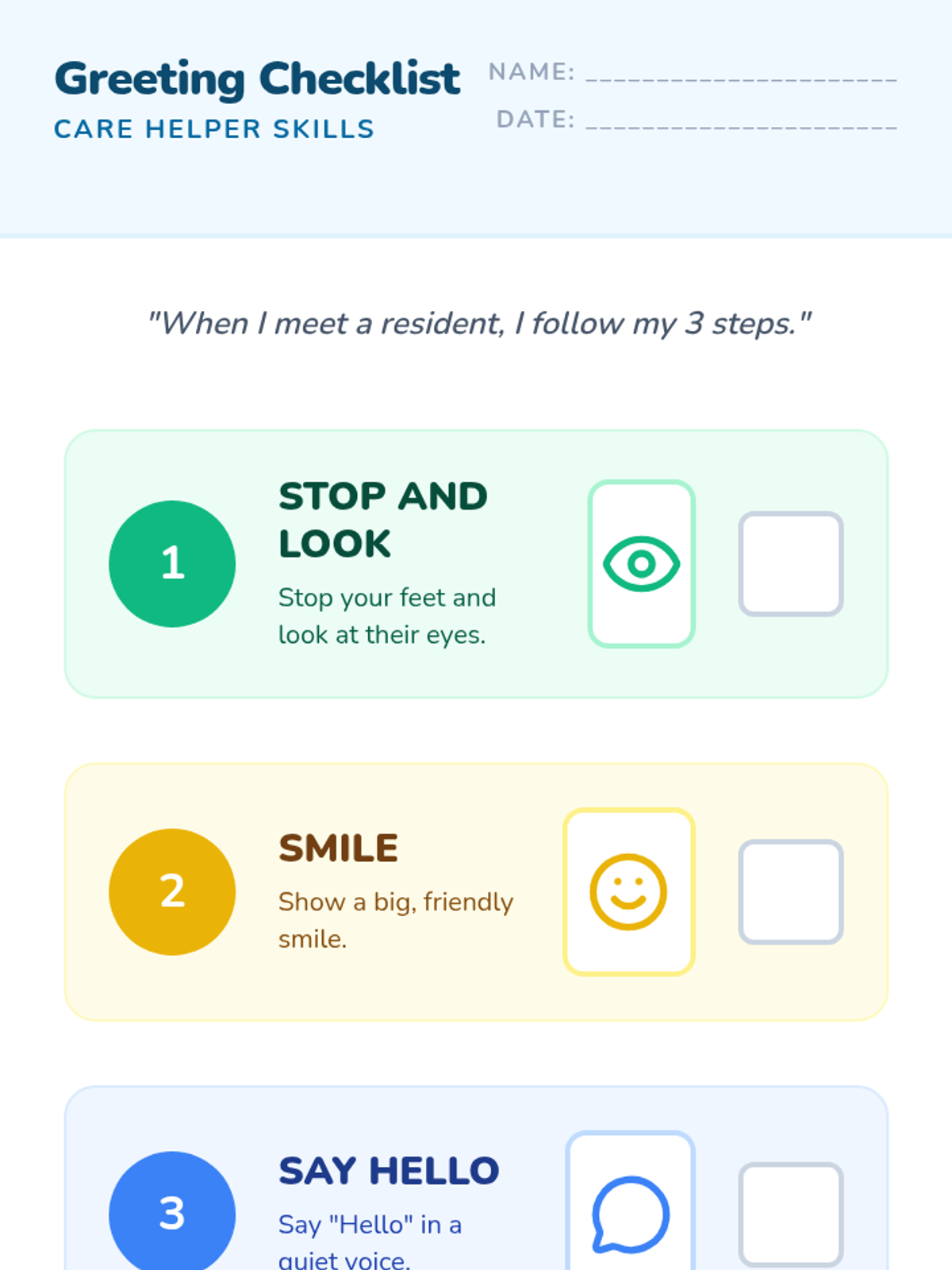
A visual 3-step checklist for students with severe special needs to track their performance in greeting residents. Includes large icons, simple language, and a self-evaluation section for reinforcing positive behaviors.
A highly visual 8-slide presentation for students with severe special needs, teaching a 3-step concrete method for greeting residents: Stop & Look, Smile, and Say Hello. Includes clear icons, large fonts, and focuses on respectful personal space.
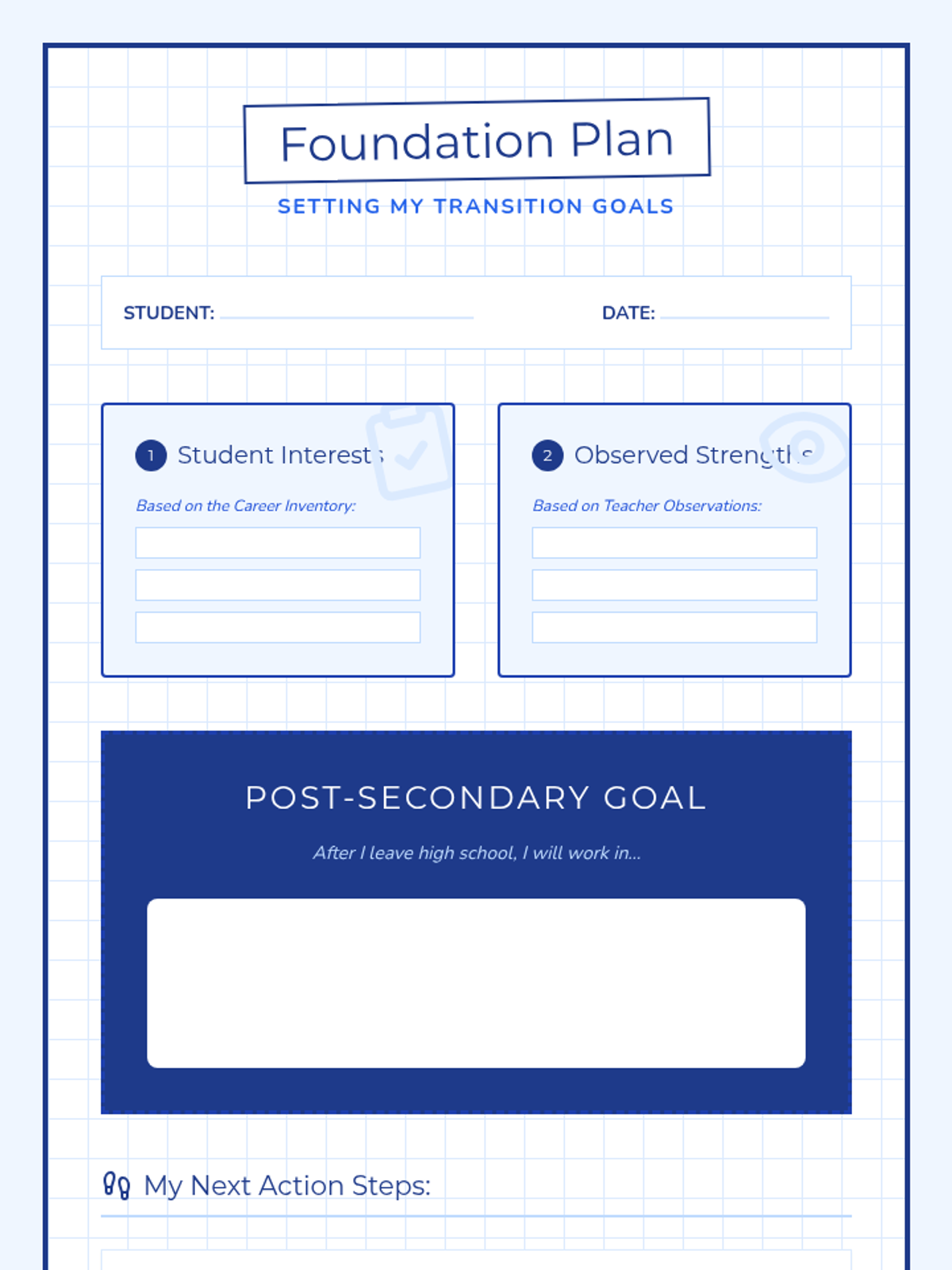
A collaborative transition planning tool used to synthesize student interests and teacher observation data into concrete post-secondary vocational goals and action steps.
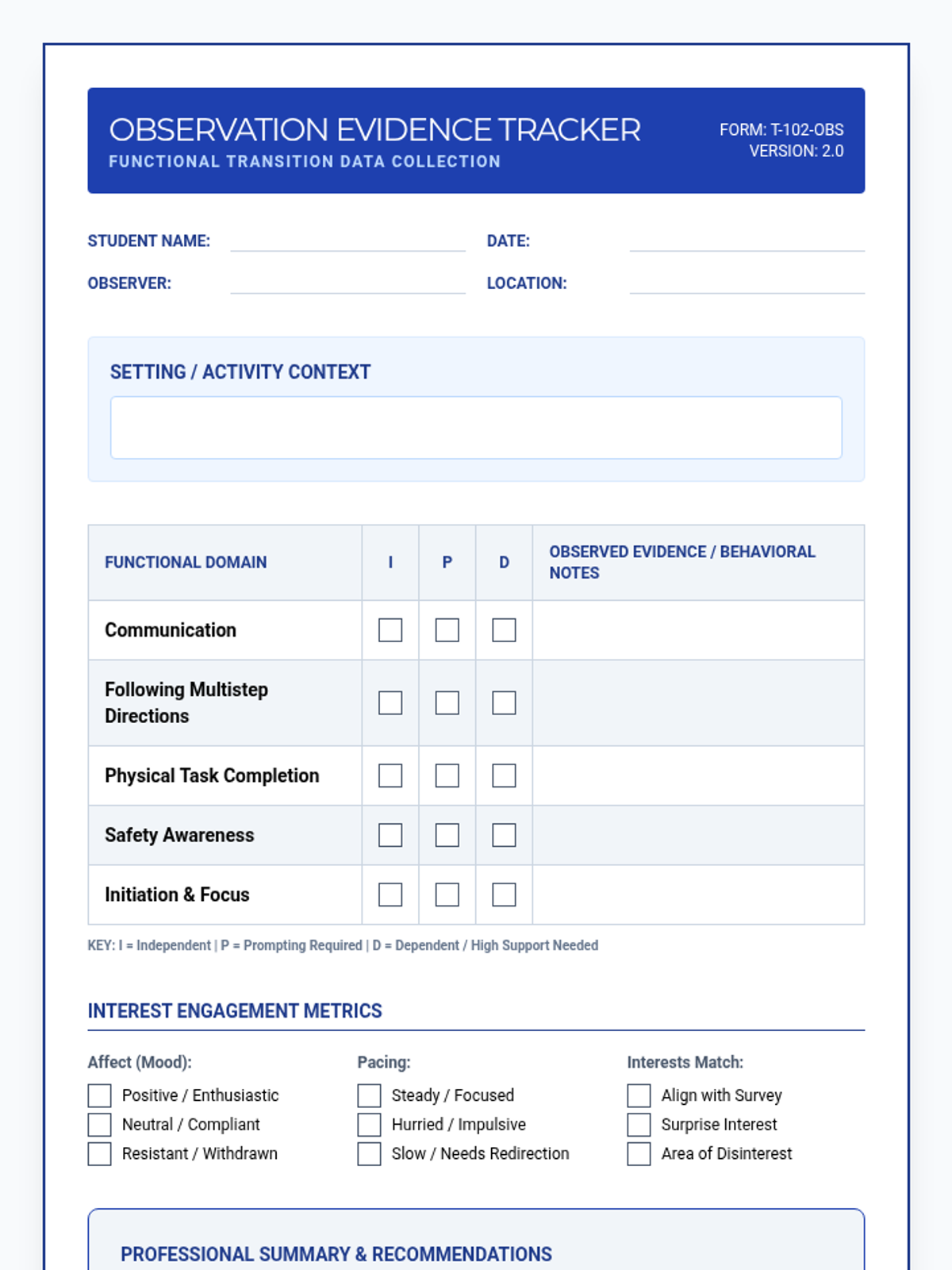
A professional teacher-facing observation tool to document behavioral evidence of student interests and functional skills during community-based or vocational activities. Features a skill level key and engagement metrics.
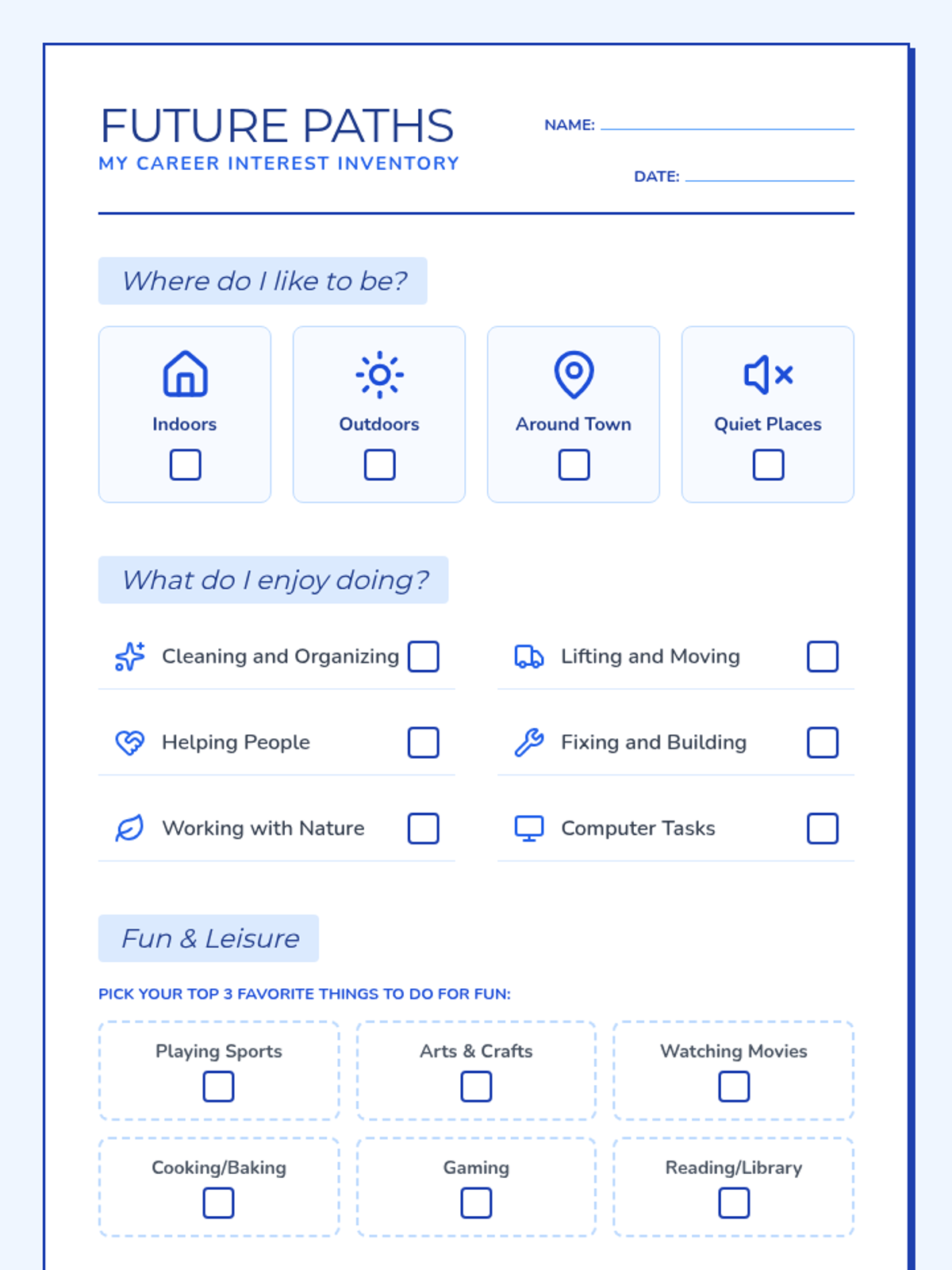
A two-page student-facing career interest inventory using a blueprint theme. It features visual icons and checklists to help students identify their preferred environments, vocational interests, and community-based career goals.
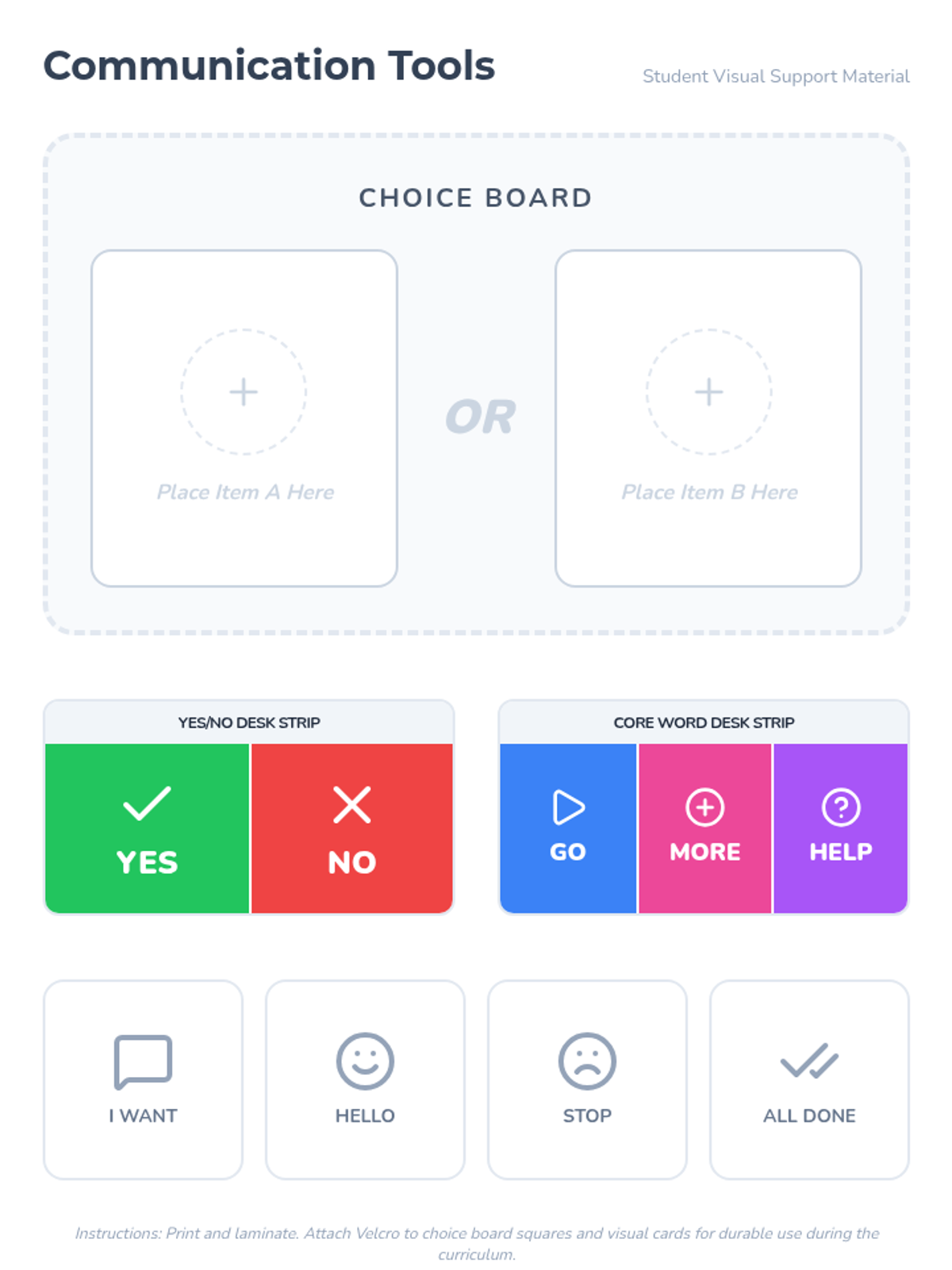
Visual communication supports for students, including a choice board template, desk strips for Yes/No and core words, and large modeling icons.
A visual slide deck to support the Voice Voyagers curriculum, featuring high-contrast modeling slides for Yes/No, Help, Go, and More.
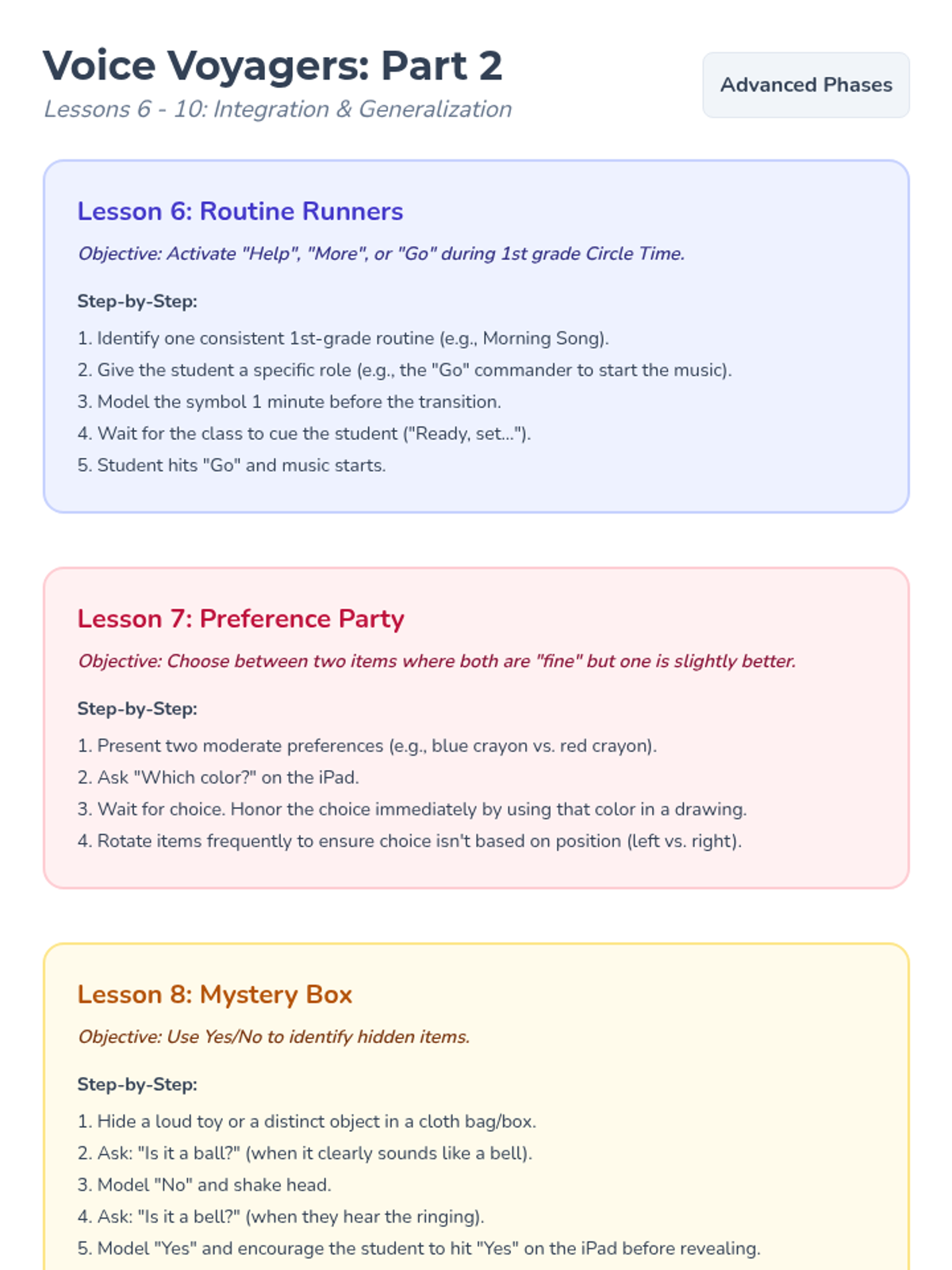
Step-by-step facilitation plans for Lessons 6 through 10 of the Voice Voyagers curriculum, focusing on generalization and complex social interactions.
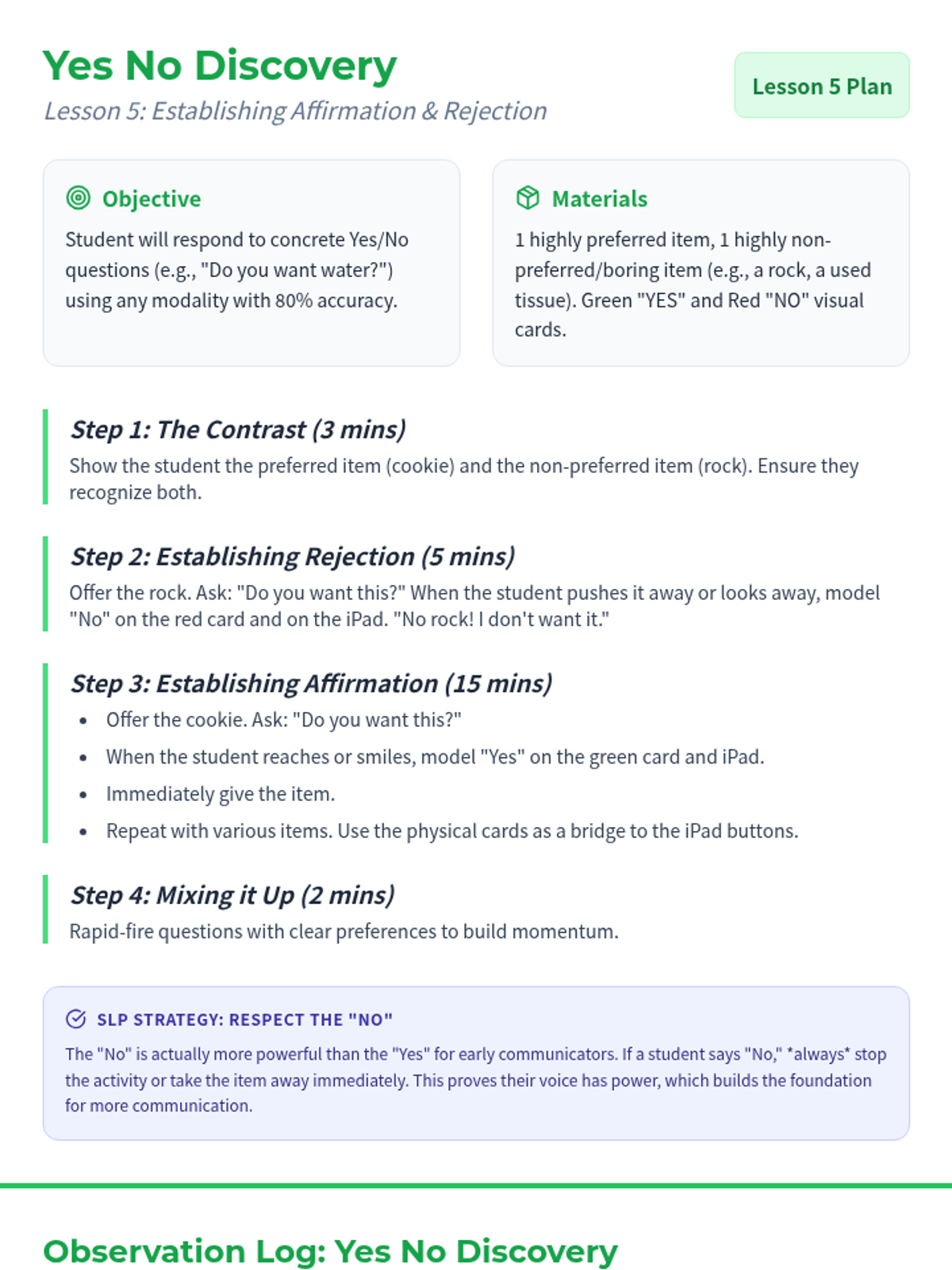
A step-by-step facilitation guide for SLPs to implement Lesson 5: Yes No Discovery, focusing on simple affirmation and rejection.
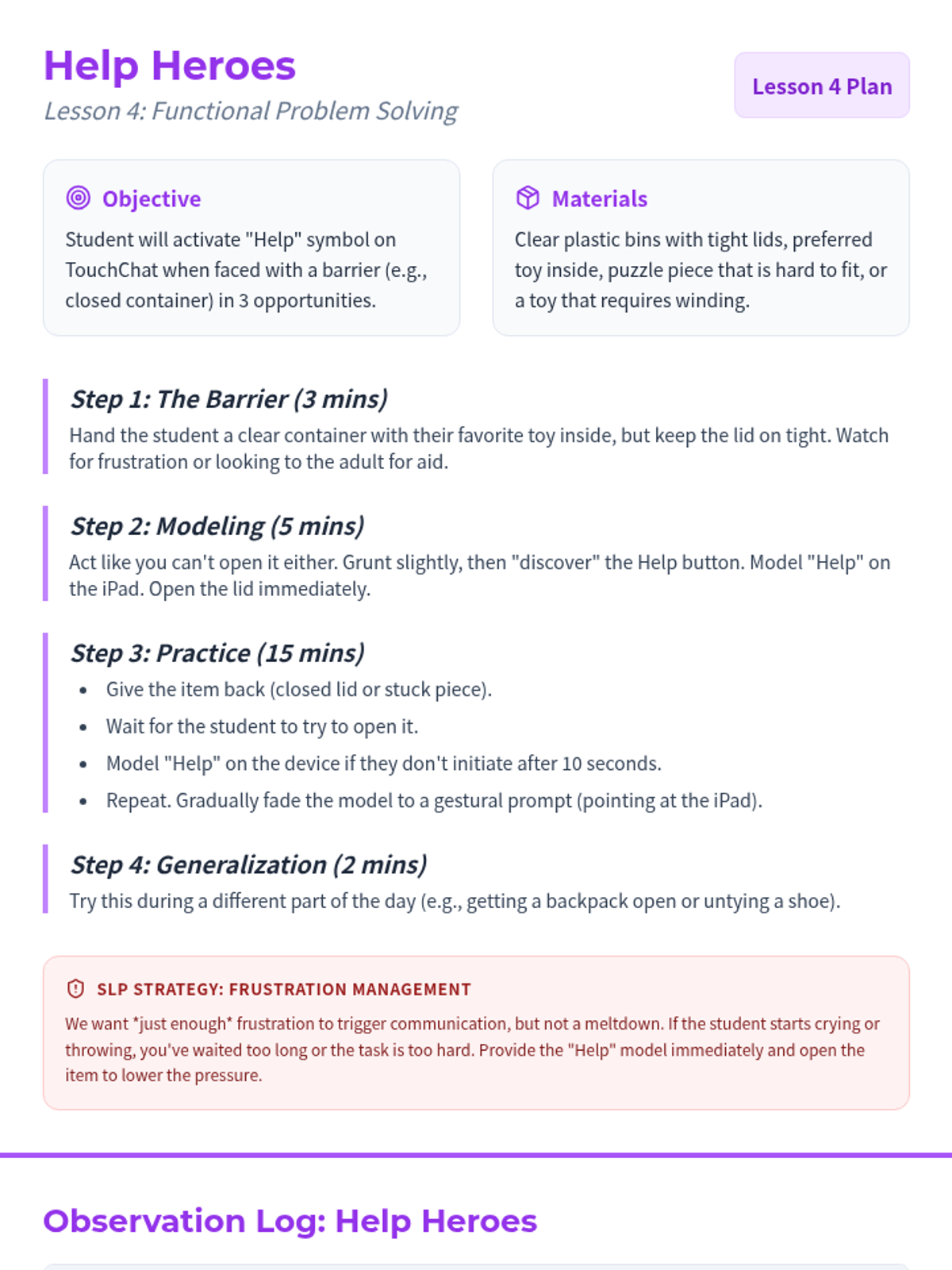
A step-by-step facilitation guide for SLPs to implement Lesson 4: Help Heroes, focusing on the core word "HELP" for problem-solving.
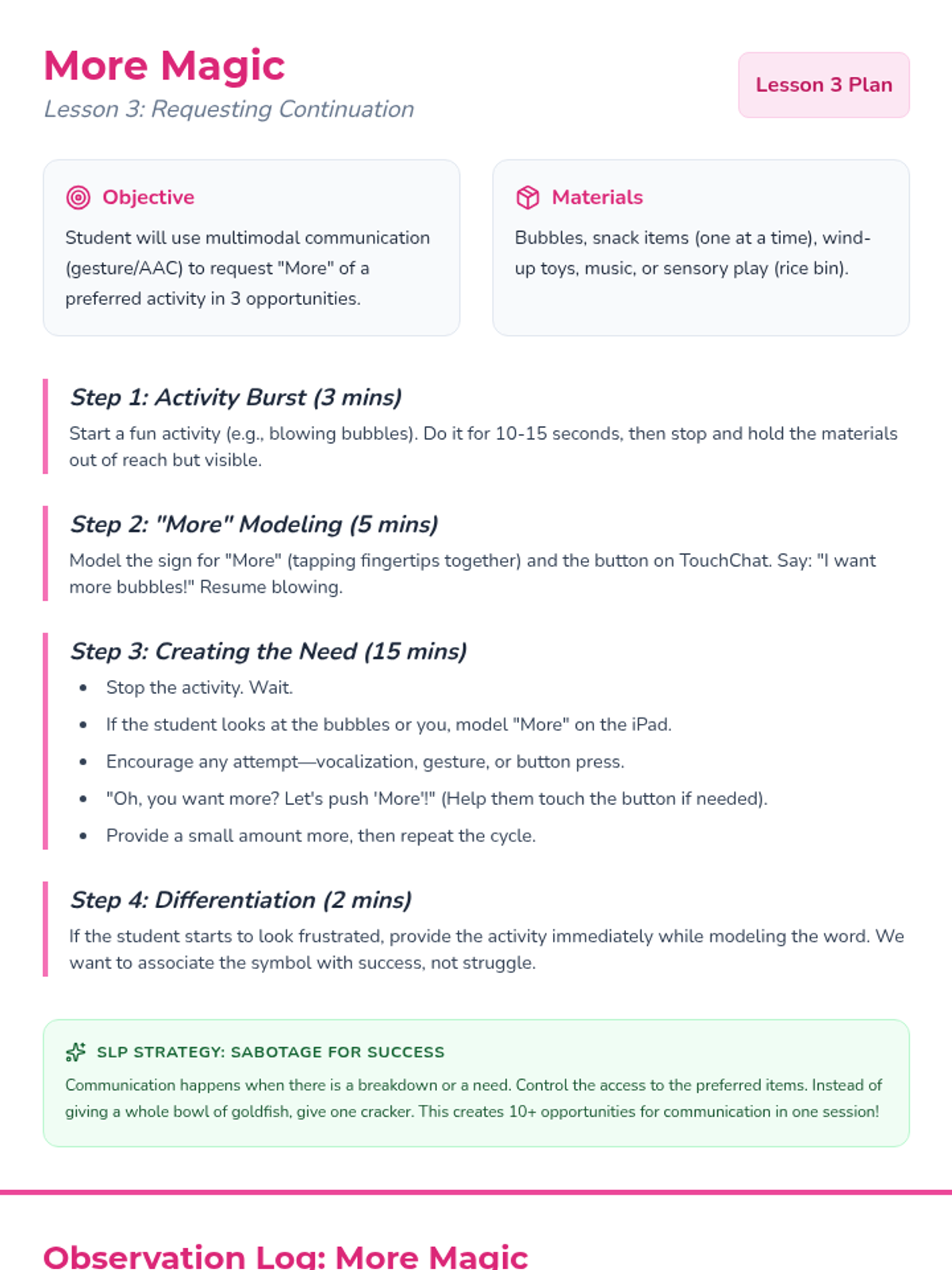
A step-by-step facilitation guide for SLPs to implement Lesson 3: More Magic, focusing on requesting continuation using the "MORE" symbol.
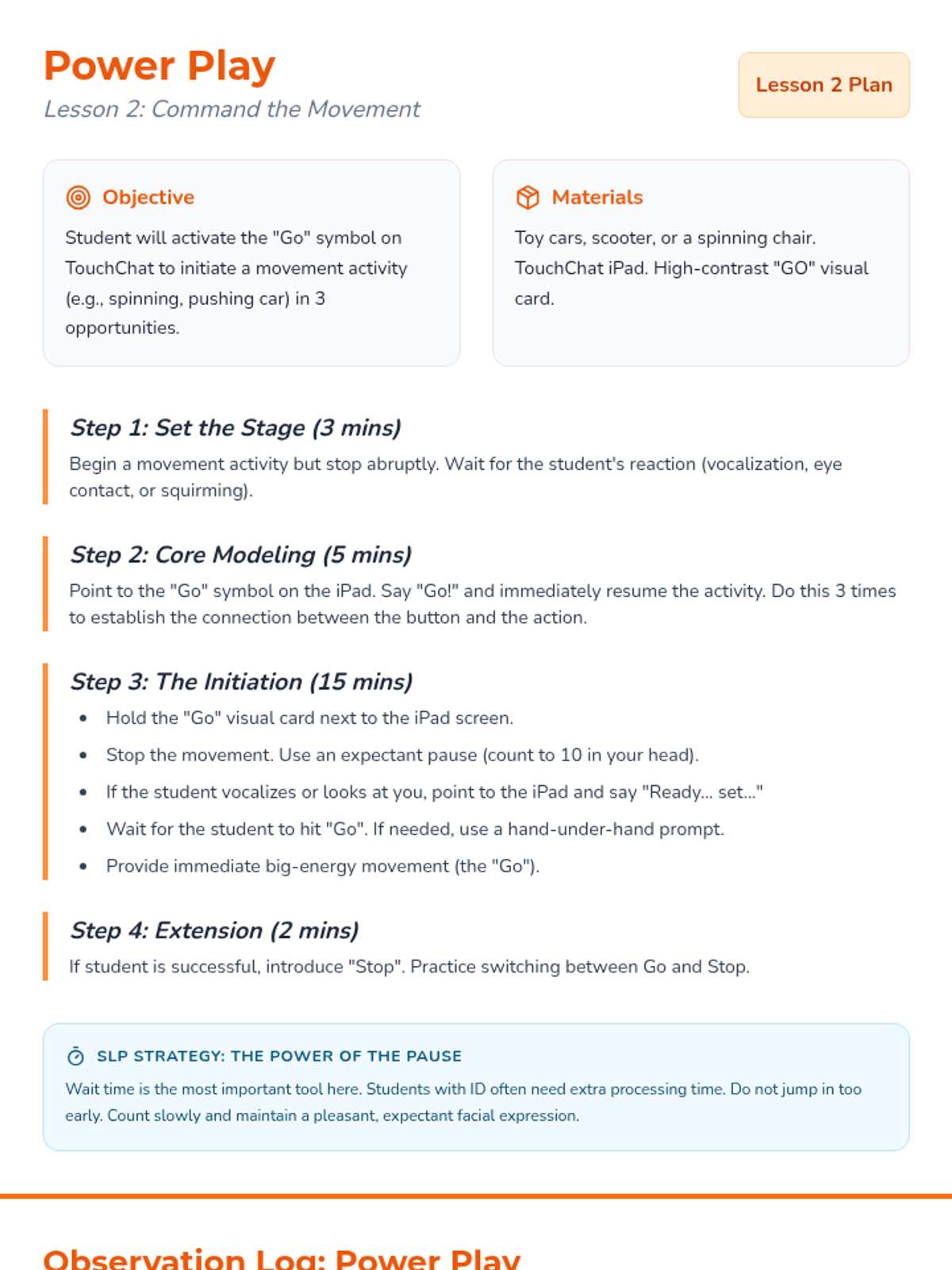
A step-by-step facilitation guide for SLPs to implement Lesson 2: Power Play, focusing on the core word "GO" during movement activities.
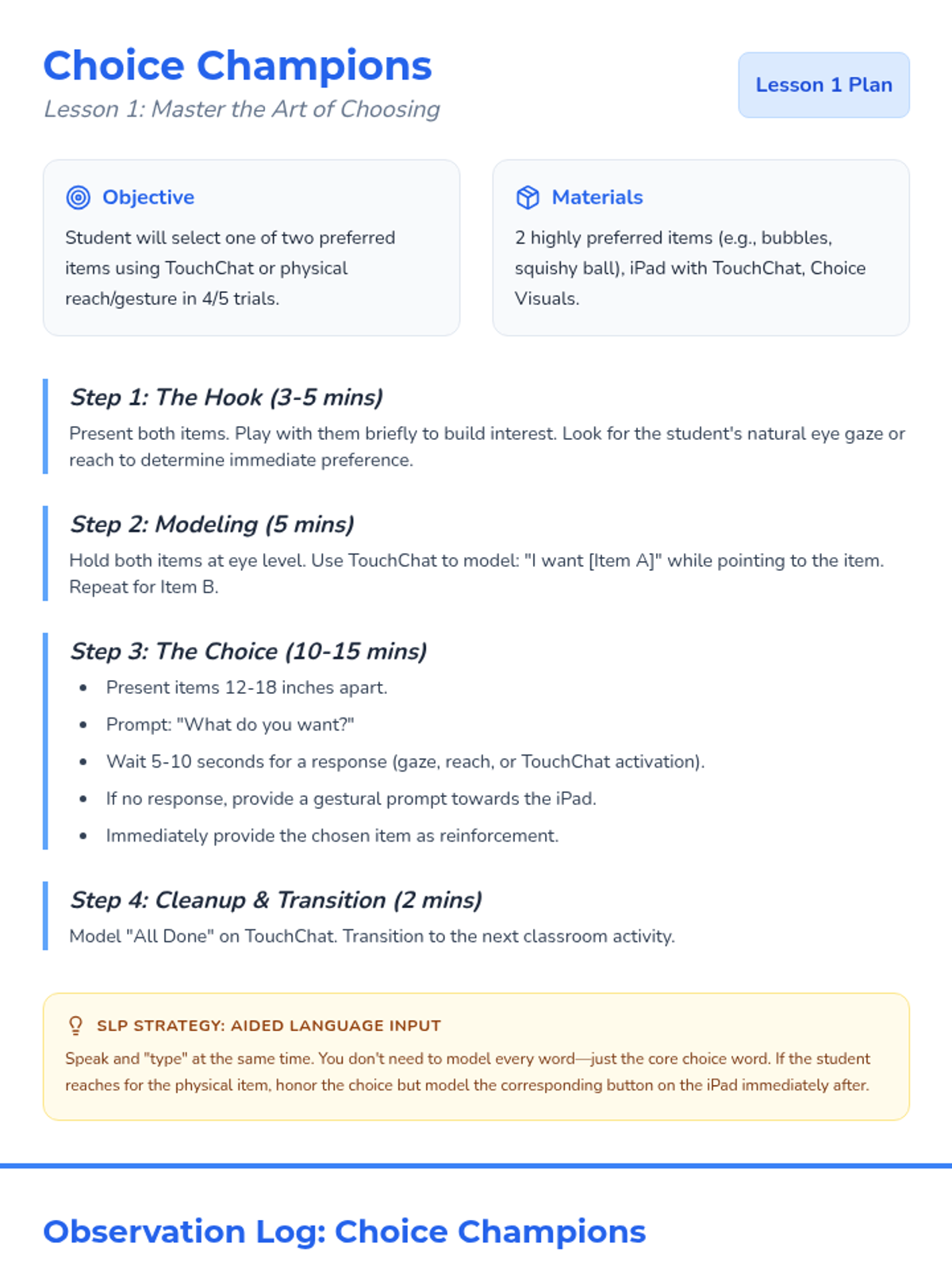
A step-by-step facilitation guide for SLPs to implement Lesson 1: Choice Champions, focusing on choice-making between two preferred items using TouchChat.
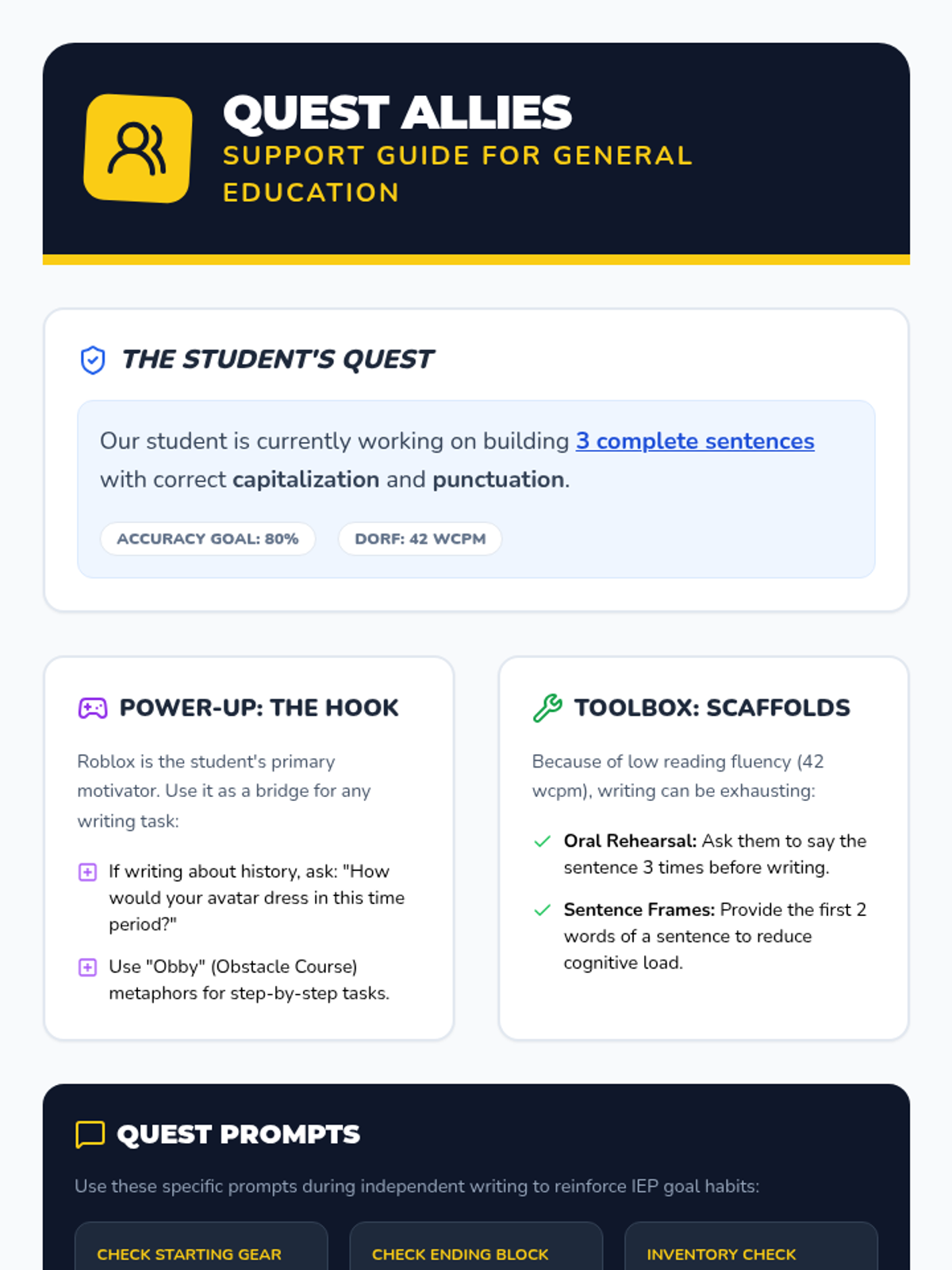
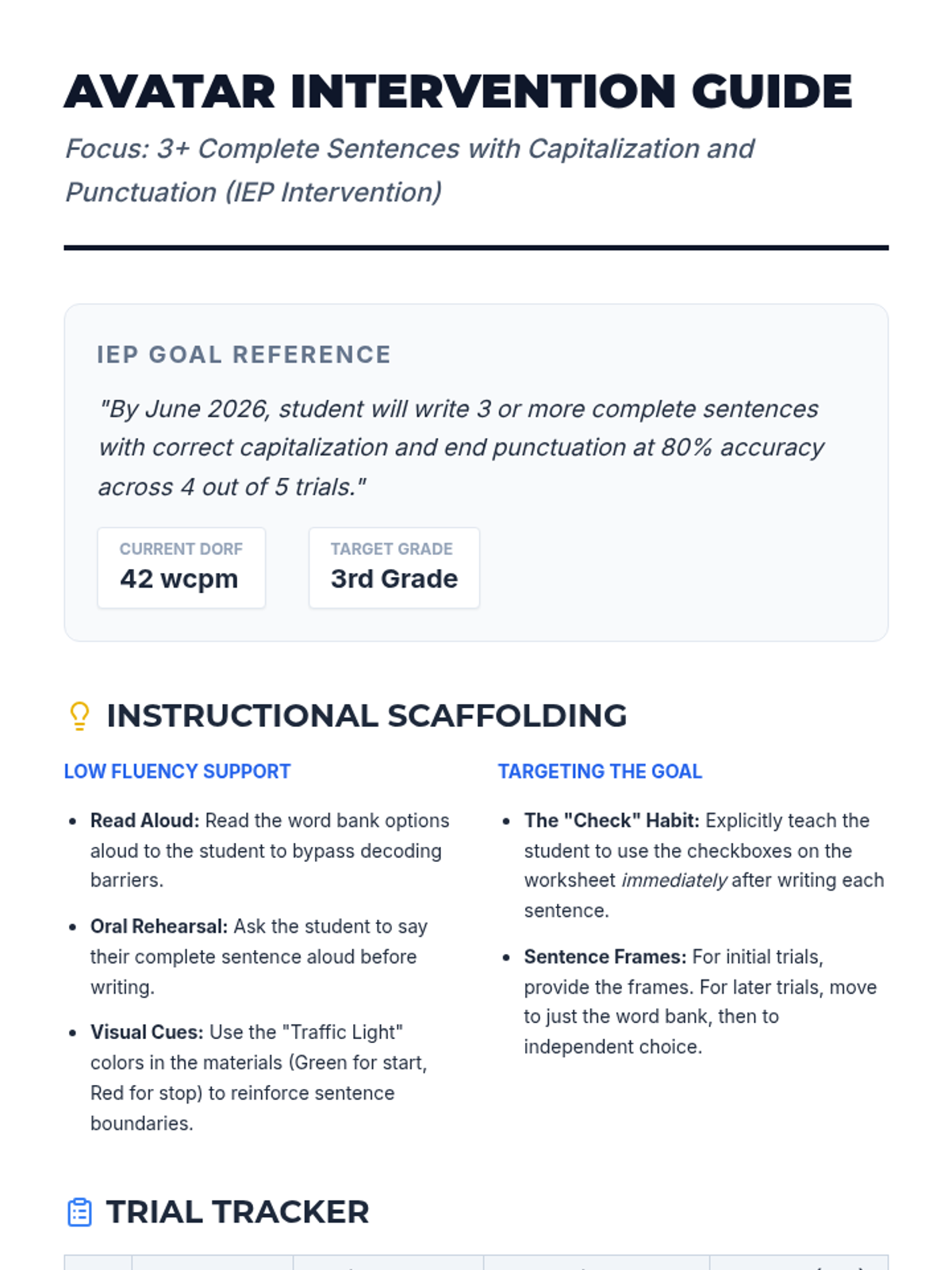
A collaboration handout for general education teachers explaining how to support the student's specific sentence-writing IEP goal. It includes Roblox-themed engagement hooks, quick scaffolding techniques, and verbal prompting scripts.
A teacher's guide providing instructional strategies for low-fluency students, IEP goal alignment, and a trial tracker for data collection. includes specific tips for using Roblox themes to motivate student writing.