An instructional guide for educators to facilitate the Job Match Map Inventory. Includes administration steps, scoring tips, and extension ideas for low-reading-level students.

A visual presentation deck to introduce students to various vocational tasks. Includes large icons, 2-4 word phrases, and emoji rating visuals for group discussion.
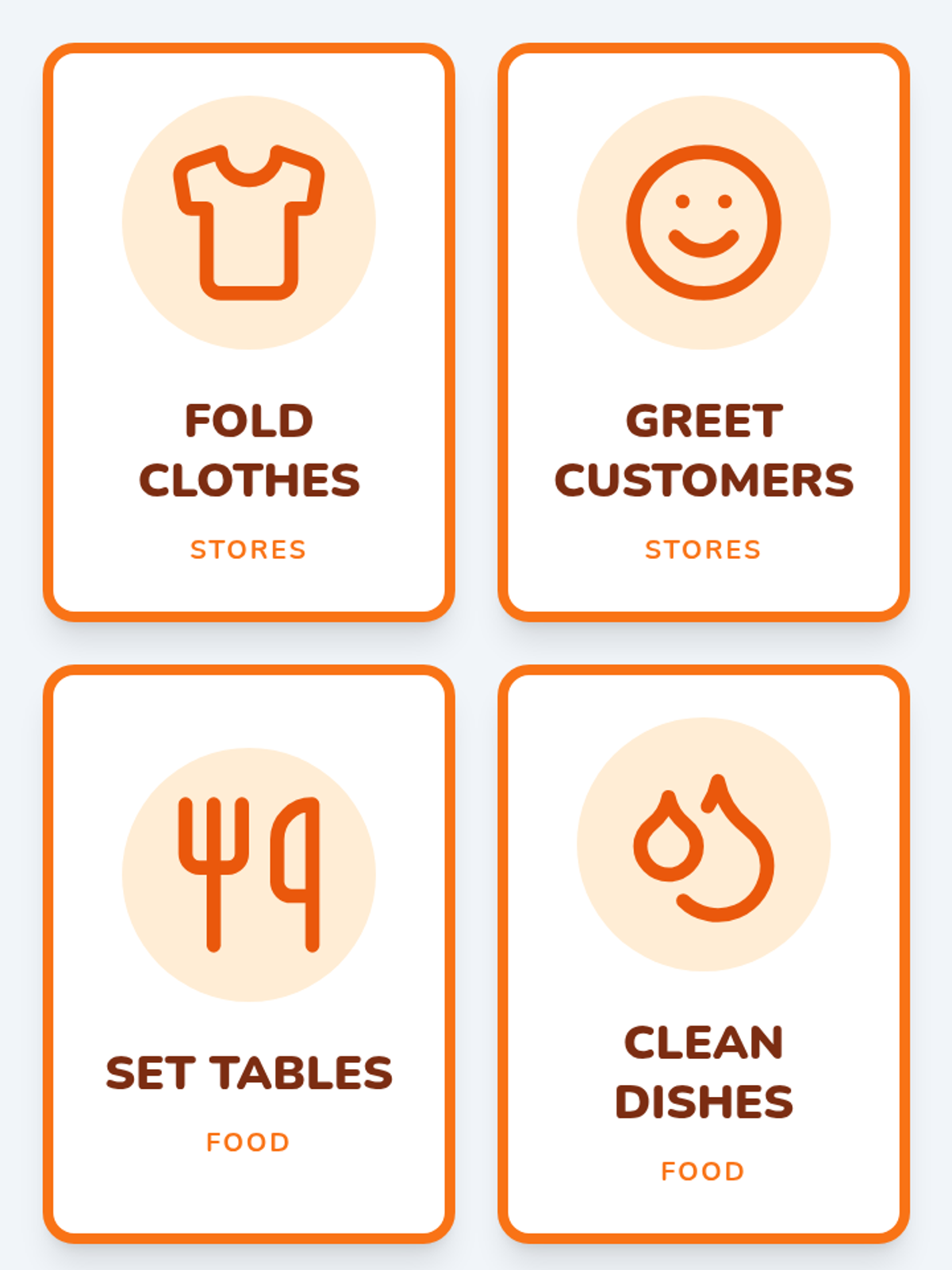
A set of 16 visual task cards for hands-on vocational sorting. Each card features a job task, large icon, and simple text for students with low reading levels.
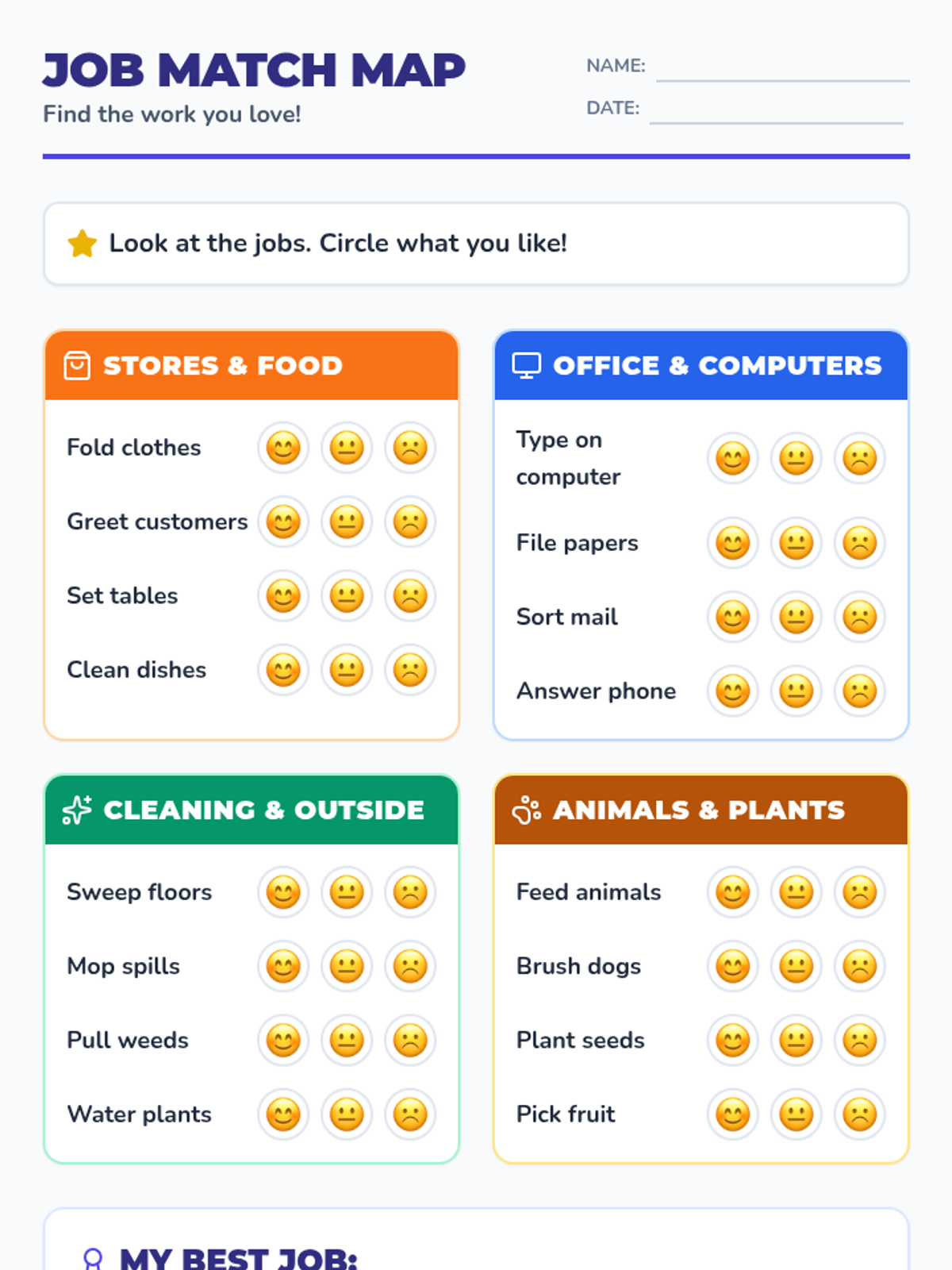
A visual interest inventory for students with low reading levels. Features 16 job tasks across four industries with simple emoji-based rating scales.
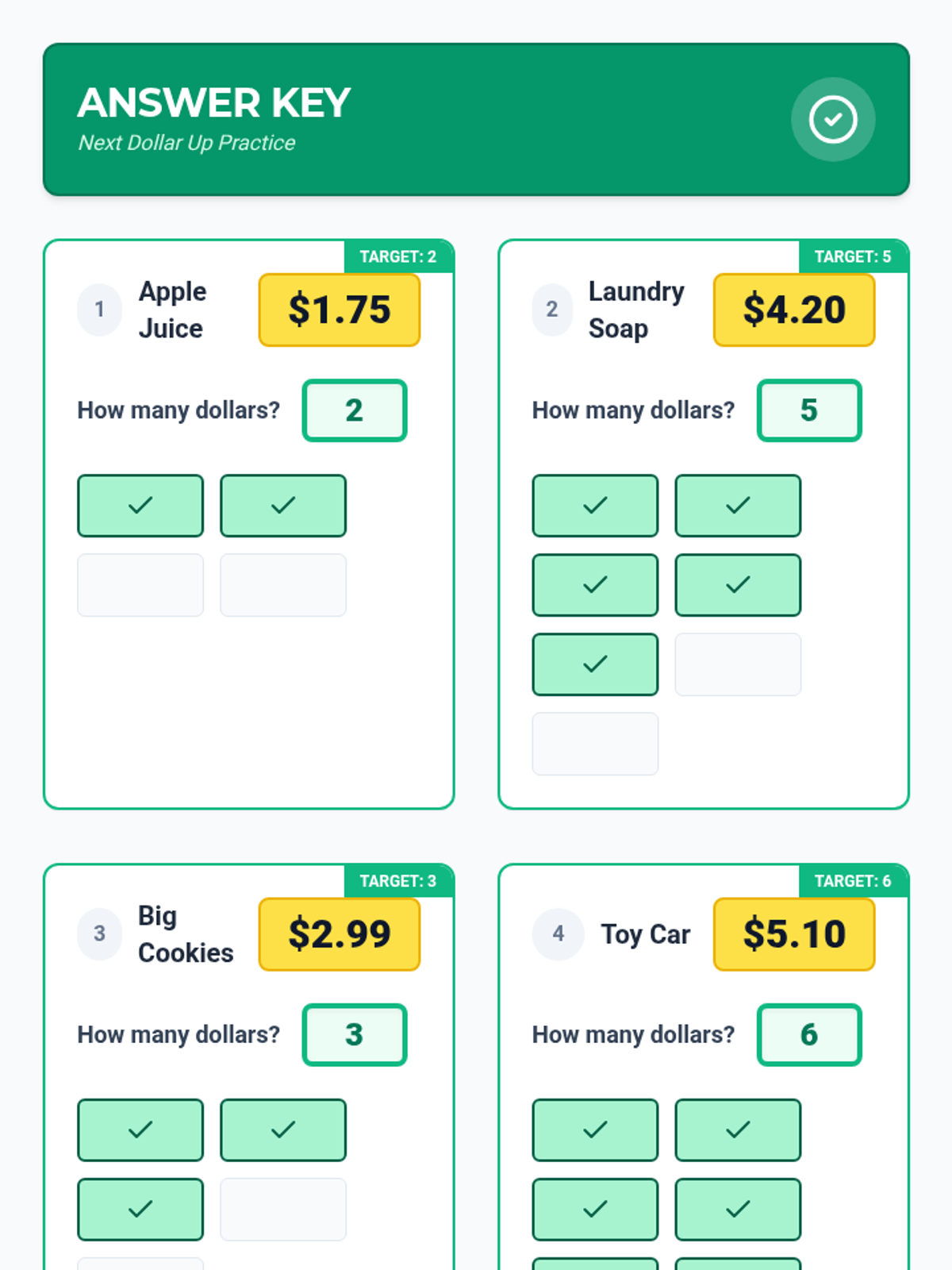
A teacher answer key for the Price Tag Worksheet, showing the correct number of dollars for each item.
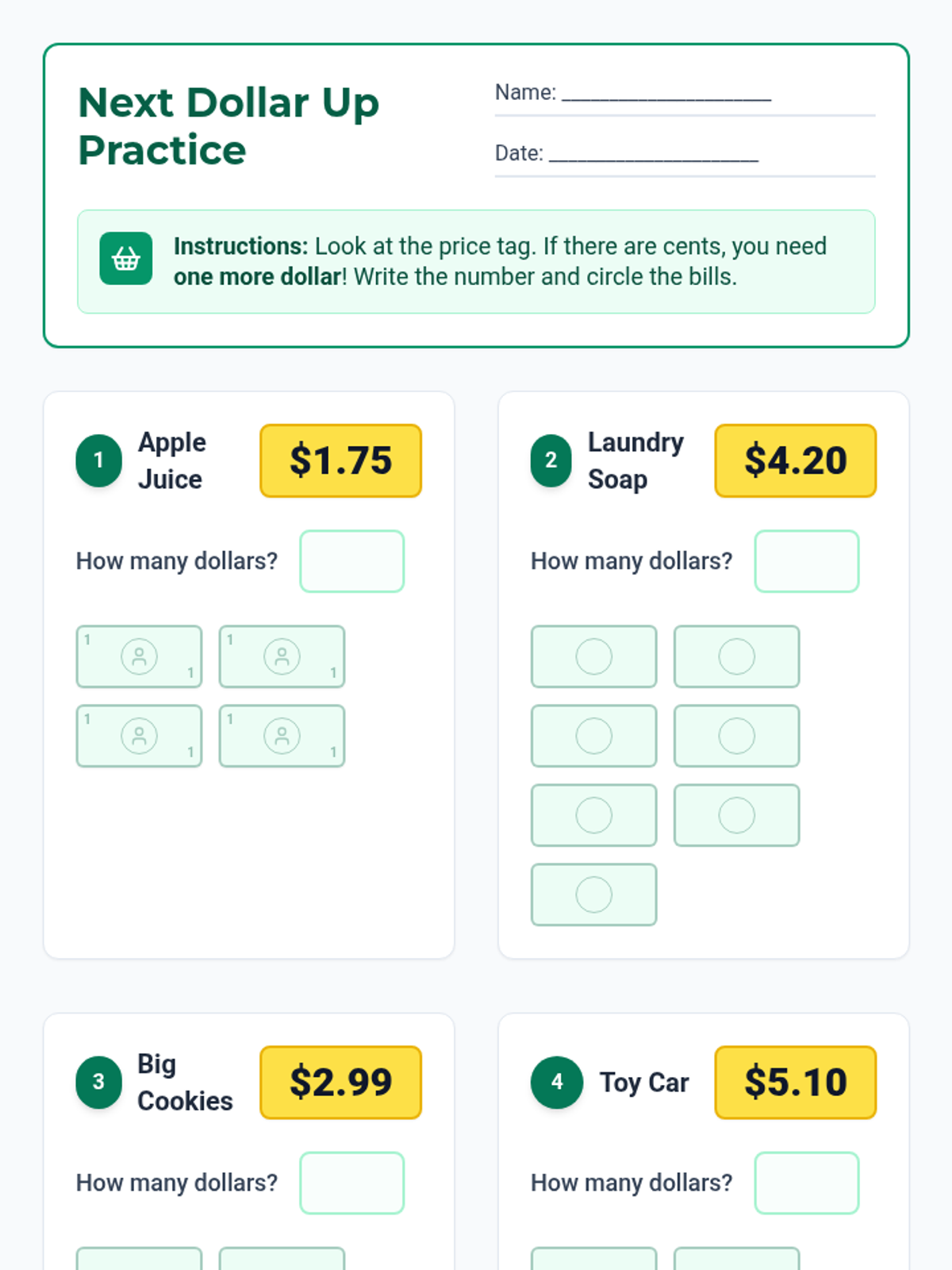
A student worksheet featuring grocery items with price tags where students must determine the 'Next Dollar Up' and identify the correct number of bills.
An instructional presentation teaching the 'Next Dollar Up' strategy with visual steps and realistic bill representations.
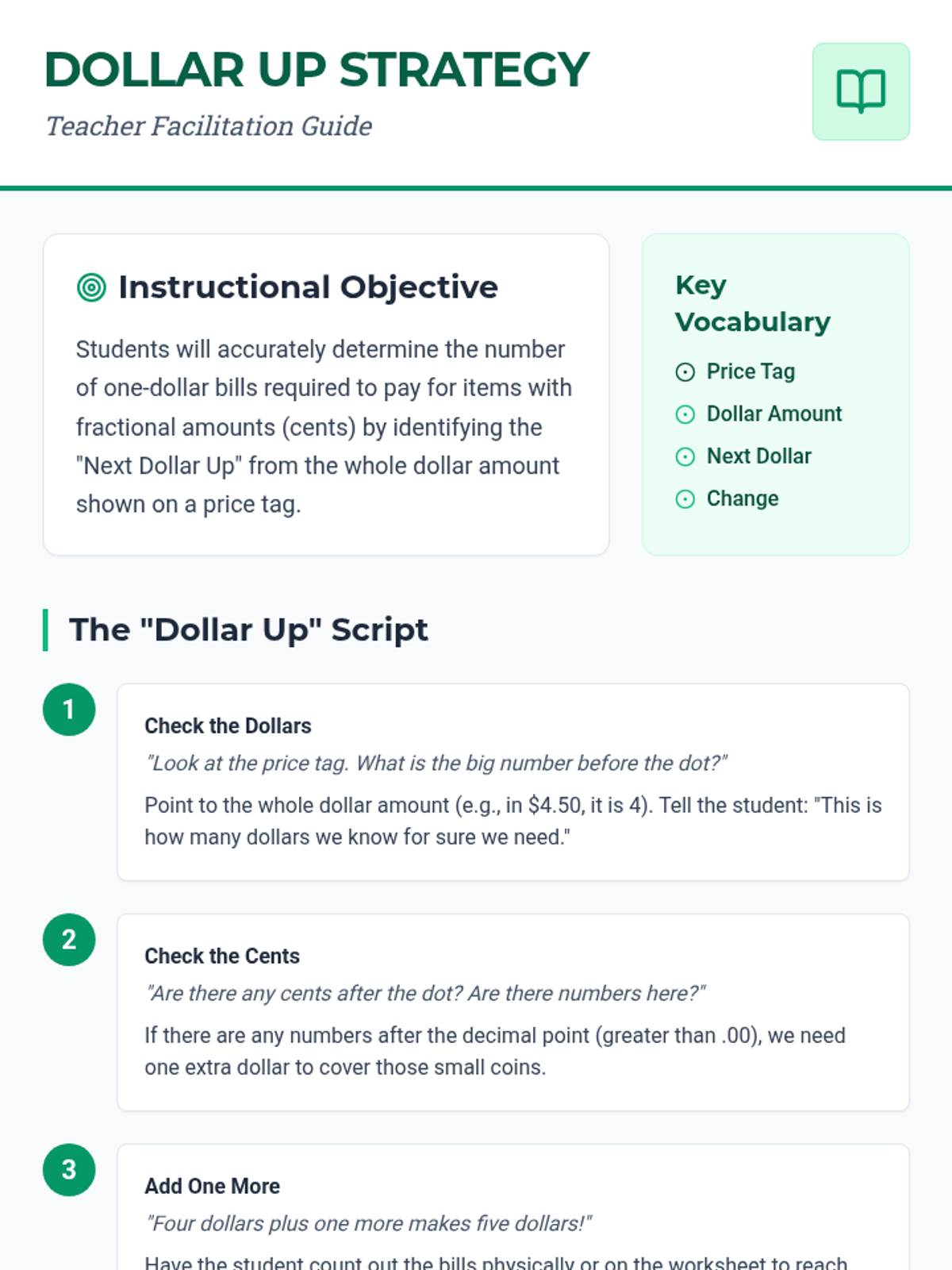
A comprehensive teacher guide for instructing students on the Next Dollar Up method, including objectives, scripted prompts, and common student misconceptions.
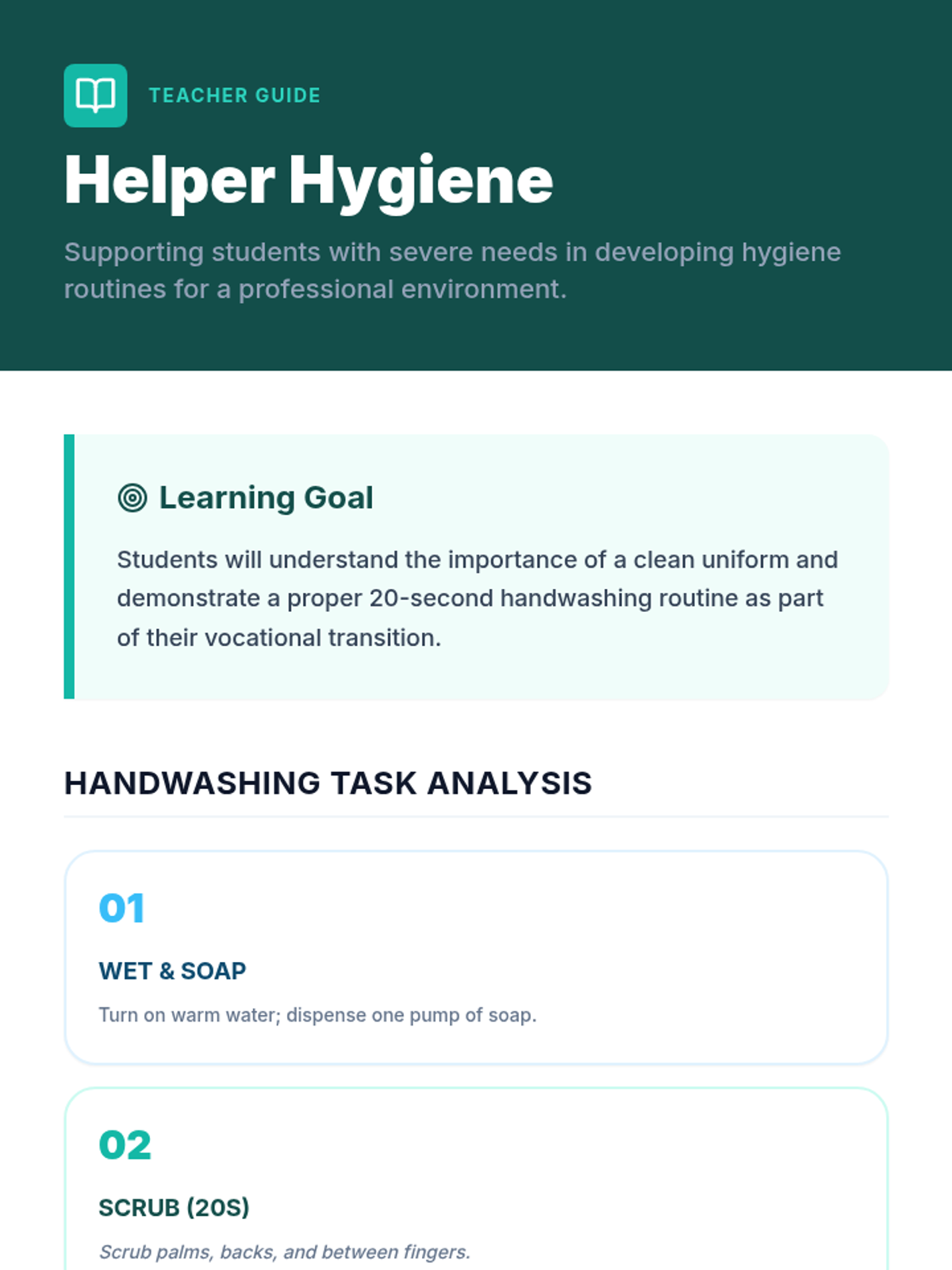
A facilitation guide for the "Helper Hygiene" lesson, including task analysis, prompting strategies, and instructional tips for teaching the helper hygiene routine to students with severe special needs.
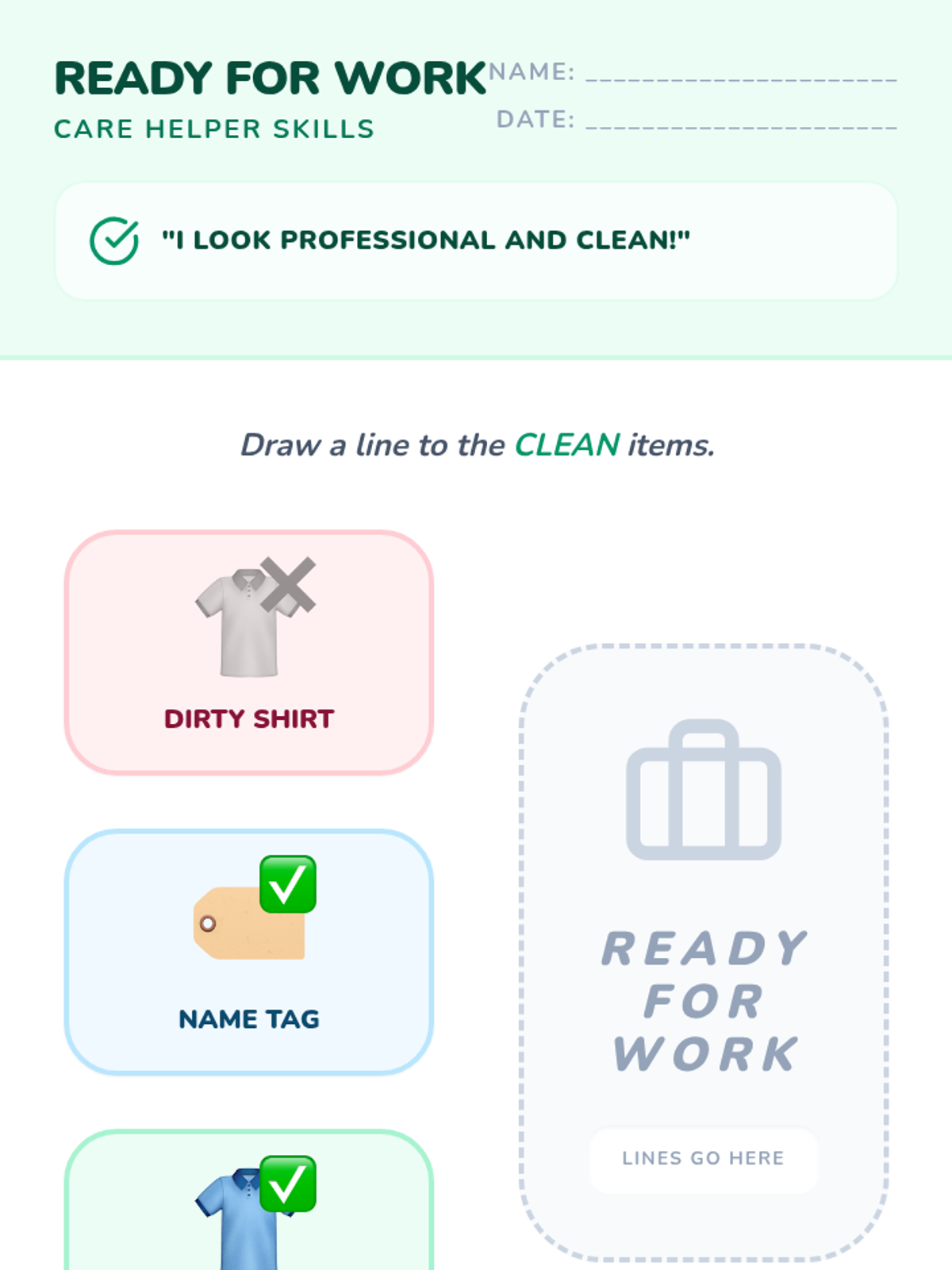
A visual vocational worksheet for students with severe special needs to identify clean versus dirty uniform items and perform a personal mirror check before starting their shift.
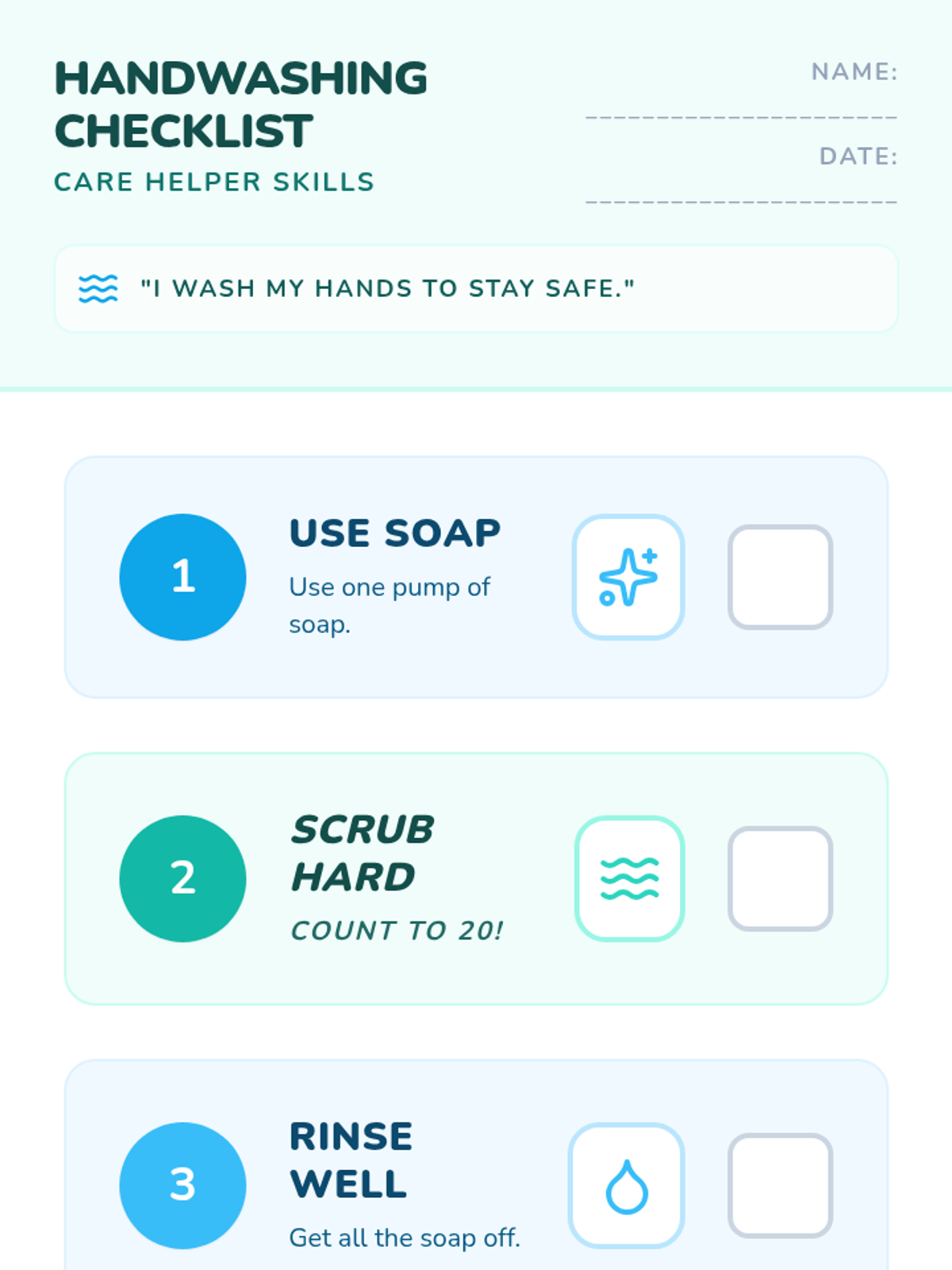
A visual step-by-step checklist for students with severe special needs to follow the handwashing routine. Features large icons, 4 simple steps, and a 20-second countdown focus.
A 7-slide visual guide for students with severe special needs on helper hygiene and handwashing. Focuses on the care helper uniform, the 20-second scrub rule, and the importance of germ prevention.
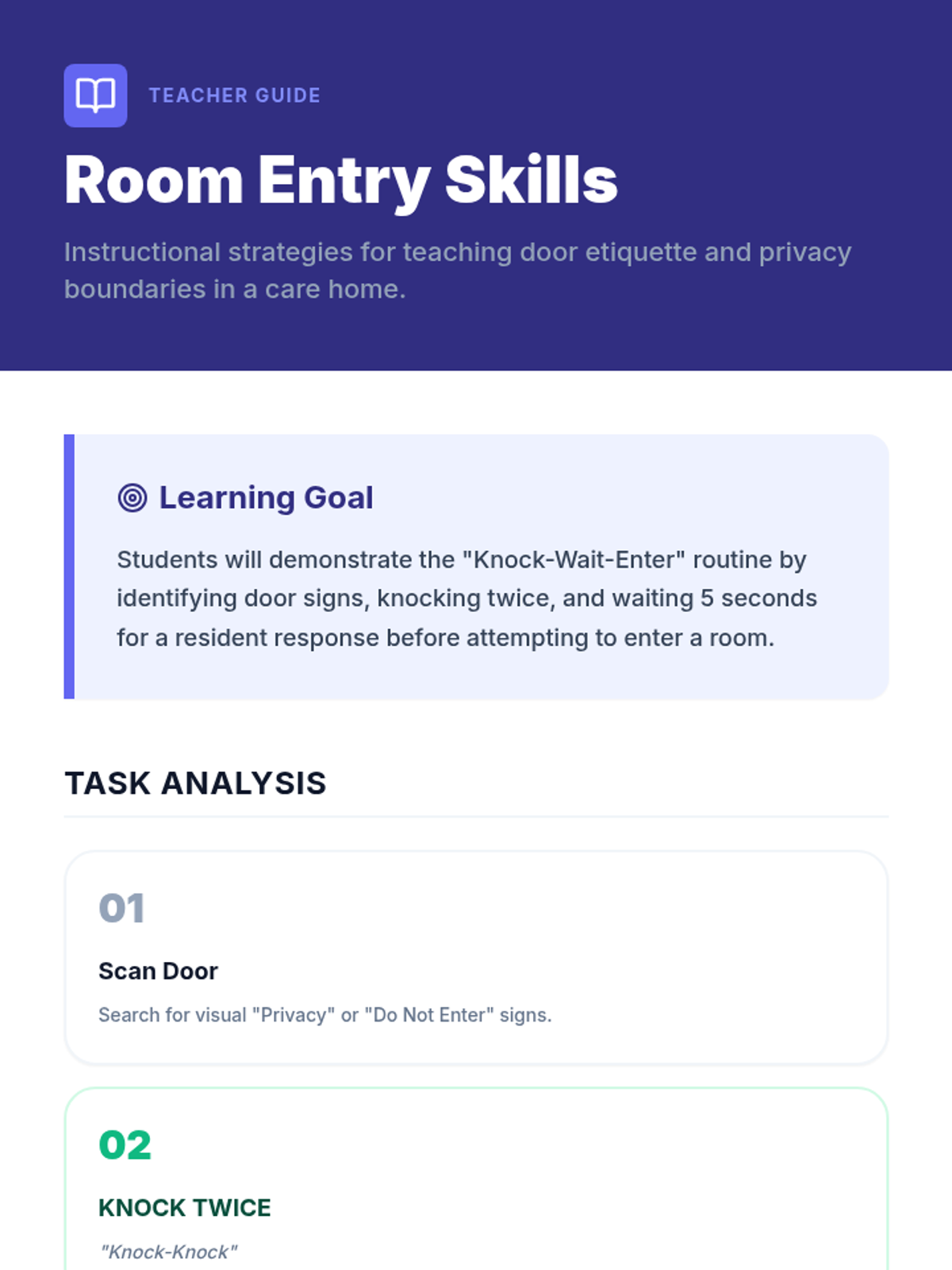
A facilitation guide for the "Room Entry Skills" lesson, including task analysis, prompting strategies, and instructional tips for teaching the room entry routine to students with severe special needs.
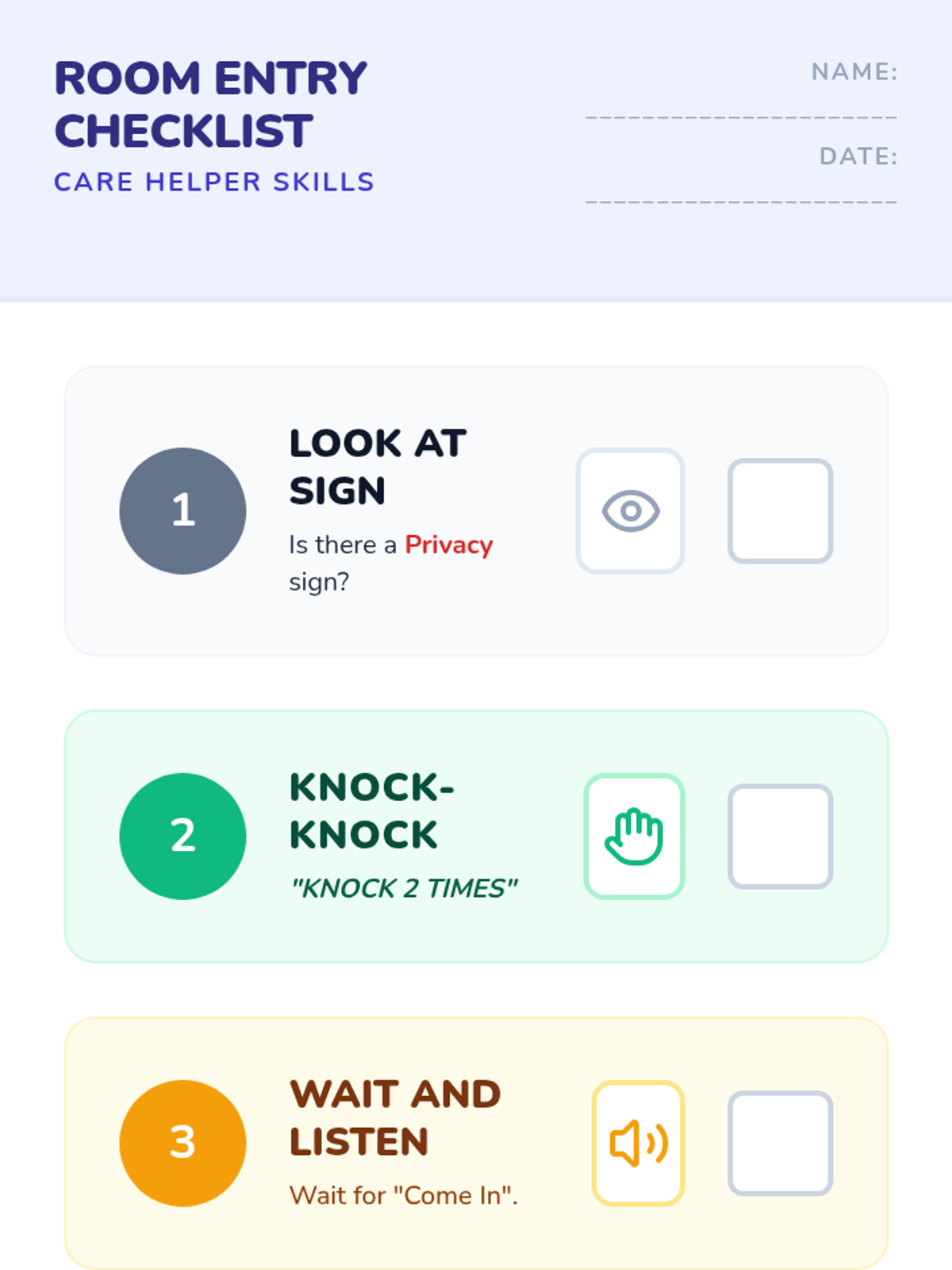
A practical step-by-step checklist for students with severe special needs to follow when entering a resident's room. Includes clear icons, large font, and a self-check section for independence.
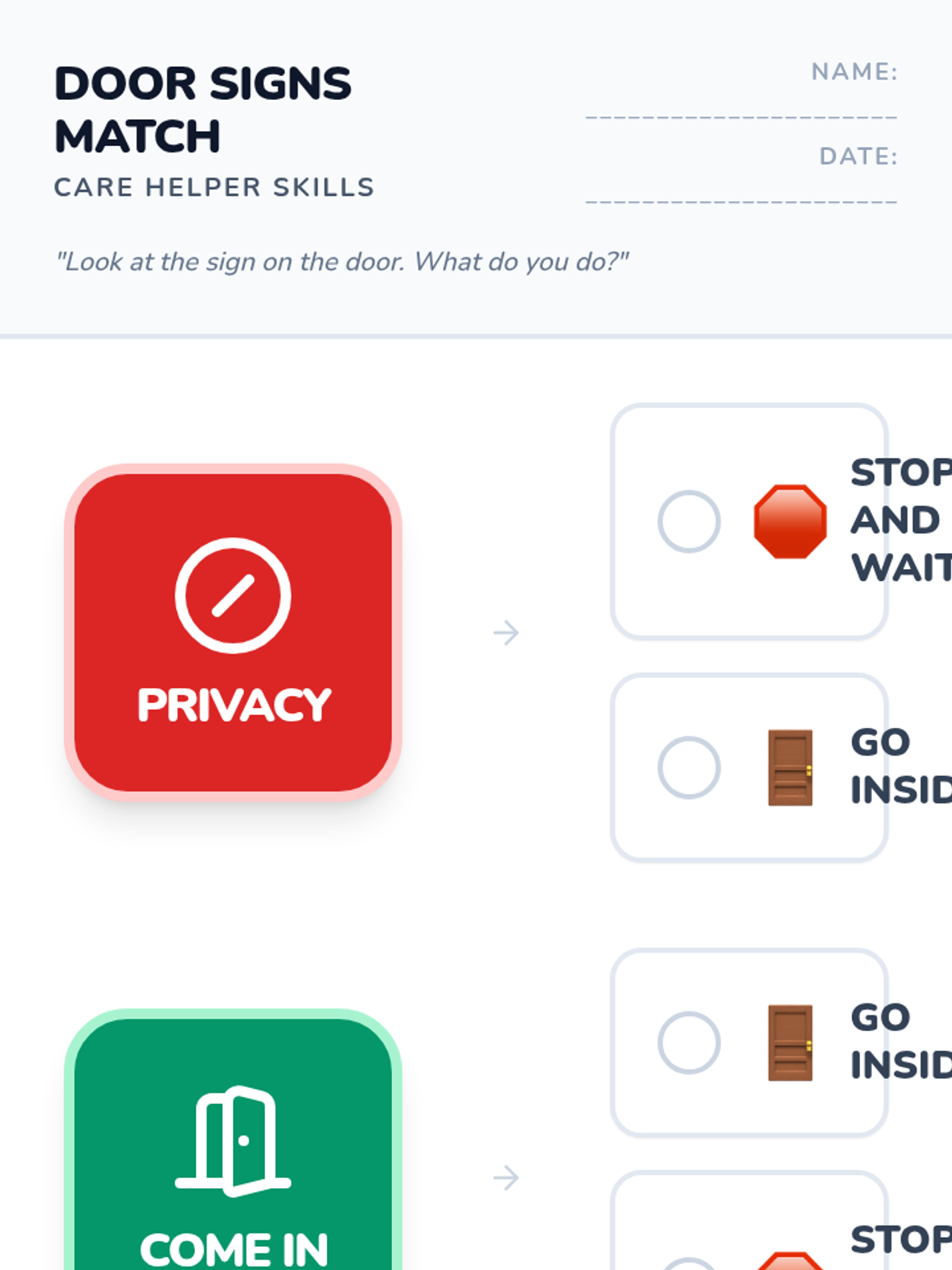
A visual matching activity for students with severe special needs to identify the correct action for 'Privacy' and 'Come In' door signs. Features large icons, high-contrast colors, and clear workspaces.
A 7-slide visual guide for students with severe special needs on the routine for entering a resident's room. Focuses on privacy signs, the "Knock-Knock" rule, and waiting for permission.
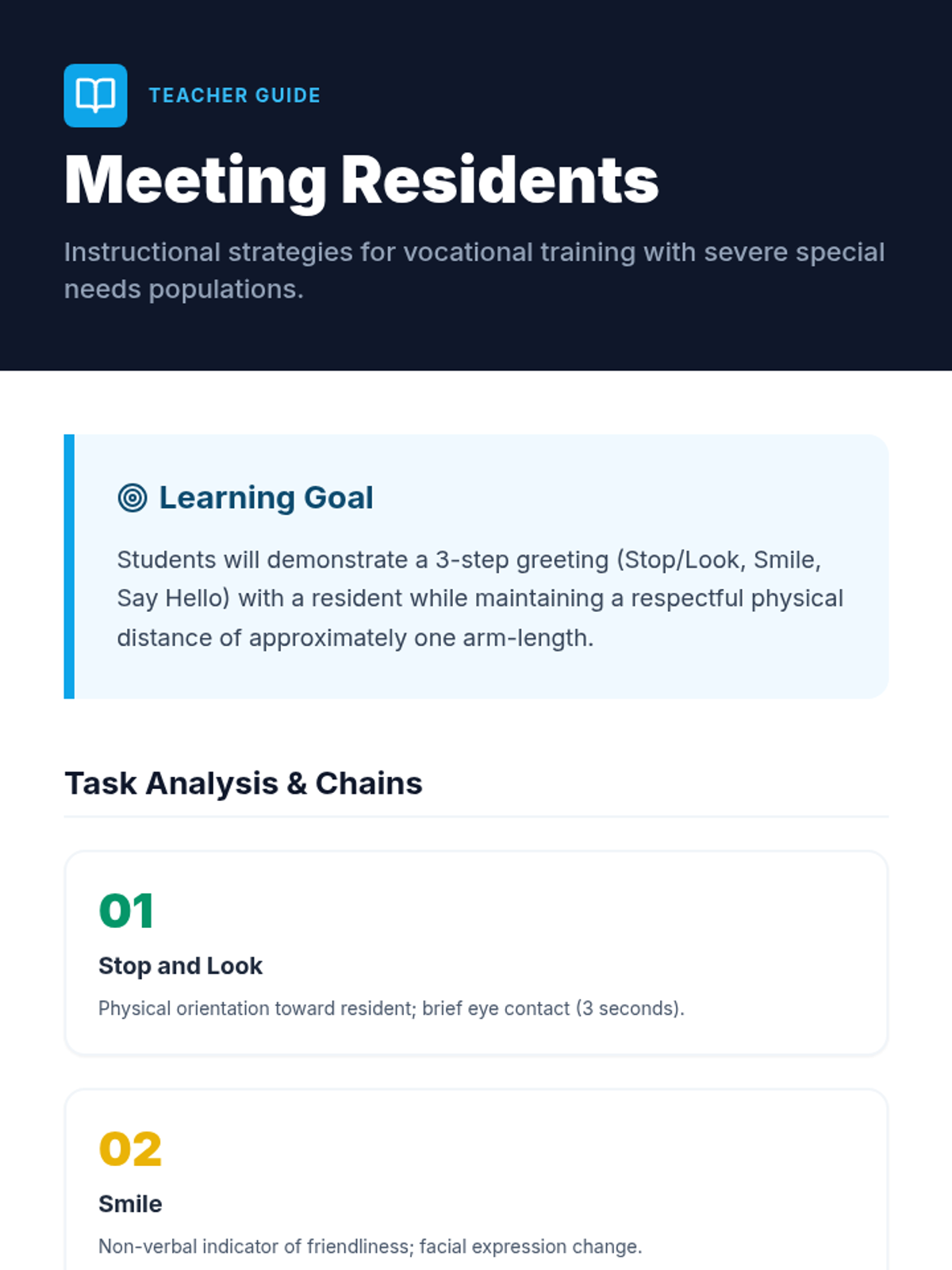
A comprehensive facilitation guide for the "Meeting Residents" lesson, including task analysis, prompting hierarchies, and a pacing guide specifically tailored for post-graduate students with severe special needs.
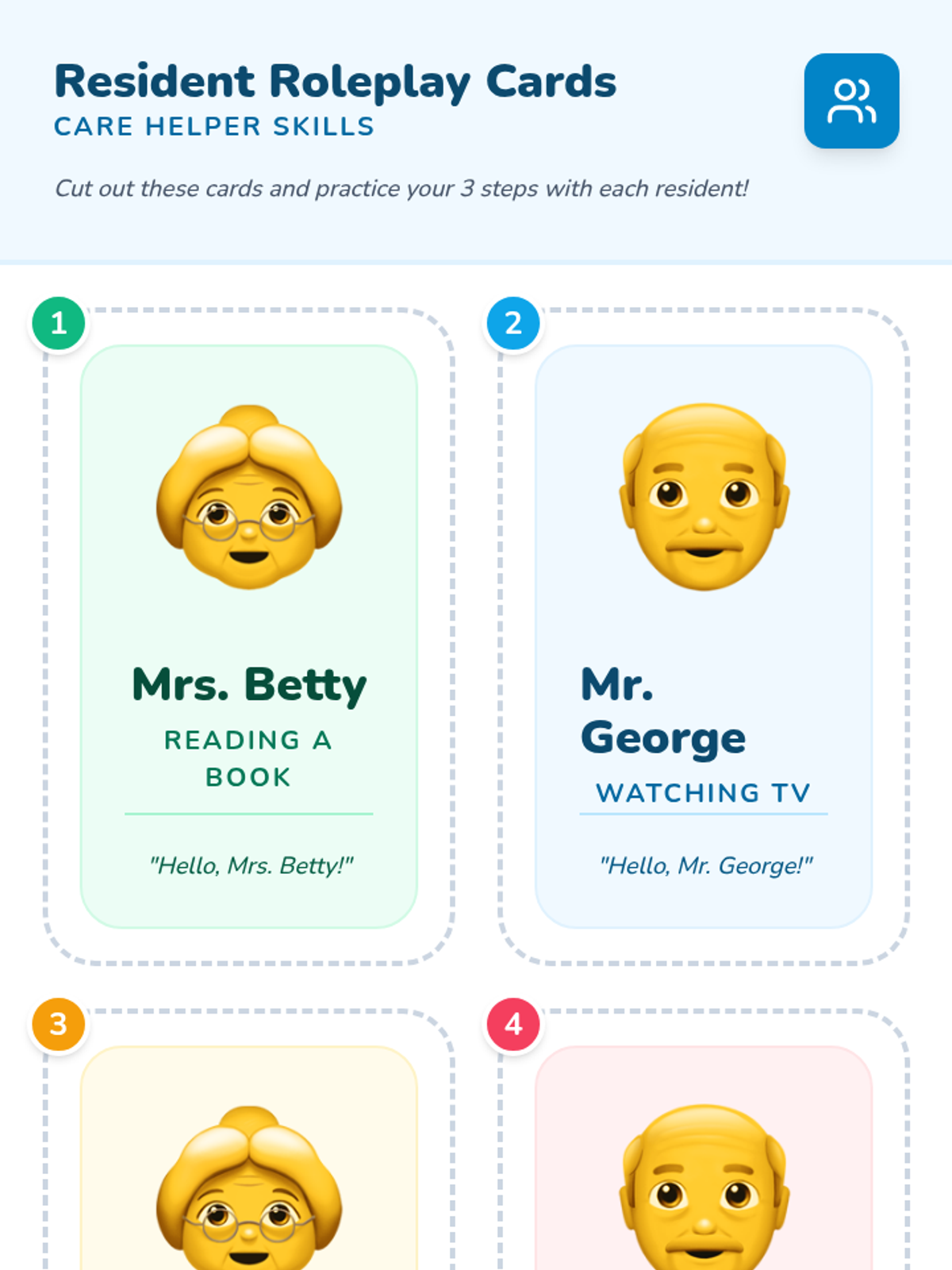
A set of 8 printable roleplay cards featuring diverse resident scenarios for students to practice greeting skills. Includes clear visuals, name tags, and a "Wait/Quiet" challenge card to teach social boundaries and situational awareness.
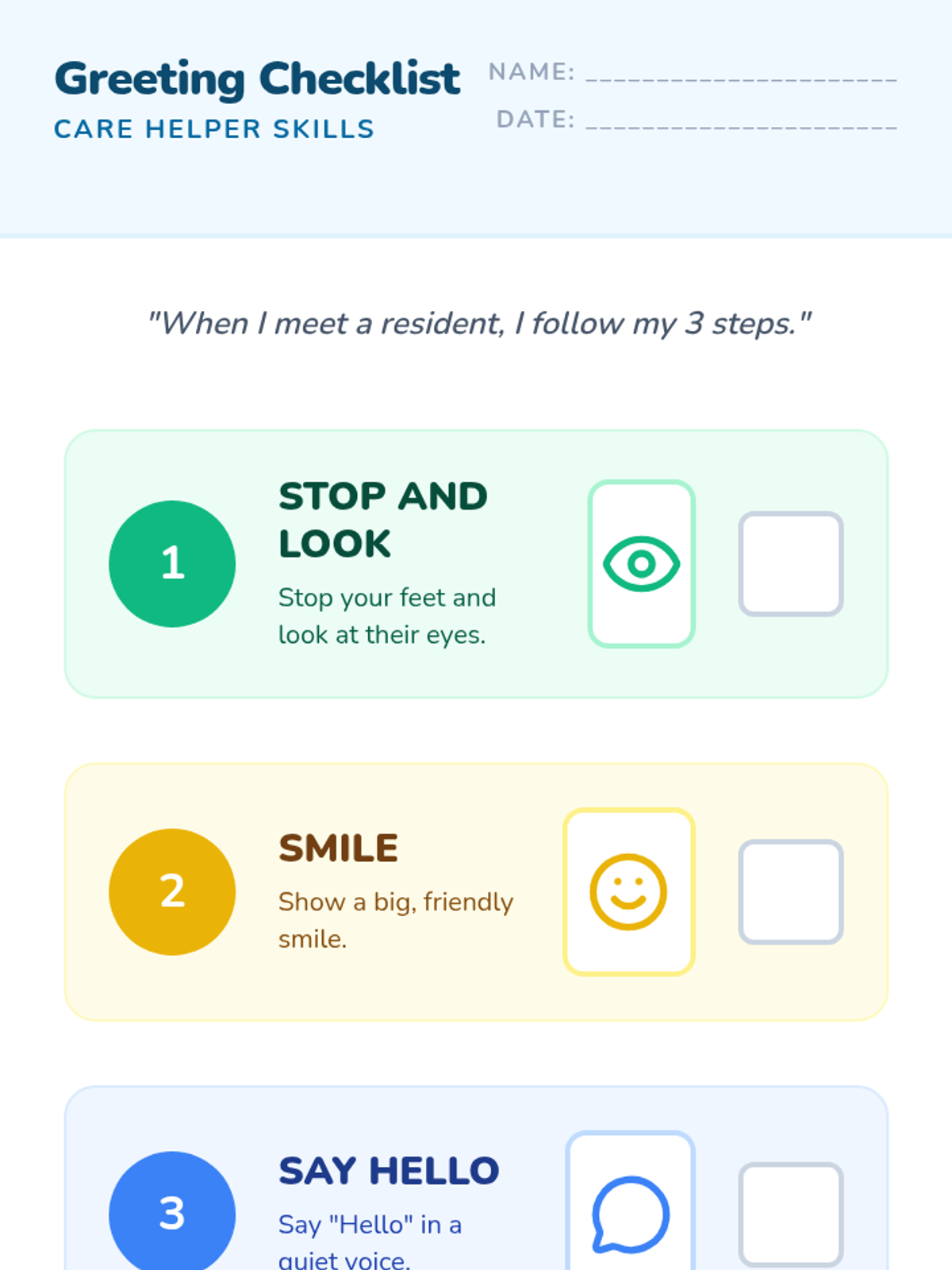
A visual 3-step checklist for students with severe special needs to track their performance in greeting residents. Includes large icons, simple language, and a self-evaluation section for reinforcing positive behaviors.
A highly visual 8-slide presentation for students with severe special needs, teaching a 3-step concrete method for greeting residents: Stop & Look, Smile, and Say Hello. Includes clear icons, large fonts, and focuses on respectful personal space.
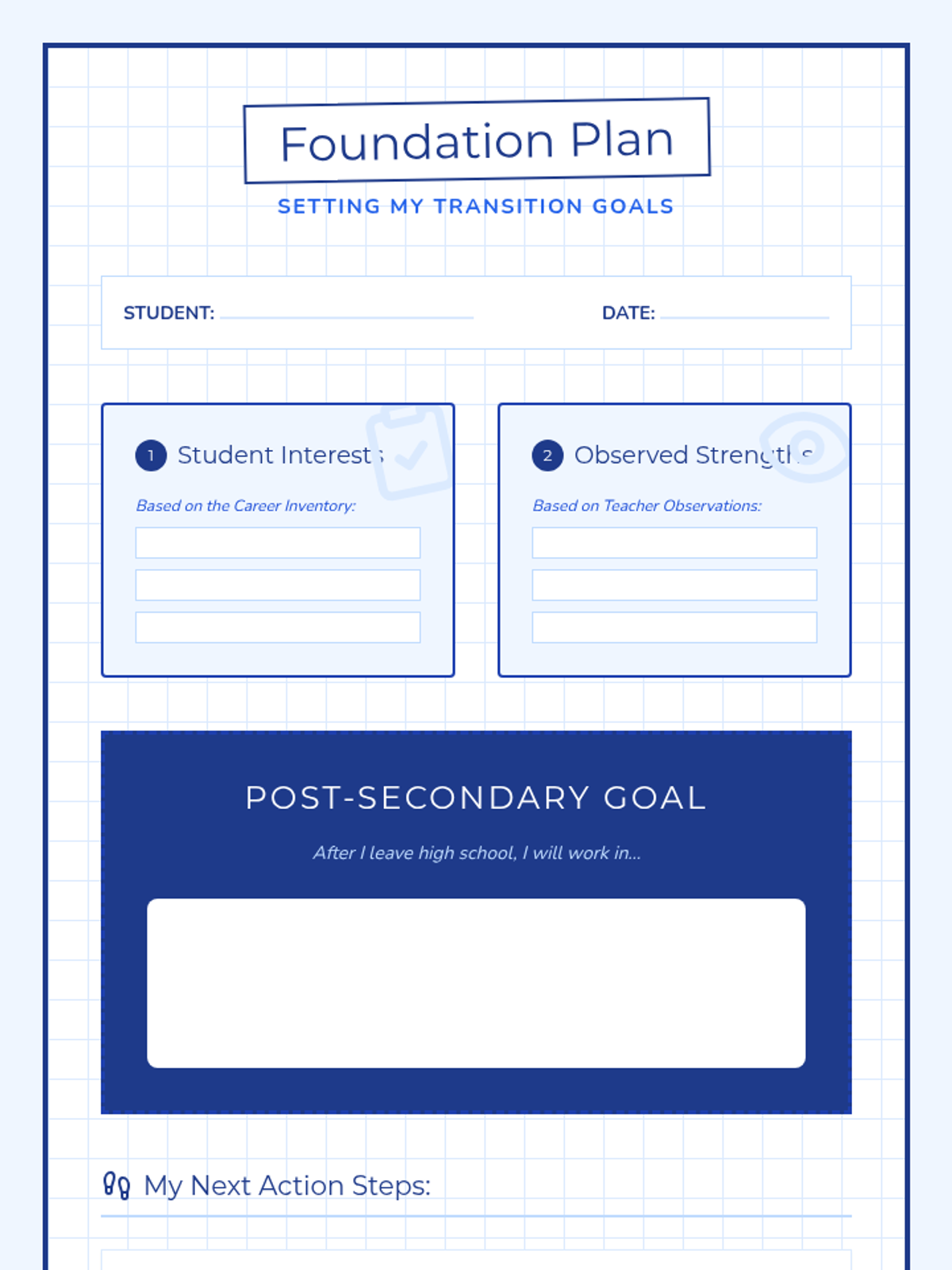
A collaborative transition planning tool used to synthesize student interests and teacher observation data into concrete post-secondary vocational goals and action steps.
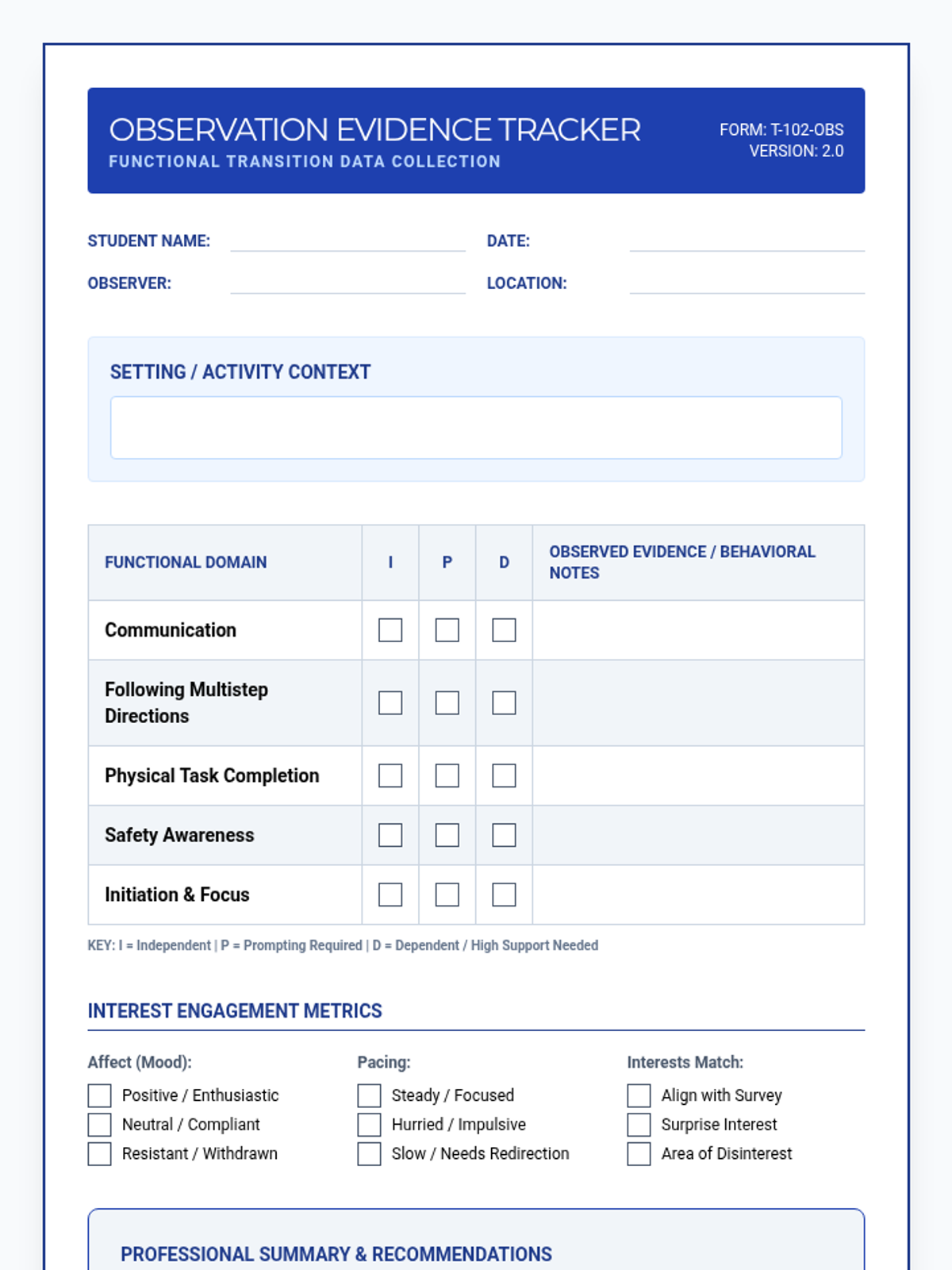
A professional teacher-facing observation tool to document behavioral evidence of student interests and functional skills during community-based or vocational activities. Features a skill level key and engagement metrics.
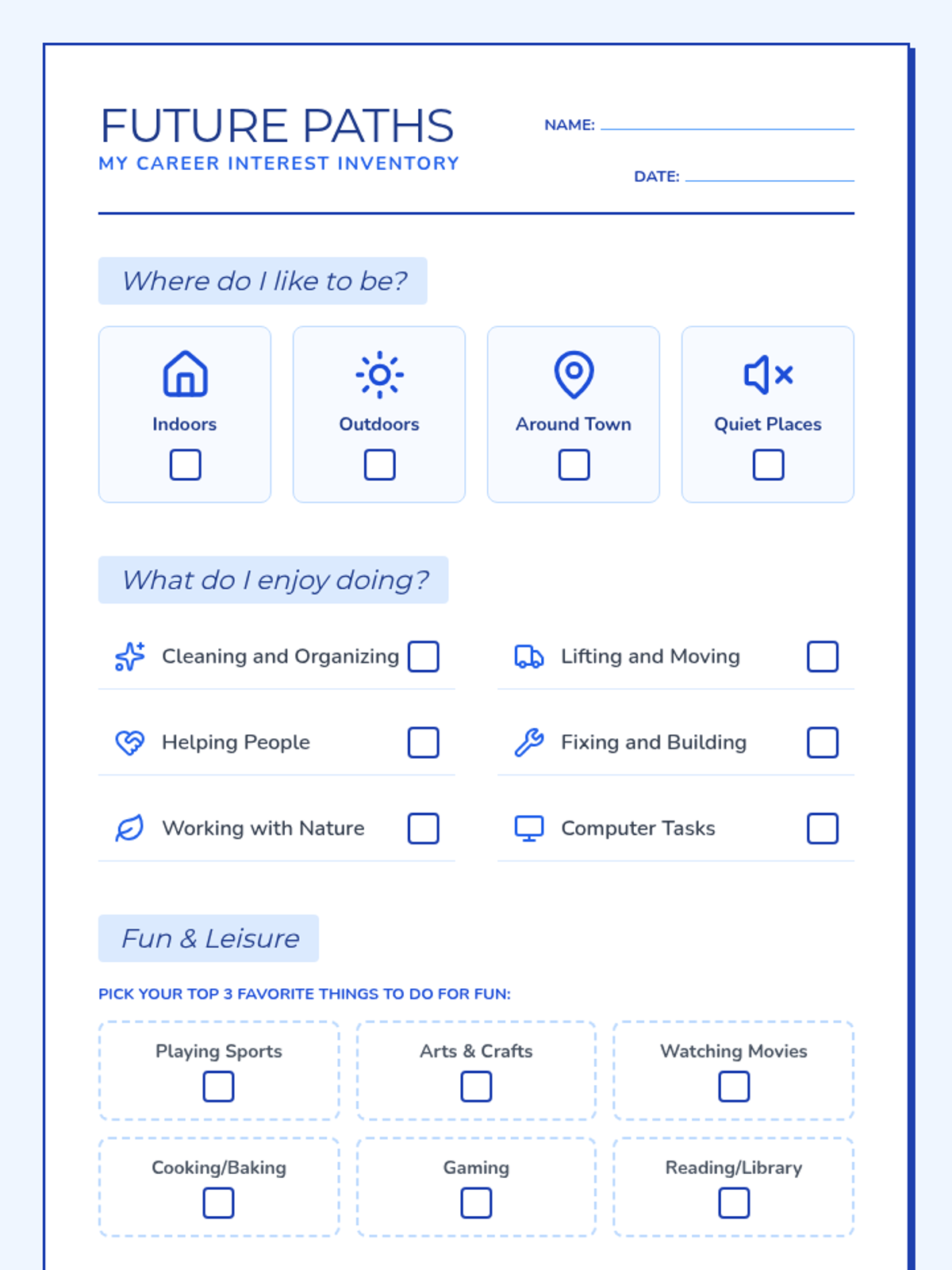
A two-page student-facing career interest inventory using a blueprint theme. It features visual icons and checklists to help students identify their preferred environments, vocational interests, and community-based career goals.
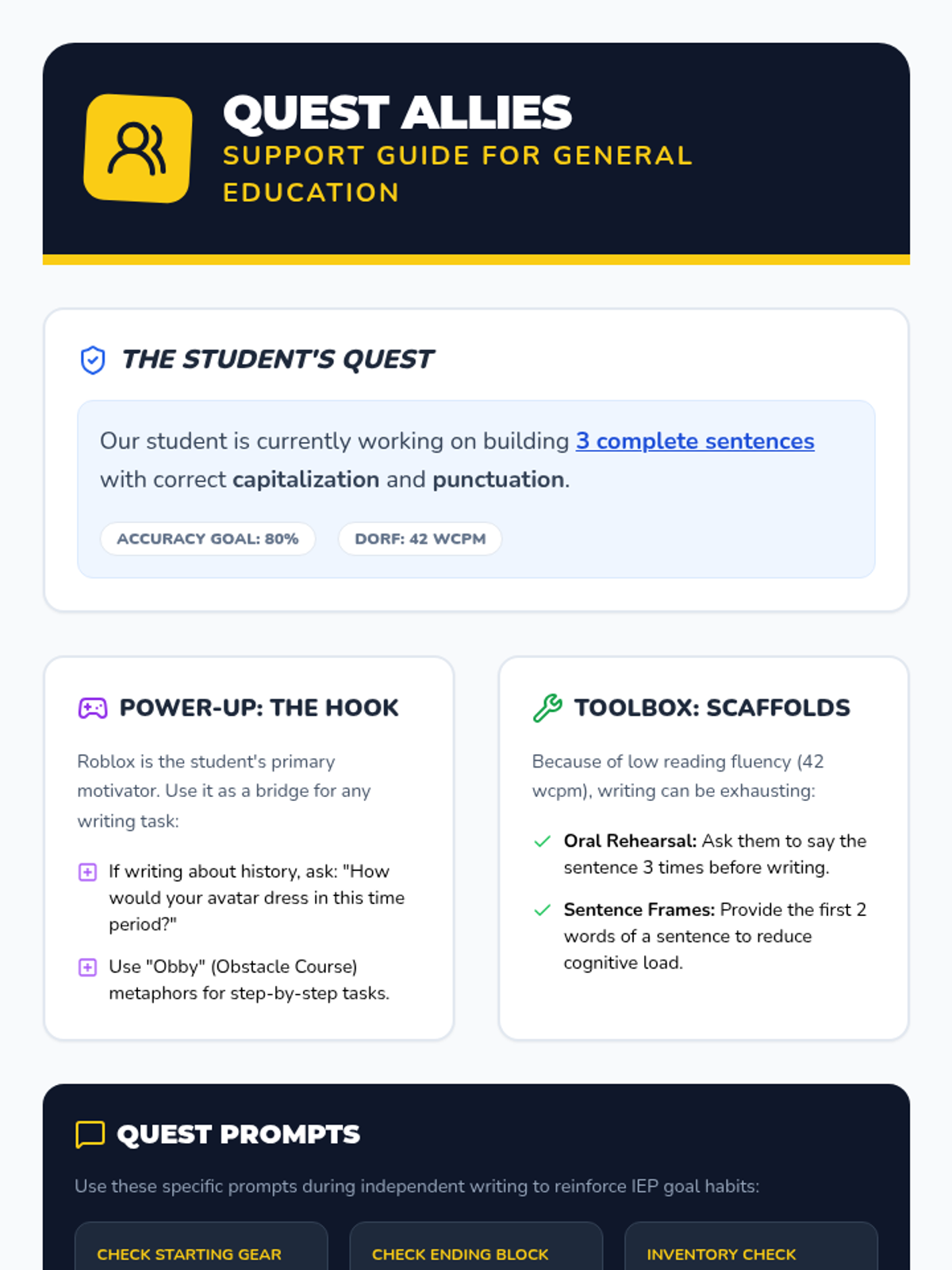
A collaboration handout for general education teachers explaining how to support the student's specific sentence-writing IEP goal. It includes Roblox-themed engagement hooks, quick scaffolding techniques, and verbal prompting scripts.
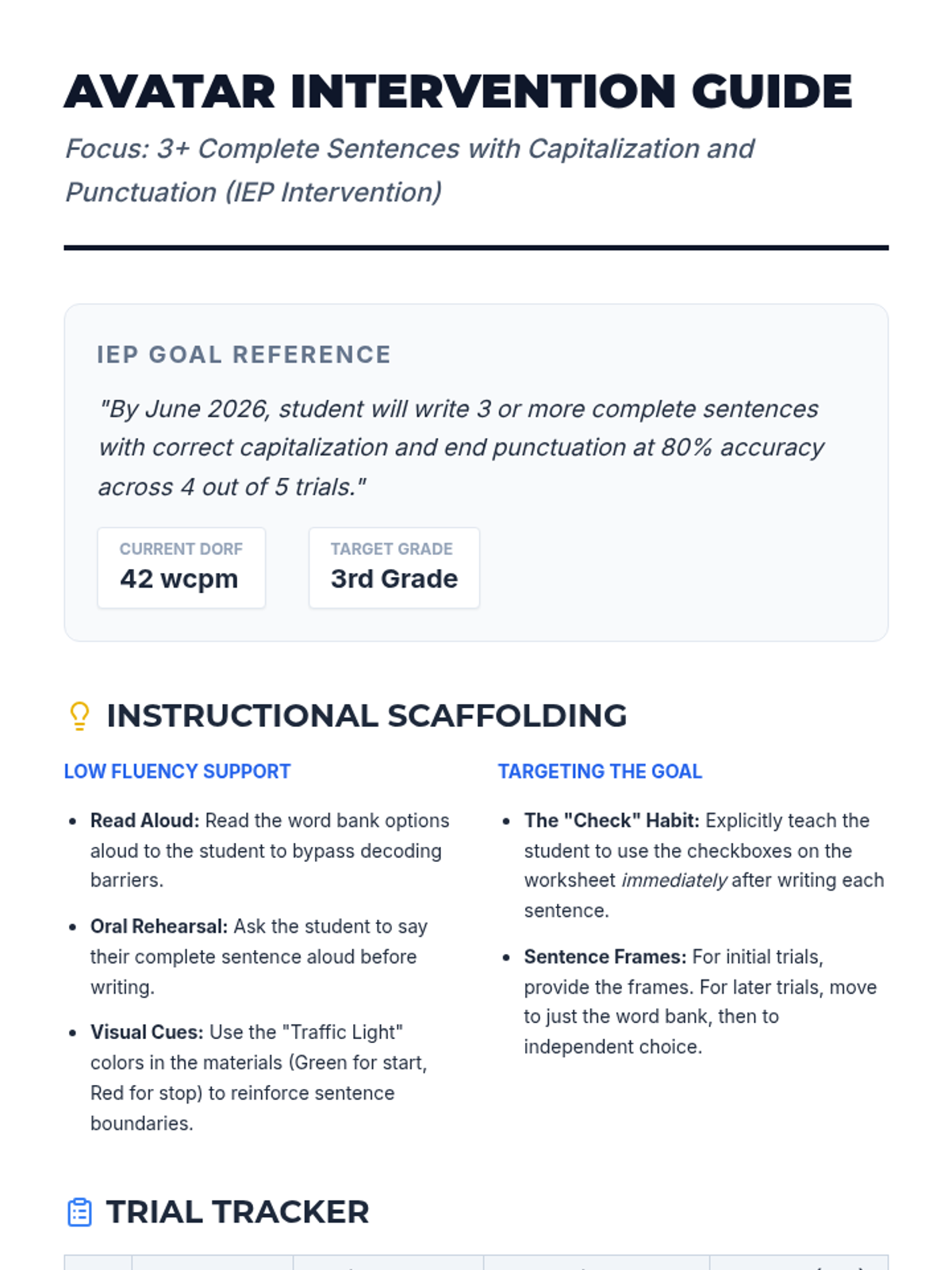
A teacher's guide providing instructional strategies for low-fluency students, IEP goal alignment, and a trial tracker for data collection. includes specific tips for using Roblox themes to motivate student writing.
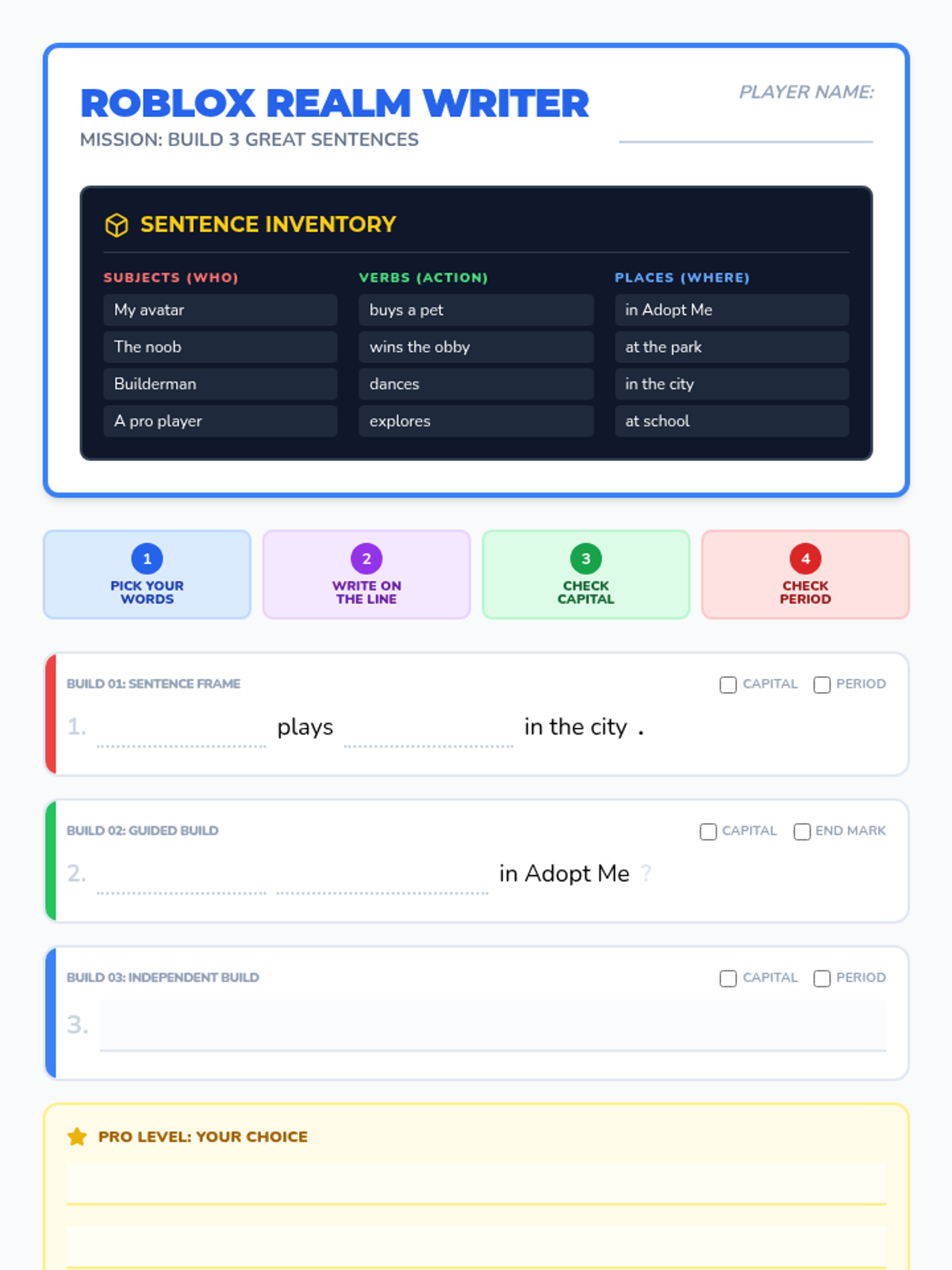
A print-ready Roblox-themed worksheet featuring a word bank and graded sentence frames (full support to independent). Designed to help students draft three sentences with checklists for capitalization and end punctuation. Includes chunked directions for clear task management.
A visually engaging Roblox-themed slide deck designed to teach sentence structure, capitalization, and punctuation to students. It includes modeling, guided practice with word blocks, and a student self-check list.
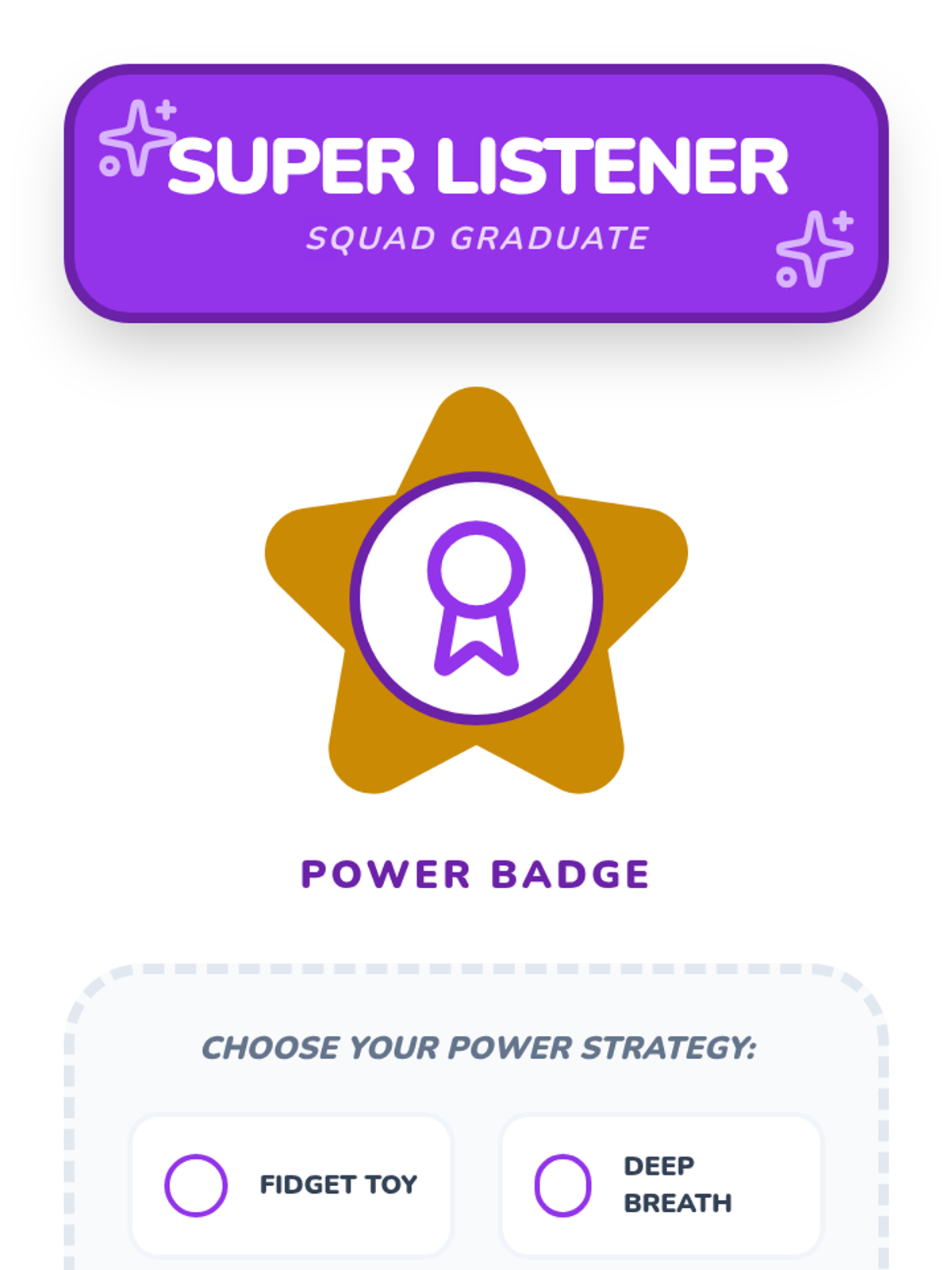
Final capstone activity. A visual 'Power Badge' and strategy selection sheet where students celebrate their graduation from the Super Listening Squad and identify their top listening tool.
Celebratory final slides with a 'Graduation' theme. Reviews all squad characters and encourages students to feel proud of their listening skills with minimal, high-impact visuals.
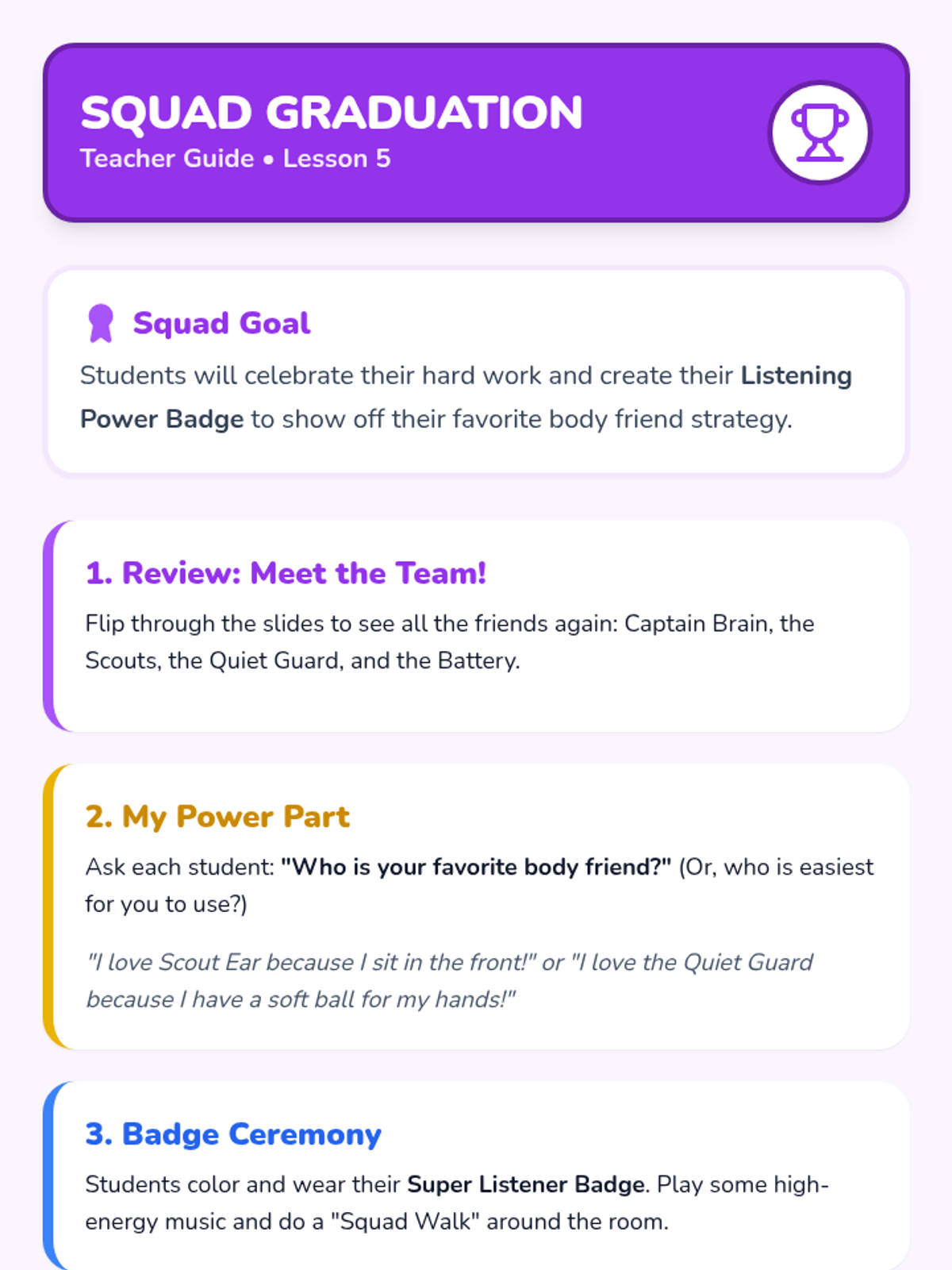
Teacher guide for the final celebration lesson. Outlines the review process and the 'Power Badge' ceremony to celebrate student growth in listening.
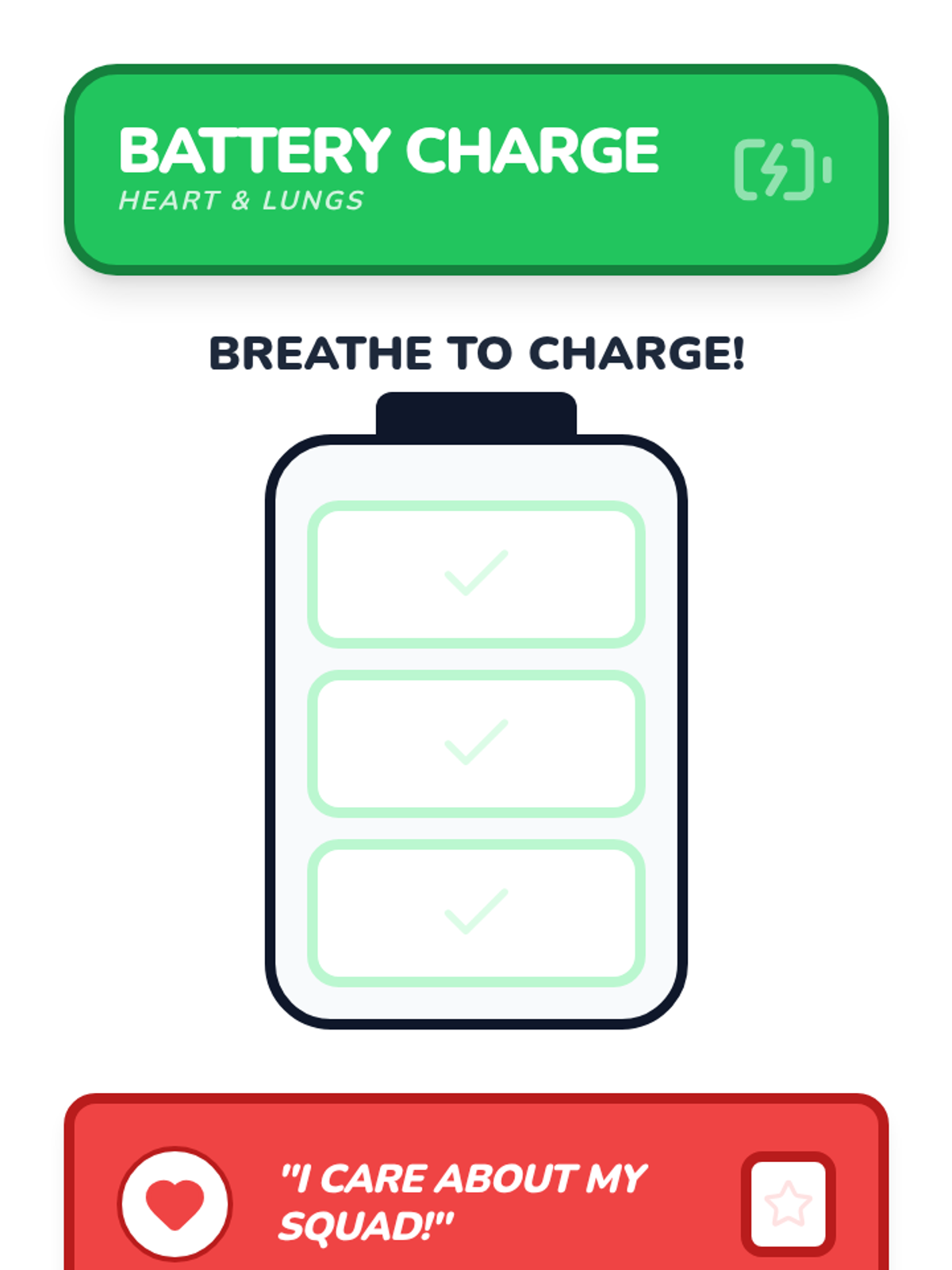
Breathing practice worksheet for Lesson 4. Students track three deep breaths to 'charge' their battery using a large visual battery graphic.
Highly visual slides for Lesson 4 using 'The Battery' theme. Focuses on emotional connection (Heart) and breathing (Lungs) with large icons and minimal text.
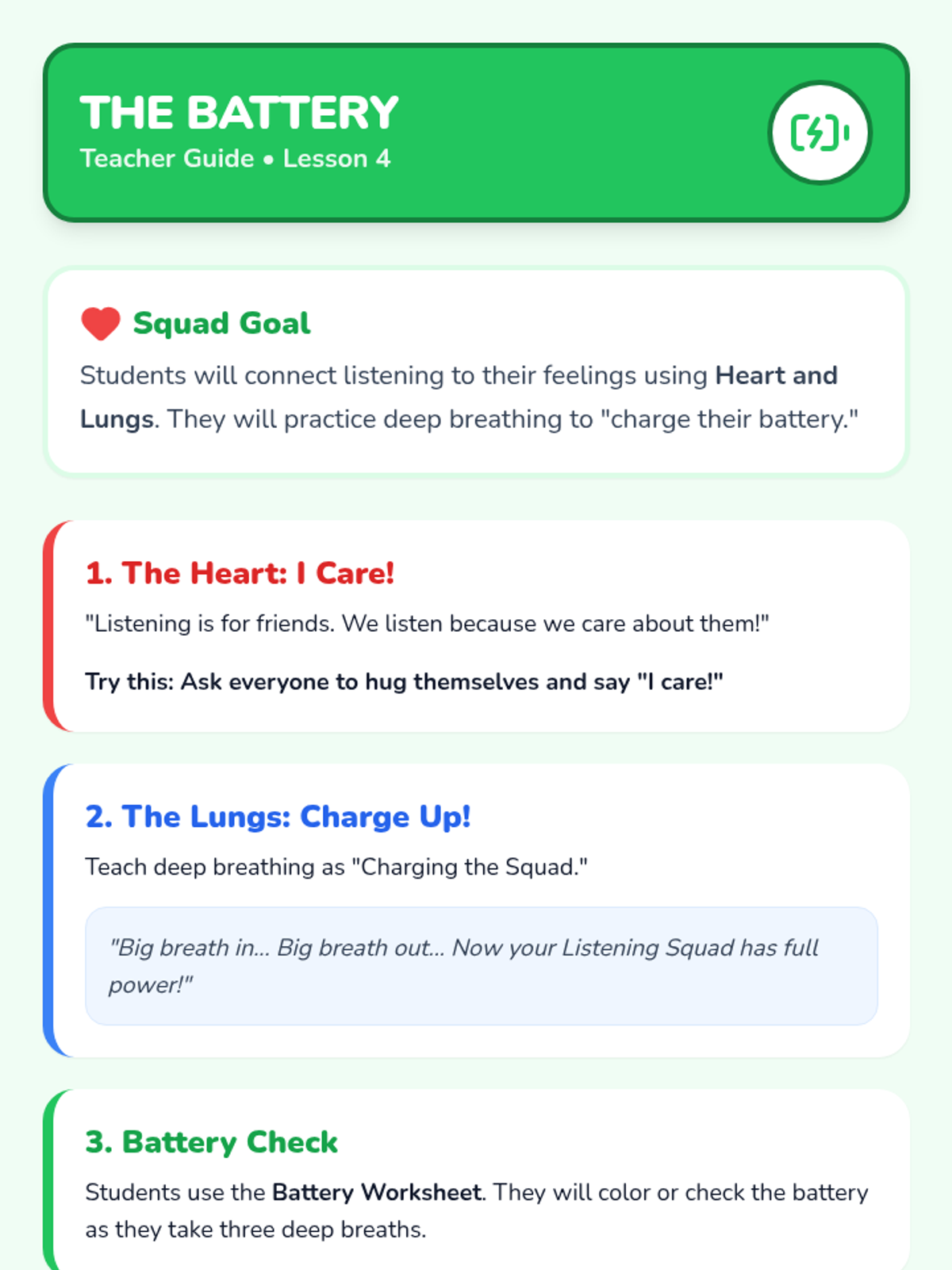
Teacher guide for Lesson 4, connecting regulation to the Heart and Lungs through 'The Battery' character. Focuses on breathing and emotional connection.
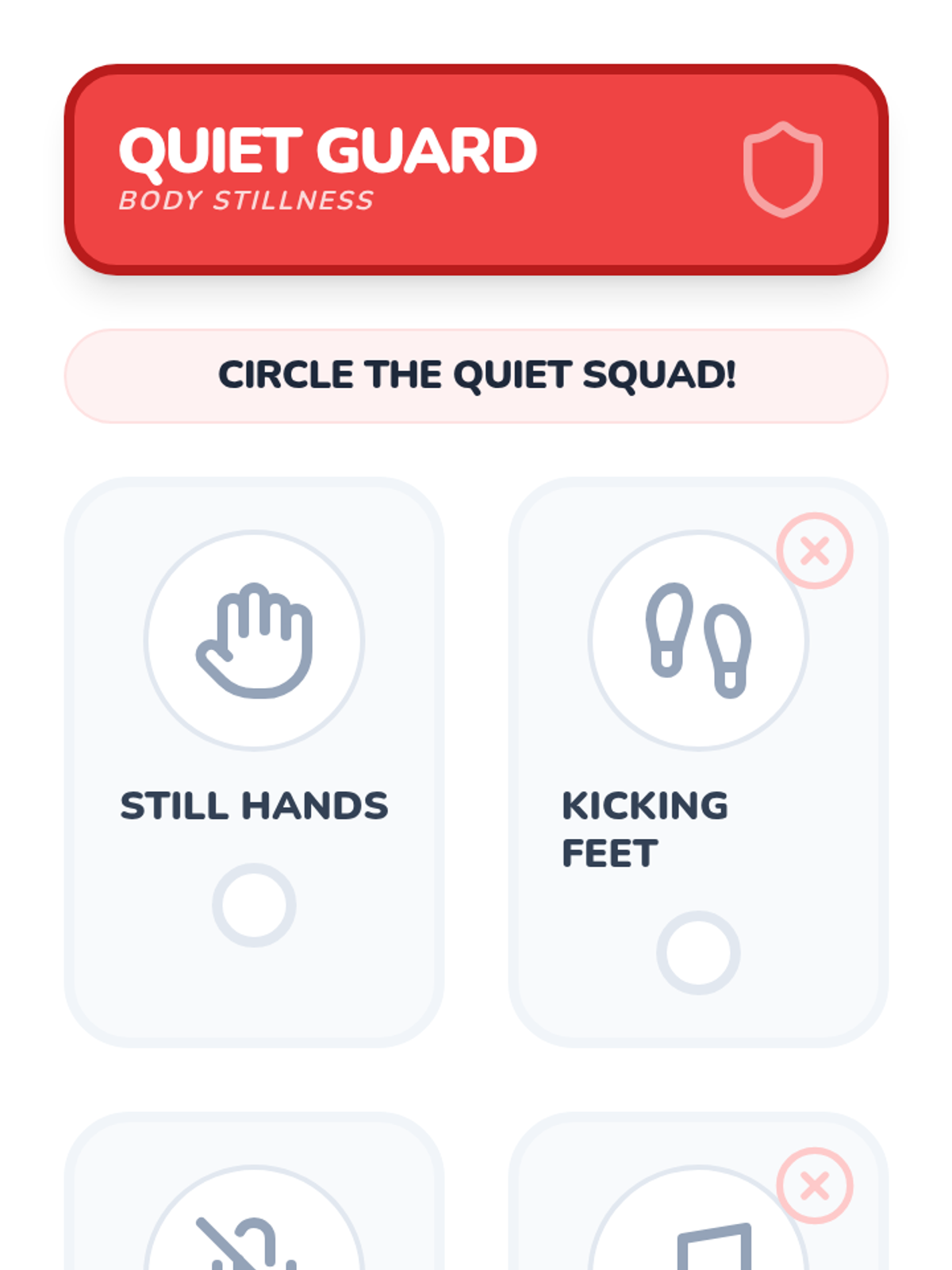
Simplified visual identification worksheet for Lesson 3. Students identify 'Quiet Guard' actions versus 'Noisy' actions using large checkboxes, ideal for high support needs.
Large-scale, colorful slides for Lesson 3 focusing on physical stillness. Uses the 'Quiet Guard' theme with minimal text and bold icons for students with severe special needs.
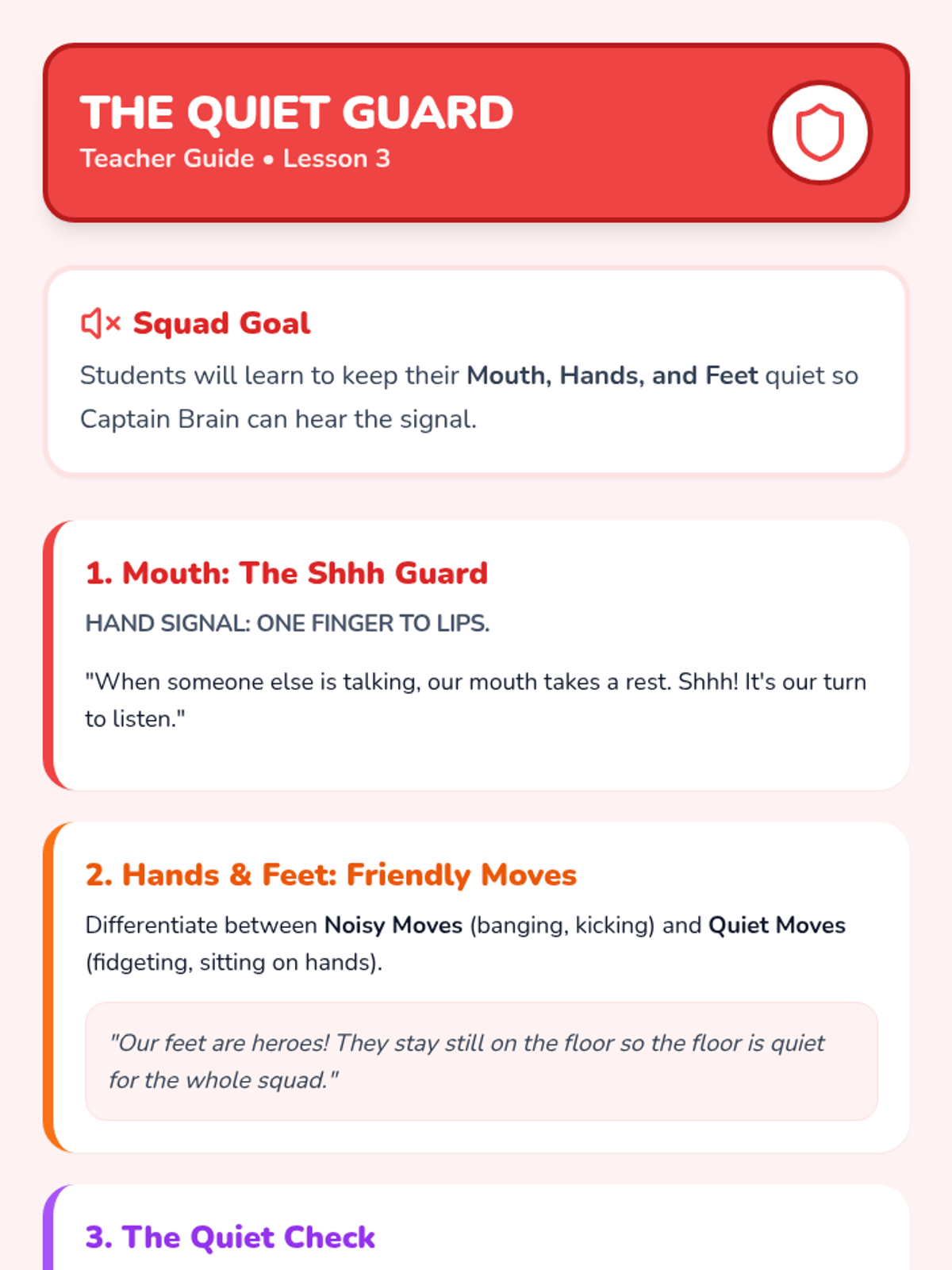
Teacher guide for Lesson 3, focusing on physical regulation using 'The Quiet Guard' character. Addresses mouth, hands, and feet in a highly concrete way for severe special needs.
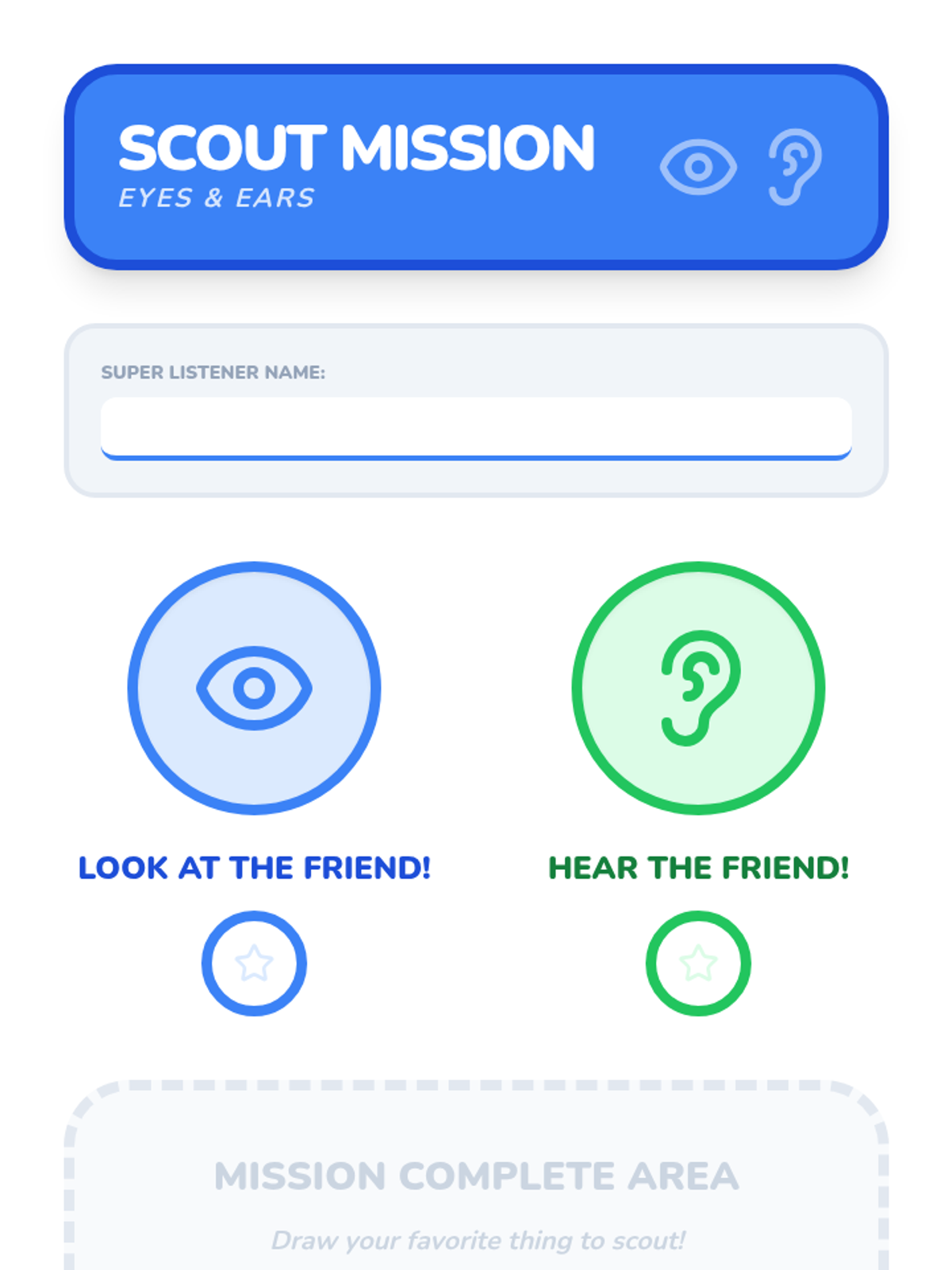
Simplified activity sheet for Lesson 2. Students track their eye and ear focus using large visual checkpoints, suitable for students with severe intellectual disabilities.
Slides for Lesson 2 focusing on eyes and ears. Uses the 'Scout' theme with high-contrast, large-scale visuals. Addresses looking and hearing in a simplified, kid-friendly way.
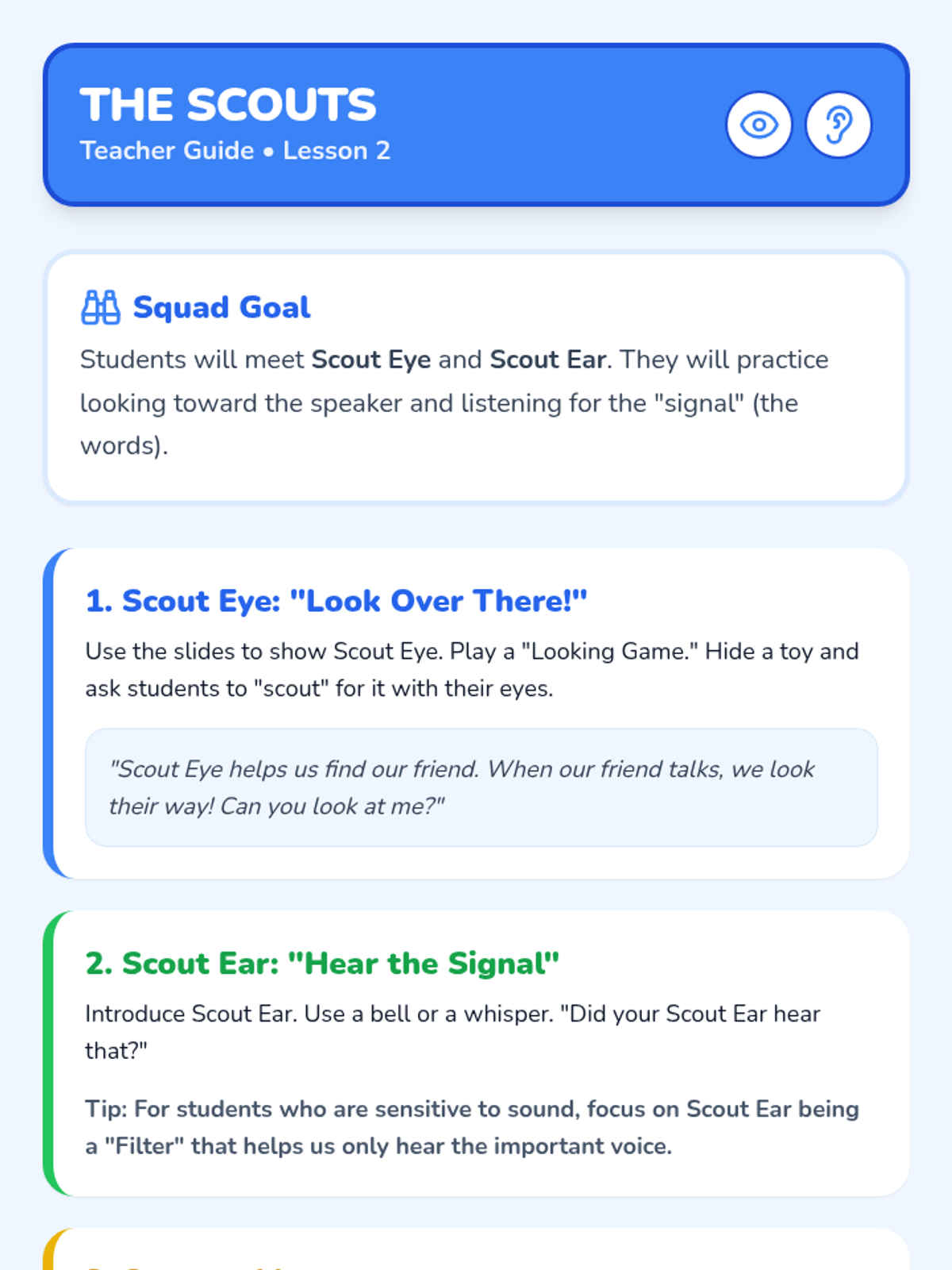
Teacher guide for Lesson 2, focusing on the sensory inputs of Eyes and Ears. Includes prompts for discussing auditory distractions and individual preferences for visual focus using the 'Scout' characters.
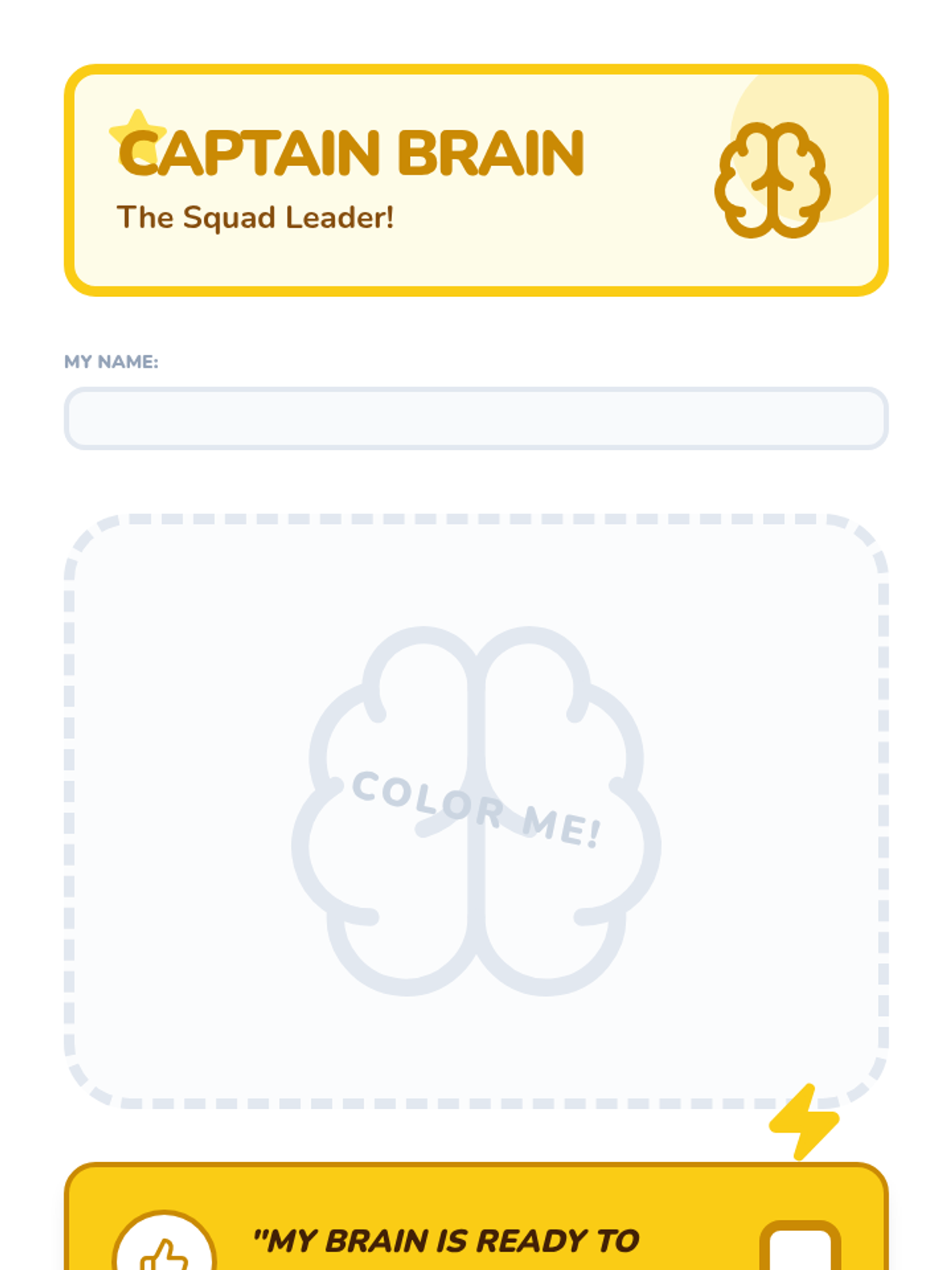
A simplified coloring and identification worksheet for Lesson 1. Features a large brain graphic for coloring and a simple 'ready to listen' checkbox, designed for students with severe special needs.
Vibrant, highly engaging slides for Lesson 1. Uses a 'Super Listening Squad' theme with large, friendly icons and minimal text, making it suitable for students with severe intellectual disabilities.
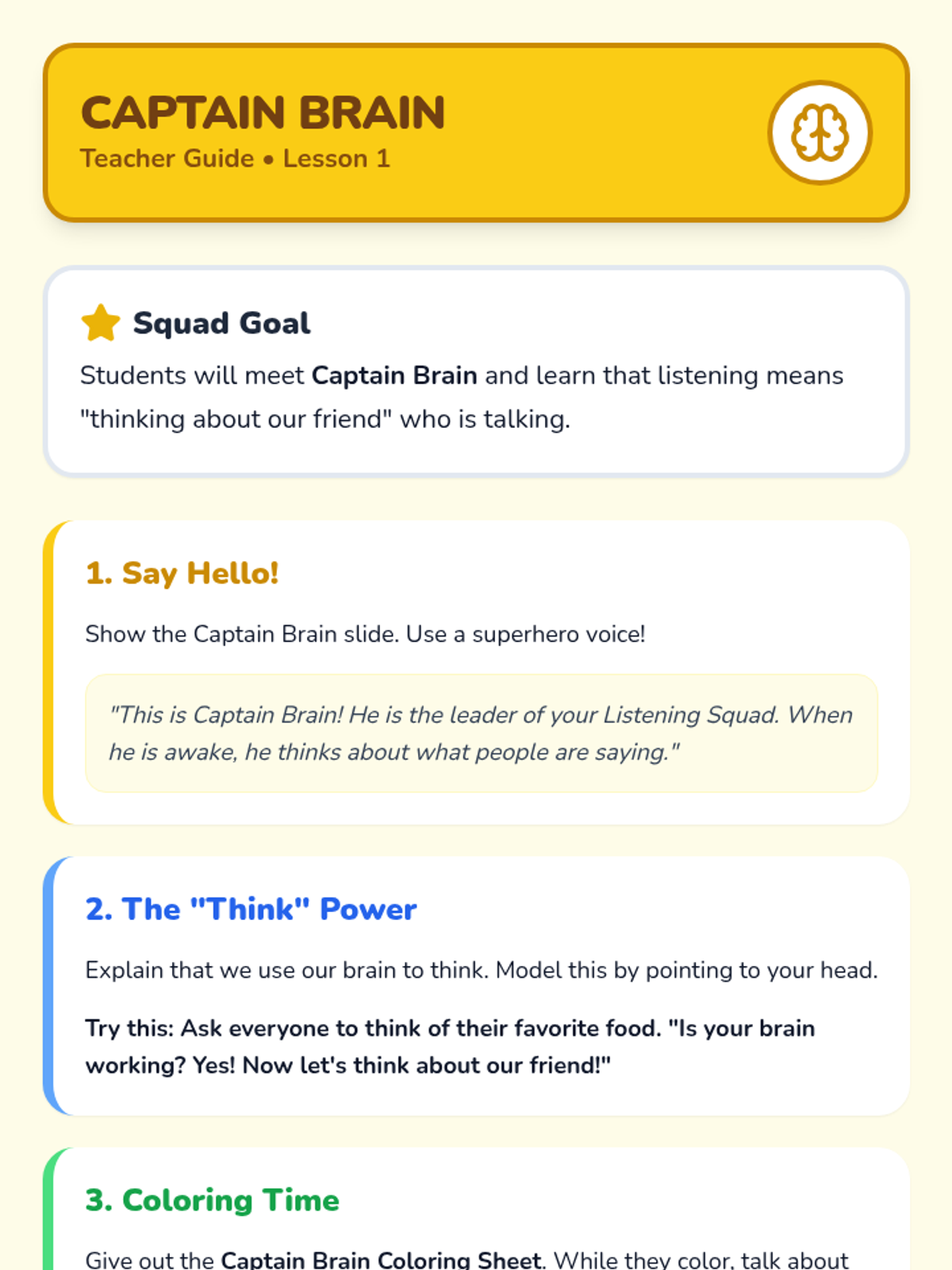
A teacher guide for the first lesson of the Super Listening Squad sequence. Focuses on the brain as the 'Captain' and introduces the concept of thinking about the speaker using simplified, energetic language and hand signals.
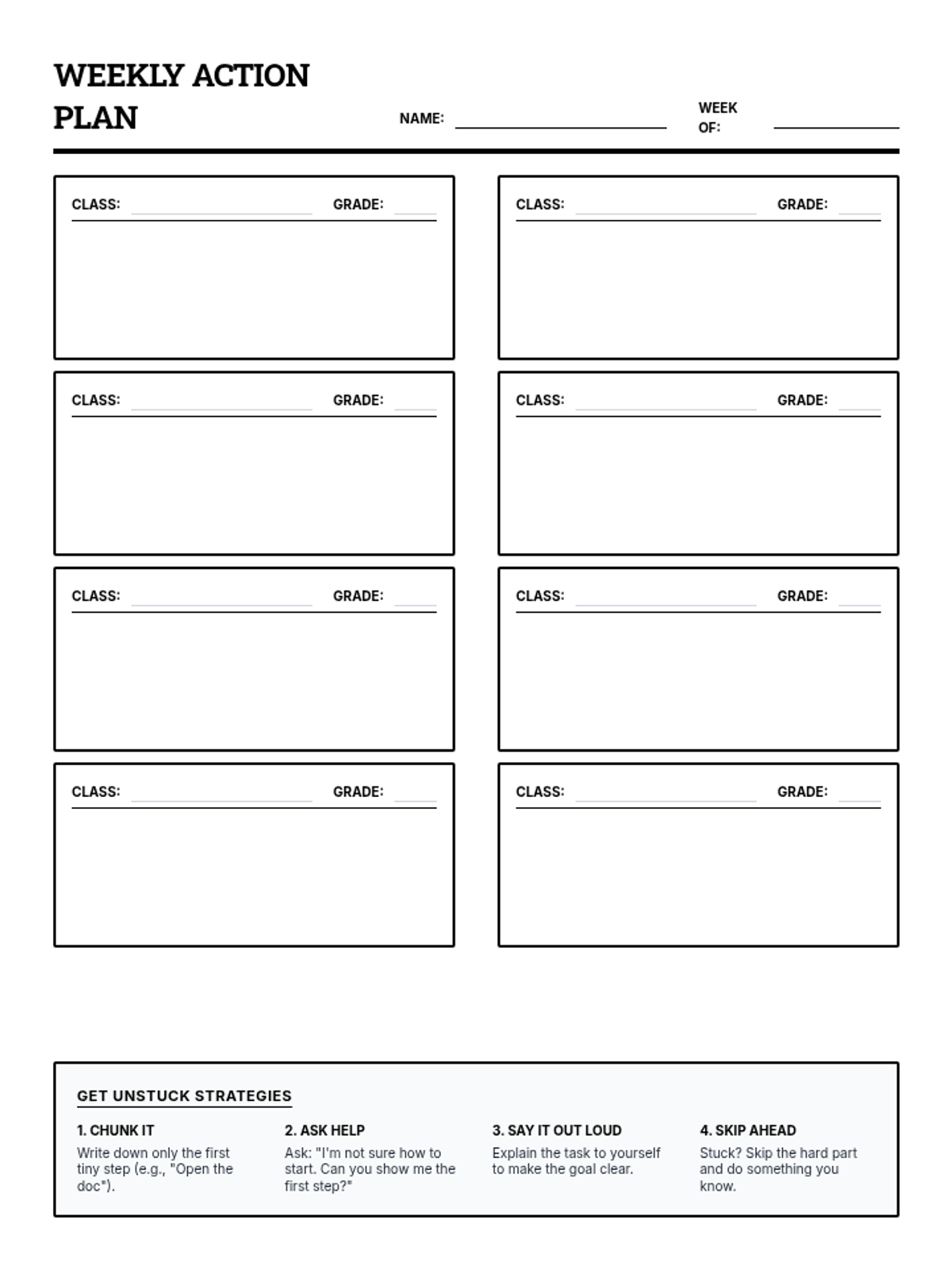
A highly efficient, single-page Weekly Action Plan designed for students with executive functioning needs. It features 8 streamlined class boxes with space for subjects and grades, plus a concise footer with 'Get Unstuck' strategies, all formatted to fit within a single printable page.
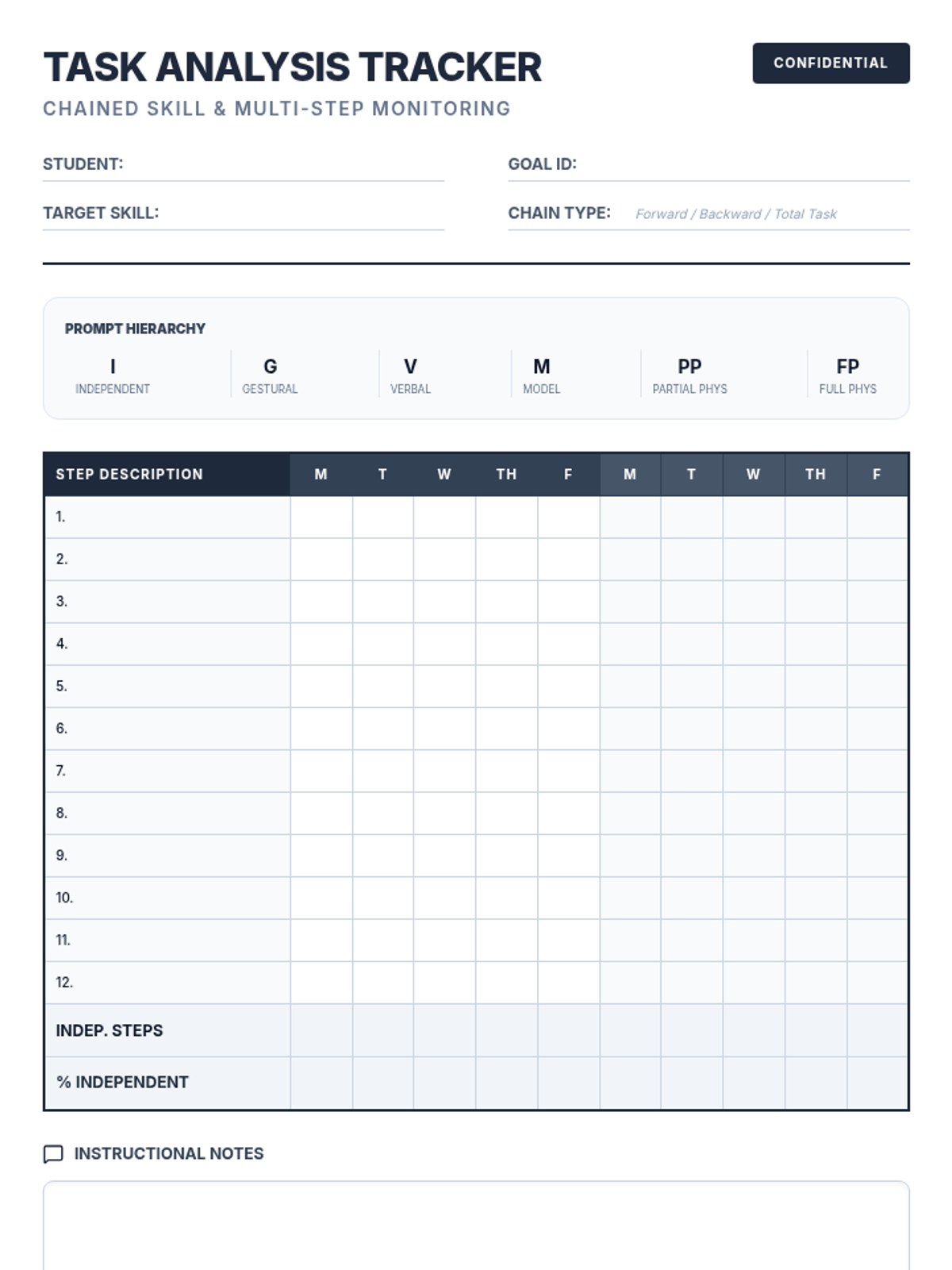
A task analysis data sheet for tracking complex, multi-step skills (e.g., hygiene routines, vocational tasks). It allows for recording prompt levels across 10 sessions with automated independent step calculation.
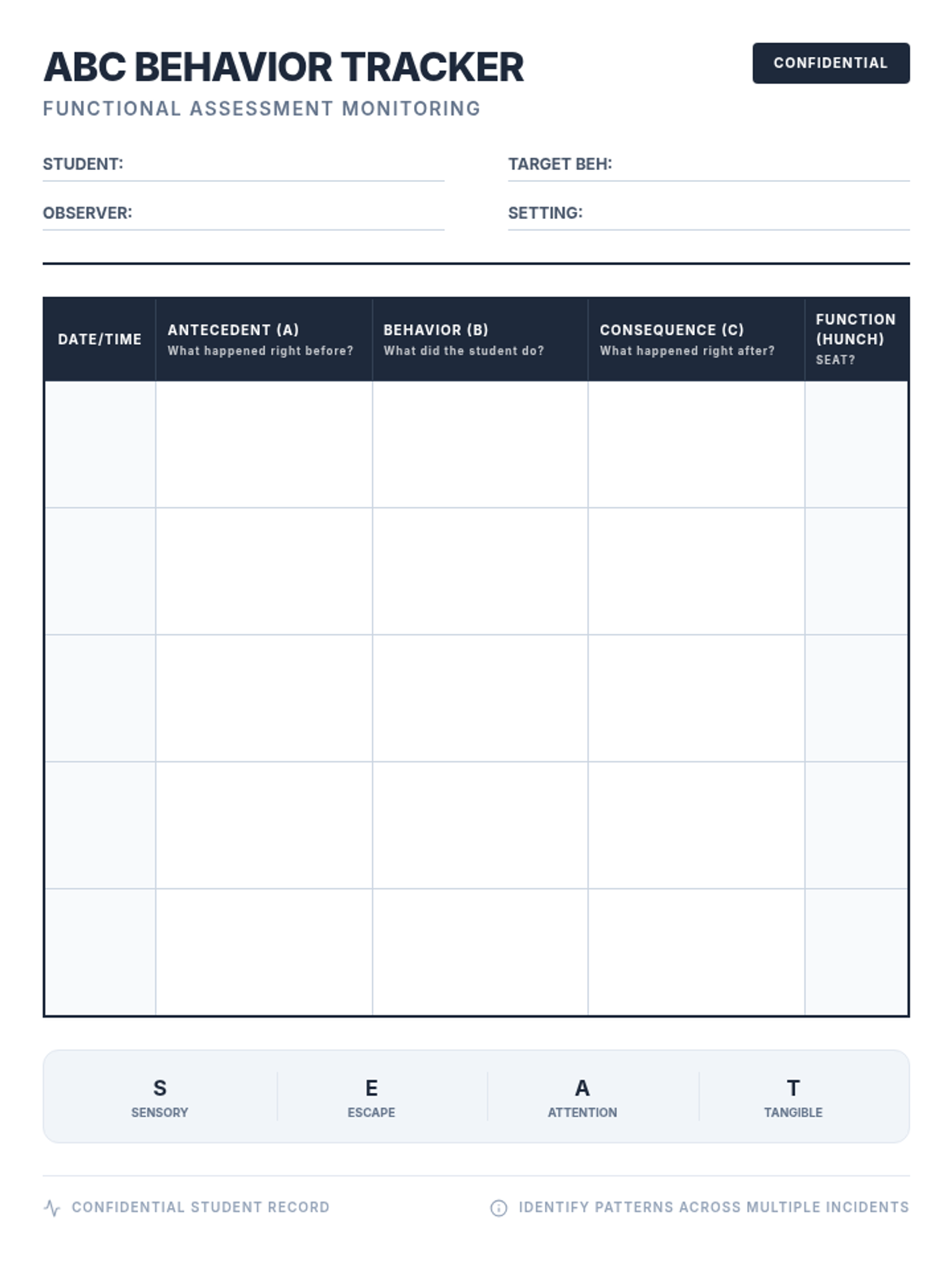
An ABC (Antecedent-Behavior-Consequence) tracking sheet for functional behavior assessment. It includes structured columns for recording incident details and a SEAT function key for analysis.