A collection of resources to help students with low reading levels identify their vocational interests across four key industries using simple language and visual cues.
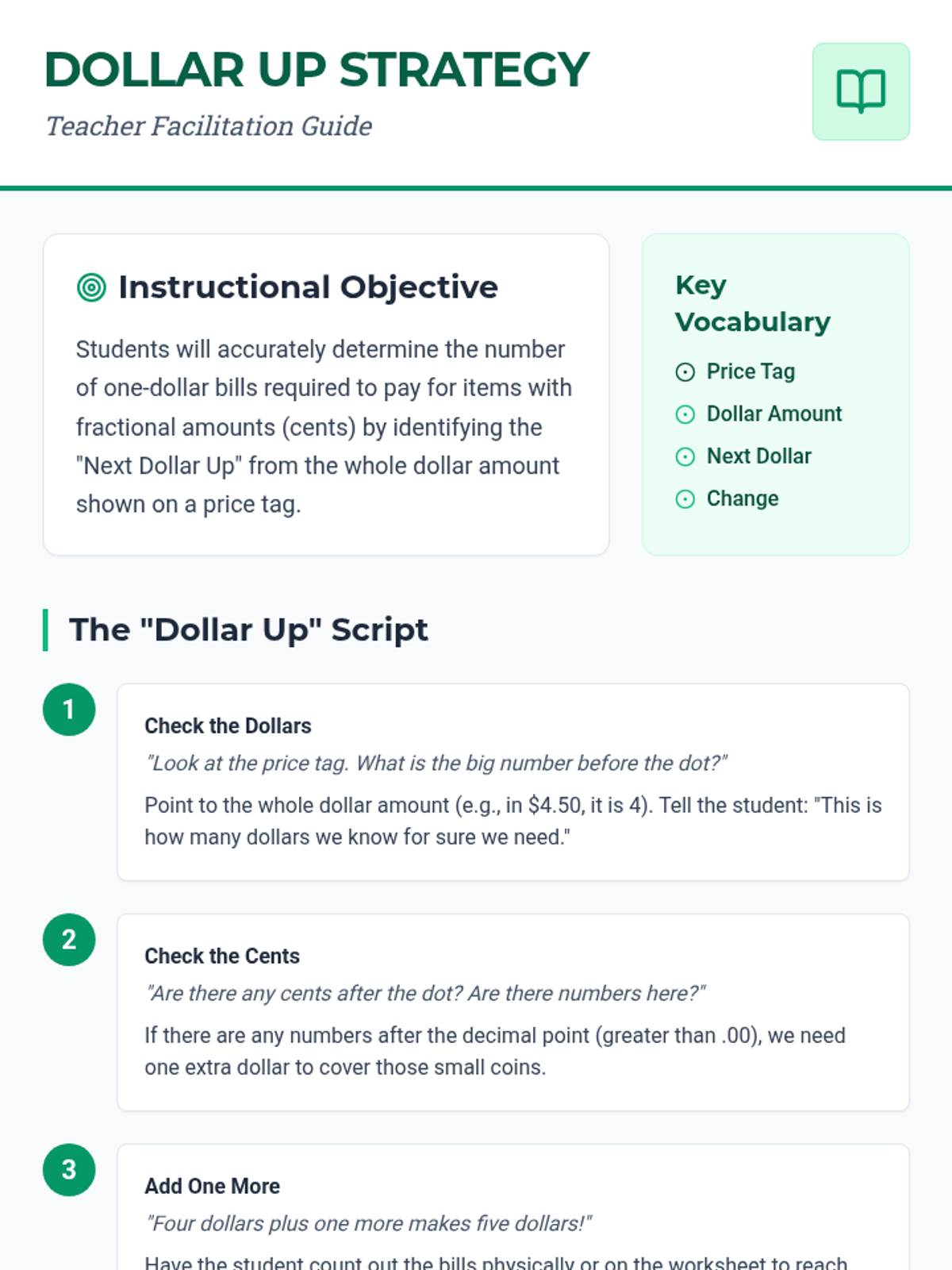
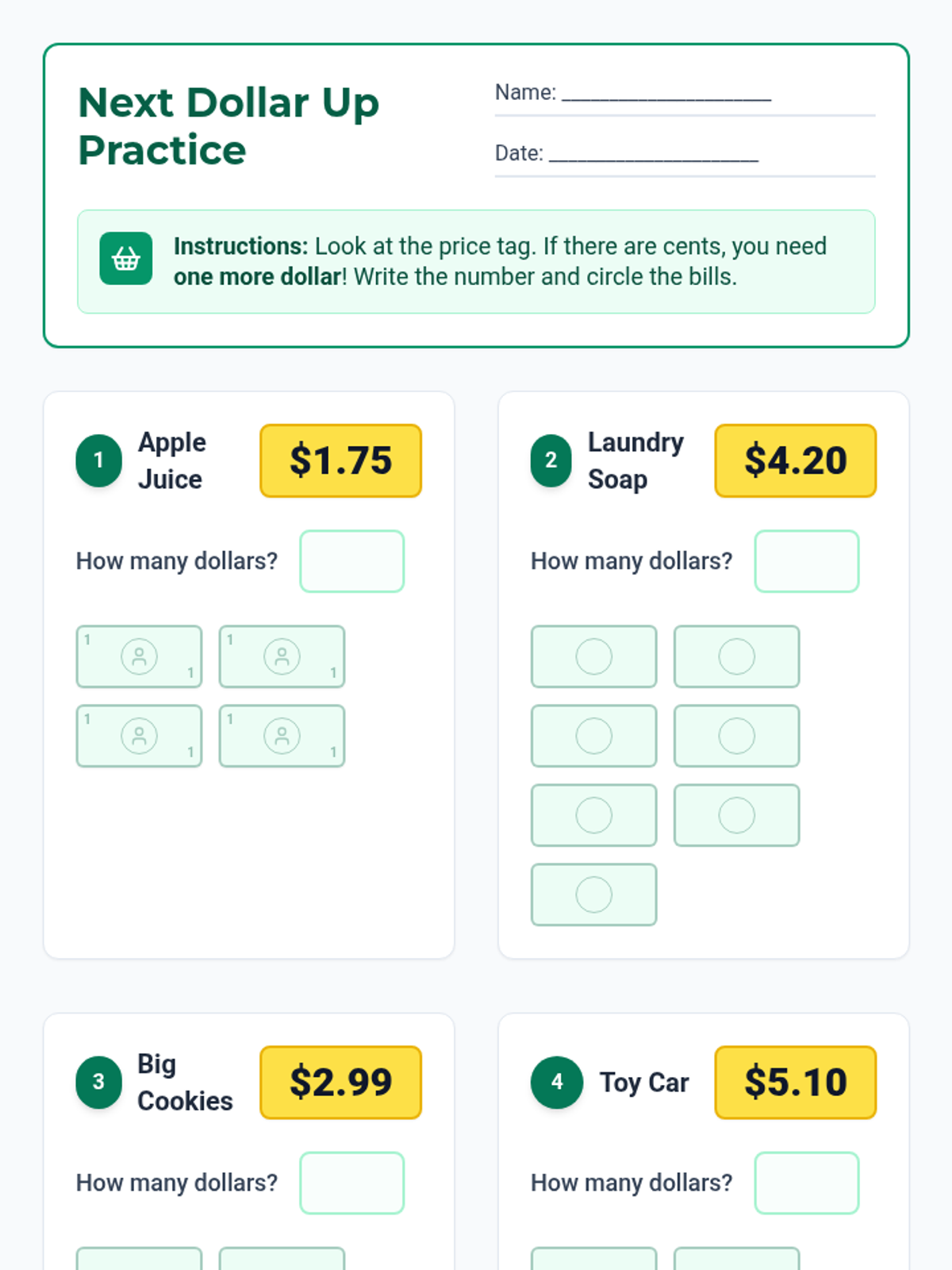
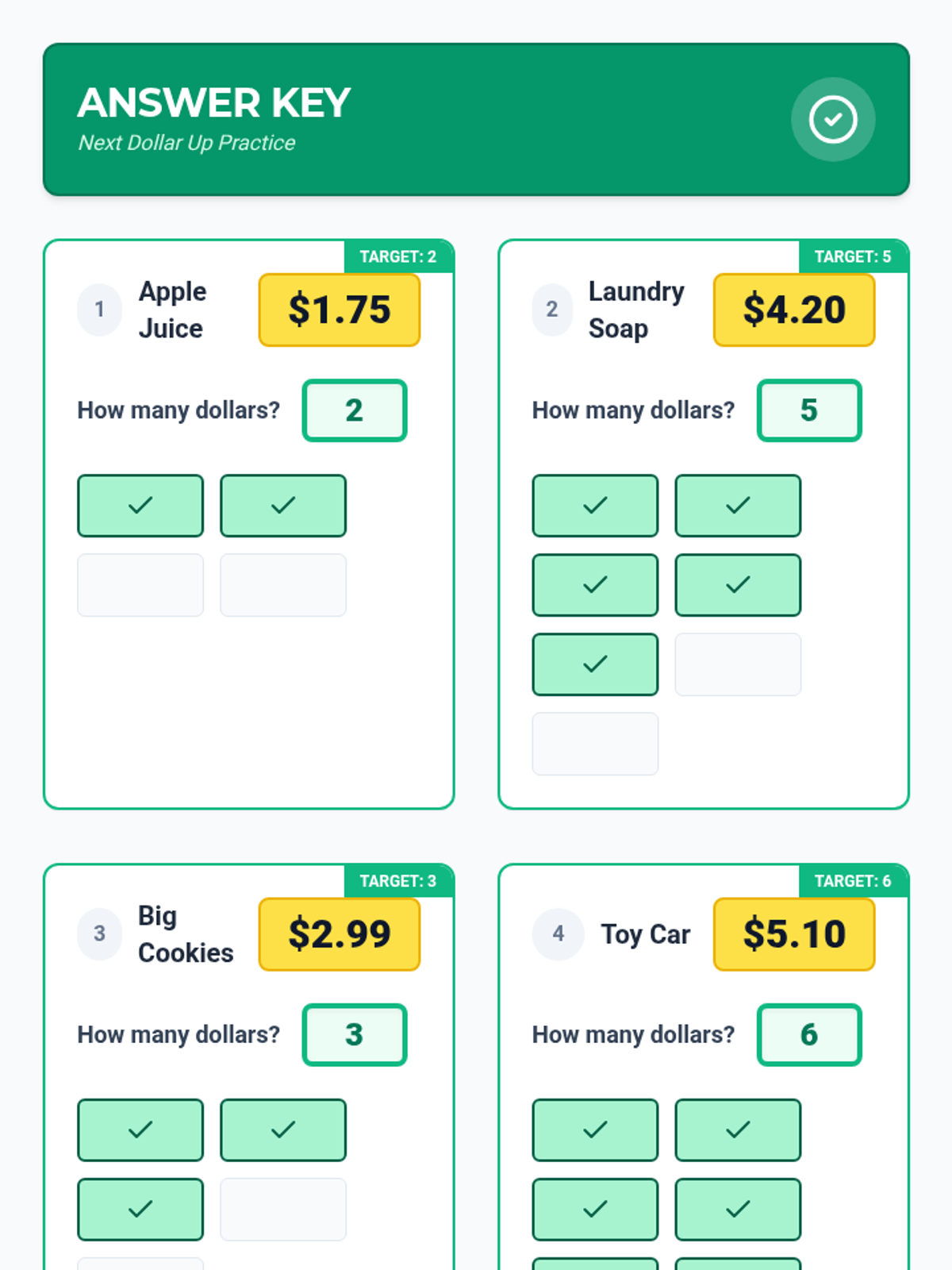
Teaching students the 'Next Dollar Up' strategy to successfully make purchases without needing to calculate exact change, focusing on items up to $10.
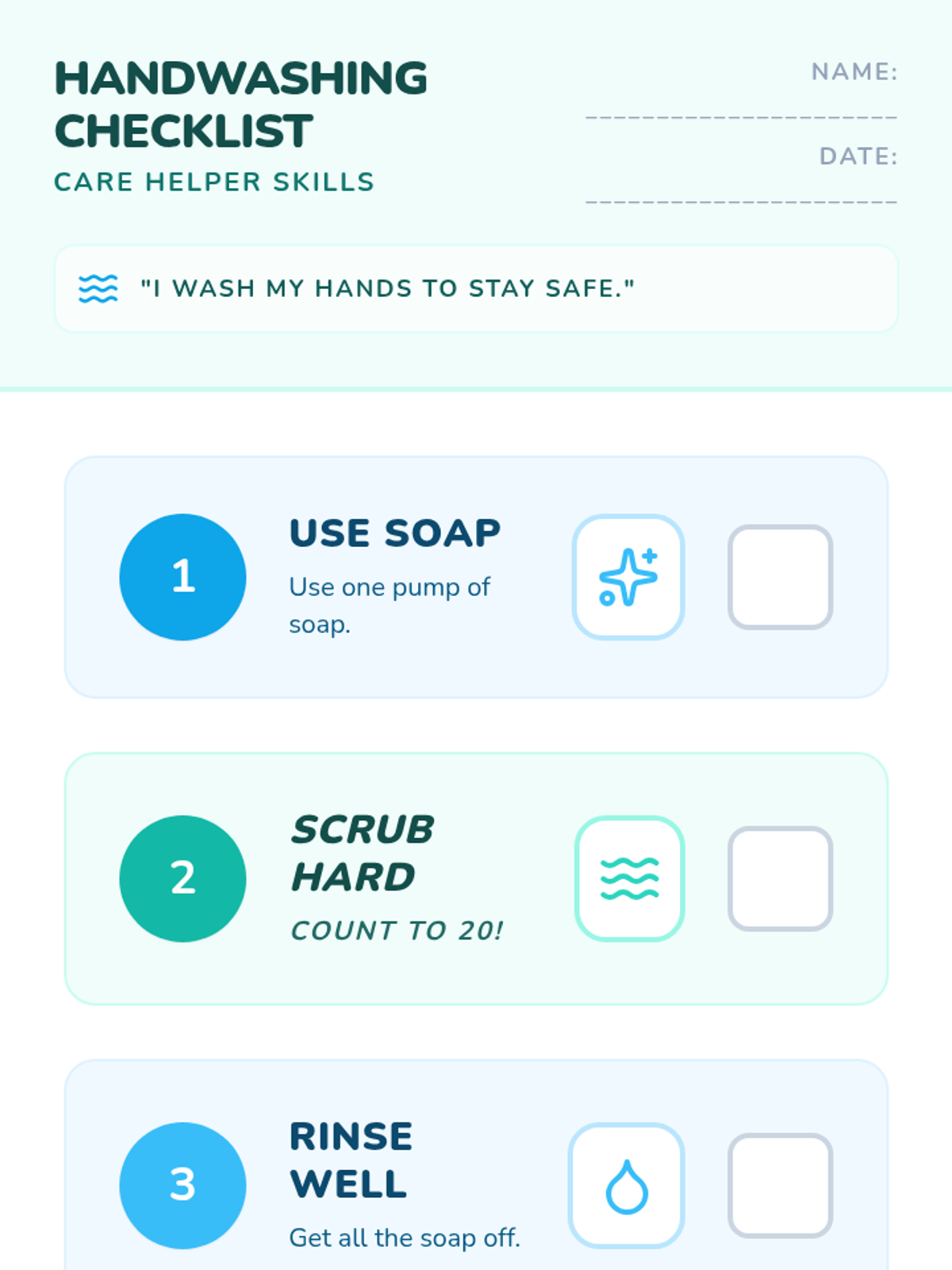
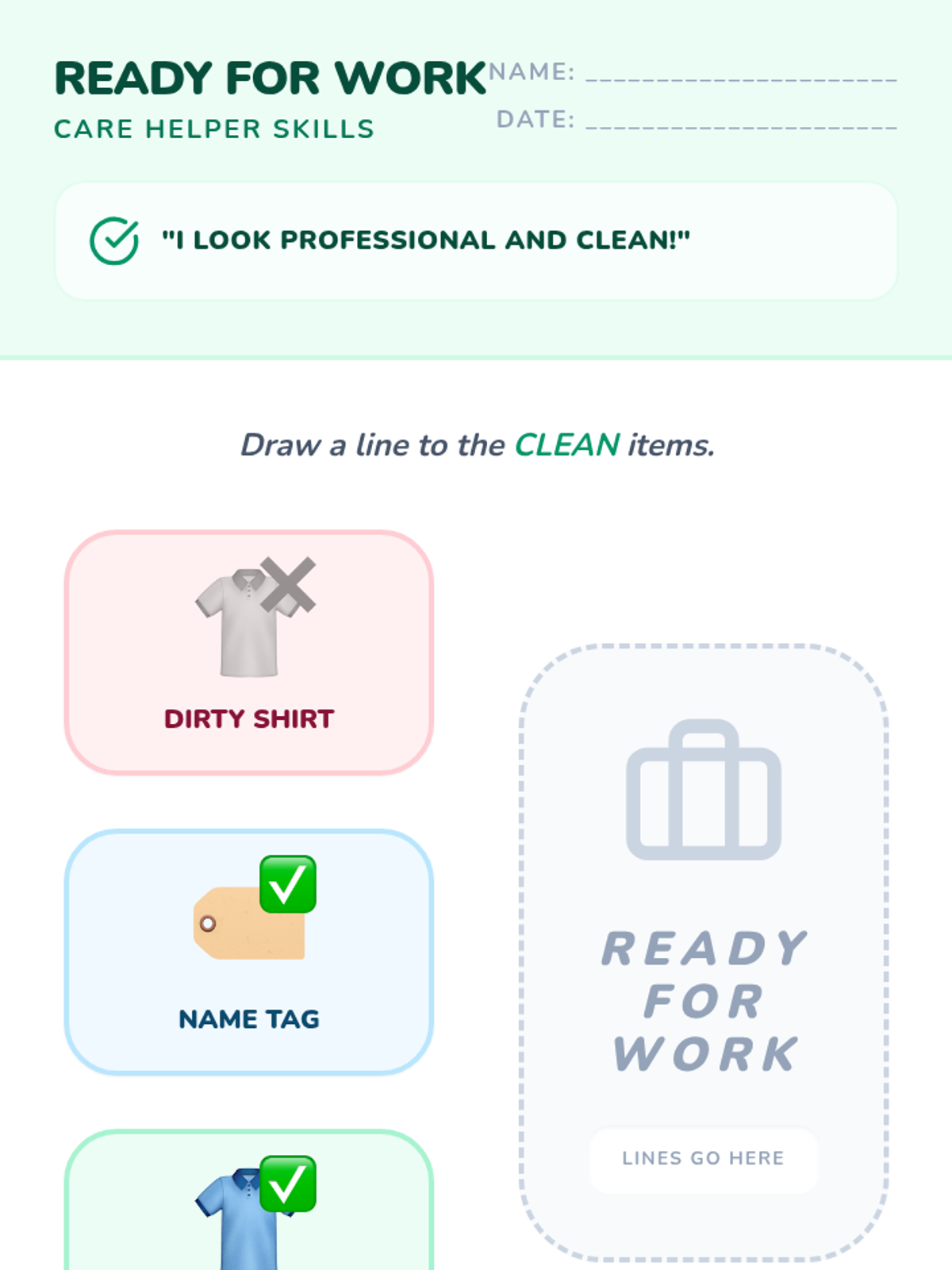
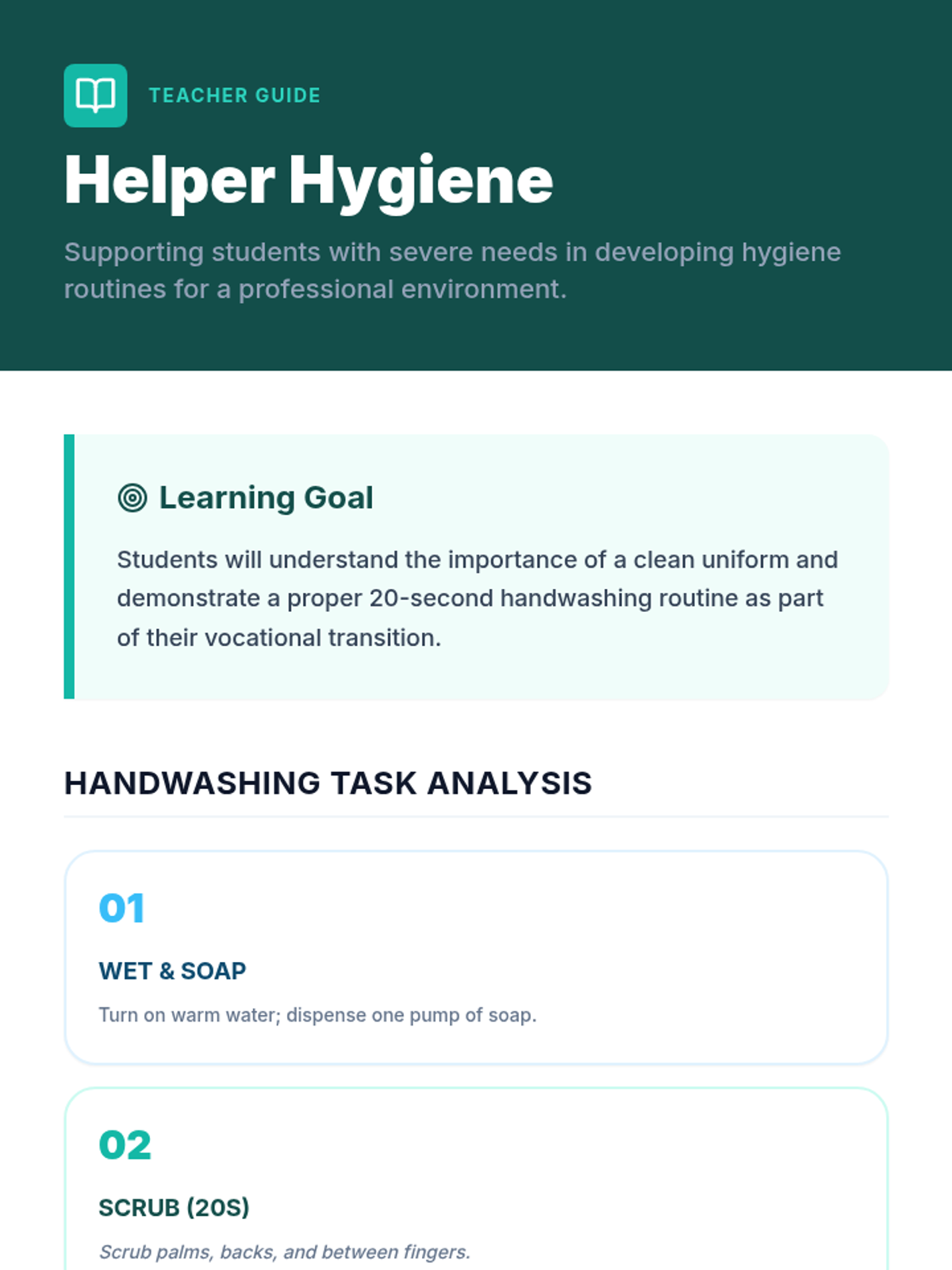
A practical lesson on professional appearance and hand hygiene, focusing on wearing the care helper uniform and the step-by-step handwashing routine.
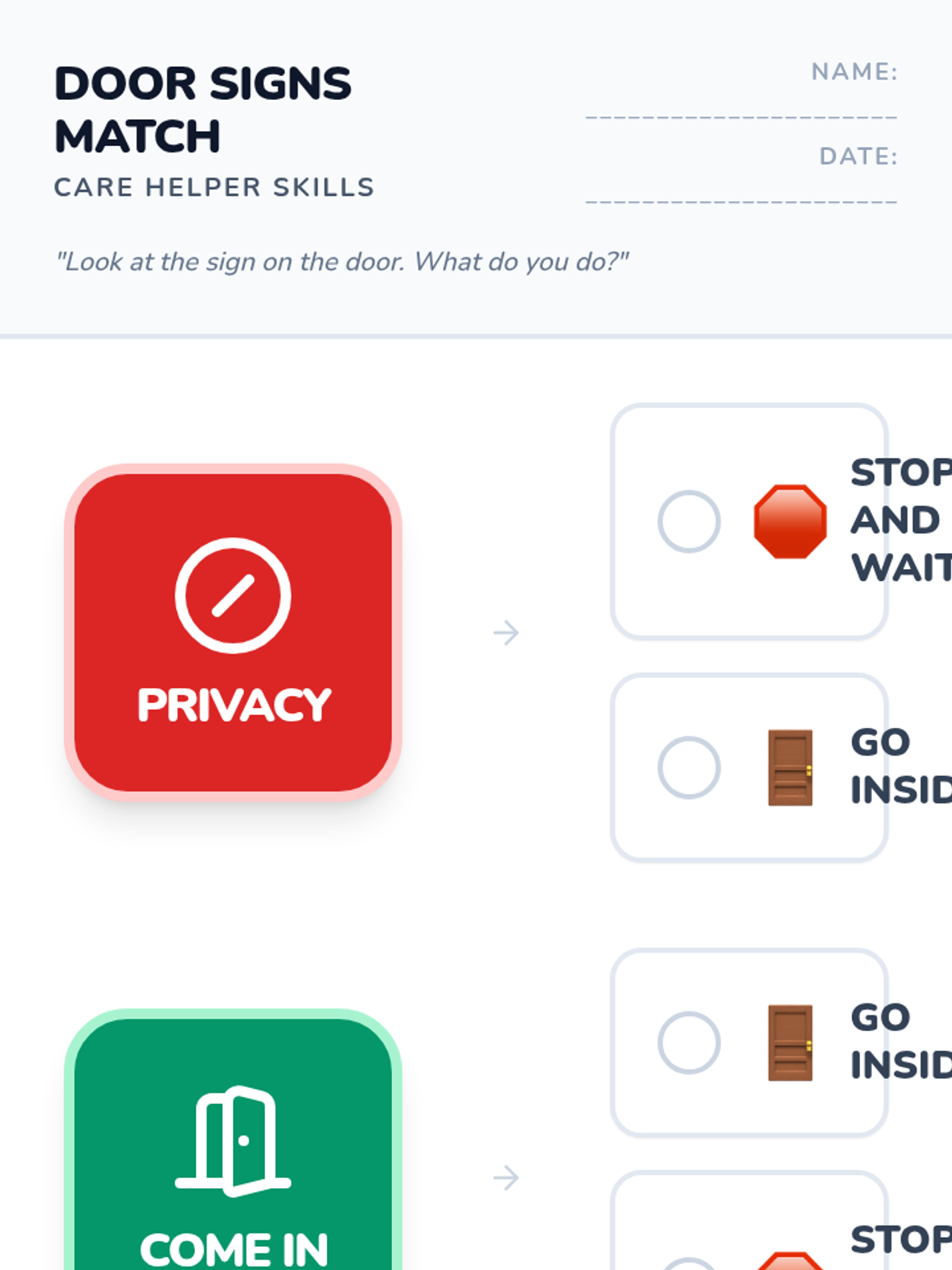
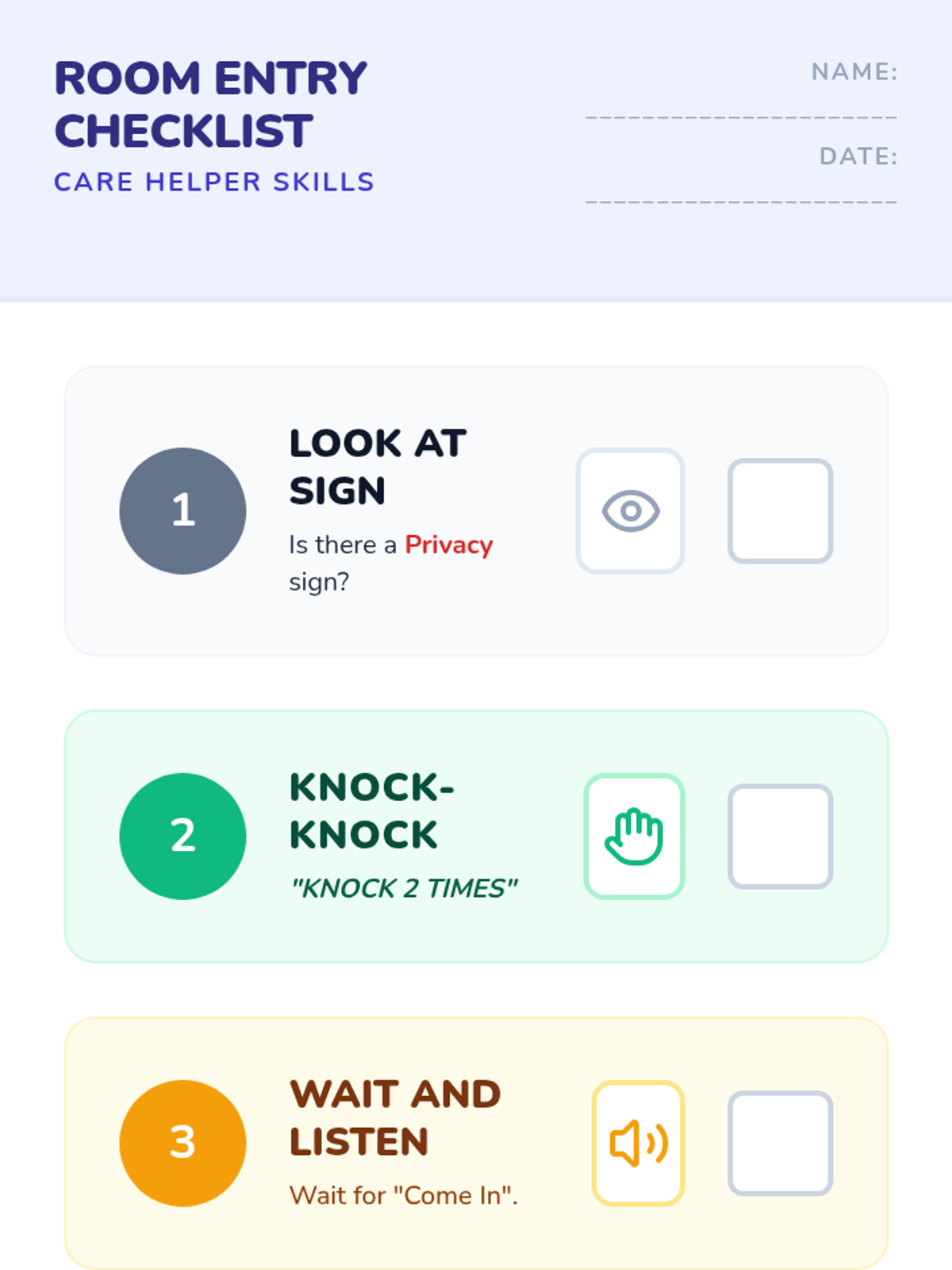
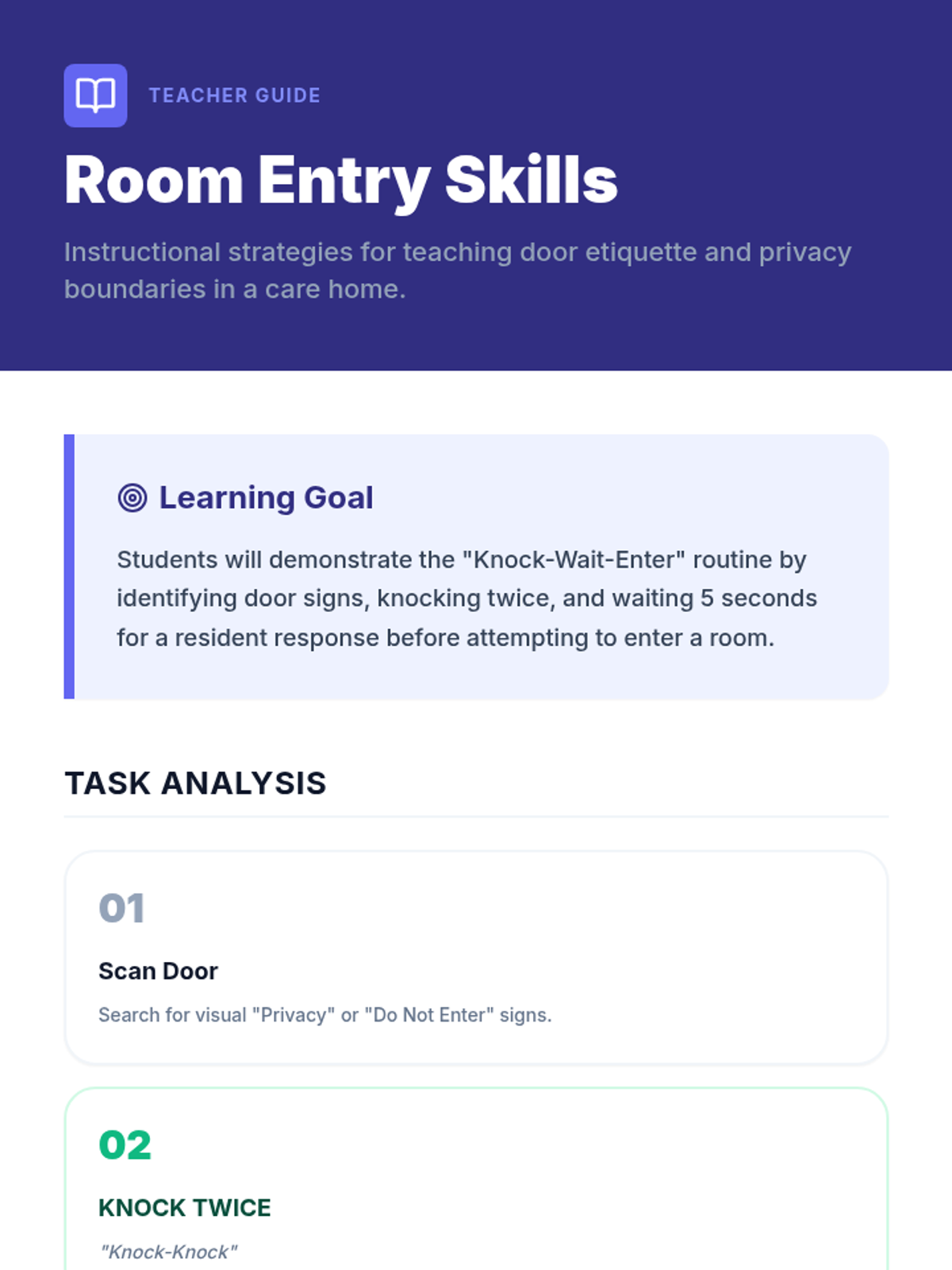
A practical lesson on the etiquette of entering a resident's private room, focusing on knocking, waiting for a response, and identifying 'Privacy' signs.
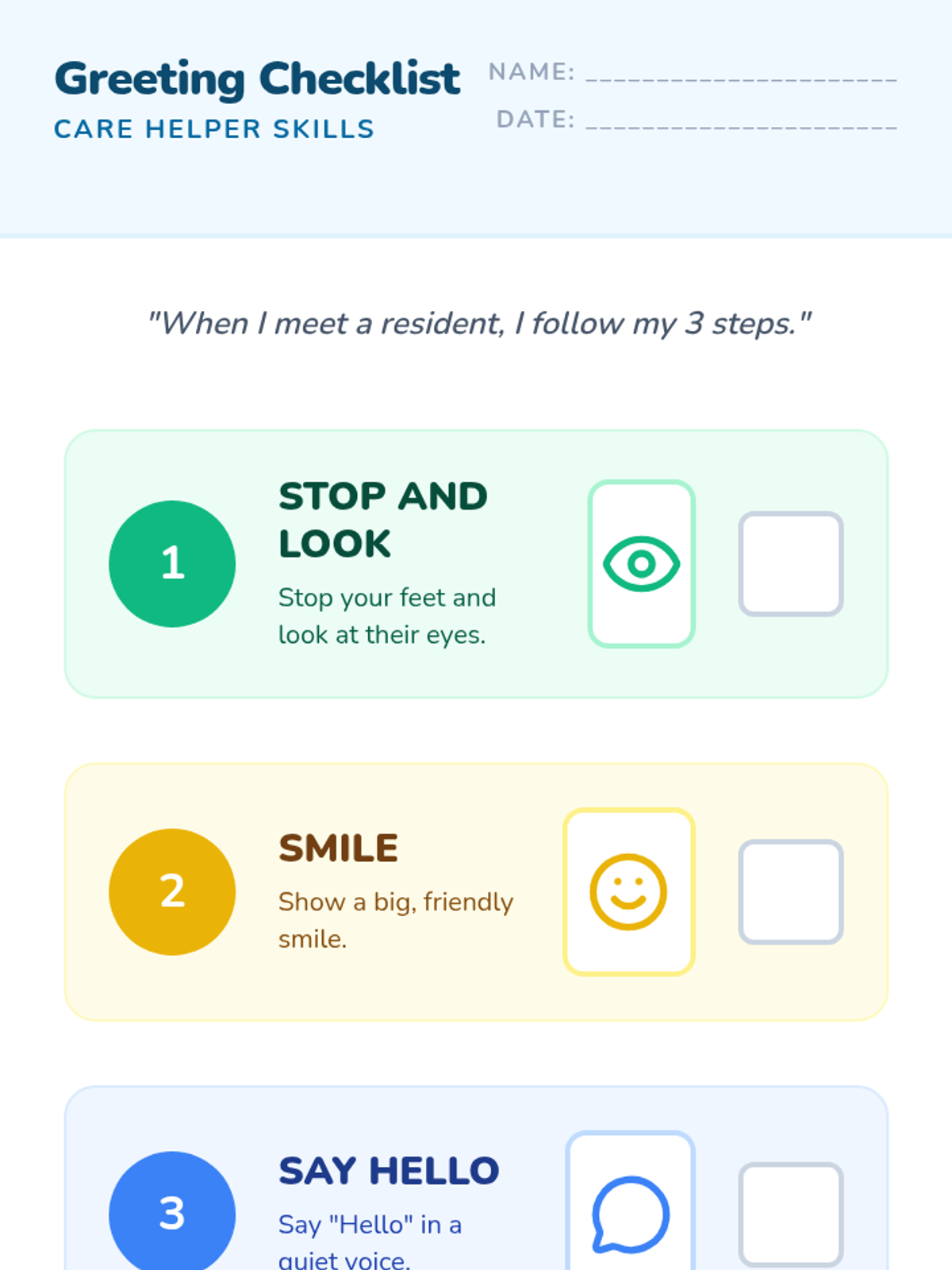
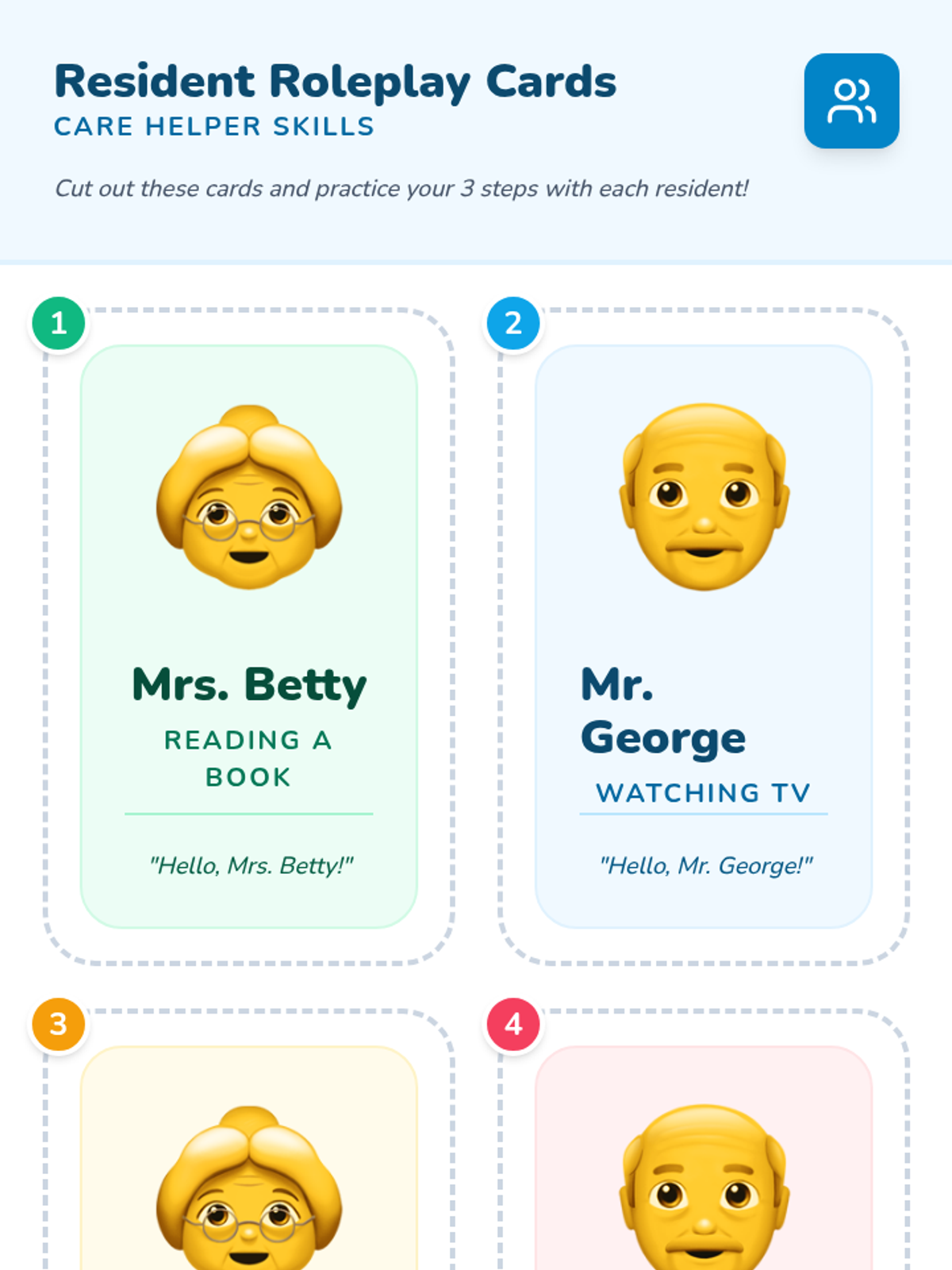
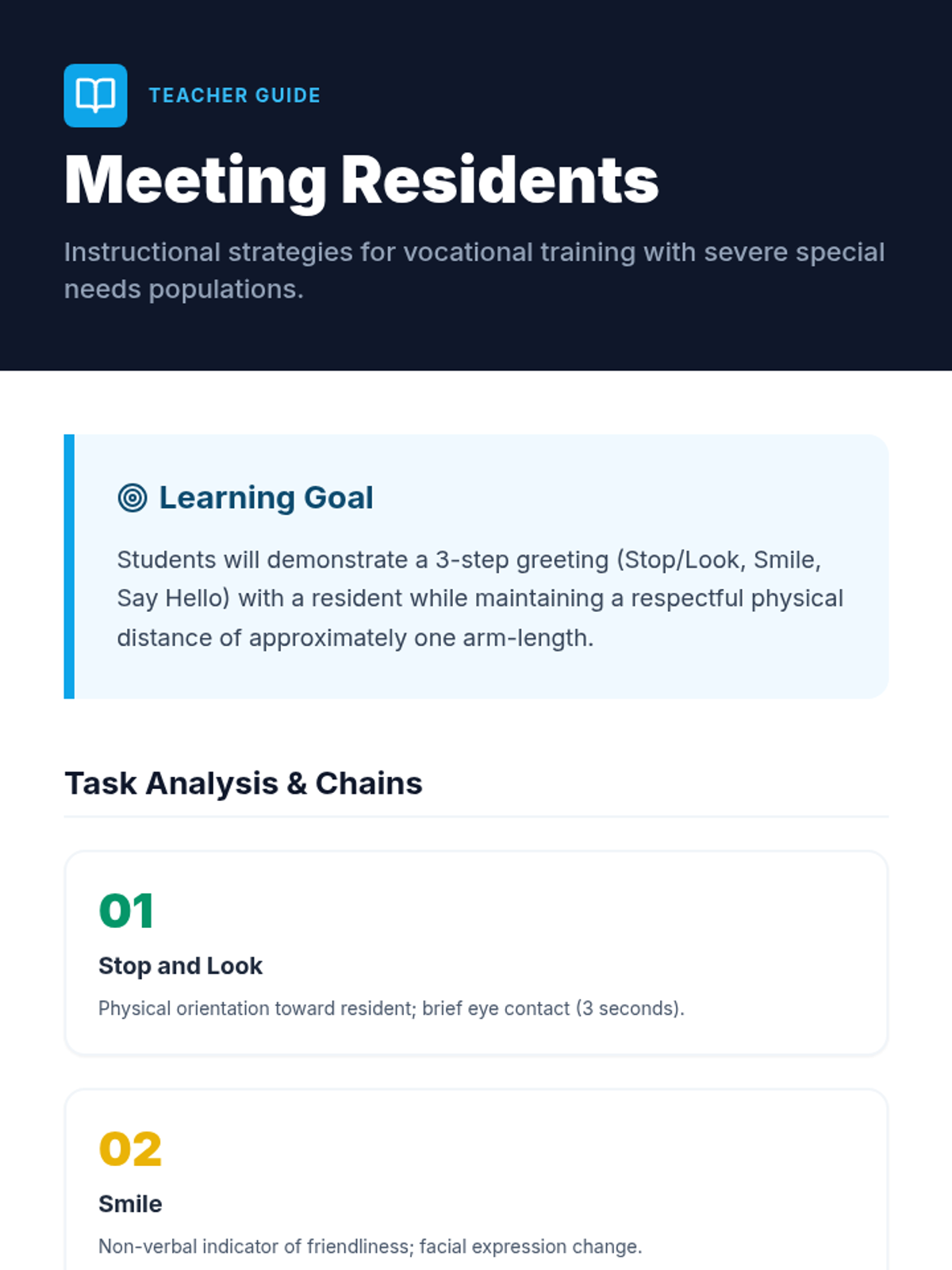
A foundational lesson on how to interact with residents in a care home setting, focusing on eye contact, simple greetings, and respectful distance through visual supports and repetitive practice.
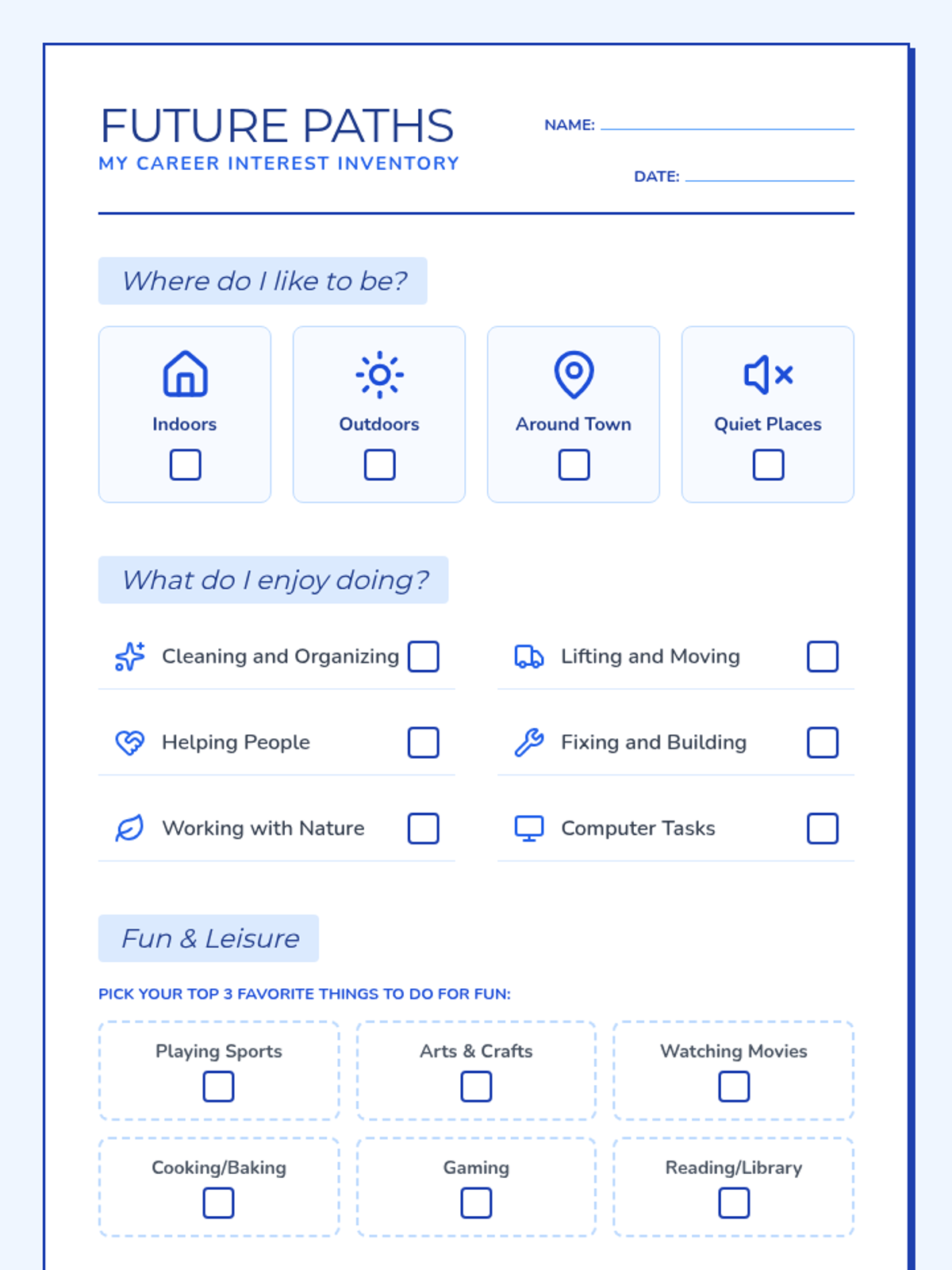
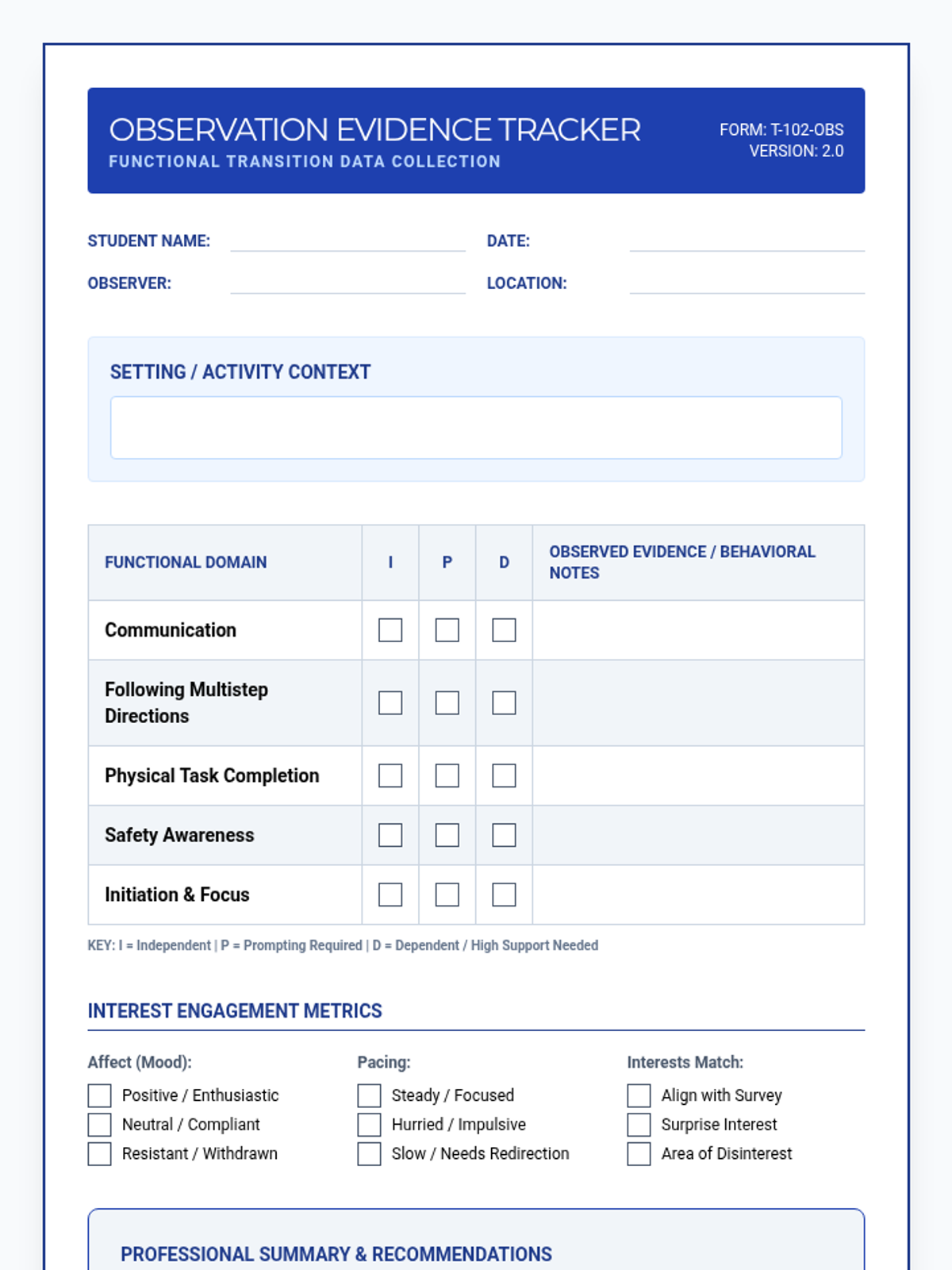
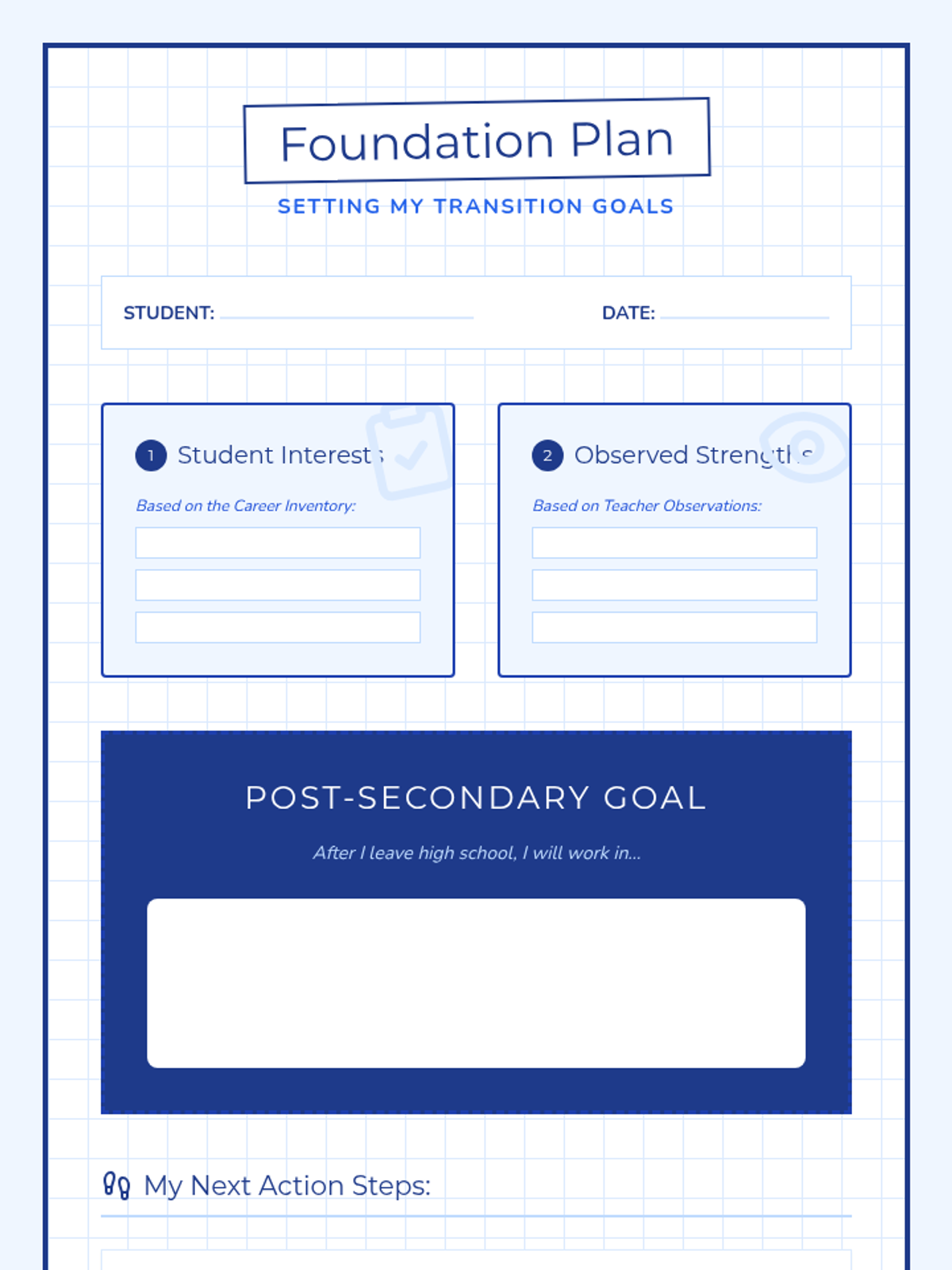
A comprehensive transition planning toolset focused on identifying community-based vocational interests and functional skills through student input and teacher observation.
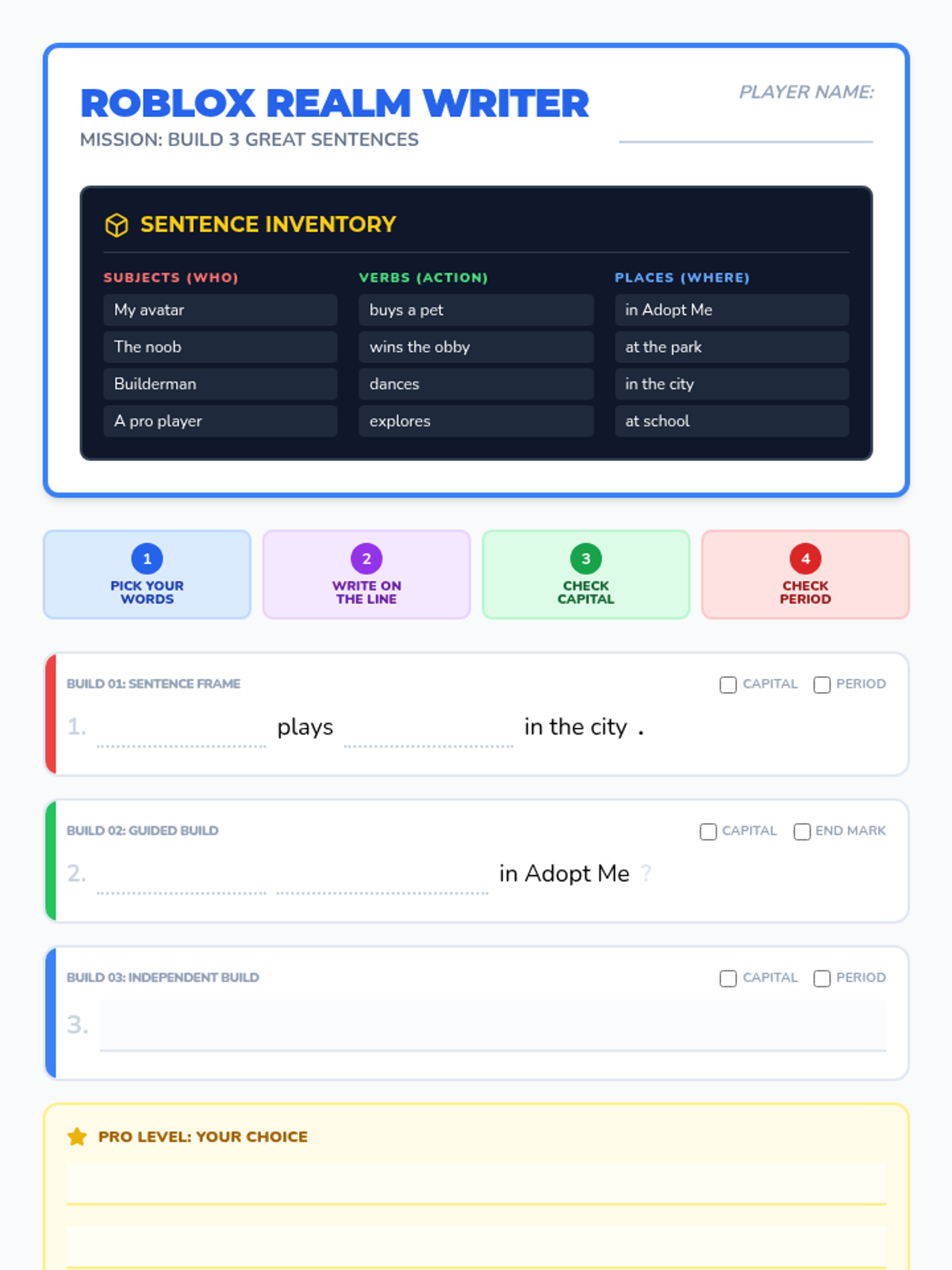
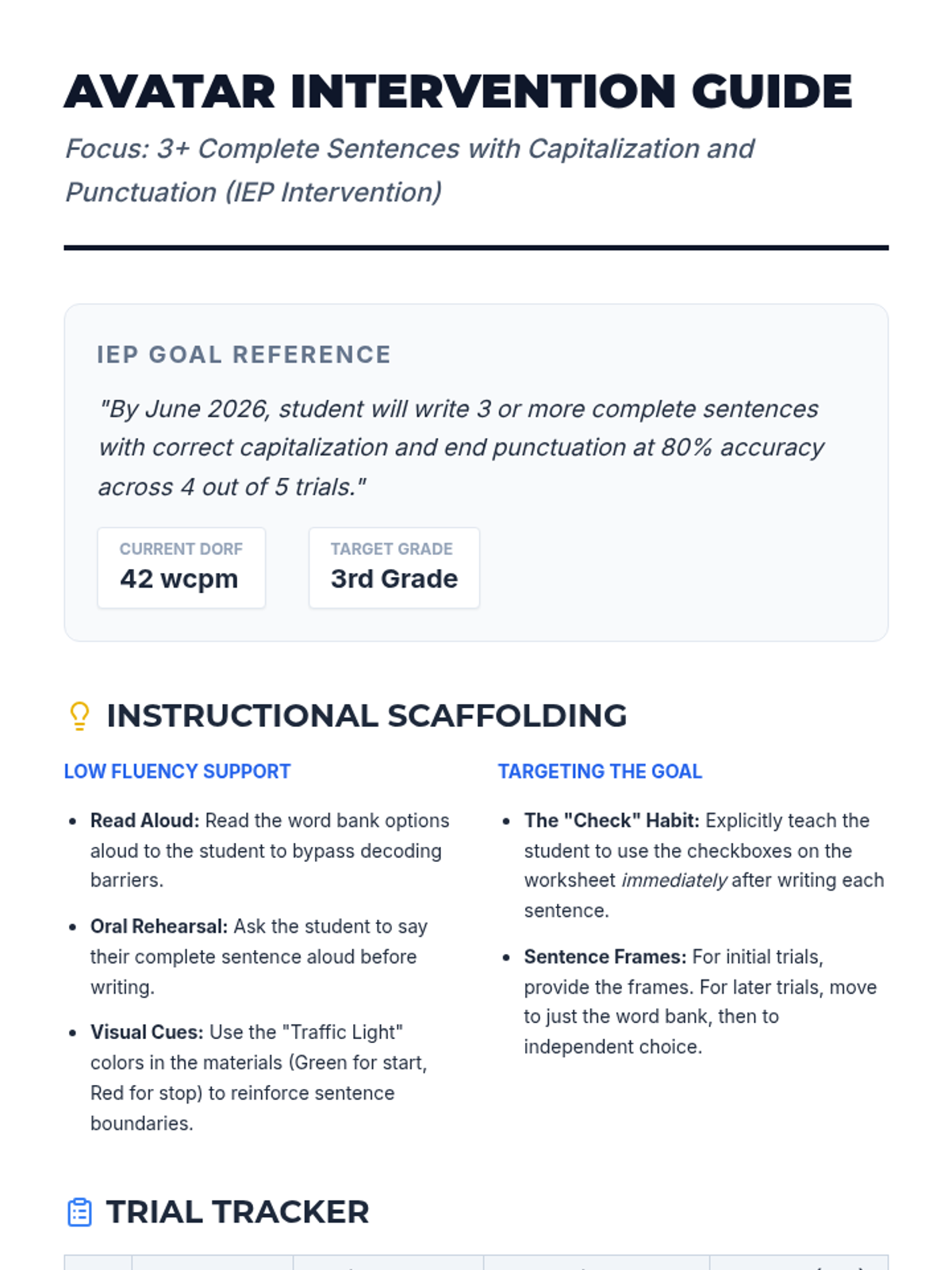
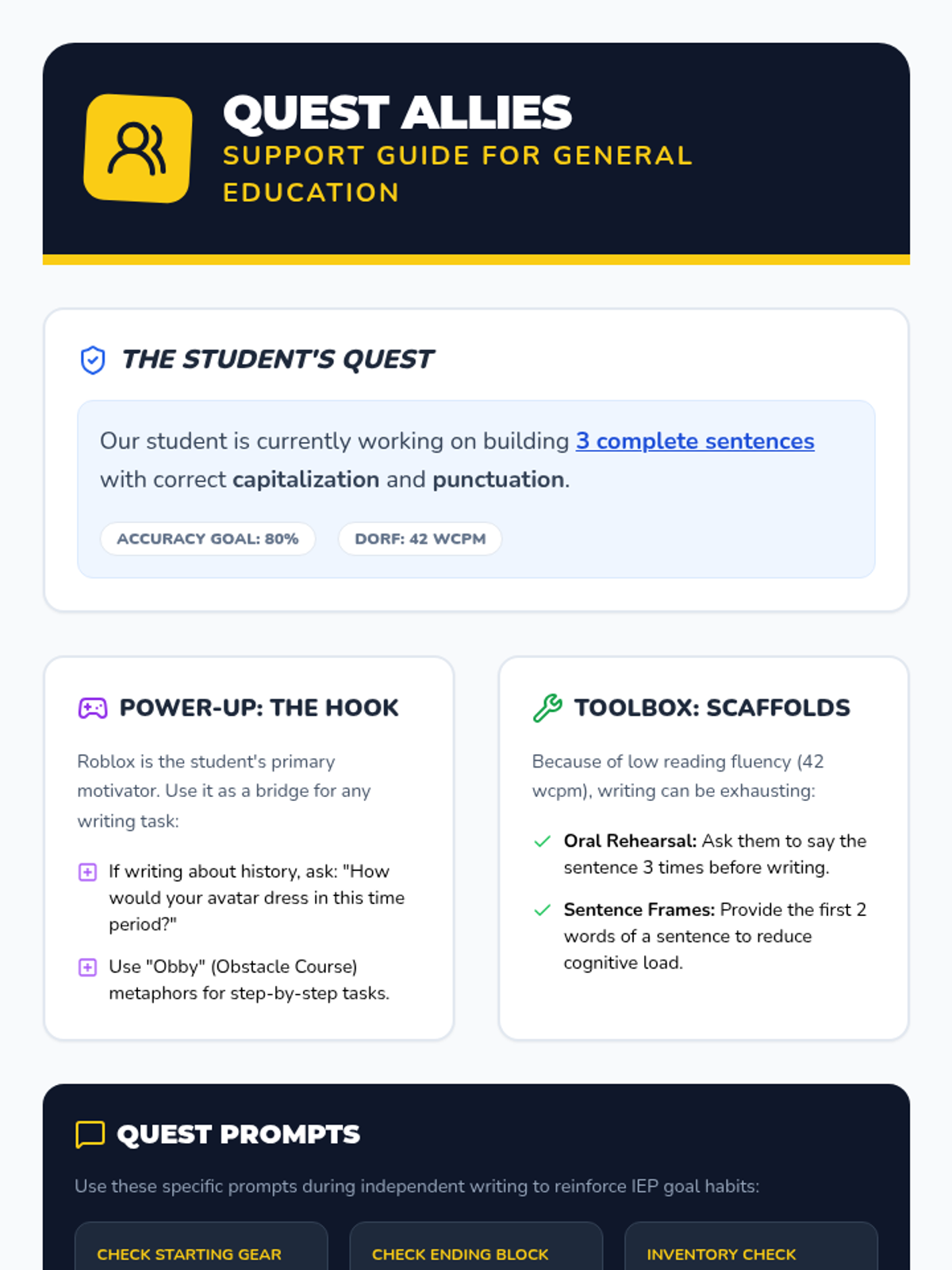
A specialized writing intervention lesson using Roblox themes to help students master basic sentence structure, capitalization, and punctuation through sentence frames and word banks.
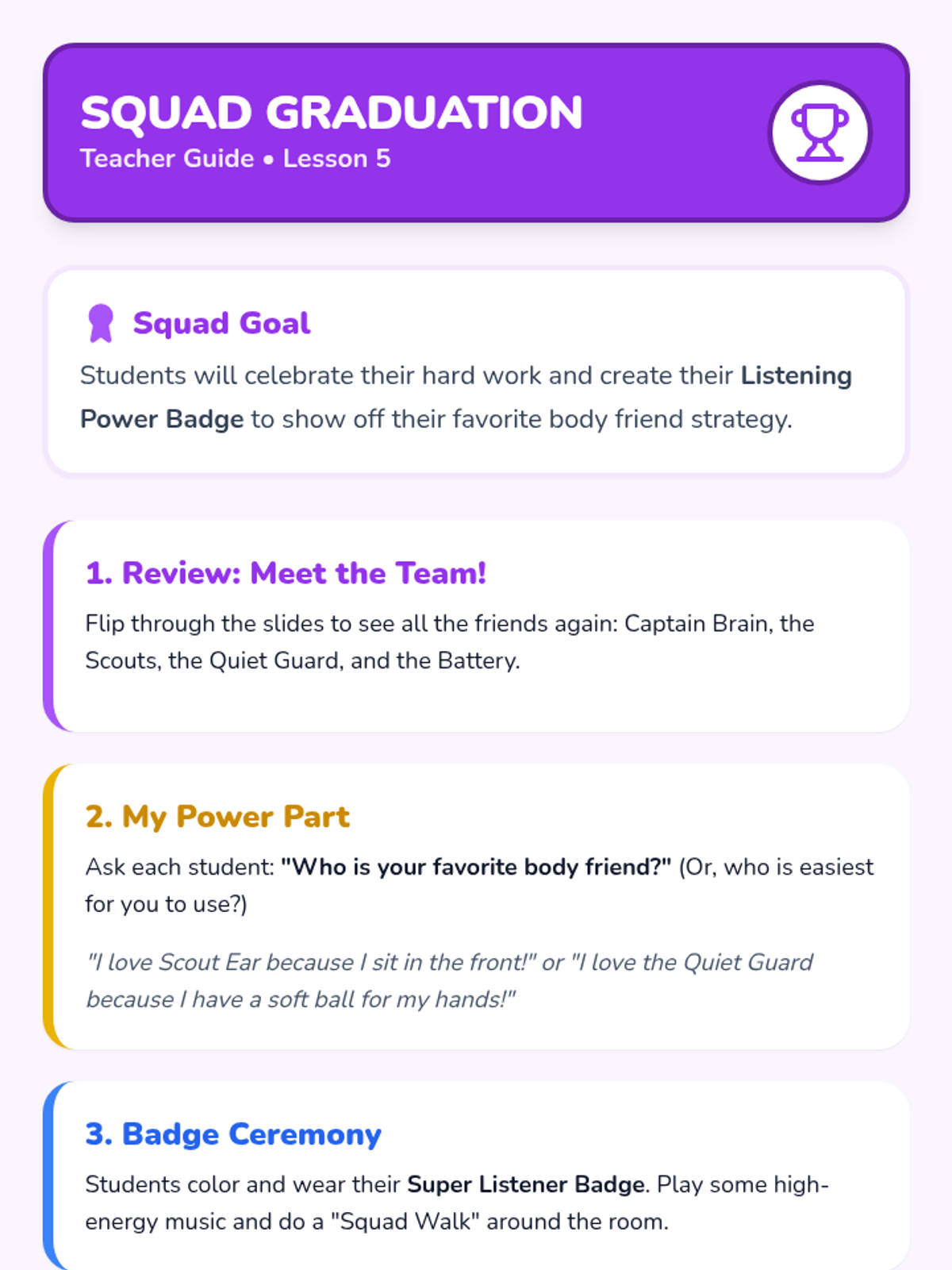
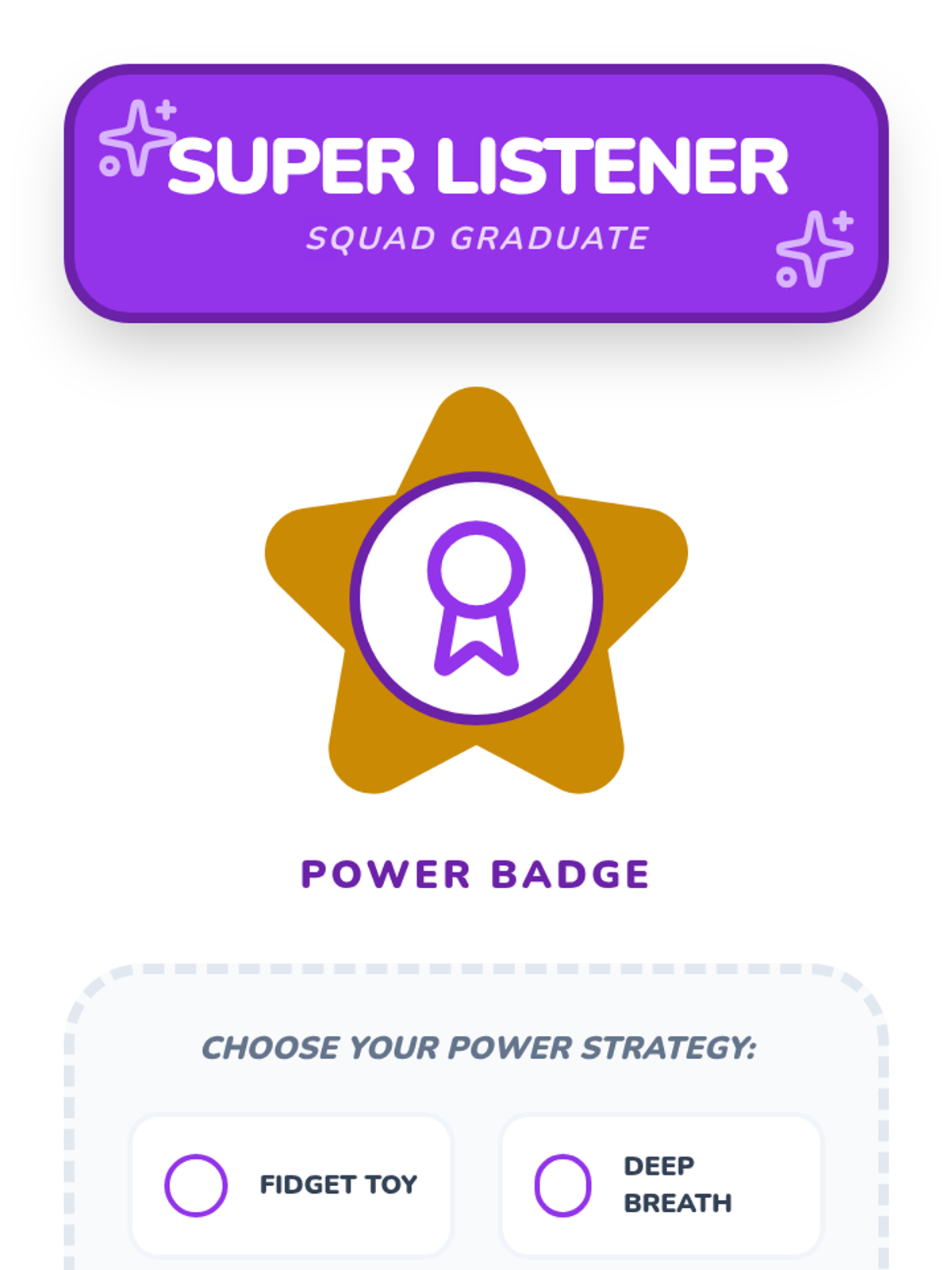
Final Squad Graduation! Students create their 'Power Badge' showing which Body Friend they use best. Celebration of being a Super Listener.
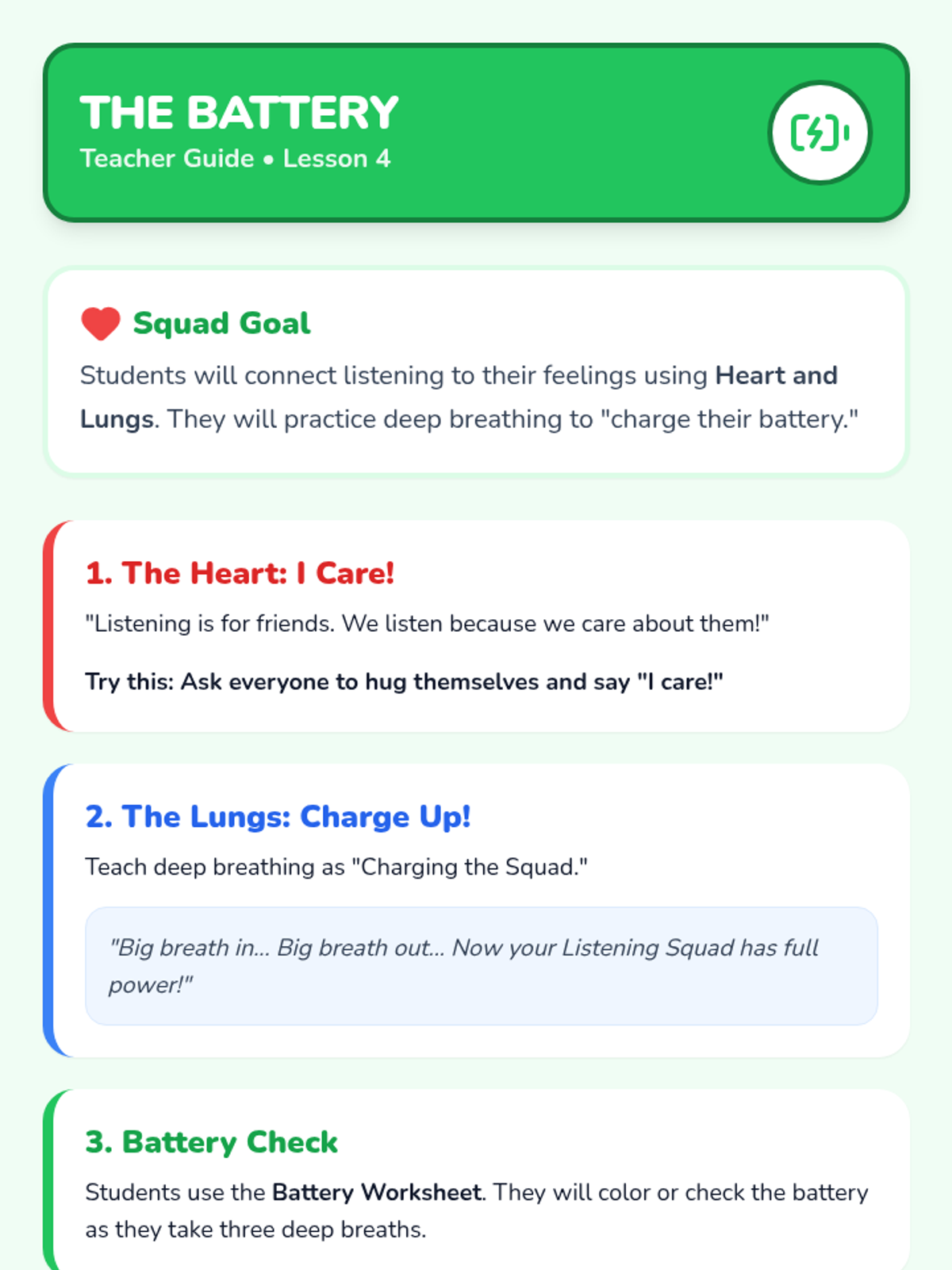
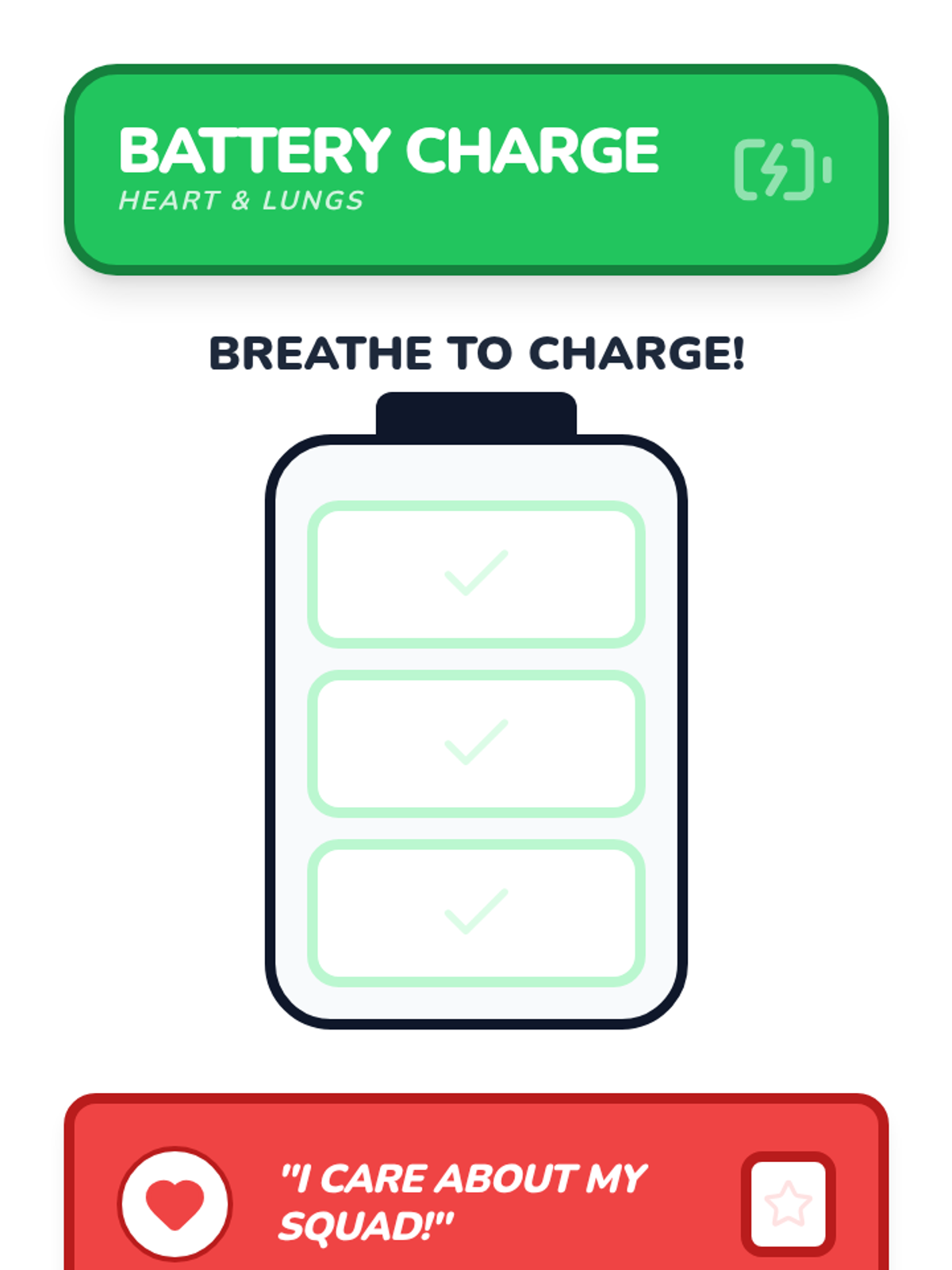
Meet Heart and Lungs! The Battery helps the squad stay powered up. Focuses on breathing and 'caring' about our friends to stay happy while listening.
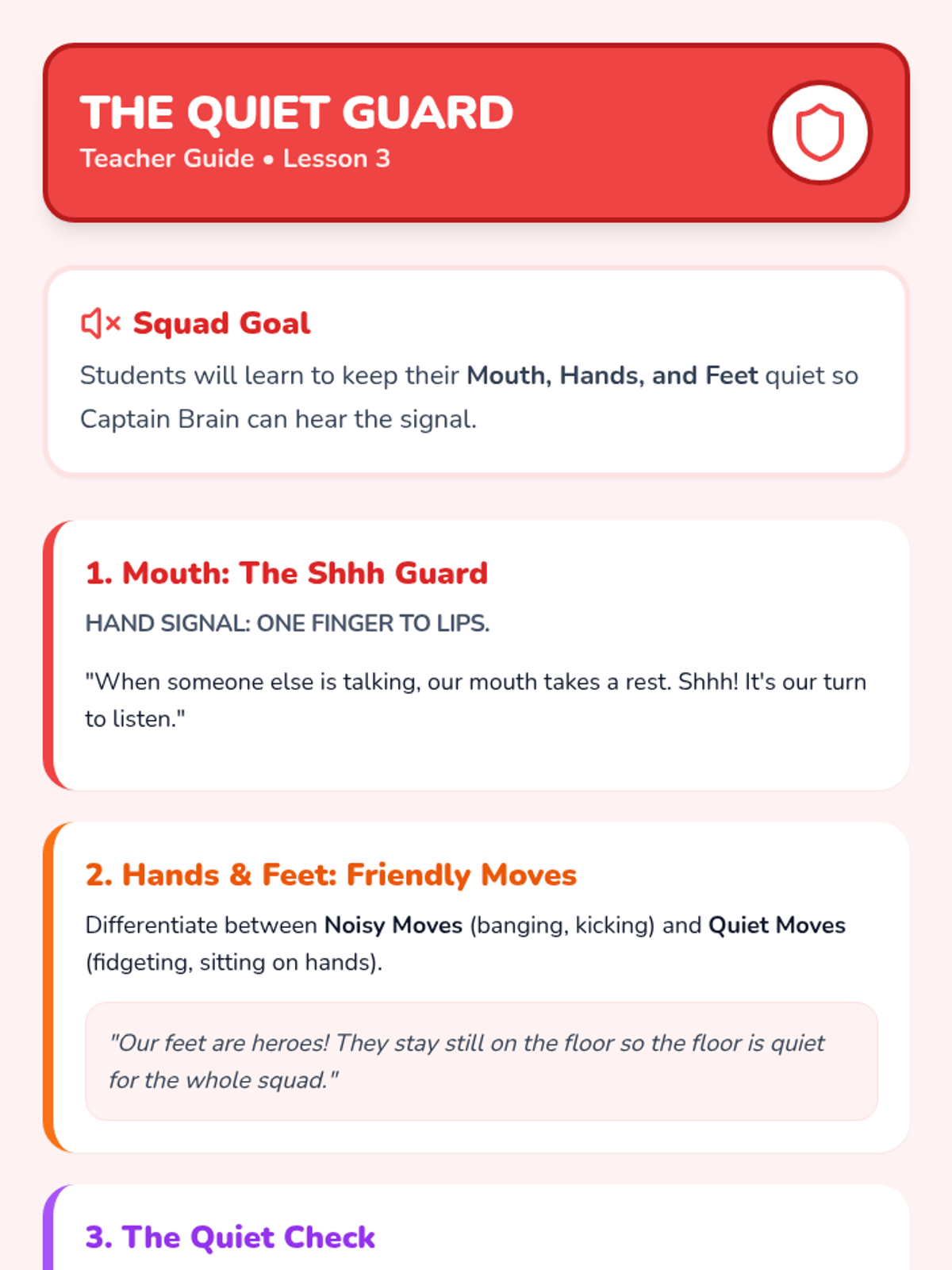
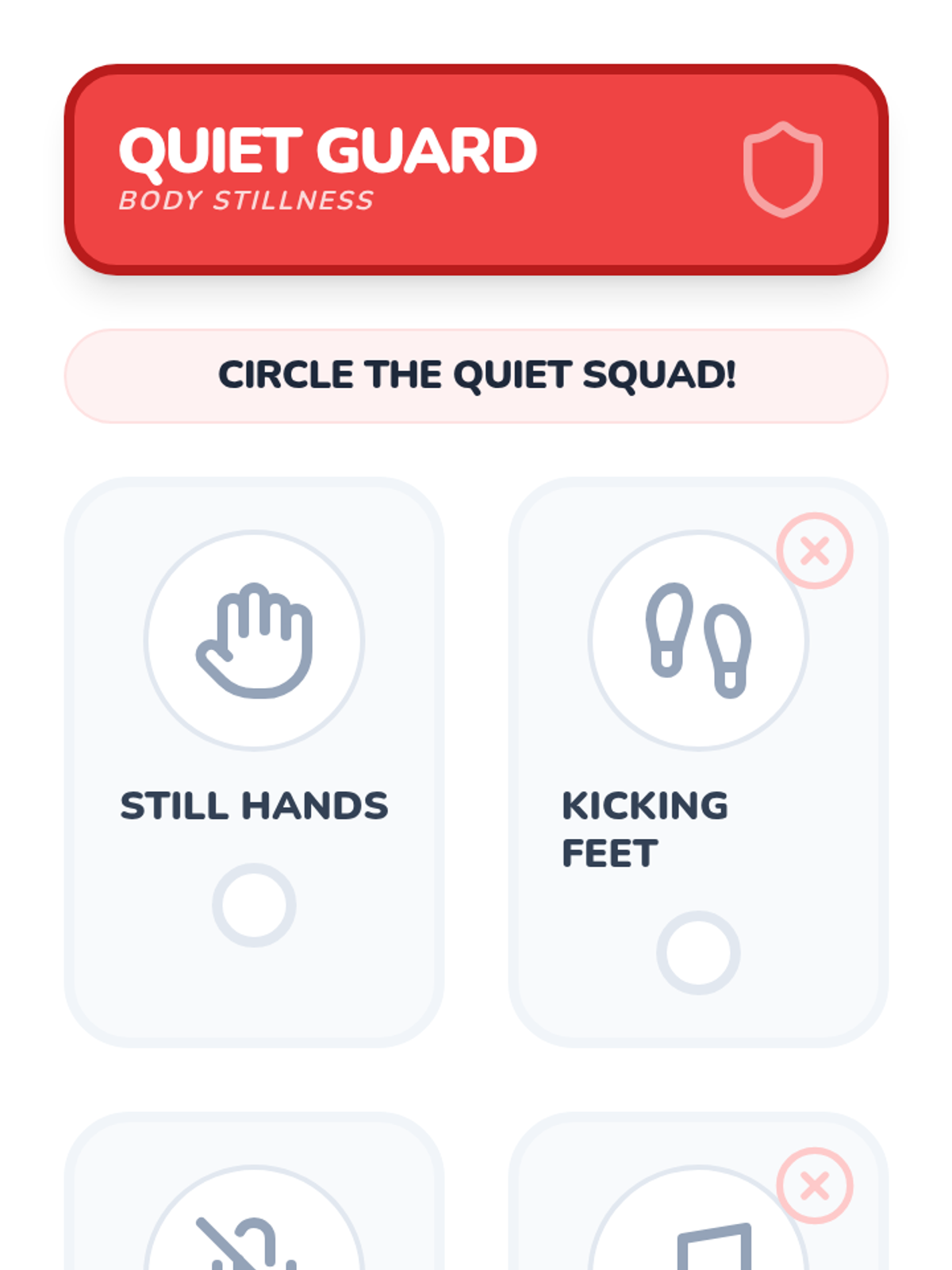
Meet the Quiet Guard! Addresses physical stillness in a friendly way. Mouth, Hands, and Feet learn to be quiet so the Captain can hear.
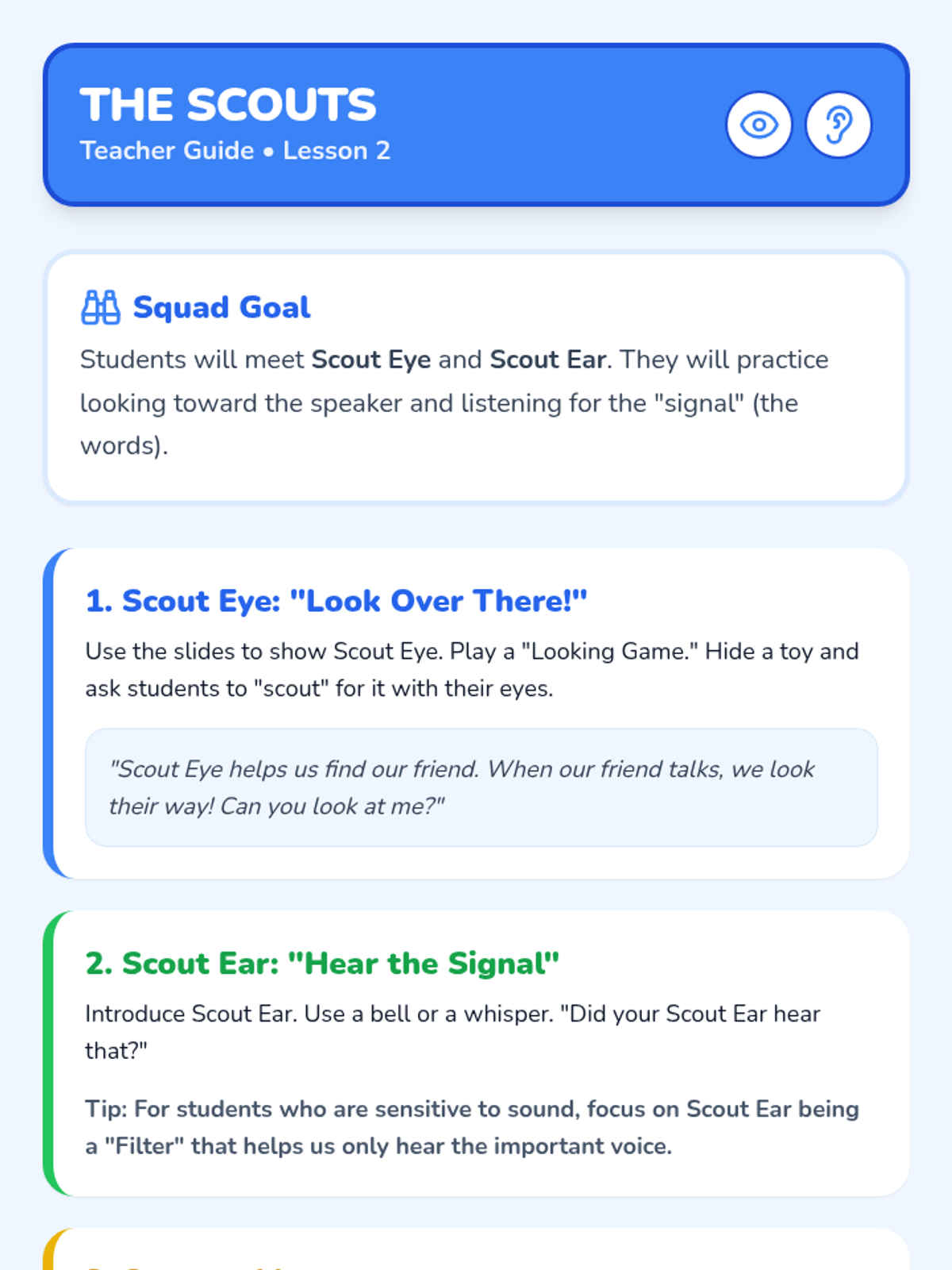
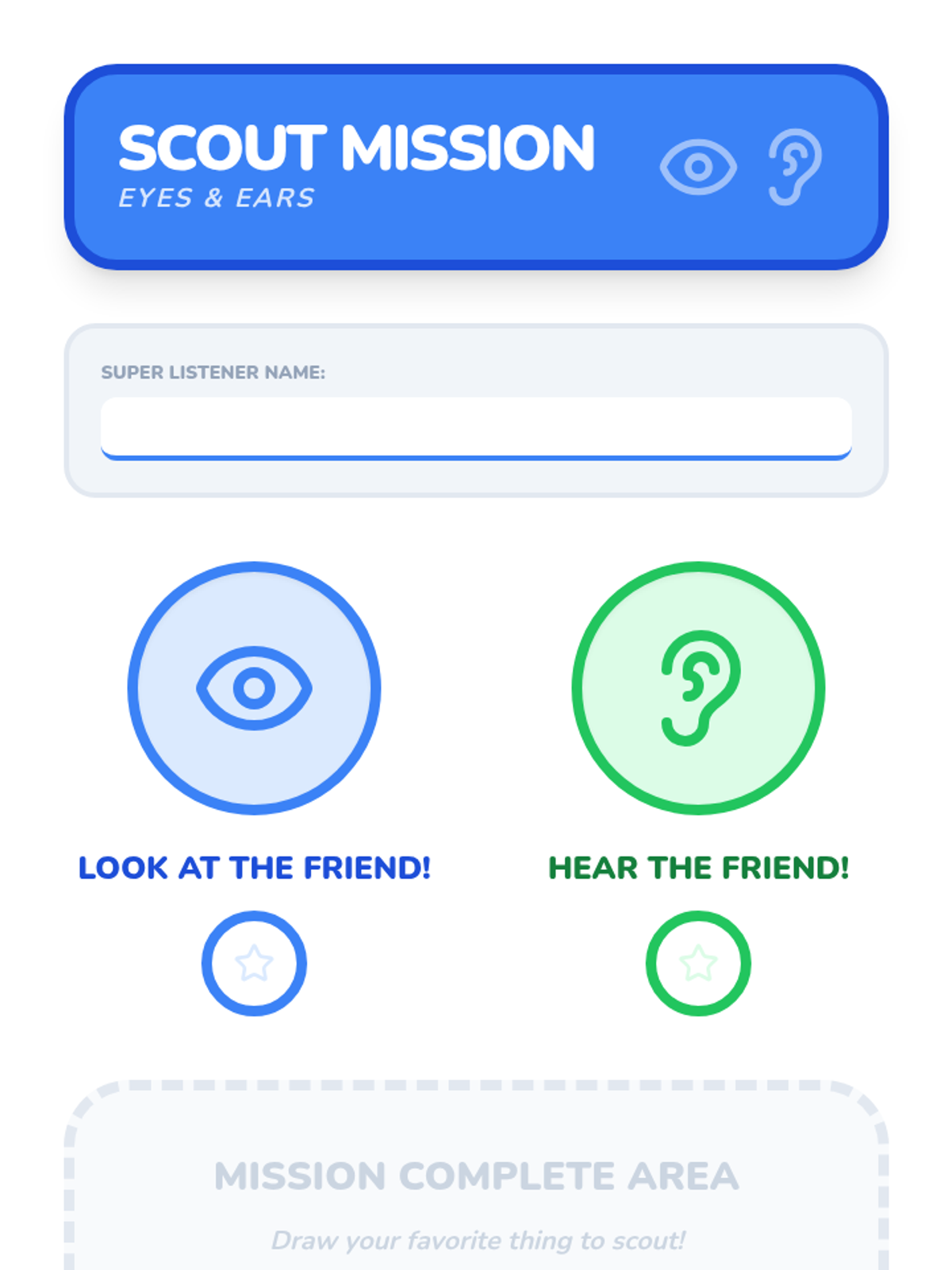
Meet Scout Eye and Scout Ear! These body friends help us find the signal. Focuses on looking at the person and letting the words in.
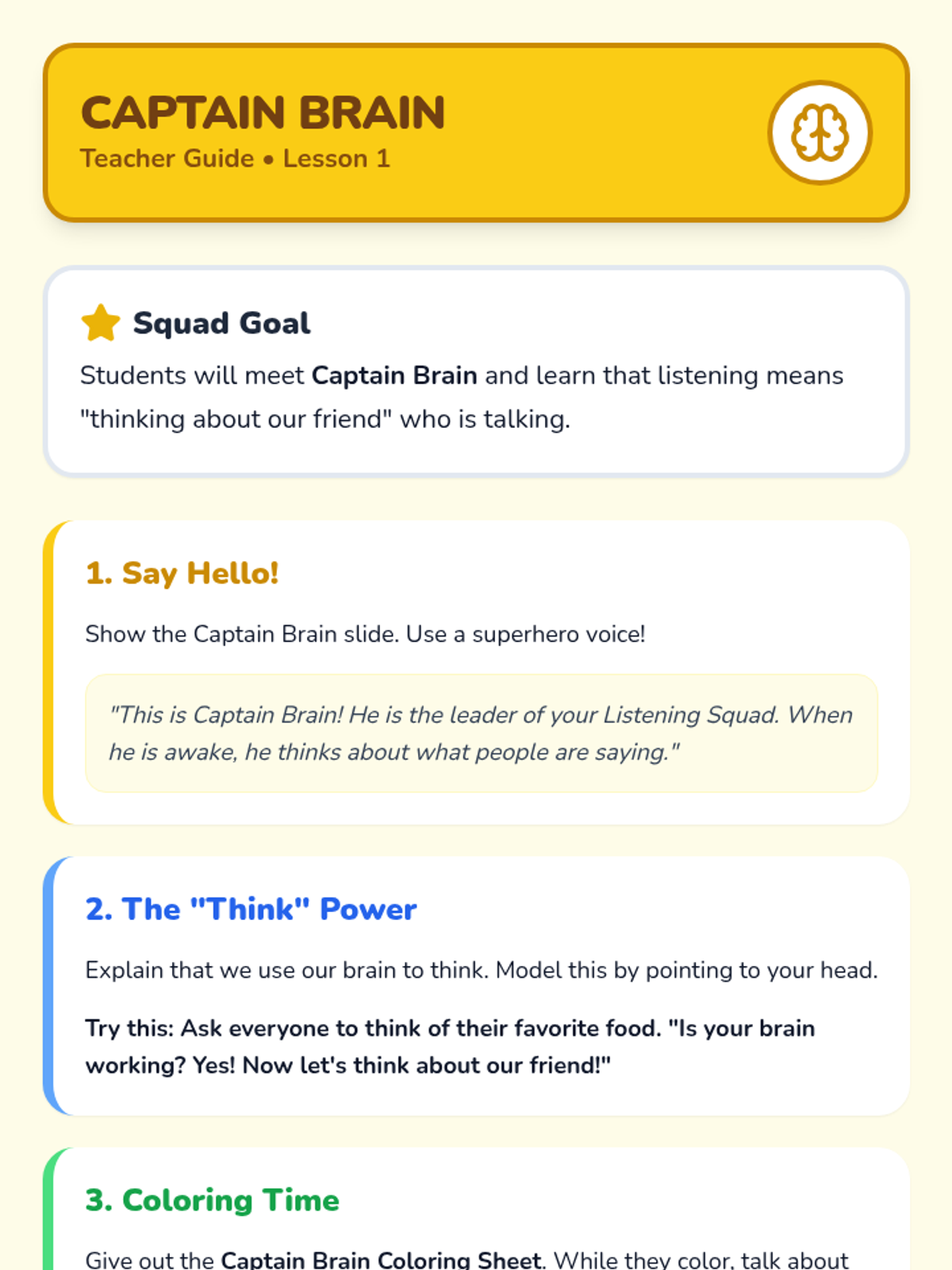
Meet Captain Brain! Introduces the brain as the leader of the squad. Focuses on 'thinking about the friend' as the first step to listening.
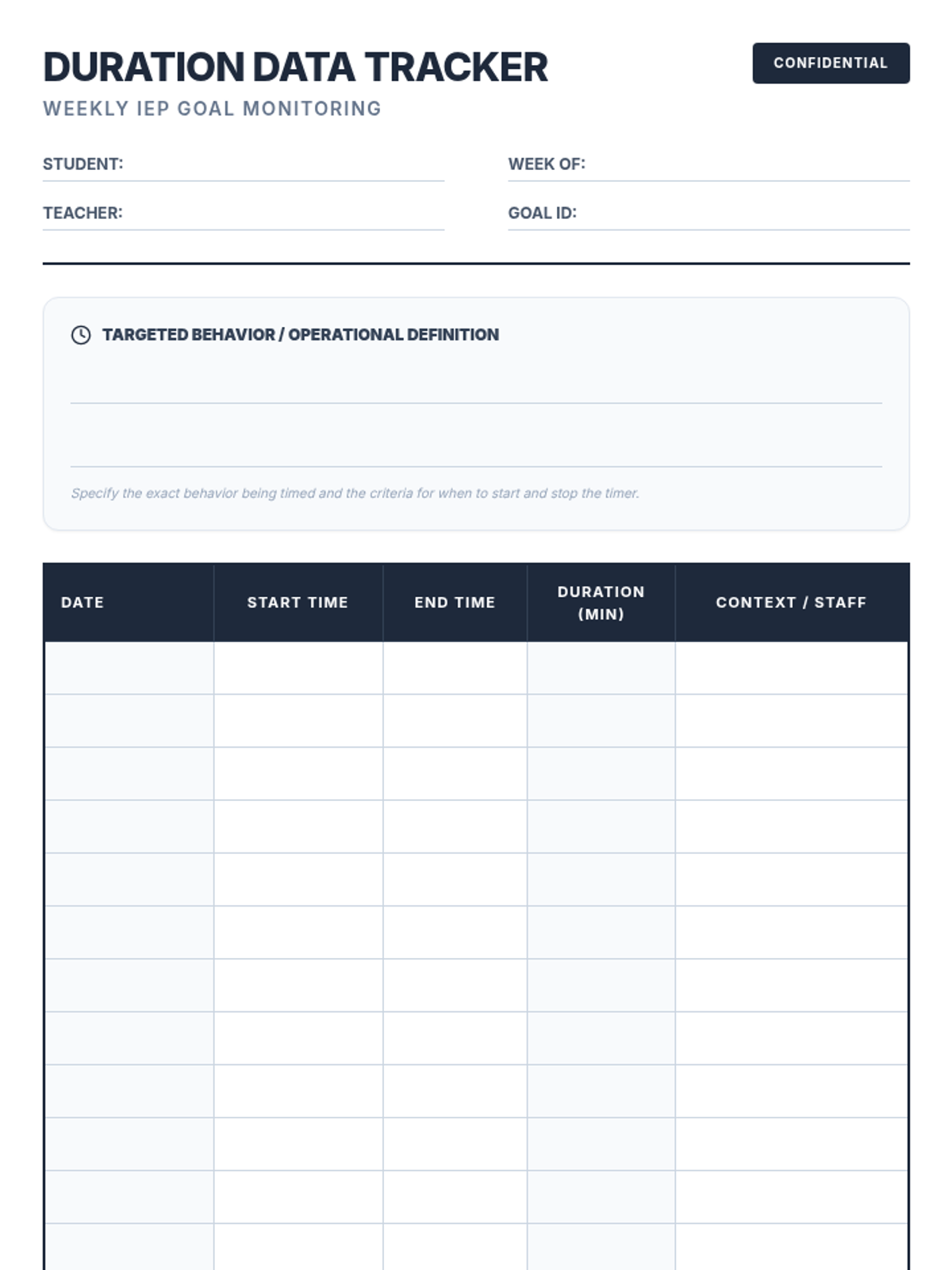
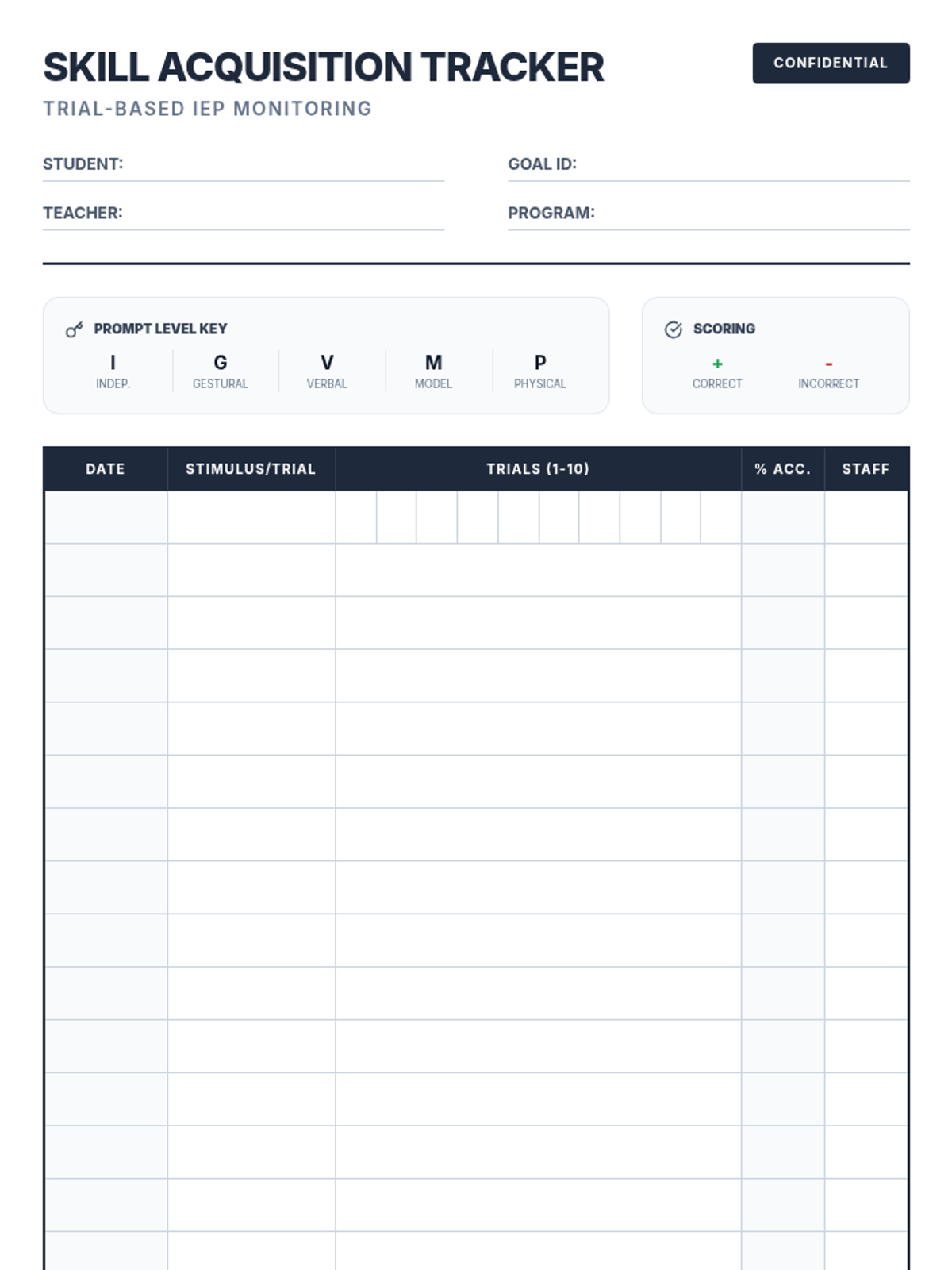
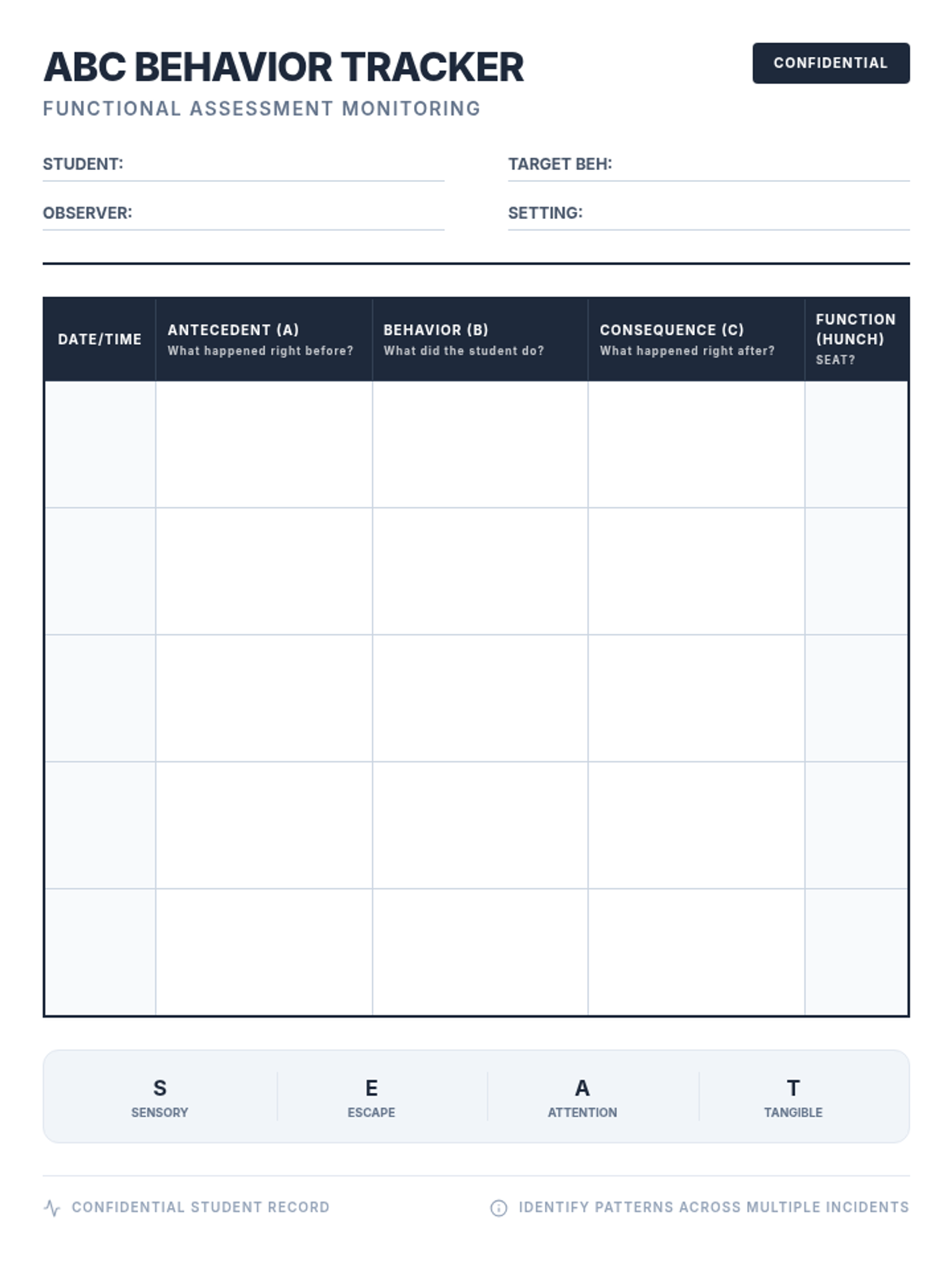
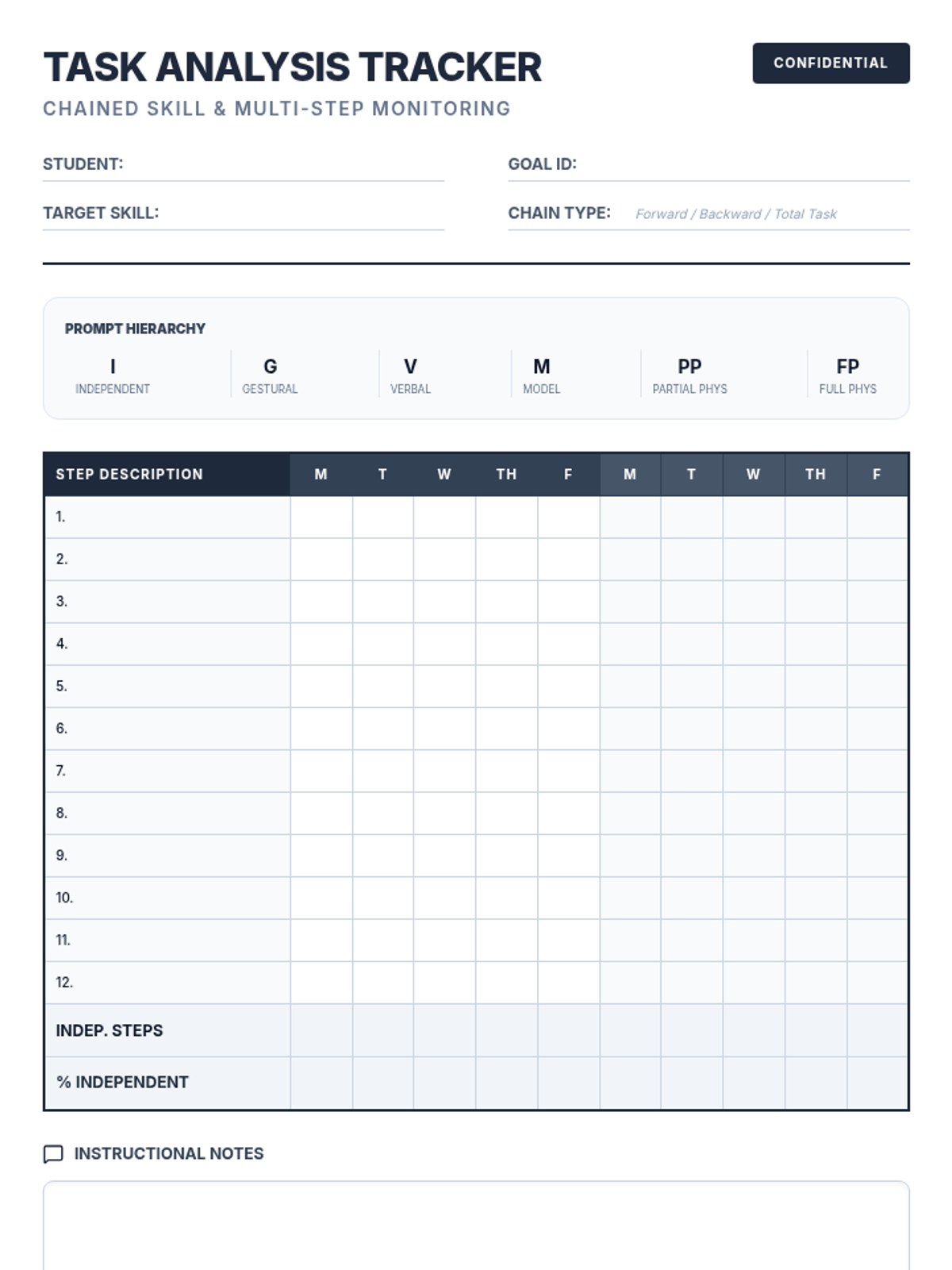
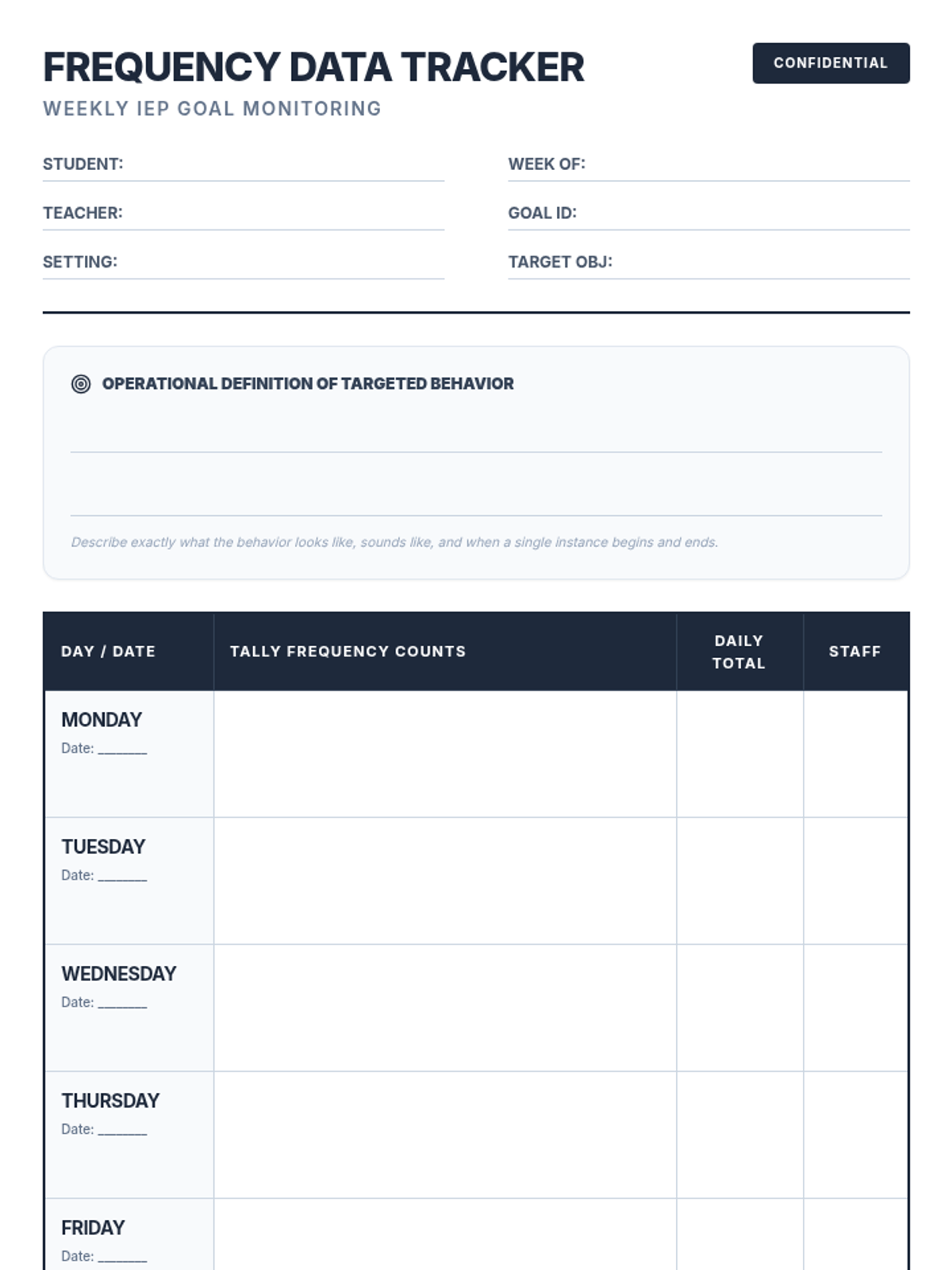
A comprehensive toolkit of data collection sheets for tracking various types of IEP goals, including frequency, duration, and trial-based skill acquisition.
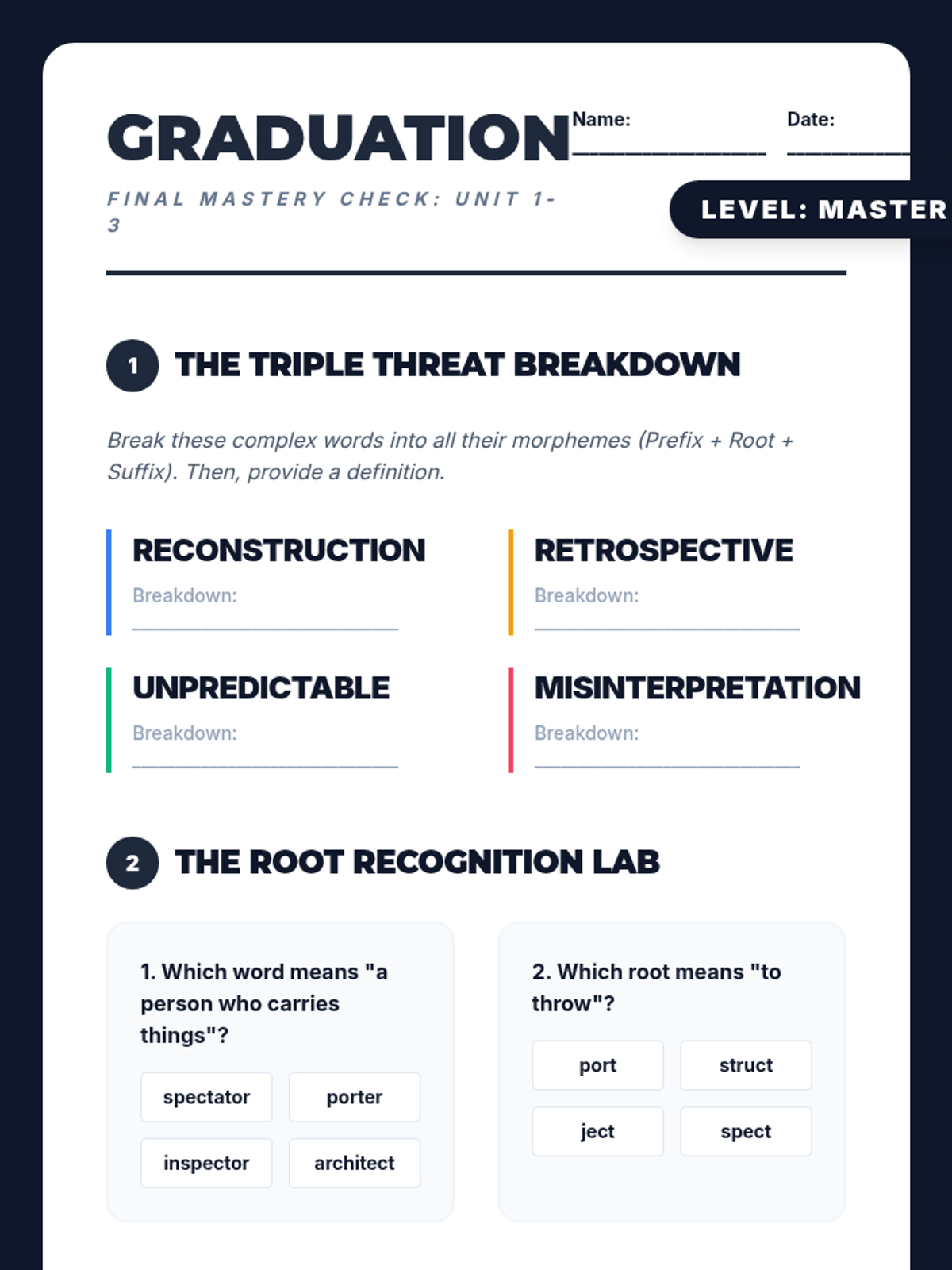
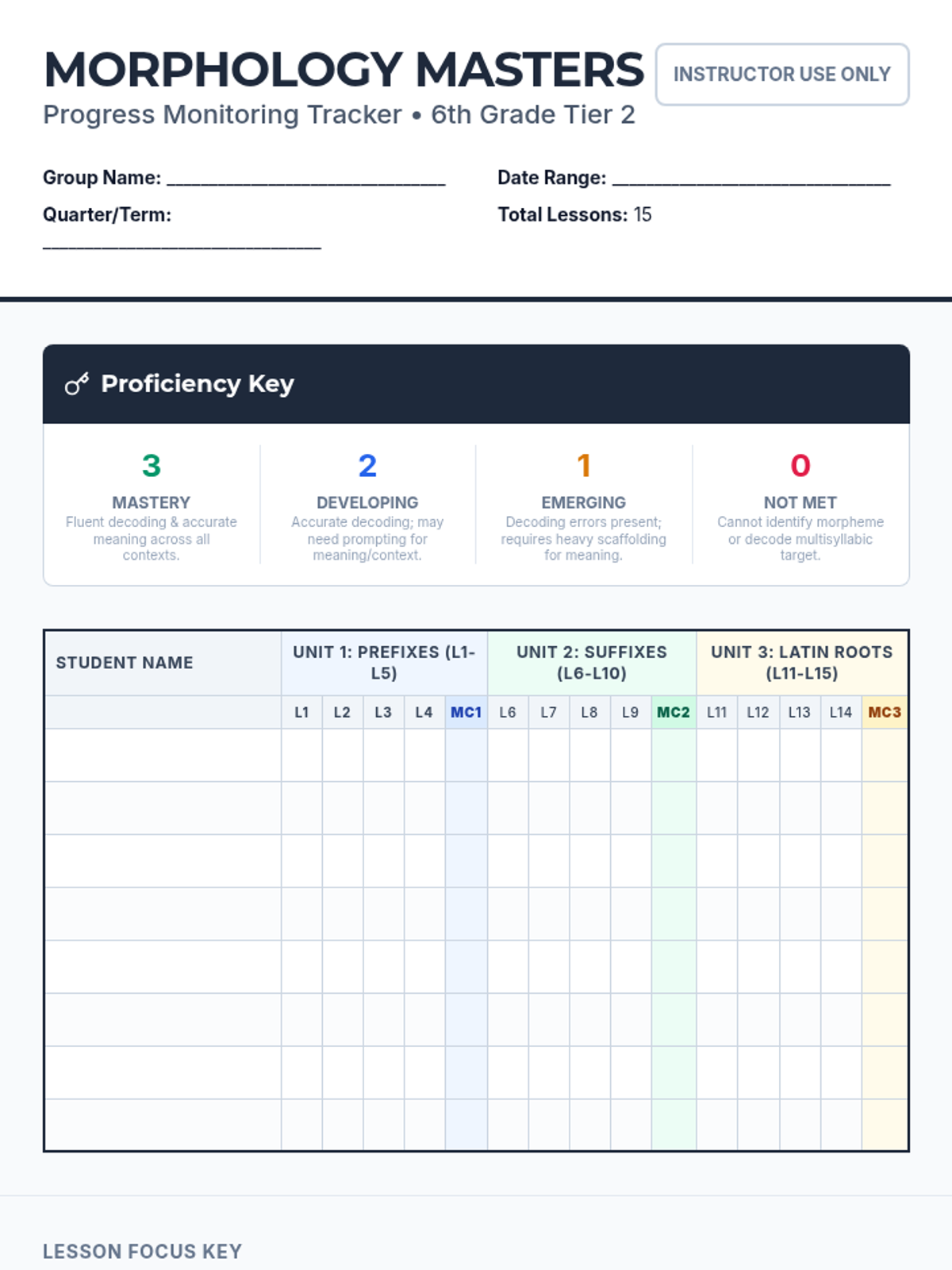
The final lesson of the sequence, reviewing all prefixes, suffixes, and roots with a cumulative assessment.
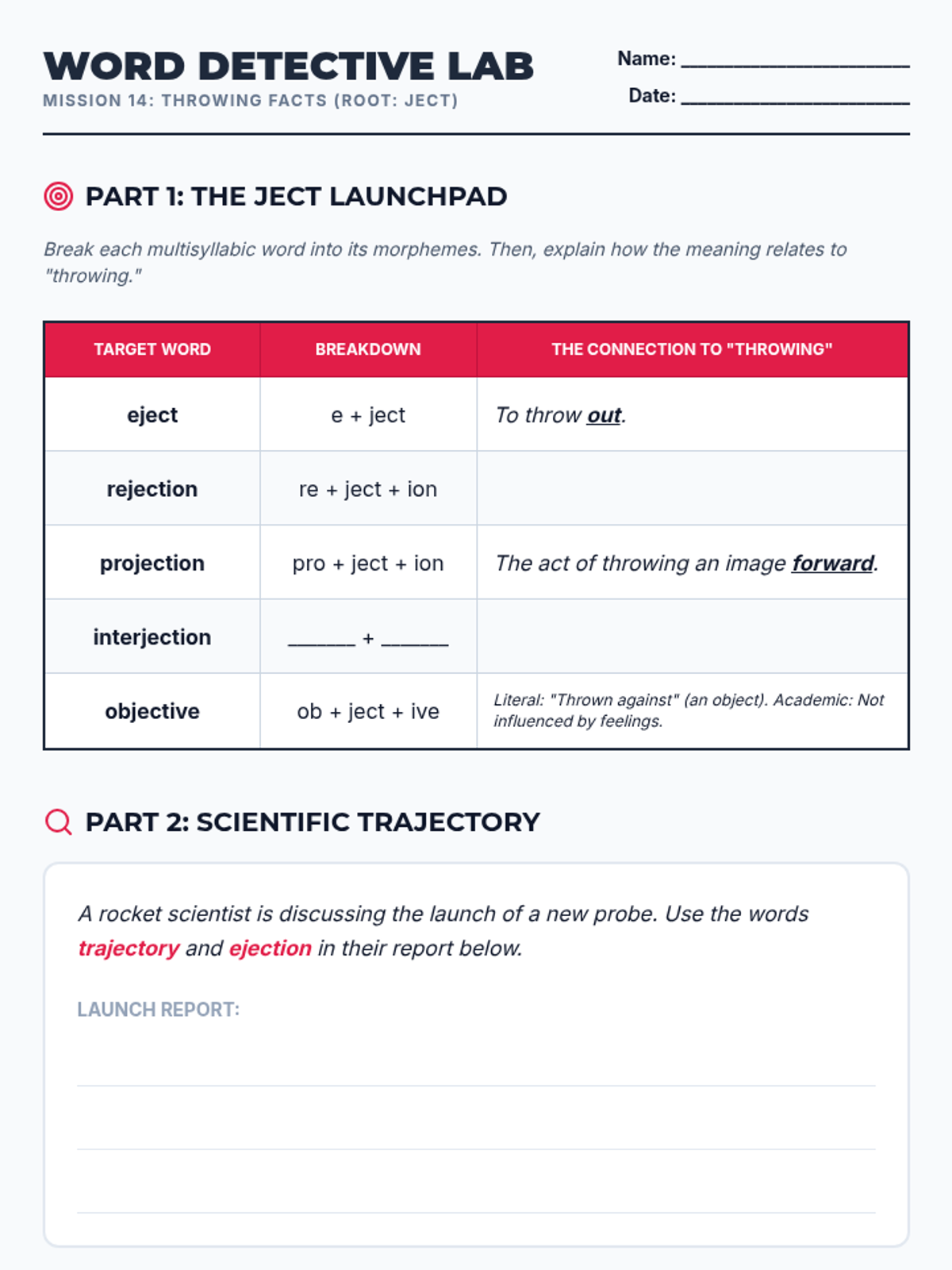
Covers the Latin root 'ject' (throw), emphasizing the physical meanings behind abstract academic terms.
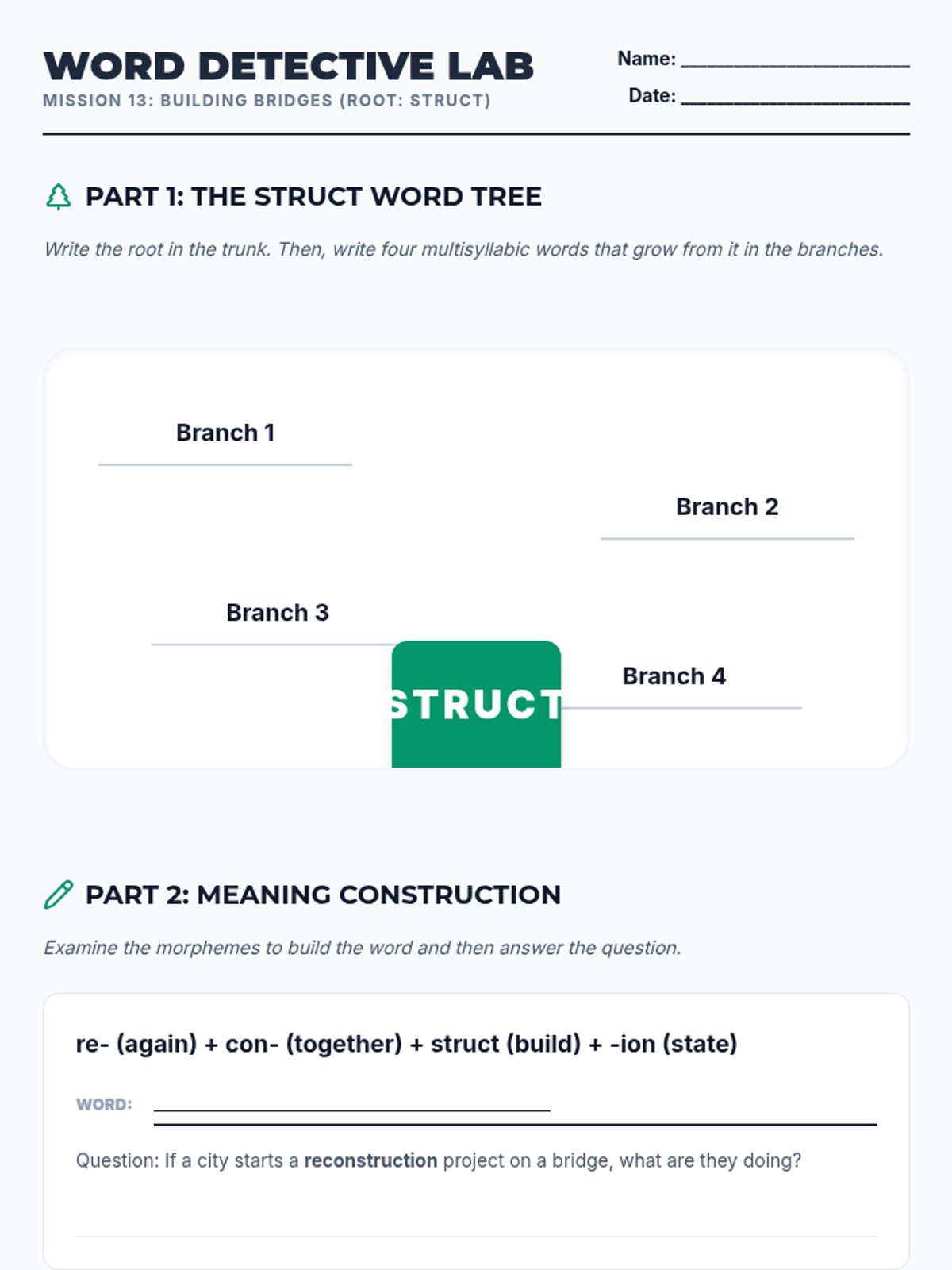
Explores the Latin root 'struct' (build), using word trees to visualize how multiple morphemes combine.
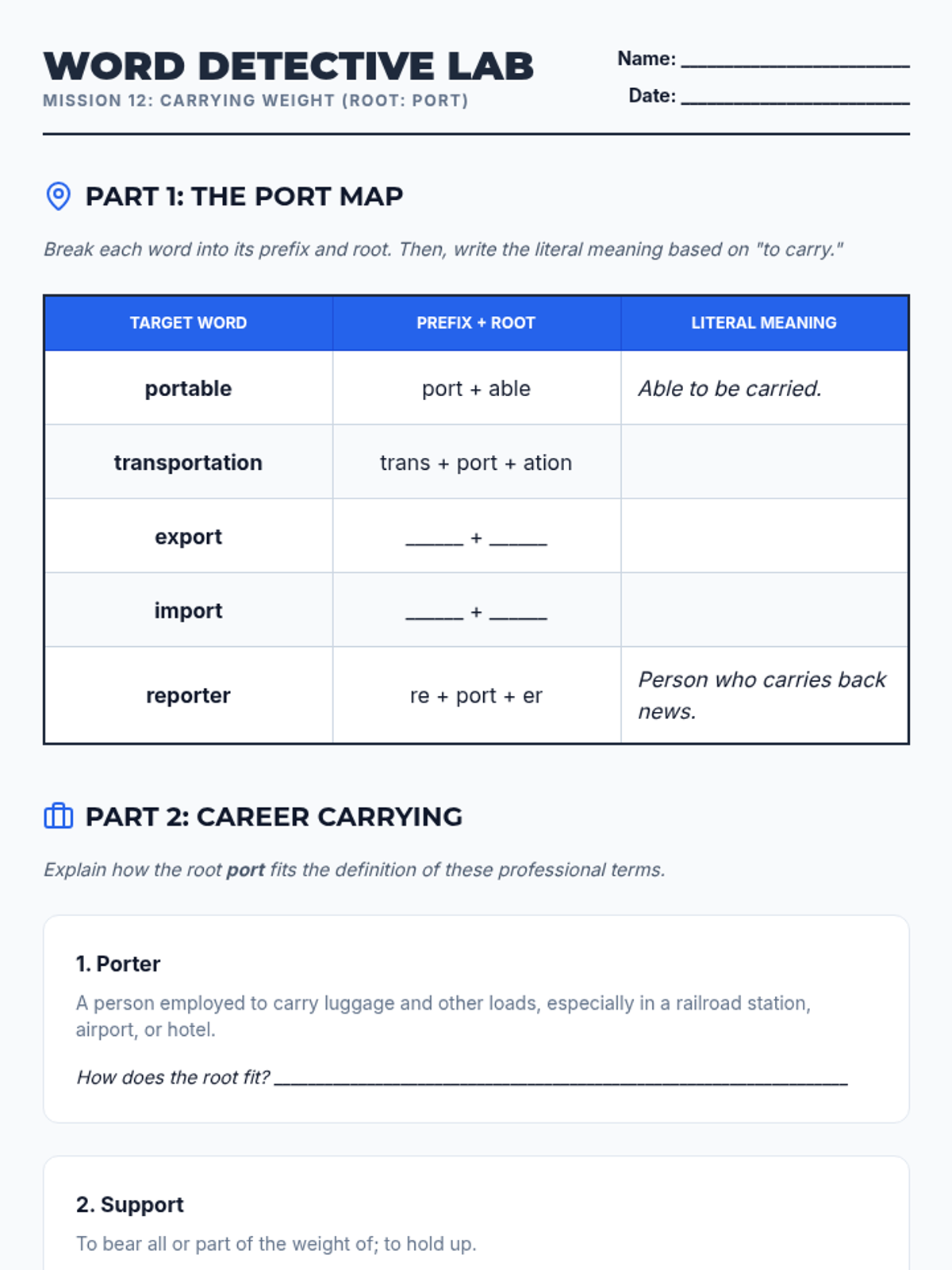
Focuses on the Latin root 'port' (carry), connecting it to familiar words like 'transport' and 'portable'.
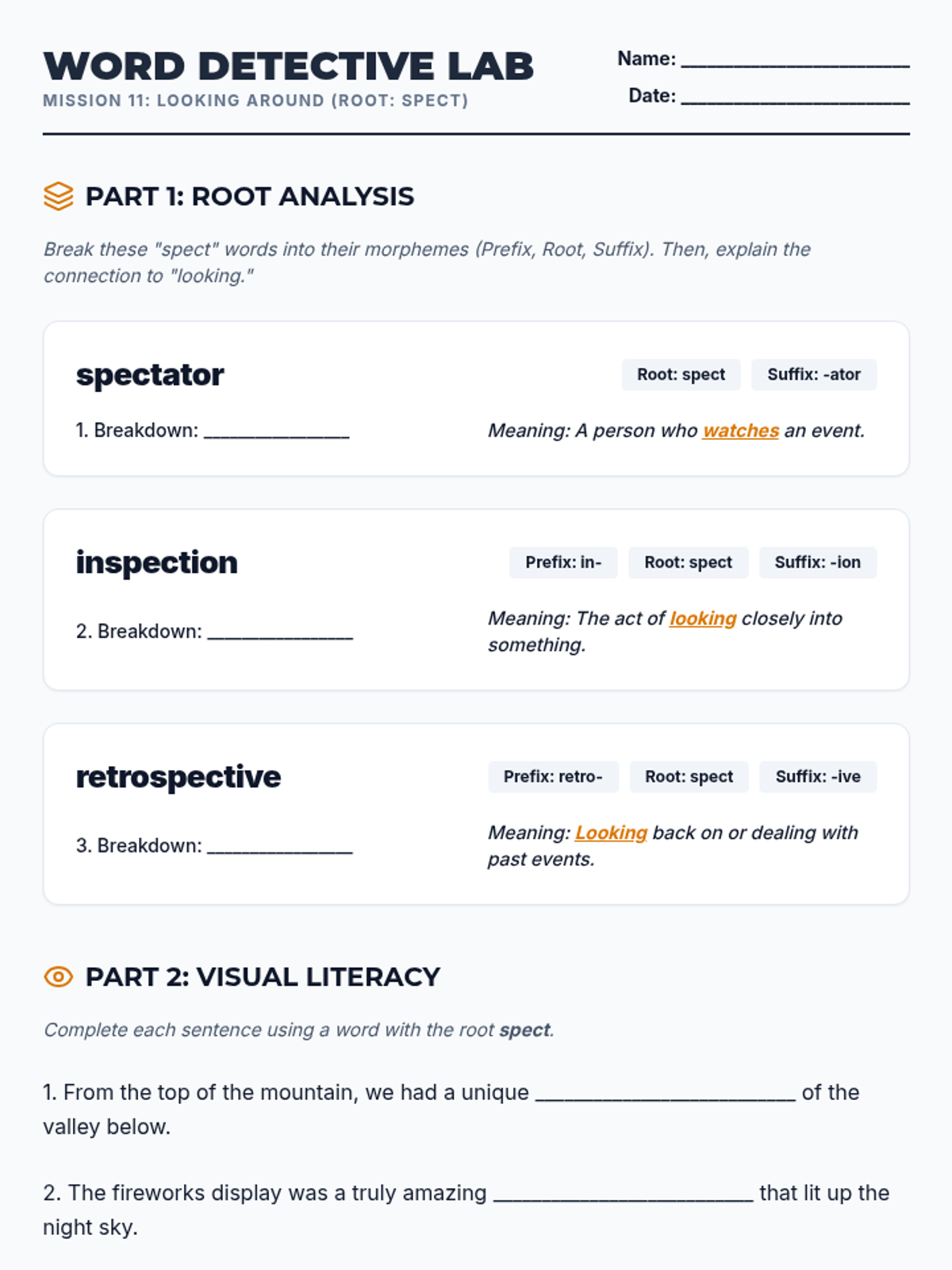
Introduces the Latin root 'spect' (look), identifying it in common multisyllabic academic words.
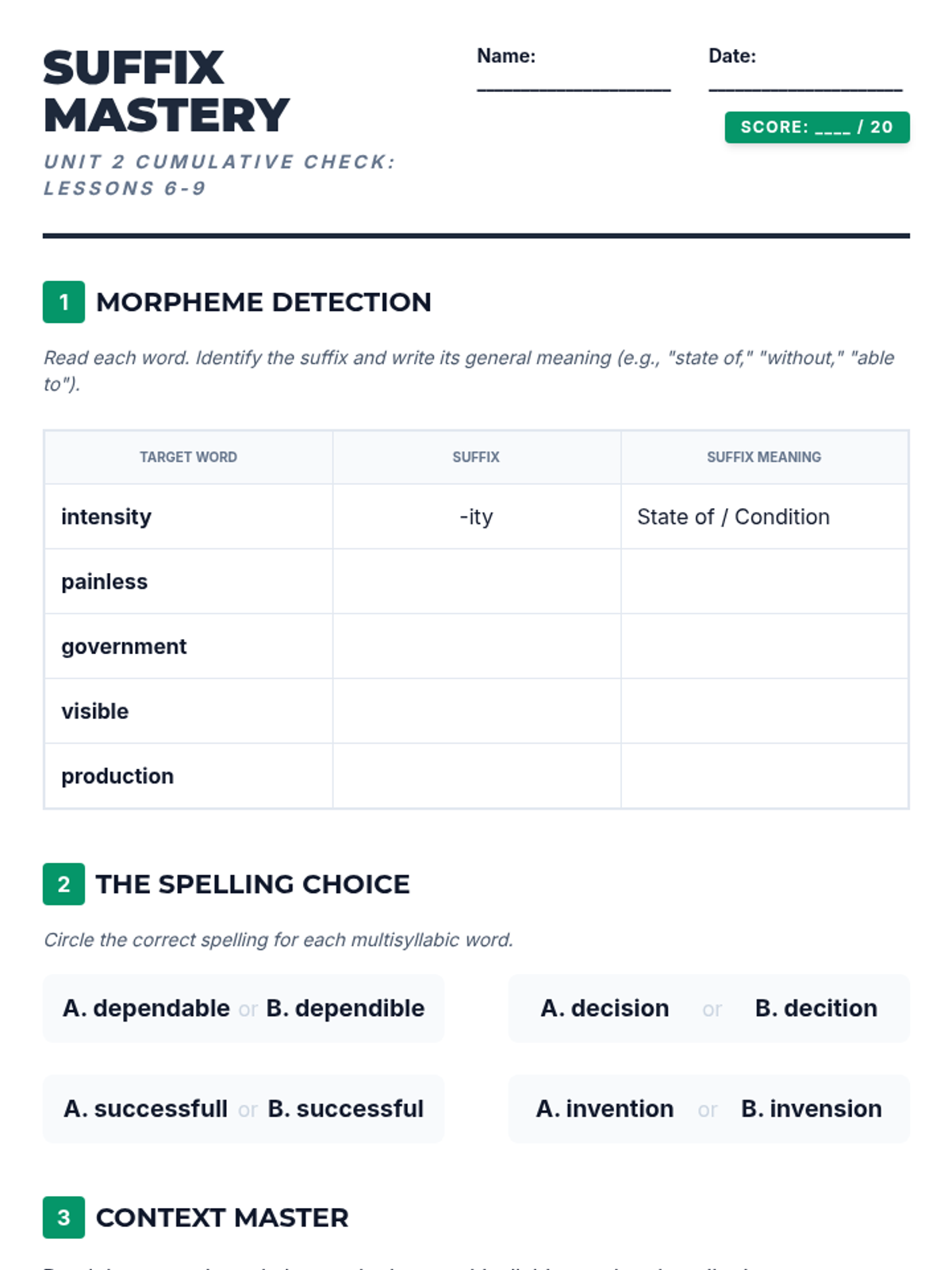
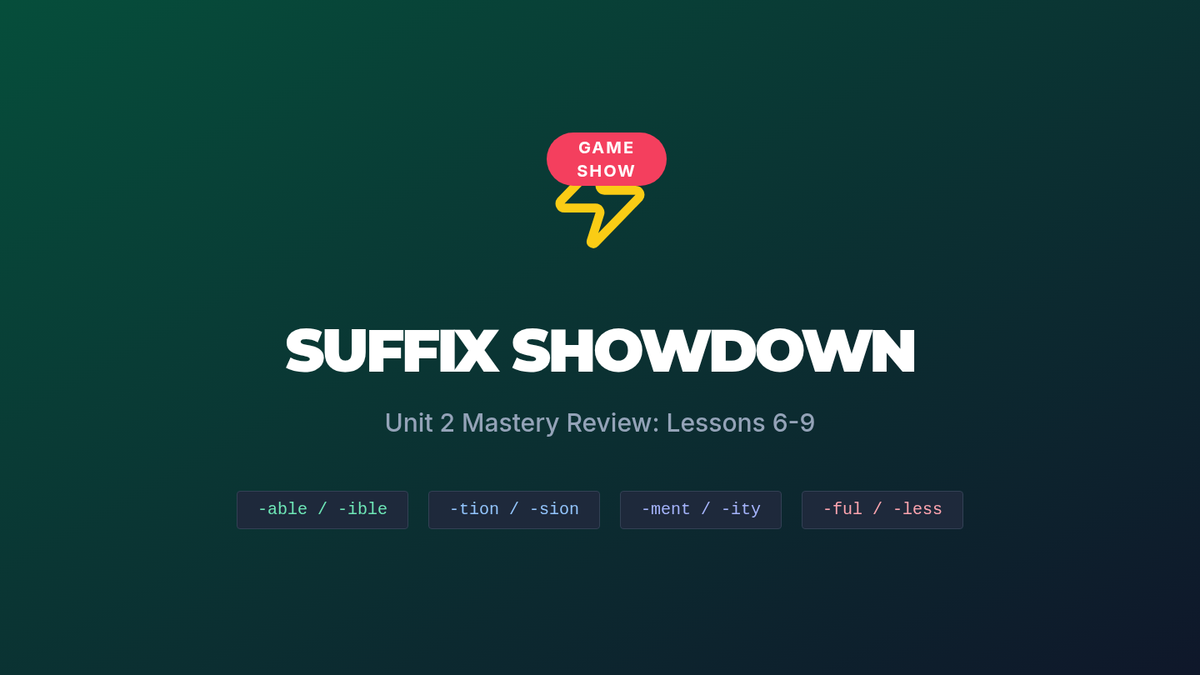
A review of all suffixes covered, featuring a 'Suffix Showdown' game and a progress monitoring check.
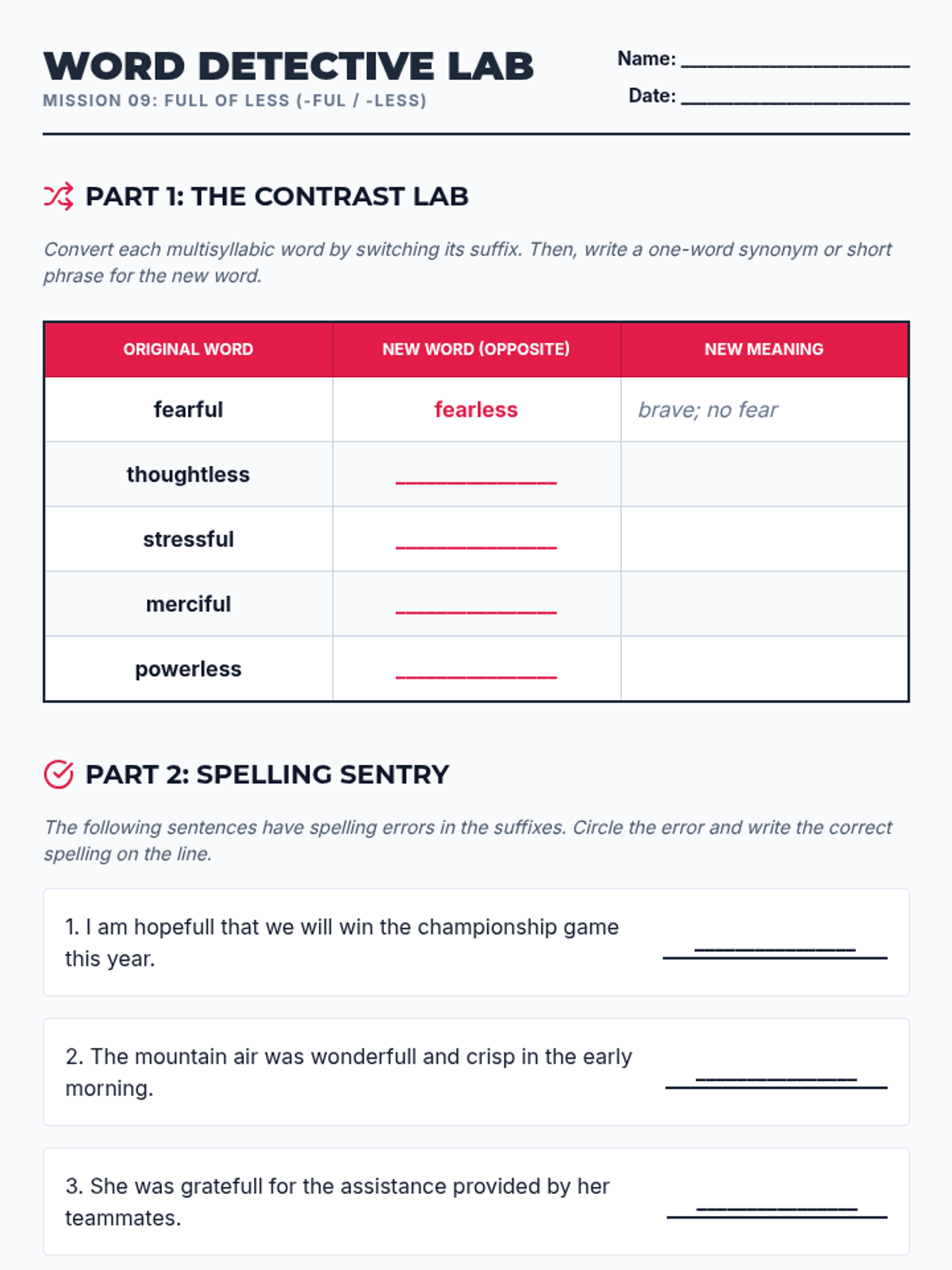
Focuses on the quantity-based suffixes -ful and -less, using contrasting word pairs to build understanding.
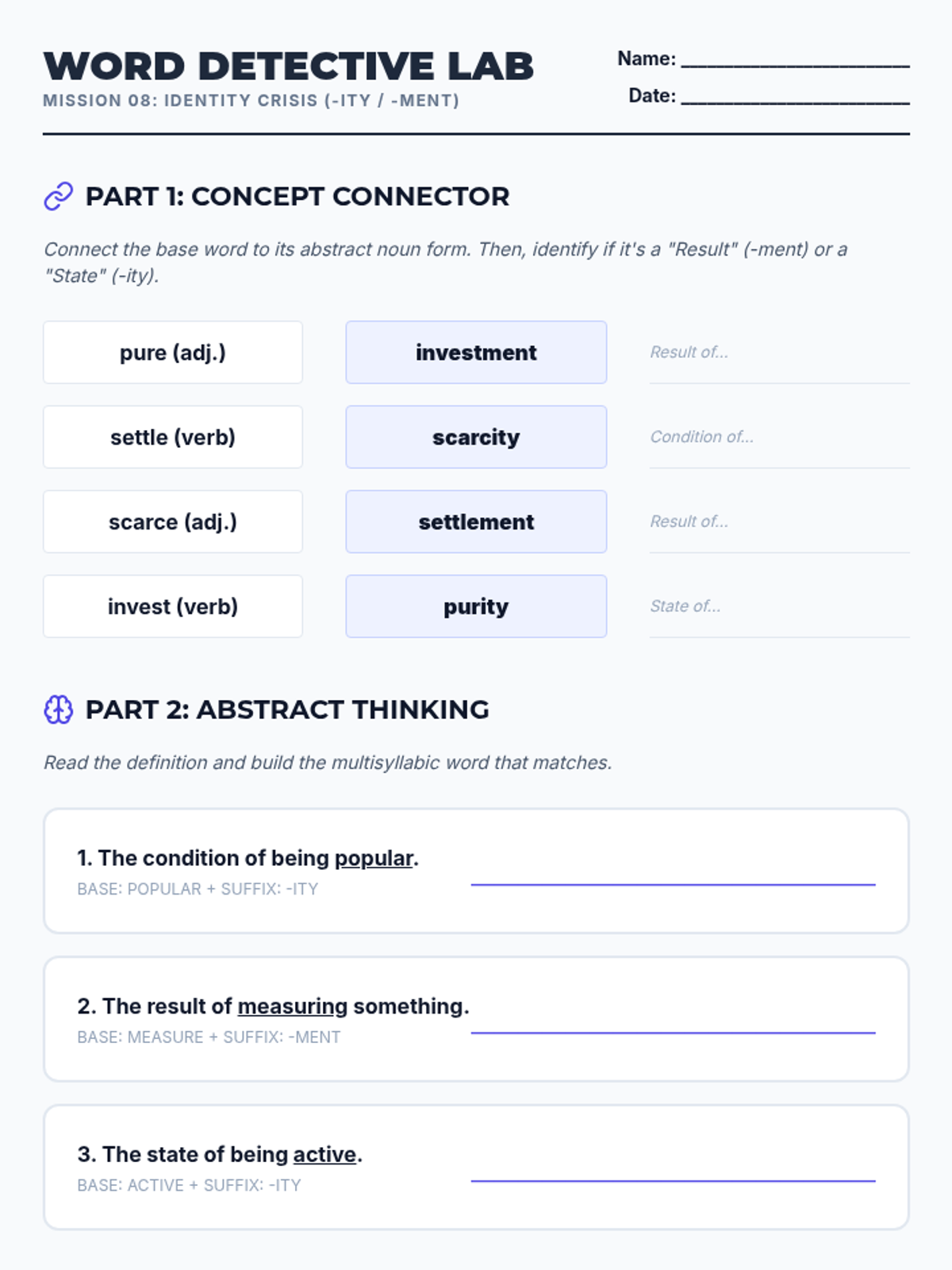
Explores suffixes -ment and -ity, emphasizing how they transform verbs and adjectives into abstract nouns.
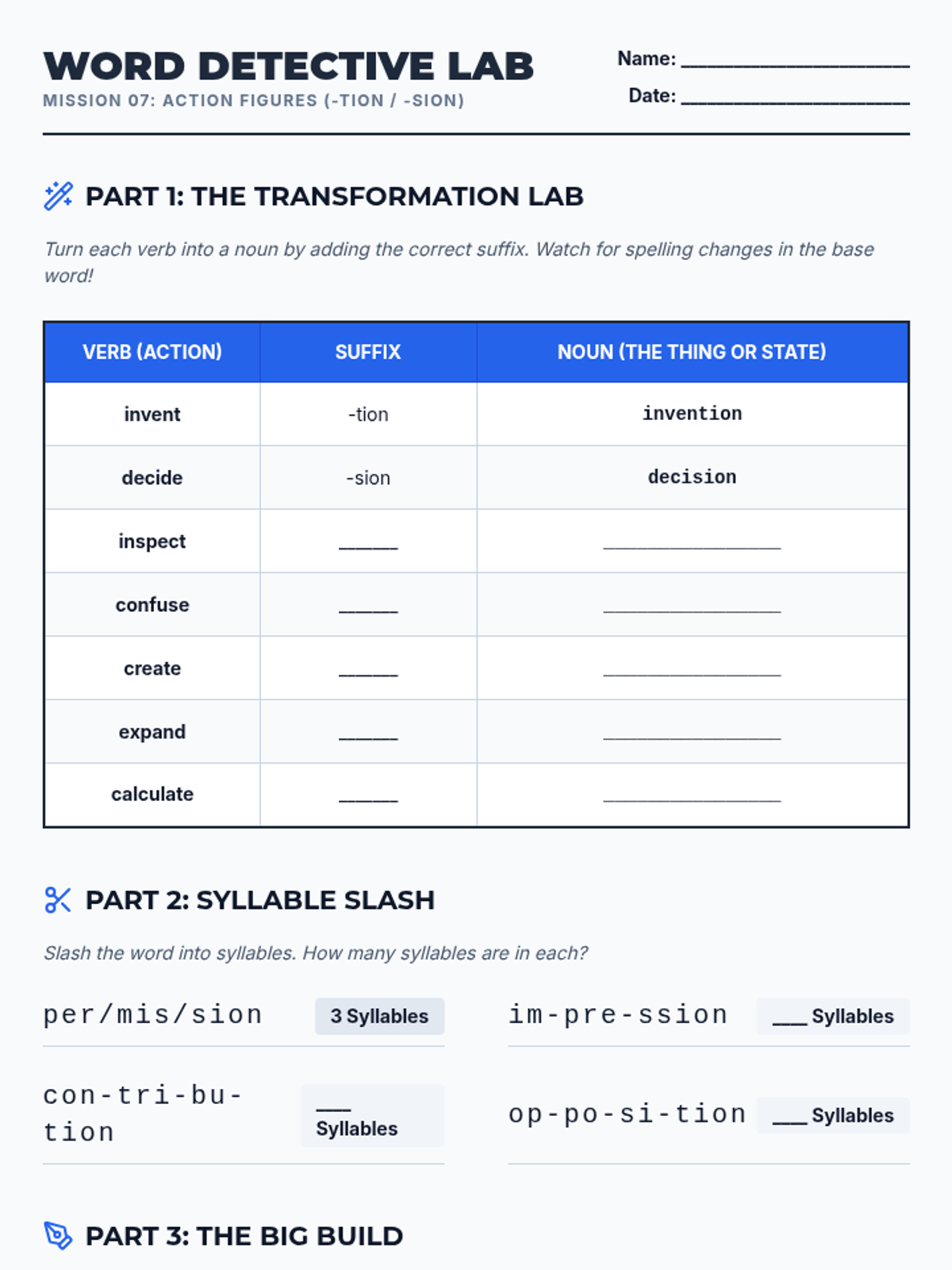
Examines noun-forming suffixes -tion and -sion, focusing on spelling patterns and syllable division.
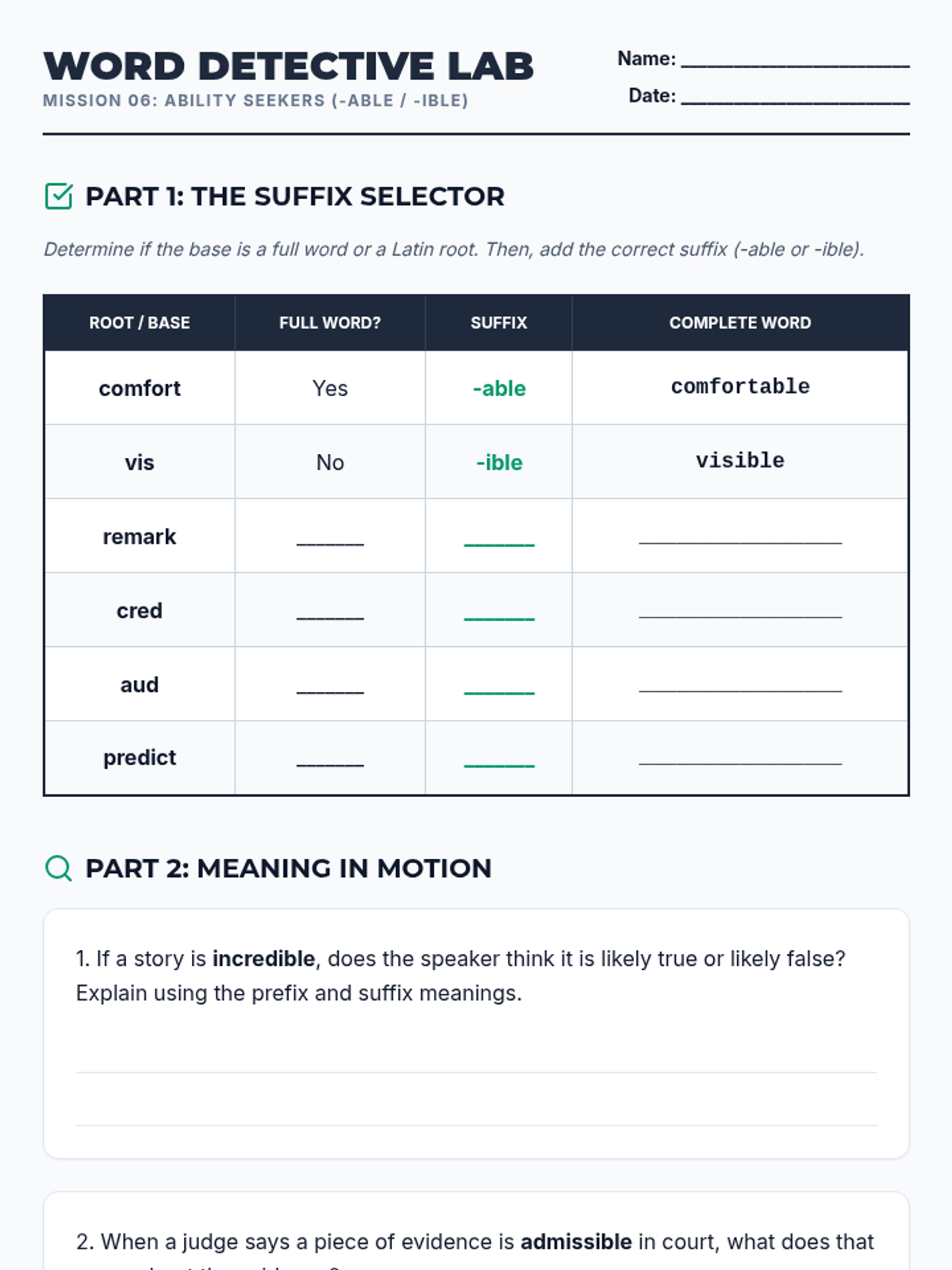
Shifts focus to suffixes -able and -ible, helping students determine when to use each based on the root word.
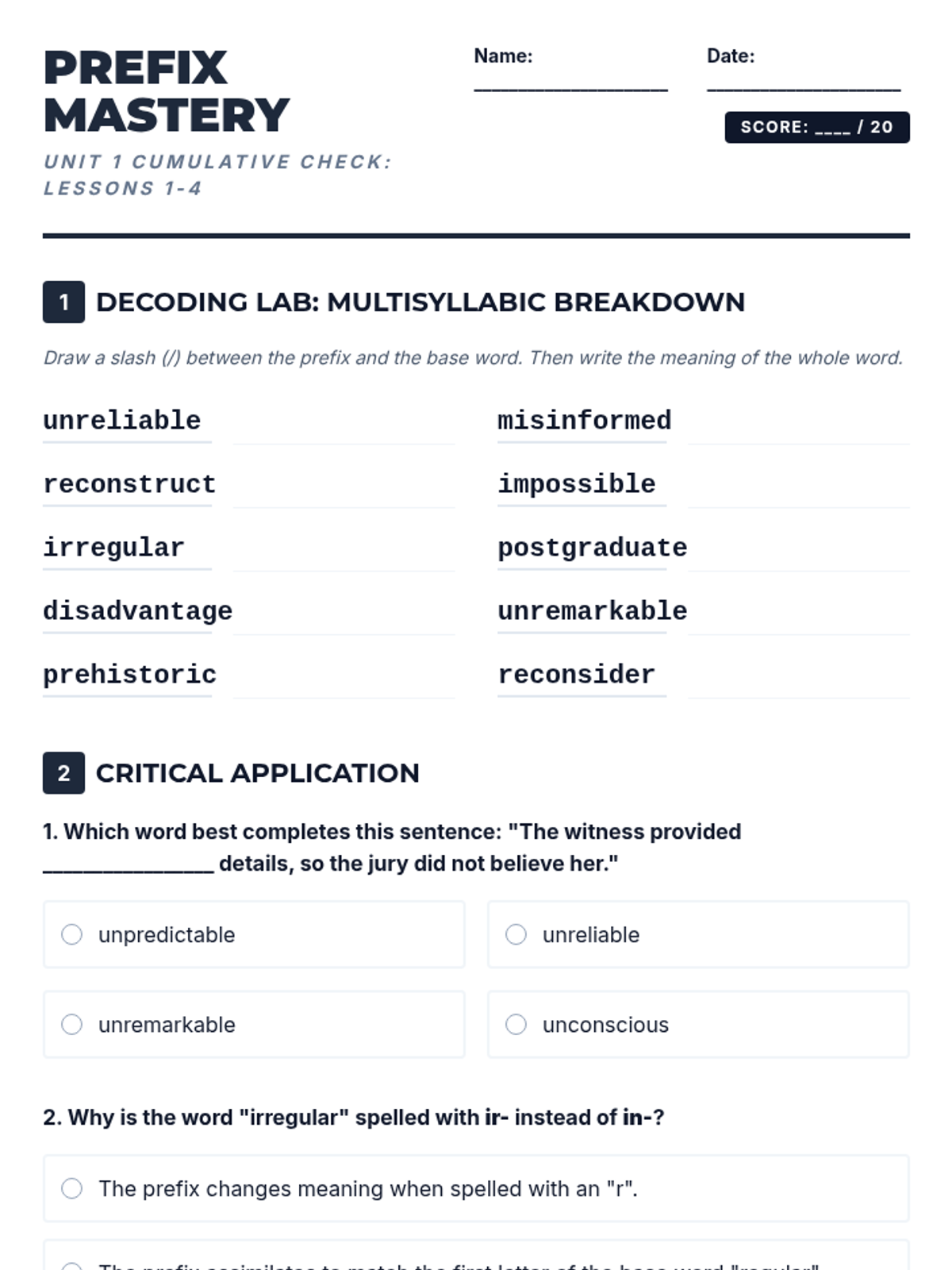
A review lesson of all prefixes covered in the first four lessons, including a quick progress monitoring assessment.
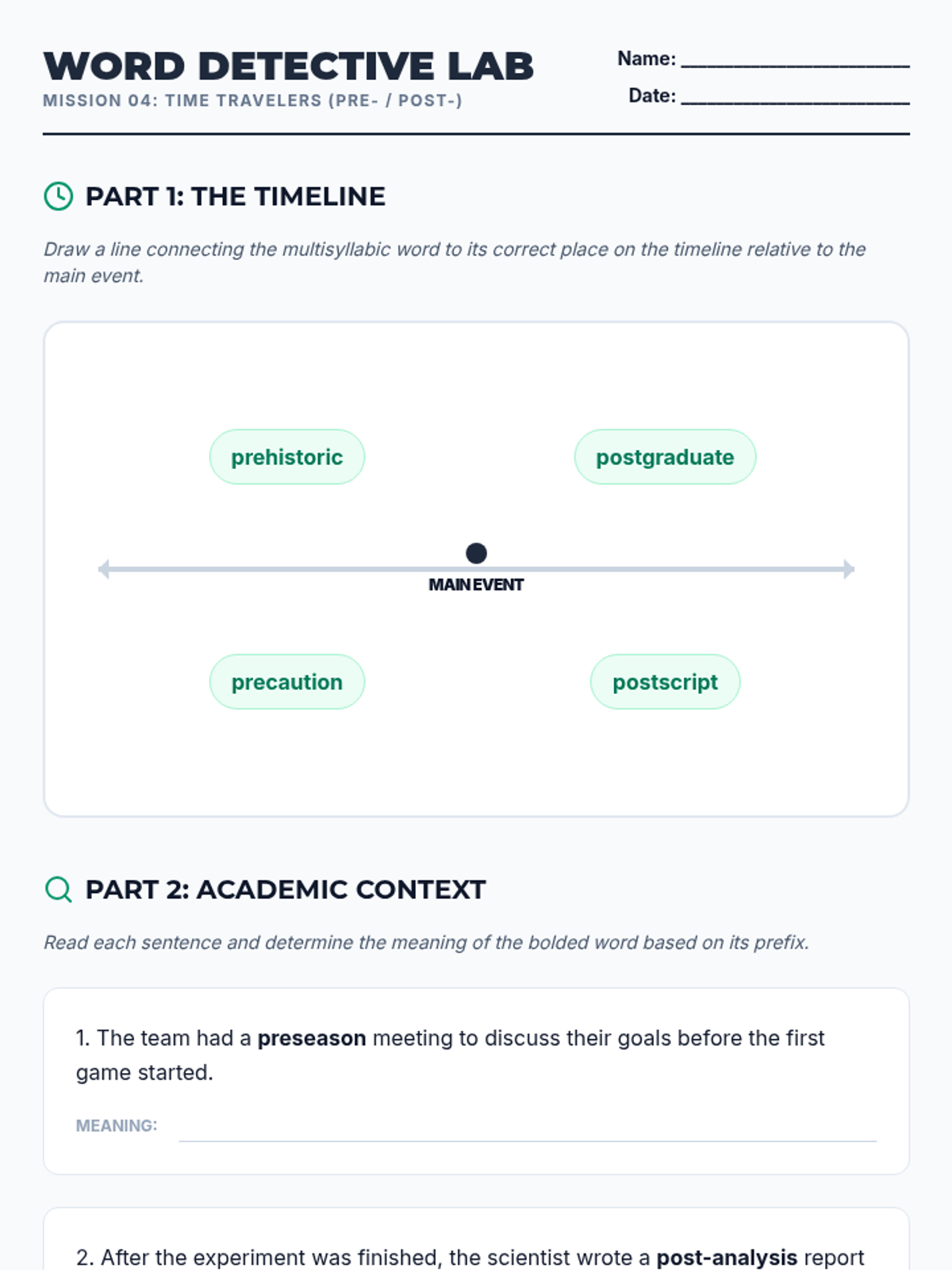
Introduces time-based prefixes pre- and post-, focusing on academic vocabulary used in history and science contexts.
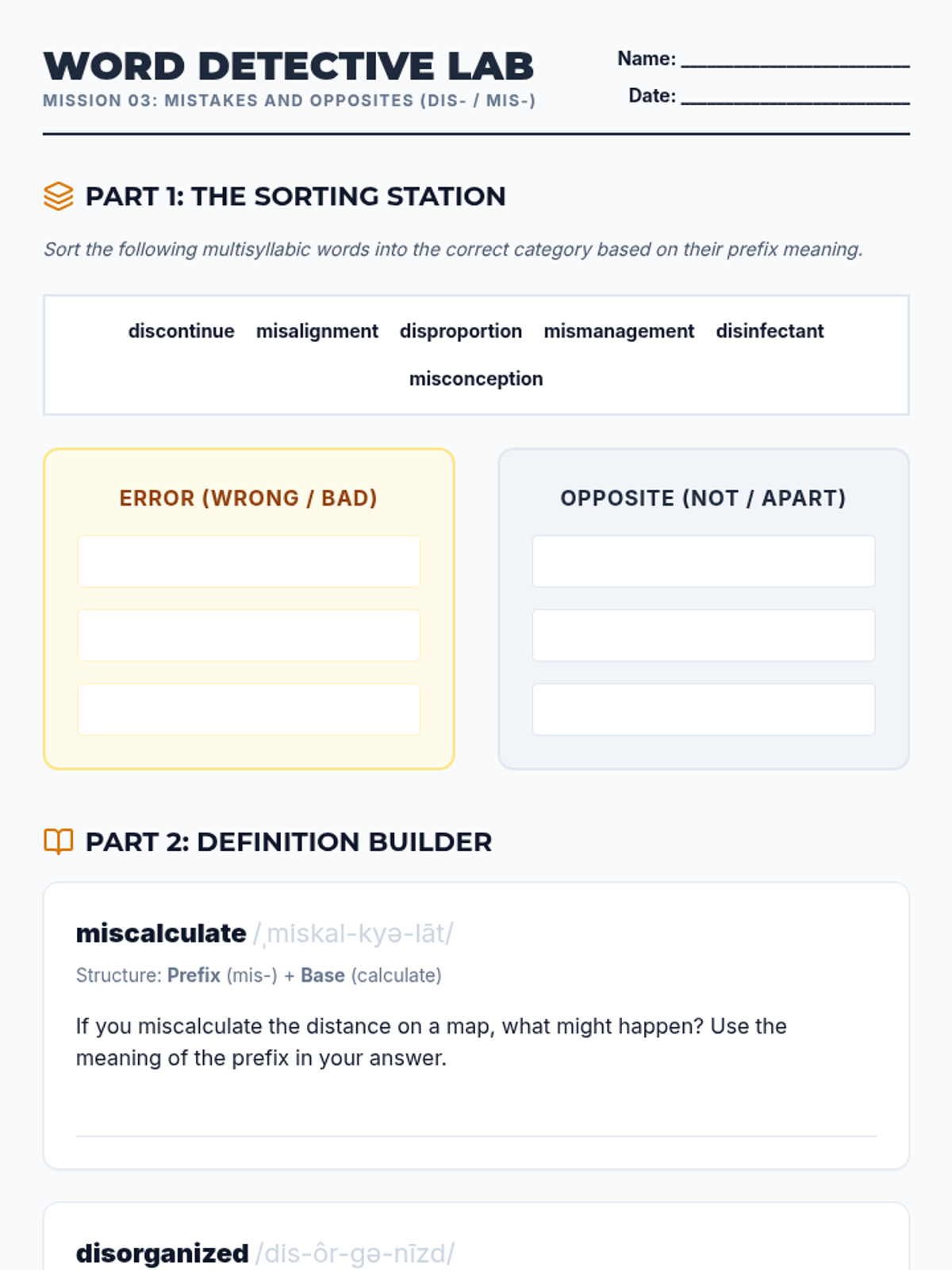
Investigates prefixes dis- and mis- to understand words related to opposites and errors, featuring word-sorting activities.
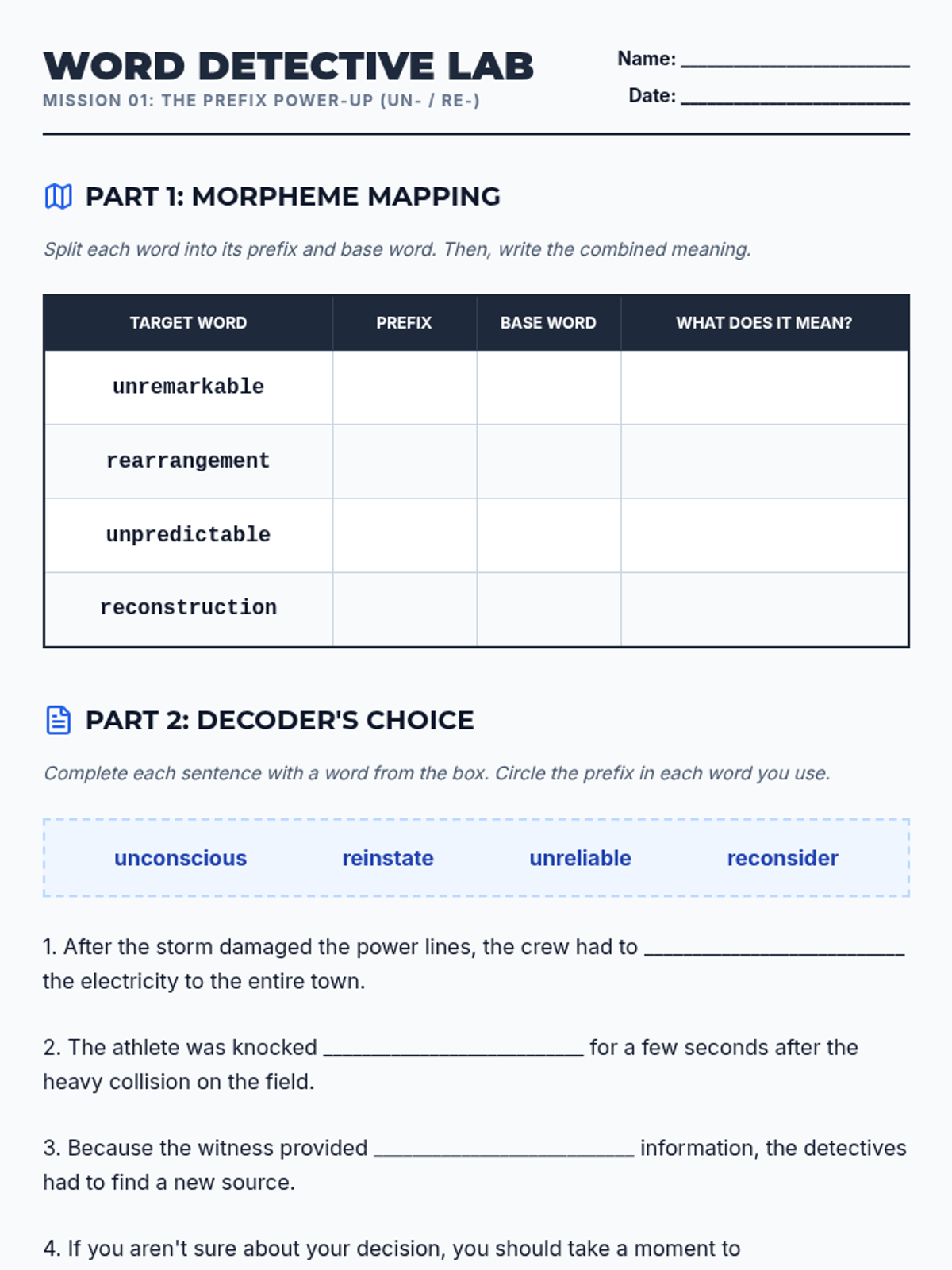
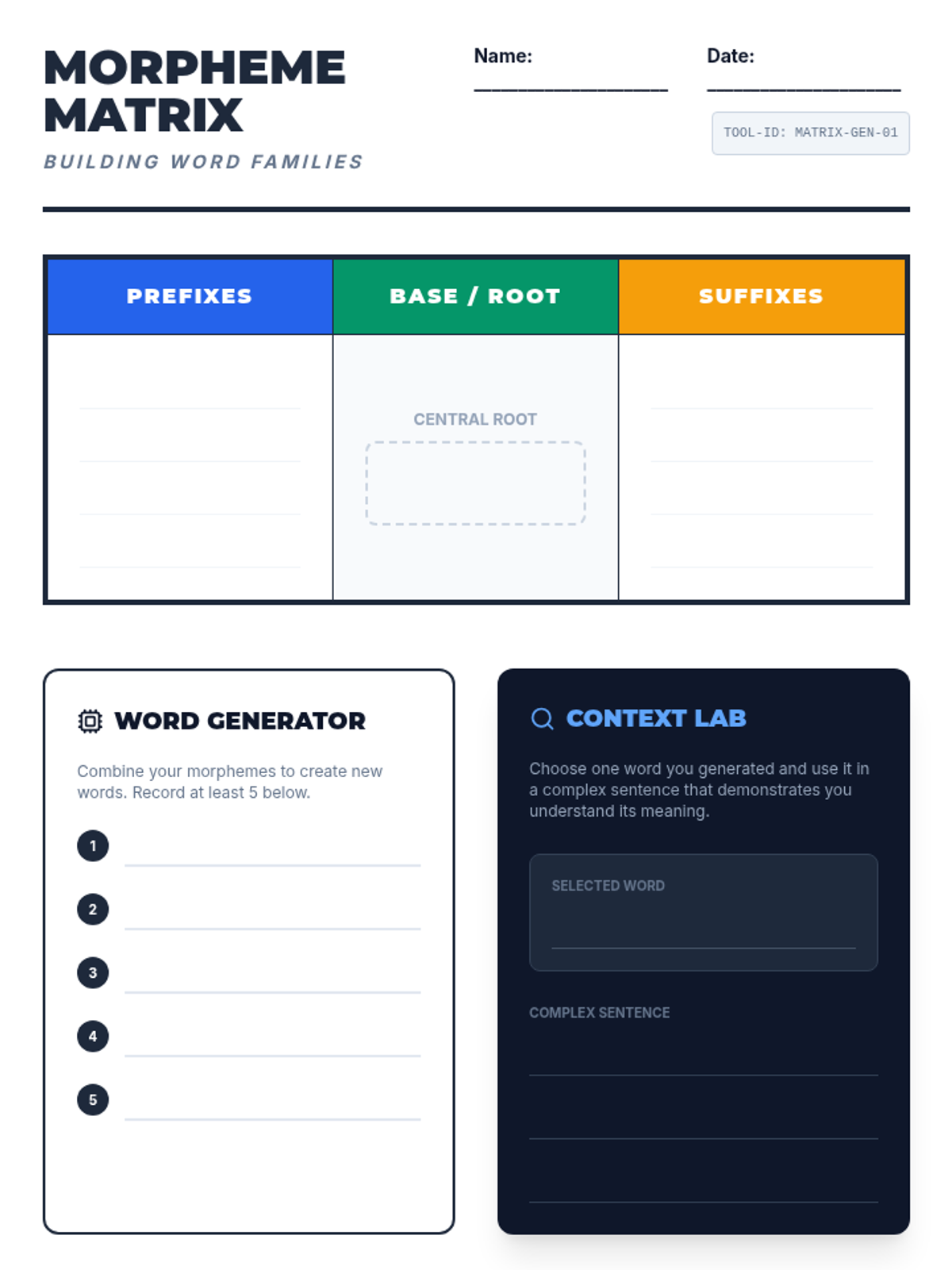
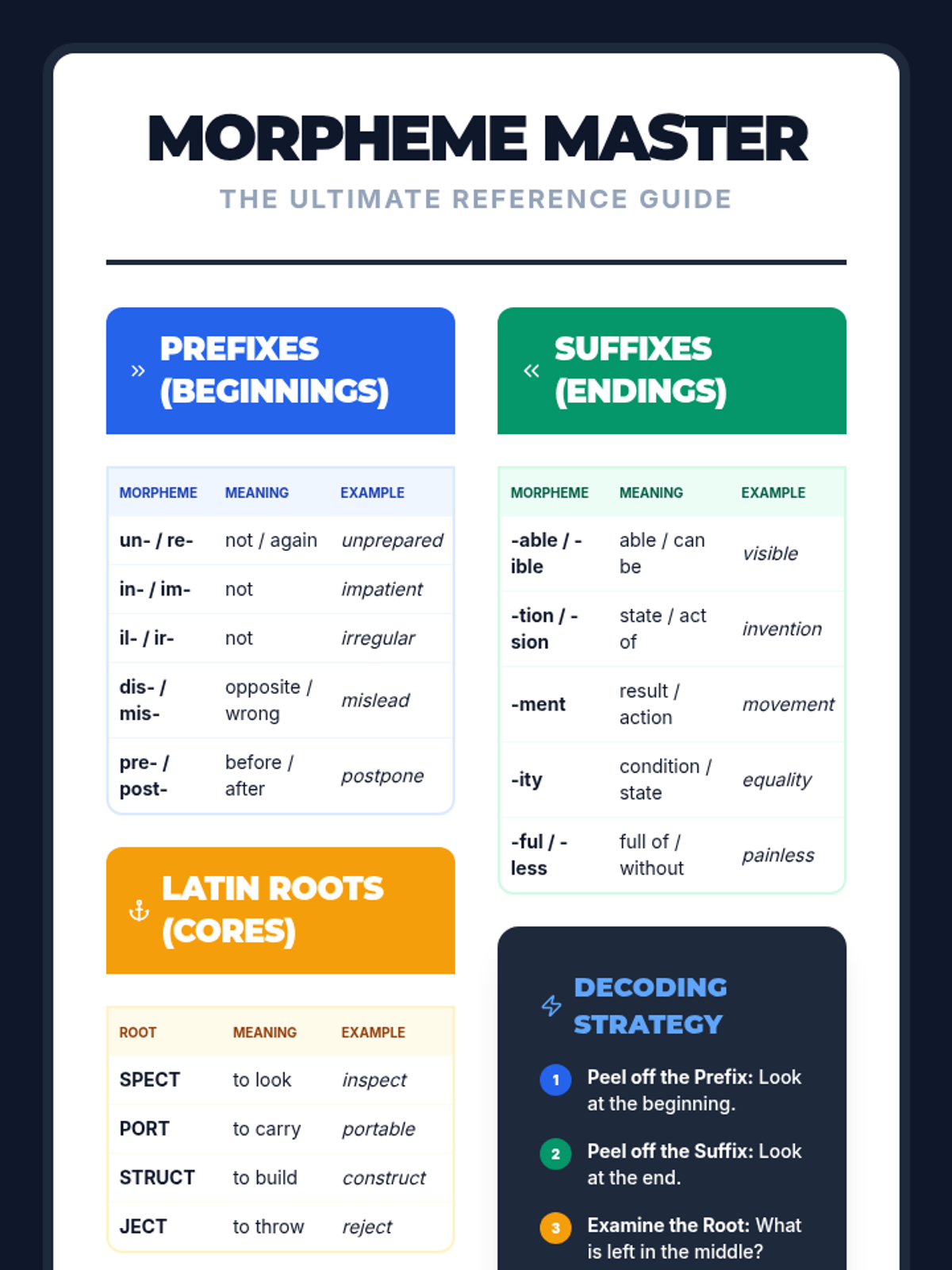
Focuses on identifying and using common prefixes like un- and re- to decode and understand multisyllabic words. Includes word building and sentence application.
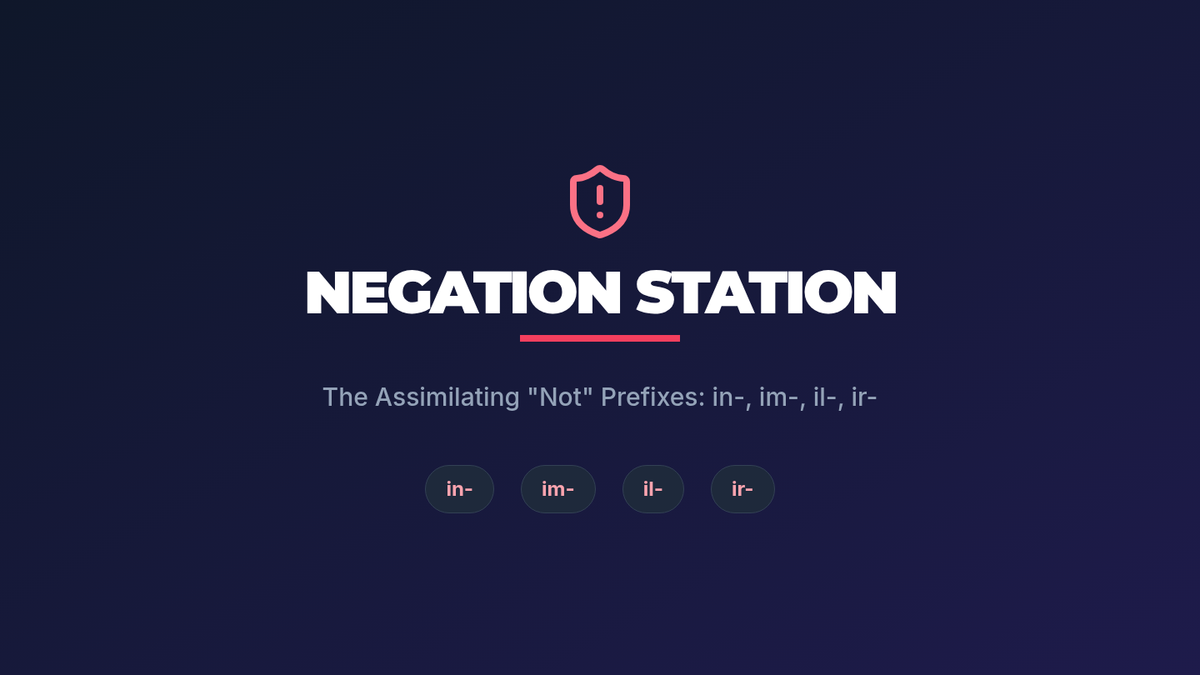
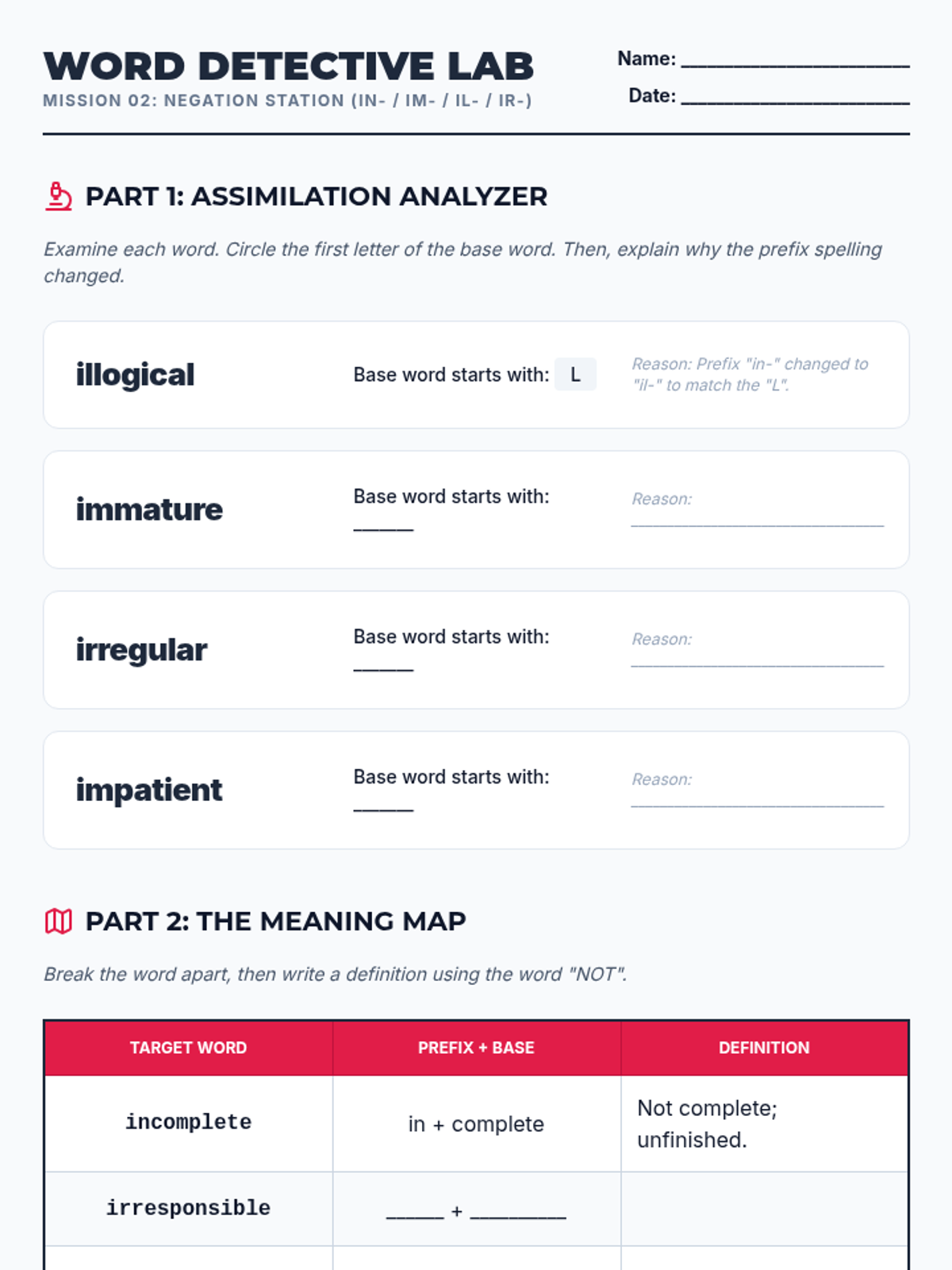
Covers the 'not' prefixes in-, im-, il-, and ir-, exploring how spelling changes based on the root word's initial letter.
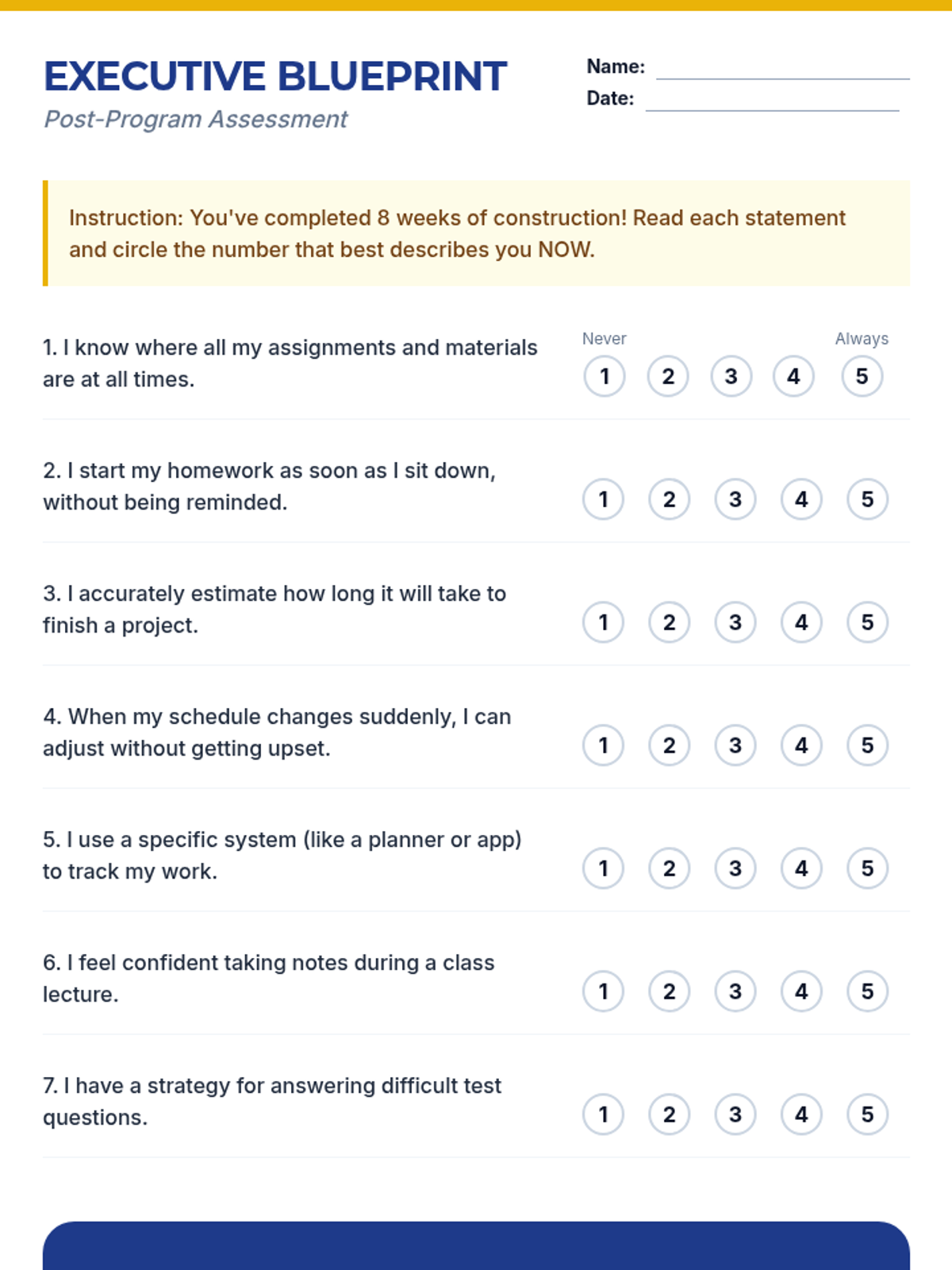
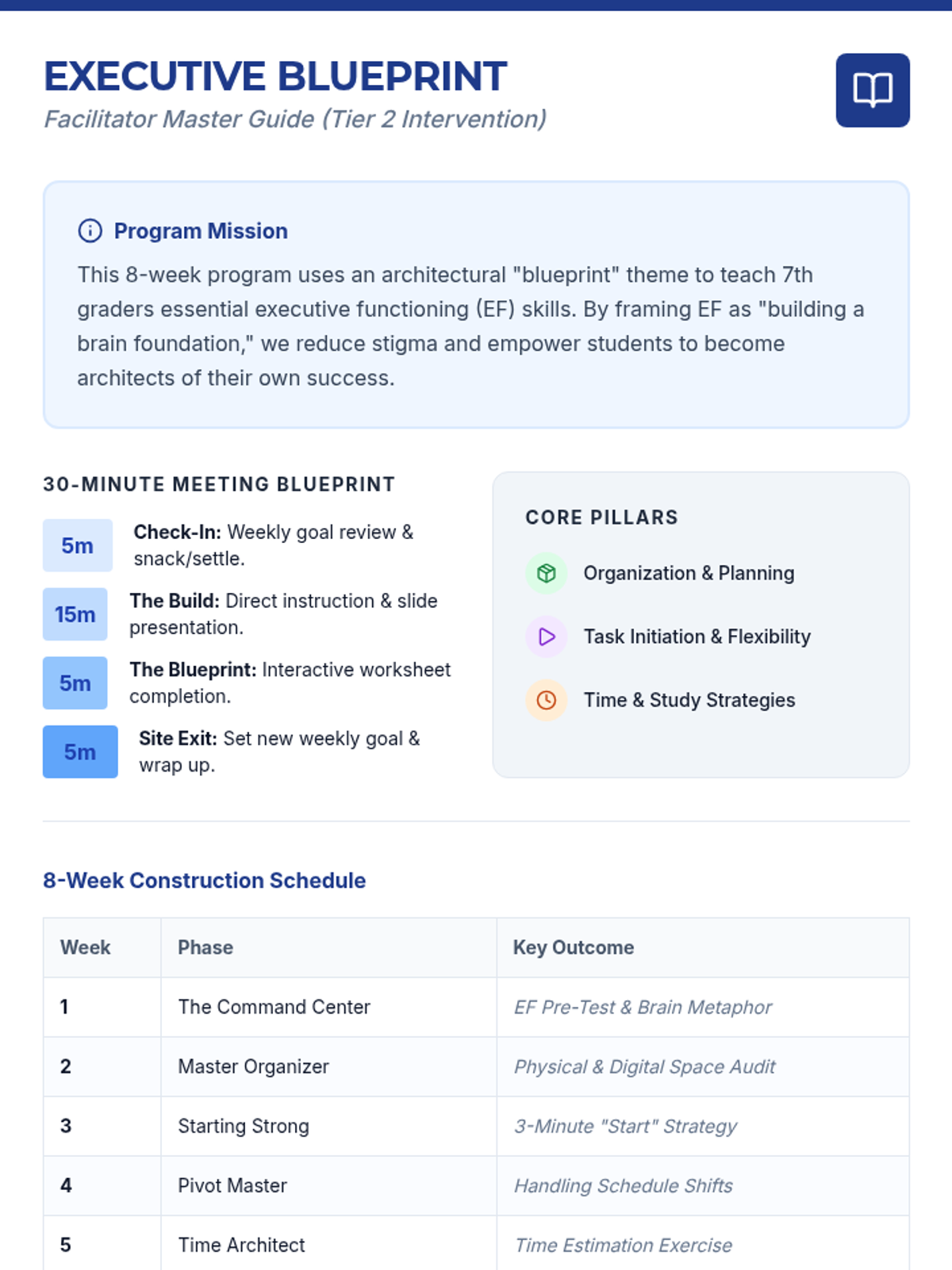
Program review, celebration of growth, and completion of the EF Post-Test.
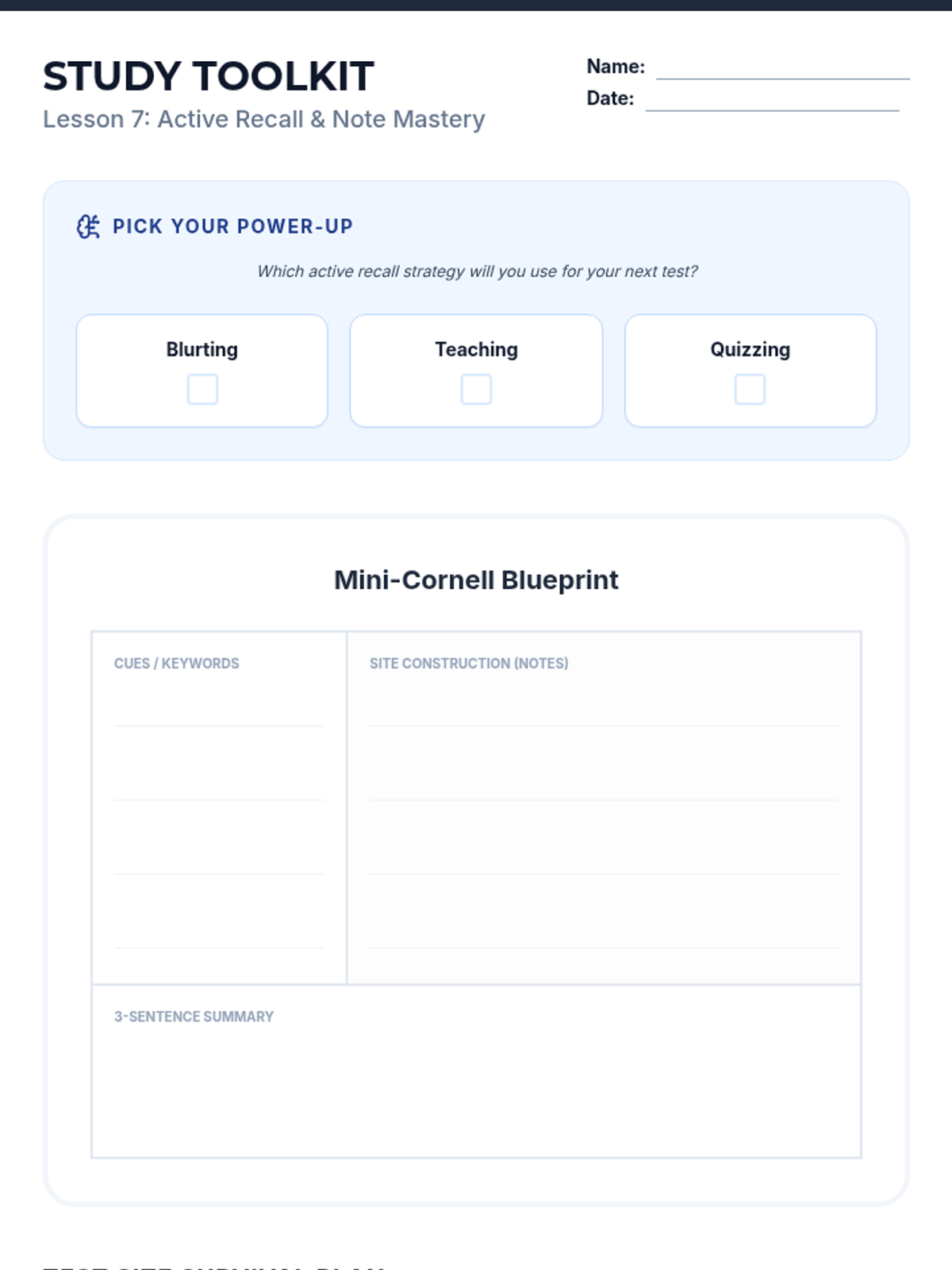
Instruction on effective note-taking and test-taking strategies tailored for middle school.
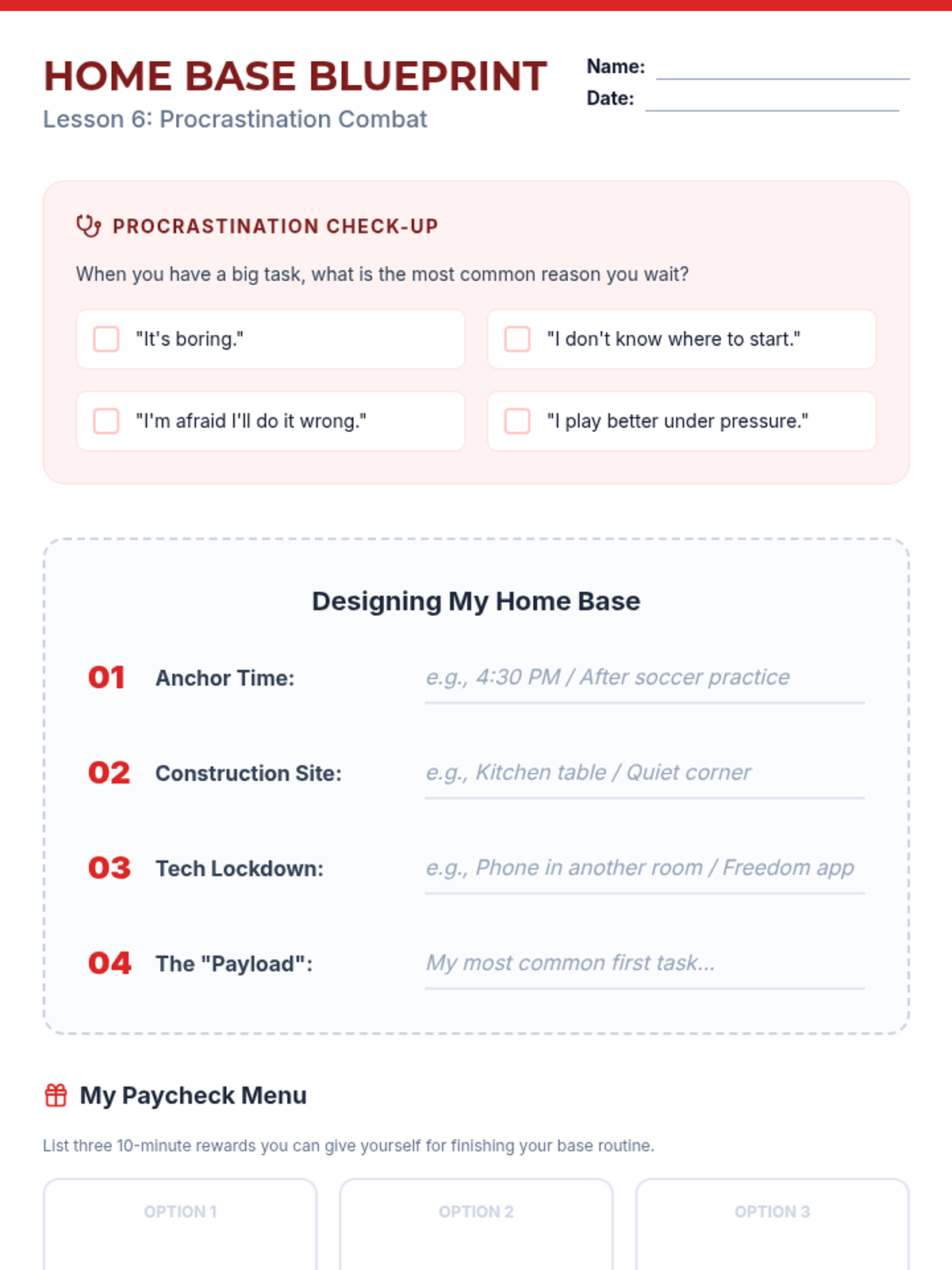
Practical strategies to defeat procrastination and streamline homework routines.
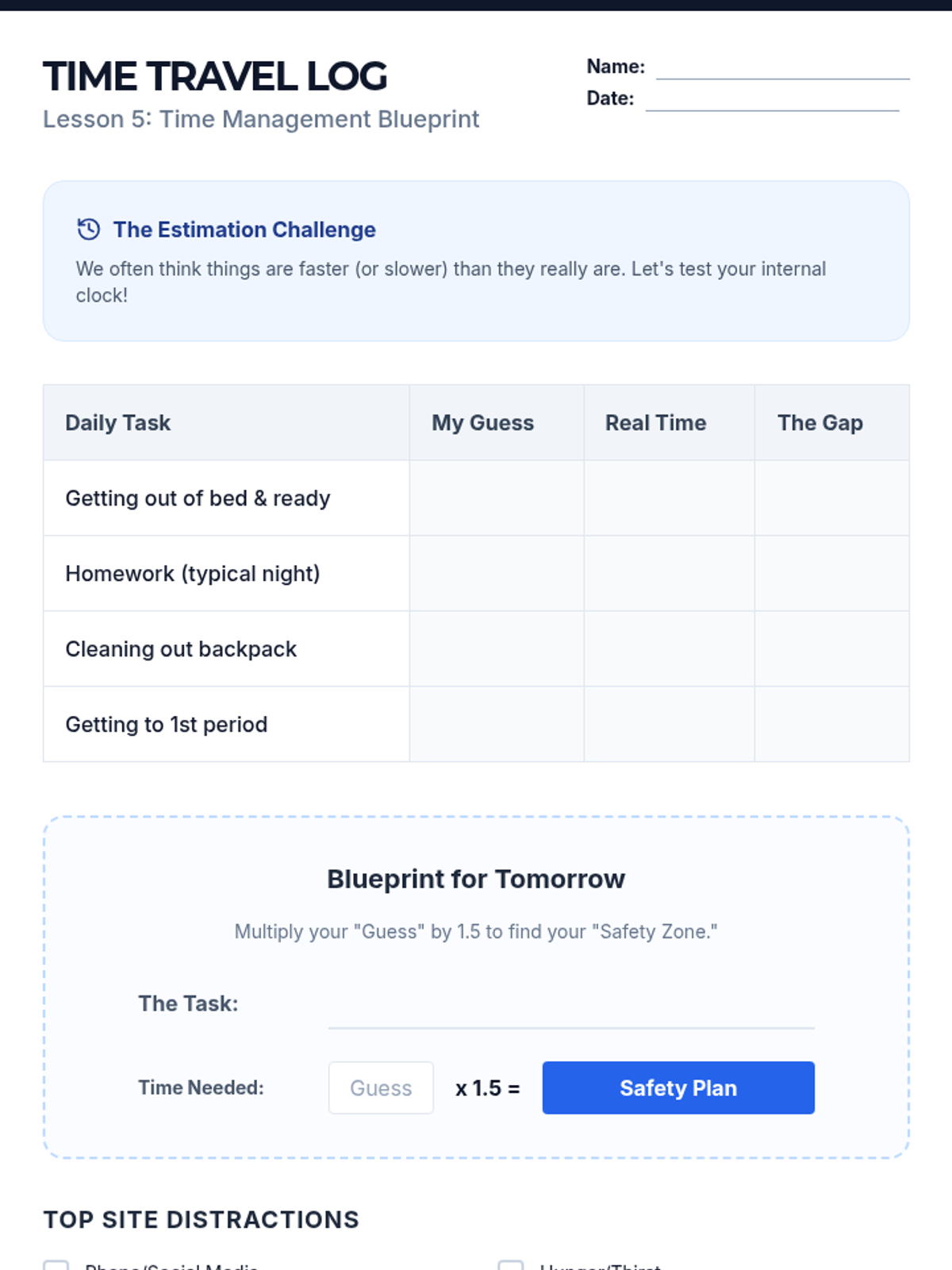
Building an awareness of time and learning how to estimate how long tasks actually take.
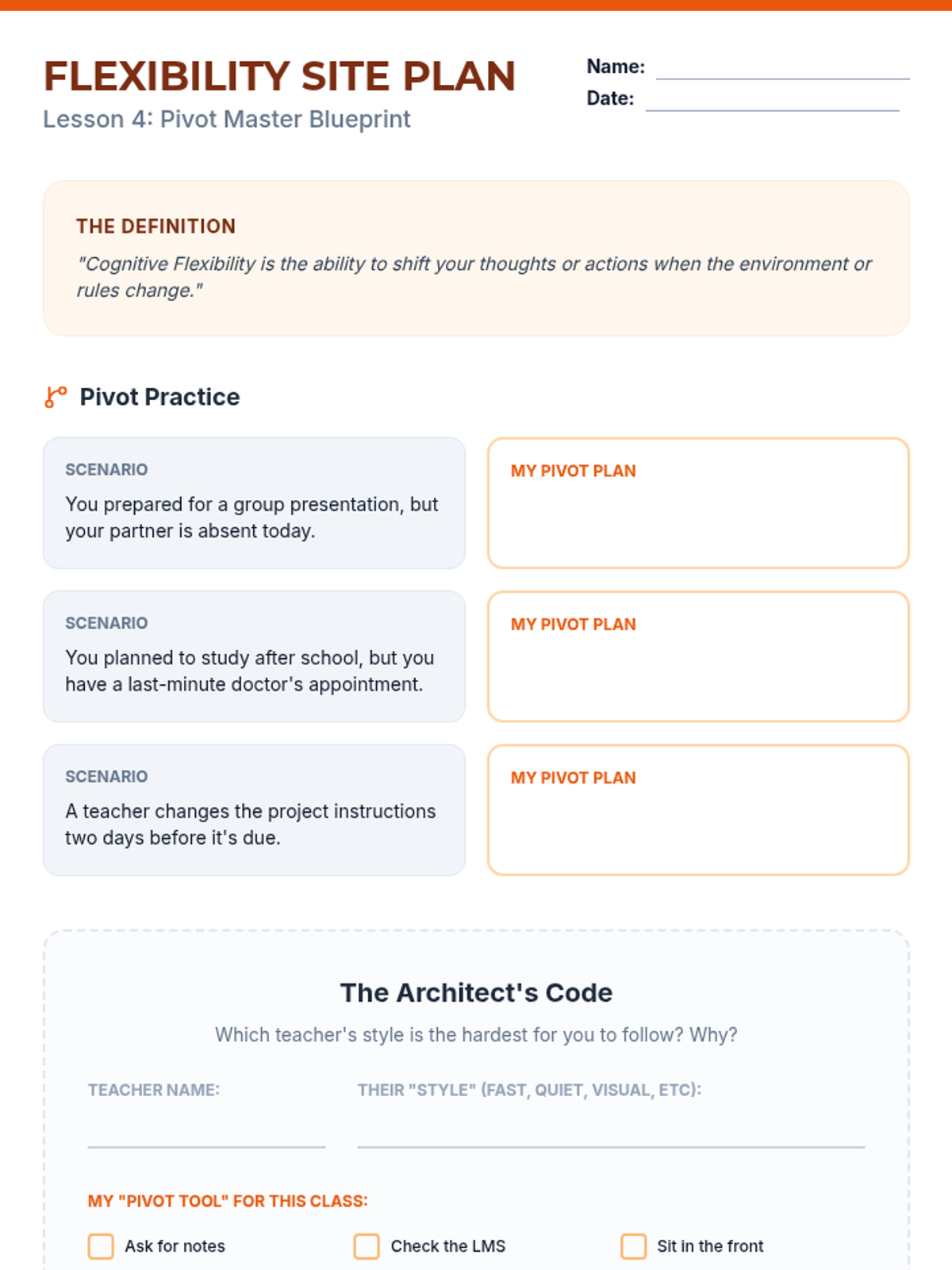
Developing cognitive flexibility to handle changes in schedules and different teaching styles.
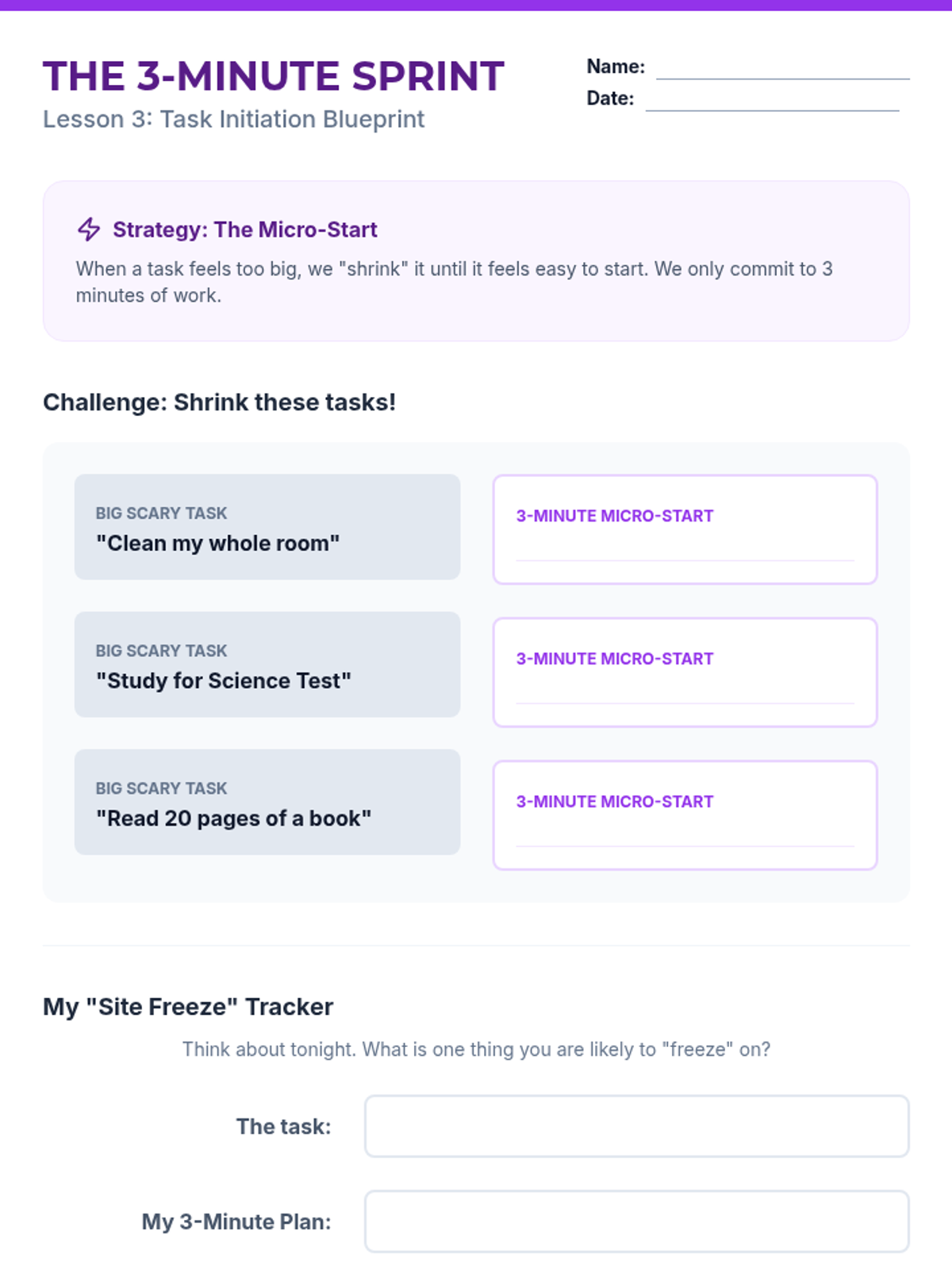
Strategies for overcoming the 'freeze' and getting started on difficult tasks immediately.
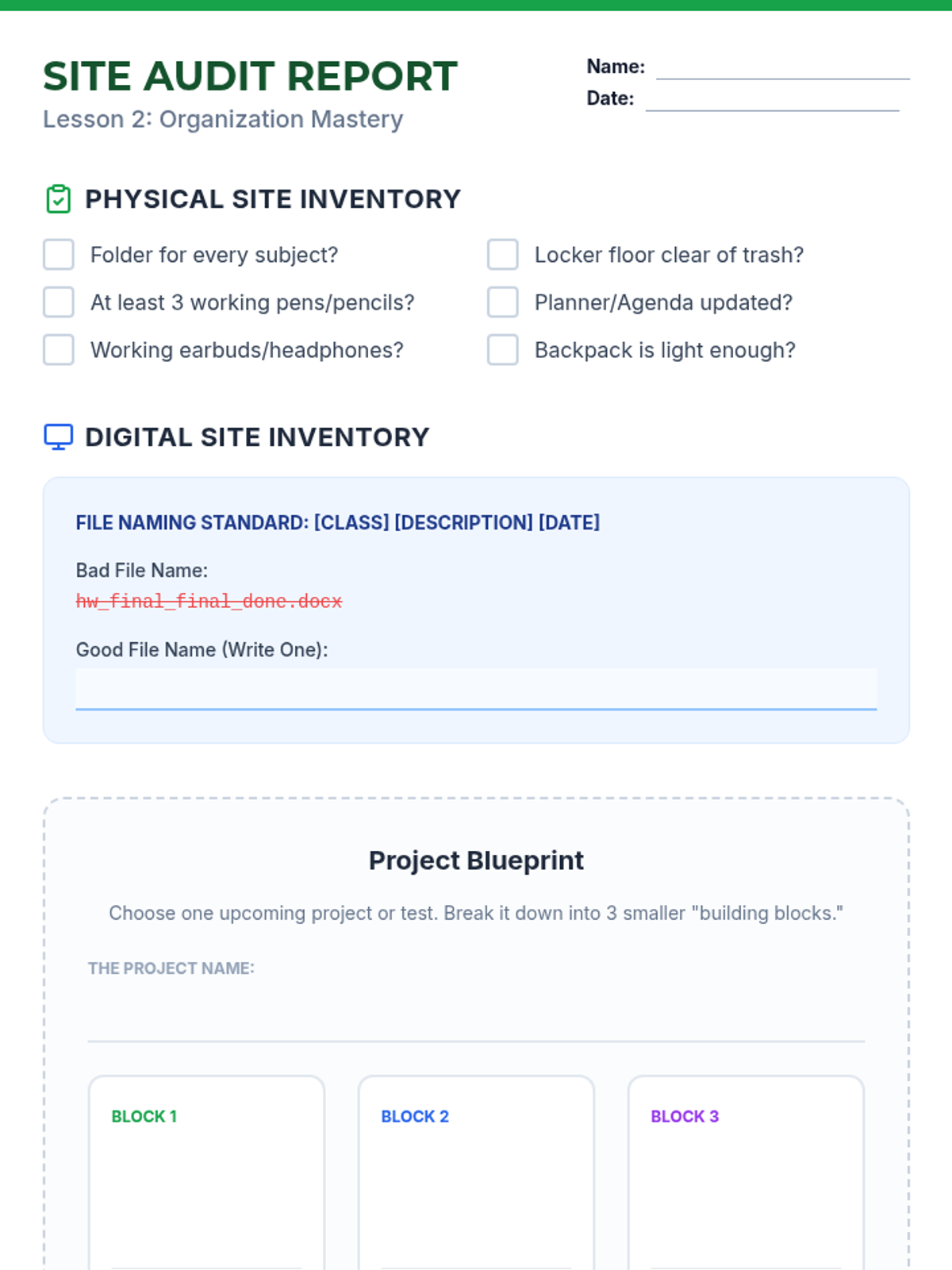
Focuses on organization of physical and digital spaces and long-term project planning.
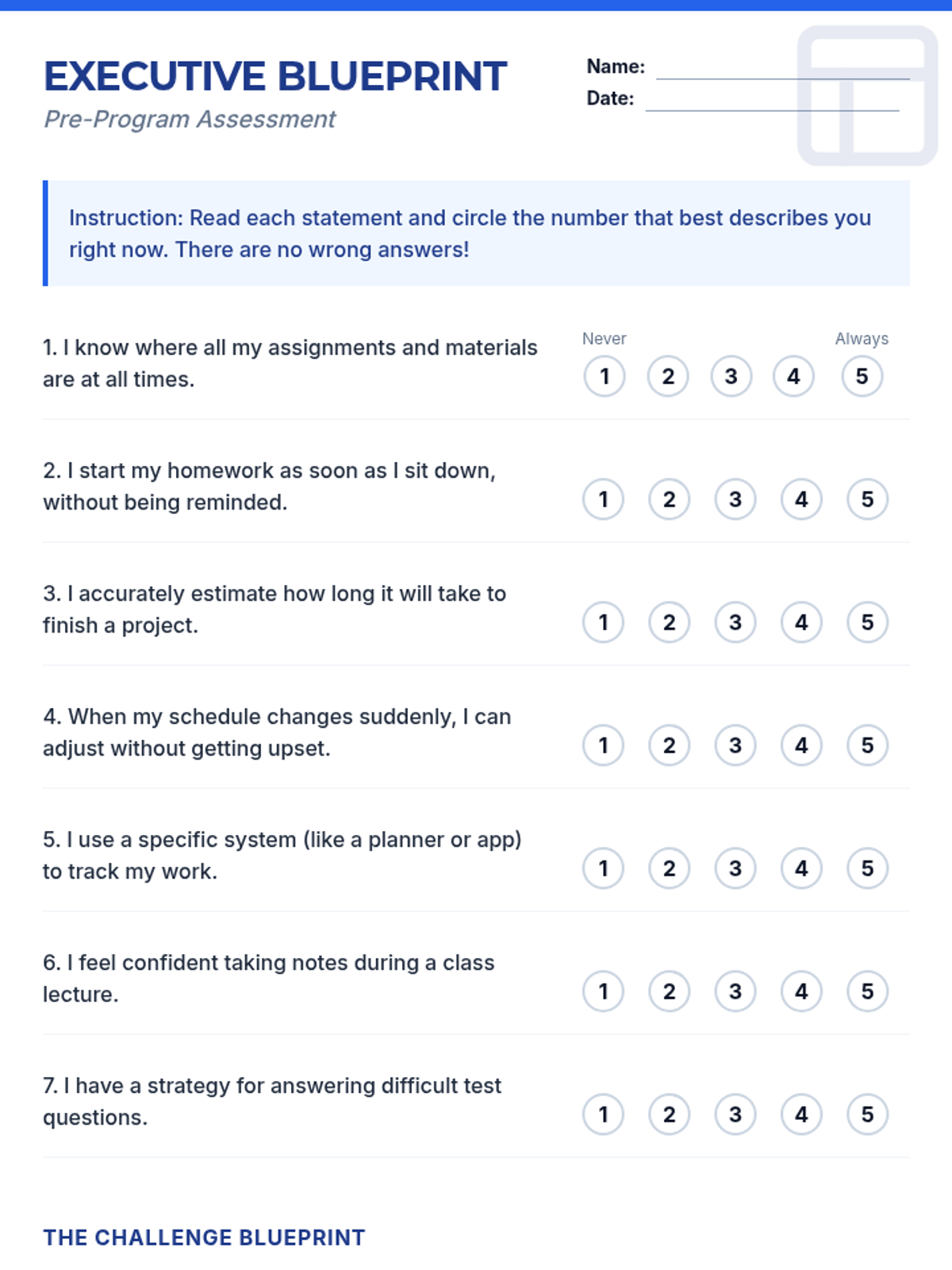
Introduction to the brain's "Command Center," establishing group norms, and completing the EF Pre-Test.
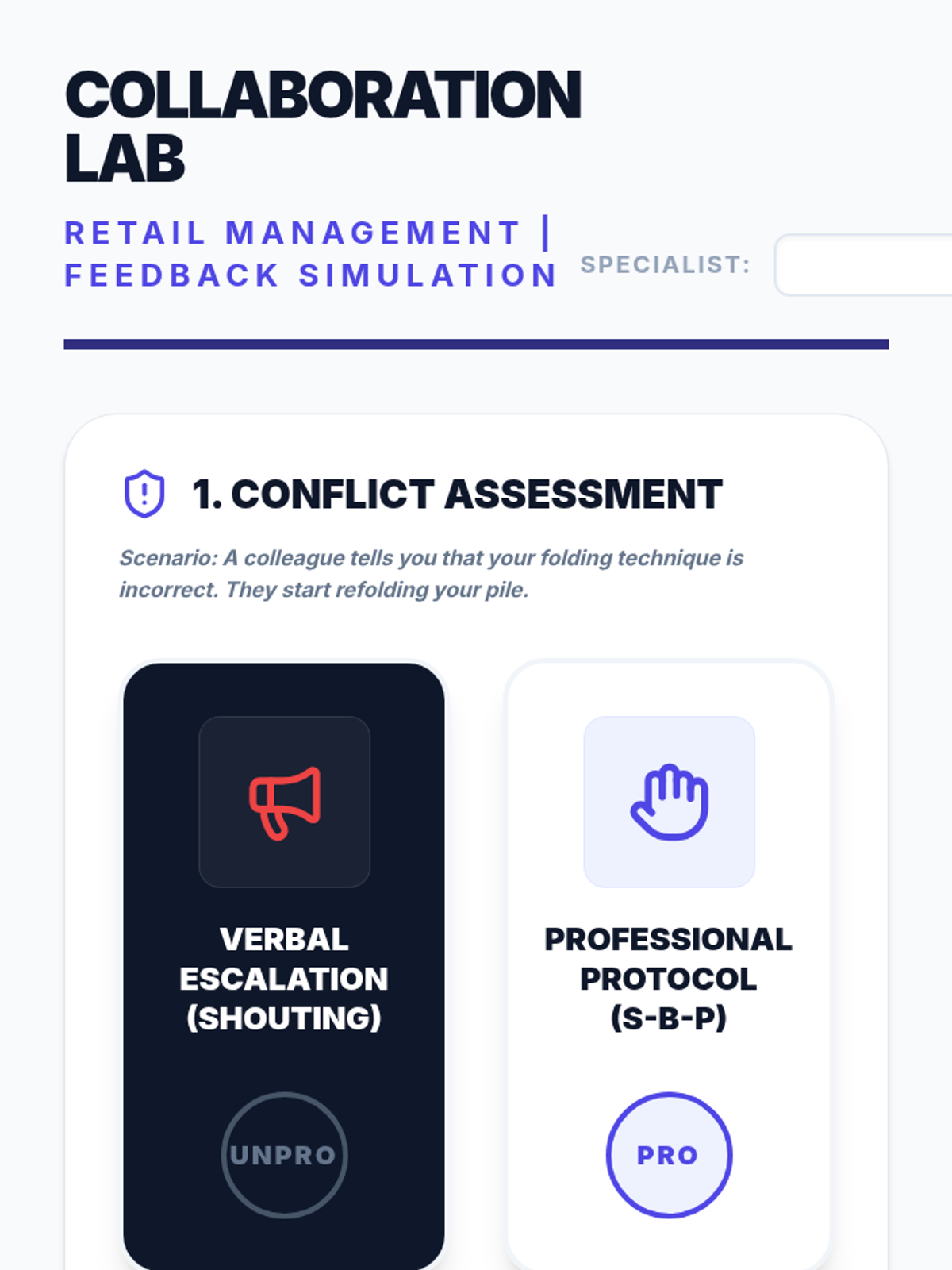
Focuses on managing customer-facing conflicts and changes in tasks within a department store setting.
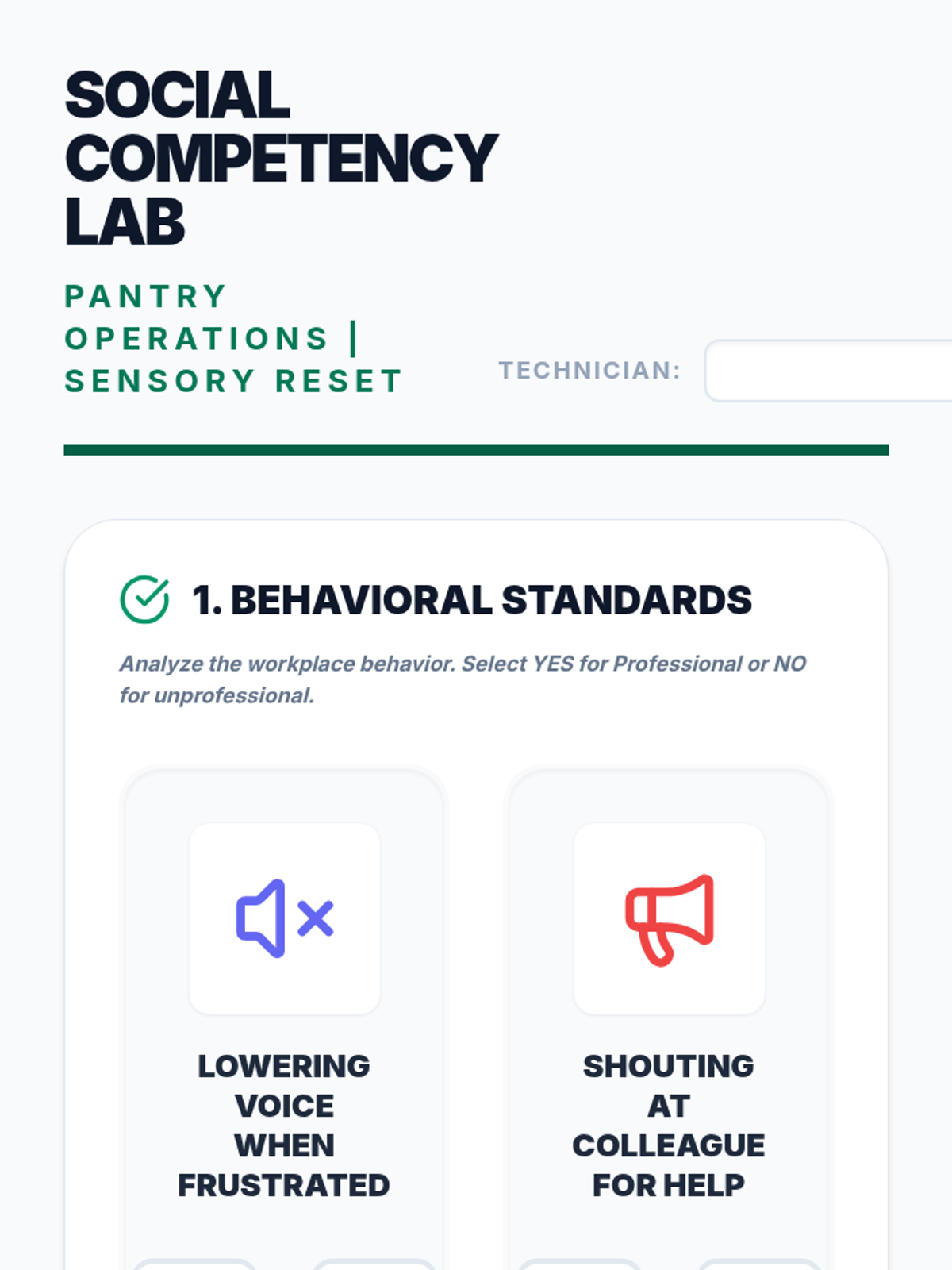
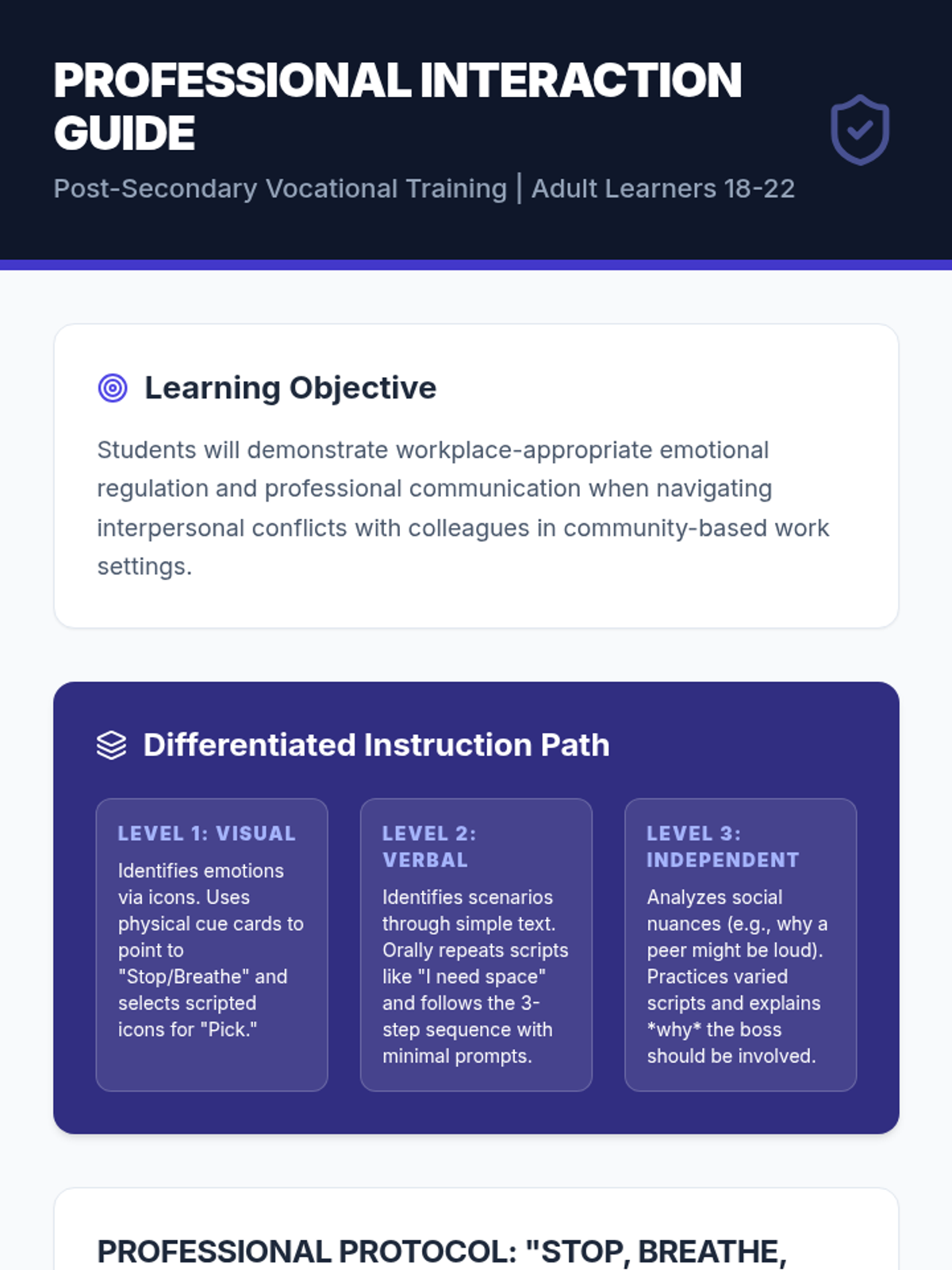
Focuses on navigating interpersonal and task-based conflicts in a food pantry environment using visual support scripts.
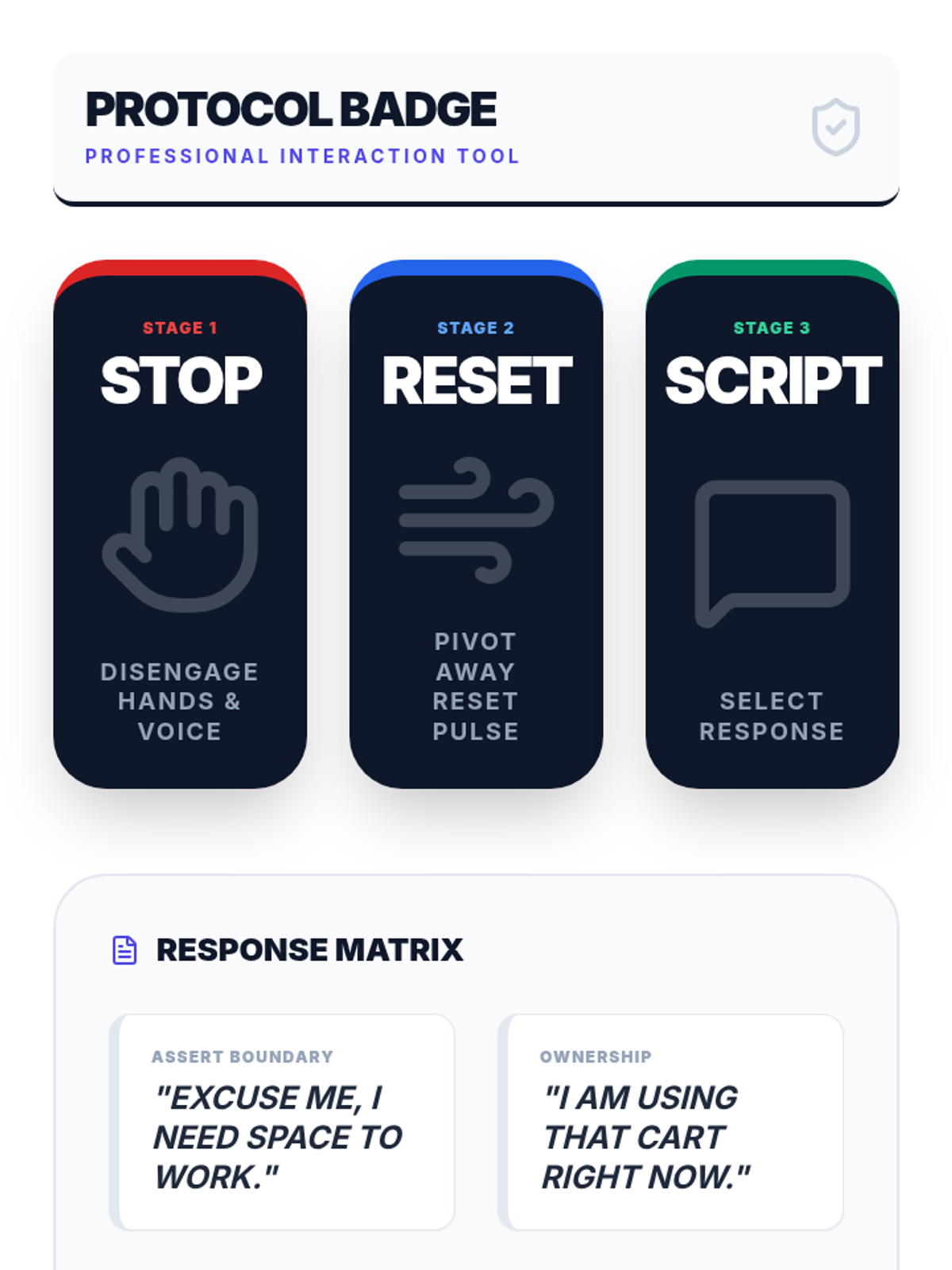
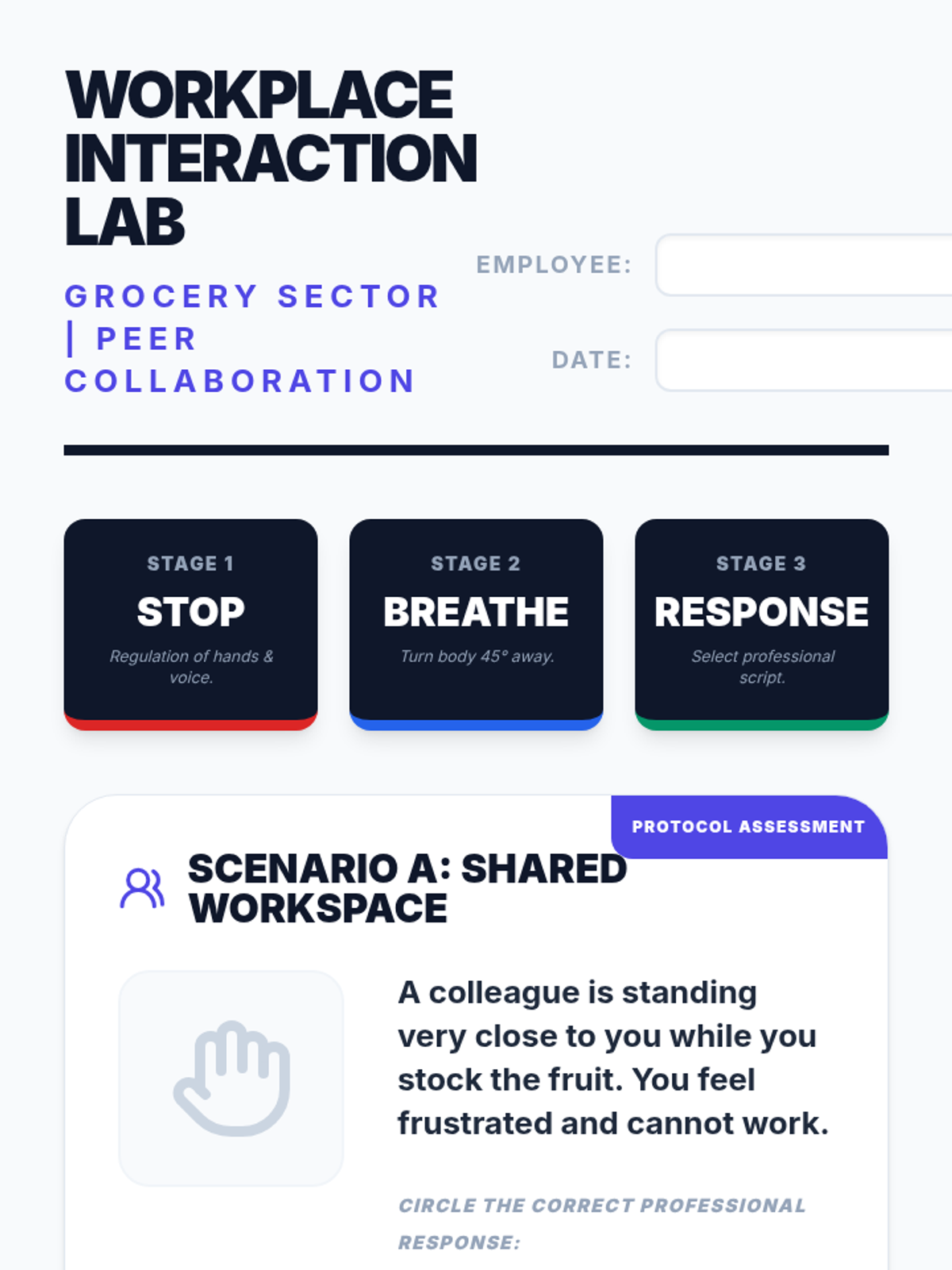
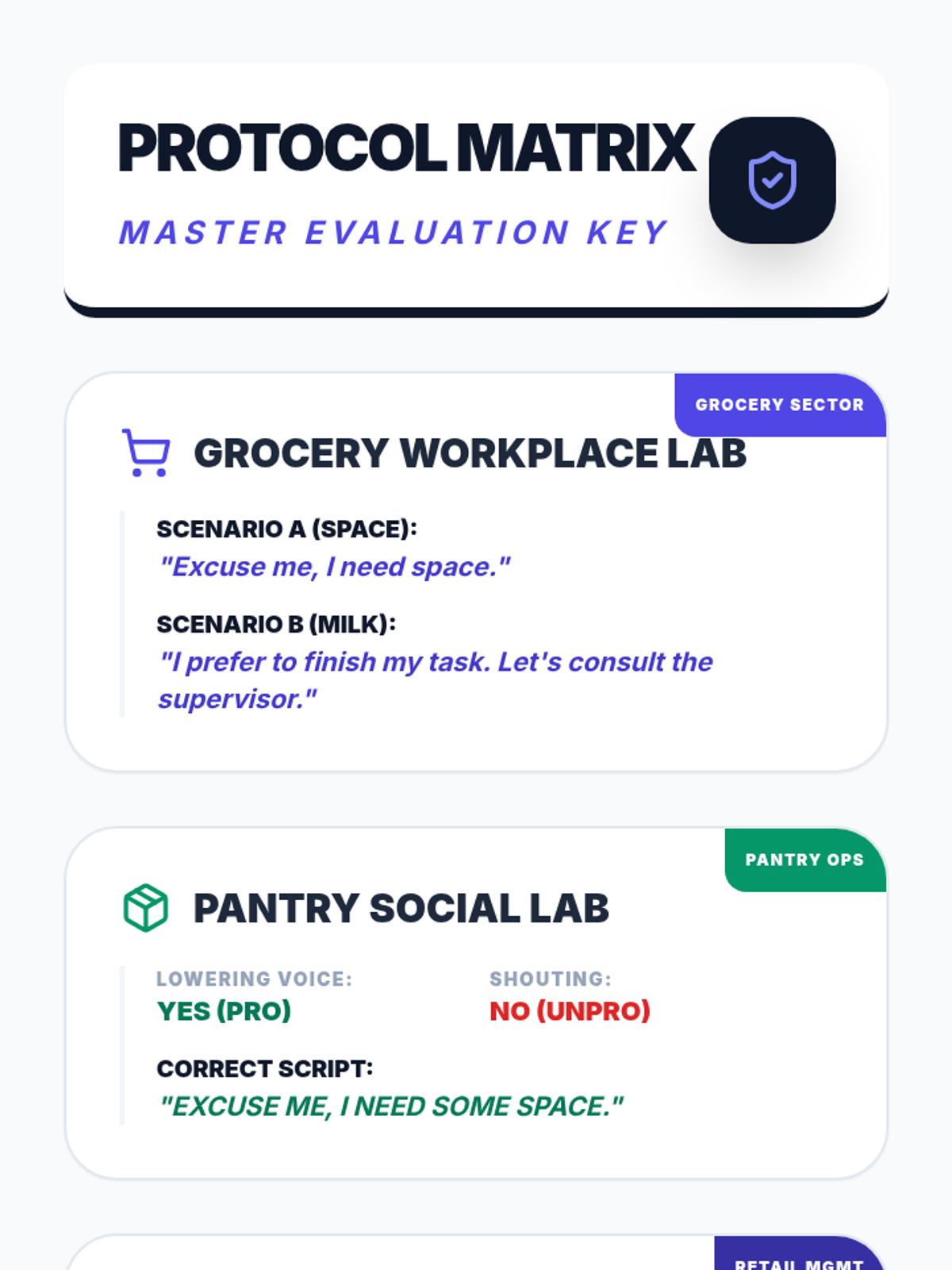
Focuses on identifying workplace conflicts in a grocery store setting and introducing the 'Stop, Breathe, Pick' visual strategy.
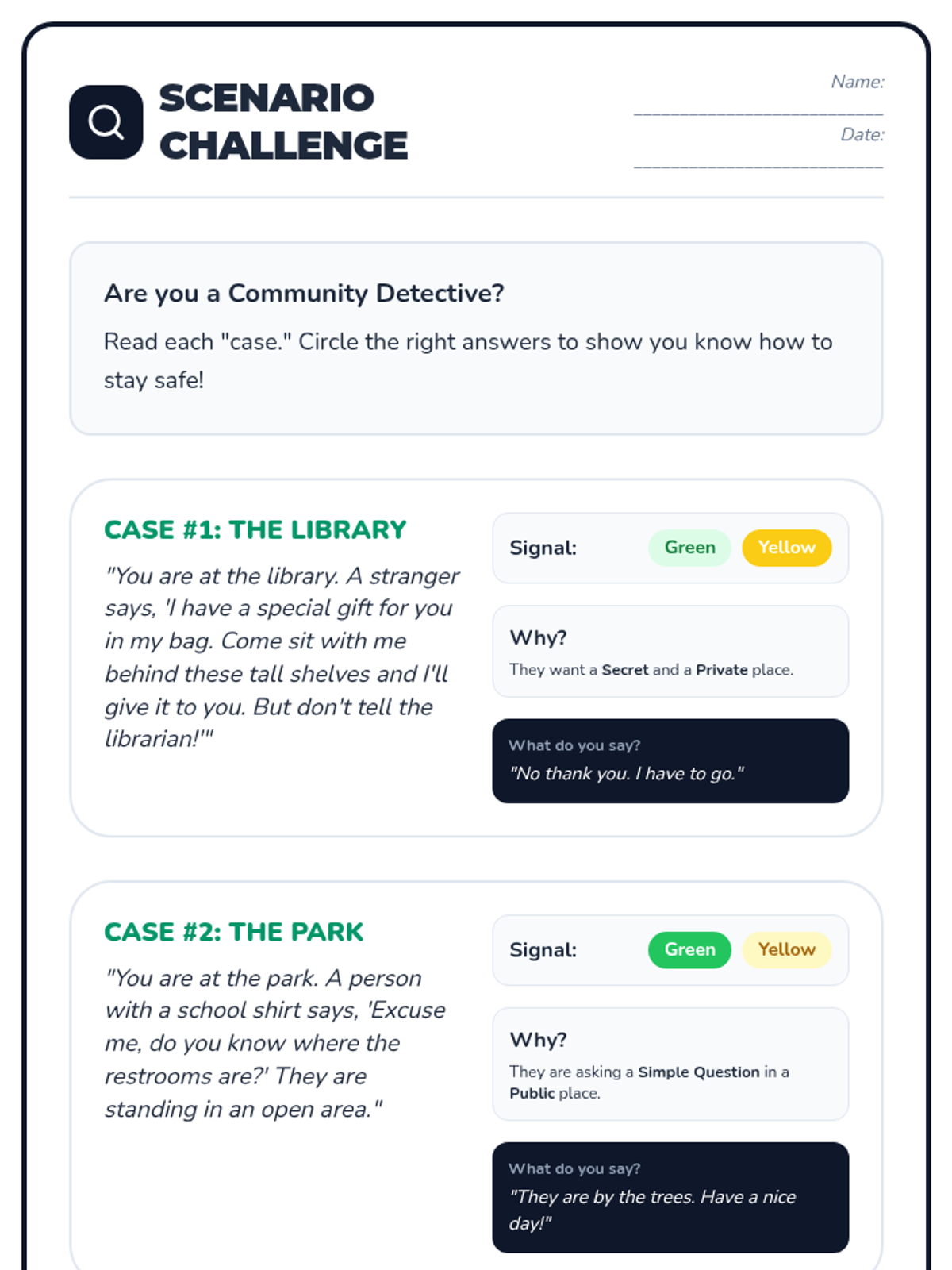
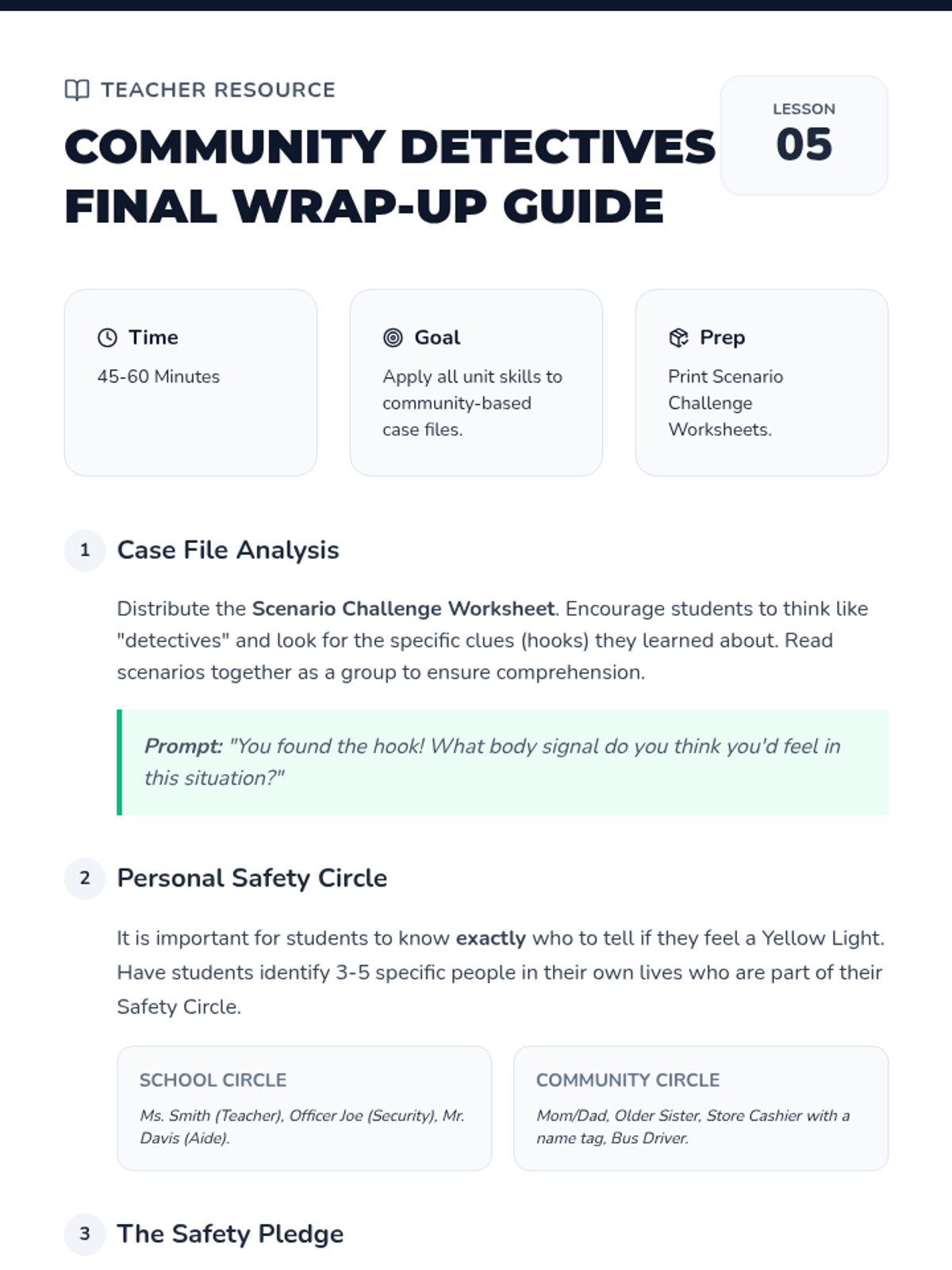
A cumulative review using community-based scenarios where students apply all previous skills to determine the safest course of action.
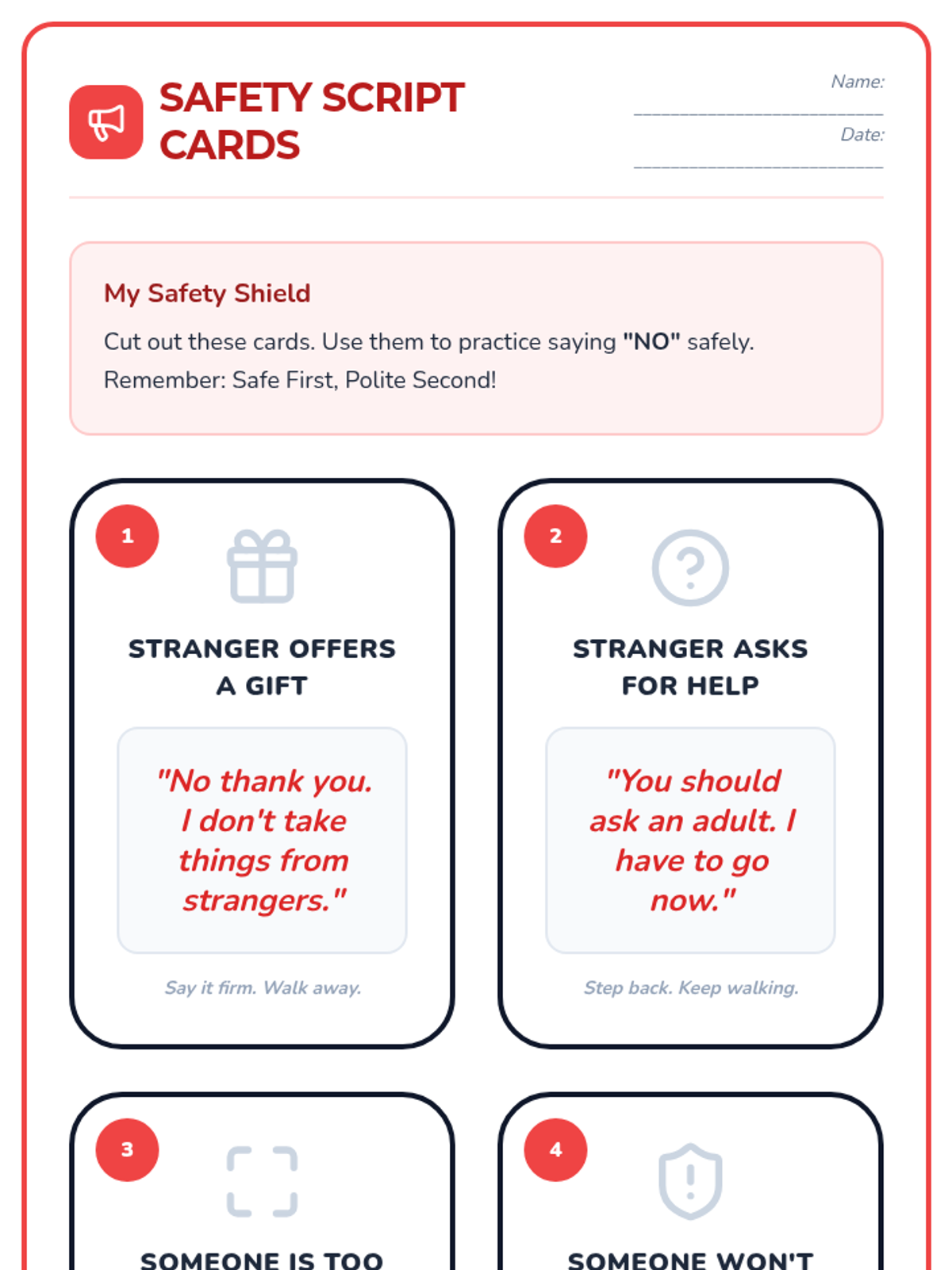
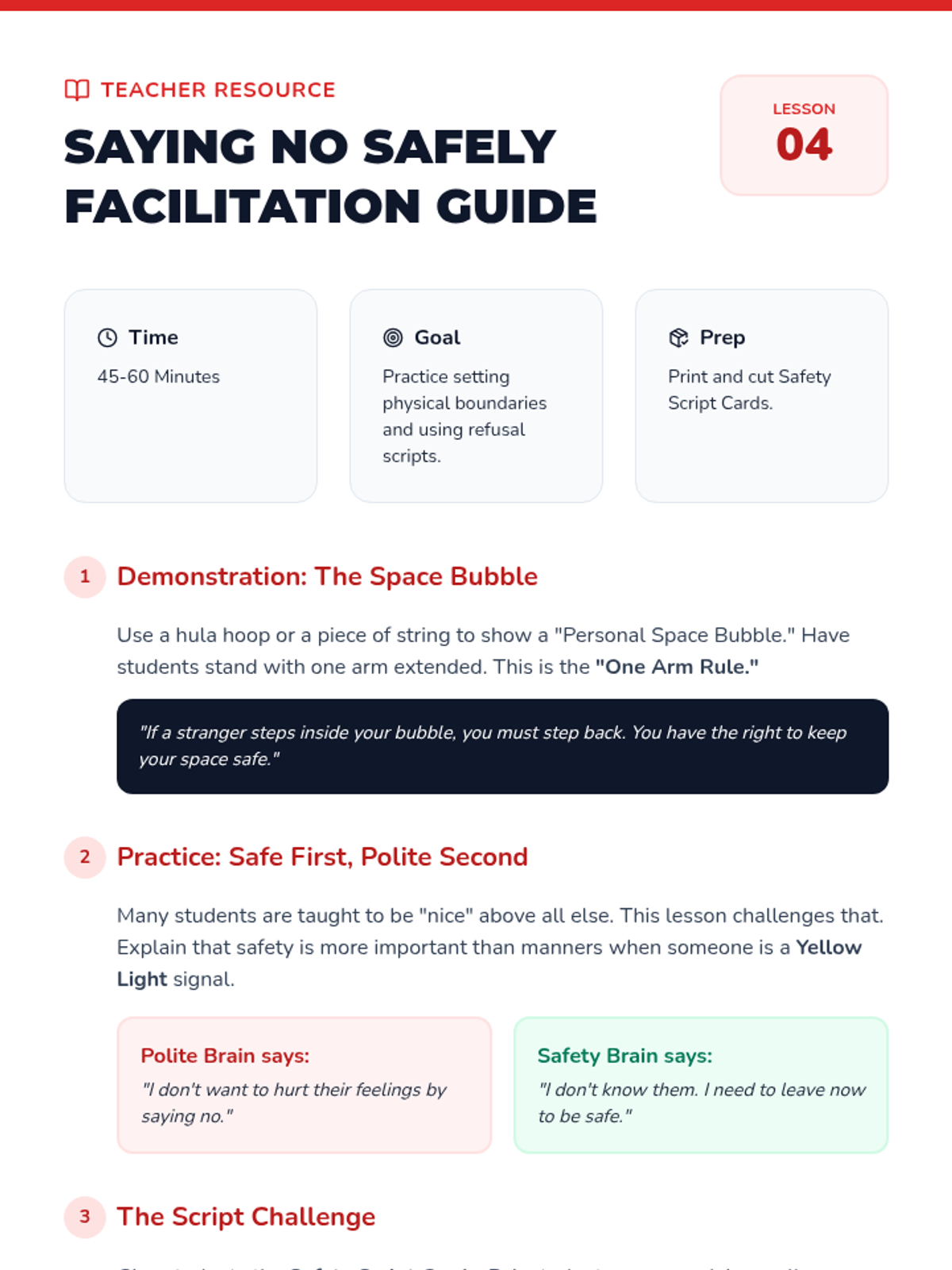
Provides concrete scripts and strategies for setting boundaries, saying 'no', and exiting uncomfortable situations safely in the community.
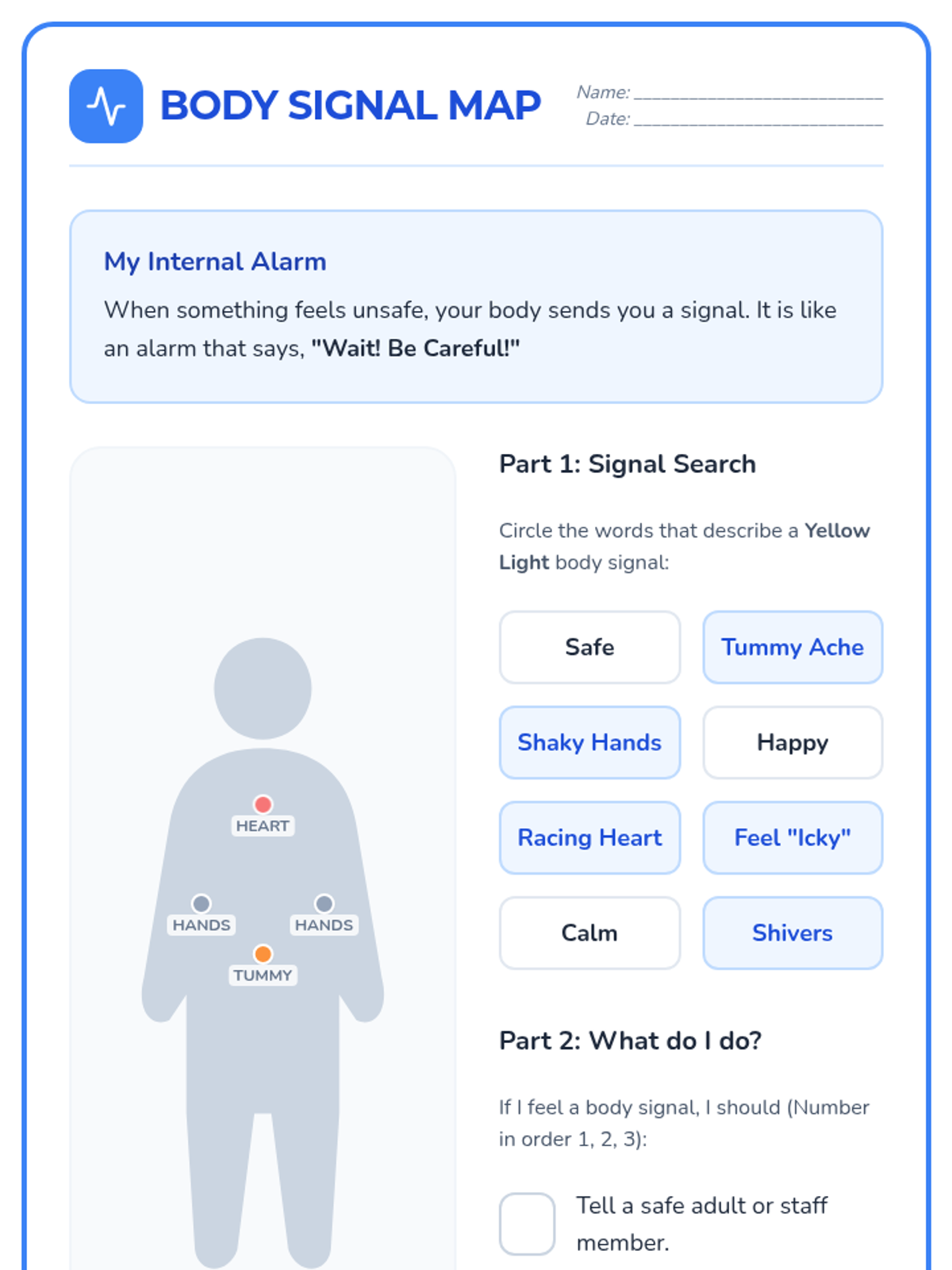
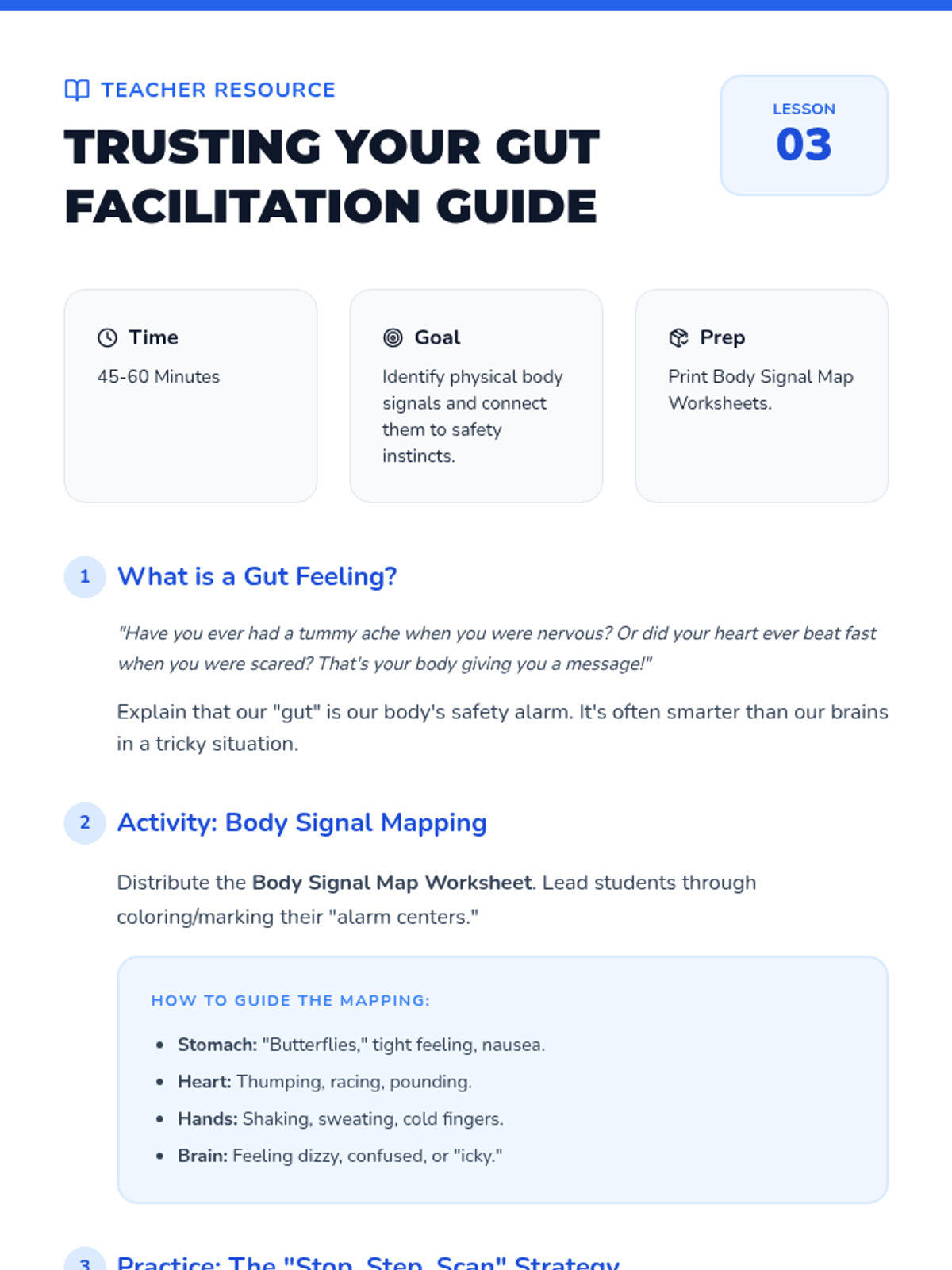
Teaches students to recognize physical 'gut feelings' or body signals that occur when something feels wrong, emphasizing trust in one's own instincts.
Focuses on identifying common 'hooks' or tactics used in manipulation, such as asking for unnecessary help, offering unexpected gifts, or requesting secrets.