Teaching students the 'Next Dollar Up' strategy to successfully make purchases without needing to calculate exact change, focusing on items up to $10.
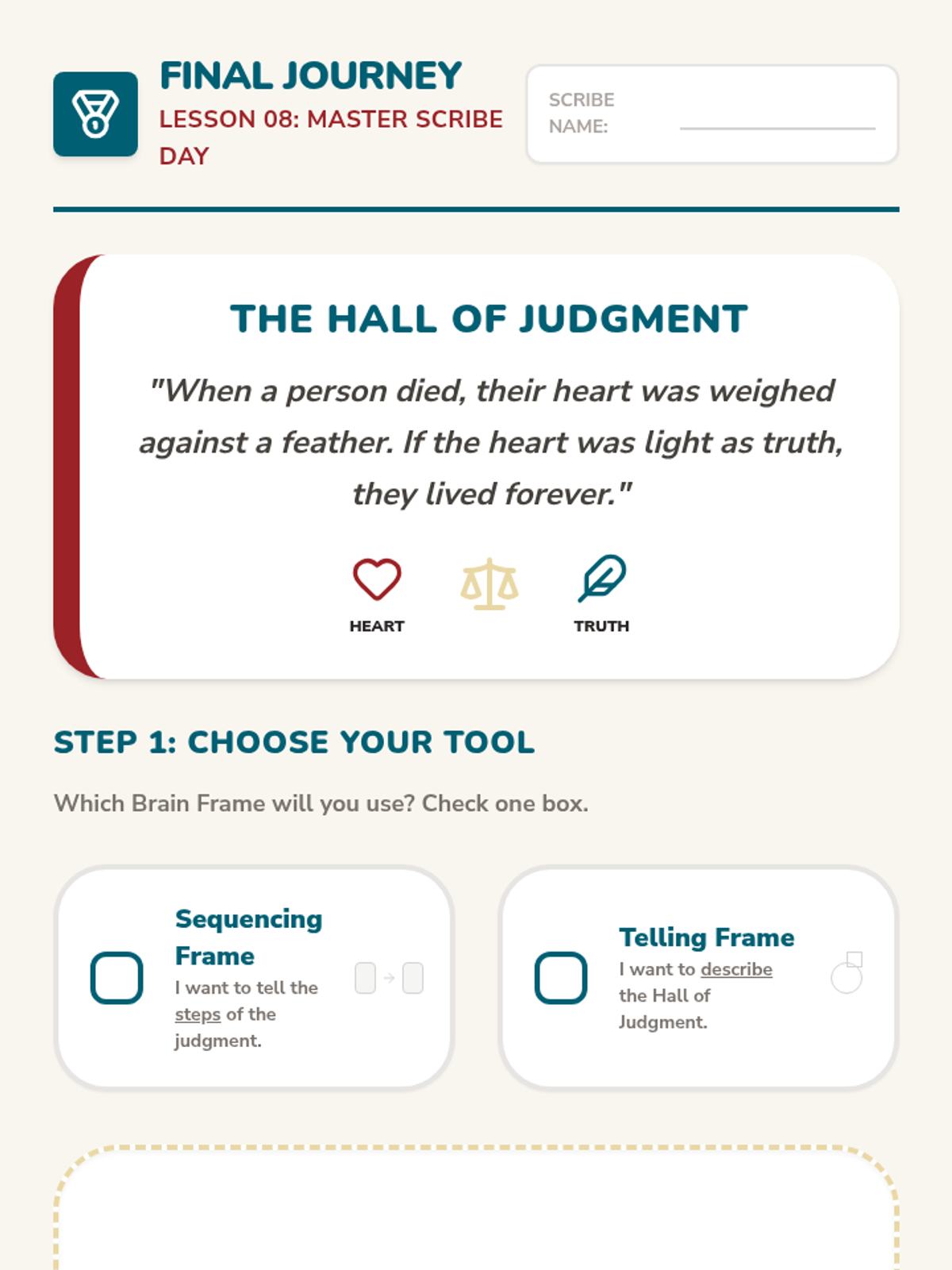
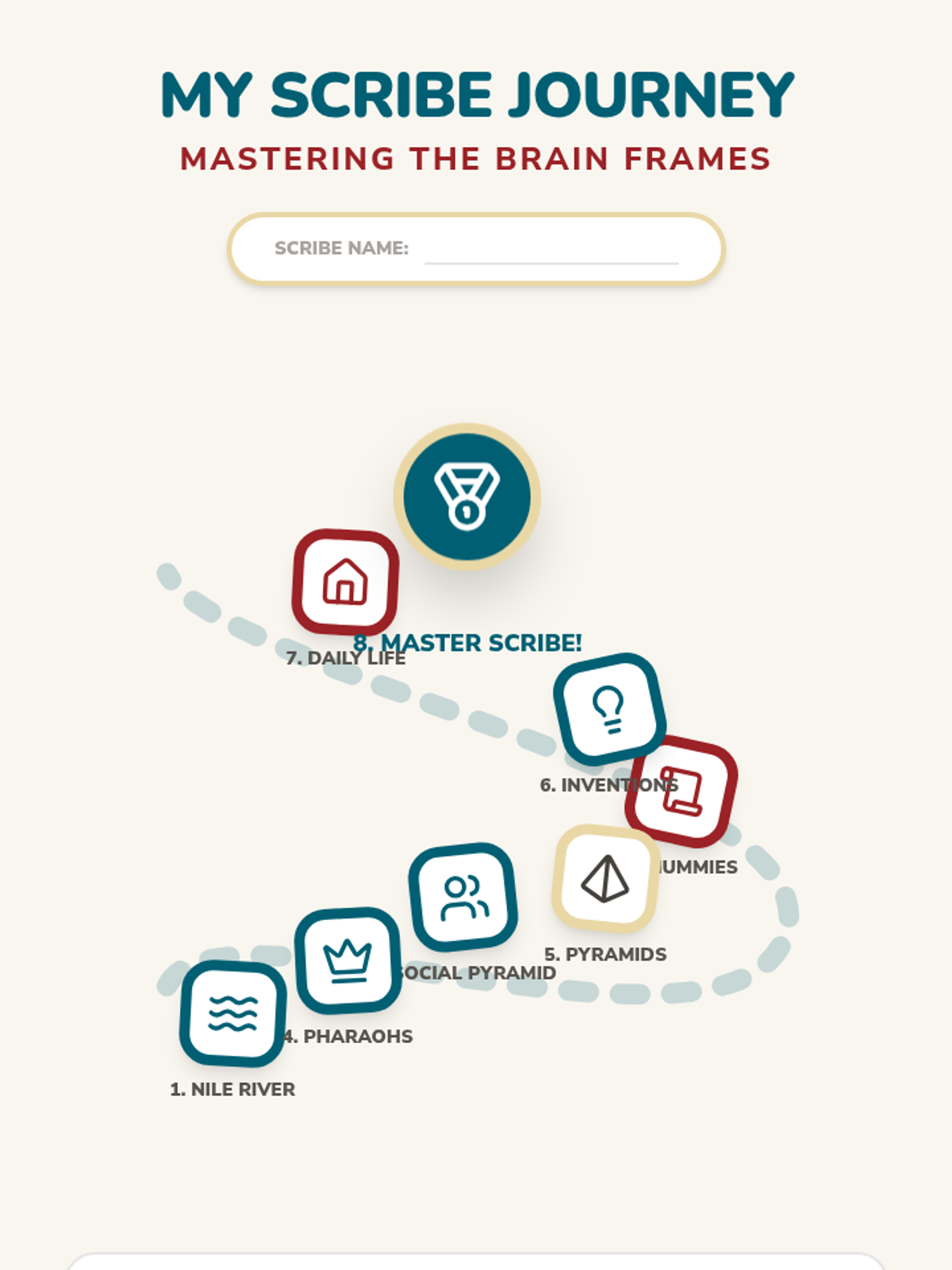
Independent application of a Brain Frame to describe the Hall of Ma'at. Provides choice and structured review of all frames.
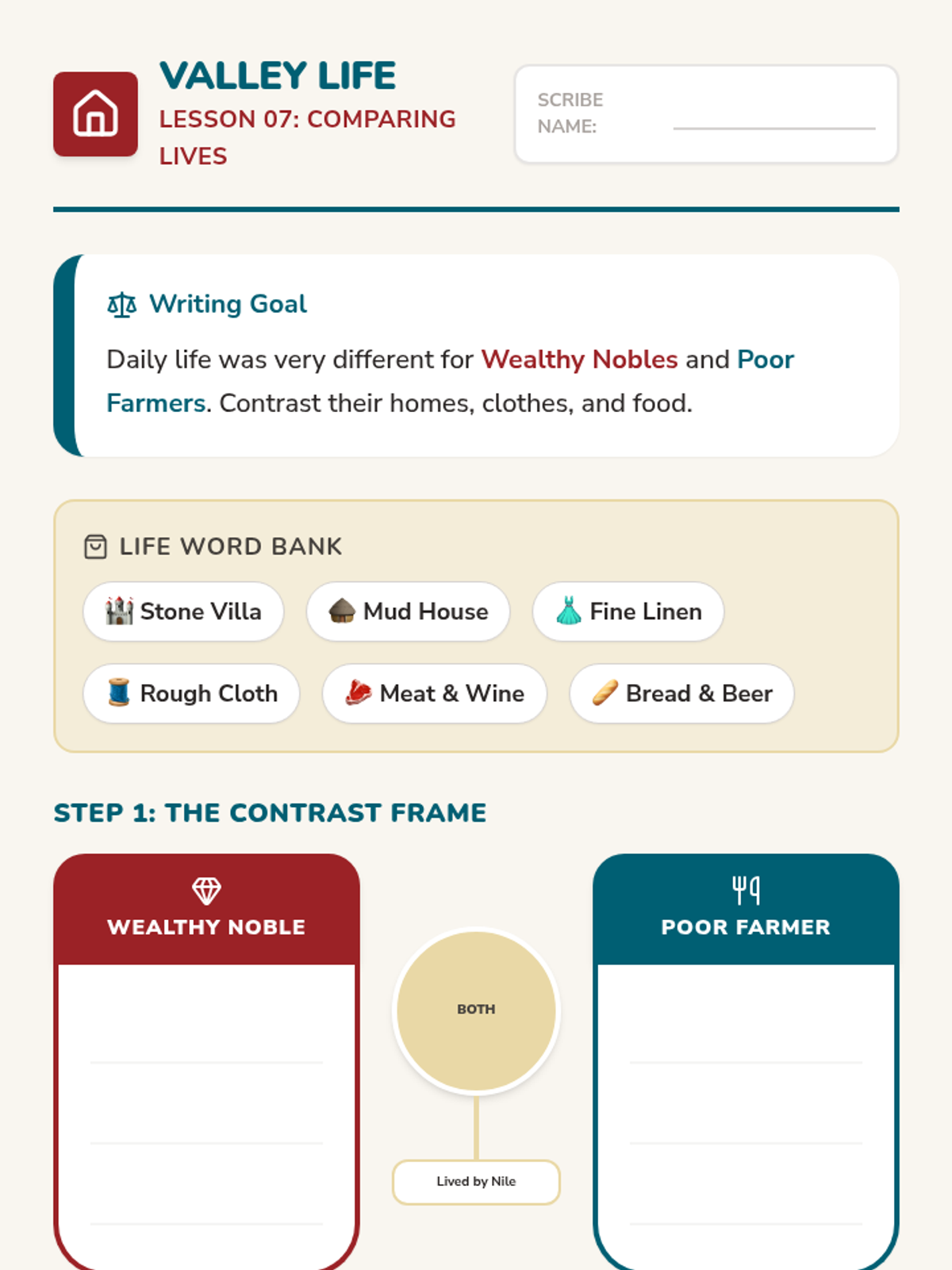
Comparing daily life of rich and poor Egyptians. Focuses on specific contrasting words like 'but' and 'different' for 4th grade writers.
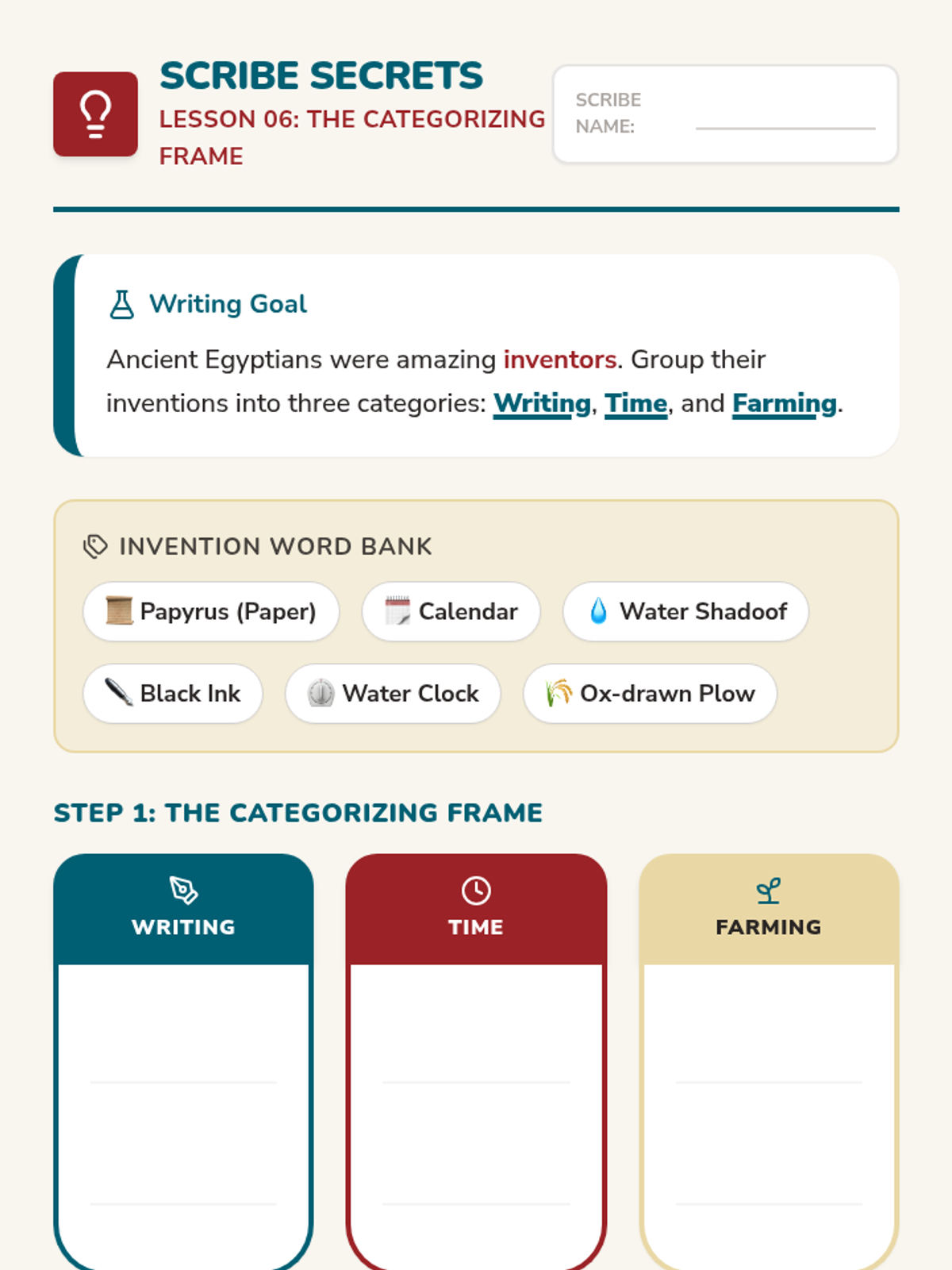
Using a Categorizing Frame to group Egyptian inventions. Focuses on word-to-category matching and guided drafting.
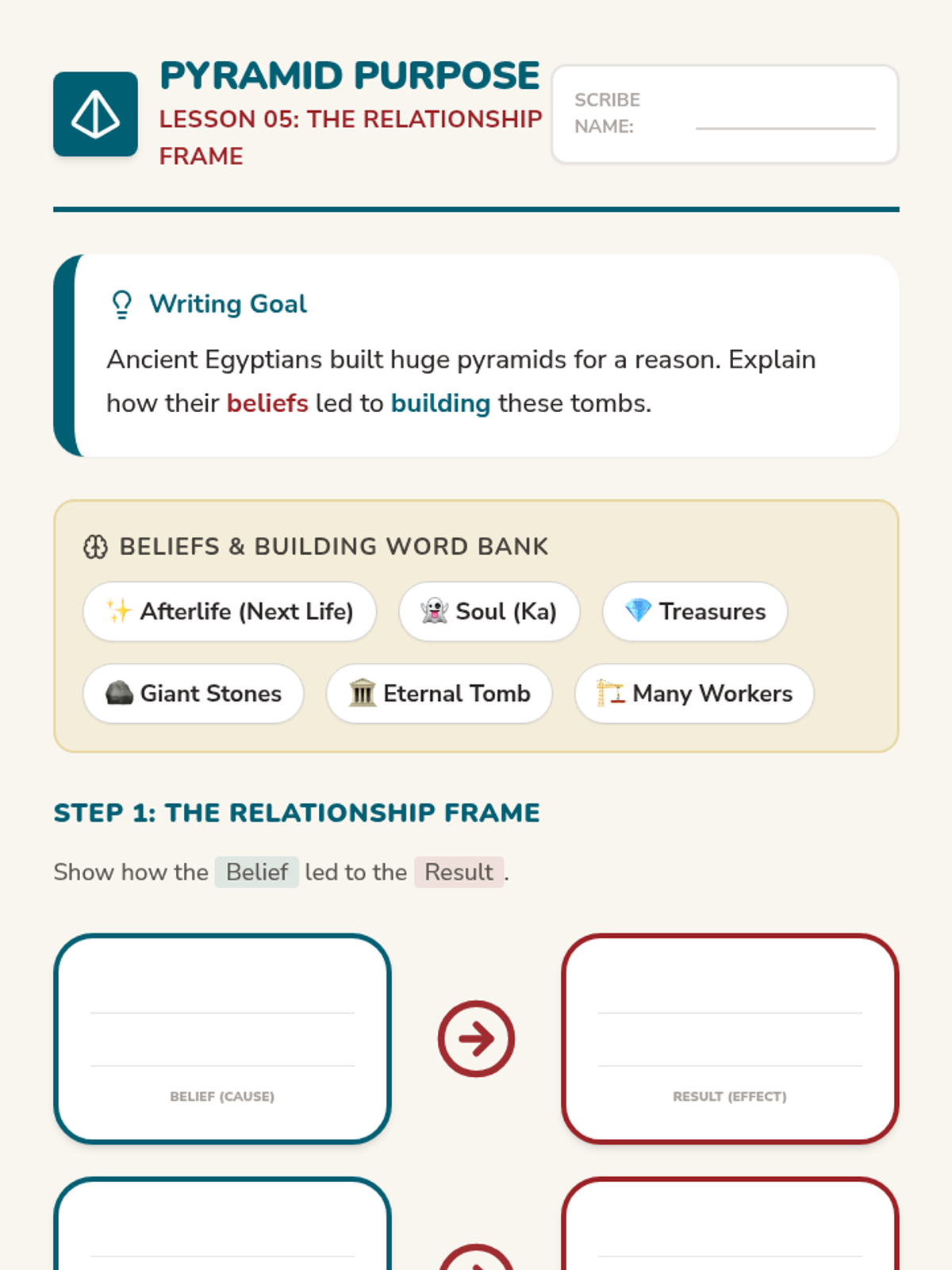
Understanding why pyramids were built using a Relationship Frame (Cause and Effect). Uses simplified concepts and clear visual connections.
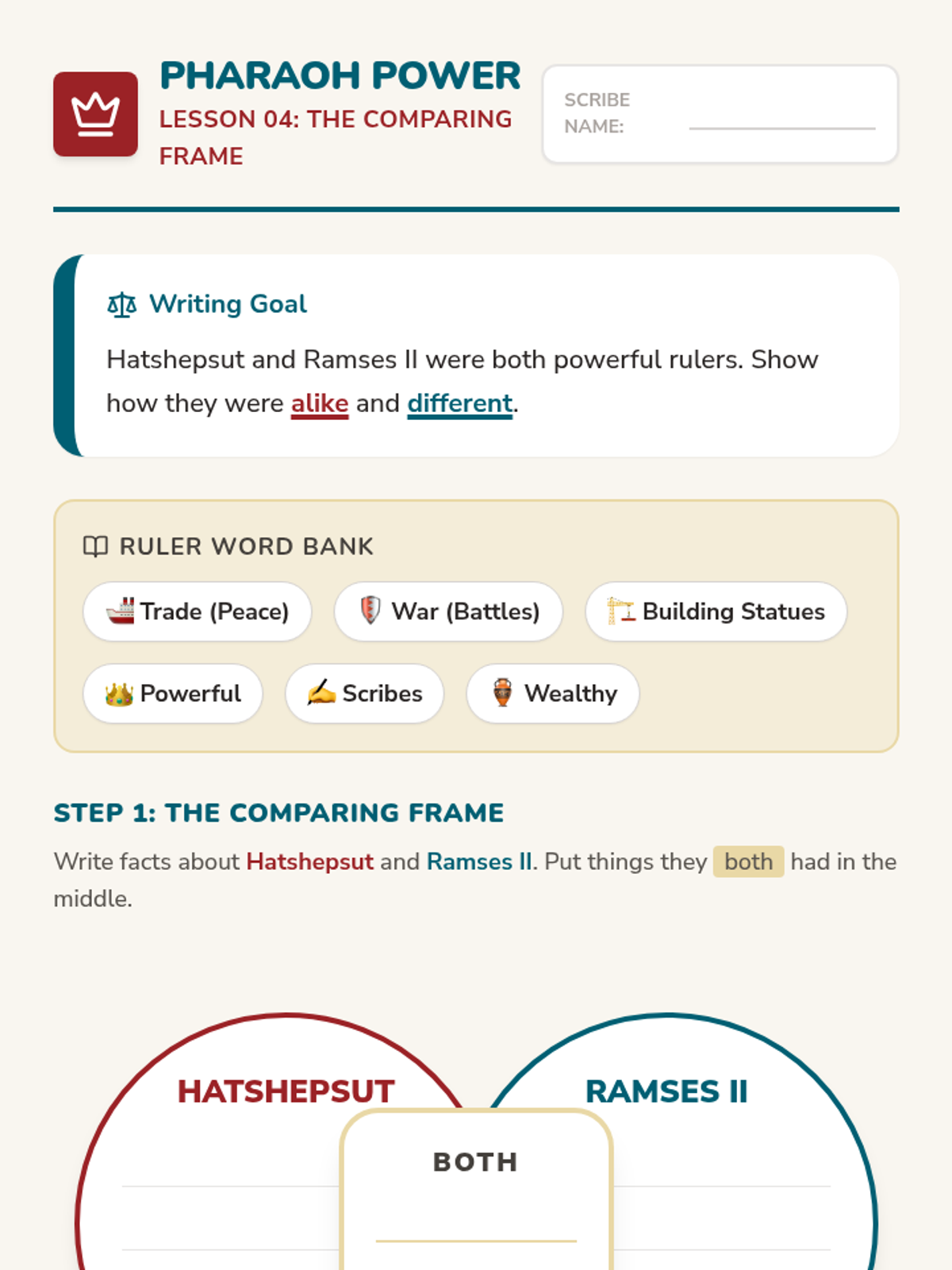
Comparing the lives of Hatshepsut and Ramses II using a Comparing Frame. Provides clear visual contrasts and sentence-level supports.
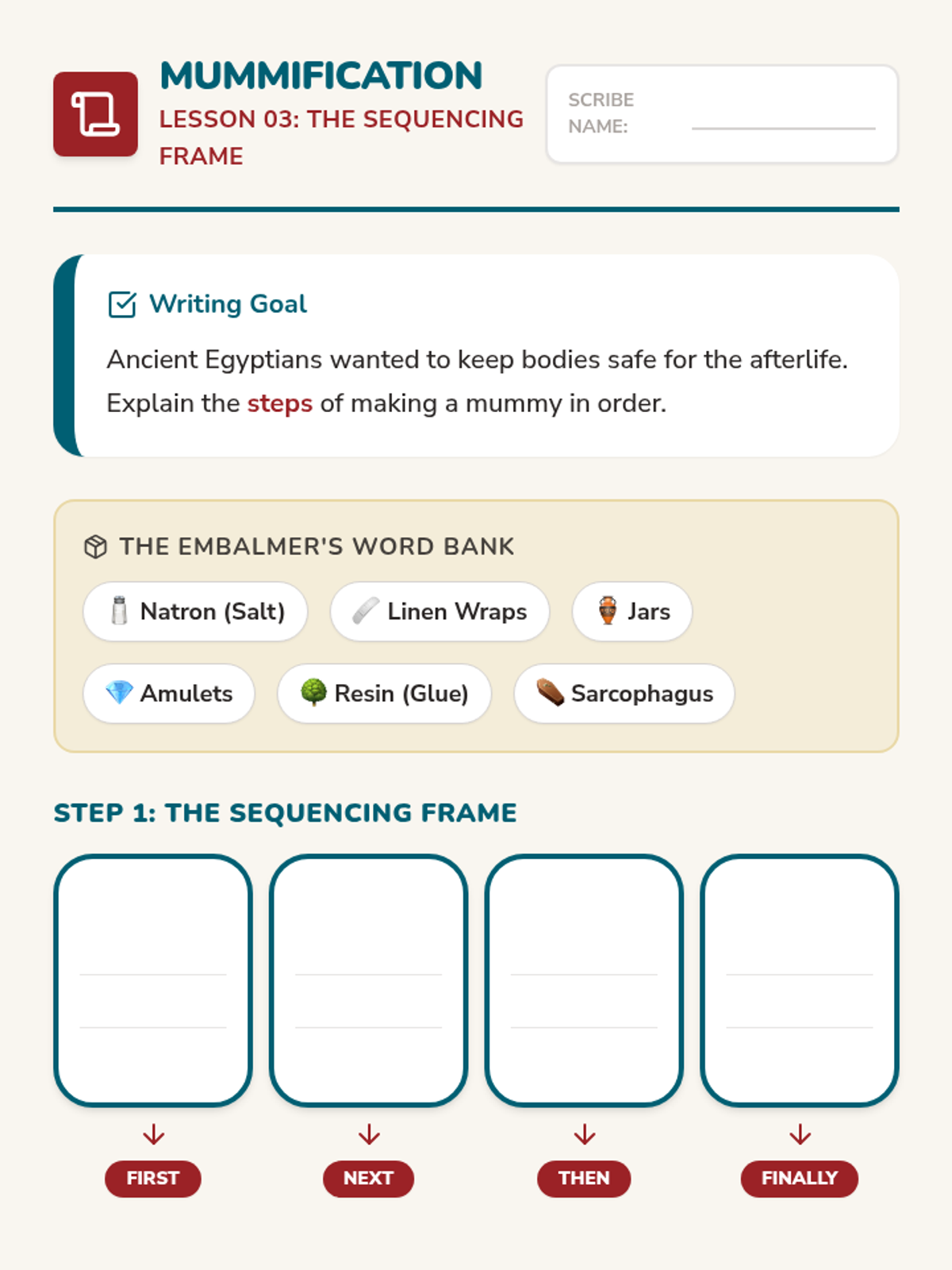
Exploring the steps of mummification using the Sequencing Frame. Emphasizes chronological transition words with visual cues.
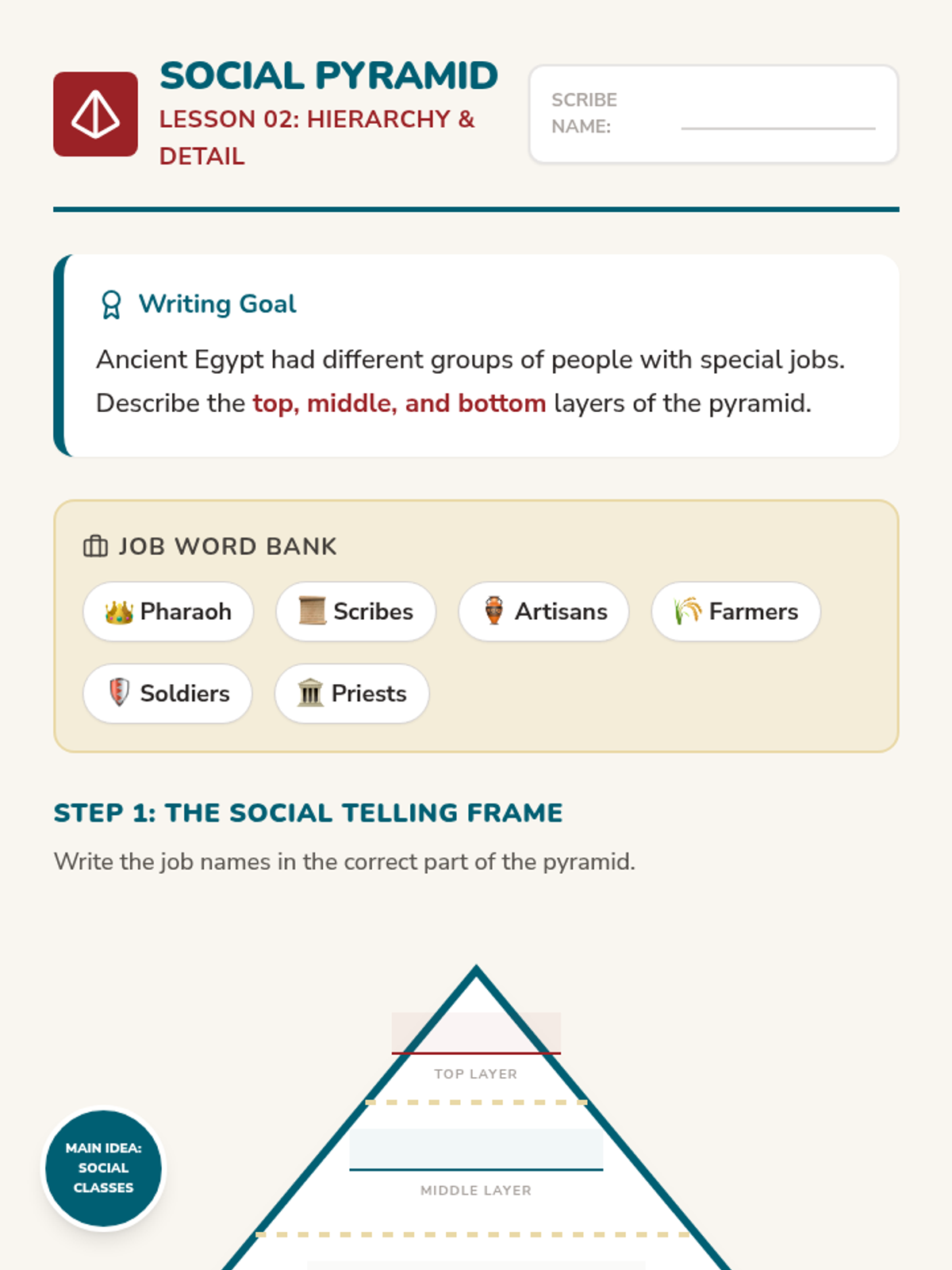
Learning about the Egyptian social structure using a Telling Frame. Focuses on simple categorization and clear hierarchy visuals for students with dyslexia.
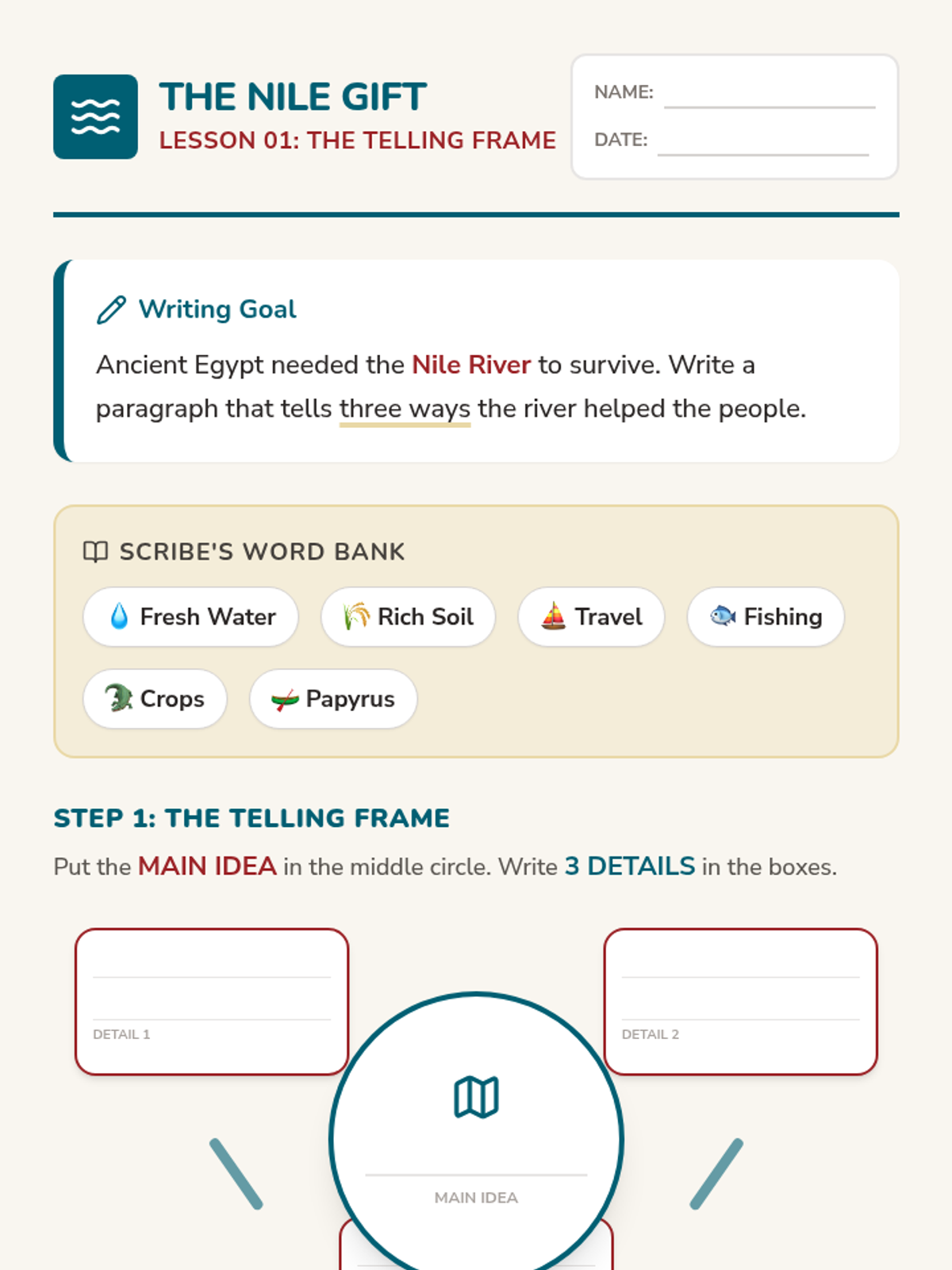
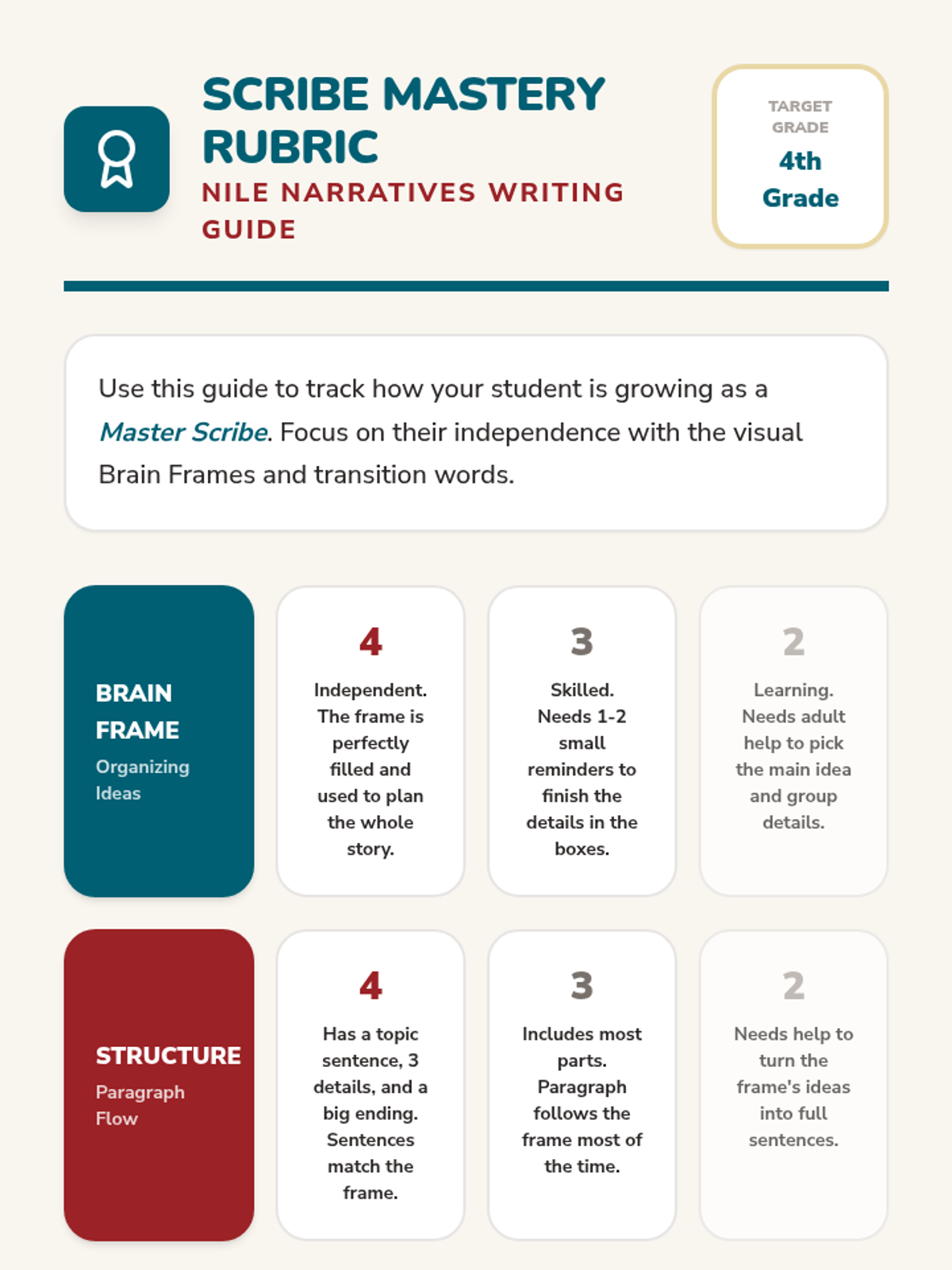
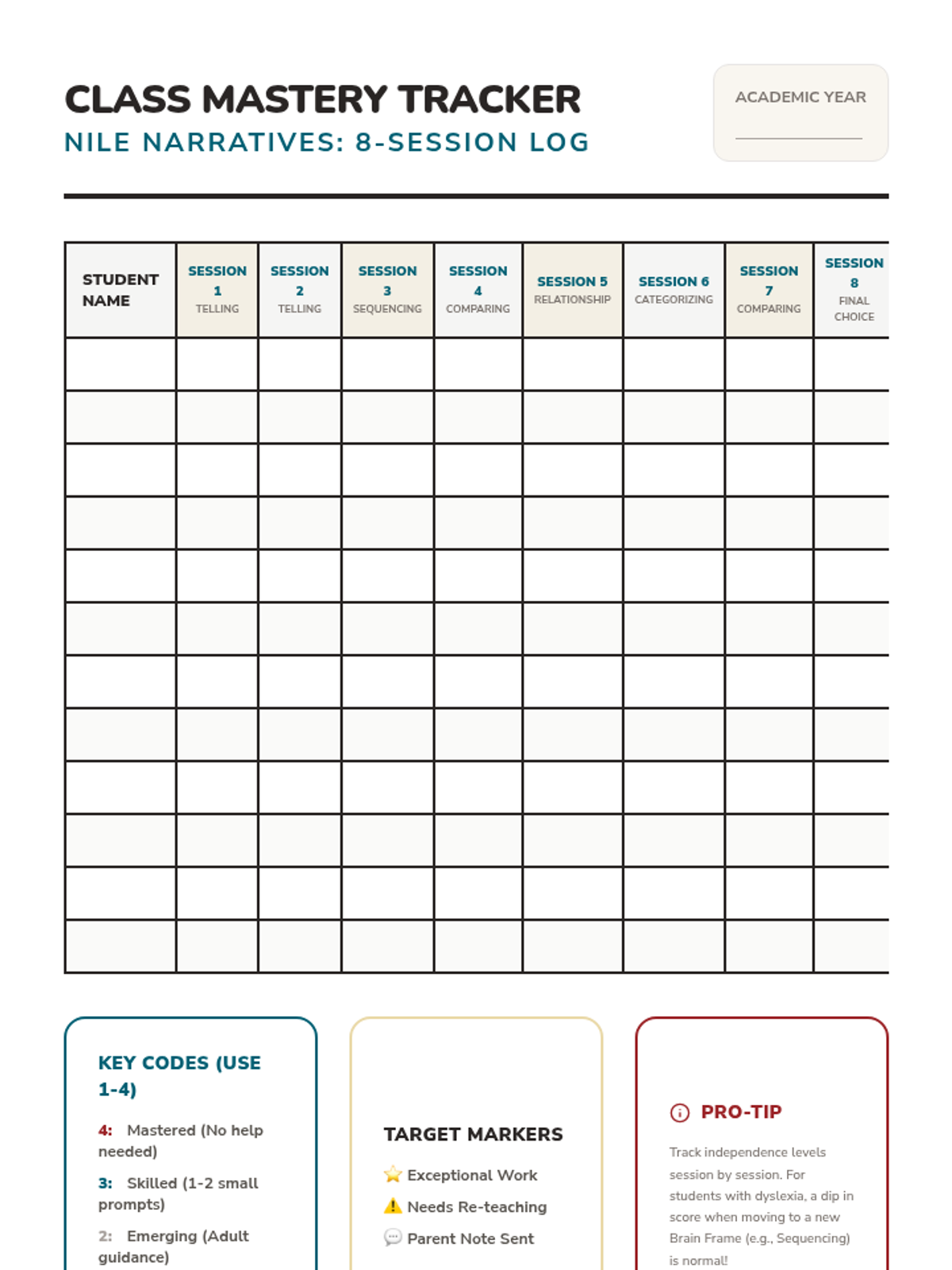
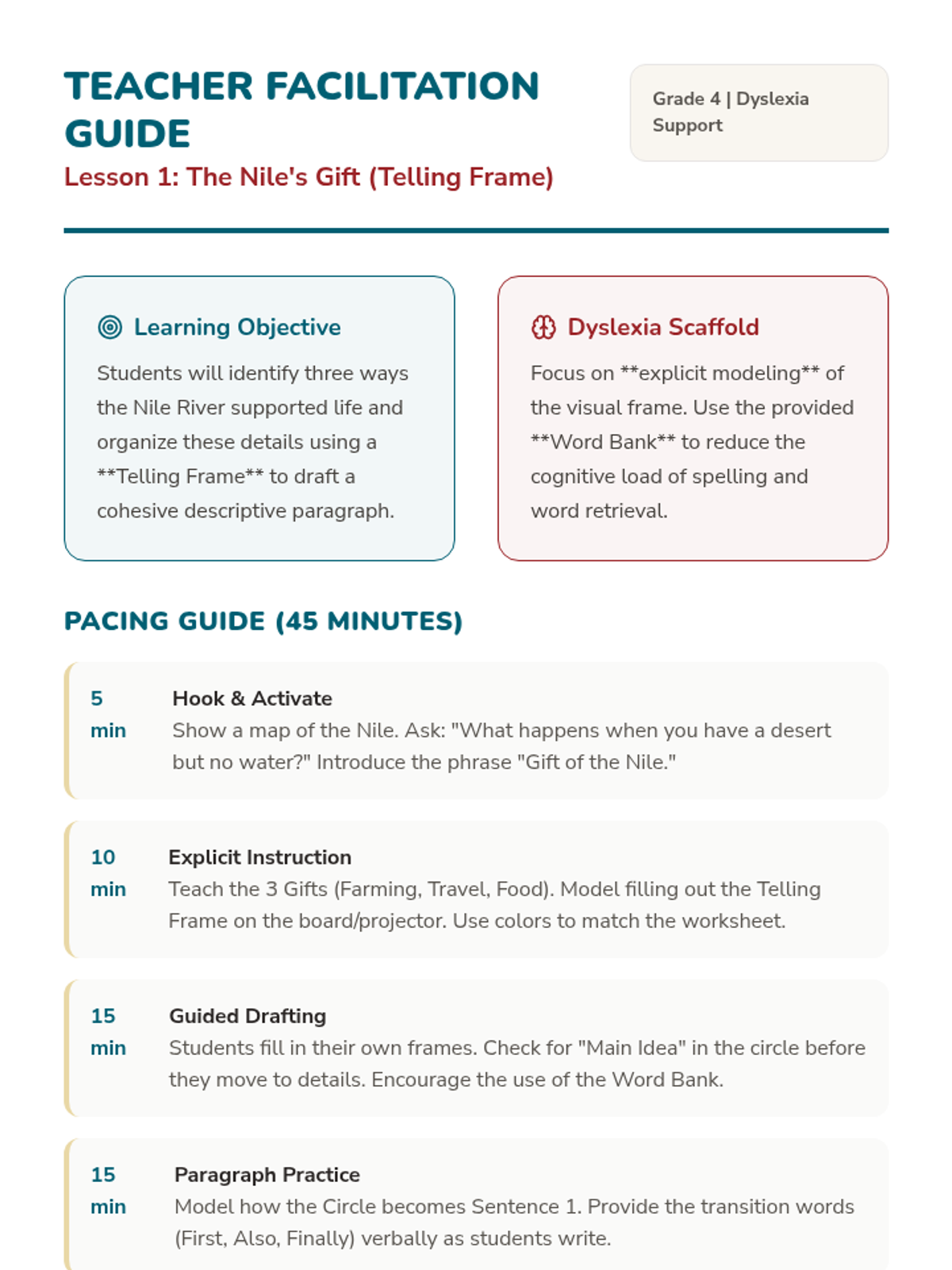
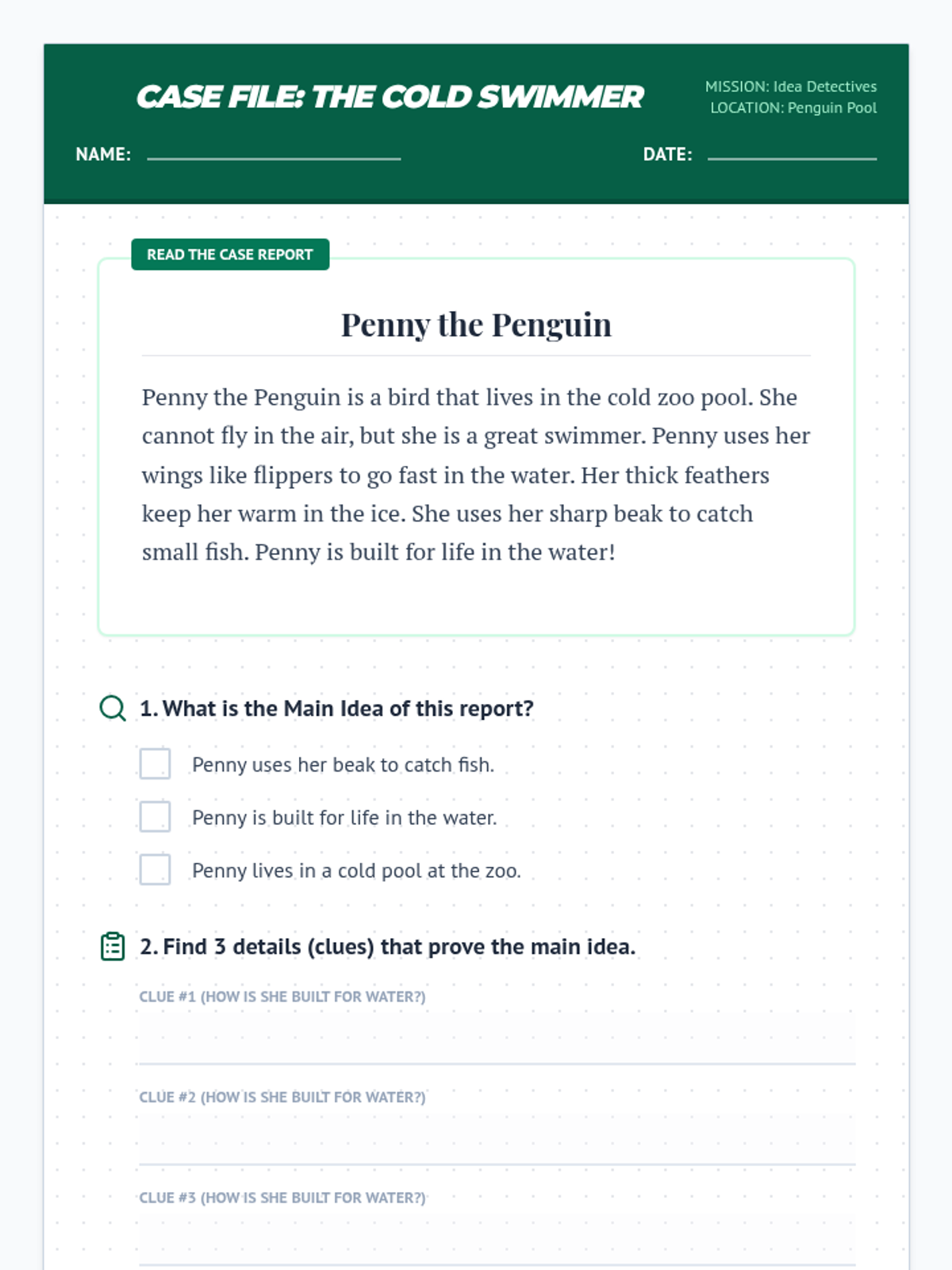
Introduction to the Telling Frame (Main Idea & Details) about the Nile River. Includes dyslexia-friendly formatting, sentence starters, and visual word banks to support 4th grade writers.
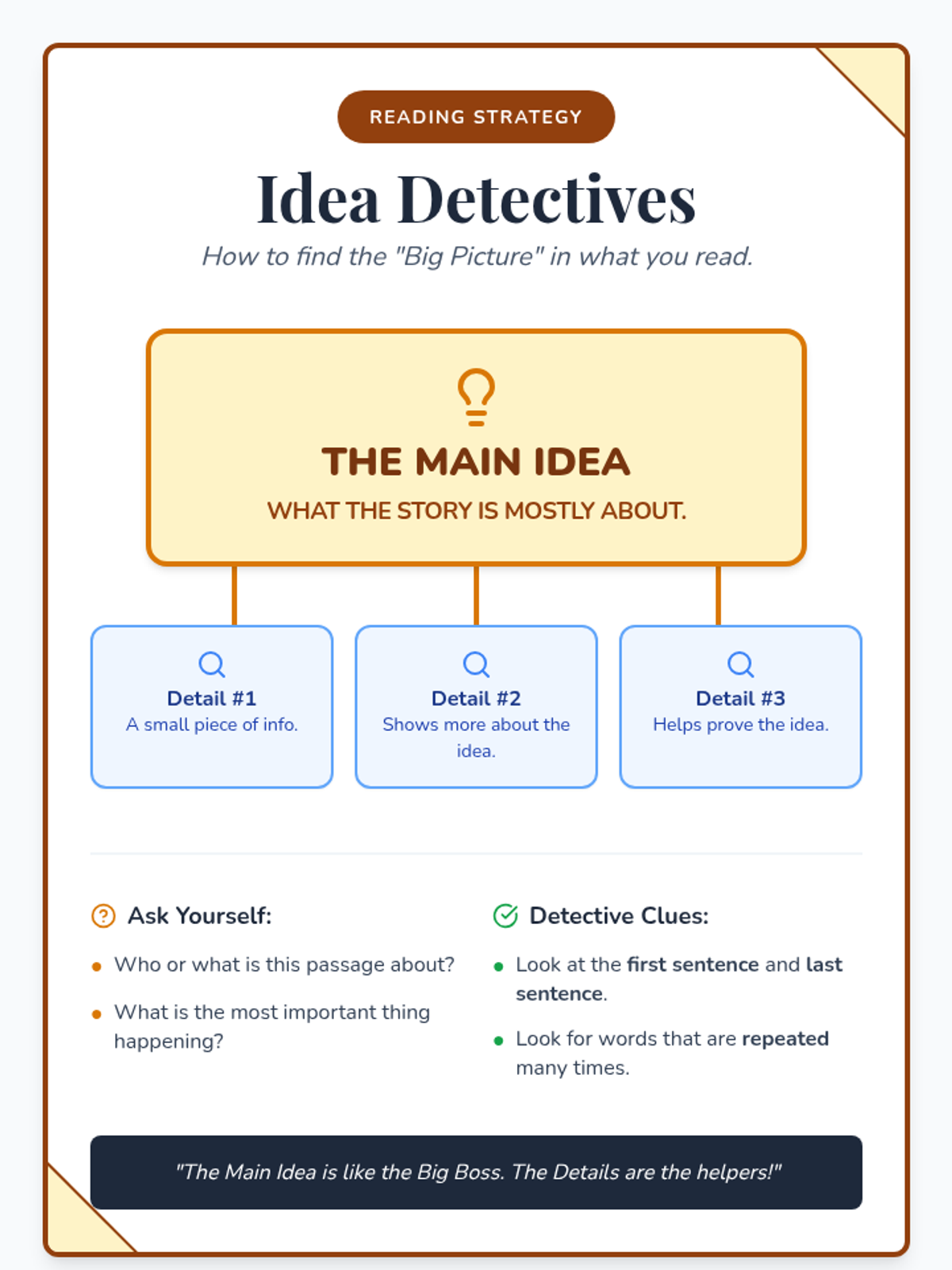
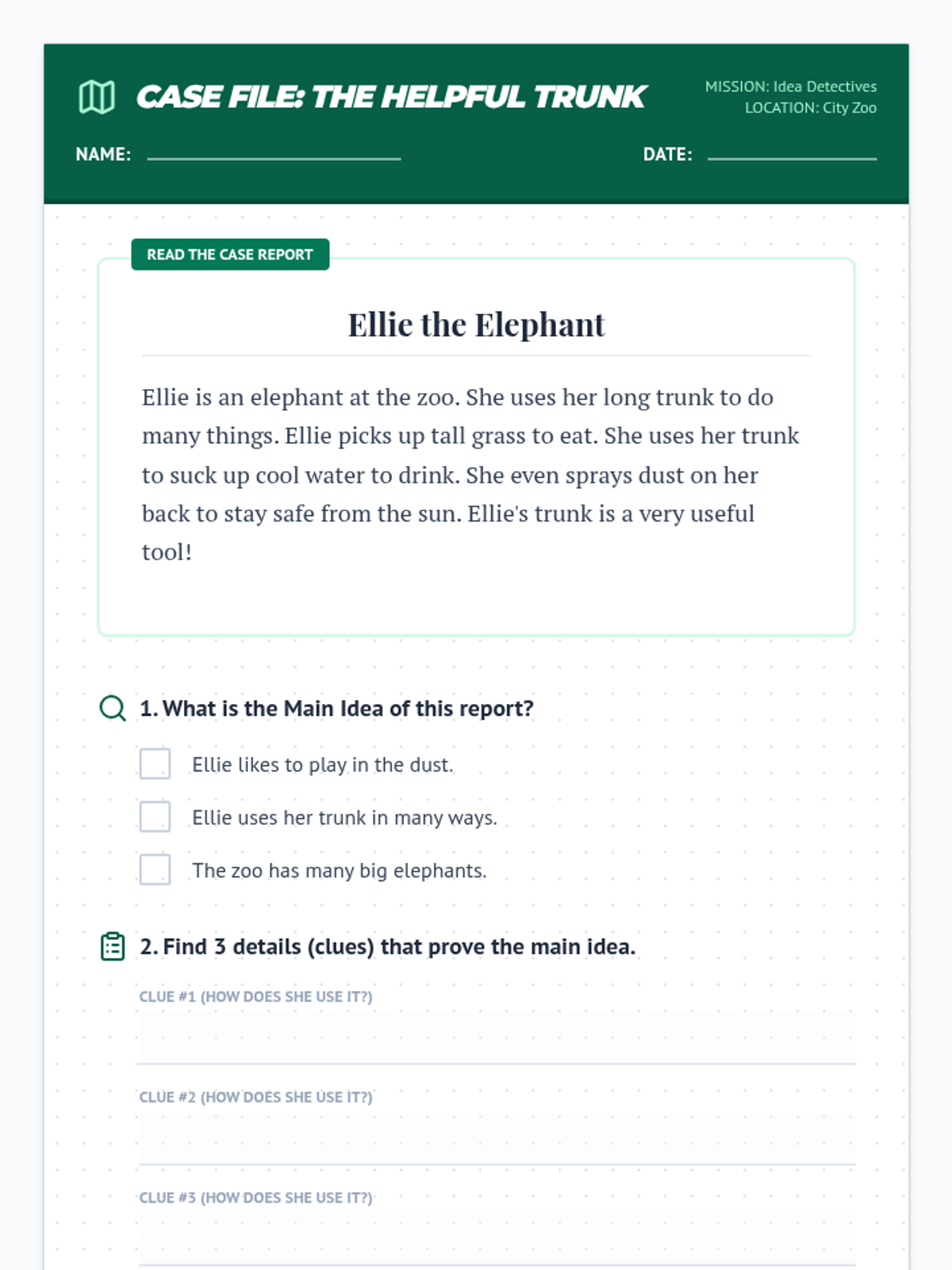
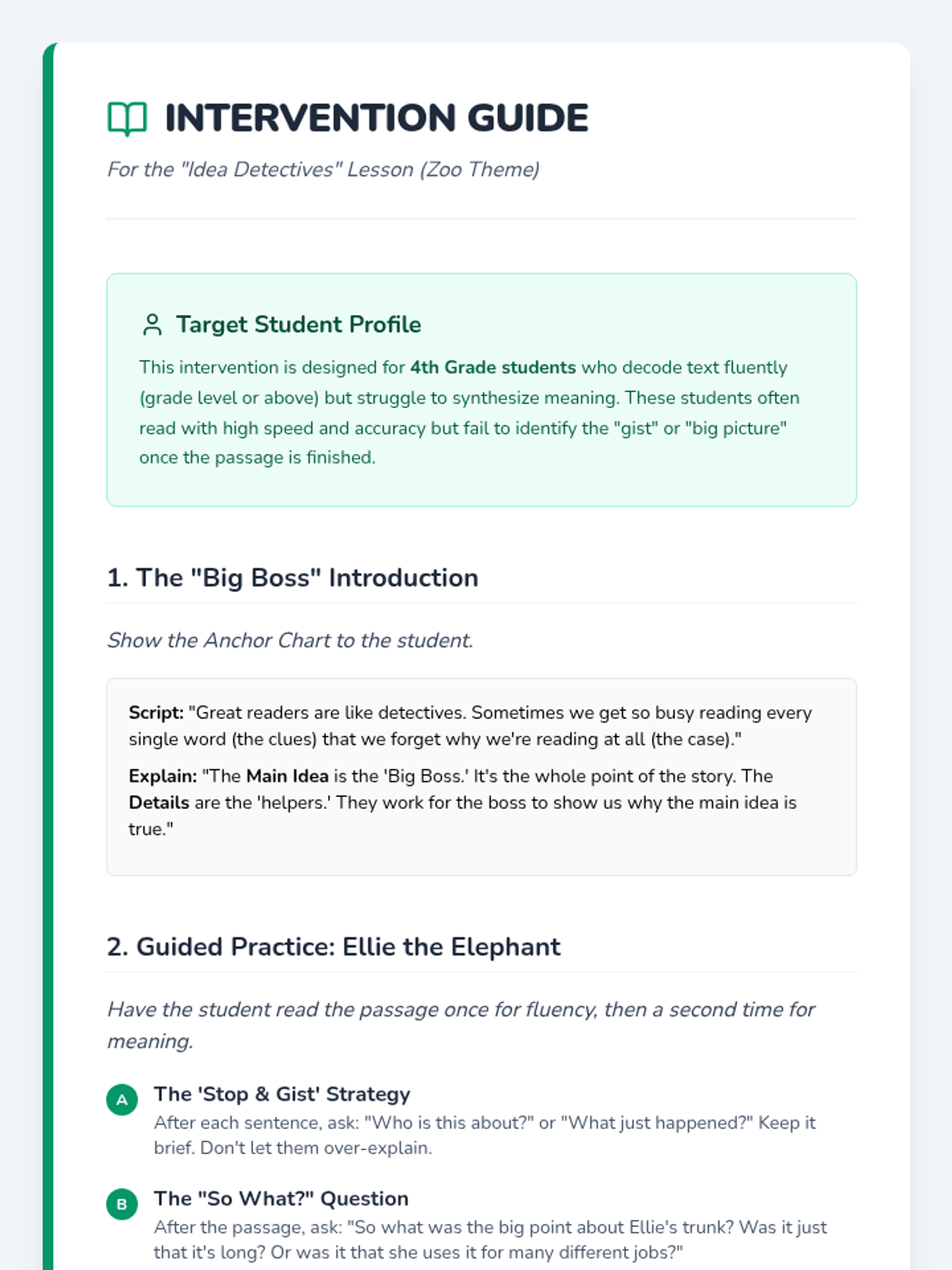
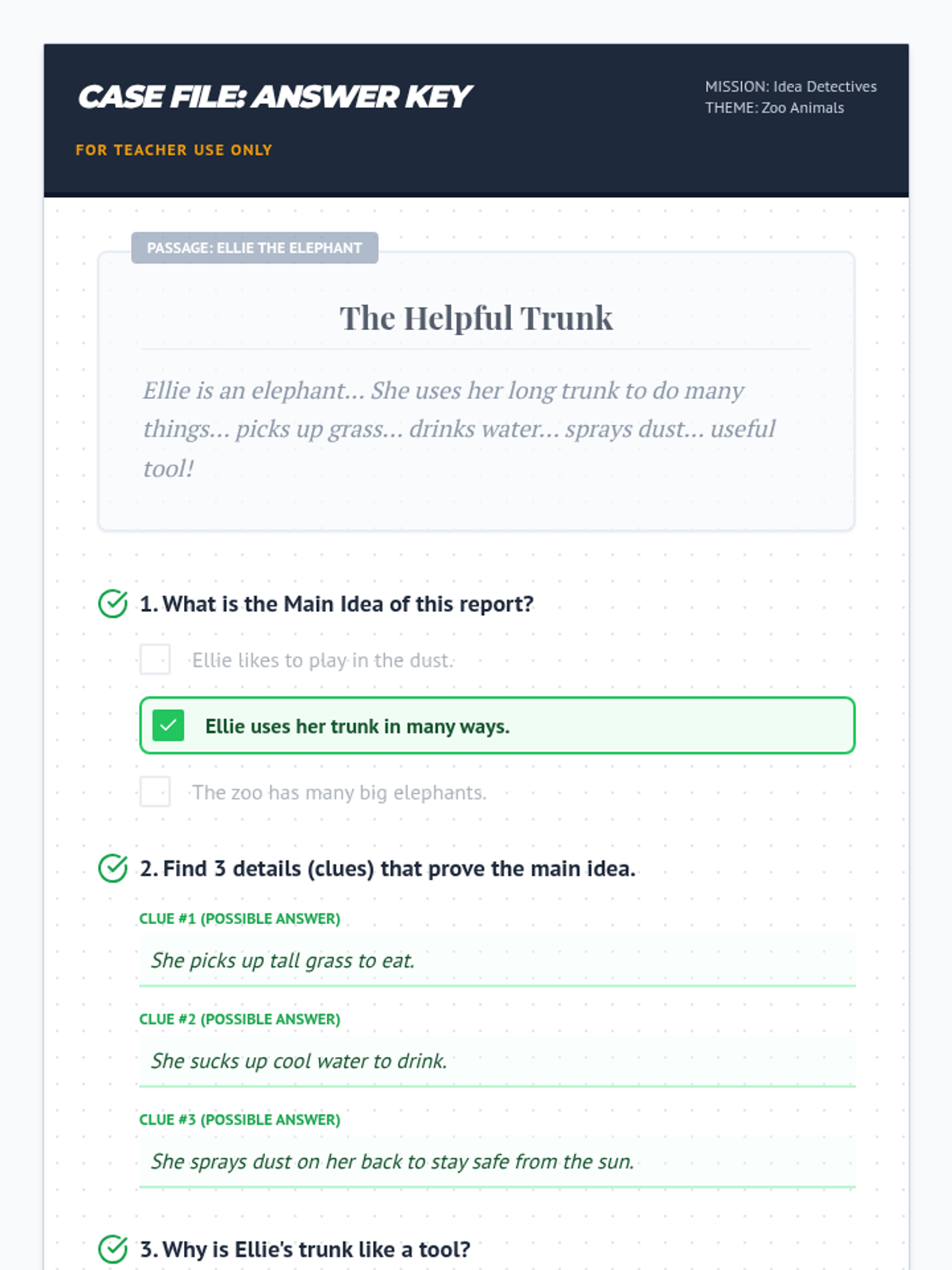
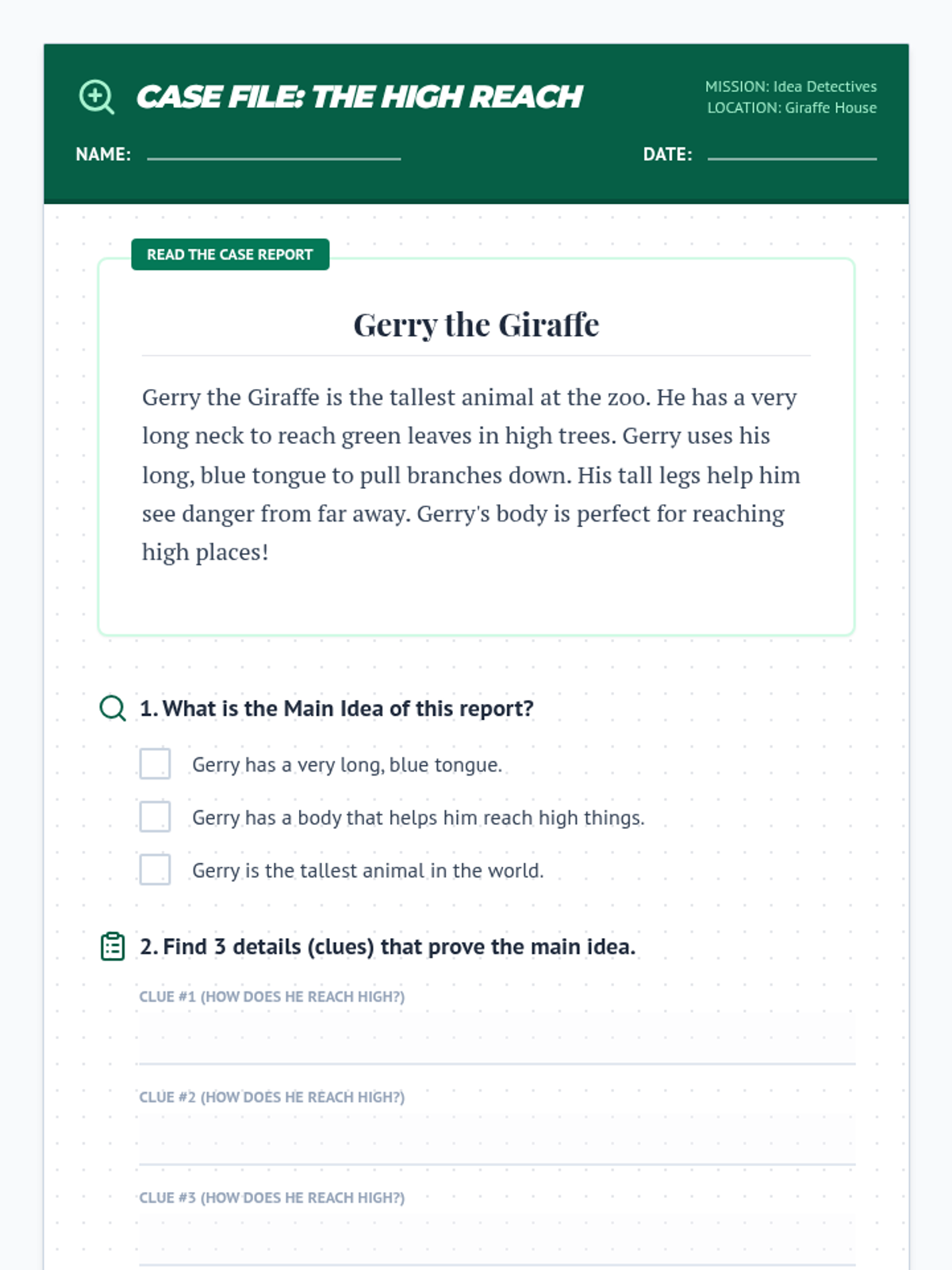
A targeted reading intervention lesson focused on identifying the main idea and supporting details using high-interest, low-readability texts. Designed for students who decode well but struggle with comprehension.
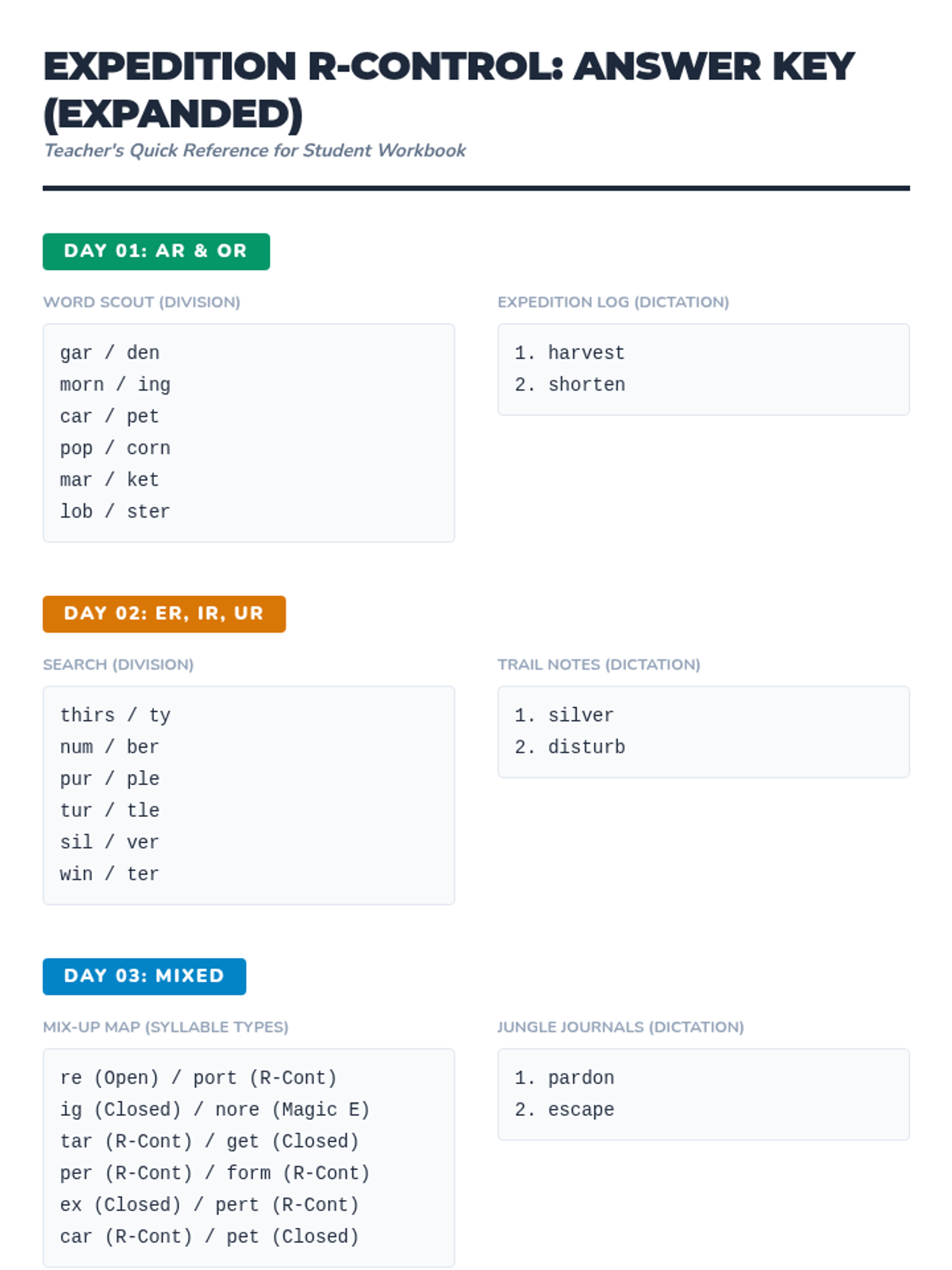
A review and mastery day covering all r-controlled vowel combinations in 2-syllable words. Includes an expedition finale passage and cumulative assessment tasks.
Focuses on 2-syllable words that mix r-controlled syllables with closed, open, and magic e syllables, such as 'pardon', 'report', and 'target'. Includes a jungle-themed passage.
Focuses on 2-syllable words containing 'er', 'ir', and 'ur' syllables, such as 'silver', 'thirsty', and 'turtle'. Includes multi-sensory decoding and a mountain-trek passage.
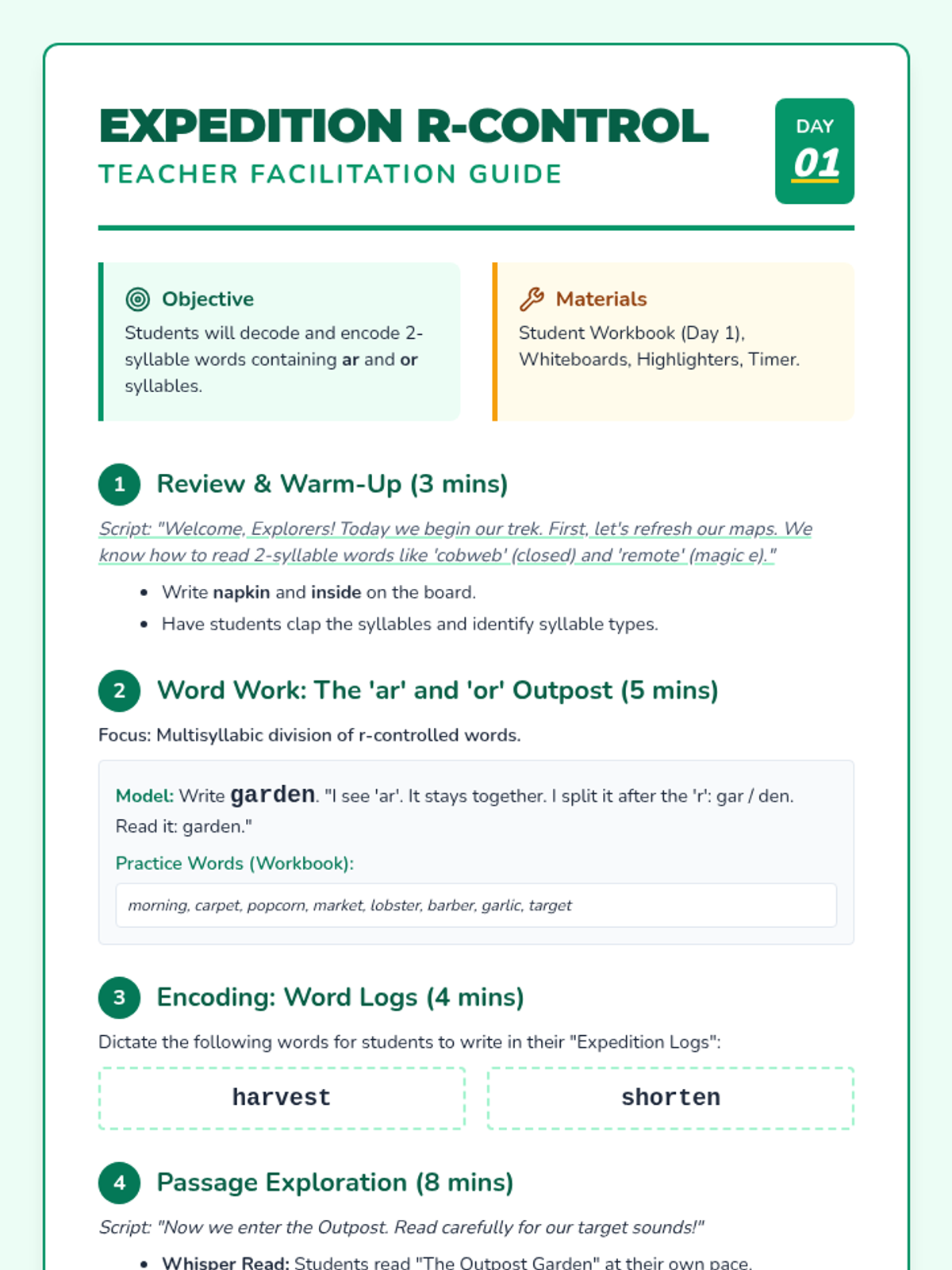
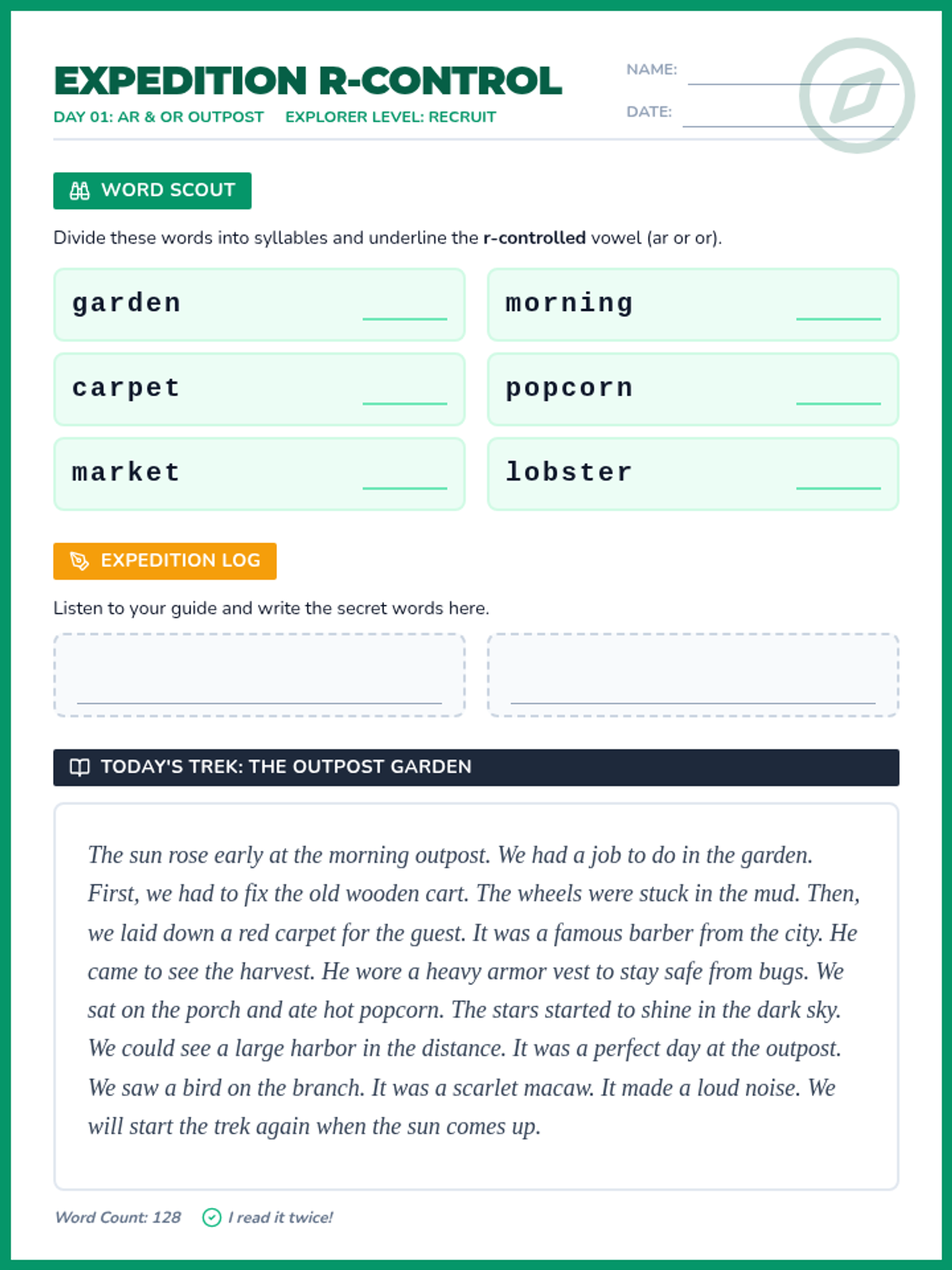
Focuses on 2-syllable words containing 'ar' and 'or' syllables, such as 'carpet', 'morning', and 'garden'. Includes decoding drills, encoding practice, and an adventure-themed passage.
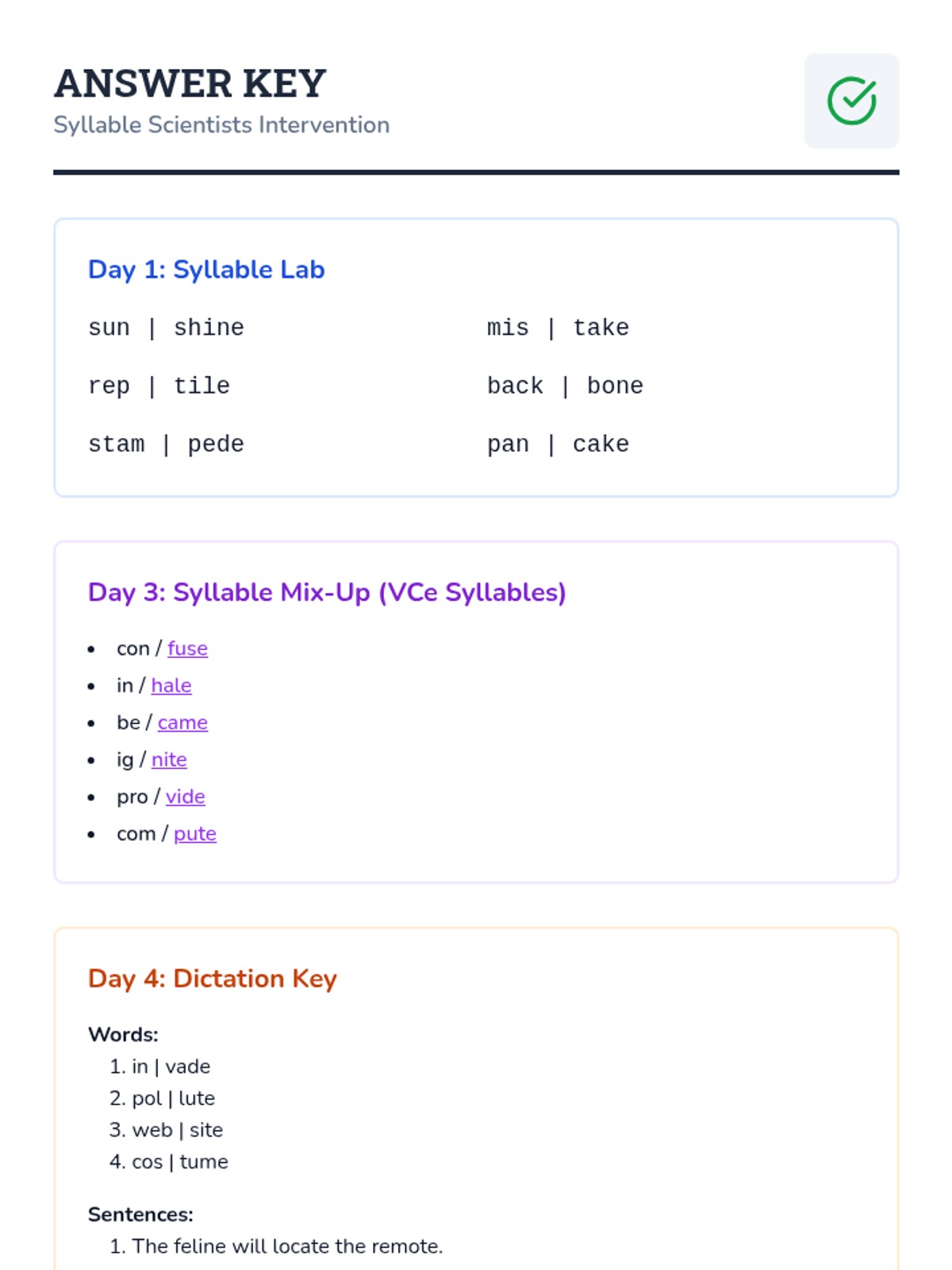
Cumulative review with a focus on encoding (spelling) 2-syllable words with silent-e syllables.
Mixed practice of closed/open + silent-e syllables with a focus on flexible decoding strategies.
Focuses on 2-syllable words combining an open syllable with a silent-e syllable (e.g., remote, feline, locate).
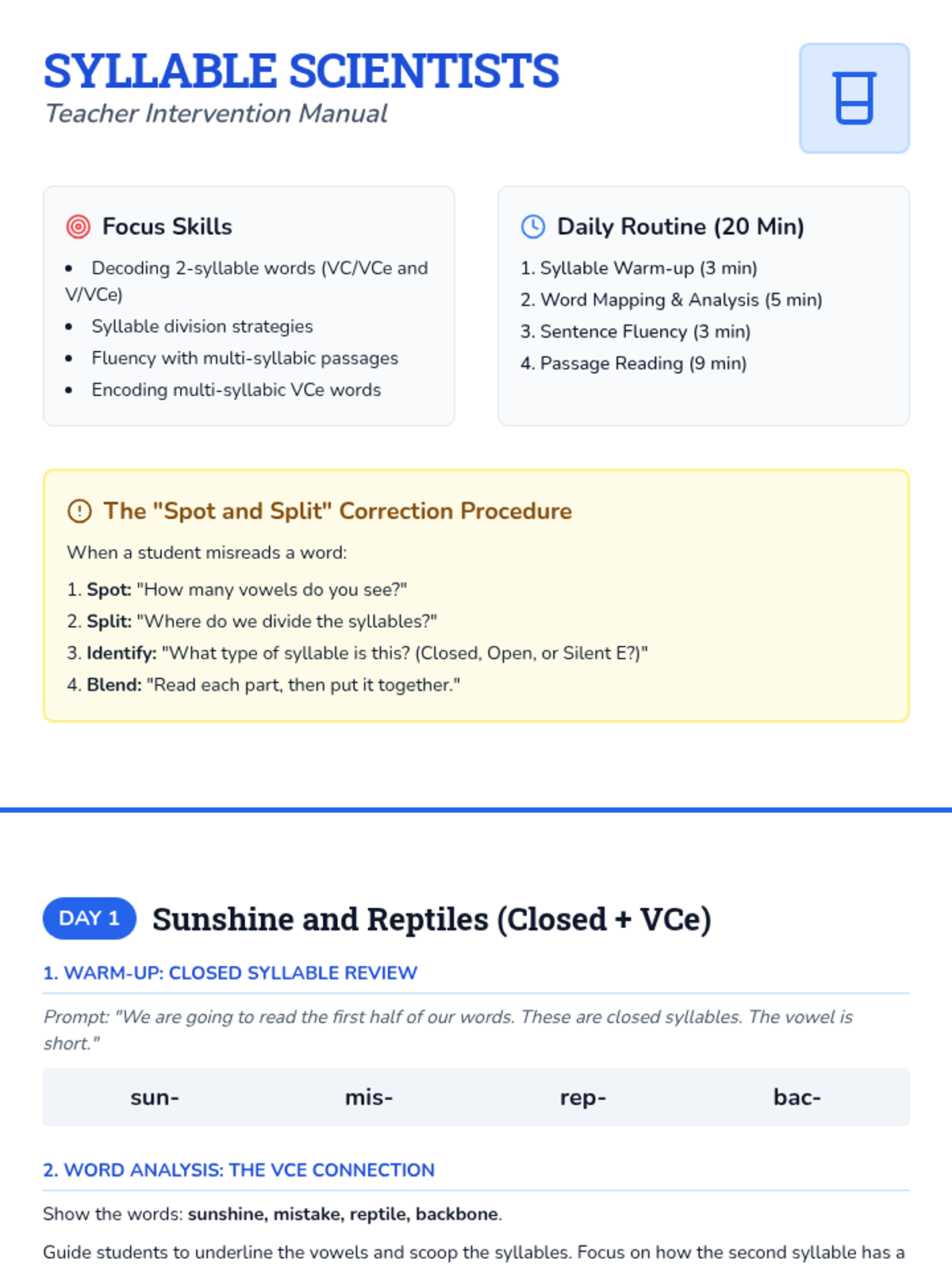
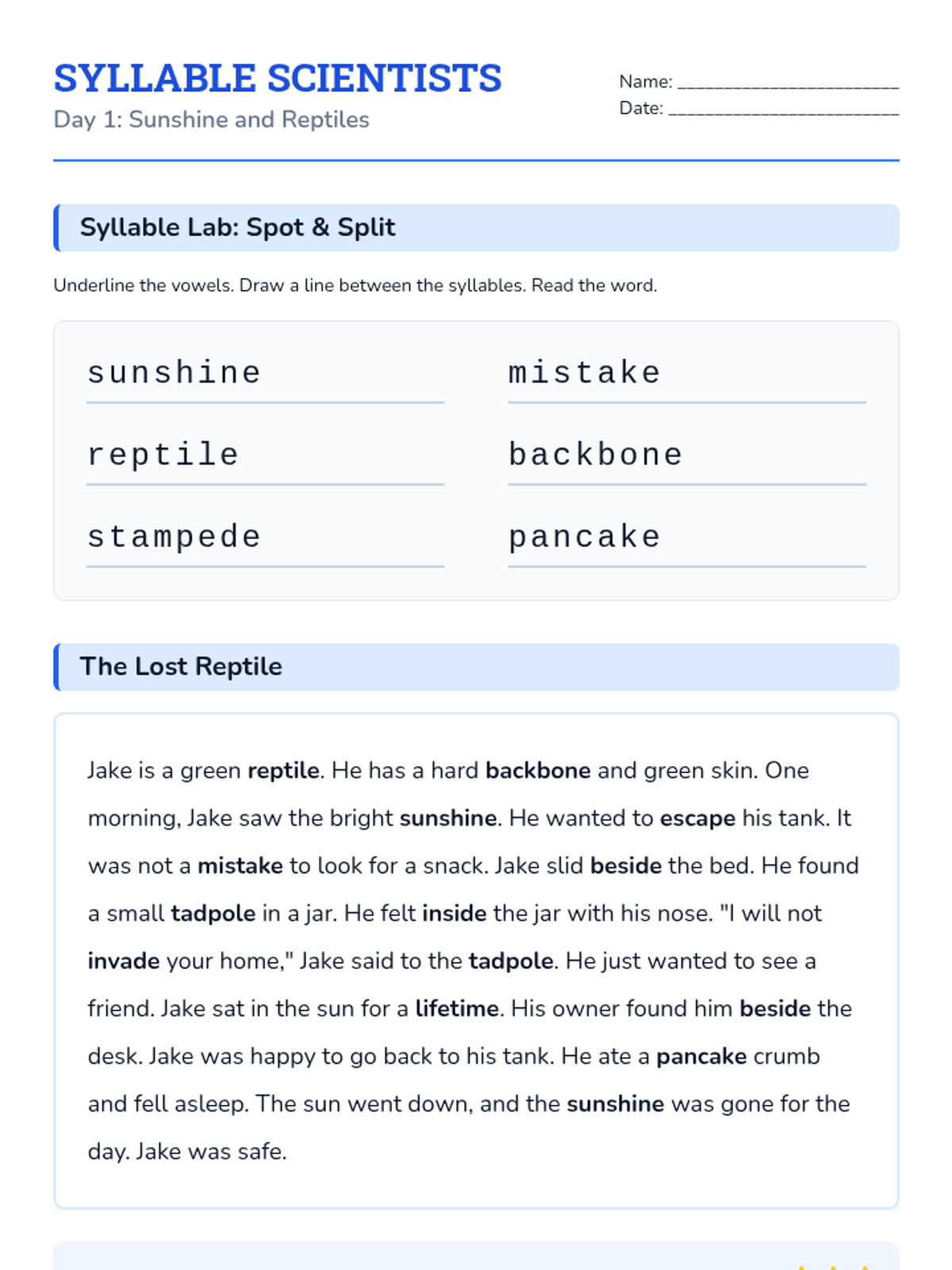
Focuses on 2-syllable words combining a closed syllable with a silent-e syllable (e.g., sunshine, reptile, mistake).
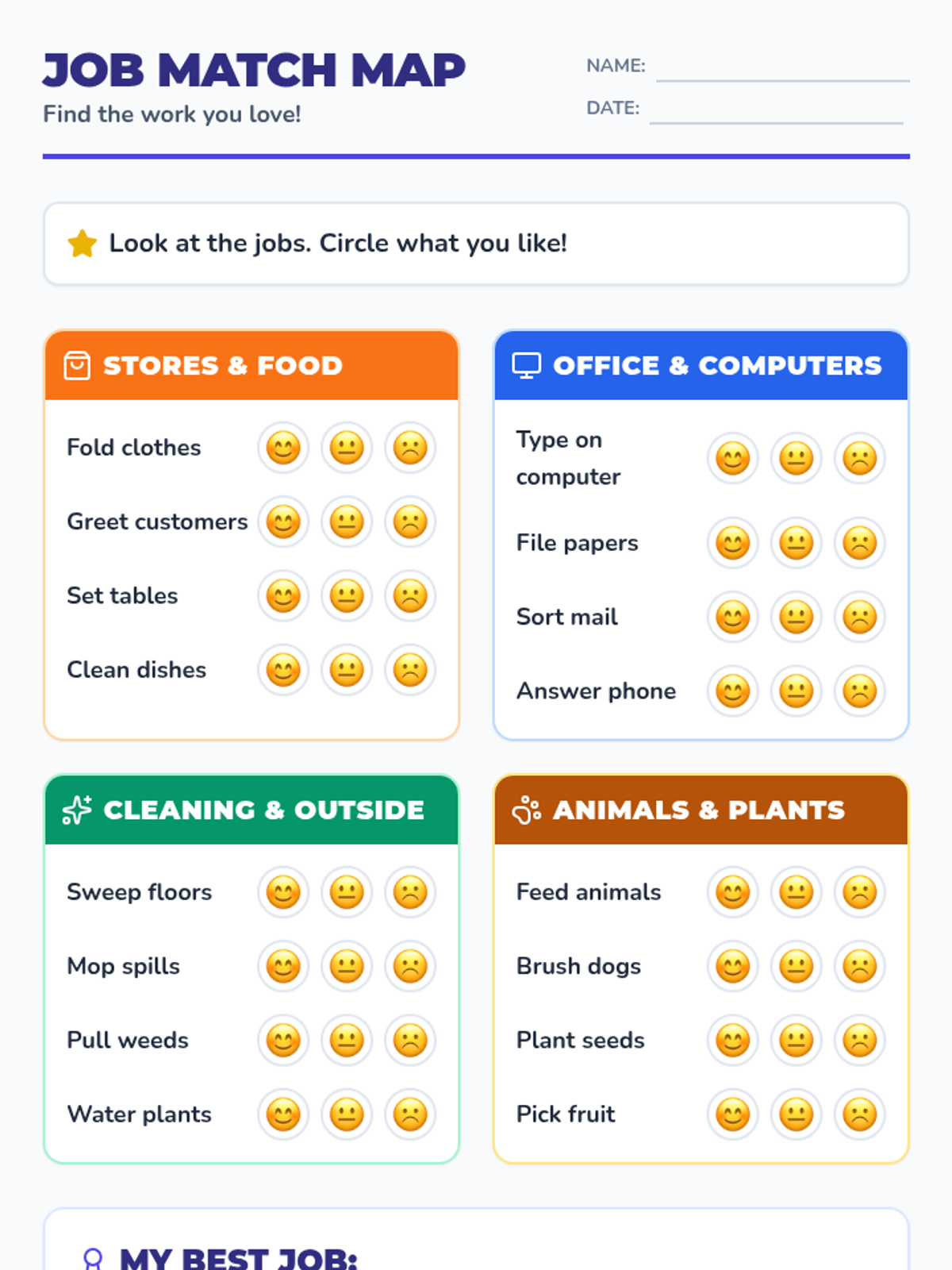
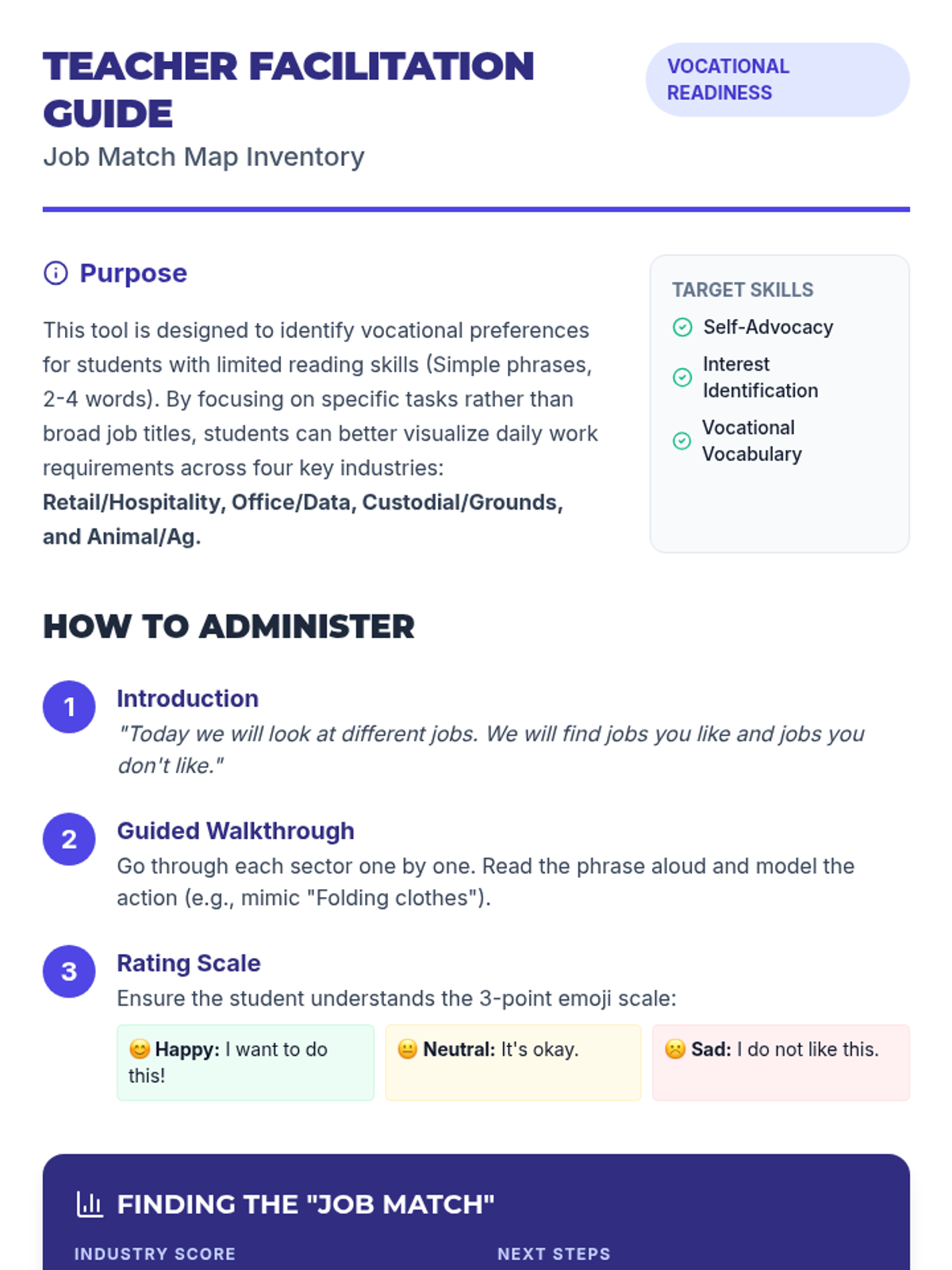
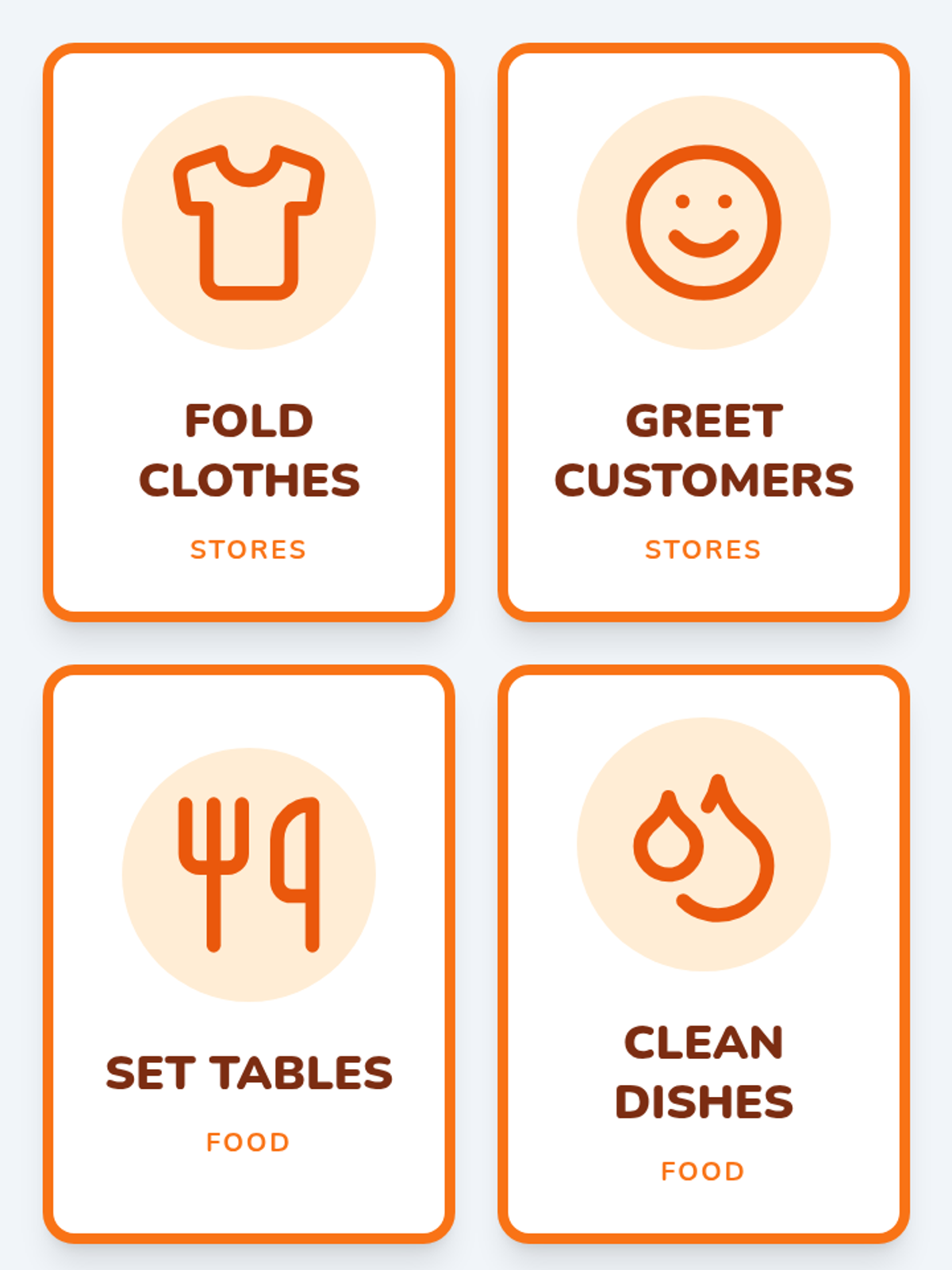
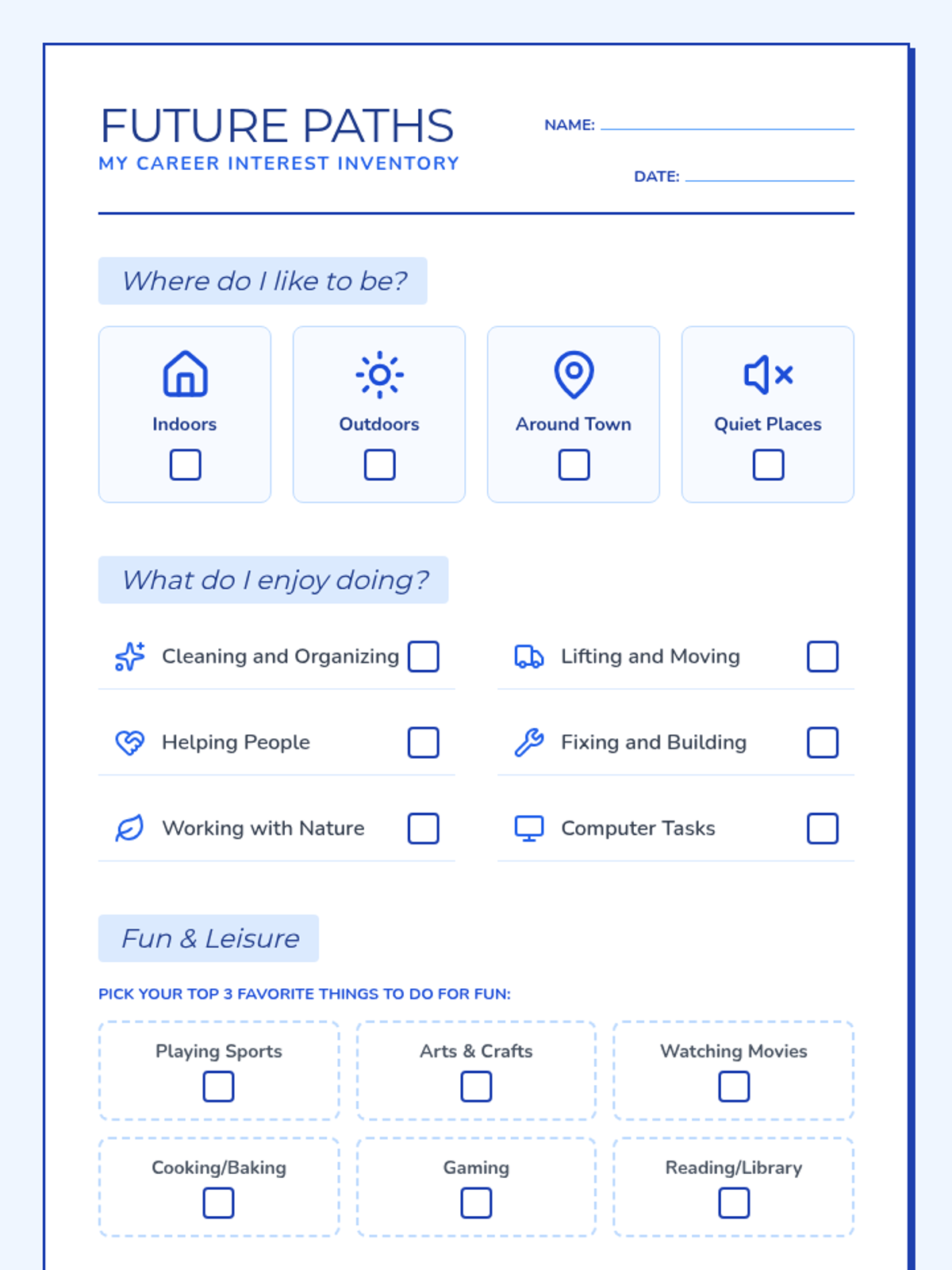
A collection of resources to help students with low reading levels identify their vocational interests across four key industries using simple language and visual cues.
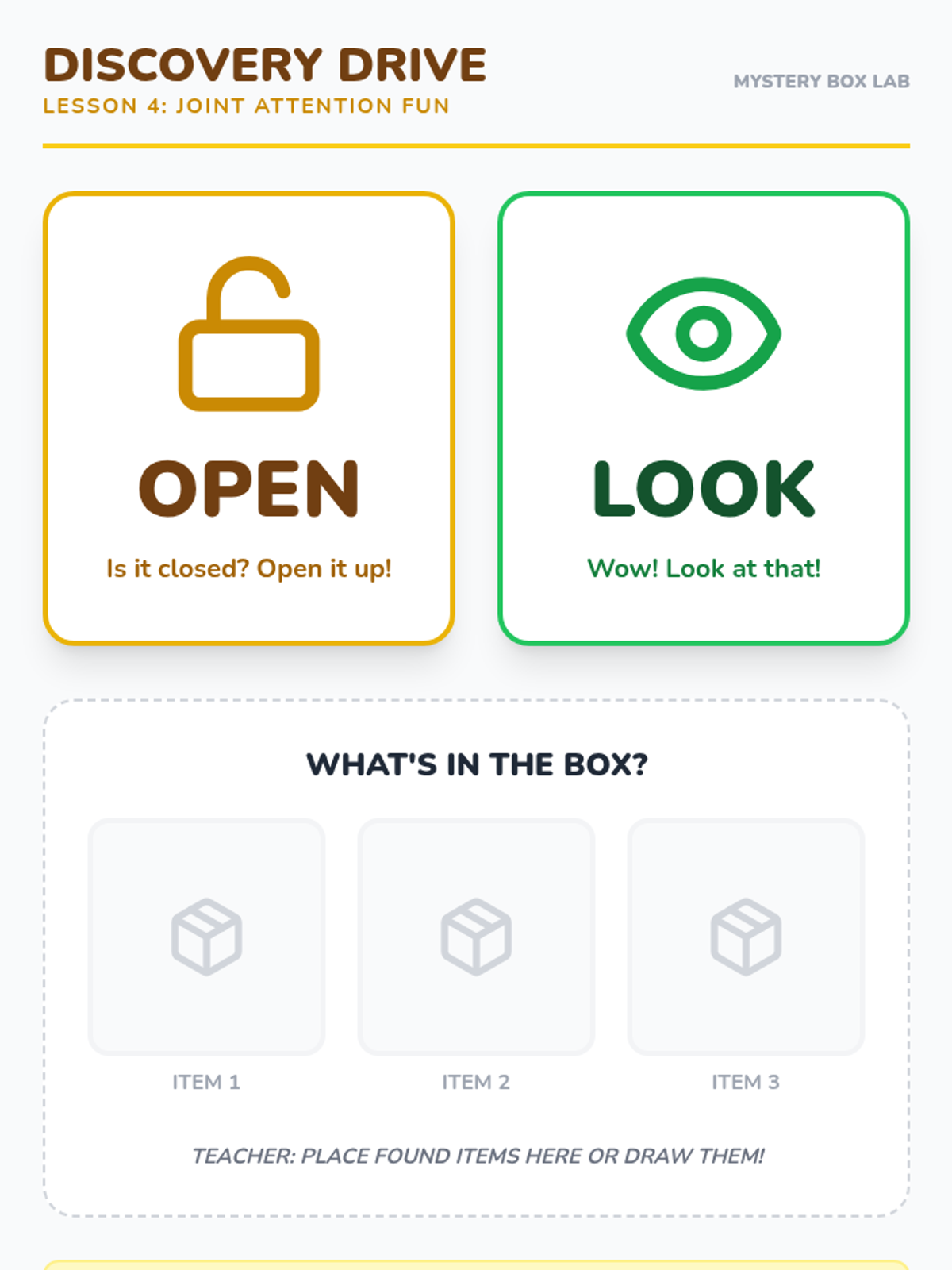
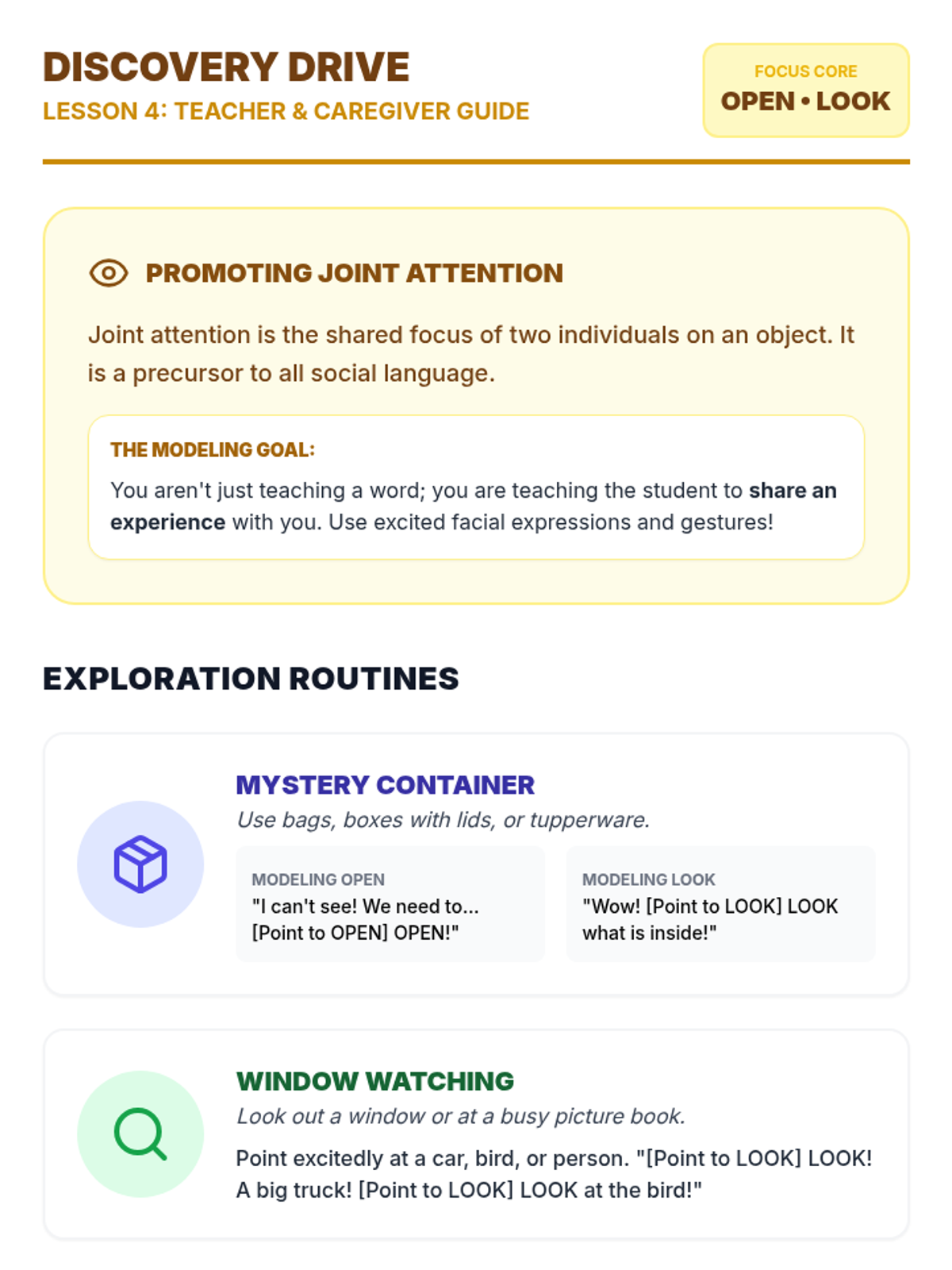
Encourage joint attention and exploration through the core words Open and Look.
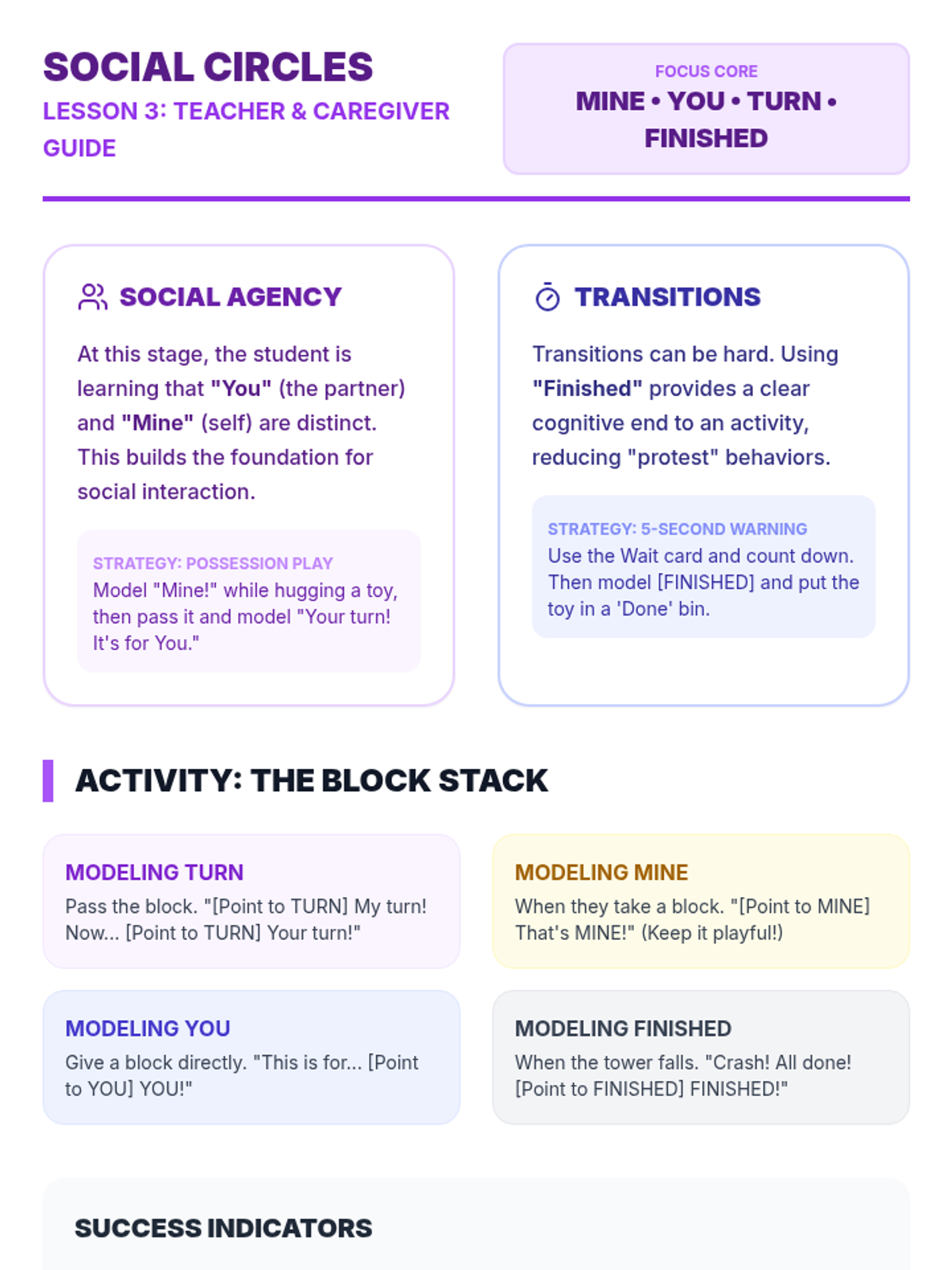
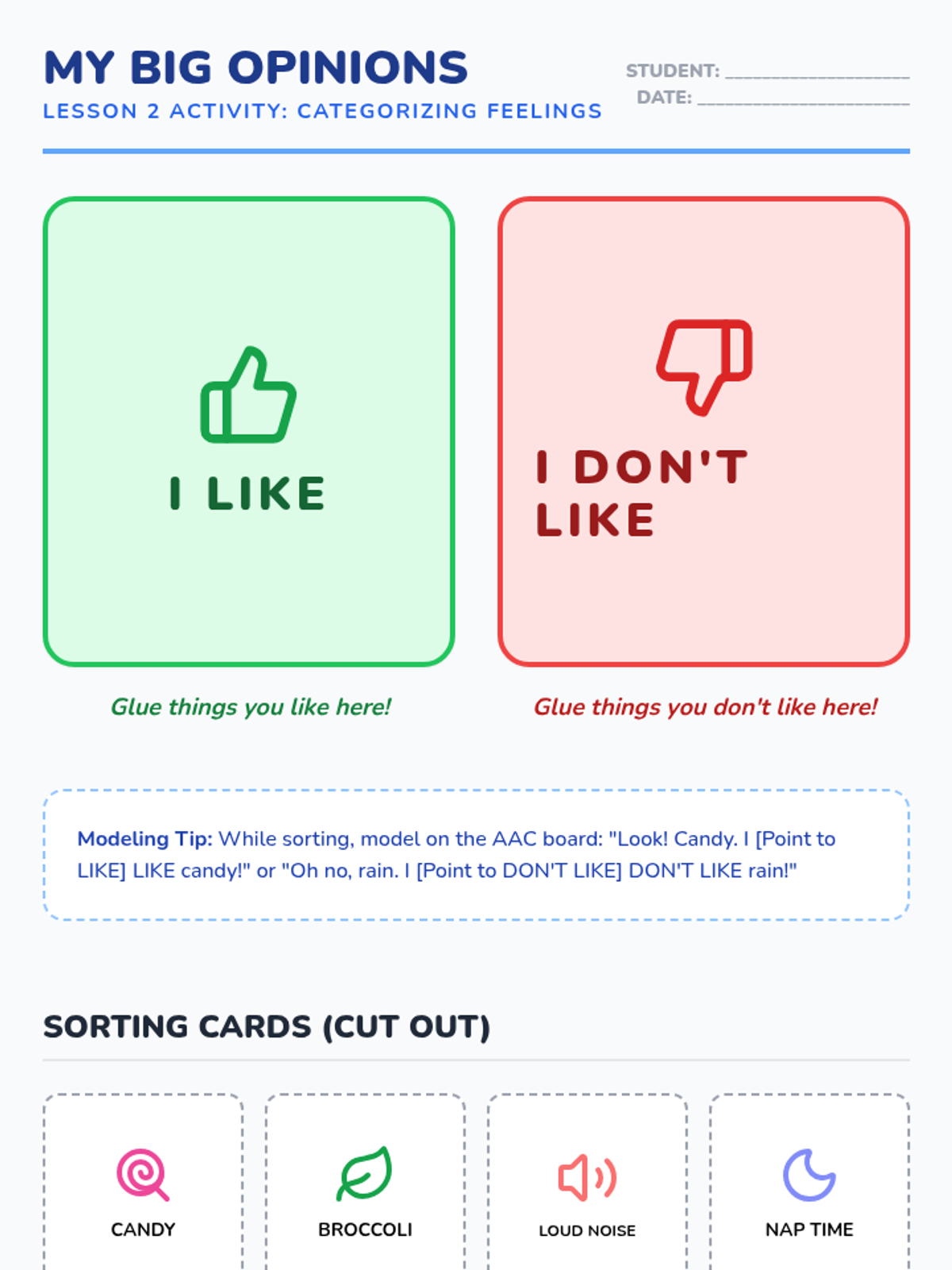
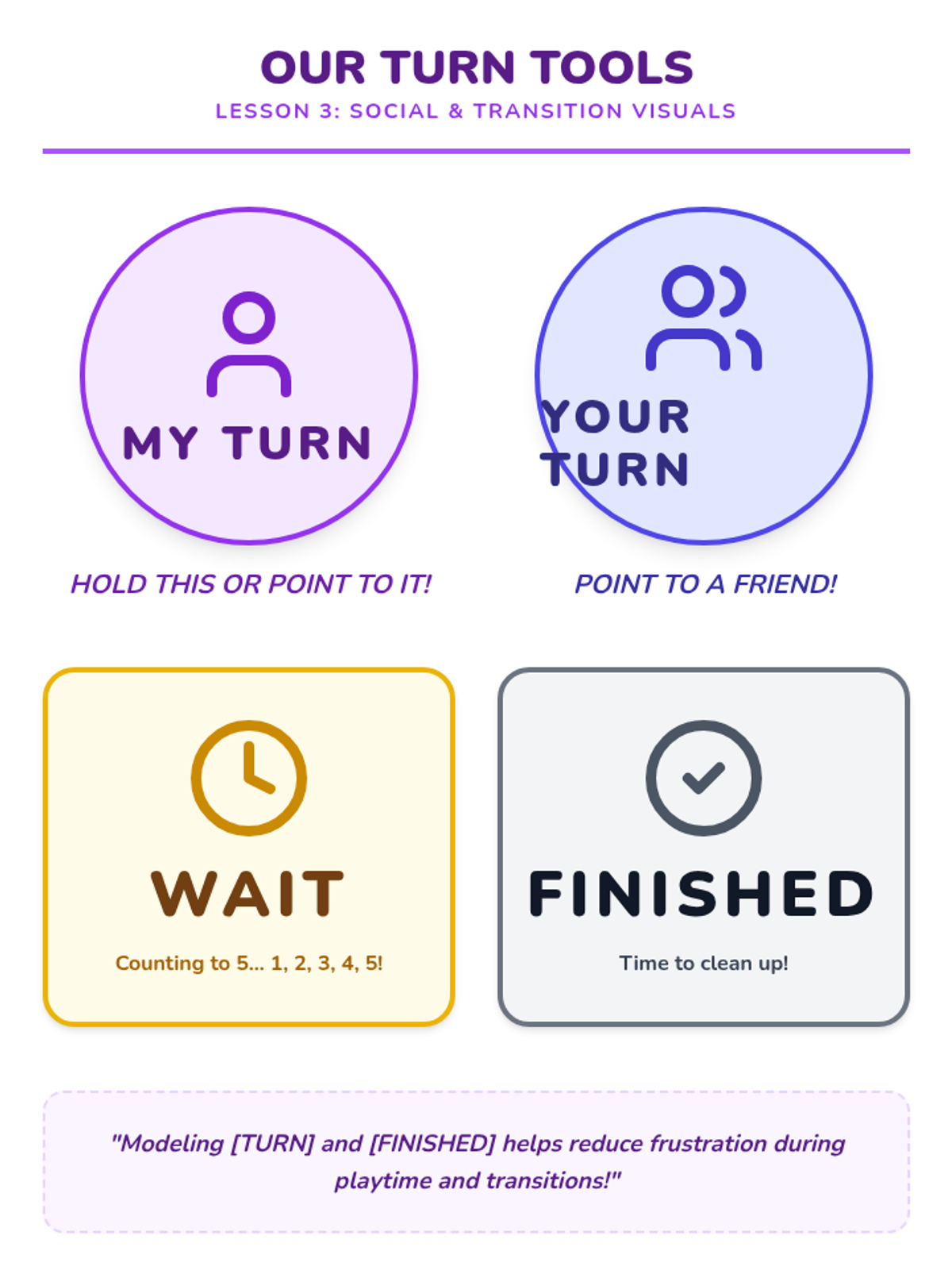
Develop social interaction skills and transition management using Mine, You, Finished, and Turn.
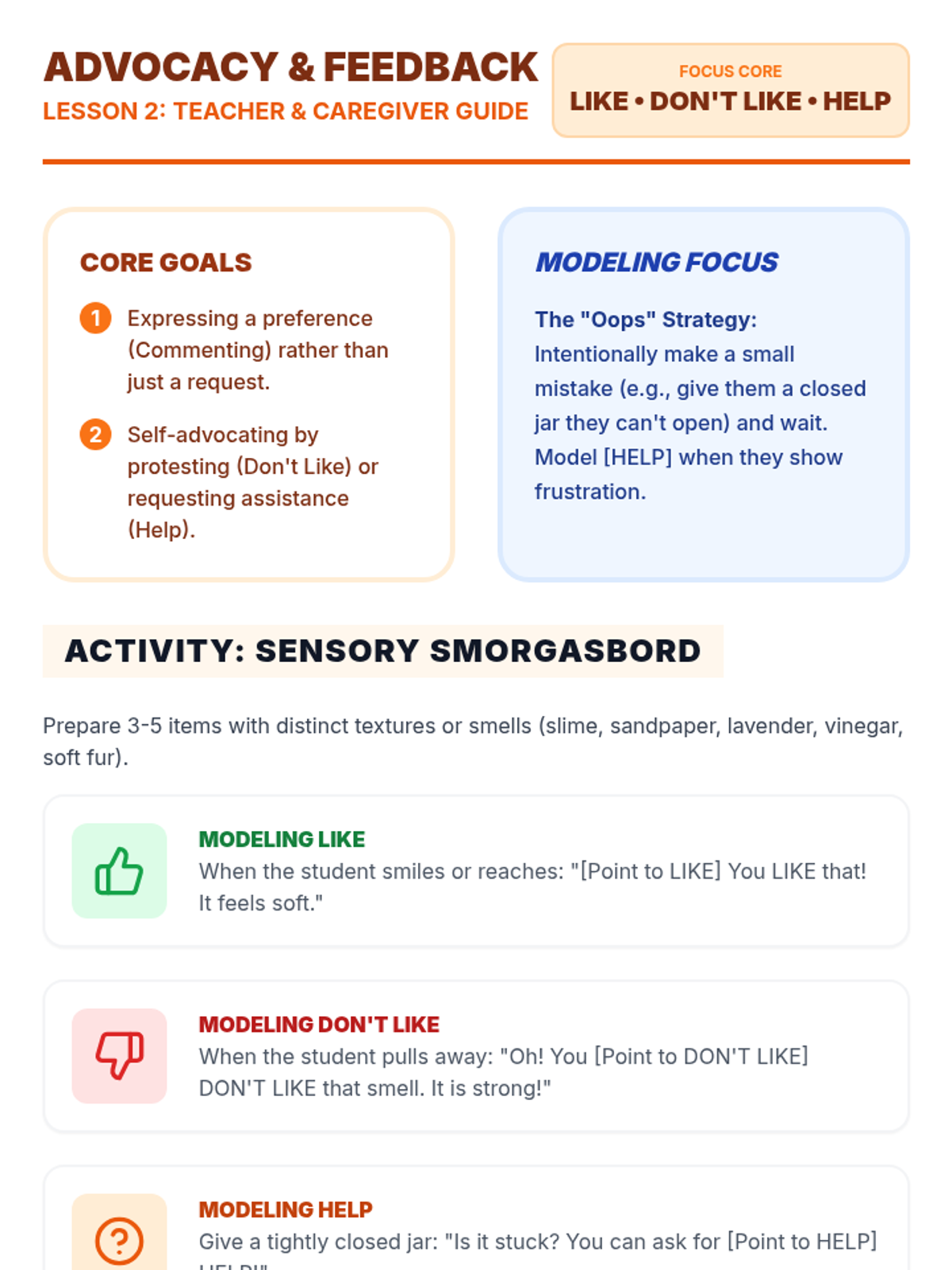
Focus on expressing preferences and seeking assistance using core words Like, Don't Like, and Help.
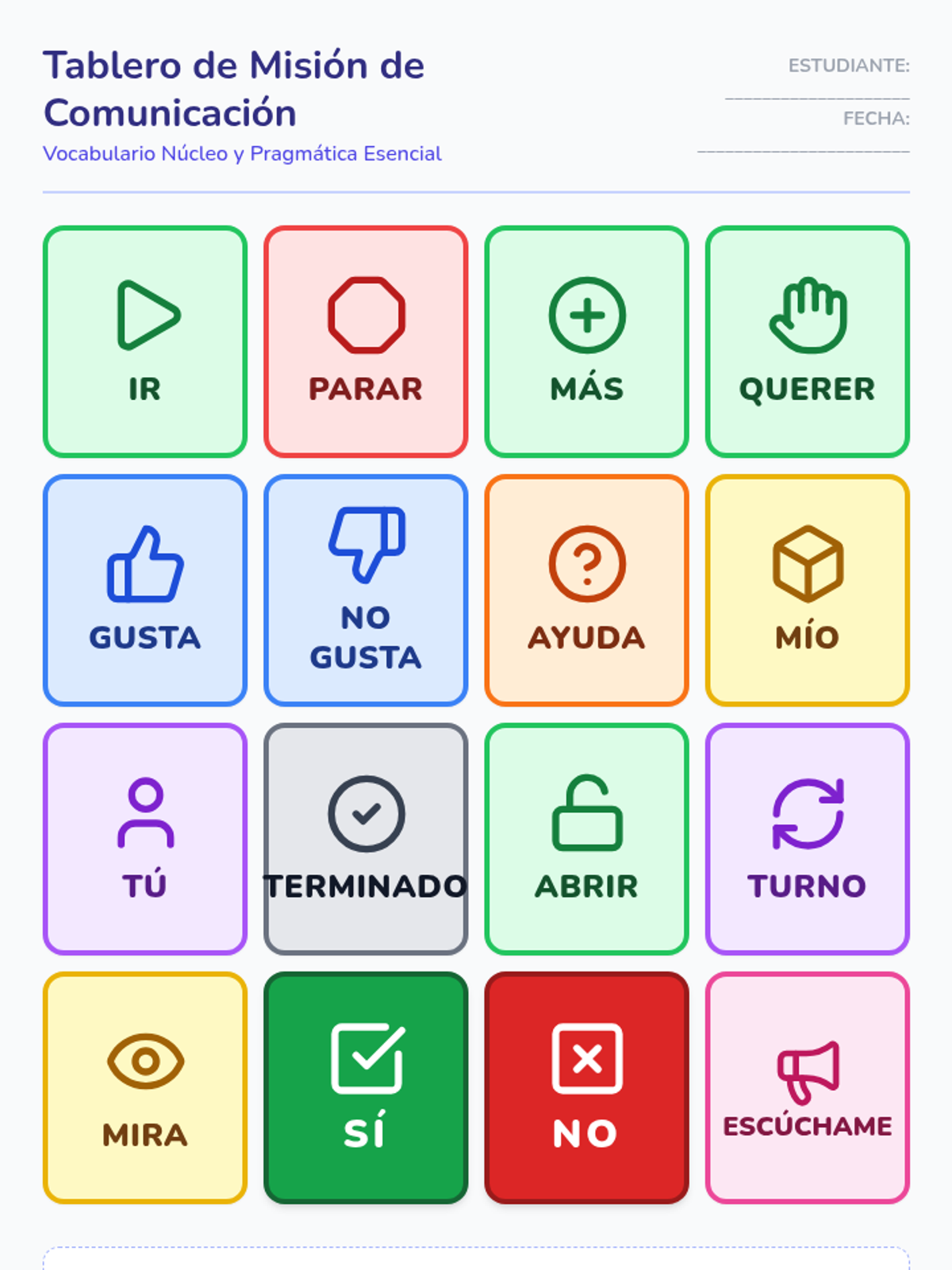
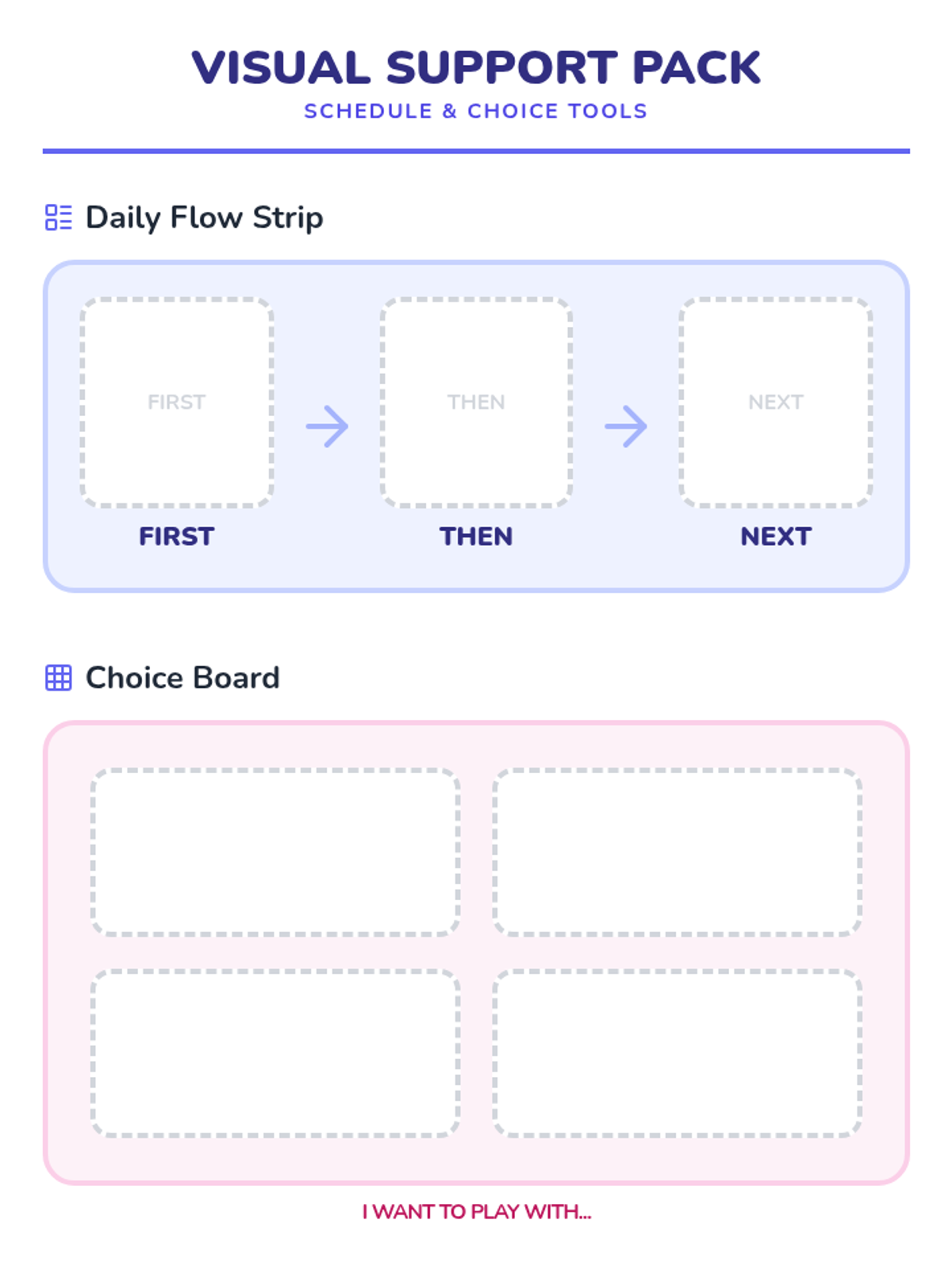
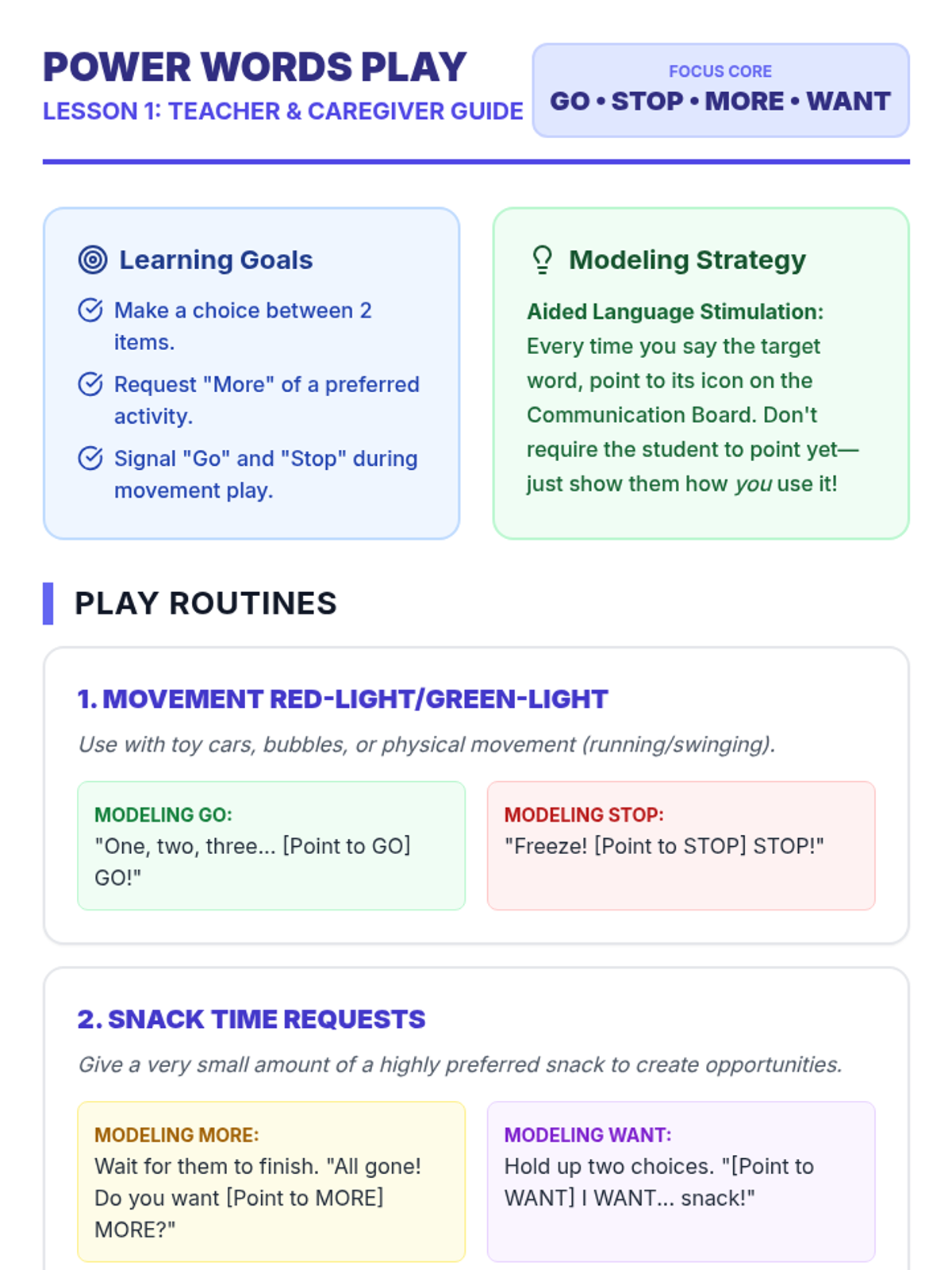
Introduce the primary 'power words' (Go, Stop, More, Want) to establish basic requesting and agency in play-based settings.
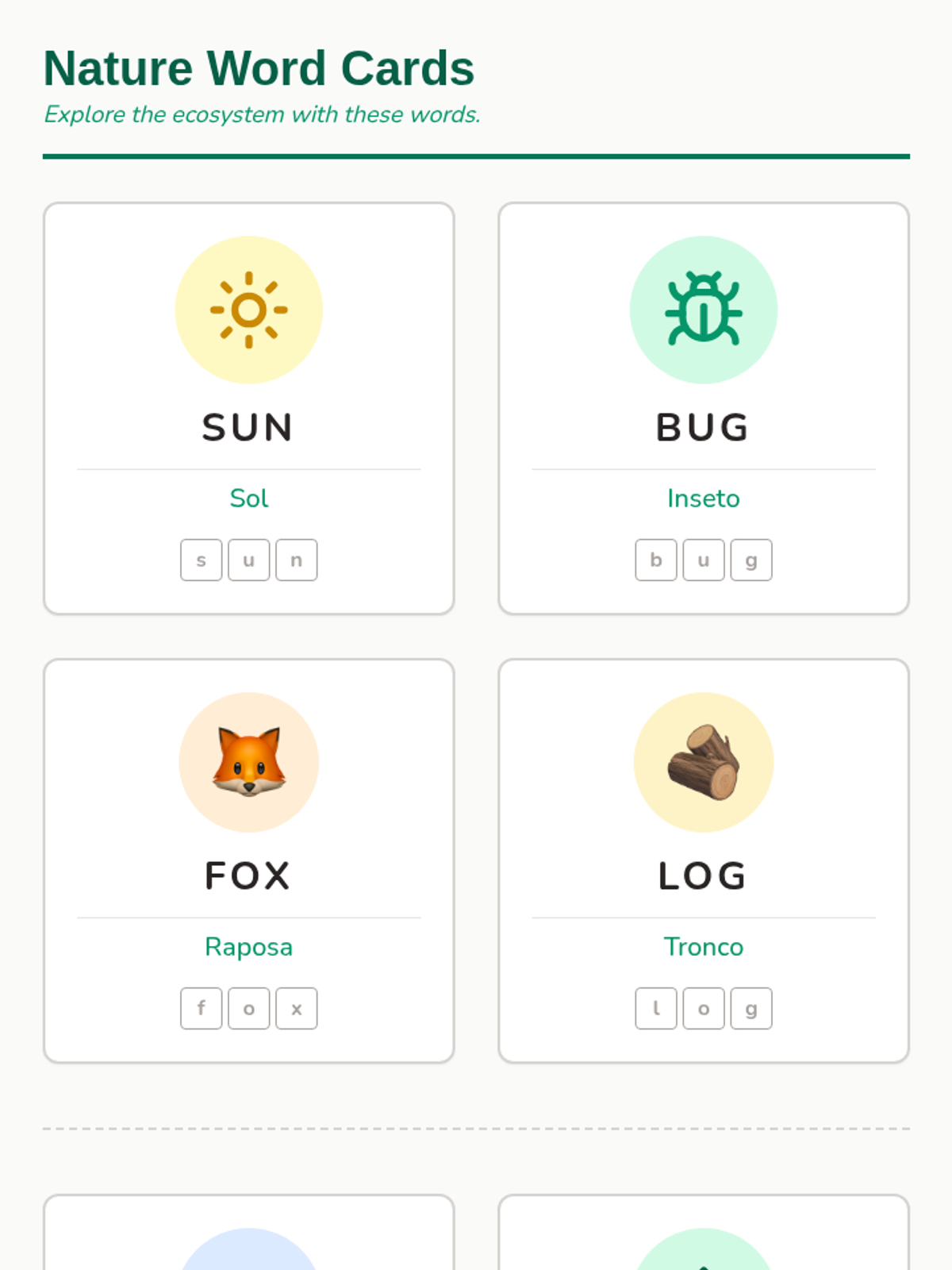
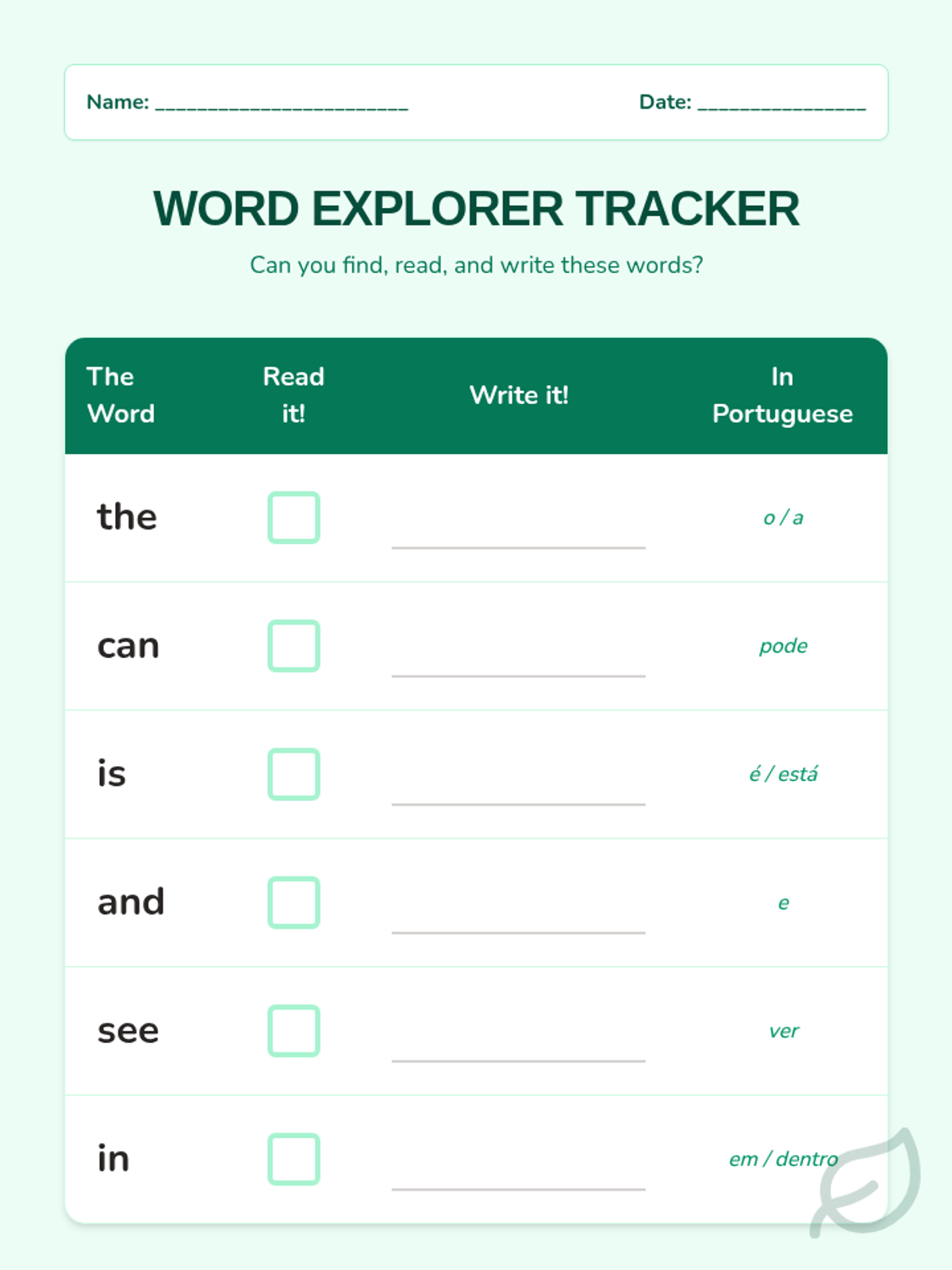
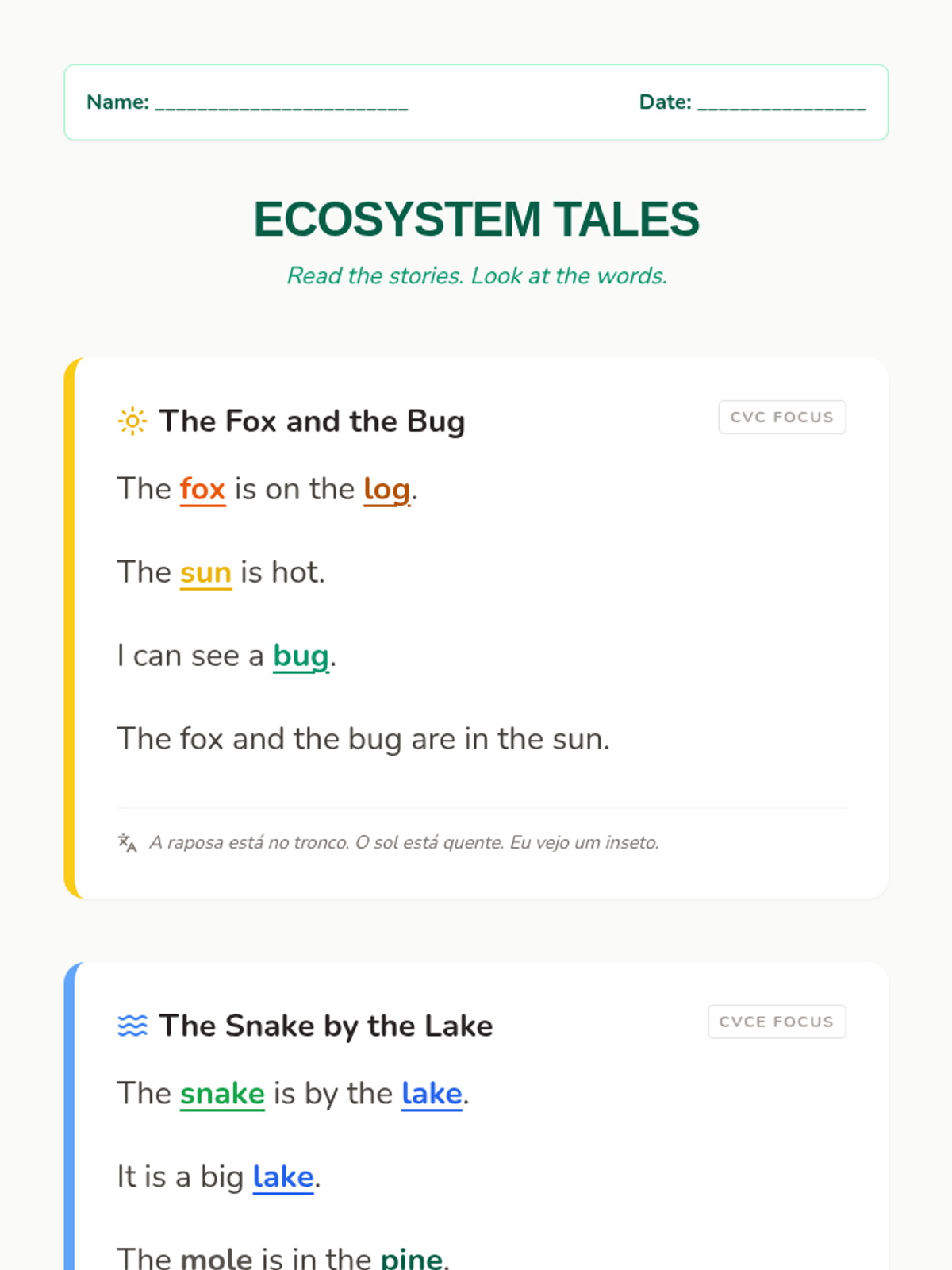
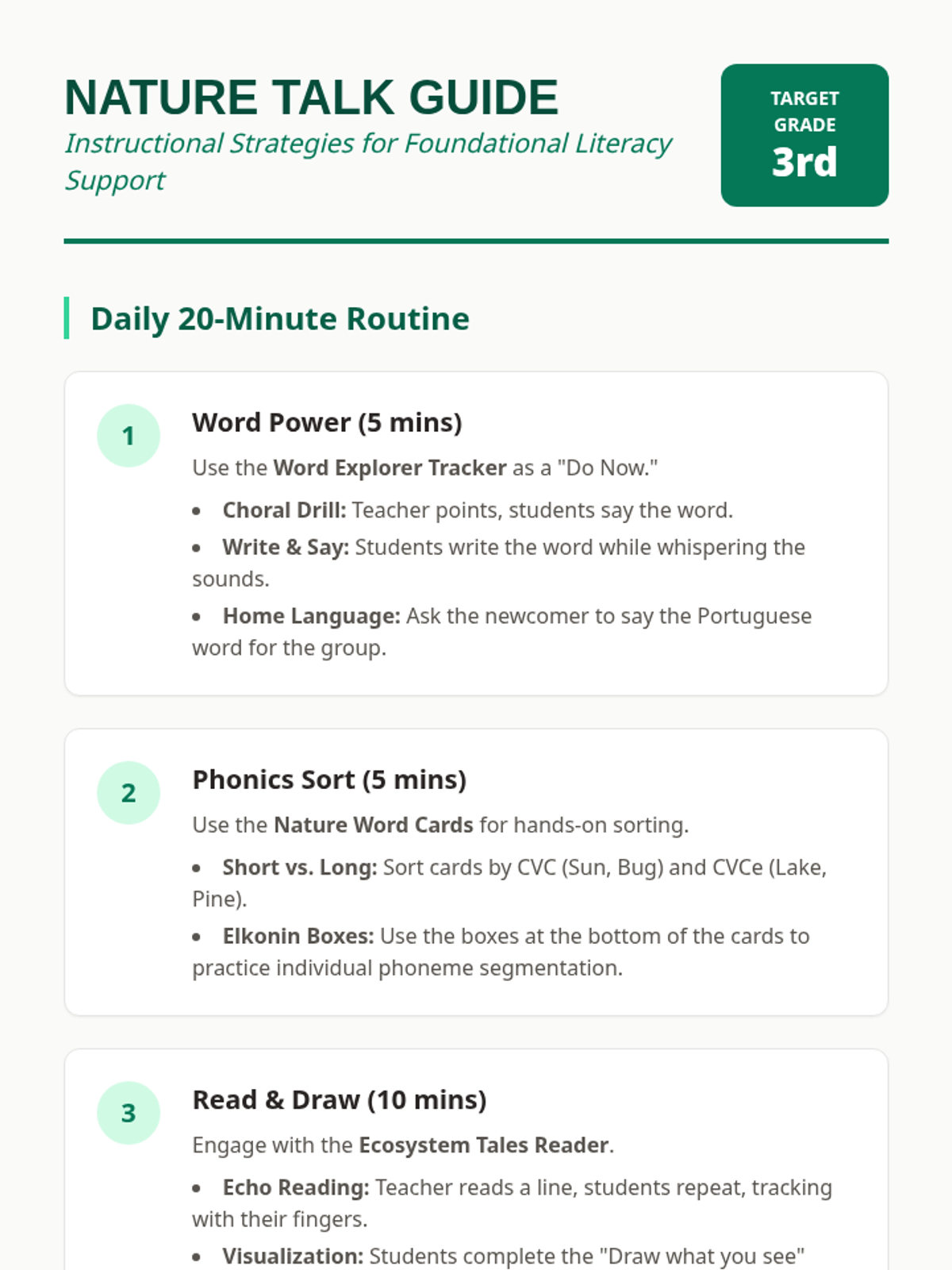
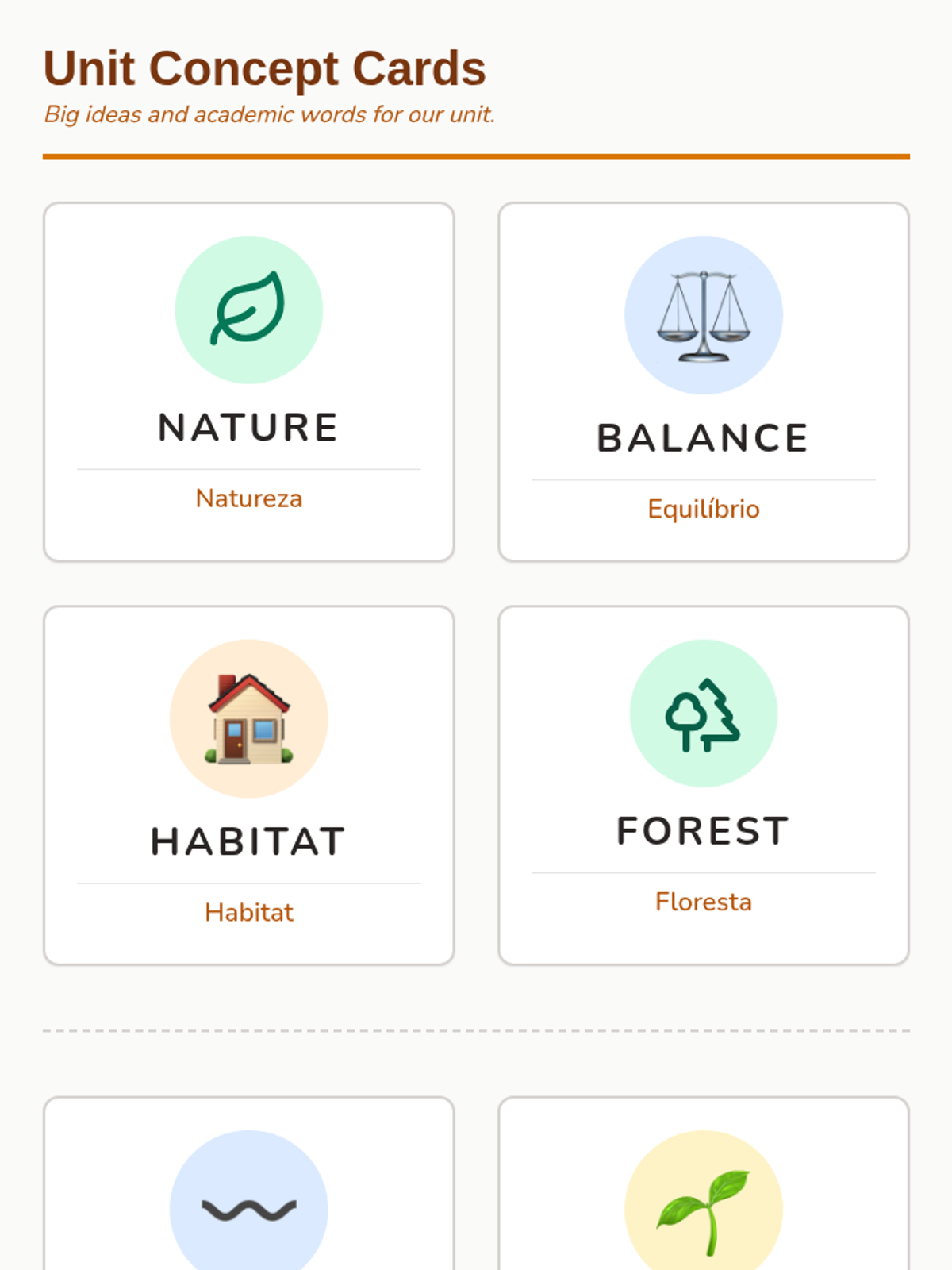
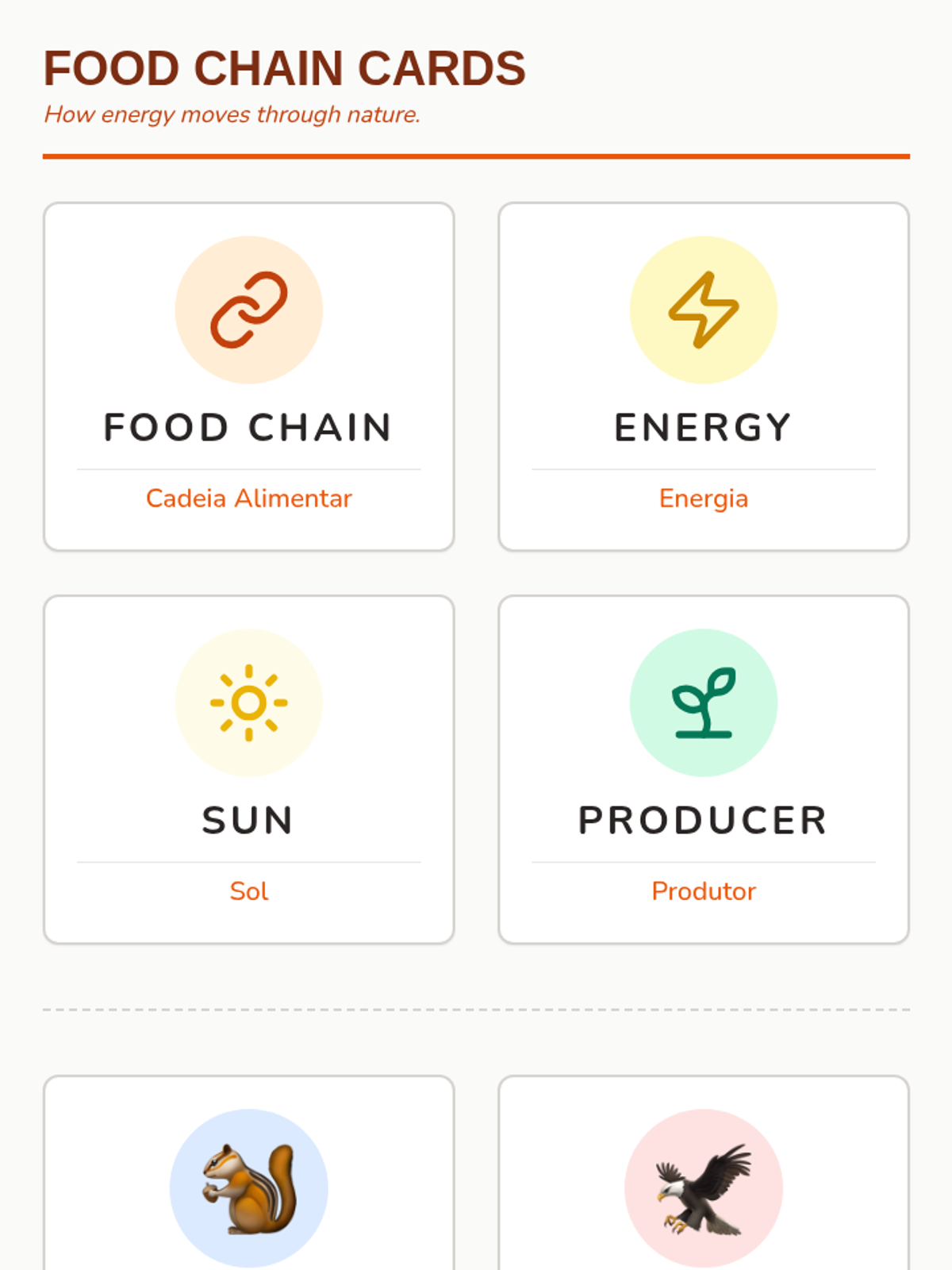
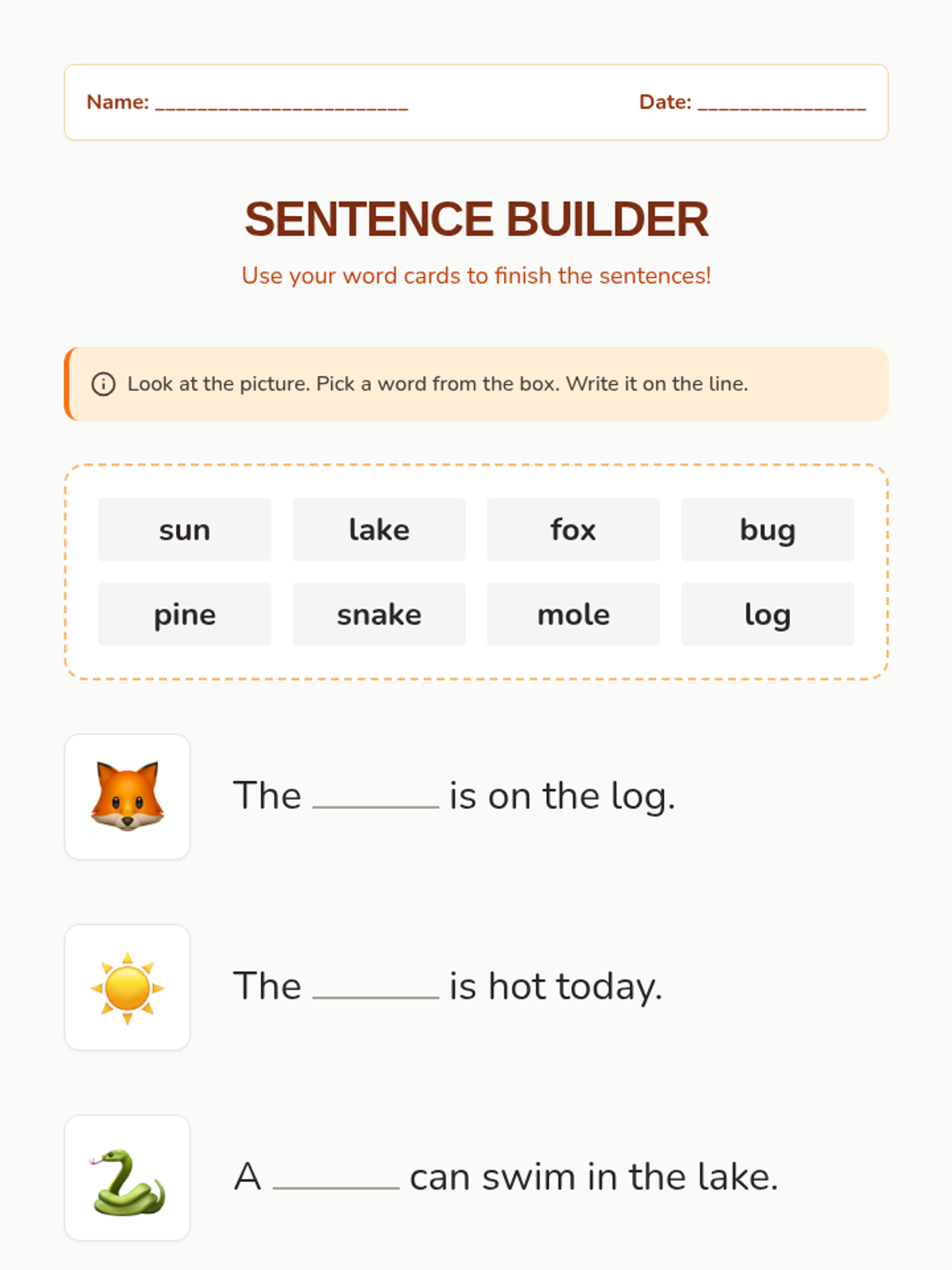
Foundational literacy support for the Nature's Balance unit, focusing on CVC/CVCe blending, unit vocabulary, and sentence frames.
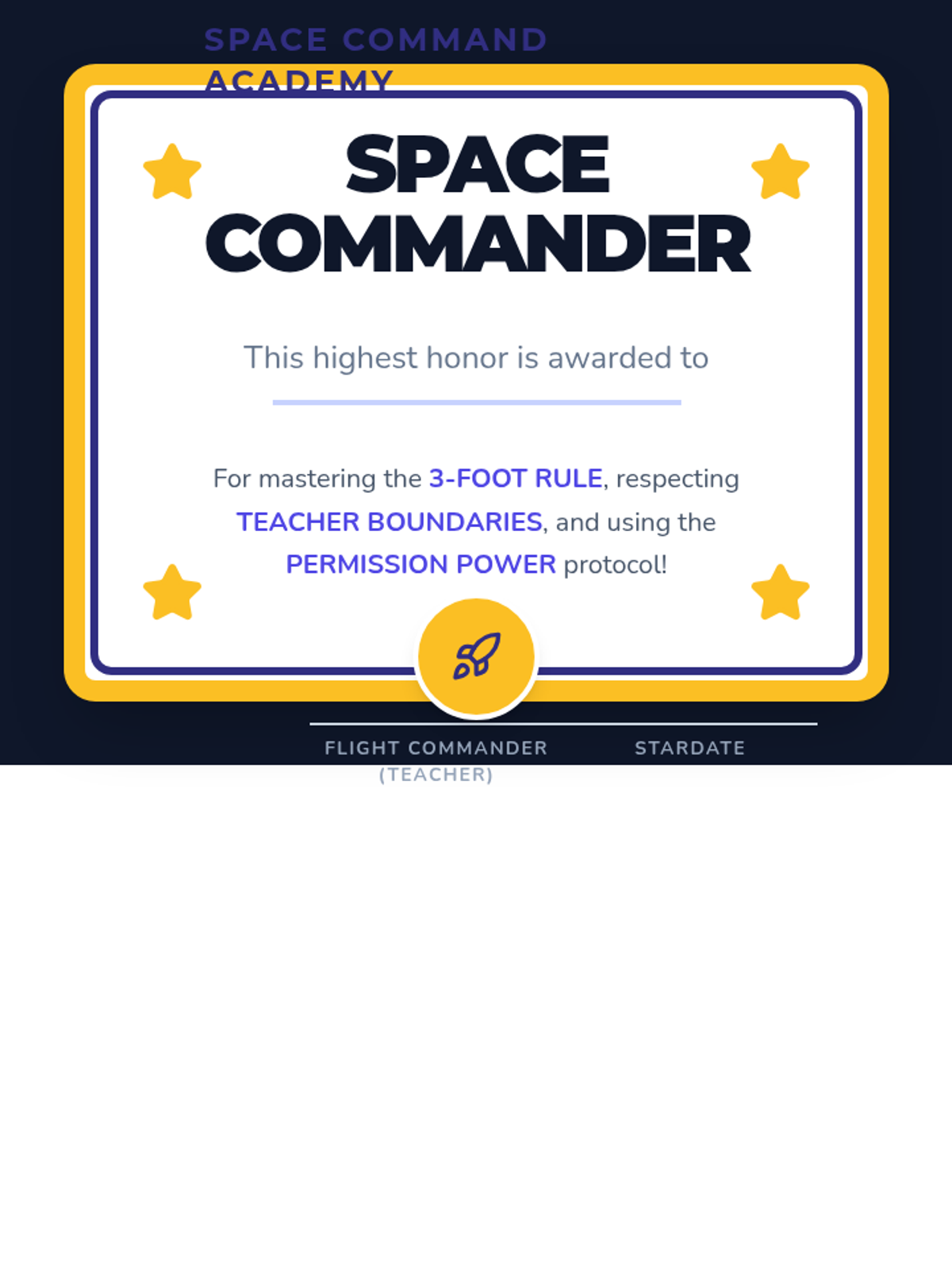
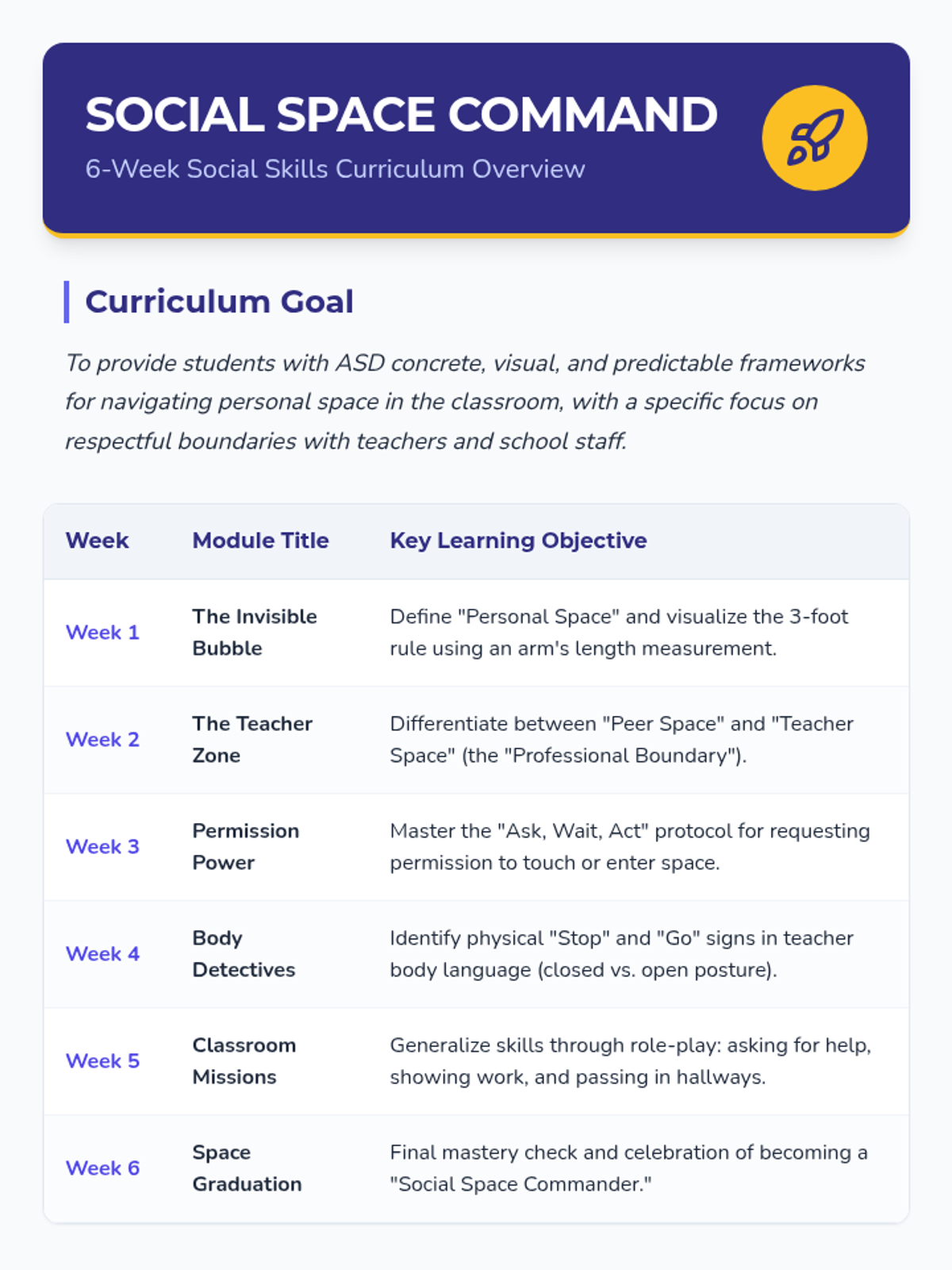
A review of all skills with a final assessment and celebration of social space mastery.
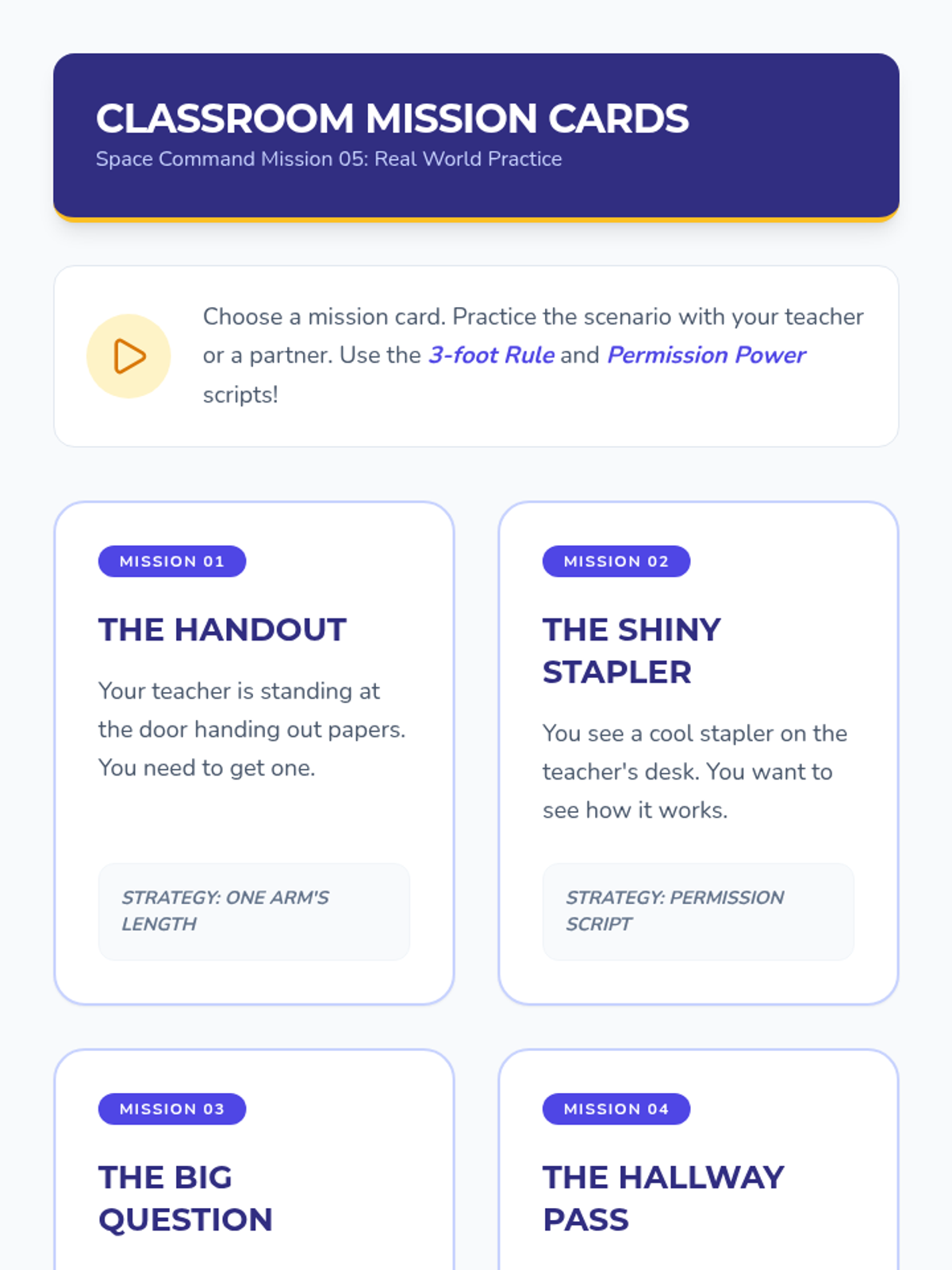
Real-world practice and role-playing of common classroom scenarios like asking for help or sharing a story.
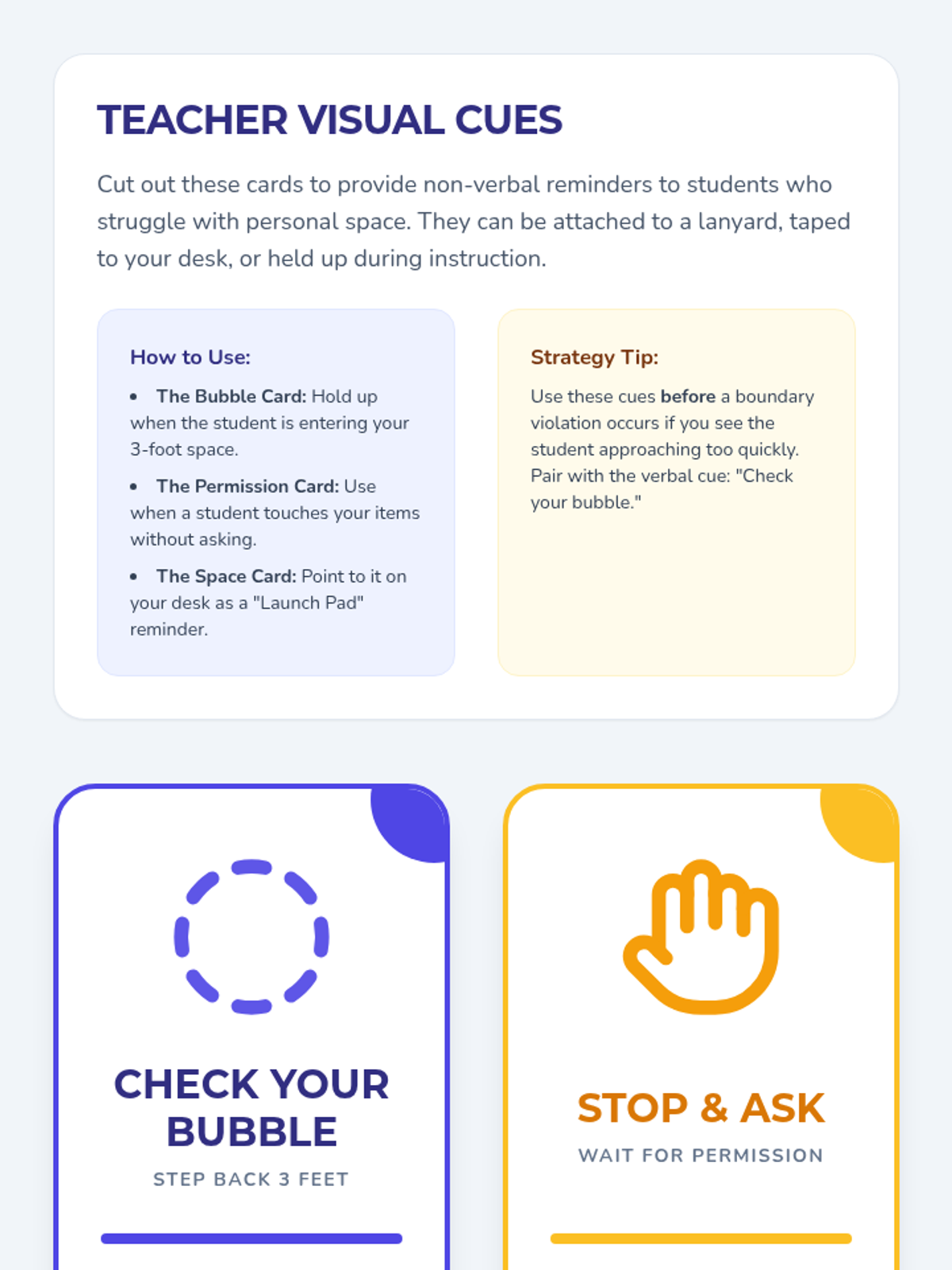
Focuses on identifying non-verbal cues from teachers that indicate they need more space or are ready to interact.
Teaches a concrete 3-step script for asking permission before touching a teacher or their belongings.
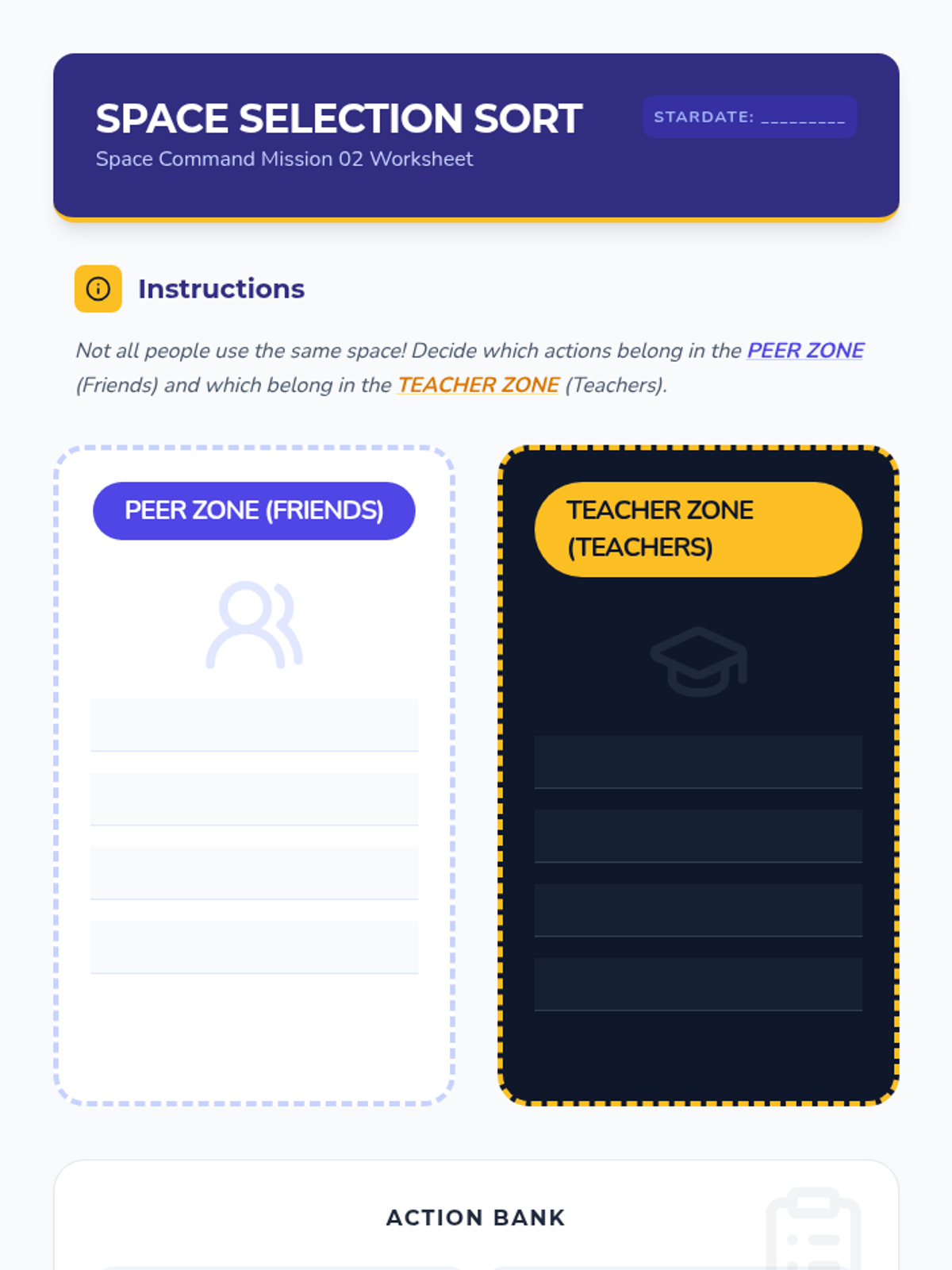
Differentiates between space for peers and the 'Professional Zone' for teachers and staff.
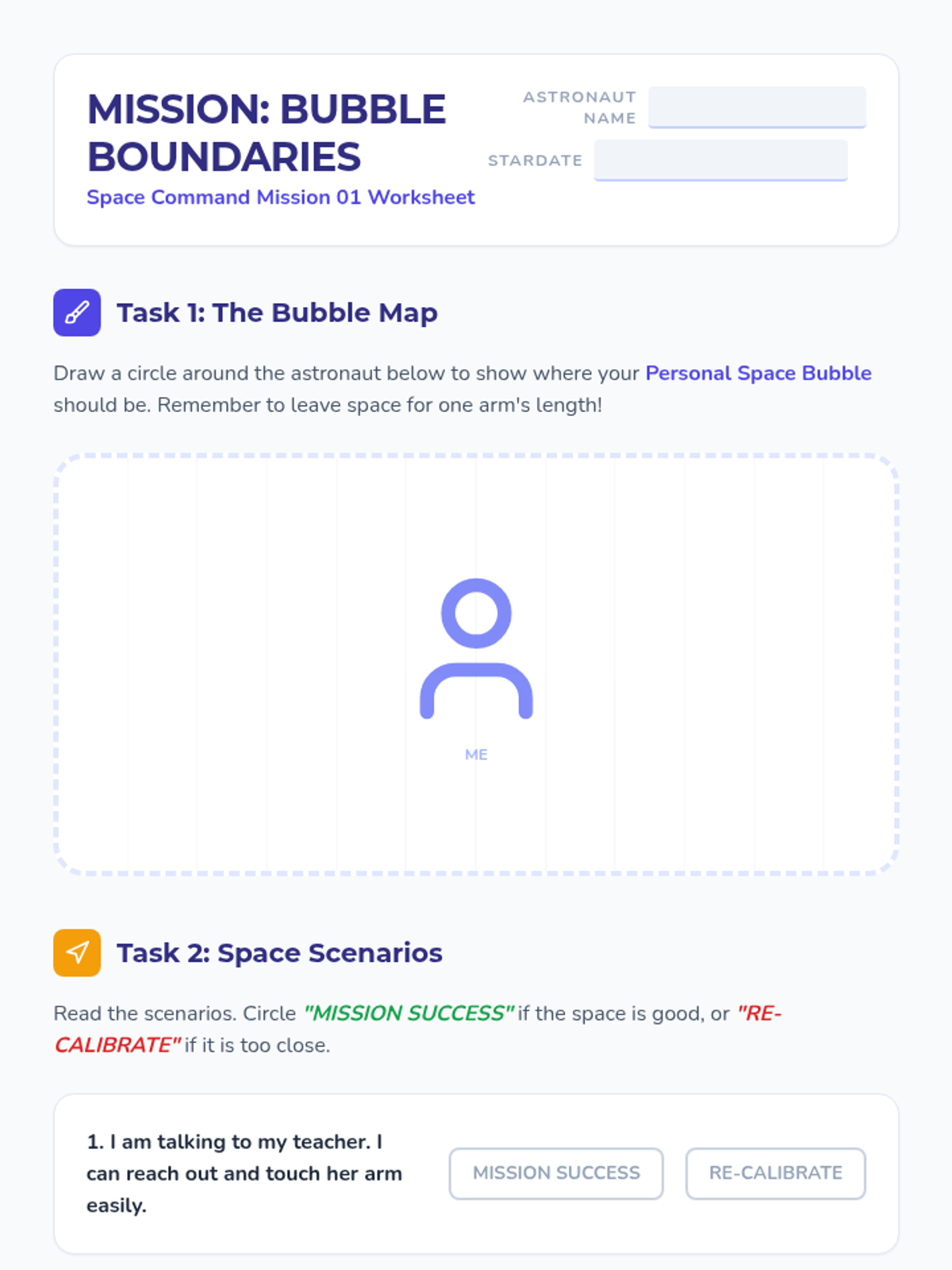
Introduces the concept of 'Personal Space' as an invisible bubble and establishes the standard 3-foot rule for classroom interactions.
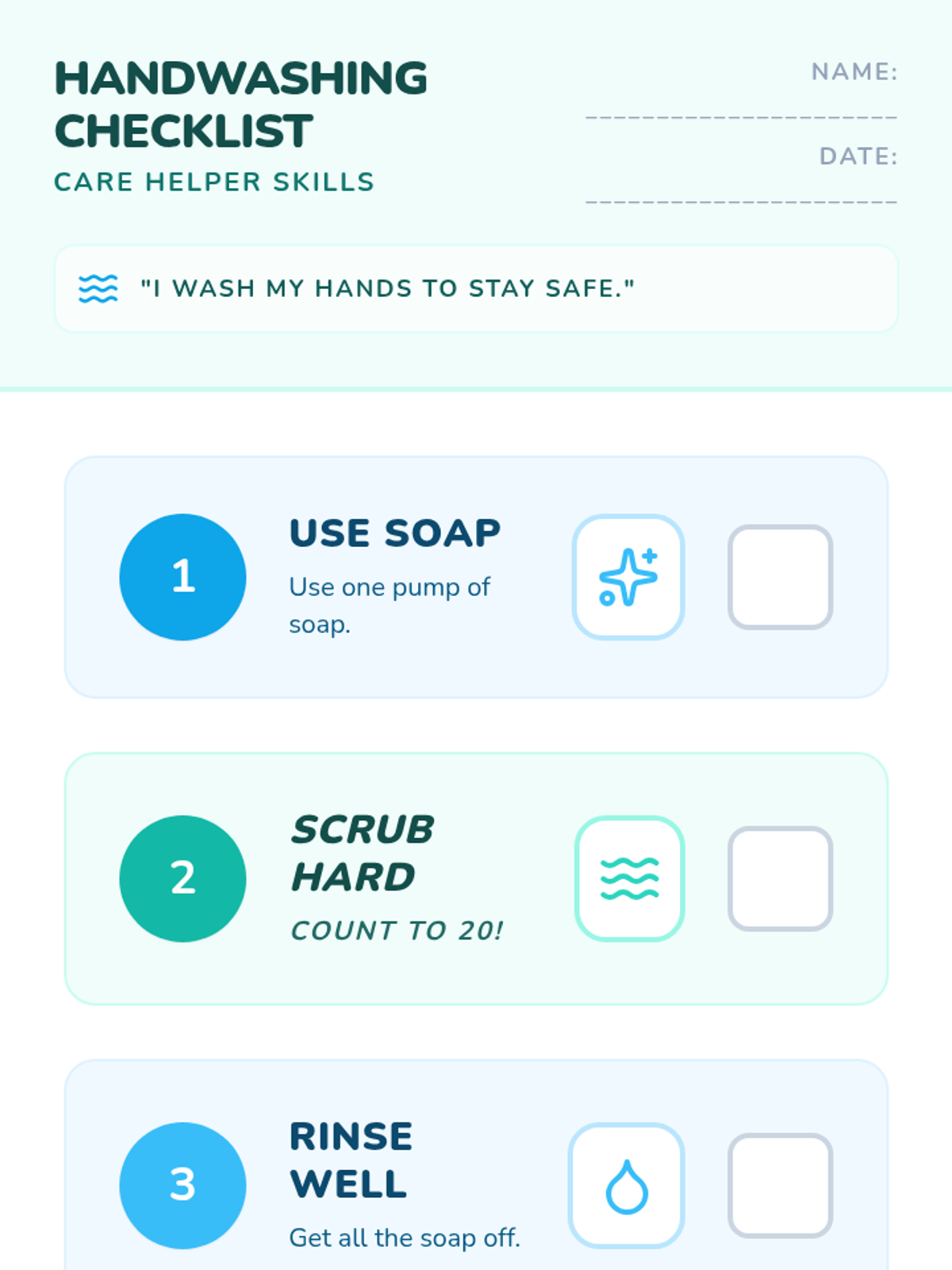
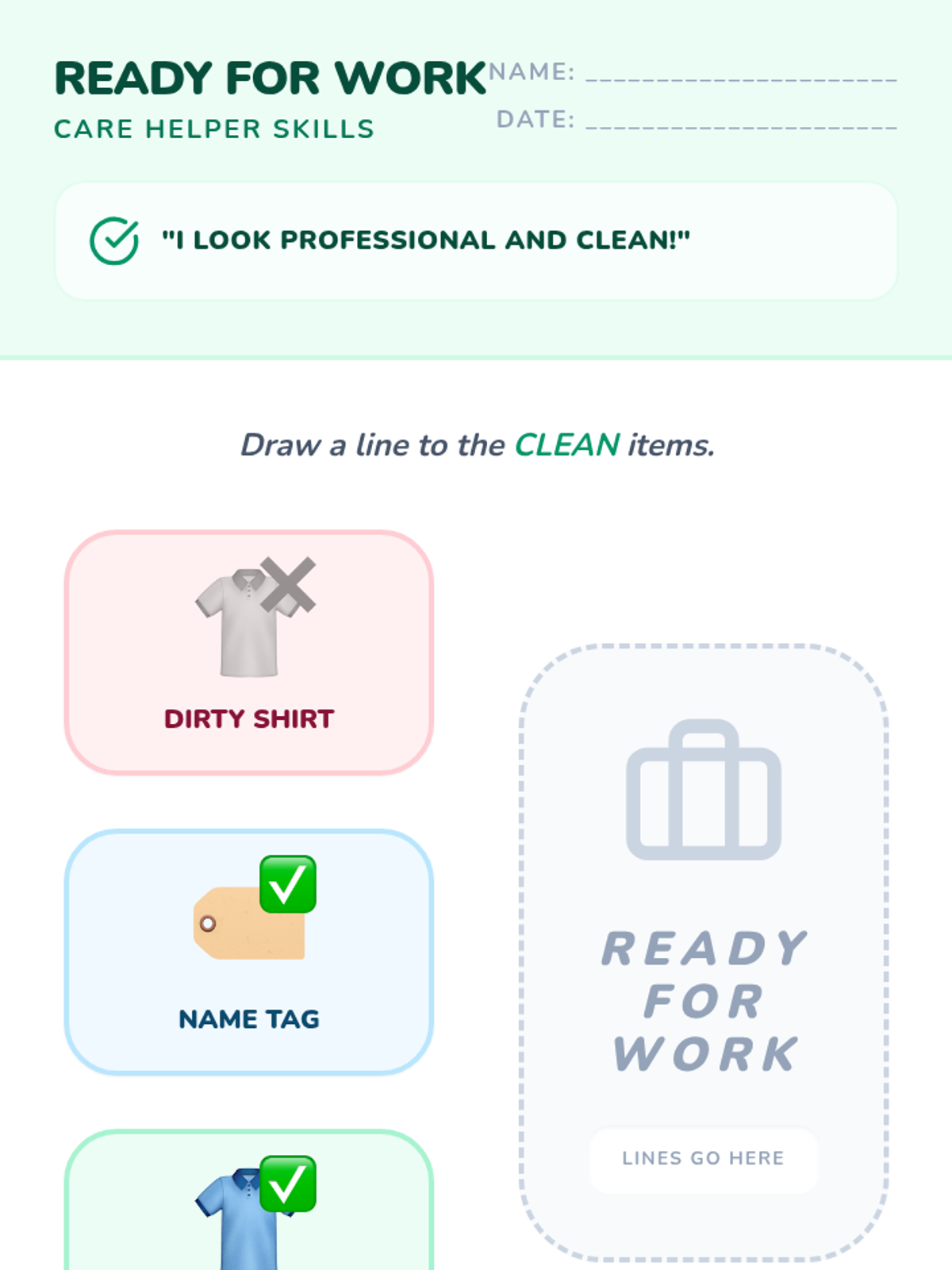
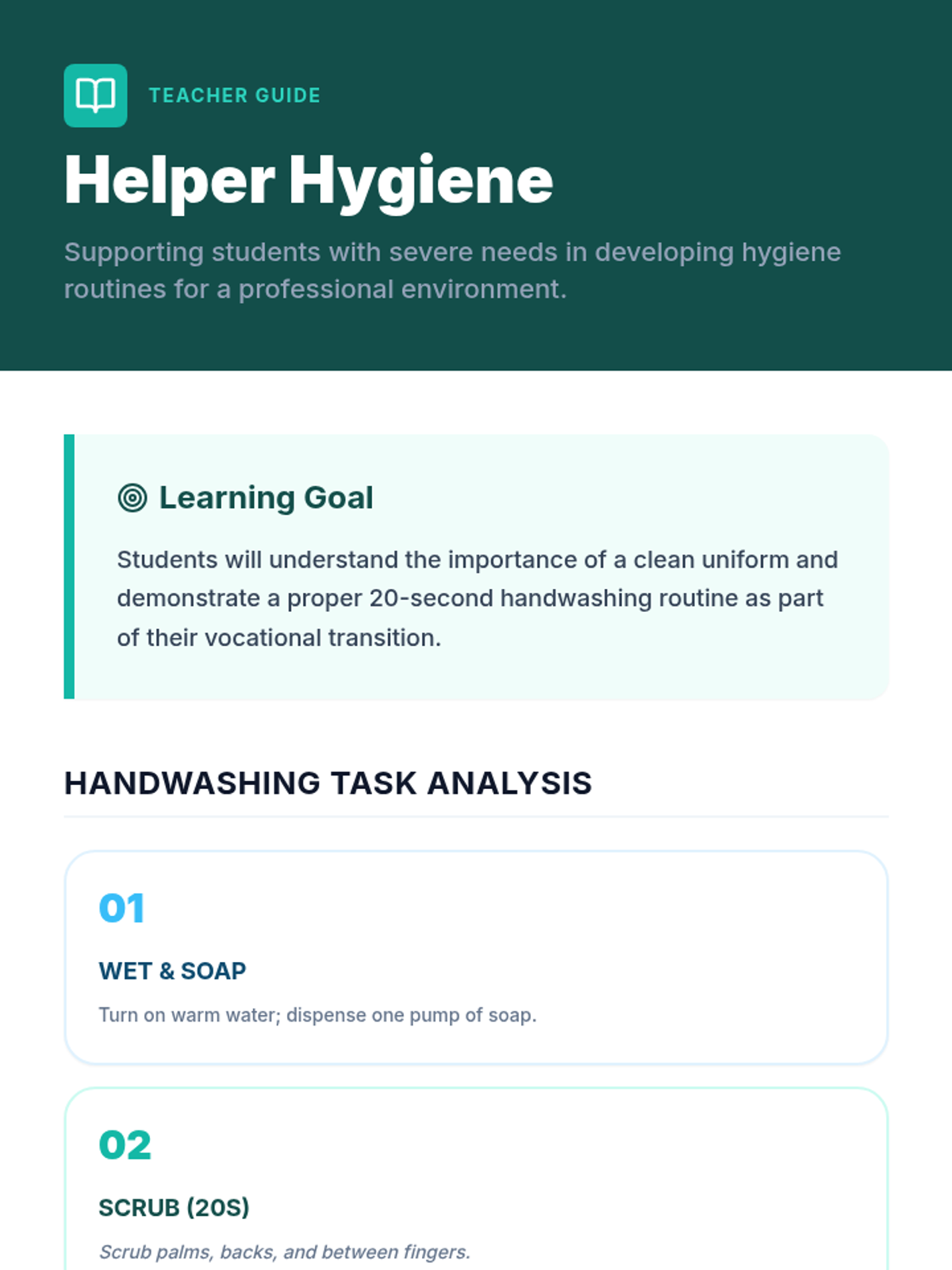
A practical lesson on professional appearance and hand hygiene, focusing on wearing the care helper uniform and the step-by-step handwashing routine.
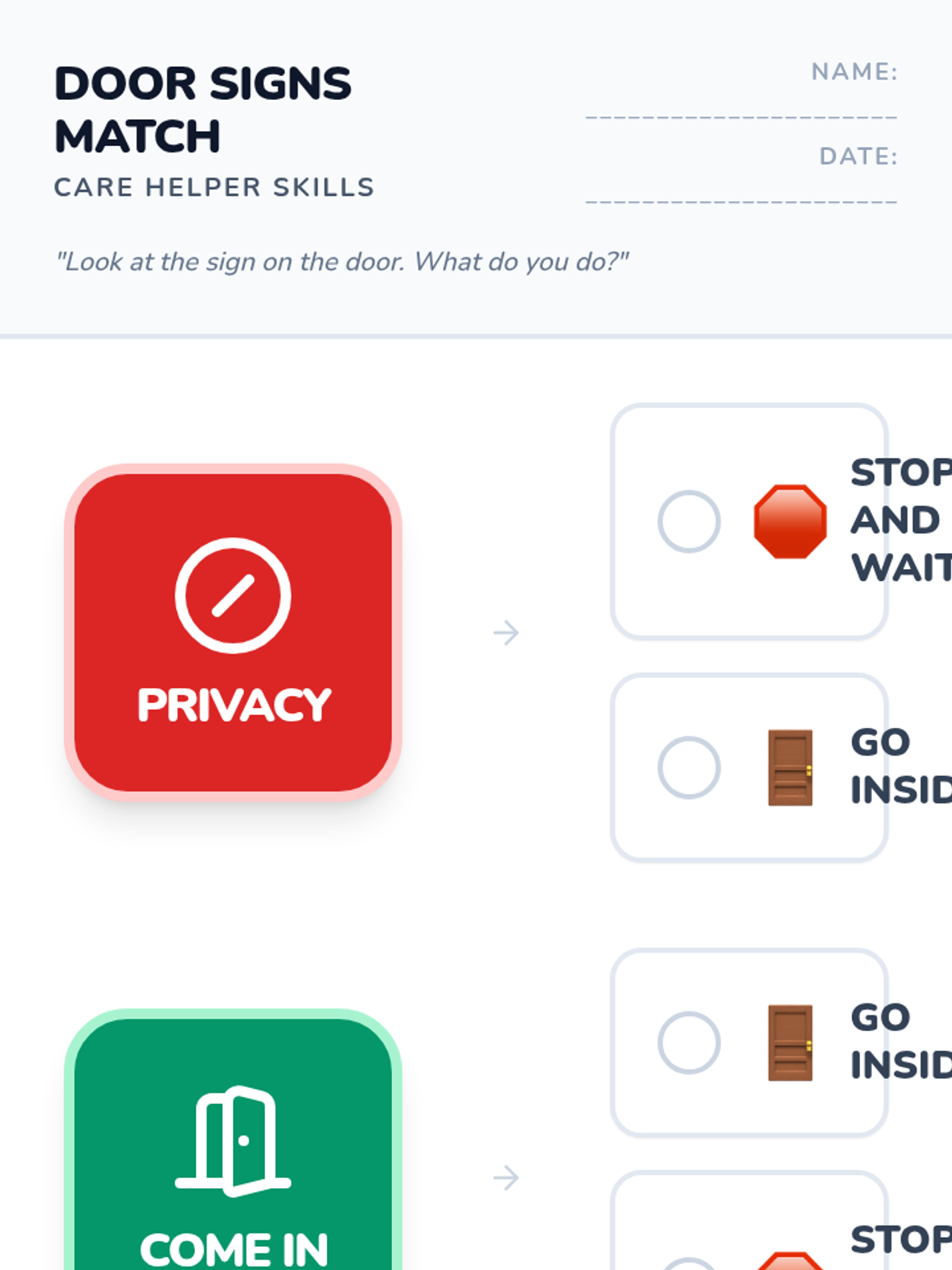
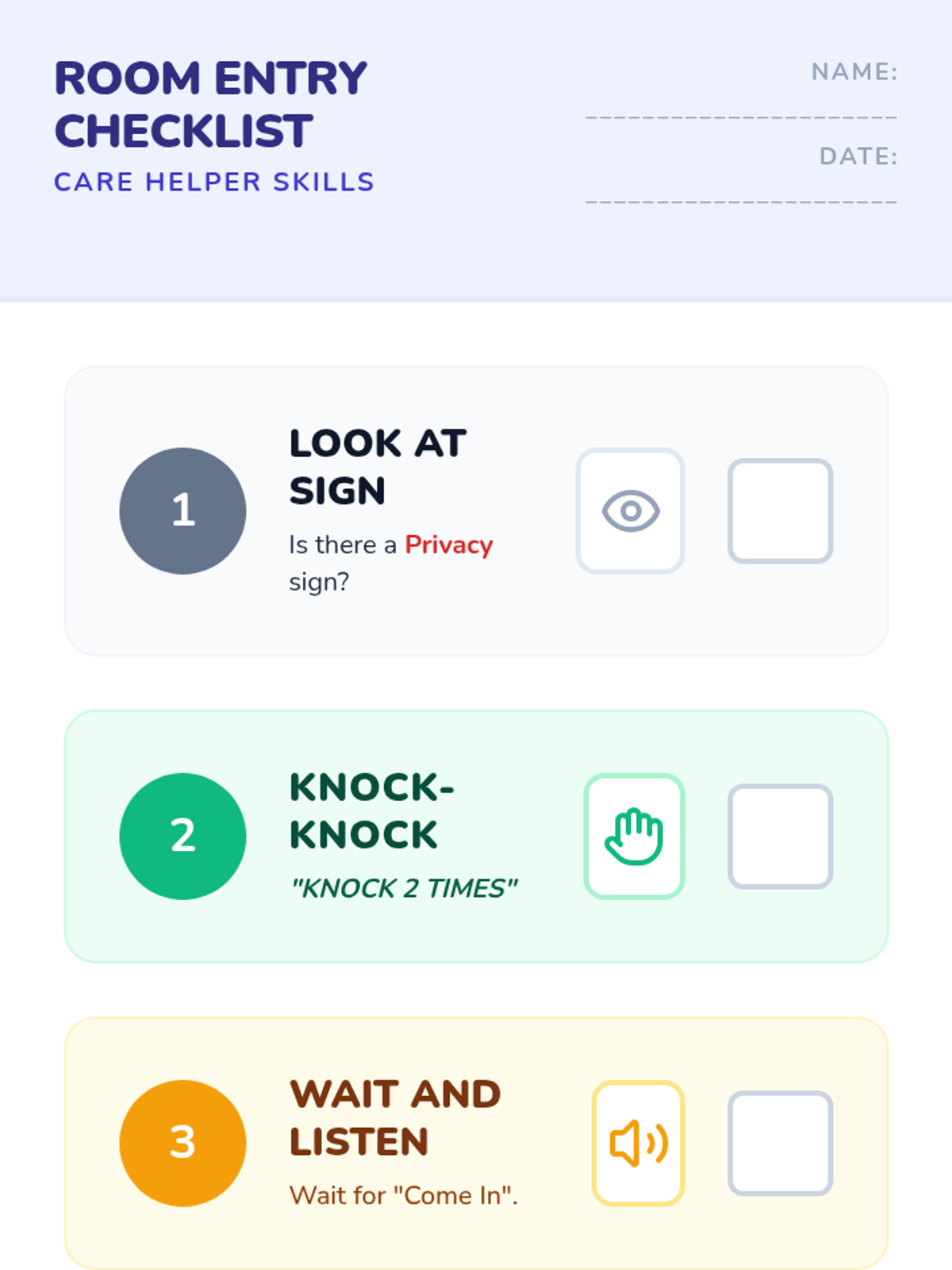
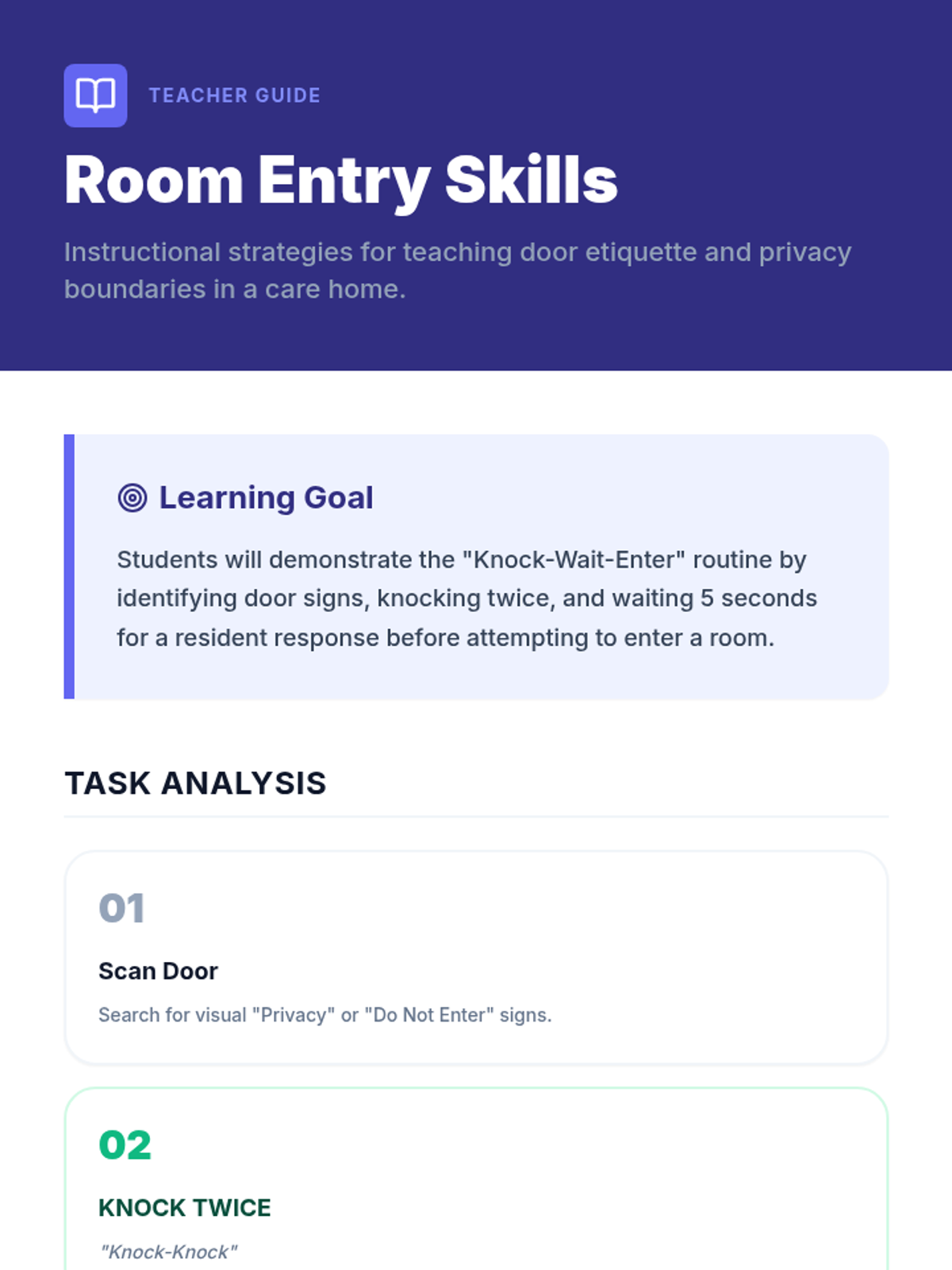
A practical lesson on the etiquette of entering a resident's private room, focusing on knocking, waiting for a response, and identifying 'Privacy' signs.
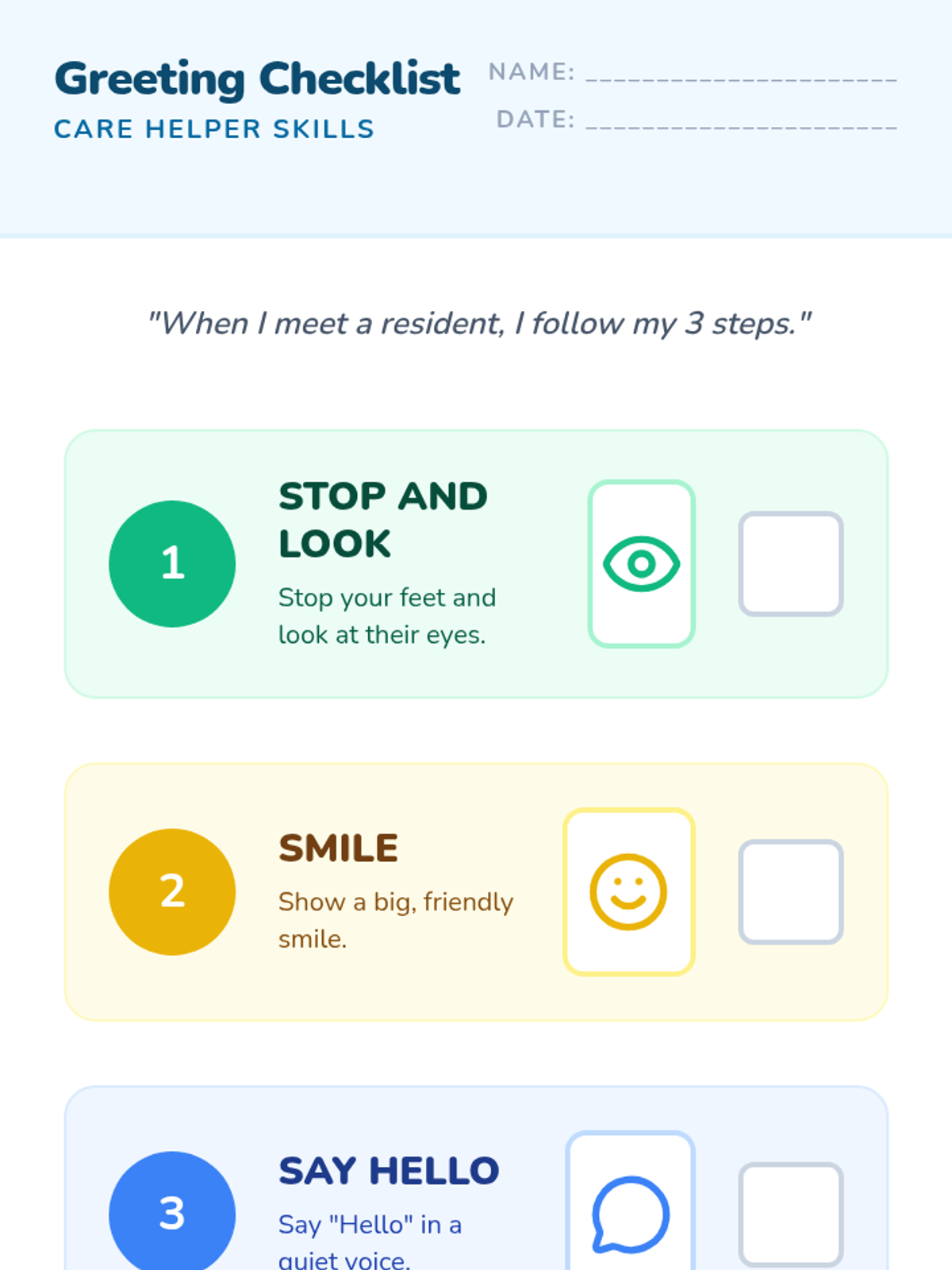
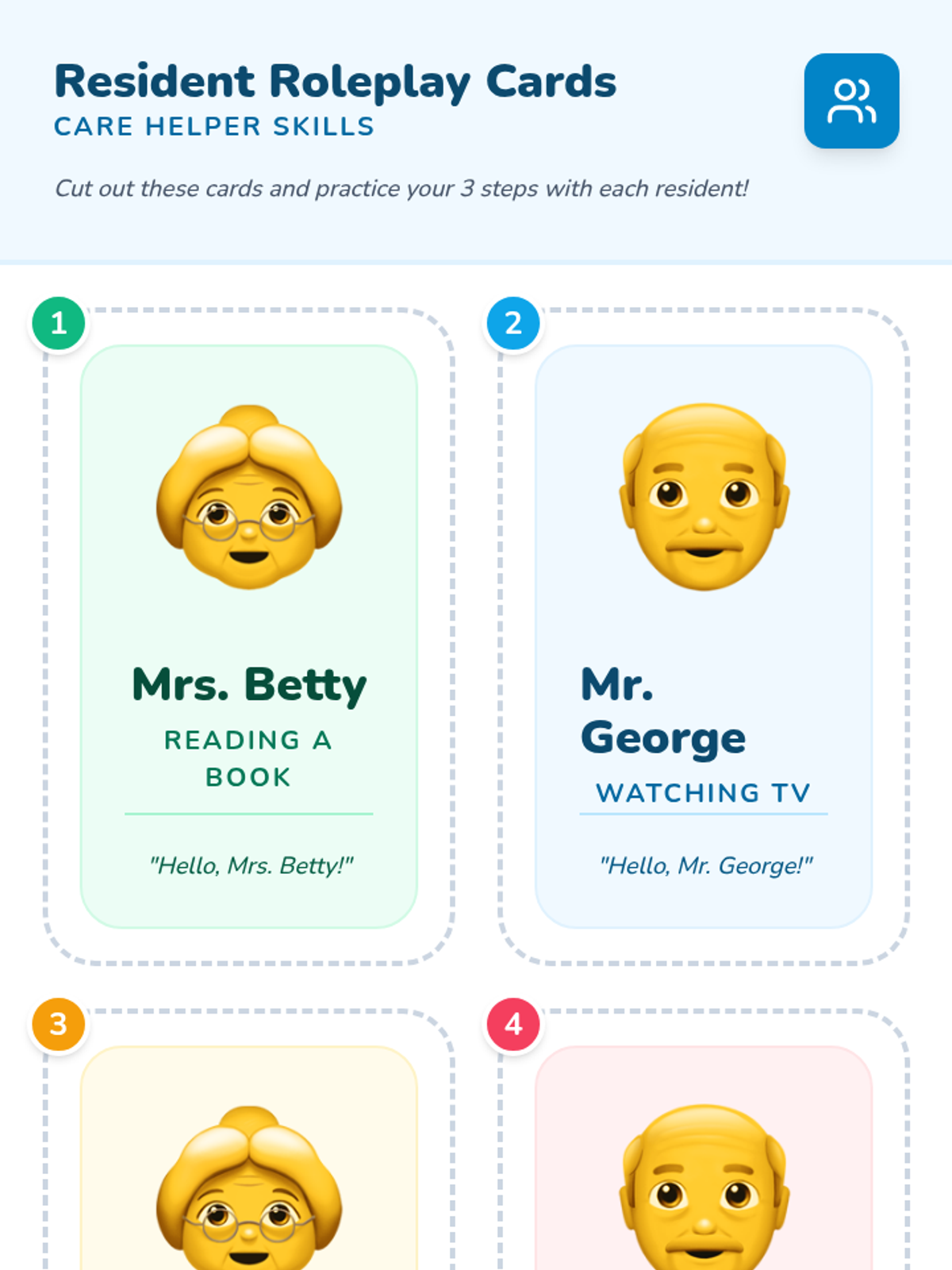
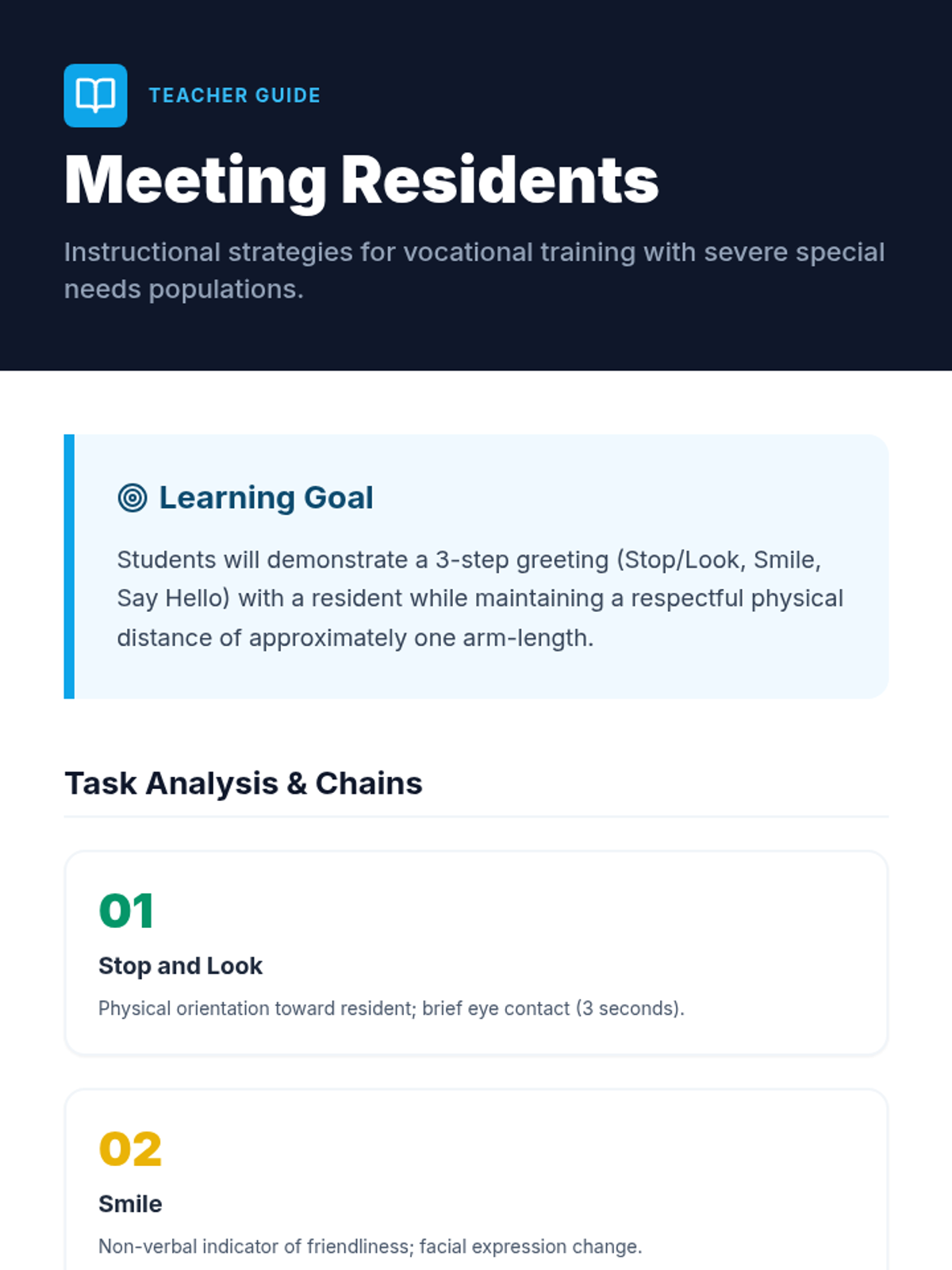
A foundational lesson on how to interact with residents in a care home setting, focusing on eye contact, simple greetings, and respectful distance through visual supports and repetitive practice.
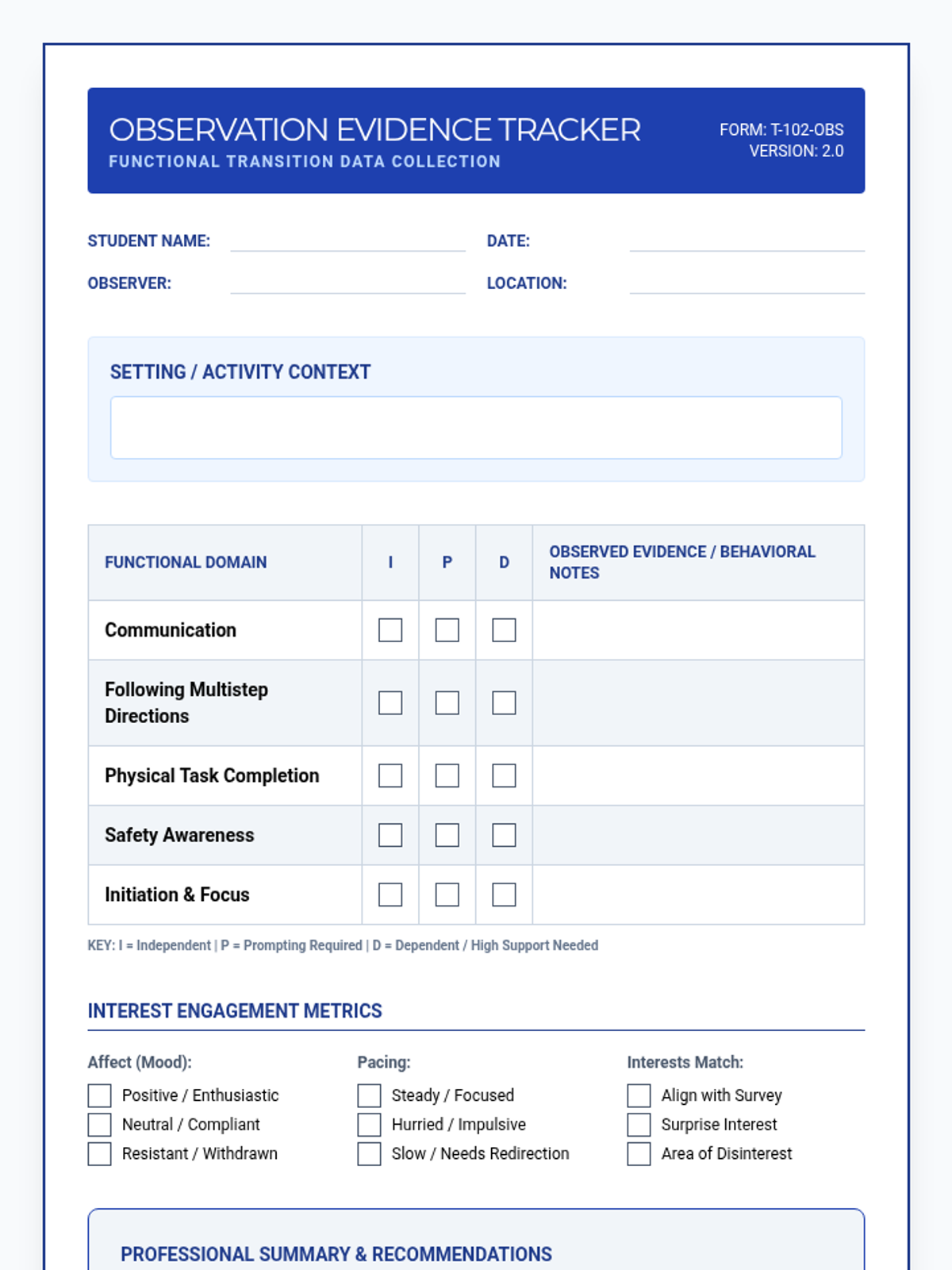
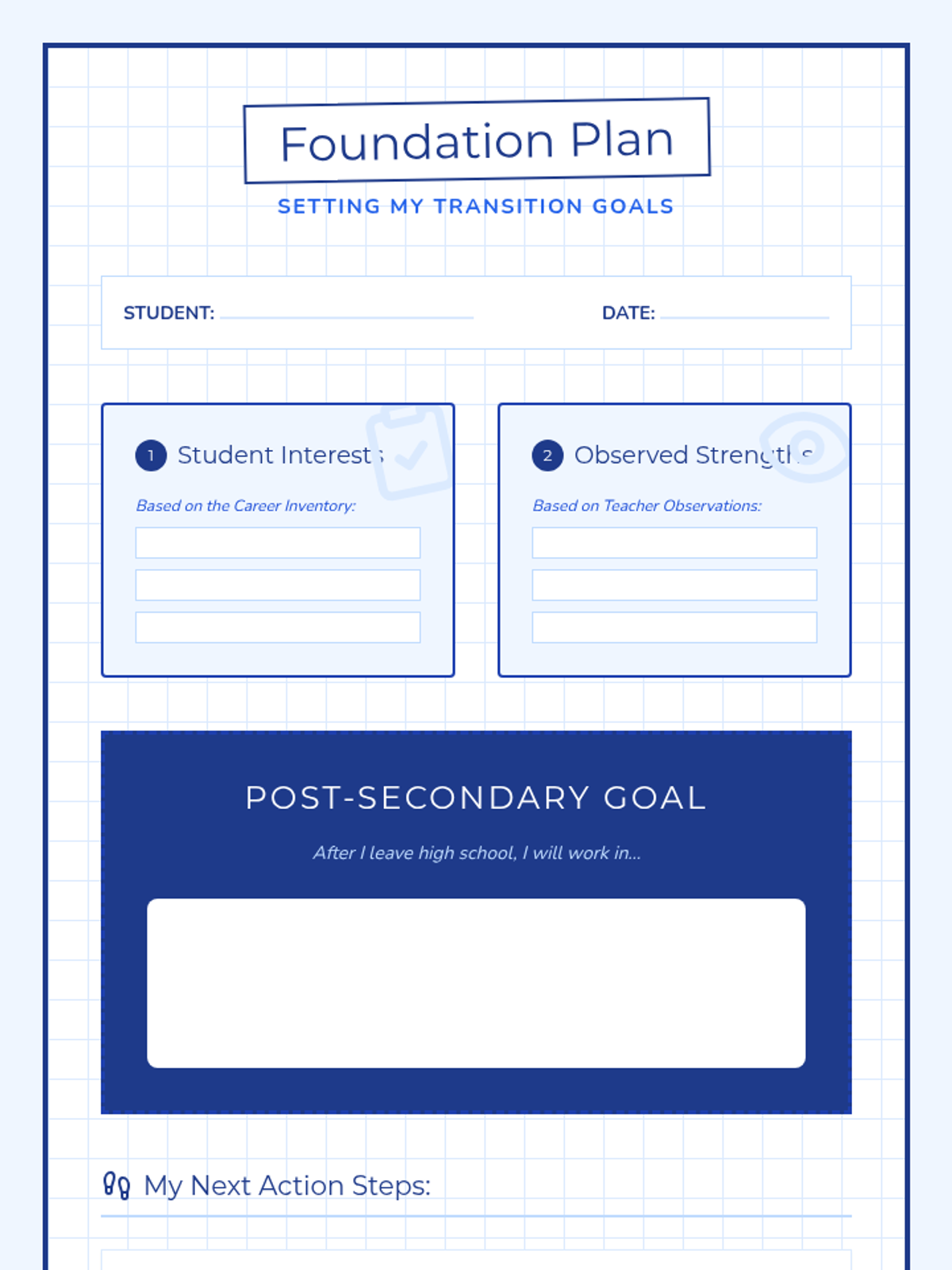
A comprehensive transition planning toolset focused on identifying community-based vocational interests and functional skills through student input and teacher observation.
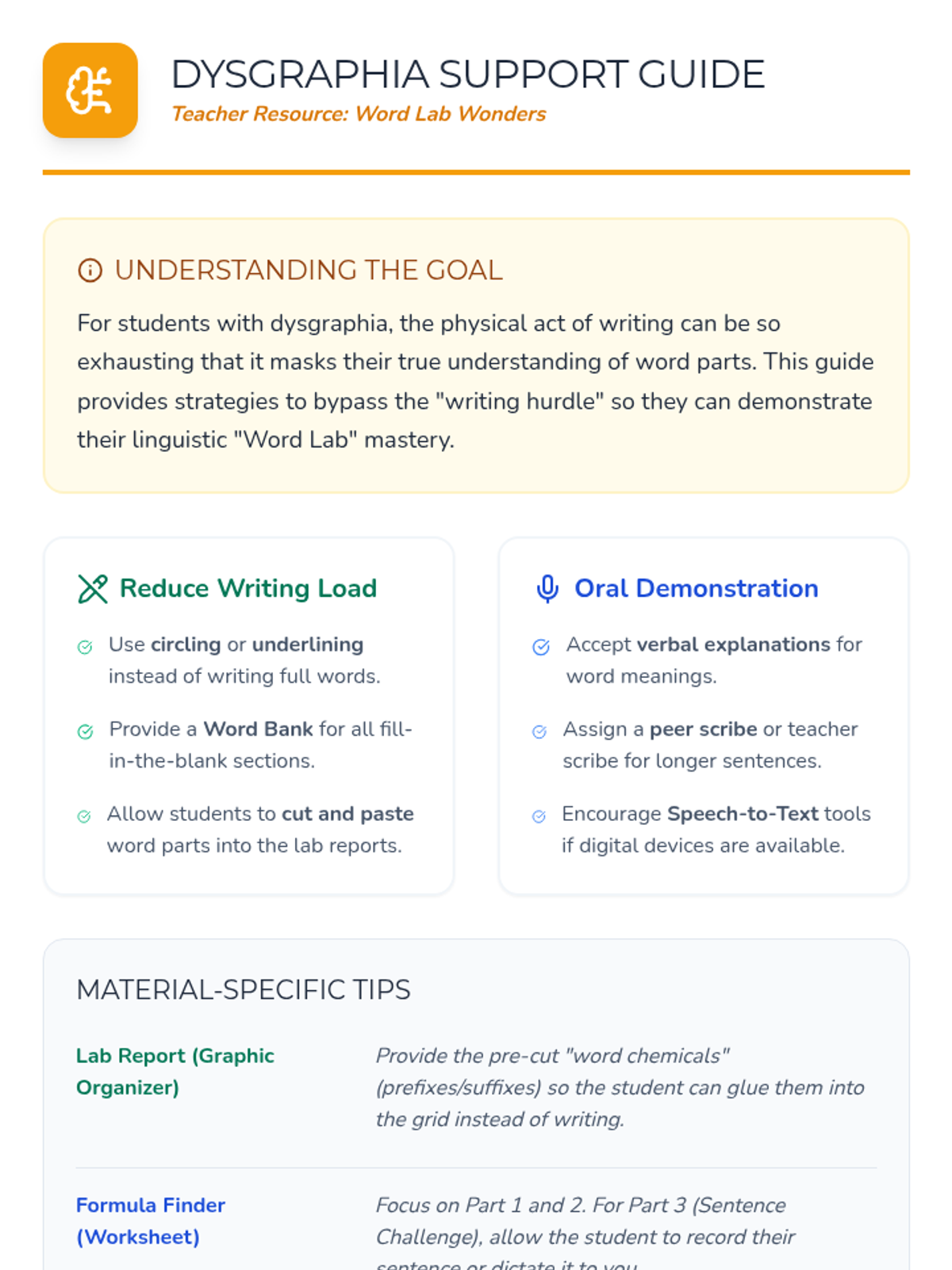
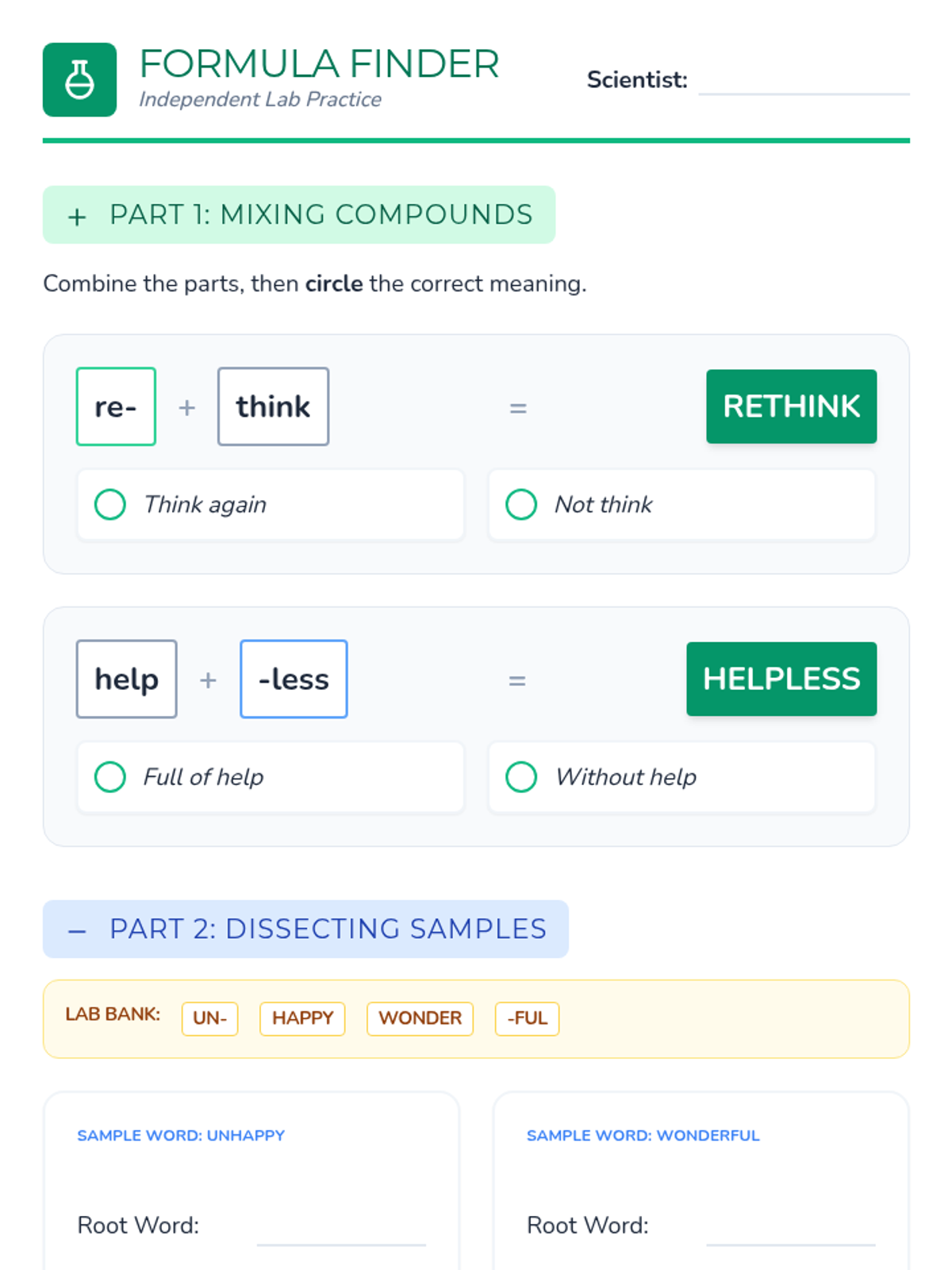
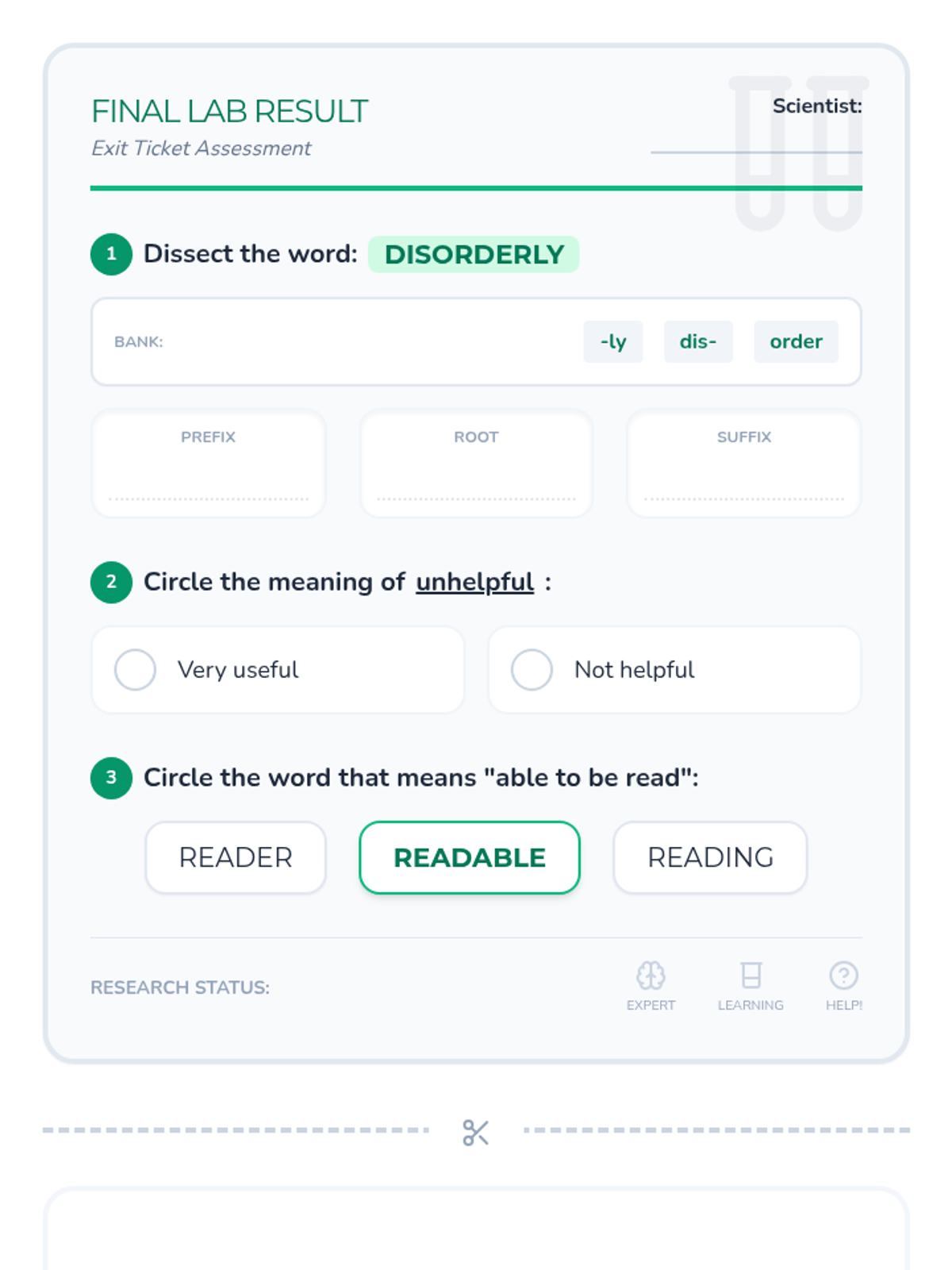
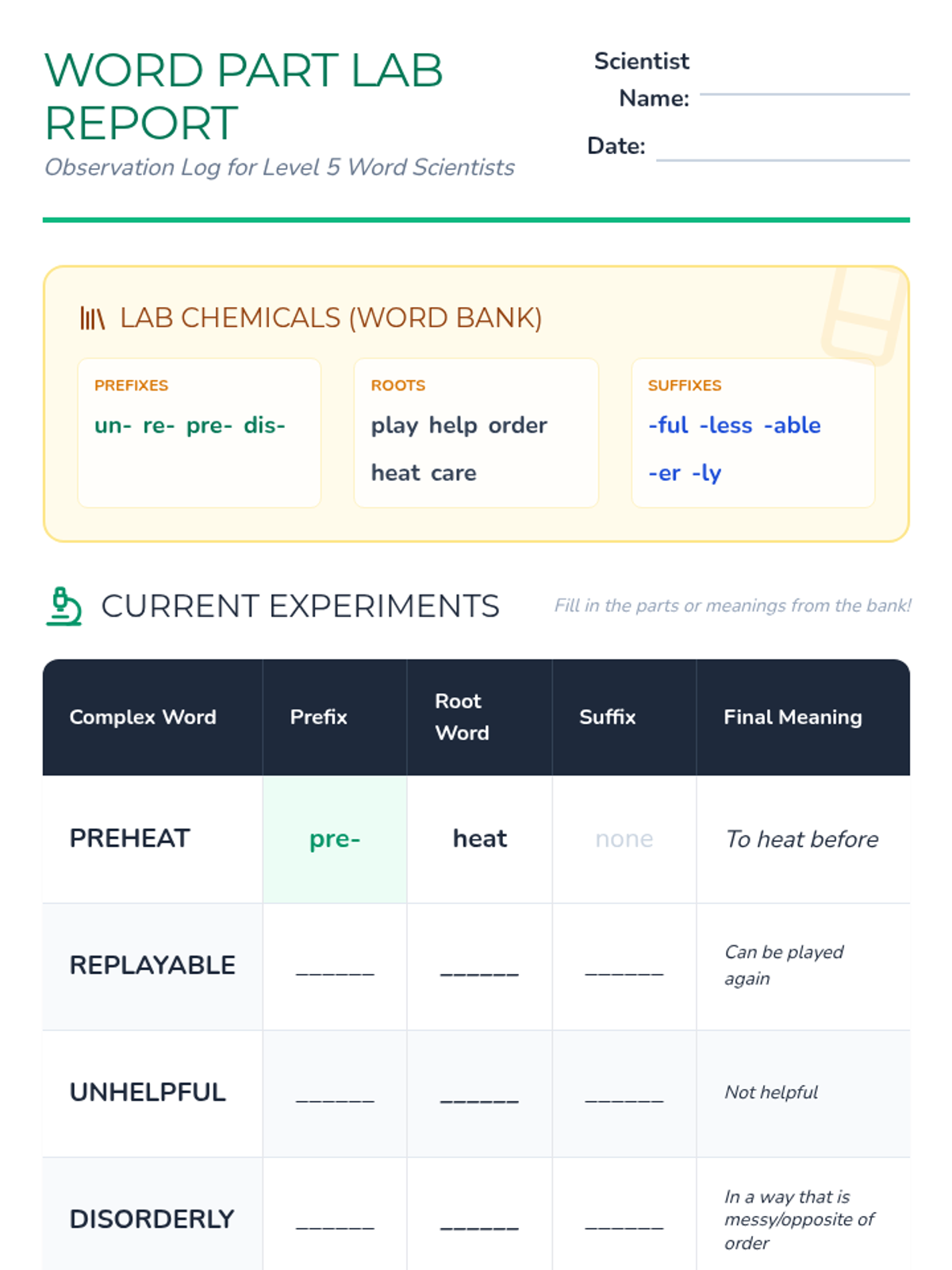
A 45-minute lesson for 5th-grade ESL students on using prefixes and suffixes to decode complex word meanings using a 'Word Lab' theme.
A culminating activity rotating through communication stations to demonstrate mastery of all skills.
Focusing on social pragmatics including 'Hello', 'Goodbye', and 'Thank You' on TouchChat.
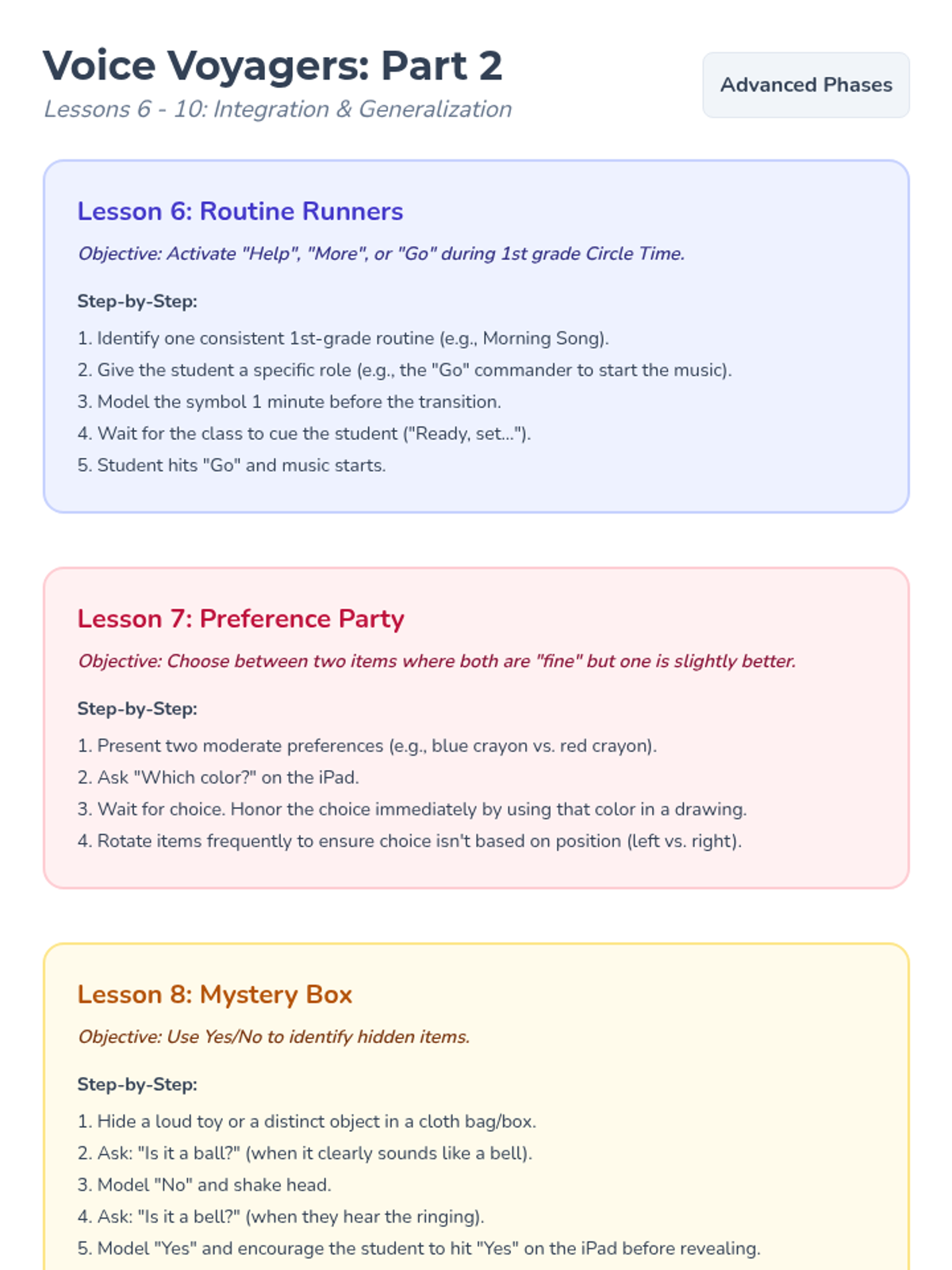
Using Yes/No responses to identify or guess items in a tactile mystery box.
Refining choice-making by presenting less obvious preferences and increasing complexity.
Integrating learned communication symbols into daily 1st-grade classroom routines.
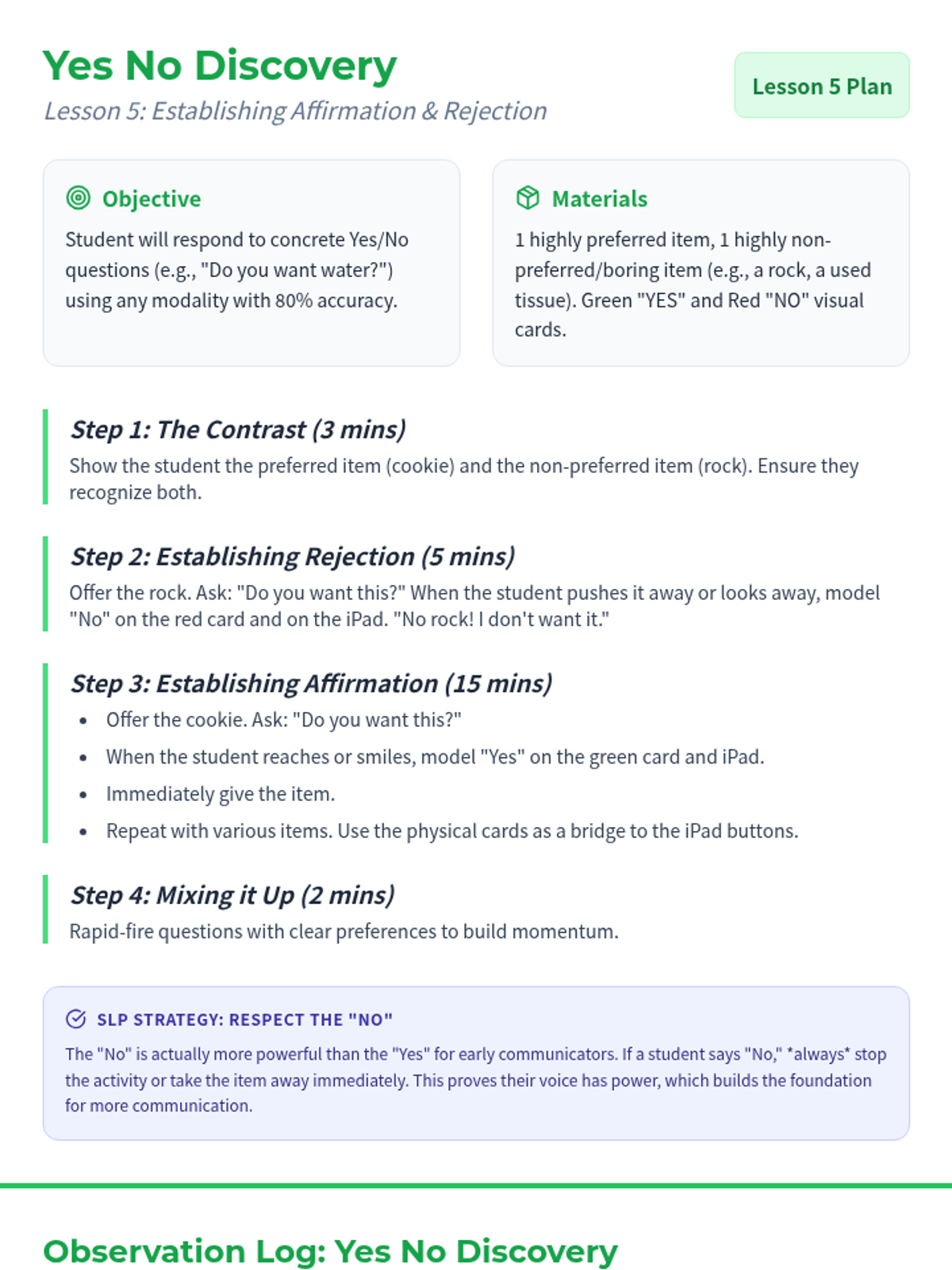
Establishing basic Yes and No responses using visual aids and AAC buttons.
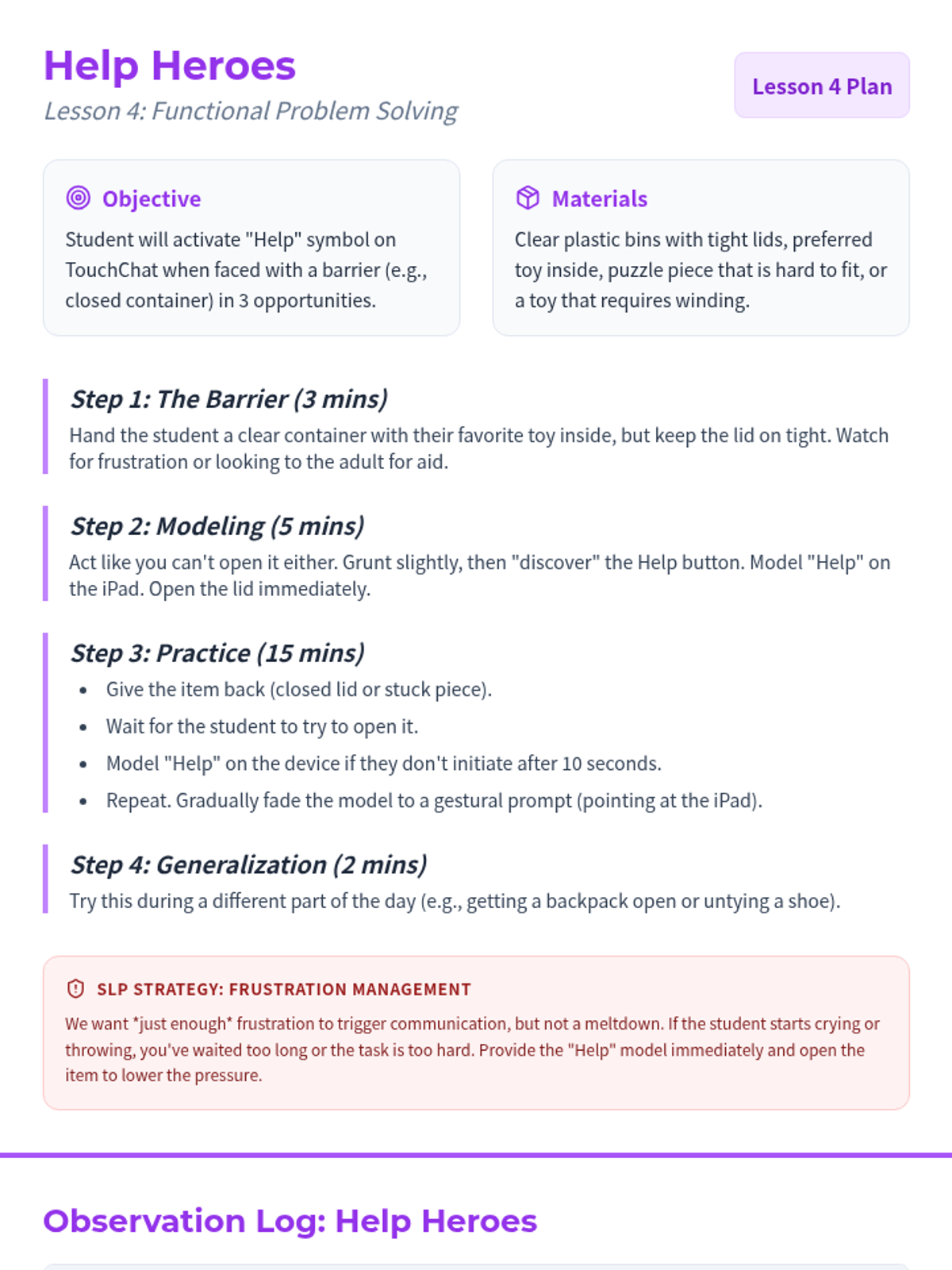
Introducing the 'Help' symbol for navigating obstacles and requesting assistance.
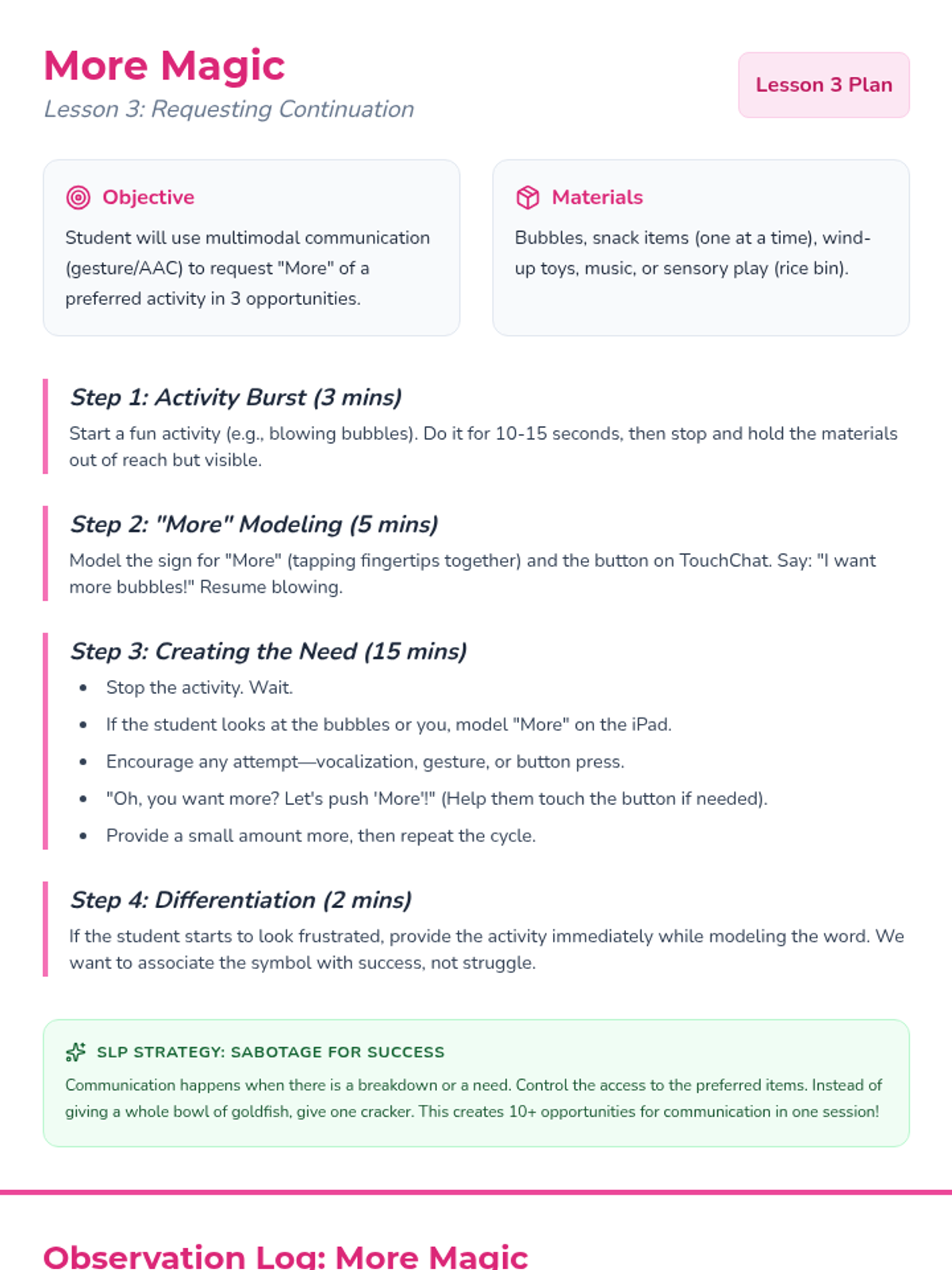
Modeling and prompting the 'More' symbol during sensory and high-engagement tasks.
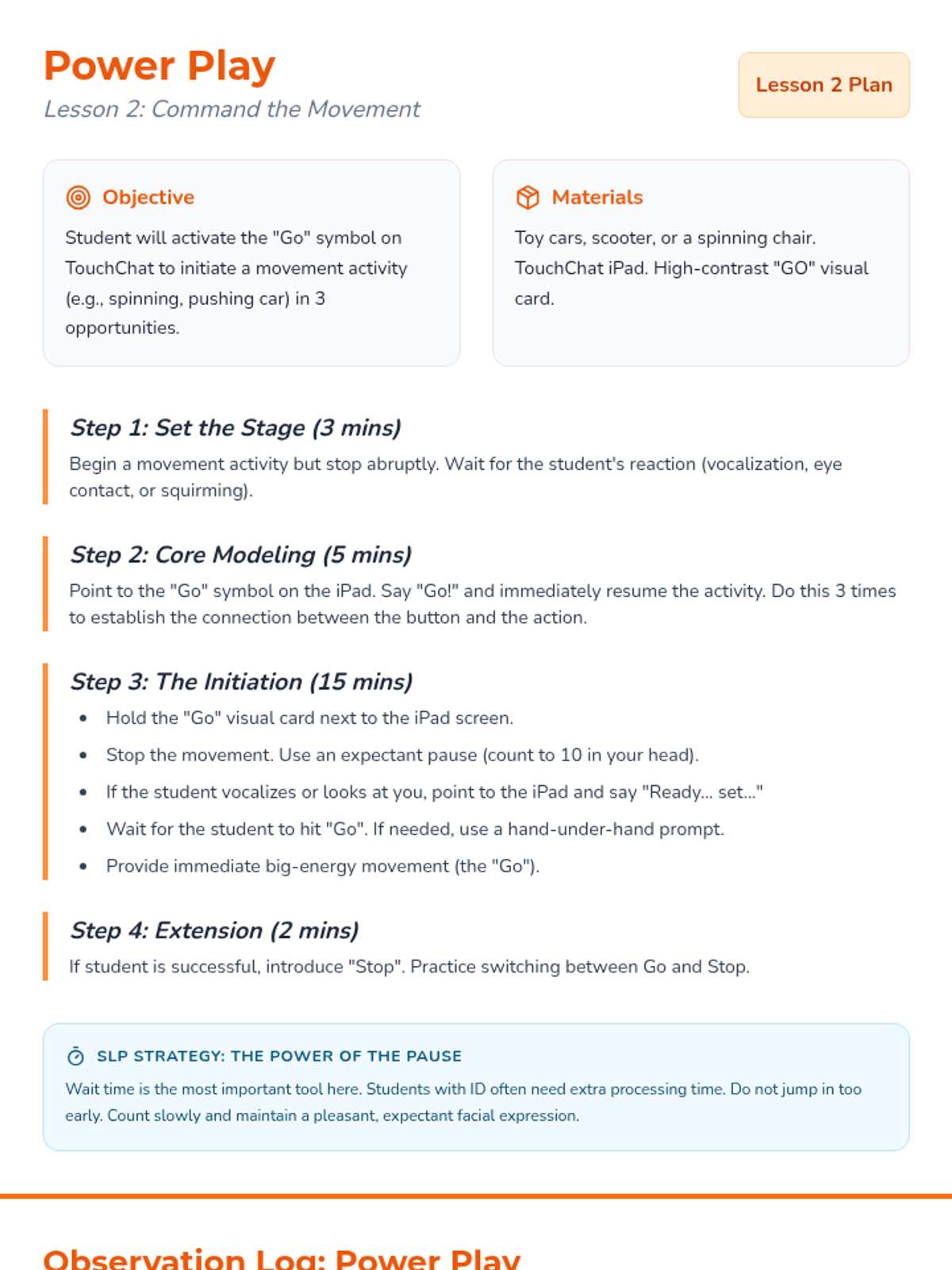
Using the 'Go' symbol on TouchChat to initiate movement and play activities.