Teacher's answer key and facilitation guide for the Case Cracked lesson. Includes correct answers, key evidence from texts, and specific strategies for supporting students with autism. Revised for better layout and instructional clarity.
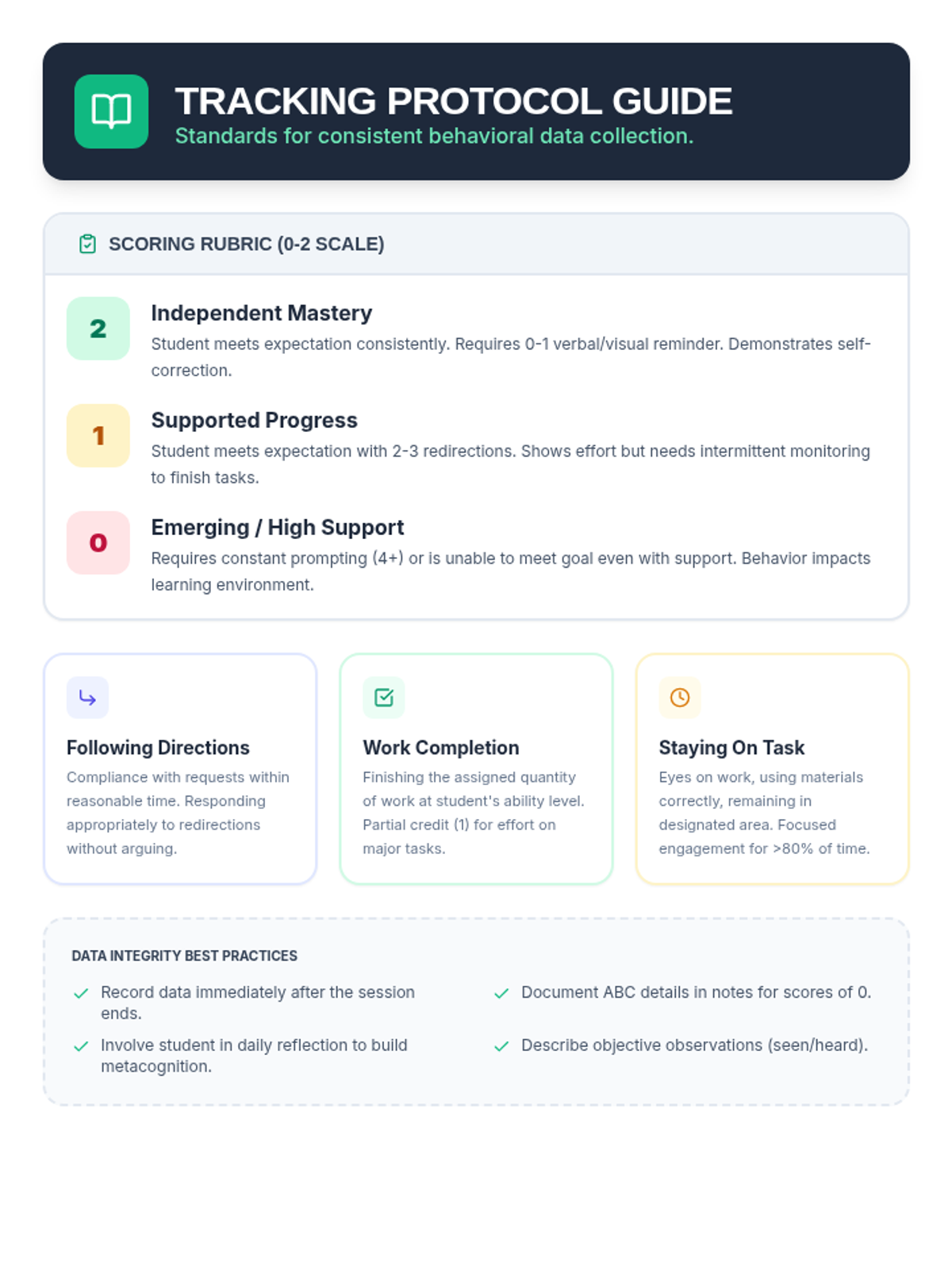
A teacher's reference guide for implementing the Engagement Engineering tracking system. Provides objective definitions for target behaviors and clear criteria for the 0-2 scoring rubric to ensure inter-rater reliability.
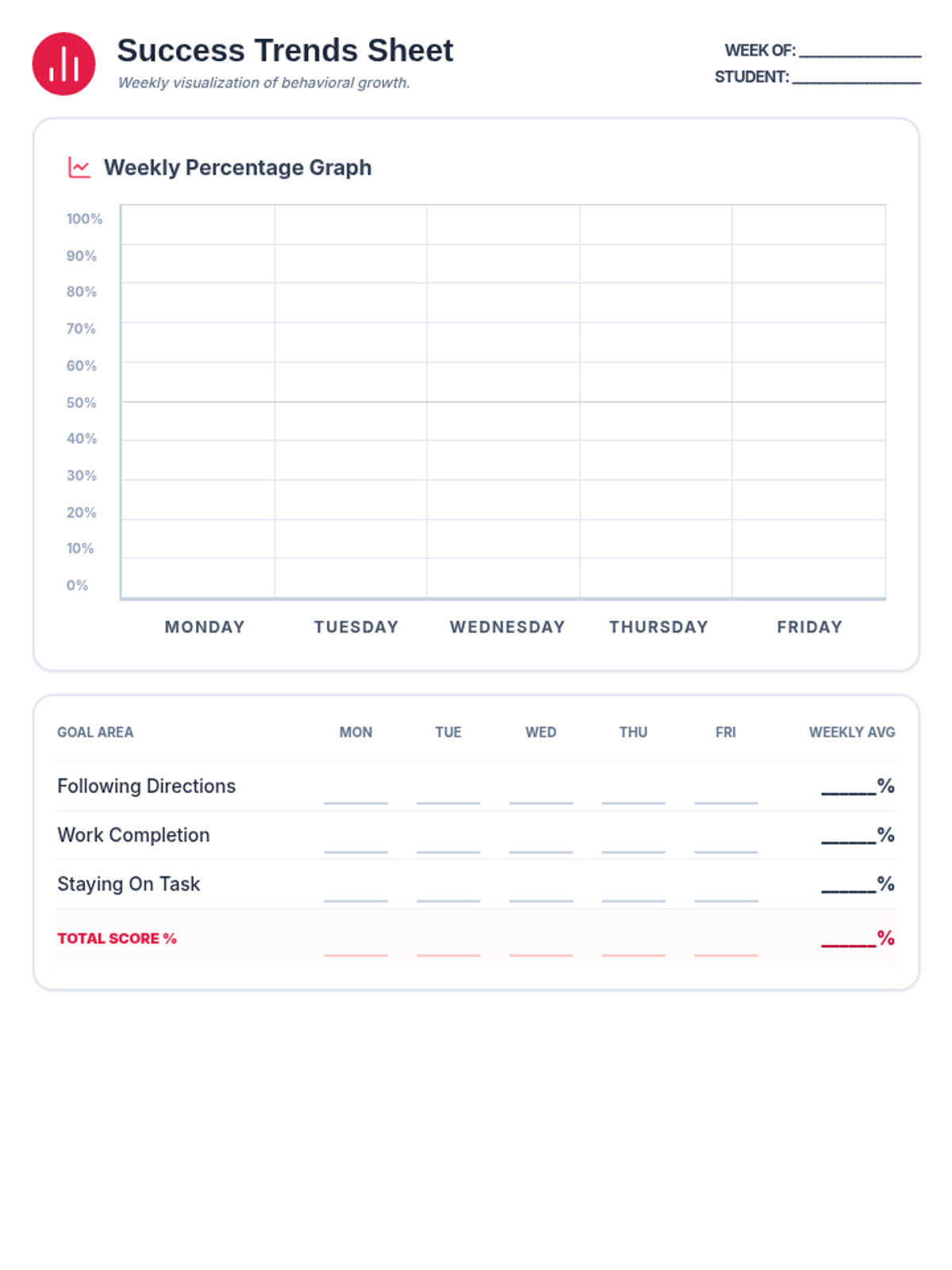
A weekly progress graphing and summary sheet for individual students. Includes a blank percentage graph for data visualization and a weekly average calculation table for targeted behavioral goals.
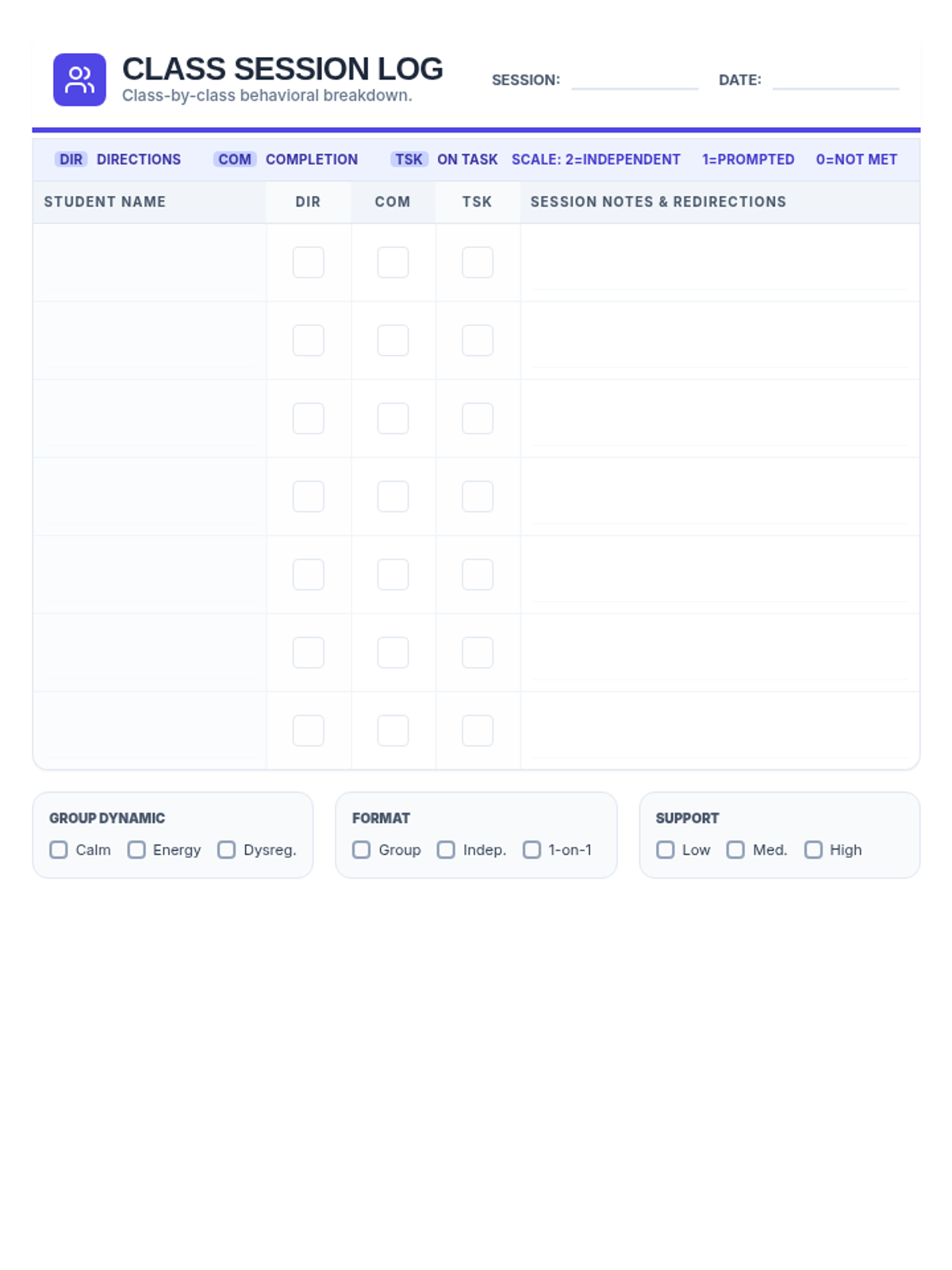
A teacher-facing session log for tracking behavioral data for up to eight students during a single class period. Features a shorthand coding system and space for qualitative notes and group environmental context.
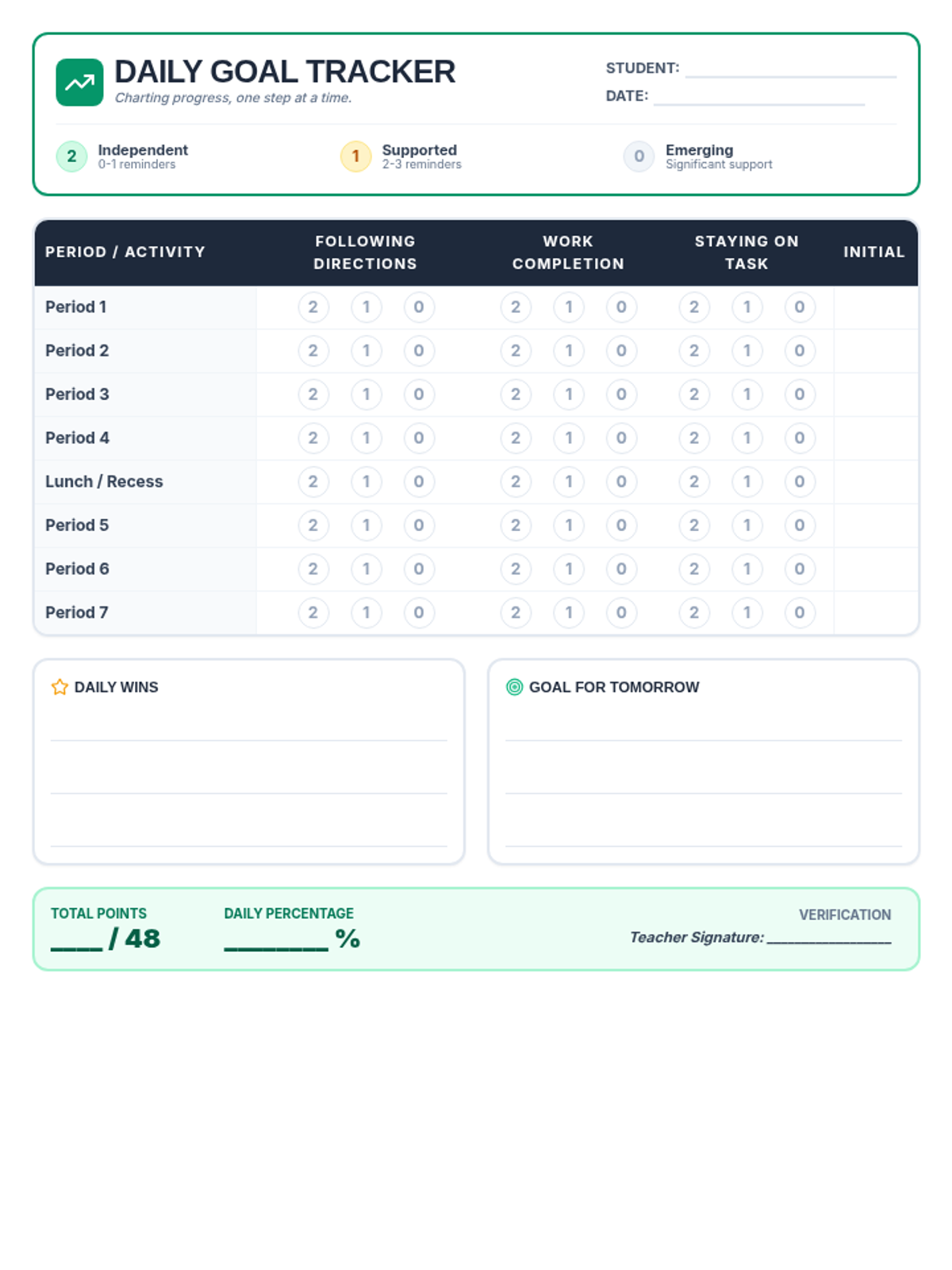
A student-specific daily tracker designed to monitor following directions, work completion, and staying on task across seven periods plus lunch/recess. Includes a 0-2 rating scale and a daily reflection area.
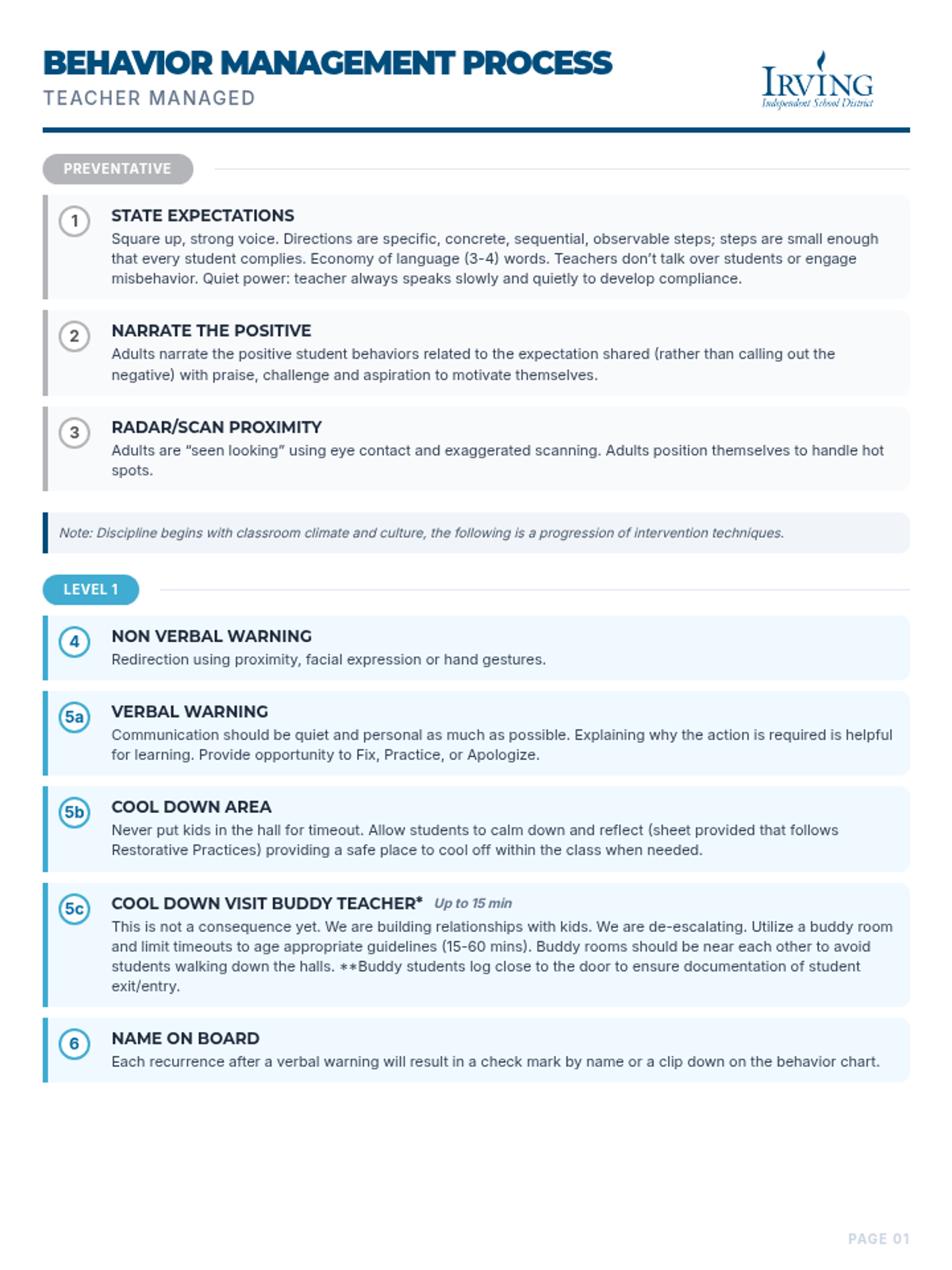
A comprehensive 2-page infographic flowchart of a classroom redirection hierarchy, preserving all original text from the source document. It features color-coded levels for preventative measures, intervention techniques, and administrative escalations while maintaining a clean, professional layout.
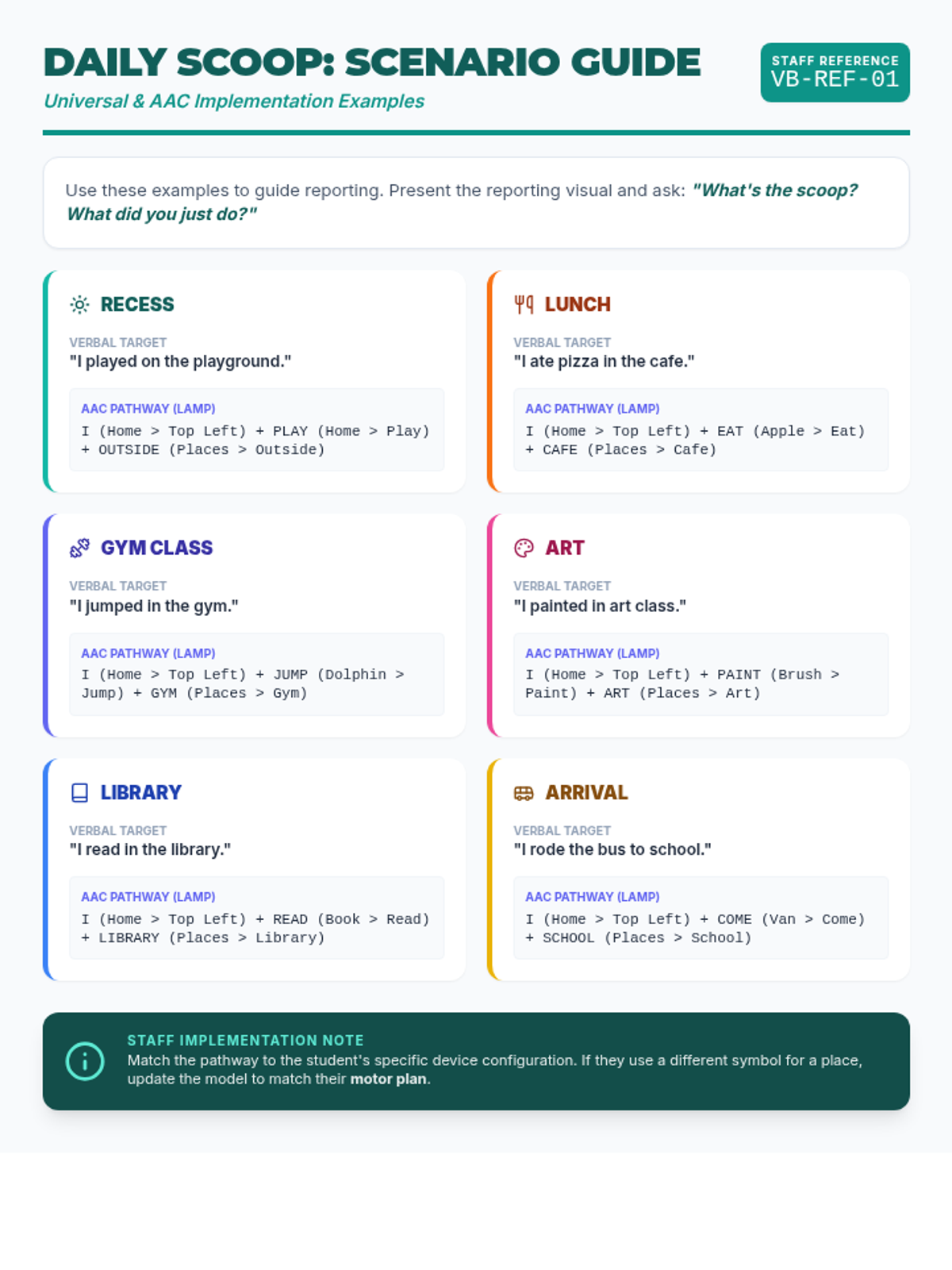
A teacher reference guide providing specific examples for common school activities like recess, lunch, gym, and art to help staff prompt the student effectively.
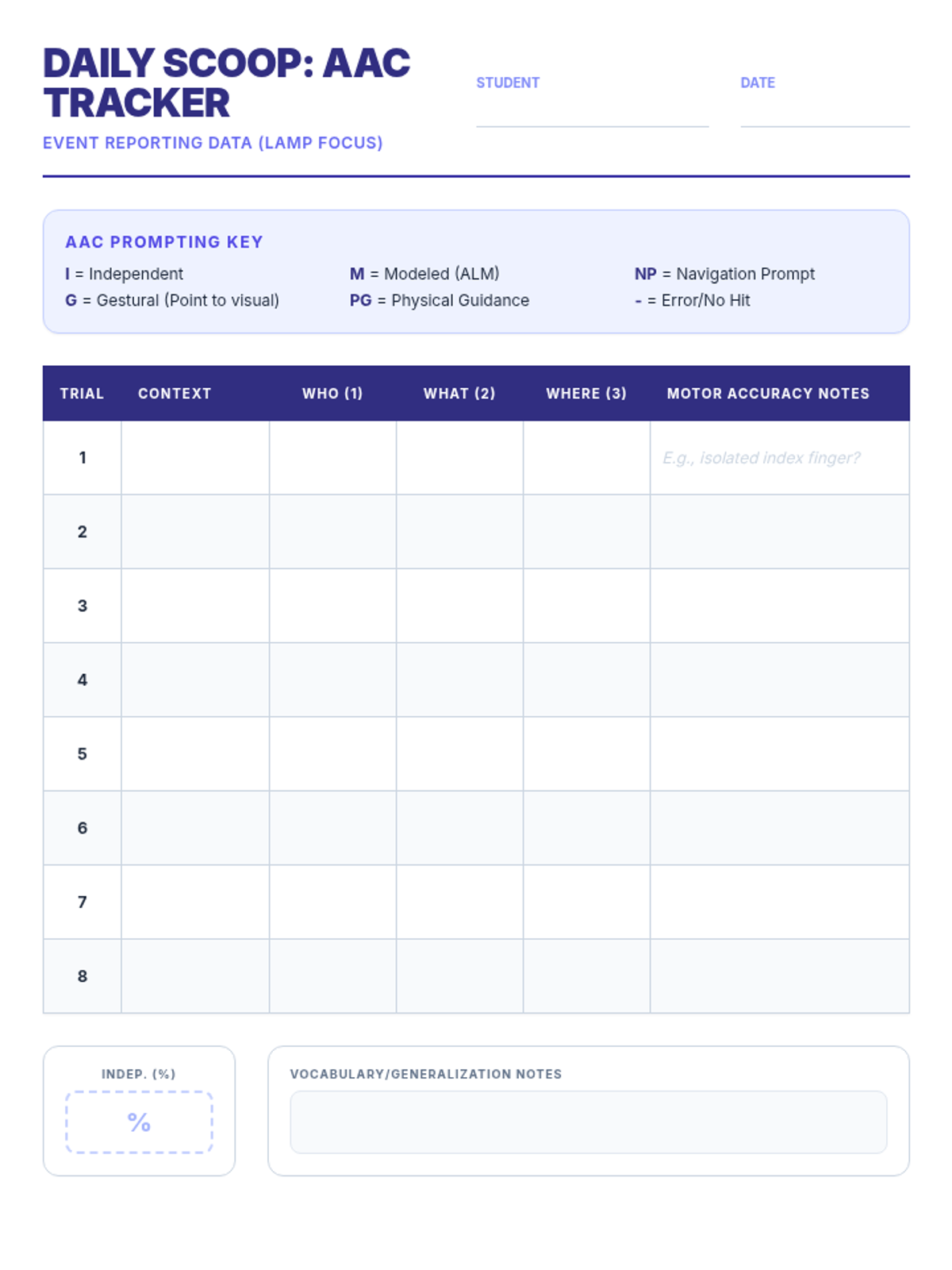
A specialized data tracker for AAC users, emphasizing navigation pathways, motor accuracy, and aided language modeling (ALM) prompt levels.
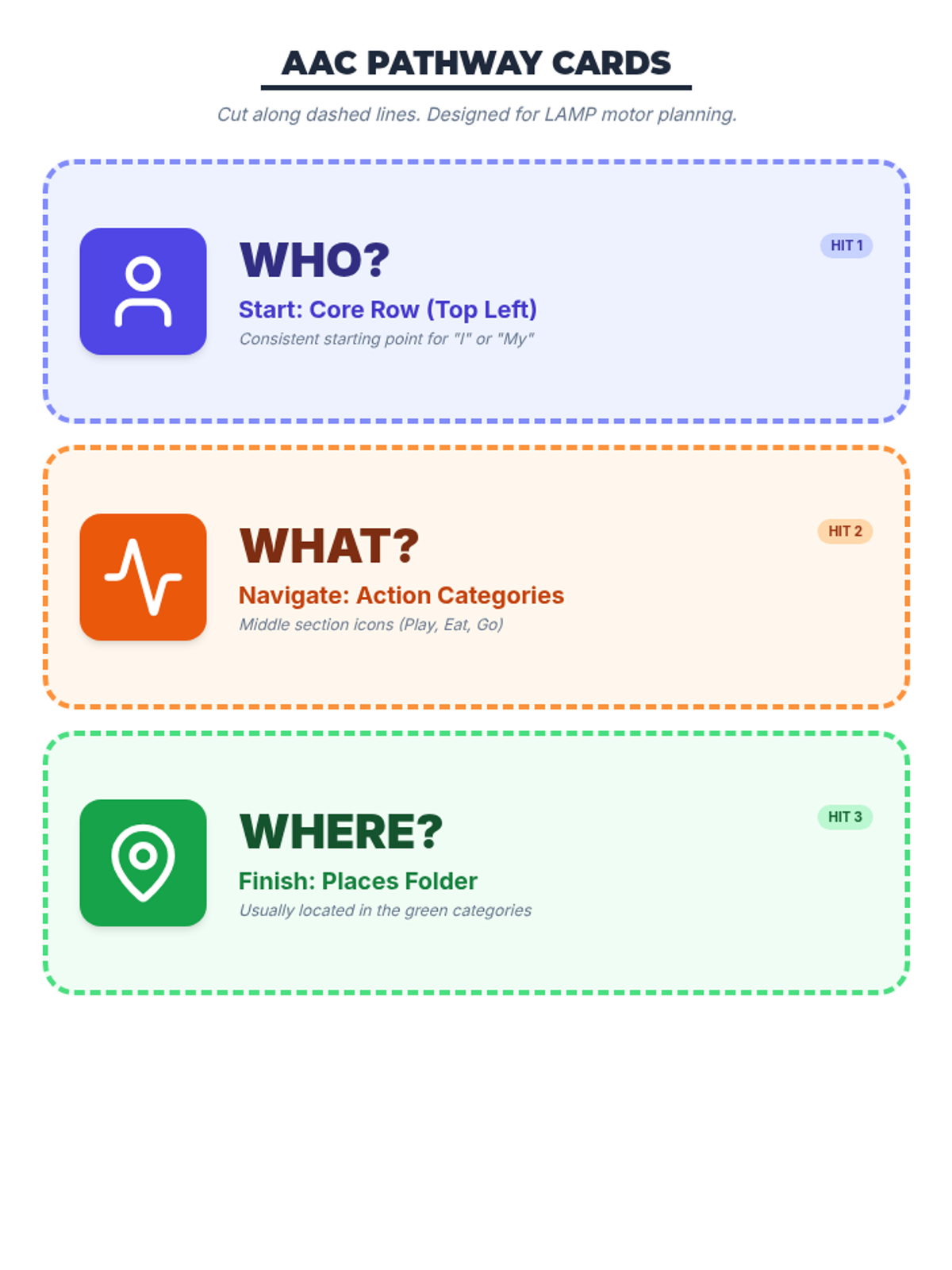
Visual prompt cards and desk strips adapted for AAC users, featuring pathway indicators and clear color-coding to support LAMP motor planning.
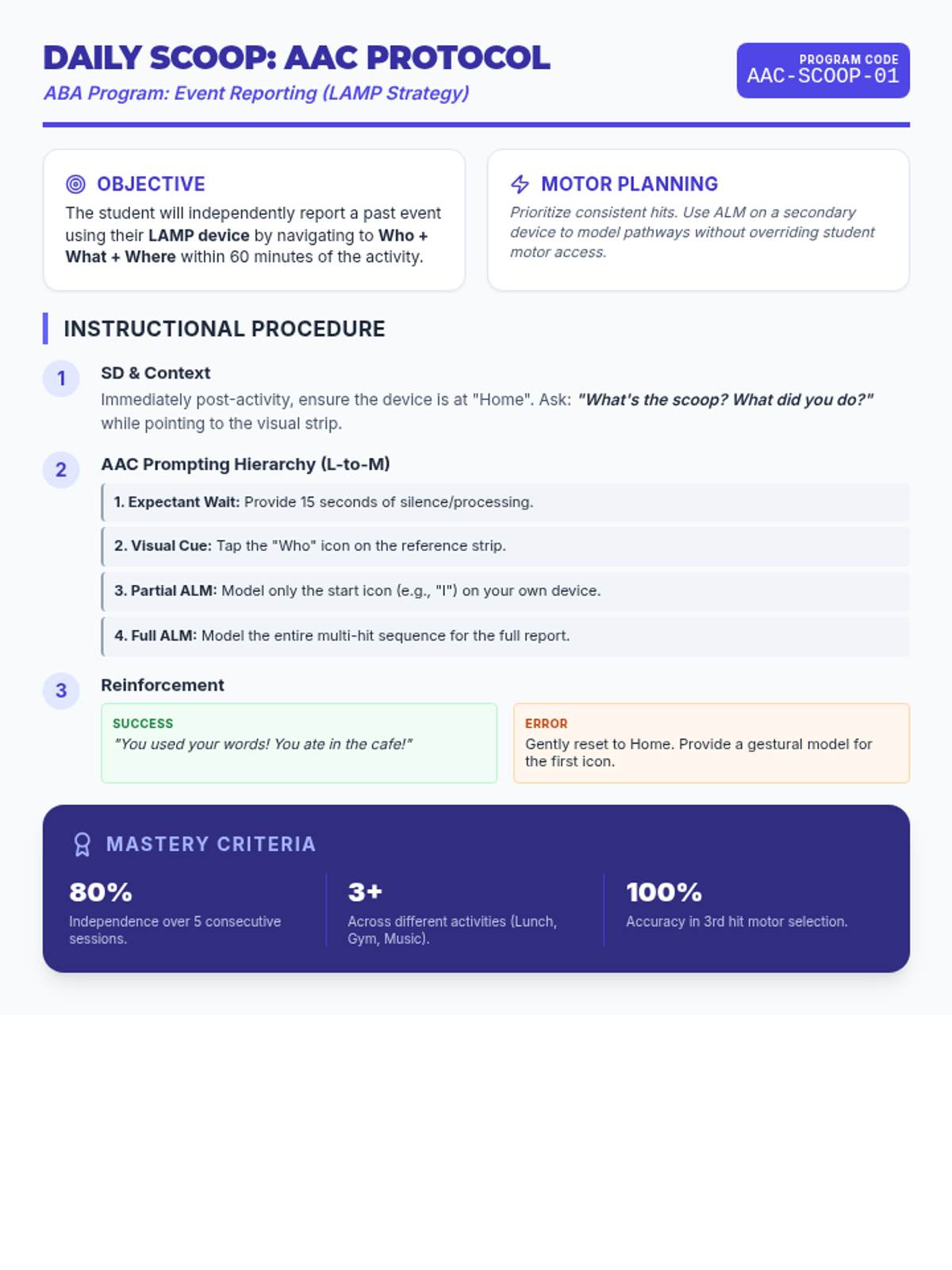
A detailed ABA instructional protocol adapted for AAC (LAMP) users, focusing on motor planning, aided language modeling, and specific device pathways.
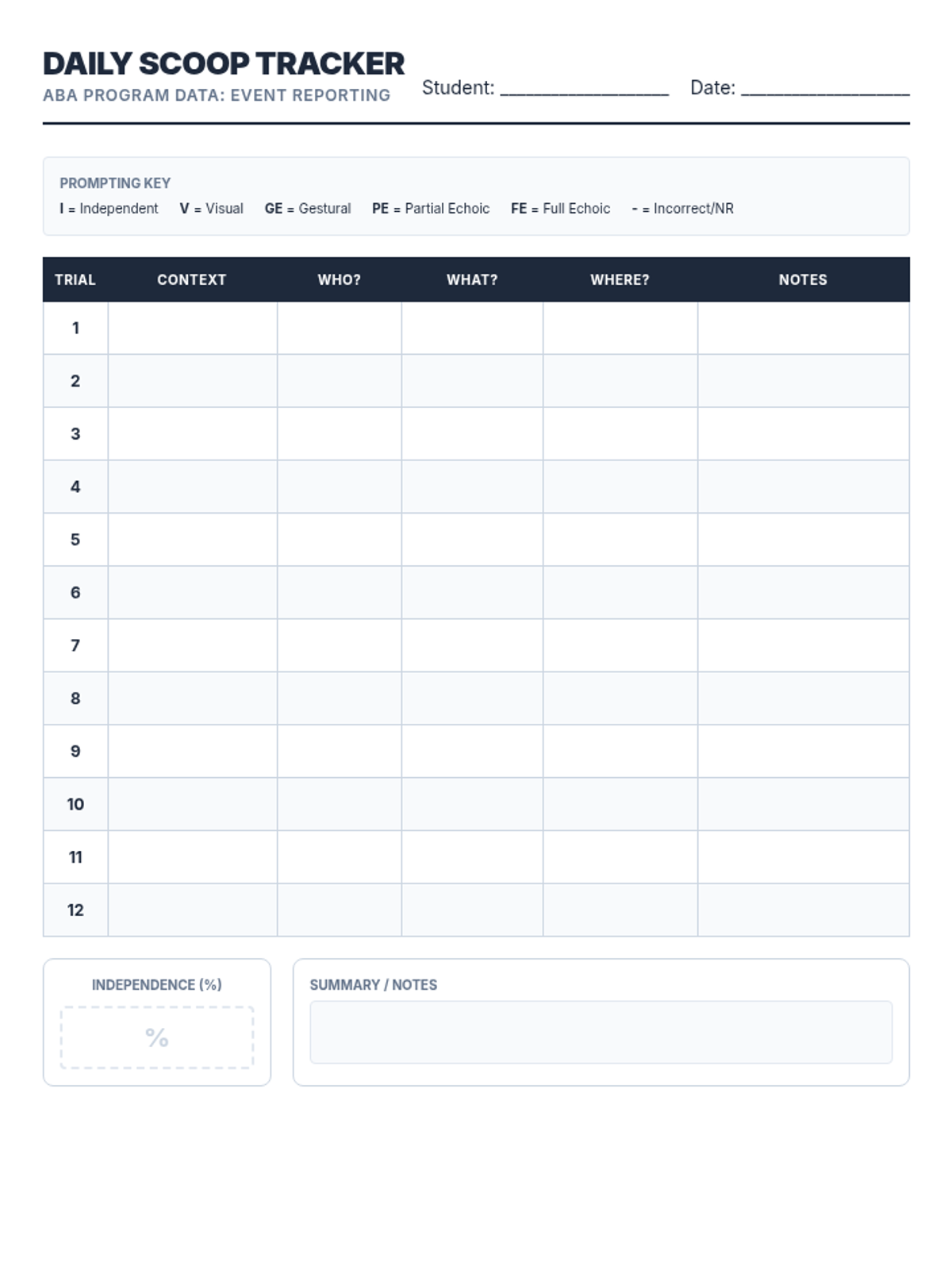
A structured data collection table for tracking student progress in reporting Who, What, and Where elements of an event, including a prompting key and summary section.
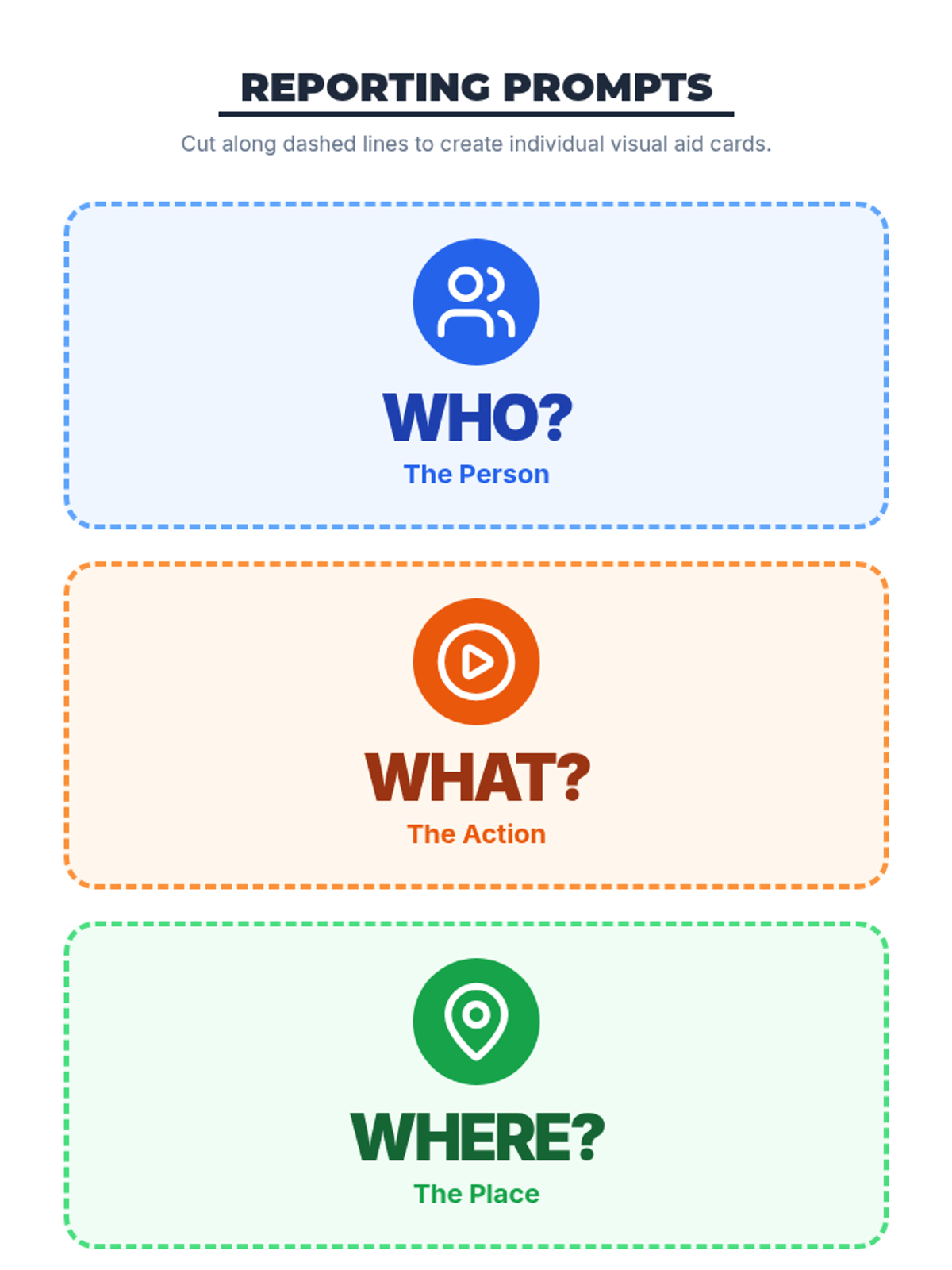
Visual prompt cards for Who, What, and Where questions to support students in reporting events, featuring both large cards and a desktop reference strip.
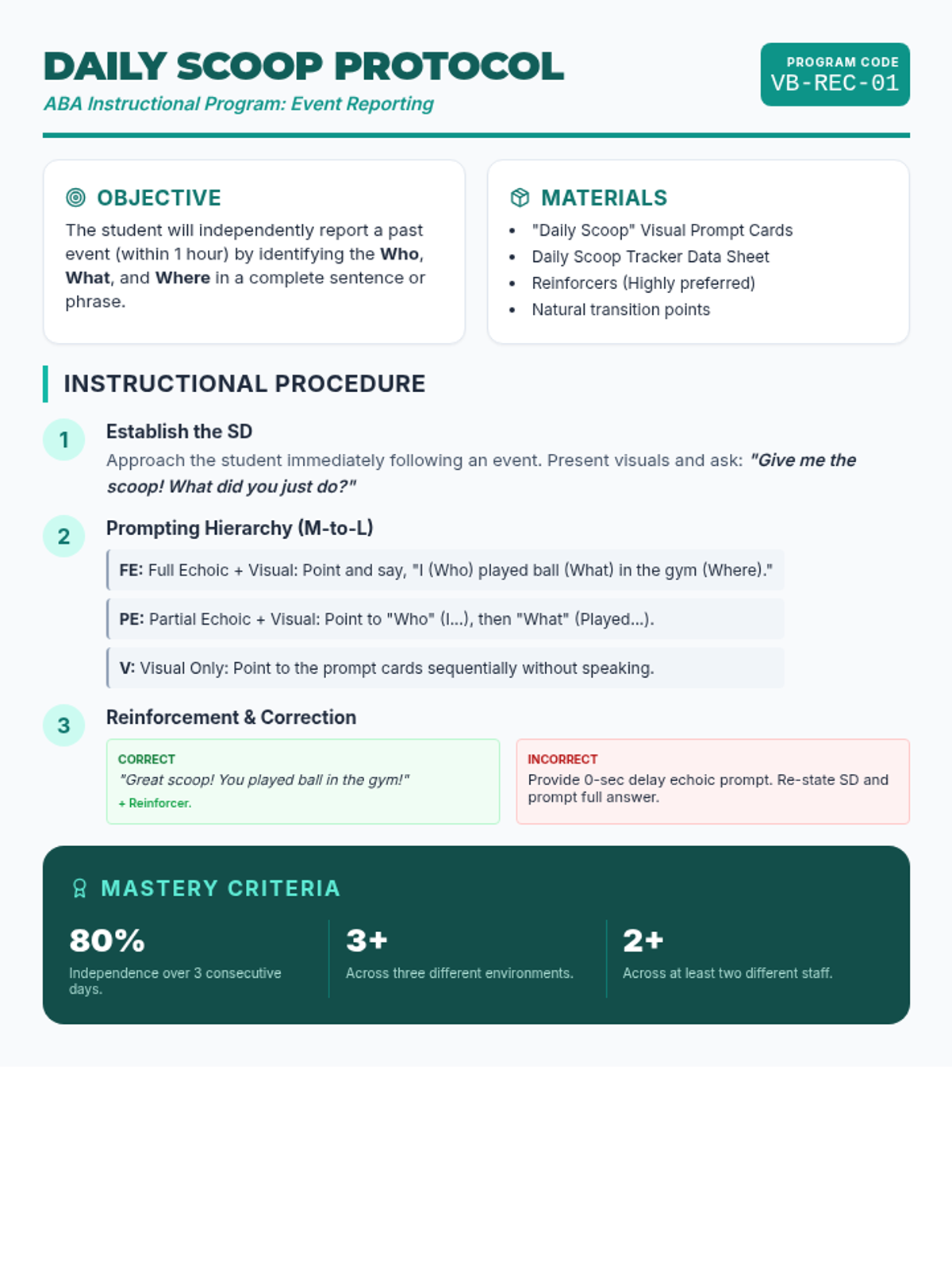
A detailed ABA instructional protocol for teaching students to report events using Who, What, and Where questions, including prompting hierarchies and mastery criteria.
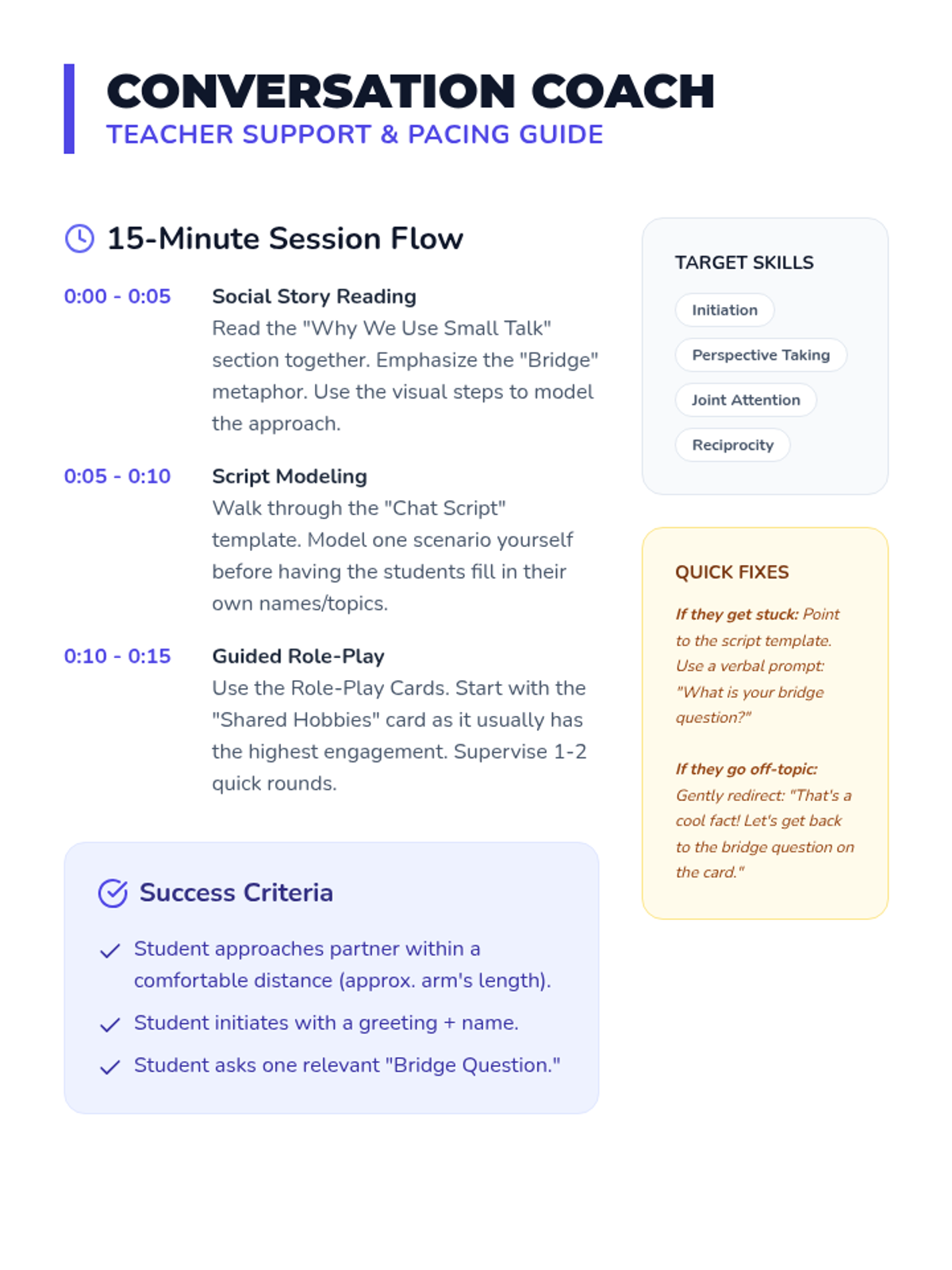
A practical facilitation guide for teachers to manage the 15-minute small talk lesson, including pacing, success criteria, and troubleshooting tips.
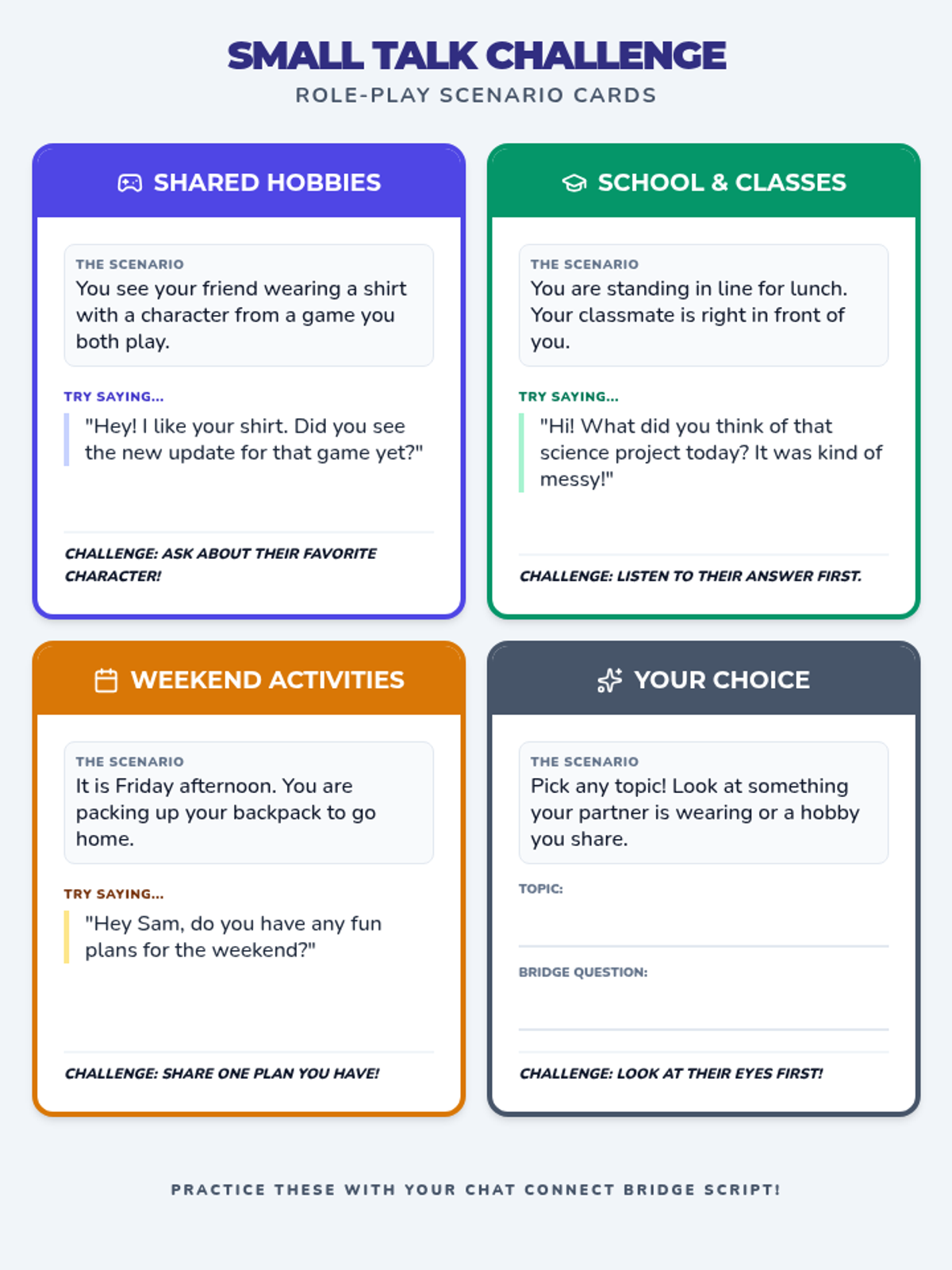
Interactive role-play cards featuring scenarios focused on shared hobbies, school life, and weekend plans to facilitate small talk practice.
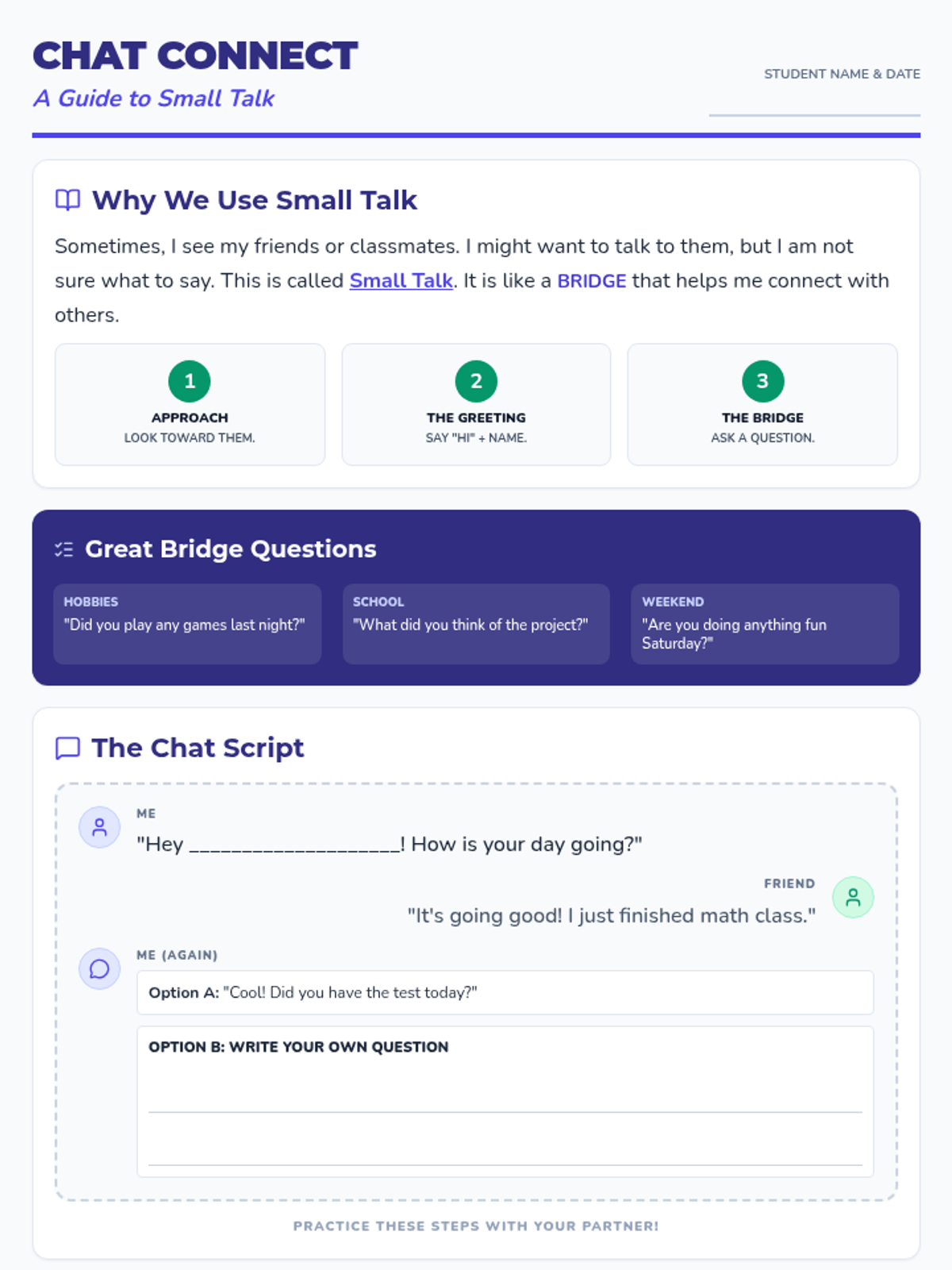
A structured social story and visual script template designed to help students with autism understand the purpose and mechanics of starting a conversation.
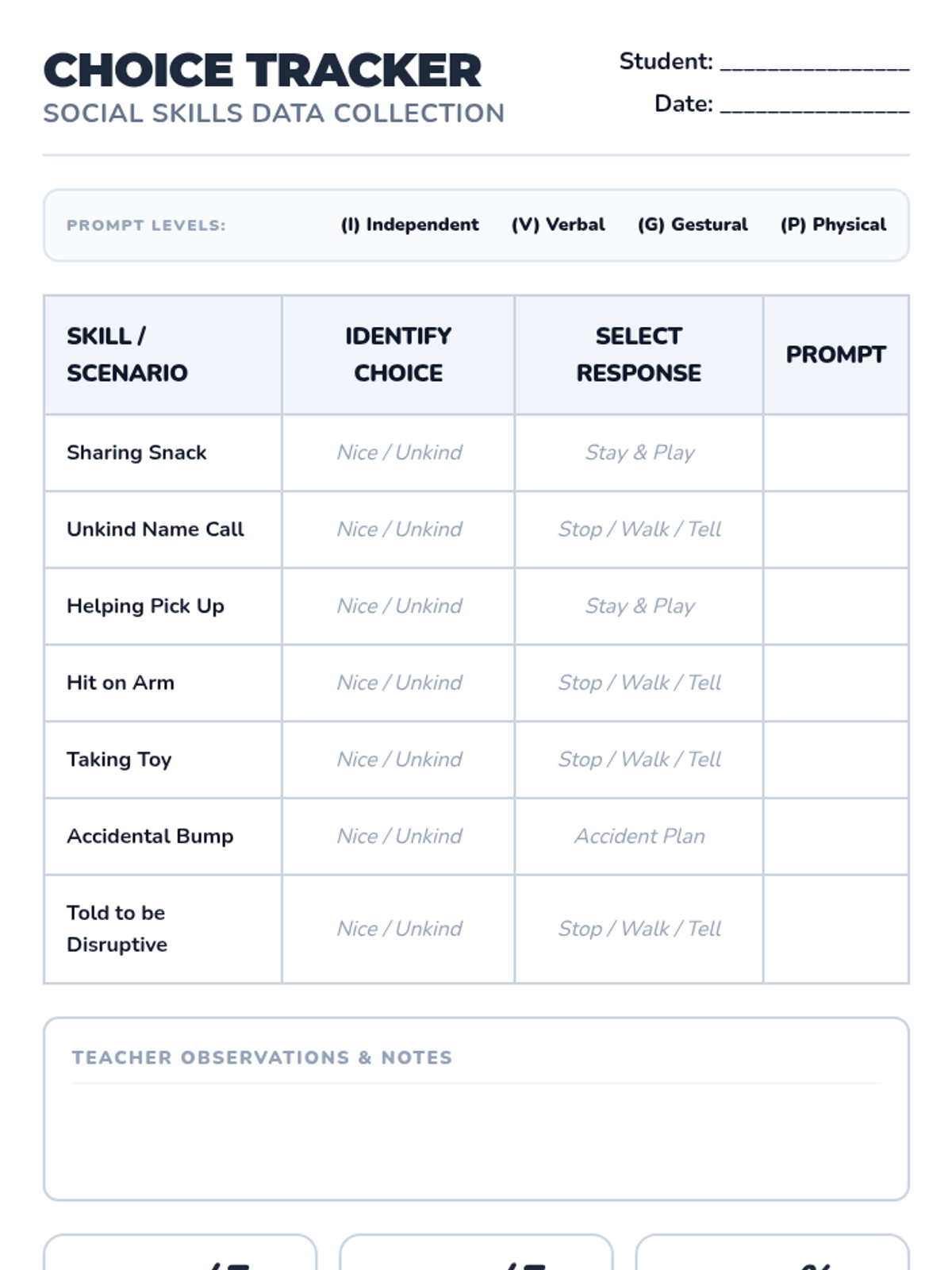
A data collection sheet designed for tracking student progress in identifying nice vs. unkind behaviors and selecting appropriate responses. Now includes 7 scenario tracking rows.
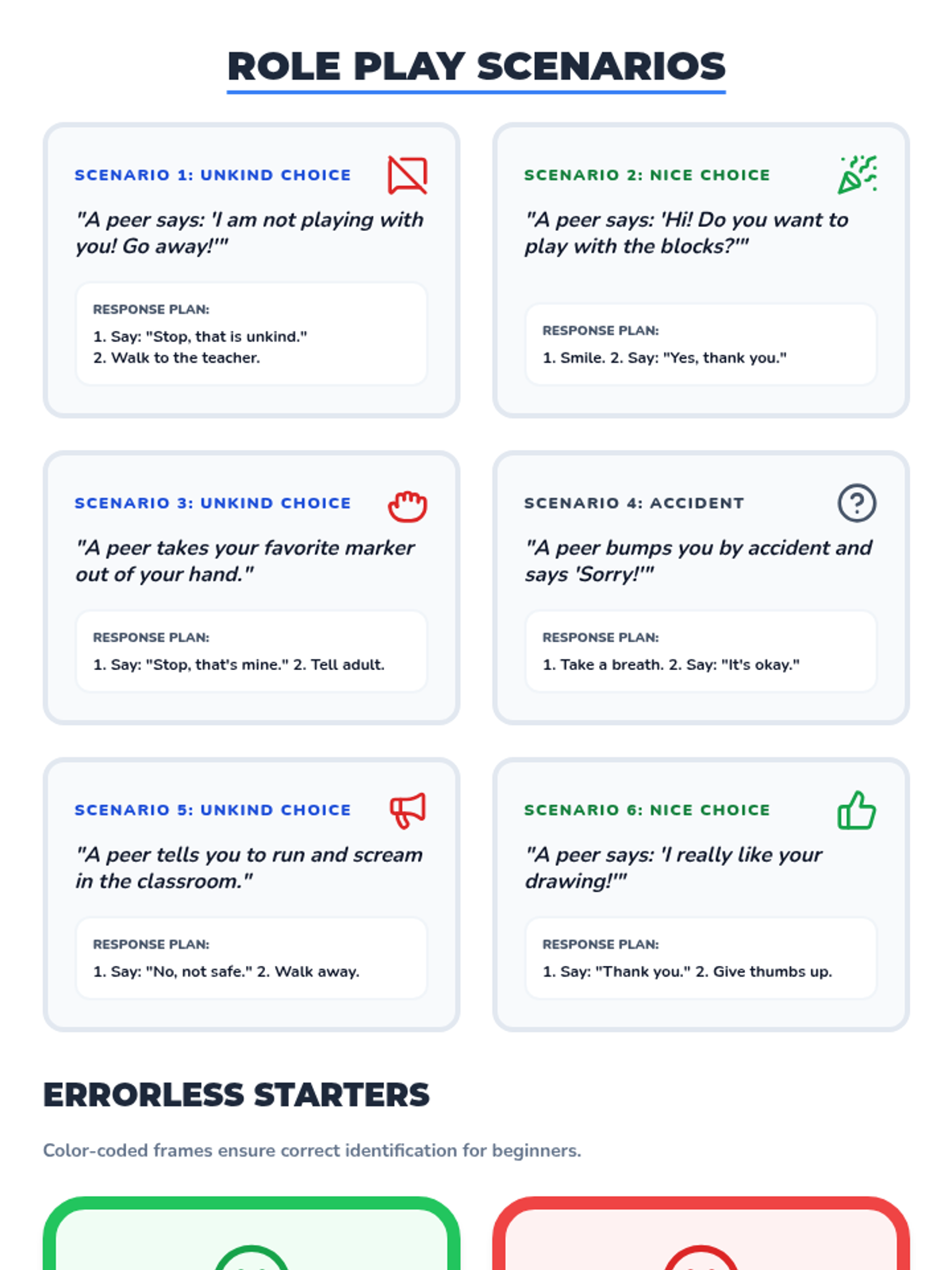
A revised resource pack with expanded role-play scenarios, vertical stacking for errorless cards to prevent overflow, and high-contrast staff instructions. Uses "Nice Choice" and "Unkind Choice". Revised for print-readiness.
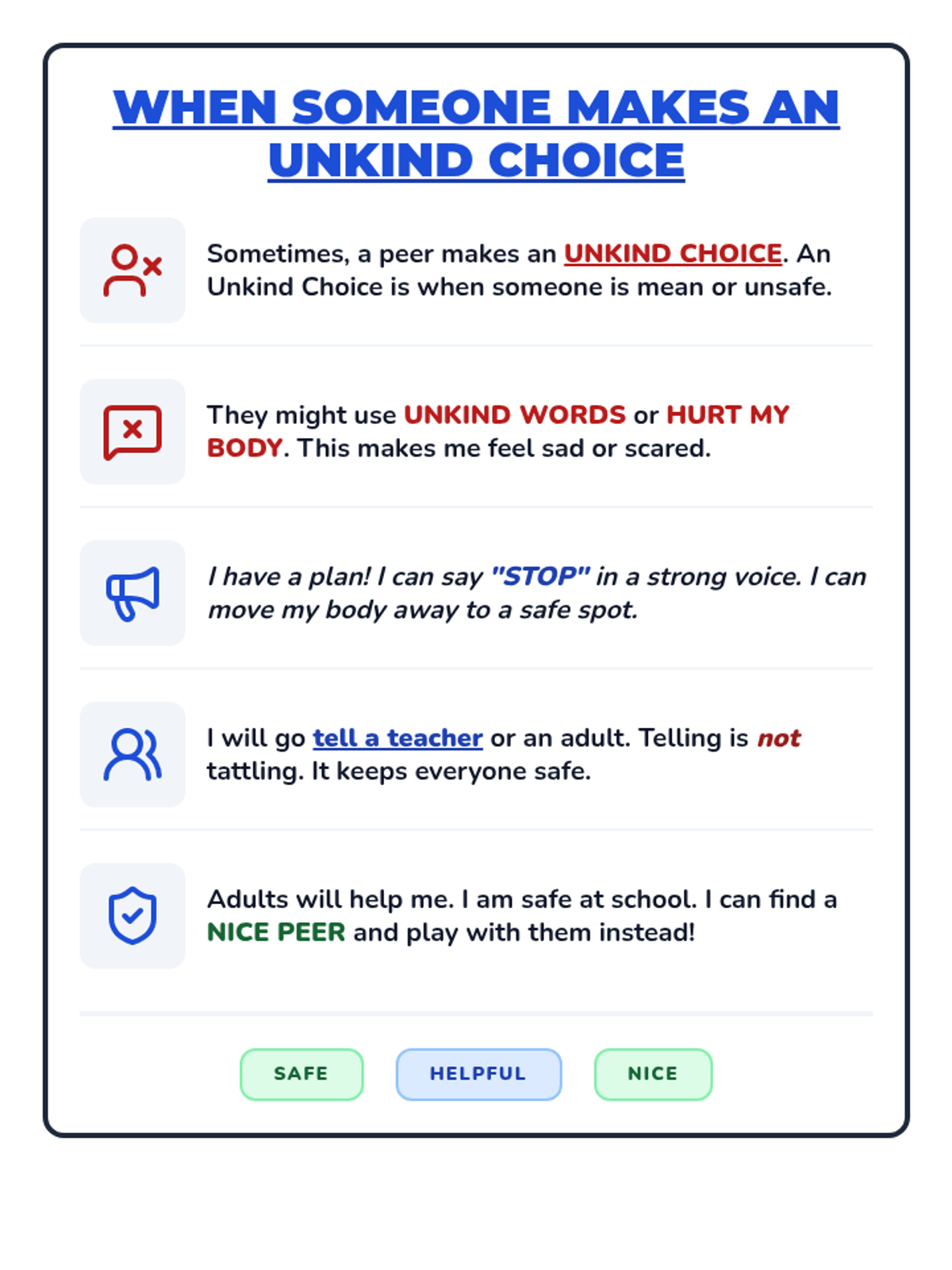
A revised social story that fits entirely on one page, explaining what to do when someone makes an "Unkind Choice" using concrete steps.
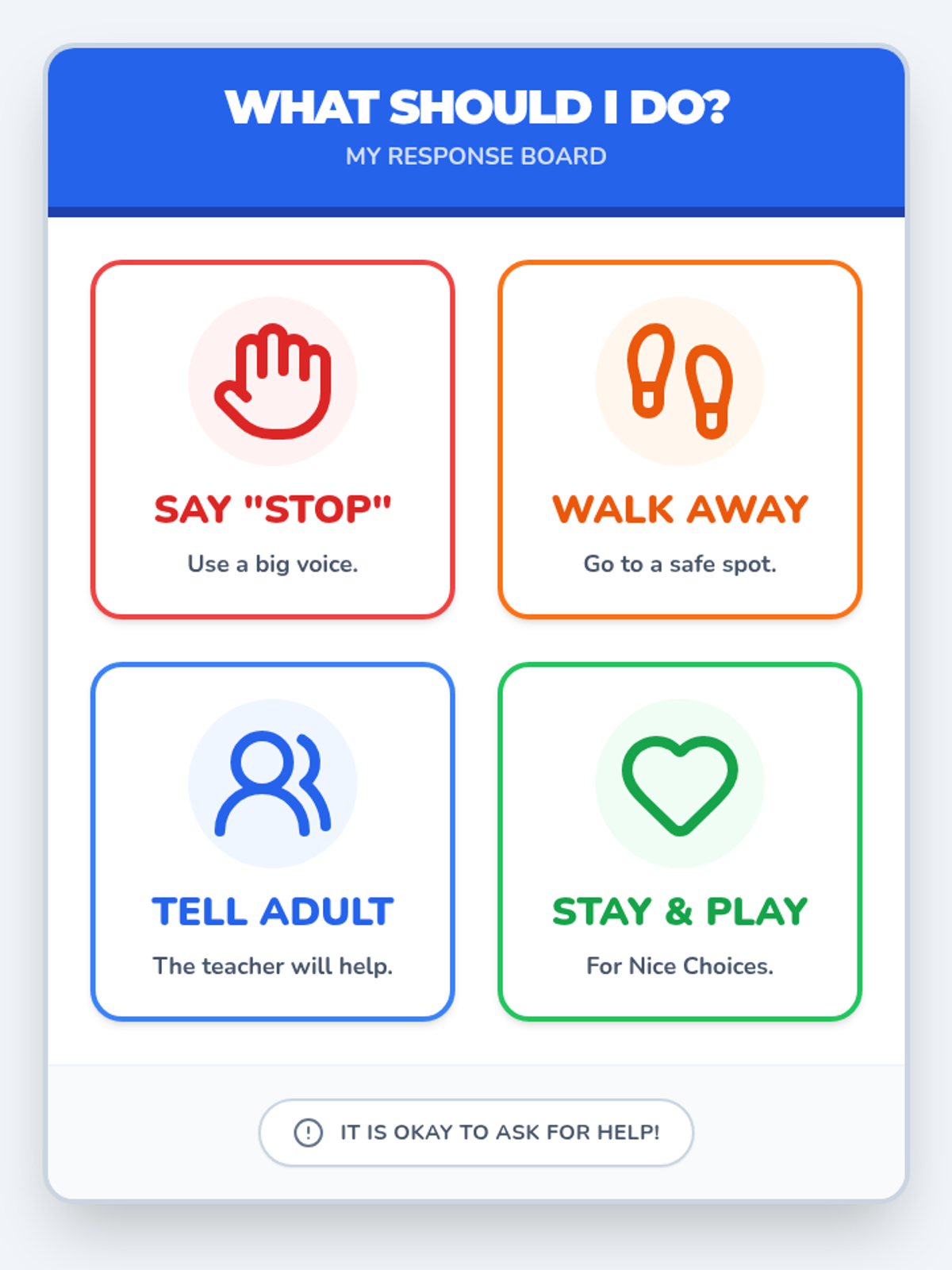
A one-page visual response board featuring four clear choices for students when encountering peer behaviors: Say "STOP", Walk Away, Tell Adult, or Stay & Play. Uses "Nice Choices".
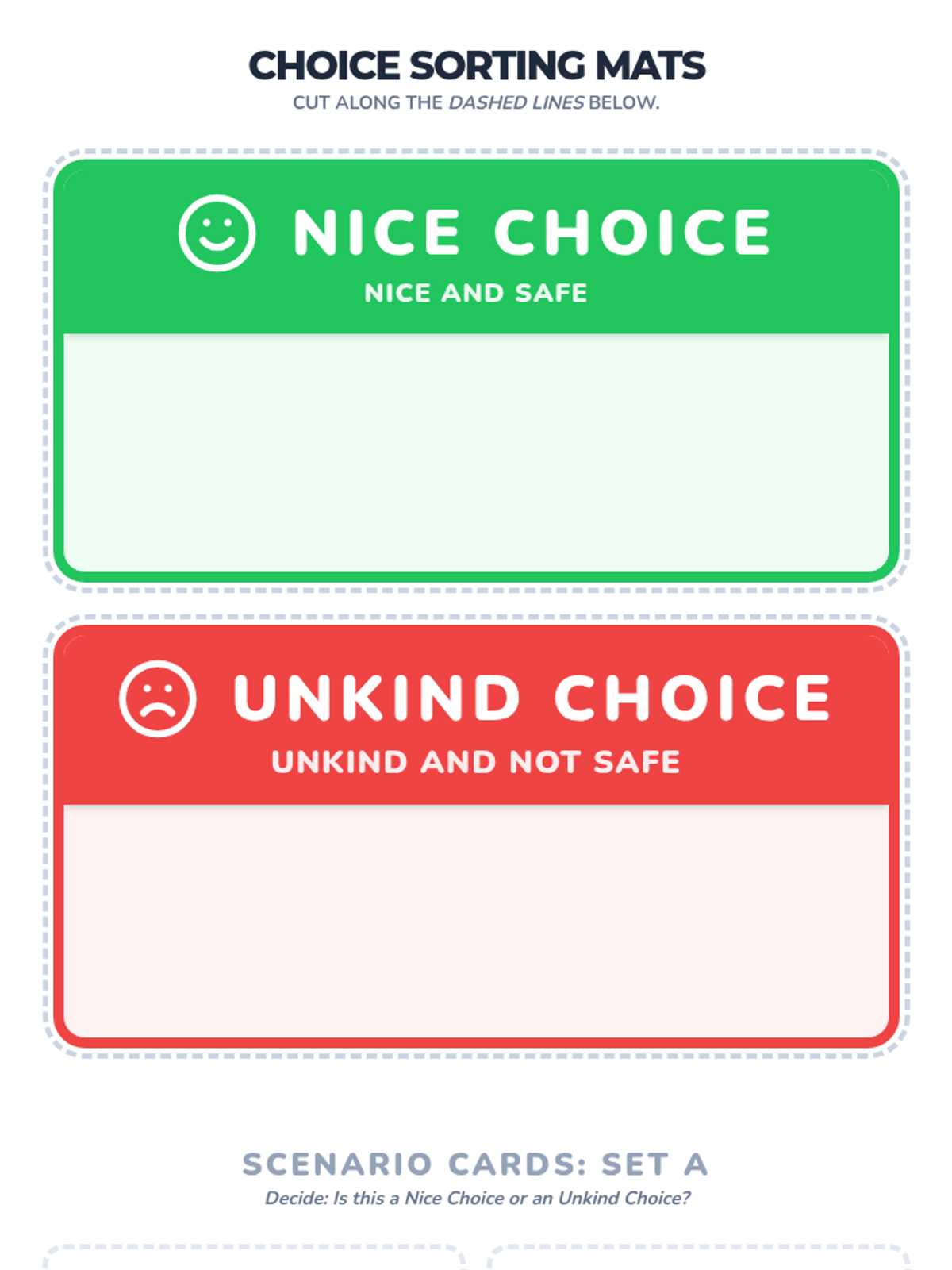
A revised sorting activity with corrected page breaks, neutral-colored icons to prevent telegraphing answers, and dashed cut guides for physical preparation. Now includes 24 scenario cards, featuring new items where students encourage disruptive behavior. Revised for better print alignment.
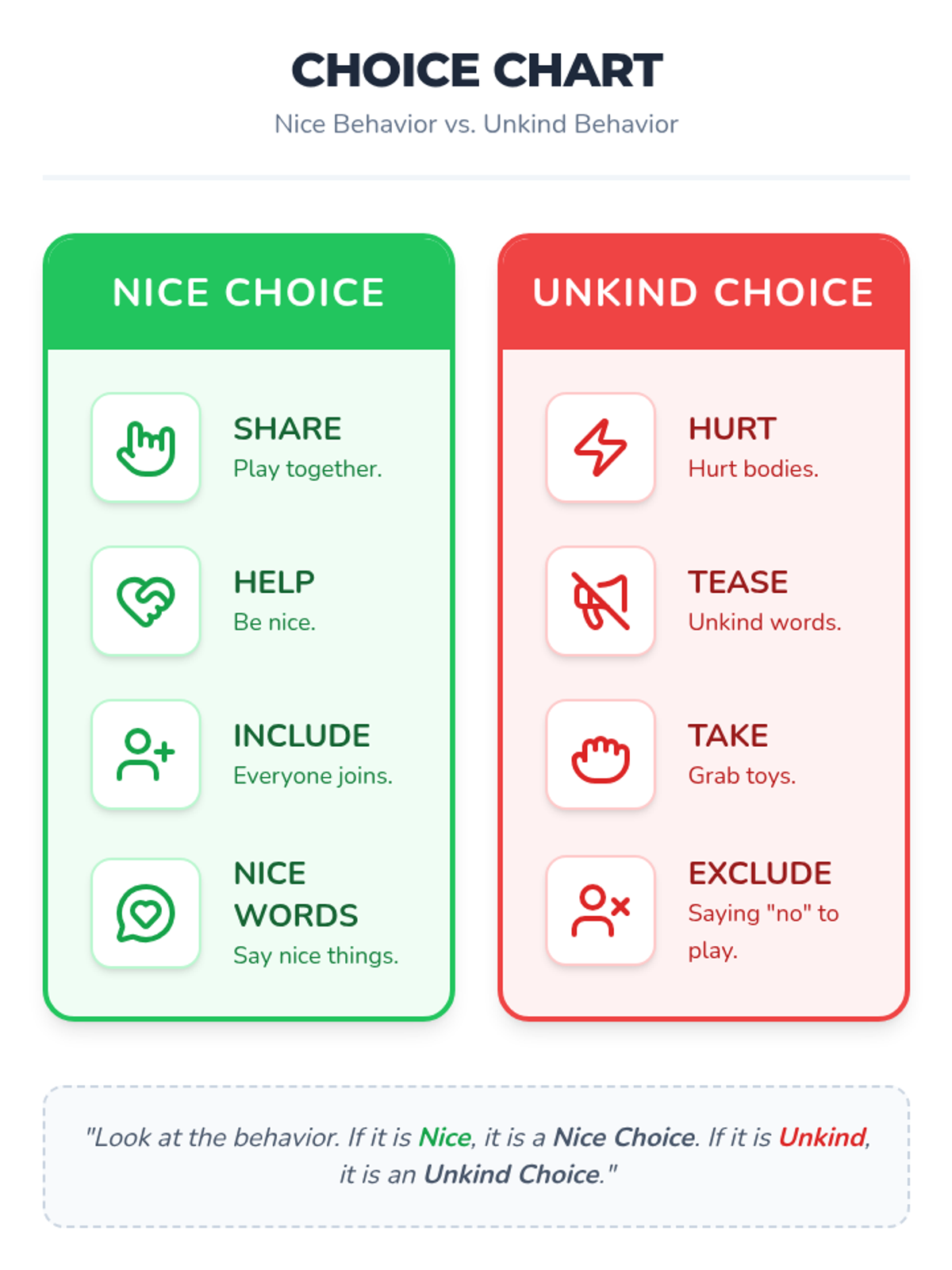
A visually simplified mini-anchor chart comparing Nice Choices (Share, Help, Include, Kind Words) and Unkind Choices (Hurt, Tease, Take, Exclude) using clear icons and concrete language.
A visual slide deck introducing the concepts of Nice Choice and Unkind Choice, featuring concrete examples and a three-step safety response plan for students.
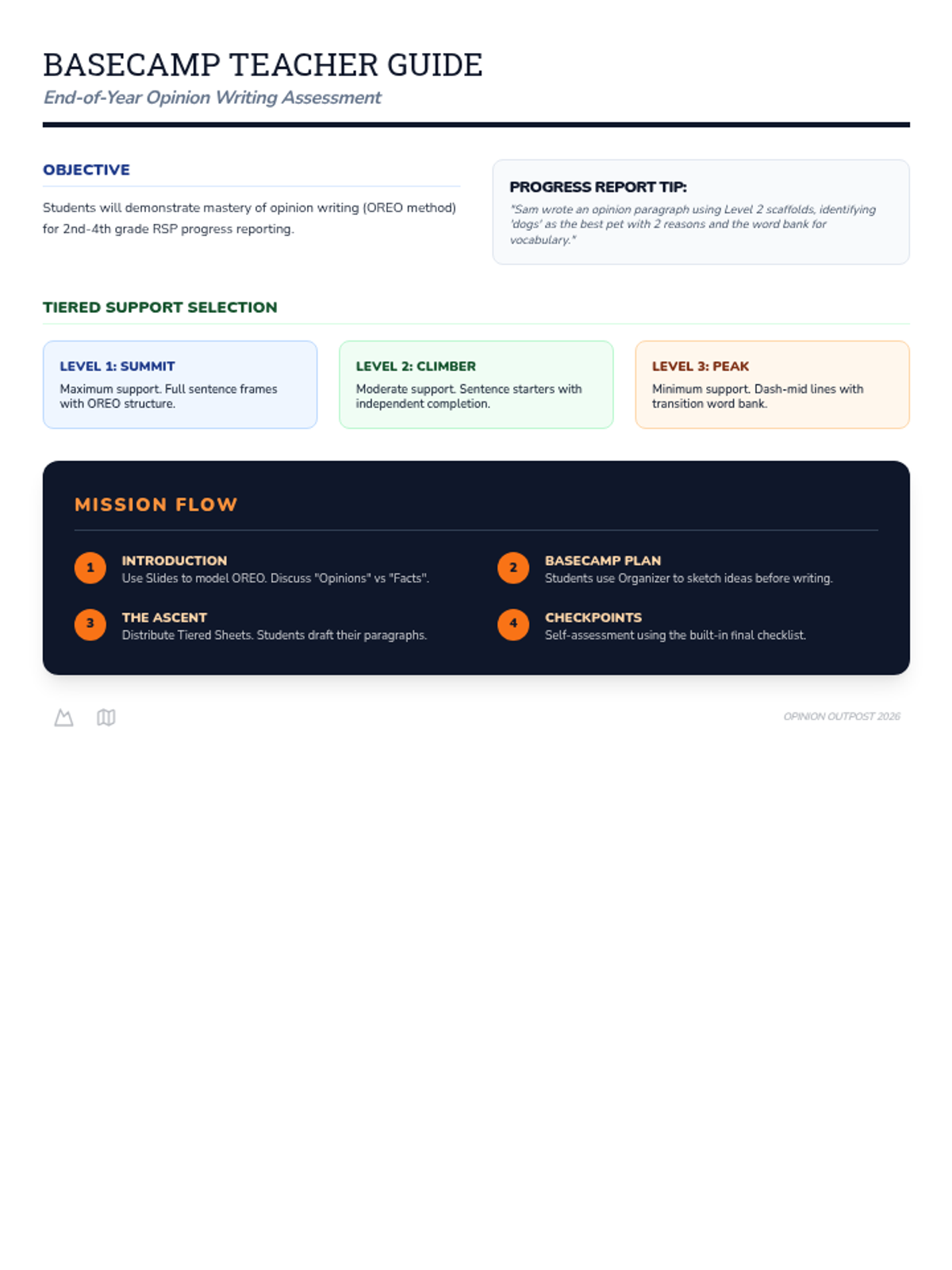
An updated teacher facilitation guide emphasizing the flexible modular approach (2 vs 3 reasons) and aligning instruction with the Mission Map organizer. Optimized for single-page printing.
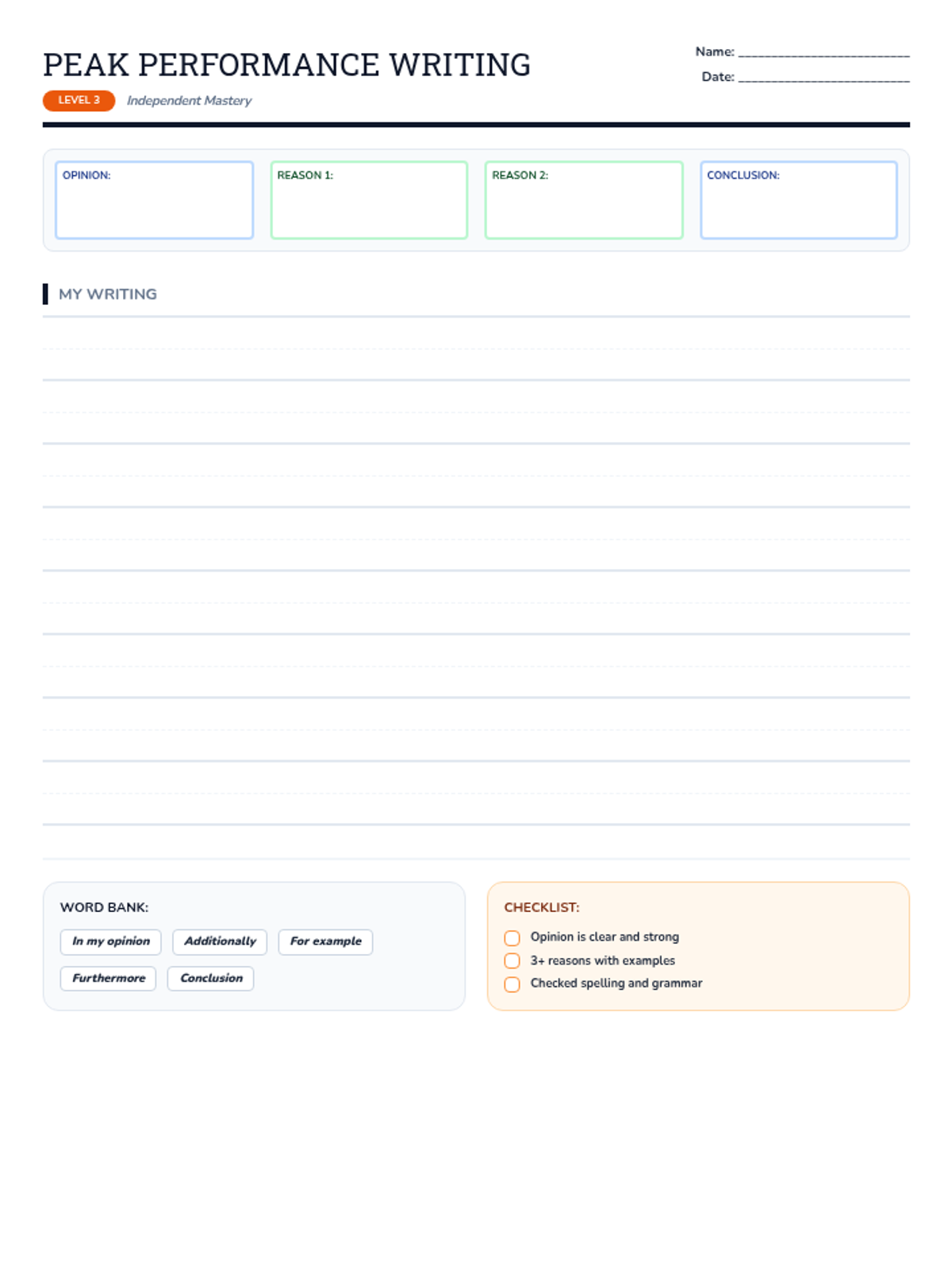
An updated multi-paragraph writing sheet for Level 3 RSP students, featuring an expanded P1-P5 framework to align with the optional 3rd reason in the Mission Map organizer. Optimized for clear navigation and ample writing space.
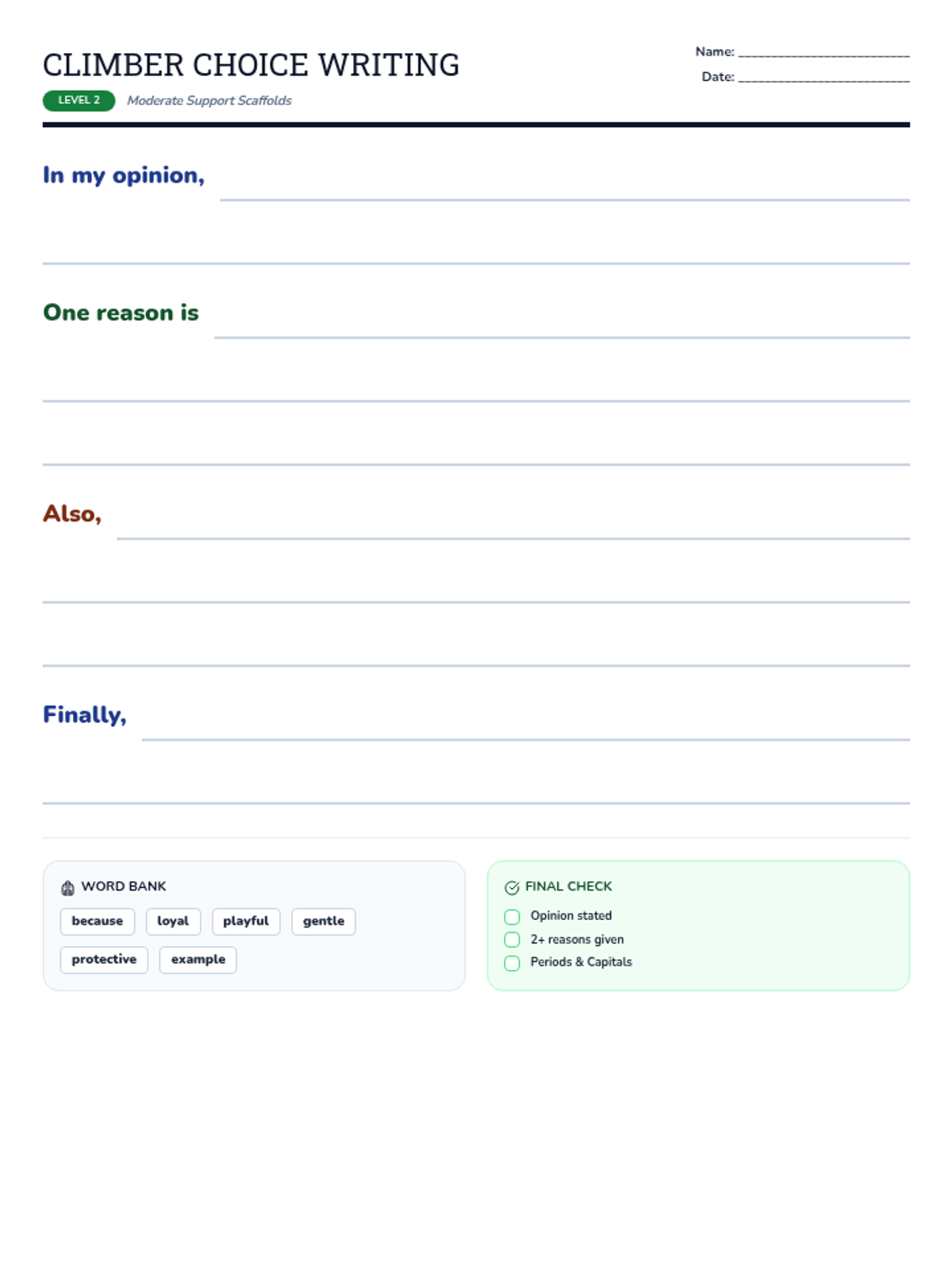
A flexible modular writing sheet for Level 2 RSP students, aligning with the Mission Map organizer to support both 2-reason and 3-reason opinion writing. Optimized for single-page fit.
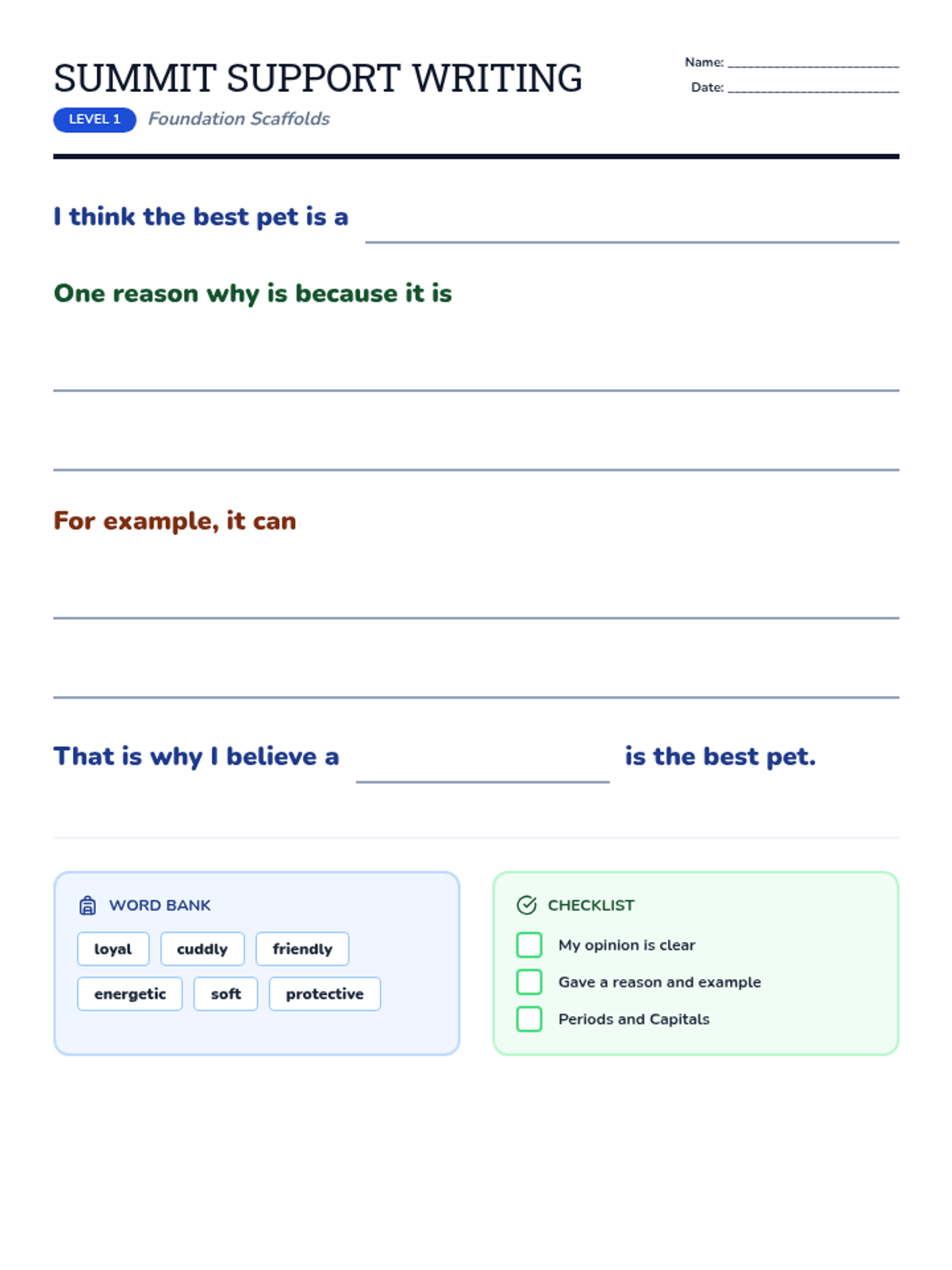
An updated modular writing sheet for Level 1 RSP students that aligns with the flexible Mission Map organizer, providing space for 2-3 reasons and examples.