Revised visual placement mats for numbers 1 to 3, optimized to fit on a single page with consistent placeholder styling and a condensed tracking footer.
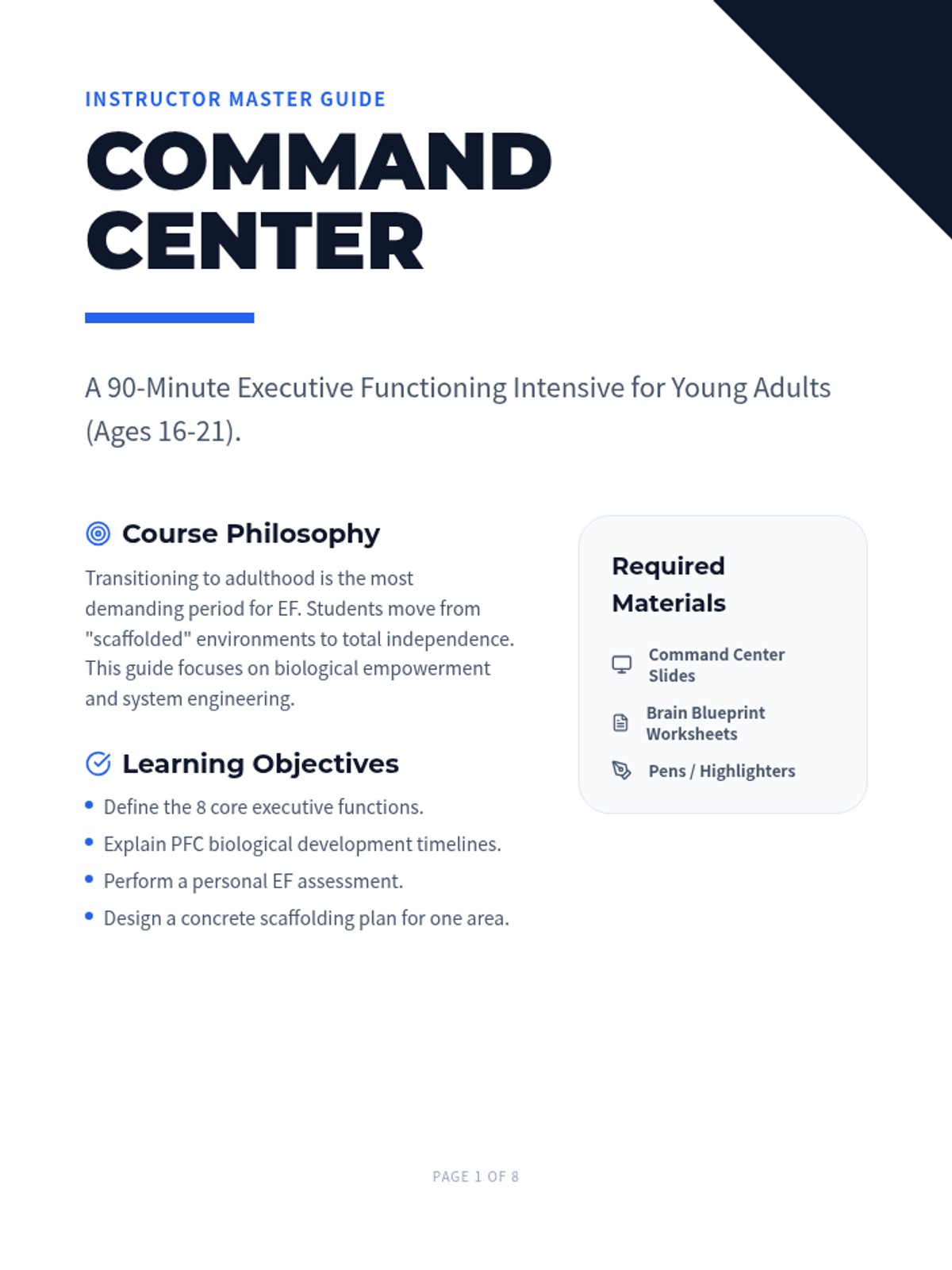
A comprehensive 8-page instructor's guide for a 90-minute executive function workshop. Redesigned to follow a 6-step engagement-first outline. Includes pacing, scripts for shame reduction, and module instructions specifically tailored for the 16-21 age group. Updated with denser content on Page 1 and corrected kerning in subheaders.
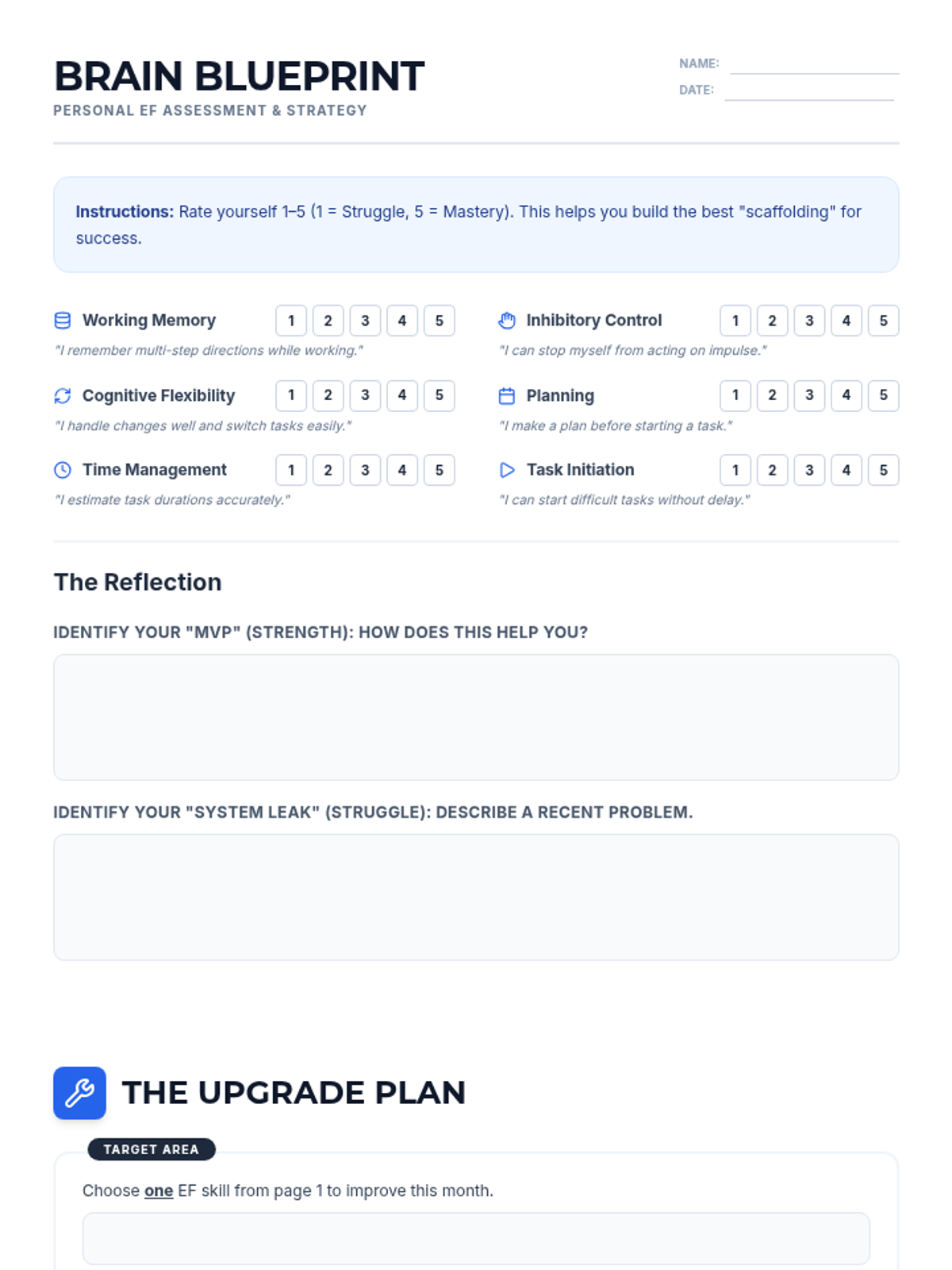
A comprehensive 4-page personal reflection and skill-building worksheet for young adults. Redesigned to fix layout overlaps on page 4 and errant text on page 2. Features standardized light backgrounds for all student work areas to ensure handwriting legibility. Updated Page 1 to ensure reflection questions fit within the page boundary.
A visually modern slide deck for a 90-minute workshop on Executive Functioning, redesigned to follow a engagement-first structure. Features a relatable opening hook, concrete definitions of the 6 core skills, and a shame-reducing biological perspective. Updated with improved color contrast.
A supportive social story slide deck for students with selective mutism, using first-person language to encourage communication through small steps and a "brave voice."
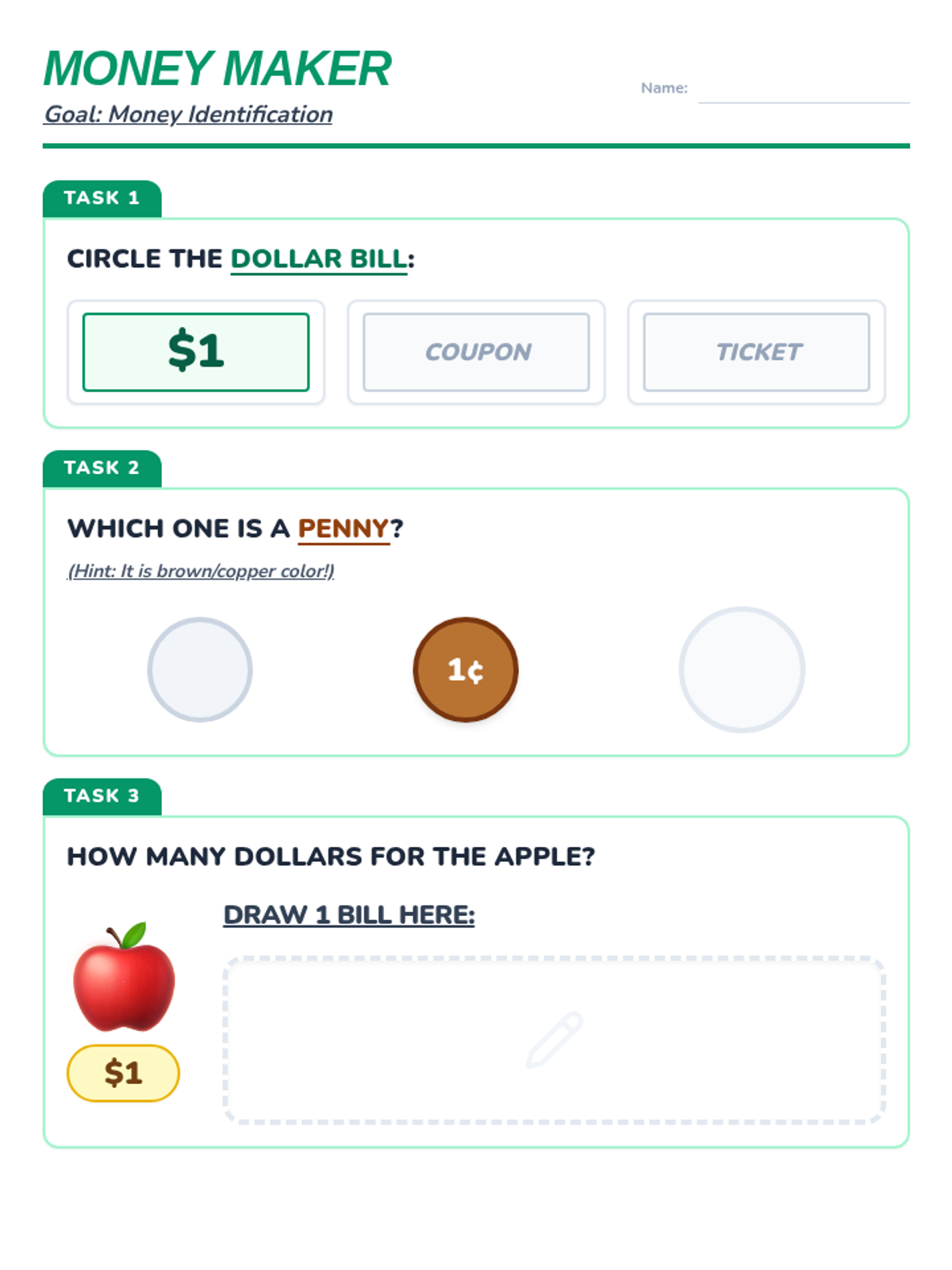
A functional money identification worksheet focused on recognizing bills, coins (penny), and basic price matching for shopping scenarios.
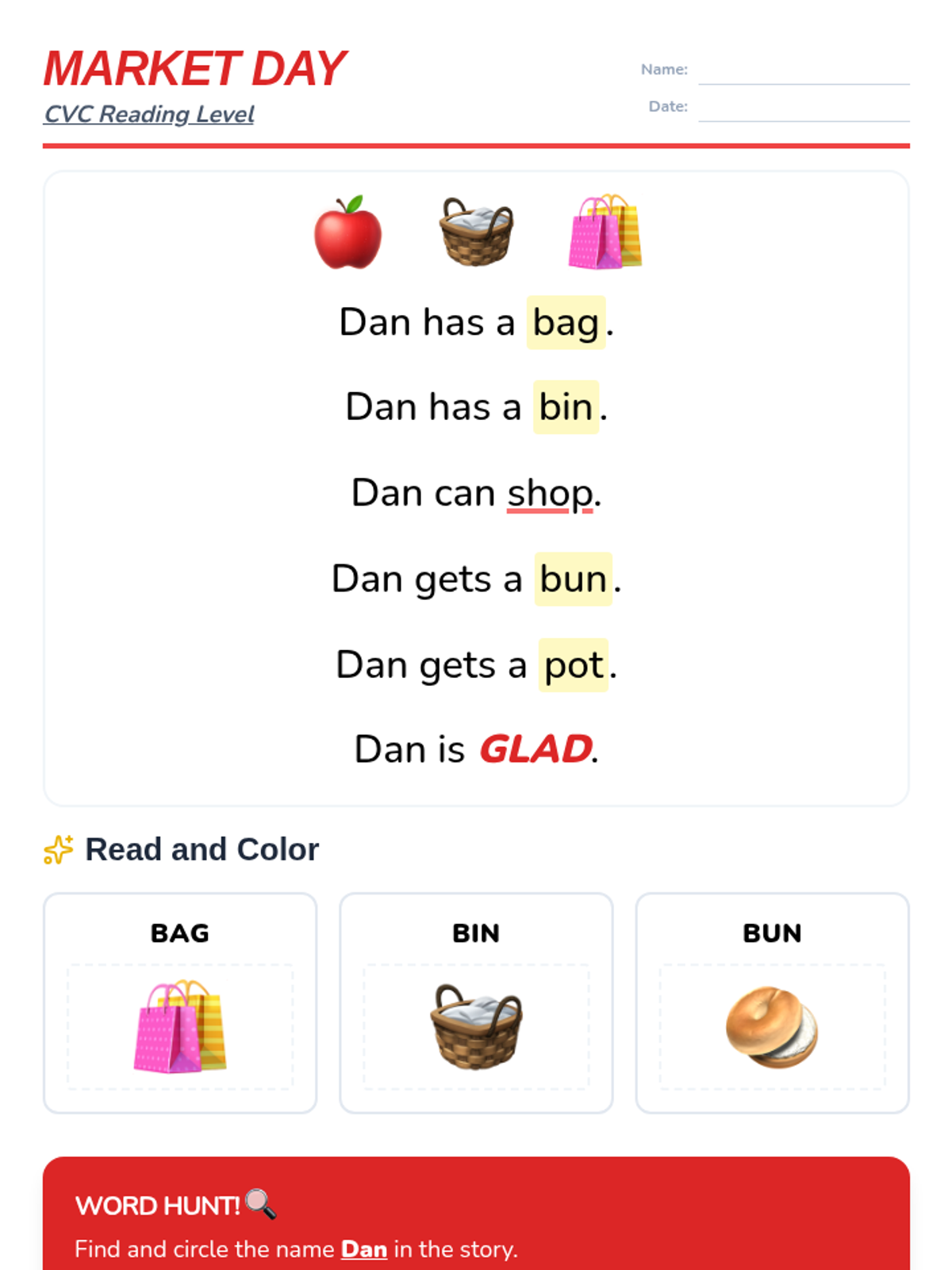
A vocabulary matching activity pairing CVC market words with colorful emojis/icons, designed for IEP visual support.
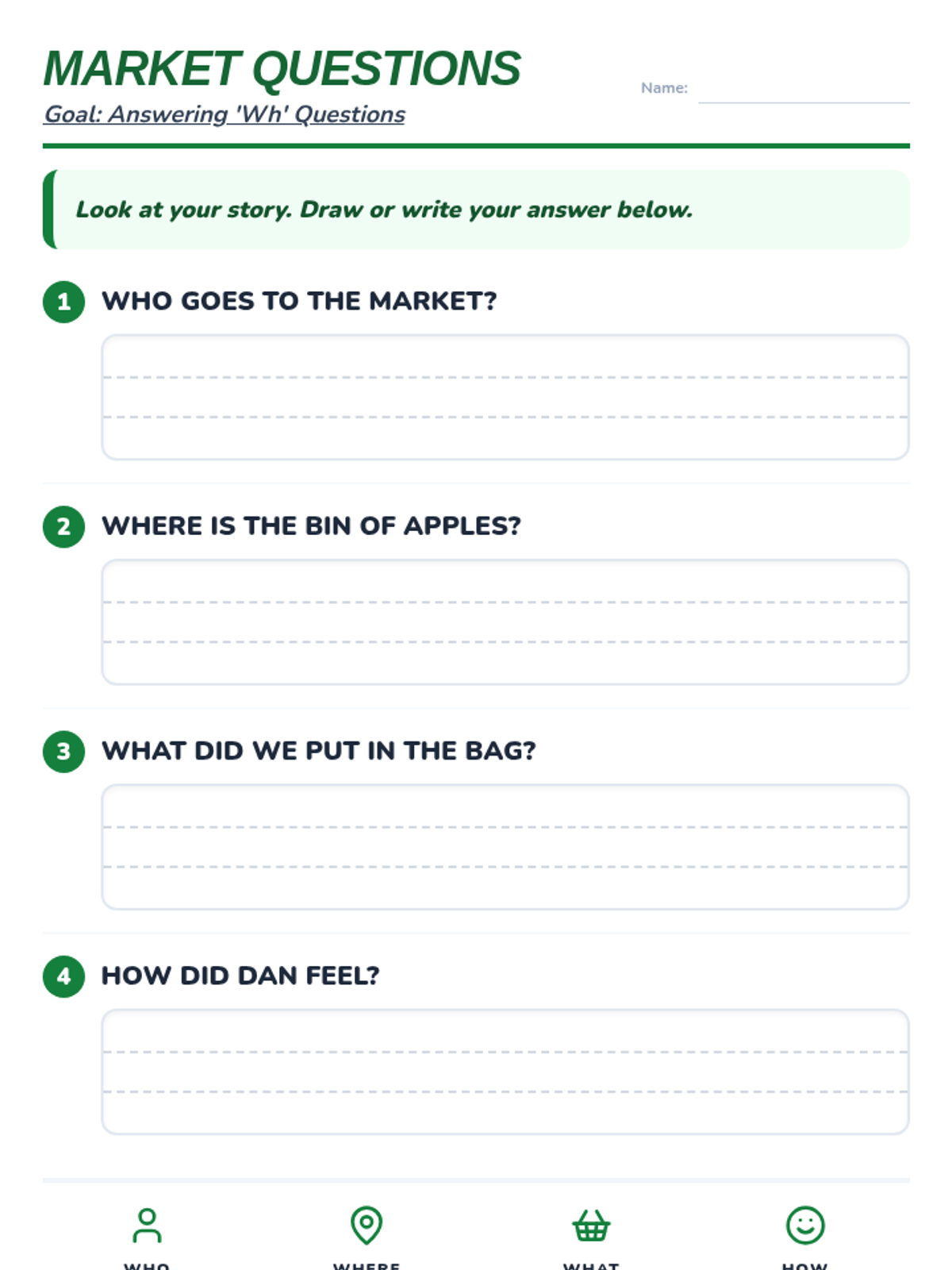
A reading comprehension worksheet focused on 'Wh' questions (Who, What, Where, How) with visual prompts and large workspace areas for student responses.
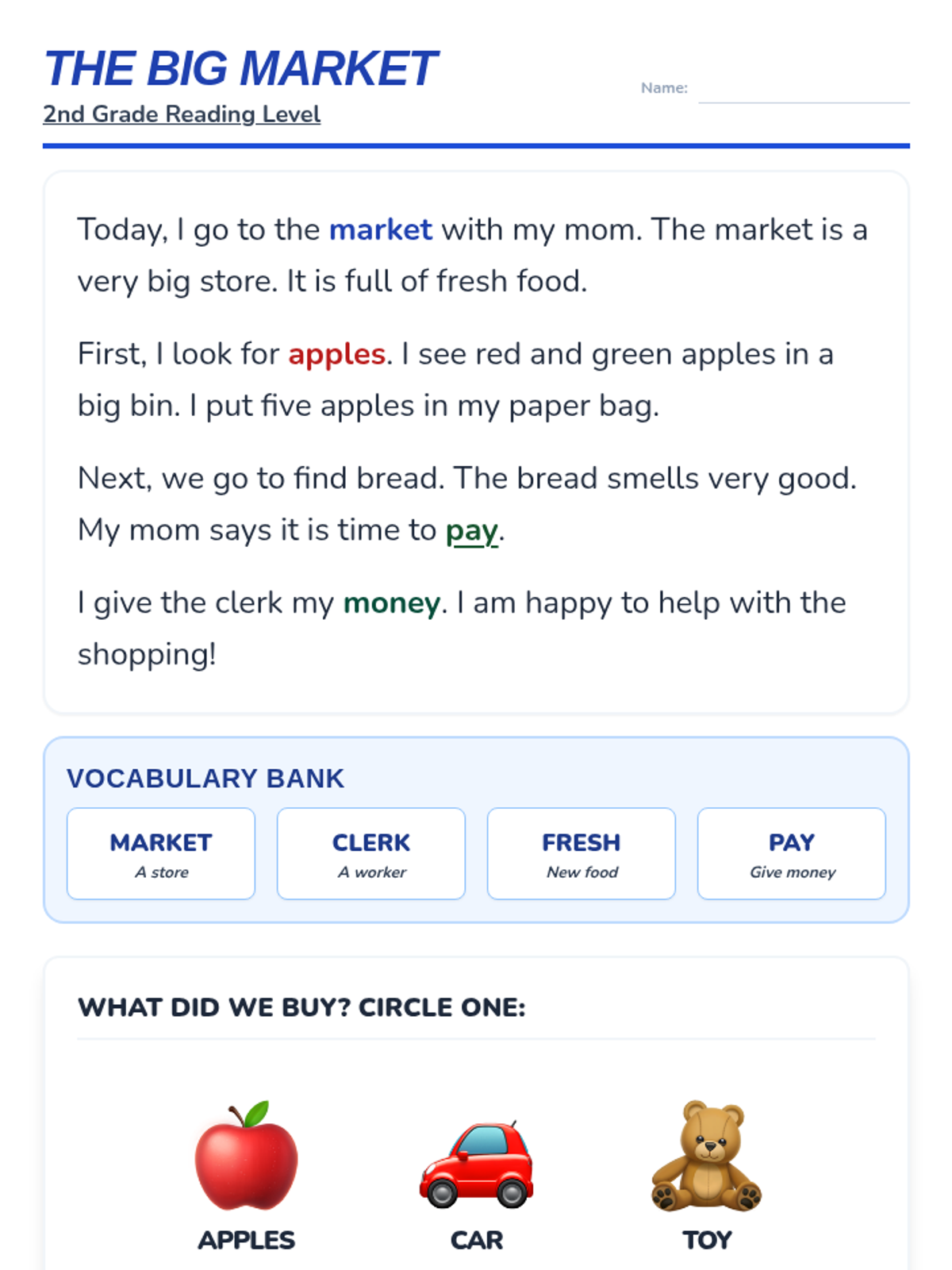
A 2nd-grade level reading passage with simplified sentences about a trip to the market, featuring vocabulary support and visual comprehension cues.
A Kindergarten-level reading passage focusing on CVC words (Dan, bag, bin, bun) with a Market Day theme and visual supports.
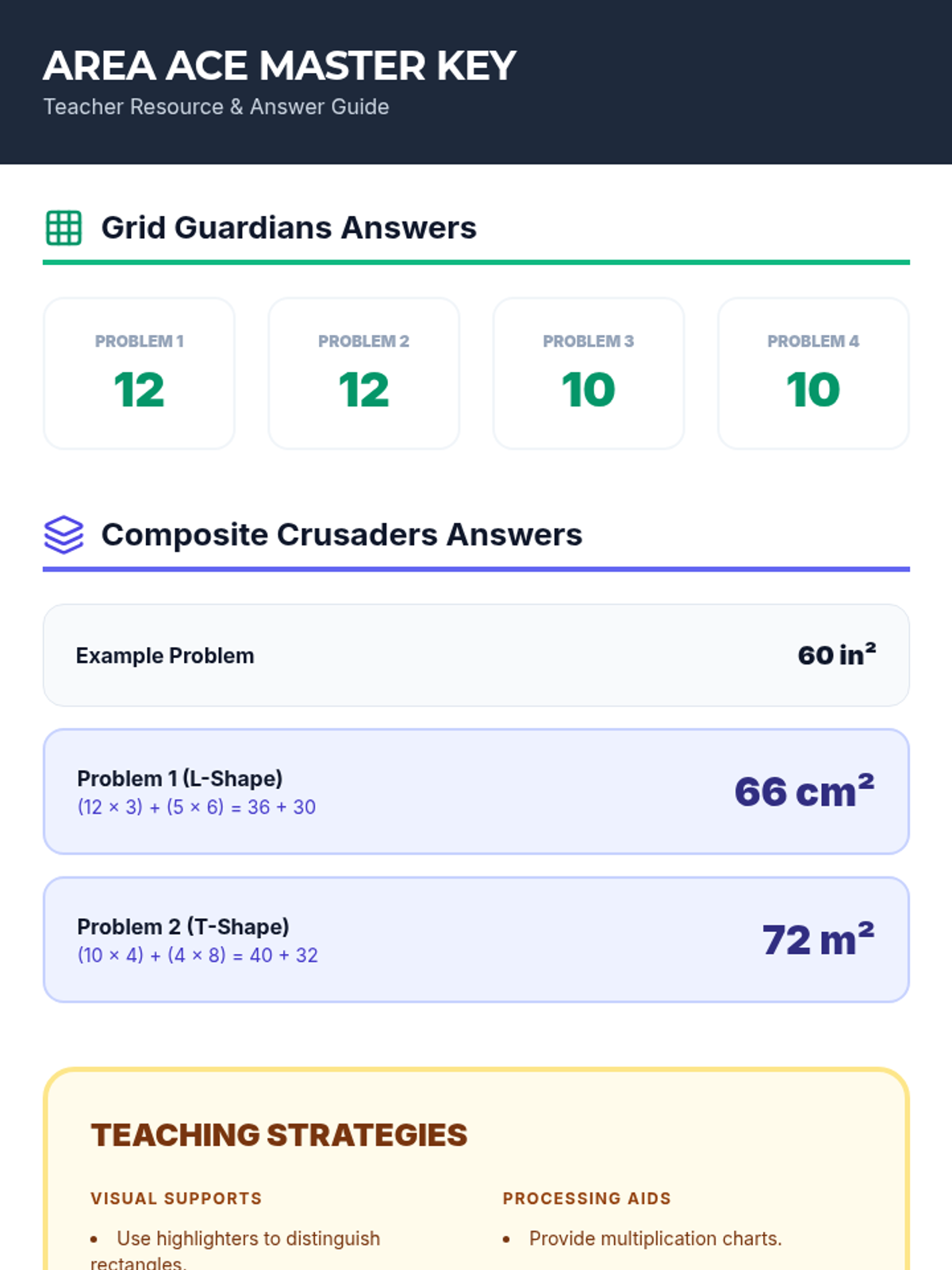
A teacher guide and answer key for the Patchwork Planes lesson. Revised to include answers for the additional practice problems and improved formatting.
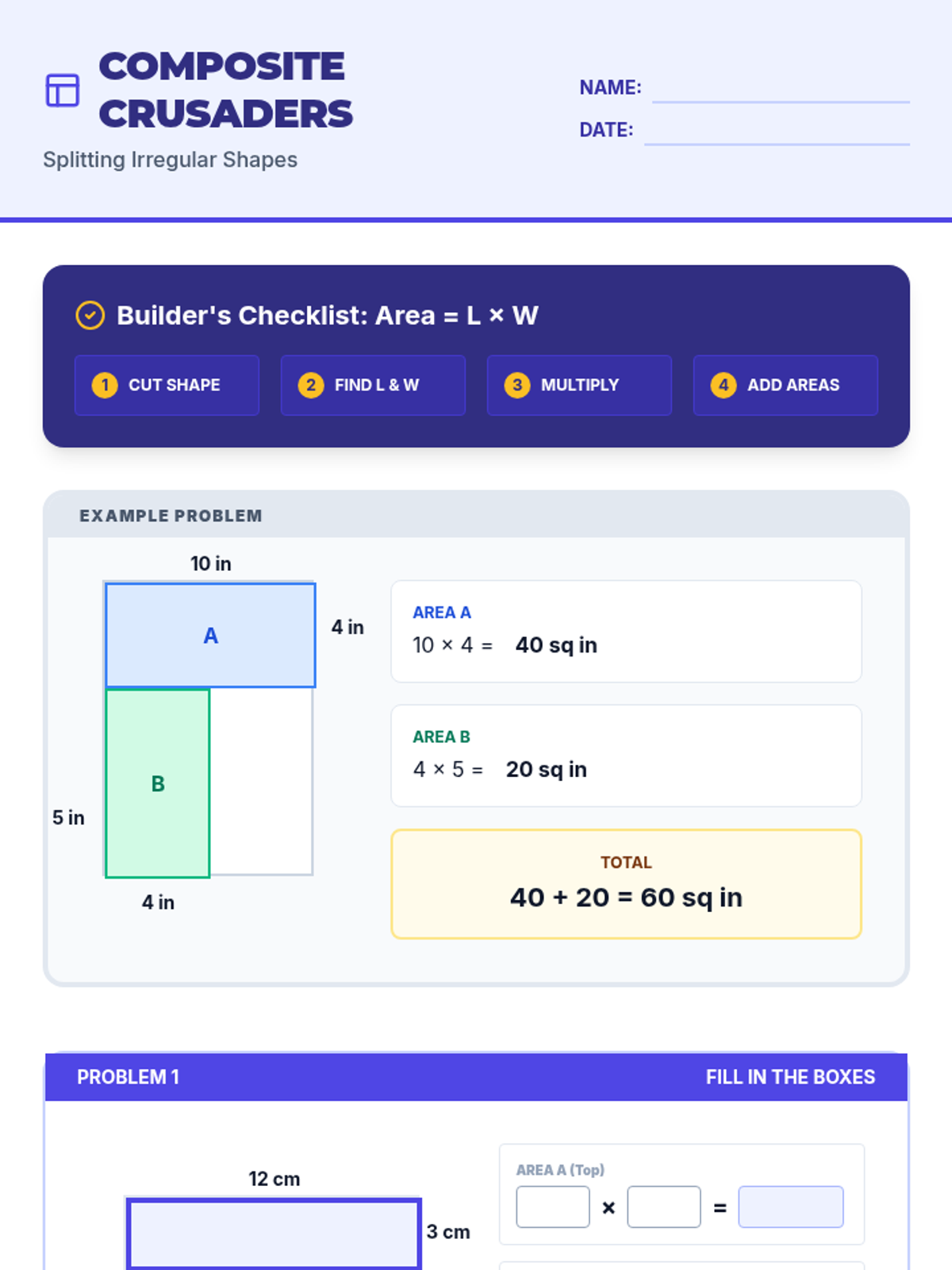
Introduction slides for calculating area of irregular shapes, featuring visual counting strategies and a step-by-step checklist for composite figures. Revised for rendering clarity, consistent numbering, and improved shape visuals.
A scaffolded worksheet for IEP students using formula-based area calculation for composite shapes. Revised for larger student work areas, fixed page breaks, and improved dimension labeling. Added multiple practice problems.
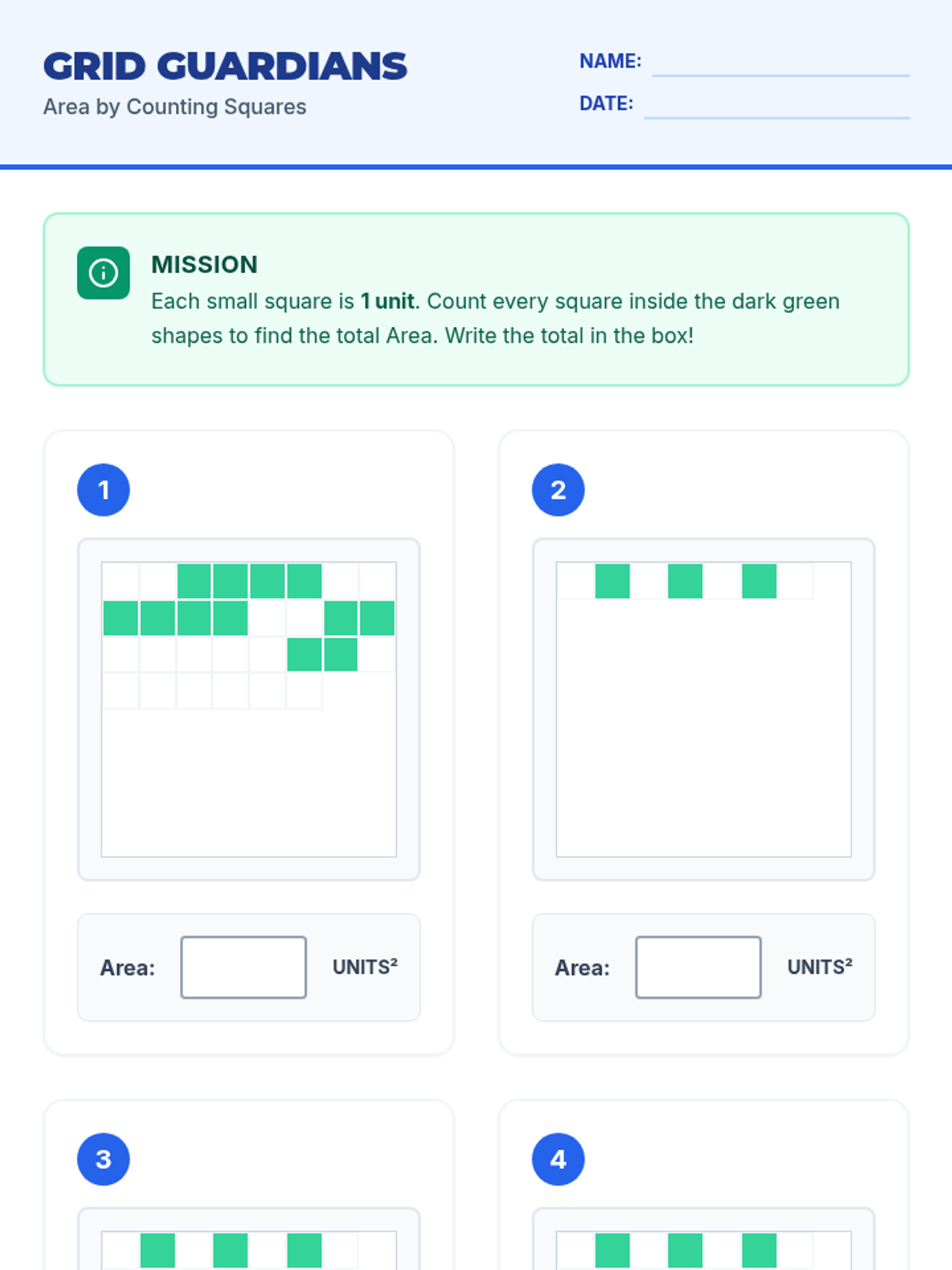
A visual worksheet for IEP students to practice calculating area by counting unit squares on a grid. Revised for high contrast, manual grid rendering, and better page break management. Simplified Problem 4 for solid shape counting.
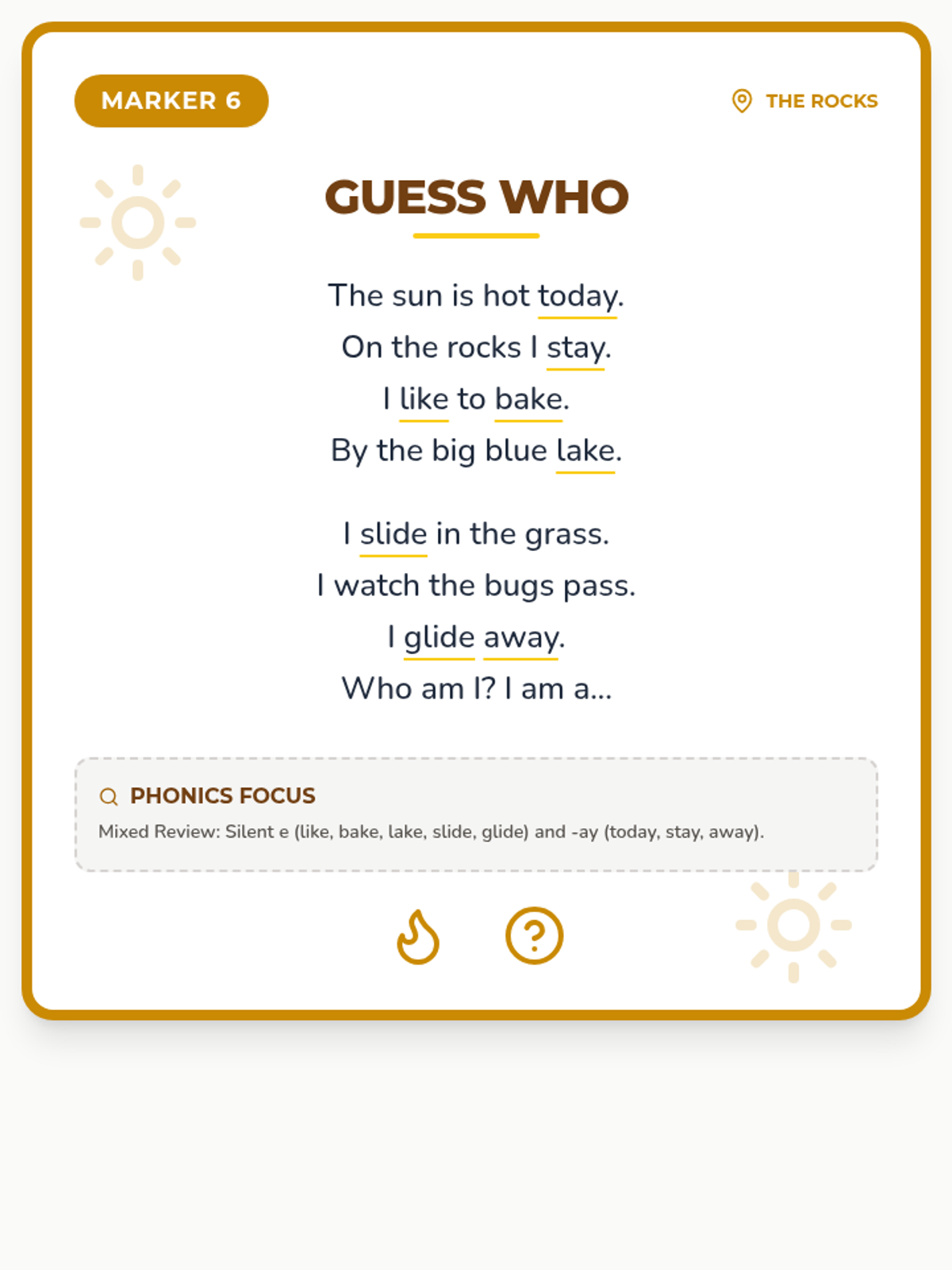
A decodable riddle poem focused on silent e and the -ay vowel team, featuring a snake. Framed as a "Guess who" riddle with realistic nature details. Corrected inconsistent underlining.
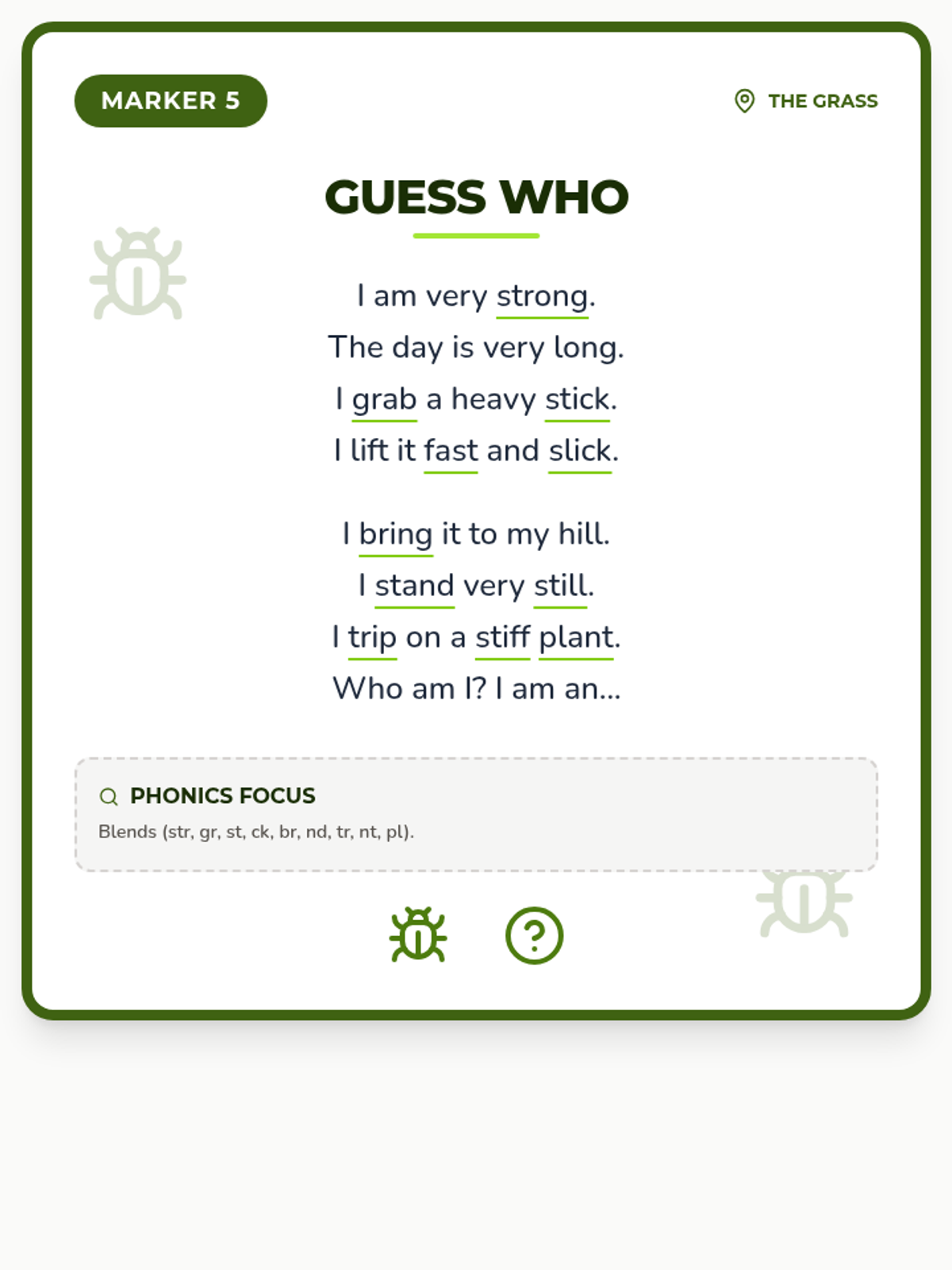
A decodable riddle poem focused on consonant blends, featuring an ant. Framed as a "Guess who" riddle with realistic nature details. Removed "green" (out of scope) and nonsensical "drill".
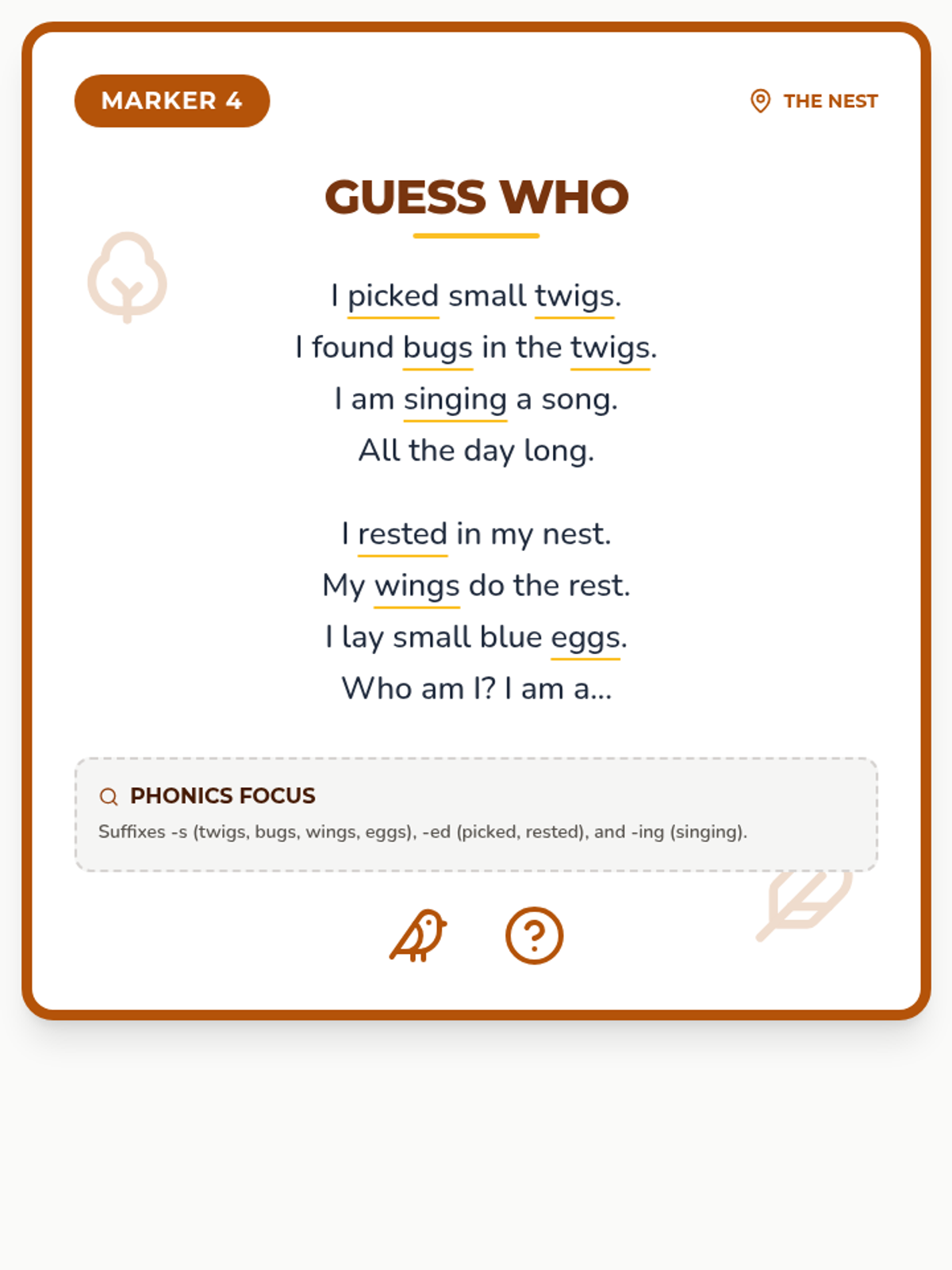
A decodable riddle poem focused on suffixes -s, -ed, and -ing, featuring a mother bird. Framed as a "Guess who" riddle with realistic nature details. Removed non-natural rhyme reference.
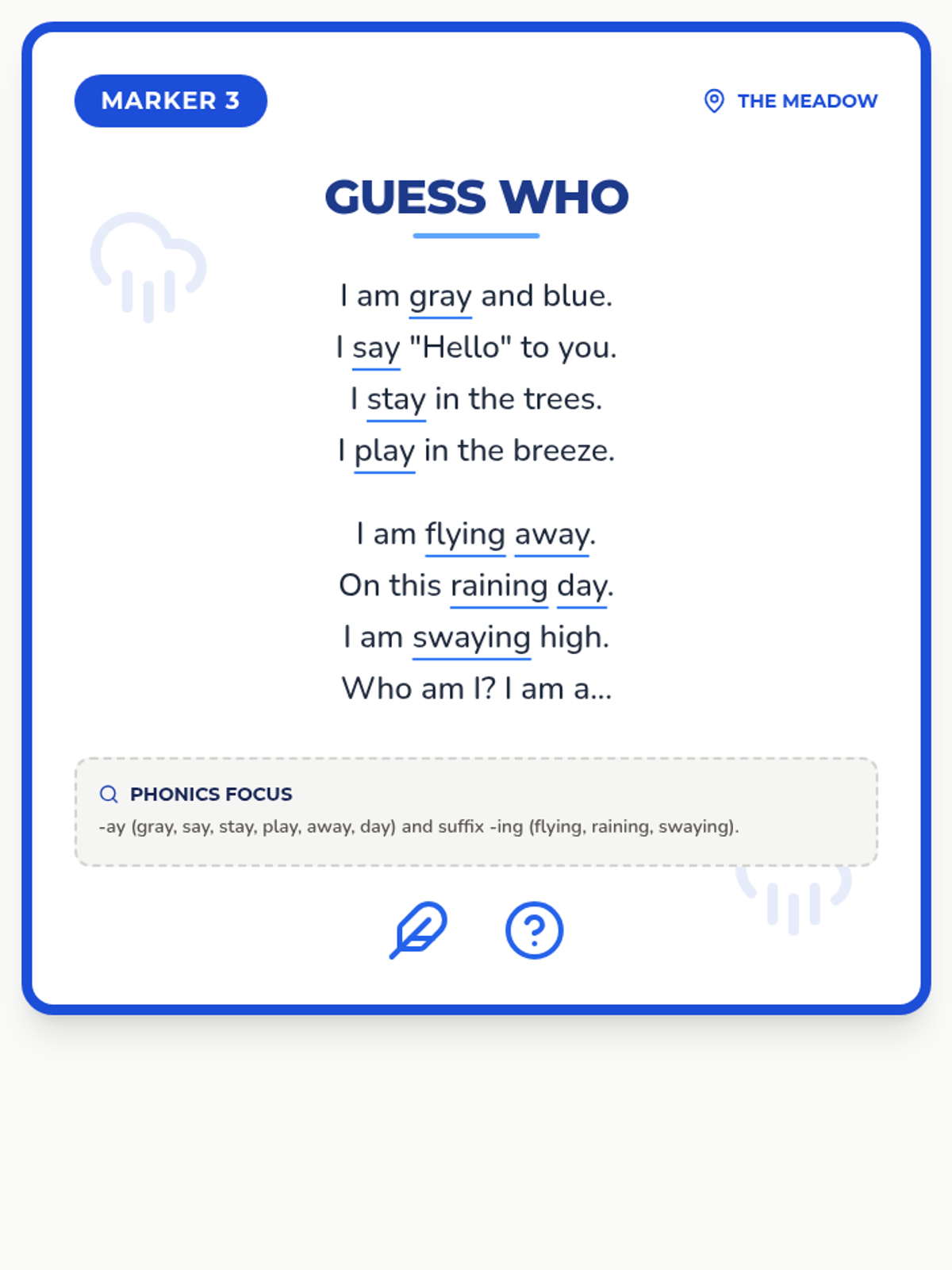
A decodable riddle poem focused on the -ay vowel team and the -ing suffix, featuring a Blue Jay. Framed as a "Guess who" riddle with realistic nature details. Increased text weight for teacher notes.
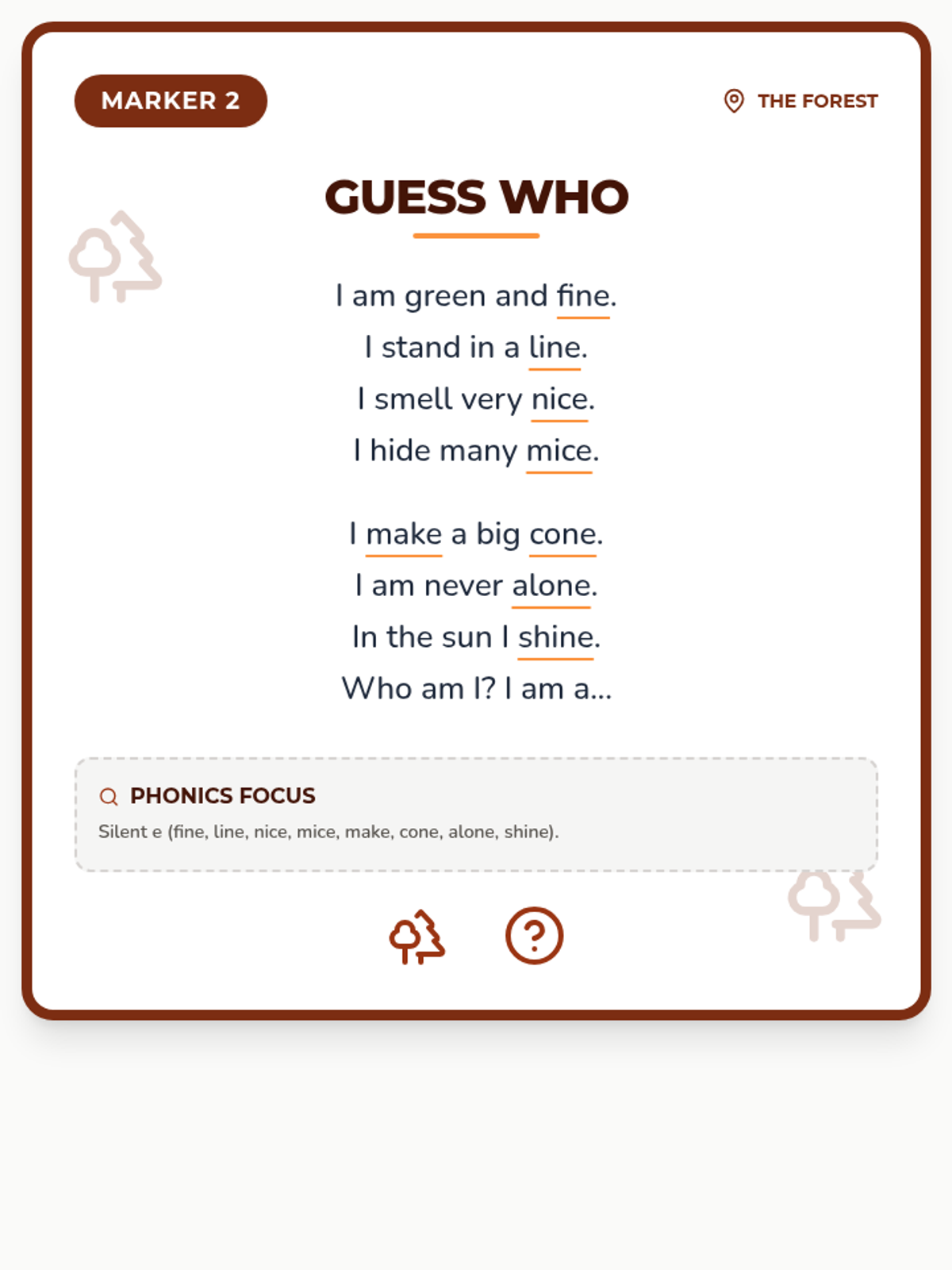
A decodable riddle poem focused on the silent e pattern, featuring a pine tree. Framed as a "Guess who" riddle with realistic nature details. Removed inaccurate "spine" reference.
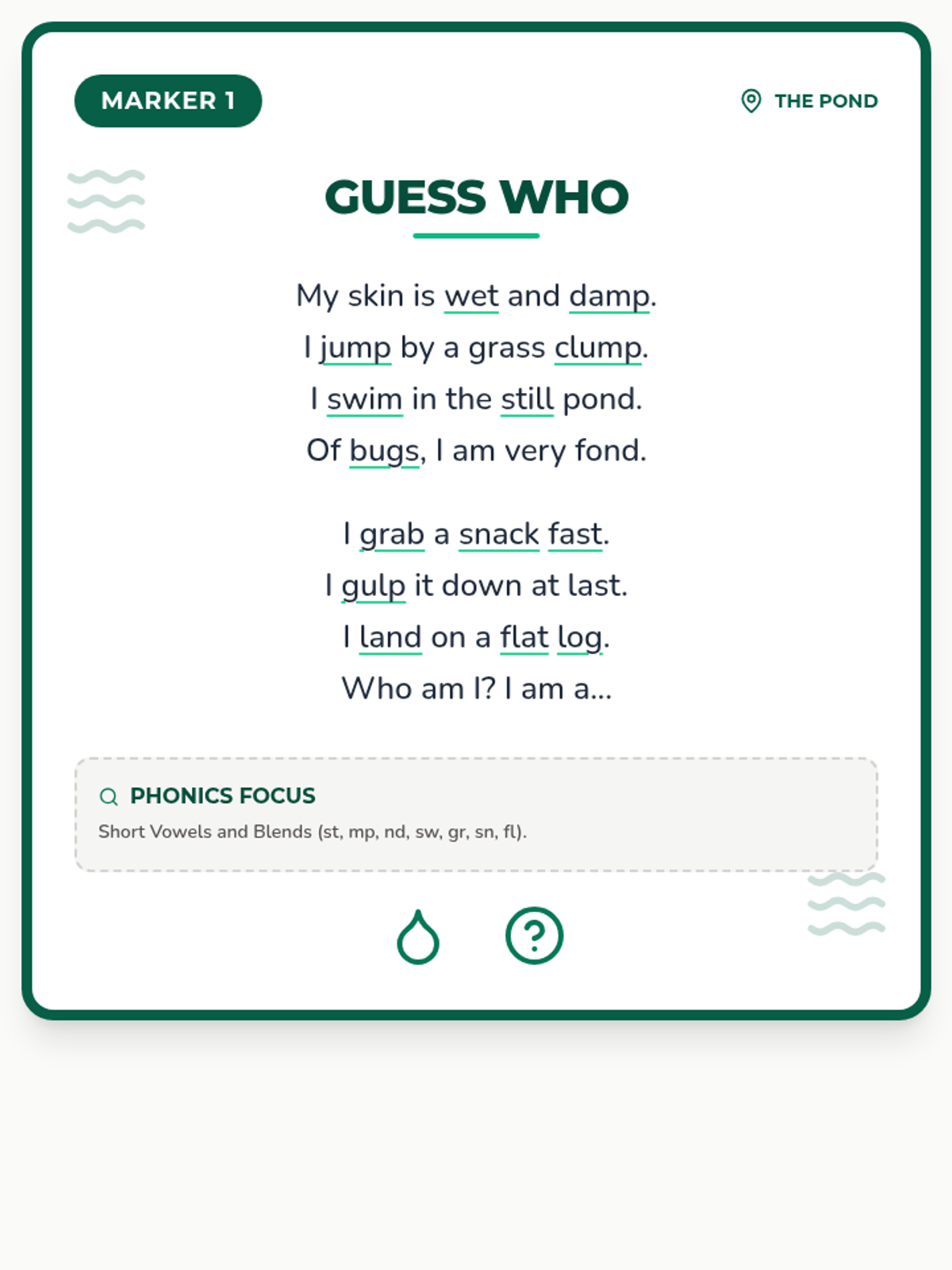
A decodable riddle poem focused on short vowels and blends, featuring a frog. Framed as a "Guess who" riddle with realistic nature details. Corrected unrealistic "ramp" and complex "blast".
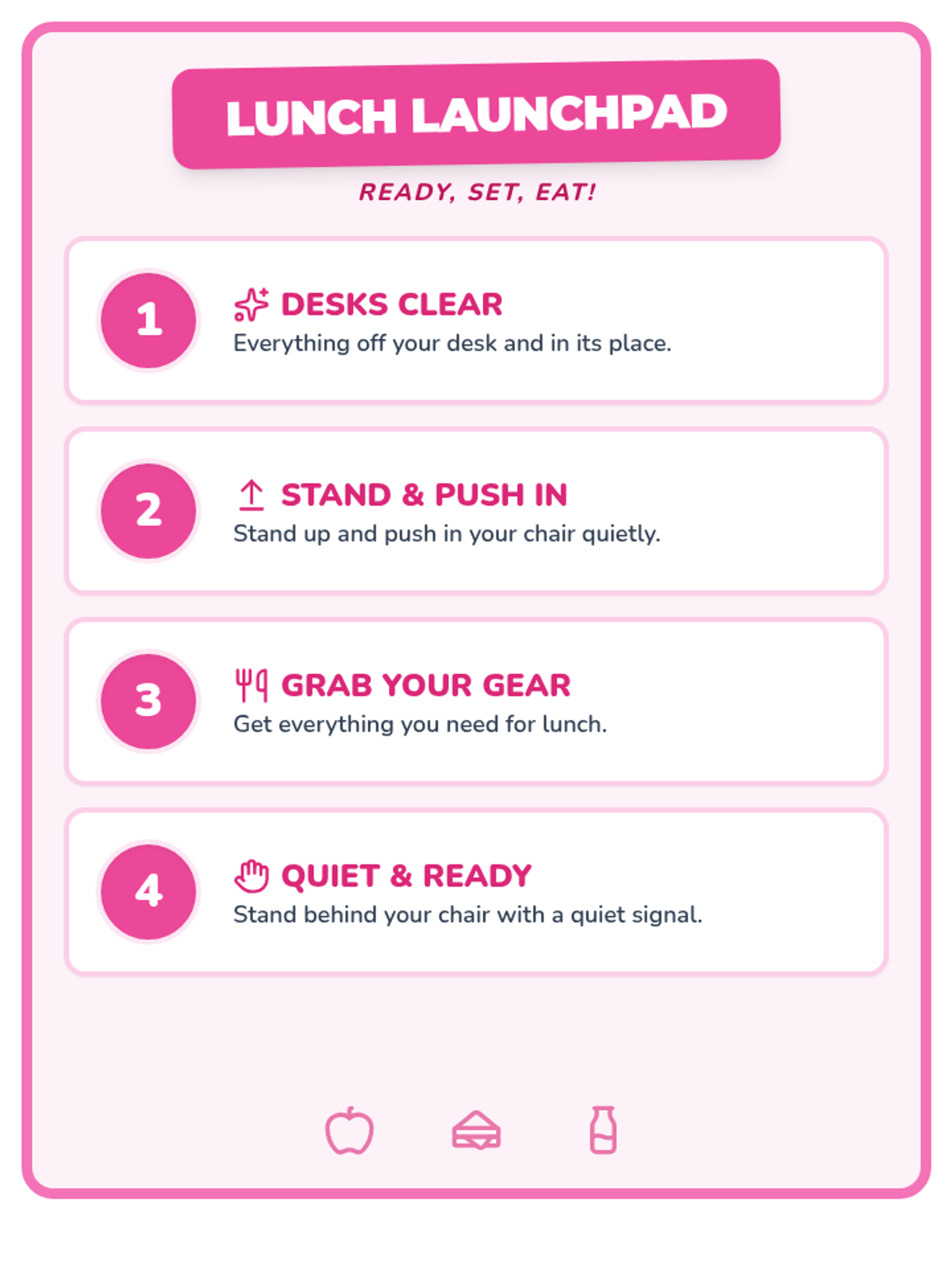
A vibrant pink-themed anchor chart for classroom lunch transitions, featuring 4 clear steps with icons and bold numbers for high visibility.
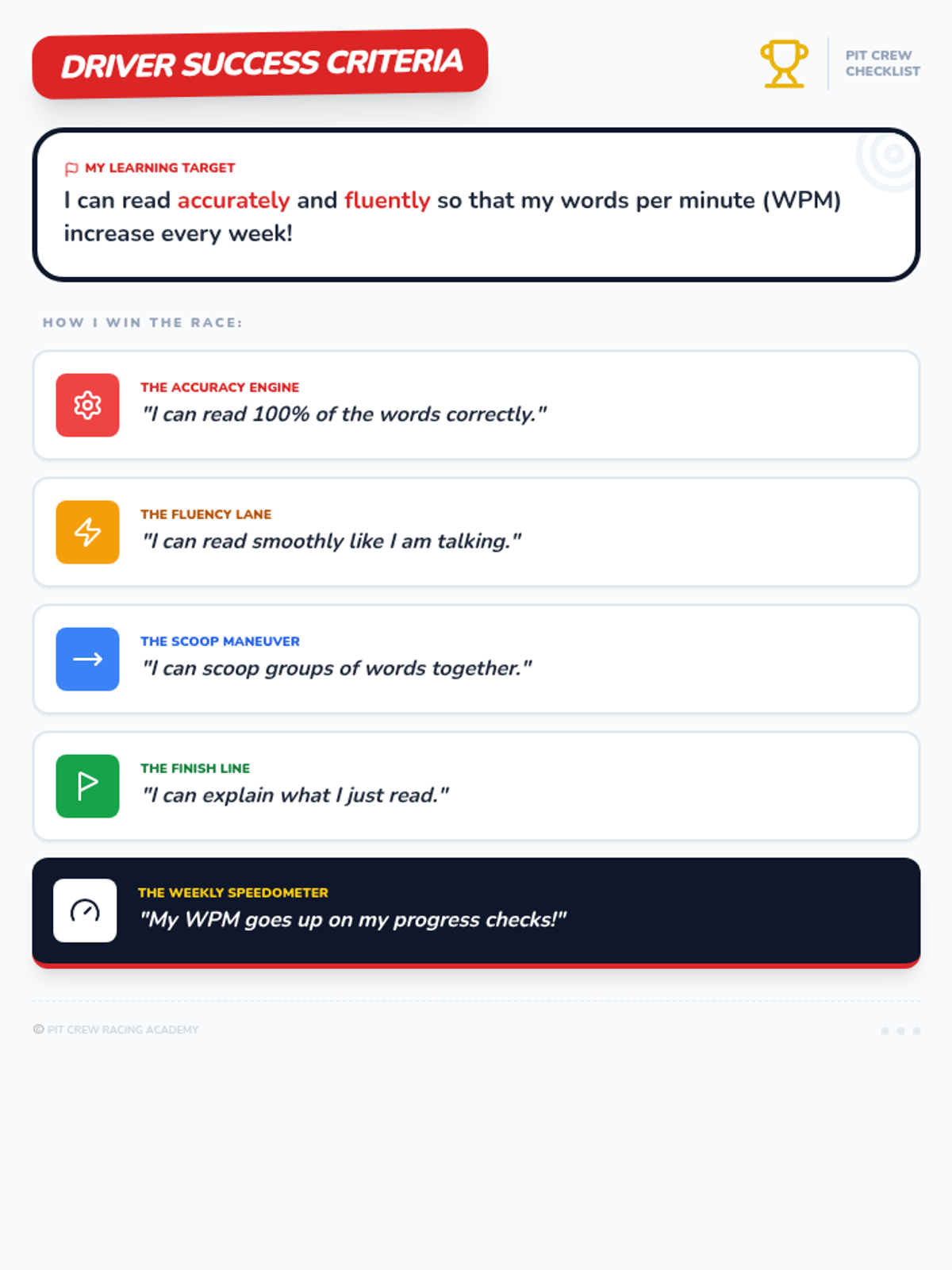
A student-facing success criteria poster that uses the racing theme to define accuracy, fluency, phrasing, comprehension, and WPM growth.
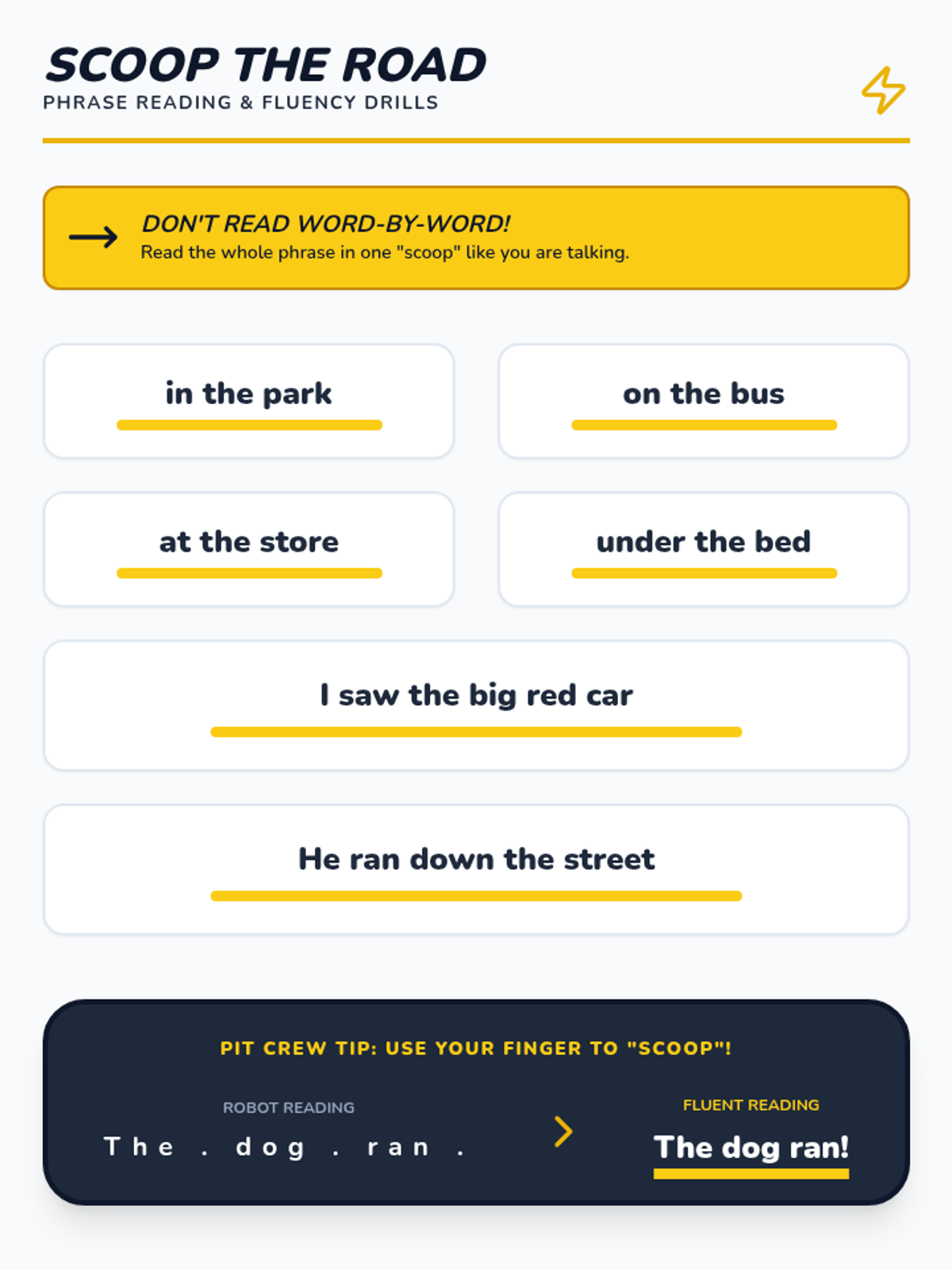
A phrase-scooping exercise sheet that helps students transition from word-by-word reading to fluent, phrase-level processing.
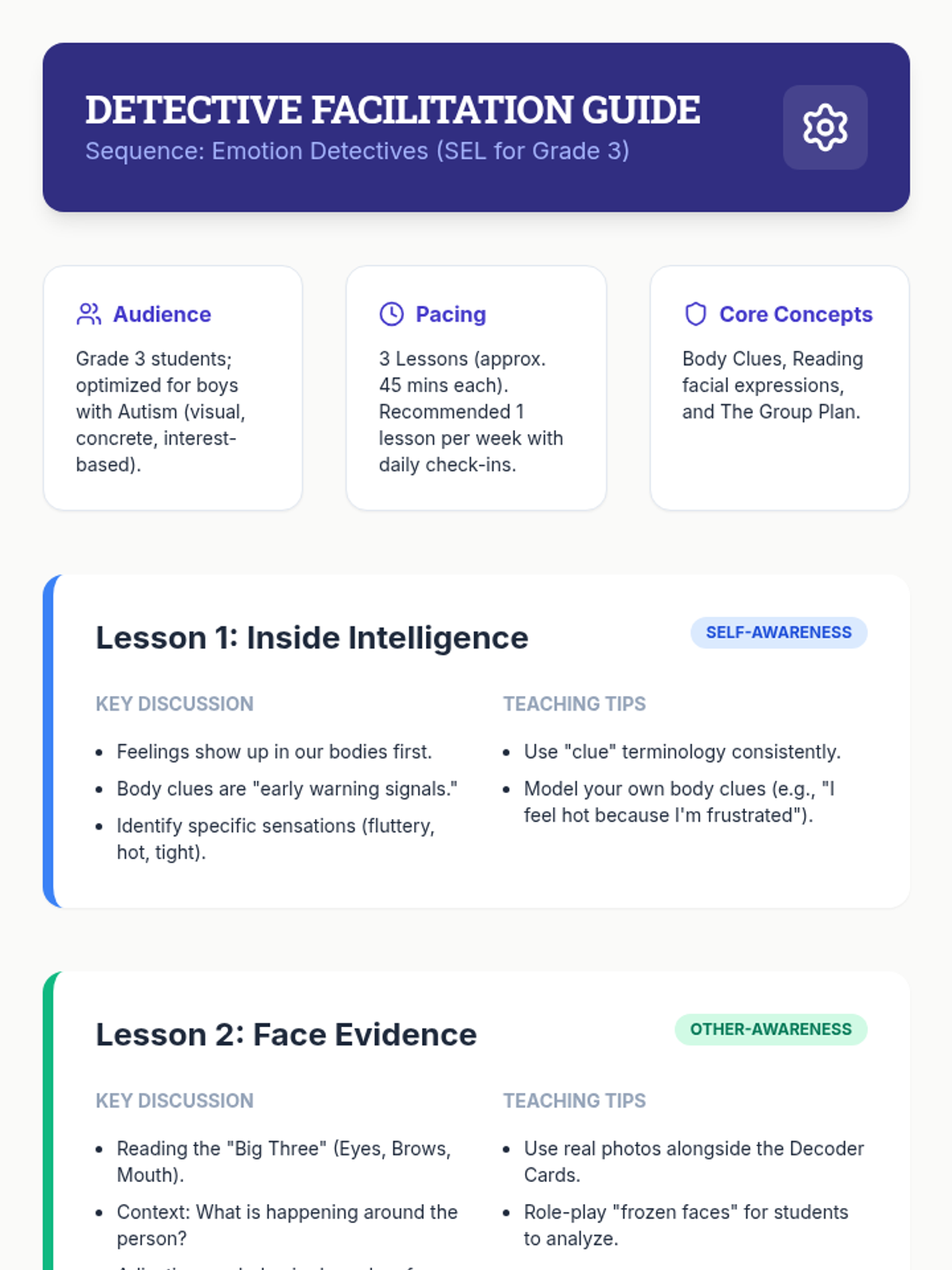
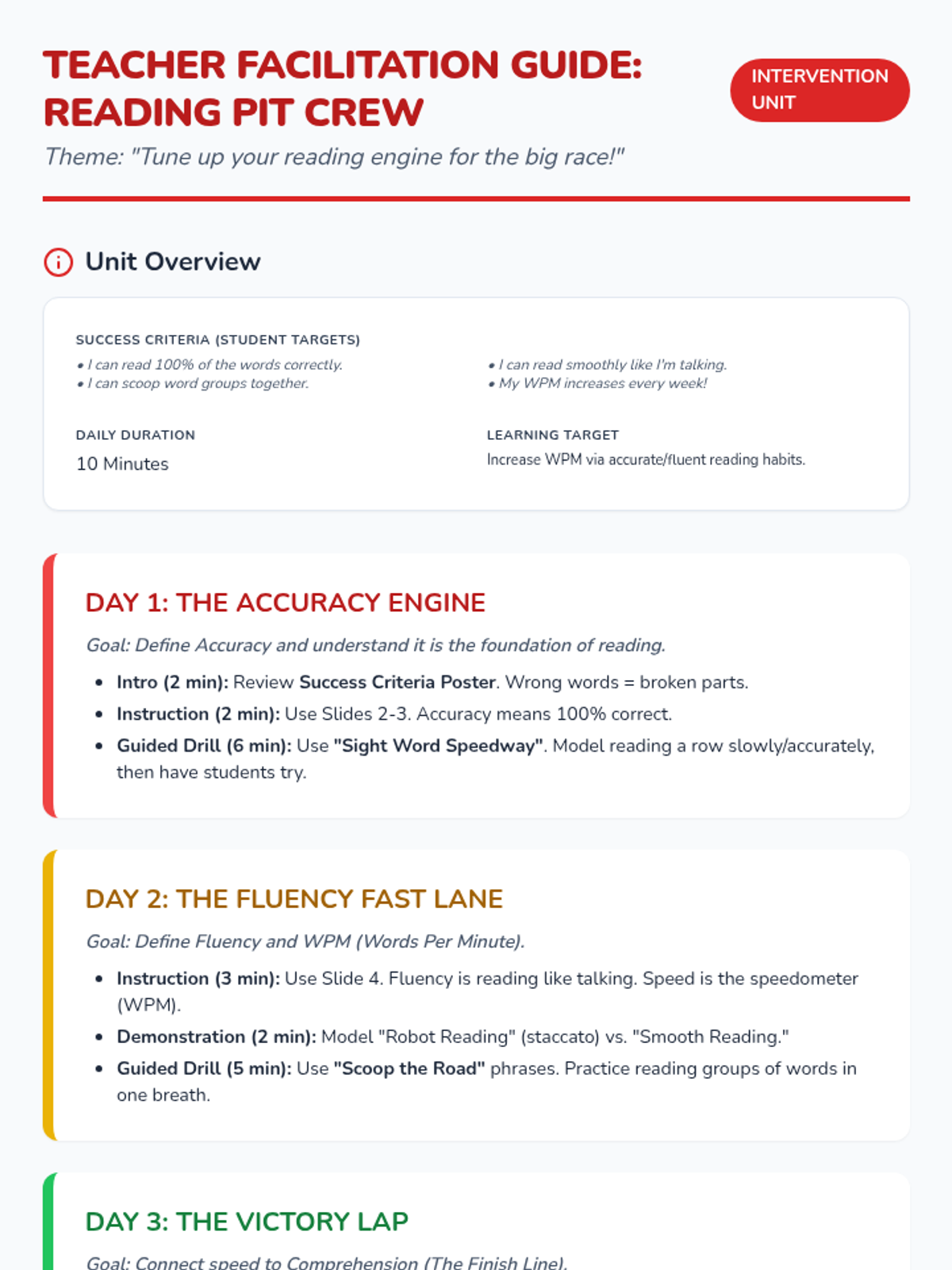
Teacher facilitation guide. Revised to fix page breaks between lesson blocks and improve document balance.
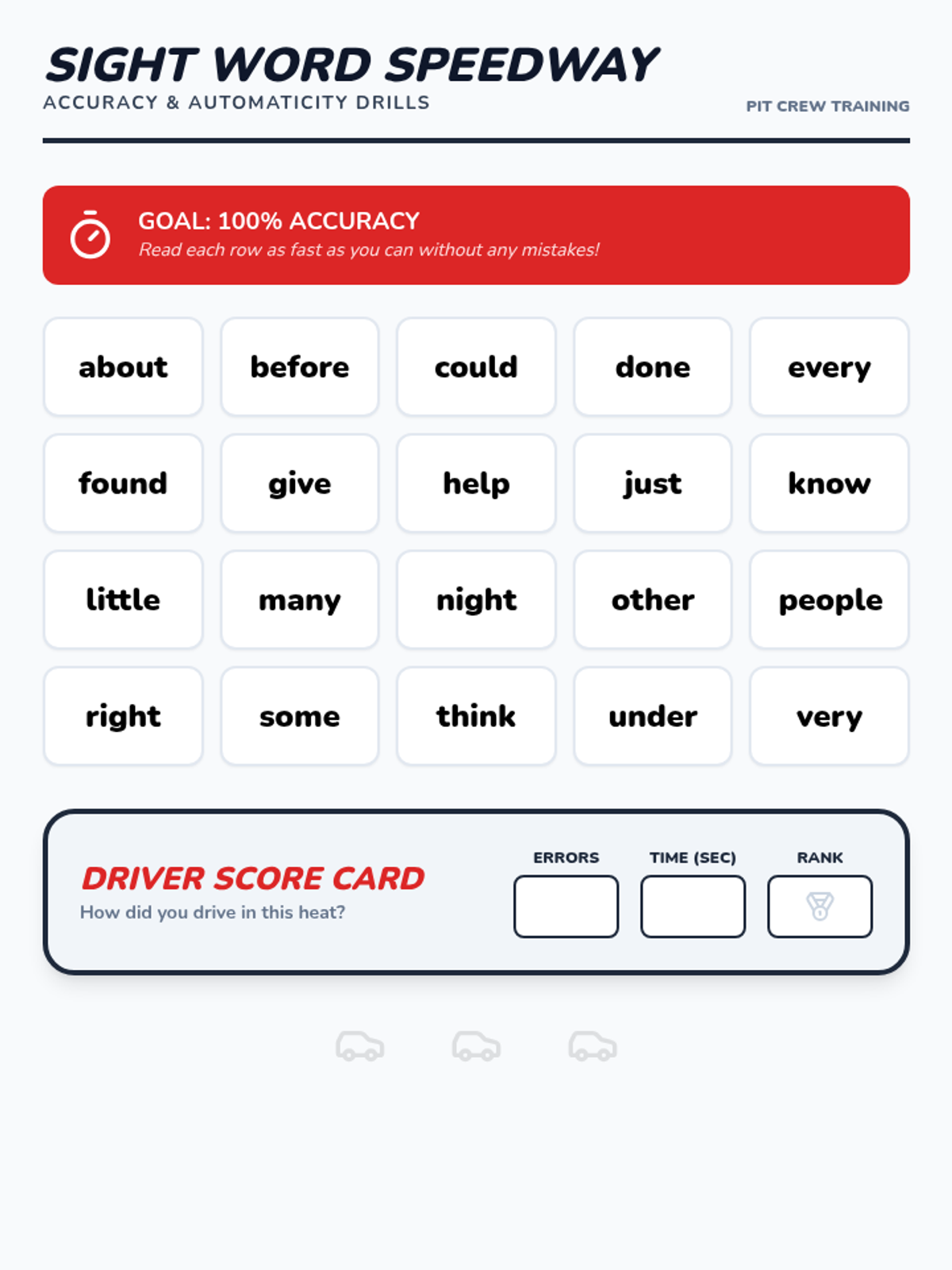
A rapid word recognition drill sheet designed to build student accuracy and automaticity with high-frequency words.
Social narrative about the group plan. Revised to fix page breaks, provide a light reflection area for legibility, and add visual evidence icons to fill white space.
A visually engaging slide deck that explains accuracy, fluency, WPM, and why they matter using a high-energy racing theme.
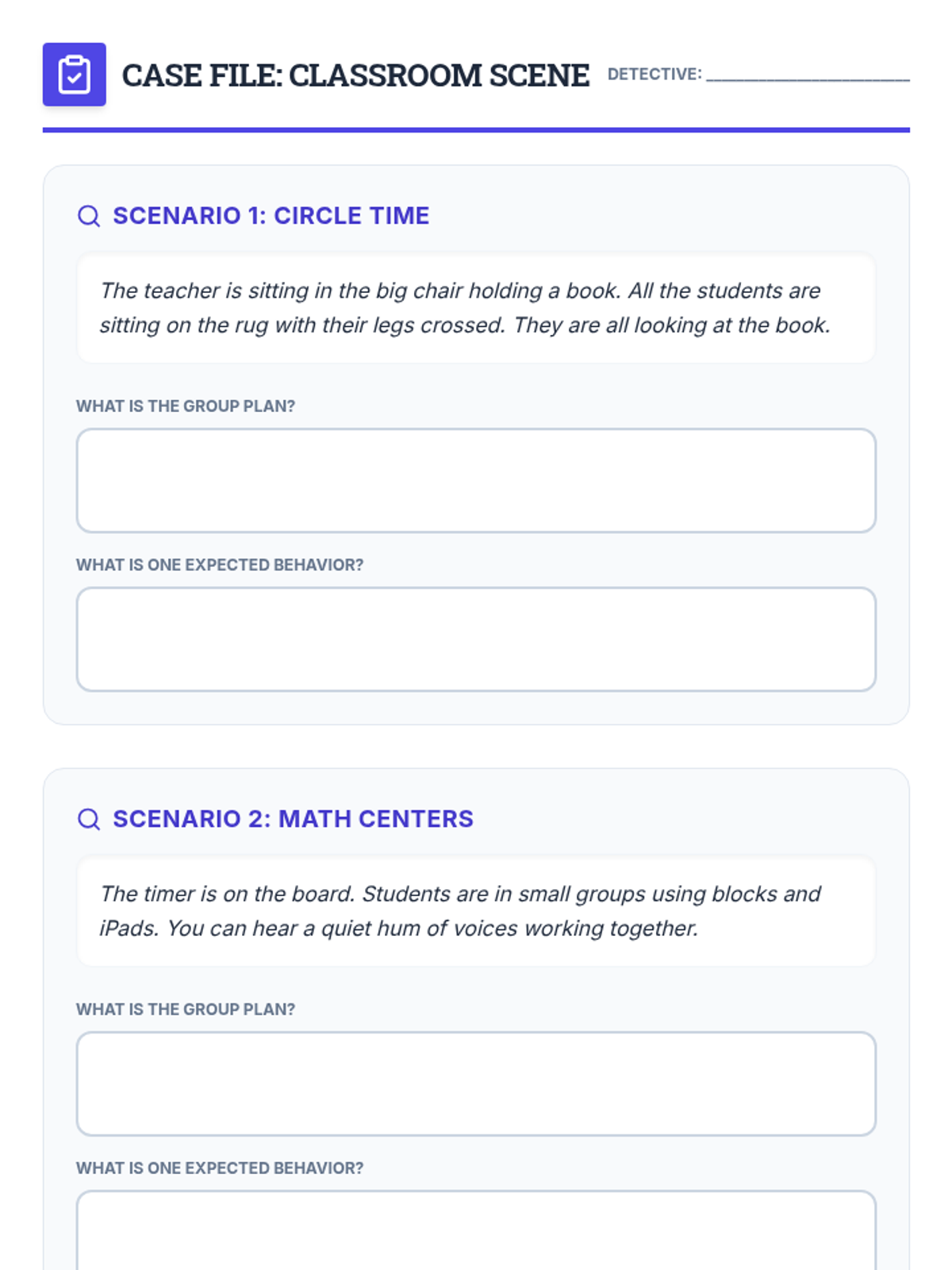
Classroom scenario worksheet. Revised to significantly increase writing space, fix page breaks to keep scenario items together, and ensure the checklist fits cleanly on Page 2.
School scene slides. Revised to fix slide overflow on video slides, ensure text contrast for the quote box, and clarify slide titles.
A comprehensive 3-day lesson plan for reading intervention, utilizing a racing theme to teach accuracy, fluency, and reading comprehension goals.
Social narrative about reading facial expressions. Revised to fix page breaks, add visual aids for facial clues, and include interactive checkboxes.
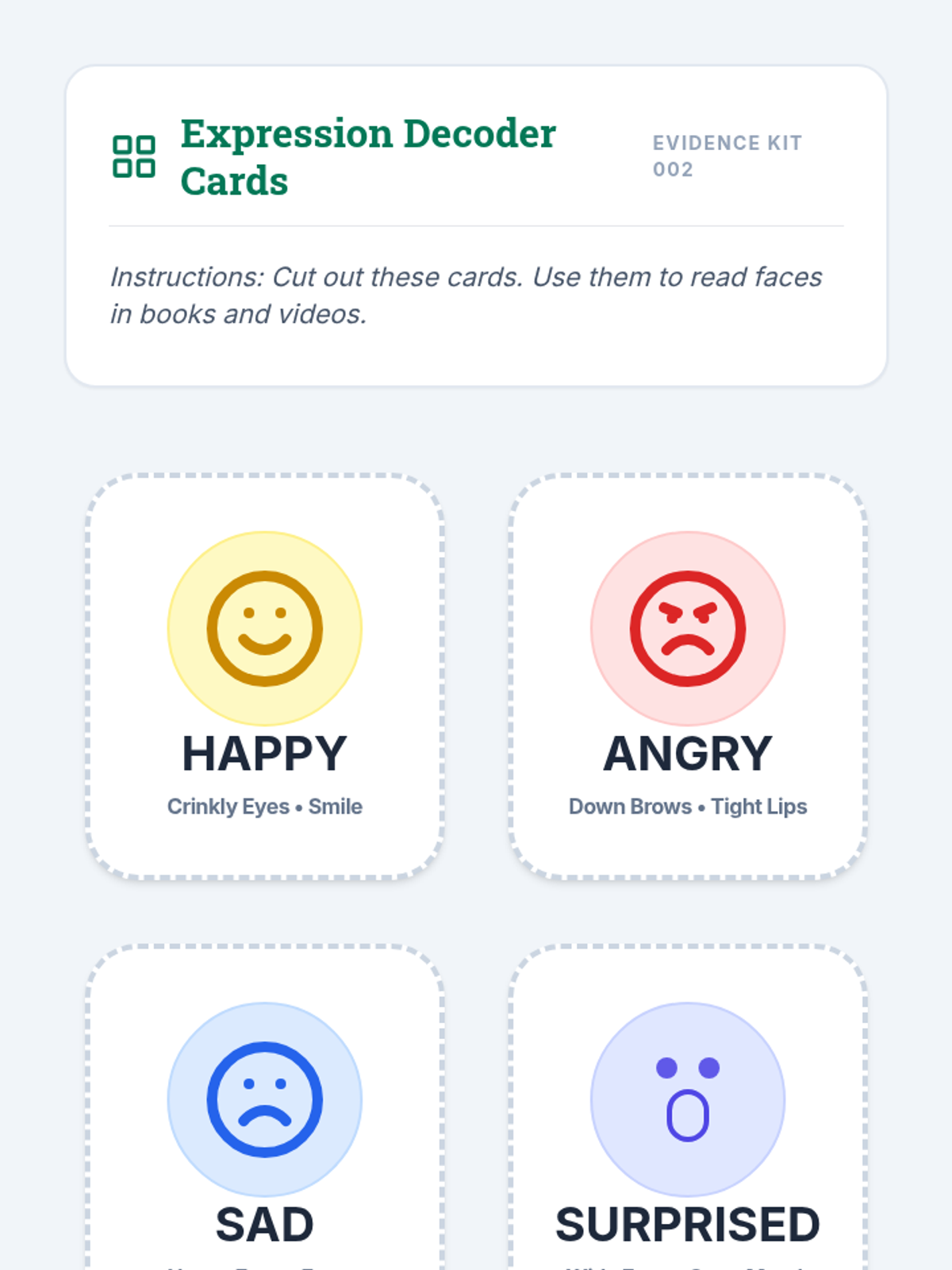
Expression decoder cards. Revised to improve 'Surprised' card icon with a more literal facial representation and ensuring card containers do not split across pages.
Instructional slides for decoding facial expressions. Revised to fix slide overflow on the video slide, adjust title tracking, and improve visual consistency for students with autism.