A vocabulary matching activity pairing CVC market words with colorful emojis/icons, designed for IEP visual support.
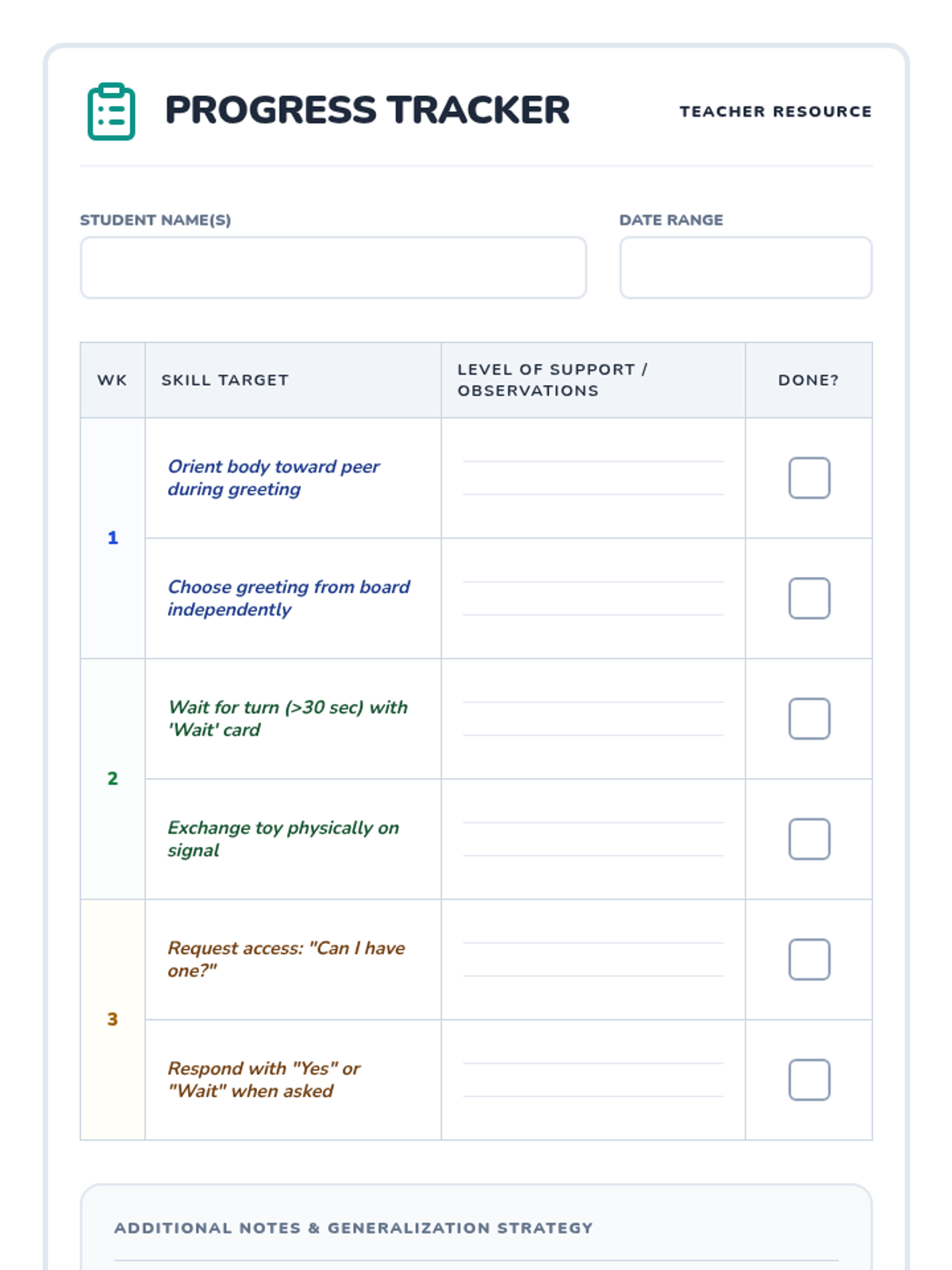
A teacher-facing progress tracker to record skill acquisition, levels of prompting required, and specific behavioral observations over the course of the 4-week intervention.
A vibrant 5-slide visual presentation for kindergarten students, introducing the core concepts of the Play Pals intervention: Greeting, Turn-taking, and Sharing with simplified text and bold icons.
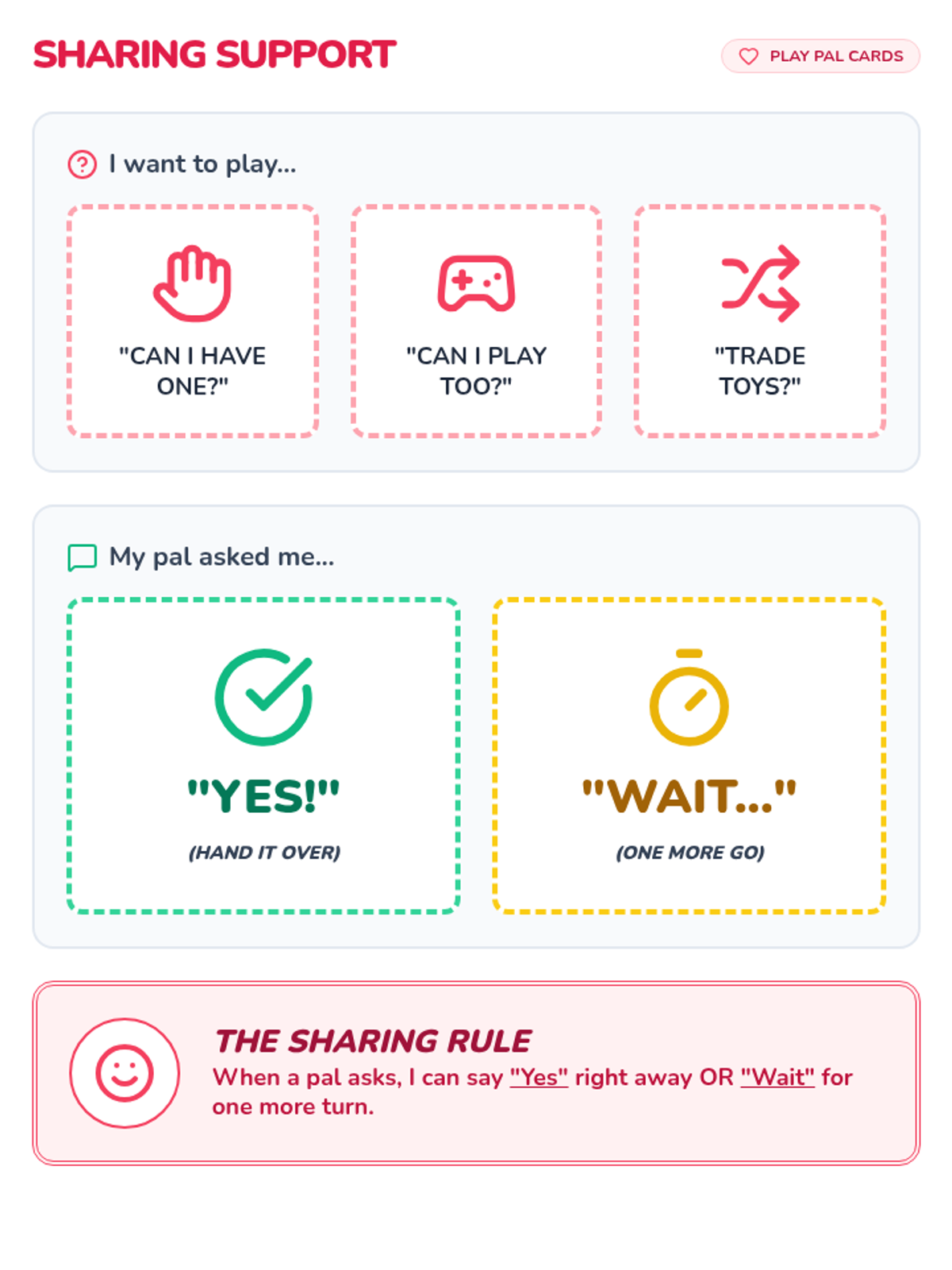
Visual support cards focusing on the language of sharing, providing kindergarten students with concrete scripts for asking to join play and responding to peer requests.
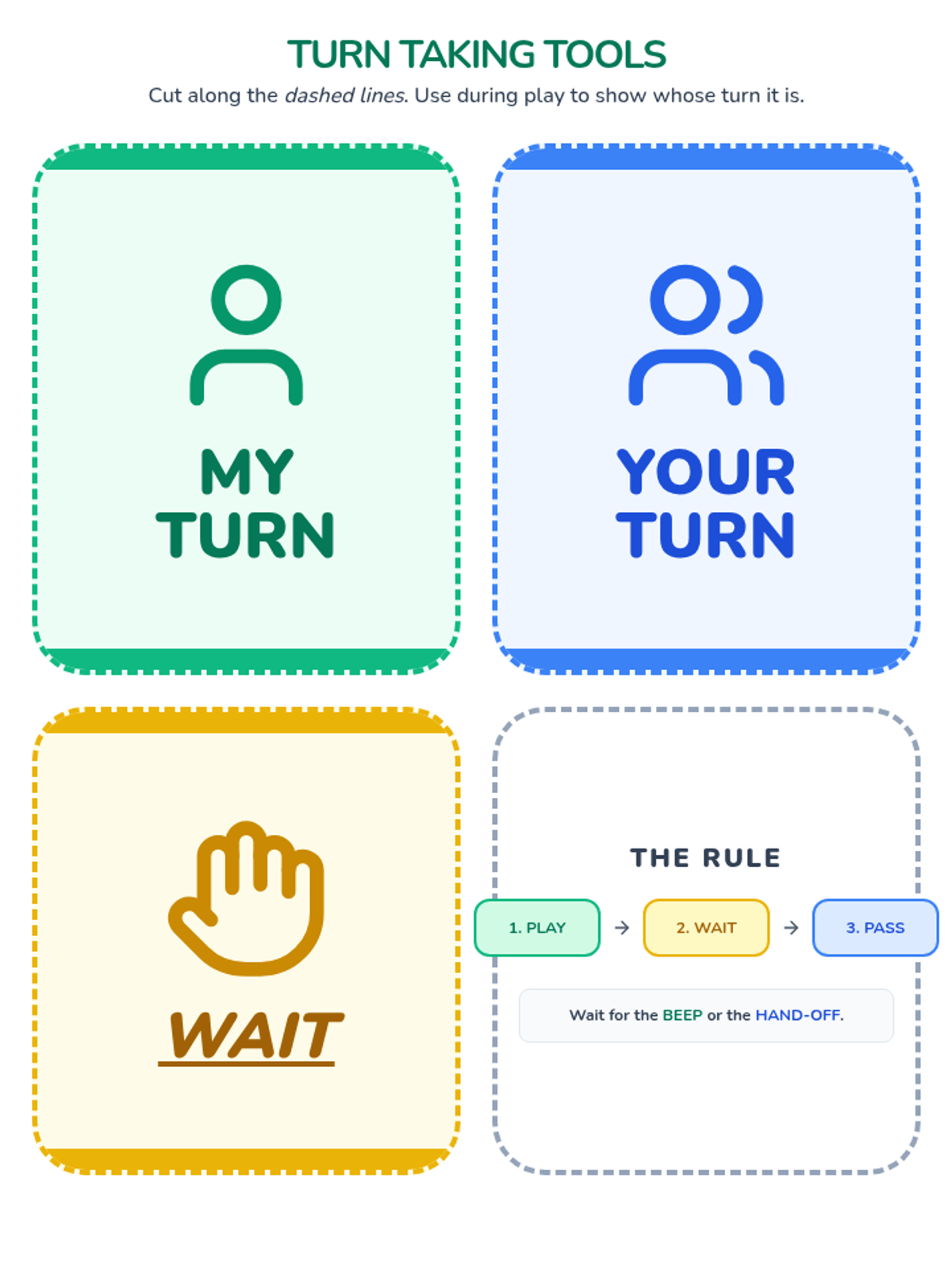
Large-scale printable turn-taking and waiting cards to provide physical and visual structure during peer interactions, including a "First/Then" rule sequence.
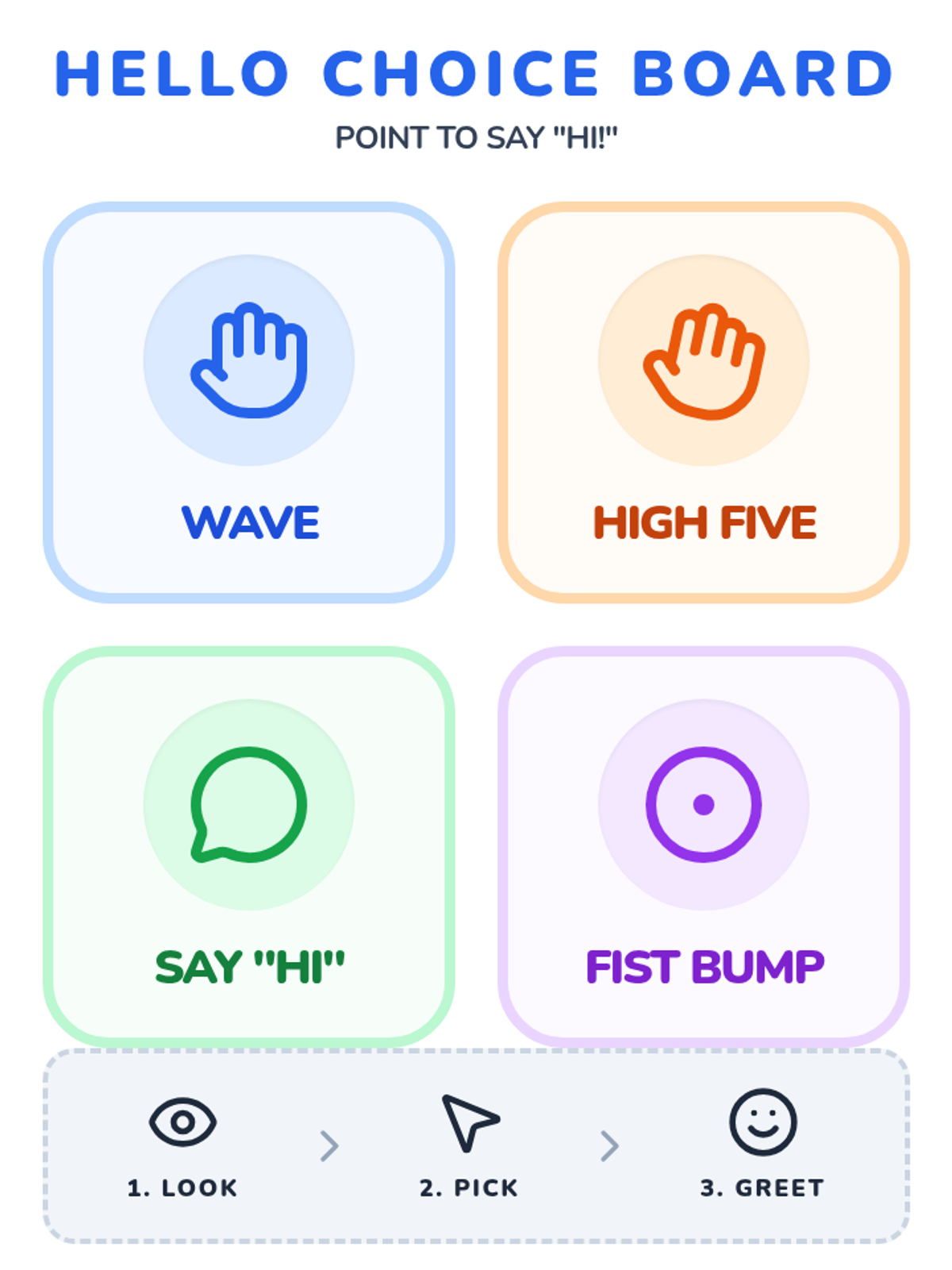
A large-format visual choice board for kindergarten students to select their preferred method of greeting peers, featuring clear icons and a simple 3-step script.
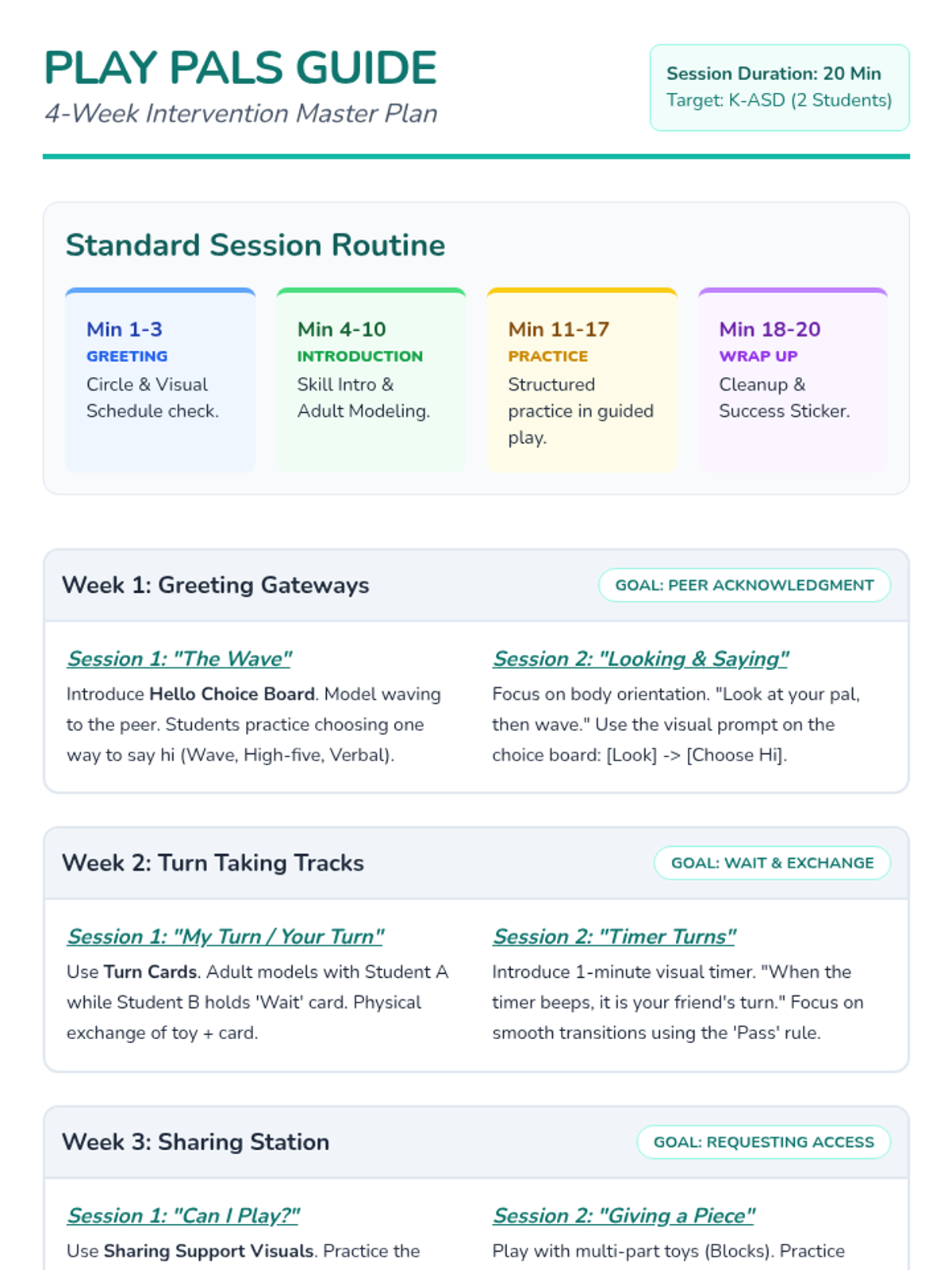
A comprehensive 4-week teacher guide outlining the session structure, weekly goals, and specific activity descriptions for the Play Pals social skills intervention.
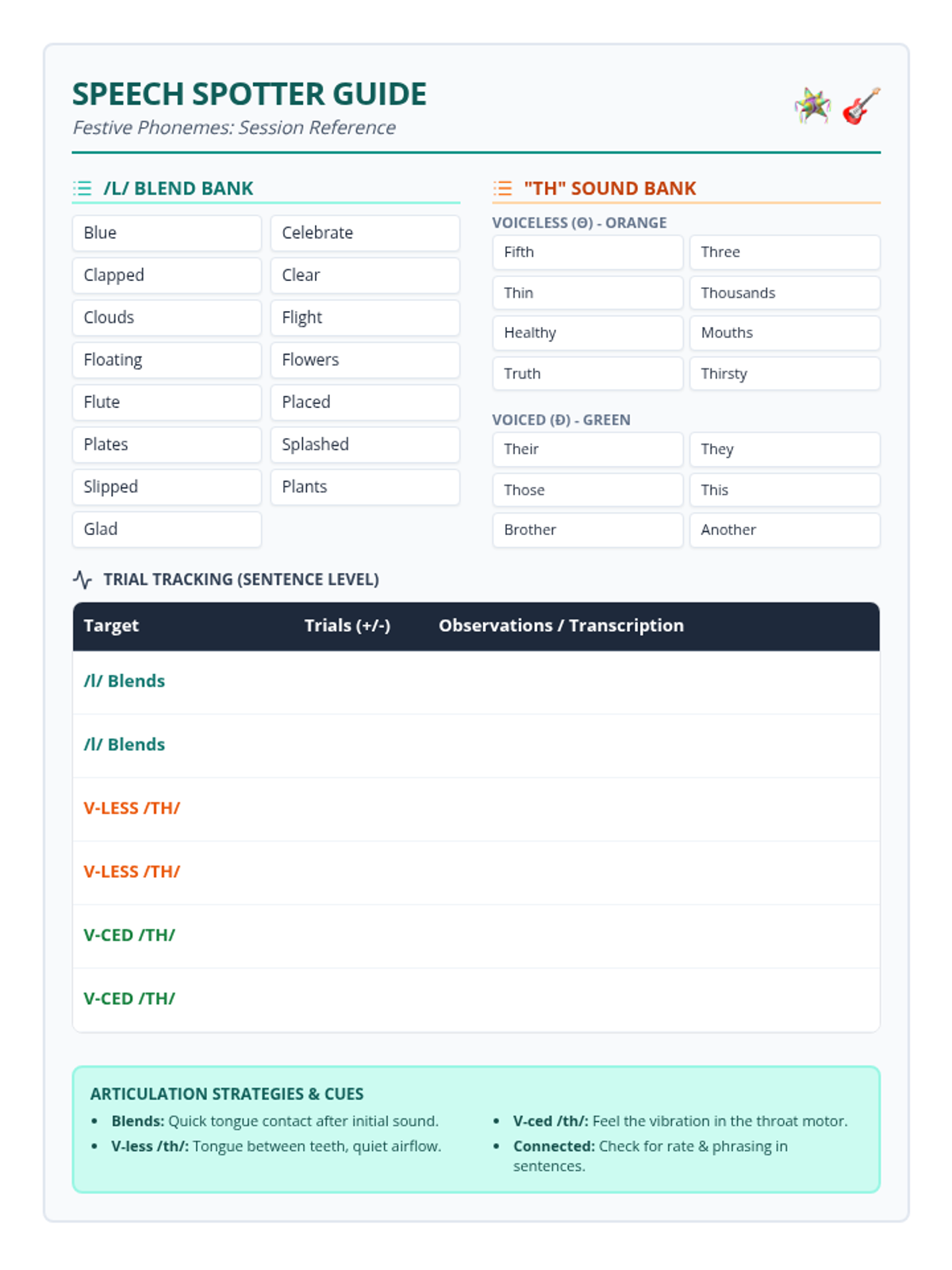
A teacher-facing reference guide including word lists for targets and a data tracking table for session management.
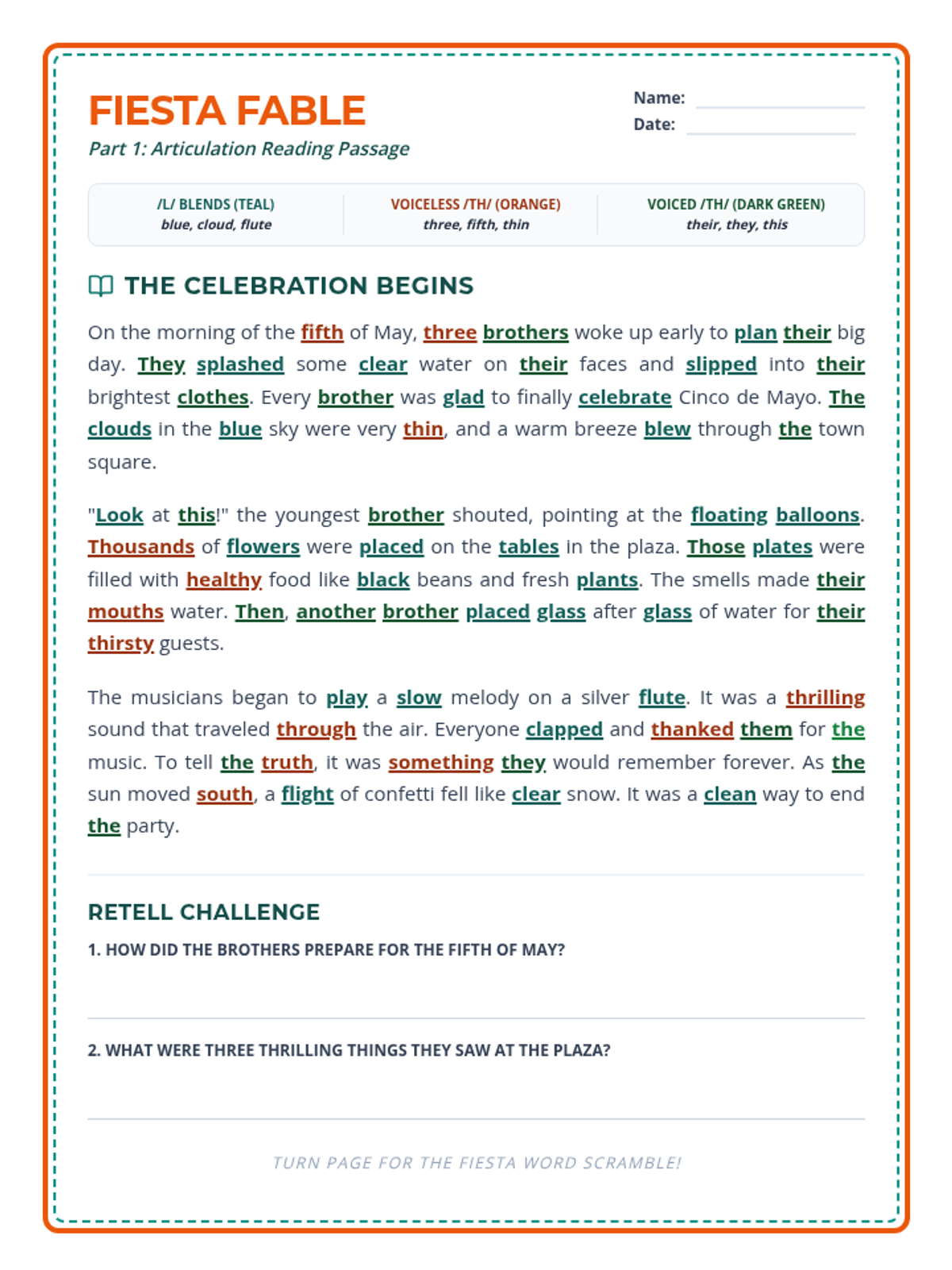
A 2-page articulation activity featuring an expanded reading passage and a word scramble game with a secret code to practice /l/-blends and 'th' targets.
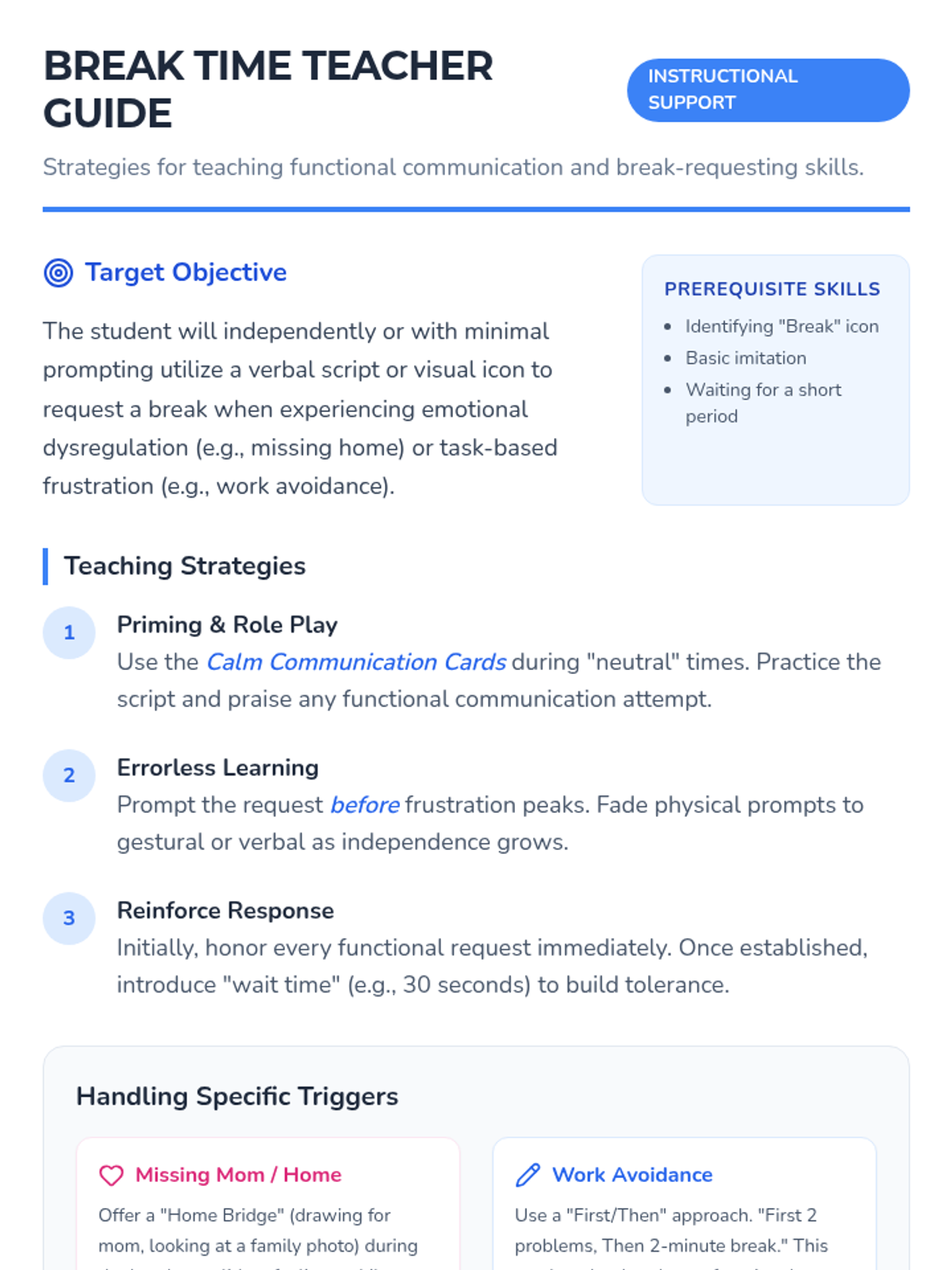
A teacher-facing guide providing instructional strategies, pedagogical tips, and a data tracking system for teaching break-requesting skills to students with autism. Includes specific advice for handling common triggers like missing home and work avoidance.
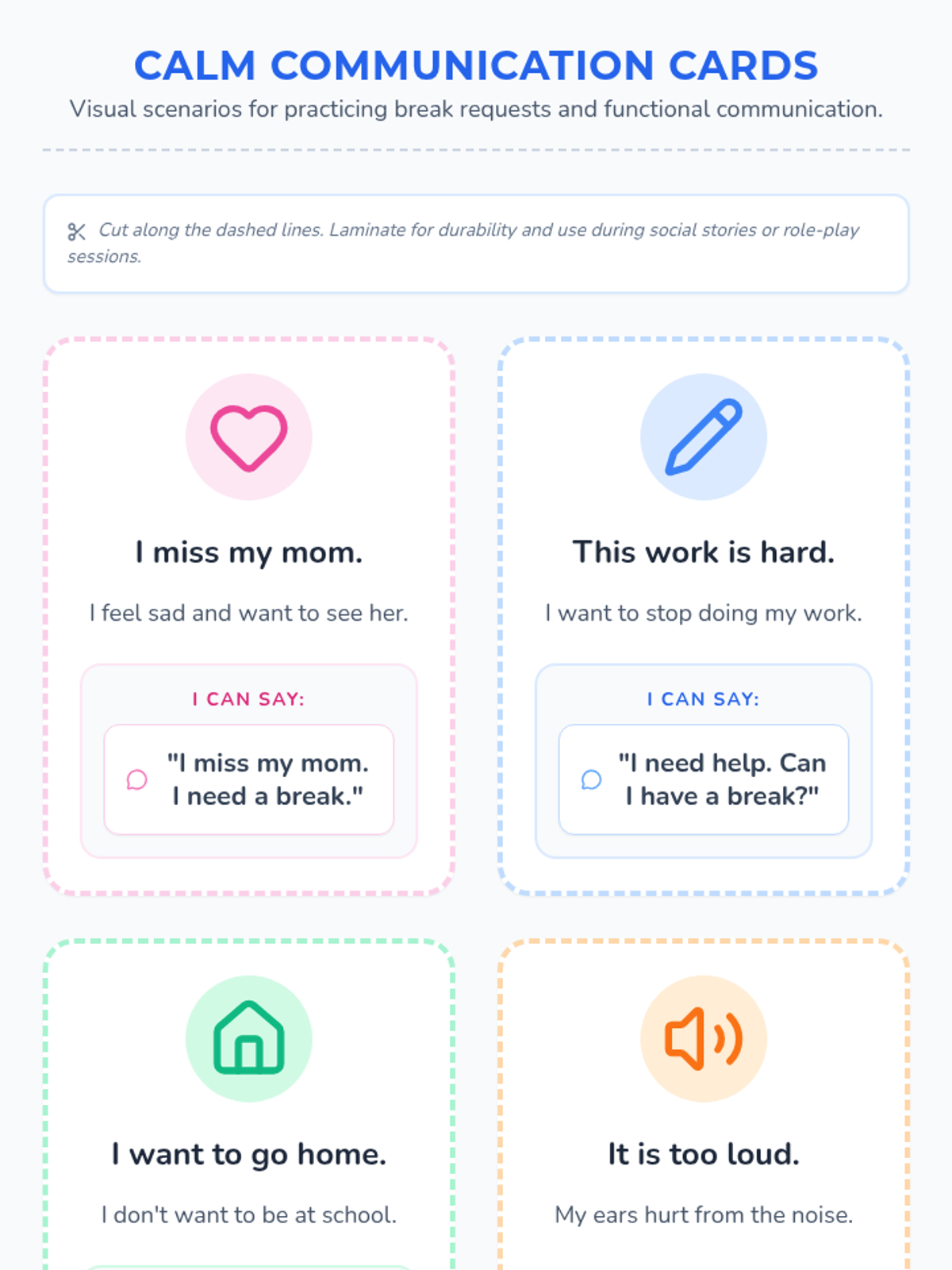
A collection of visual task cards featuring school-based scenarios designed to help a first-grade student with autism practice requesting breaks and using functional communication scripts. Each card includes a relatable trigger, a simplified explanation of feelings, and a clear verbal script to use.
A supportive social story slide deck for students with selective mutism, using first-person language to encourage communication through small steps and a "brave voice."
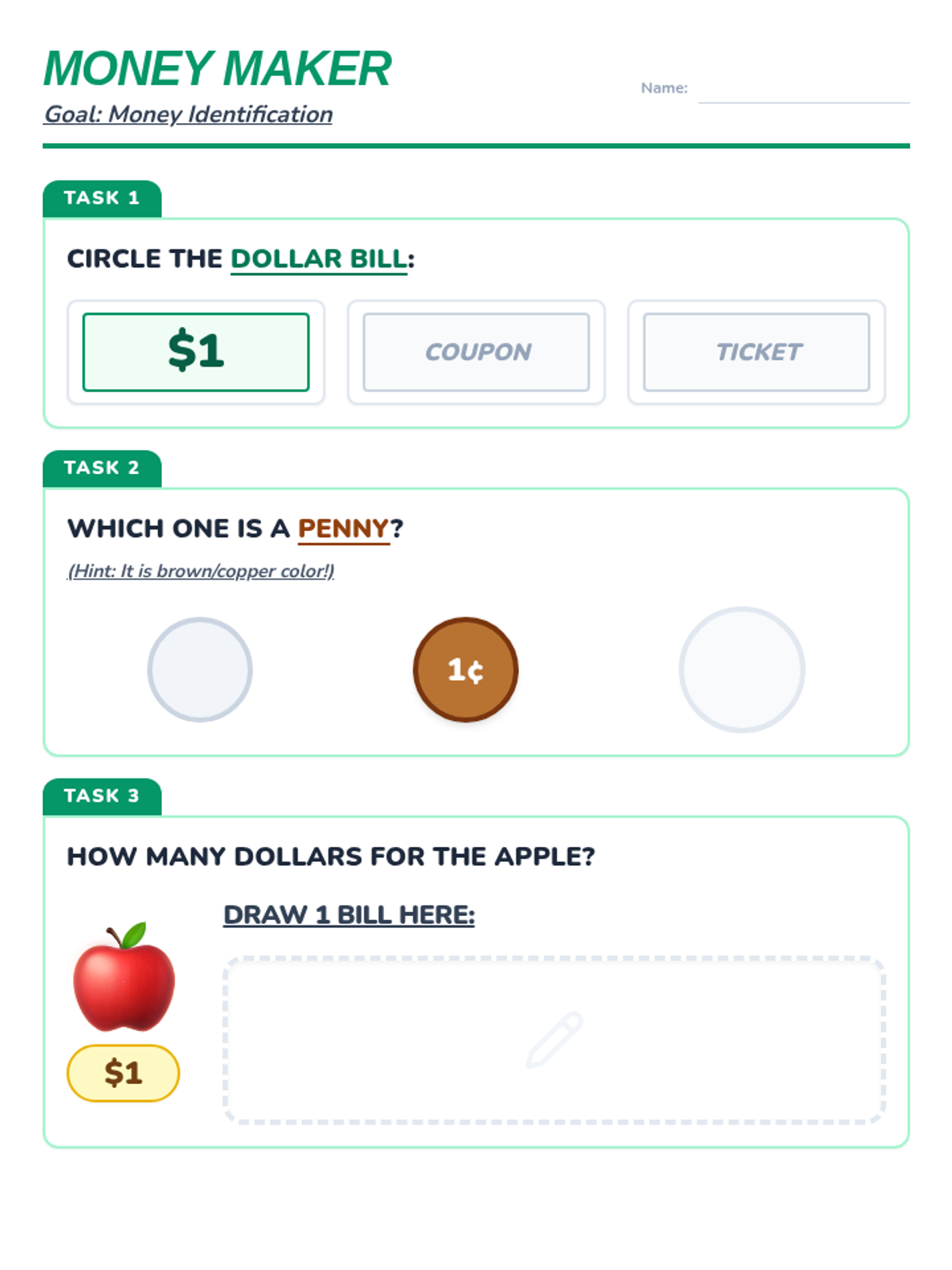
A functional money identification worksheet focused on recognizing bills, coins (penny), and basic price matching for shopping scenarios.
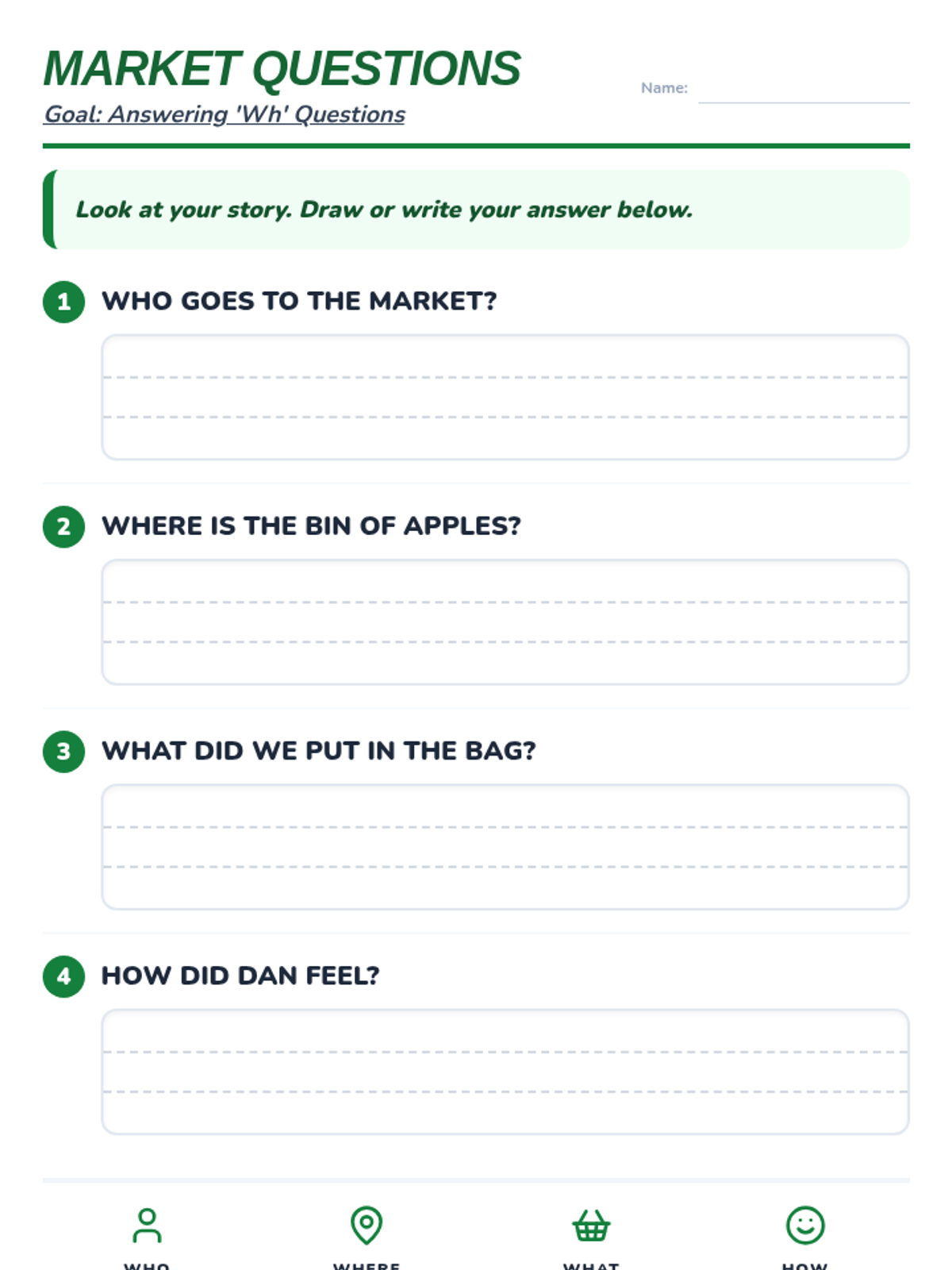
A reading comprehension worksheet focused on 'Wh' questions (Who, What, Where, How) with visual prompts and large workspace areas for student responses.
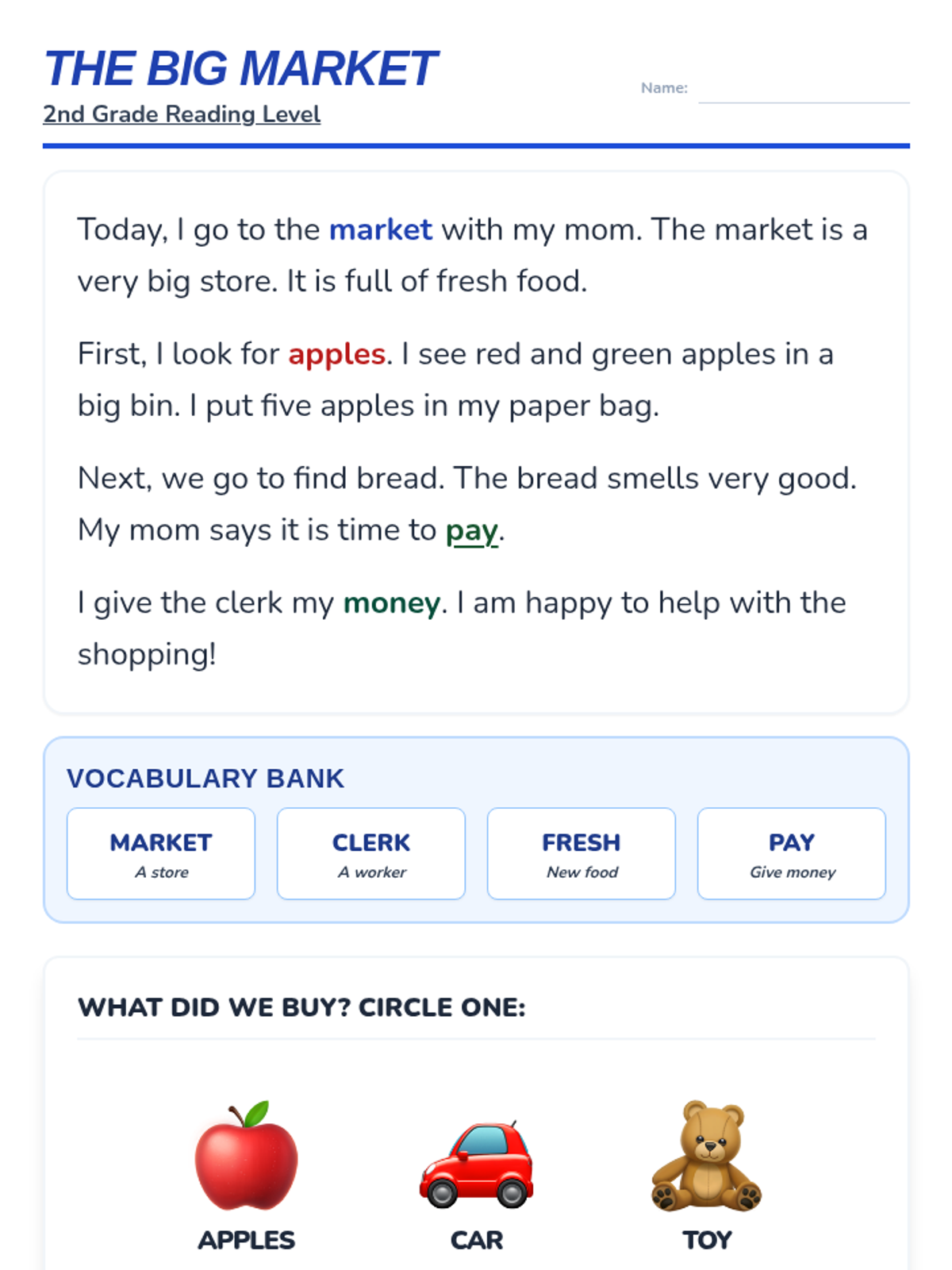
A 2nd-grade level reading passage with simplified sentences about a trip to the market, featuring vocabulary support and visual comprehension cues.
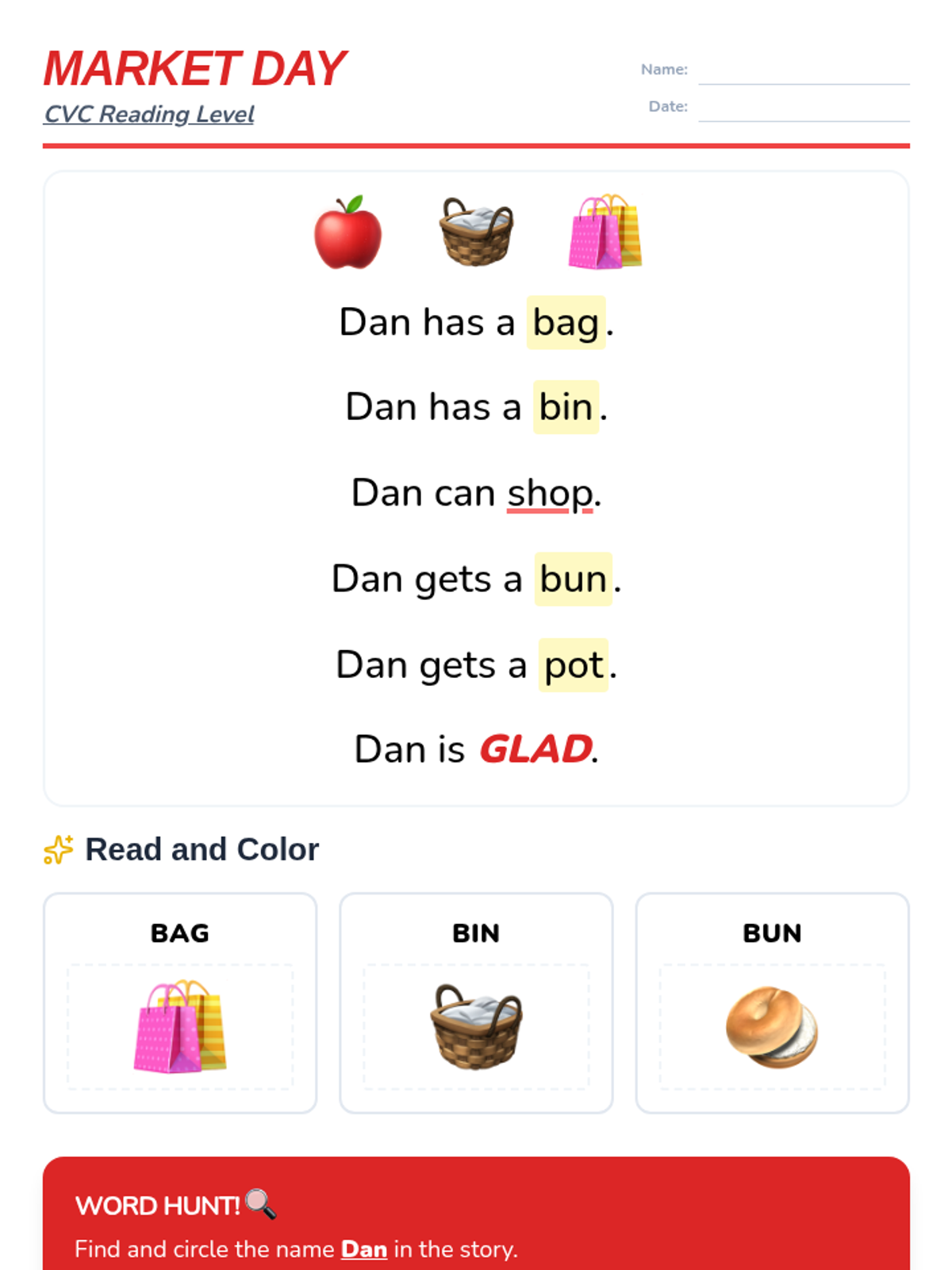
A Kindergarten-level reading passage focusing on CVC words (Dan, bag, bin, bun) with a Market Day theme and visual supports.
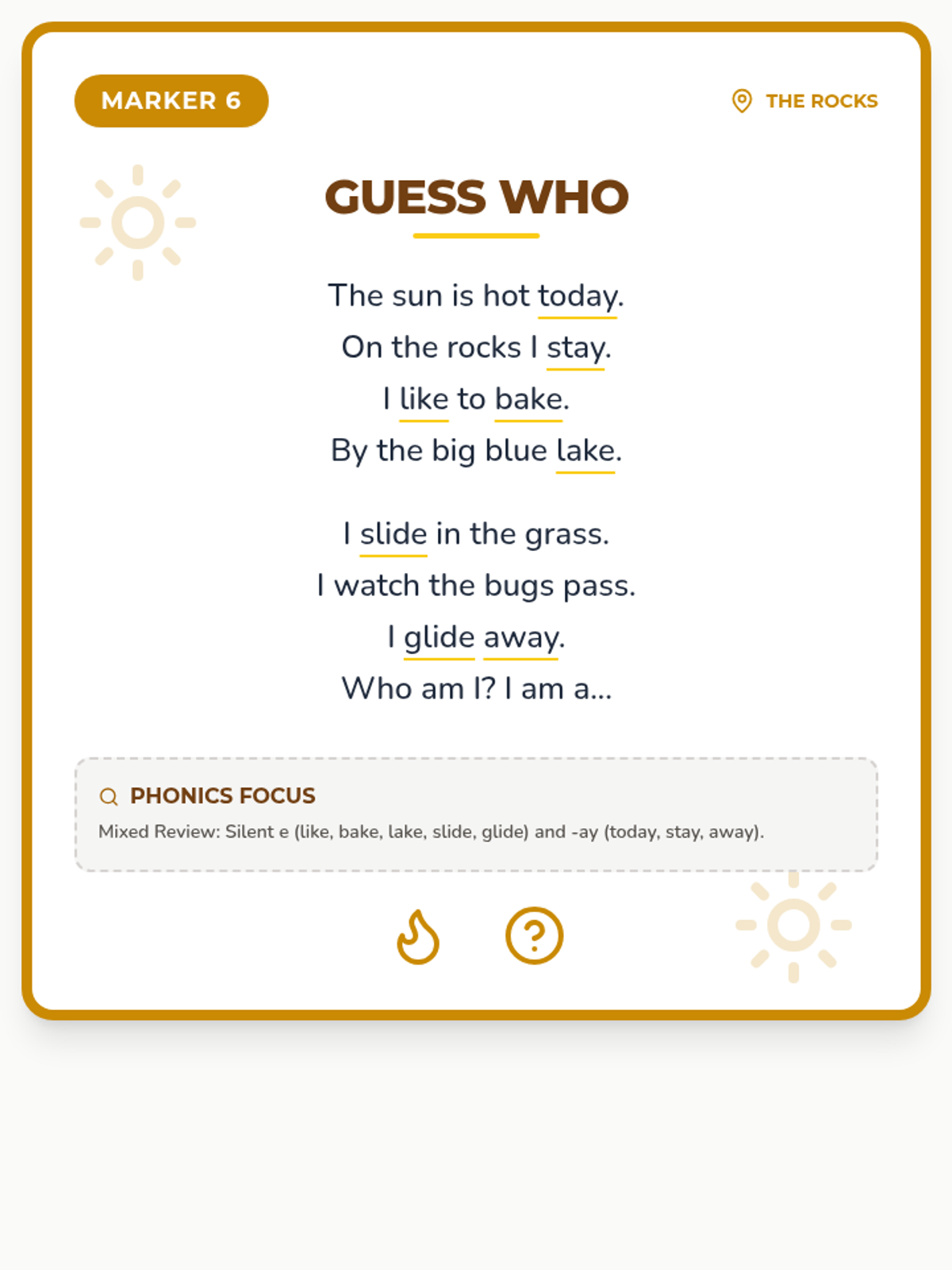
A decodable riddle poem focused on silent e and the -ay vowel team, featuring a snake. Framed as a "Guess who" riddle with realistic nature details. Corrected inconsistent underlining.
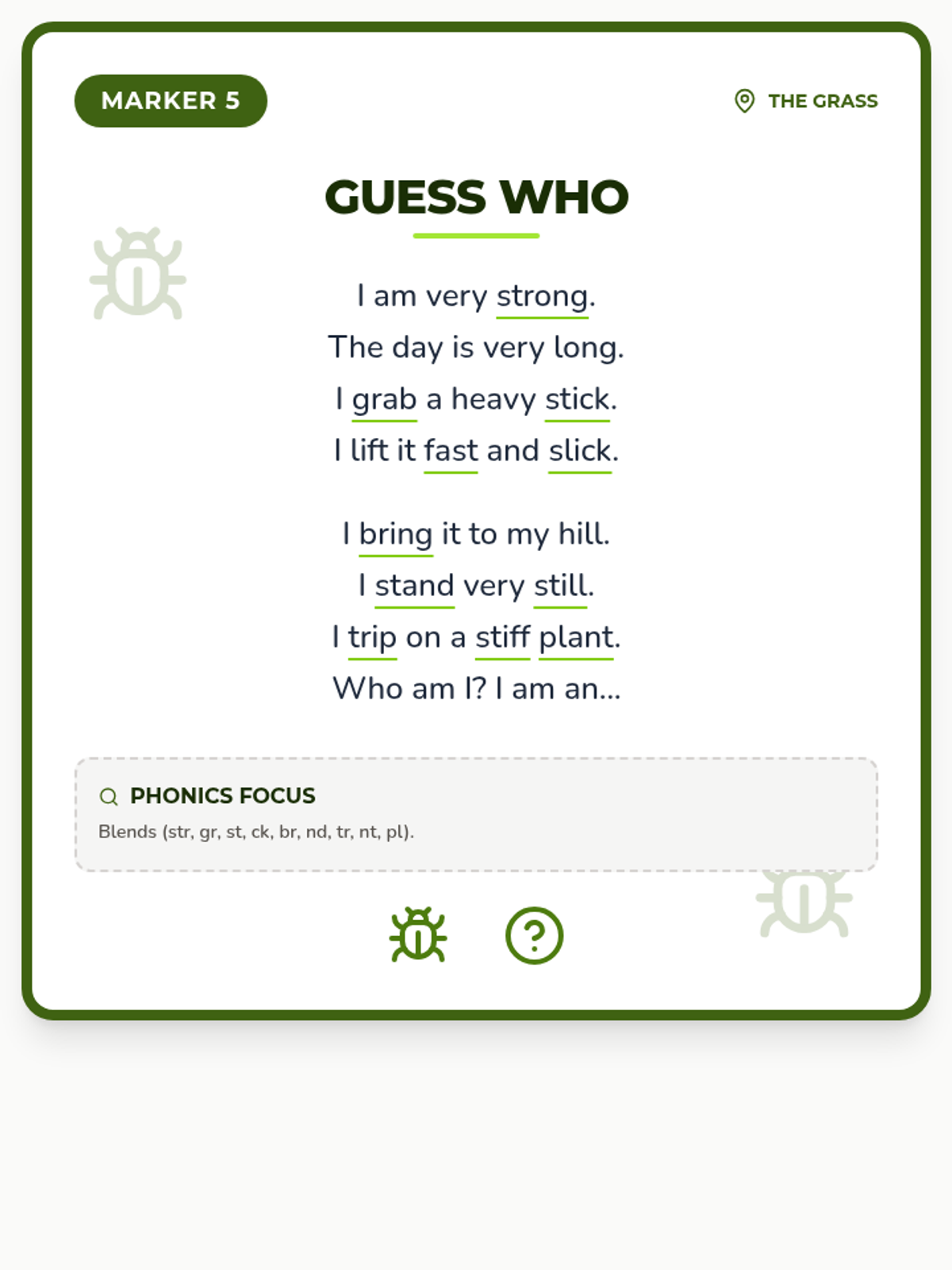
A decodable riddle poem focused on consonant blends, featuring an ant. Framed as a "Guess who" riddle with realistic nature details. Removed "green" (out of scope) and nonsensical "drill".
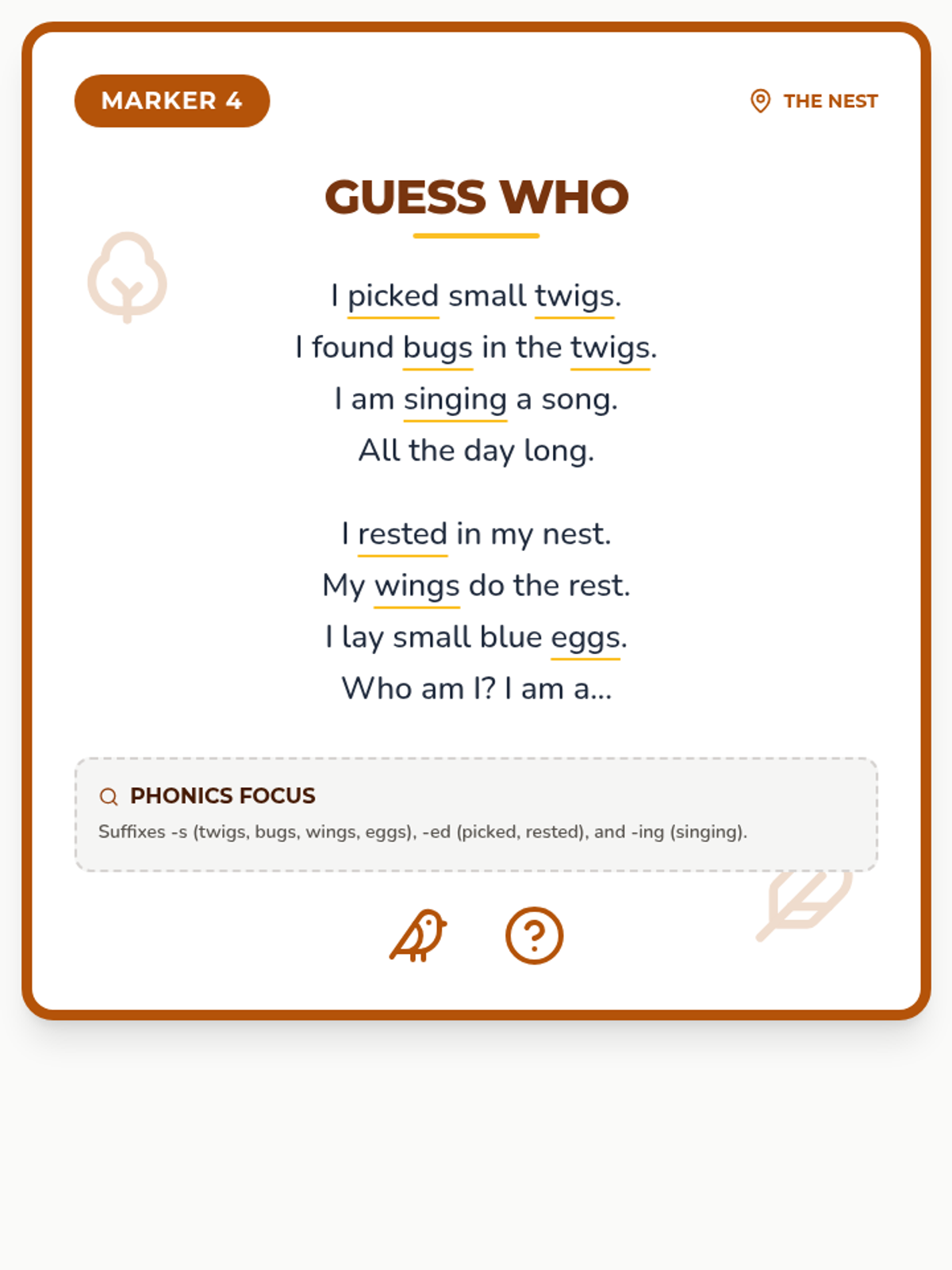
A decodable riddle poem focused on suffixes -s, -ed, and -ing, featuring a mother bird. Framed as a "Guess who" riddle with realistic nature details. Removed non-natural rhyme reference.
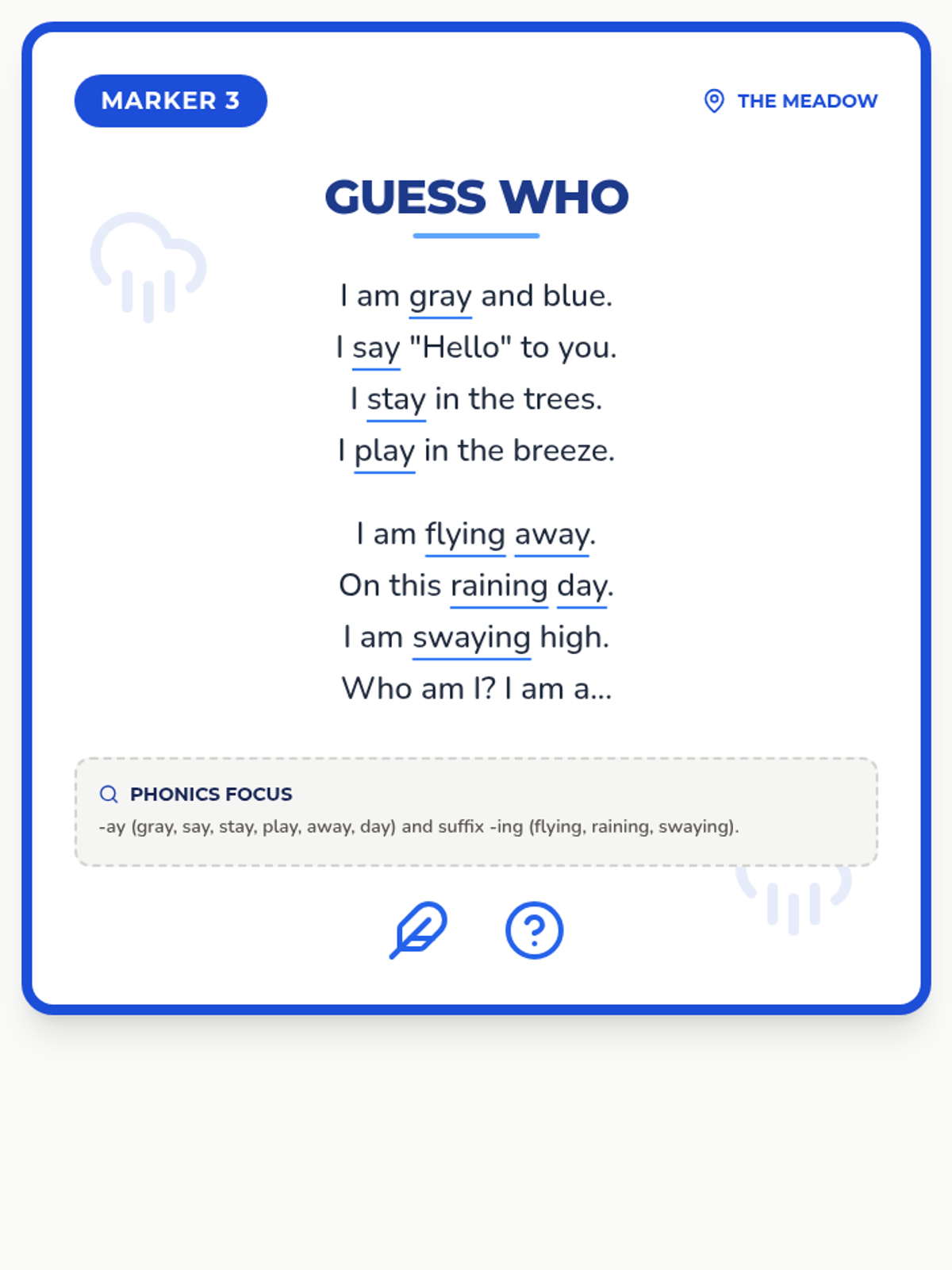
A decodable riddle poem focused on the -ay vowel team and the -ing suffix, featuring a Blue Jay. Framed as a "Guess who" riddle with realistic nature details. Increased text weight for teacher notes.
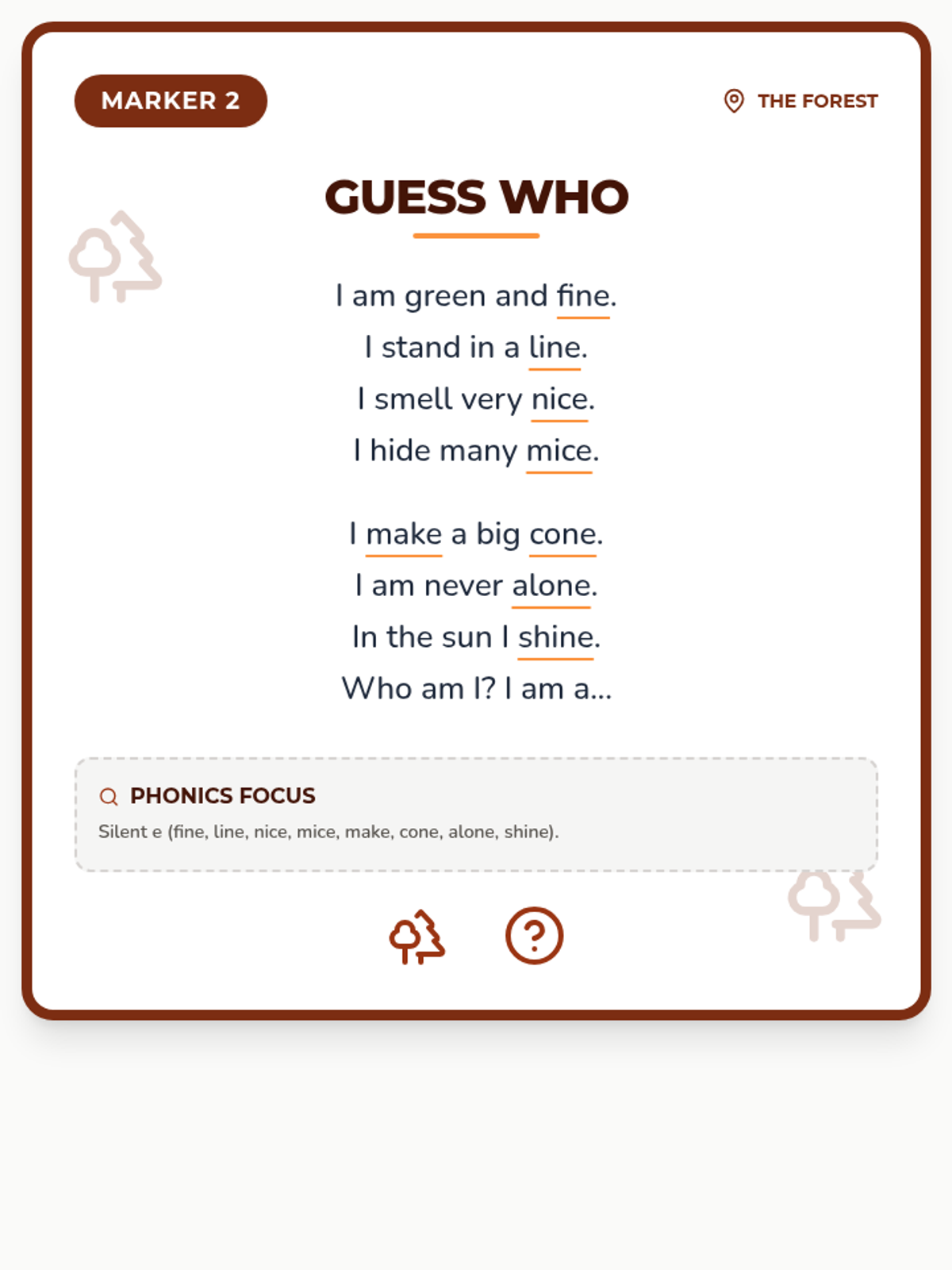
A decodable riddle poem focused on the silent e pattern, featuring a pine tree. Framed as a "Guess who" riddle with realistic nature details. Removed inaccurate "spine" reference.
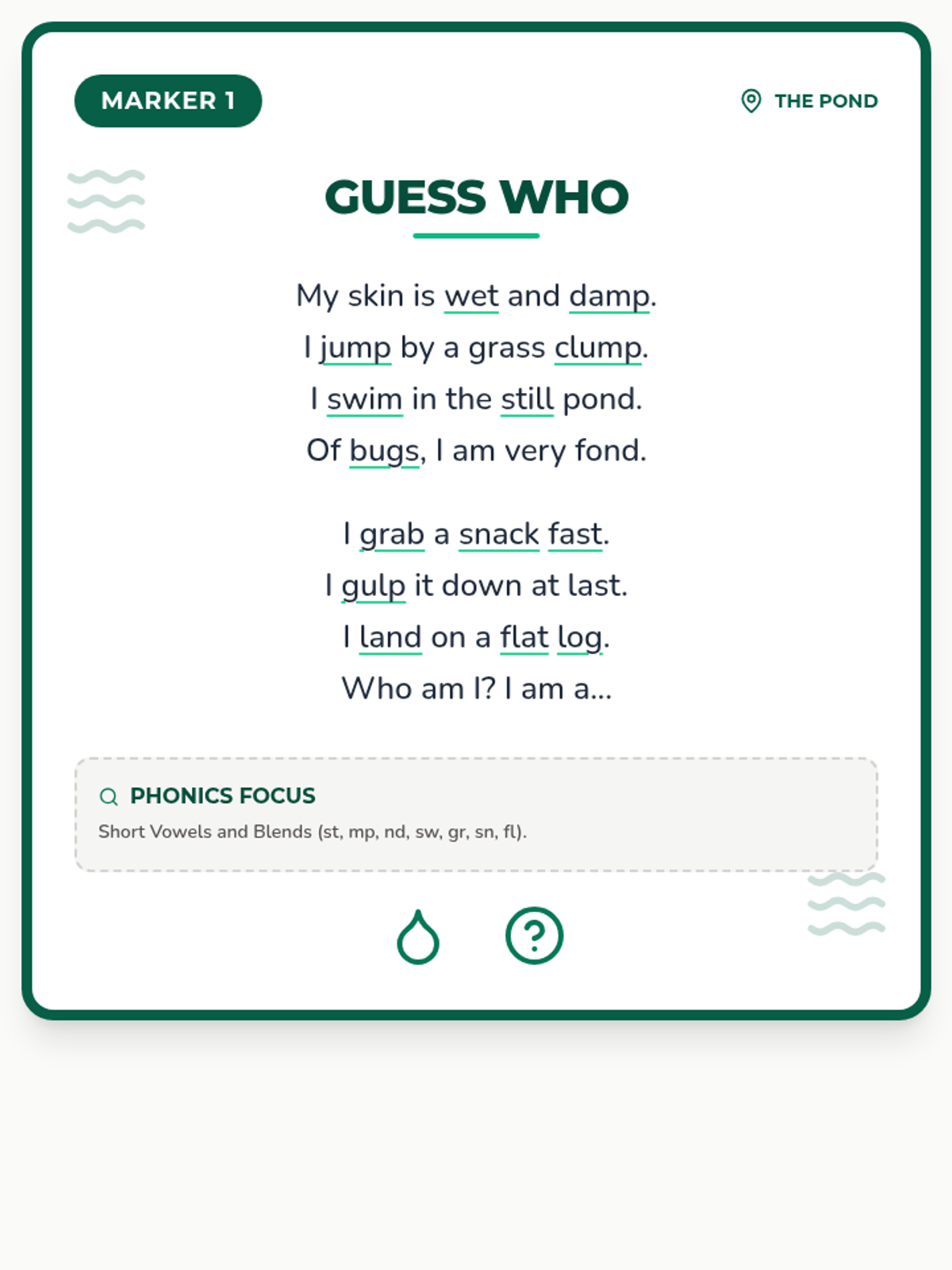
A decodable riddle poem focused on short vowels and blends, featuring a frog. Framed as a "Guess who" riddle with realistic nature details. Corrected unrealistic "ramp" and complex "blast".
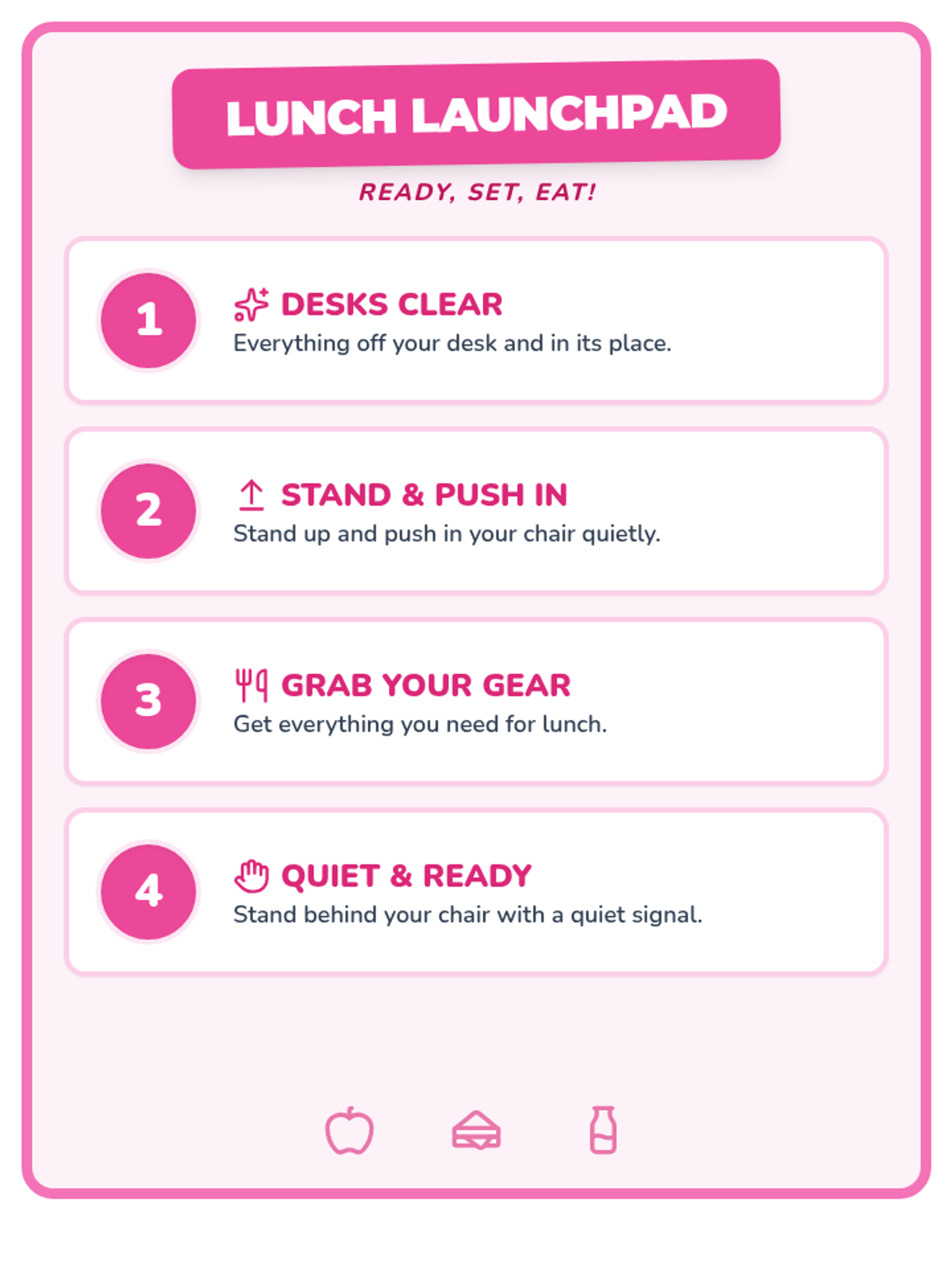
A vibrant pink-themed anchor chart for classroom lunch transitions, featuring 4 clear steps with icons and bold numbers for high visibility.
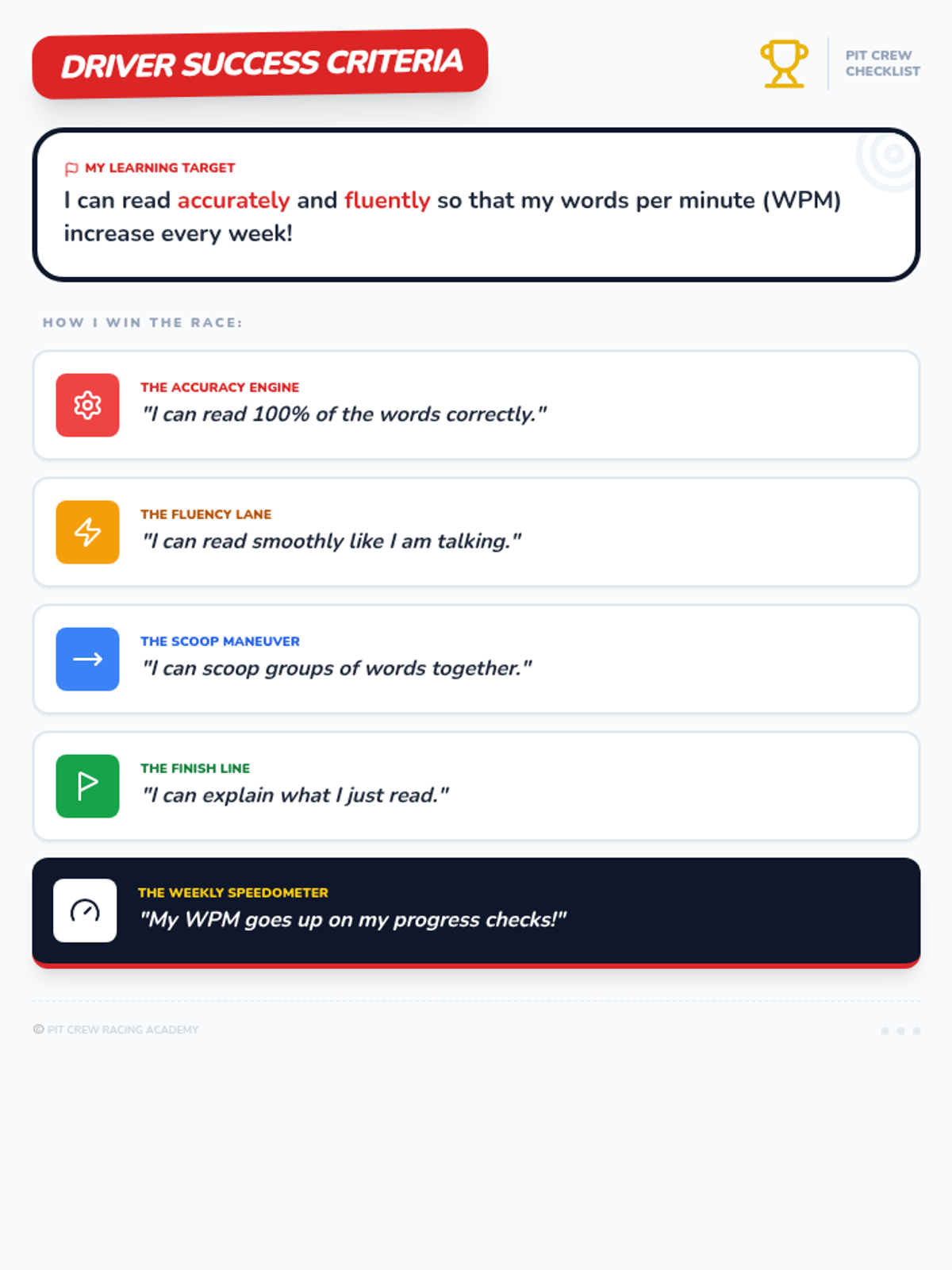
A student-facing success criteria poster that uses the racing theme to define accuracy, fluency, phrasing, comprehension, and WPM growth.
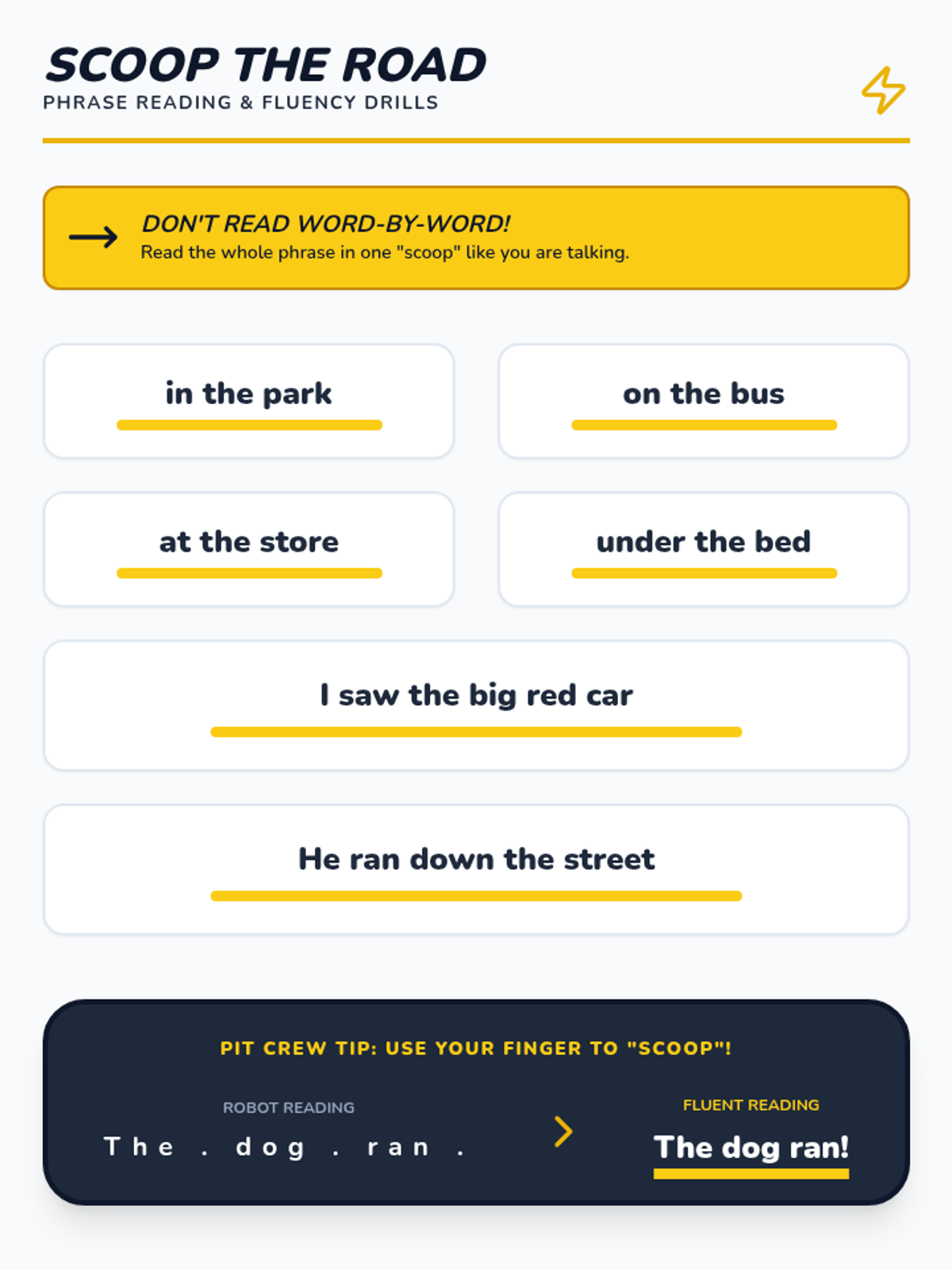
A phrase-scooping exercise sheet that helps students transition from word-by-word reading to fluent, phrase-level processing.
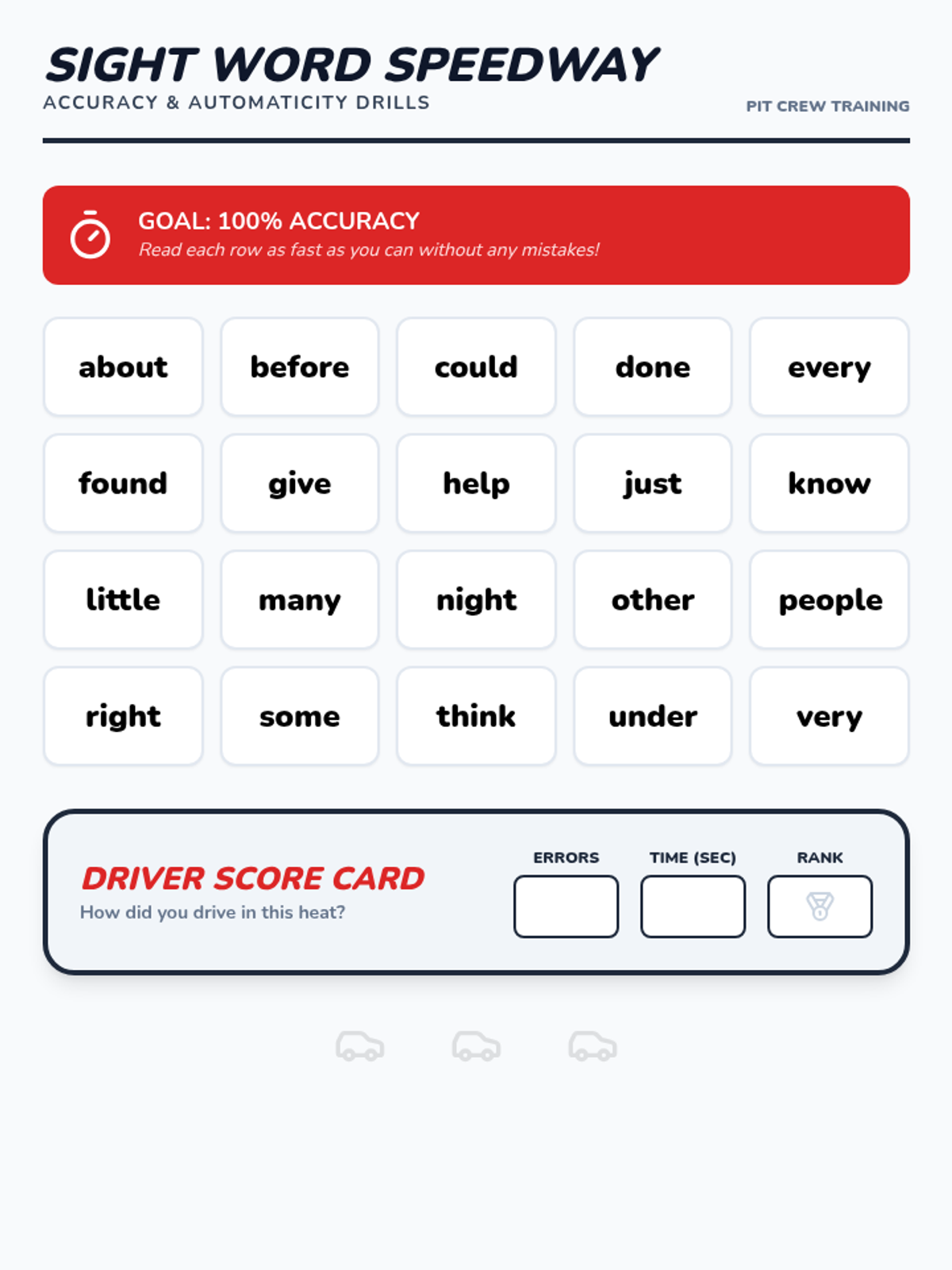
A rapid word recognition drill sheet designed to build student accuracy and automaticity with high-frequency words.
A visually engaging slide deck that explains accuracy, fluency, WPM, and why they matter using a high-energy racing theme.
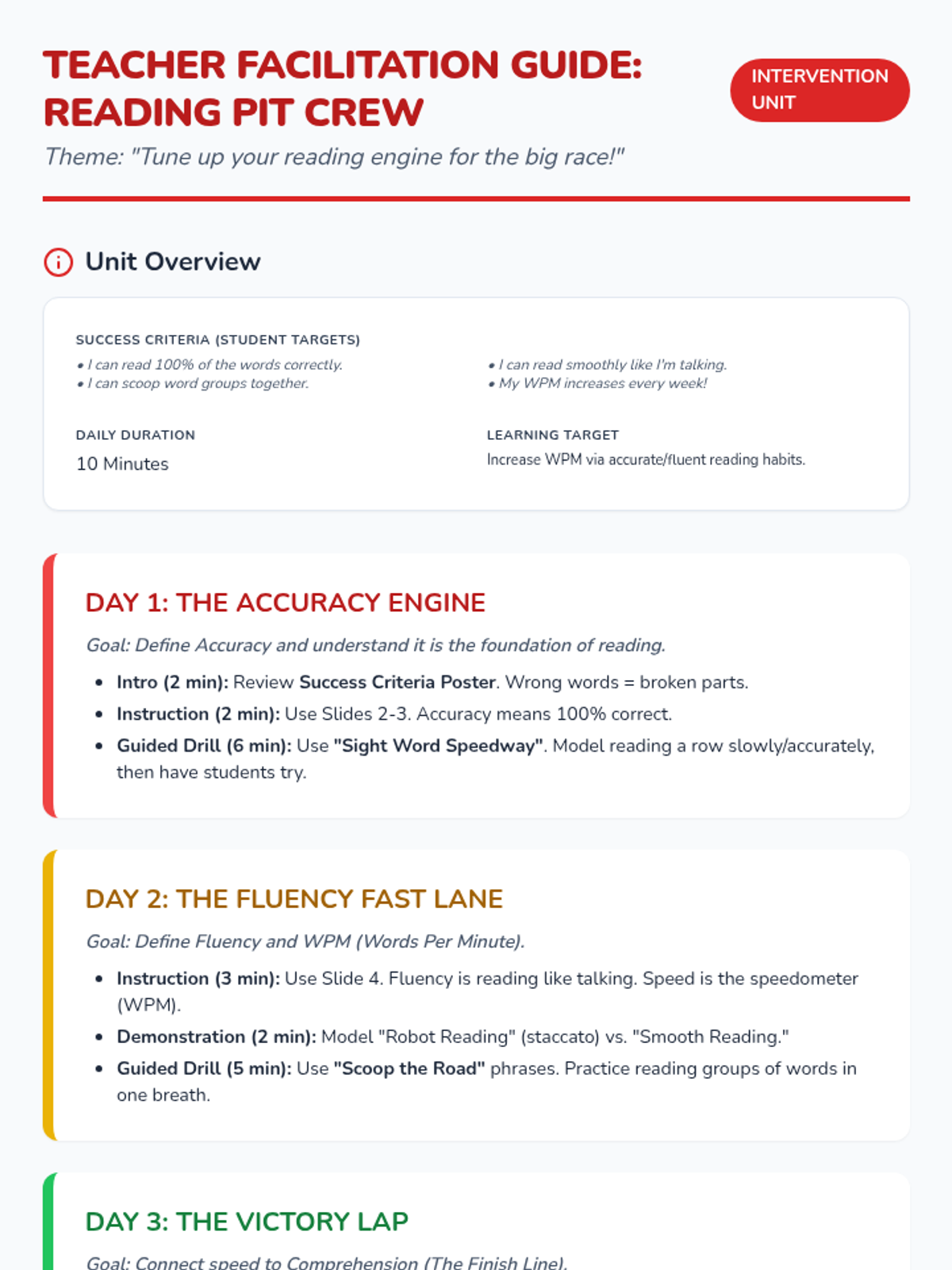
A comprehensive 3-day lesson plan for reading intervention, utilizing a racing theme to teach accuracy, fluency, and reading comprehension goals.
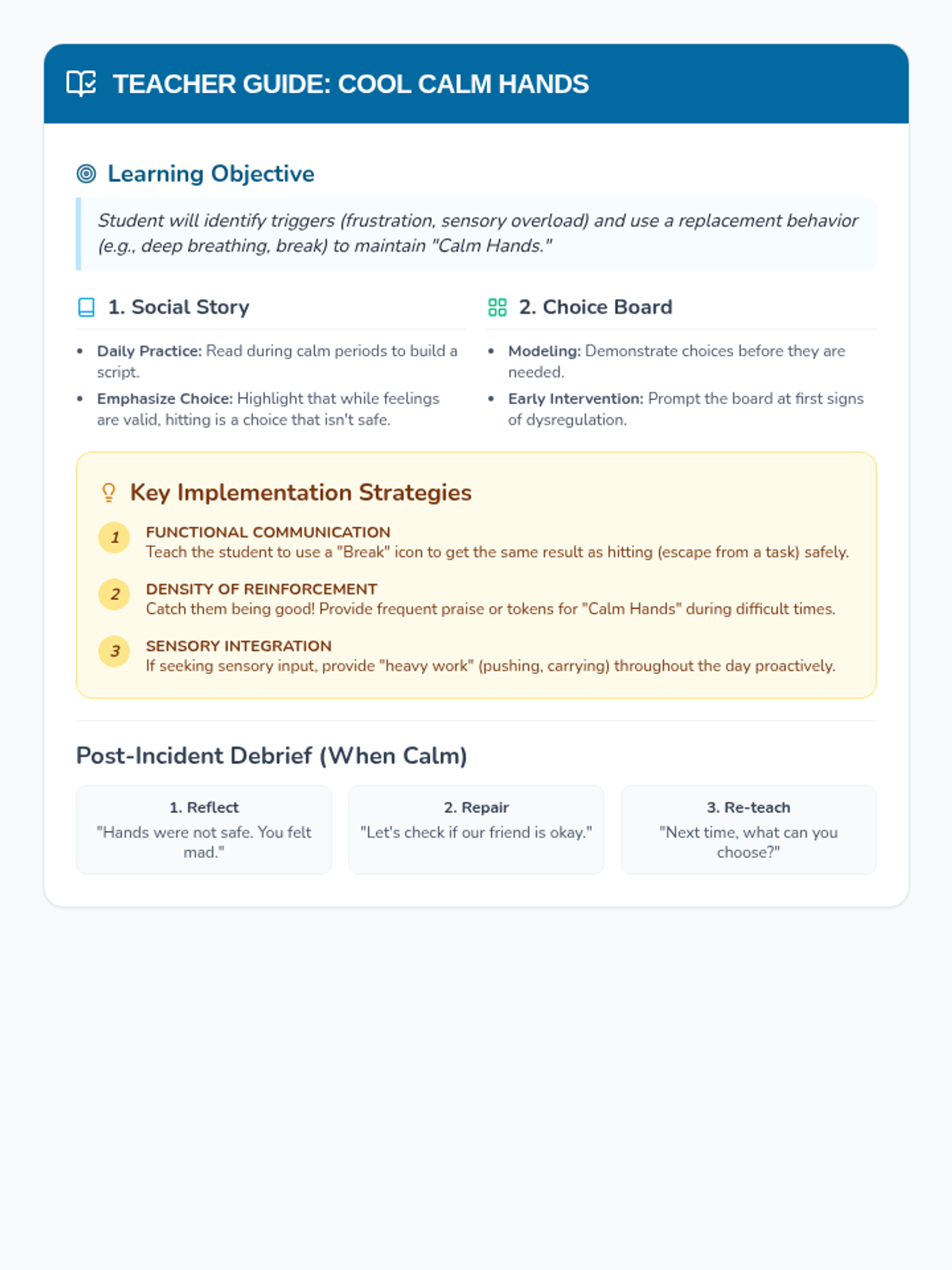
An instructional guide for educators and parents on how to implement the social story and choice board. Includes behavioral strategies like Functional Communication Training and positive reinforcement tips. consolidated to one page with high-contrast text.
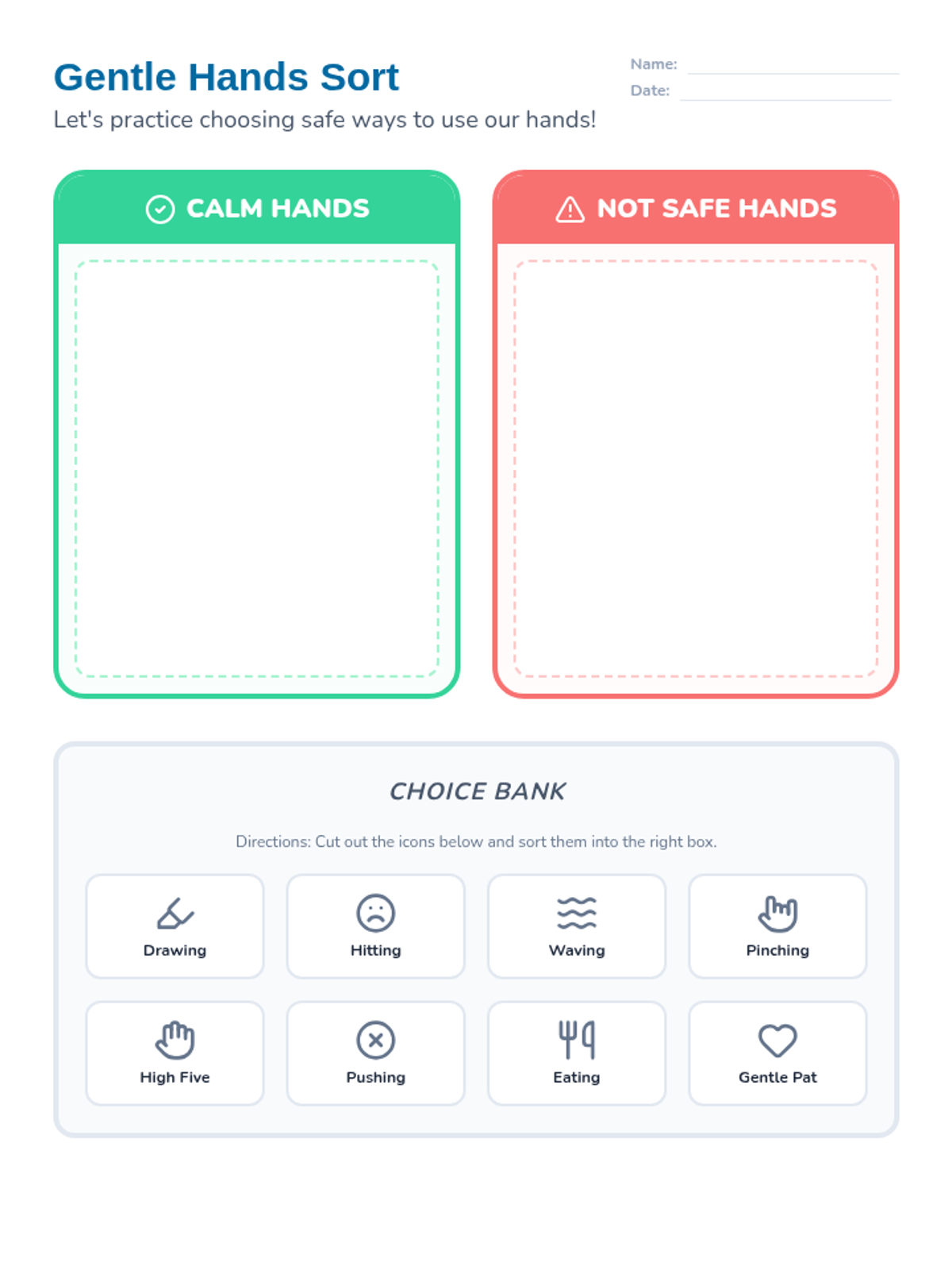
A sorting worksheet where students categorize different hand behaviors into 'Calm Hands' (safe) or 'Not Safe Hands'. Designed to help Autistic students cognitively process appropriate replacement behaviors. All choices are neutral in color to ensure students sort based on behavior.
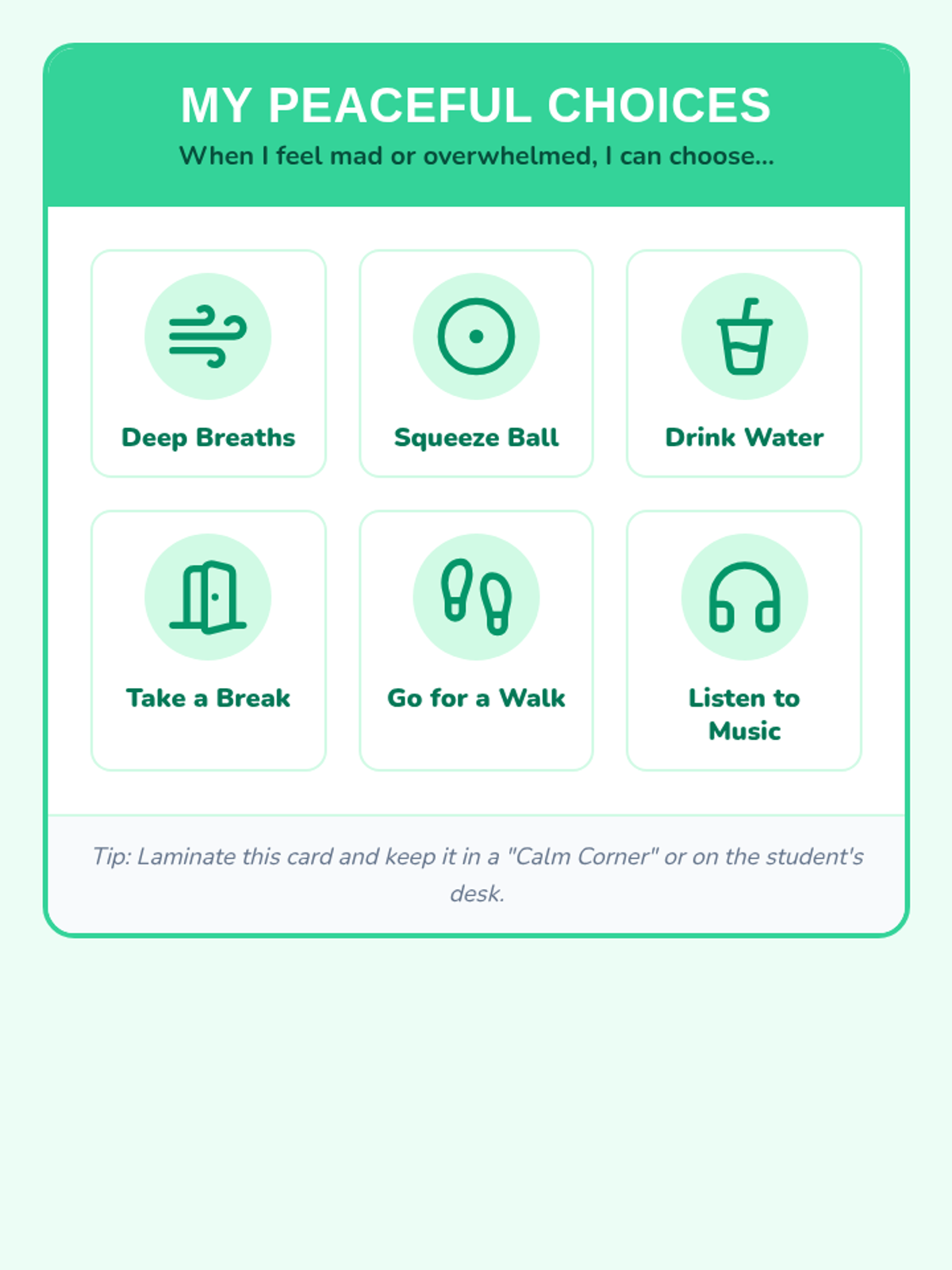
A visual choice board with six self-regulation strategies (breathing, movement, sensory input) to help students manage frustration and sensory overload without hitting.
A visual social story booklet for Autistic students, teaching replacement behaviors for hitting when experiencing frustration or sensory overload. Includes clear icons, simple language, and a positive reinforcement focus.