A decodable riddle poem focused on the -ay vowel team and the -ing suffix, featuring a Blue Jay. Framed as a "Guess who" riddle with realistic nature details. Increased text weight for teacher notes.
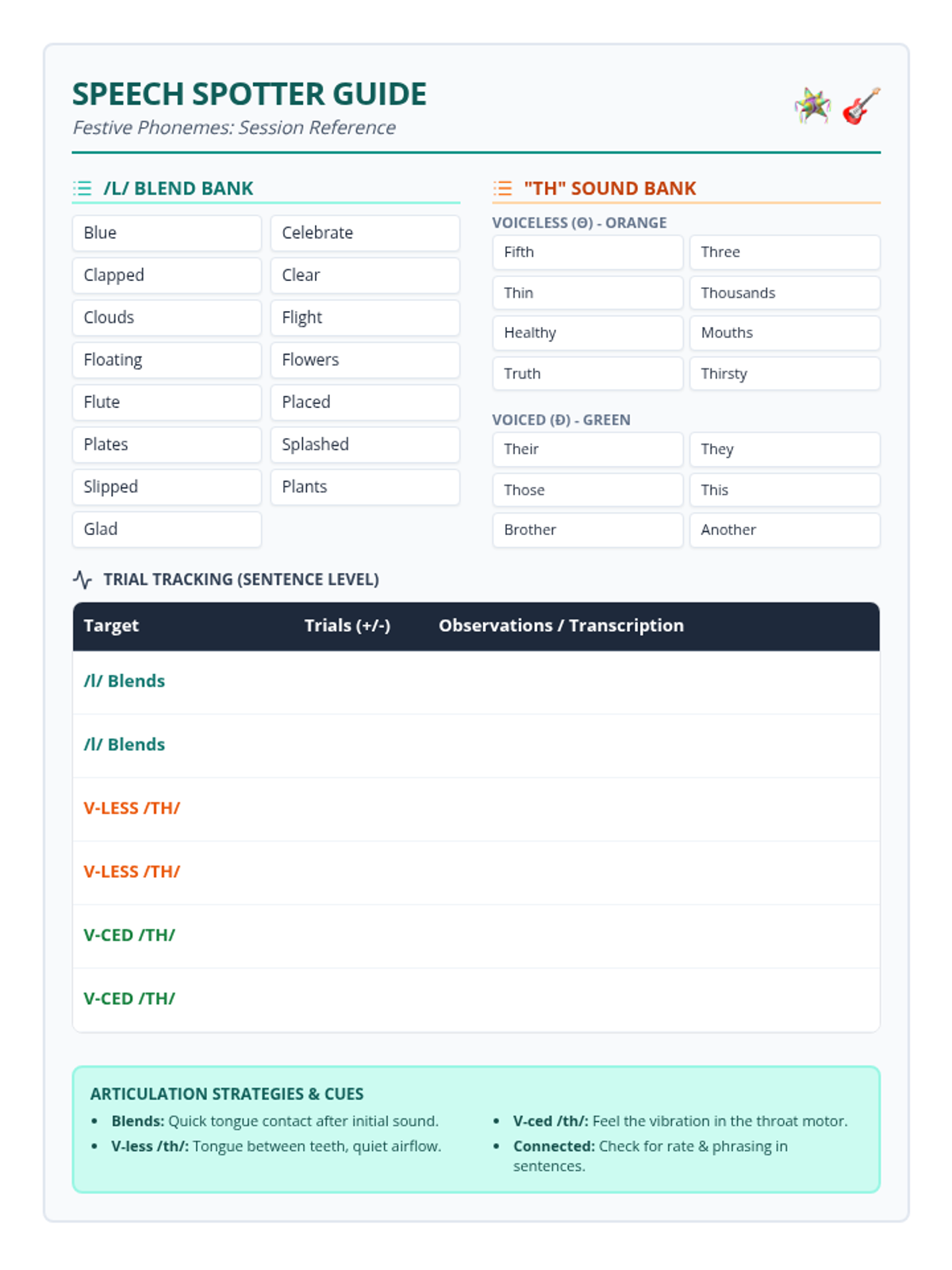
A teacher-facing reference guide including word lists for targets and a data tracking table for session management.
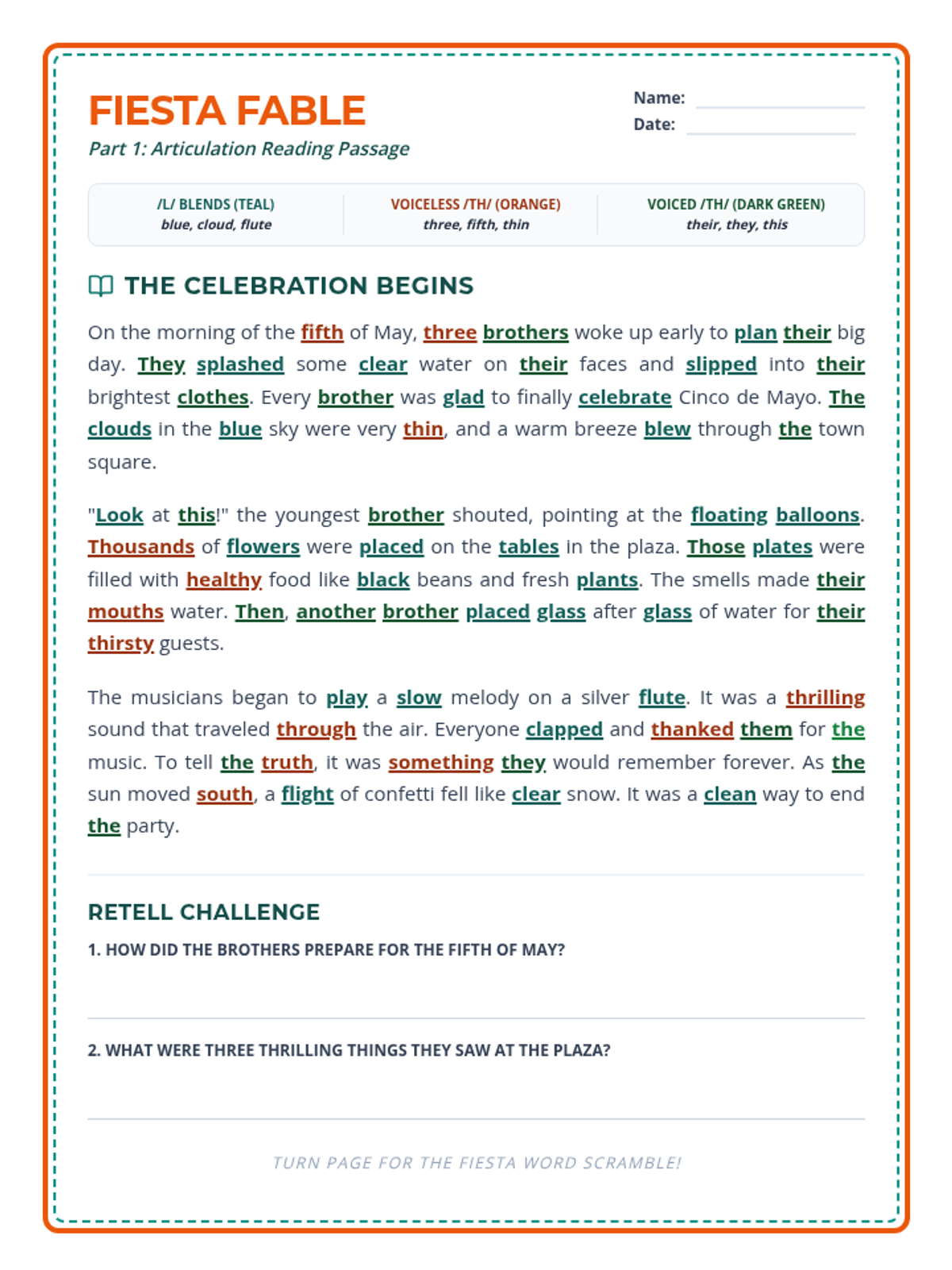
A 2-page articulation resource featuring an expanded reading passage and a game-like board for practicing /l/-blends and voiced/voiceless 'th' targets.
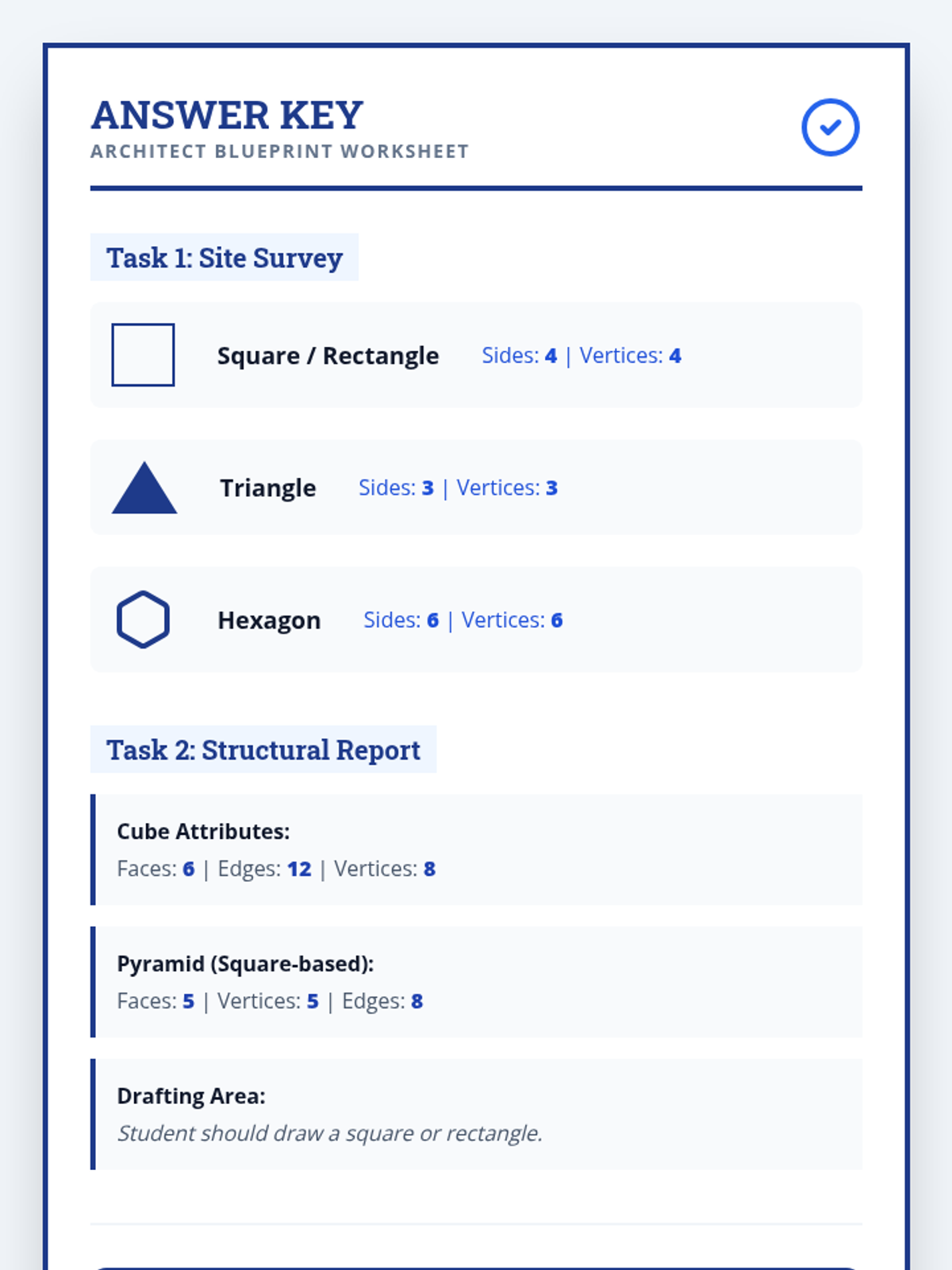
An answer key for the Architect Blueprint Worksheet, providing correct classification of polygons and 3-D solid attributes, along with grading notes for the creative design portion.
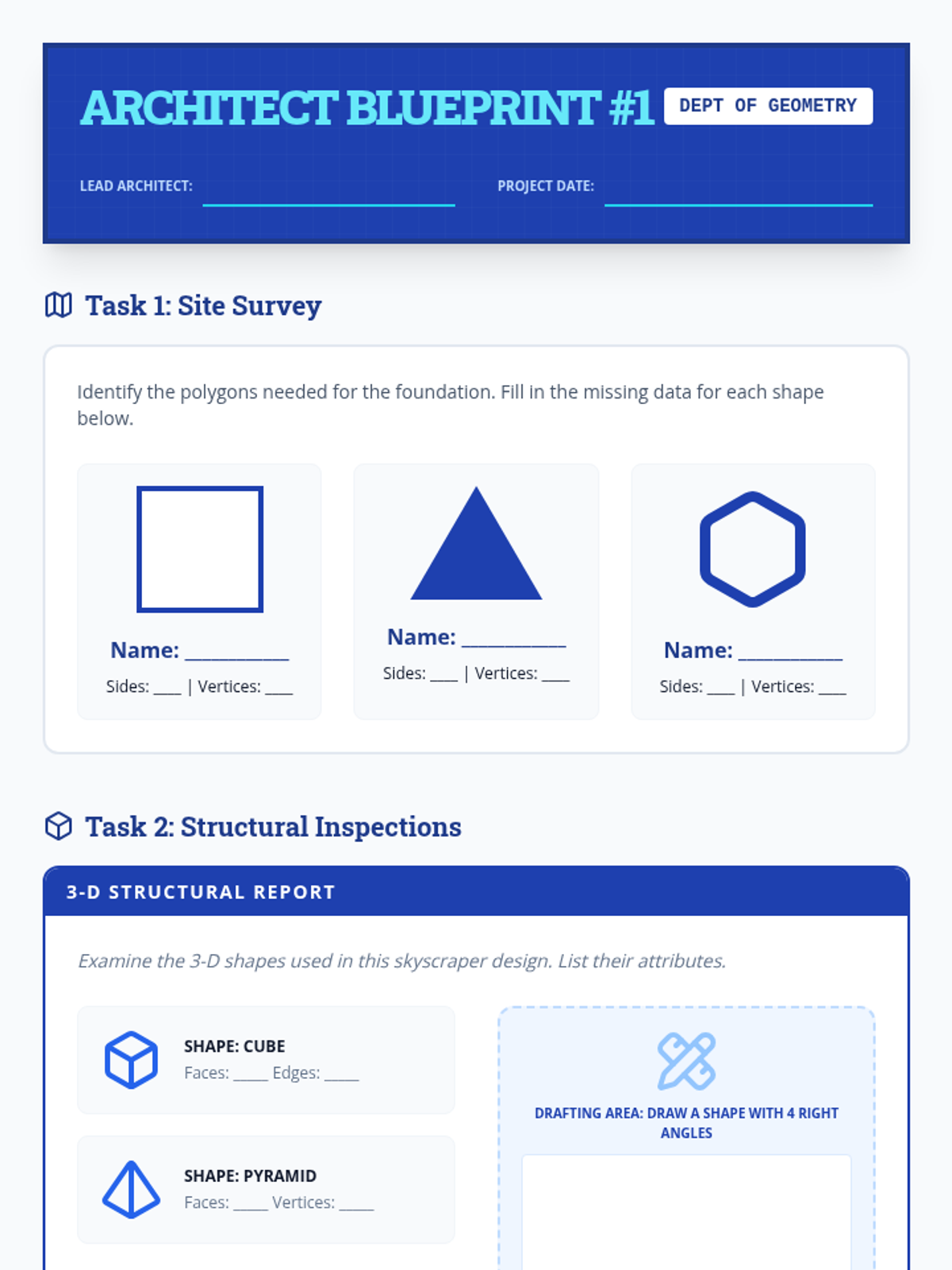
An architect-themed geometry worksheet where students identify 2-D polygons and their attributes, analyze 3-D solids, and design their own structure using geometric shapes.
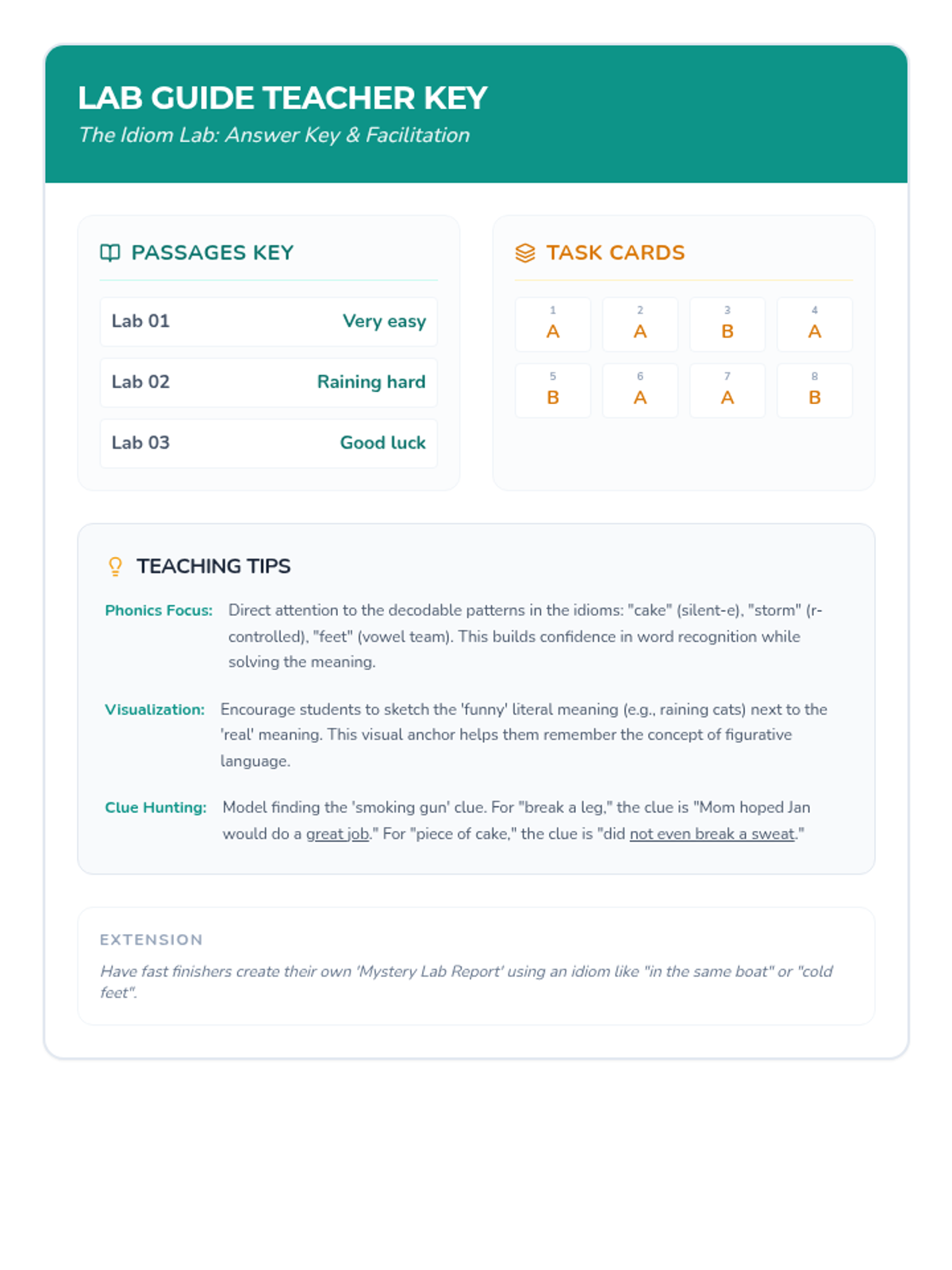
A comprehensive teacher resource containing the answer keys for the reading passages and task cards, along with instructional tips for supporting struggling readers.
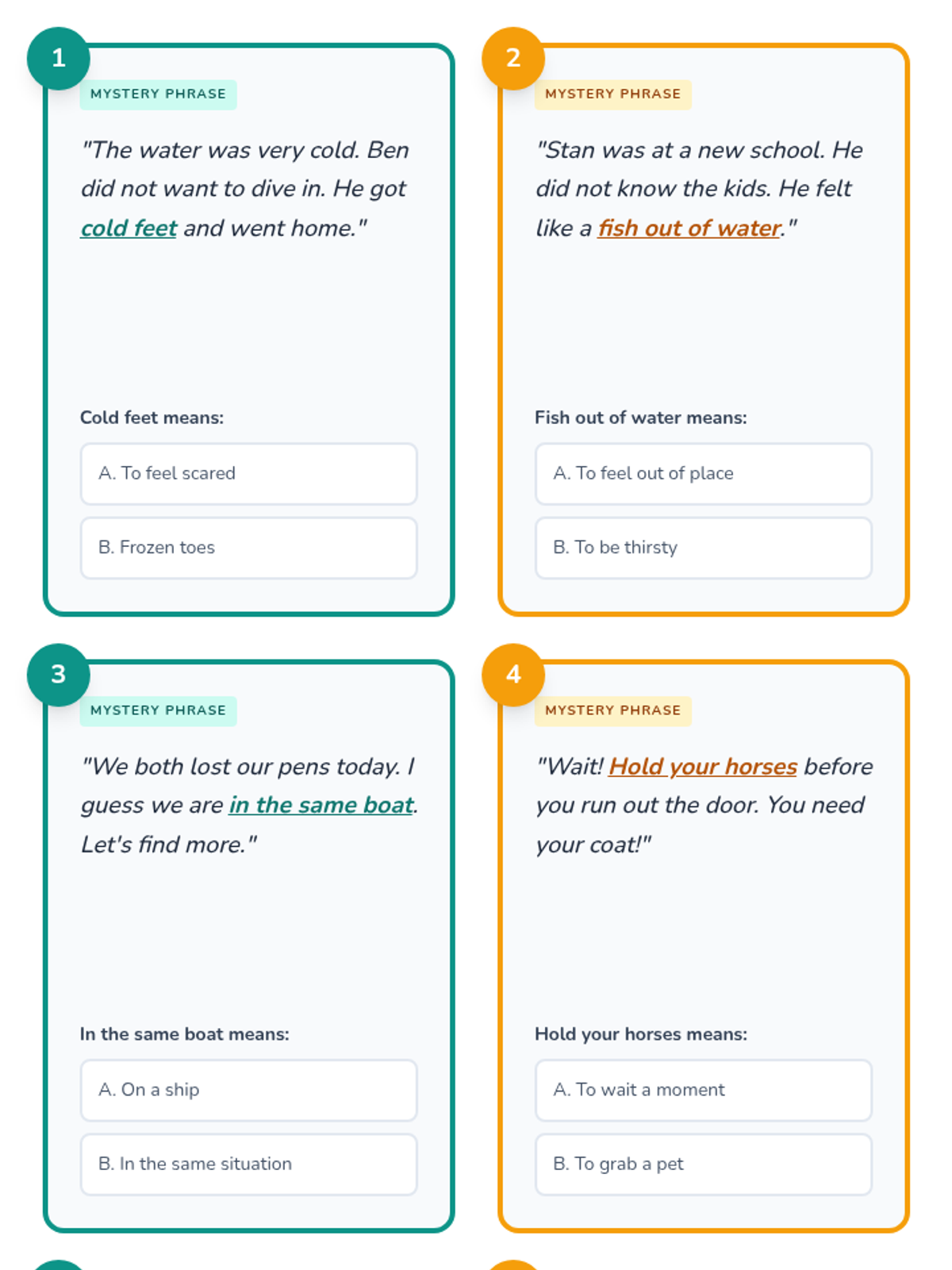
A set of eight decodable task cards designed for struggling readers to practice identifying the meaning of idioms using context clues. Each card features a short scenario and a two-choice multiple-choice question.
An architectural-themed slide deck for teaching geometry. Introduces polygons, vertices, edges, and 3-D solids with clear visual examples and a cohesive 'blueprint' aesthetic.
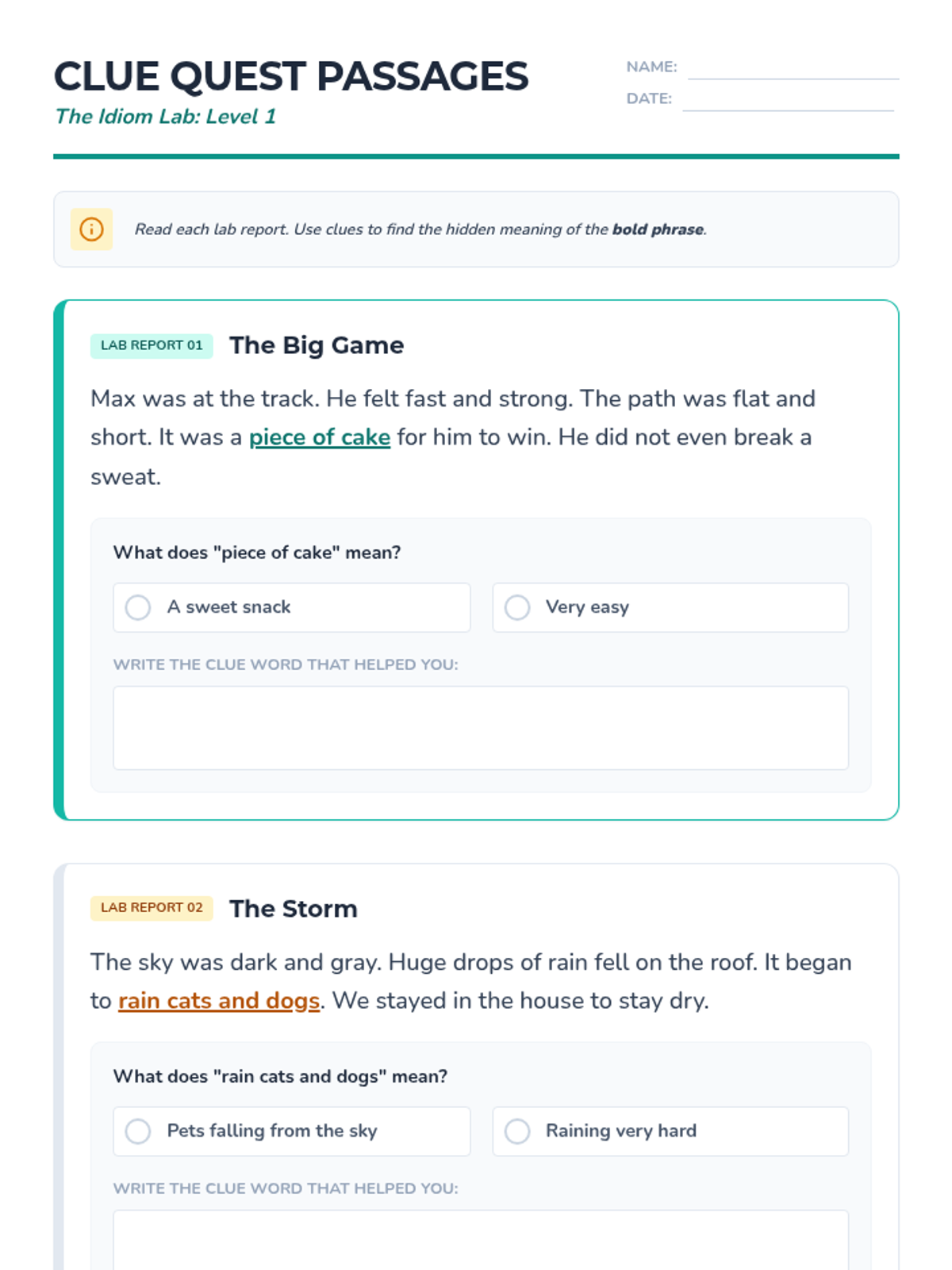
A set of three short reading passages with decodable text focused on idioms. Each passage includes a multiple-choice question and a space for students to cite evidence from the text.
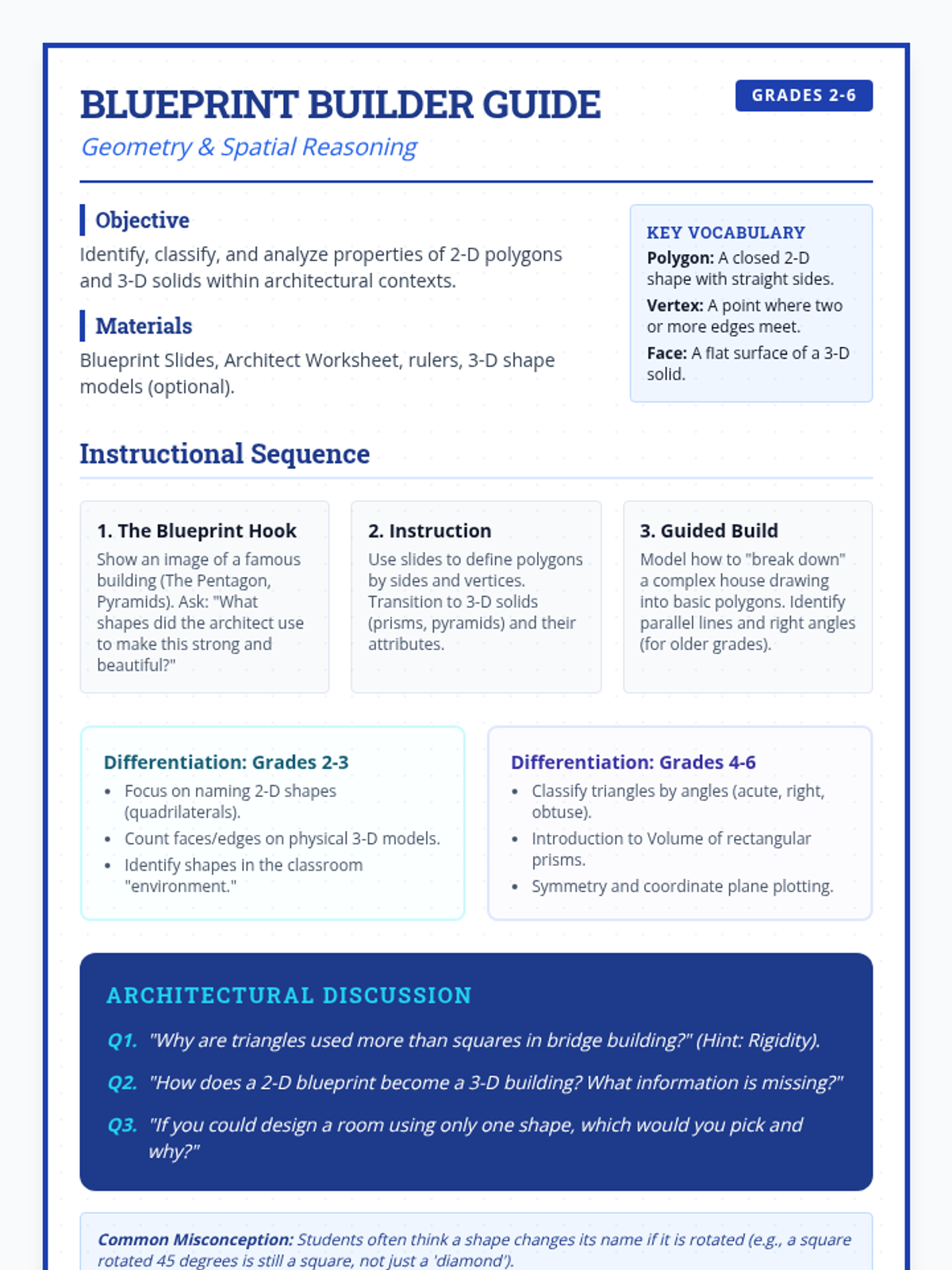
A comprehensive facilitation guide for a geometry lesson themed around architecture. Provides step-by-step instructions, grade-specific differentiation for grades 2-6, and key discussion prompts about 2-D and 3-D shapes.
An introductory slide deck for the 'Idiom Lab' lesson, featuring a consistent visual theme and clear instructional content on literal vs. figurative language for struggling readers.
Engaging slide deck for the Garden Growth lesson. Introduces nouns, verbs, and adjectives using vibrant garden imagery and vocabulary appropriate for beginning second graders.
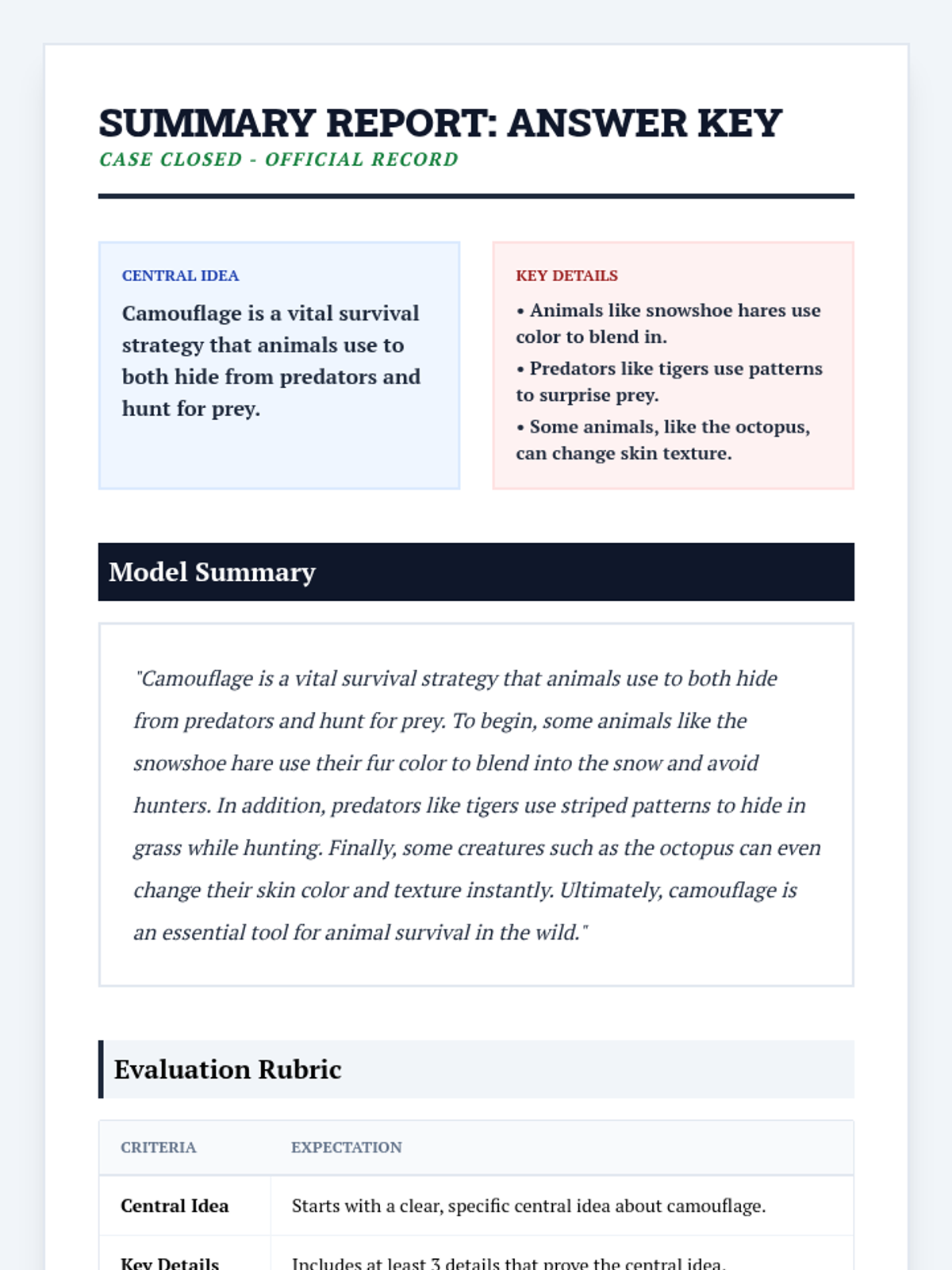
Answer key for the Summary Report Worksheet, featuring a model summary, breakdown of central idea and key details, and a quick evaluation rubric.
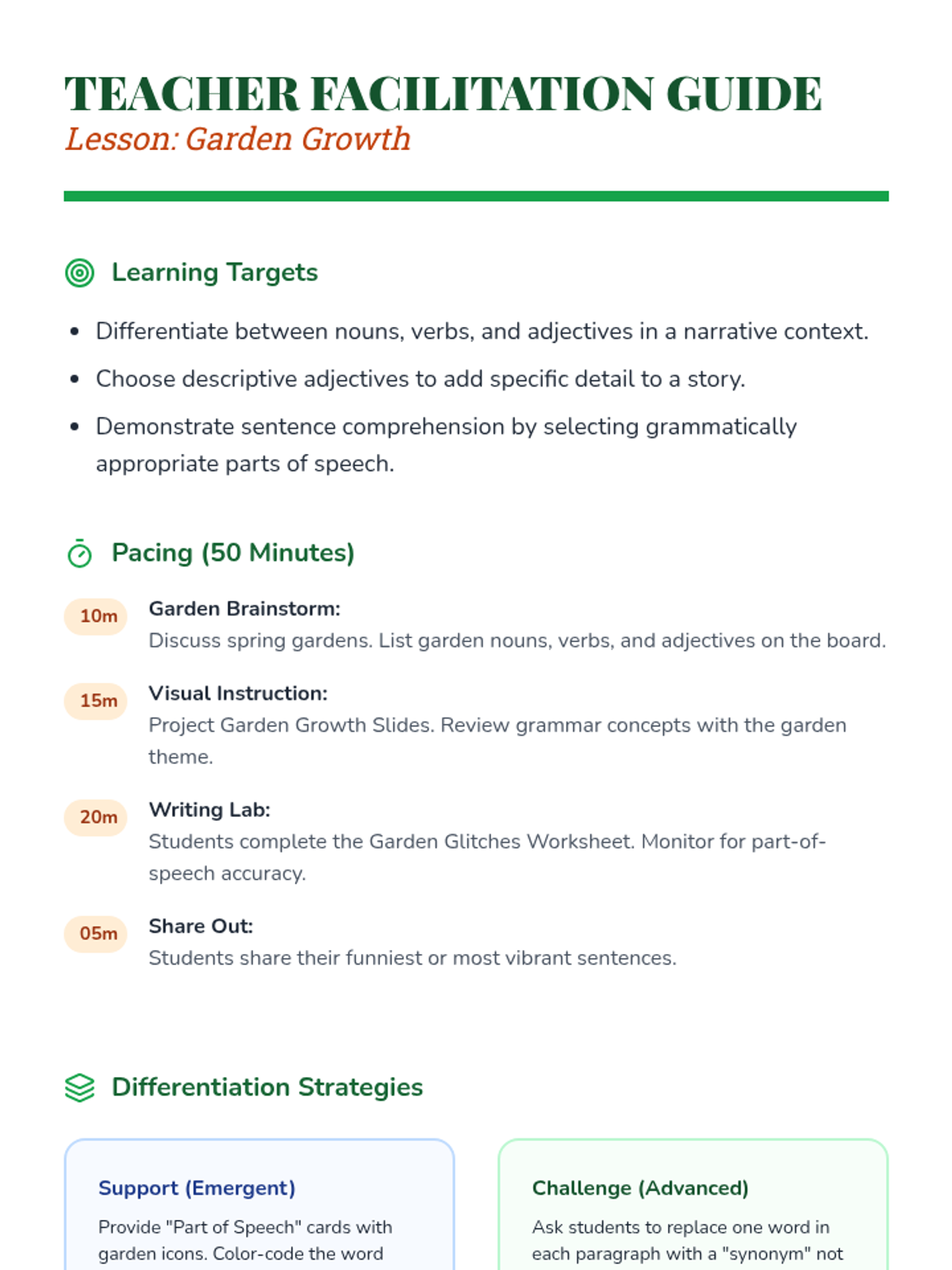
Comprehensive facilitation guide for the Garden Growth lesson. Includes learning targets, a detailed pacing plan for 50 minutes, differentiation strategies for diverse learners, and a complete answer key.
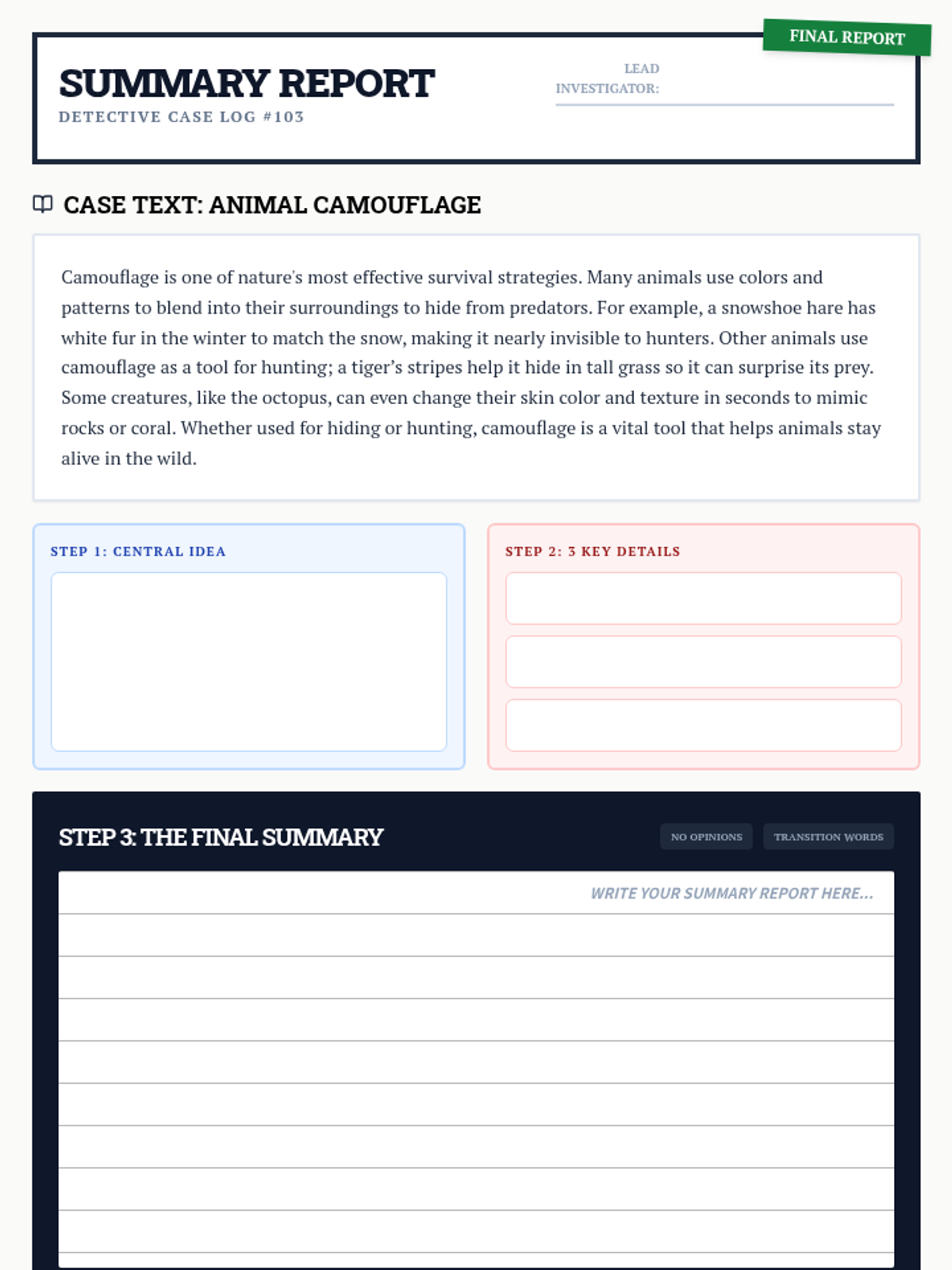
The final assessment worksheet for the summary sequence. Students gather the central idea and key details from a text about camouflage and combine them into a formal summary report.
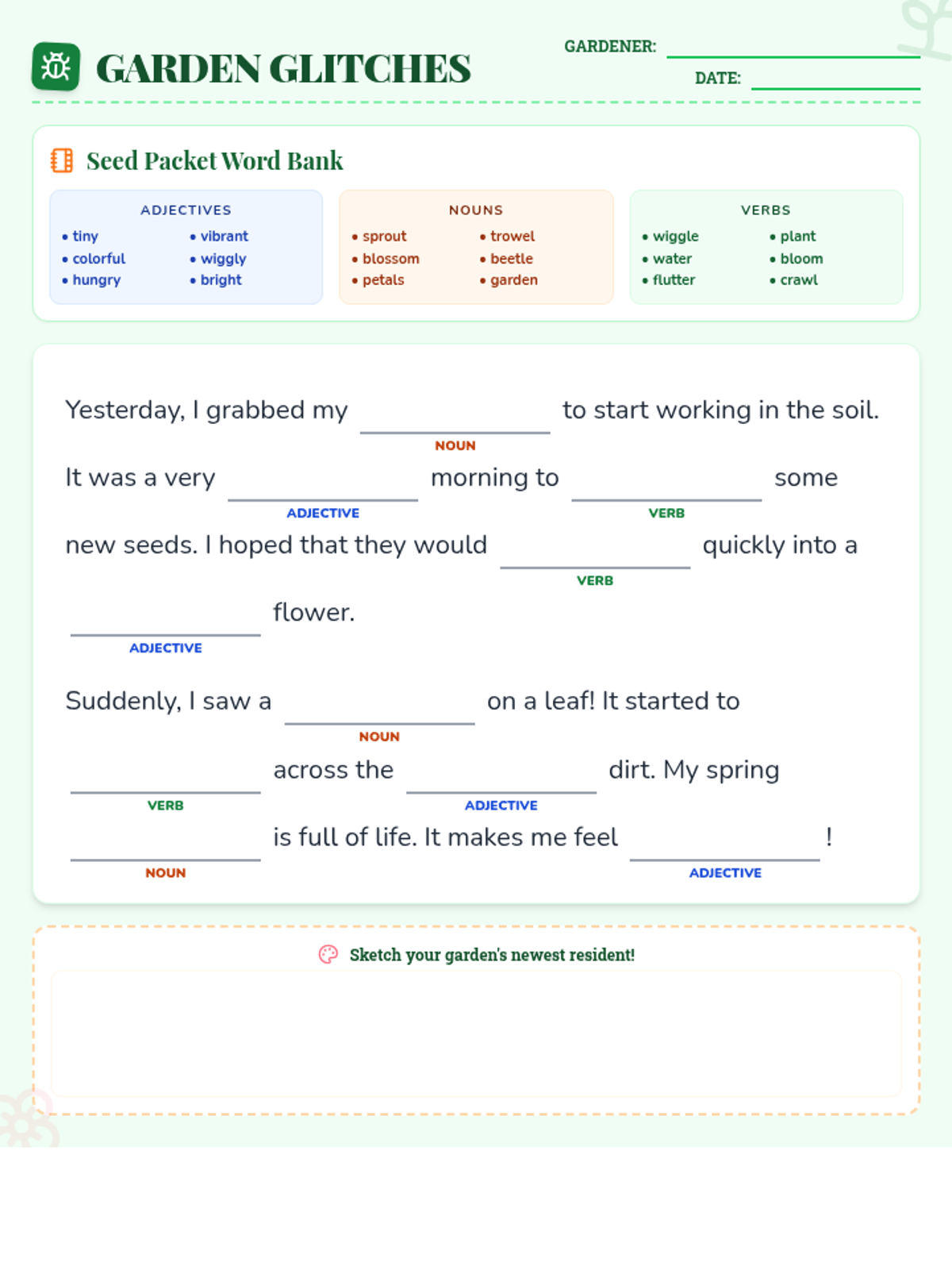
A beginning second-grade Mad Libs worksheet featuring a two-paragraph garden journal entry. Includes an expanded word bank with grade-appropriate nouns, verbs, and adjectives for creative spring storytelling.
A slide deck focused on the final step of the non-fiction summary process: synthesizing central ideas and key details into an objective summary.
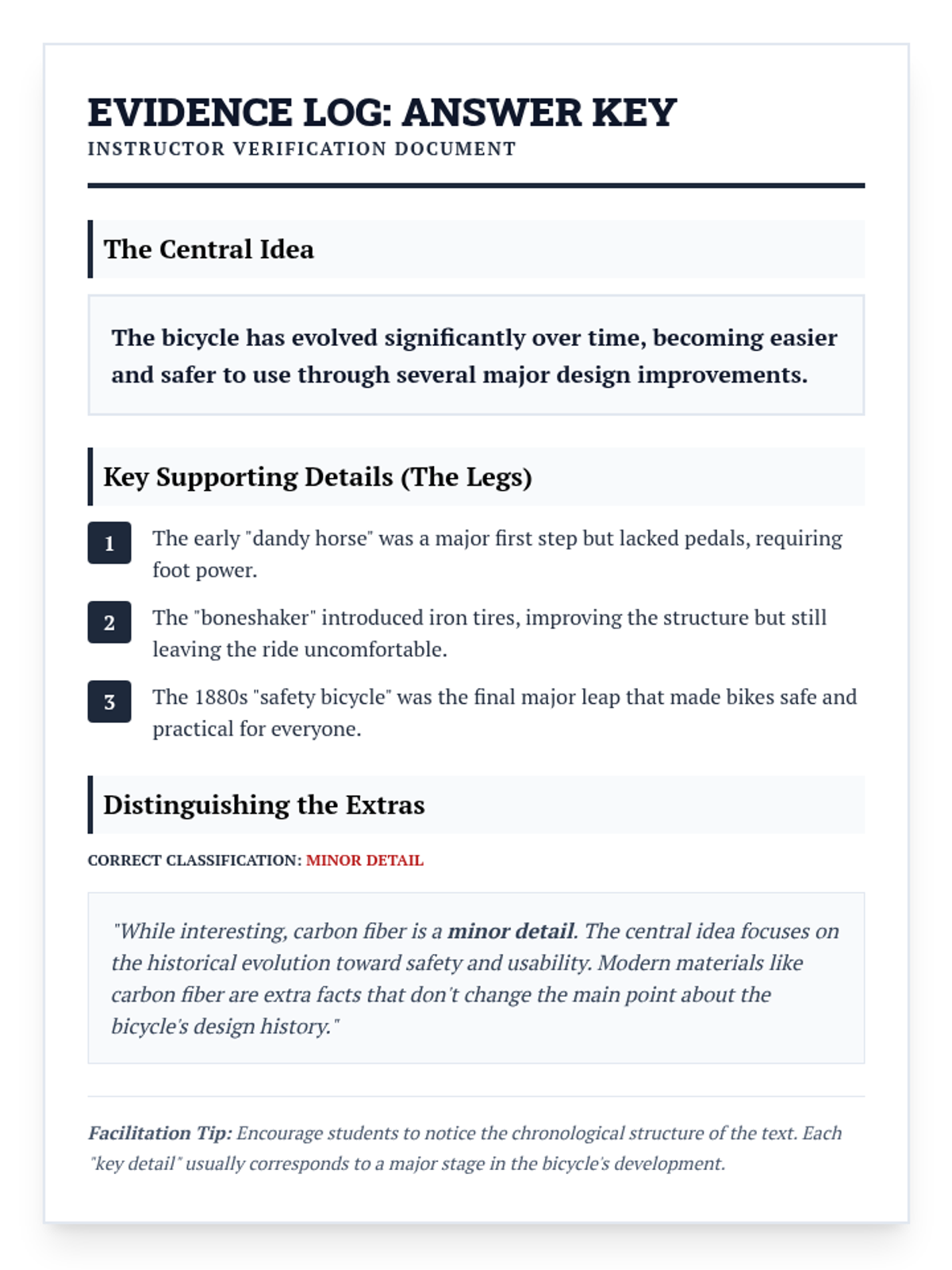
Answer key for the Evidence Log Worksheet, including model responses for central idea and key details, plus an explanation for minor details.
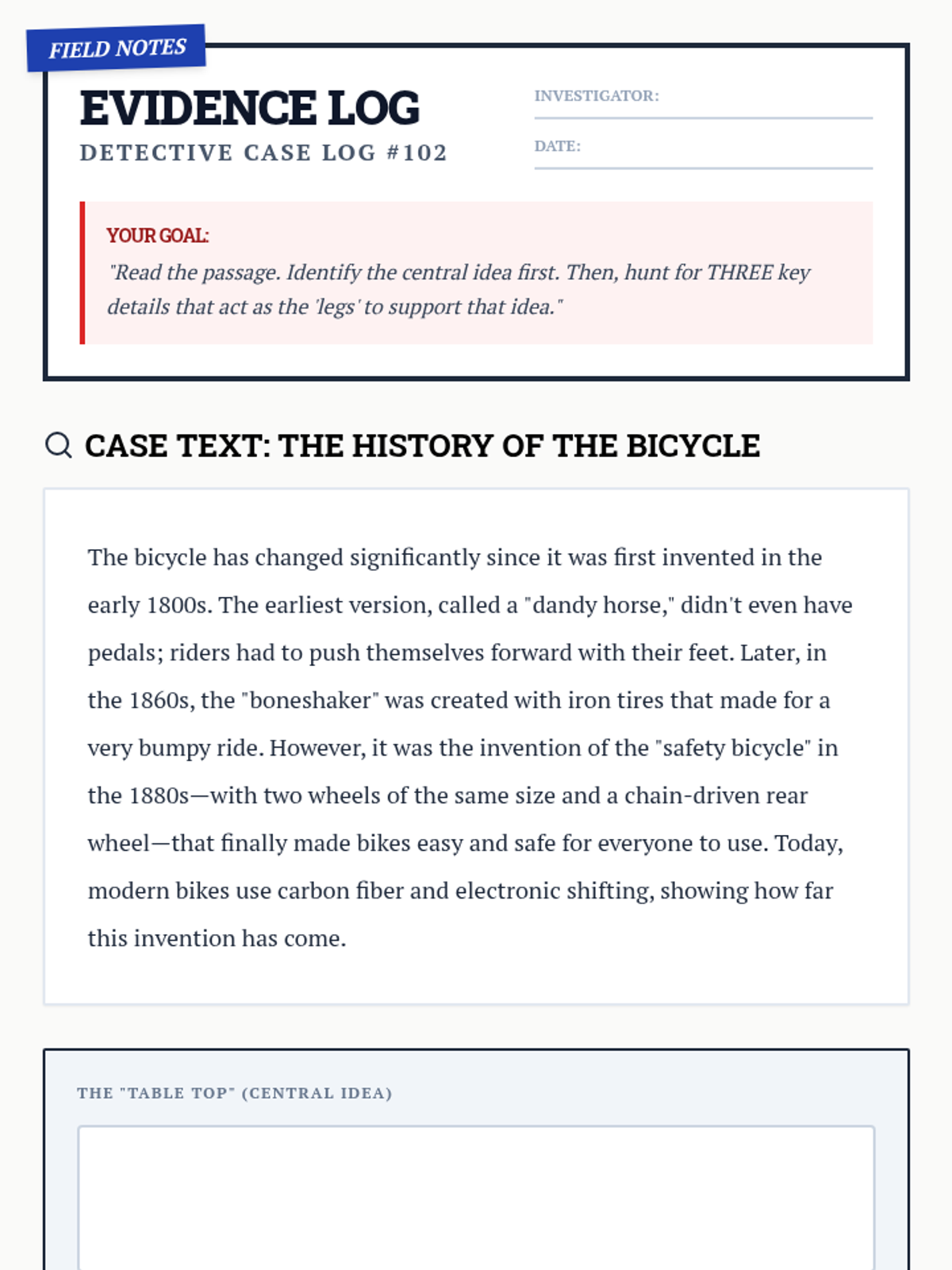
An 'Evidence Log' worksheet for finding supporting details. Students identify the central idea as the 'table top' and then find three 'legs' (key details) to support it.
A slide deck that teaches students how to identify key supporting details in a non-fiction text using the 'table' analogy and the 'So What?' test.
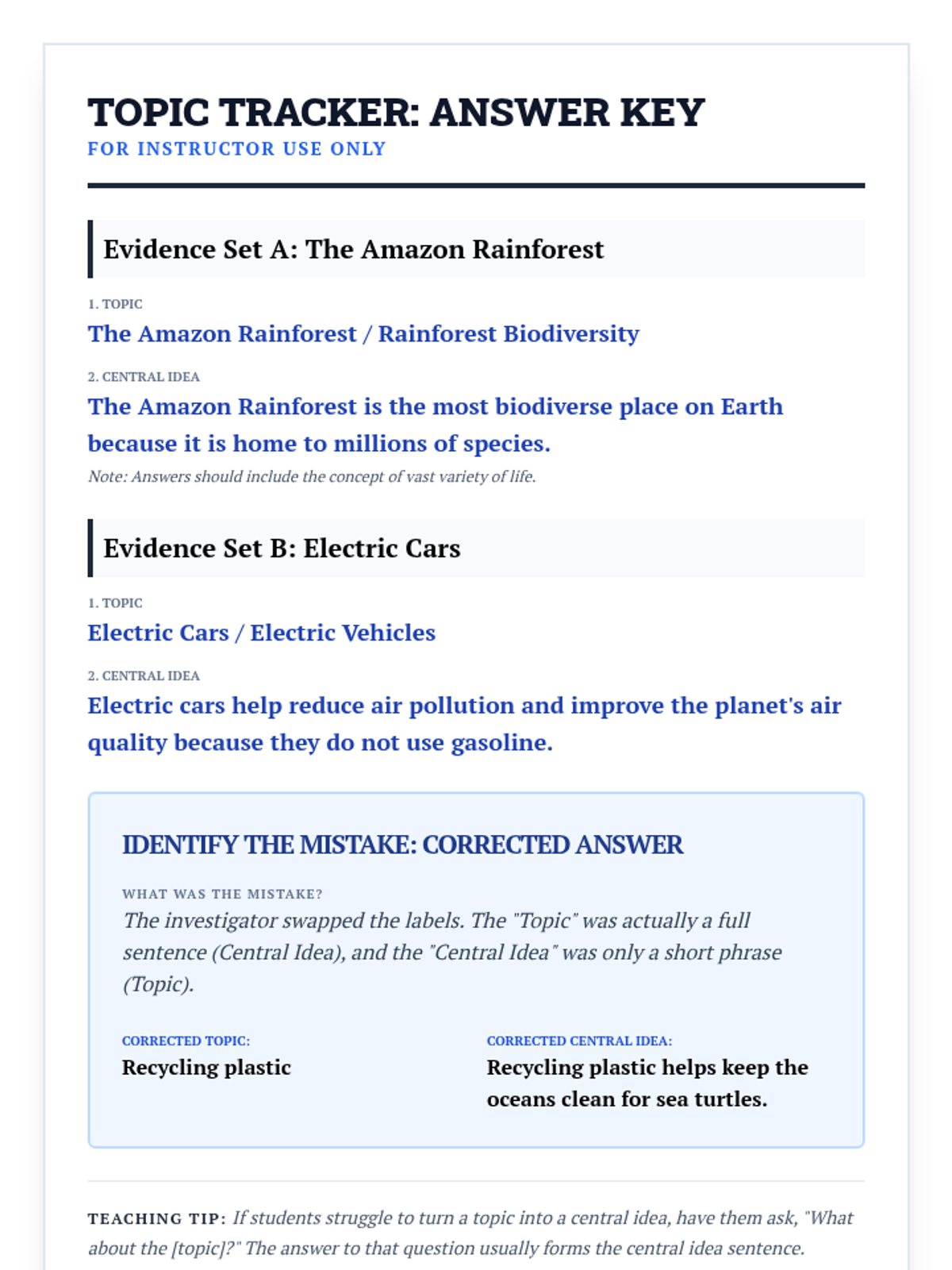
Answer key for the Topic Tracker Worksheet, providing model responses and teaching tips for identifying topic vs. central idea.
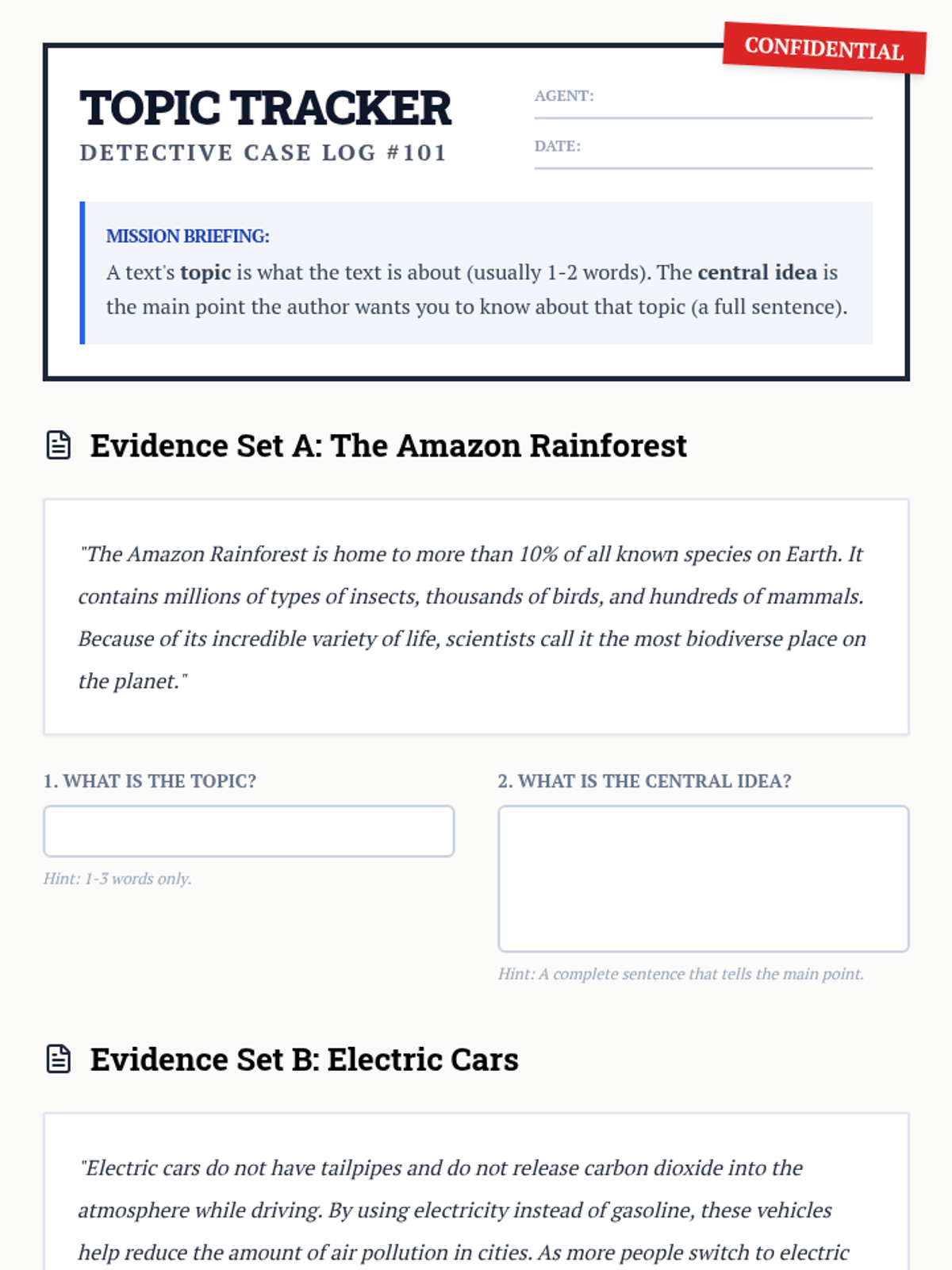
A detective-themed practice worksheet where students analyze non-fiction passages to identify the topic and central idea, including a corrective sorting activity.
An introductory presentation slide deck teaching students to differentiate between a non-fiction topic and its central idea using a detective theme.
An engaging slide deck to introduce the concepts of nouns, verbs, and adjectives using farm-themed examples. Designed for Grade 1 students with high-visibility text and bright colors.
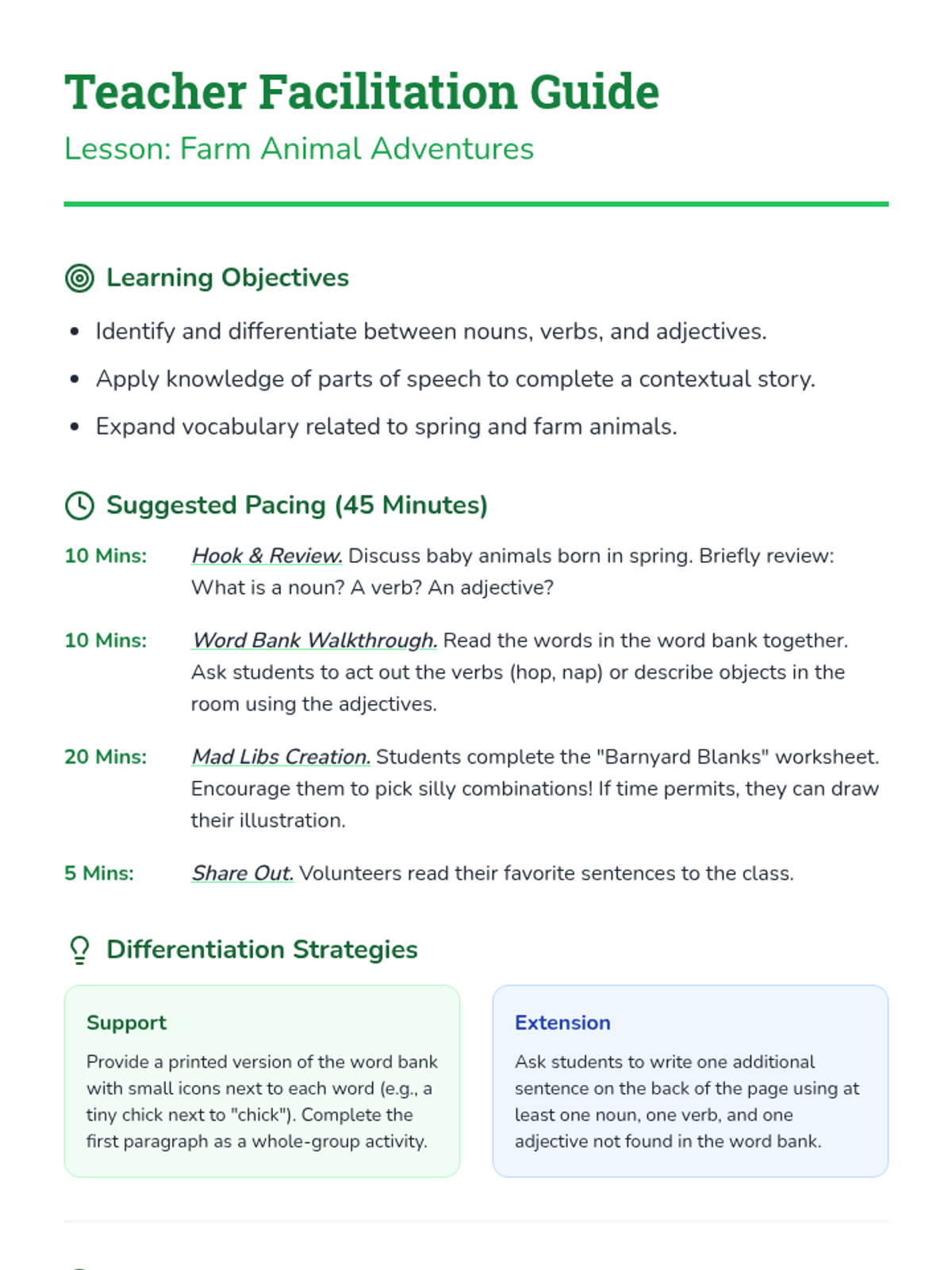
A comprehensive teacher guide for the Farm Animal Adventures lesson, including learning objectives, a timed pacing guide, differentiation strategies, and an example completed story as an answer key.
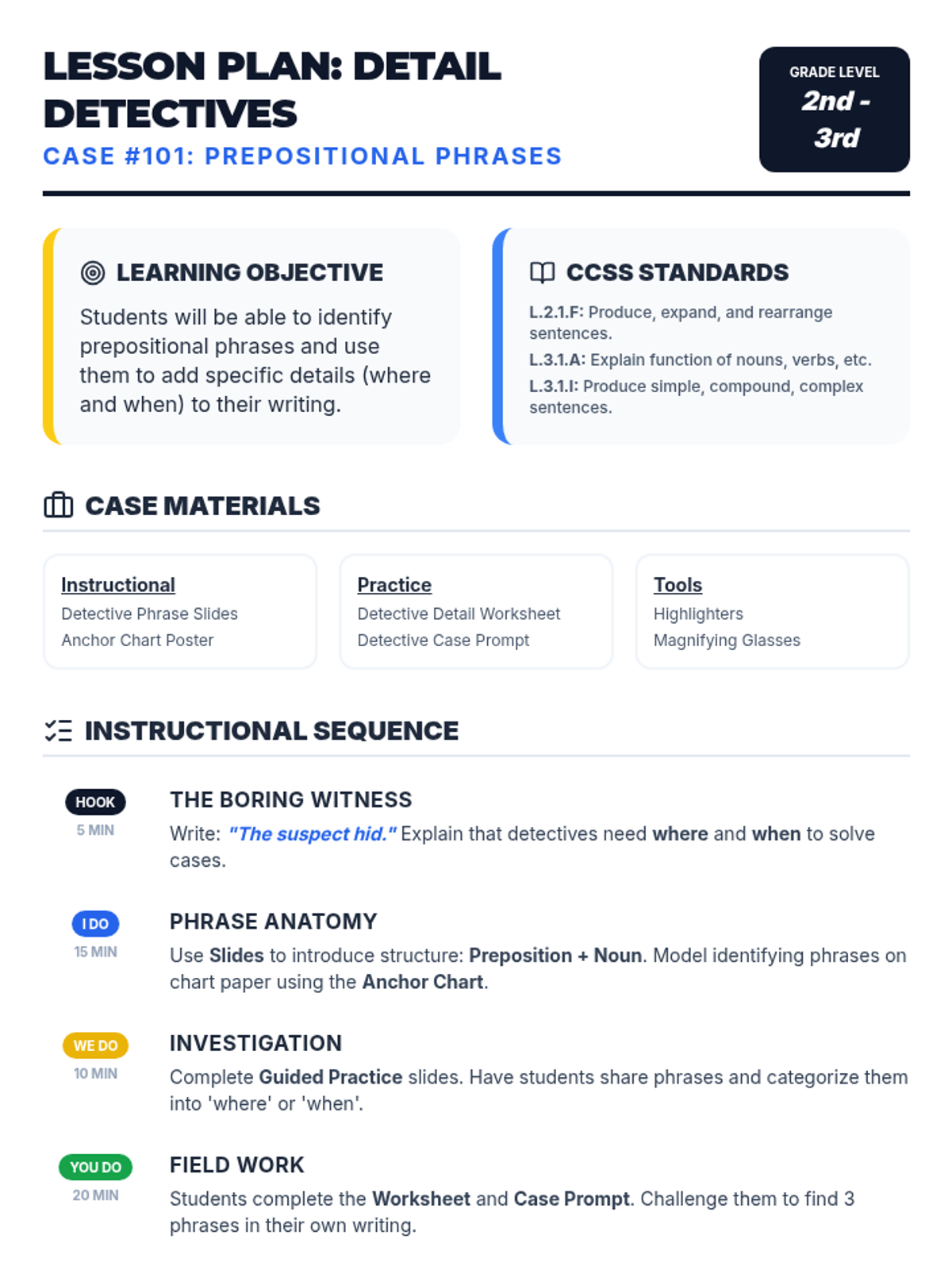
A comprehensive teacher lesson plan for the 'Detail Detectives' prepositional phrases lesson, including objectives, CCSS standards, pacing, and differentiation strategies. Revised for a single-page layout.
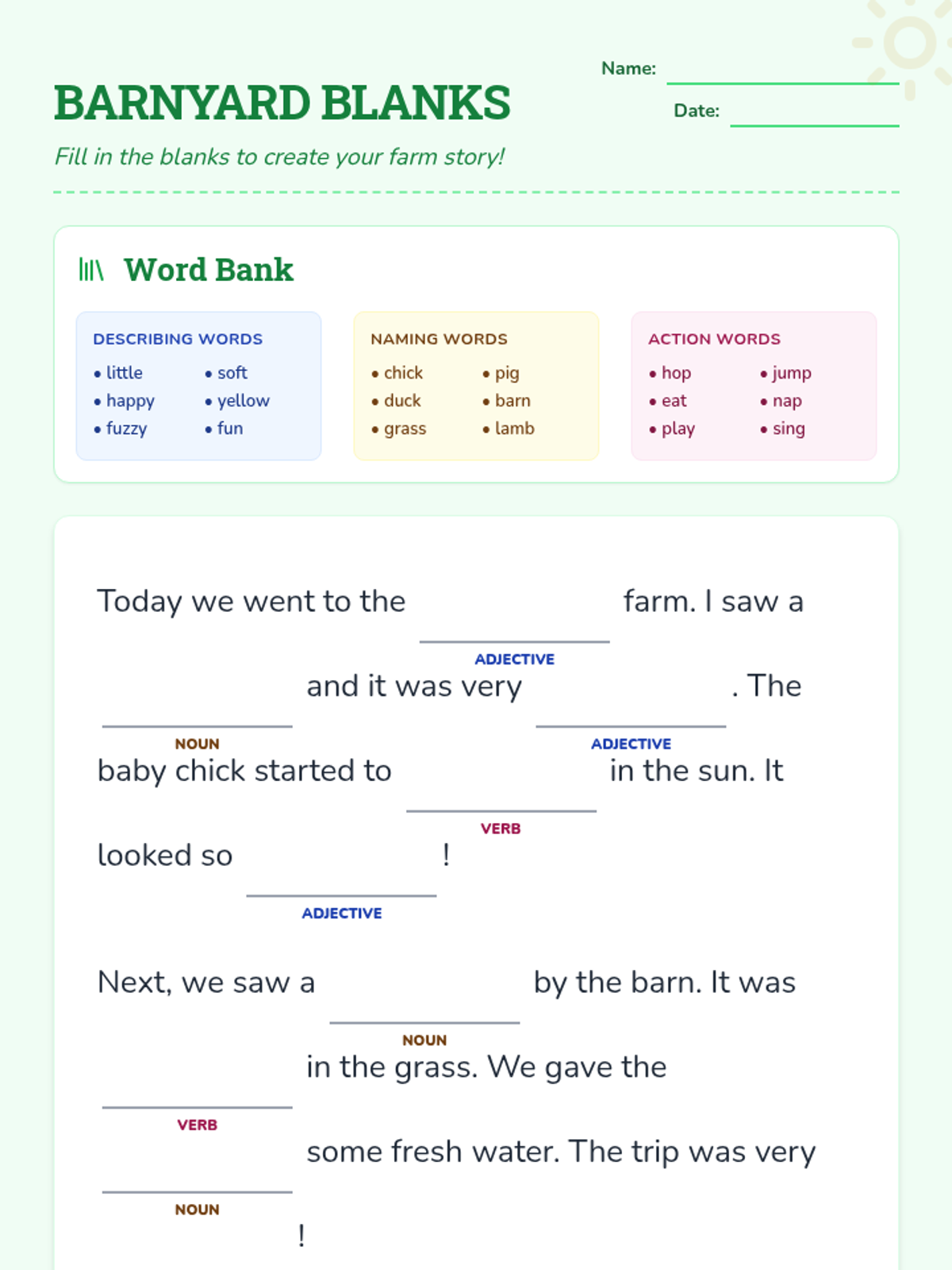
A printable Mad Libs-style worksheet featuring a two-paragraph story about a baby animal farm. It includes a structured word bank with Grade 1 appropriate nouns, verbs, and adjectives to help students build their story.
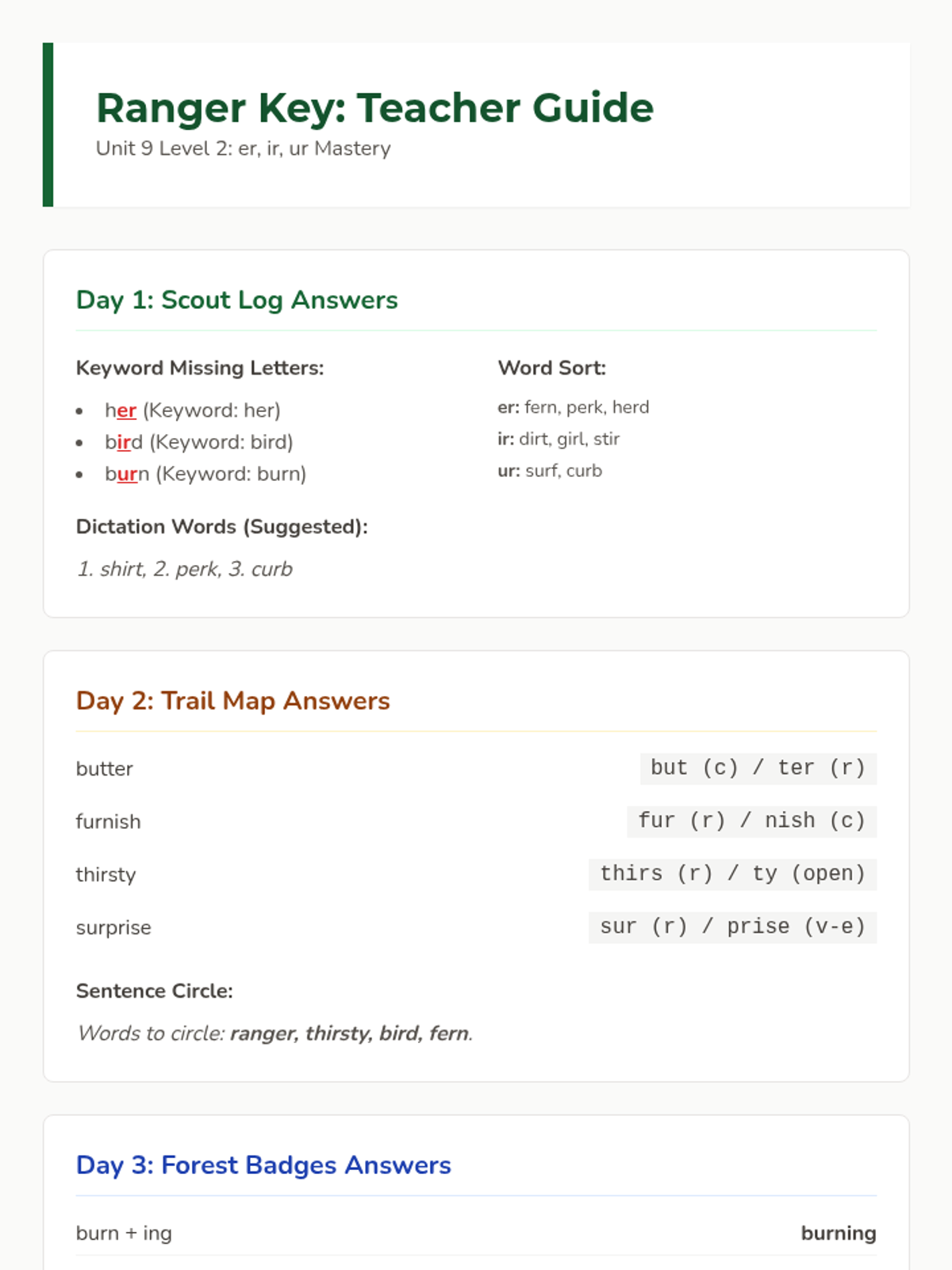
A comprehensive teacher guide and answer key for the Bossy R Brigade lesson, updated for lowercase word consistency and nonsense word inclusion tips.
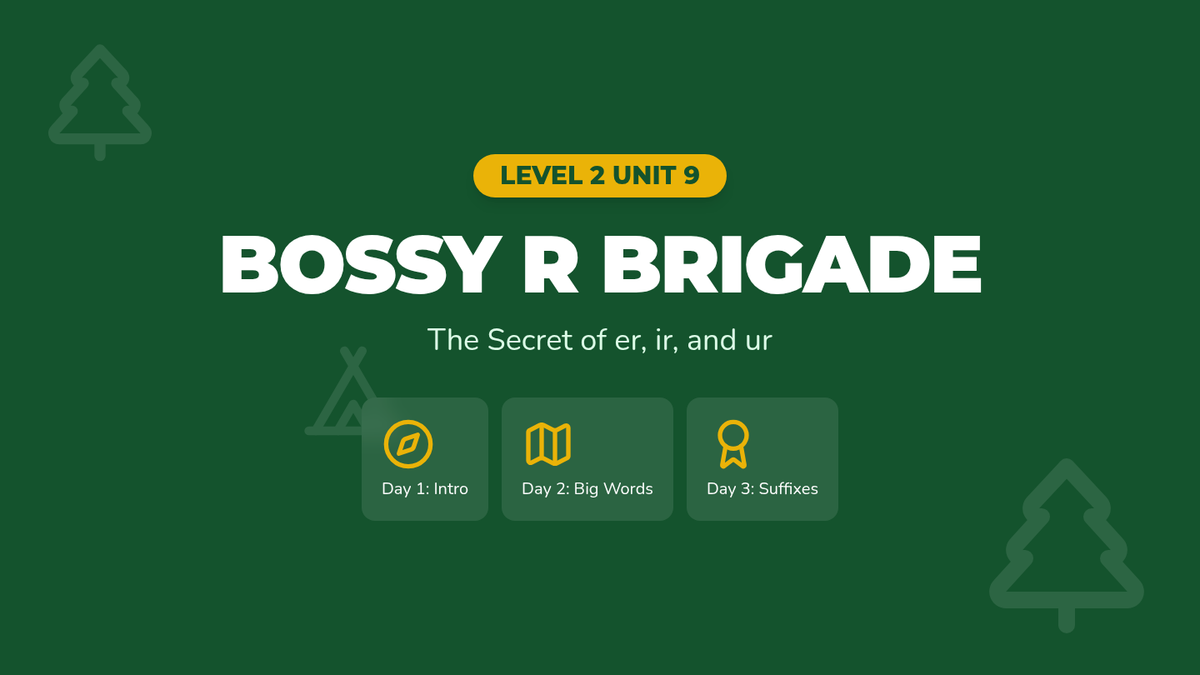
A 16-slide presentation for Fundations Level 2 Unit 9, using a forest ranger theme to teach er, ir, and ur r-controlled vowels. Updated to include nonsense word reading and lowercase formatting for words in isolation.
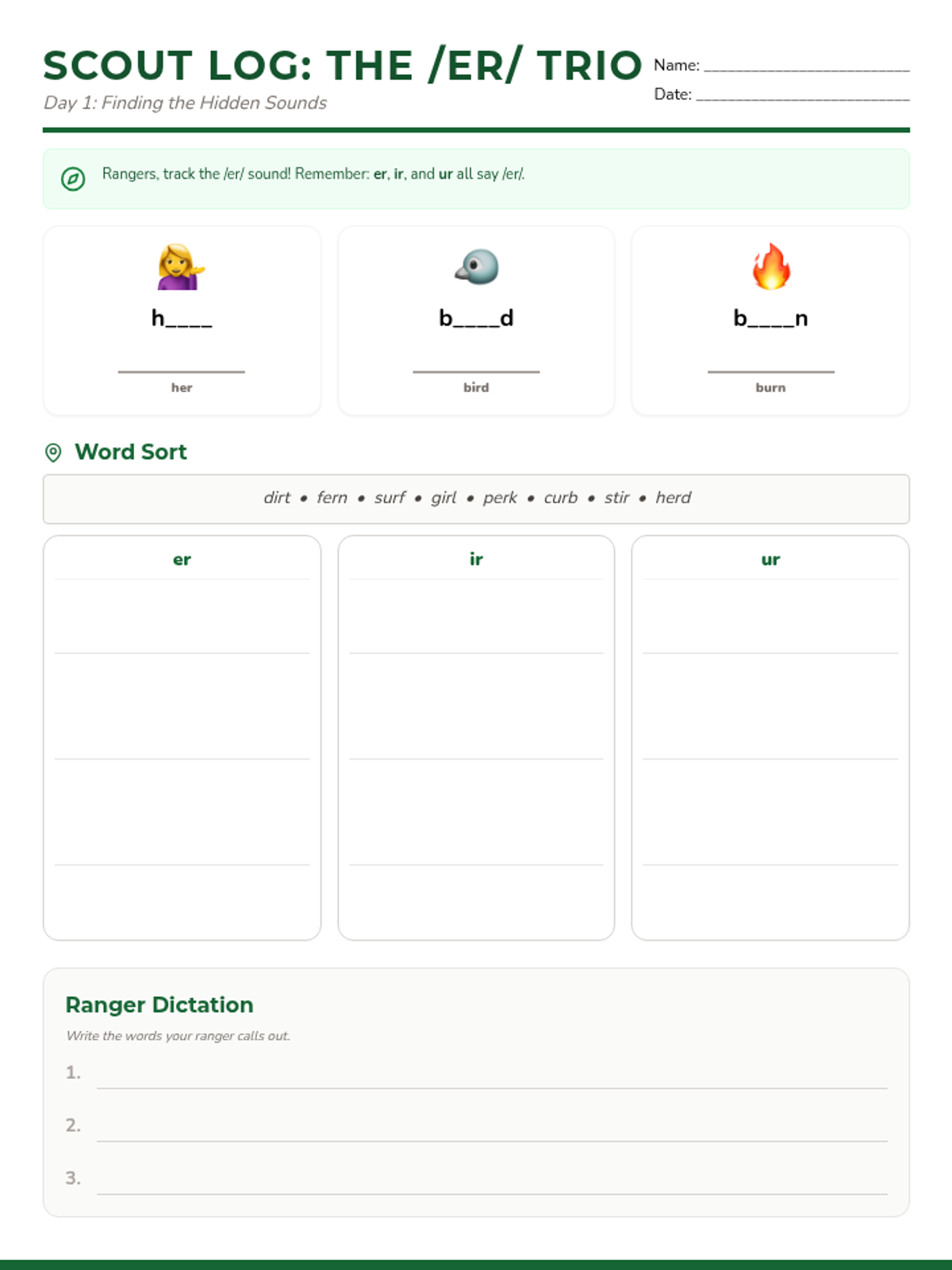
A set of three forest-themed worksheets designed for Fundations Level 2 Unit 9, covering keyword mastery for /er/ sounds, multisyllabic word decoding, and suffix application. Updated to ensure all isolated words and sort headings are lowercase, with improved spacing on Day 2.
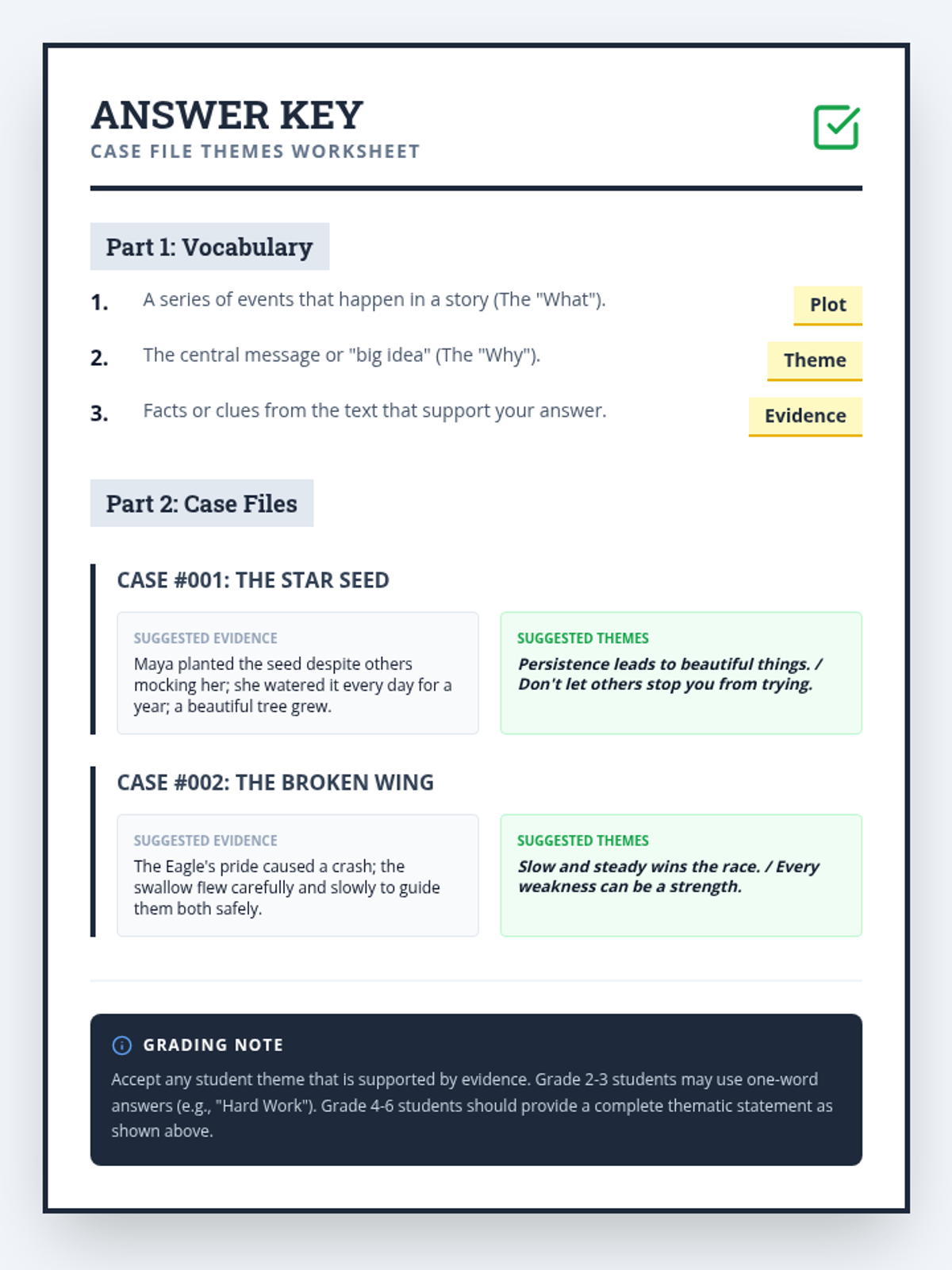
An answer key for the Case File Themes Worksheet, providing suggested answers for vocabulary definitions and multiple possible theme interpretations for each practice case. Includes teaching notes on evaluating student responses.
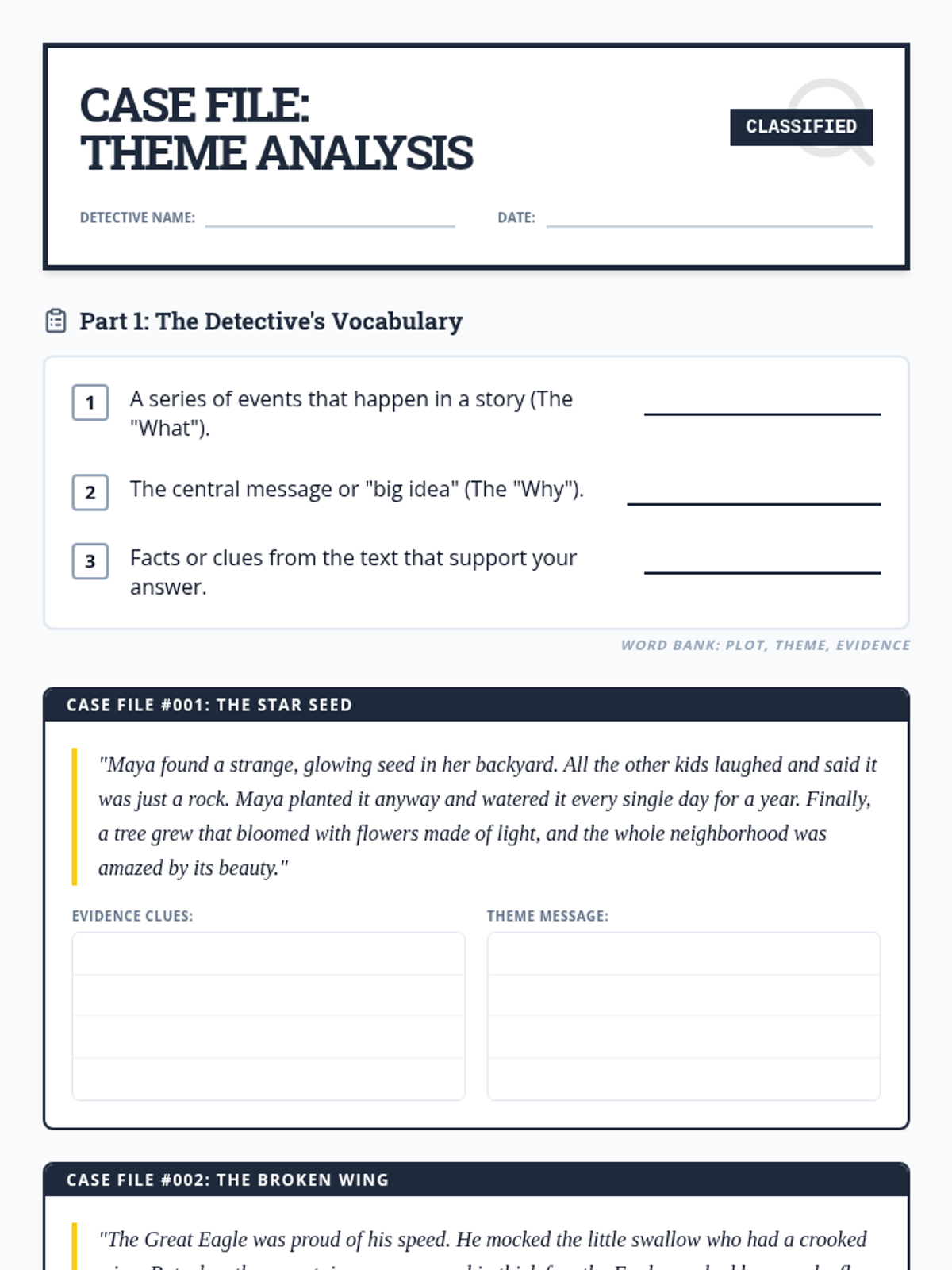
A student worksheet designed as a detective 'case file'. It includes vocabulary practice, short story analysis 'cases' where students identify evidence and themes, and a final reflection section for students to apply the concept to their favorite stories.
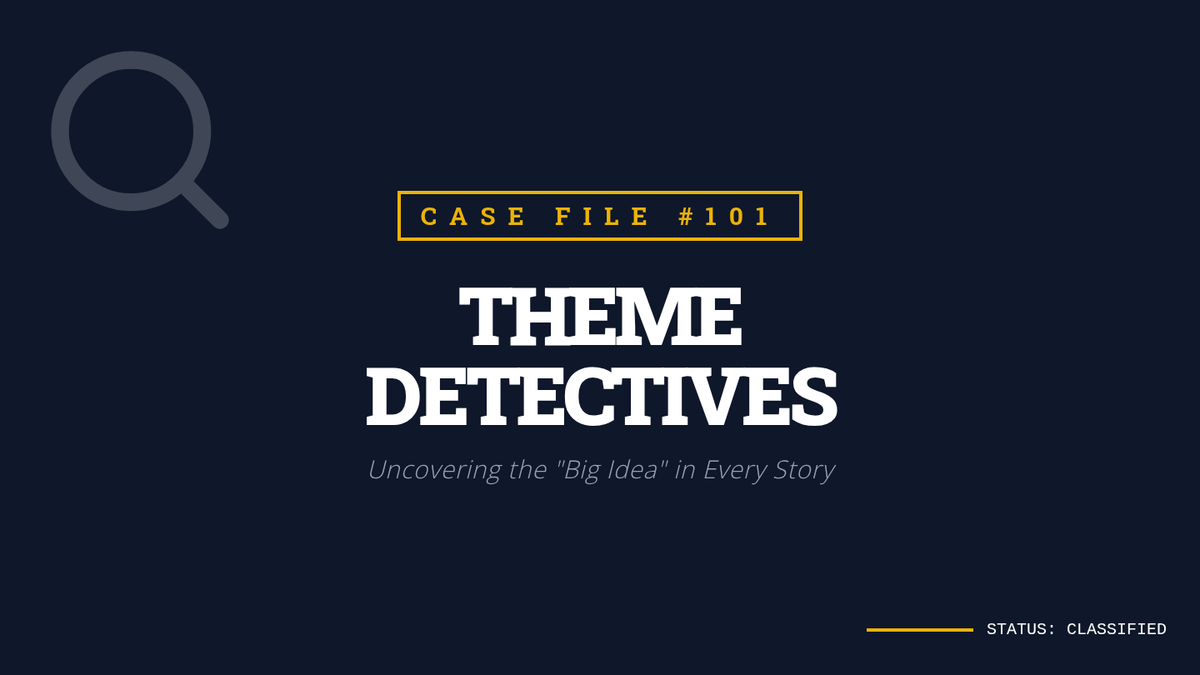
An engaging slide presentation introducing the concept of theme through a detective metaphor. It clearly distinguishes between plot and theme, provides a 'detective toolkit' for identifying themes, and includes interactive practice examples for the whole class.
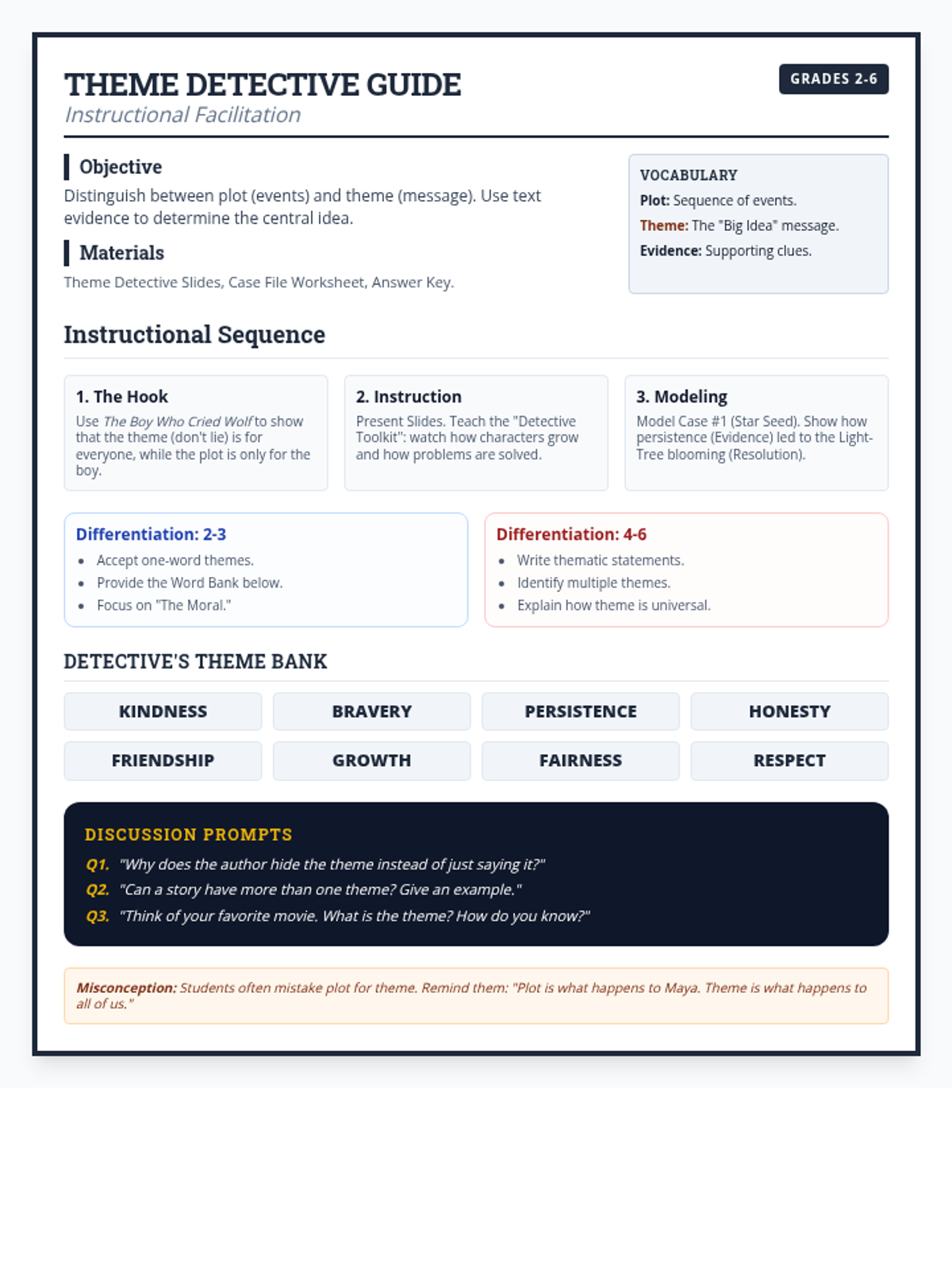
A detailed facilitation guide for teachers to deliver a lesson on story themes. Includes lesson objectives, step-by-step instructions, grade-level differentiation for grades 2-6, and strategies for addressing common student misconceptions.
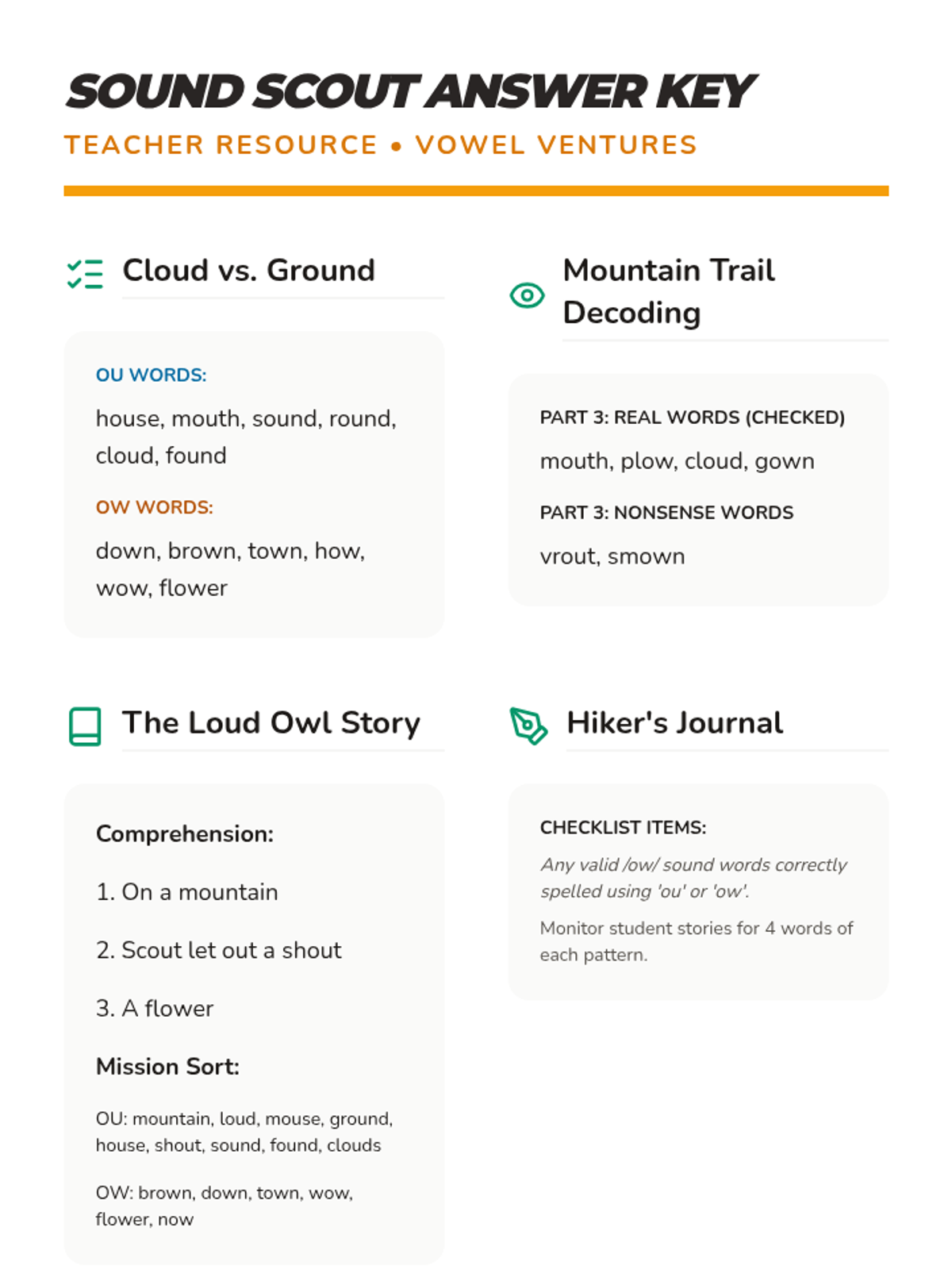
A teacher-facing answer key for all student activities in the Mountain Owls lesson, including sorting, decoding, and comprehension.
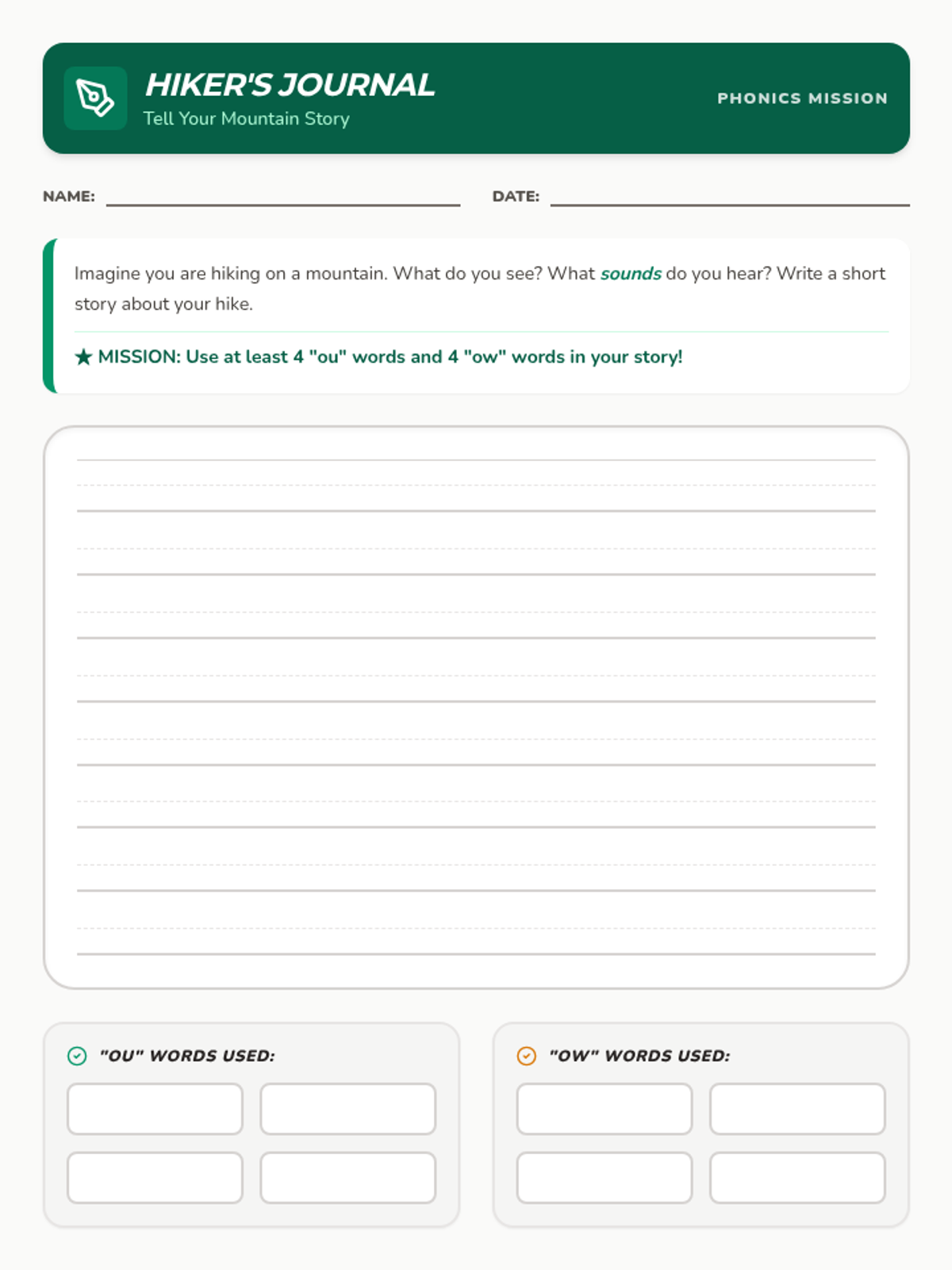
A creative writing worksheet with a journal prompt that encourages students to use target diphthongs in an original story about a mountain hike.
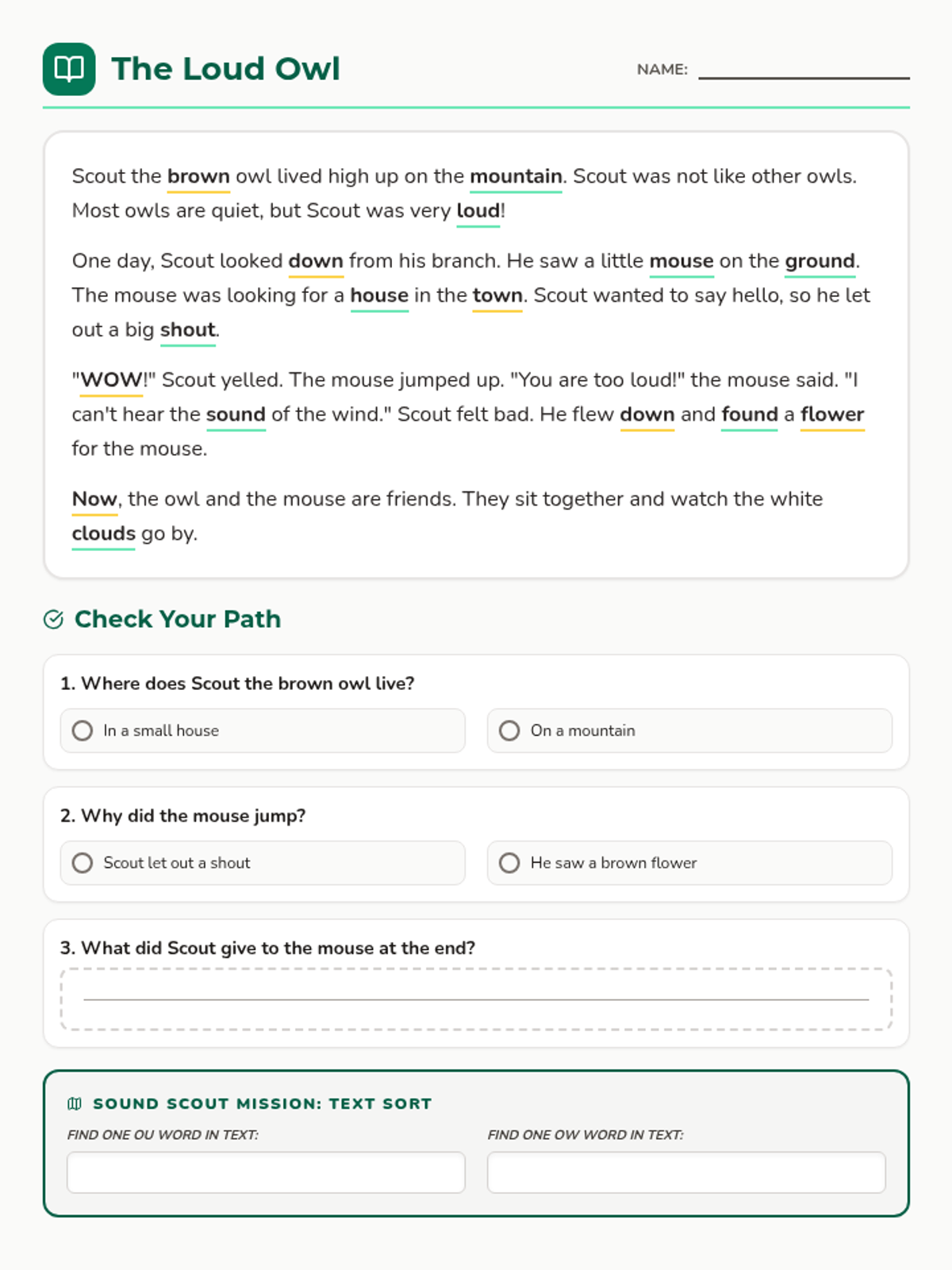
A reading comprehension passage featuring a story about a loud owl, designed to reinforce 'ou' and 'ow' recognition, followed by multiple-choice and short-answer questions.
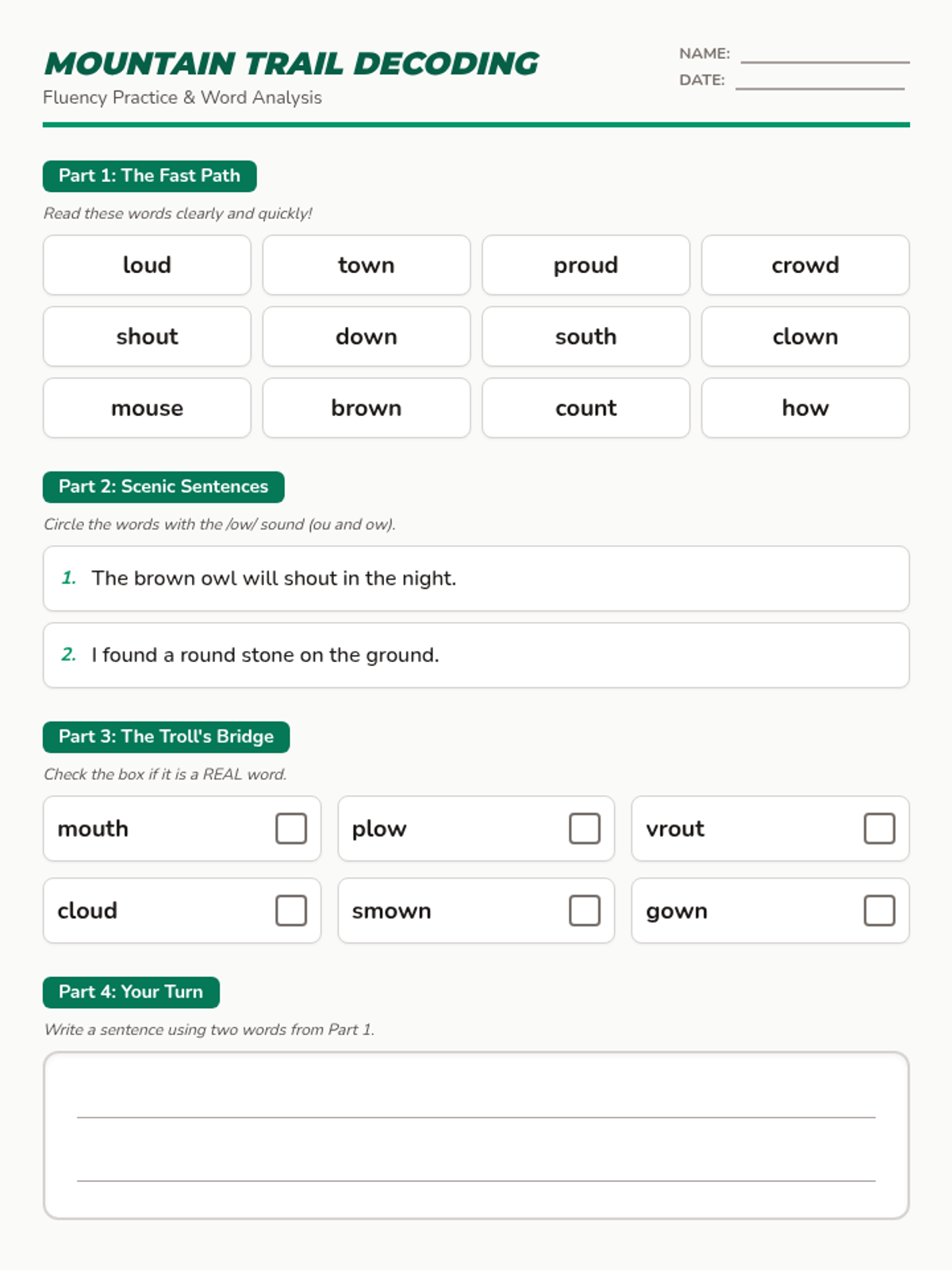
A decoding and fluency worksheet featuring quick reads, sentence analysis, and a real vs. nonsense word challenge for the 'ou' and 'ow' patterns.
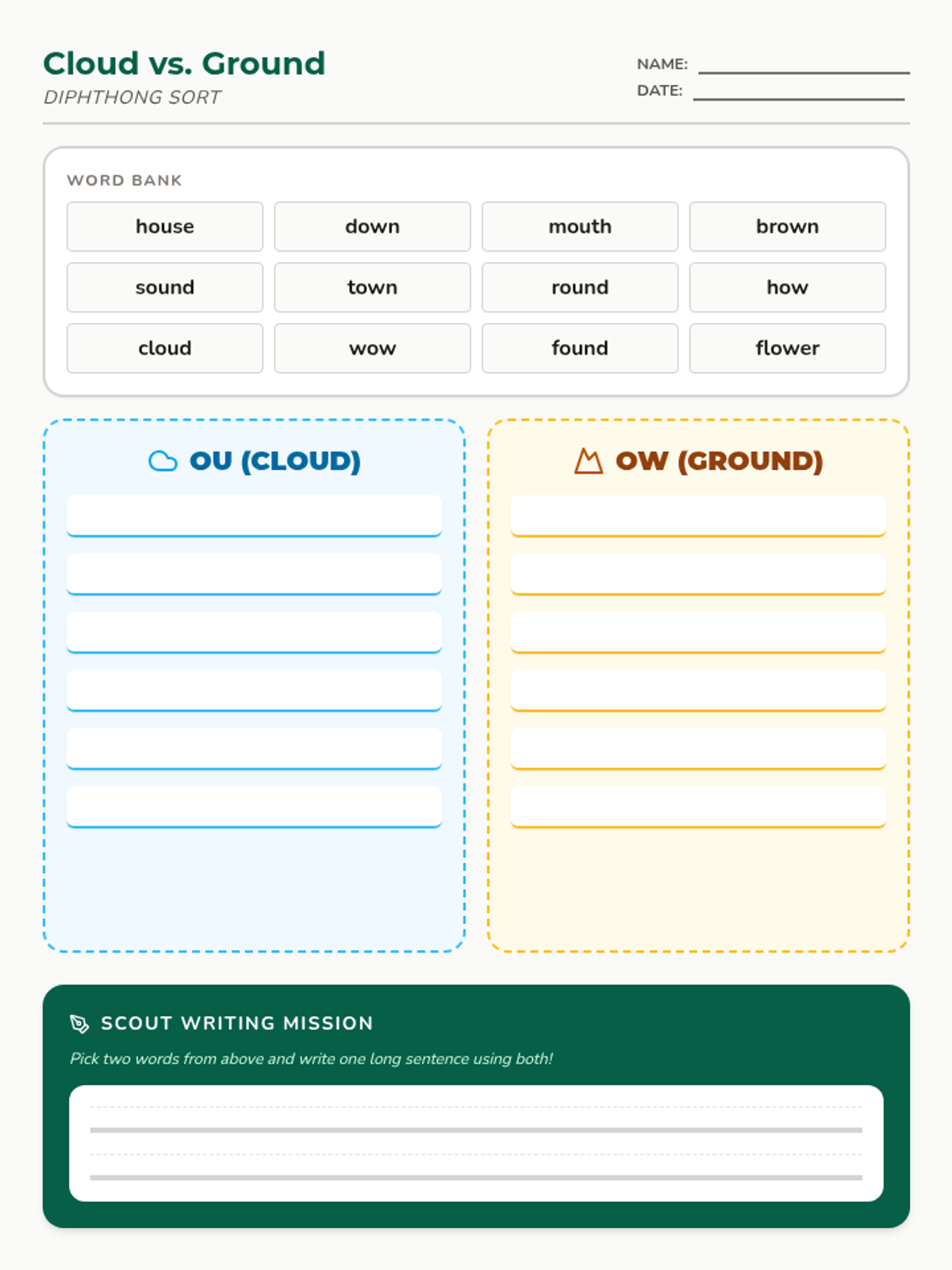
A student worksheet for sorting 'ou' and 'ow' words into two categories based on their spelling pattern, now including a small writing mission.