Teaches the student to distinguish between the size of a problem and the size of their reaction using visual scaling tools.
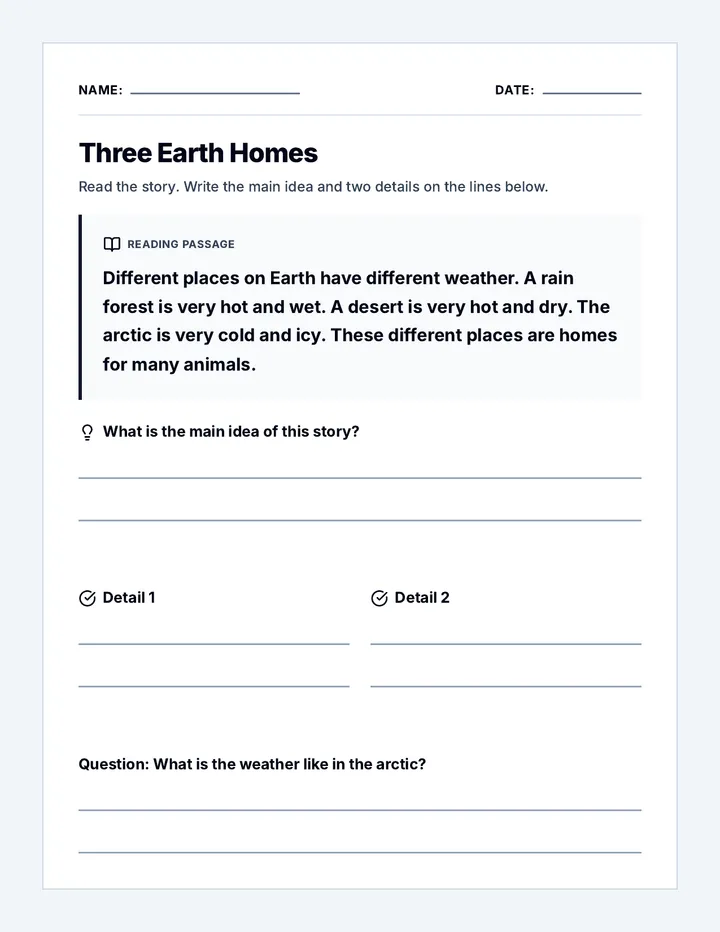
A targeted lesson for 5th-grade resource room students to master identifying the main idea and supporting details through a detective-themed investigation.
A lesson focused on teaching students how to identify appropriate times to share and how to stay on-task during group instruction.
A set of materials for assessing and practicing 47 key graphemes, including high-visibility flashcards and a comprehensive teacher tracking sheet.
A behavioral and functional lesson designed for a 2nd-grade student with Autism and ADHD to master the 'Launch Sequence' of transitioning from preferred activities to academic tasks. It focuses on visual schedules, clear 'First-Then' contingencies, and a specific 3-step 'Ignition' process to overcome task initiation hurdles.
Materials for assessing and monitoring third-grade oral reading fluency, including a lexile-appropriate passage with word counts and a teacher scoring sheet.
A lesson designed for small group settings to practice 'brave talking' with peers using structured activities and gamified prompts.
A comprehensive set of tools for assessing and tracking a student's ability to identify numbers 1 through 20 in randomized order.
An assessment on plate tectonics and volcanoes specifically modified for students with IEPs, featuring simplified language, visual aids, and reduced response options.
This lesson provides ENL and SPED parents with the knowledge and confidence to participate in their child's Committee on Special Education (CSE) meeting. It includes a comprehensive presentation on the meeting process and a preparation checklist for home use.
A lesson focused on shifting the narrative from autism awareness to acceptance by celebrating cognitive and personal strengths. Includes teacher resources and student-facing materials for classrooms and community spaces.
A 20-minute individual session designed for a student with ASD to distinguish between shareable social information and private safety information using simple visual filters.
A set of writing resources designed for students with IEPs to practice narrative and future-tense writing through visual prompts, sentence starters, and graphic organizers centered on Spring Break.
A simplified look at Miguel Hidalgo's childhood and education, designed for emergent readers and students with IEPs. The lesson focuses on key facts using high-frequency words and visual supports.
A lesson focused on supporting students with strong cognitive abilities who struggle with phonological processing and CVC blending due to communication disorders.
A fun and accessible word search activity focused on spring vocabulary, designed specifically for 5th-grade special education students with clear visuals and large text.
A collection of visual supports and implementation guides to help students with IEPs independently navigate the start of their class period.
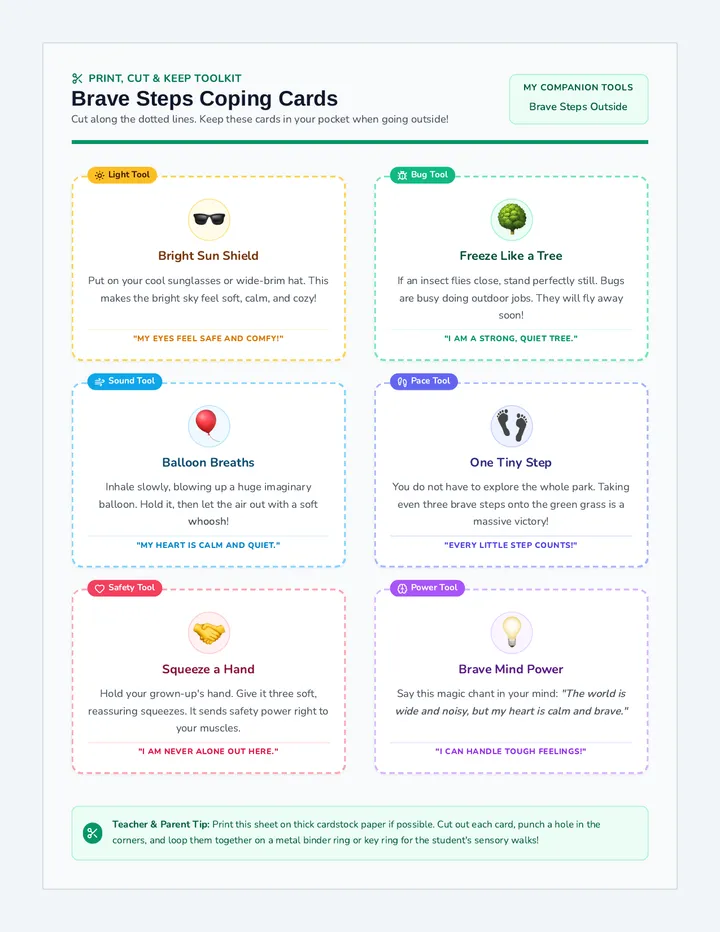
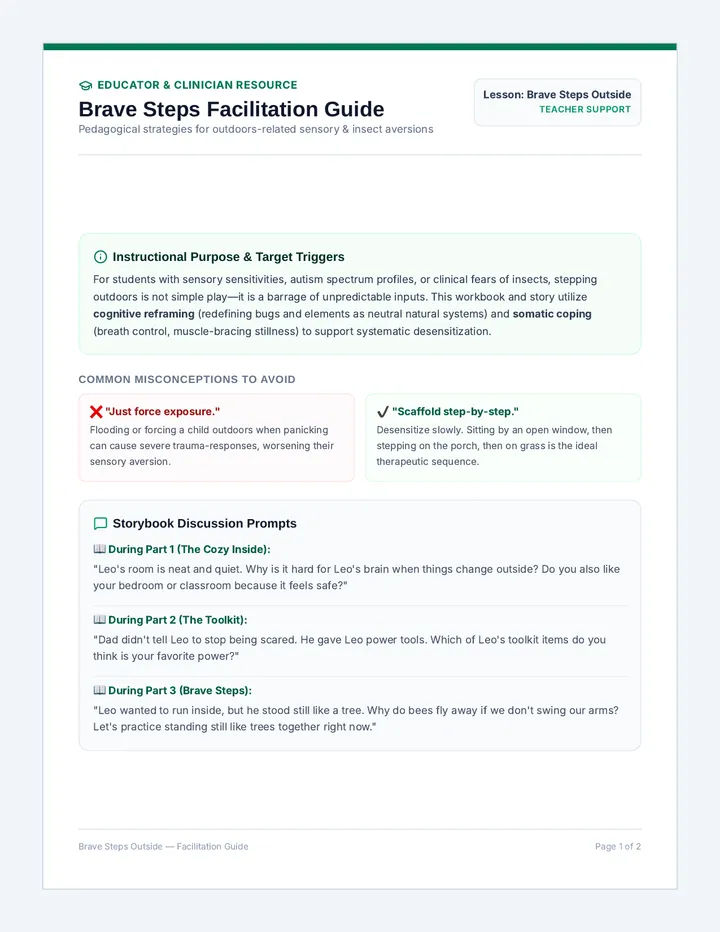
A comprehensive toolkit for supporting students with Selective Mutism, providing evidence-based intervention strategies for both educators and families to encourage "brave talking" in the school environment.
A modified assessment for students with IEPs focusing on reading comprehension and the health benefits of reading. The lesson includes a simplified text, visual aids, and scaffolded questions.
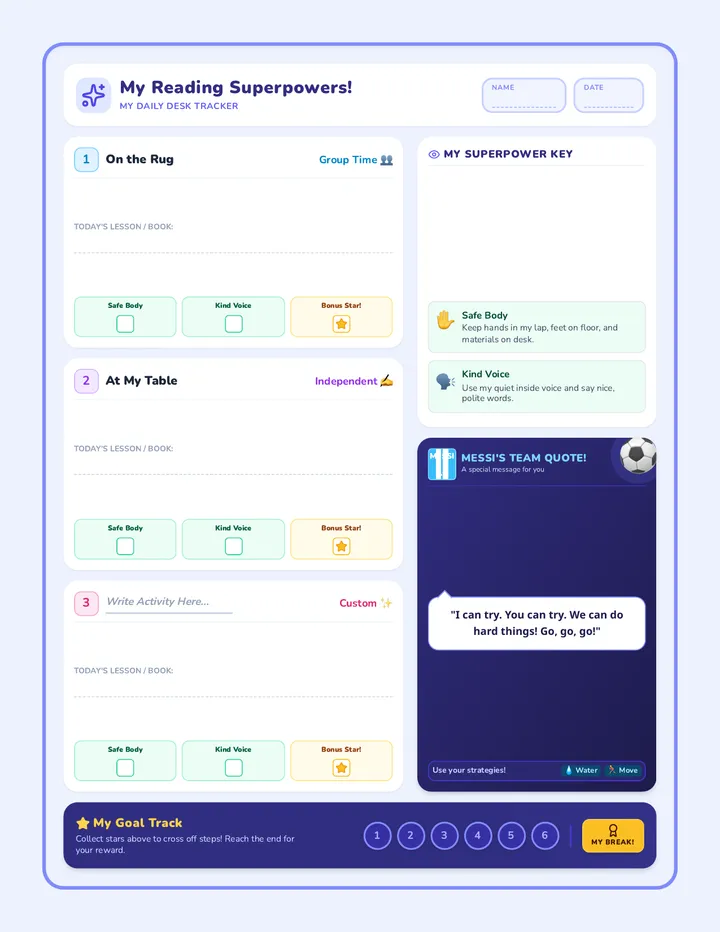
A set of tools designed to help students with ADHD improve their organization, planning, focus, and task initiation through structured self-monitoring.
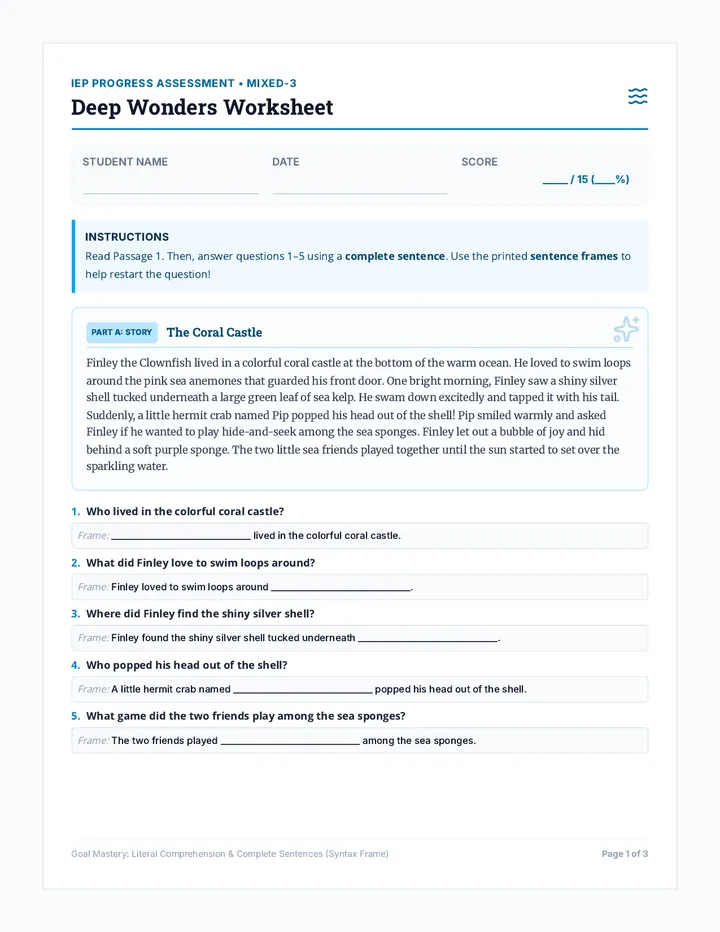
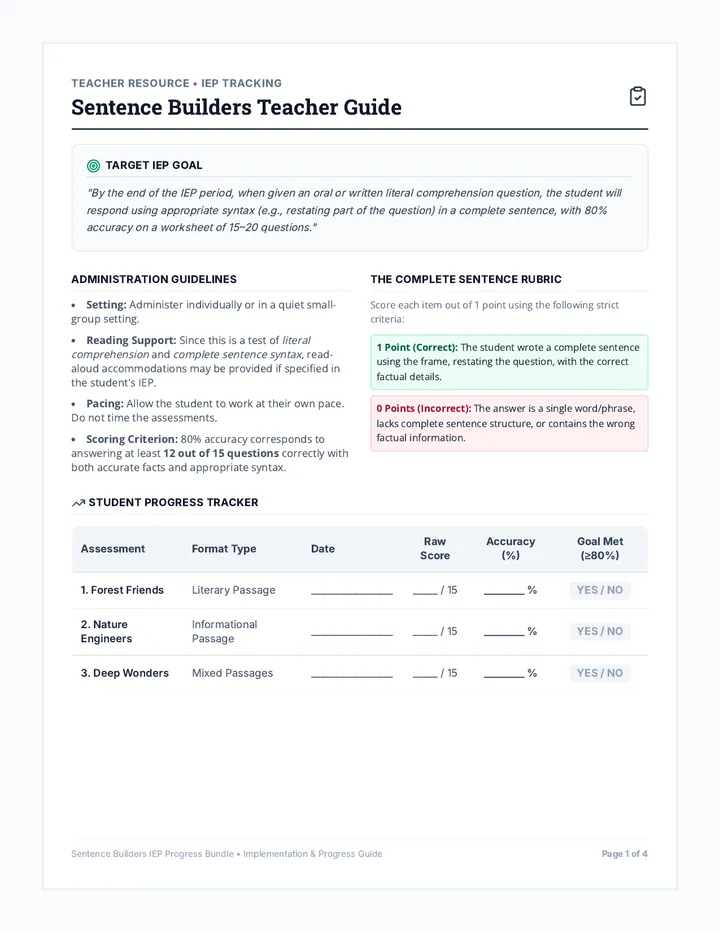
A collection of speech therapy resources for middle school students focusing on building complex sentence structures and mastering verb tense shifts. Includes target IEP goals, student practice materials, and data tracking tools.
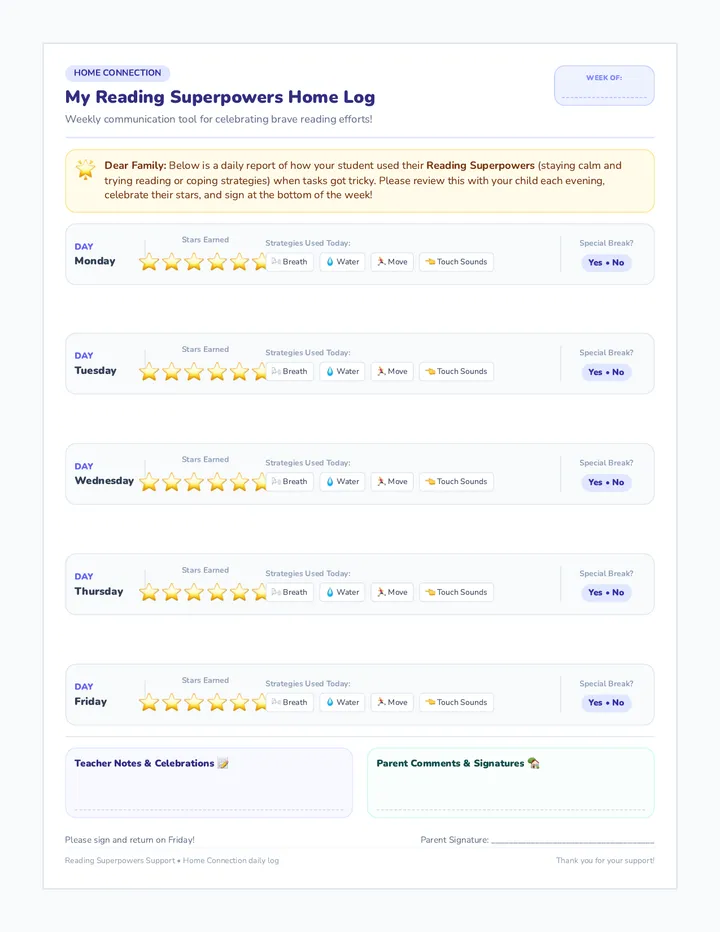
A comprehensive system for tracking student behavior and progress throughout the day, featuring a block-by-block narrative tracker and a guide for effective parent communication.
A set of interactive resources designed to integrate core vocabulary into daily morning meetings, featuring prompt cards, visual aids, and teacher guidance.
A reflective lesson for high school students who stutter to analyze their emotional connection to speech, evaluate their usage of fluency strategies, and practice self-advocacy.