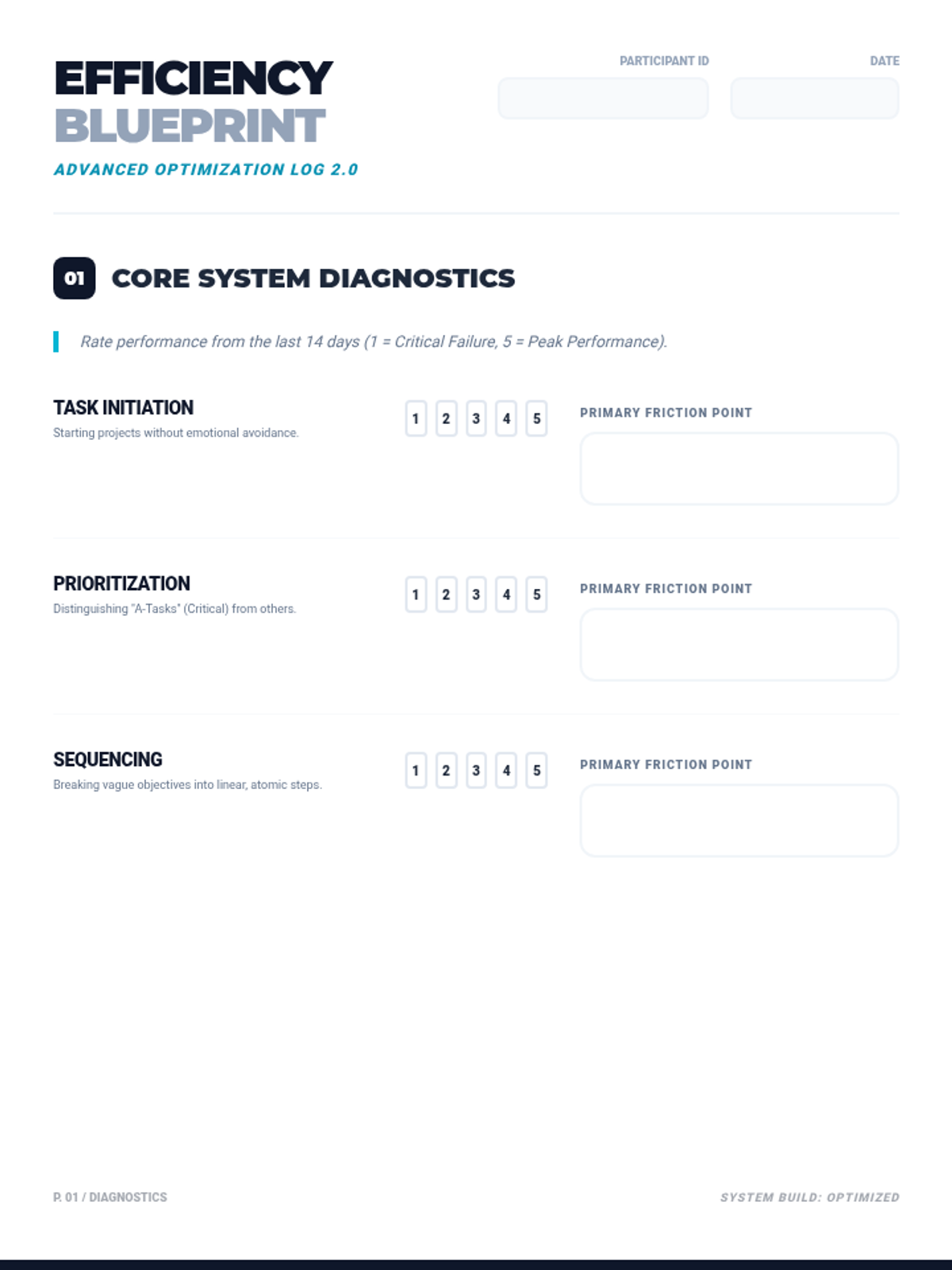
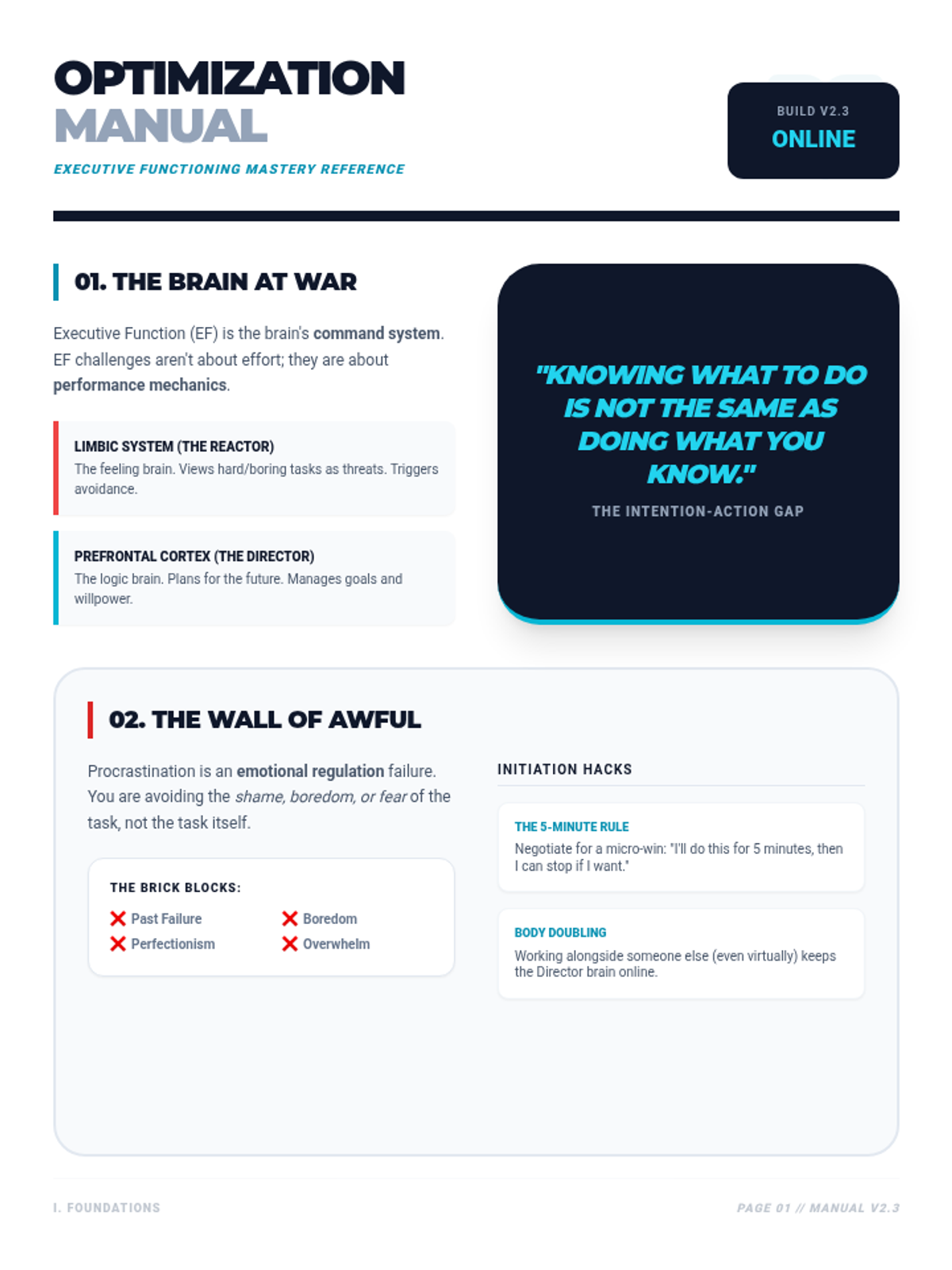
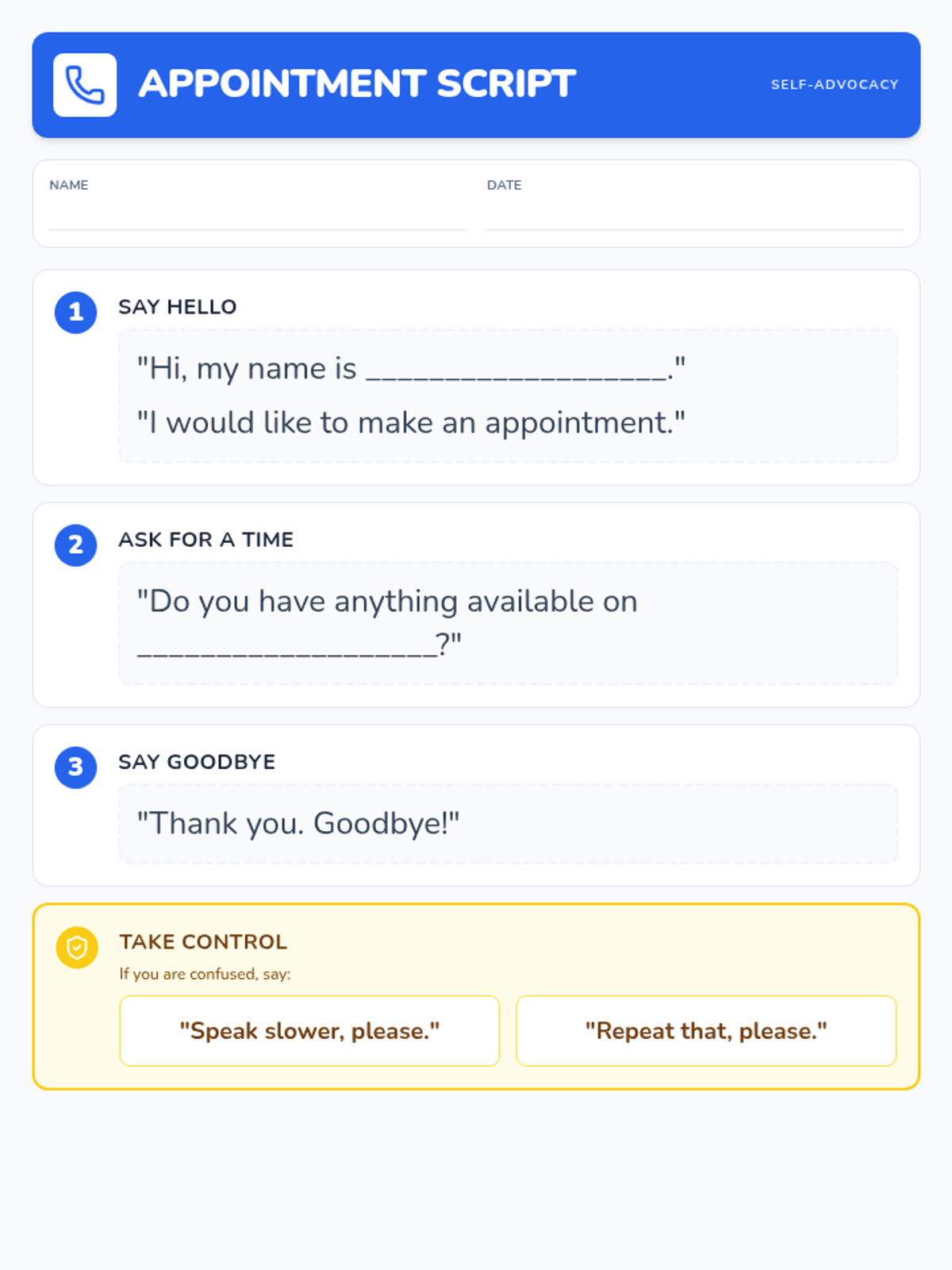
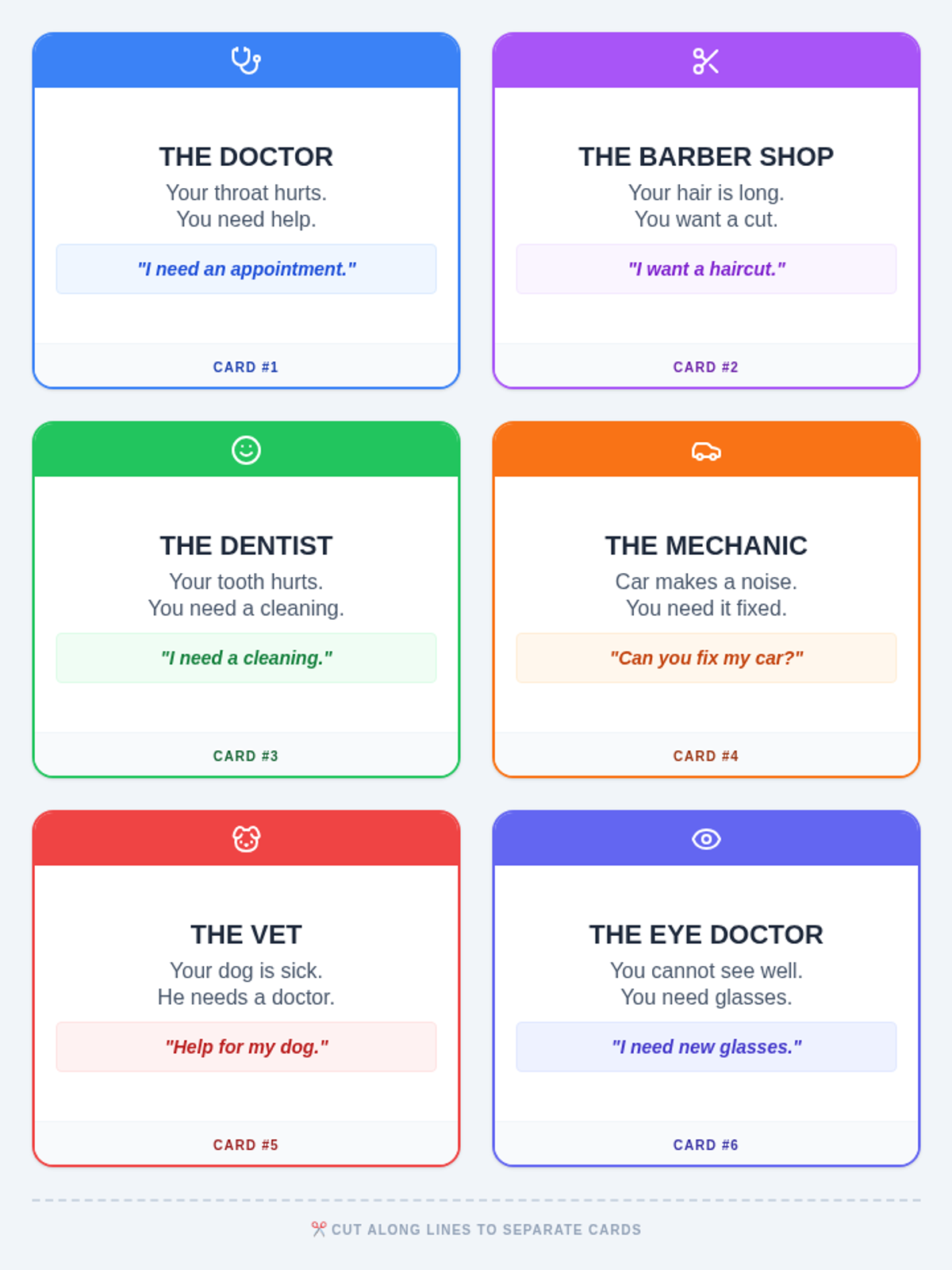
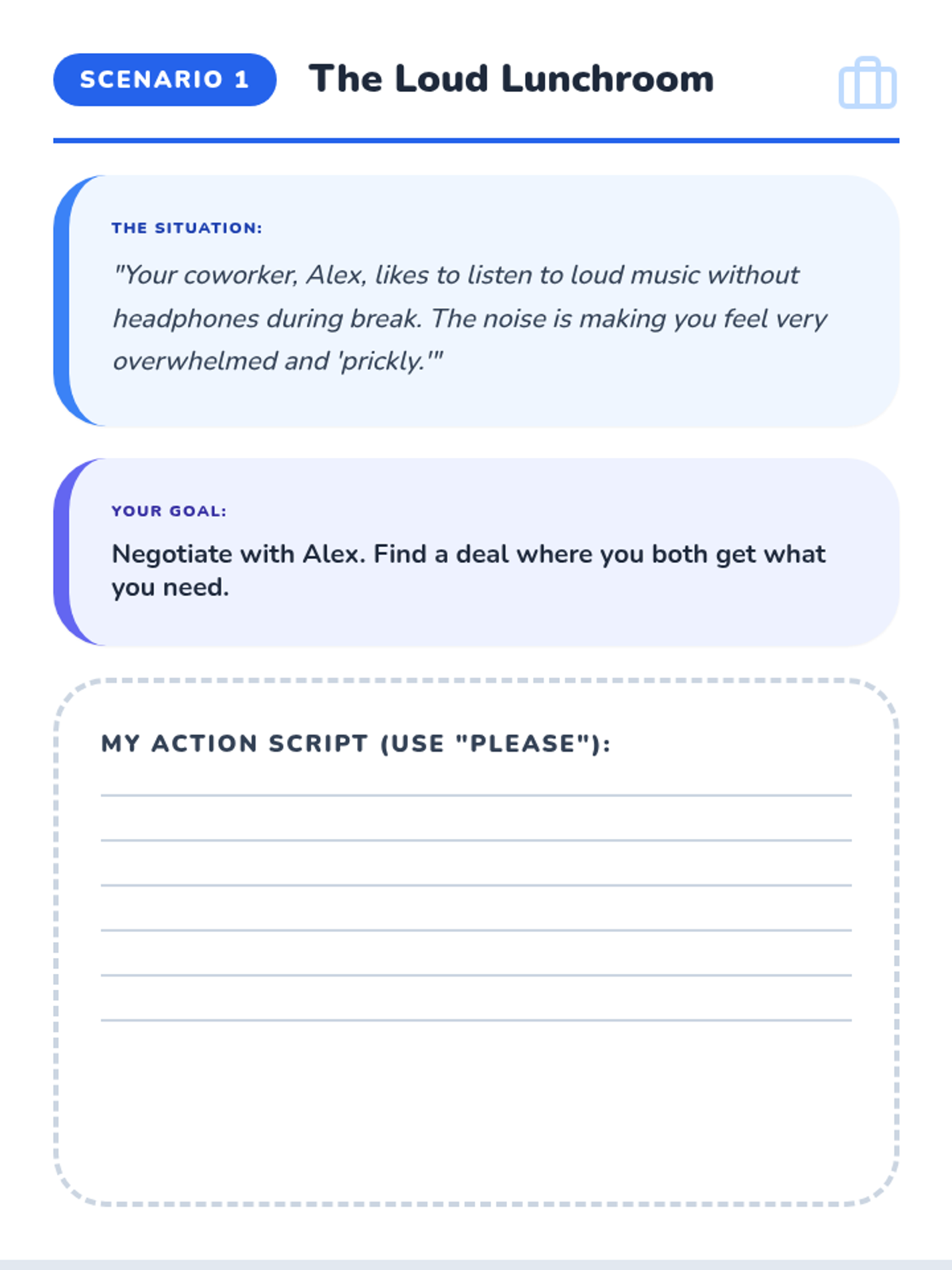
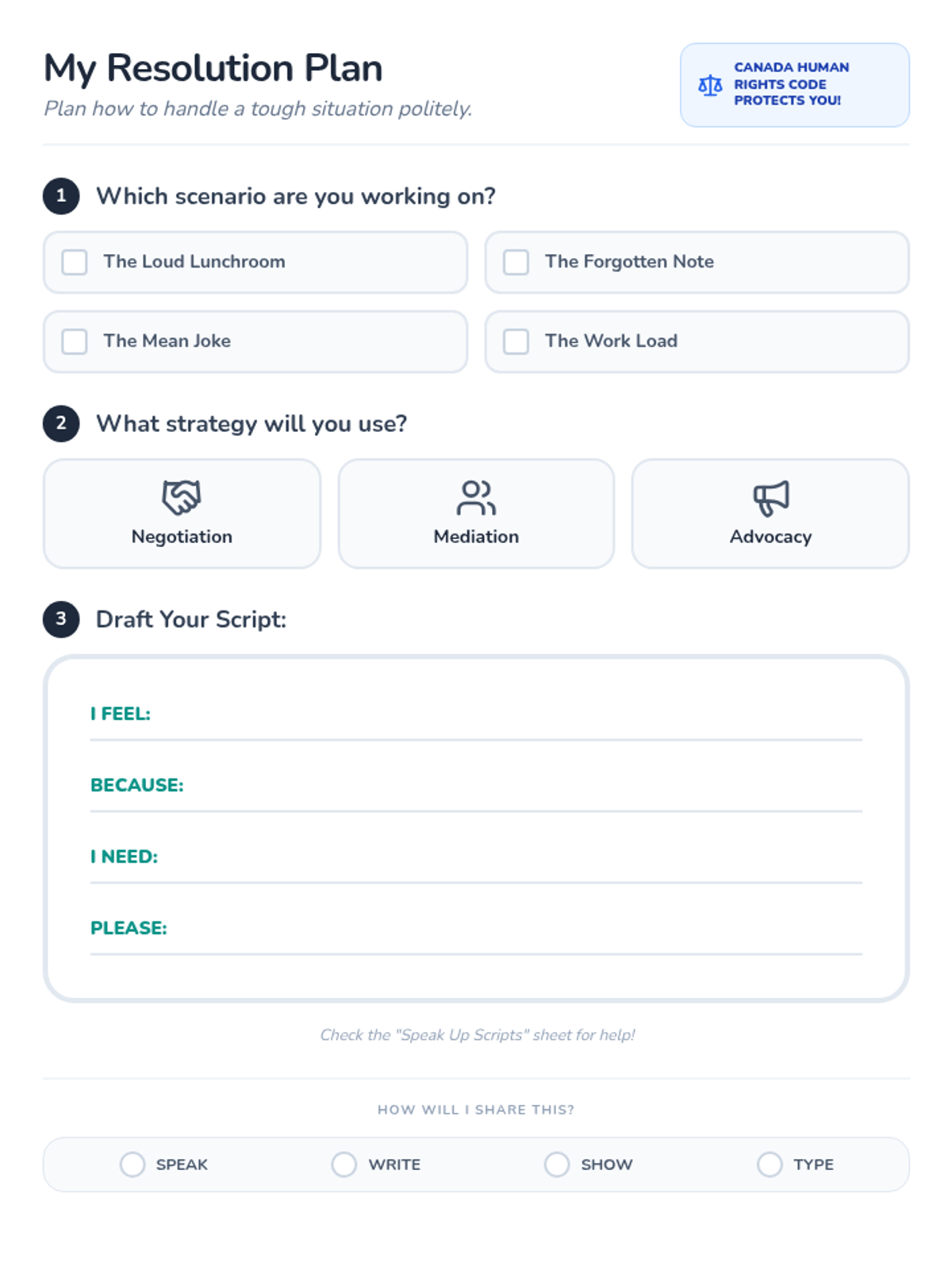
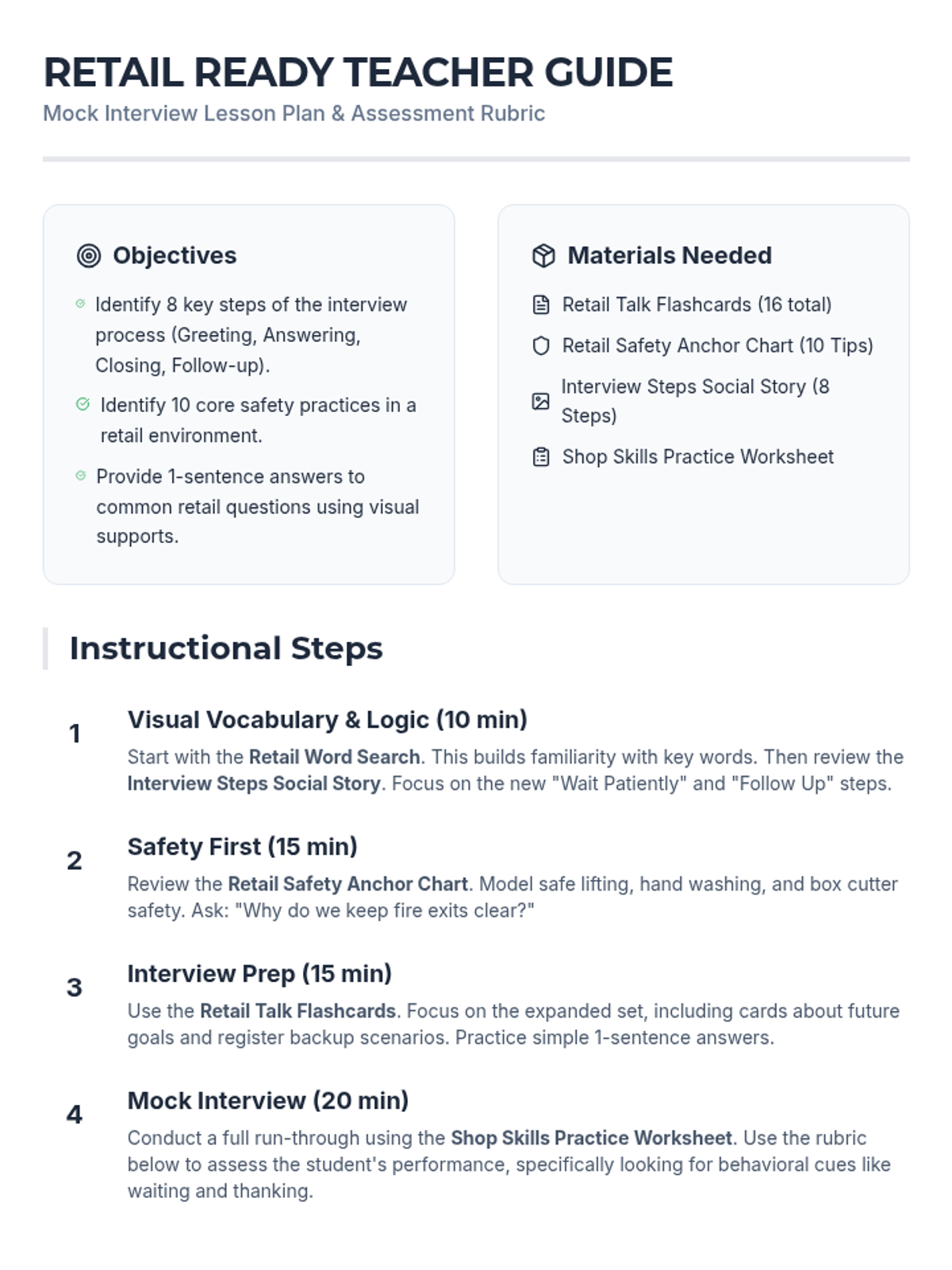
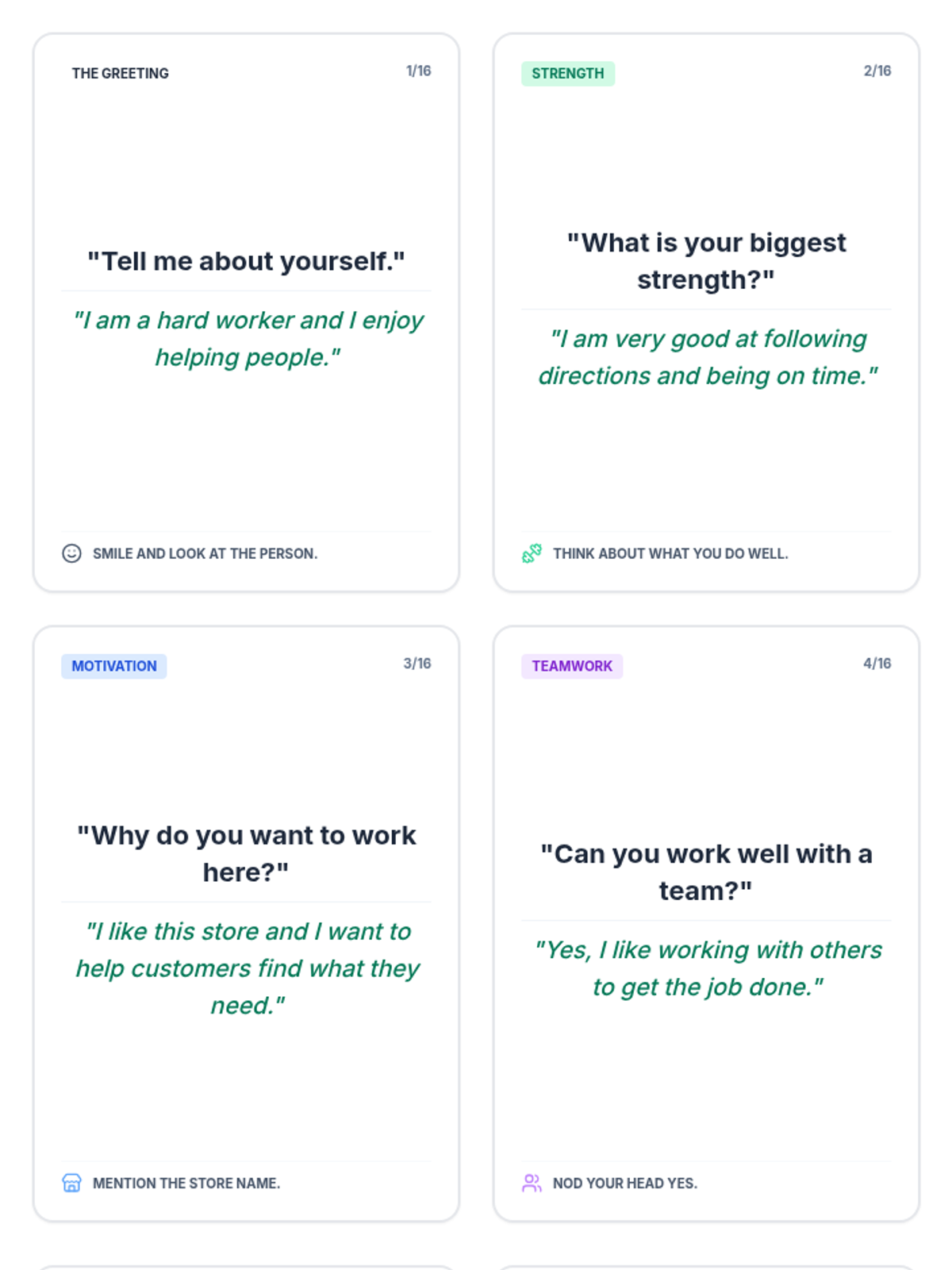
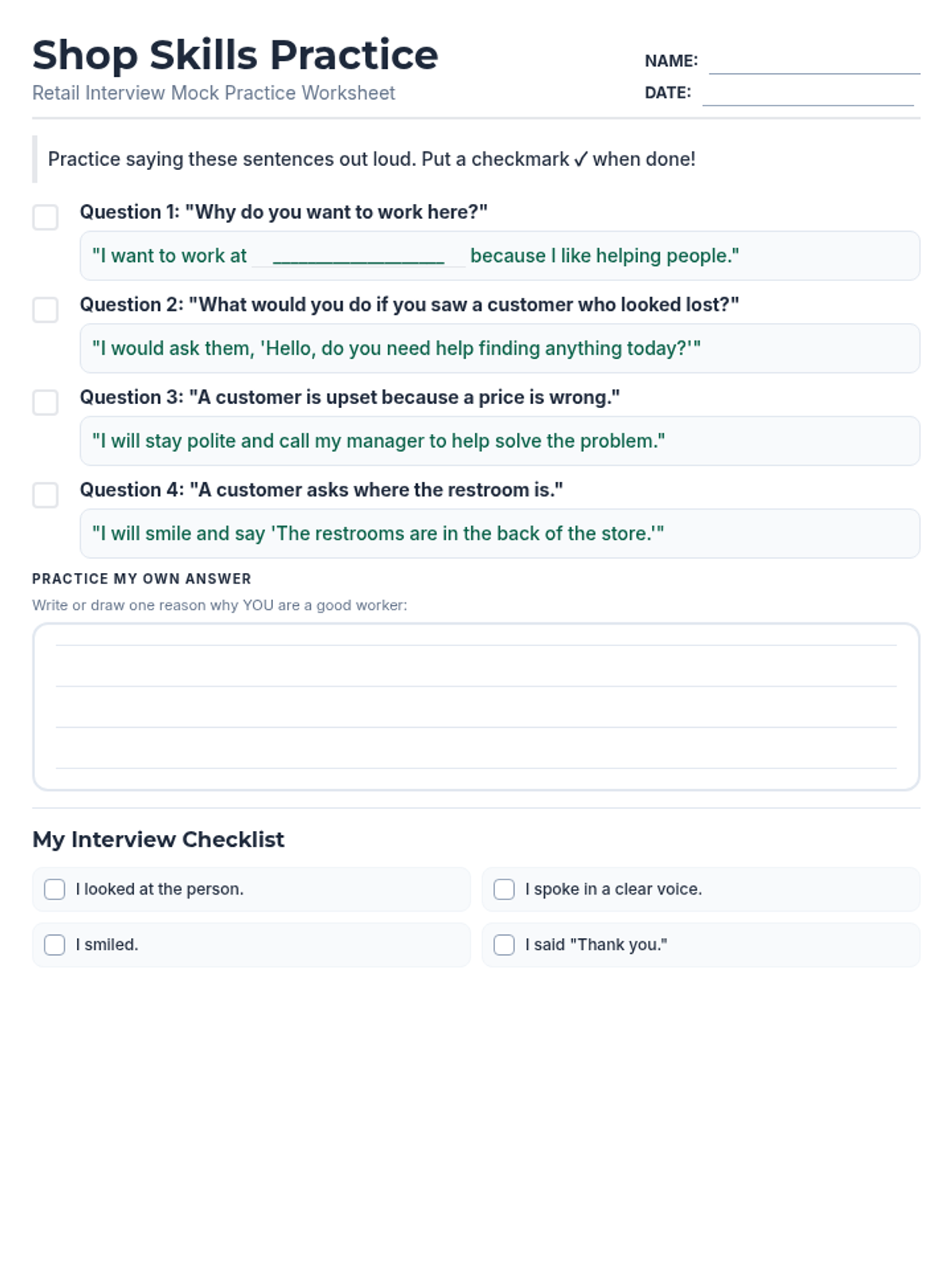
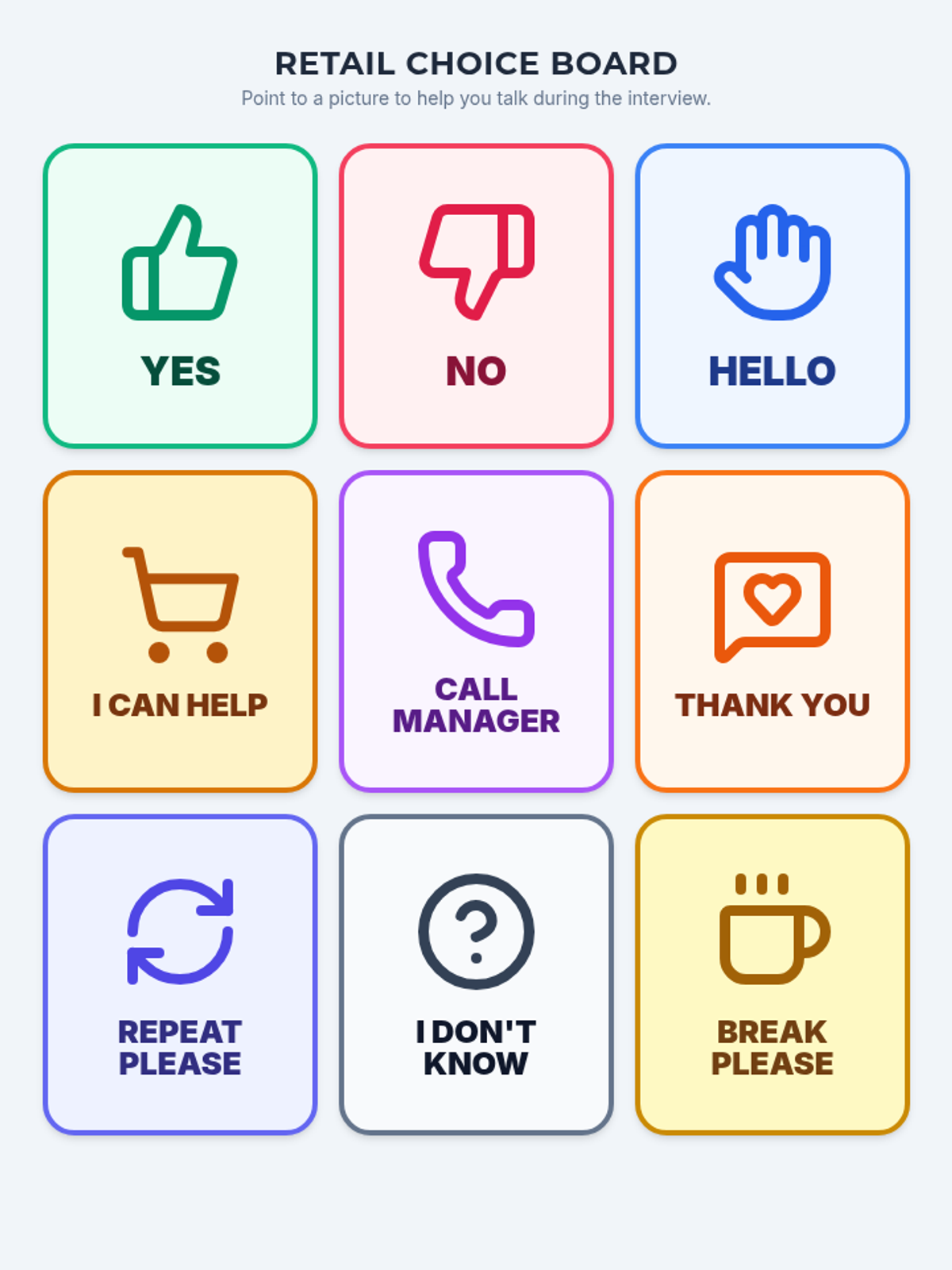
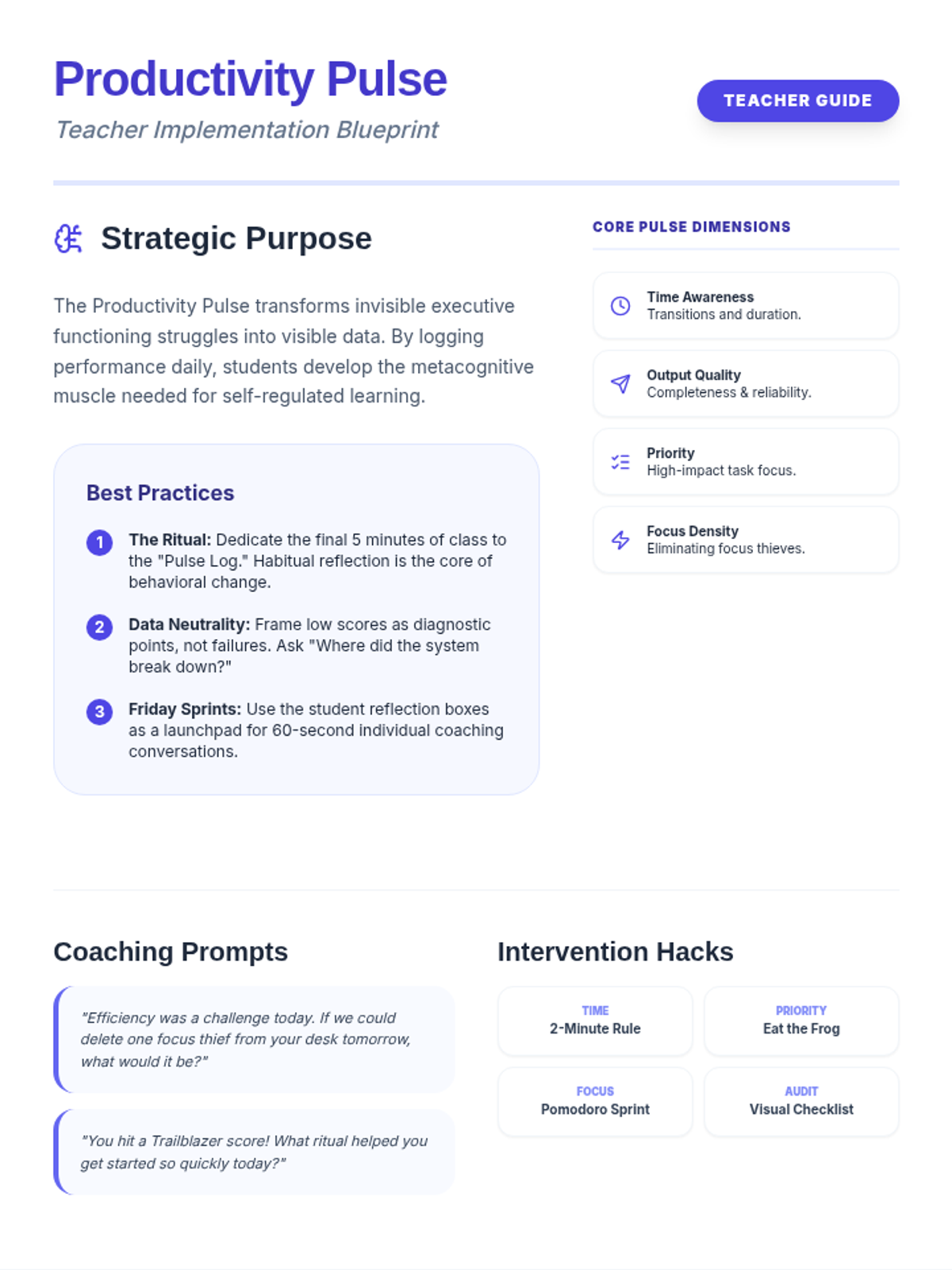
Students learn to utilize visual supports and non-text-based communication for students with cognitive disabilities or those who are non-verbal. They will practice translating abstract behavioral goals into concrete visual representations.
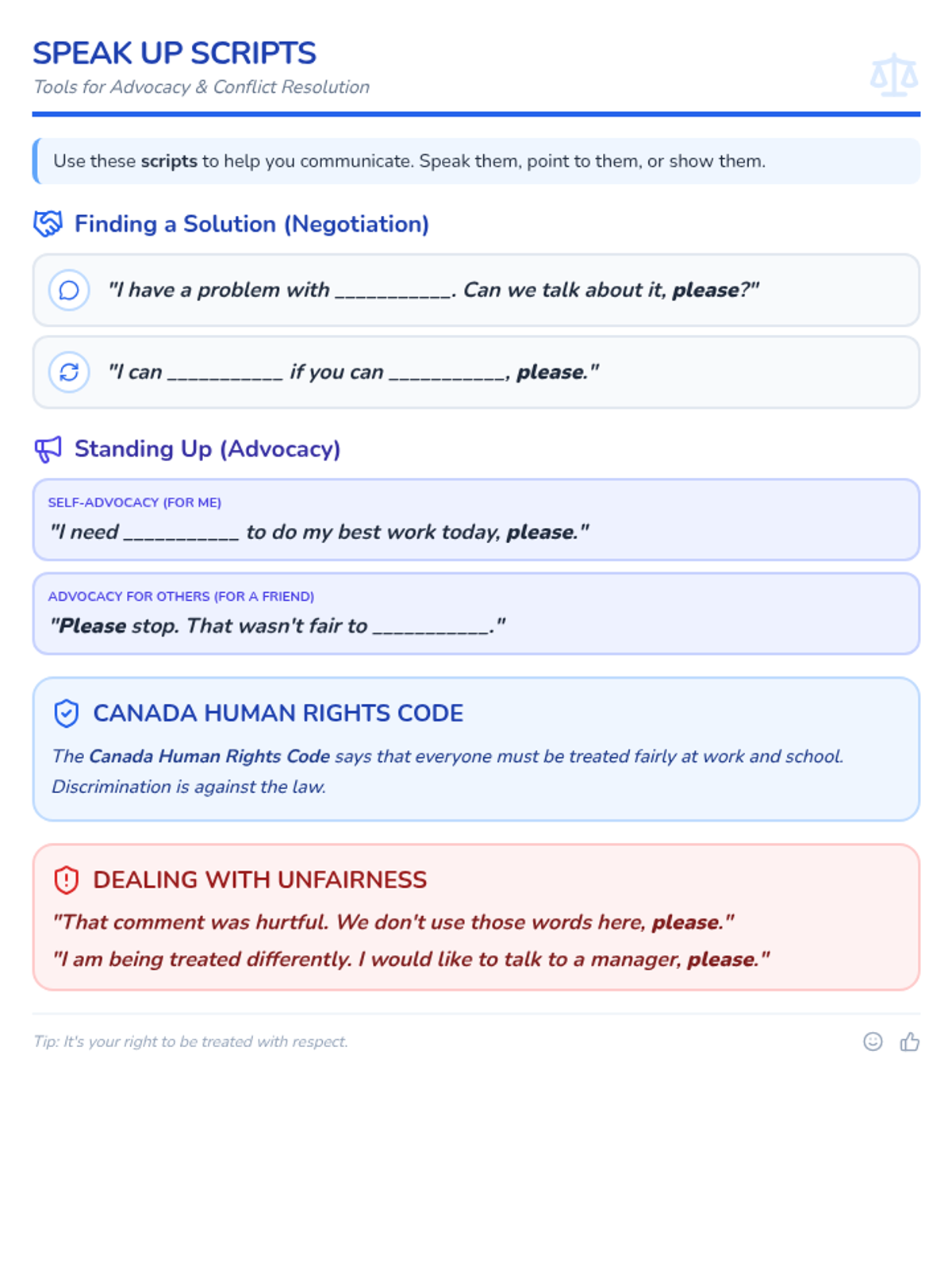
A 1-hour lesson designed for young adults with cognitive impairments, focusing on self-advocacy skills for the workplace, including identifying strengths, communicating needs, and understanding basic rights.
A comprehensive introduction to the Wide Range Assessment of Memory and Learning, Third Edition (WRAML-3), covering its structure, administration basics, and score interpretation for clinical use.
A high-energy, Valentine's-themed 'Price is Right' game designed to last up to 120 minutes, covering item pricing, logic, and estimation.
A comprehensive 4-hour (240-minute) training intensive designed to help individuals with disabilities join community clubs. This expanded lesson covers interest exploration, social navigation, self-advocacy, problem-solving, and practical goal-setting.
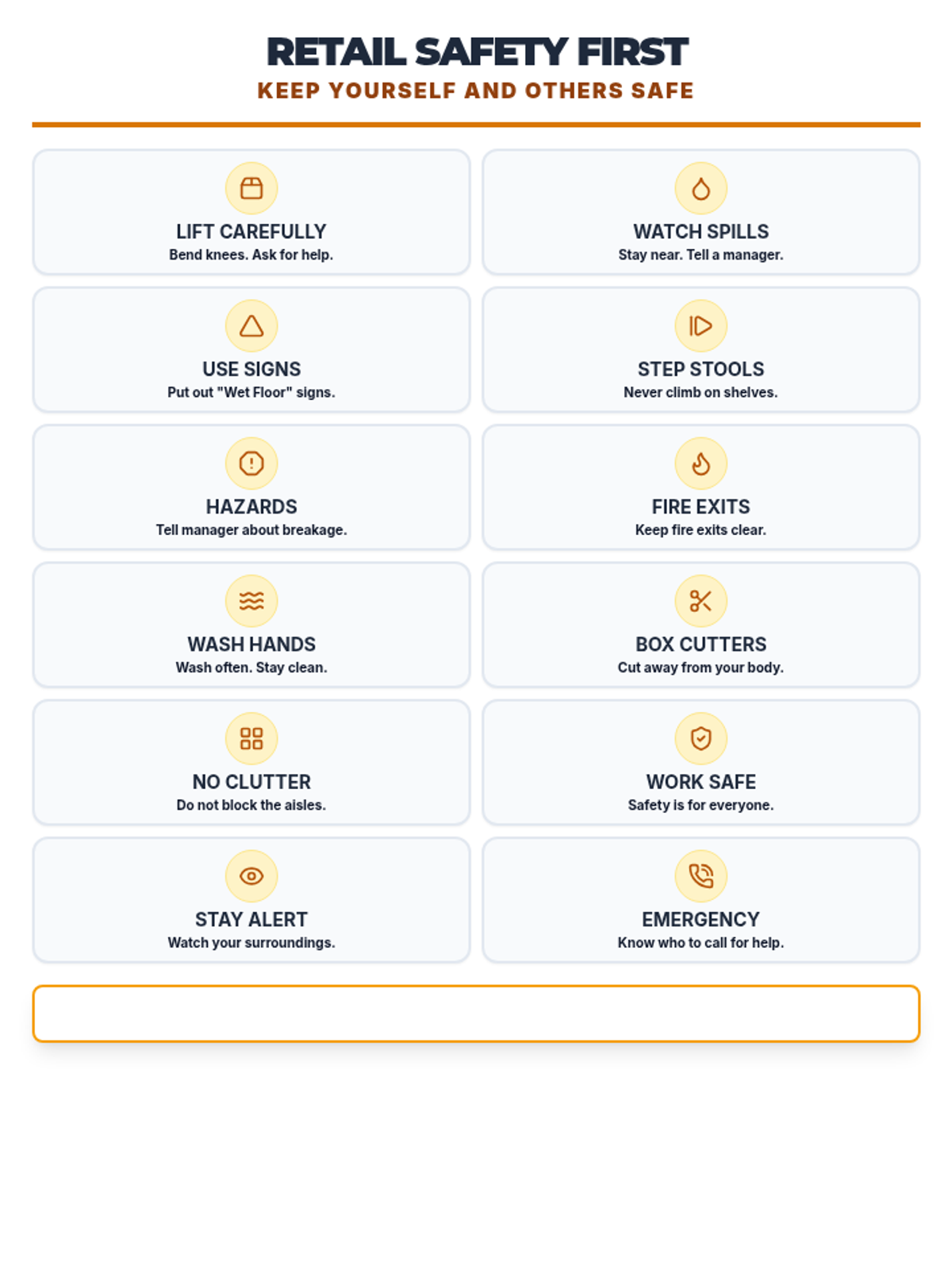
A collection of professional bulletin board posters designed for adult students with disabilities to foster independence, workplace readiness, and awareness of campus supports.
A comprehensive collection of bulletin board components designed to teach adult students with disabilities the essential soft skills required for workplace success. The materials focus on communication, attitude, work ethic, self-confidence, and time management through visual aids and interactive elements.
In this culminating lesson, students compile a digital portfolio listing their preferred software, proof of diagnosis/need, and templates for requesting accommodations.
Students explore how TTS is perceived and utilized in corporate environments versus academic ones. They analyze workplace scenarios involving confidentiality, open-office etiquette, and disclosure to HR.
Using role-play, students practice the intake interview process common in college disability support centers. One student plays the counselor, the other the student explaining their need for TTS software and digital formats.
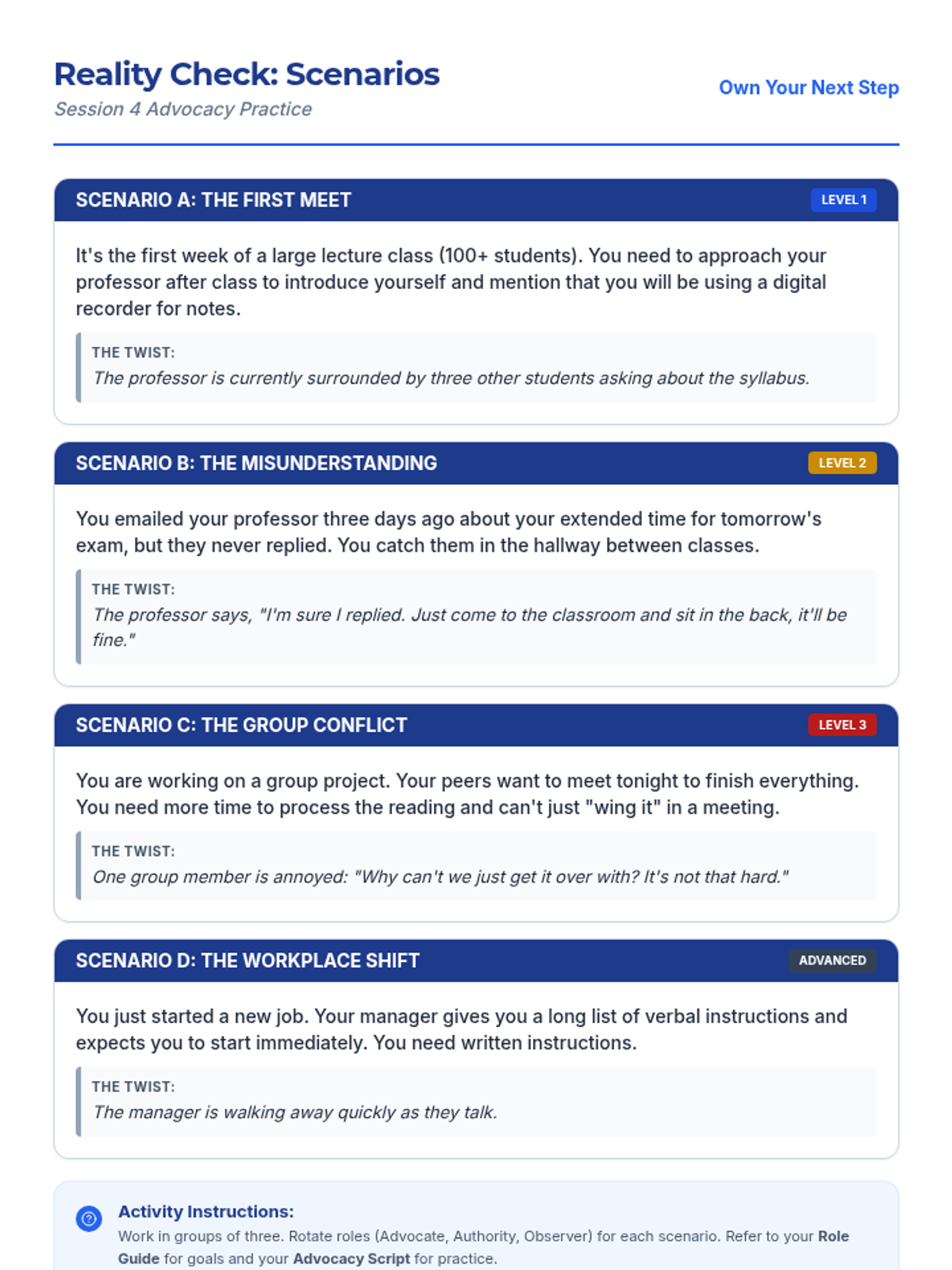
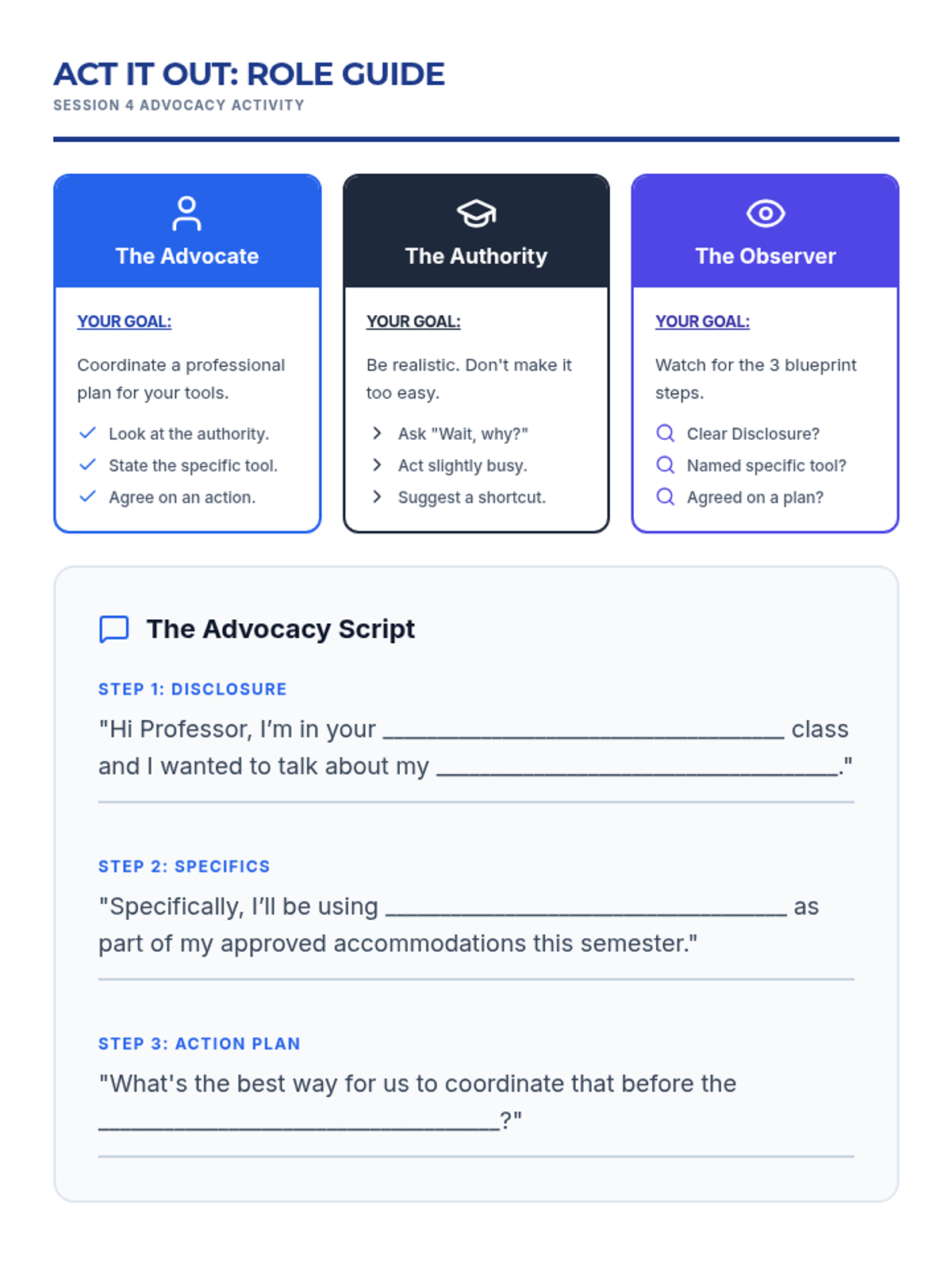
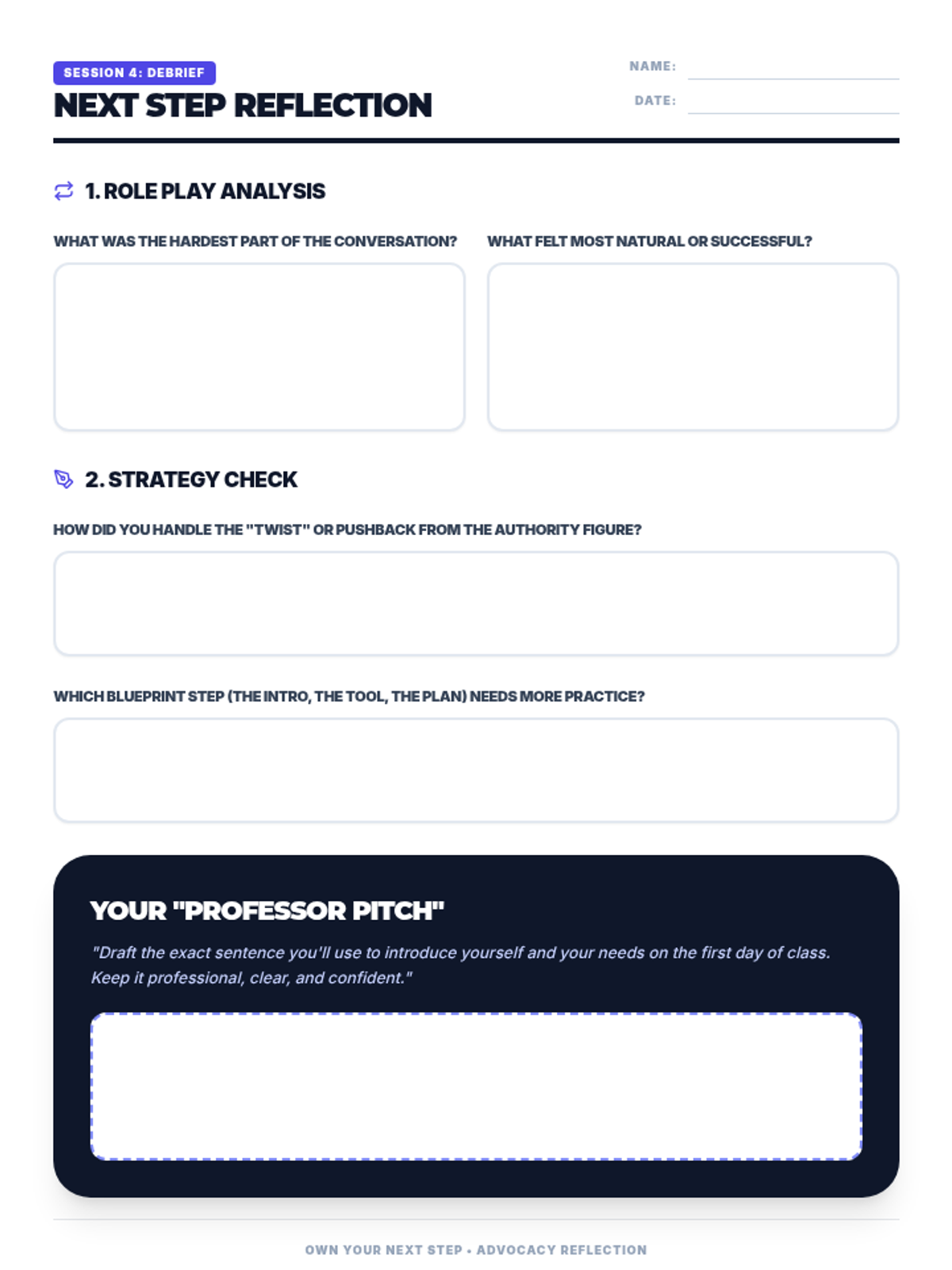
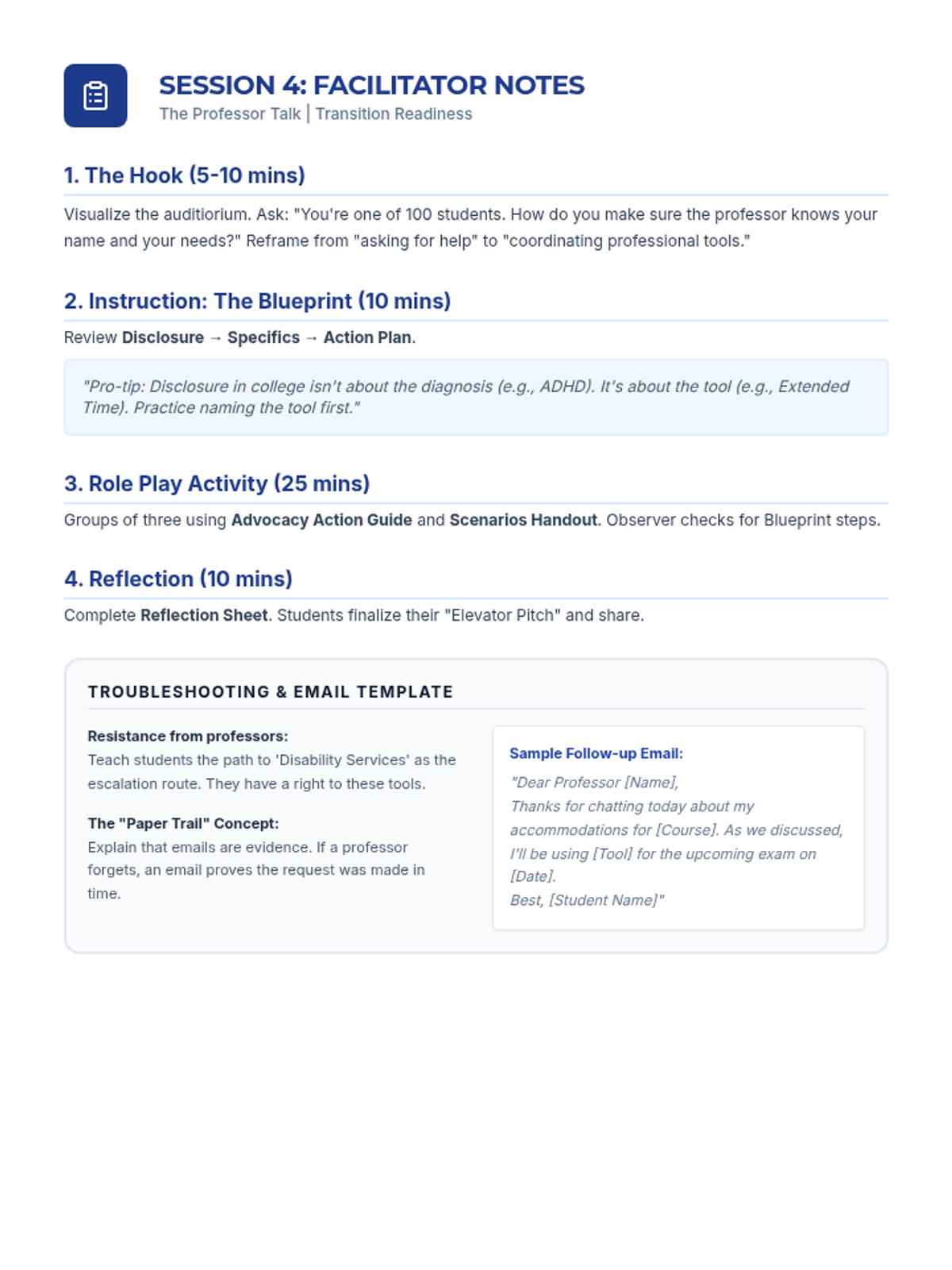
Students draft professional emails and scripts to request digital text formats from professors or disability service offices. They focus on professional tone, clarity of need, and specific technical requirements.
Students examine the Americans with Disabilities Act (ADA) and Section 504 to understand their legal rights regarding accessible text and assistive technology. They will analyze case studies of accessibility lawsuits to understand the legal obligation of institutions to provide digital formats.
A synthesis lesson where participants design a 2-week writing unit integrating assistive technology. Includes modeling, guided practice, and assessment of tech-integrated writing products.
Addresses the transition from adult-prompted technology use to student independence. Focuses on data-driven fading plans and teaching students to manage their own troubleshooting.
Teaches the 'Listen-Read' method for auditory editing using Text-to-Speech (TTS). Participants develop student checklists to catch syntax errors and omissions that visual reading might miss.
Focuses on 'dictation fluency' and the coaching techniques required for effective speech-to-text use. Covers 'think-alouds', short-burst drafting, and creating visual scaffolds for voice commands.
Explores how digital graphic organizers support executive function in the pre-writing stage. Graduate students learn to teach the conversion of mind-maps to linear outlines using drag-and-drop technology.
Master the legal and administrative requirements for documenting AT in the IEP. Draft SMART goals and data-driven justification statements for assistive devices.
Synthesize student profiles and environmental data using the SETT Framework to propose a hierarchy of assistive writing solutions. Includes a consultancy protocol for complex cases.