Lenny.com
Explore
Create
ActivitiesNewMathEnglish Language ArtsScience & EngineeringSocial StudiesGlobal LanguagesHealth & Physical EducationSpecial EducationCounseling & Life SkillsArts & CreativityESL
Lenny.com
Lenny.com
Explore
Create
ActivitiesNewMathEnglish Language ArtsScience & EngineeringSocial StudiesGlobal LanguagesHealth & Physical EducationSpecial EducationCounseling & Life SkillsArts & CreativityESL
Lenny.com
Lenny.com

Solutions

Lenny for EducatorsLenny for SchoolsLenny for Districts

Product

ExploreSign inCreateSupportAbout

Resources

Getting startedMTSS Acceleration Program

© 2026 Lenny Learning Inc.

TermsPrivacyAccessibility
LinkedInInstagramX
Lenny
MathNumbers & CountingCounting ObjectsNumber NamesComparing NumbersNumber OperationsCounting SequenceNumbers 0-10Place Value Understanding and SystemAdd and Subtract Within 20Addition and Subtraction ConceptsAddition and Subtraction EquationsAddition and Subtraction ProblemsFoundations for MultiplicationMultiplication and Division PropertiesMultiply and Divide Within 100Multiplication and Division ProblemsFactors and MultiplesProperties of OperationsPatterns and RelationshipsGenerate and Analyze PatternsMulti-Digit ArithmeticPlace Value OperationsMulti-Digit and Decimal OperationsNumerical ExpressionsFour Operations and PatternsFour Operations Problem SolvingMeasurement & DataMeasurable AttributesMeasuring LengthsMeasure and Estimate Lengths in Standard UnitsRelate Addition and Subtraction to LengthClassifying and Counting ObjectsTime and MoneyArea Concepts and MeasurementPerimeter and Area MeasuresAngle Concepts and MeasurementTime, Volume, and MassMeasurement Unit ConversionsGeometryIdentifying ShapesShapes and AttributesShape Attributes and ReasoningShapes and CompositionClassifying 2D FiguresGeometric Figures and RelationshipsLines, Angles, and ShapesAngle, Area, and VolumeGeometric MeasurementVolume of 3D ShapesCoordinate Plane ApplicationsTransformations in the PlaneCongruence and SimilarityUnderstand congruence in terms of rigid motionsSimilarity and TransformationsProve Theorems Involving SimilarityPythagorean TheoremTrigonometry for General TrianglesMake Geometric ConstructionsProve Geometric TheoremsTheorems About CirclesFind Arc Lengths And Areas of Sectors of CirclesVolume FormulasRelationships Between Two-Dimensional and Three-Dimensional ObjectsProve Simple Geometric Theorems AlgebraicallyTranslate Between Geometric Description and Equation for Conic SectionApply Geometric Concepts in Modeling SituationsFractions & DecimalsFractions as NumbersBuilding FractionsFraction Equivalence and OrderingAdding and Subtracting FractionsMultiplying and Dividing FractionsDividing FractionsDecimal FractionsMulti-Digit Computation and FactorsAdd, Subtract, Multiply, and Divide Rational NumbersRational Number SystemIrrational Numbers and ApproximationsRatiosRatios and ProportionsProportional RelationshipsUnit RateAlgebraAlgebraic ExpressionsGenerate Equivalent ExpressionsQuantitative RelationshipsProportional Relationships and Linear EquationsEquations and InequalitiesEquation Solving and ReasoningLinear Equations and SystemsGraph Equations and InequalitiesSystems of EquationsReal-World Algebraic ProblemsQuantitative Reasoning with UnitsExpression StructureEquivalent Expression FormsRadicals and Integer ExponentsRational ExponentsRational and Irrational NumbersPolynomial OperationsPolynomial IdentitiesPolynomial Zeros and FactorsRational ExpressionsComplex Number OperationsComplex Numbers in PolynomialsComplex Numbers on PlaneStatistics & ProbabilityRepresent and Interpret DataData DistributionsStatistical VariabilityProbability ModelsCompound Event ProbabilitiesStatistical SamplingInterpret Categorical and Quantitative DataBivariate Data PatternsInterpret Linear ModelsComparing Two PopulationsRandom Processes in StatisticsIndependence and Conditional ProbabilityExpected ValuesProbability-Based Decision MakingStatistical Inference and ConclusionsFunctionsFunction Concepts and NotationDefine and Compare FunctionsInterpret Functions in ContextAnalyze Function RepresentationsModel Relationships with FunctionsIdentify Linear vs Exponential GrowthDistinguish Between Function TypesCompare Growth RatesInterpret Function ExpressionsBuild Functions from RelationshipsConstruct and Model FunctionsTransform and Combine FunctionsModel Comparison and SelectionSolve Exponential EquationsTrigonometryTrigonometric Ratios Involving Right TrianglesTrigonometric Functions and Unit CircleModel with Trigonometric FunctionsTrigonometric IdentitiesVectors & MatricesIntroduction to Vectors and MatricesVector QuantitiesVector OperationsMatrix OperationsCalculusLimits and ContinuityDerivative Concepts and NotationDerivative Rules and TechniquesApplications of DerivativesOptimization ProblemsRelated RatesCurve Sketching and AnalysisIntegration Concepts and NotationAntiderivatives and Indefinite IntegralsDefinite Integrals and AreaFundamental Theorem of CalculusIntegration TechniquesApplications of IntegrationDifferential EquationsSequences and SeriesParametric and Polar FunctionsVector-Valued Functions

Unit 3 Reference Sheets

Standards-based reference sheets for 7th Grade Unit 3 covering expressions, one- and two-step equations, and inequalities with graphing.

Iisaac_daigle

Unit 3 Reference Sheets

Standards-based reference sheets for 7th Grade Unit 3 covering expressions, one- and two-step equations, and inequalities with graphing.

Iisaac_daigle

Multiplication (\(\cdot\)) Undo by Dividing

Division (\(/\)) Undo by Multiplying

Two-Step Equations Solving Order:

  1. Locate the variable.
  2. Undo the addition or subtraction first (zero out constant).
  3. Undo the multiplication or division next (isolate variable).
  4. Check your solution by substituting into the original equation!

\(2x + 5 = 11\)

\(-5 \quad -5\)

\(2x = 6 \rightarrow \mathbf{x = 3}\)

\(\frac{x}{4} - 3 = 2\)

\(+3 \quad +3\)

\(\frac{x}{4} = 5 \rightarrow \mathbf{x = 20}\)

Unit 3 Mathematics • Page 1 of 2 Turn page for Key Words, Inequalities, and Number Line Graphing

Unit 3 Reference Sheet: Inequalities & Graphing

Translation Vocabulary, Inequality Symbols, Graphing Rules & Solving Inequalities

Page 2 of 2

WRITING EXPRESSIONS KEY WORDS AND PHRASES

ADDITION (+)

Sum, More than, Increased by, Total, Plus, All together

SUBTRACTION (−)

Difference, Less than, Decreased by, Subtracted from, Minus

MULTIPLICATION (•)

Times, Product, Twice, Double / Triple, Of, Per

DIVISION (/)

Divided by, Quotient, Half / Third, Separate

Watch out for Subtraction! Phrases like less than and subtracted from indicate you must reverse the order:

"5 less than \(n\)" → \(n - 5\)

INEQUALITY SYMBOLS

<

• "less than"

• "fewer than"

>

• "greater than"

• "more than"

• "exceeds"

≤

• "less than or equal to"

• "at most"

• "maximum"

≥

• "greater than or equal to"

• "at least"

• "no less than"

READING / WRITING INEQUALITIES

Format for writing/reading in words:

All numbers

[Variable Phrase] [Inequality Phrase] [Number]

Format for writing inequalities:

\(\underline{\text{Variable}}\) \(\underline{\text{Symbol}}\) \(\underline{\text{Number}}\)

Example: "All numbers greater than or equal to \(-3\)" → \(x \ge -3\)

GRAPHING INEQUALITIES

Step 1: Use an open or closed circle on the number line.

Step 2: Draw an arrow in the direction of numbers that make the statement true.

Open circle ○ Use with > or < (not included)

Closed circle • Use with ≥ or ≤ (included)

When variable is on the left, arrow points in direction of symbol (\(x > a \rightarrow\), \(x < a \leftarrow\)).

SOLVING INEQUALITIES (Same process as solving equations) Reversal Rule

\(x - 5 \le 3\)

\(+5 \quad +5\)

\(x \le 8\)

Closed circle •, left

\(y + 4 > 9\)

\(-4 \quad -4\)

\(y > 5\)

Open circle ○, right

\(6x \le 18\)

\(\div 6 \quad \div 6\)

\(x \le 3\)

Closed circle •, left

\(\frac{x}{5} > 4\)

\(\cdot 5 \quad \cdot 5\)

\(x > 20\)

Open circle ○, right

Multiplying or Dividing by a Negative Number: You must reverse (flip) the inequality sign!

\(-2x < 6 \rightarrow x > -3\)

Unit 3 Mathematics • Page 2 of 2 Check circle type (open vs. closed) and verify arrow direction

You might also like

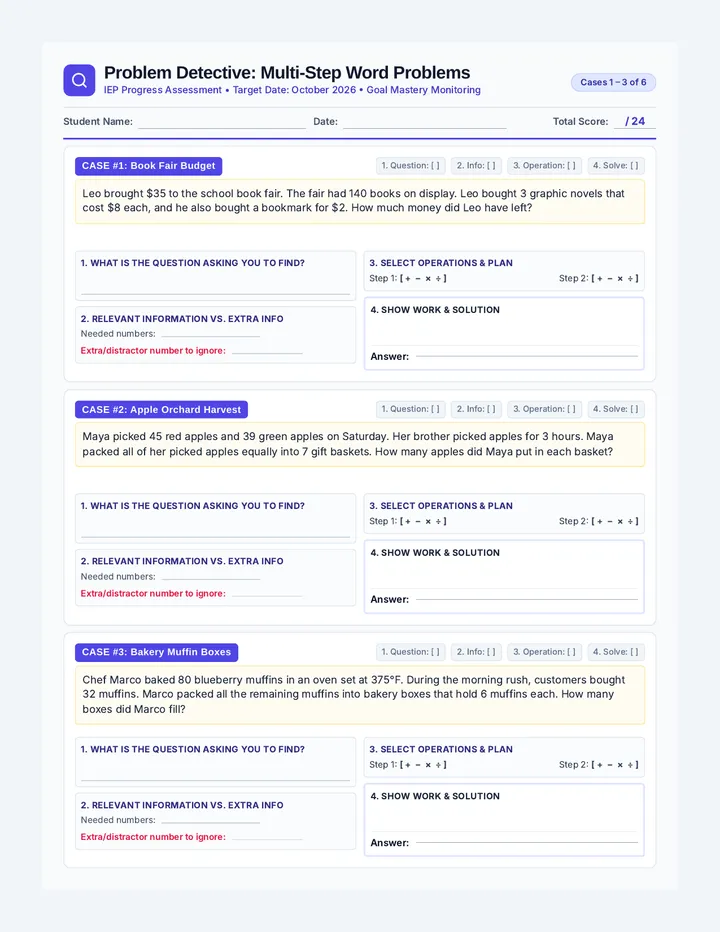
Problem Detective Assessment

Math Goal Mastery

A targeted sequence of progress monitoring assessments and evaluation guides designed to measure and document key IEP mathematics benchmarks, including multi-step word problems and multi-digit operations.

JD

Jenny Daniels

4
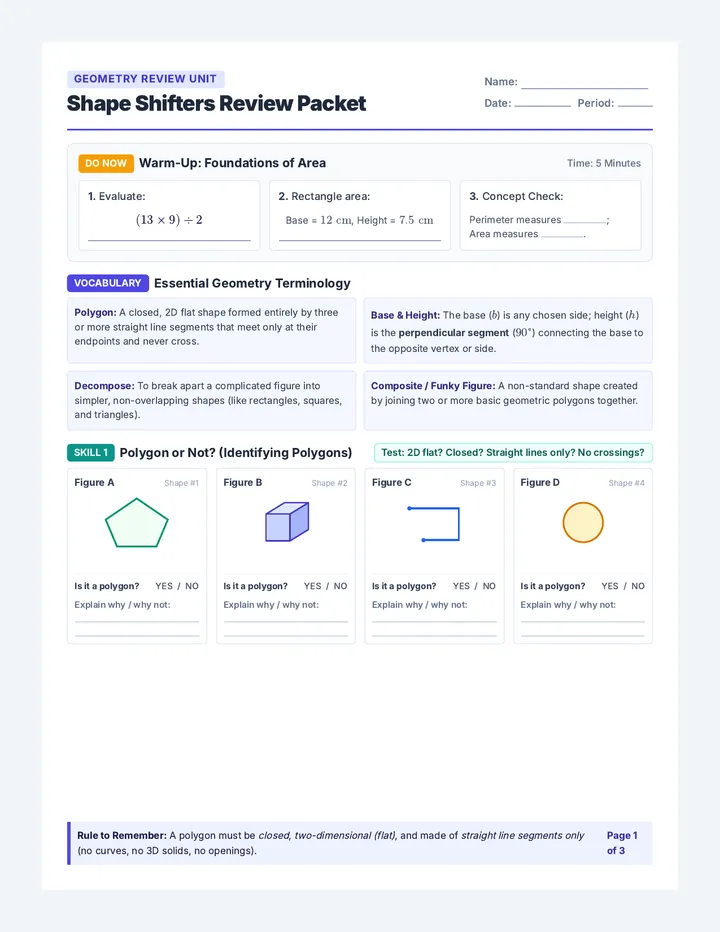
Shape Shifters Review Packet

Shape Shifters Geometry Review

A comprehensive geometry review lesson focused on classifying polygons and calculating the areas of triangles, parallelograms, trapezoids, and complex composite figures through decomposition. Includes a structured review packet with Do Now and vocabulary, an exit ticket, independent homework, and a cumulative assessment quiz with a teacher answer key.

AA

alicia accapezzato

5
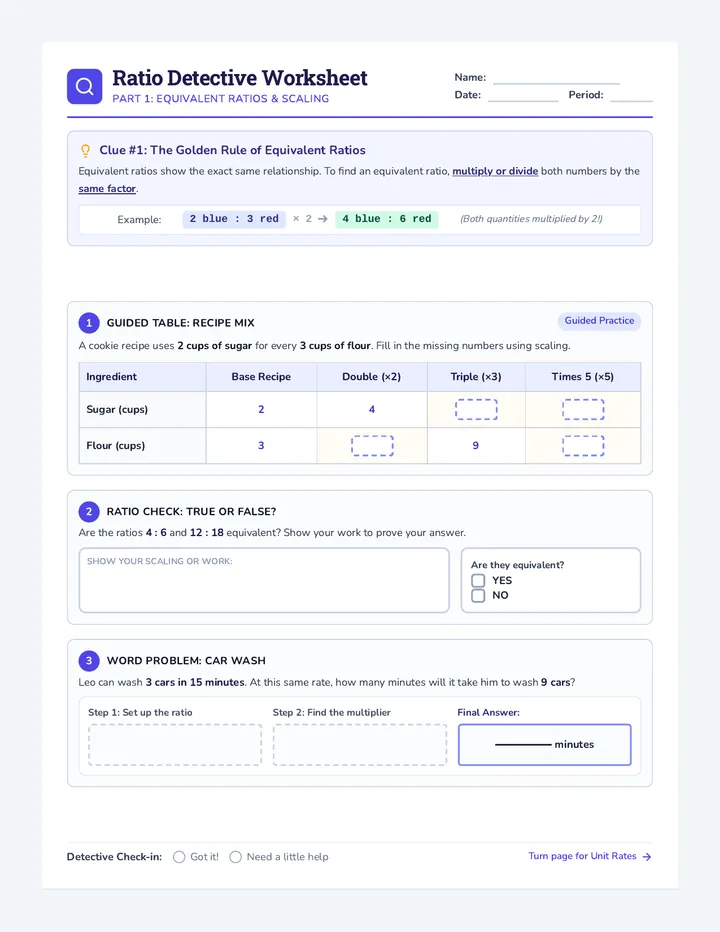
Ratio Detective Worksheet

Ratio Detective Worksheet

A scaffolded 2-page 7th-grade math worksheet on equivalent ratios and unit rates designed for IEP support, featuring visual models, guided ratio tables, step-by-step problem frames, and ample writing space.

KD

Katelynn Dotson

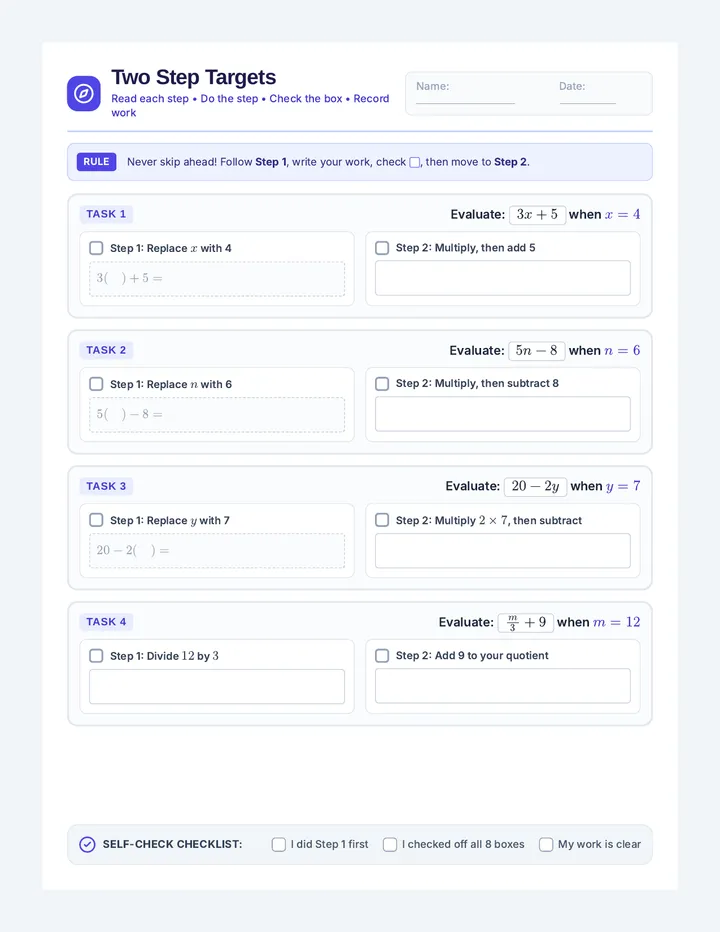
Two Step Targets Worksheet

Direction Detectives

A scaffolded 7th-grade math practice sequence designed for special education learners, focusing on breaking down multi-step tasks into clear, bite-sized directions of 2 to 4 prompts. Students follow explicit written directions, track their progress with visual step checkpoints, and record each intermediate calculation.

J

jbrower

6
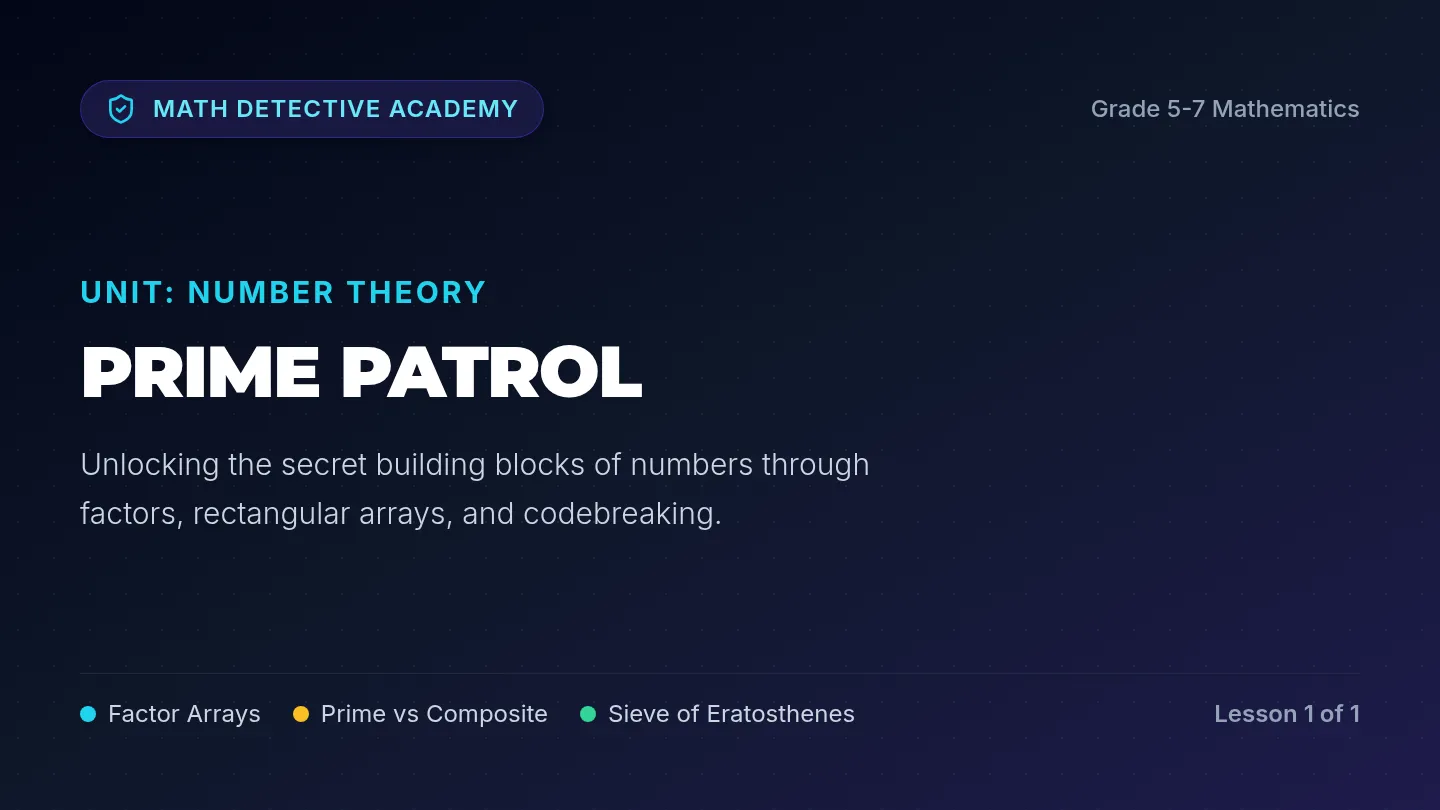
Prime Patrol Slides

Prime Patrol

An engaging upper-elementary and middle school mathematics lesson introducing prime and composite numbers through factor arrays, the Sieve of Eratosthenes, and real-world cryptographic connections. Features direct instruction slides, guided student practice, a fast formative exit ticket, and a teacher facilitation guide.

NS

Naomi Seifert

4
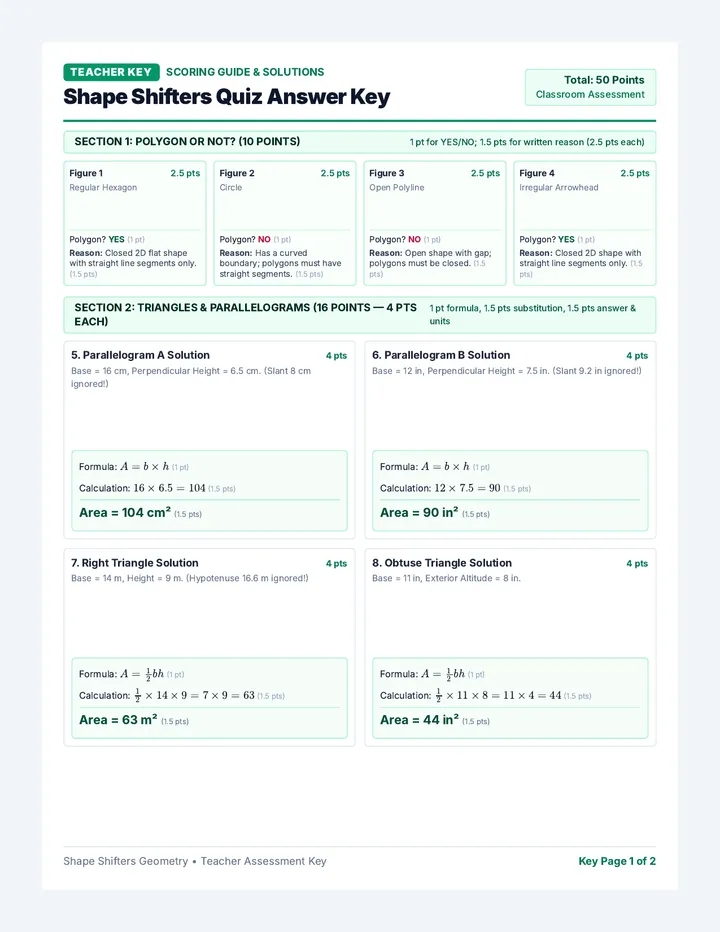
Shape Shifters Quiz Key

Shape Shifters Quiz Key

A complete 2-page teacher answer key and scoring guide updated to match the quiz with the bonus removed and expanded solution steps, decomposition rubrics, and point distributions.

AA

alicia accapezzato

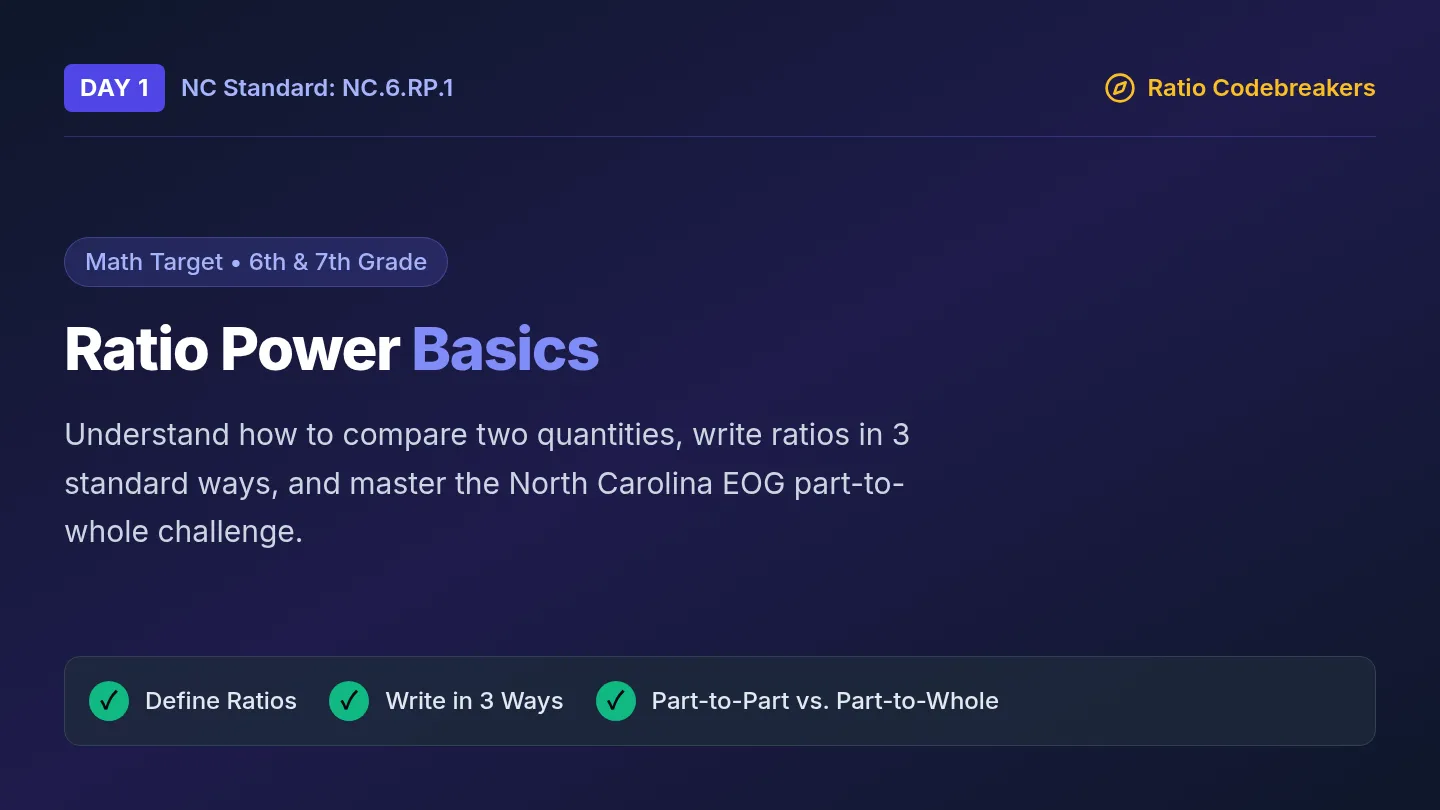
Ratio Power Slides

Ratio Launchpad

A 3-day scaffolded sequence designed for self-contained 6th and 7th grade math students preparing for North Carolina End-of-Grade (EOG) testing. The sequence develops foundational ratio reasoning through concrete visual models, structured guided practice, tape diagrams, and equivalent ratio tables.

CP

Christian Page

12
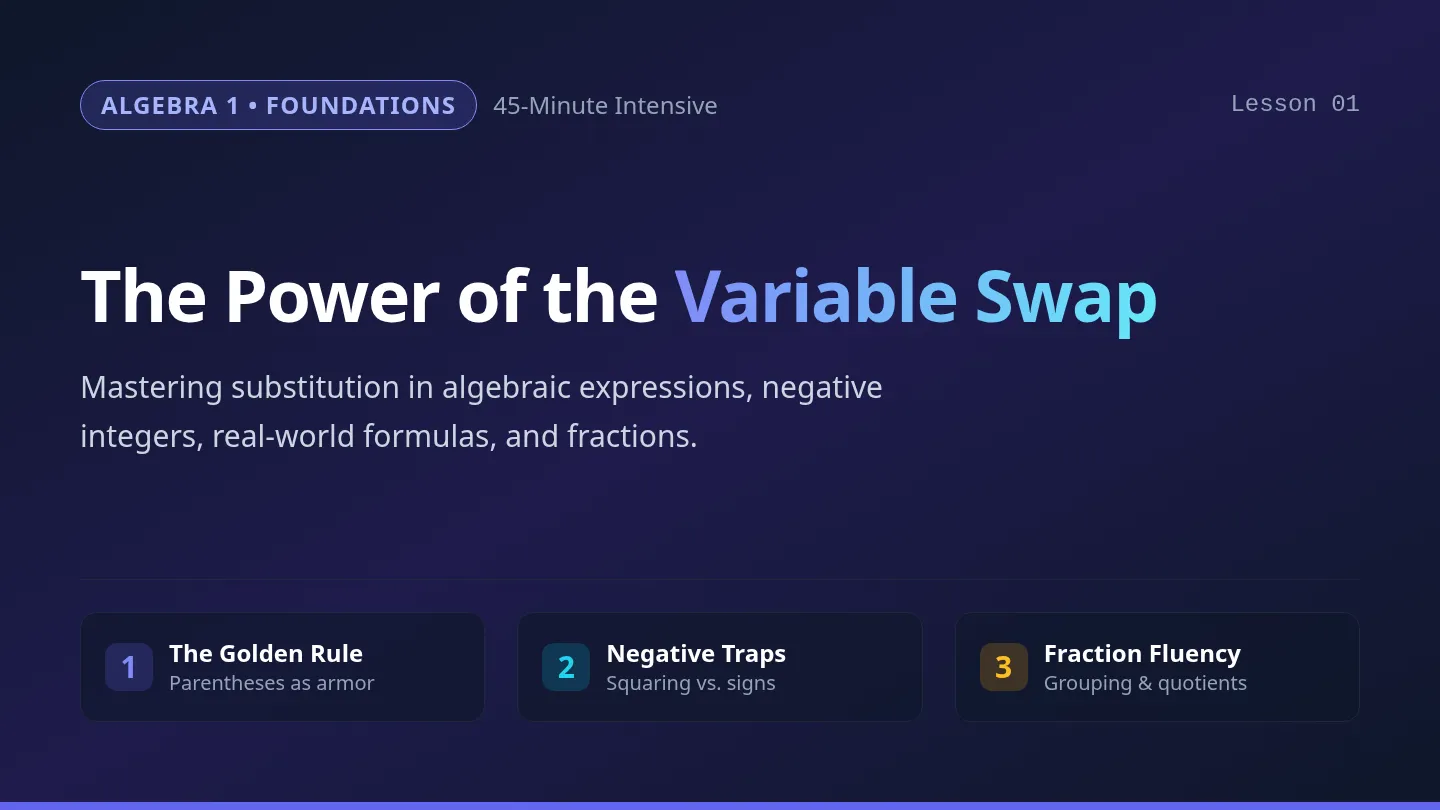
Variable Swap Slides

Substitution Mastery

A foundational 45-minute algebra lesson on variable substitution covering expressions, equations, formulas, negative numbers, and a dedicated focus on fractions.

AP

Alexis Paolini

6
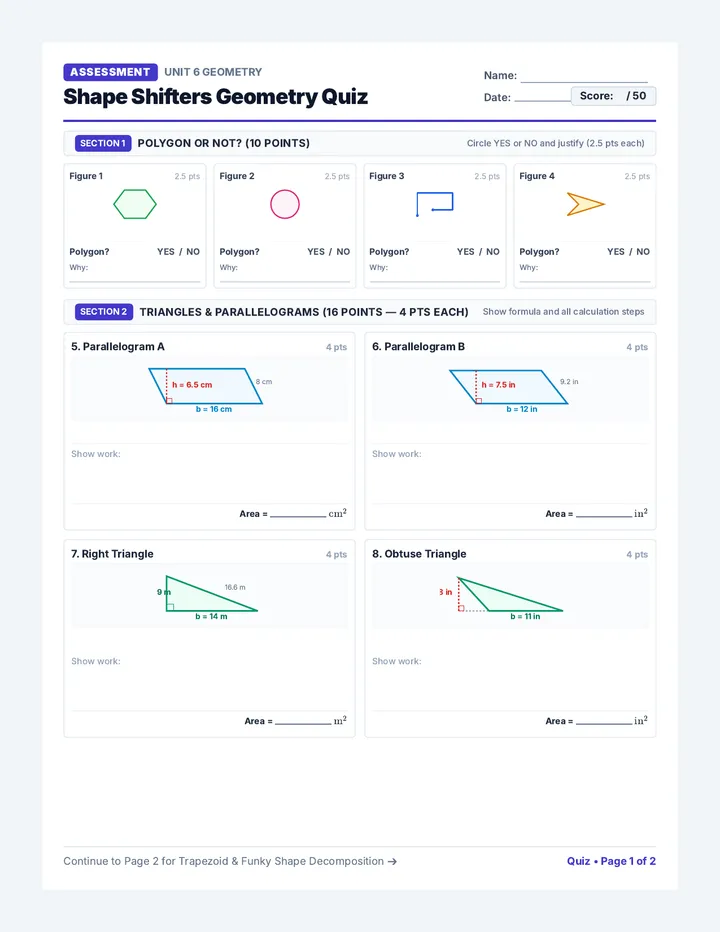
Shape Shifters Geometry Quiz

Shape Shifters Geometry Quiz

A comprehensive 2-page assessment quiz with the challenge question removed, featuring substantially expanded student workspace for trapezoid and funky shape decomposition problems.

AA

alicia accapezzato

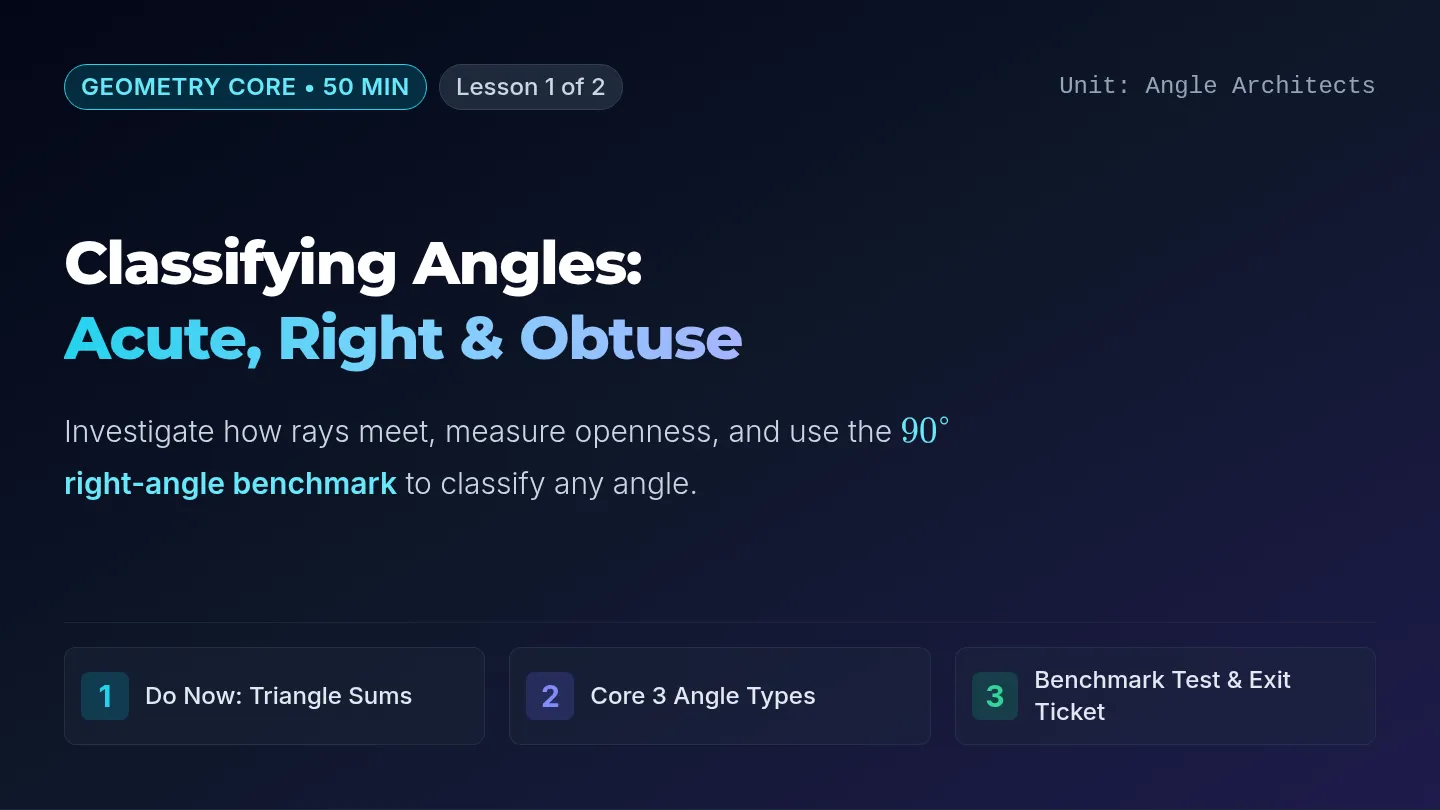
Angle Types Slides

Angle Architects

A two-part 50-minute geometry unit exploring angle classifications and angle pair relationships through rich geometric diagrams, guided algebraic problem-solving, and visual practice.

AA

alicia accapezzato

6
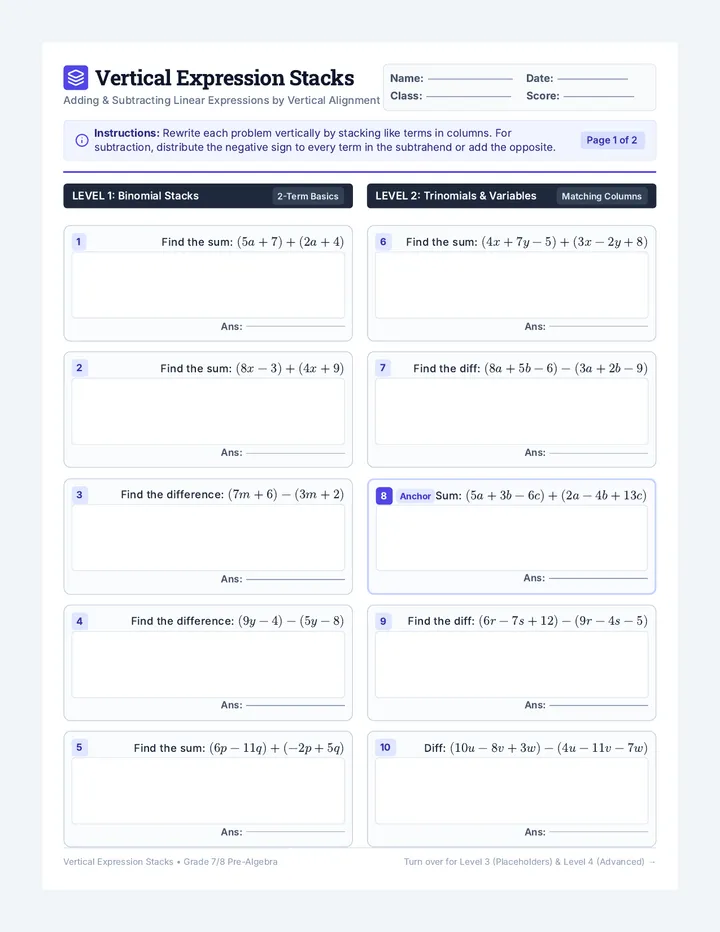
Vertical Expression Stacks Worksheet

Vertical Expression Stacks

A comprehensive lesson focused on adding and subtracting linear expressions using vertical alignment techniques. Students master lining up like terms, managing signs during subtraction, and handling missing variables with zero placeholders across increasing levels of complexity.

T

tsthibeault

2
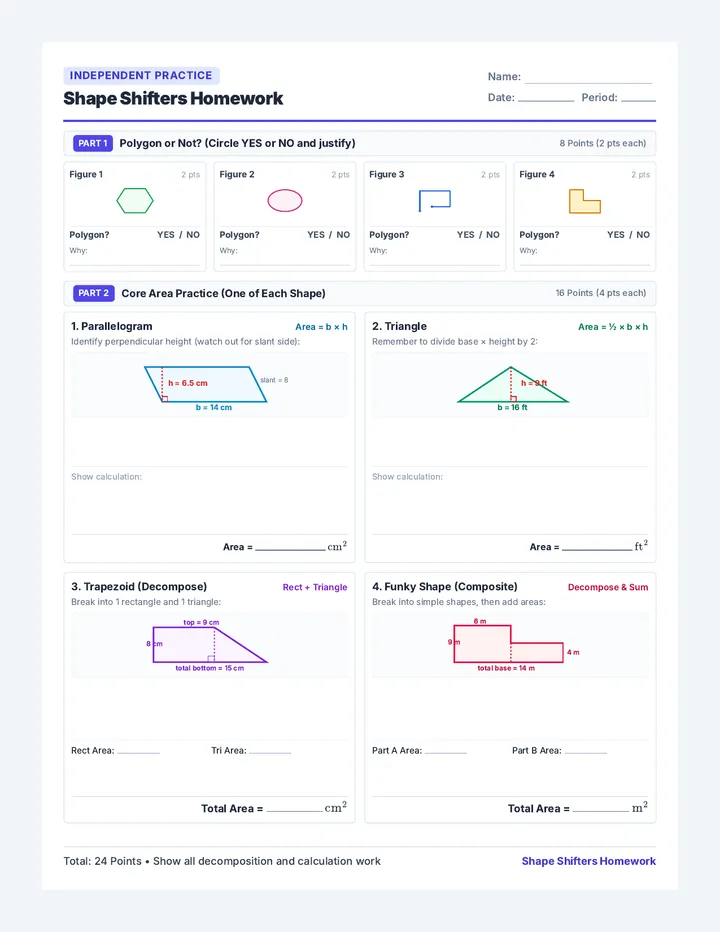
Shape Shifters Homework Worksheet

Shape Shifters Homework Worksheet

A focused 1-page homework worksheet featuring polygon identification (mix of yes/no) and exactly one targeted area problem each for a parallelogram, triangle, trapezoid, and funky shape.

AA

alicia accapezzato