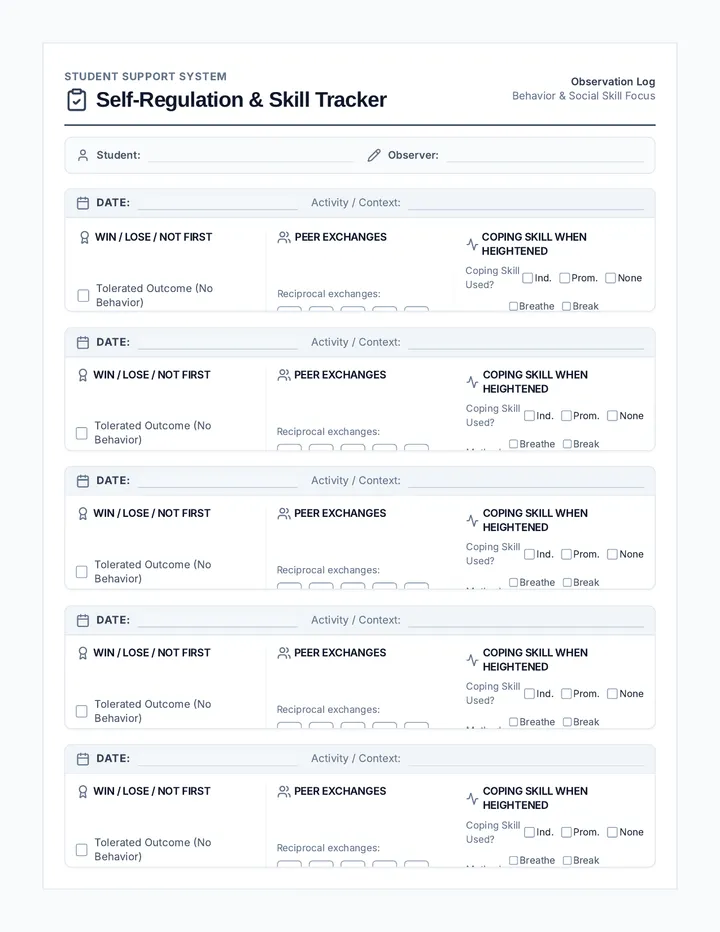
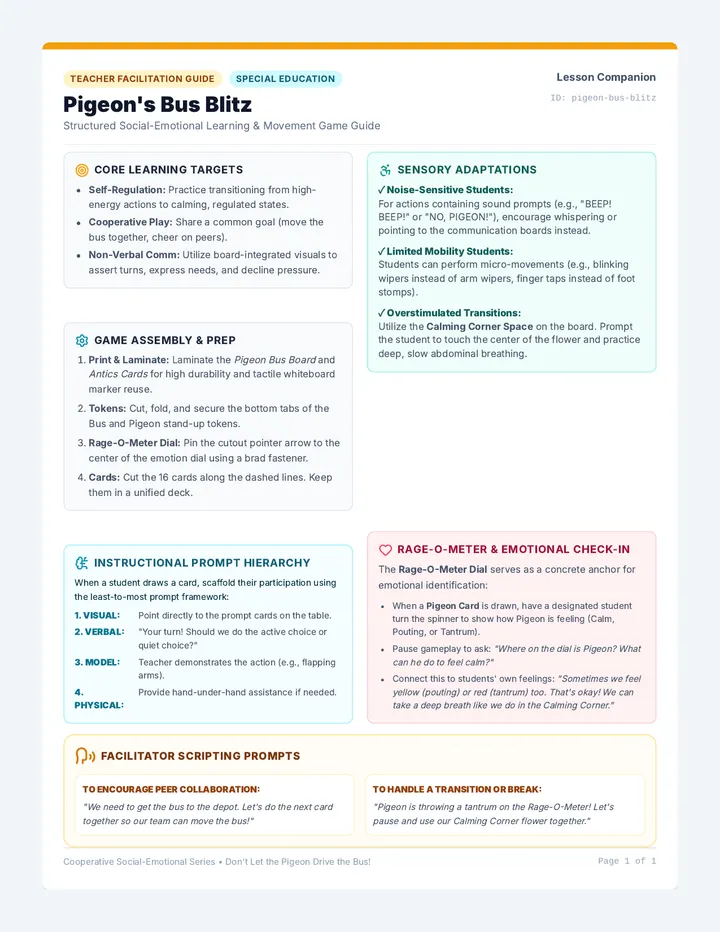
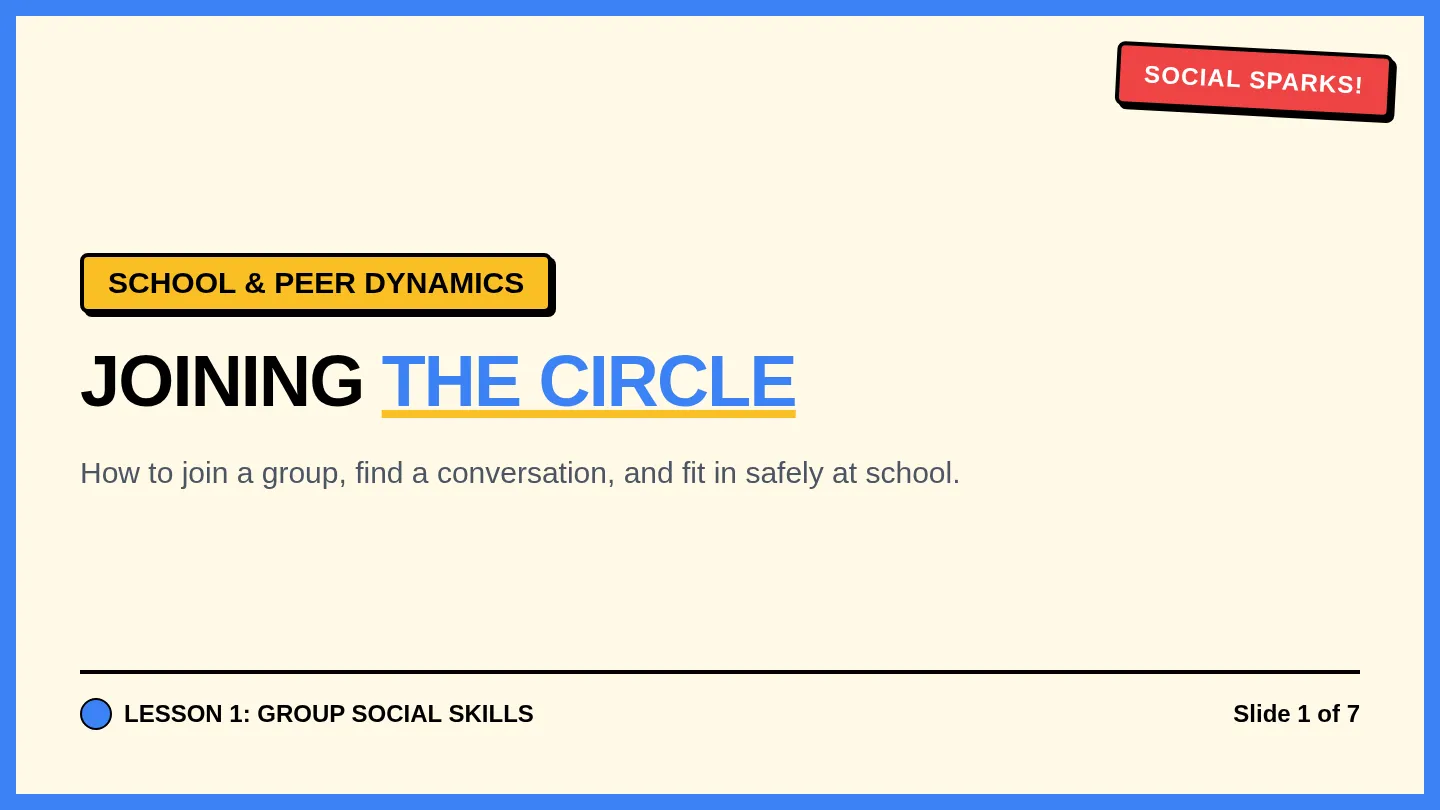
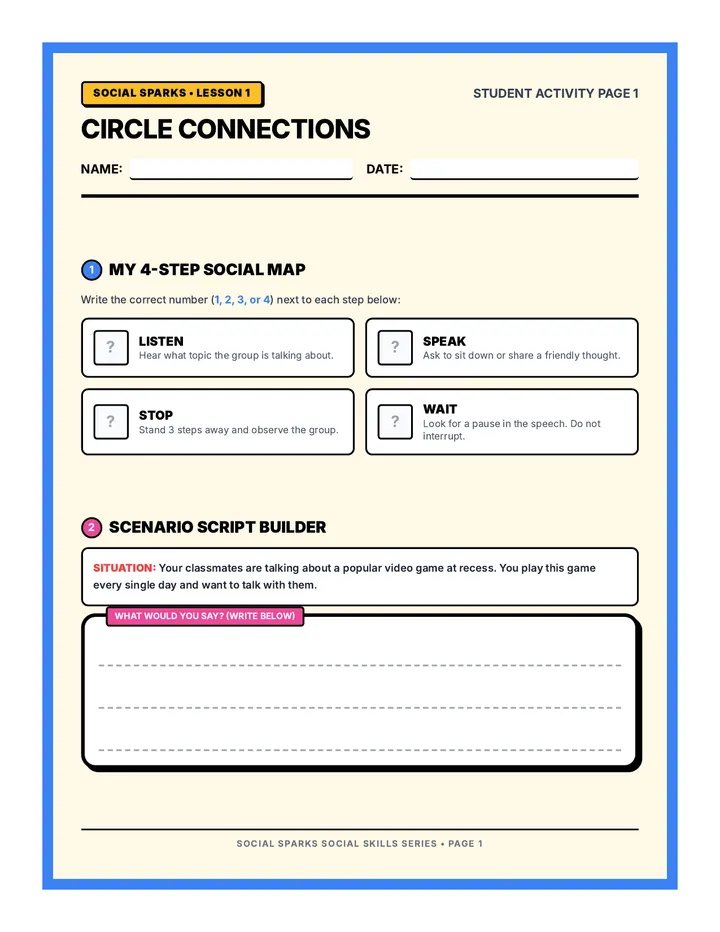
A comprehensive SEL lesson designed for students with special needs to master conversation, social cues, personal space, and cooperation. Includes visual supports and hands-on role-play to build lasting friendships.
This lesson helps 6th grade students understand ADHD medication management, specifically focusing on how Methylphenidate (stimulants) and Guanfacine (non-stimulants) work individually and together to support focus, emotional regulation, and school success.
Focuses on external supports like checklists and planners to reduce working memory load and build lasting habits.
Explores visualization techniques and mnemonics as 'mental snapshots' to help information stick in the brain's workbench.
Teaches the strategy of chunking and categorization to help the brain process larger amounts of information more efficiently.
Introduces the concept of working memory using the 'Brain Workbench' analogy and helps the student identify their own memory strengths and challenges.
A comprehensive 30-page take-home phonics packet designed to help students master complex letter combinations including vowel teams, r-controlled vowels, diphthongs, and advanced blends. The packet uses a 'Phonics Field Guide' theme to engage students in their reading journey.
A 5-day focus on short vowel sounds, using visual anchors and stories to help students distinguish between tricky vowel sounds like short /e/ and /i/.
A 5-day intensive focus on high-frequency and commonly confused consonants, using tactile sorting and repetitive practice to build automaticity.
A Tier 3 phonemic awareness intervention designed for 1st grade students, focusing on isolation, manipulation, blending, and segmenting of 3-phoneme words. Students act as 'Sound Scientists' to master phonemic precision.
Focuses on extending phonemic awareness to 4-phoneme words, specifically targeting consonant blends in the initial (CCVC) and final (CVCC) positions. Students practice complex isolation and segmenting.
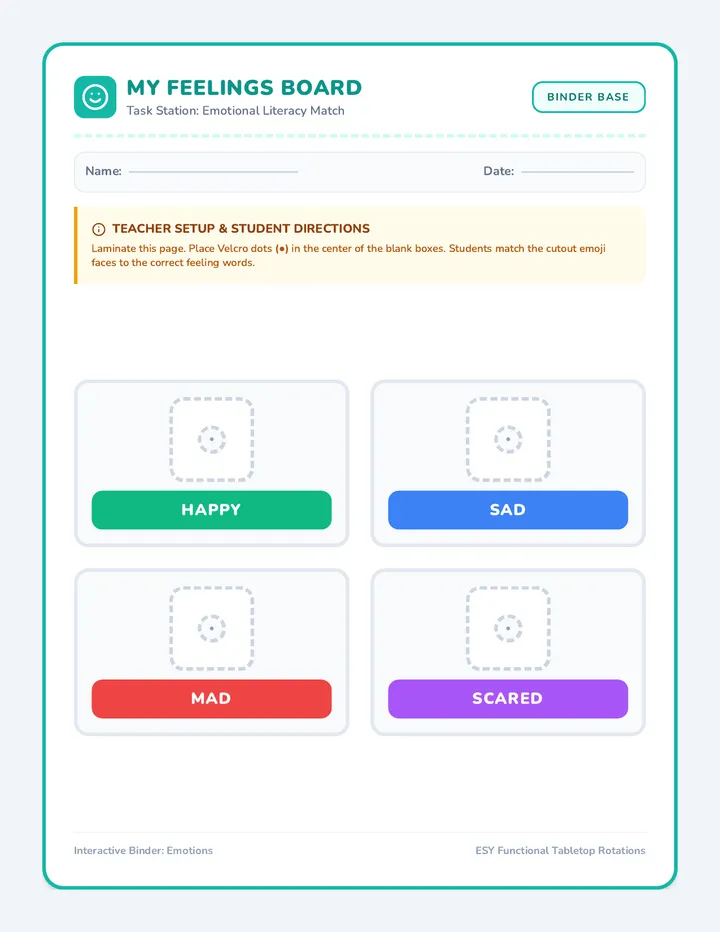
A comprehensive 5-page booklet designed for students with autism to help them identify emotions and practice effective coping strategies through visual and structured activities.
A comprehensive lesson designed for a 4th-grade student with cognitive impairment to learn and practice self-control. The lesson uses a 'Control Center' theme to teach strategies for staying in seat, raising hand, and managing frustration.
A comprehensive set of visual and instructional resources designed to support a 4th-grade student with limited cognitive skills in developing emotional regulation and self-control. The materials use simple language and high-visual support to address frustration, waiting, and flexibility.
A lesson designed to strengthen high school students' semantic networking abilities by describing items through function, appearance, and location. Students engage with visual prompts and structured organizers to build deeper cognitive connections.
Empowering transition-age students with disabilities to master self-advocacy and self-determination. This lesson covers IEP navigation, workplace communication, and legal rights for life after high school through practical exercises and discussion.
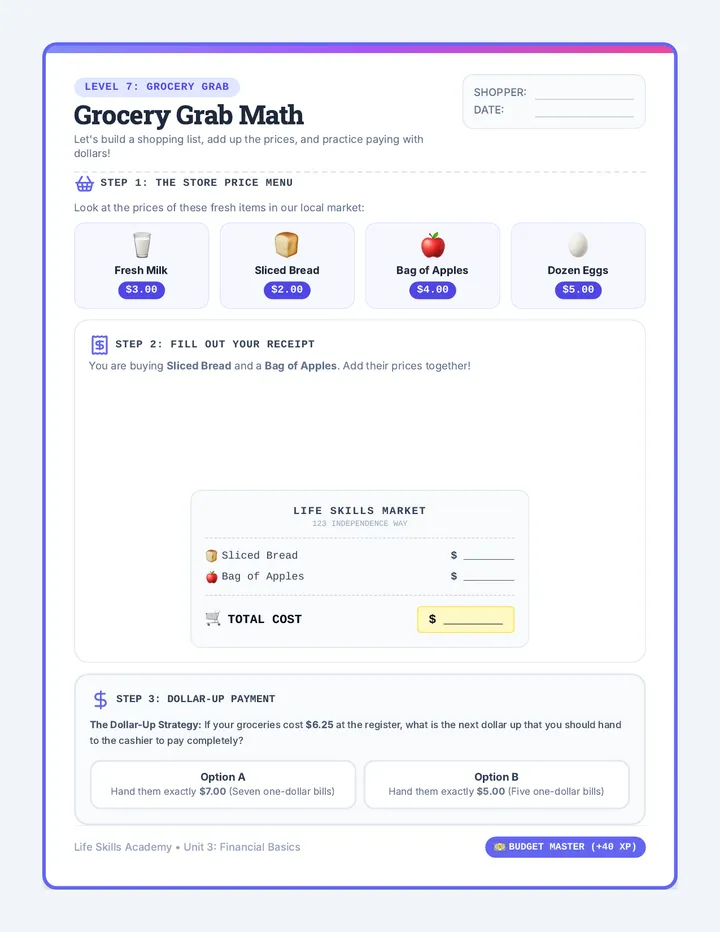
A comprehensive transition lesson focused on functional money skills for independent living. Students practice coin/bill identification, making purchases, and basic budgeting through hands-on activities and real-world scenarios.
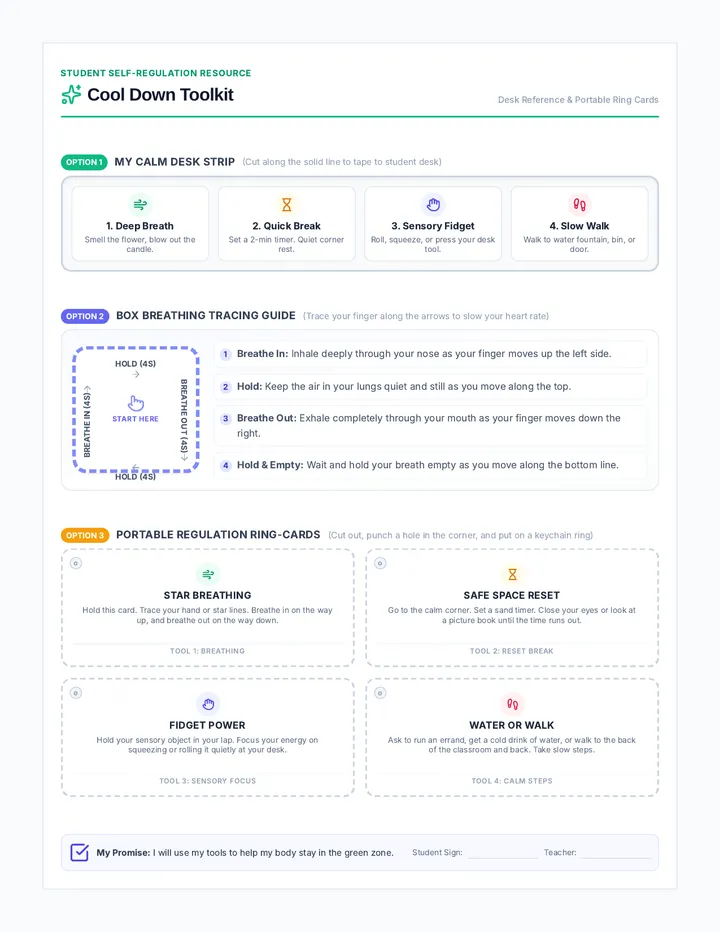
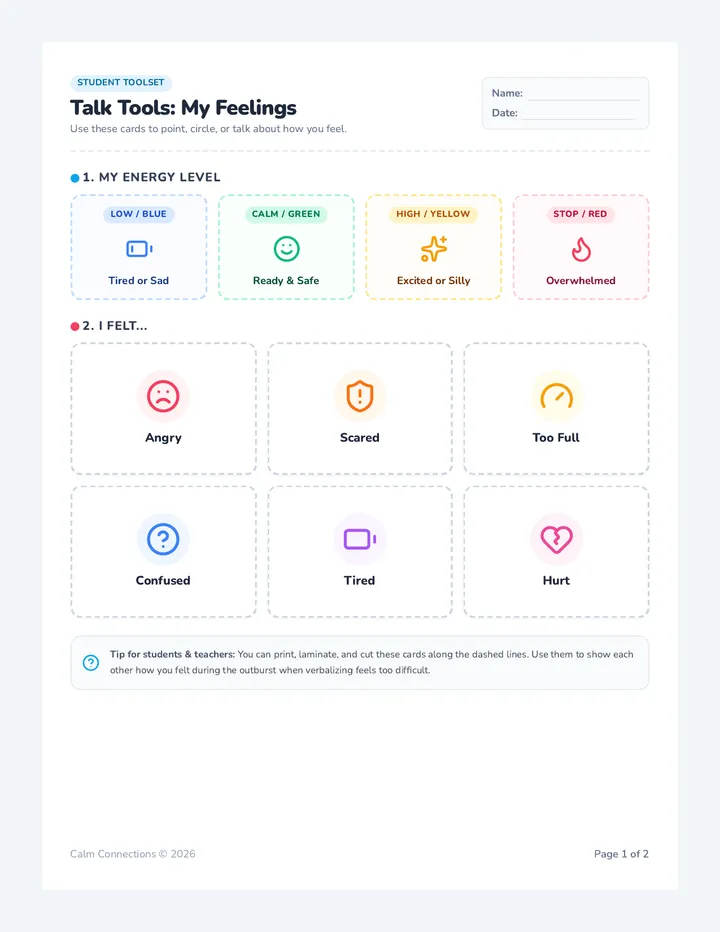
An introductory lesson on emotional regulation using the Zones of Regulation framework, sensory strategies, and visual coping tools specifically designed for elementary students with special needs. Students will learn to identify their current emotional state and select appropriate 'tools' to return to a ready-to-learn state.
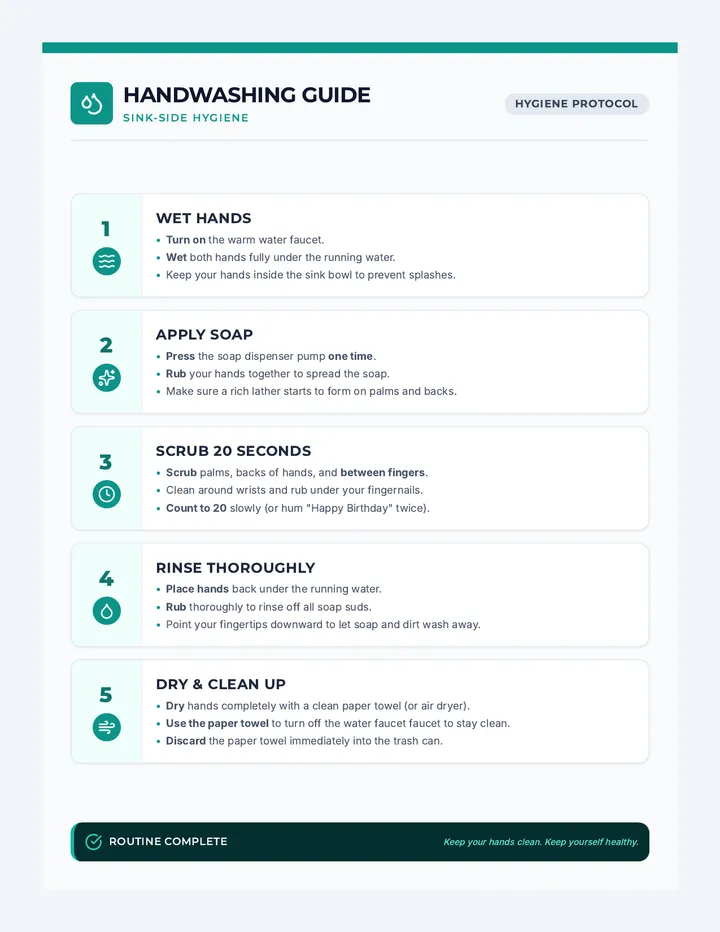
A comprehensive health and hygiene lesson designed for students with special needs, featuring visual schedules, social stories, and step-by-step guides to master handwashing, dental care, nutrition, and self-awareness of illness.
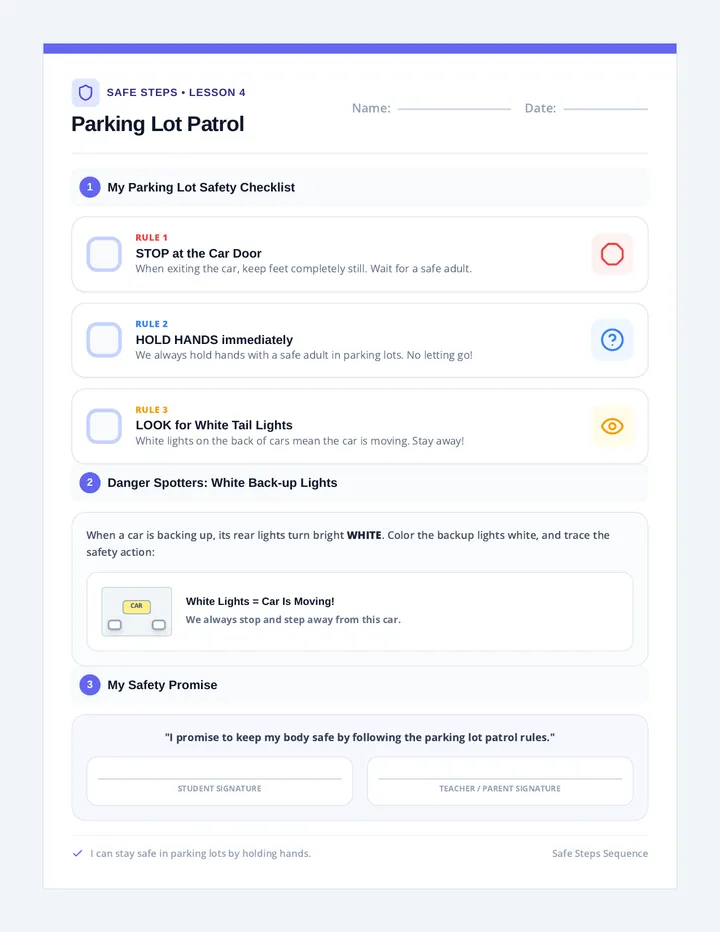
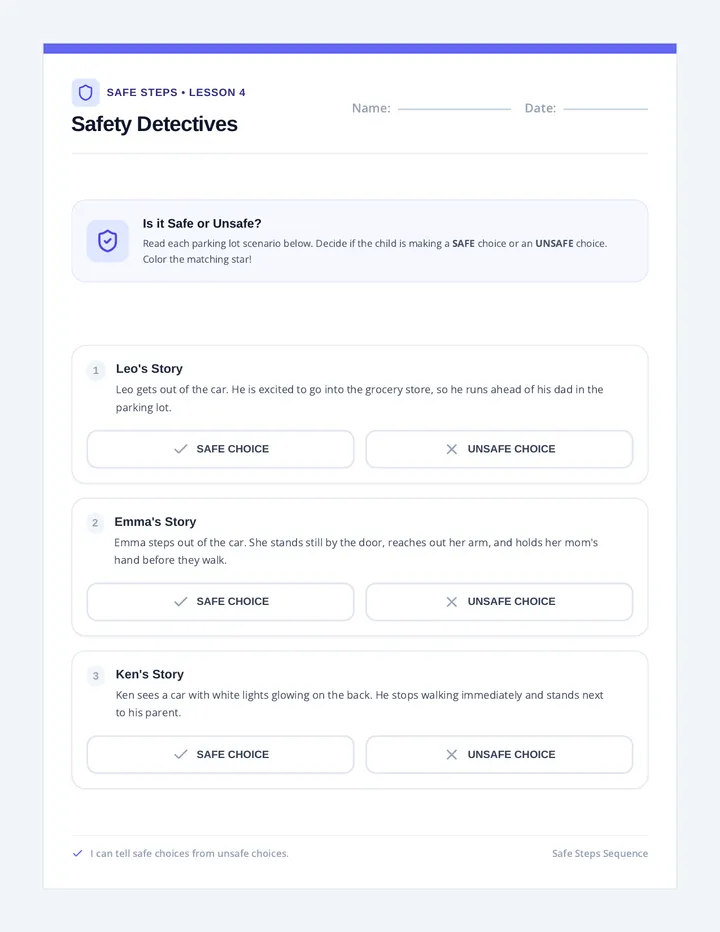
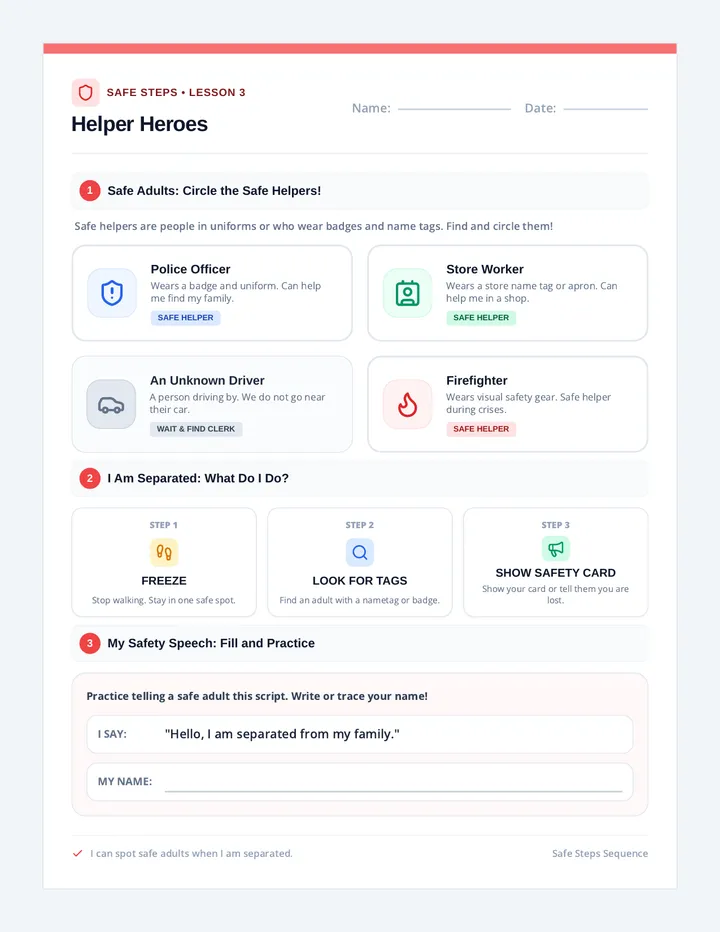
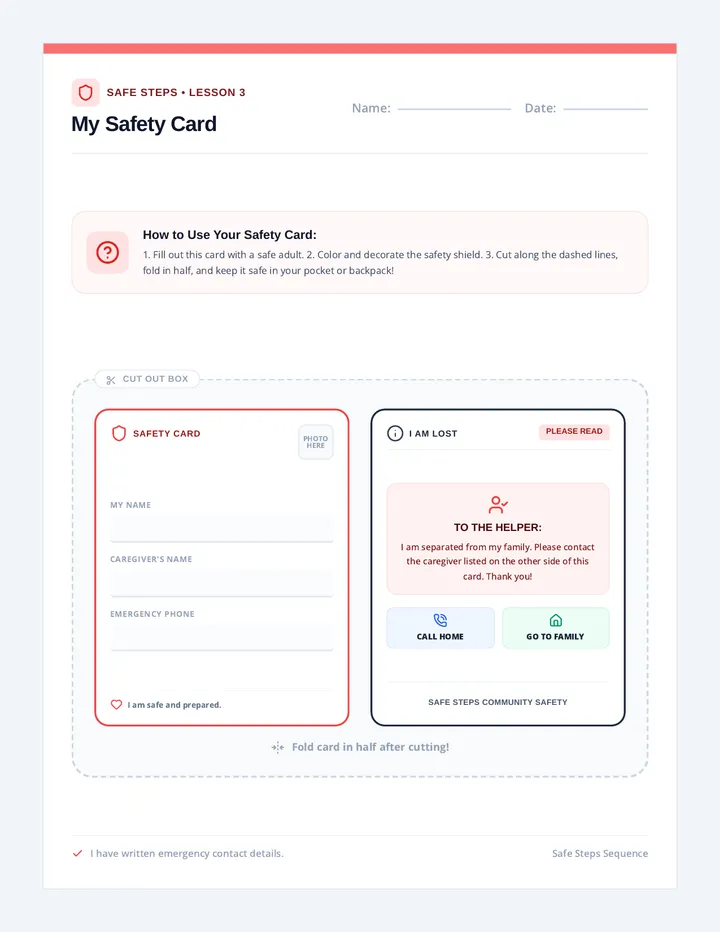
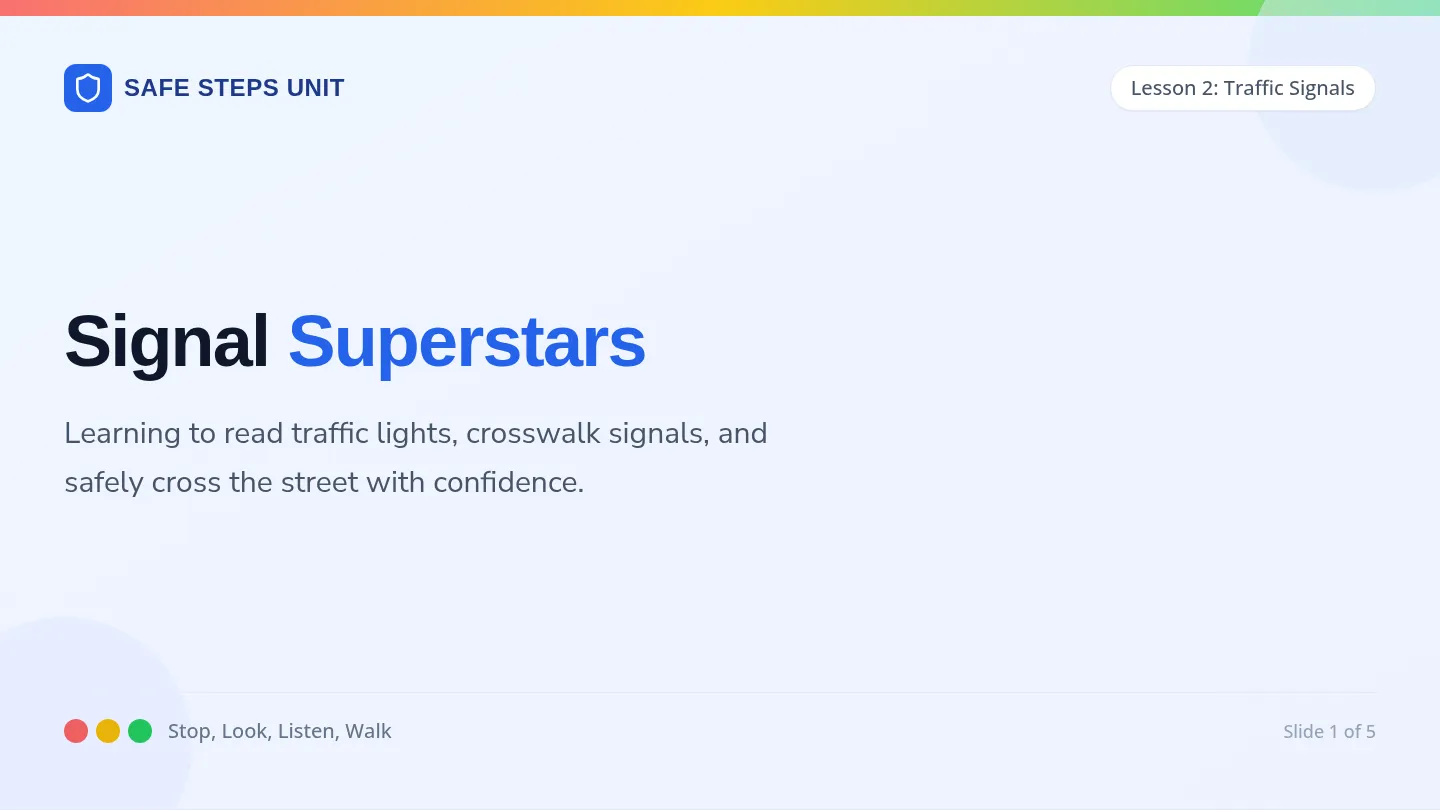
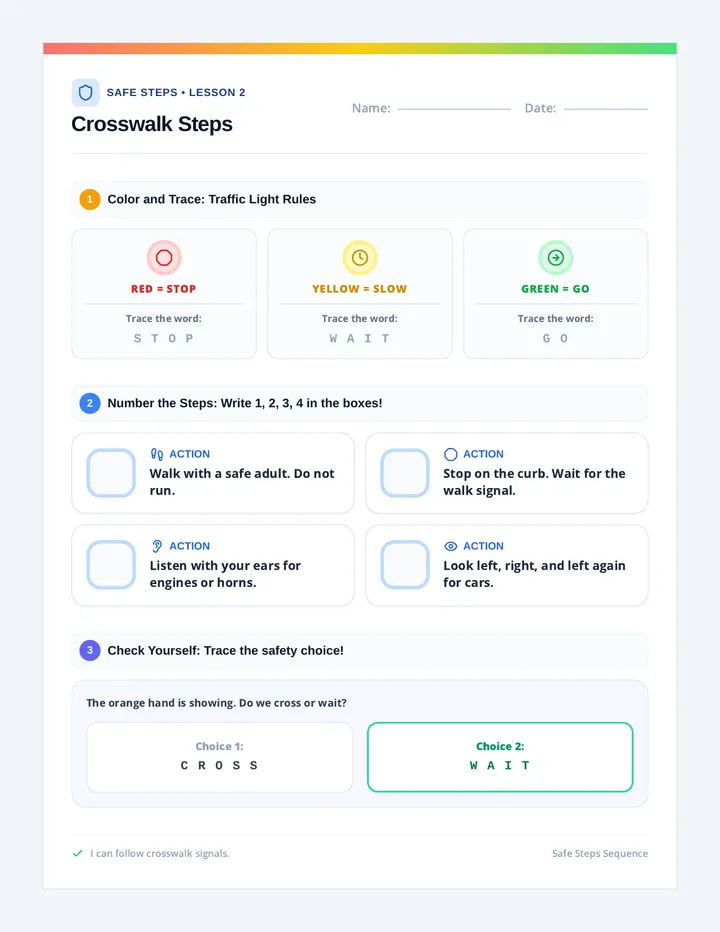
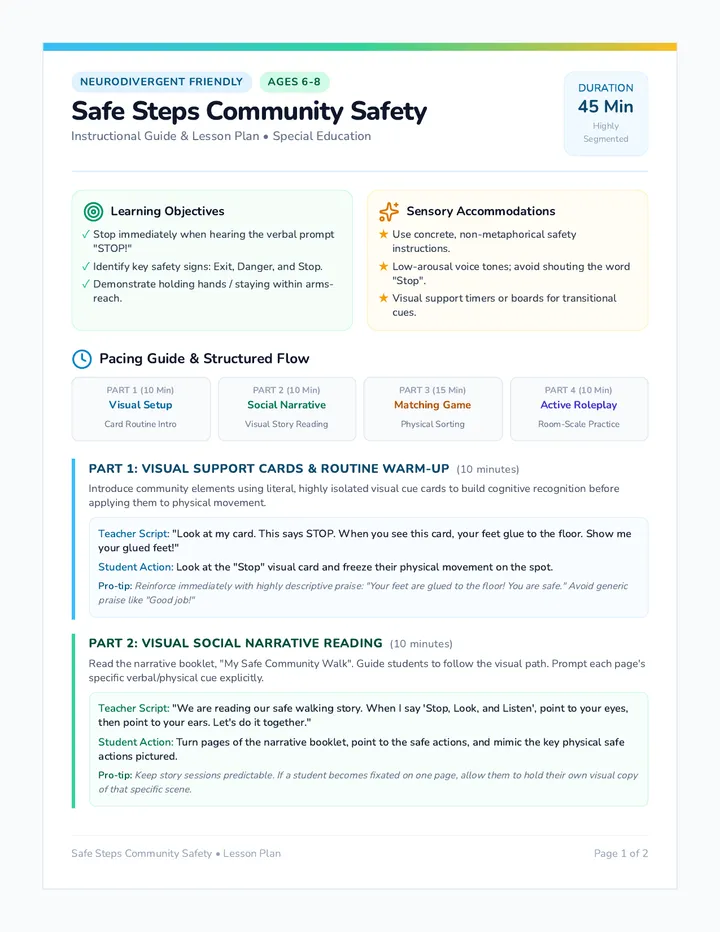
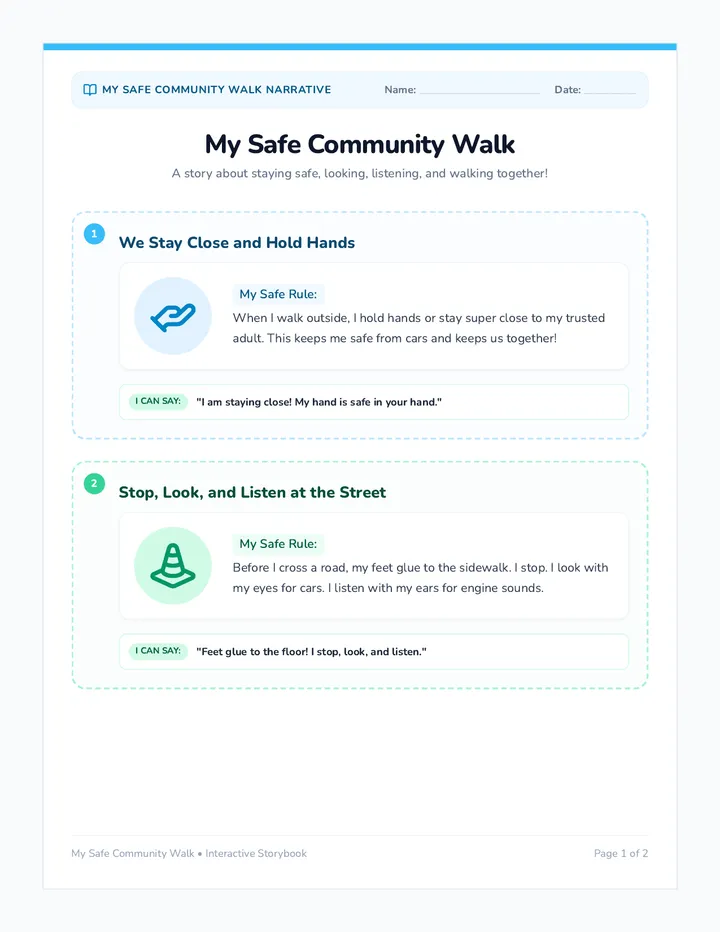
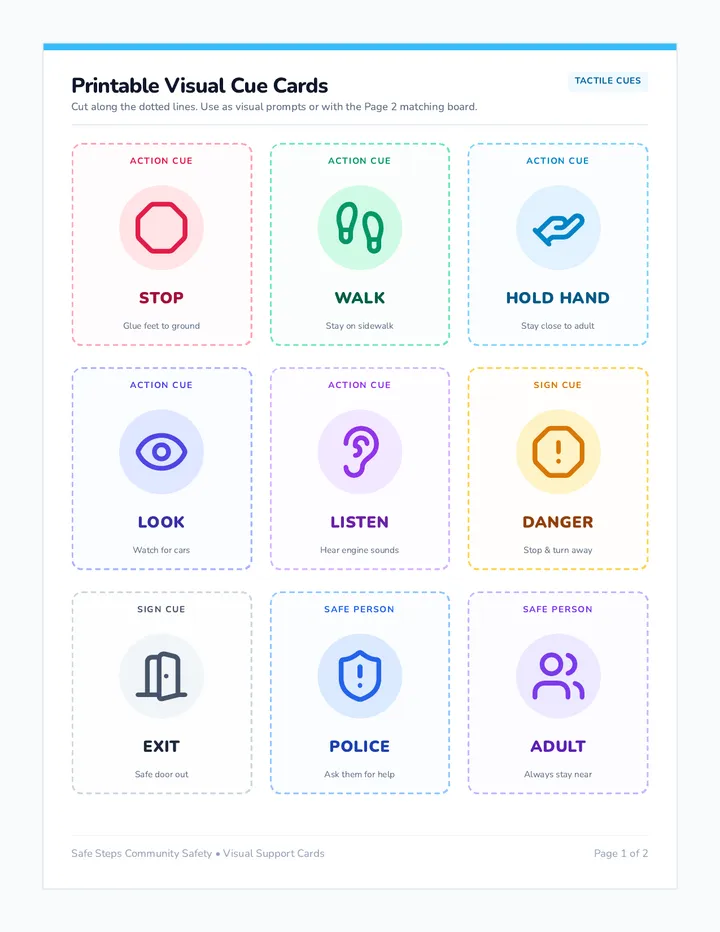
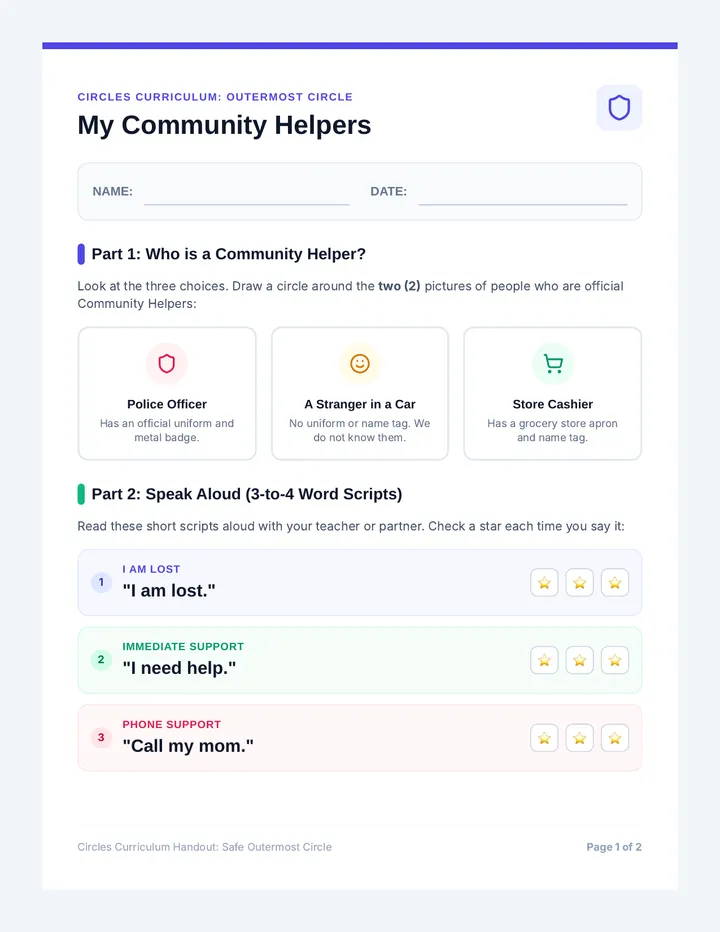
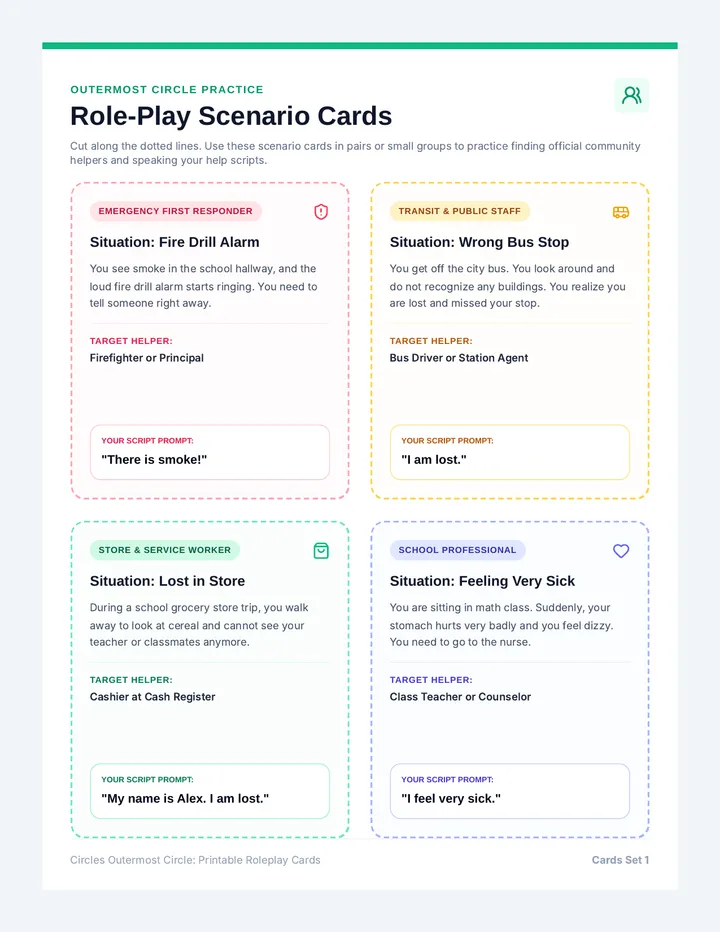
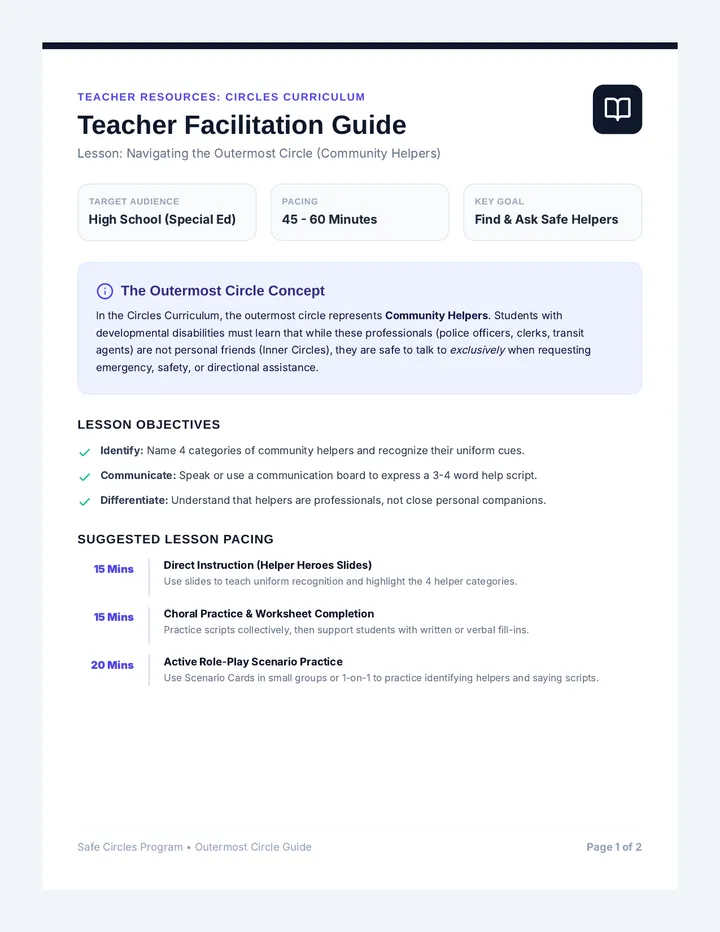
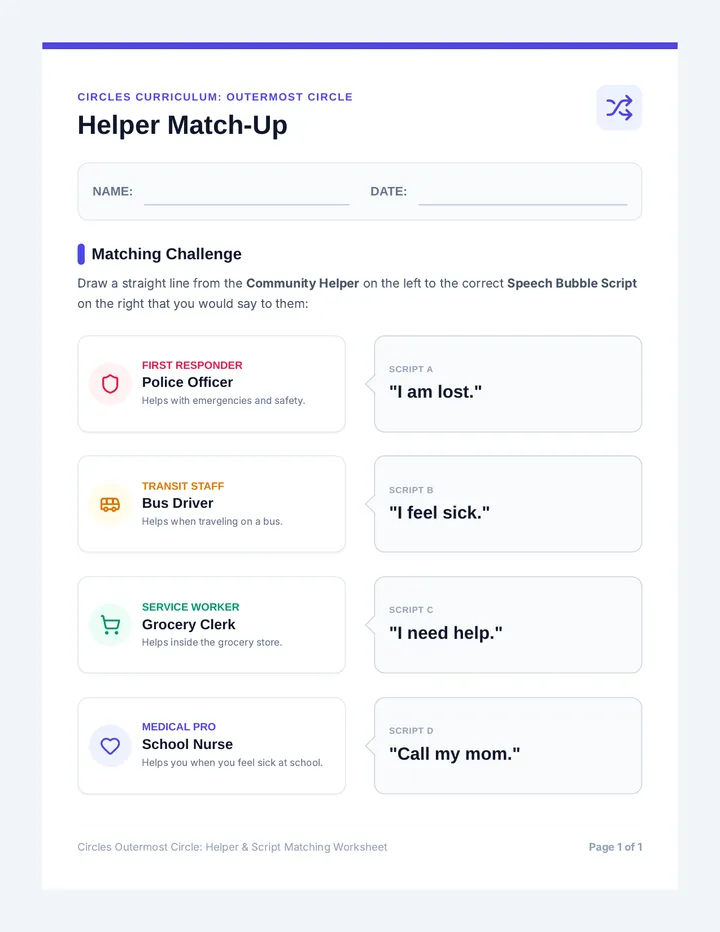
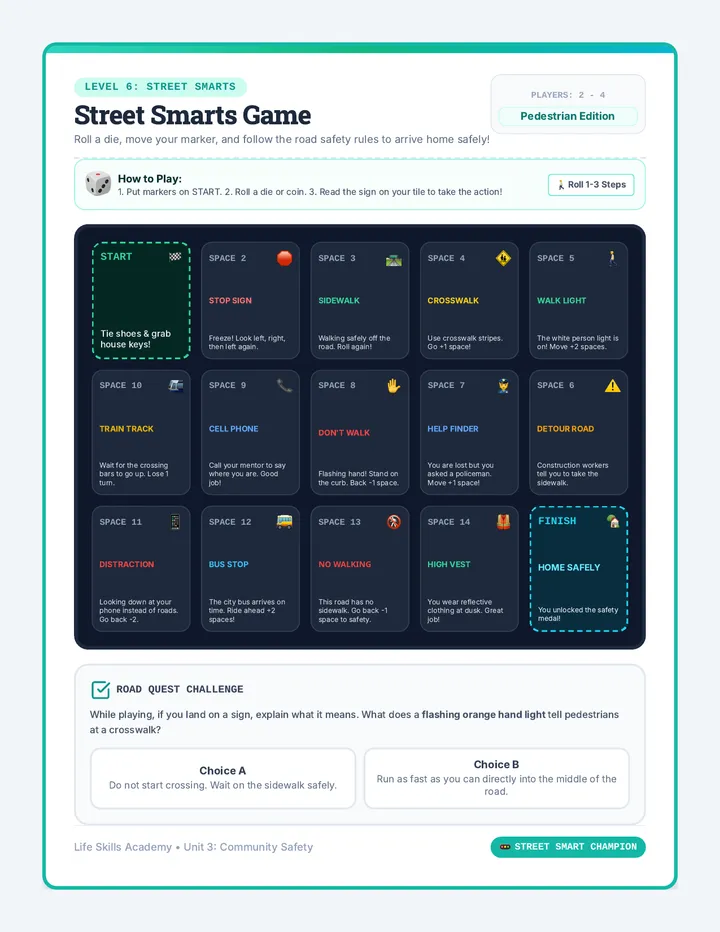
A comprehensive community safety lesson for SPED students focusing on pedestrian safety, situational awareness, and emergency protocols through visual aids and role-play.
A comprehensive transition lesson focused on vocational skills, workplace etiquette, and interview preparation for students with disabilities. It includes visual supports and structured practice for multi-step tasks and social interactions.
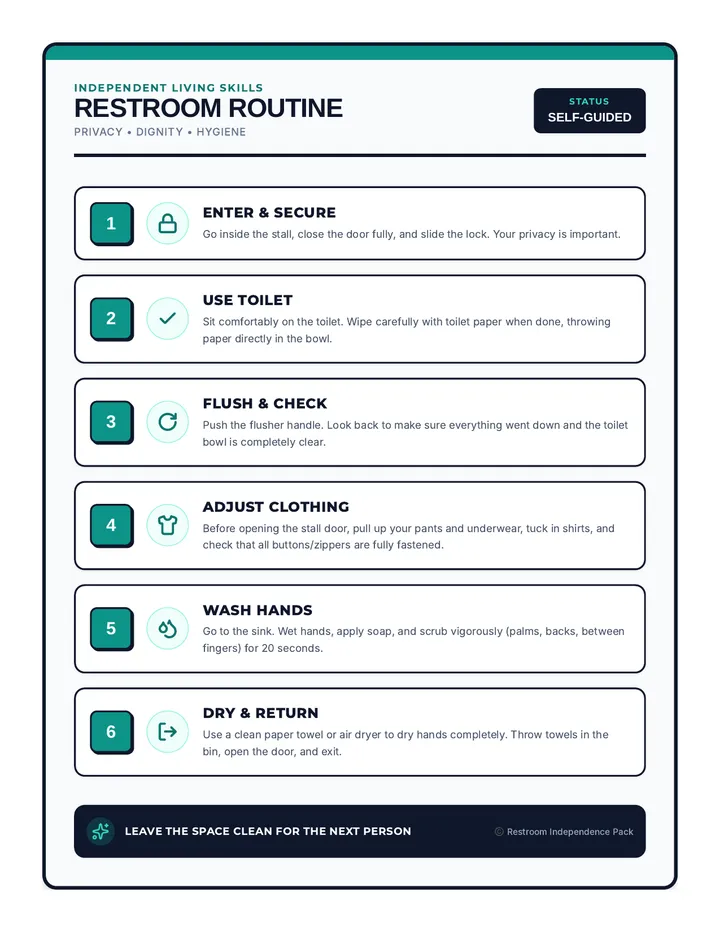
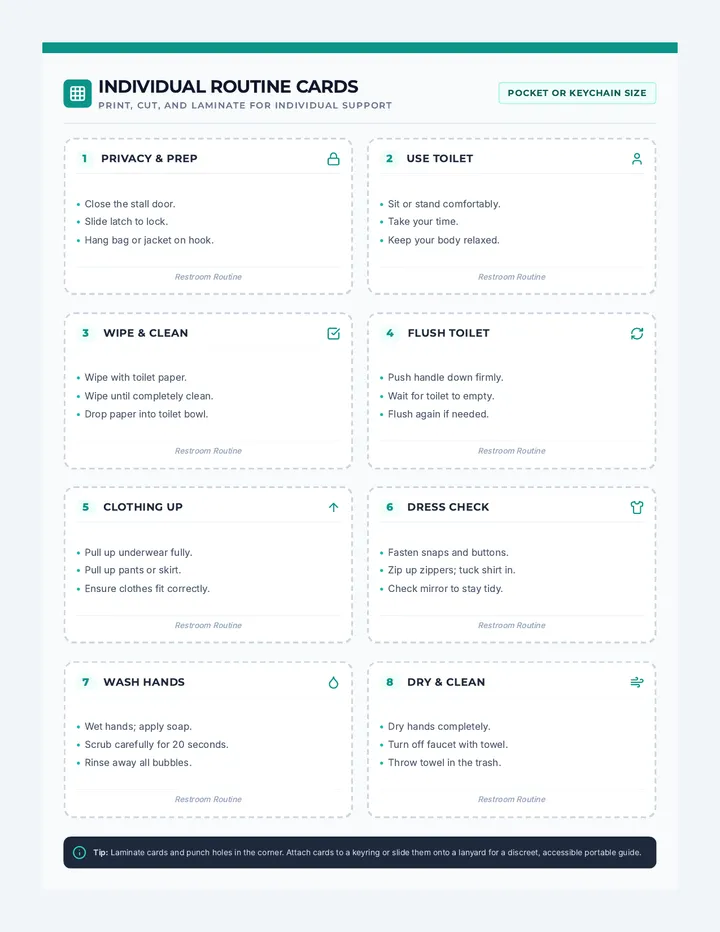
A comprehensive lesson focused on developing independence in personal hygiene and dressing routines through visual supports and task analysis. Designed for students with developmental disabilities to build daily living skills.
This lesson focuses on the foundational skills of requesting, refusing, and choice-making for students with significant disabilities. It utilizes visual supports and AAC strategies to empower students to express their needs and preferences effectively.
Una serie completa de recursos para padres de estudiantes de K-4 en el espectro autista, centrada en la disciplina positiva, las rutinas y los apoyos conductuales respetuosos con los sentidos.
Intensive training on the twentieth set of word reading fluency words. Students master high-frequency and decoding words from the DIBELS WRF 1.20 list.
Intensive training on the nineteenth set of word reading fluency words. Students master high-frequency and decoding words from the DIBELS WRF 1.19 list.
Intensive training on the eighteenth set of word reading fluency words. Students master high-frequency and decoding words from the DIBELS WRF 1.18 list.
Intensive training on the seventeenth set of word reading fluency words. Students master high-frequency and decoding words from the DIBELS WRF 1.17 list.
Intensive training on the sixteenth set of word reading fluency words. Students master high-frequency and decoding words from the DIBELS WRF 1.16 list.
Intensive training on the fifteenth set of word reading fluency words. Students master high-frequency and decoding words from the DIBELS WRF 1.15 list.
Intensive training on the fourteenth set of word reading fluency words. Students master high-frequency and decoding words from the DIBELS WRF 1.14 list.
Intensive training on the thirteenth set of word reading fluency words. Students master high-frequency and decoding words from the DIBELS WRF 1.13 list.
Intensive training on the twelfth set of word reading fluency words. Students master high-frequency and decoding words from the DIBELS WRF 1.12 list.
Intensive training on the eleventh set of word reading fluency words. Students master high-frequency and decoding words from the DIBELS WRF 1.11 list.
Intensive training on the tenth set of word reading fluency words. Students master high-frequency and decoding words from the DIBELS WRF 1.10 list.
Intensive training on the ninth set of word reading fluency words. Students master high-frequency and decoding words from the DIBELS WRF 1.9 list.
Intensive training on the eighth set of word reading fluency words. Students master high-frequency and decoding words from the DIBELS WRF 1.8 list.
Intensive training on the seventh set of word reading fluency words. Students master high-frequency and decoding words from the DIBELS WRF 1.7 list.
Intensive training on the sixth set of word reading fluency words. Students master high-frequency and decoding words from the DIBELS WRF 1.6 list.
Intensive training on the fifth set of word reading fluency words. Students master high-frequency and decoding words from the DIBELS WRF 1.5 list.