A functional life-skills unit focused on mastering 14 crucial community, workplace, emergency, and grocery sight words. Designed with high-contrast, age-appropriate layouts specifically for high school transition and special education classrooms.
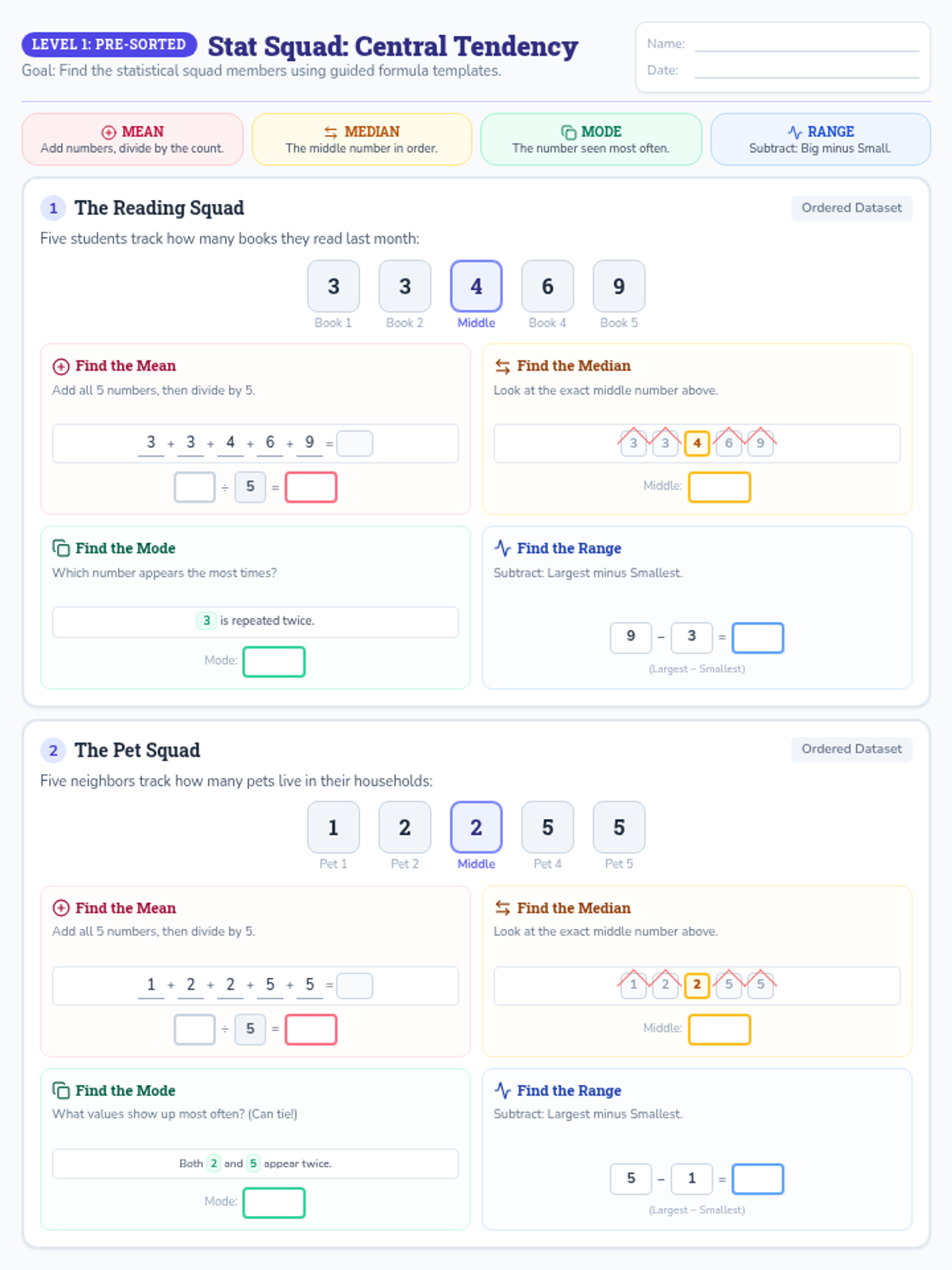
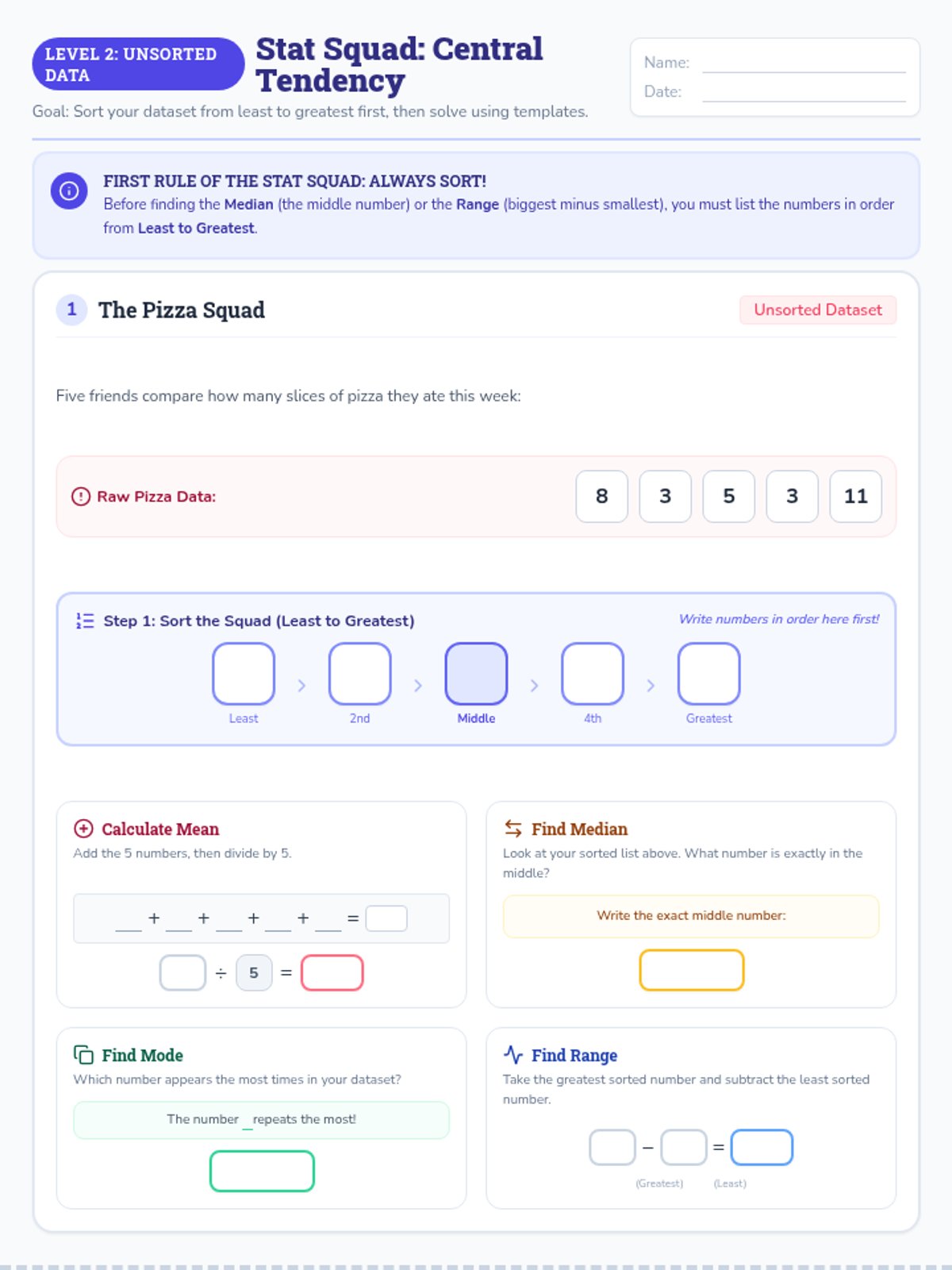
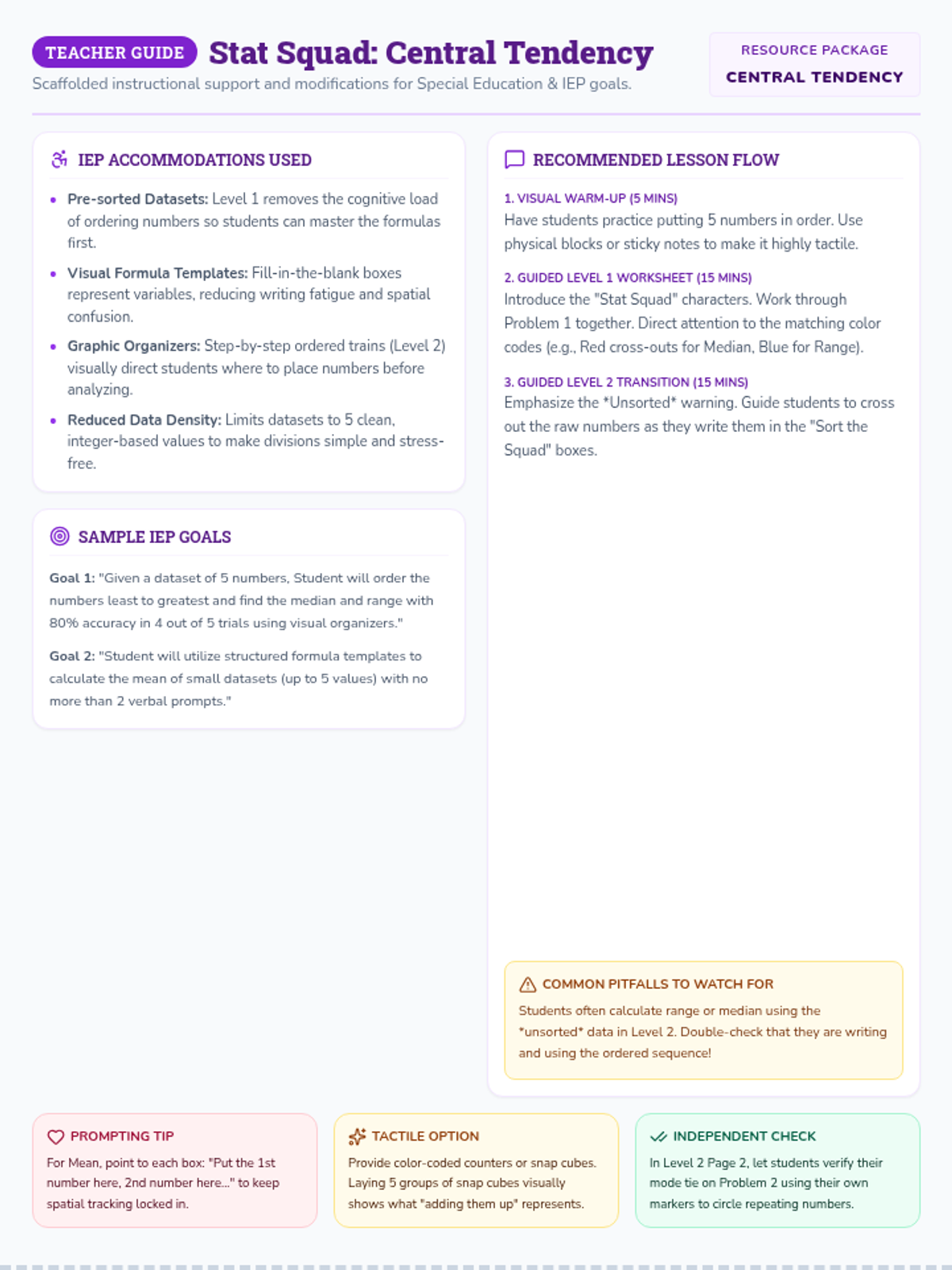
A highly scaffolded, visual lesson on mean, median, mode, and range tailored specifically for students with IEPs and learning differences. Features structured fill-in-the-blank formula templates, graphic organizers, and leveled worksheets.
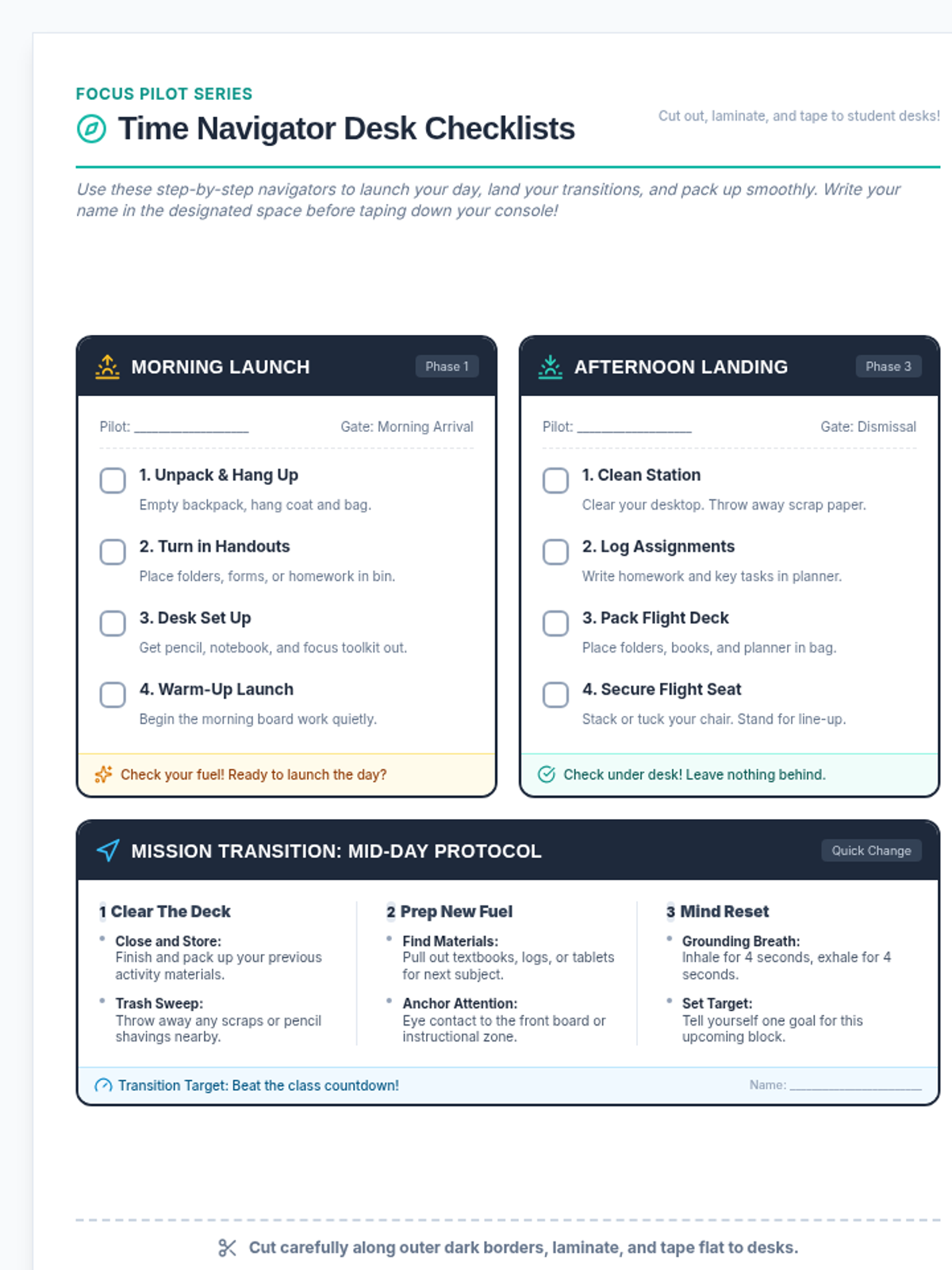
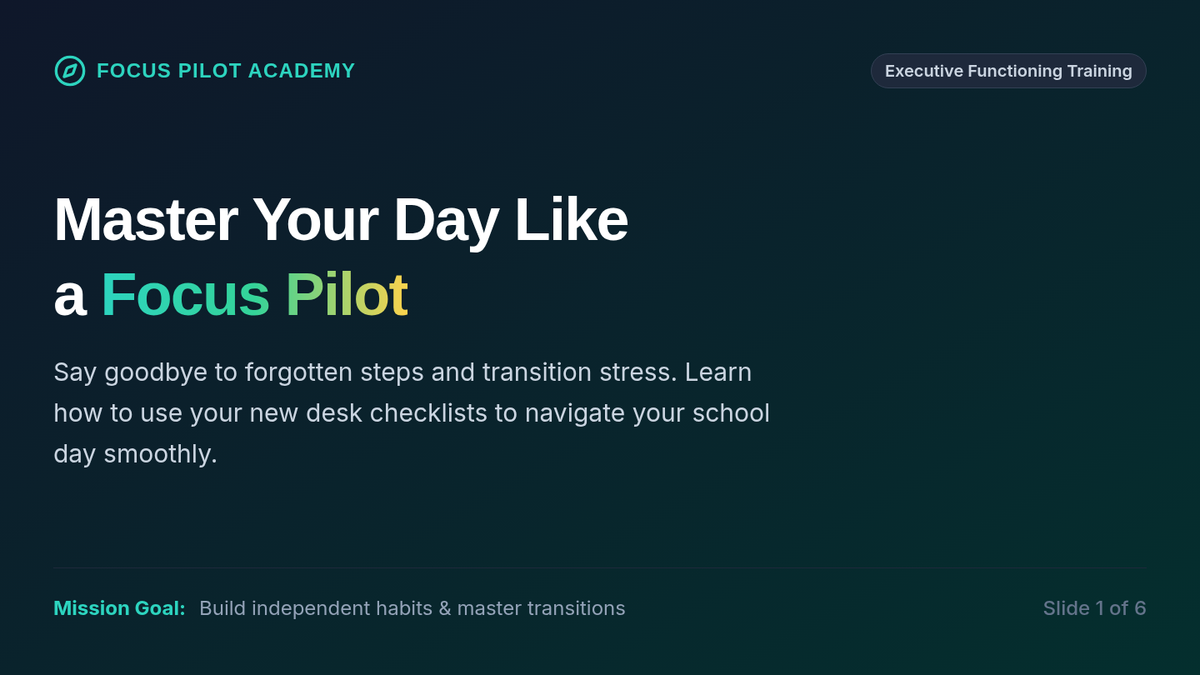
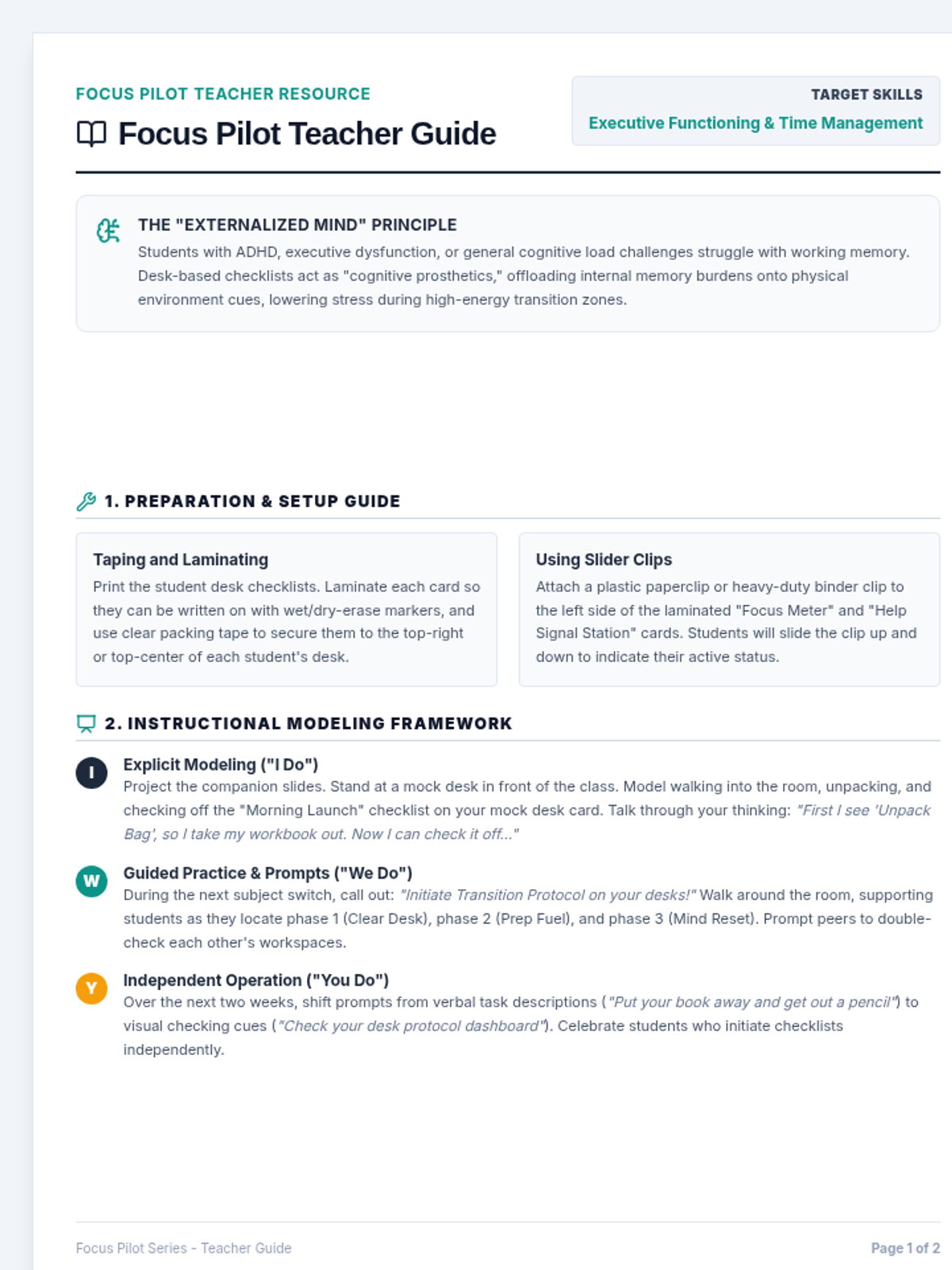
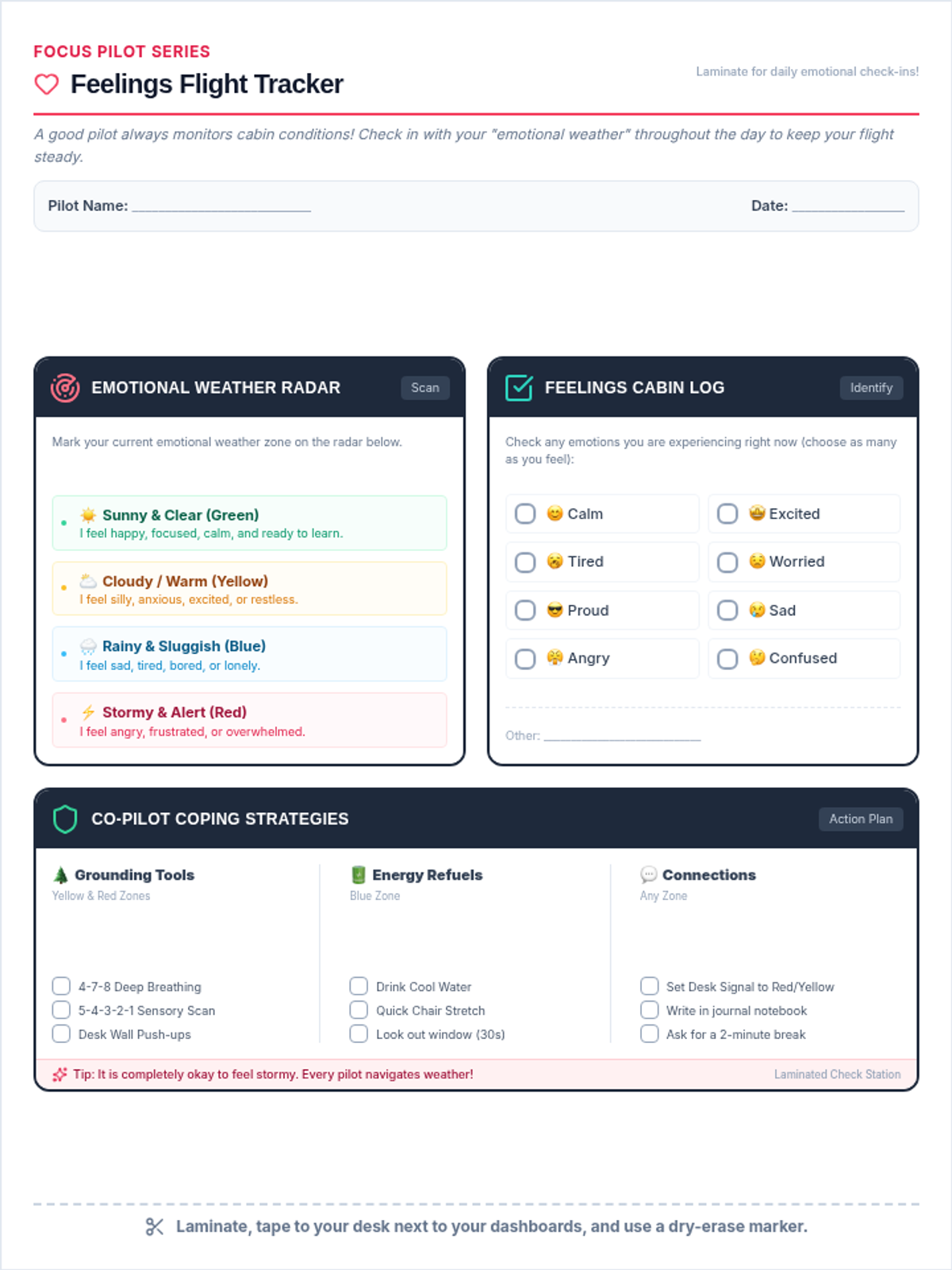
A collection of executive functioning resources designed to help students master school-day transitions, arrival, and dismissal routines using visual desk checklists, a modeled presentation, and a comprehensive teacher guide.
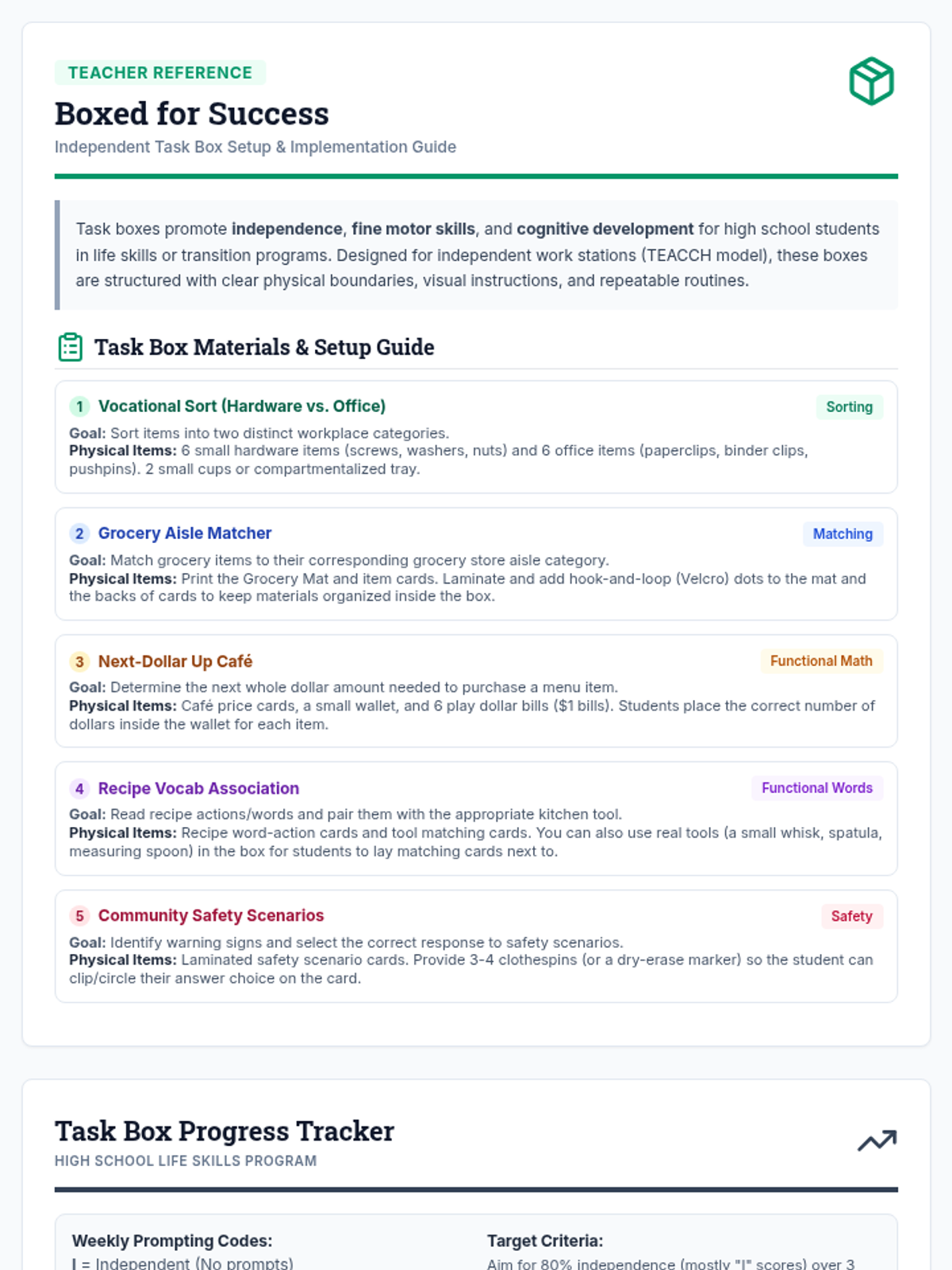
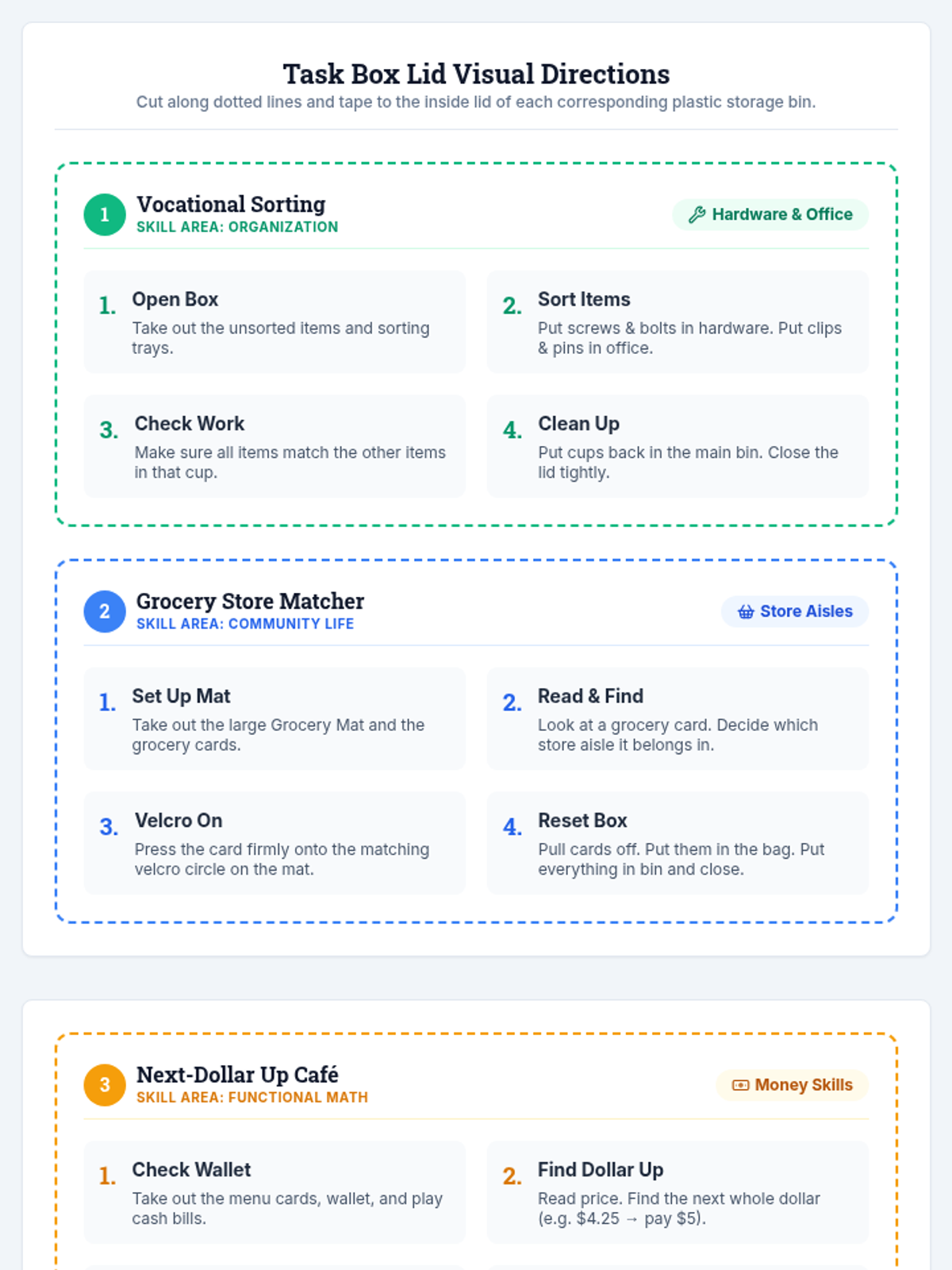
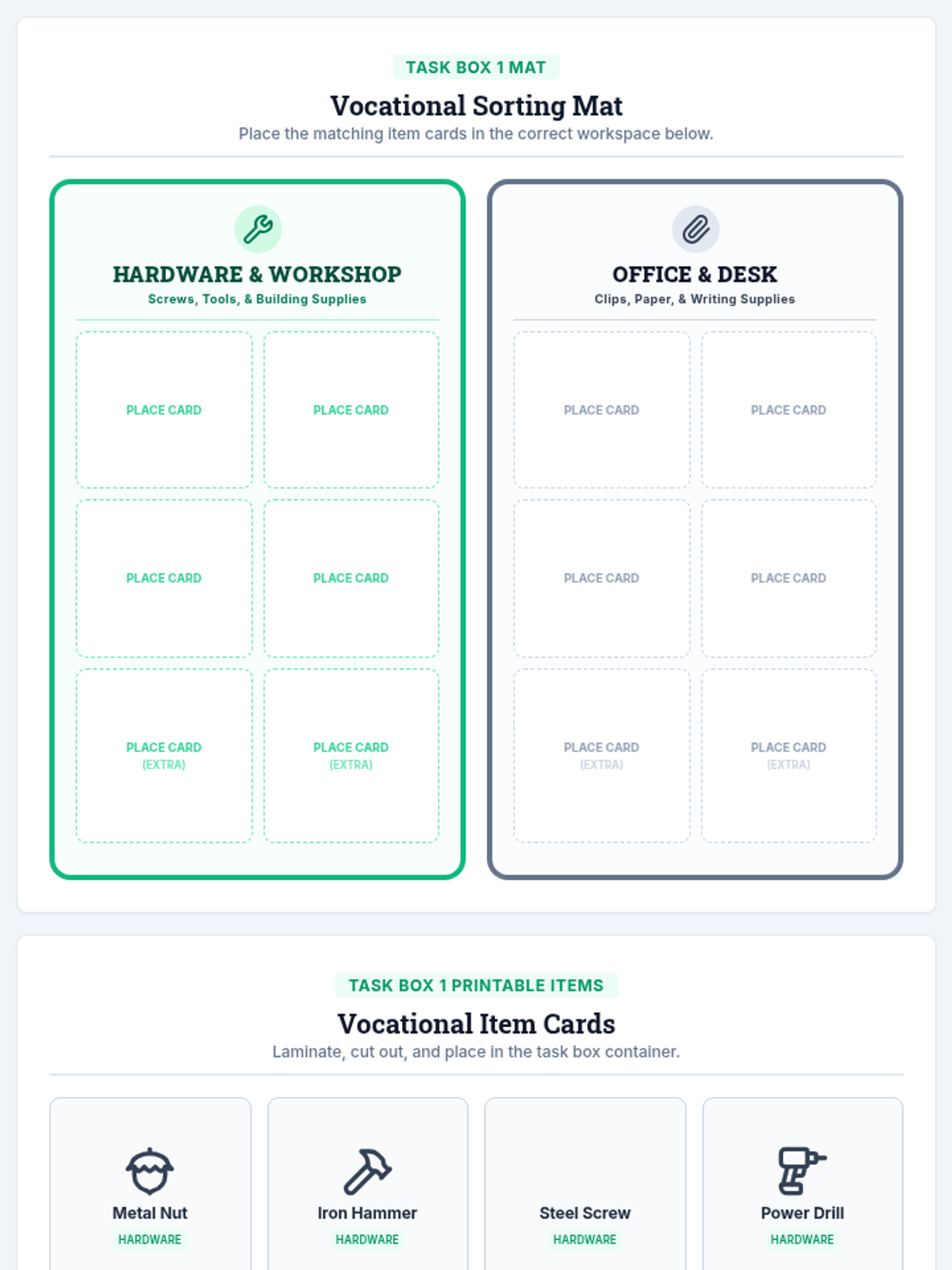
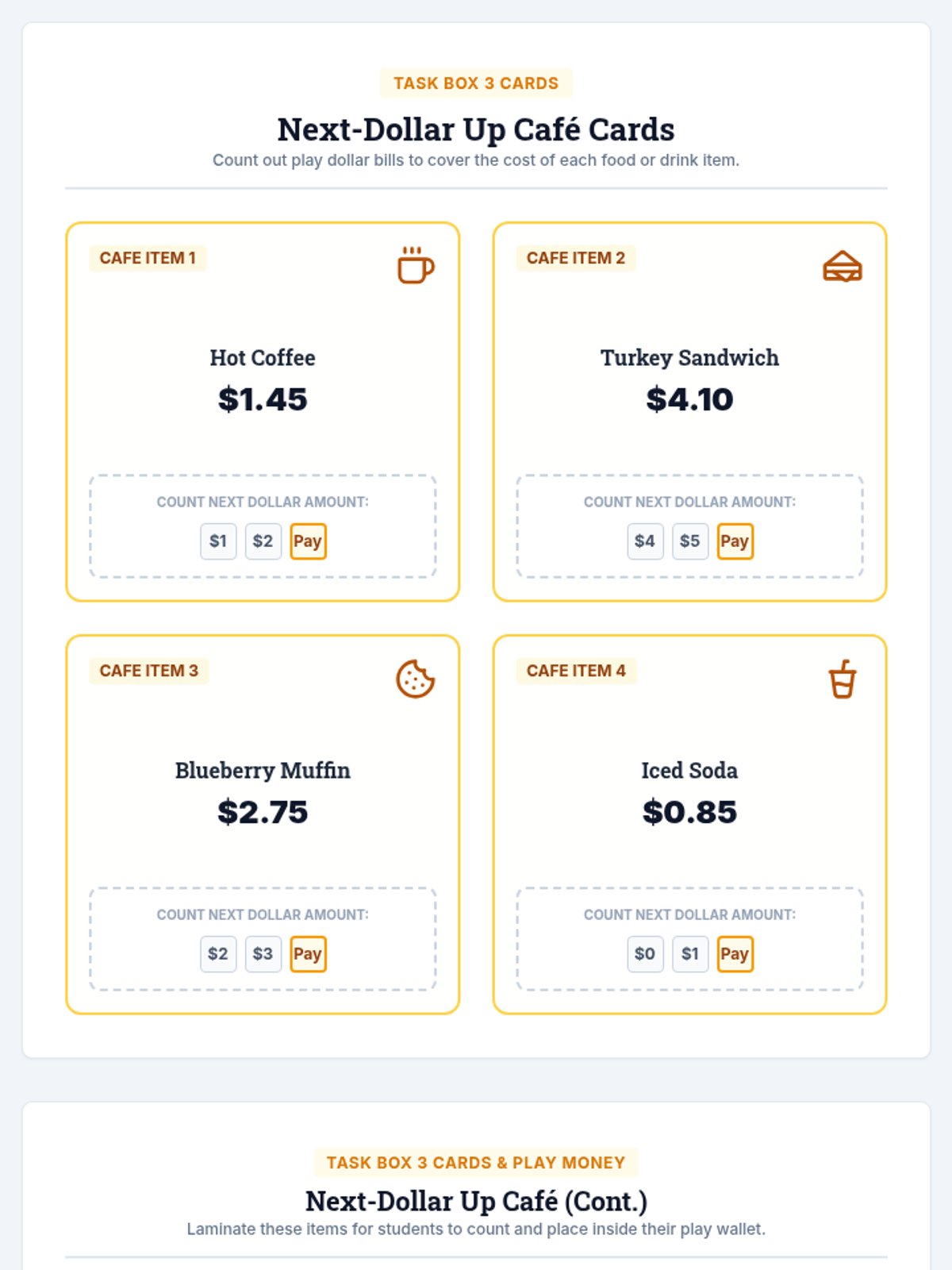
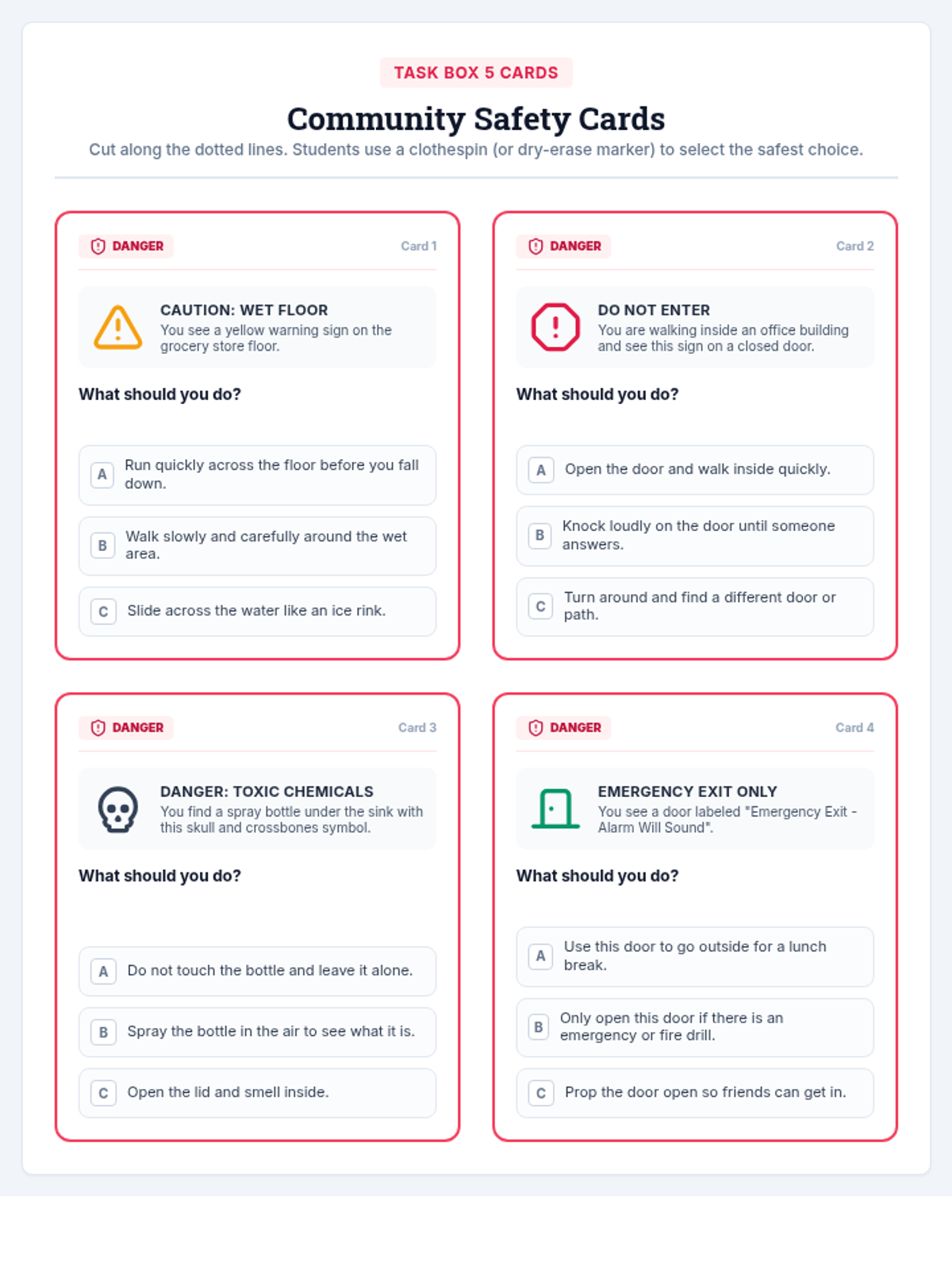
A comprehensive set of age-appropriate independent task boxes for high school life skills classrooms, targeting sorting, matching, math, words, and community safety. Includes teacher setup guides, student visual directions, and printable task card assets.
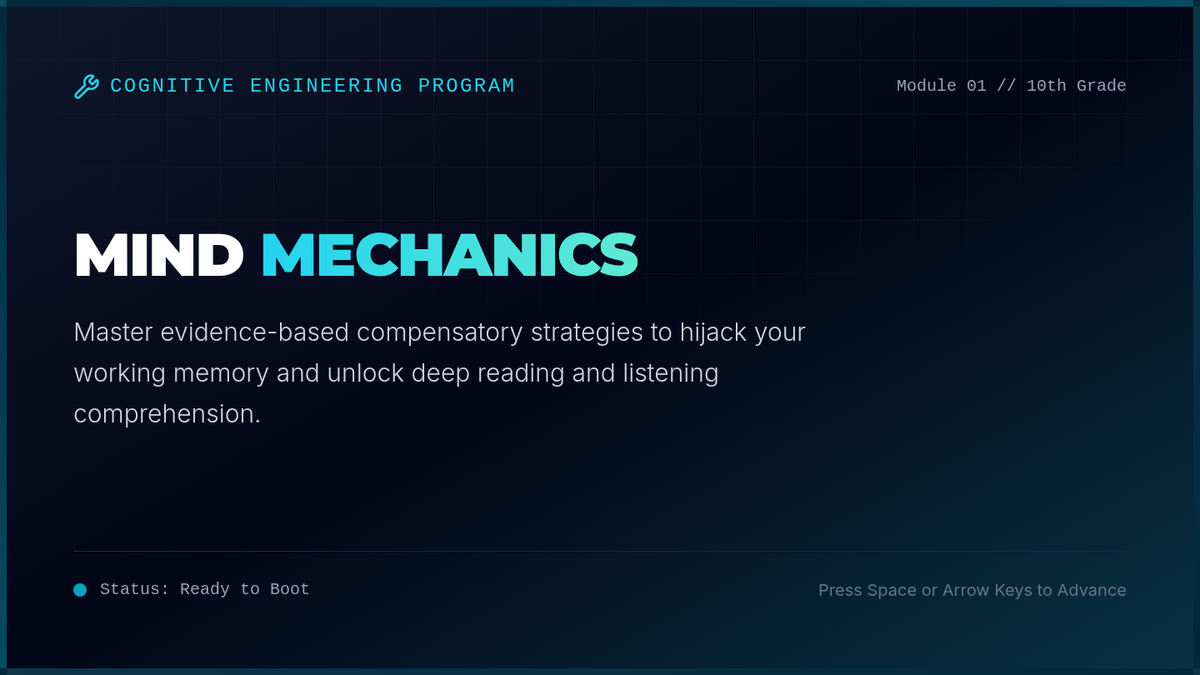
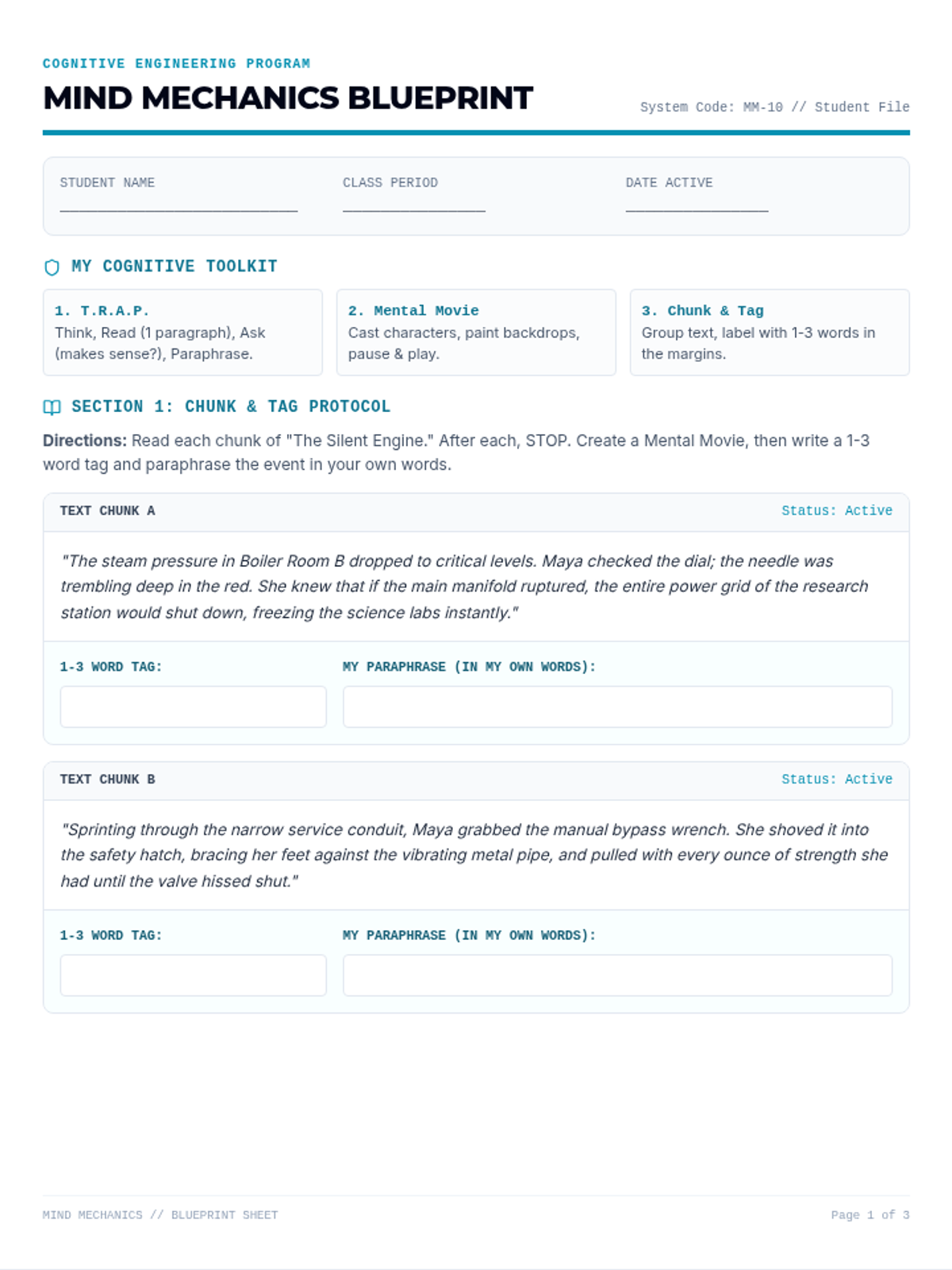
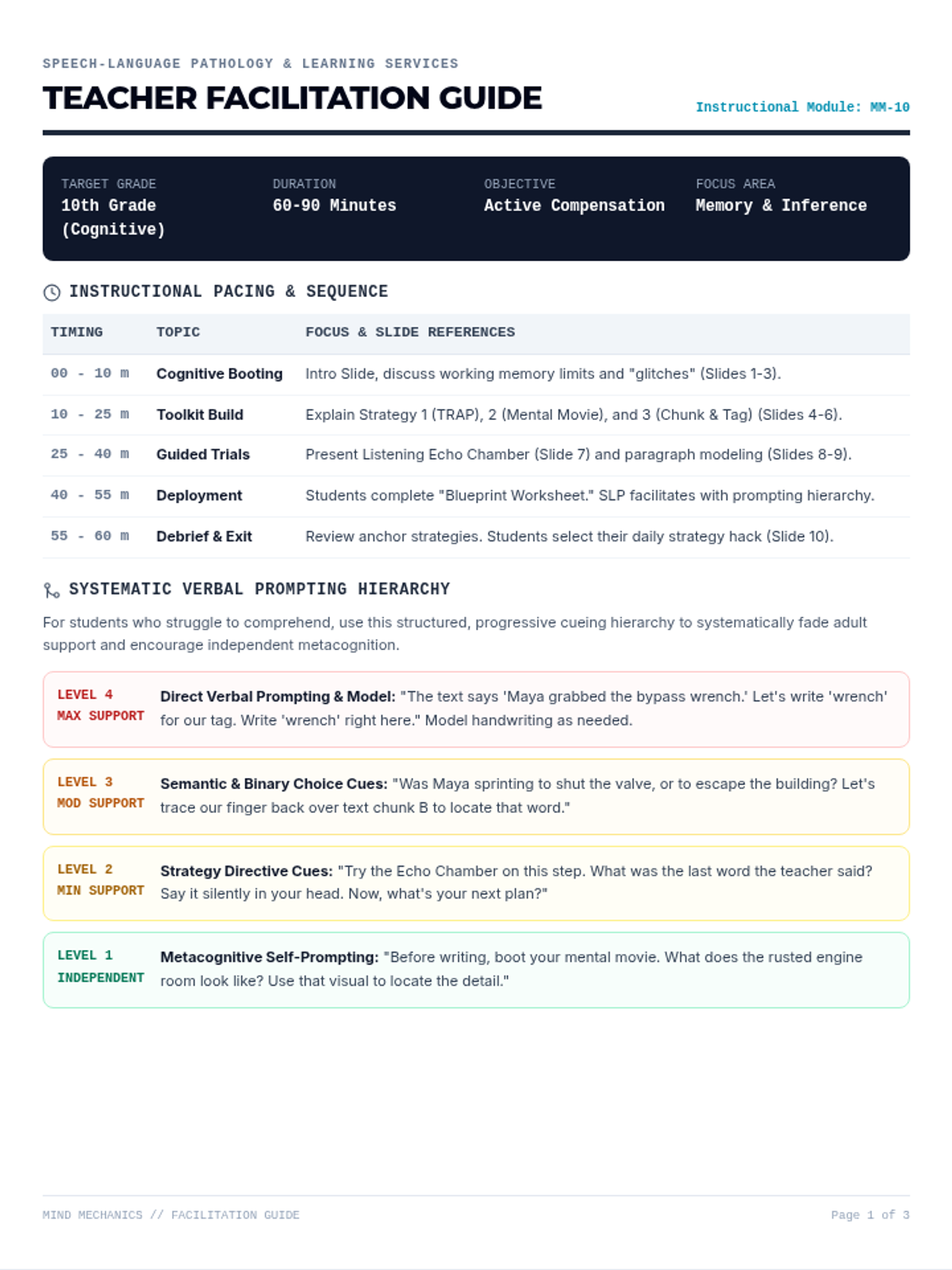
A comprehensive cognitive-linguistic lesson teaching high school students evidence-based compensatory strategies for reading comprehension and working memory. Students learn to actively monitor their understanding, chunk information, use visual imagery, and apply self-prompting strategies to become independent learners.
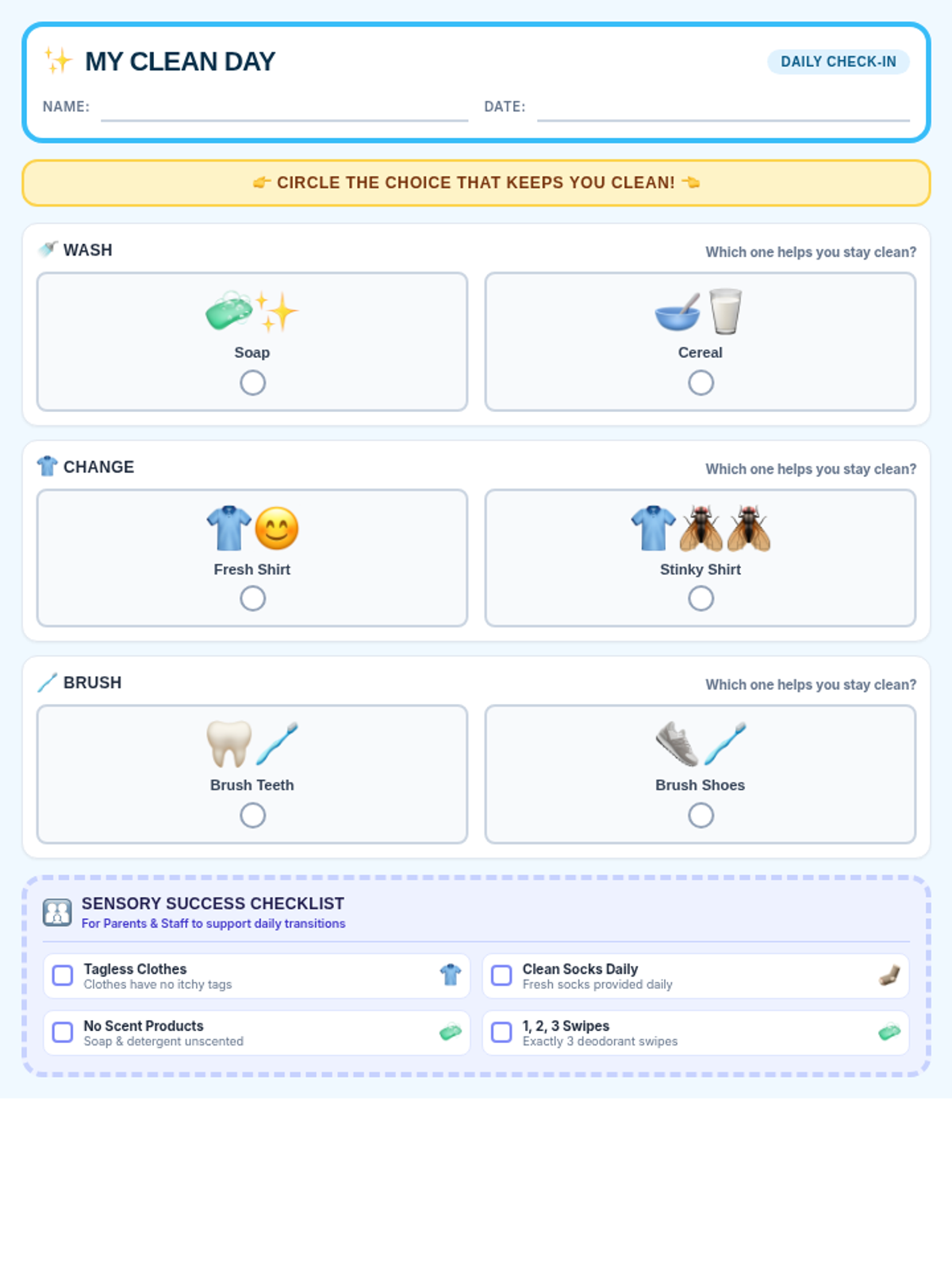
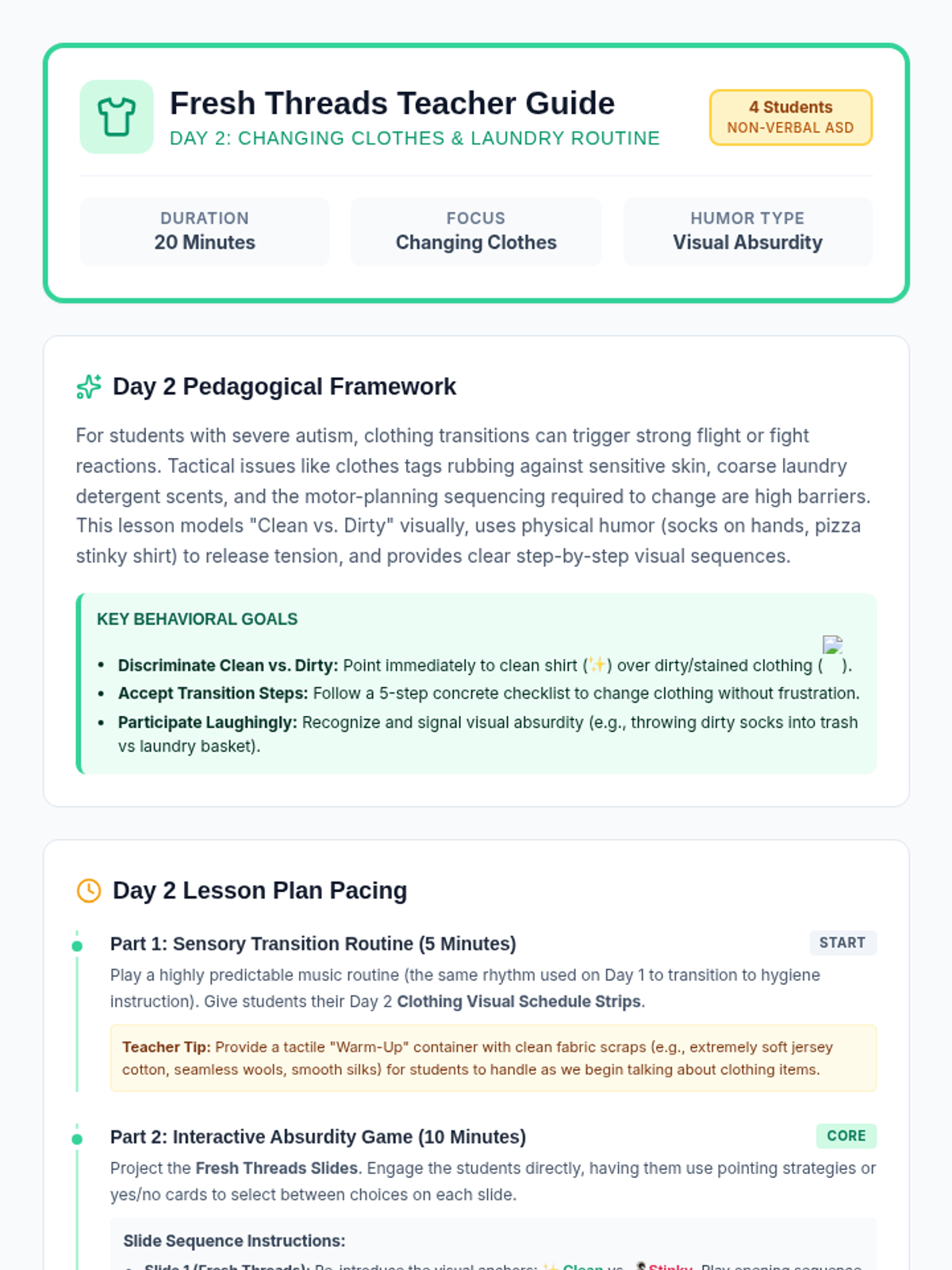
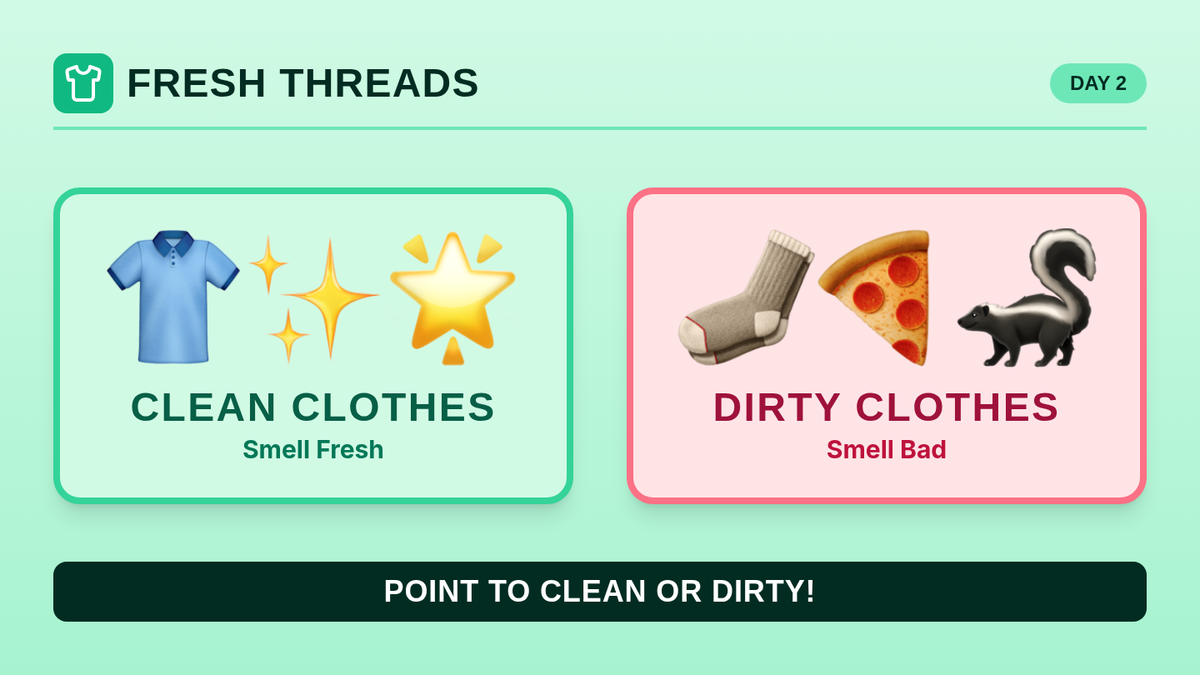
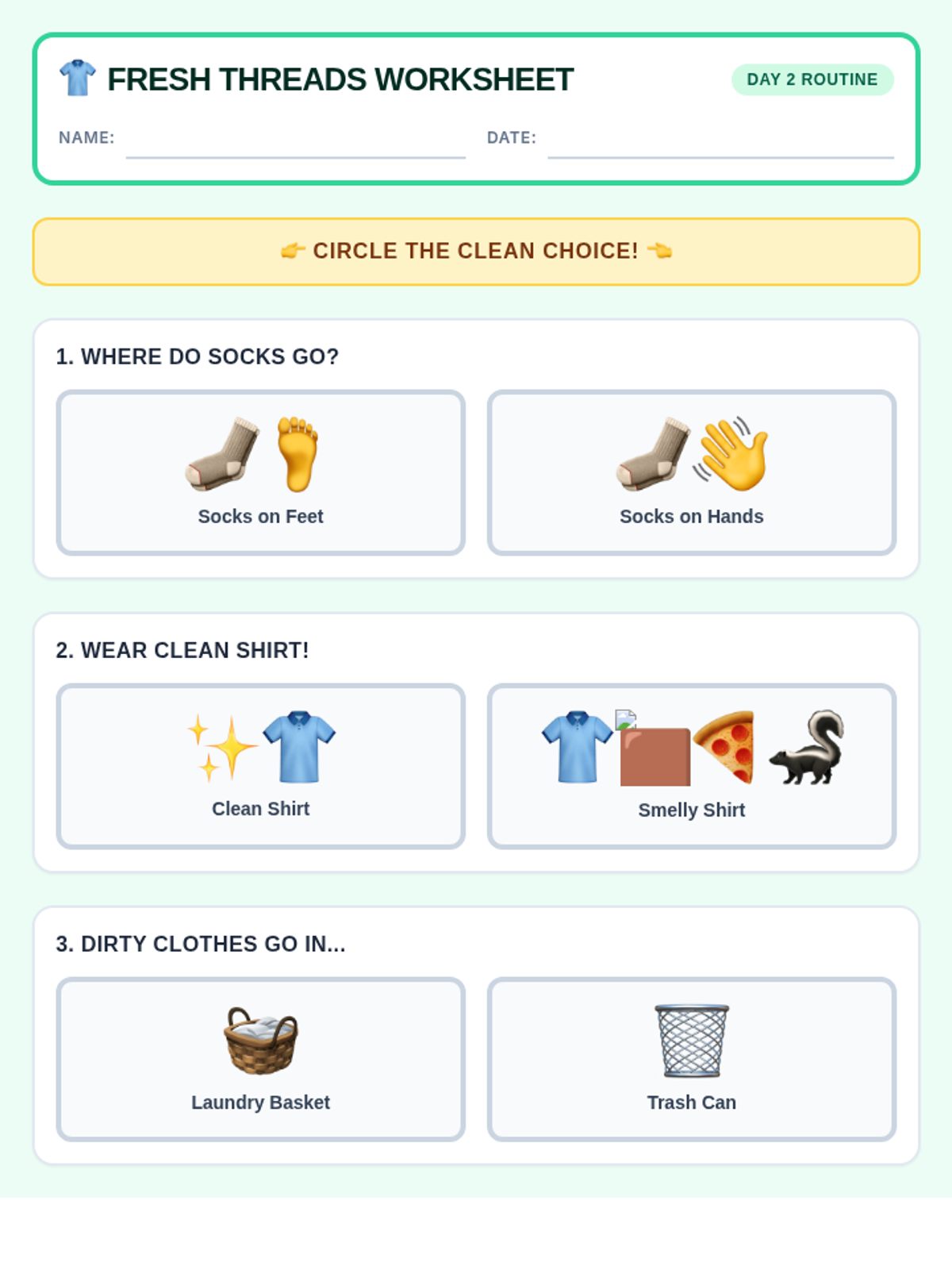
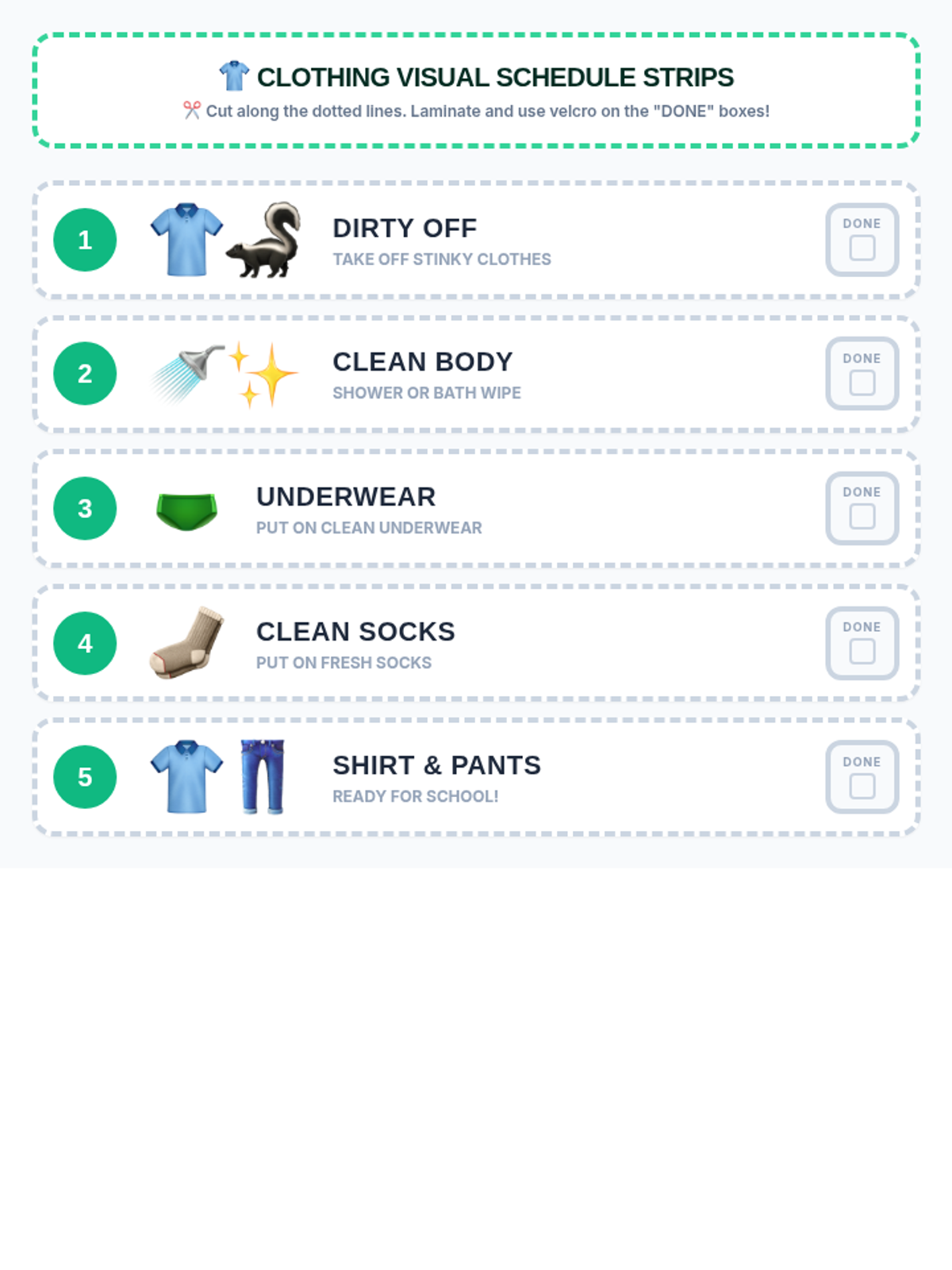
Focuses on the sensory-sensitive transition of changing clothes daily, identifying clean vs. dirty clothes, and managing sensory sensitivities (tags, seams, scents). It includes visual absurdity games (e.g., socks on hands, pizza stinky shirts) and visual routines.
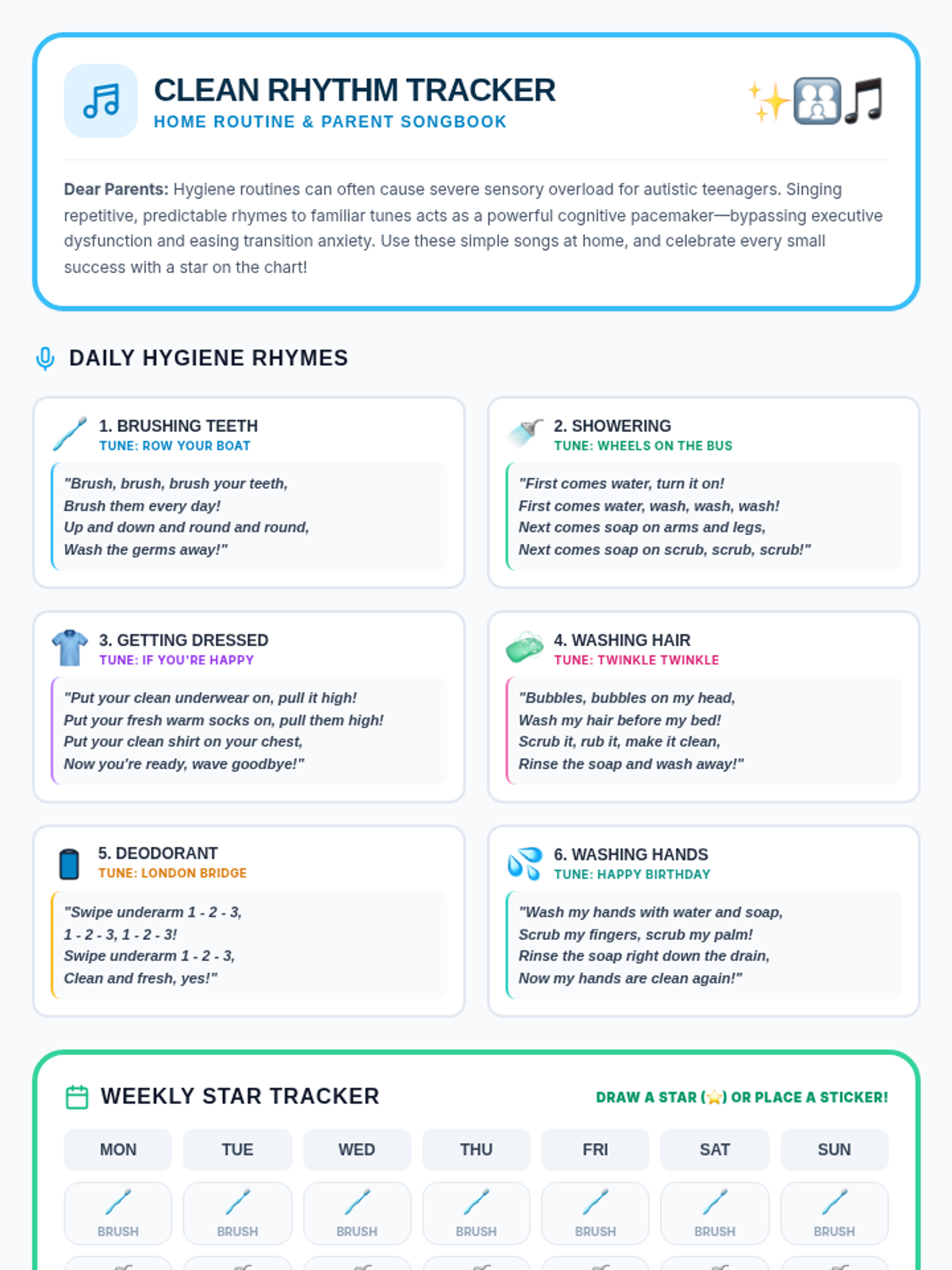
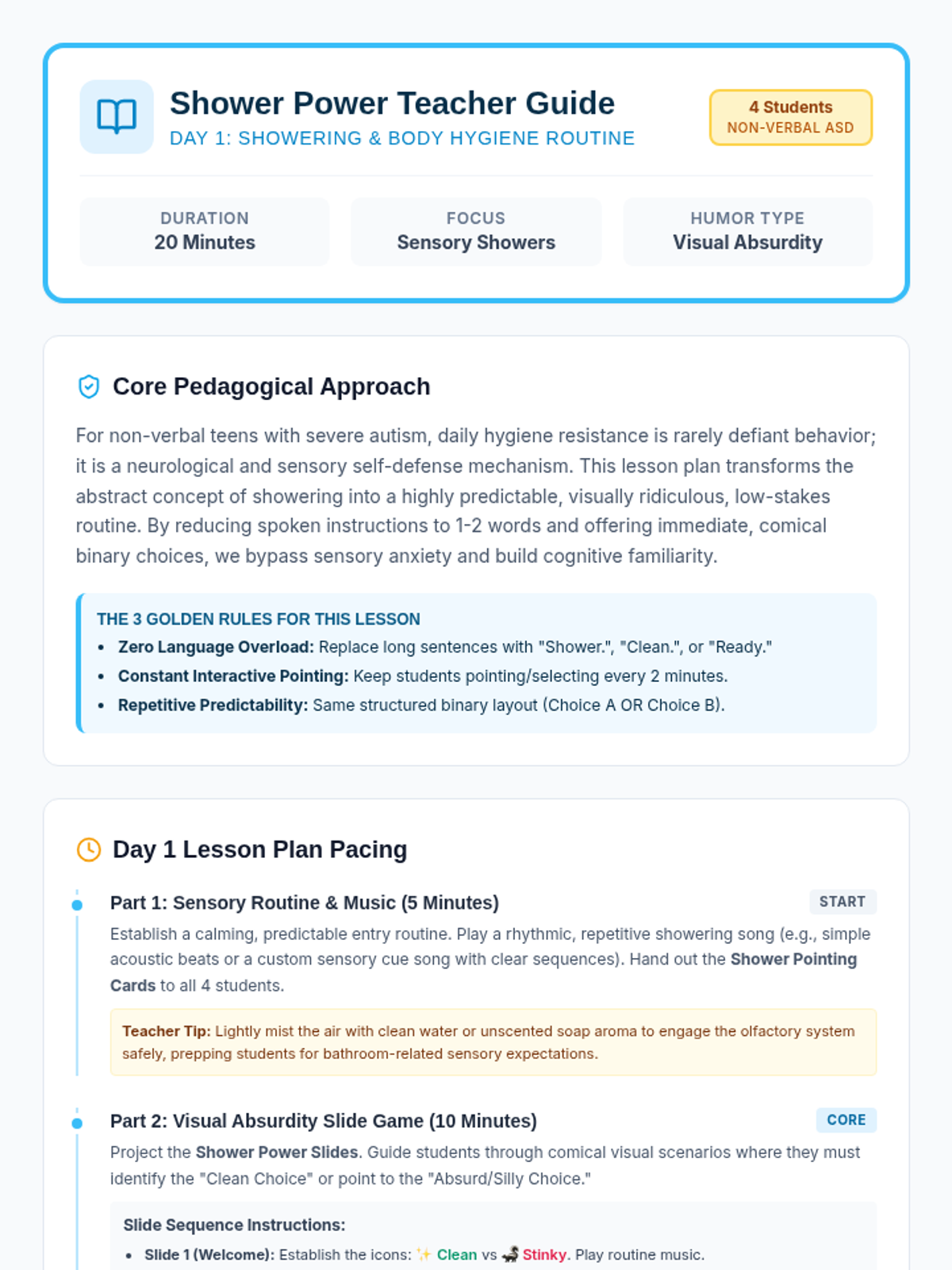
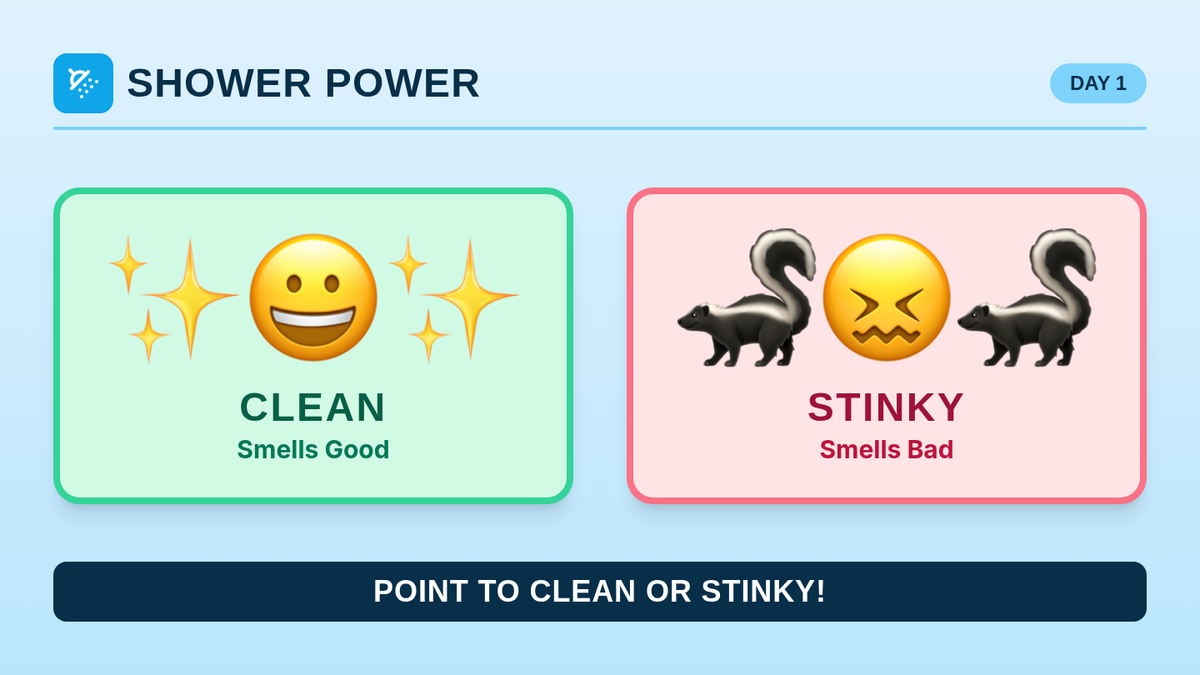
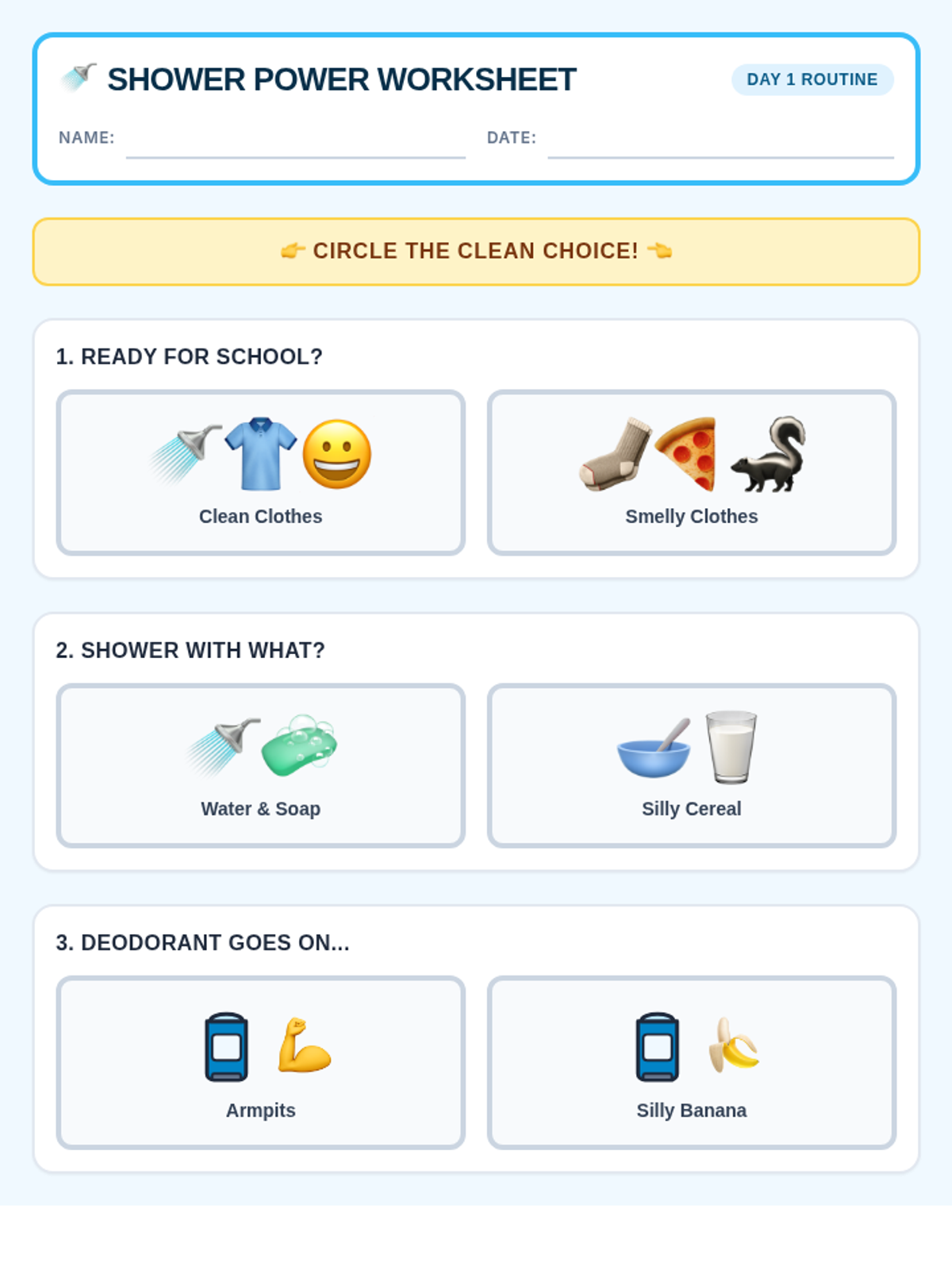
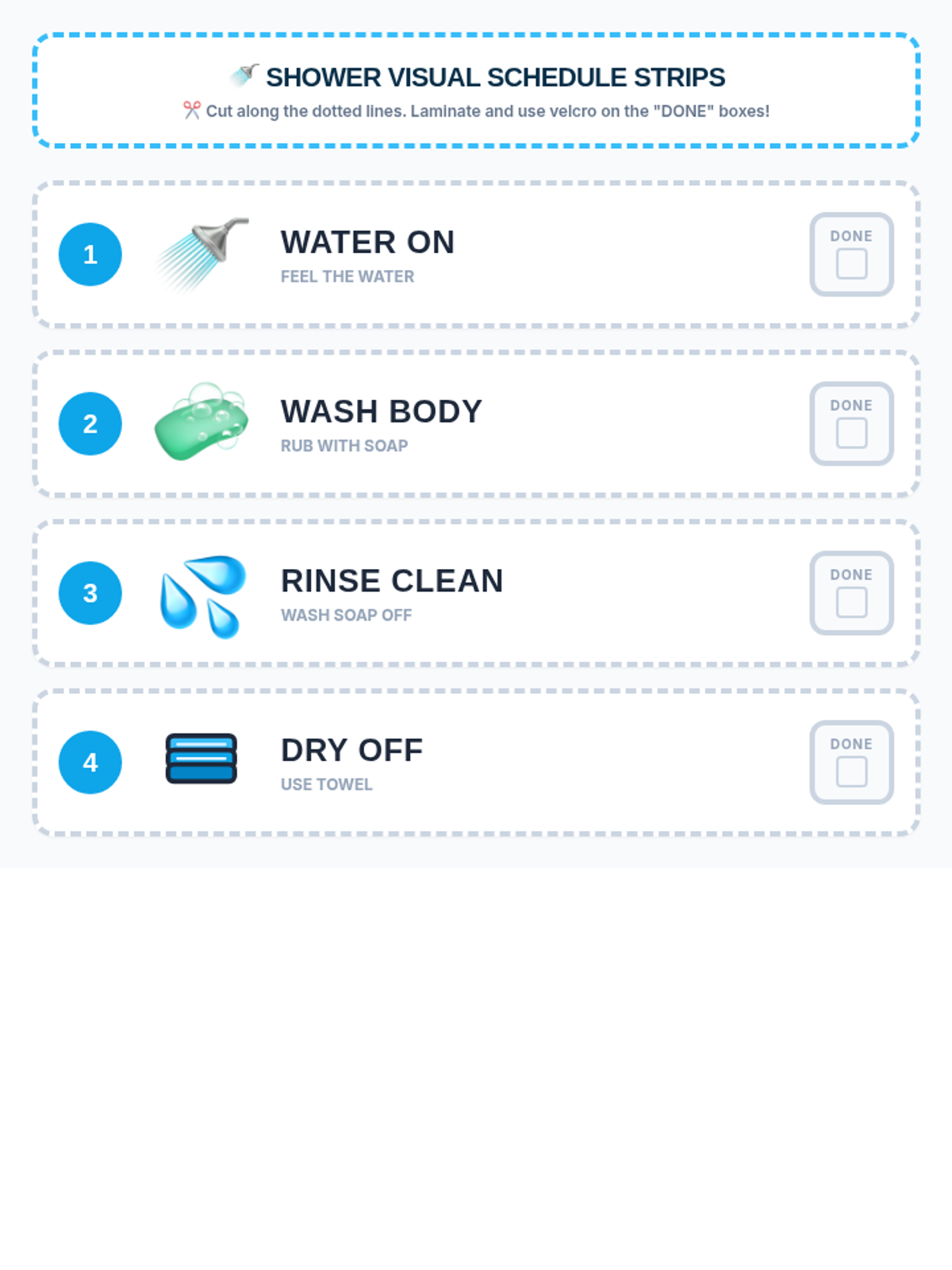
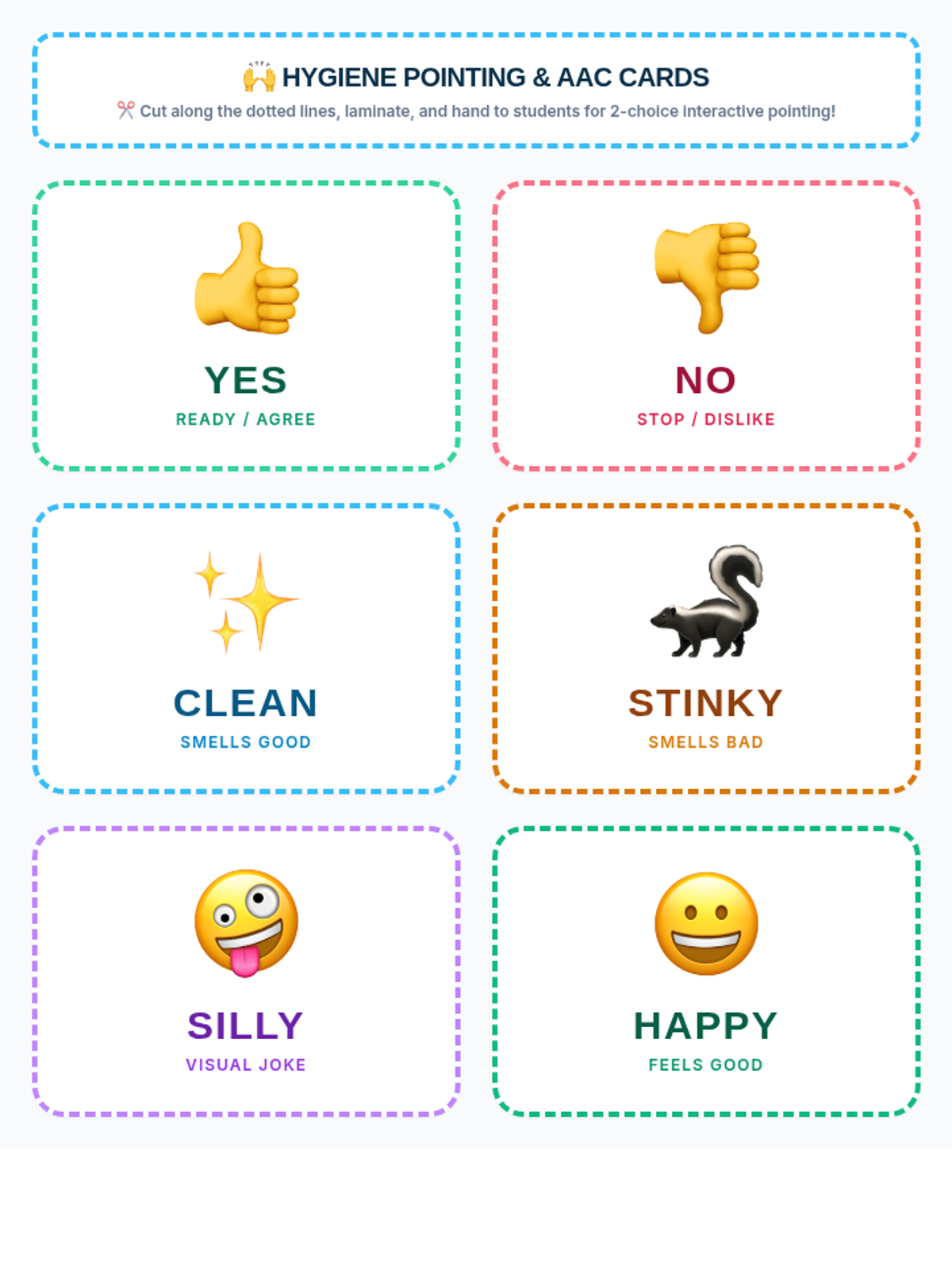
Focuses on sensory-friendly showering routines, washing the body and hair, and using deodorant. It features visual absurdity humor (e.g., showering with cereal, putting deodorant on a banana) and 2-choice visual pointing activities.
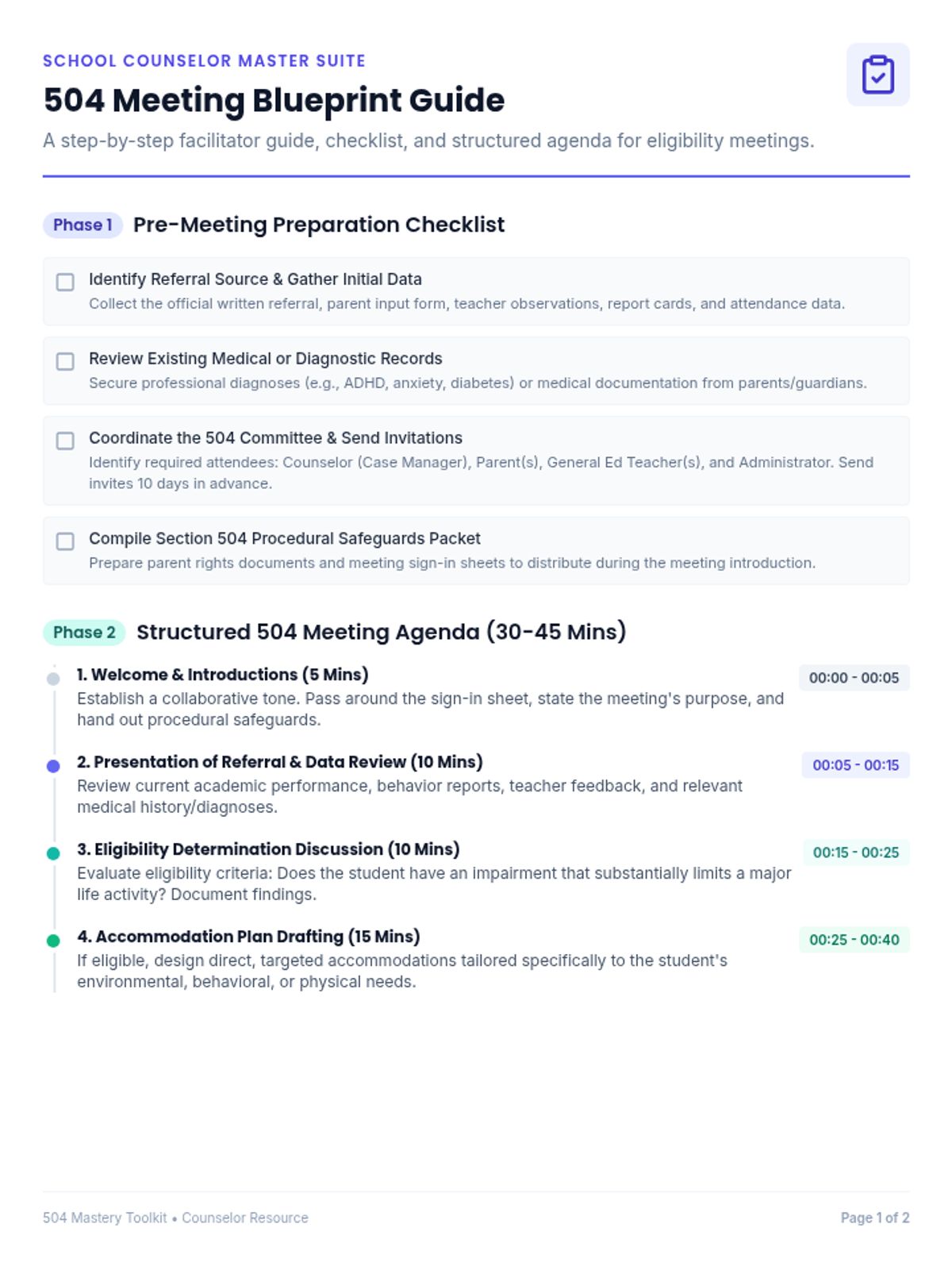
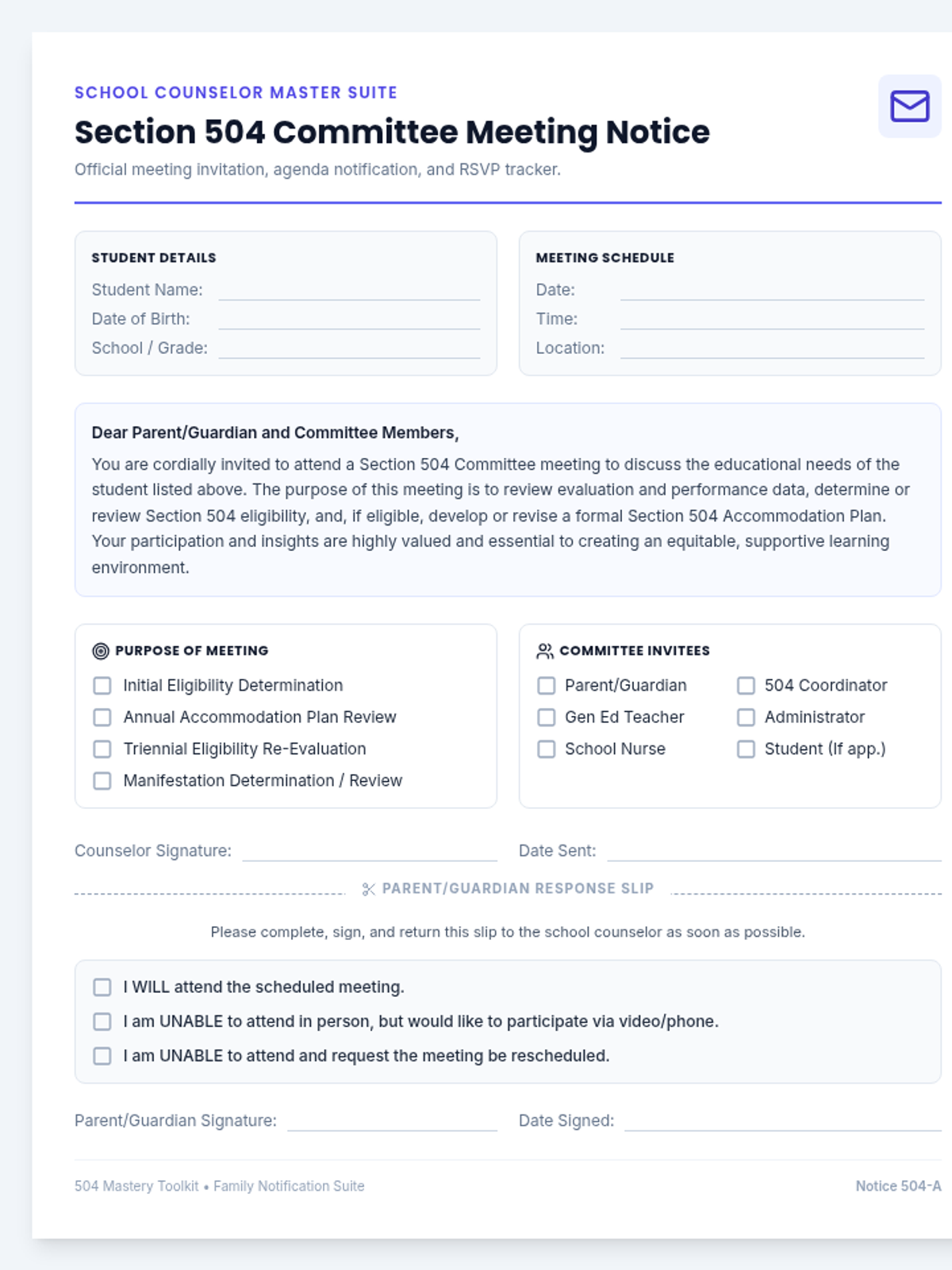
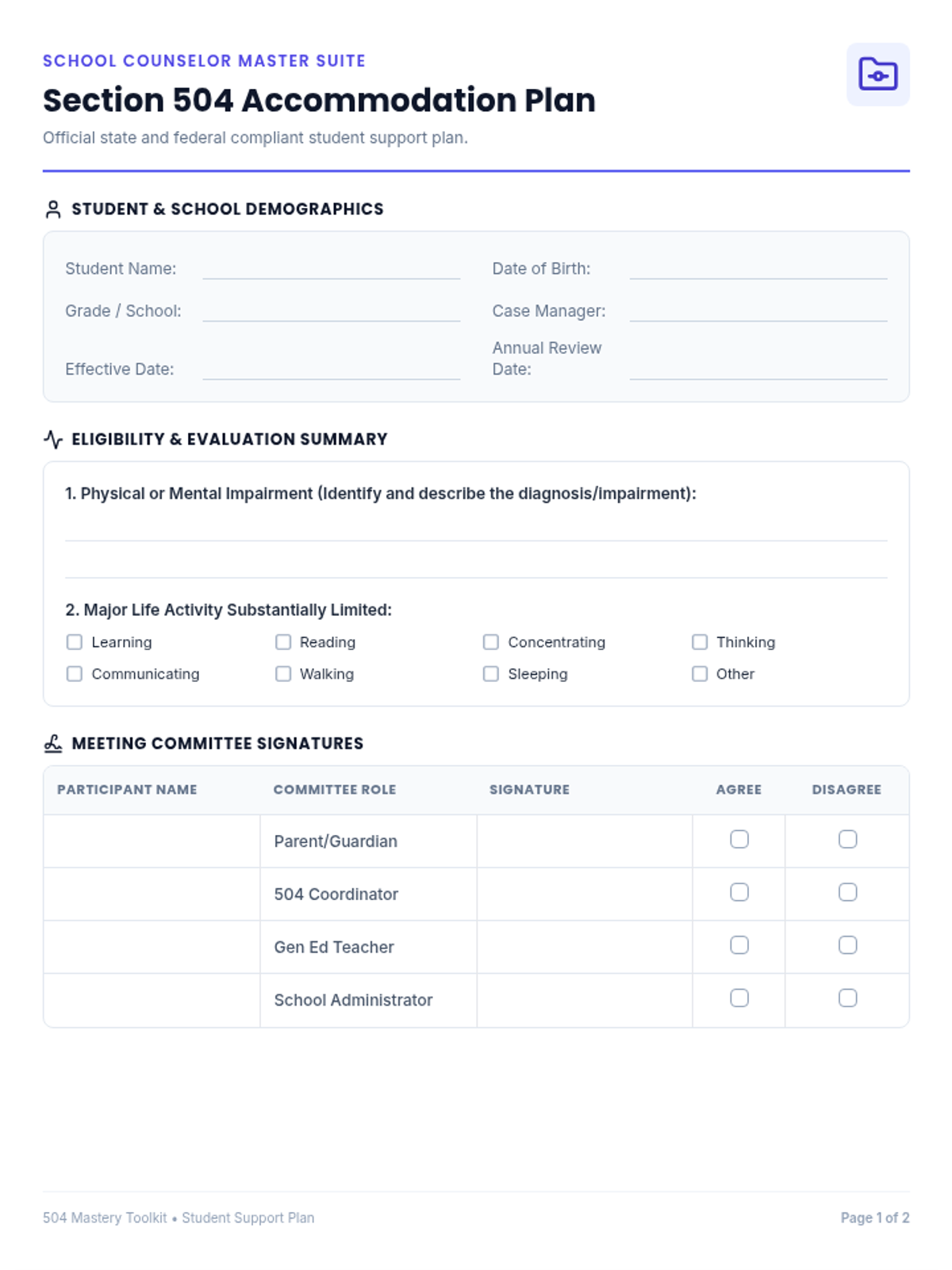
A comprehensive toolkit for school counselors outlining the Section 504 eligibility meeting process, complete with a step-by-step checklist, meeting agenda, meeting invitation template, and formal accommodation plan.
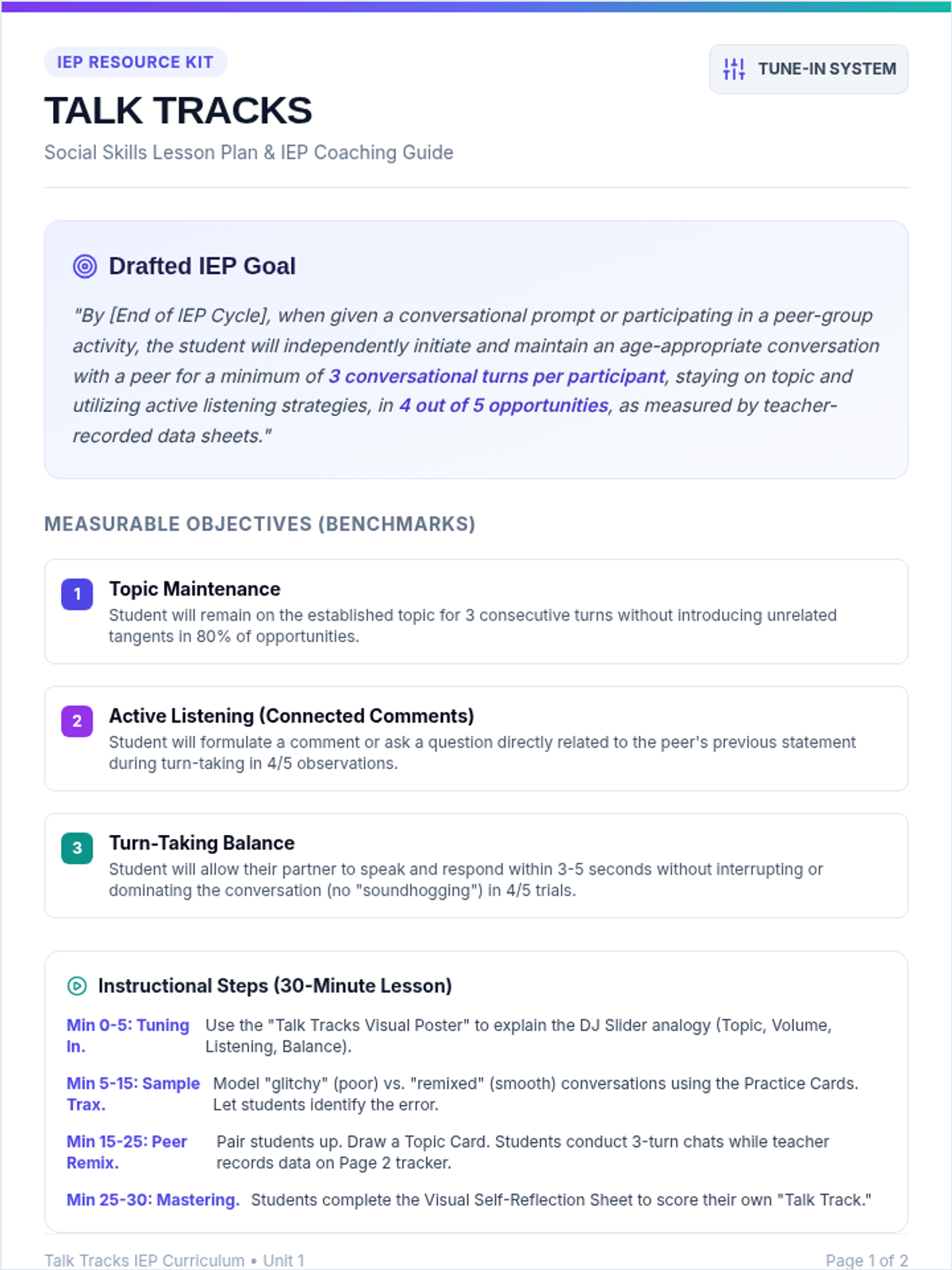
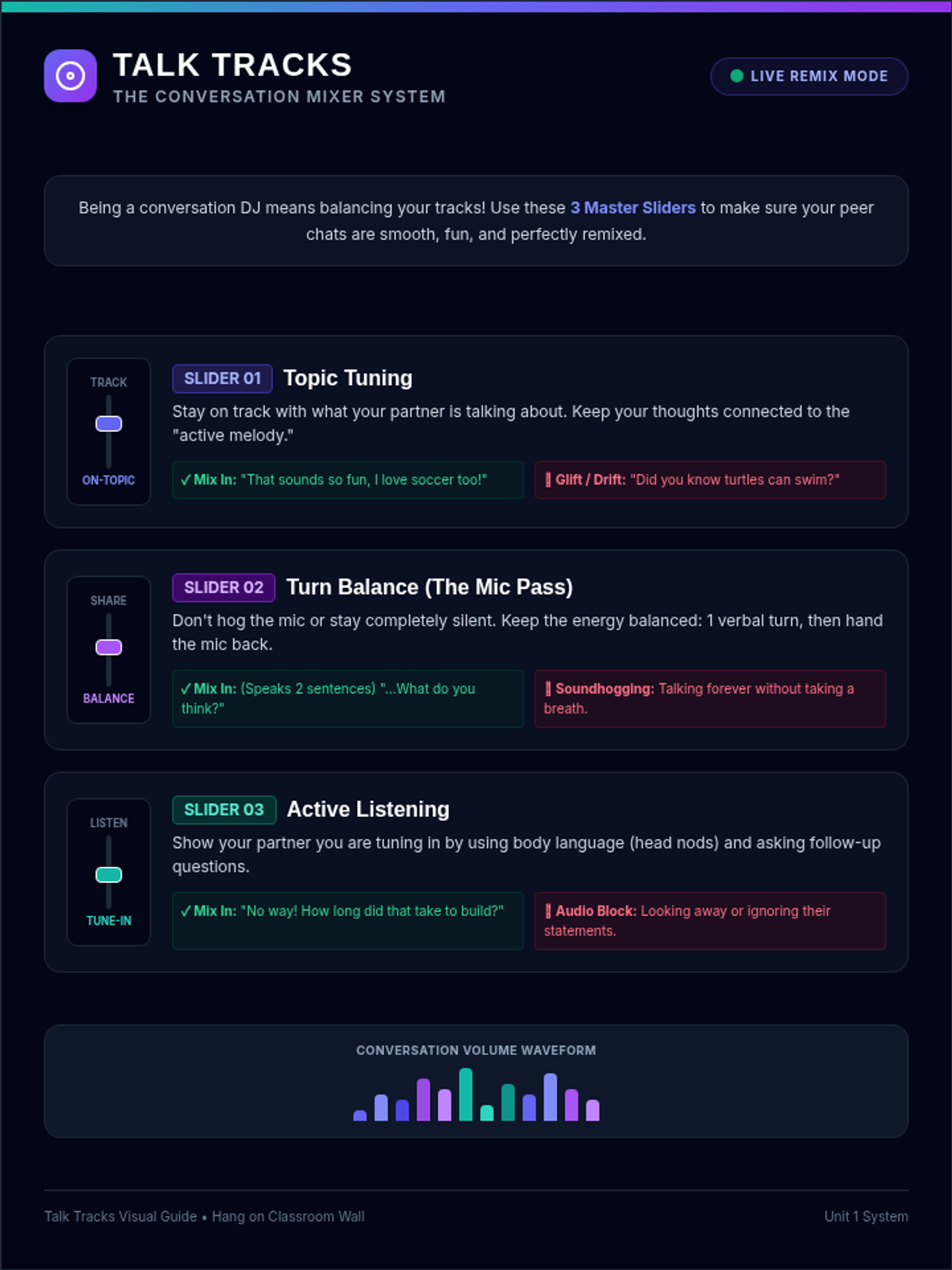
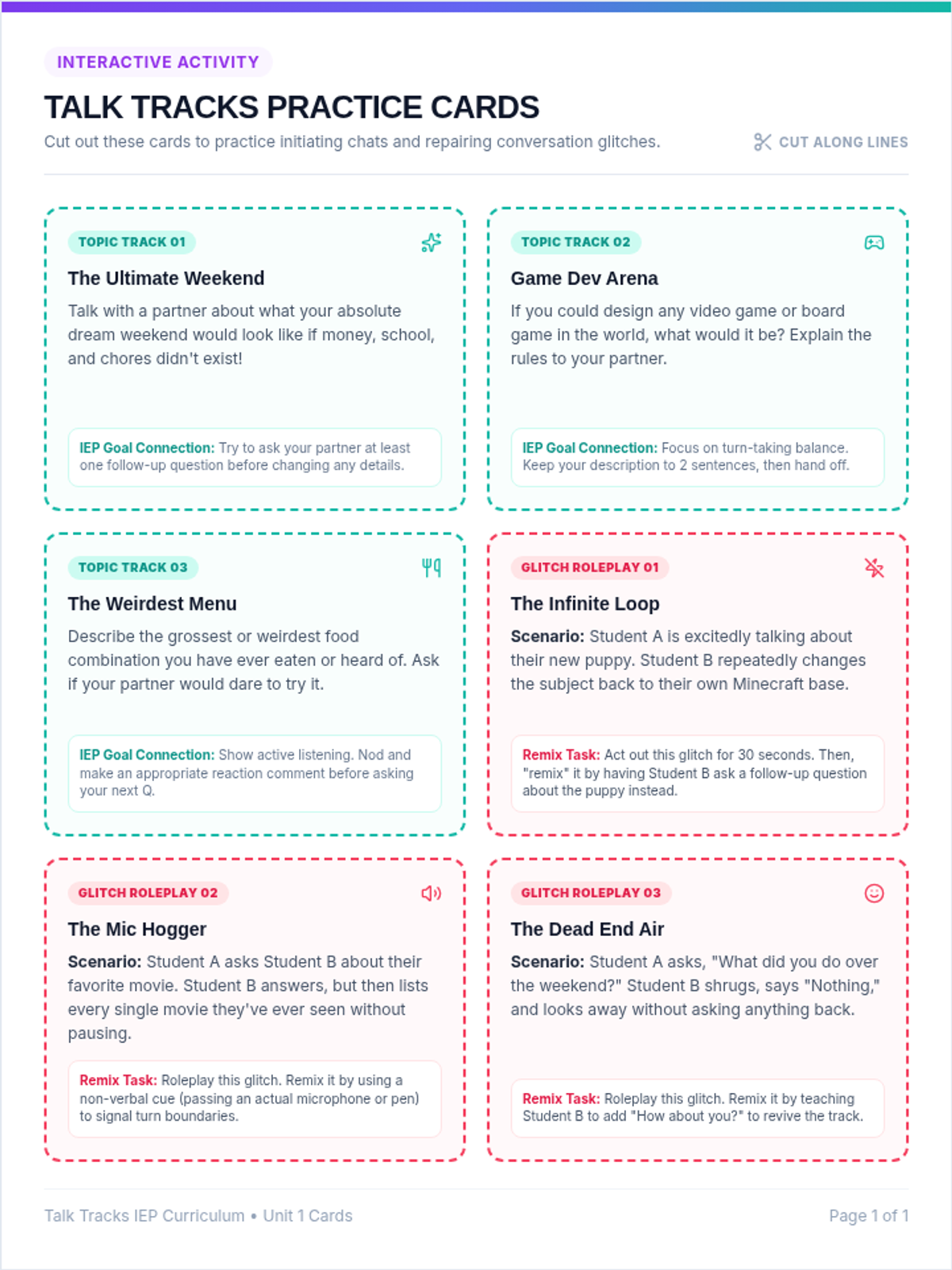
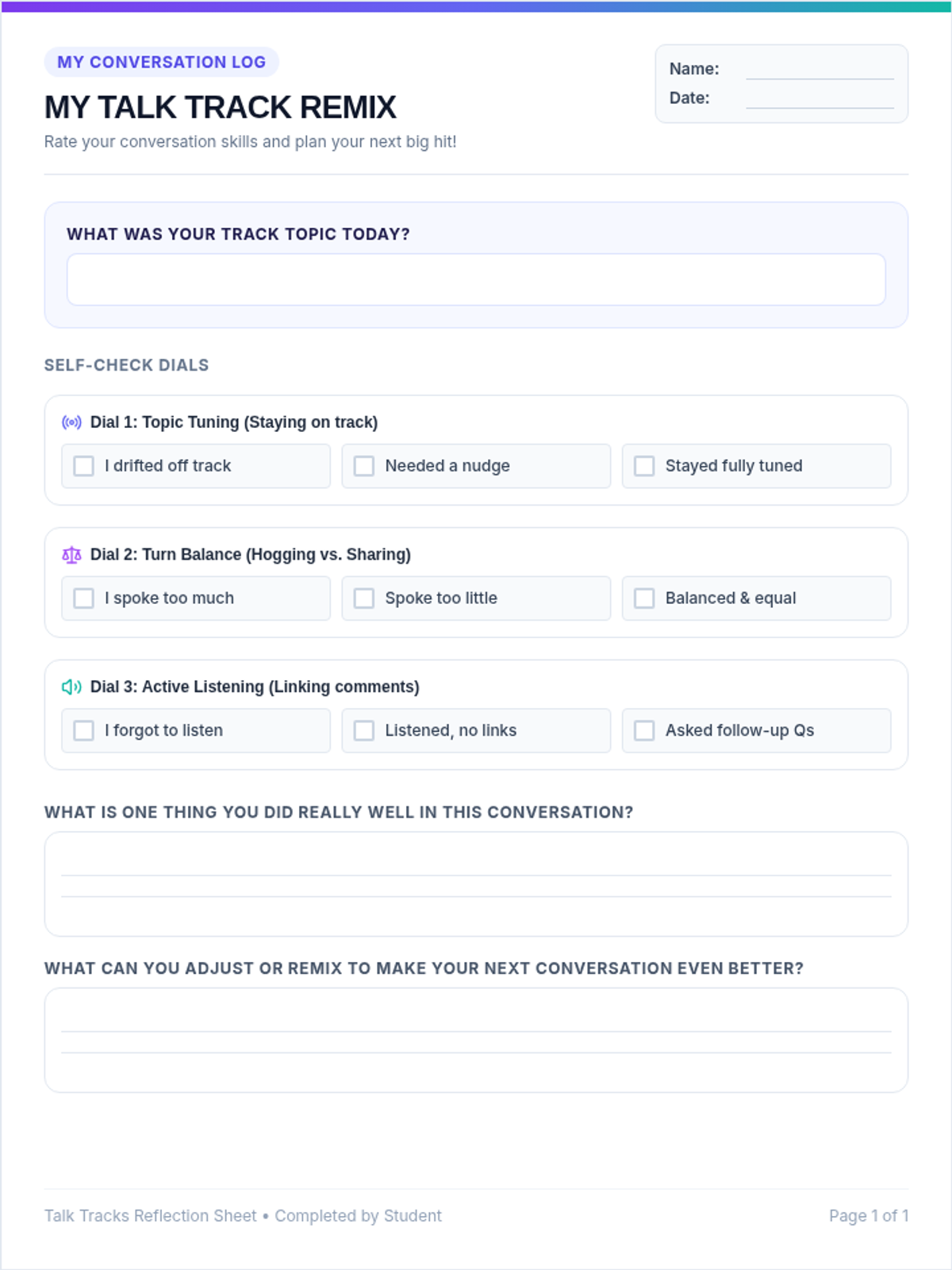
A comprehensive social skills lesson package designed to teach, practice, and track progress on conversational turn-taking, topic maintenance, and active listening for elementary and middle school students with social communication IEP goals.
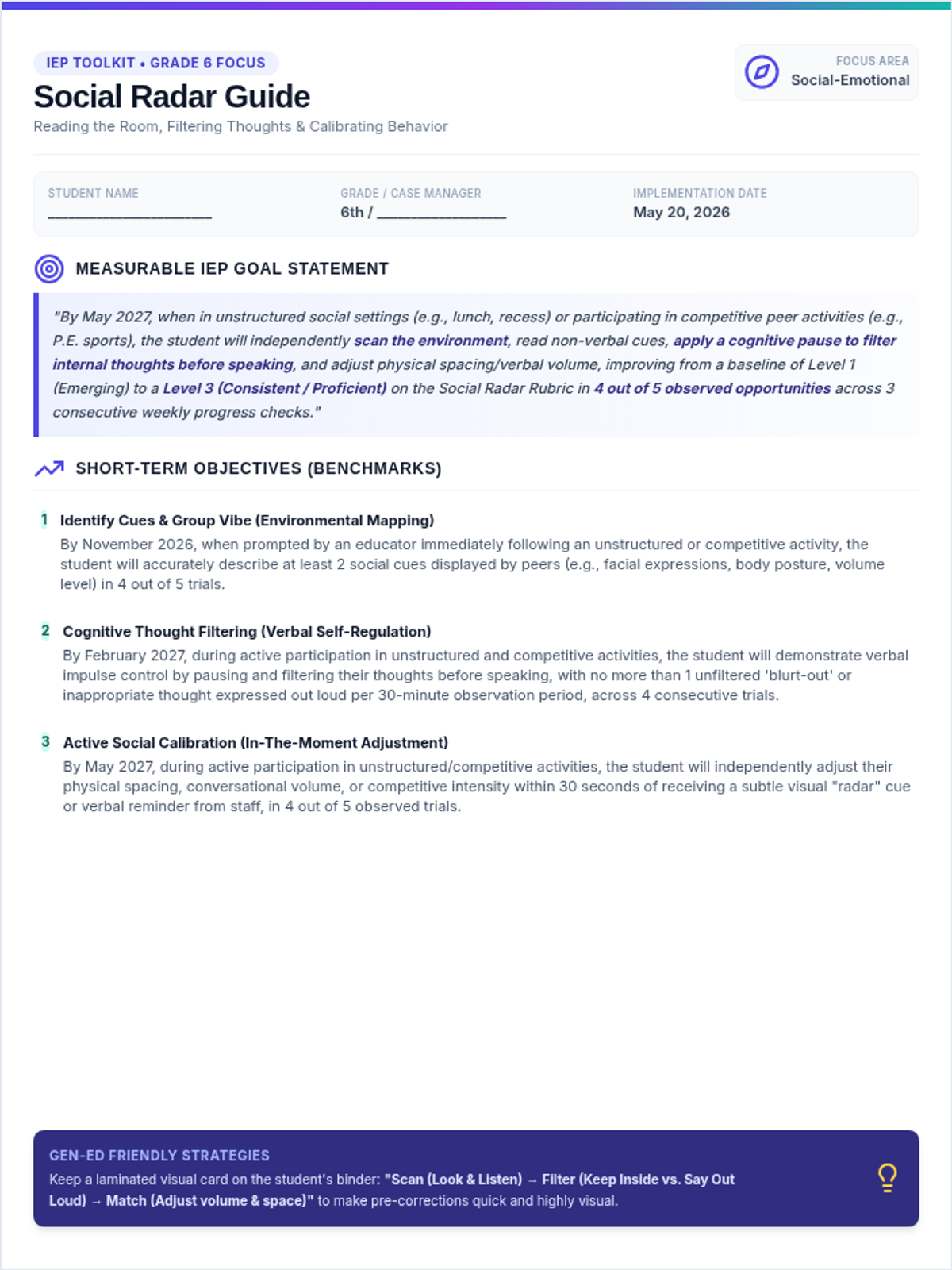
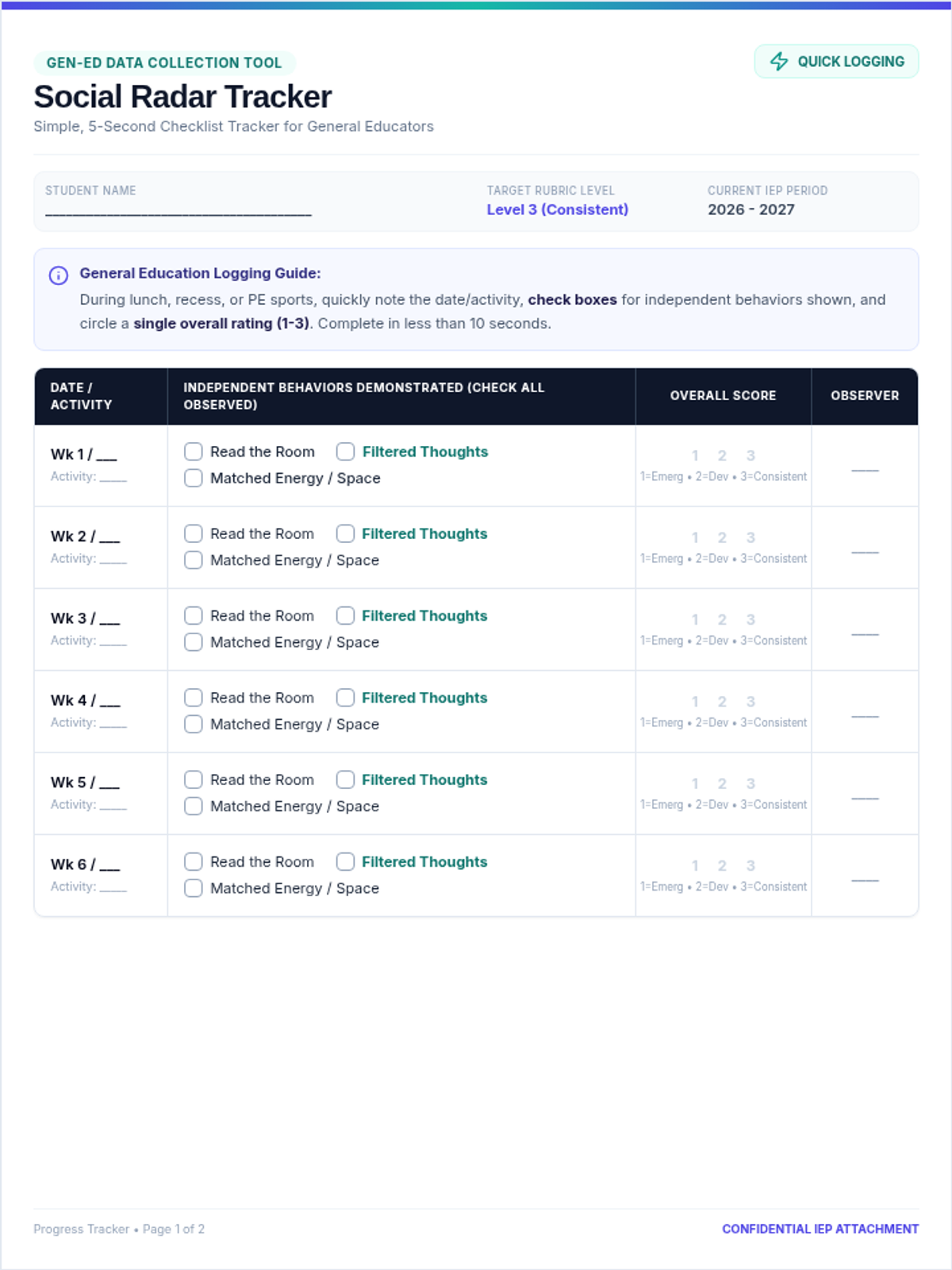
An IEP toolkit featuring a measurable social-emotional goal, a concrete evaluation rubric, and weekly progress monitoring trackers specifically designed to help a 6th-grade student navigate unstructured social settings and competitive activities.
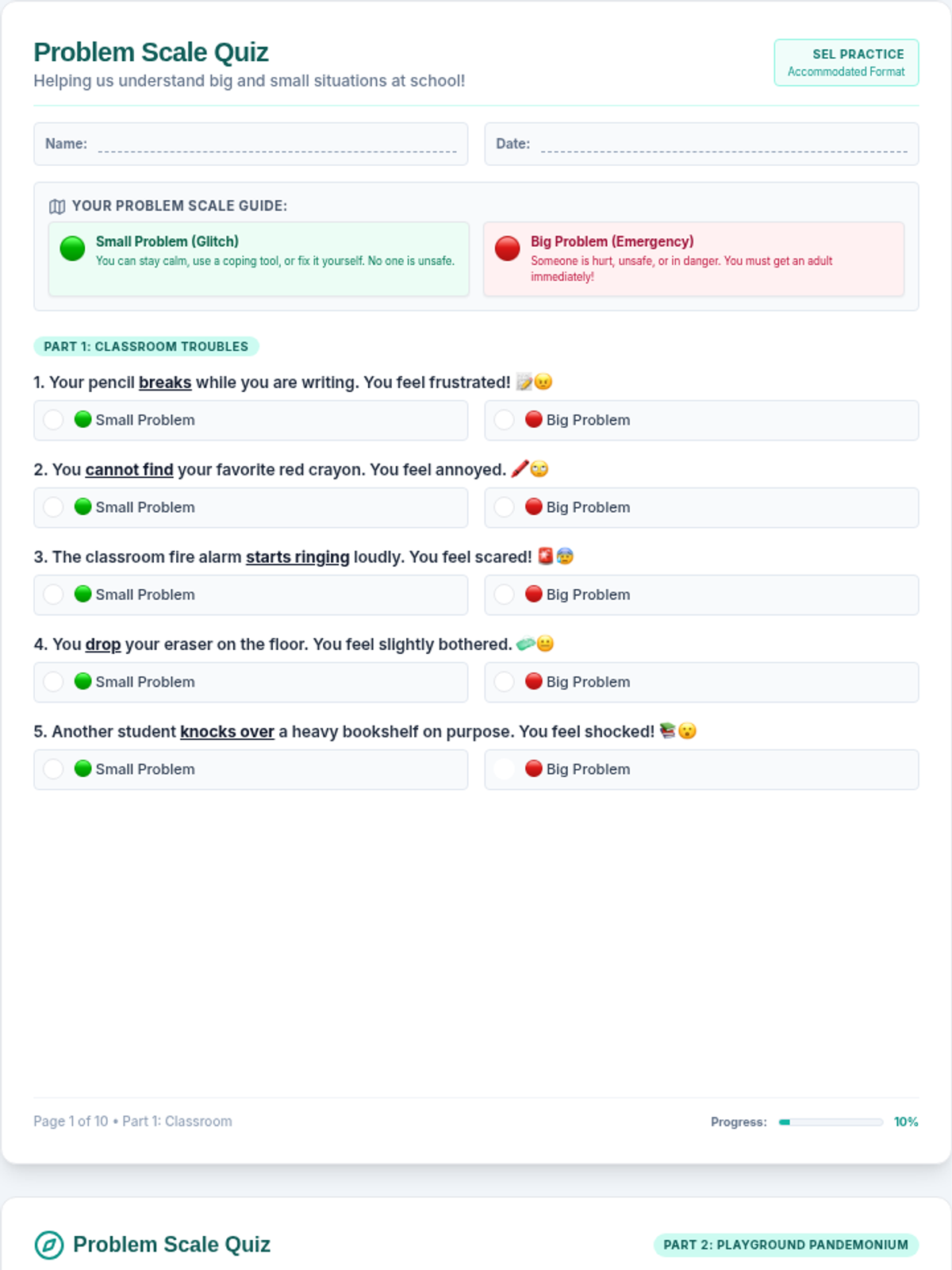
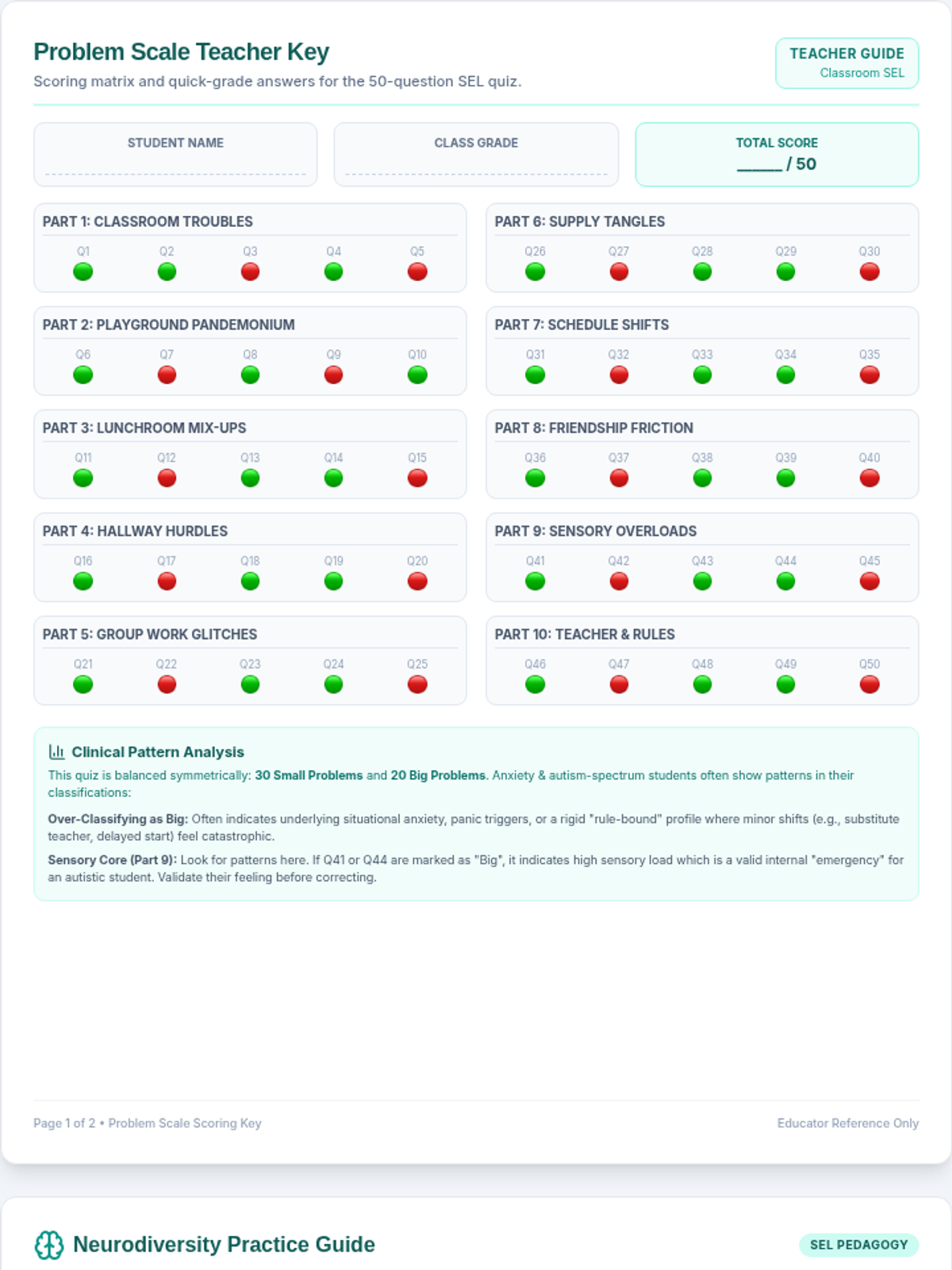
A specialized social-emotional learning lesson focused on helping neurodivergent 2nd and 3rd graders categorize school challenges. Features a comprehensive, highly accommodated 50-question quiz and a teacher's scoring key.
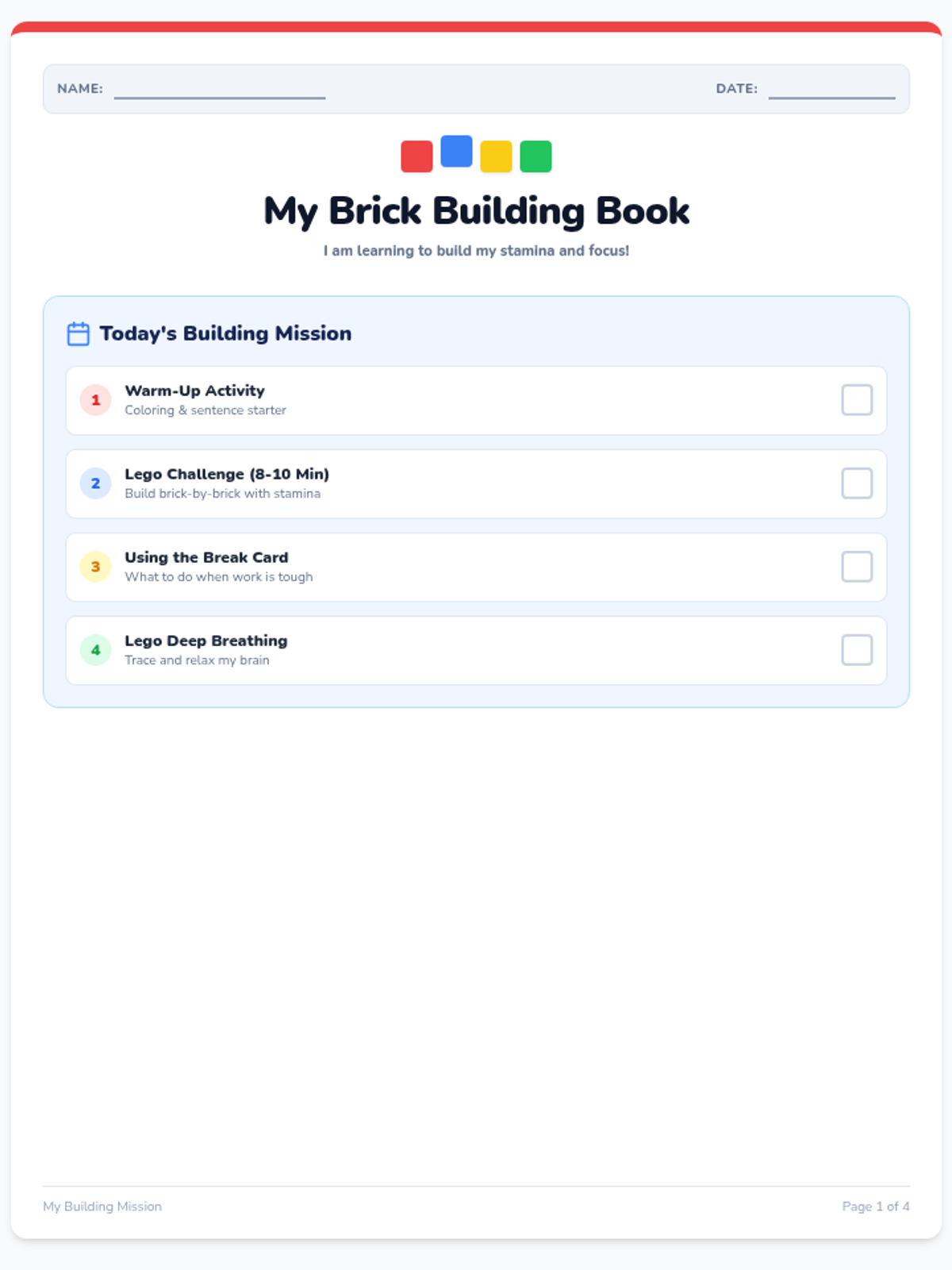
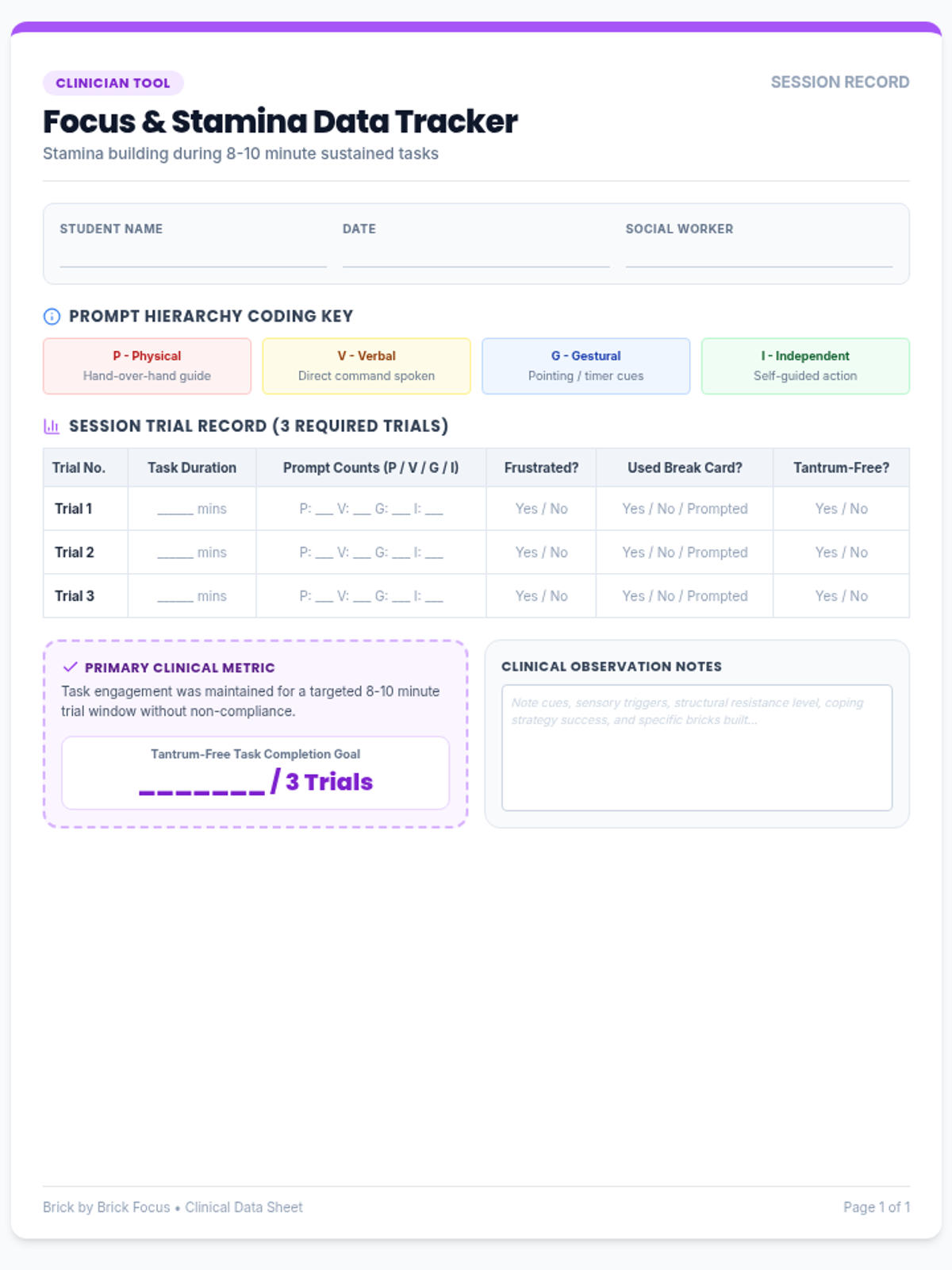
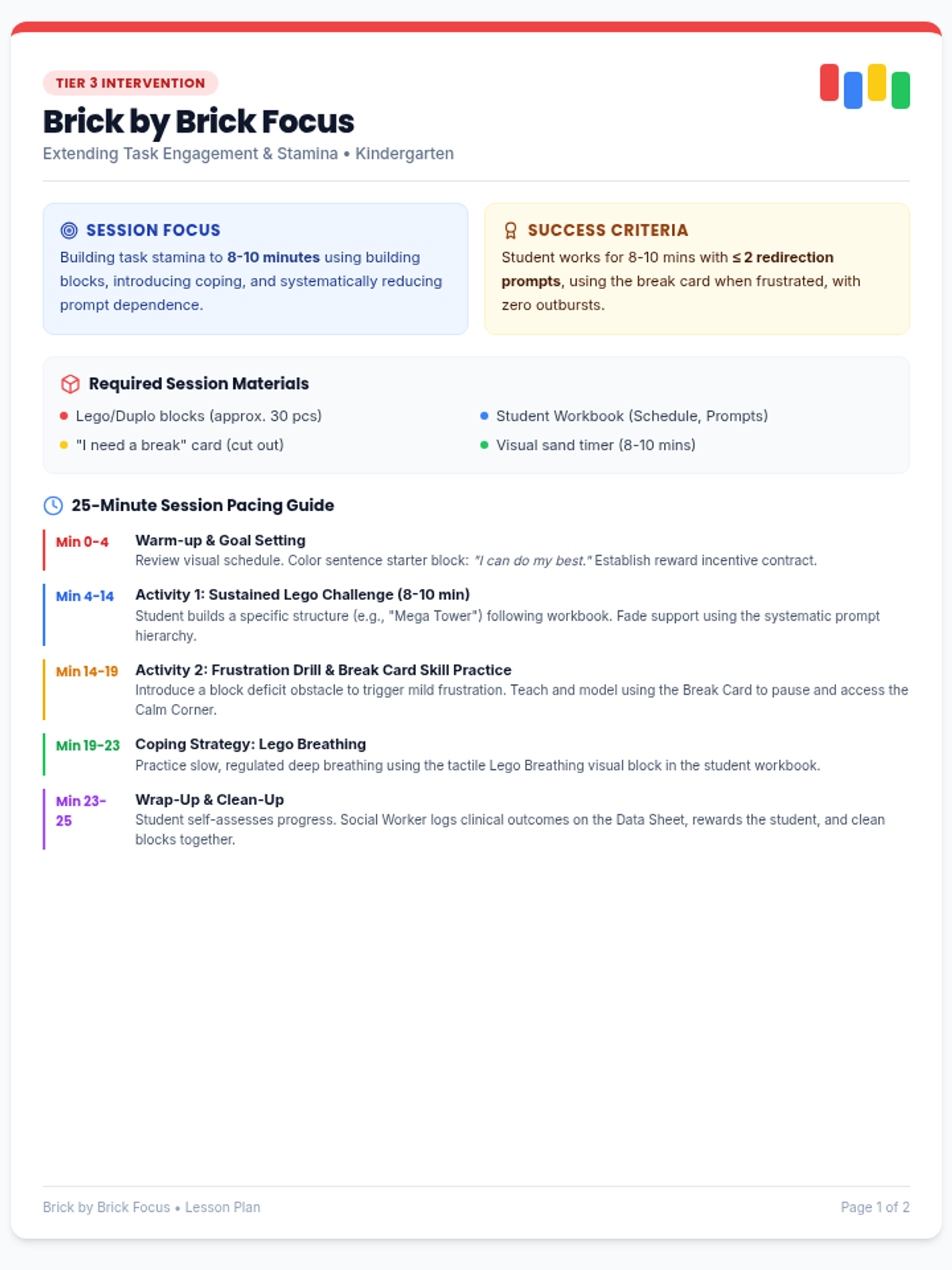
A comprehensive individual intervention lesson designed for kindergarten students to build stamina and task engagement for up to 8-10 minutes using interactive Lego and building activities, minimizing prompt dependence.
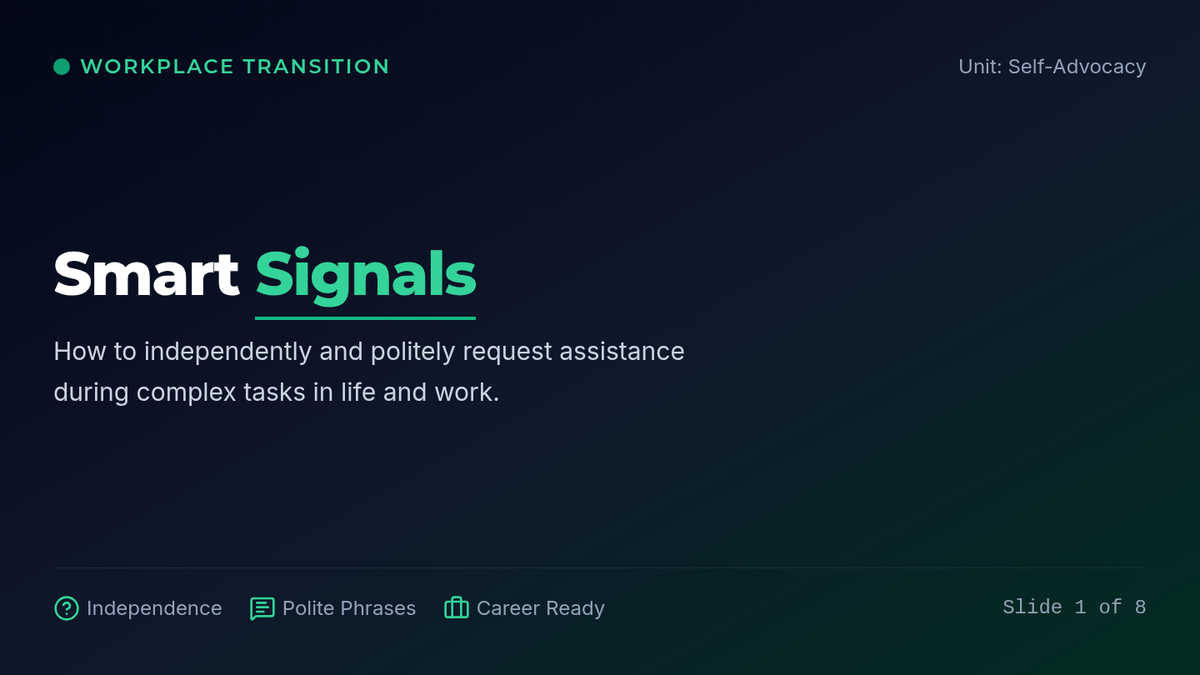
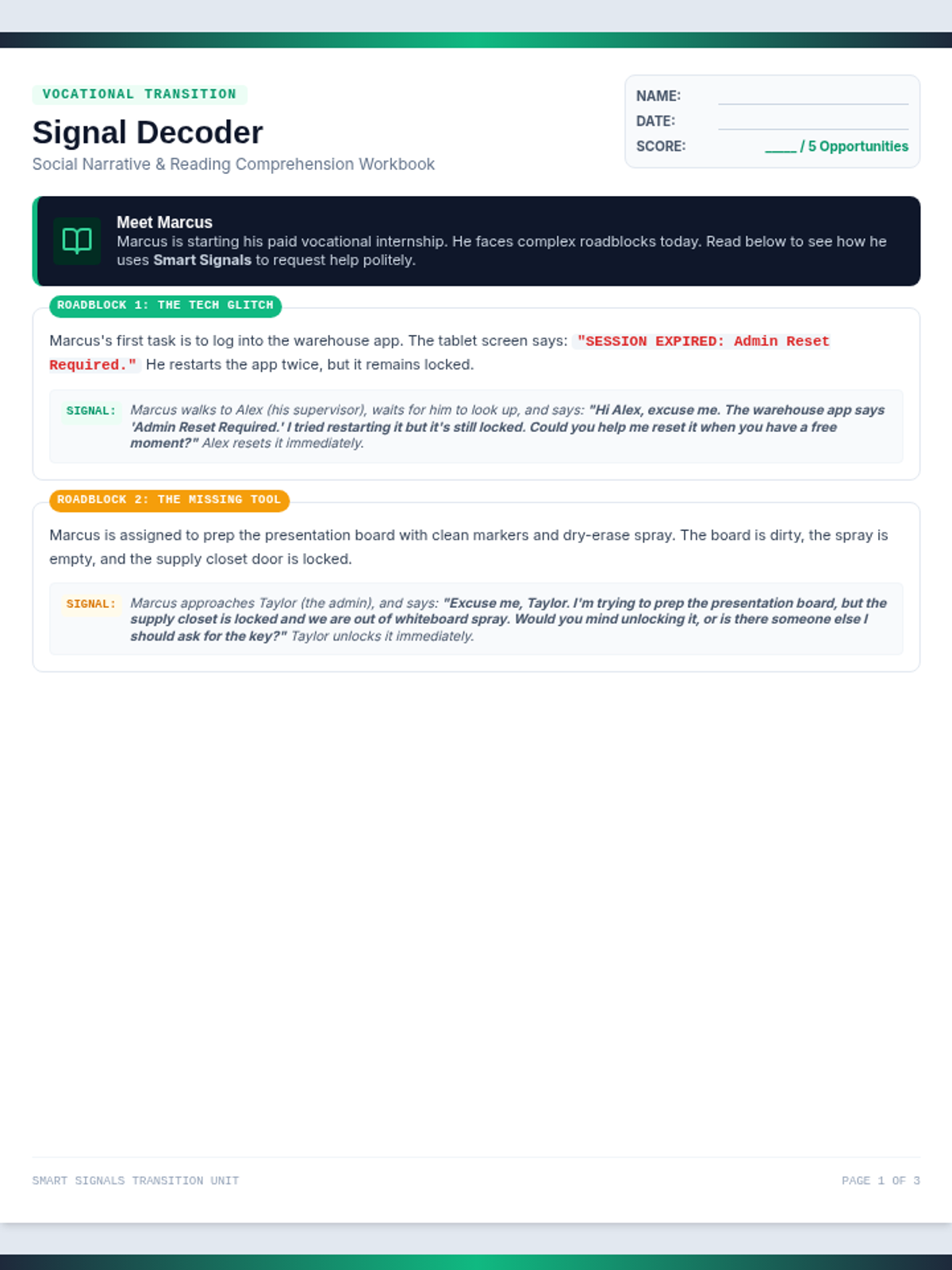
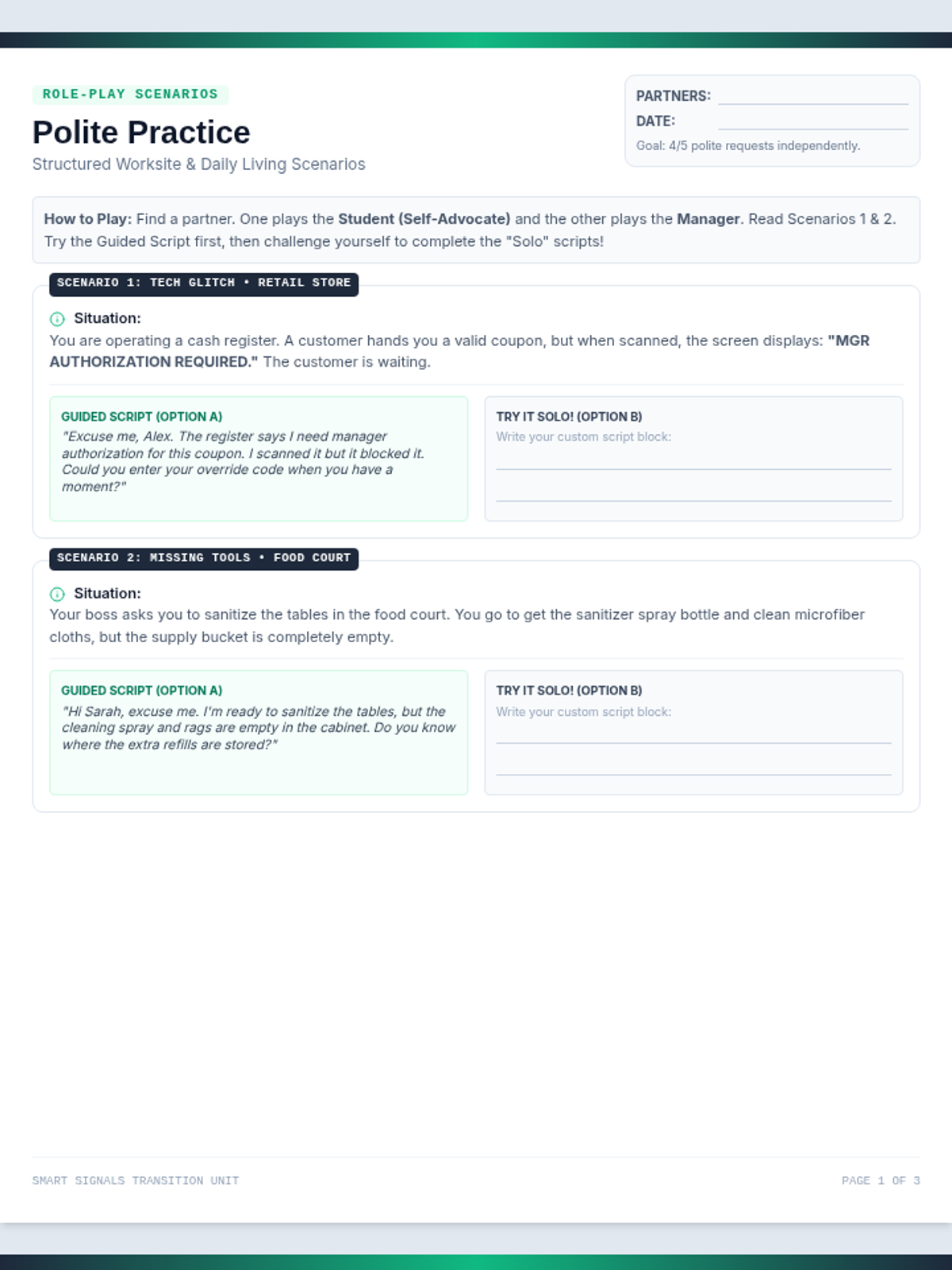
A comprehensive transition lesson designed for high school students to learn how to independently and politely request assistance during complex tasks, covering daily living tech issues, missing tools, and unclear workplace directions.
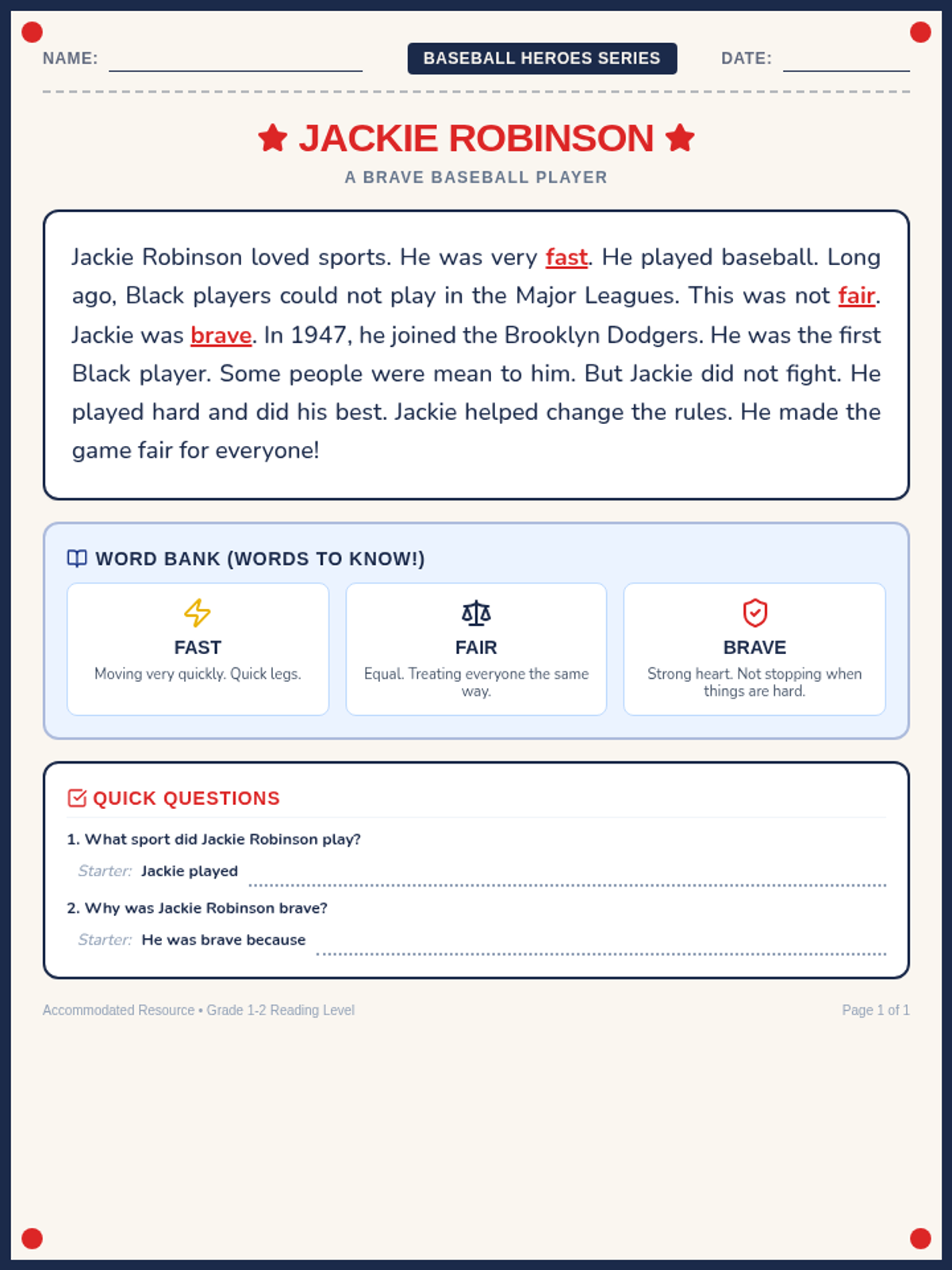
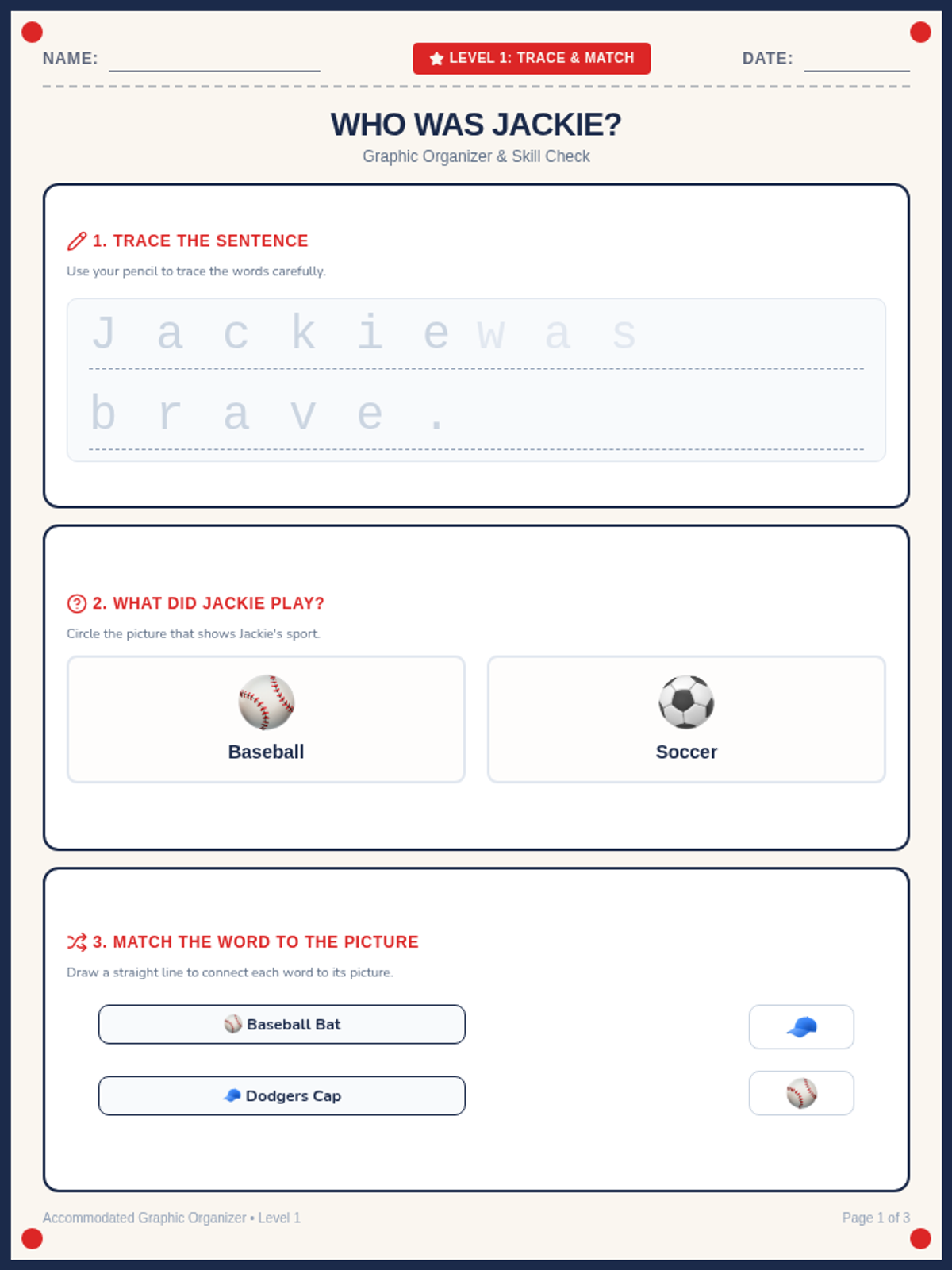
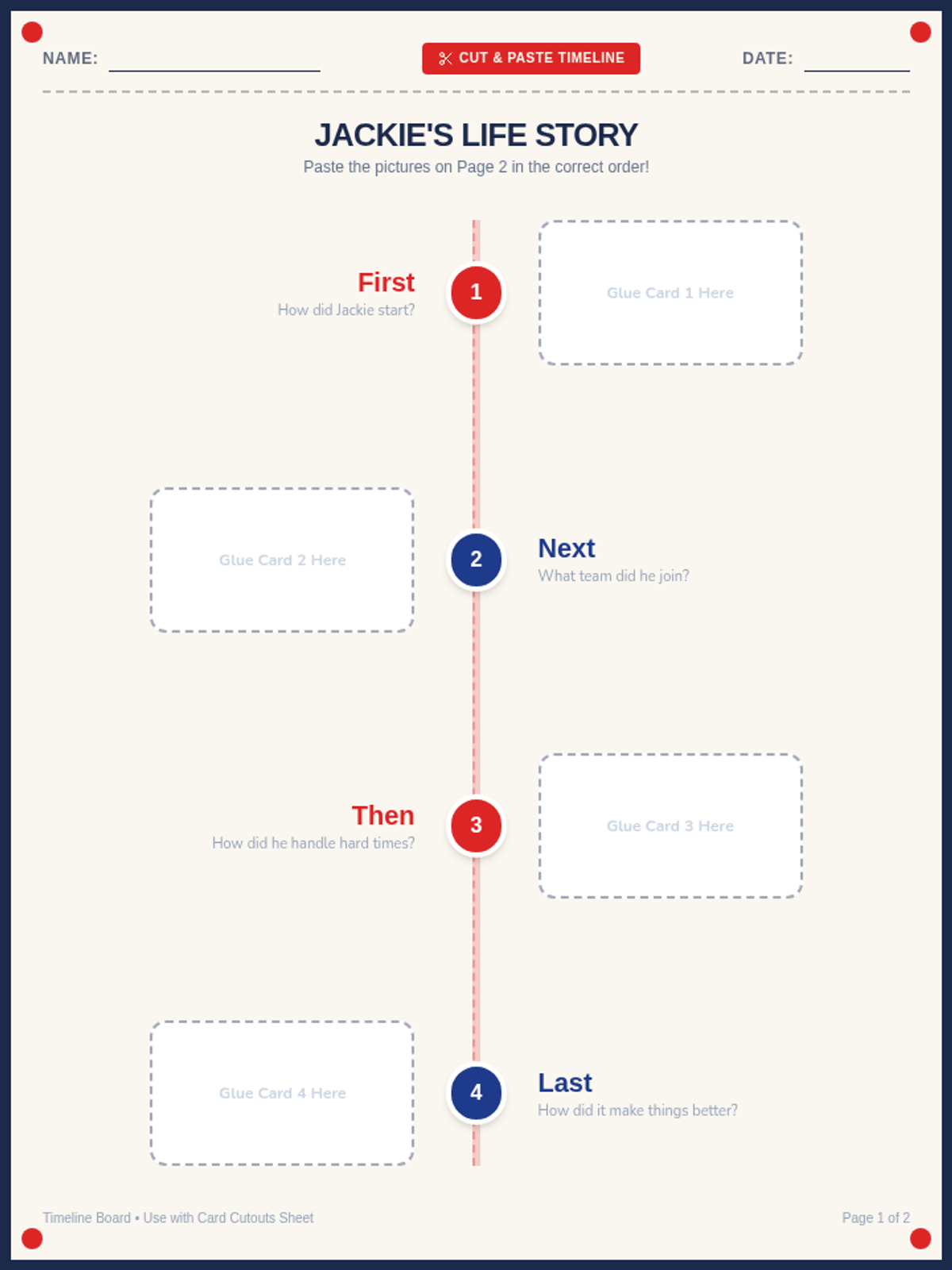
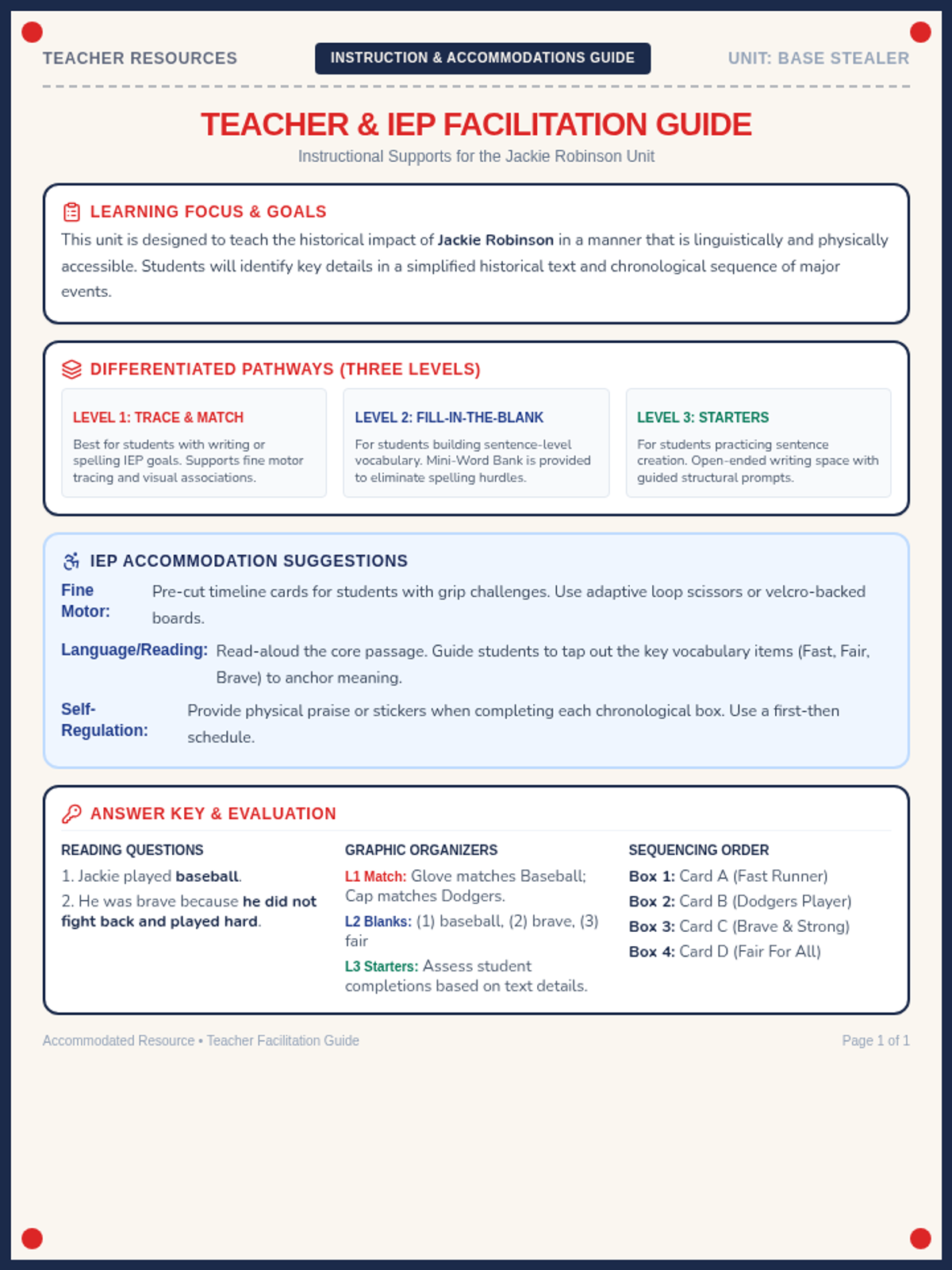
A highly accessible lesson on Jackie Robinson designed for 1st-2nd grade reading levels and IEP accommodations. Includes a simplified reading passage, three levels of differentiated graphic organizers, a visual cut-and-paste sequencing timeline, and a teacher guide.
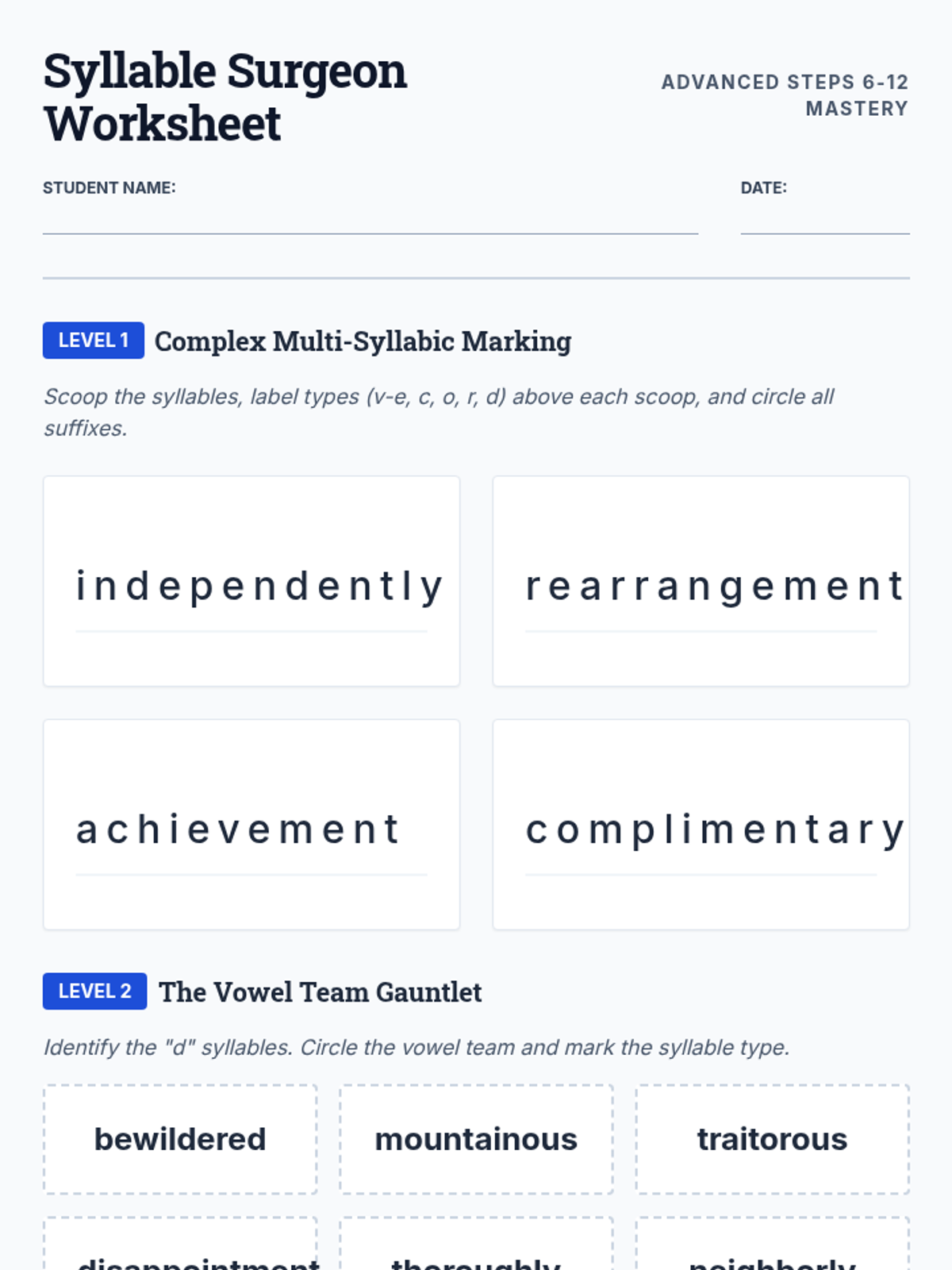
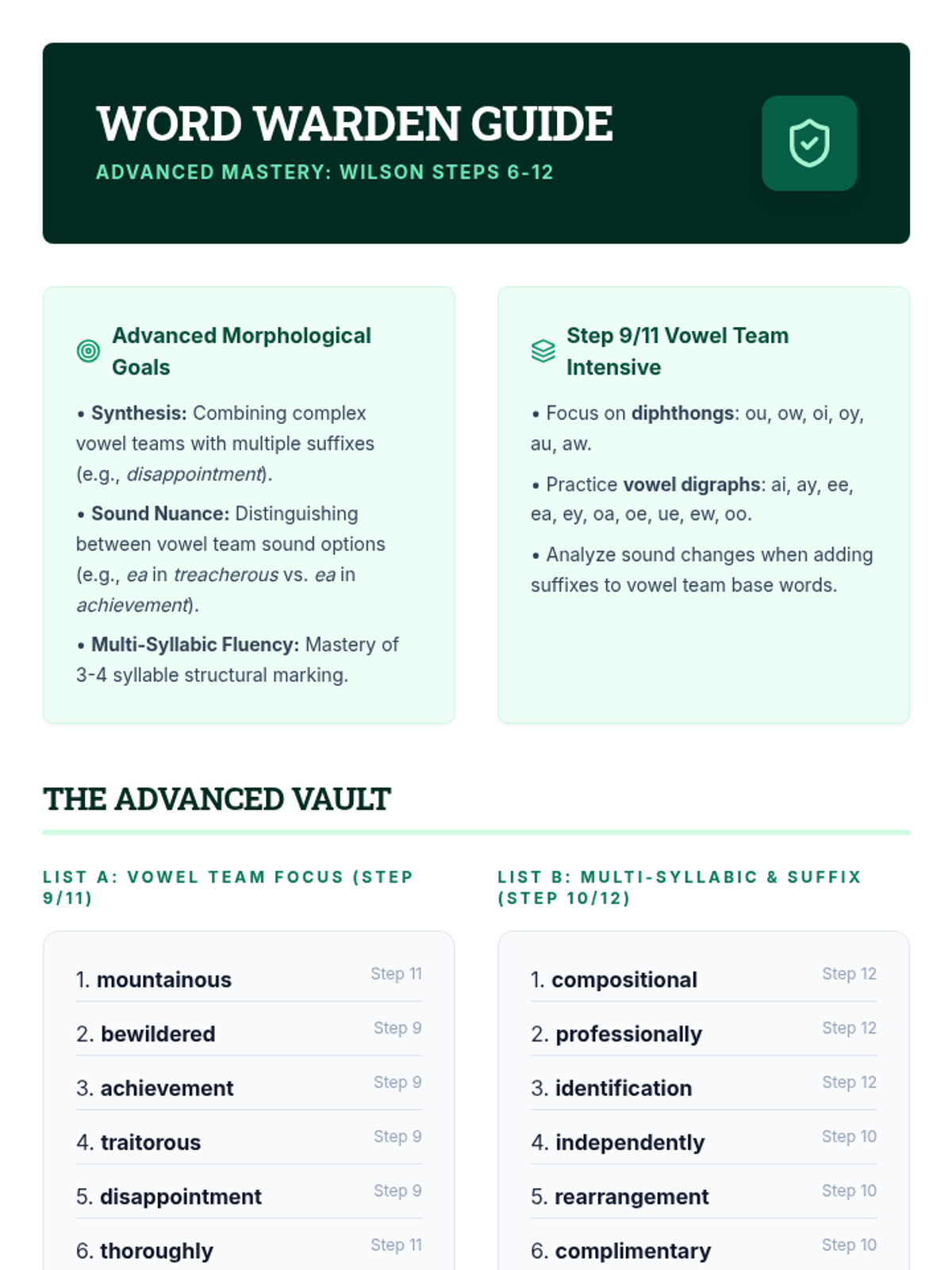
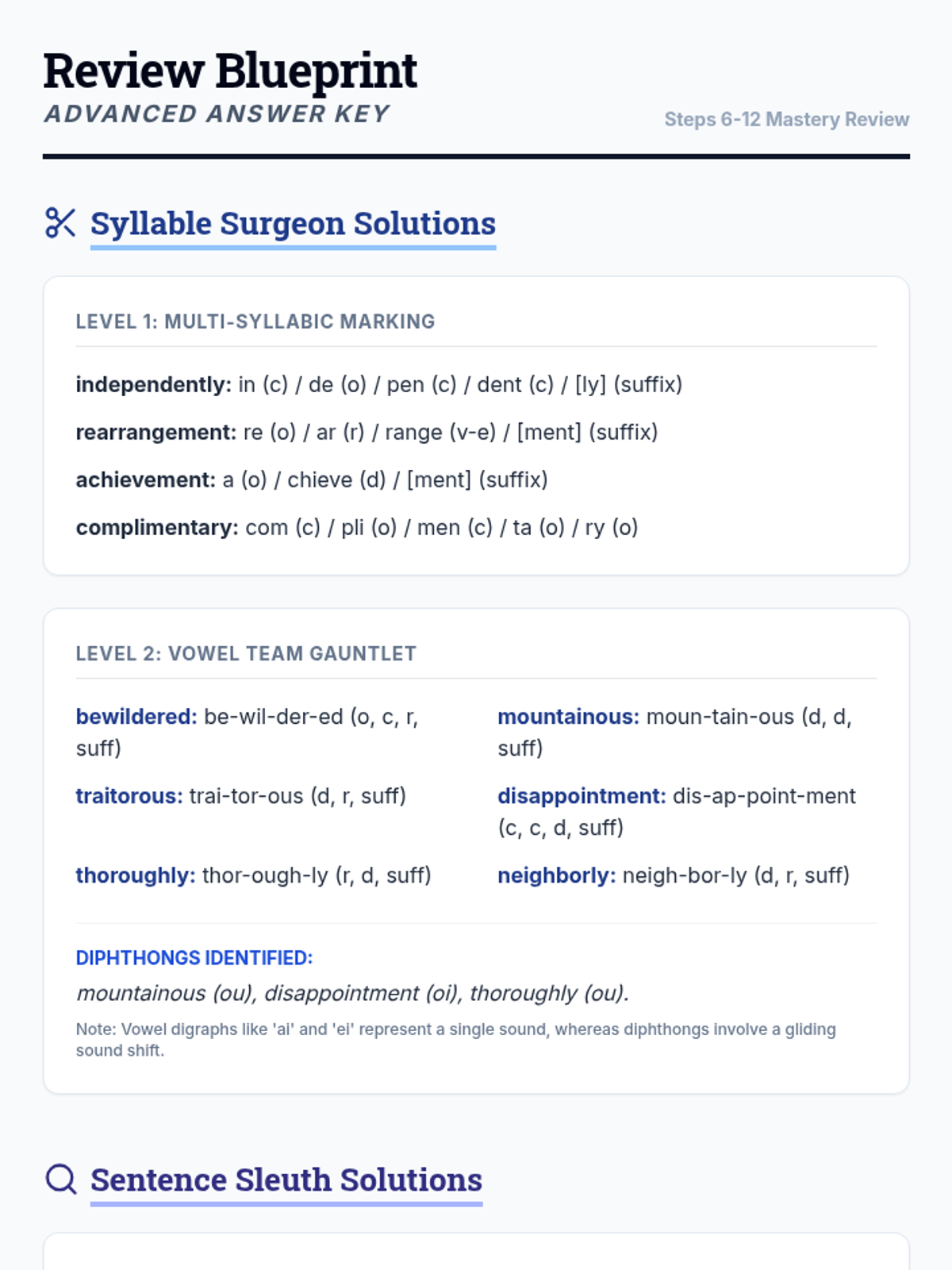
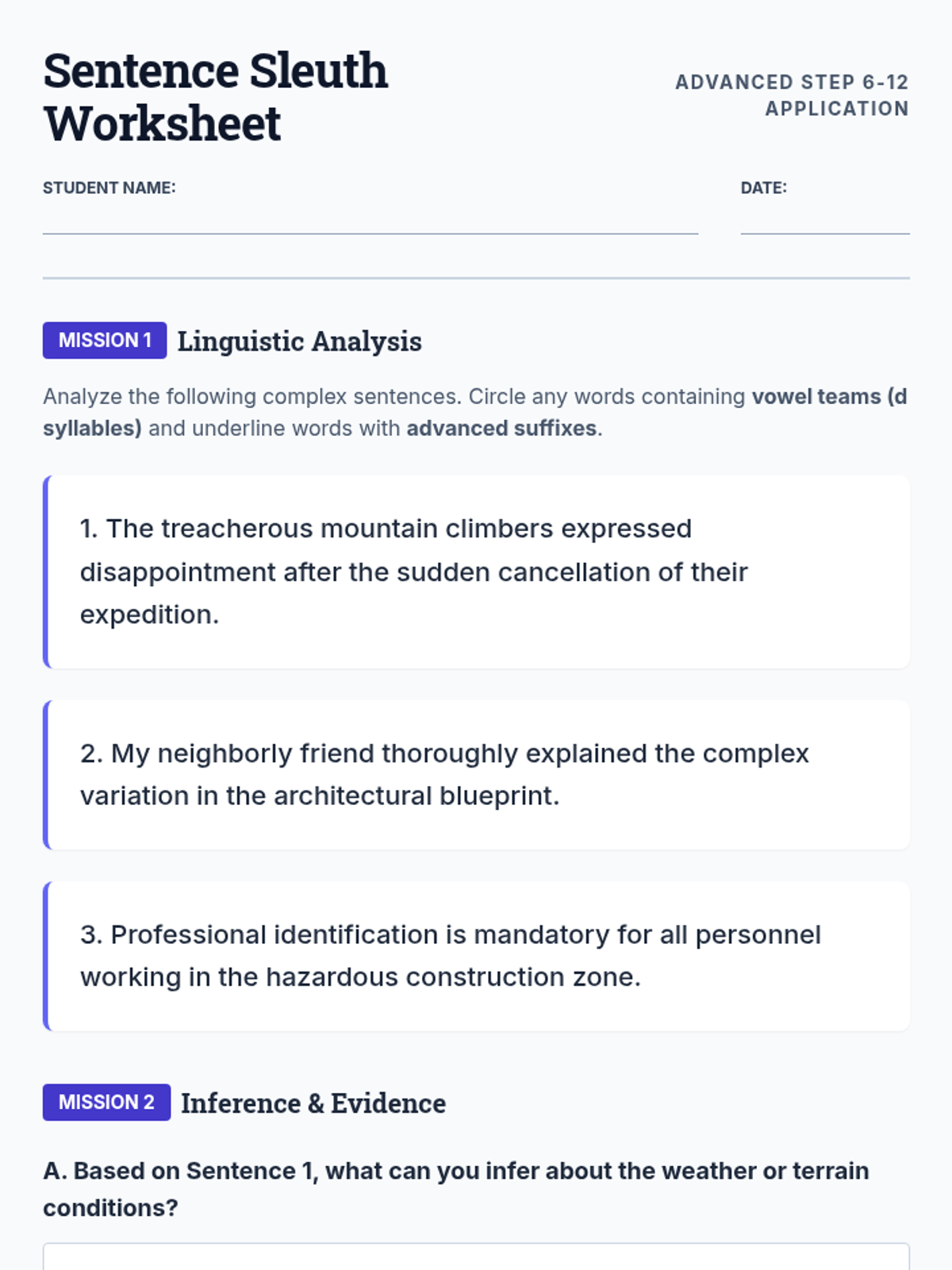
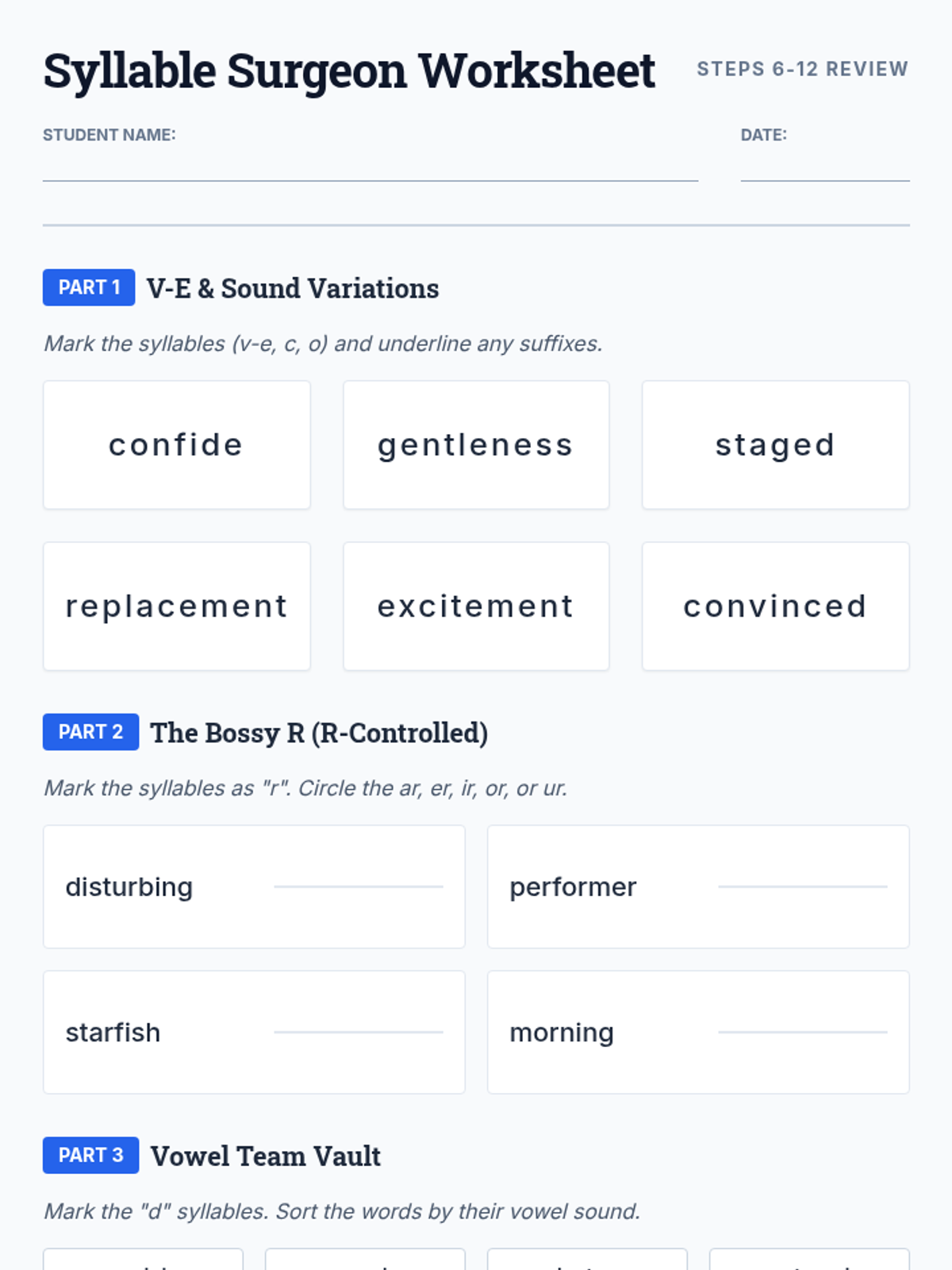
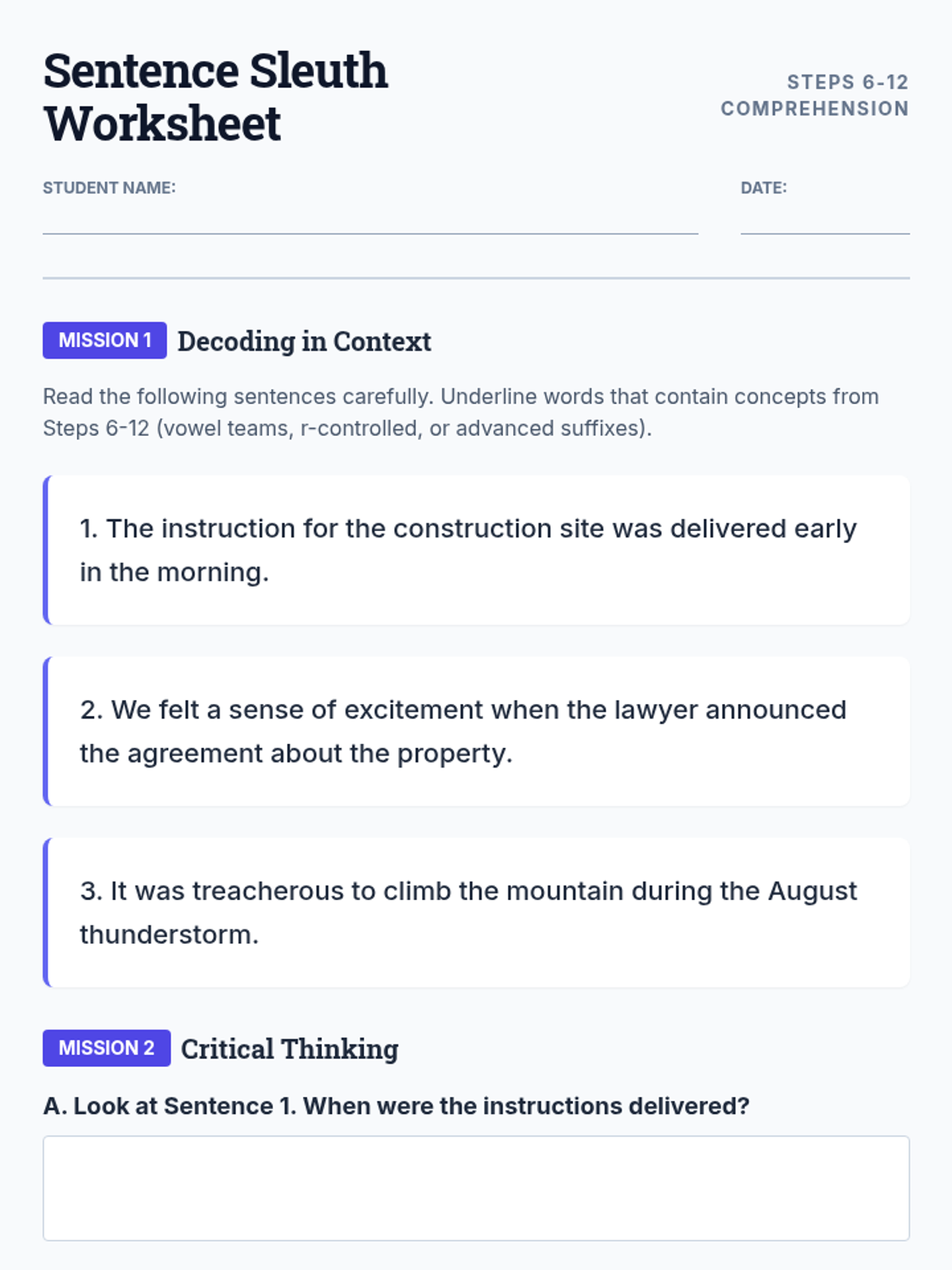
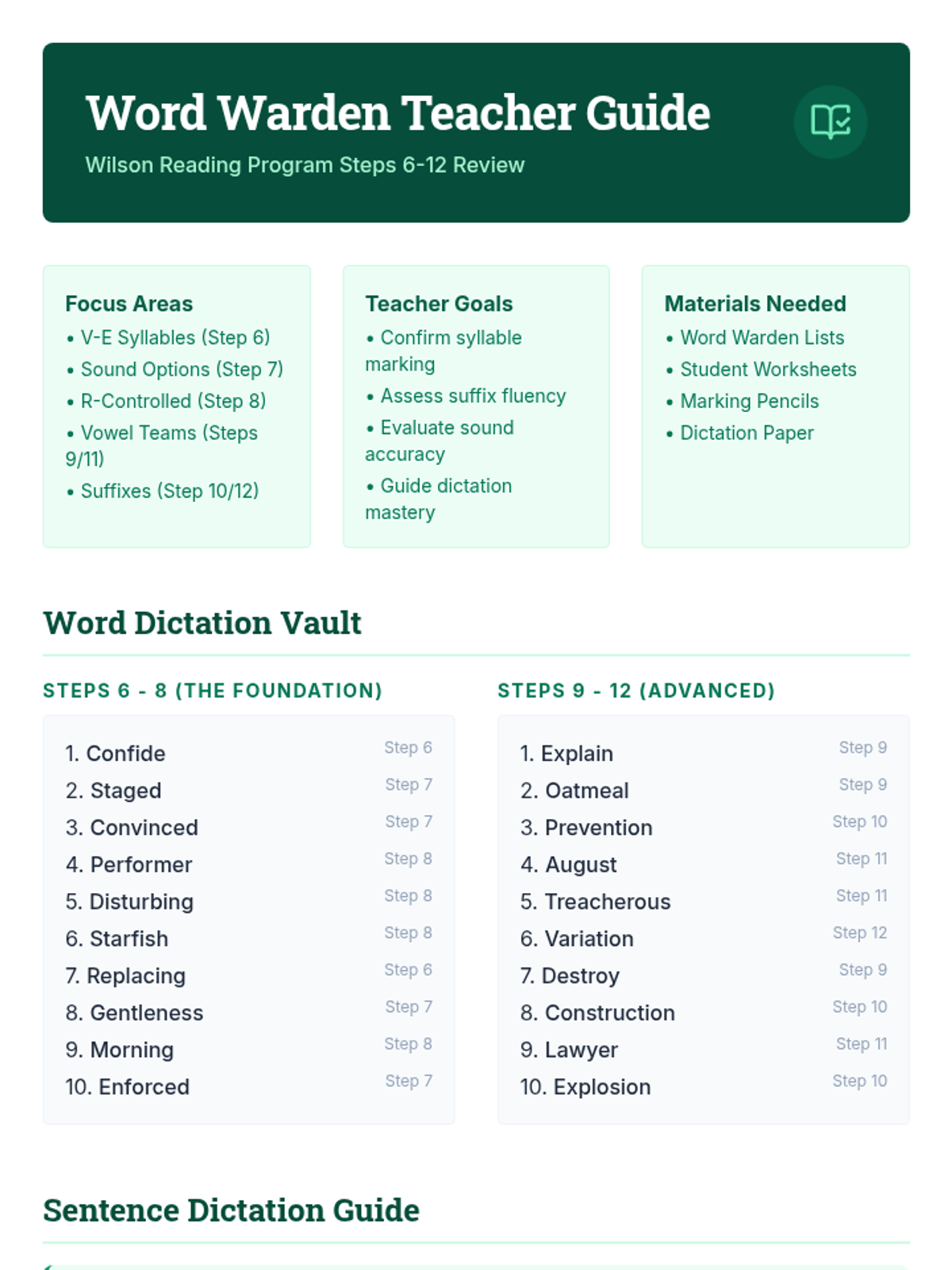
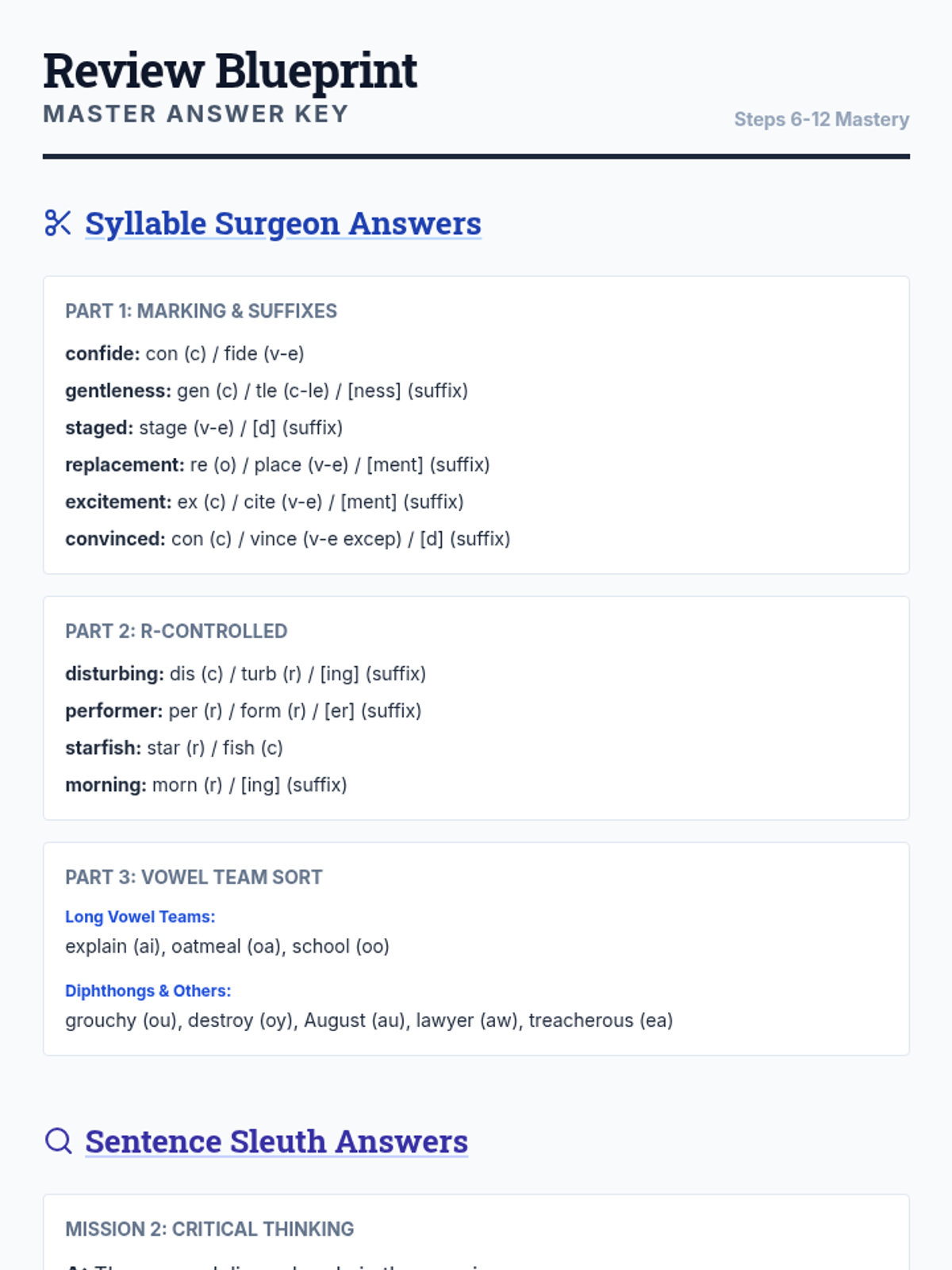
A comprehensive review unit for Wilson Reading Program Steps 6 through 12, focusing on syllable marking, complex suffix patterns, r-controlled vowels, and vowel digraphs.
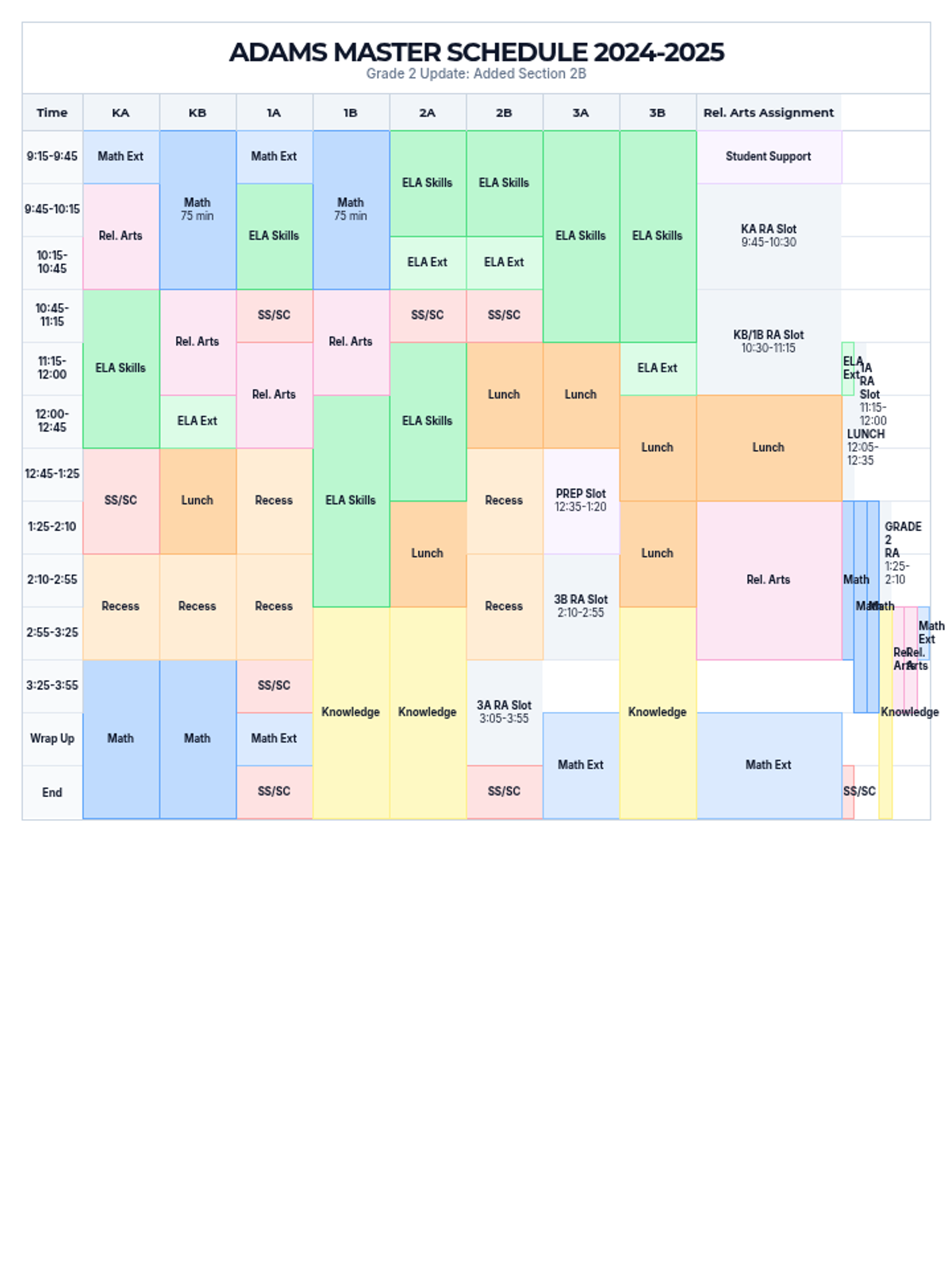
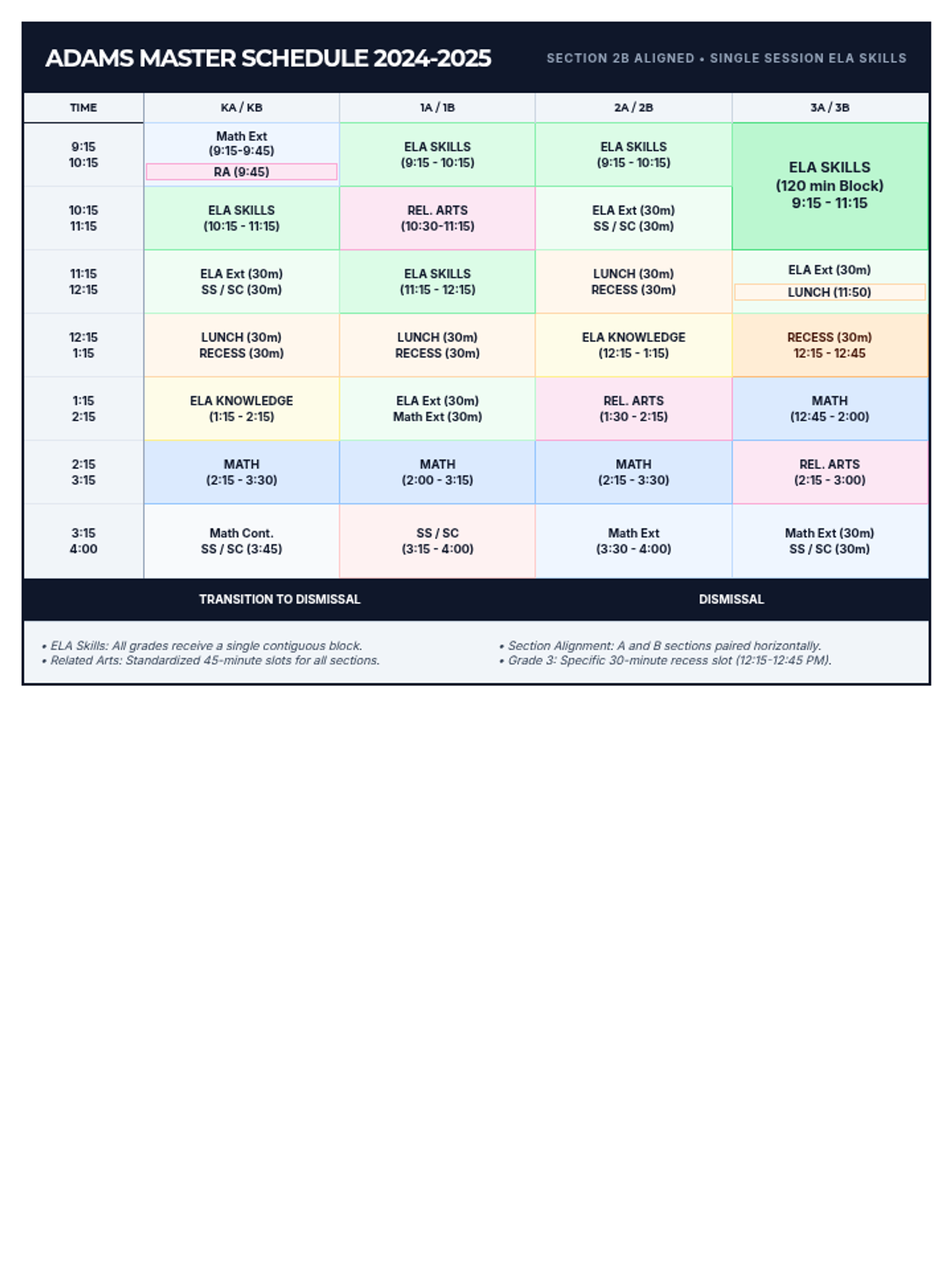
A revised master schedule for Adams Elementary, including a newly added 2B section for second grade.
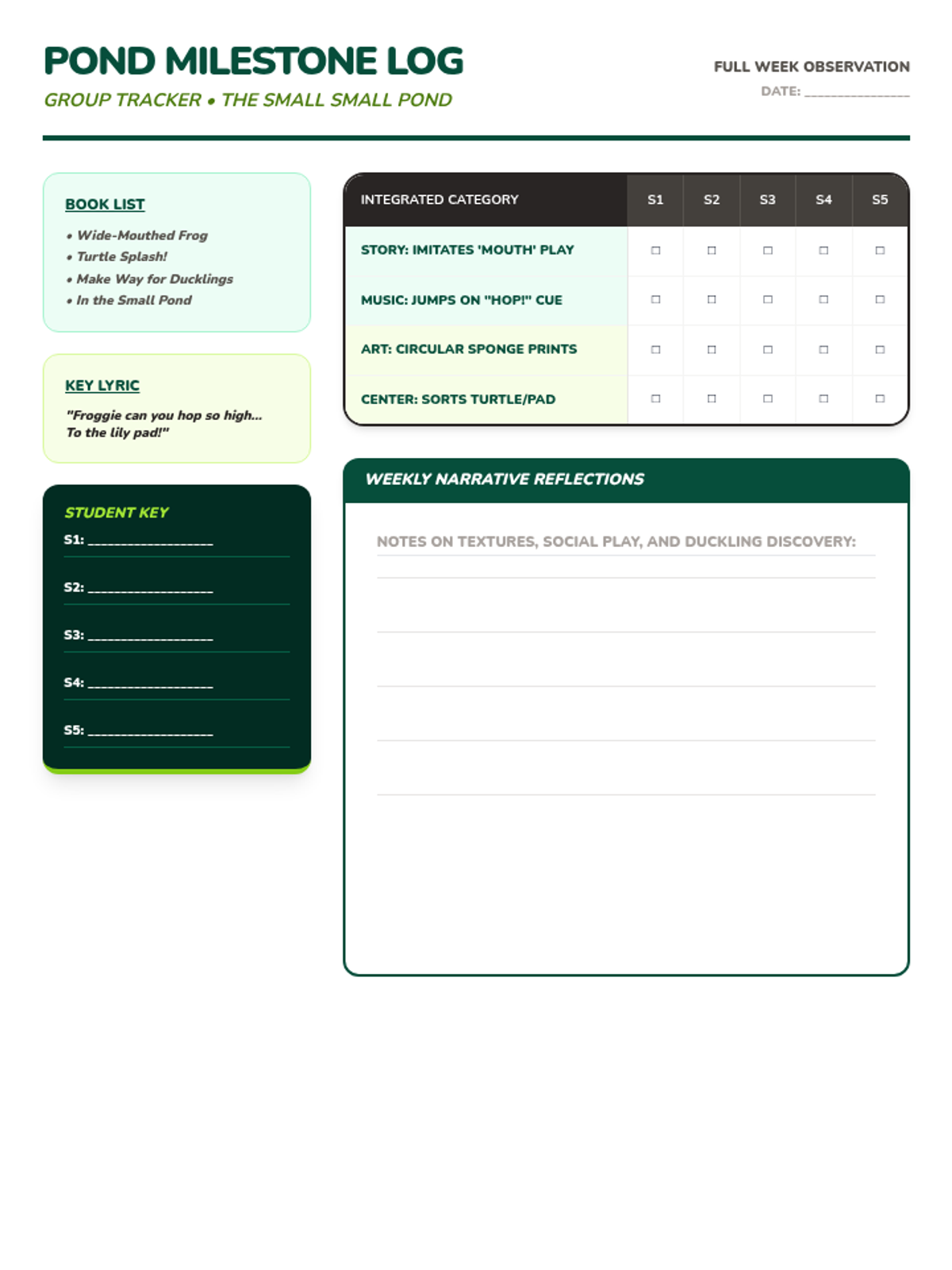
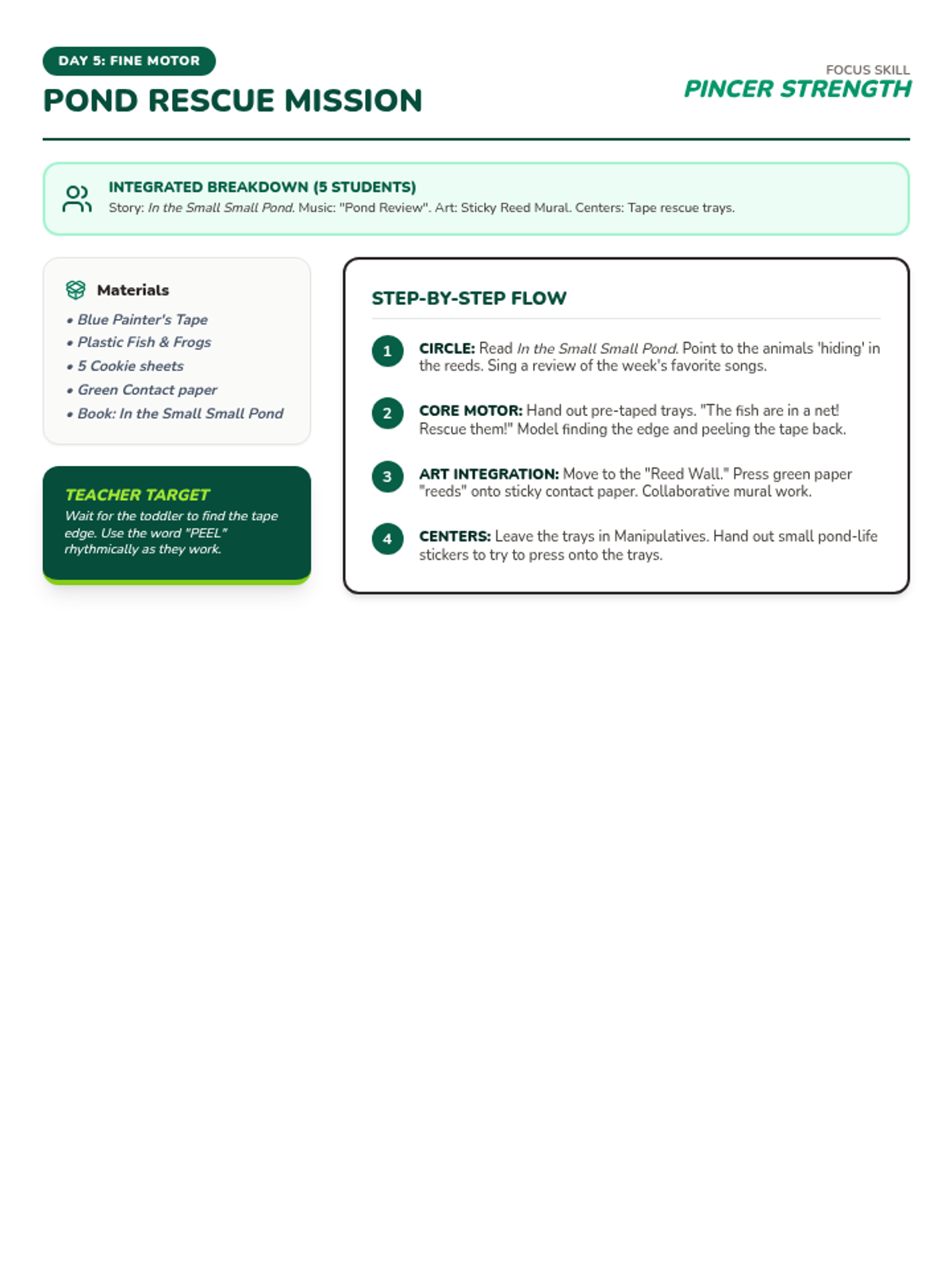
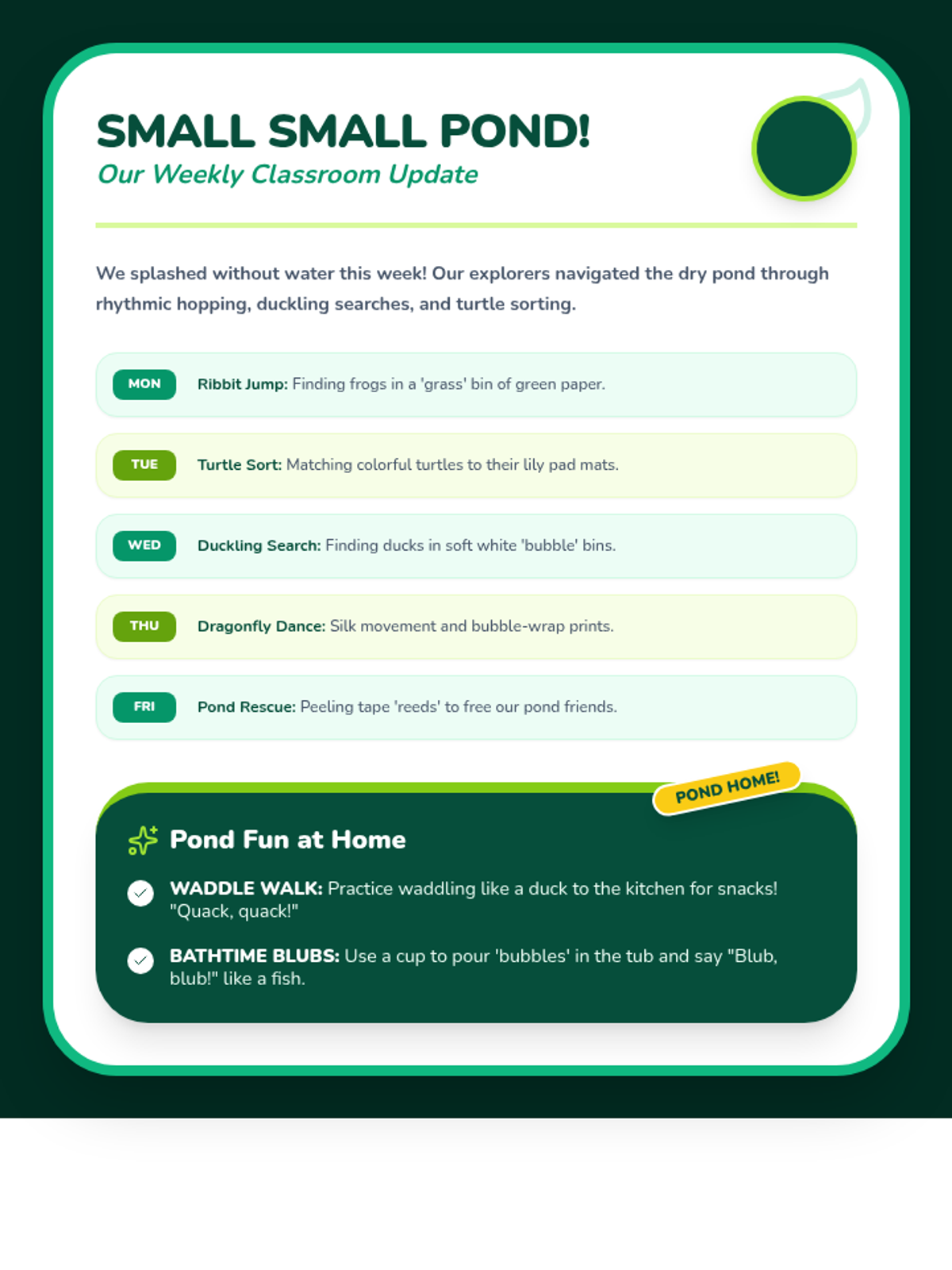
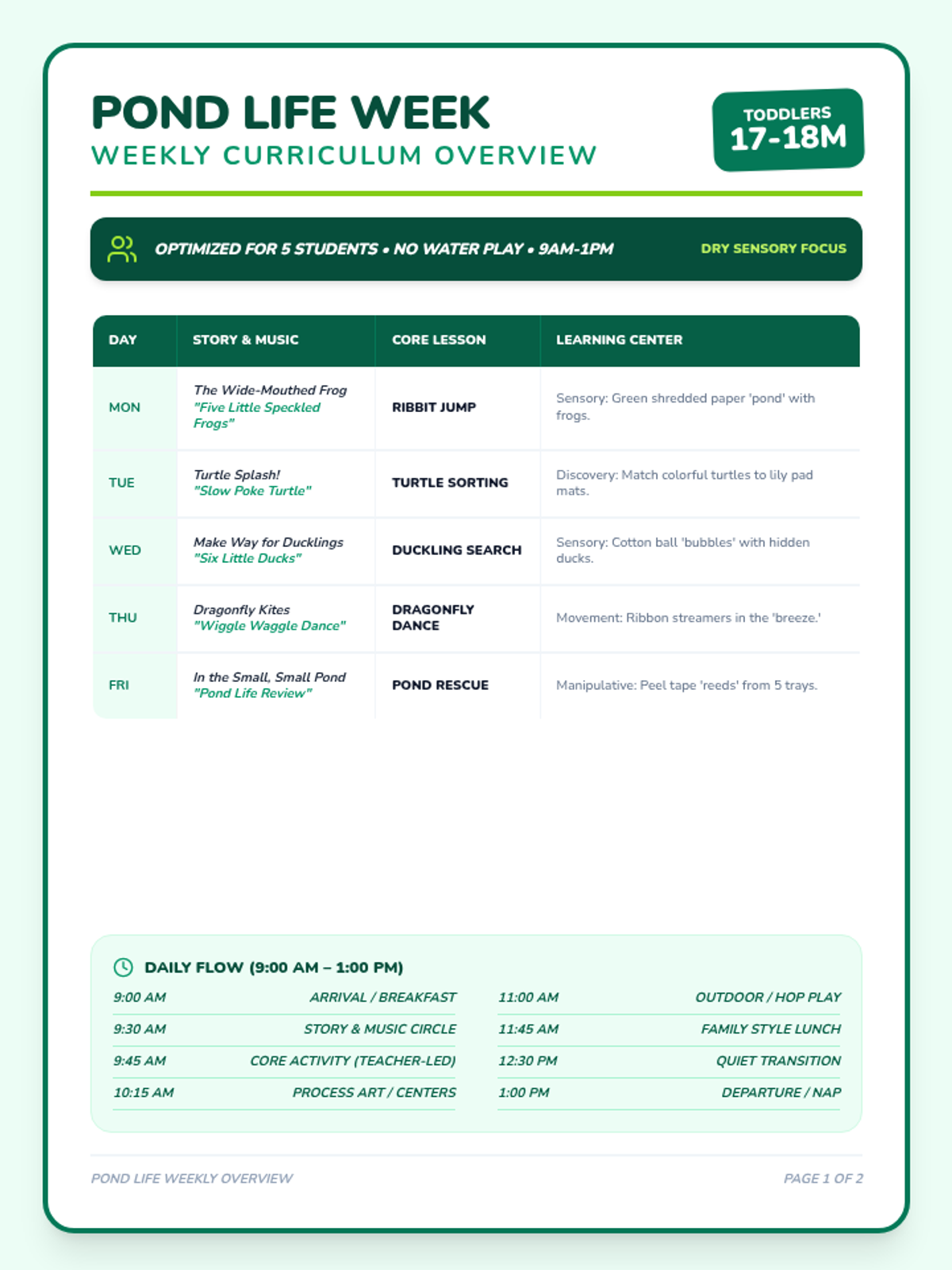
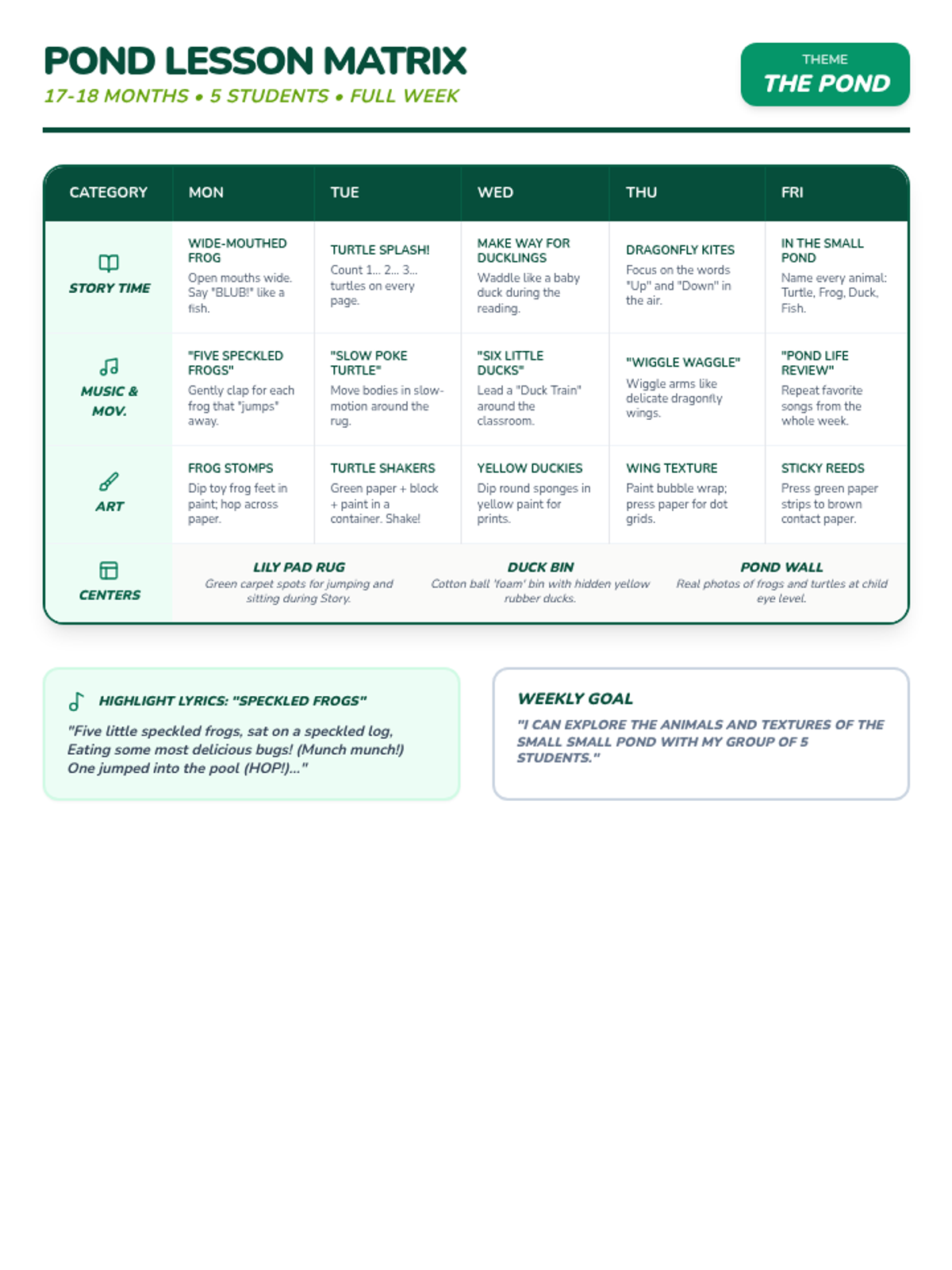
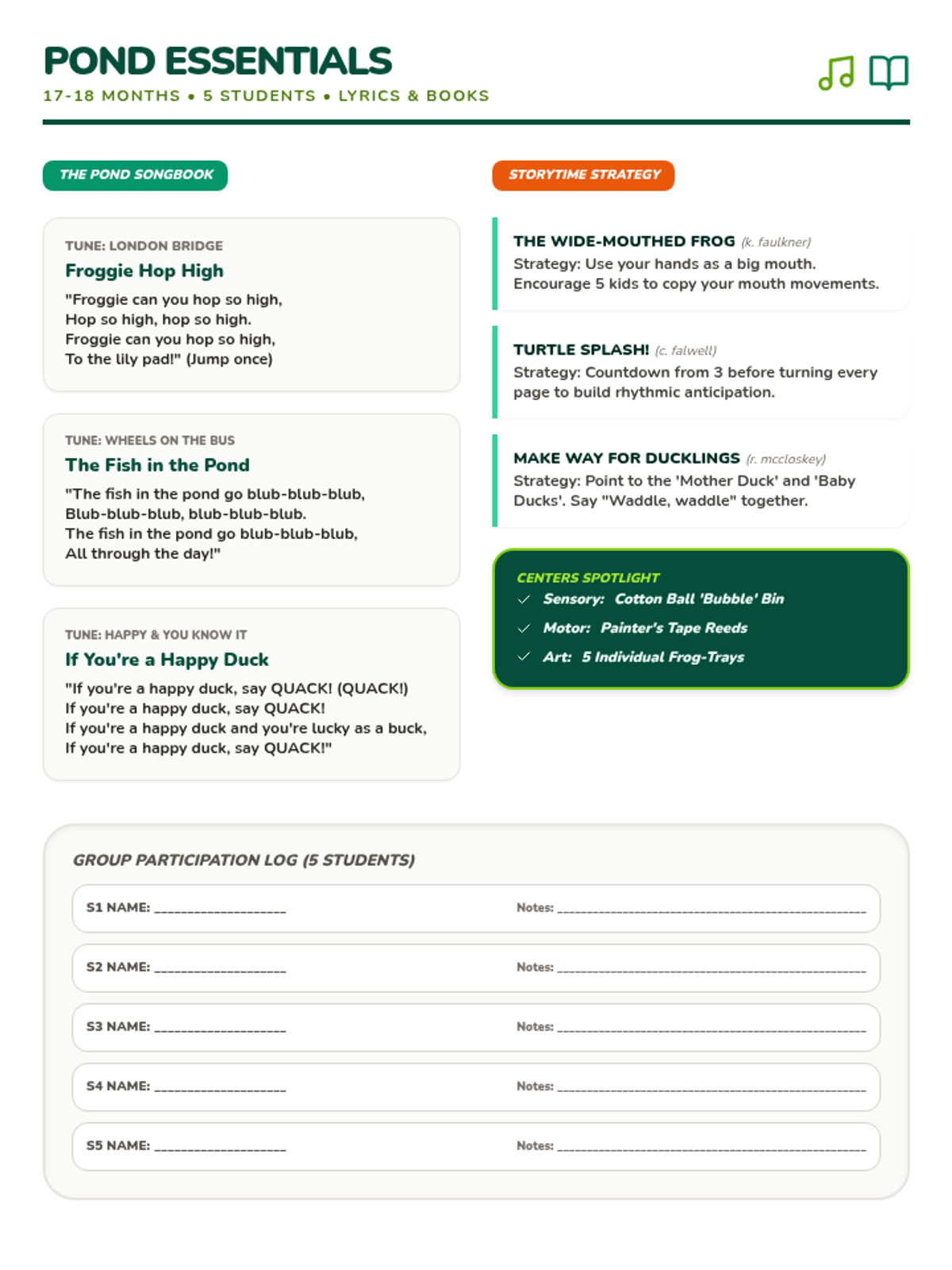
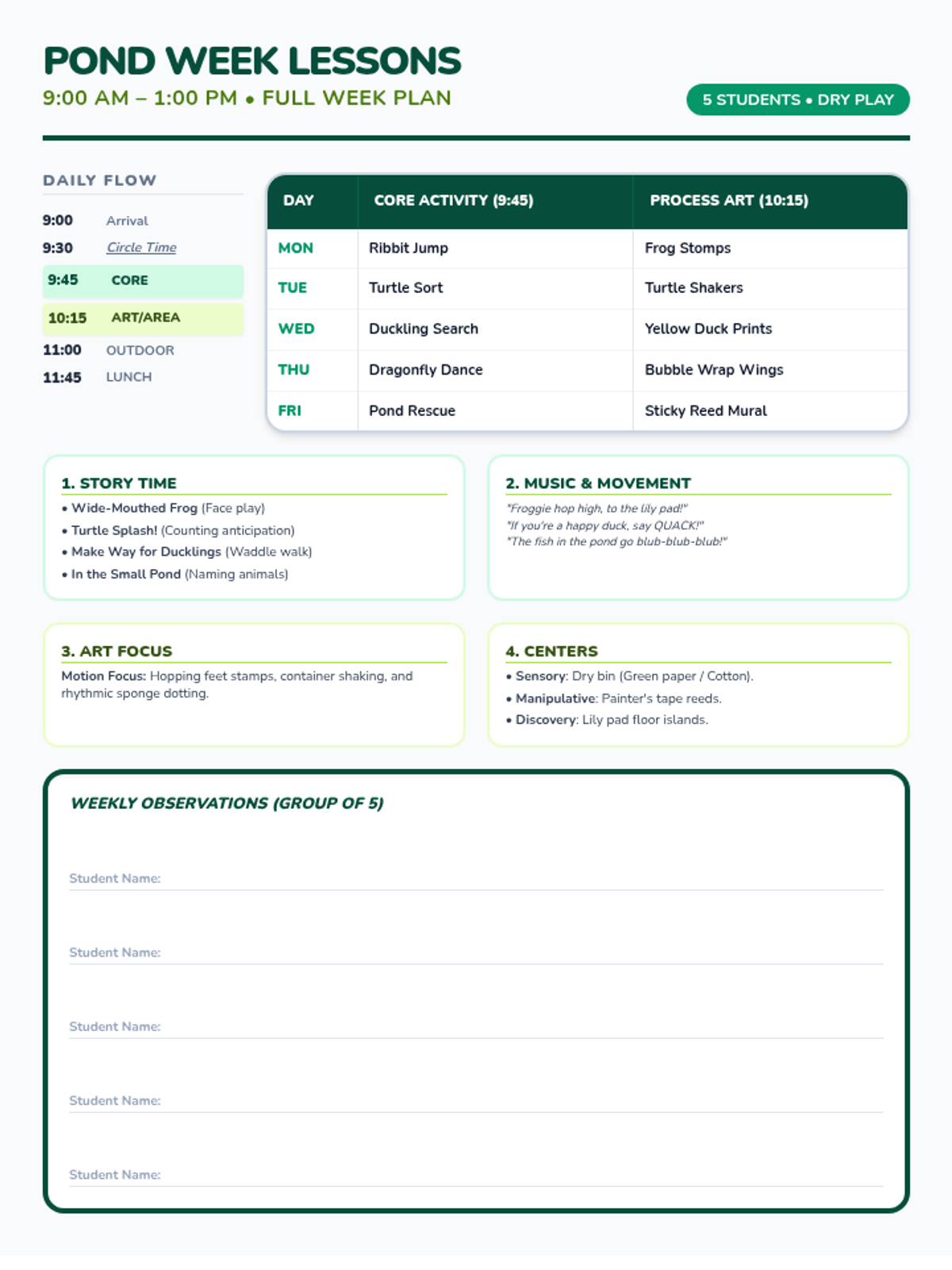
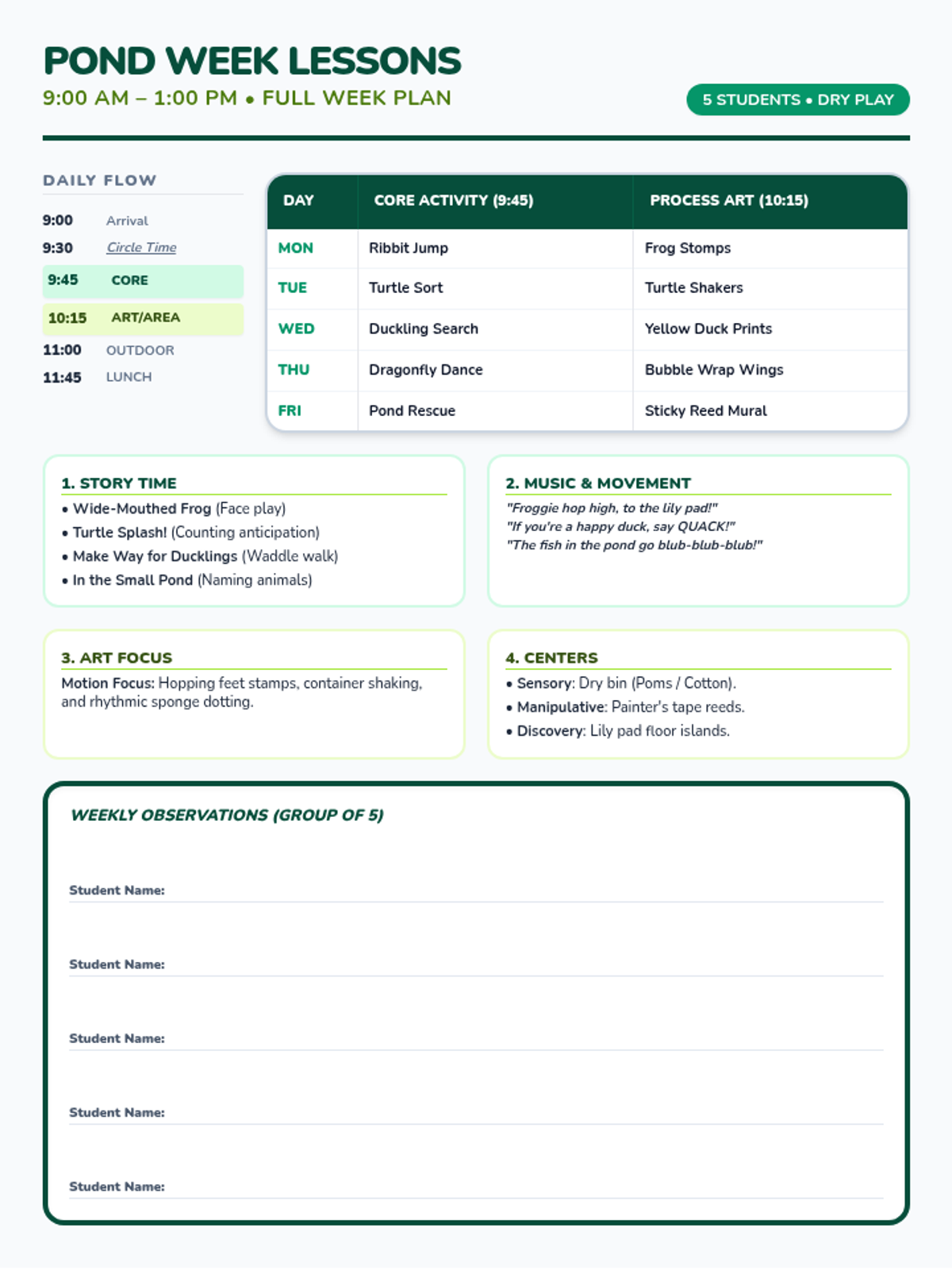
Challenges fine motor strength as toddlers 'rescue' pond animals from painter's tape 'reeds.'
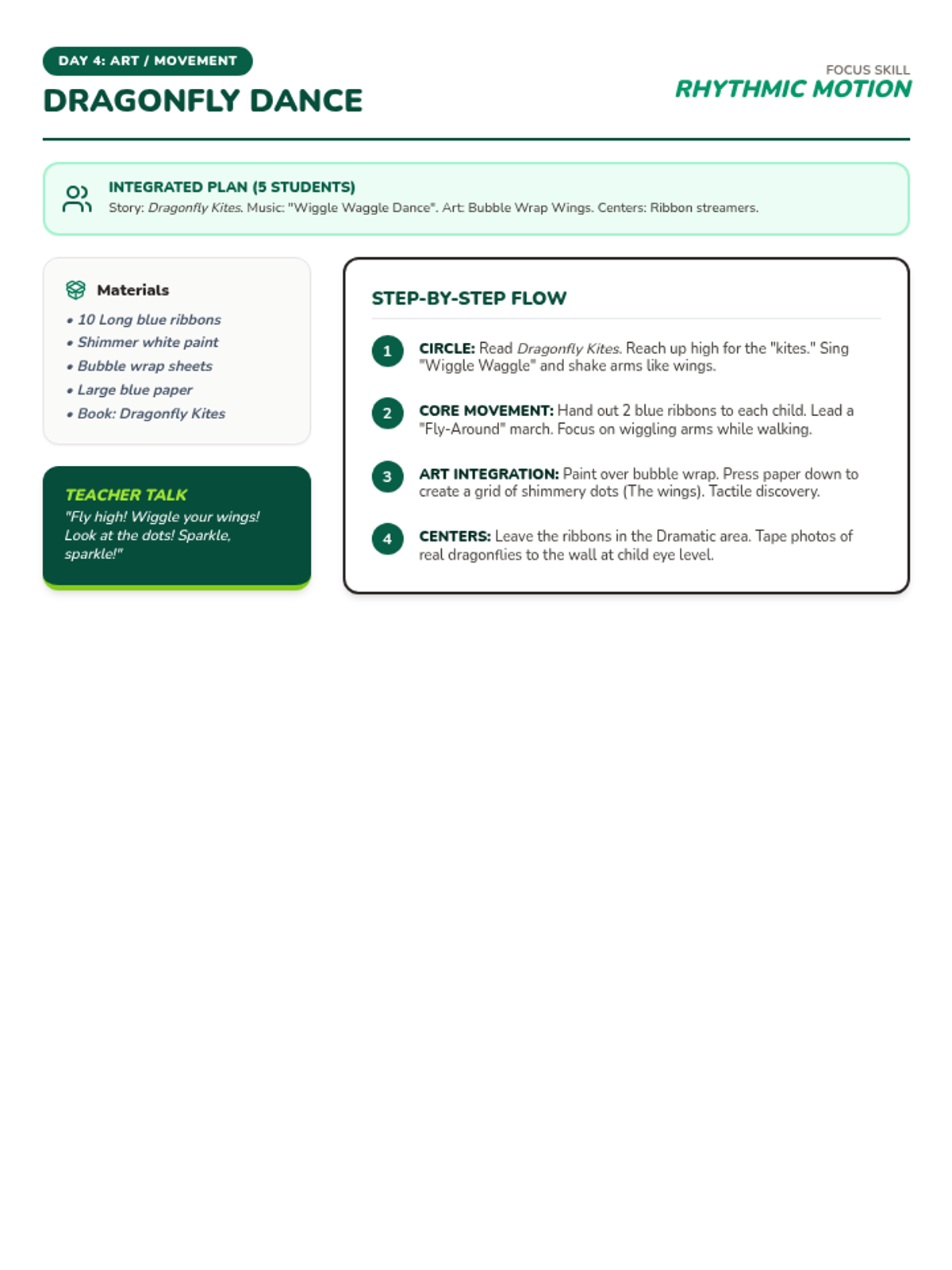
Explores rhythmic movement and pattern-making through dragonfly-themed silk play and wing stamping.
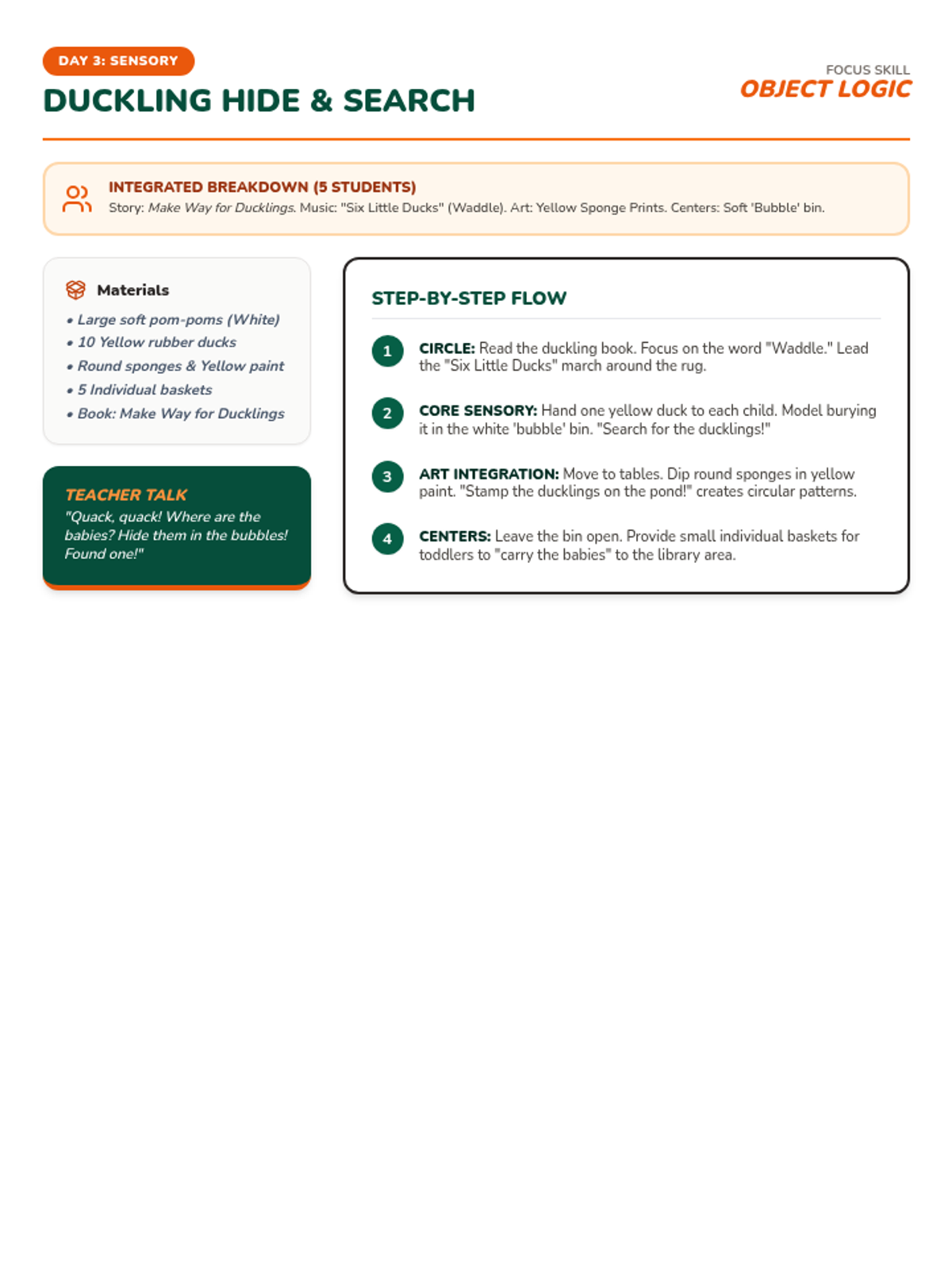
A dry sensory experience searching for ducklings hidden among soft 'bubble' pom-poms or cotton balls.
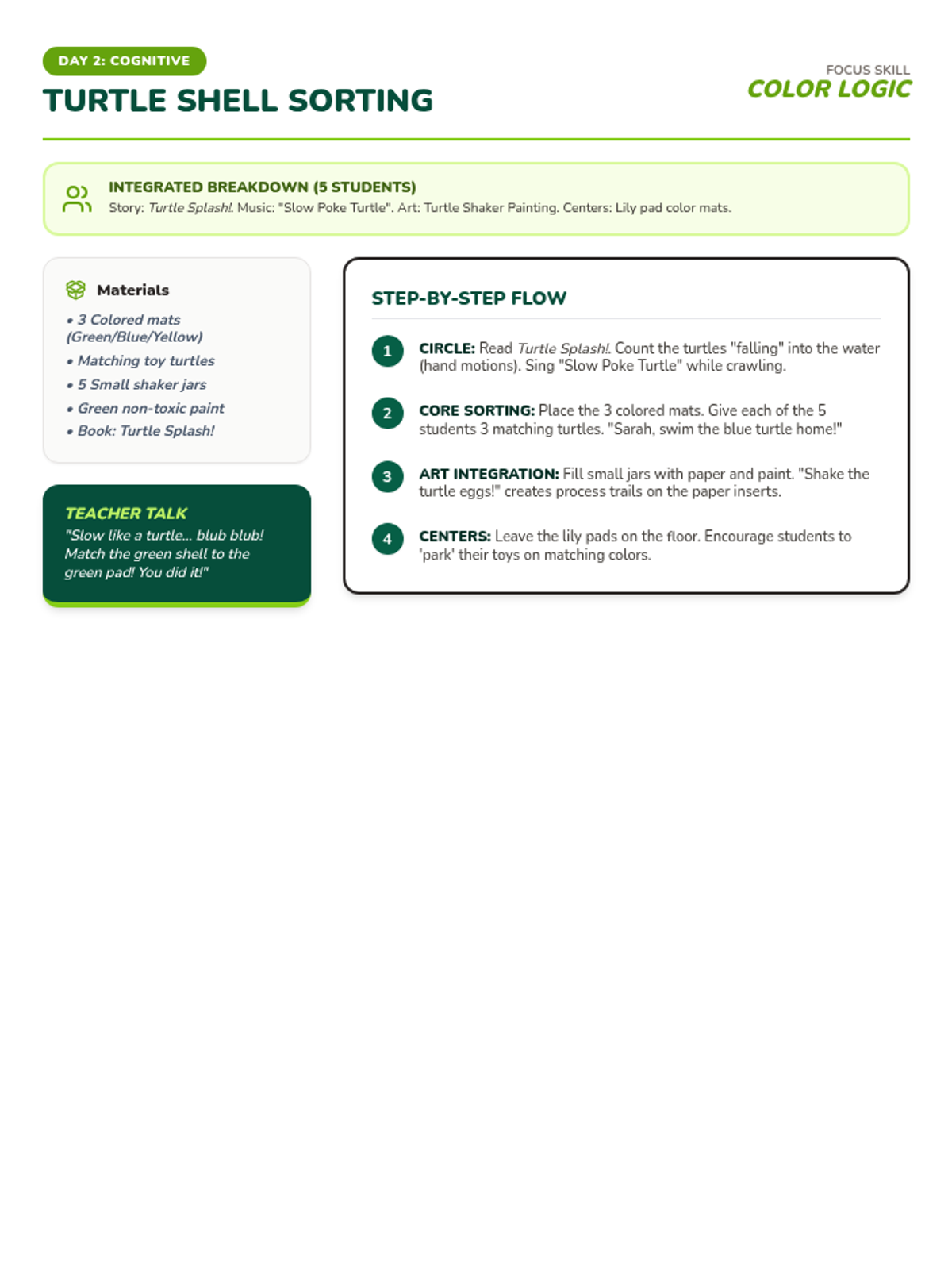
Introduces color discrimination by matching colorful toy turtles to corresponding colored lily pad mats.
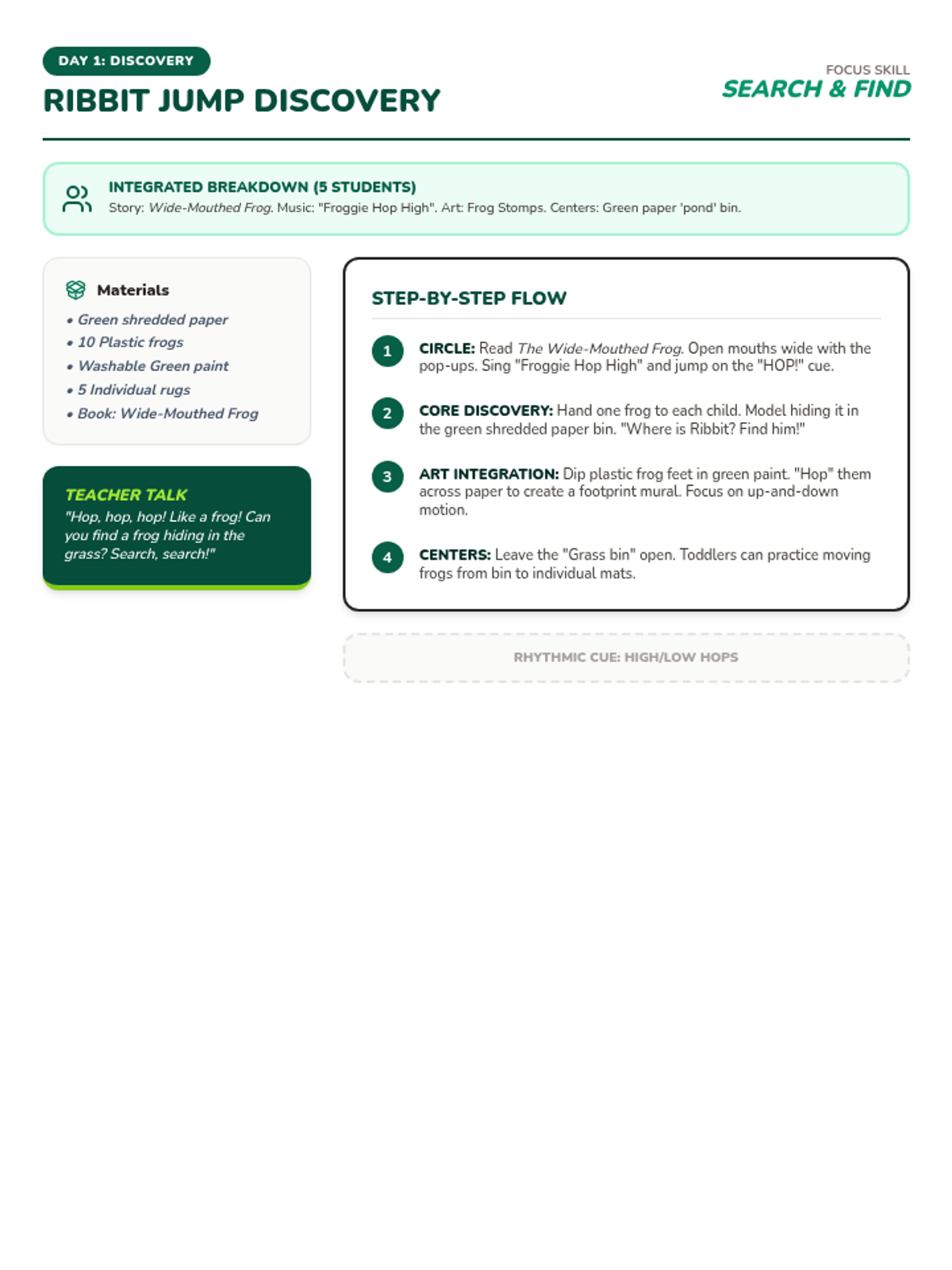
Focuses on gross motor movement and object discovery as toddlers search for plastic frogs hidden in a 'pond' of green shredded paper.
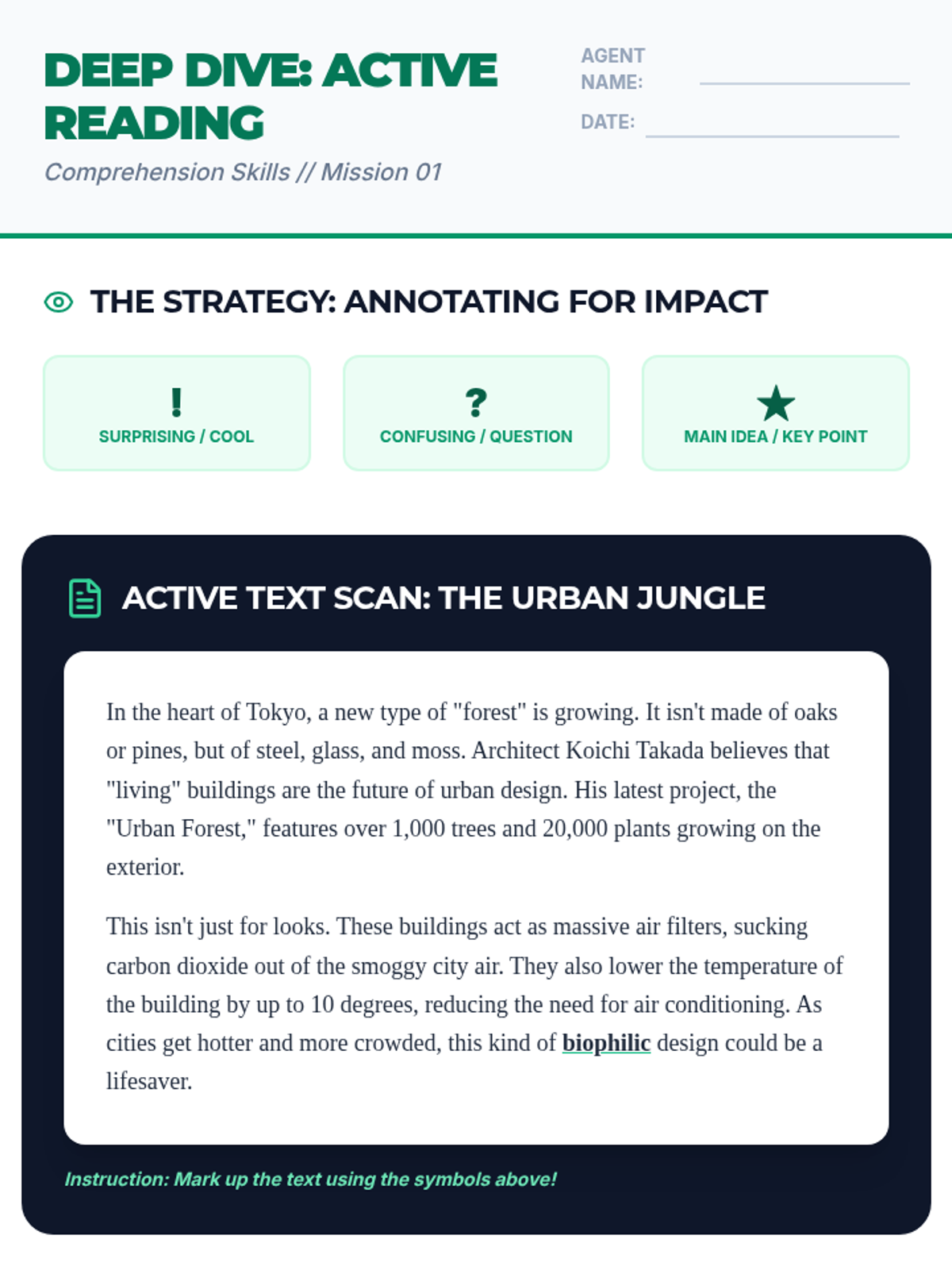
Introduction to active reading strategies: annotating, identifying main ideas, and summarizing complex high-interest texts.
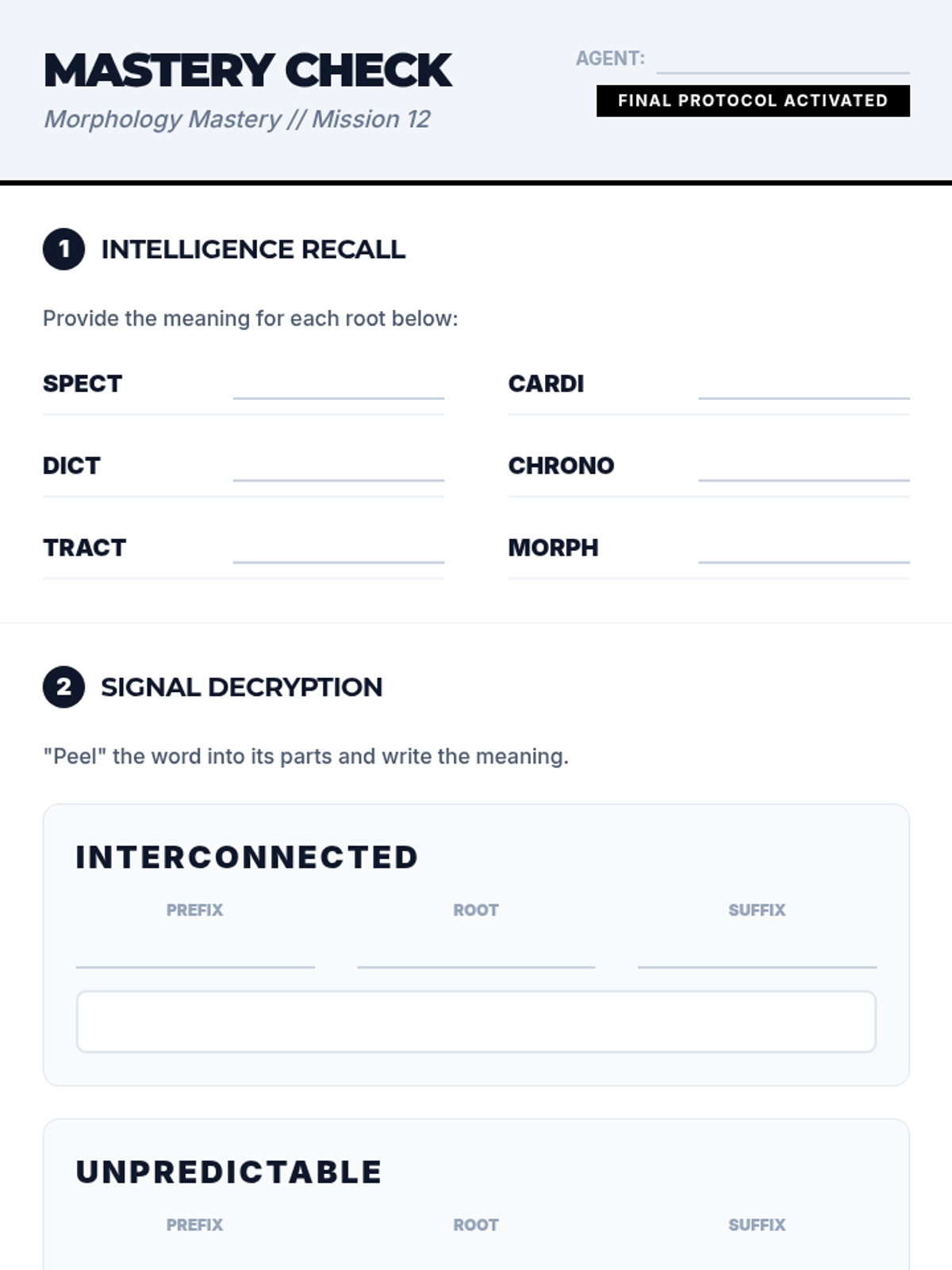
Summative assessment on morphology skills including decoding, building, and identifying word parts in context.
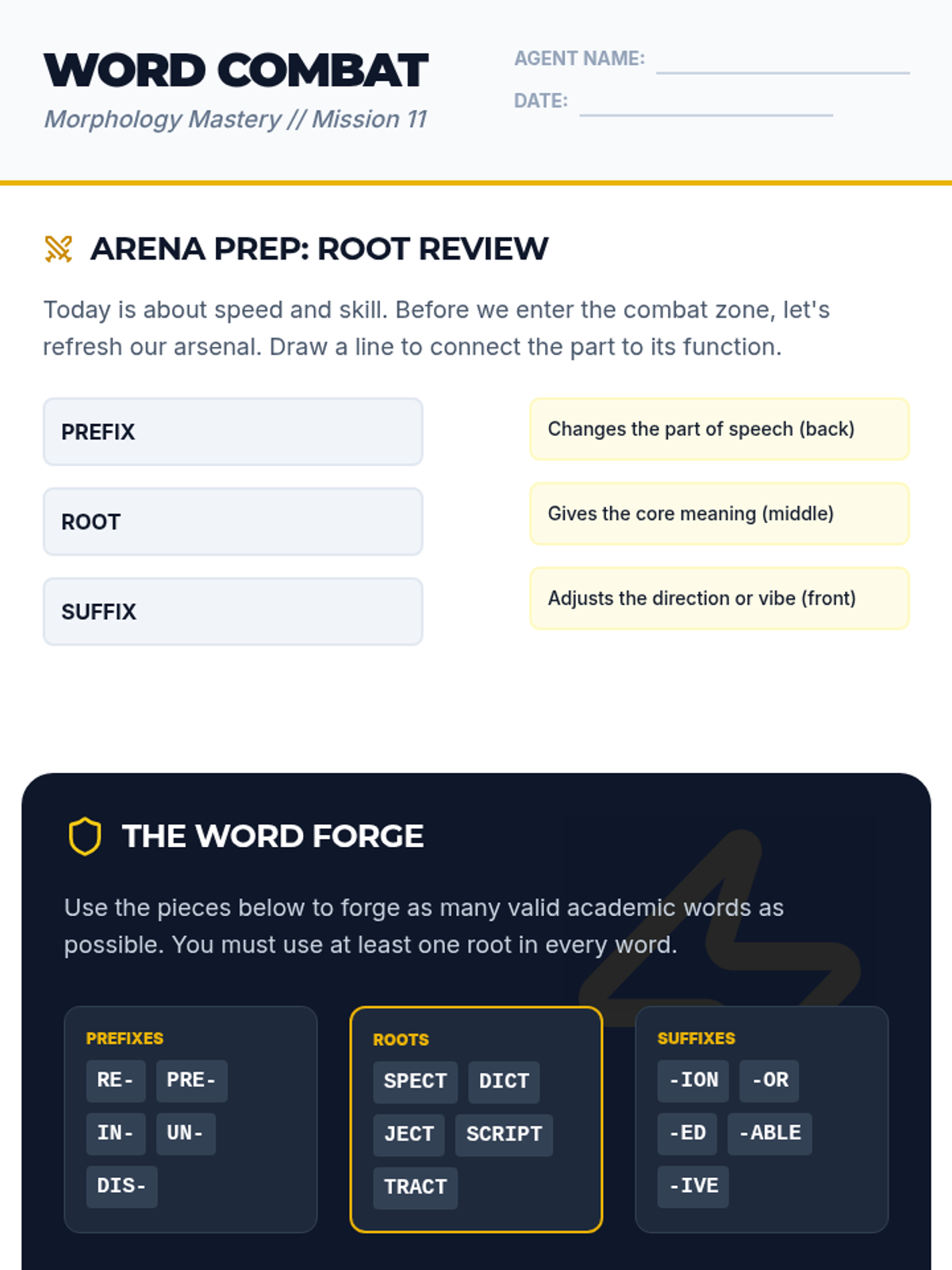
Interactive word building challenge using all learned roots, prefixes, and suffixes.
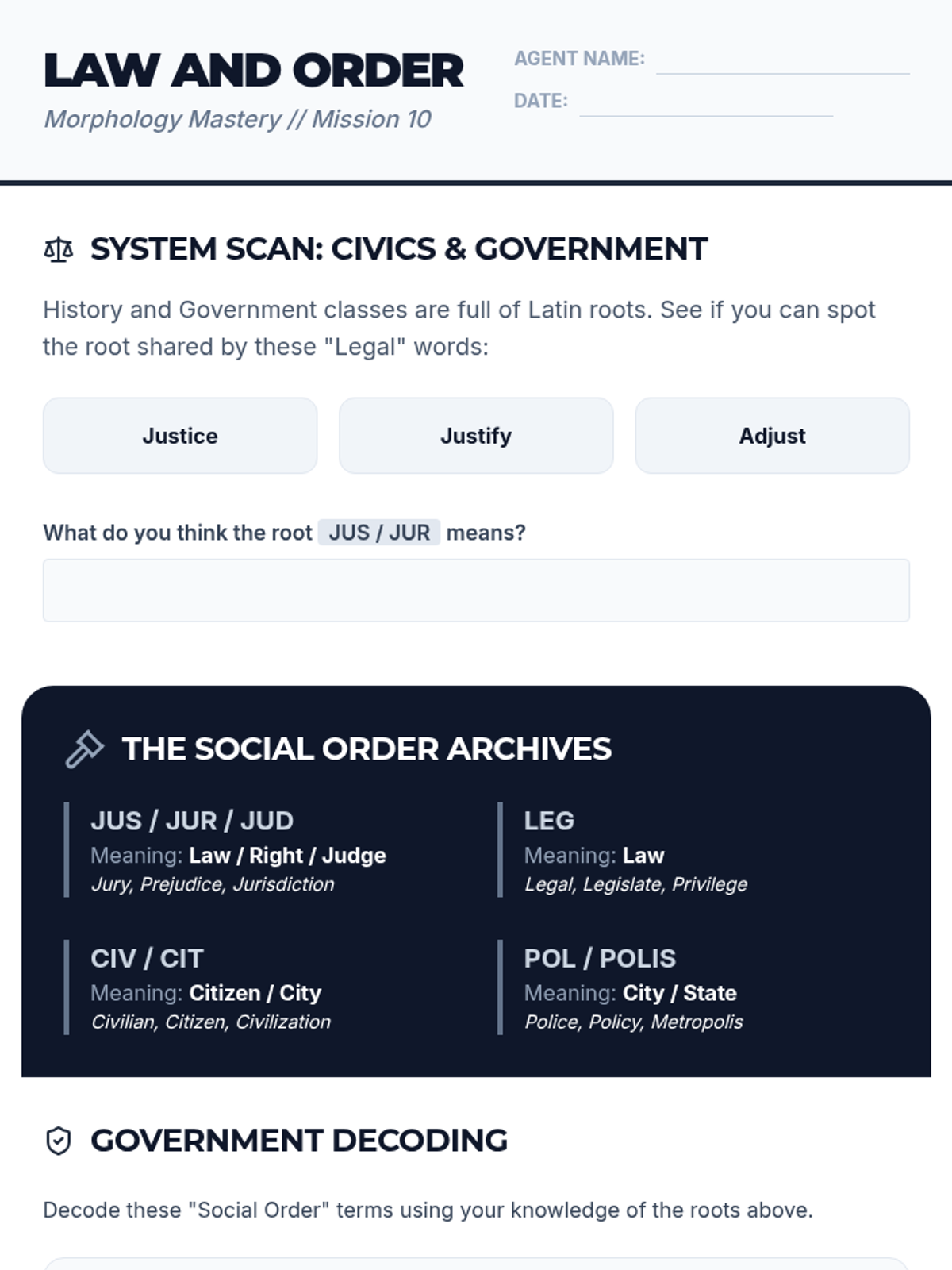
Legal and social roots (jud, jus, leg, civ, pol) found in government and history curriculum.
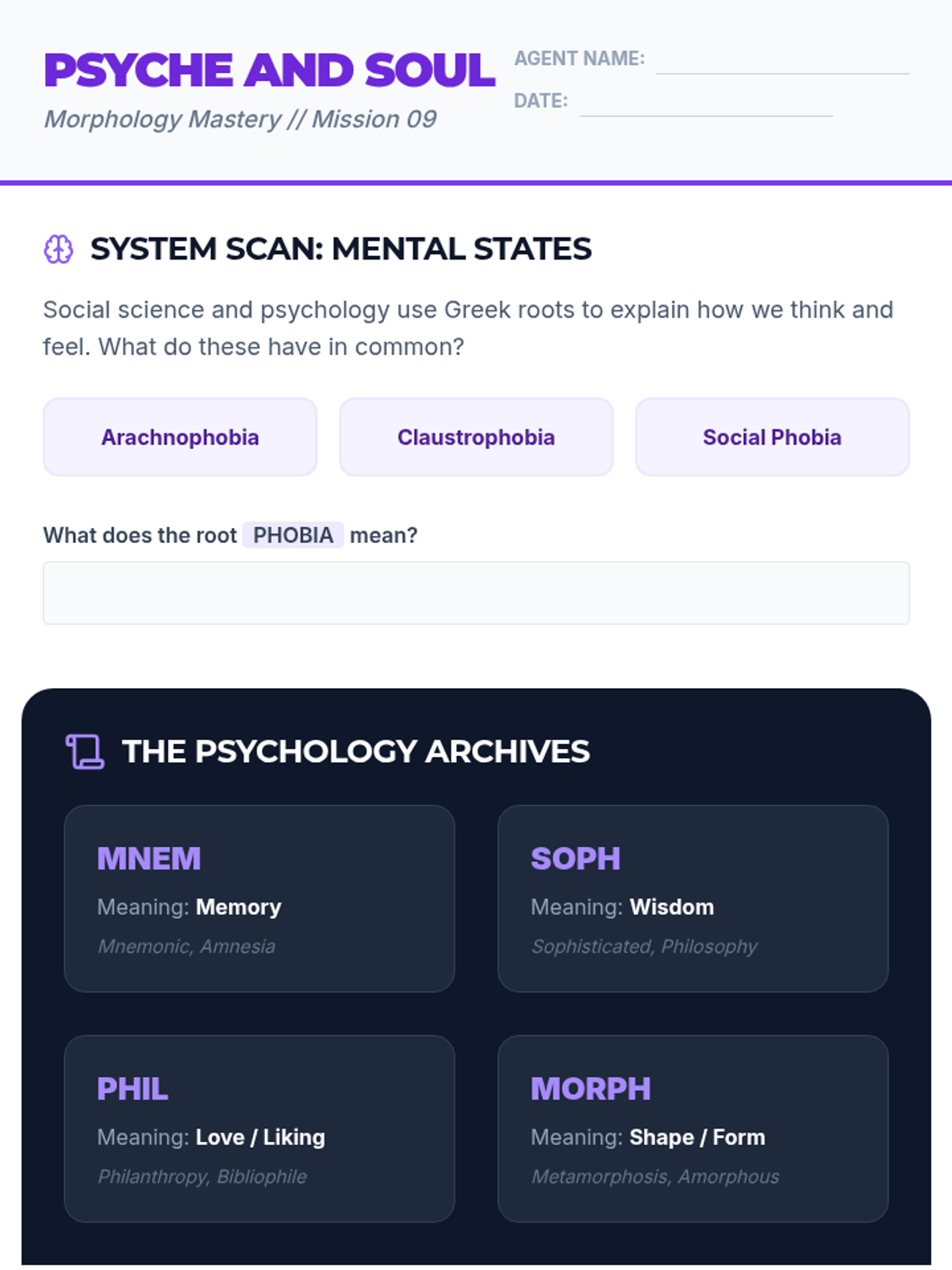
Psychological and philosophical roots (psych, phobia, soph, phil, mnem) for social science literacy.
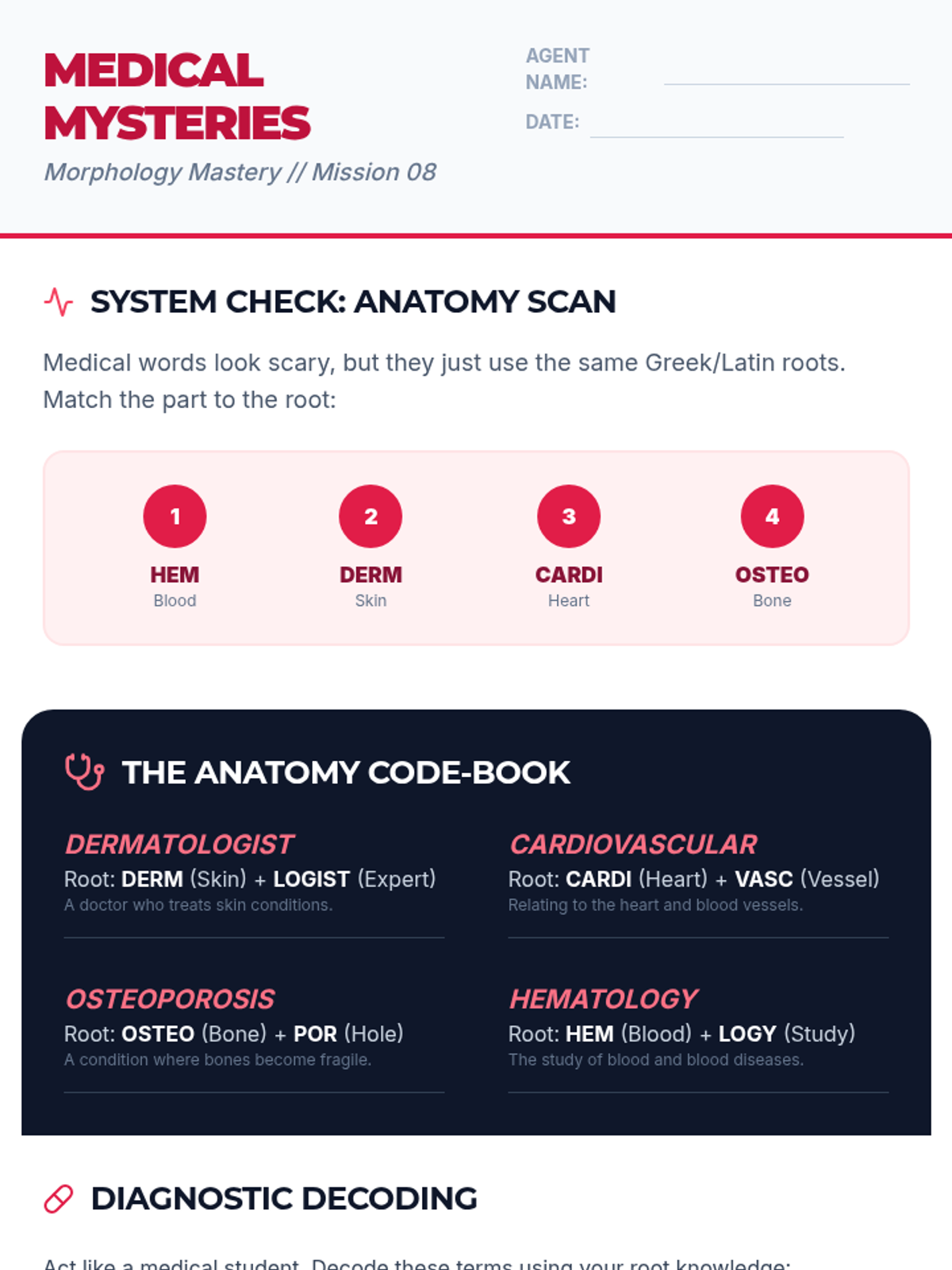
Biological and medical roots (corp, cardi, derm, hem, osteo) found in anatomy and health classes.
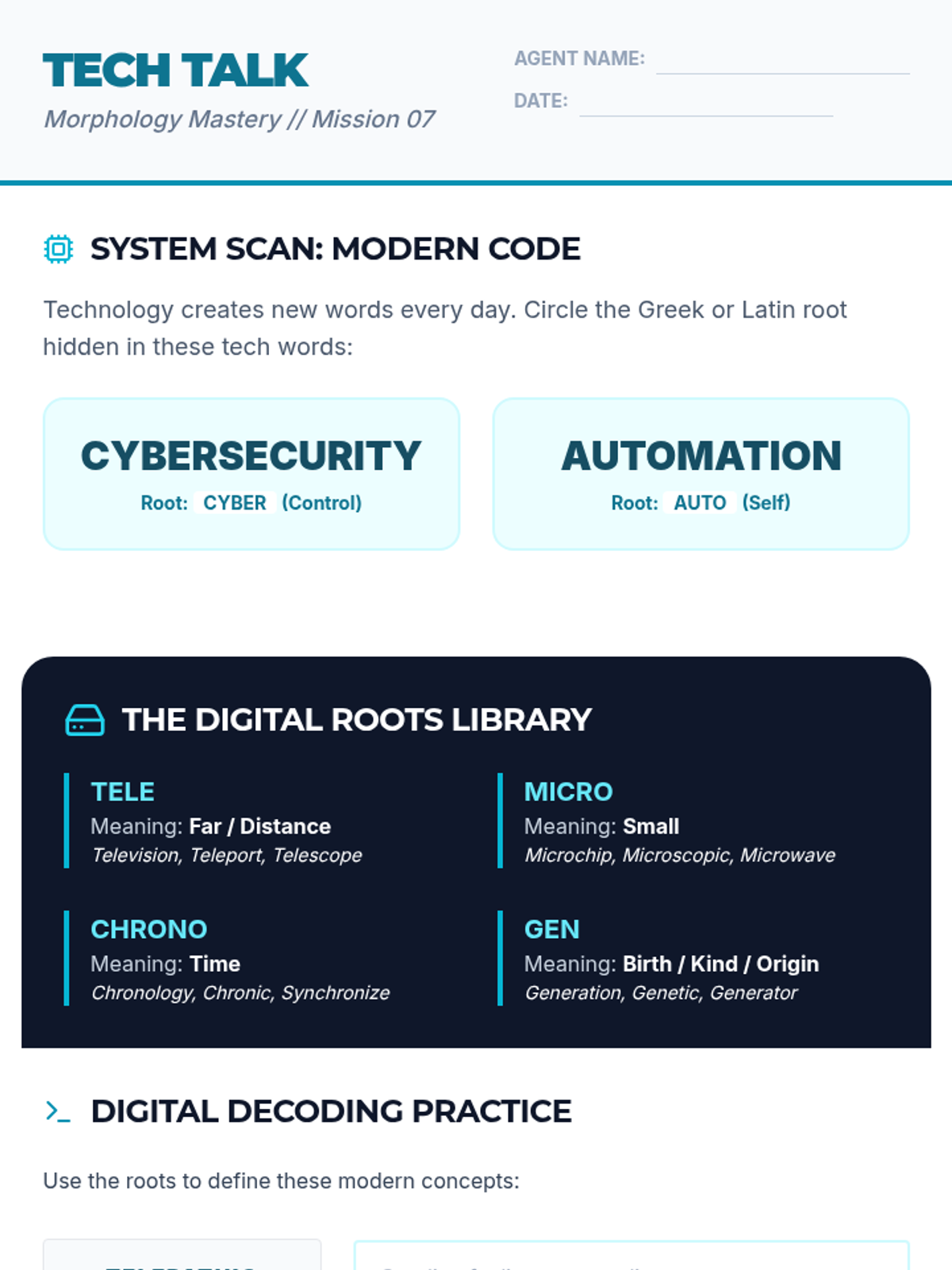
Modern neologisms and technology-based morphology (cyber, auto, micro, tele) for digital literacy.
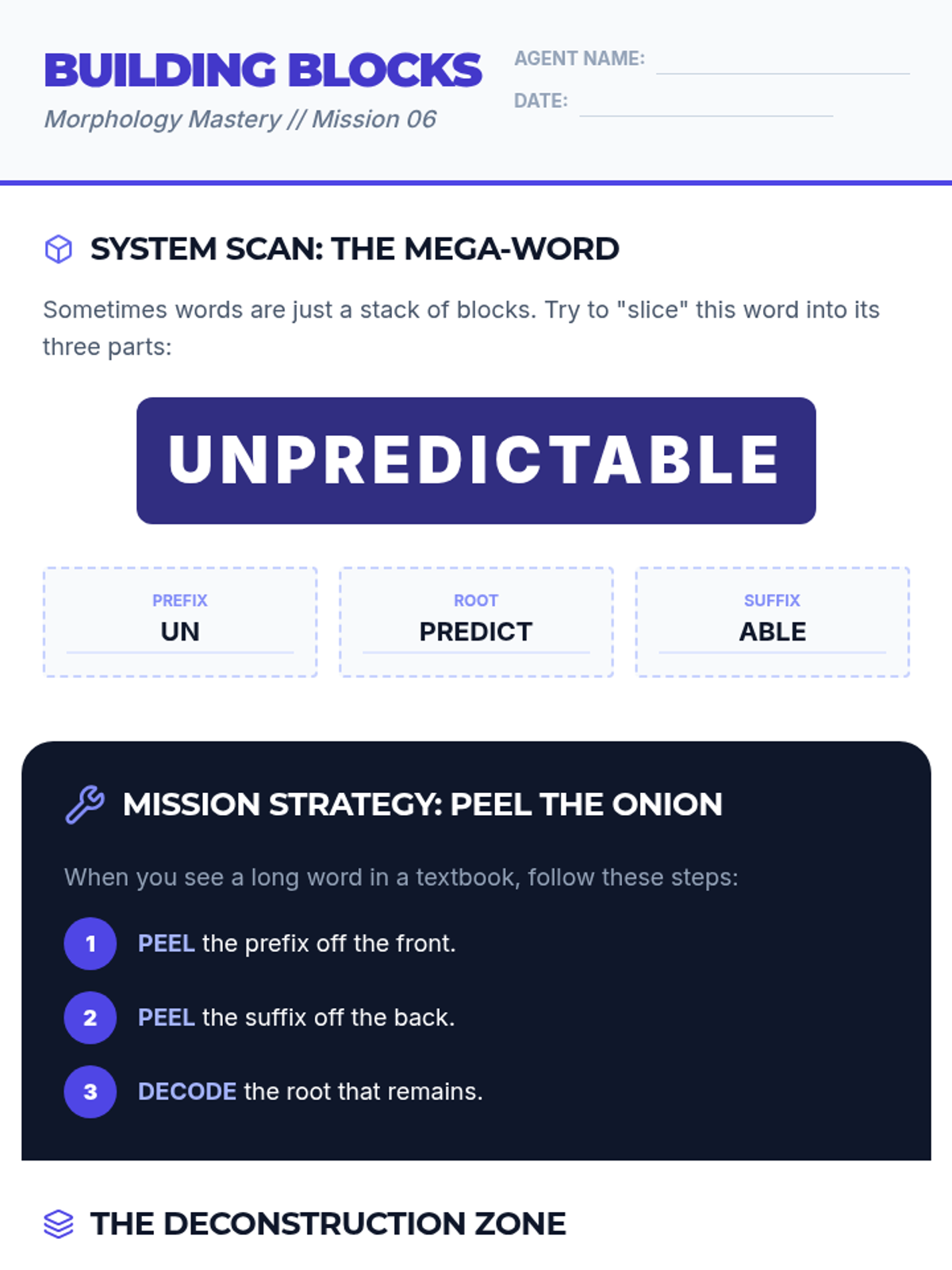
Practice building and breaking down multi-morphemic words (words with 3+ parts) common in textbooks.
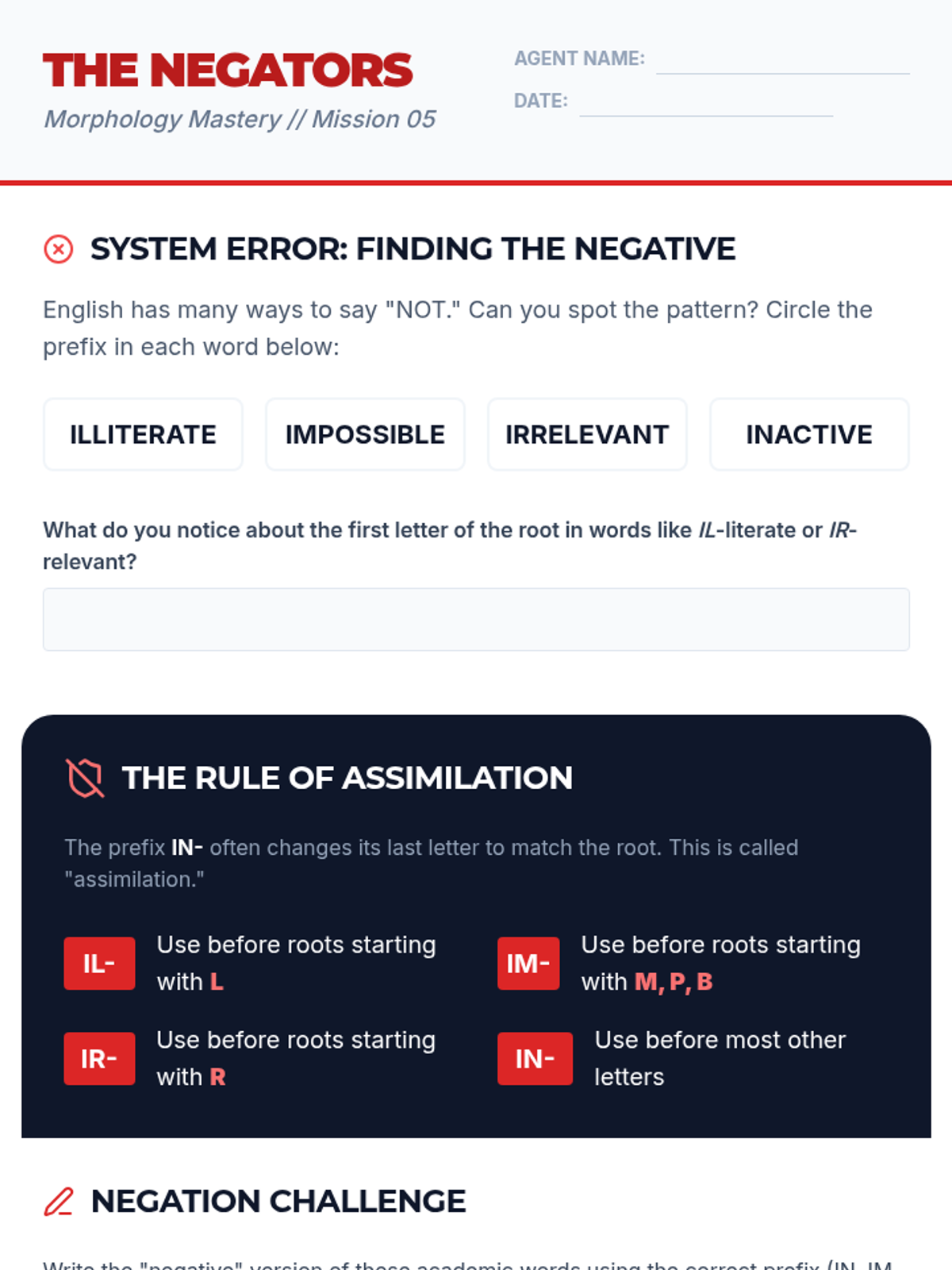
Deep dive into negative prefixes (in-, im-, il-, ir-, non-) and their phonetic patterns.
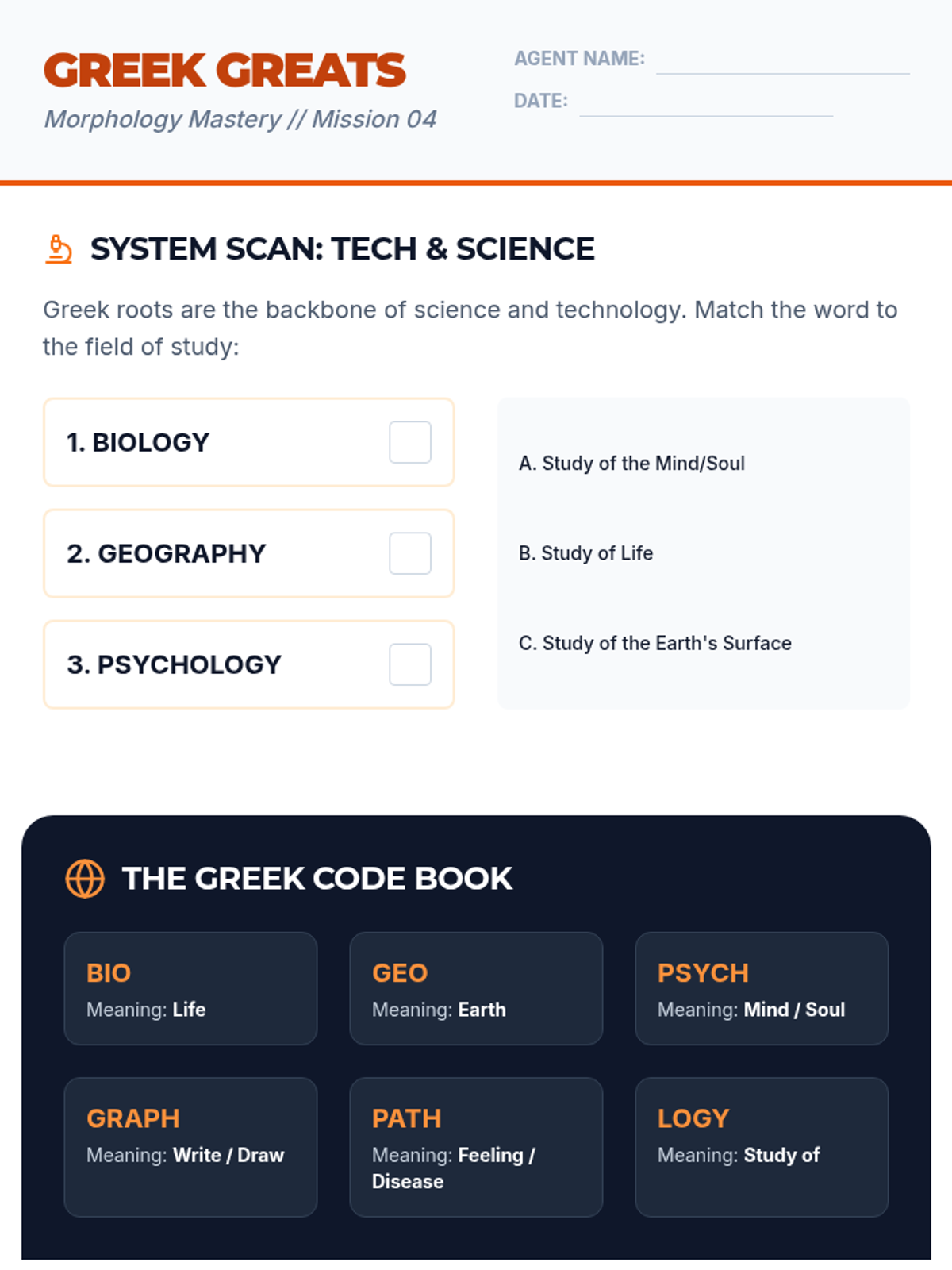
Greek roots common in science and technology (bio, psych, path, geo, graph) for technical literacy.
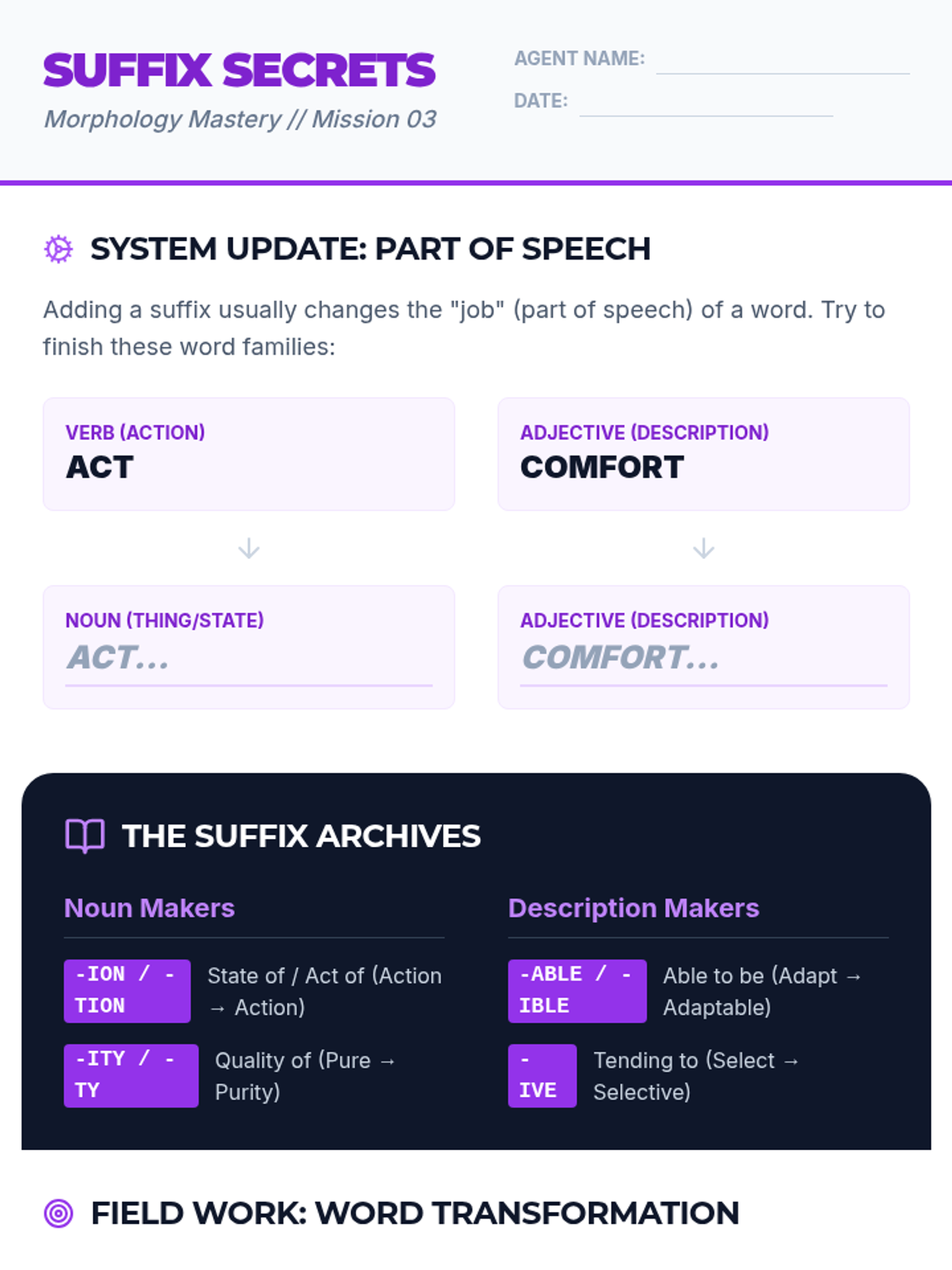
Focus on suffixes that change the part of speech (-ion, -ity, -able, -ize, -ly) and how to identify them in complex sentences.