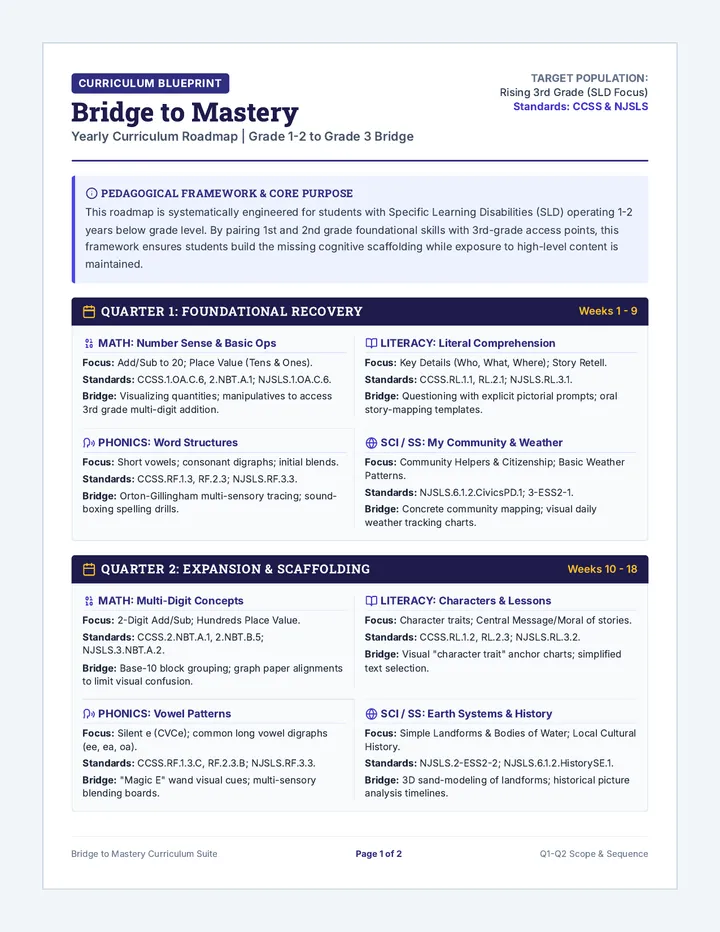
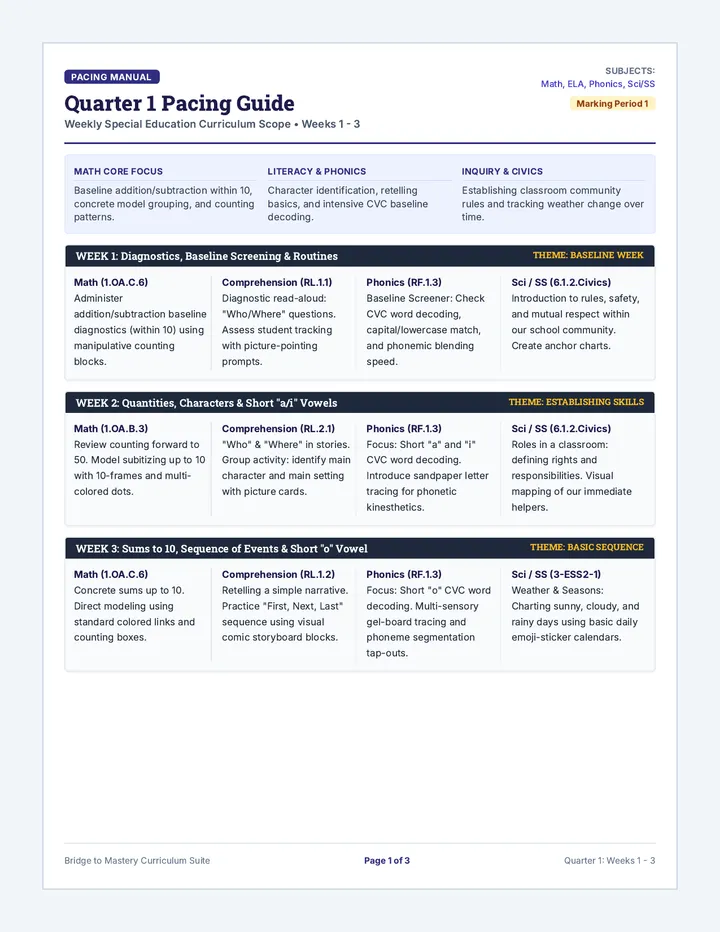
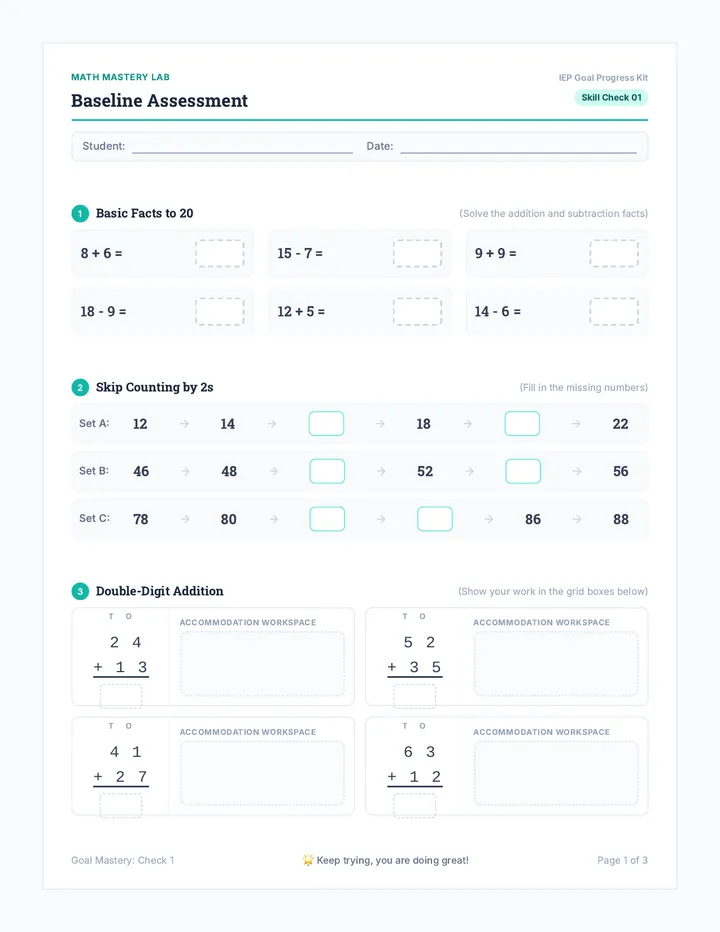
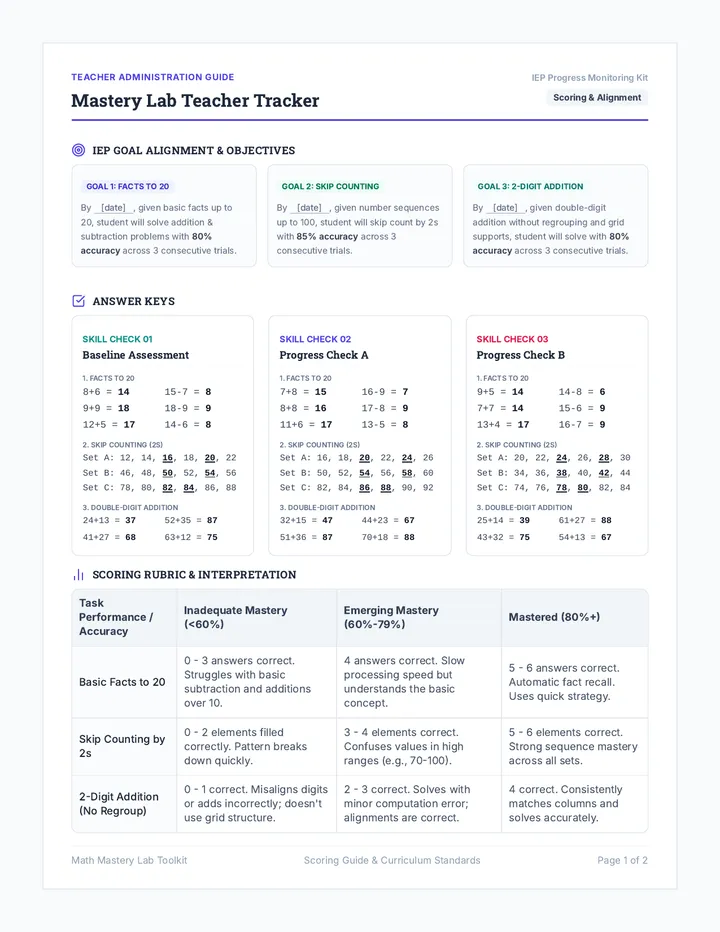
A set of transition planning resources for a 10th-grade student interested in a career in commercial trucking, focusing on education, training, and employment milestones.
A 4-week historical narrative writing project focused on Australian migration, specifically designed to scaffold imagination and structure for students with ASD.
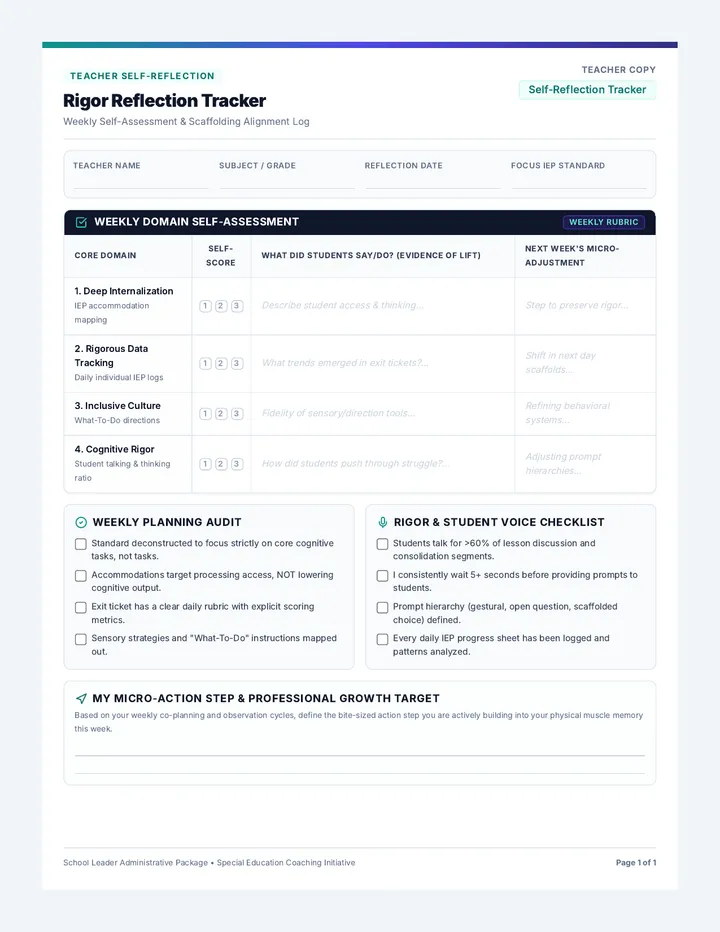
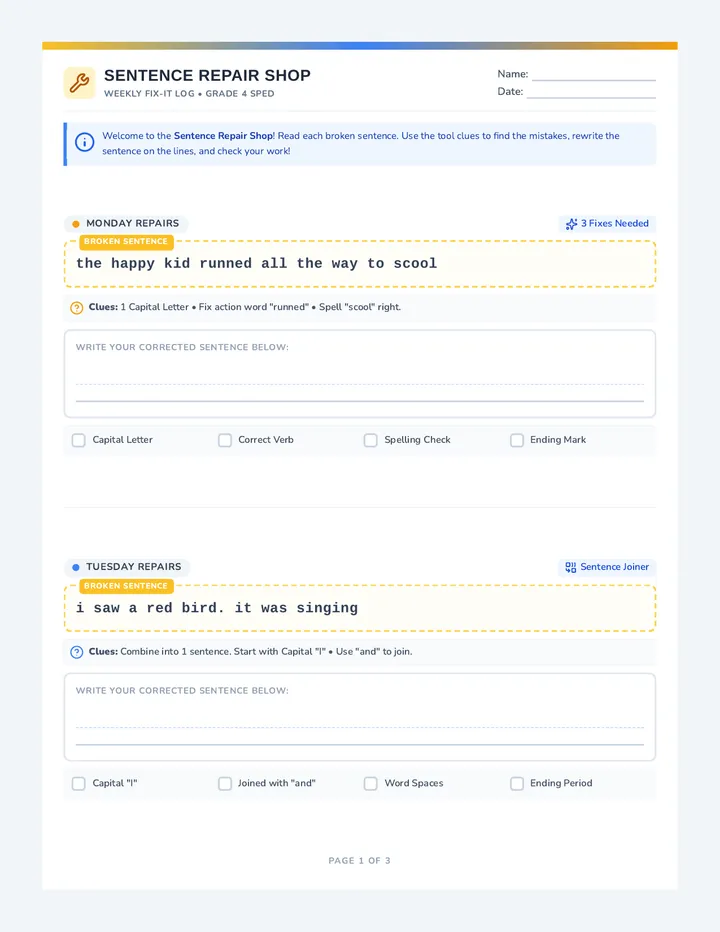
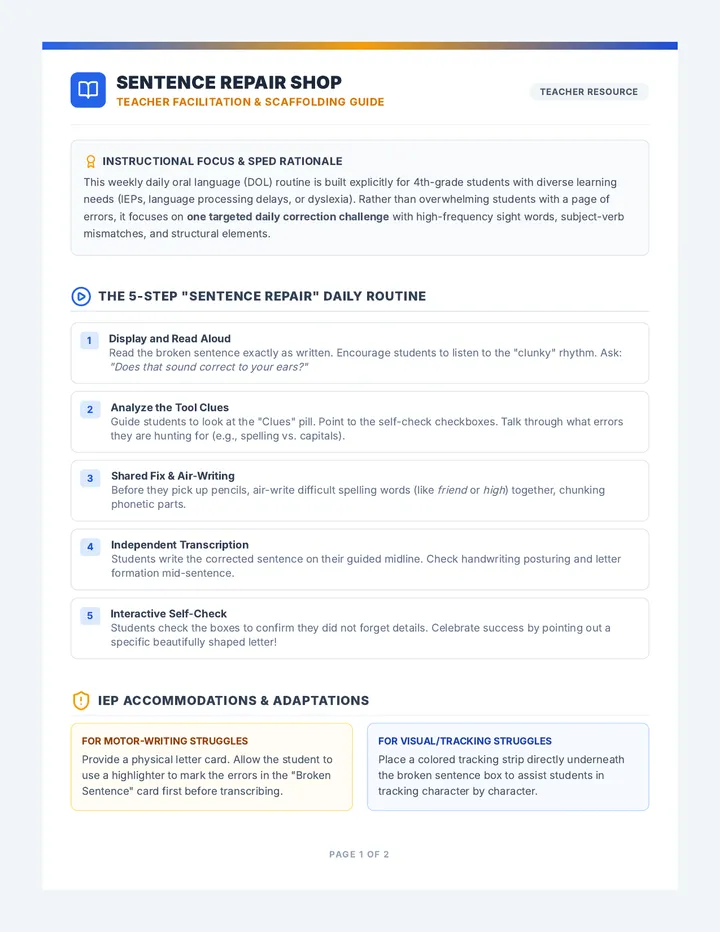
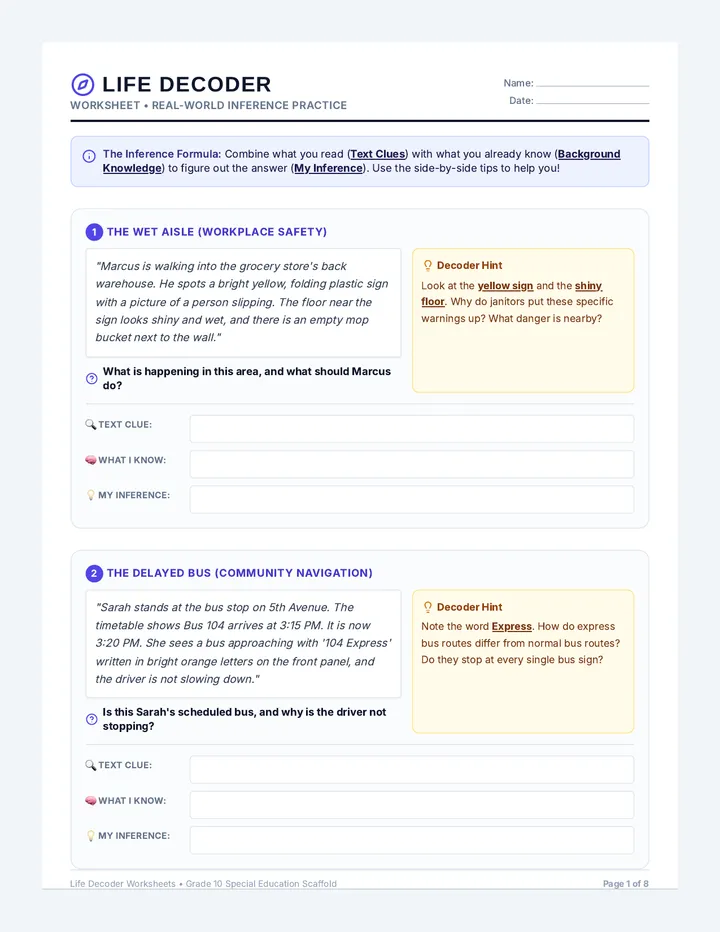
Targeted IEP goals and instructional support materials for 9th and 10th grade core subjects, including behavioral interventions for focus and alertness.
A comprehensive toolkit for educators to understand, implement, and monitor effective breaks for students with disabilities, focusing on keeping students regulated and engaged within the learning environment.
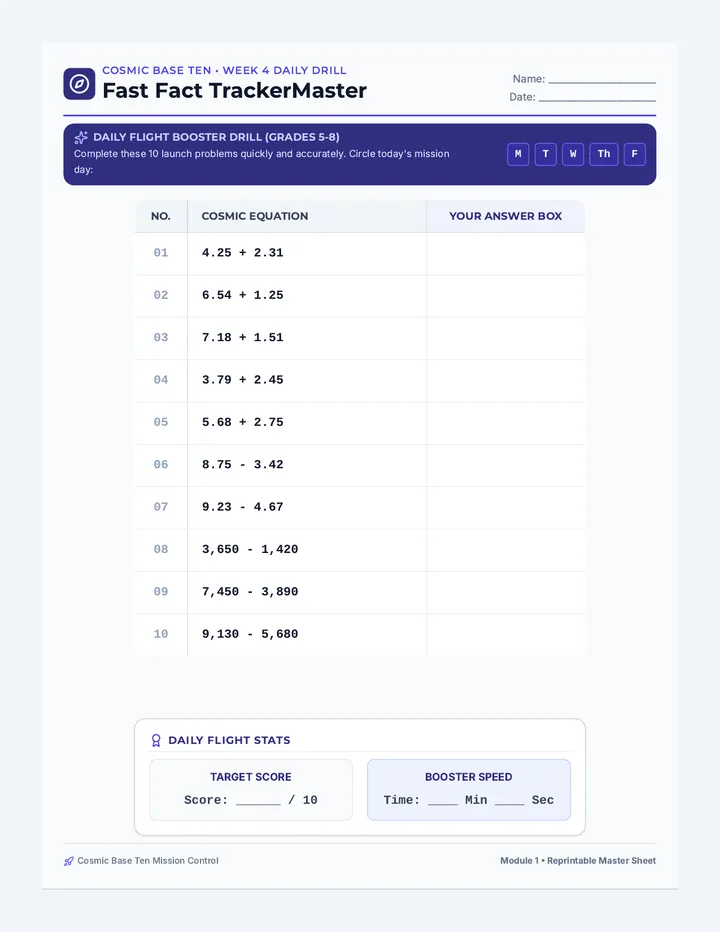
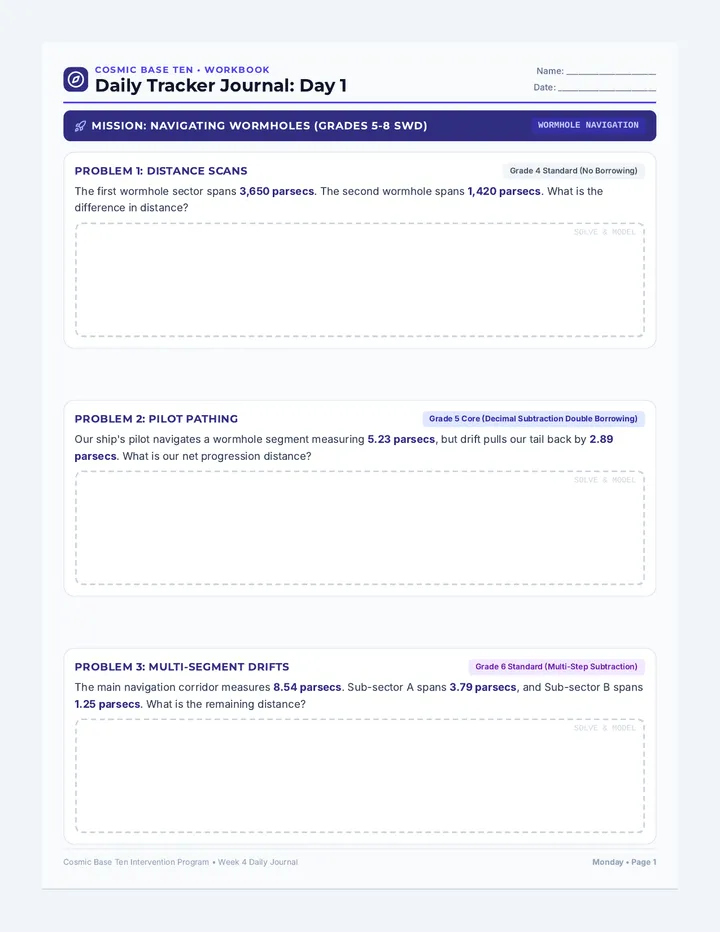
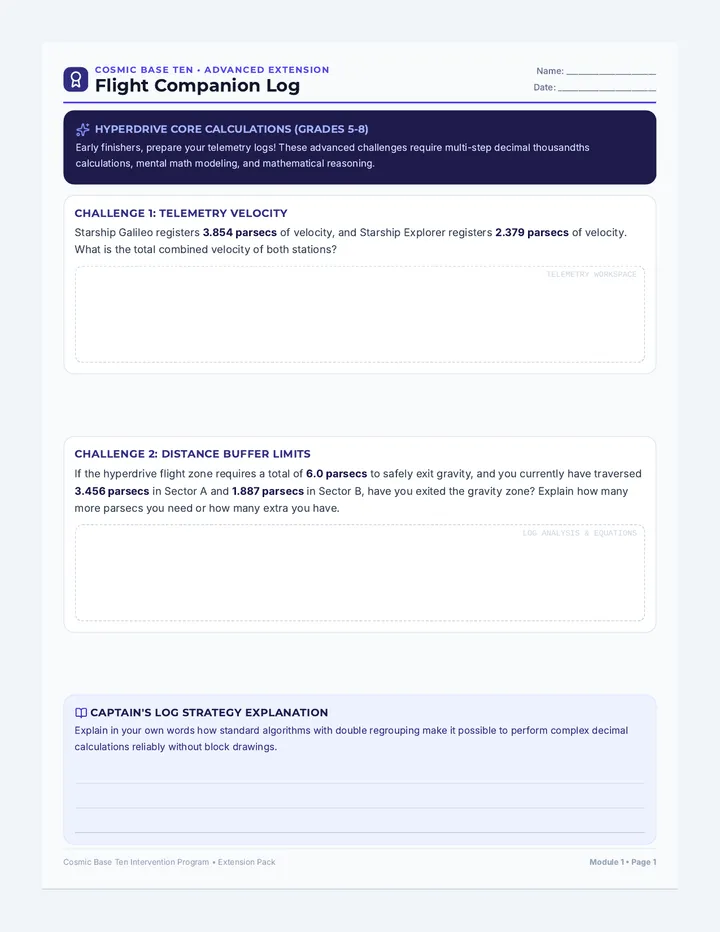
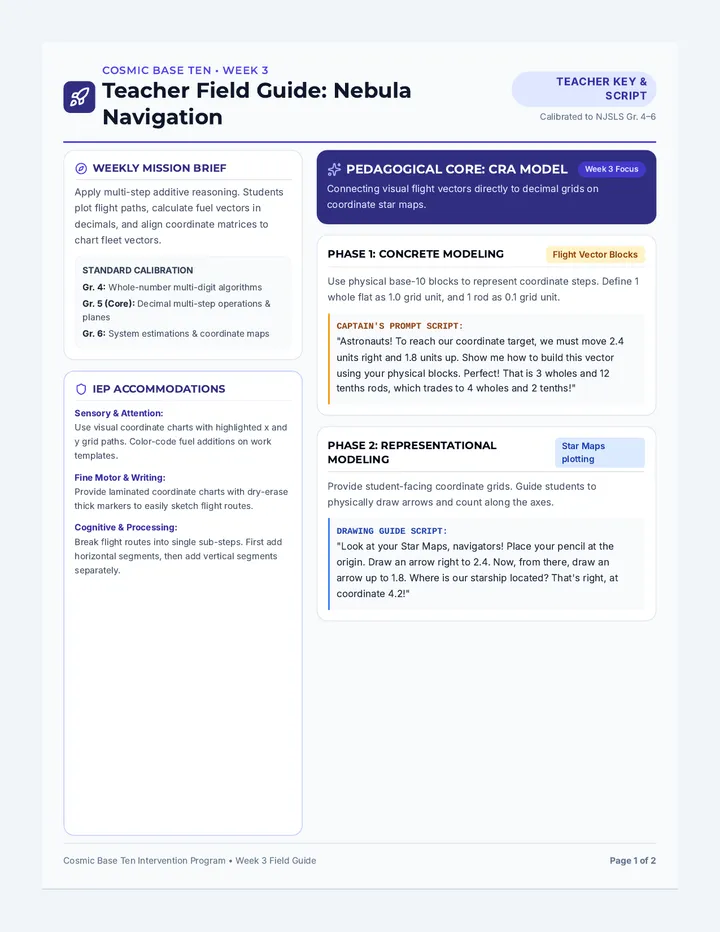
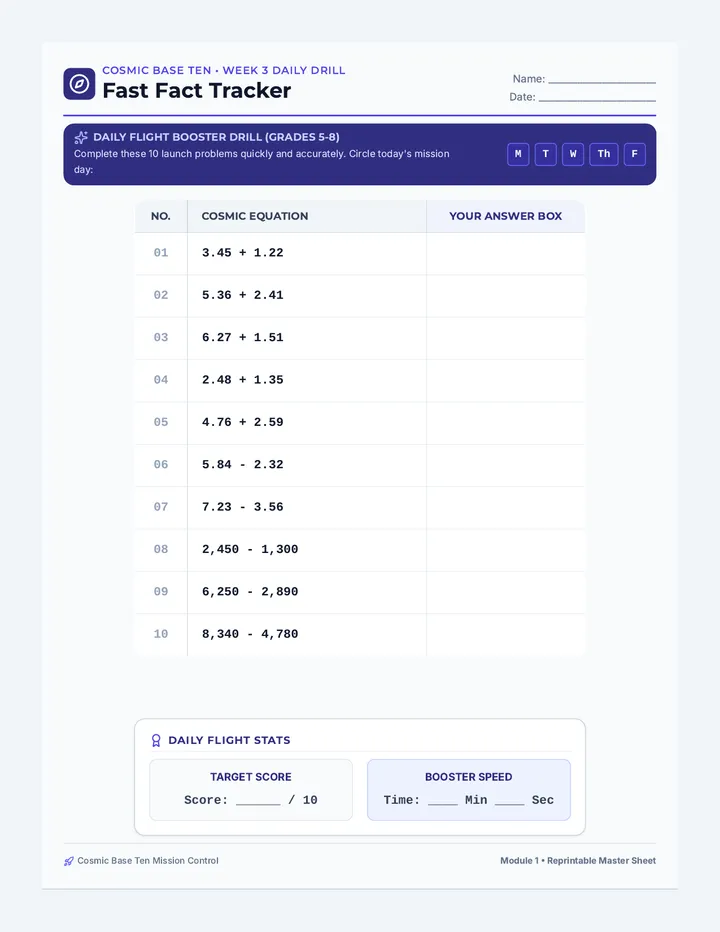
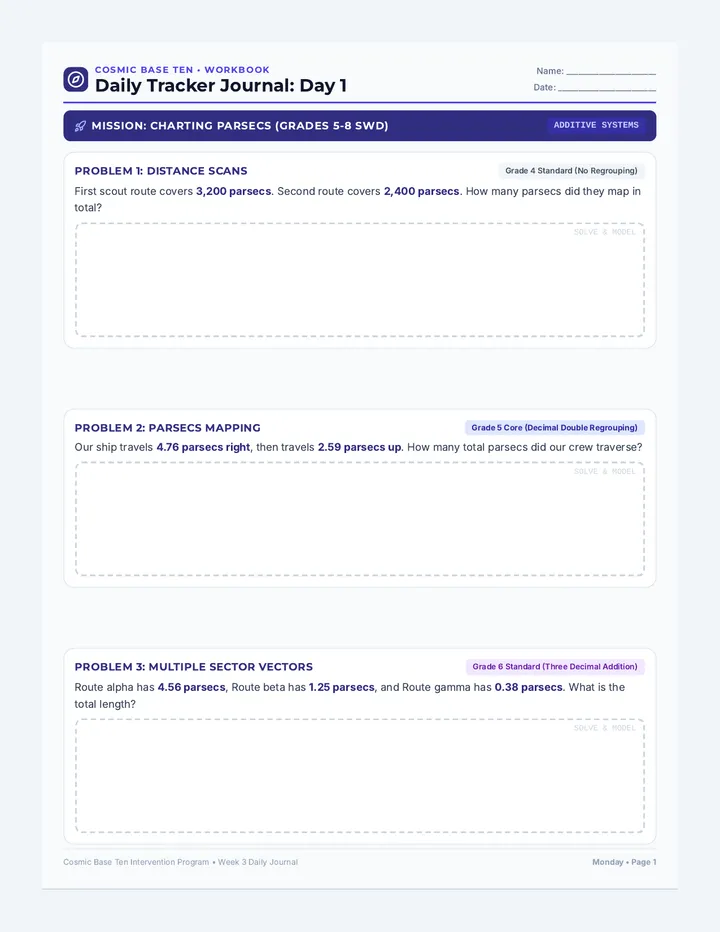
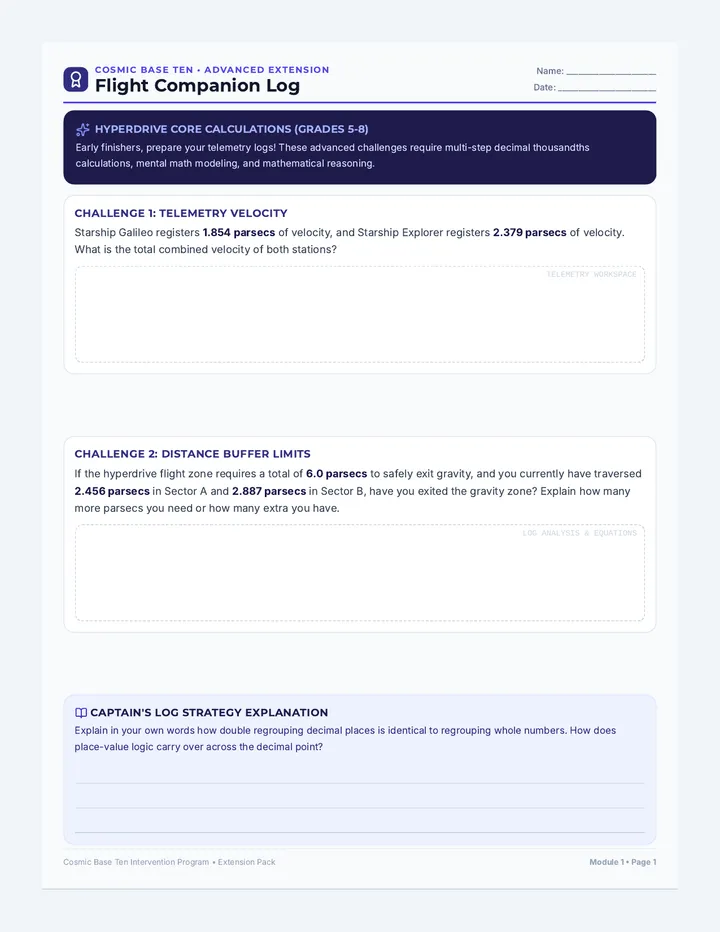
Targeted math instruction covering unit rates, fraction/decimal operations, filtering irrelevant information in word problems, and mastering negative numbers and geometric formulas.
Focuses on high-impact ELA strategies: finding text evidence using the 'Prove It' method, identifying main ideas with the 'Umbrella Rule', and decoding vocabulary through common word parts.
A comprehensive guide for educators and students to master the art of writing Specific, Measurable, Achievable, Relevant, and Time-bound academic goals.
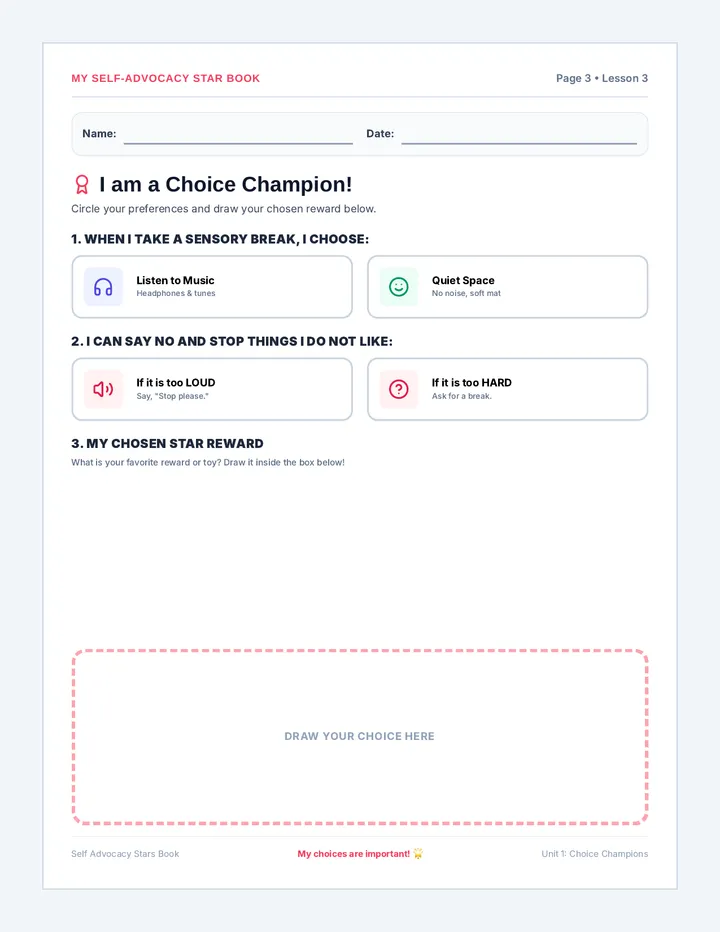
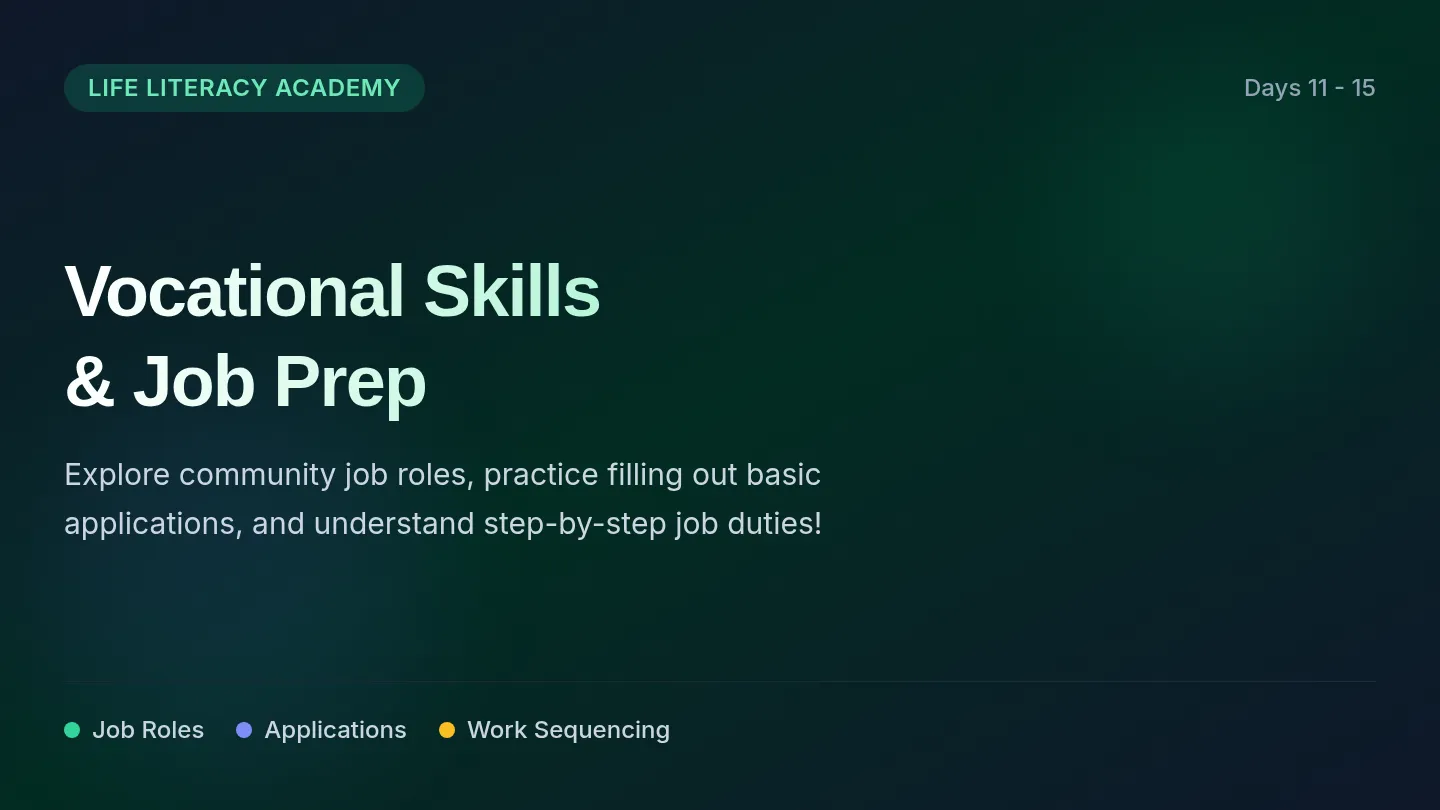
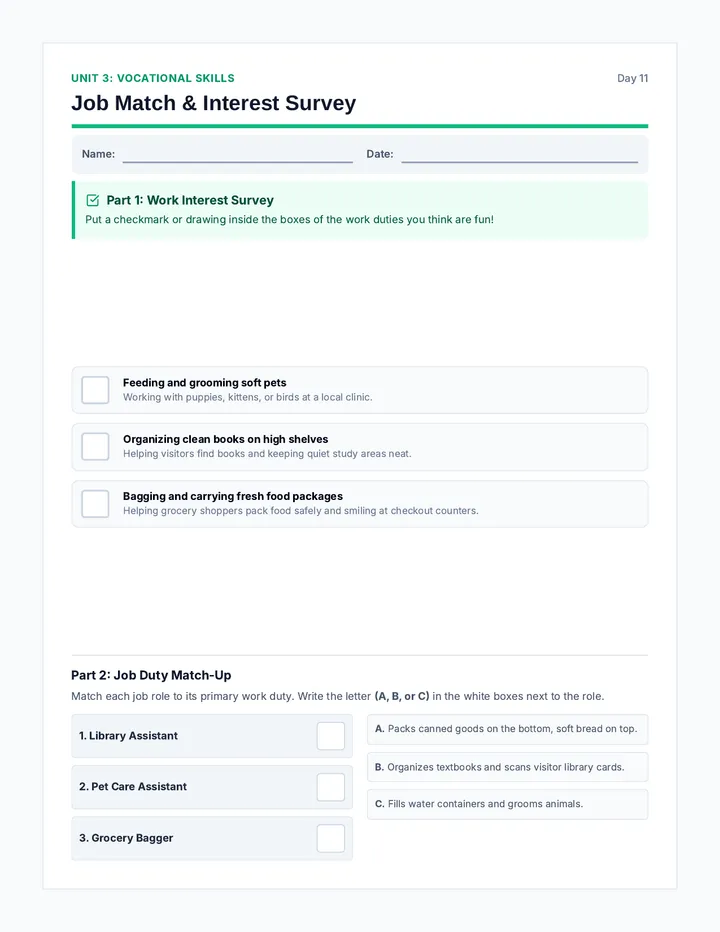
A functional academics lesson focused on student self-advocacy and interest-based planning for community and workplace skills.
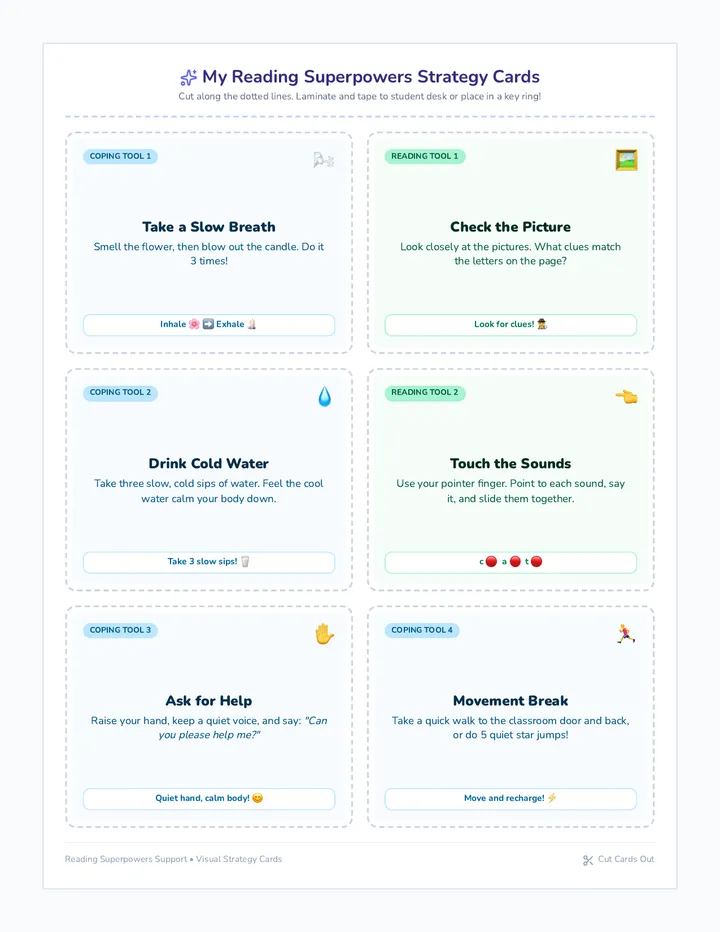
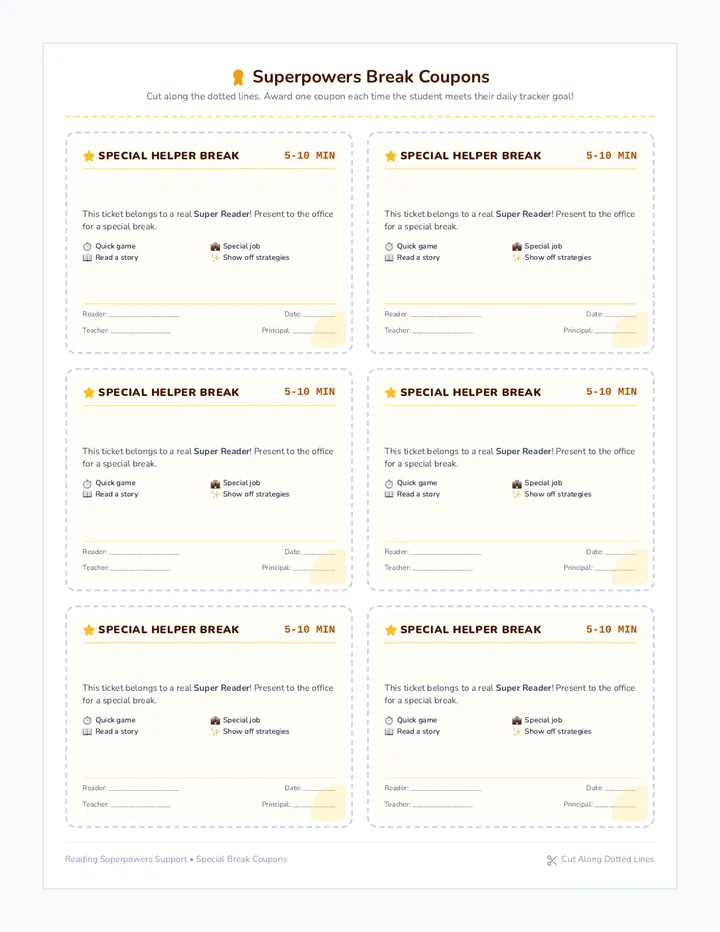
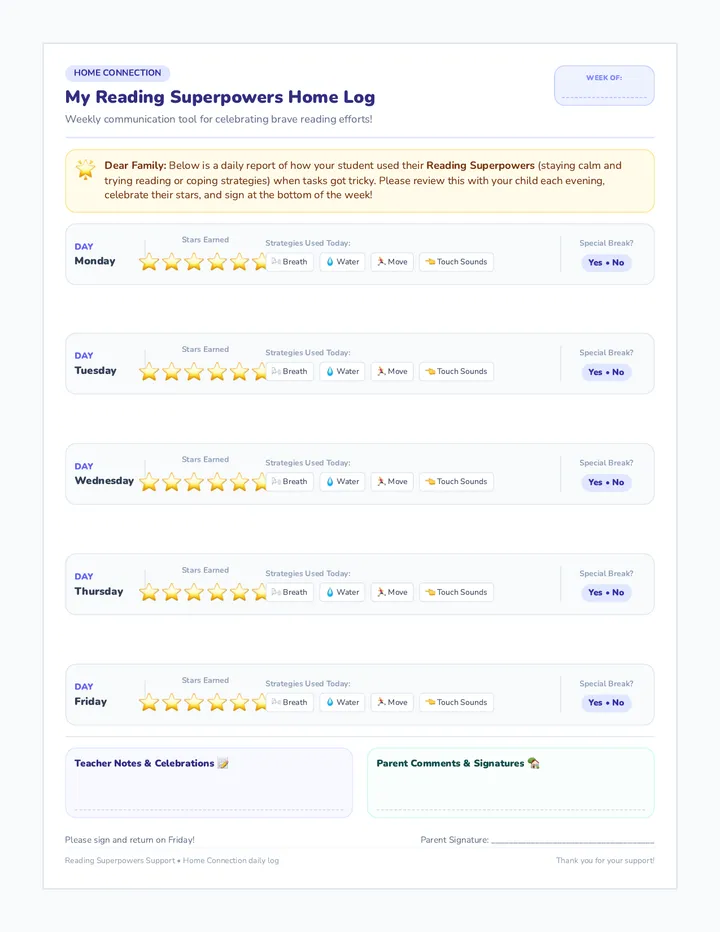
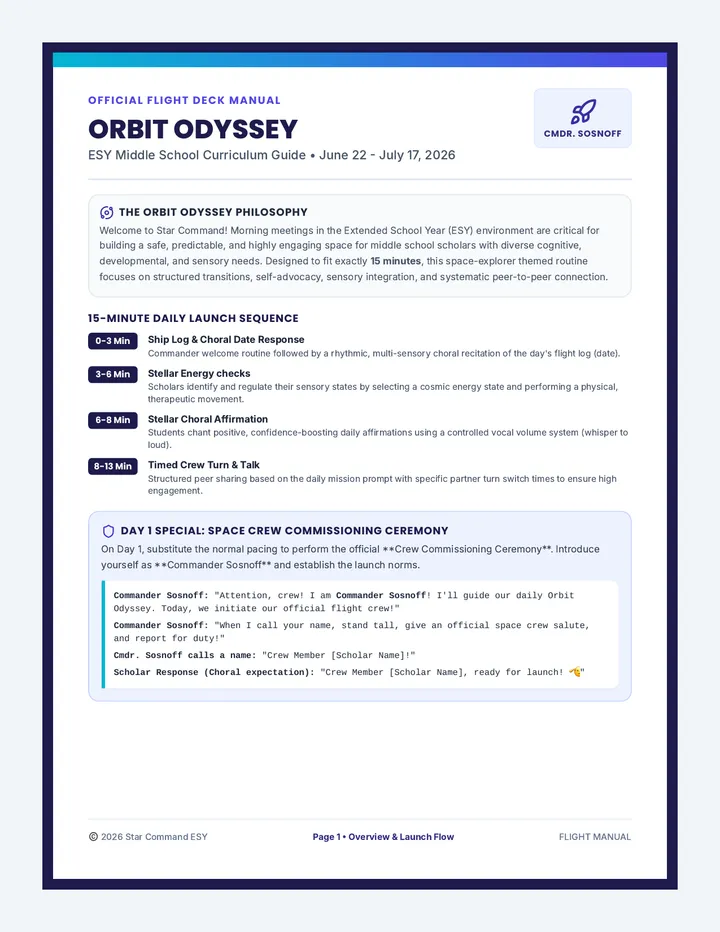
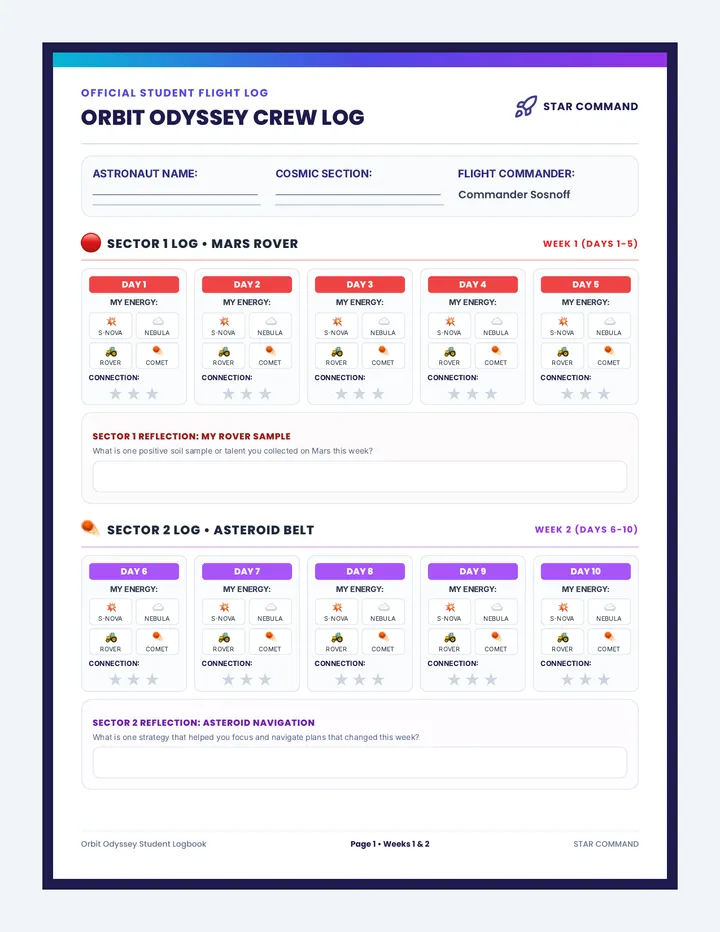
A comprehensive behavior support system designed to help students transition from seeking negative peer attention to practicing self-regulation and focus through a 'Peace Pilot' theme.
A set of resources focused on the intervocalic 'r' sound, helping young learners identify and produce the 'r' sound when it appears between two vowels. Includes visual aids, practice activities, and instructional support.
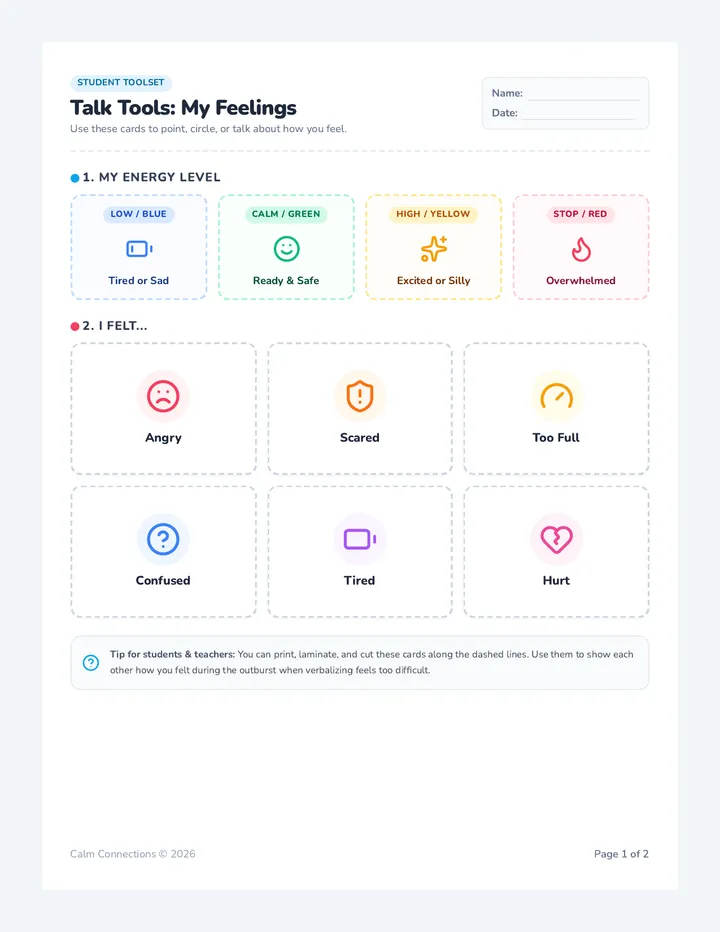
This lesson introduces the 'Mood Mechanics' workshop, teaching students to read their internal 'dashboard' (physical feelings) and select the right 'tools' (coping skills) for different emotional states.
A lesson designed for high school students with intellectual disabilities to explore how internal emotions are expressed externally, using characters from the movie Inside Out as a relatable framework. Students will practice identifying physical cues and behaviors associated with different feelings.
A visual management system to help students transition between focused learning periods and restorative breaks, using a 'Focus Engine' metaphor.
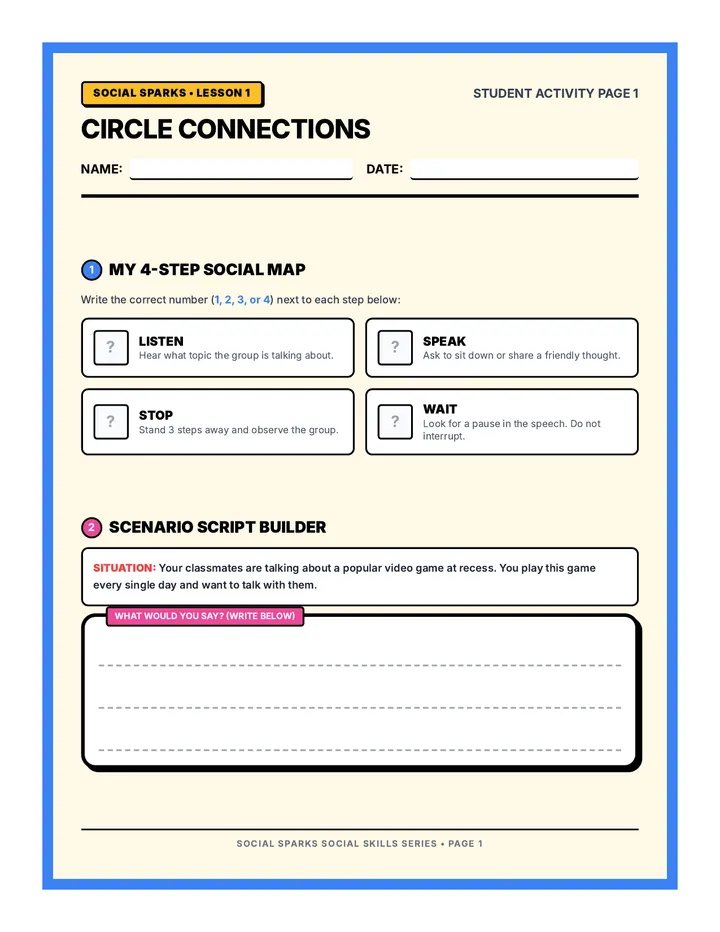
A 10-minute high-impact lesson on social communication skills for students with intellectual disabilities, featuring differentiated task cards and visual supports.
A scaffolded approach to simplifying fractions, focusing on finding common factors and understanding equivalence through visual models and step-by-step practice.
This lesson focuses on helping students who use AAC to visualize and communicate their long-term goals. It provides visual supports and a choice board to facilitate expression about their future aspirations.
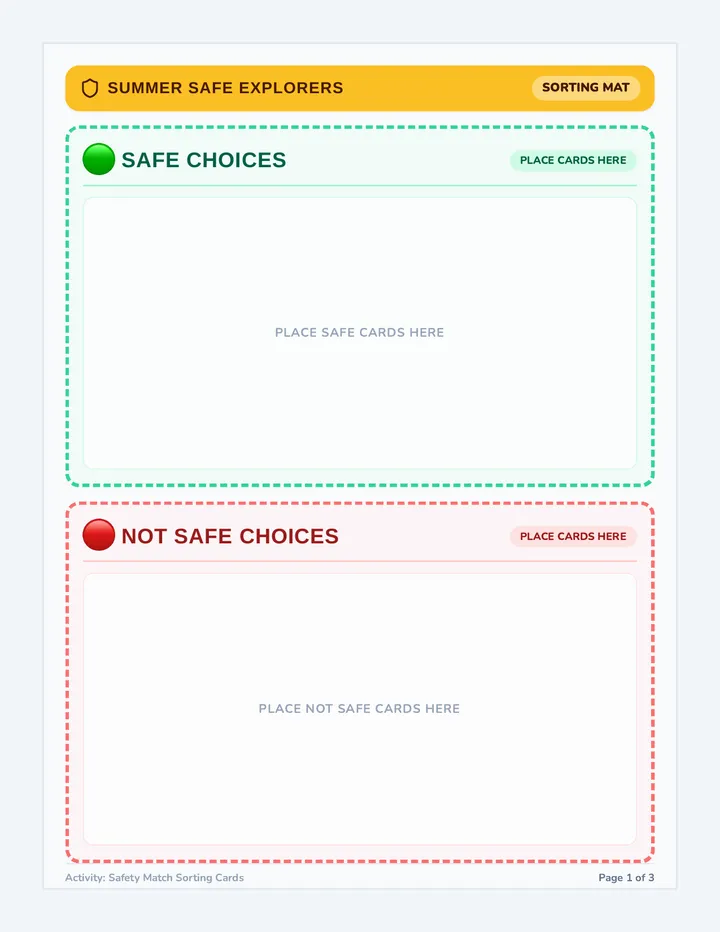
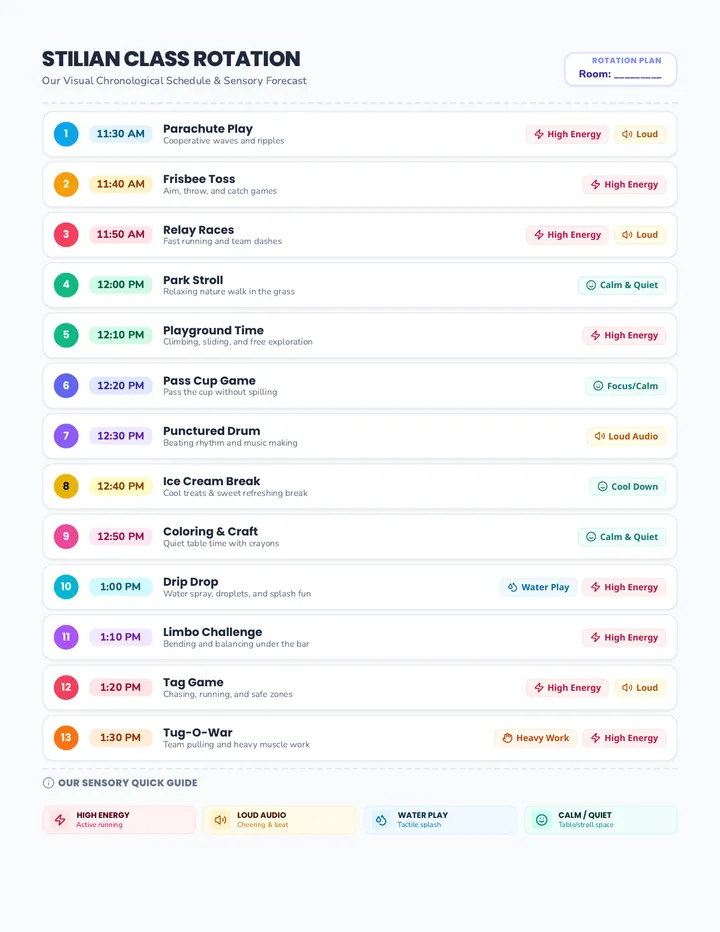
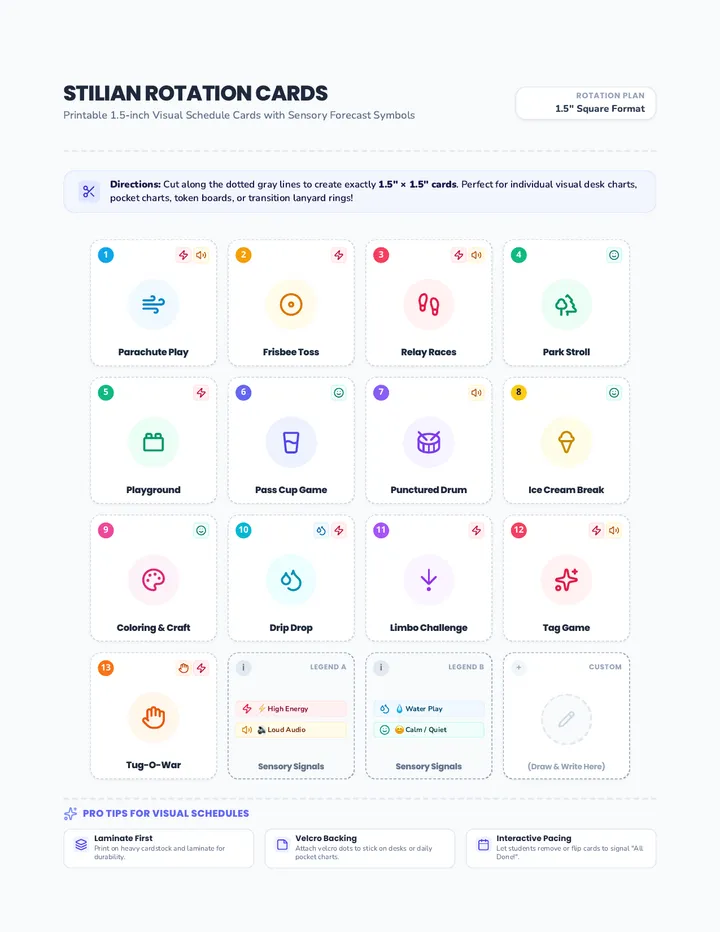
A gym-based lesson for lifeskills kindergartners focusing on foundational social-emotional skills through movement and simple play. The lesson includes high-visibility visual supports and low-complexity games designed to minimize elopement and maximize engagement.
Explores the Red Zone (angry, terrified, out of control) with a focus on 'Emergency Stop' safety plans and the importance of finding a safe space.
Focuses on identifying the Green Zone (calm, focused, ready) and proactive habits that help students stay in this optimal learning state.
A review lesson using a scenario-based board game to practice identifying zones and selecting appropriate strategies in real-world high school situations.
Explores the Yellow Zone (frustrated, anxious, silly, wiggly) by mapping physical sensations and identifying 'Yellow Light' warning signs and 'Brake' strategies.
Focuses on identifying the Blue Zone (tired, sad, bored, sick) through physical cues and high-school-relevant triggers, followed by 'Energy Booster' coping strategies.
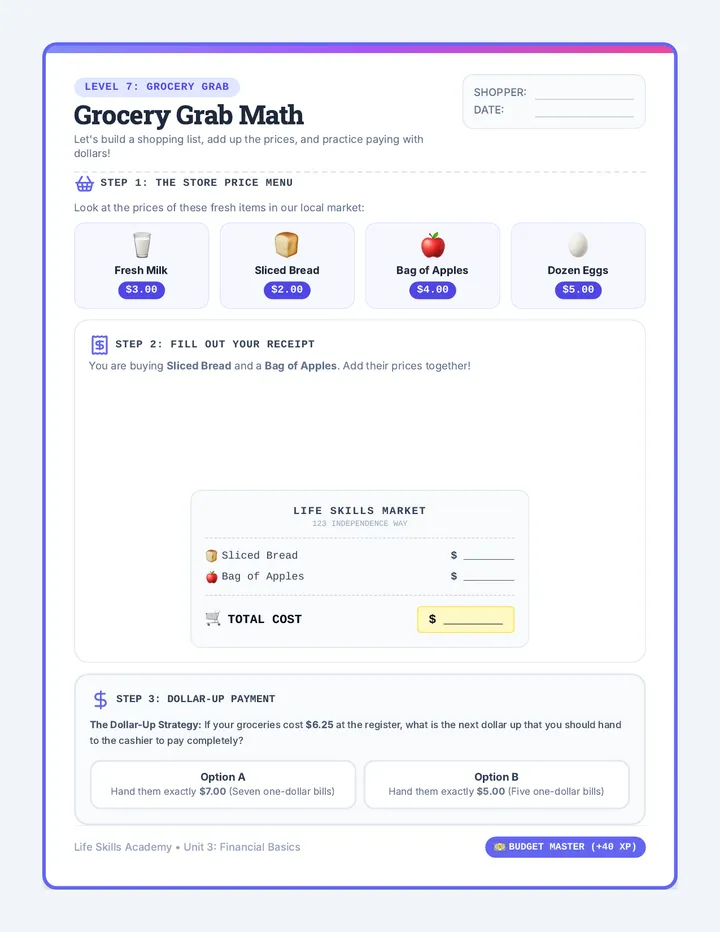
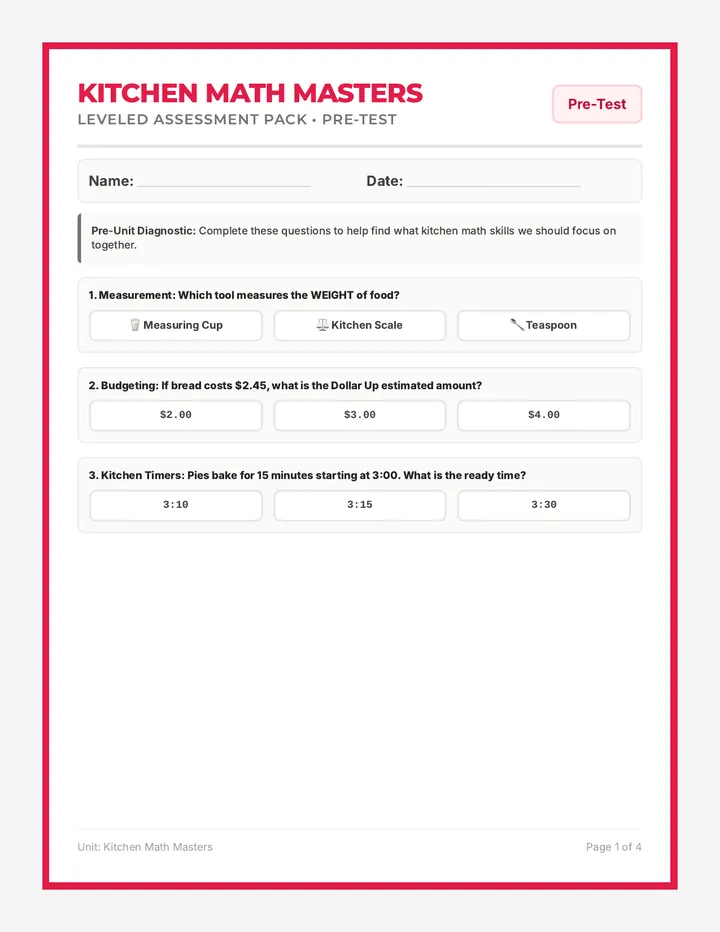
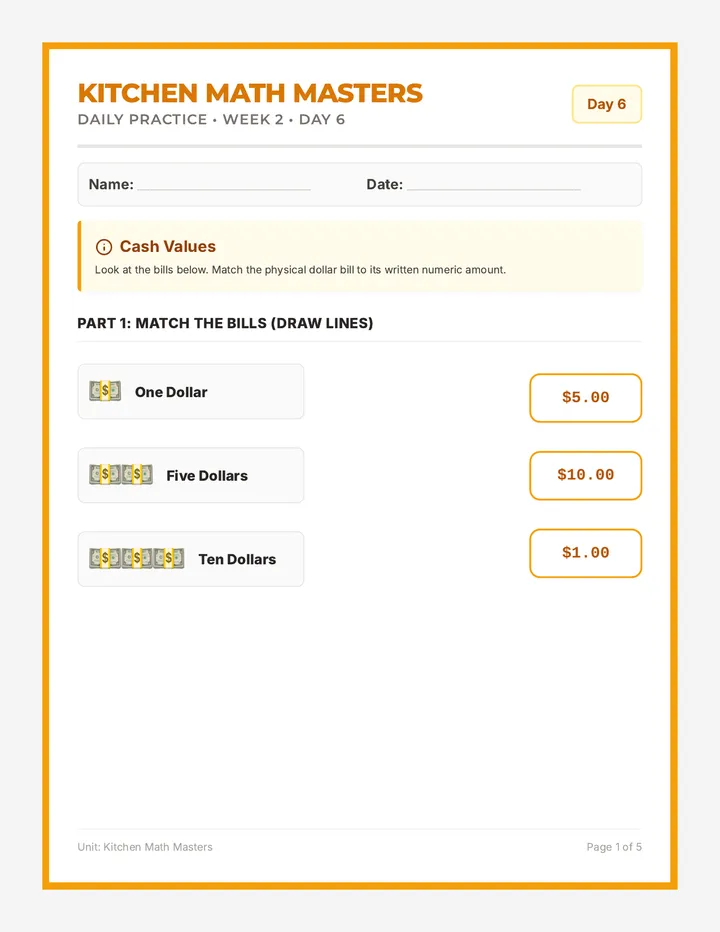
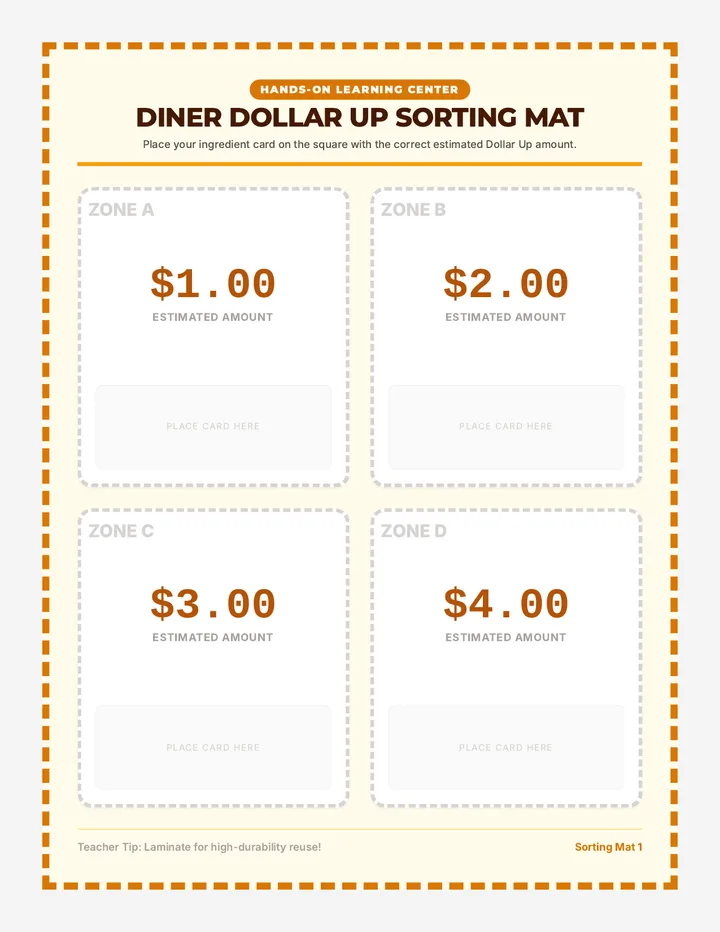
Students will learn how to identify needed items, navigate a grocery flyer, and calculate simple costs to stay within a budget.
A 20-25 minute high-intensity mini-lesson where students must negotiate and prioritize competing tasks during a high-stress academic scenario.
Students will use simple observations to identify living and non-living things based on key characteristics like growth, movement, and the need for food and water.
A set of oral reading fluency drills themed around video game modding and software development to engage a 9th grade student reading at an 8th grade level. Includes multisyllabic word lists, phrased sentences, and progress tracking tools.
A foundational 60-minute lesson introducing K-3 students to the concept of Executive Functioning using the 'Brain Captain' metaphor. Students explore the 9 core mental departments through interactive group activities and self-reflection.
Addresses fluency in complex, multisyllabic texts for 6th-12th grade students, emphasizing morphology and expressive reading in disciplinary contexts.
Introduces accuracy, rate, and prosody for 2nd-5th grade learners with a focus on phrase-cued reading and repeated reading techniques.
Focused on building letter-name and letter-sound automaticity for PreK-1st grade students using high-frequency practice and evidence-based routines.
A foundational comprehension lesson for early readers, focusing on identifying key details and sequencing events through visual-heavy interactive tasks.
A follow-up lesson focused on building fluency with mixed digraphs, providing cumulative review and a final progress assessment for sh, ch, th, wh, and ck.
A foundational lesson introducing and practicing common digraphs (sh, ch, th, wh, ck) through multi-sensory activities and differentiated reading tasks using a building-block theme.
A lesson focused on supporting preschool students with autism in understanding and following directions, especially for non-preferred tasks, using visual supports and a social story.
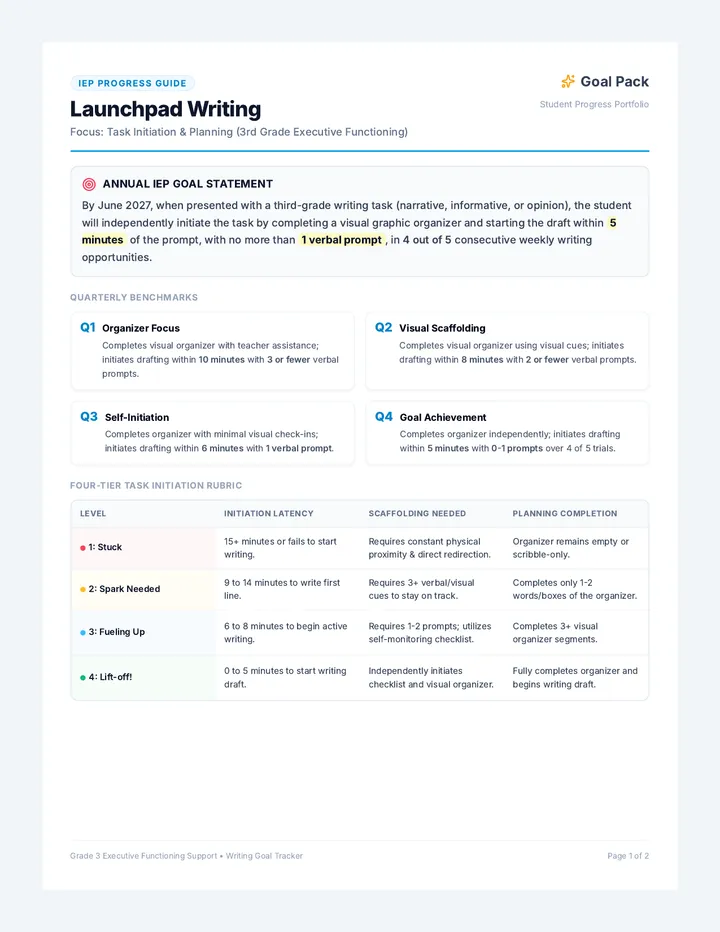
A collection of instructional goals and monitoring tools designed to support a 6th-grade student with dyslexia in mastering complex reading inferences, specifically cause-effect and character motivations.
A set of accessible science materials designed for MCAS Alt evidence, focusing on distinguishing between living and non-living things through observation and sorting.
A multisensory lesson for high school special education students to master the properties of real numbers using a 'Number Mixology' theme. Students explore Commutative, Associative, Distributive, Identity, and Inverse properties through visual analogies and scaffolded practice.
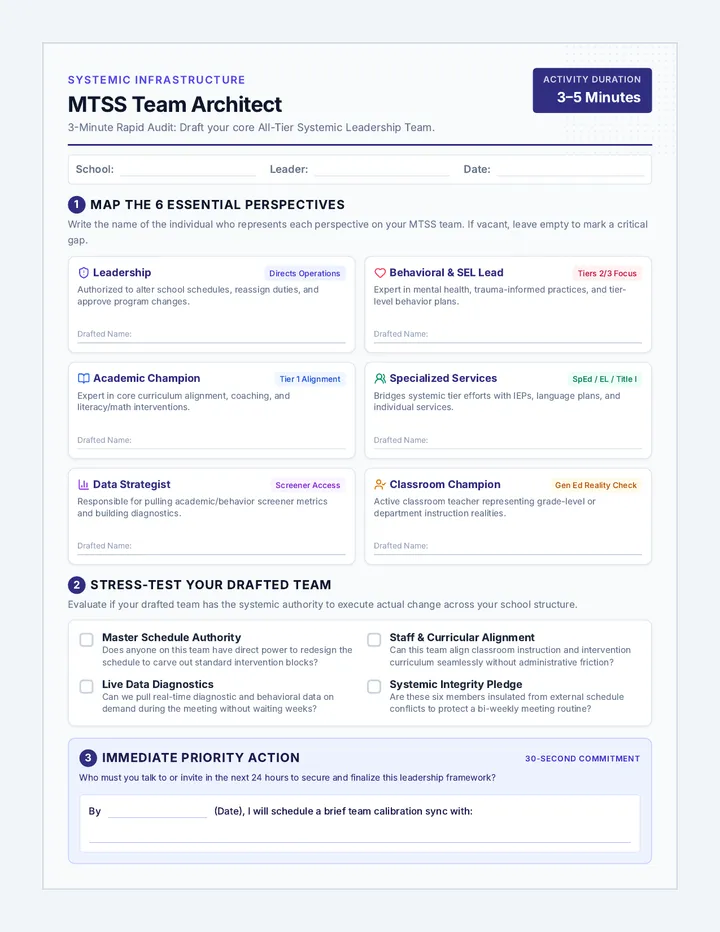
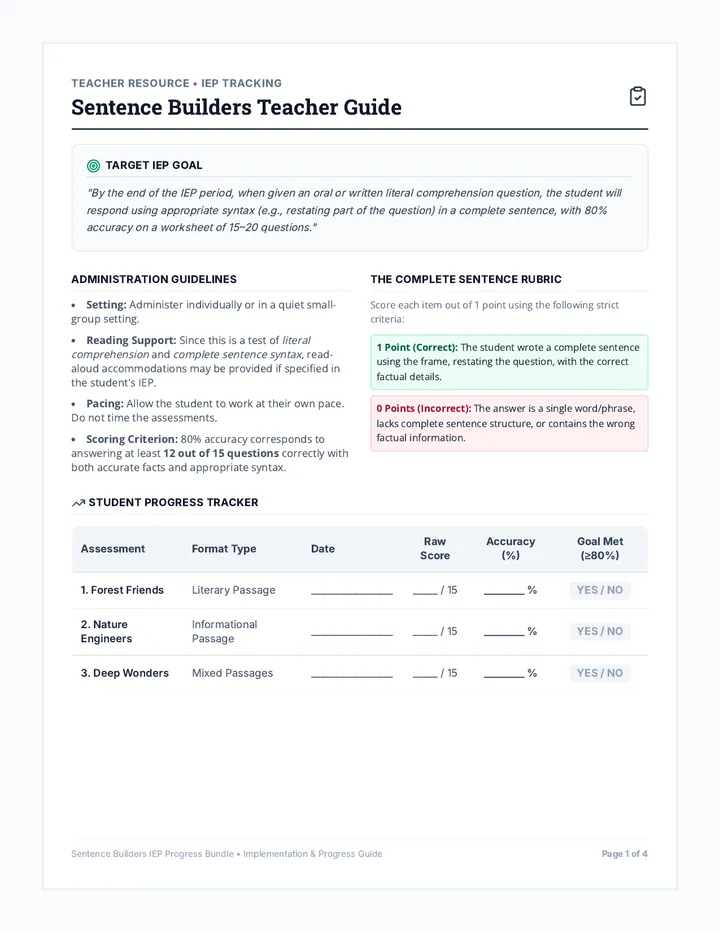
A professional development session designed to help educators translate raw student data into actionable instructional changes. Teachers will practice identifying trends and planning specific interventions based on real-world classroom data.
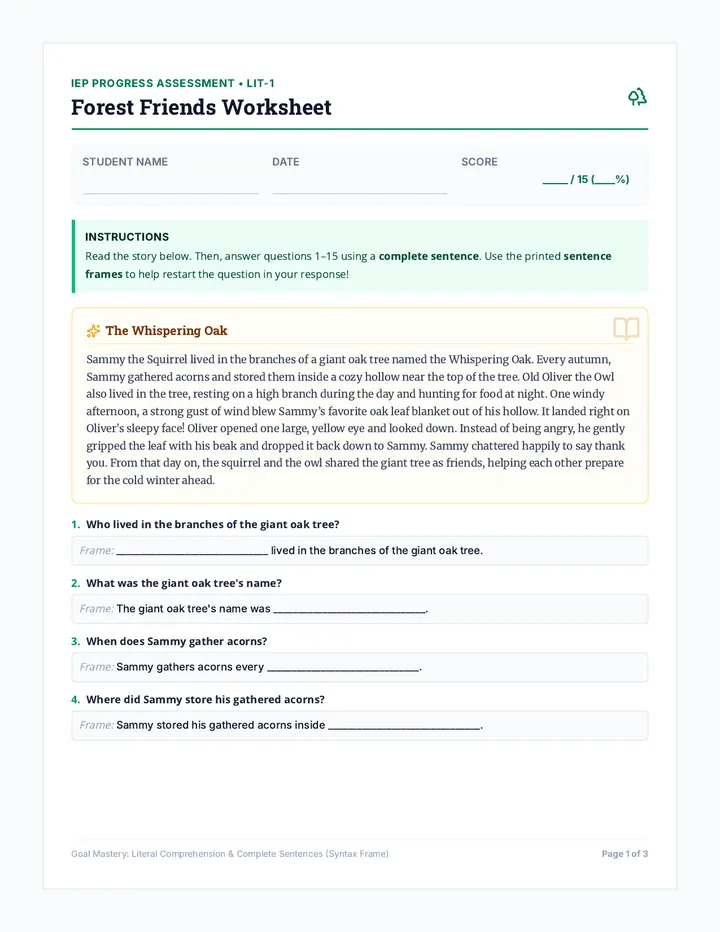
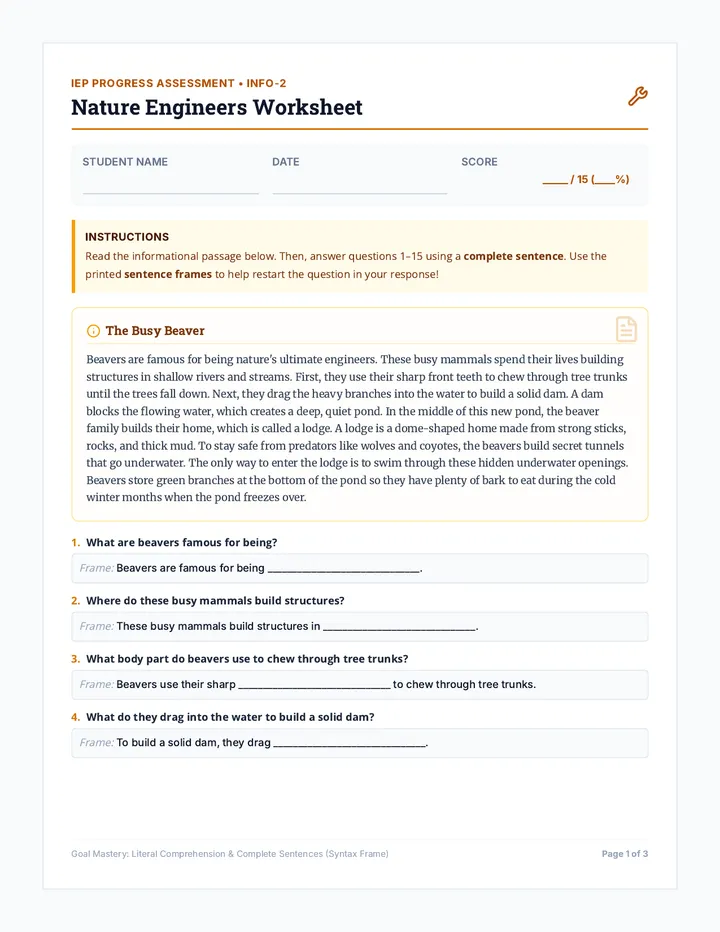
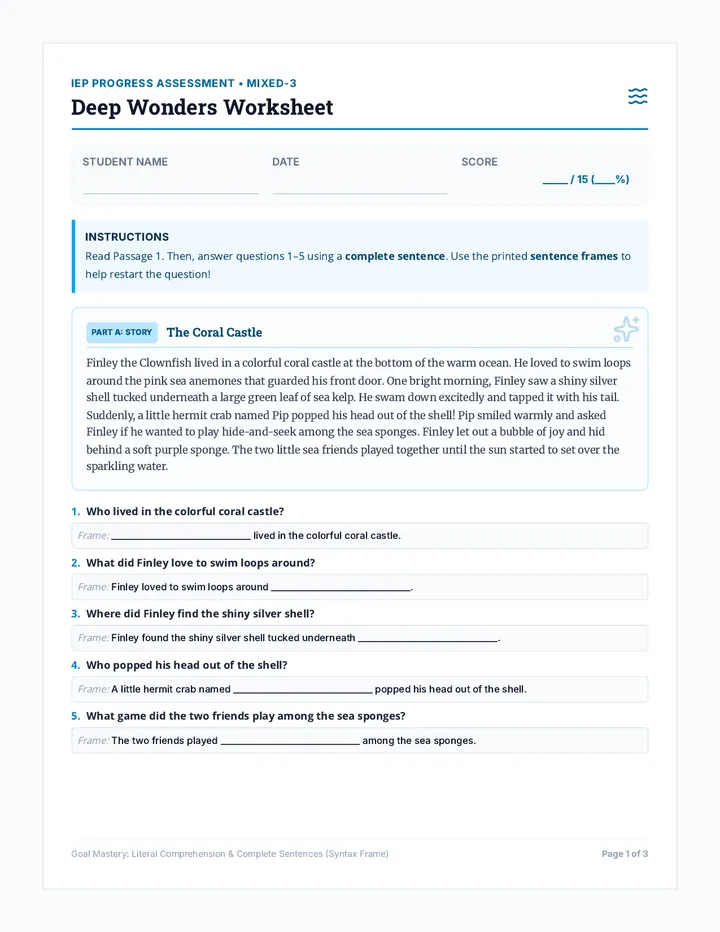
A collection of 10 longer, more complex short stories designed for 3th-4th grade level readers. Focuses on identifying character, setting, and plot elements through multi-paragraph narratives and literal comprehension questions.
A focused lesson for 1st grade special education students to identify clues in word problems and decide whether to add or subtract within 20, themed around a safari animal adventure. Includes visual supports like number lines and animal keyword anchors.
A lesson on thermal energy, exploring how heat moves, how we measure temperature, and essential safety skills for hot and cold environments.
An introductory lesson on the properties of light and sound, focusing on sensory exploration, safety, and functional communication for high school students with diverse learning needs.
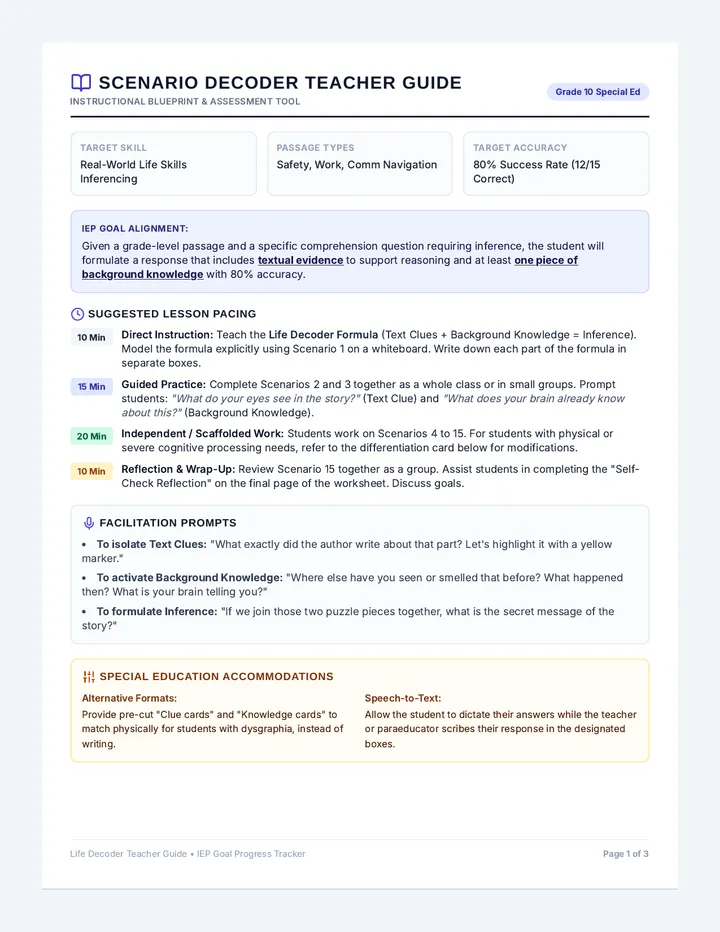
A comprehensive lesson introducing the 'text evidence + schema' formula to master inferring main ideas and author's purpose.