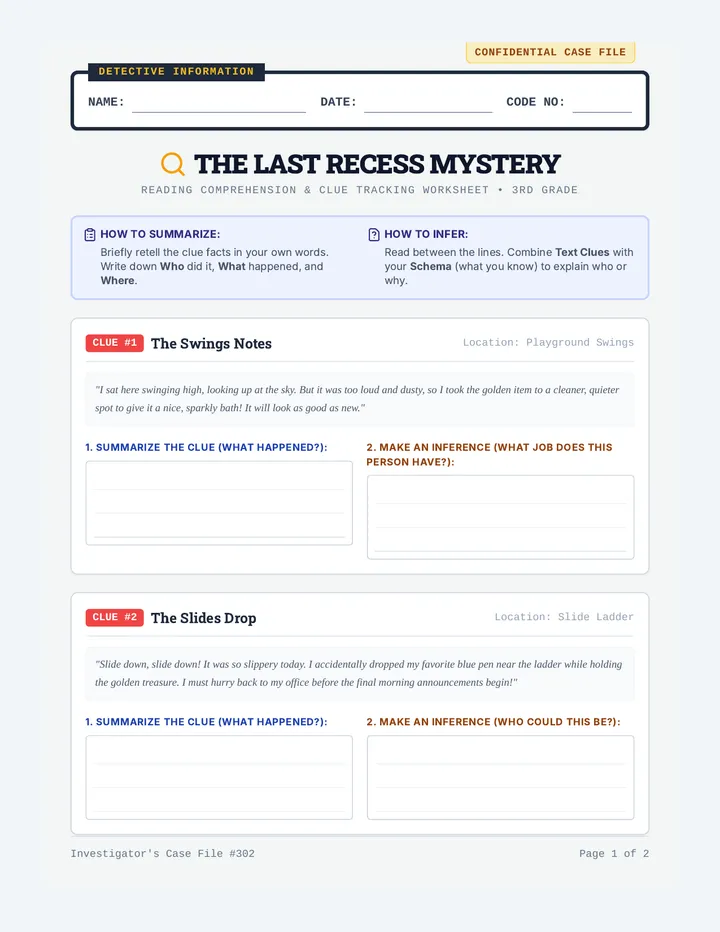
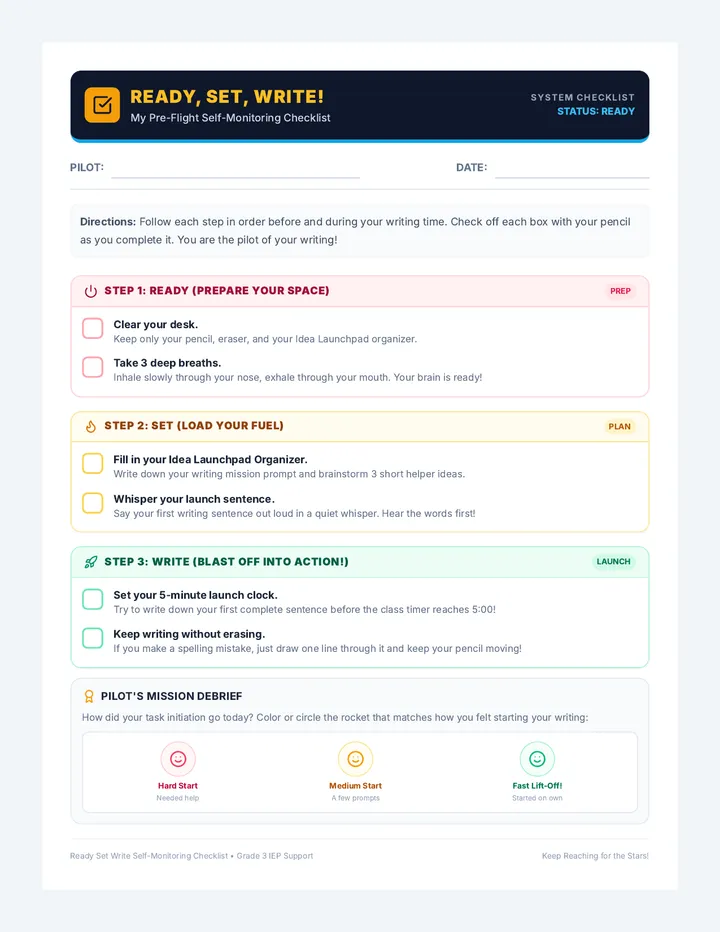
A set of tiered daily reading trackers for 2nd-3rd grade students, focusing on predicting, inferring, main idea, and visualizing. These logs provide differentiated support for various reading levels within a single classroom.
A vocabulary lesson focused on aviation terms for 2nd grade students, featuring definitions, visual aids, and sentence frames.
A lesson focused on location and category suffixes (-ary, -ery, -ory). Students analyze how these suffixes form nouns and adjectives related to places, groups, and qualities.
A lesson focused on abstract suffixes (-ment, -less, -ness). Students explore how these suffixes form nouns and adjectives related to states, qualities, and actions.
A comprehensive training session for high school counselors on facilitating effective 504 review meetings, focusing on legal compliance, standardized testing, and post-secondary transitions.
A lesson focused on agentive suffixes (-er, -or, -ian, -ist). Students analyze how these suffixes identify people who perform specific actions or hold certain roles.
A spelling assessment for Unit 10 Lesson 5 featuring 21 words including 'occupy', 'identify', and 'Powhatan'. Covers double consonants, multisyllabic words, proper nouns, and common vowel teams.
An interactive and printable phonics game focusing on closed, open, VCE, and r-controlled syllable types designed for small group reading intervention.
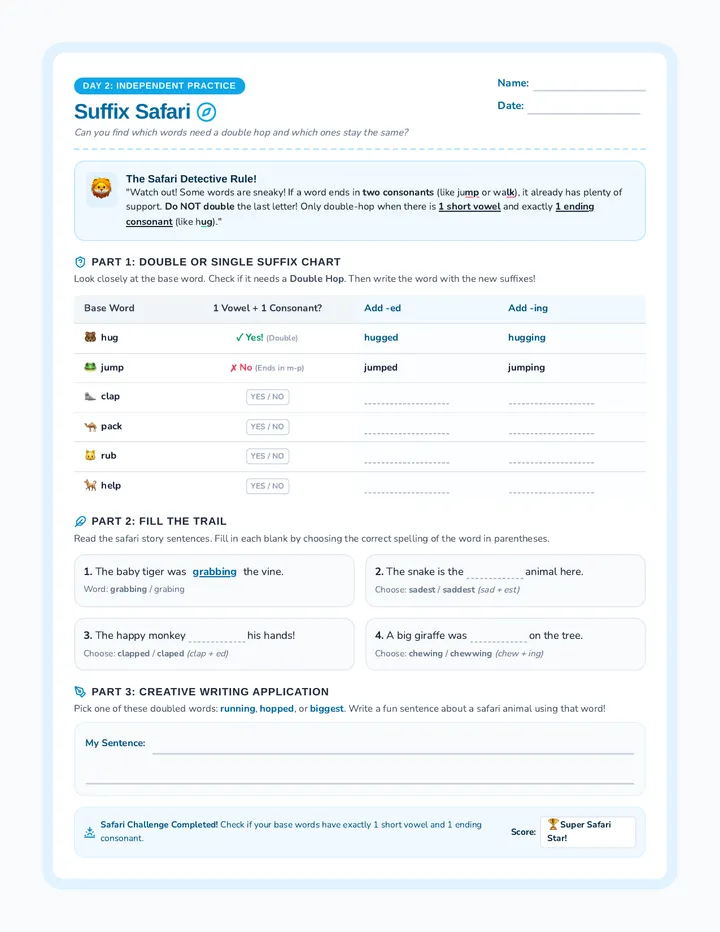
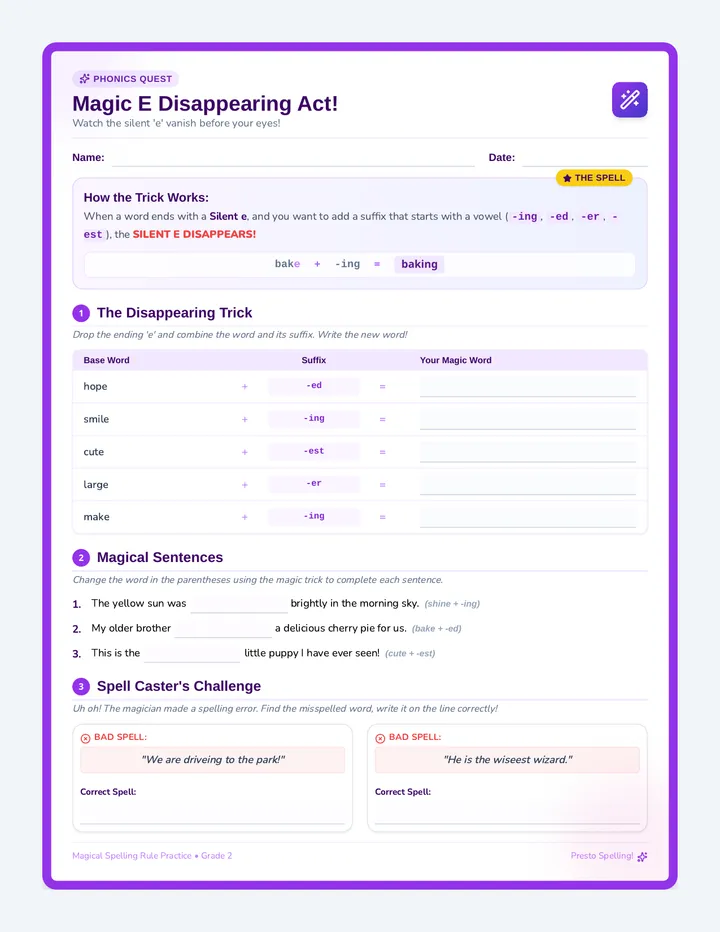
A lesson focused on comparative and superlative suffixes (-er, -est, -ier, -iest). Students explore how these suffixes change adjectives to compare two or more things.
A lesson focused on reading comprehension and attention to detail, where students identify specific animals and their habitats based on multiple descriptive clues.
Students learn to distinguish between literary and informational texts by examining purpose, structure, and language features. This lesson uses a detective theme to help students investigate the 'DNA' of different text types.
Students analyze two texts regarding social media screenings to identify arguments for and against the practice, preparing them to write a formal argumentative essay.
A focused lesson on mastering the 5th Grade NYS ELA short-response format for drawing conclusions using text evidence.
A lesson focused on the suffixes -y, -ly, and -ily. Students analyze how these suffixes change word meanings and usage through contextual application.
Exploring the "Orange" sector, focusing on nuances like Anxiety, Insecurity, and Panic.
Exploring the "Red" sector, focusing on nuances like Frustration, Jealousy, and Agitation.
Exploring the "Purple" sector, focusing on nuances like Loneliness, Guilt, and Disappointment.
Exploring the "Yellow" sector, focusing on nuances like Calm, Trust, and Being Valued.
Exploring the "Blue" sector, focusing on nuances like Shock, Curiosity, and Confusion.
Exploring the "Green" sector of the wheel, focusing on nuances like Contentment, Pride, and Elation.
A mystery-themed lesson where students act as 'Setting Sleuths' to identify time and place using sensory details and contextual clues.
A lesson focused on the prefixes sub-, com-, pro-, and en-. Students apply their knowledge of these prefixes to identify and use words in various contexts.
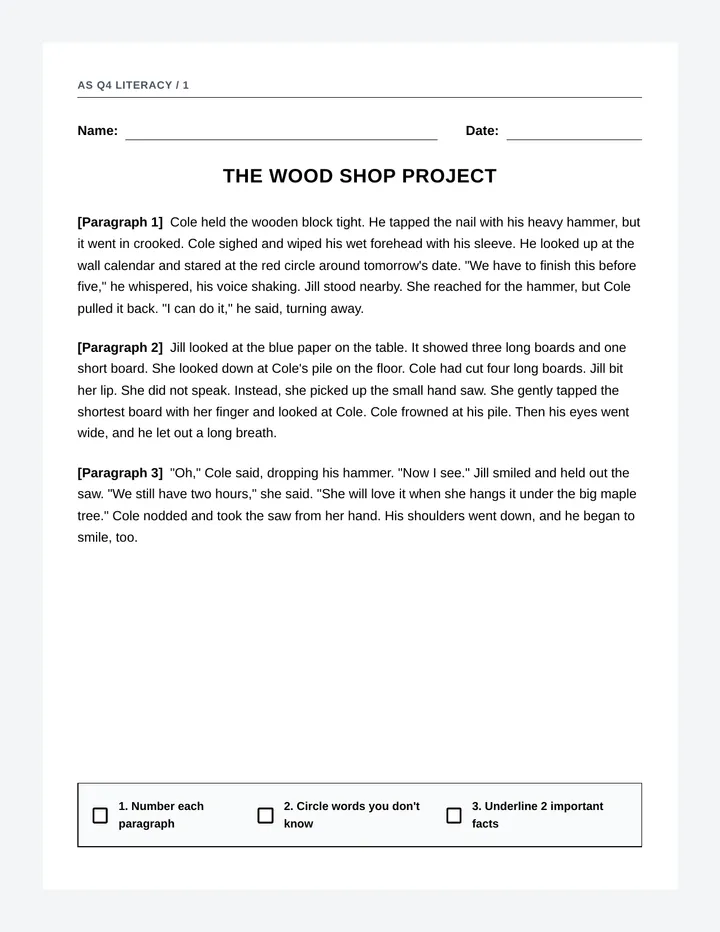
A 5-night homework packet designed for students with a 4th-grade interest level but reading at a 3rd-grade level. Each night features a high-interest passage about sports, technology, or video games, followed by targeted comprehension questions focusing on main idea, context clues, and inferential thinking.
A lesson focused on the prefixes re-, ex-, in-, and de-. Students explore meanings like "again," "out," "in," and "down" through application.
Students practice identifying specific vowel teams and diphthongs within simple sentences through a detective-themed decoding activity.
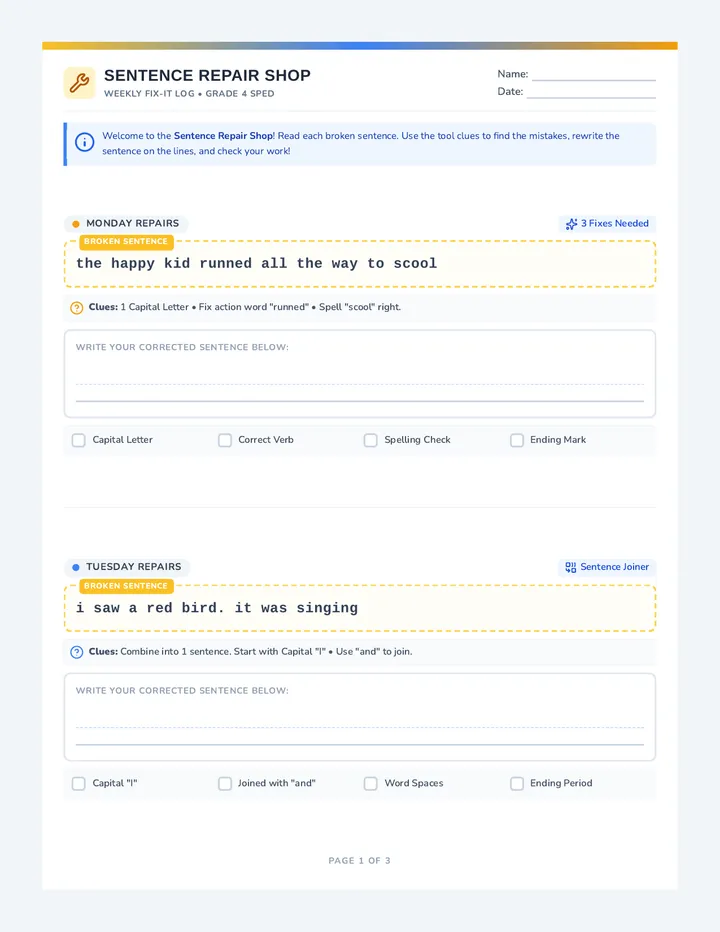
A lesson focused on building complete sentences by identifying and providing missing subjects or verbs, using visual prompts to spark creativity.
Students become 'Clue Crackers' in this interactive lesson focused on using synonyms, antonyms, definitions, and visual cues to decode unfamiliar words. The lesson includes a presentation and a hands-on cut-and-paste evidence-gathering activity.