Focuses on the mechanics of Aided Language Stimulation (ALgS) and the necessity of partner fluency in device architecture.
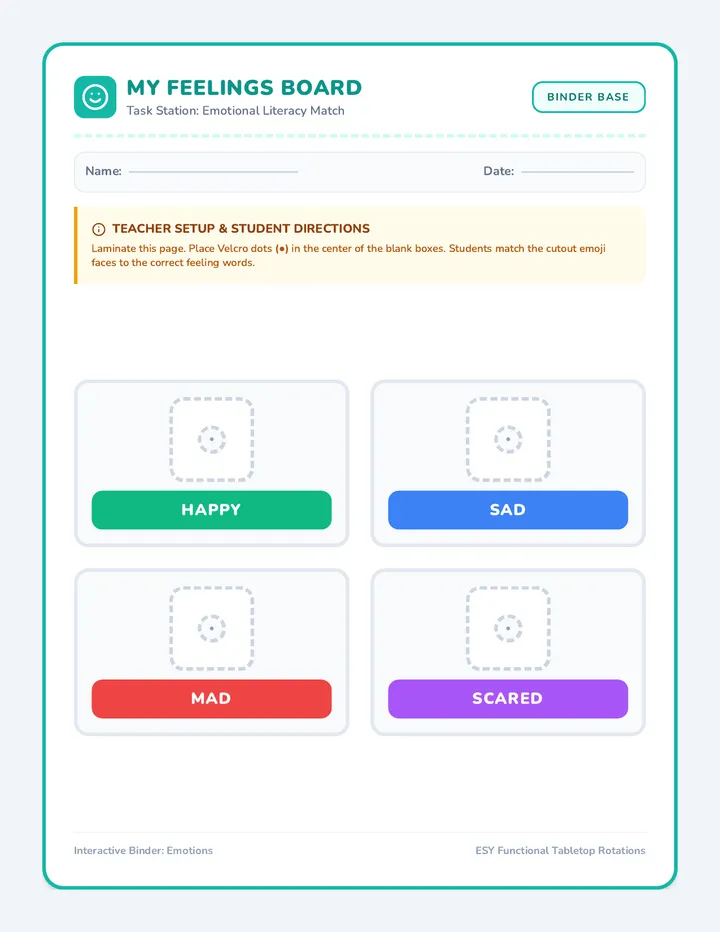
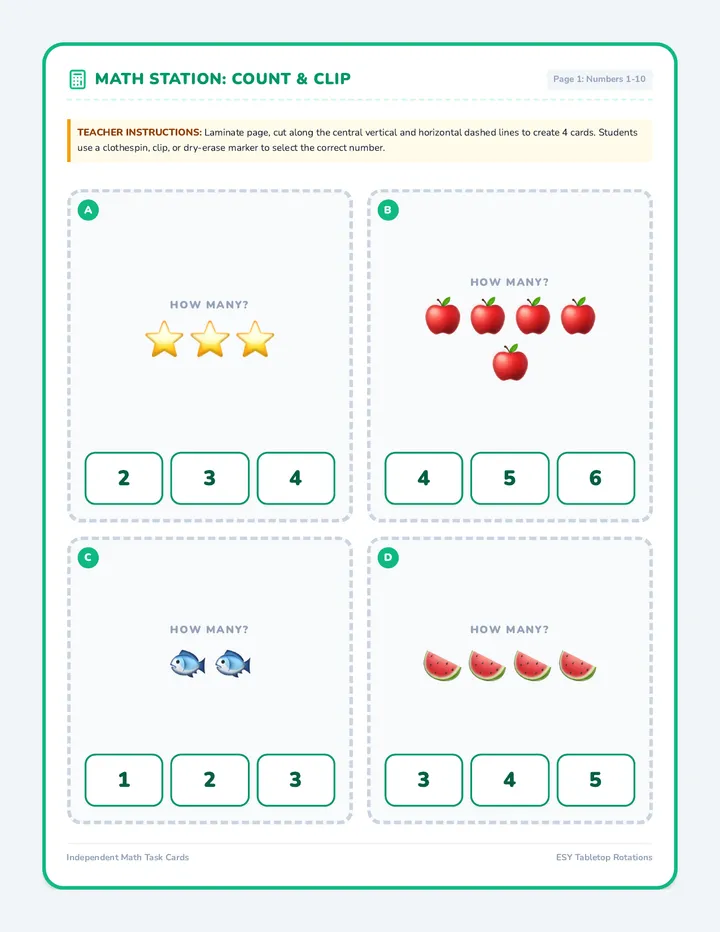
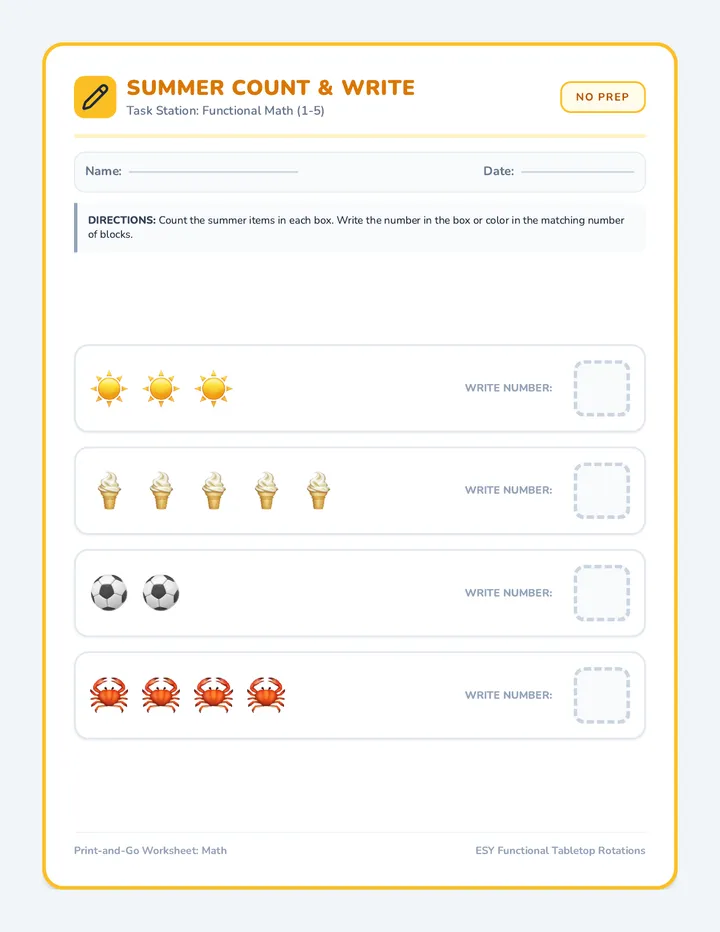
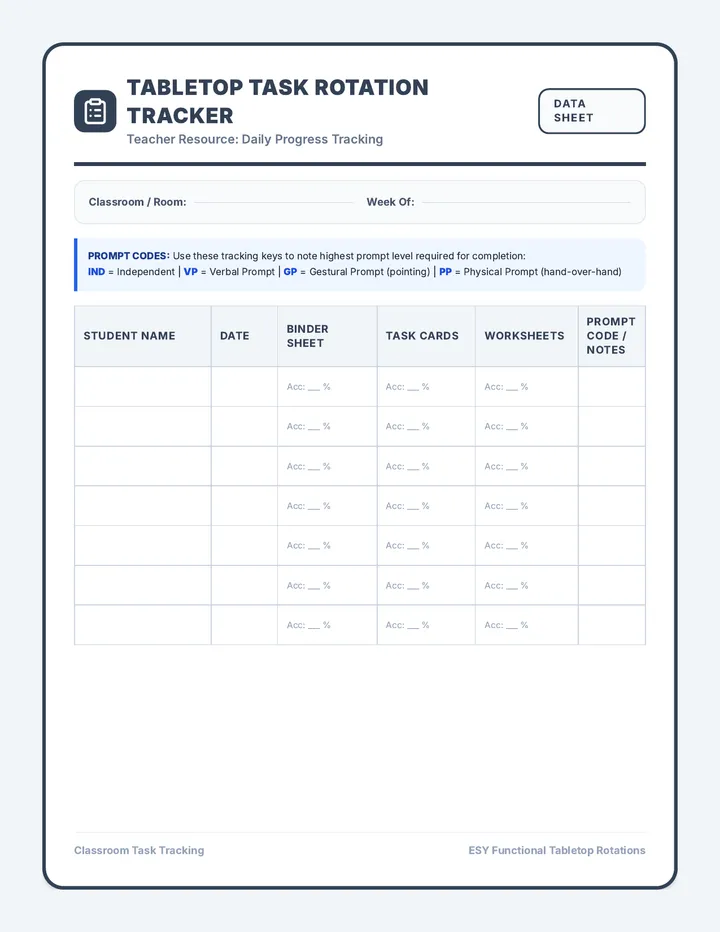
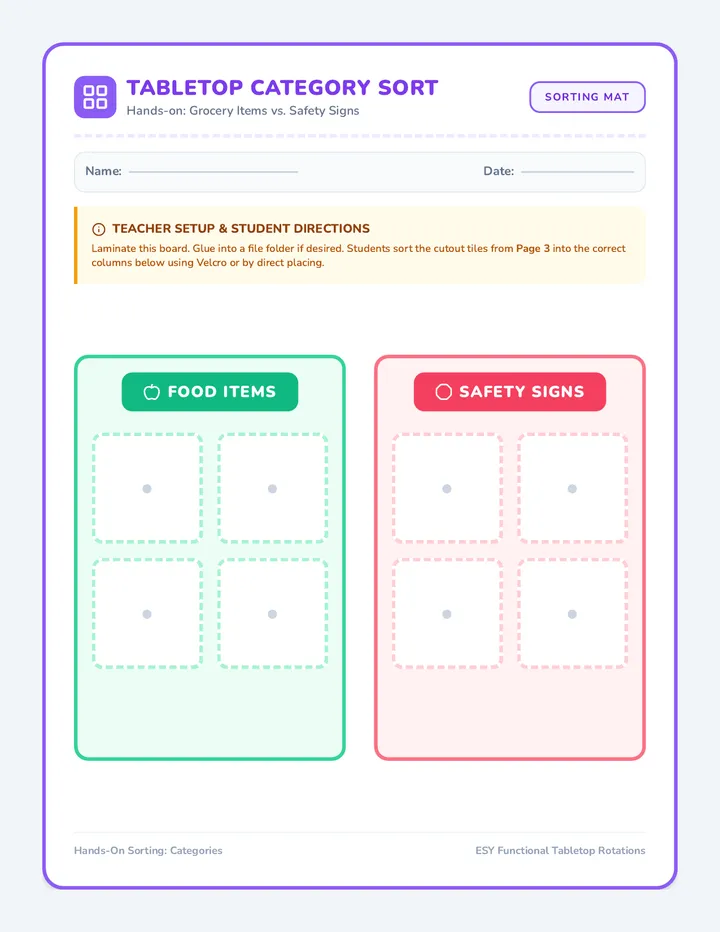
A cohesive suite of tabletop task stations, reusable binder sheets, print-and-go worksheets, and teacher data tracking sheets designed for ESY students with mild/moderate disabilities and autism. Focuses on functional math (counting objects), emotional literacy (identifying emotions), and functional sight words.
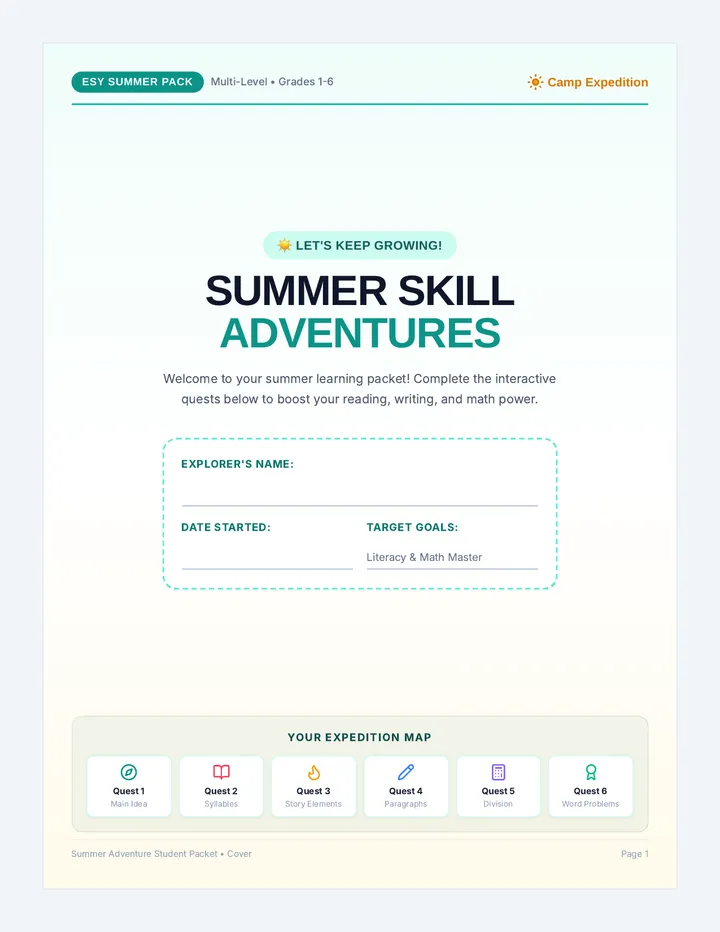
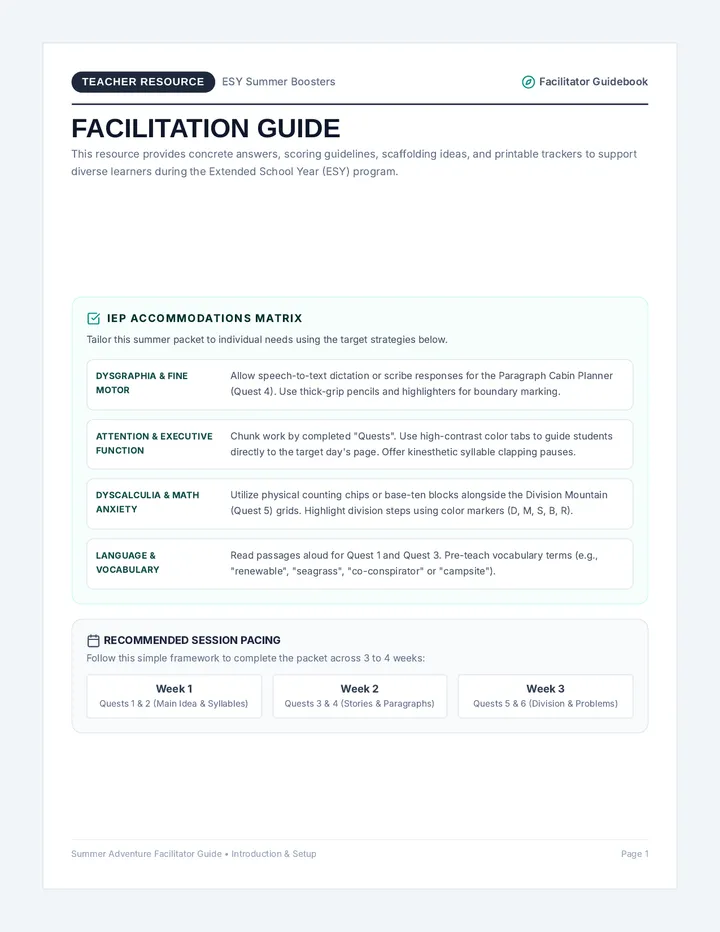
An Extended School Year (ESY) summer packet combining targeted skill-building in main idea, two-syllable words, story elements, paragraph writing, division, and multi-step word problems. Features visual scaffolds, grids, graphic organizers, and multi-level tasks spanning grades 1 to 6.
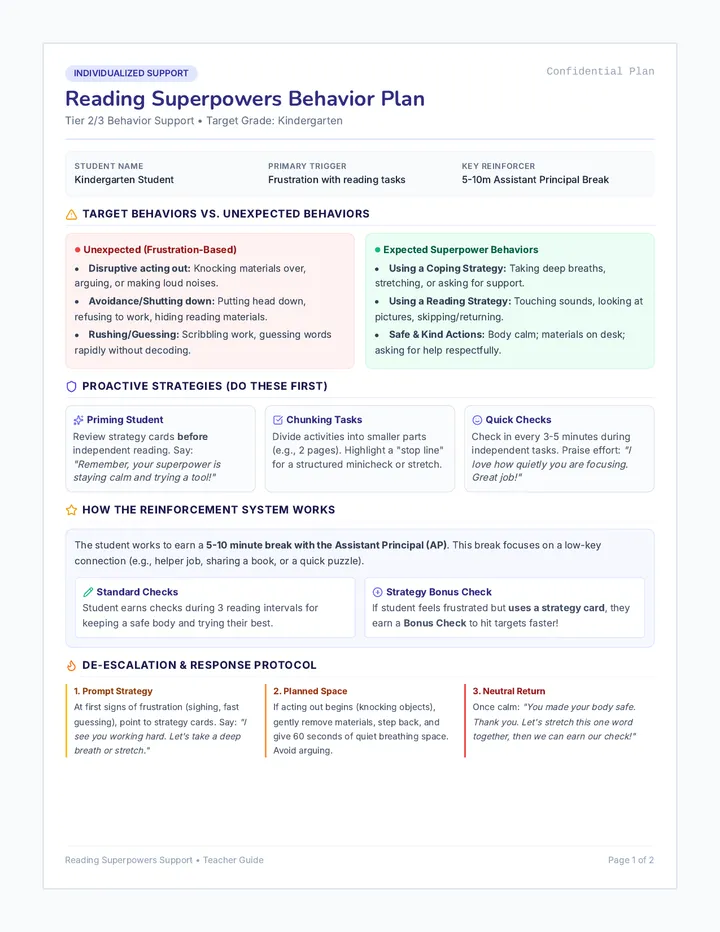
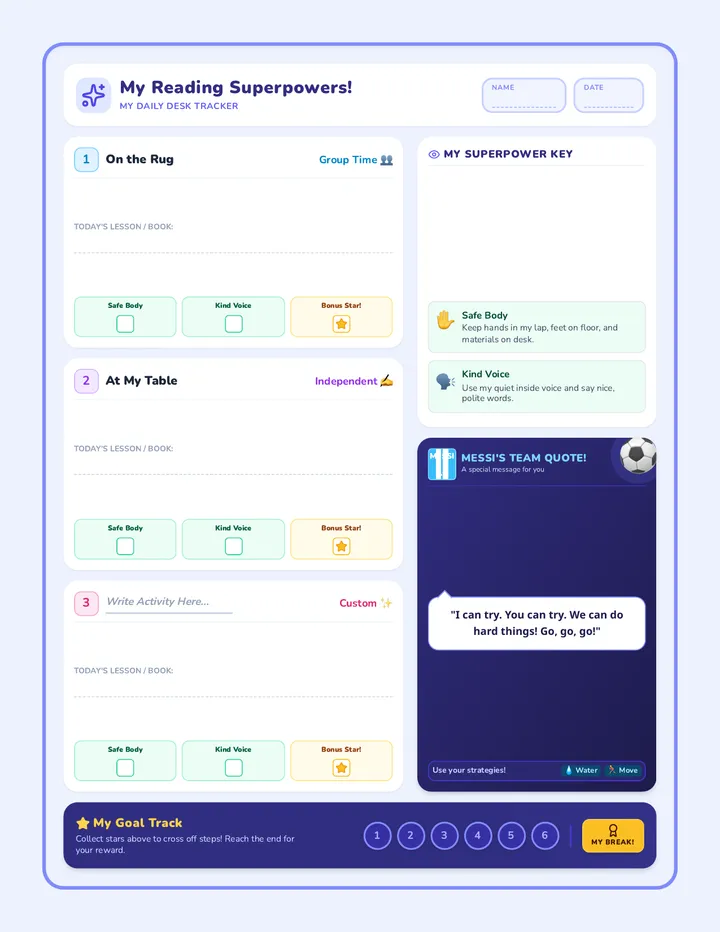
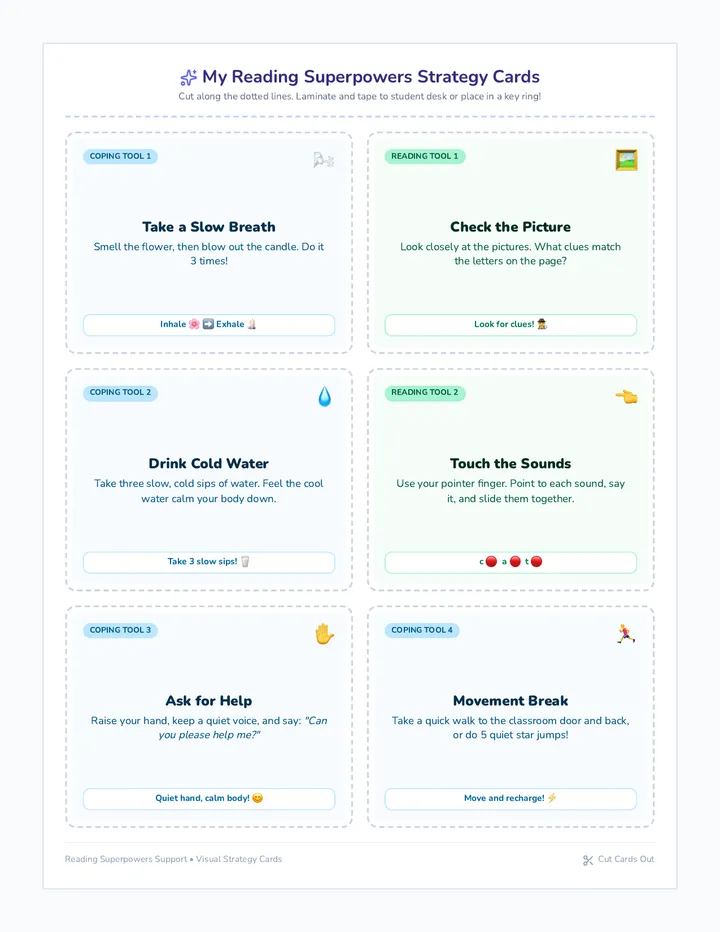
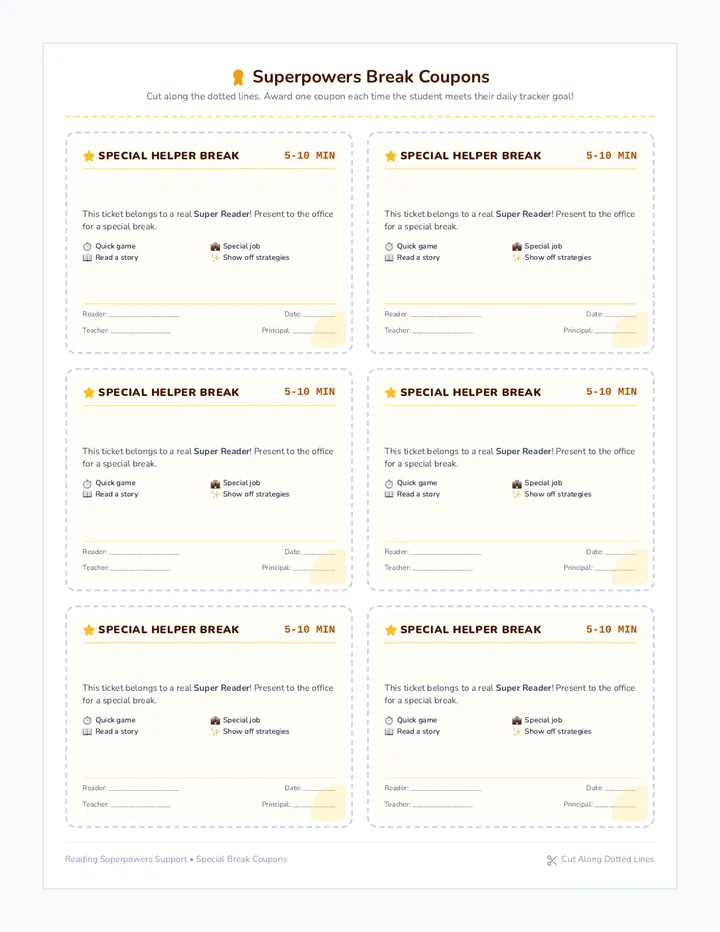
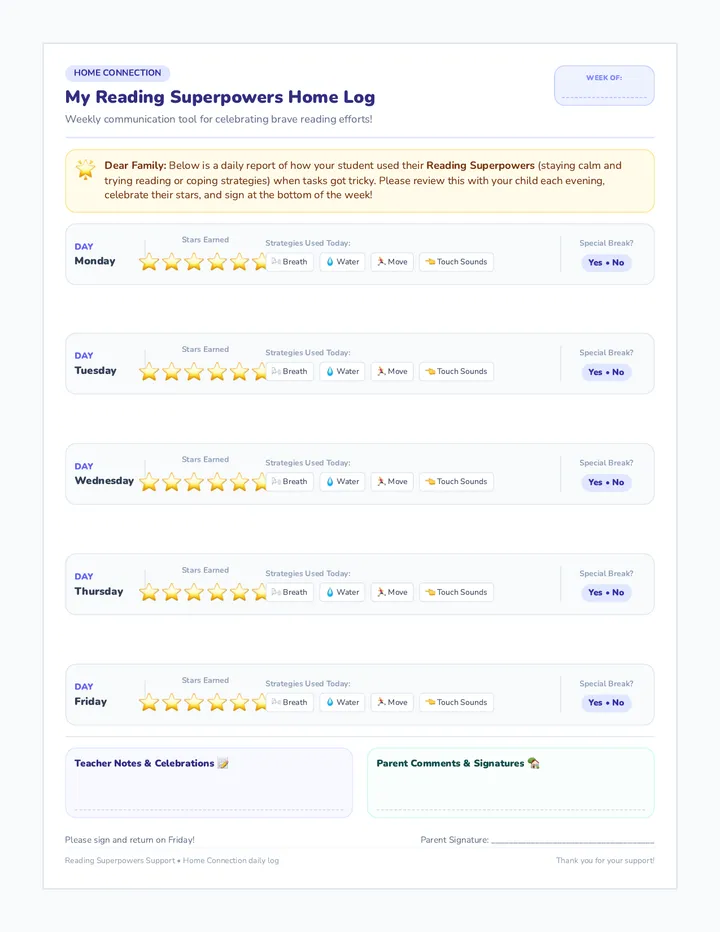
A complete visual behavior support kit for a kindergarten student experiencing frustration-based behaviors after graduating from small group reading. Includes a teacher-parent behavior plan, daily desk tracker, coping and reading strategy cards, assistant principal break coupons, and a weekly home communication log.
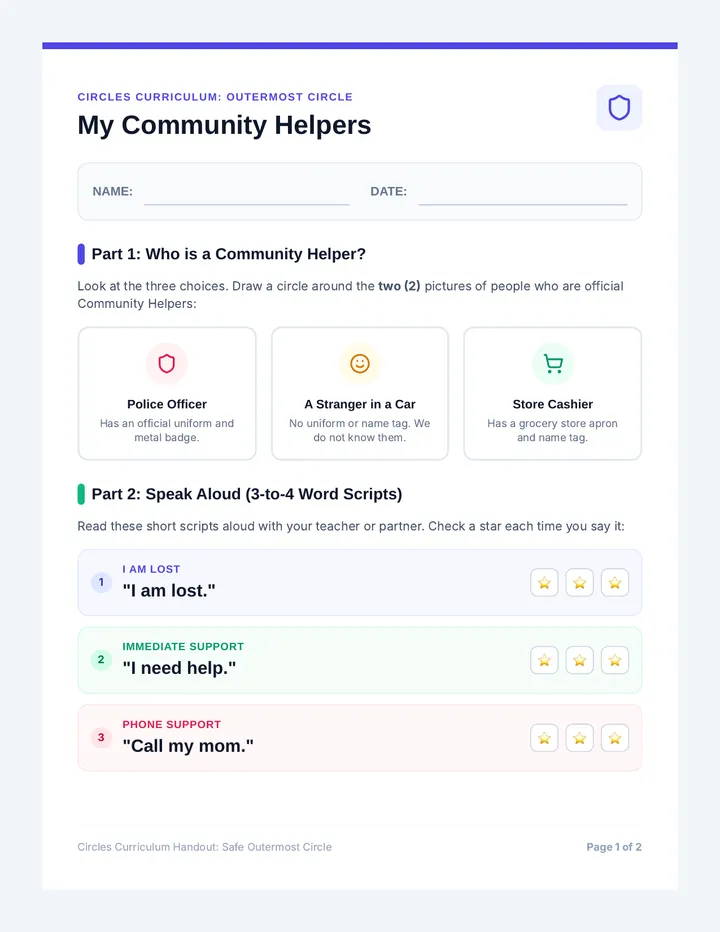
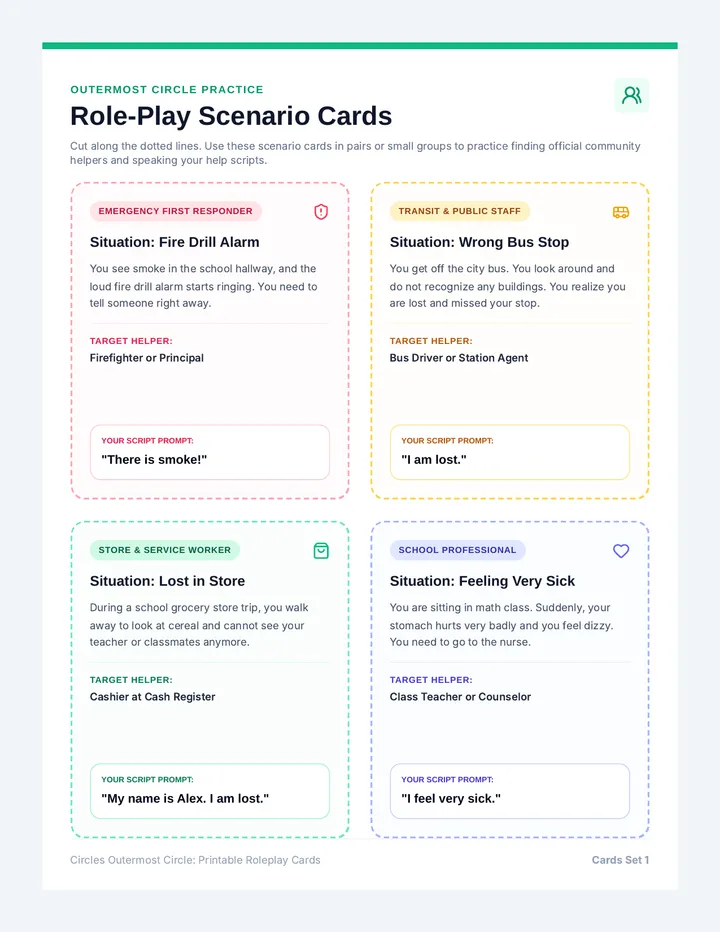
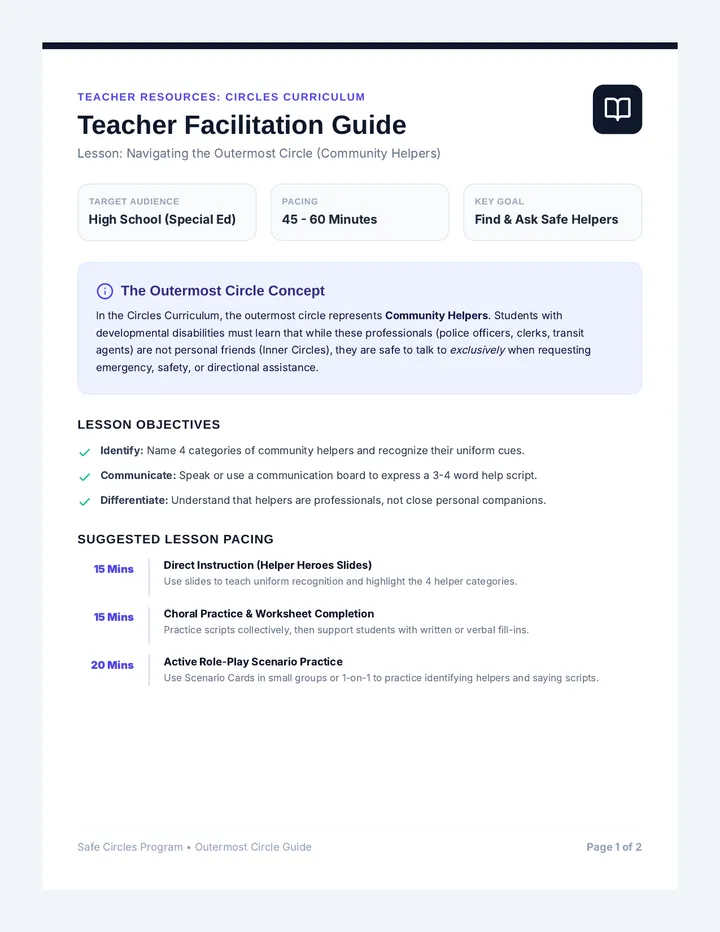
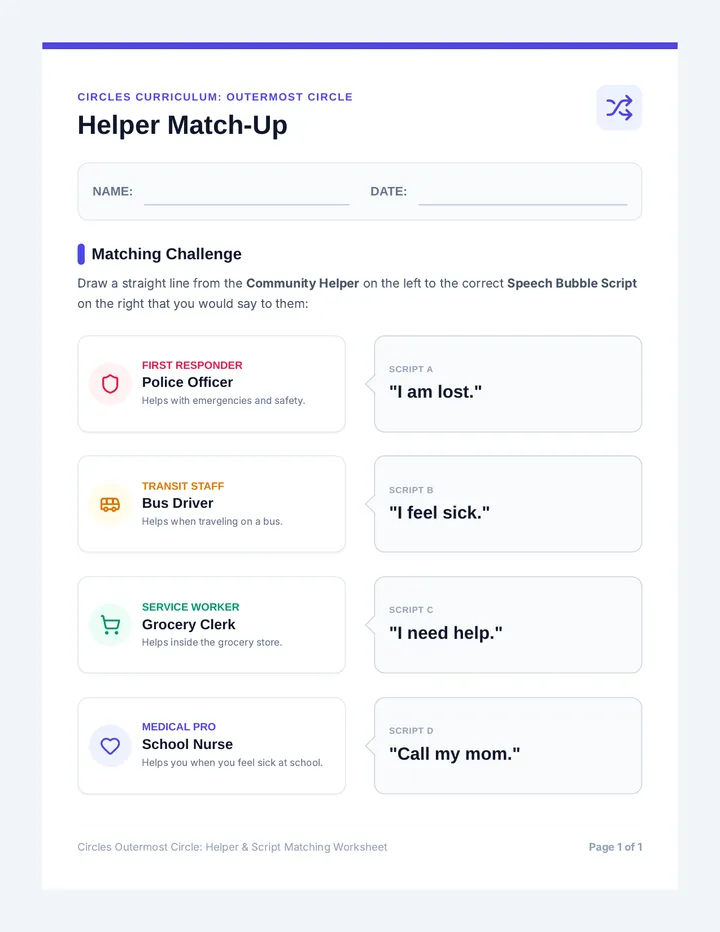
A comprehensive lesson for high school students with developmental disabilities focusing on the outermost circle of the Circles Curriculum: Community Helpers. It includes interactive slides, a structured script worksheet, ready-to-use role-play scenario cards, and a teacher facilitation guide.
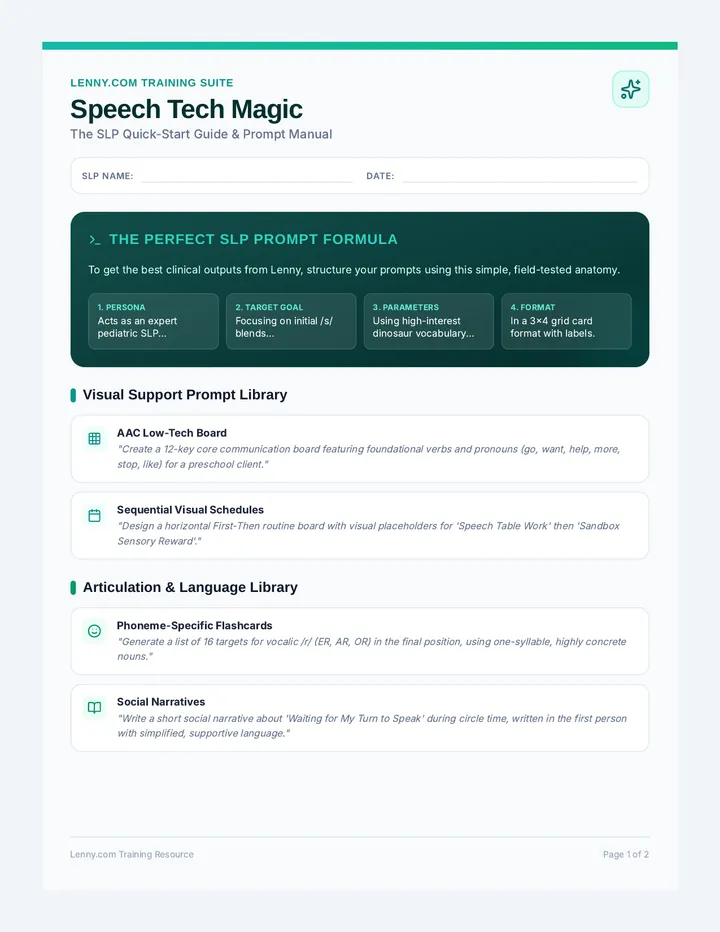
A training suite for Speech-Language Pathologists to master Lenny.com, featuring an engaging slide presentation and a quick-reference printout covering visual supports, articulation tools, IEP aids, and collaboration templates.
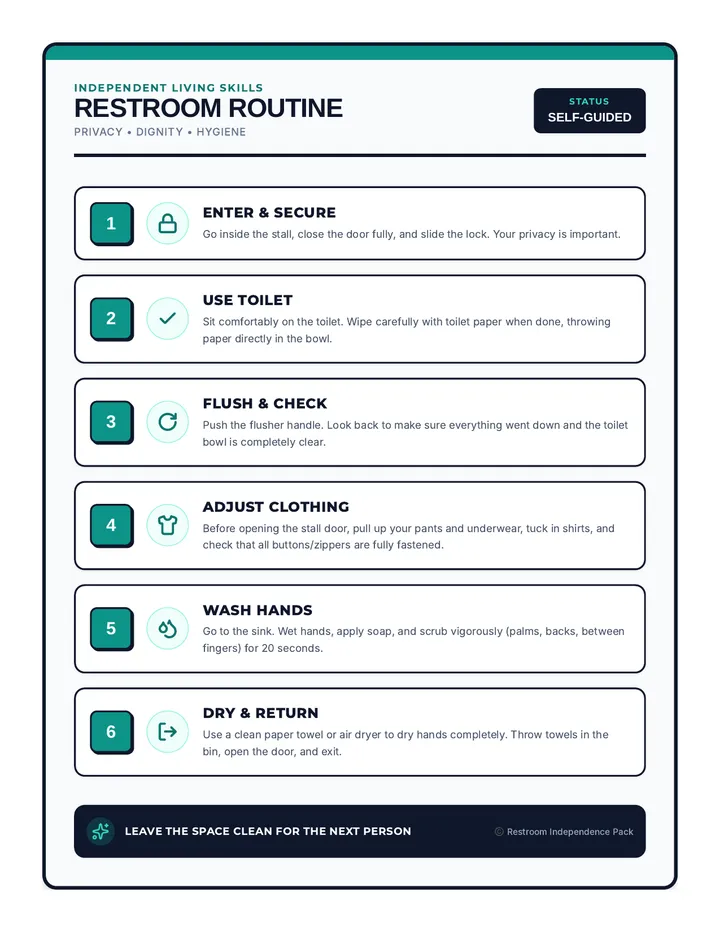
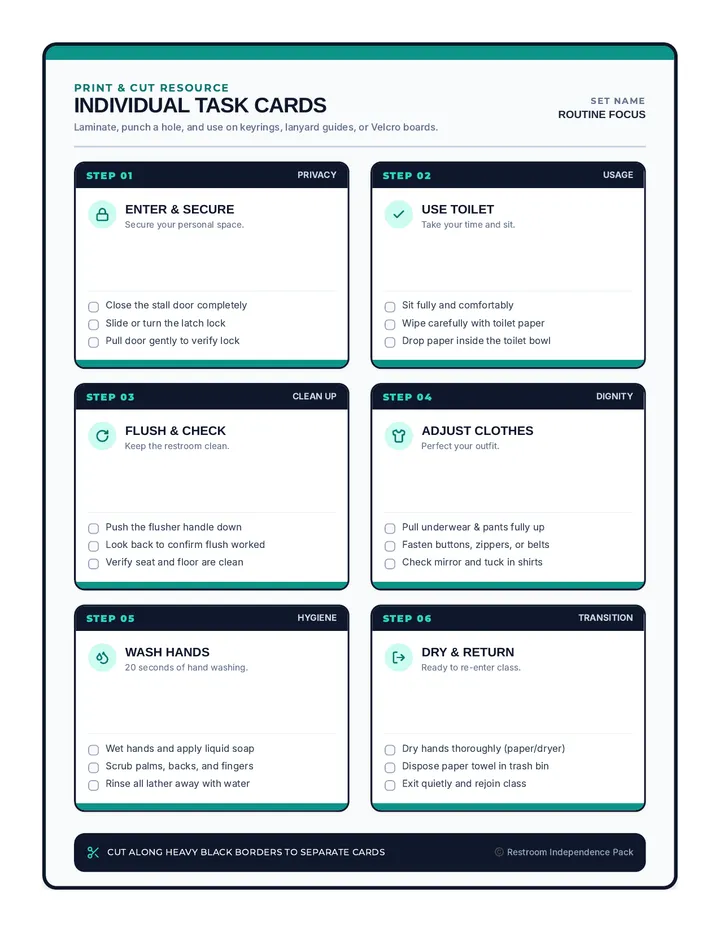
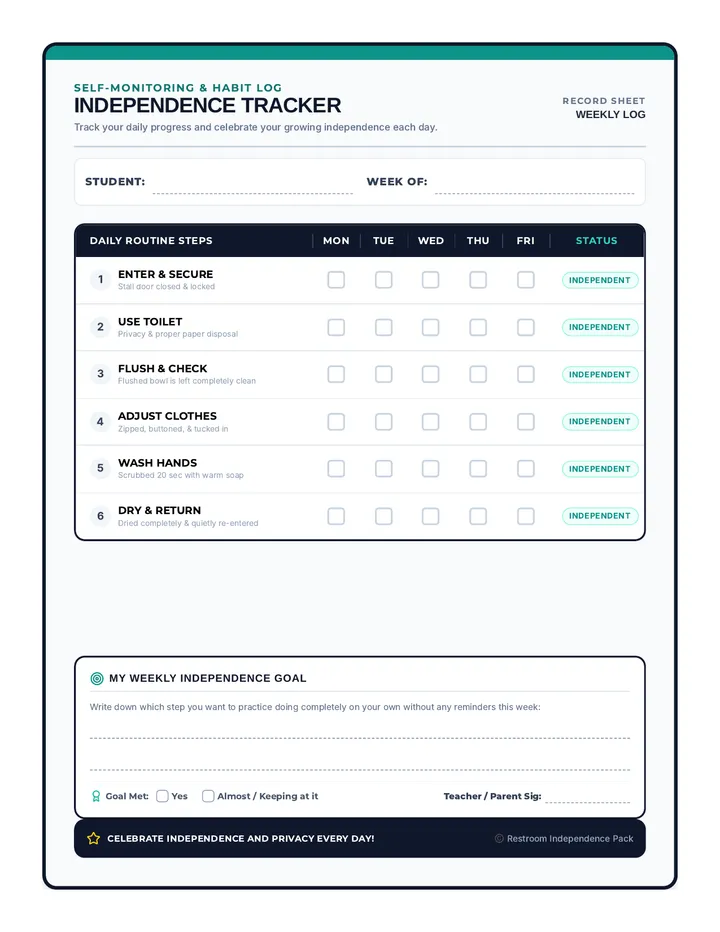
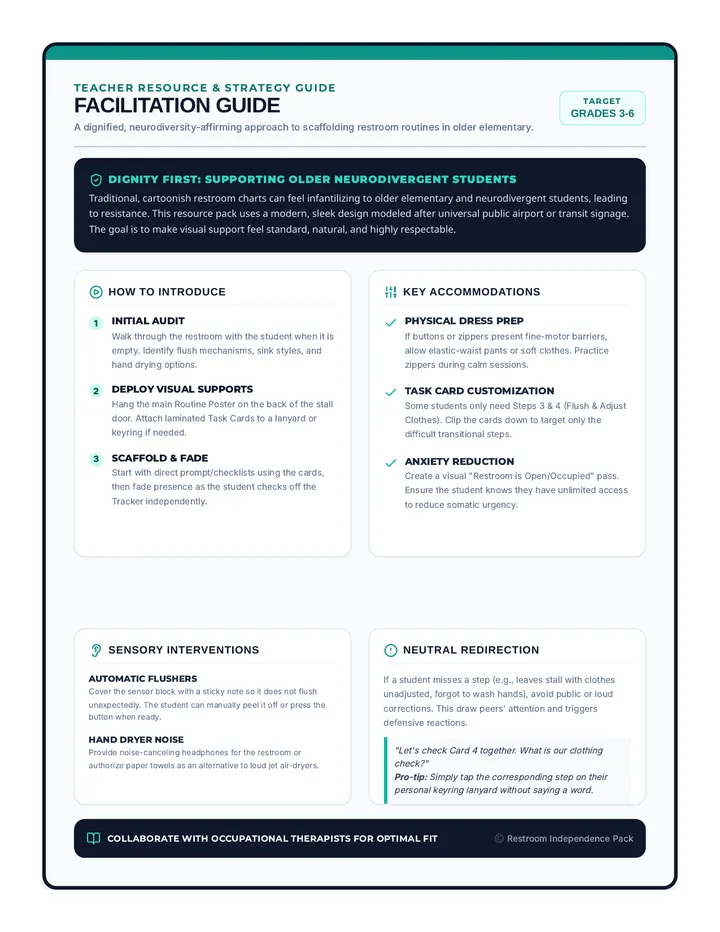
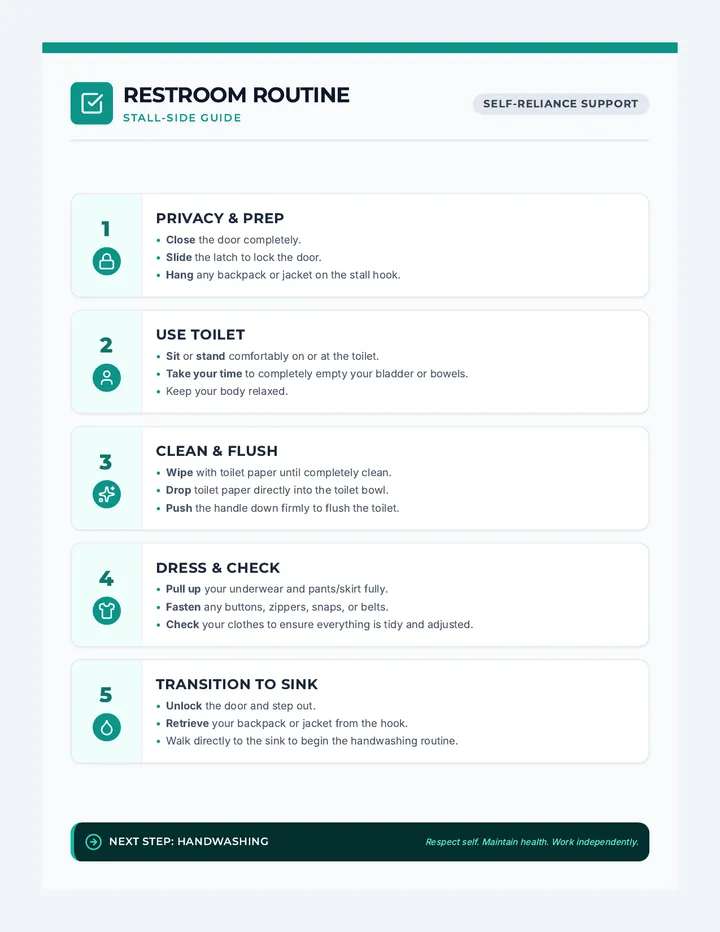
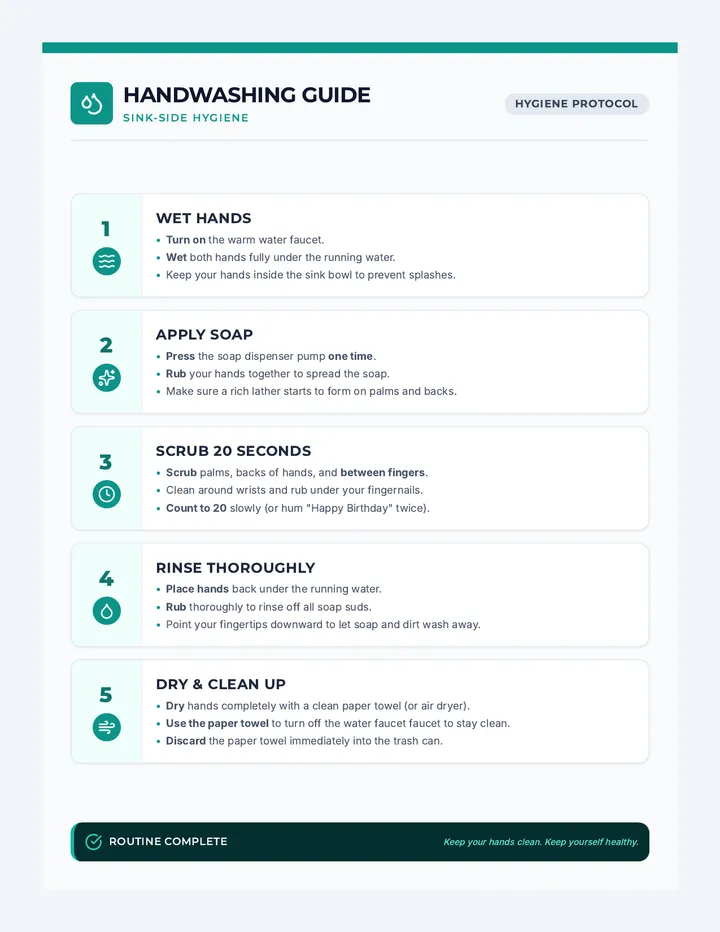
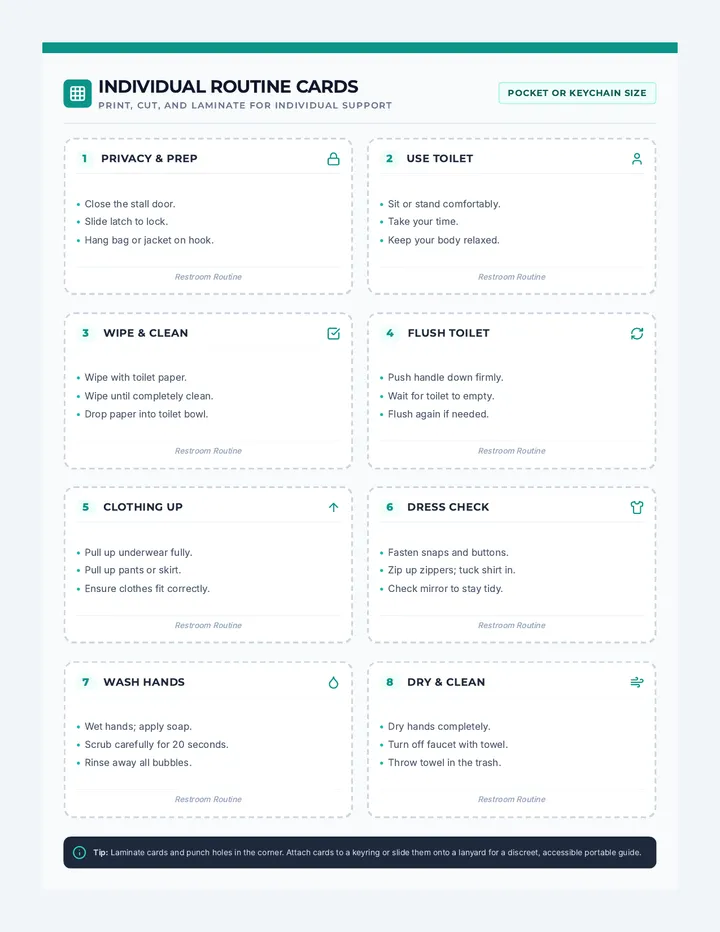
A complete visual support and routine mastery pack designed for older elementary and neurodivergent students. Includes a wall poster, individual task cards, a progress tracker, and a comprehensive implementation guide to foster dignity and privacy.
A comprehensive visual support system designed for older elementary and neurodivergent students to promote bathroom independence. Includes a stall-side routine poster, a sink-side handwashing guide, and printable individual visual support cards styled with a clean, modern aesthetic.
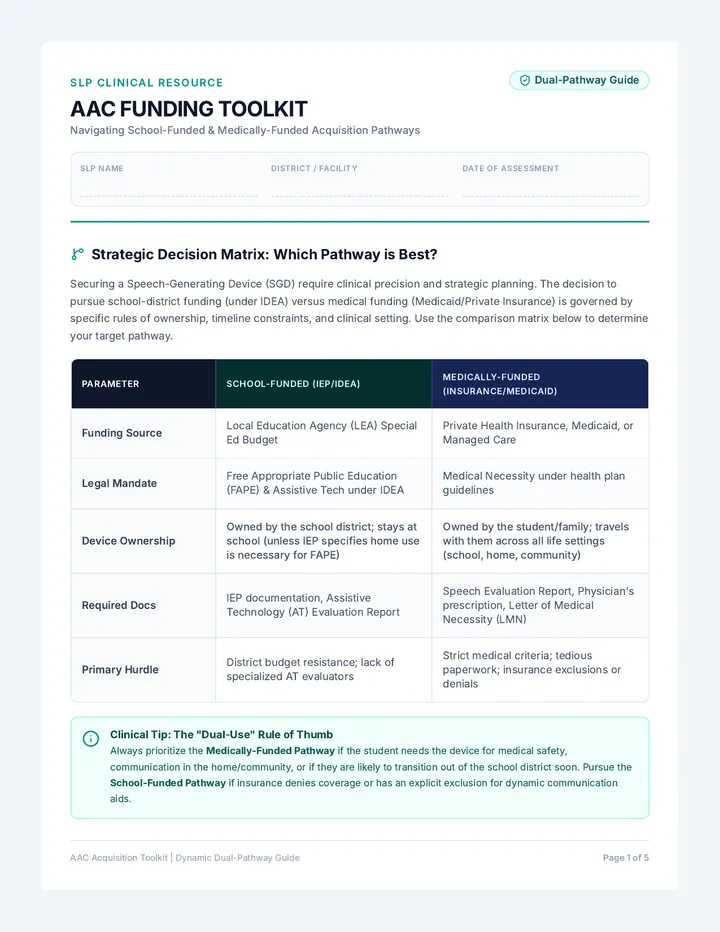
A comprehensive lesson for Speech-Language Pathologists (SLPs) designed to navigate the dual pathways of AAC funding. This lesson equips SLPs with the procedural knowledge, advocacy scripts, template documentation, and data sheets required to secure communication devices for students via school-funded and medically-funded pathways.
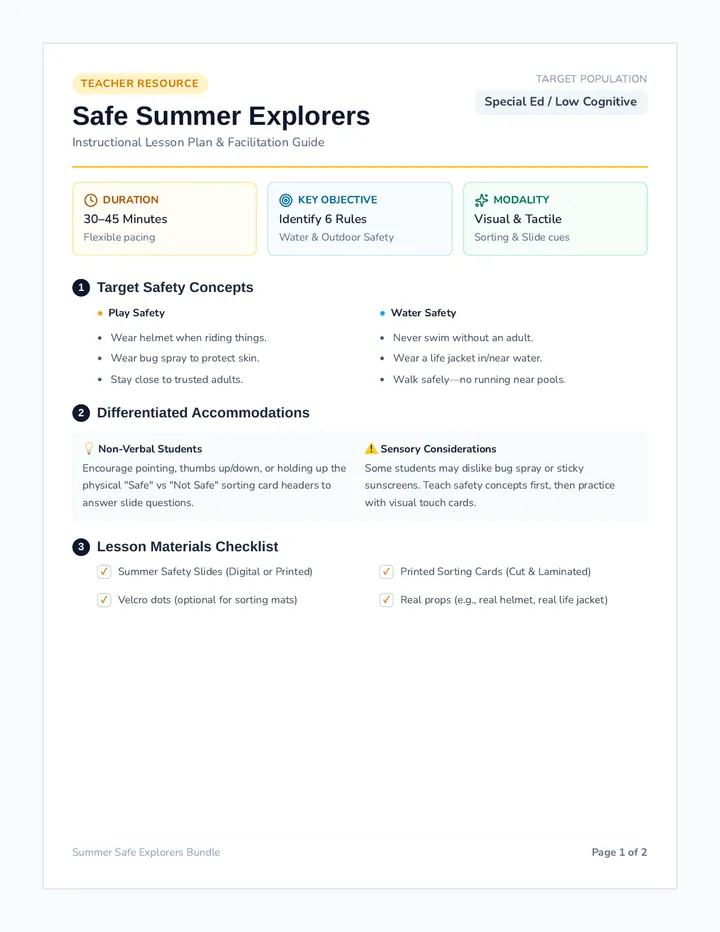
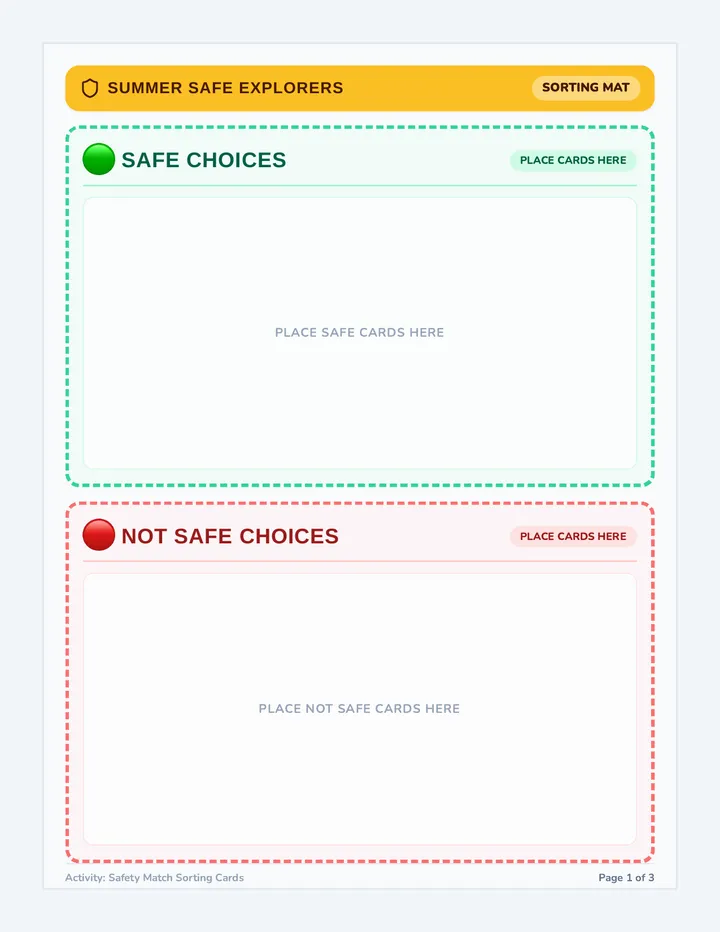
A highly visual, structured summer safety lesson designed for students with special needs and lower cognitive abilities, focusing on outdoor play and water safety rules through interactive sorting and clear visual cues.
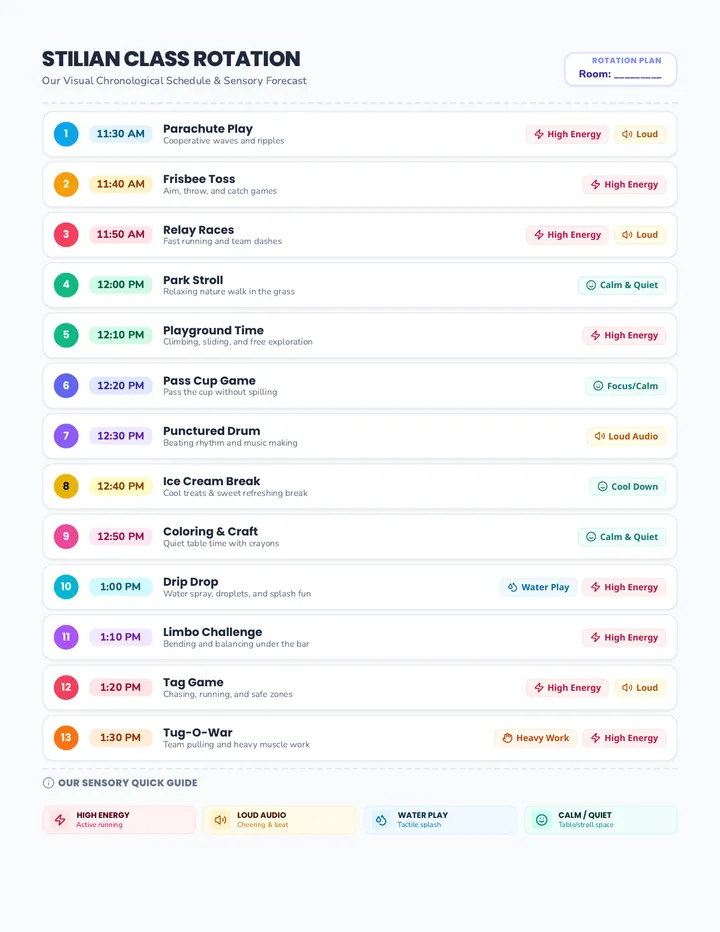
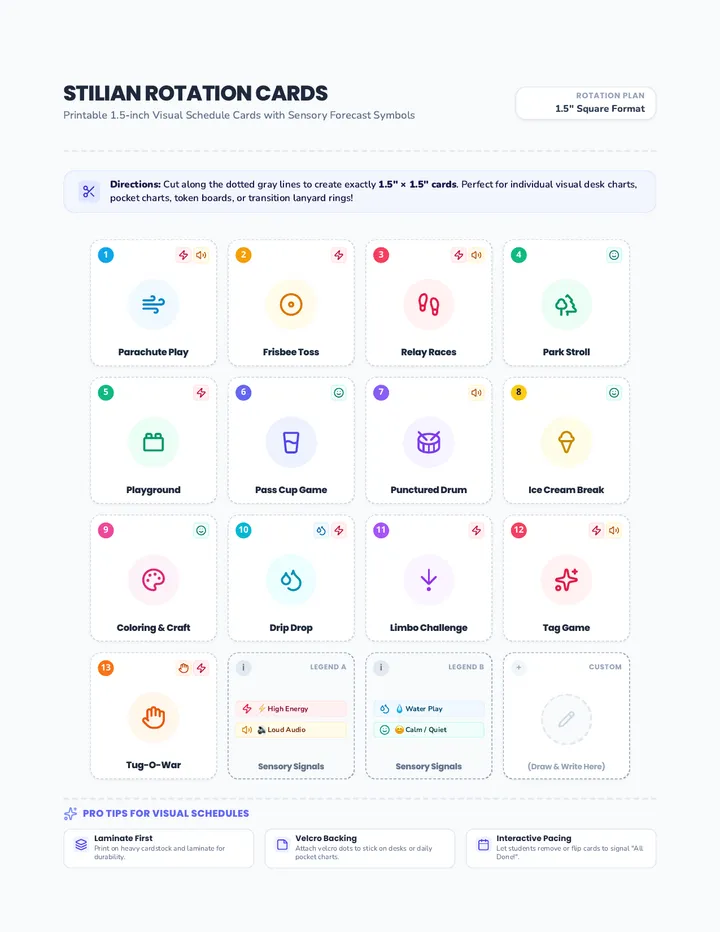
A sensory-friendly class rotation framework containing visual schedules and portable schedule cards to help students navigate activity transitions with confidence.
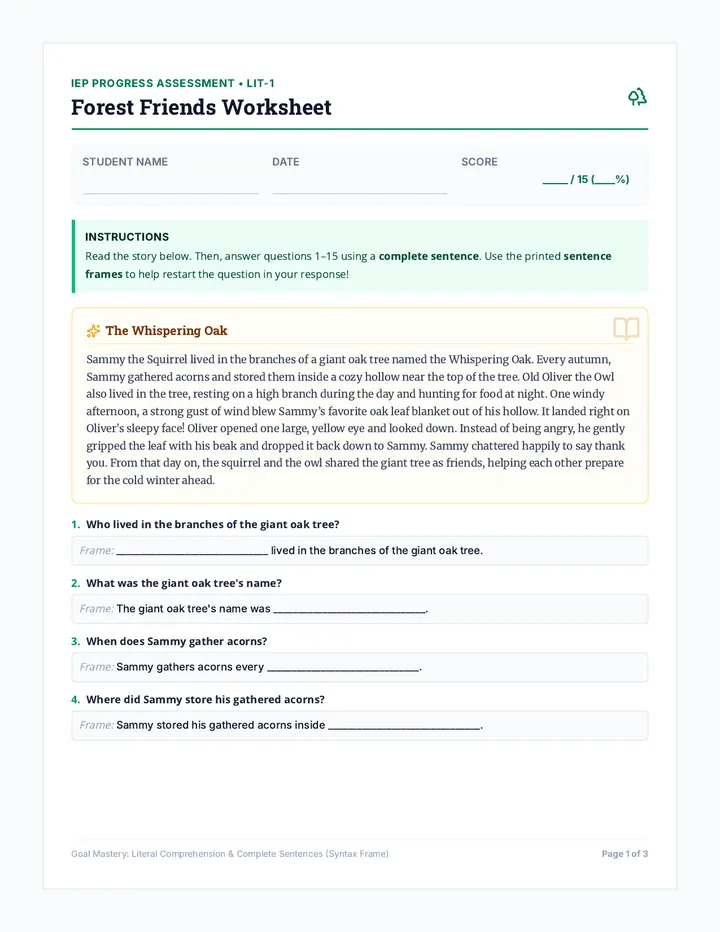
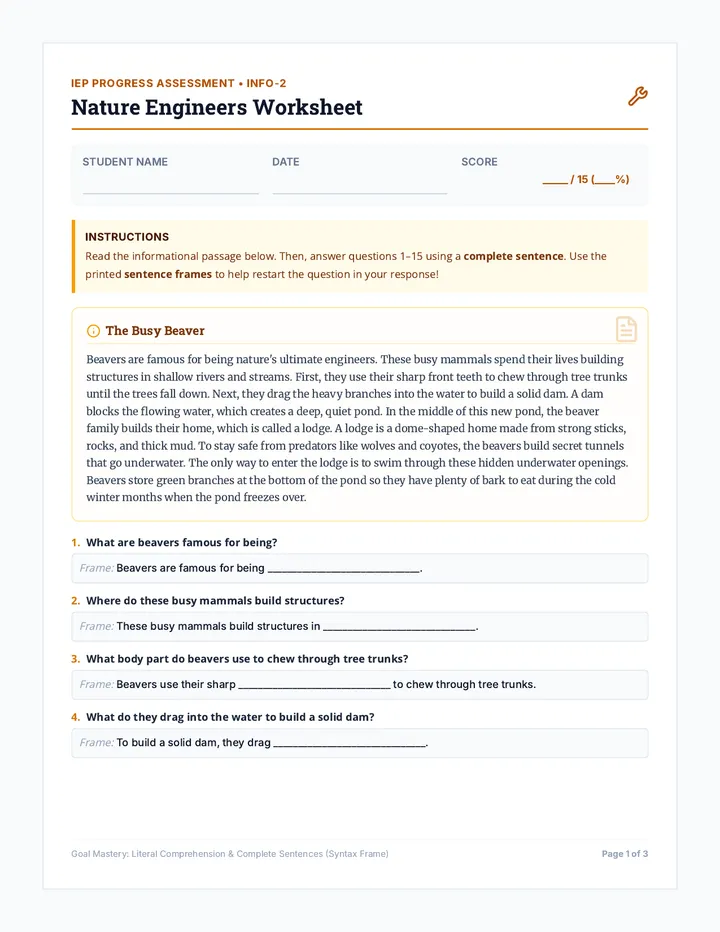
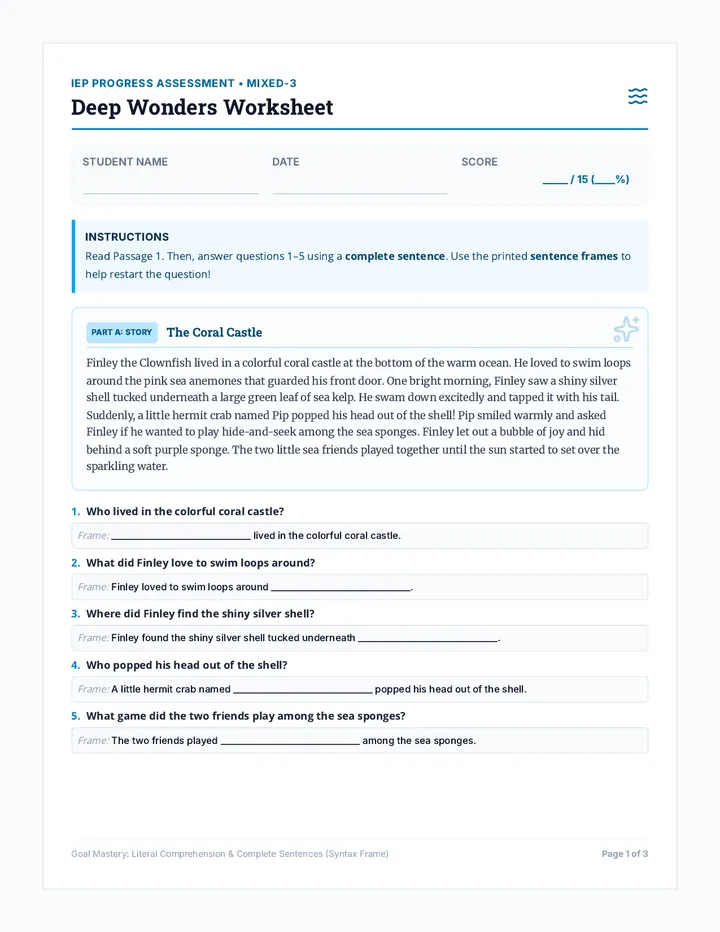
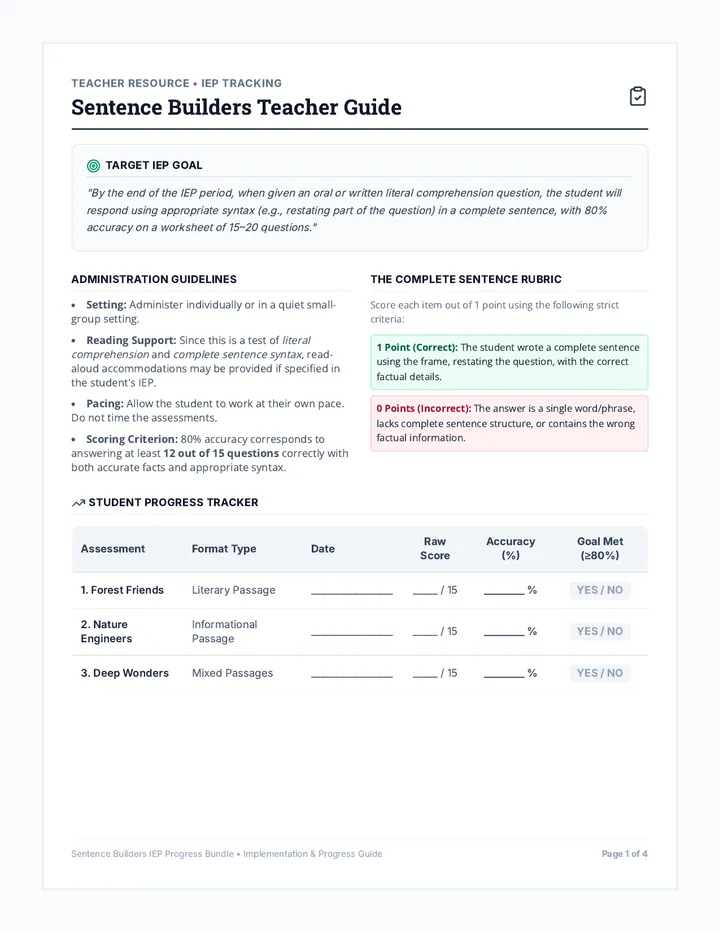
An IEP progress assessment bundle designed for a 3rd-grade student working on literal comprehension and complete-sentence responses using sentence frames. Includes three 15-question worksheets across literary and informational passages, along with a comprehensive teacher tracking guide.
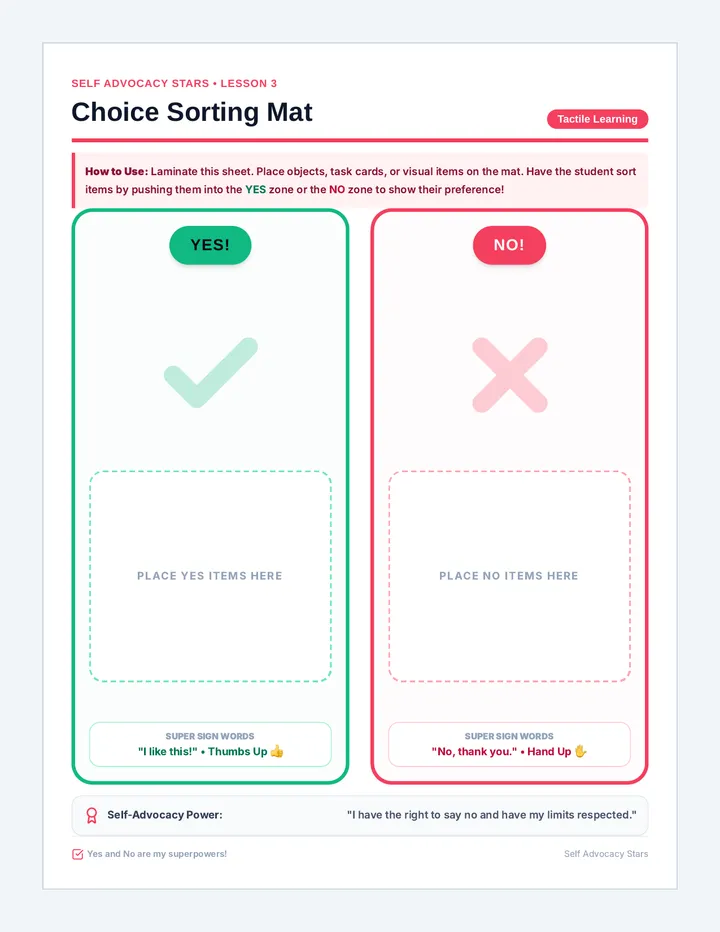
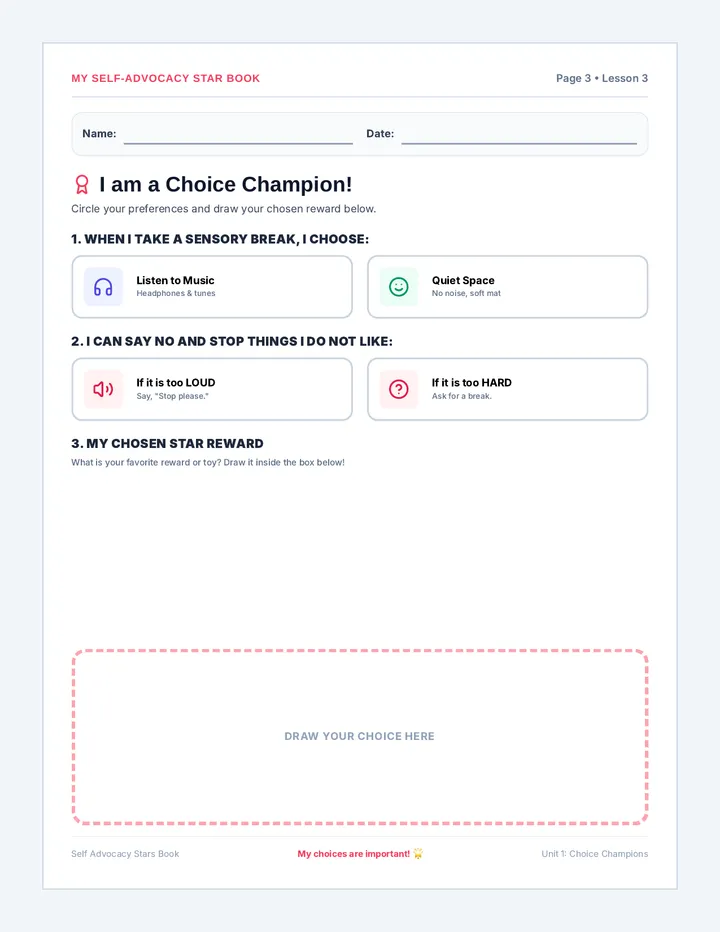
Students practice making independent choices, expressing preferences, and setting boundaries (saying "yes" or "no") using structured choice boards, tactile sorting mats, and interactive role-play.
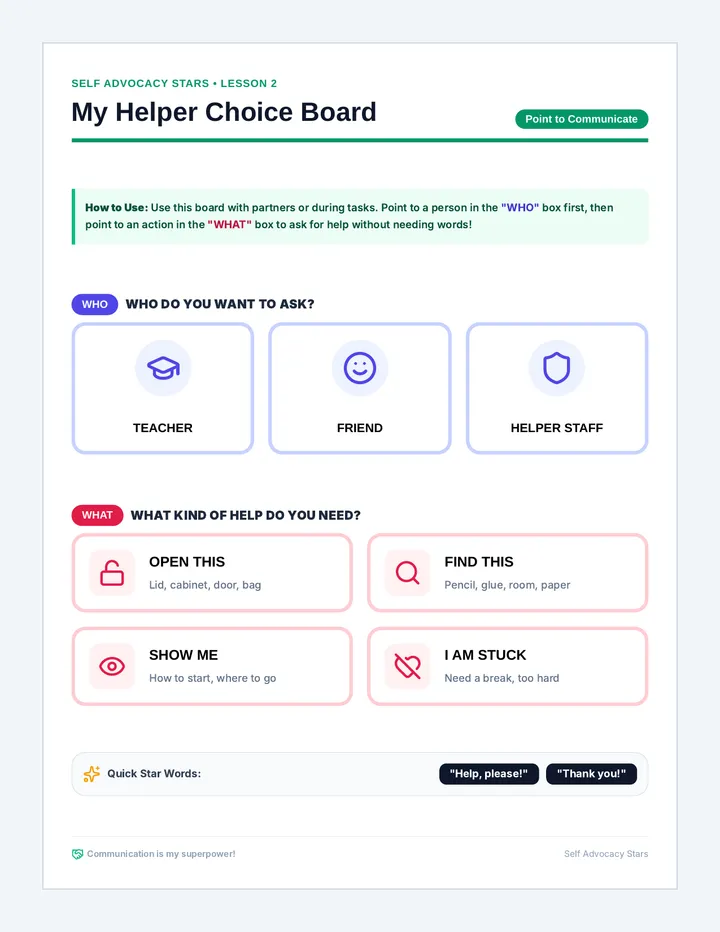
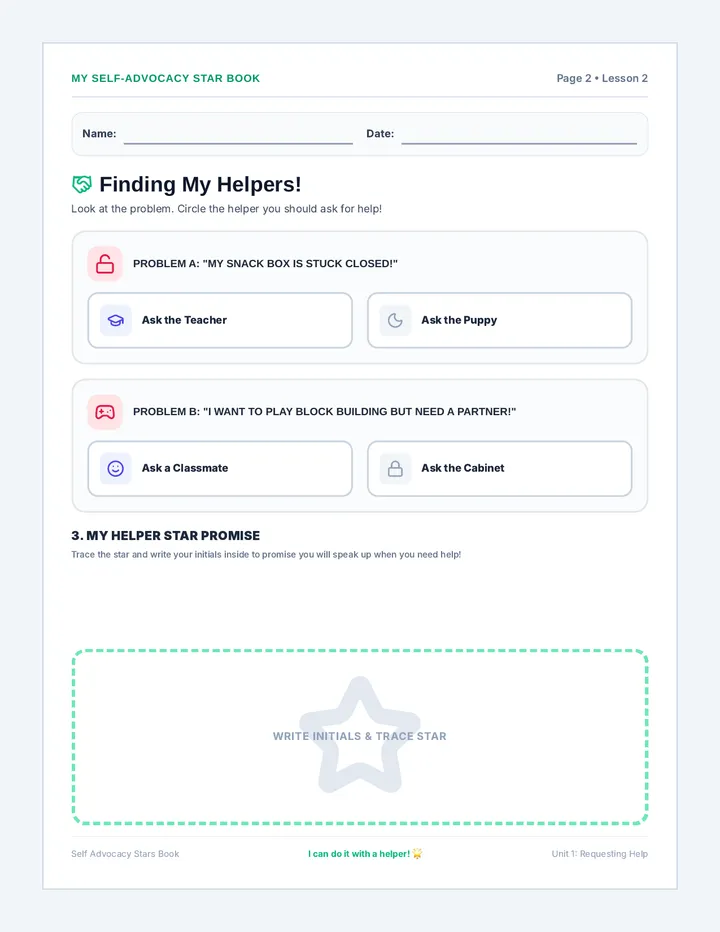
Students practice identifying when they need help, who to ask (teachers, peers, or helpers), and how to communicate that need using visual phrase cards and guided collaborative practice.
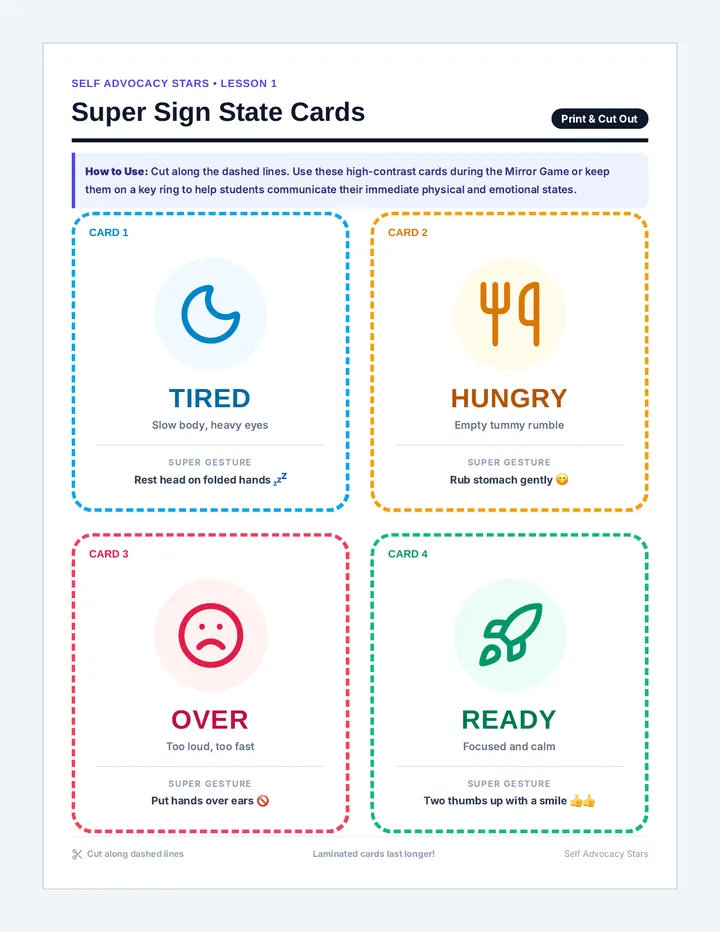
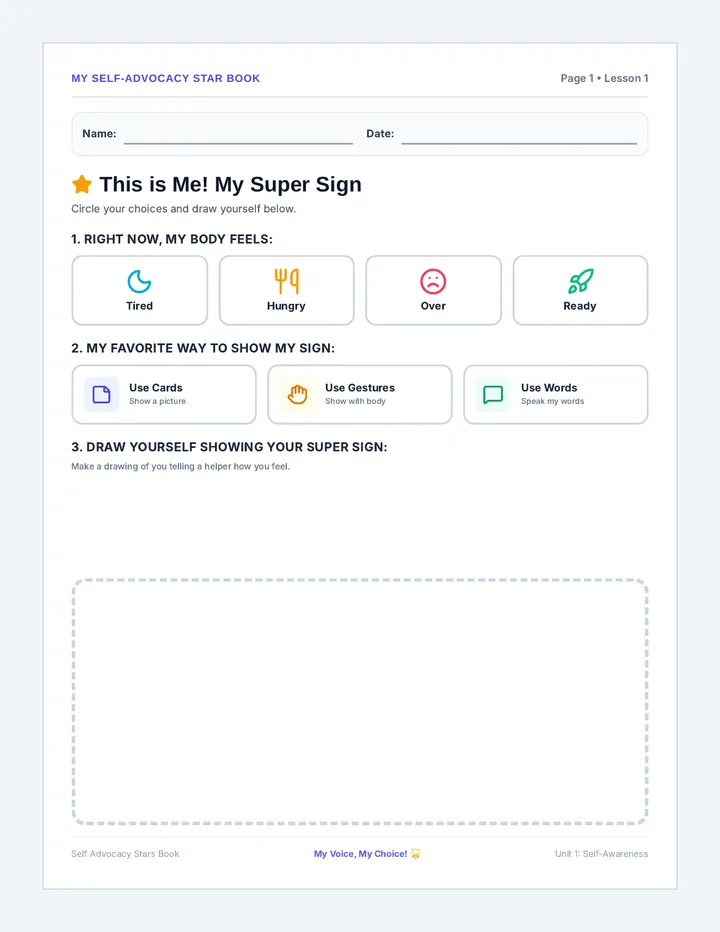
Students learn to recognize and communicate physical and emotional states (like tired, hungry, overwhelmed, or ready to learn) using simple gestures, vocalizations, or visual symbol cards.
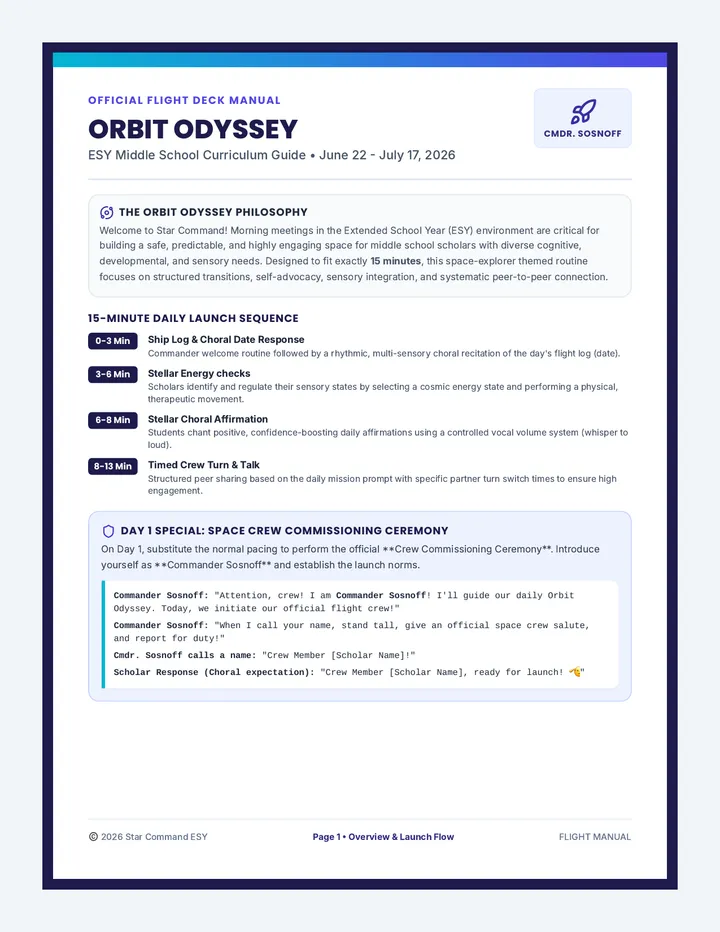
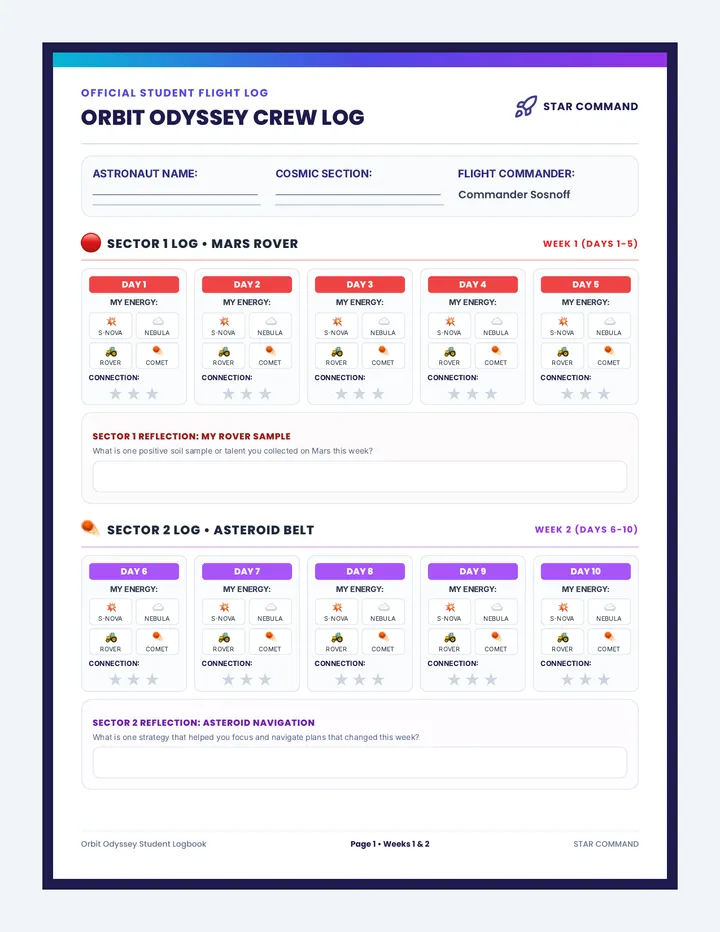
A 4-week space explorer themed morning meeting series for middle school ESY scholars with disabilities. Led by Commander Sosnoff, it covers Mars Rover, Asteroid Navigation, Saturn Rings, and Nebula sectors with calendar ship logs, cosmic energy checks, stellar affirmations, and turn-and-talk communication prompts.
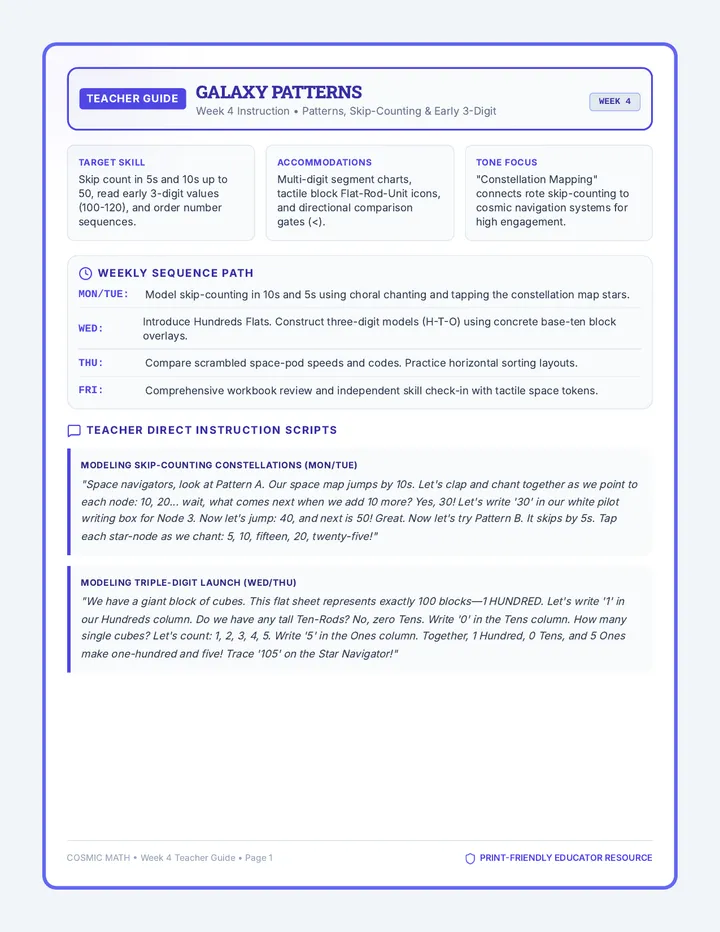
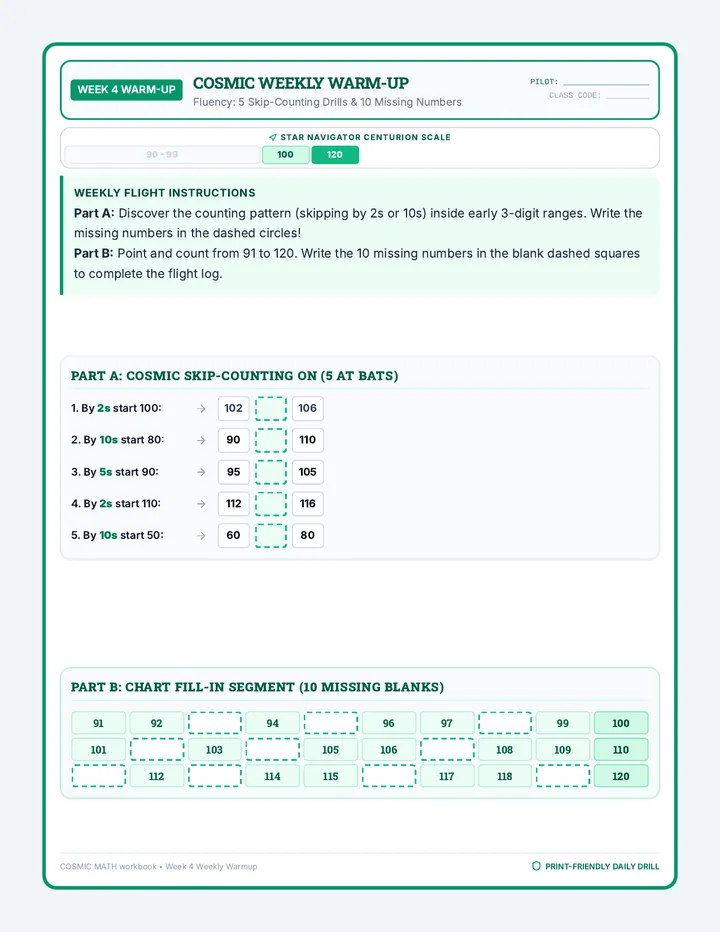
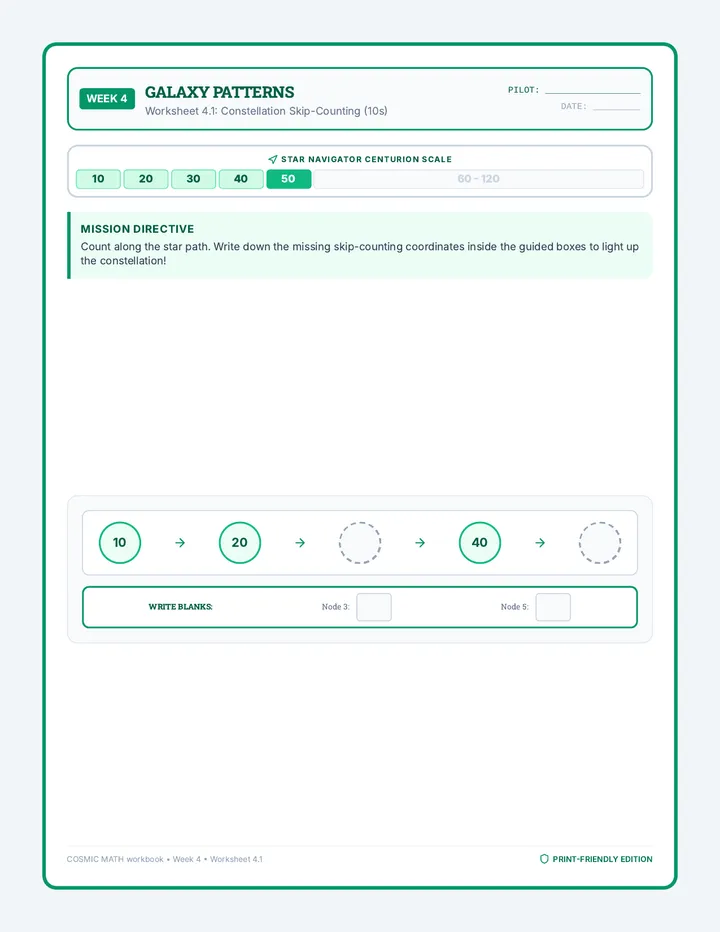
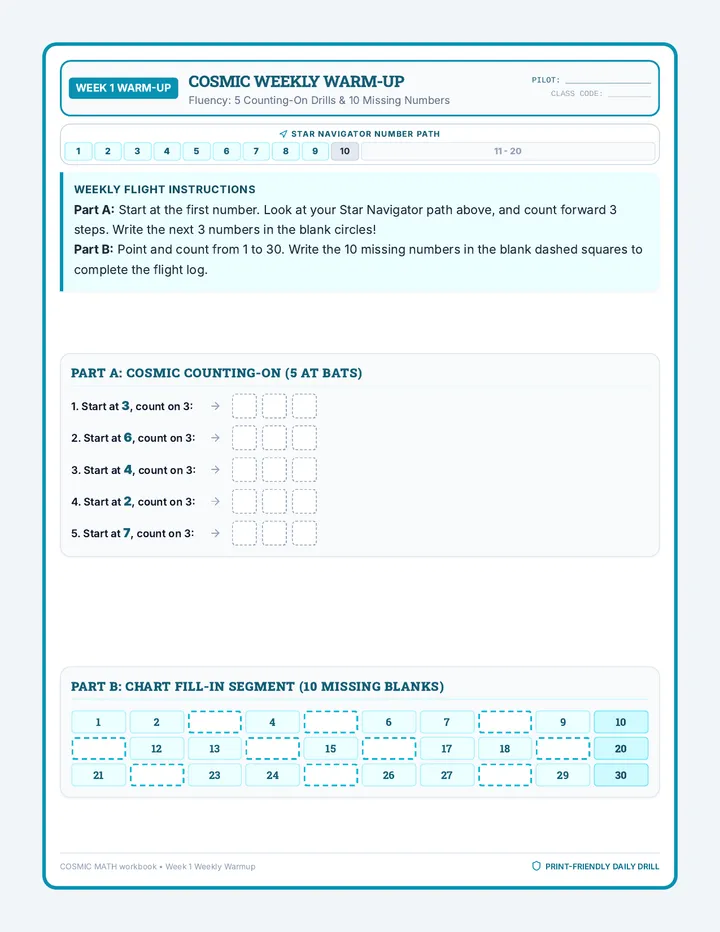
Introduces early 3-digit numbers (100-120), visual skip-counting (2s, 5s, 10s) using constellation maps, and ordering cosmic objects to build sequential logic.
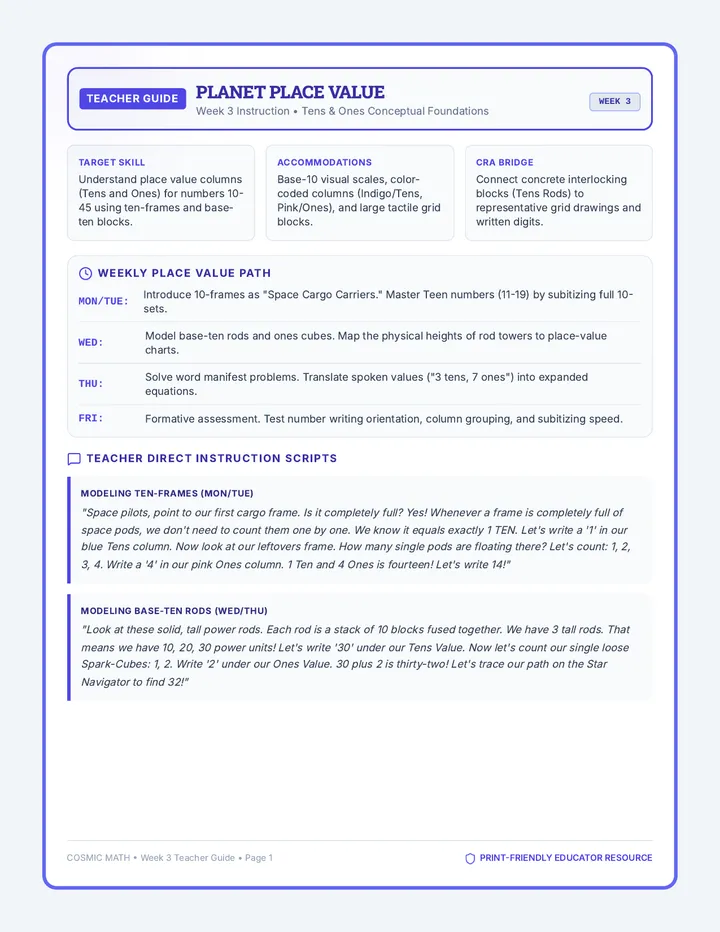
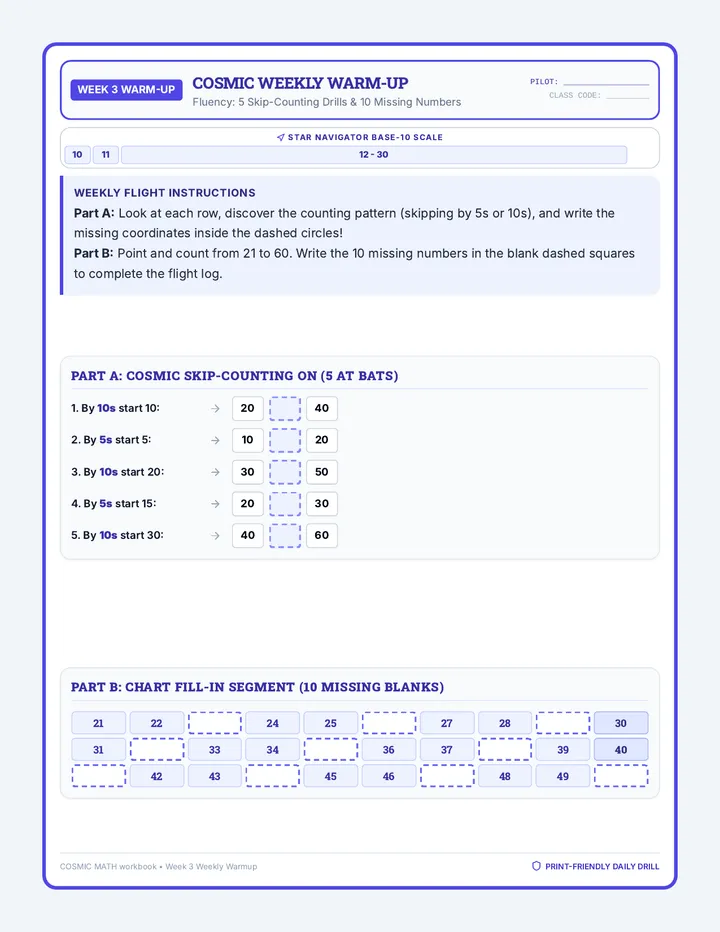
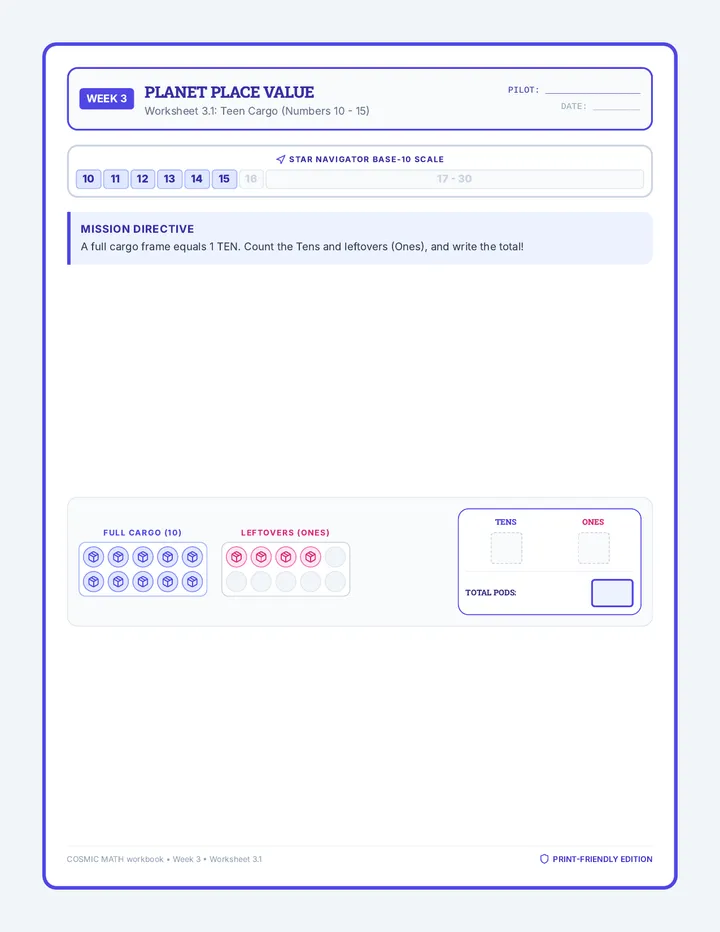
Focuses on identifying double-digit numbers (10-99), representing them using ten-frames and printable base-ten icons, and writing numbers in expanded place value charts (tens and ones) with clear physical boundaries.
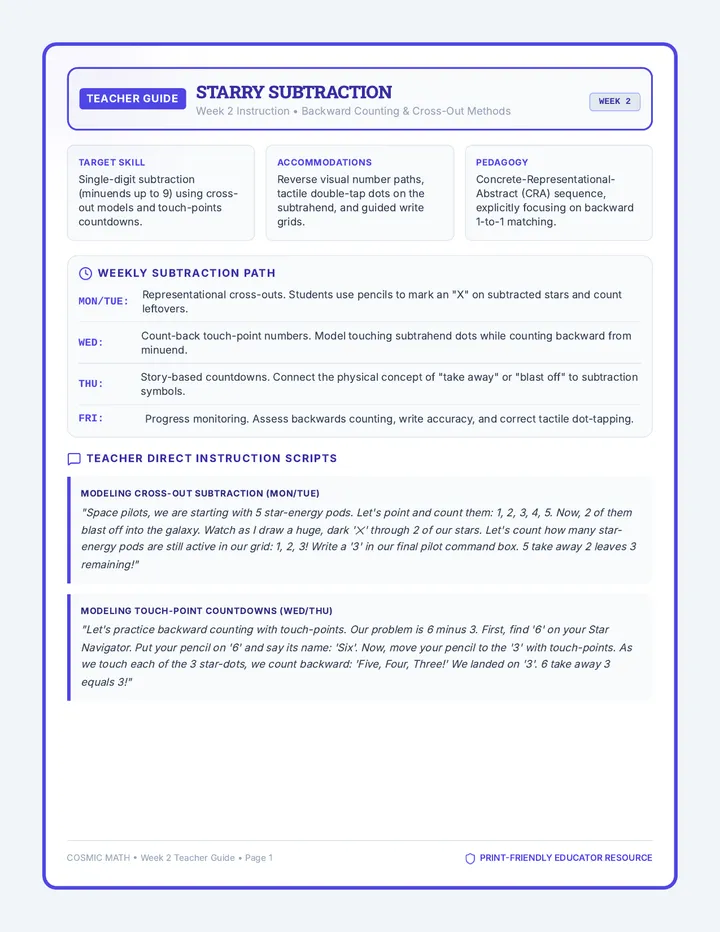
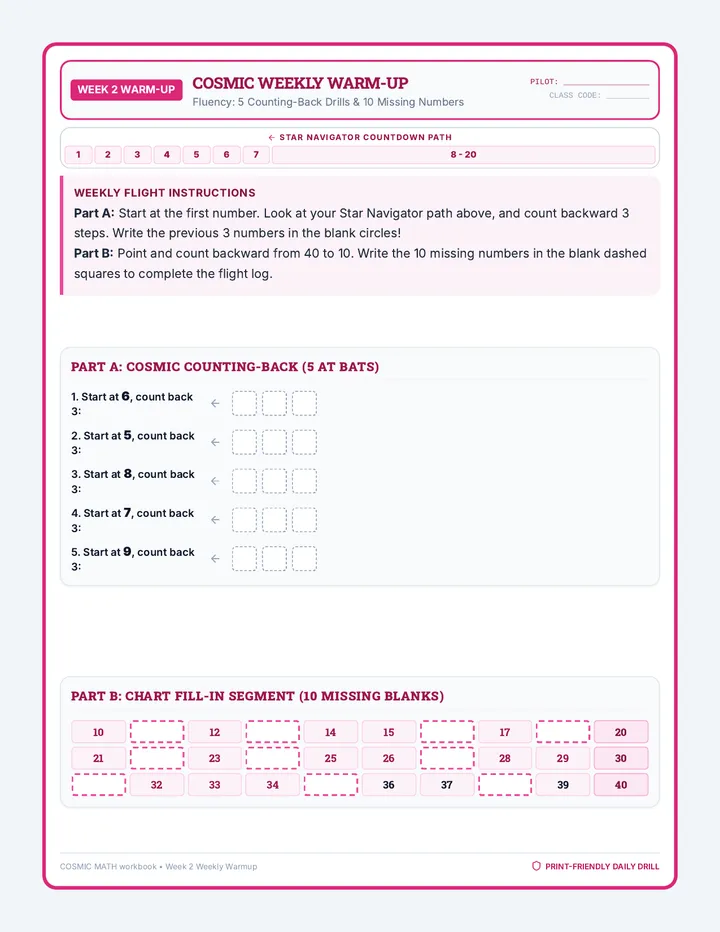
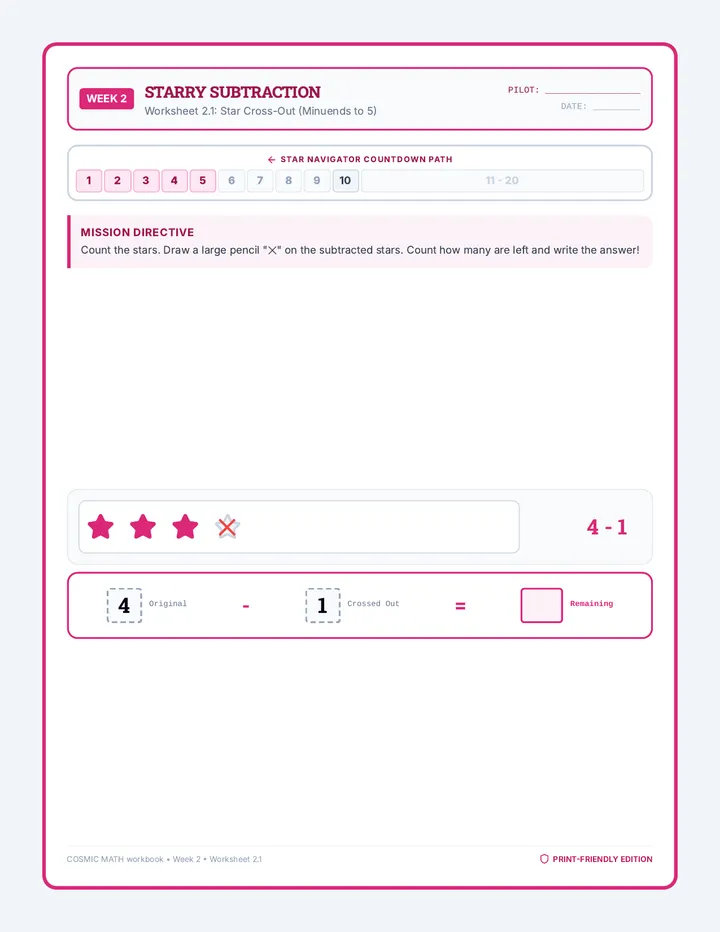
Covers single-digit subtraction (1-9) with cosmic countdowns, crossing-out stars or rocket fuel cells, embedded touch-points for backwards counting, and structured workspace templates.
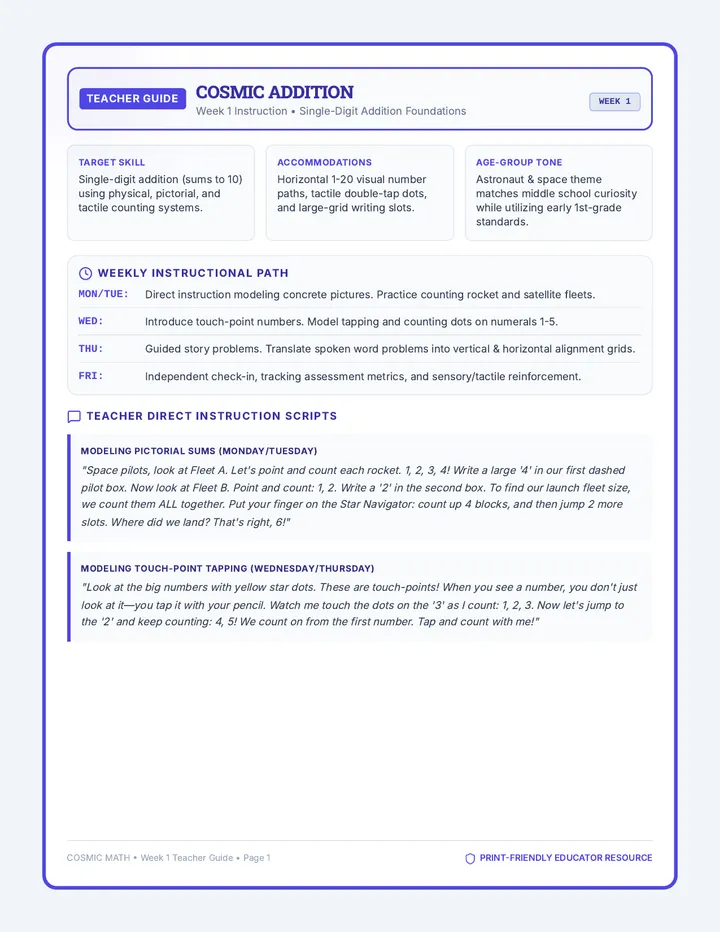
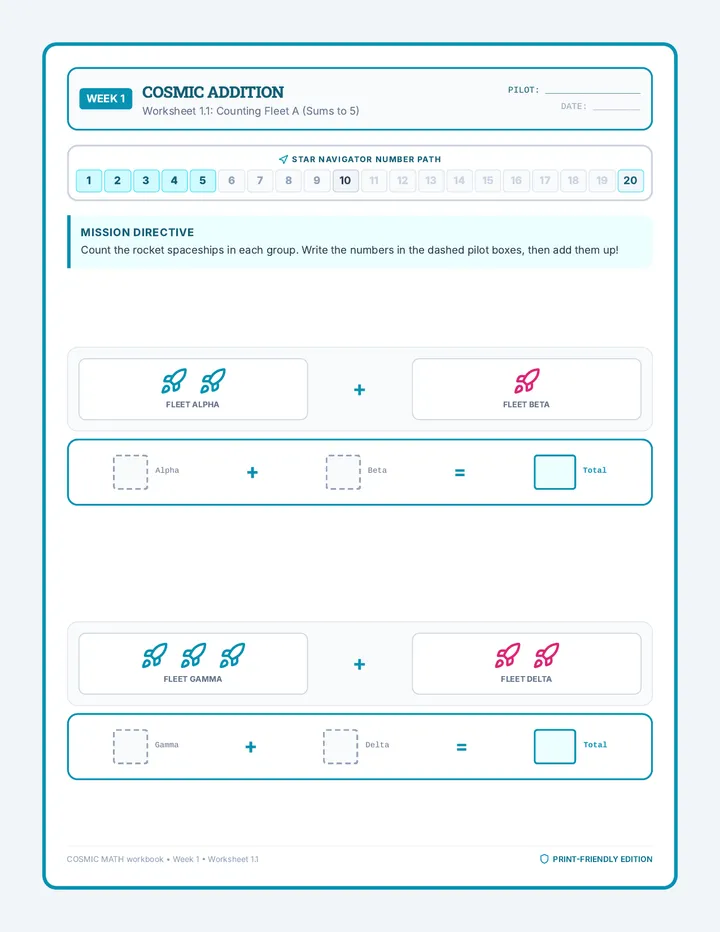
Focuses on single-digit addition (1-9) using embedded touch-point numbers, pictorial representations of spaceships and stars, a persistent 1-20 number path, and large guided workspace boxes for physical alignment.
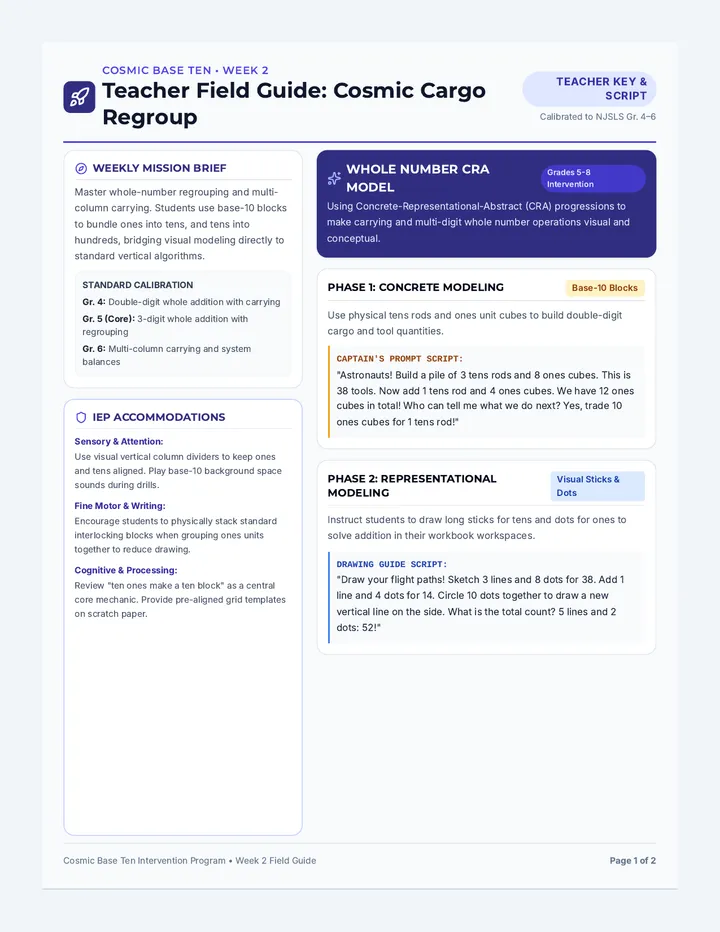
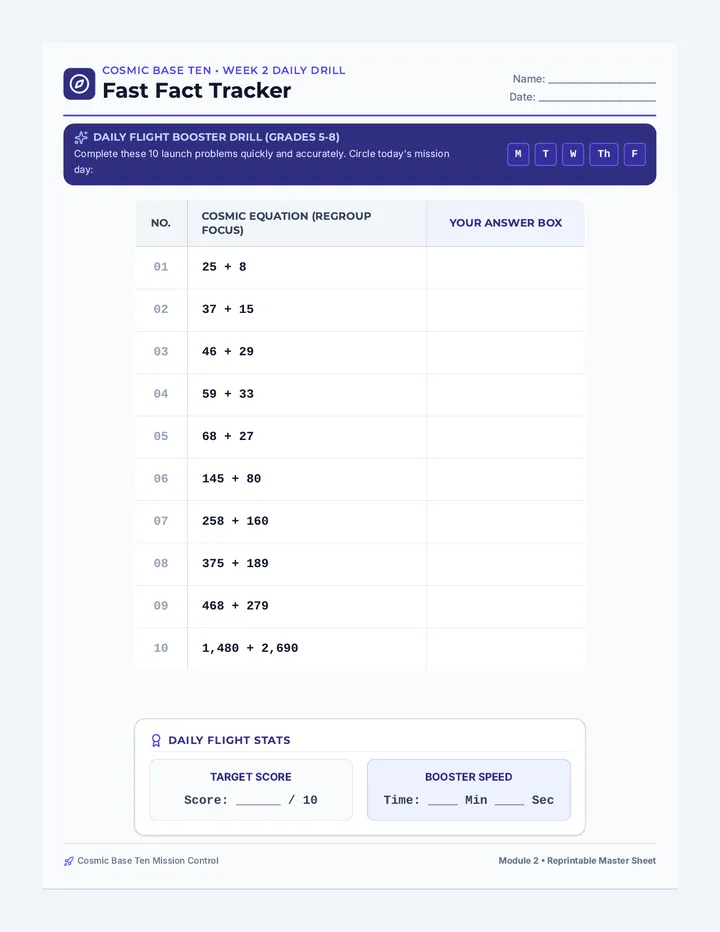
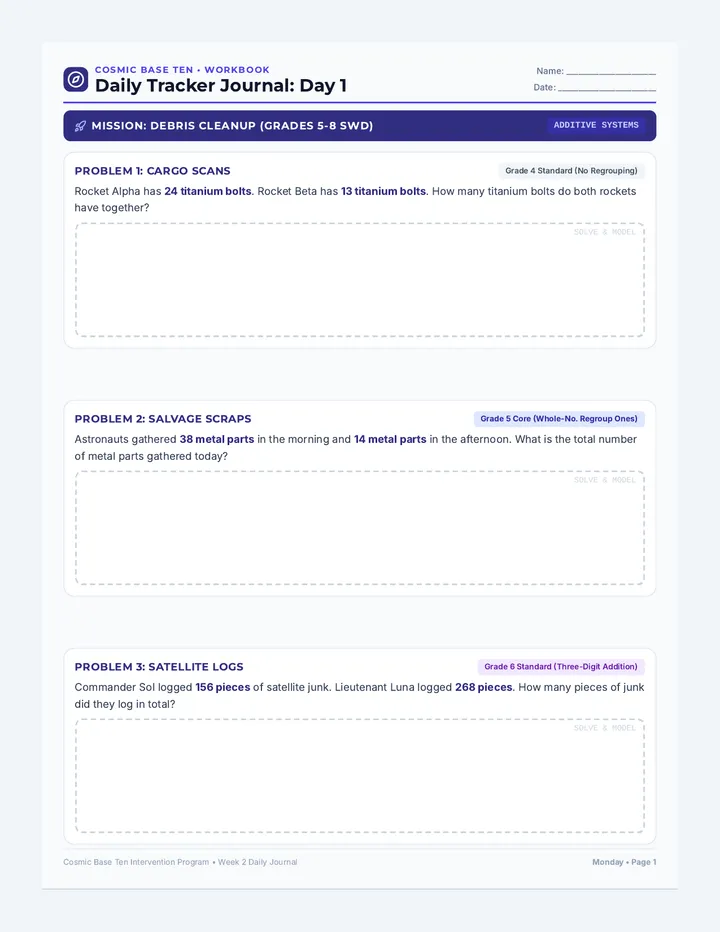
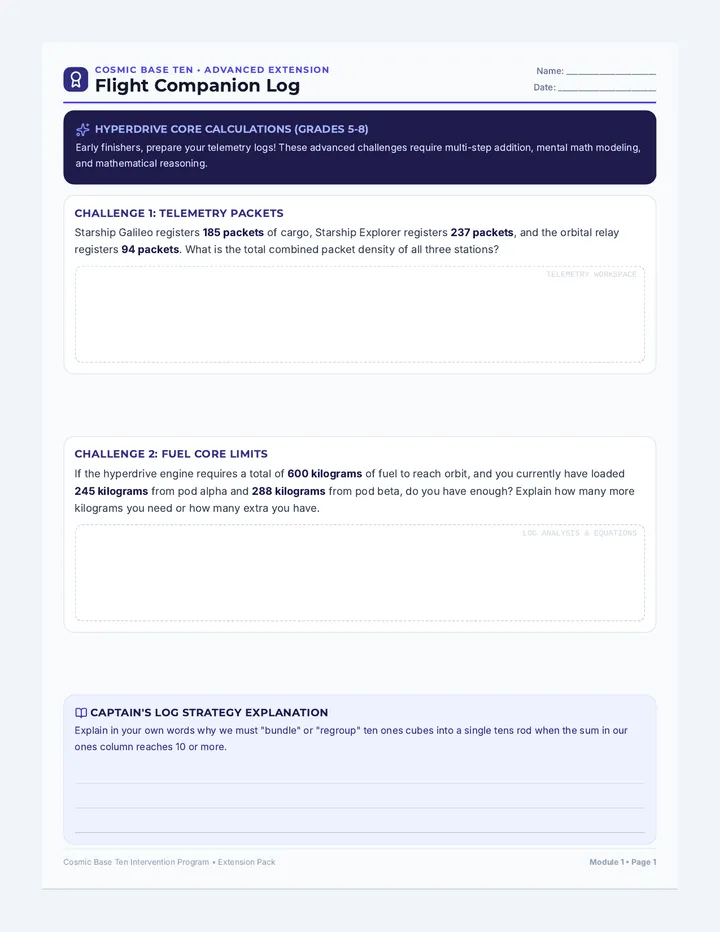
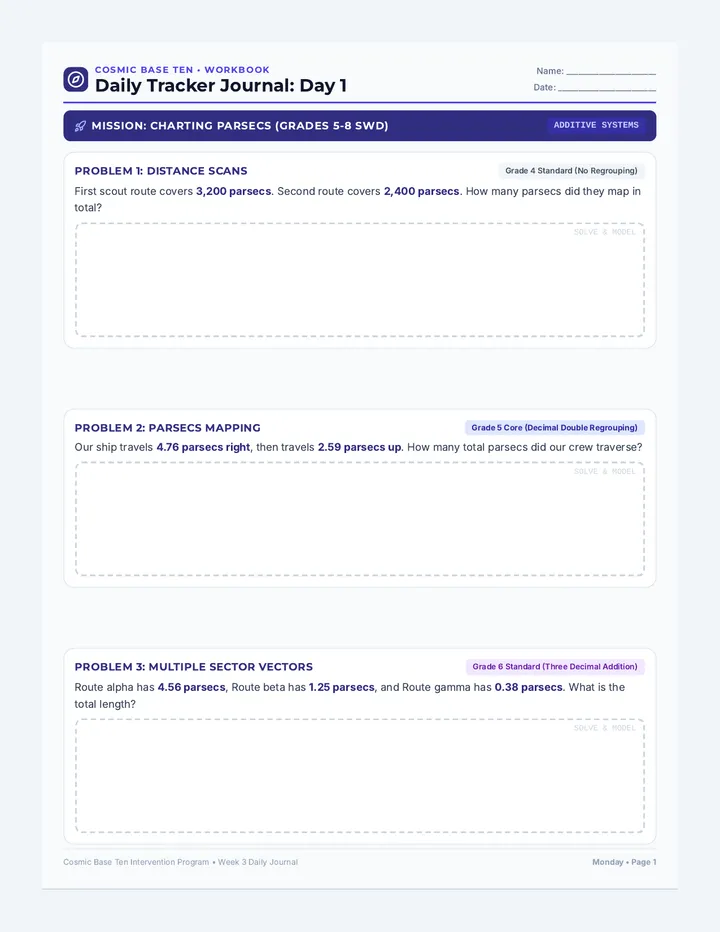
Week 2 focuses on mastering whole-number regrouping and multi-column carrying in the context of starship cargo inventories. Students use base-10 blocks to bundle ones into tens and tens into hundreds, bridging visual modeling directly to standard vertical algorithms.
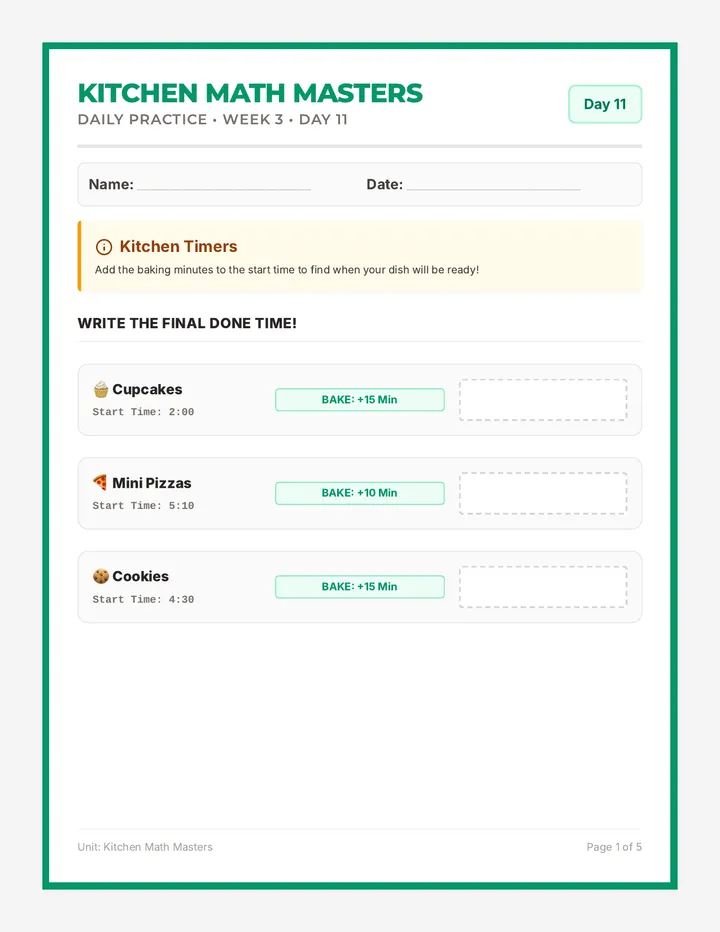
Week 3 of the Kitchen Math Masters unit. Focuses on kitchen timers, elapsed time, adjusting cook times, understanding food label servings, and conducting a mock cafe simulation.
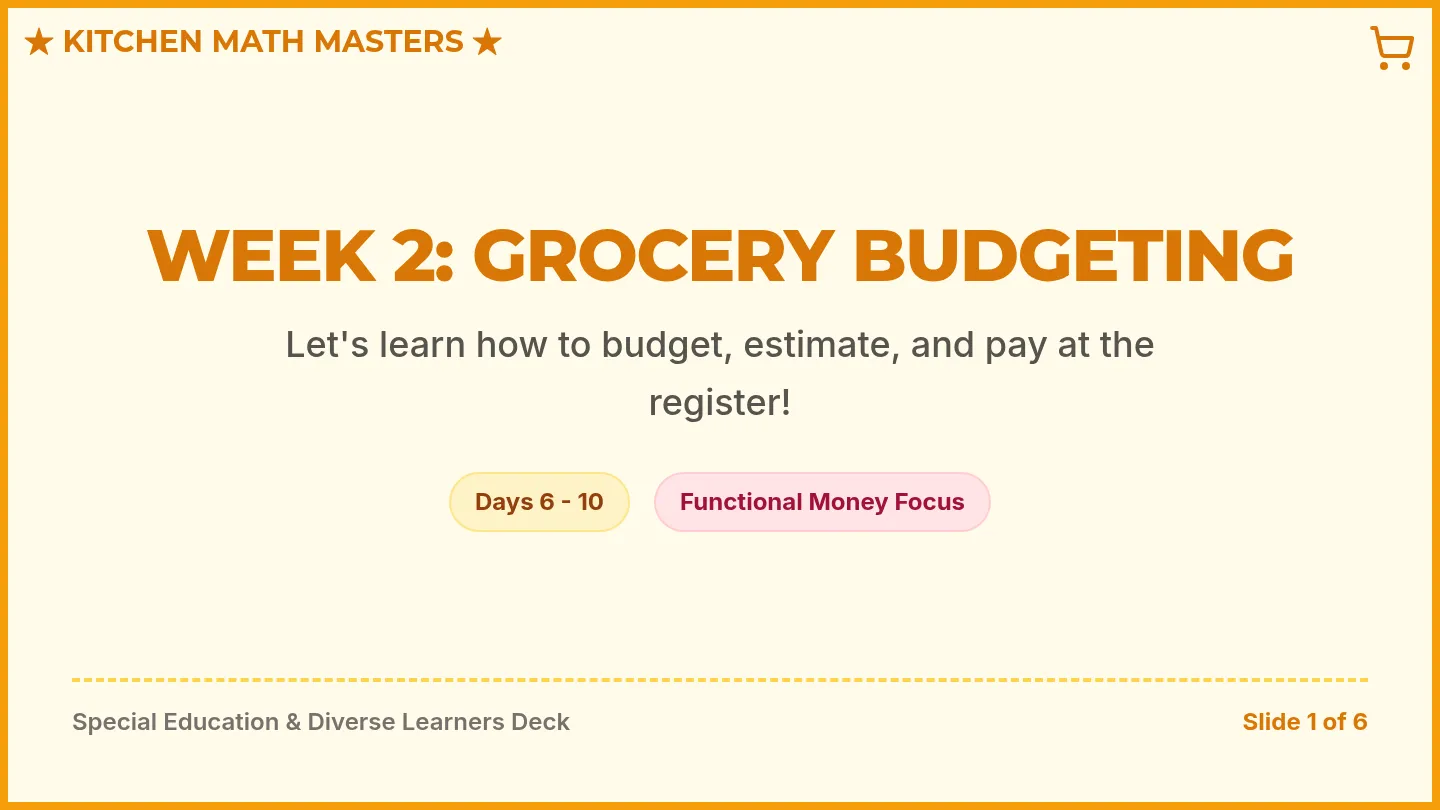
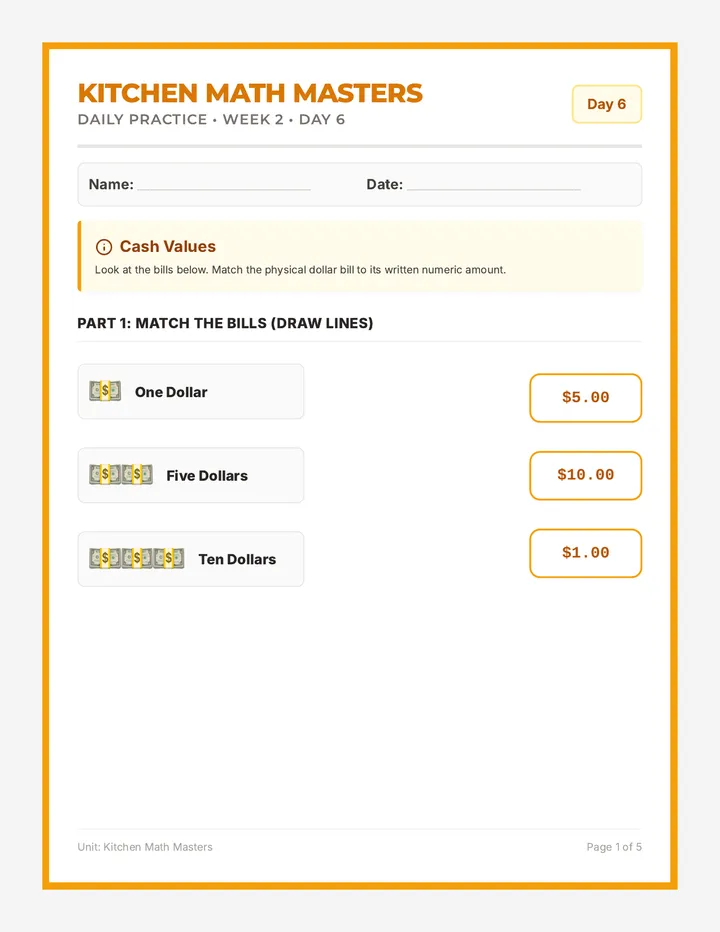
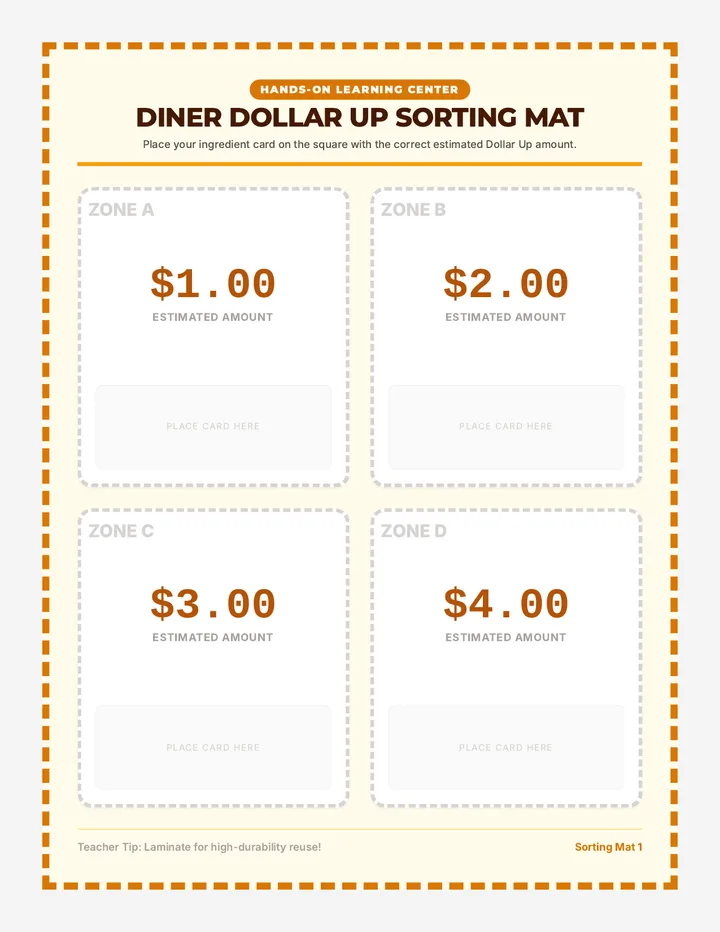
Week 2 of the Kitchen Math Masters unit. Focuses on money identification, estimation via the Dollar Up method, ingredient budgeting, and simple subtraction for calculating change.
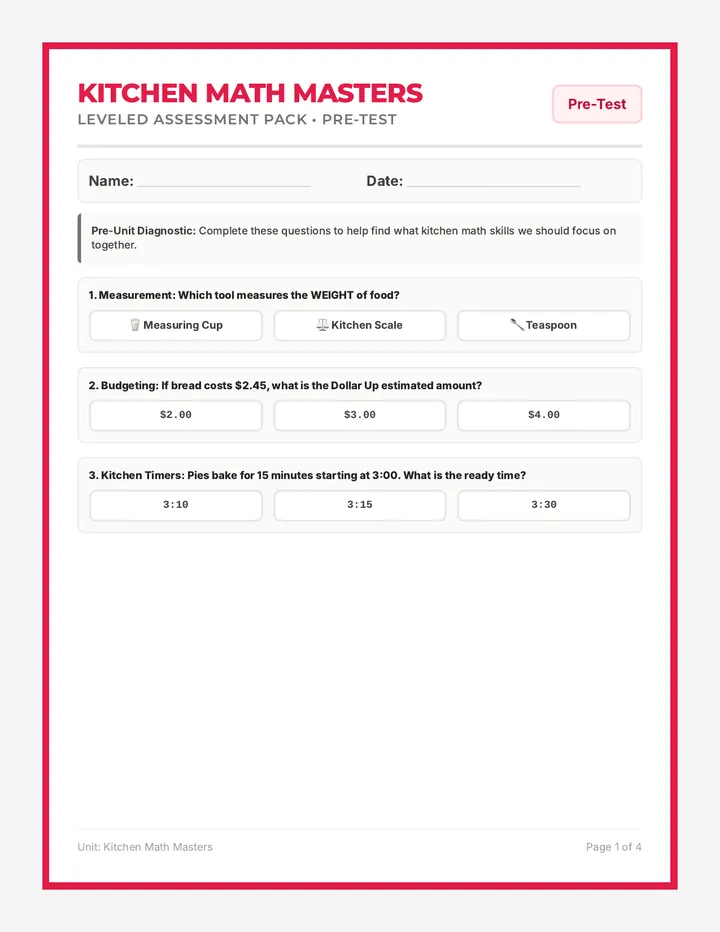
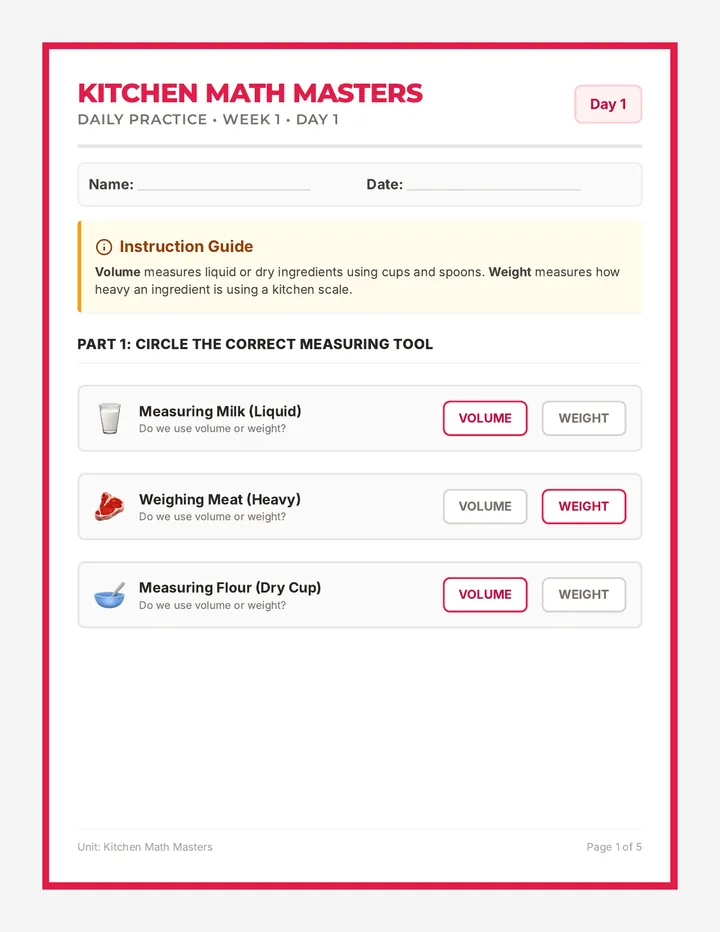
Week 1 of the Kitchen Math Masters unit. Focuses on physical measurement tools, identifying whole and fractional volumes, and simple doubling/halving using visual cooking supports.
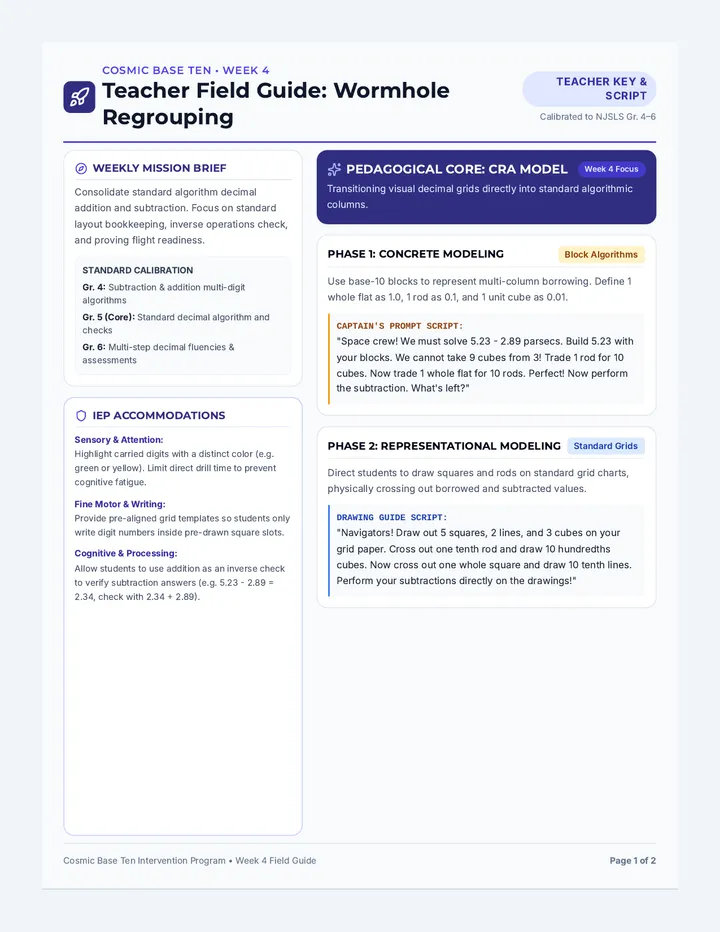
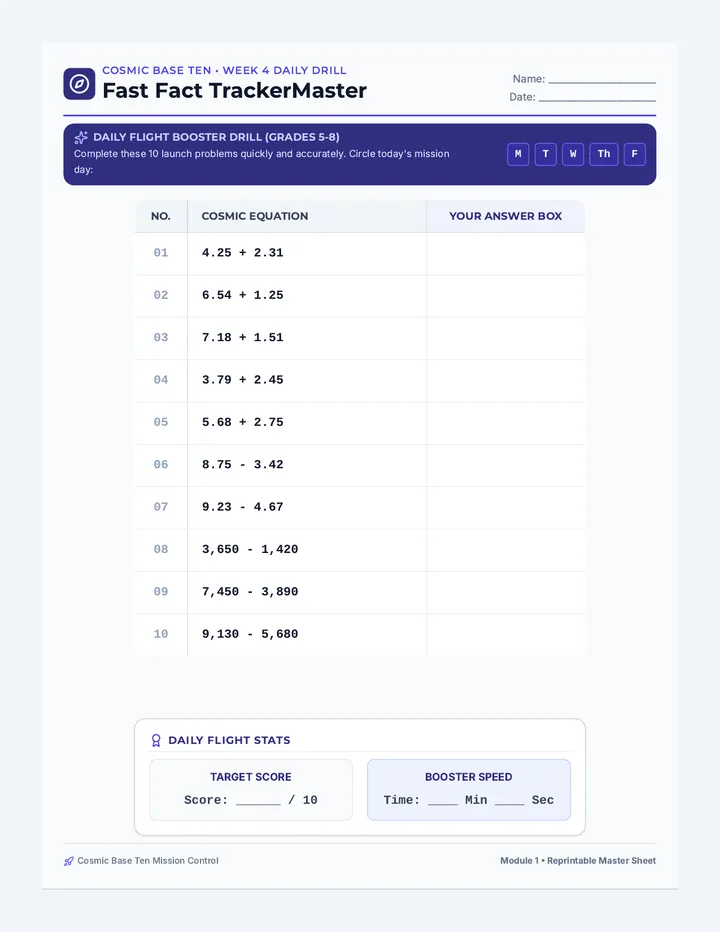
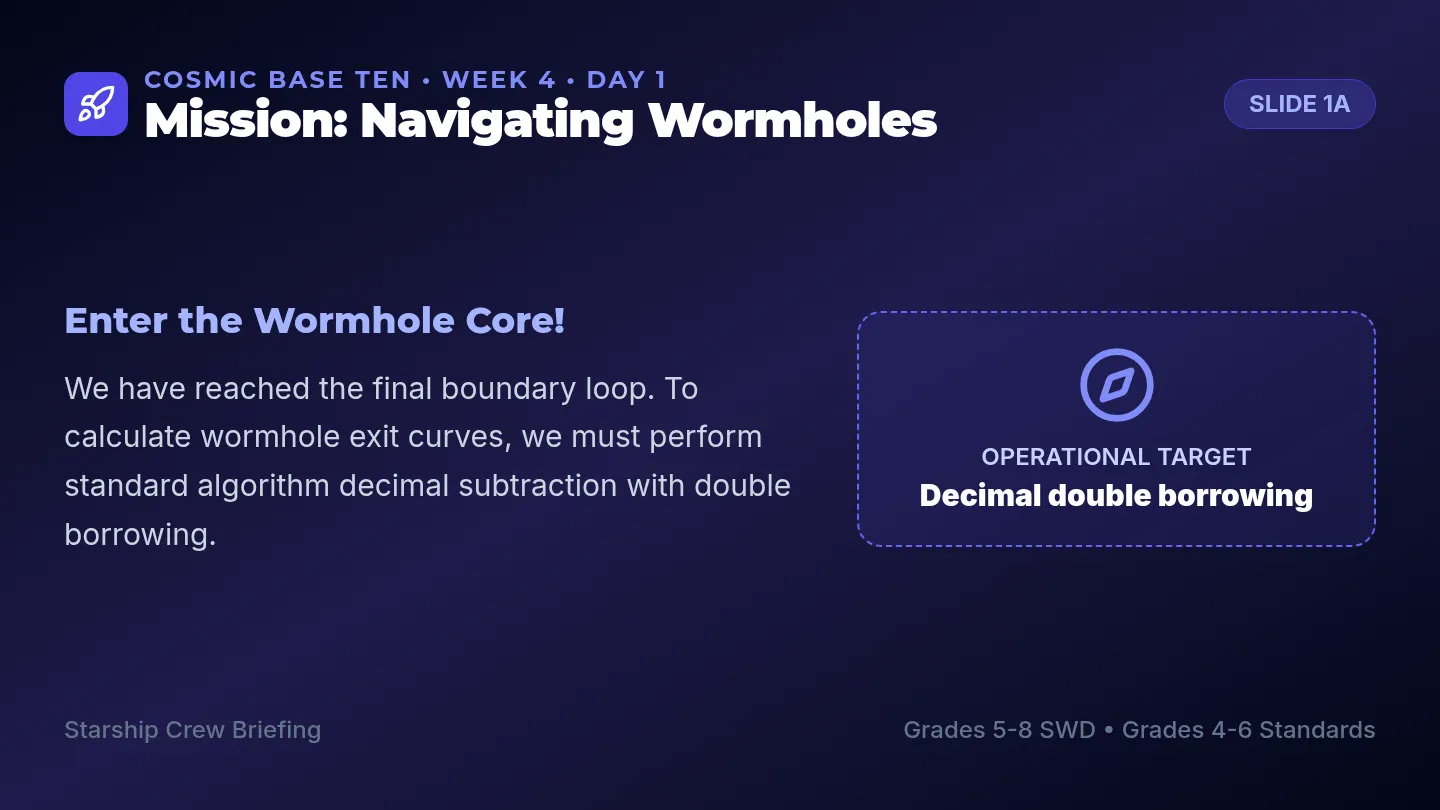
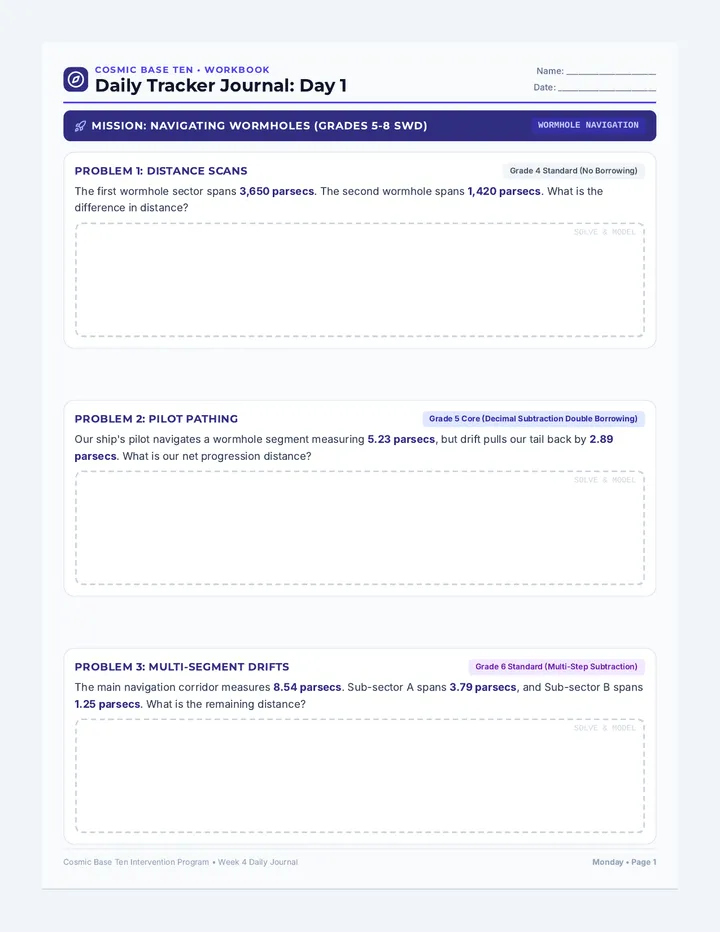
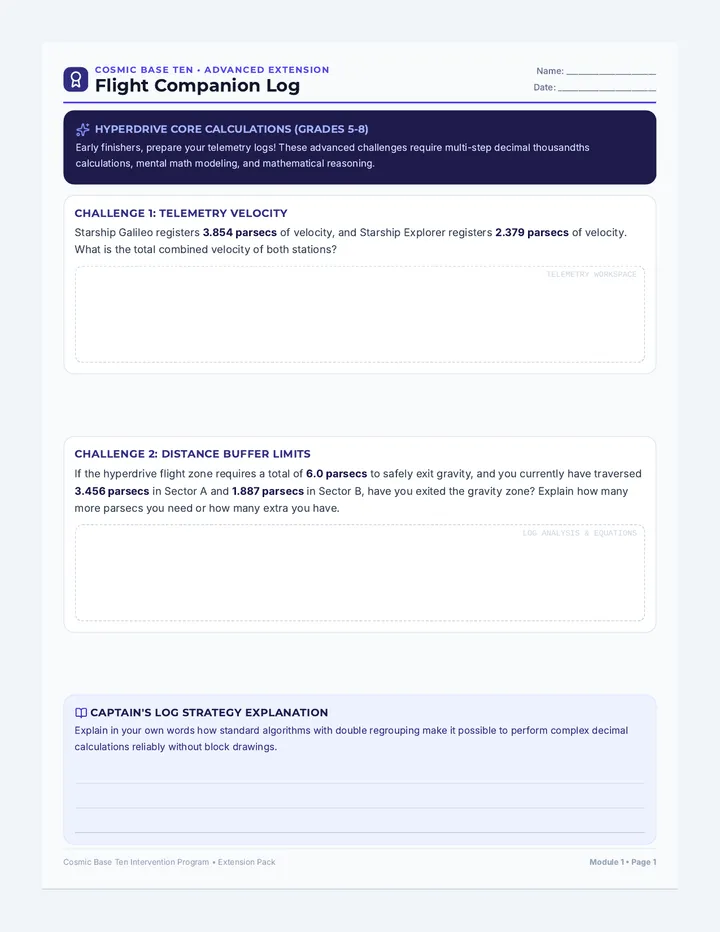
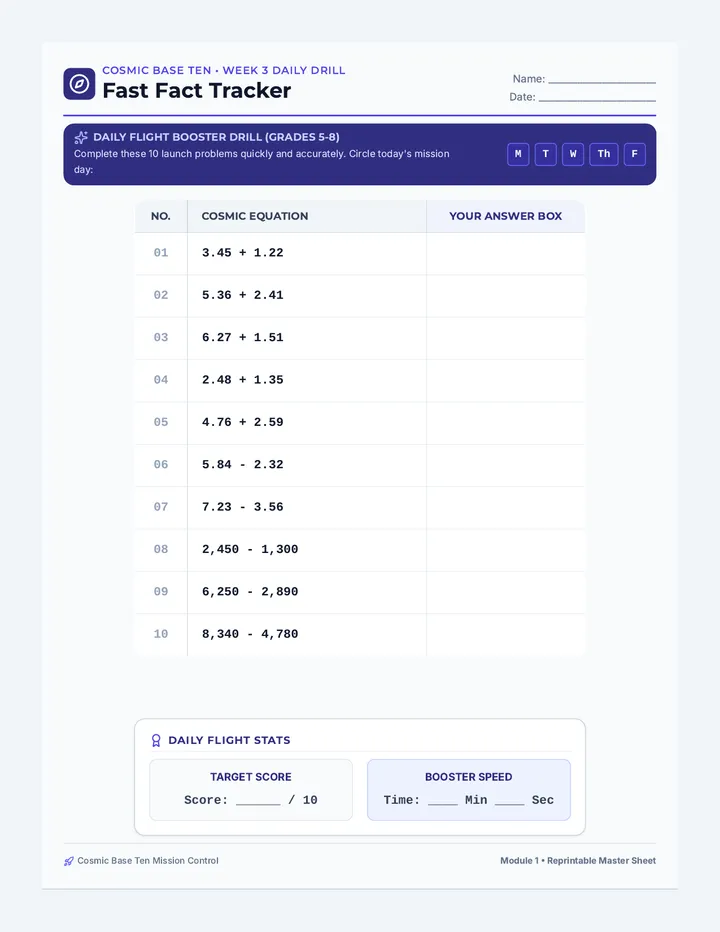
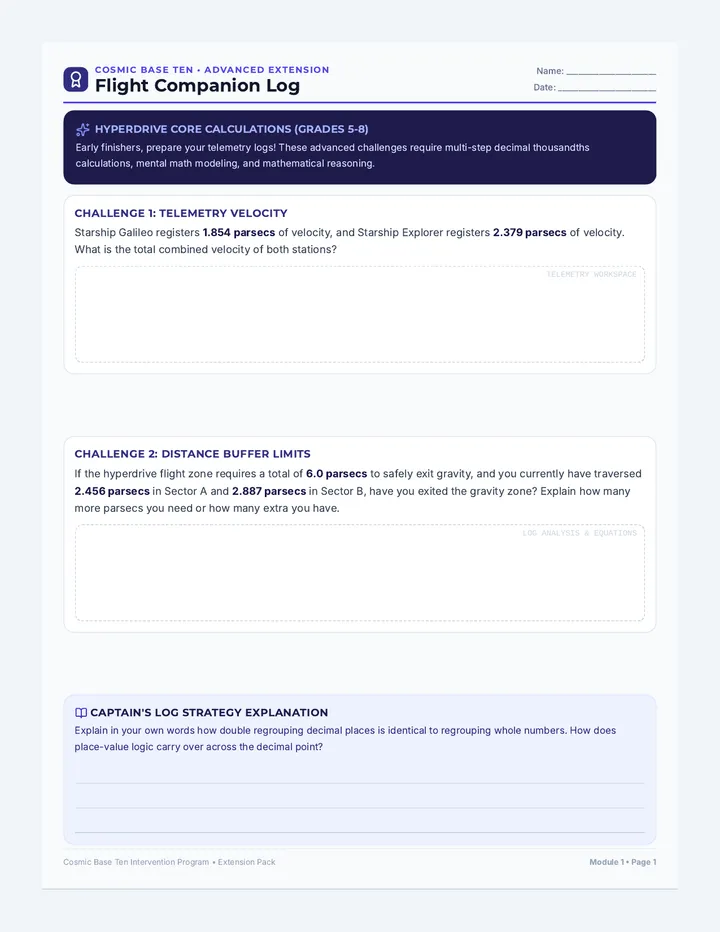
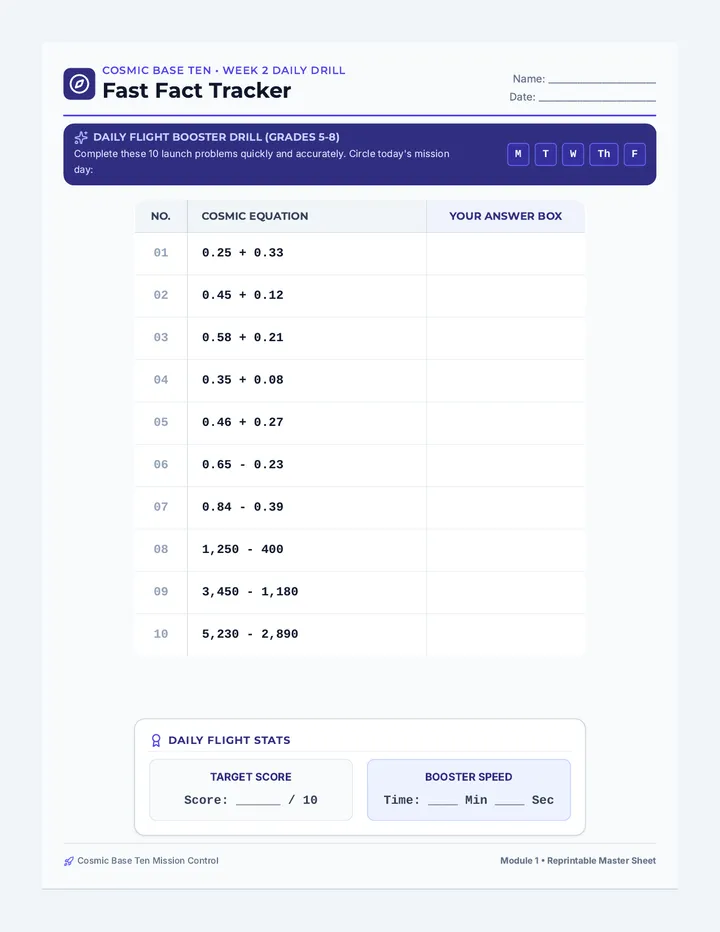
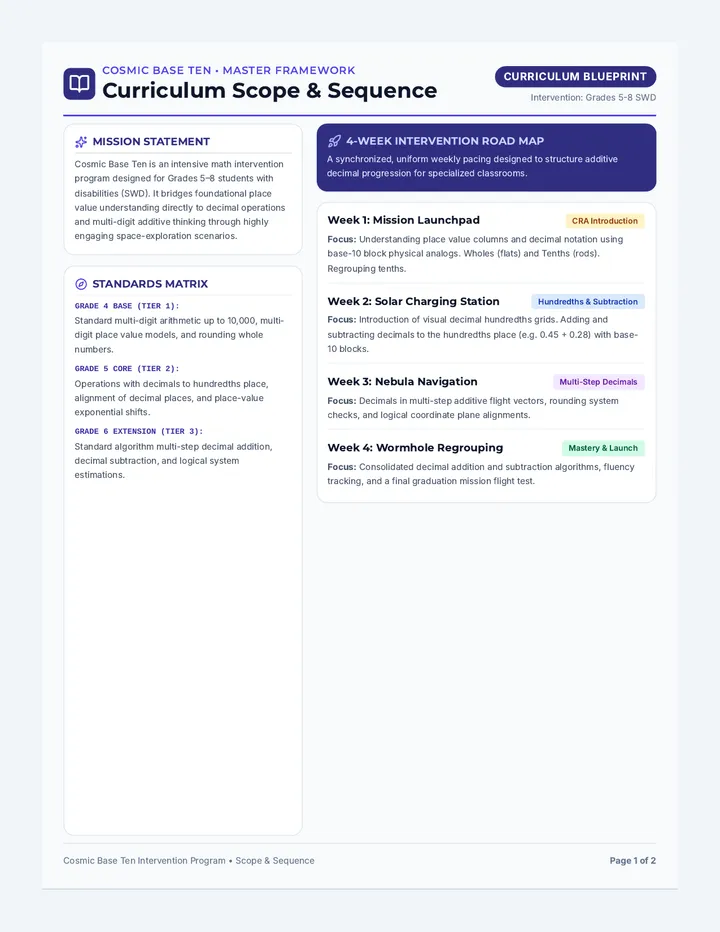
Week 4 focuses on standard algorithm decimal addition and subtraction, multi-step problem consolidation, and direct assessment of skills to confirm crew flight readiness.
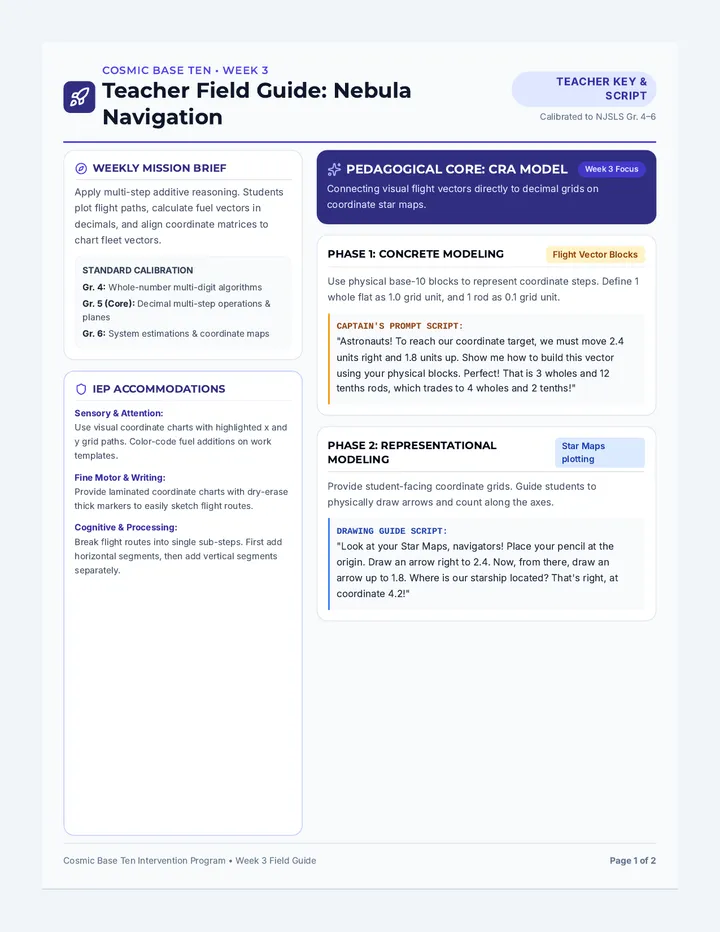
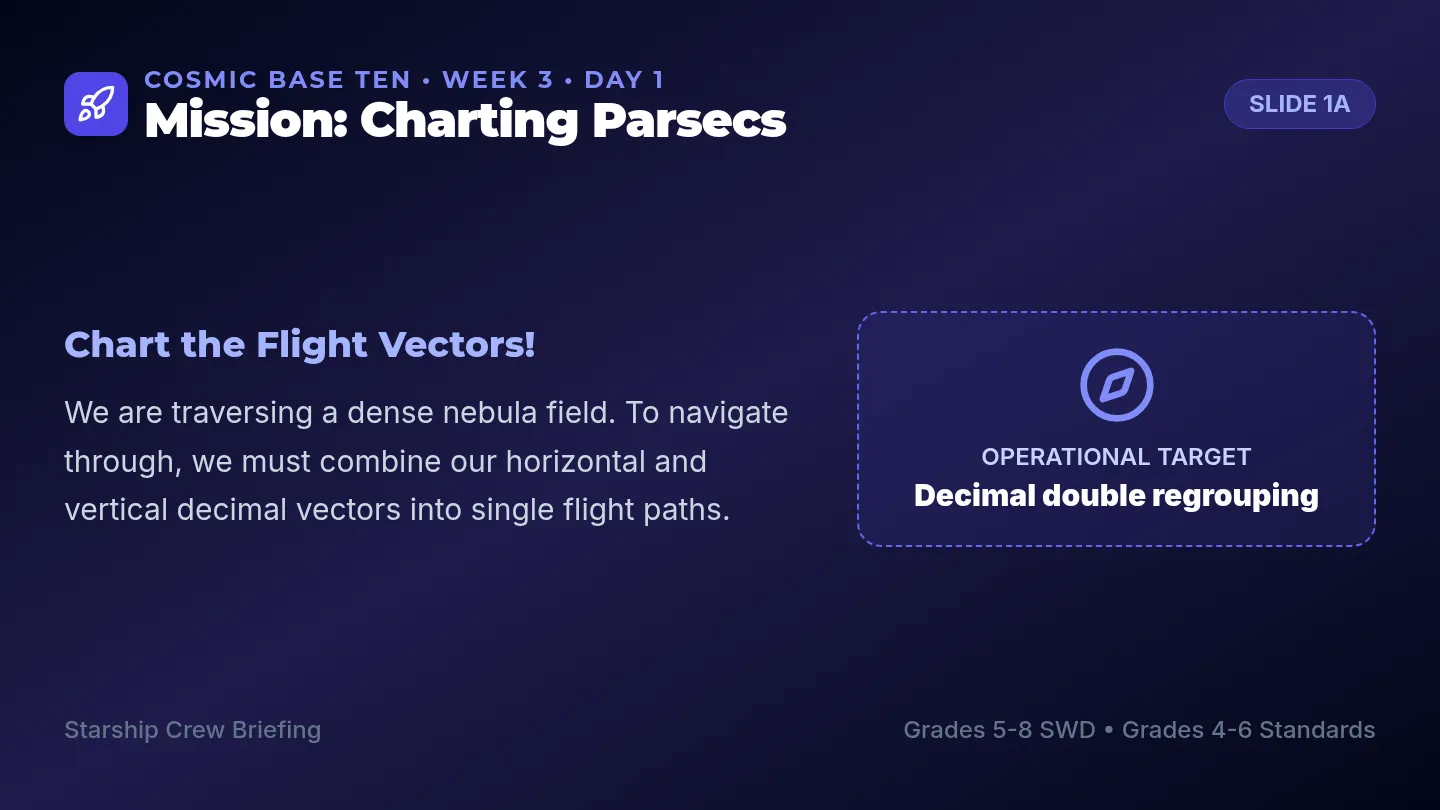
Week 3 focuses on multi-step additive reasoning, decimal subtraction, and aligning coordinates using star charts and compass tools to plan flight vectors for the fleet.
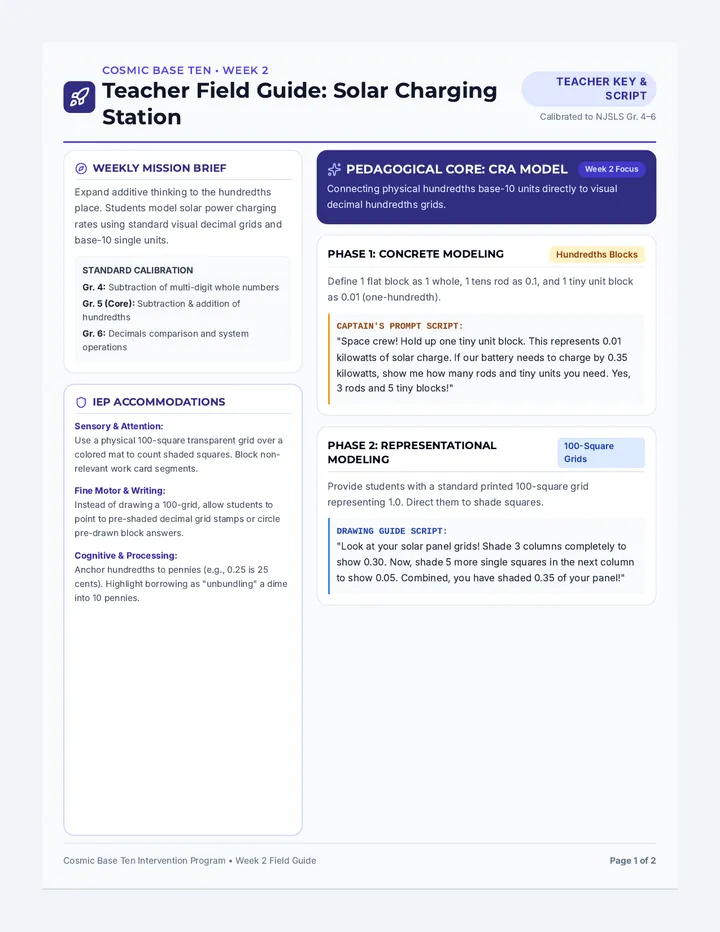
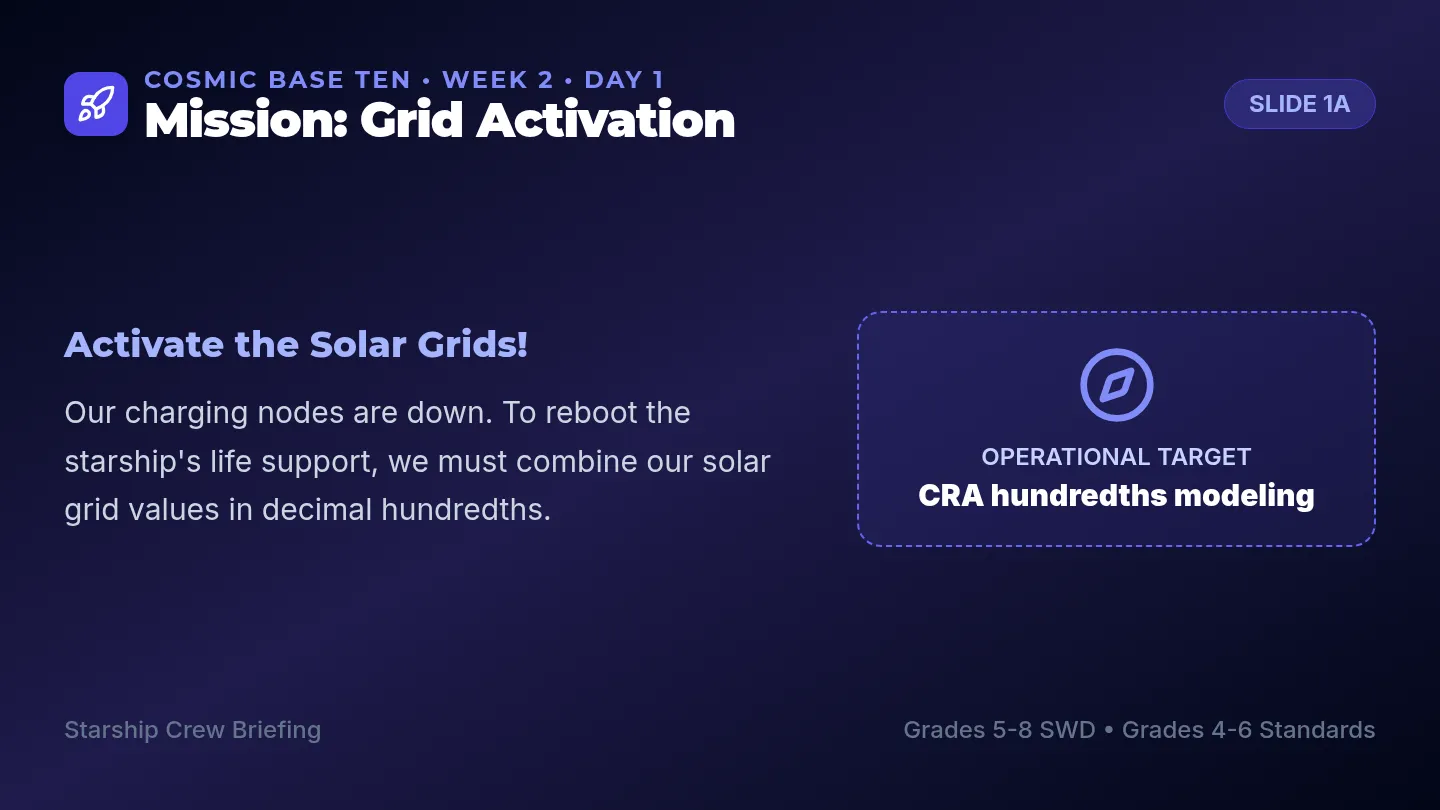
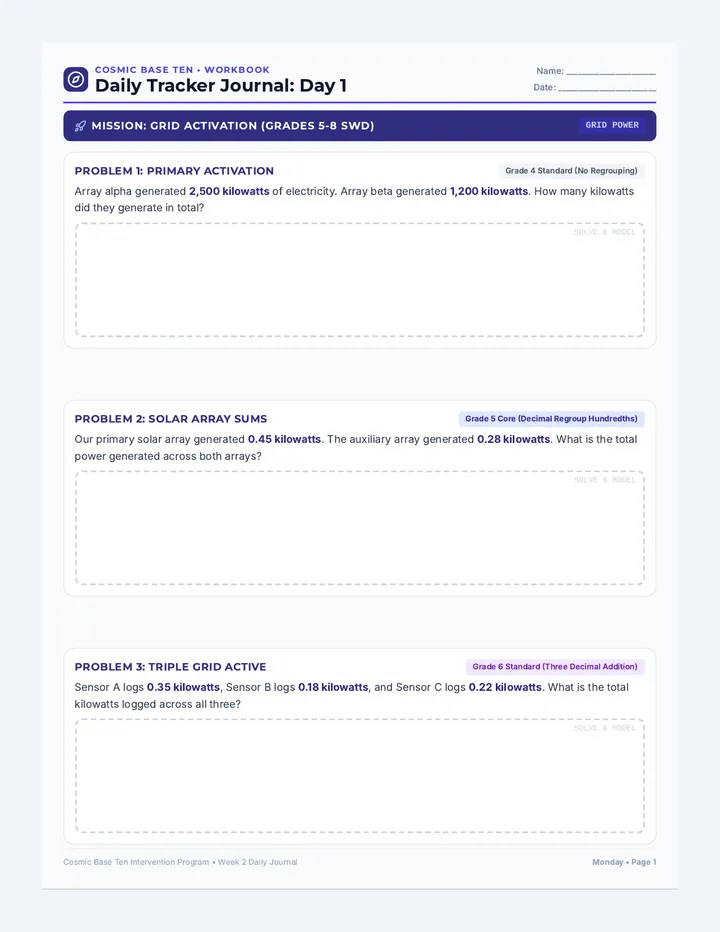
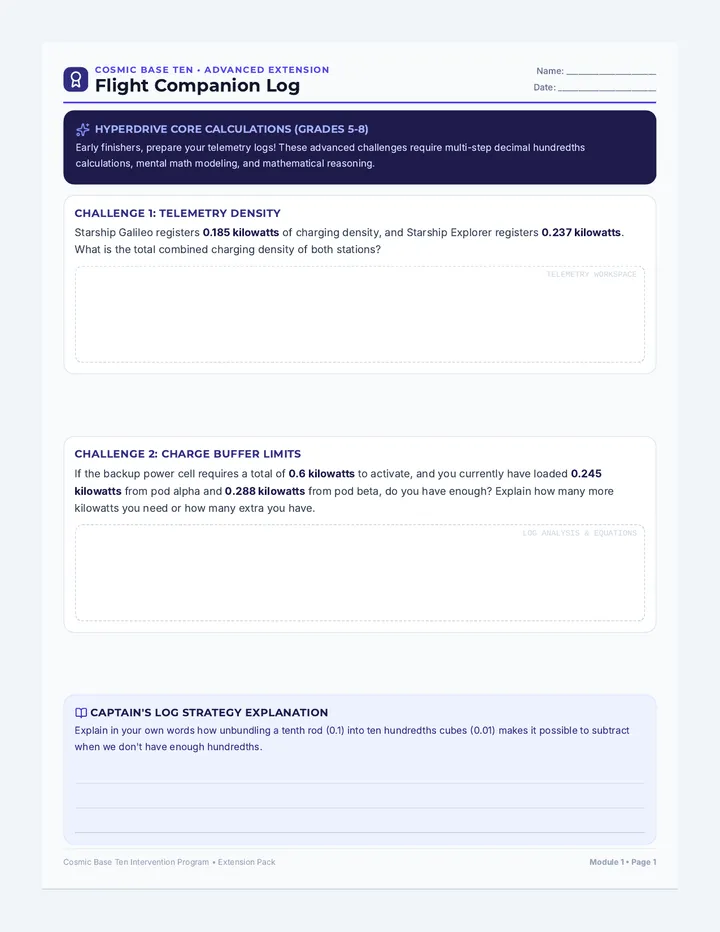
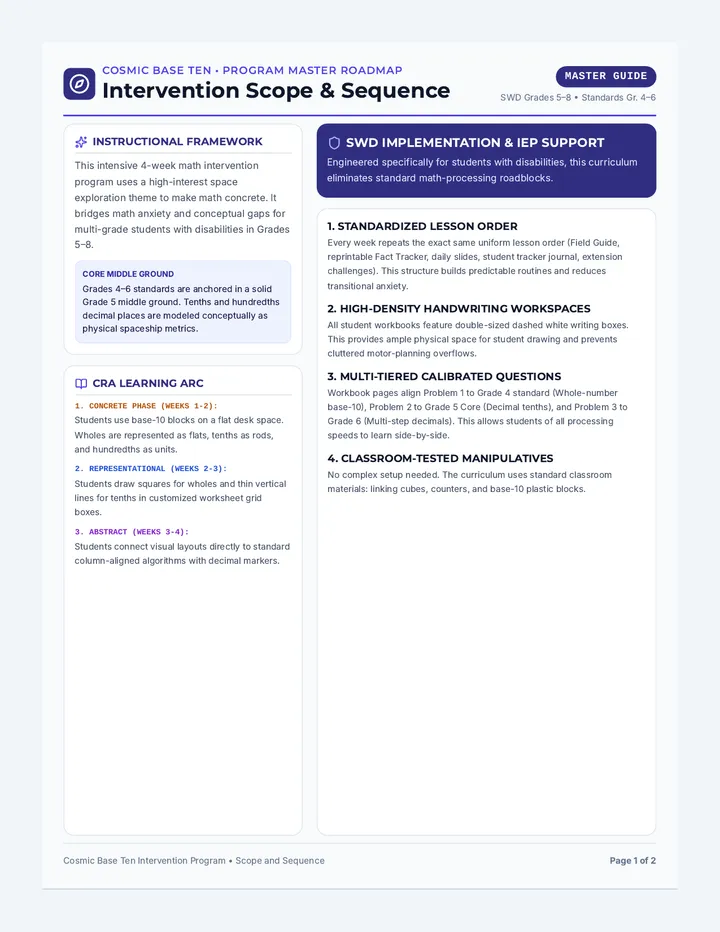
Week 2 focuses on decimal addition and subtraction with and without regrouping, using visual decimal grids and standard plastic base-10 blocks to represent tenths and hundredths in solar charging grid scenarios.
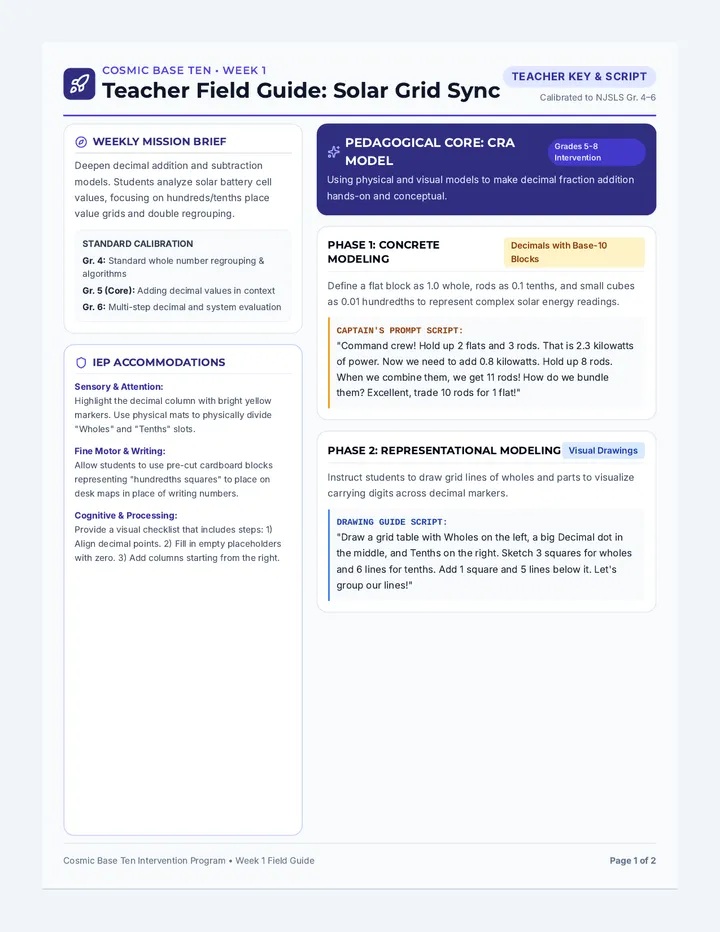
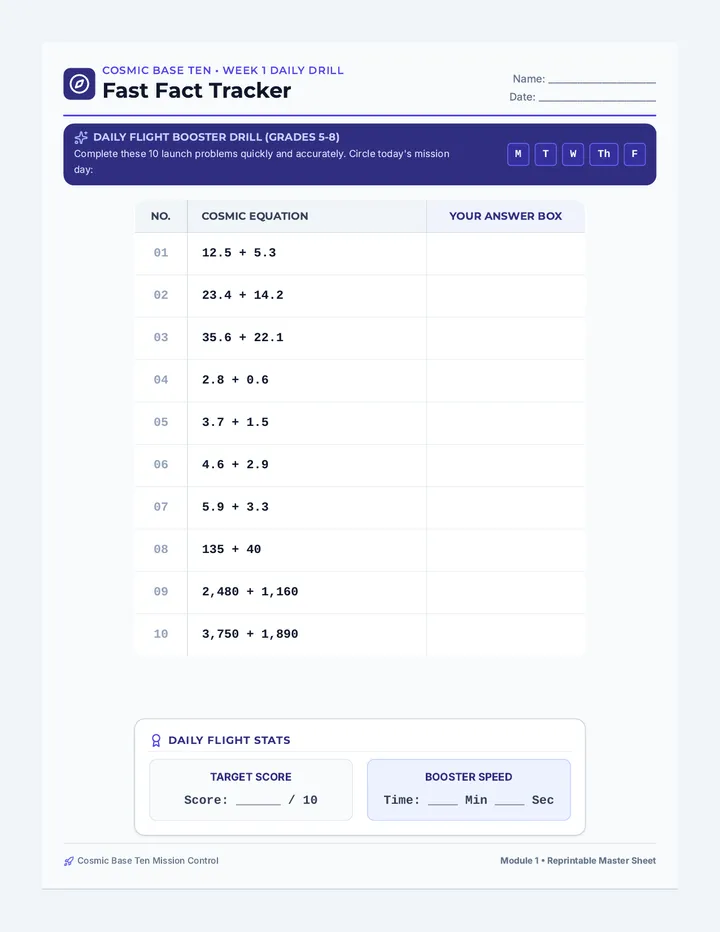
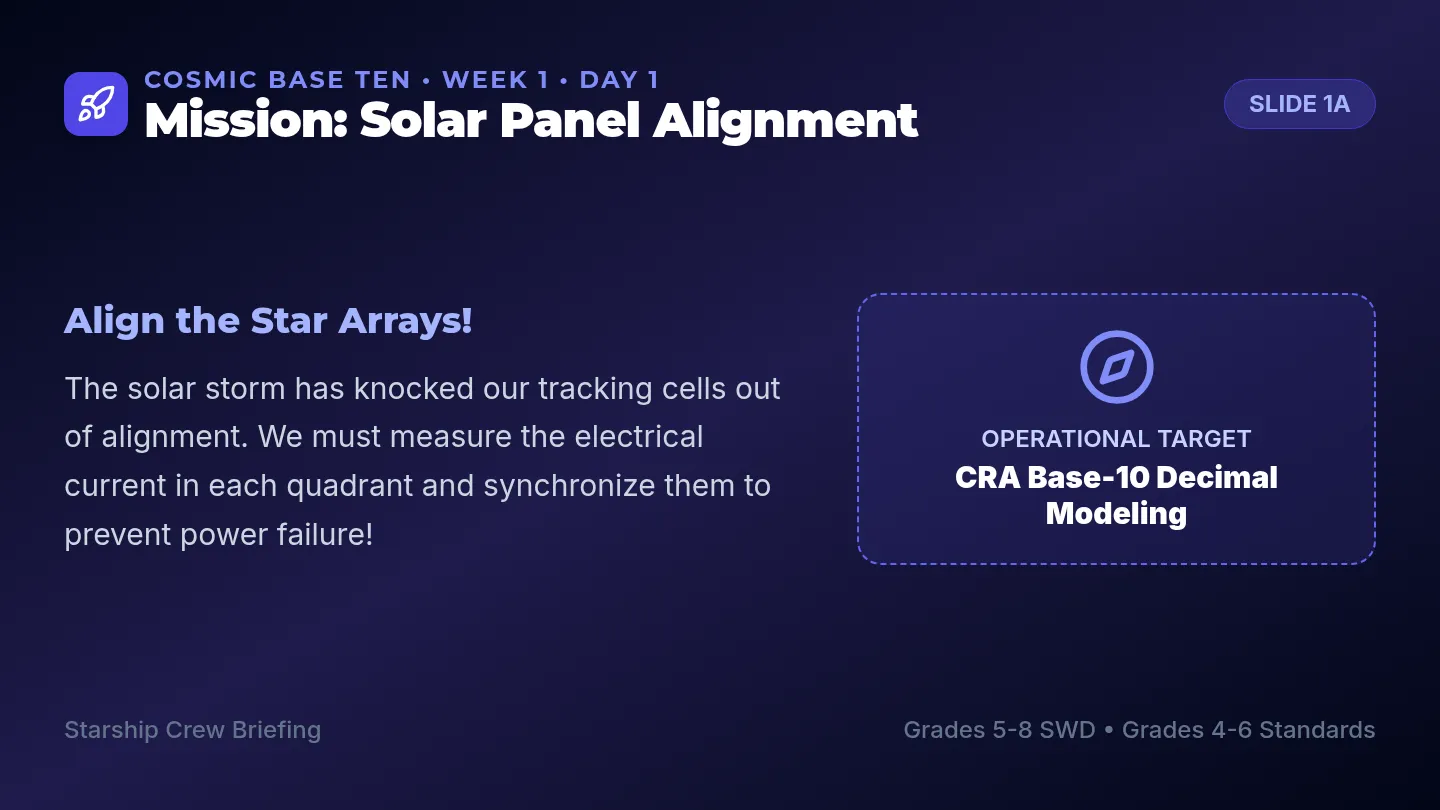
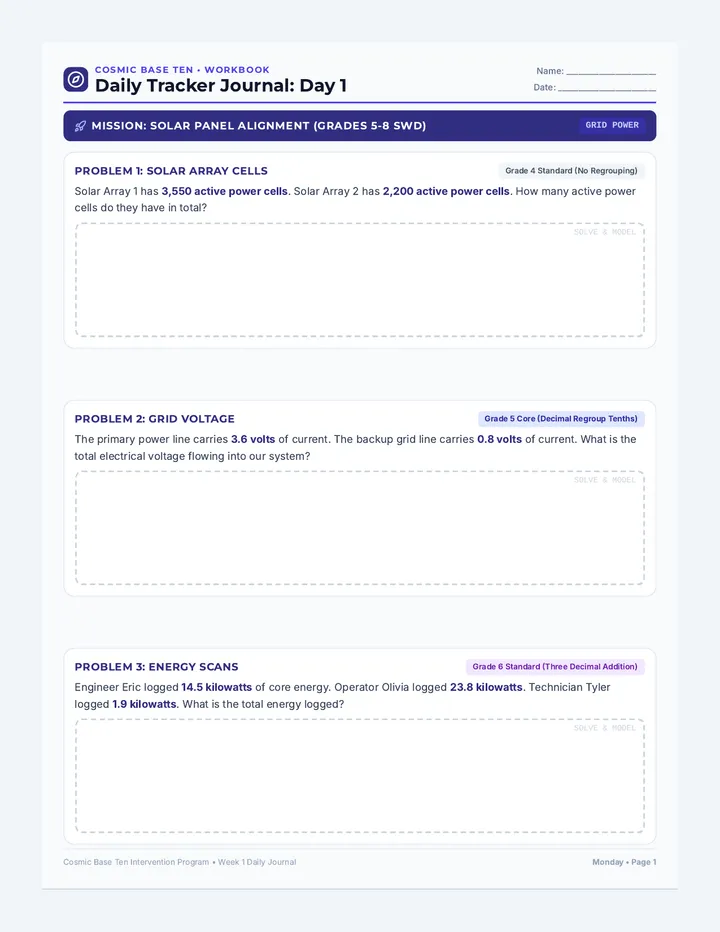
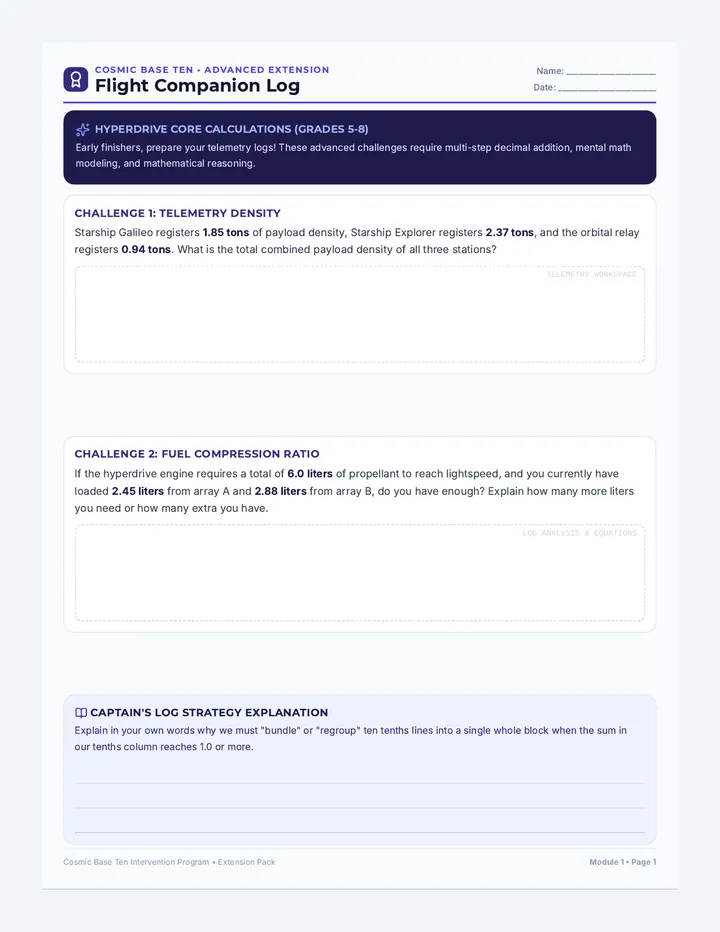
Week 1 focuses on deepening place value understanding and multi-step addition of decimals and whole numbers in space grid systems. Students practice regrouping tenths and wholes, balancing battery loads, and tracking fuel payload readings.
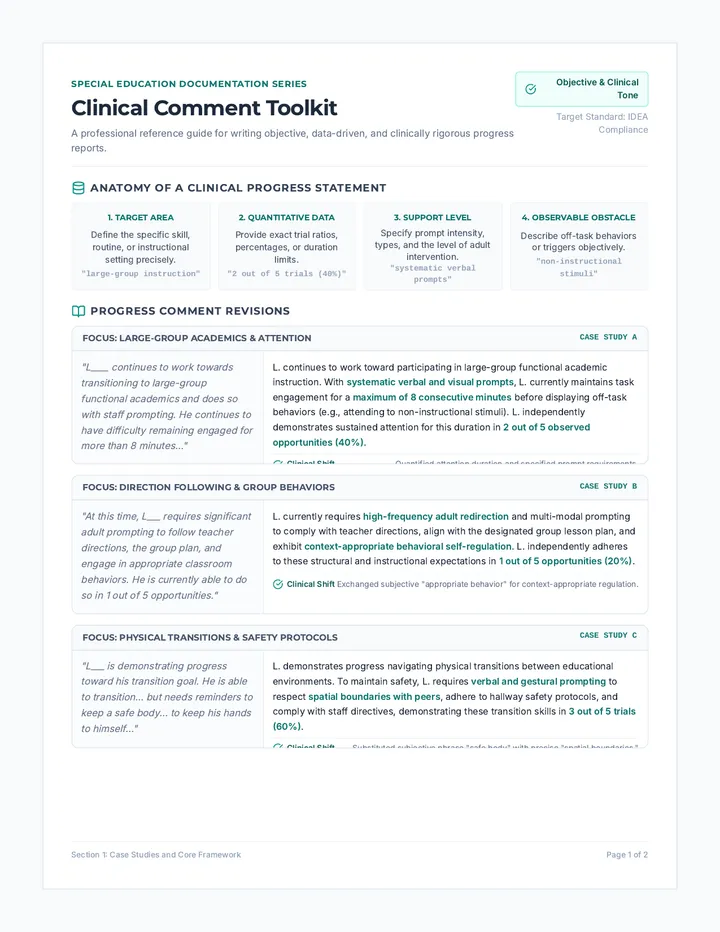
Resources and tools for special education teachers to draft objective, data-driven, and clinically professional progress reports for student IEP goals.
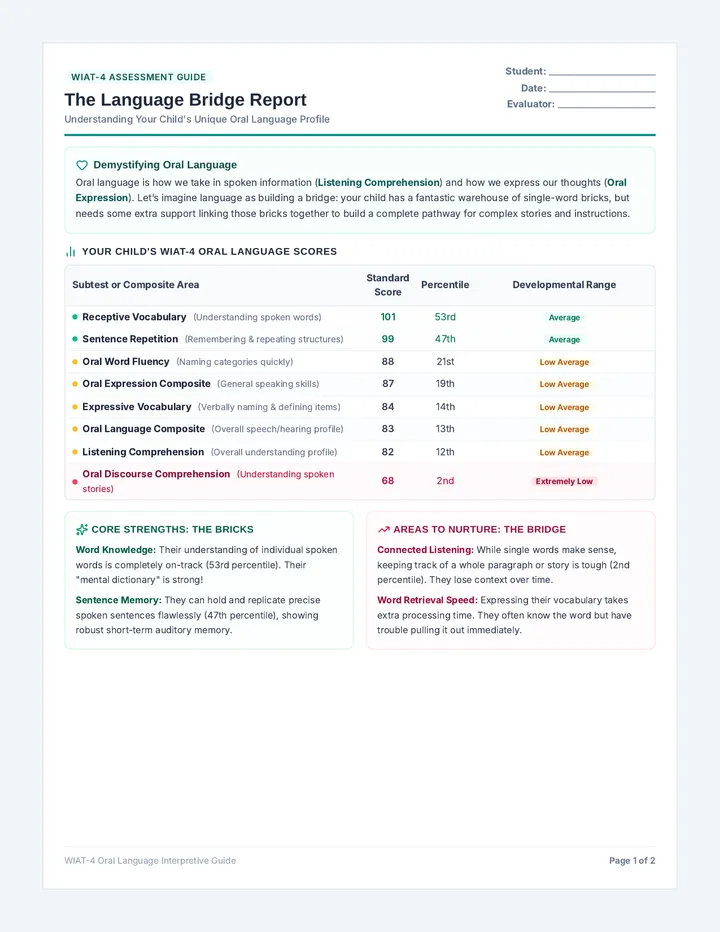
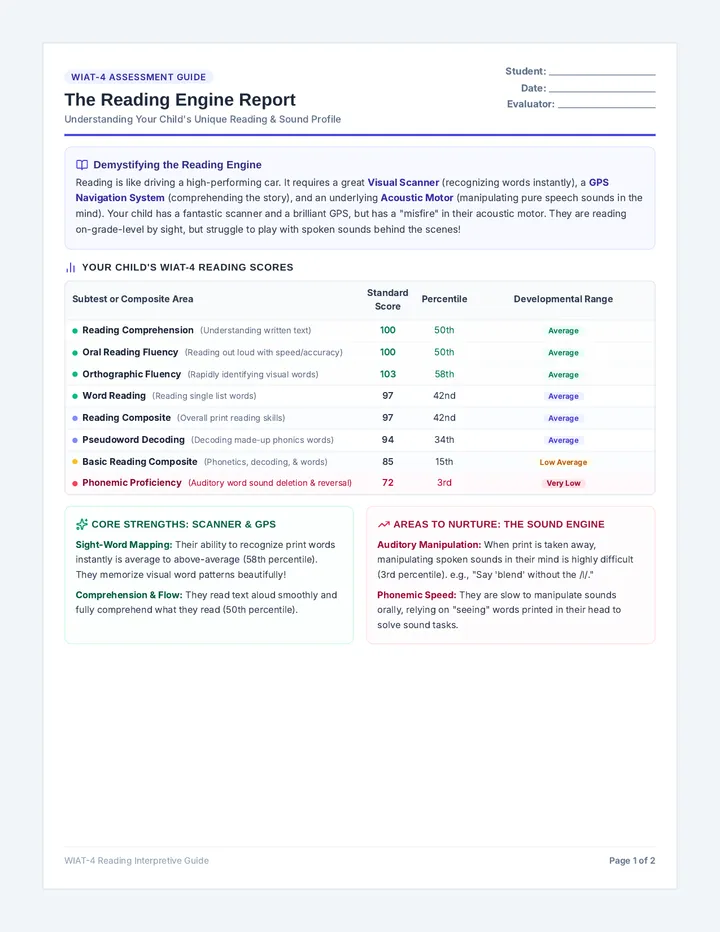
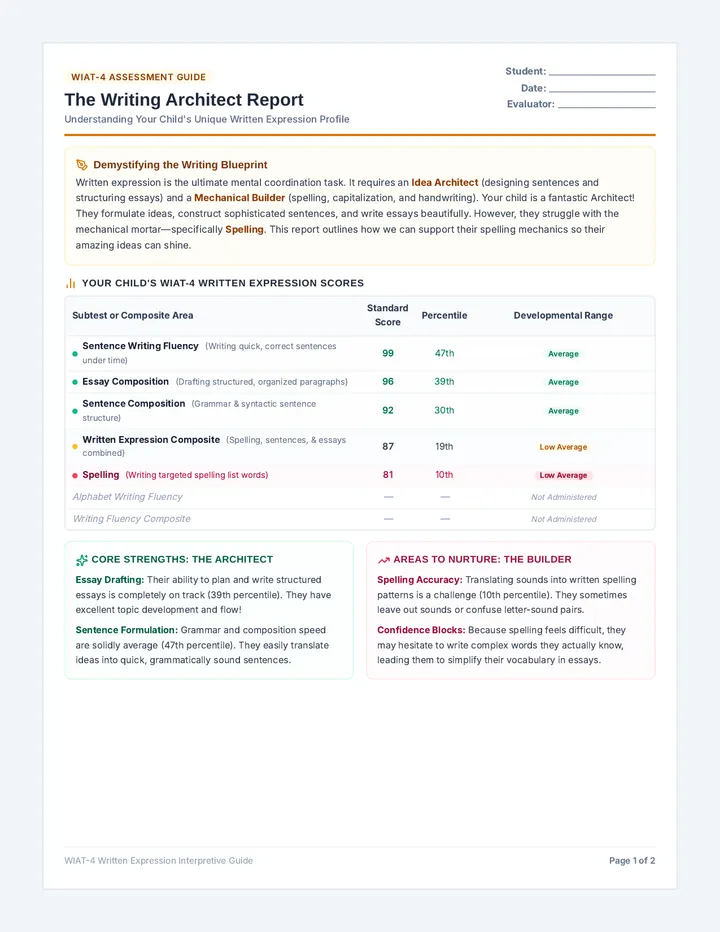
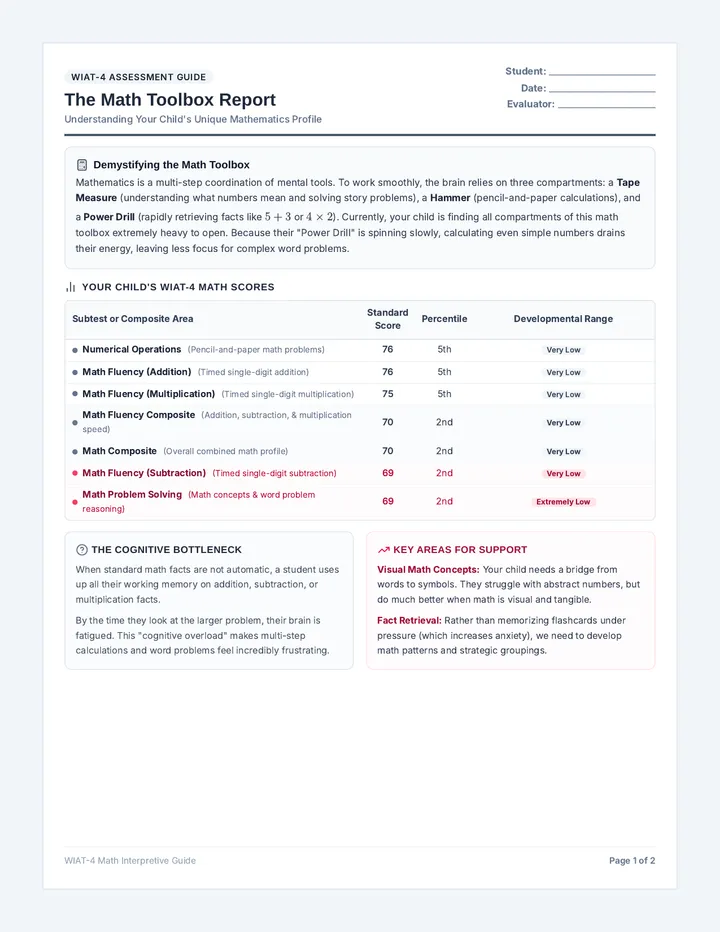
A set of parent-friendly guides translating psychoeducational test scores into positive, actionable home support roadmaps.
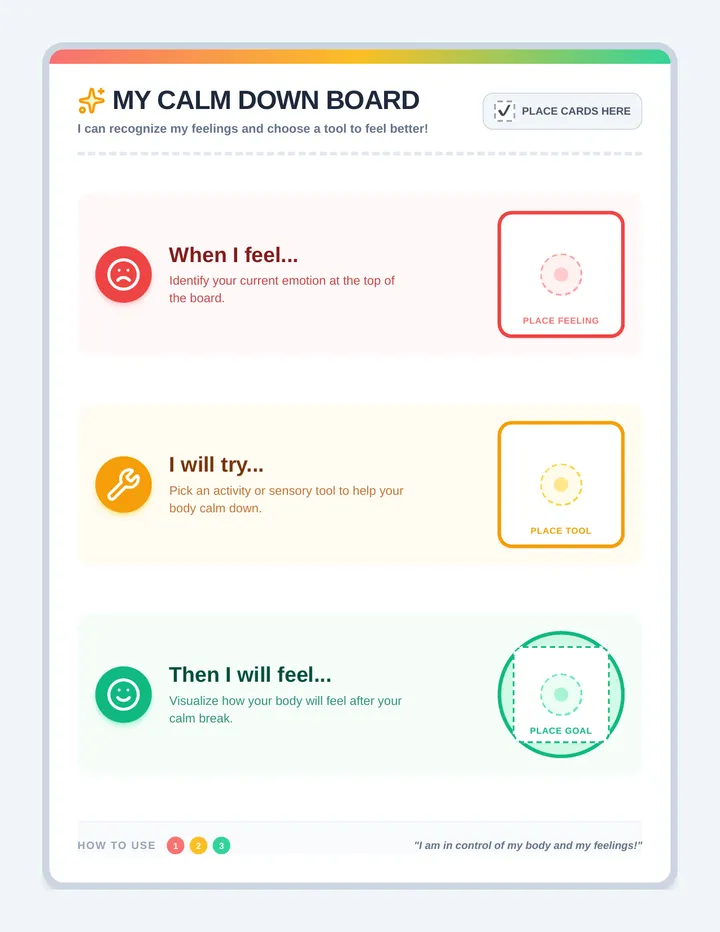
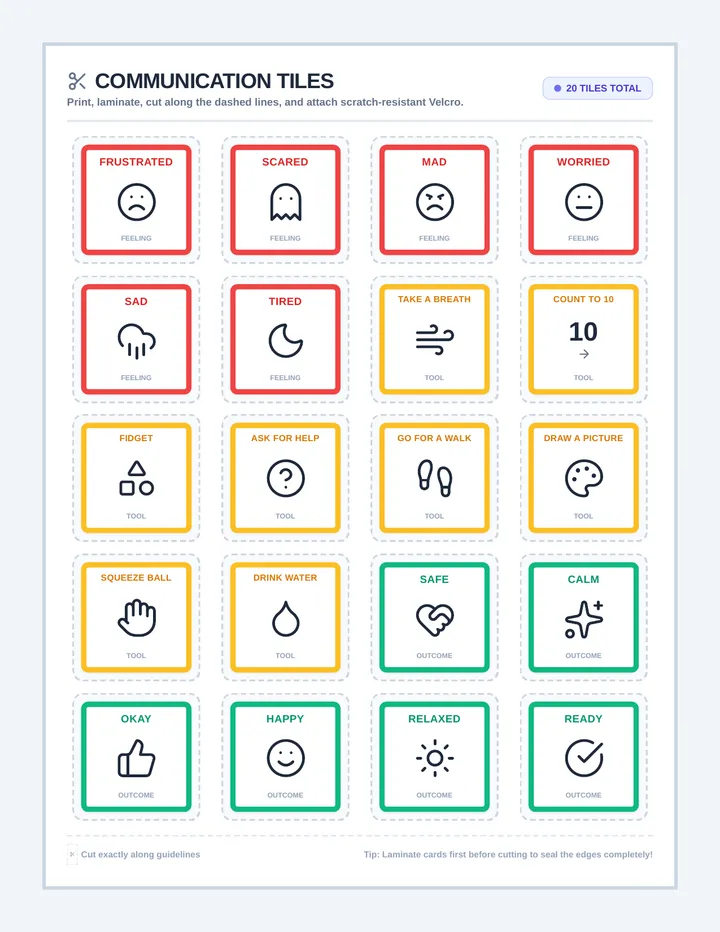
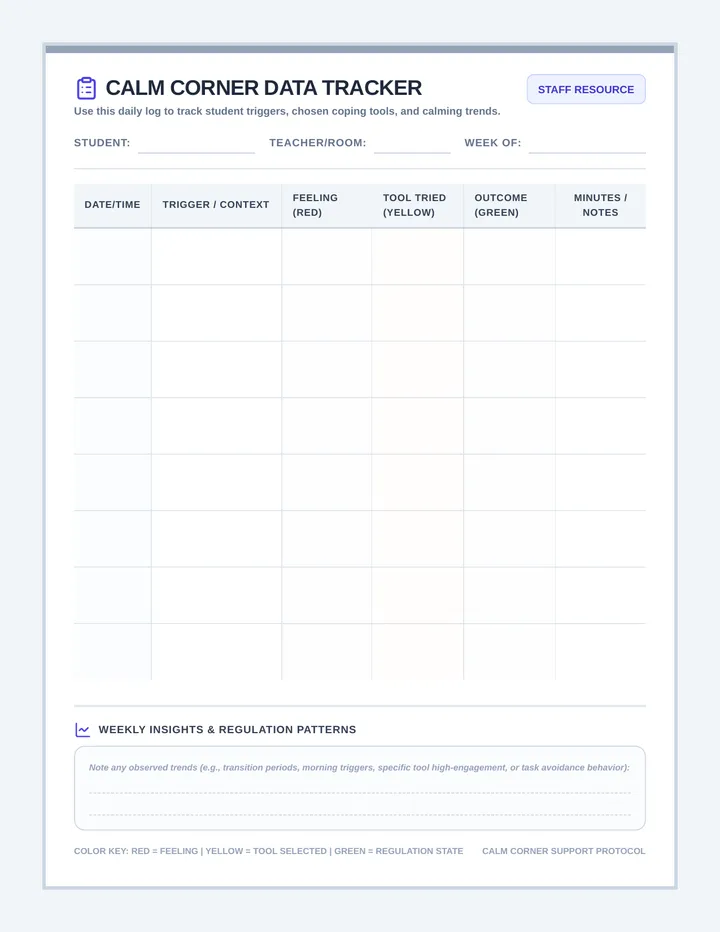
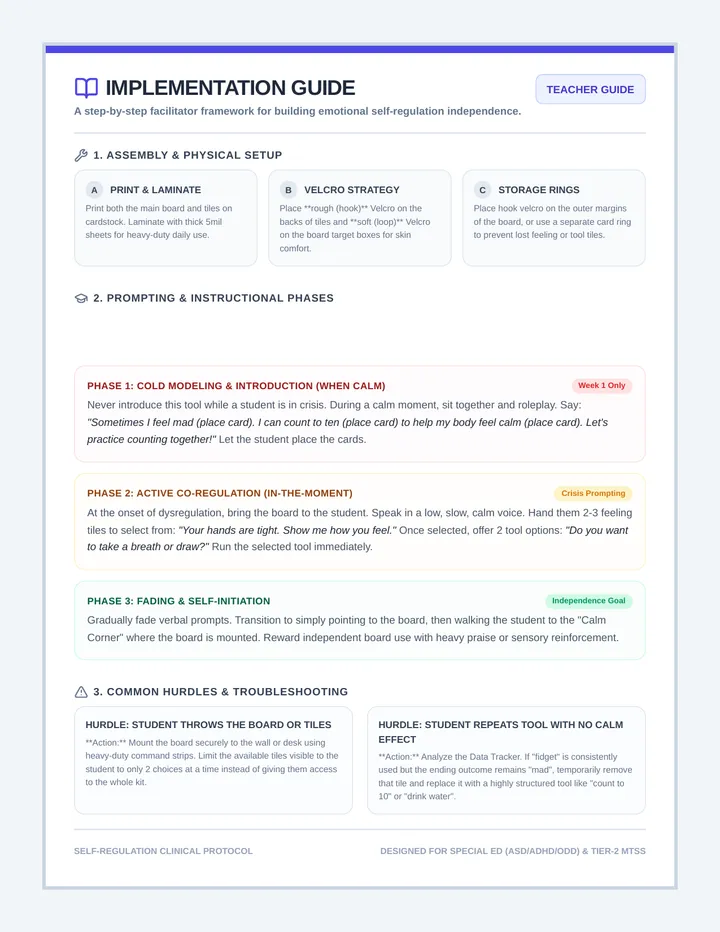
A comprehensive visual support bundle designed for student emotional self-regulation, featuring an interactive board, PECS-style communication cards, a data tracker, and a step-by-step implementation guide.
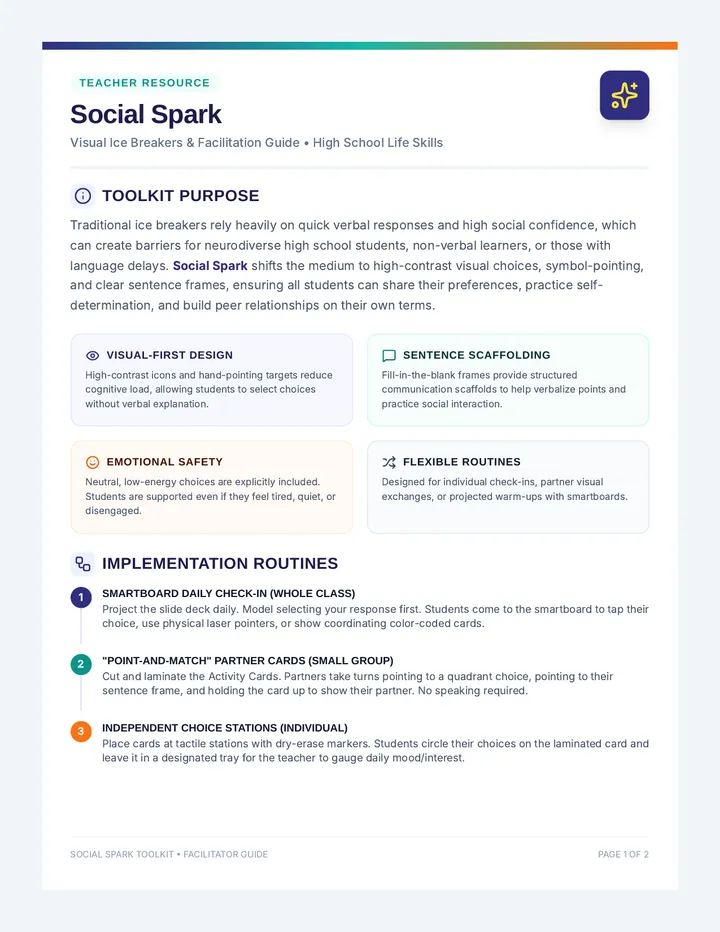
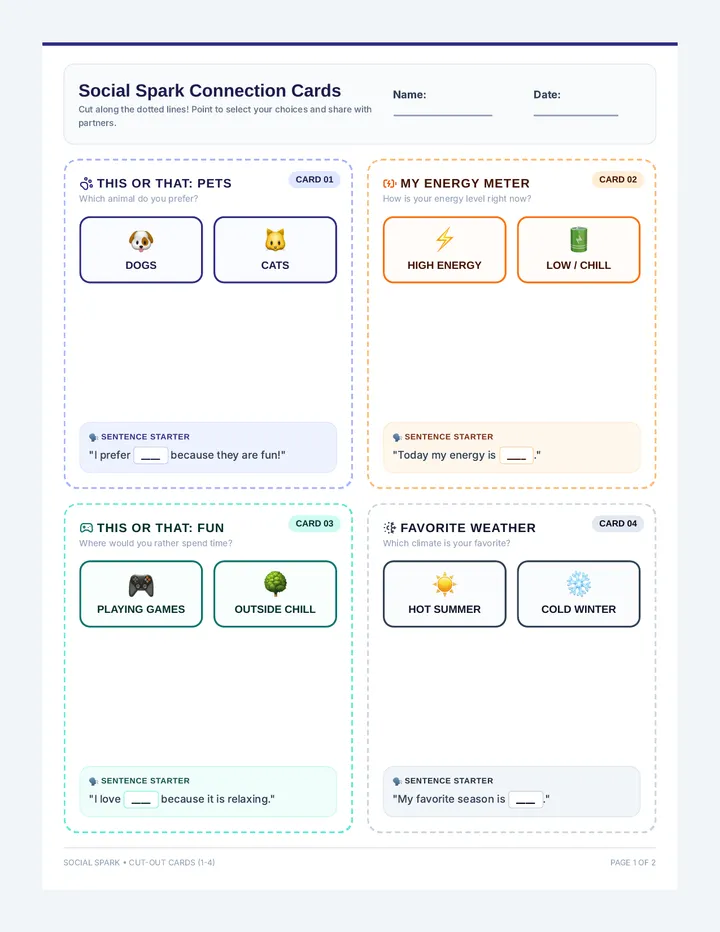
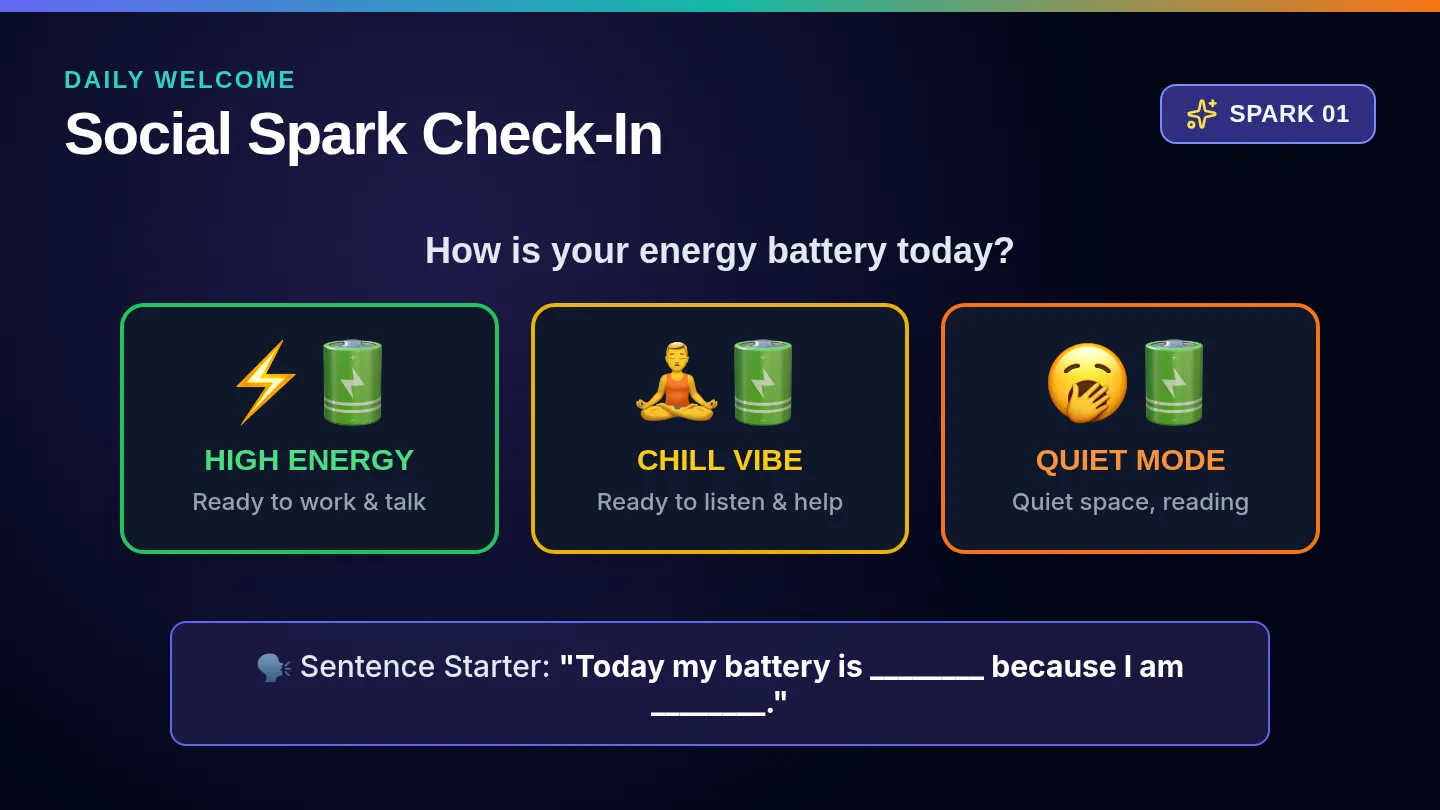
A comprehensive toolkit of visual ice breakers designed for high school life skills classrooms, featuring high-contrast visual choice boards, point-to-select options, structured sentence frames, and clear facilitator guidance to support diverse communication needs.
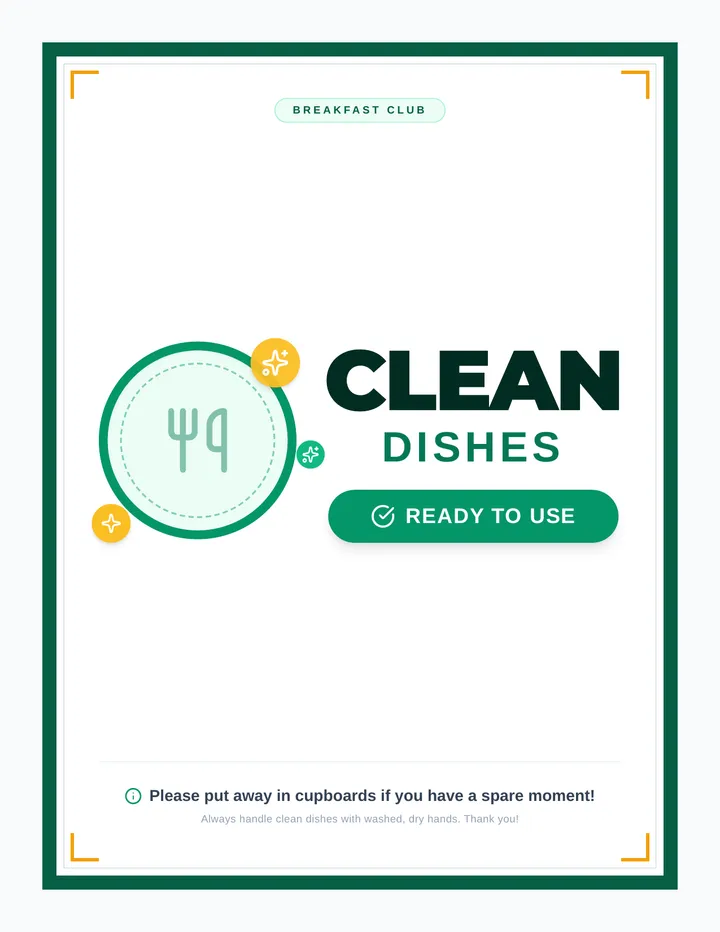
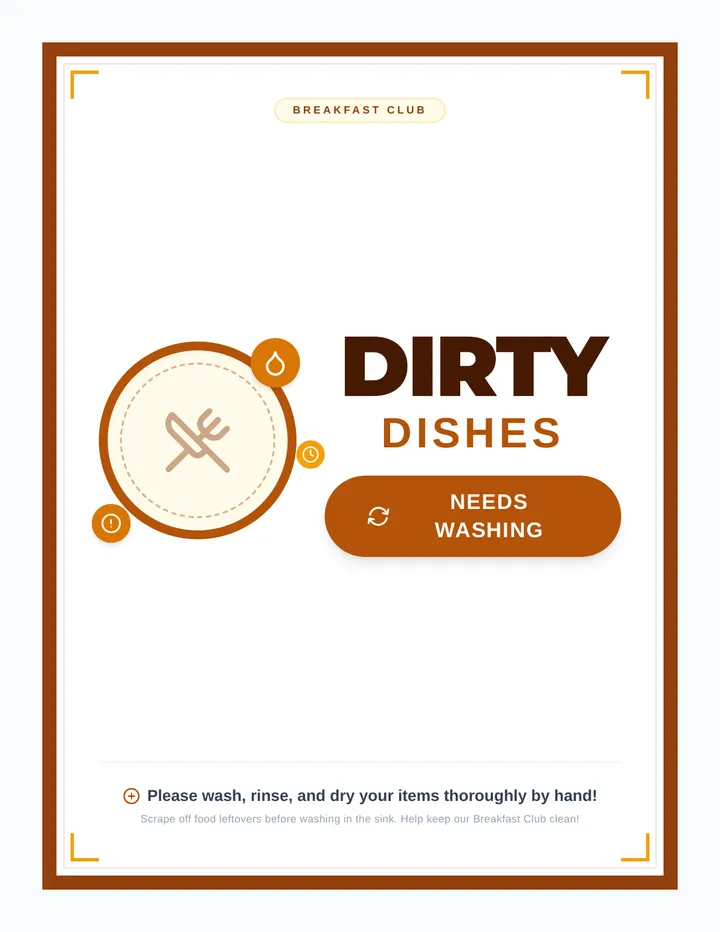
A pair of visually striking, high-contrast printable signs to organize any kitchen or classroom space. Features separate, elegant layouts for clean and dirty dishes to maintain perfect organization.
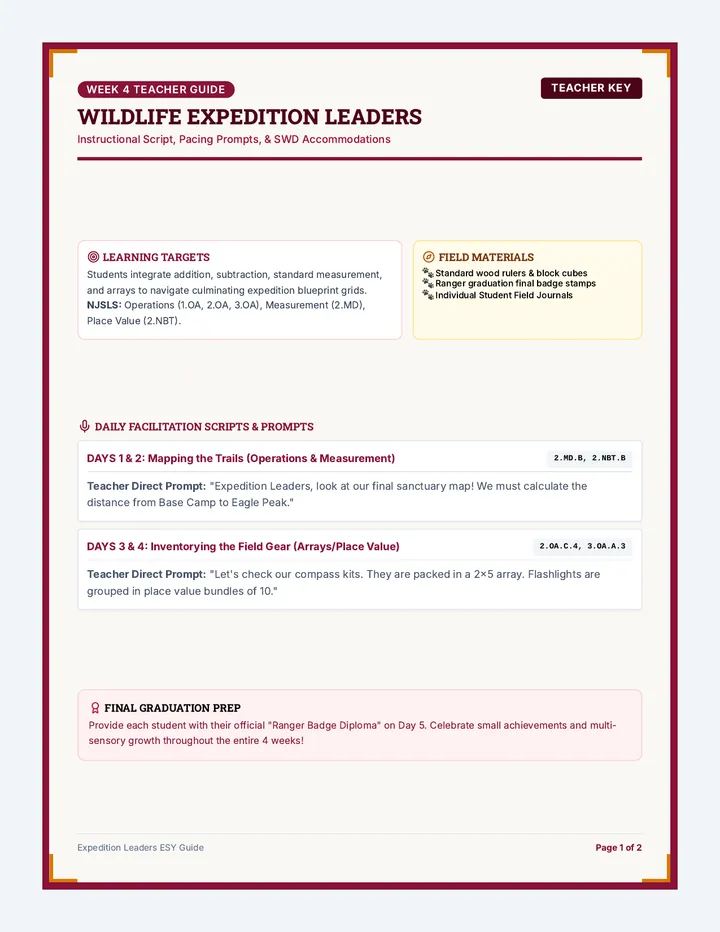
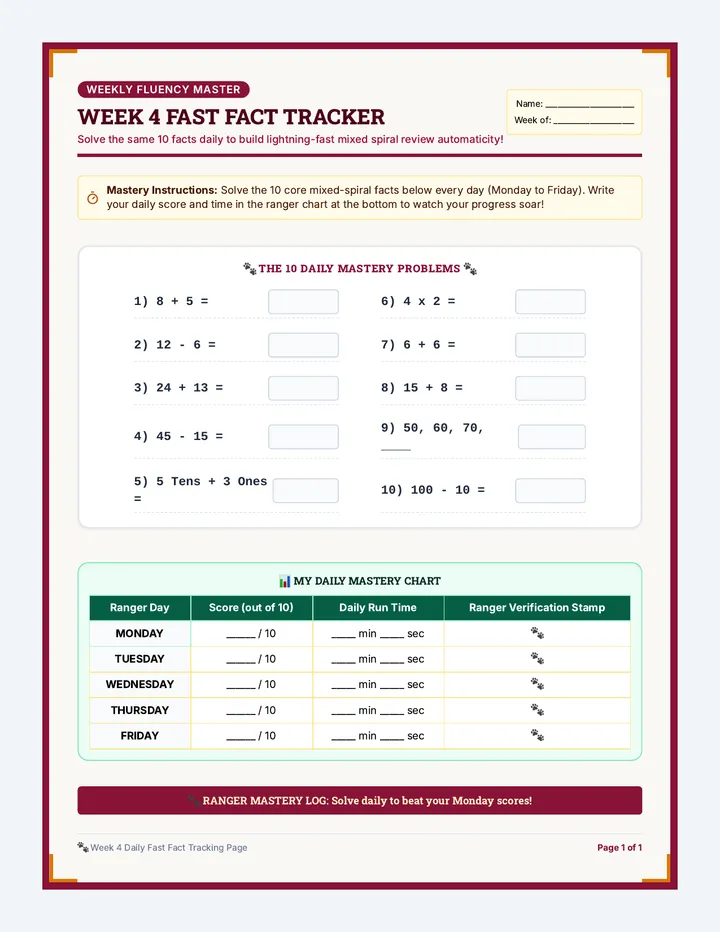
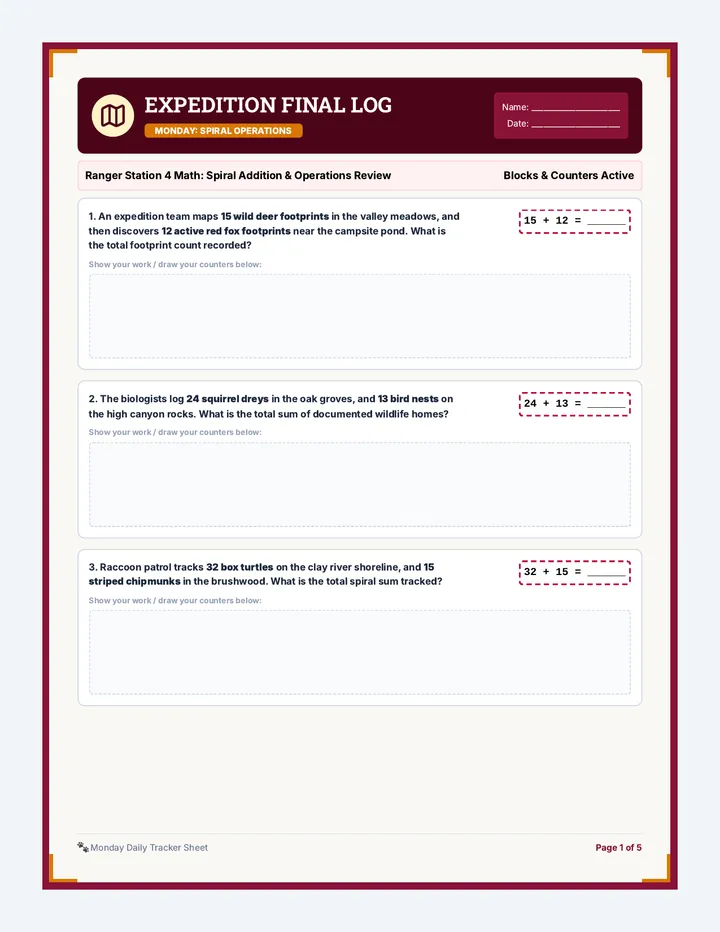
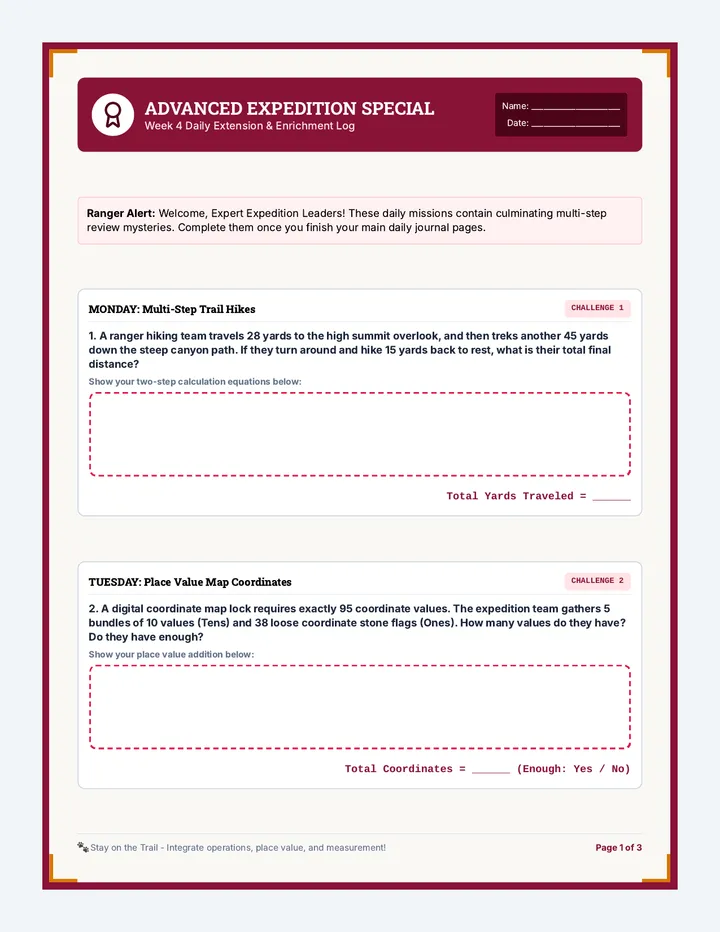
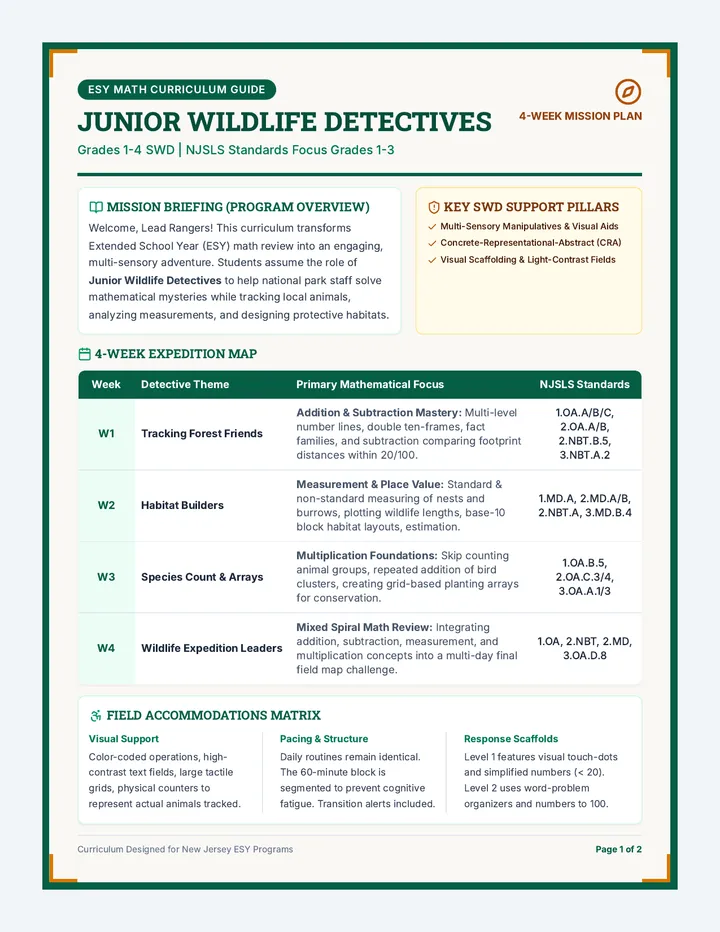
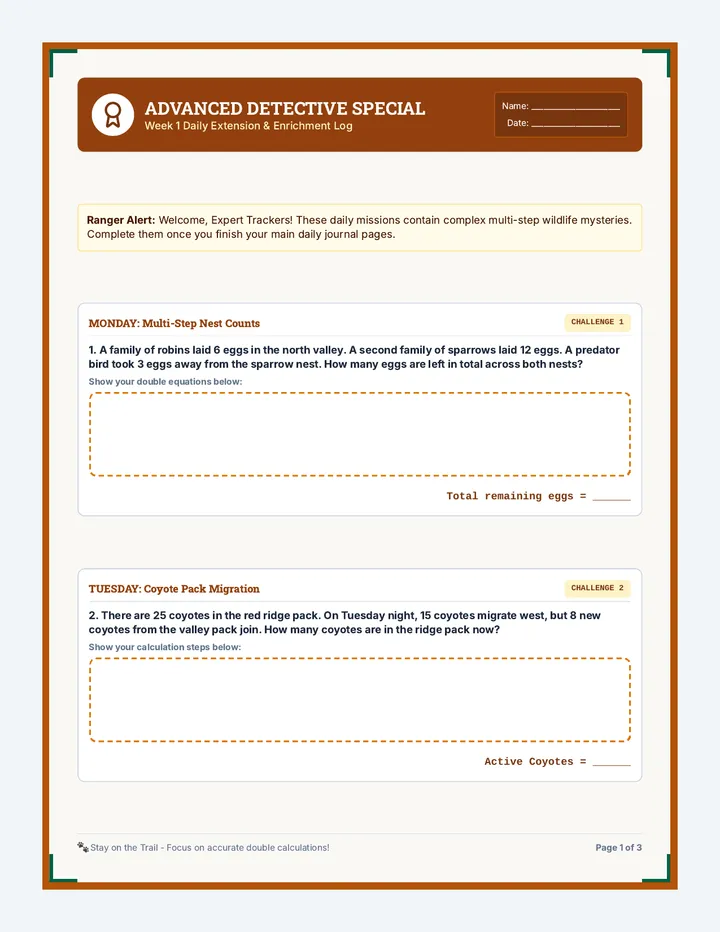
Week 4 of the ESY Wildlife Detective curriculum. Focuses on a comprehensive mixed spiral math review (NJSLS operations, place value, and measurement) through a culminating multi-day outdoor expedition challenge.
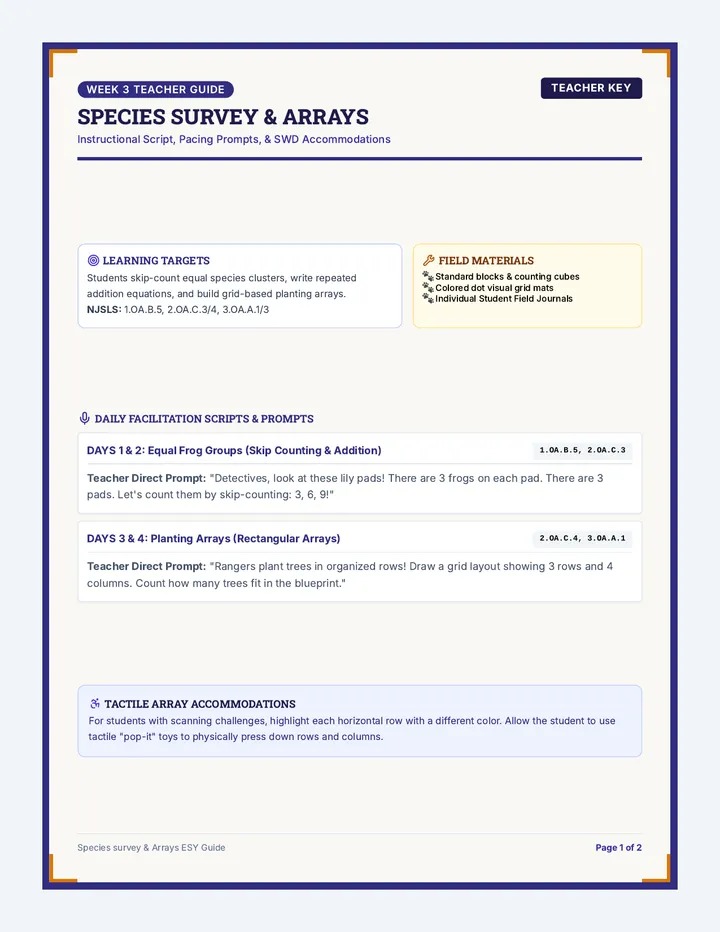
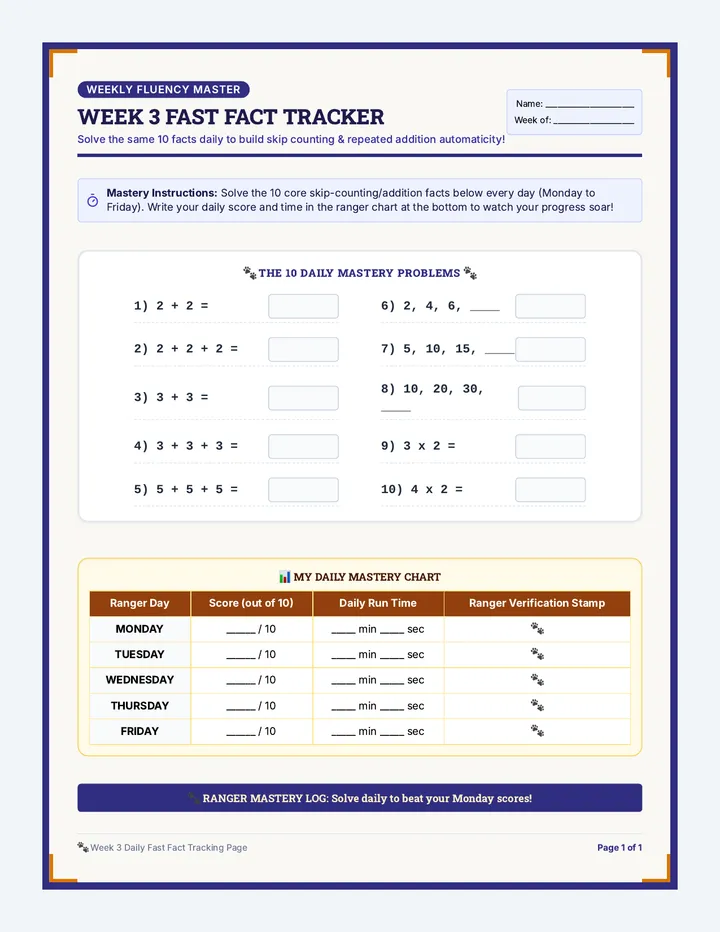
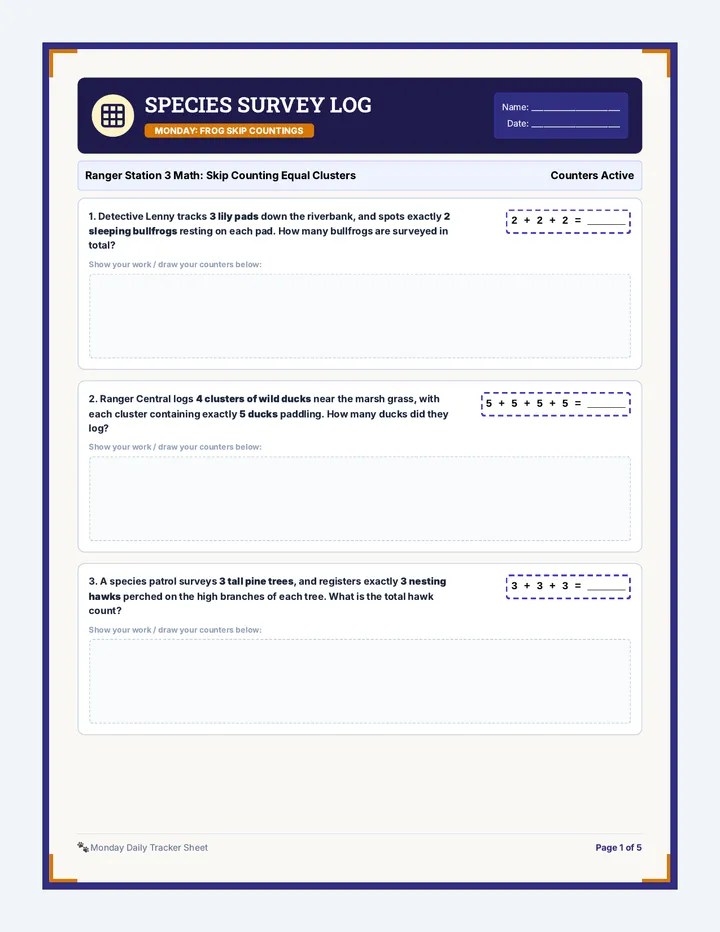
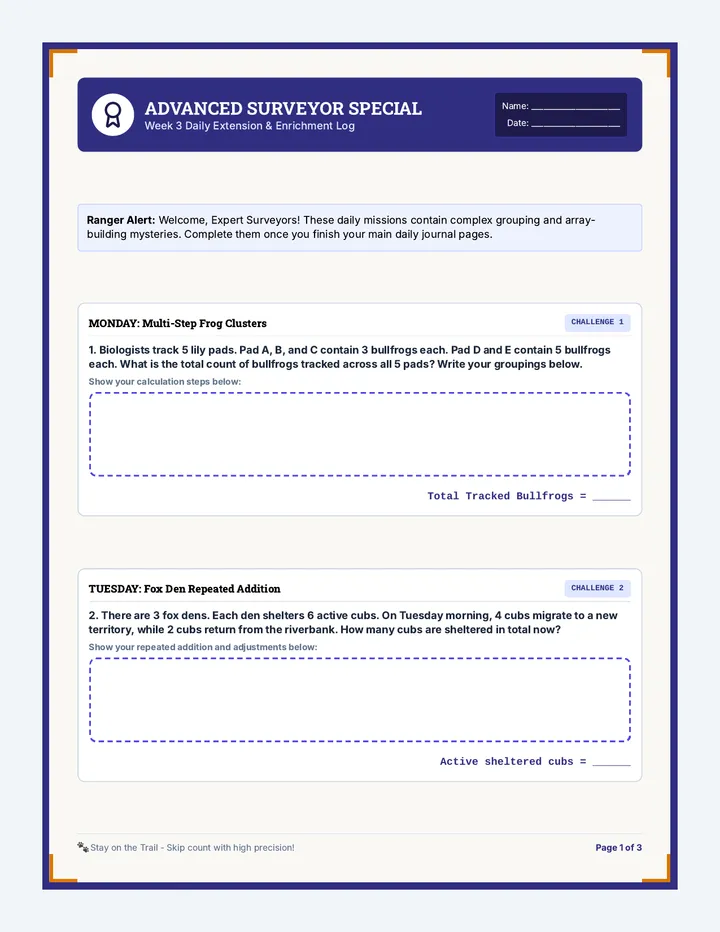
Week 3 of the ESY Wildlife Detective curriculum. Focuses on the foundations of multiplication (NJSLS 2.OA, 3.OA) through repeated addition, skip-counting animal clusters, and creating grid-based habitat arrays.
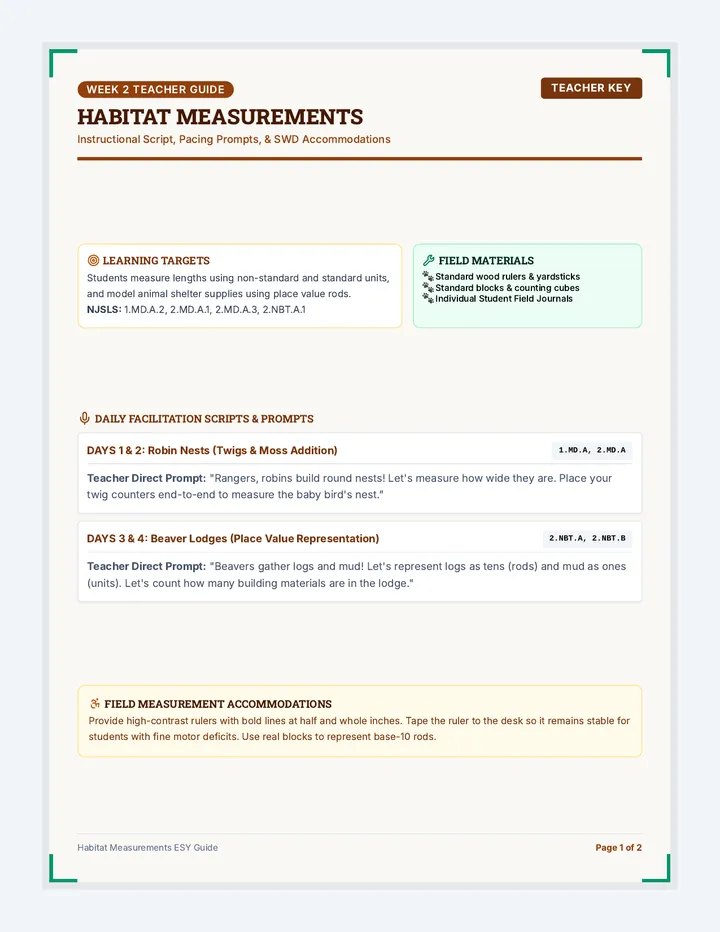
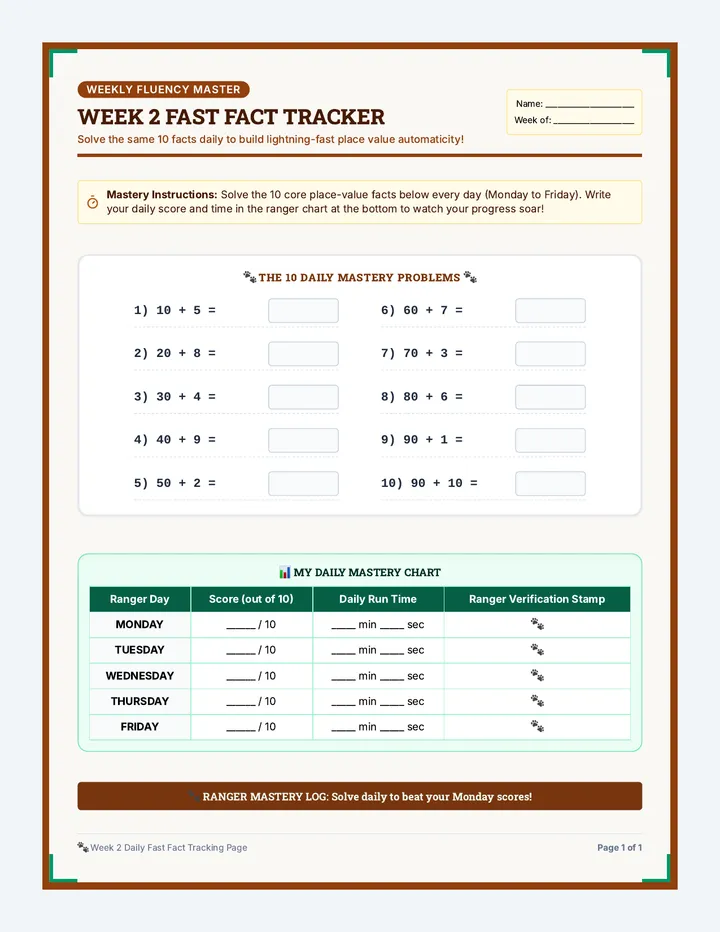
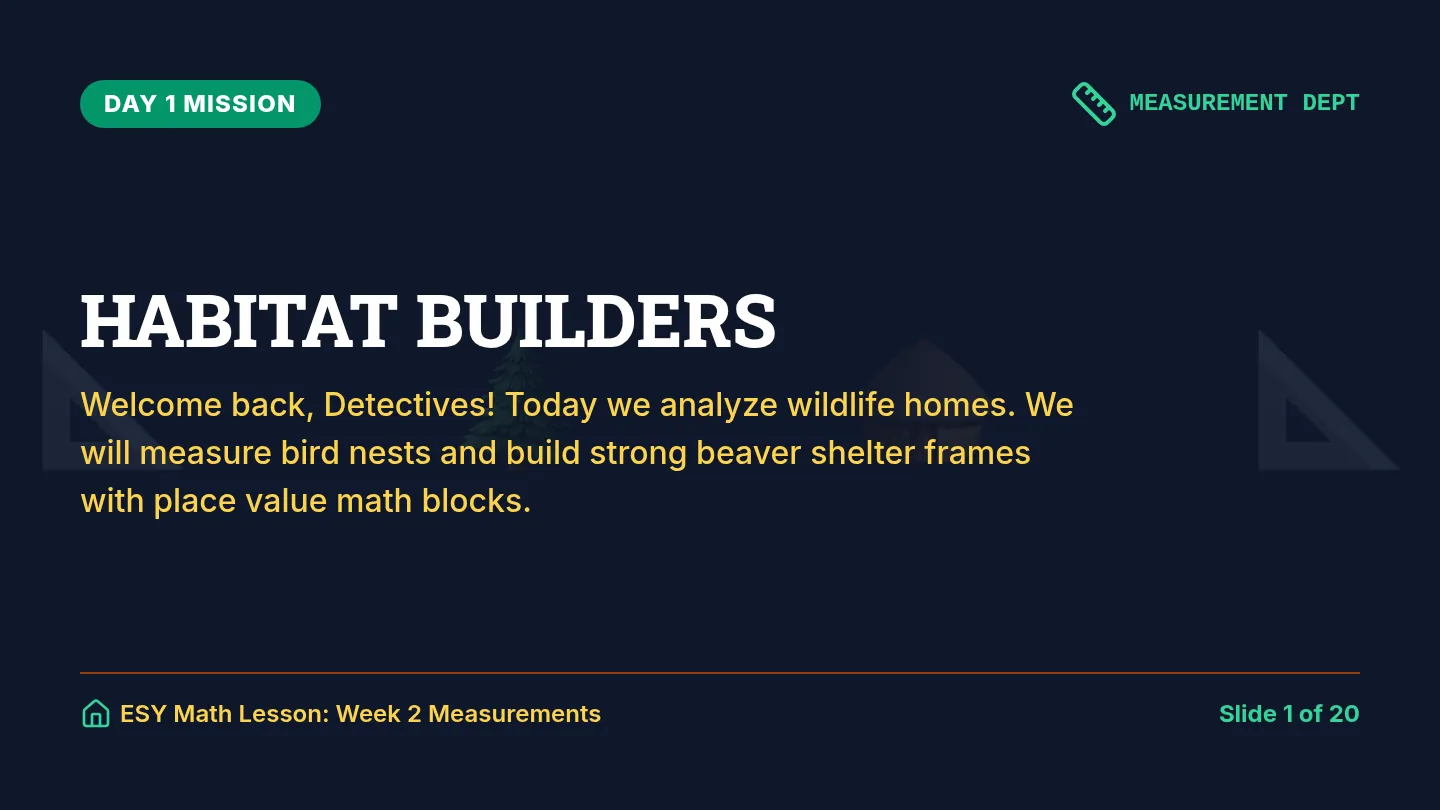
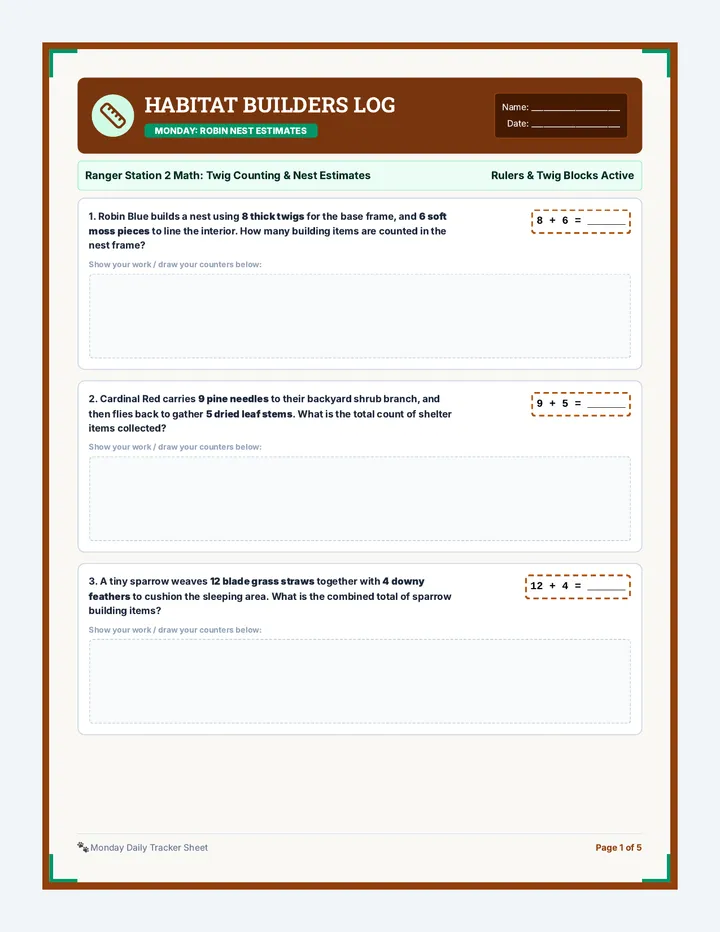
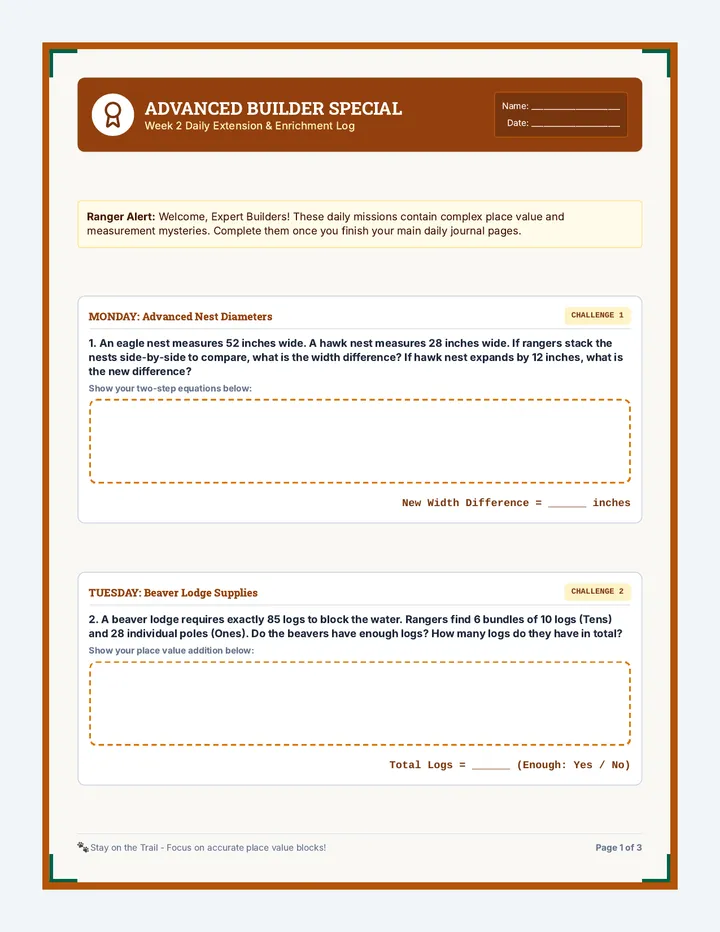
Week 2 of the ESY Wildlife Detective curriculum. Focuses on place value, estimation, and measurement (NJSLS 1.MD, 2.MD, 3.MD) by measuring nest diameters, estimating burrow lengths, and understanding animal sizes.
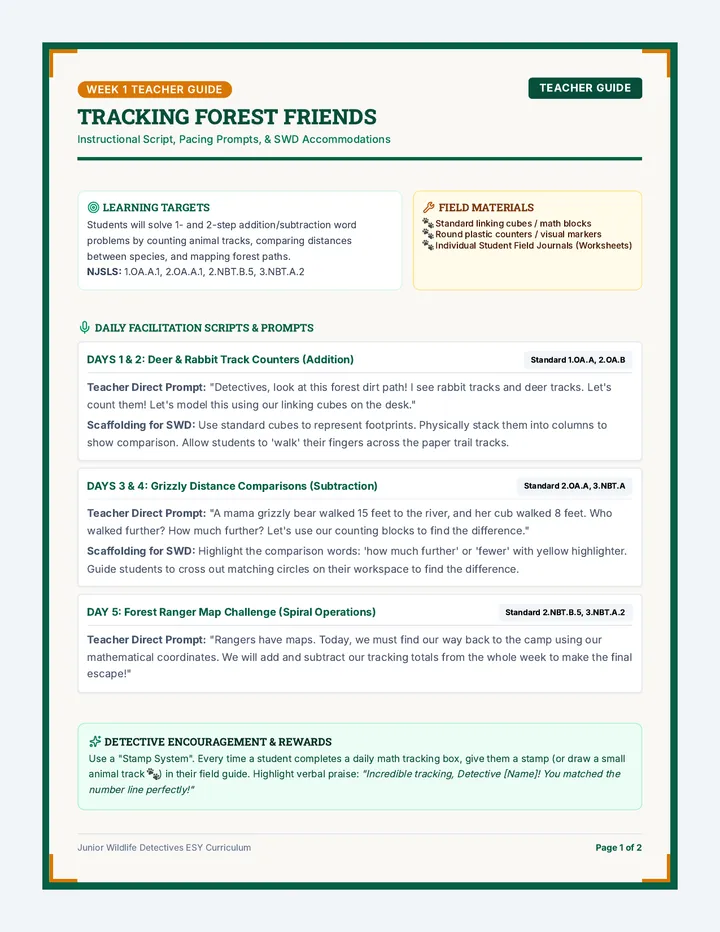
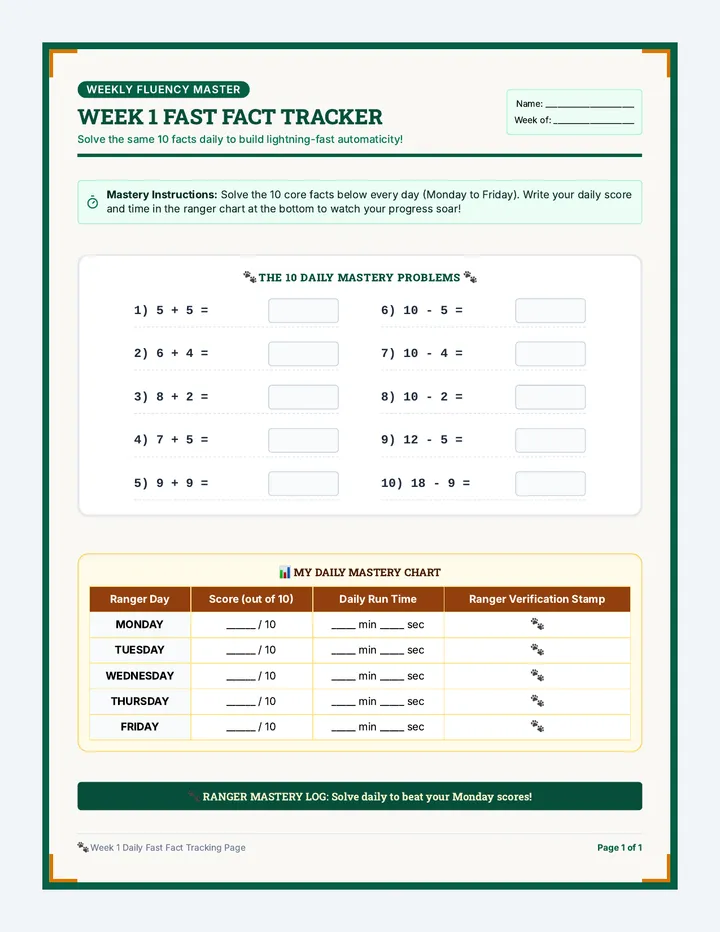
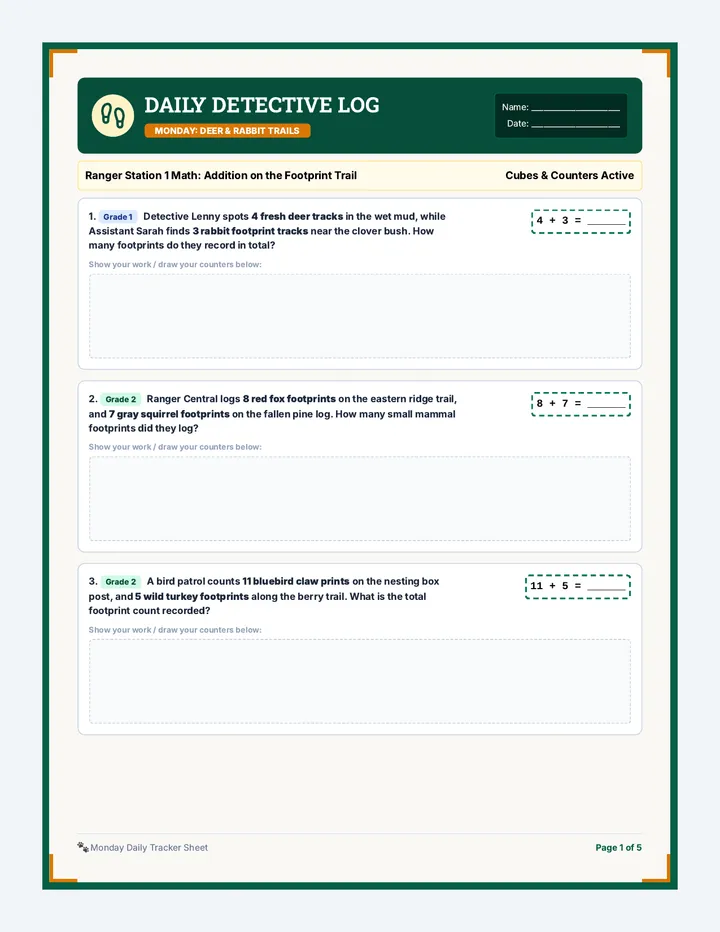
Week 1 of the ESY Wildlife Detective curriculum. Focuses on addition and subtraction mastery within 20 and 100 by tracking animal footprints, counting steps, and analyzing forest trail data. Scaffolded for grades 1-4.
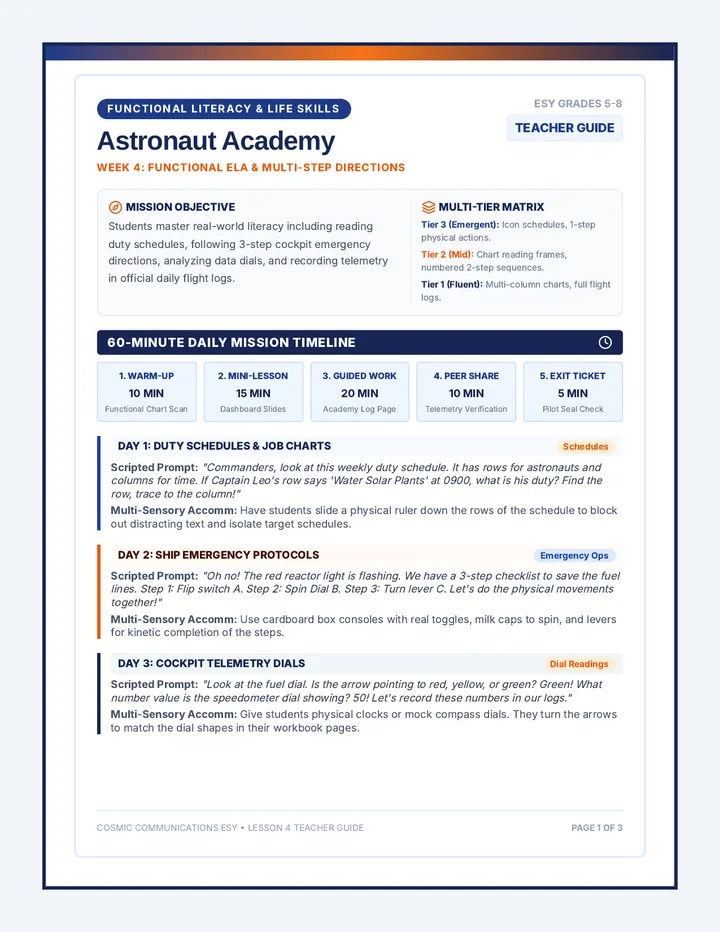
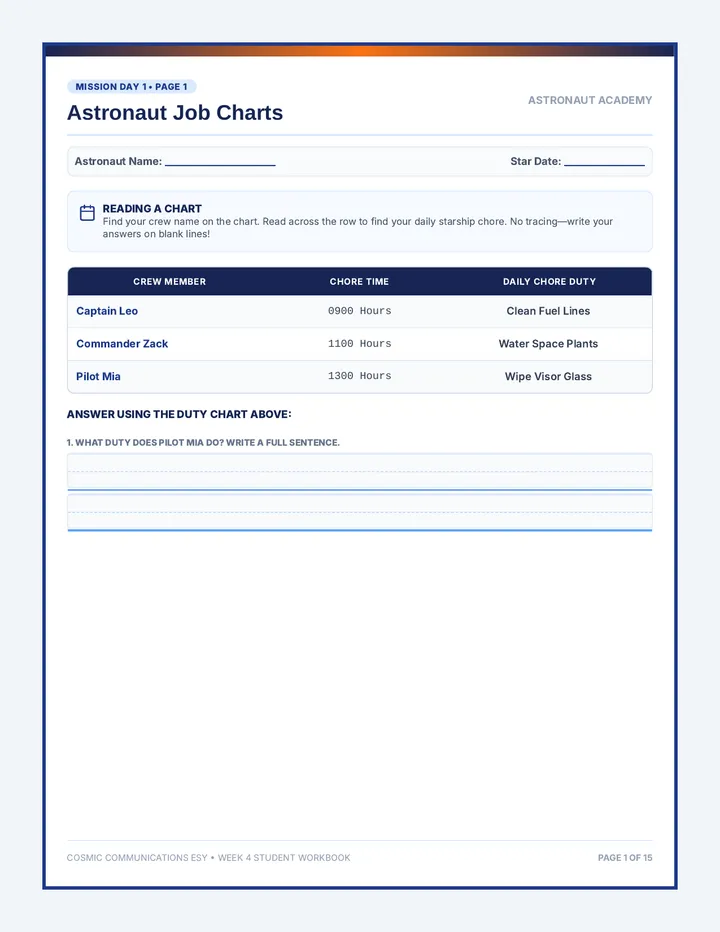
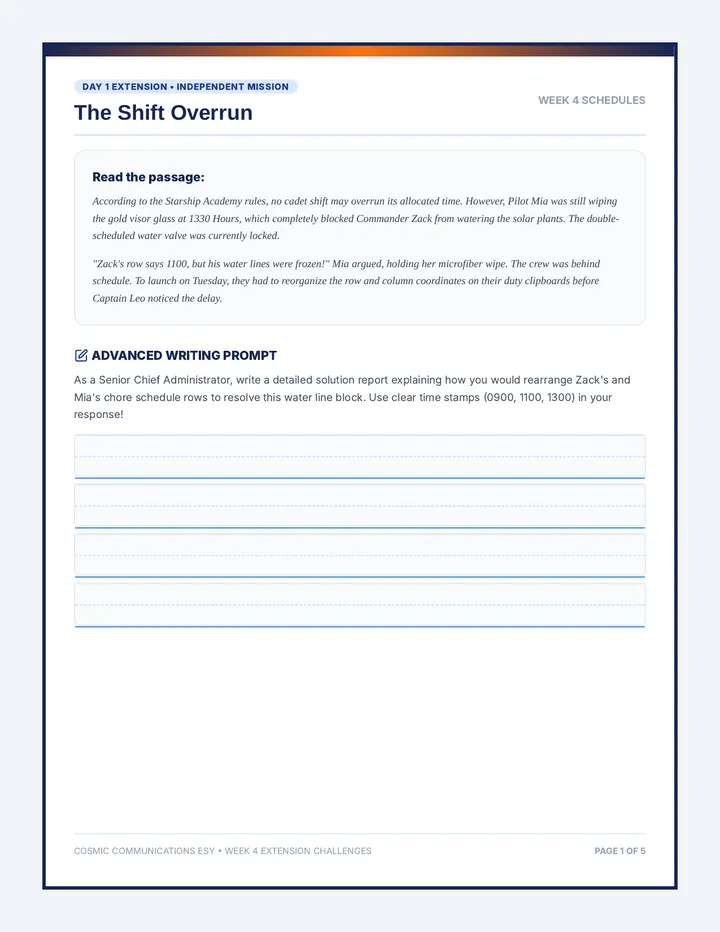
Week 4 focuses on real-world reading comprehension, functional writing, and following multi-step directions. Students explore cosmic job charts, spaceship emergency protocols, and daily logs.
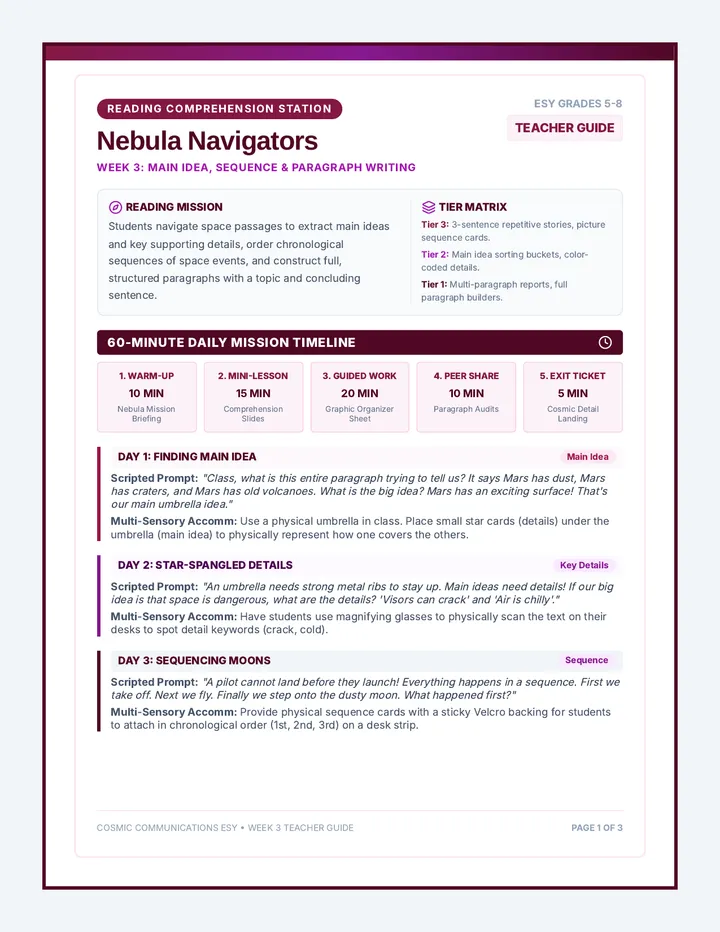
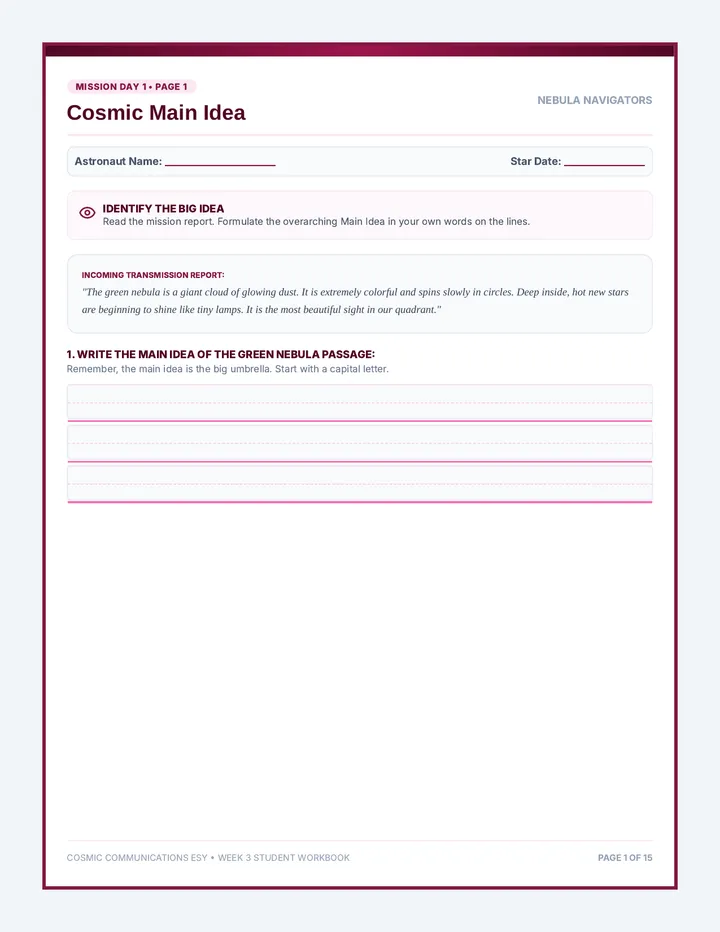
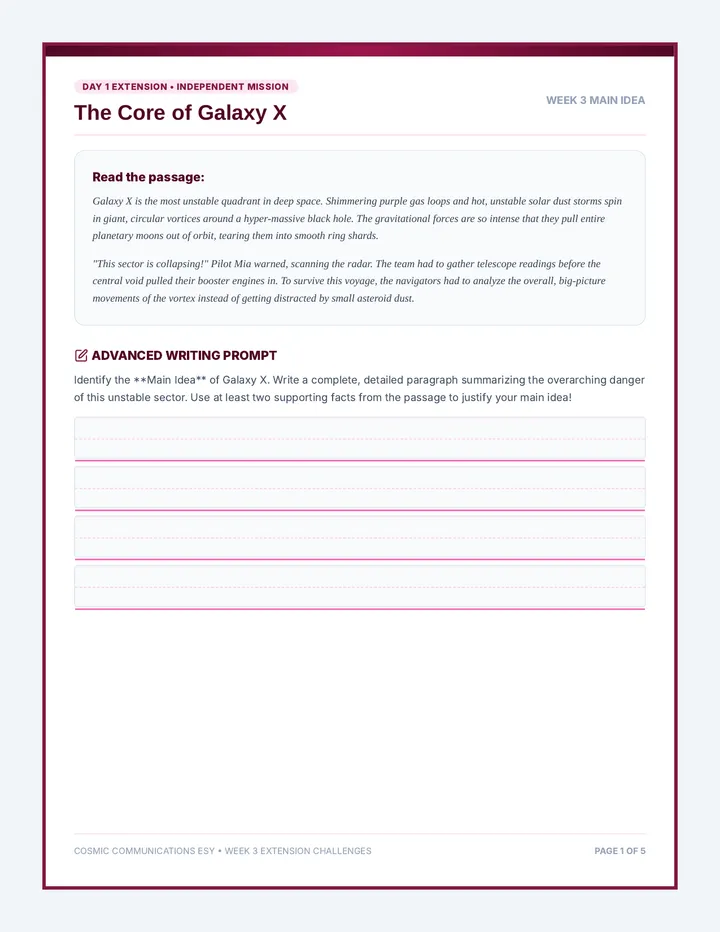
Week 3 focuses on reading comprehension and structured paragraph writing. Students learn to identify main ideas and details, track sequences, and write cohesive paragraphs using graphic organizers.
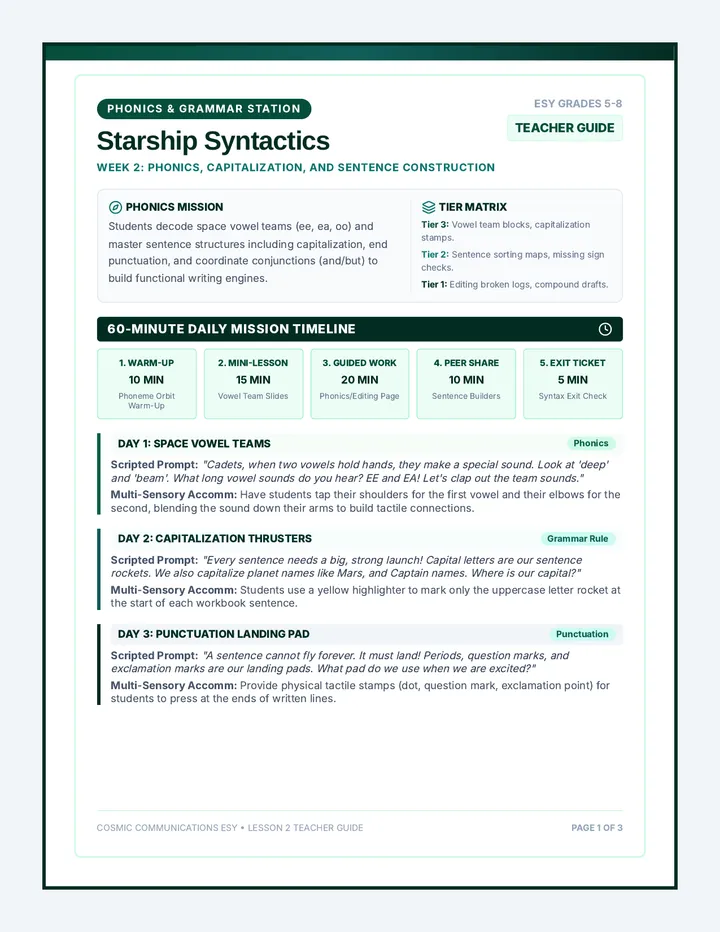
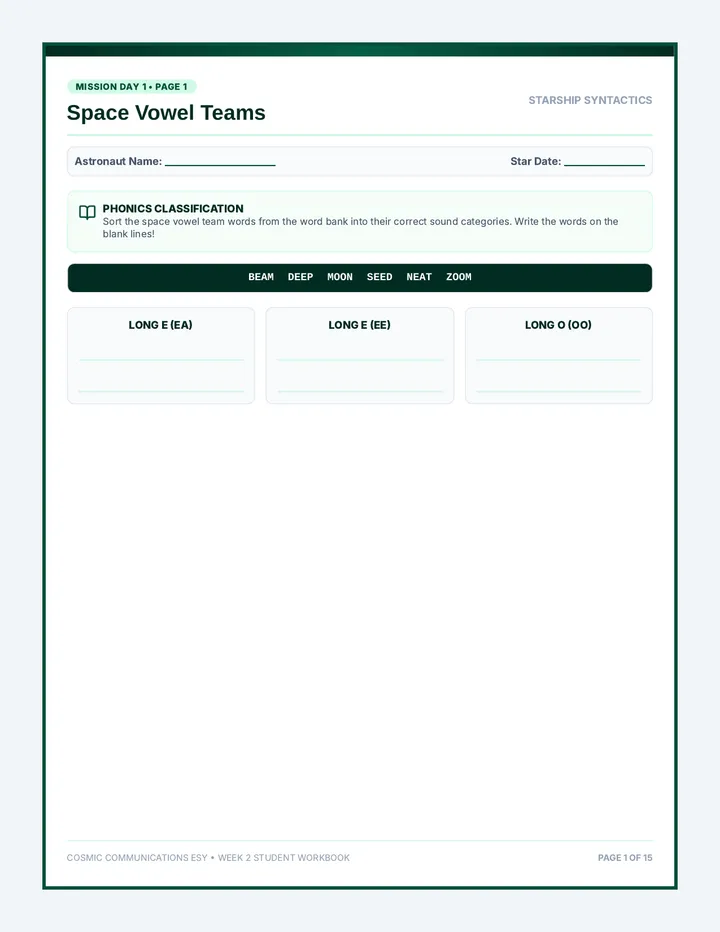
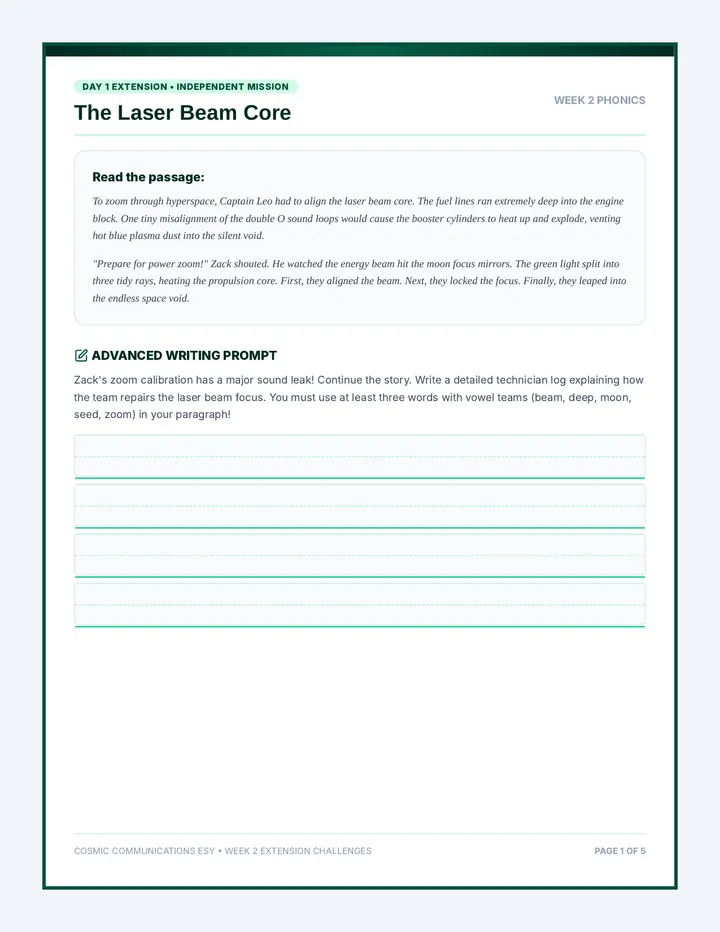
Week 2 focuses on phonics, decoding, and simple sentence structures. Students practice identifying vowel teams, correcting basic capitalization and punctuation errors, and constructing solid sentences.
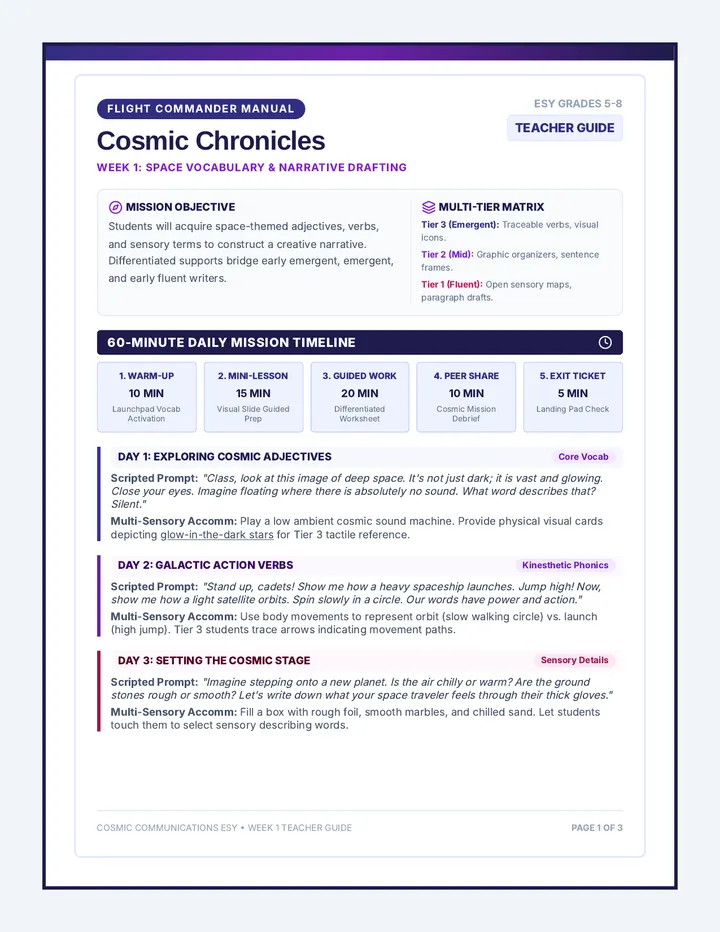
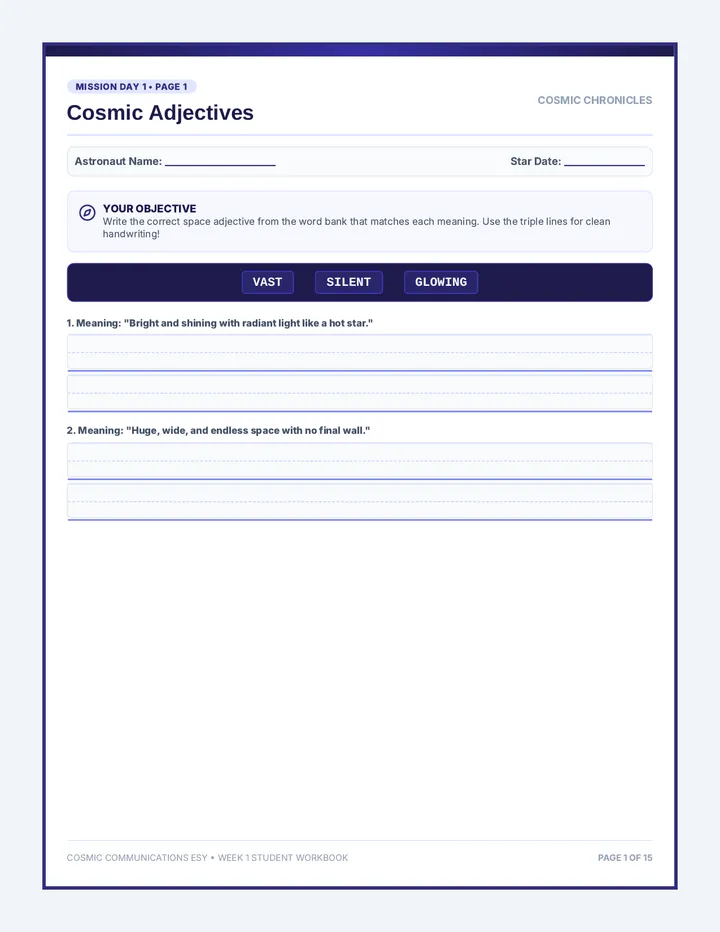
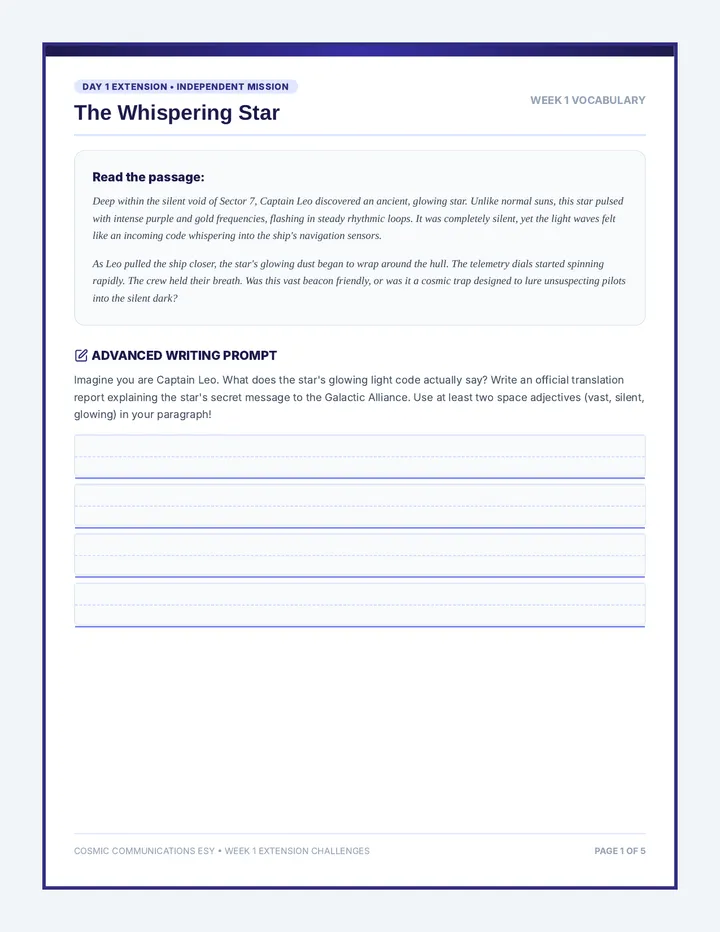
Week 1 focuses on acquiring cosmic vocabulary and drafting short, creative space stories. It guides students through sensory word exploration and provides multi-tiered graphic organizers for narrative drafting.
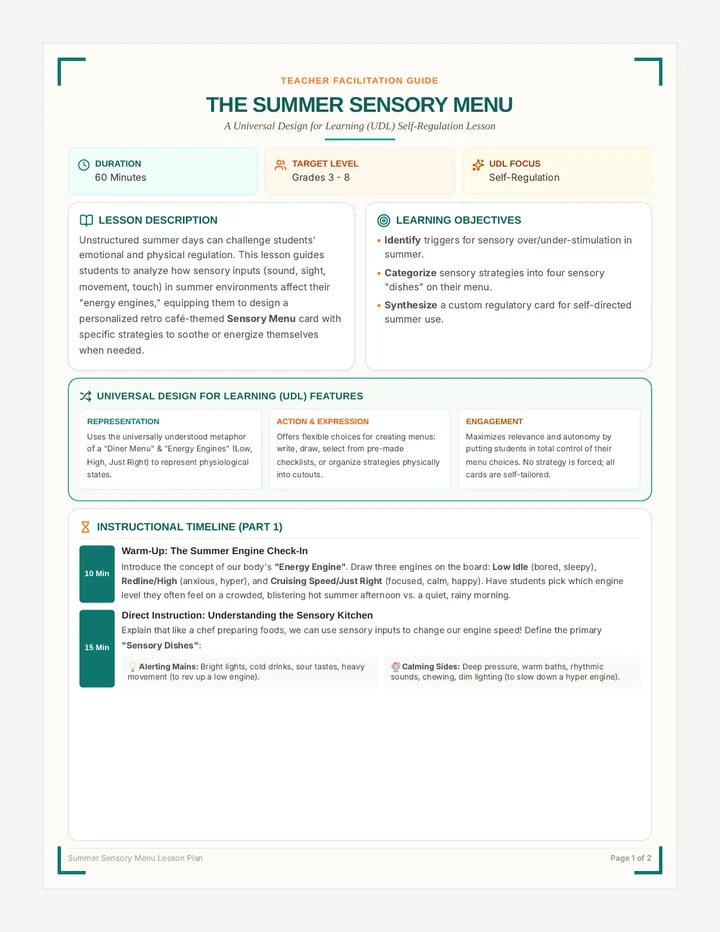
A self-regulation lesson based on Universal Design for Learning (UDL). Students explore how sensory stimuli and summer environments affect their energy levels and design a personalized 'sensory menu' card filled with tailored coping strategies to maintain emotional balance during unstructured summer months.
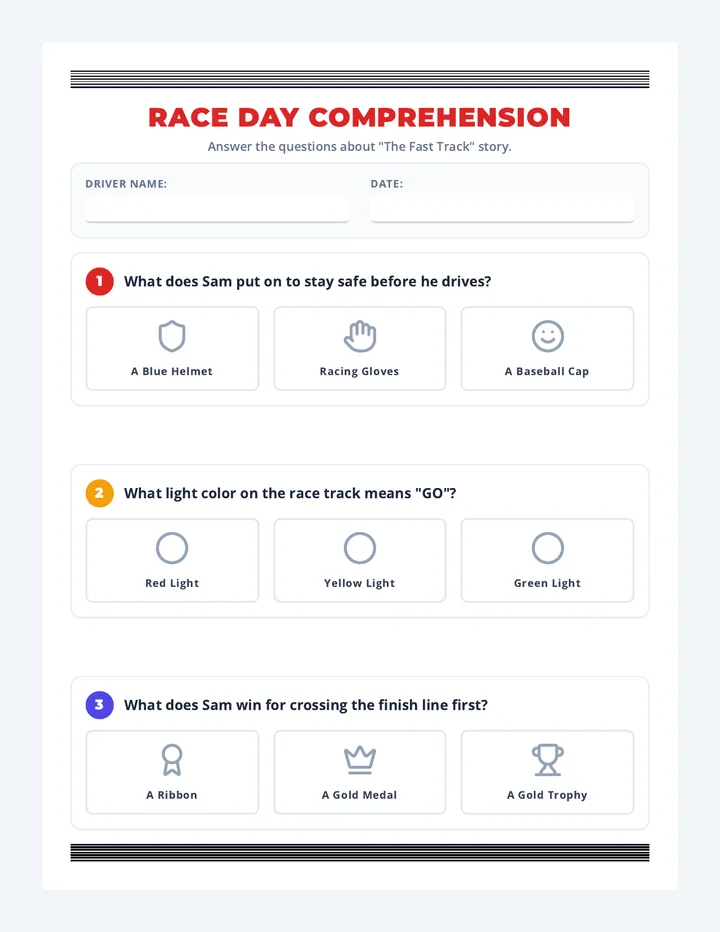
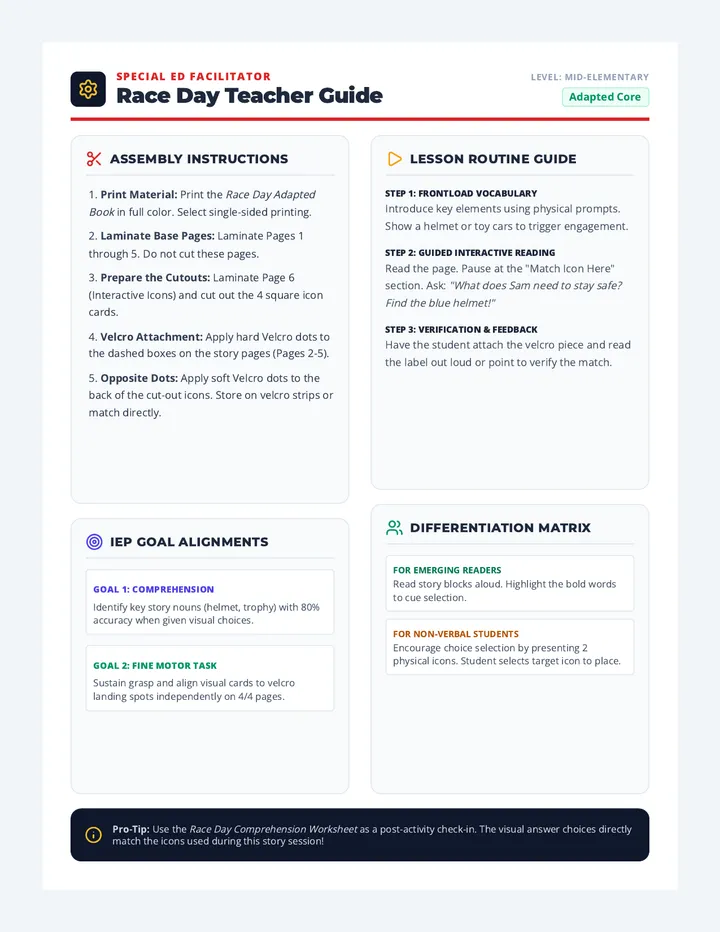
An adapted reading lesson centered around a simplified, highly visual story about car racing. Ideal for 6th-grade special education students needing mid-elementary comprehension supports and interactive matching tasks.
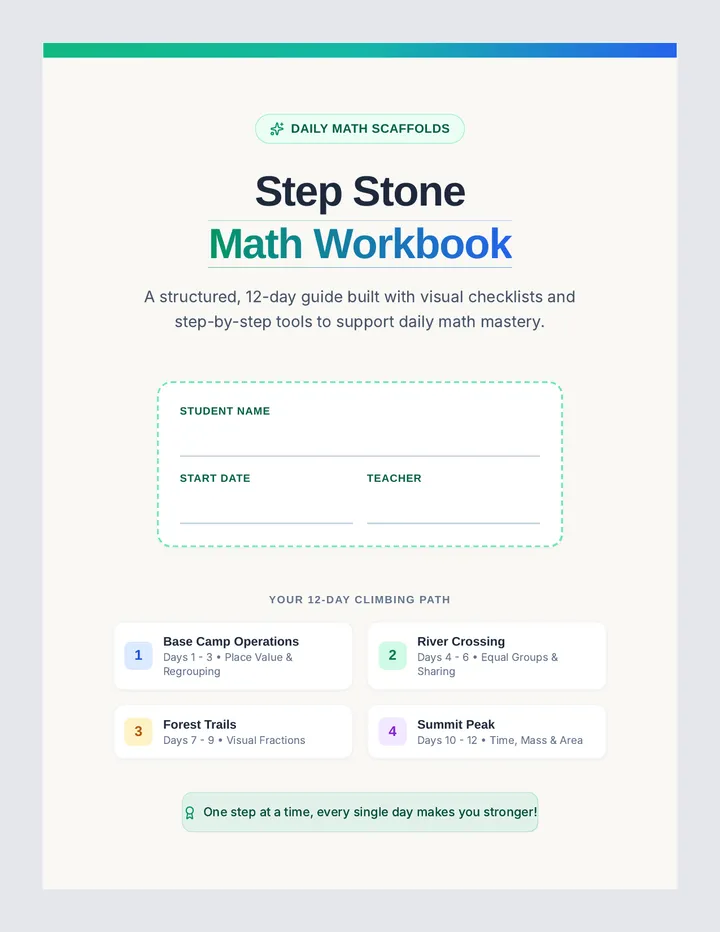
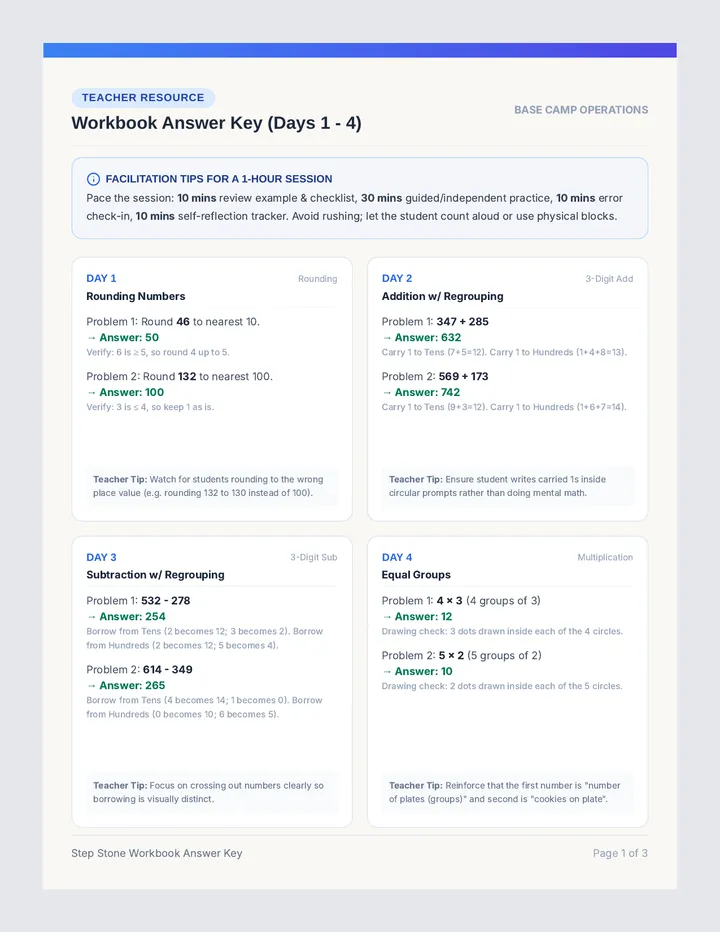
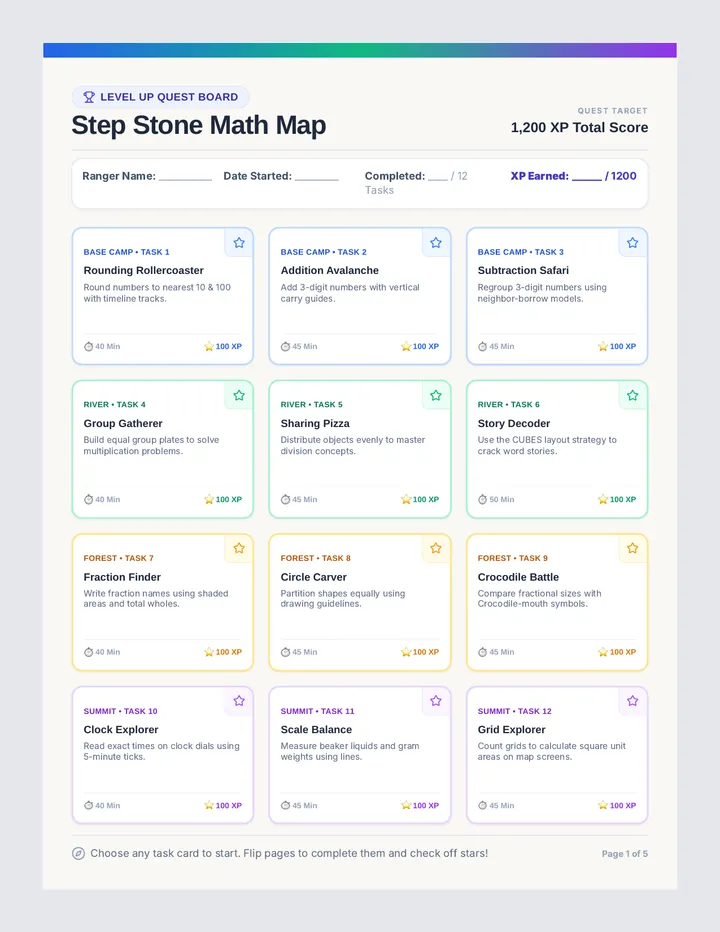
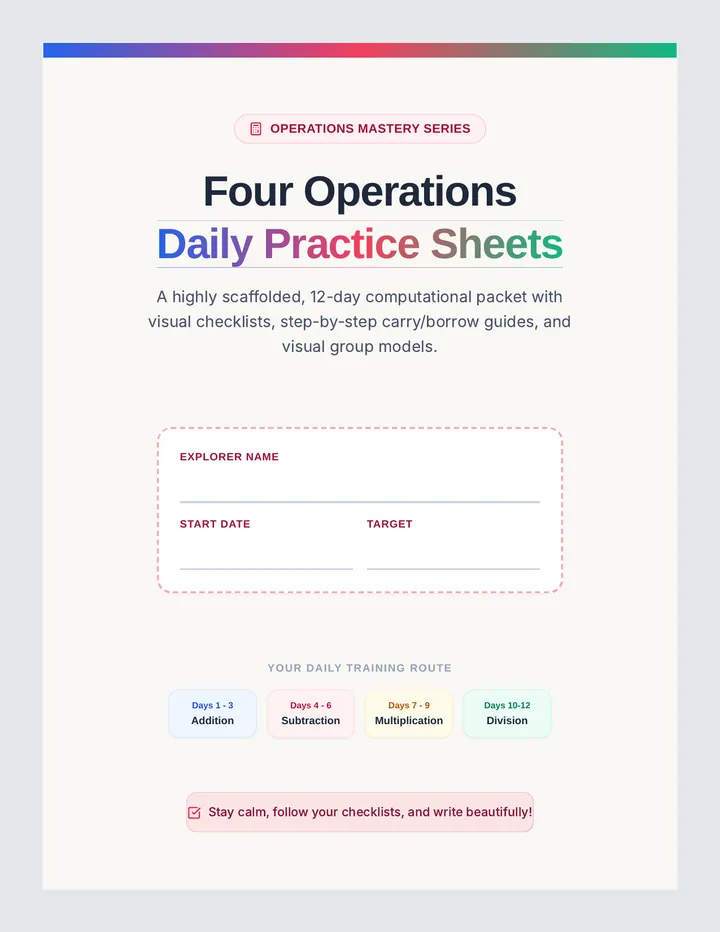
A collection of highly scaffolded daily math worksheets and guides designed for 7th-grade students with Specific Learning Disabilities (SLD) working at a foundational 3rd-grade level. Each day provides targeted skill practice, clear visual checklists, step-by-step scaffolds, and sensory-friendly layout.