Students will practice reading digital and simplified analog thermometers, focusing on identifying safe and dangerous temperature ranges in the home and environment. Includes a set of thermometer task cards.
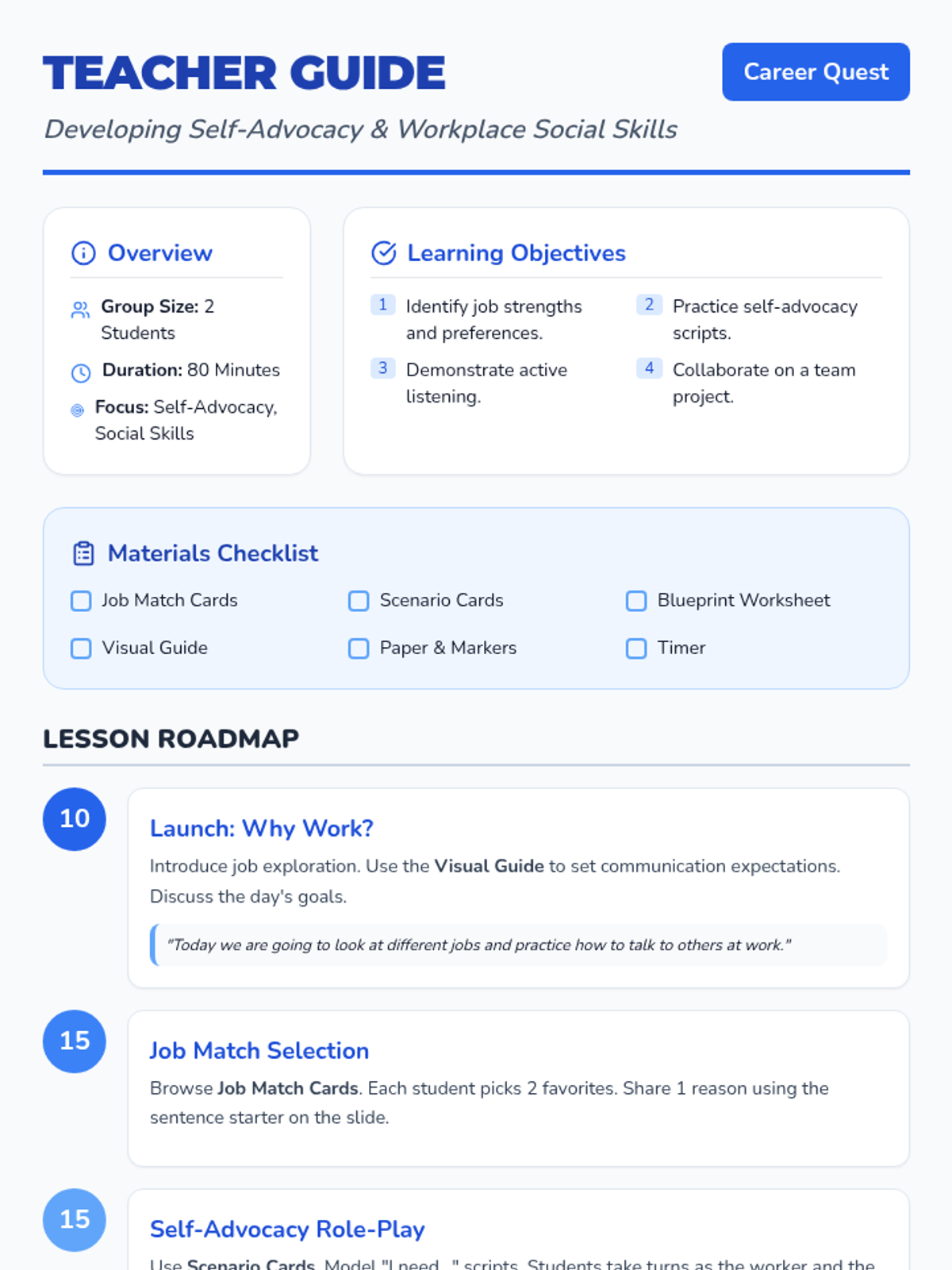
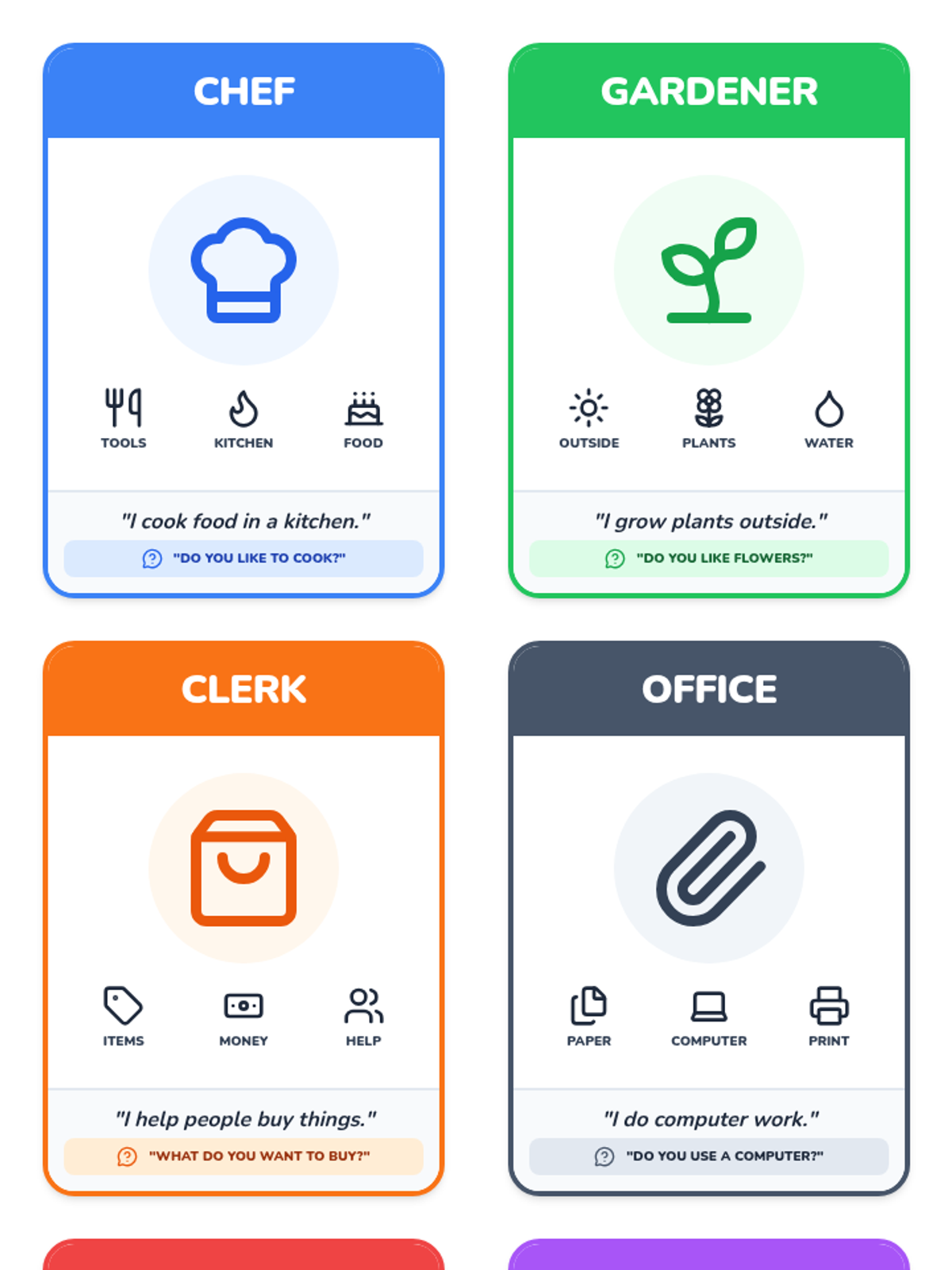
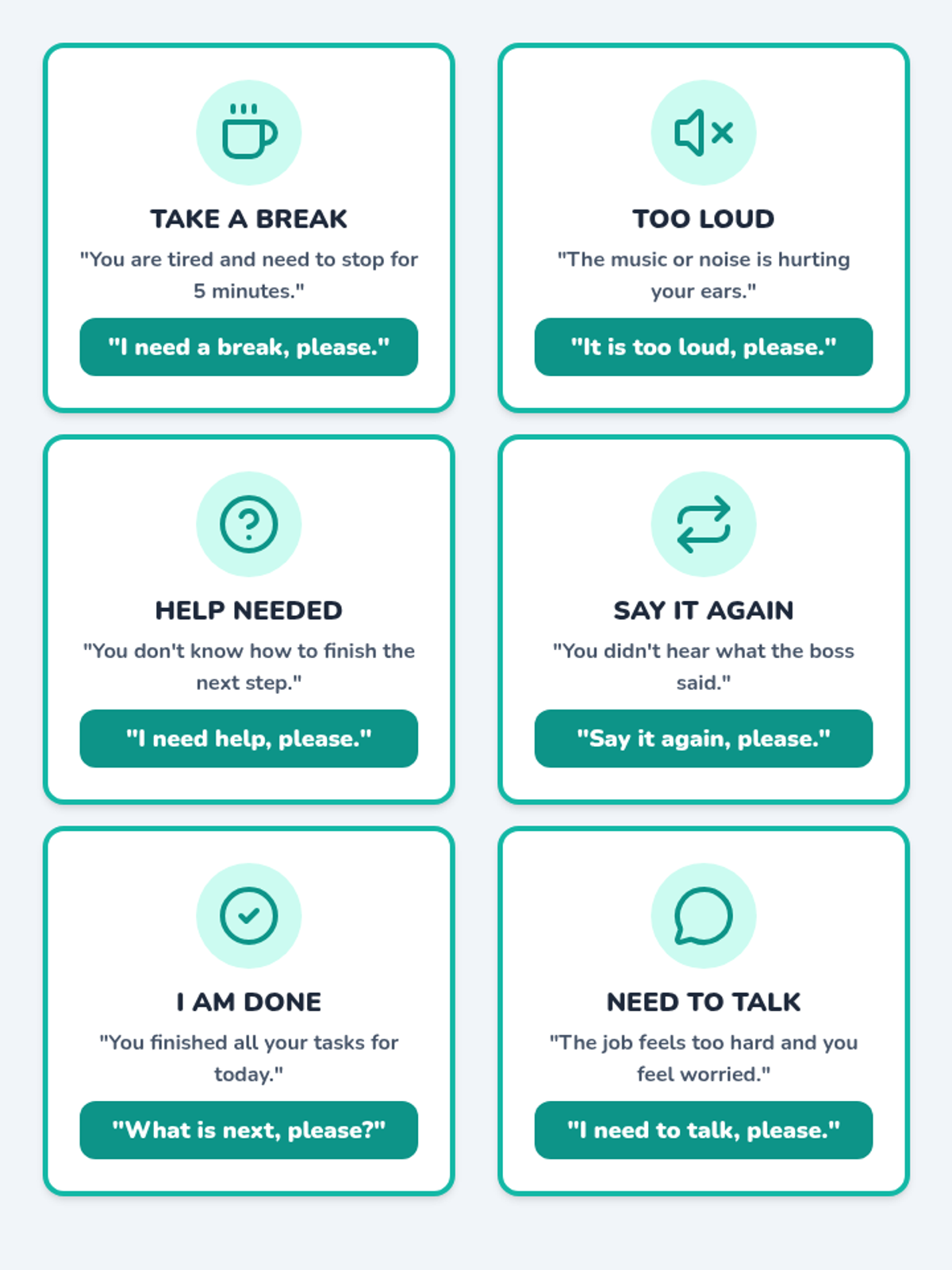
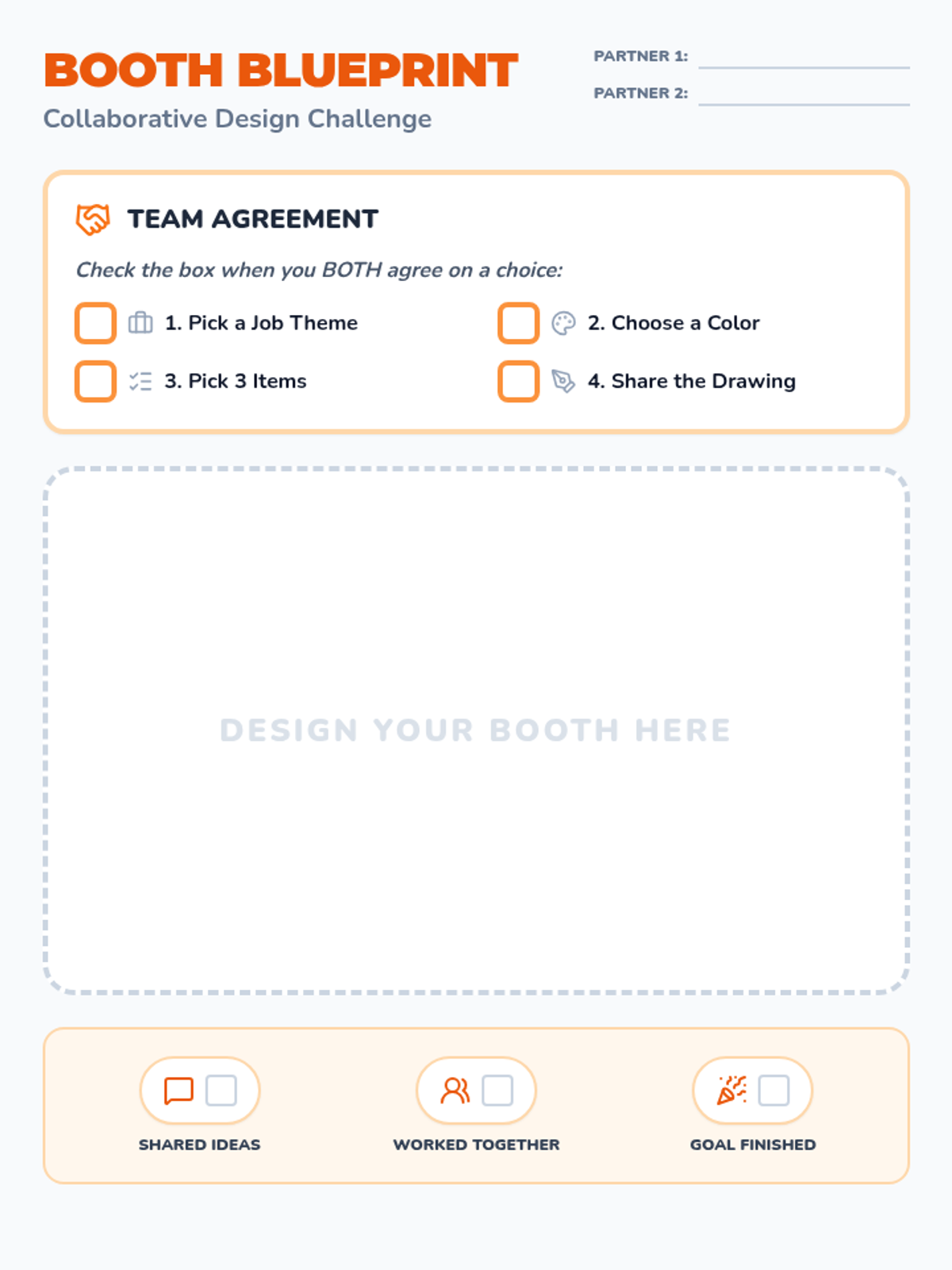
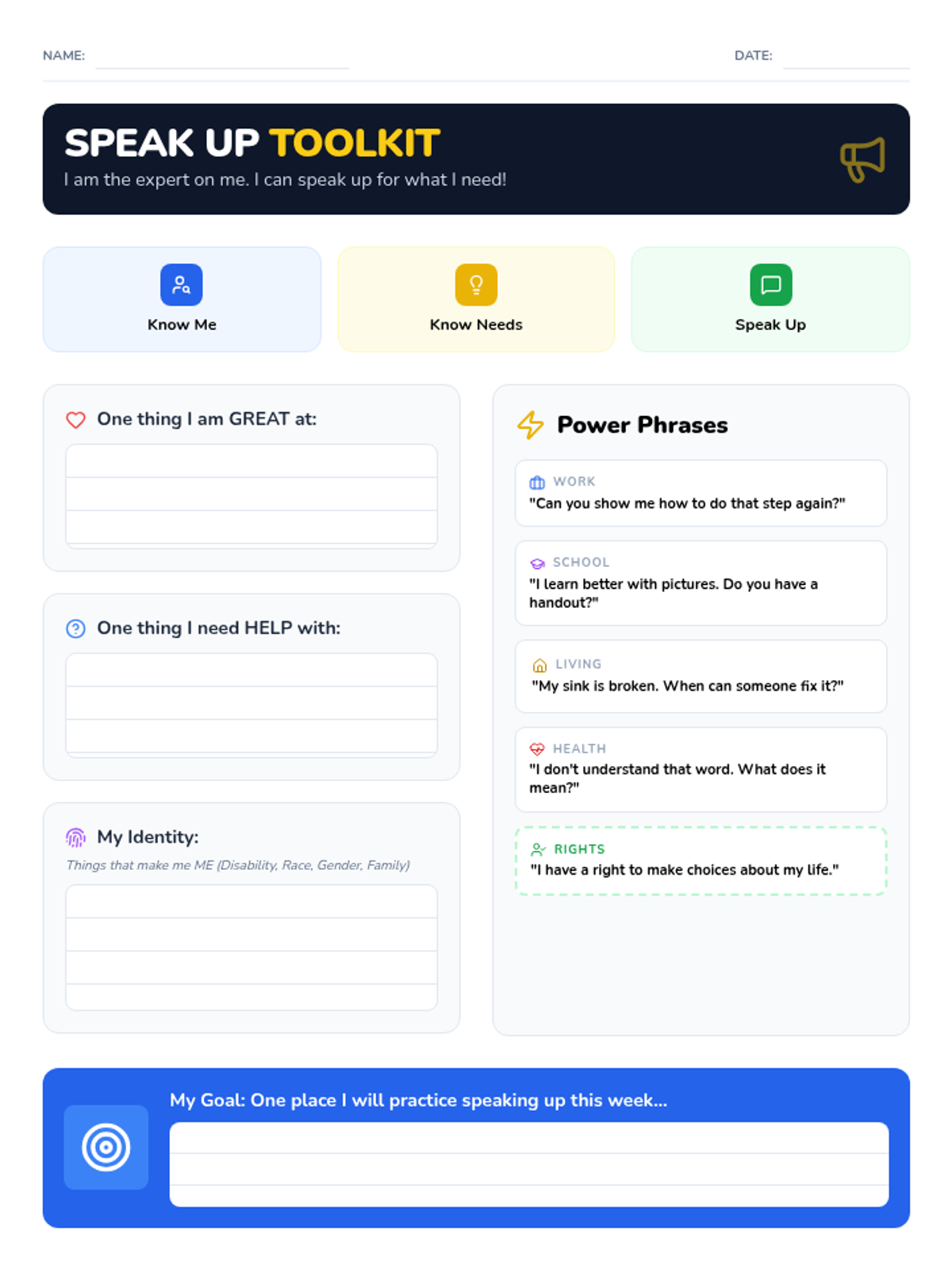
A social skills and job exploration lesson for students on the spectrum, focusing on self-advocacy, collaboration, and identifying career interests through visual-supported activities.
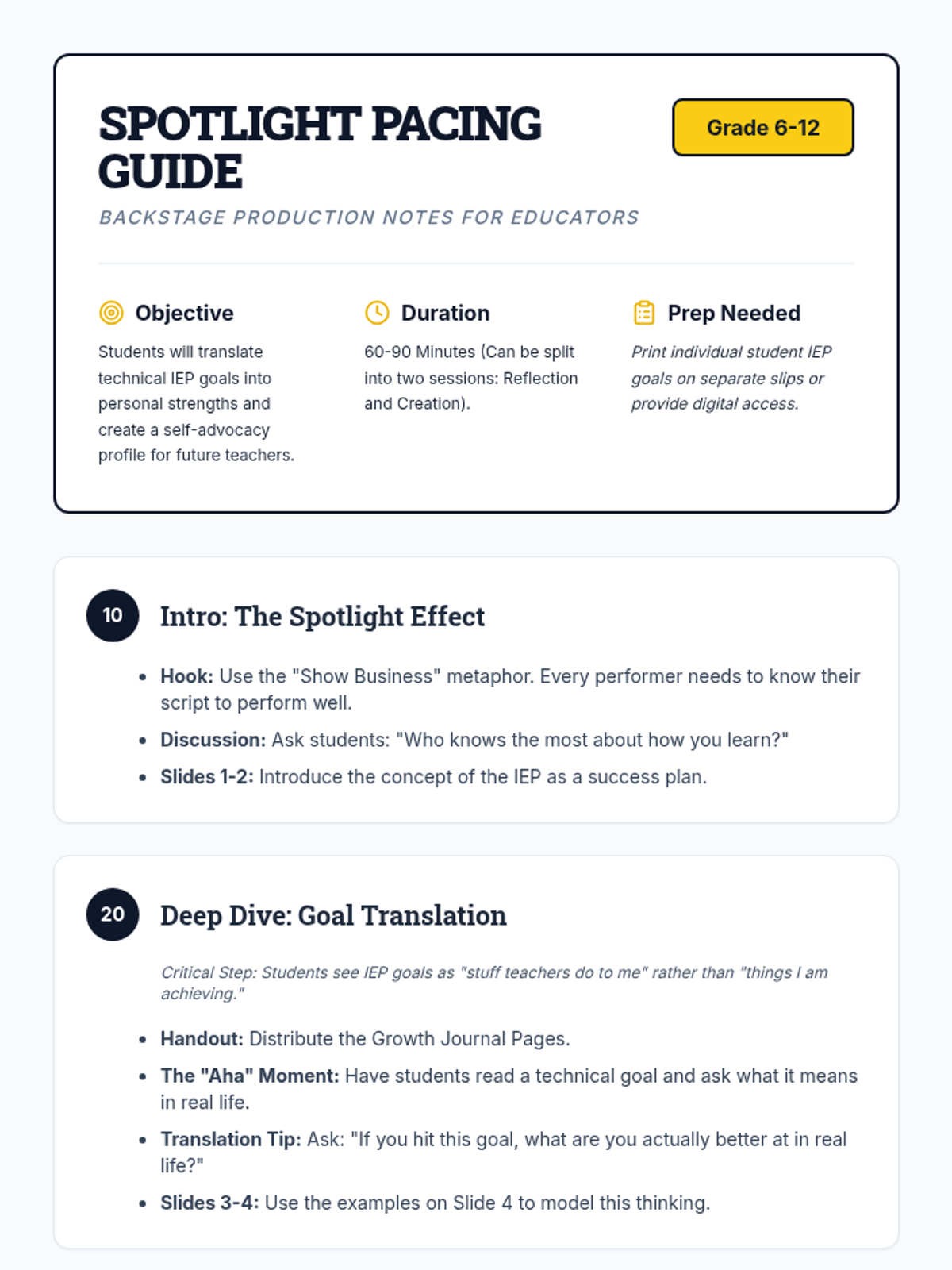
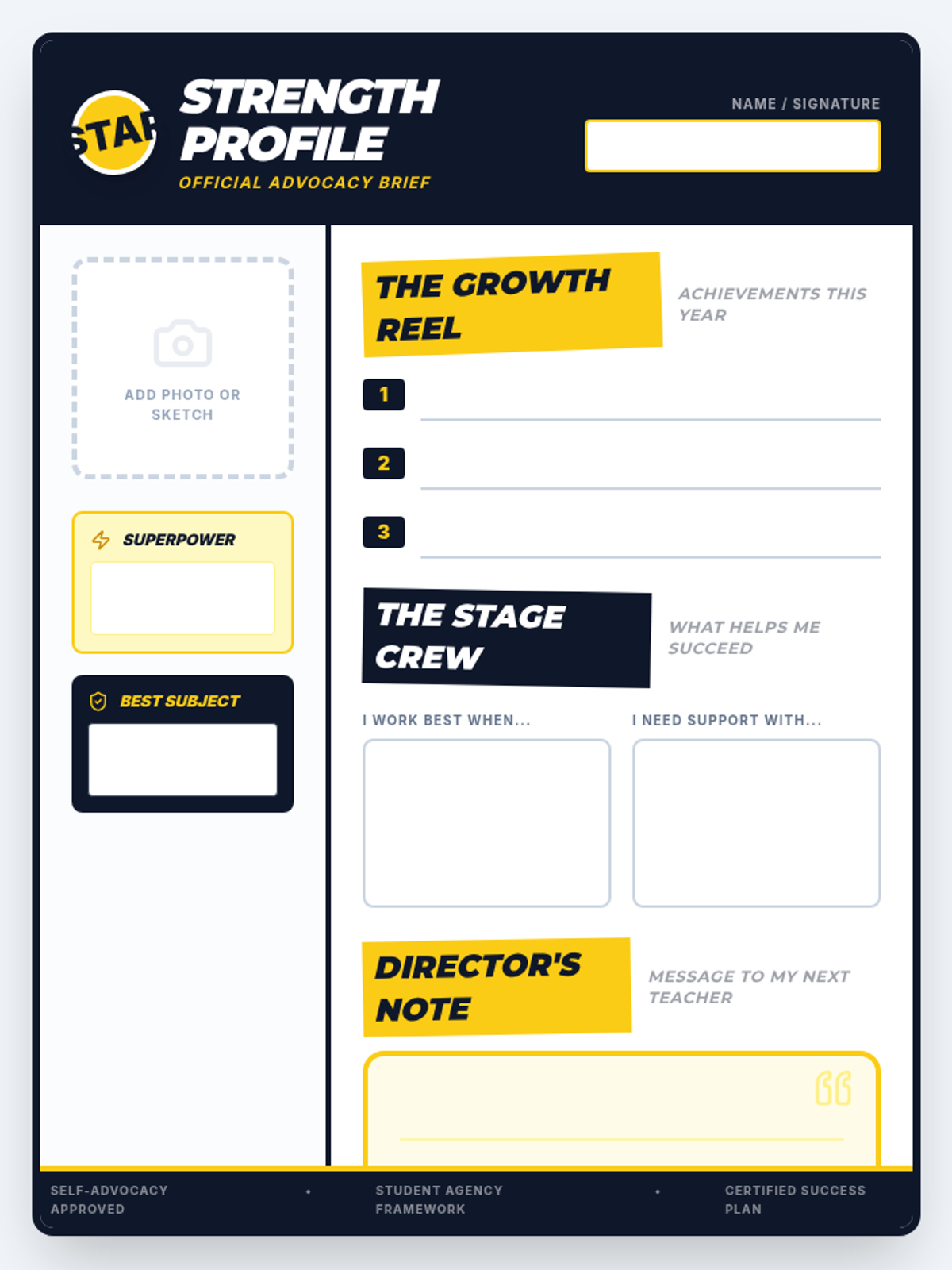
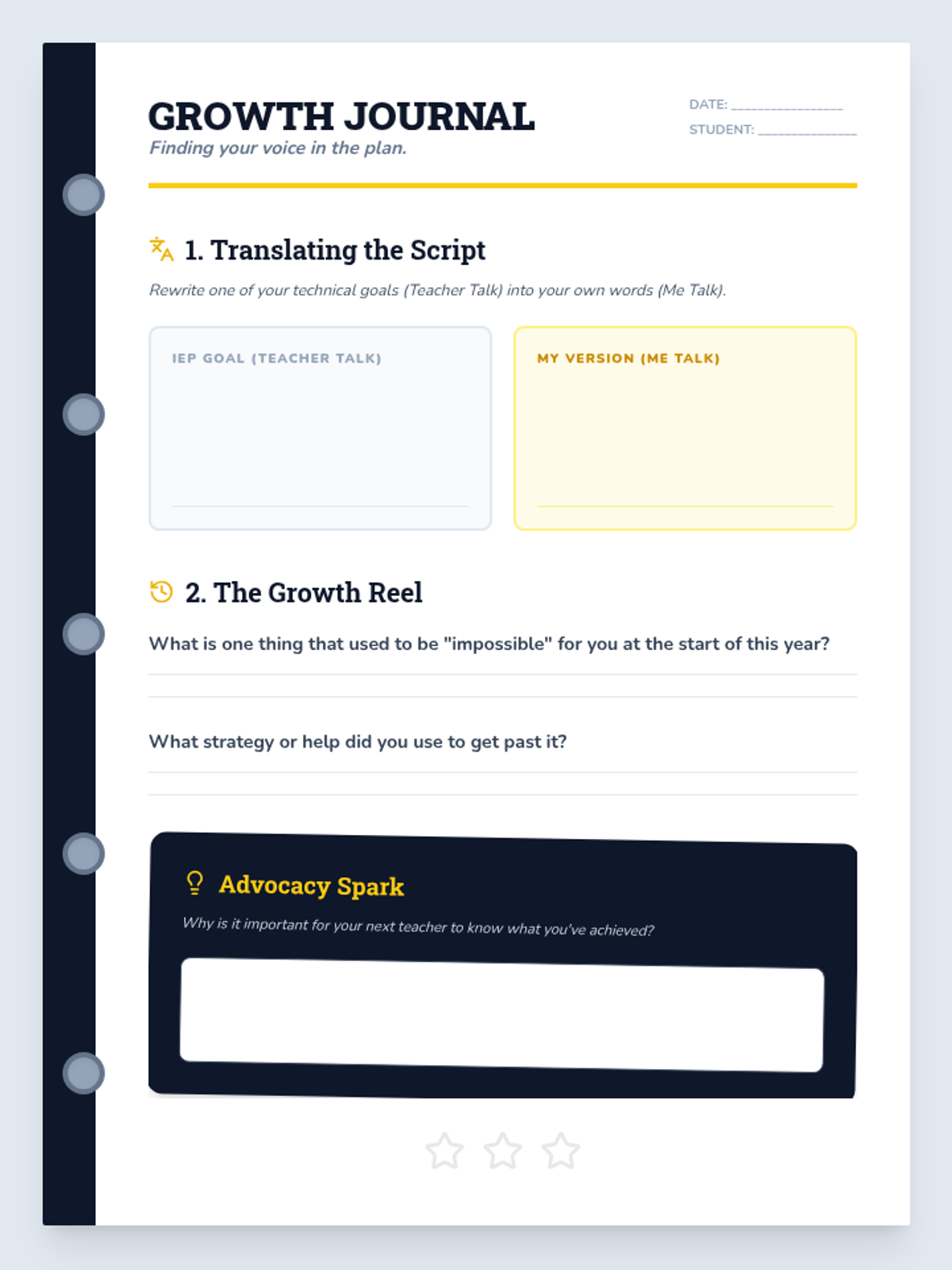
A self-advocacy lesson where students identify growth in their IEP goal areas and create a 'Strength Profile' to share with future teachers, fostering agency and pride.
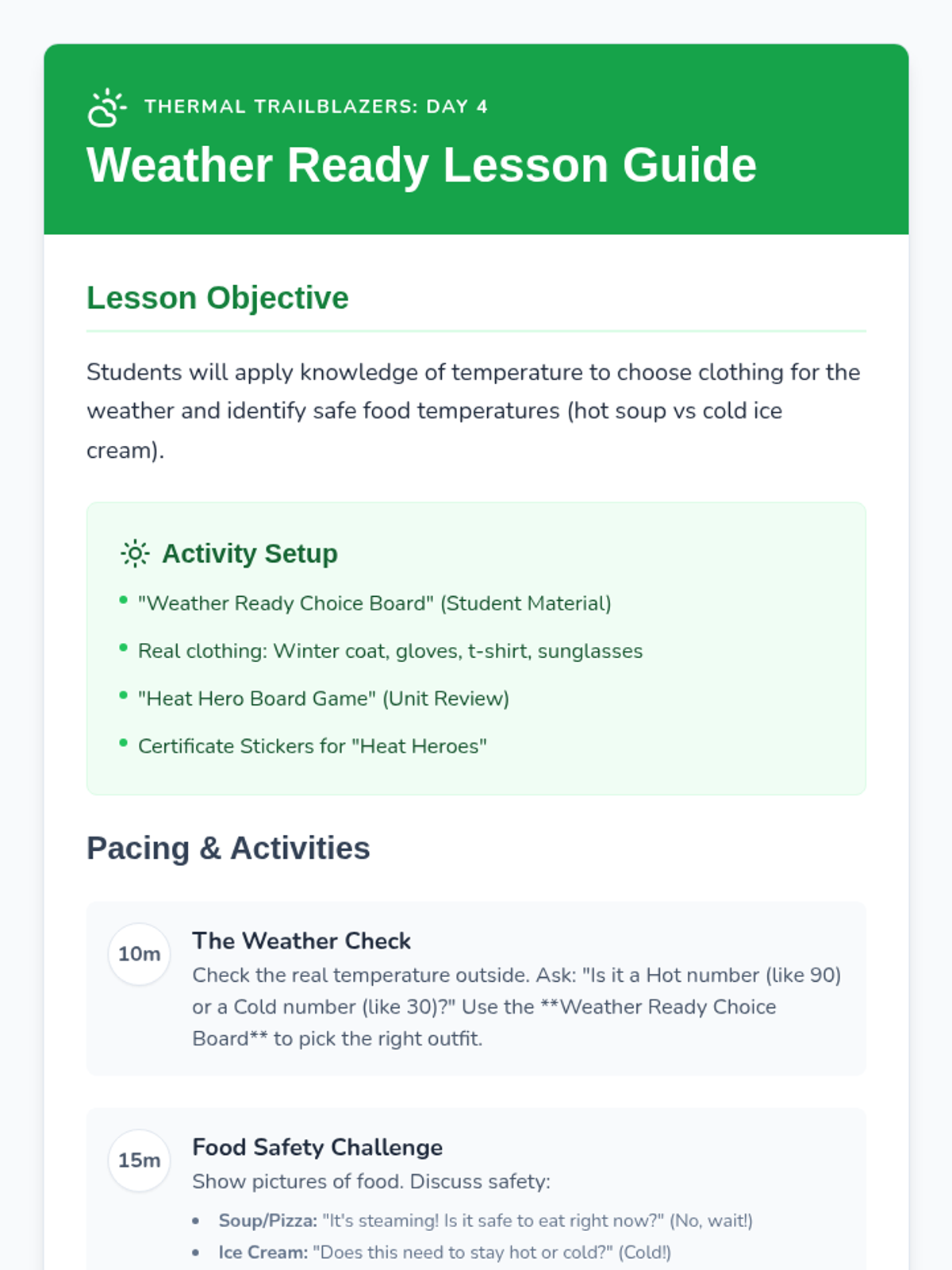
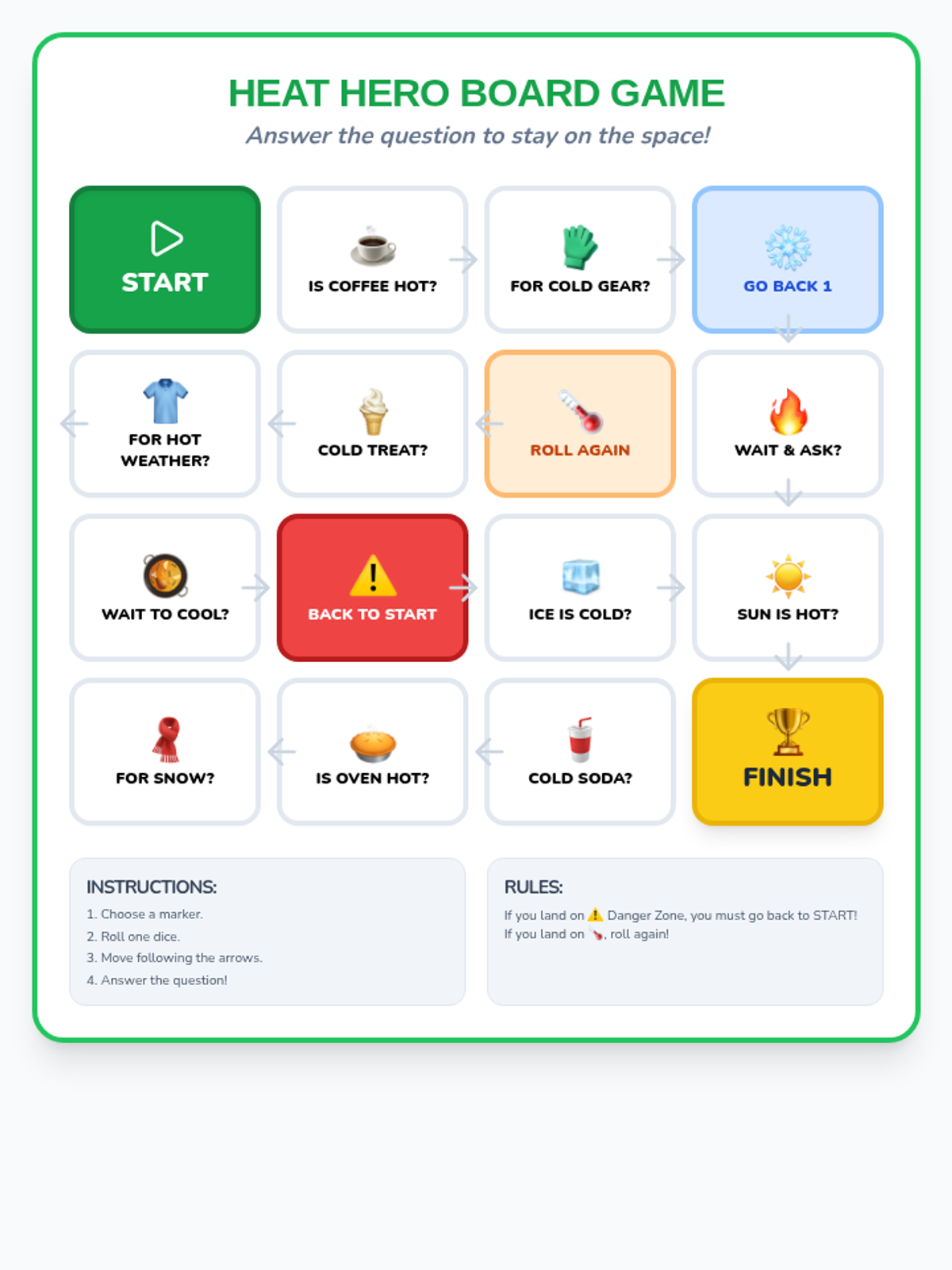
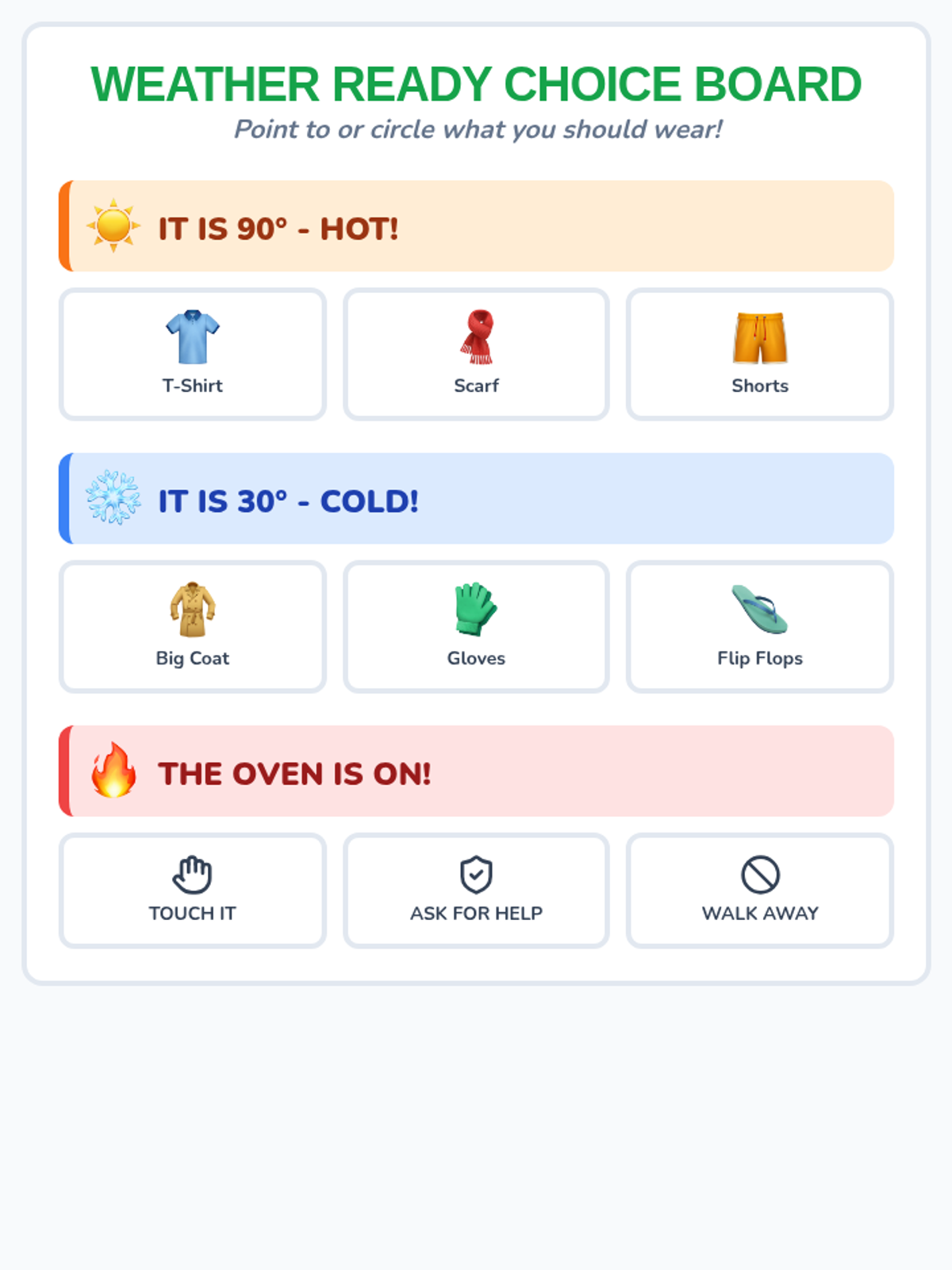
Connecting temperature to daily life decisions, such as dressing for the weather and waiting for hot food to cool. Includes a final review activity to synthesize the week's learning.
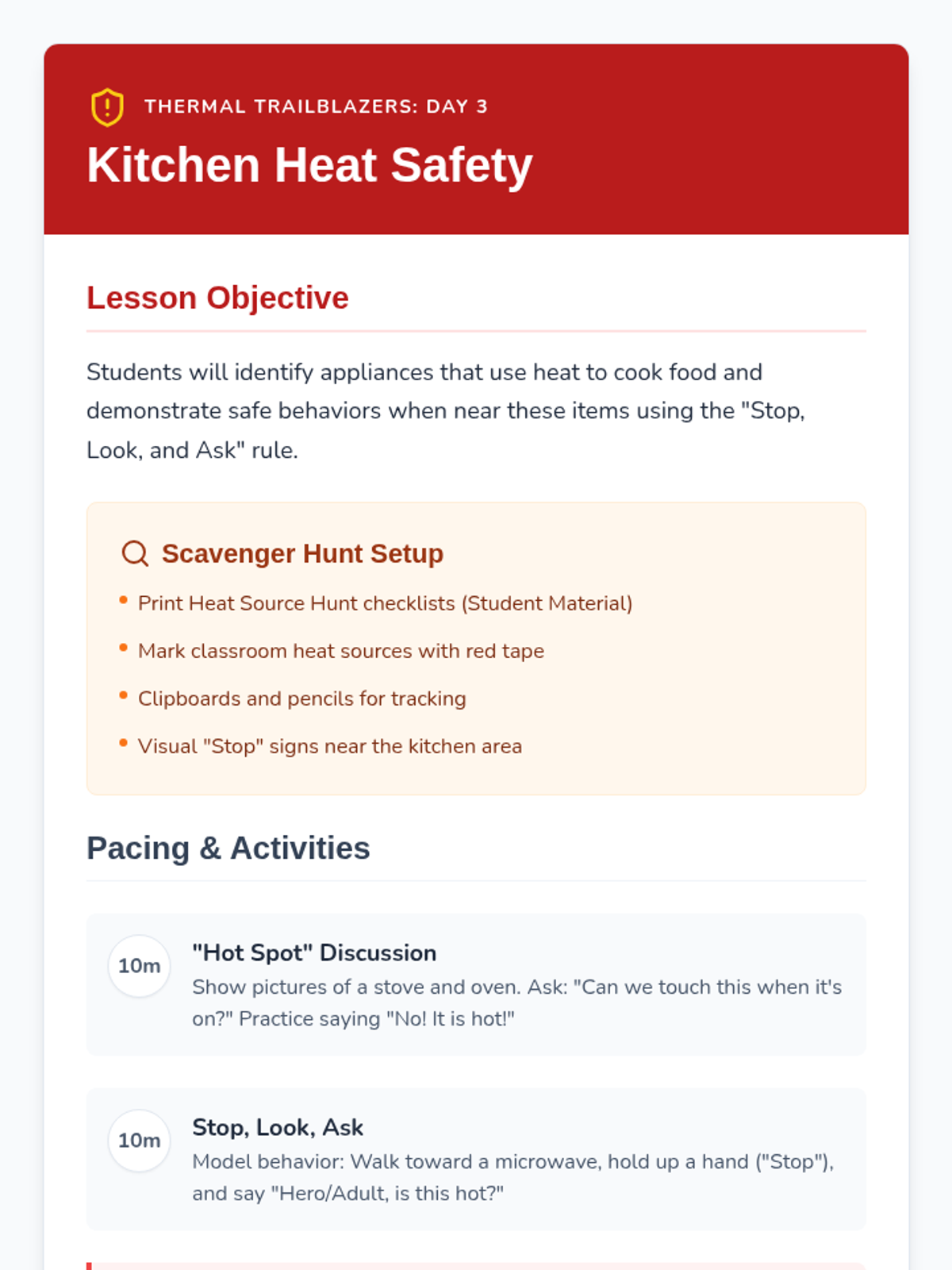
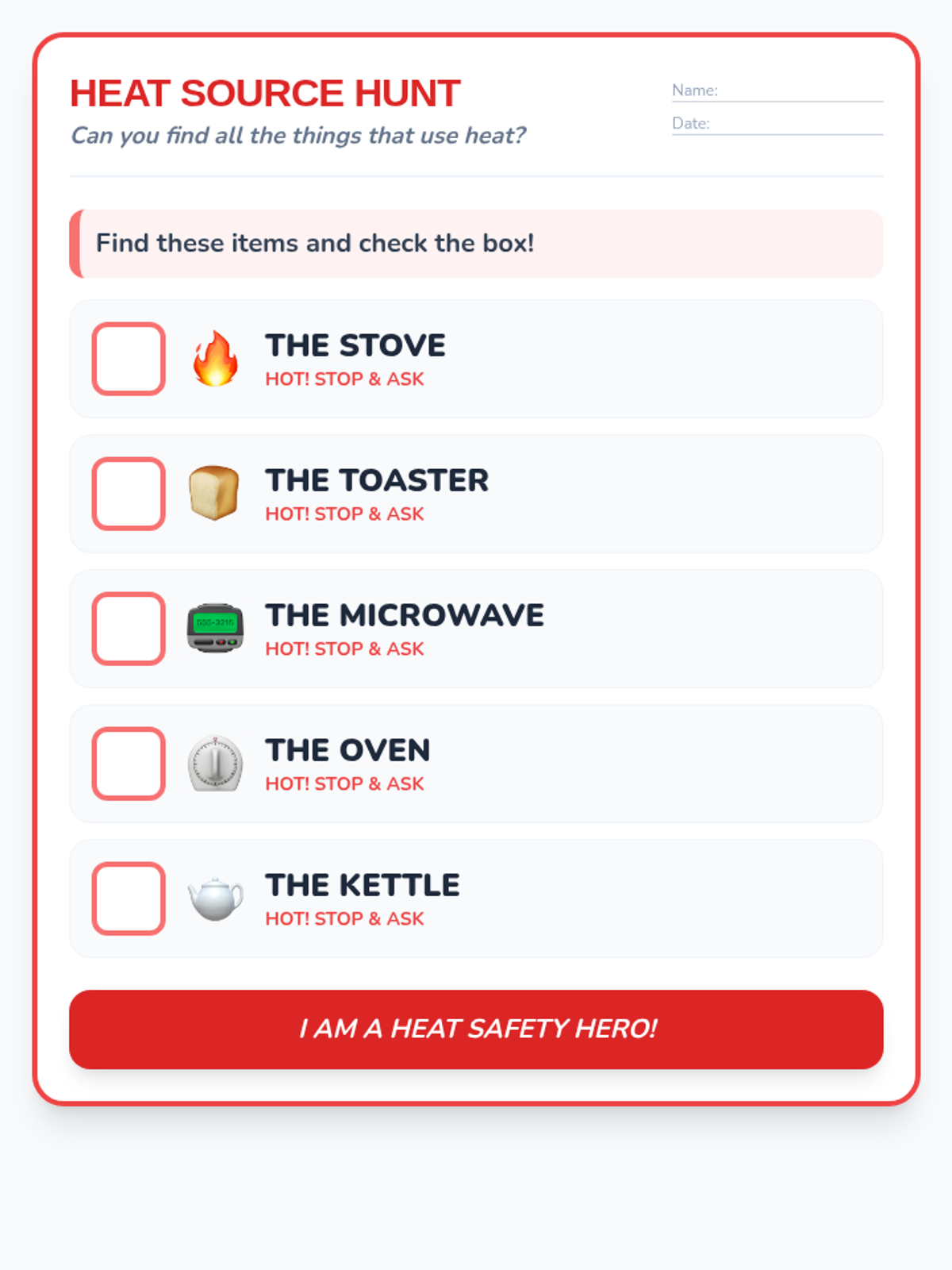
A focus on kitchen heat sources and safety protocols. Students will participate in a scavenger hunt to identify heat-producing appliances and learn the 'stop and ask' rule for hot objects.
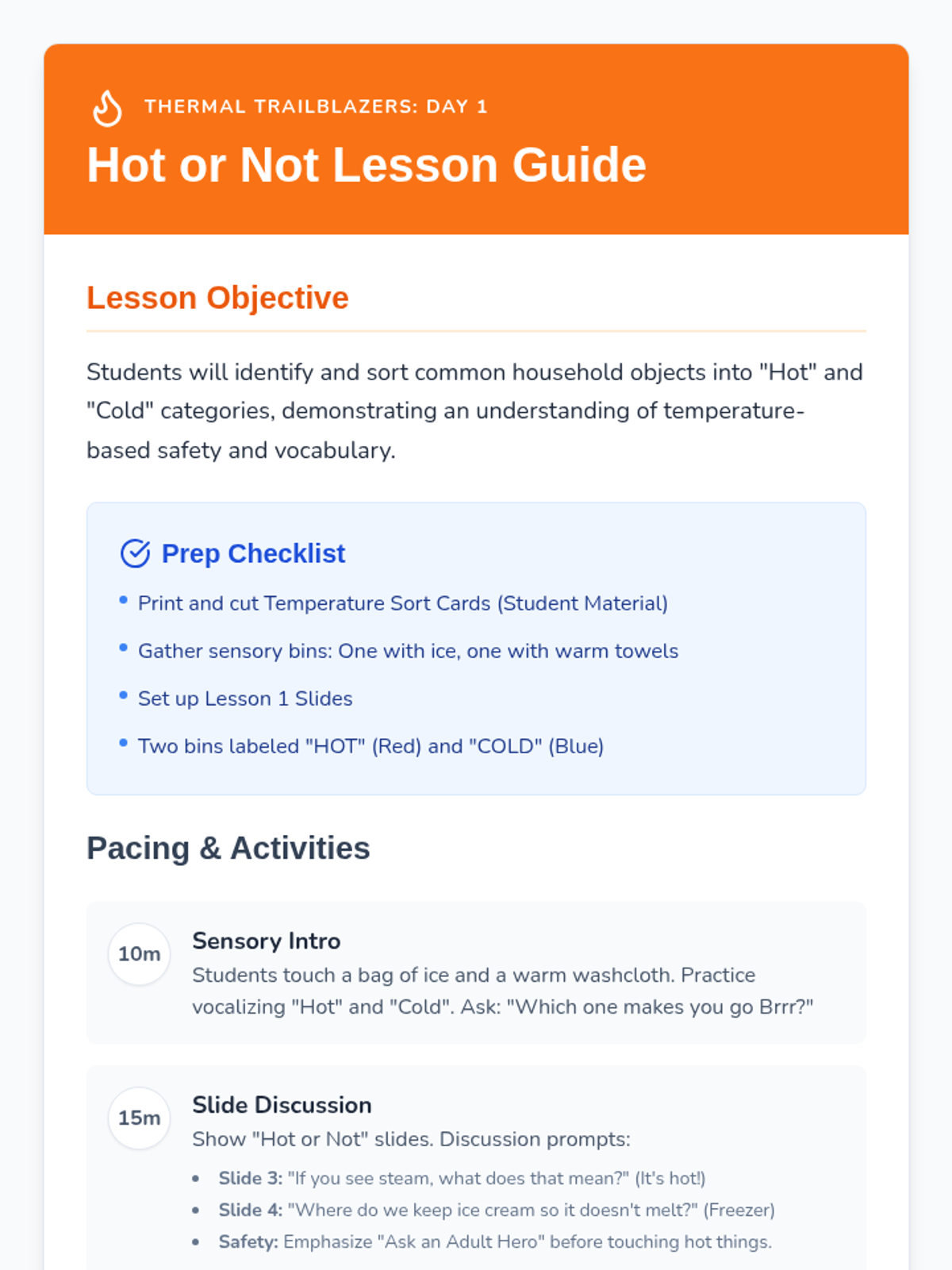
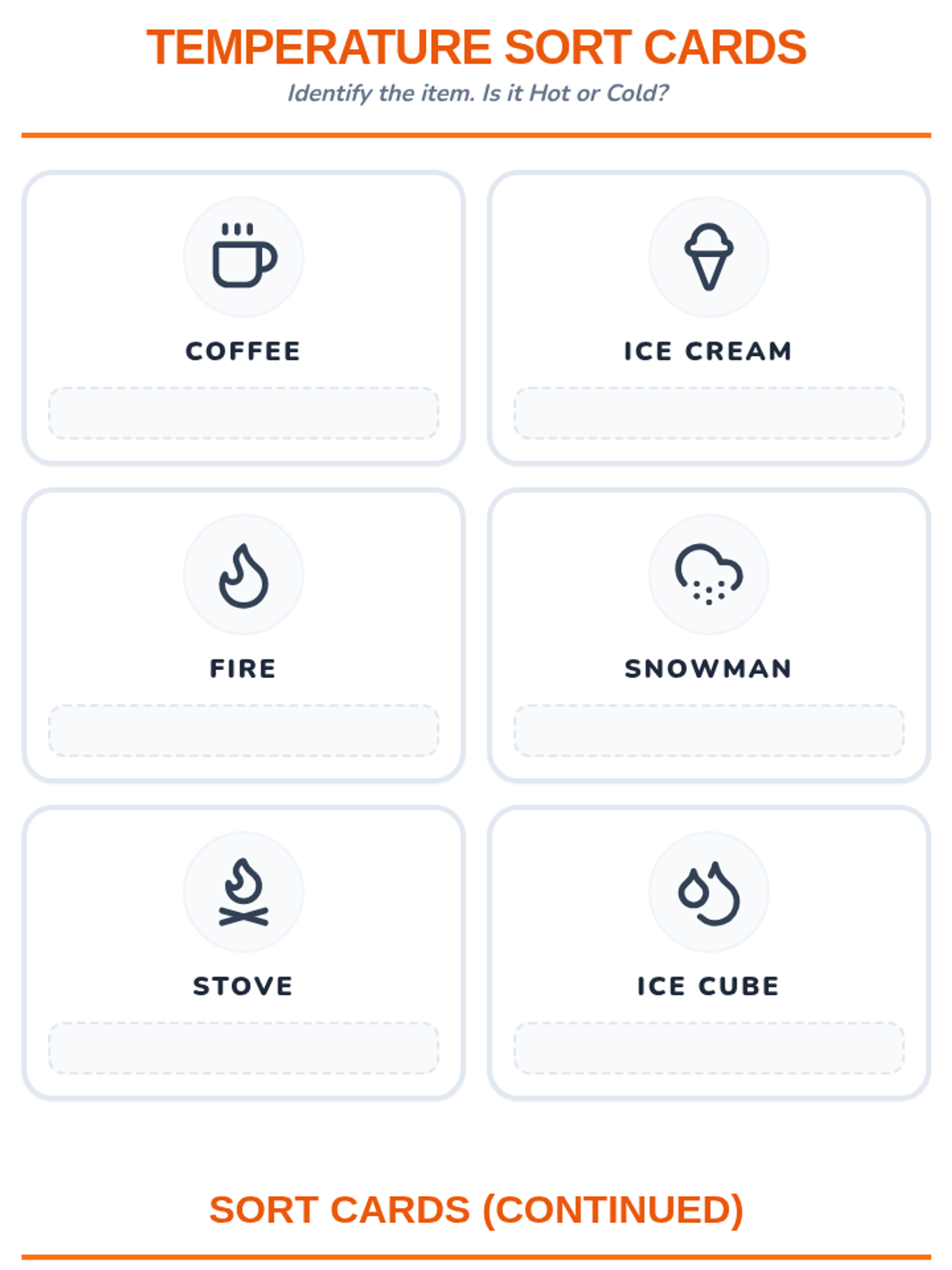
Students will learn to identify and categorize items based on their temperature (hot vs. cold) using functional real-world examples. Includes a sorting activity with visual cards to reinforce vocabulary.
A cumulative review day where students apply their knowledge through a scavenger hunt and a final check for understanding.
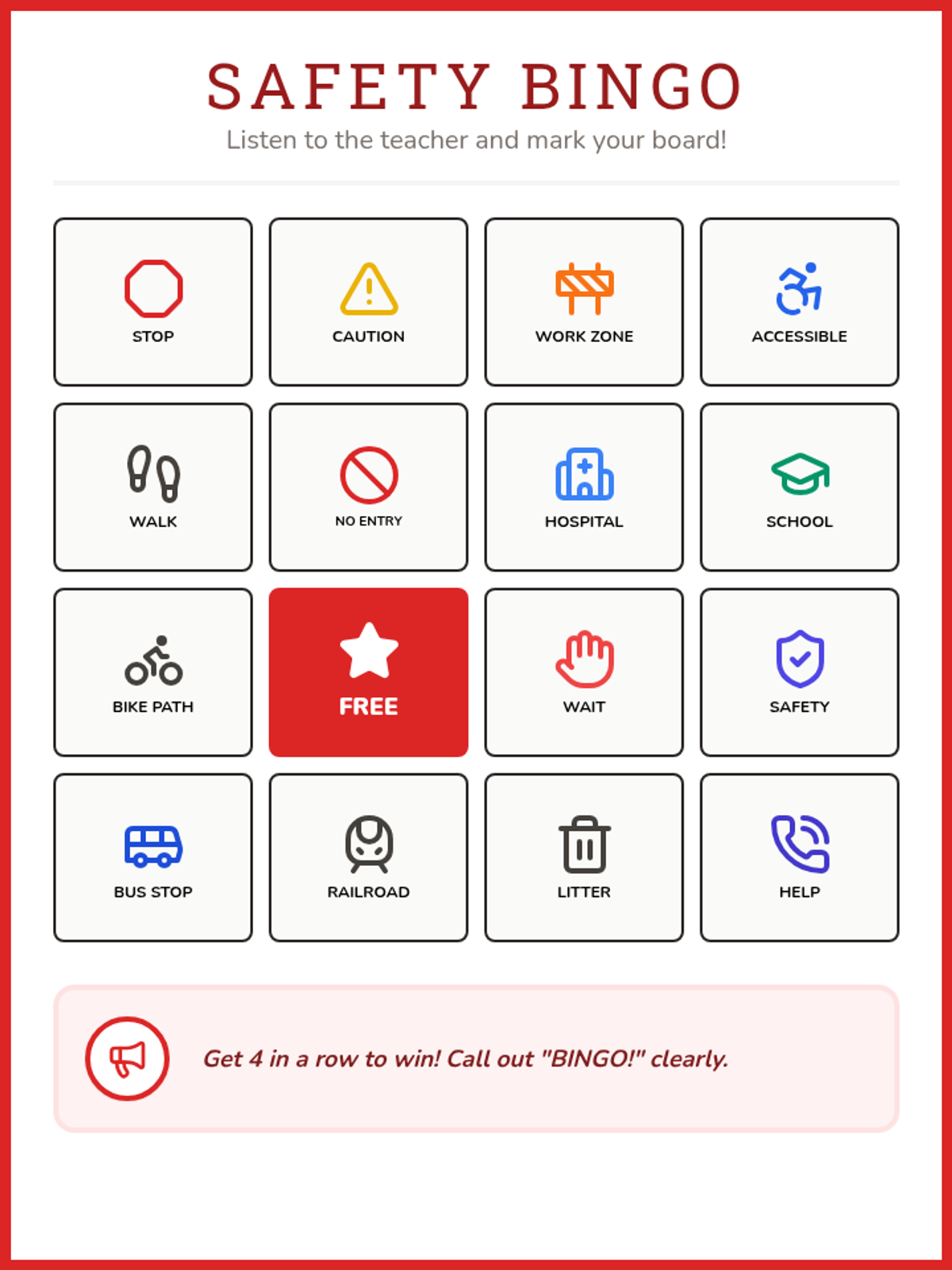
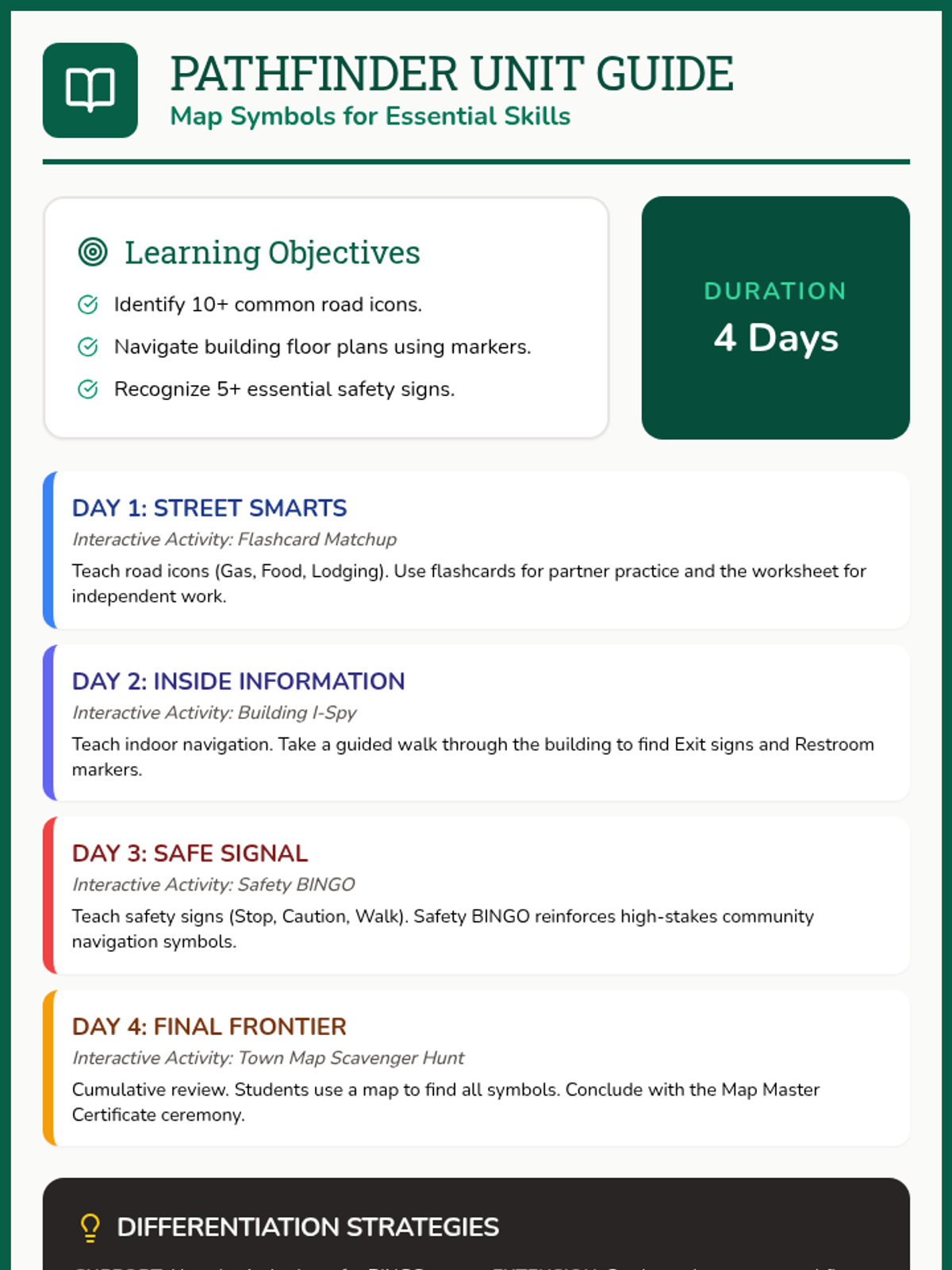
Teaches students to recognize and respond to safety and community signs encountered while walking or traveling.
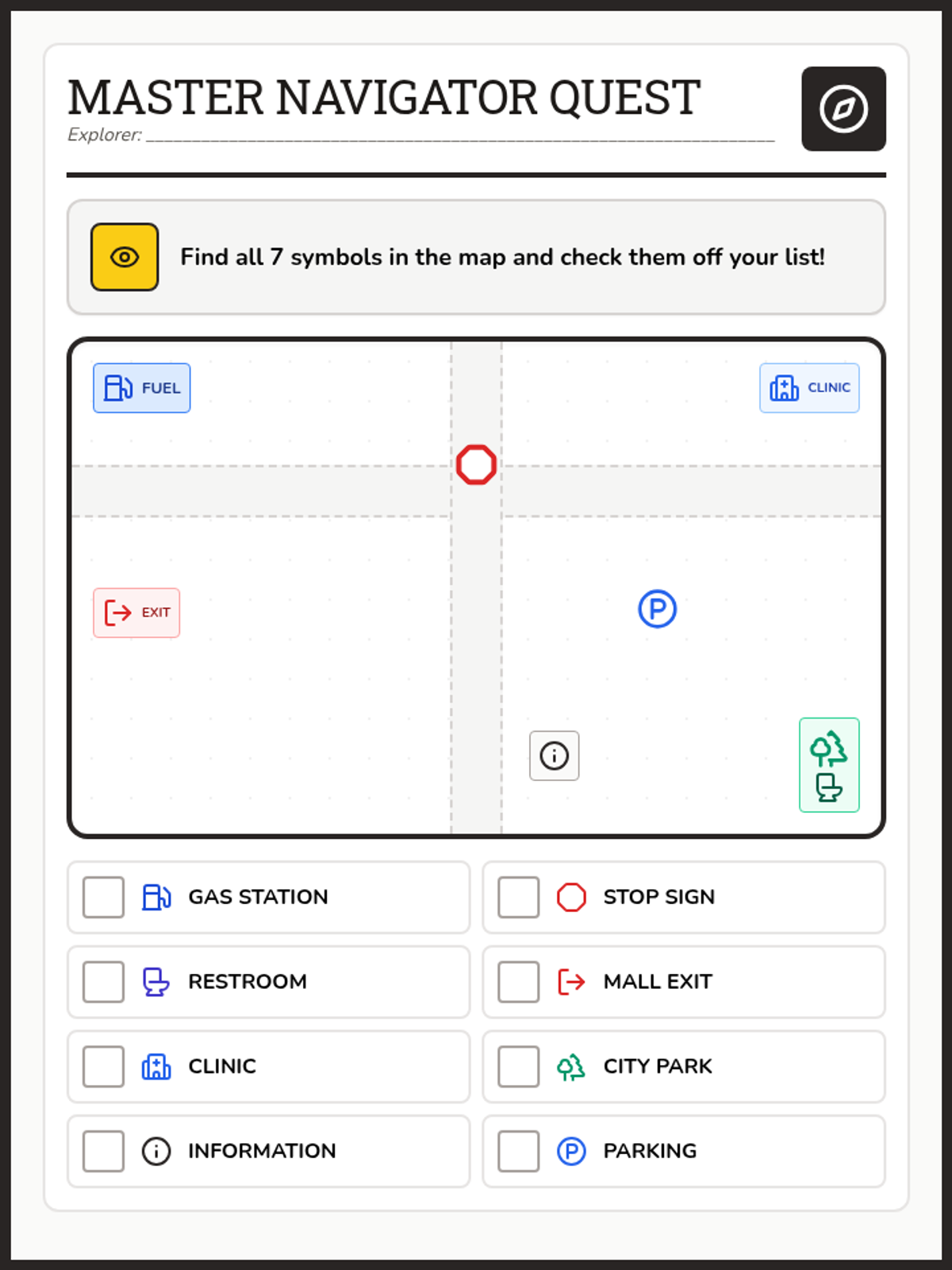
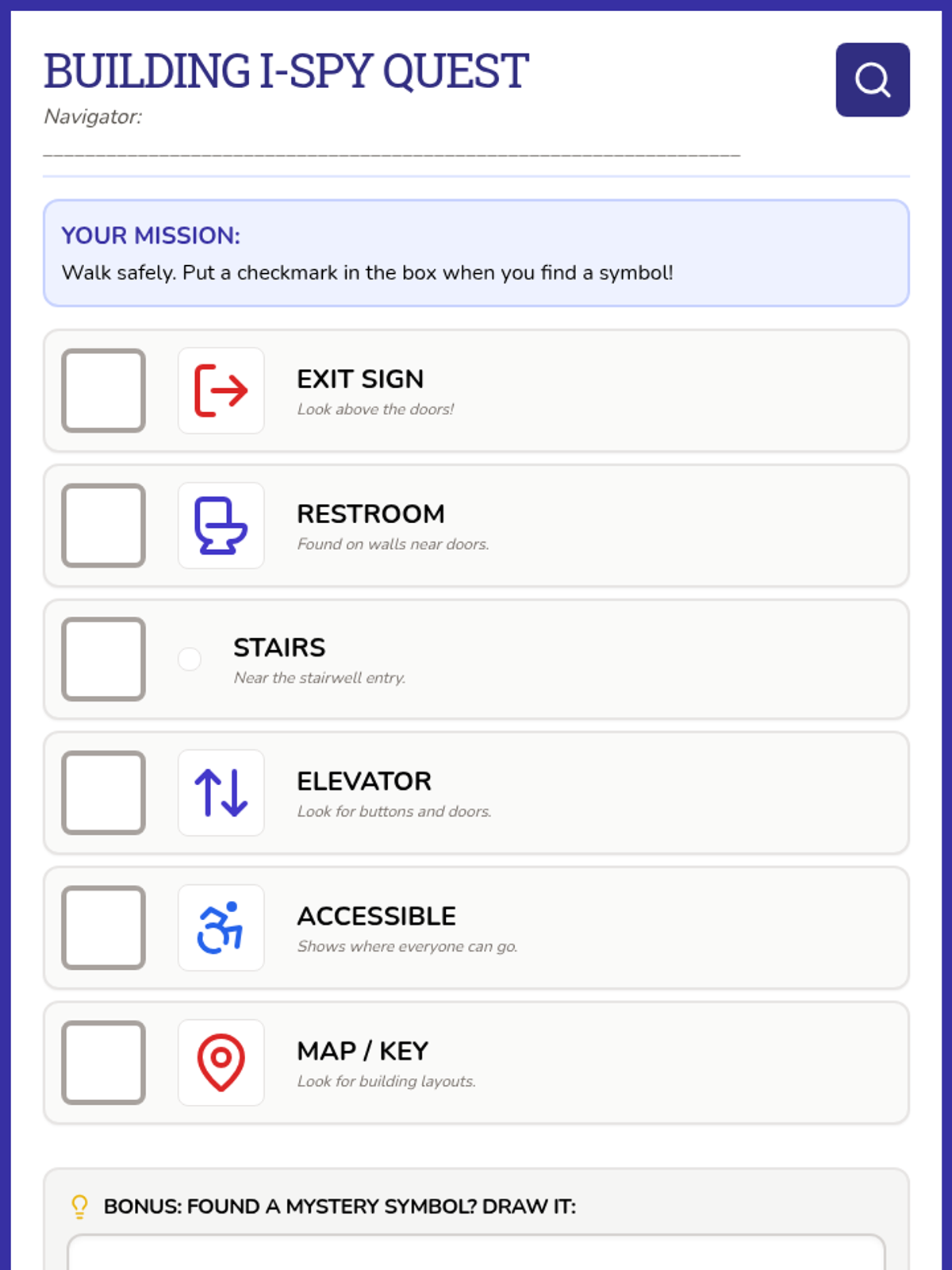
Introduces indoor navigation through building maps, floor plans, and standard facility icons like restrooms, exits, and elevators.
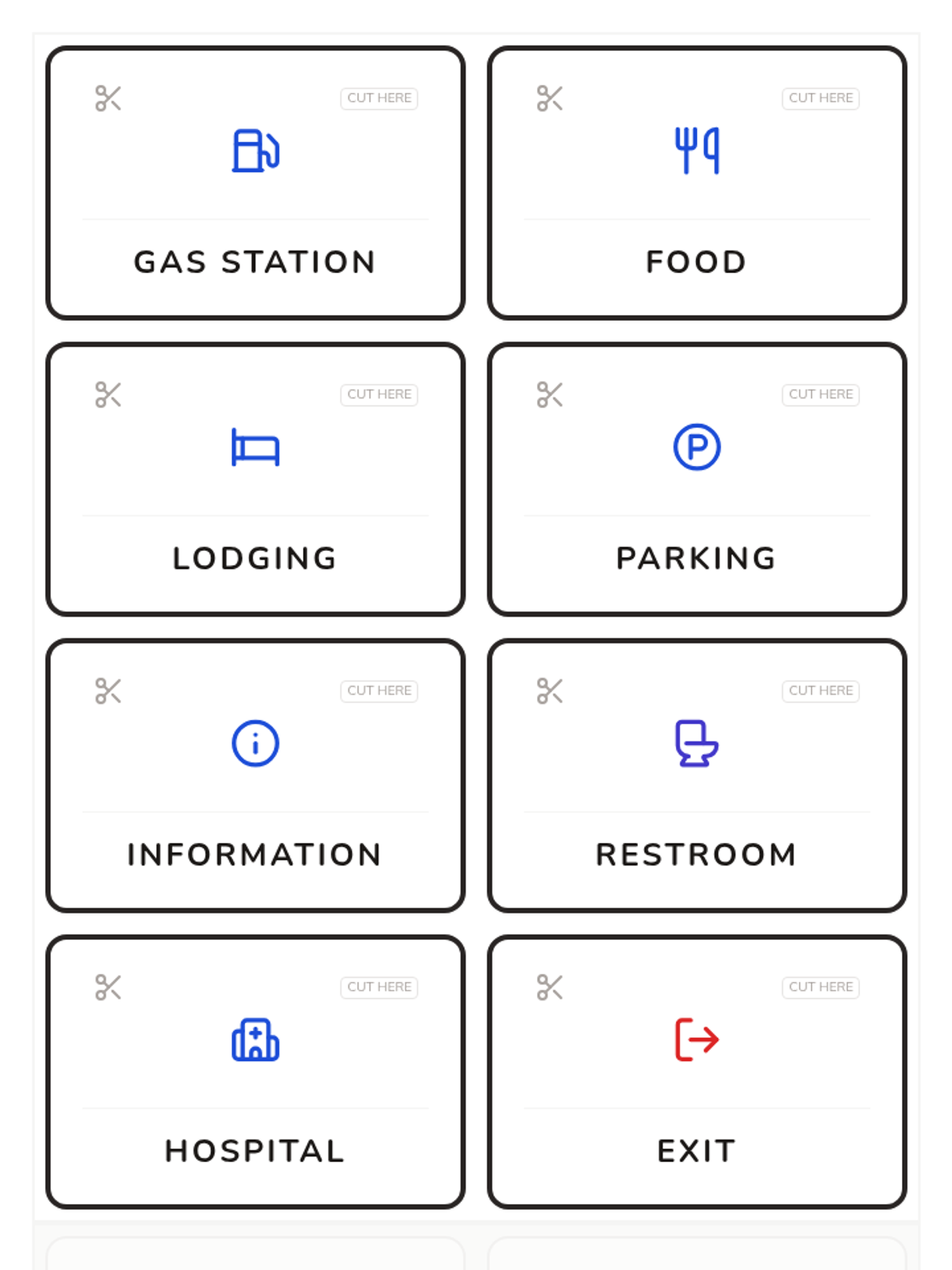
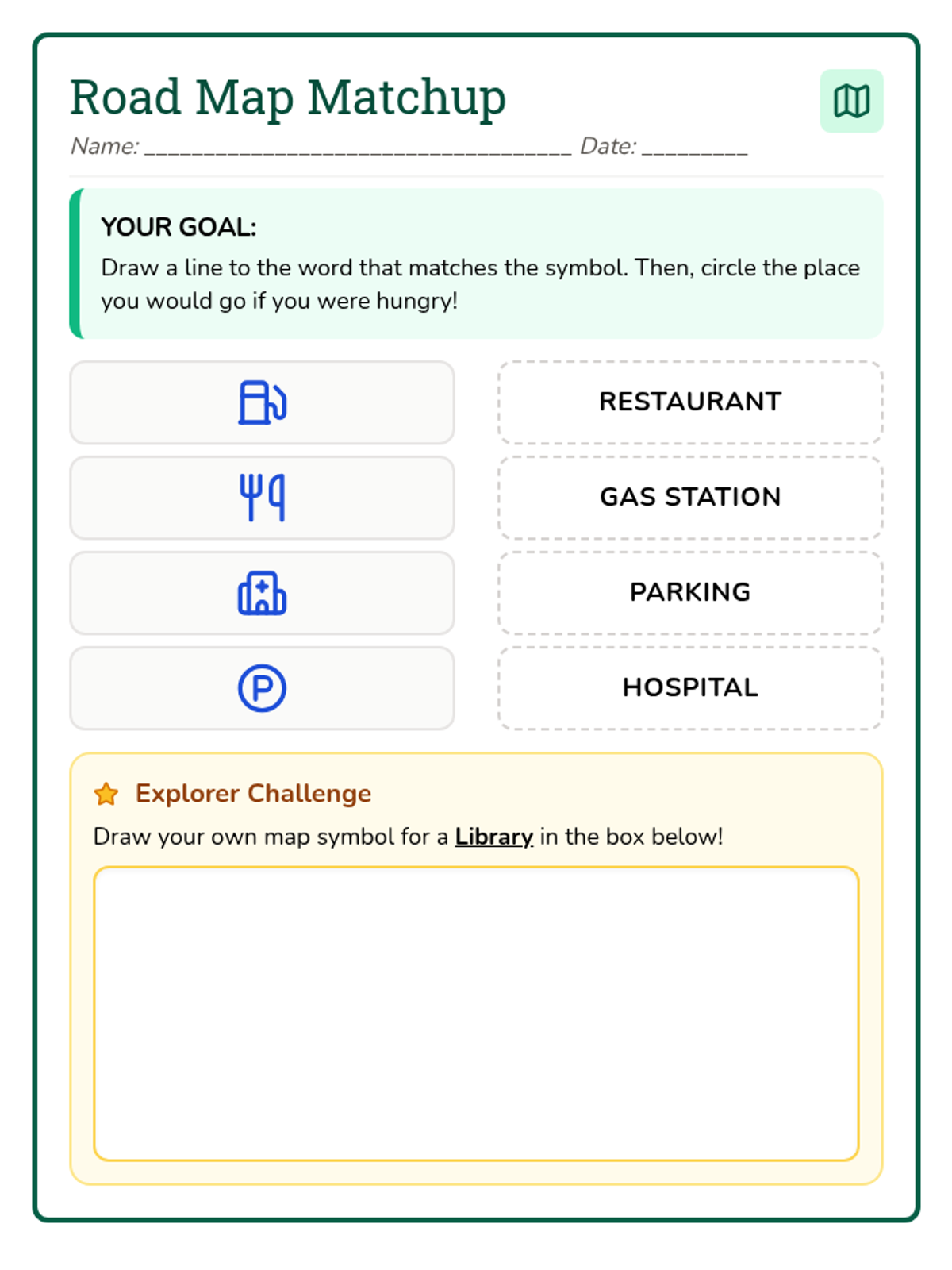
Focuses on identifying common road and street icons used on physical and digital maps to assist in navigation and finding services.
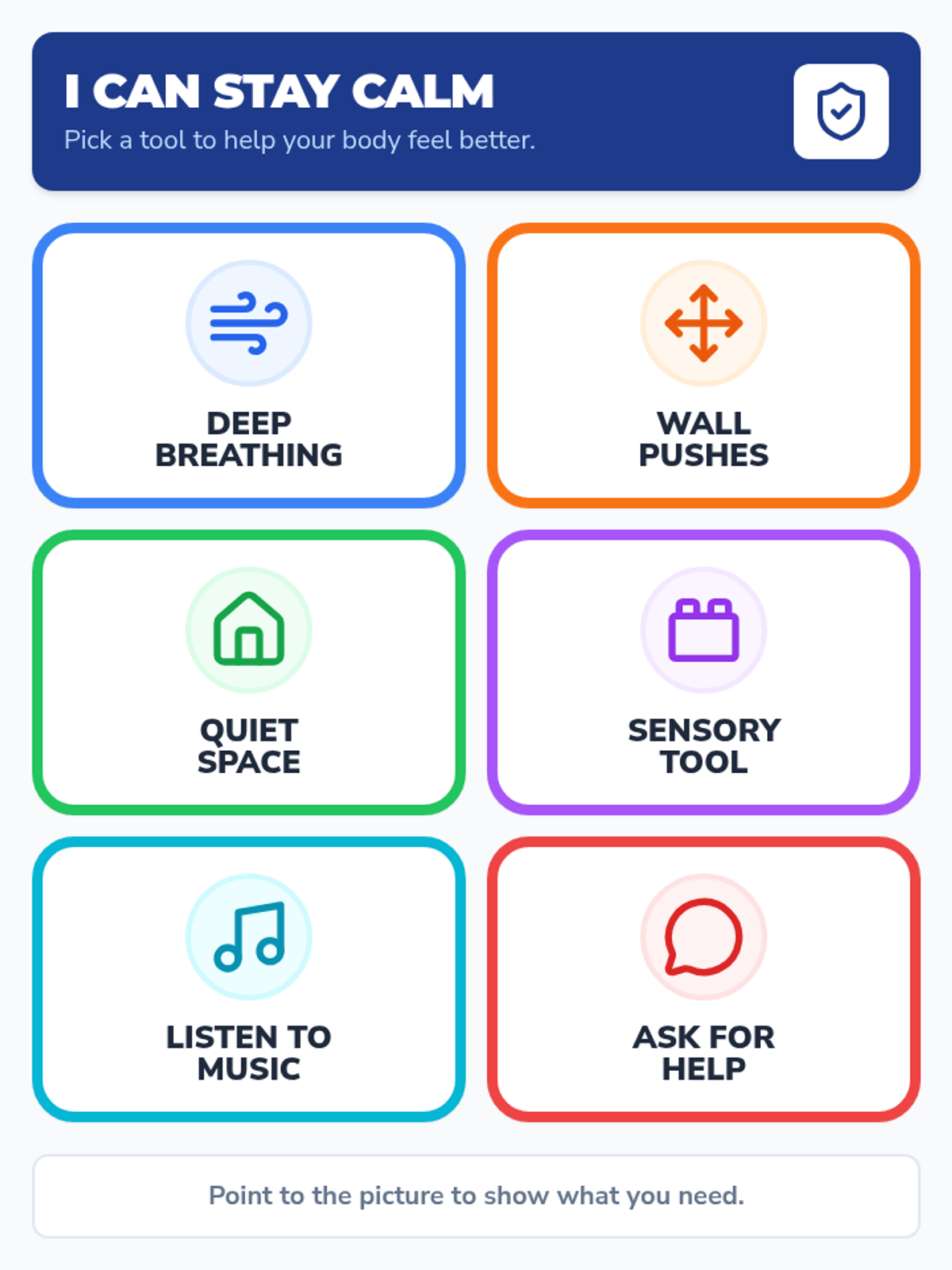
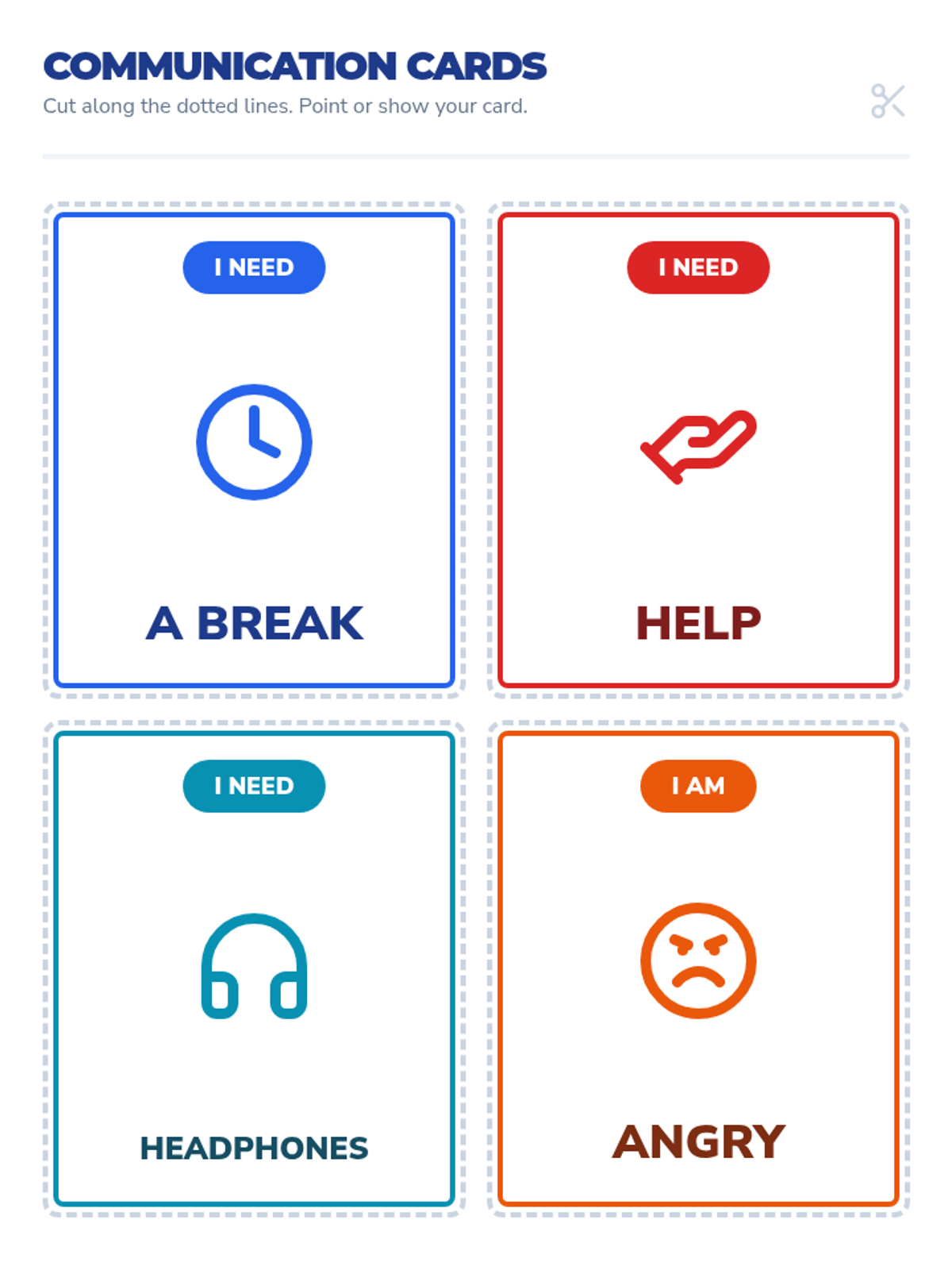
A comprehensive set of visual resources designed to help a student with severe autism recognize anger cues and select appropriate coping strategies. The materials include a social story, structured worksheets, a choice board, and communication cards.
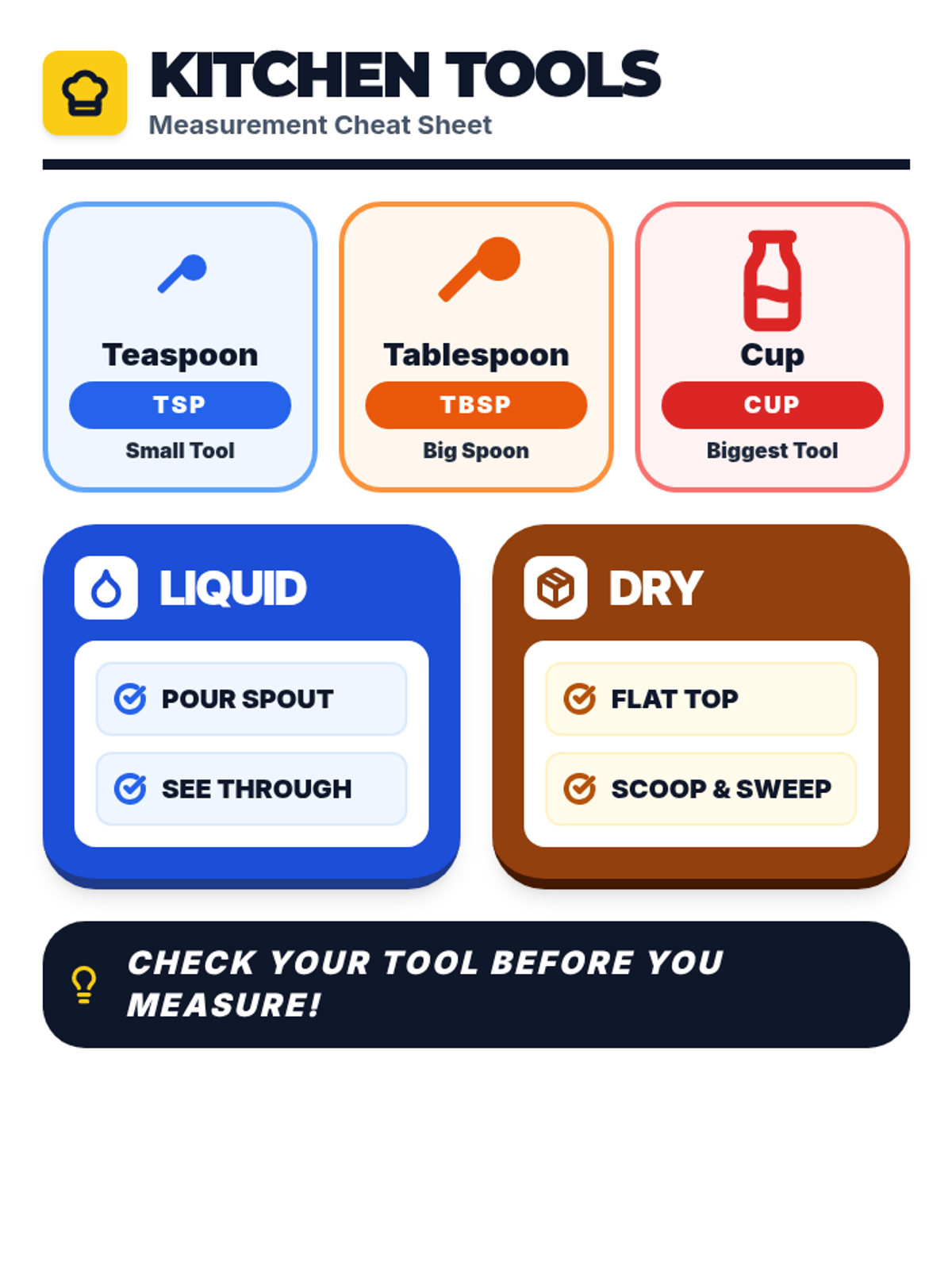
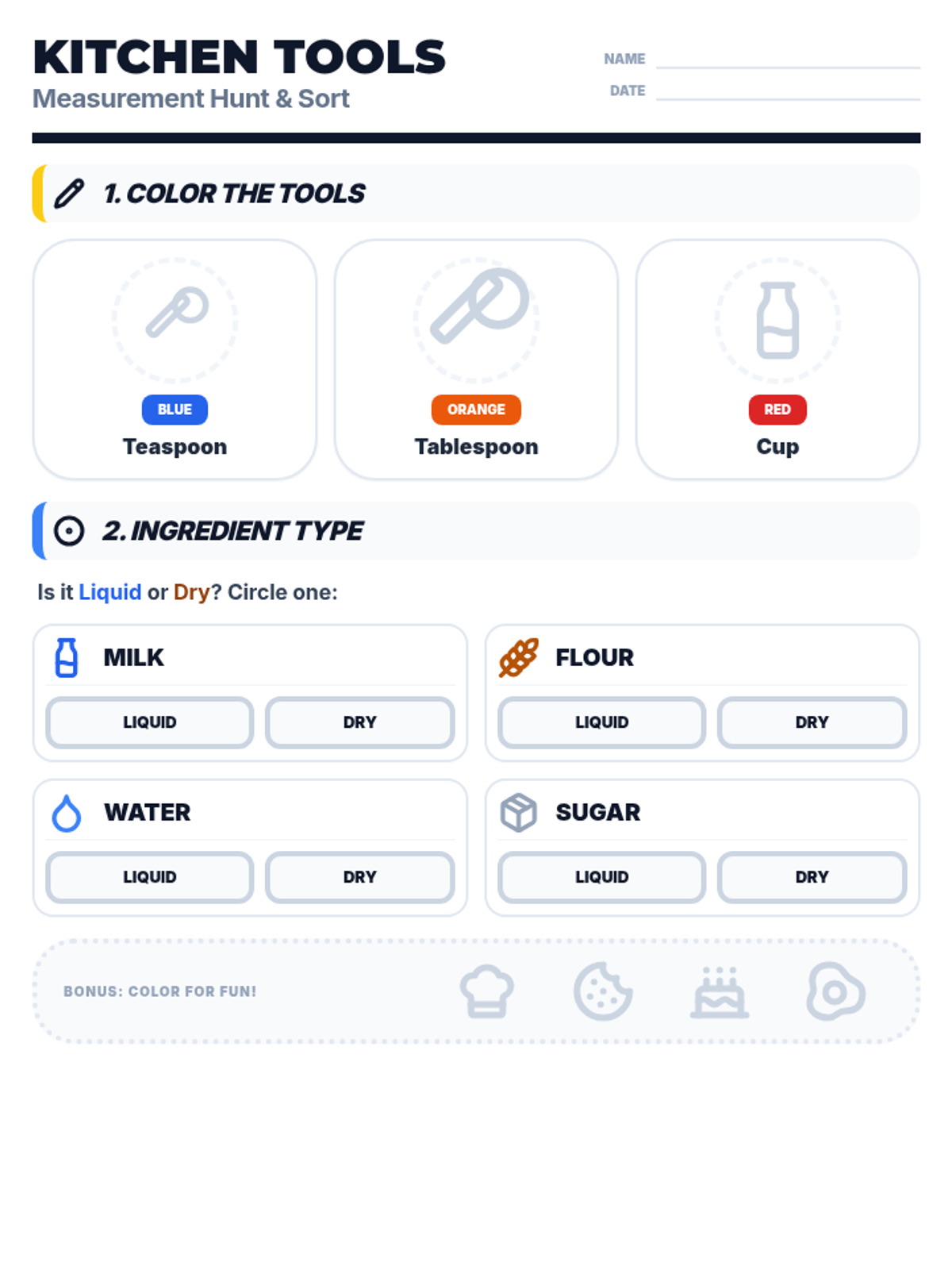
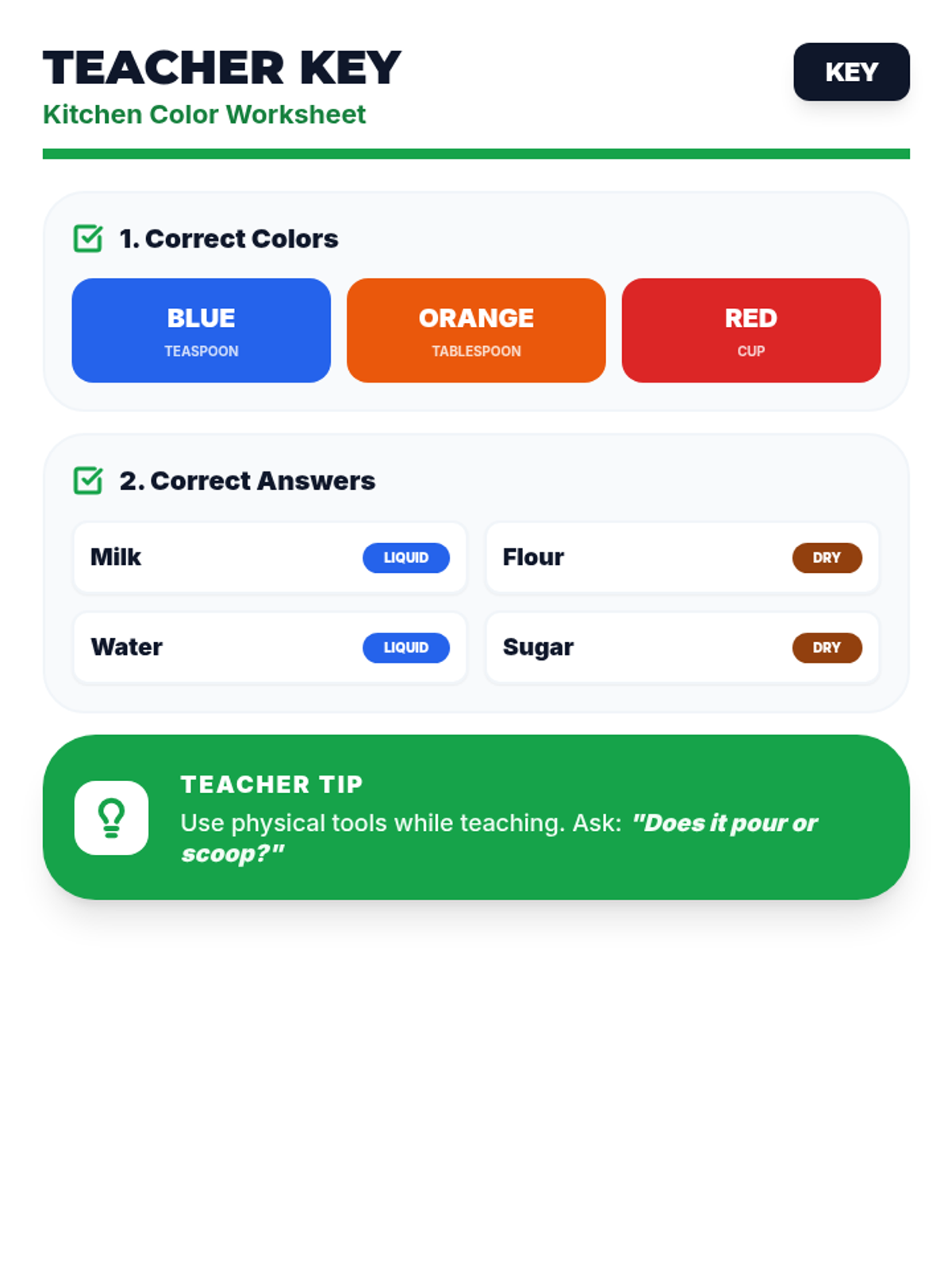
A basic introduction to kitchen measurements focusing on teaspoons, tablespoons, and cups, including the difference between liquid and dry measuring tools. Designed for high school students with intellectual disabilities using high-contrast visuals and simple language.
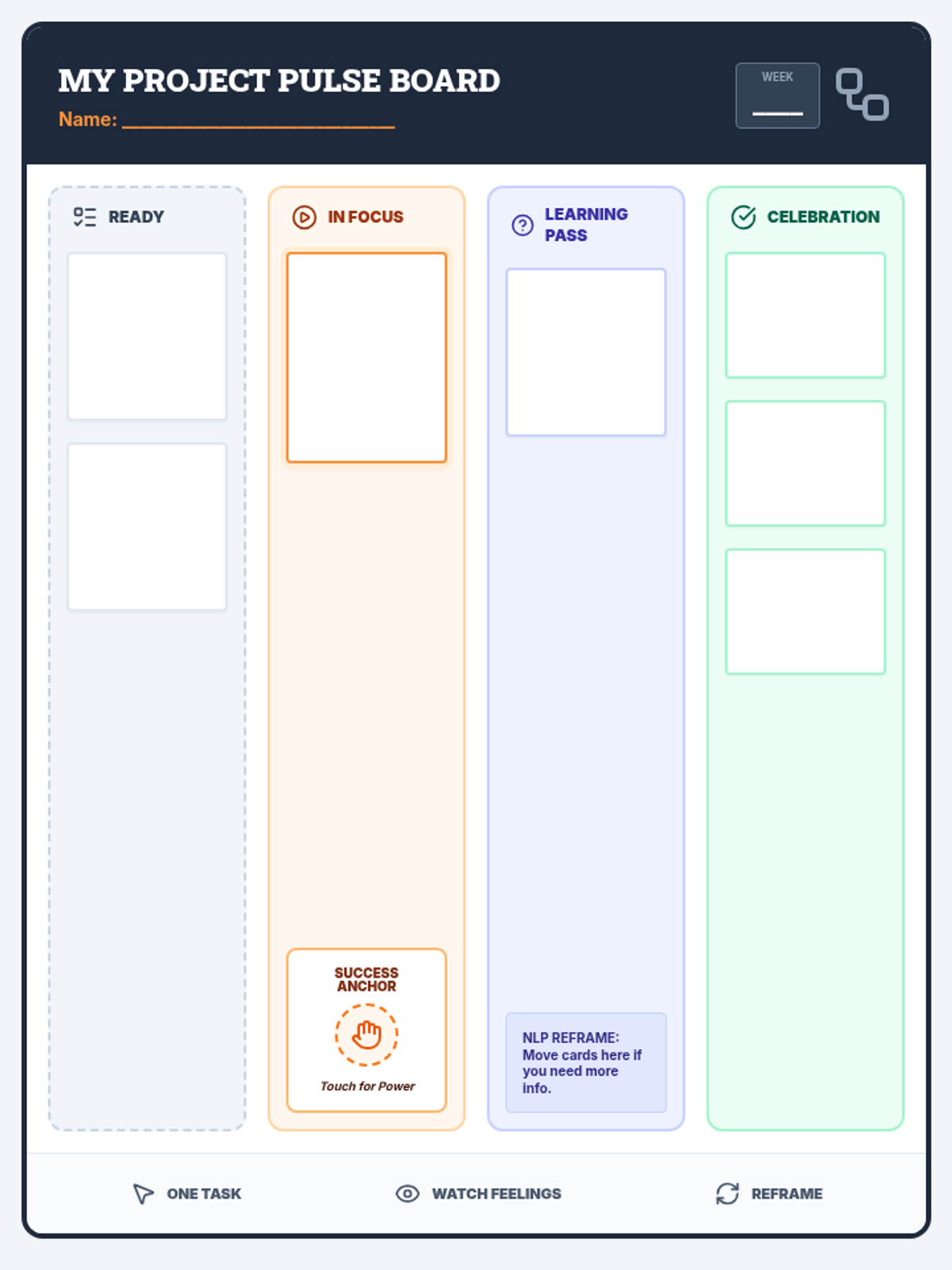
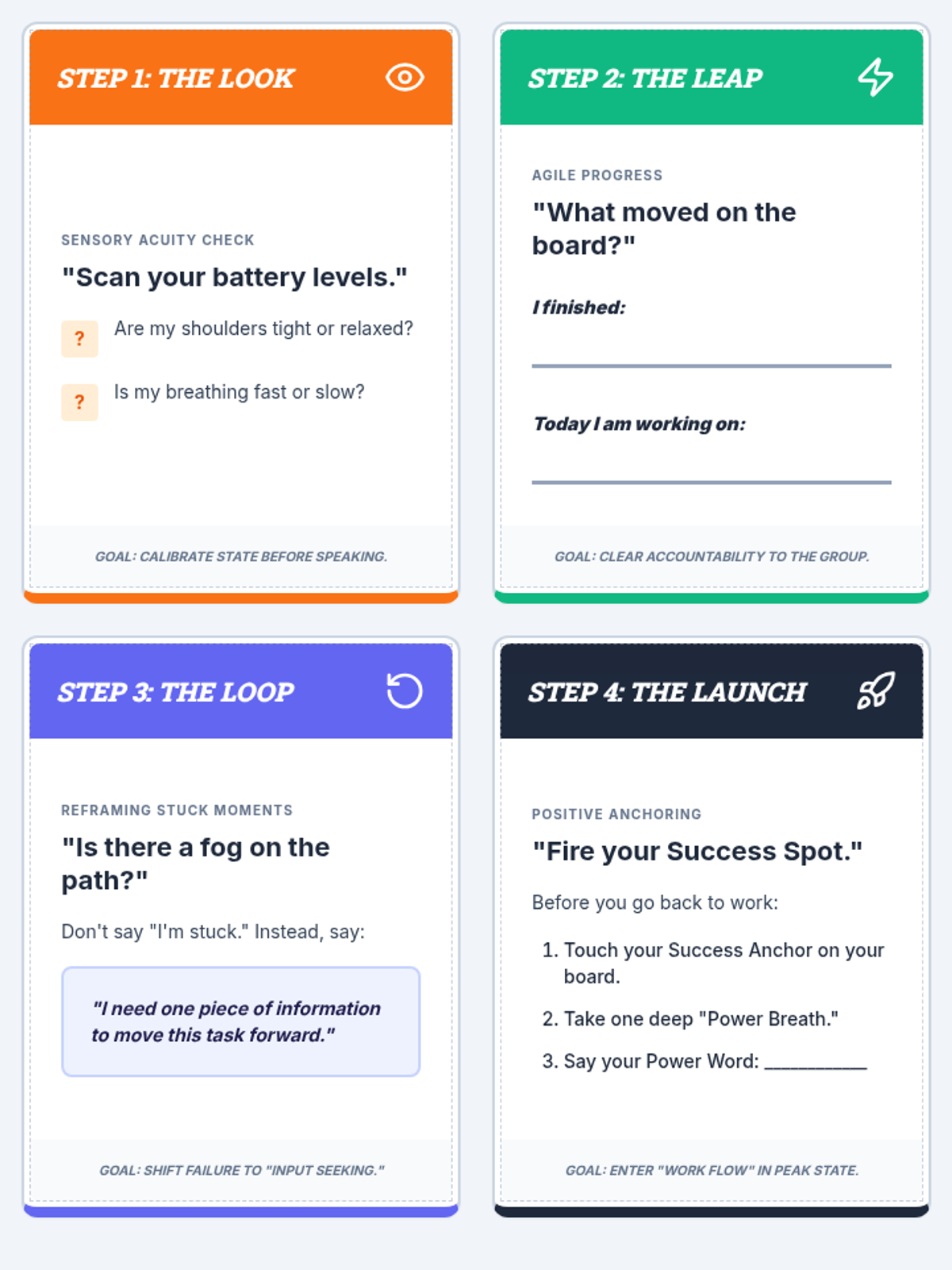
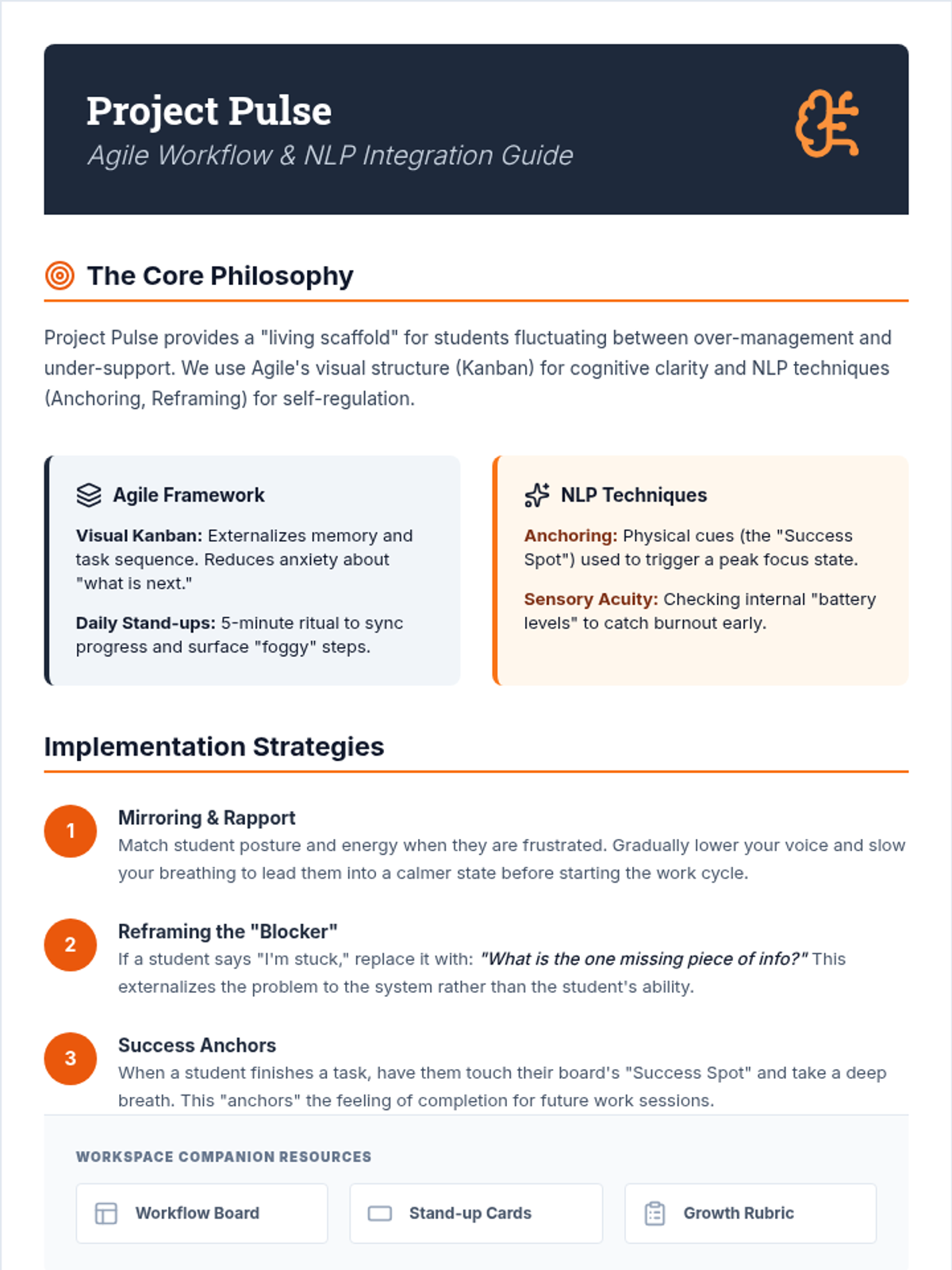
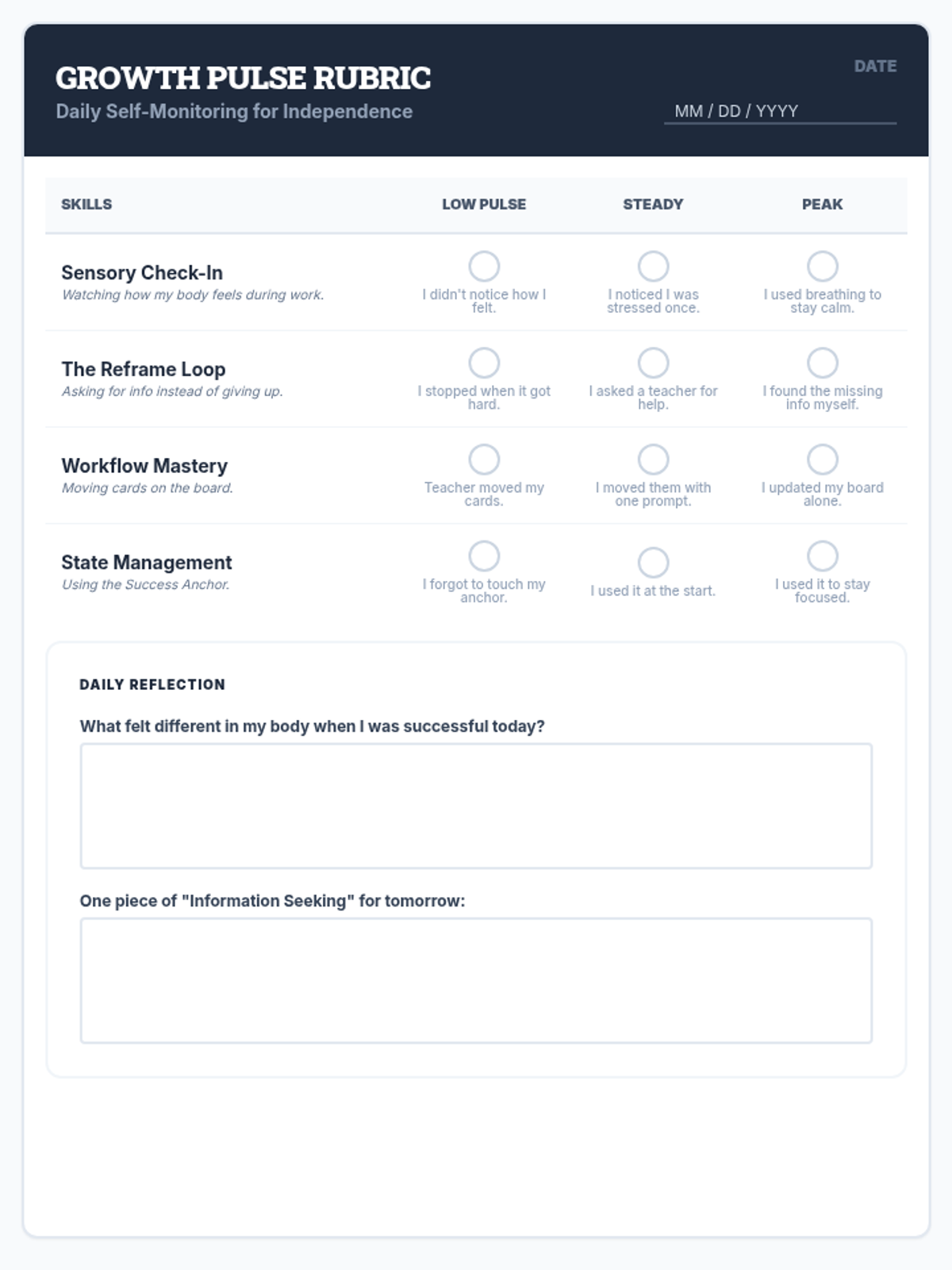
Introduction to the Project Pulse system, integrating visual Scrum/Kanban tools with NLP state-management and rapport-building techniques.
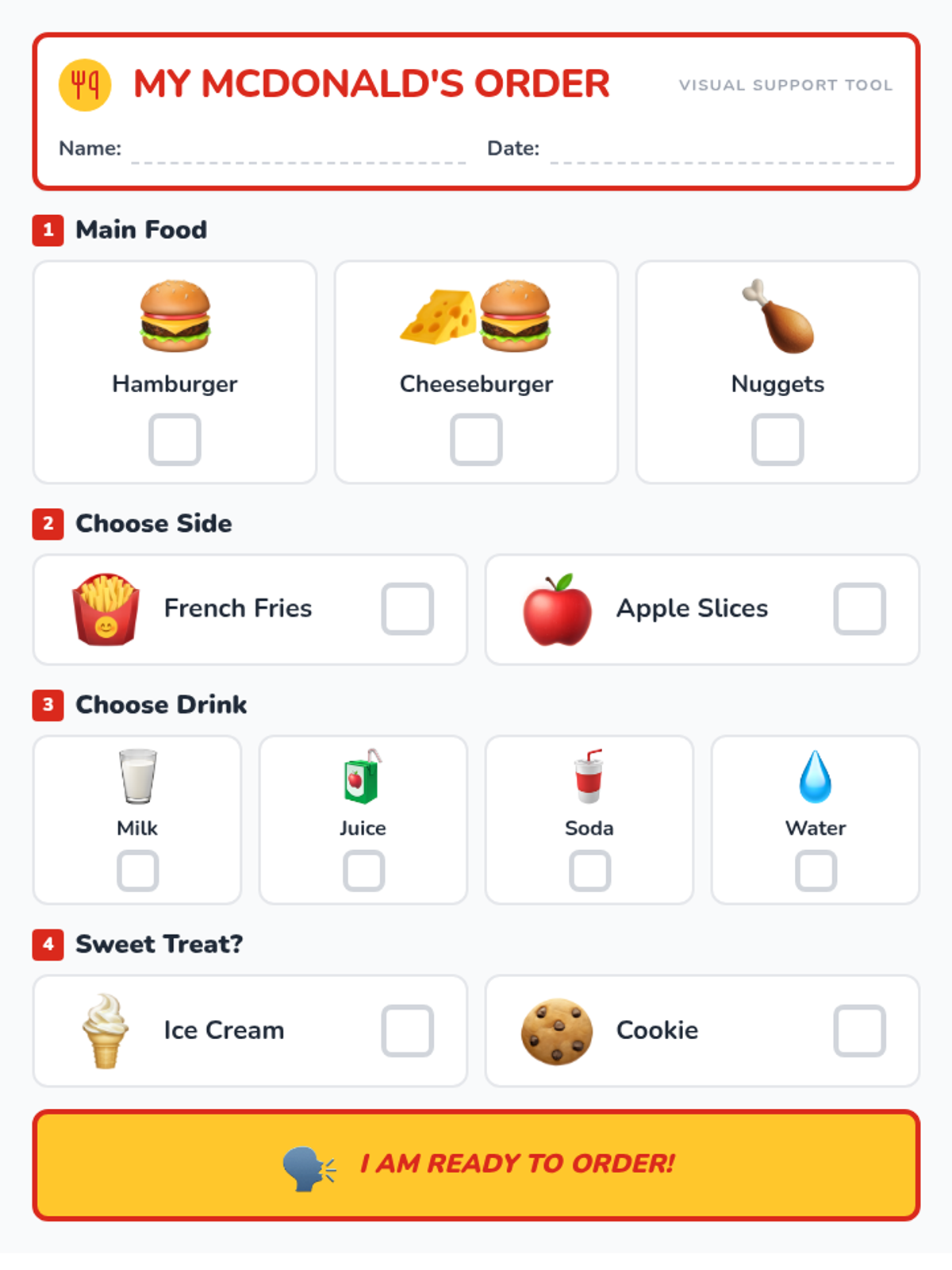
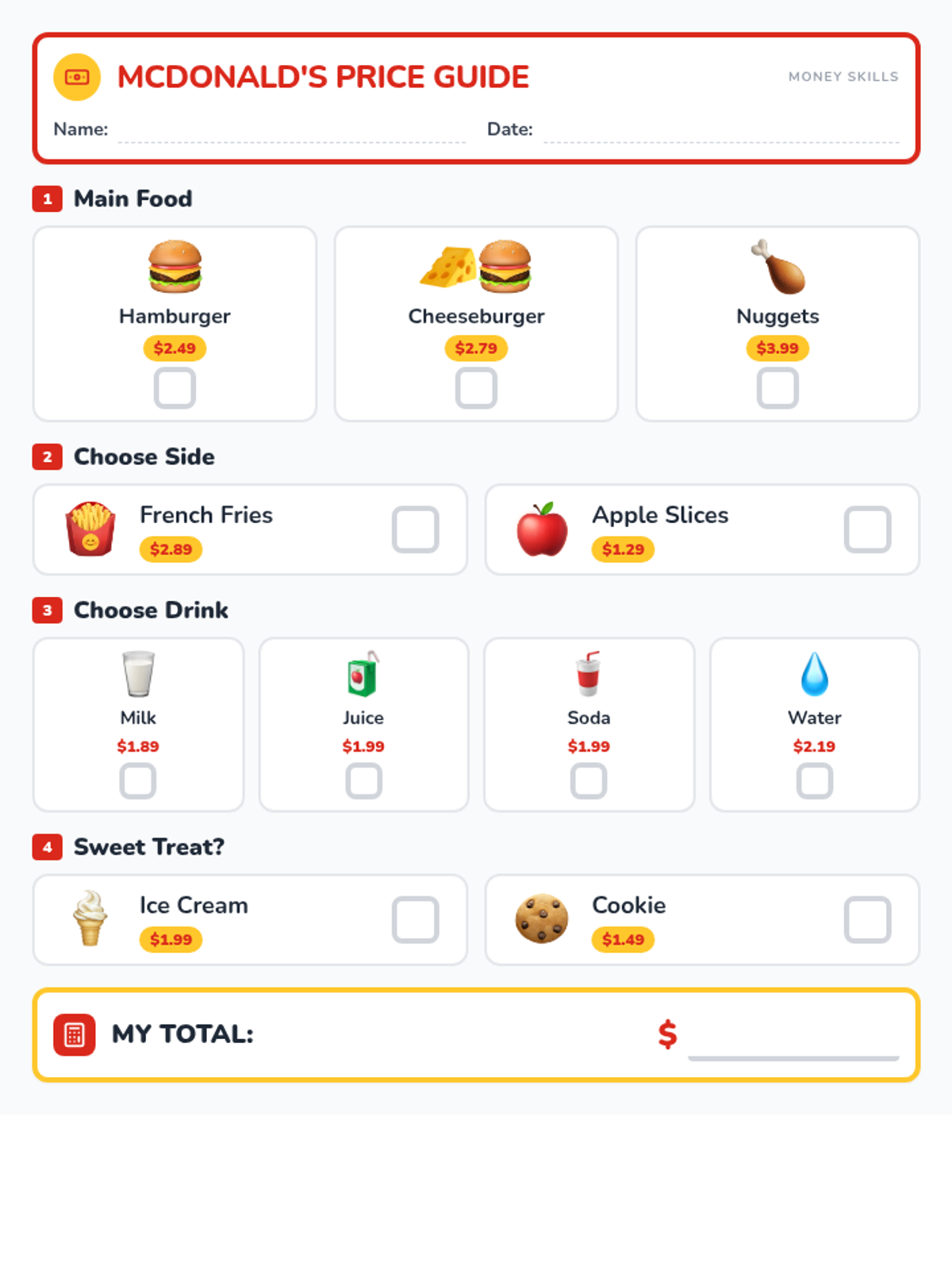
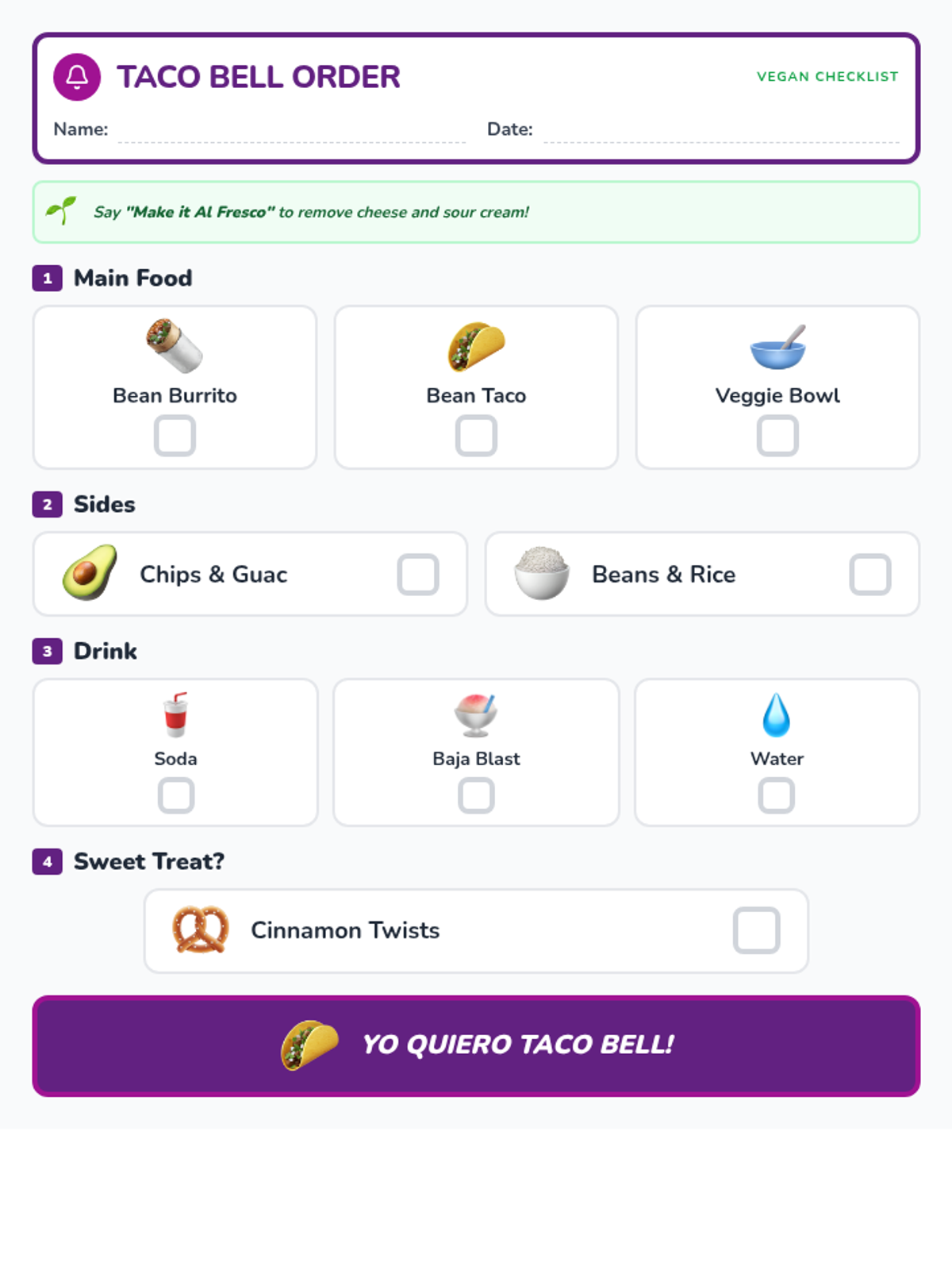
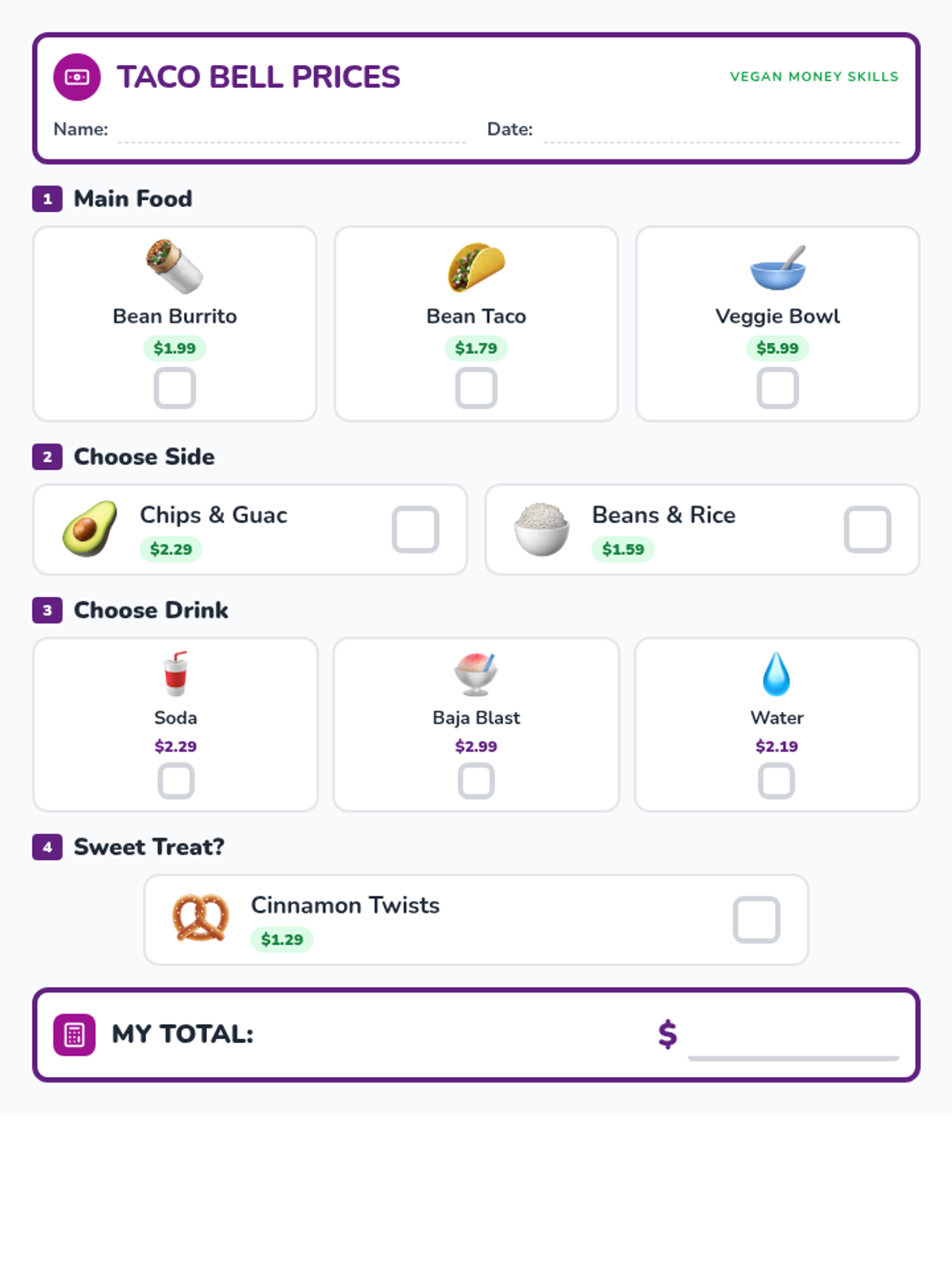
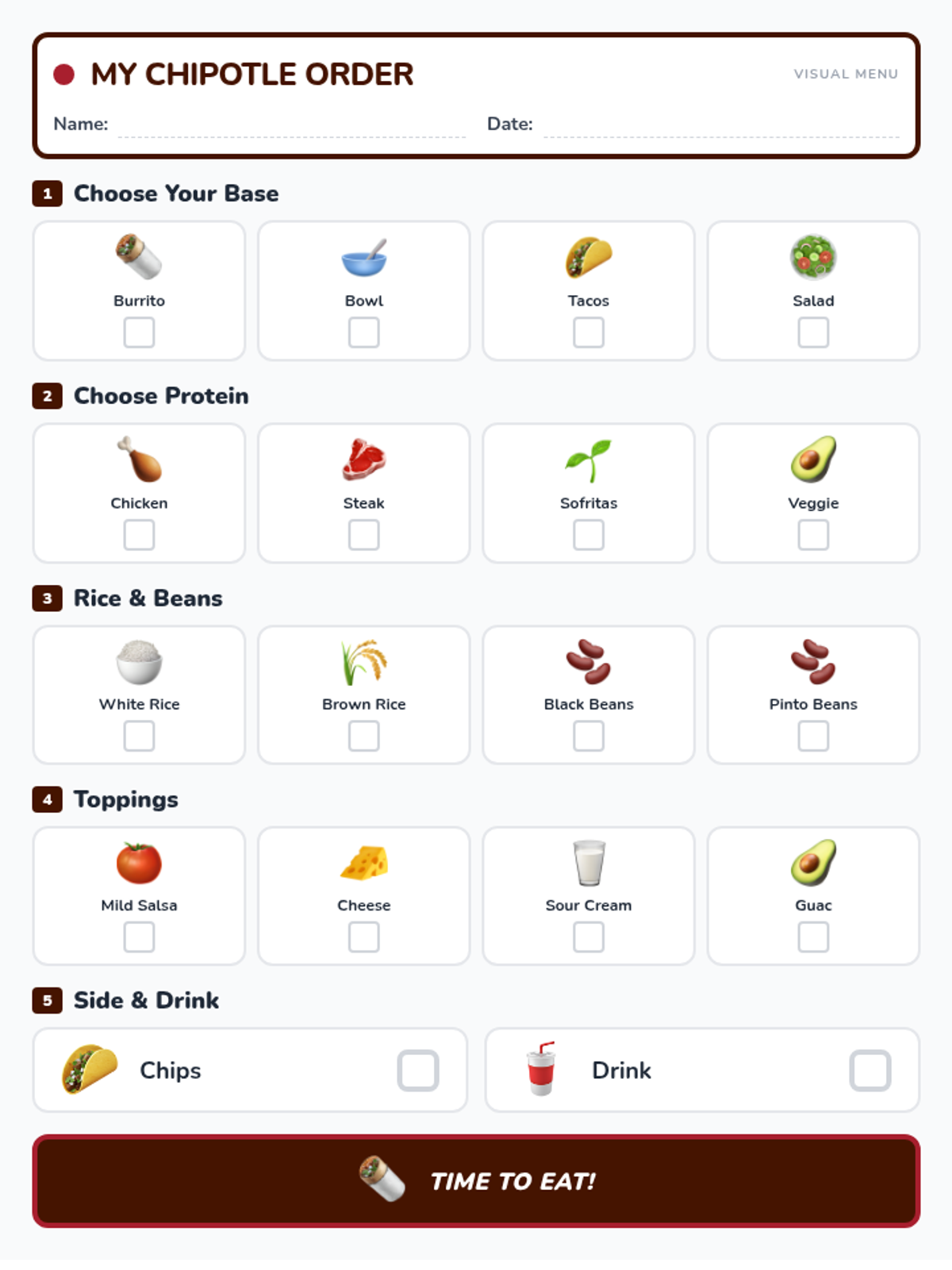
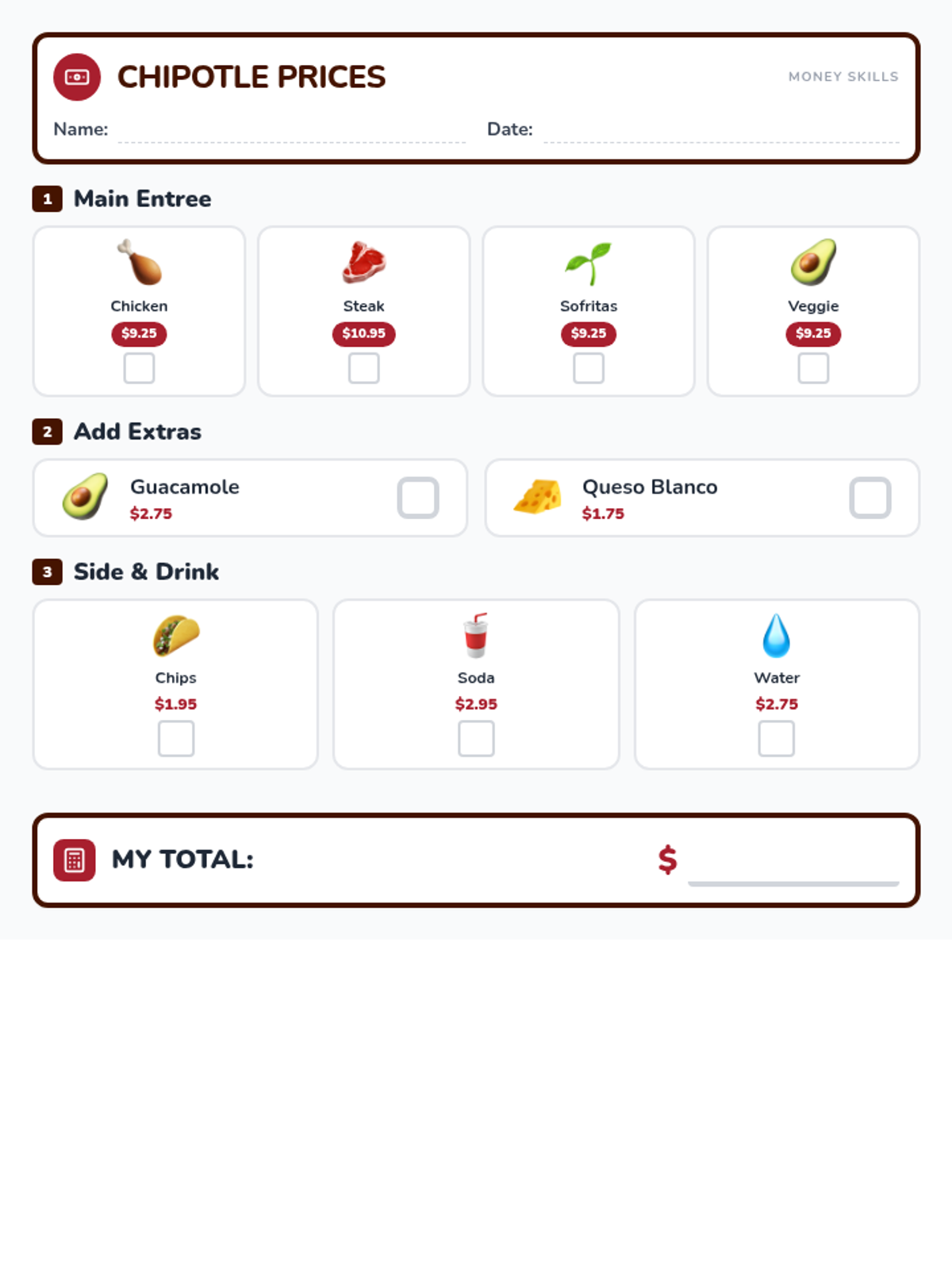
A set of visual supports to help students with special needs practice ordering and money skills at a fast food restaurant.
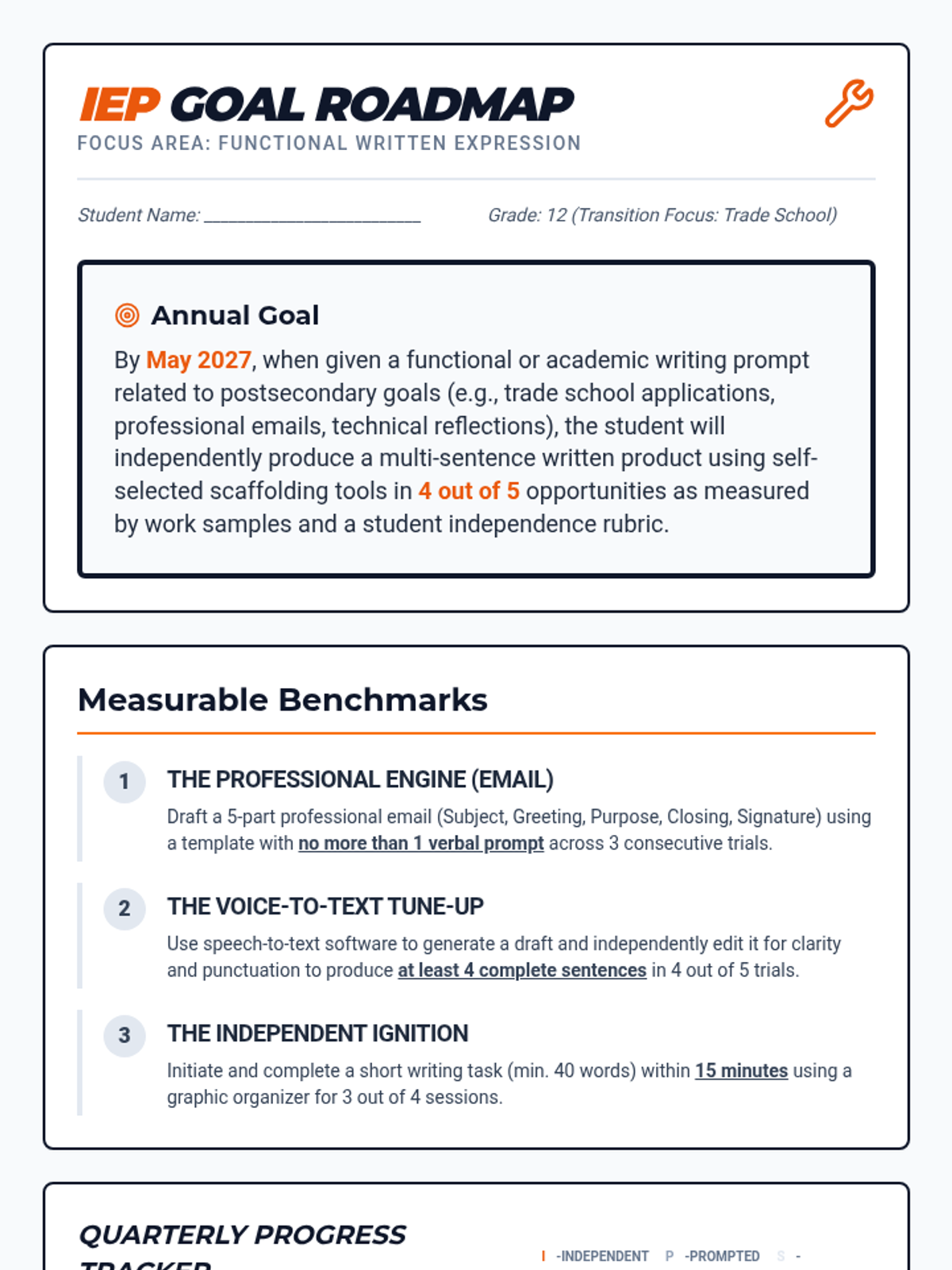
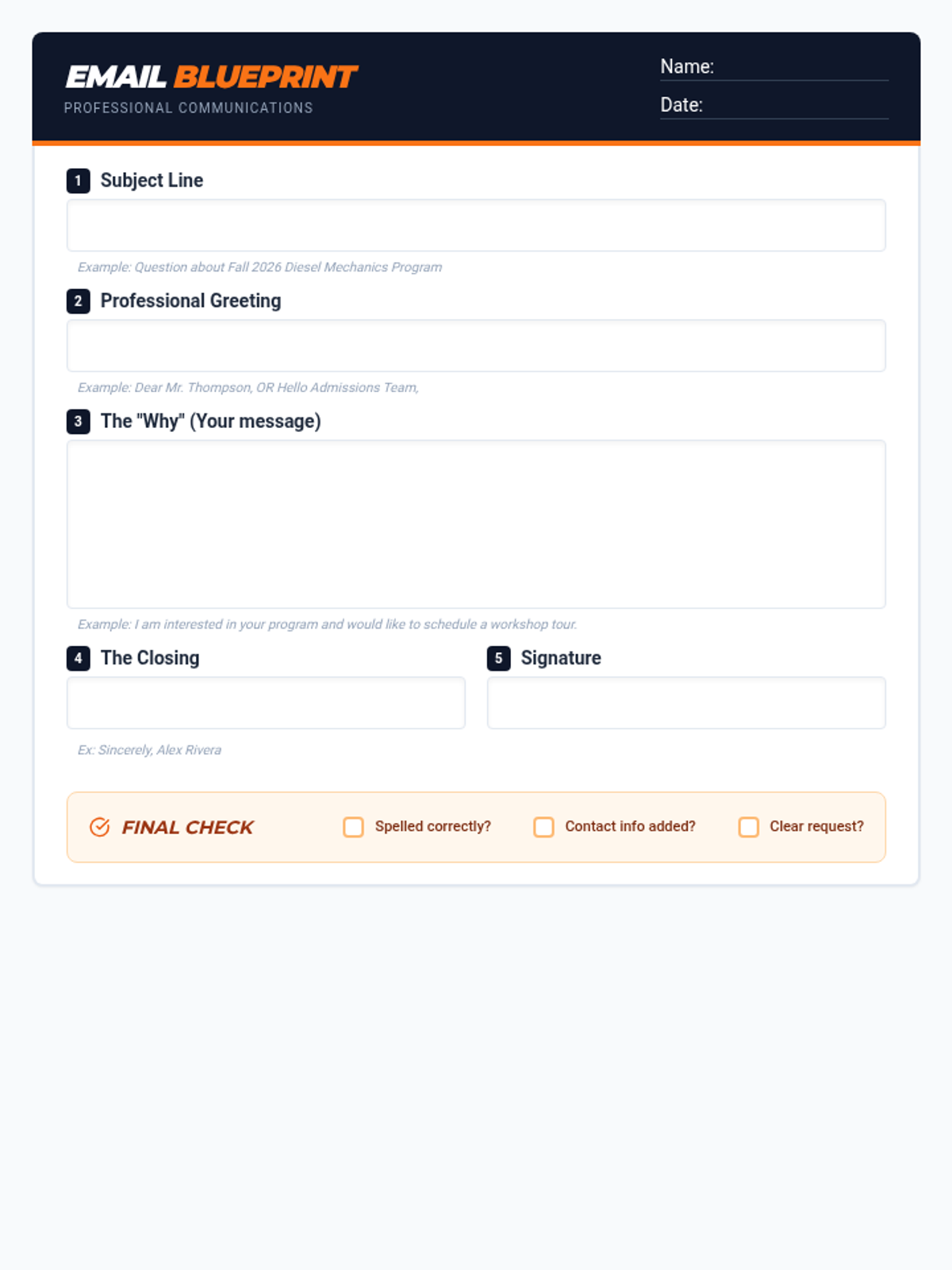
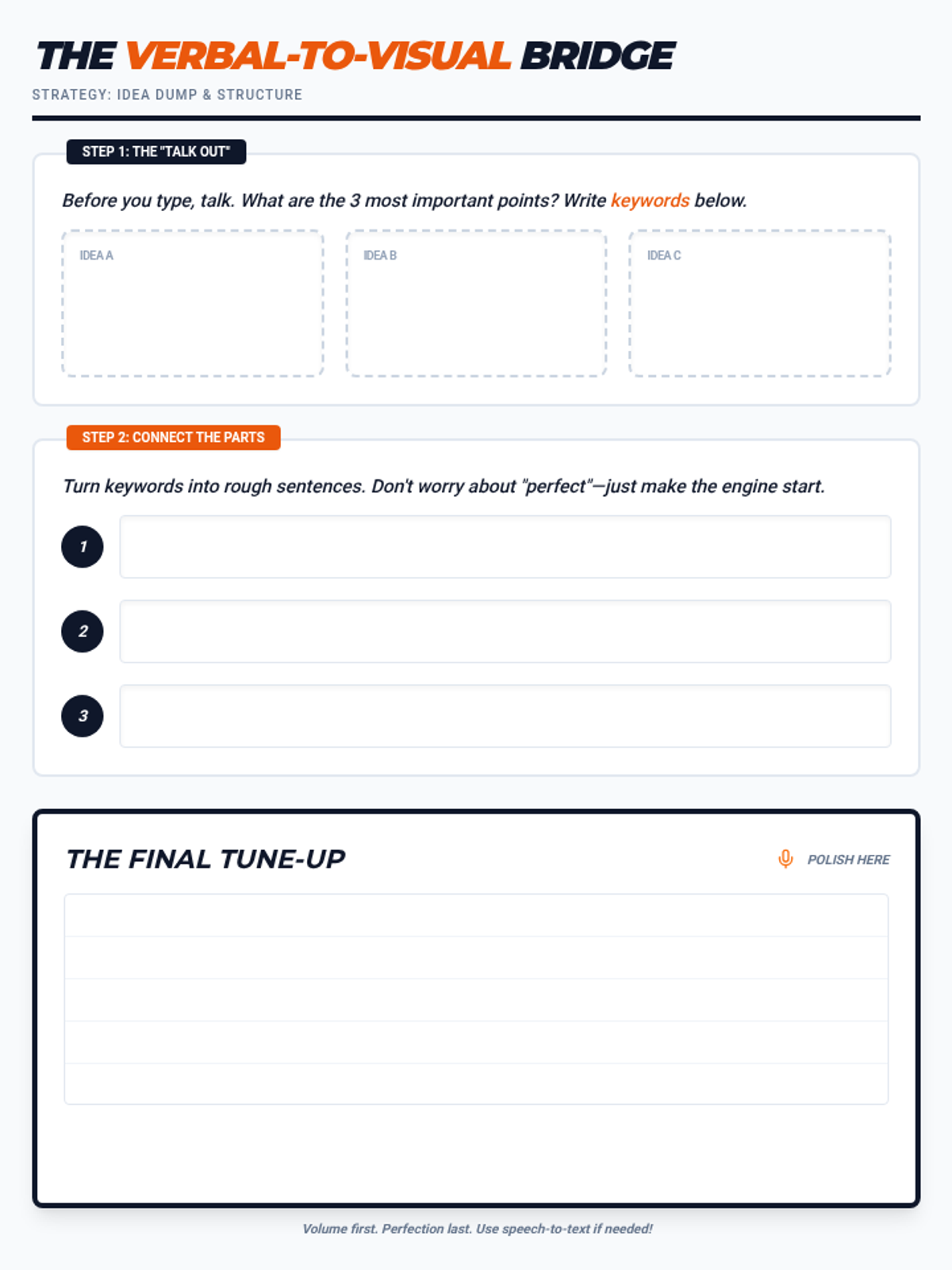
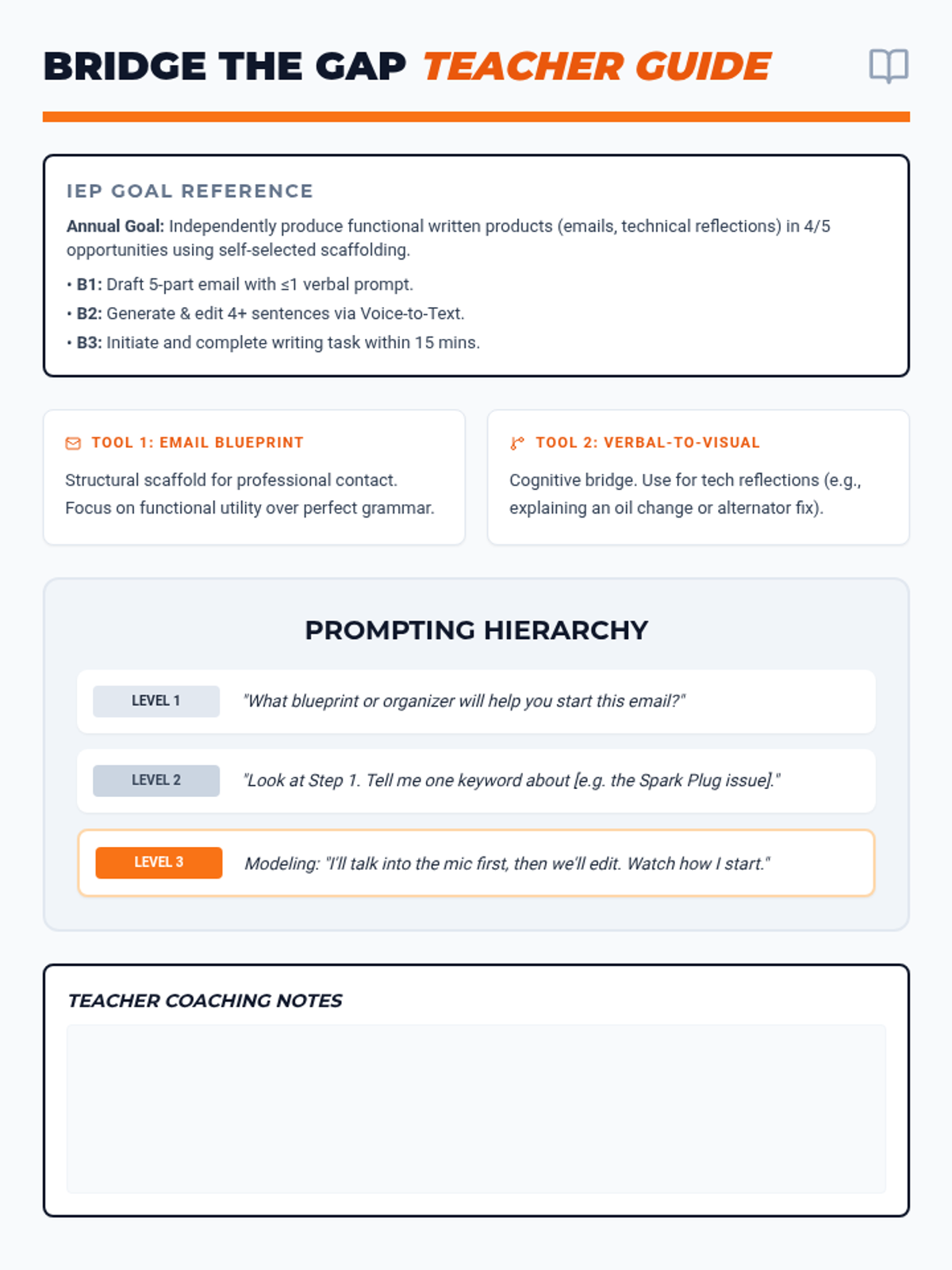
A set of resources designed to help a 12th-grade student interested in automotive trades overcome writing anxiety and develop functional communication skills for postsecondary success.
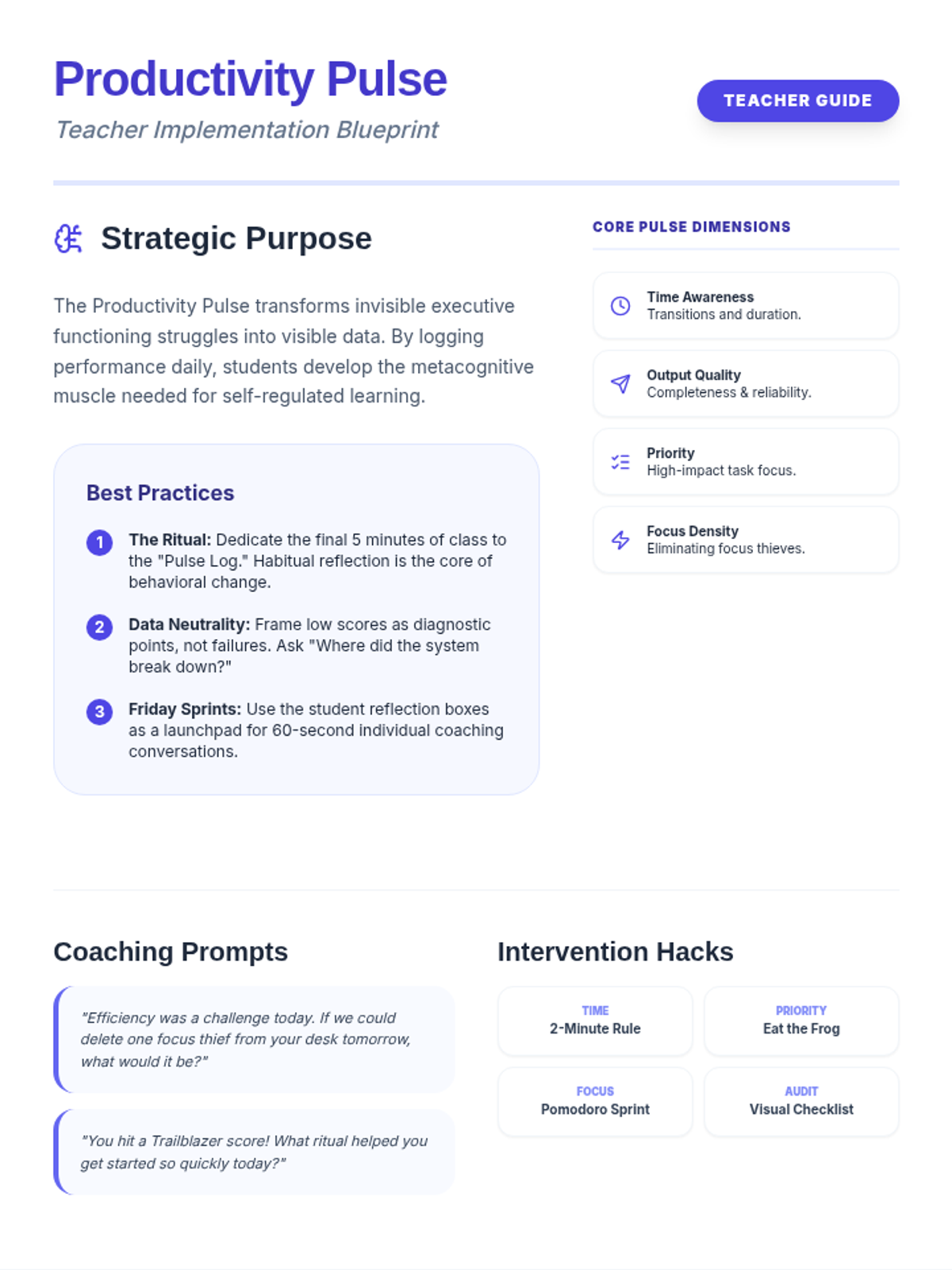
A comprehensive toolkit for students to track and improve their executive functioning skills through daily logging and descriptive rubrics.
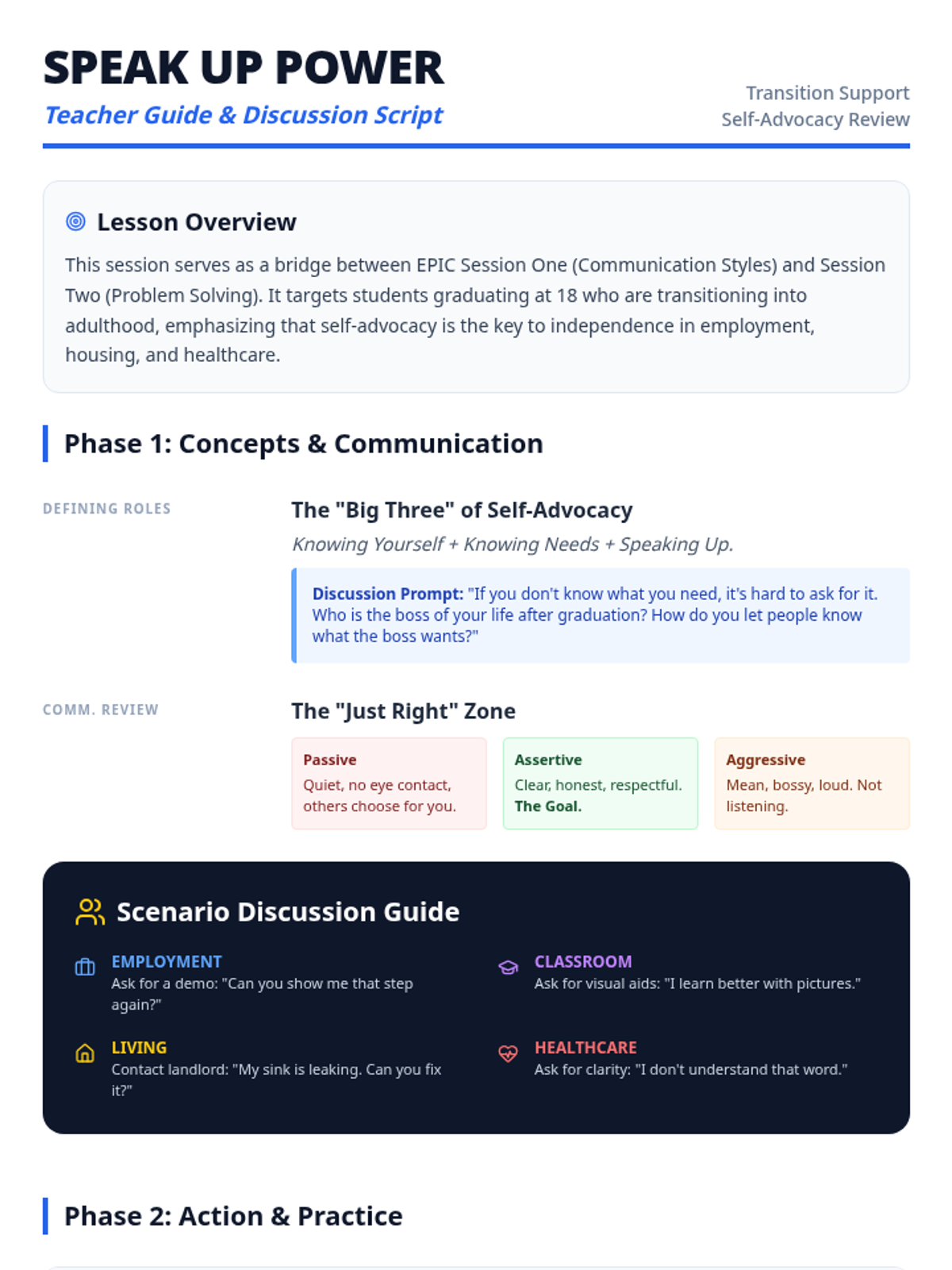
A review-focused lesson on self-advocacy for high school students with intellectual disabilities, focusing on transition skills for employment, living, and education.
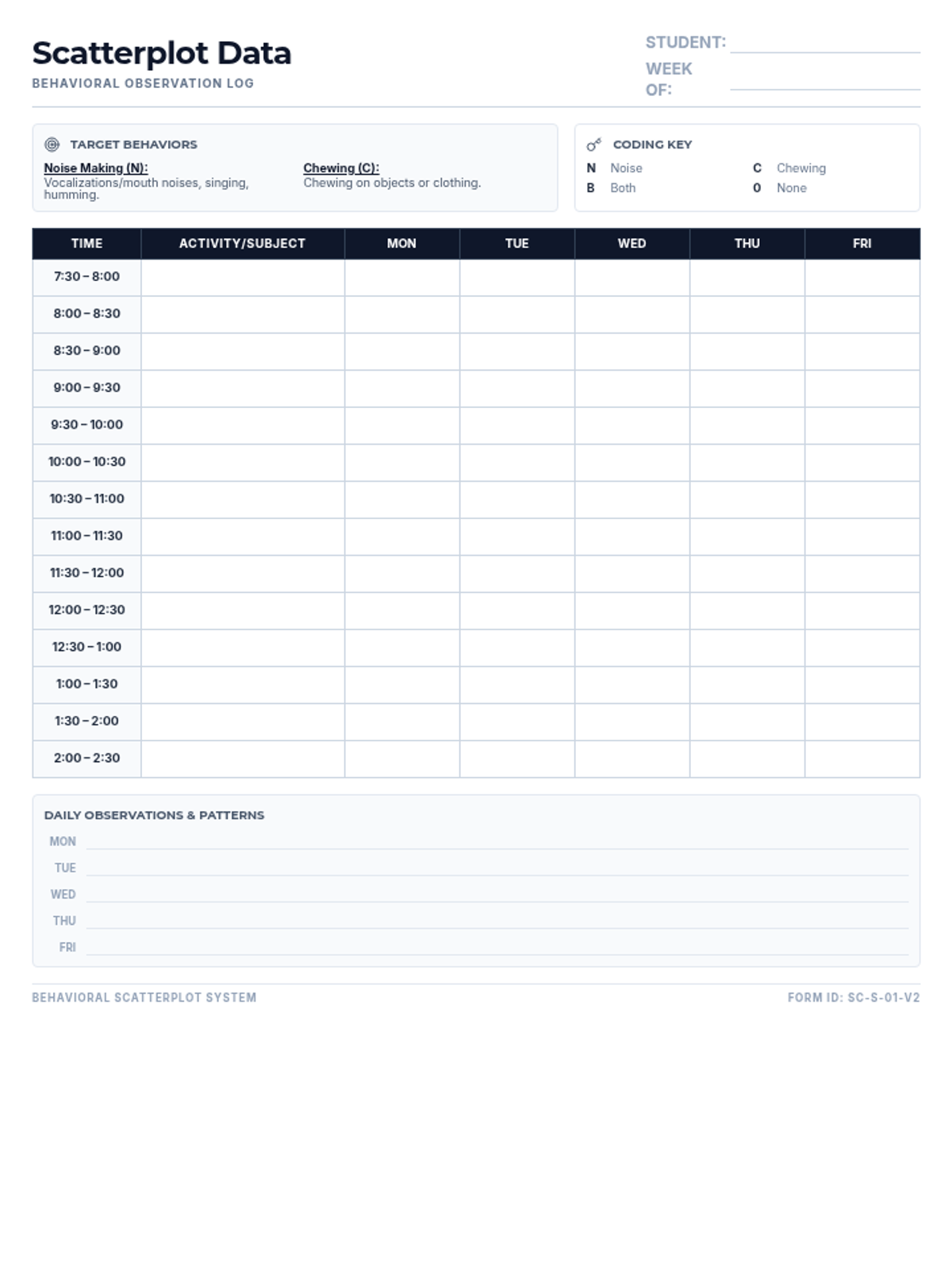
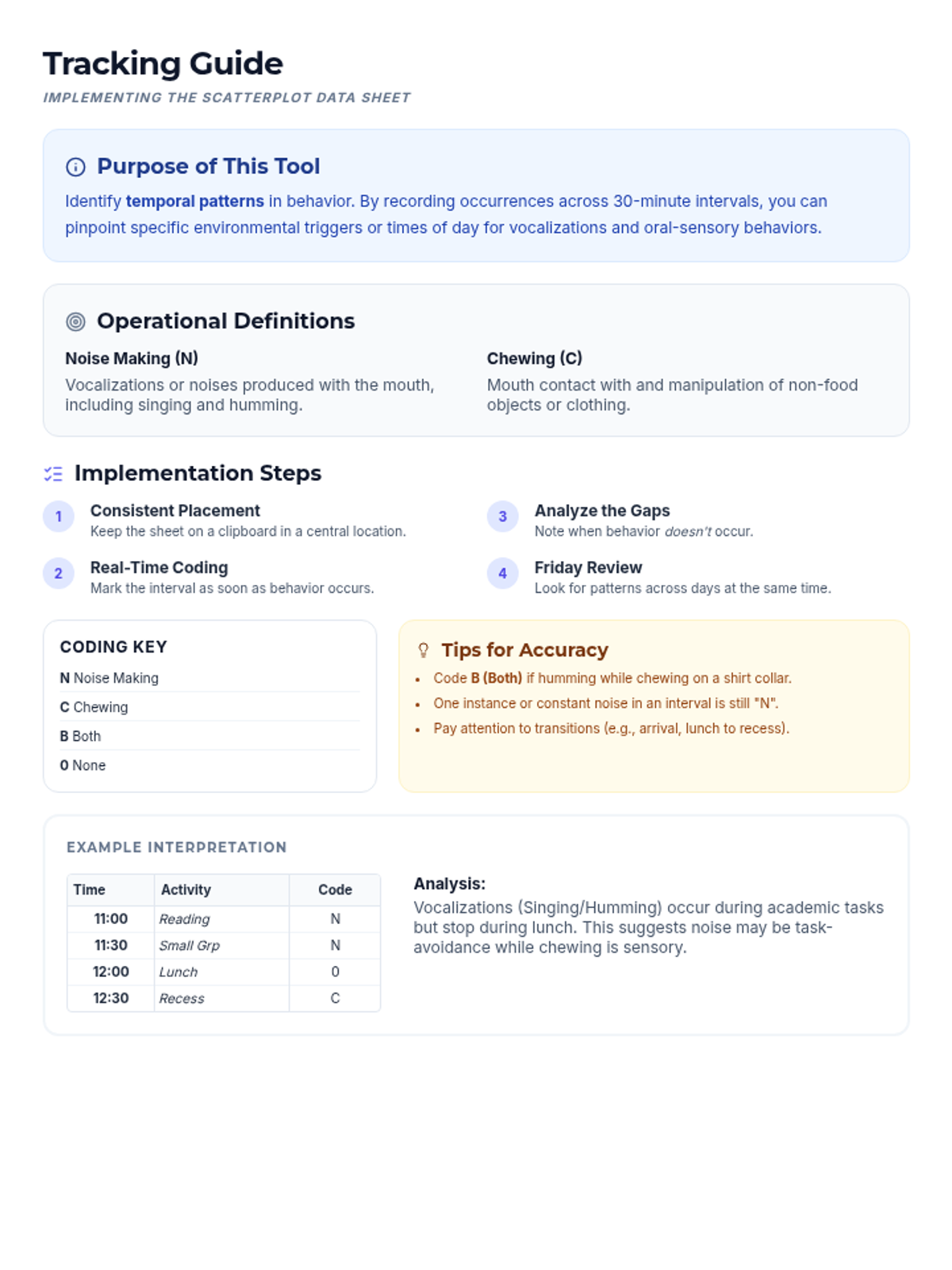
A collection of resources for tracking and analyzing noise-making and chewing behaviors in a classroom or clinical setting, featuring a structured scatterplot data sheet and implementation guide.
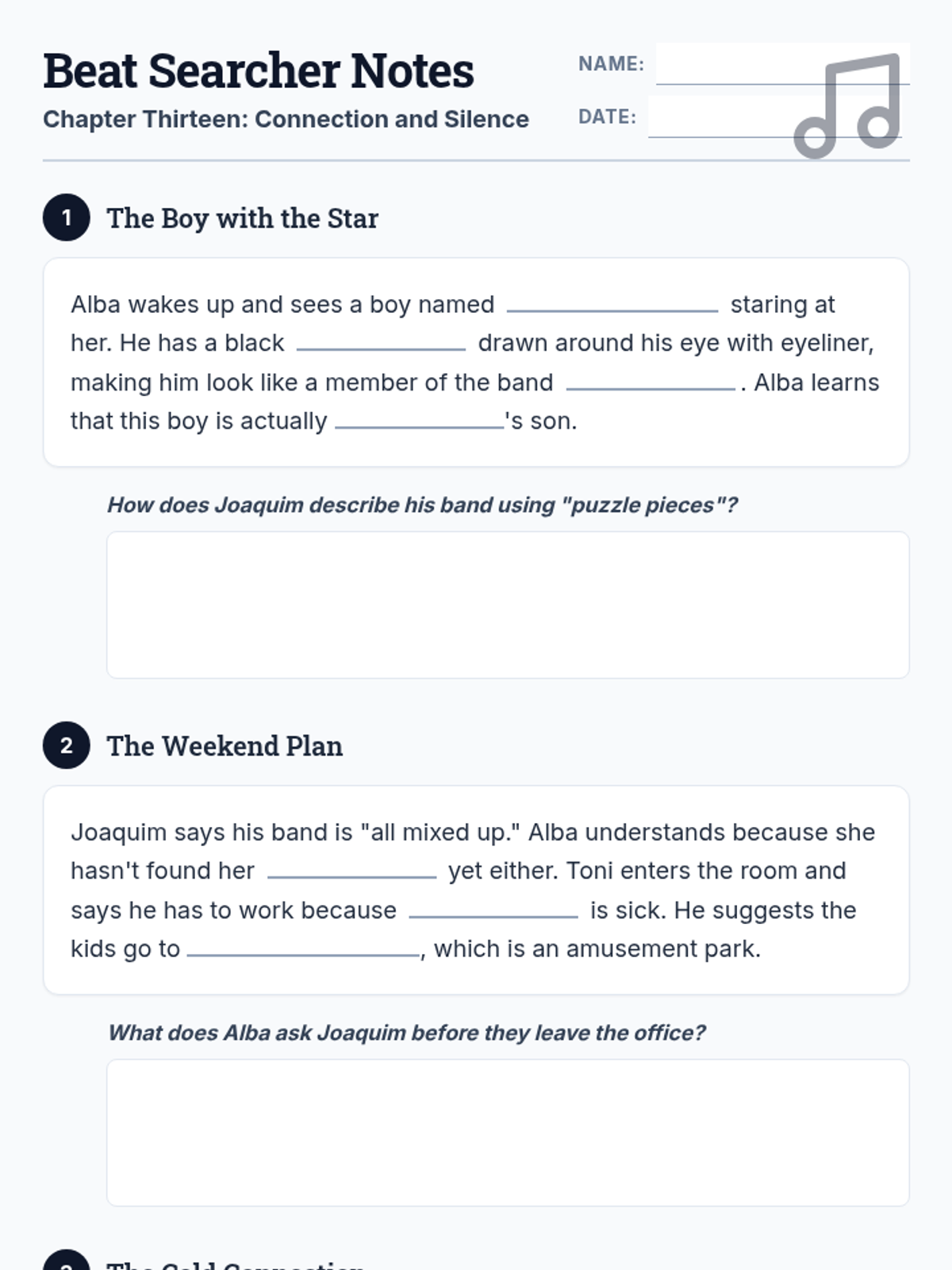
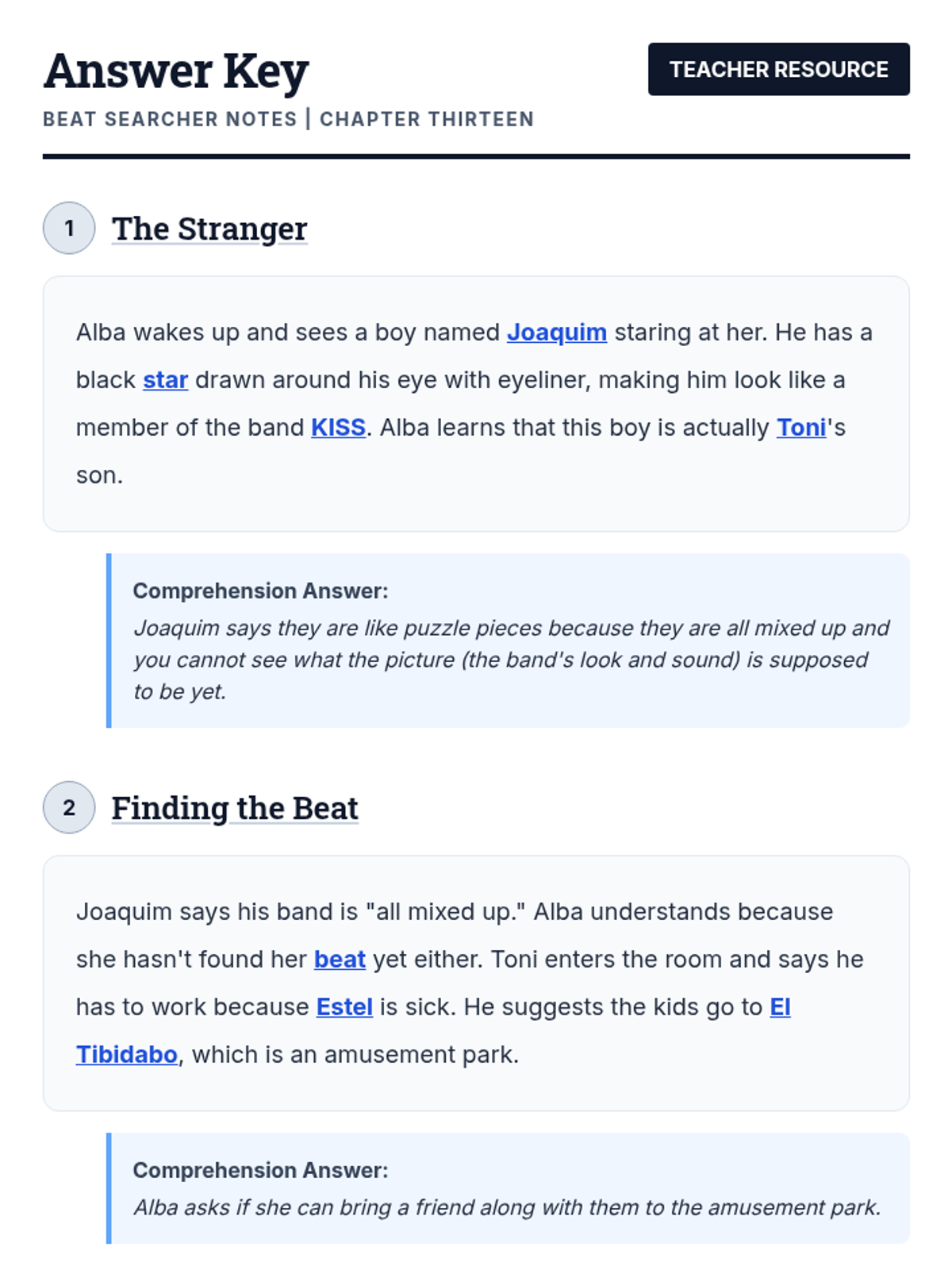
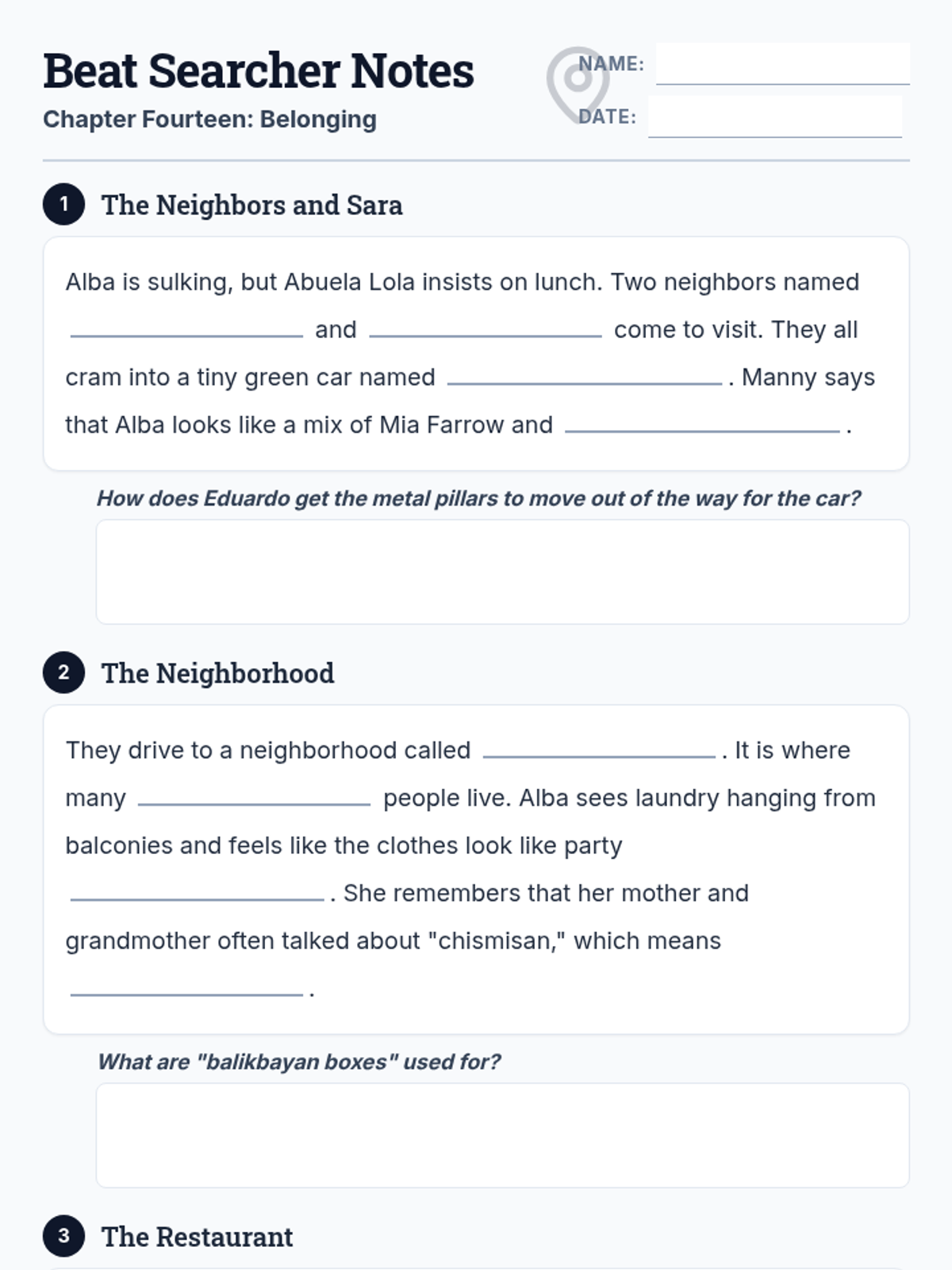
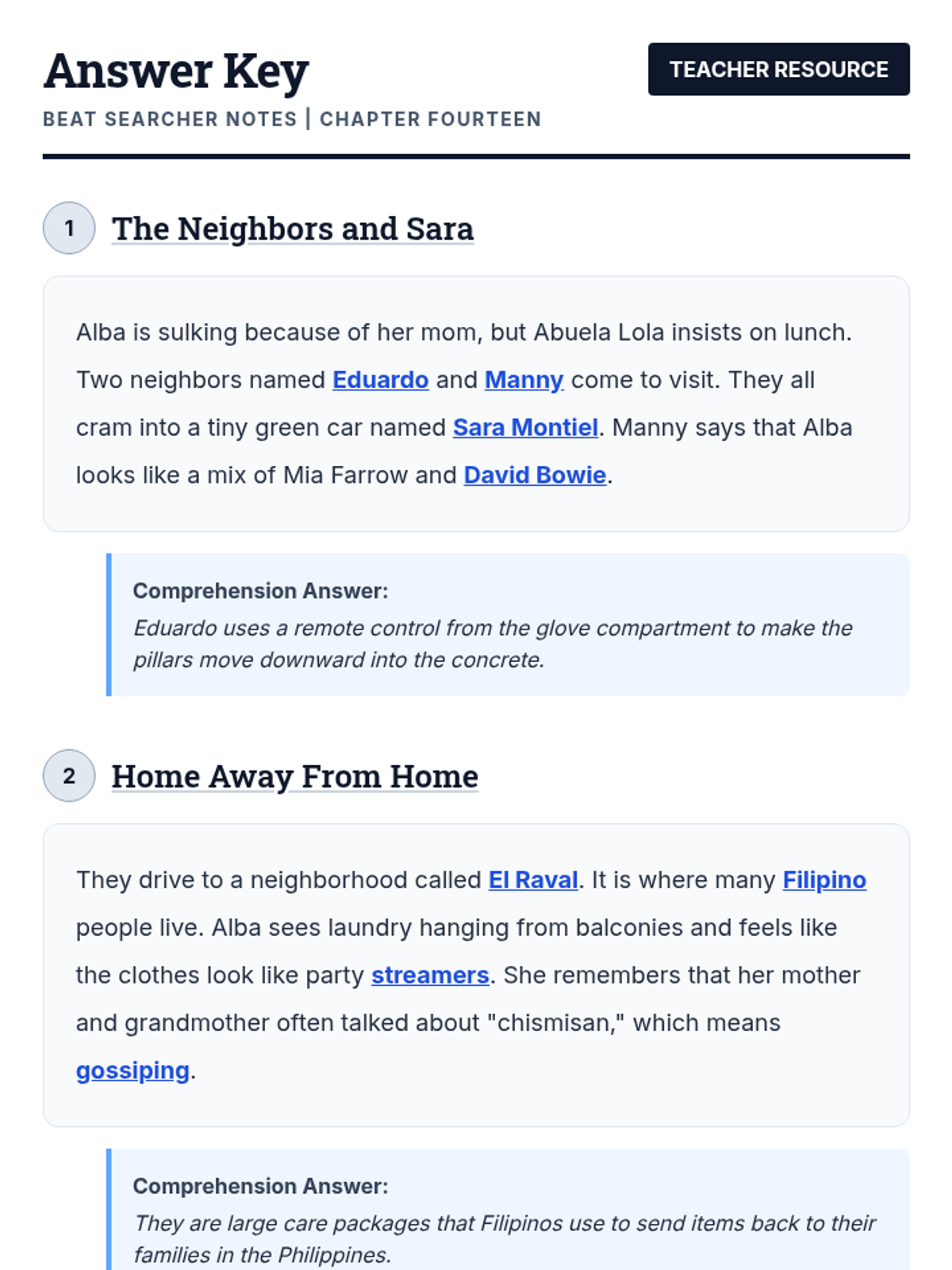
A reading comprehension lesson focused on analyzing character dynamics and emotional subtext in Chapters 13 and 14 of the text, specifically exploring identity, culture, and familial distance.
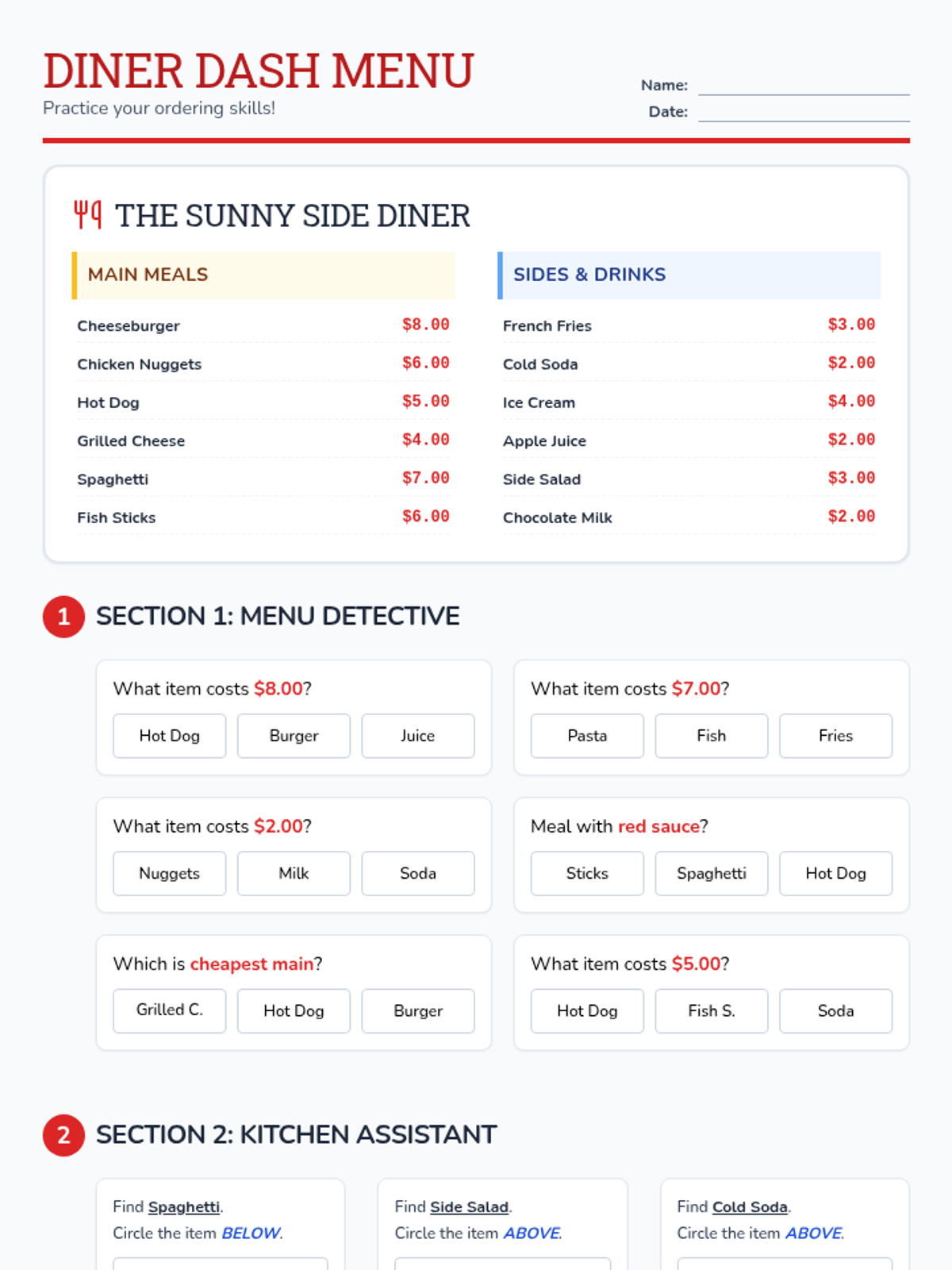
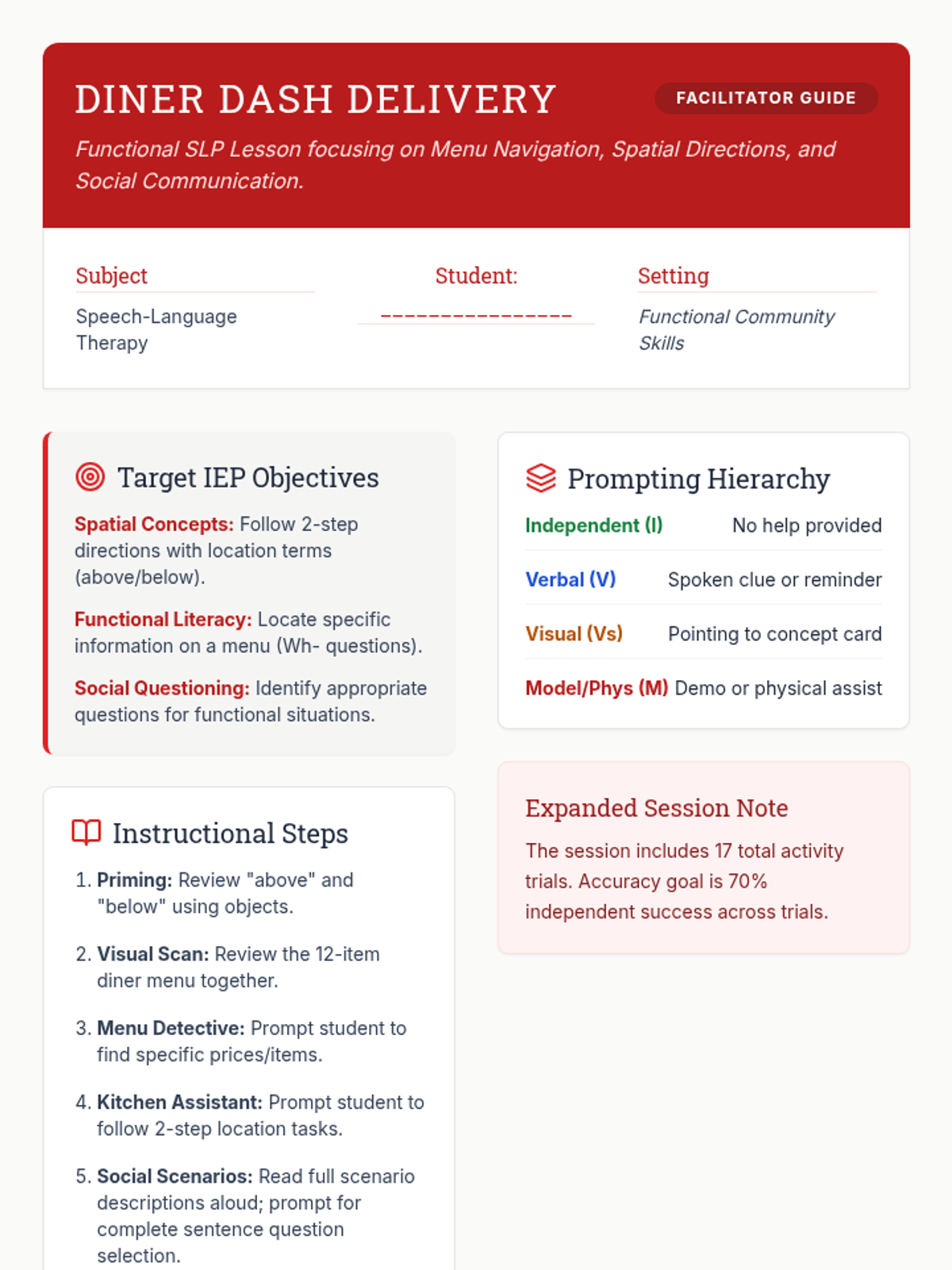
A functional speech-language therapy lesson focused on restaurant ordering, menu navigation, and social problem-solving for students with moderate-to-severe autism.
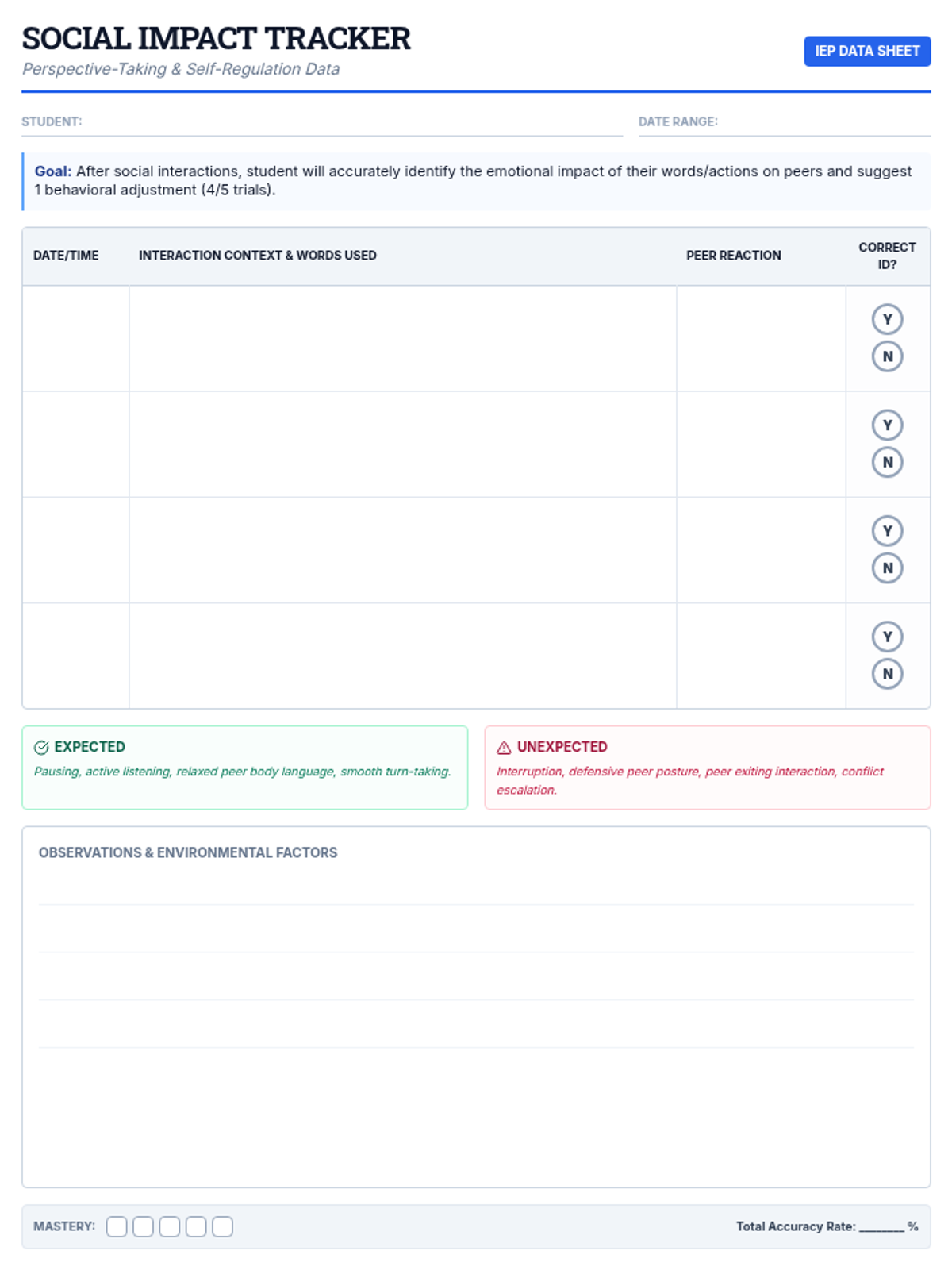
This lesson focuses on developing perspective-taking skills, specifically helping students understand the ripple effect of their words and actions on the people around them. It includes tools for monitoring progress and reflective practice.
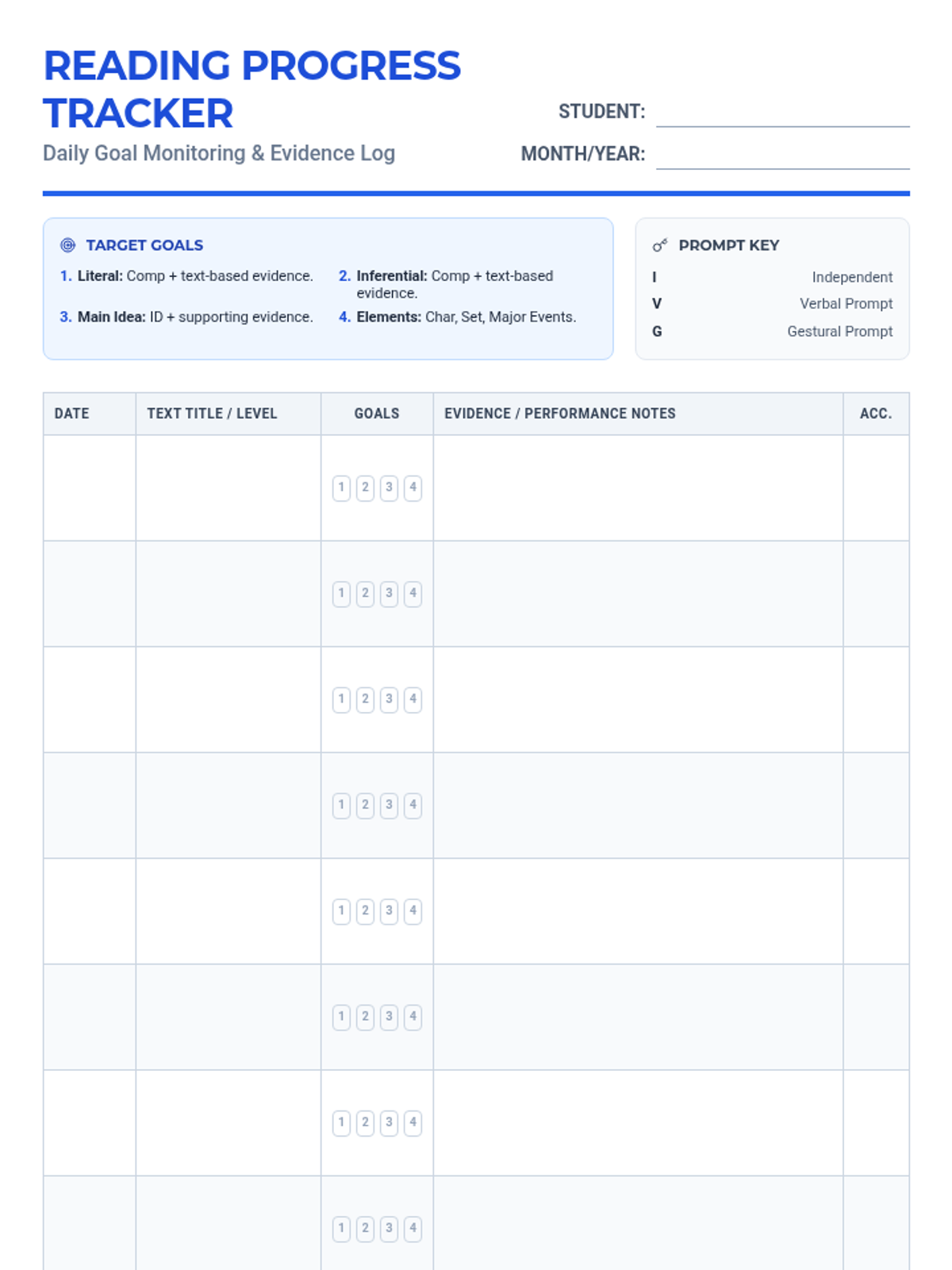
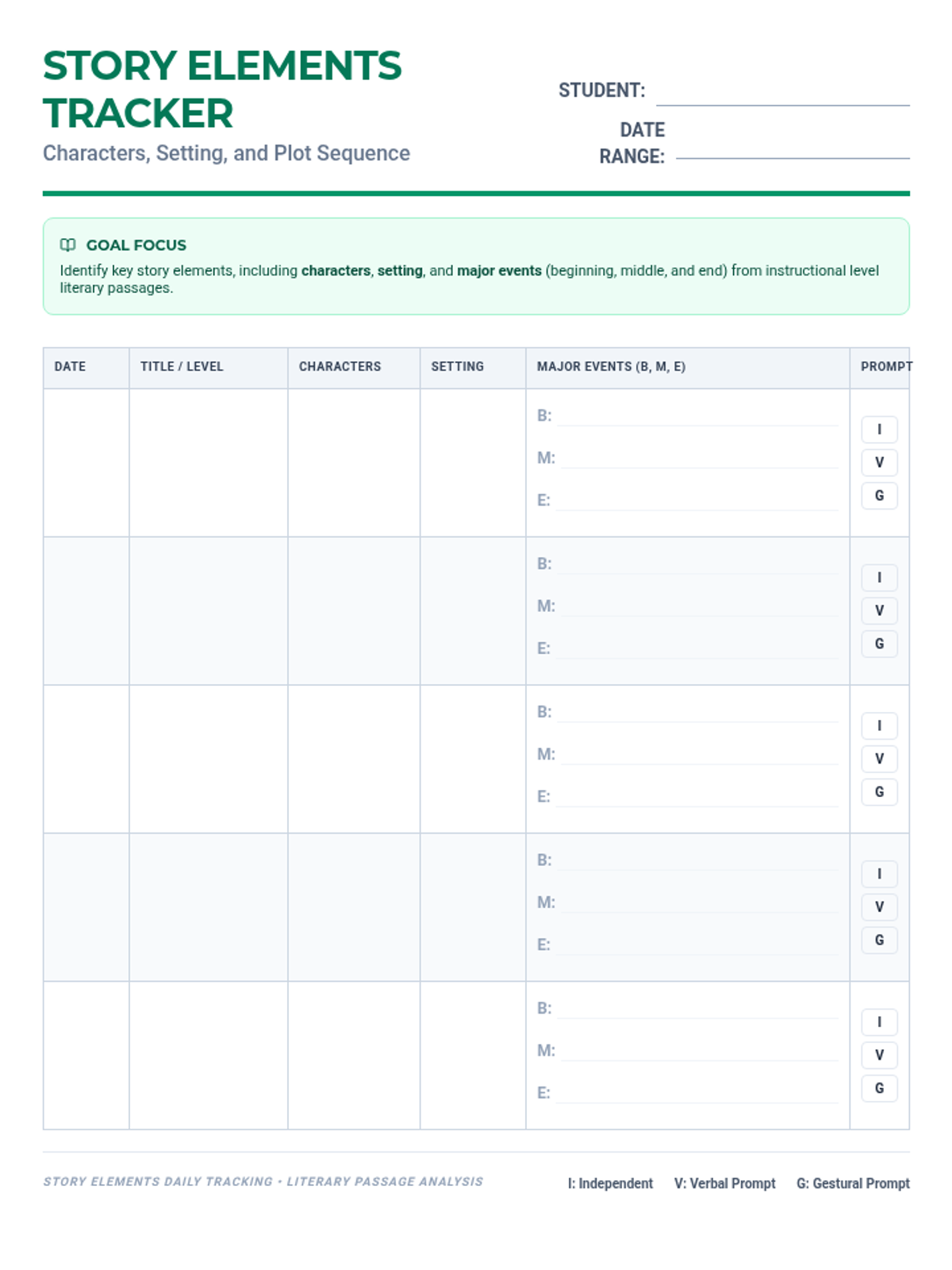
A collection of professional data tracking sheets for monitoring specific reading comprehension goals, including literal, inferential, and story element identification.
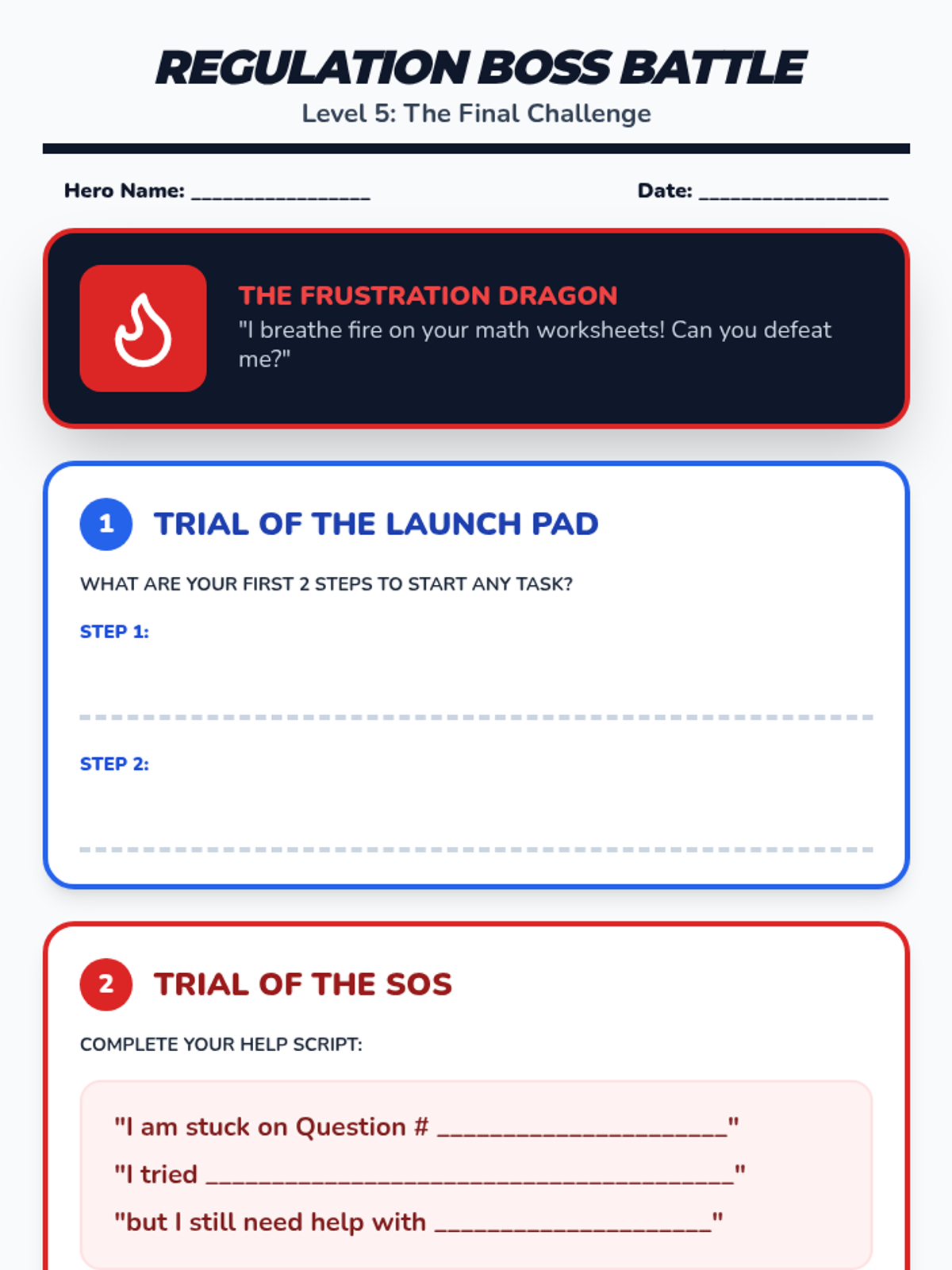
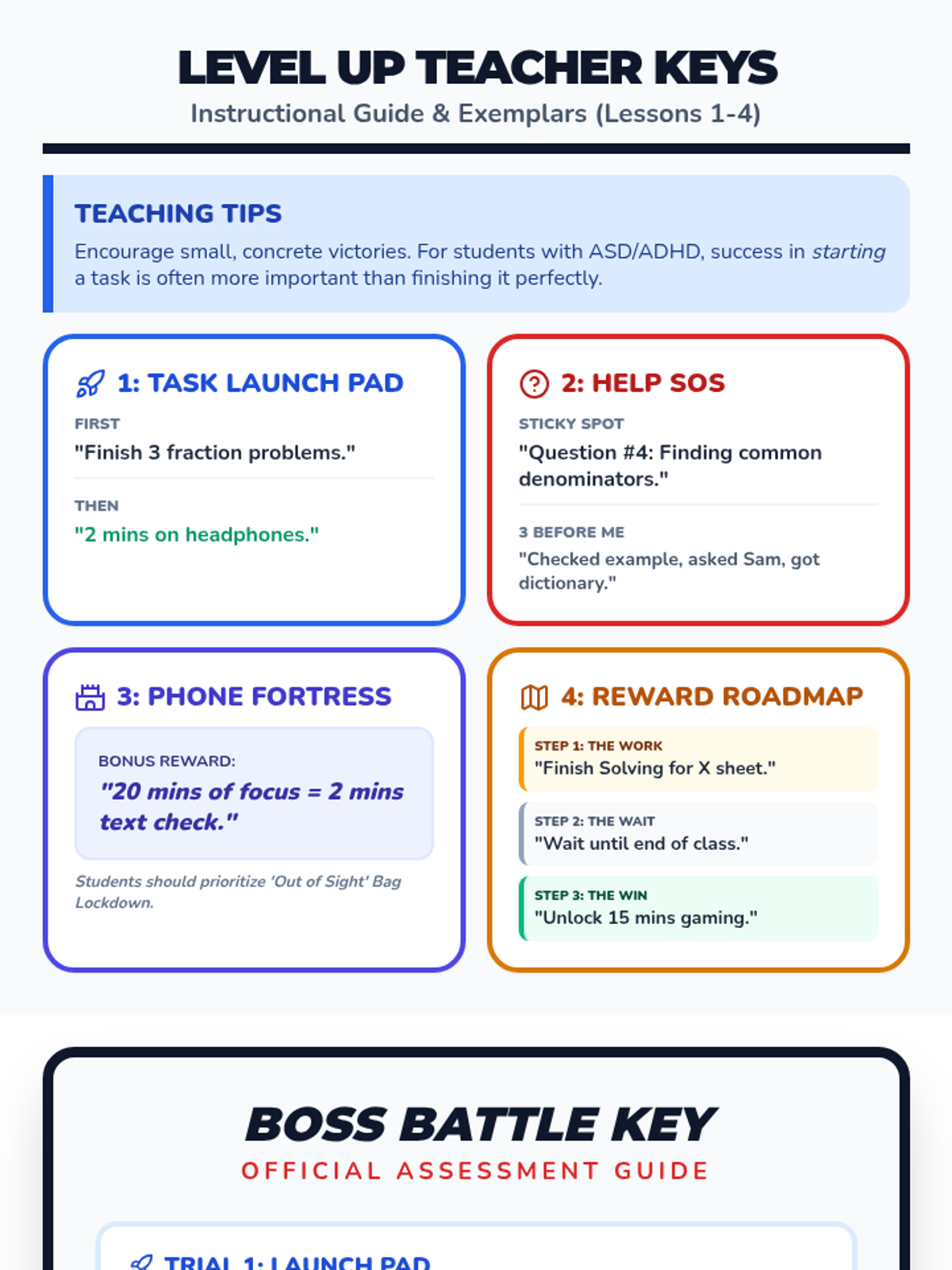
A cumulative 'Boss Battle' review where students use all their regulation tools to solve a series of math-related regulation challenges.
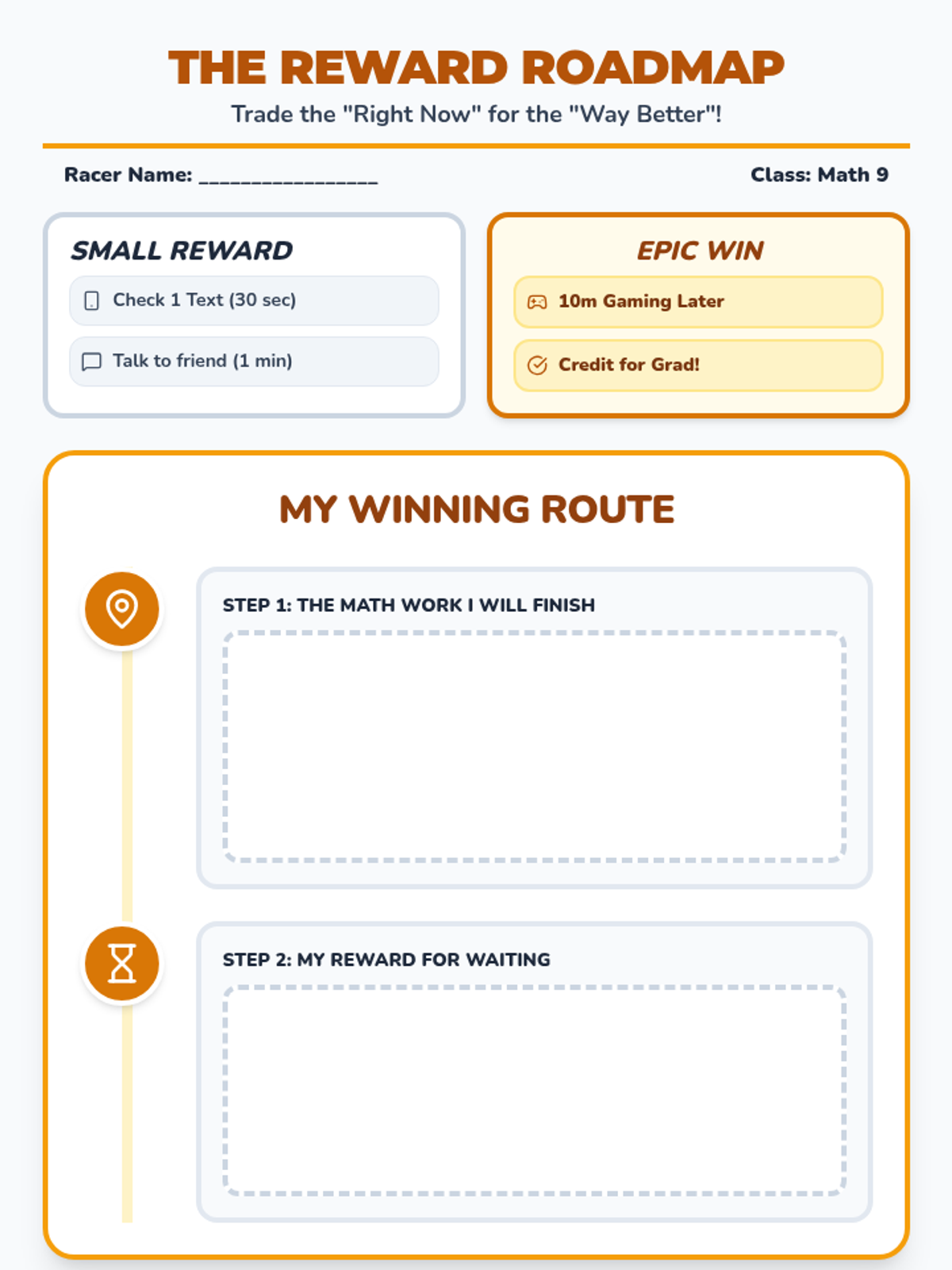
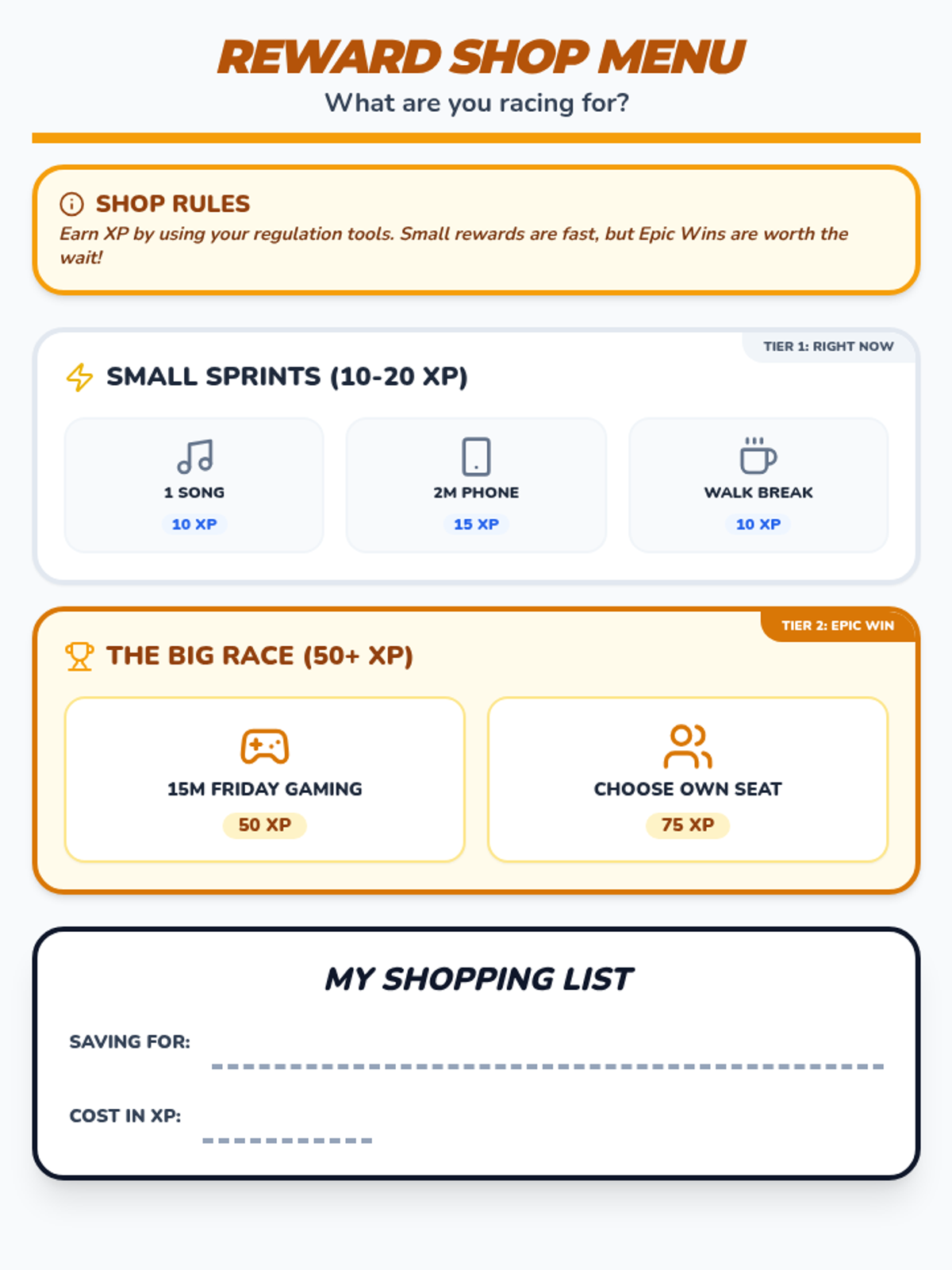
Explores delayed gratification through a 'Reward Roadmap' activity, teaching students to trade immediate distractions for long-term academic success.