Focuses on Part III, the arrival of the boarders, and Gregor becoming a 'nuisance' in his own home.
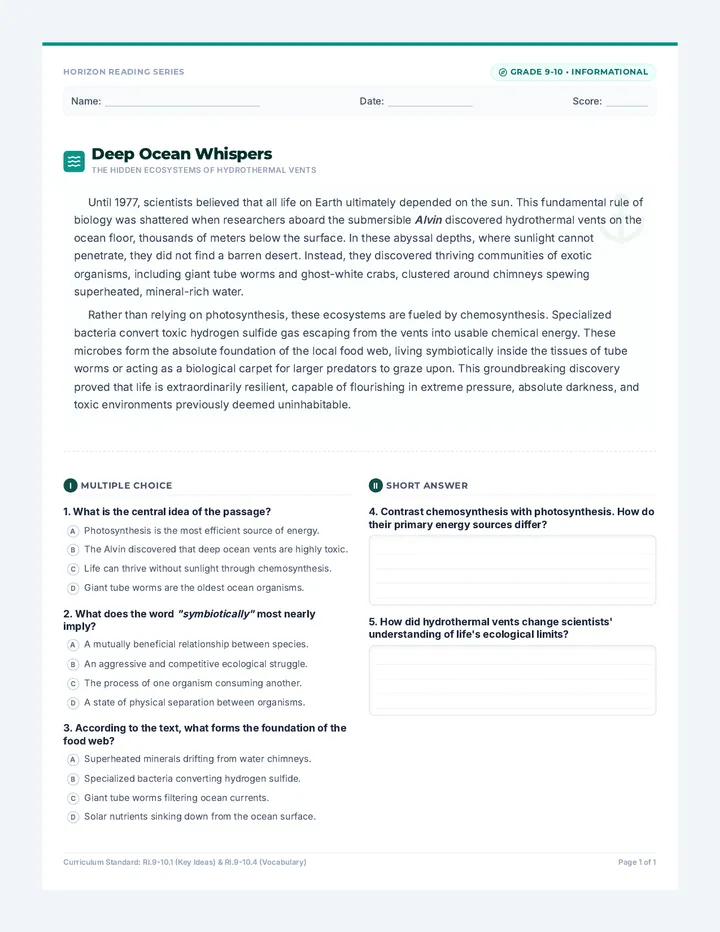
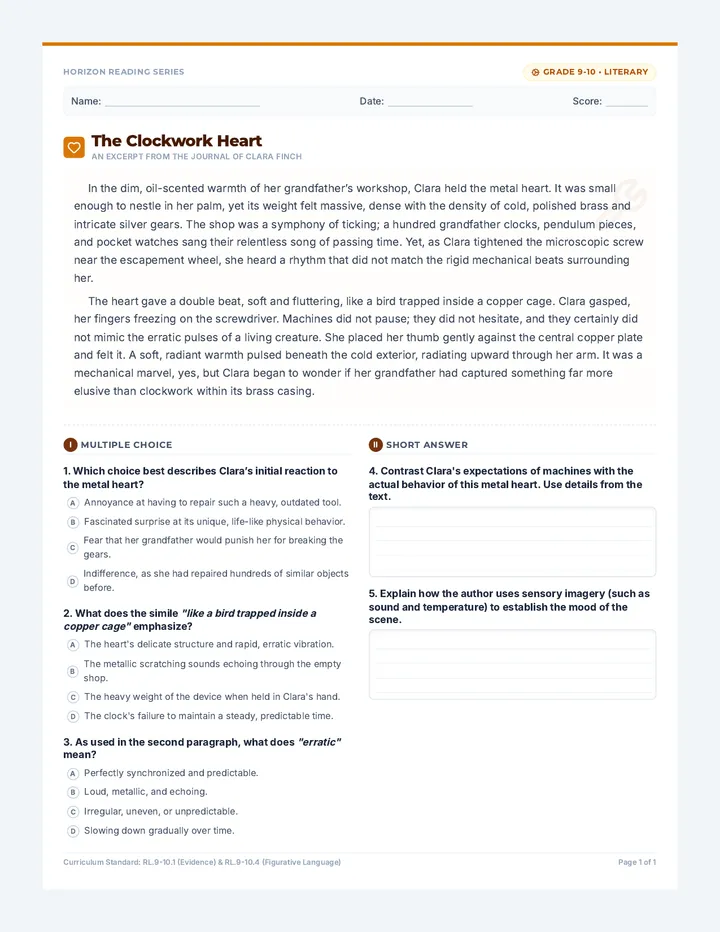
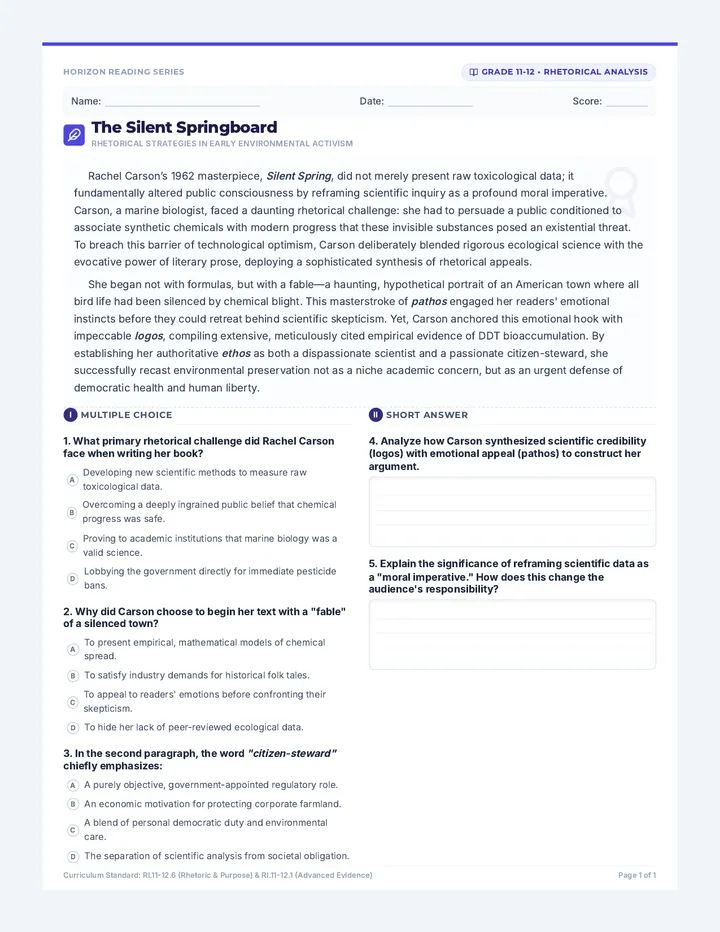
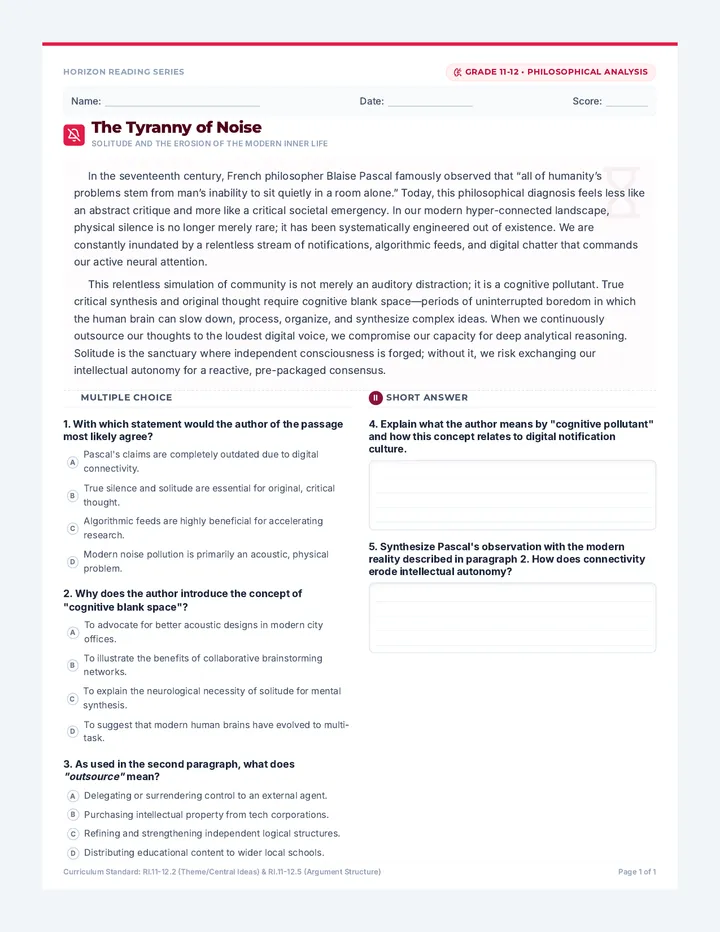
A foundational set of four reading comprehension sheets, split between Grade 9-10 (focusing on core inference and vocabulary) and Grade 11-12 (emphasizing rhetorical analysis and synthesis).
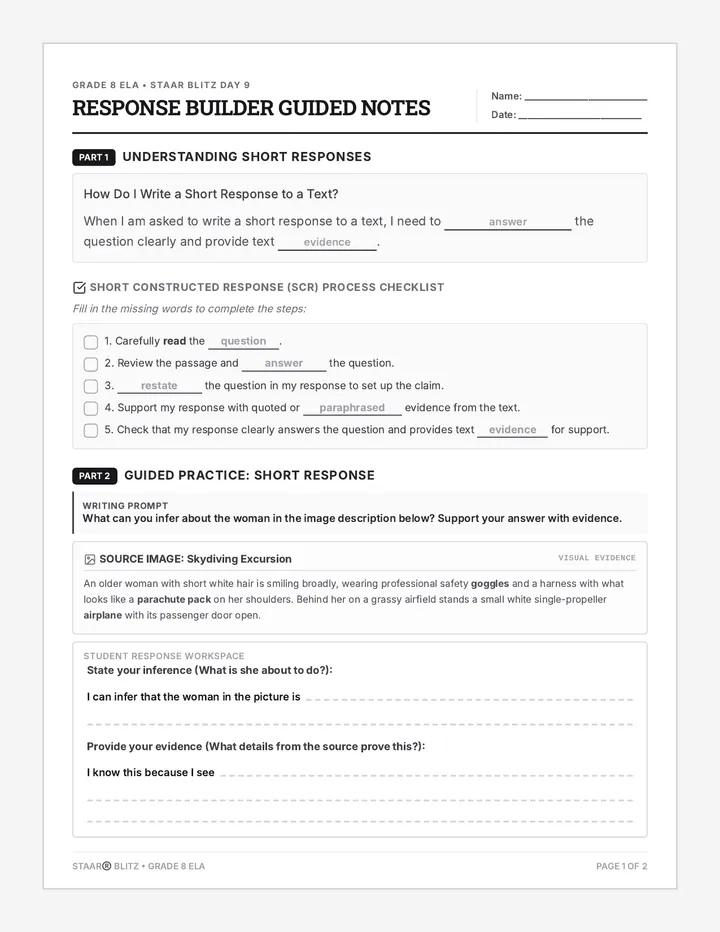
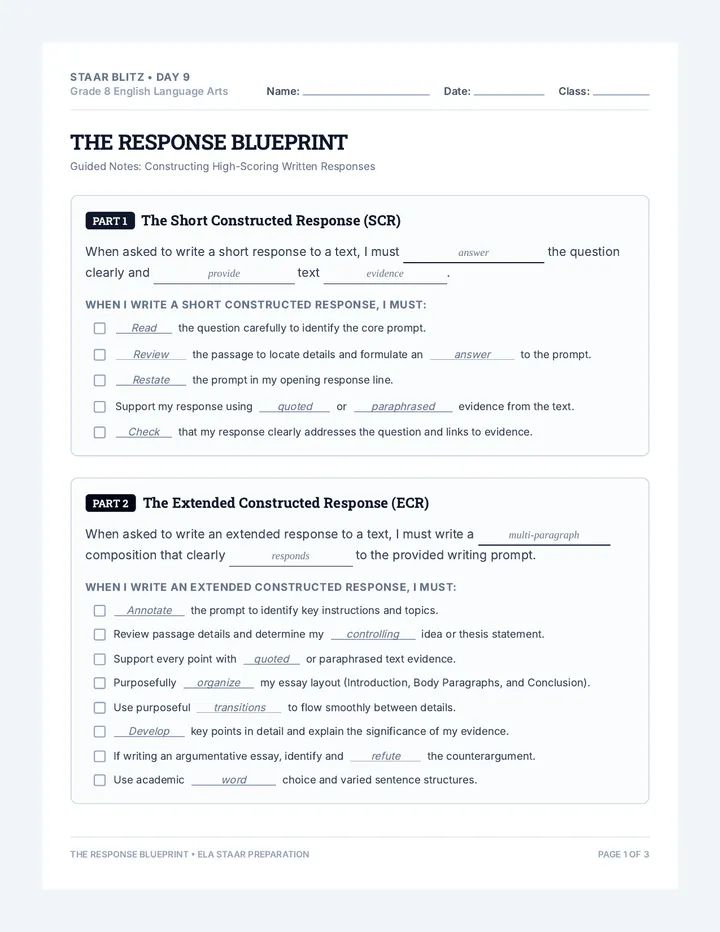
A structured eighth-grade ELA lesson focused on crafting clear, evidence-supported short and extended responses using structured scaffolds, text evidence integration, and argumentative alignment.
A STAAR-aligned lesson focused on teaching students how to write short and extended constructed responses using text evidence and structured controlling ideas.
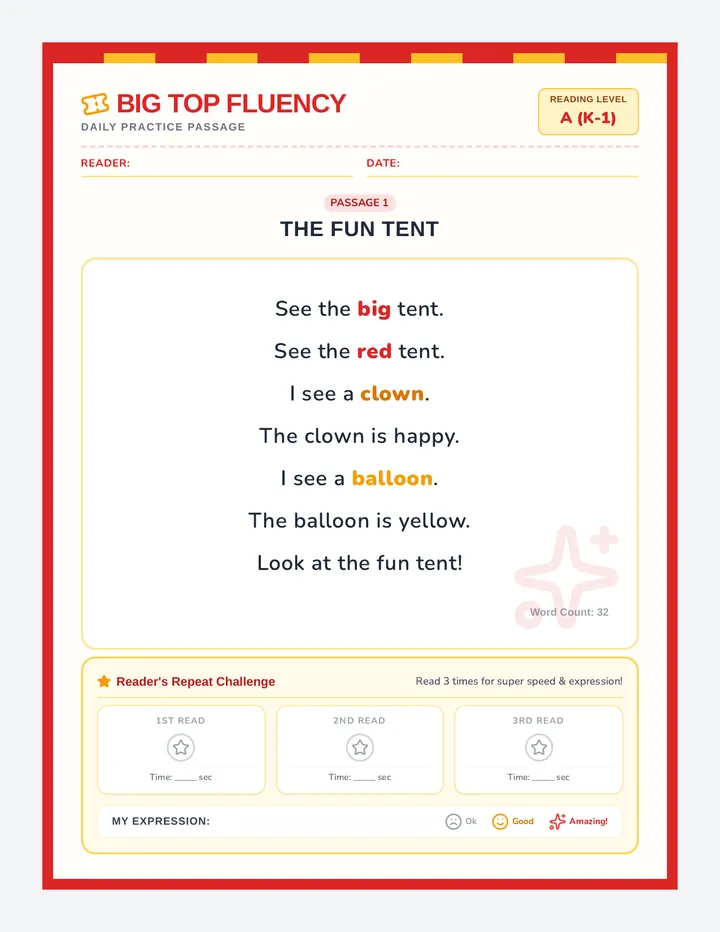
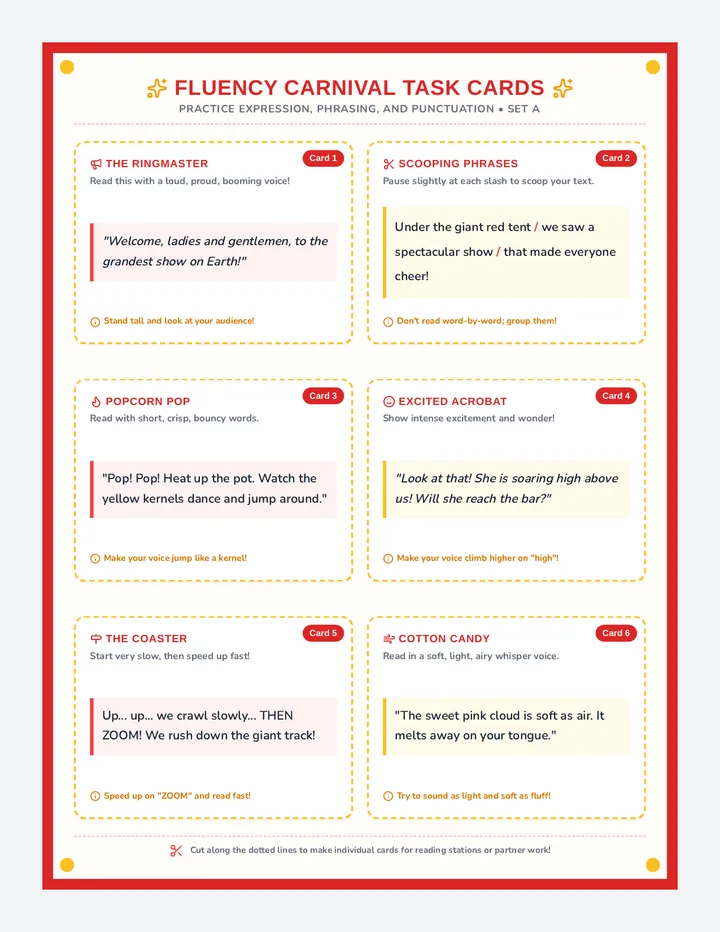
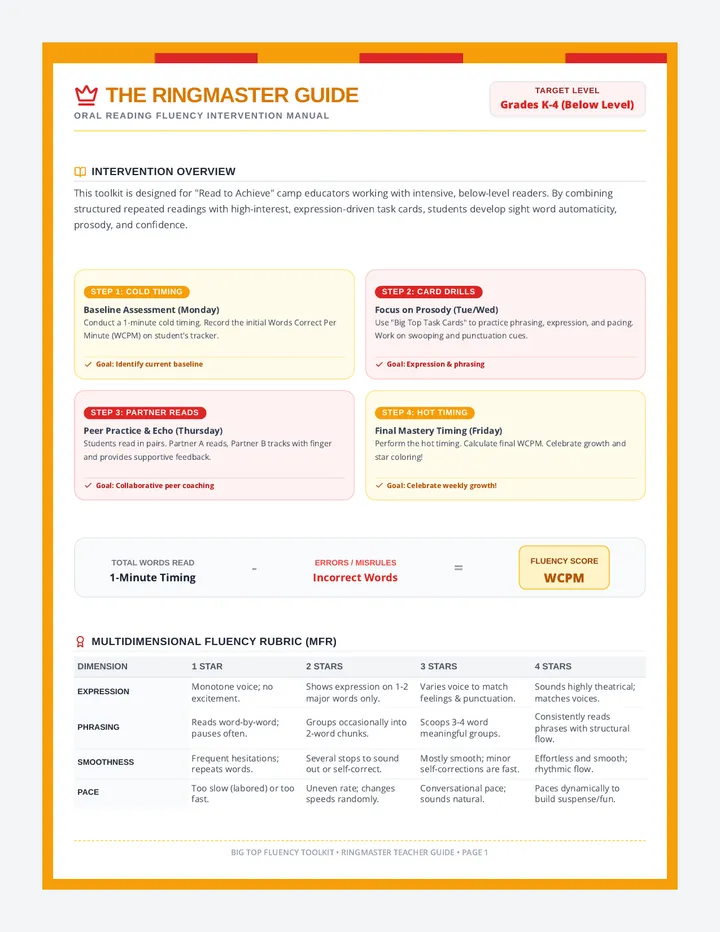
A carnival-themed oral reading fluency toolkit designed for Read to Achieve summer camps. Features differentiated reading passages (levels K-3) with repeated reading trackers, expression-focused task cards, and a teacher scoring and implementation guide.
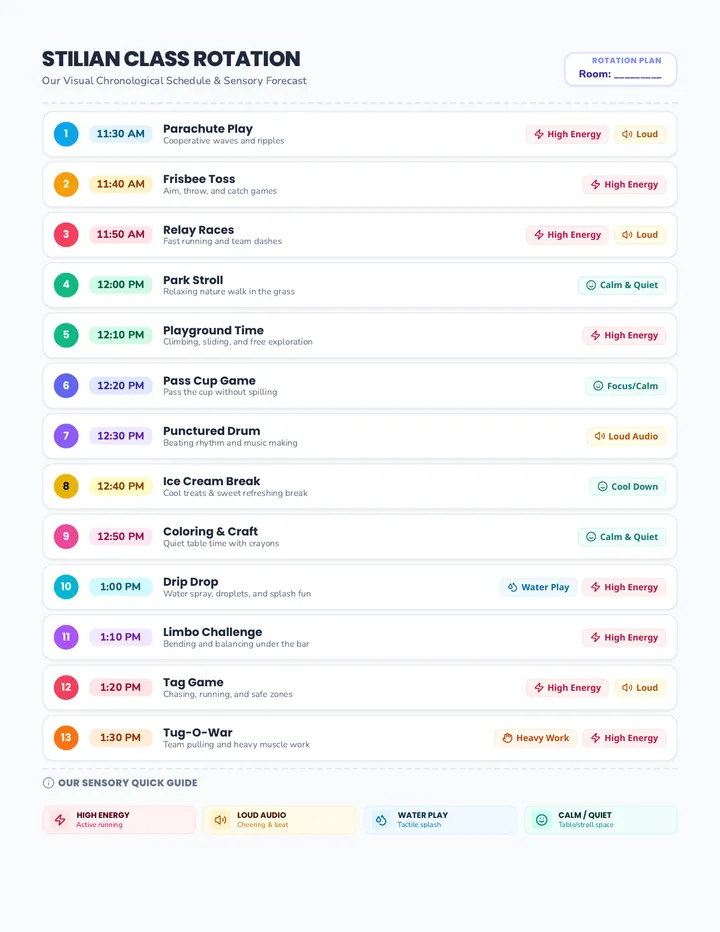
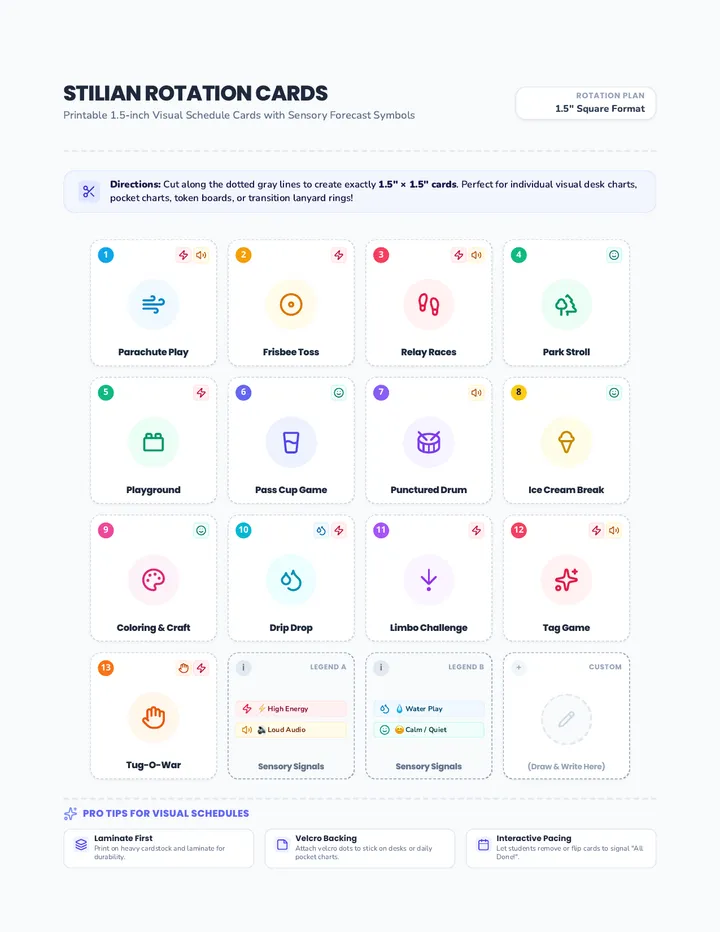
A sensory-friendly class rotation framework containing visual schedules and portable schedule cards to help students navigate activity transitions with confidence.
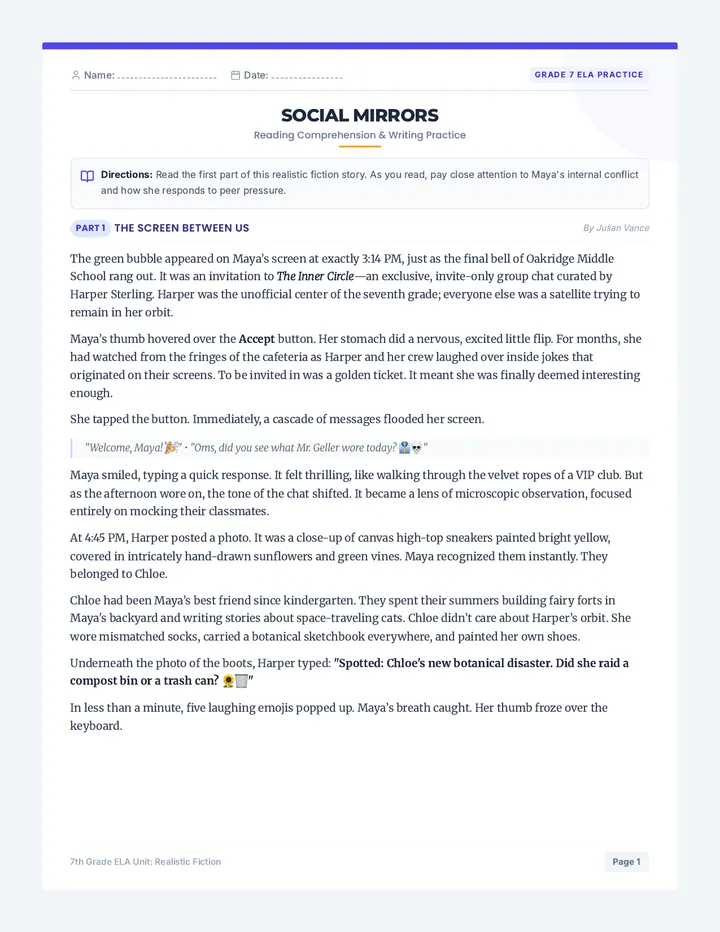
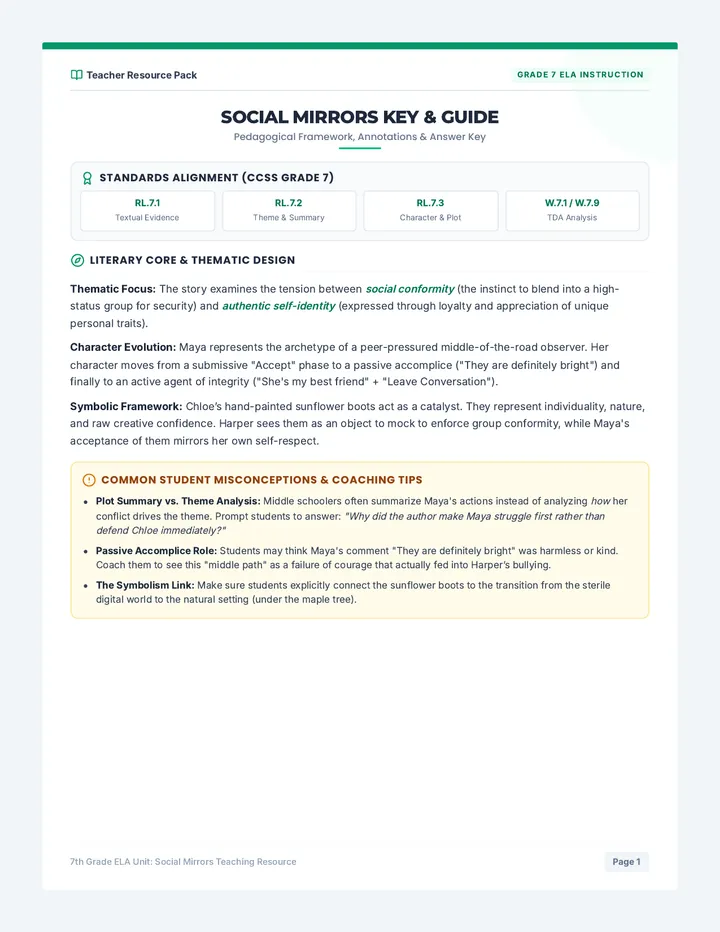
A rigorous 7th-grade reading and writing lesson centered around an engaging realistic fiction story about middle school peer dynamics, online group chats, and authentic friendships. Students read a high-interest passage, answer text-dependent comprehension questions, and write an analytical essay citing text evidence.
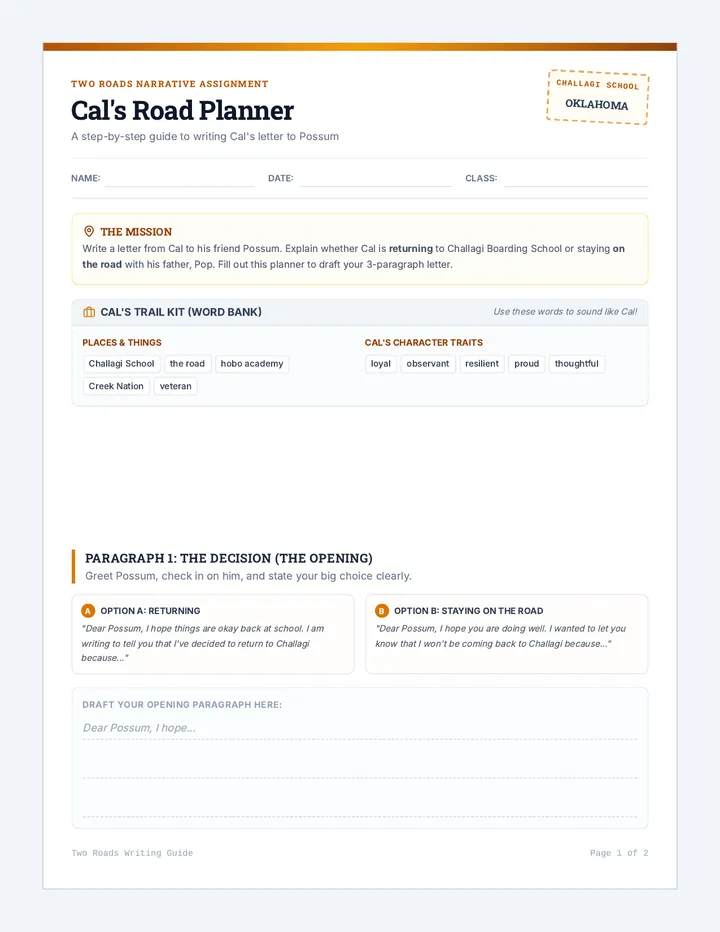
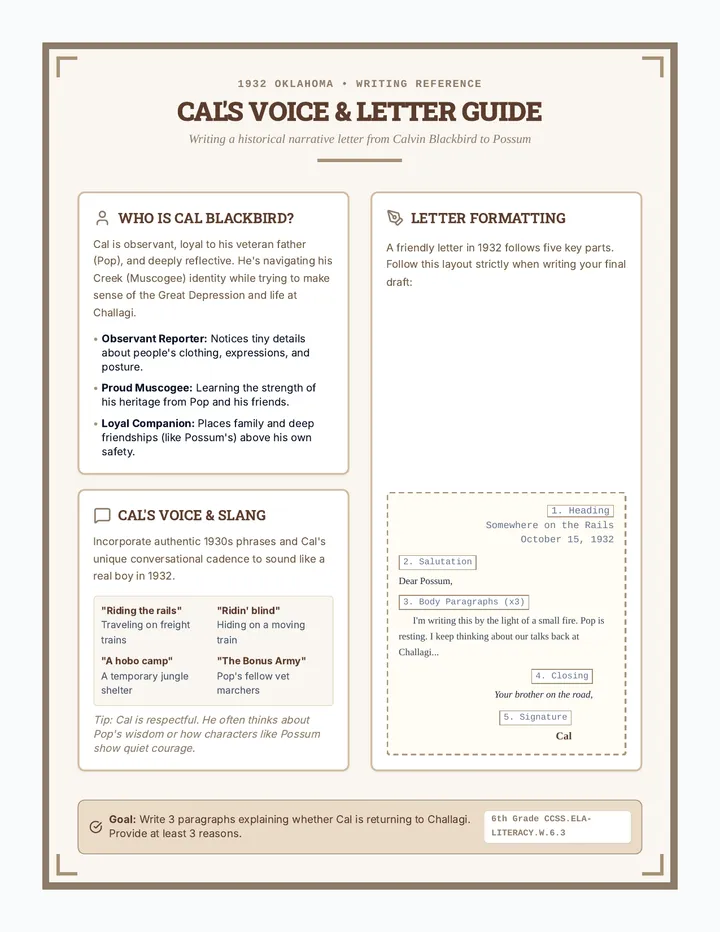
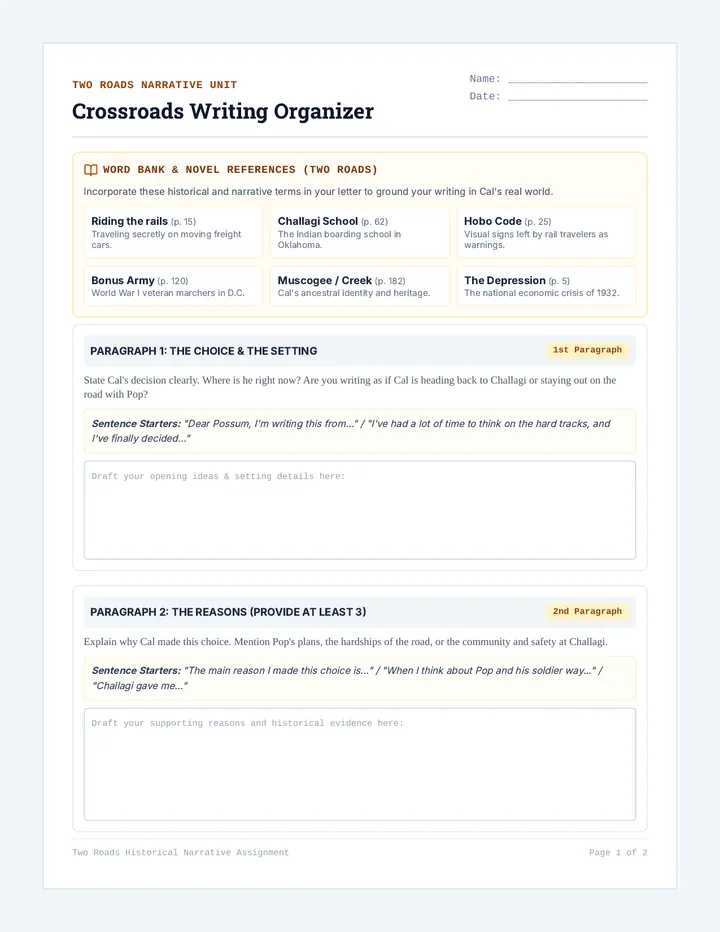
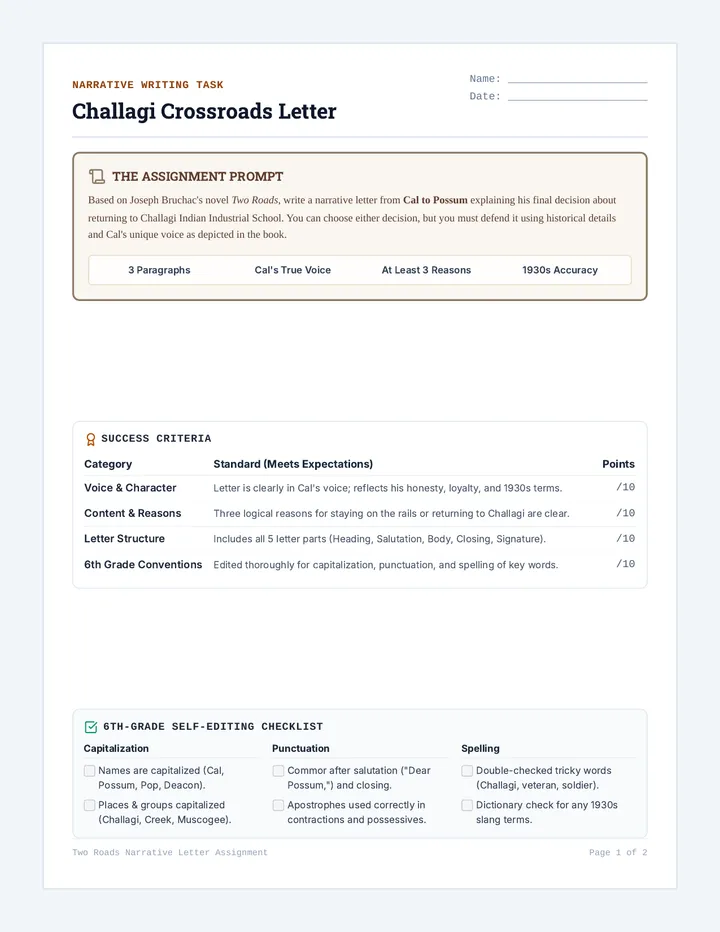
A planning and writing lesson centered around Joseph Bruchac's novel Two Roads, guiding students to write a structured narrative letter from Cal to Possum with differentiated scaffolding.
A narrative writing lesson based on Joseph Bruchac's novel *Two Roads*, where students write a three-paragraph letter from Cal to Possum detailing his decision about returning to Challagi Indian Industrial School. Includes an anchor chart, a graphic organizer, and a formal assignment sheet with editing support.
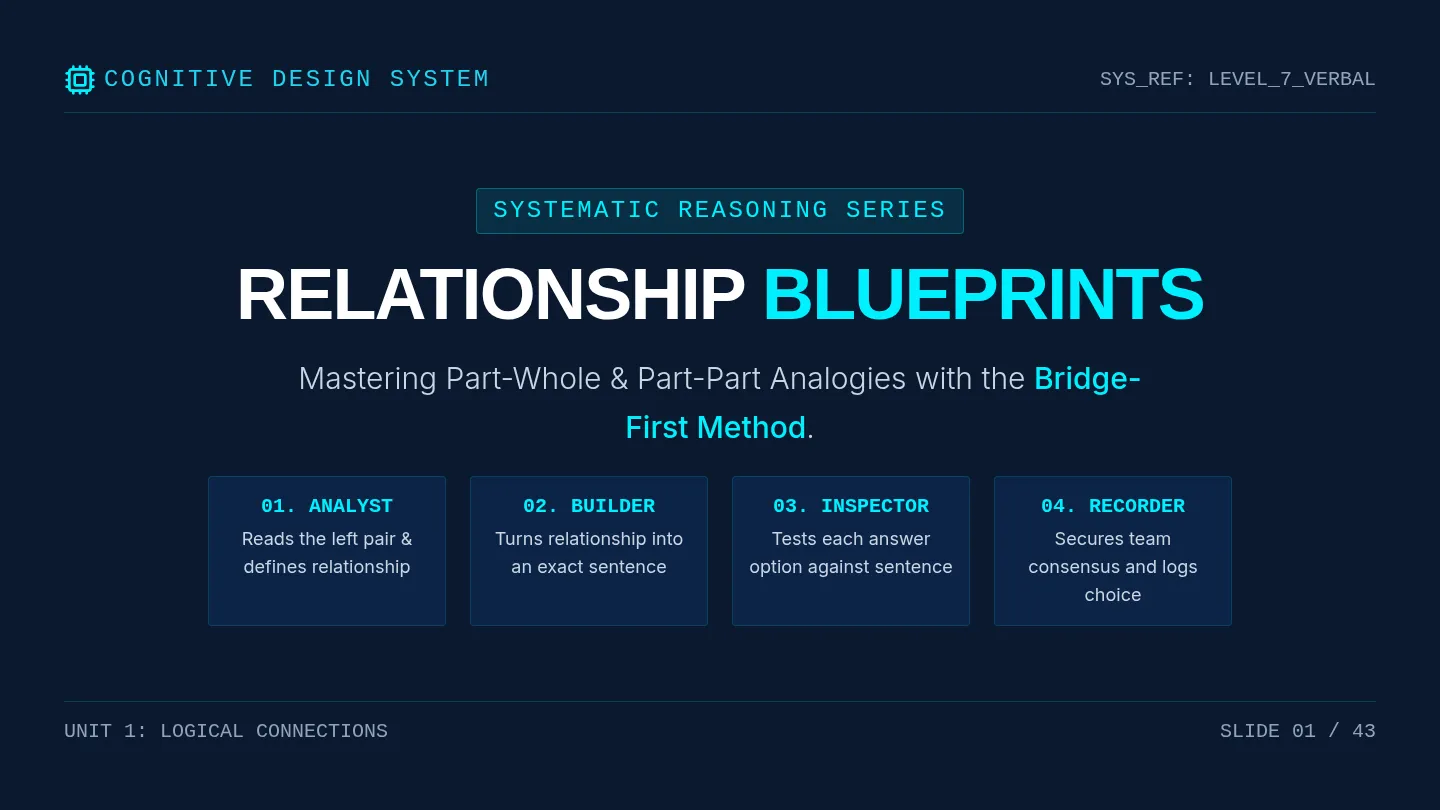
An interactive slide deck focusing on part-whole and part-part analogies for seventh graders, emphasizing the strategy of formulating the relationship before viewing multiple-choice options.
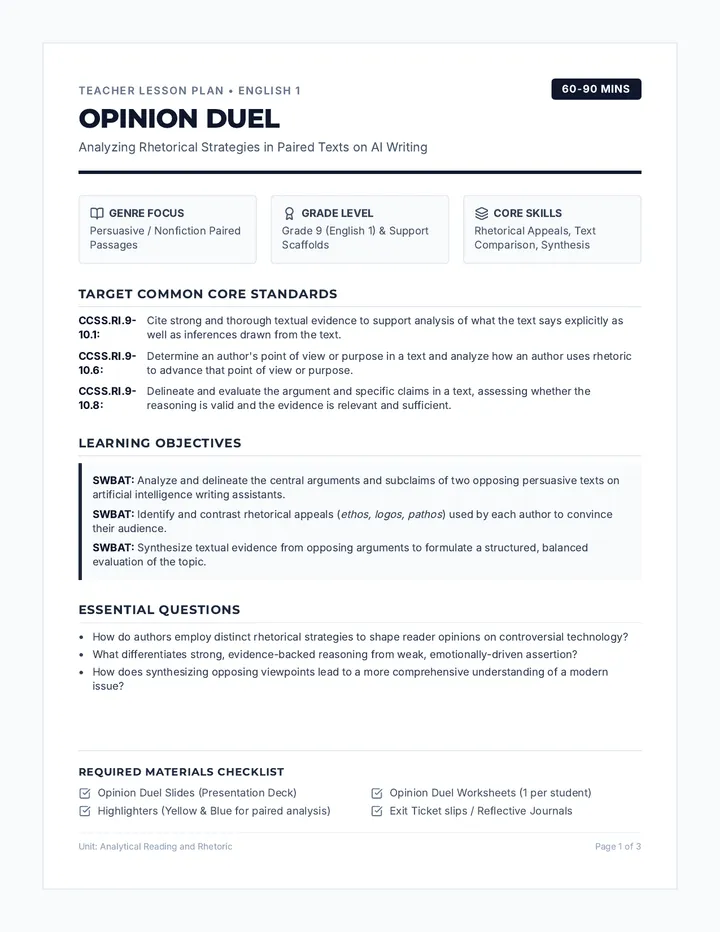
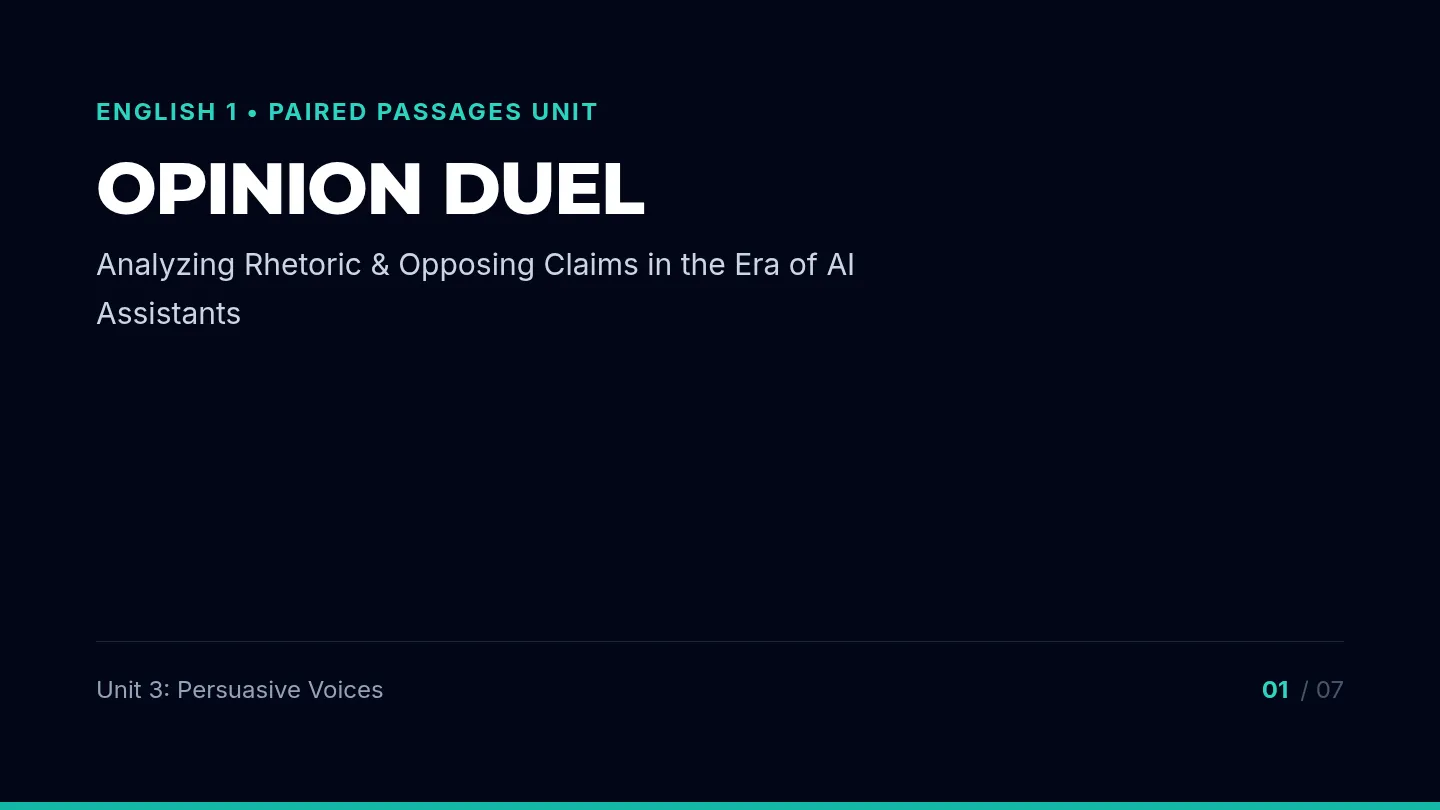
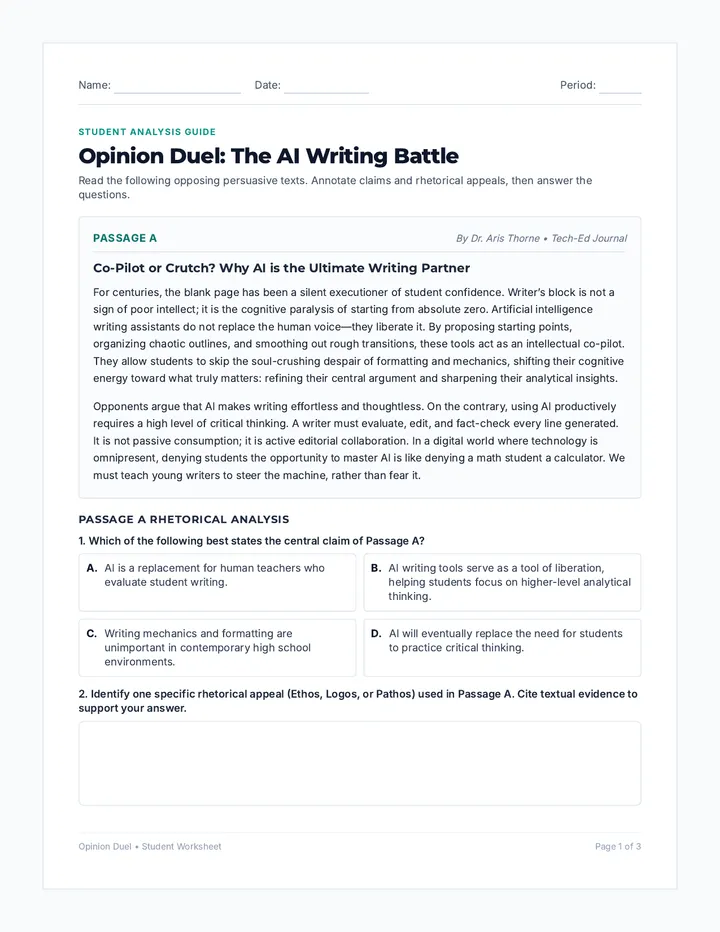
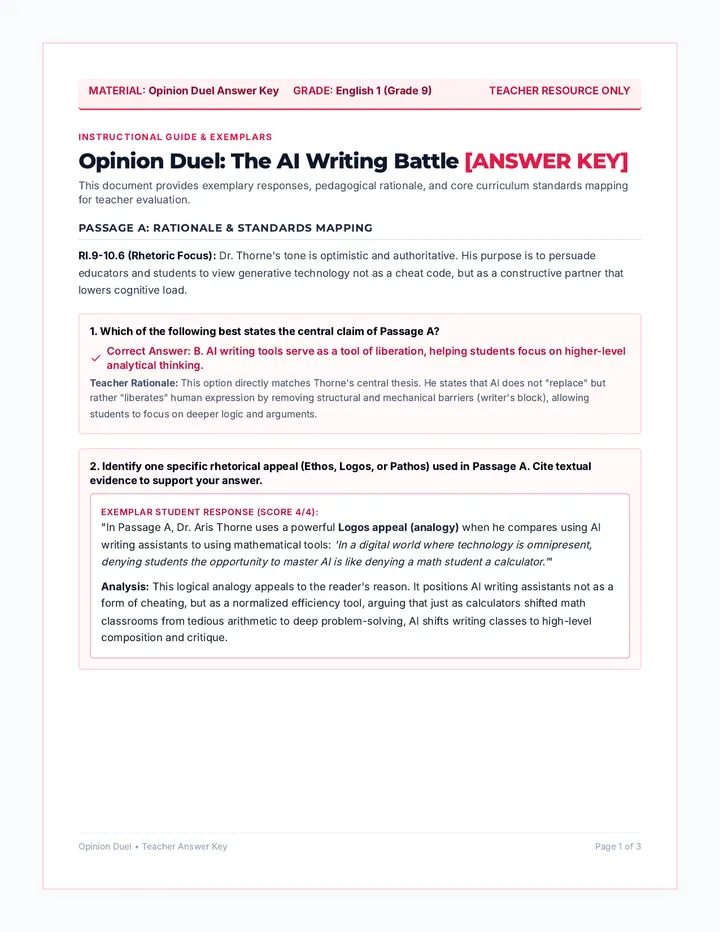
An English 1 lesson focused on comparing and analyzing paired persuasive texts about the use of AI writing assistants. Students learn to evaluate contrasting arguments, identify rhetorical devices, and synthesize opposing viewpoints using text-based evidence.
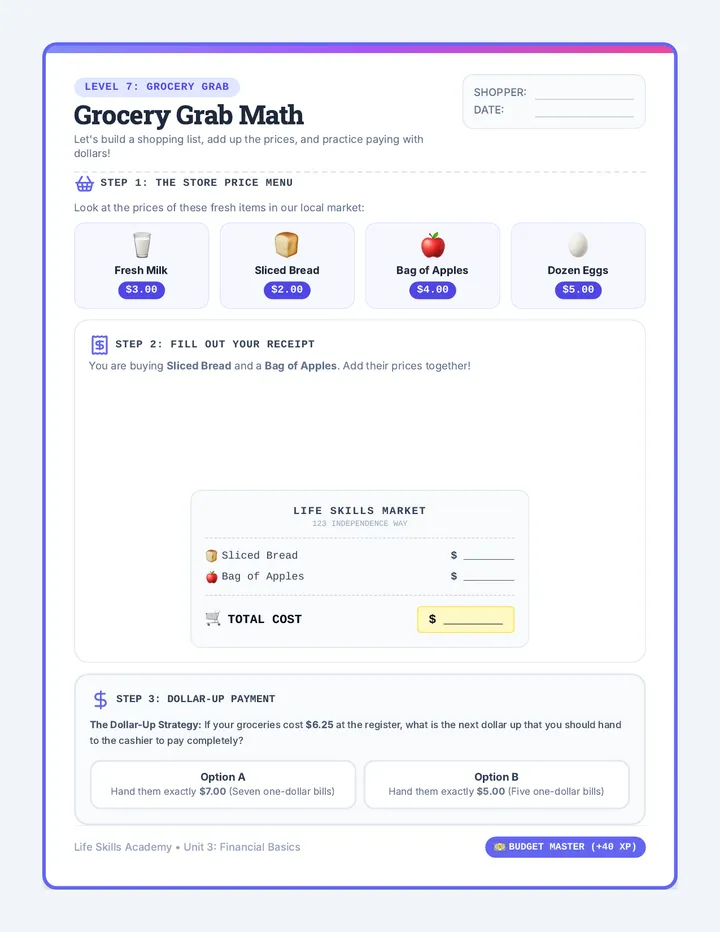
Focuses on grocery shopping, making a grocery list, identifying food groups, and understanding store sections to locate items independently.
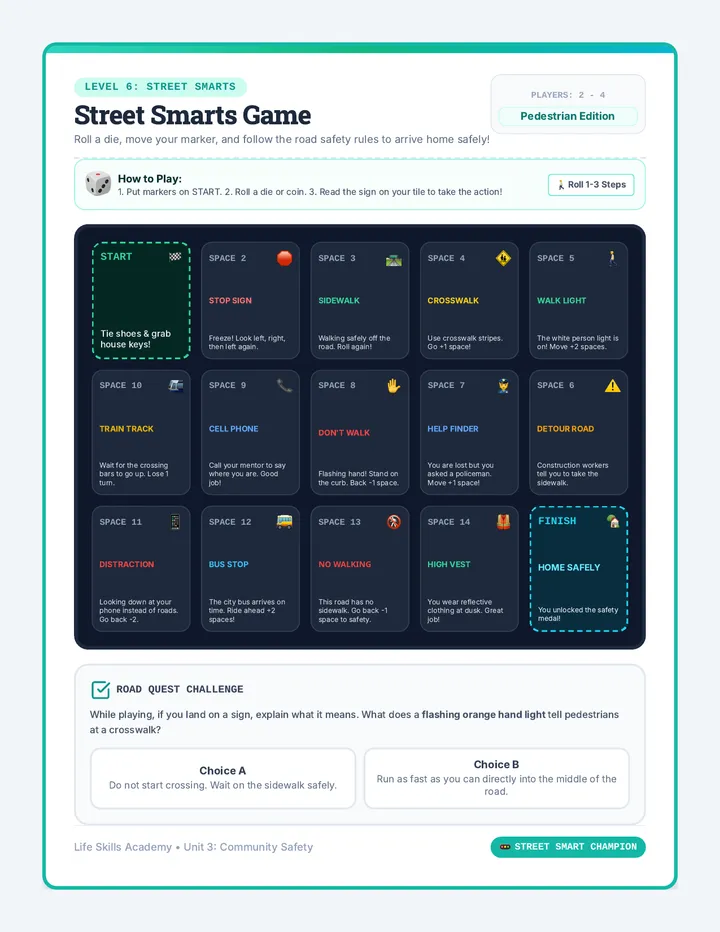
Teaches safety signs, navigation, and community navigation skills. Students learn to read pedestrian signs, crosswalk signals, and locate help in public spaces.
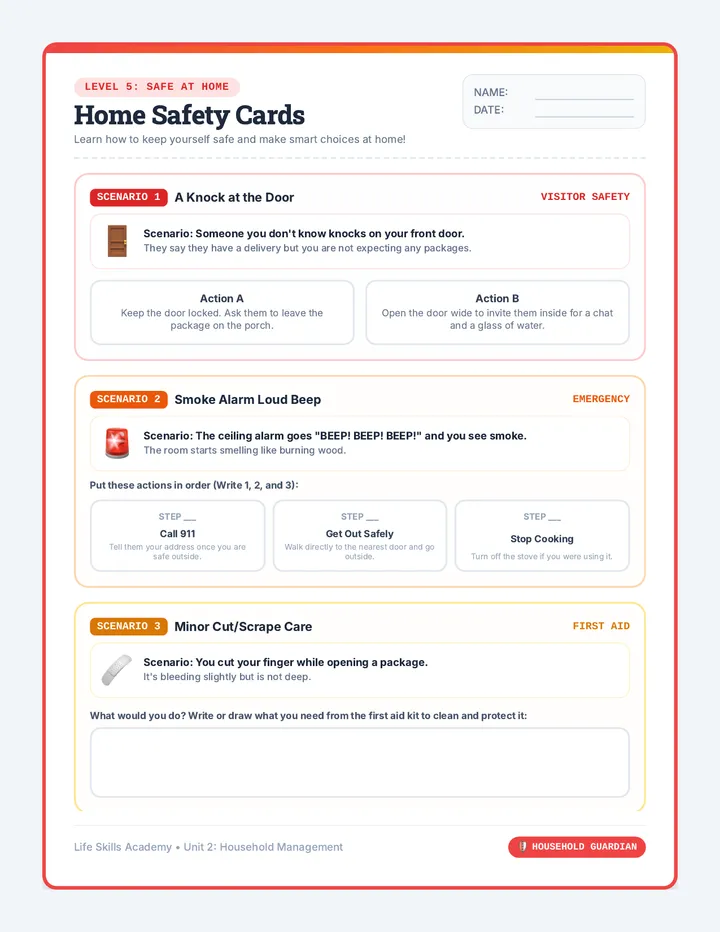
Teaches critical safety skills for the home environment, including dealing with emergencies, basic first aid, and managing visitors safely.
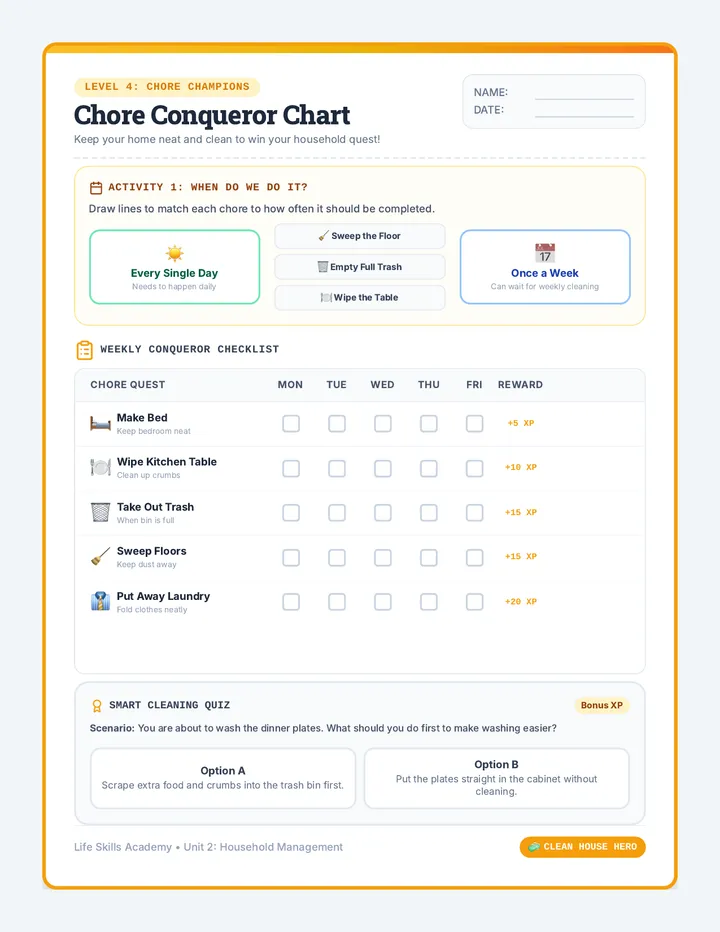
Focuses on household cleaning tasks, organizing chores, and maintaining a clean living space. Students practice sorting chores by frequency and completing a chore checklist.
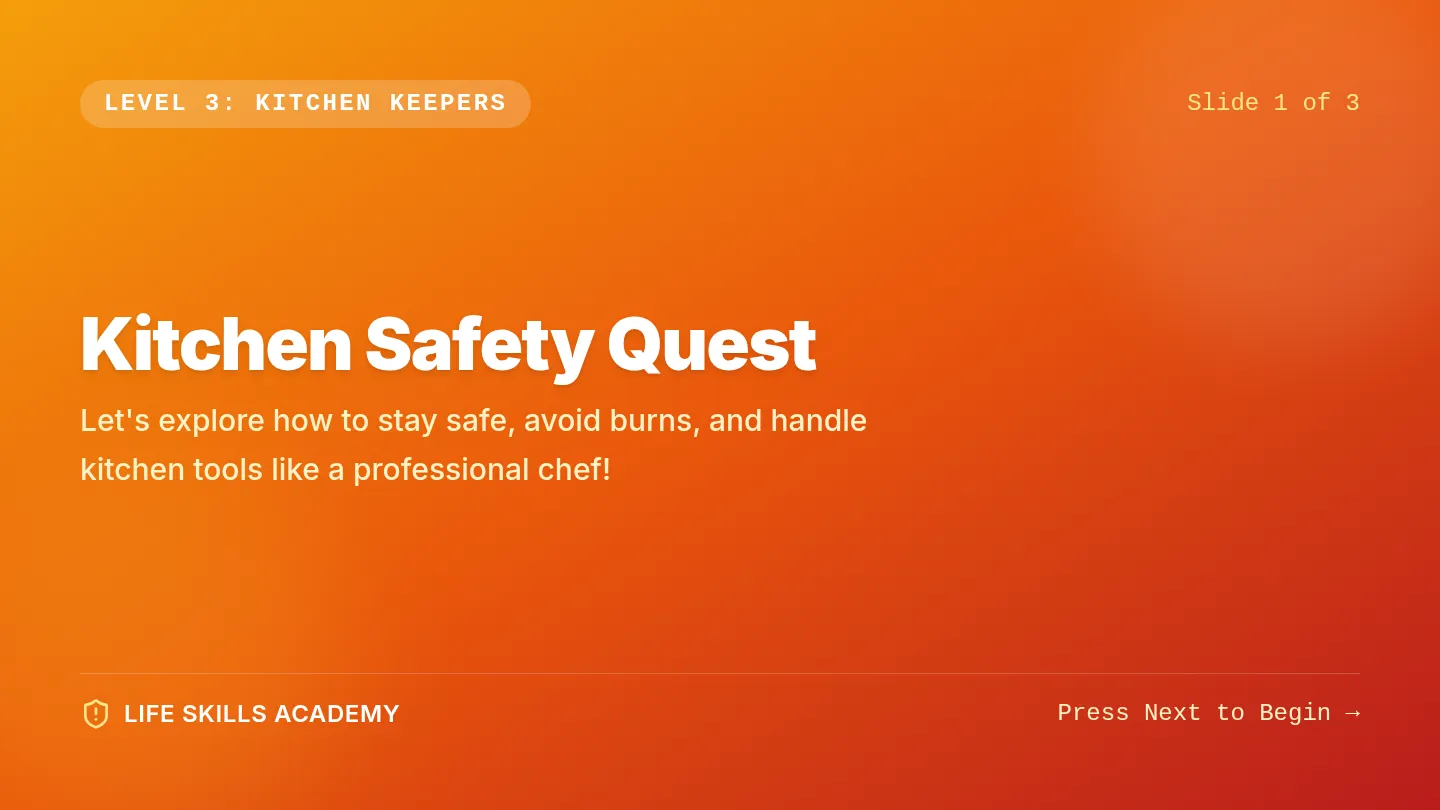
Covers essential kitchen safety rules, using simple kitchen tools, and selecting healthy food. Students practice identifying safe and unsafe kitchen scenarios.
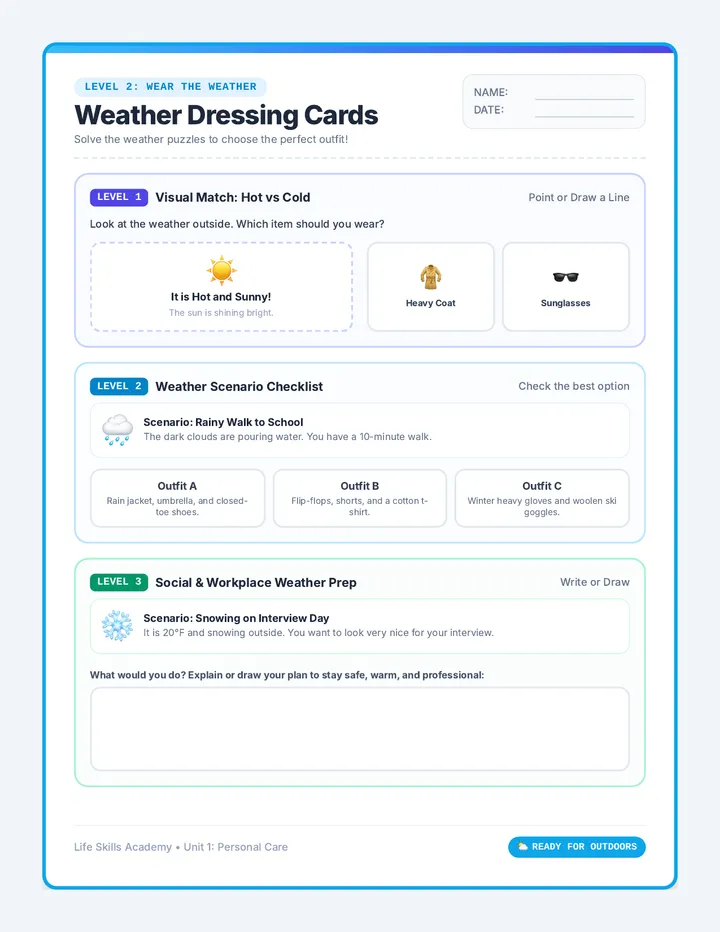
Teaches students to check the weather and choose appropriate clothing and accessories. Focuses on seasonal dressing and selecting clothing for safety and comfort.