The first mission for our Letter Detectives, focusing on identifying, naming, and tracing the letters A, B, and C through multi-sensory activities.
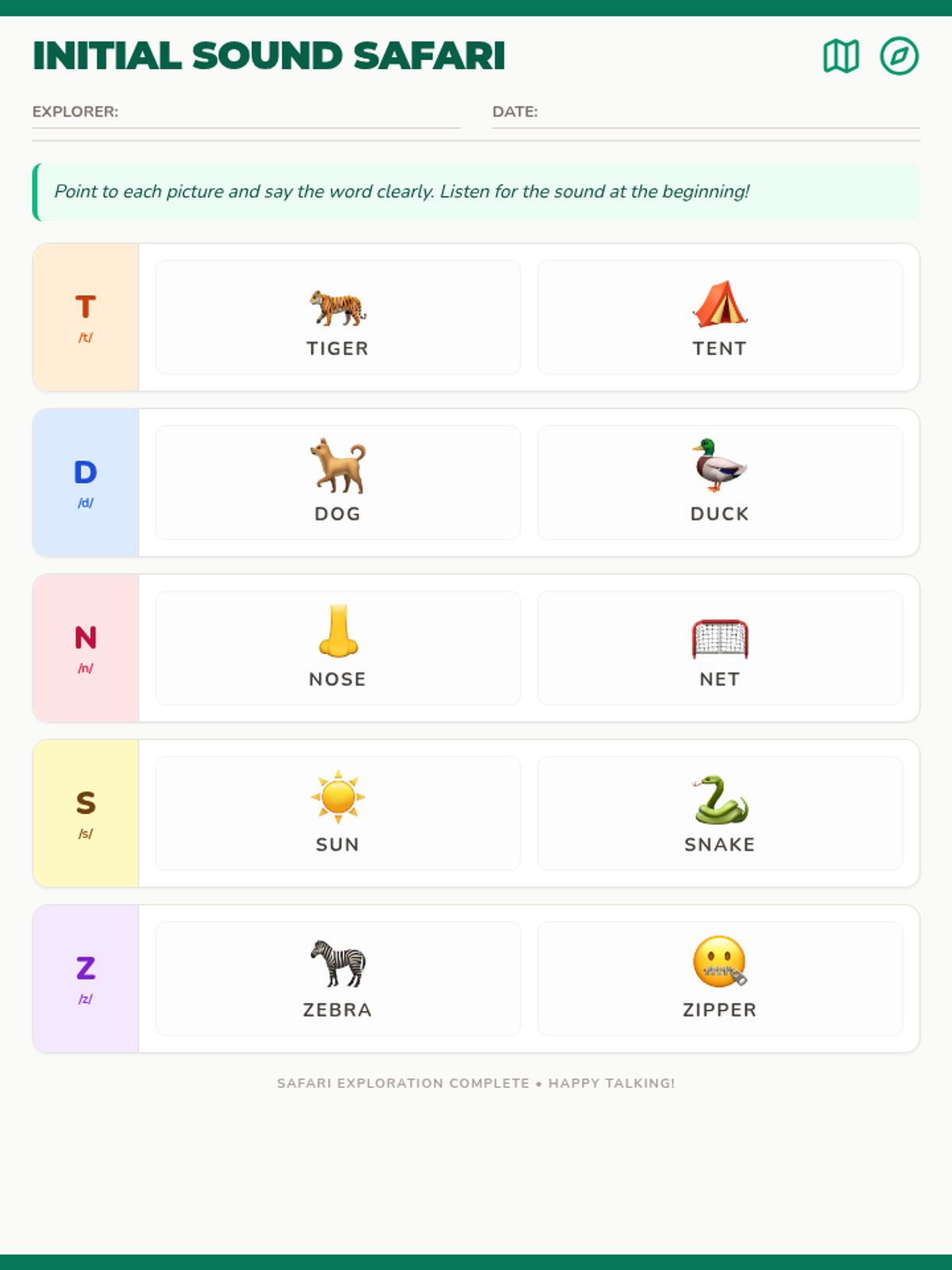
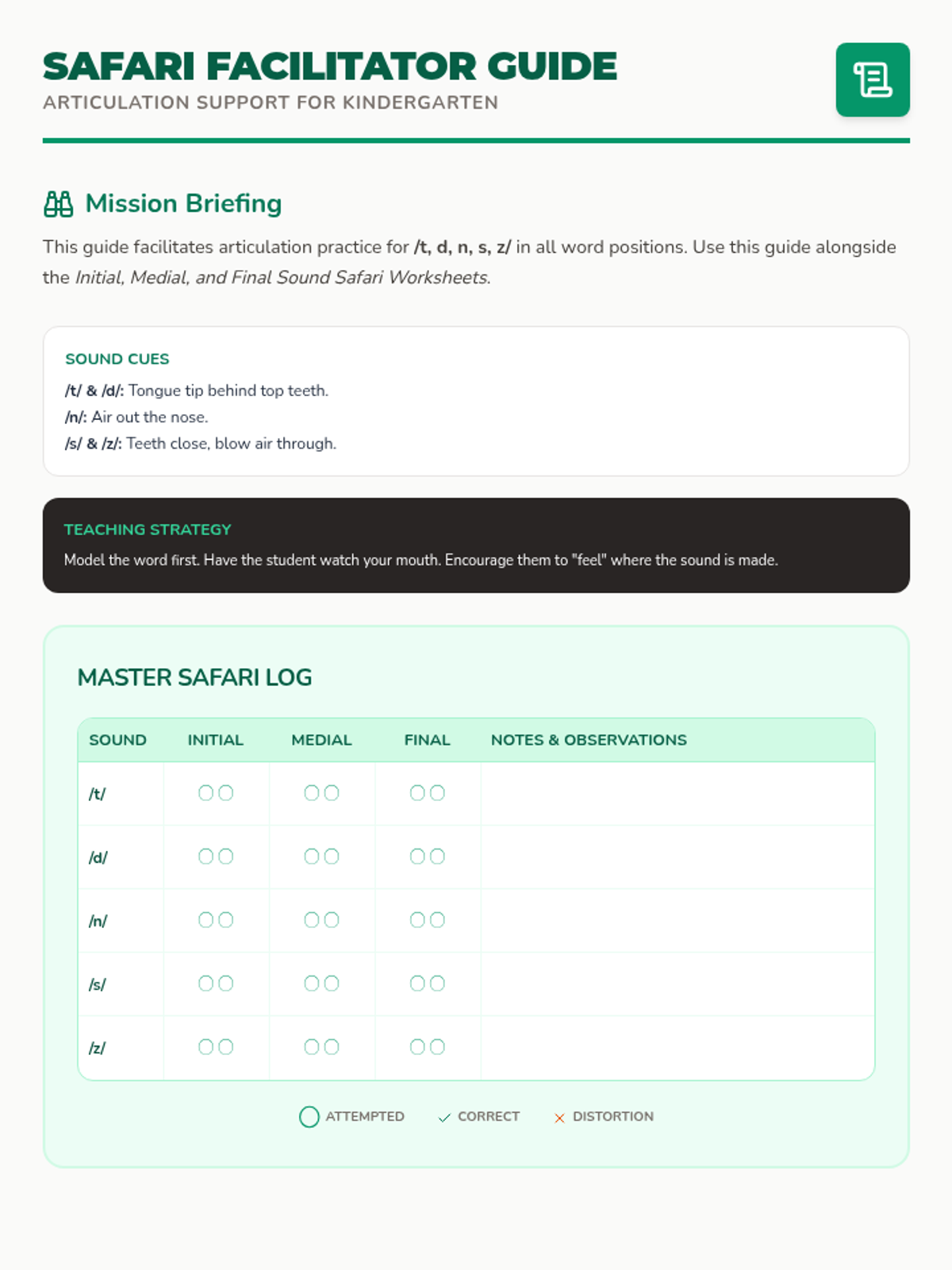
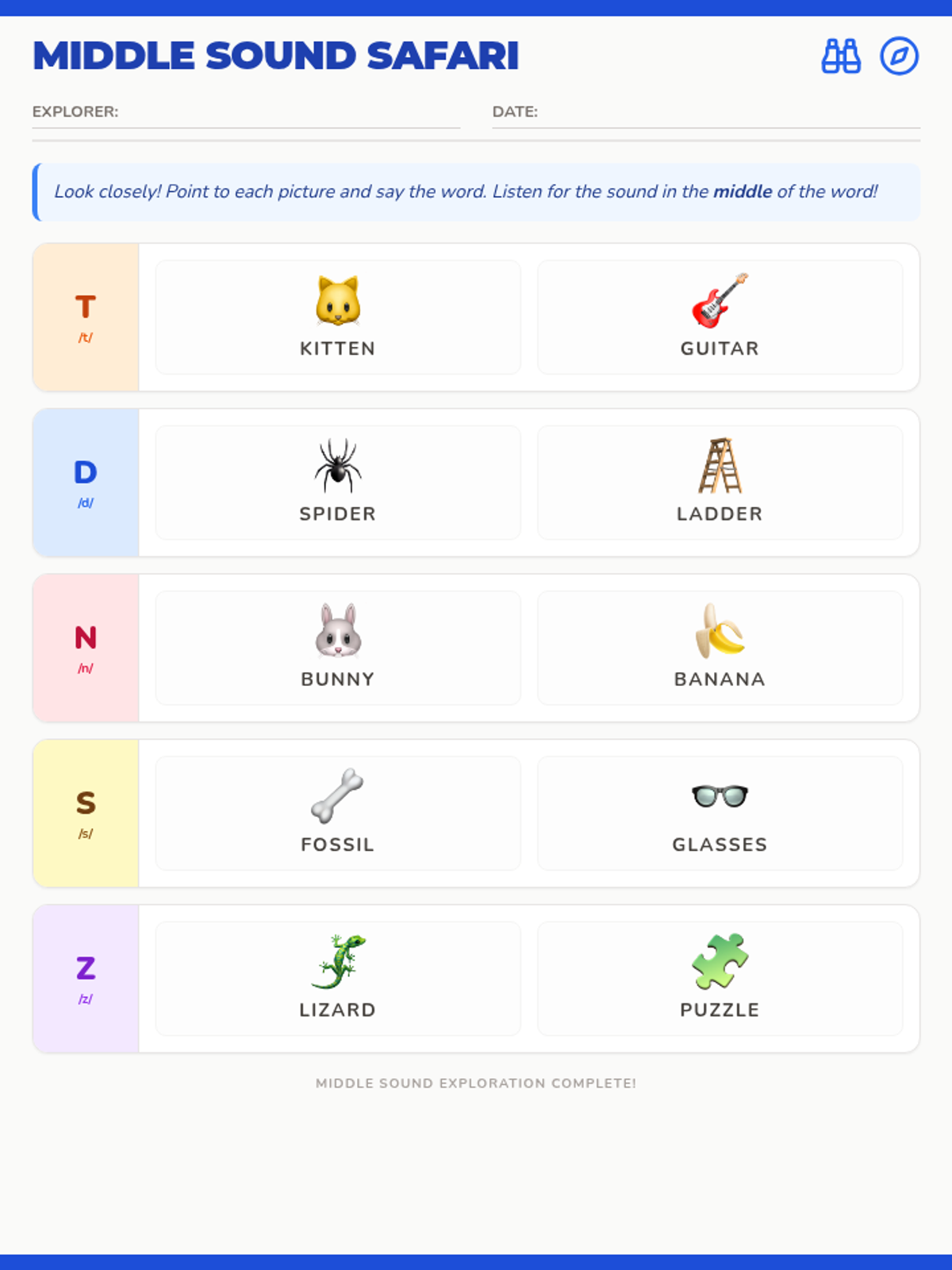
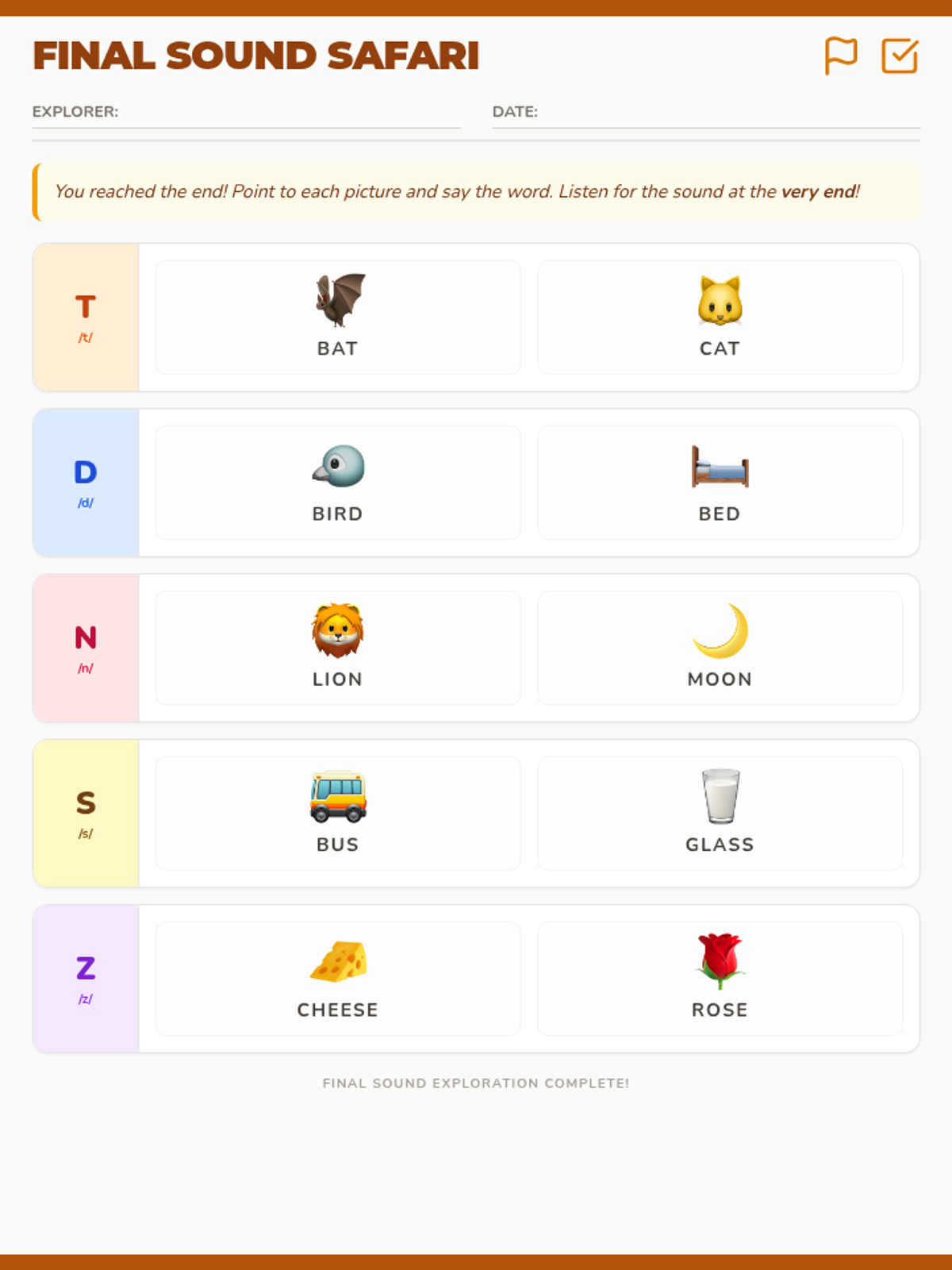
A comprehensive set of articulation resources for kindergarteners focusing on /t/, /d/, /n/, /s/, and /z/ sounds in initial, medial, and final word positions through a playful safari theme.
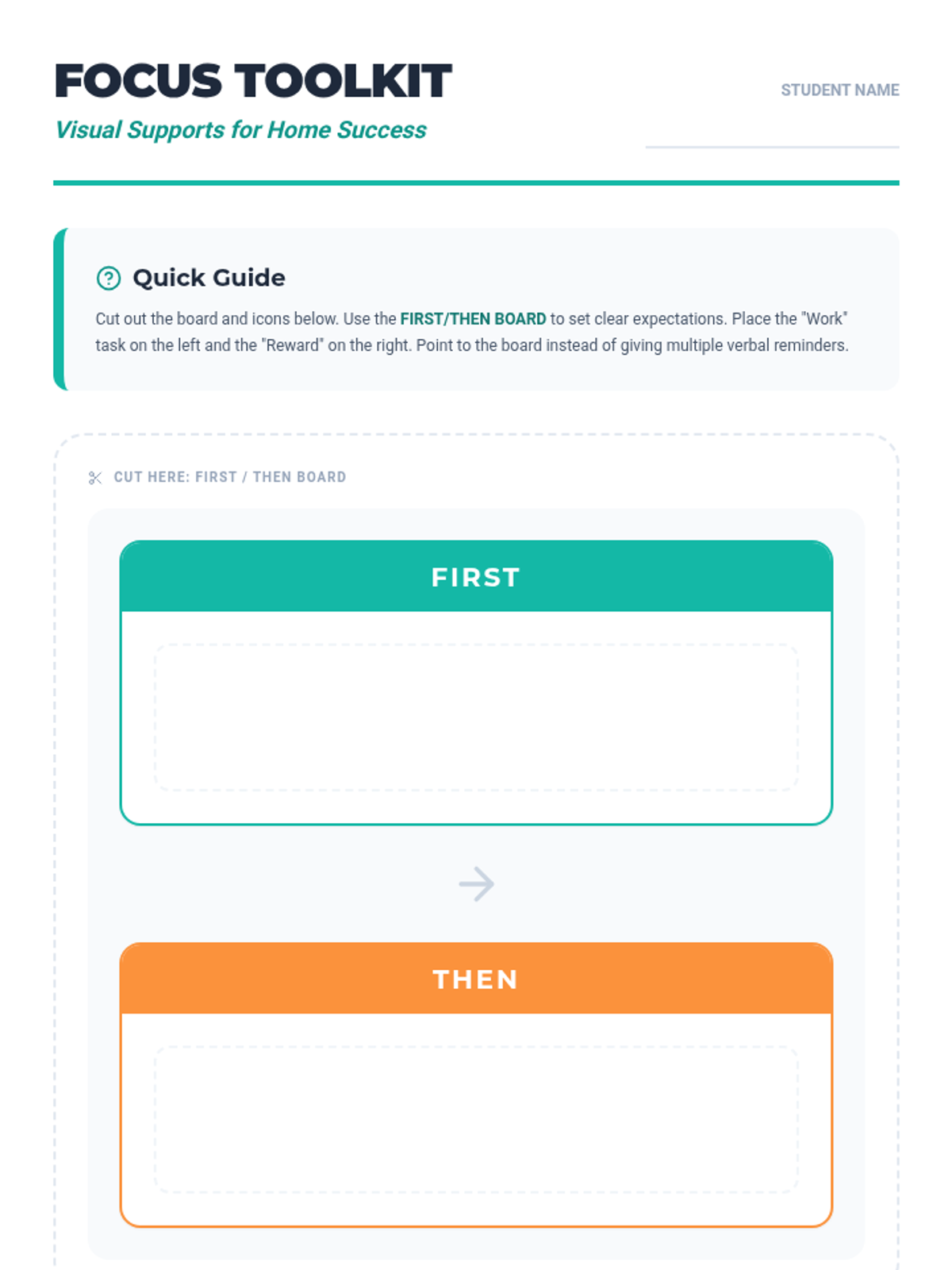
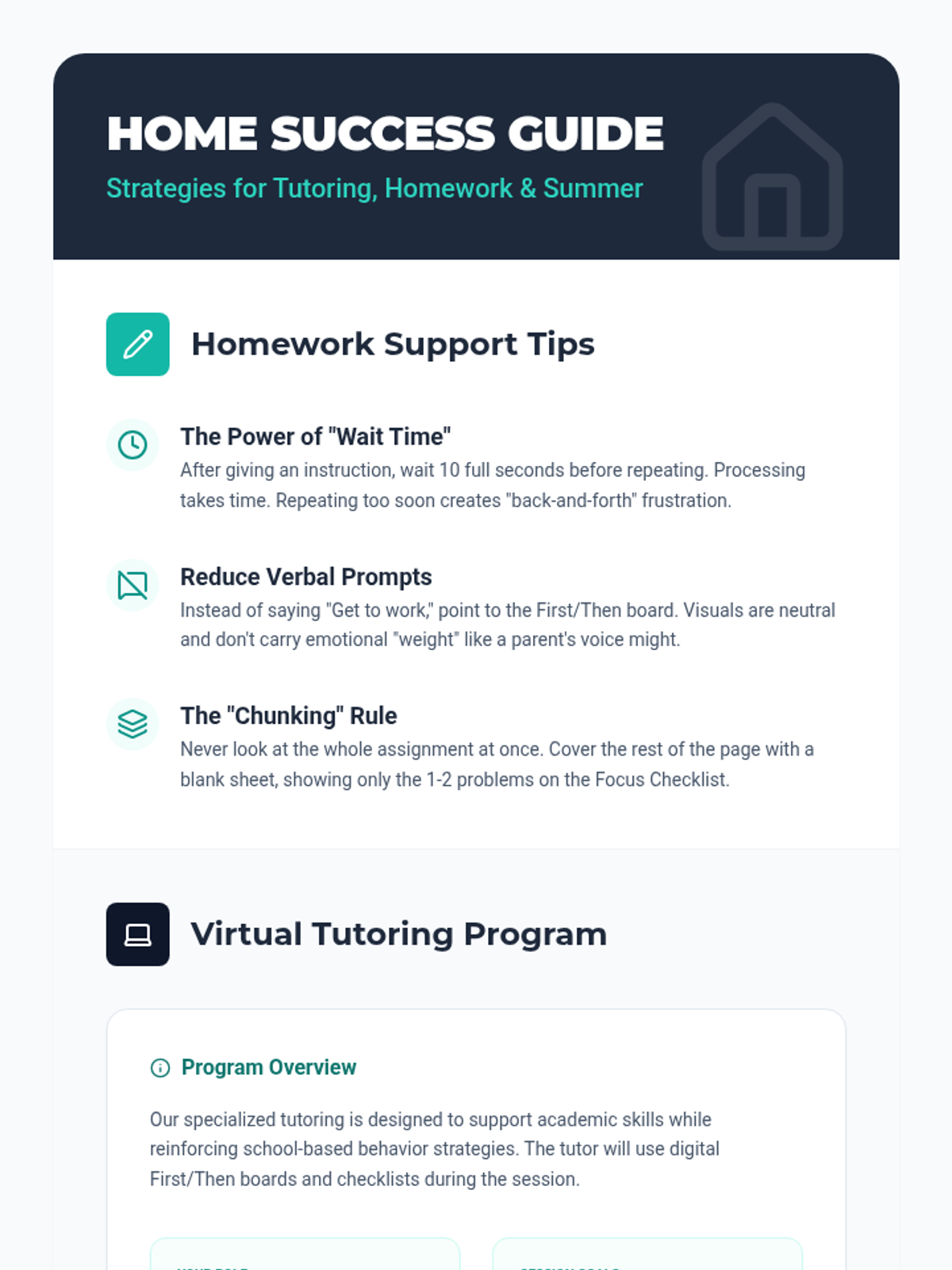
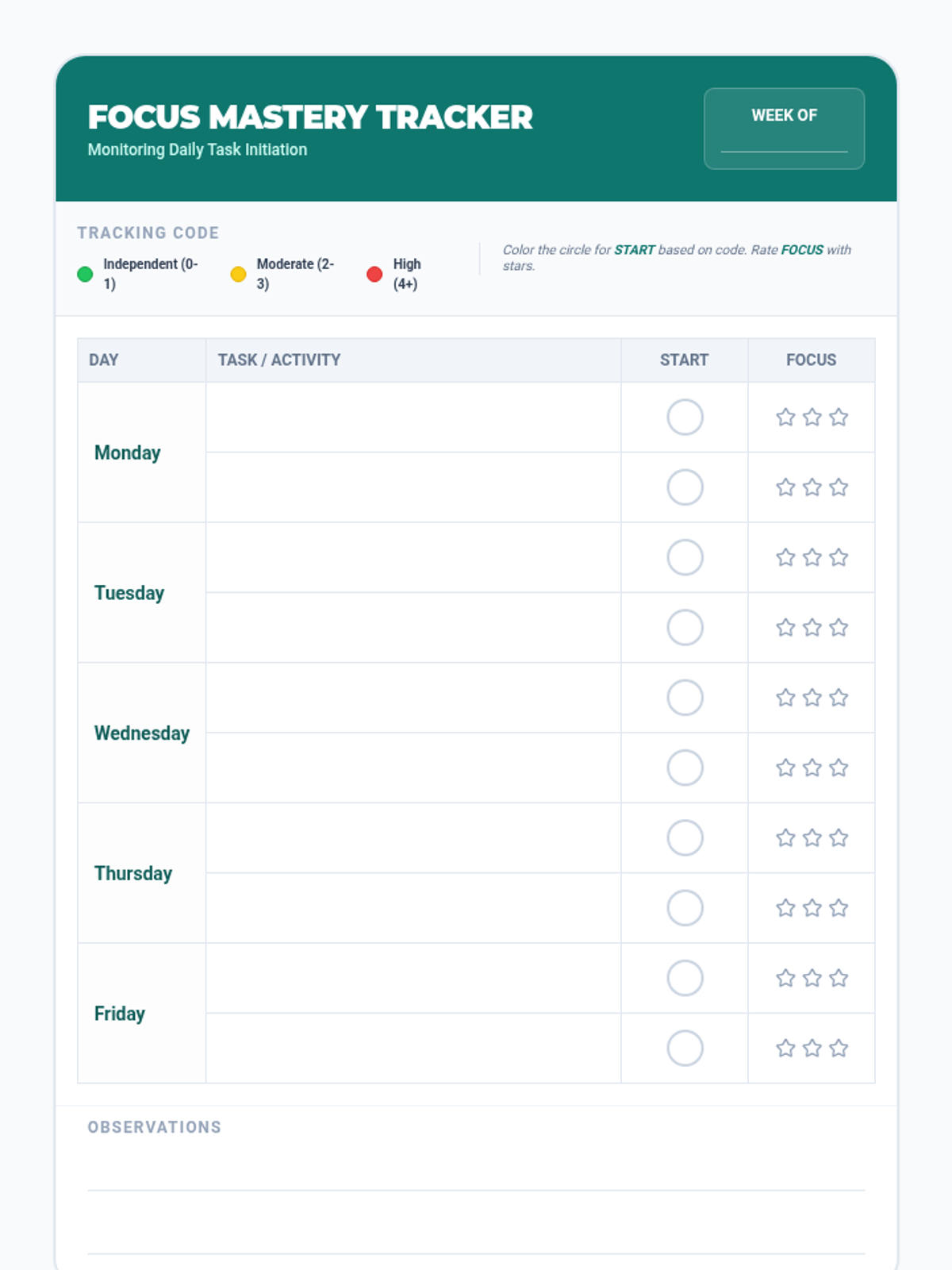
A comprehensive parent training resource designed to support task initiation and sustained focus for students with autism using visual strategies and structured home routines.
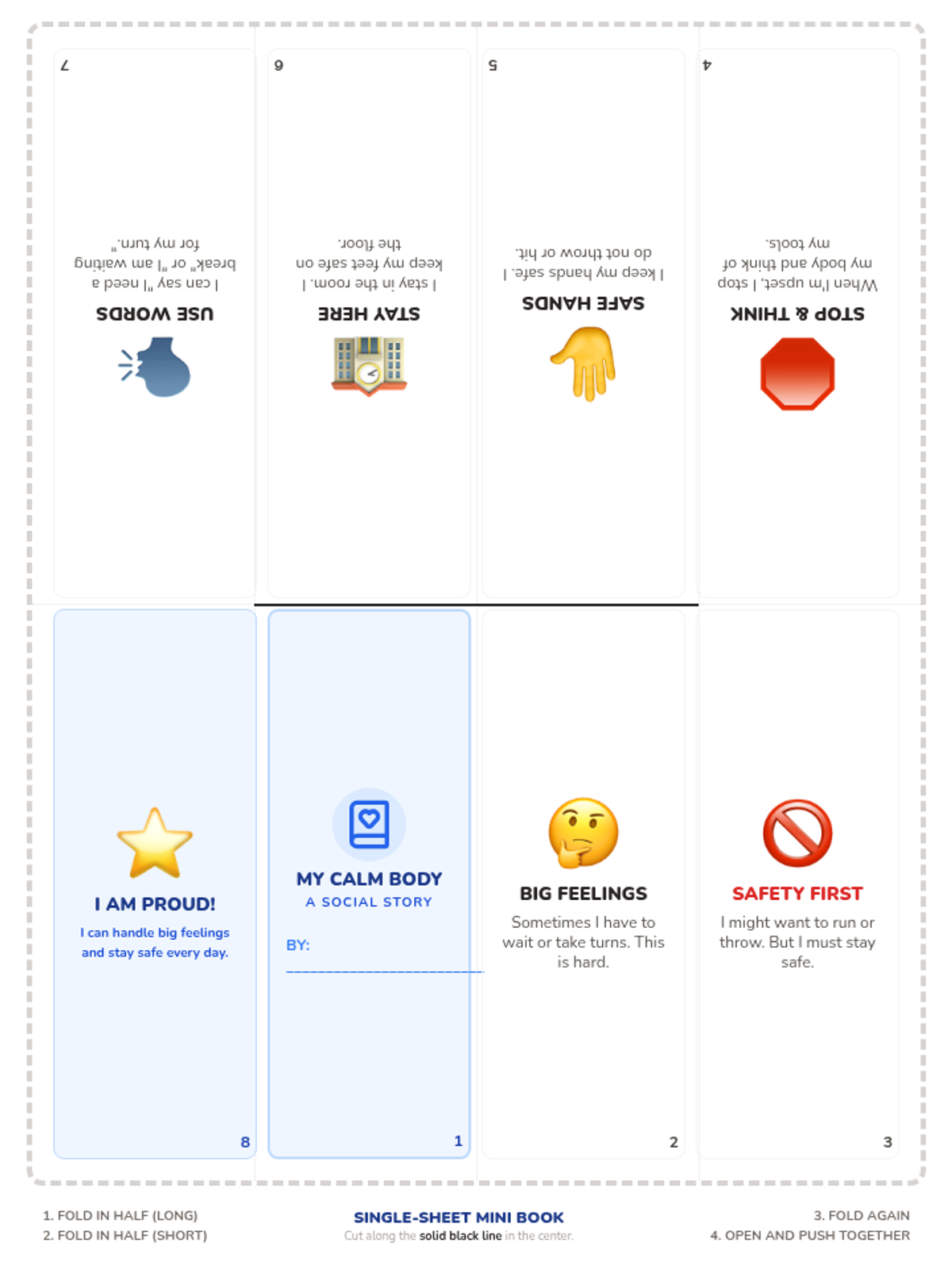
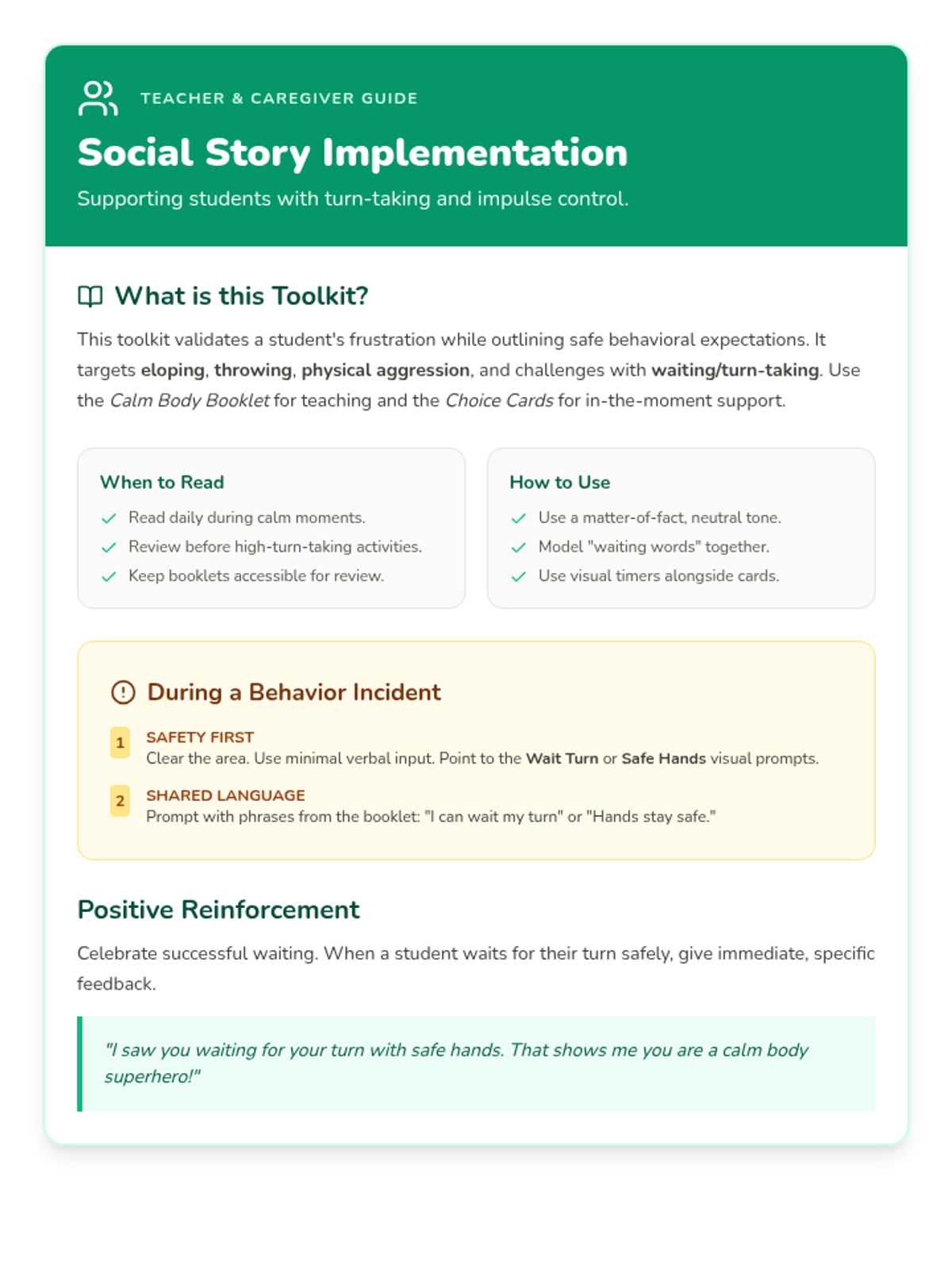
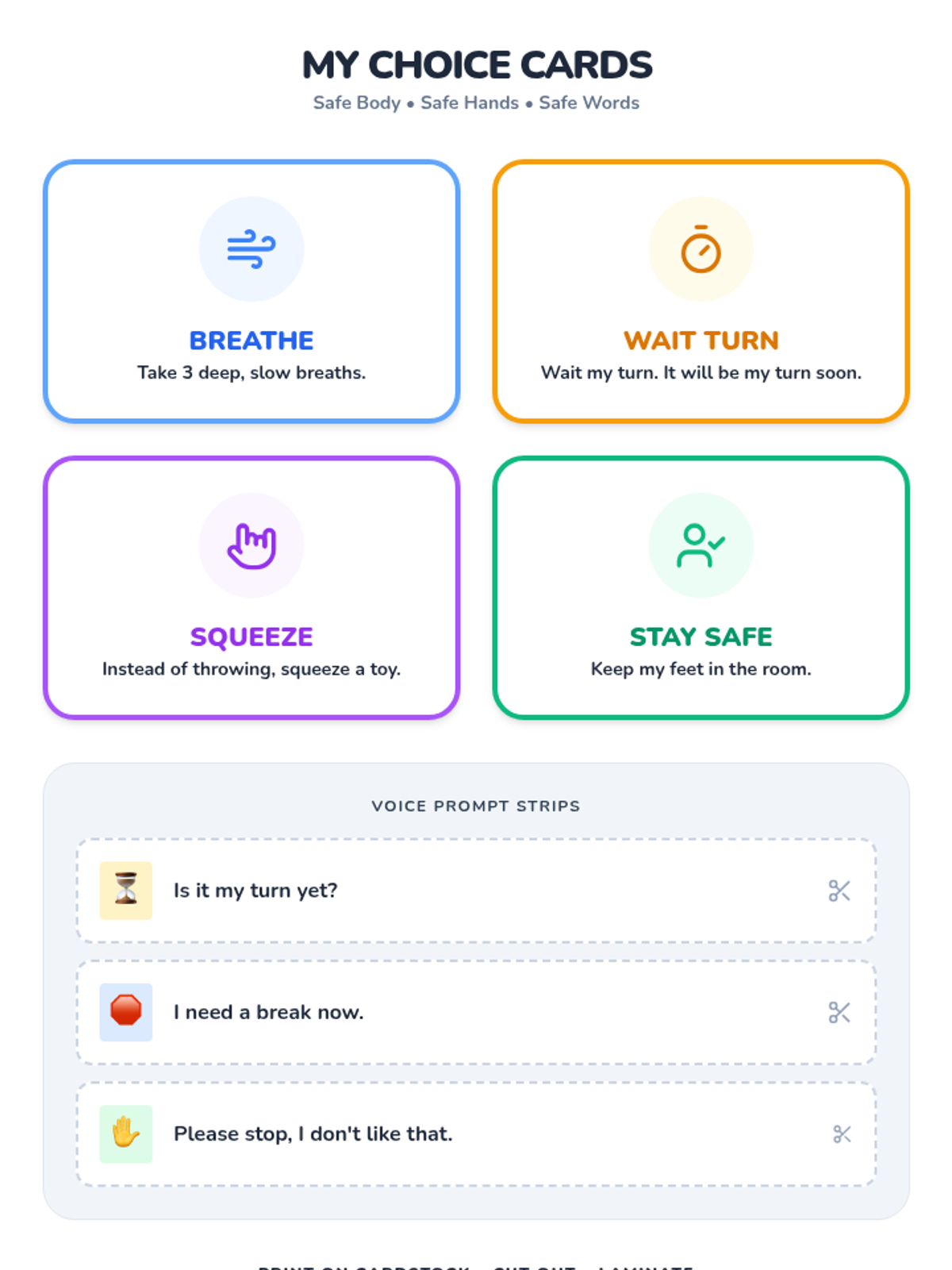
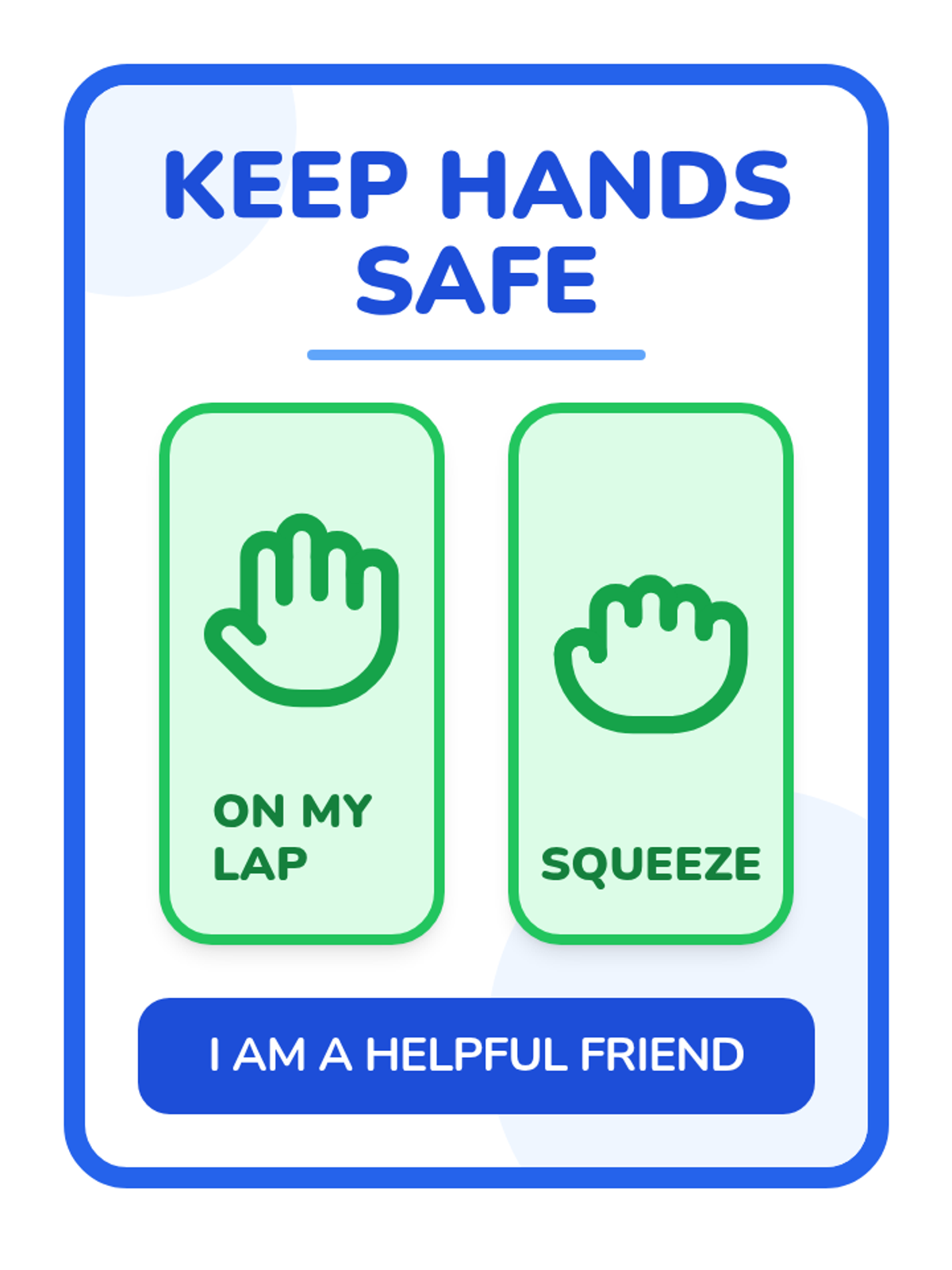
A social story and support toolkit designed to help students navigate frustration, manage physical impulses, and choose safe alternatives to eloping or aggression.
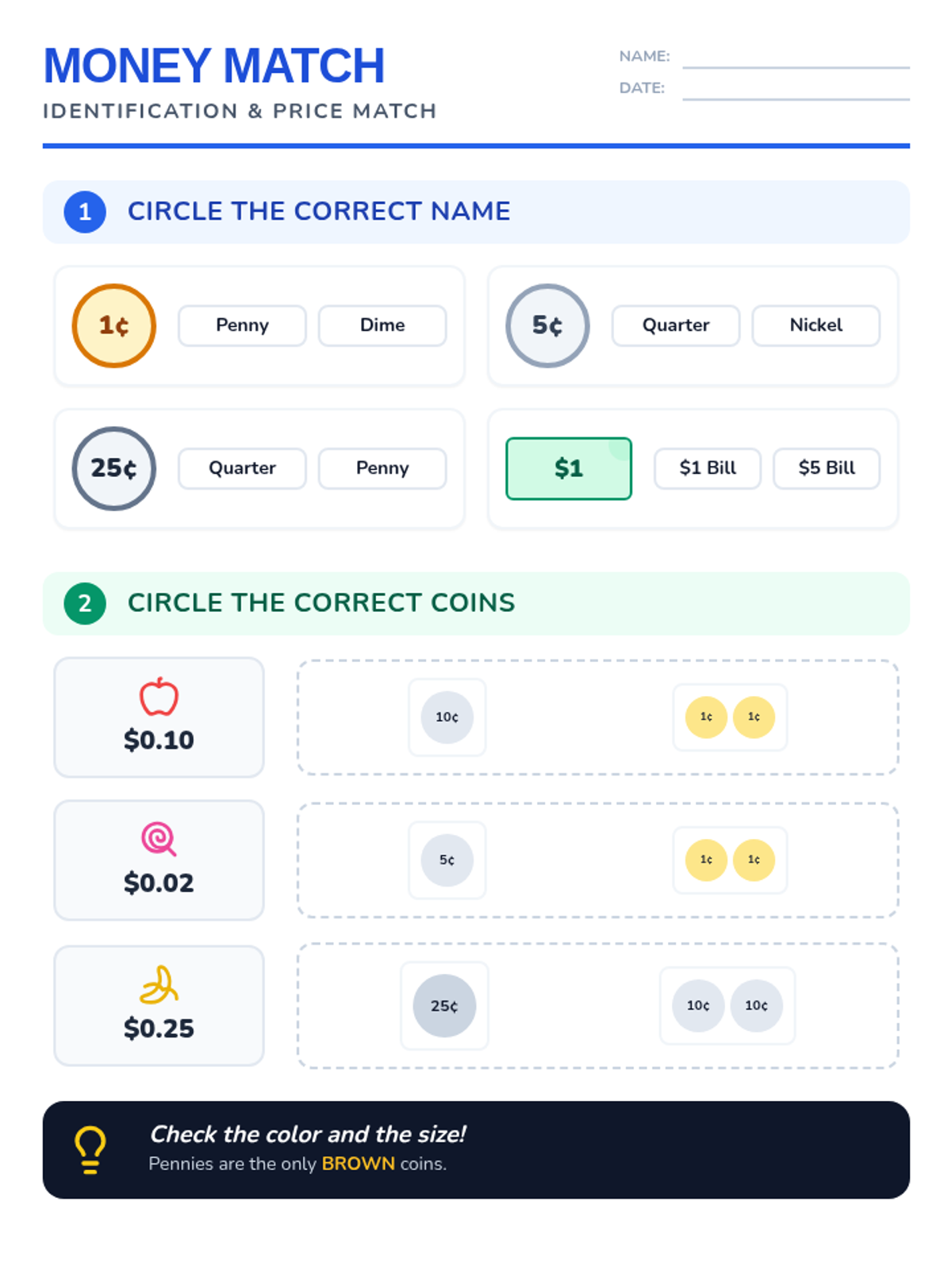
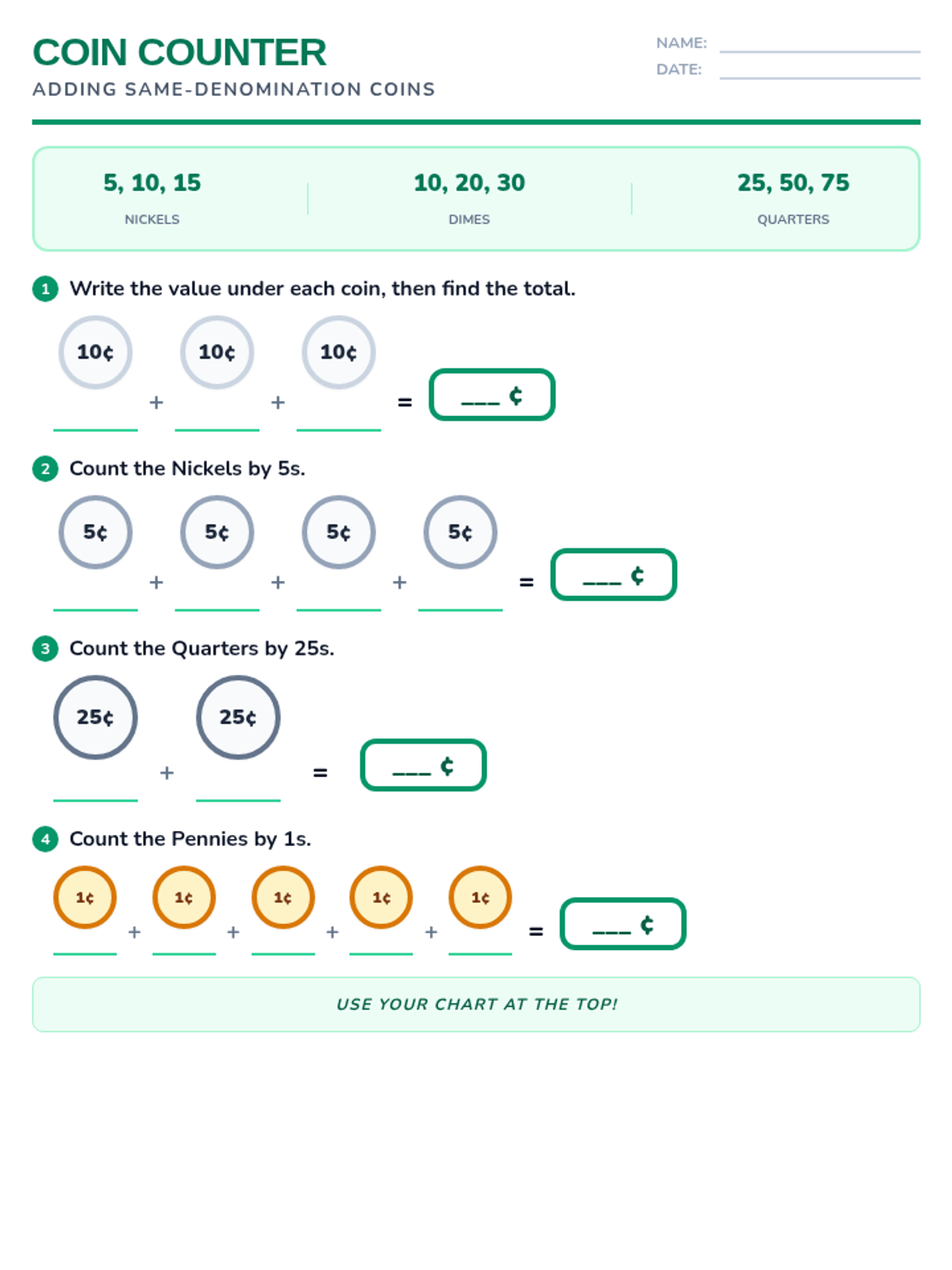
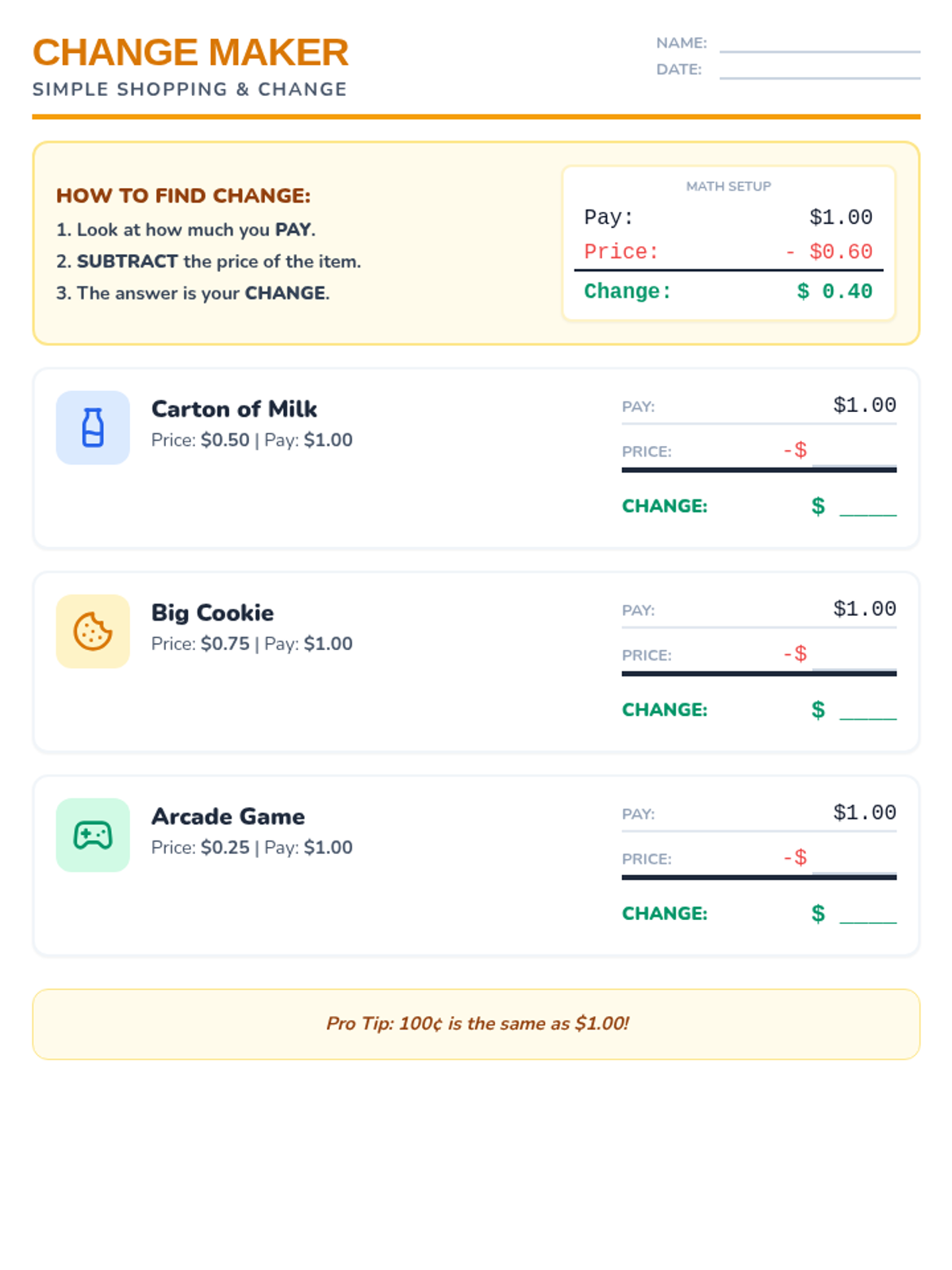
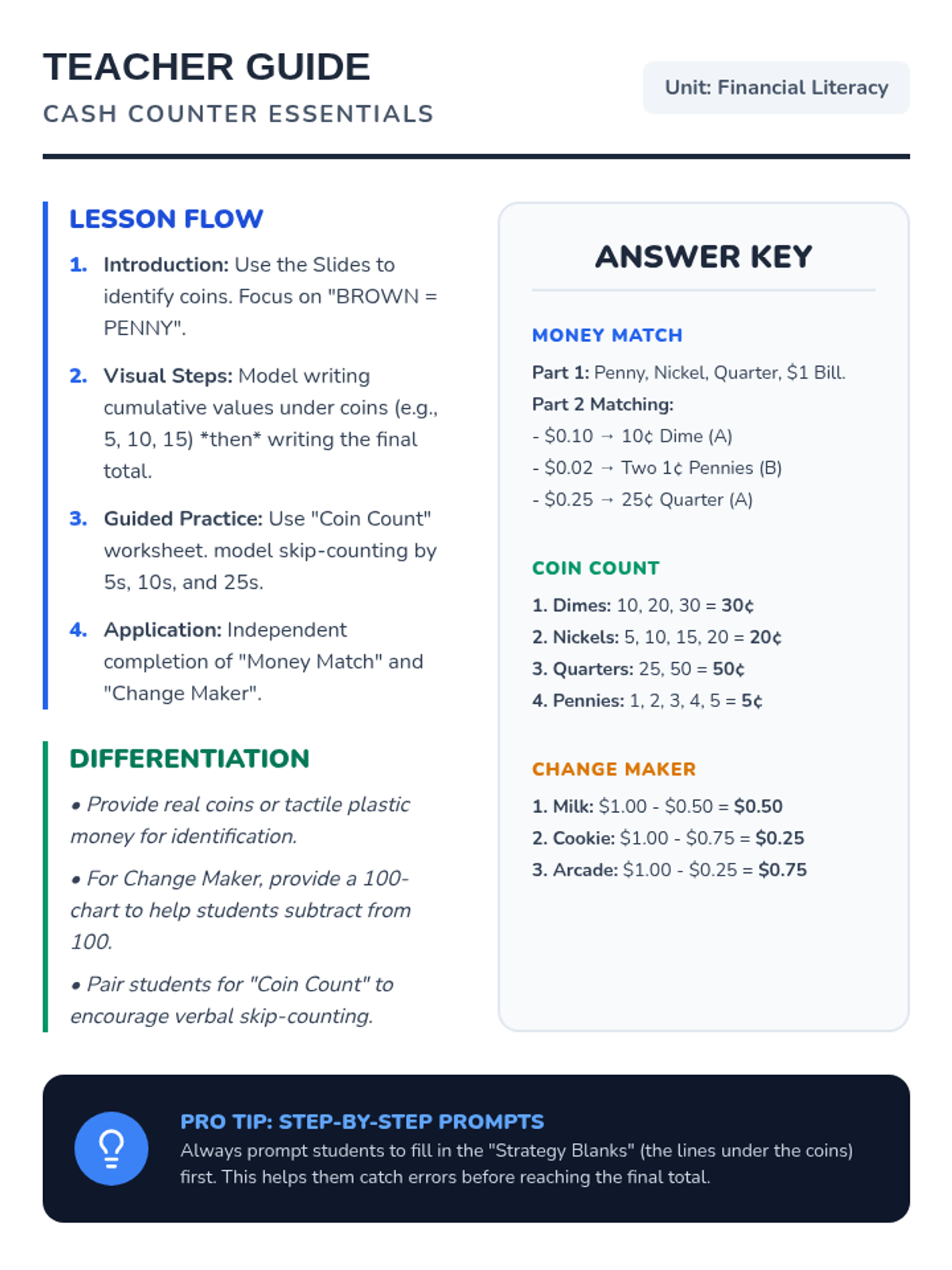
A comprehensive set of modified money skill resources focusing on coin/bill identification, same-denomination addition, price matching, and simple change making with visual prompts.
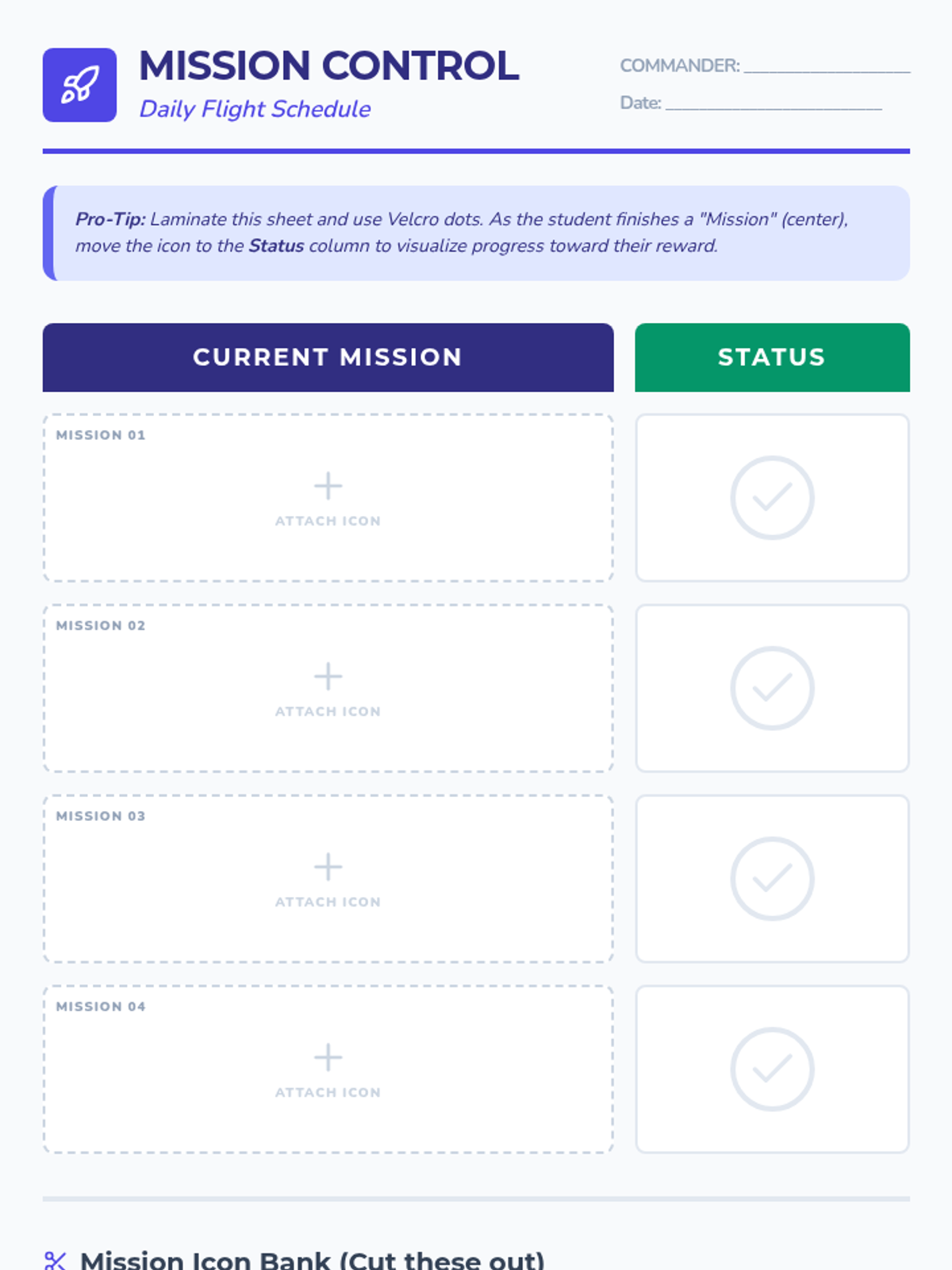
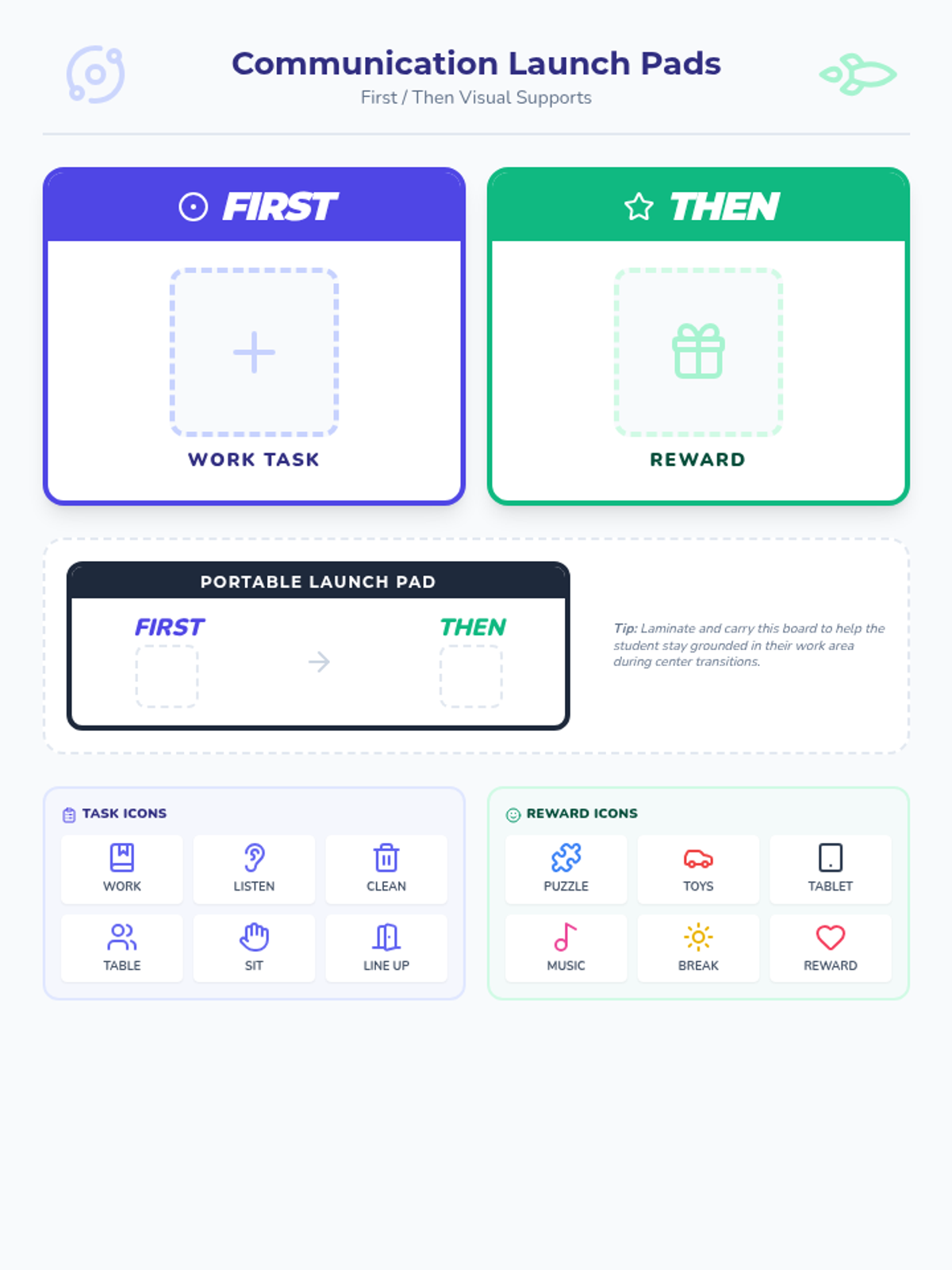
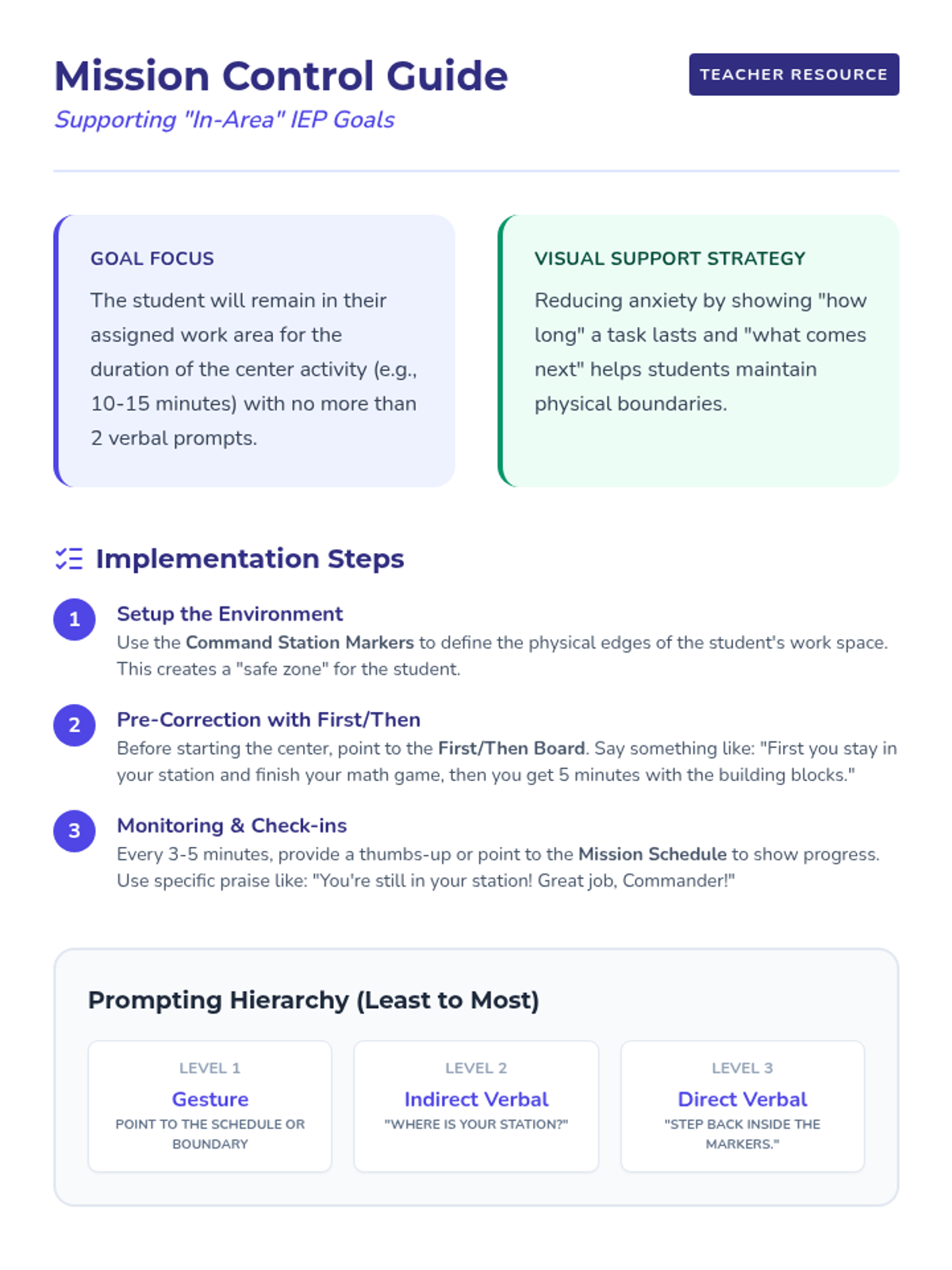
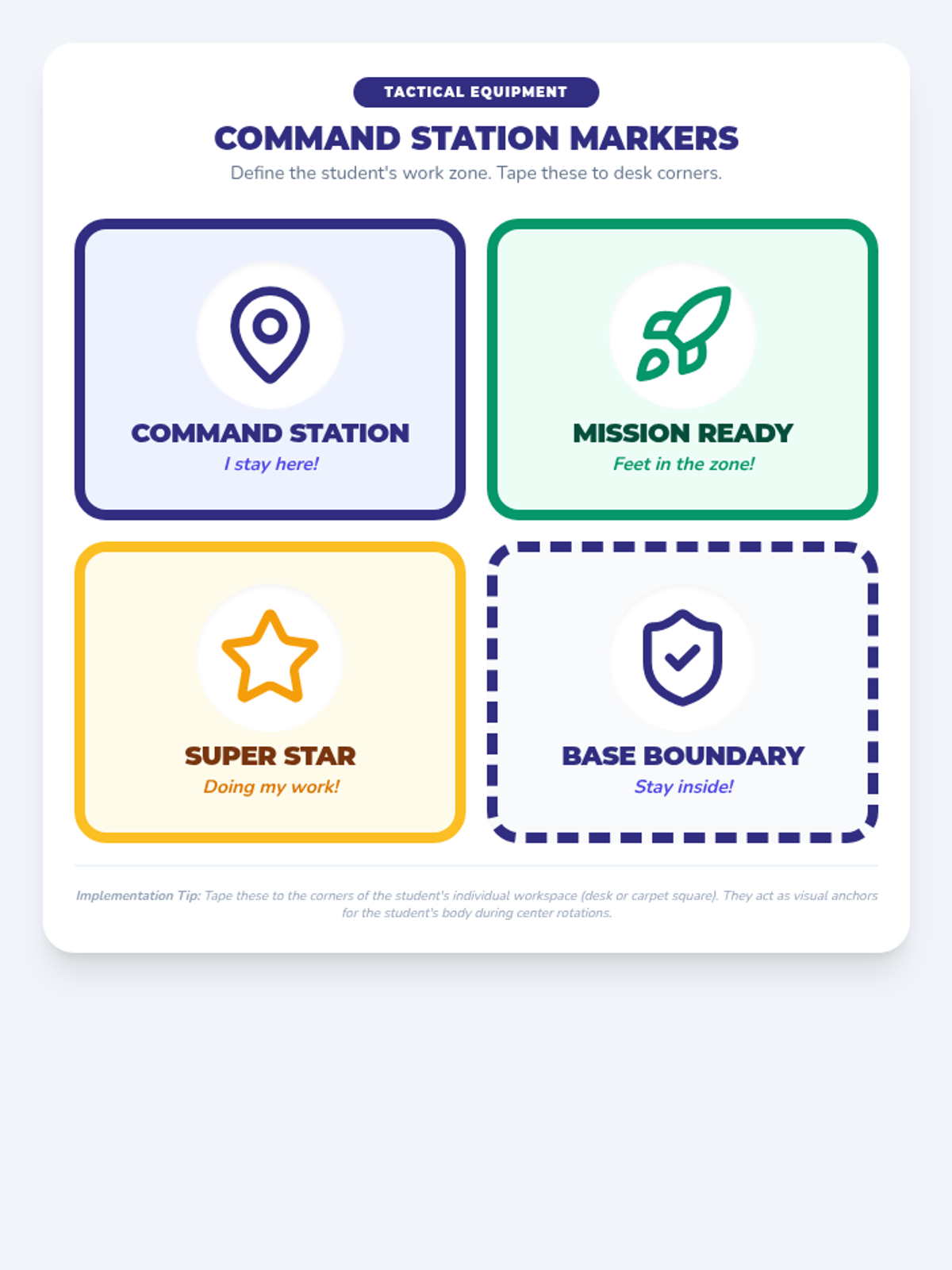
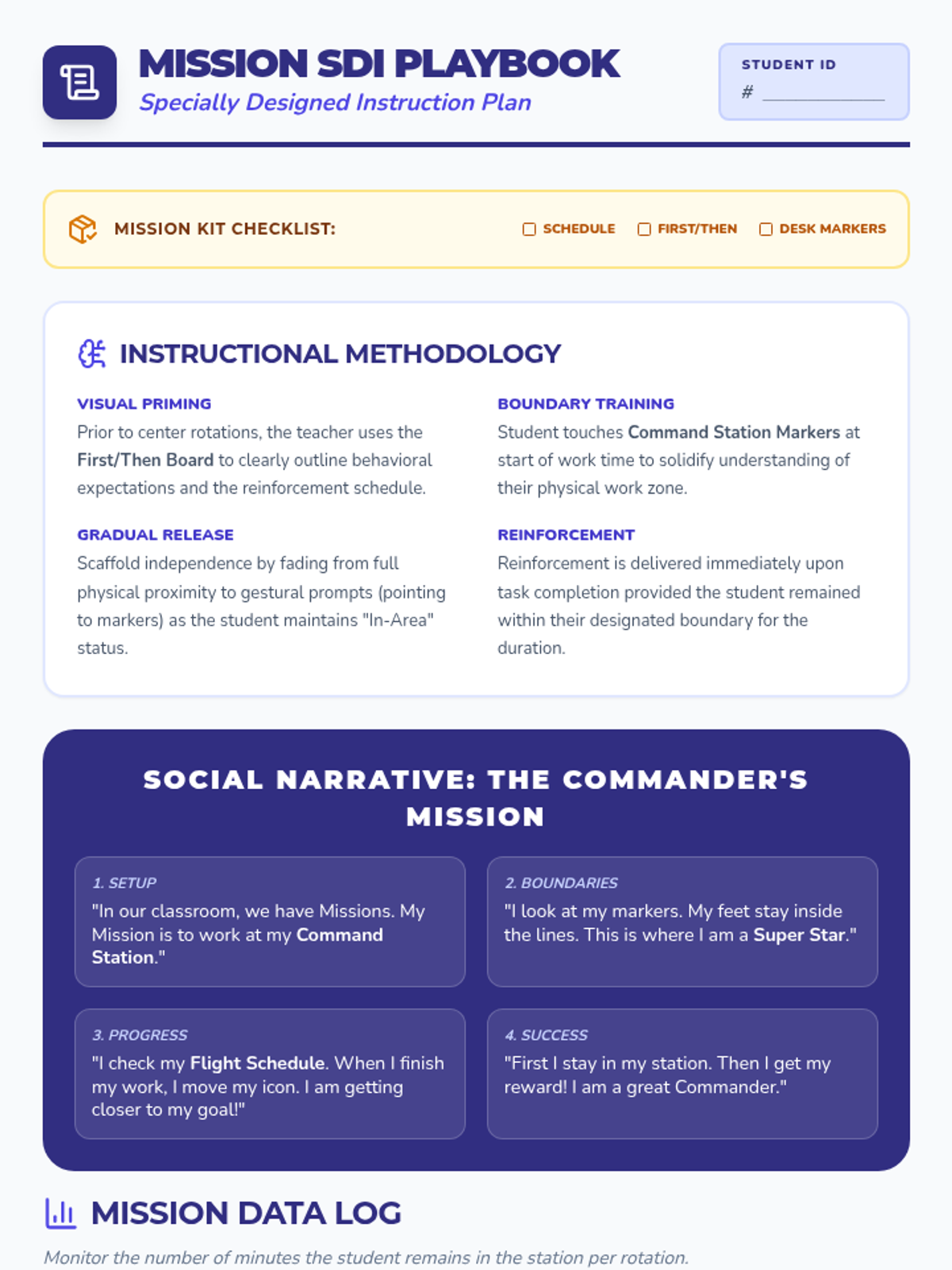
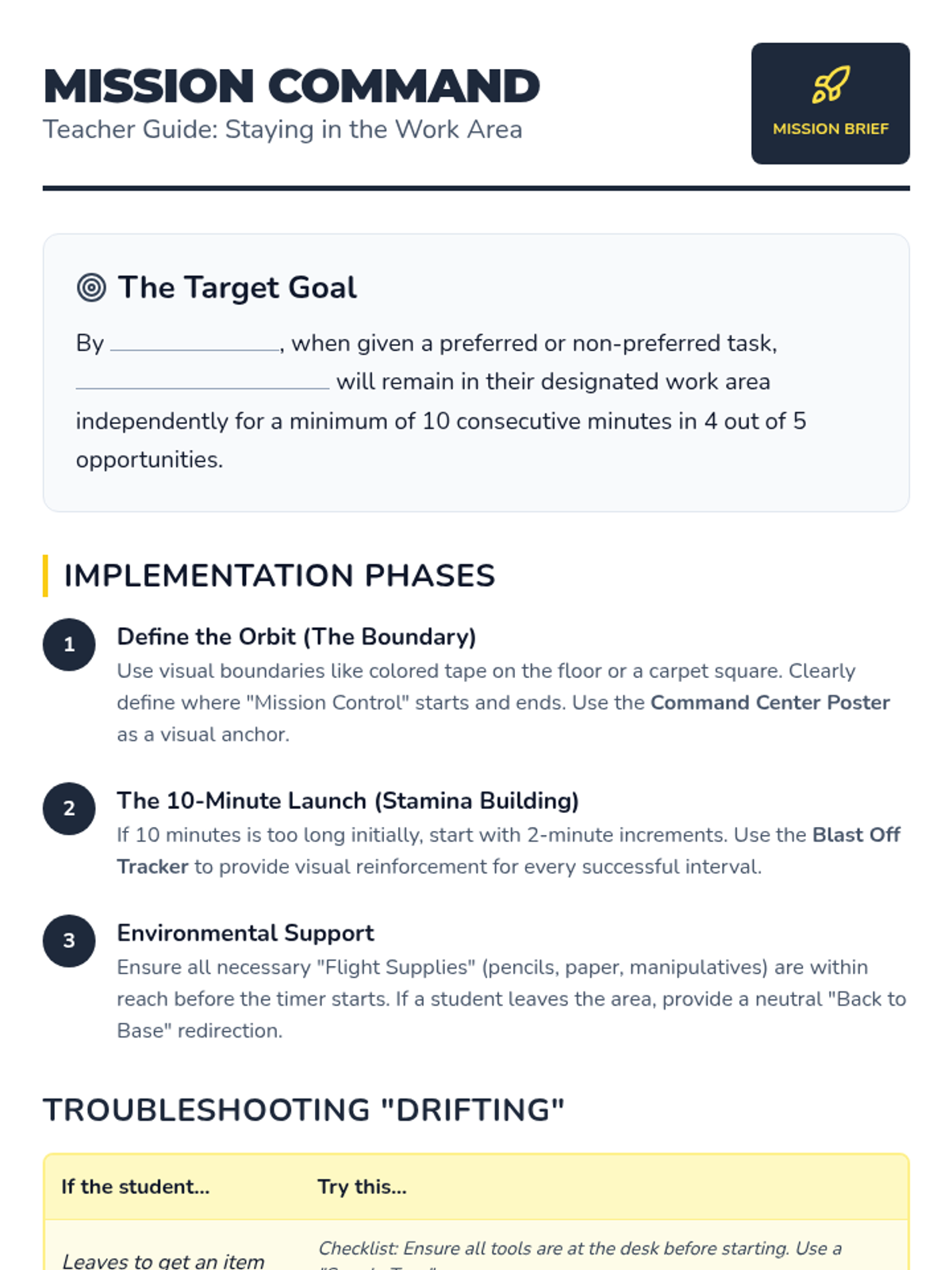
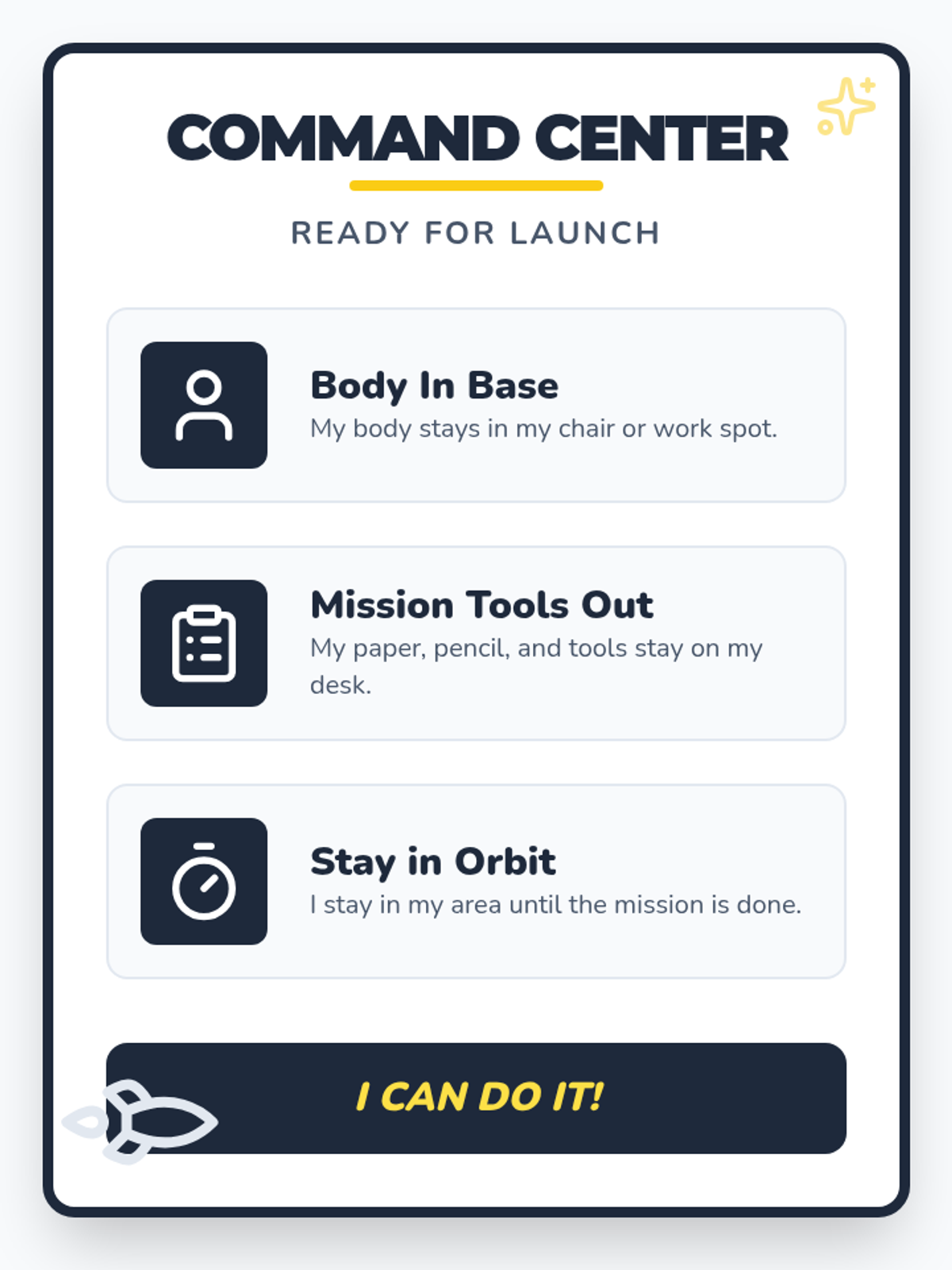
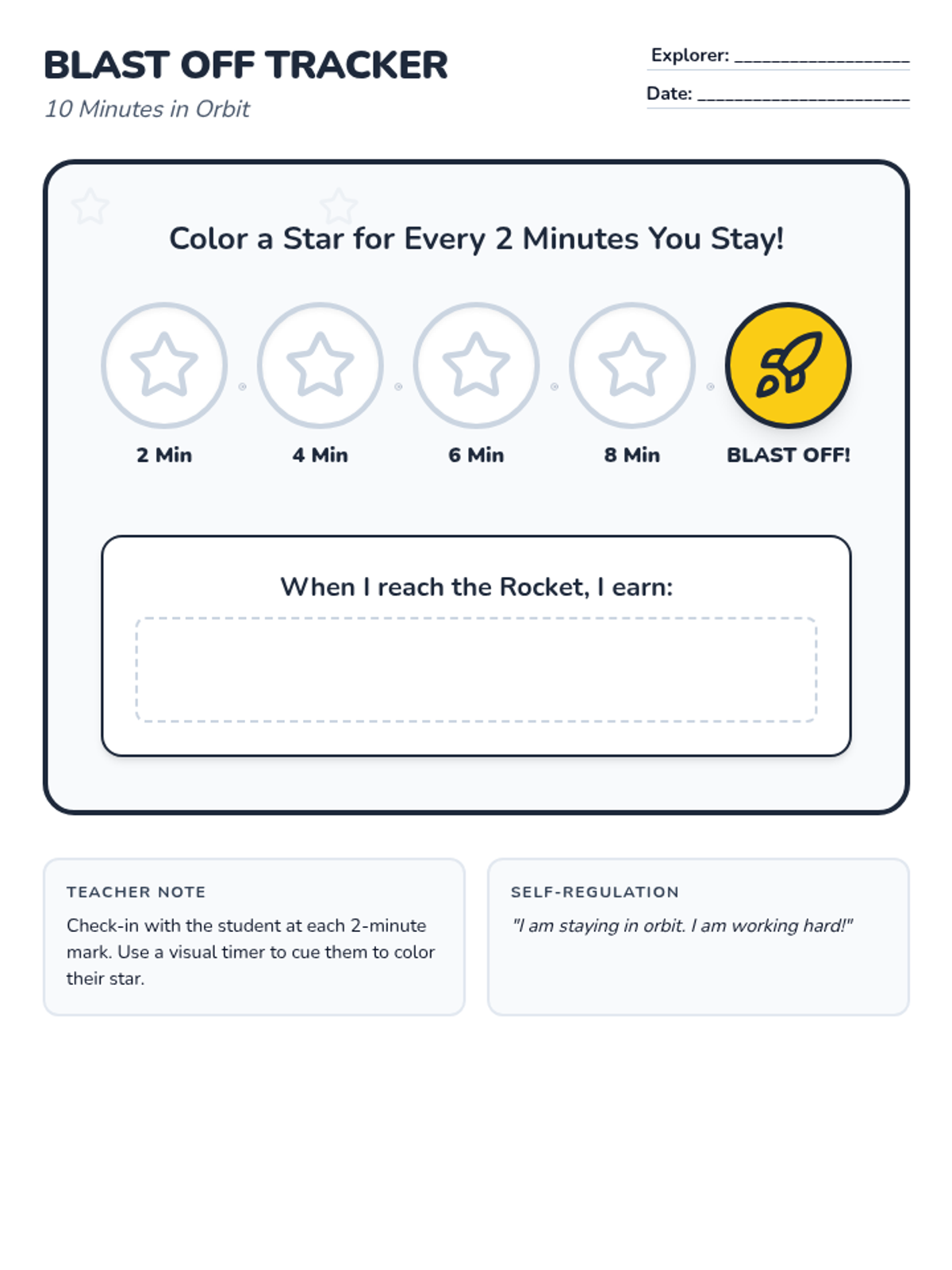
A set of visual supports themed around 'Mission Control' to help a kindergarten student stay in their work area during centers, directly supporting IEP goals for task engagement.
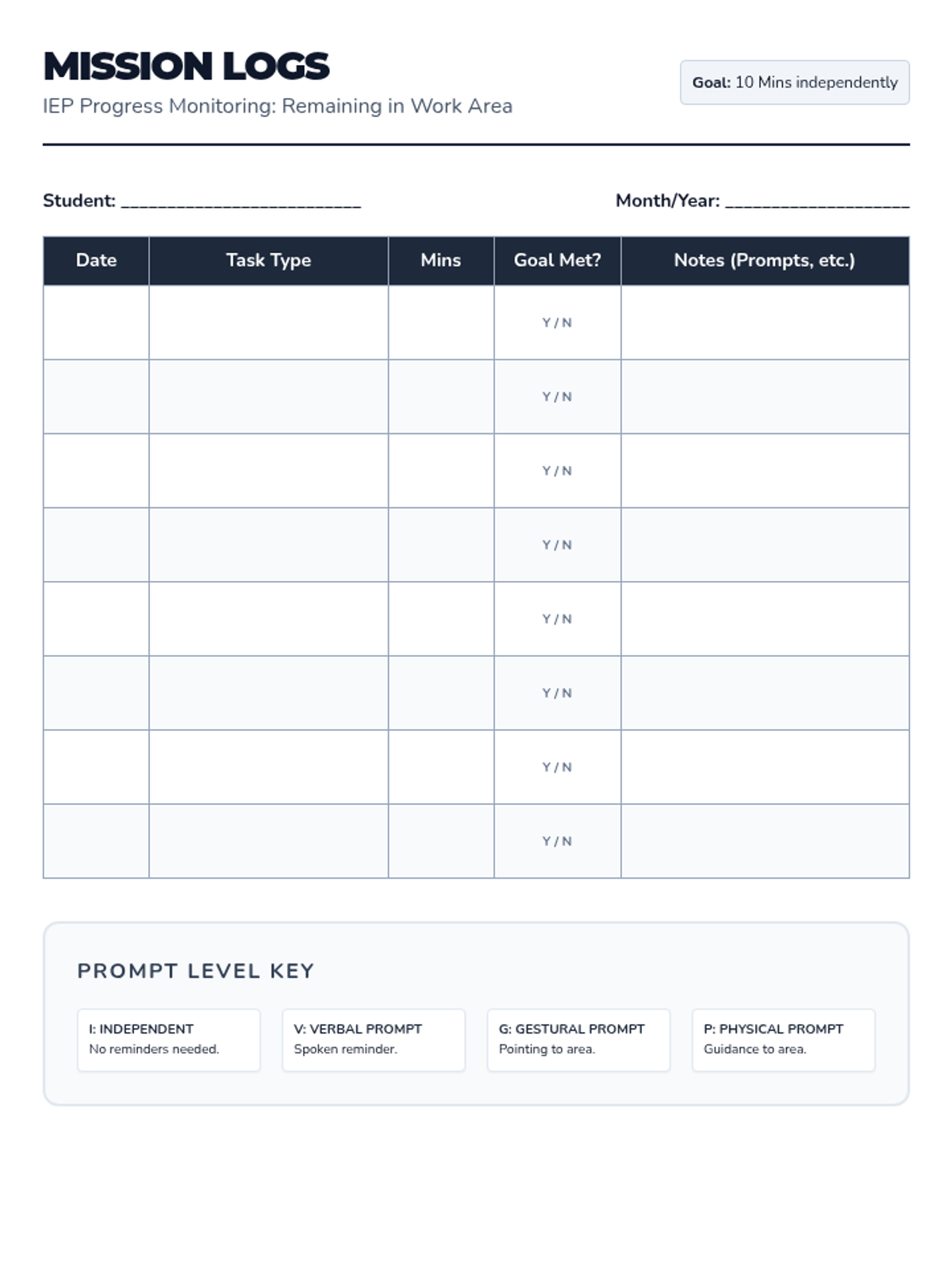
A comprehensive set of tools to help kindergarten students stay in their designated work area for 10 minutes, using a 'Mission Control' space theme to make the goal engaging and visual.
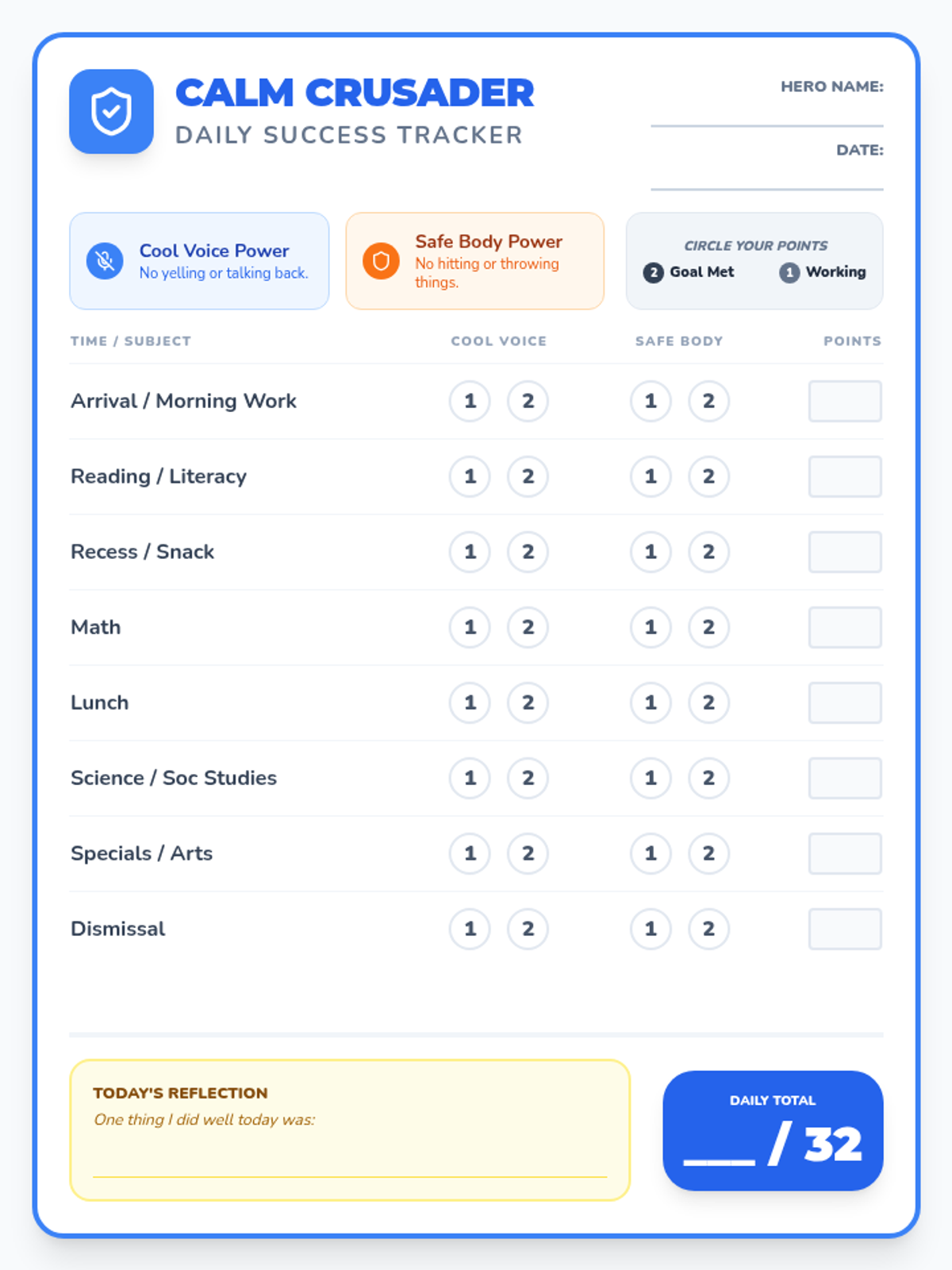
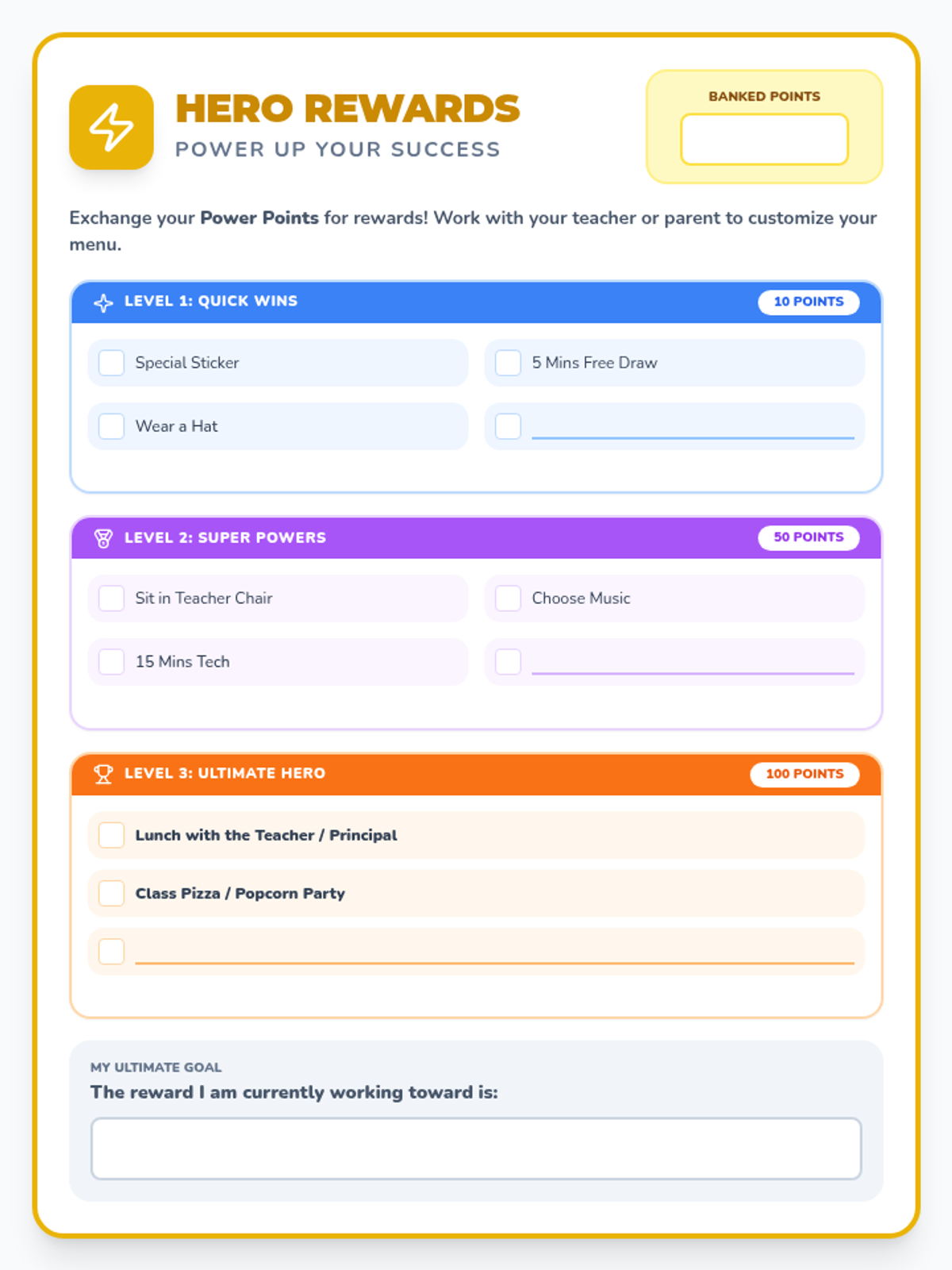
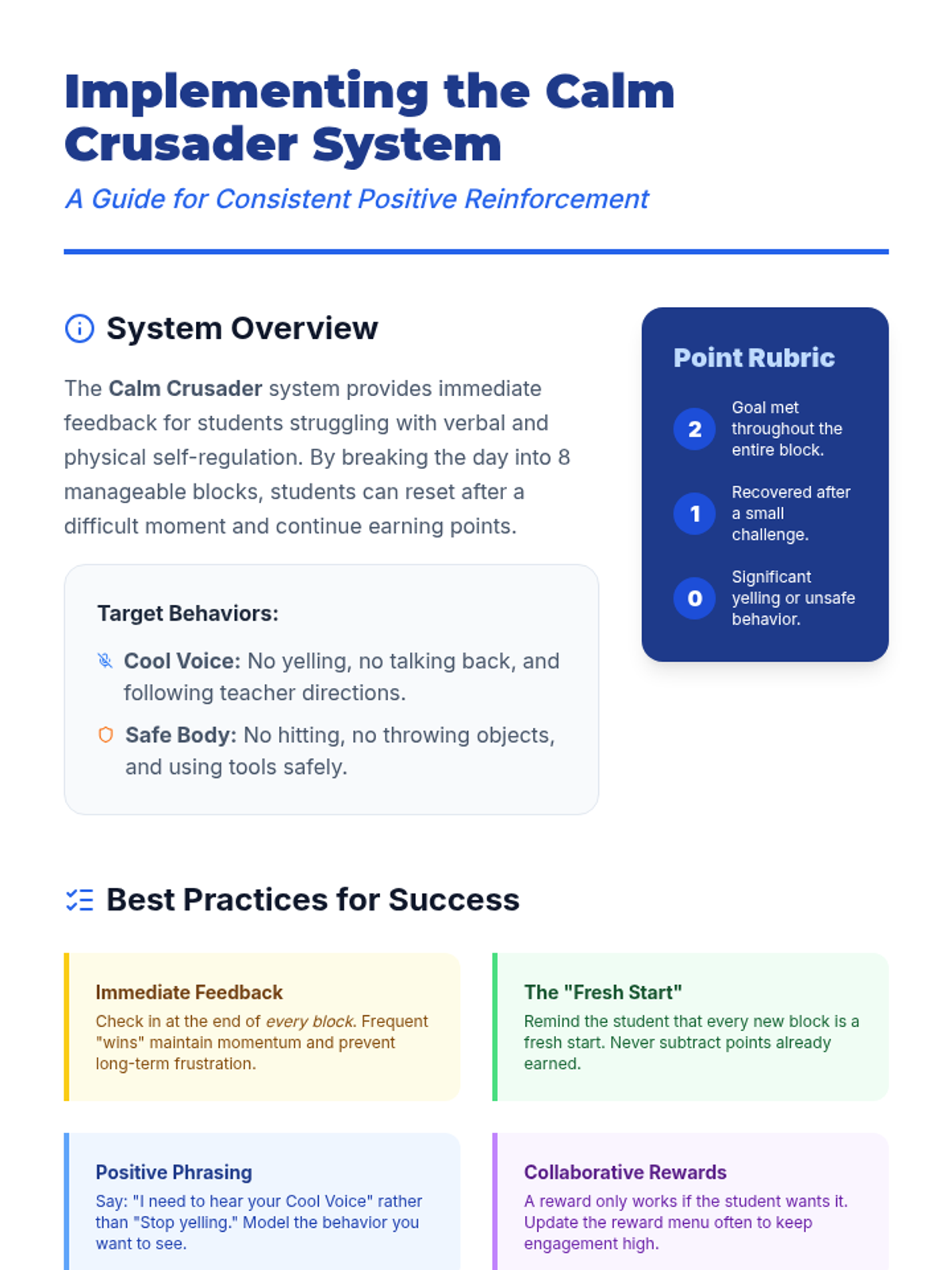
A comprehensive behavior management system designed for elementary students to build self-regulation skills. This kit includes a daily tracking chart focused on 'Cool Voices' and 'Safe Hands', a customizable reward menu, and a guide for educators to implement the system with consistency and positive reinforcement.
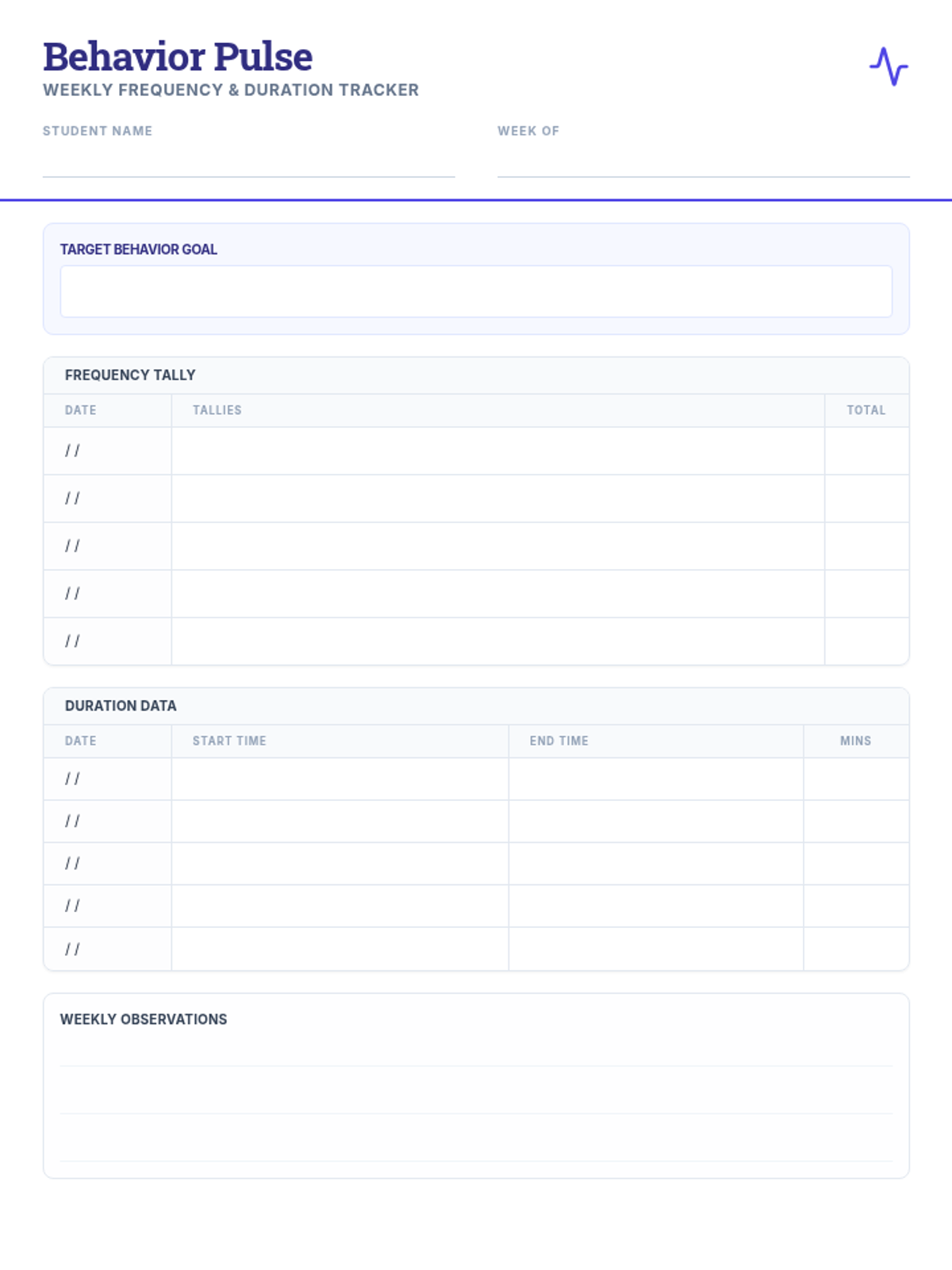
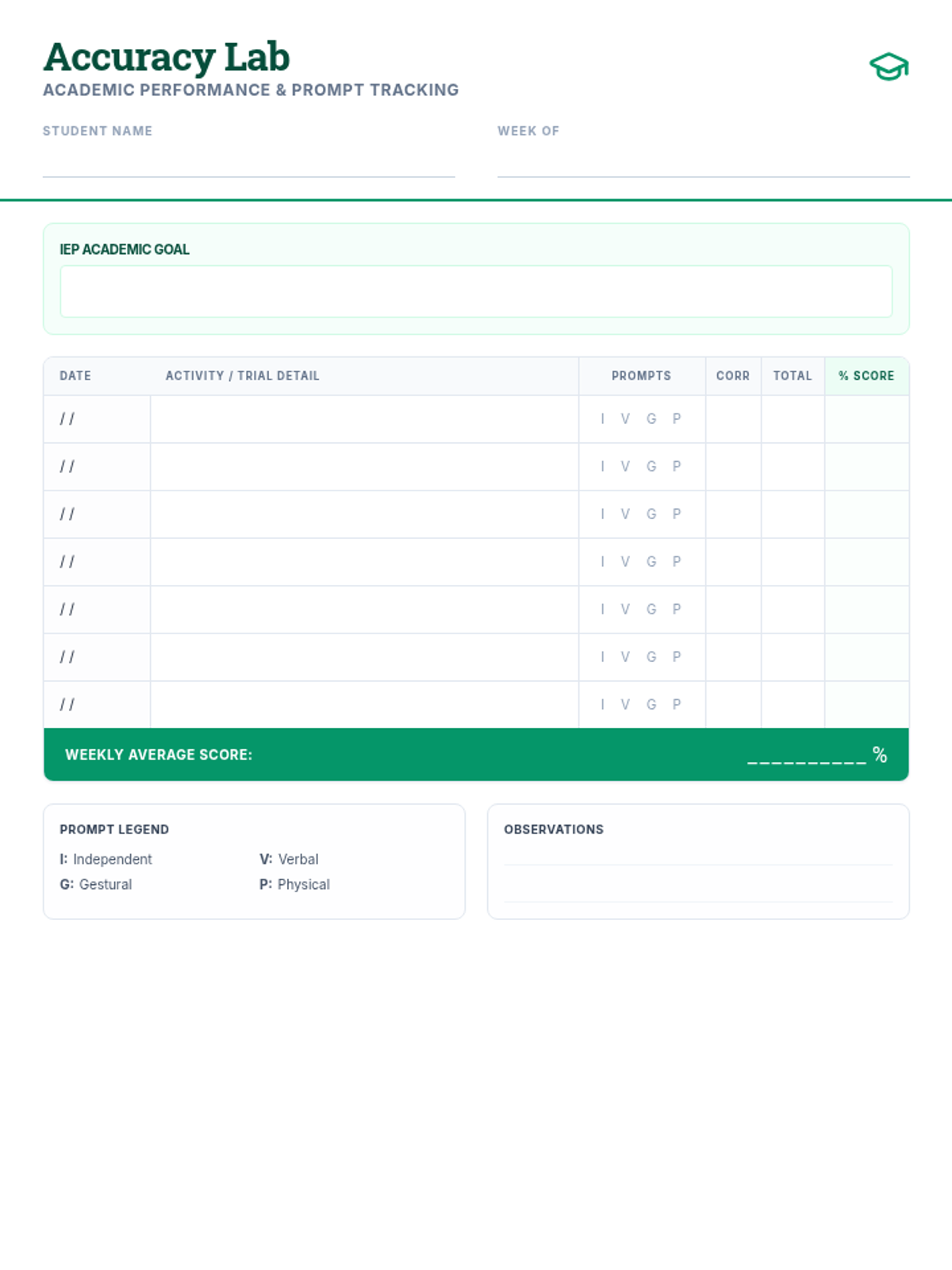
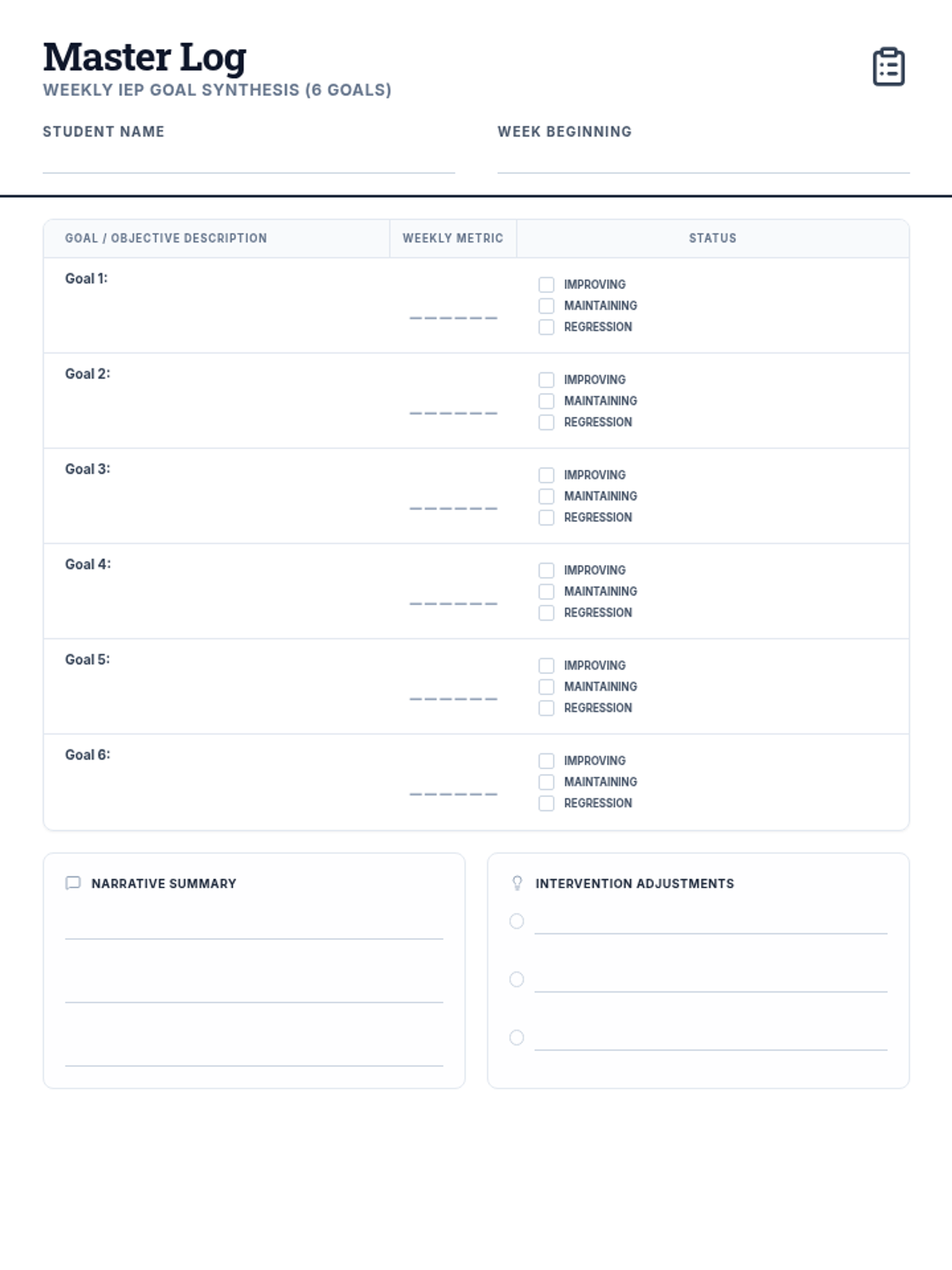
A comprehensive set of data collection tools designed for tracking IEP behavior frequency, duration, and academic accuracy, including a synthesis log for weekly reporting.
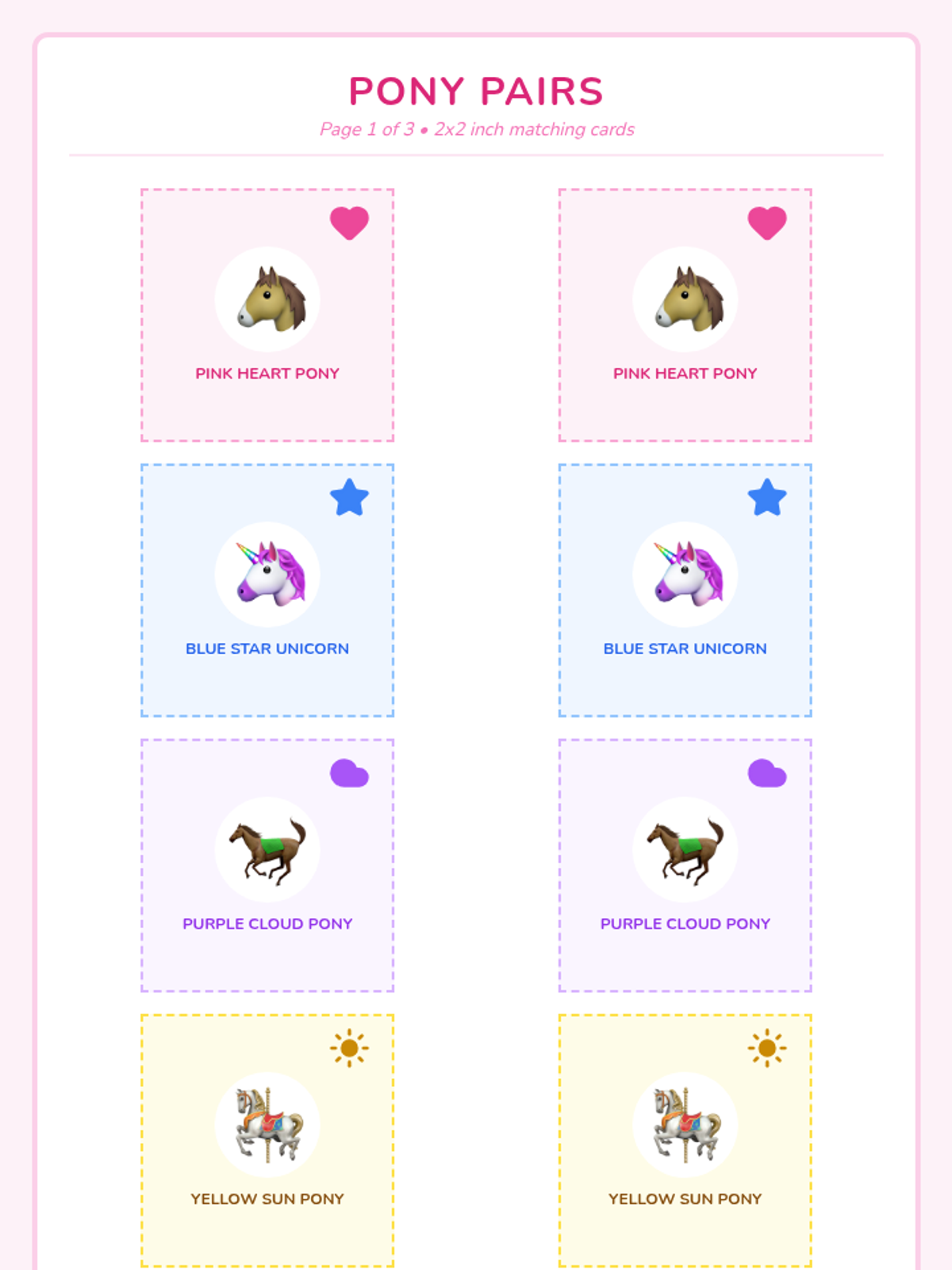
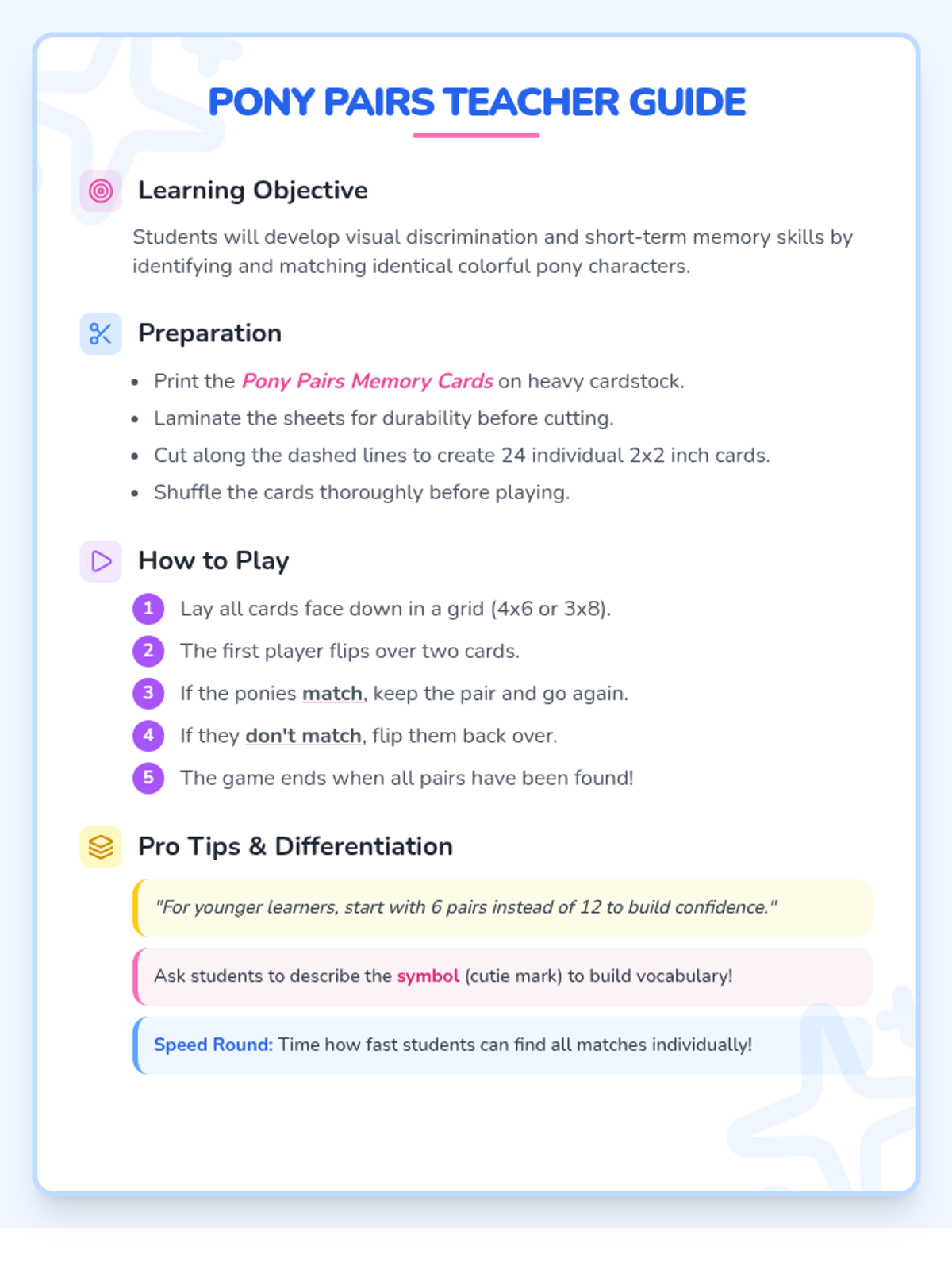
A visual discrimination and memory game featuring colorful pony characters to help young learners practice matching identical pictures.
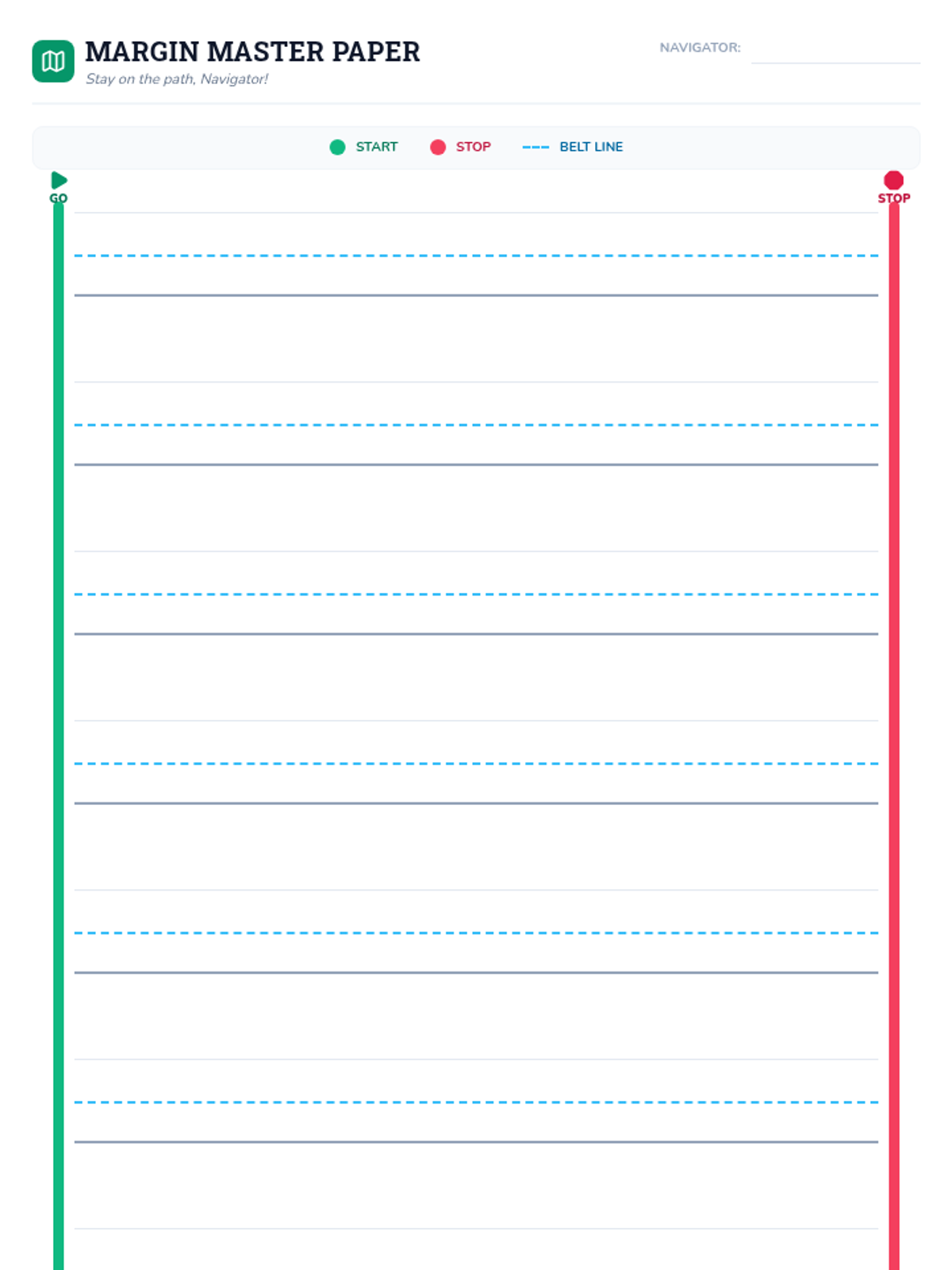
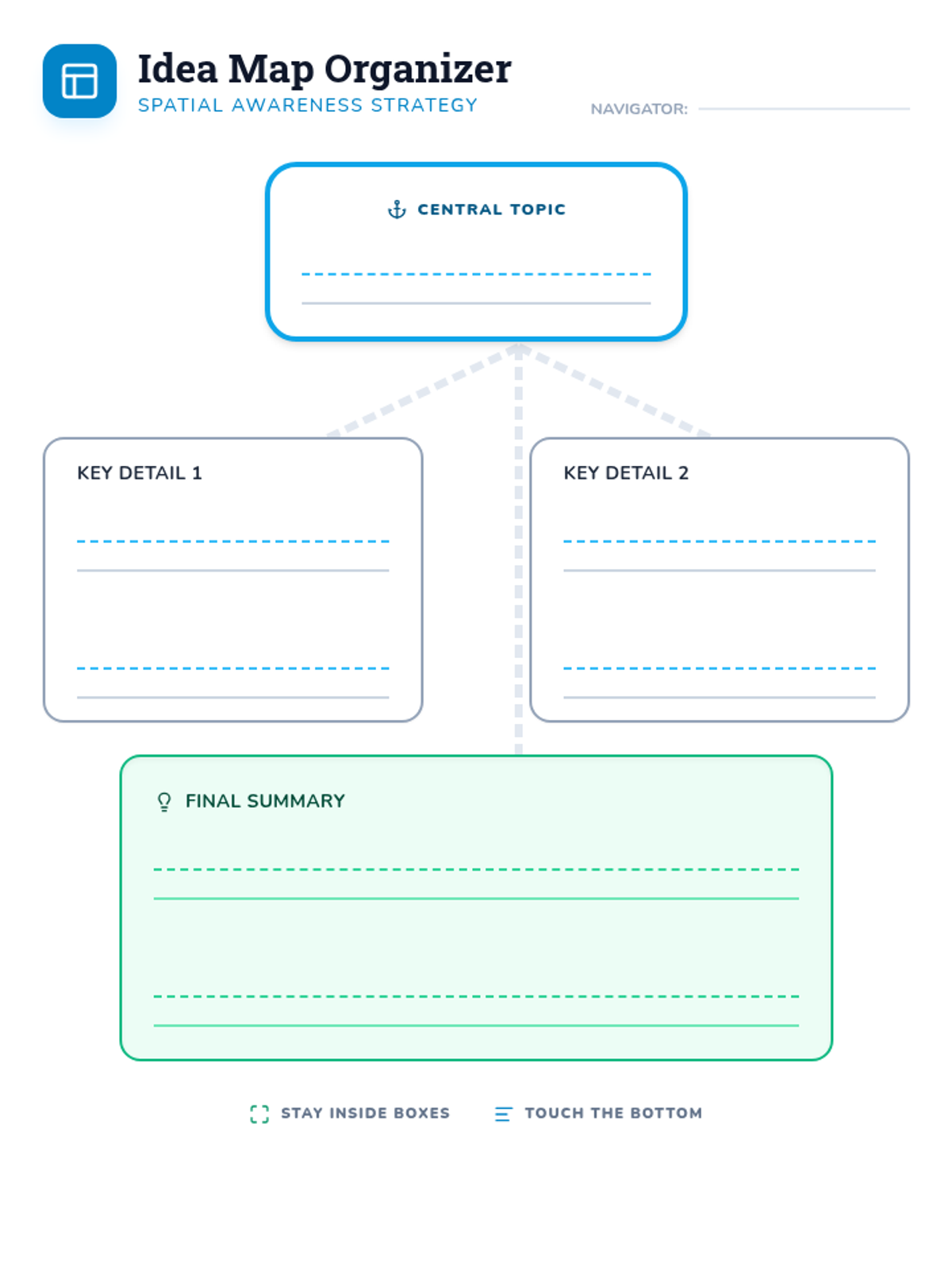
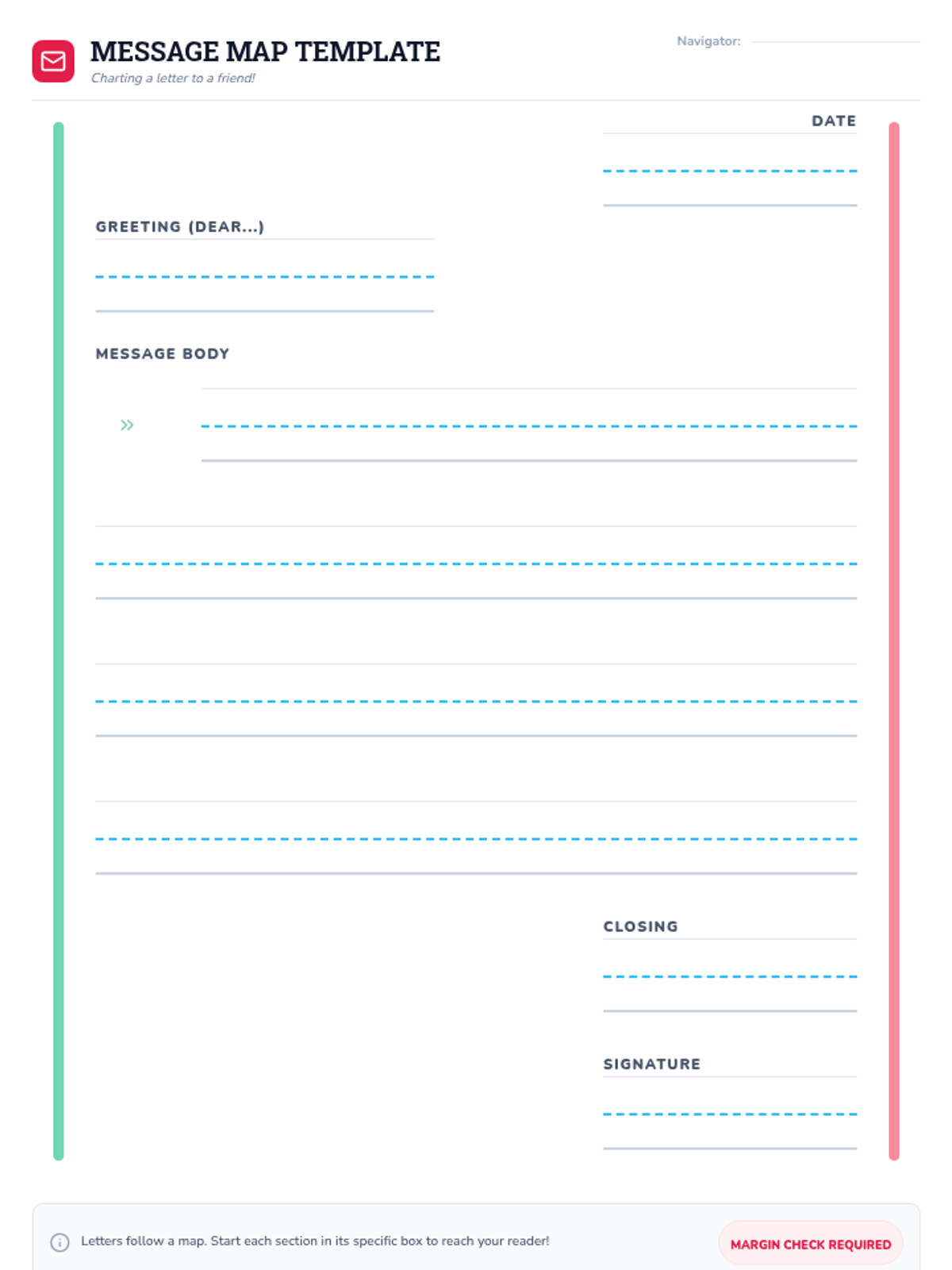
A therapeutic handwriting unit focused on visual-motor integration, boundary awareness, and spatial organization. Students use navigation-themed templates to master margin awareness, letter sizing, and line placement.
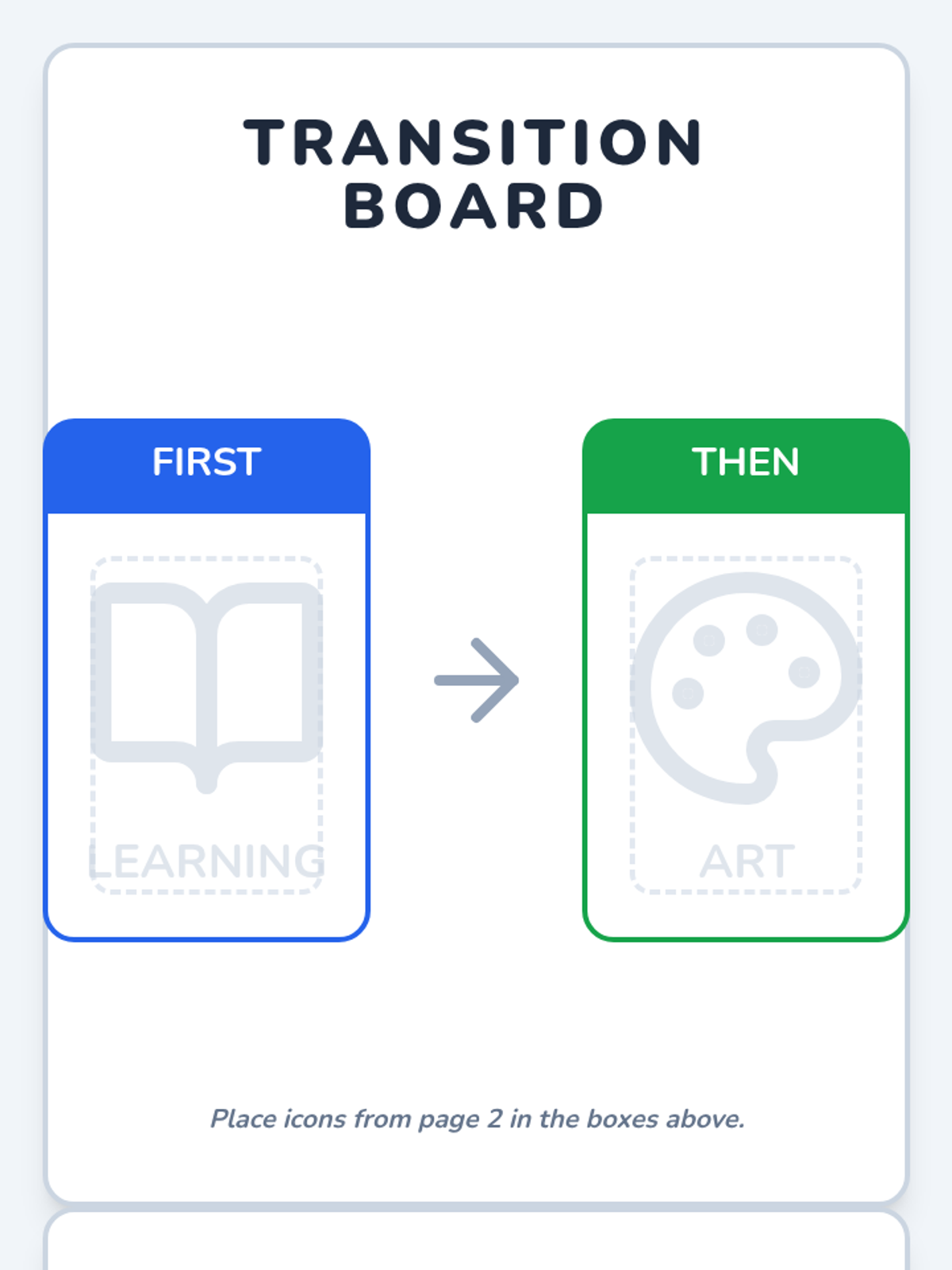
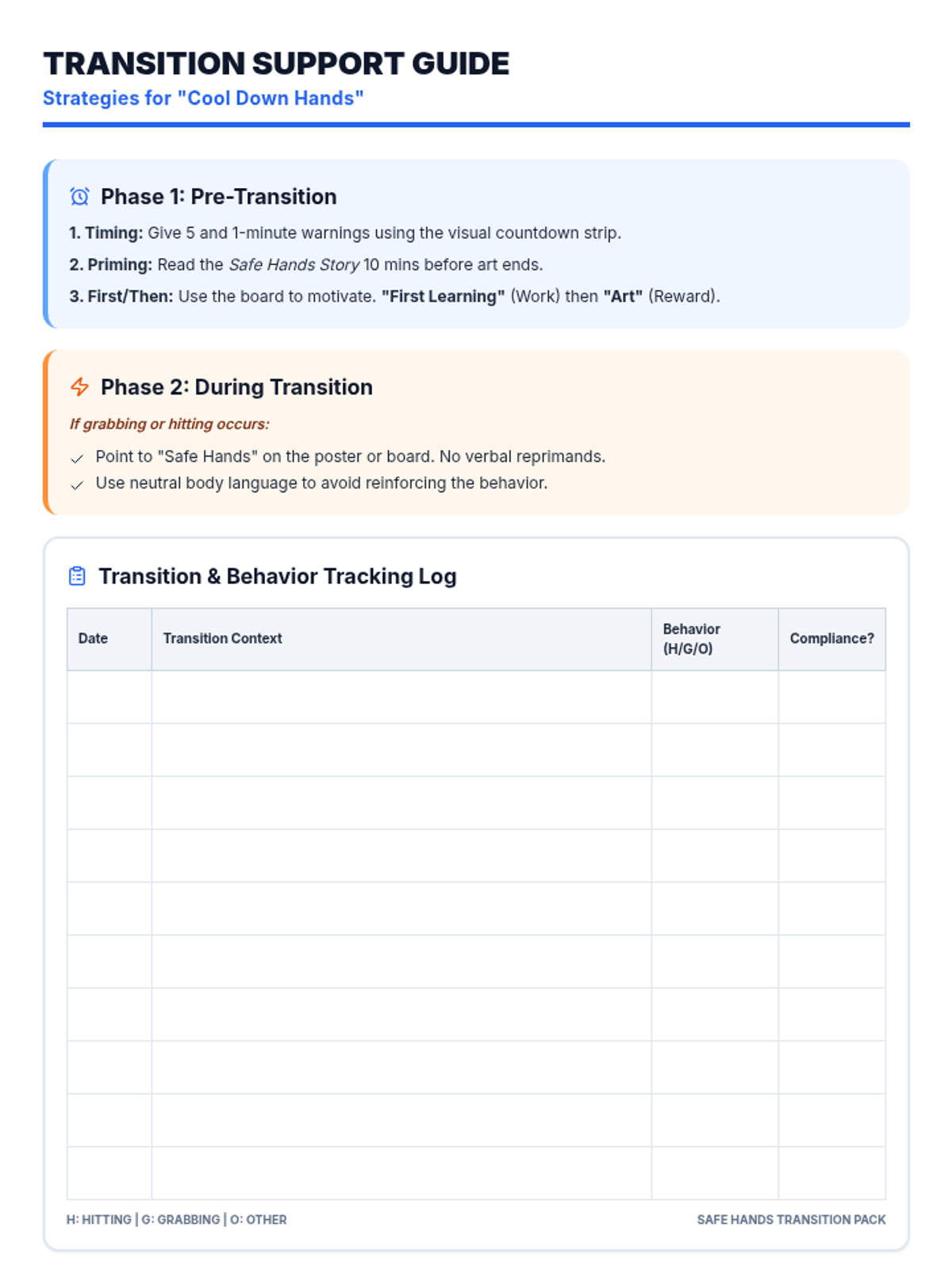
This lesson focuses on the specific transition from preferred art activities to non-preferred learning tasks, providing strategies for emotional regulation and physical safety.
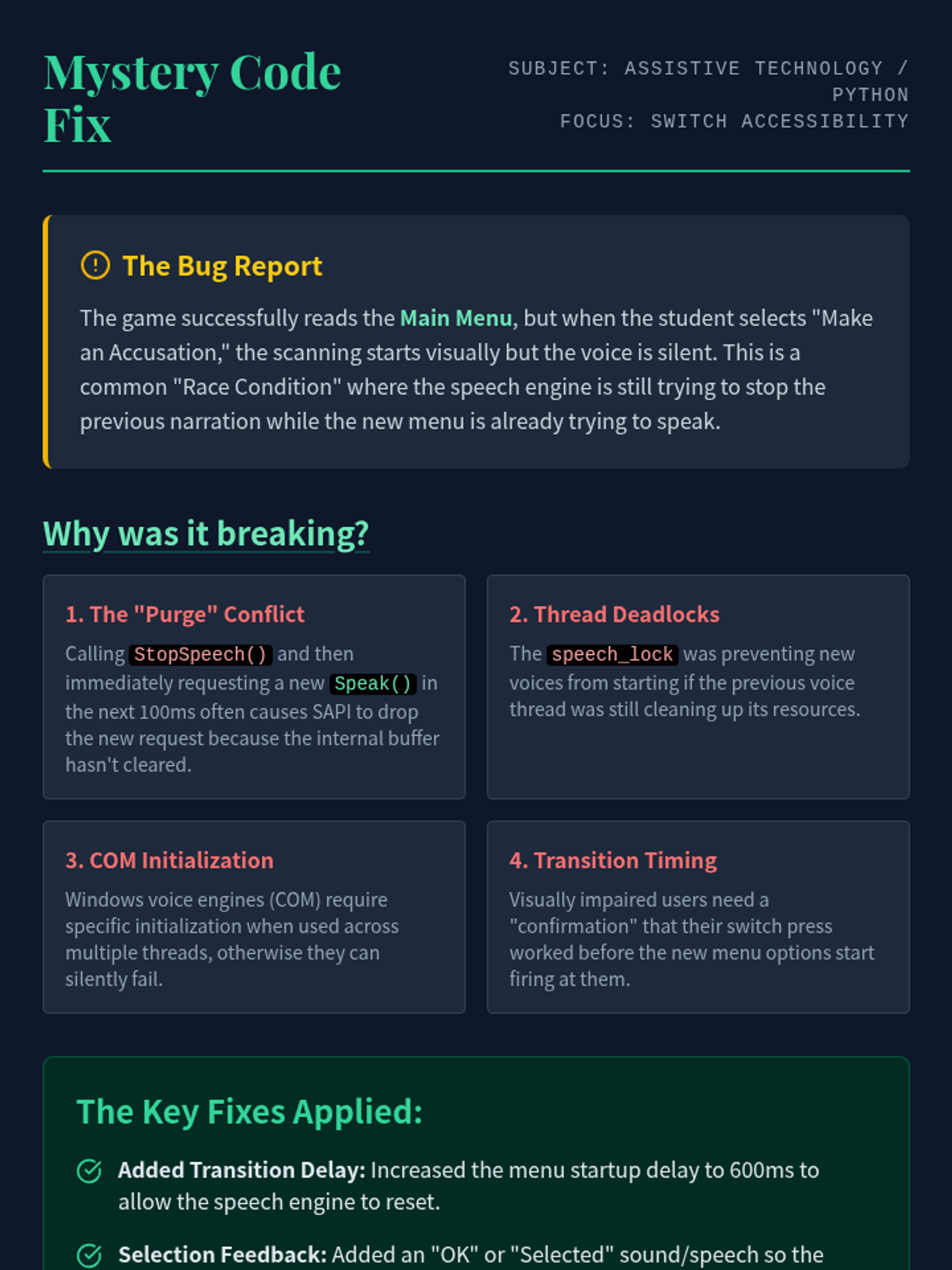
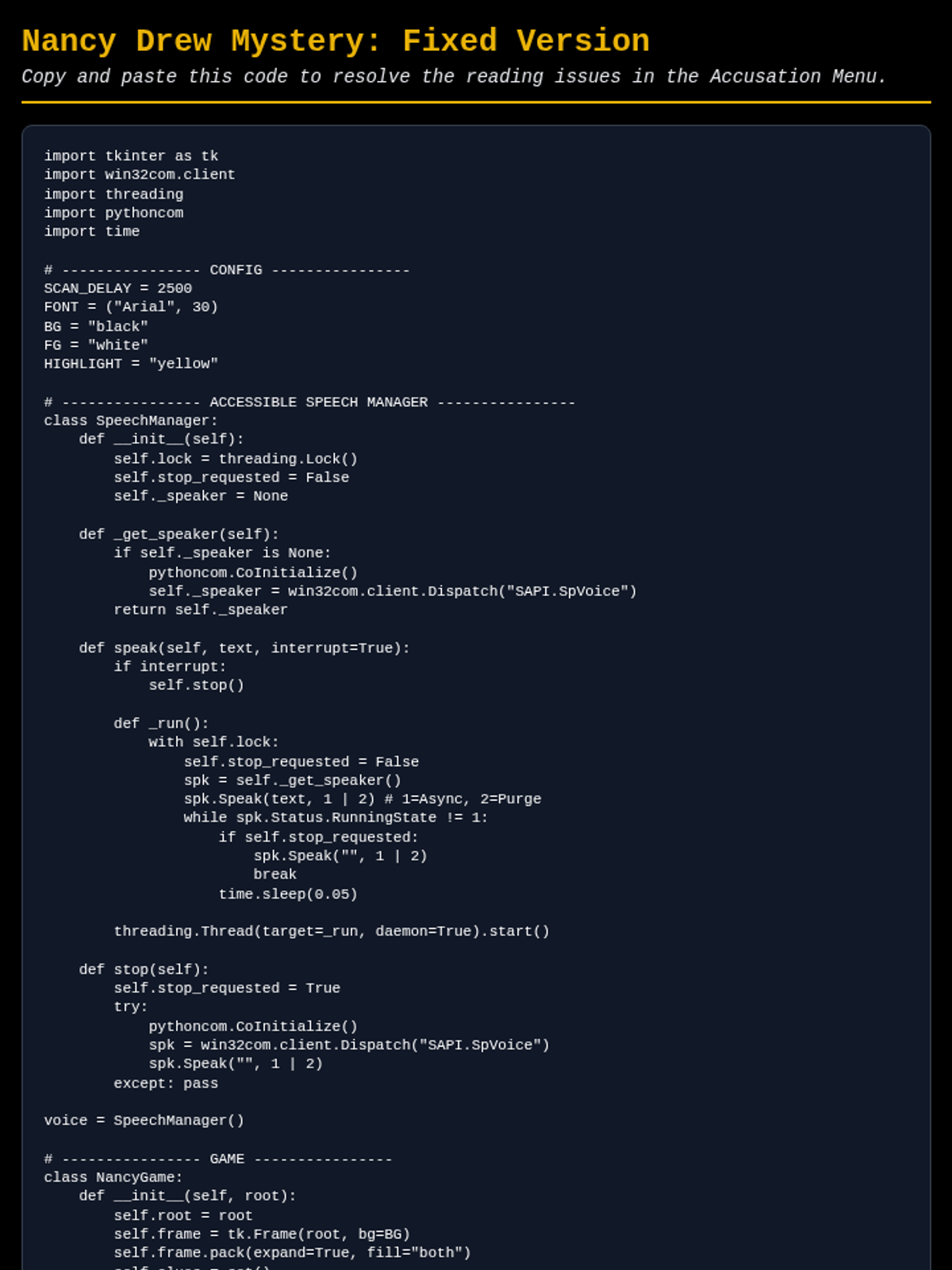
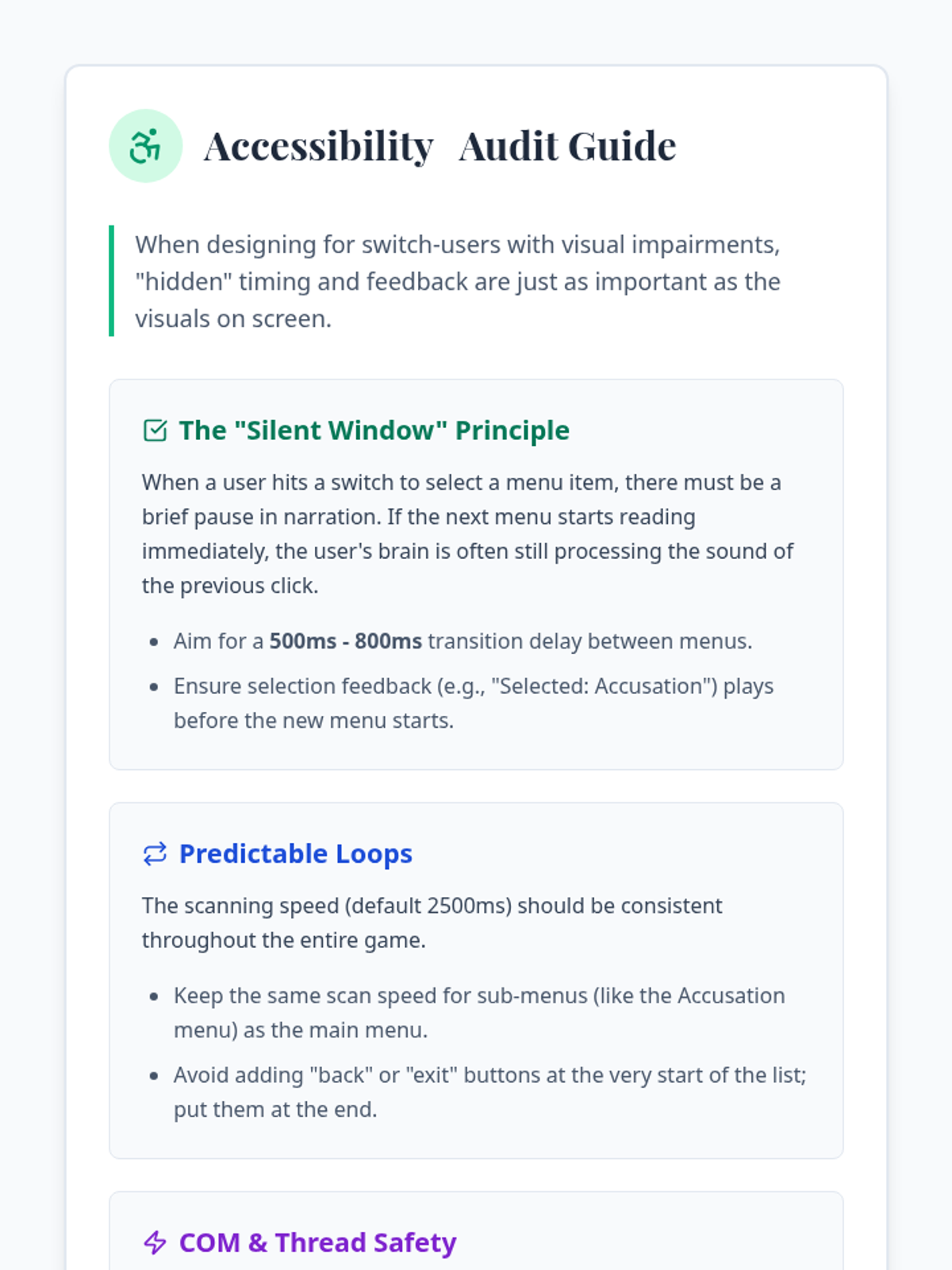
A technical guide and corrected codebase for creating switch-accessible mystery games for visually impaired students. Includes the fixed Python script and an explanation of common pitfalls in accessibility programming.
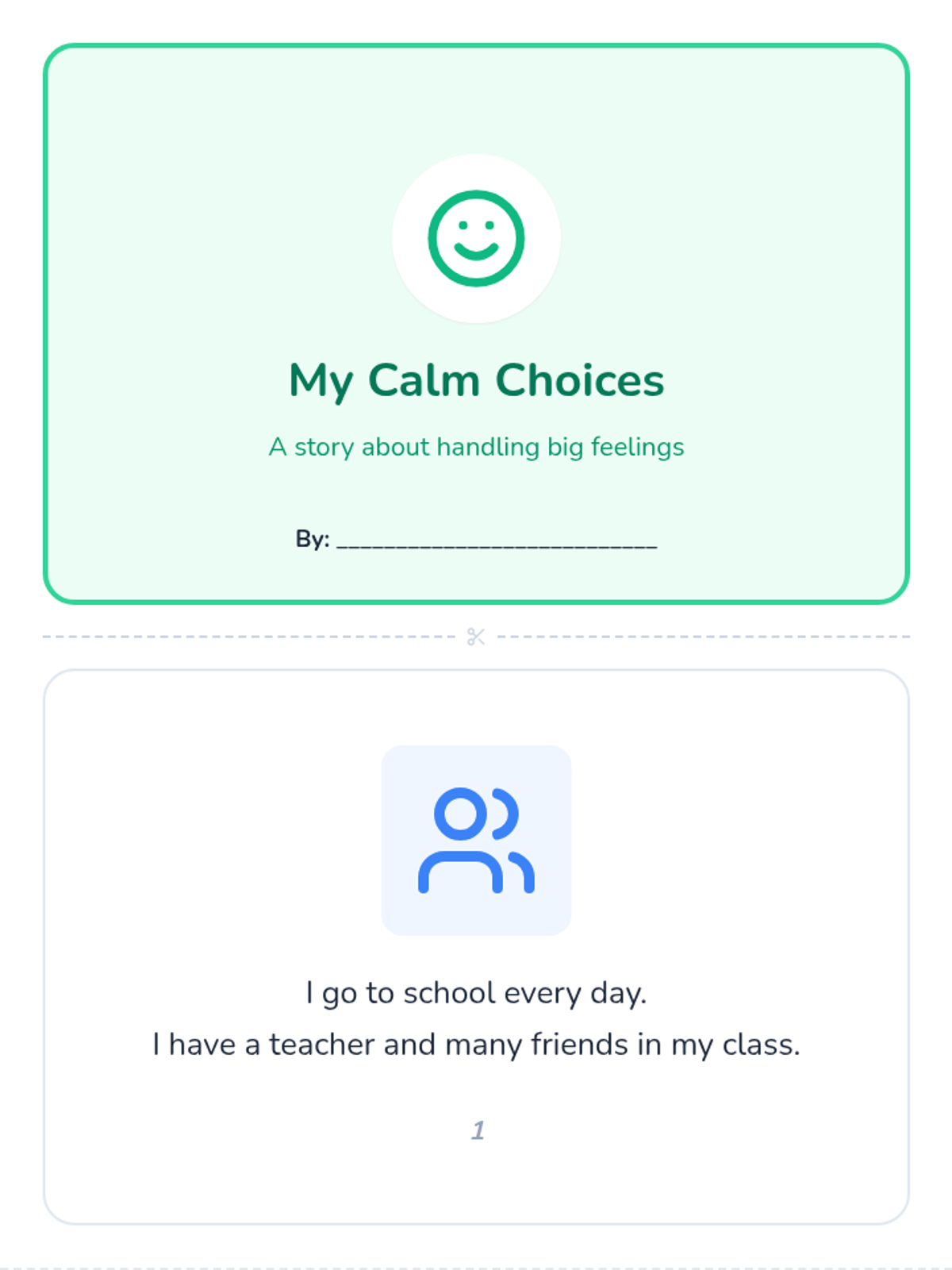
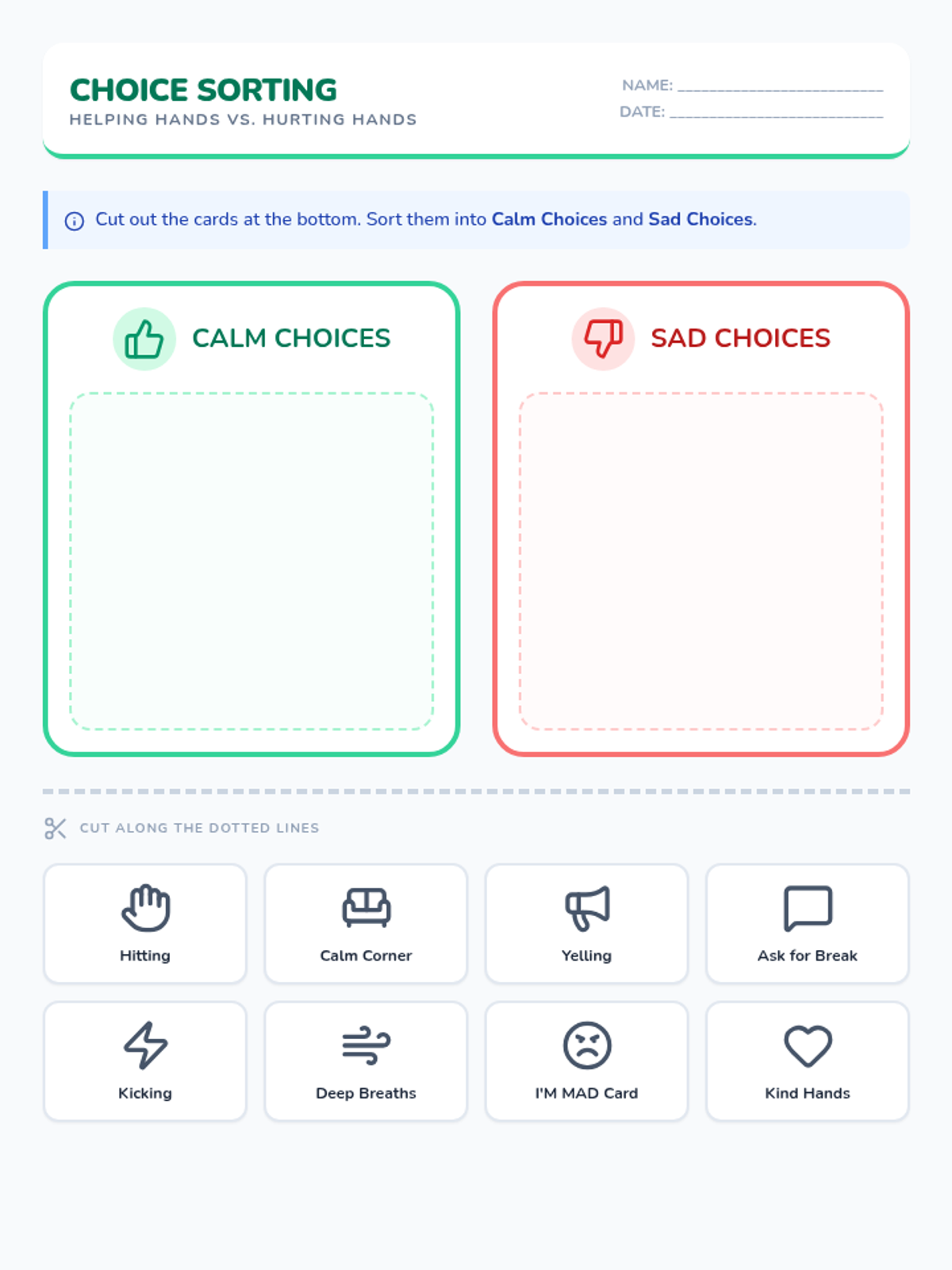
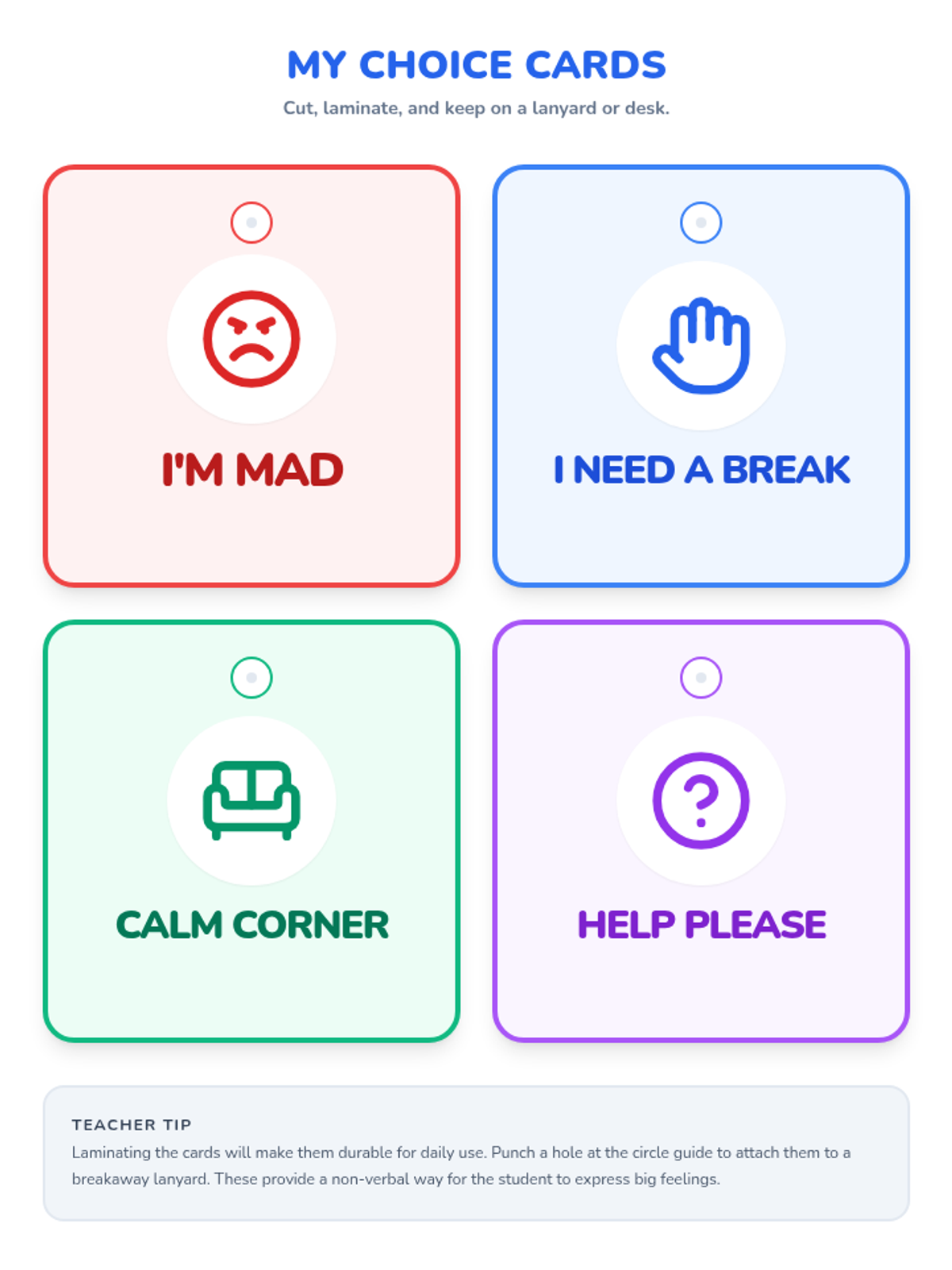
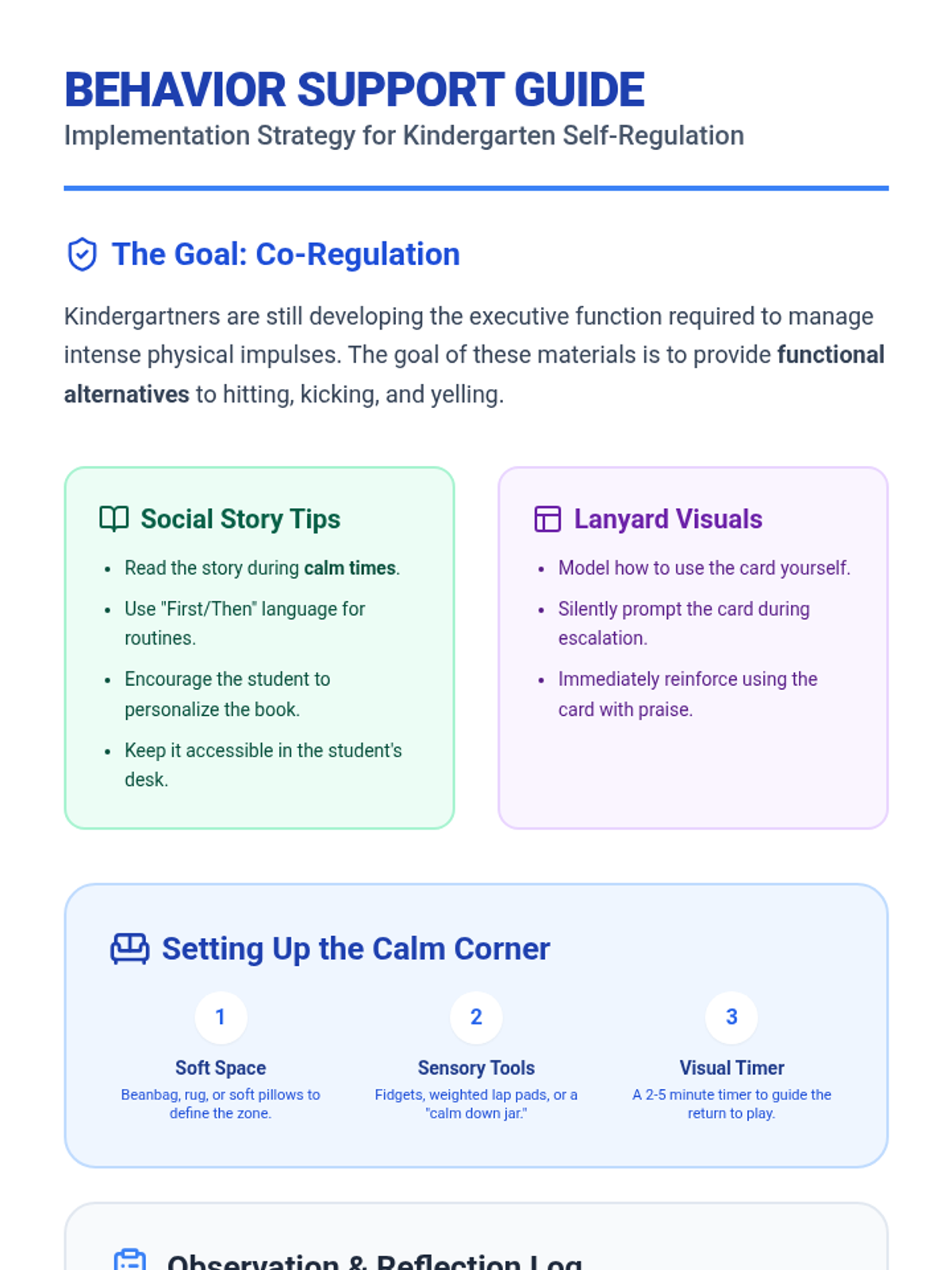
A collection of resources to help a student manage big emotions through a social story, behavior sorting activity, and portable visual supports for self-regulation.
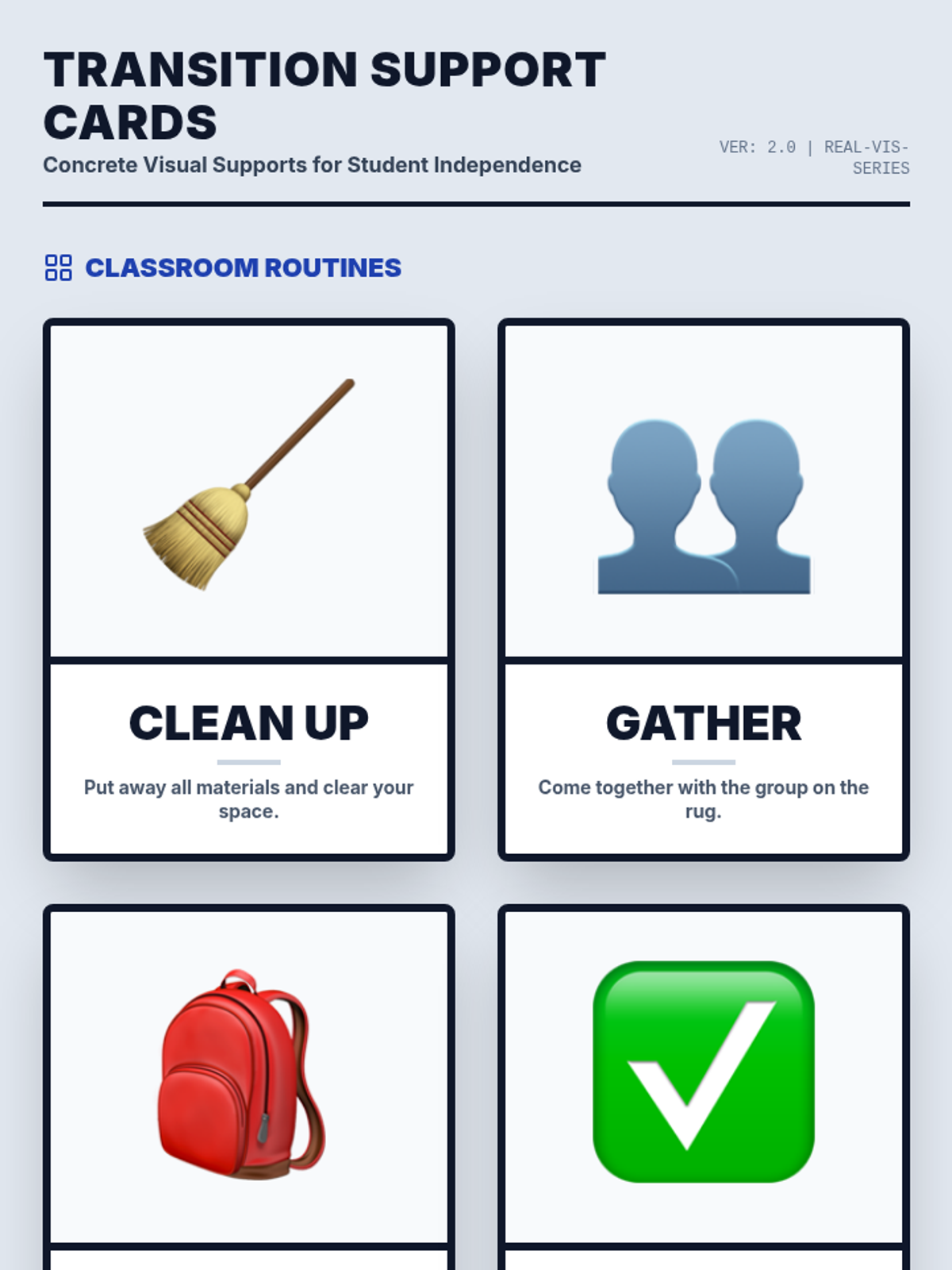
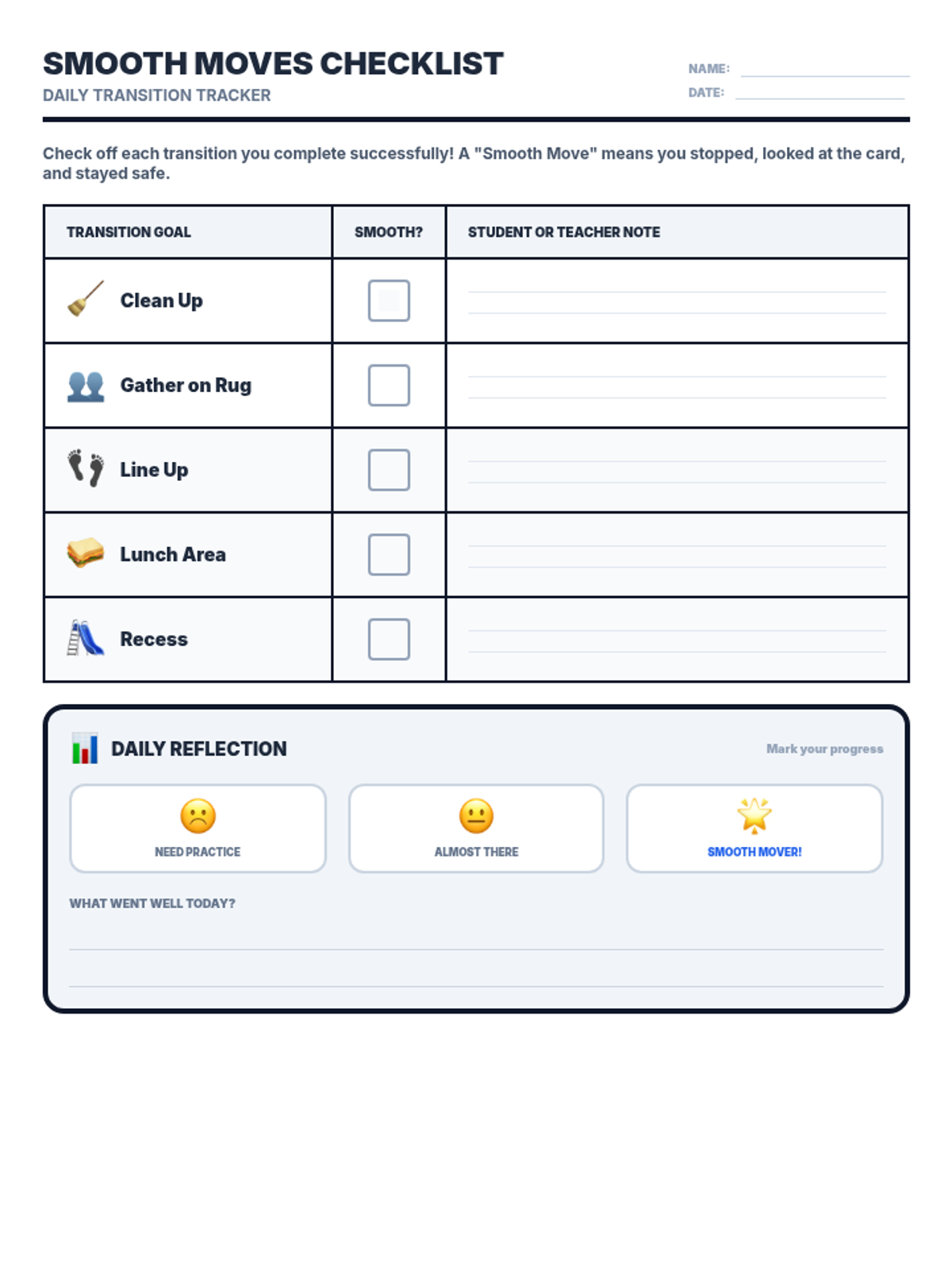
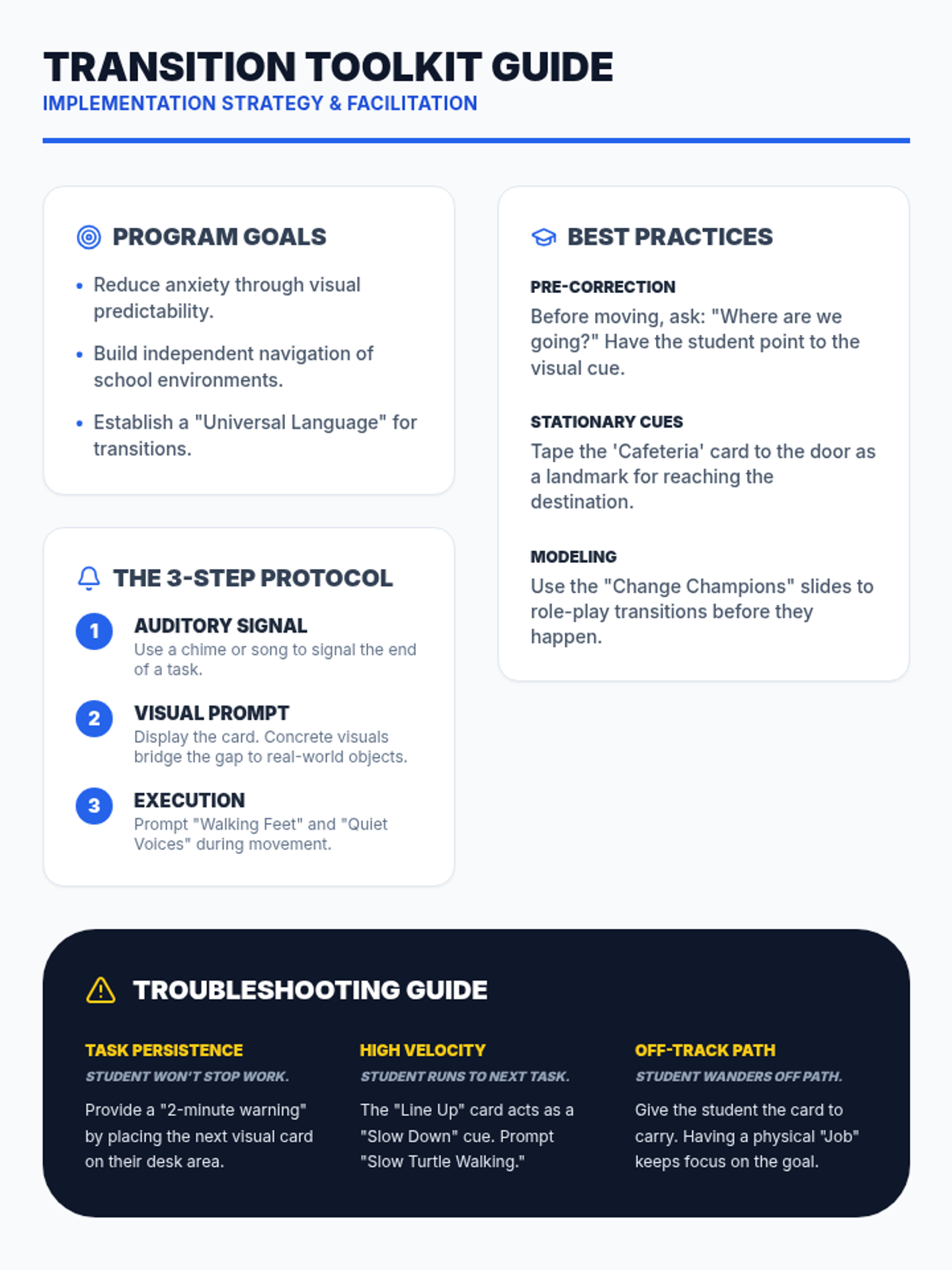
A comprehensive lesson on navigating classroom and school-wide transitions using visual supports. Students learn to recognize and follow visual cues to move smoothly between activities and locations.
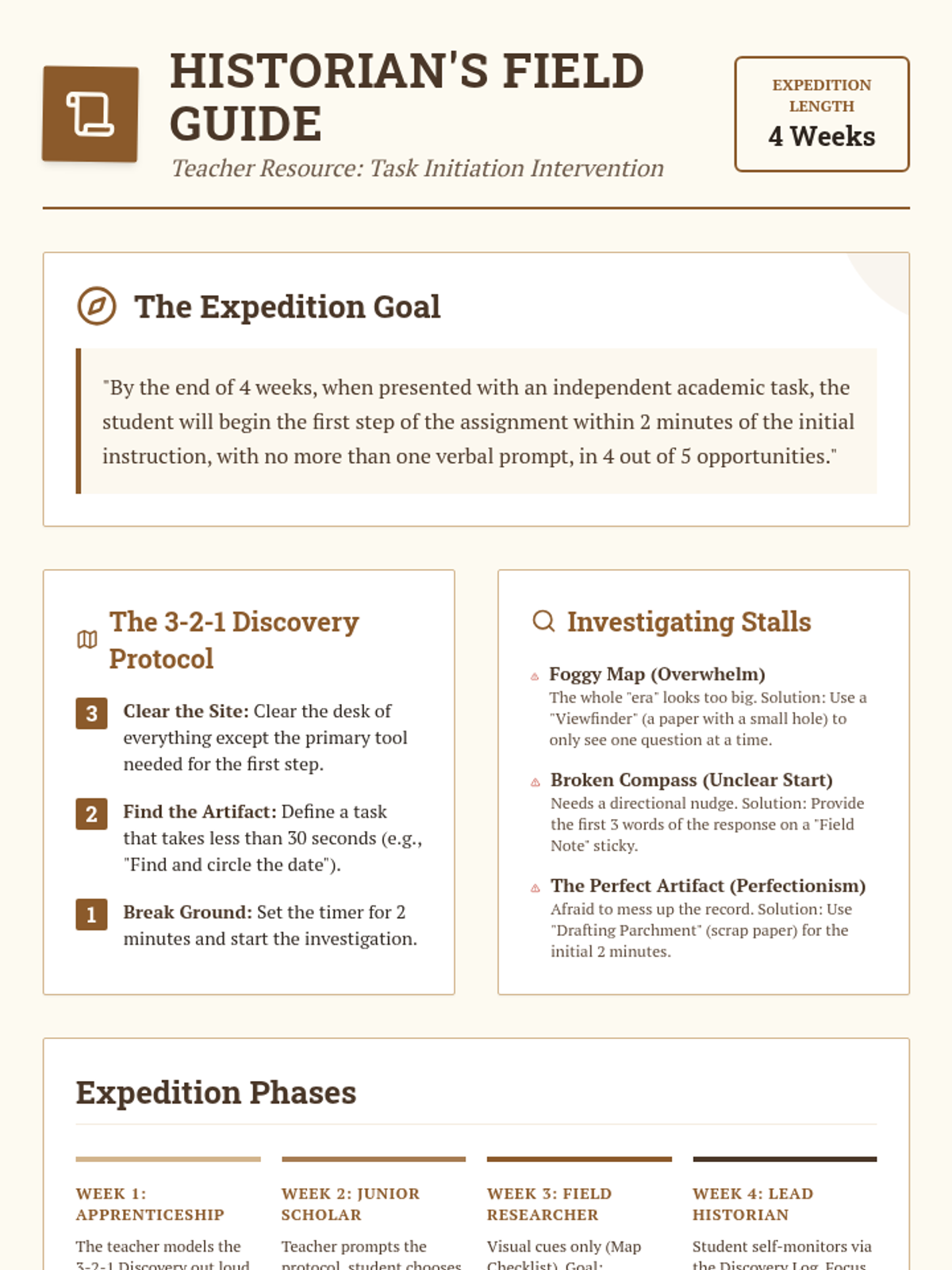
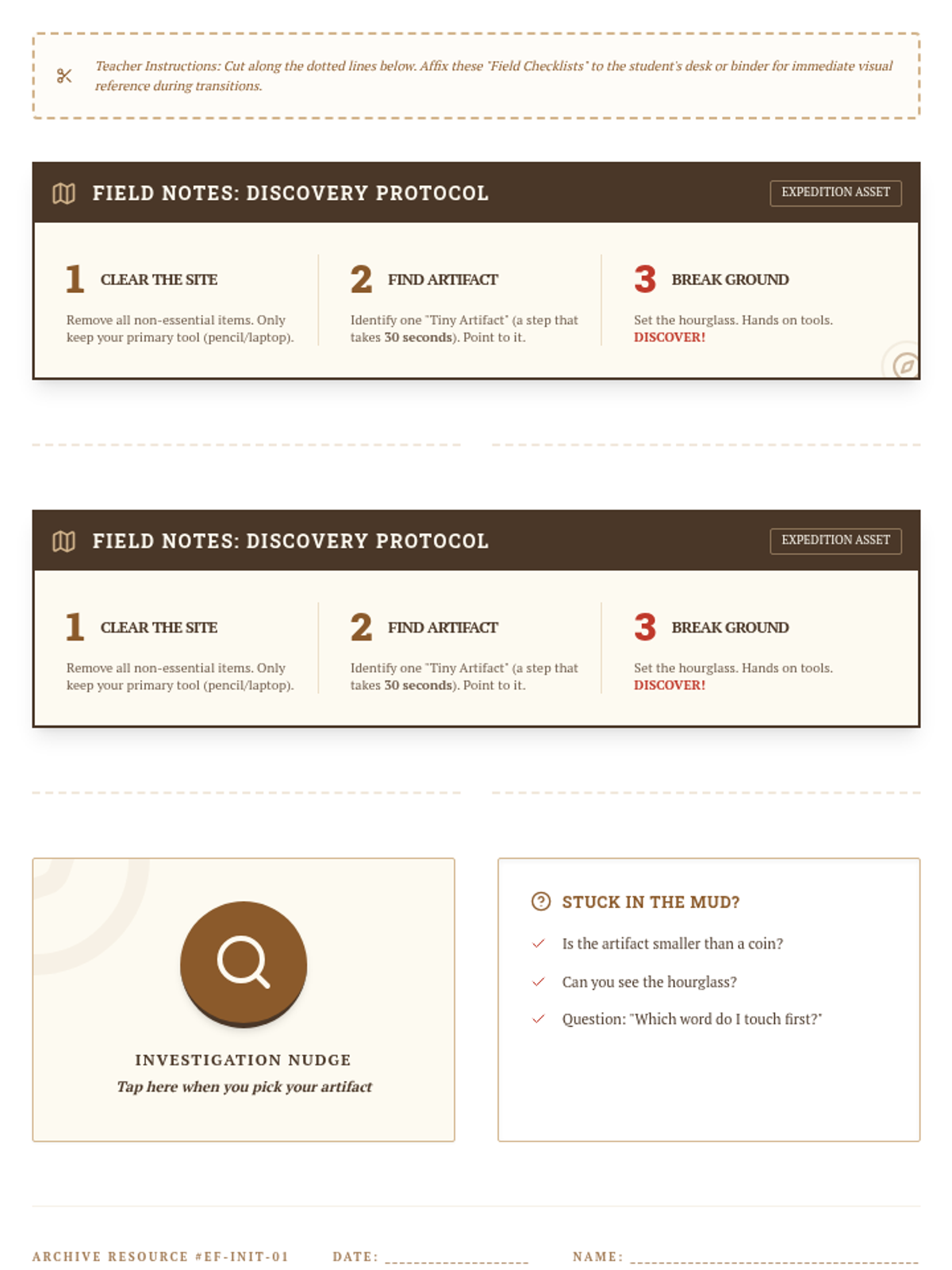
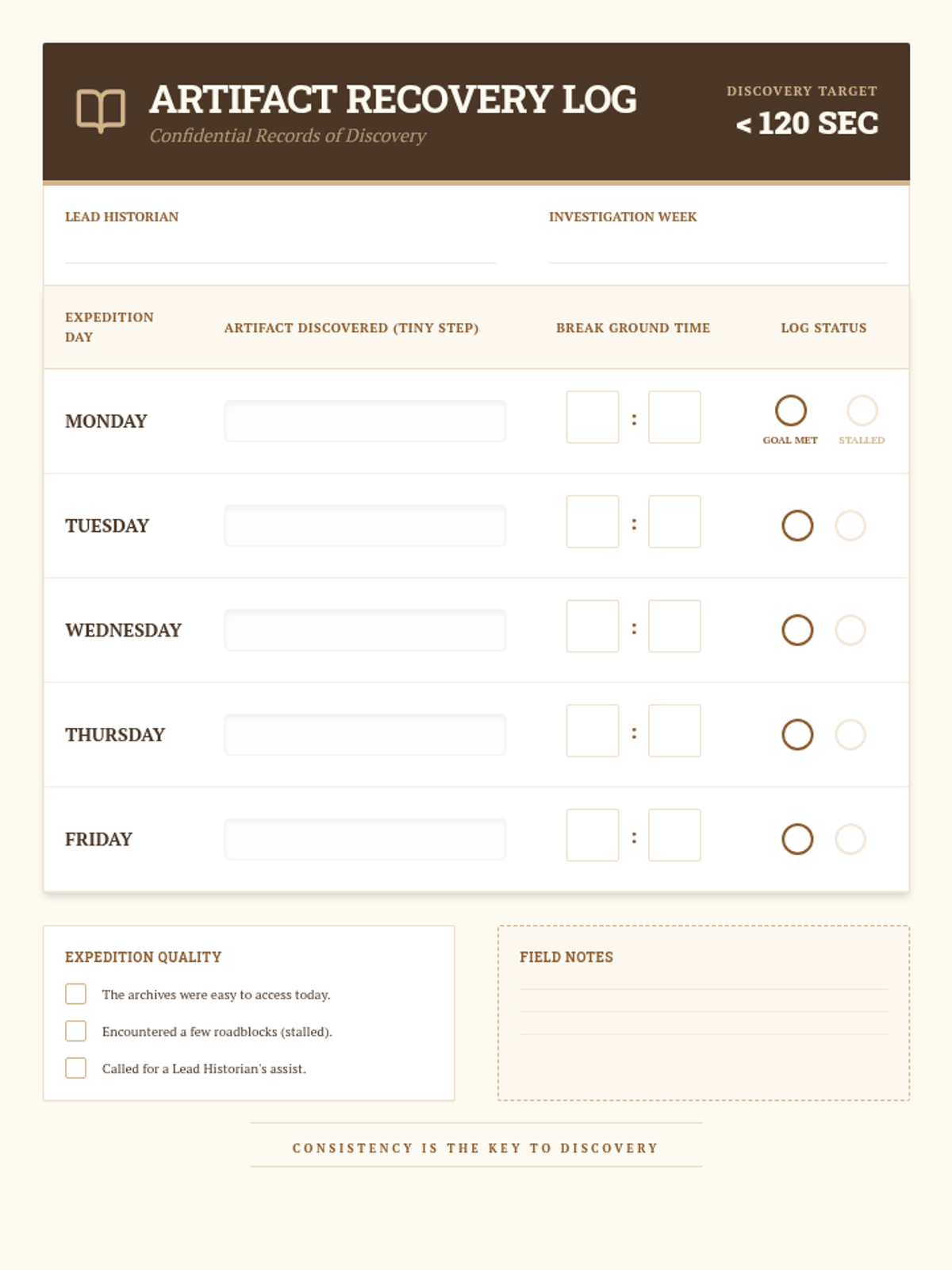
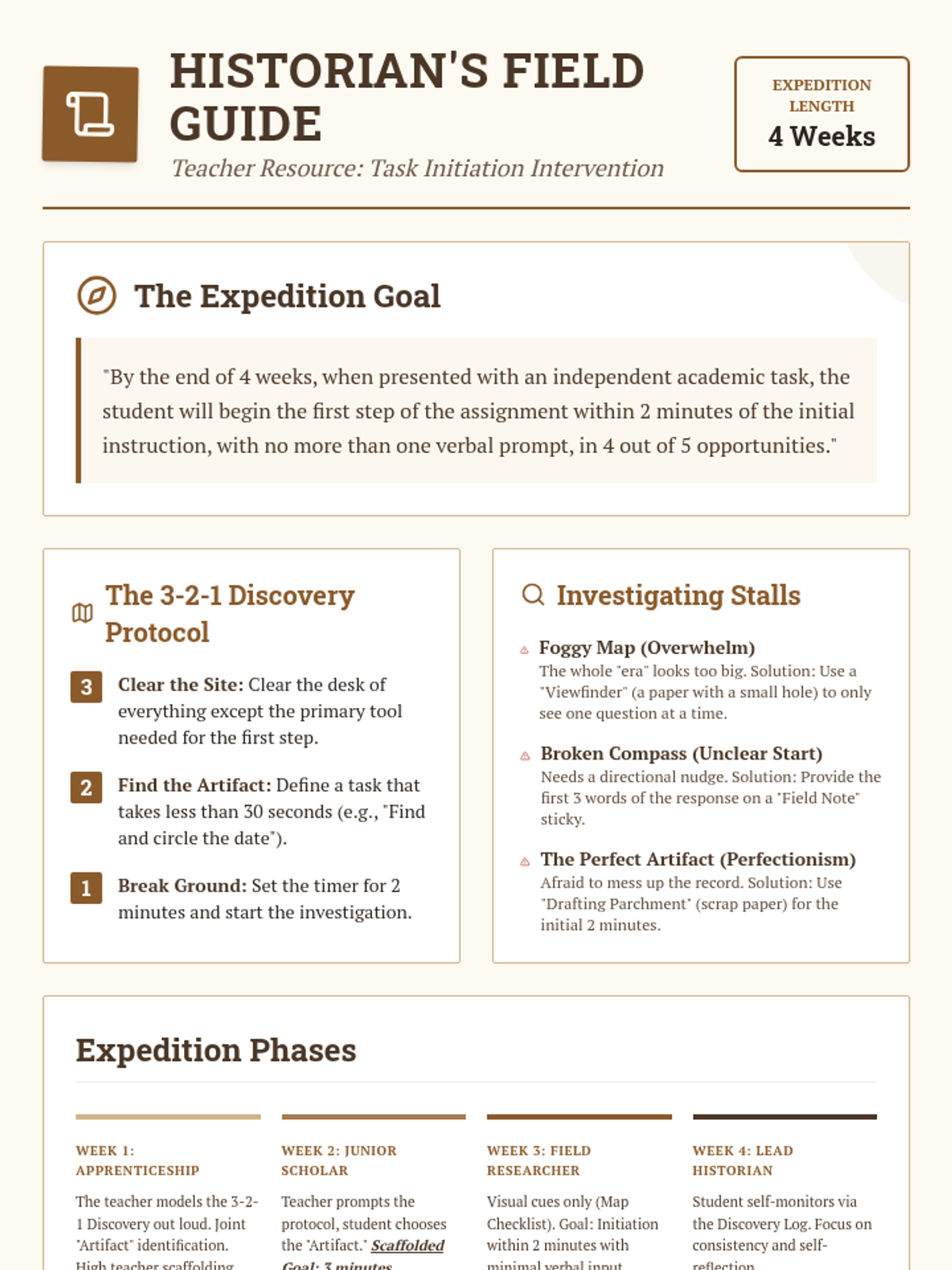
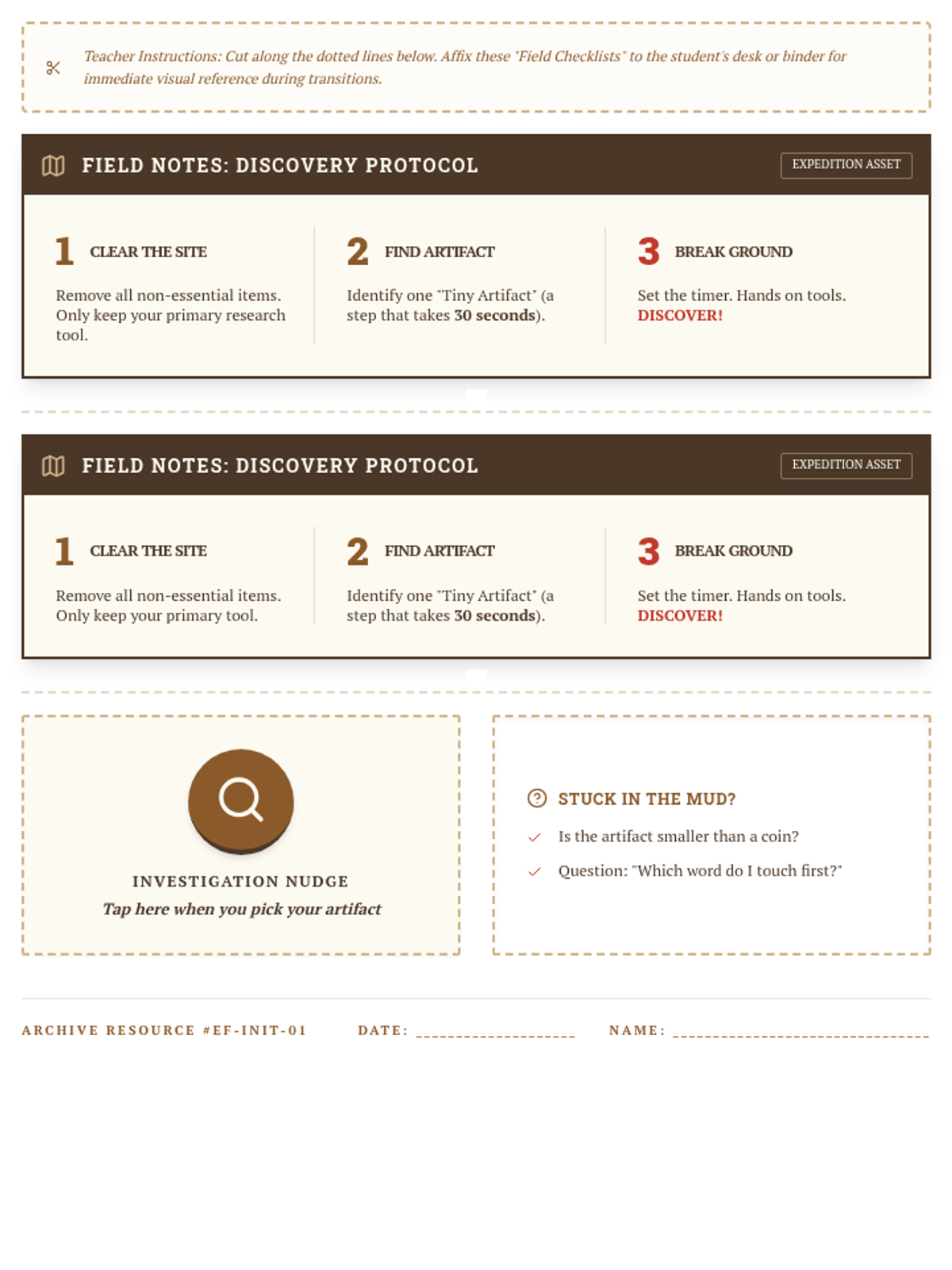
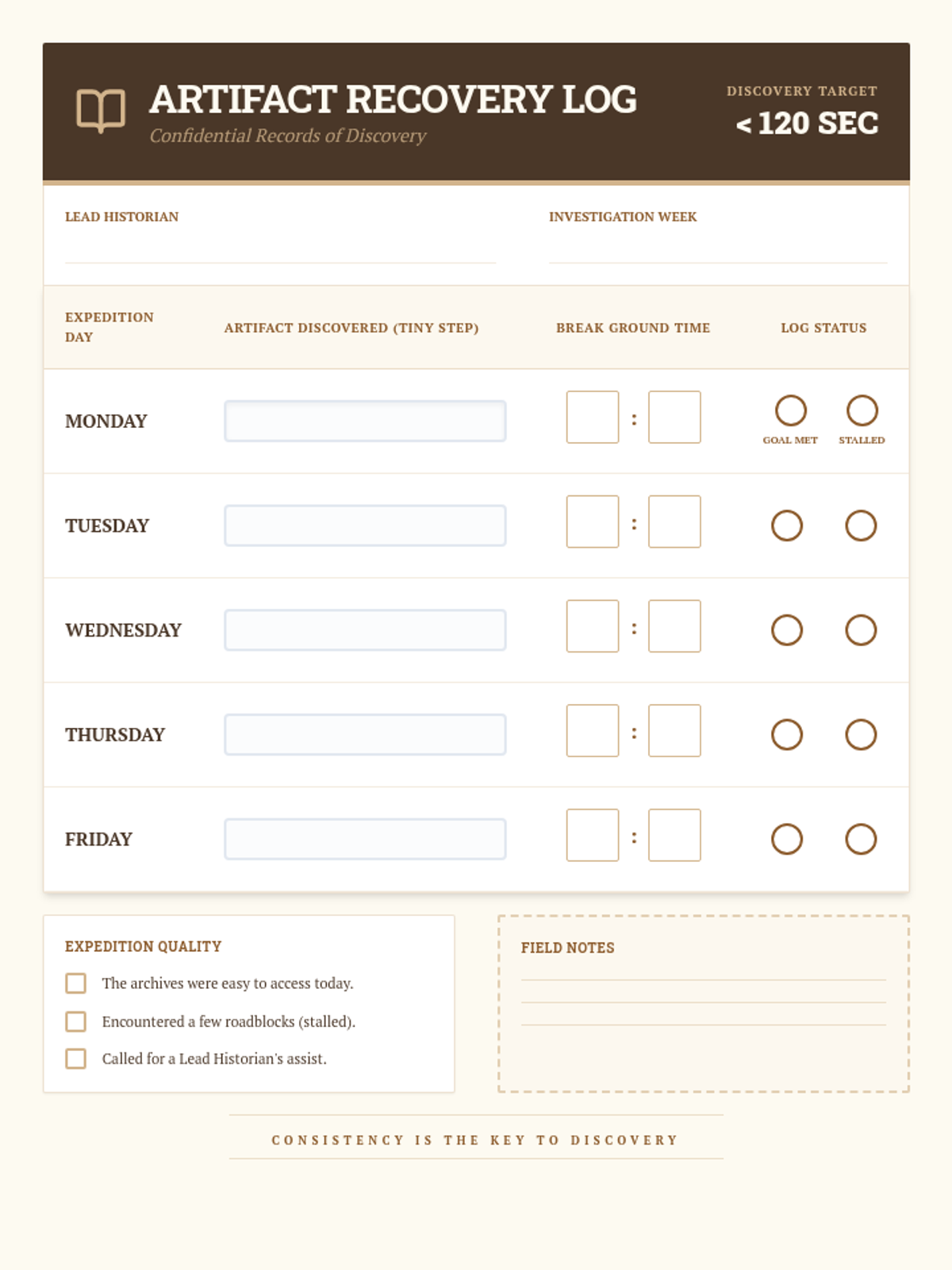
A focused 4-week history-themed intervention designed to help students overcome the 'blank page' hurdle by mastering task initiation through a structured 3-2-1 'Discovery Protocol'.
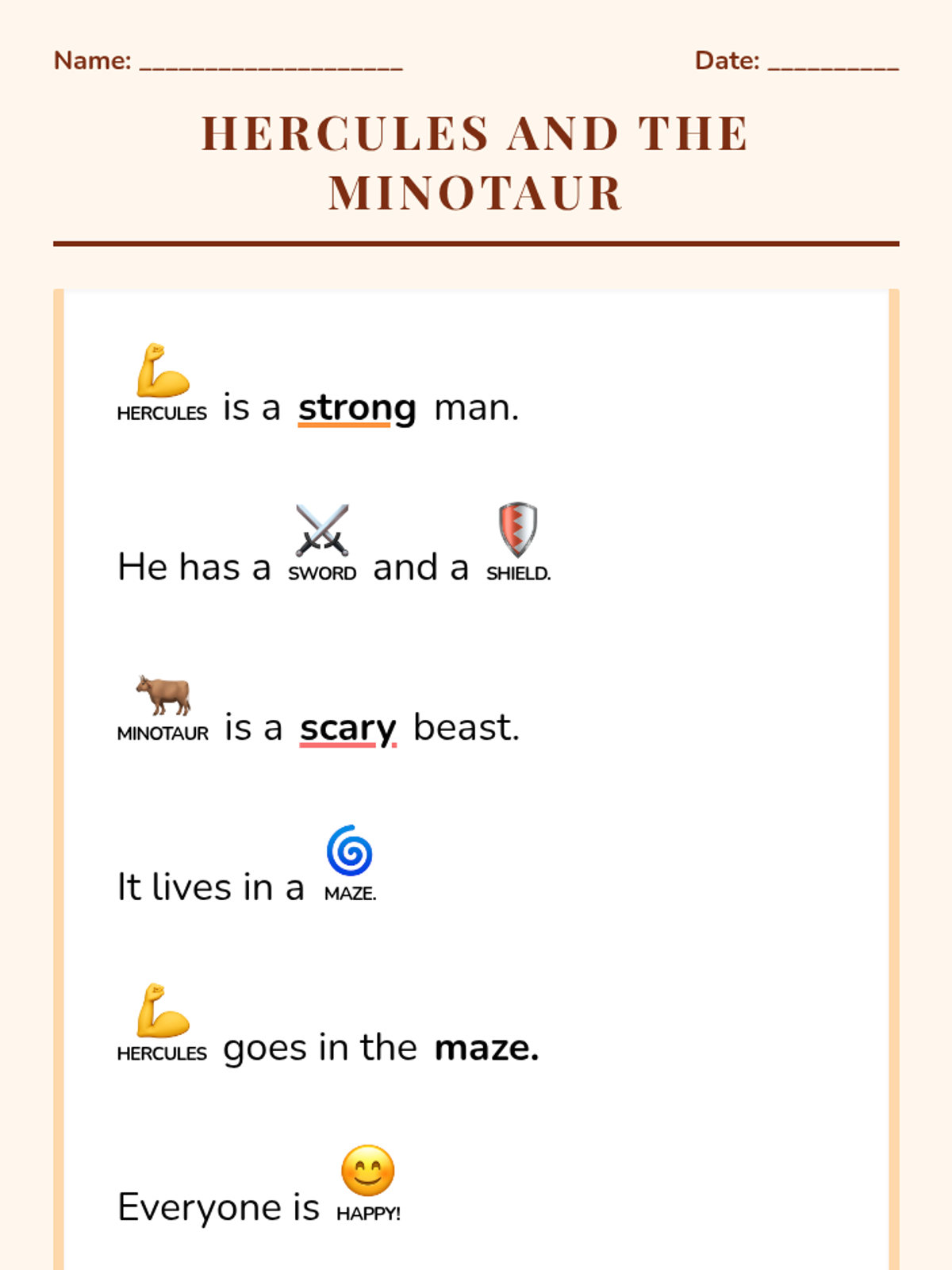
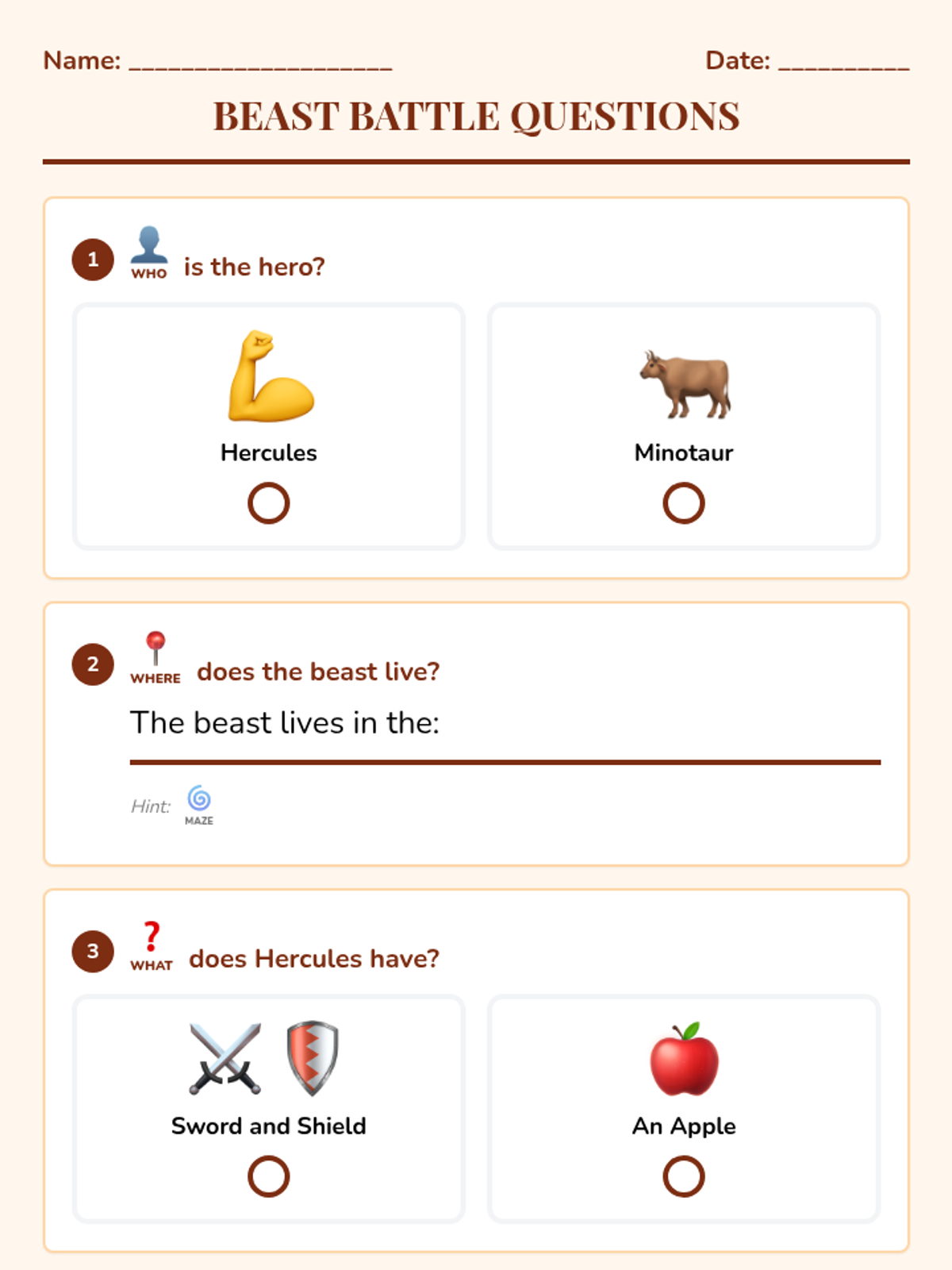
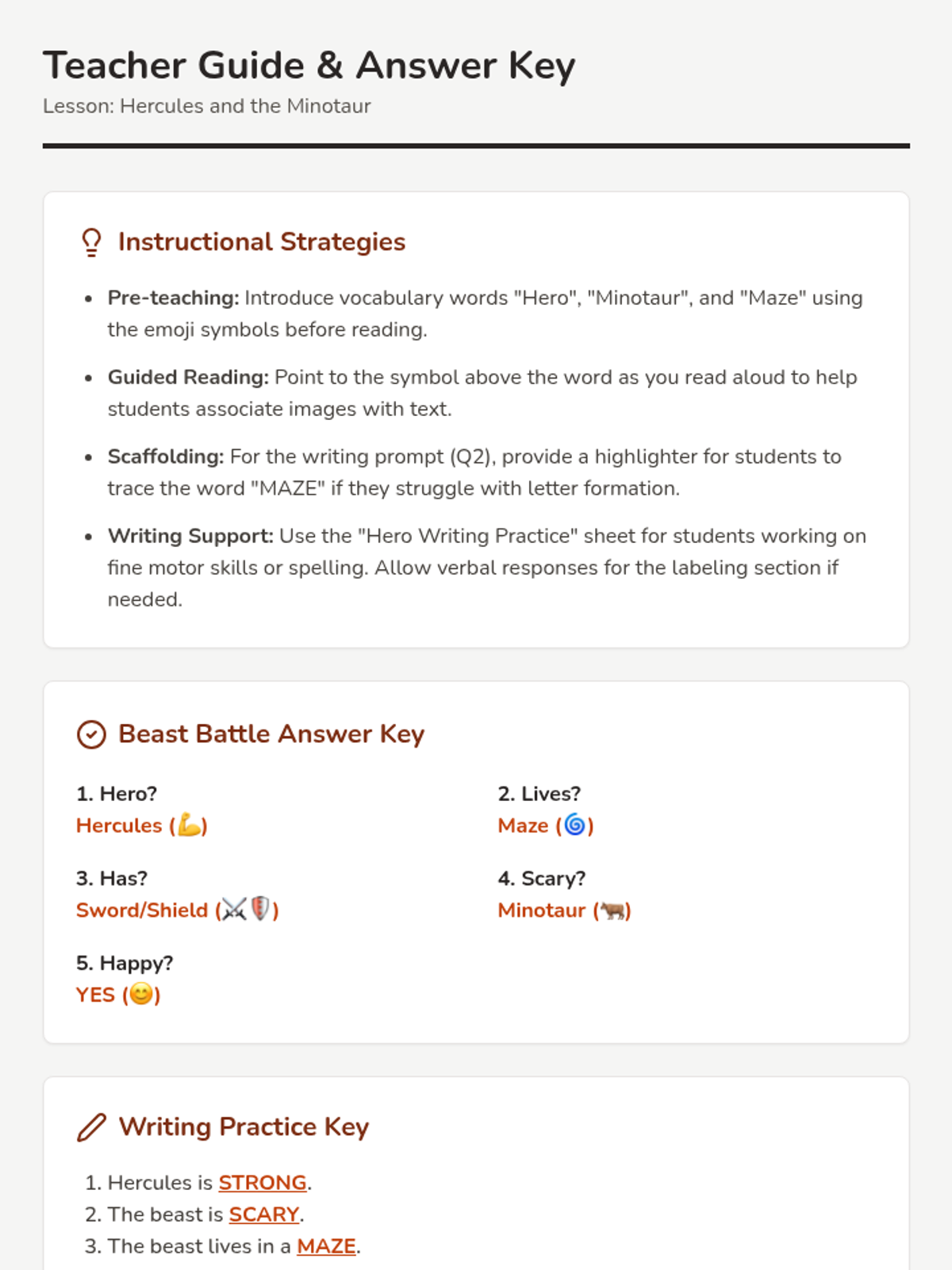
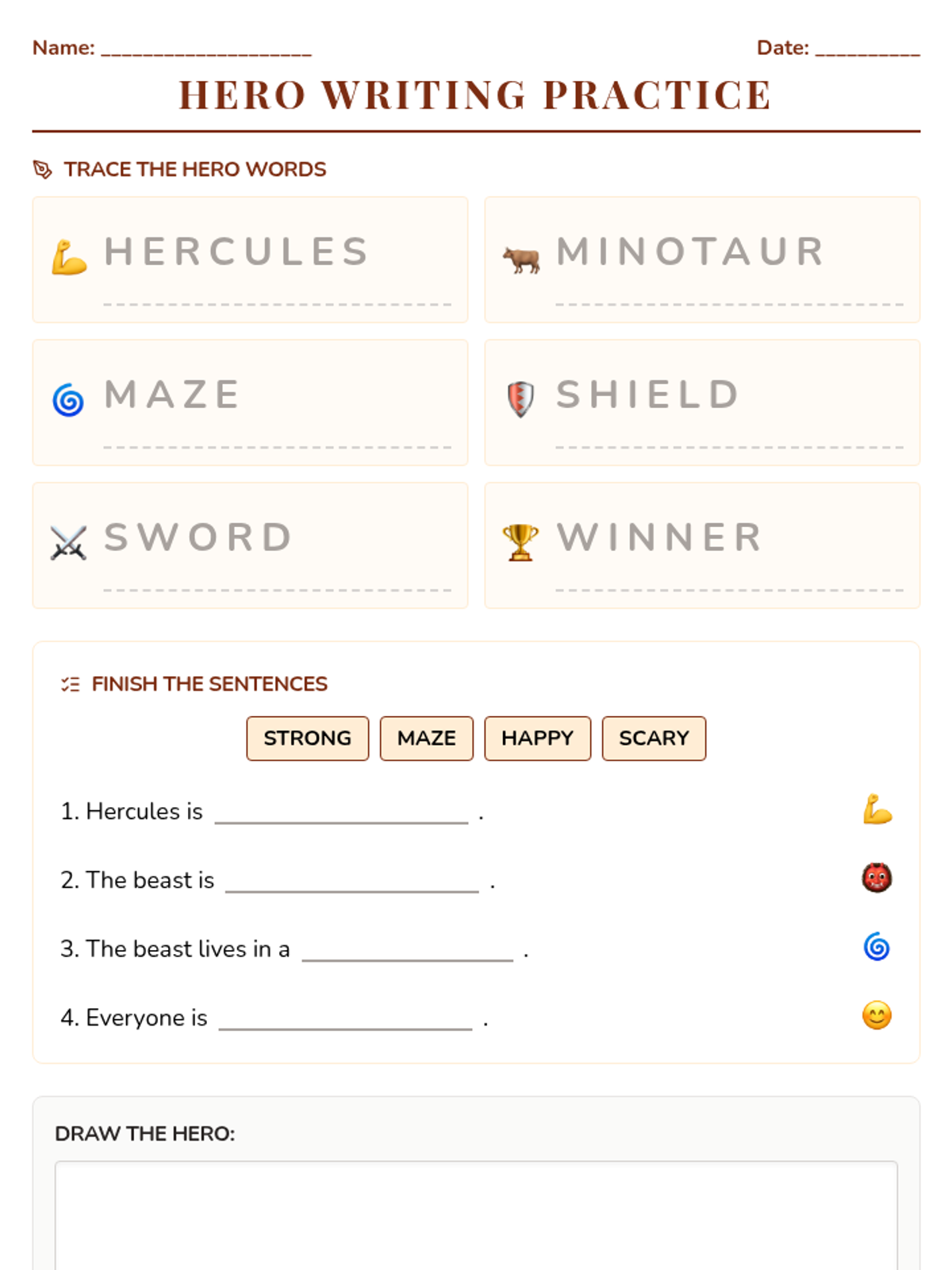
A focused lesson on the story of Hercules and the Minotaur, using simplified language and visual supports to build reading confidence and narrative understanding.
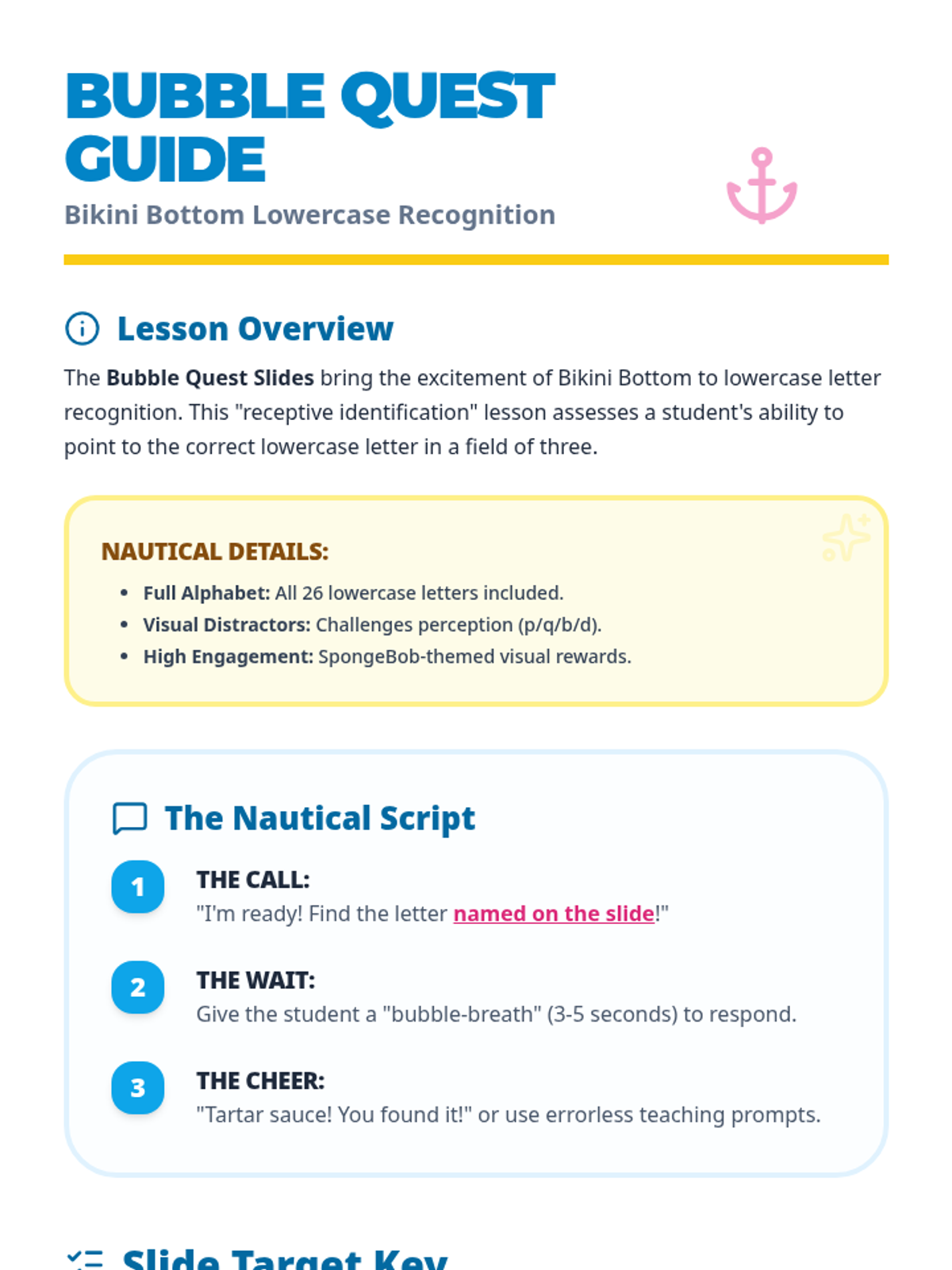
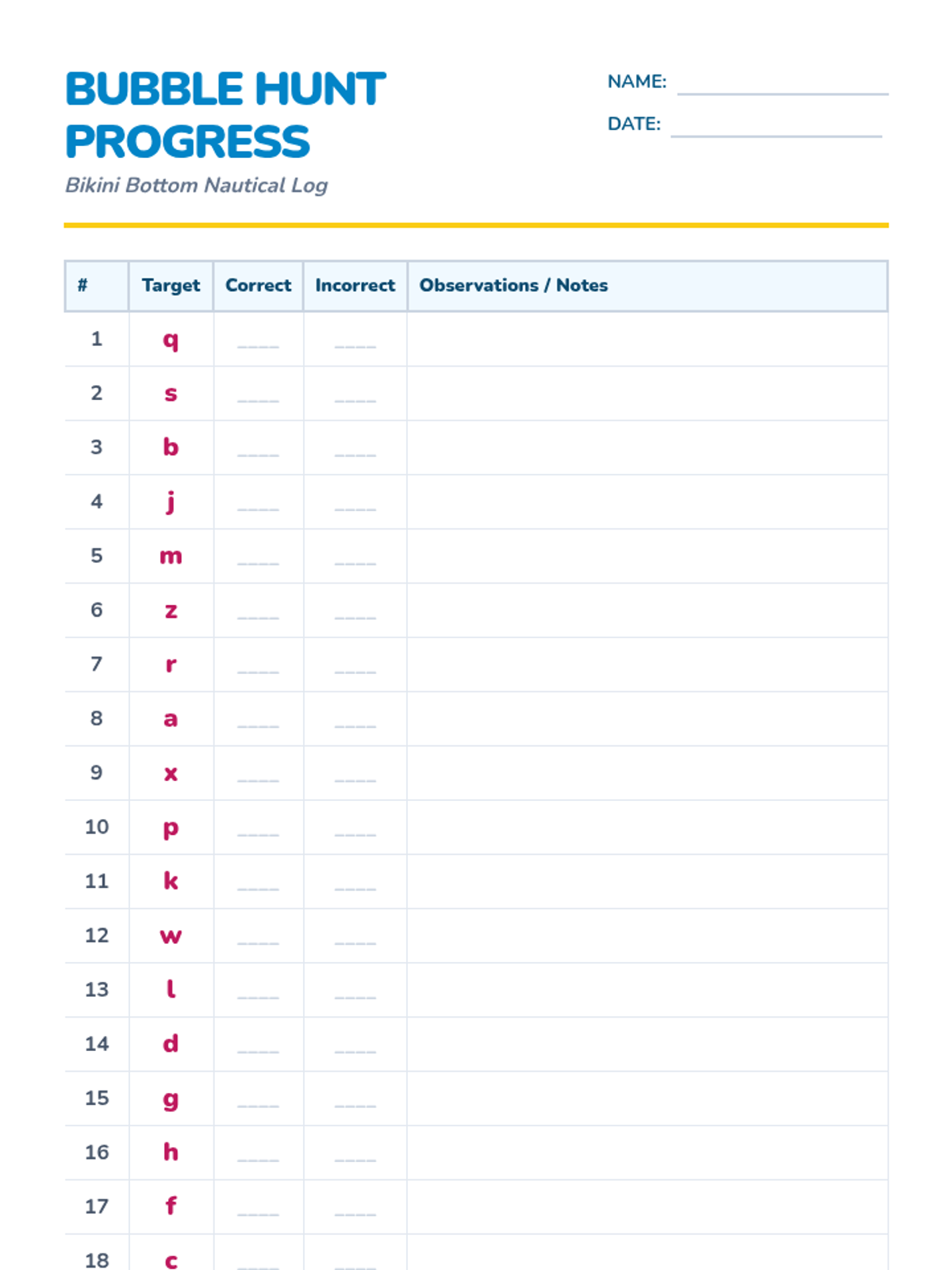
A nautical adventure designed to assess and practice lowercase letter recognition through receptive choice tasks. Set in Bikini Bottom, students find target letters among bubbles.
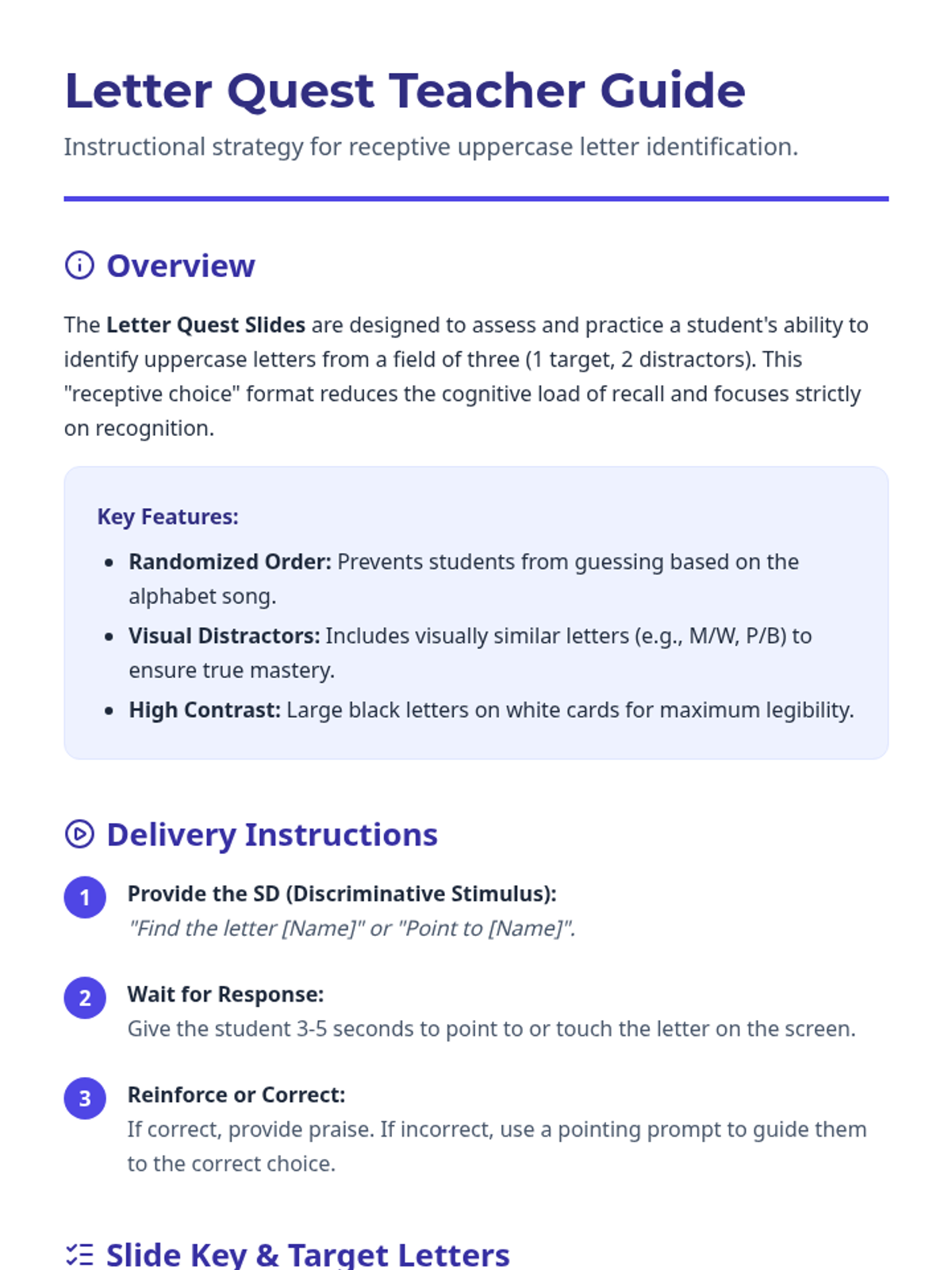
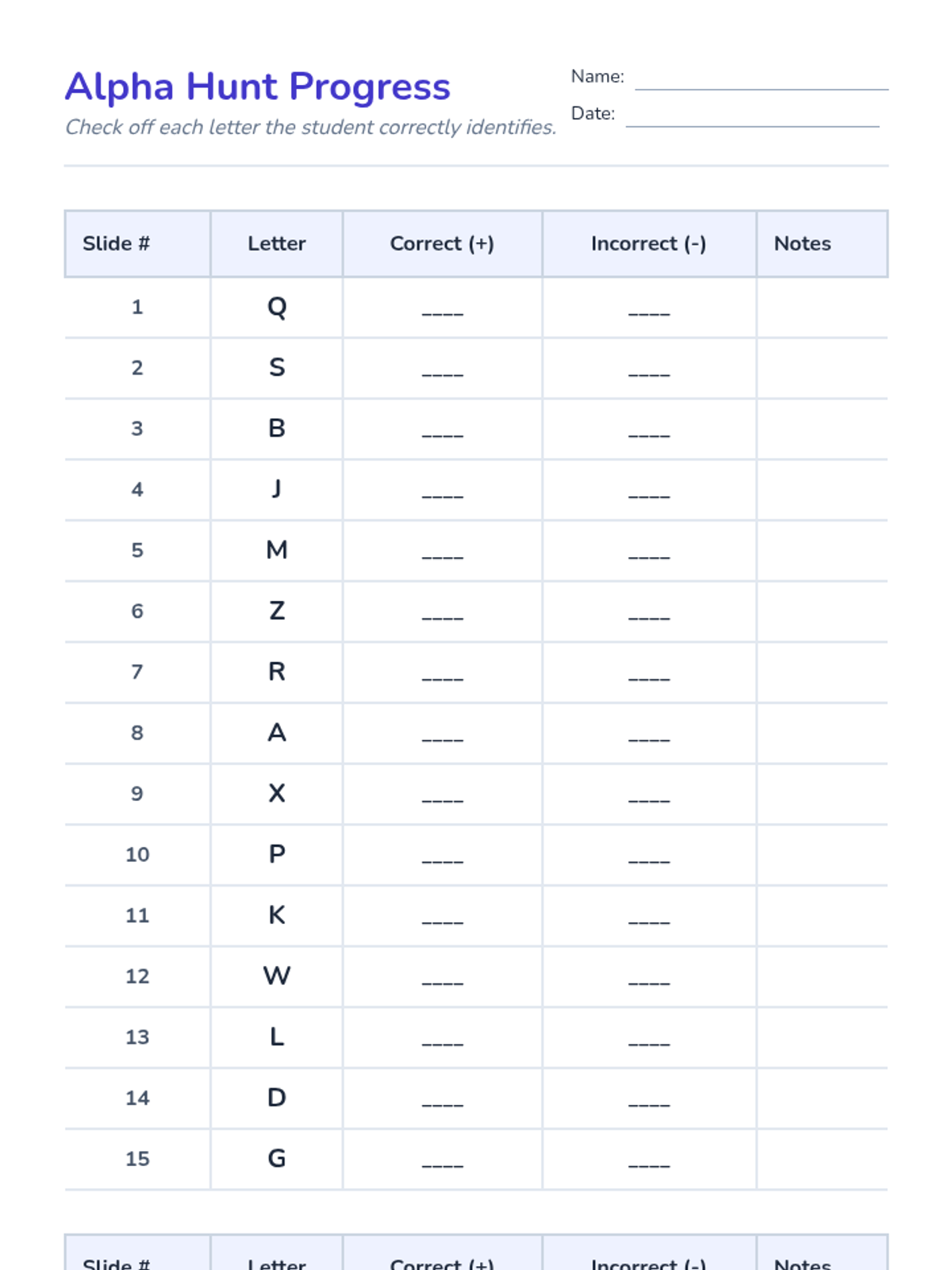
A fun, interactive lesson designed to assess and practice uppercase letter recognition through receptive choice tasks. Students identify target letters from a field of three in a randomized order.
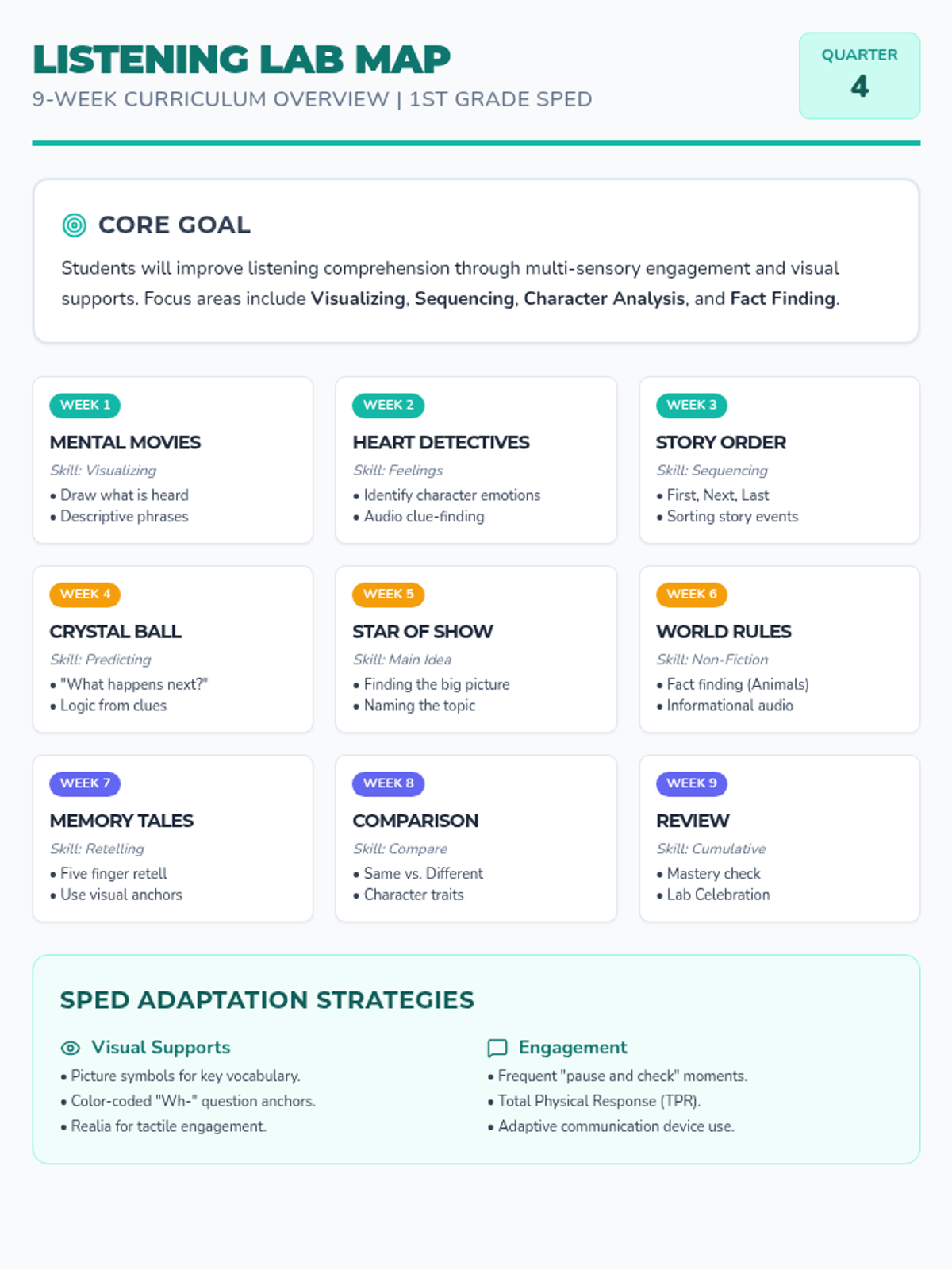
Cumulative review and final assessment of listening comprehension skills.
Comparing two stories or characters based on listening.
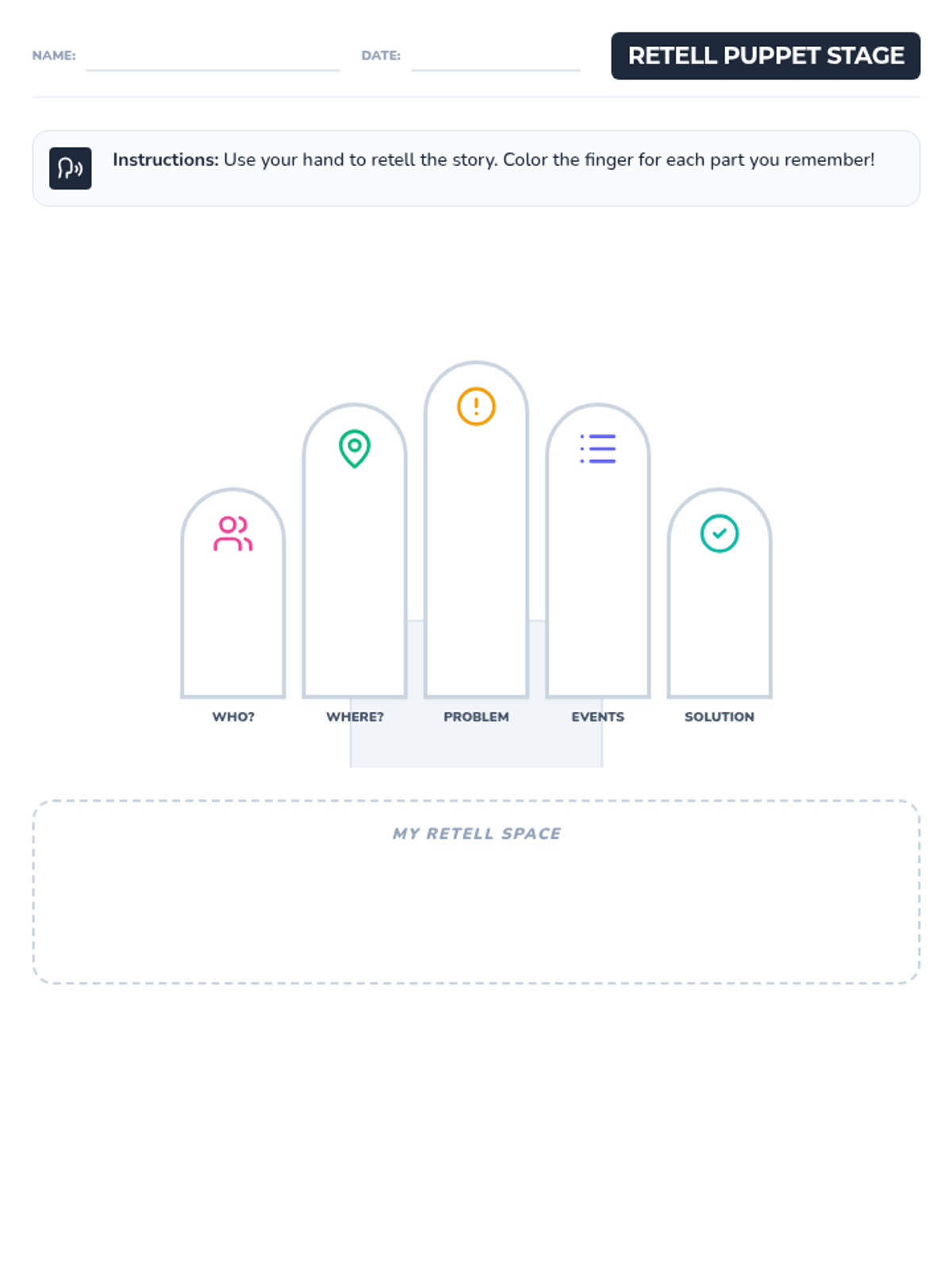
Practicing oral retelling using key story elements and visual prompts.
Listening for facts and information in non-fiction texts.
Identifying the central topic and supporting details in short listening passages.
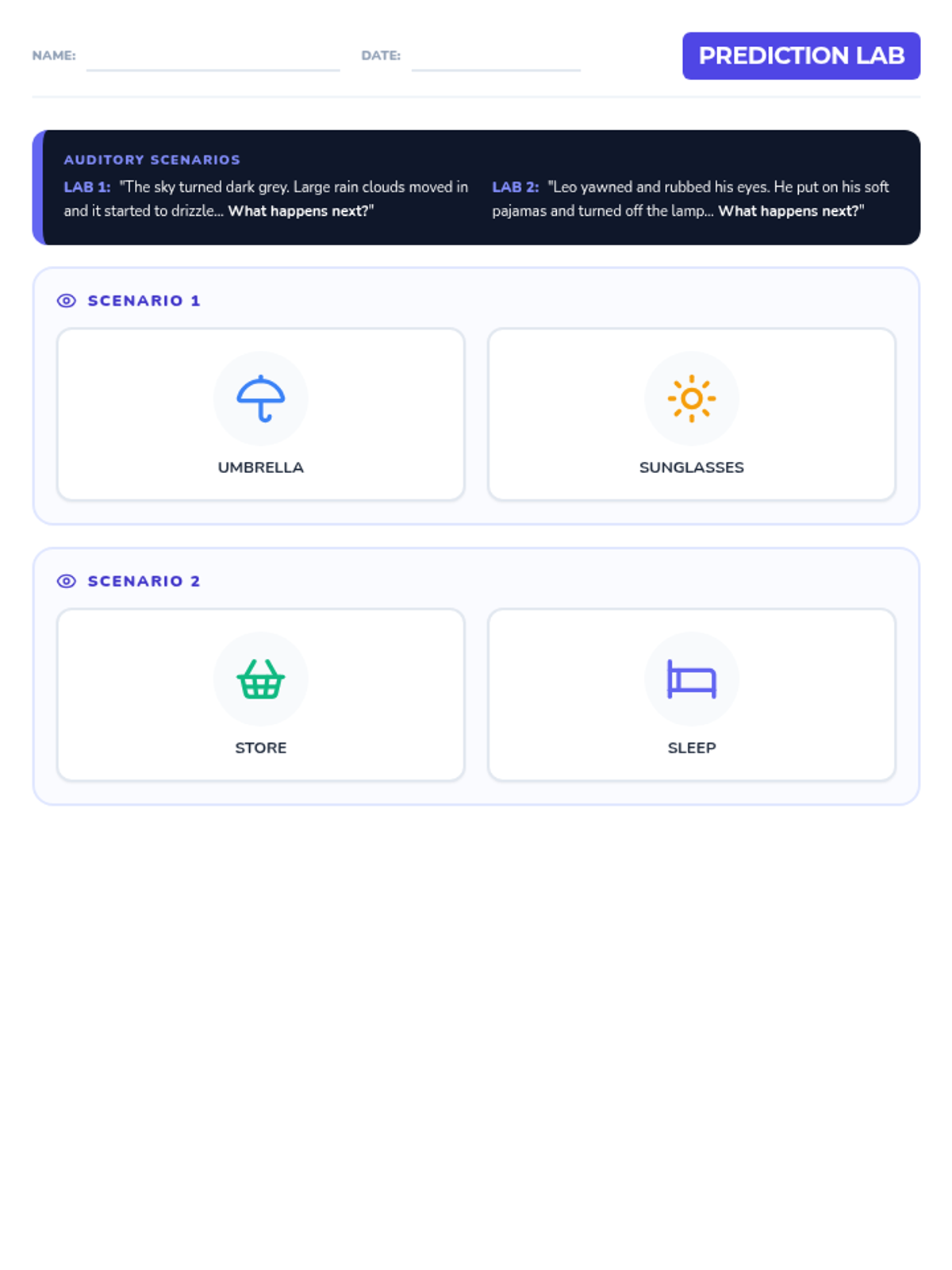
Using clues from the text to guess what might happen next.
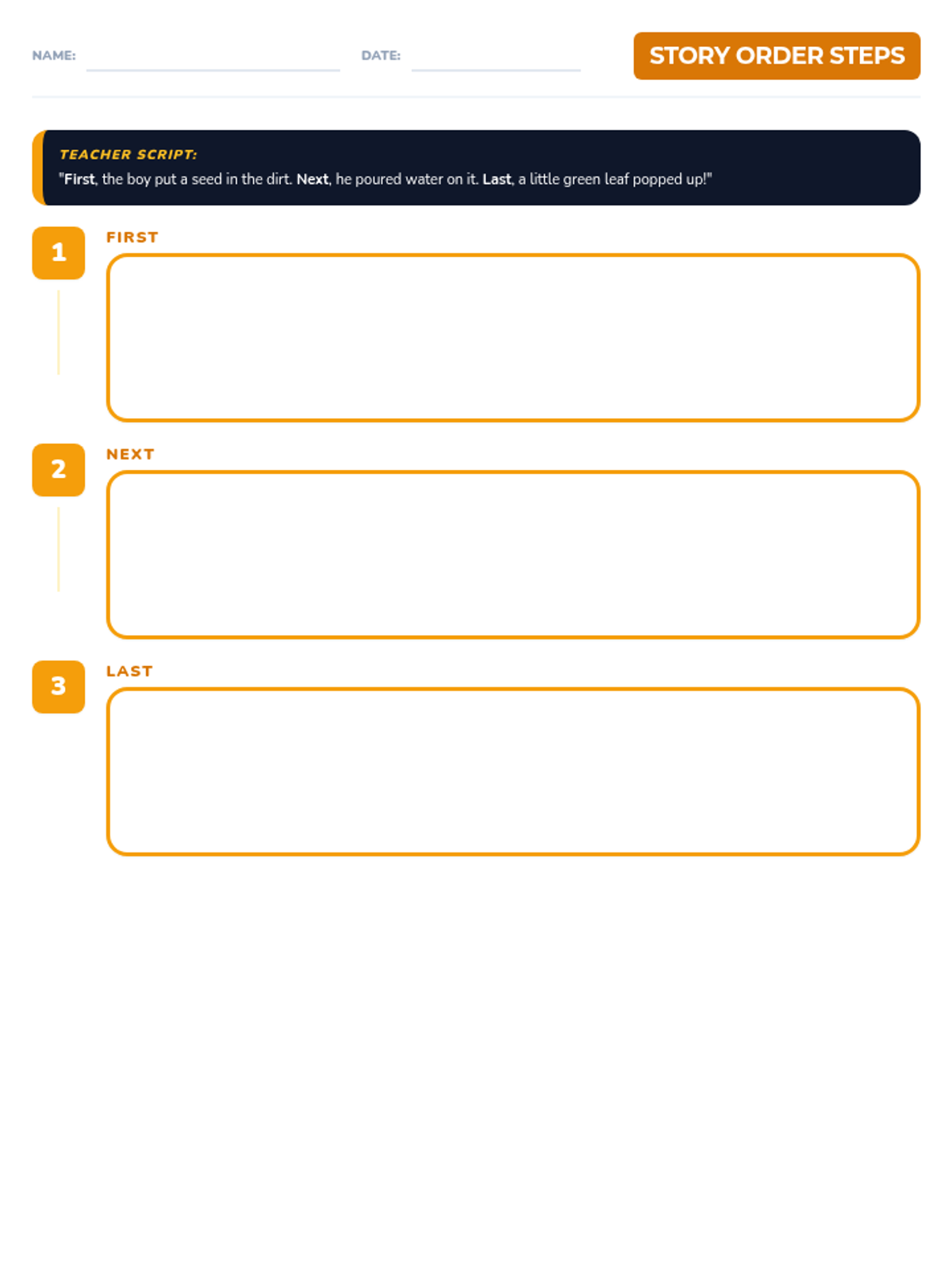
Understanding and ordering the beginning, middle, and end of stories.
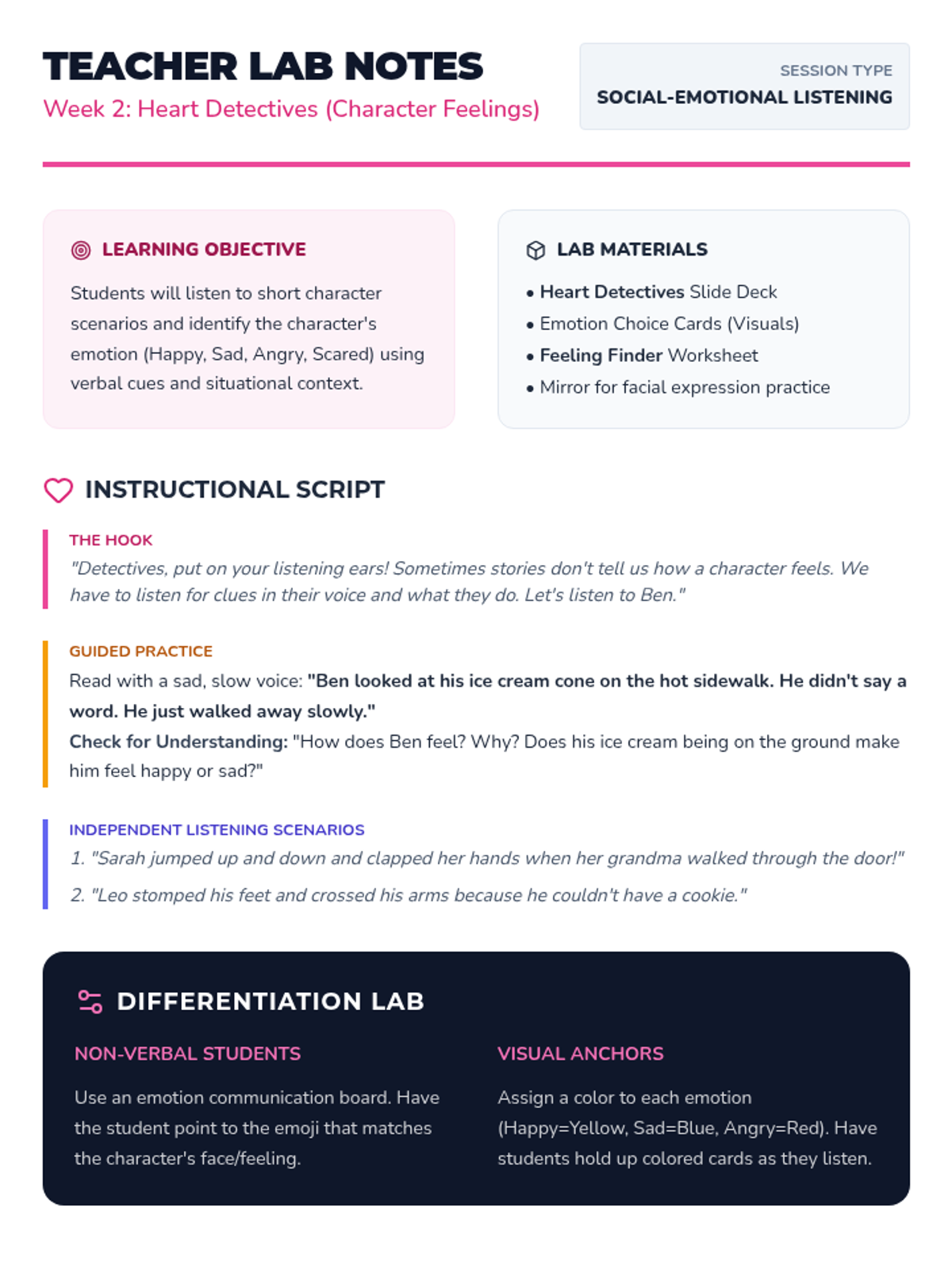
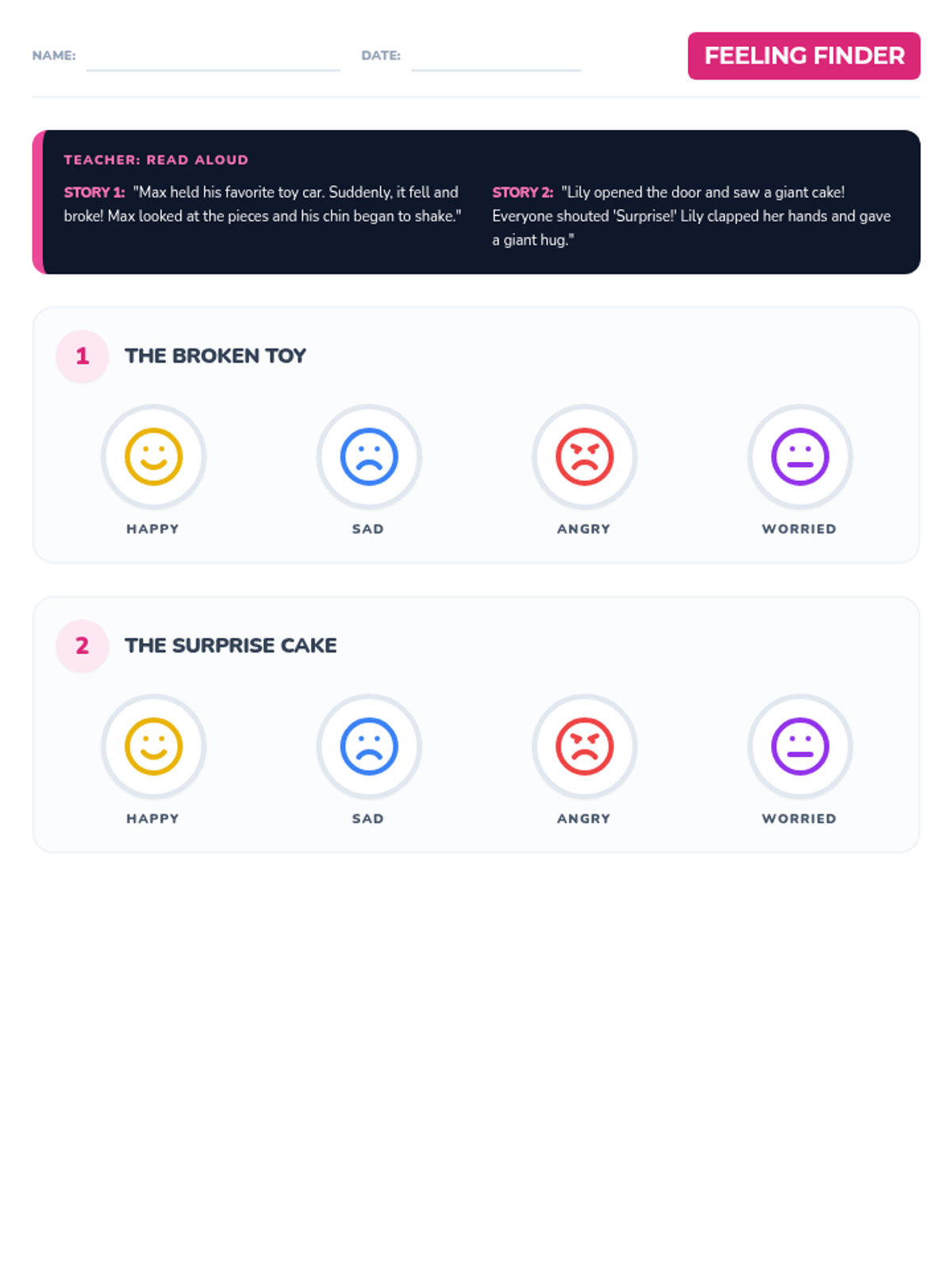
Identifying and describing how characters feel based on verbal cues and story events.
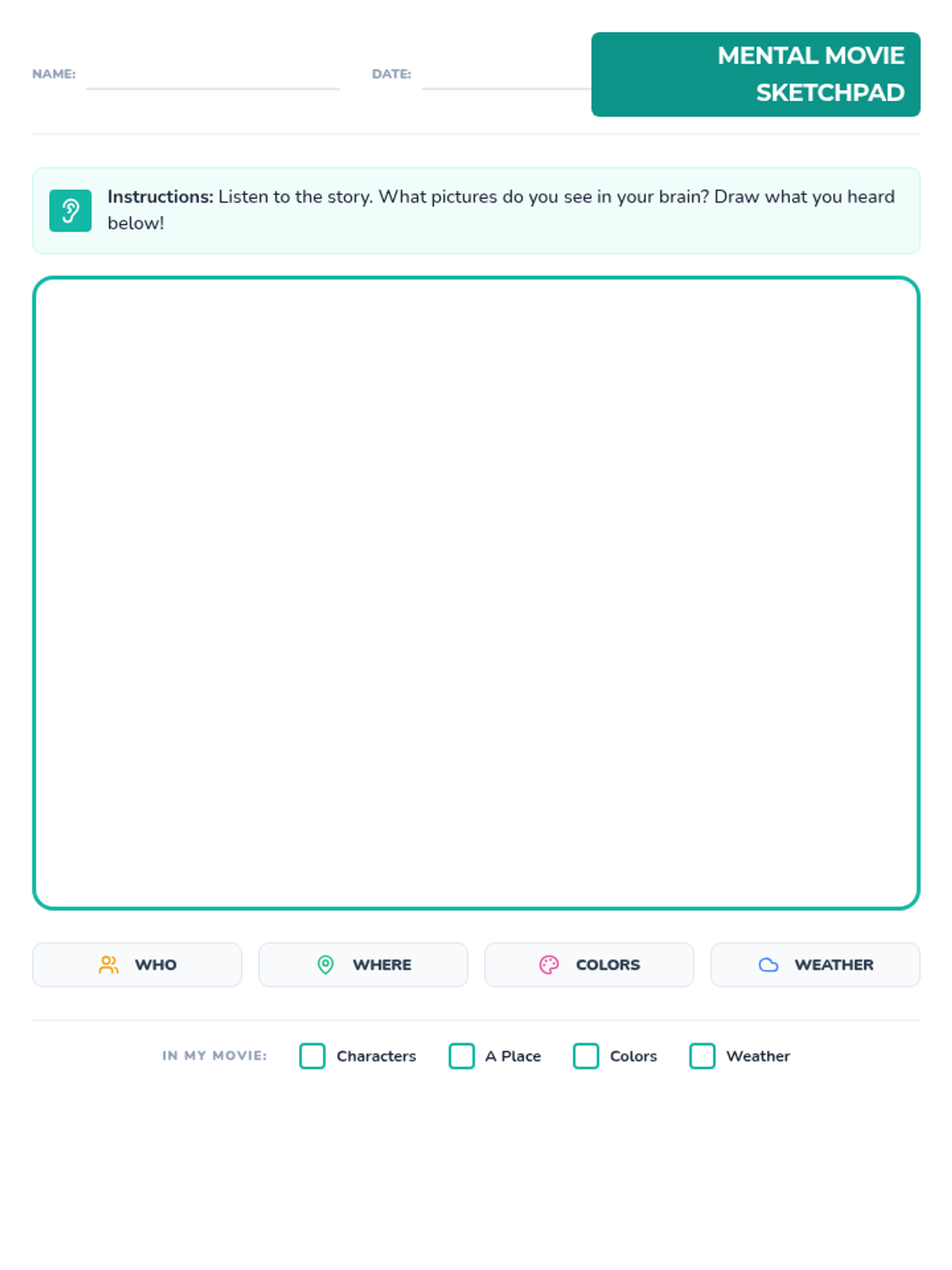
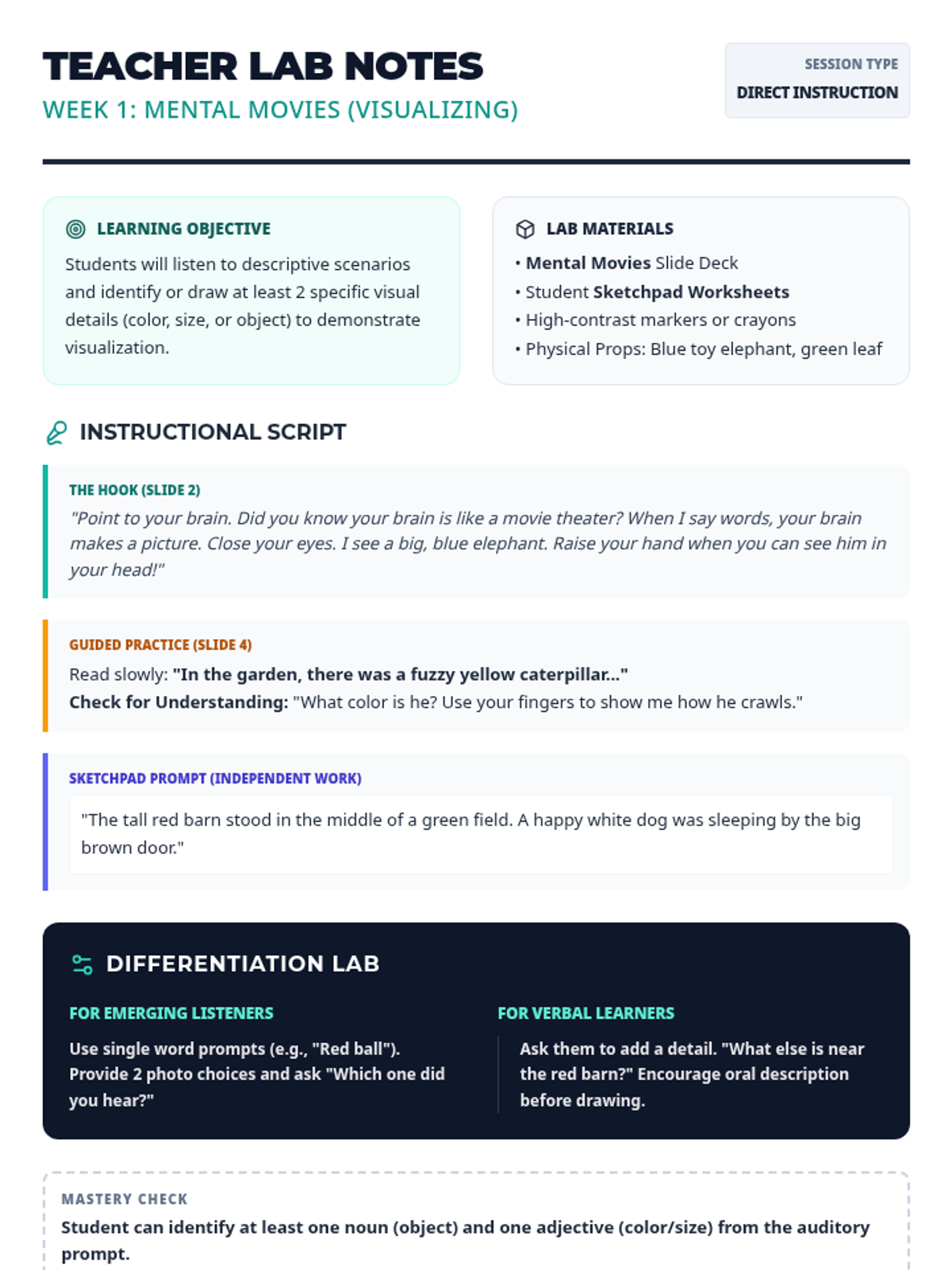
Focus on creating mental images from oral descriptions and stories.
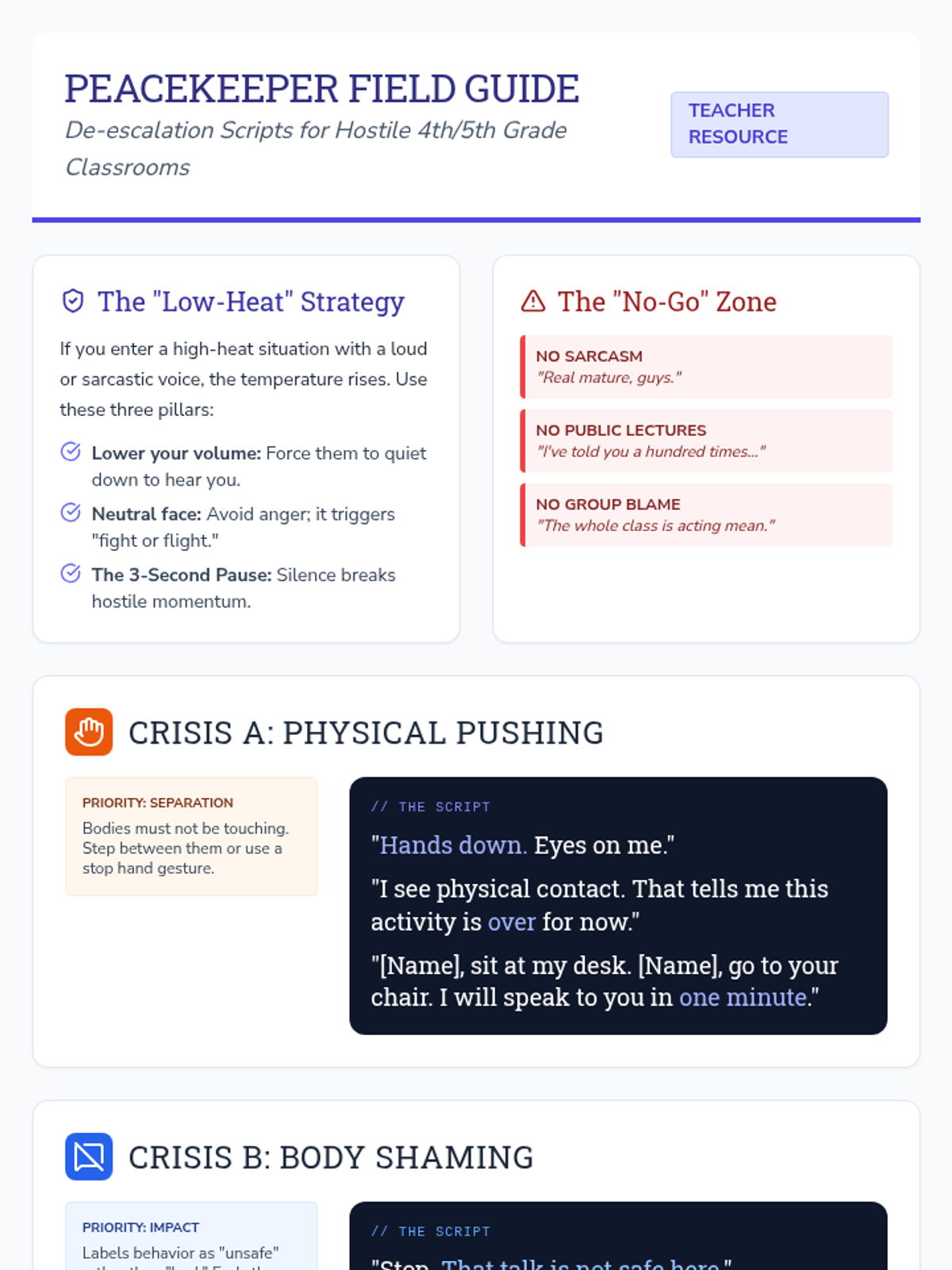
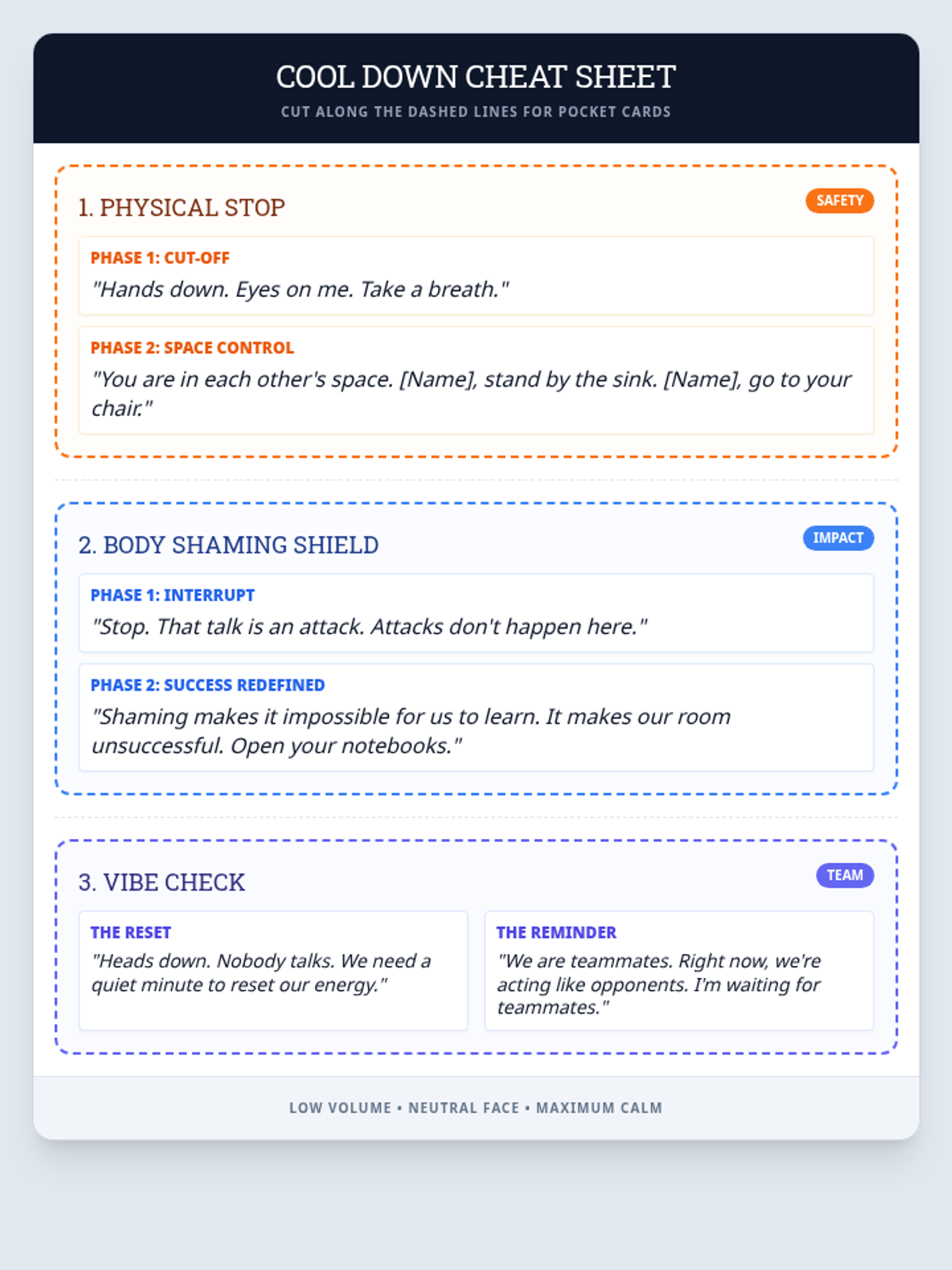
A guide for educators to manage physical aggression and body shaming in the classroom with immediate, de-escalating scripts. This lesson provides the tools to stop hostile behavior without escalating the conflict.
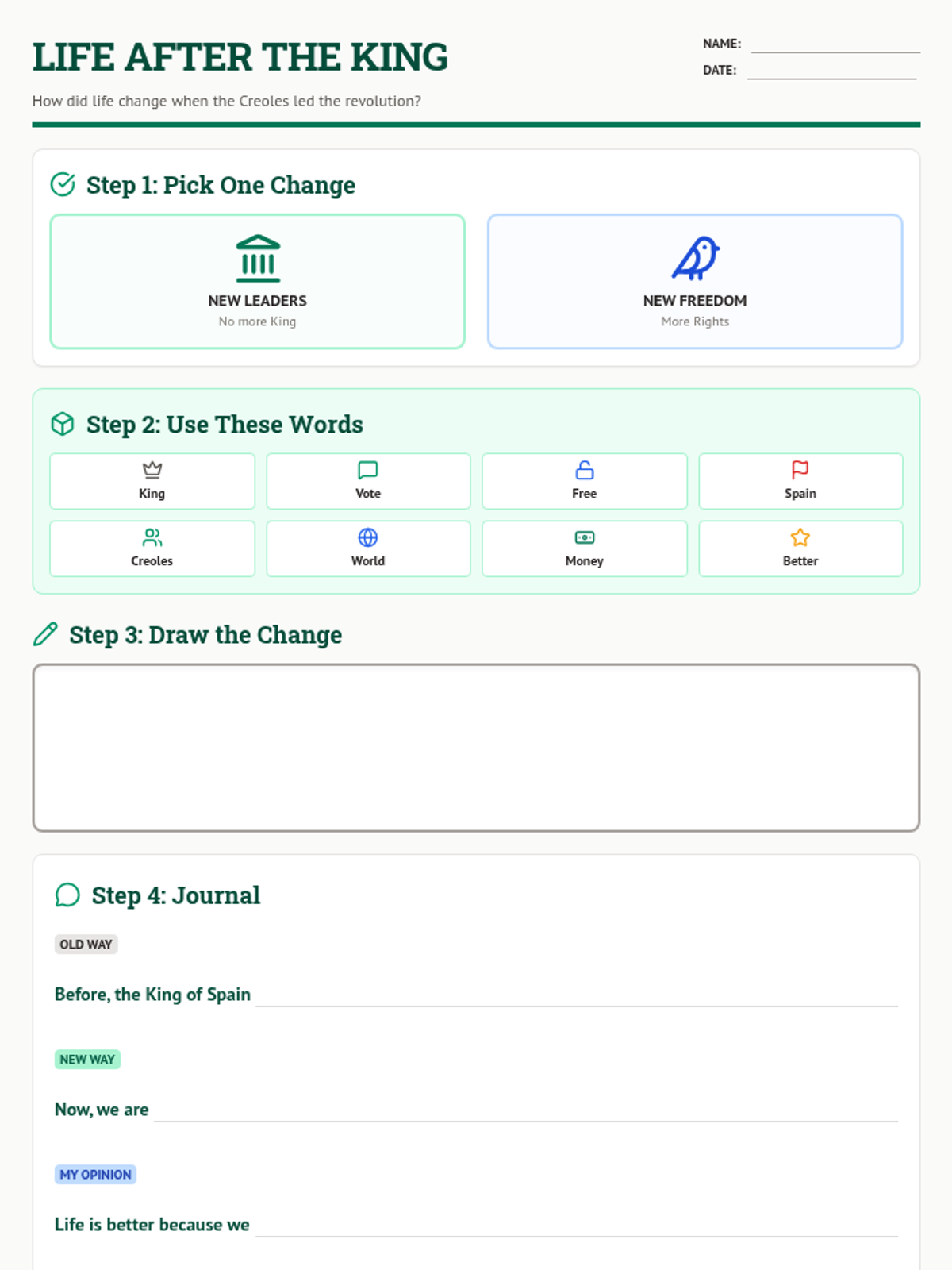
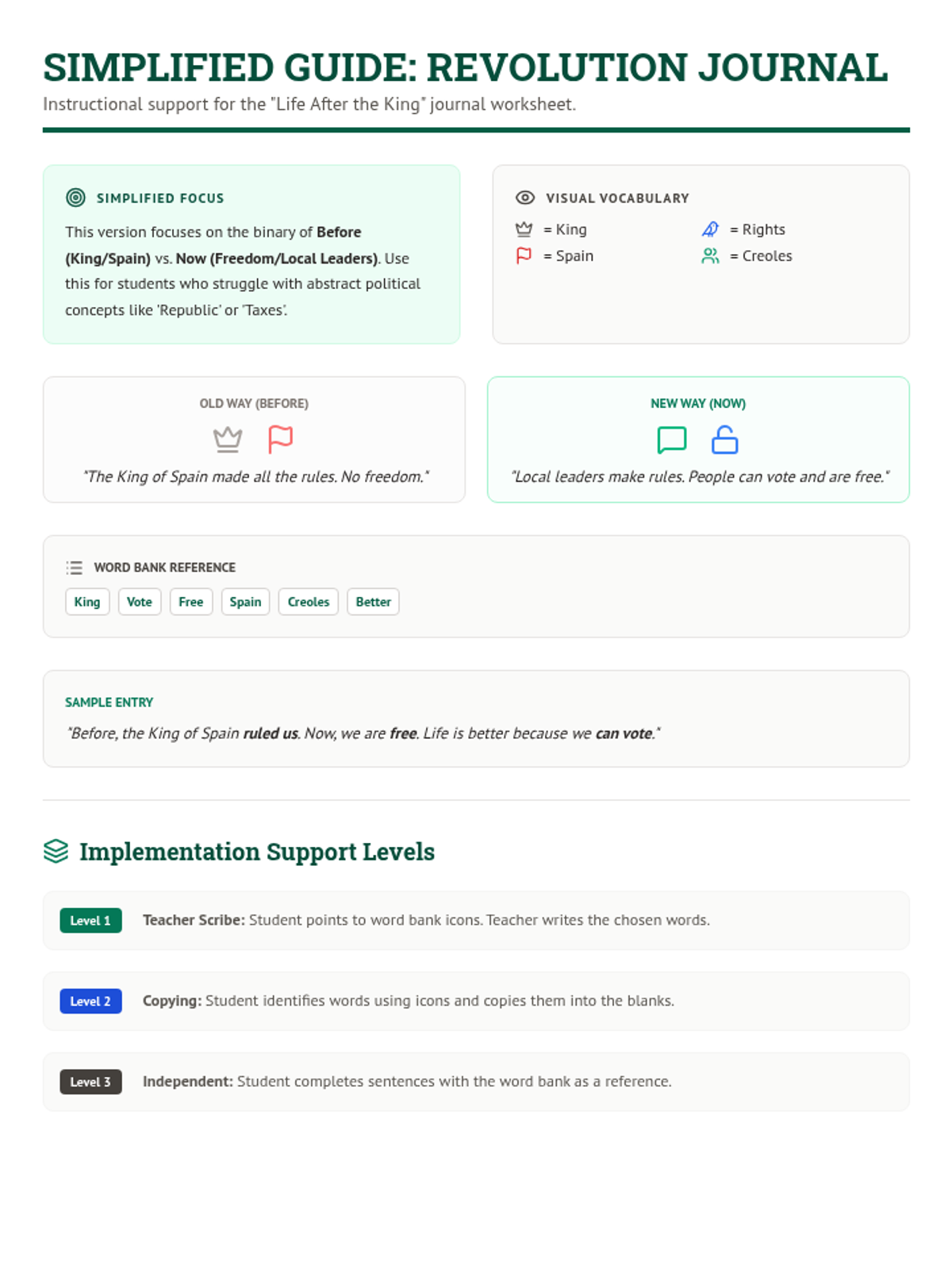
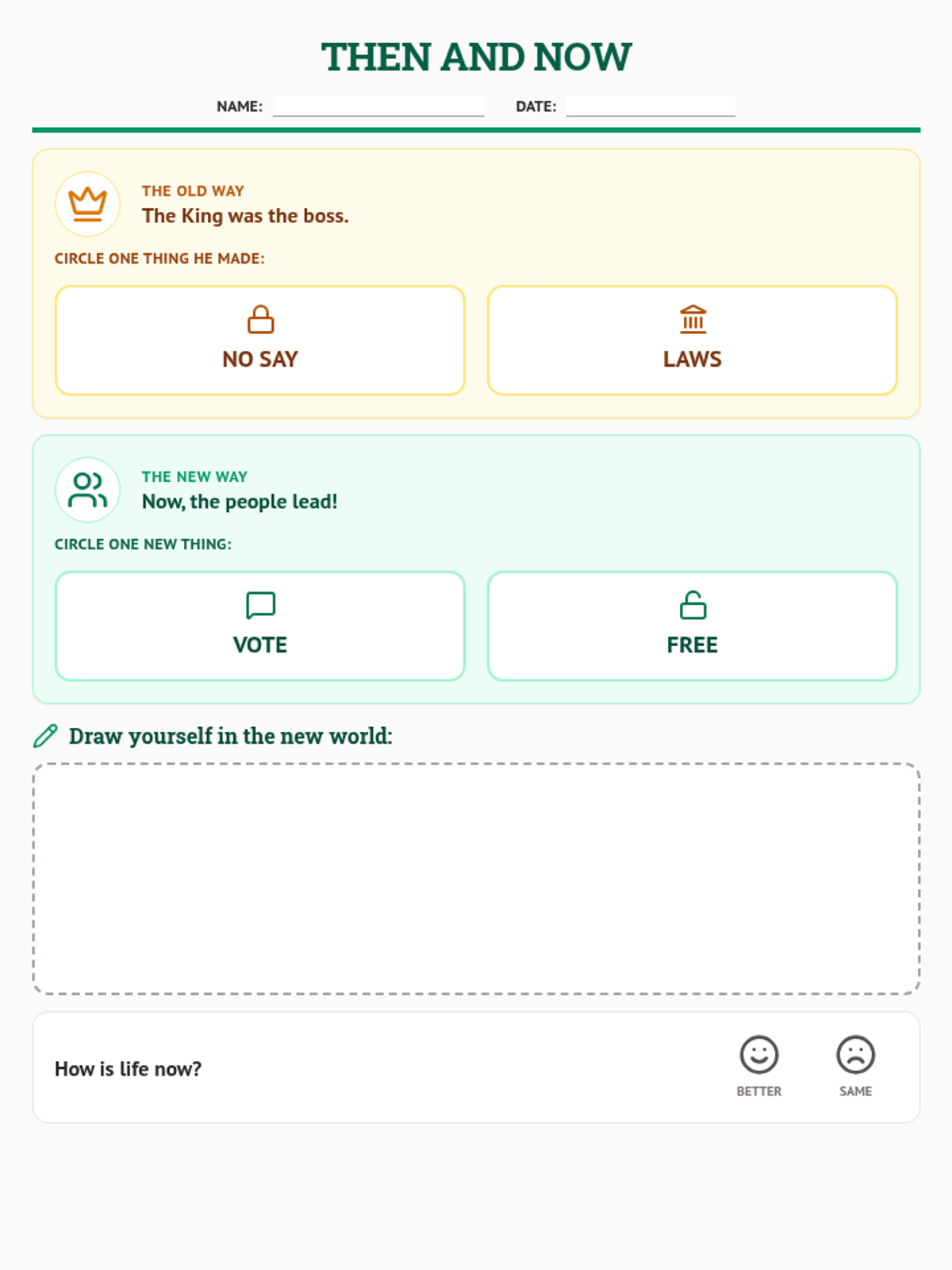
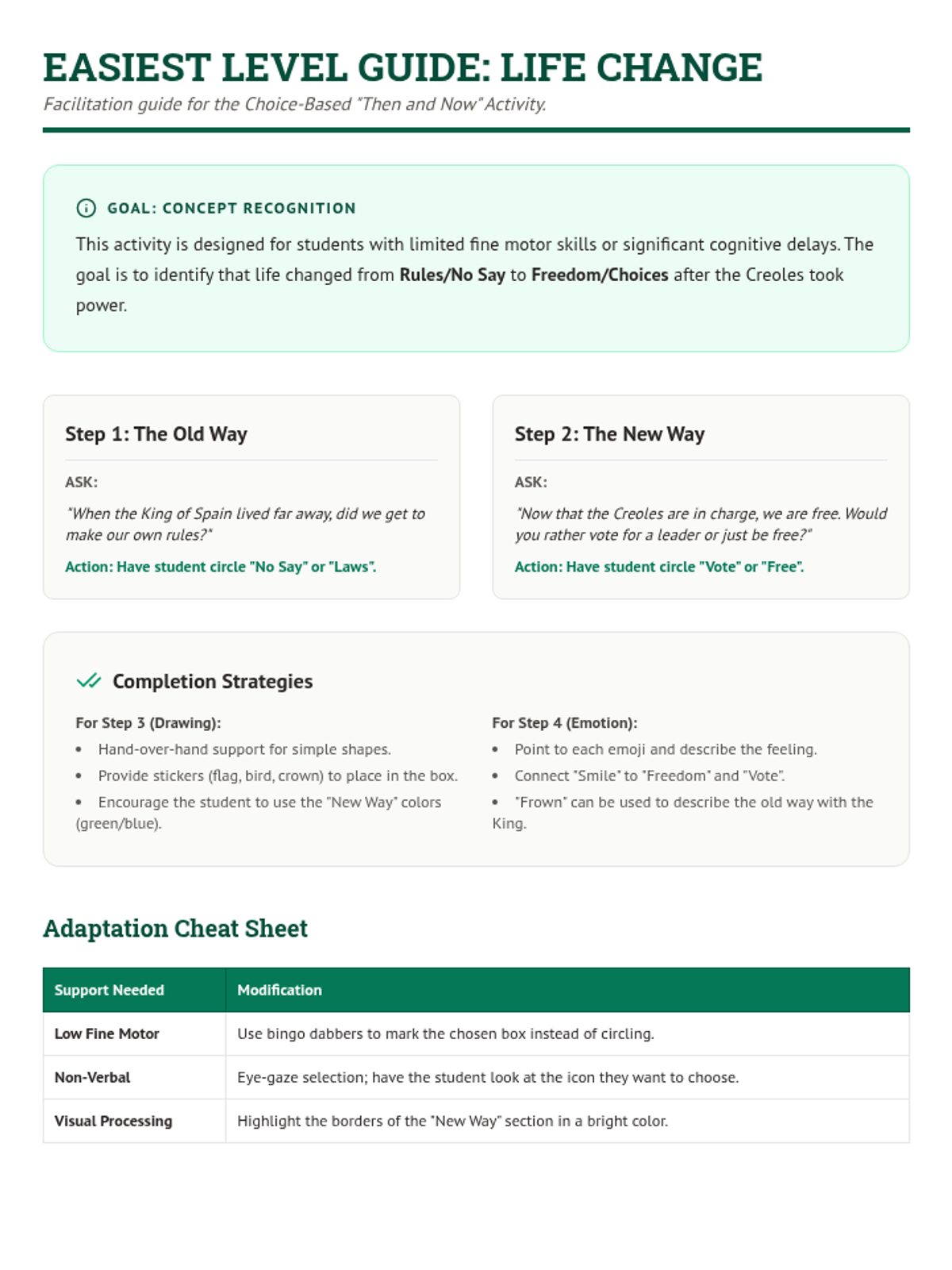
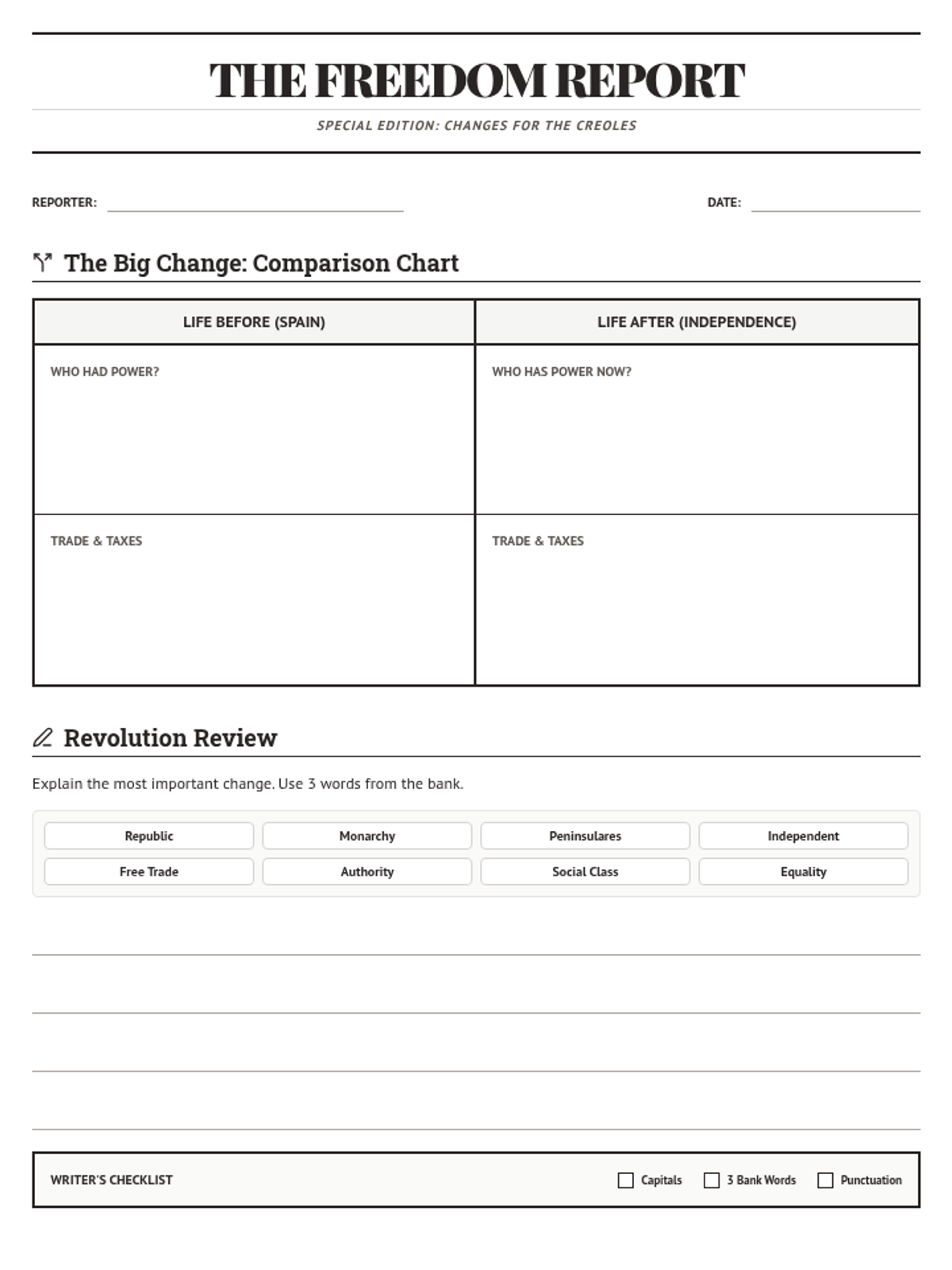
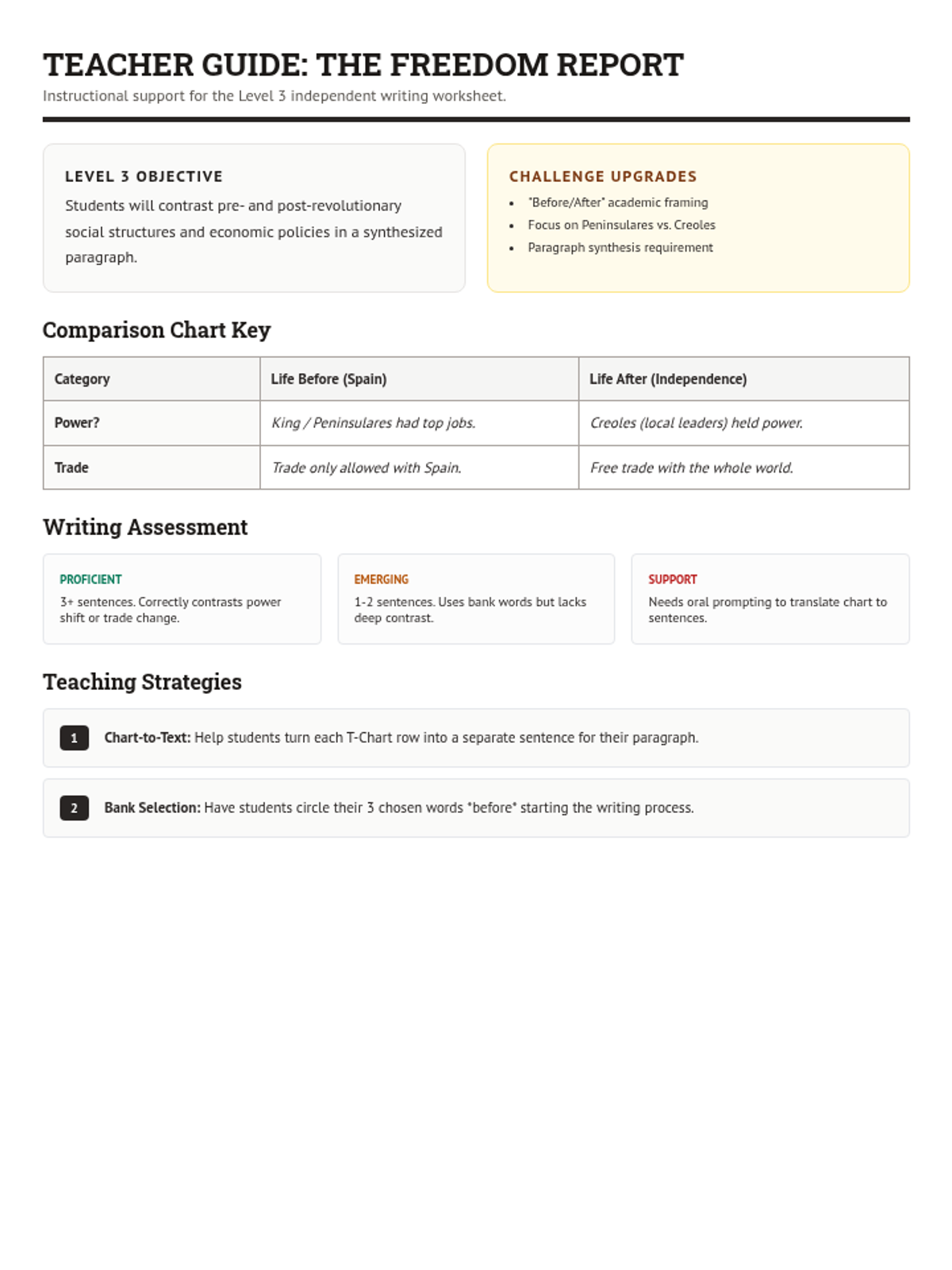
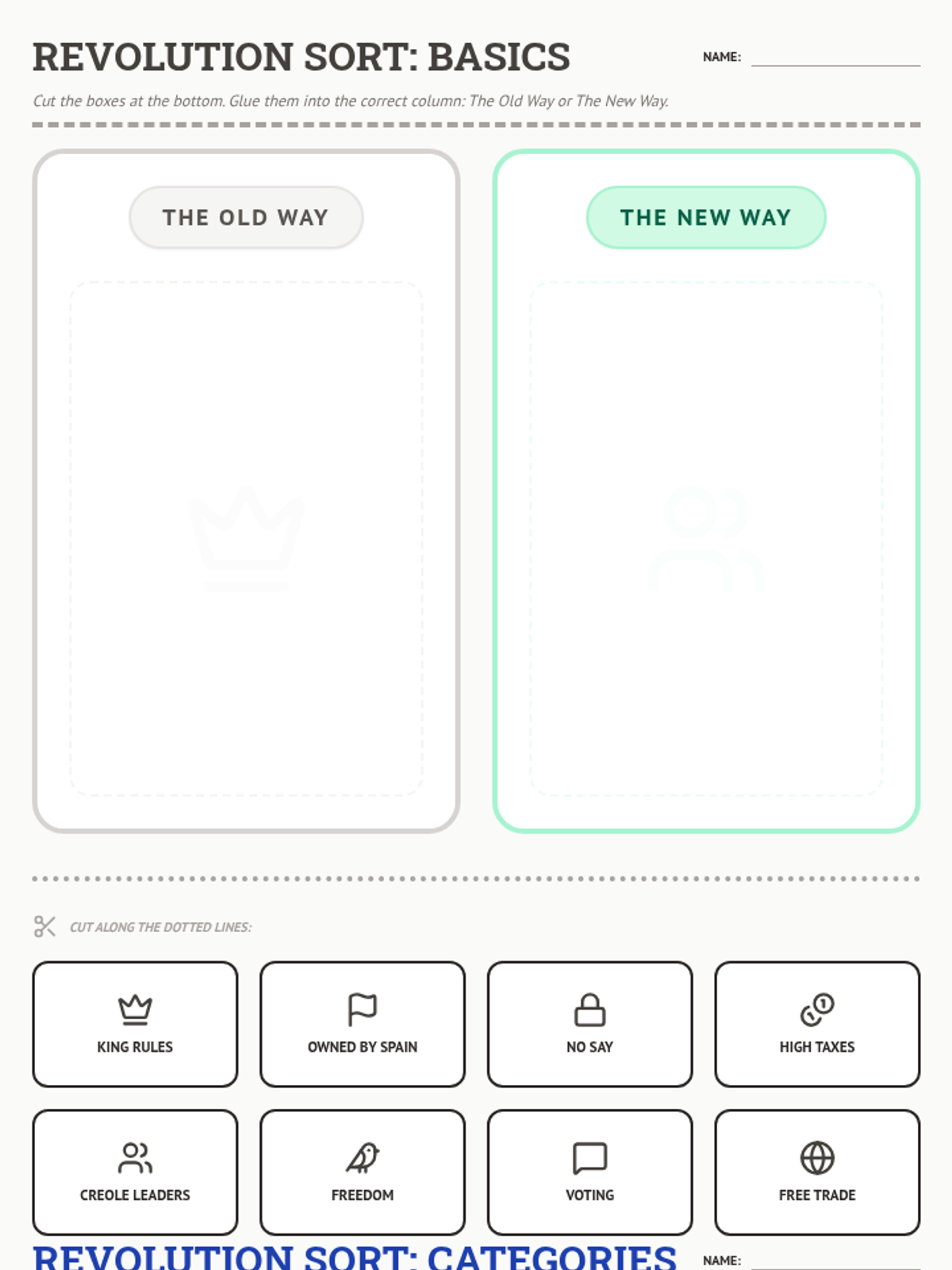
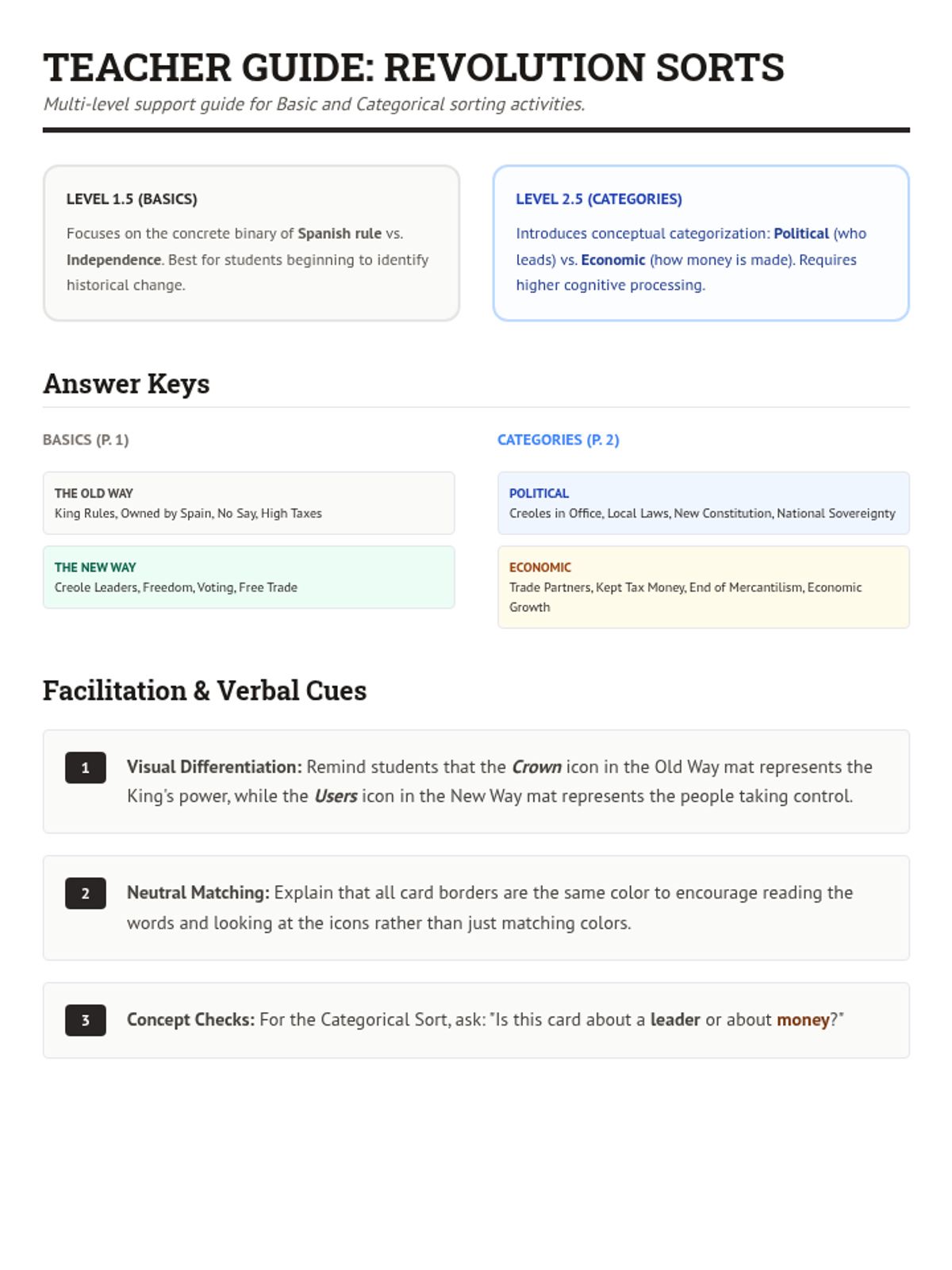
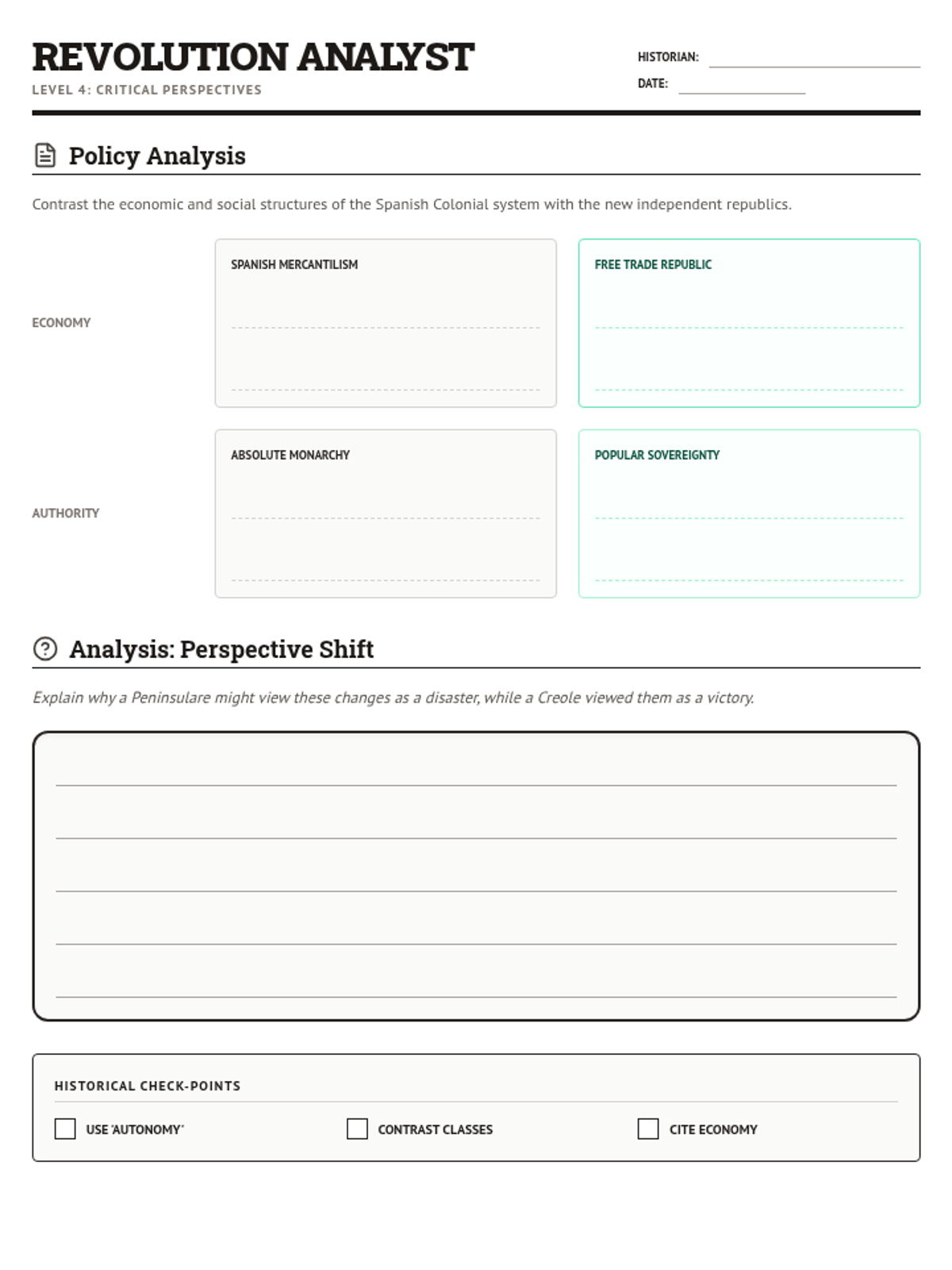
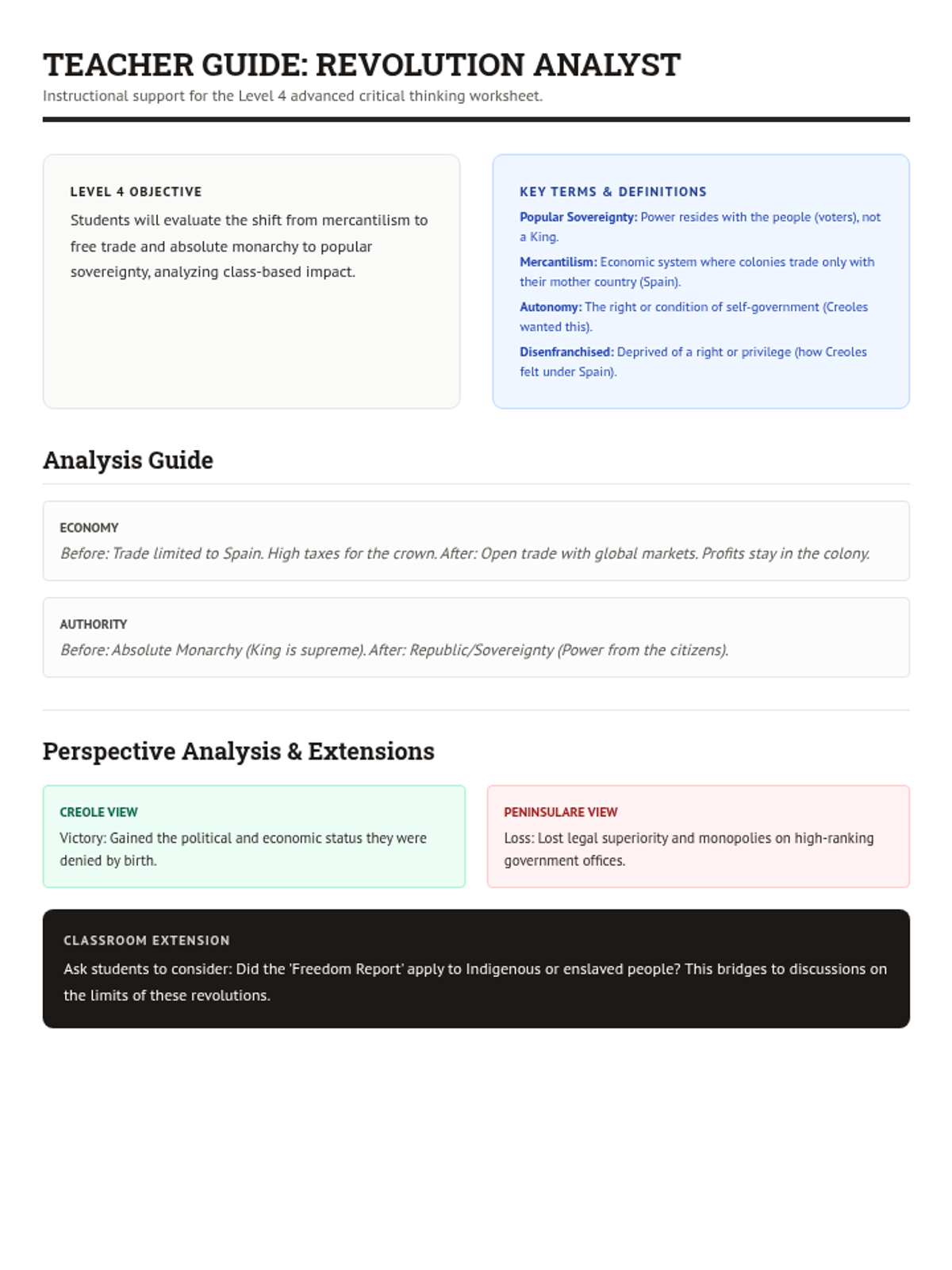
A lesson exploring the social and political changes following the Creole-led revolutions in Latin America, specifically designed for students requiring IEP accommodations.
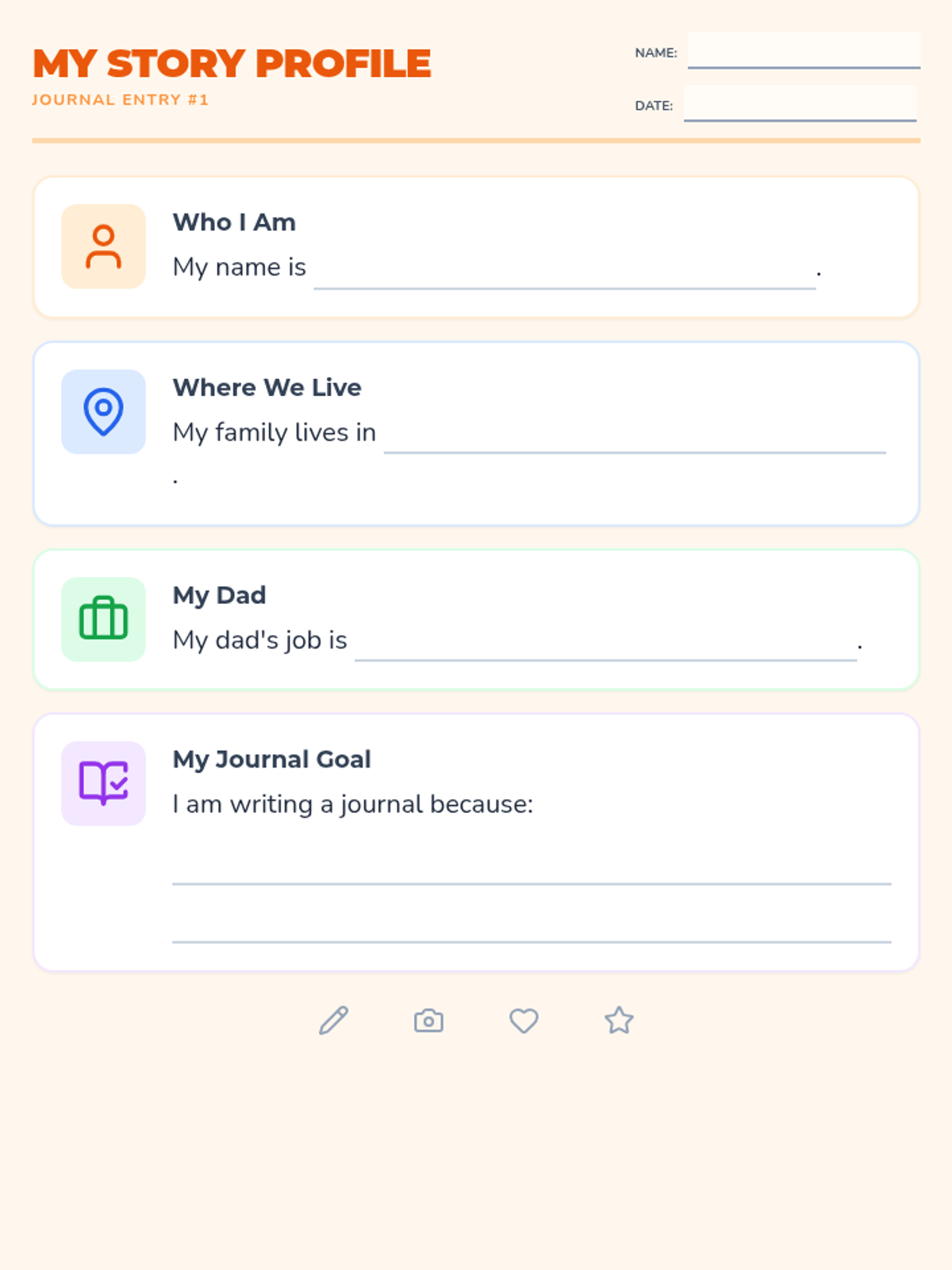
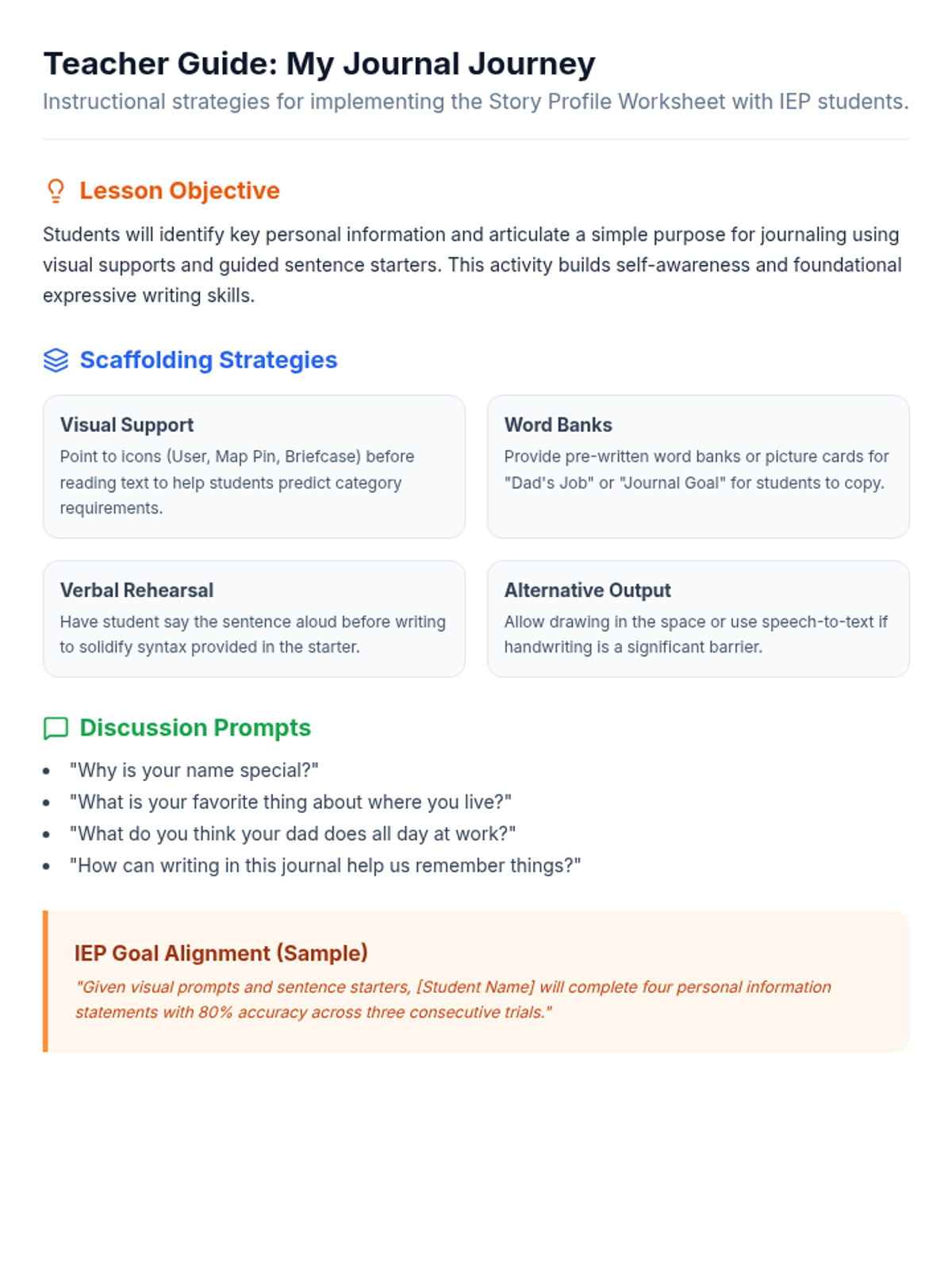
A foundational lesson to help students introduce themselves and establish their purpose for keeping a personal journal, with heavy visual supports for IEP students.
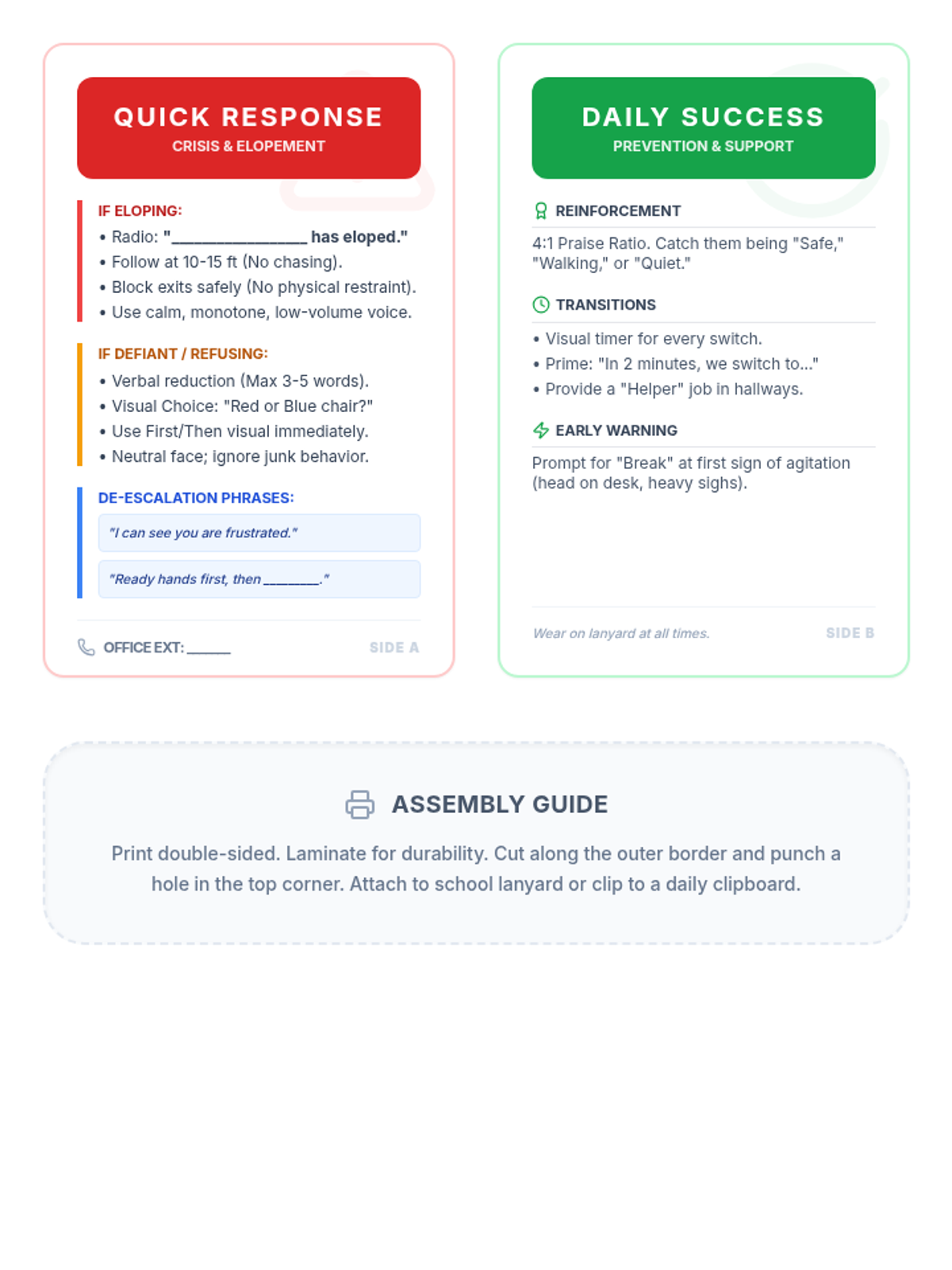
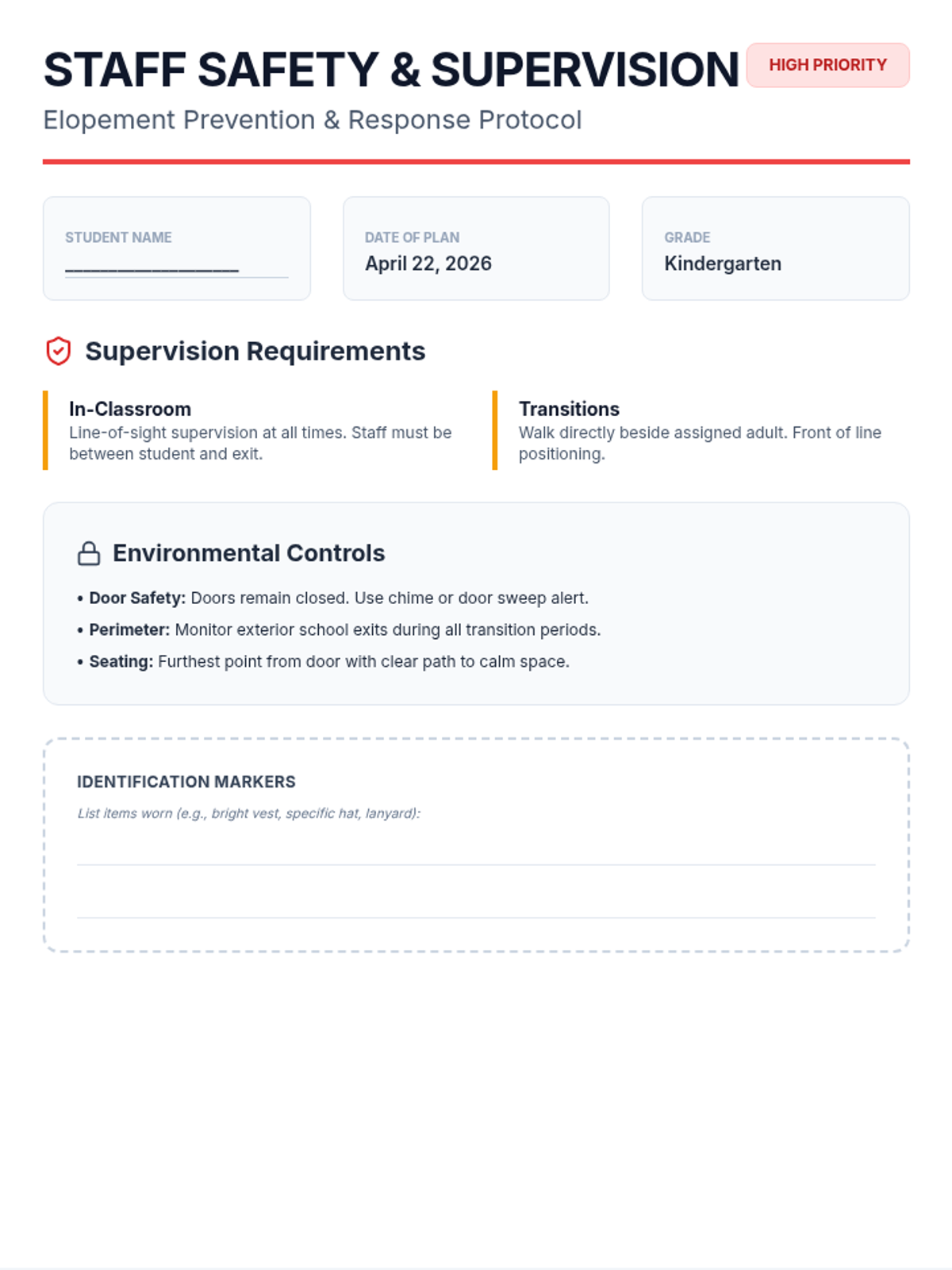
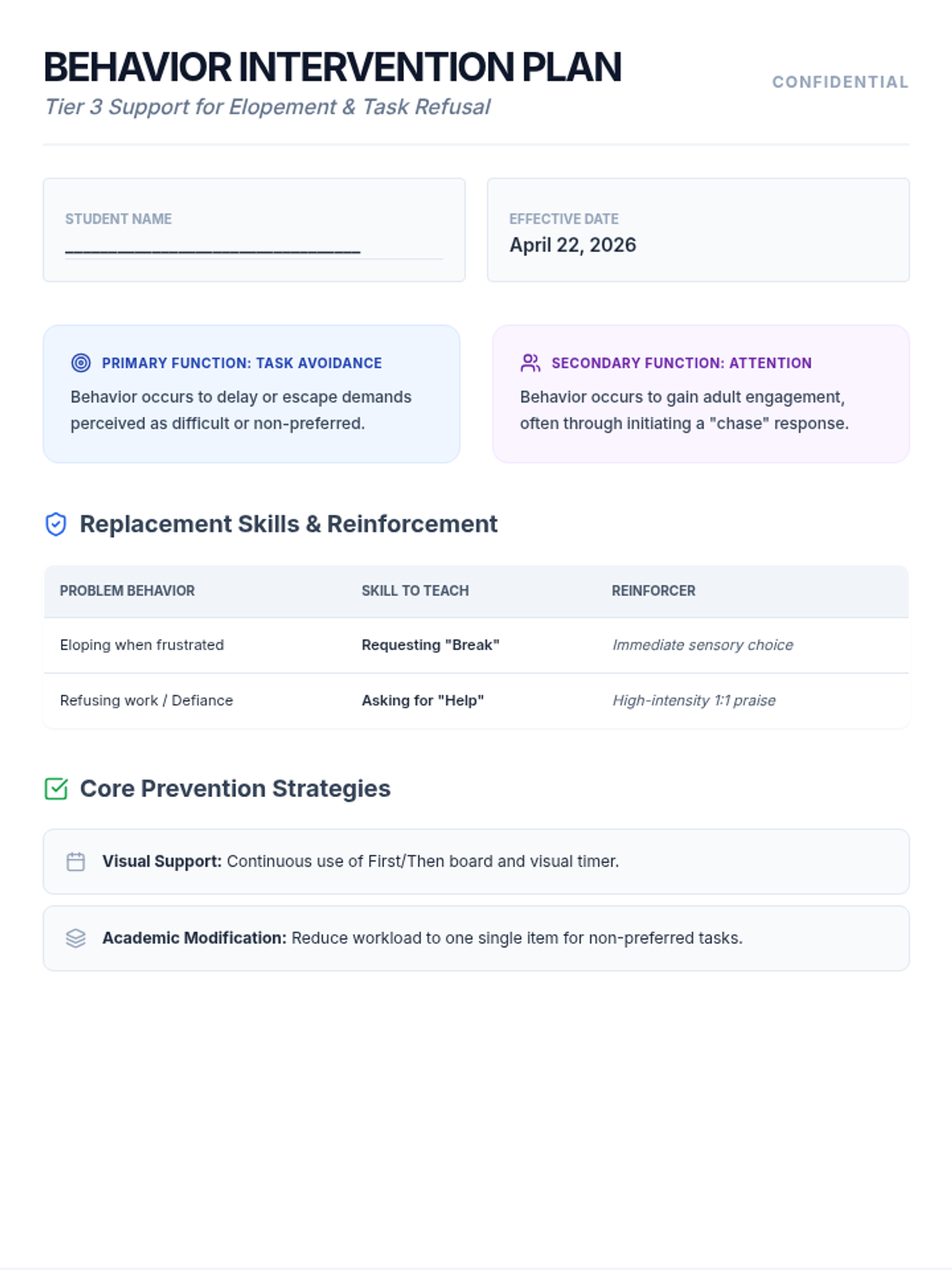
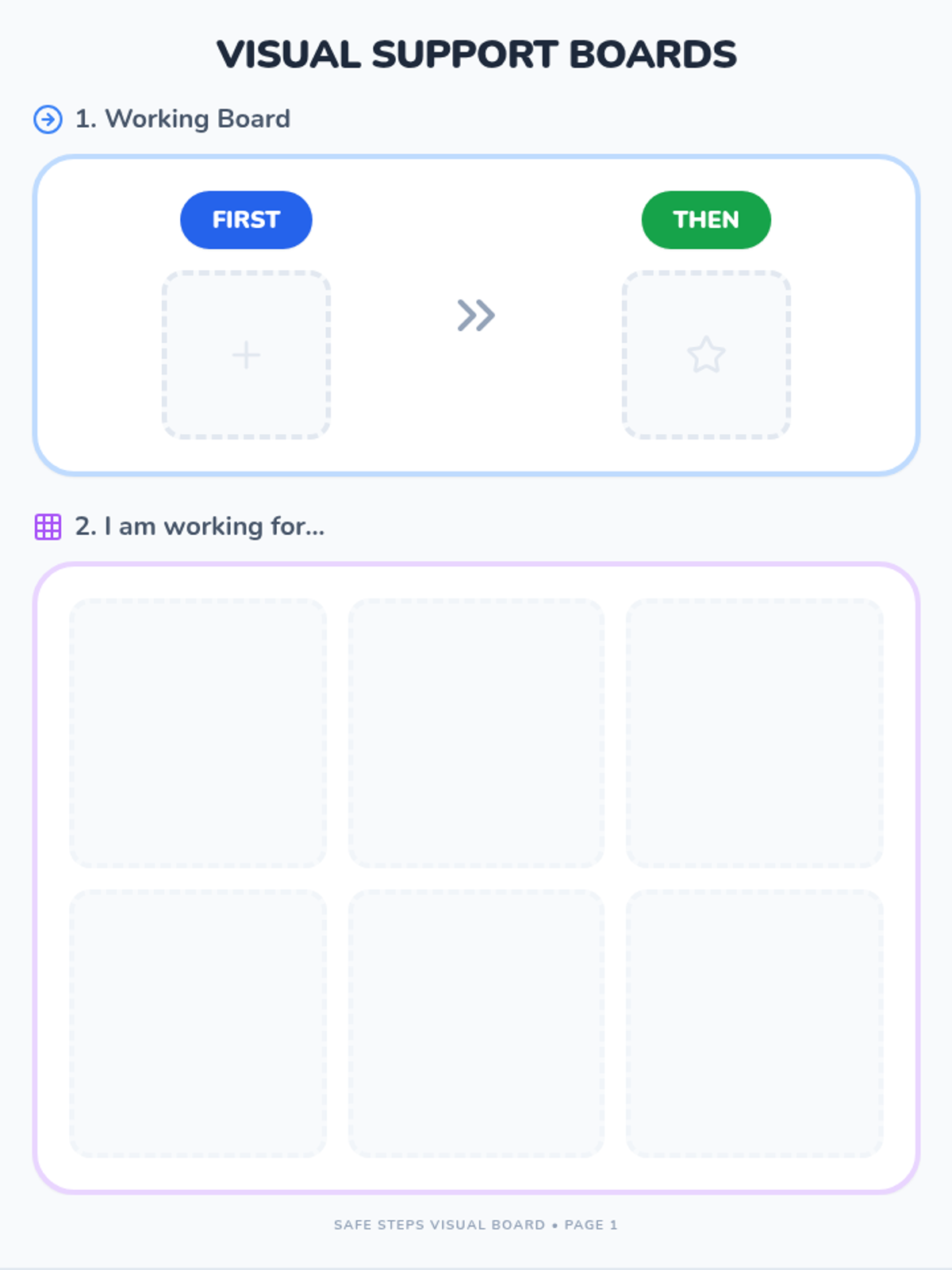
A comprehensive safety and behavioral support package designed to manage elopement and oppositional behavior in a kindergarten setting, focusing on prevention, intervention, and visual supports.
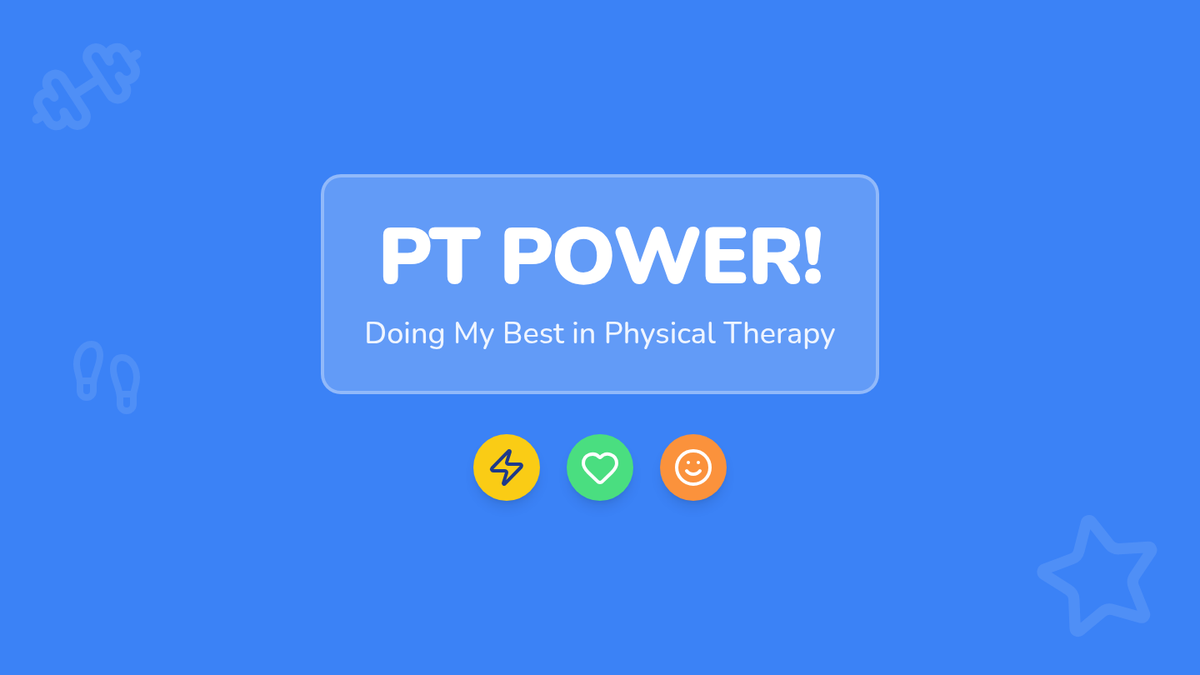
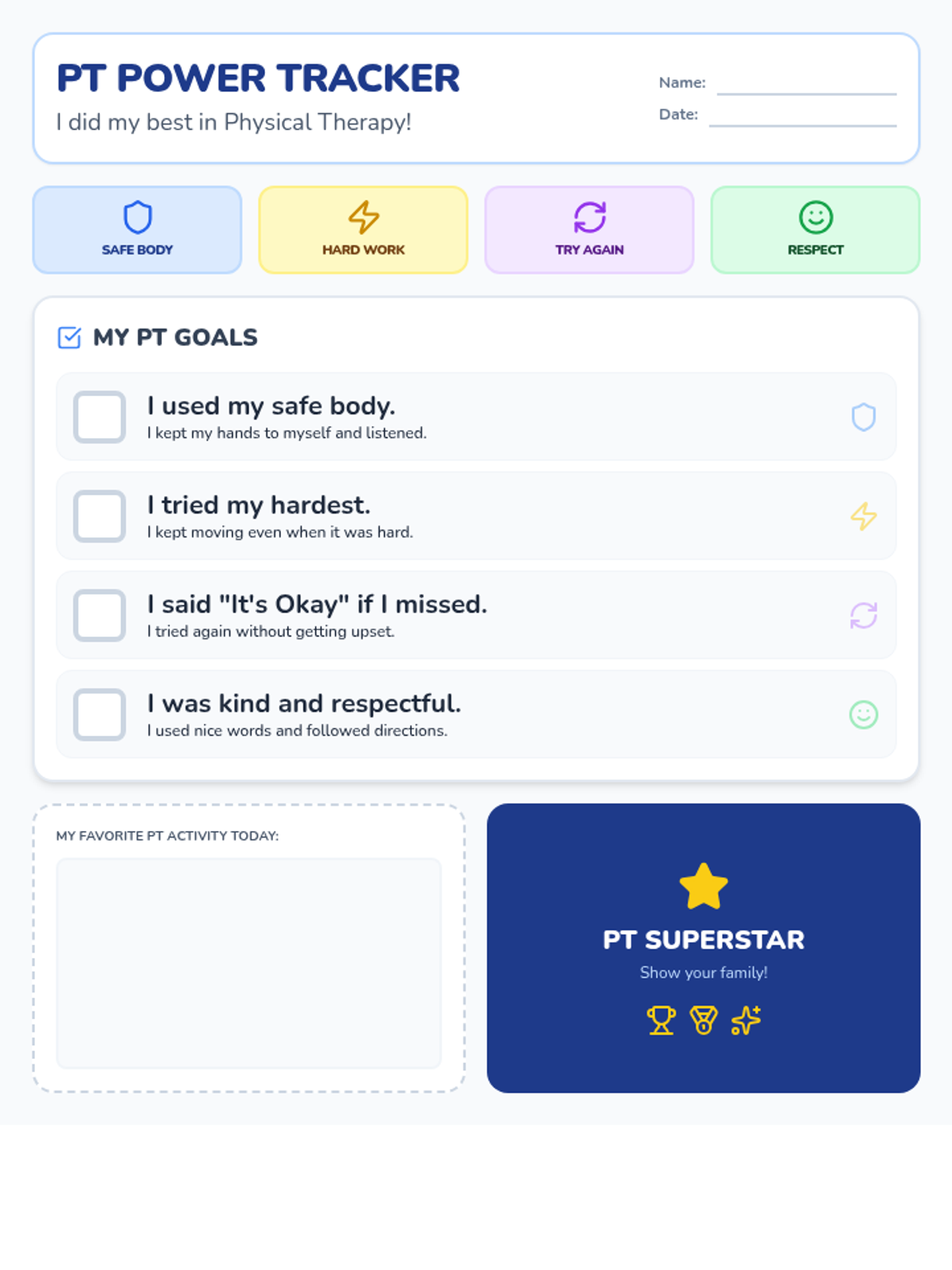
A series of visual-heavy slides and a supporting visual guide to help students understand and practice positive behaviors during physical therapy sessions.
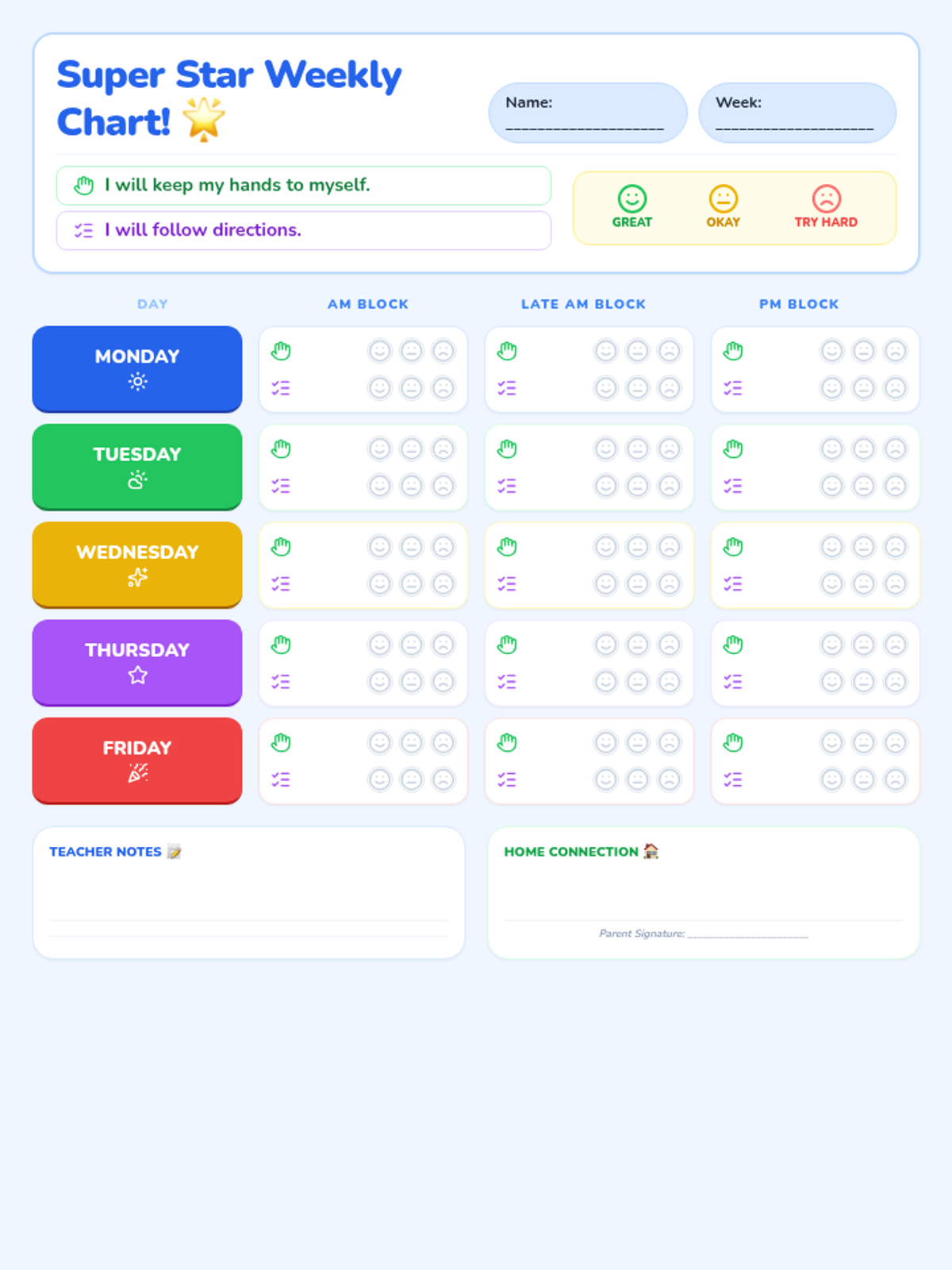
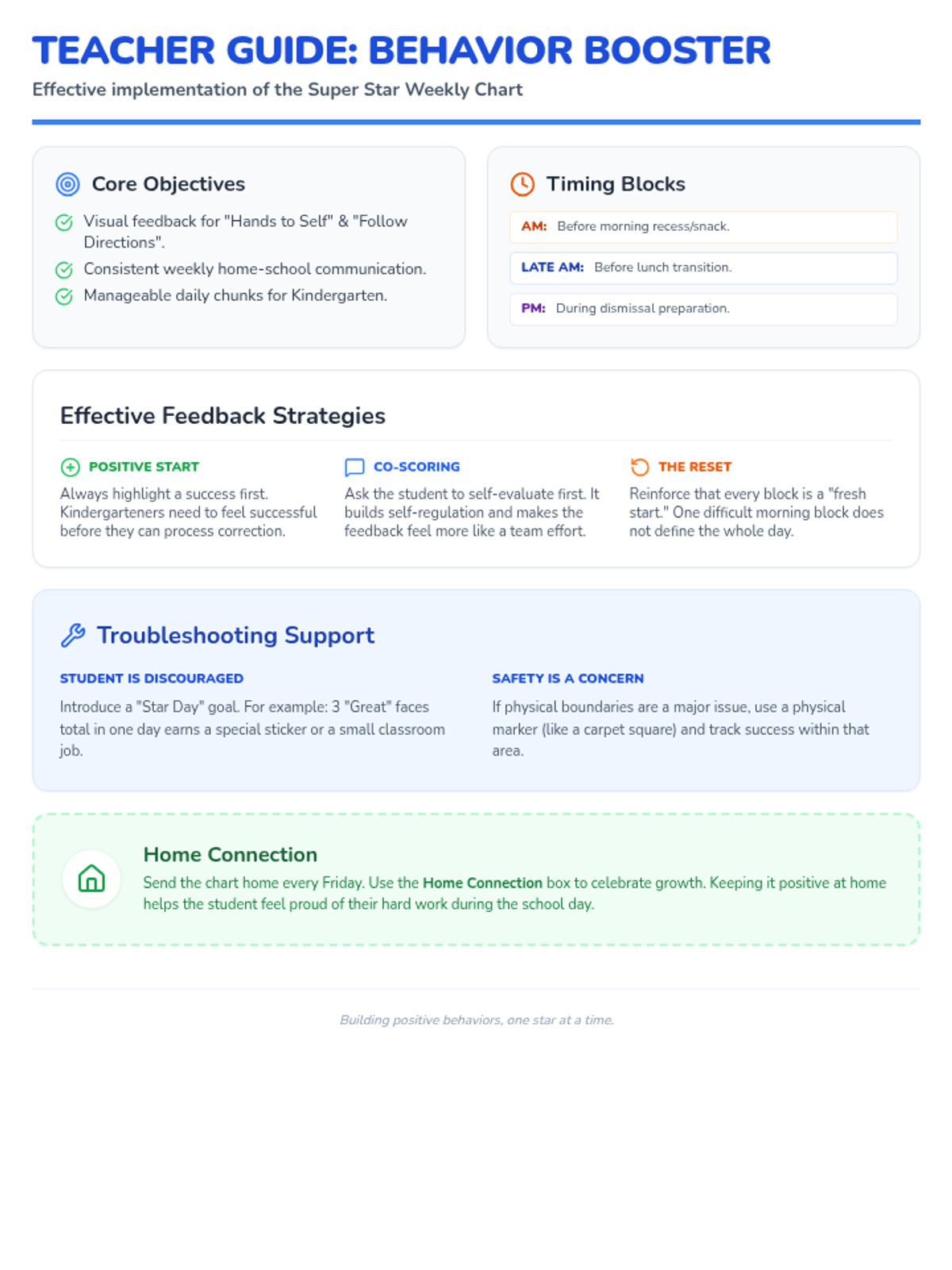
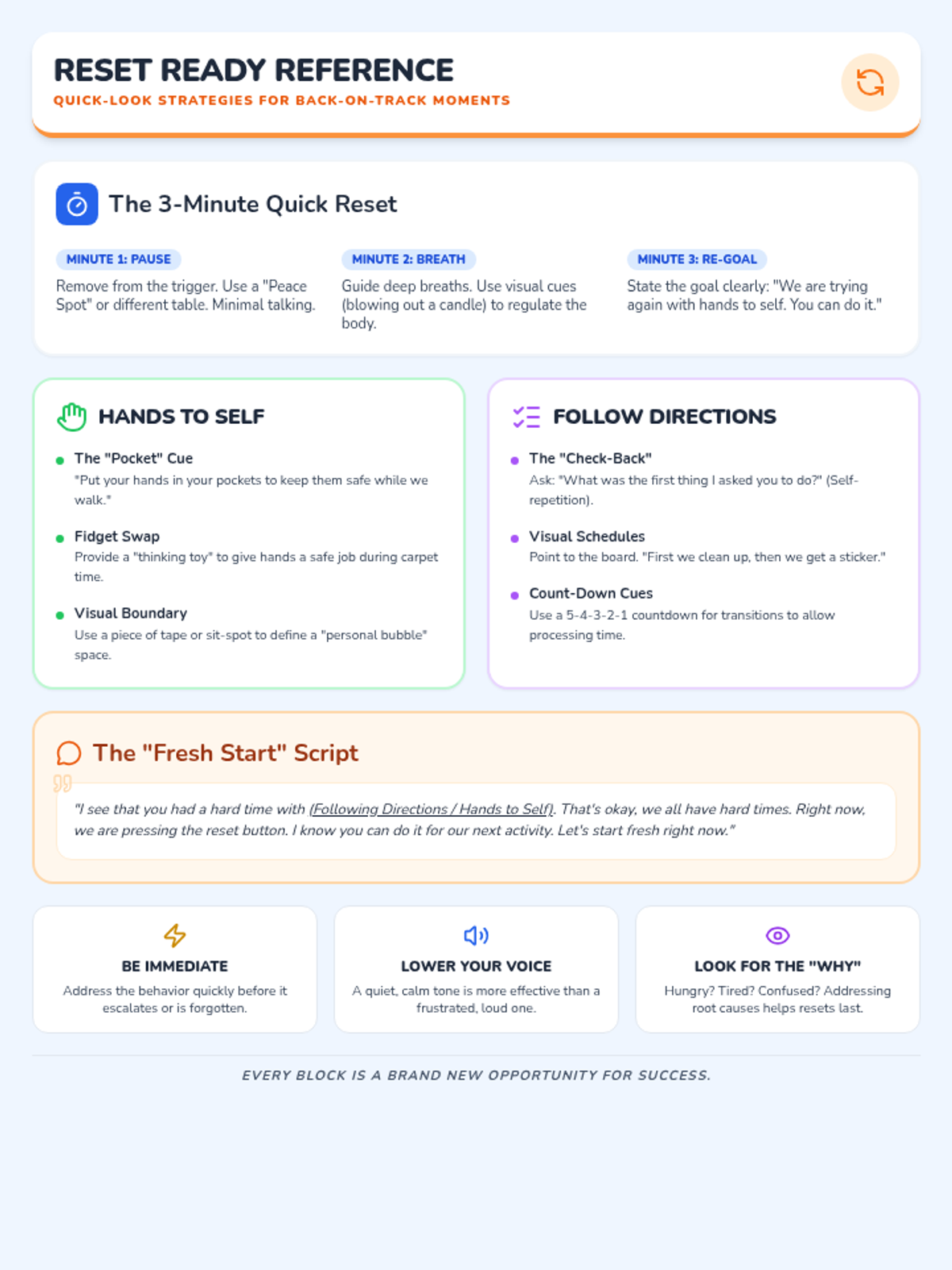
A set of materials to track and reinforce positive behavior in a Kindergarten classroom, focusing on following directions and physical boundaries.
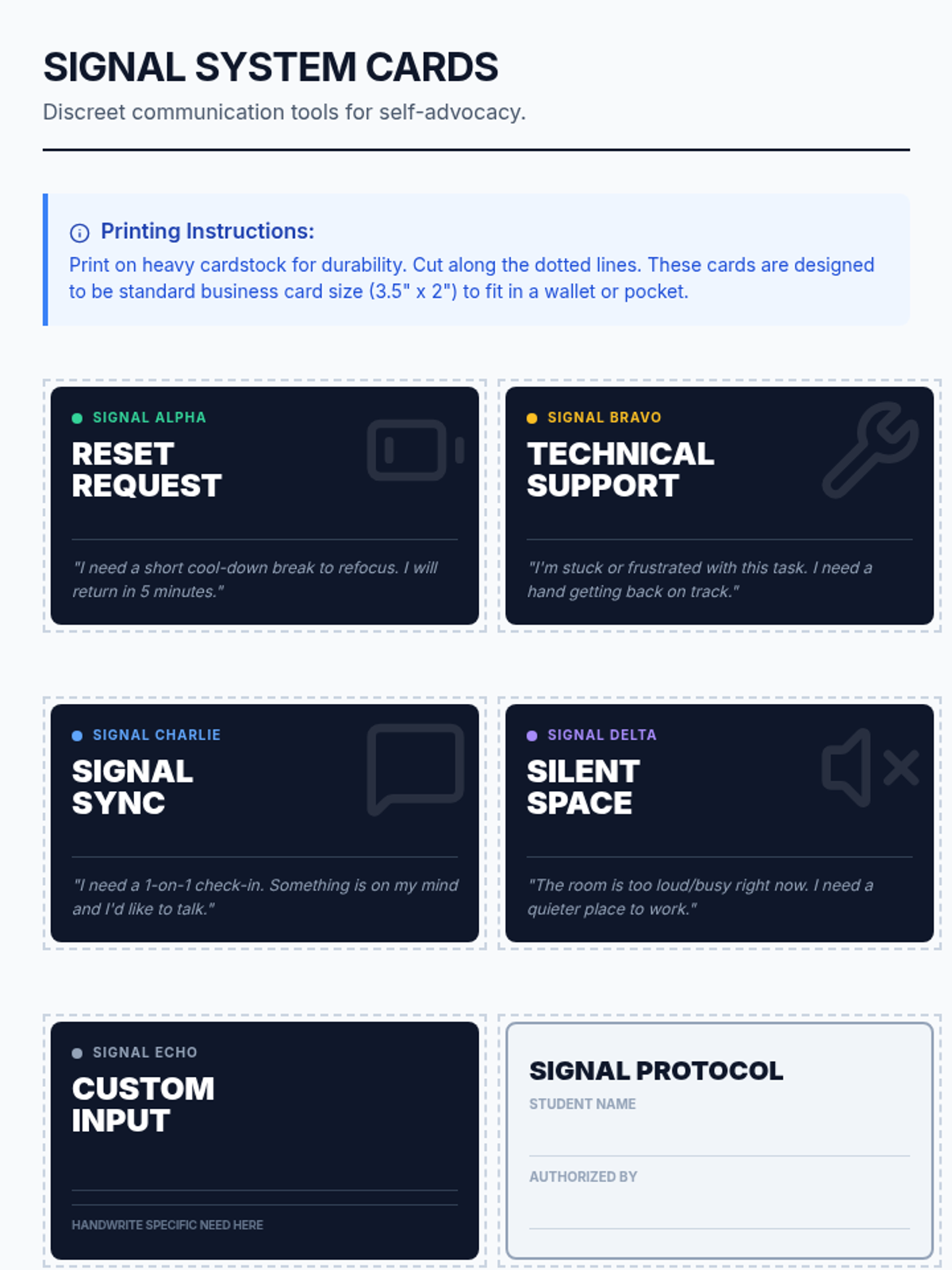
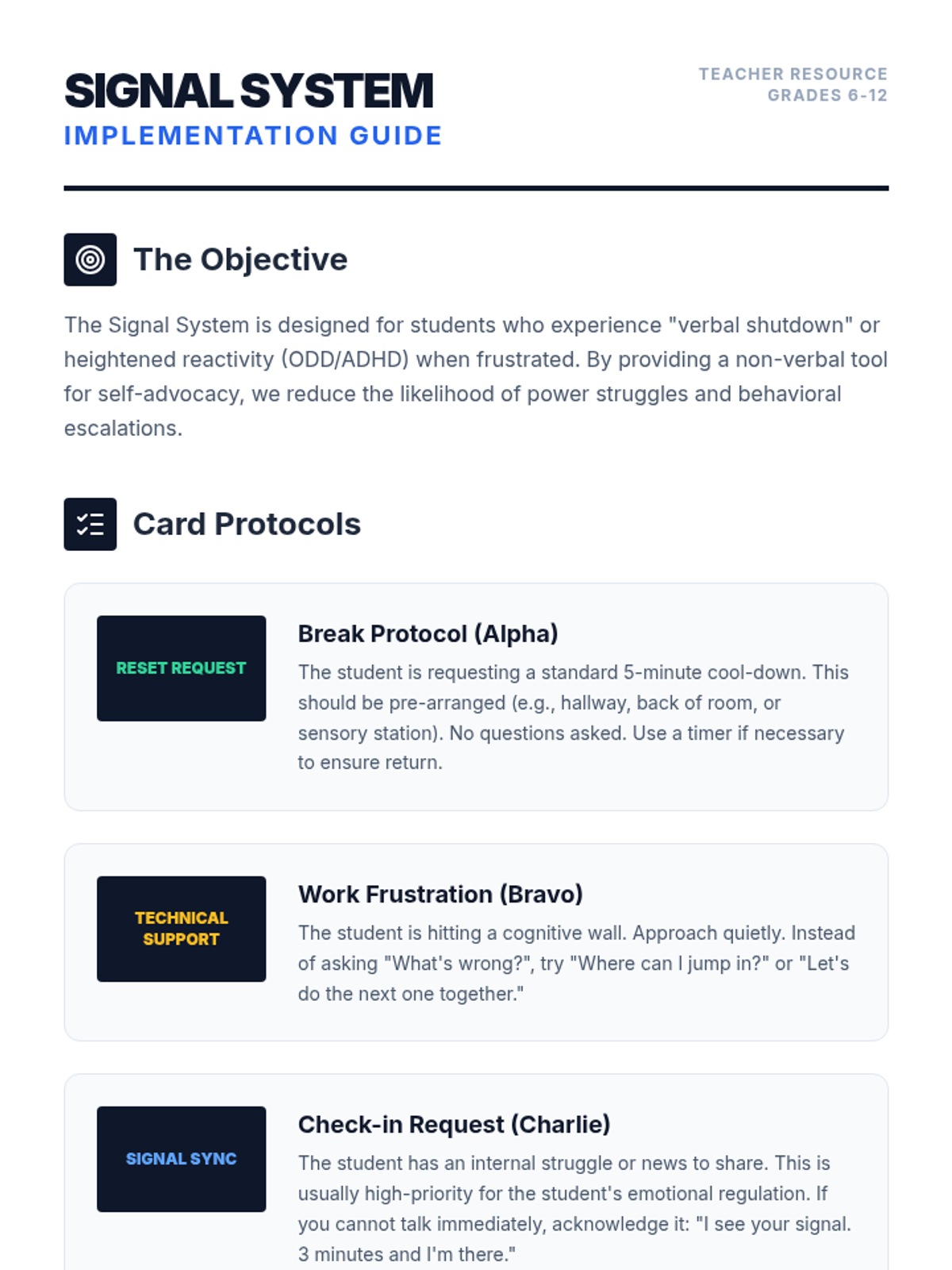
A set of discreet communication cards designed for an 8th-grade student to advocate for their needs during moments of frustration or sensory overwhelm.
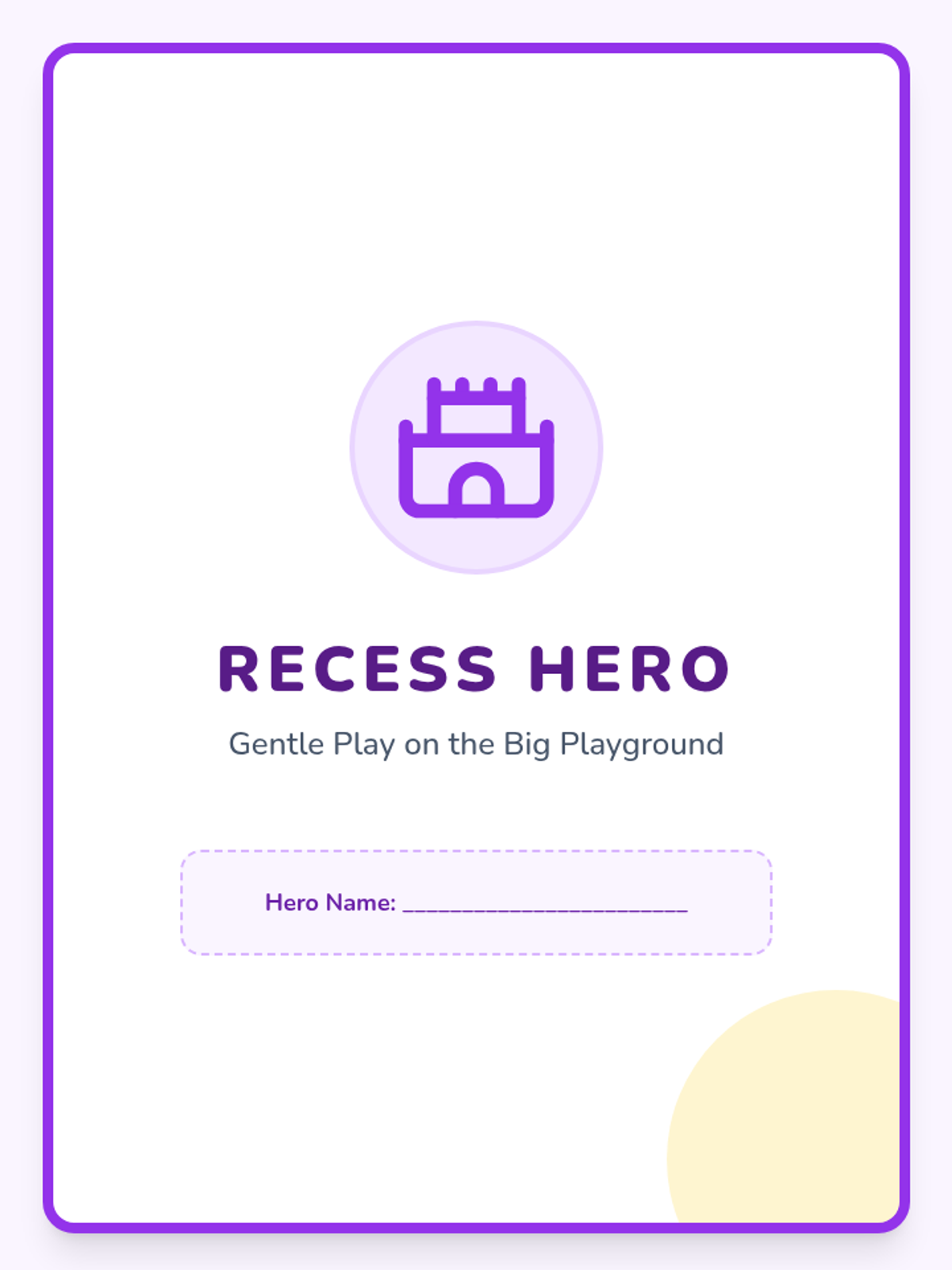
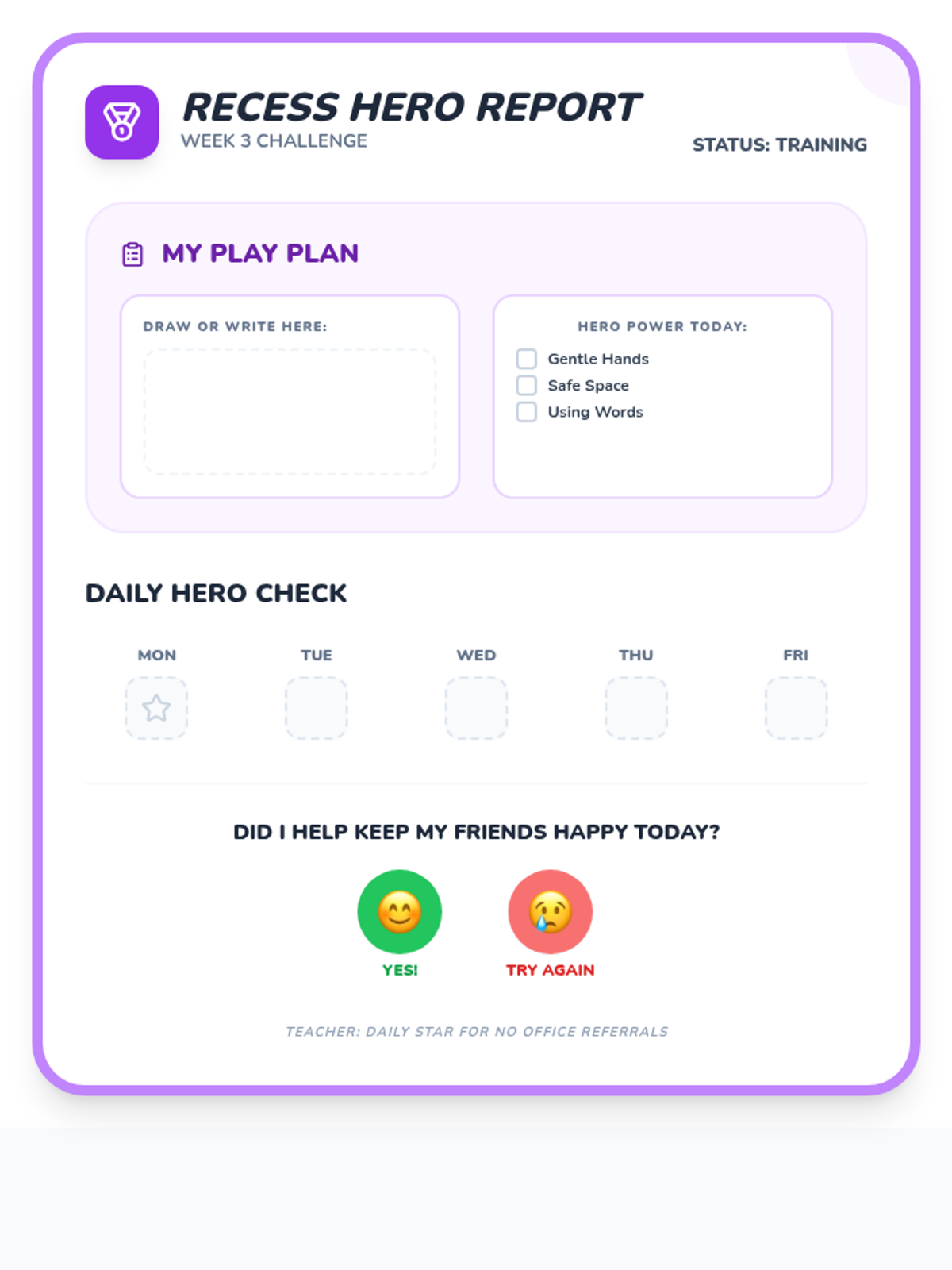
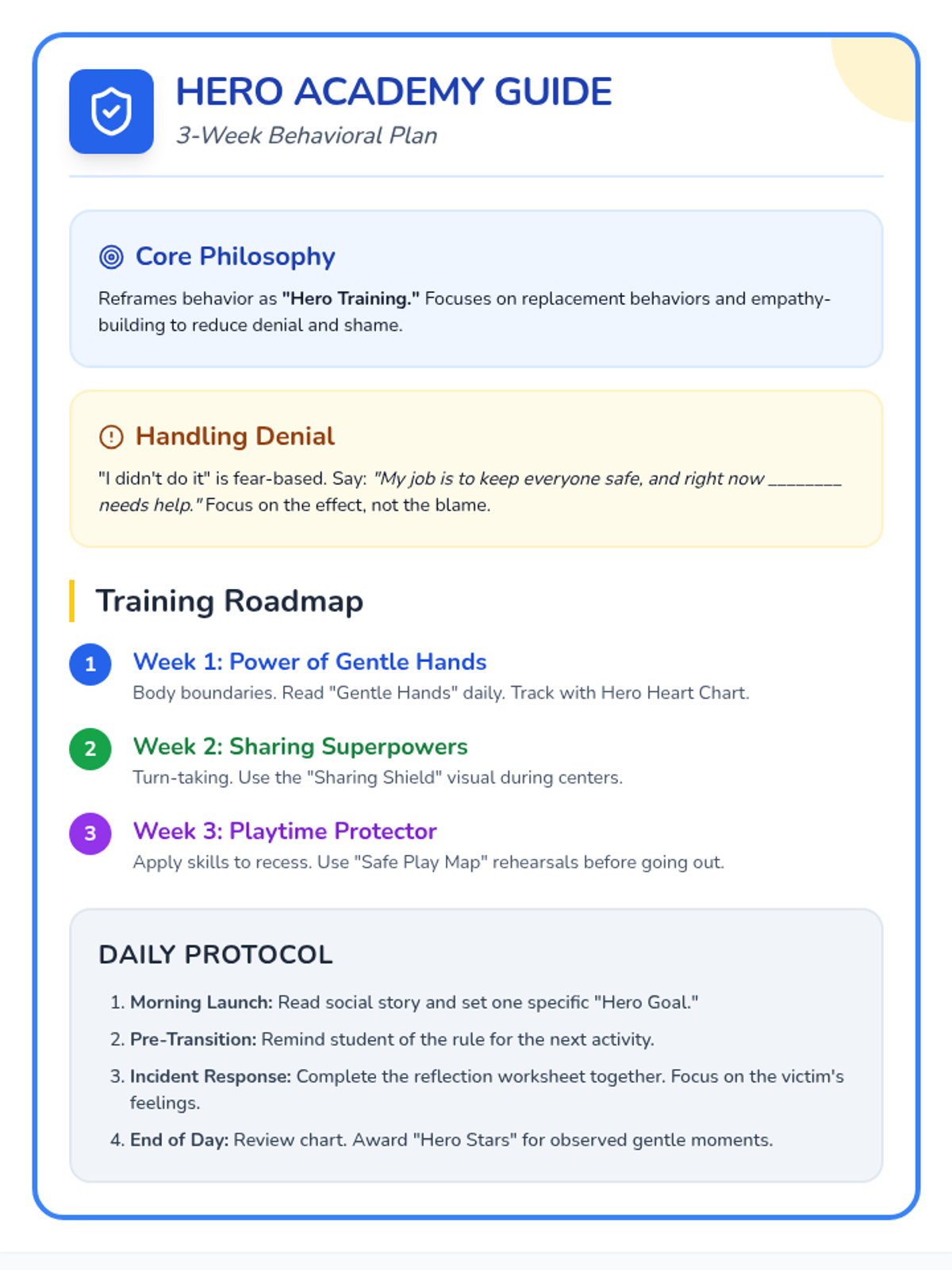
Applies the skills learned in weeks 1 and 2 to larger, unstructured environments like recess, with a focus on safe play and emotional regulation.
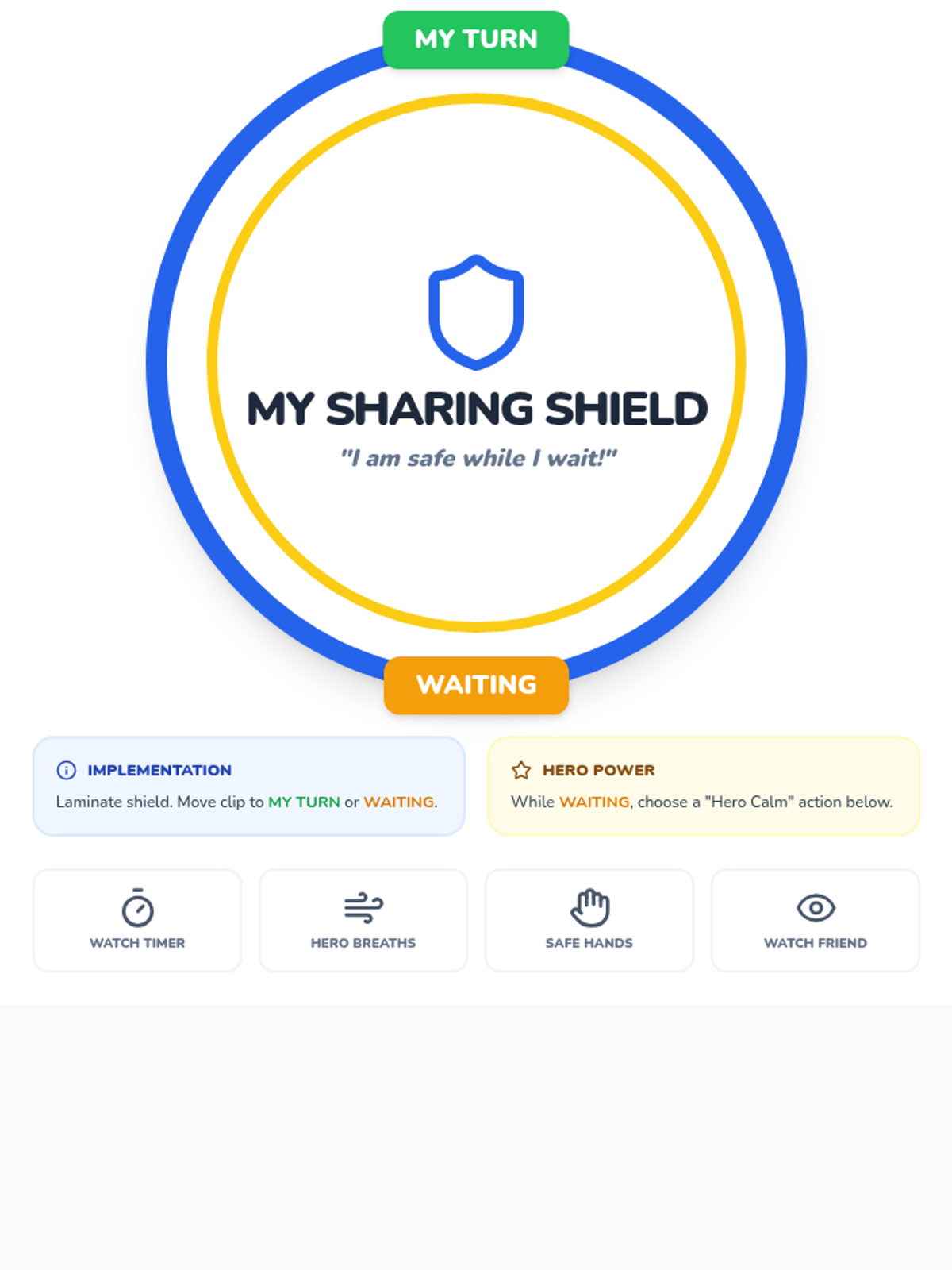
Introduces social strategies for sharing and taking turns, helping the student navigate small-group interactions with less frustration and impulsivity.
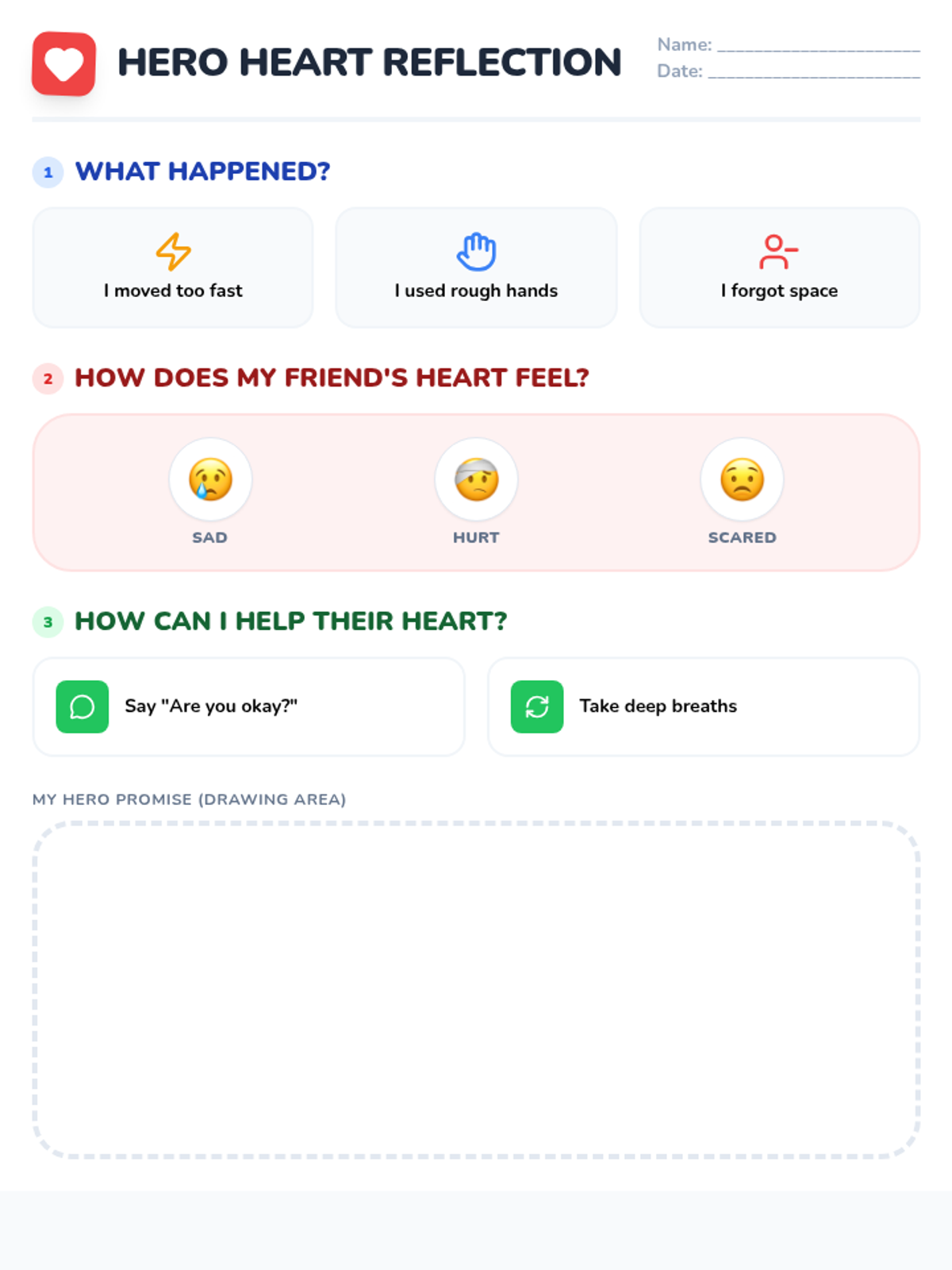
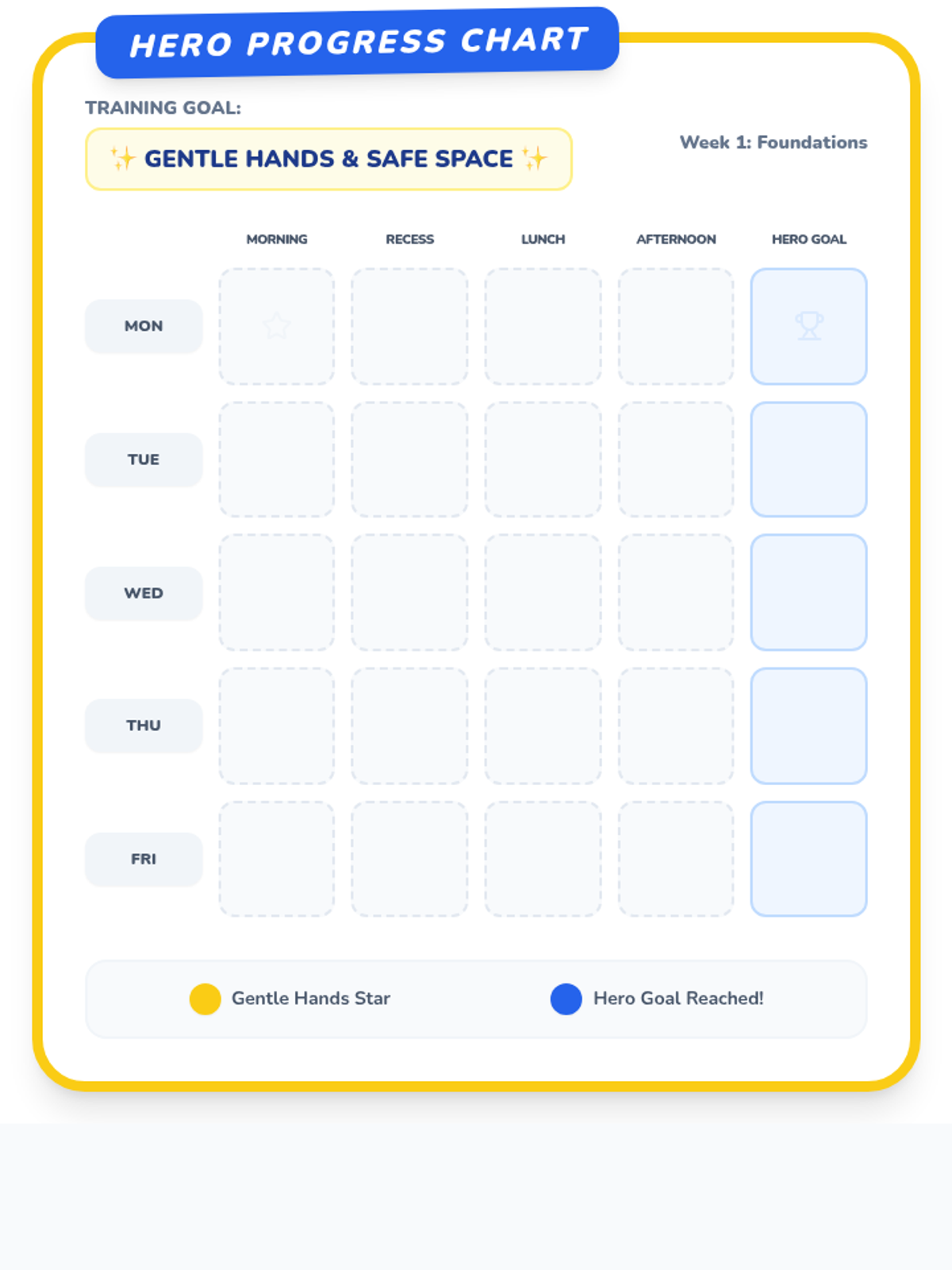
Focuses on establishing the 'Gentle Hands' foundation, teaching the student to recognize personal space and use physical touch safely and kindly.
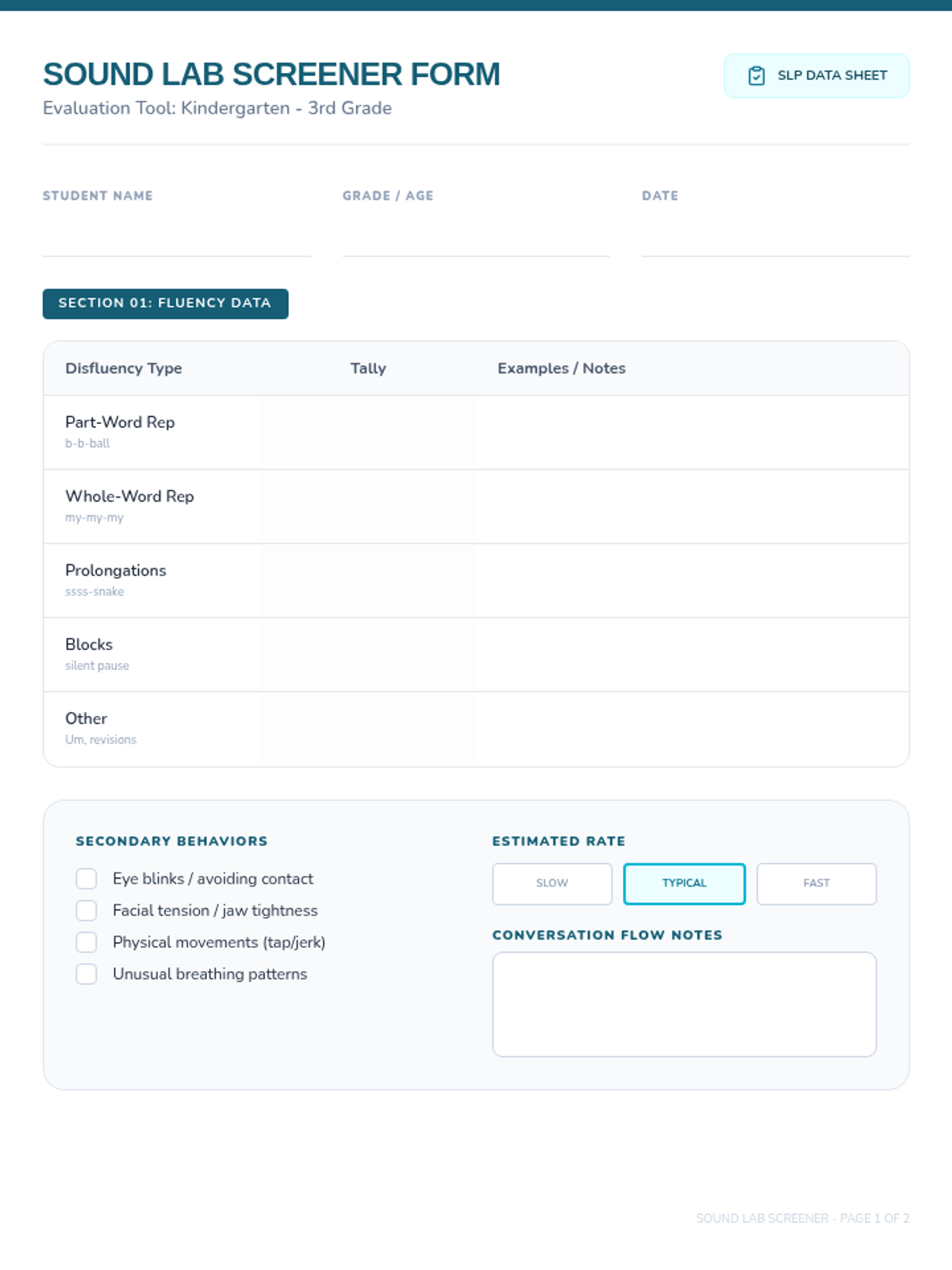
A comprehensive screening tool for speech-language pathologists to evaluate fluency and voice in students from Kindergarten through 3rd Grade. The lesson includes student-facing stimulus cards and a professional recording form for data collection.
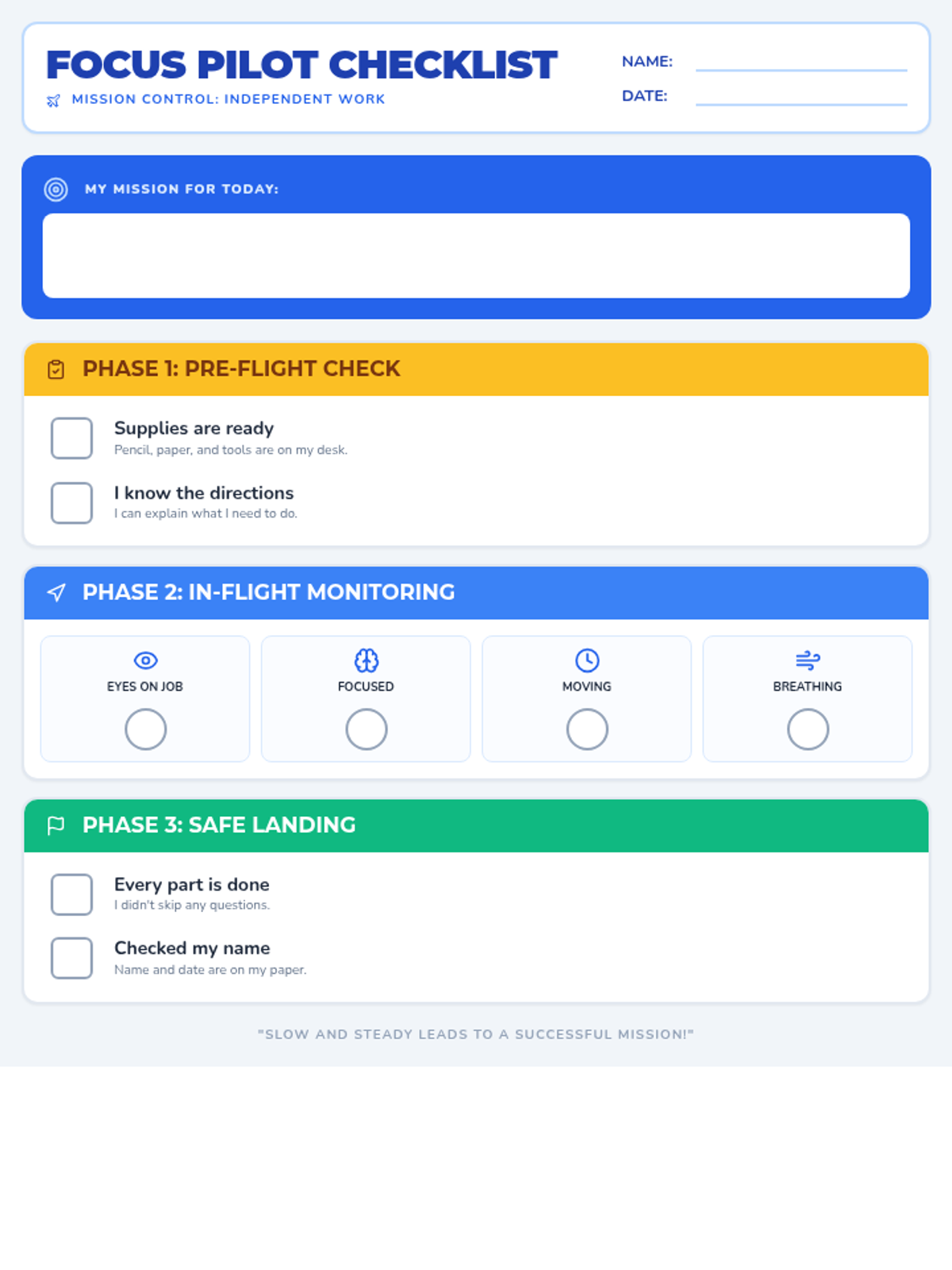
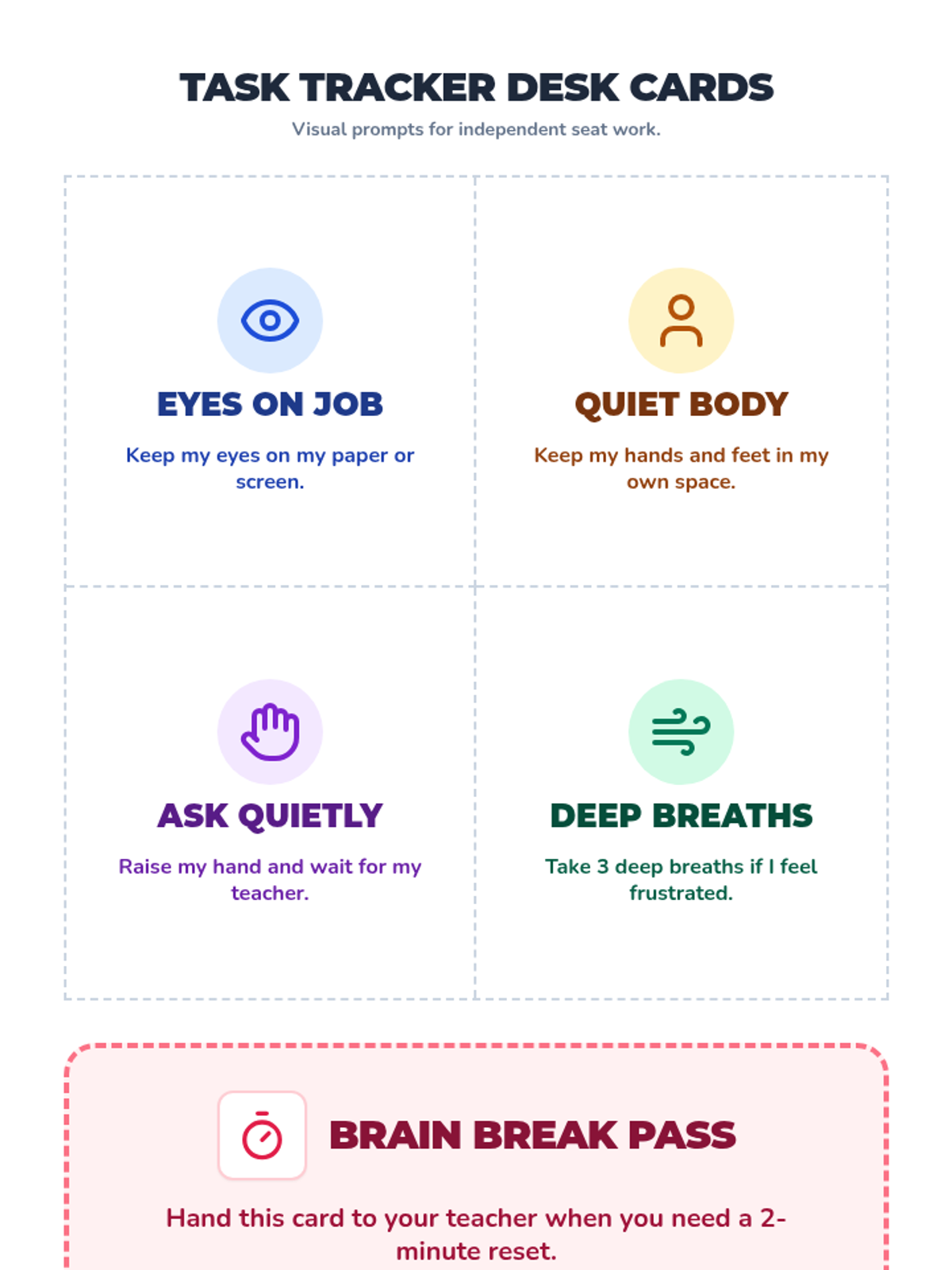
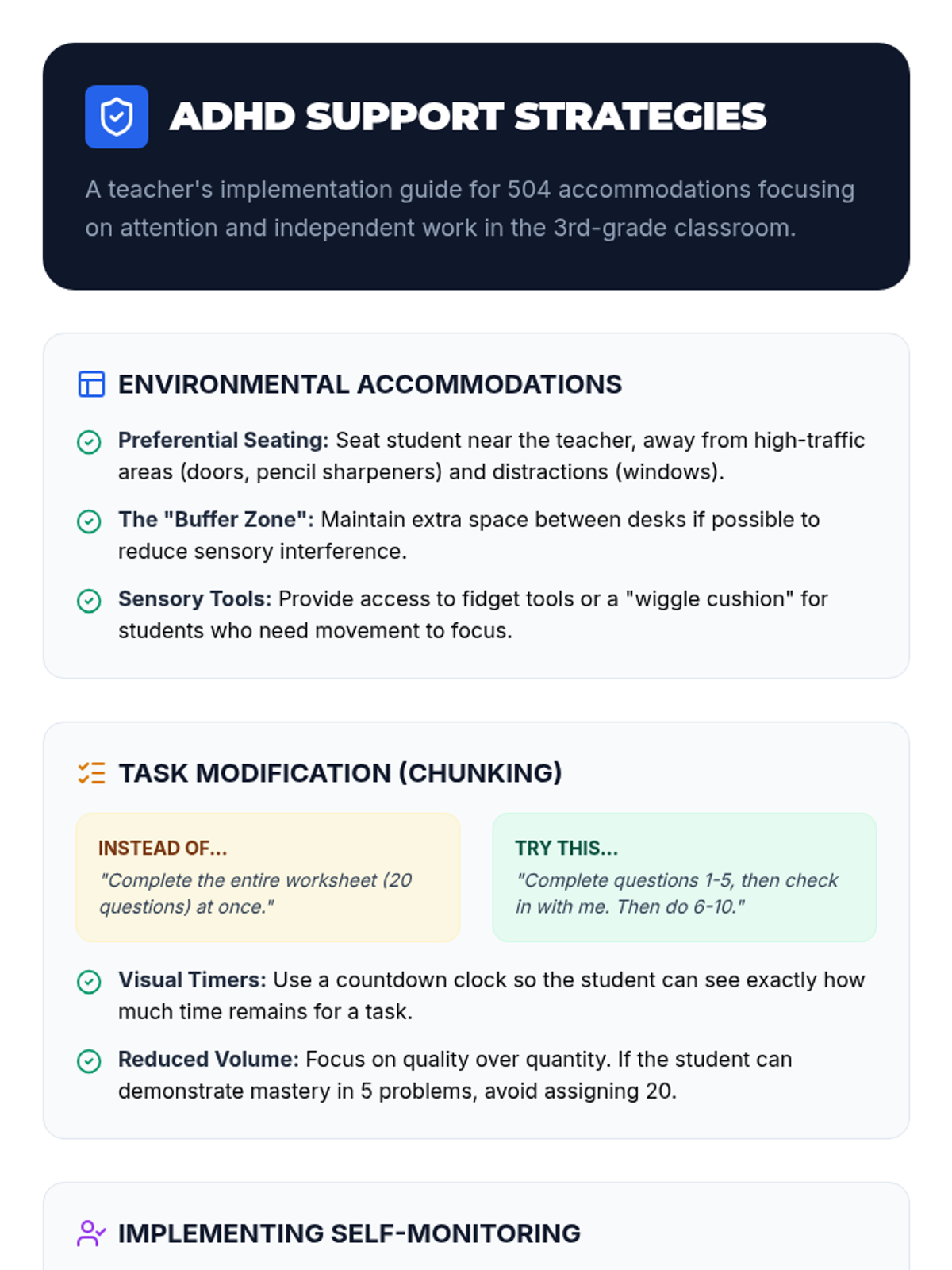
A comprehensive set of tools designed to support 3rd-grade students with ADHD during independent seat work, featuring self-monitoring checklists and visual desk prompts.
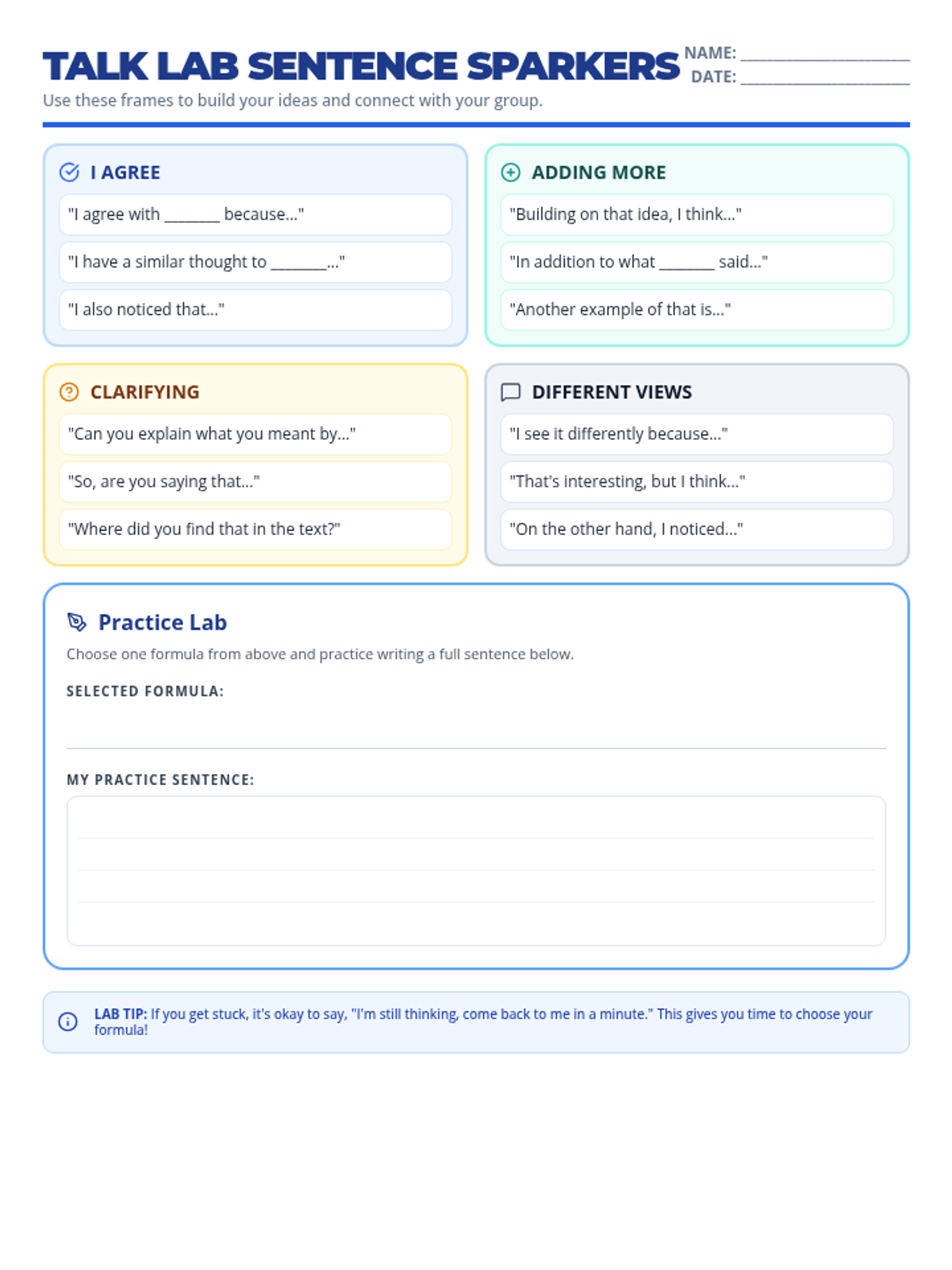
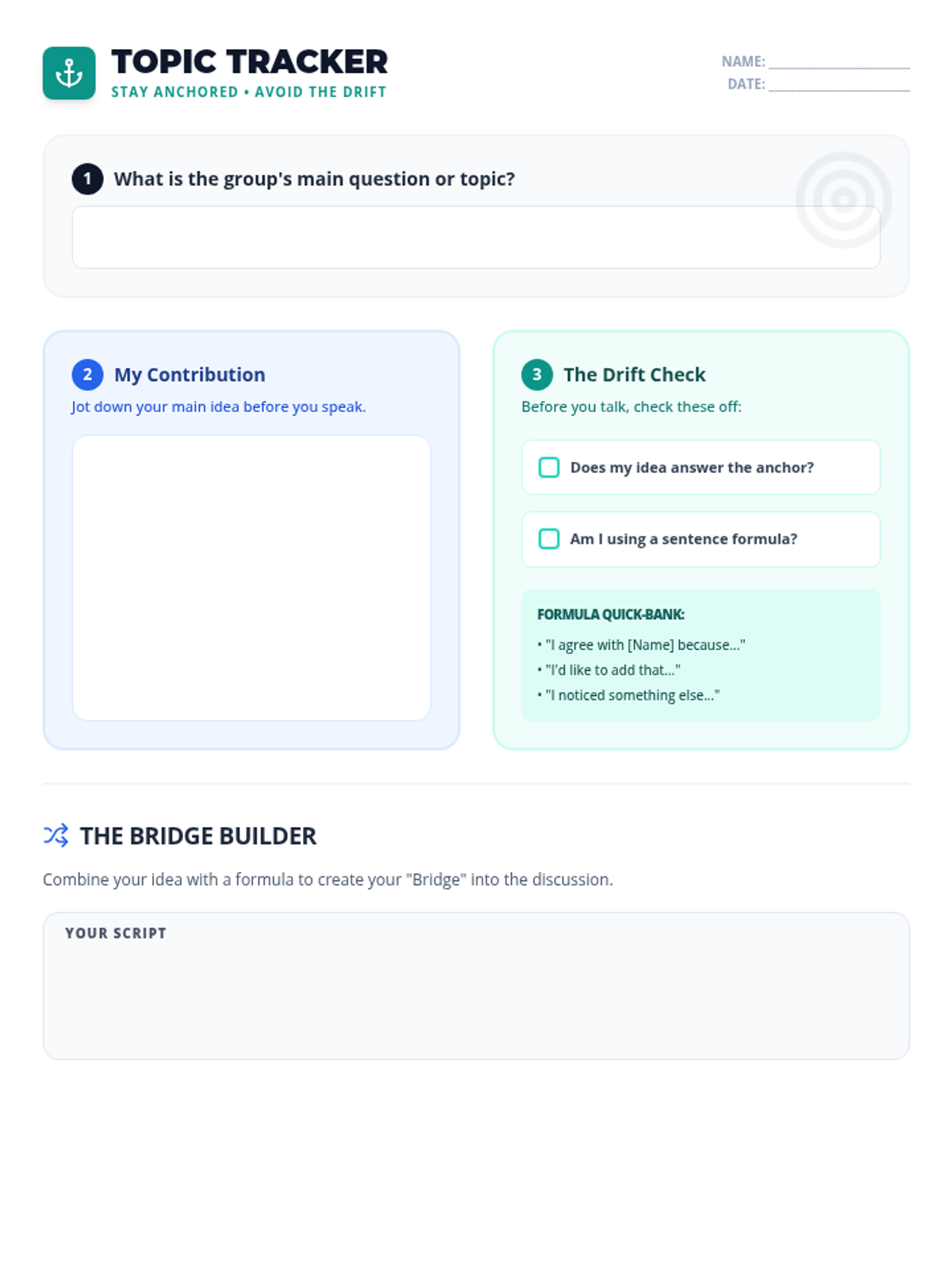
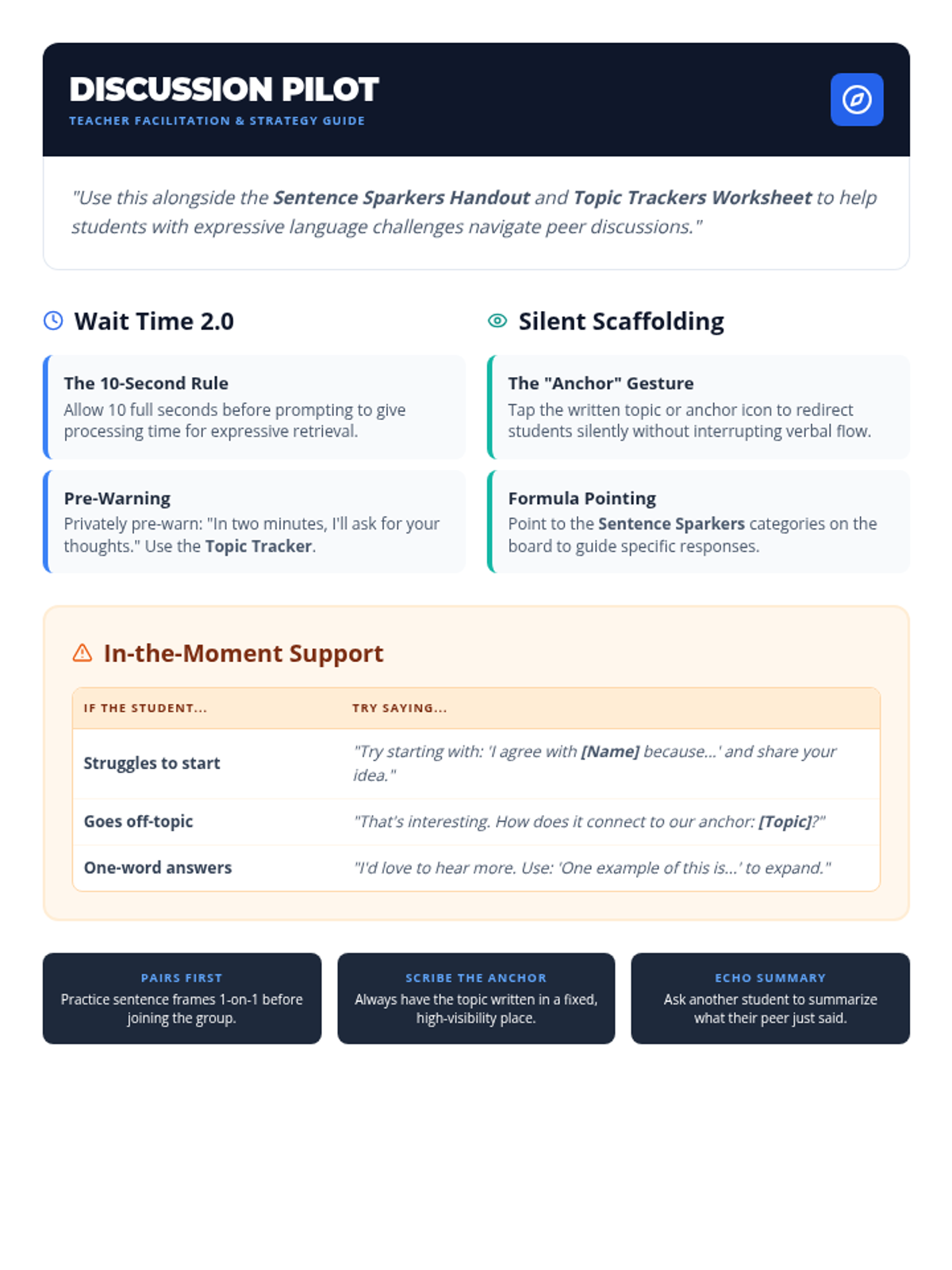
A toolkit designed to help students with expressive language challenges engage meaningfully in group discussions while remaining focused on the core topic.
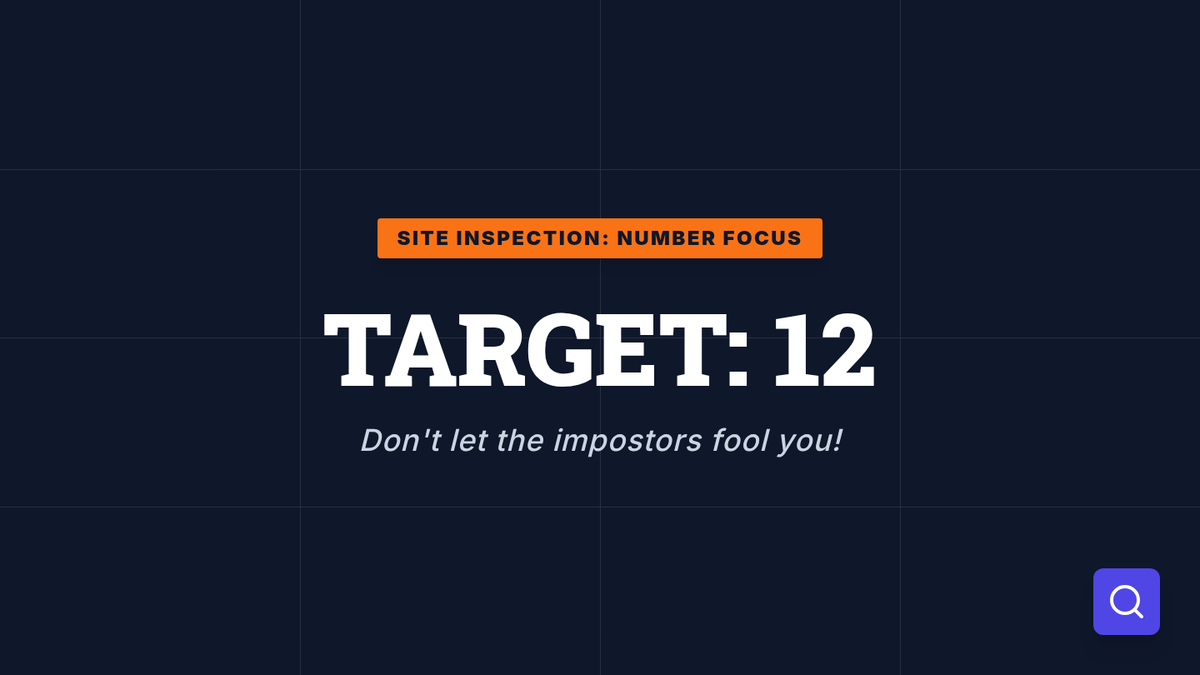
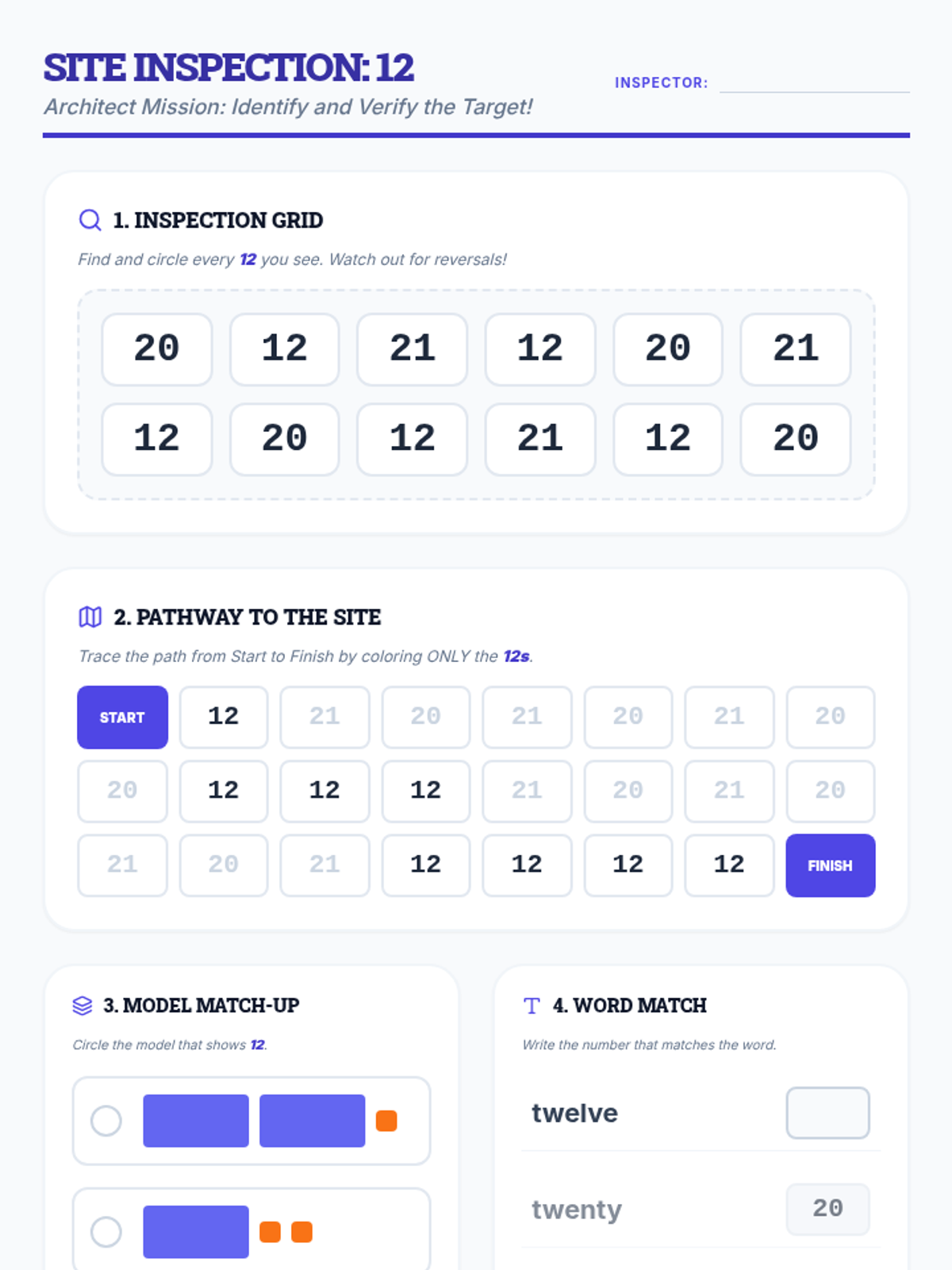
A numeracy lesson helping students distinguish the number 12 from 20 and 21 using place value visualization (one ten, two ones) and 'Architect' inspection strategies.
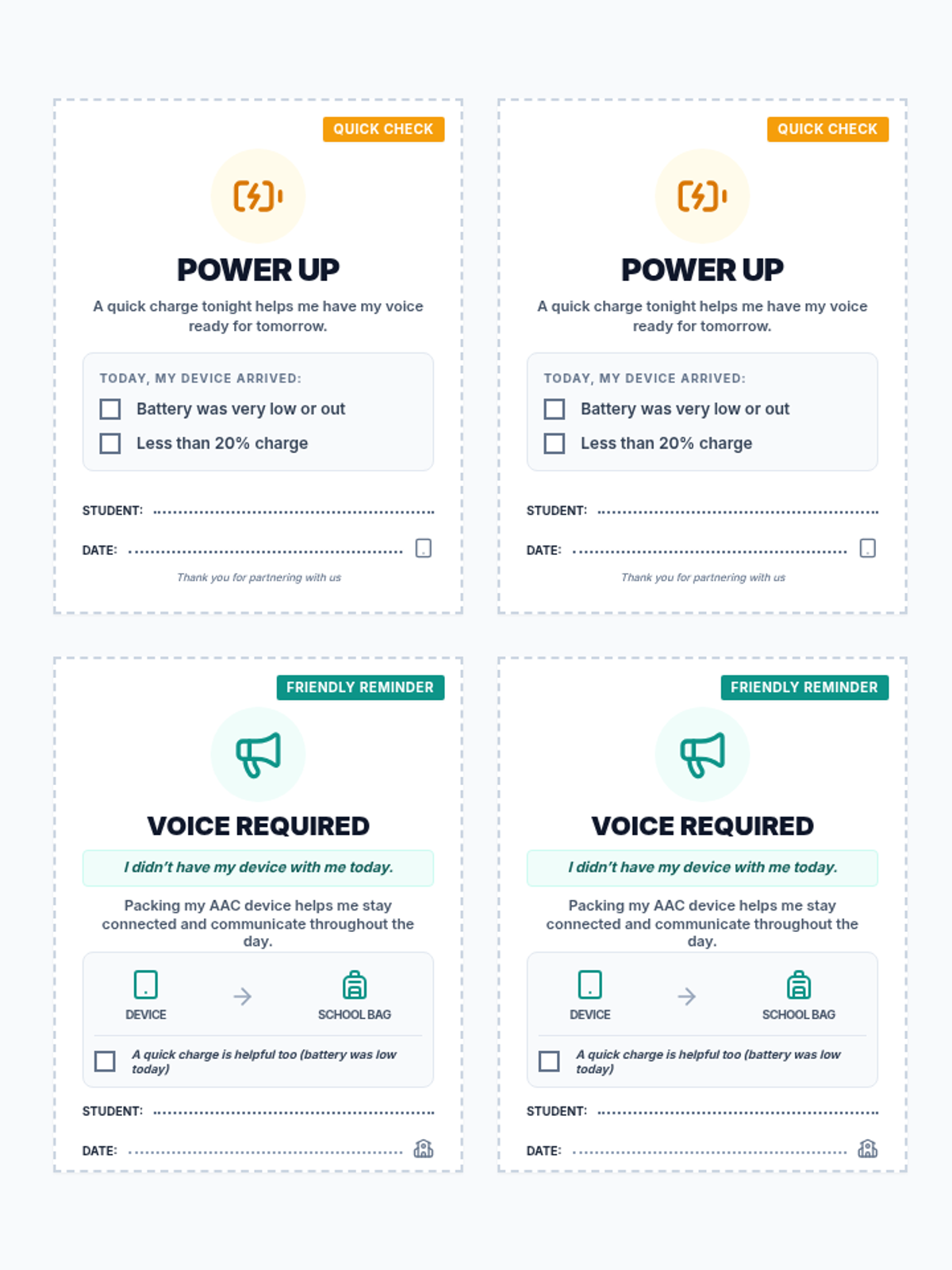
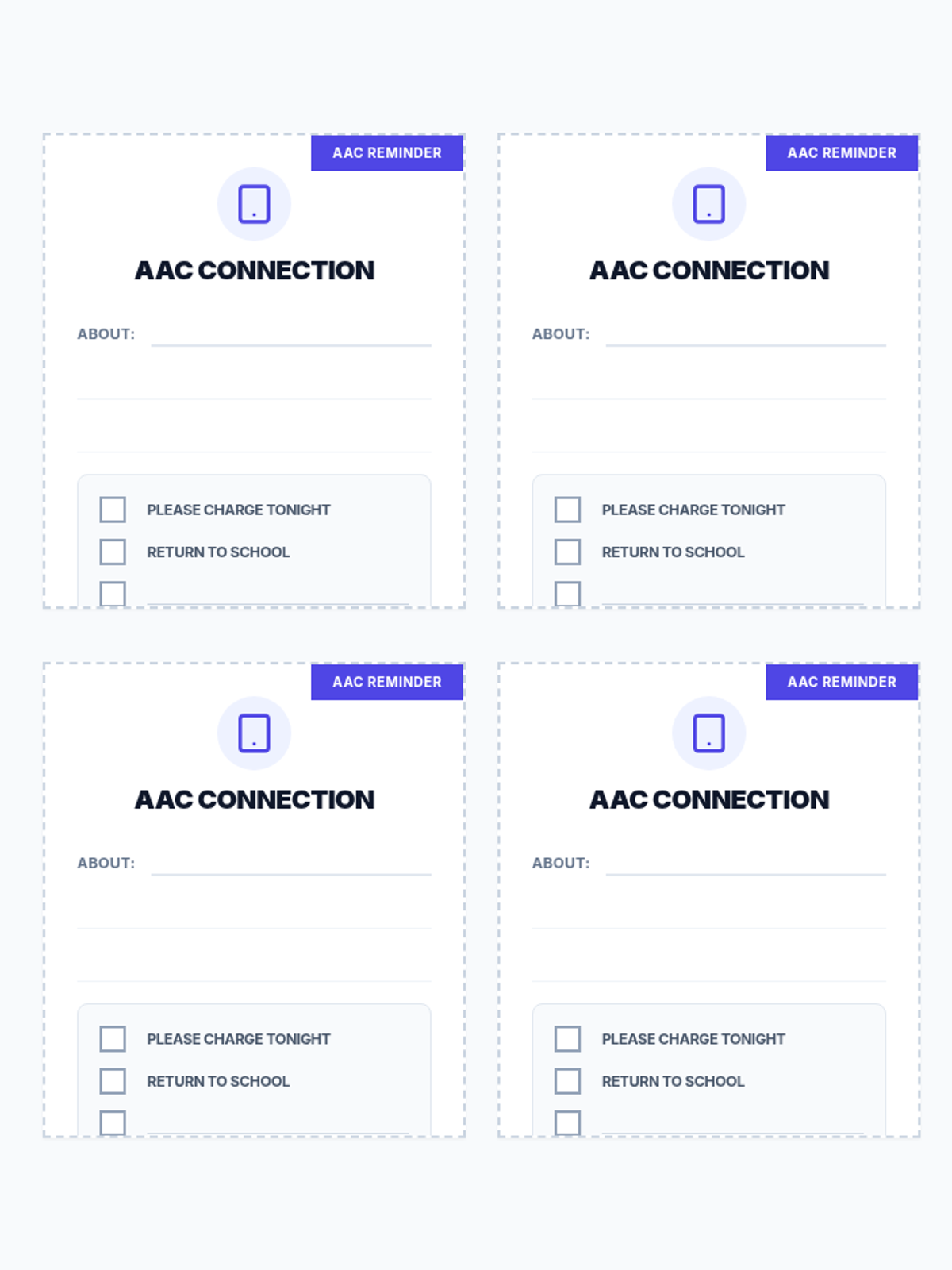
A collection of simple, visual reminder slips to help bridge the gap between home and school for students using AAC devices.
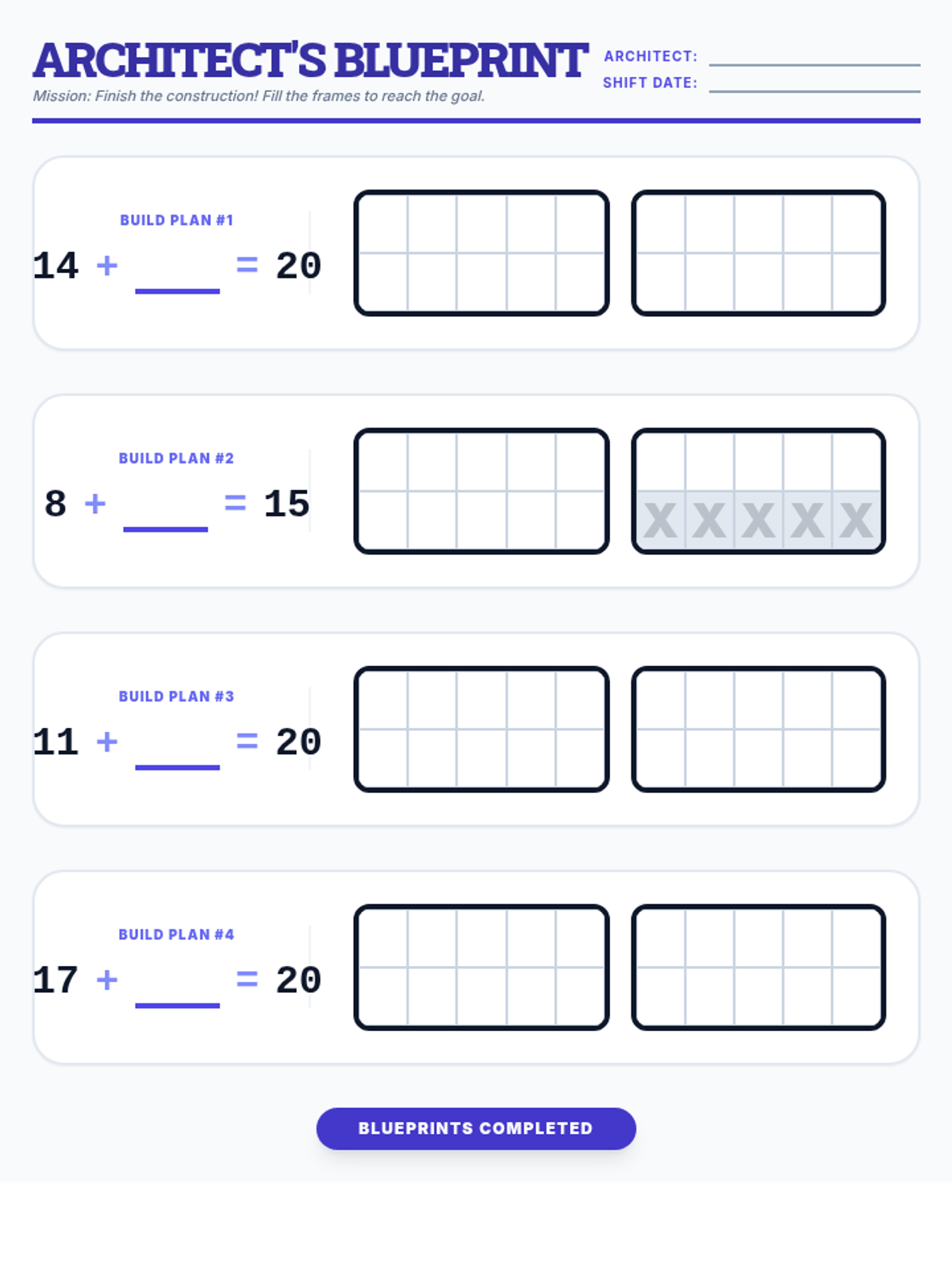
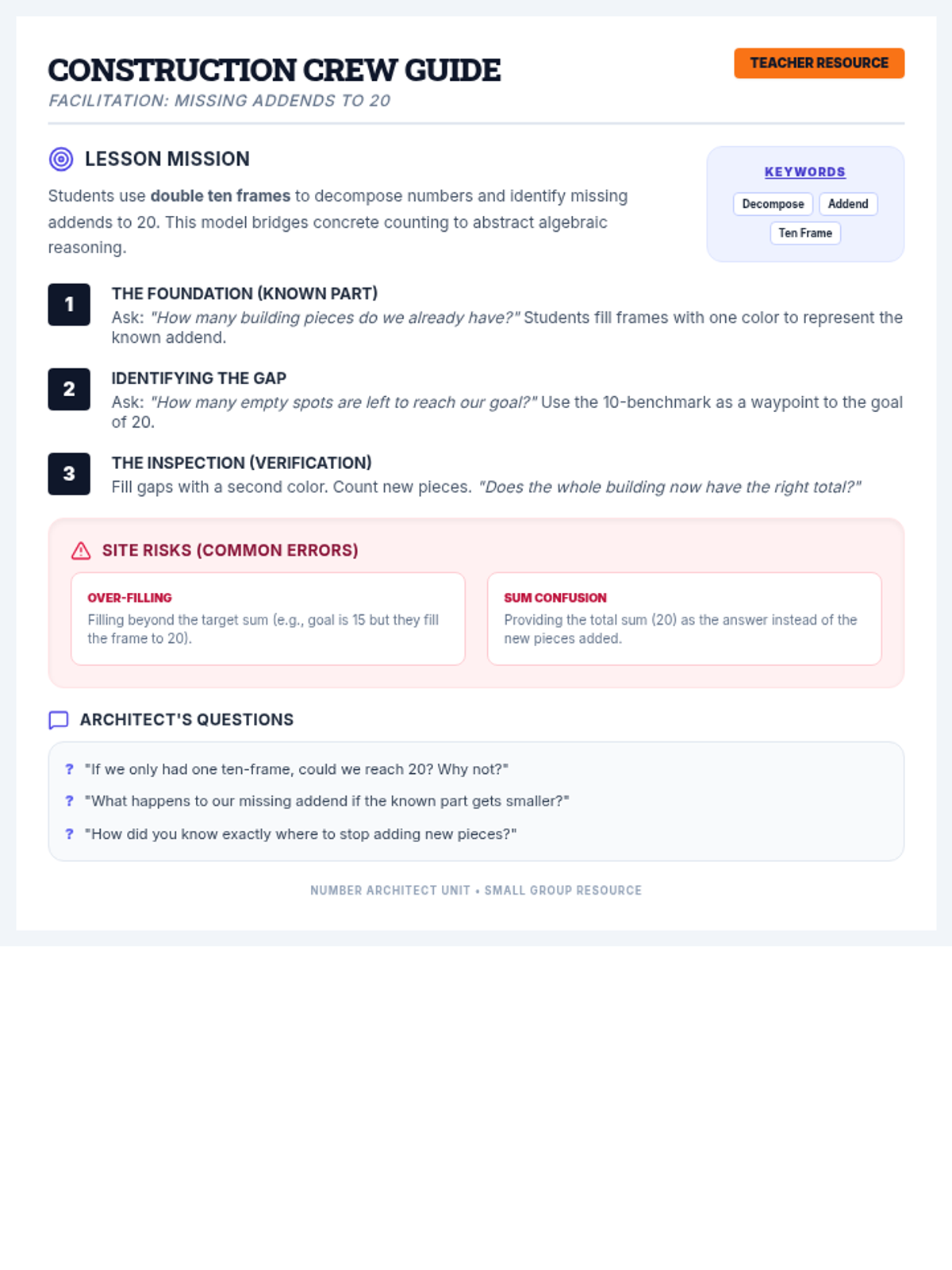
A visual math lesson focused on finding missing addends up to 20 using double ten frames and decomposition strategies. Students act as 'Number Architects' to fill gaps in blueprints.