A scaffolded lesson on graphing and interpreting inequalities on a number line, specifically designed for IEP students with high-visual support and step-by-step instruction.
A focused session on multiplying whole numbers by fractions using visual models and equations, including data tracking for small group instruction.
A comprehensive Tier 2 intervention package designed for middle school students facing social-emotional and behavioral challenges. It includes planning guides for staff and tracking tools for students.
A professional and structured set of templates for creating and monitoring Behavior Support Plans, specifically designed for managing non-compliance in the classroom.
A set of ELA and Math visual task cards designed for students preparing for the Extend 1 alternate assessment, featuring high-contrast visuals and simplified choices.
A lesson focused on comparing fractions with unlike denominators and numerators using the cross-multiplication (butterfly) strategy. Students will learn to visualize the process and use comparison symbols accurately.
Synthesizes all methods to solve real-world problems and identifies the most efficient method through inspection.
Covers the elimination method, including cases that require multiplying one or both equations to create matching coefficients.
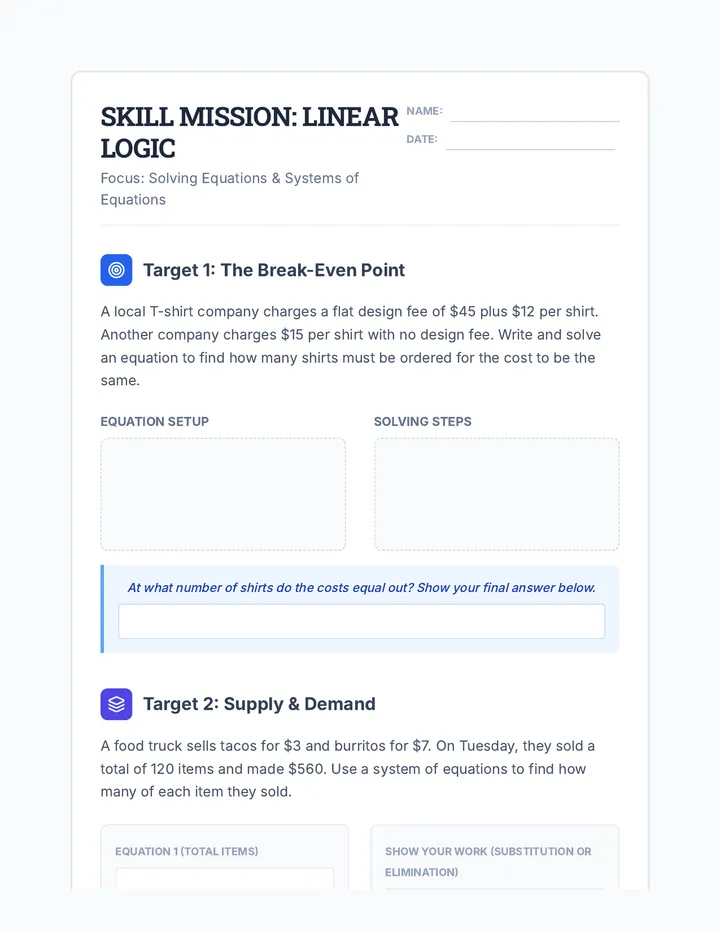
Teaches the substitution method for solving systems of equations, focusing on isolating variables and plugging them into the second equation.
Focuses on graphing systems of equations and identifying the three types of solutions: one solution, no solution, and infinitely many solutions.
This lesson introduces the cross-multiplication (Butterfly Method) strategy for comparing fractions with unlike denominators and numerators. Students will follow a step-by-step checklist to find cross-products and determine which fraction is greater.
A focused lesson on comparing fractions with unlike denominators using the cross-multiplication method, featuring a medieval dueling theme.
A cumulative review challenge where students compare multiple representations to solve 'boss level' problems.
Focuses on translating between equations (y=mx) and other representations to compare proportional relationships.
Focuses on comparing two proportional relationships using graphs and tables to determine which has a greater unit rate.

Focuses on interpreting unit rate as the slope of a graph and calculating slope from proportional tables.
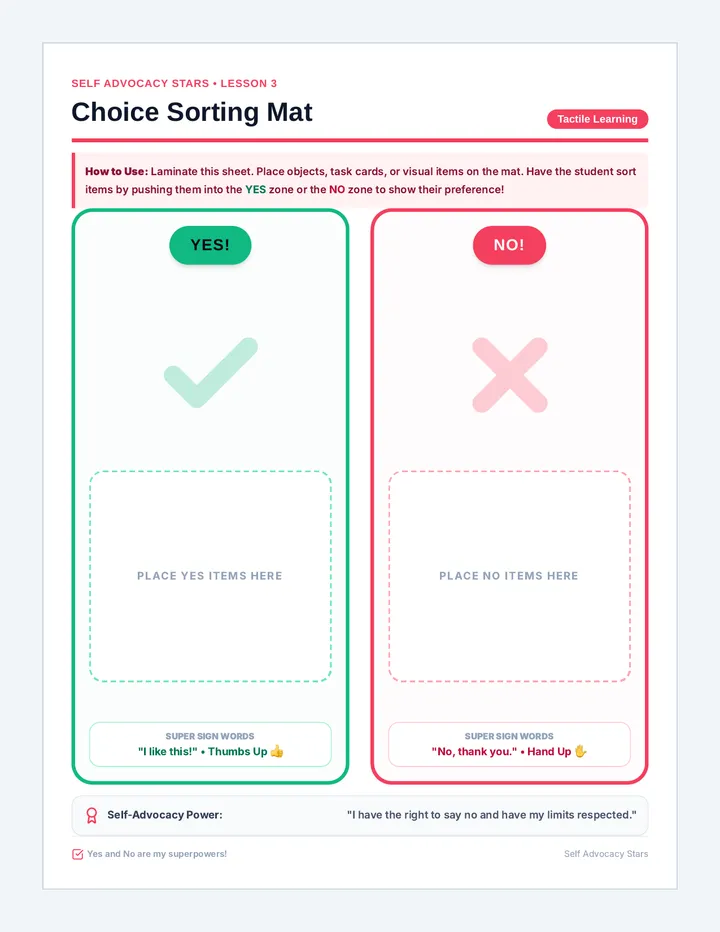
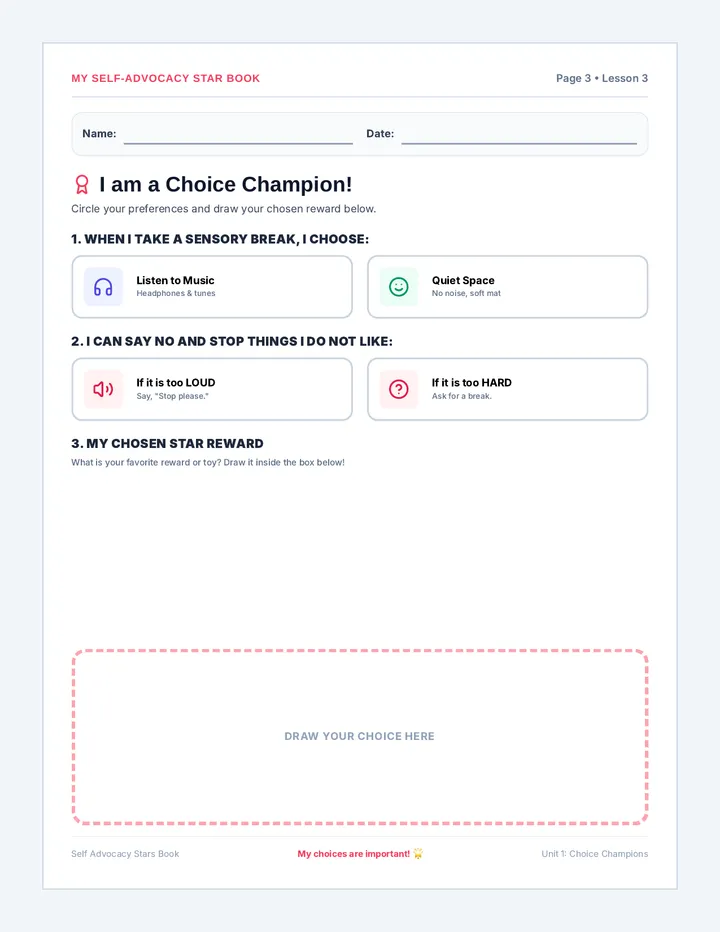
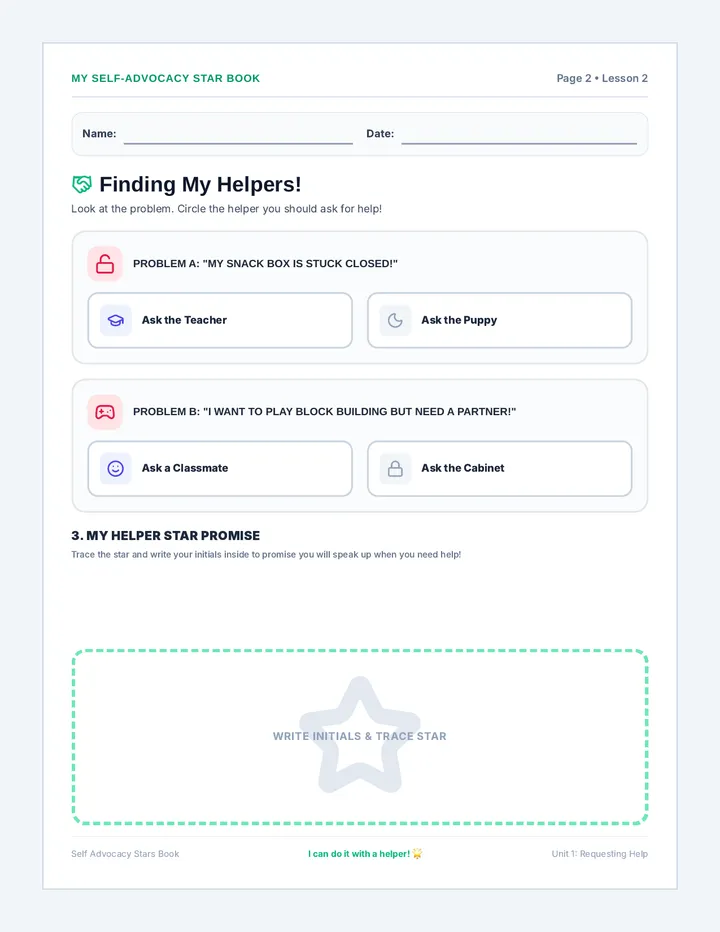
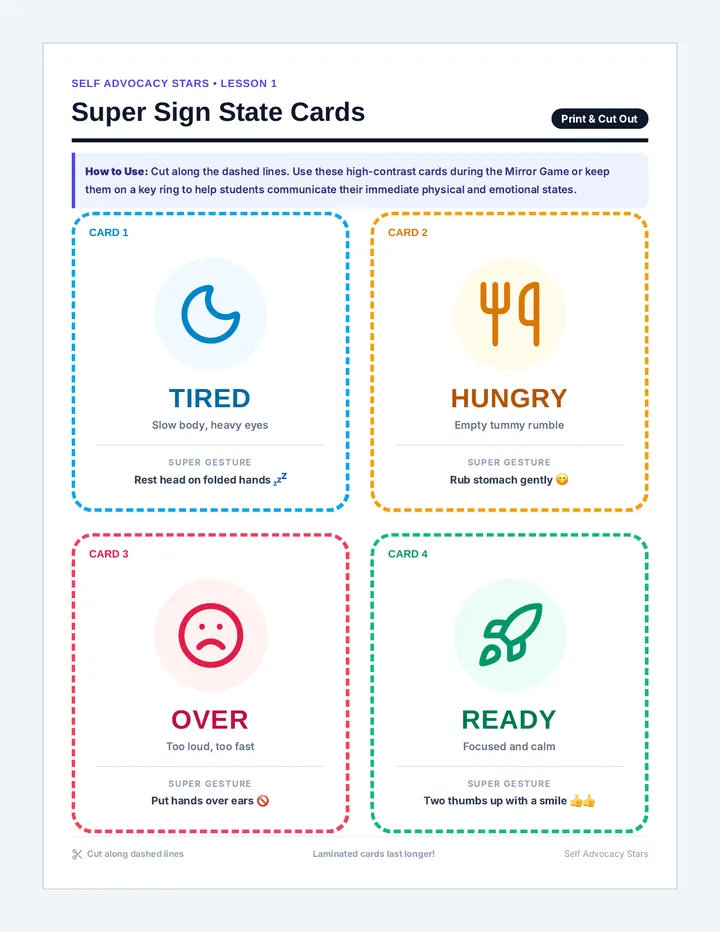
A 12-week communication and routine-building program for nonverbal early intervention, focusing on choice-making and visual schedules.

Using area models to recognize and explain the difference between rational perfect squares and irrational non-perfect squares.
Solving equations in the form x squared = p and x cubed = p, where p is a positive rational number.