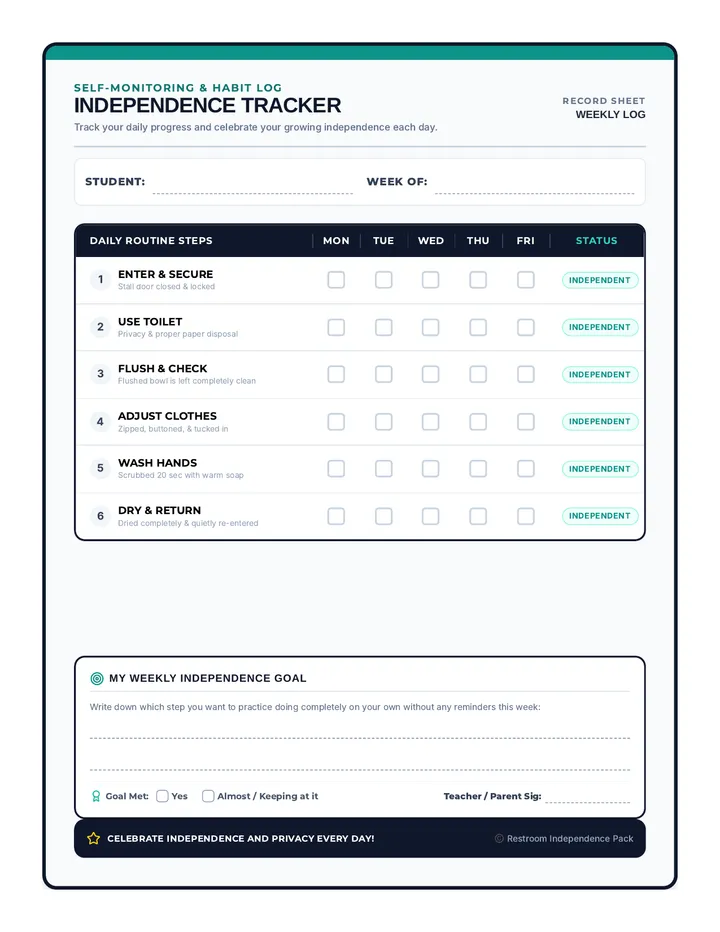
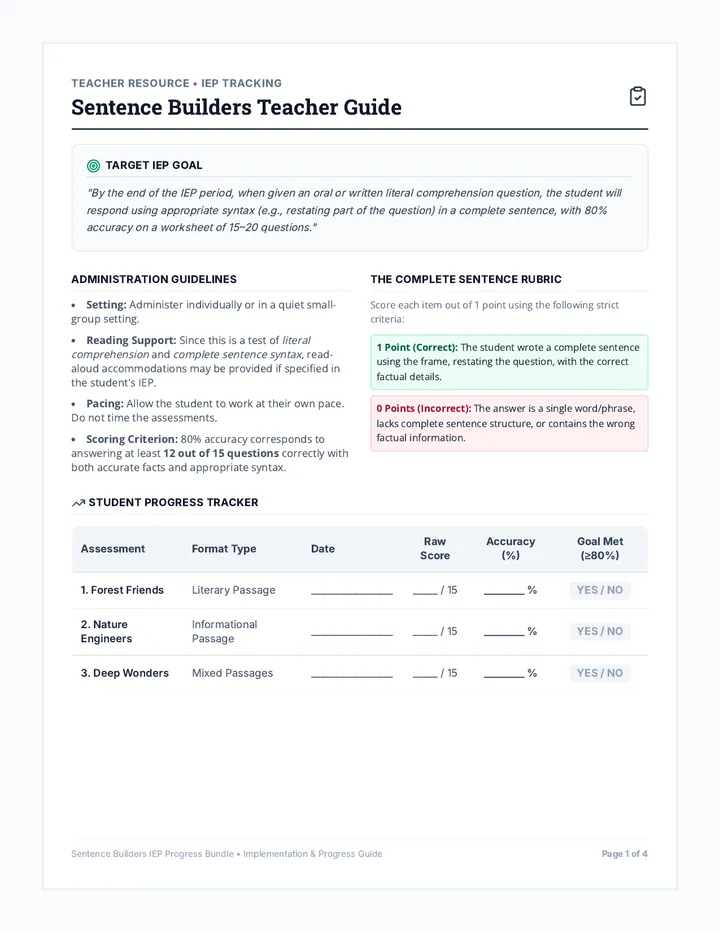
Designing long-term progress monitoring systems and rubrics to track accommodation effectiveness.
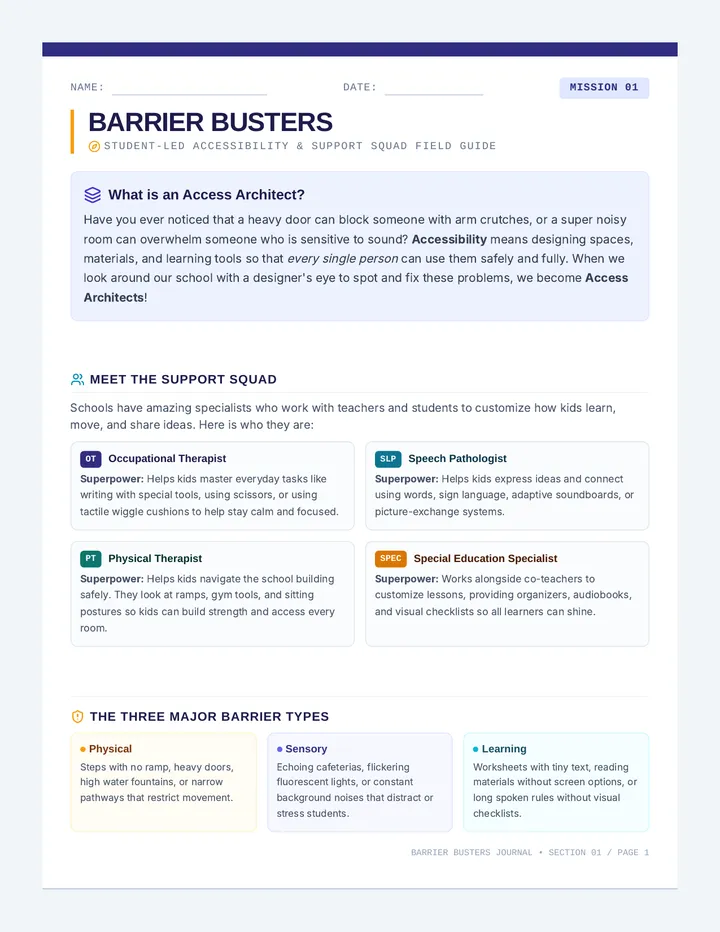
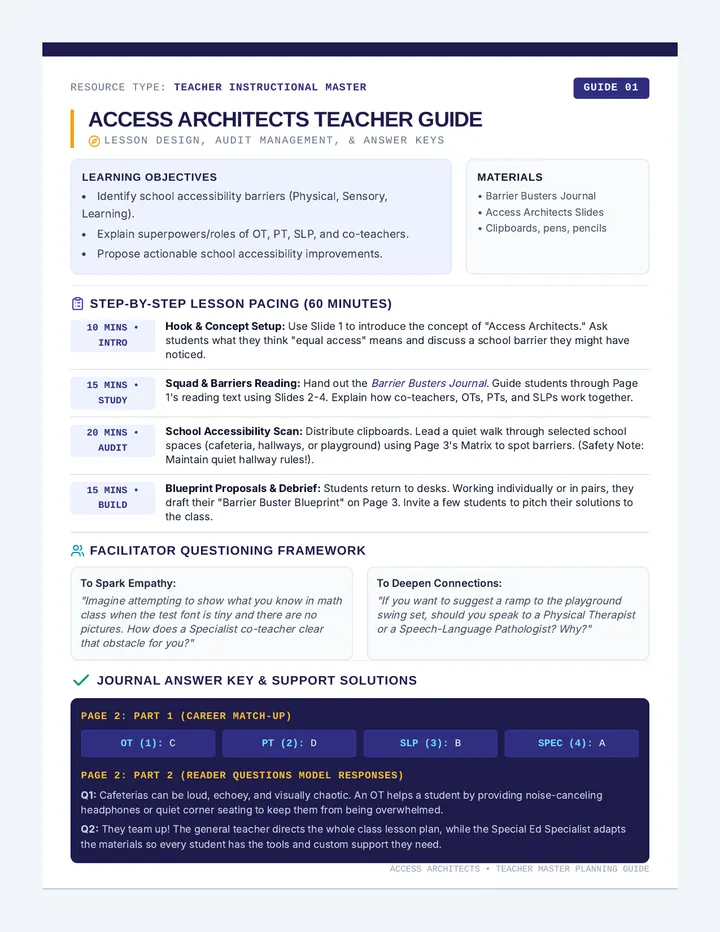
A student-led advocacy lesson focused on identifying school accessibility barriers and understanding special education careers. Students learn to collaborate with specialists, co-teachers, and therapists to make their school welcoming and accessible to everyone.
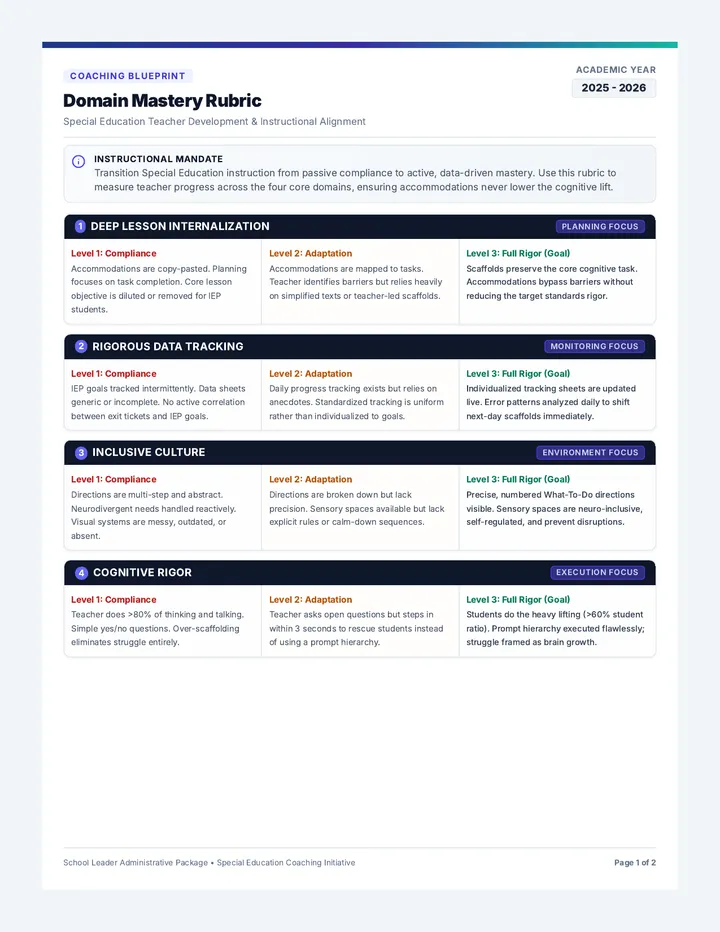
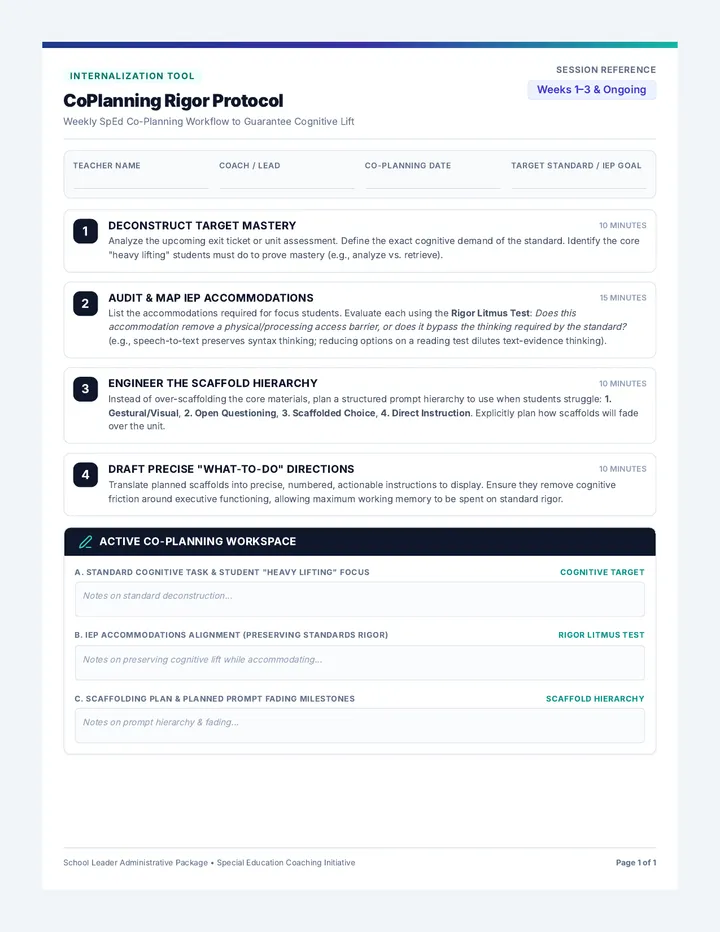
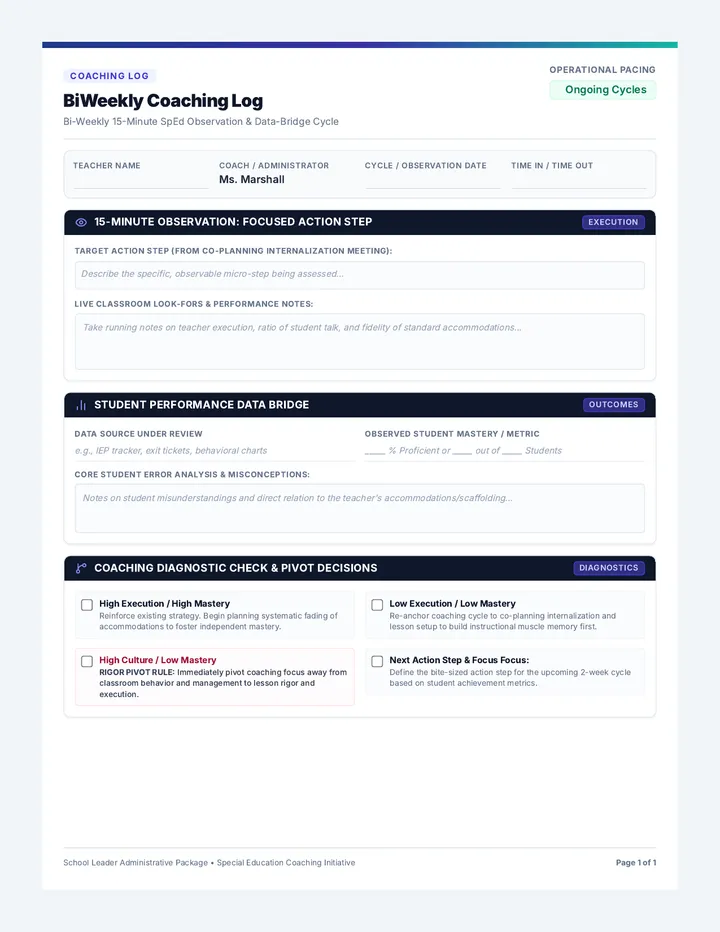
A comprehensive administrative coaching package designed to help school leaders transition Special Education teachers from general compliance monitoring to a highly responsive, data-driven coaching model across four core instructional domains.
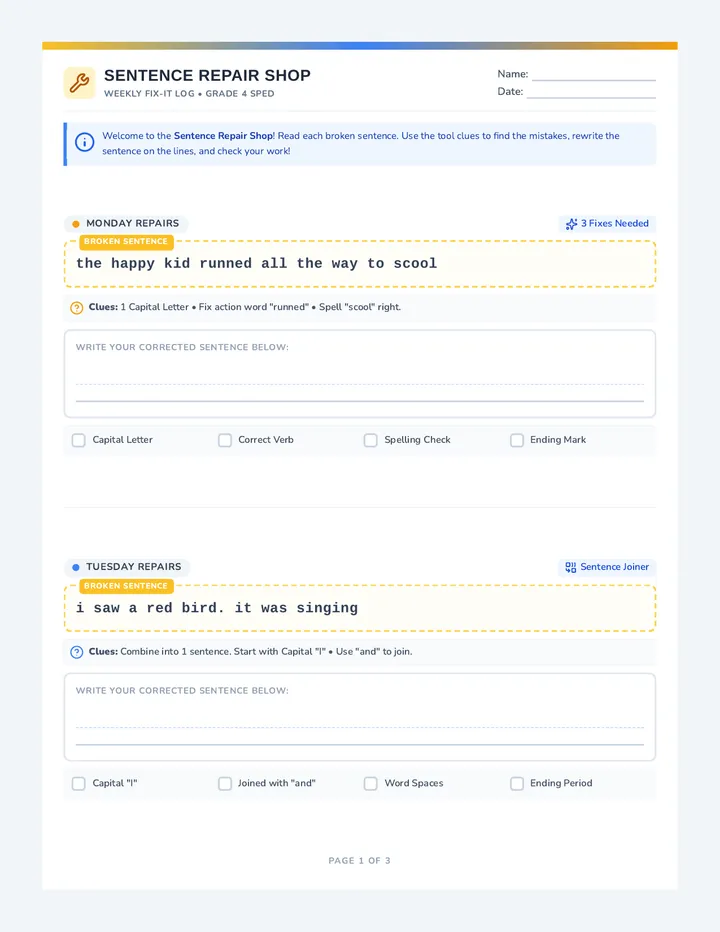
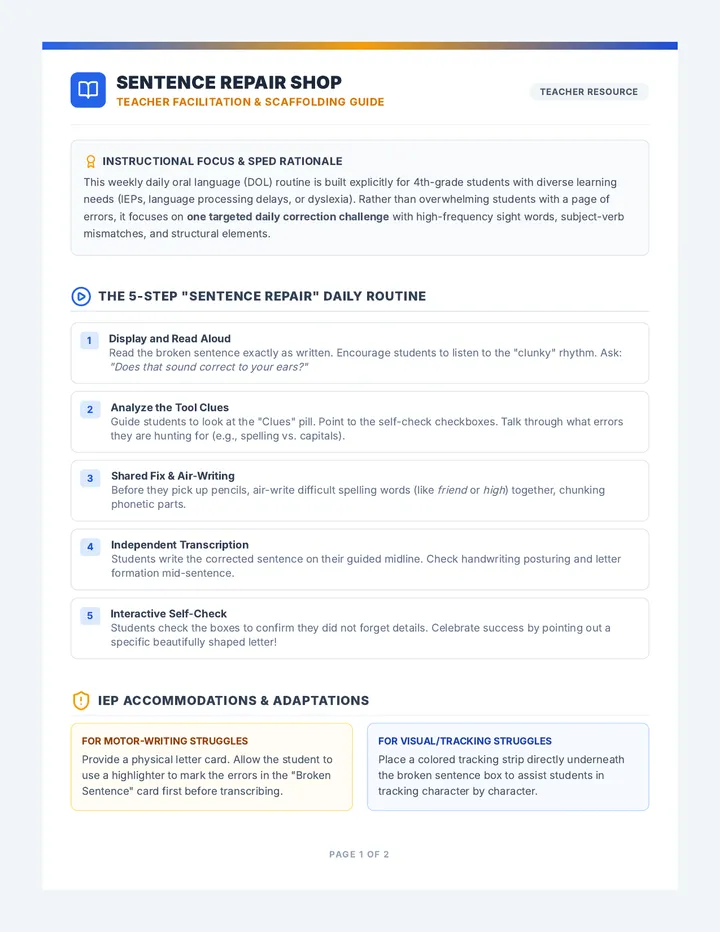
A structured weekly daily oral language (DOL) routine for 4th-grade special education students, focusing on sentence combining, subject-verb agreement, sight word spelling, and punctuation. Features scaffolding, systematic practice, and highly legible layouts.
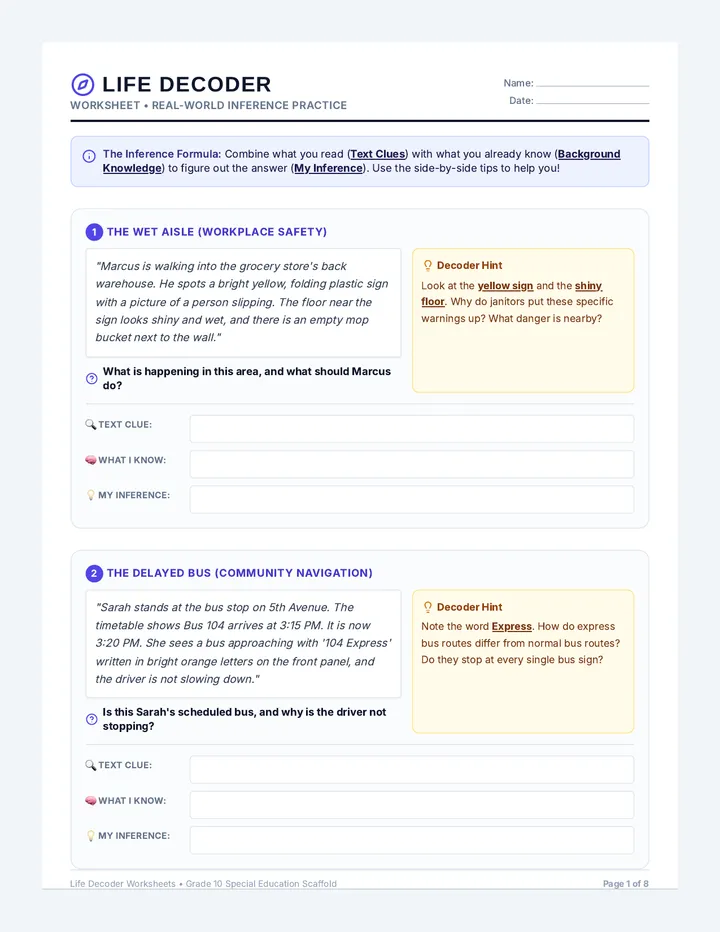
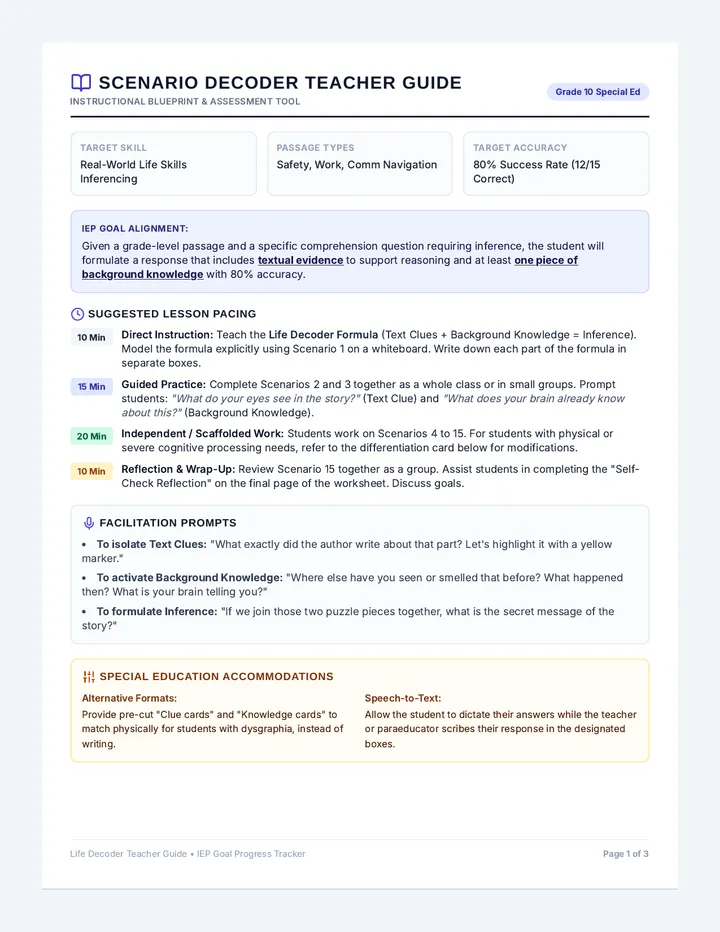
A lesson focused on developing real-world inferencing skills for tenth-grade students with special needs. Through life-skills scenarios, students learn to combine textual clues with prior knowledge to make logical conclusions.
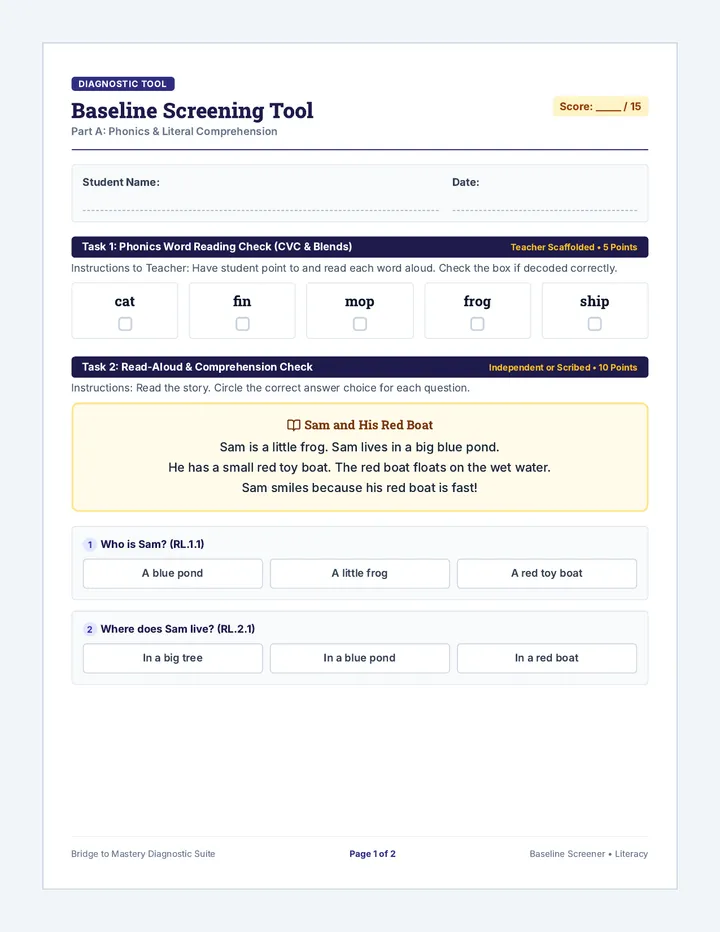
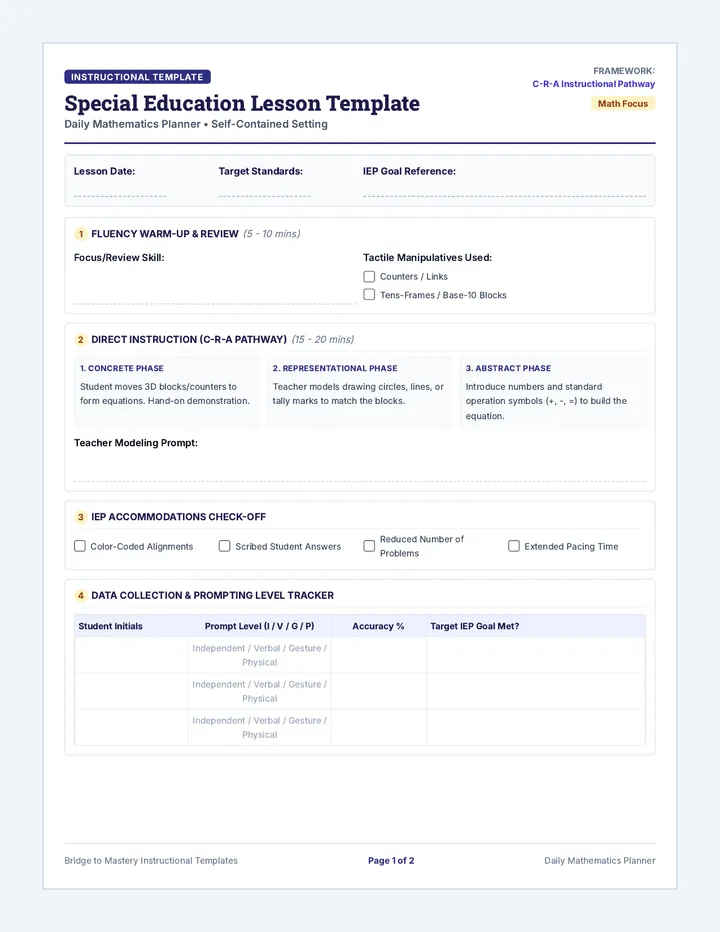
A collection of diagnostic screeners and specialized lesson planning templates designed for self-contained special education classrooms. These tools provide baseline student data and structure multi-sensory lessons to achieve target IEP goals.
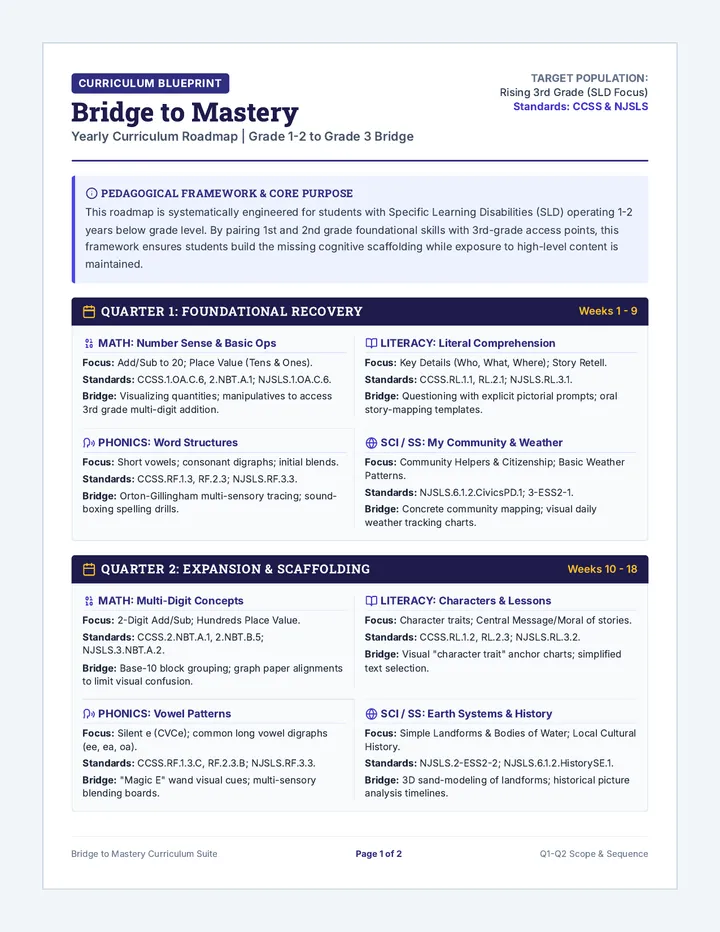
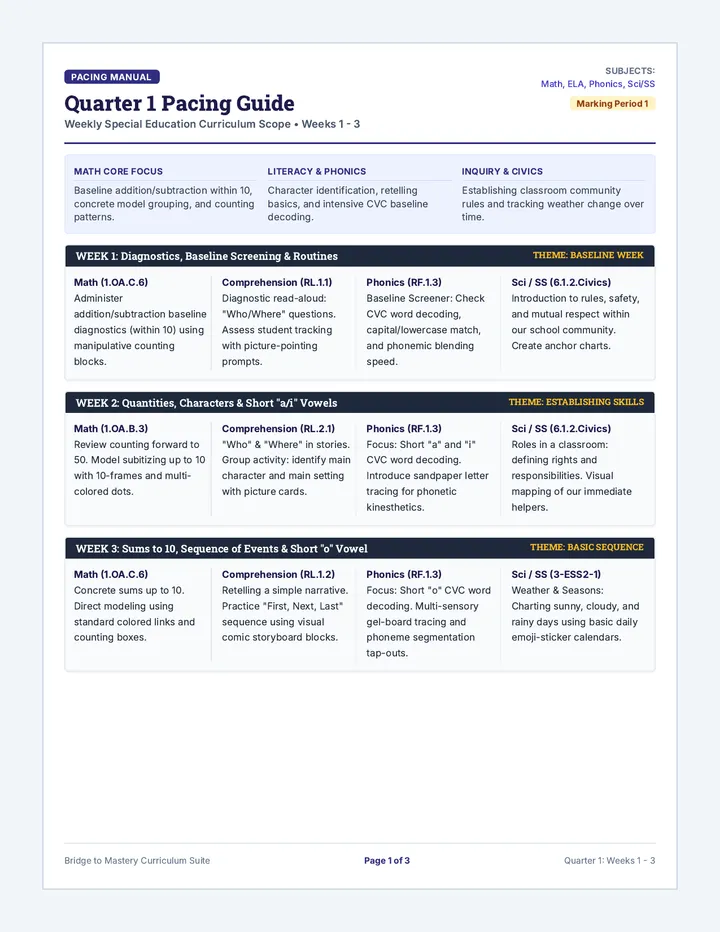
High-level and detailed academic roadmaps outlining the bridging of CCSS and NJSLS for SLD students. It provides a structured, standards-aligned pathway to close foundational gaps and transition towards grade-level concepts.
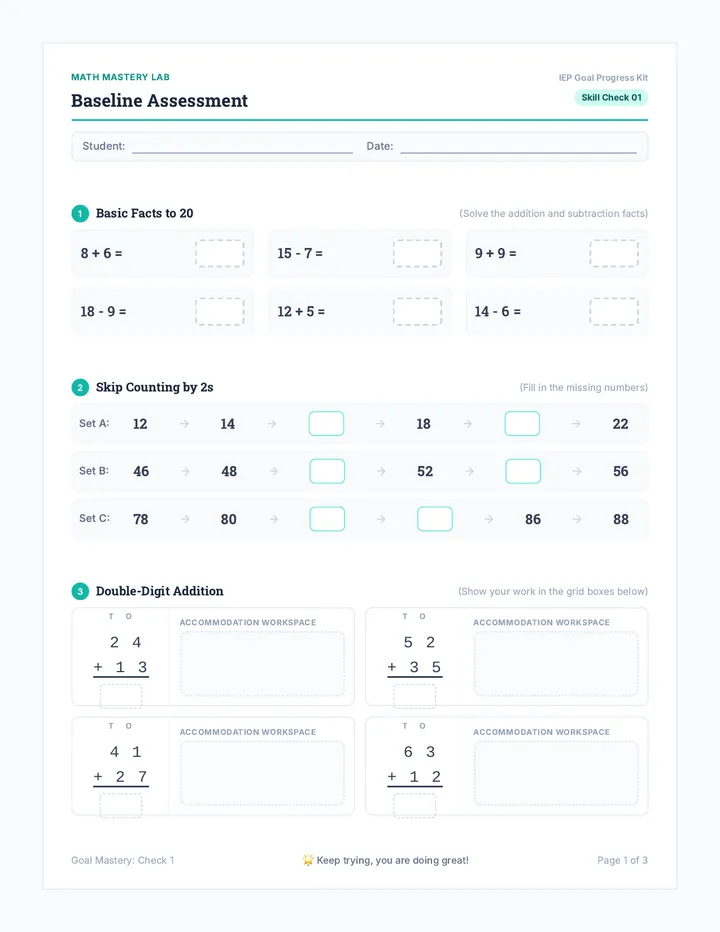
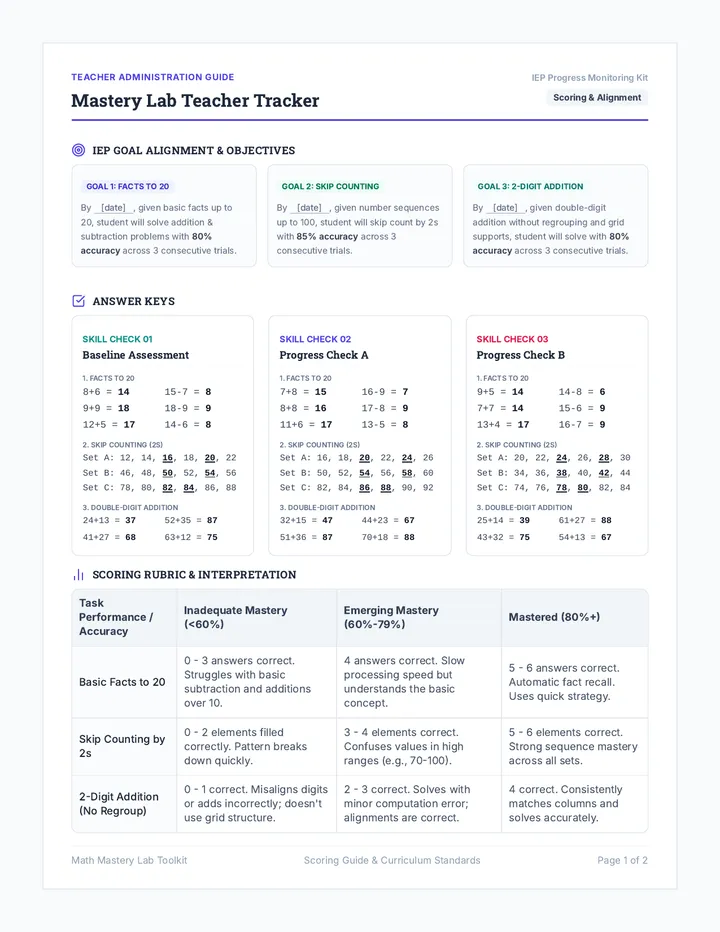
A comprehensive IEP progress monitoring assessment kit featuring baseline and progress checks for skip counting, basic facts to 20, and double-digit addition without regrouping.
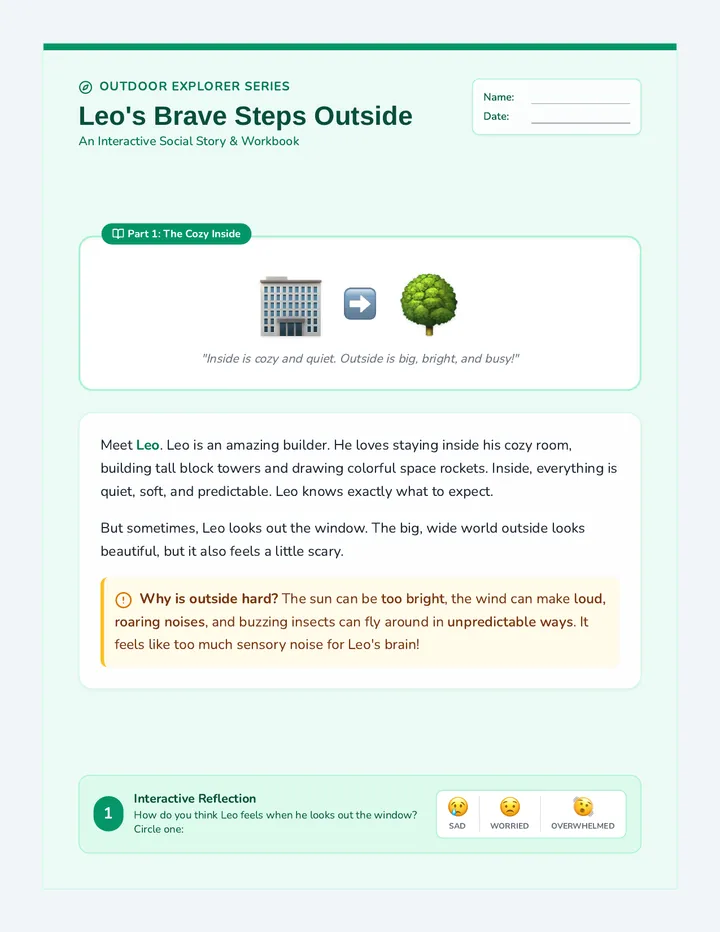
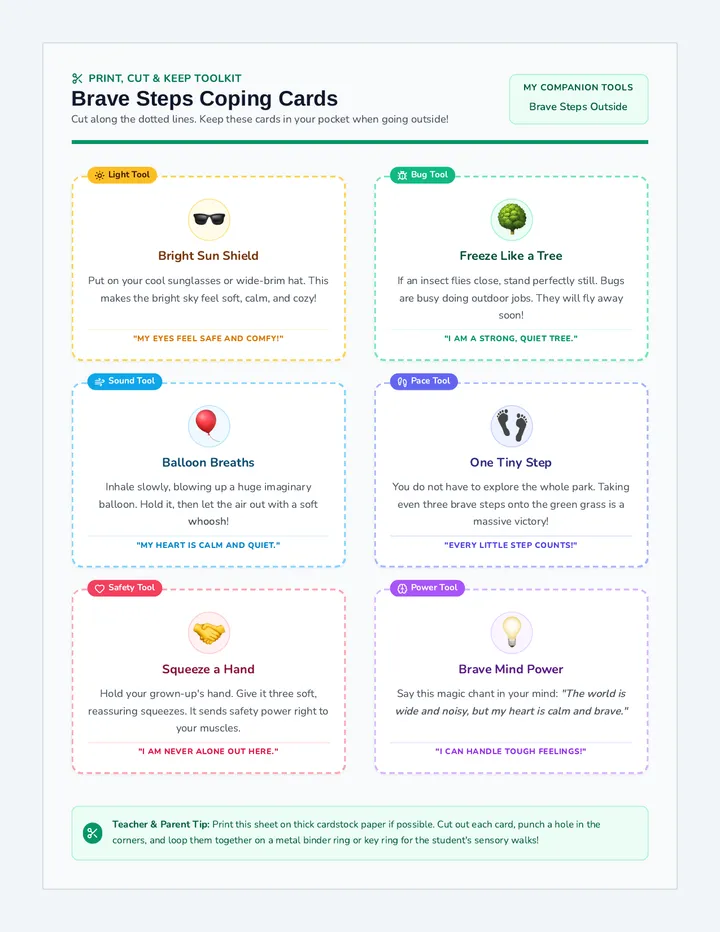
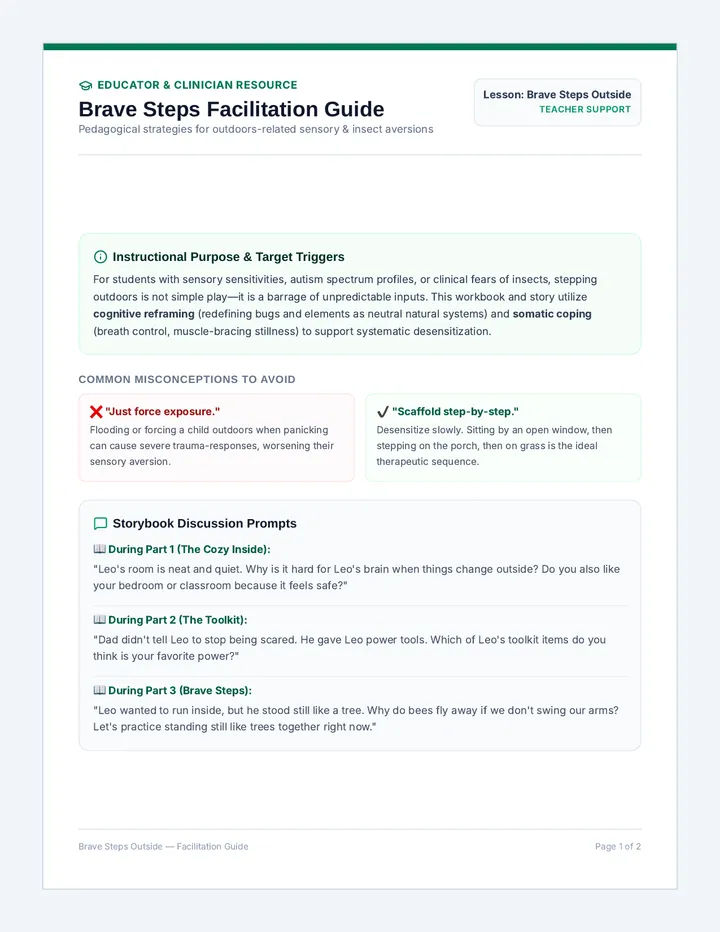
A comprehensive social emotional learning lesson designed to help children navigate fears of the outdoors, specifically focusing on sensory overload (loud noises, bright lights, weather) and unpredictable insects. Includes an interactive social story workbook, visual coping cards, and a teacher support guide.
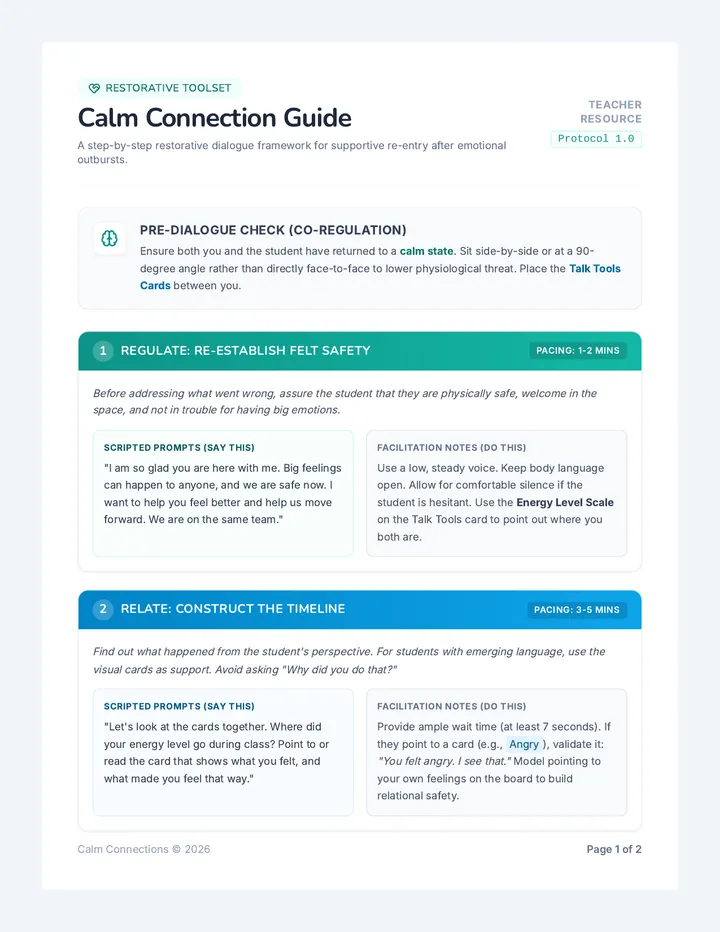
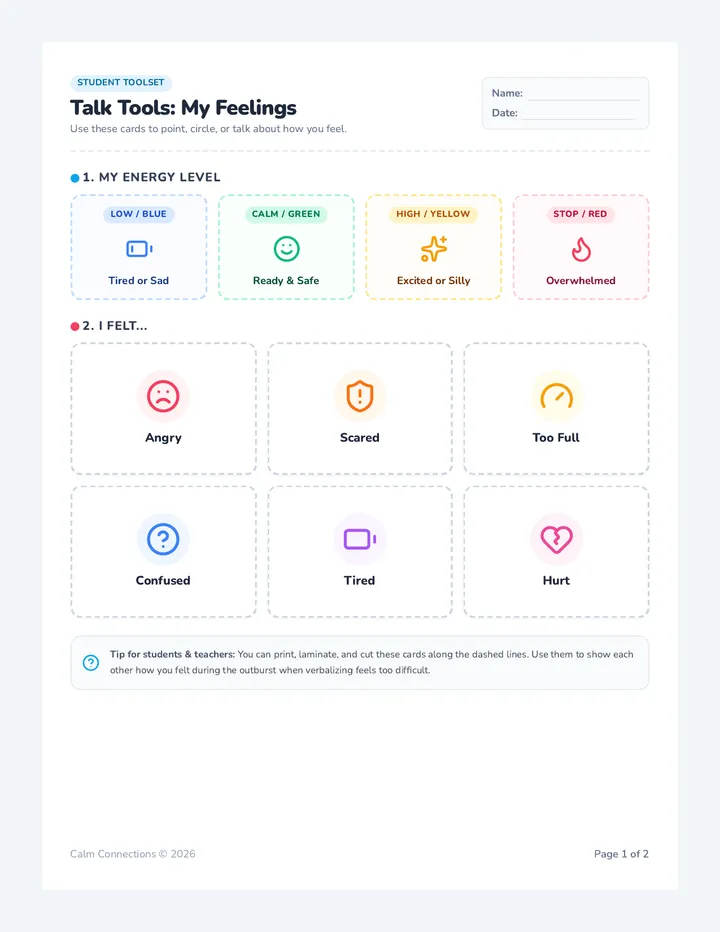
A comprehensive restorative dialogue system designed to repair relationships and re-integrate students after emotional outbursts, featuring a teacher scripting guide and highly visual student communication support cards.
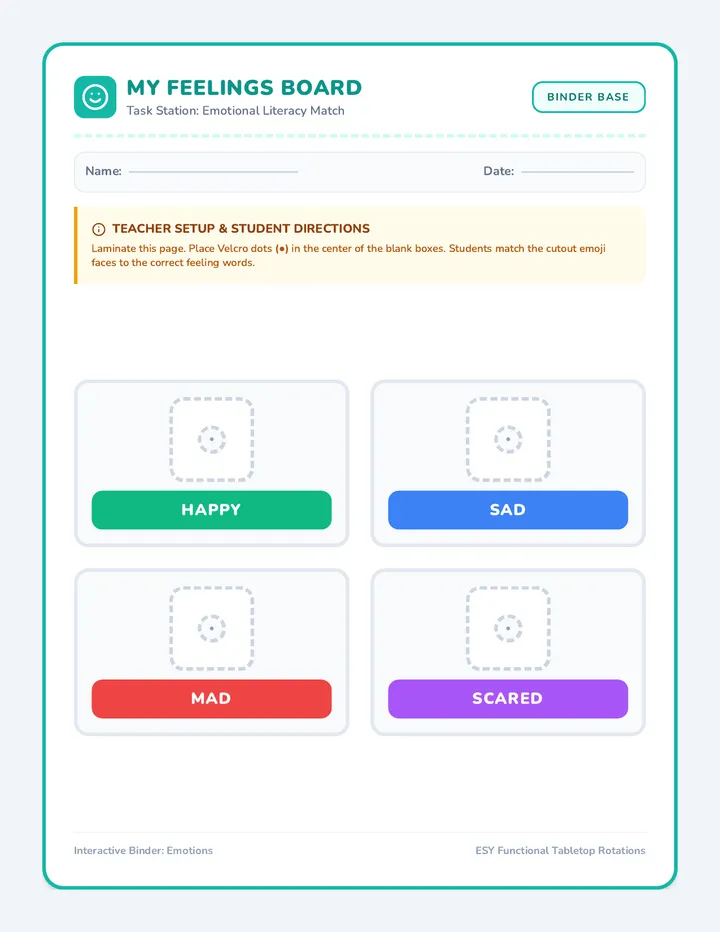
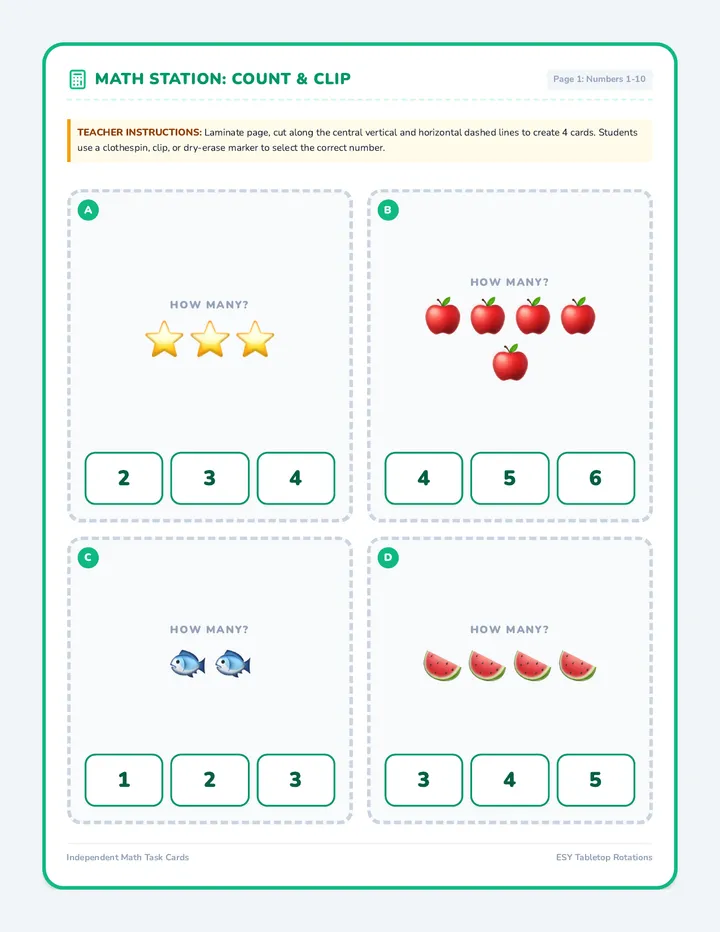
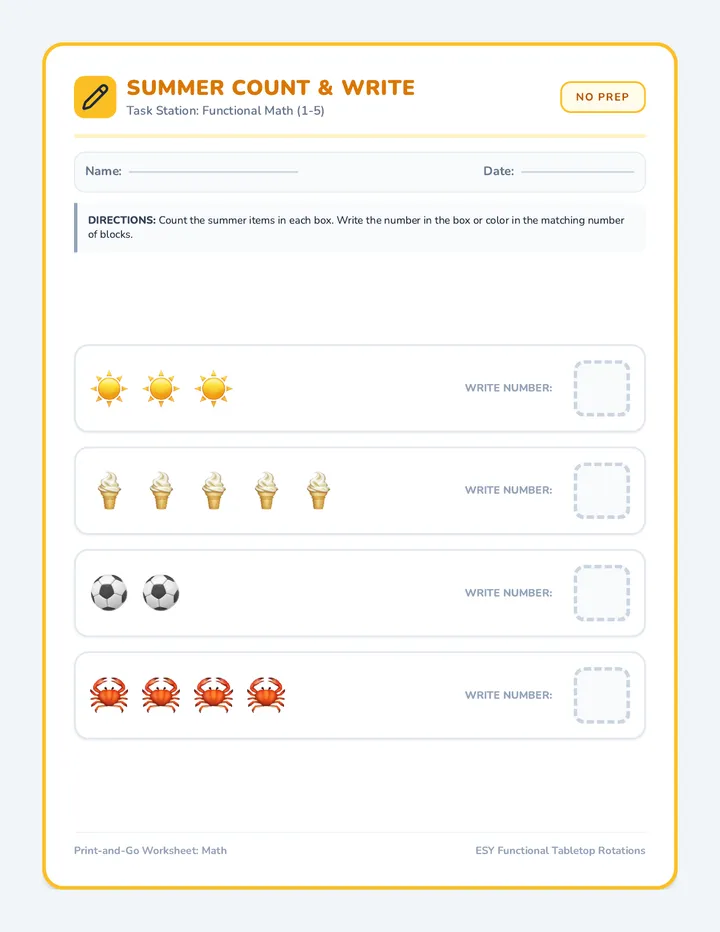
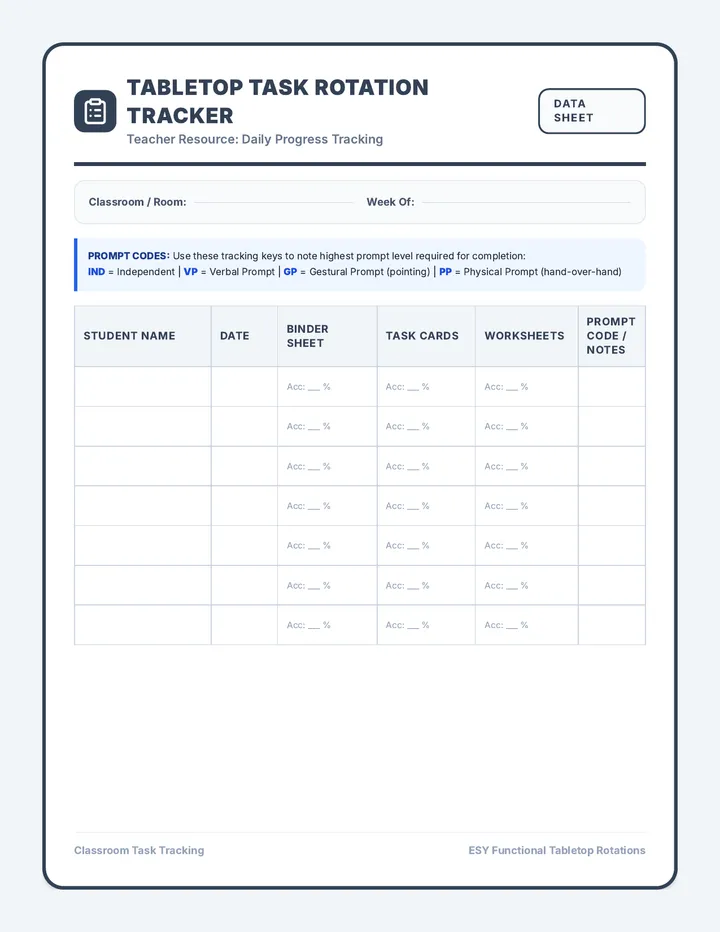
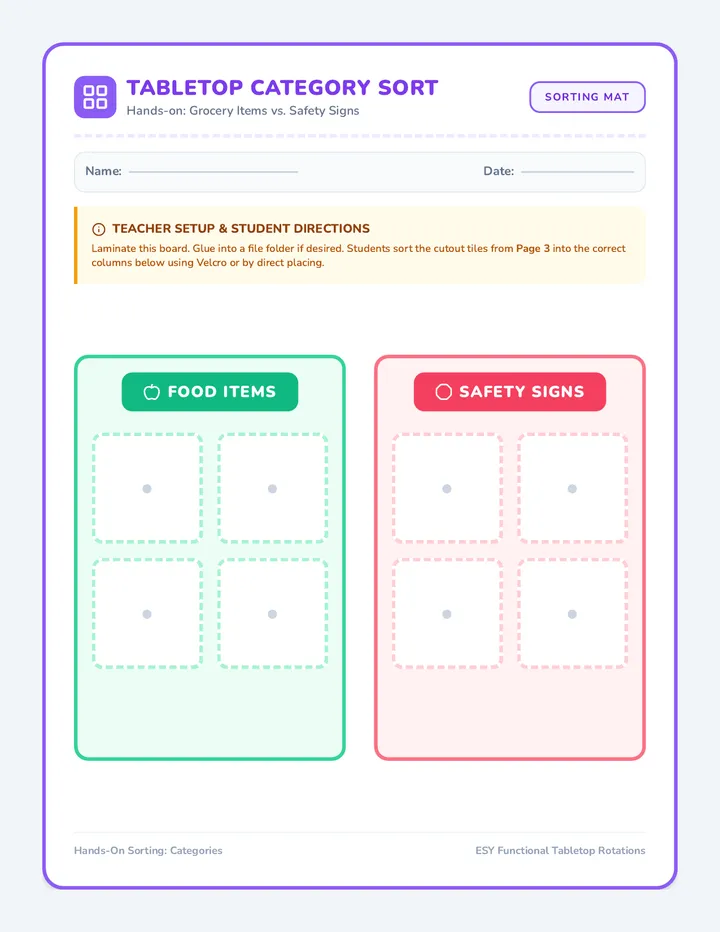
A cohesive suite of tabletop task stations, reusable binder sheets, print-and-go worksheets, and teacher data tracking sheets designed for ESY students with mild/moderate disabilities and autism. Focuses on functional math (counting objects), emotional literacy (identifying emotions), and functional sight words.
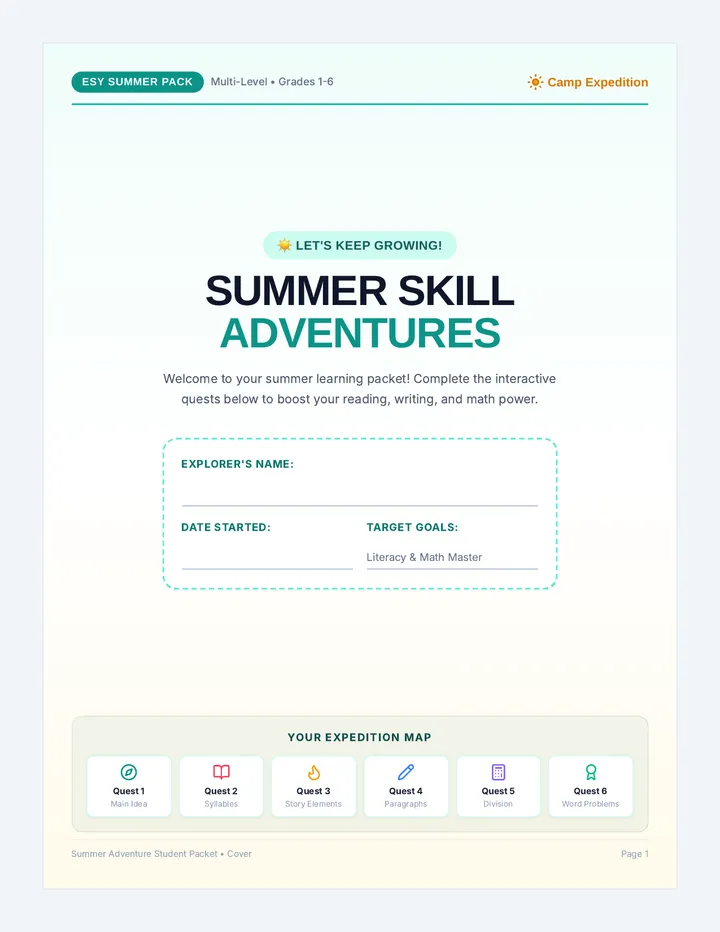
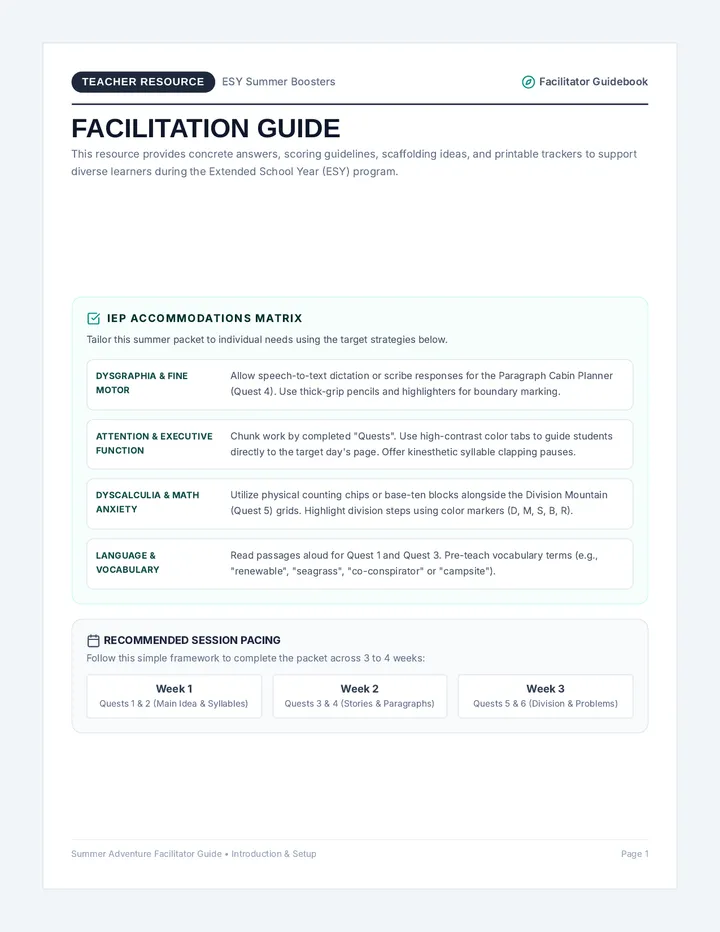
An Extended School Year (ESY) summer packet combining targeted skill-building in main idea, two-syllable words, story elements, paragraph writing, division, and multi-step word problems. Features visual scaffolds, grids, graphic organizers, and multi-level tasks spanning grades 1 to 6.
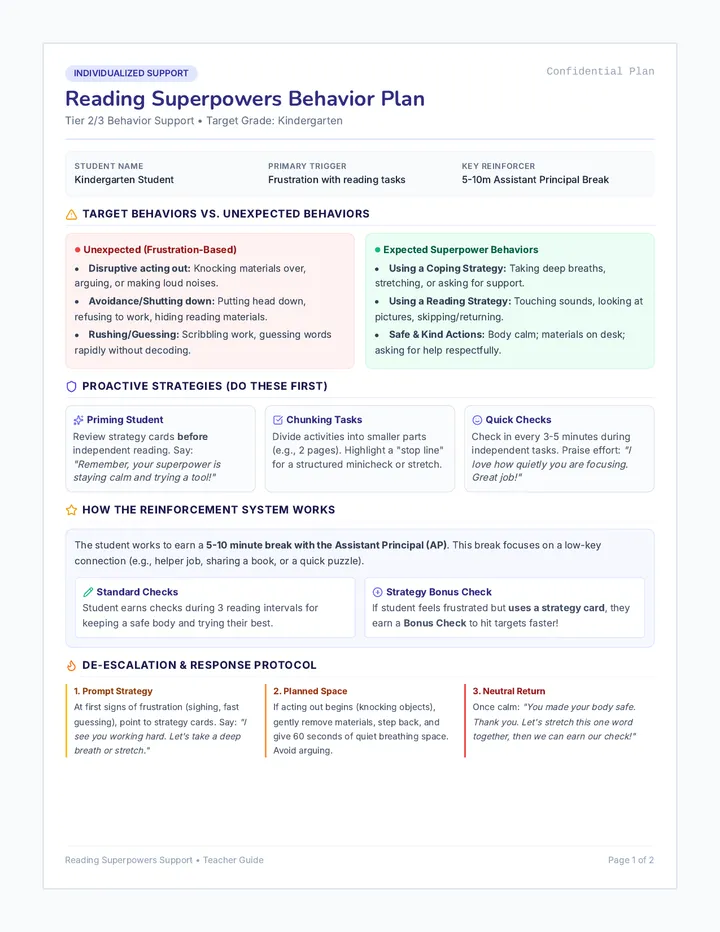
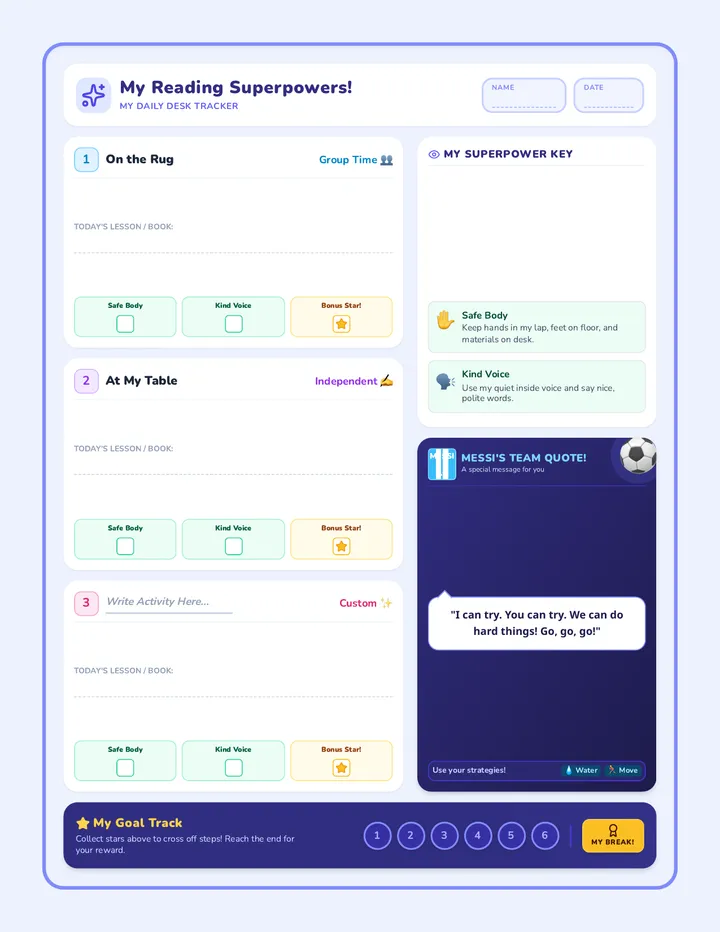
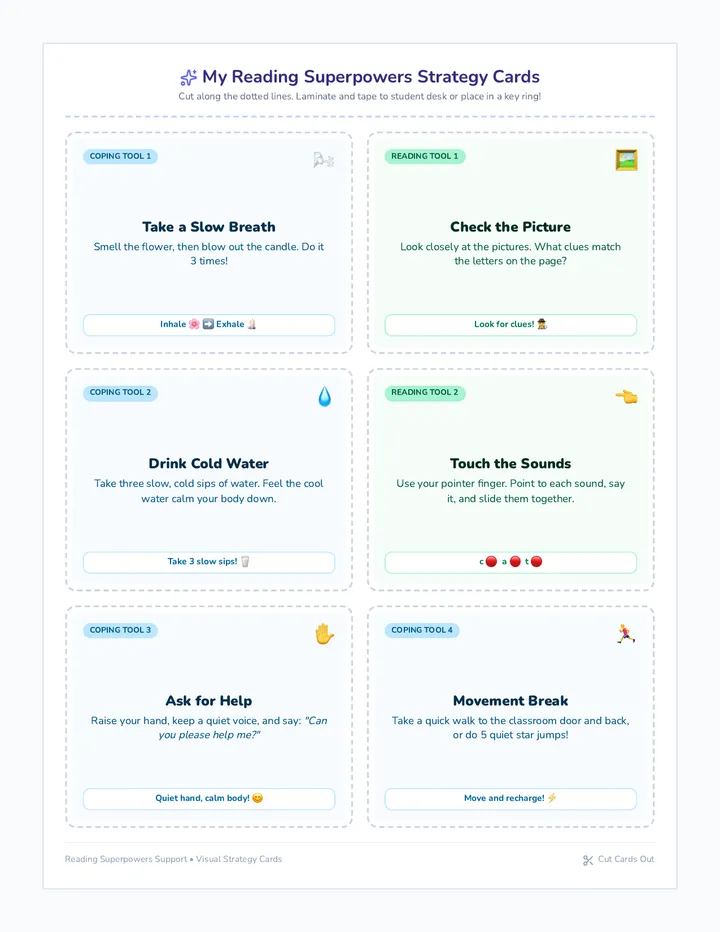
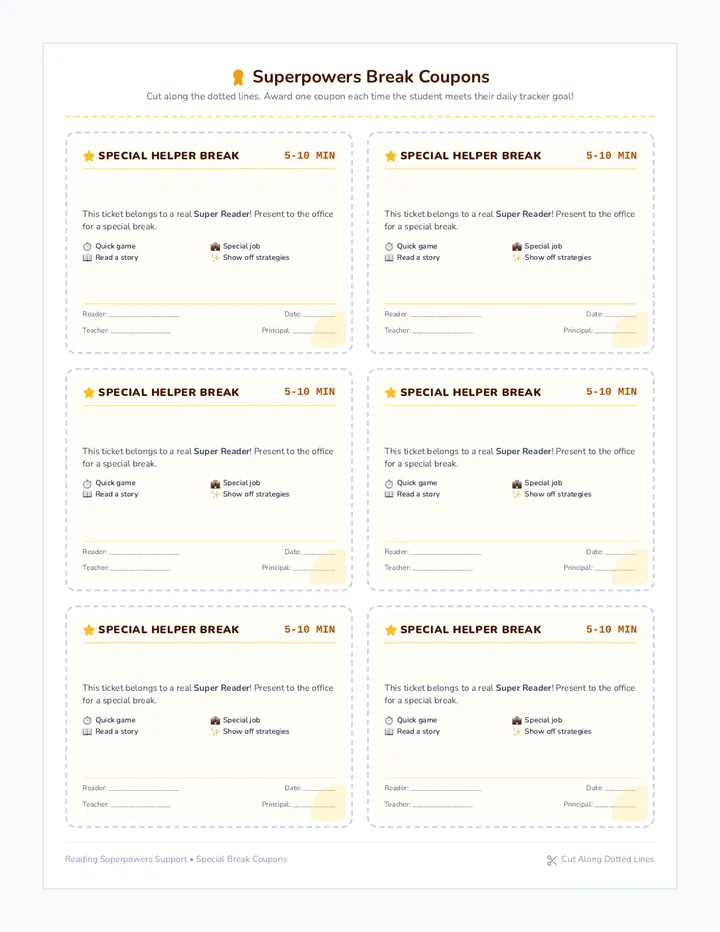
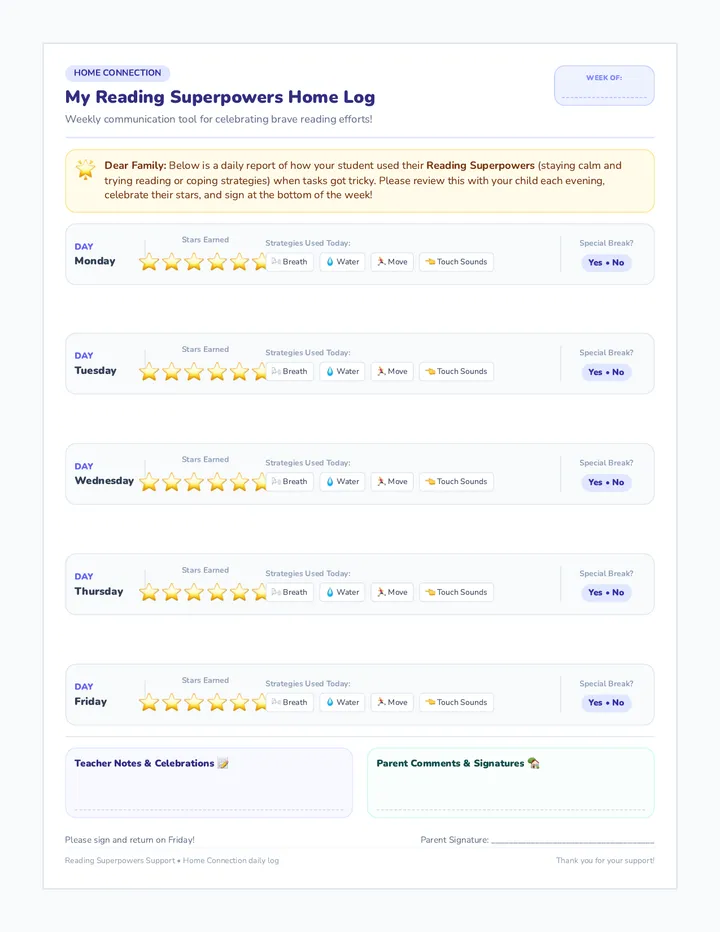
A complete visual behavior support kit for a kindergarten student experiencing frustration-based behaviors after graduating from small group reading. Includes a teacher-parent behavior plan, daily desk tracker, coping and reading strategy cards, assistant principal break coupons, and a weekly home communication log.
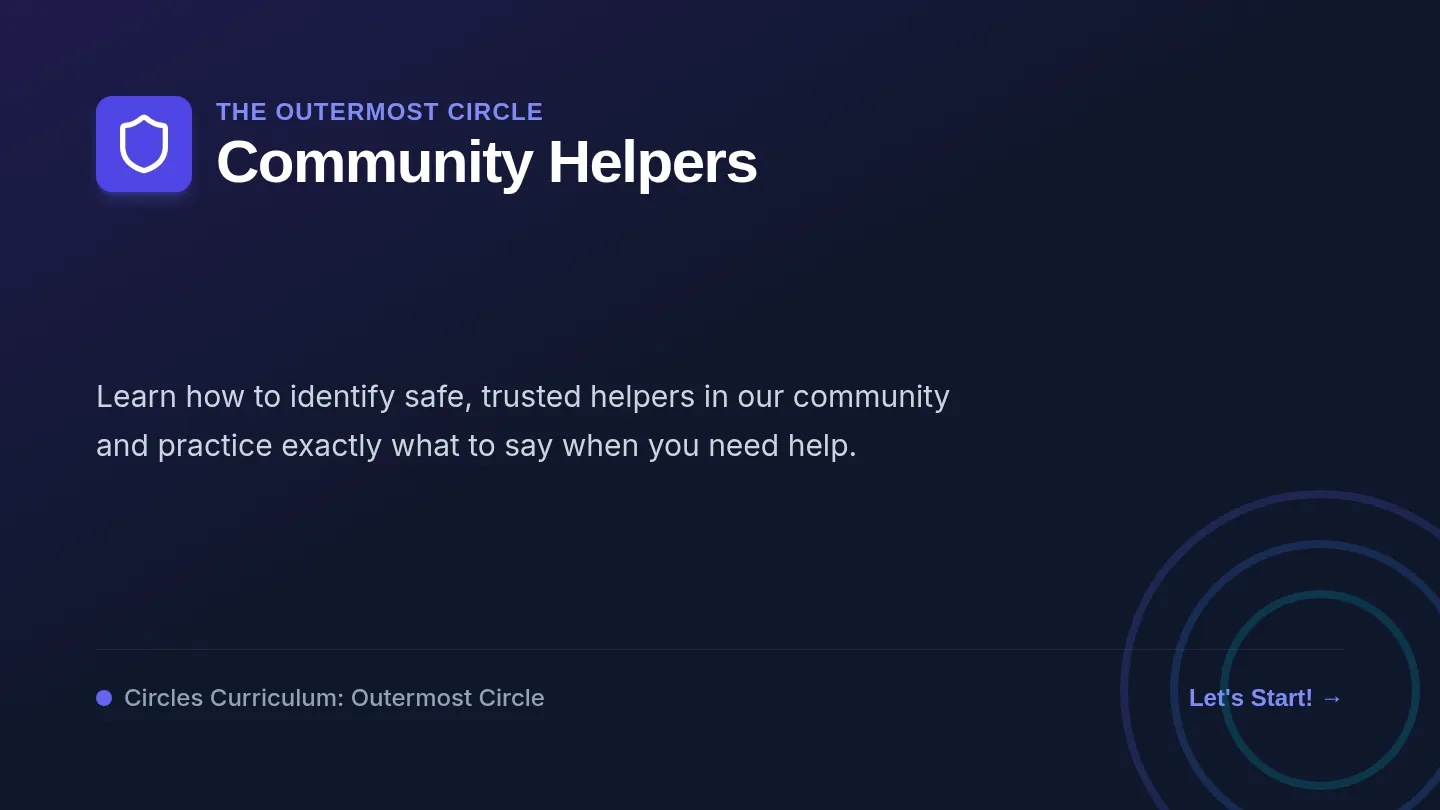
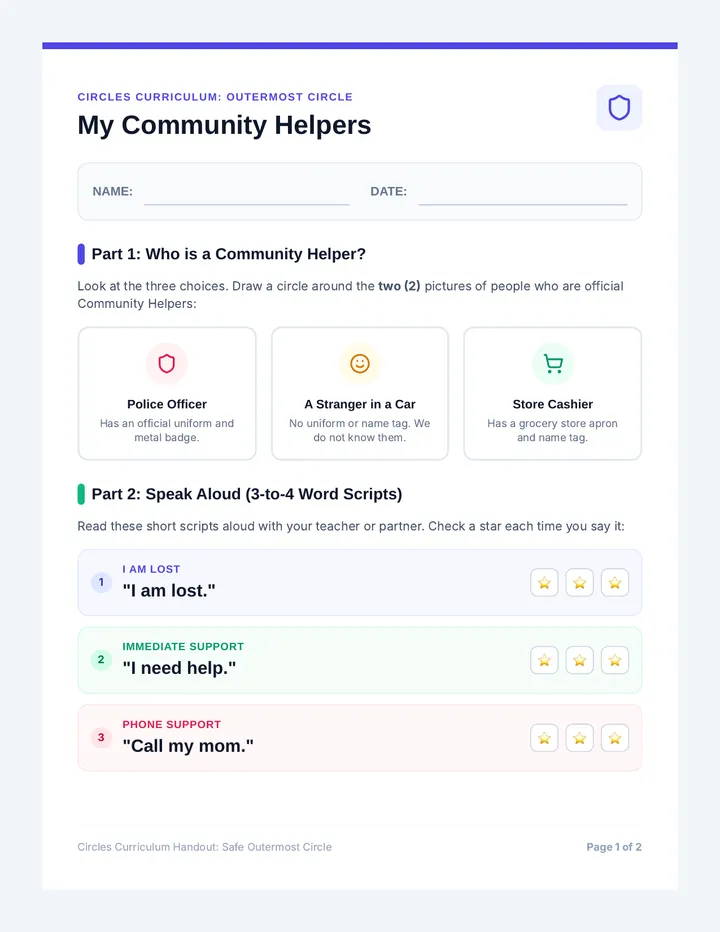
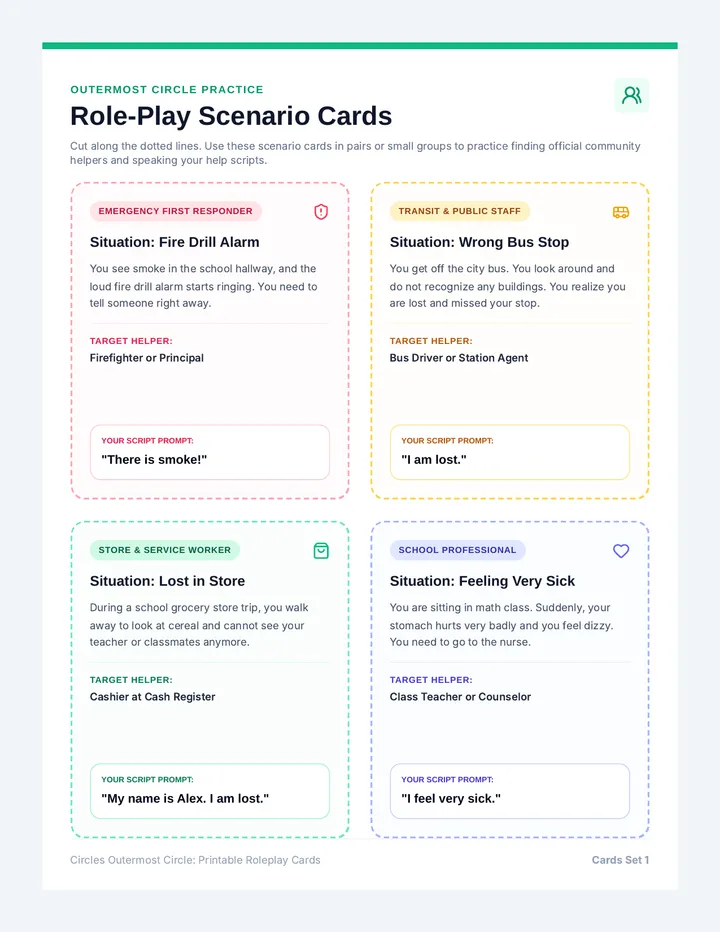
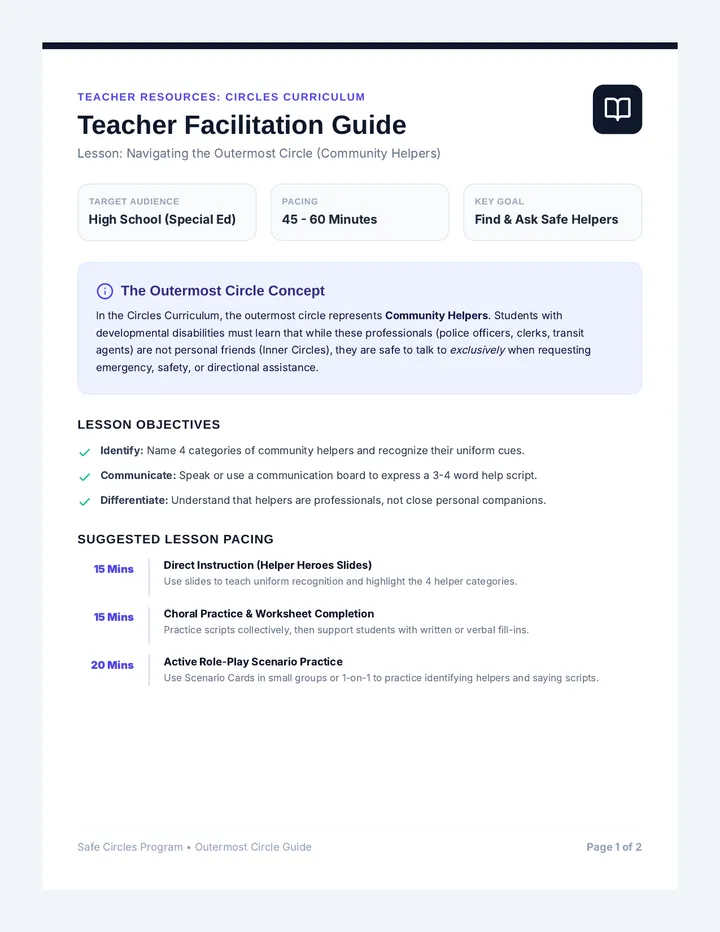
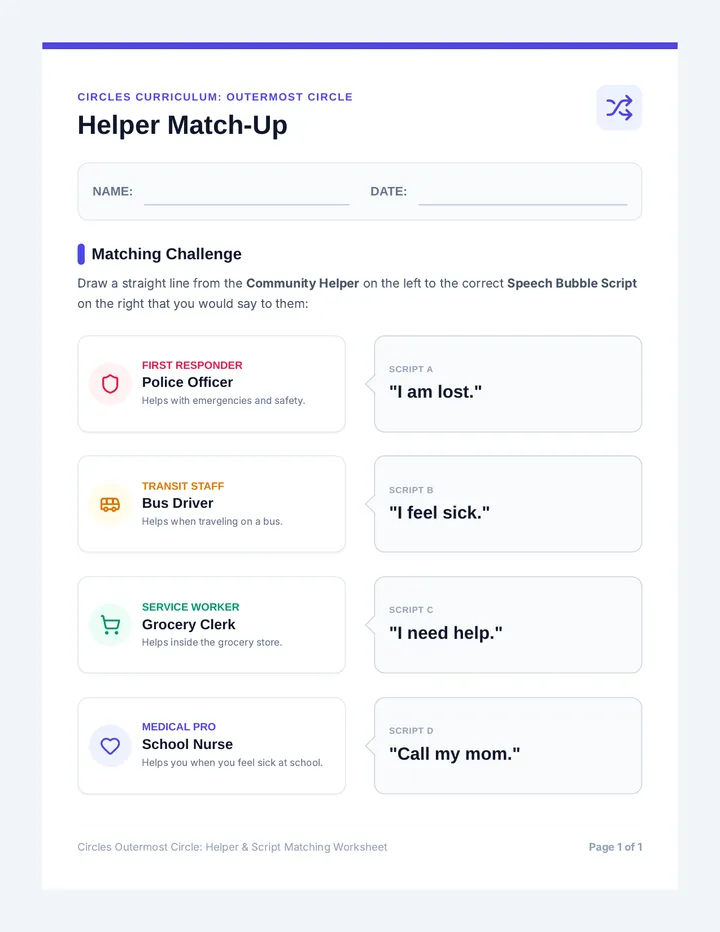
A comprehensive lesson for high school students with developmental disabilities focusing on the outermost circle of the Circles Curriculum: Community Helpers. It includes interactive slides, a structured script worksheet, ready-to-use role-play scenario cards, and a teacher facilitation guide.
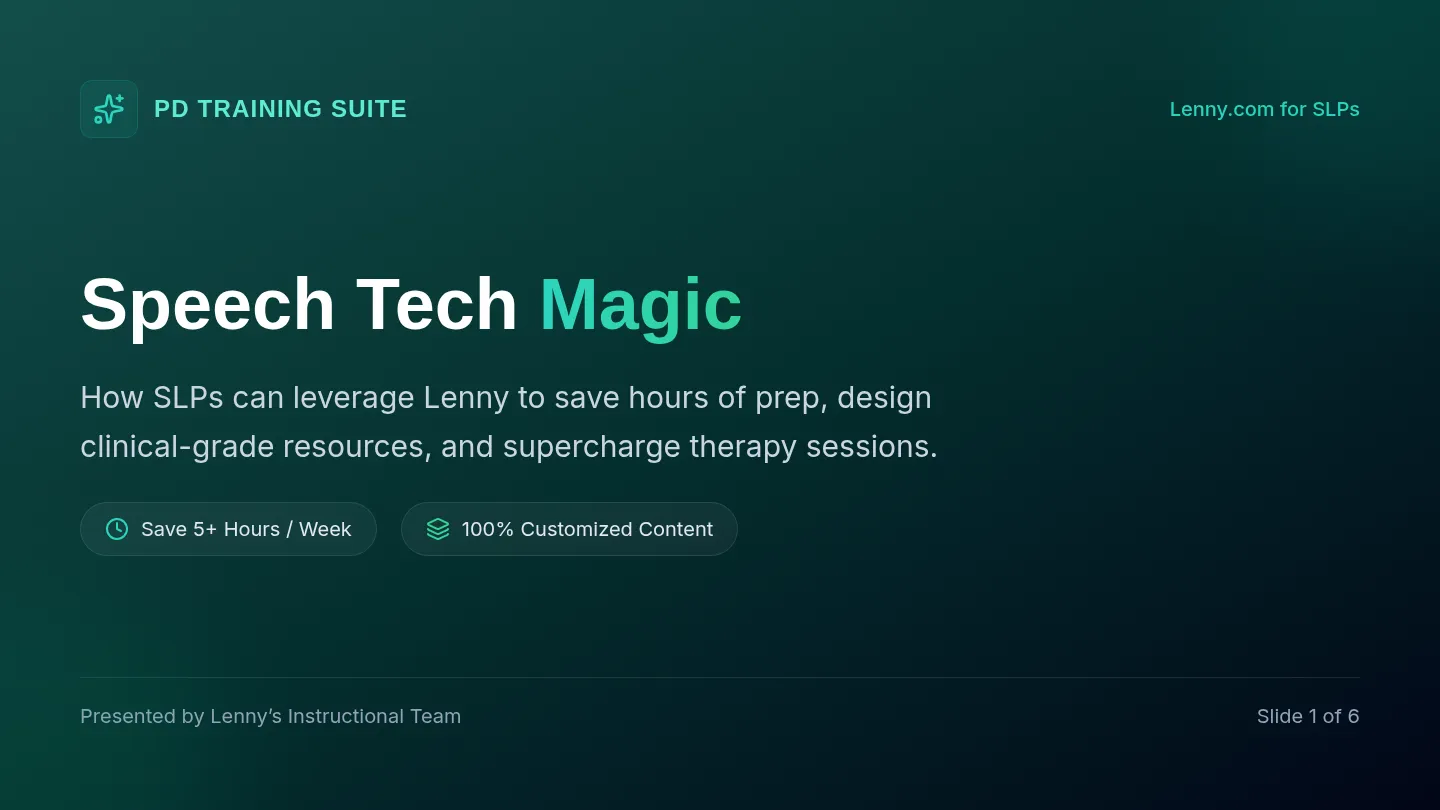
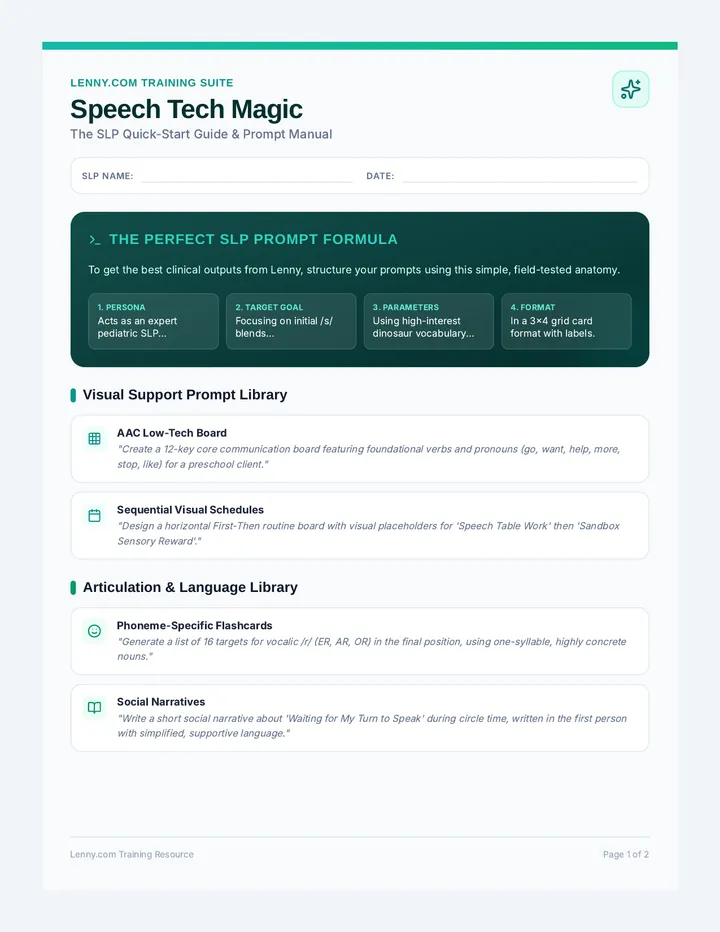
A training suite for Speech-Language Pathologists to master Lenny.com, featuring an engaging slide presentation and a quick-reference printout covering visual supports, articulation tools, IEP aids, and collaboration templates.
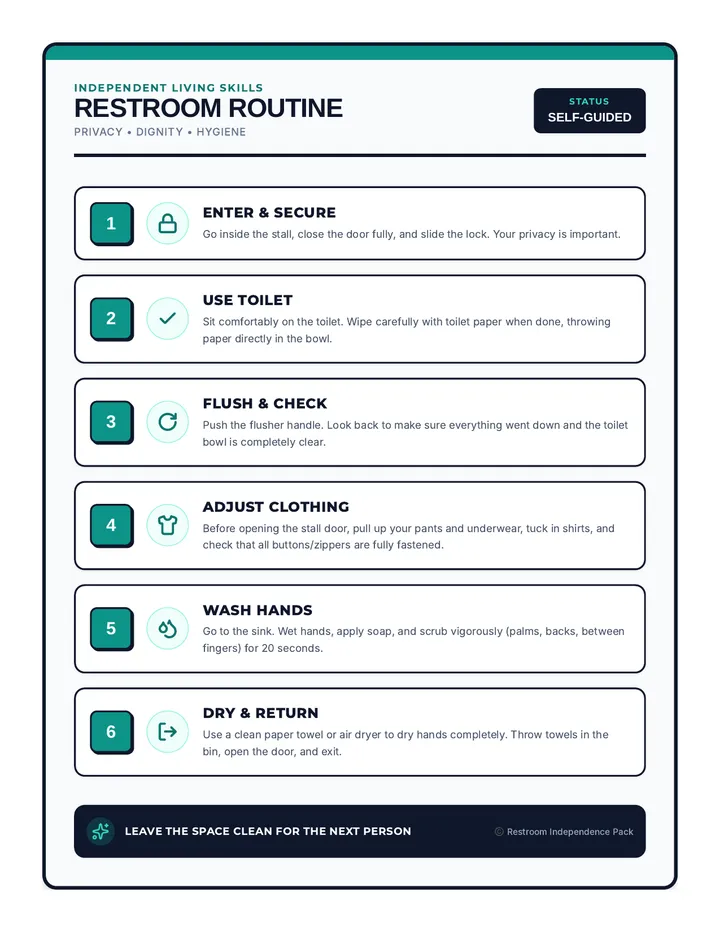
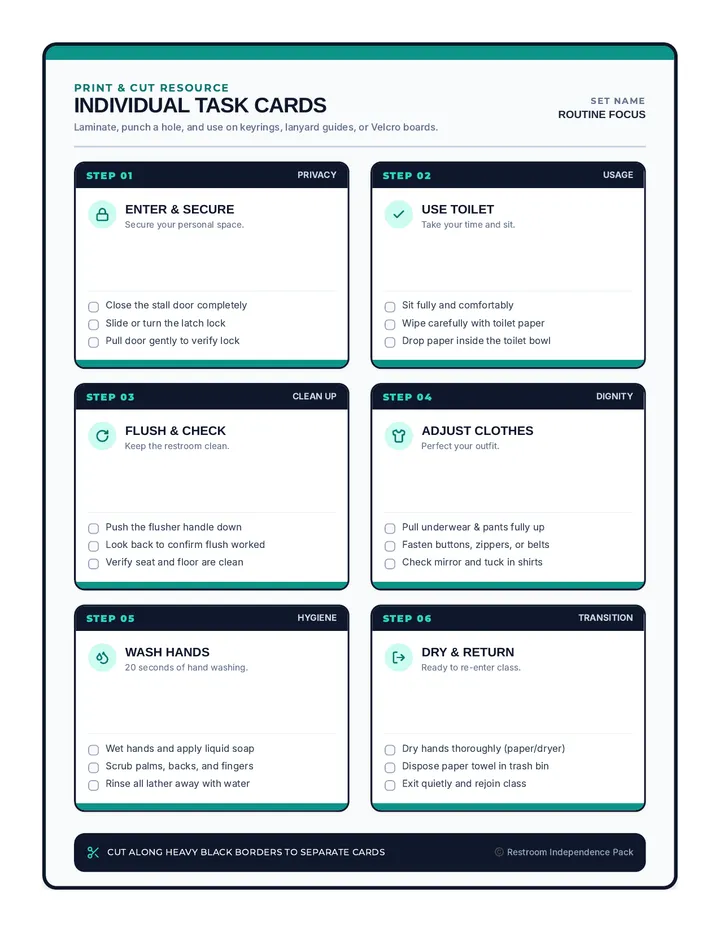
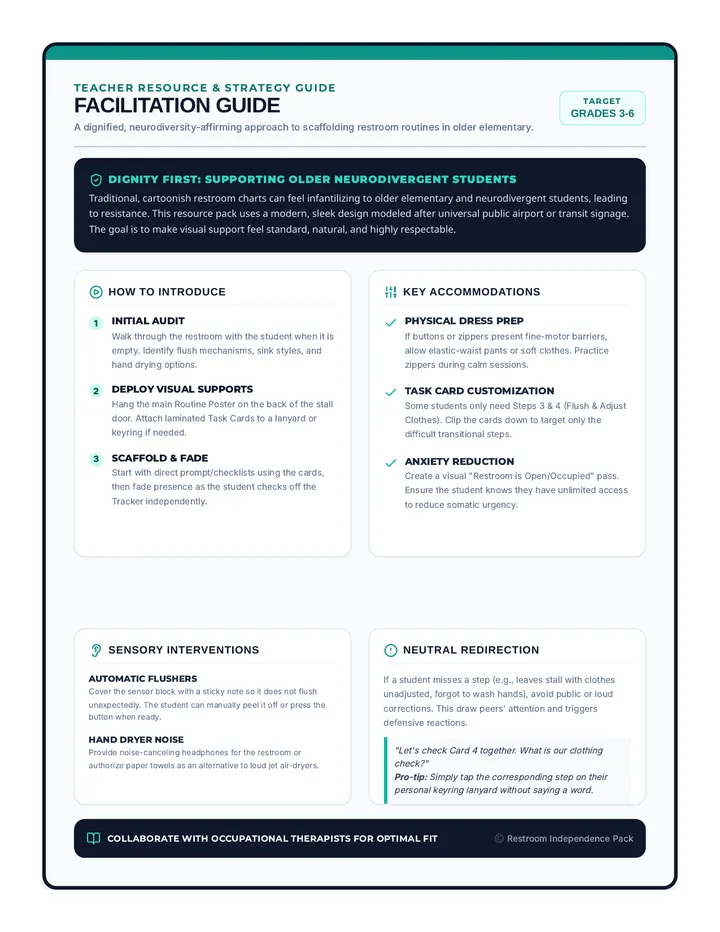
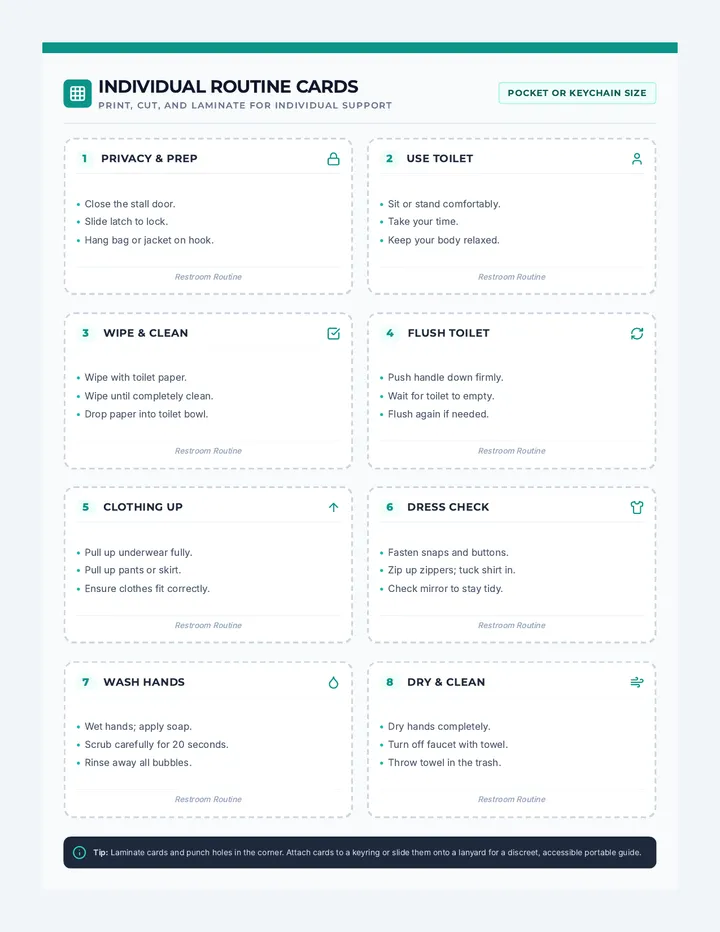
A complete visual support and routine mastery pack designed for older elementary and neurodivergent students. Includes a wall poster, individual task cards, a progress tracker, and a comprehensive implementation guide to foster dignity and privacy.
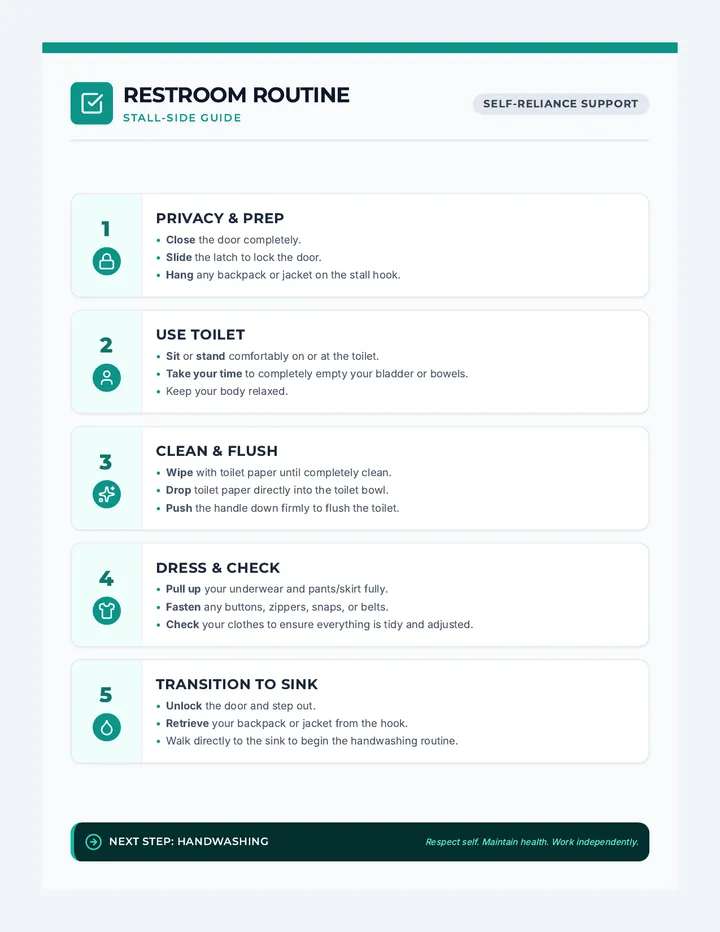
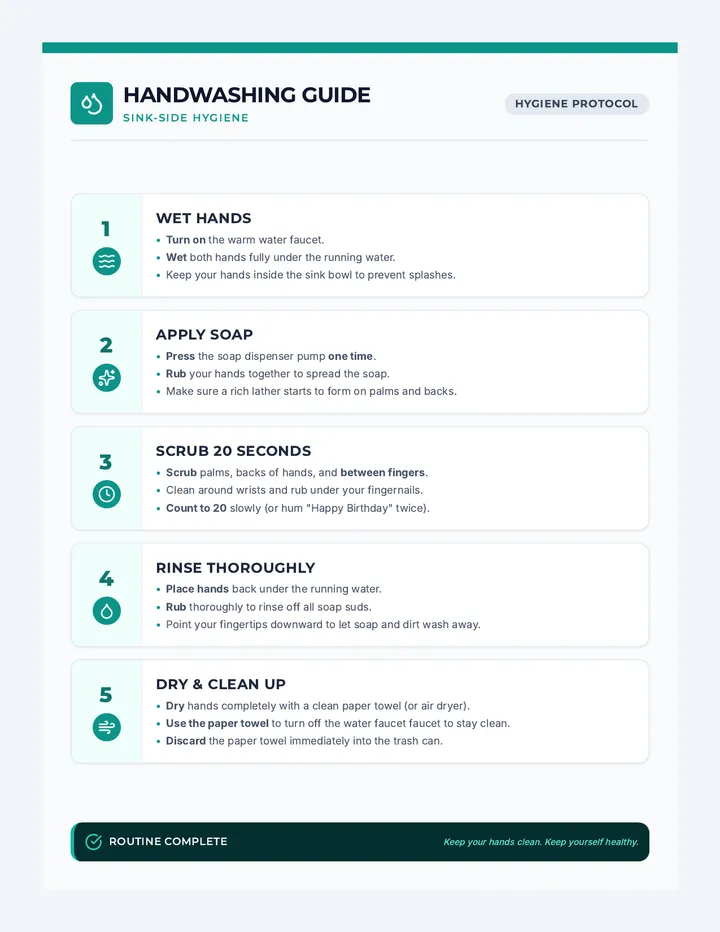
A comprehensive visual support system designed for older elementary and neurodivergent students to promote bathroom independence. Includes a stall-side routine poster, a sink-side handwashing guide, and printable individual visual support cards styled with a clean, modern aesthetic.
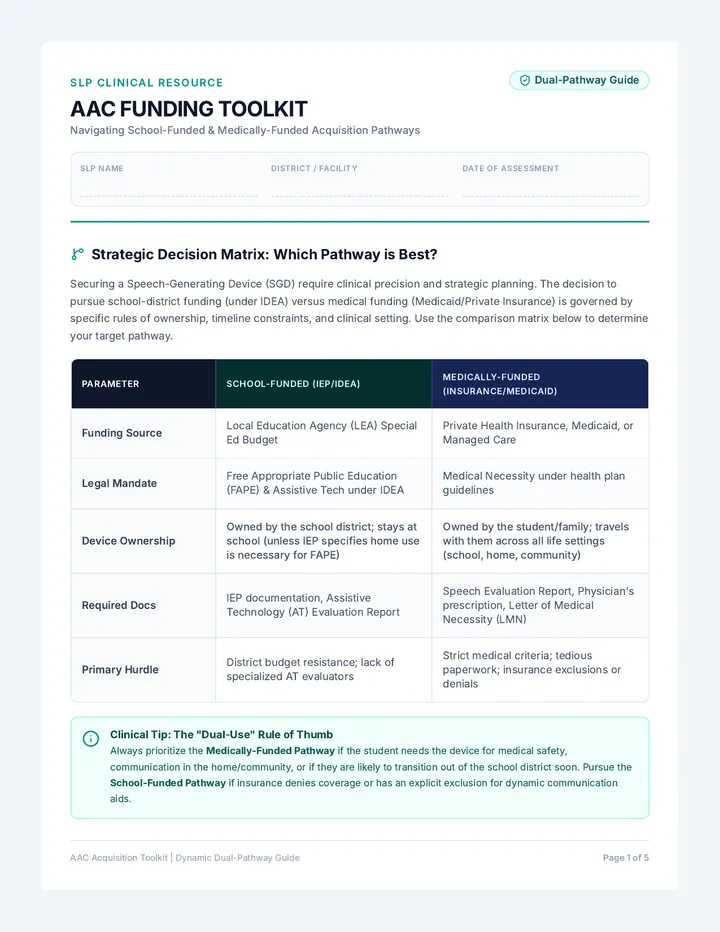
A comprehensive lesson for Speech-Language Pathologists (SLPs) designed to navigate the dual pathways of AAC funding. This lesson equips SLPs with the procedural knowledge, advocacy scripts, template documentation, and data sheets required to secure communication devices for students via school-funded and medically-funded pathways.
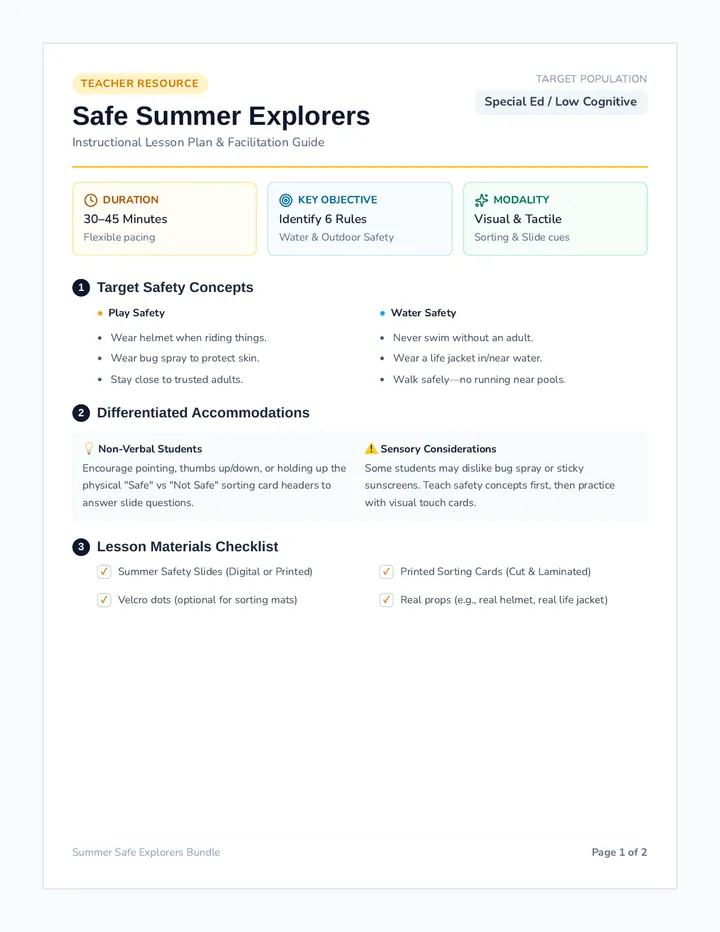
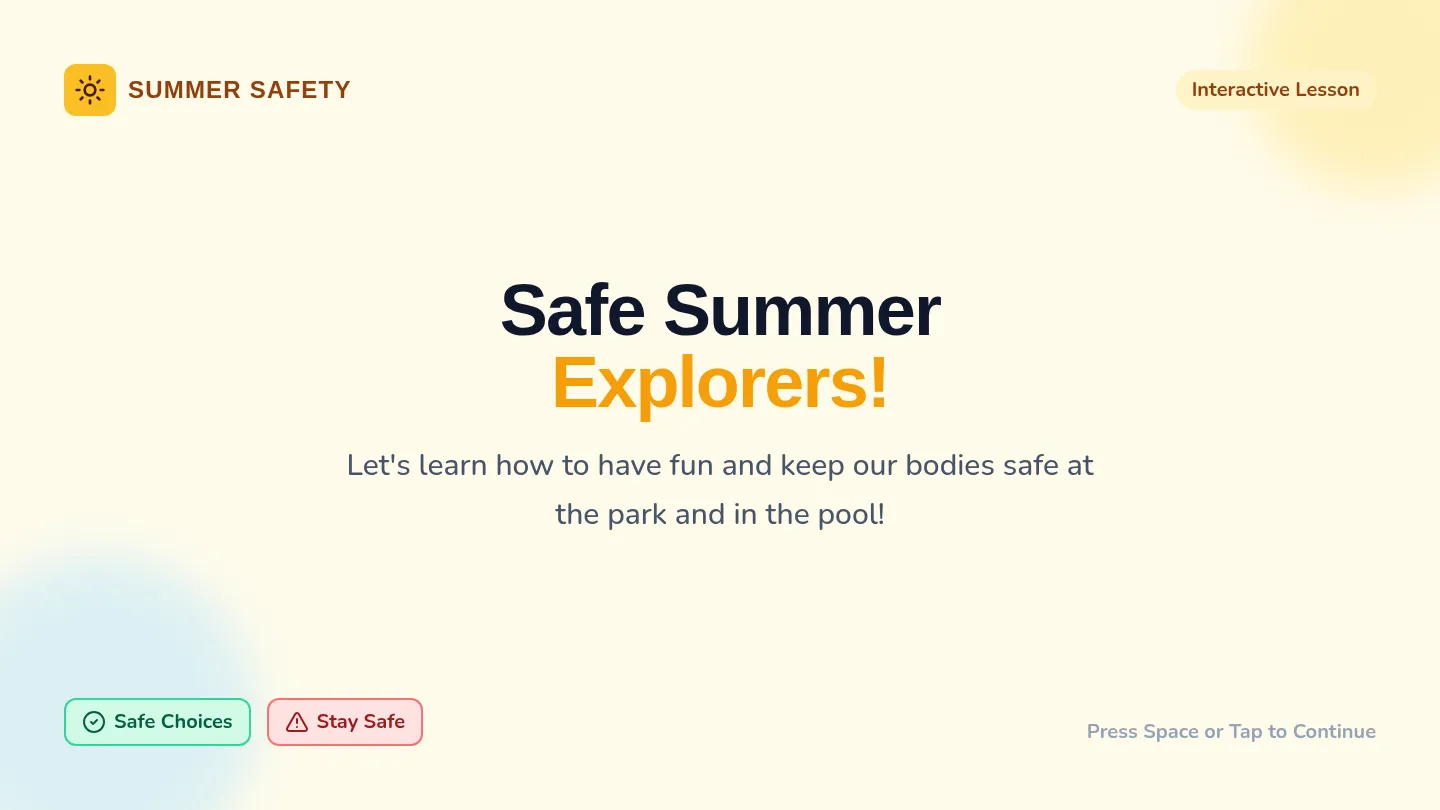
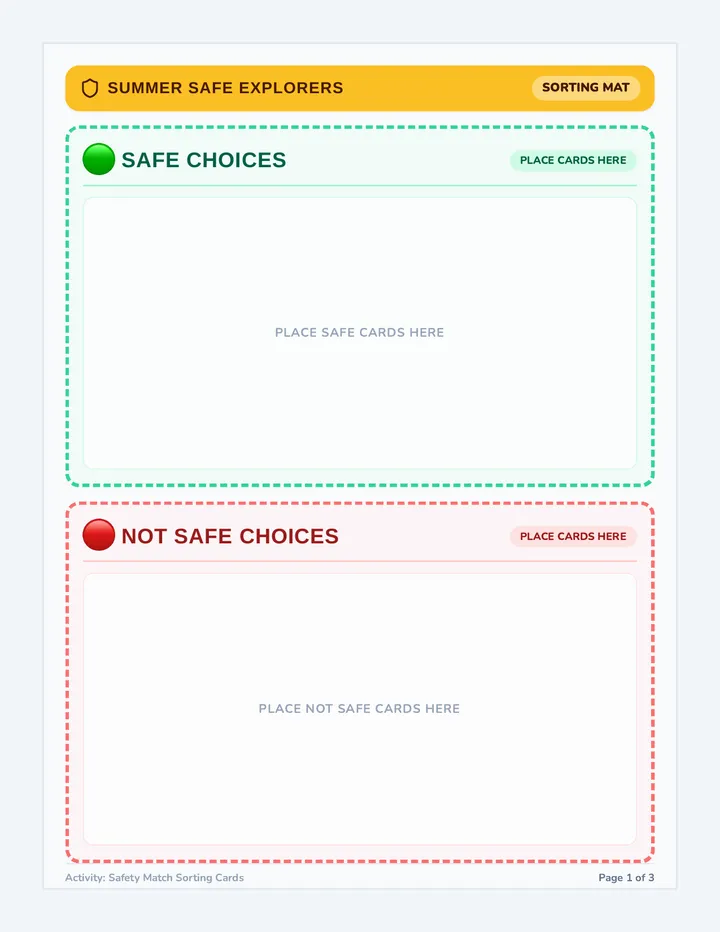
A highly visual, structured summer safety lesson designed for students with special needs and lower cognitive abilities, focusing on outdoor play and water safety rules through interactive sorting and clear visual cues.
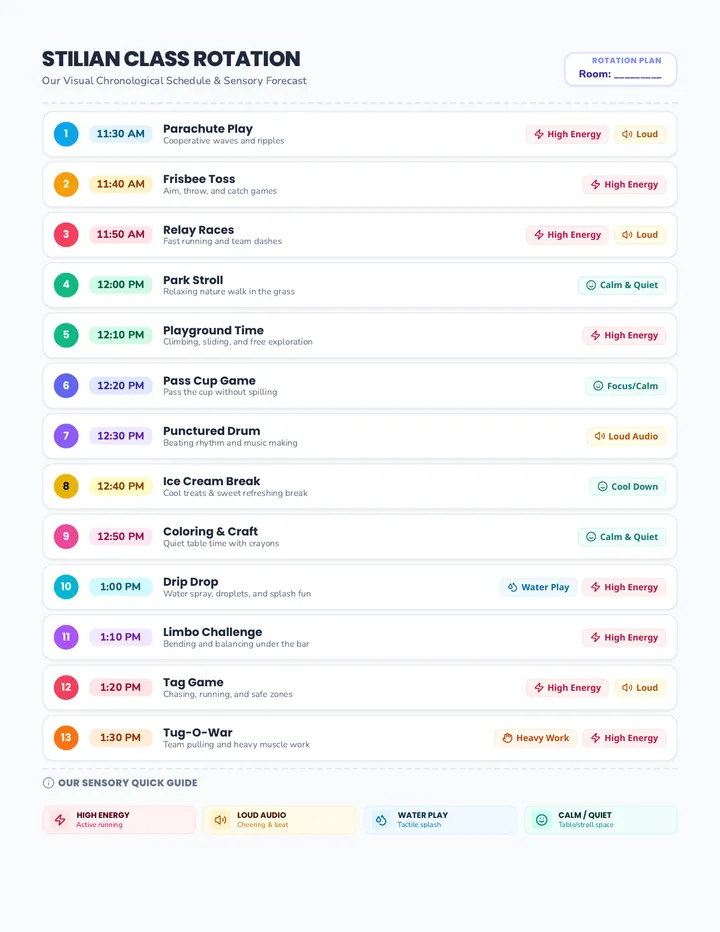
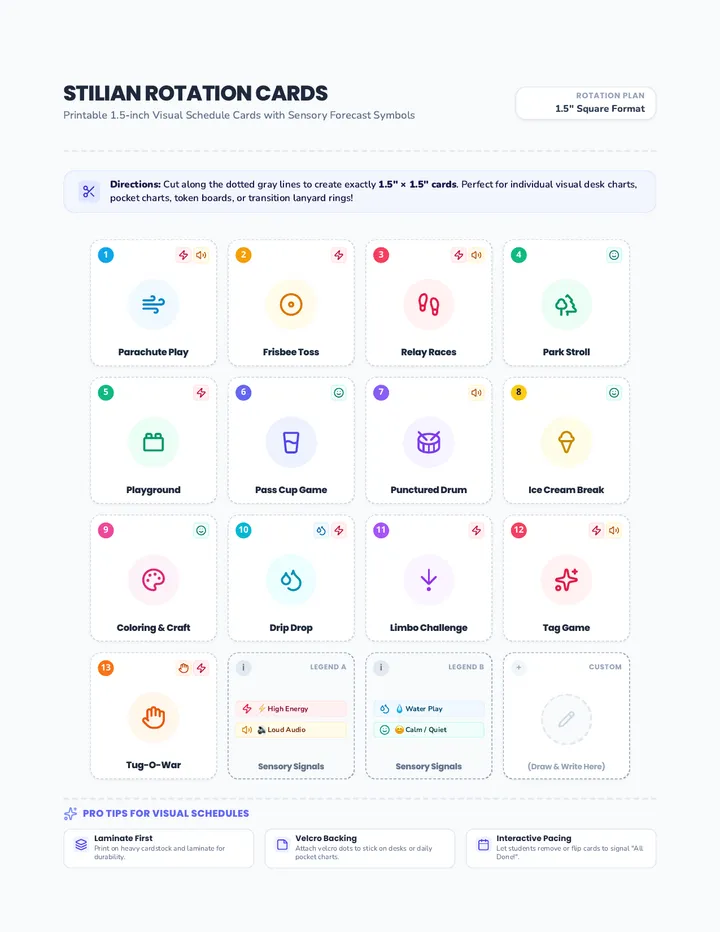
A sensory-friendly class rotation framework containing visual schedules and portable schedule cards to help students navigate activity transitions with confidence.
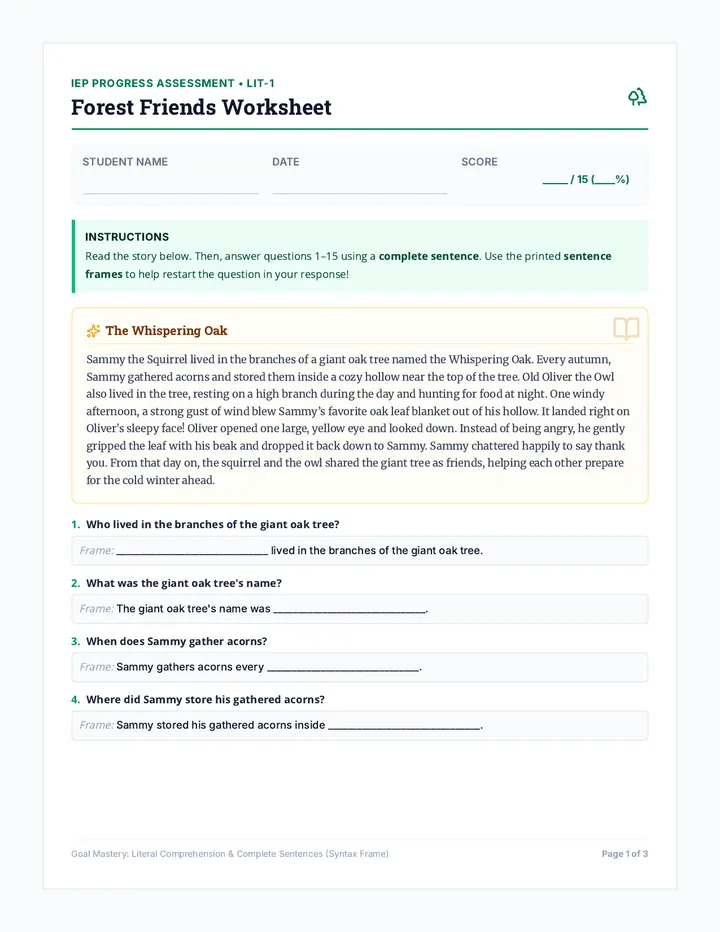
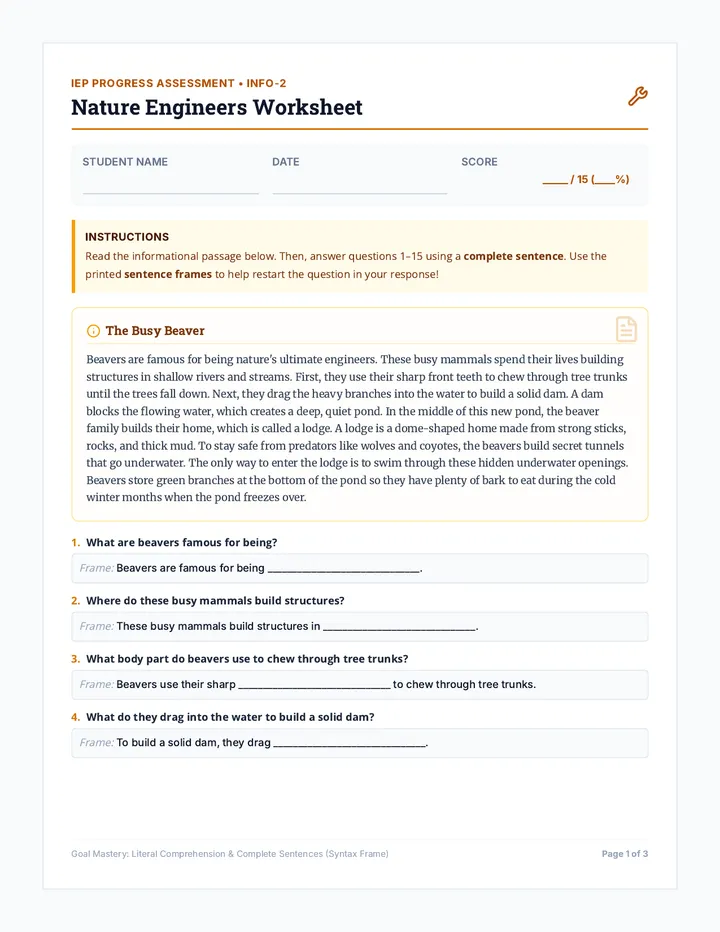
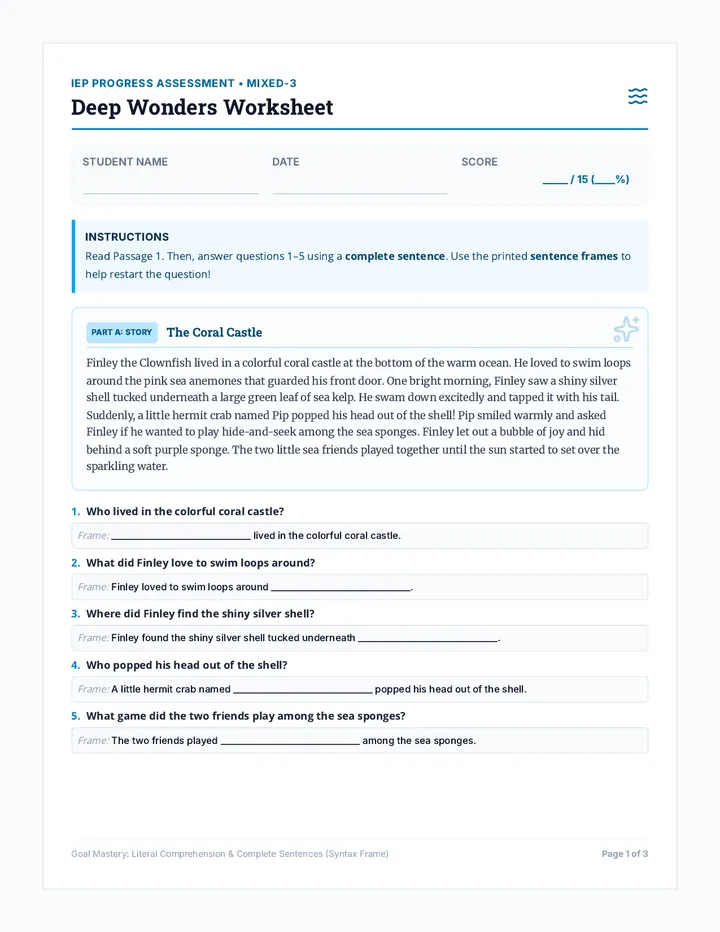
An IEP progress assessment bundle designed for a 3rd-grade student working on literal comprehension and complete-sentence responses using sentence frames. Includes three 15-question worksheets across literary and informational passages, along with a comprehensive teacher tracking guide.
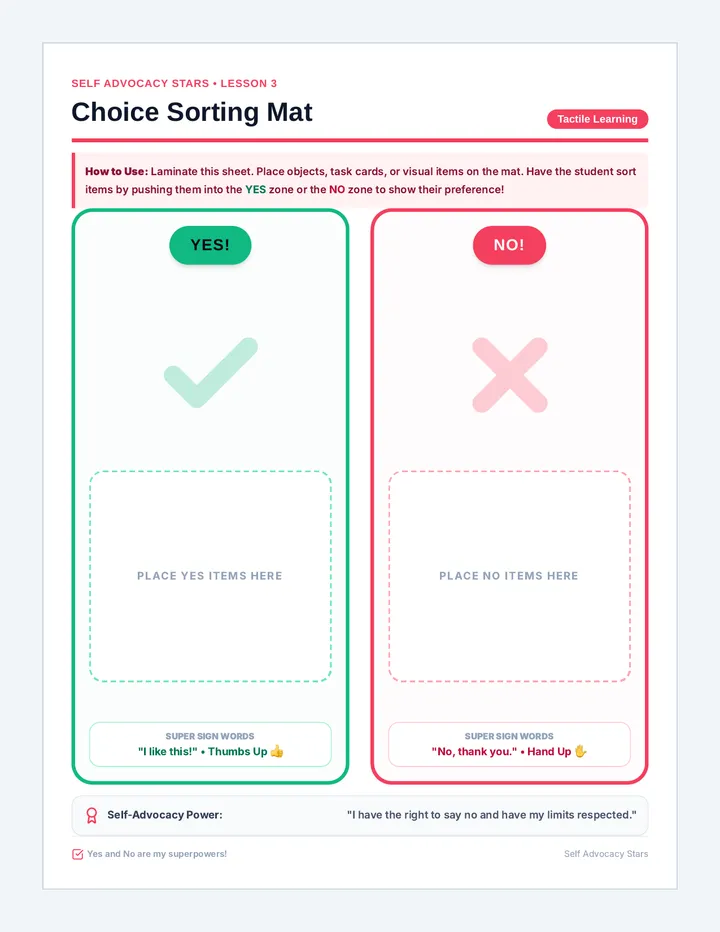
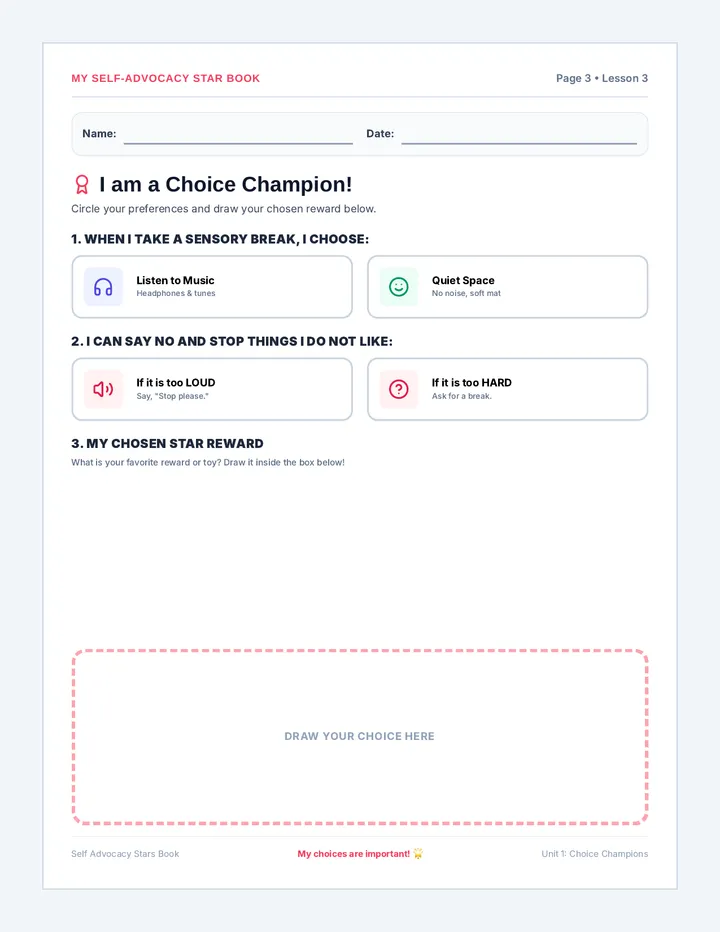
Students practice making independent choices, expressing preferences, and setting boundaries (saying "yes" or "no") using structured choice boards, tactile sorting mats, and interactive role-play.
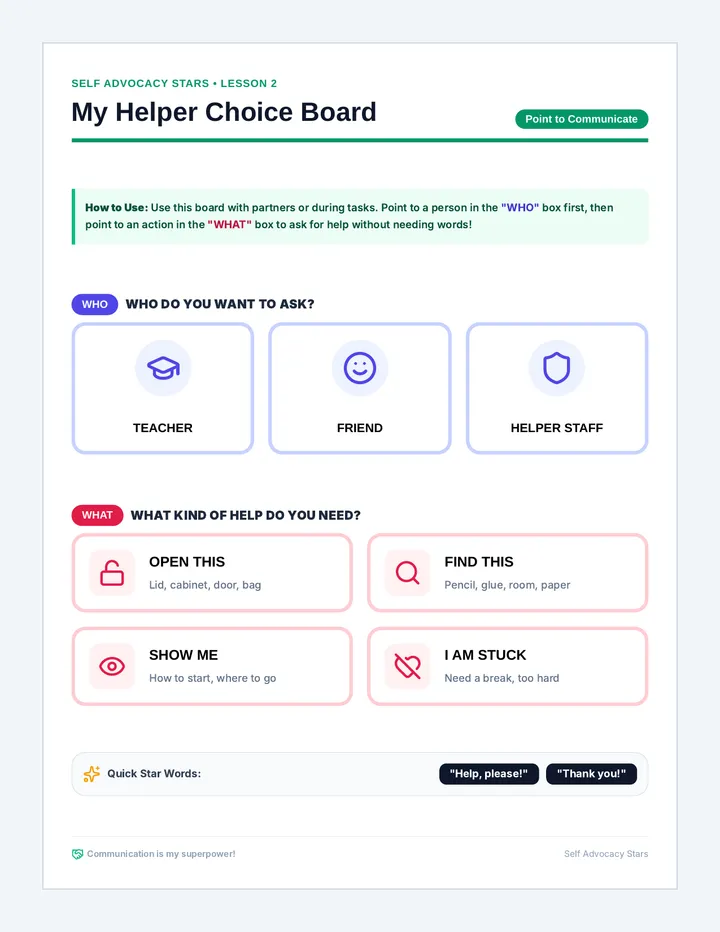
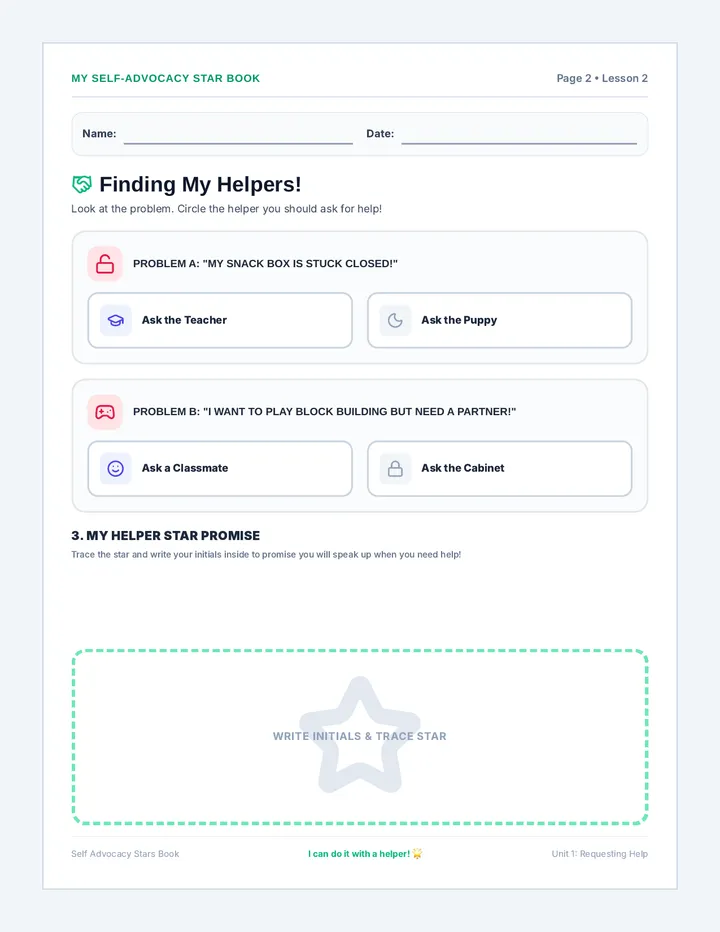
Students practice identifying when they need help, who to ask (teachers, peers, or helpers), and how to communicate that need using visual phrase cards and guided collaborative practice.
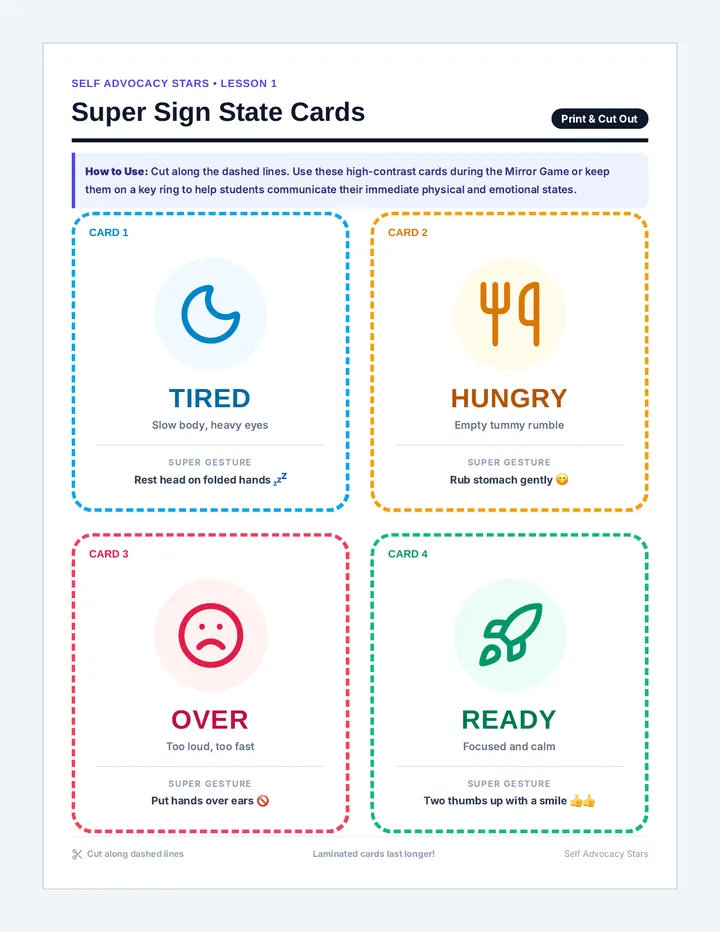
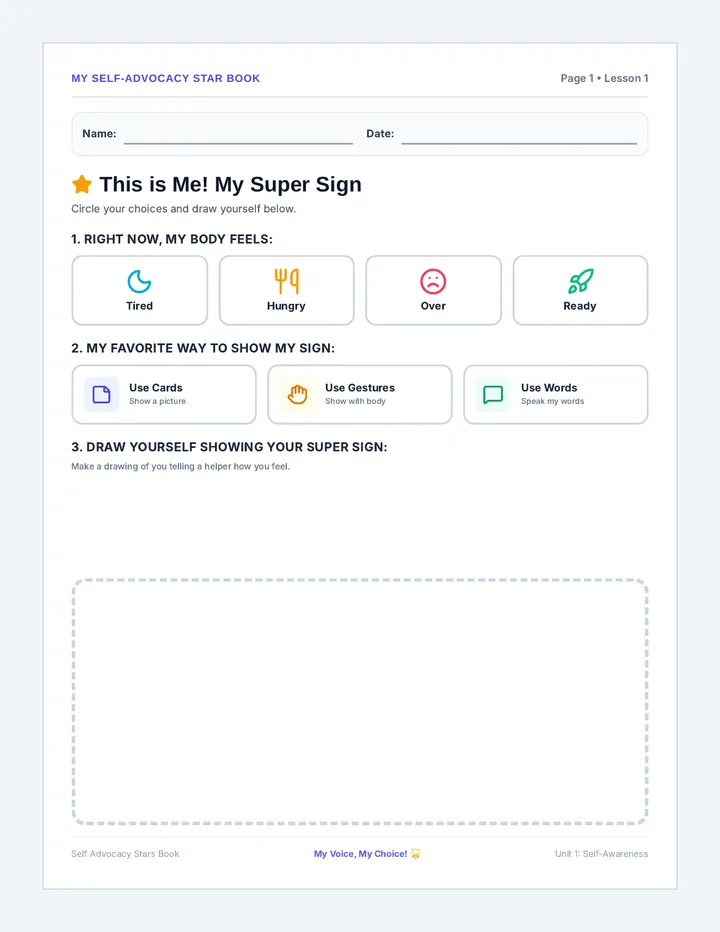
Students learn to recognize and communicate physical and emotional states (like tired, hungry, overwhelmed, or ready to learn) using simple gestures, vocalizations, or visual symbol cards.
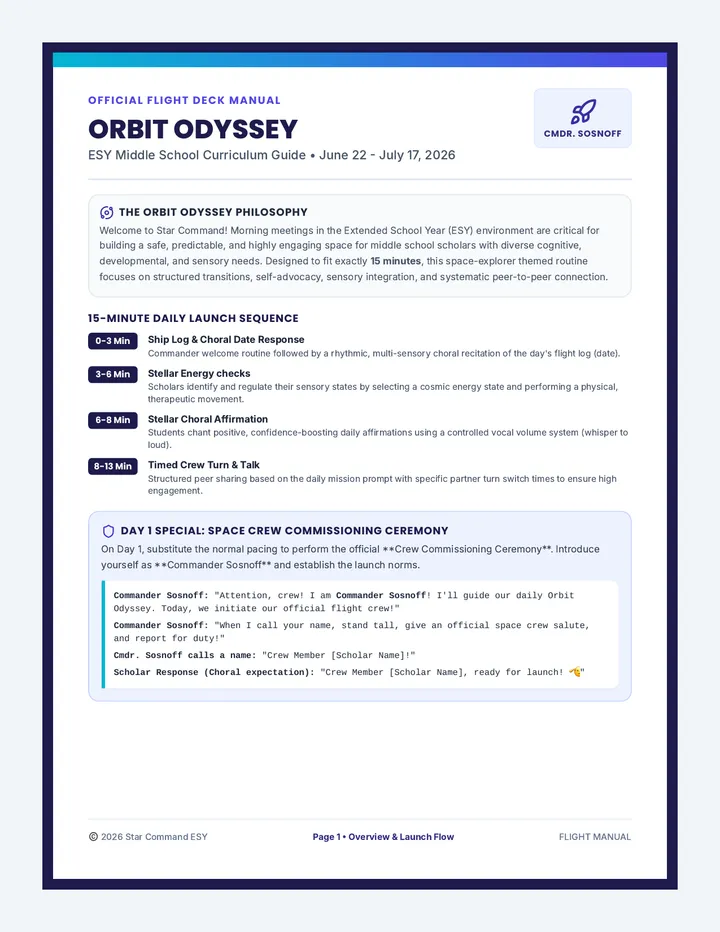
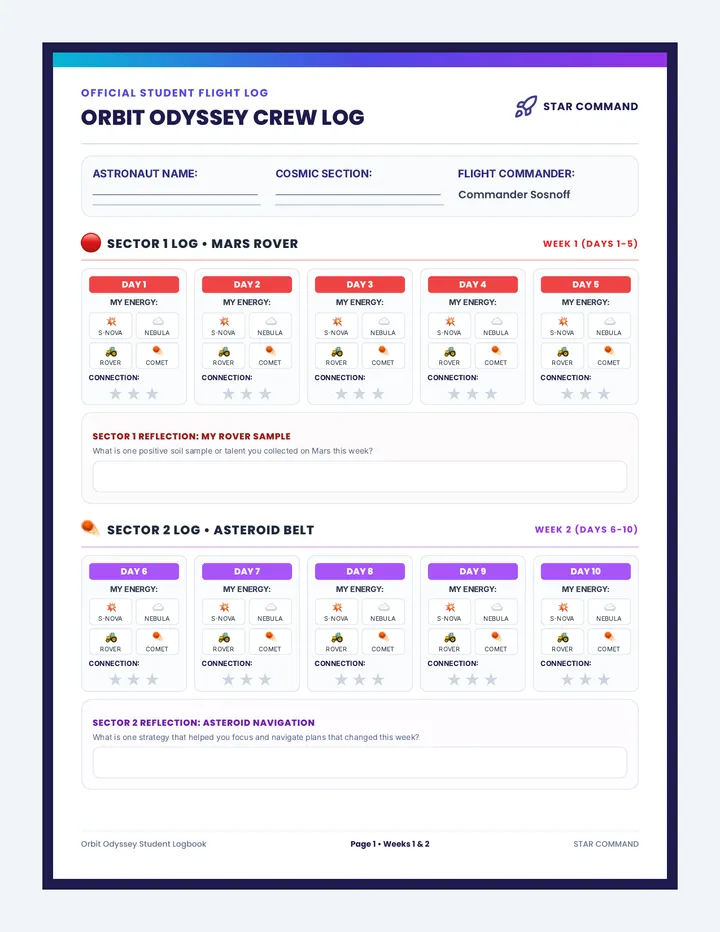
A 4-week space explorer themed morning meeting series for middle school ESY scholars with disabilities. Led by Commander Sosnoff, it covers Mars Rover, Asteroid Navigation, Saturn Rings, and Nebula sectors with calendar ship logs, cosmic energy checks, stellar affirmations, and turn-and-talk communication prompts.
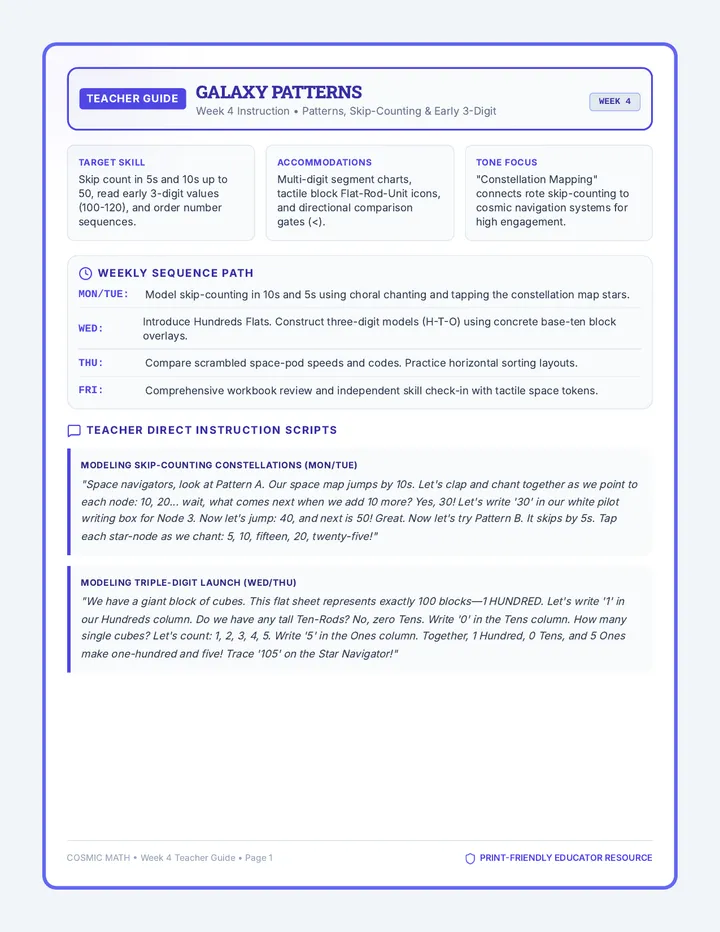
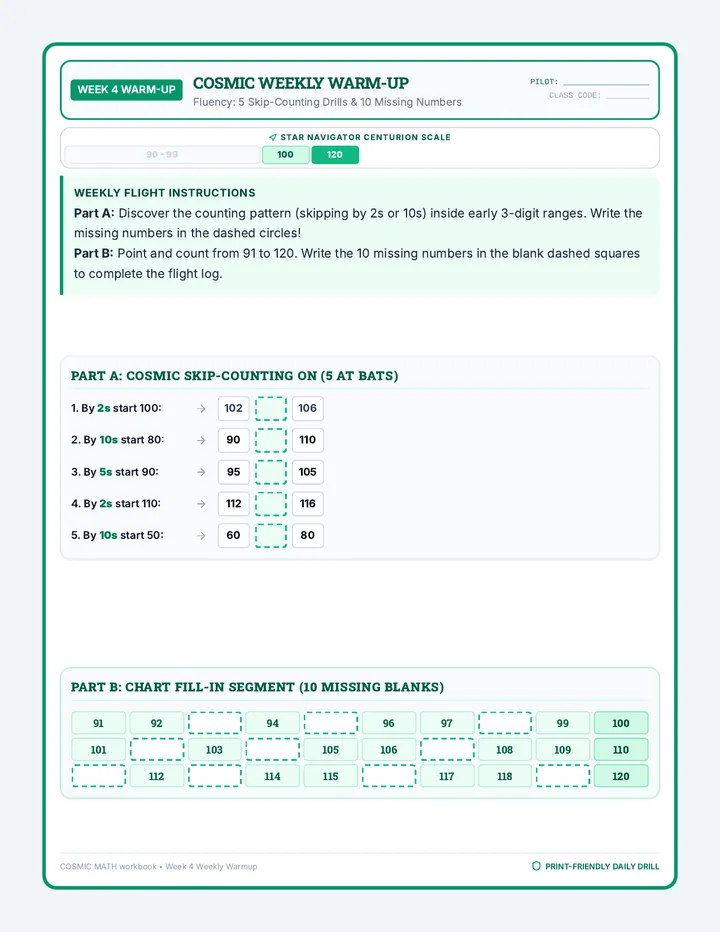
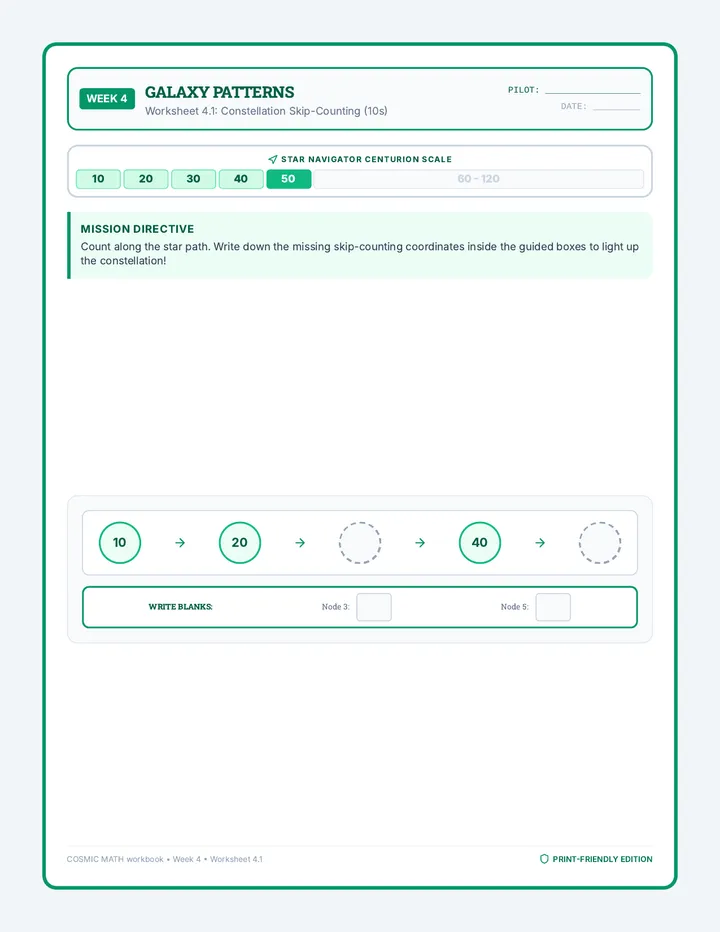
Introduces early 3-digit numbers (100-120), visual skip-counting (2s, 5s, 10s) using constellation maps, and ordering cosmic objects to build sequential logic.