Students conduct a mini-research project on a topic of interest using TTS to access articles that might be above their independent reading level. They practice gathering facts via audio.
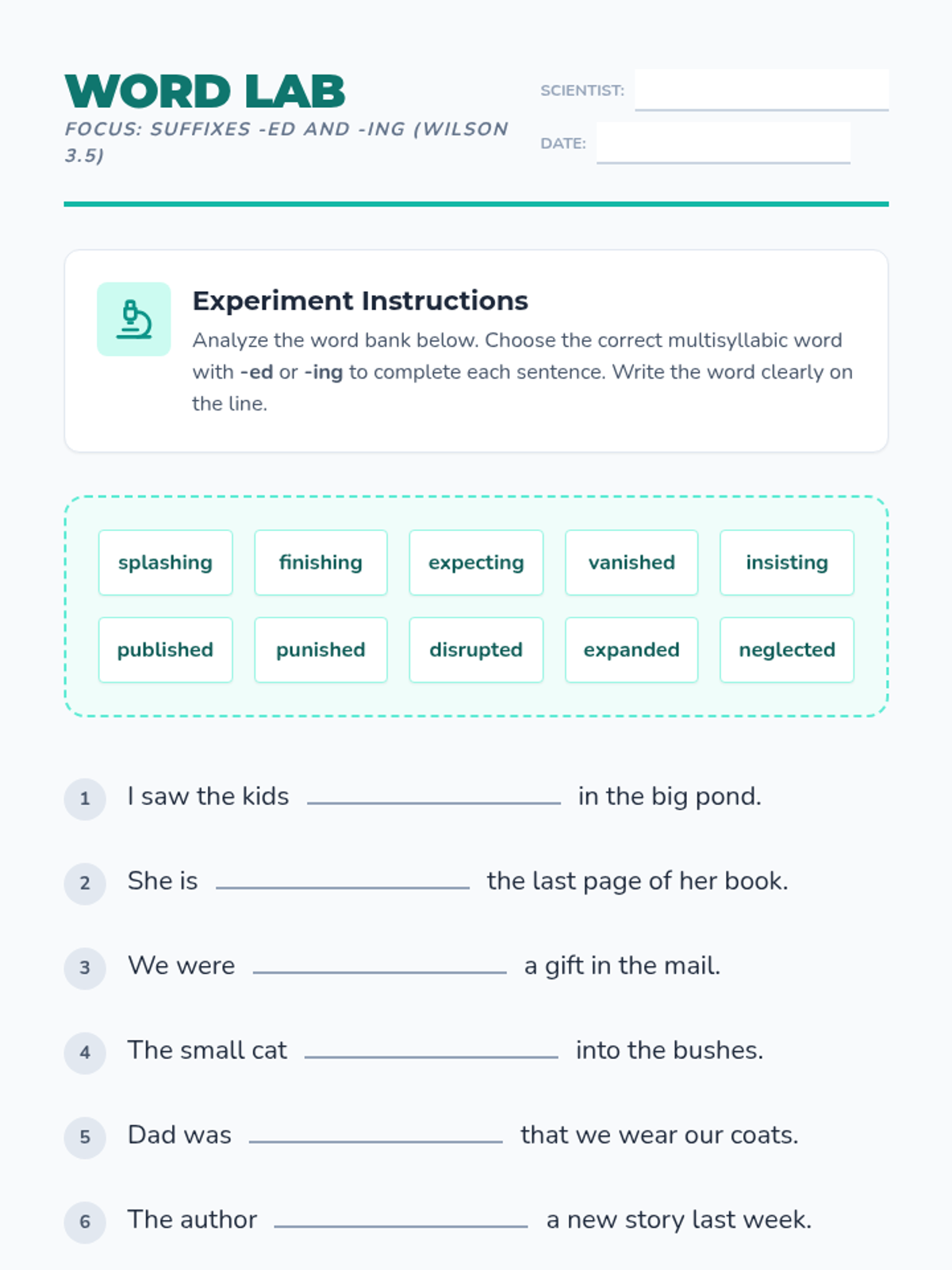
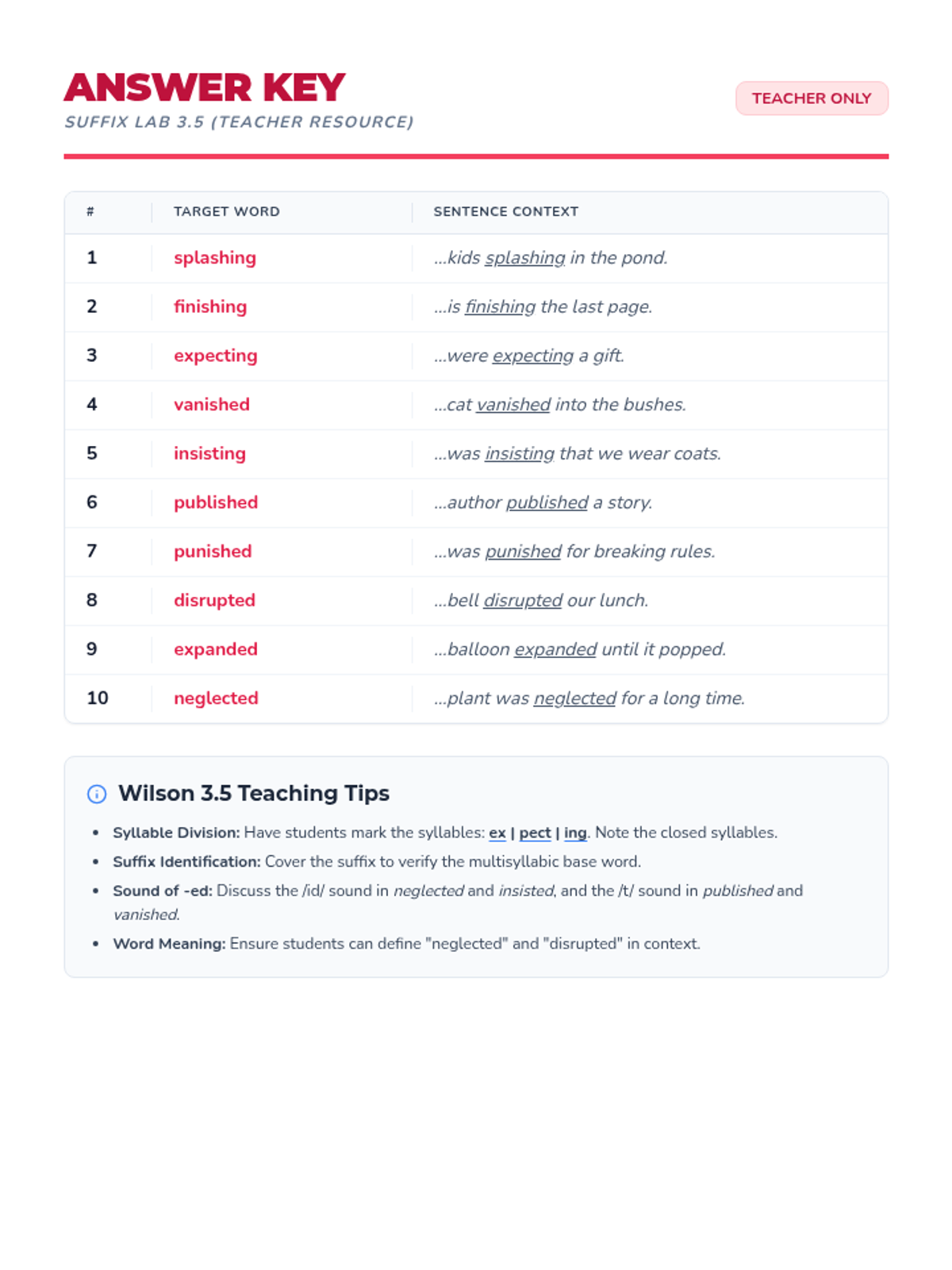
This lesson focuses on multisyllabic words with the suffixes -ed and -ing, specifically targeting the patterns found in Wilson Reading System program 3.5. Students will practice identifying and using these words in simple sentences.
A review and celebration week where students demonstrate their progress and receive a certificate of completion.
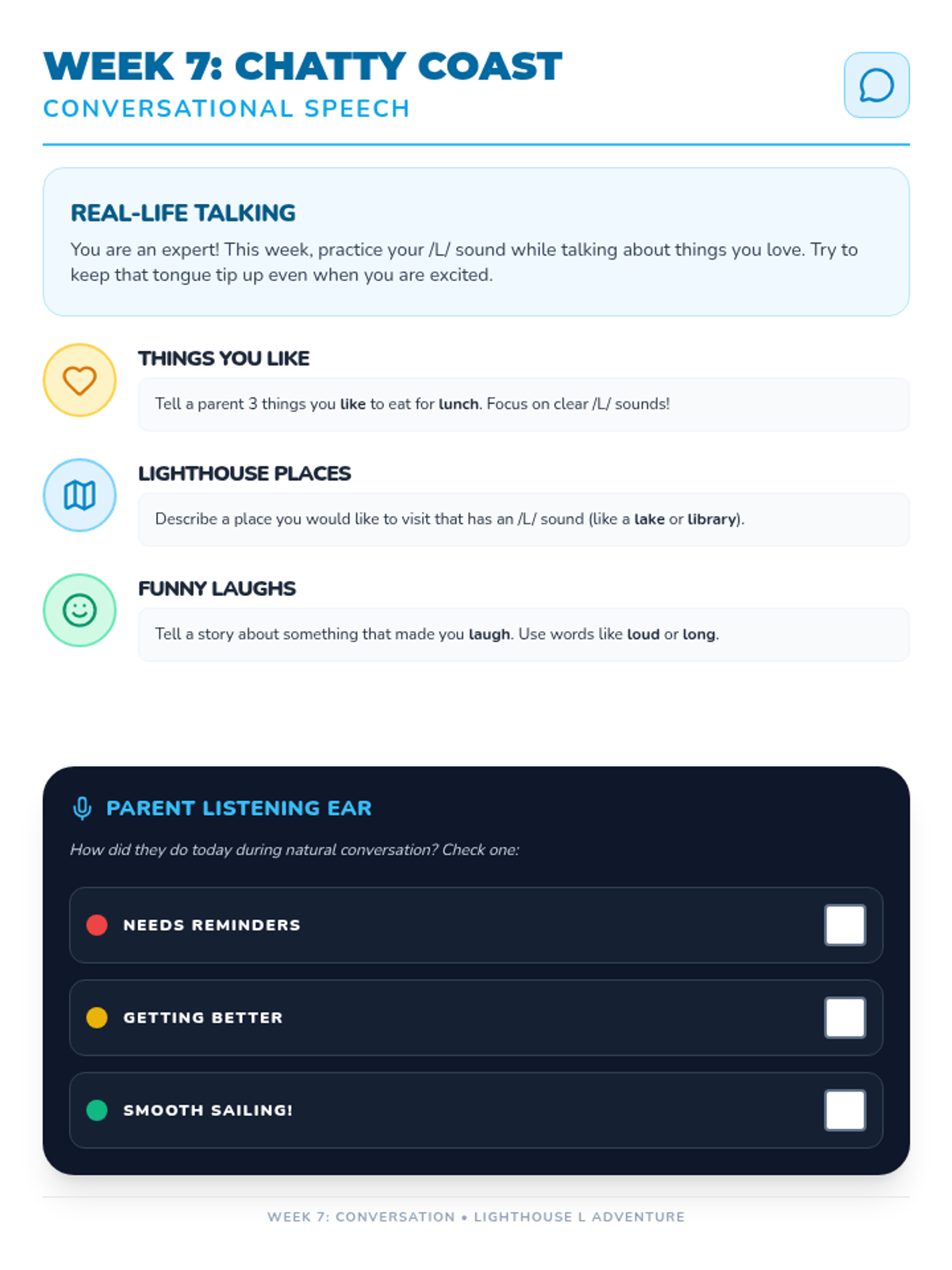
Prepares students for natural speech by using conversational prompts and open-ended questions targeting /l/ words.
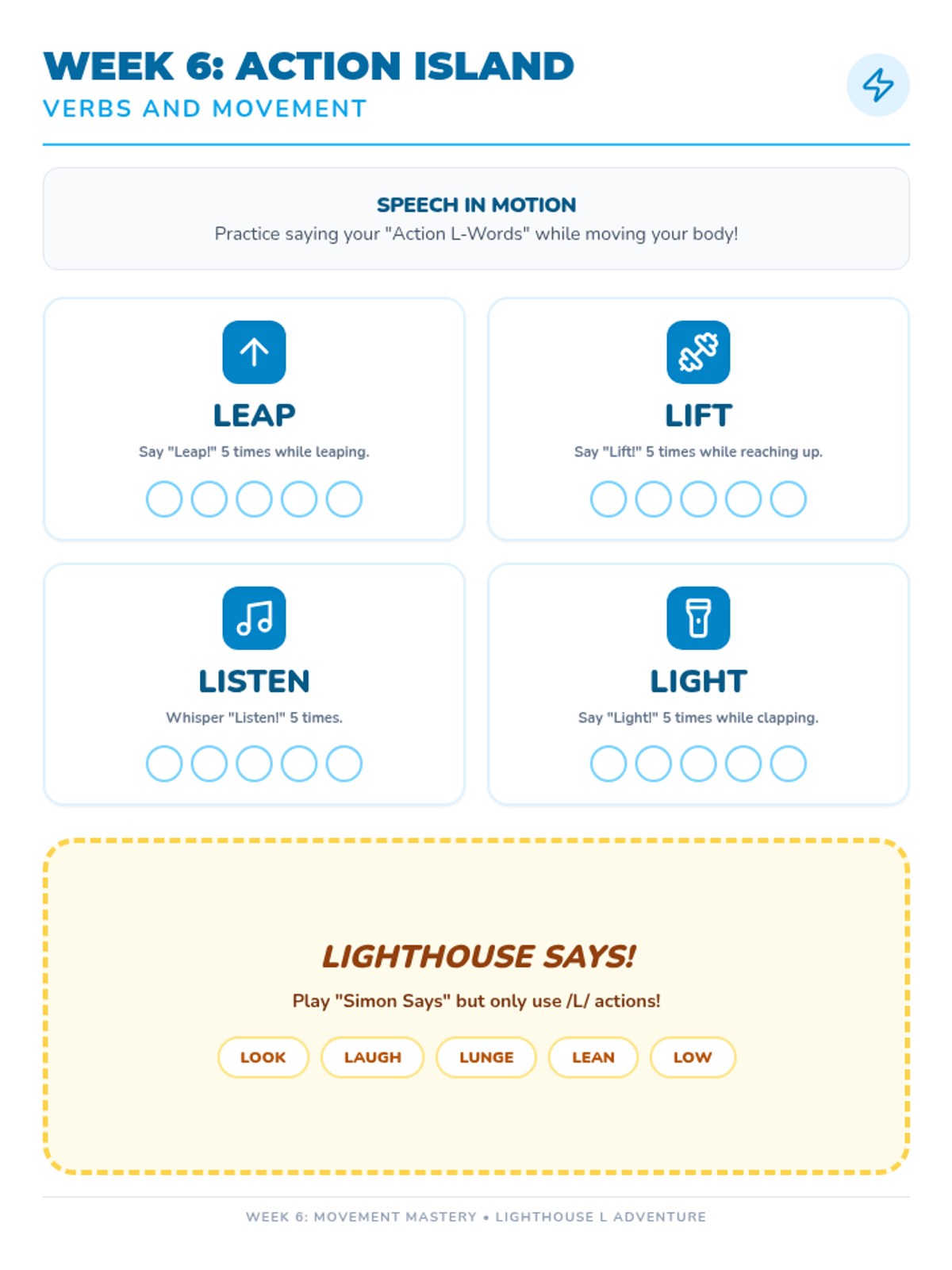
Focuses on 'action' words starting with /l/ (leap, lick, lift, etc.) to incorporate movement into speech practice.
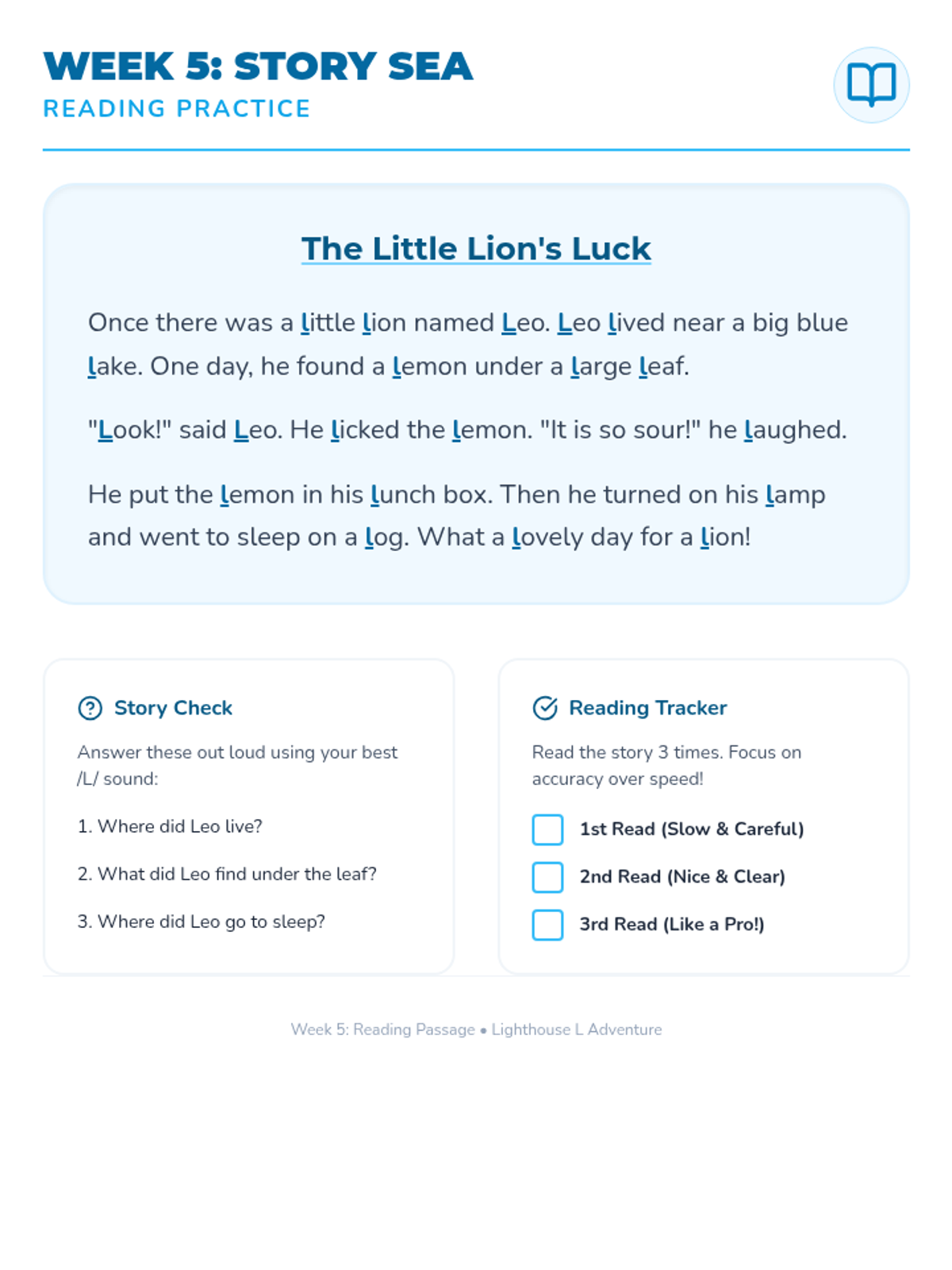
Using a short nautical-themed story, students practice their /l/ sound in a controlled reading context.
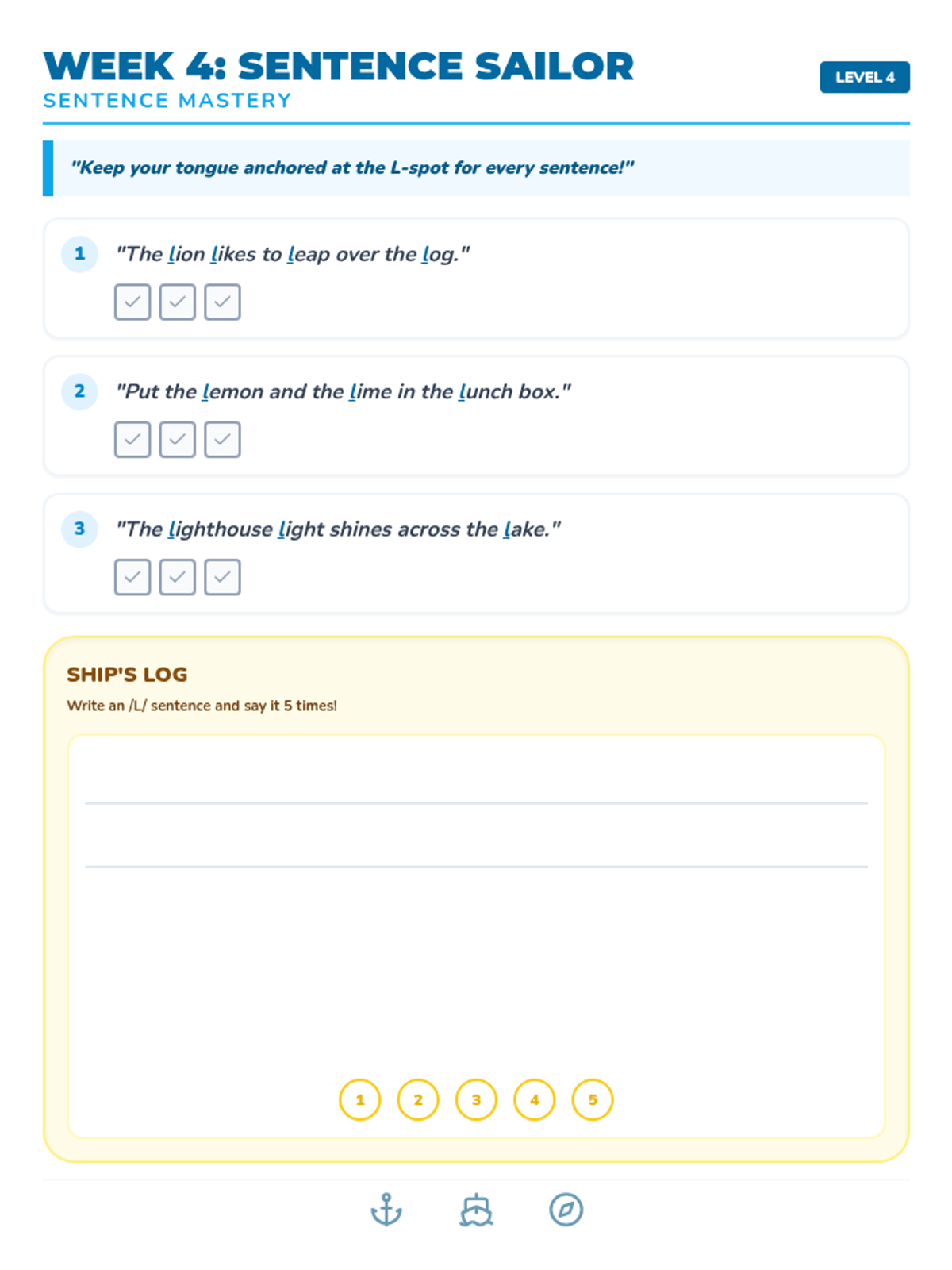
This week focuses on using /l/ words in full sentences, encouraging self-monitoring and clear production during longer utterances.
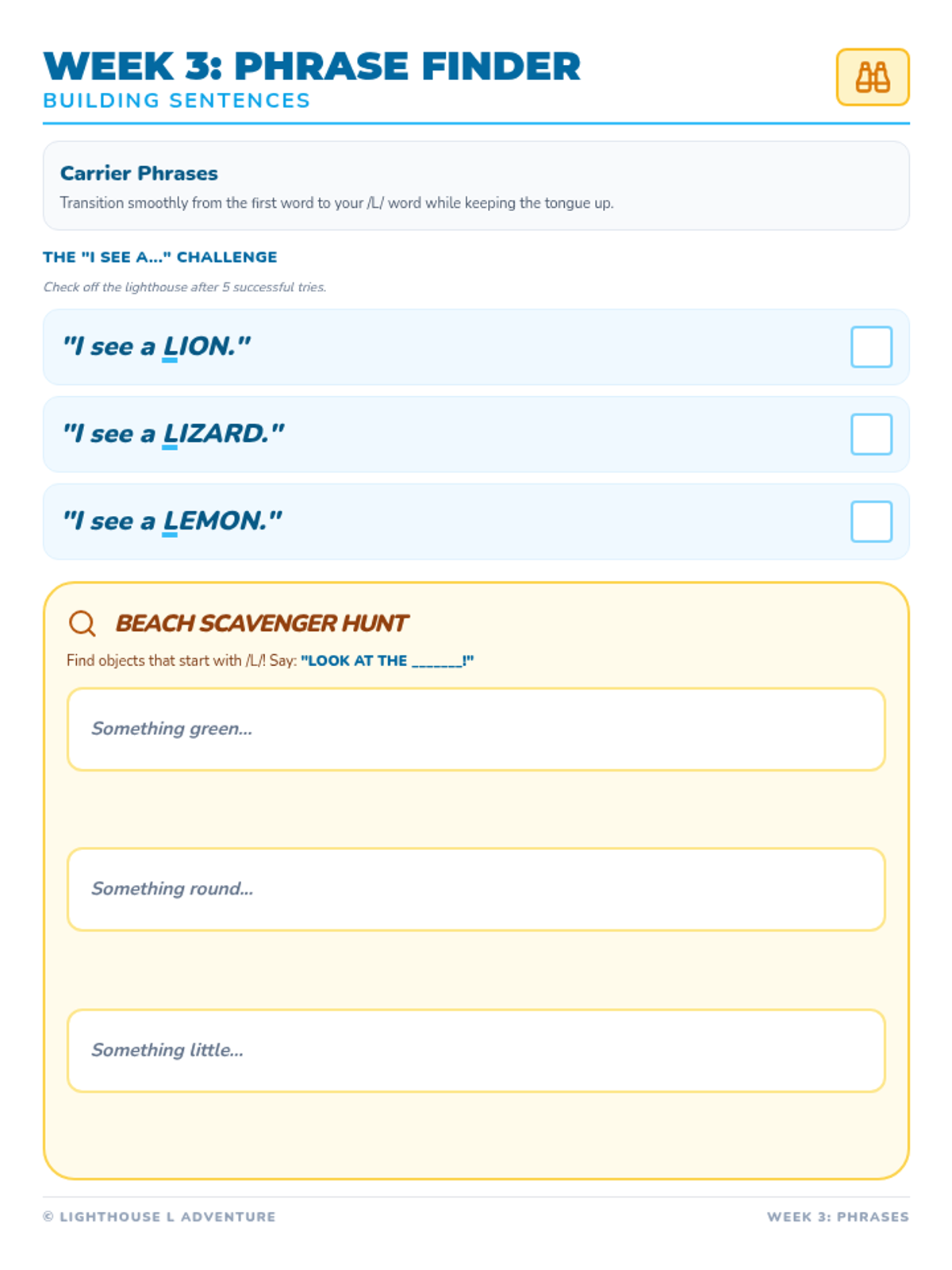
Students begin combining their target /l/ words with simple carrier phrases to build stamina and consistency.
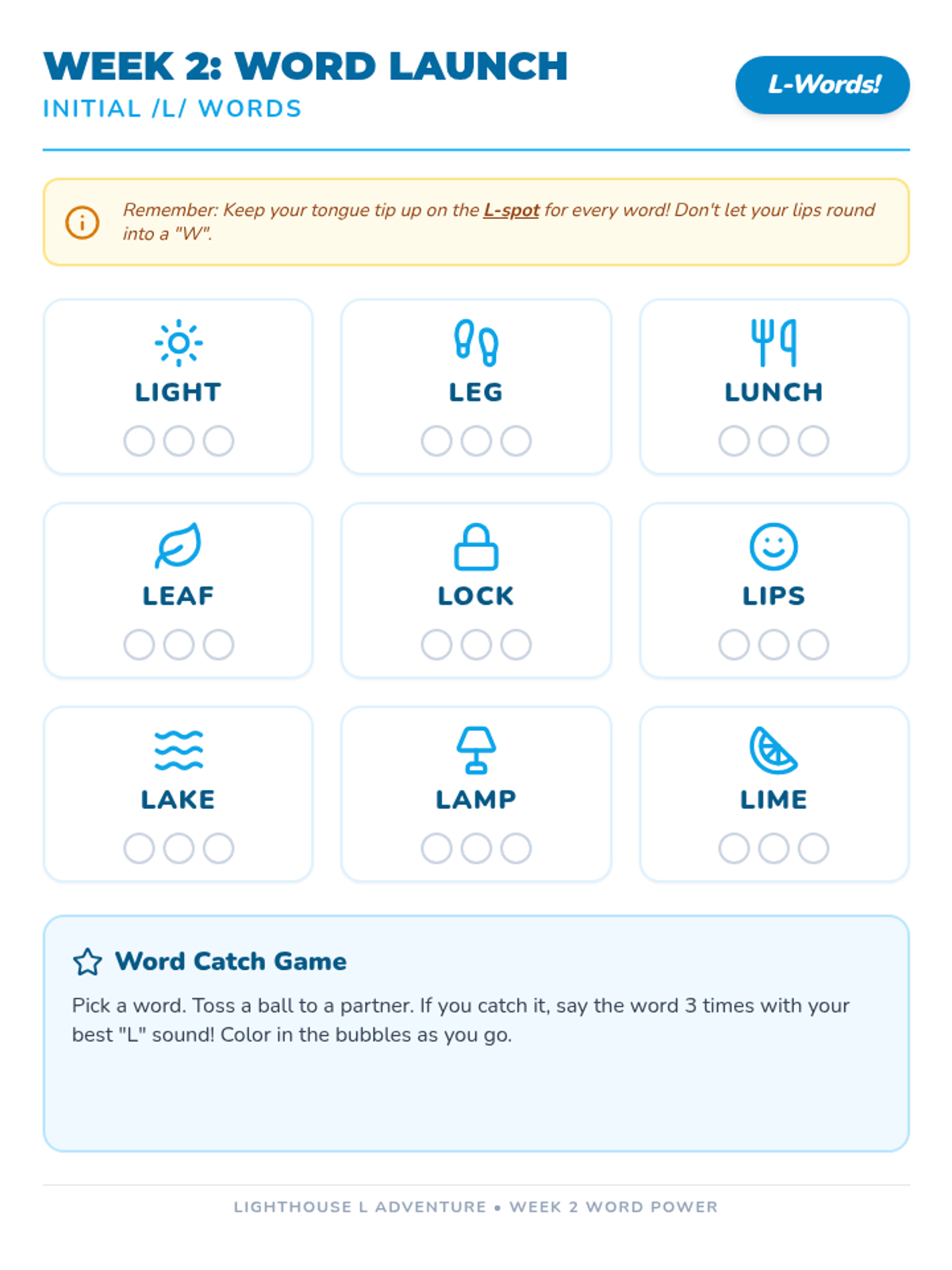
Moving from syllables to single words, this week focuses on high-frequency /l/ words using visual supports and a fun tracking sheet.
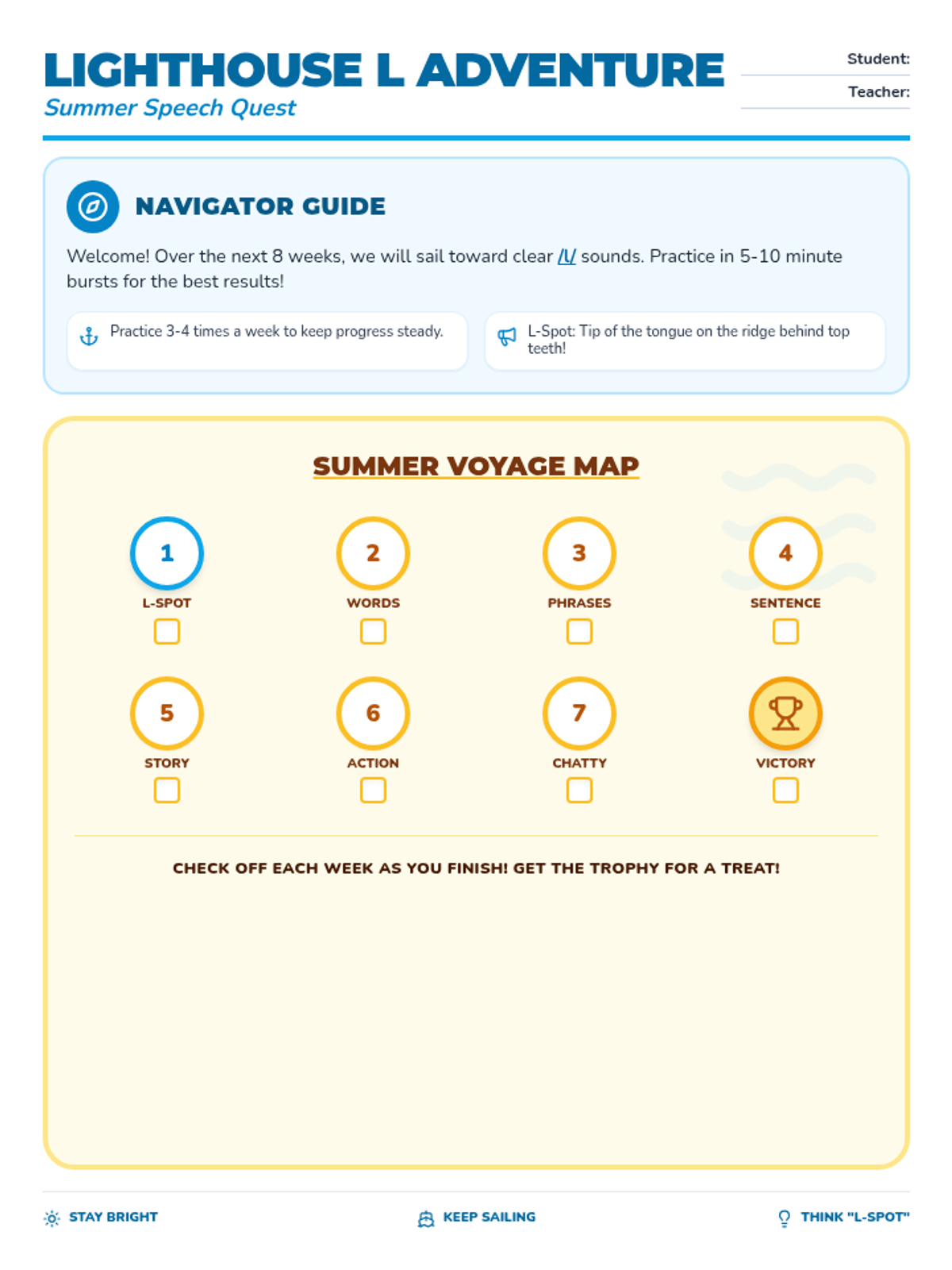
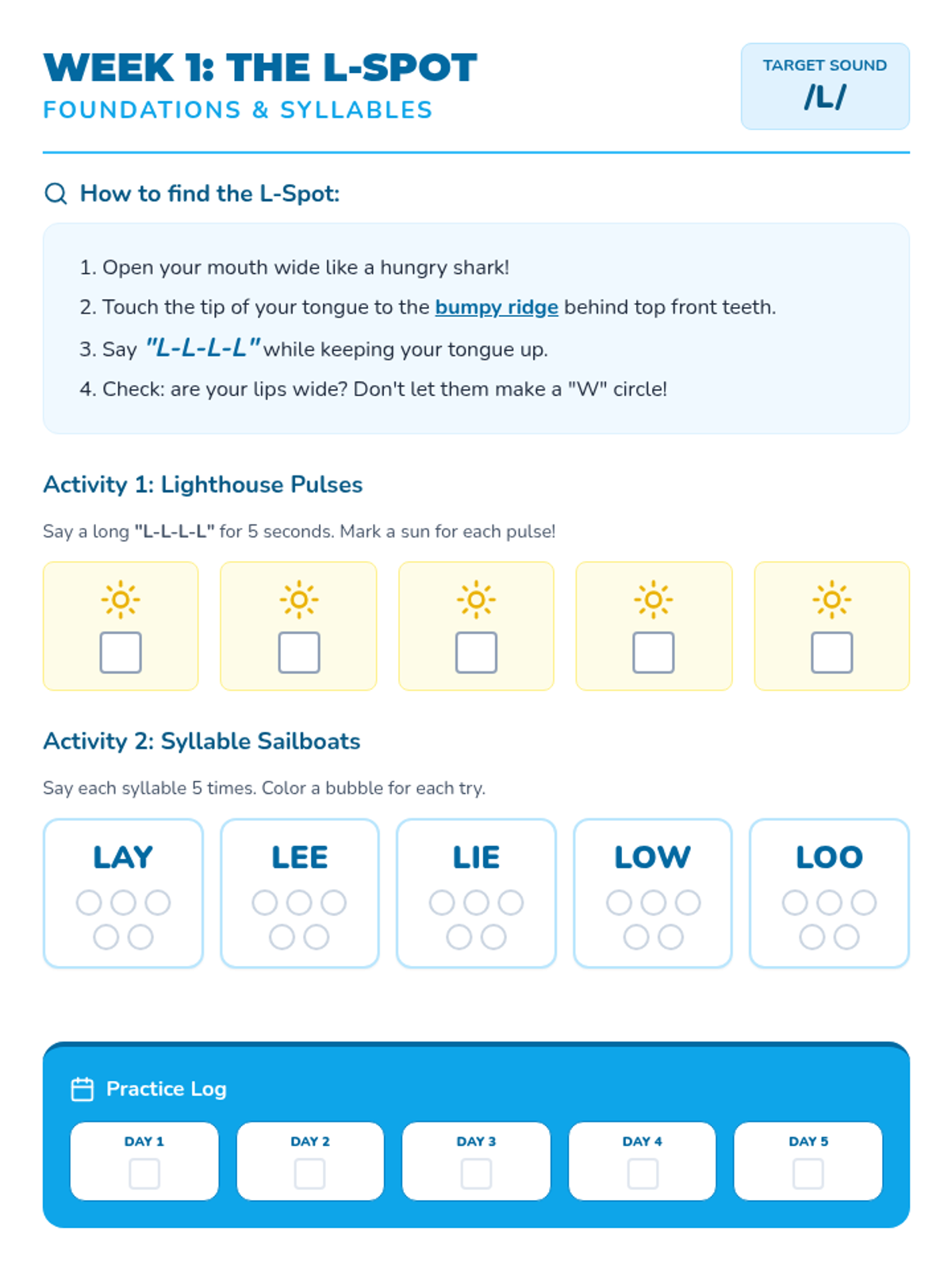
The foundational week focuses on establishing correct tongue placement (the 'L-spot') and producing the /l/ sound in isolation and simple syllables.
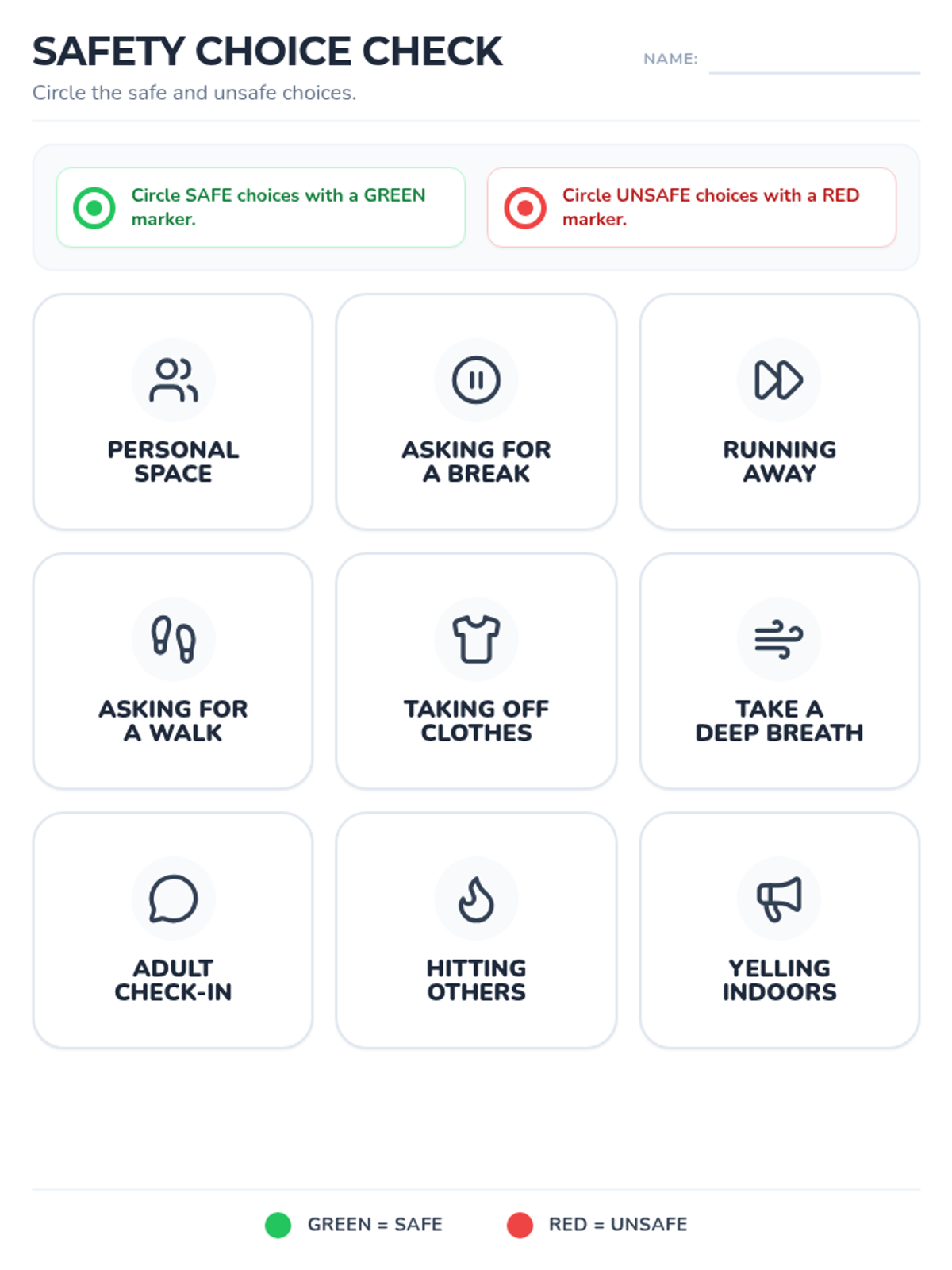
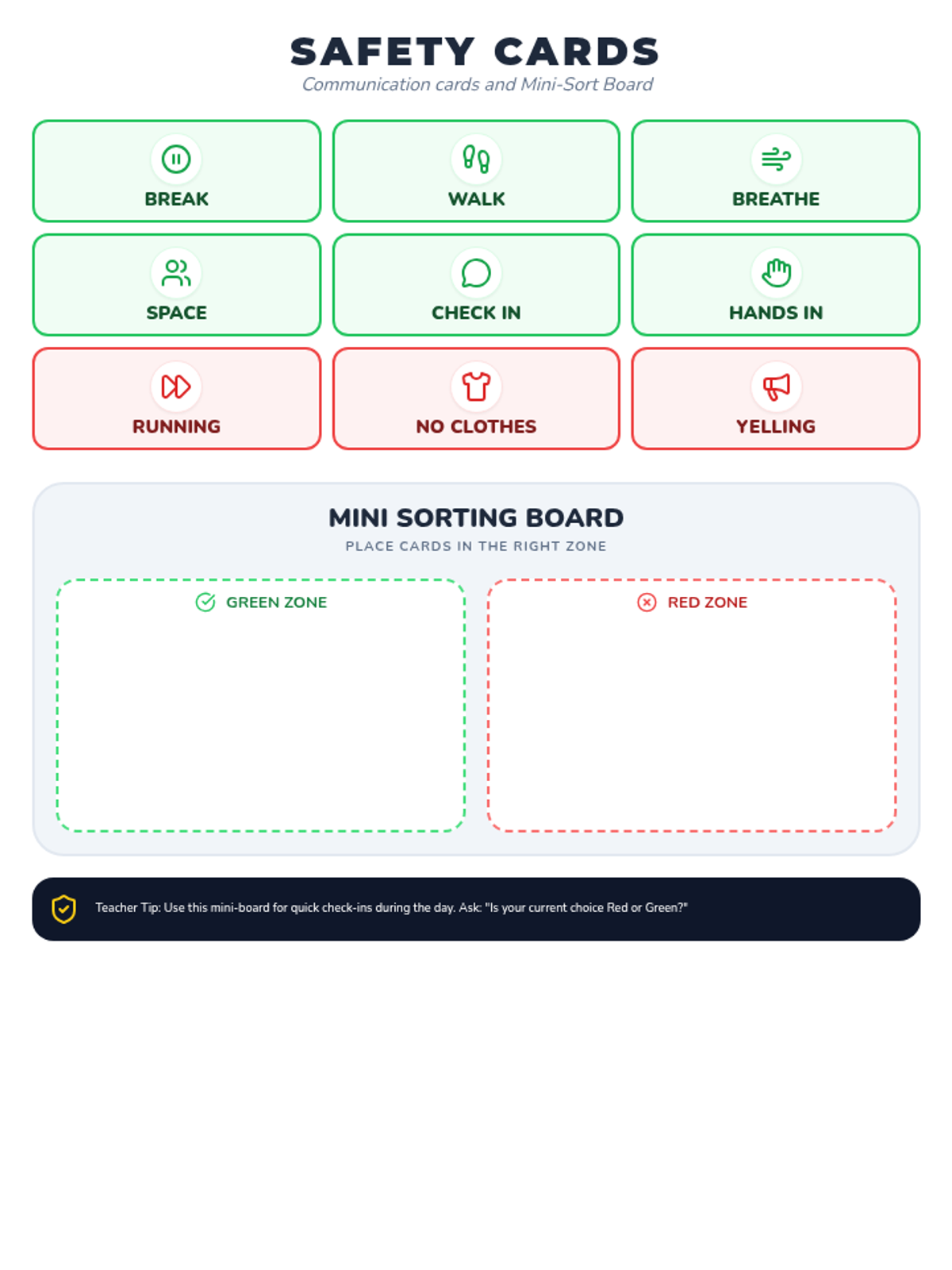
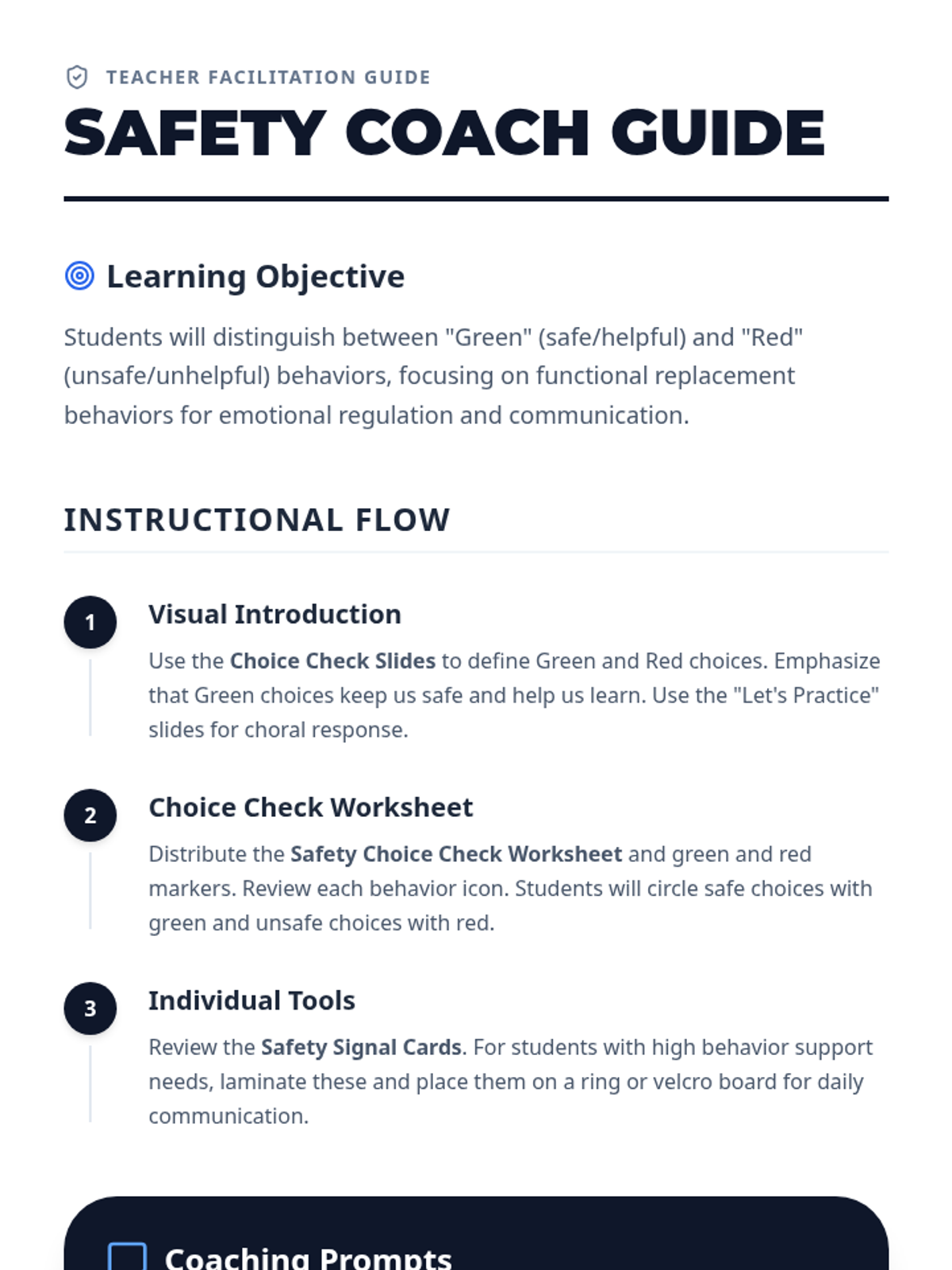
This lesson teaches students to distinguish between safe (Green) and unsafe (Red) behaviors through visual sorting and discussion. It focuses on functional communication and self-regulation skills like asking for breaks and maintaining personal space.
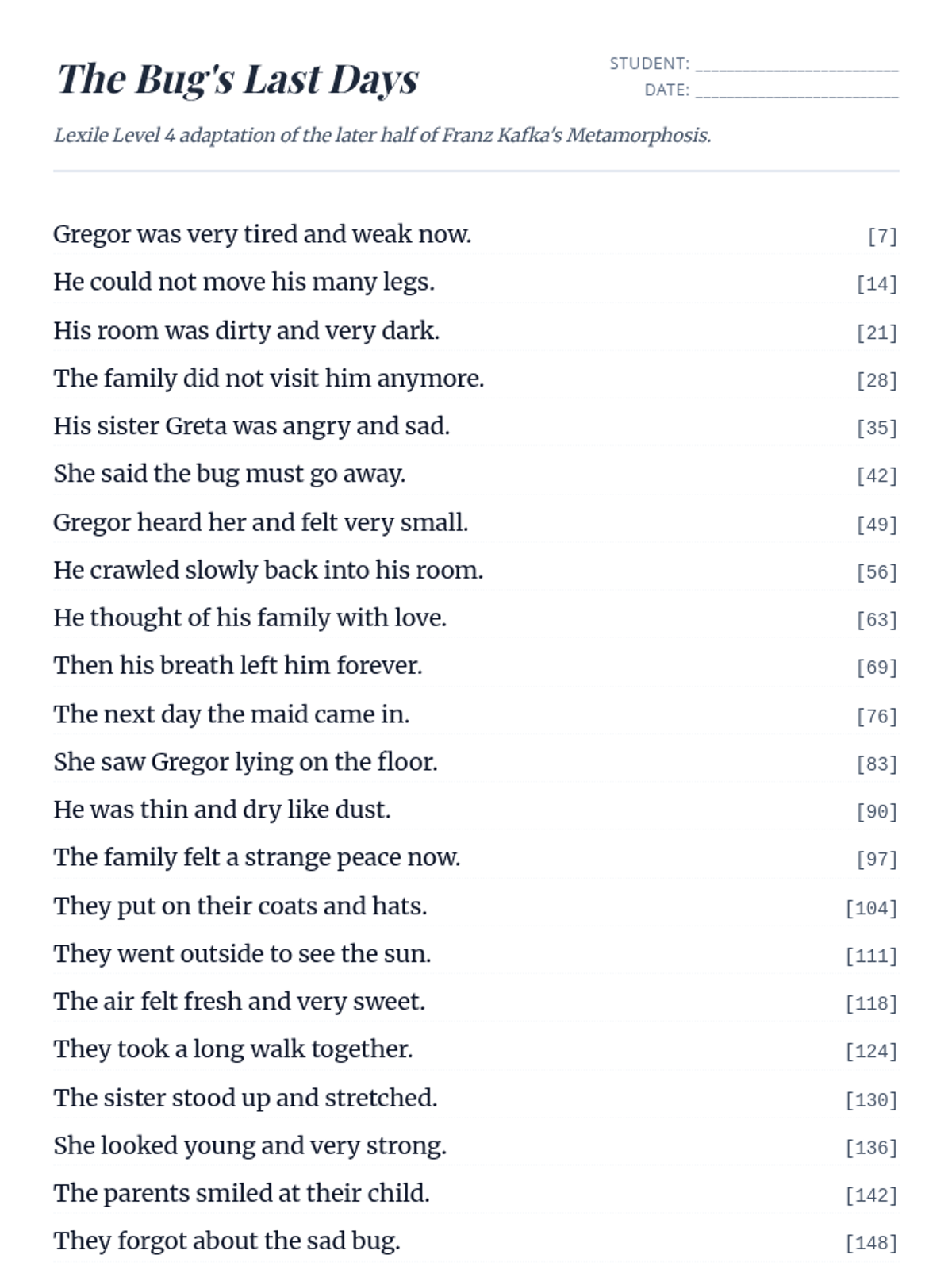
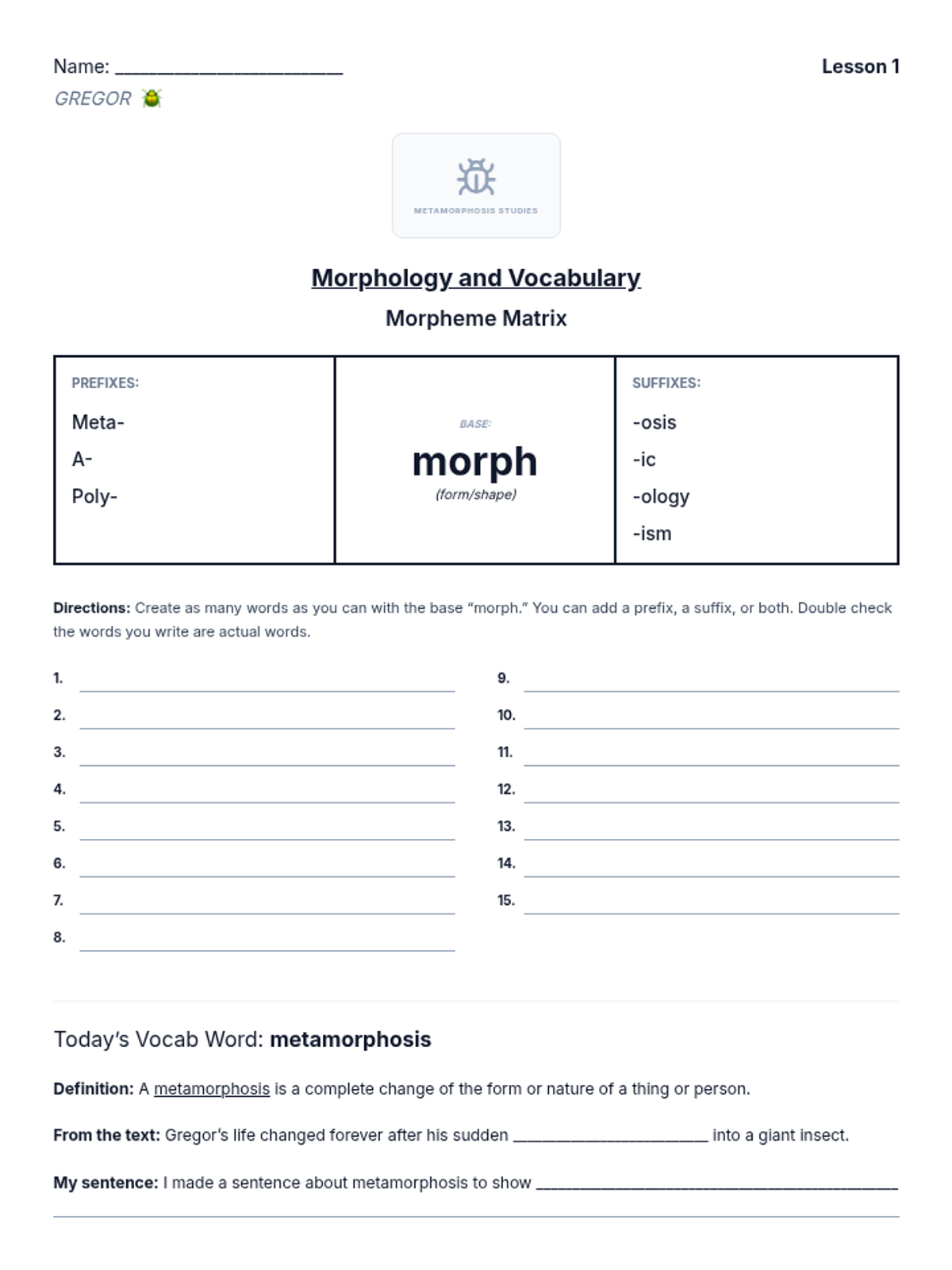
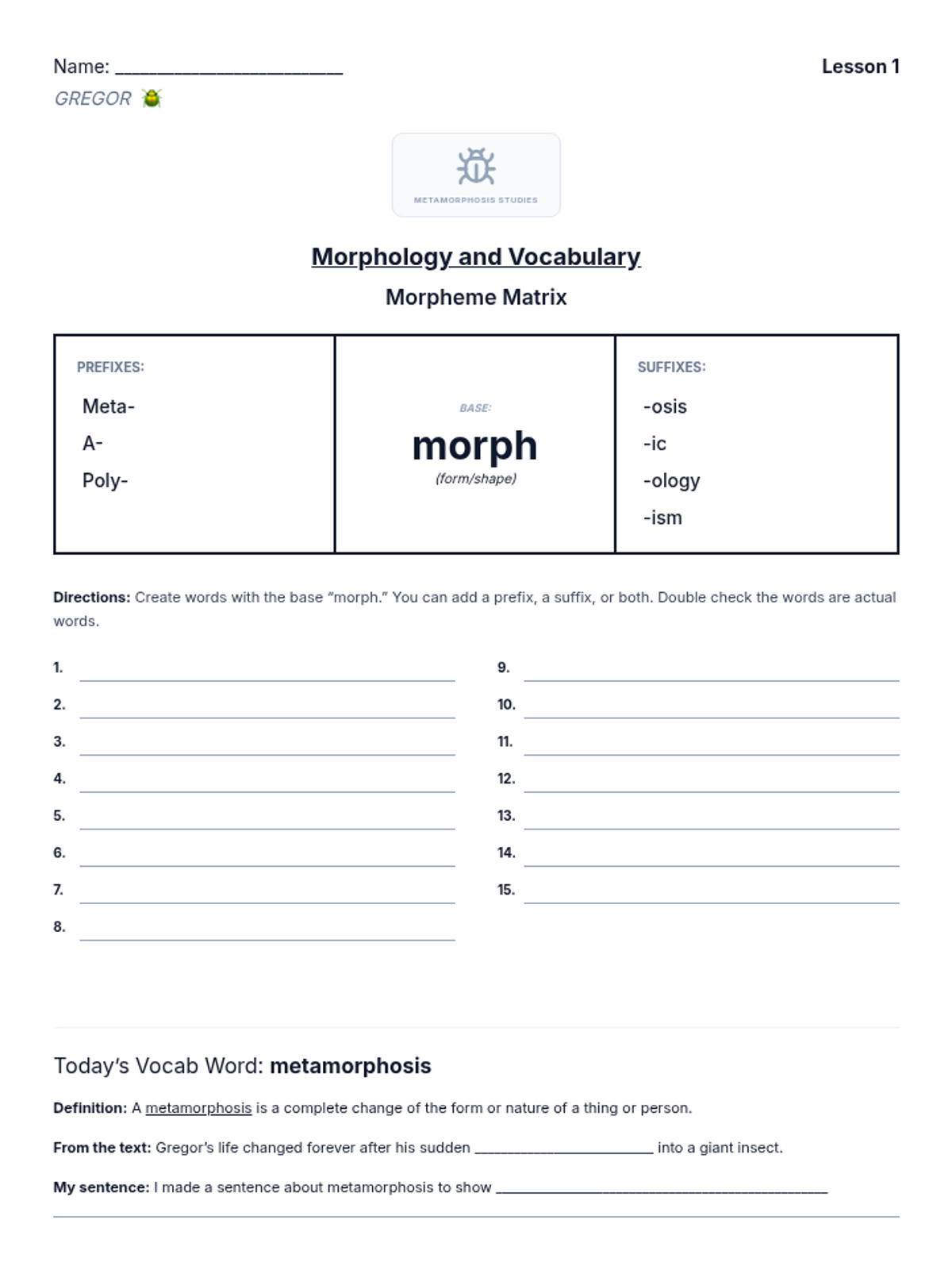
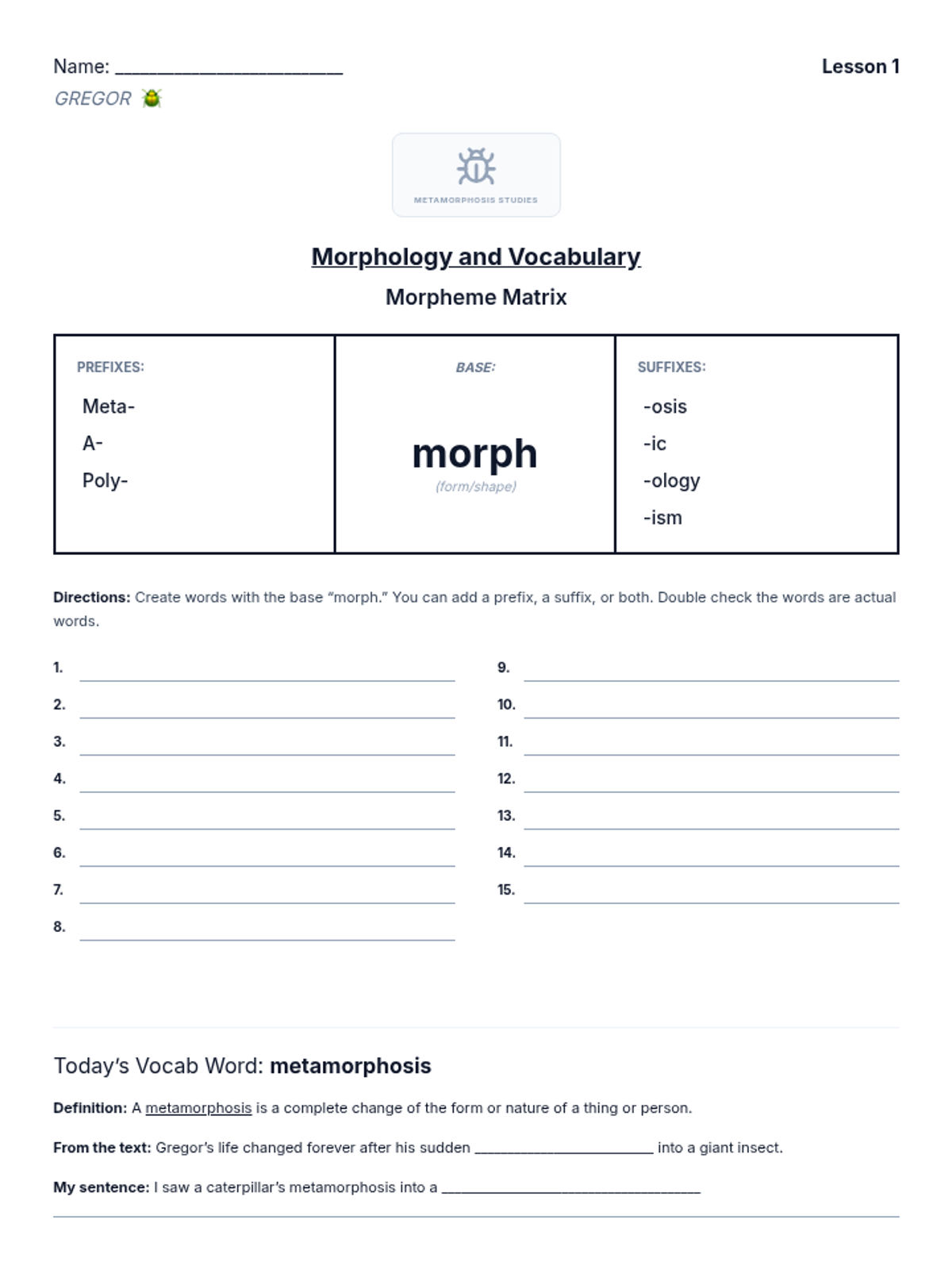
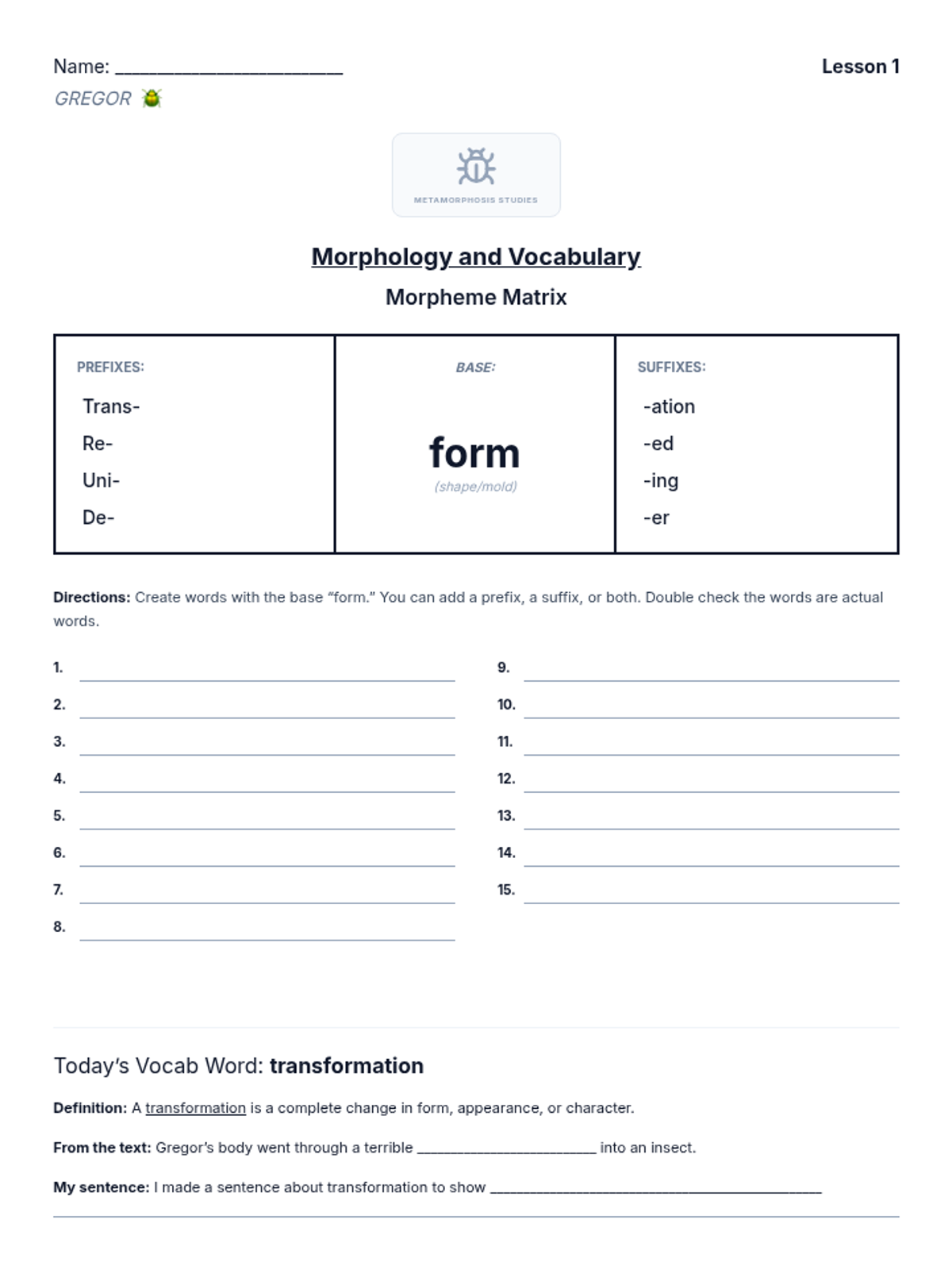
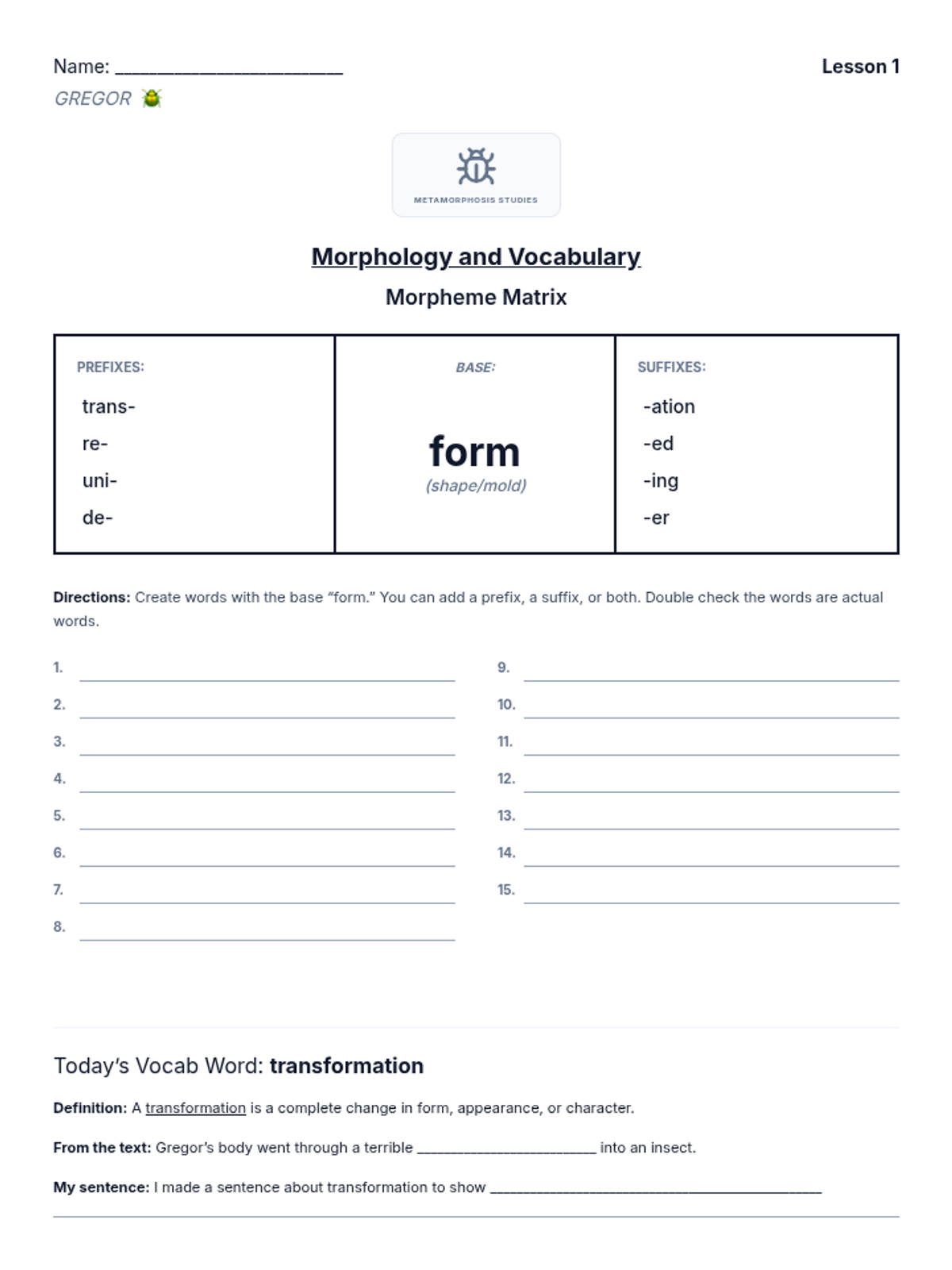
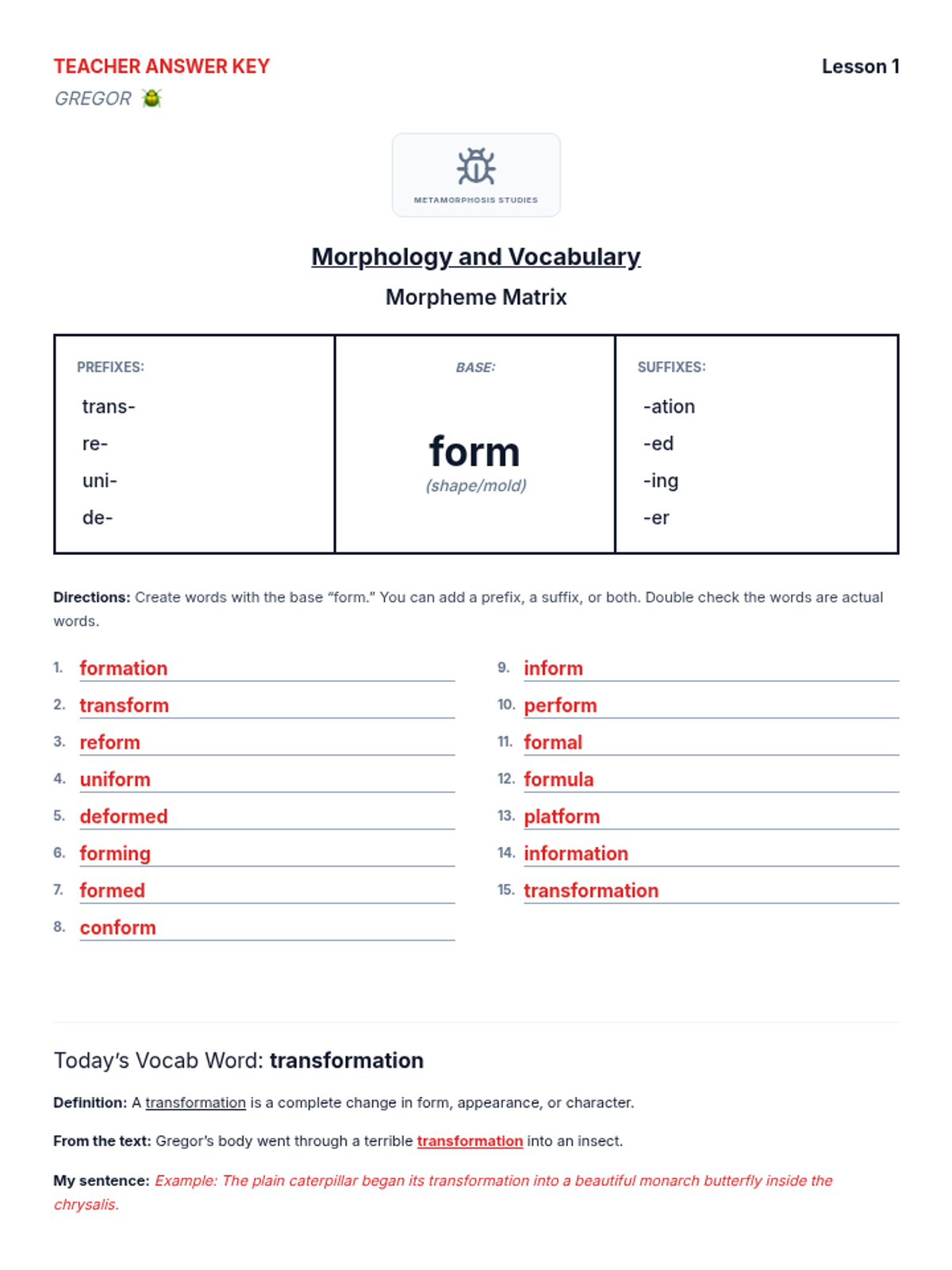
A simplified exploration of the later half of Franz Kafka's Metamorphosis, focusing on readability and text analysis for early intermediate readers.
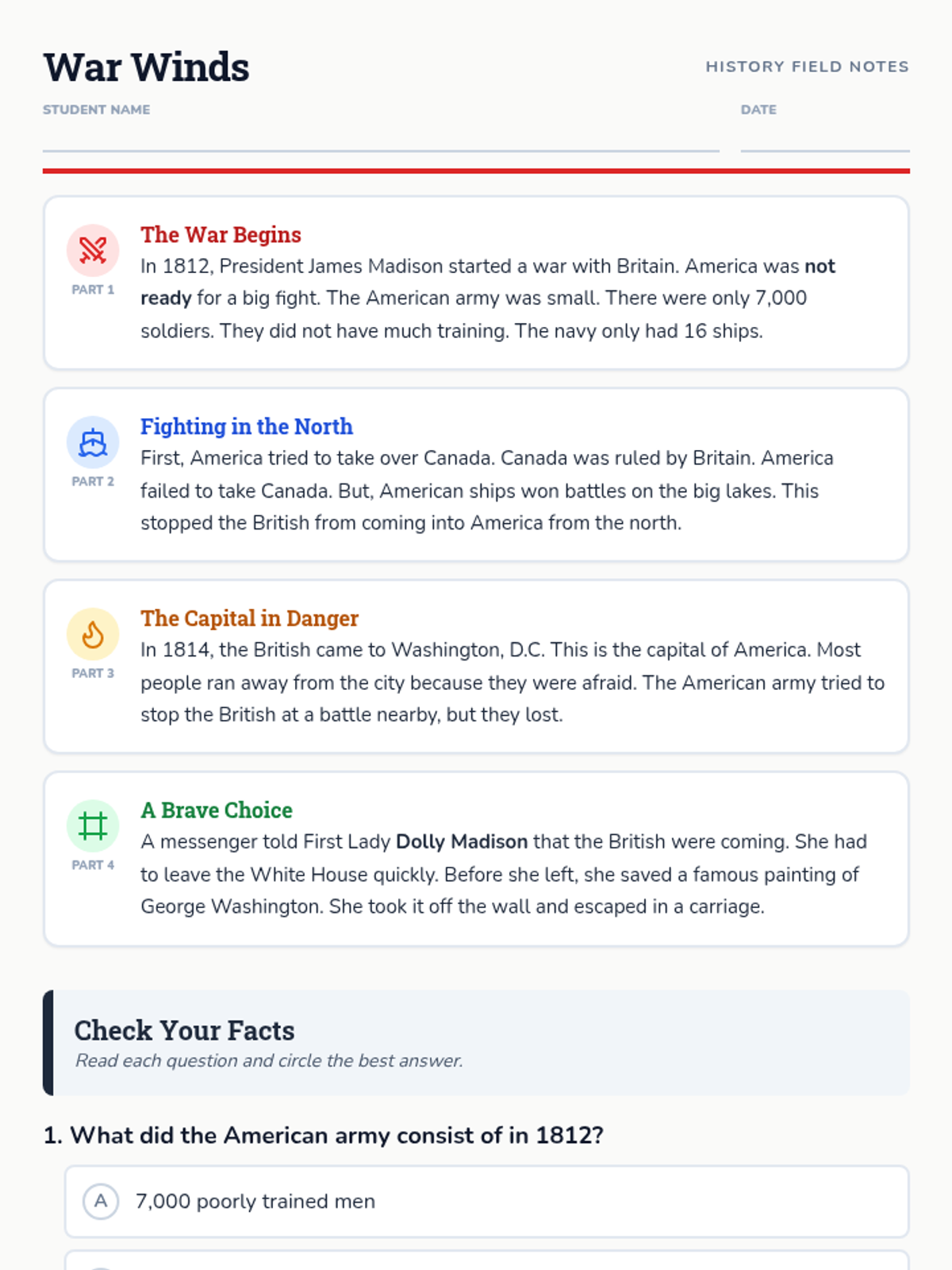
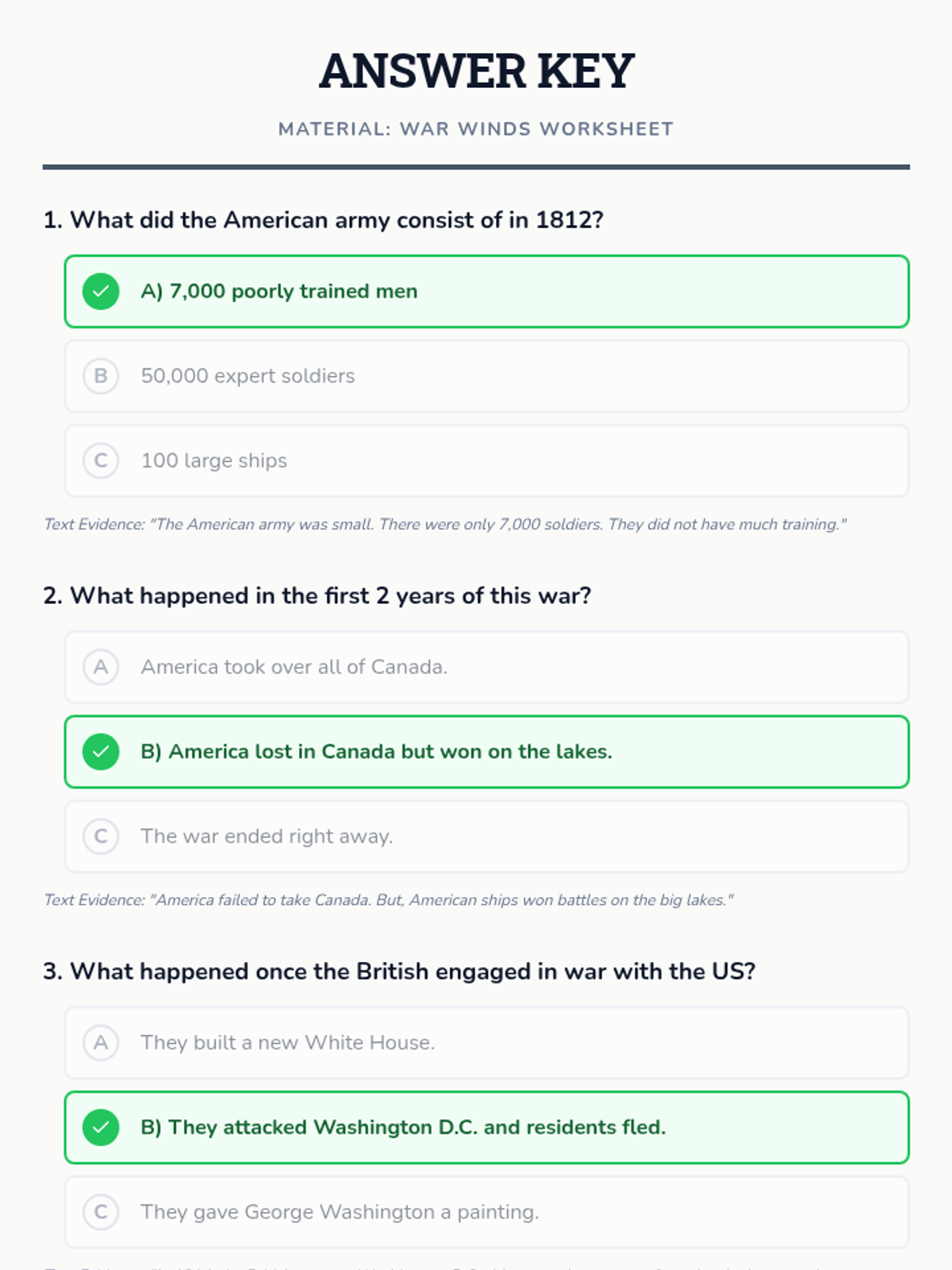
A modified history lesson focusing on the key events of the War of 1812, including the lack of American military readiness and the burning of Washington D.C., adapted for students with special needs at a 4th-5th grade reading level.
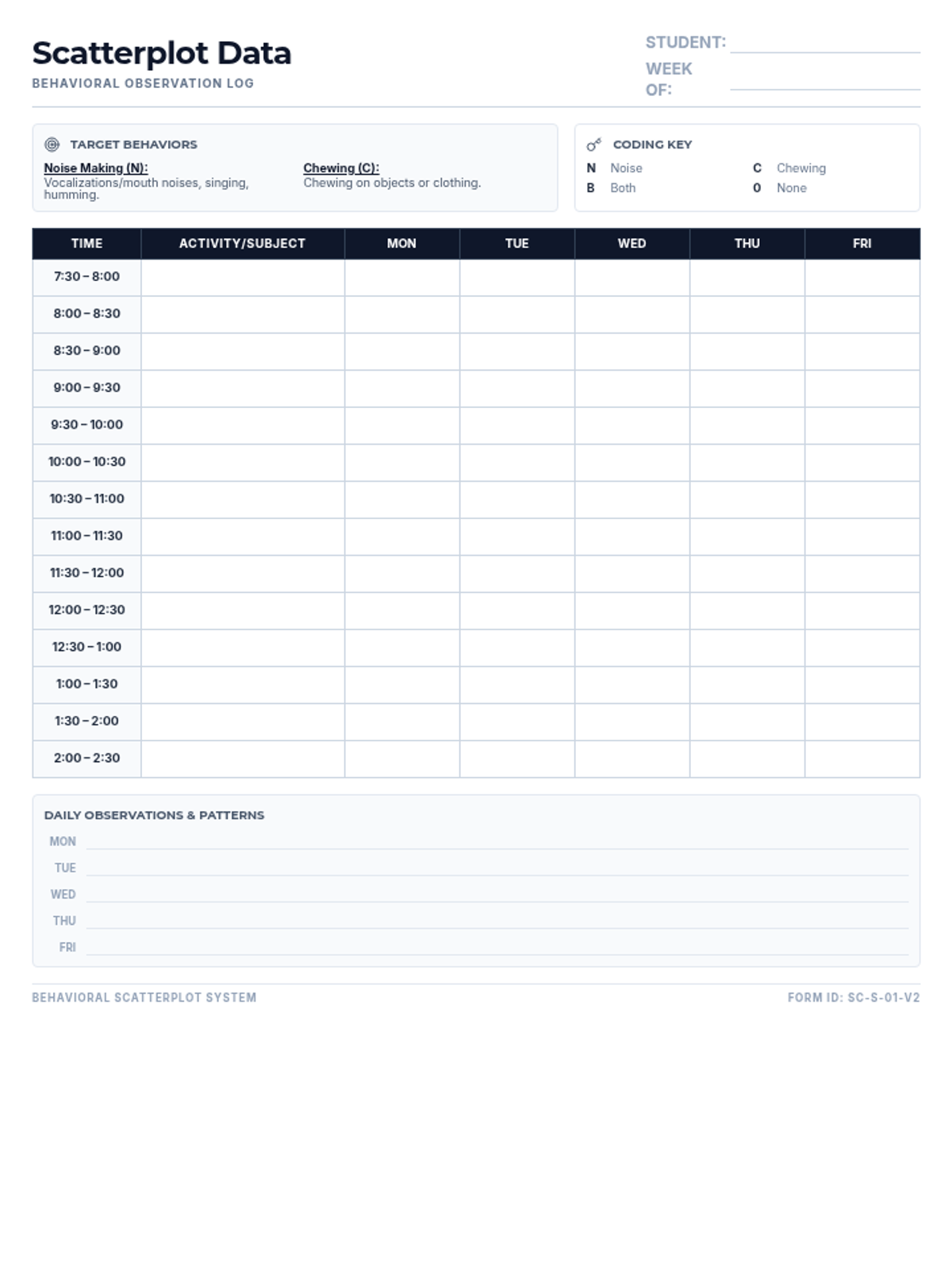
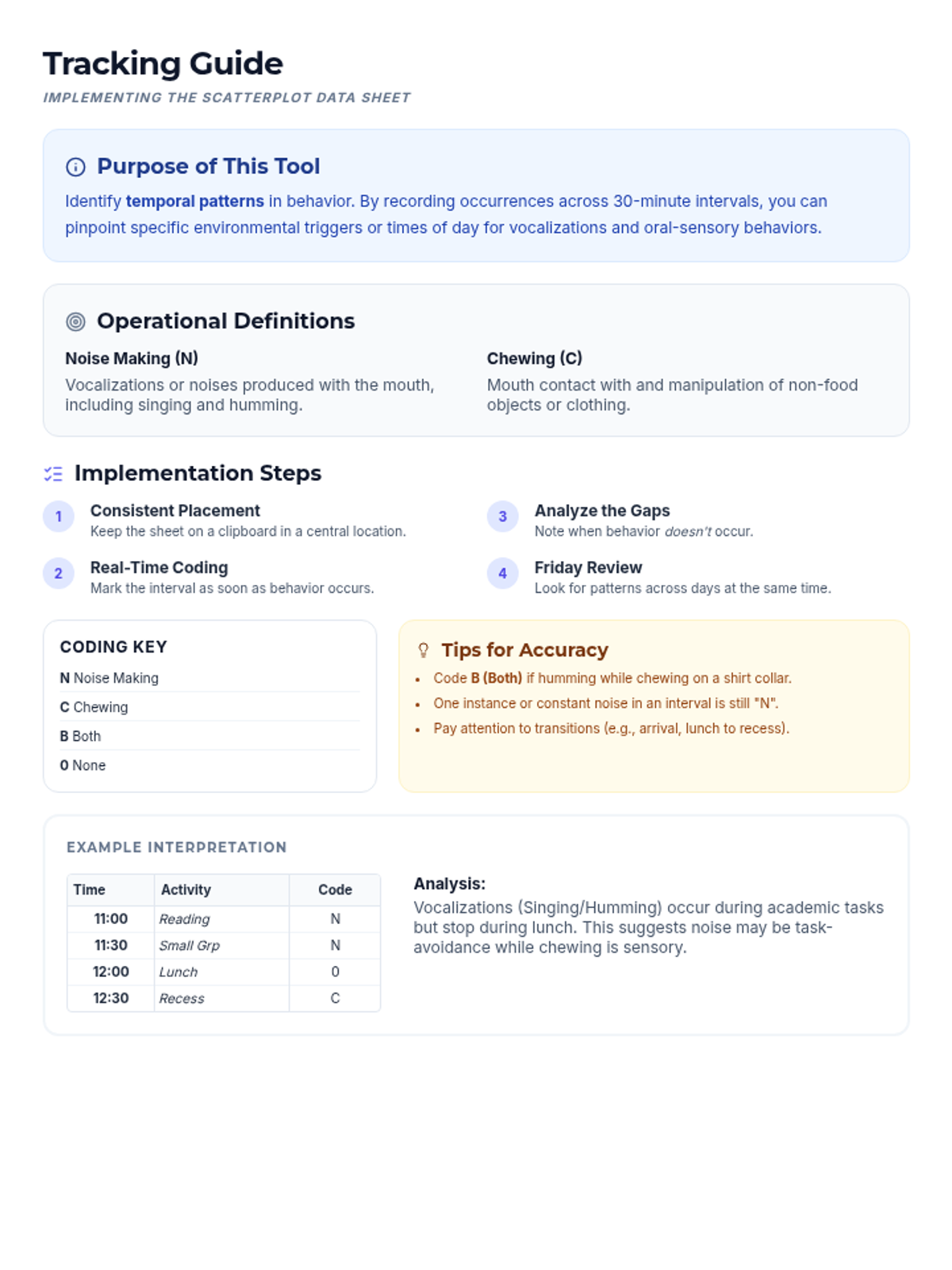
A collection of resources for tracking and analyzing noise-making and chewing behaviors in a classroom or clinical setting, featuring a structured scatterplot data sheet and implementation guide.
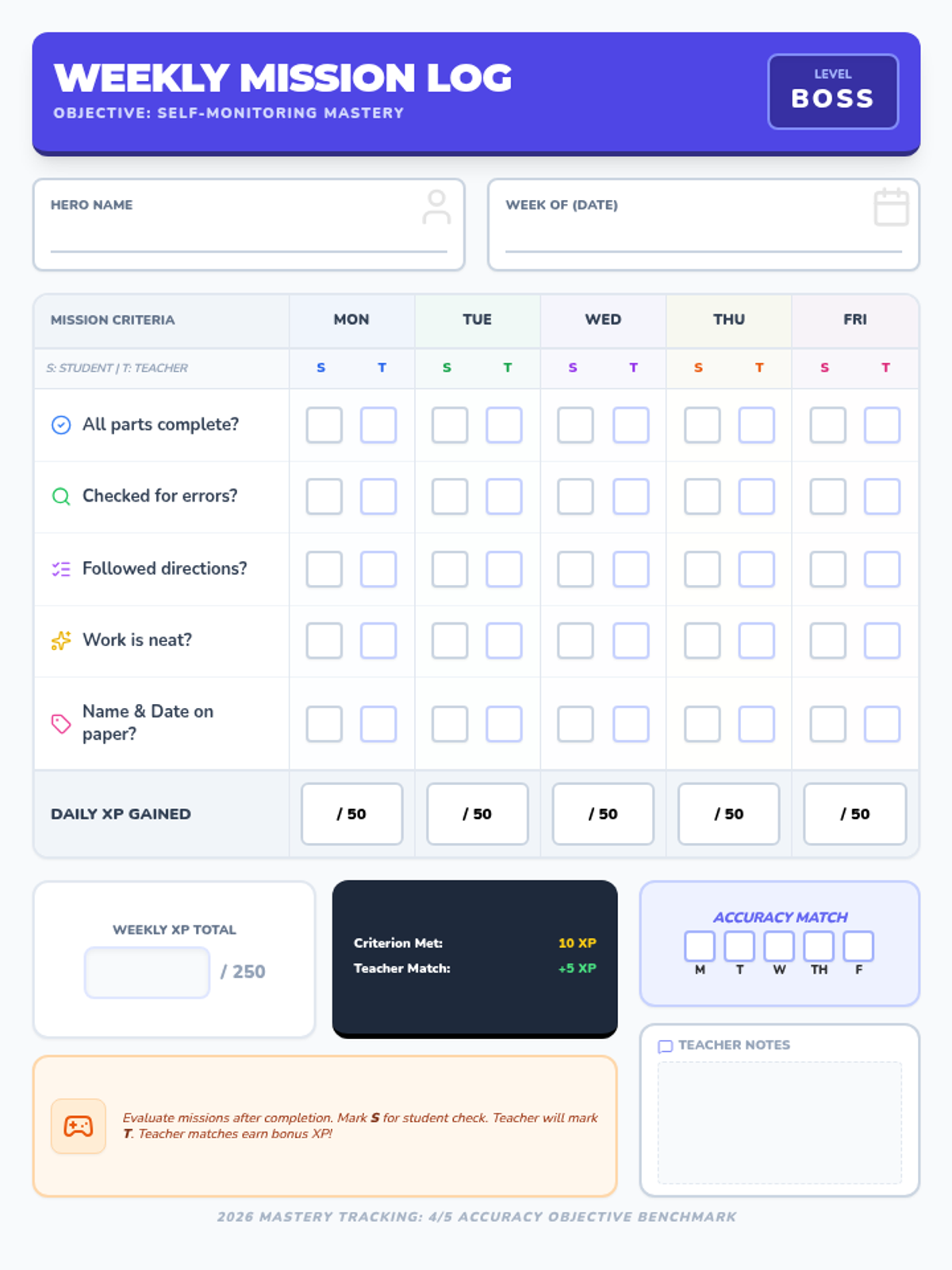
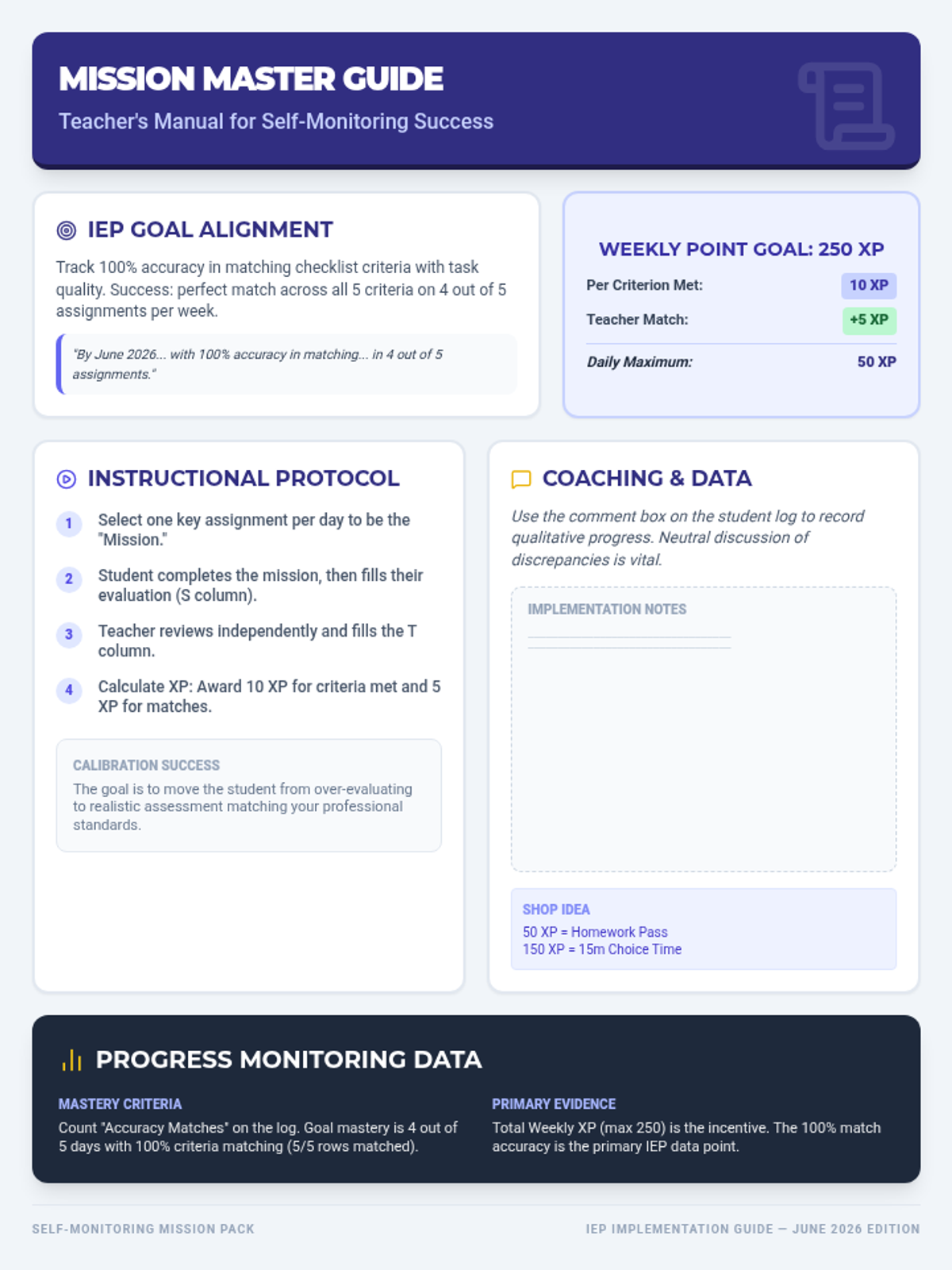
A lesson centered on developing self-monitoring skills for task completion and quality through a gamified weekly point system. Students learn to evaluate their own work against specific criteria and match their assessments with teacher feedback.
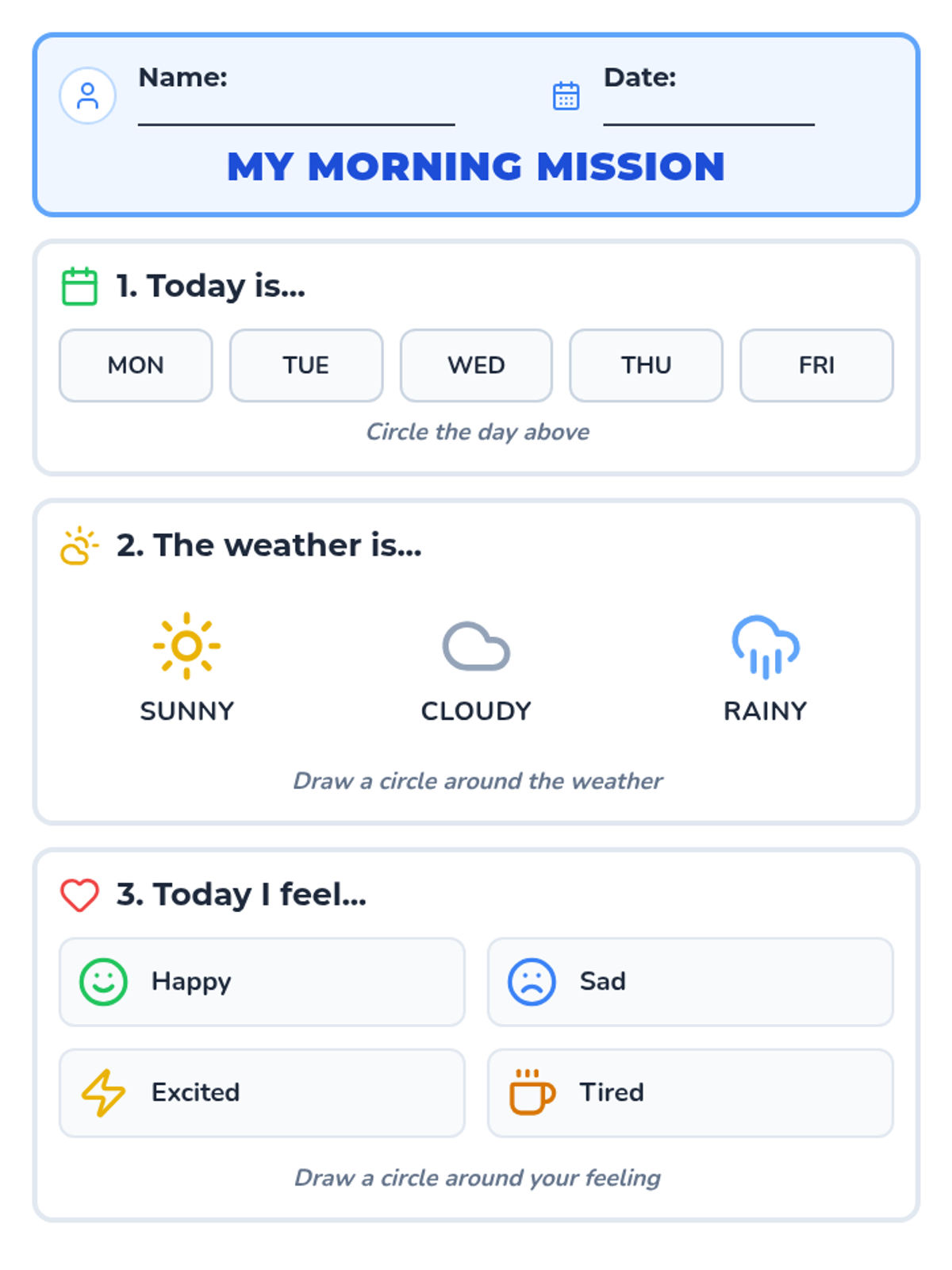
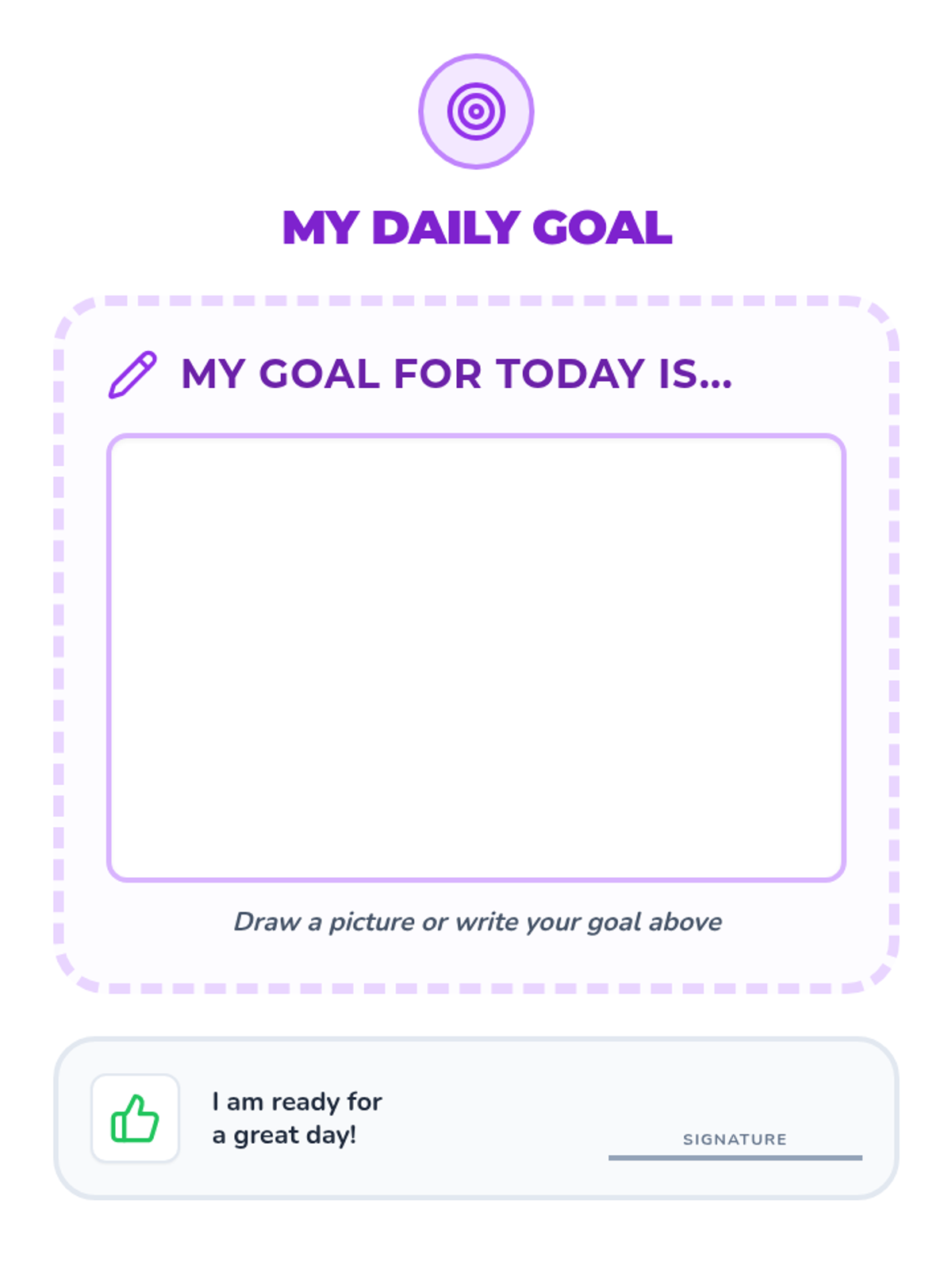
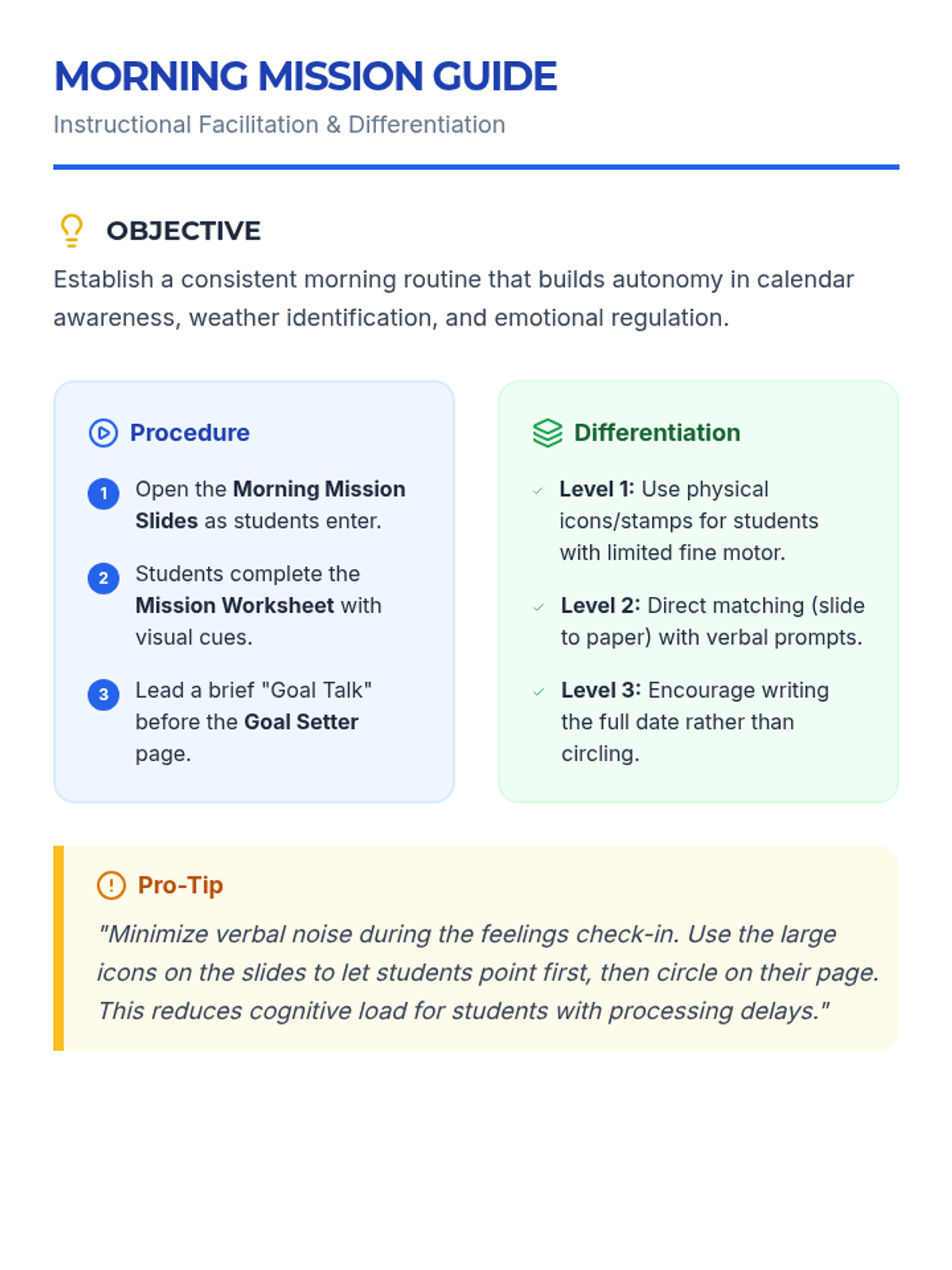
A structured morning routine lesson that guides students through checking the calendar, identifying feelings, and setting a positive goal for the day.
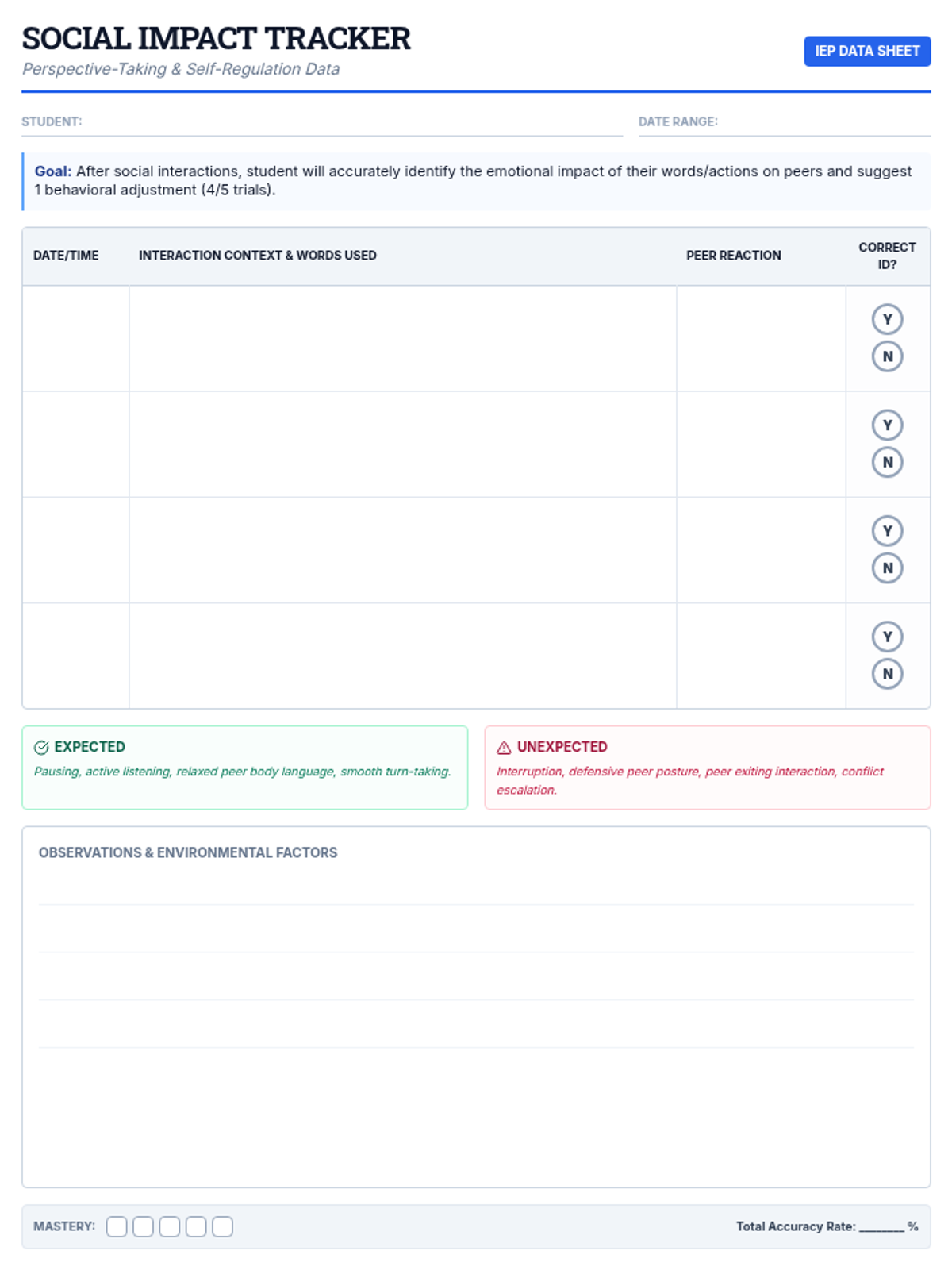
This lesson focuses on developing perspective-taking skills, specifically helping students understand the ripple effect of their words and actions on the people around them. It includes tools for monitoring progress and reflective practice.
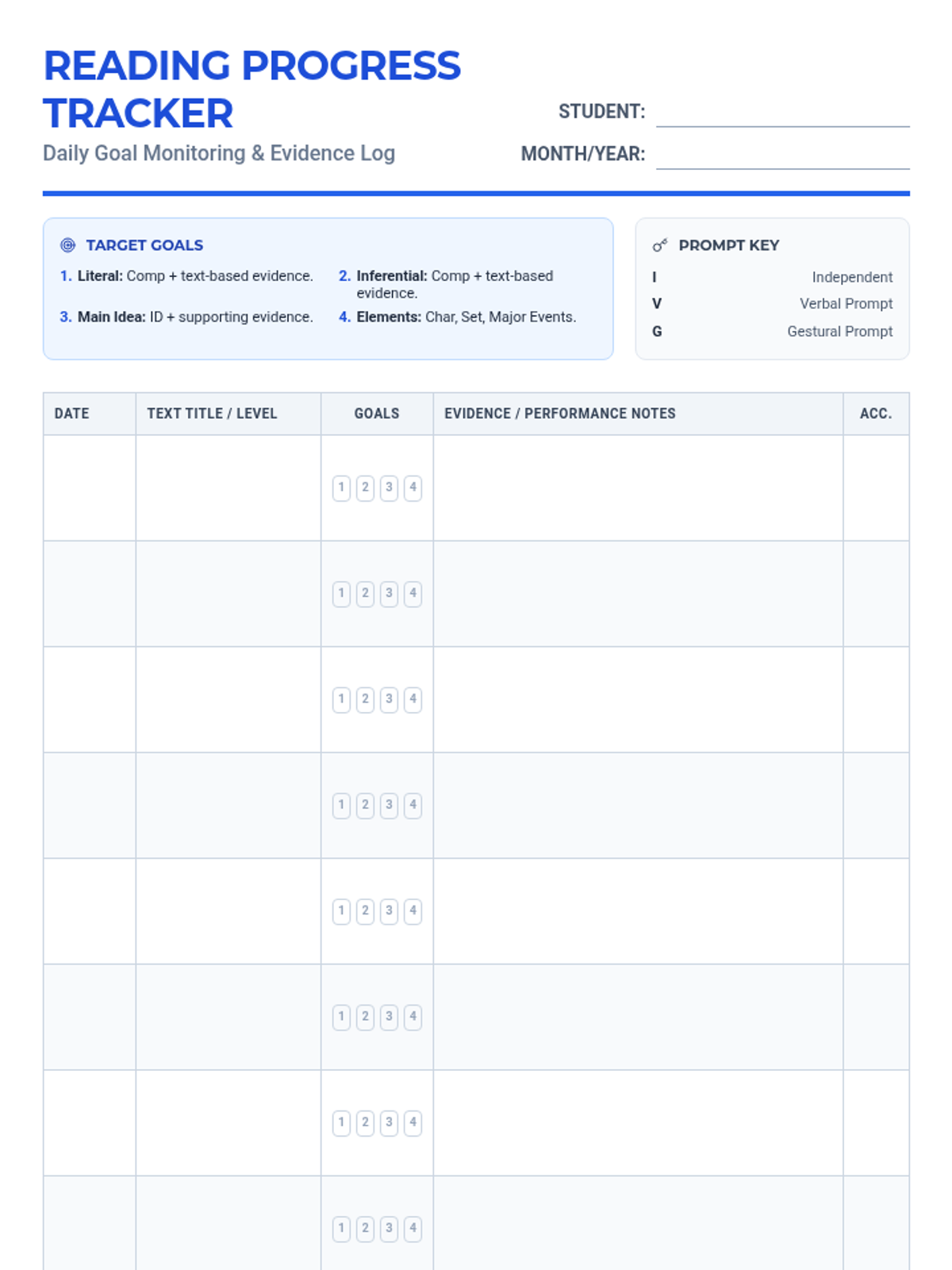
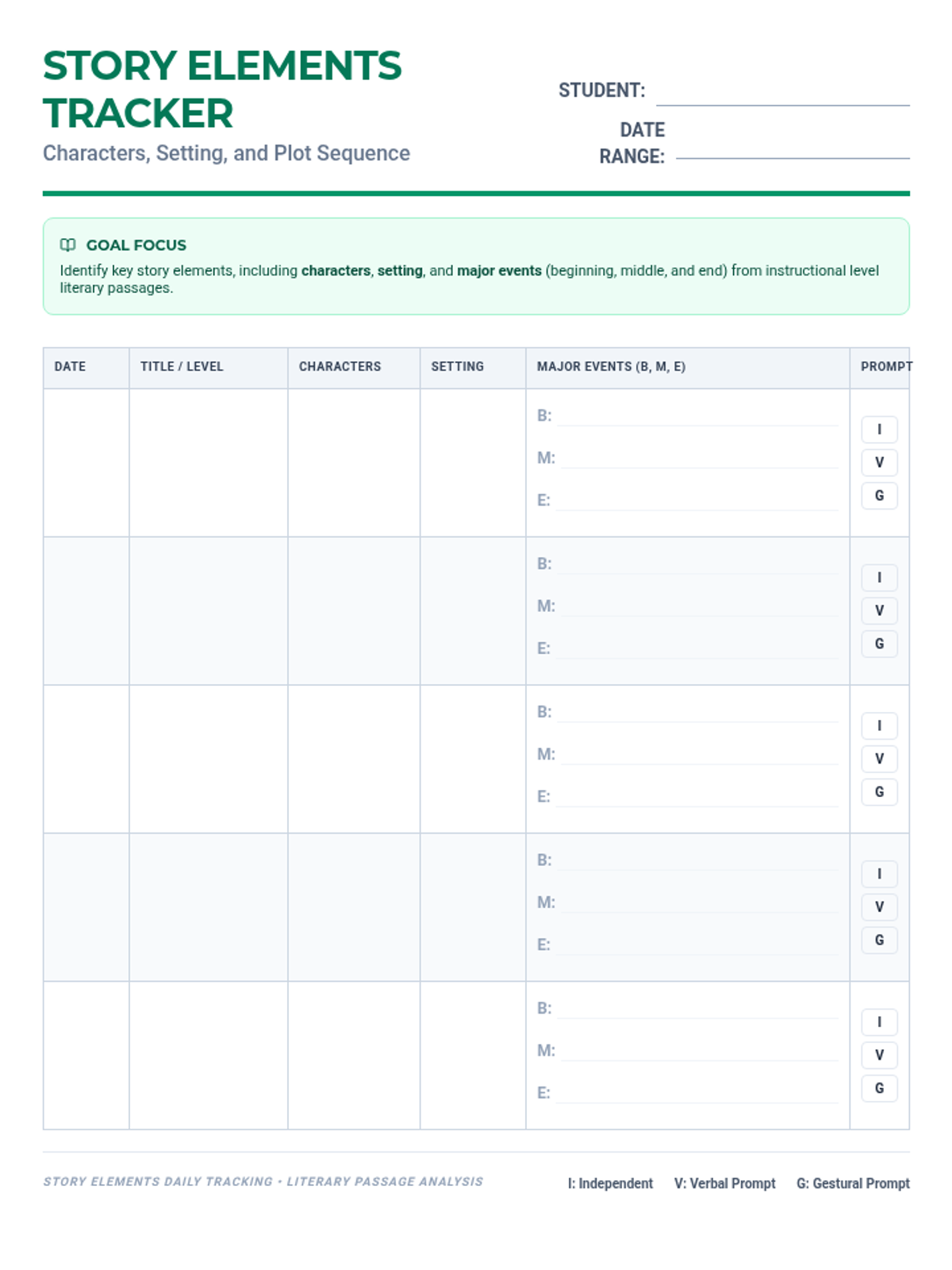
A collection of professional data tracking sheets for monitoring specific reading comprehension goals, including literal, inferential, and story element identification.
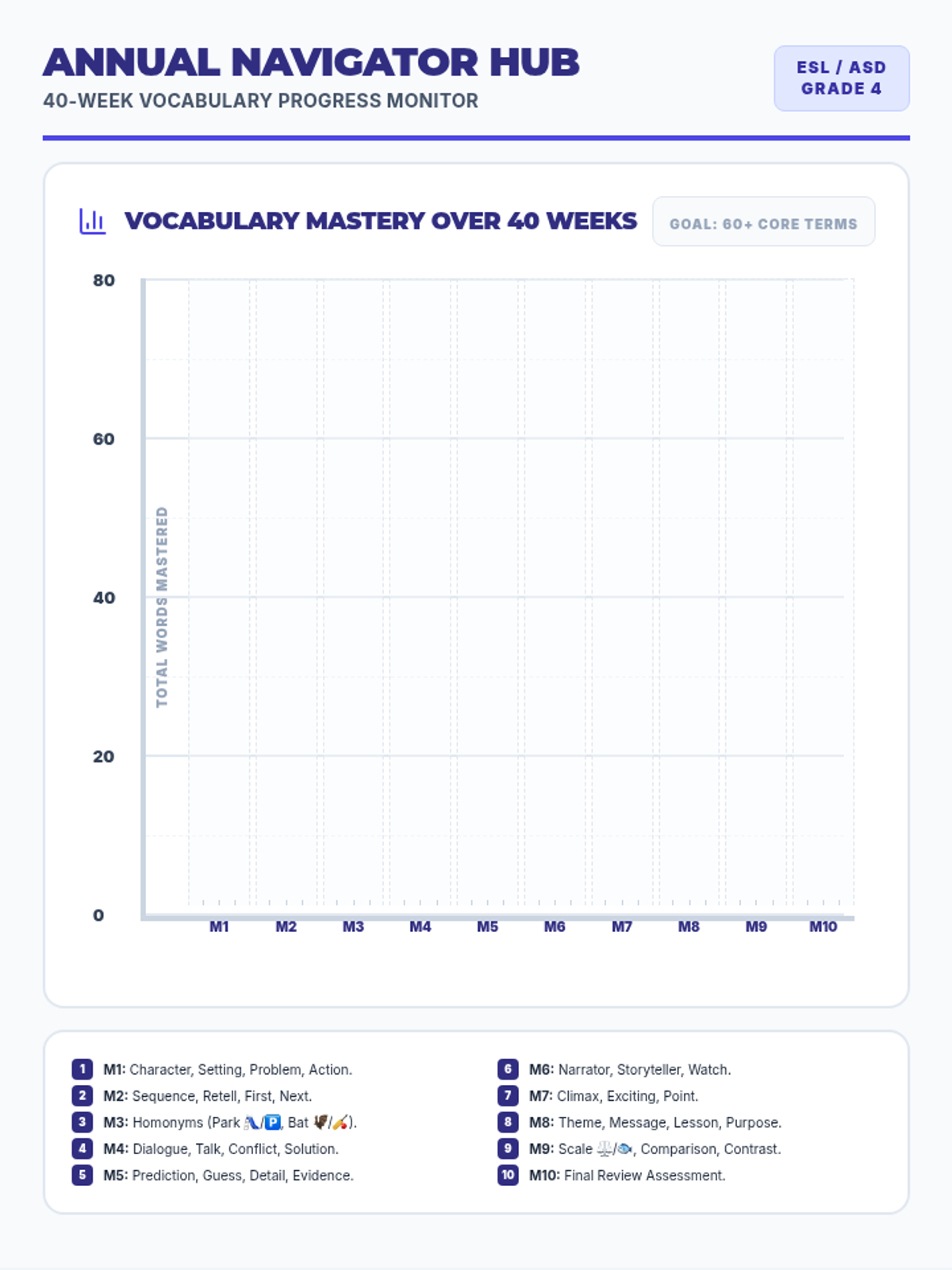
Cumulative review of the year's vocabulary and final progress monitoring to prepare for the transition to 5th grade.
Mastery of advanced multiple-meaning words and applying self-advocacy vocabulary in unstructured school settings.
Focusing on self-regulation vocabulary and identifying themes or 'lessons' in 3rd/4th grade level fiction.
Learning functional vocabulary for school-based transitions and academic vocabulary for story structure (rising action/climax).
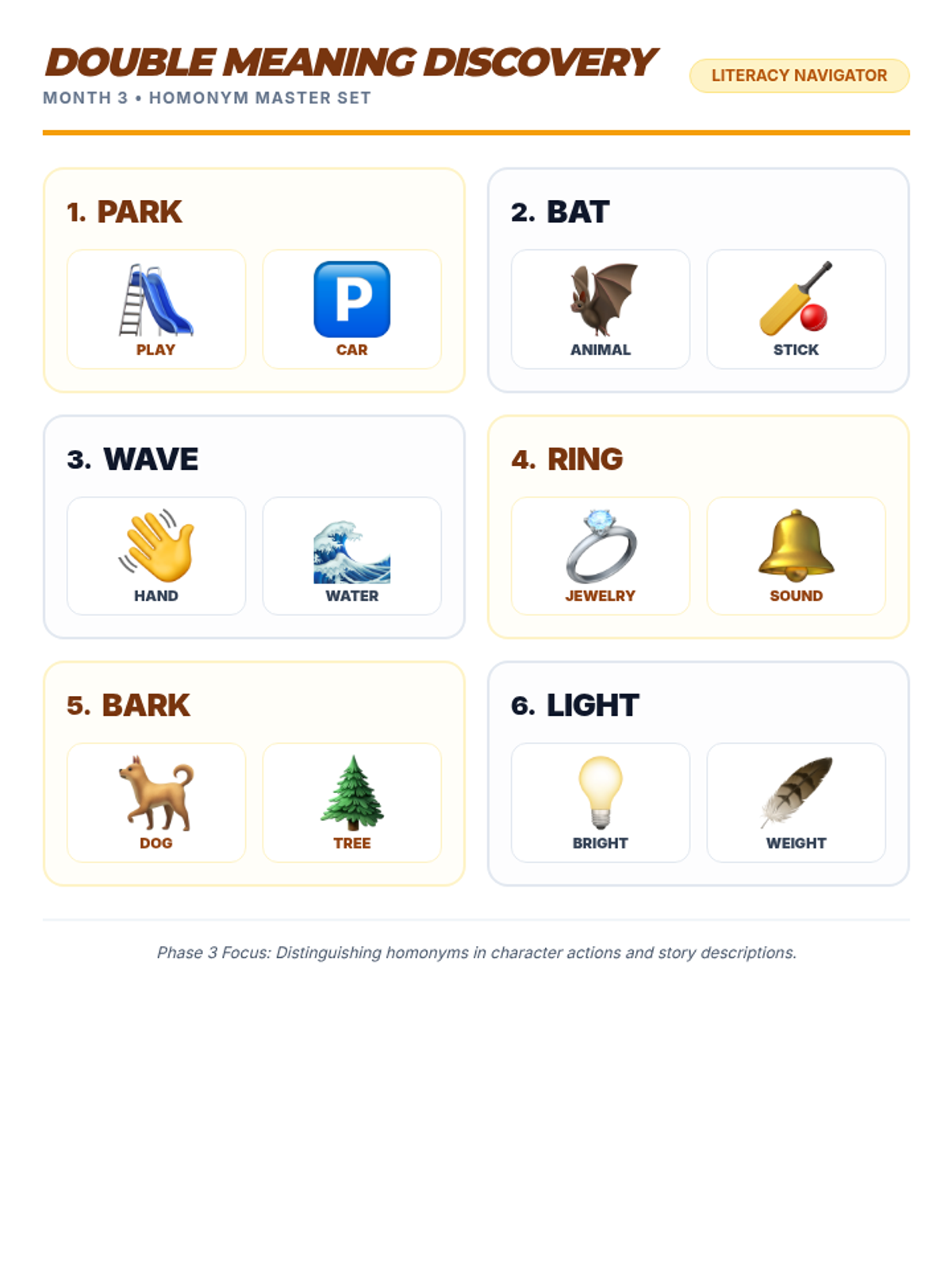
Expanding the repertoire of multiple-meaning words and learning to use context clues to differentiate meanings in fiction.
Deepening academic vocabulary with a focus on character traits and descriptive adjectives for self-advocacy and story comprehension.
Focusing on social problem-solving, requesting help, and understanding conflict and resolution within fictional narratives.
Introduction to high-frequency multiple-meaning words found in 3rd and 4th-grade texts with heavy visual support and functional application.
Focusing on identifying and expressing feelings for self-advocacy and understanding story plots through basic sequencing vocabulary.
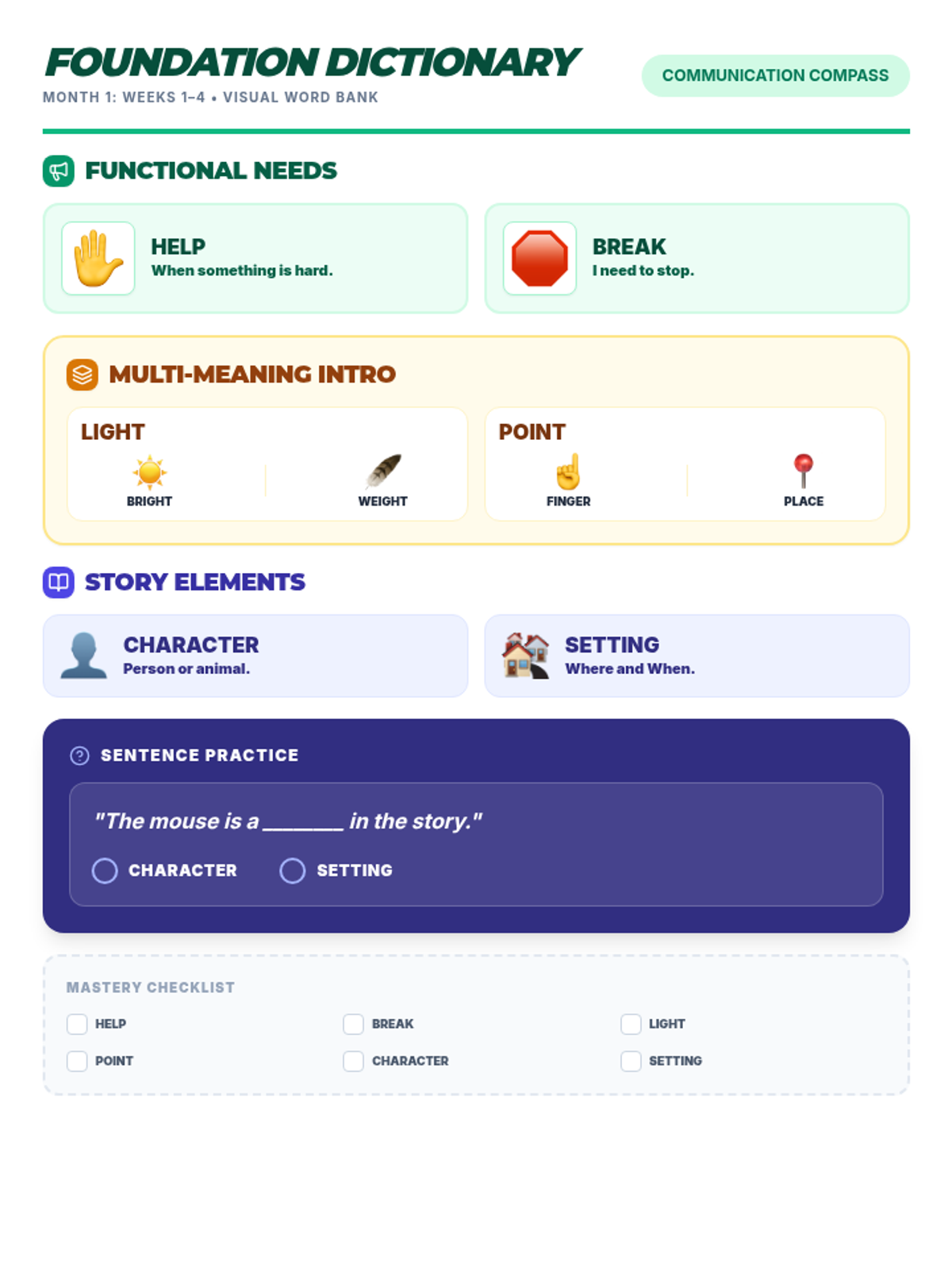
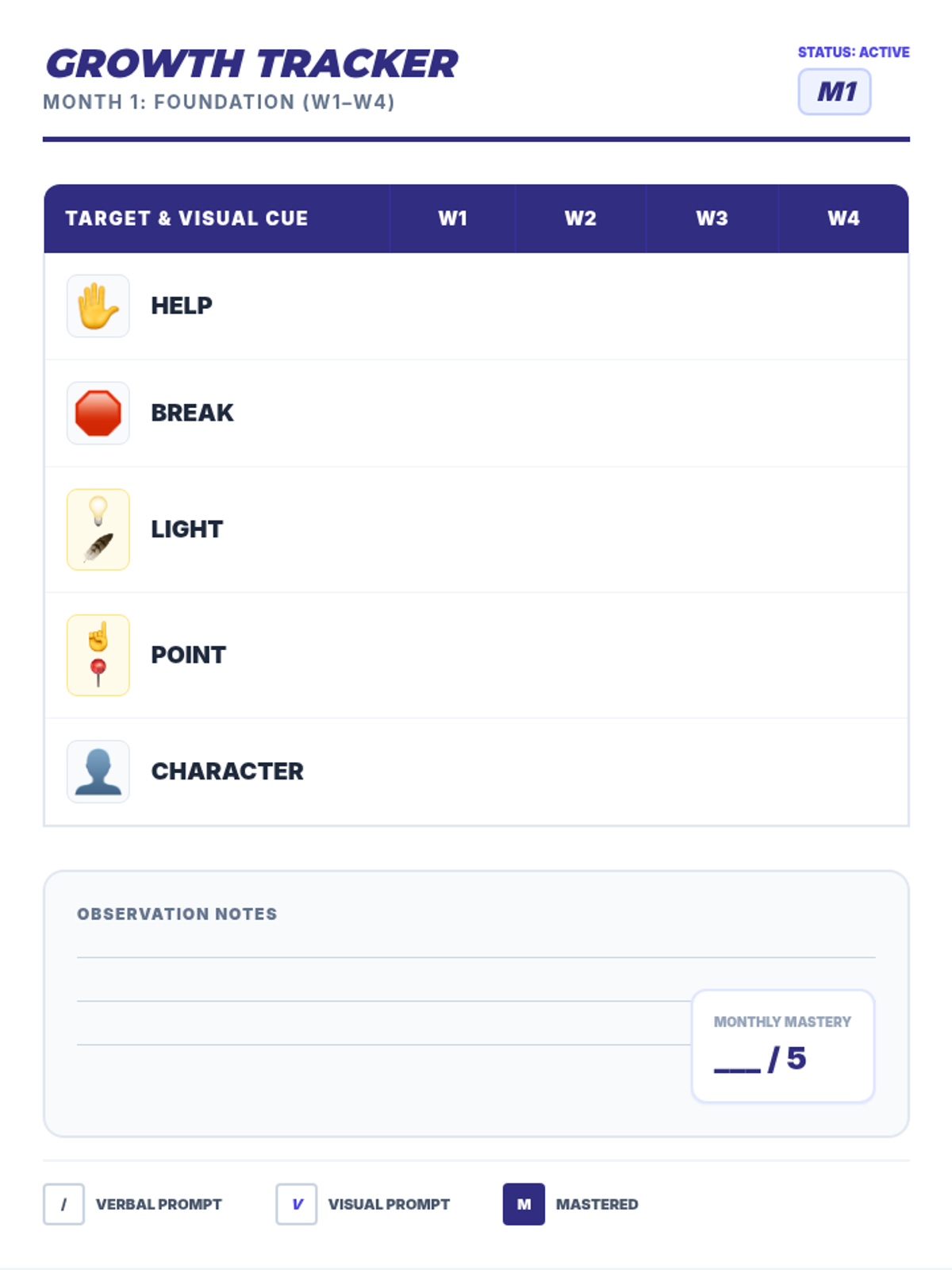
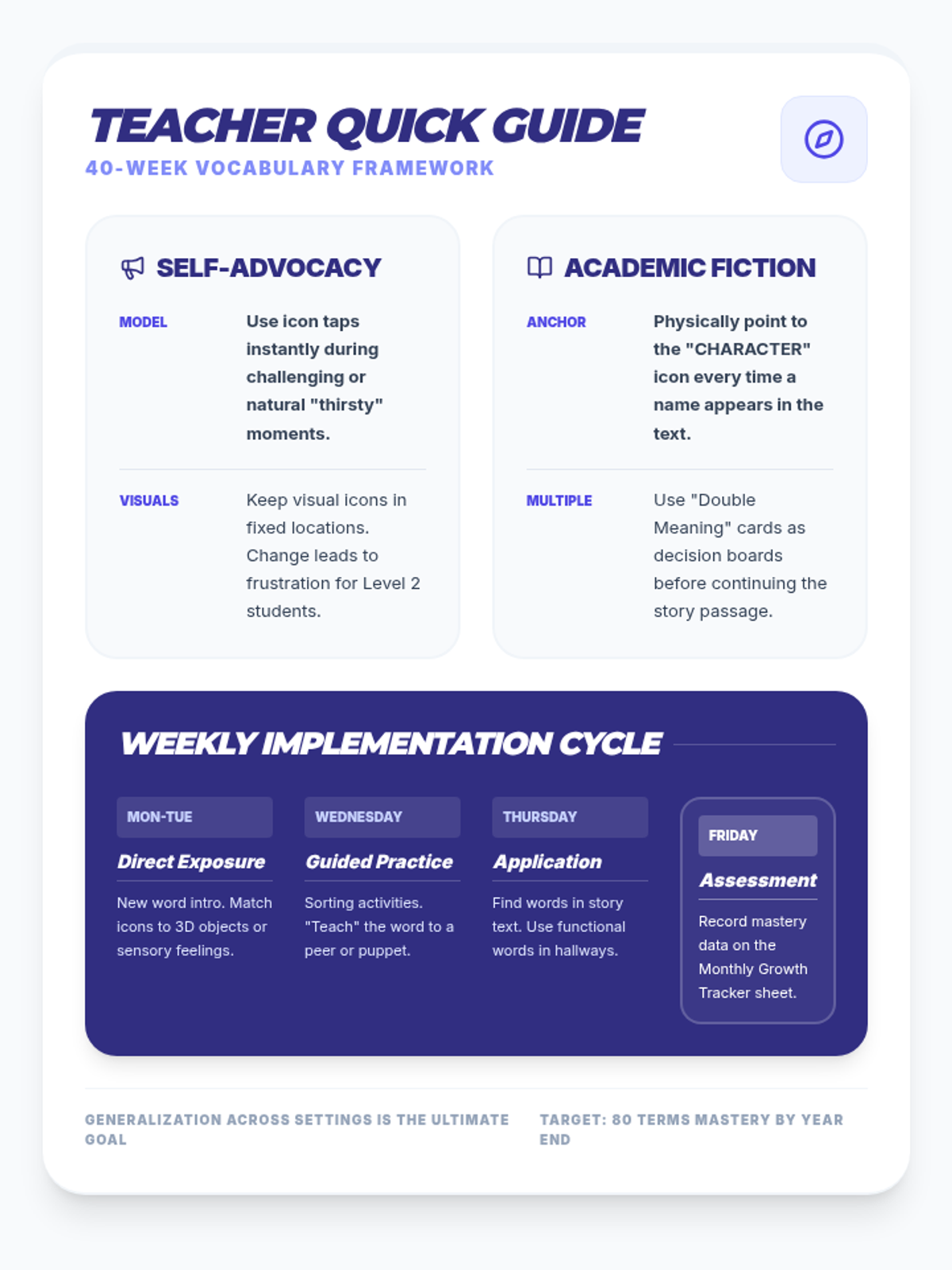
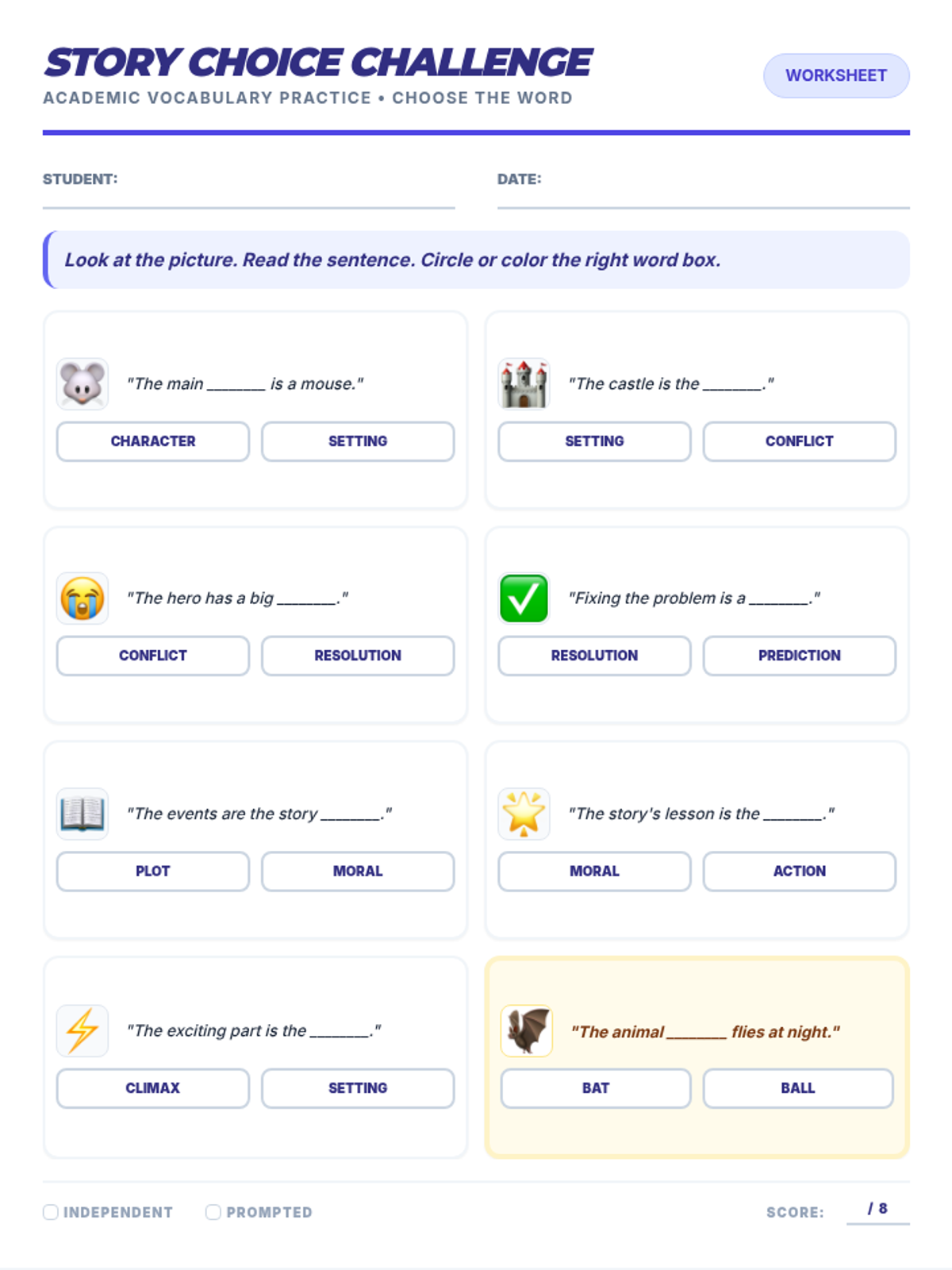
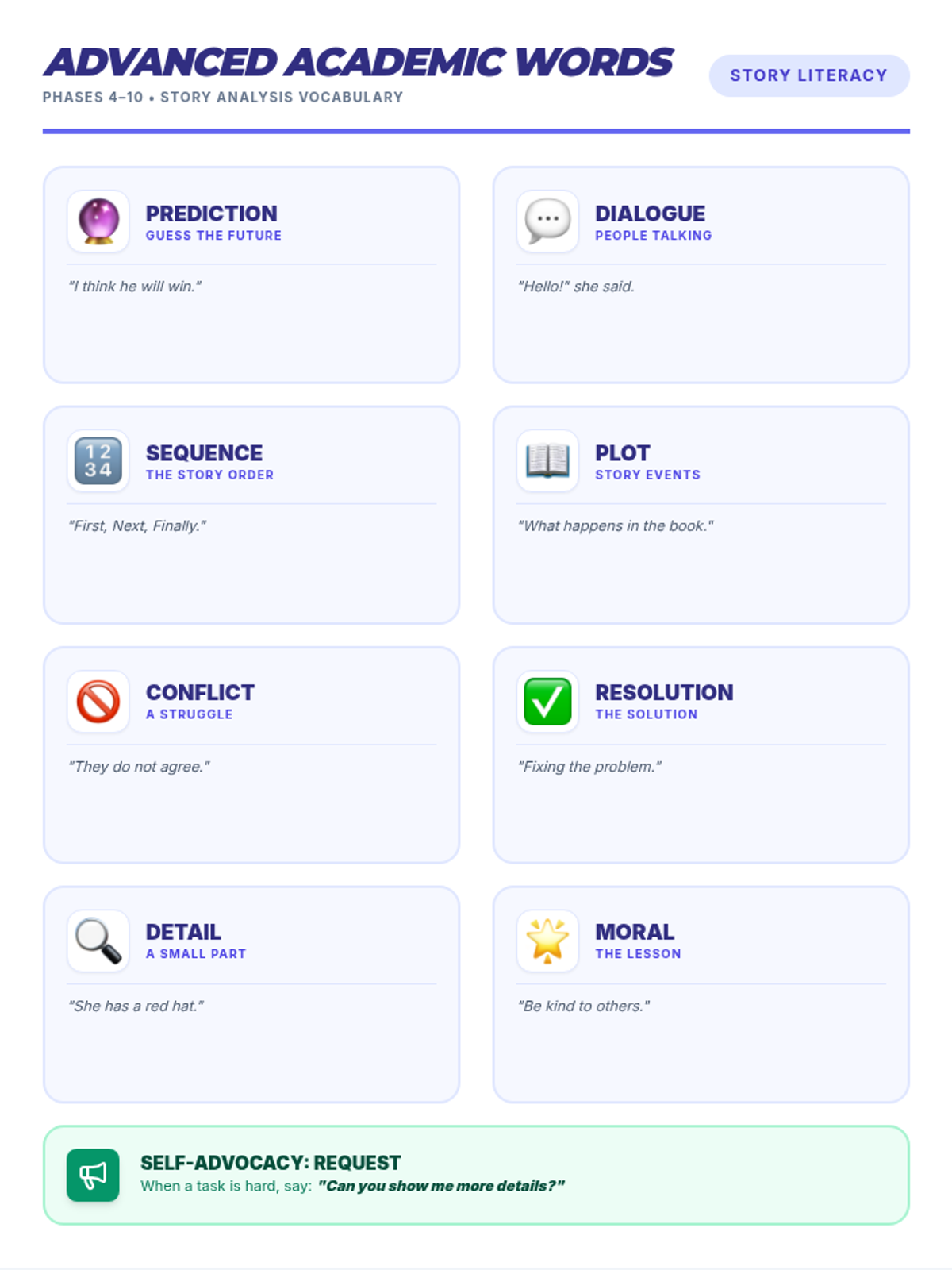
Establishing baseline skills in self-advocacy (needs/wants) and introductory fiction vocabulary (characters/settings) while initiating the 40-week progress monitoring system.
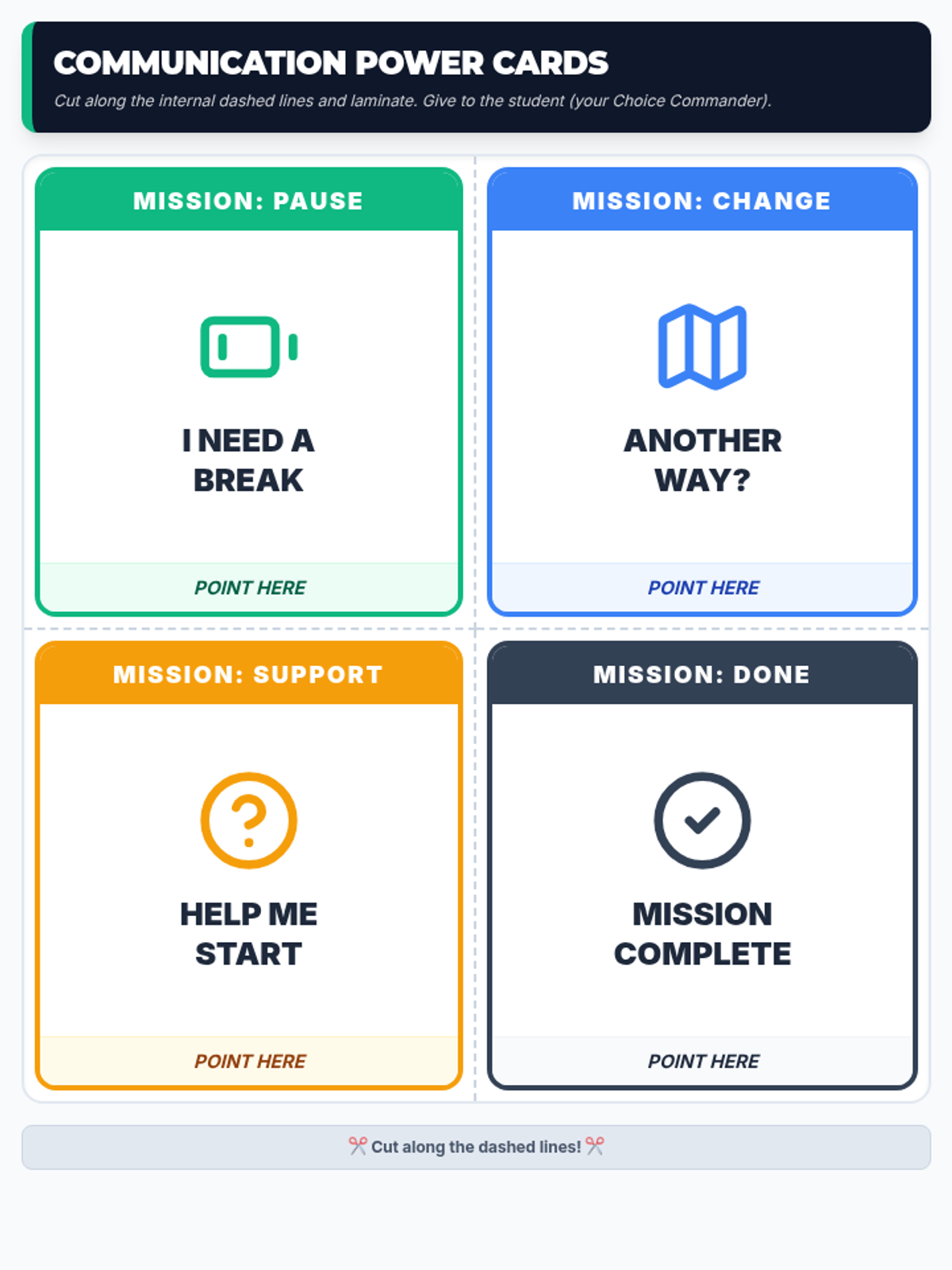
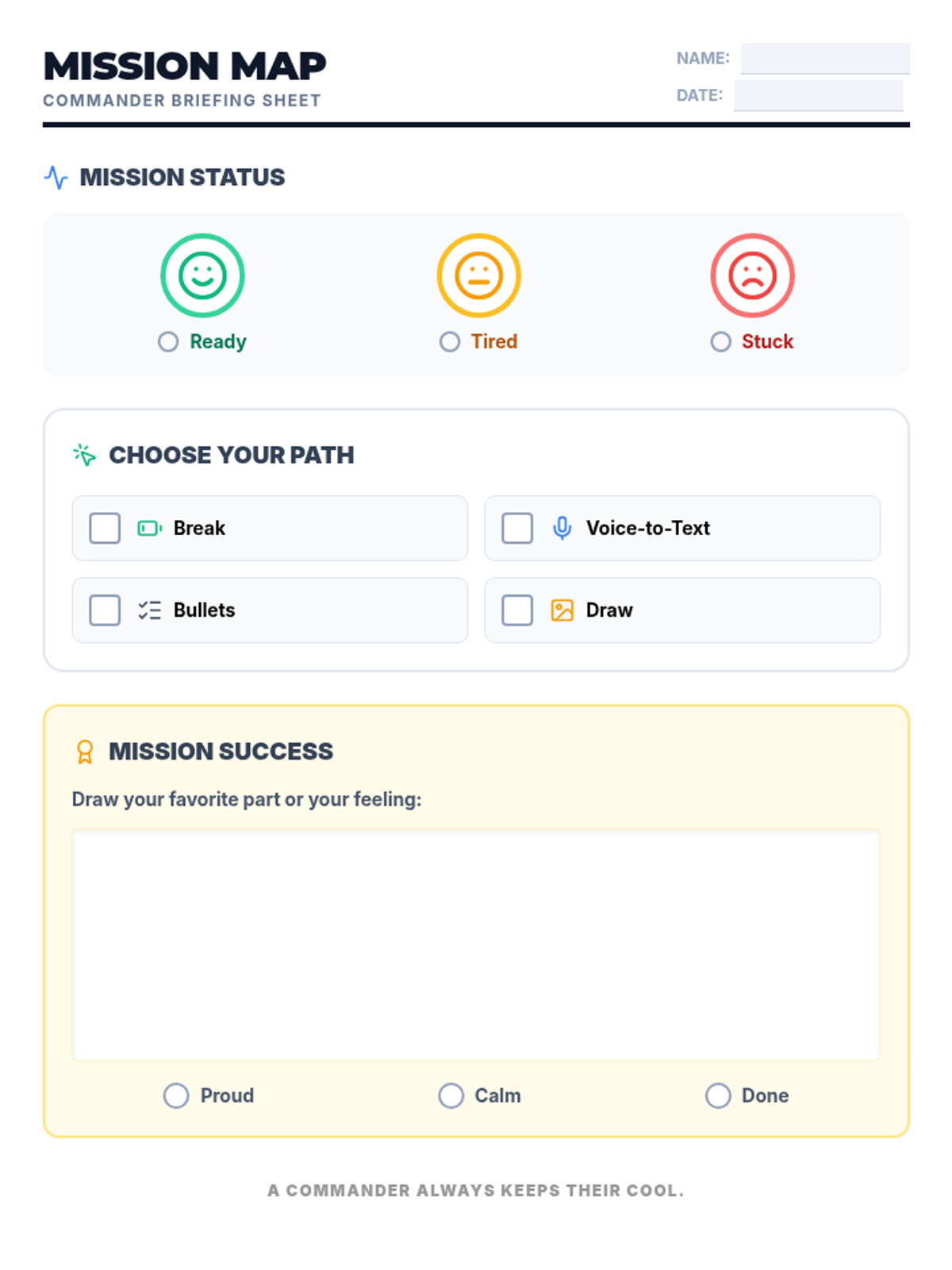
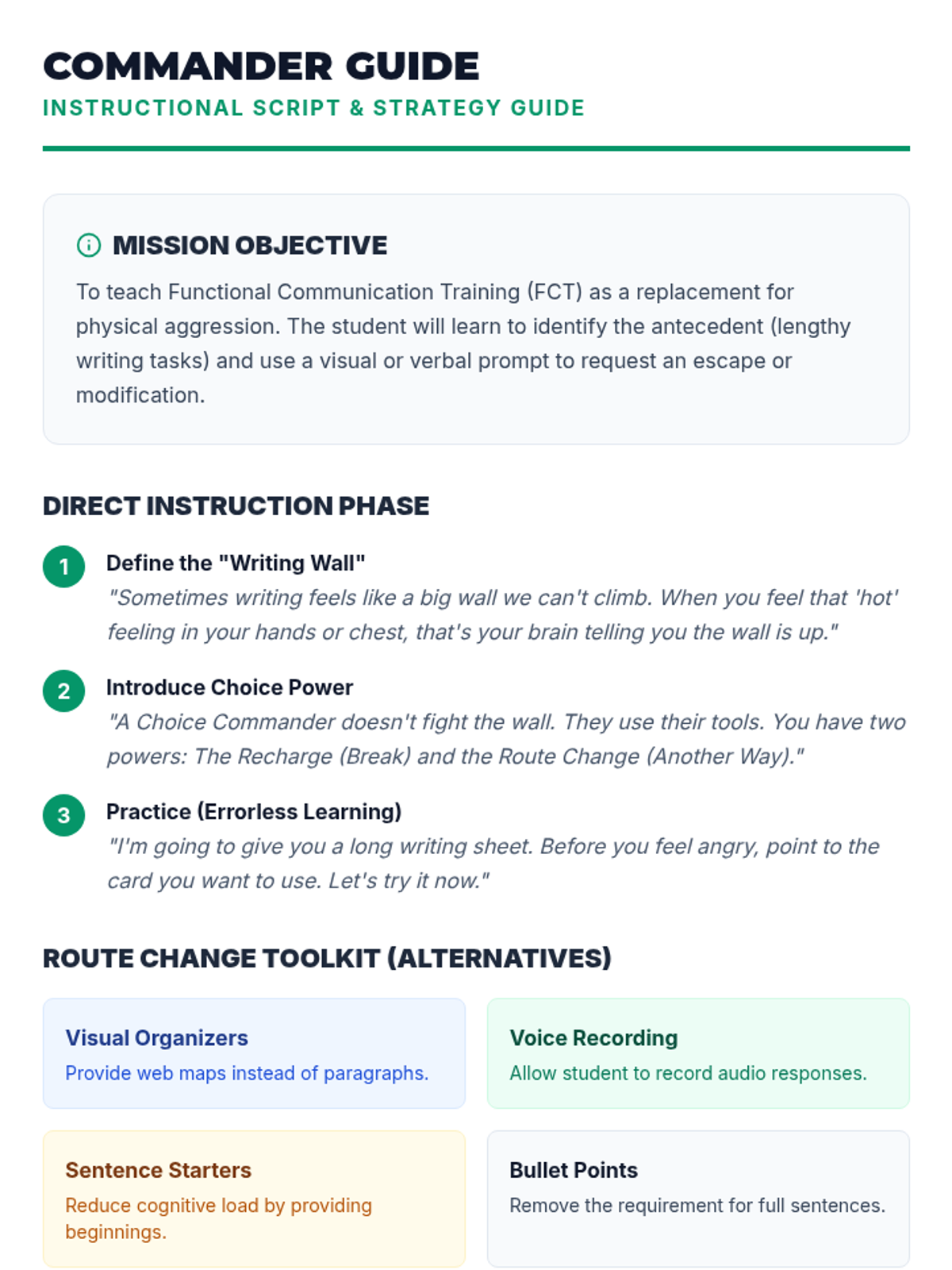
A specialized lesson designed to teach functional communication skills to a student who experiences frustration with writing. The lesson focuses on identifying 'writing walls' and using specific replacement behaviors—requesting a break or an alternative task—to maintain self-regulation.
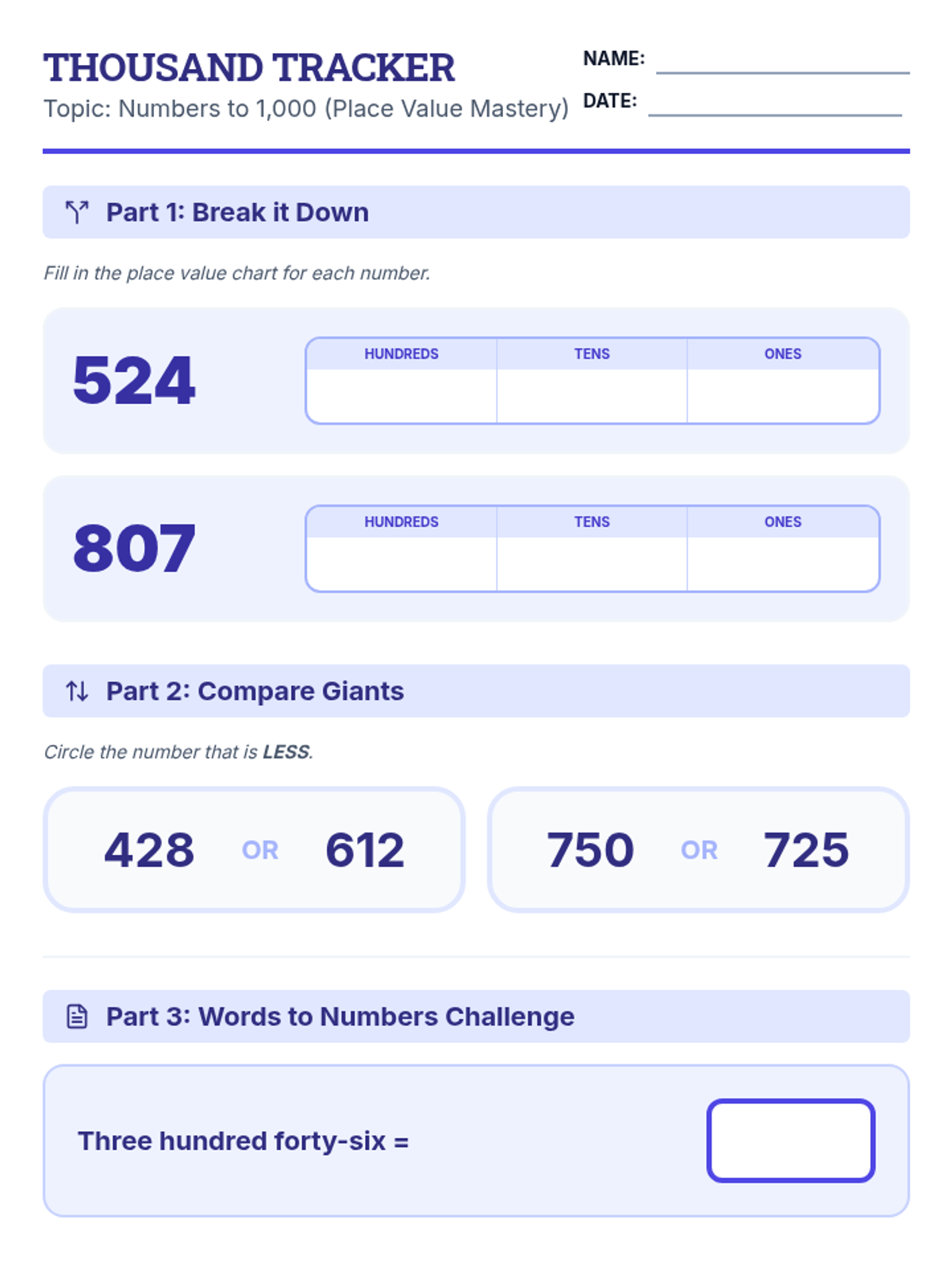
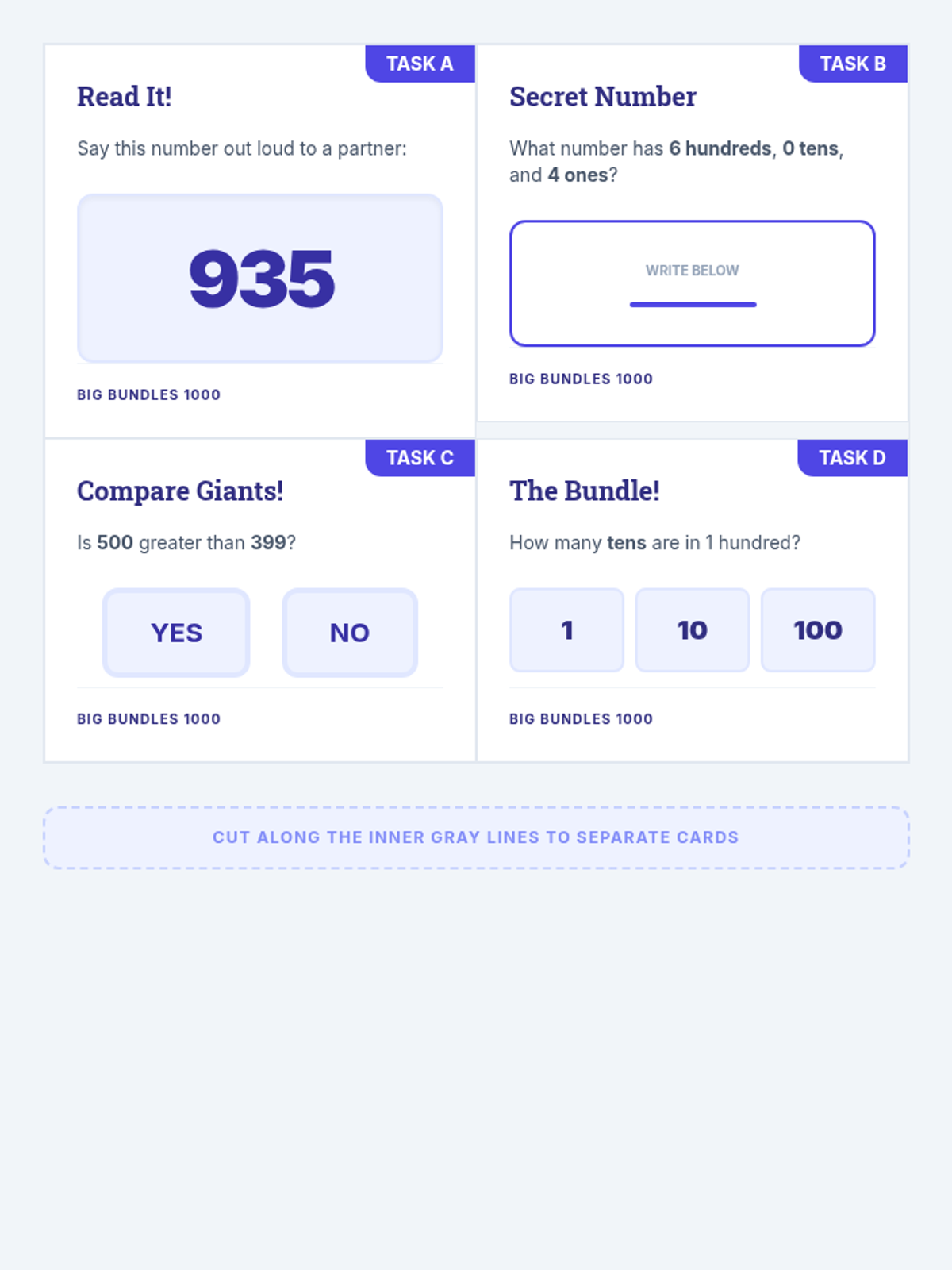
Expands number sense to 1,000, focusing on hundreds, tens, and ones with visual place value models and comparison strategies.
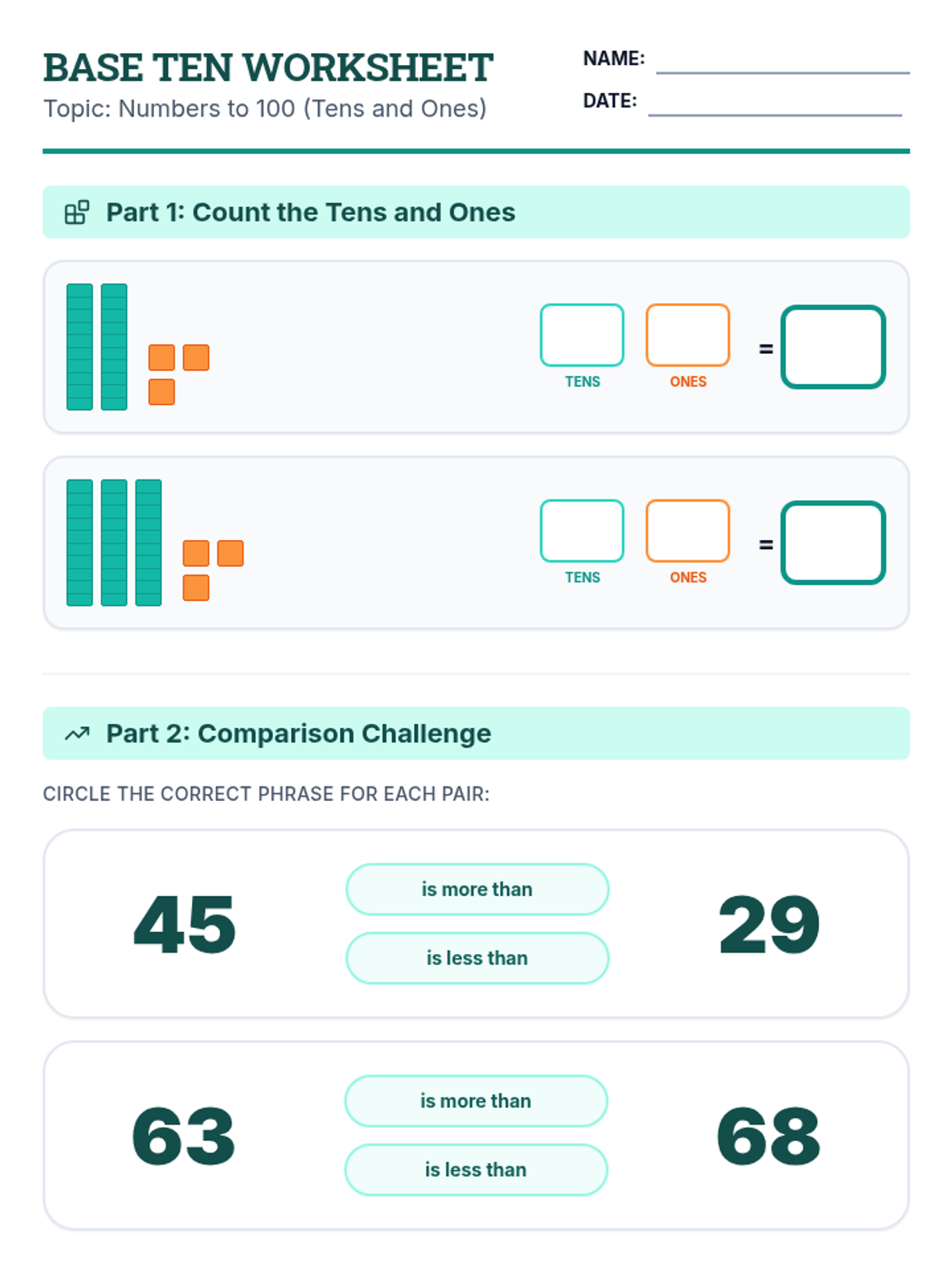
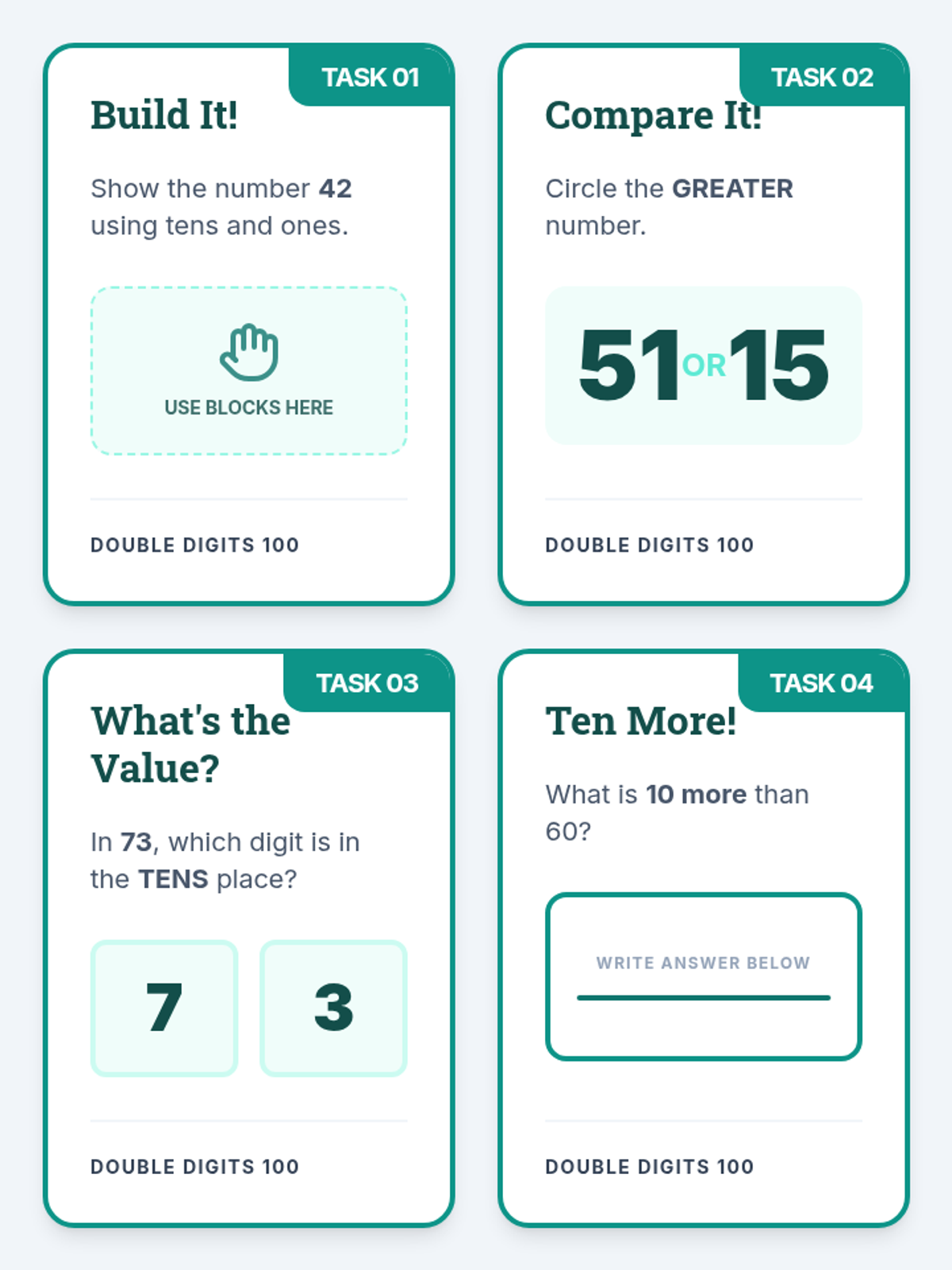
Introduces place value for numbers up to 100, using base-ten blocks (tens and ones) to help students visualize and compare larger values.
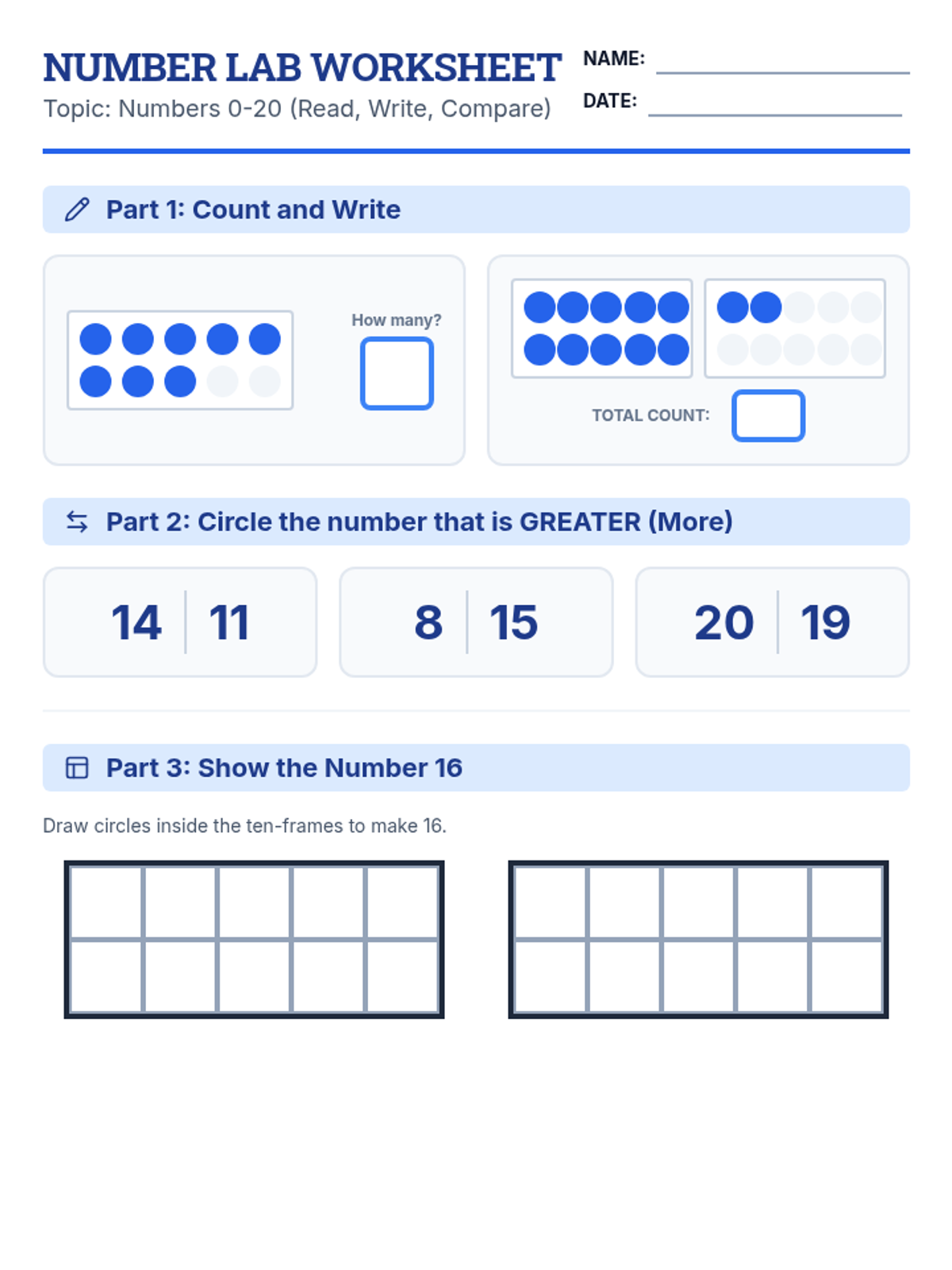
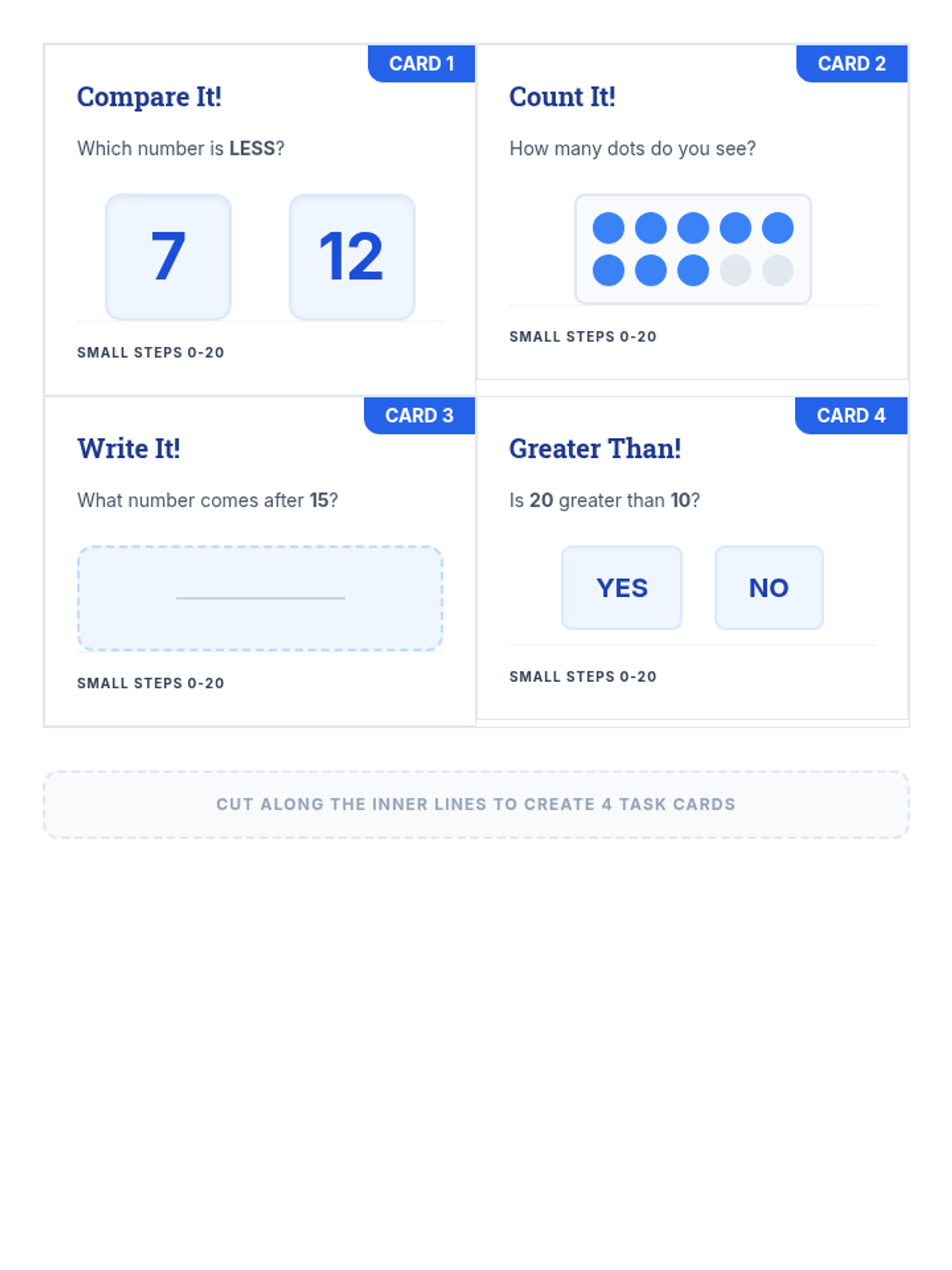
Focuses on reading, writing, and comparing numbers from 0 to 20 using ten-frames and counters to provide concrete visual support.
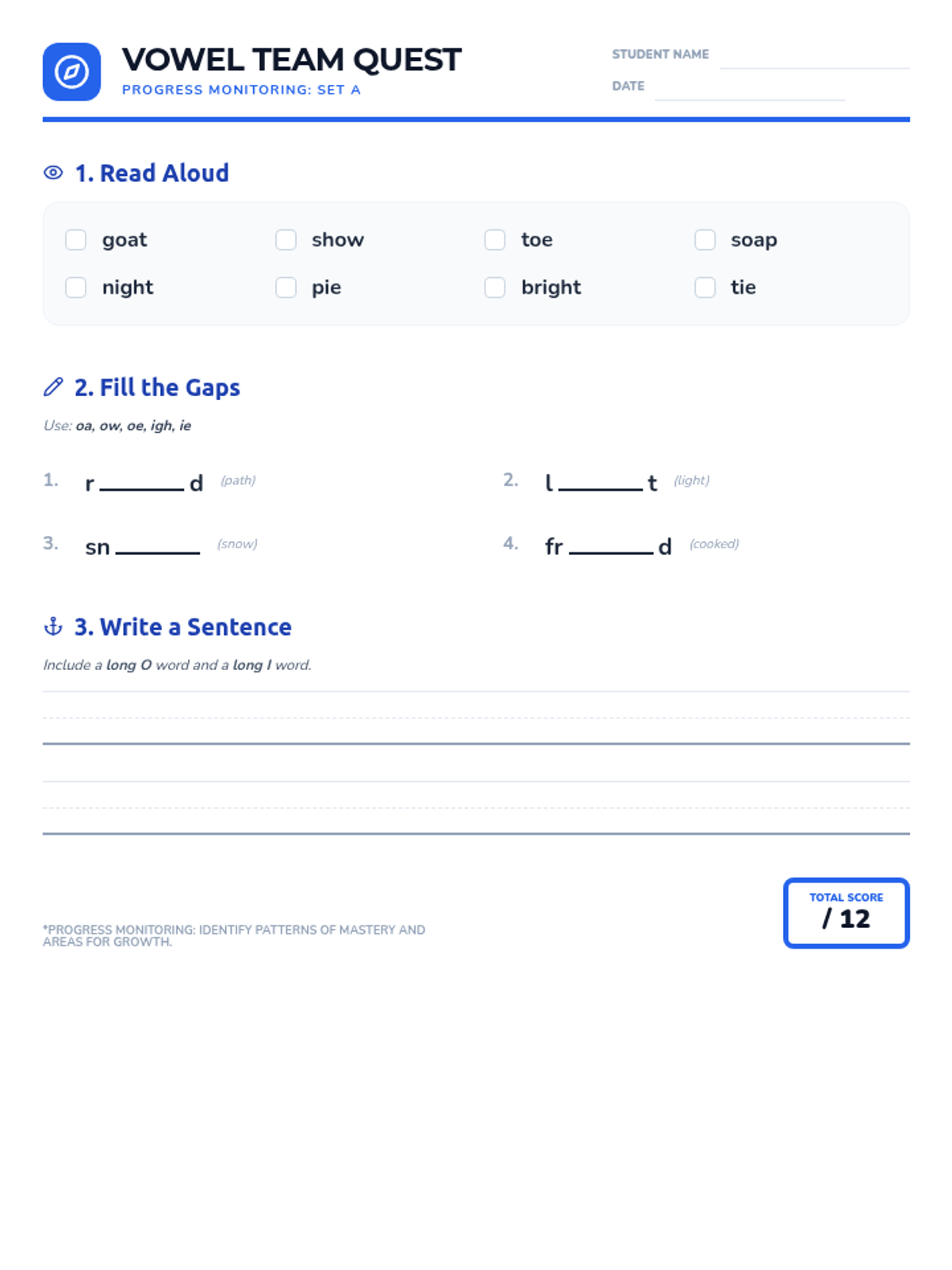
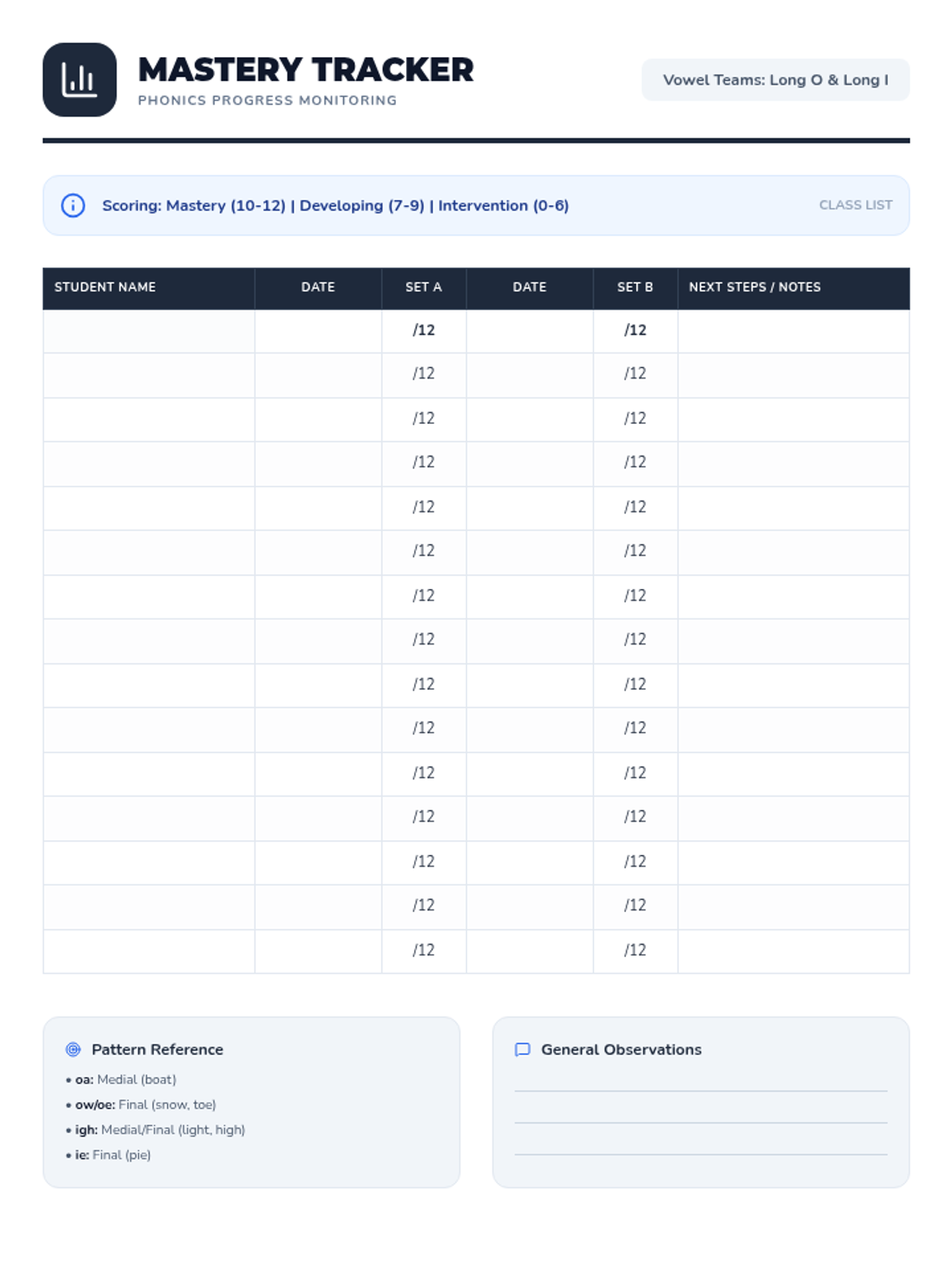
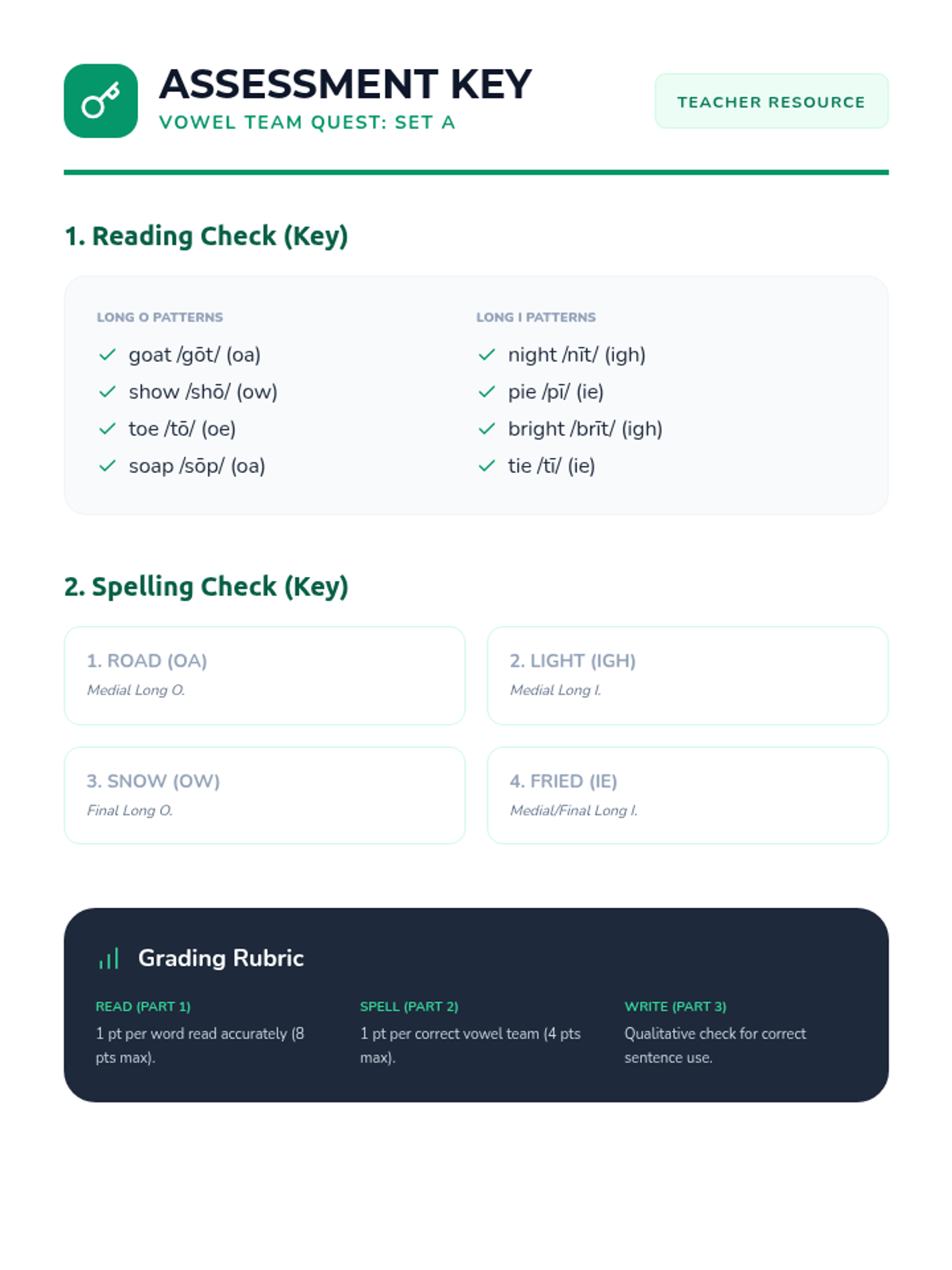
A literacy lesson focused on mastering vowel teams for long O (oa, ow, oe) and long I (ie, igh). Students will practice identifying, reading, and spelling words with these patterns through targeted progress monitoring.
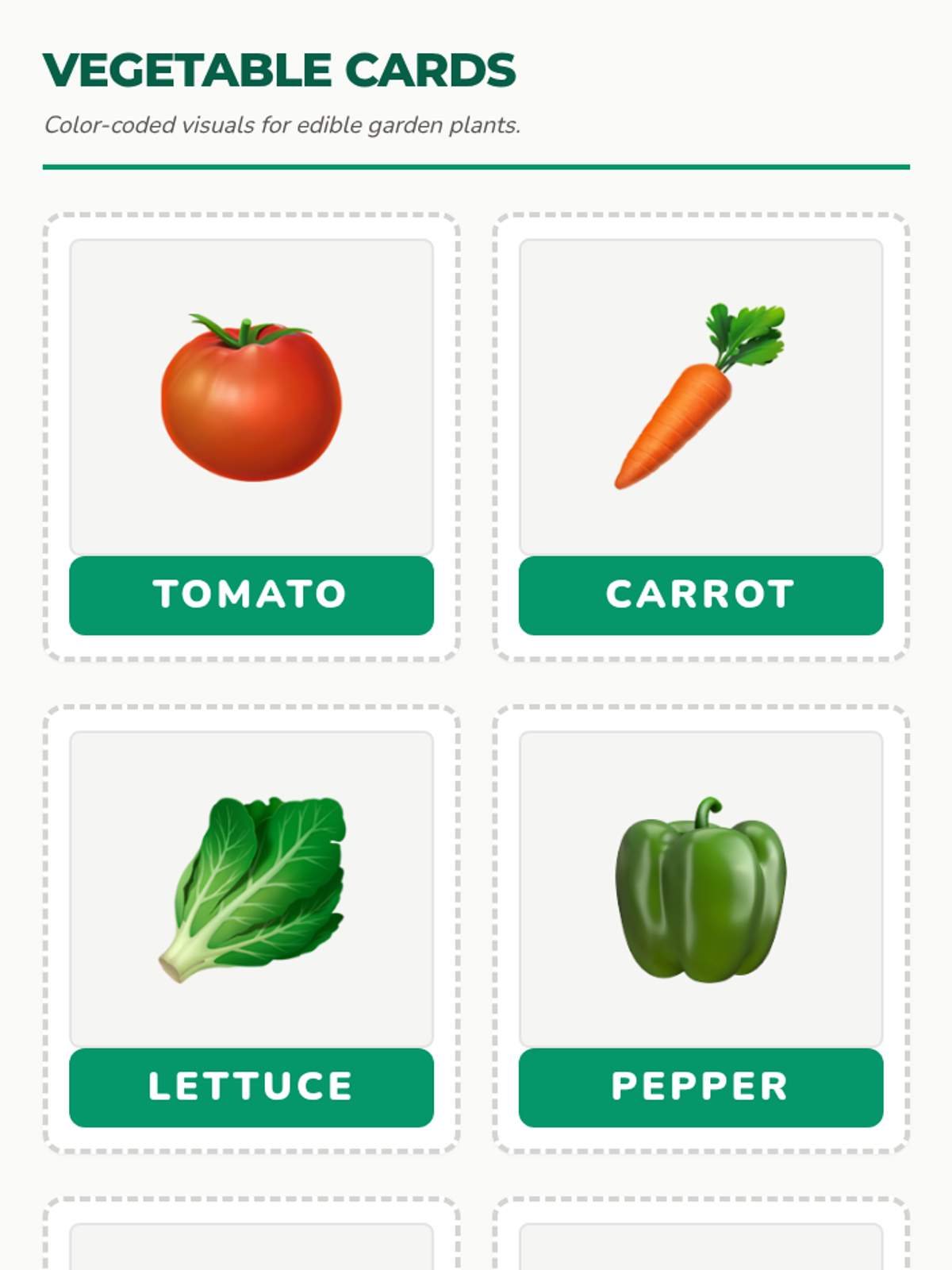
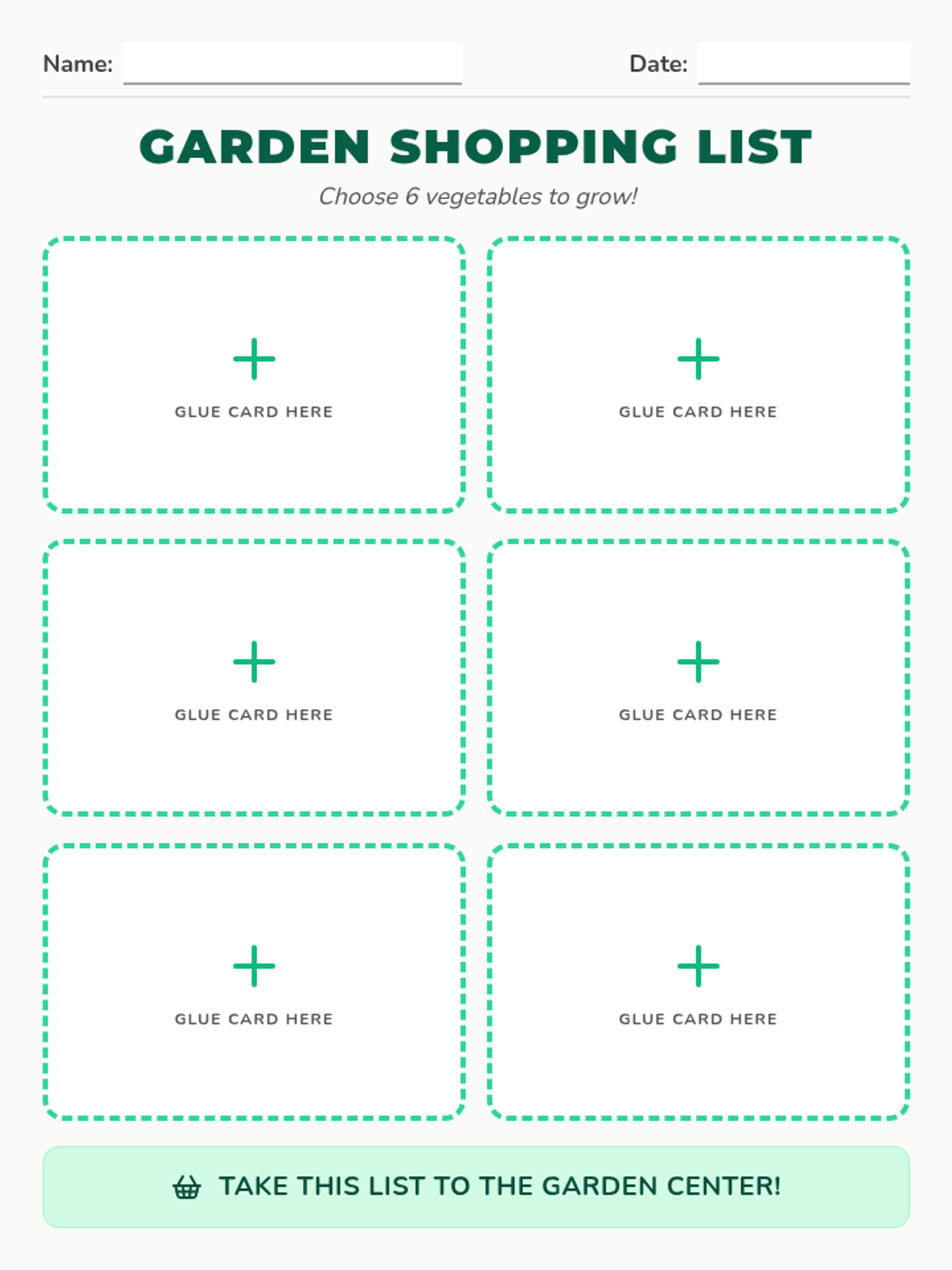
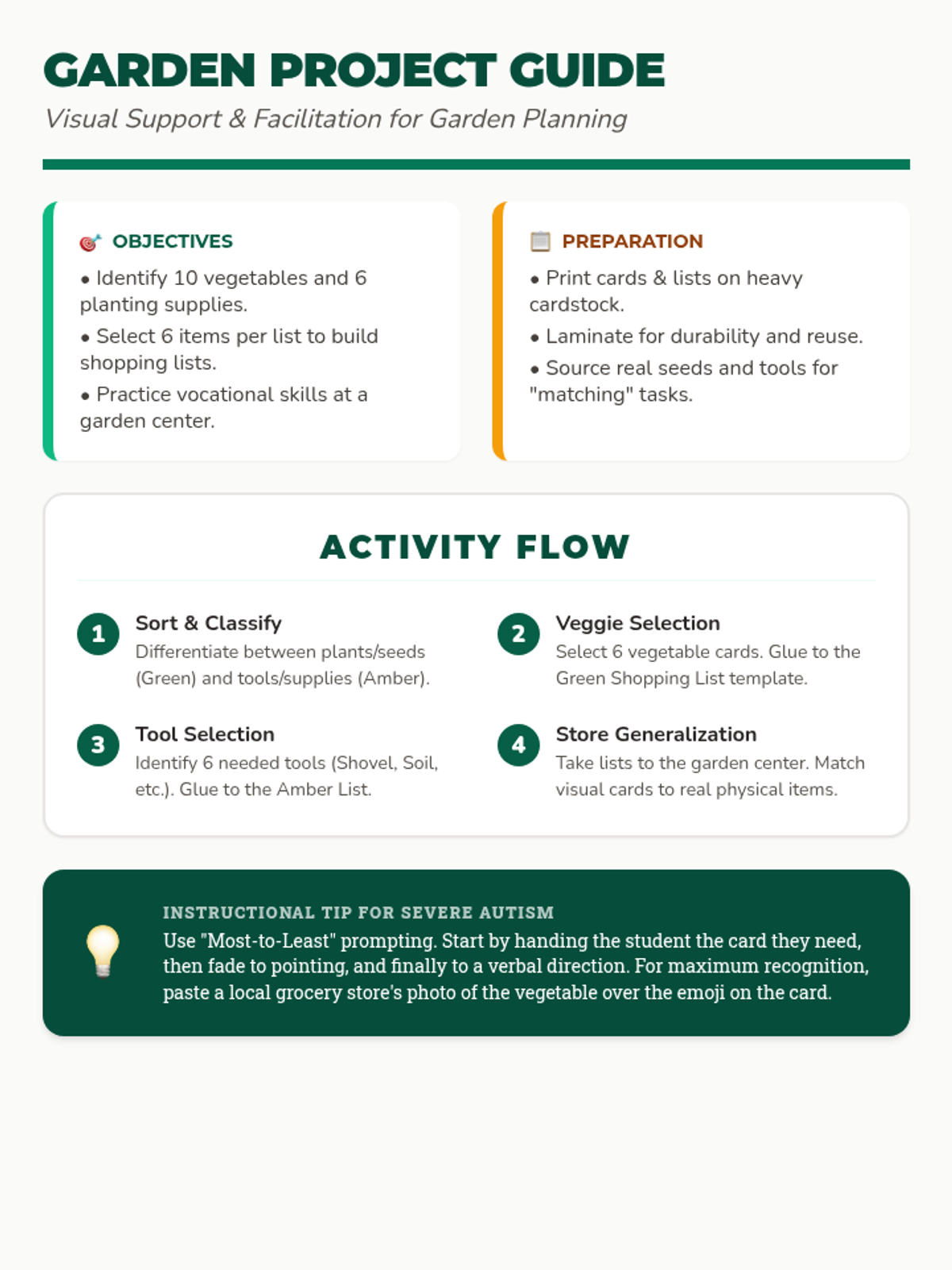
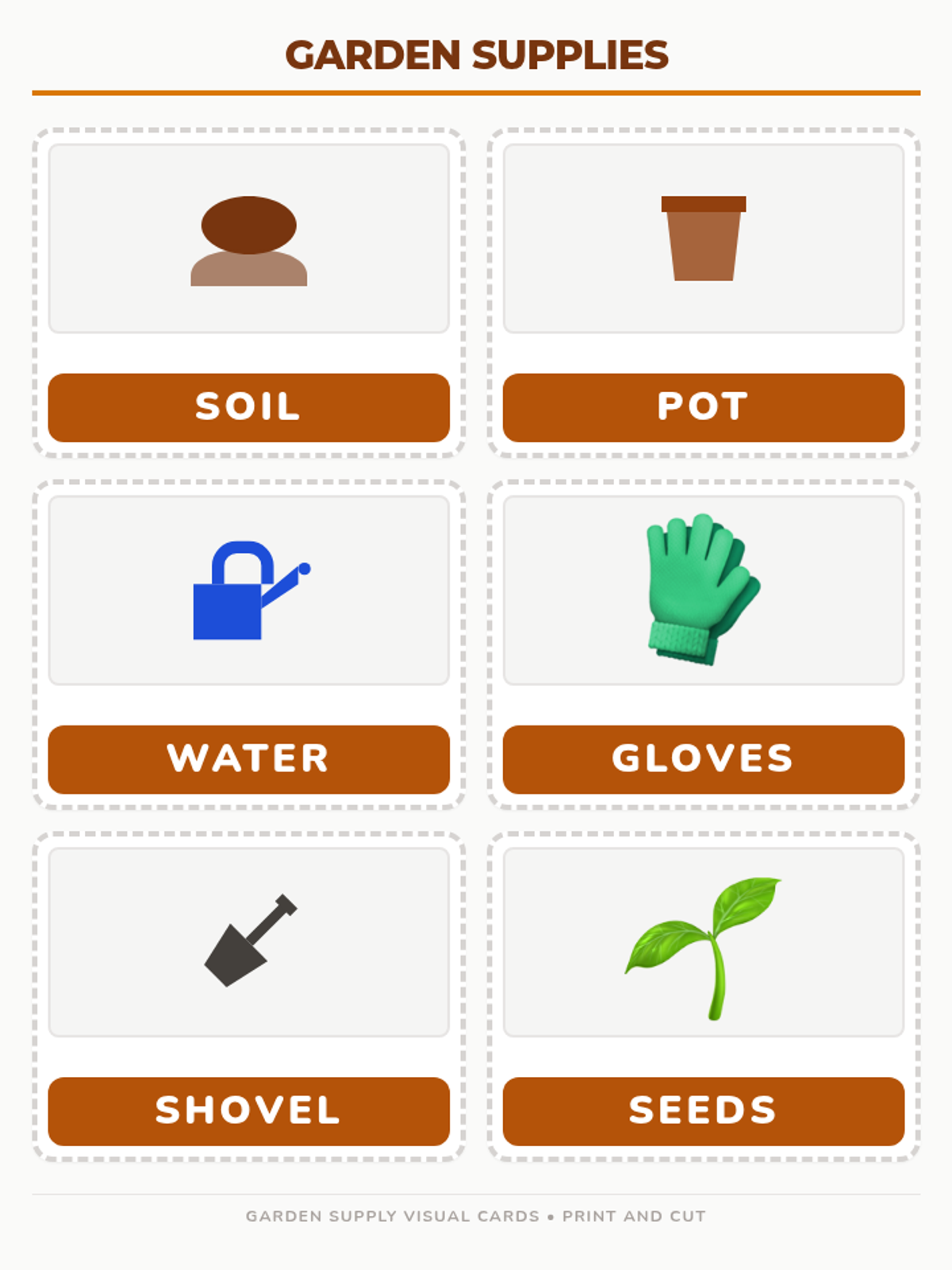
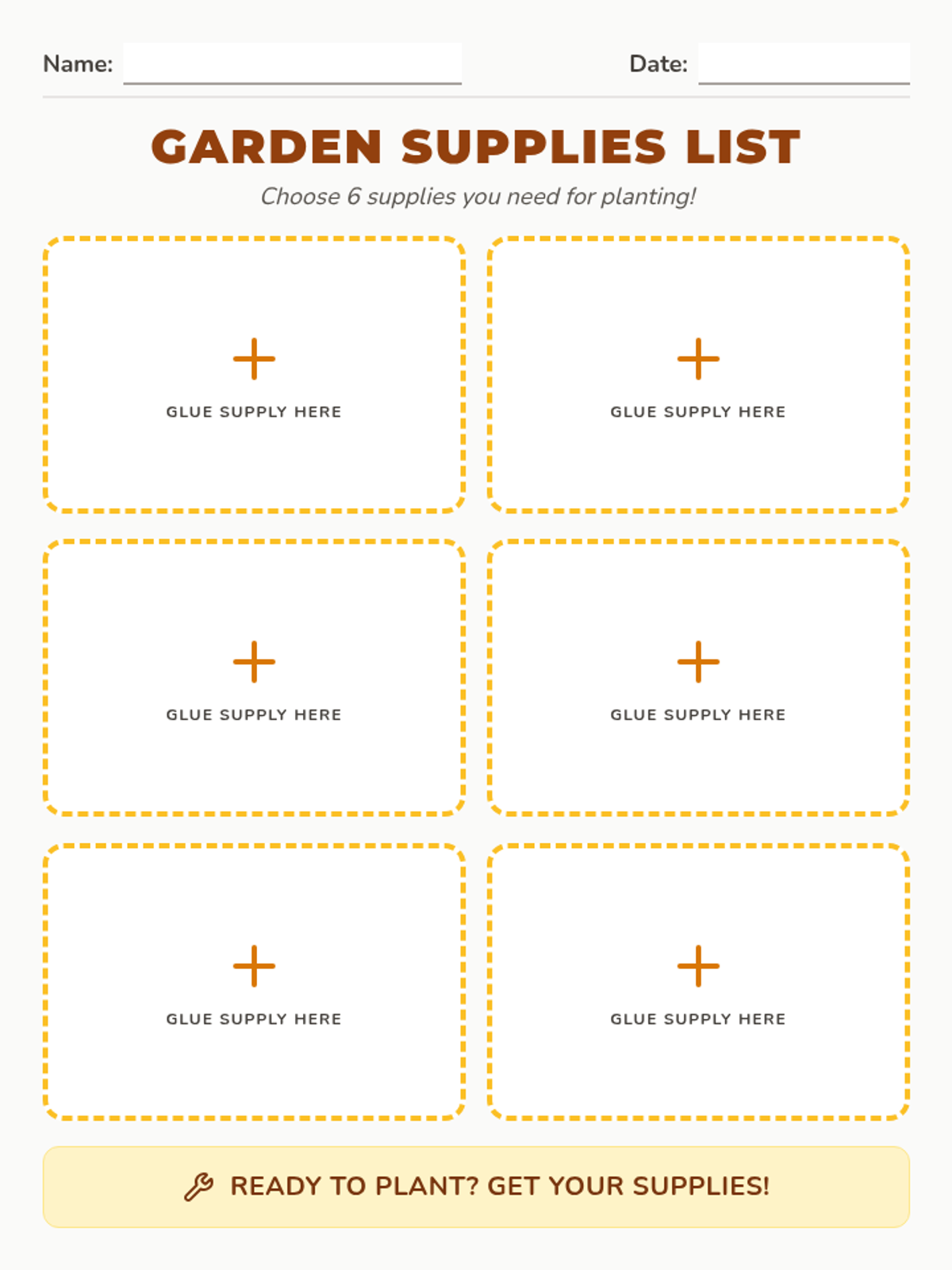
A hands-on activity for students to identify common garden vegetables and prepare a visual shopping list for a gardening project. This lesson focuses on visual recognition and functional life skills.
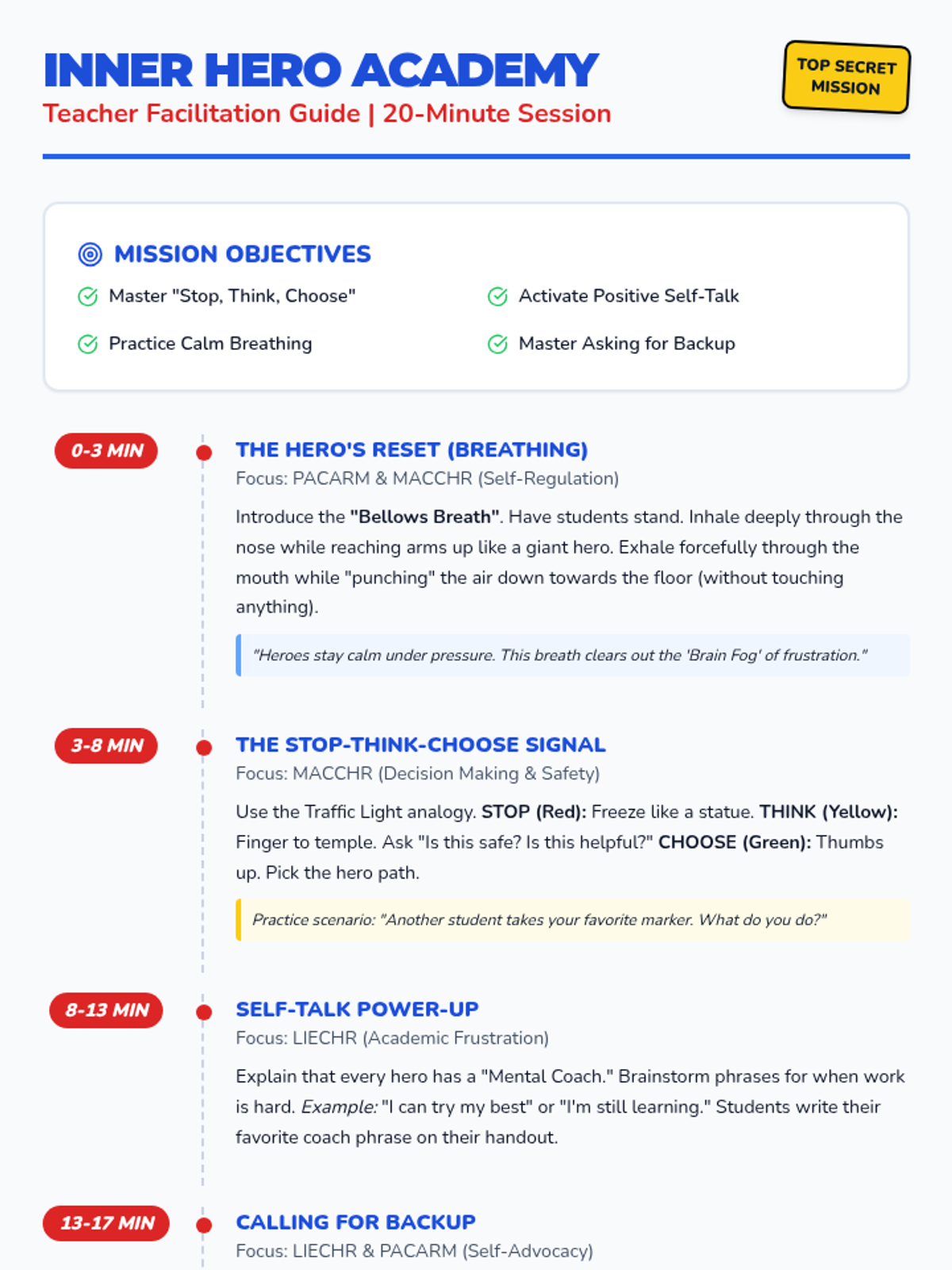
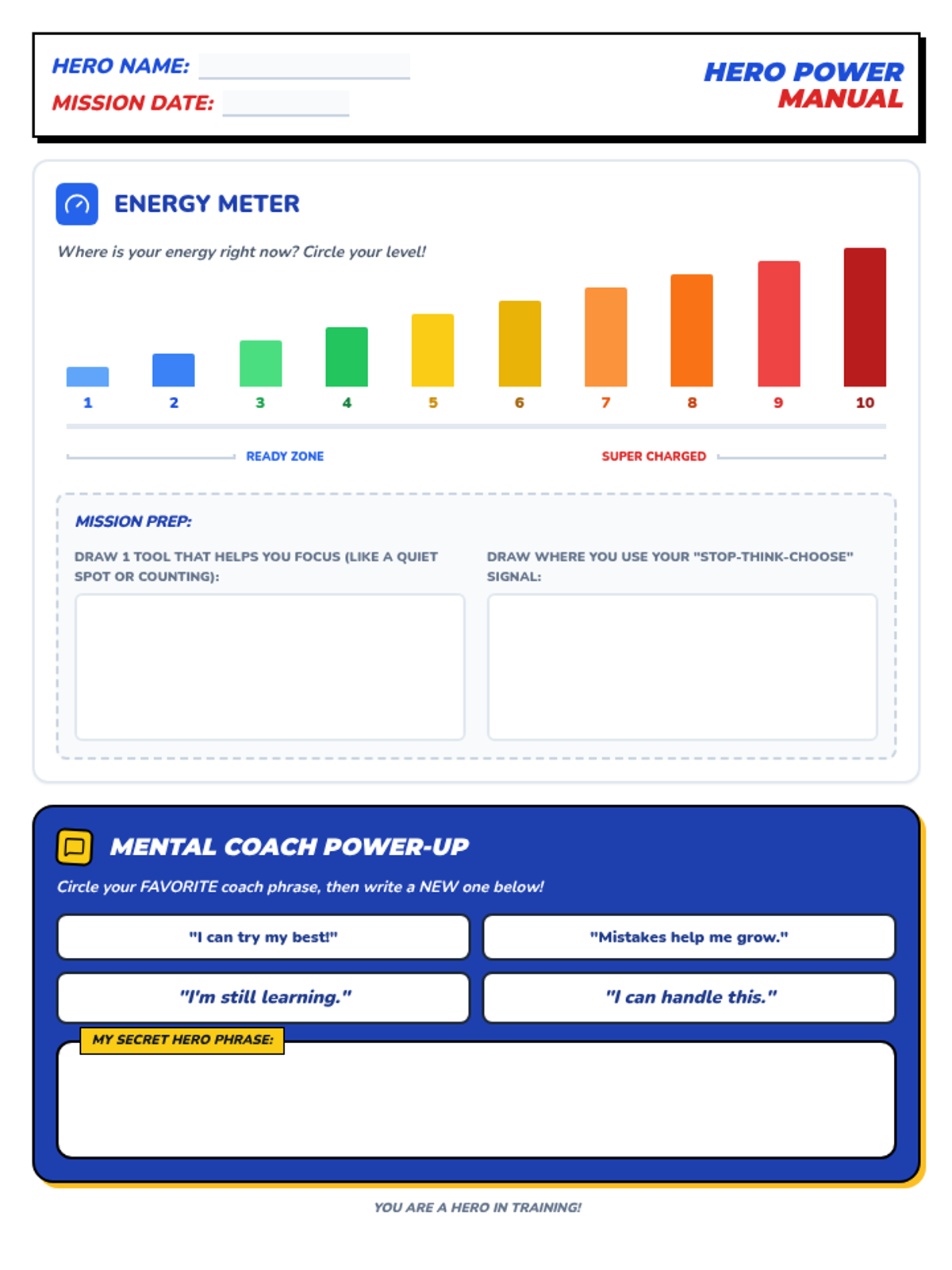
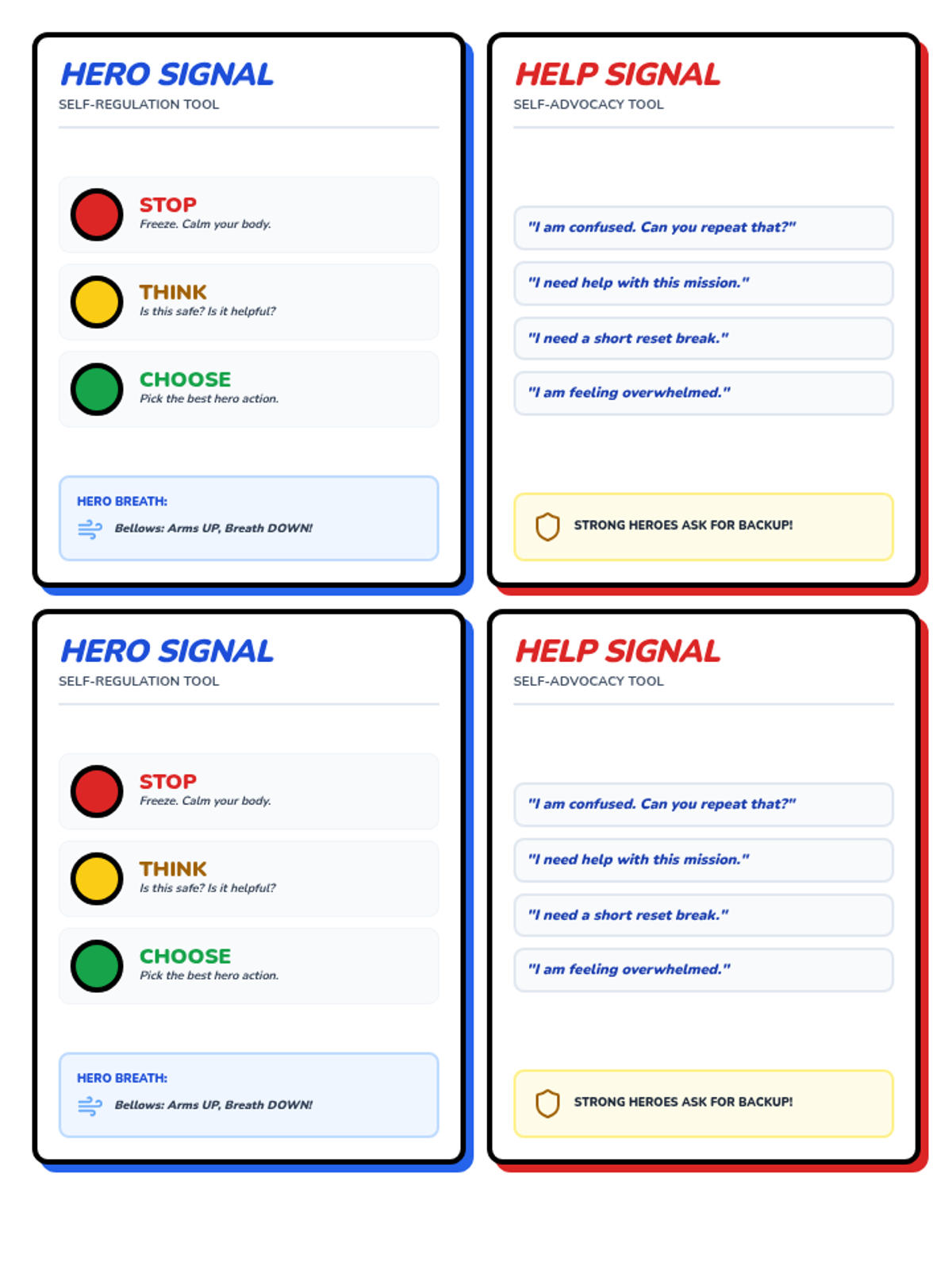
A 20-minute small group social-emotional learning lesson focusing on self-regulation, positive self-talk, and self-advocacy using the 'Inner Hero' theme. Designed for a mixed-grade group (2nd and 4th) to address IEP goals related to the Stop-Think-Choose method and asking for help.
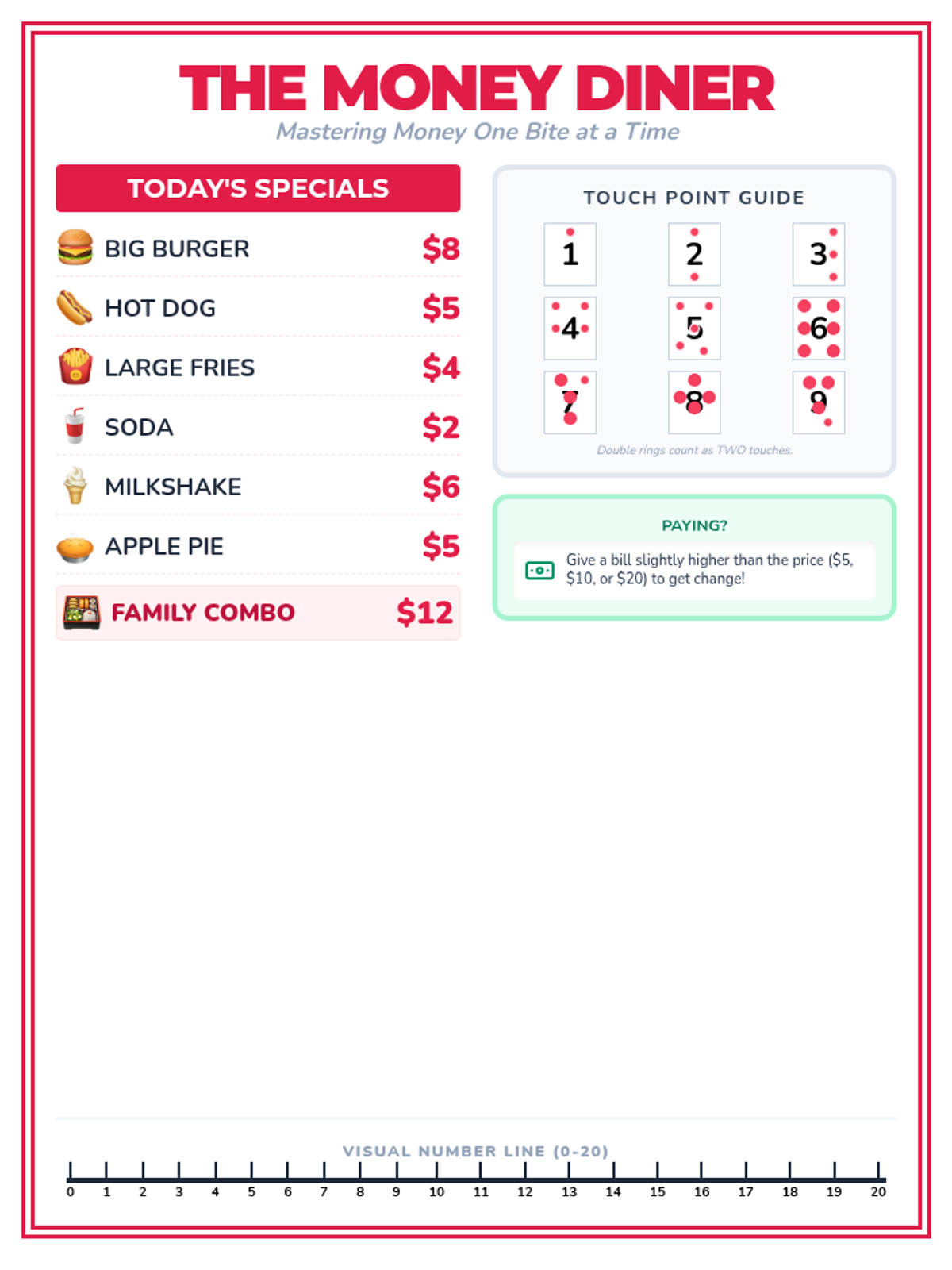
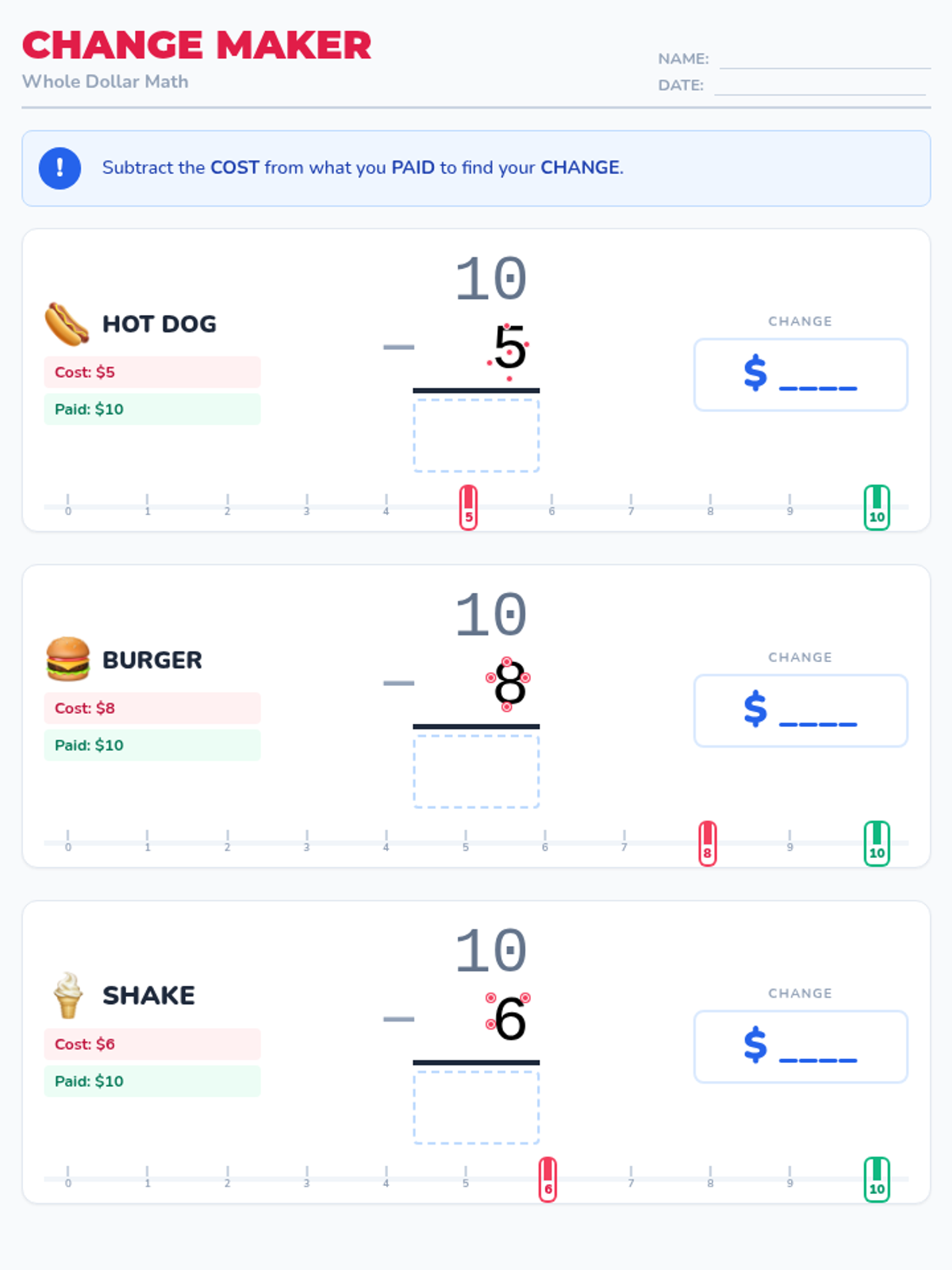
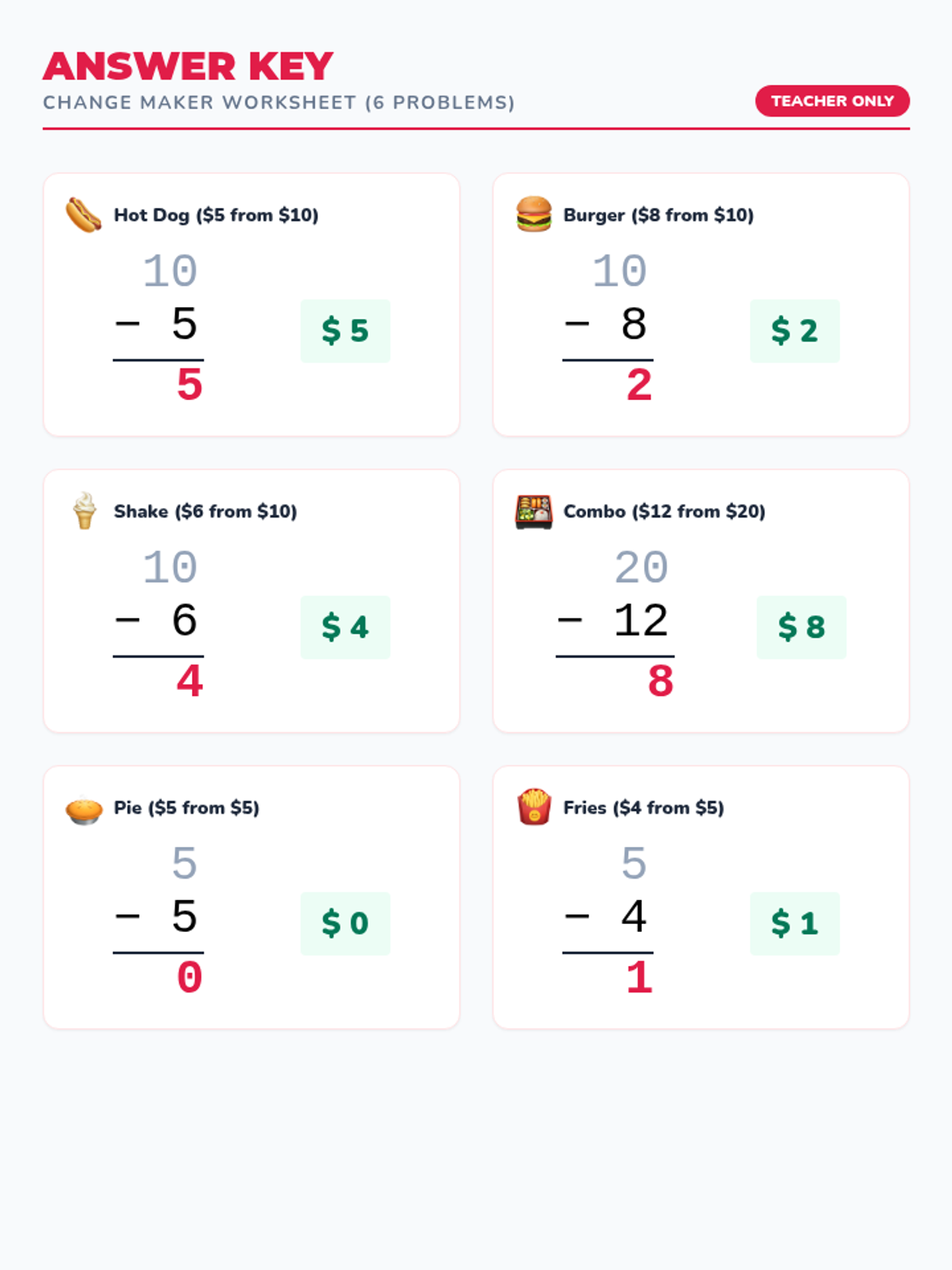
A functional math lesson focusing on calculating totals and change using whole dollar amounts. Designed with IEP supports including touch-points, visual number lines, and step-by-step guides for independent living skills.