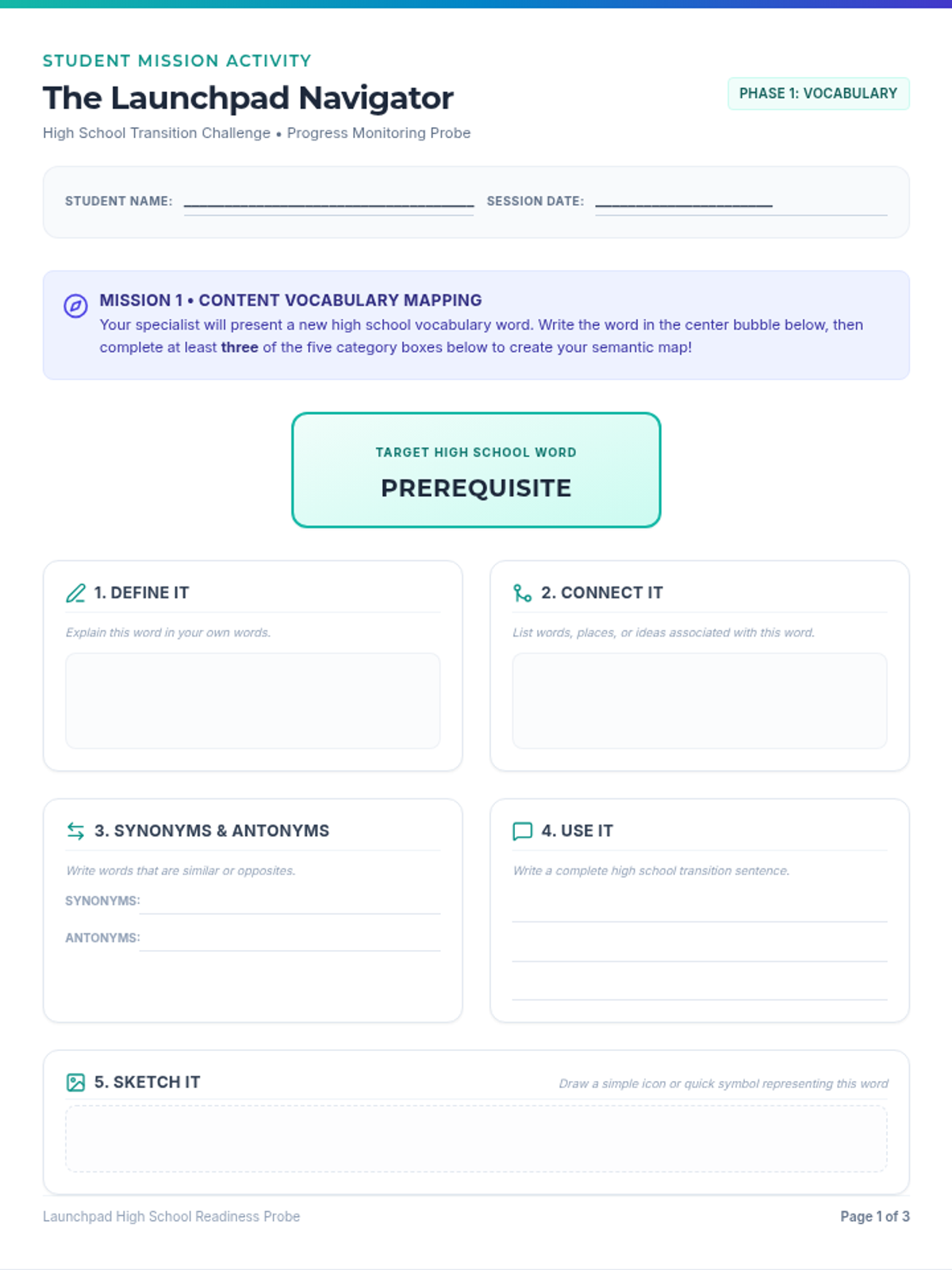
A structured vocabulary lesson focusing on synonyms, antonyms, associations, and categories for transition-aged high school students, building functional life skills and vocational readiness.
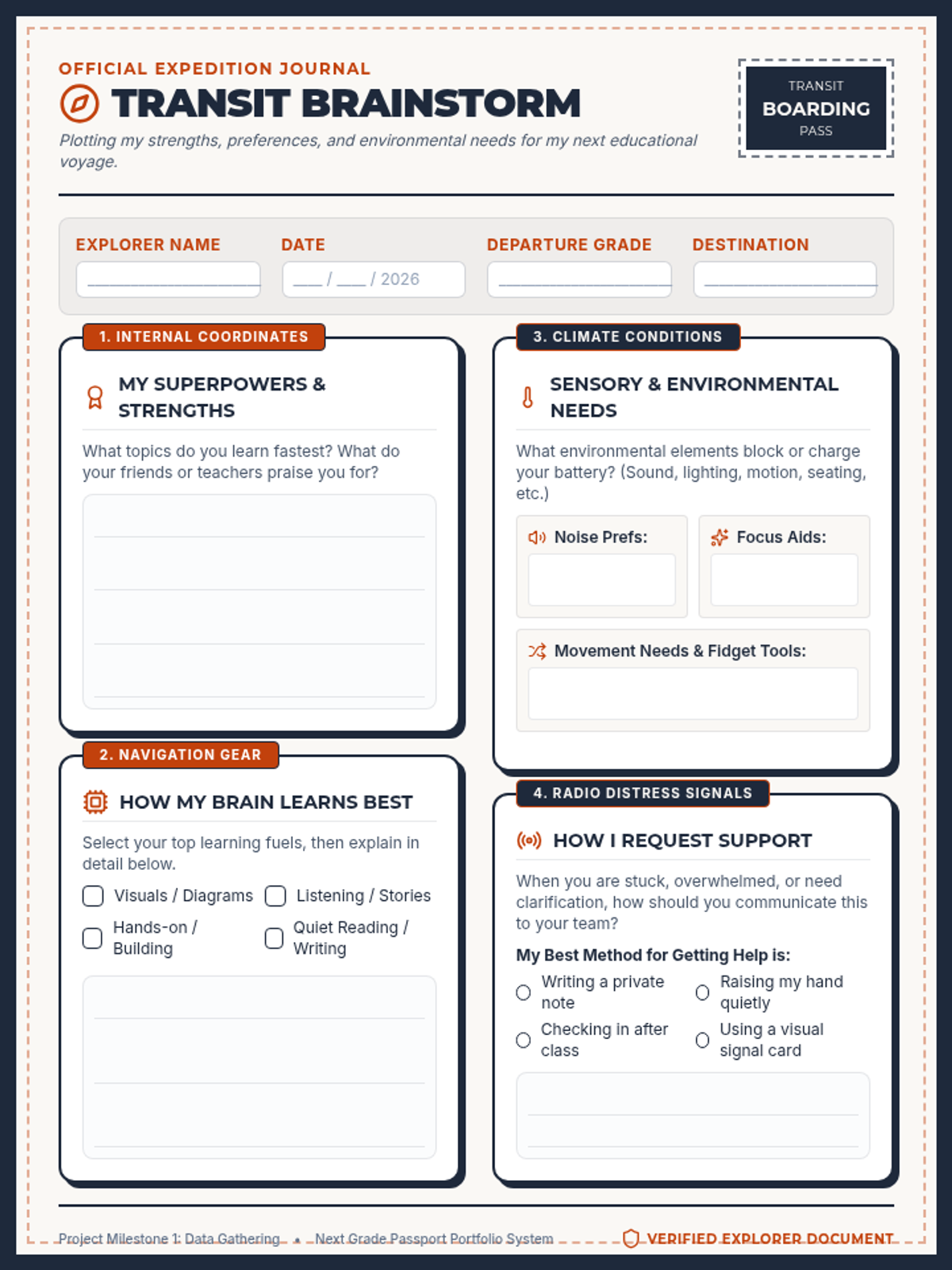
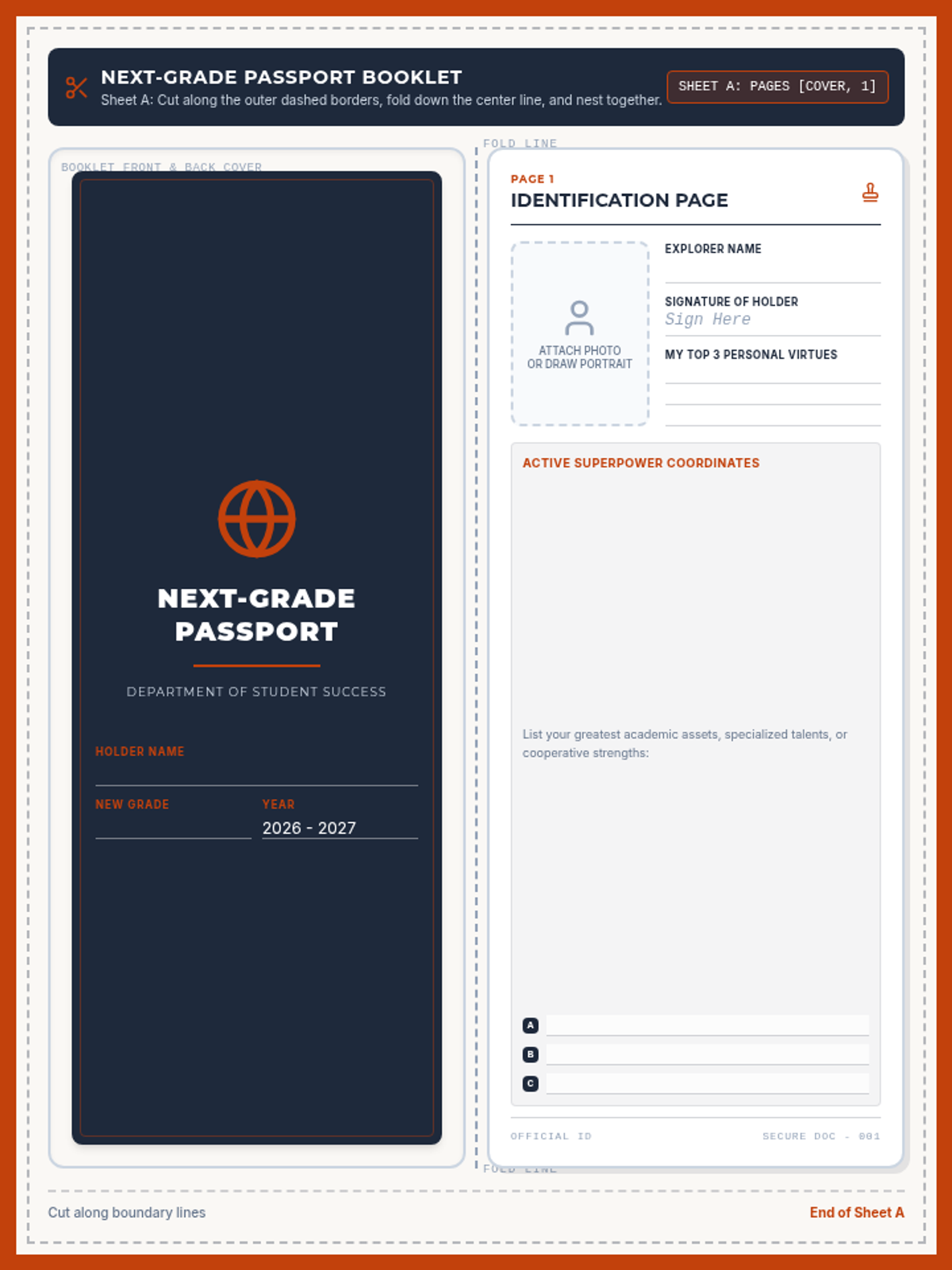
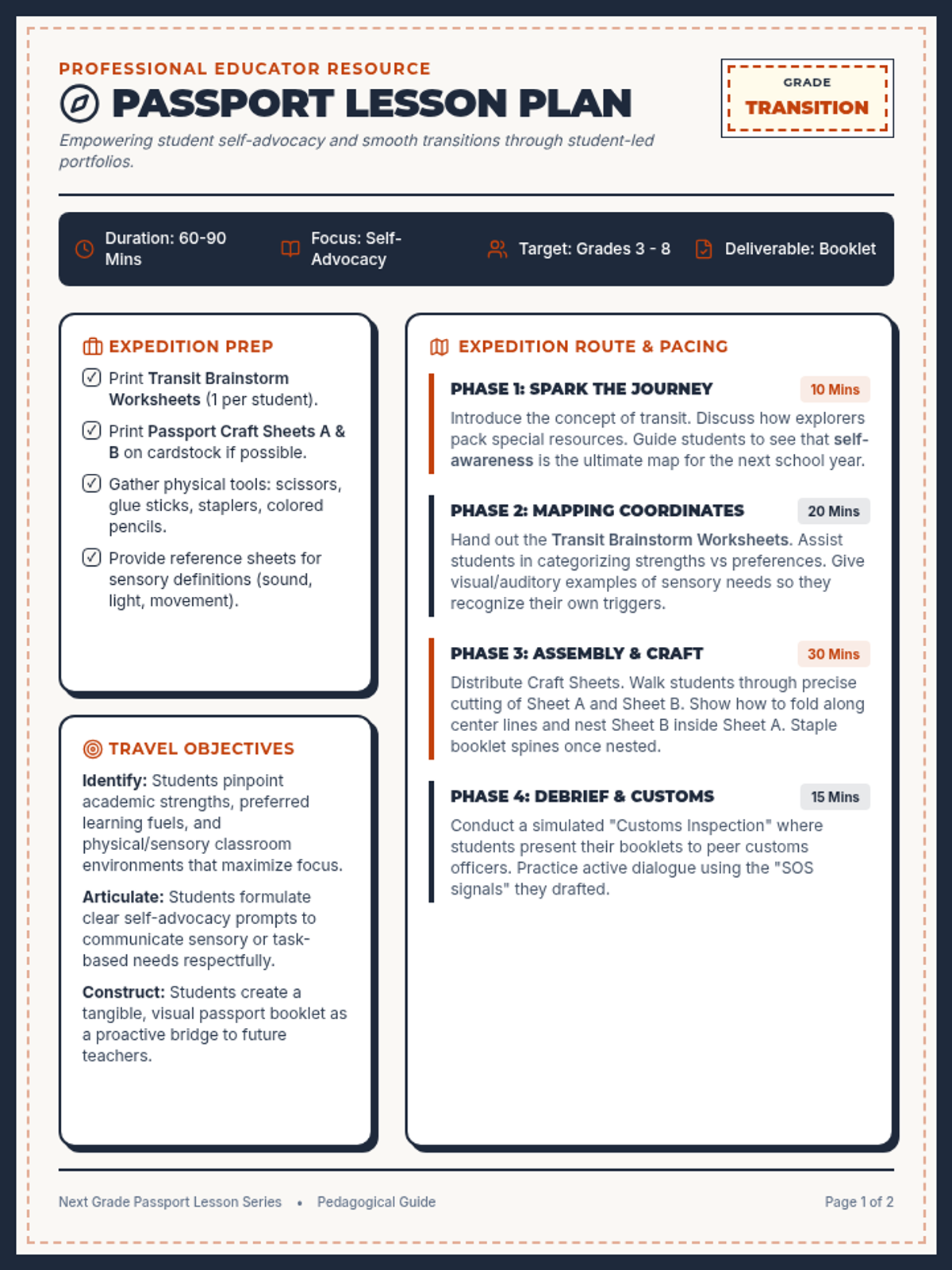
A self-advocacy and transition planning project where students identify their strengths, learning preferences, and sensory needs to build a physical passport portfolio for their next-grade teachers.
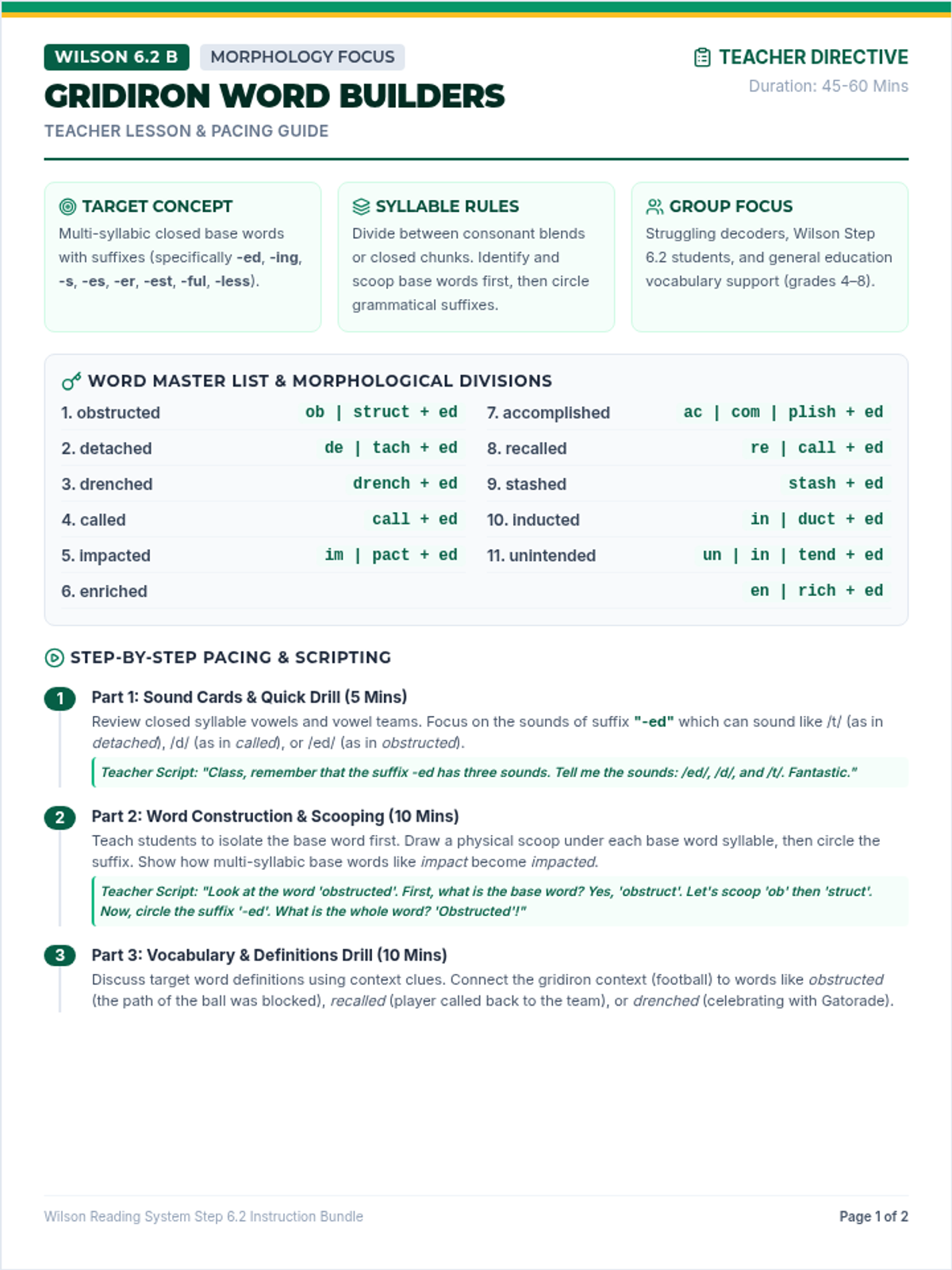
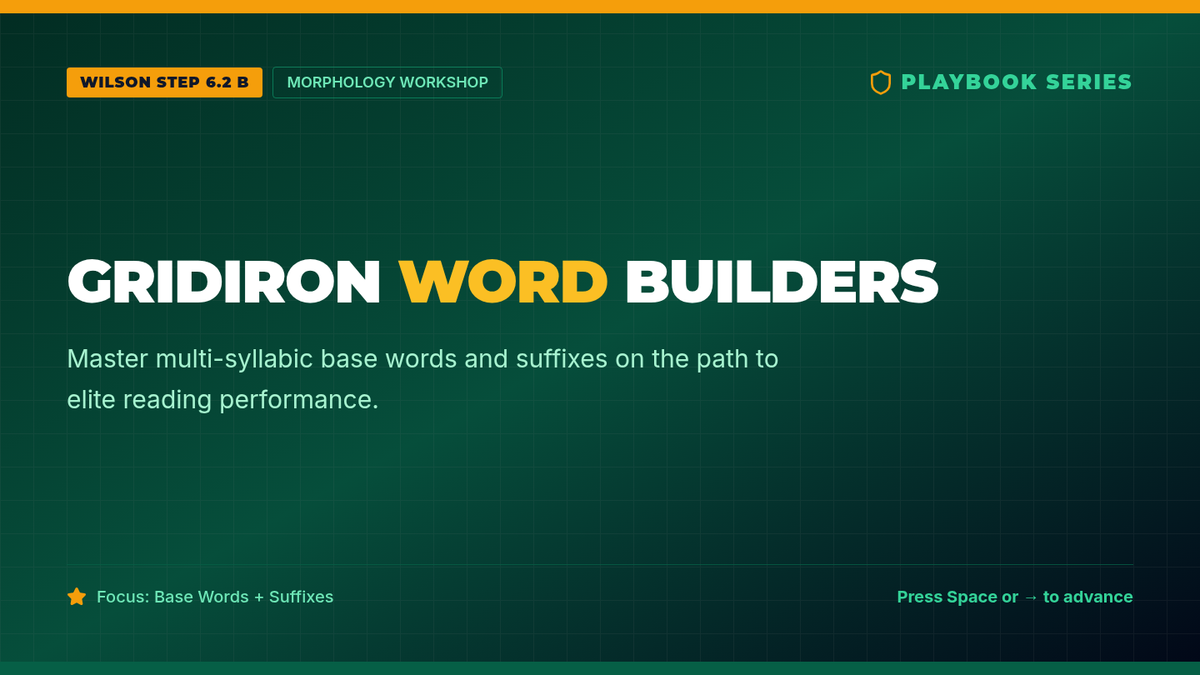
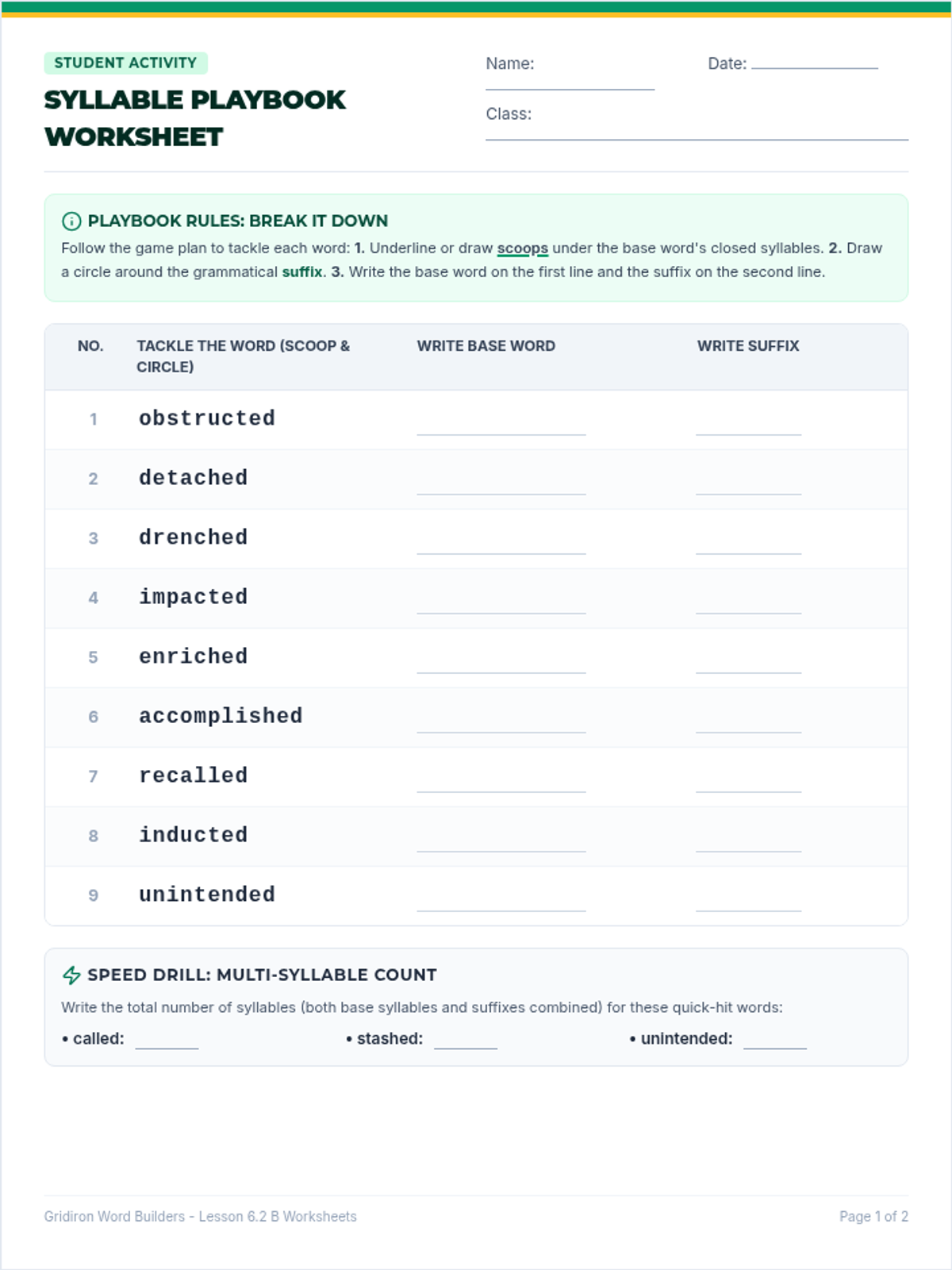
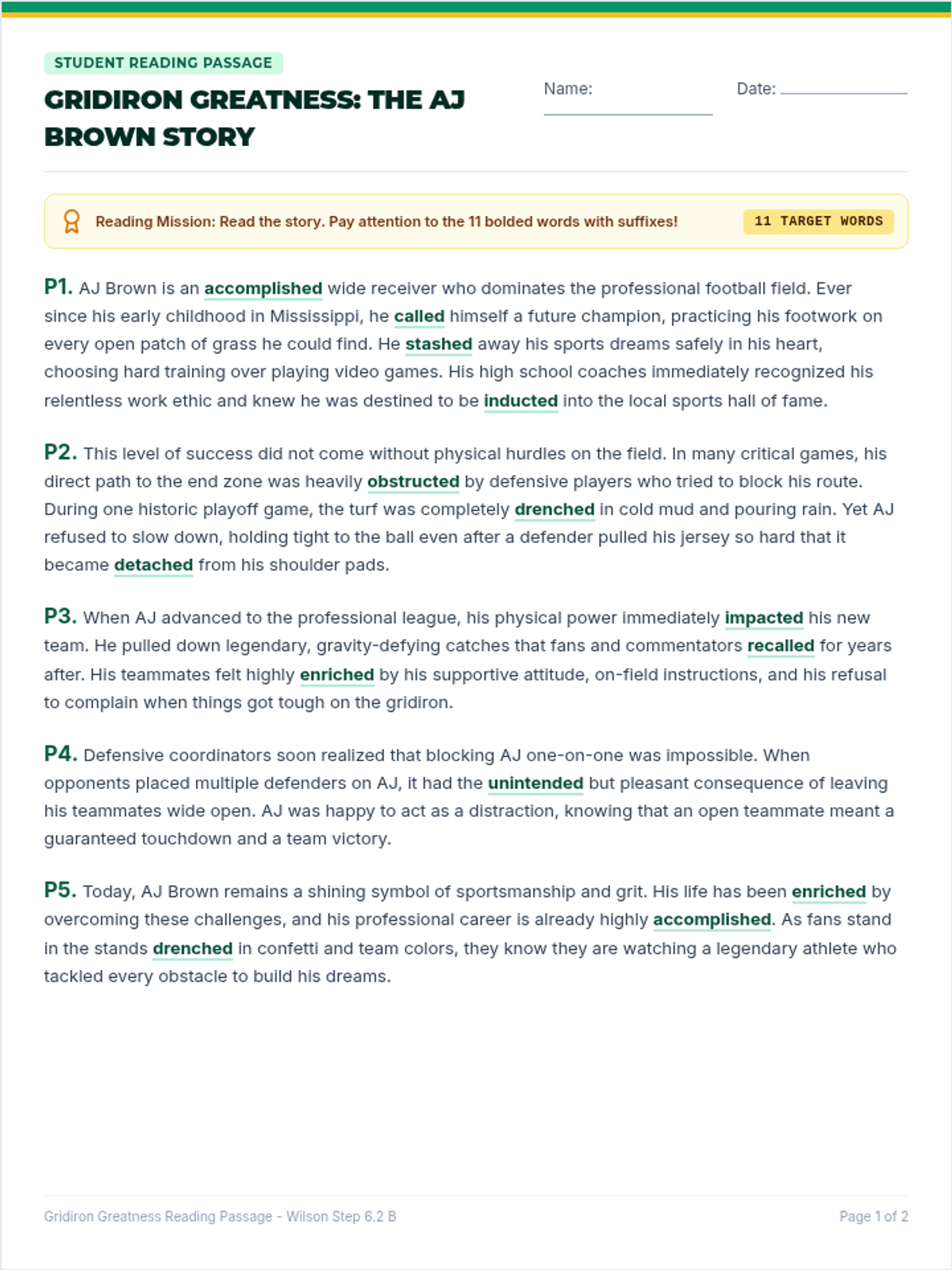
A complete literacy lesson aligned with Wilson Reading System Step 6.2, focusing on multi-syllabic words with suffixes. Students learn to read, scoop, and define complex words while engaging with an inspiring reading passage about NFL wide receiver AJ Brown.
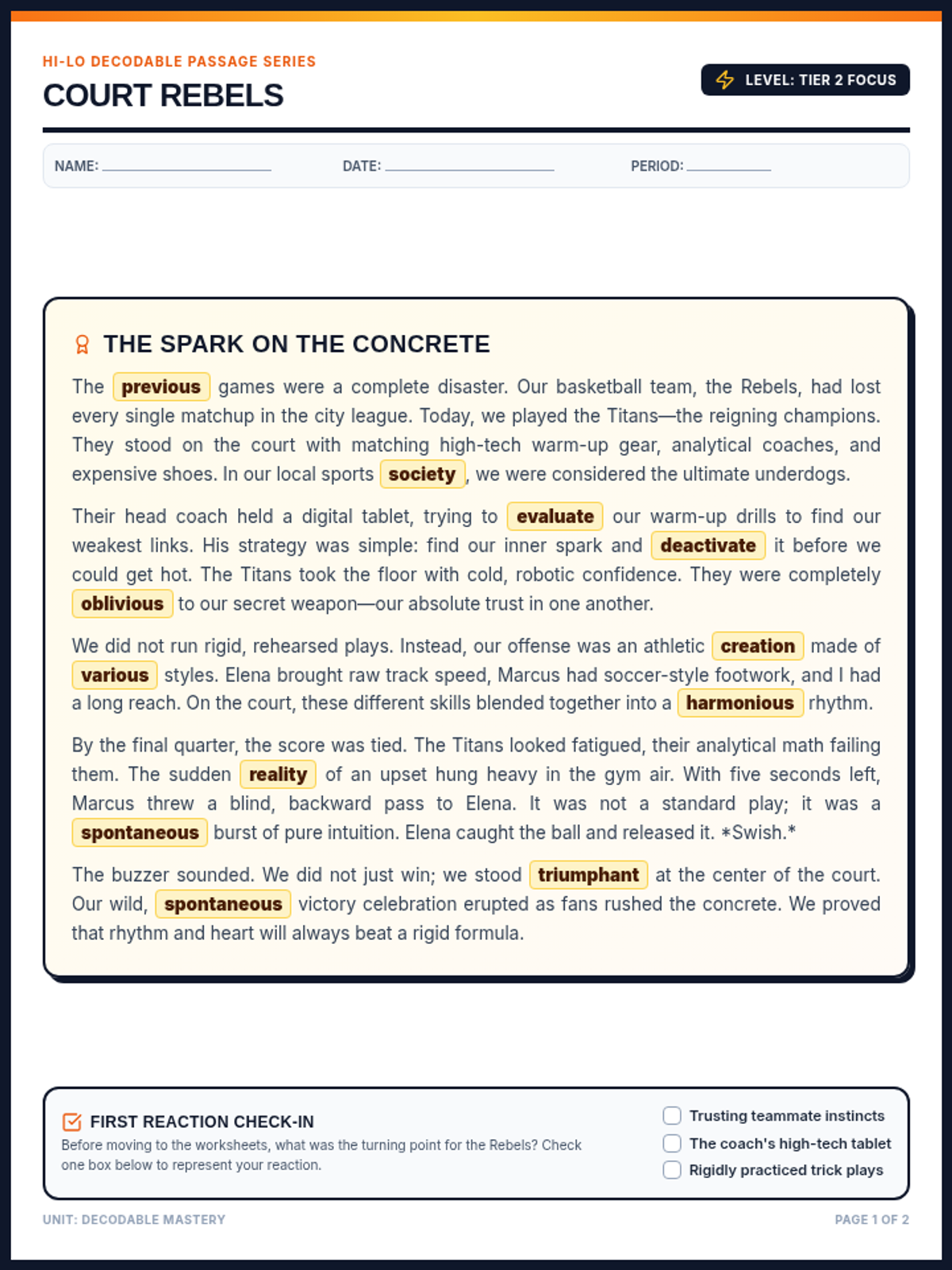
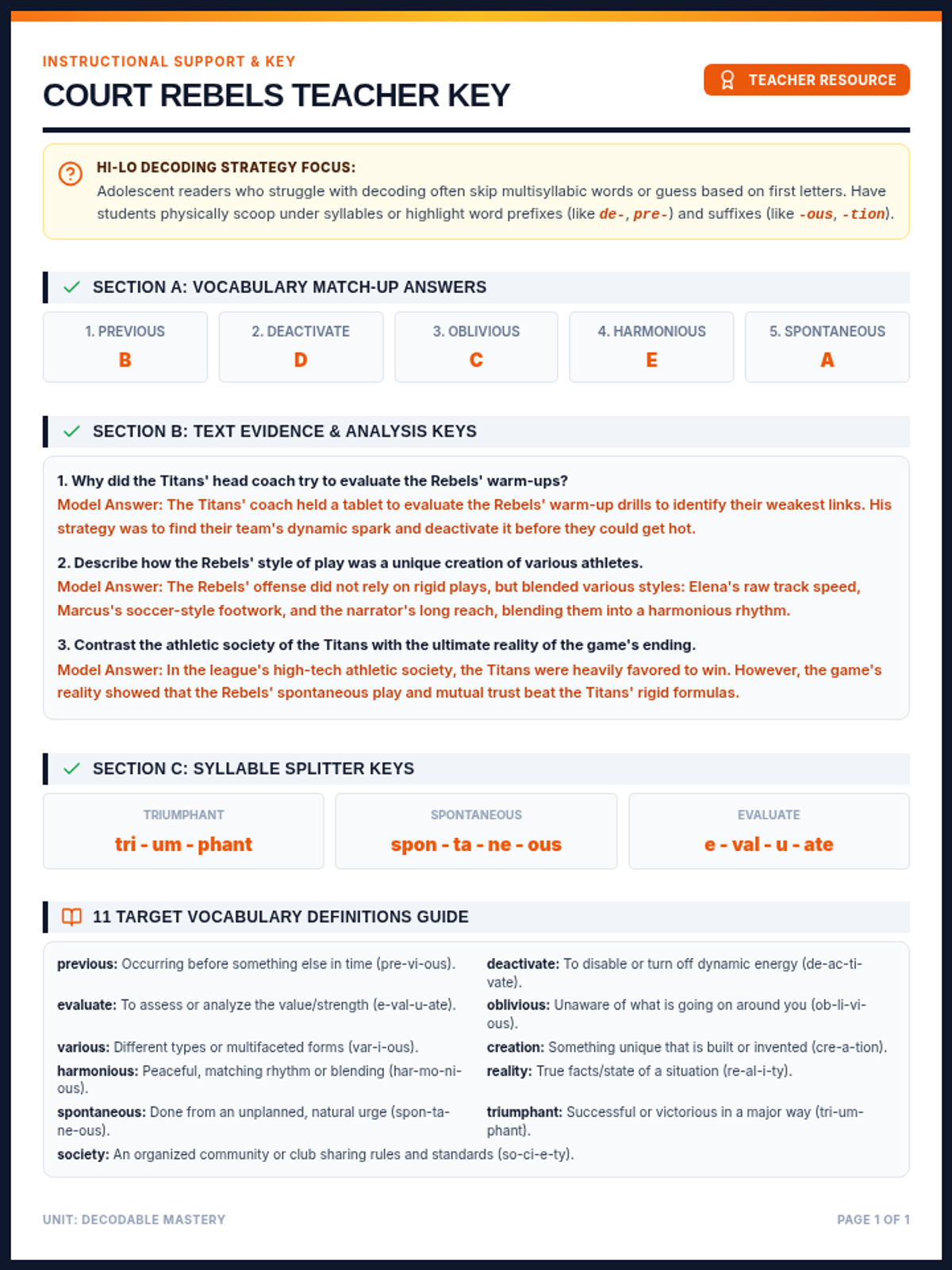
A reading comprehension and vocabulary lesson designed for struggling adolescent readers. It features a high-interest realistic fiction story about an underdog basketball team's unexpected victory, focusing on multisyllabic vocabulary development.
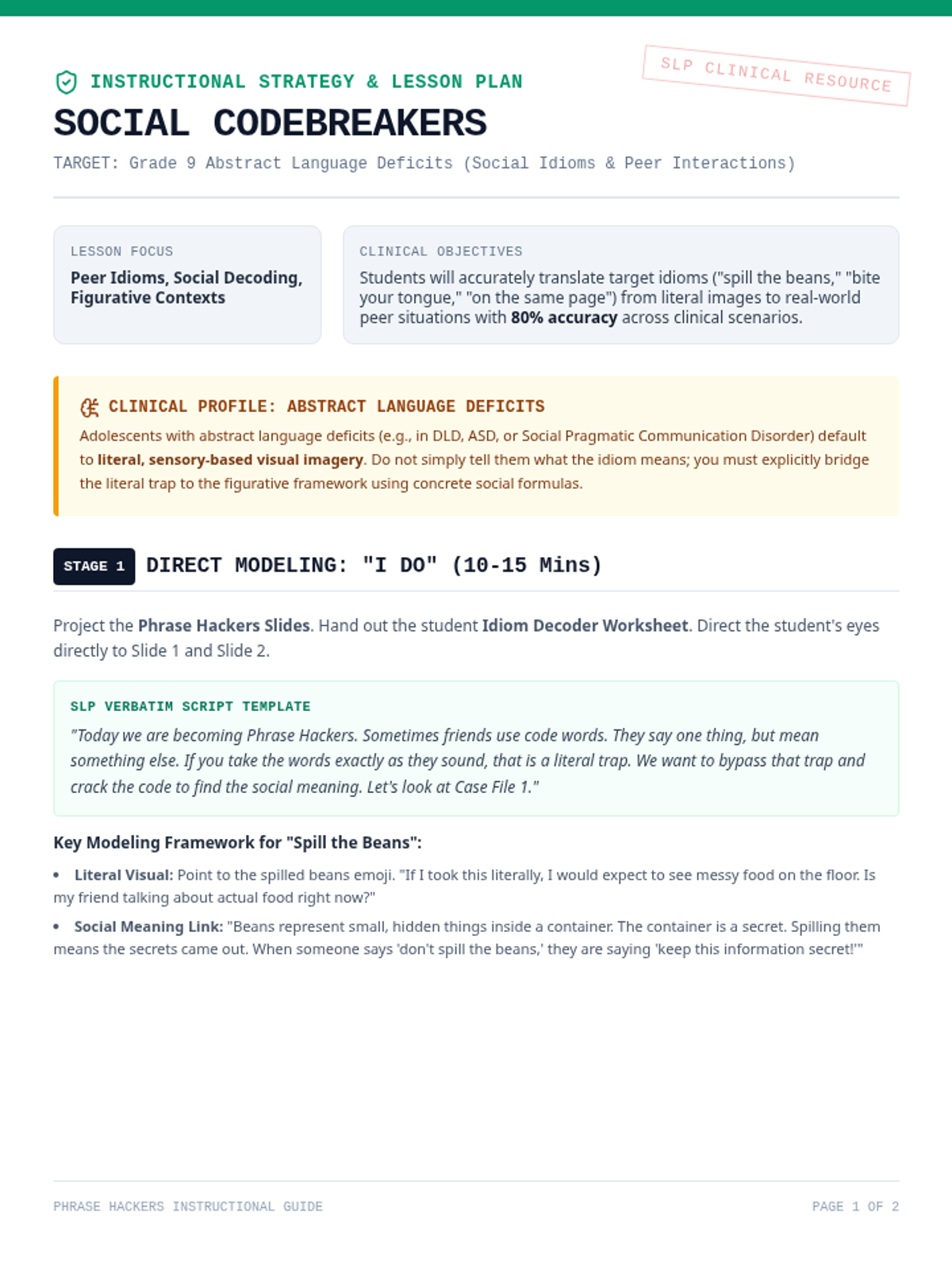
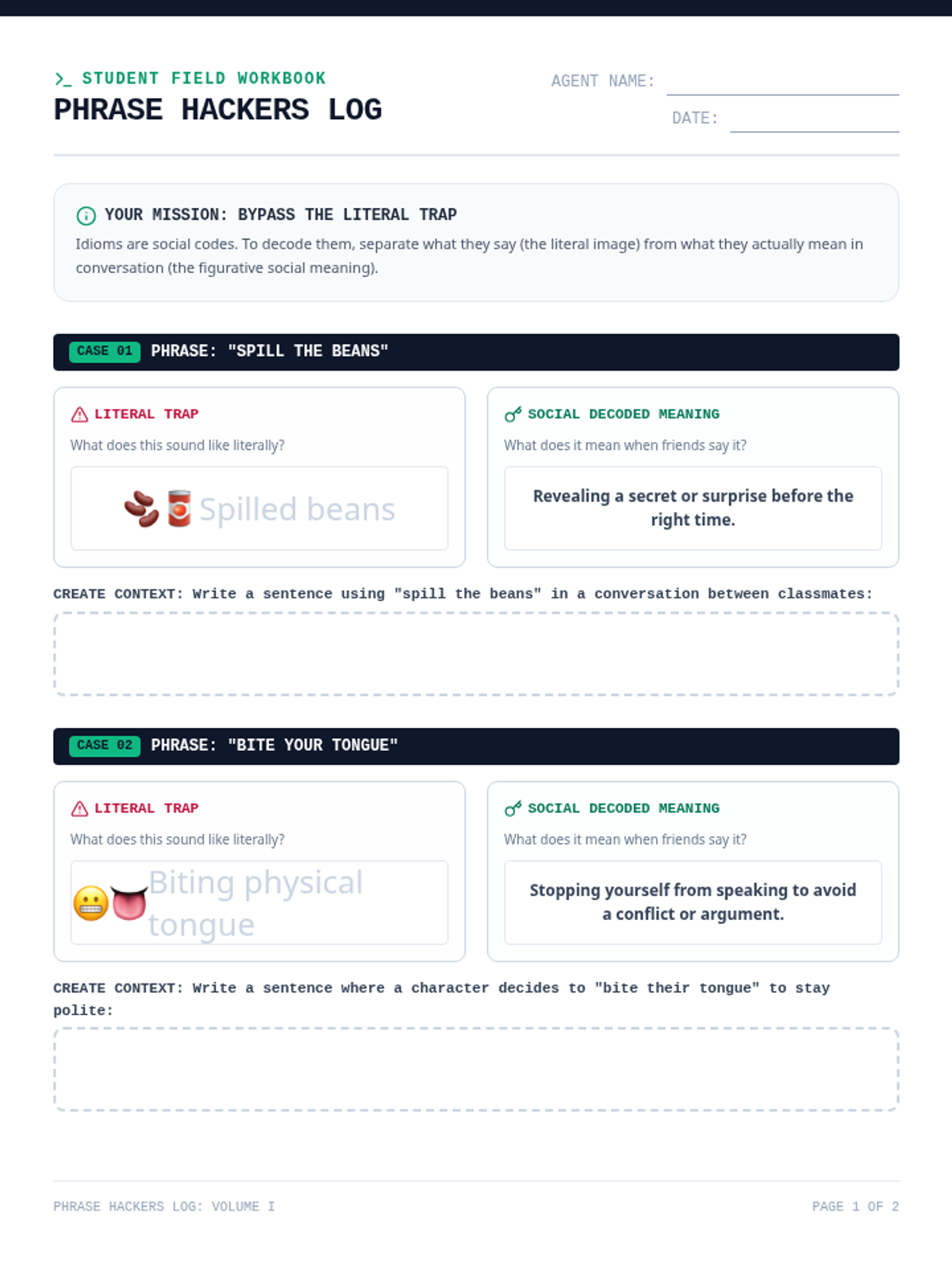
A structured lesson designed for 9th-grade students with abstract language deficits, focusing on decoding social idioms related to peer interactions and friendships. It includes visual slides breaking down literal vs. figurative meanings, an explicit lesson plan, and a structured practice worksheet.
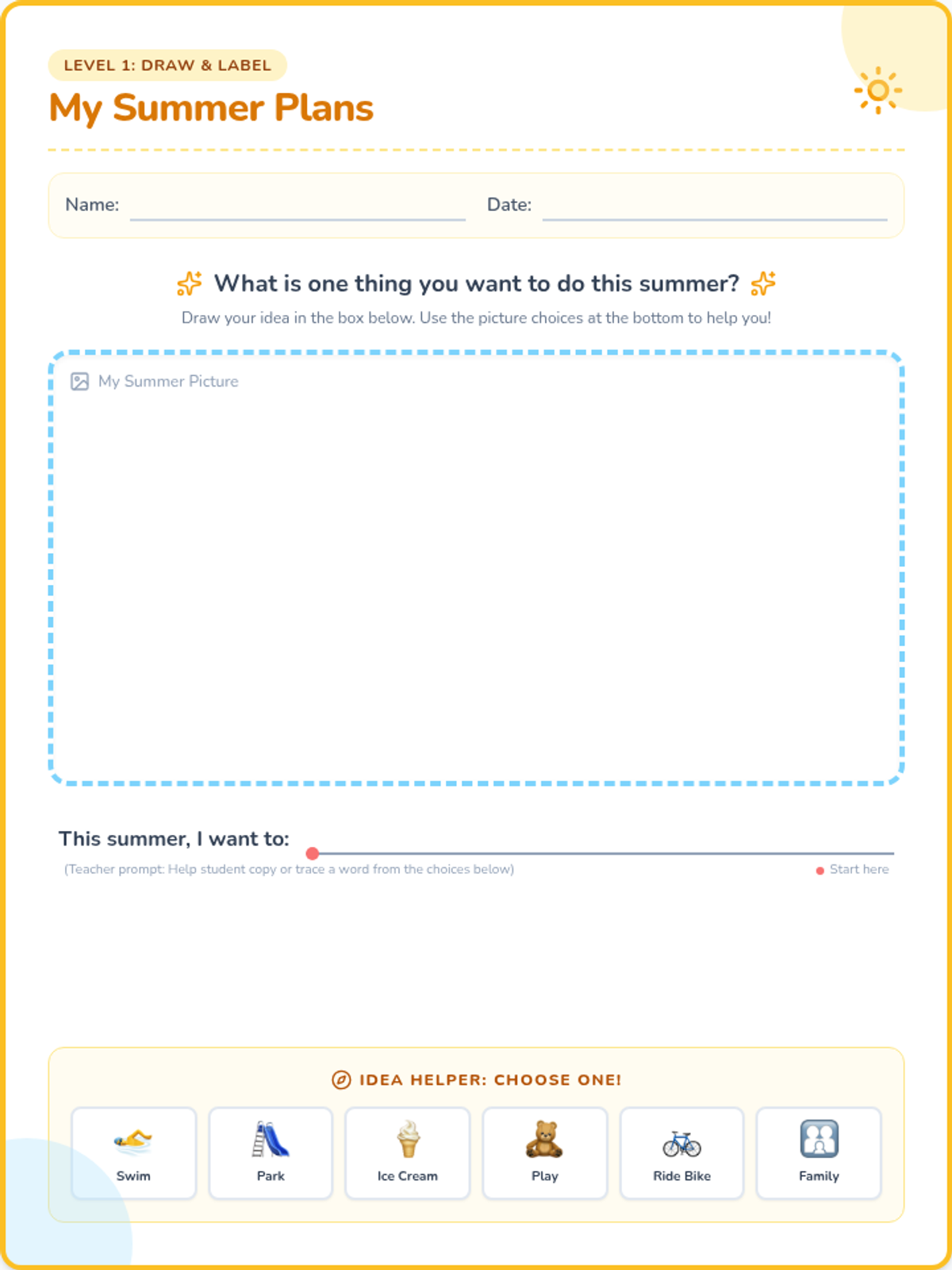
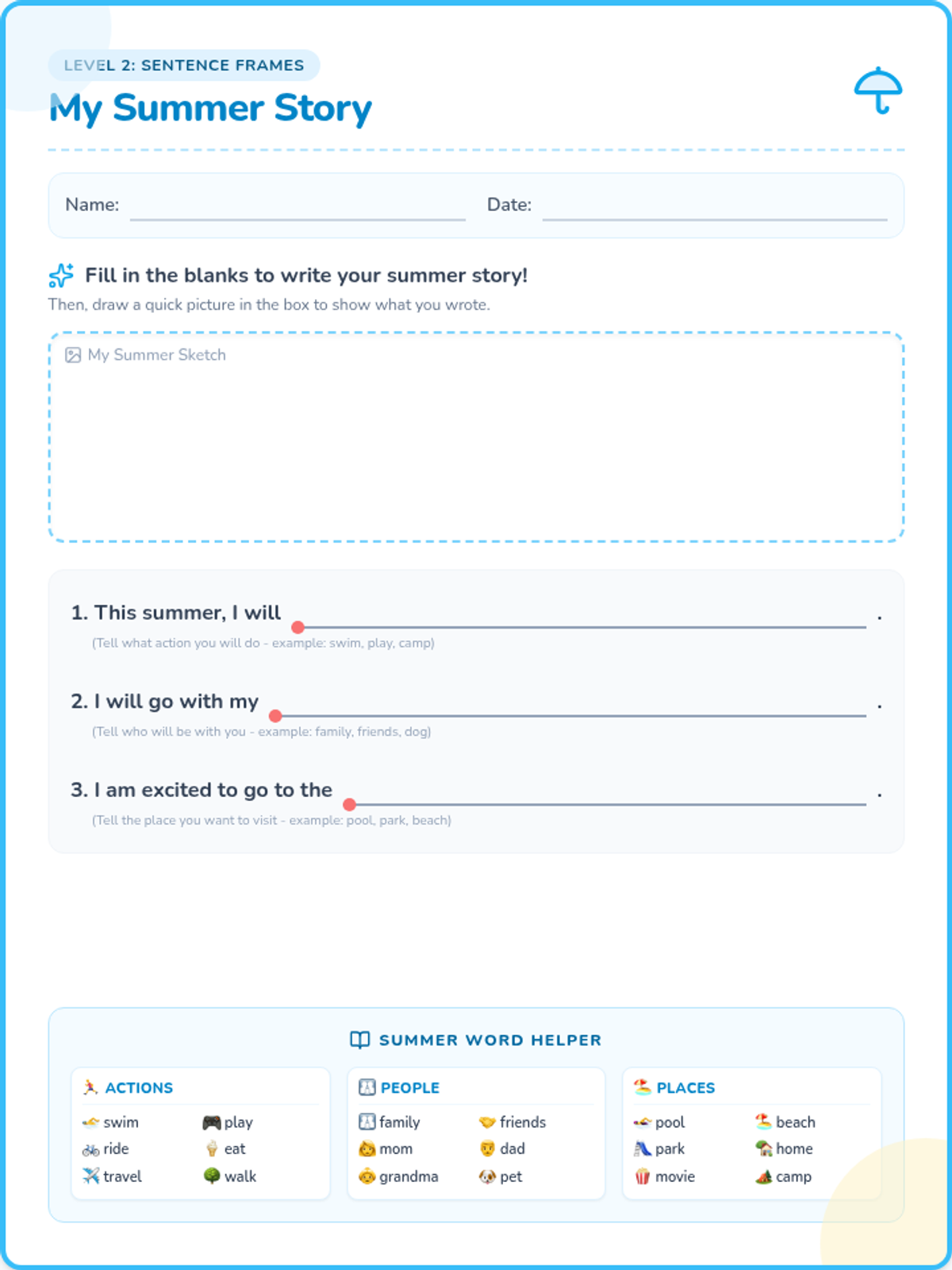
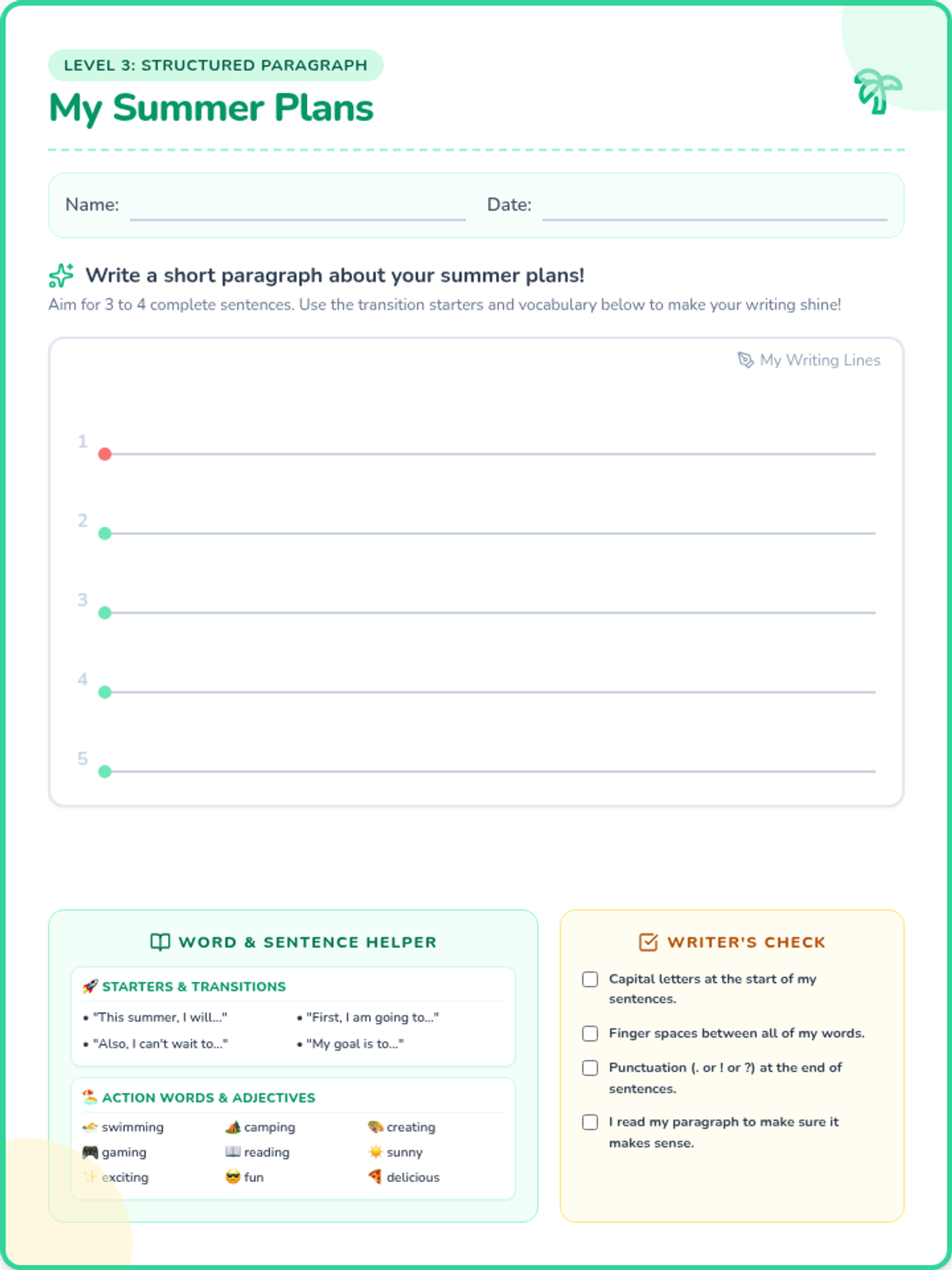
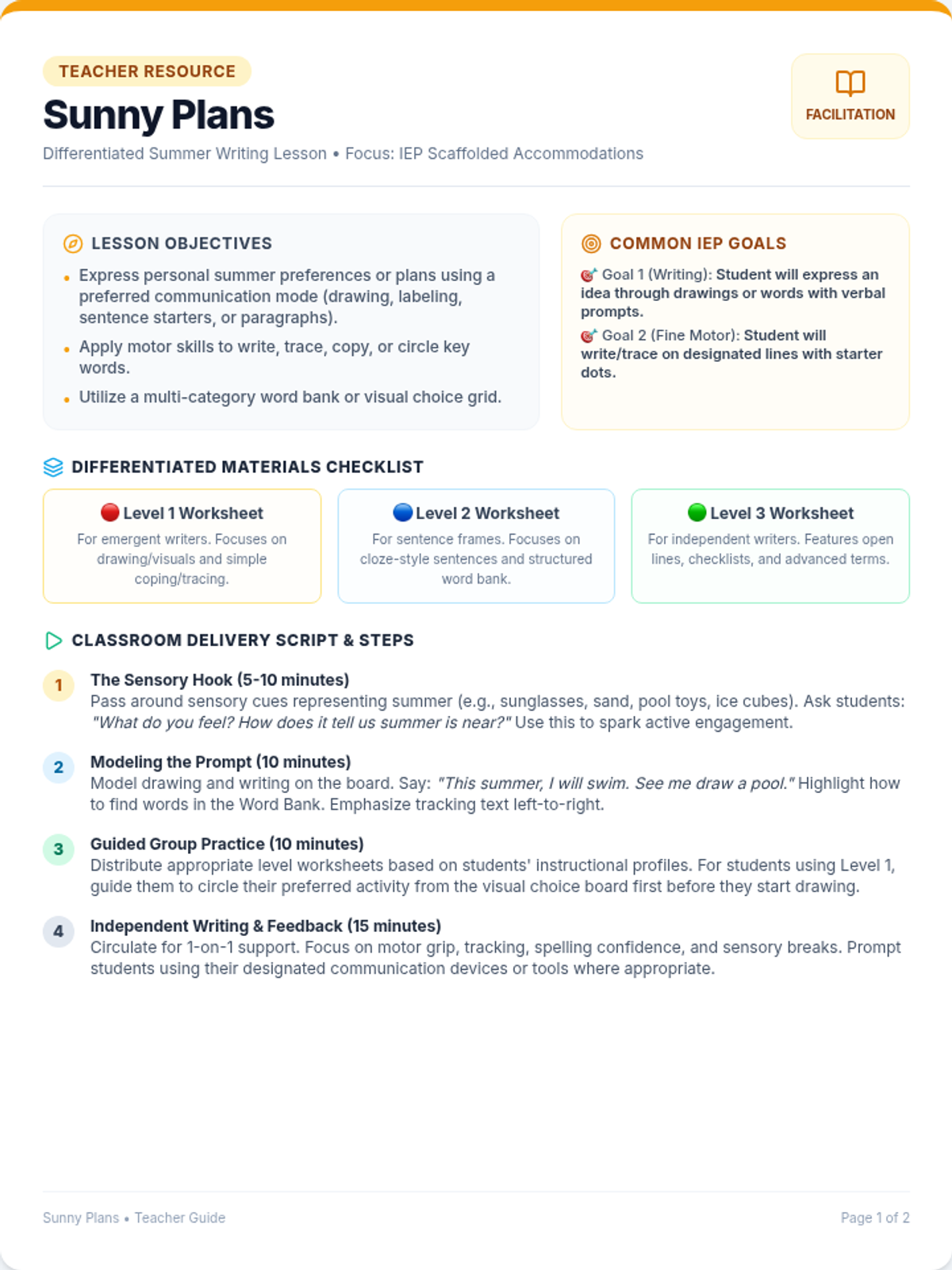
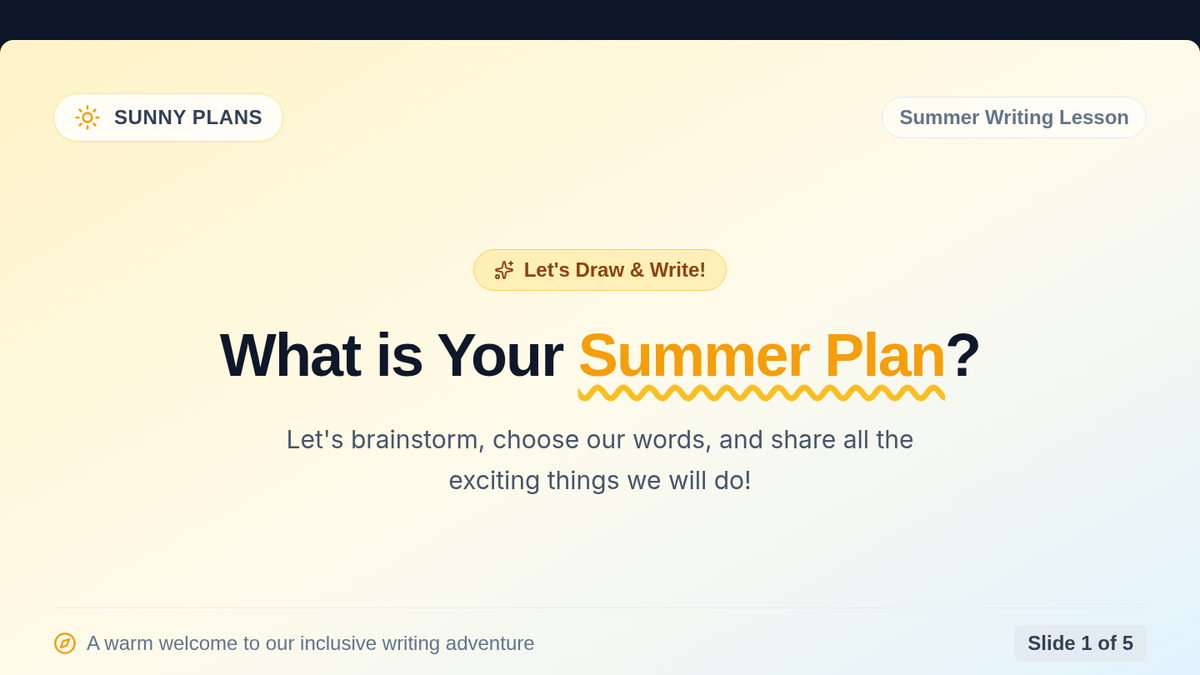
A differentiated writing lesson designed for students with IEPs and diverse learning needs to express their plans for summer break. It features three levels of scaffolded student worksheets (drawing/labeling, sentence frames, and structured writing) alongside a comprehensive teacher facilitation guide.
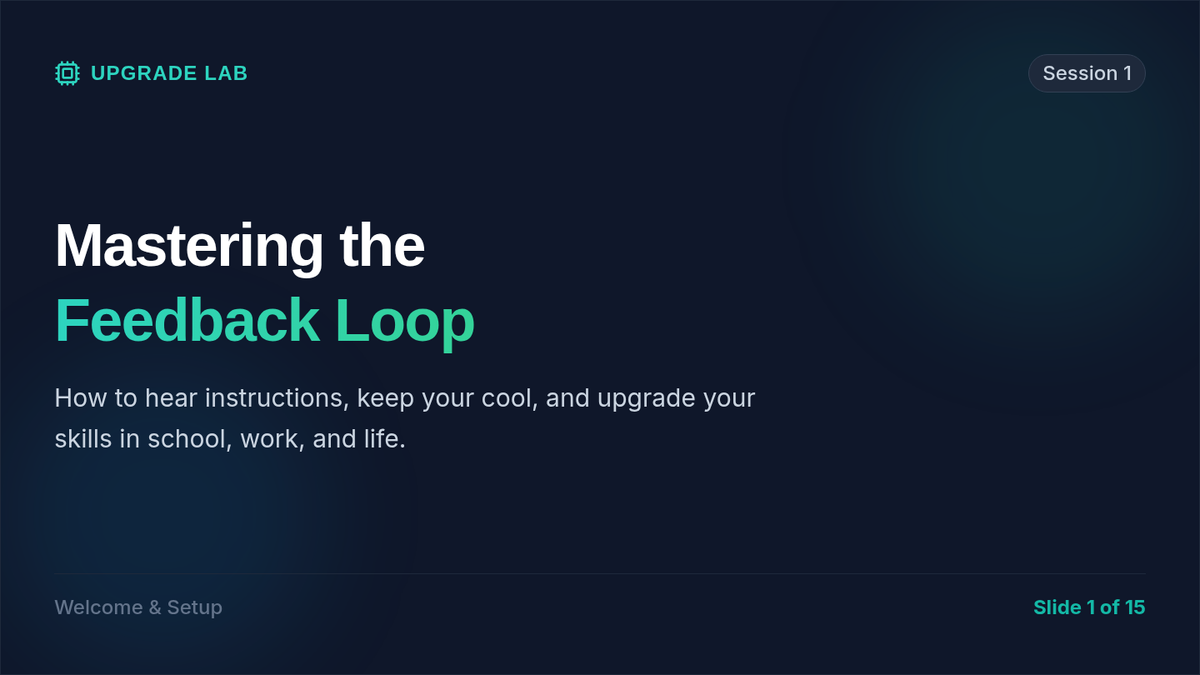
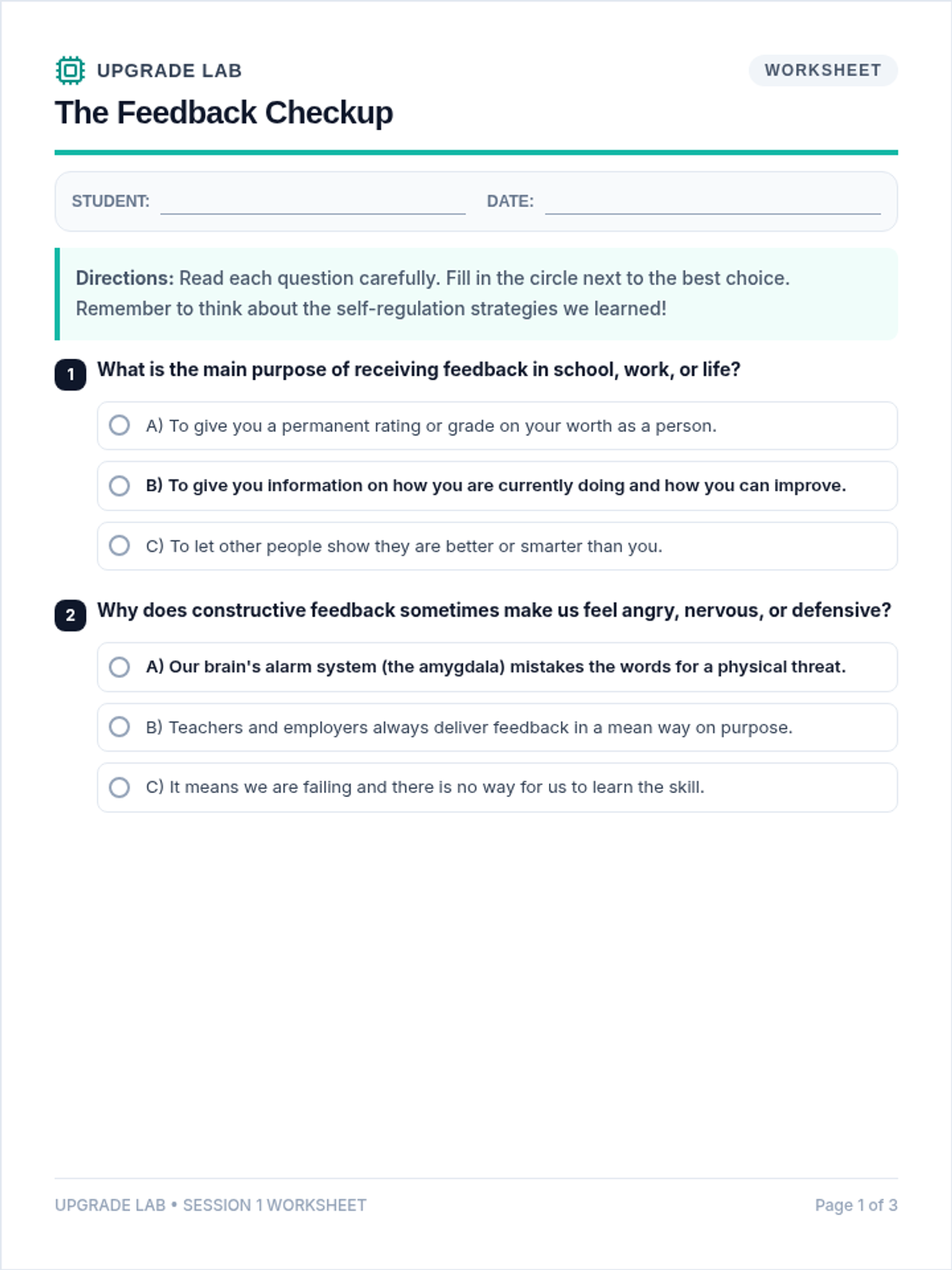
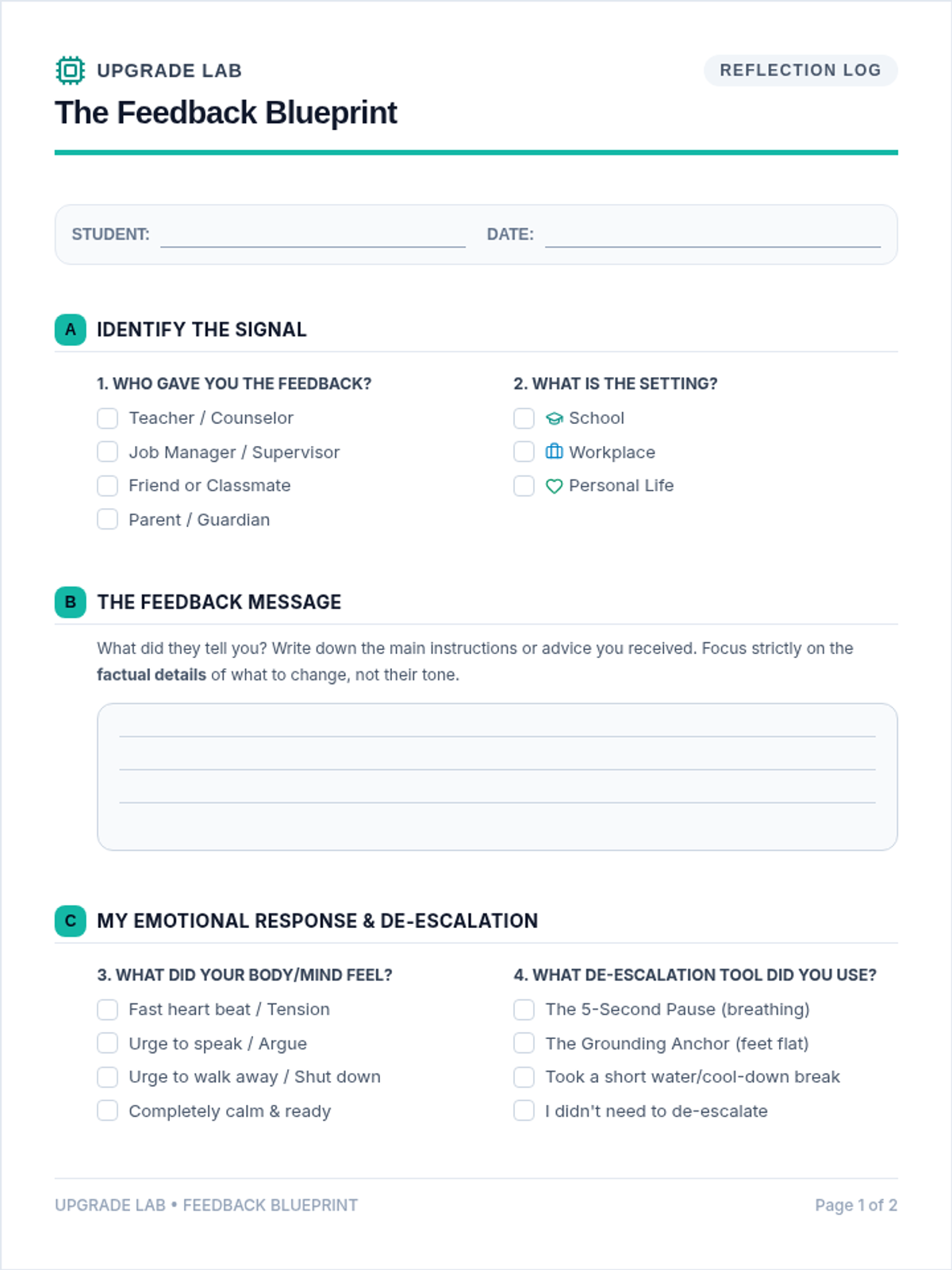
An instructional unit on receiving and applying constructive feedback across school, employment, and personal settings. Specially structured for students with mild-to-moderate support needs, emphasizing self-regulation, de-escalation, and structured self-reflection.
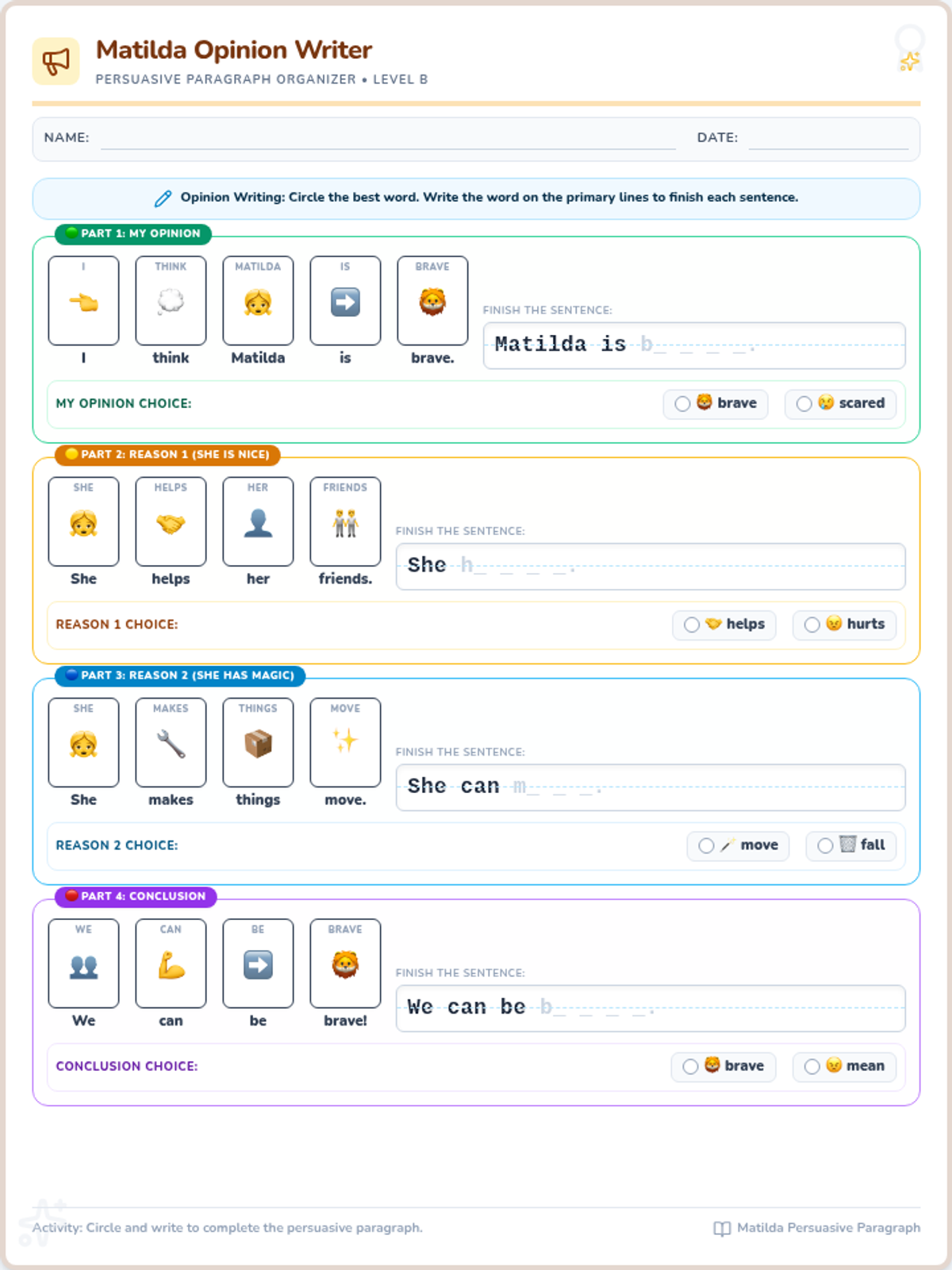
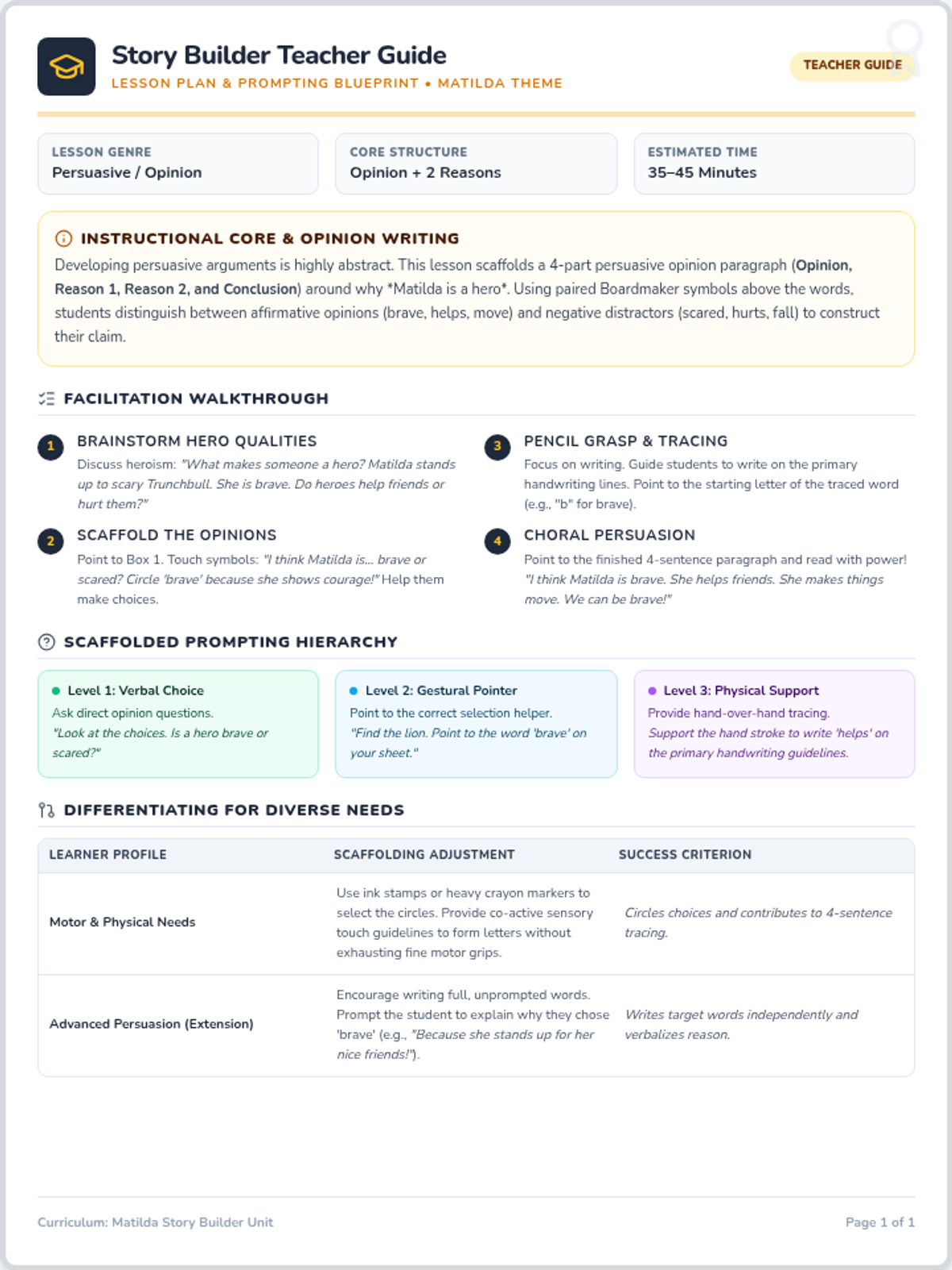
An interactive, symbol-supported paragraph writing activity themed around Matilda the Musical, designed for kindergarteners and students with severe comprehension challenges.
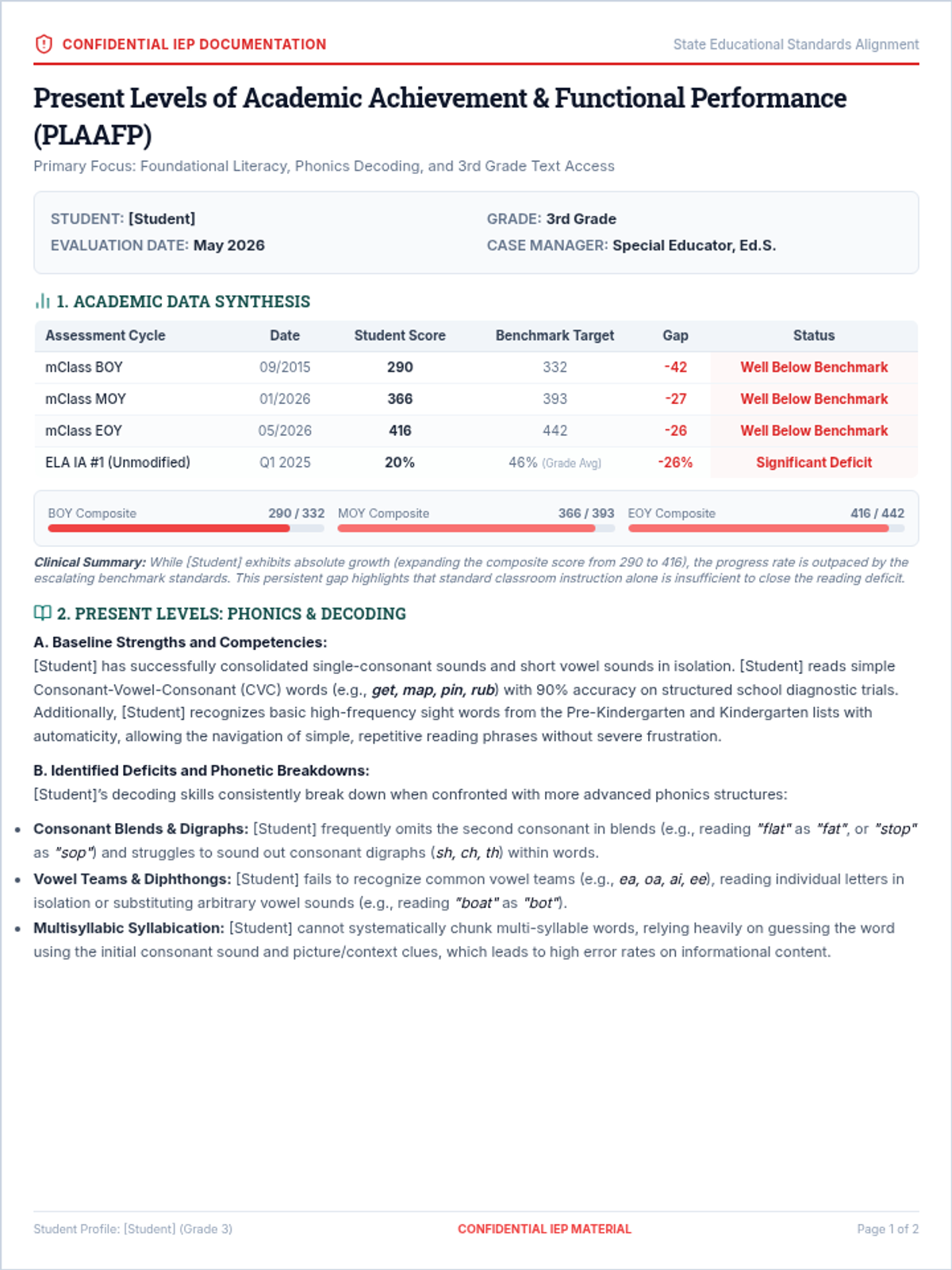
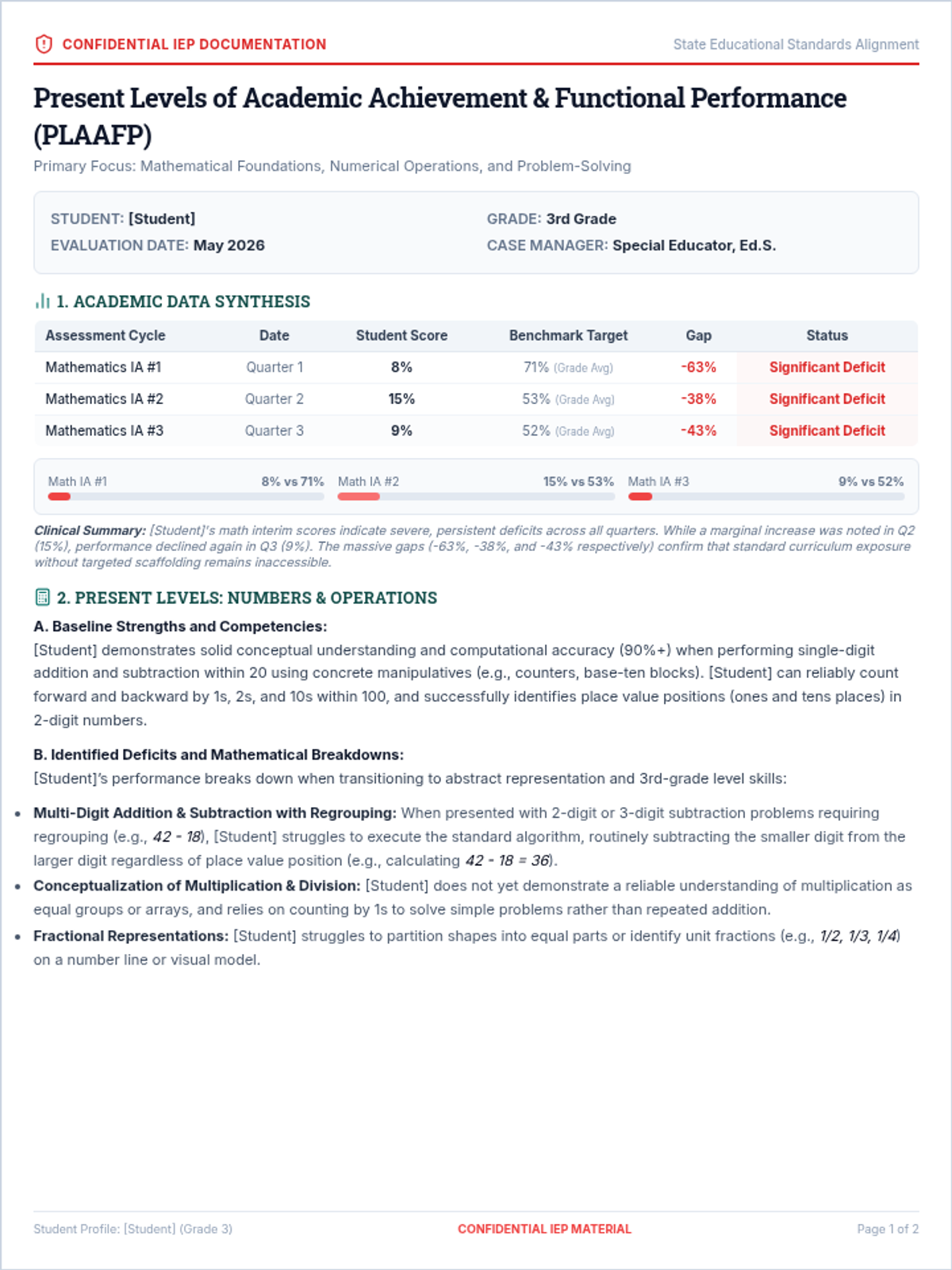
A collection of clinical, data-driven Present Levels of Academic Achievement and Functional Performance (PLAAFP) reports for third-grade students, detailing baseline performance, curriculum barriers, and measurable goals in reading and mathematics.
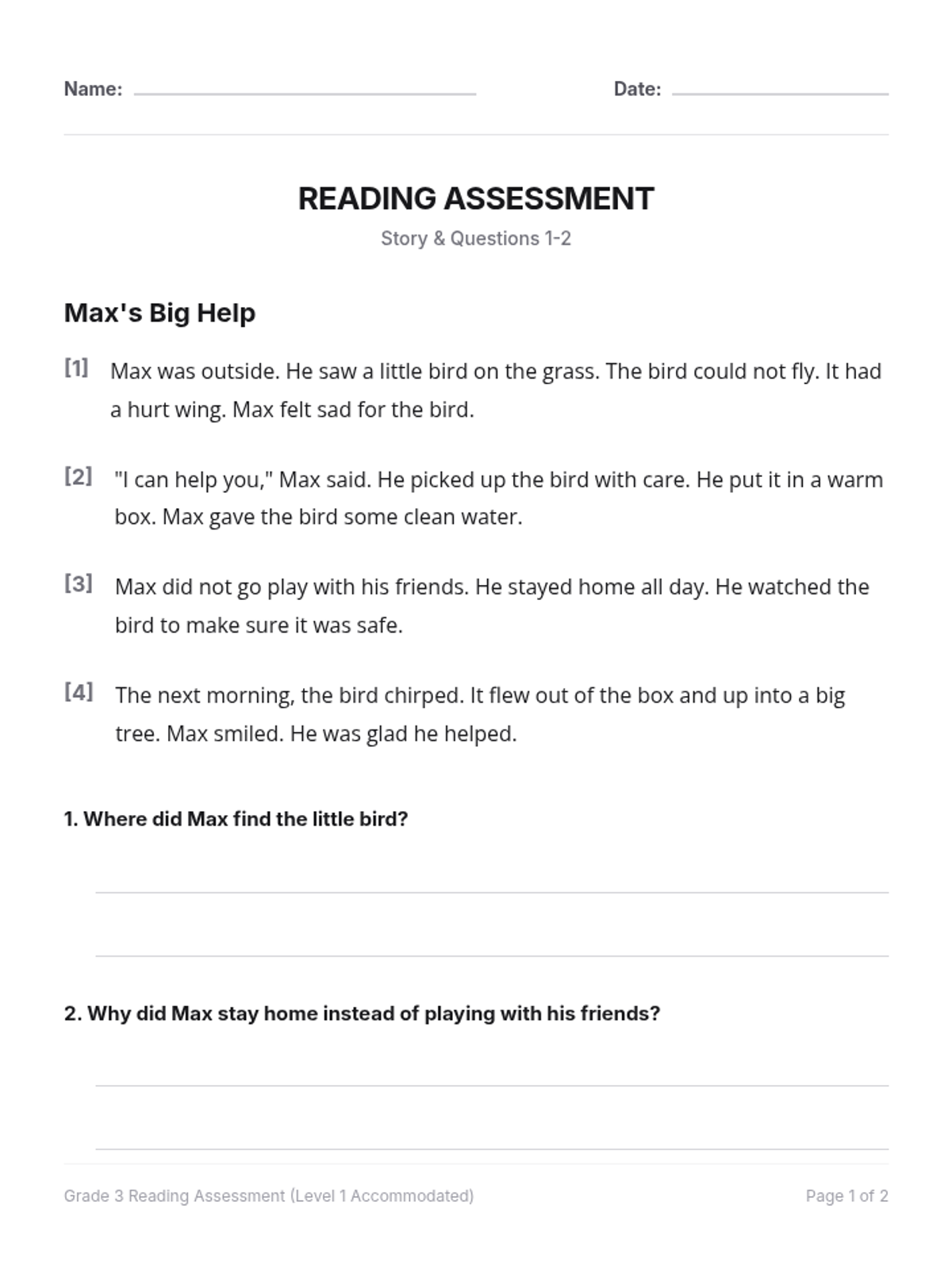
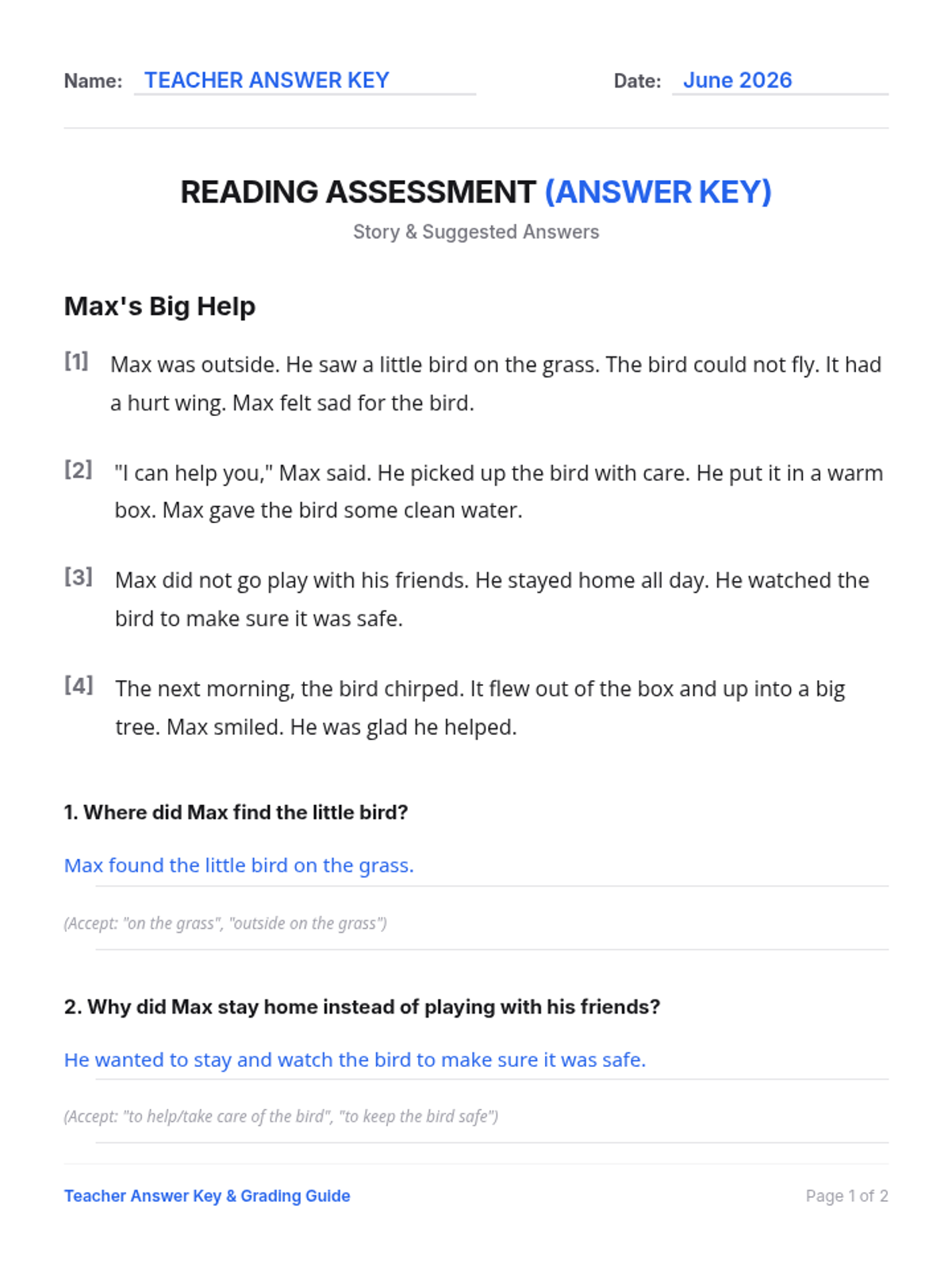
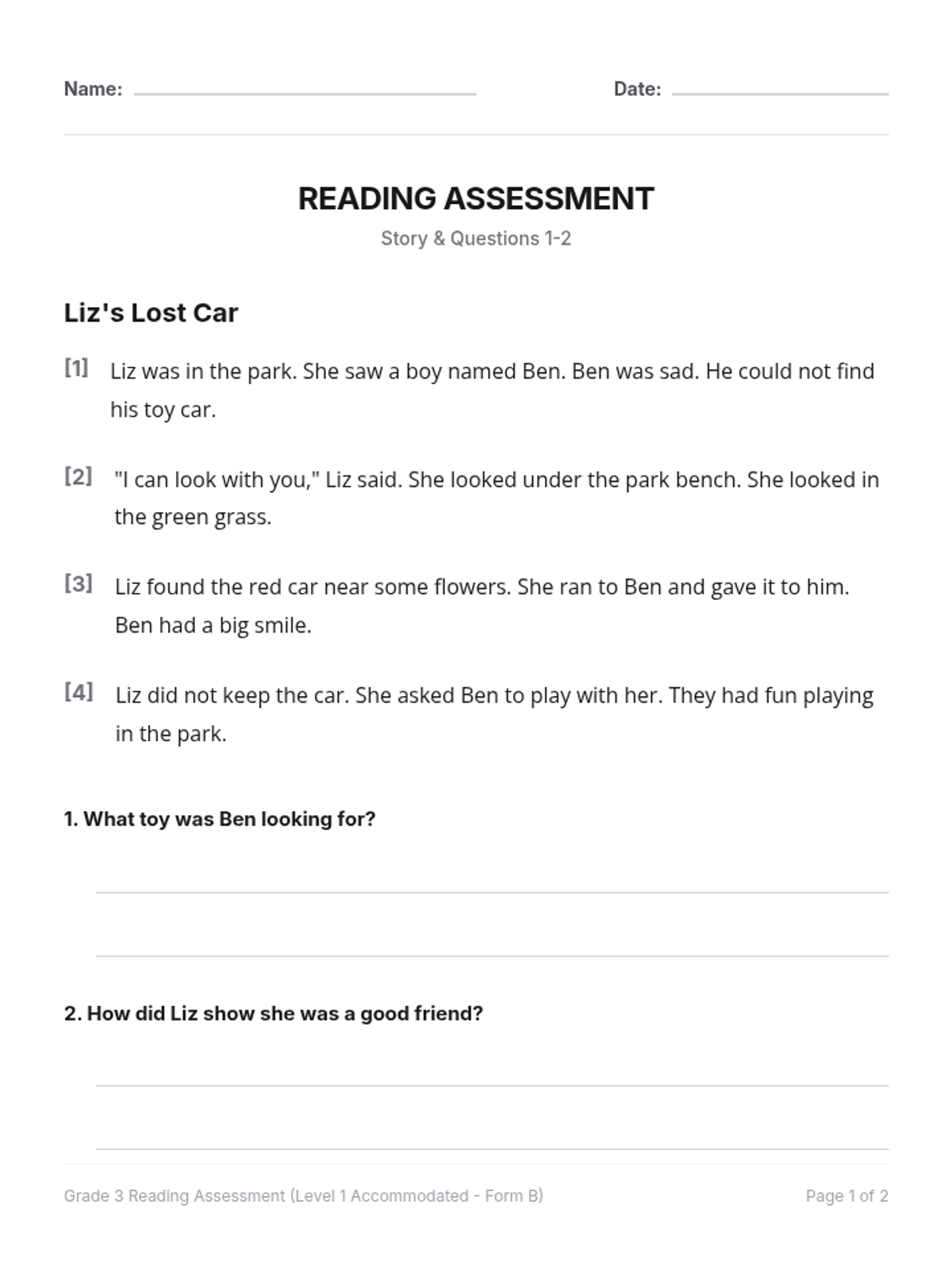
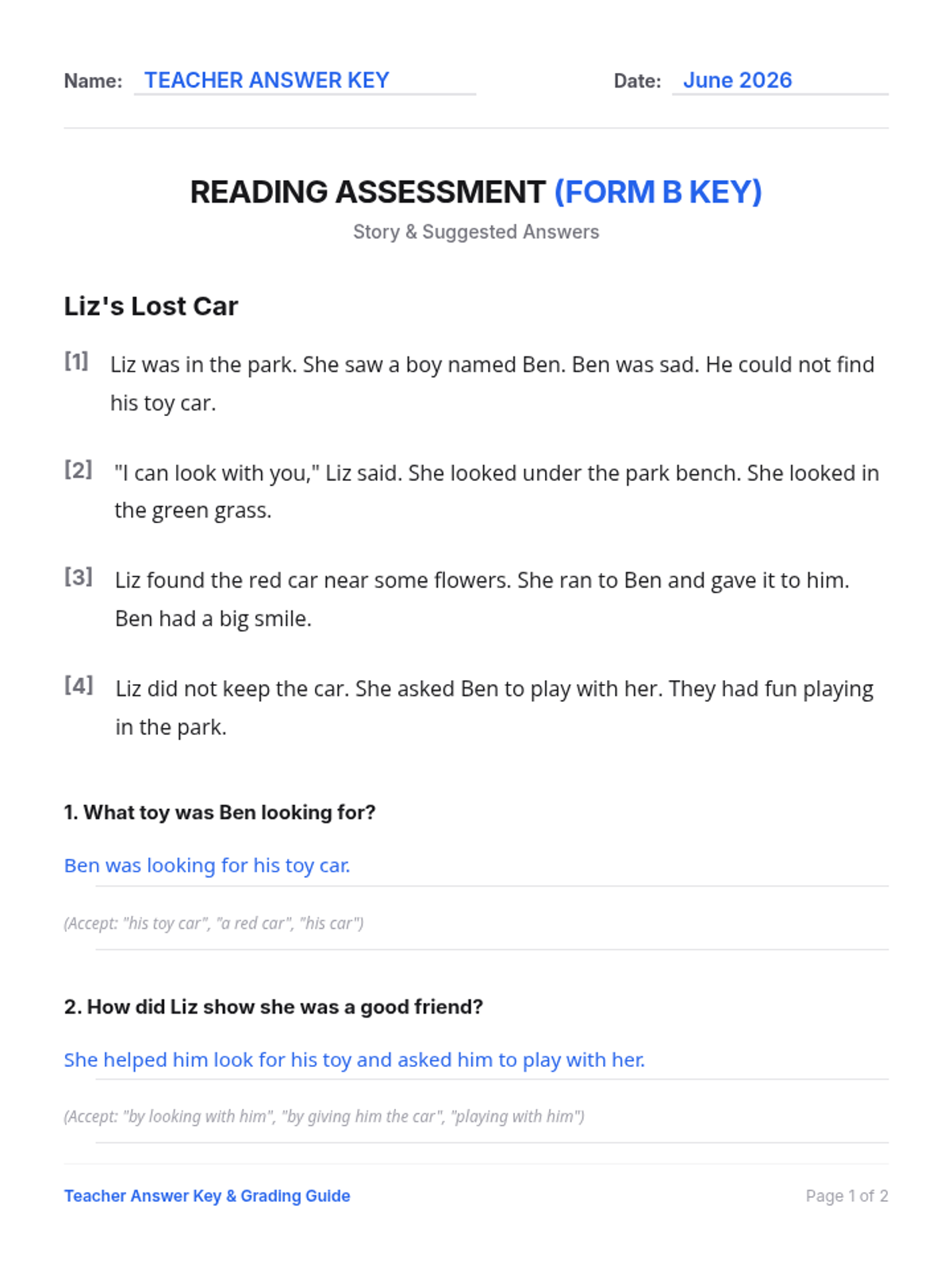
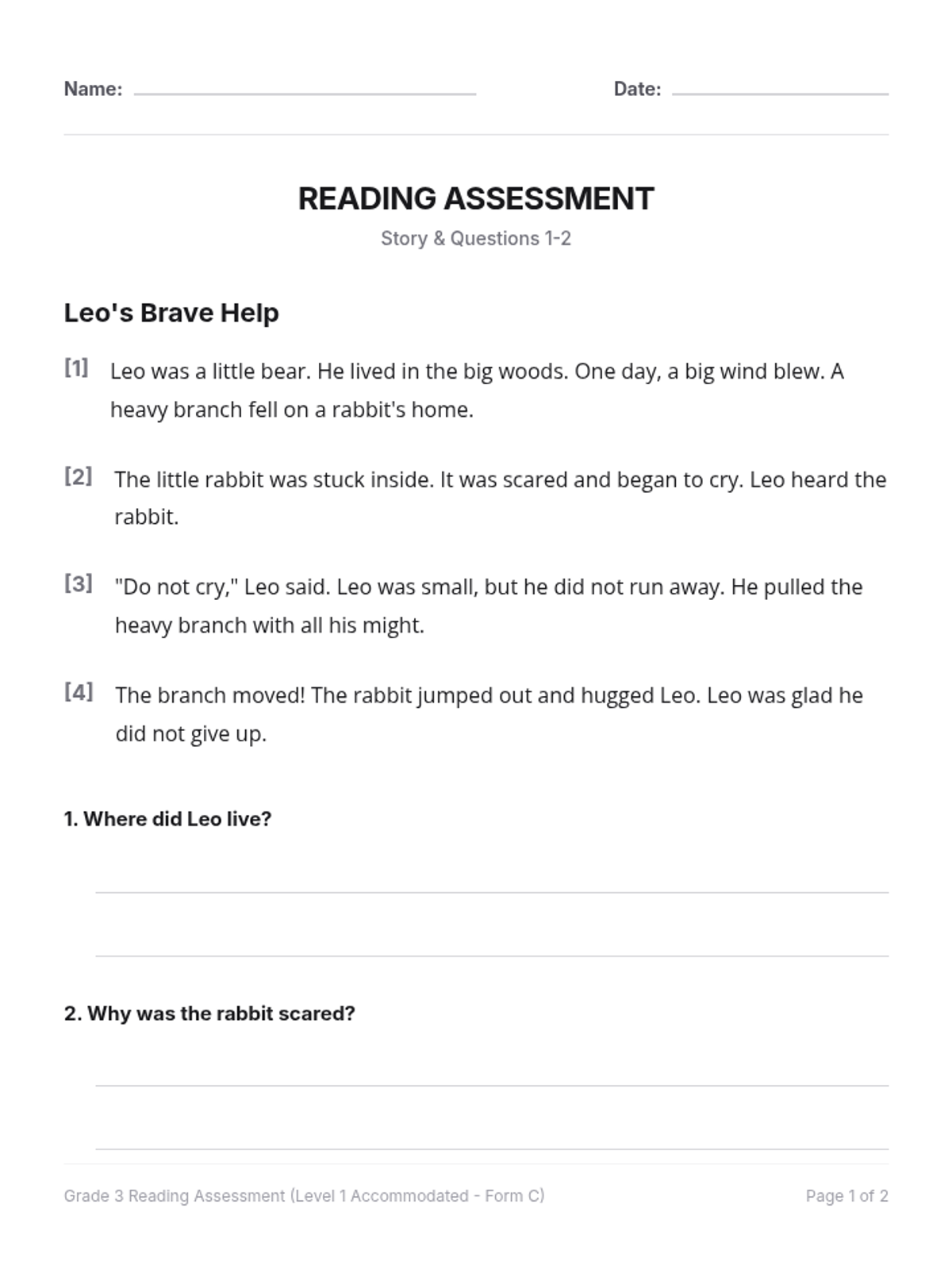
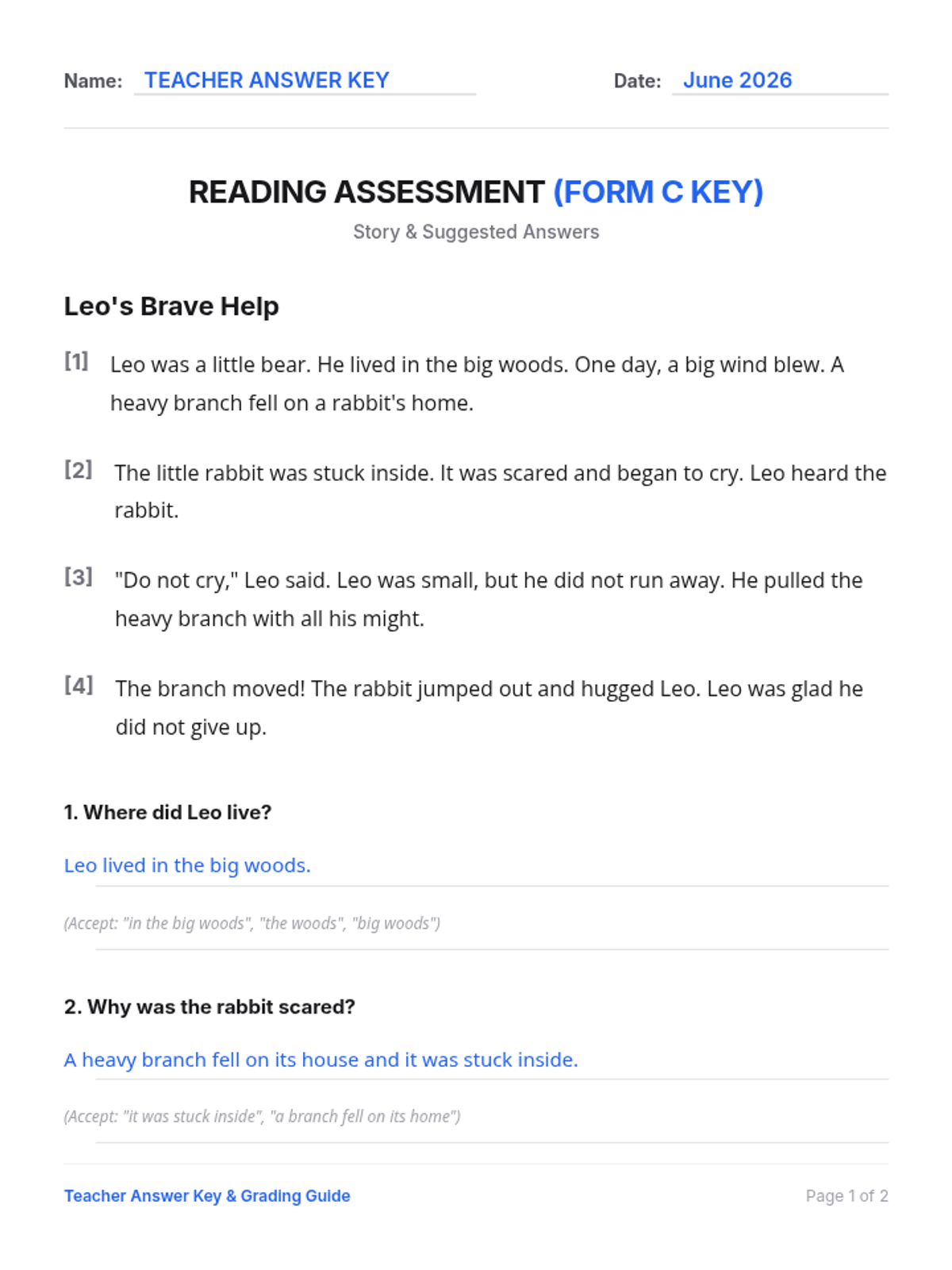
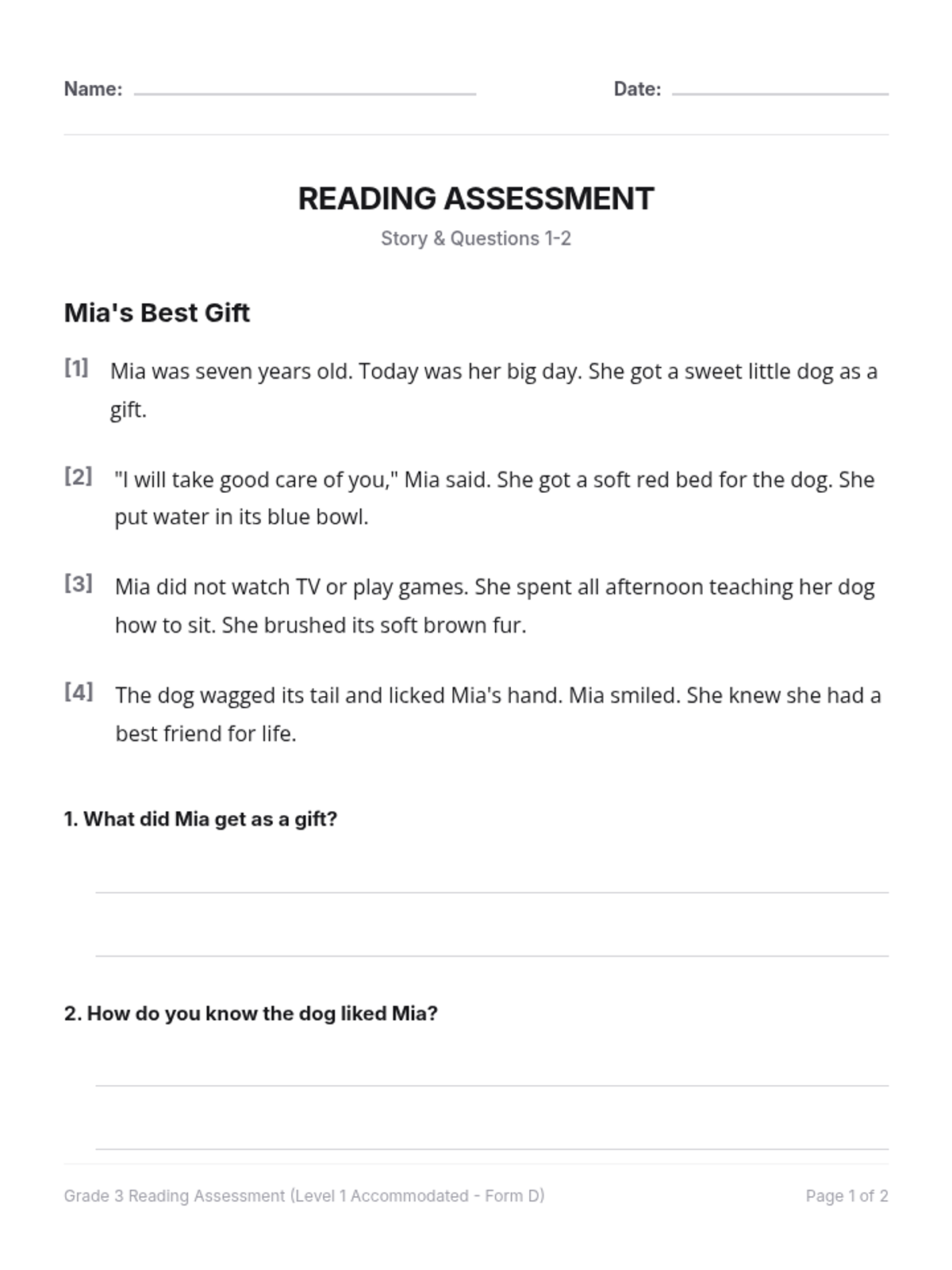
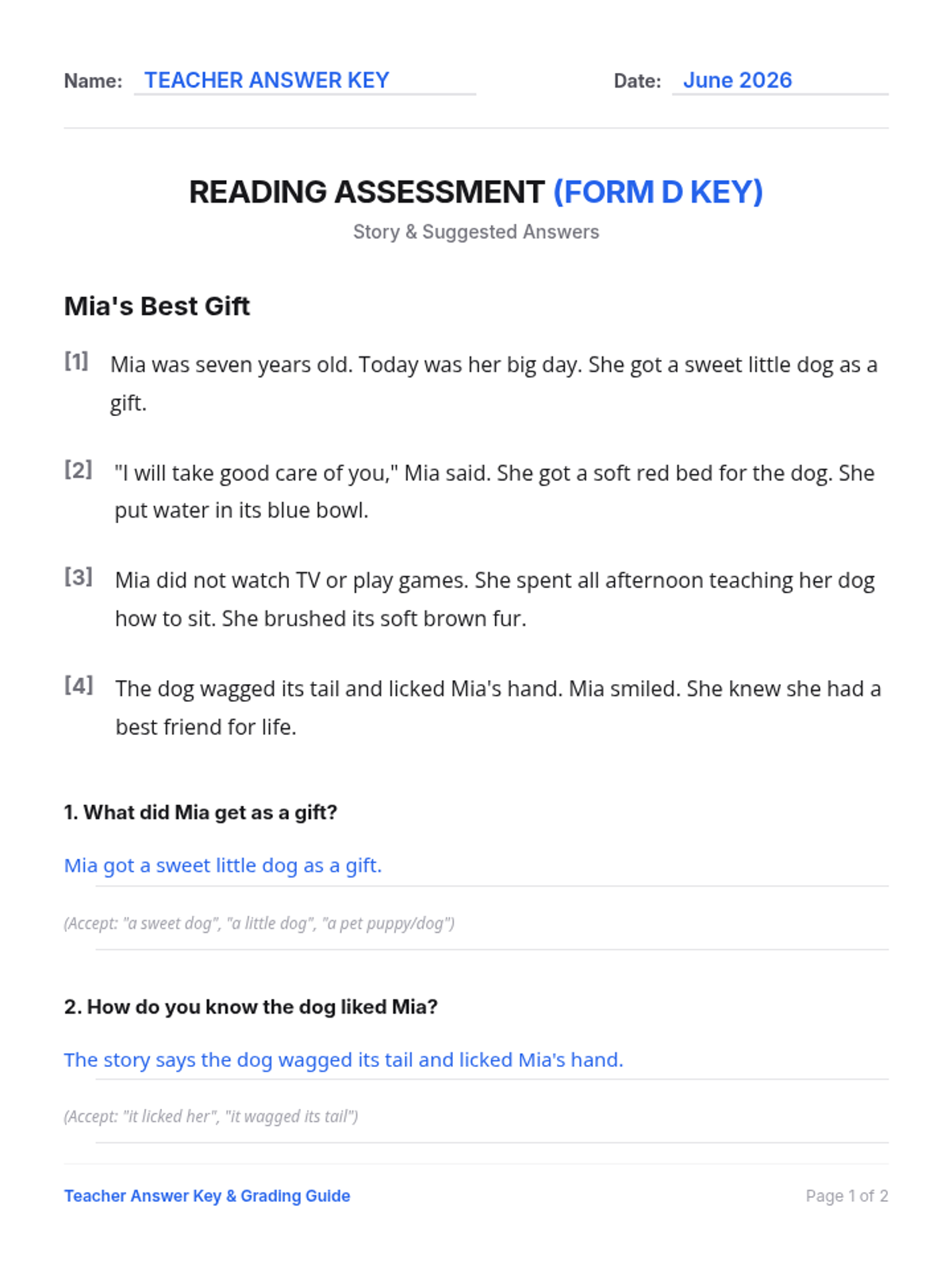
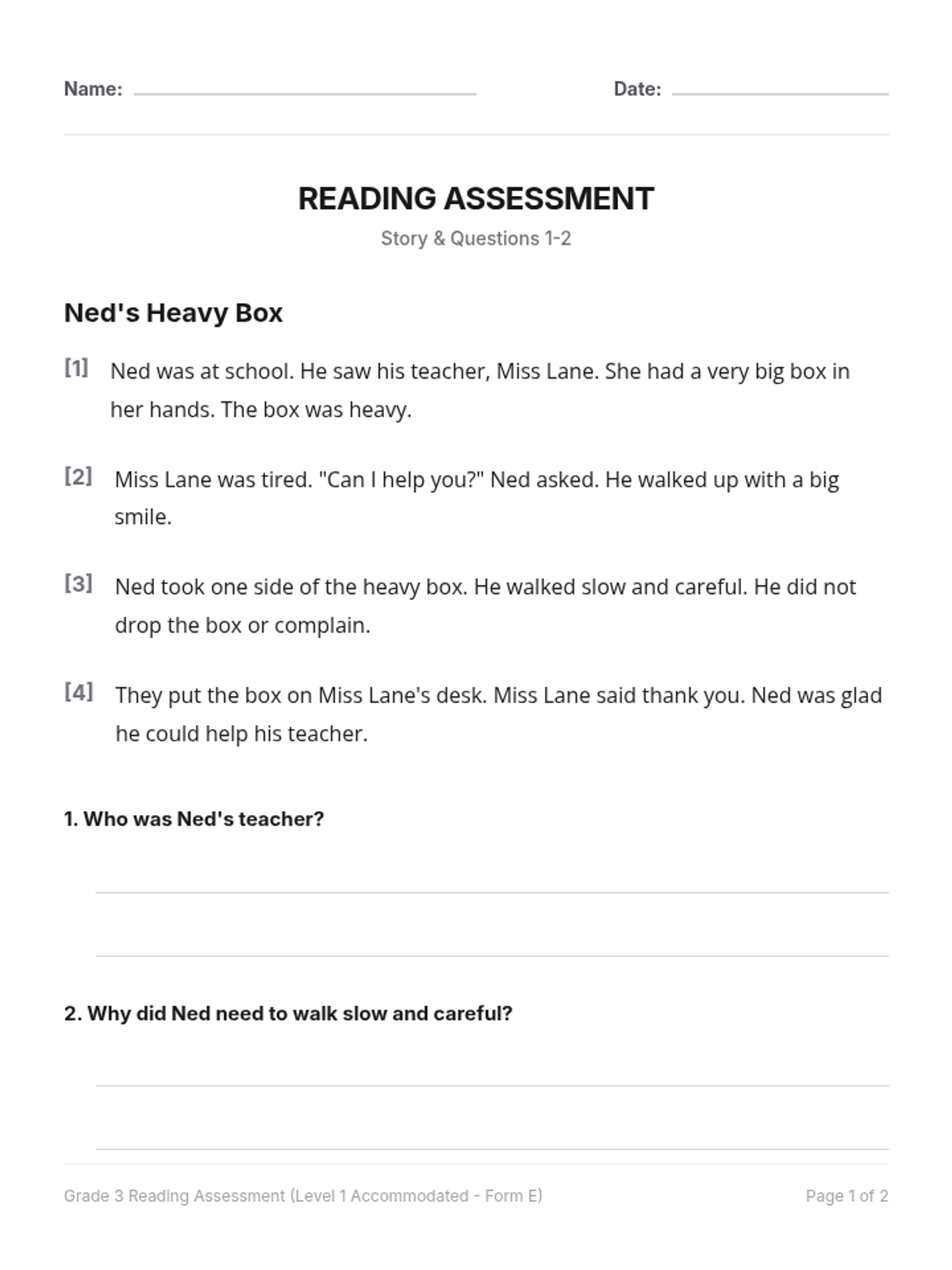
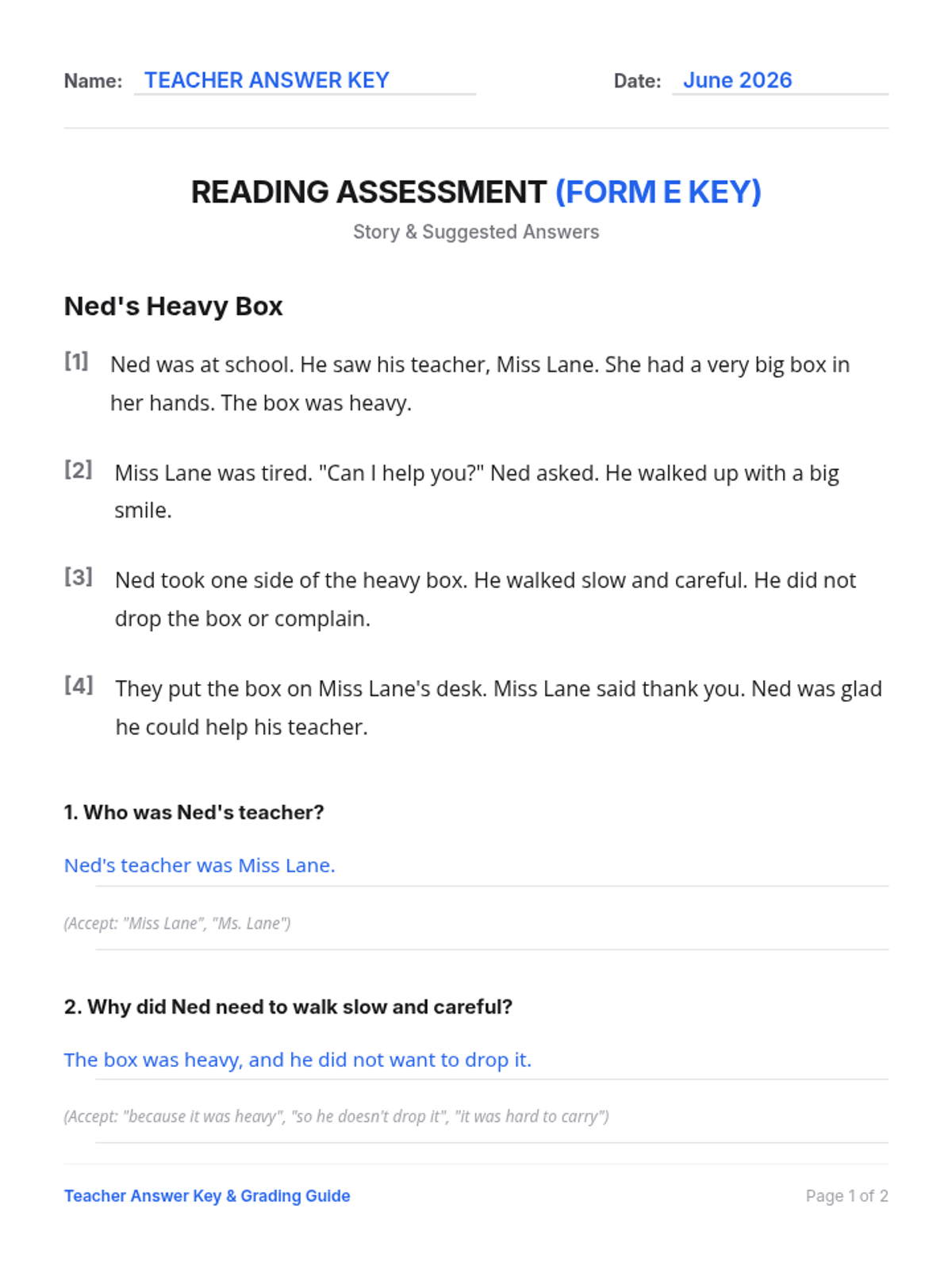
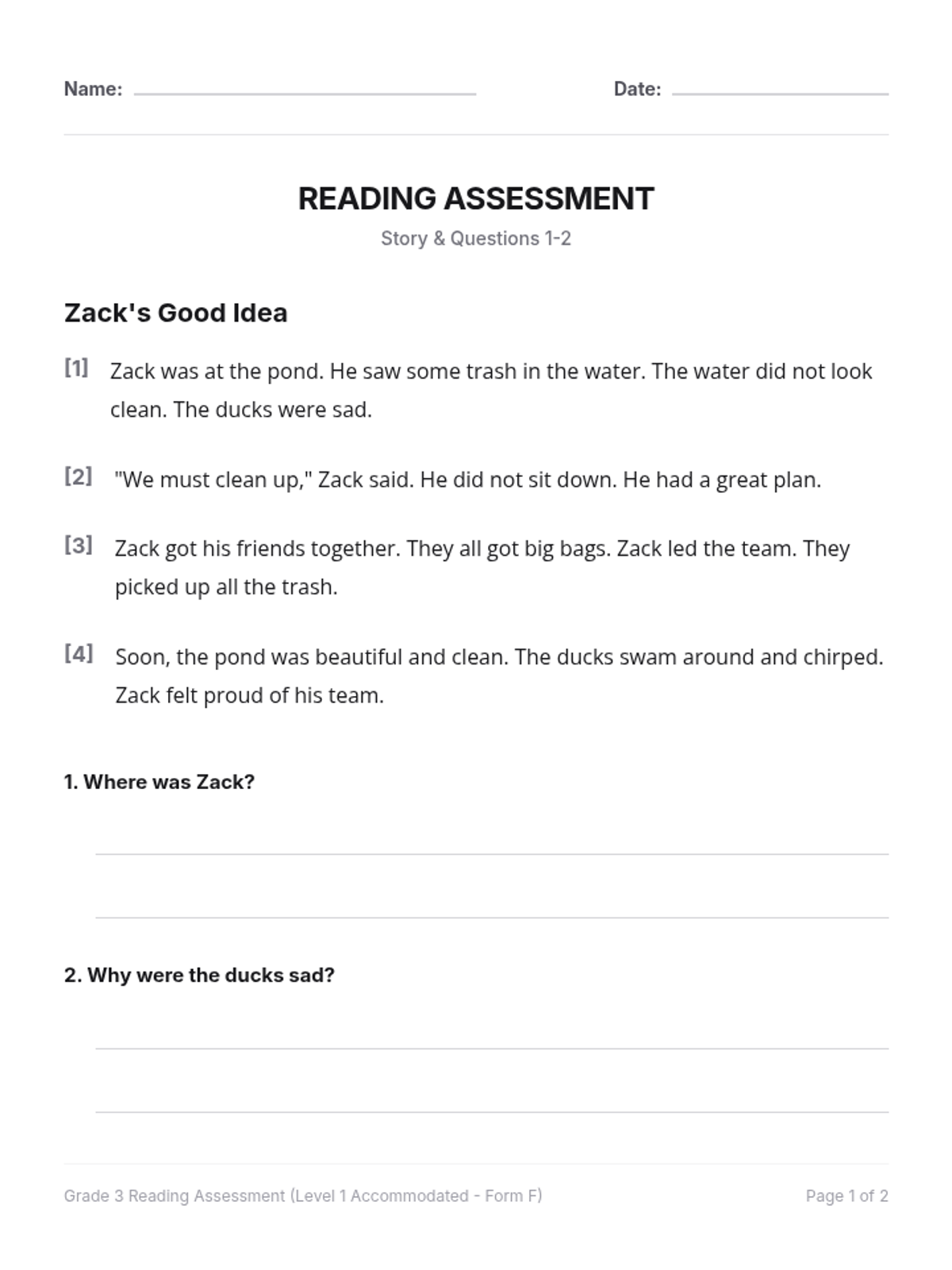
An accommodated reading assessment designed for a third-grade student reading at a first-grade level. Features a highly accessible passage, generous writing lines, explicit and implicit comprehension questions, and simplified layouts.
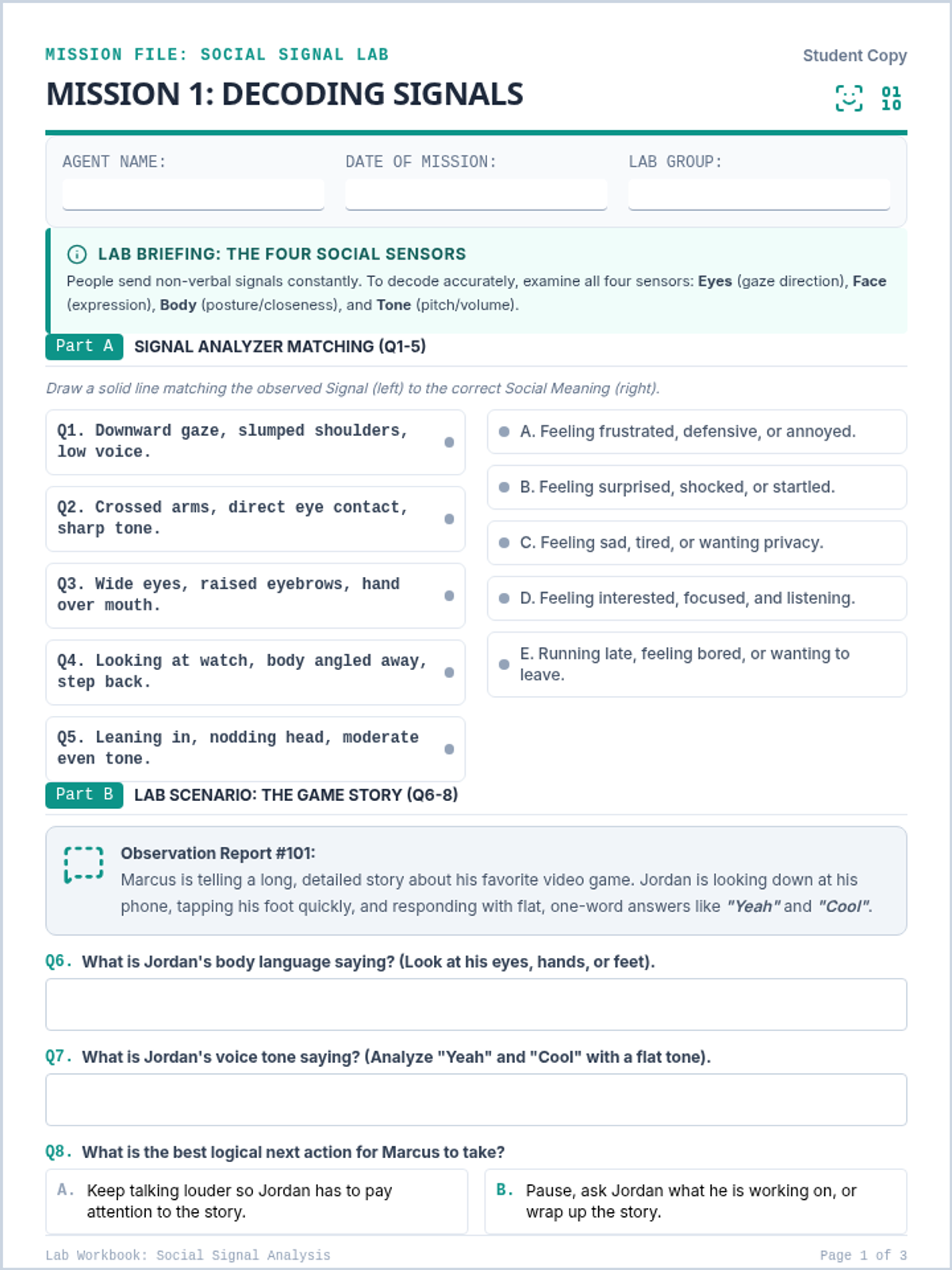
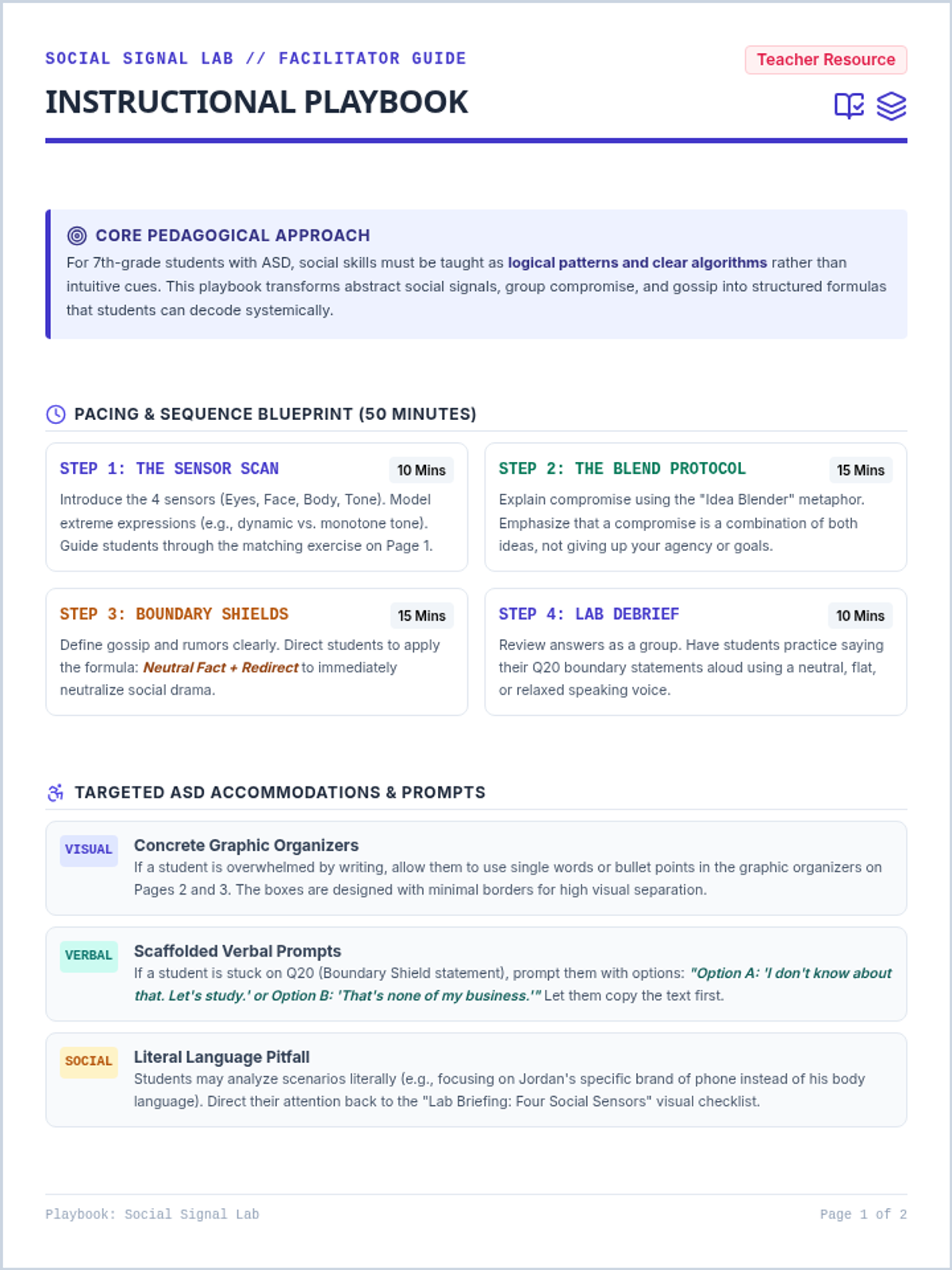
A highly structured social-skills unit for 7th-grade students with ASD, focusing on non-verbal signals, group work compromise, and navigating peer conflicts.
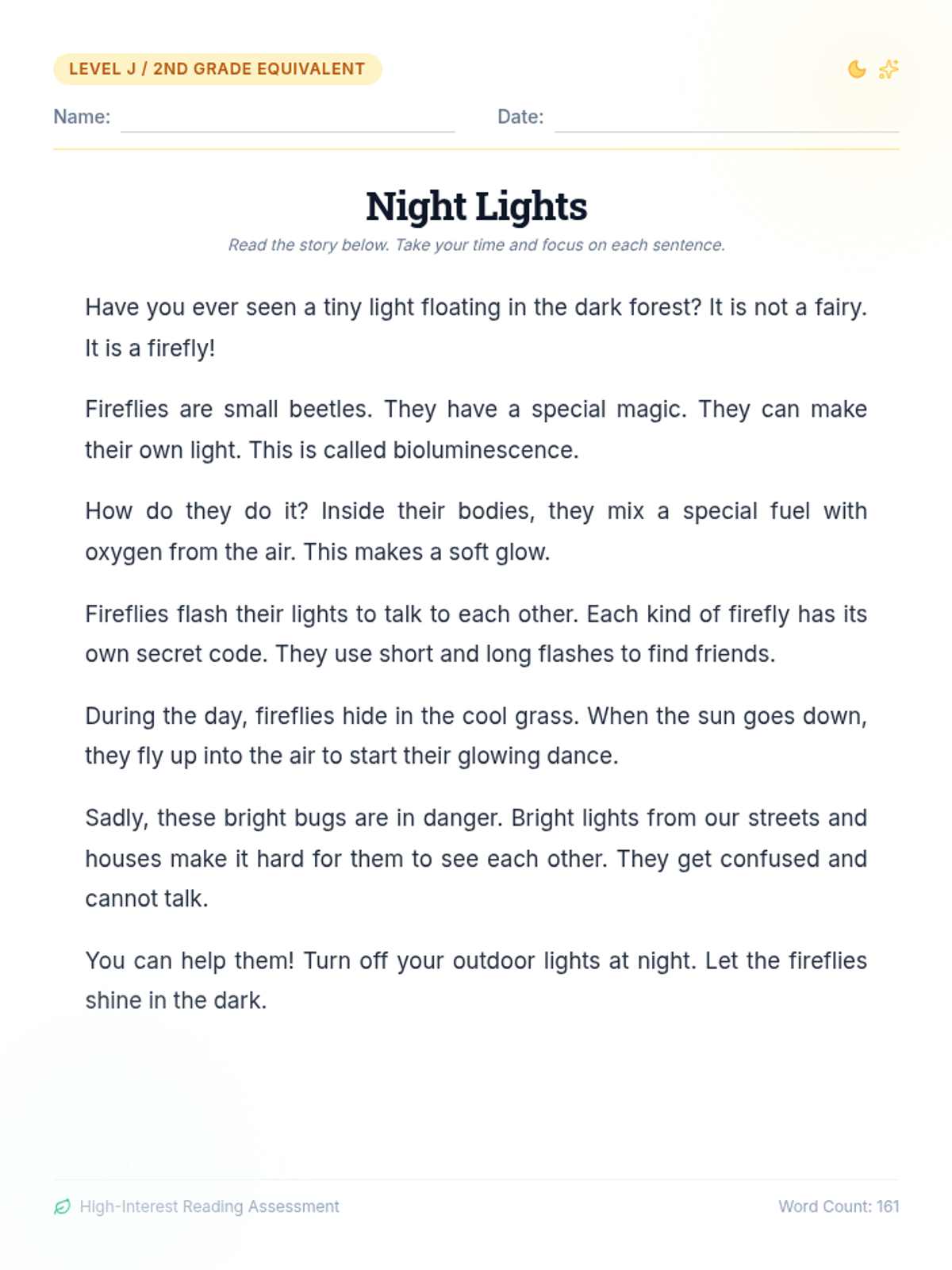
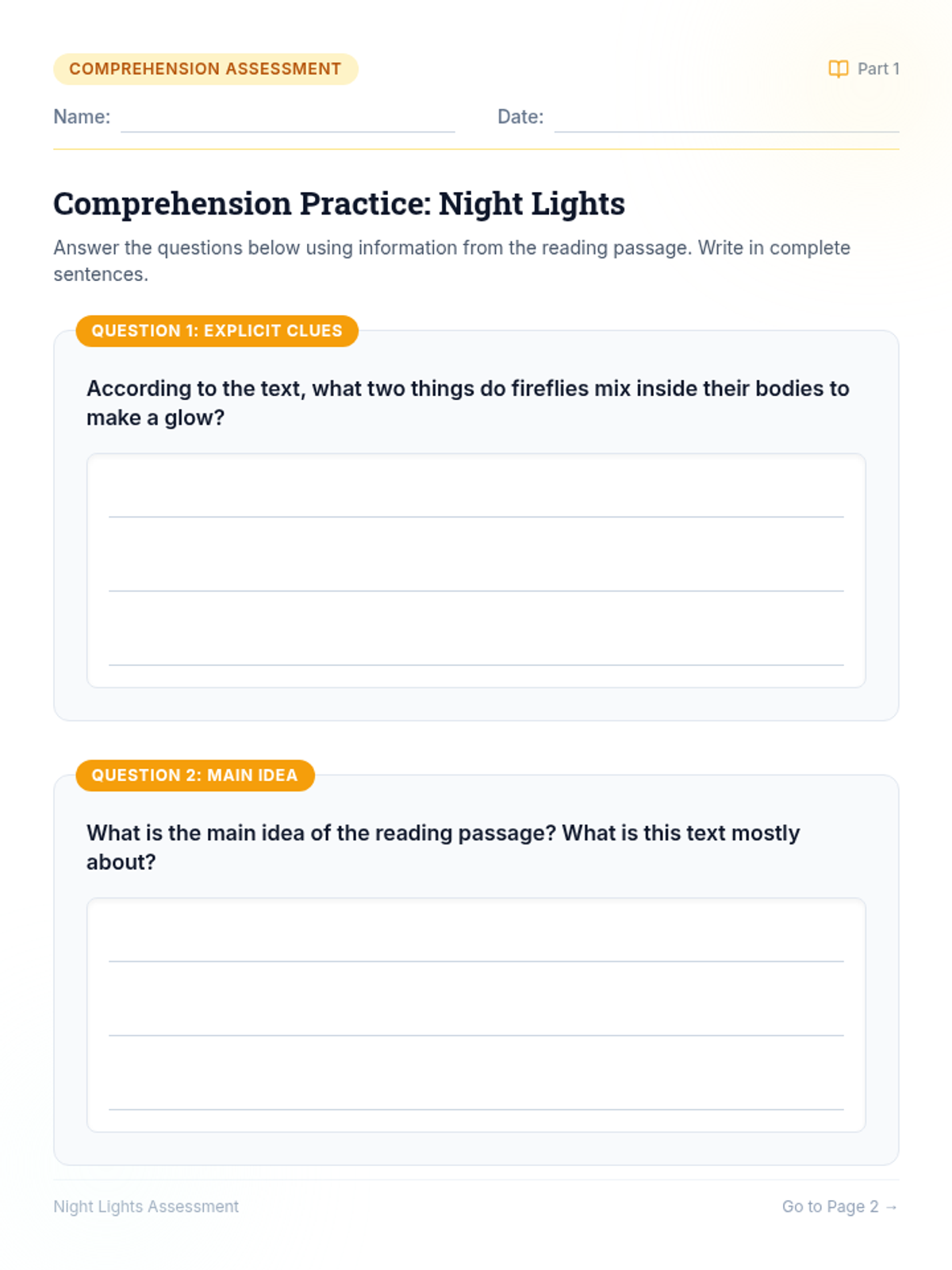
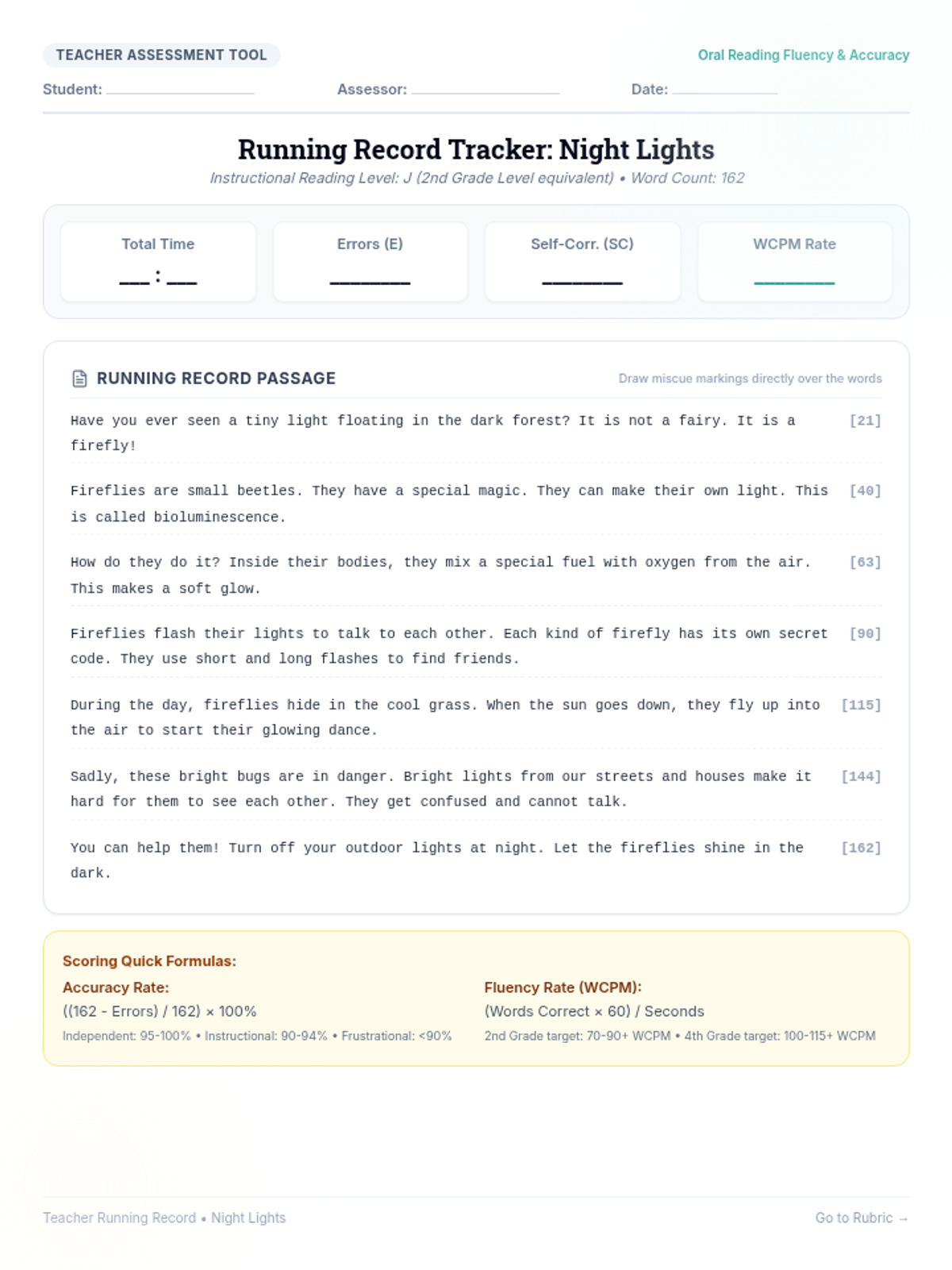
An assessment kit designed for a fourth-grade student reading at a second-grade level. Features an engaging, high-interest reading passage about fireflies, a student comprehension worksheet with ample writing space, and a comprehensive teacher running record tracker with a scoring guide.
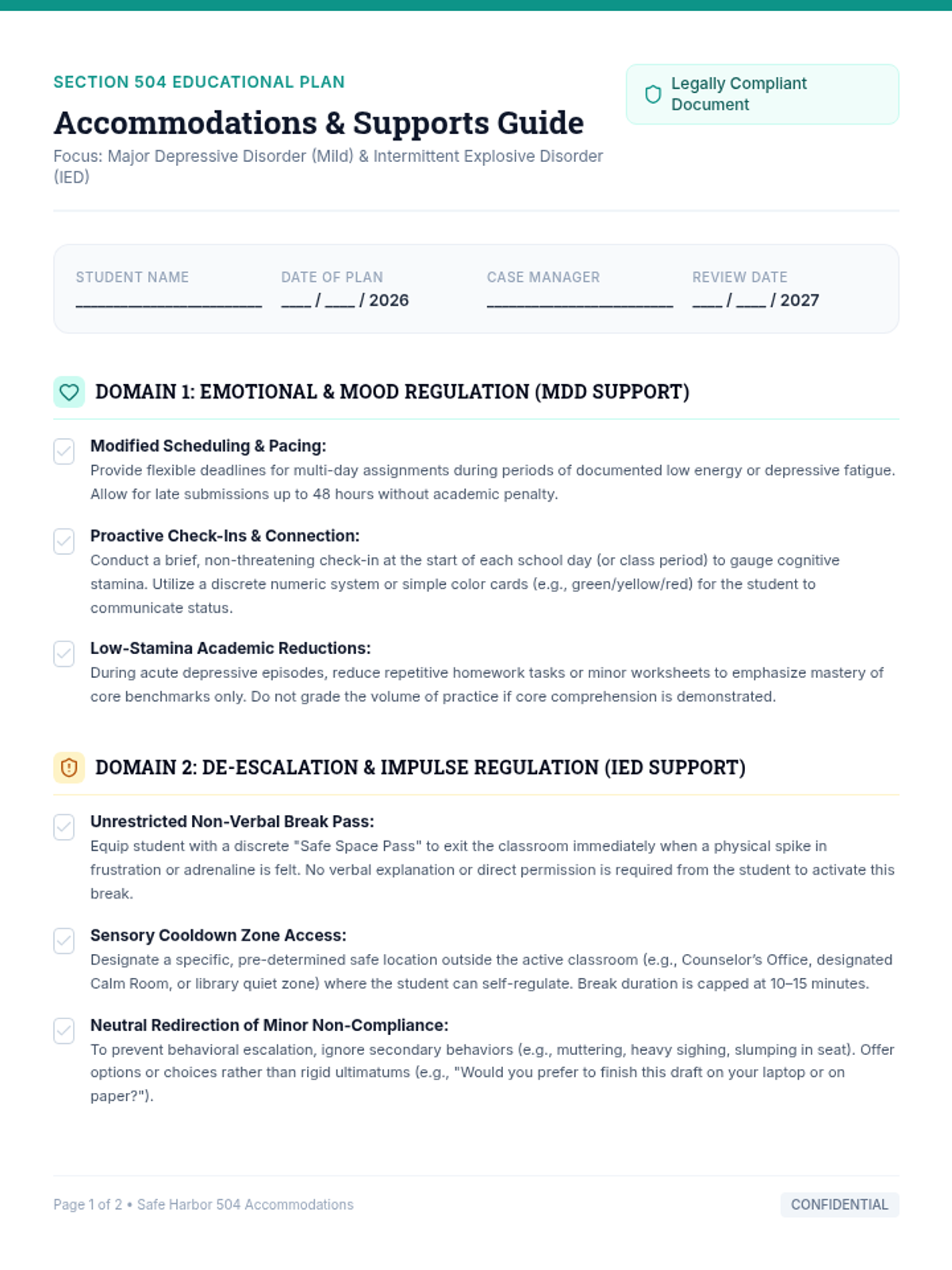
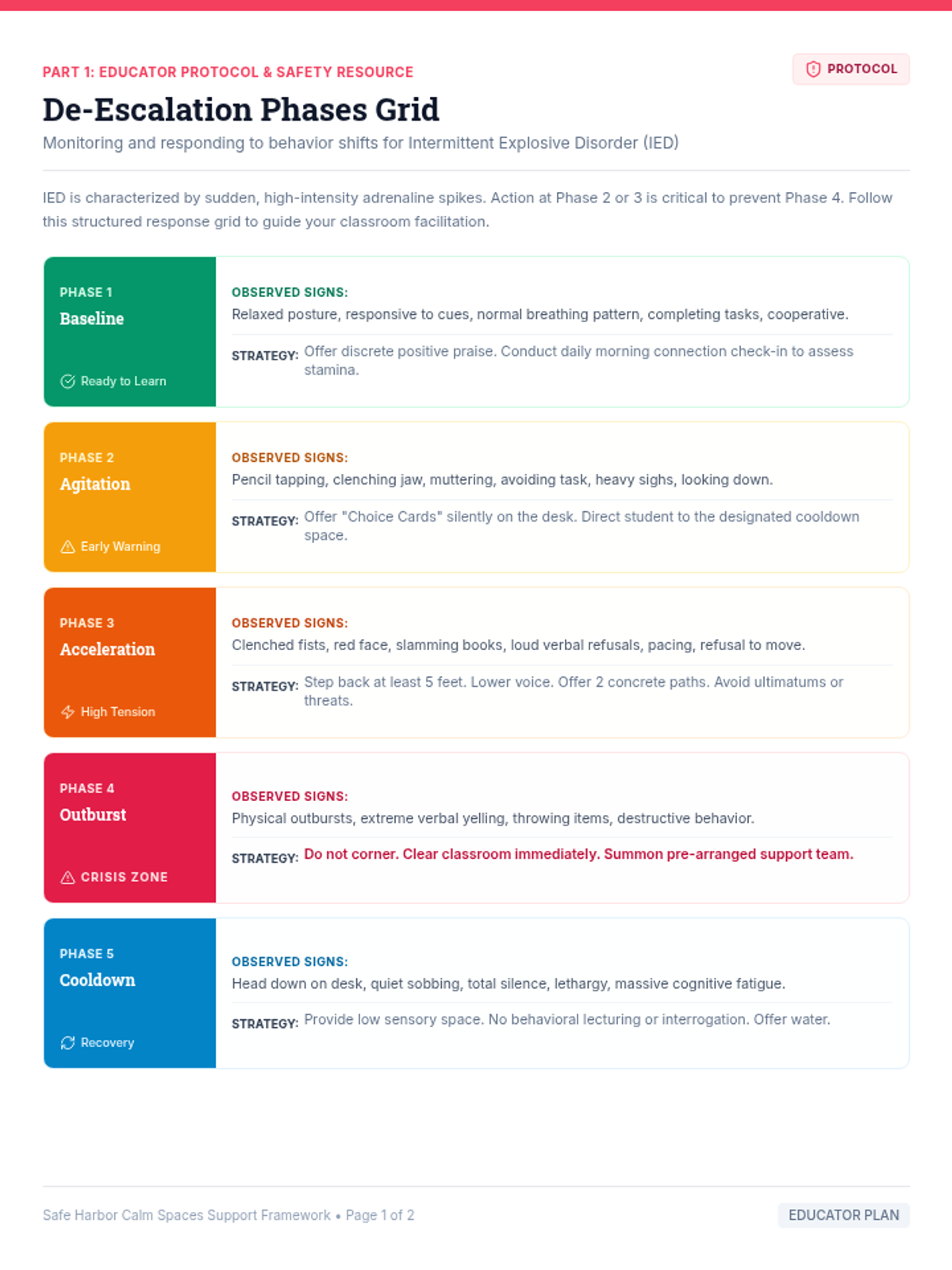
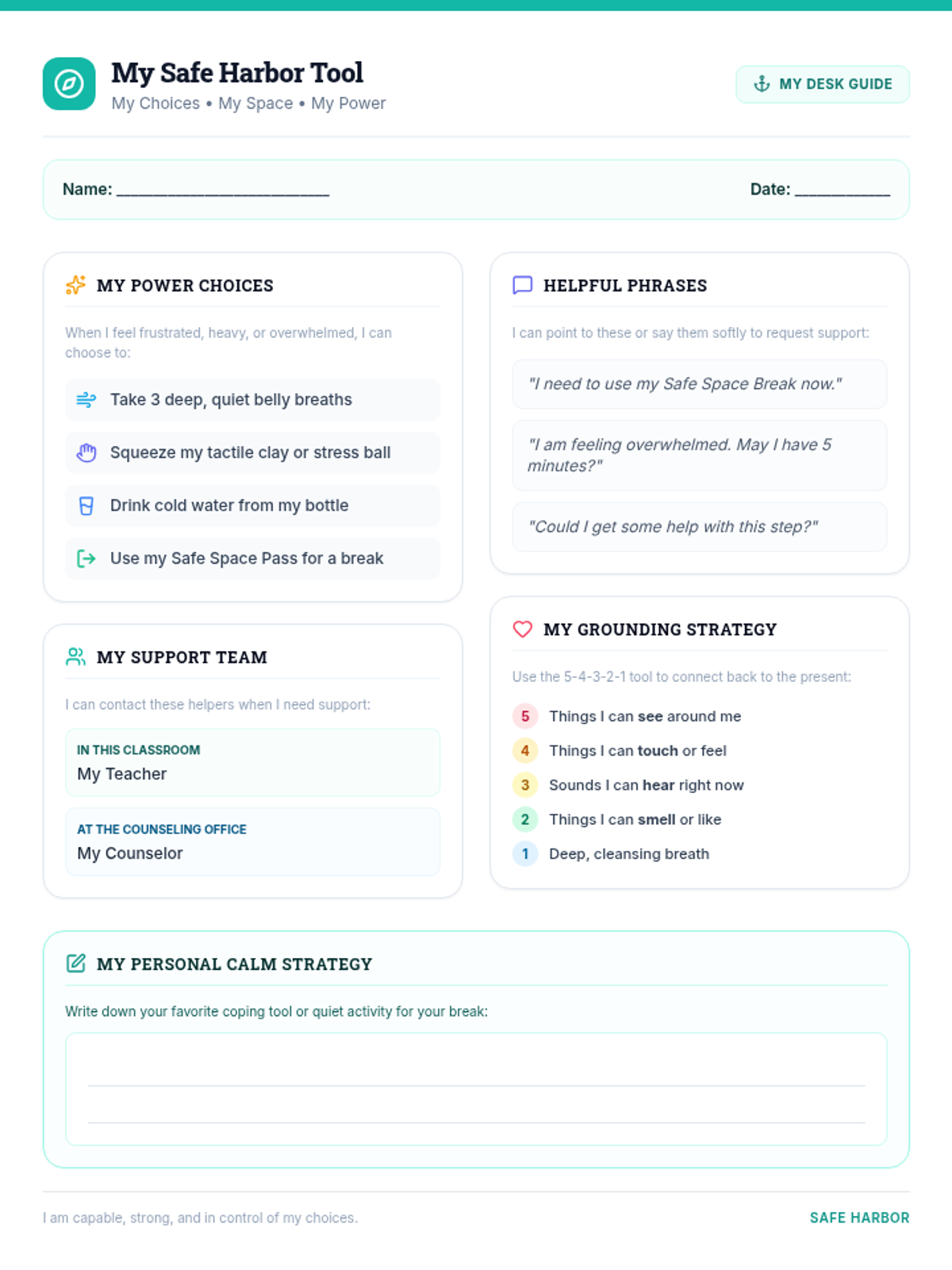
A cohesive bundle of support resources for a student with Major Depressive Disorder and Intermittent Explosive Disorder, including formal 504 accommodations, an educator's de-escalation workflow, and a student-facing desk tool.
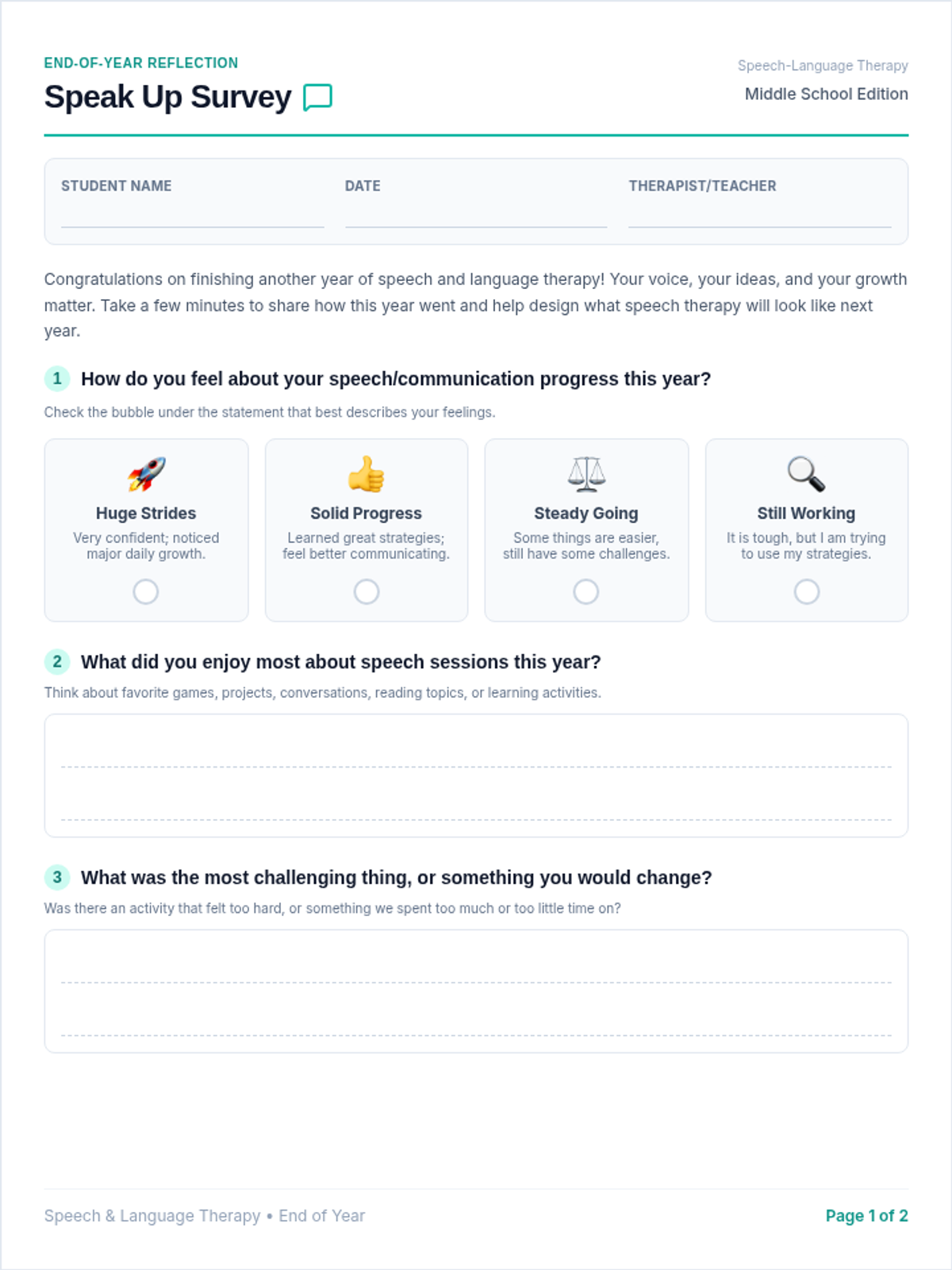
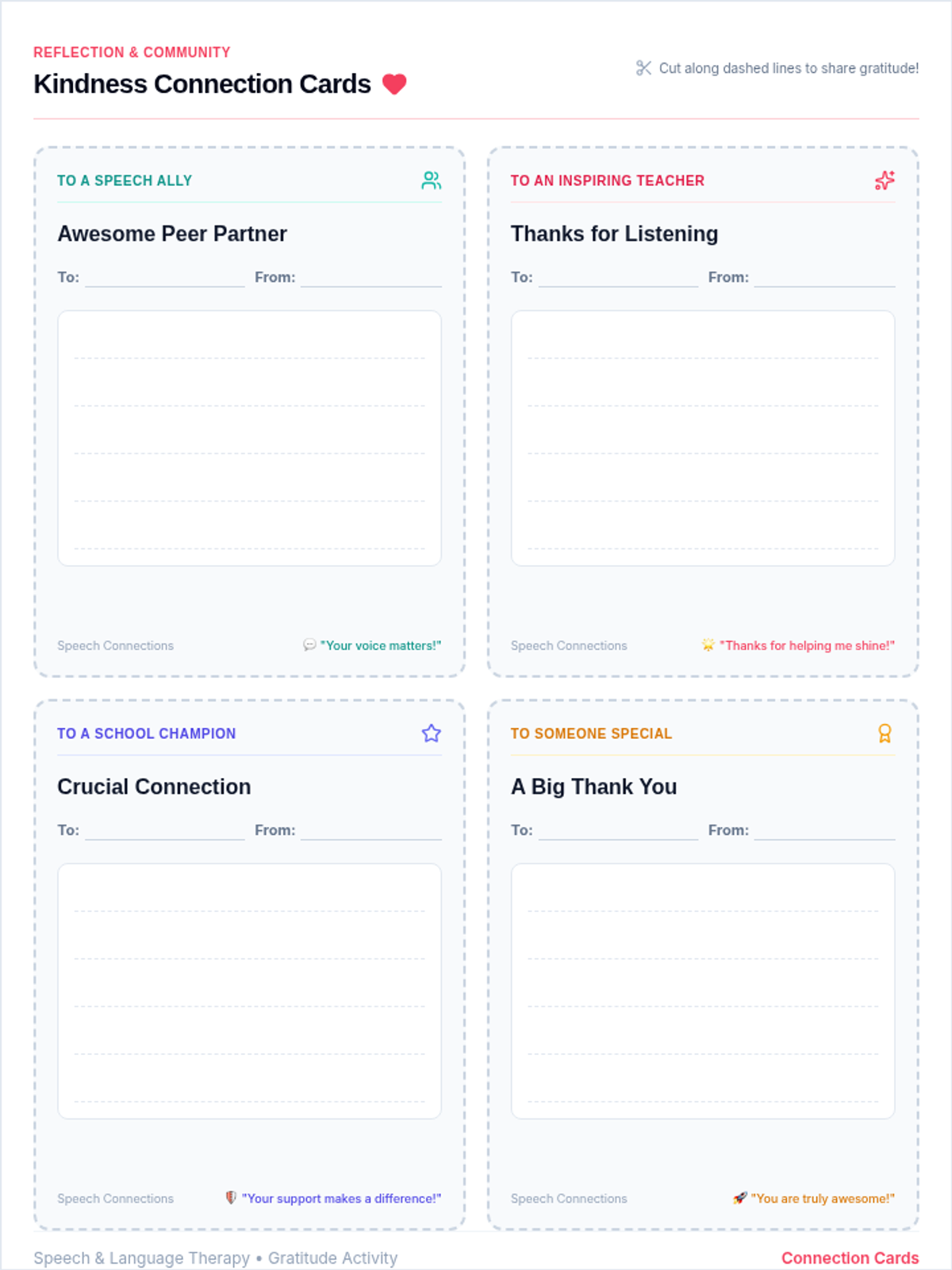
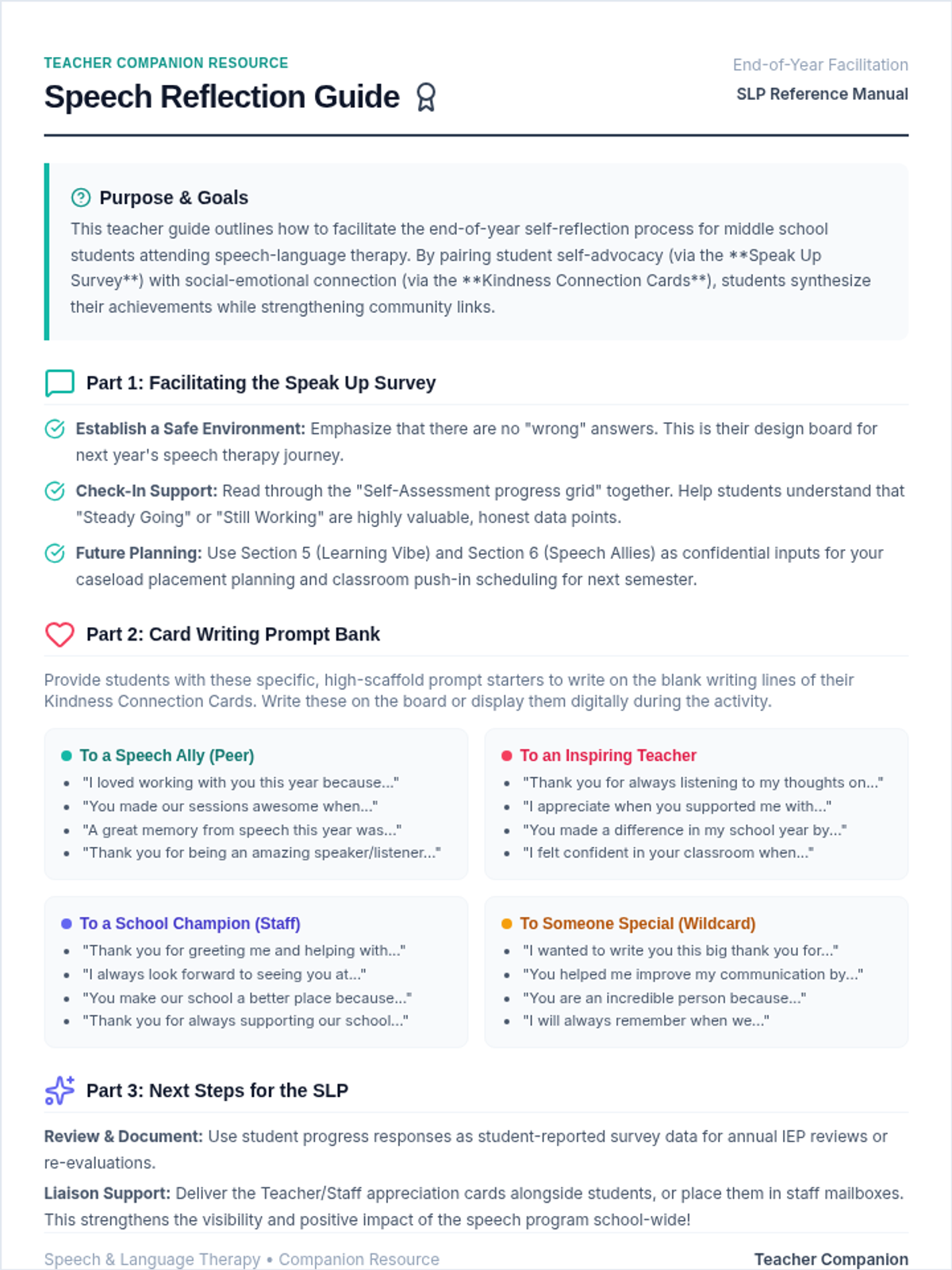
An engaging end-of-year reflection activity designed for middle school speech-language therapy students, featuring a self-assessment survey and printable appreciation cards to express gratitude to peers and school staff.
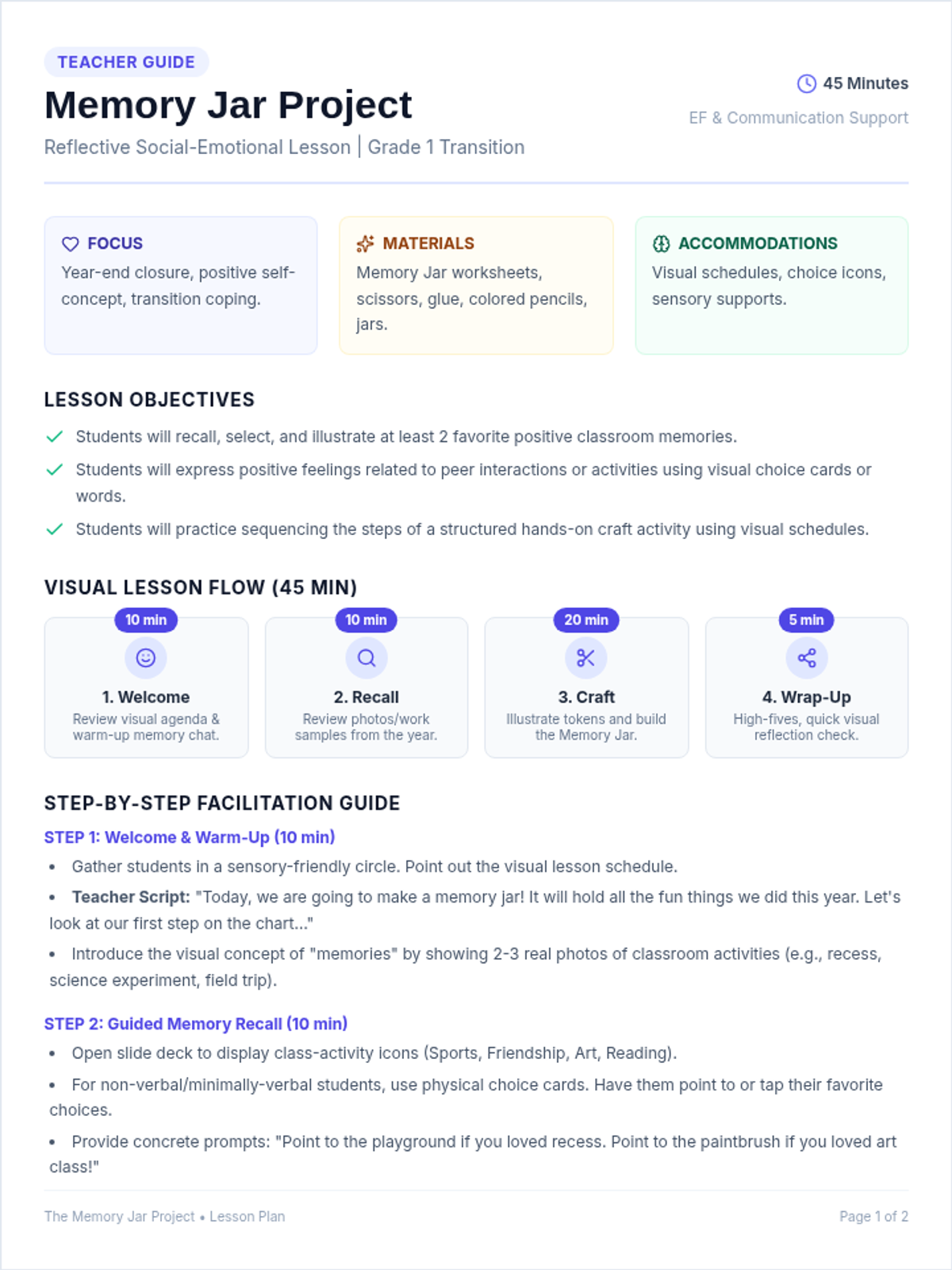
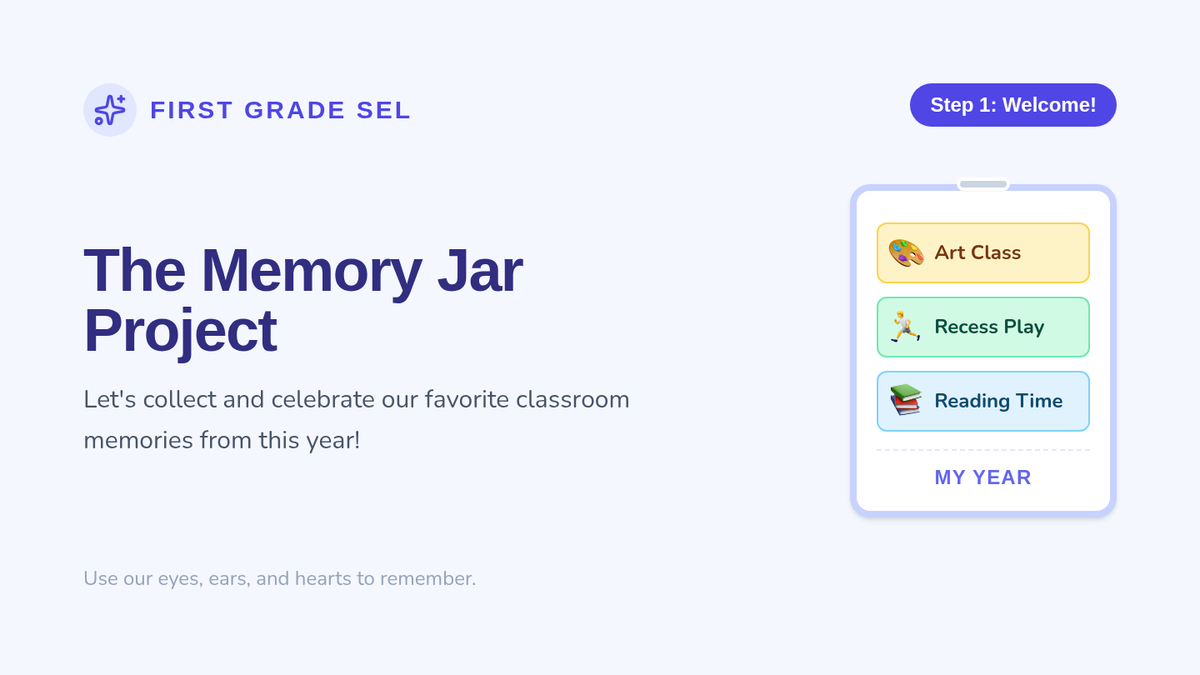
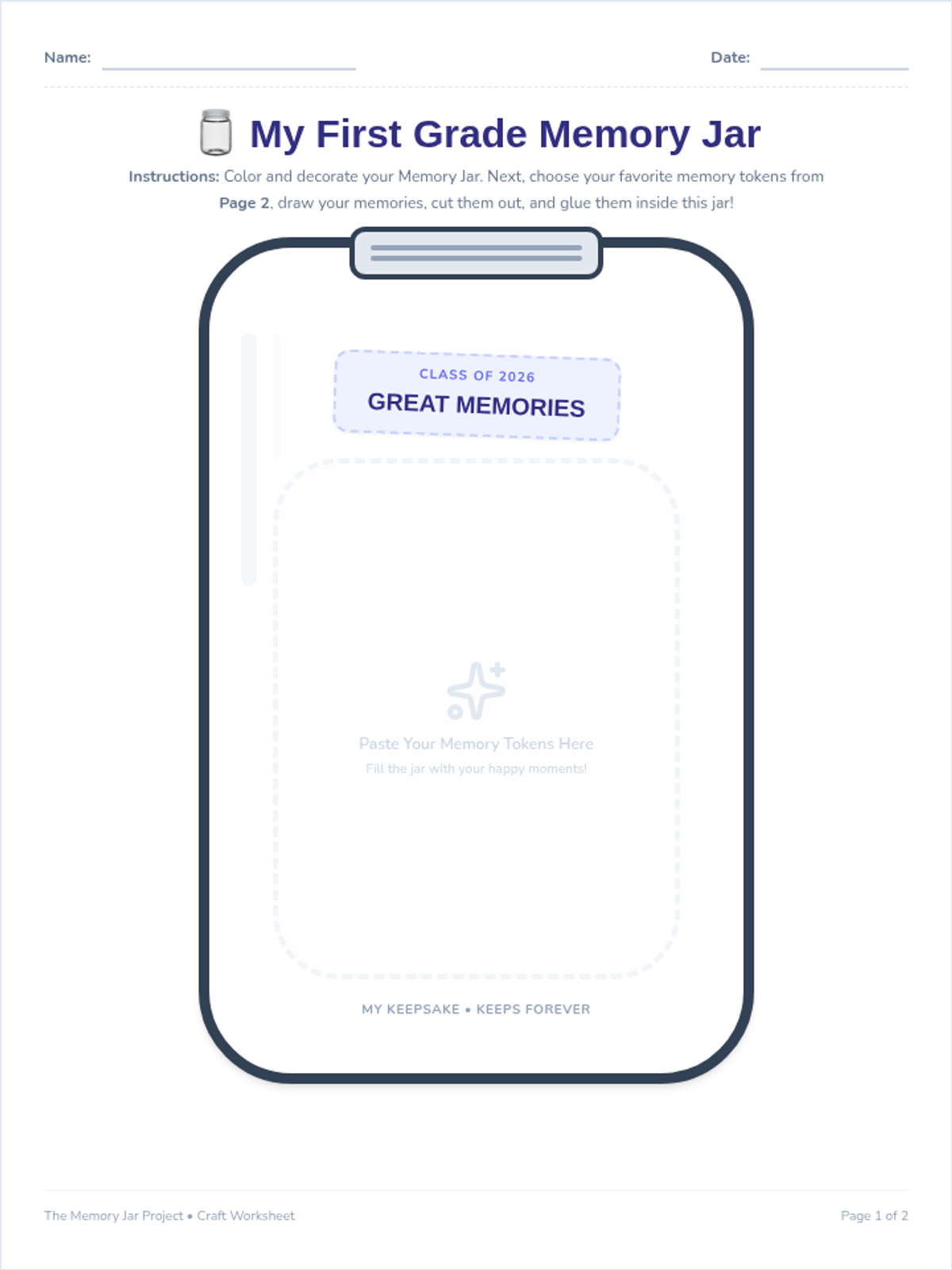
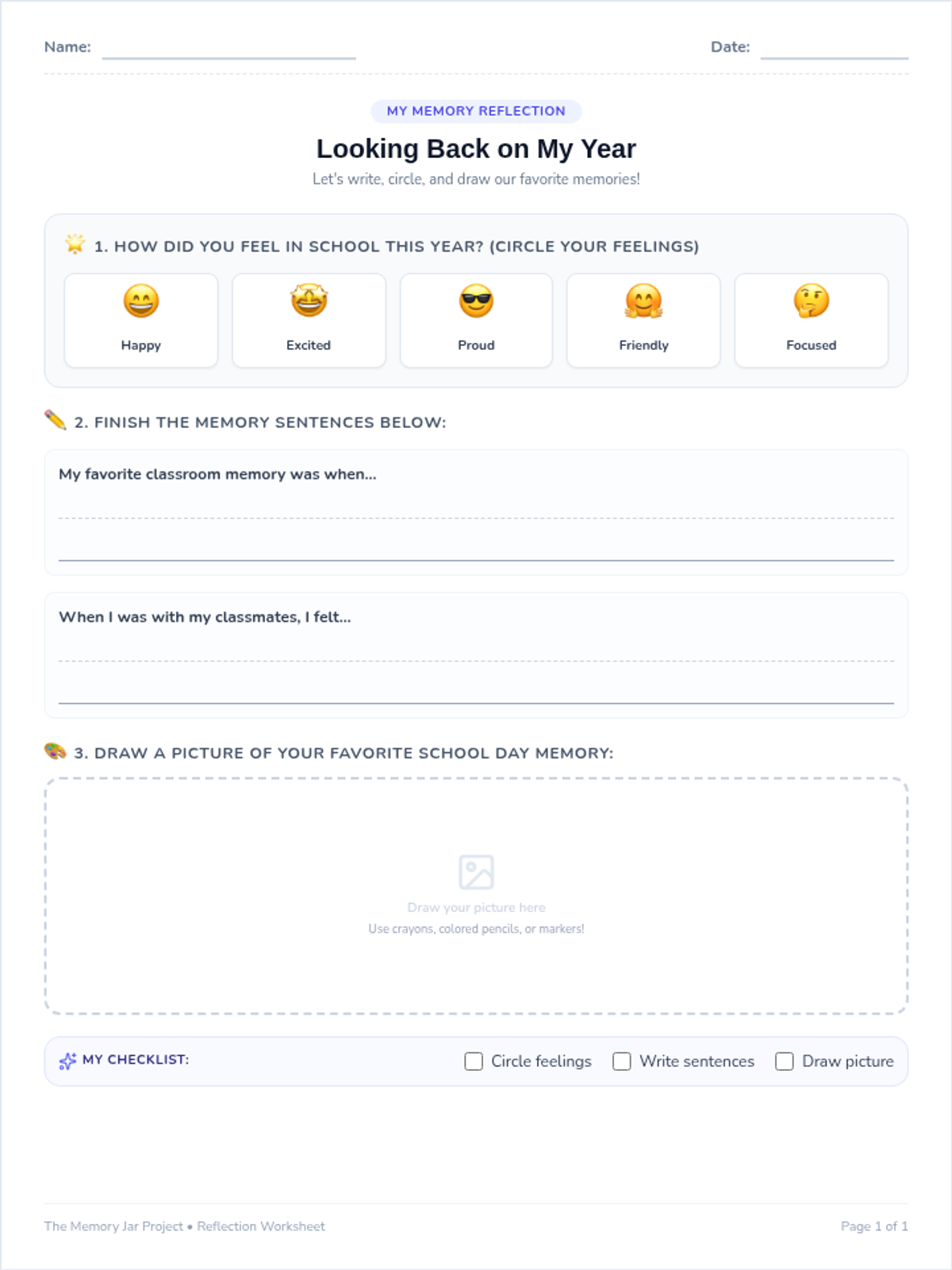
A reflective craft and social-emotional lesson designed for first-grade students with executive functioning or communication challenges. Students recall, select, and illustrate favorite classroom memories to build a tangible visual keepsake, promoting a positive year-end transition.
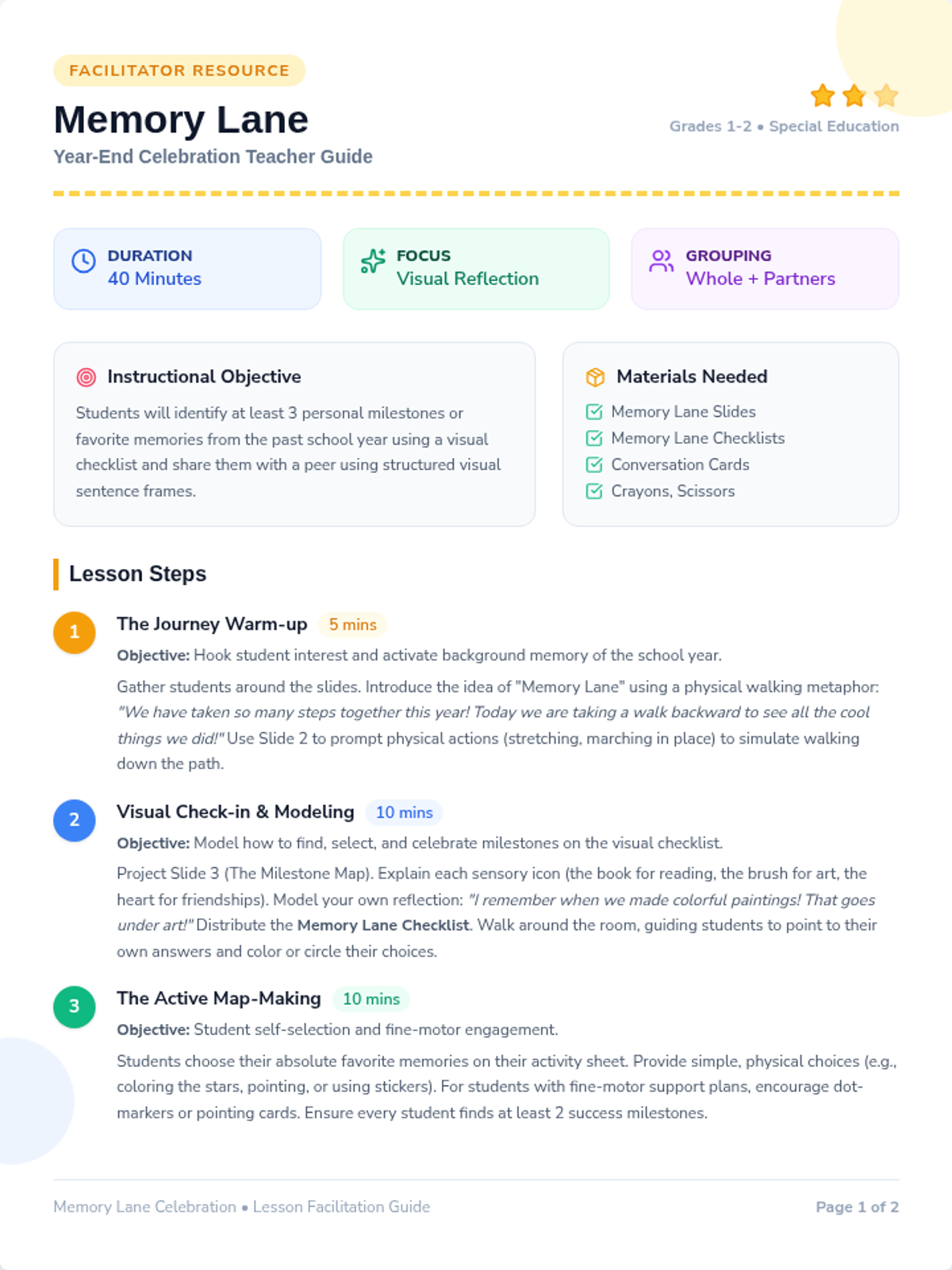
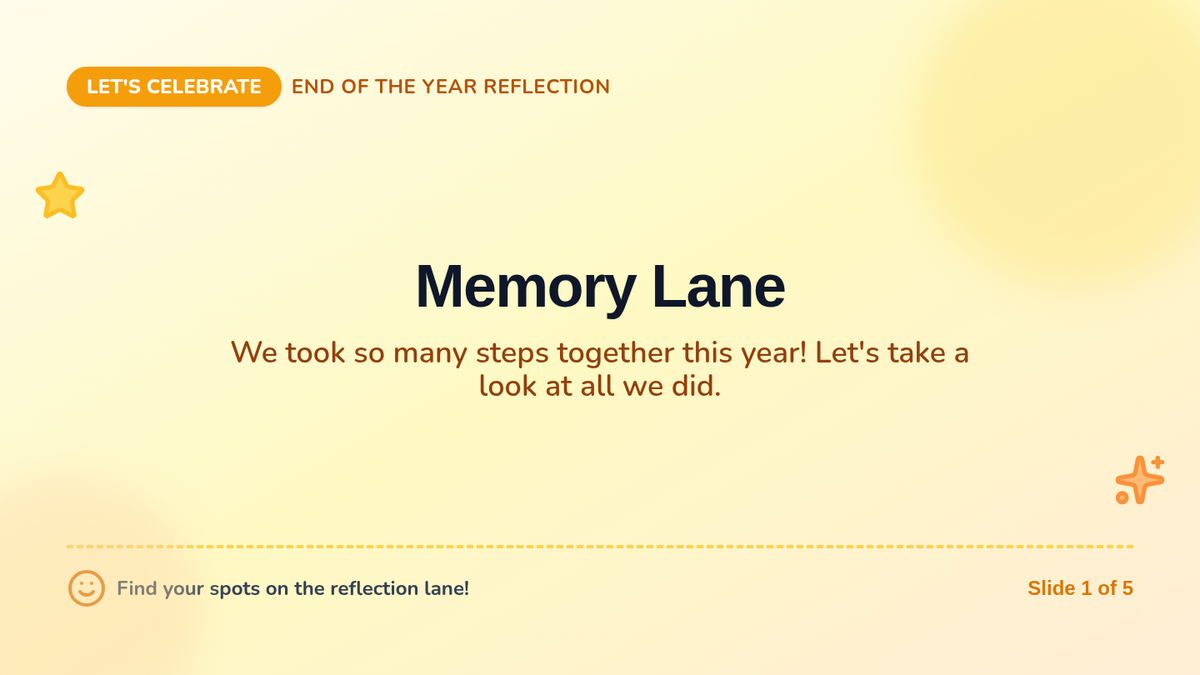
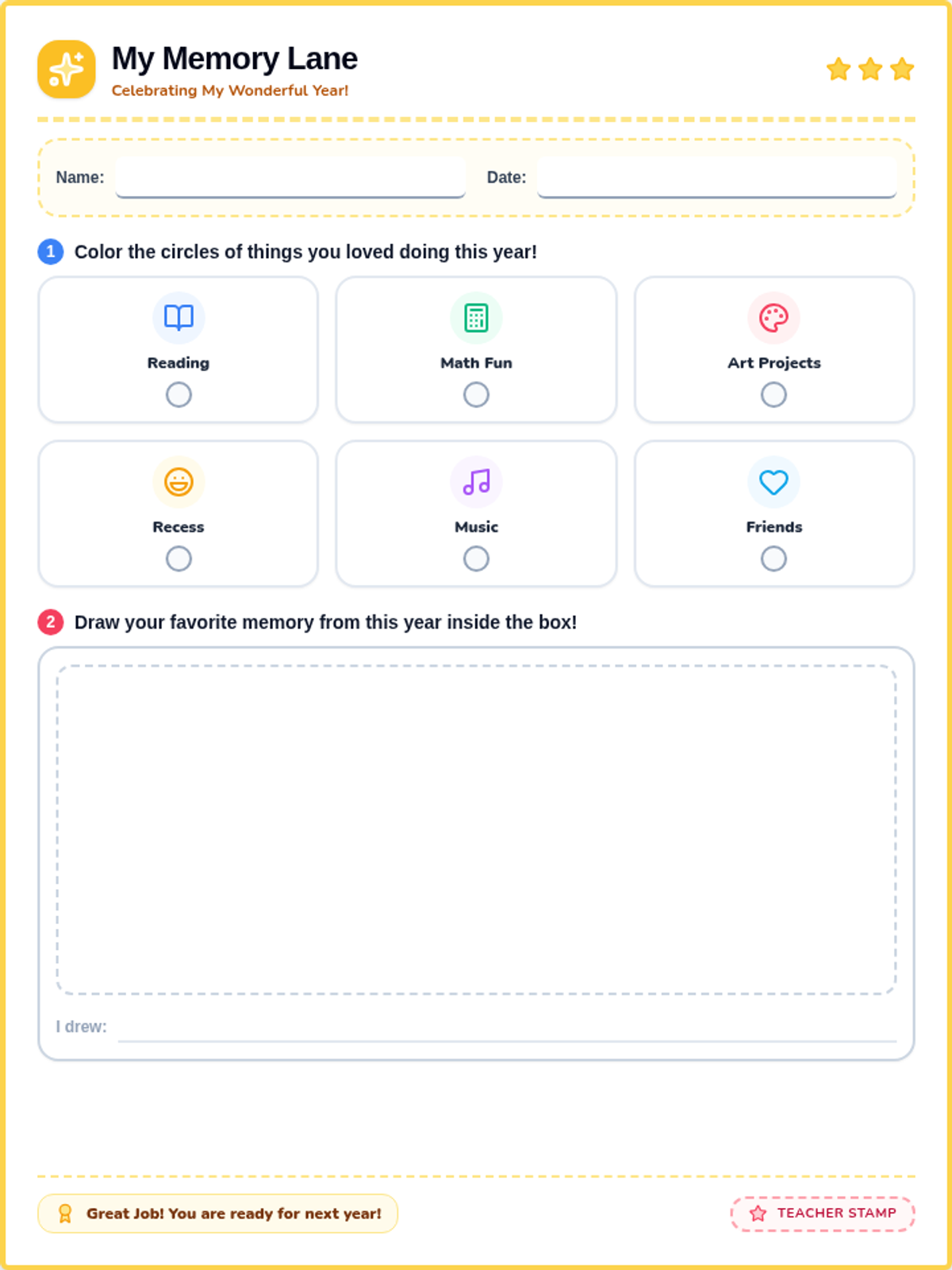
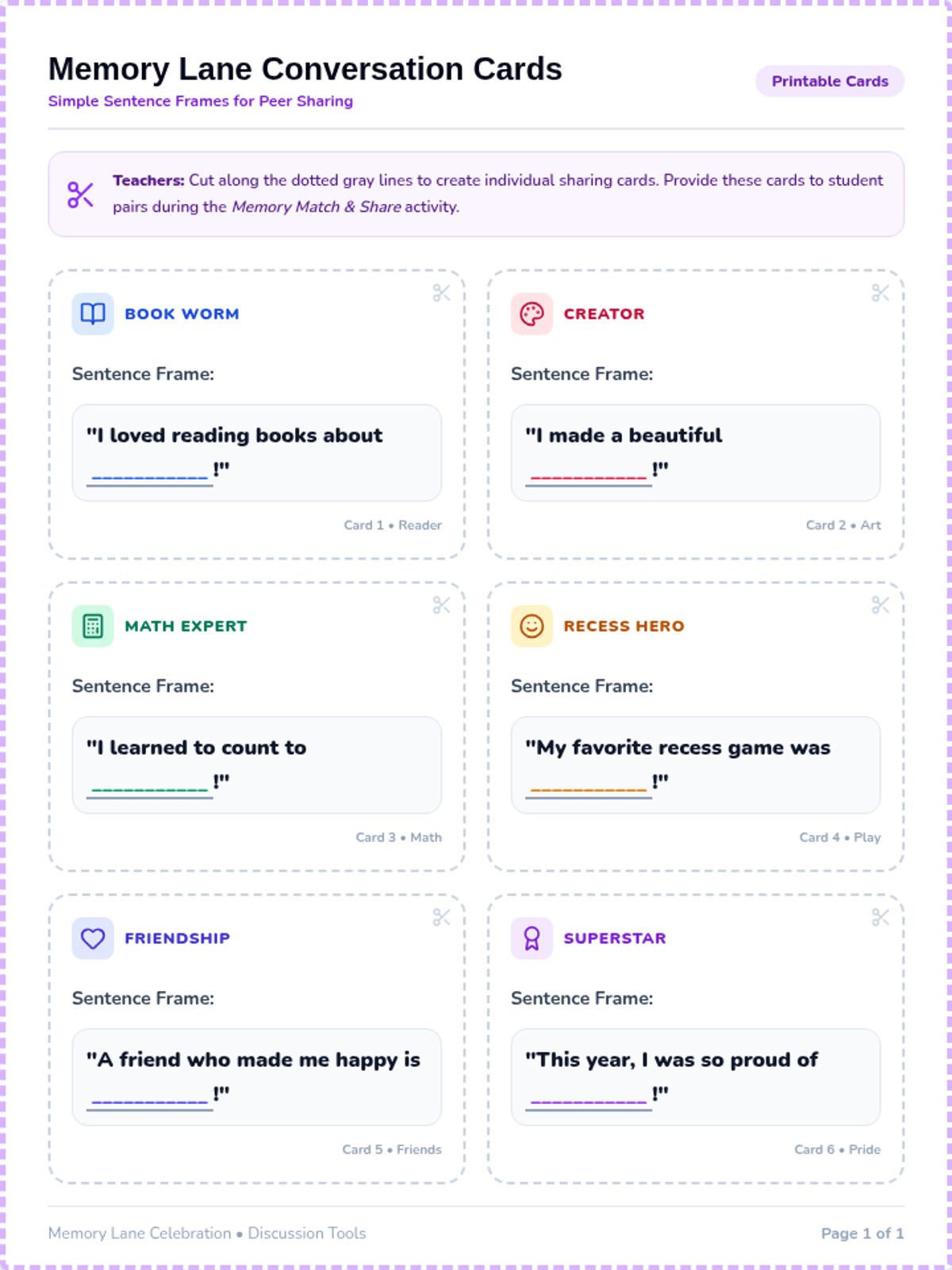
A celebratory end-of-year reflection lesson designed for first and second-grade exceptional learners. Students use visual checklists, simple sentence frames, and conversational prompts to recognize their individual growth, celebrate milestones, and share memories with peers in an accessible, highly visual format.
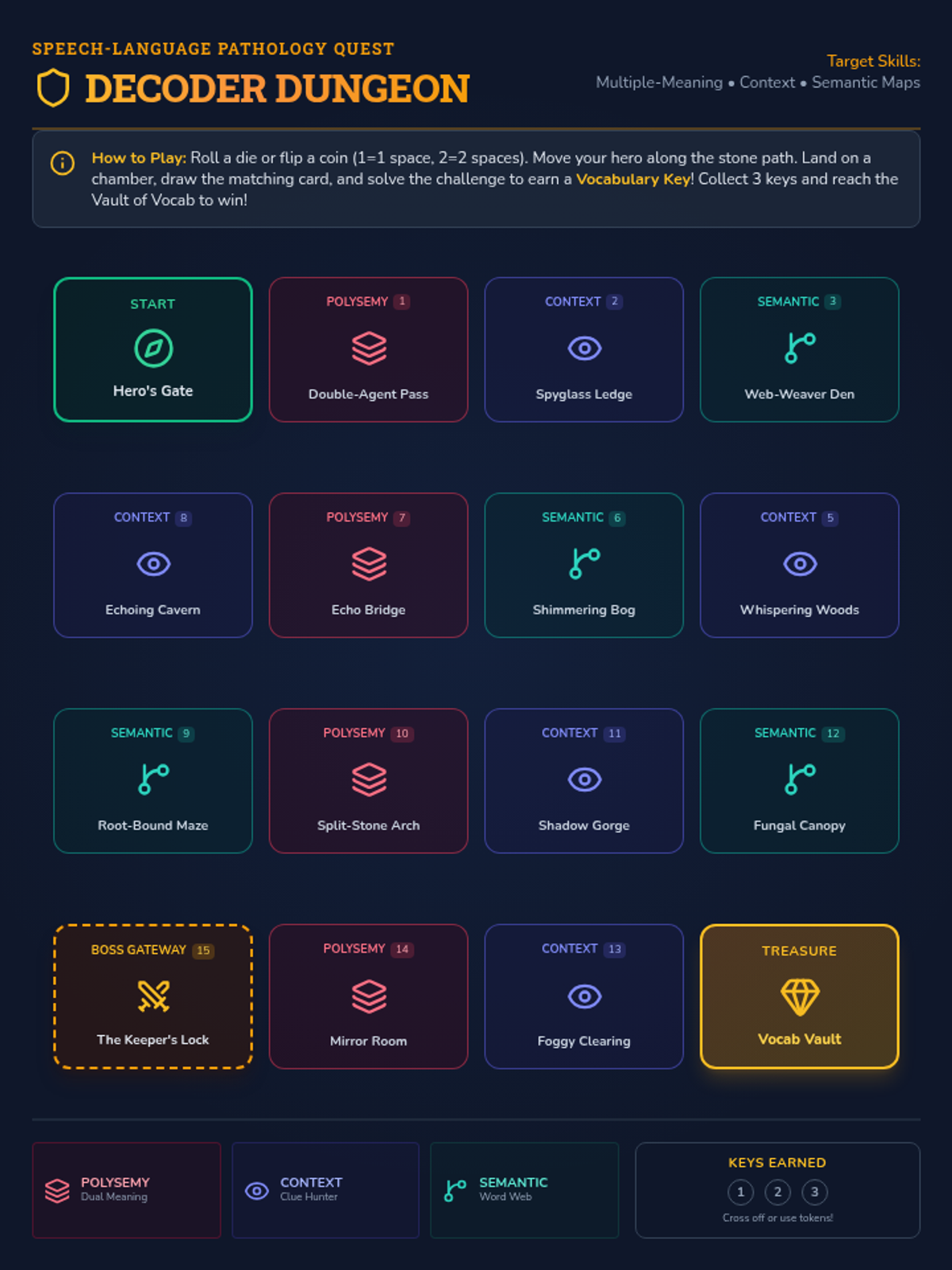
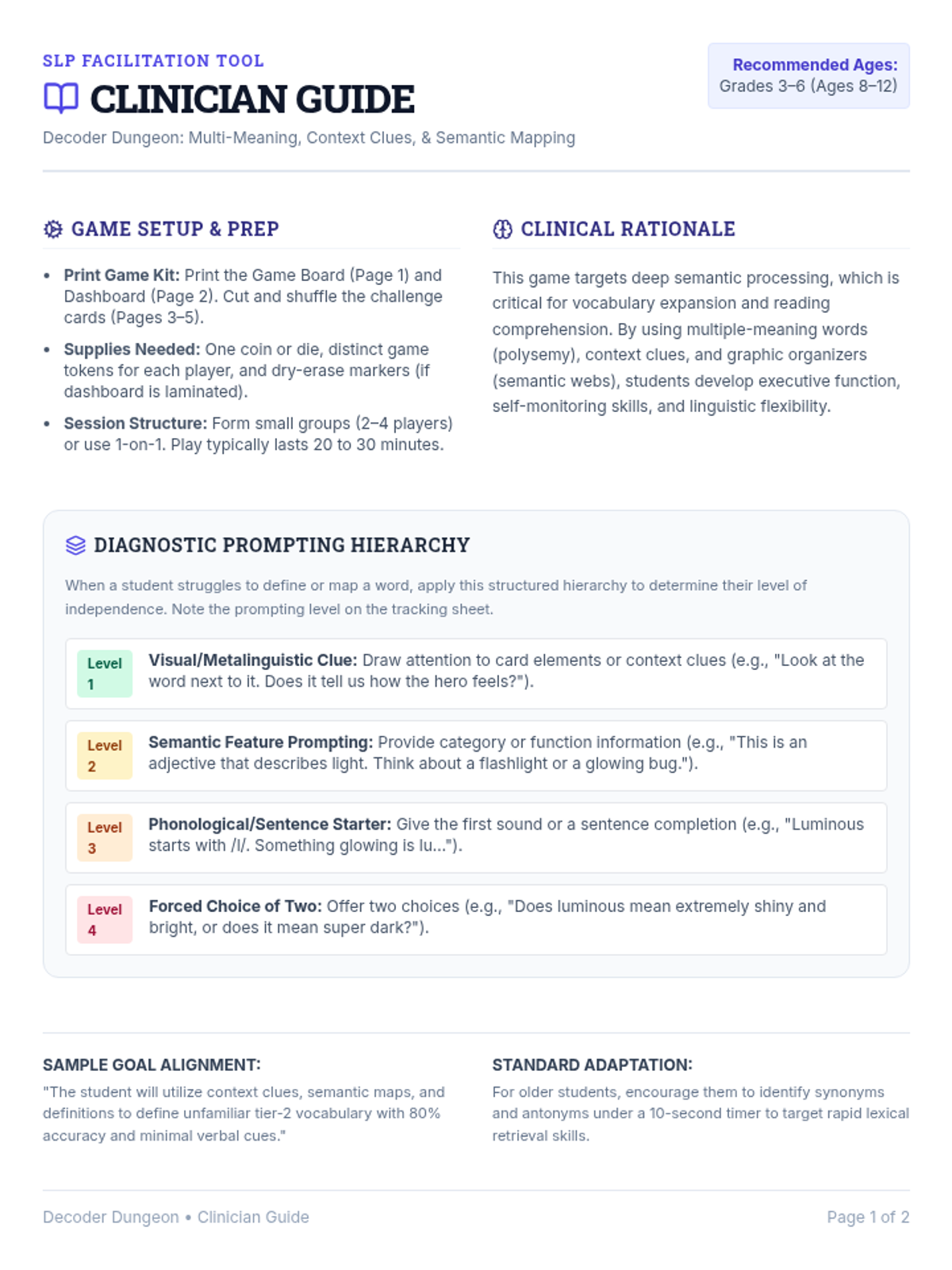
An immersive, fantasy-themed vocabulary game designed for speech-language pathology sessions targeting multiple-meaning words, context clues, and semantic mapping. This lesson includes an interactive printable game board, skill cards, and a comprehensive clinician facilitation guide with diagnostic tracking tools.
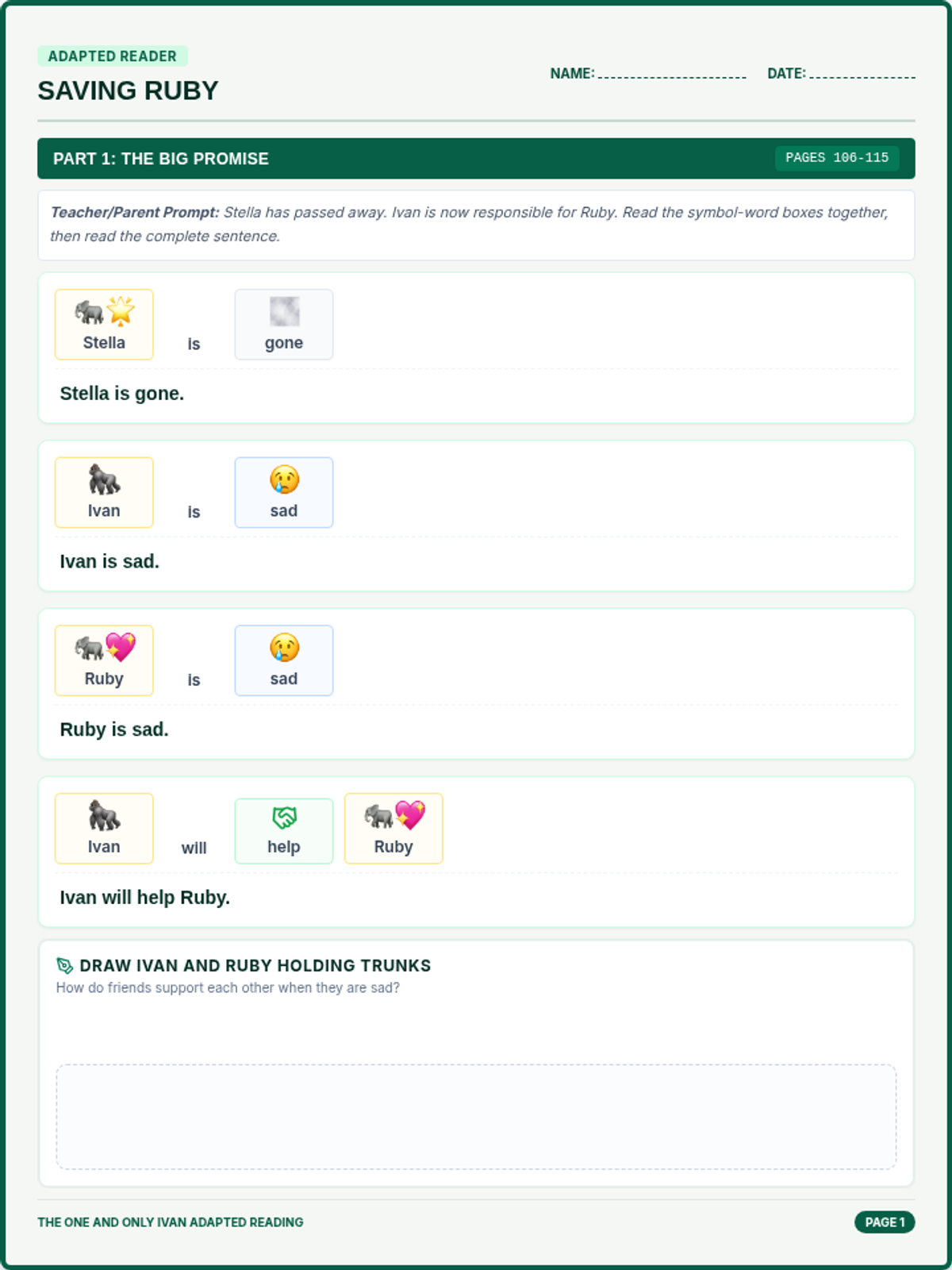
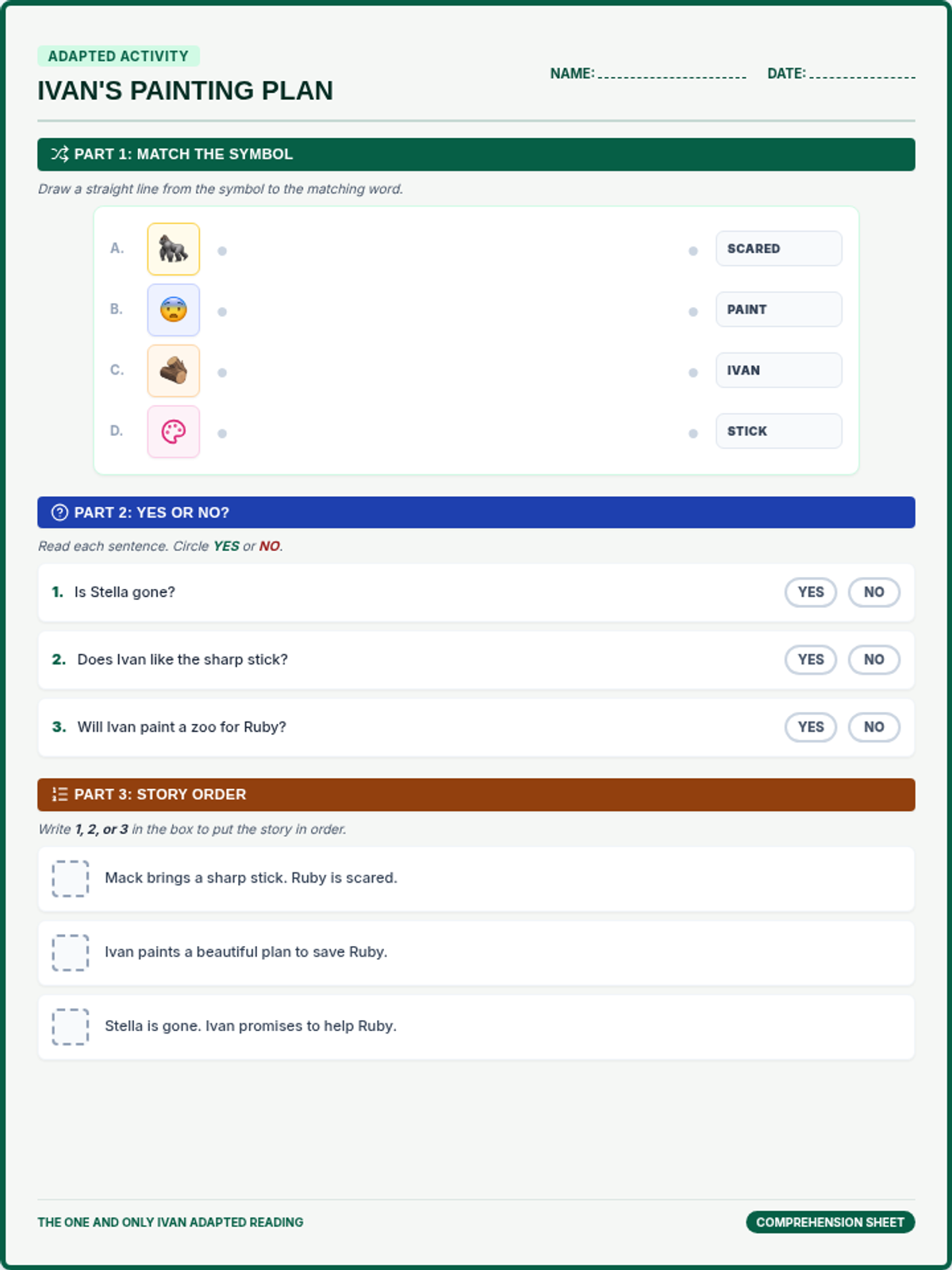
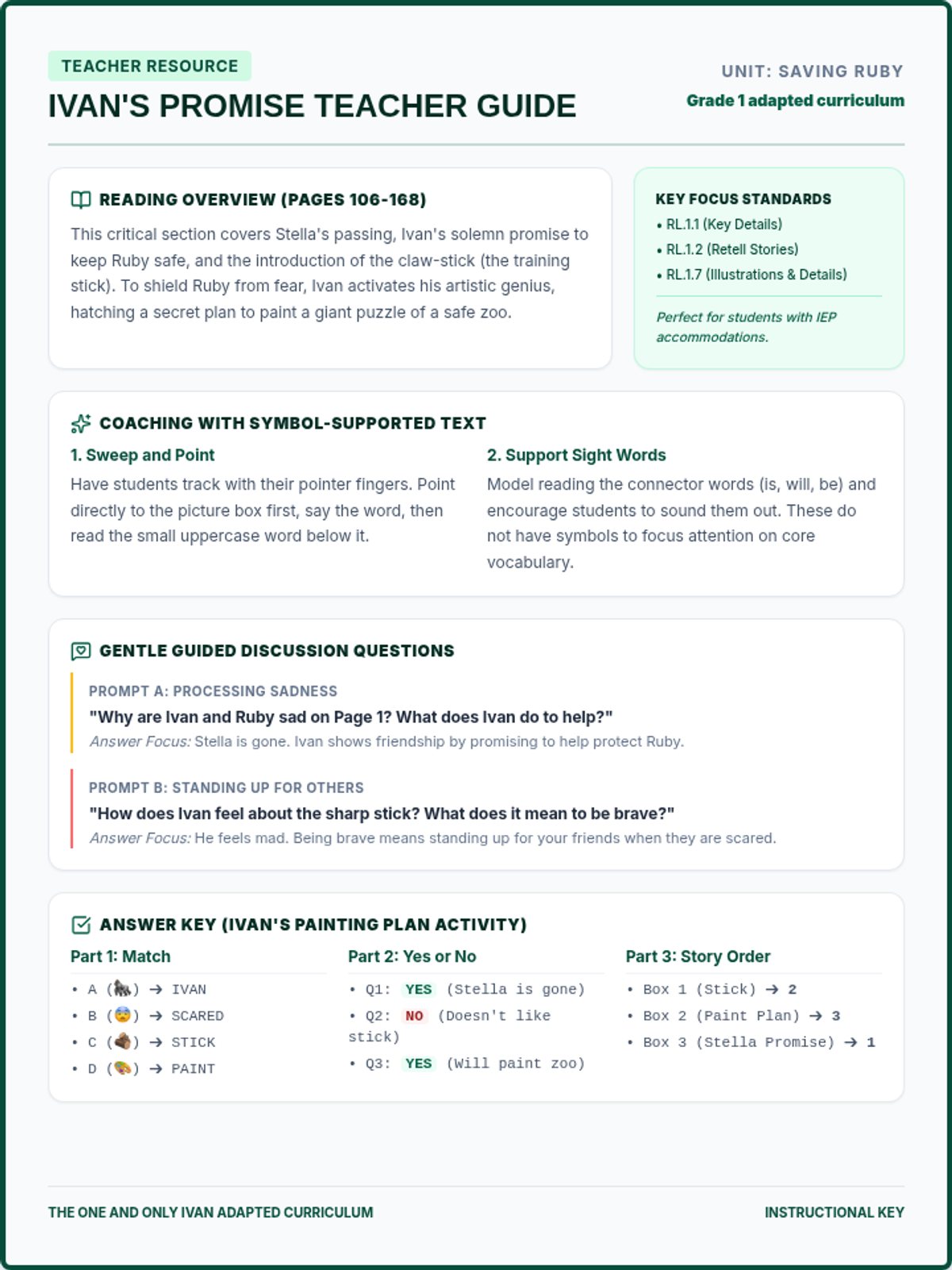
A 1st-grade adapted reading unit for pages 106-168 of 'The One and Only Ivan'. This lesson focuses on Stella's passing, Ivan's promise, the threat of the claw-stick, and Ivan's creative plan to save Ruby, using symbol-supported text to assist early readers.
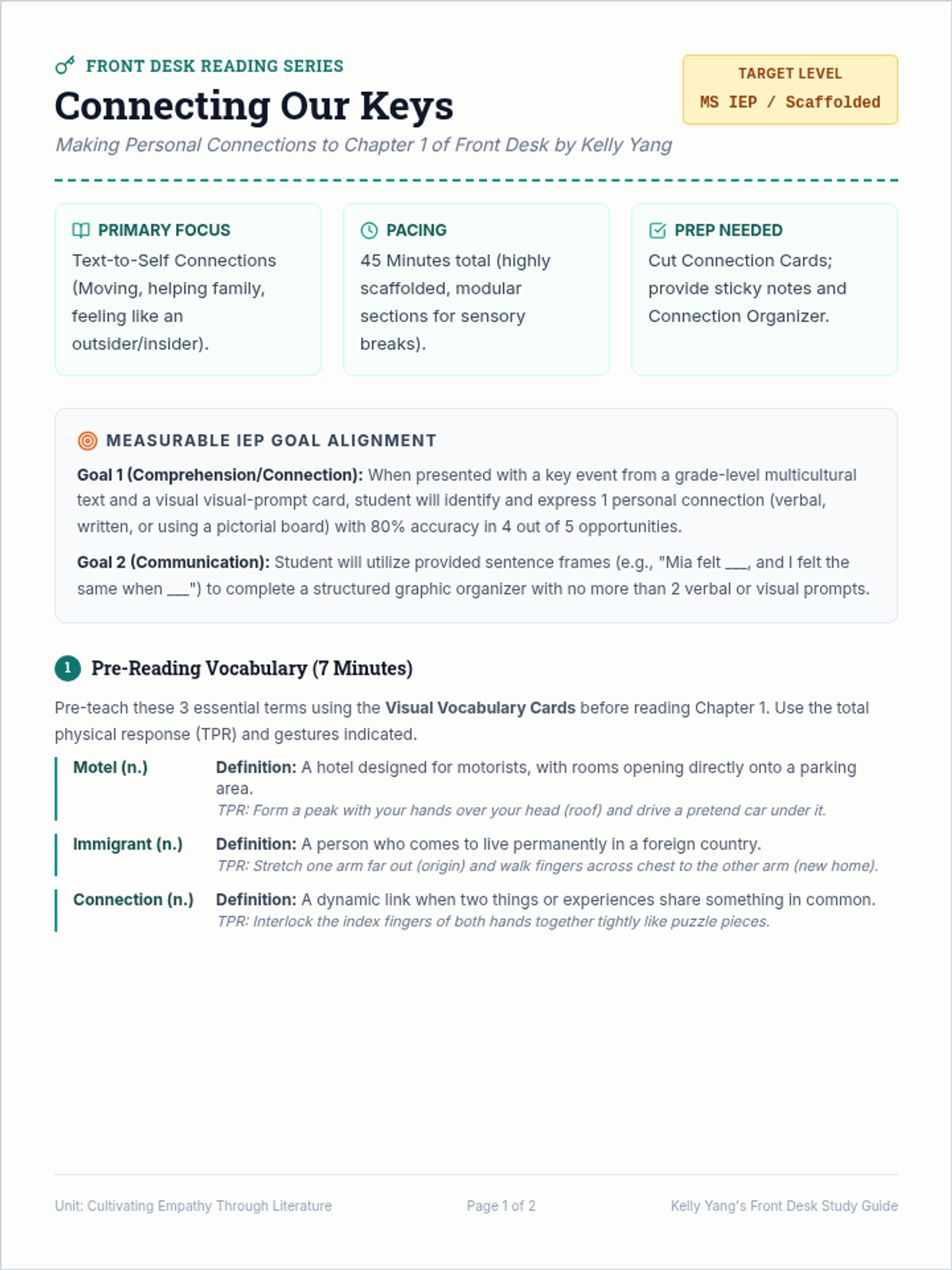
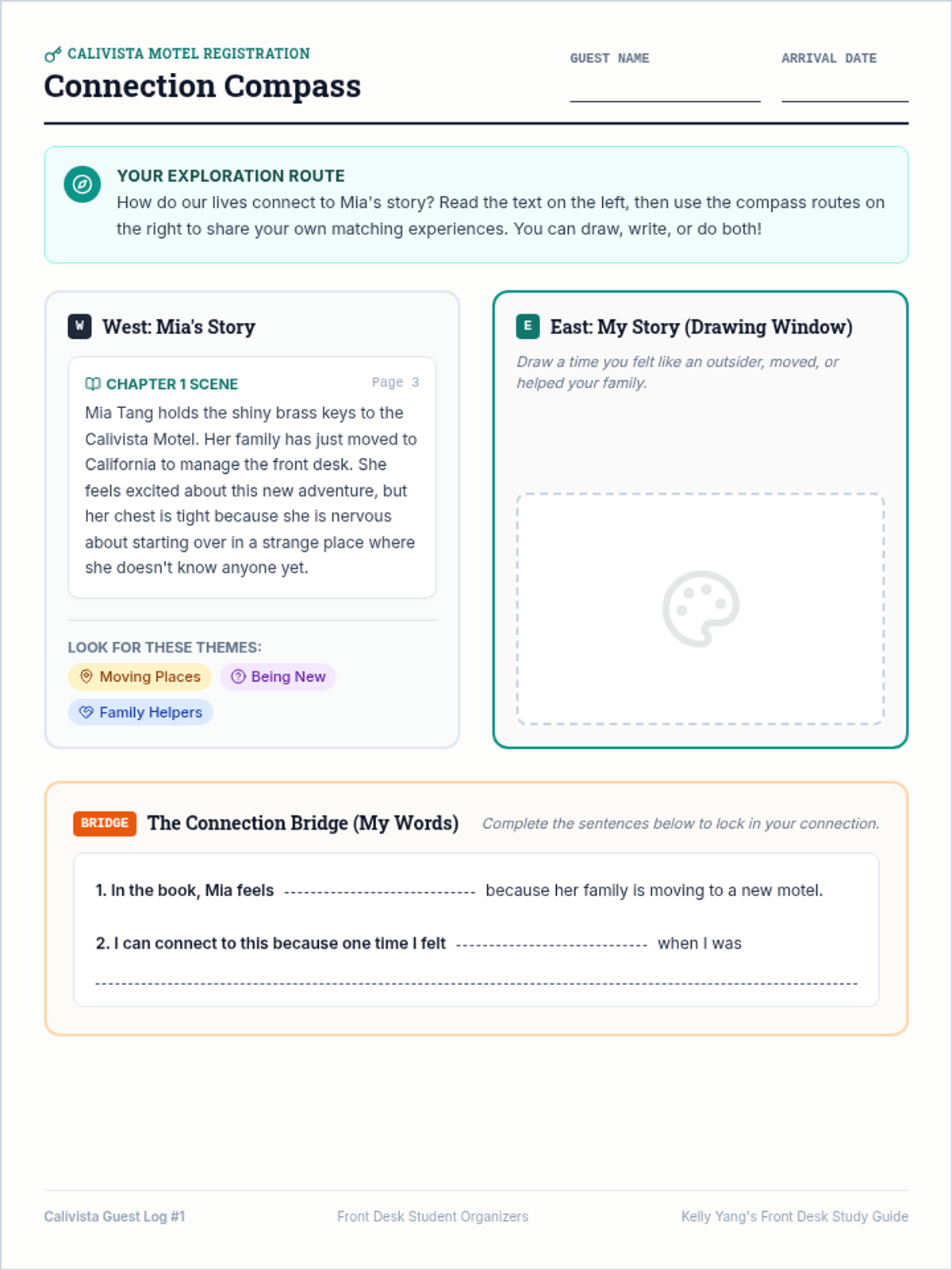
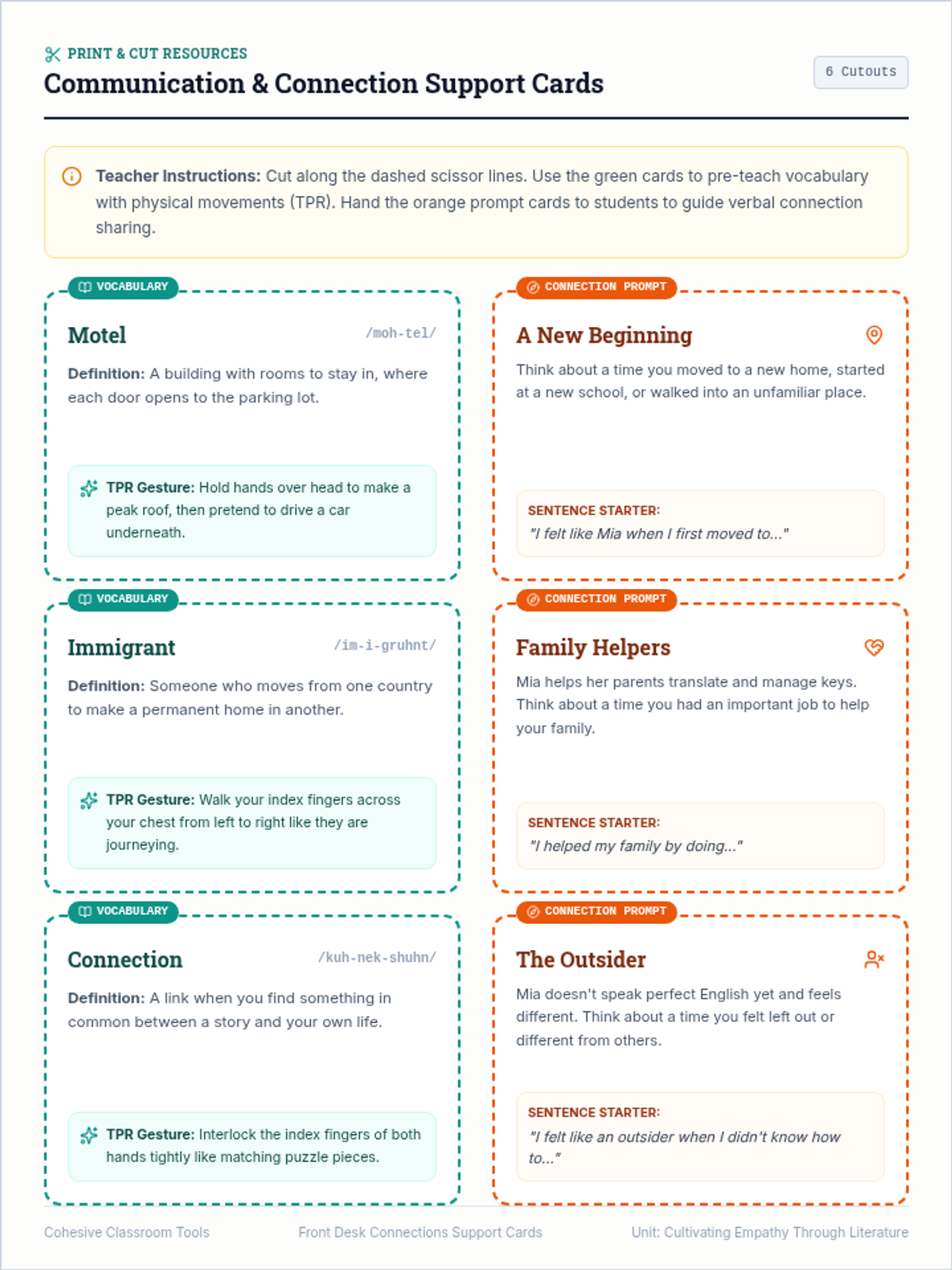
A scaffolded reading lesson bundle designed for middle school IEP students, focusing on making personal connections to Kelly Yang's 'Front Desk'. It includes a detailed lesson plan with IEP accommodations, a structured graphic organizer, and visual vocabulary support cards.
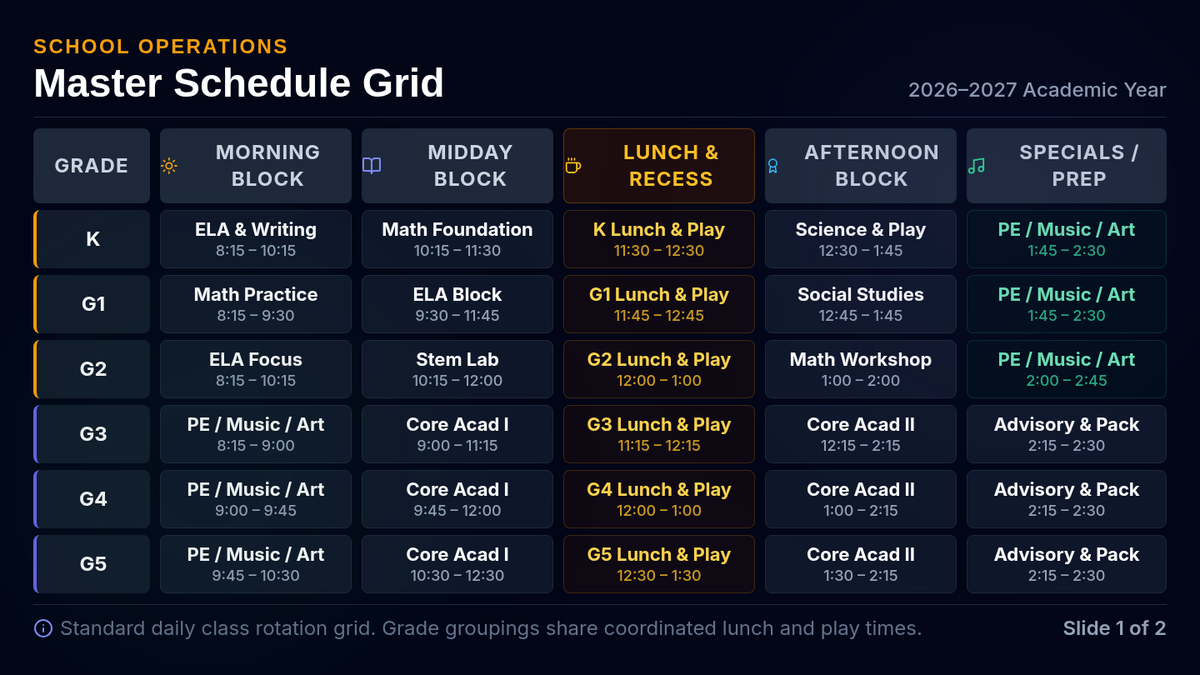
A complete master schedule lesson containing operational slide decks for school staff and students.
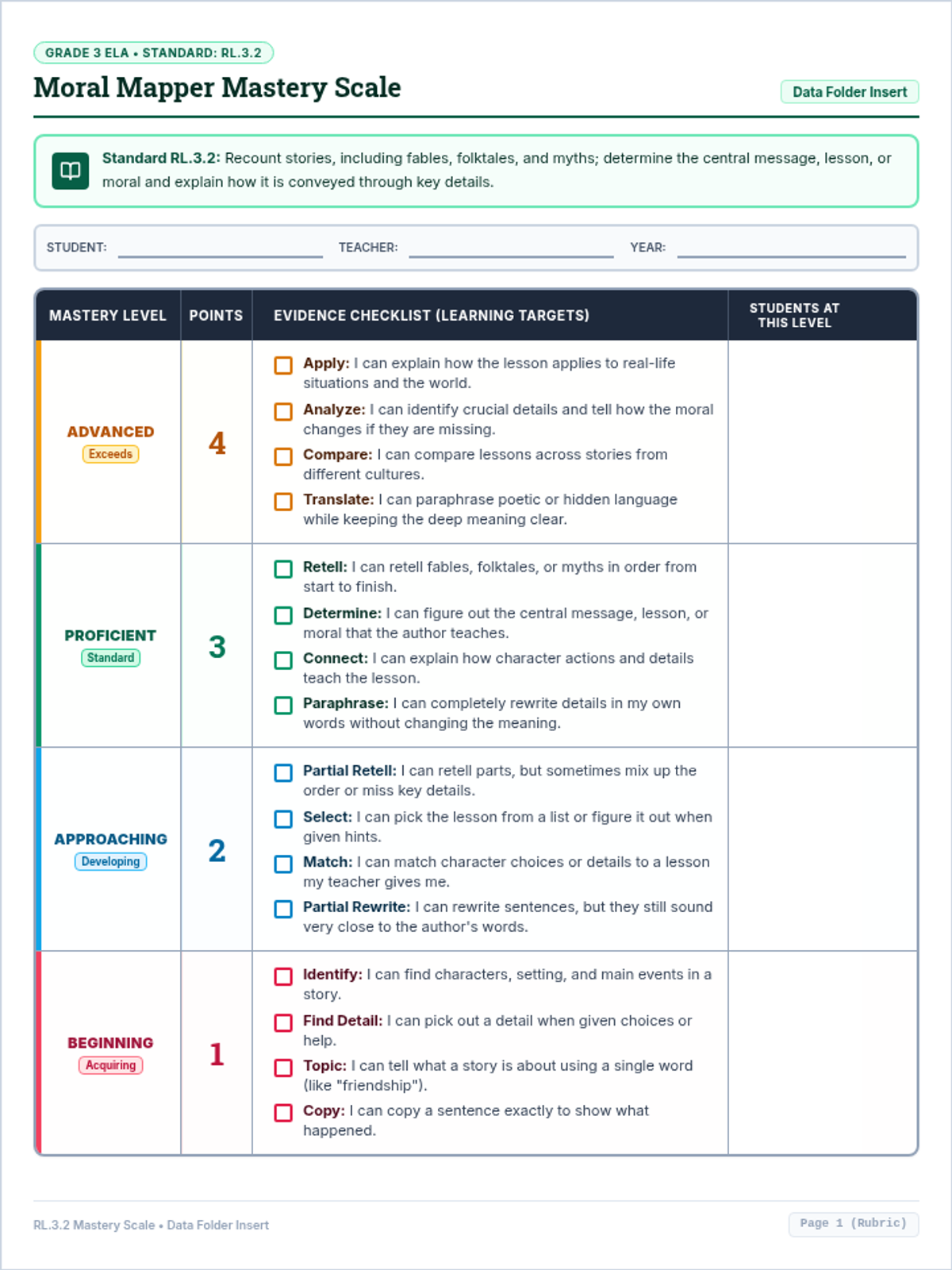
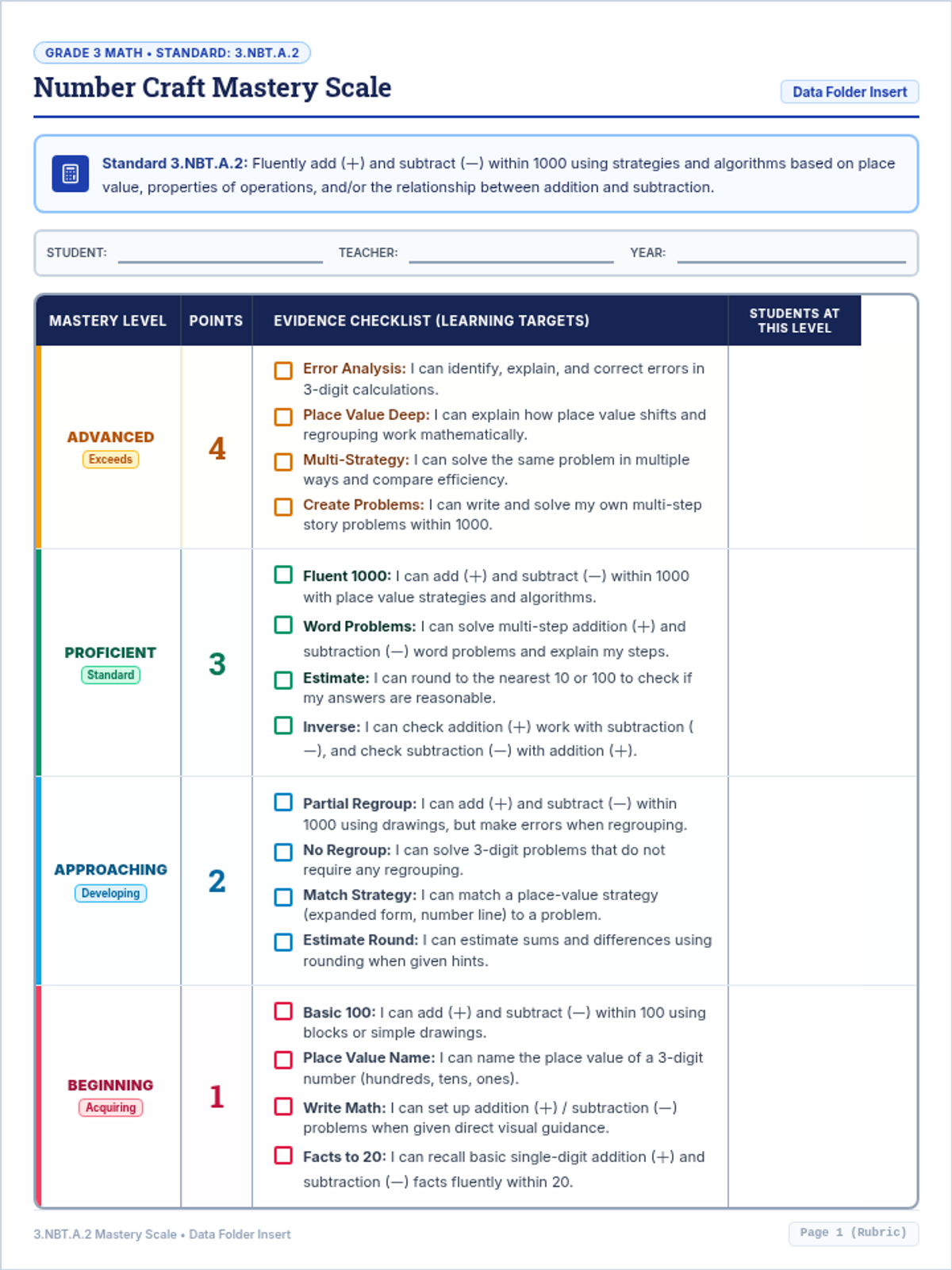
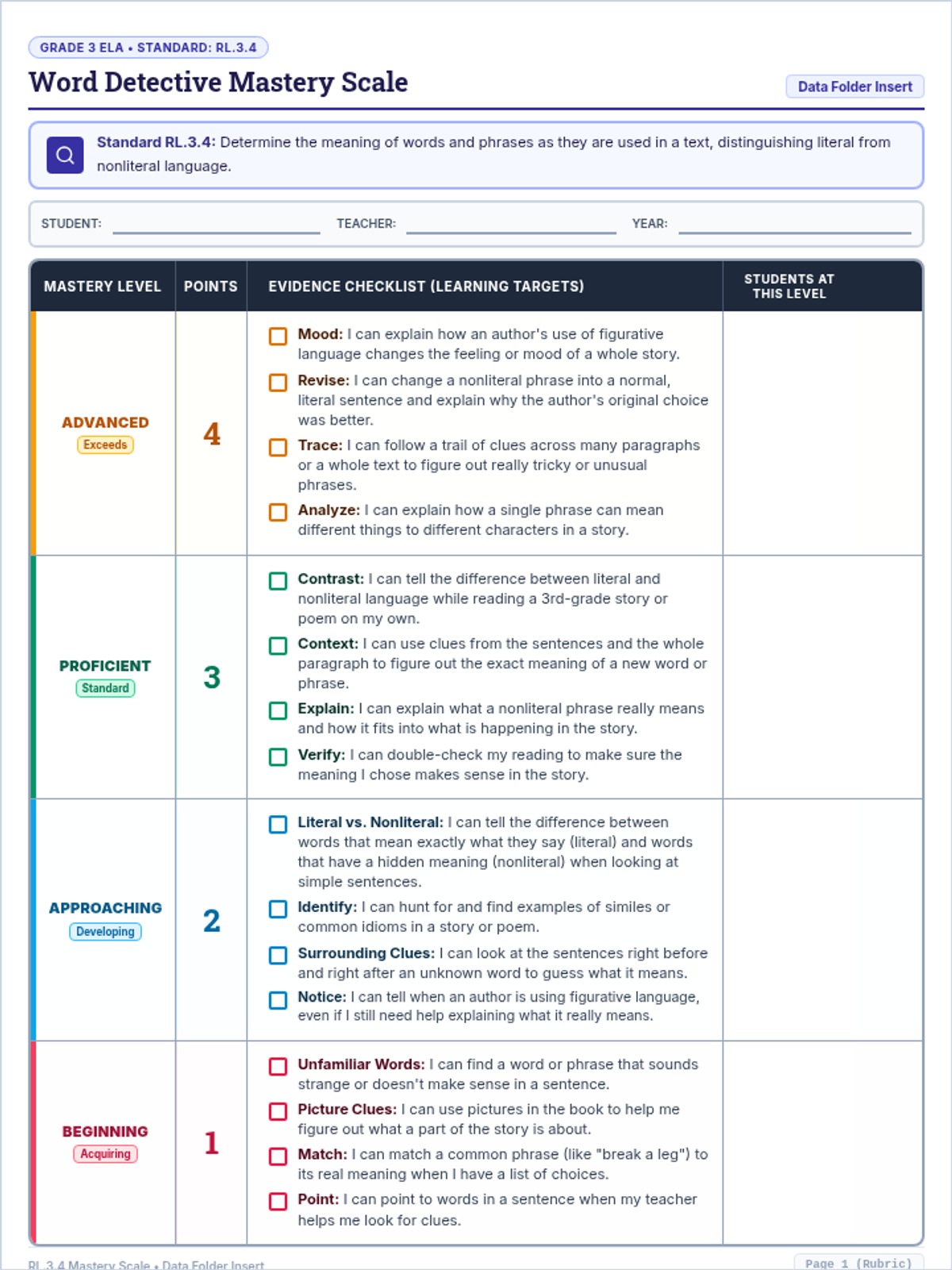
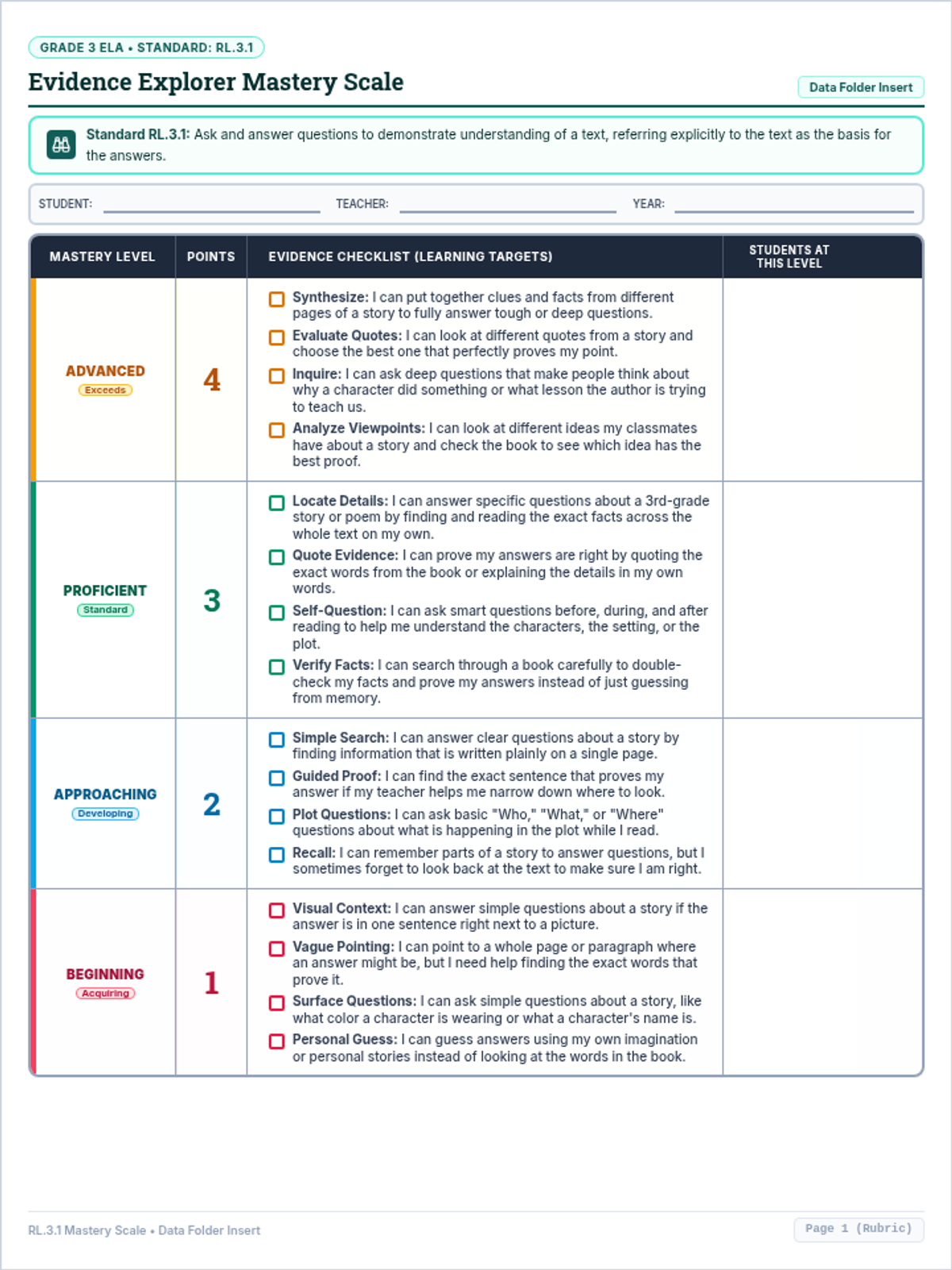
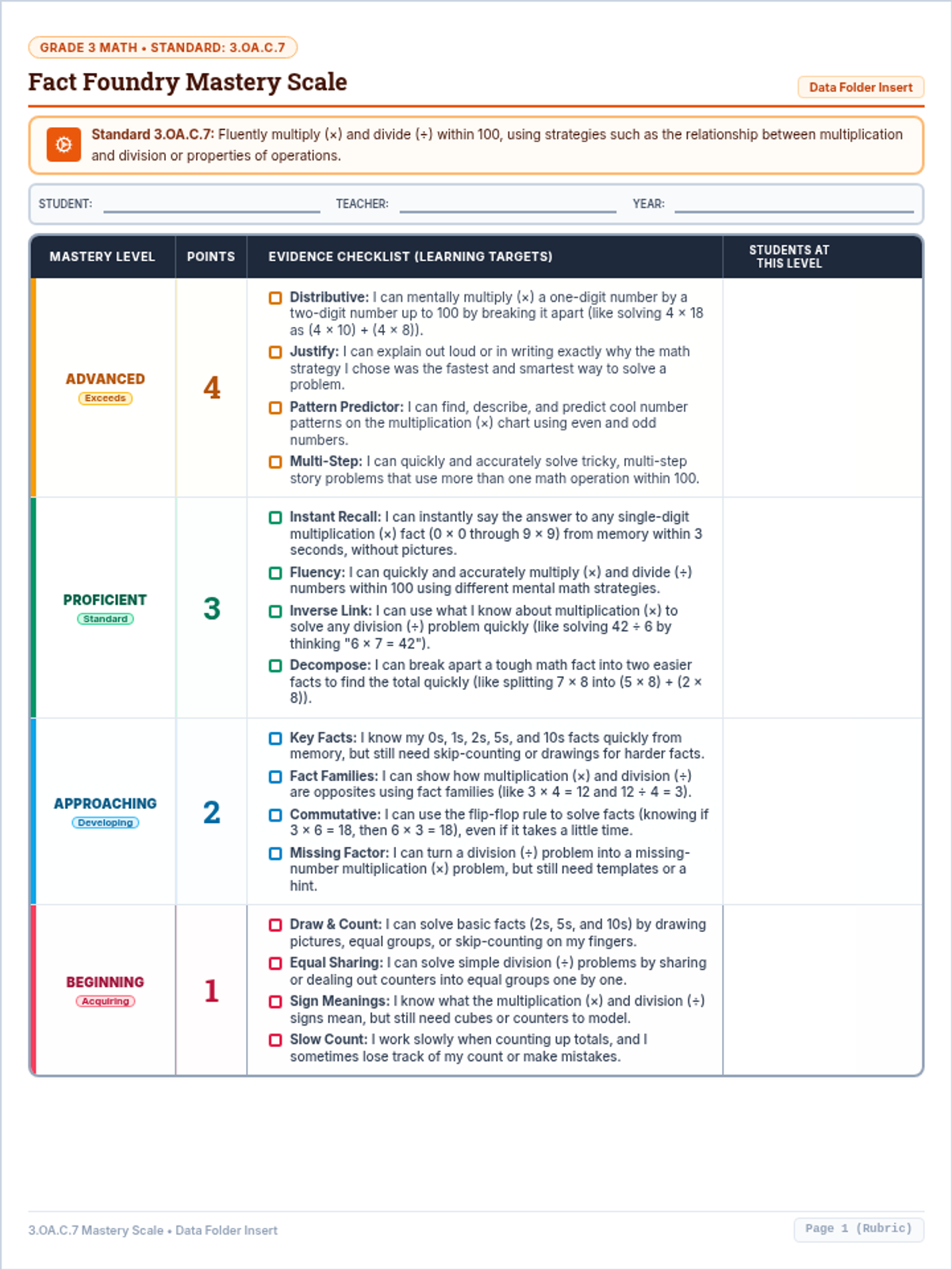
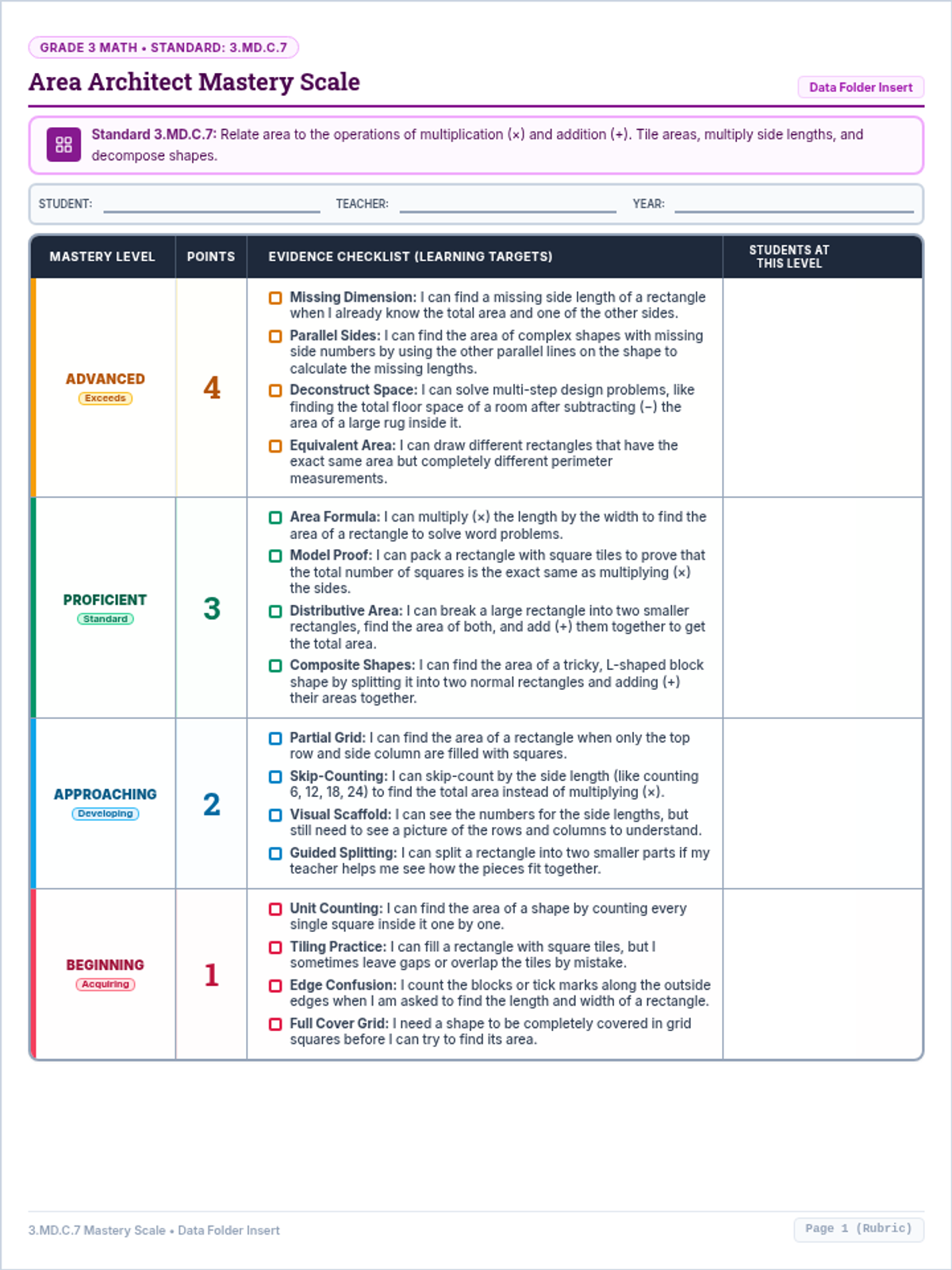
A collection of beautifully designed, compact data folder inserts featuring proficiency scale charts and progress tracking logs for Grade 3 standards.
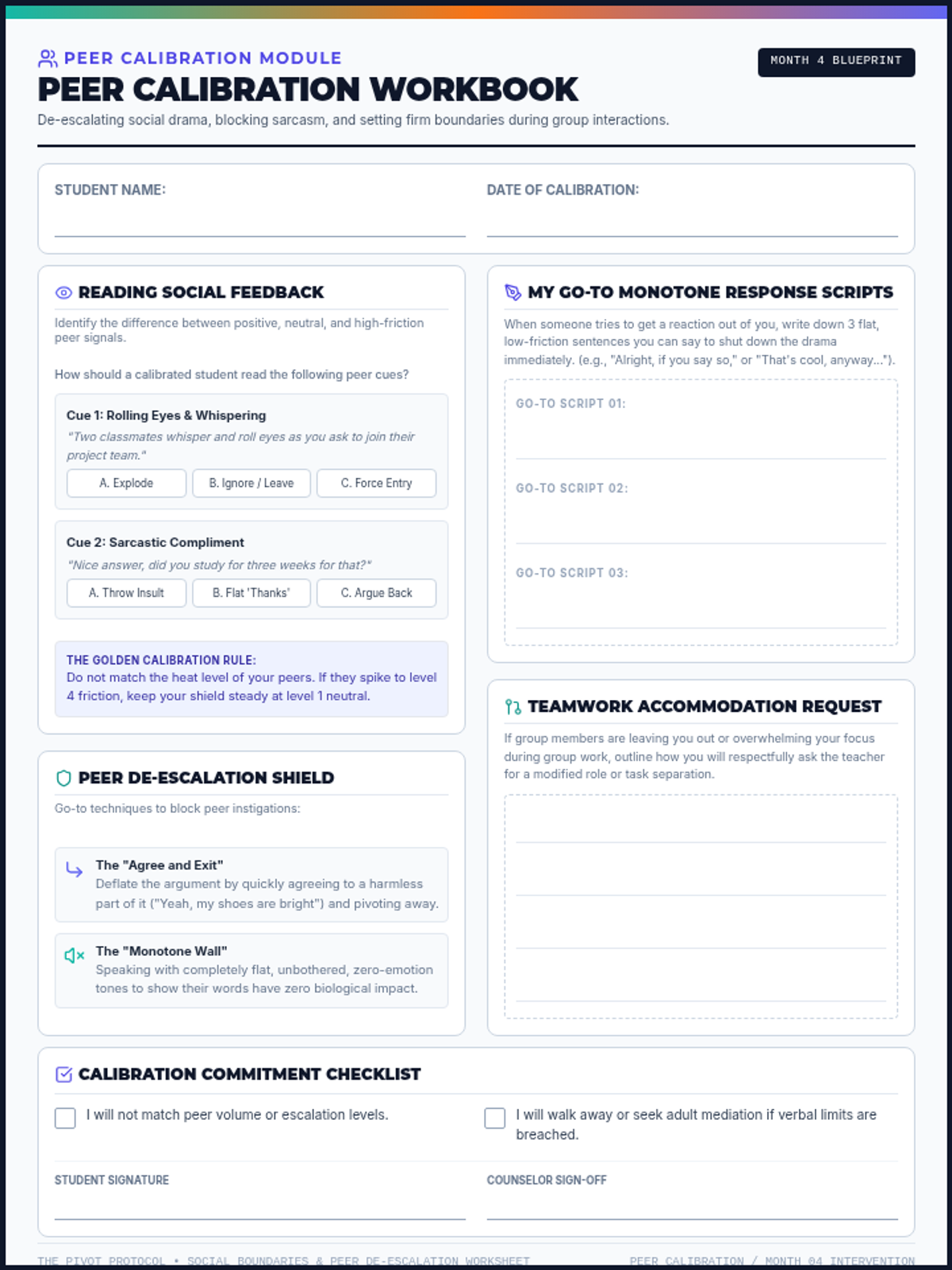
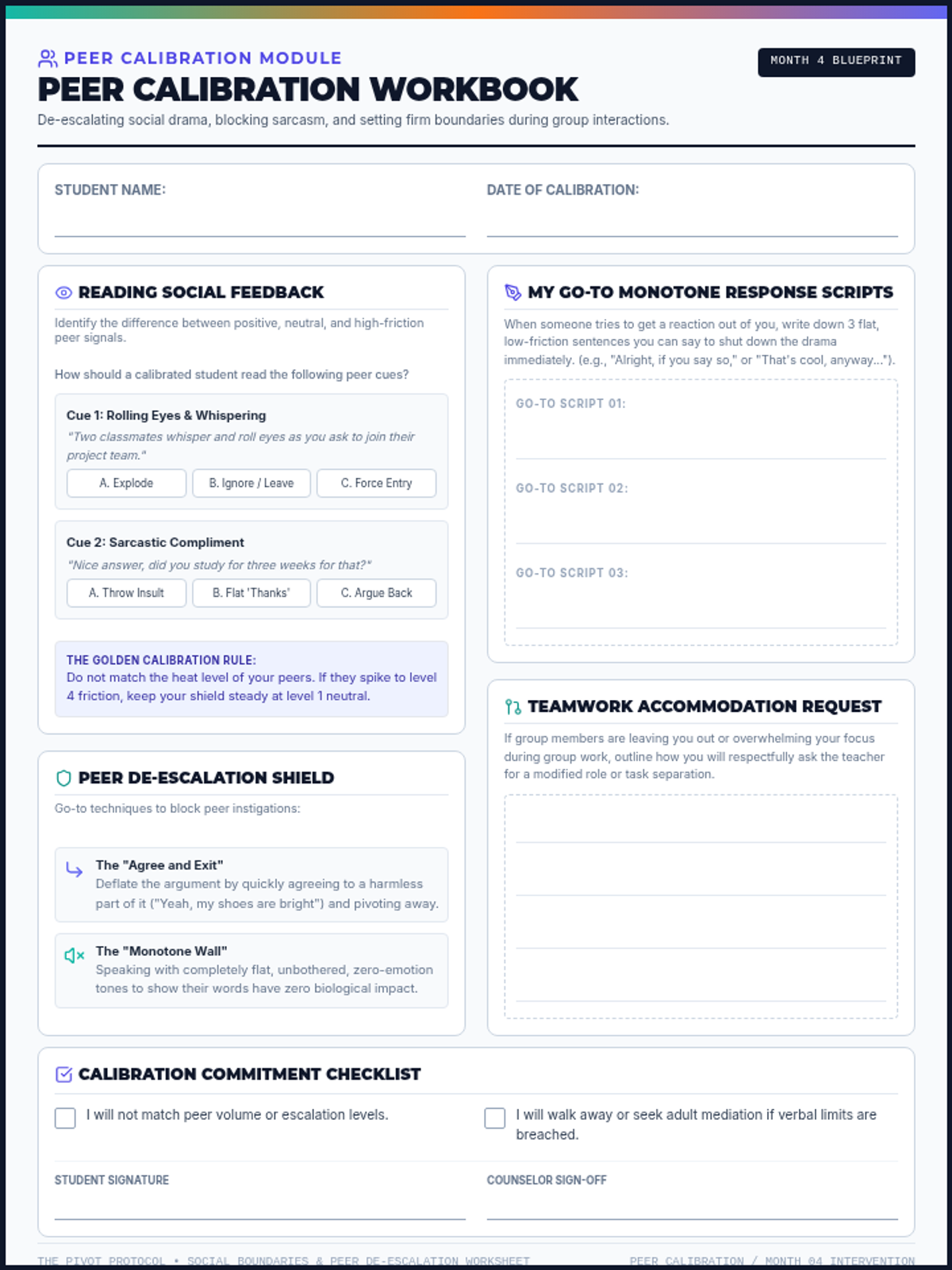
Month 4 focus on peer-to-peer conflict resolution, de-escalating social tension, responding to sarcasm, and reading social feedback cues without dysregulating.
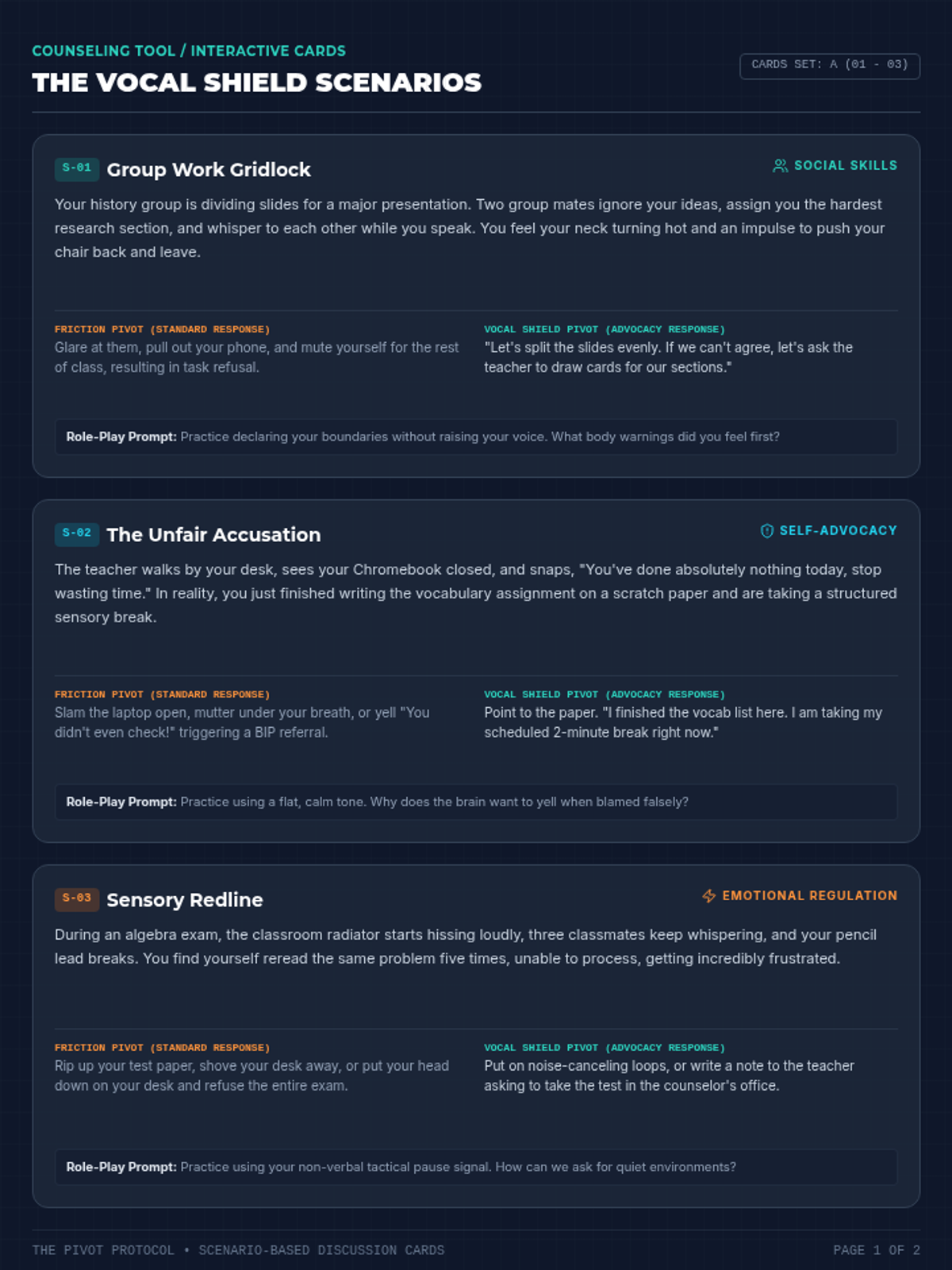
Addresses social skills, self-advocacy with teachers, navigating peer-to-peer conflict, and reading social feedback cues without dysregulating.
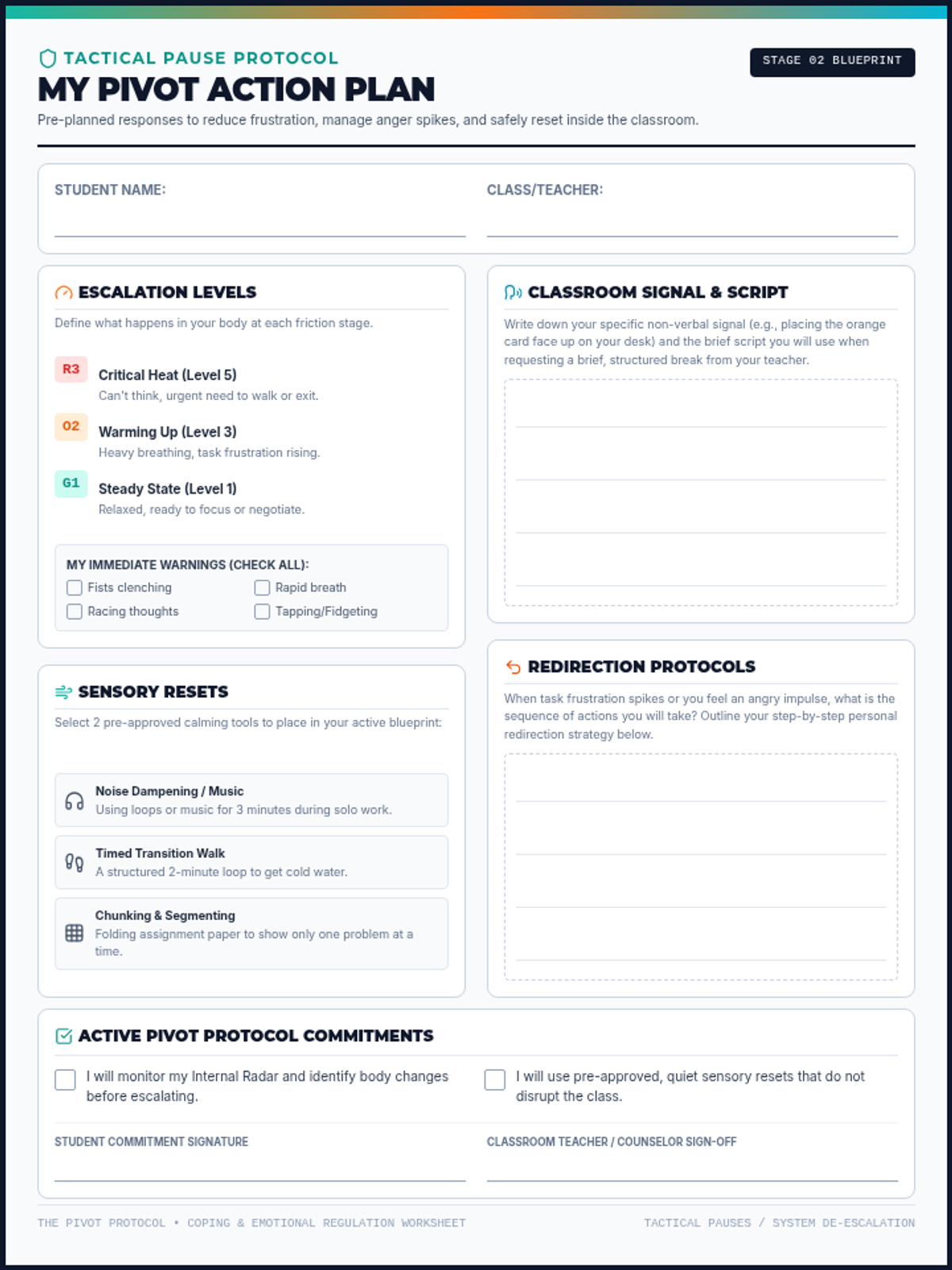
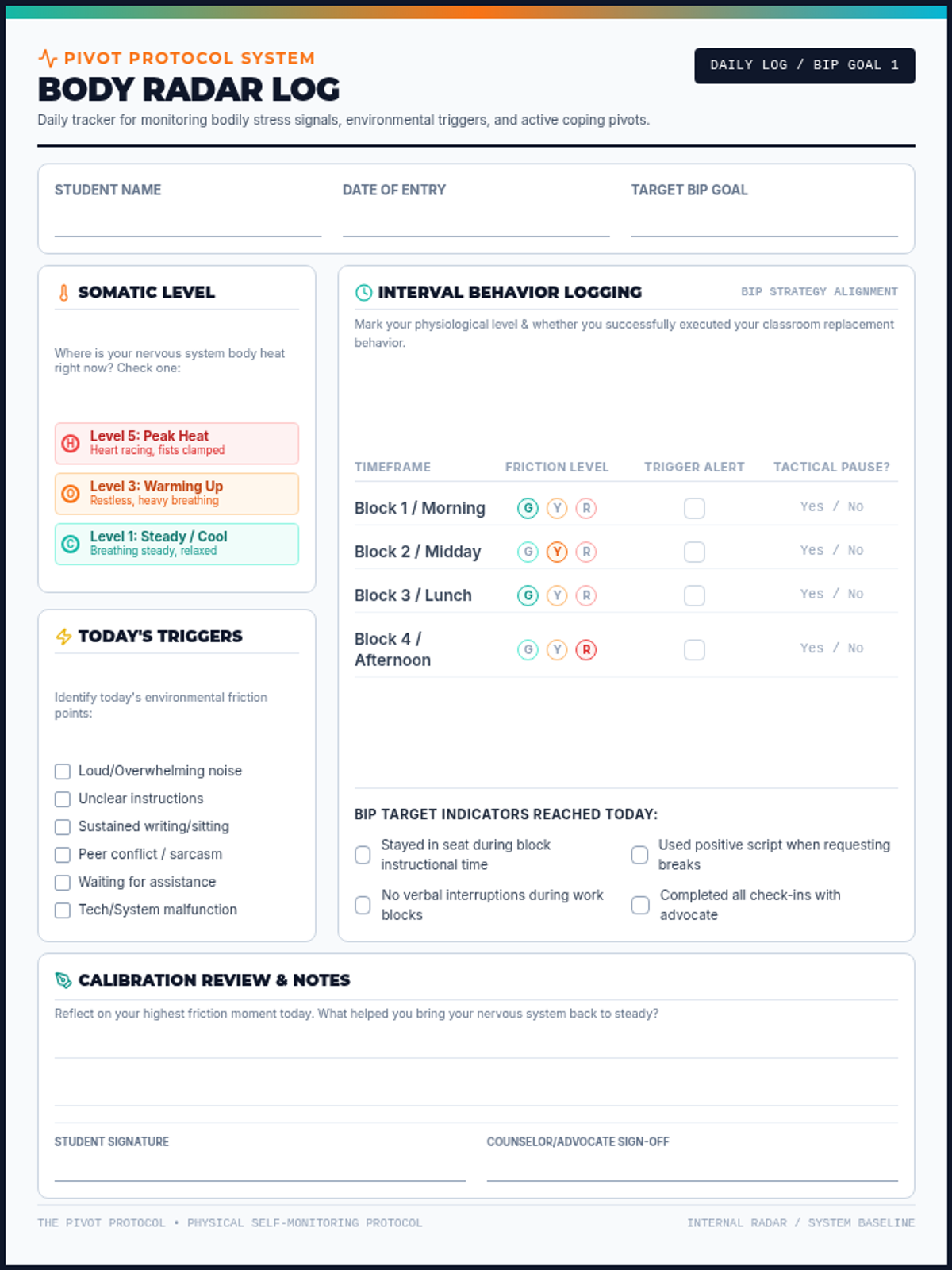
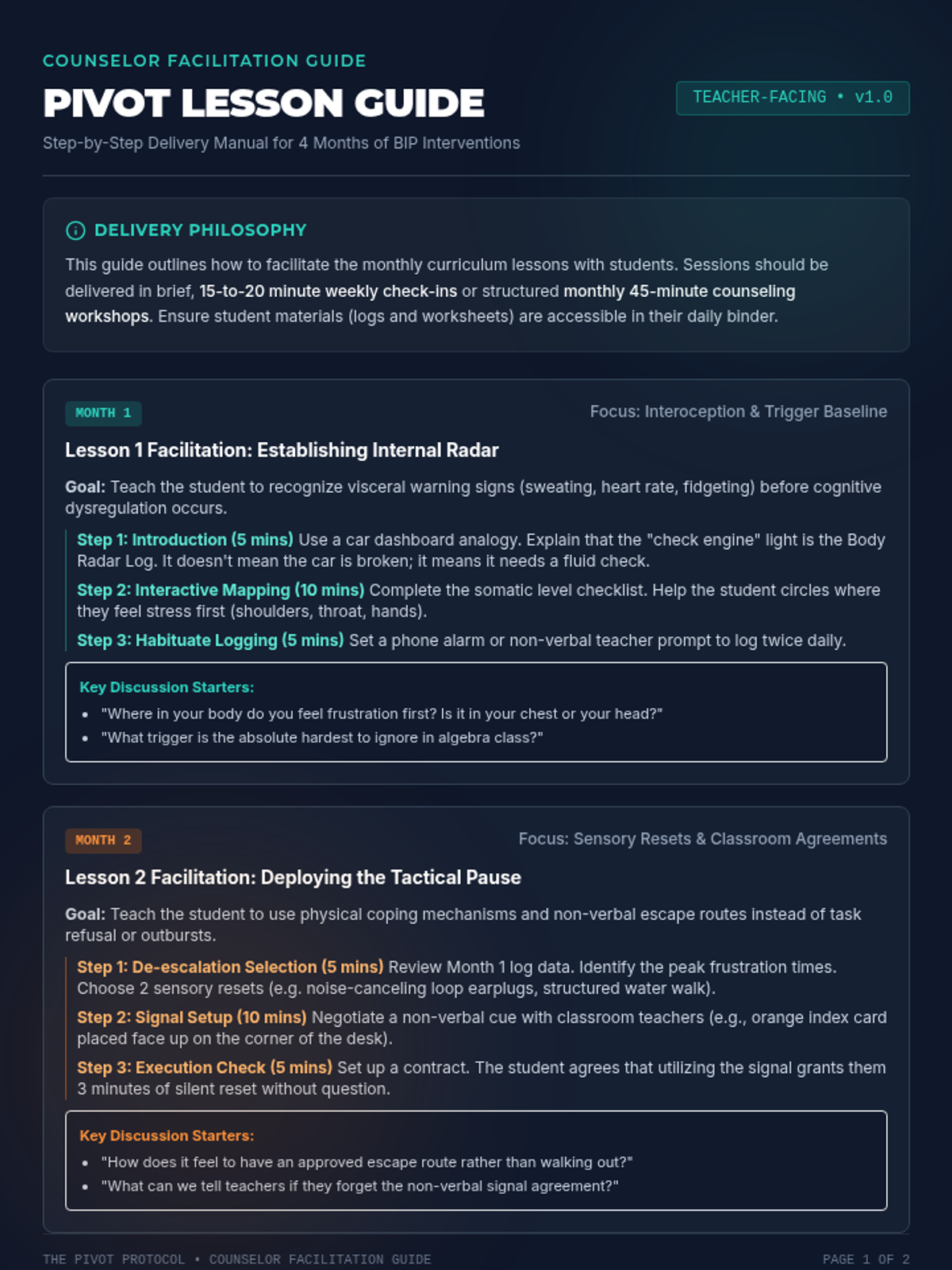
Focuses on calming techniques, active anger management, and frustration tolerance when triggers spike, introducing personalized 'Pivot Plans' for classroom situations.
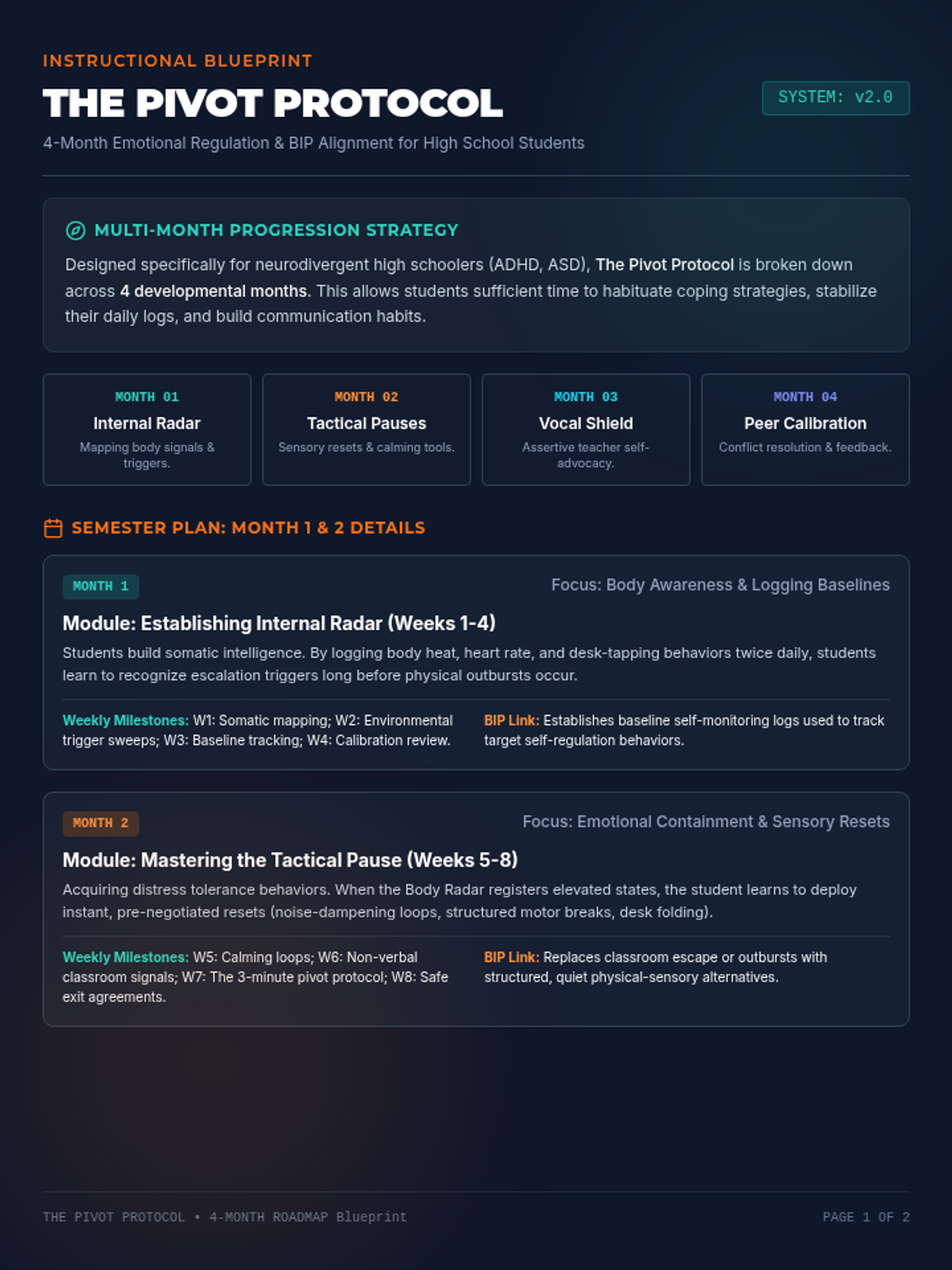
Establishes the foundation of self-awareness by helping students map their physical trigger responses ('Internal Radar') and setting up their baseline self-monitoring daily tracker.
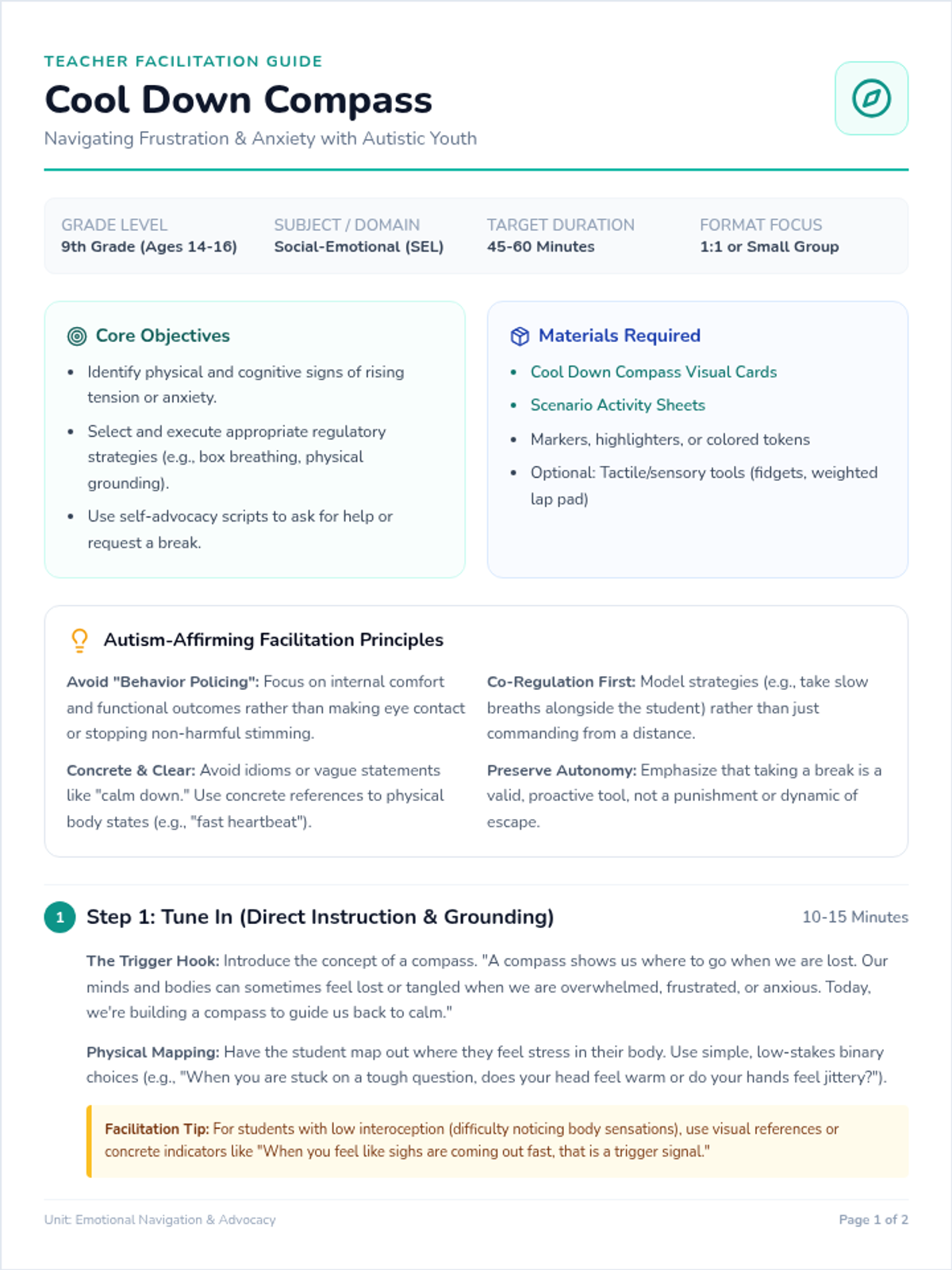
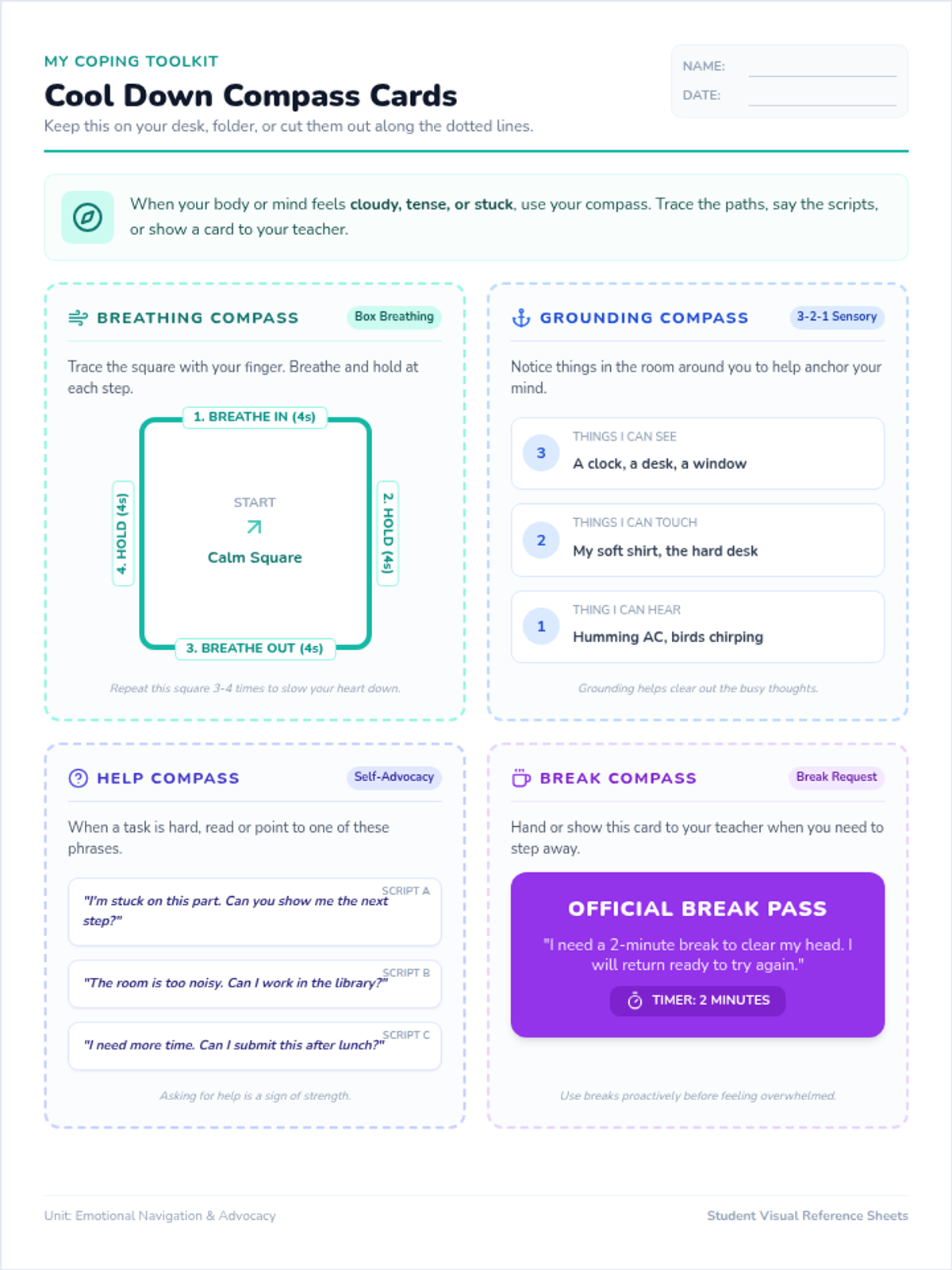
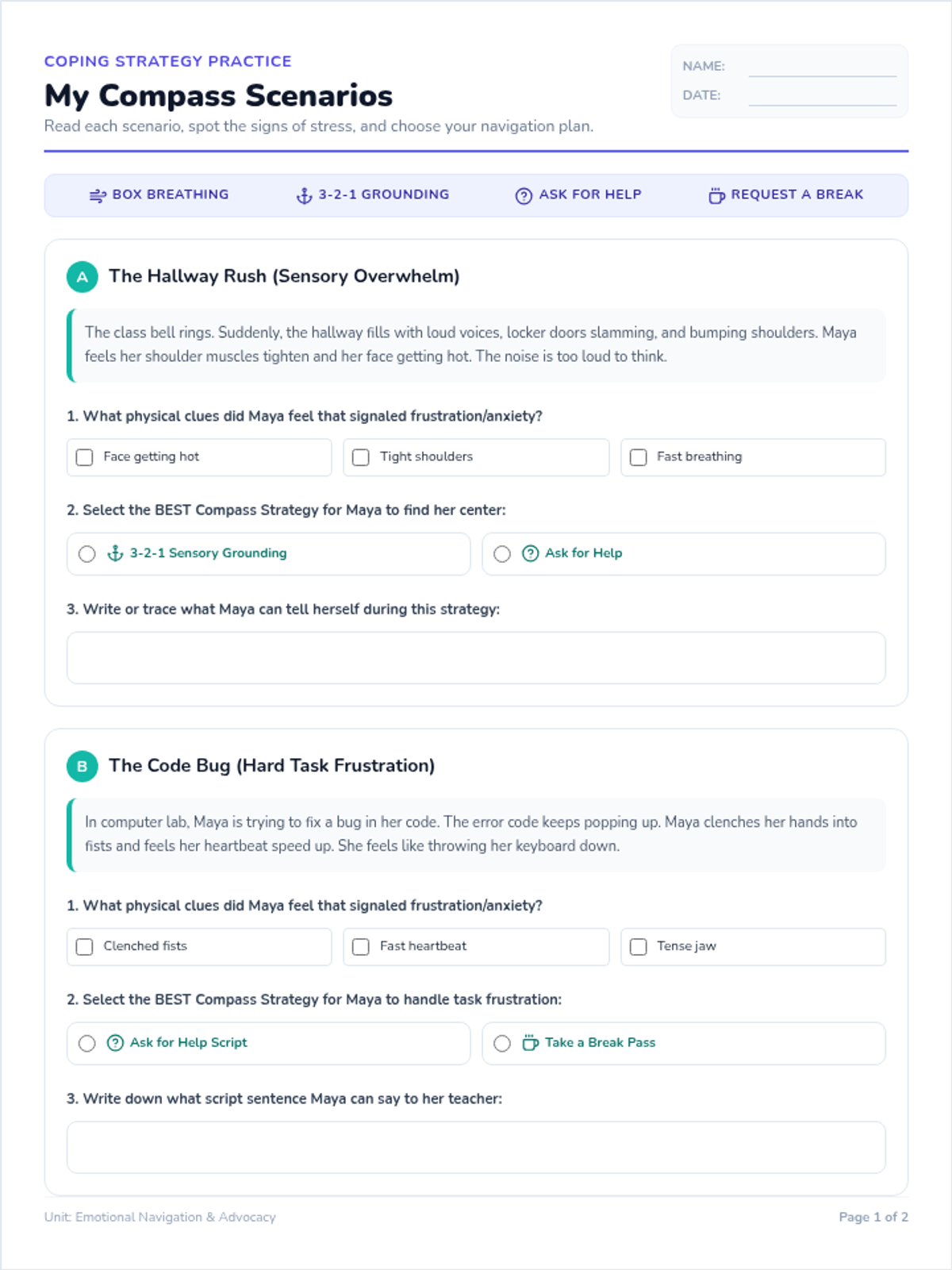
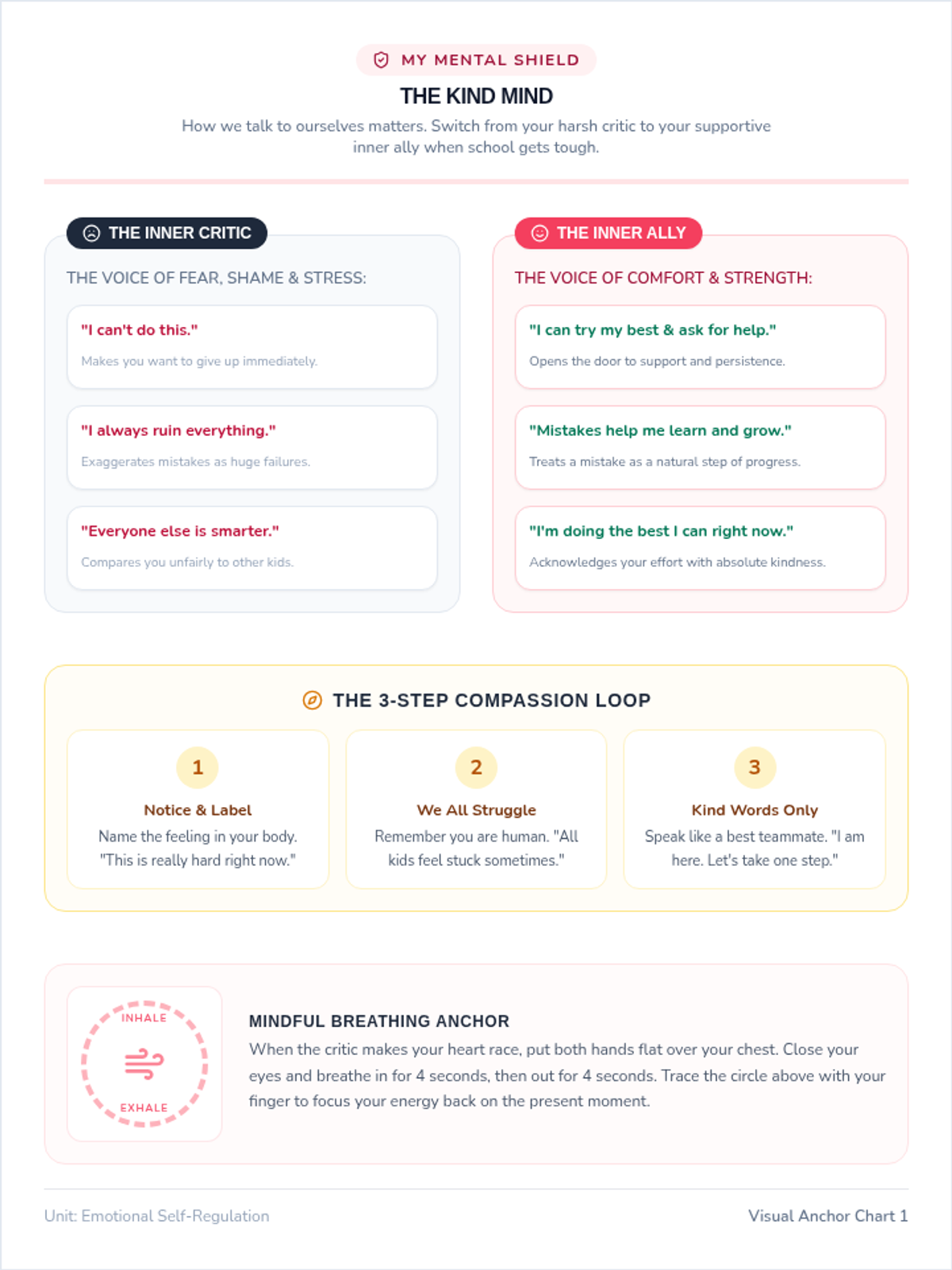
A comprehensive social-emotional learning lesson designed for 9th-grade students with autism to recognize triggers of anxiety or frustration and employ concrete coping strategies (breathing, physical grounding, self-advocacy, and requesting breaks). Includes teacher facilitation guides, visual strategy cards, and structured scenario worksheets.
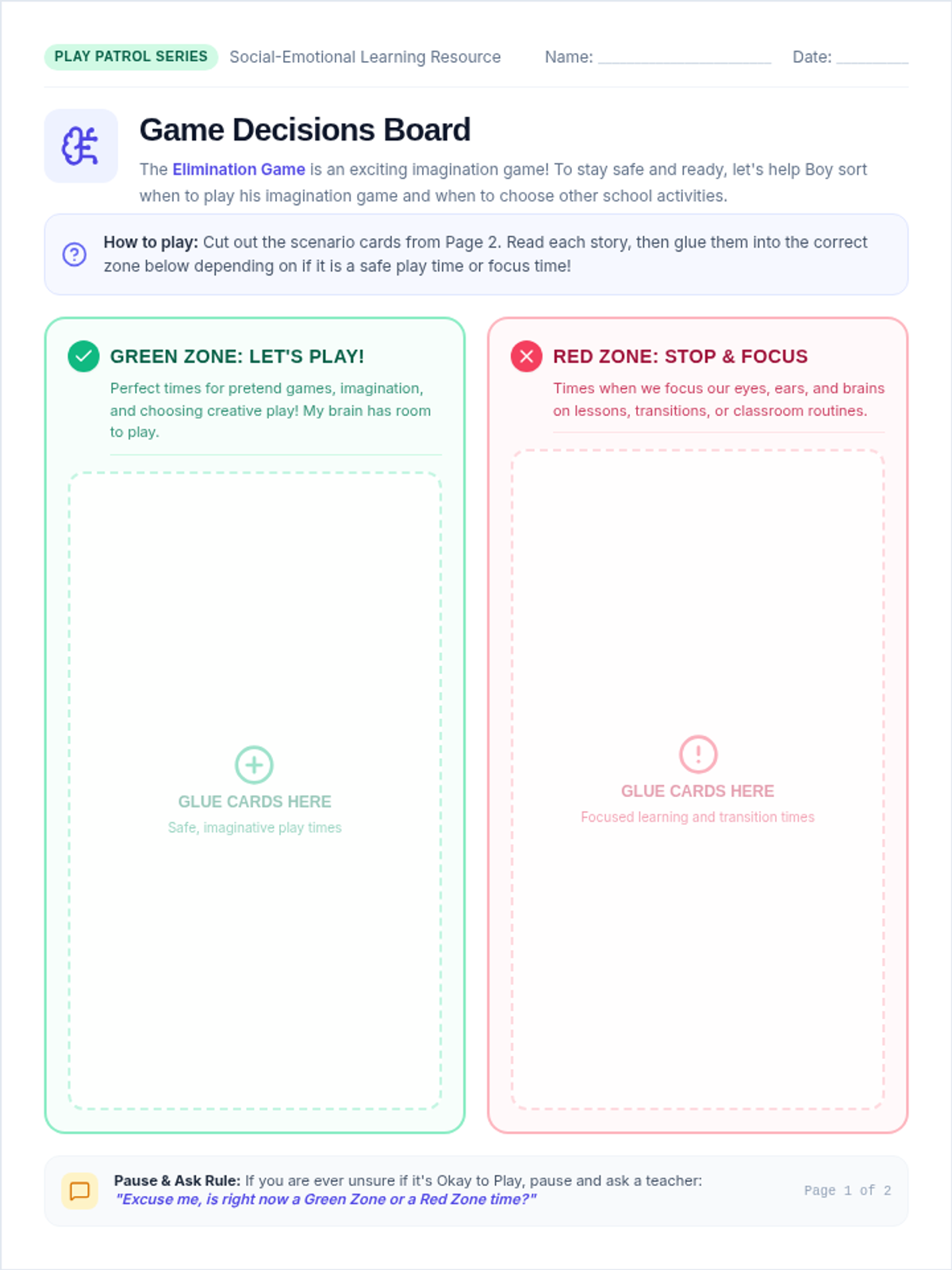
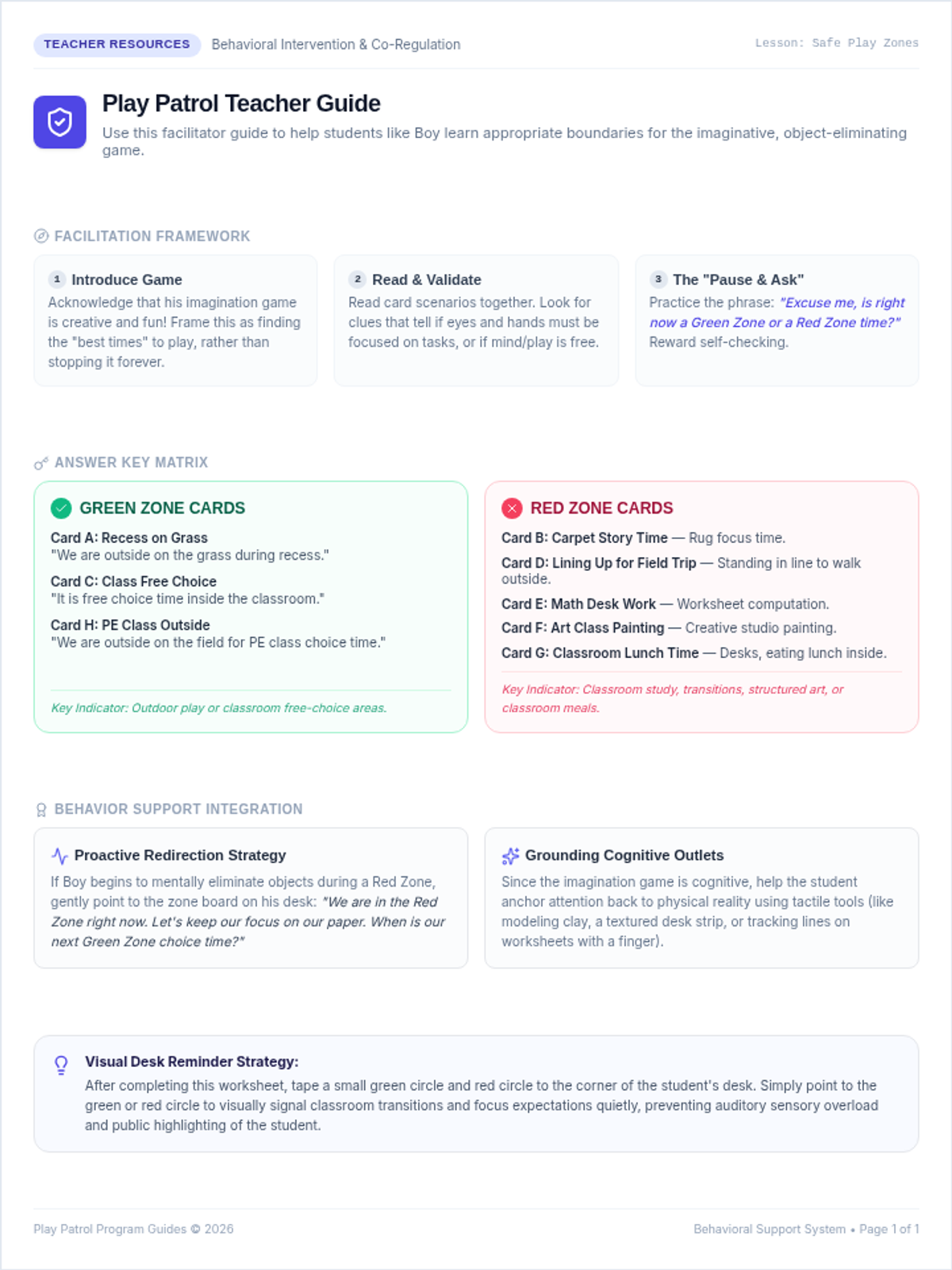
This lesson helps students learn appropriate boundaries for high-energy games, specifically the "elimination game", by sorting social narratives into 'safe play' and 'learning/transition' times.
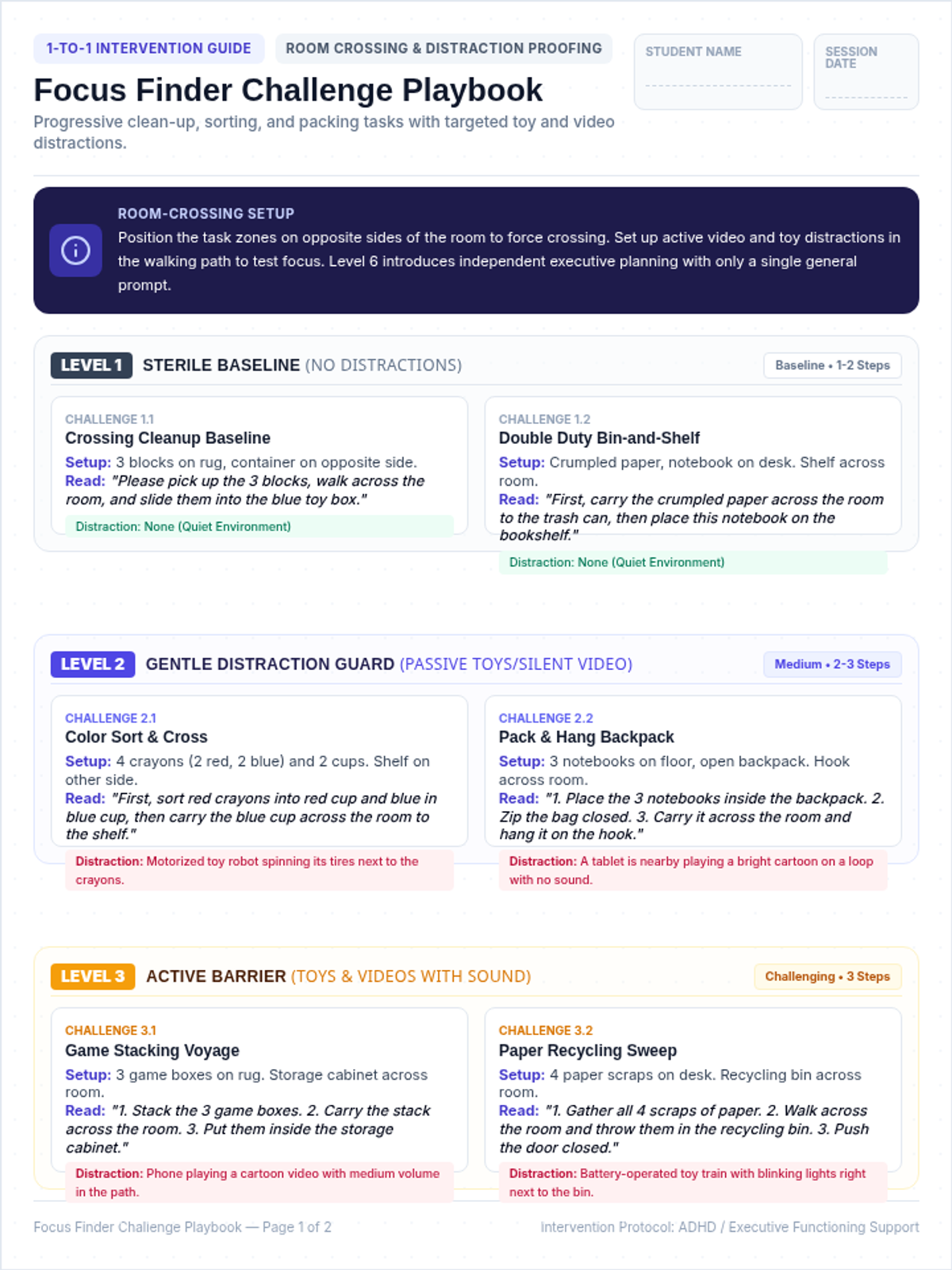
A 1-to-1 intervention lesson designed to help students master multi-step cleaning instructions while ignoring external and internal distractions. Includes a visual board game, specialized scenario cards, and self-regulation visual supports.
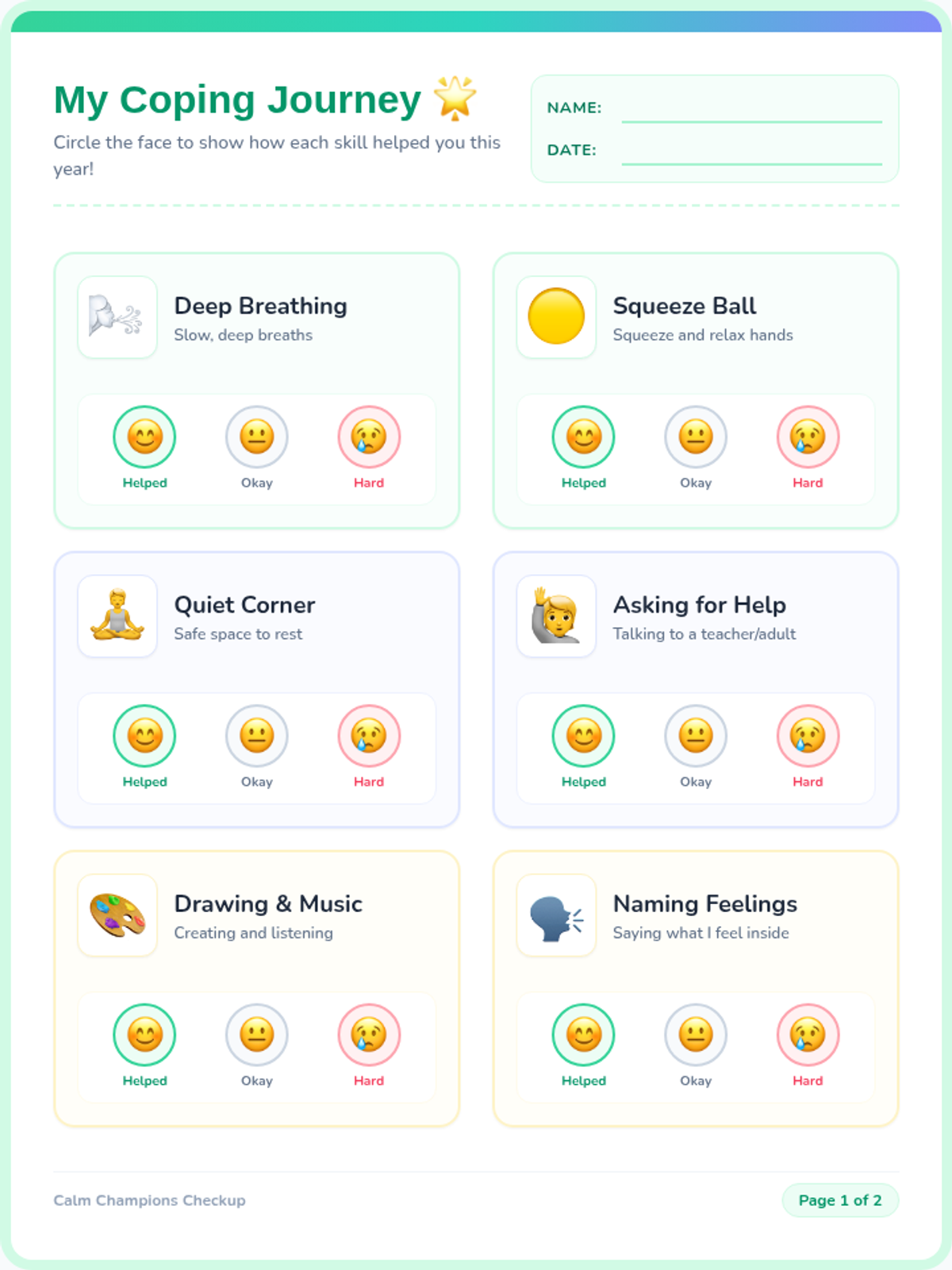
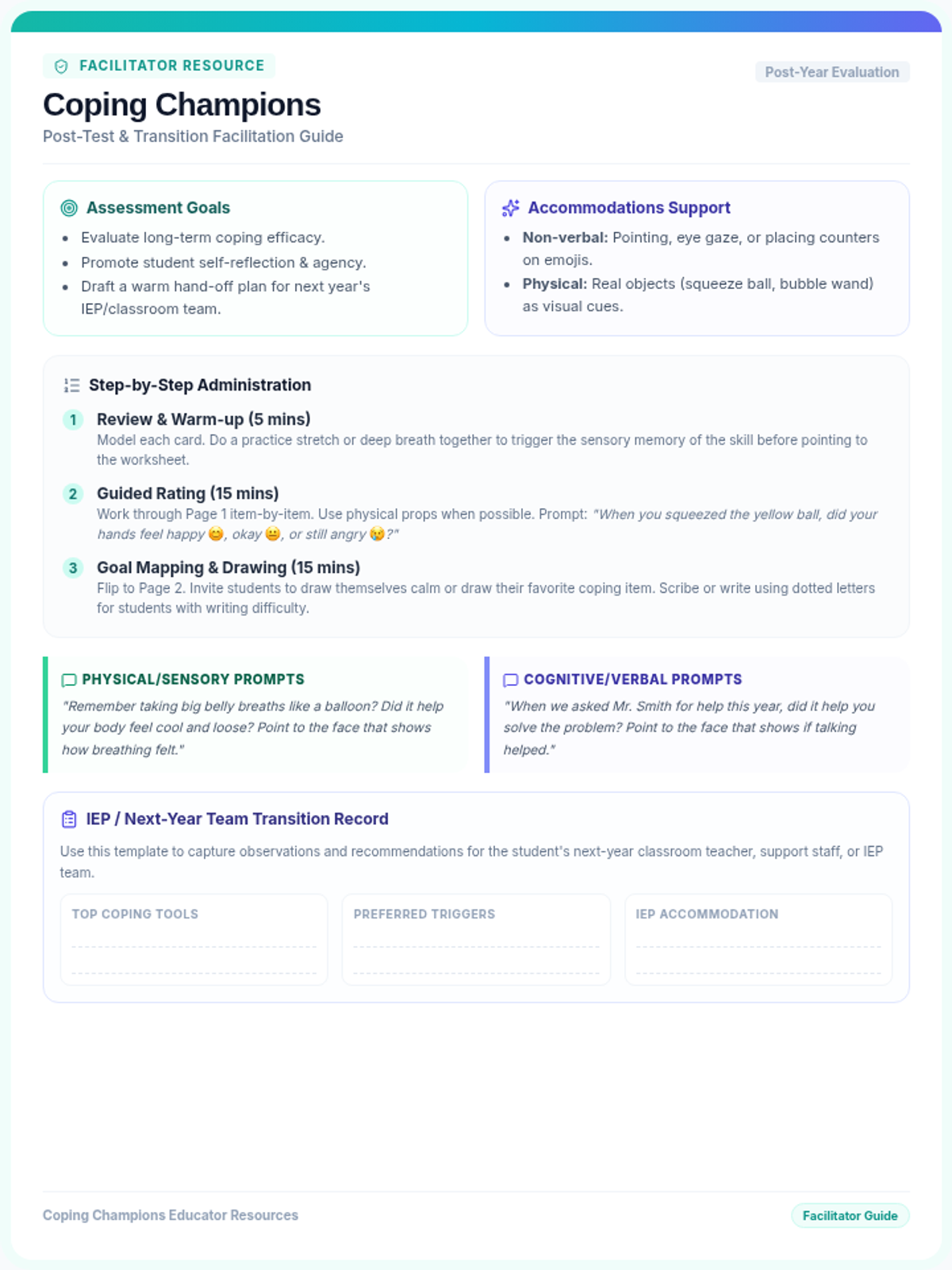
A post-test and reflection lesson designed for students with lower cognitive abilities to evaluate their coping skills from the past year and set gentle goals for the next school year using visual emojis and guided drawing/writing templates.
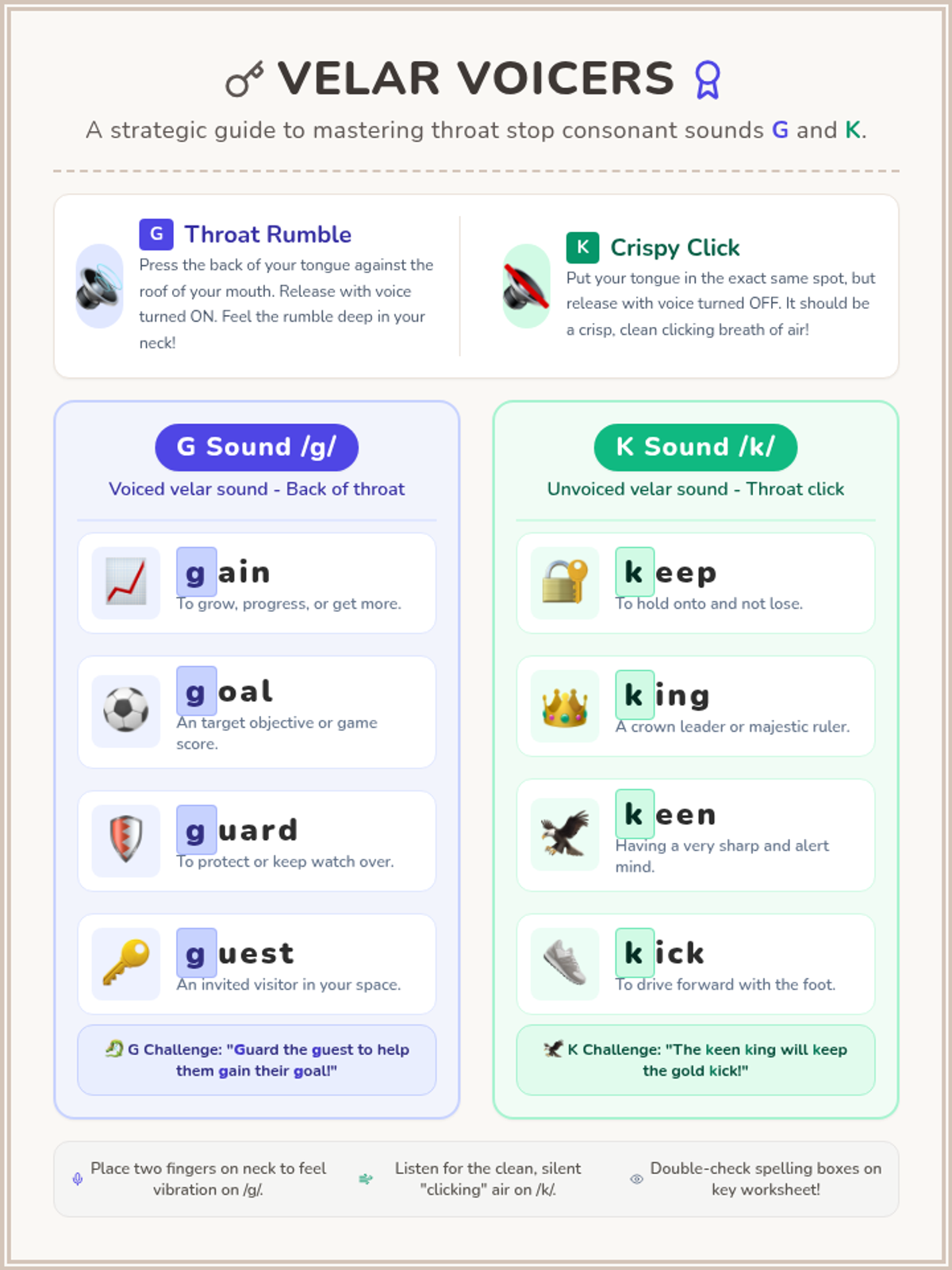
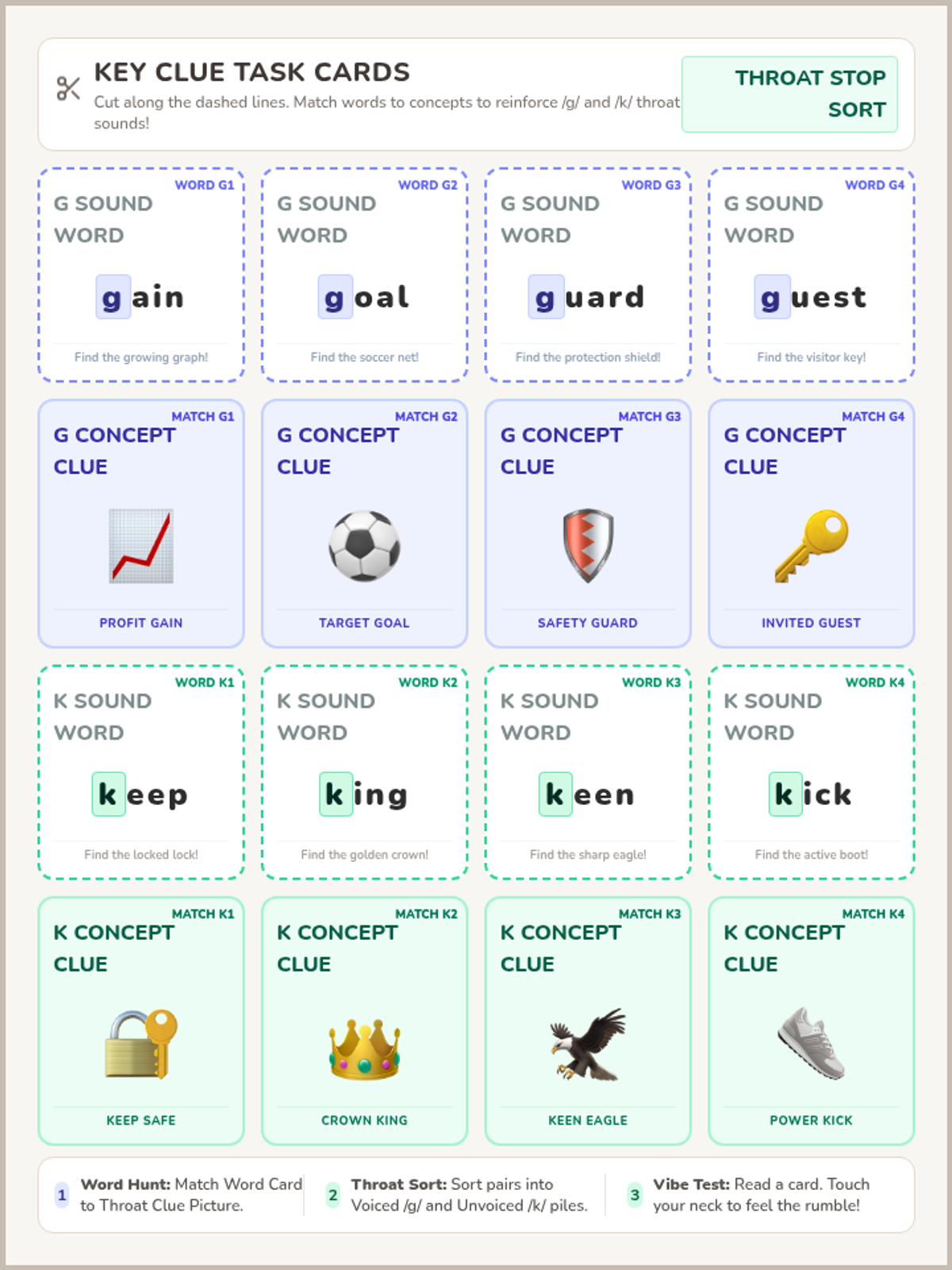
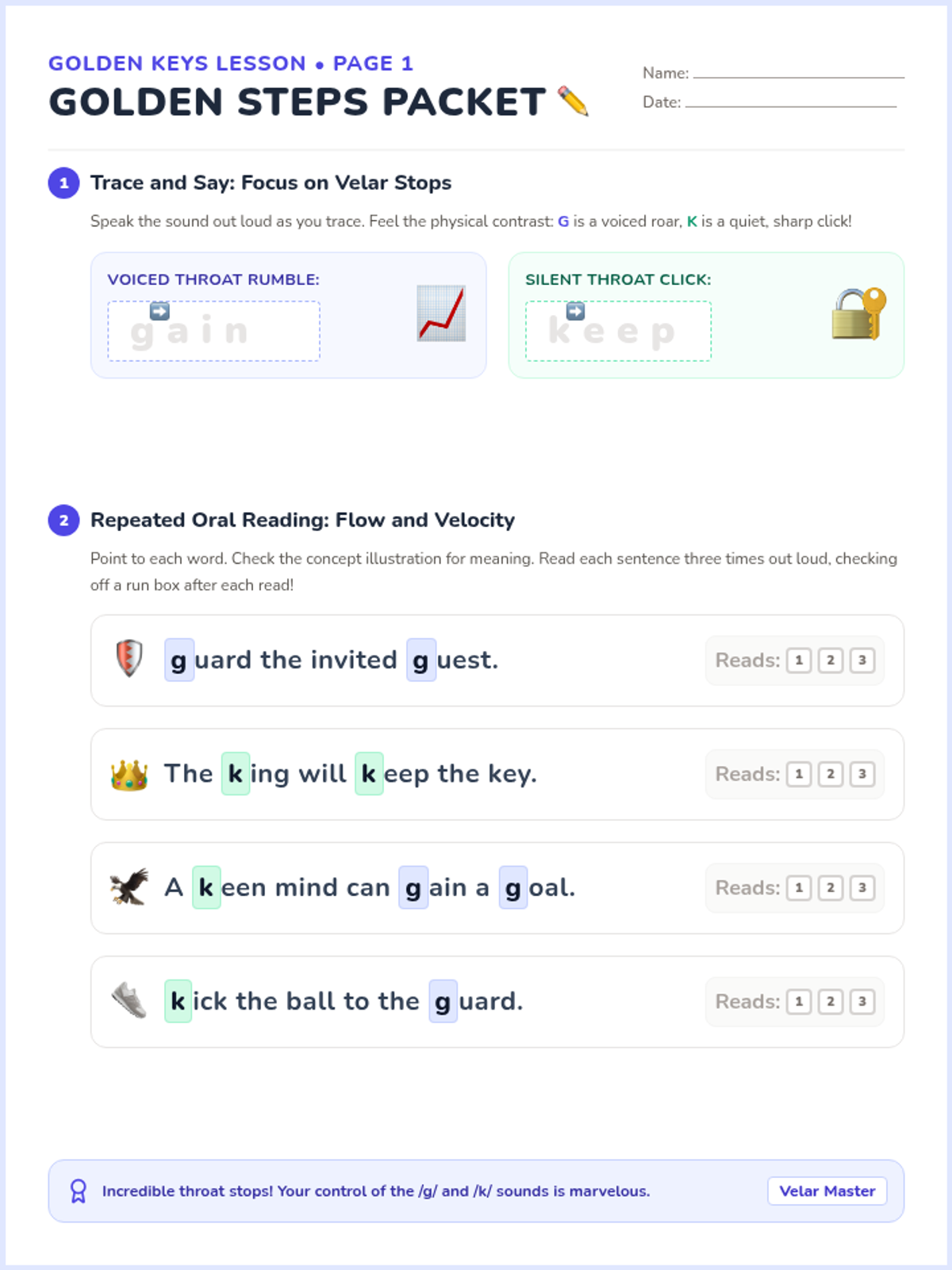
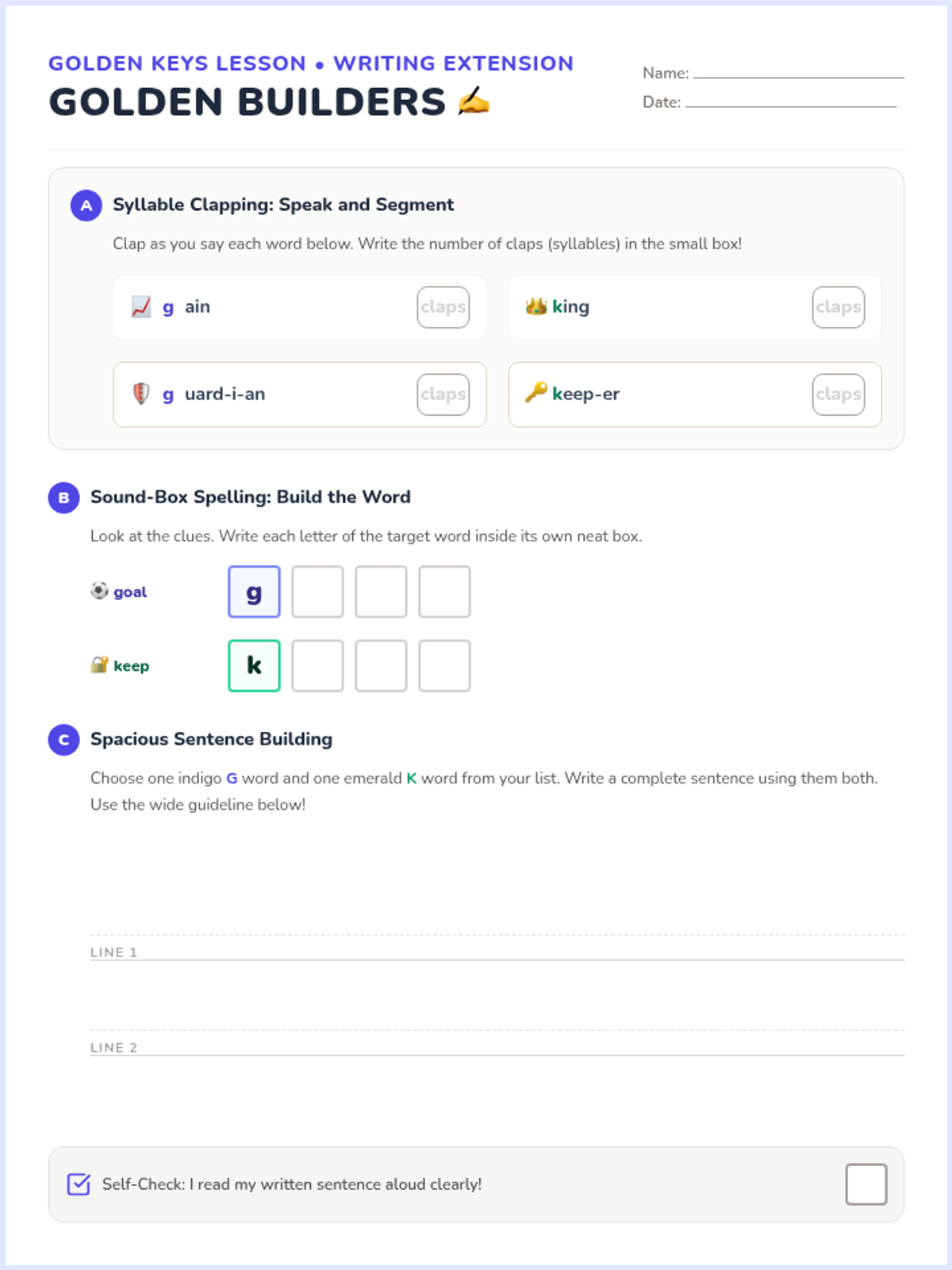
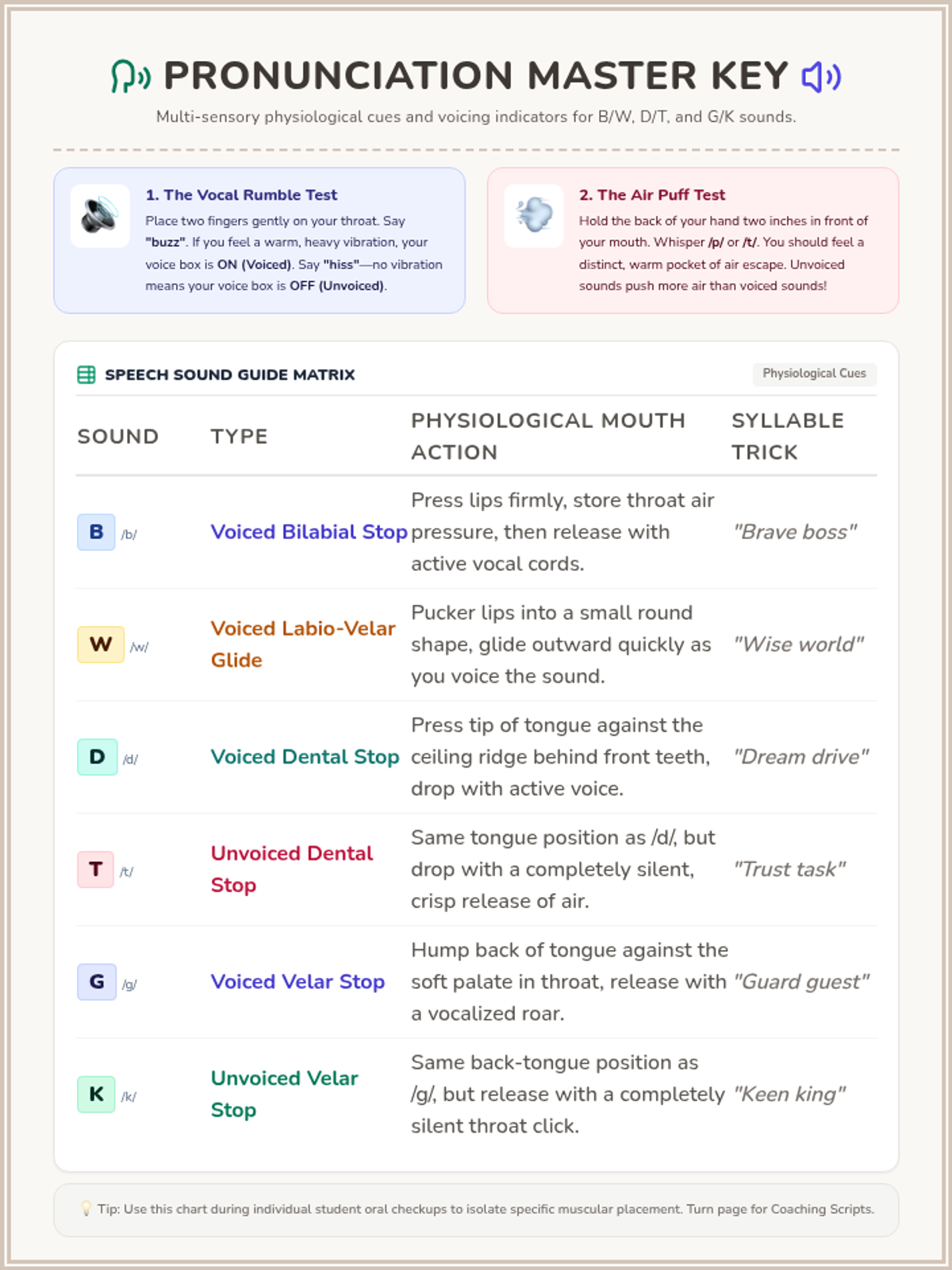
A structured phonics and oral reading lesson contrasting G and K sounds. Features visual voicing indicators, multi-sensory tracing sheets, and high-interest interactive task cards.
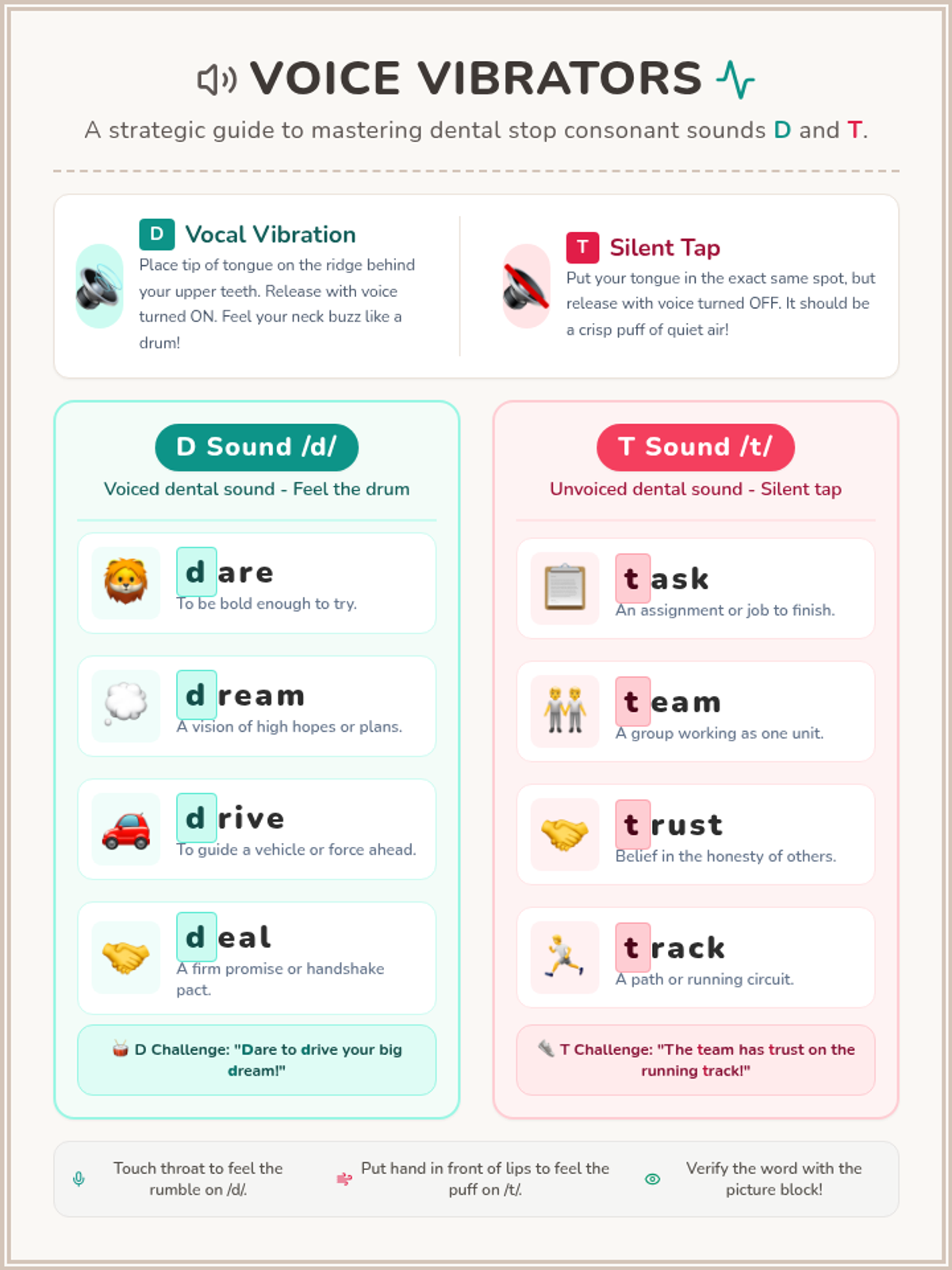
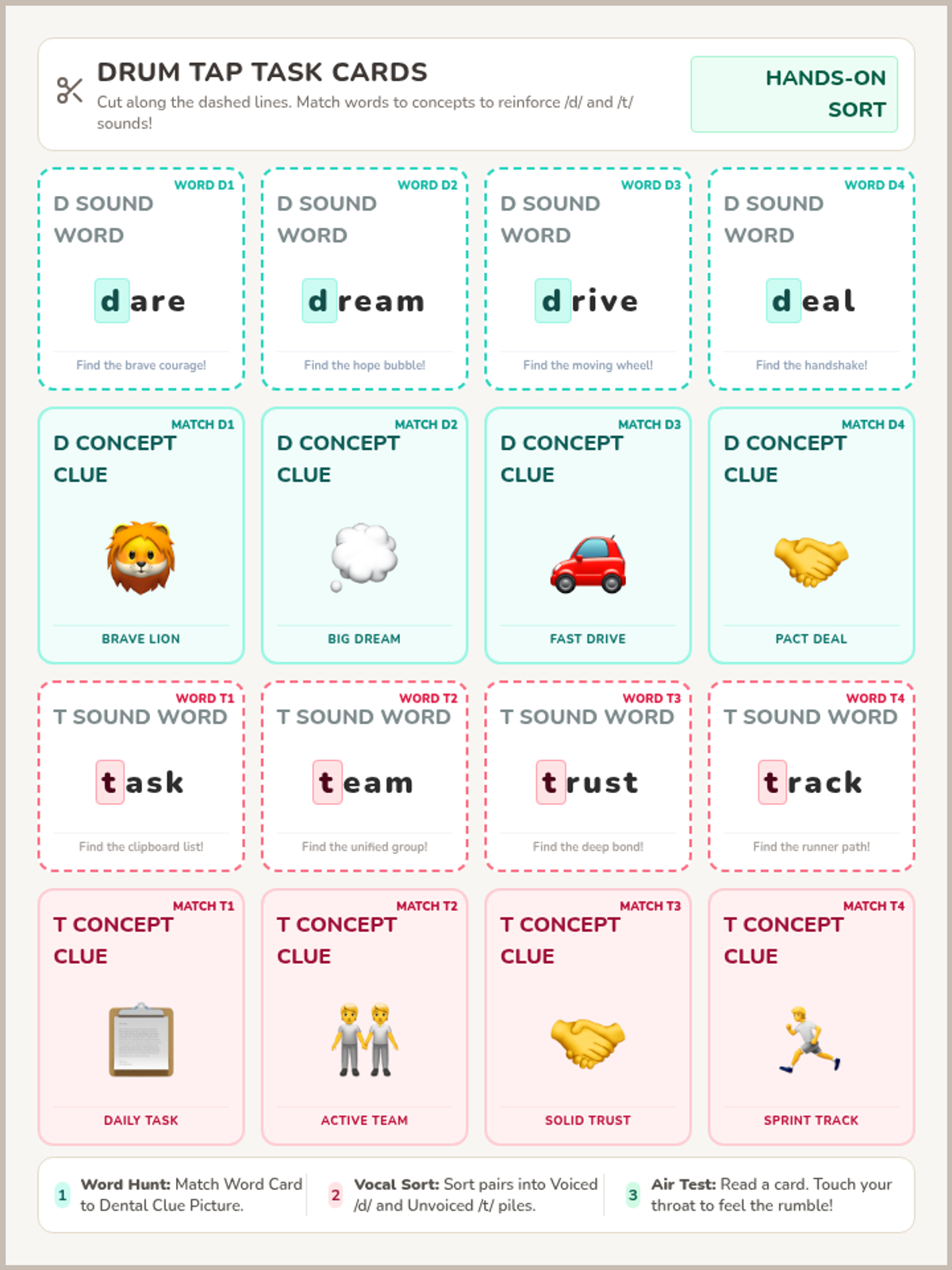
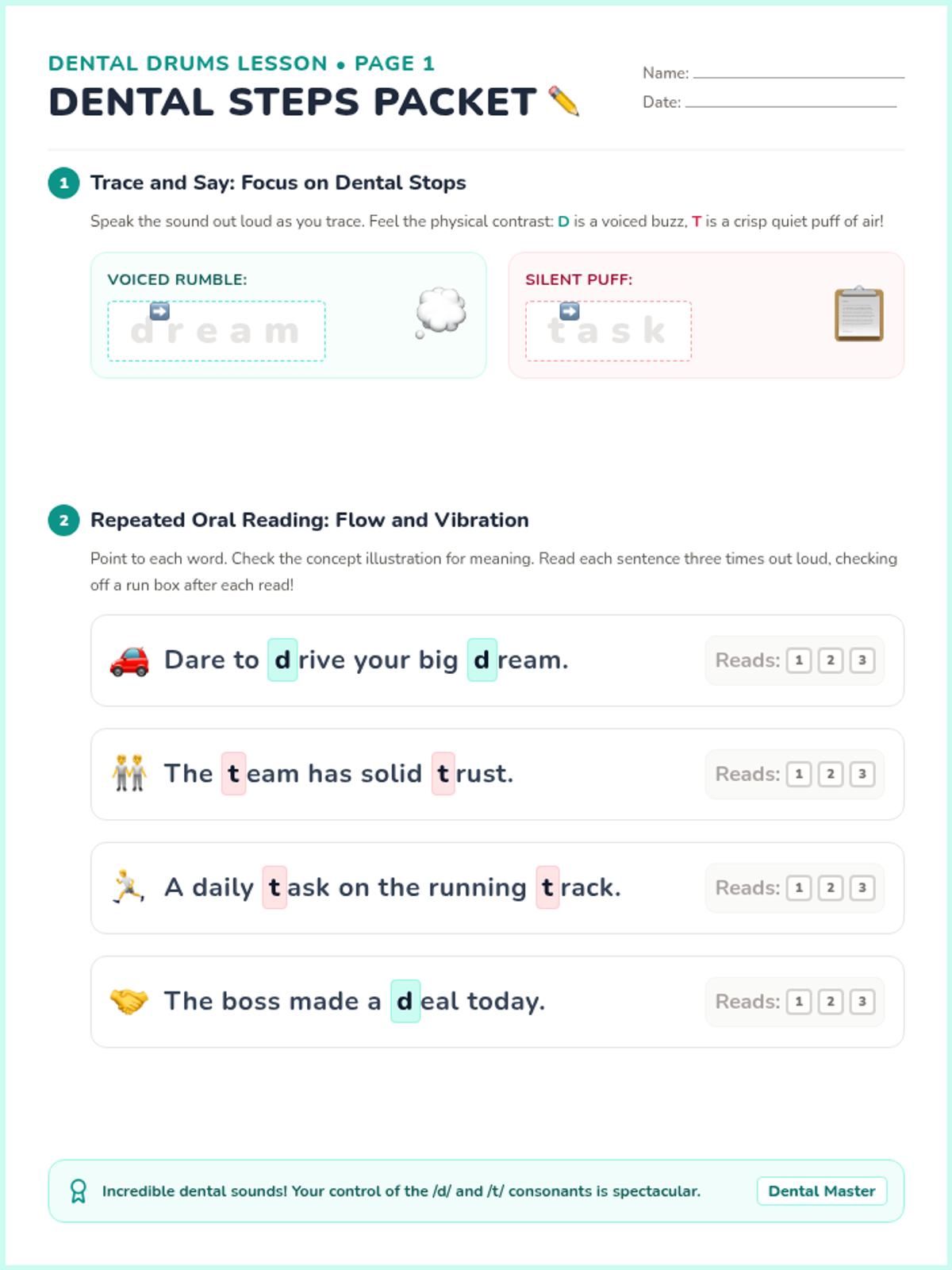
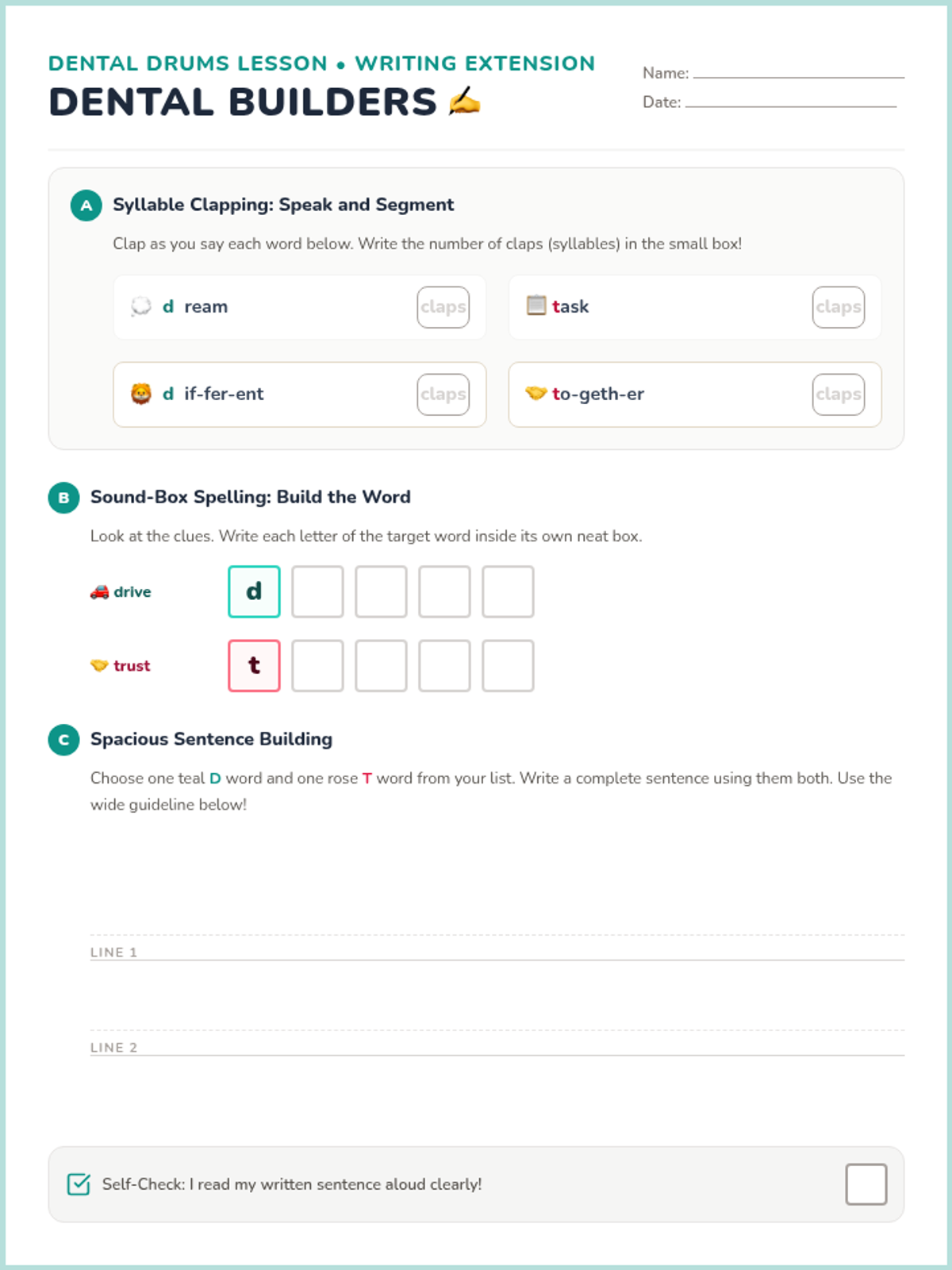
A structured phonics and oral reading lesson contrasting D and T sounds. Features heavy picture scaffolding, voice-vibration indicators, and dyslexia-friendly physical activity resources.
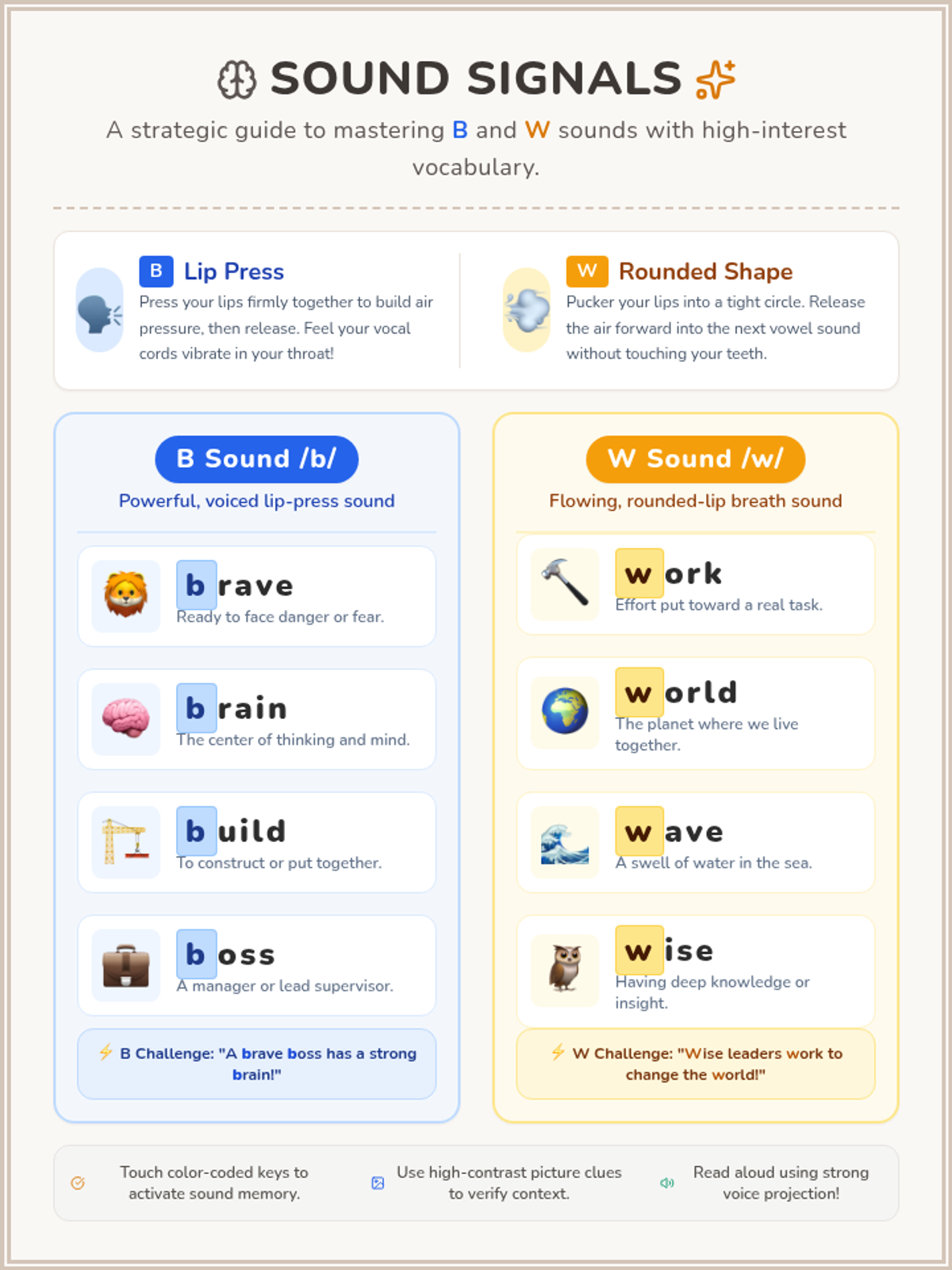
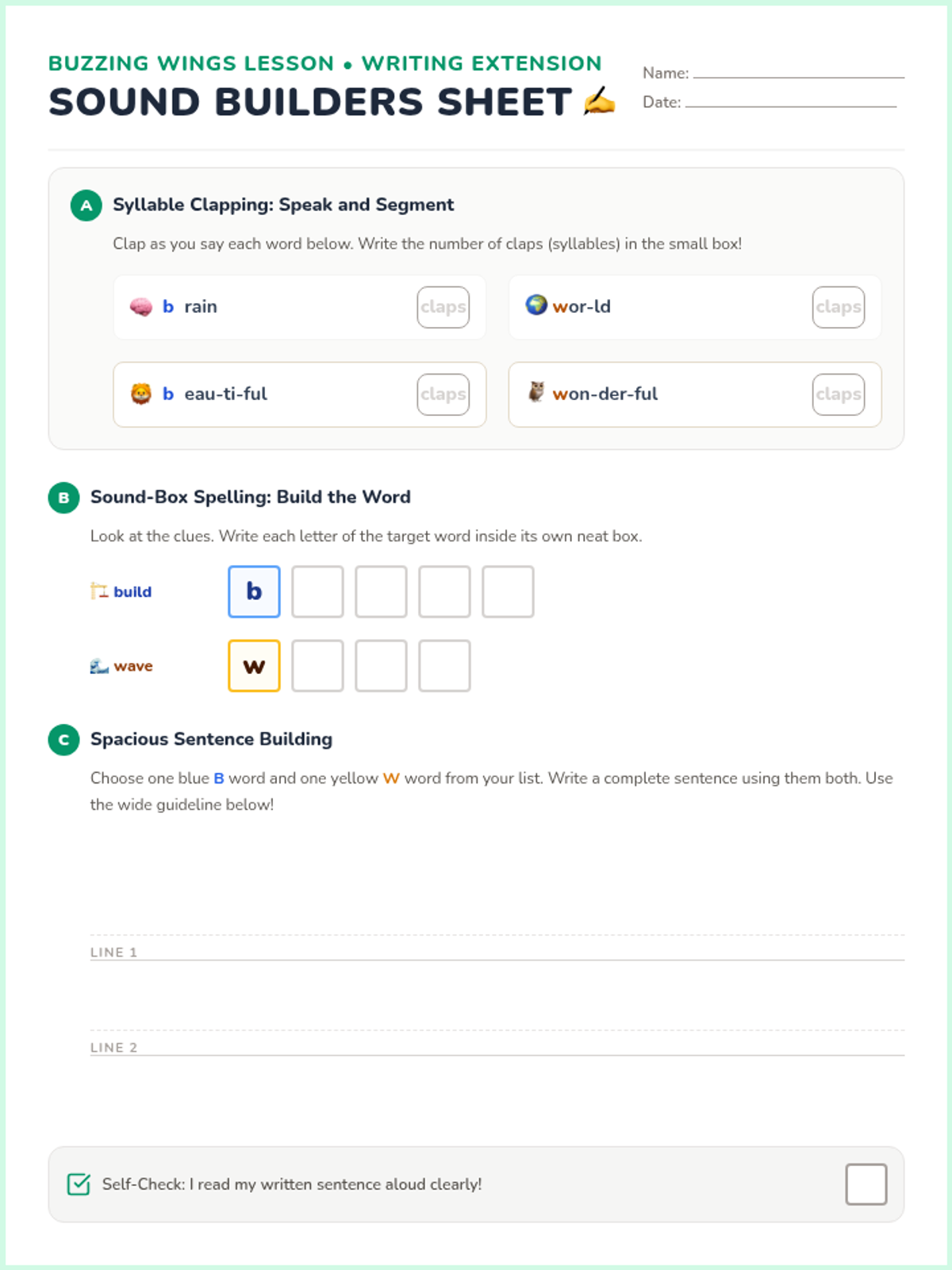
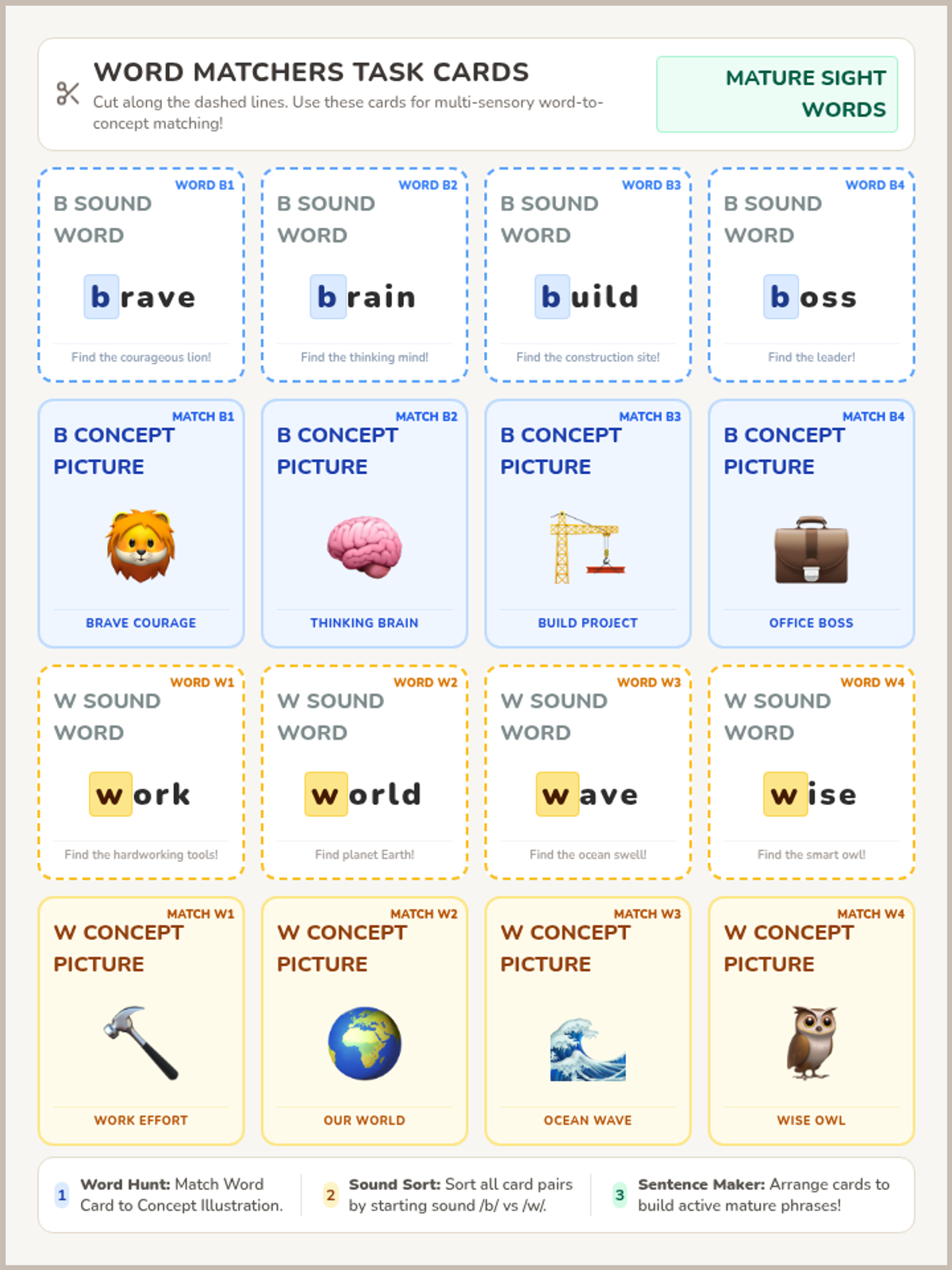
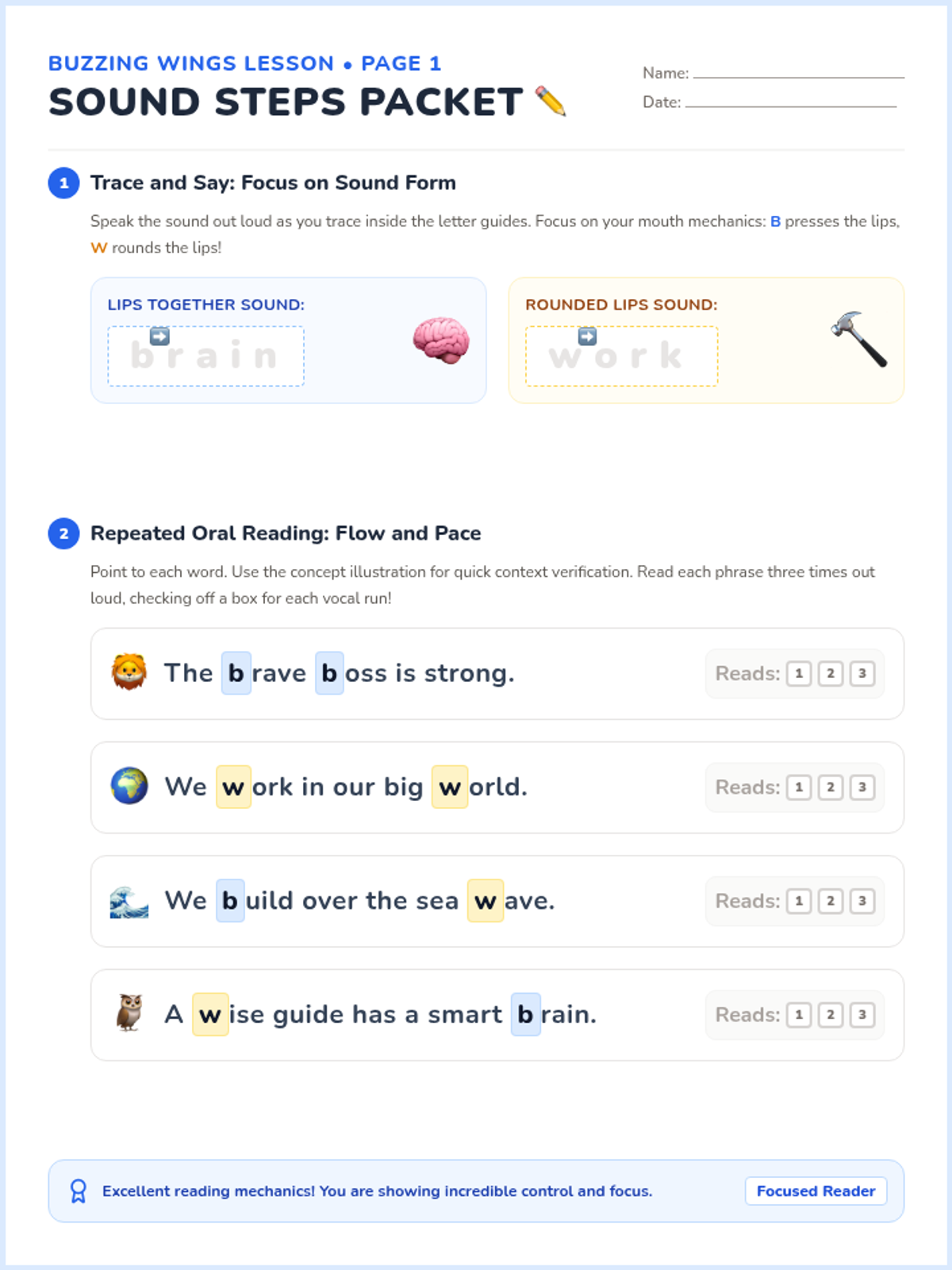
An hour-long structured reading lesson focusing on B and W letter-sound association and common sight words. Designed with dyslexia-friendly spacing, color-coded highlights, and picture scaffolding to support struggling oral readers.
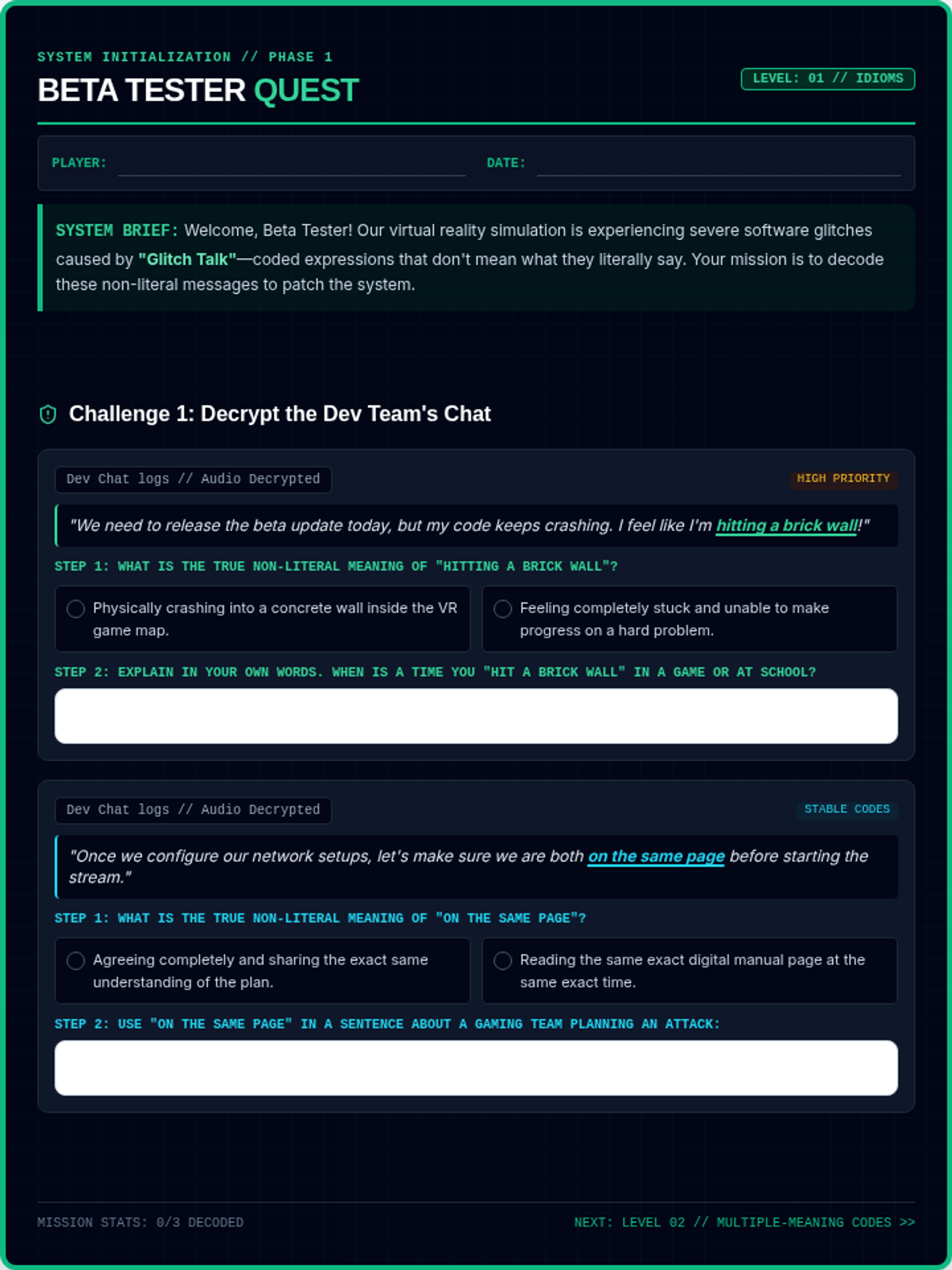
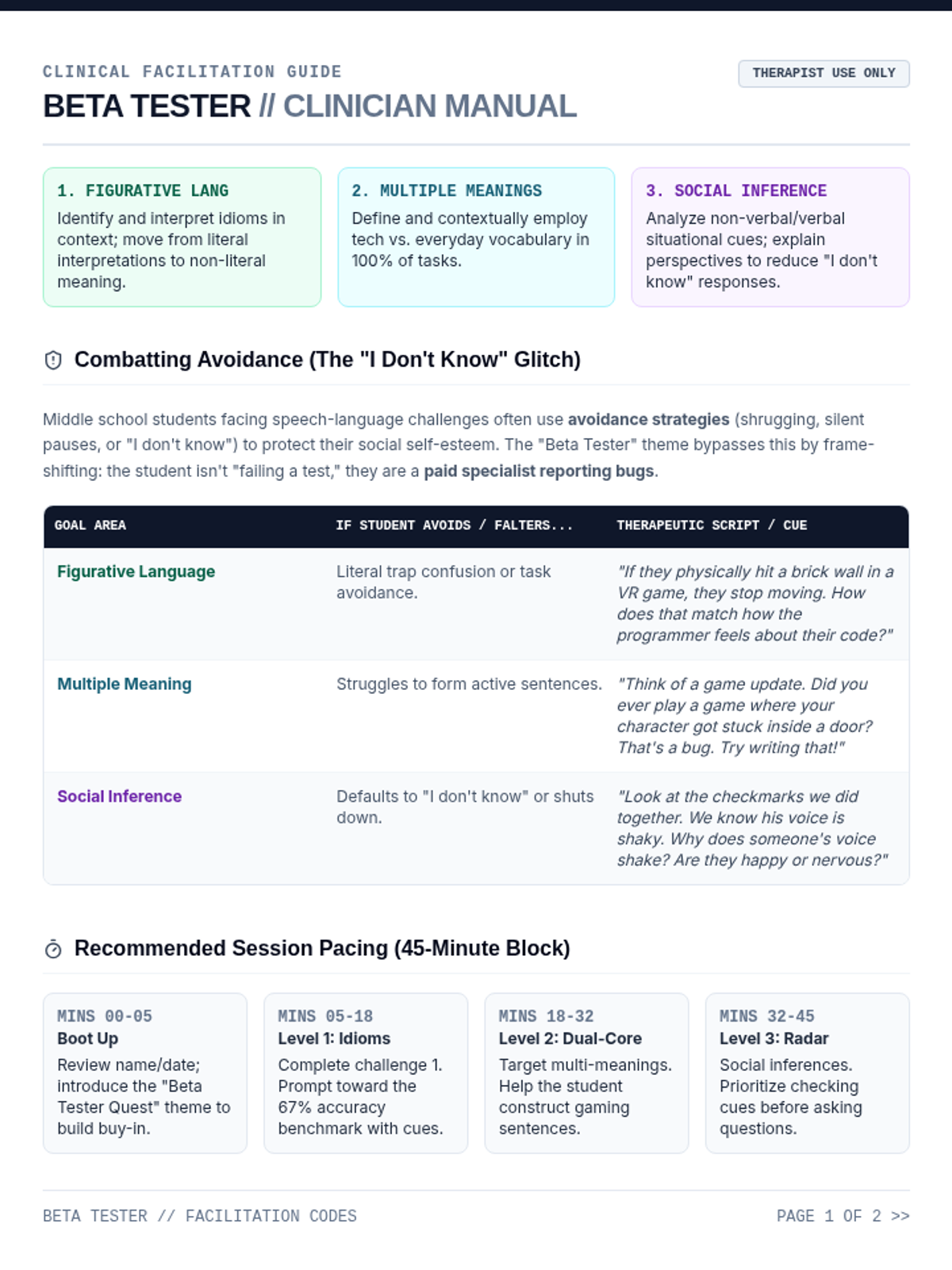
A highly engaging gaming and technology-themed speech-language therapy unit targeting figurative language, multiple-meaning words, and social inference for middle school students, featuring structured scaffolding to support active participation.
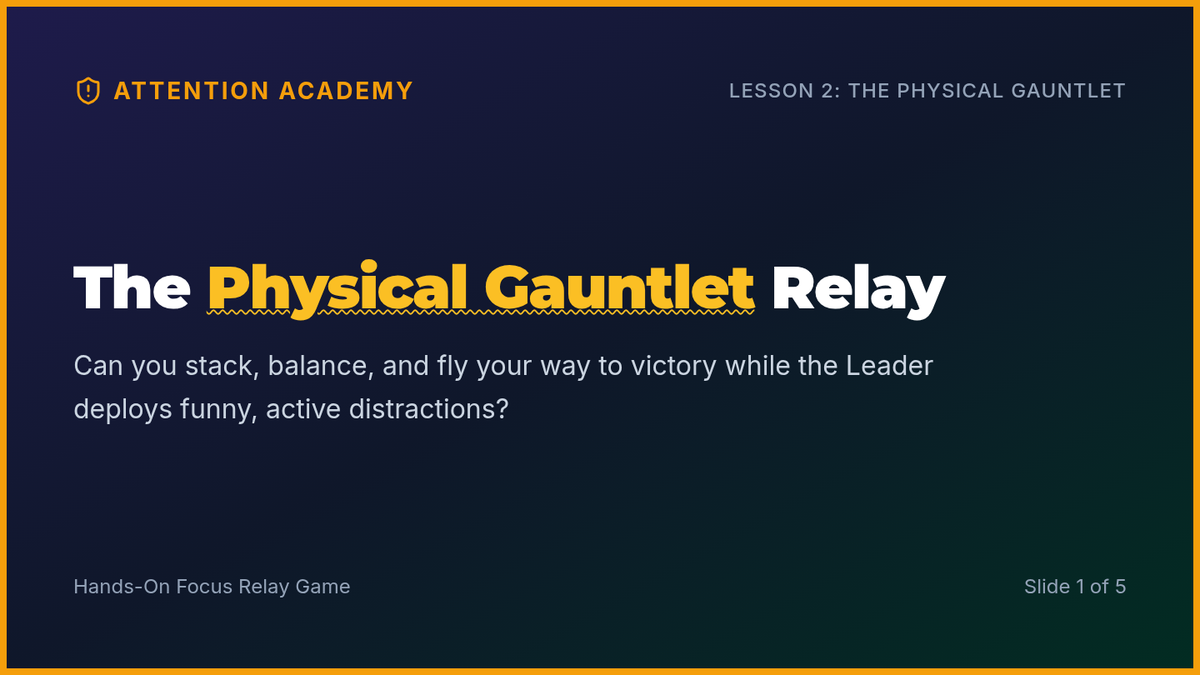
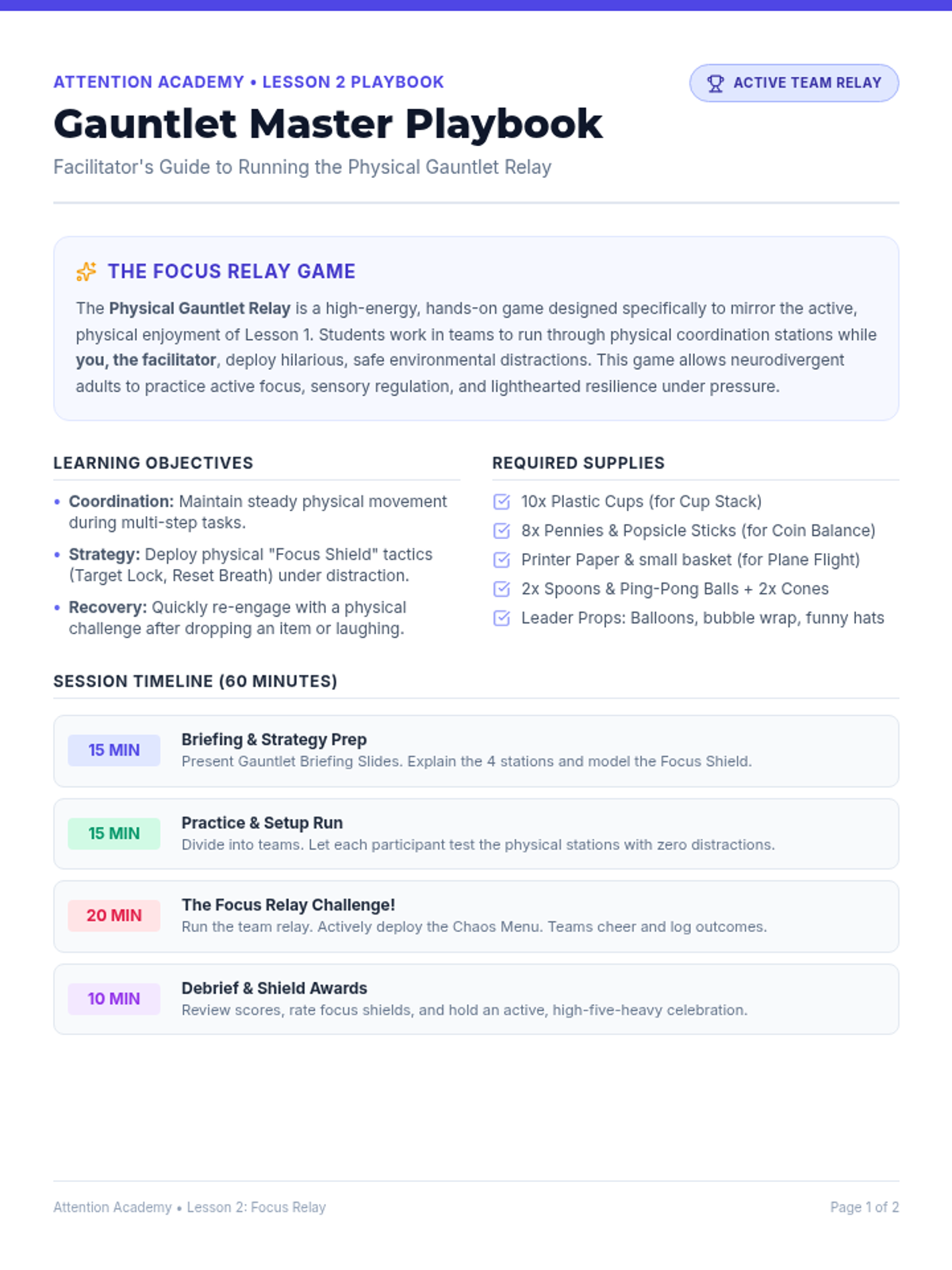
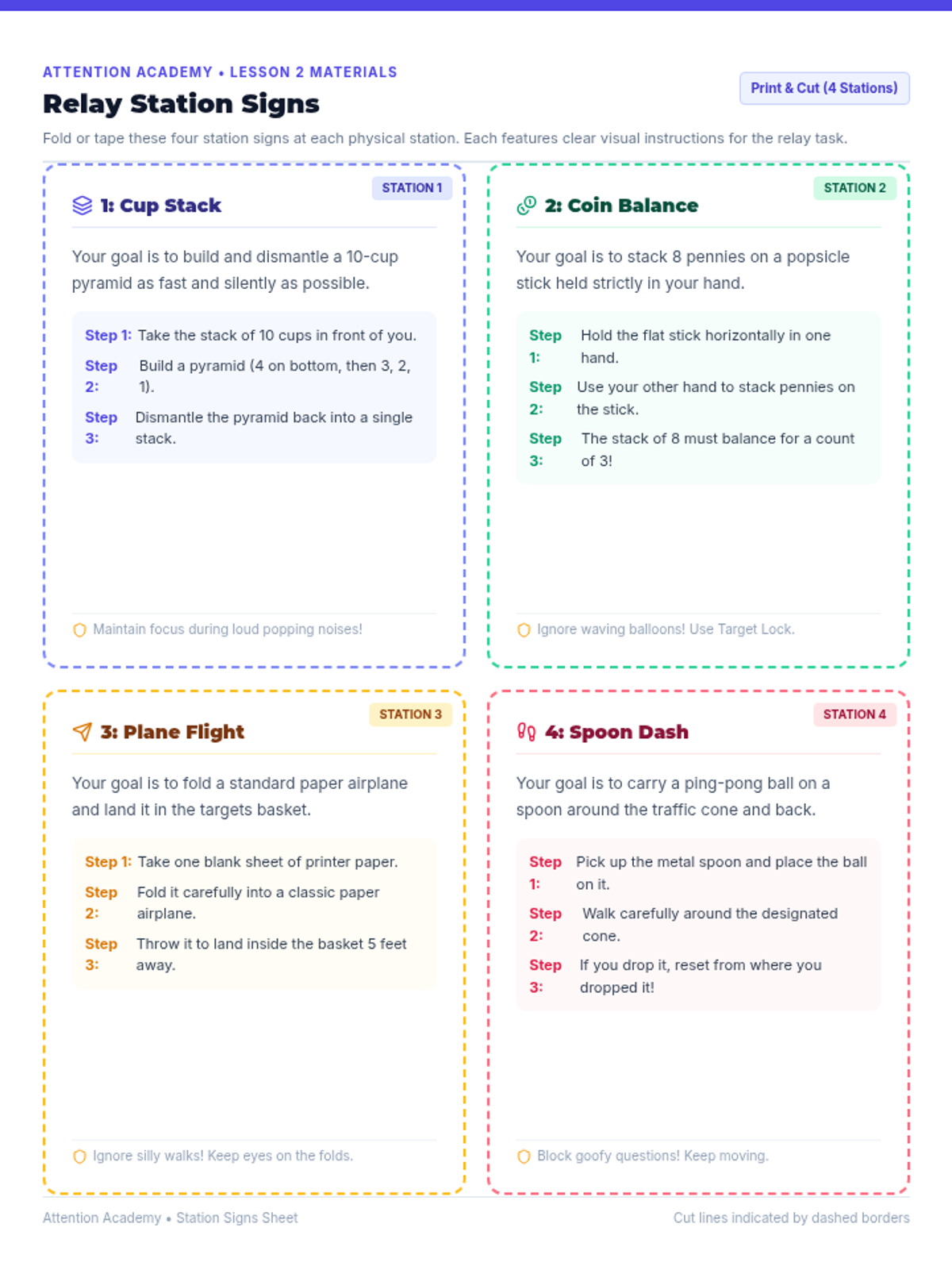
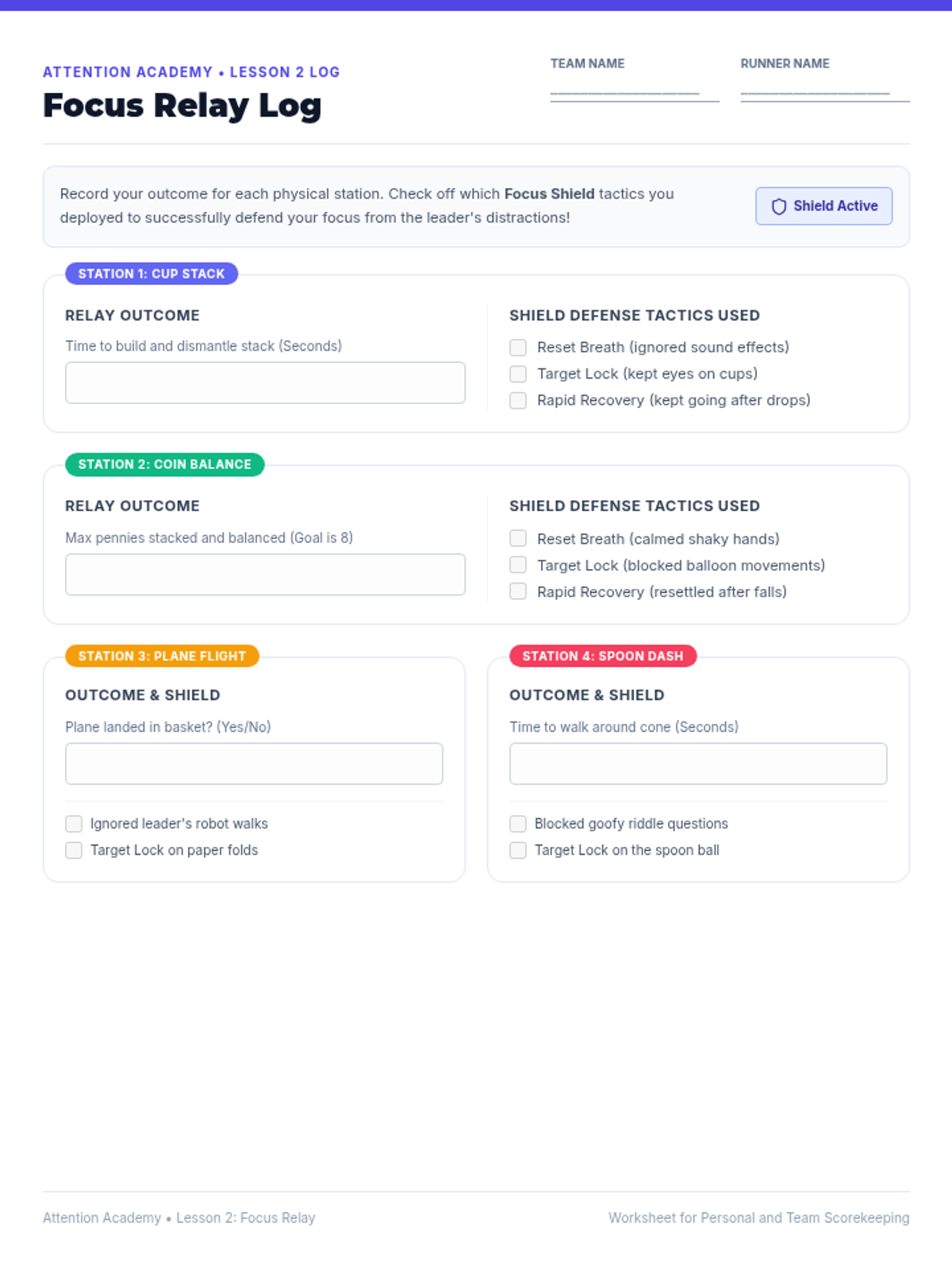
A high-energy team-based relay game where participants complete physical coordination challenges while the leader deploys humorous, safe distractions. Teams earn points for speed, accuracy, and focus recovery.
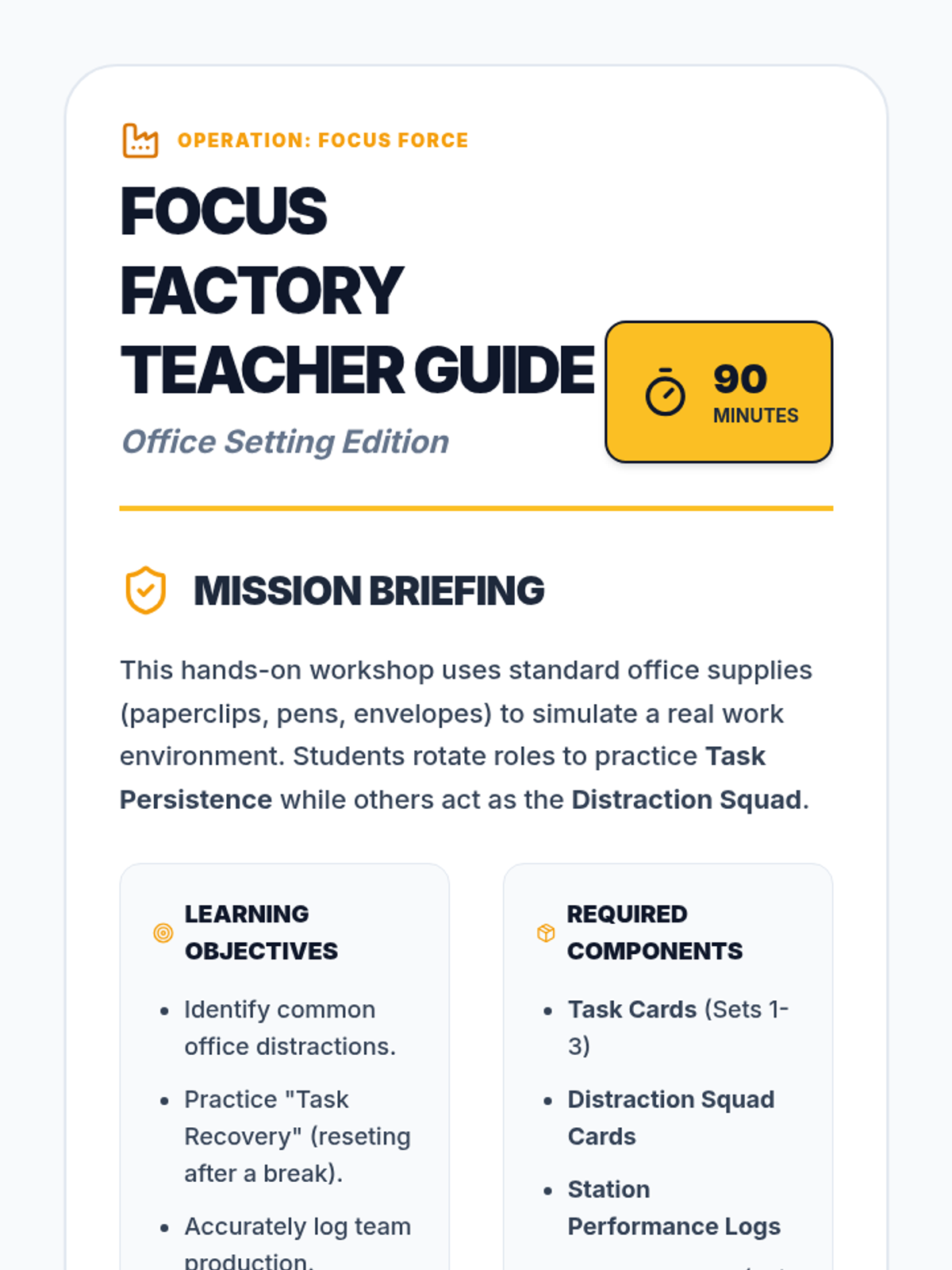
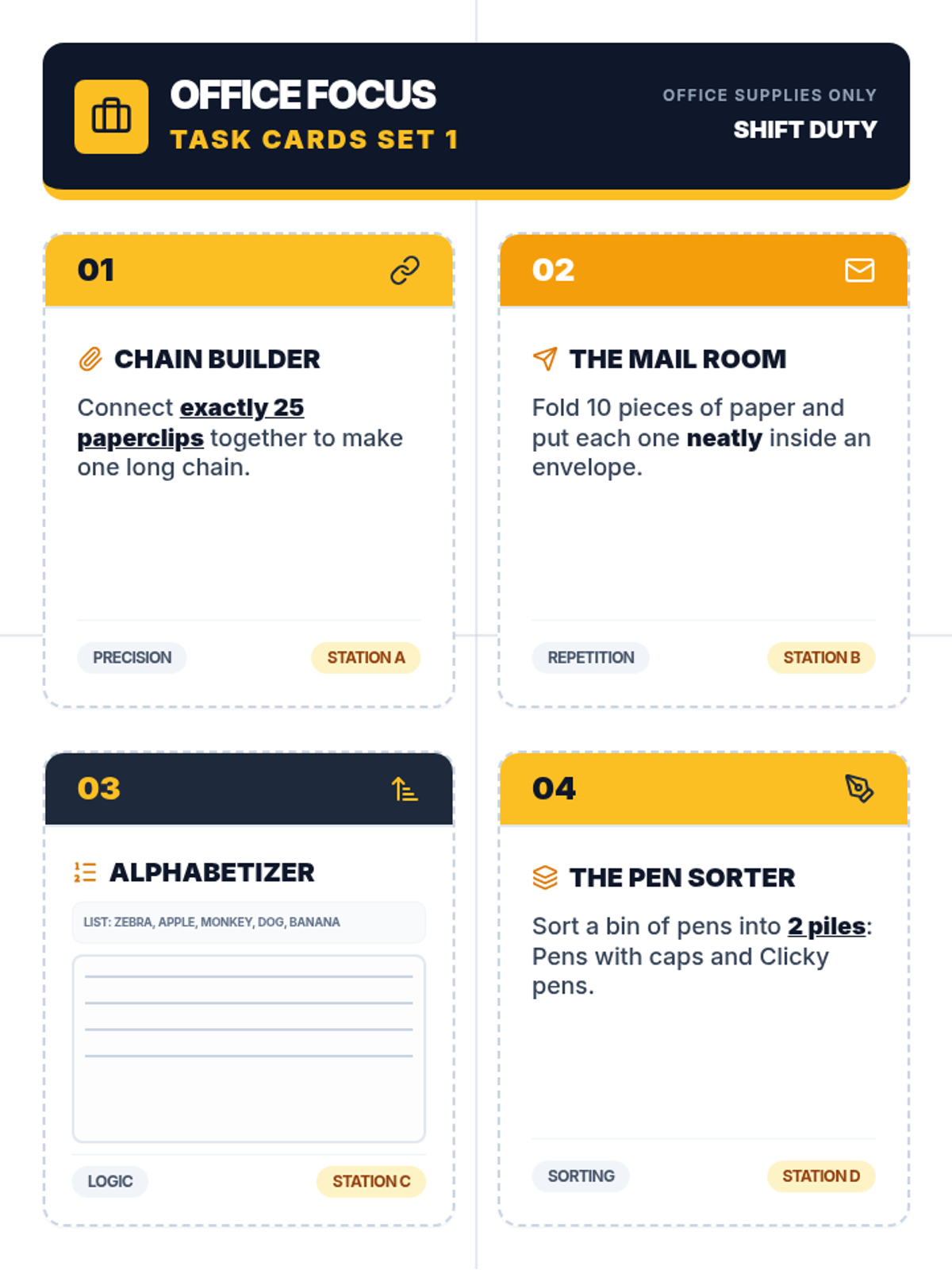
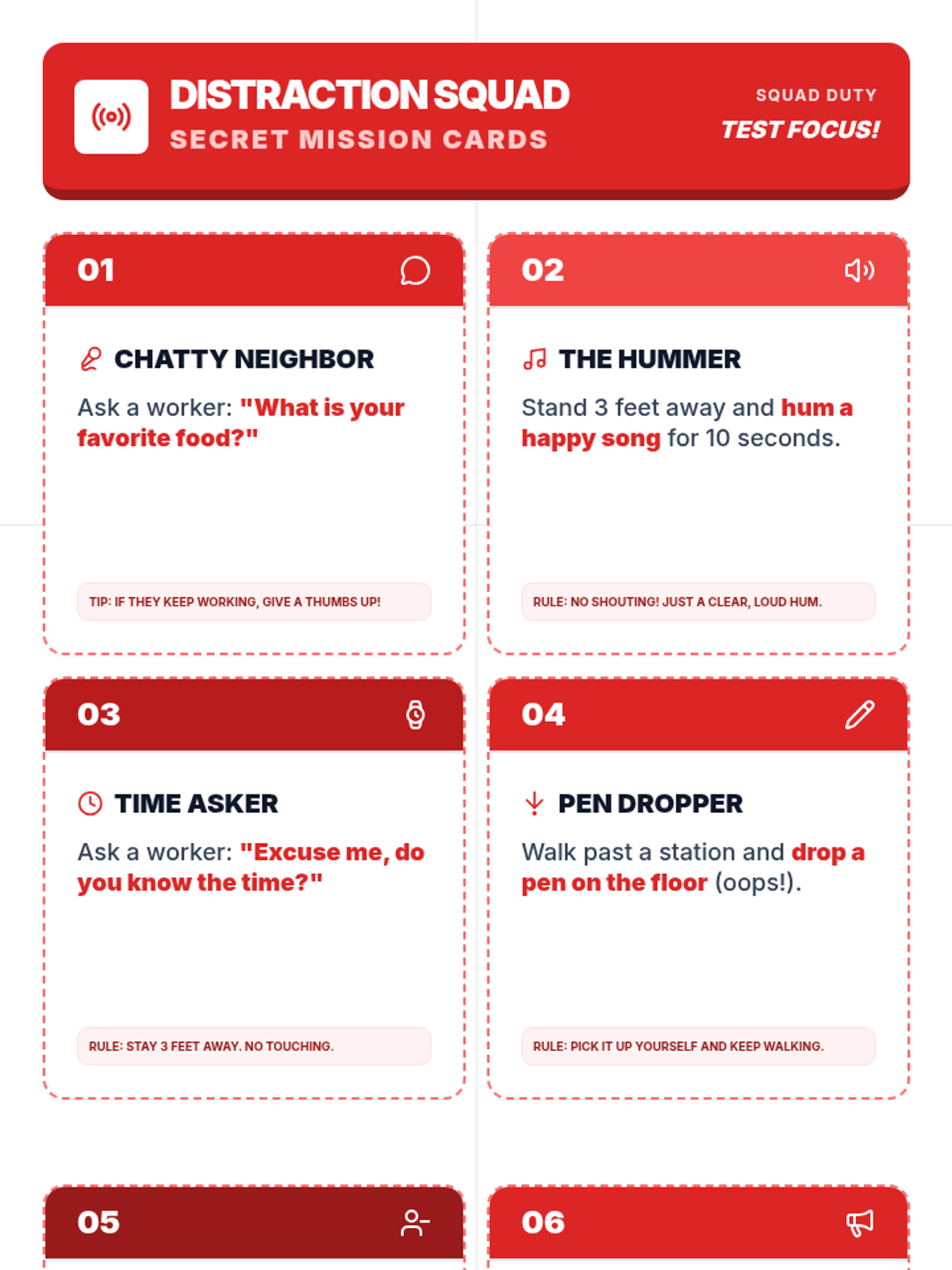
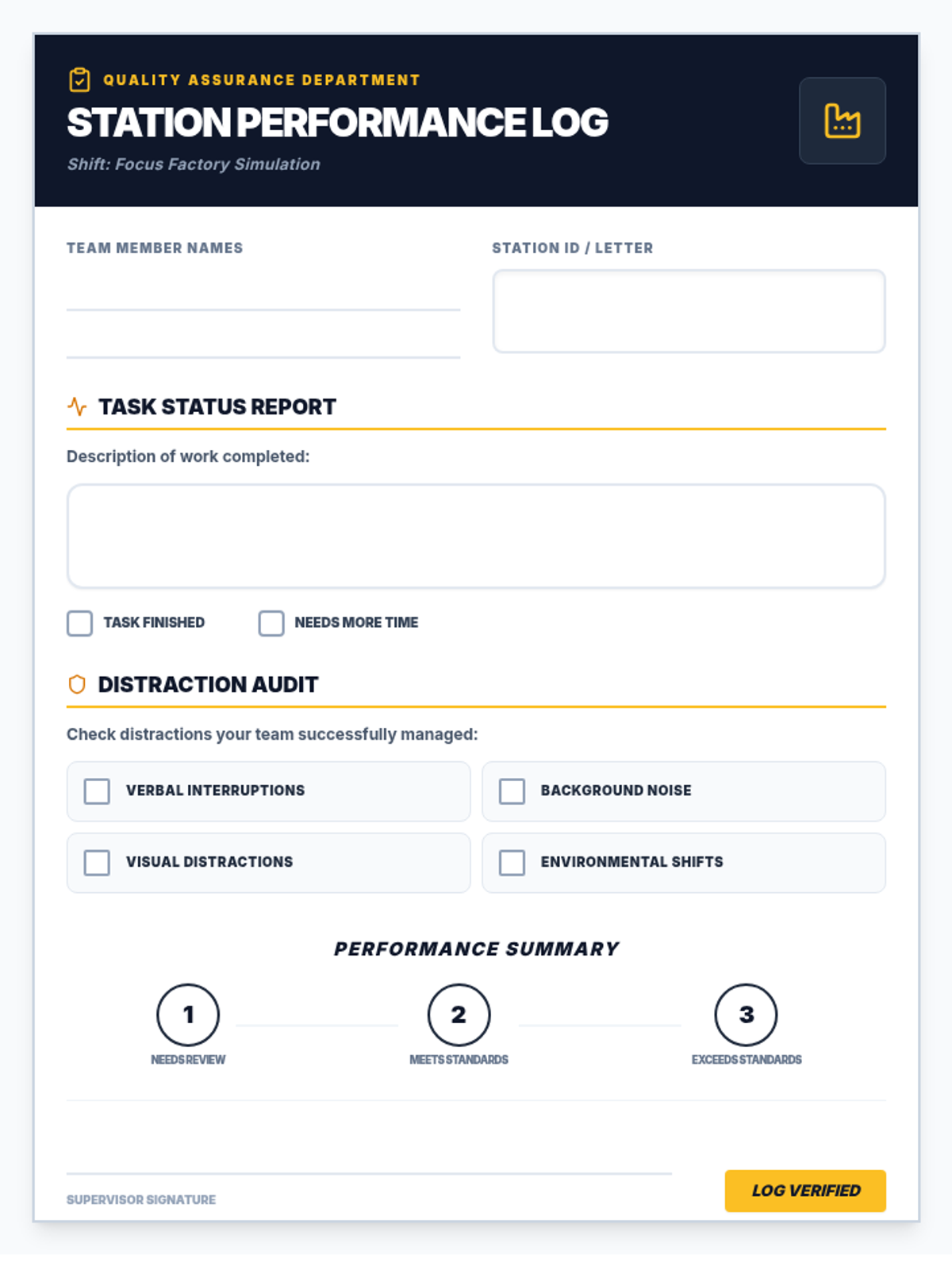
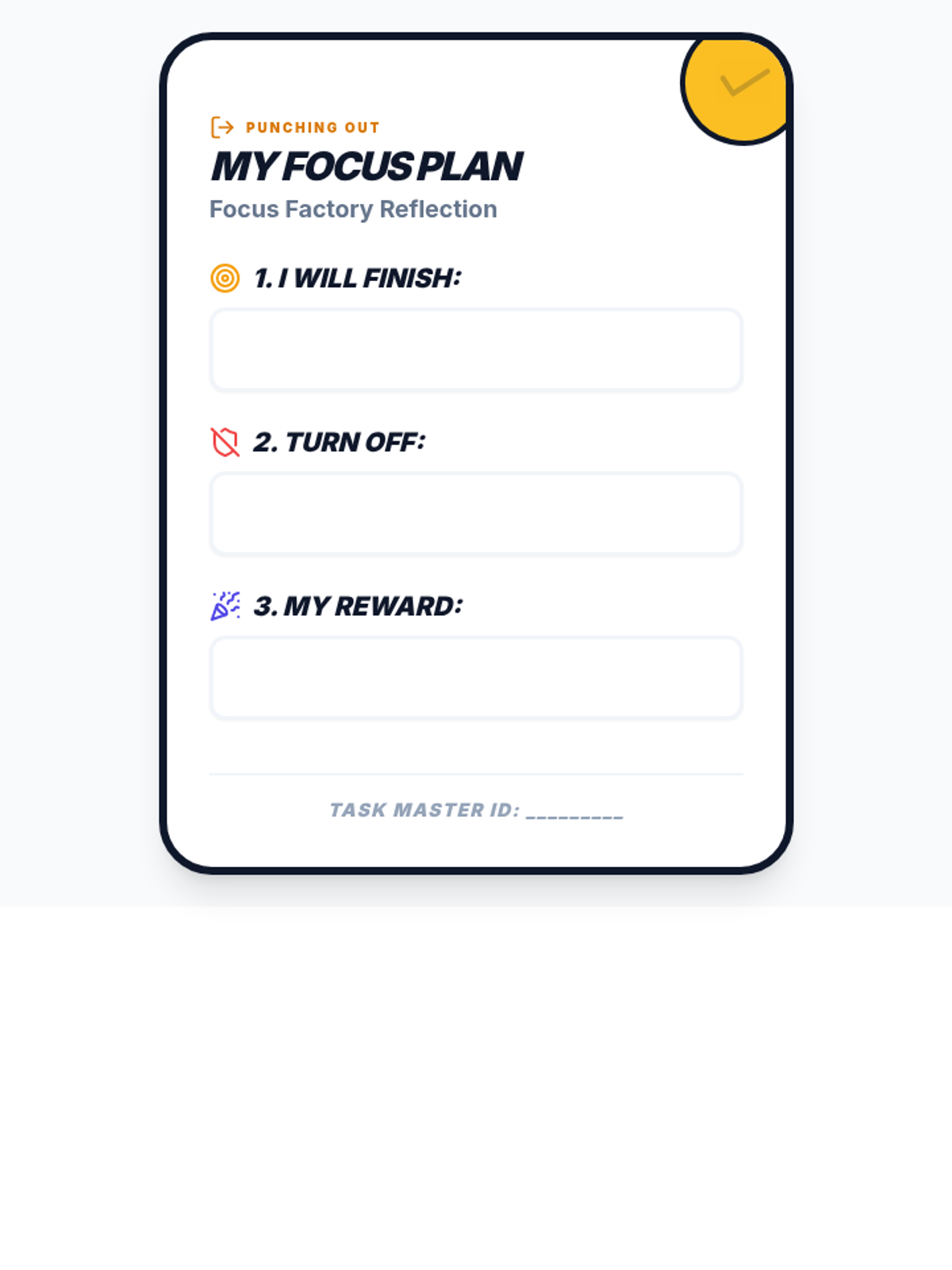
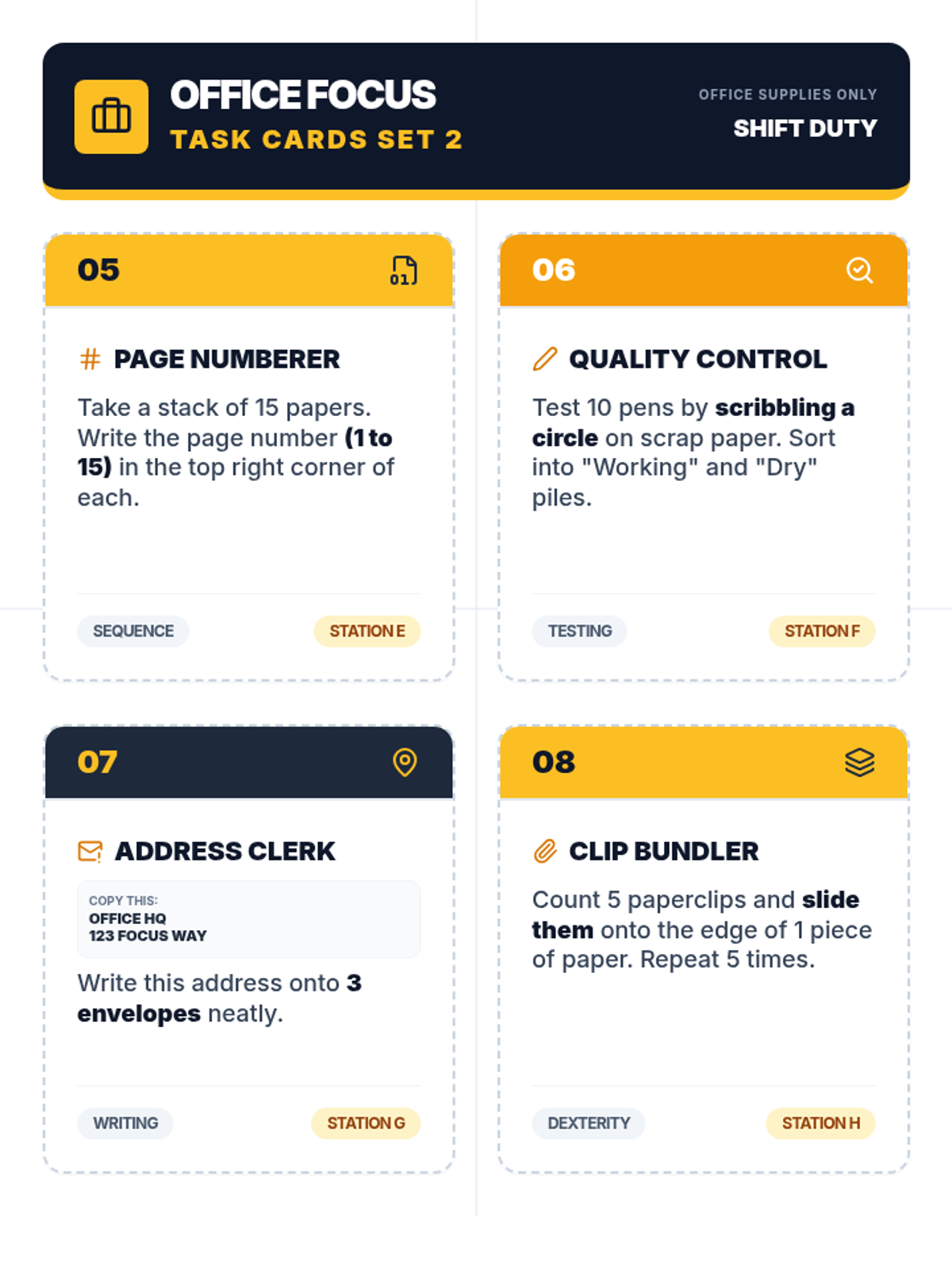
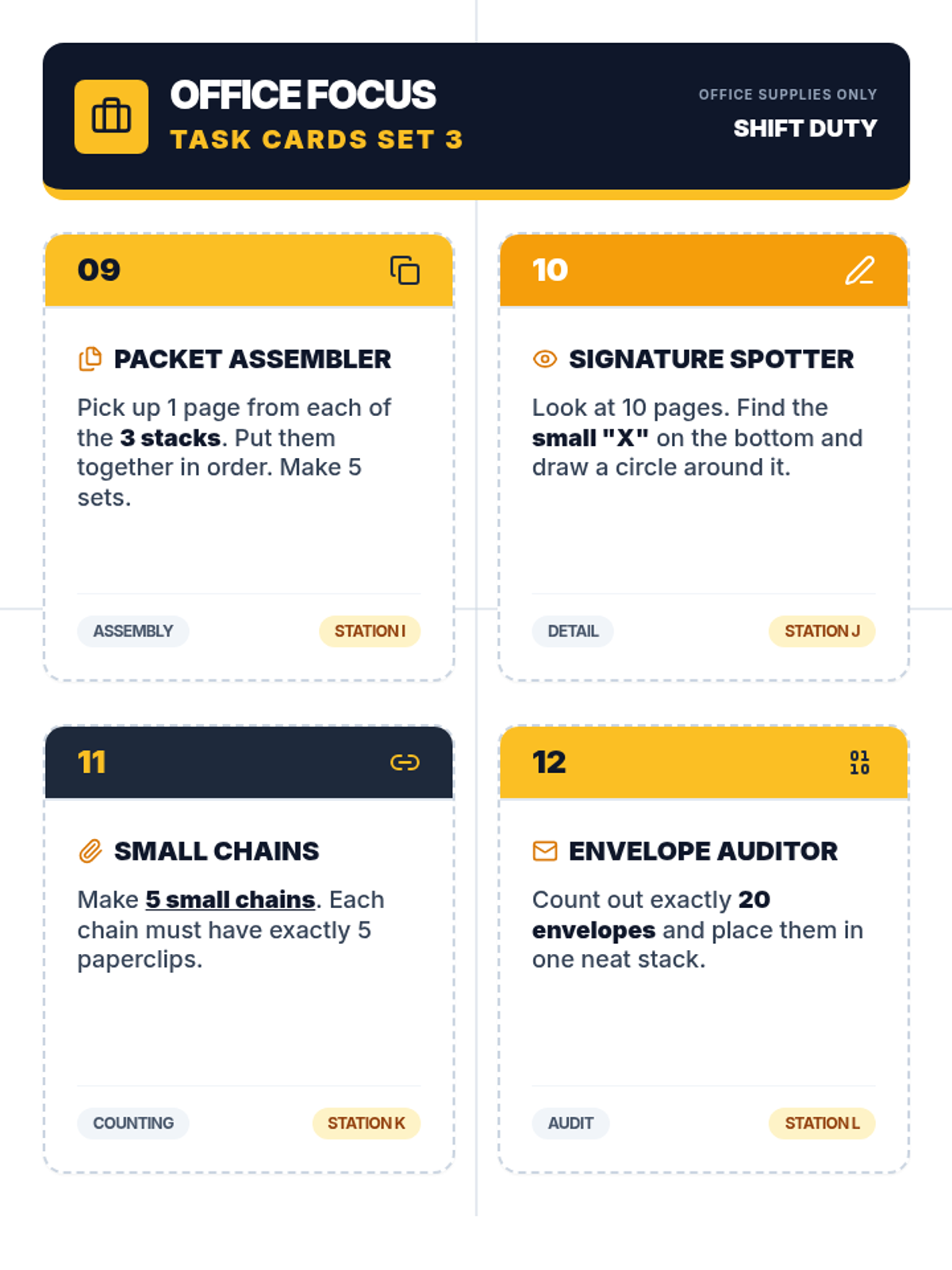
A high-energy, hands-on workshop where students practice executive functioning skills through a 'Focus Factory' simulation. Students rotate between being 'Task Workers' completing physical tasks and 'Distraction Squad' members trying to (kindly) test their peers' focus.
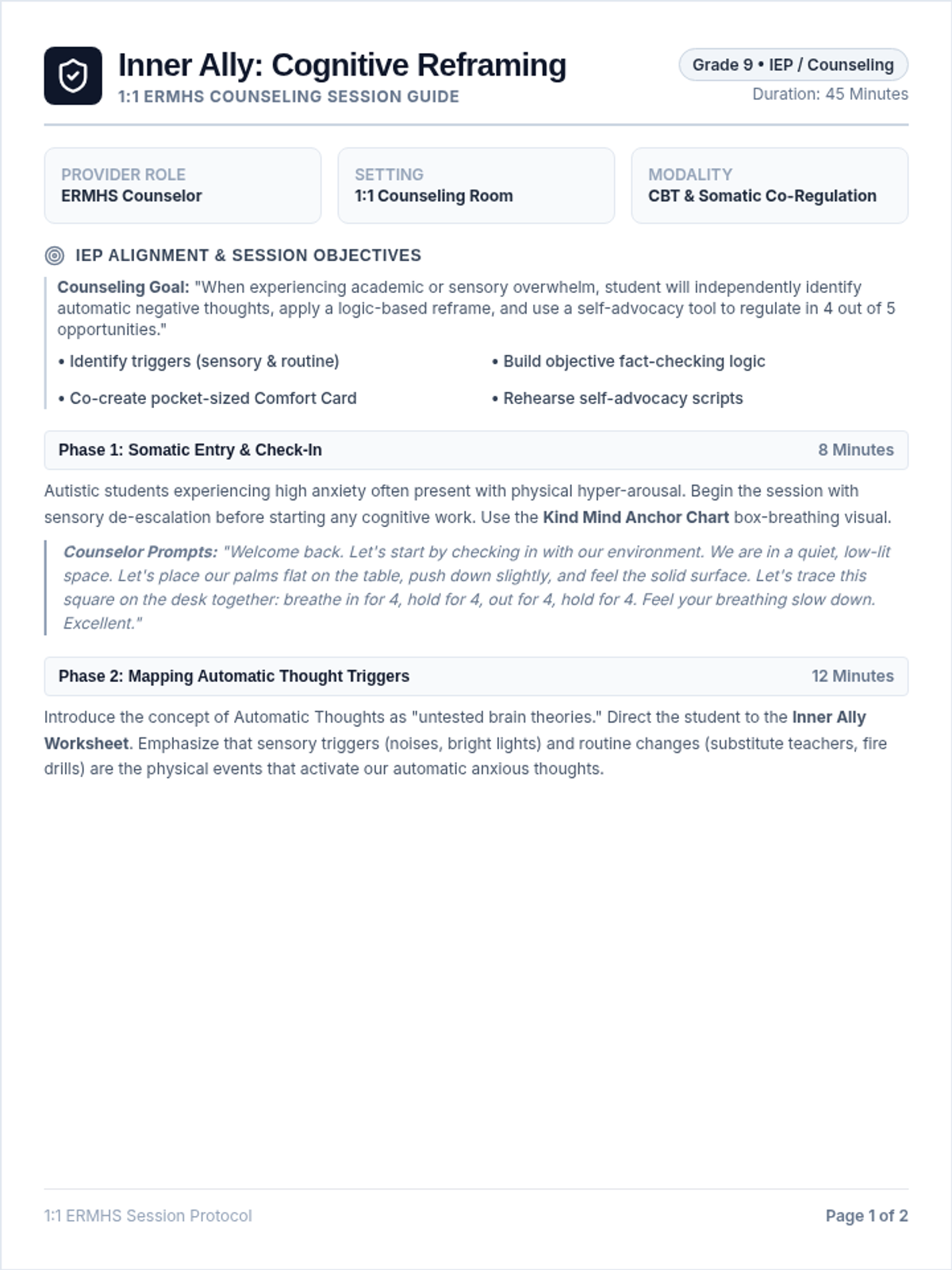
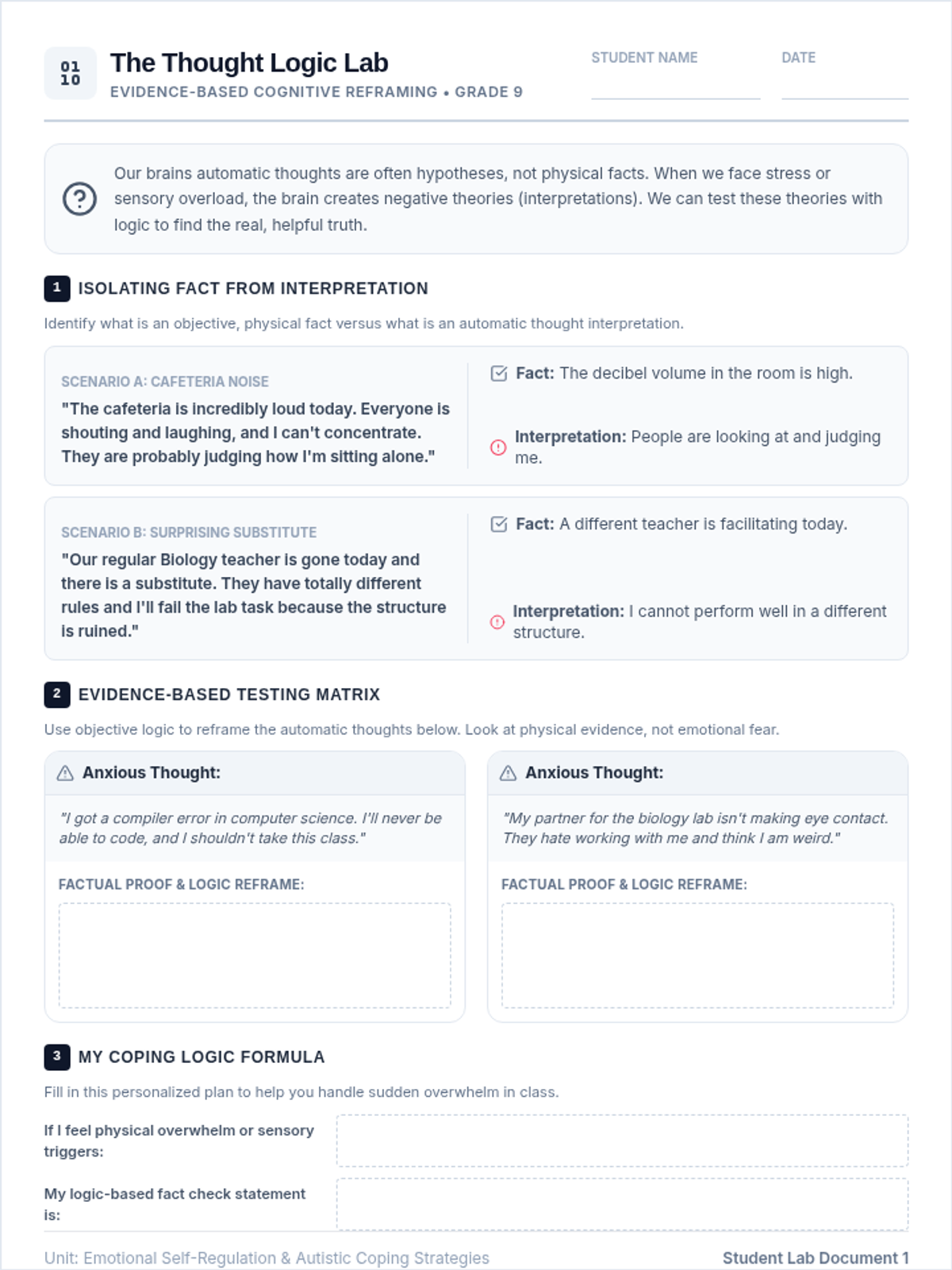
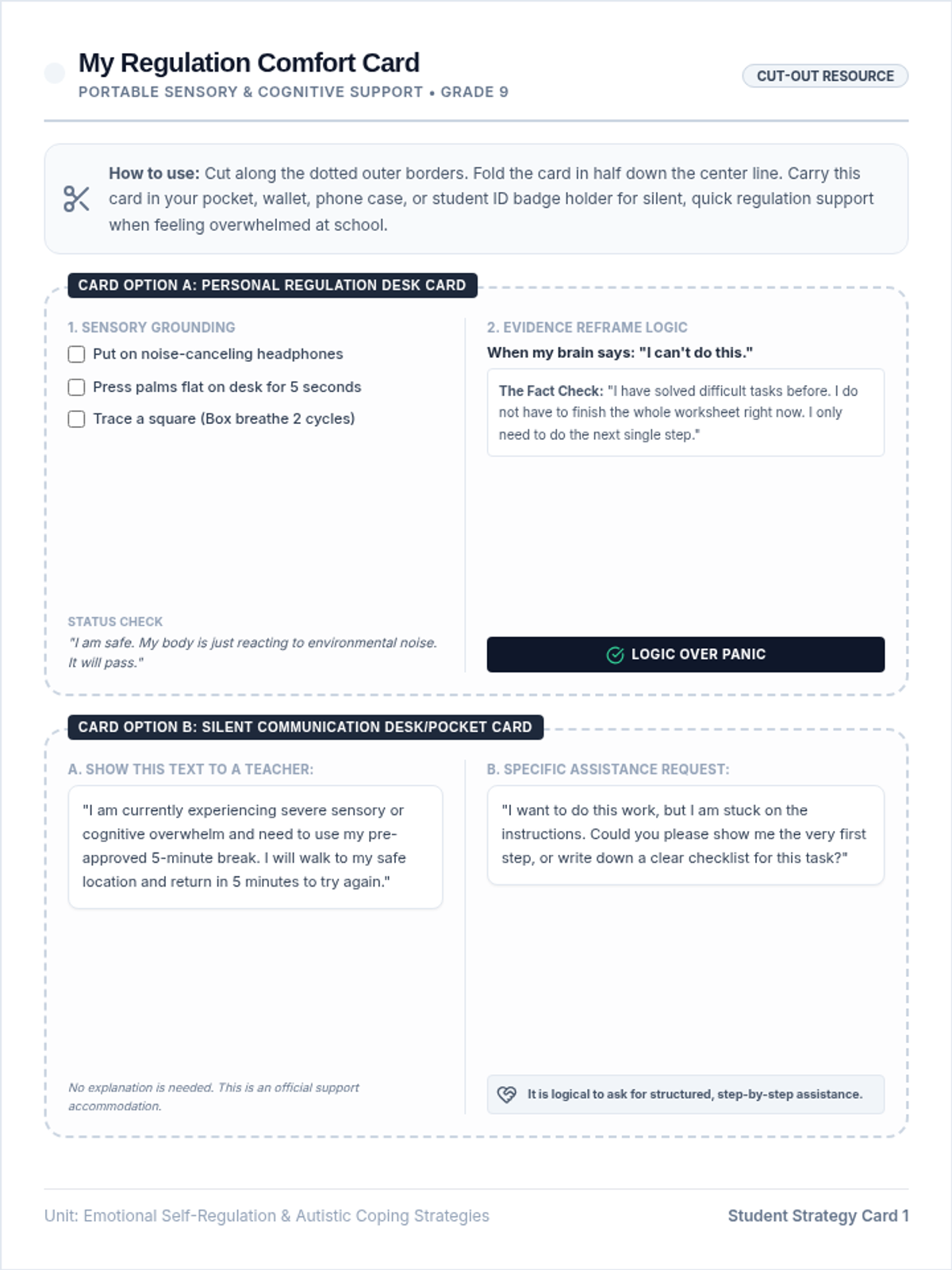
A 1:1 ERMHS (Educationally Related Mental Health Services) counseling session designed for a 9th-grade autistic student. Emphasizes evidence-based cognitive-behavioral reframing, co-regulation, factual evidence testing, and co-creating a discrete pocket-sized regulation comfort card.
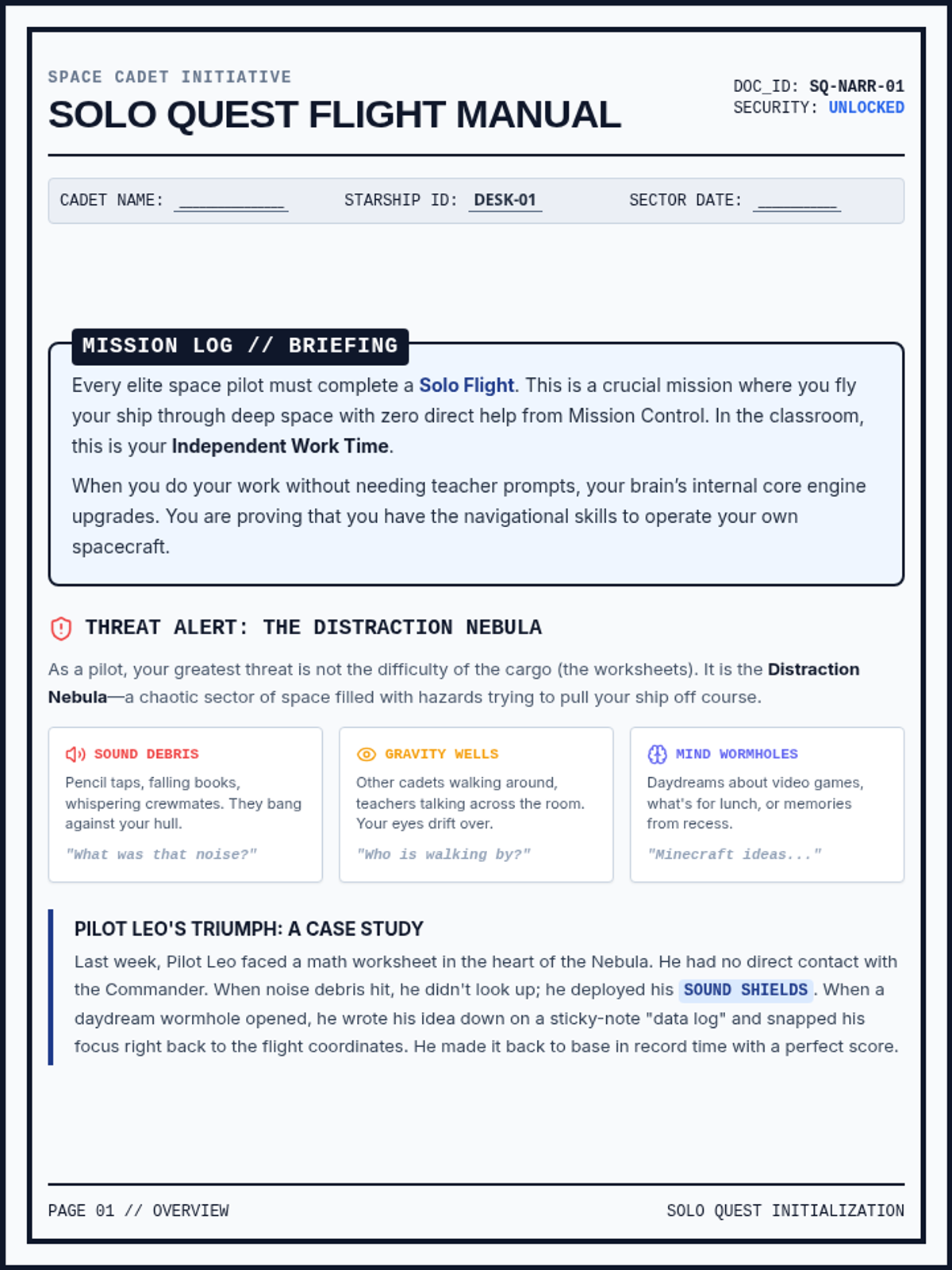
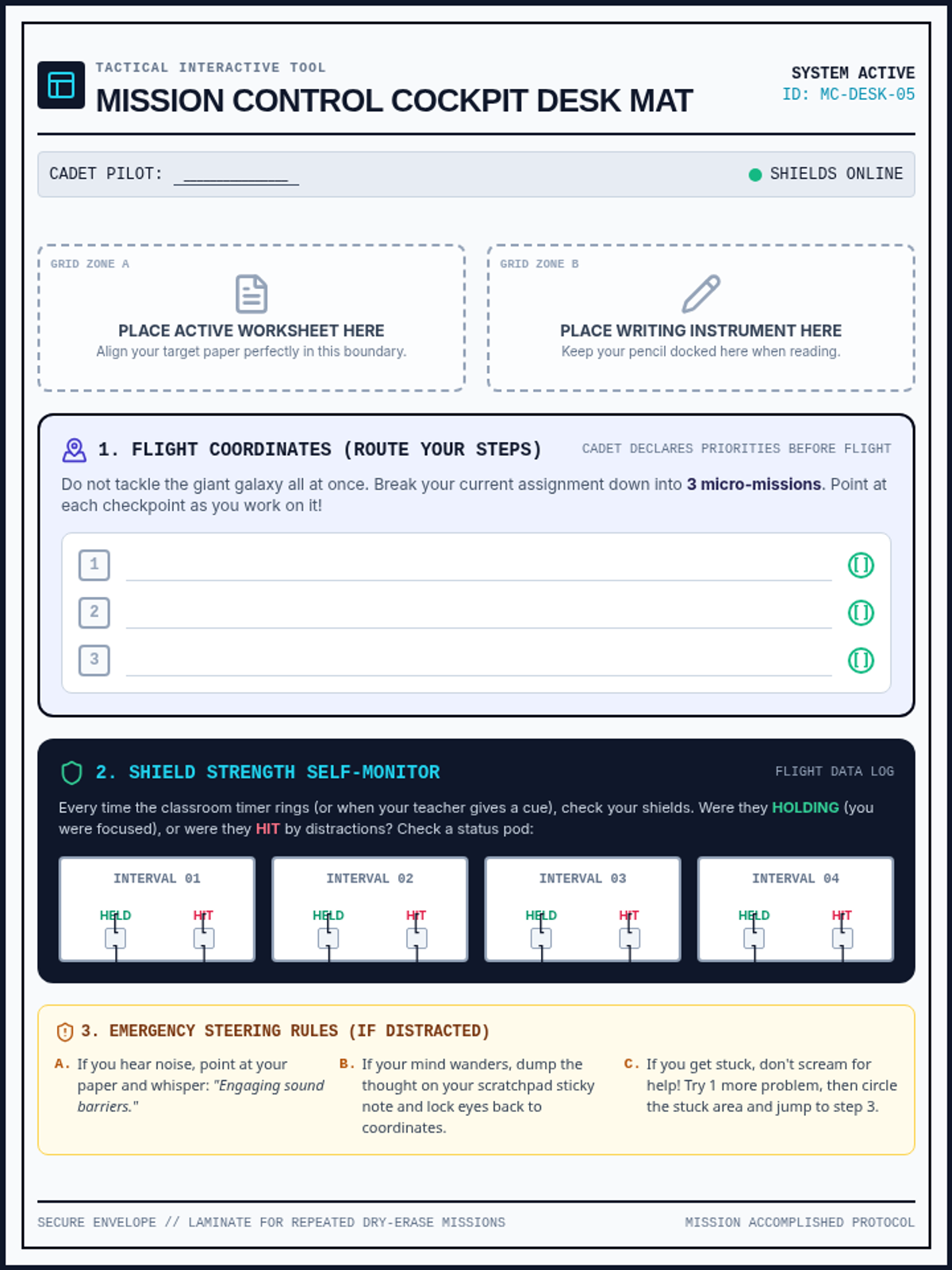
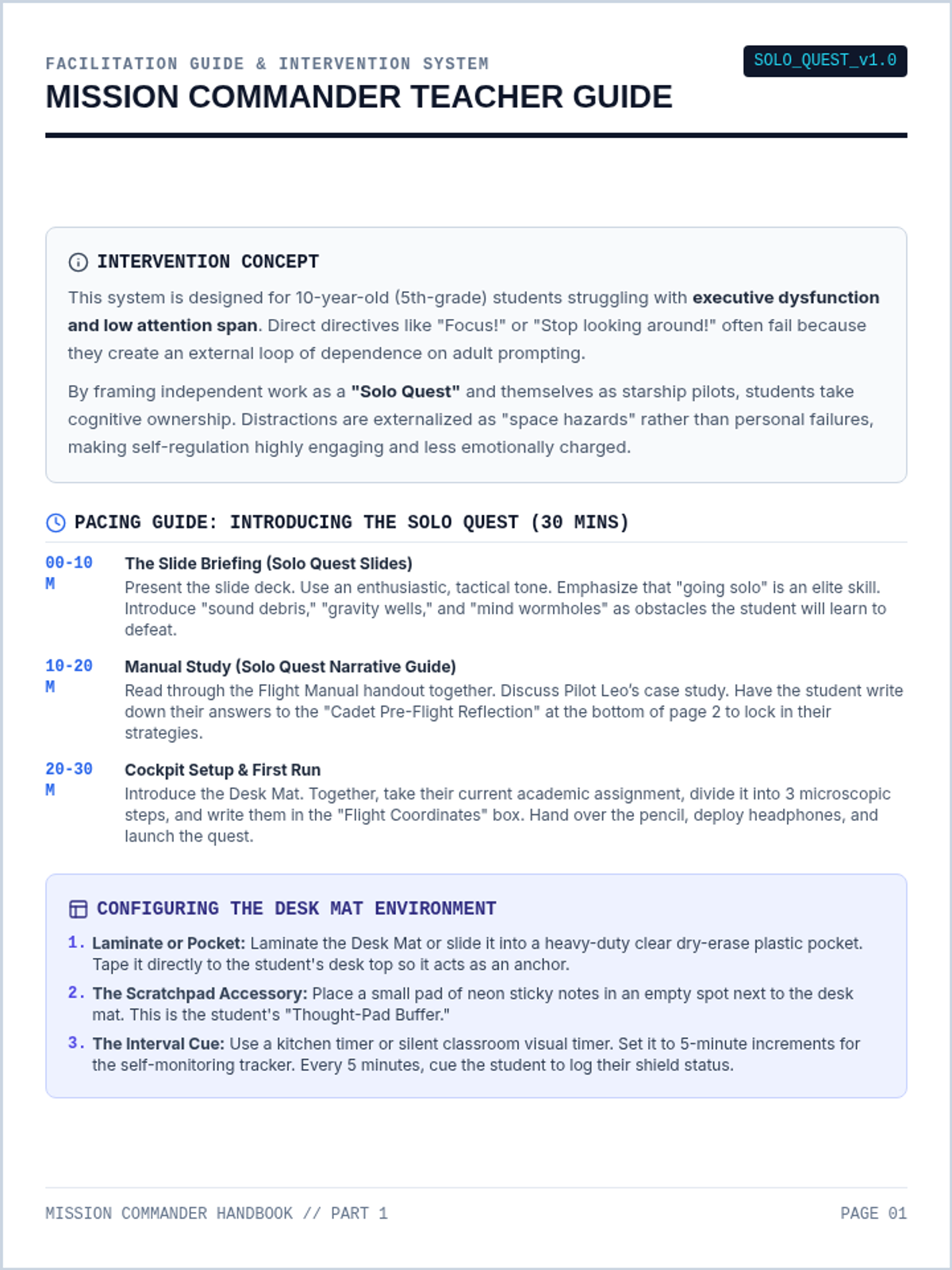
An executive functioning and focus intervention lesson designed to help students build independence during independent work. Framed as a tactical 'solo mission', the lesson guides students through managing distractions and planning tasks with low adult prompting.
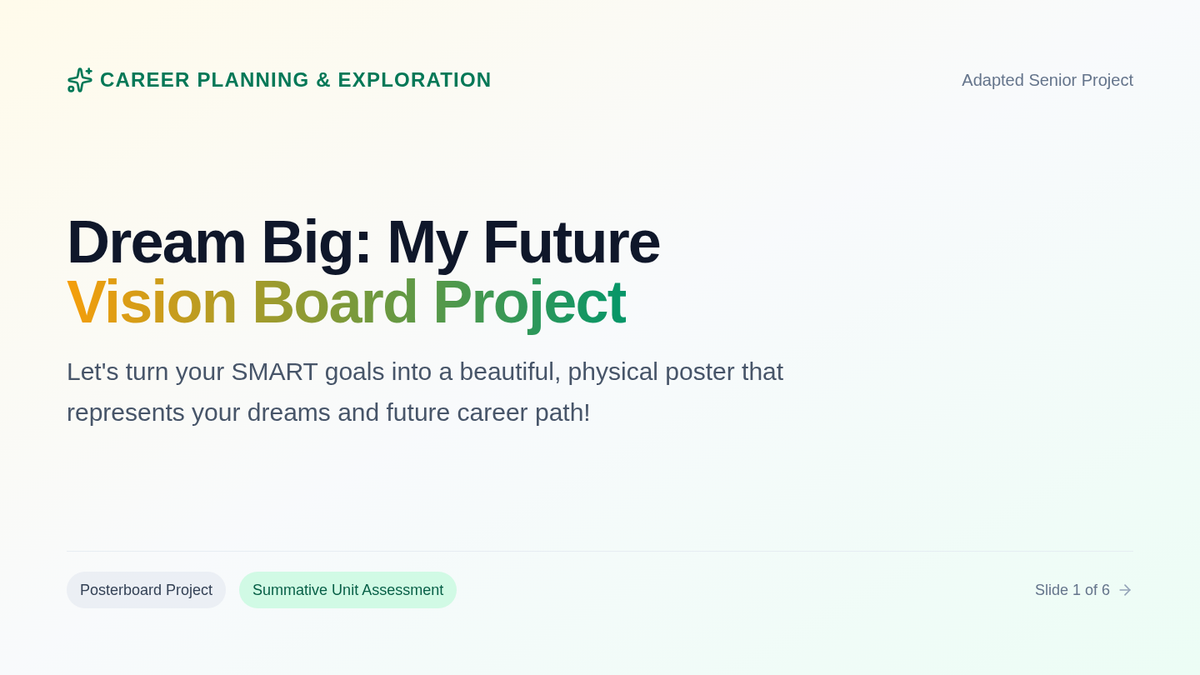
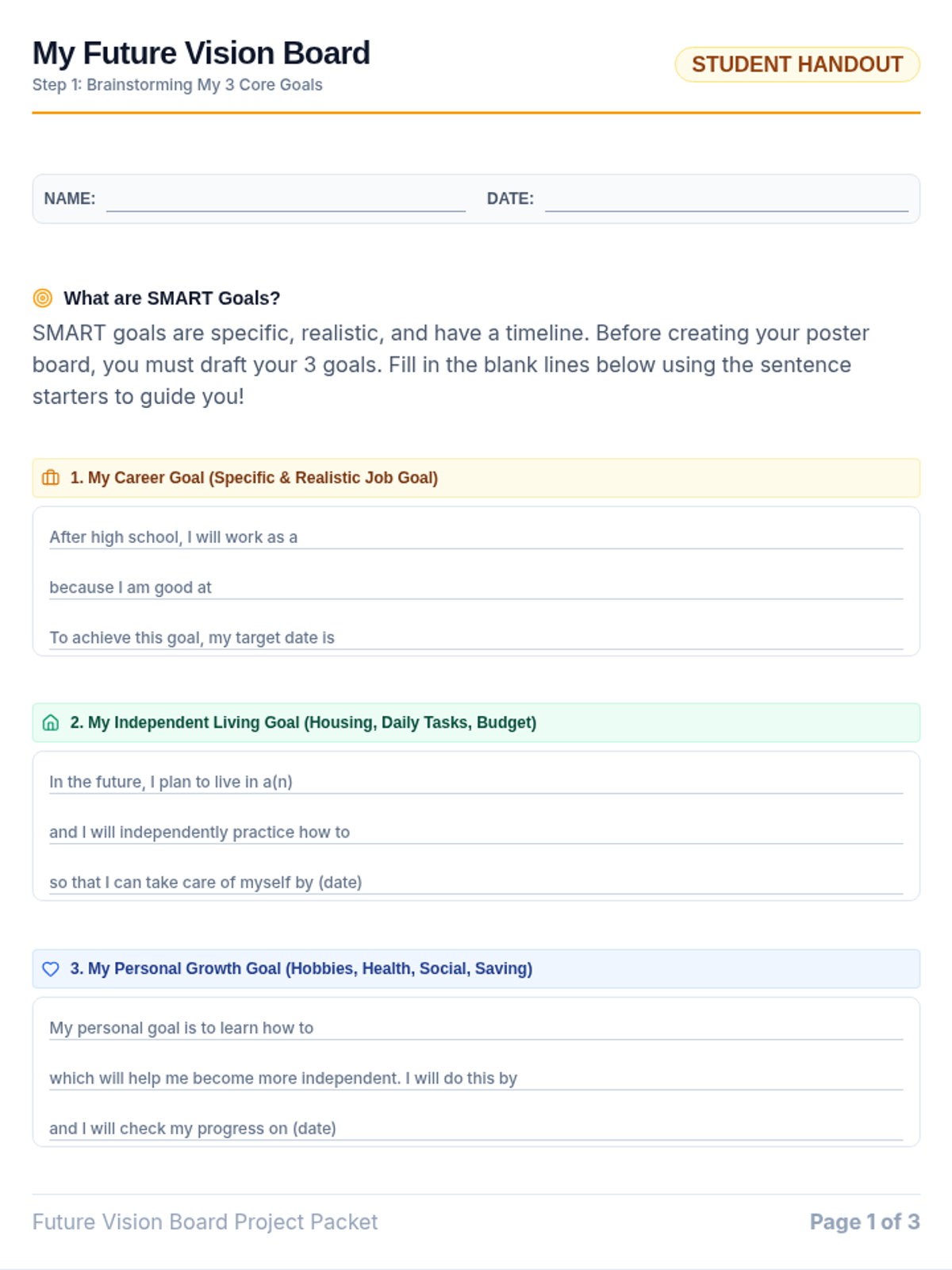
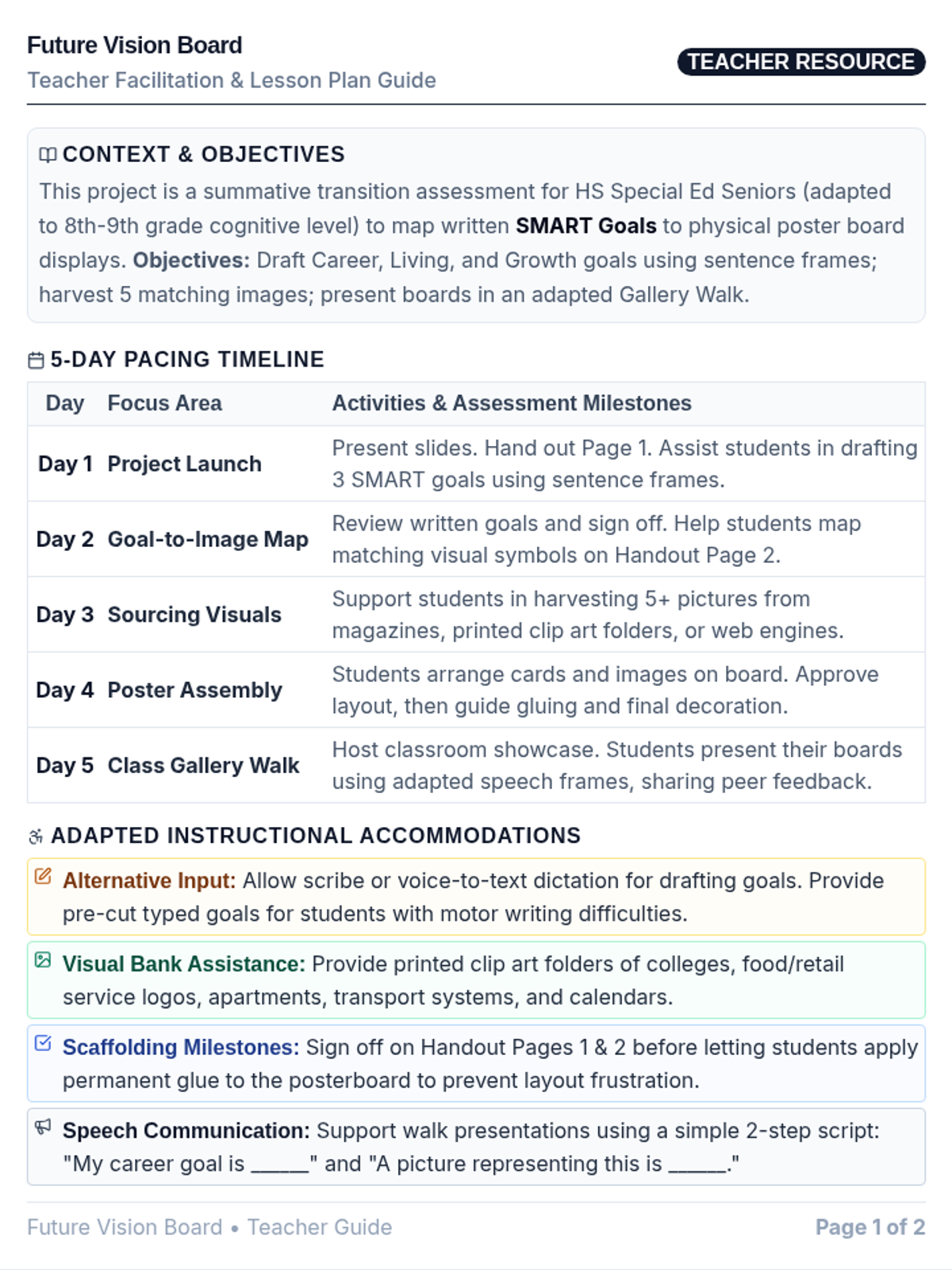
A comprehensive project bundle designed for High School Special Education students to plan, design, and create a physical vision board that maps their SMART goals to their future career and personal aspirations.
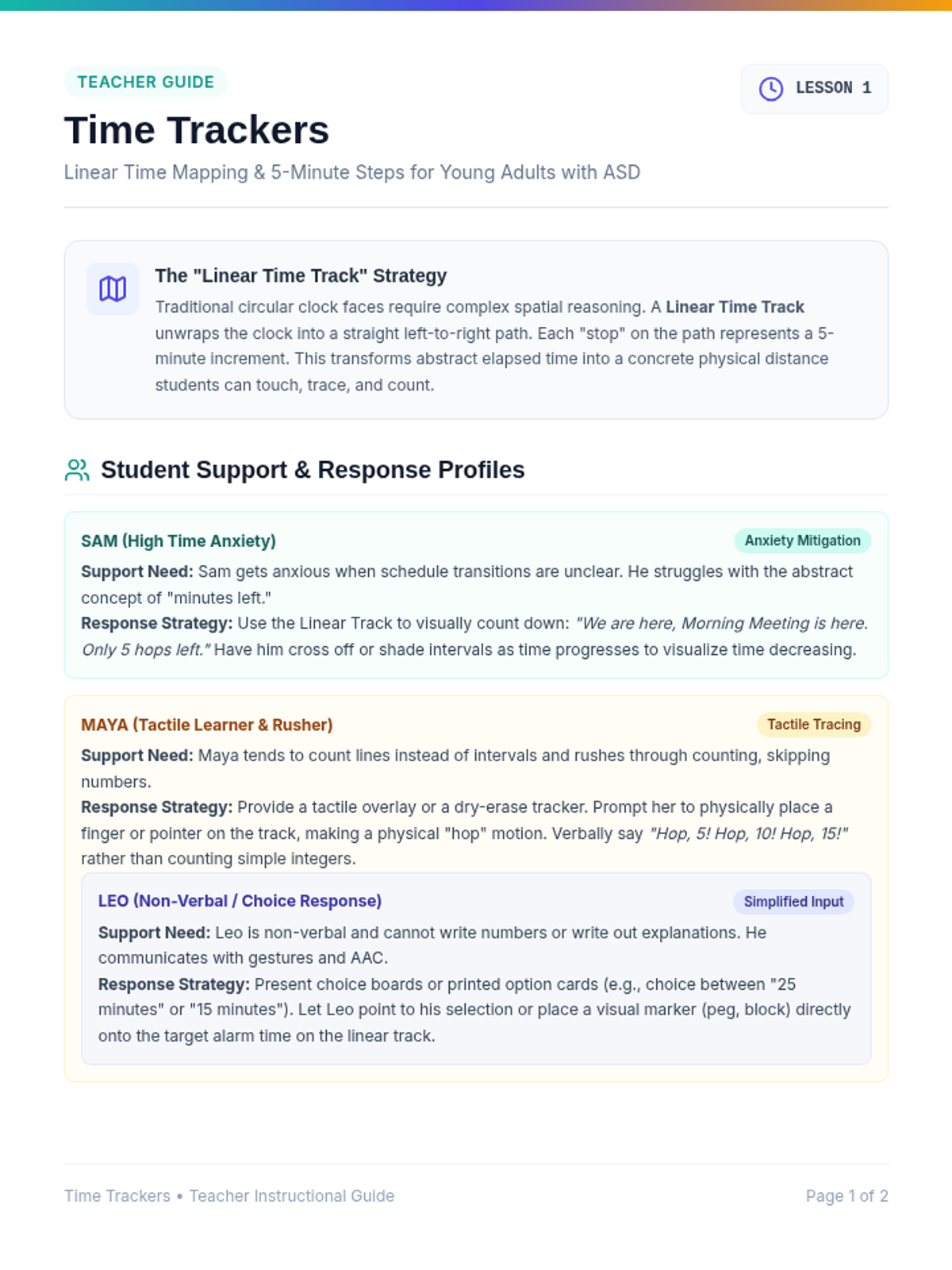
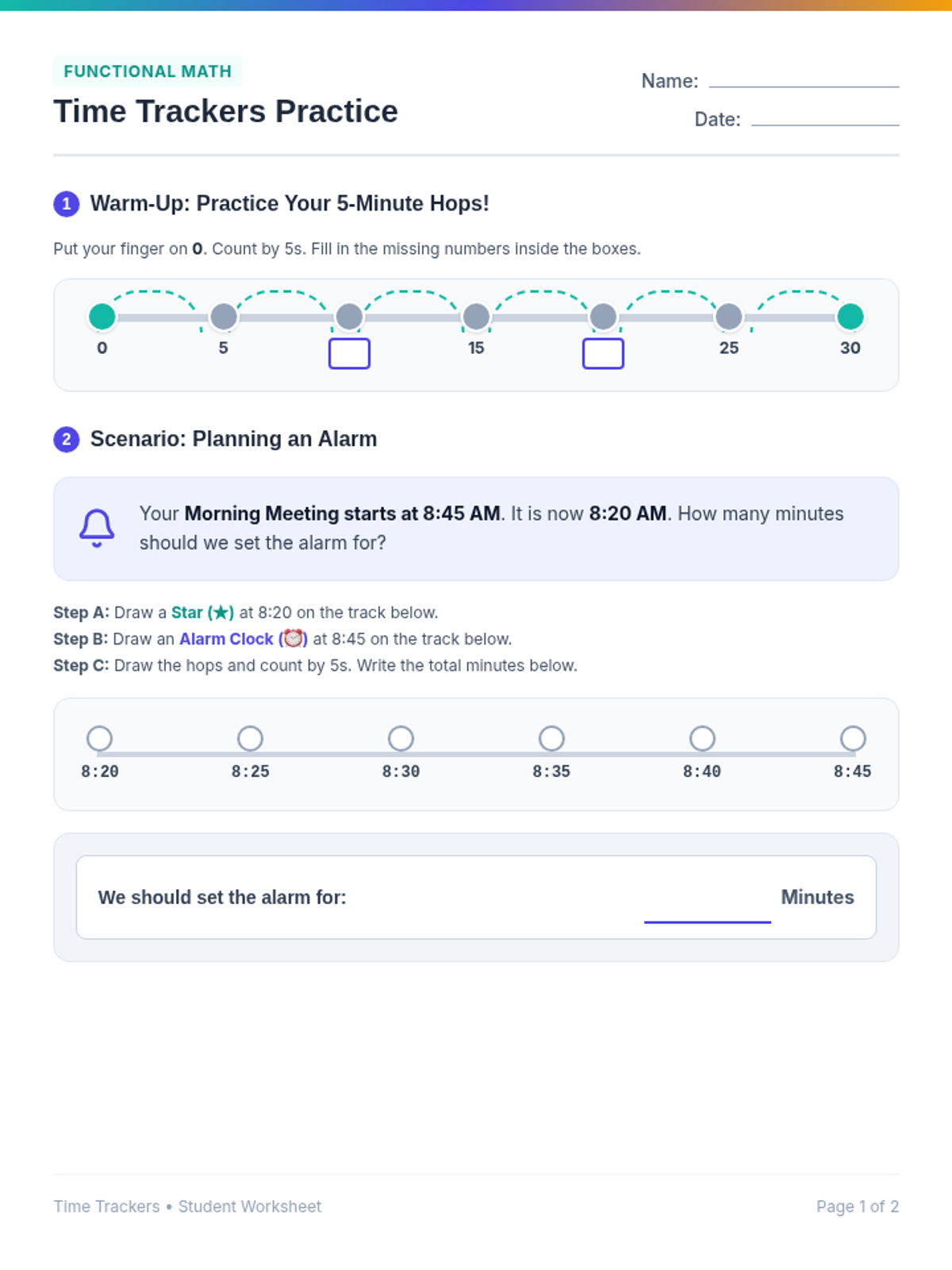
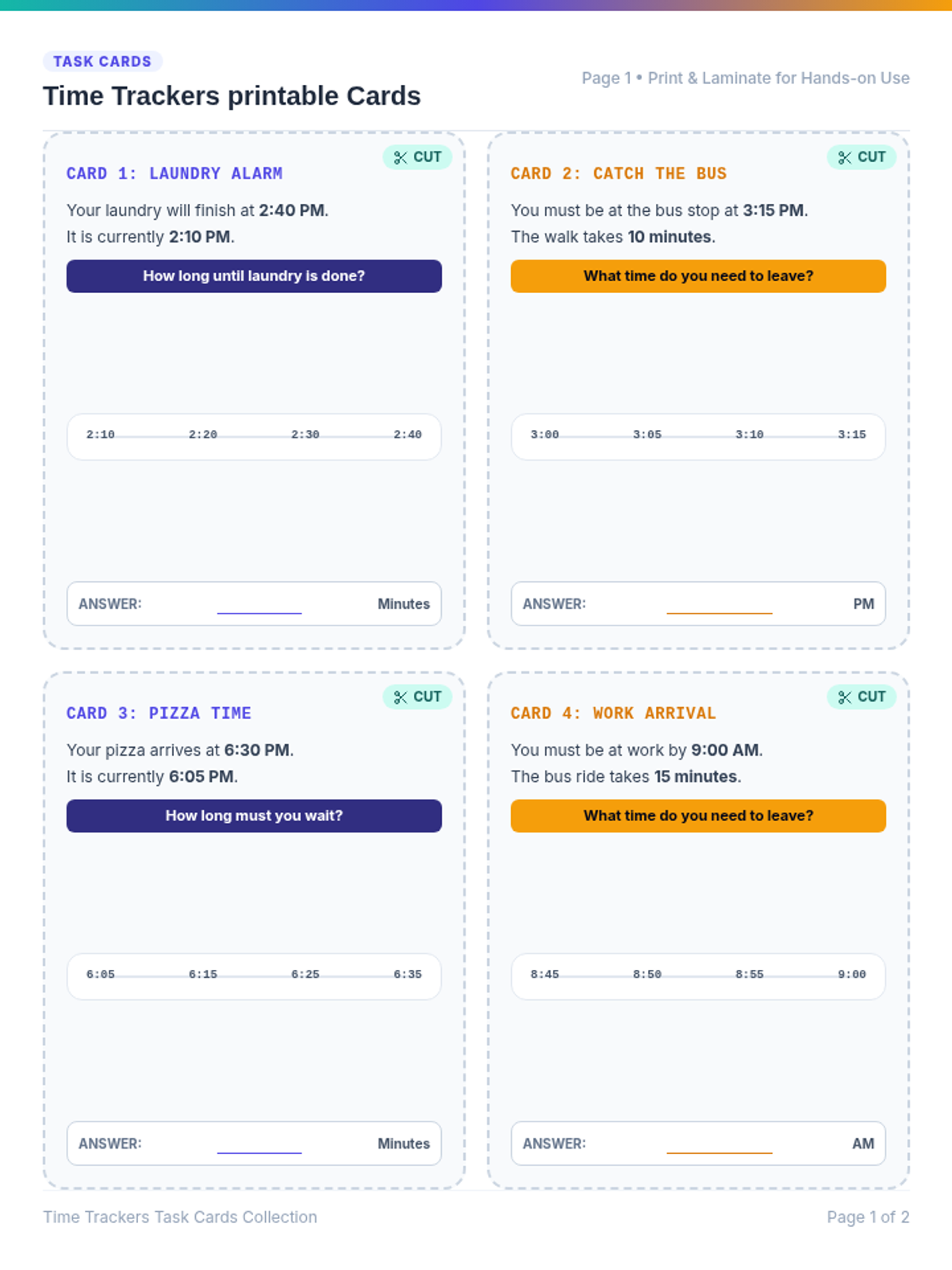
A highly visual functional math lesson designed for young adults with ASD and low cognitive functioning. It introduces linear time tracks and 5-minute counting strategies to solve real-world daily scheduling problems like setting alarms and planning departure times.
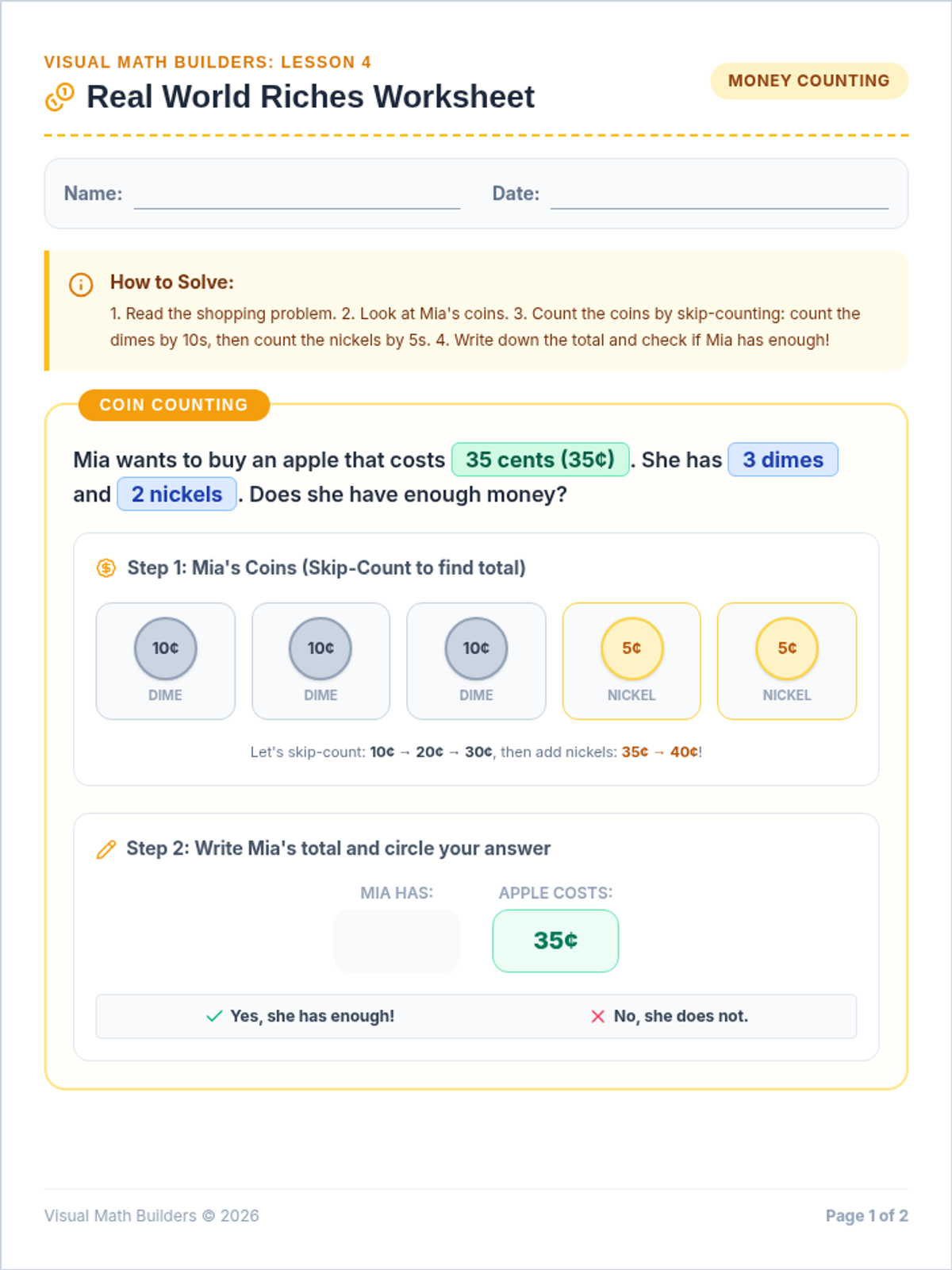
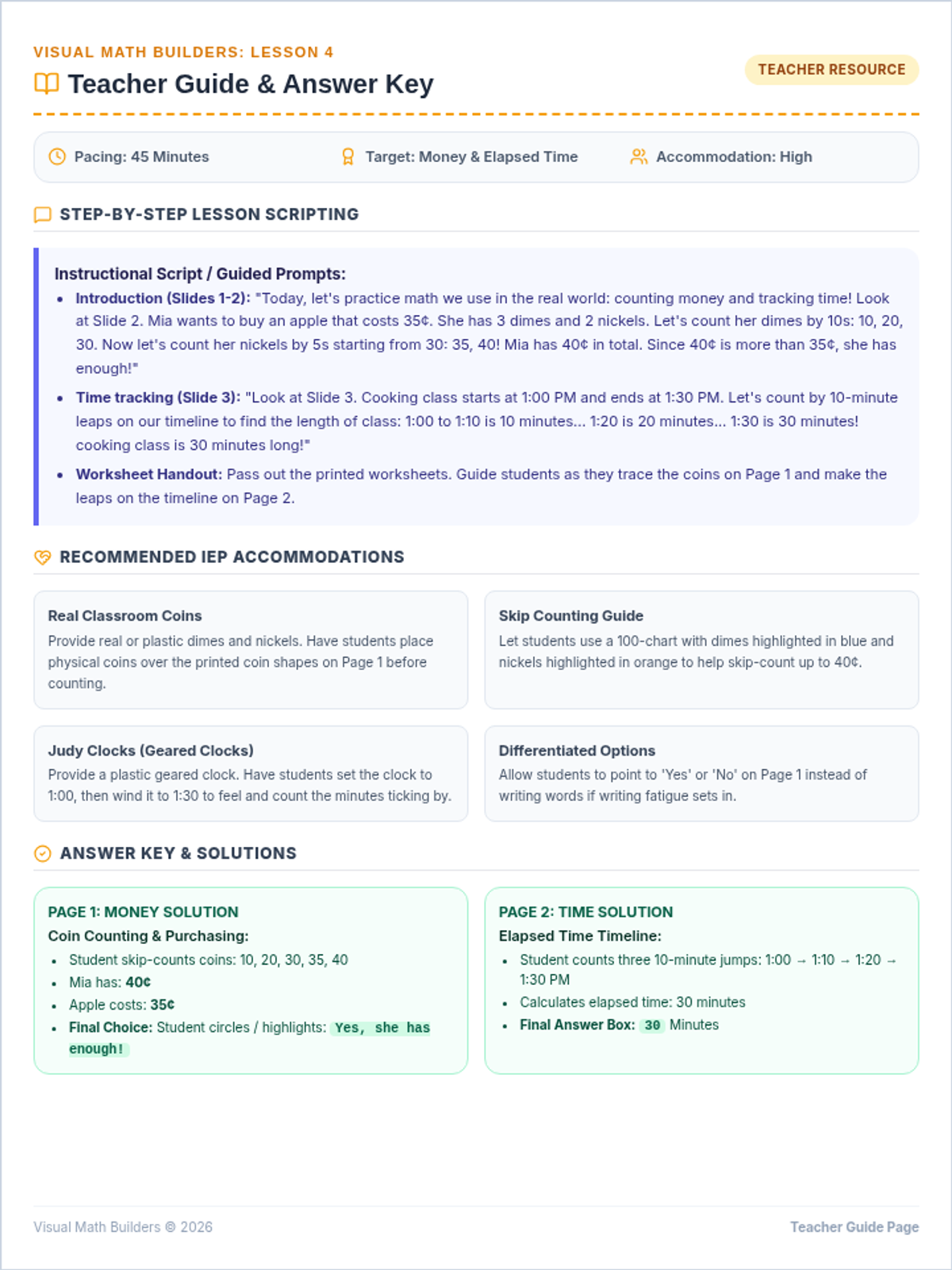
Targets practical, real-world application of math with highly visual scaffolding for coin counting, purchasing decisions, and elapsed time scenarios.
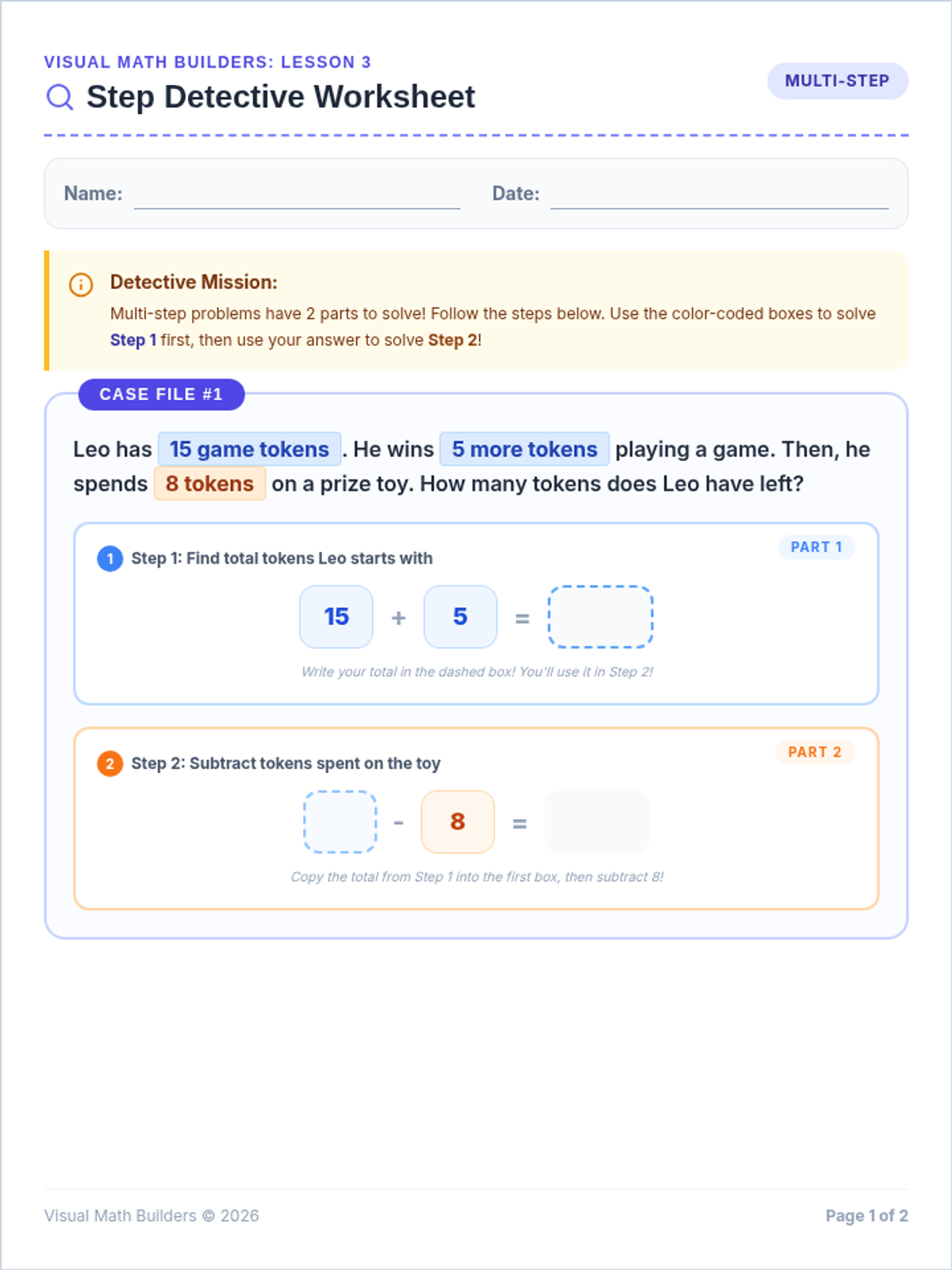
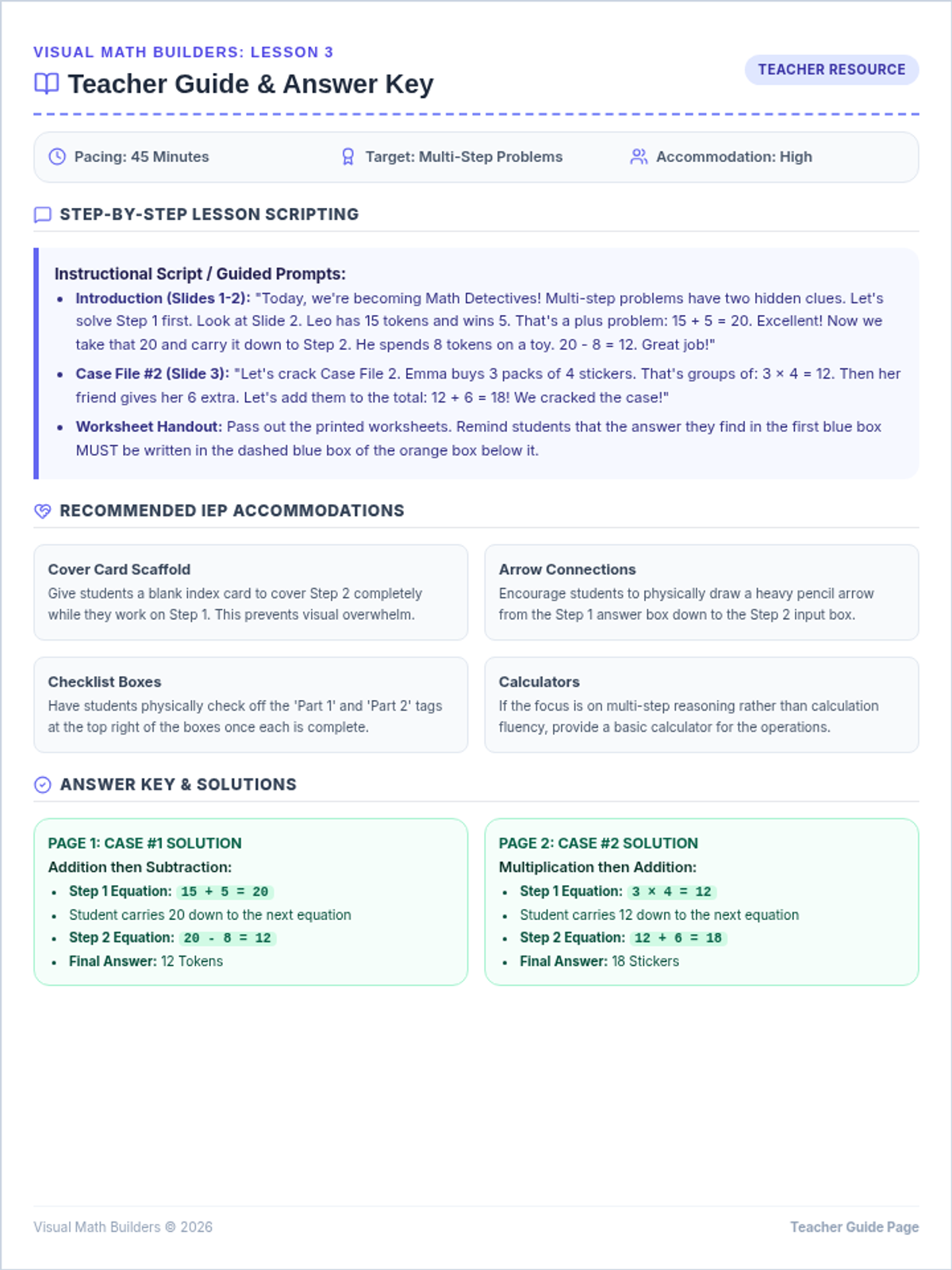
Breaks down multi-step math word problems into bite-sized, color-coded, sequentially numbered parts, helping students systematically parse and solve equations without visual overload.
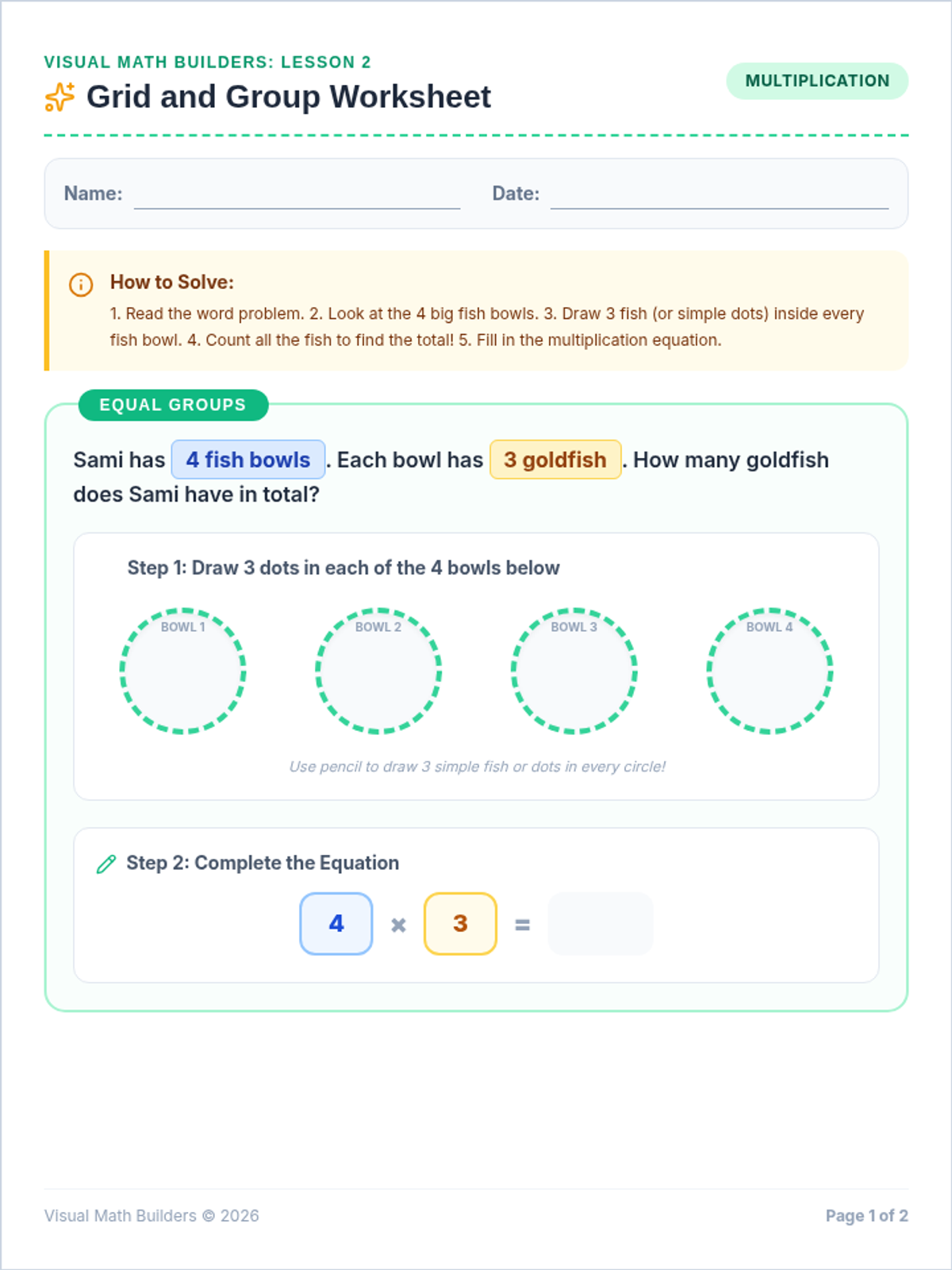
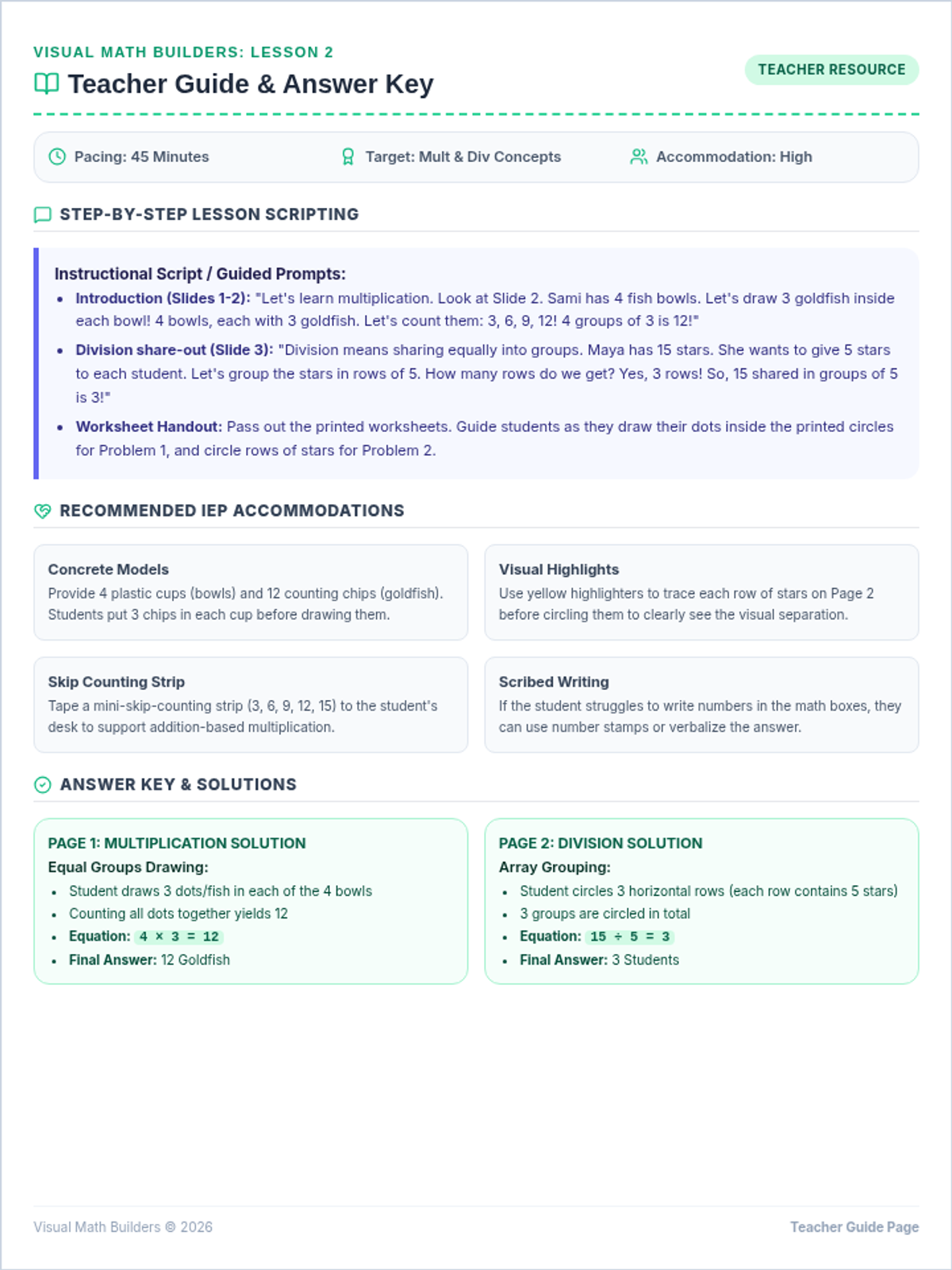
Covers multiplication and division word problems utilizing visual aids such as equal group drawings, array grids, and visual modeling templates to scaffold core concepts.
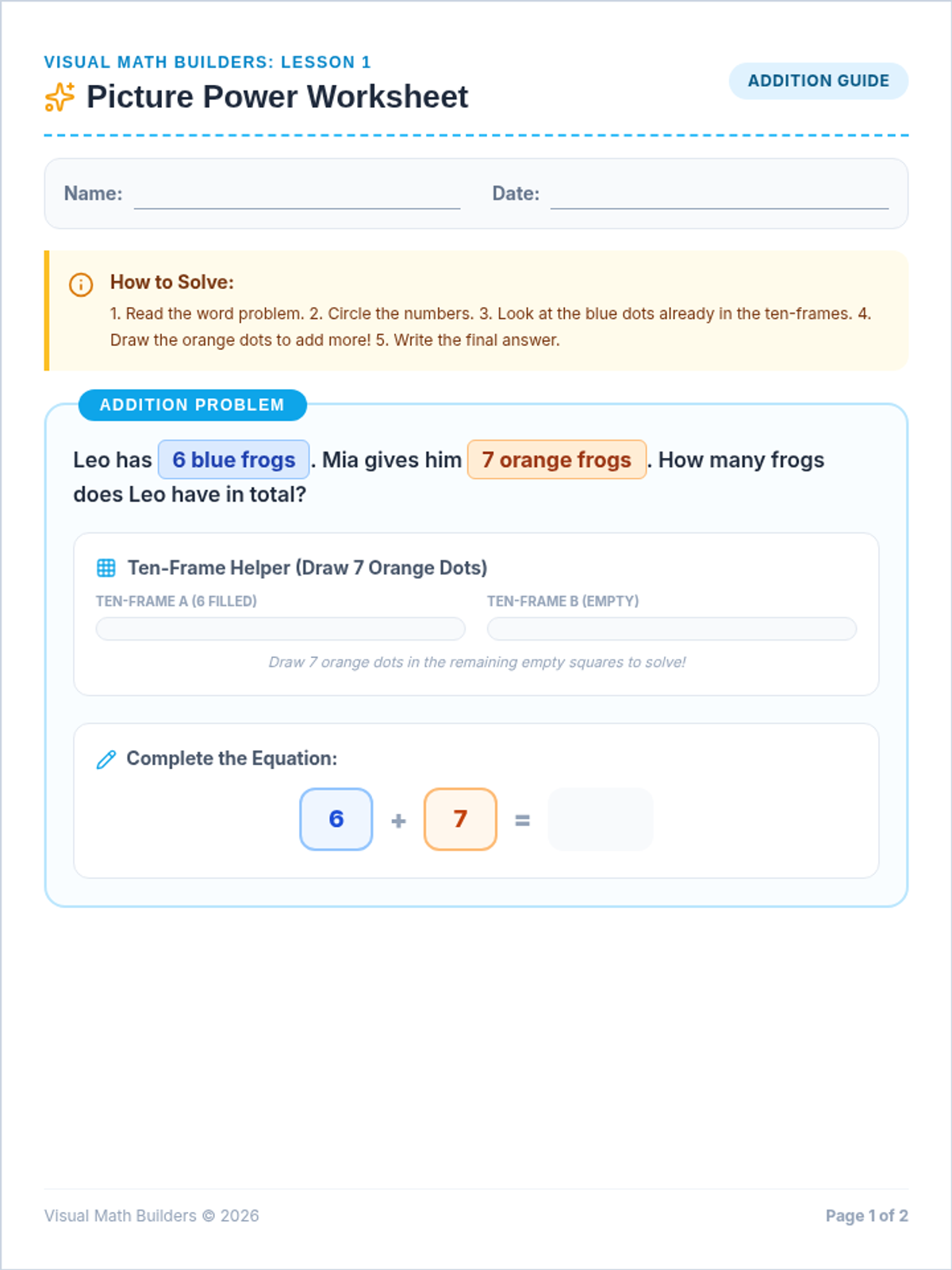
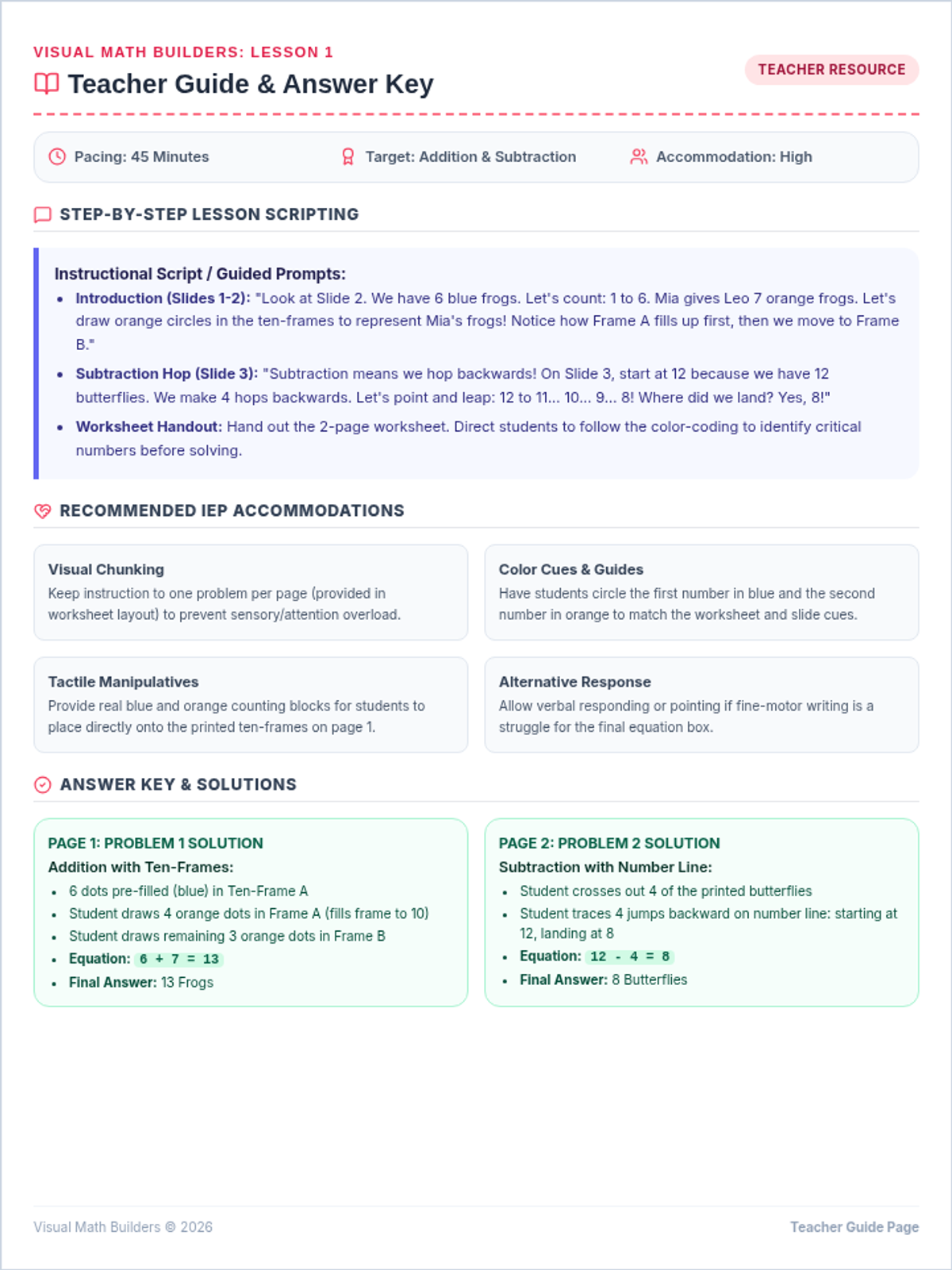
Focuses on addition and subtraction word problems with visual aids including built-in picture representations, ten-frames, and number lines to support student conceptual understanding.
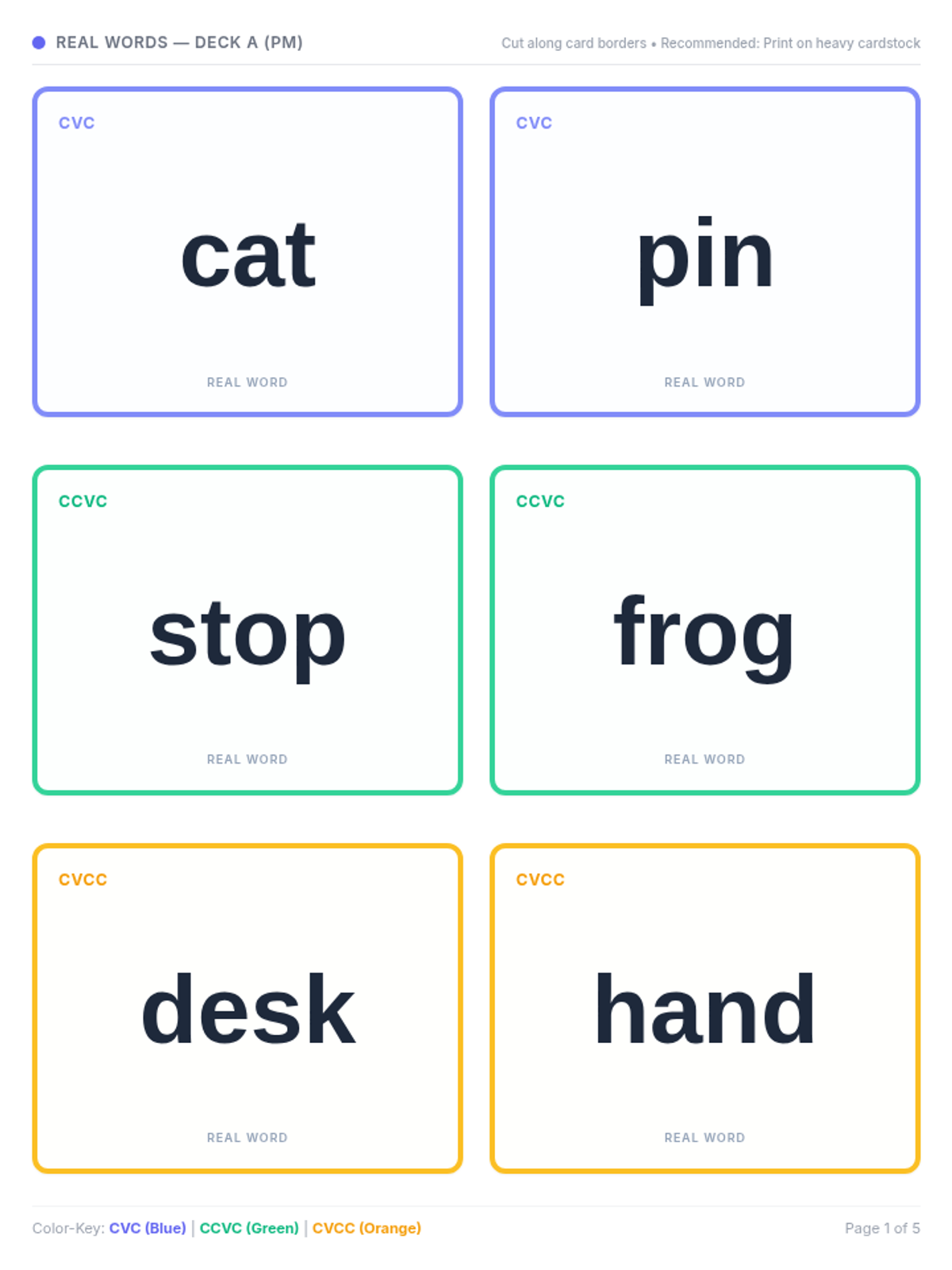
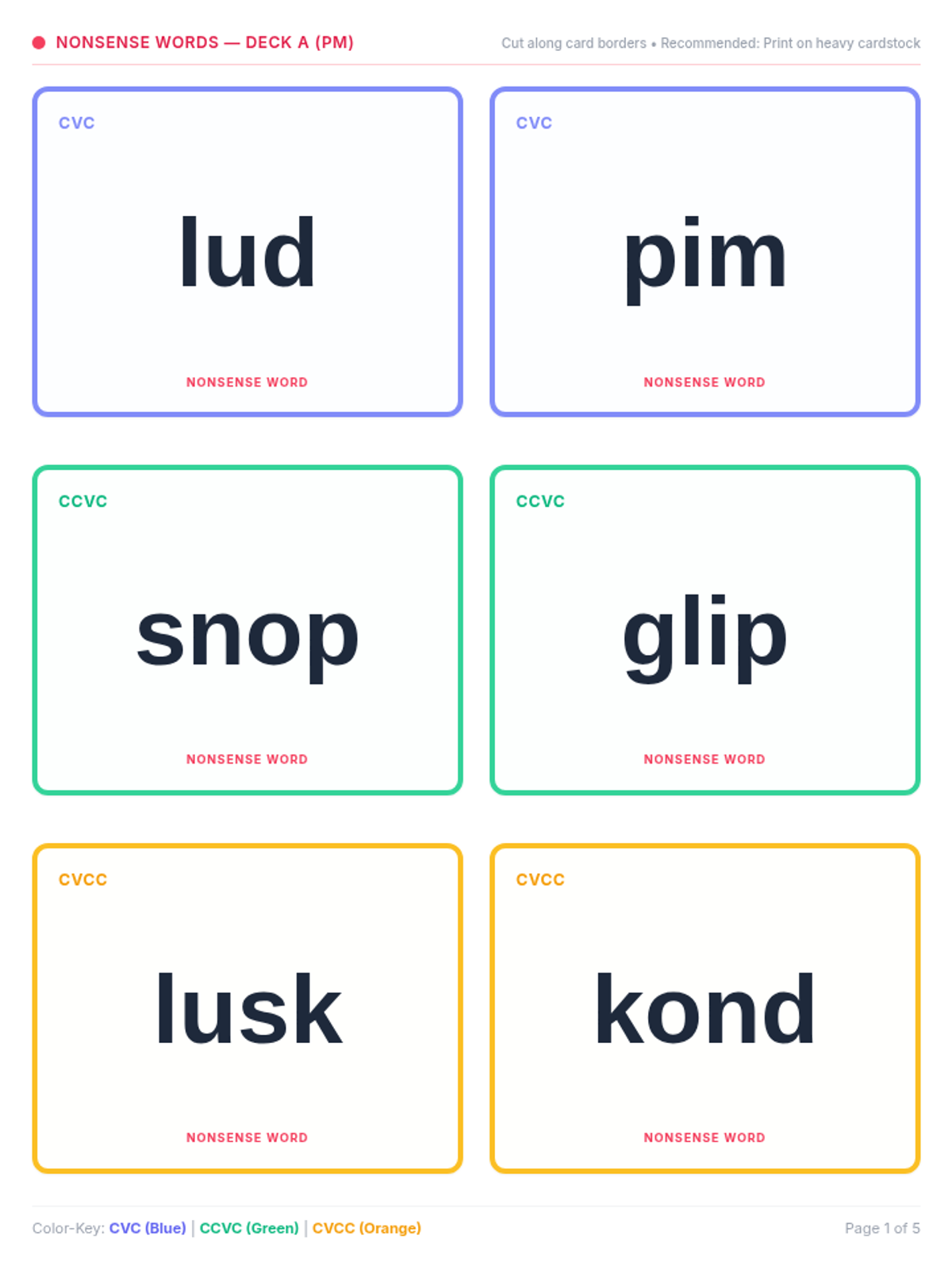
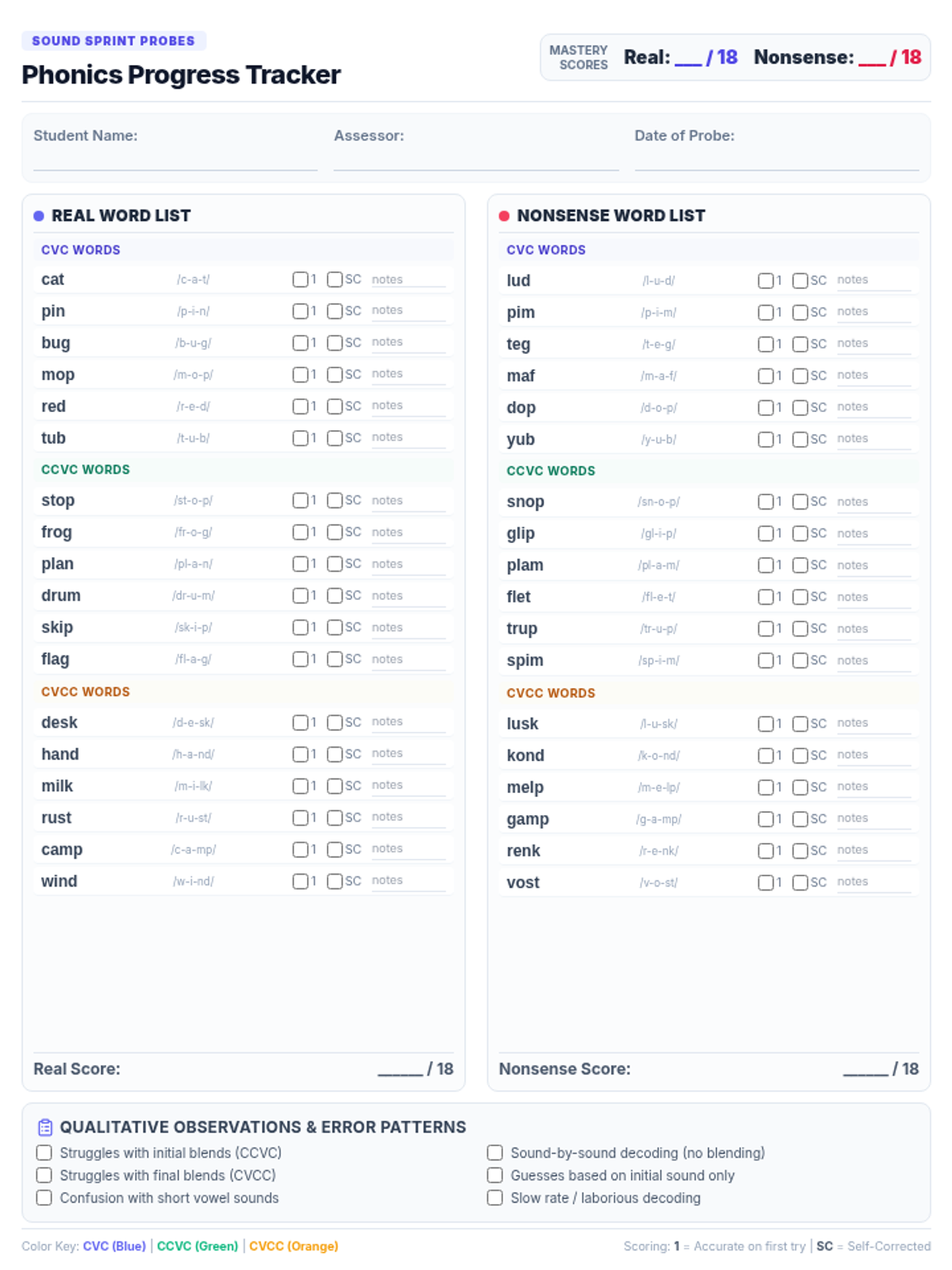
A suite of print-ready progress monitoring flashcards and tracking sheets designed for resource educators to measure decoding progress. Includes color-coded flashcards for real and nonsense CVC, CCVC, and CVCC words, plus an educator assessment tracker.
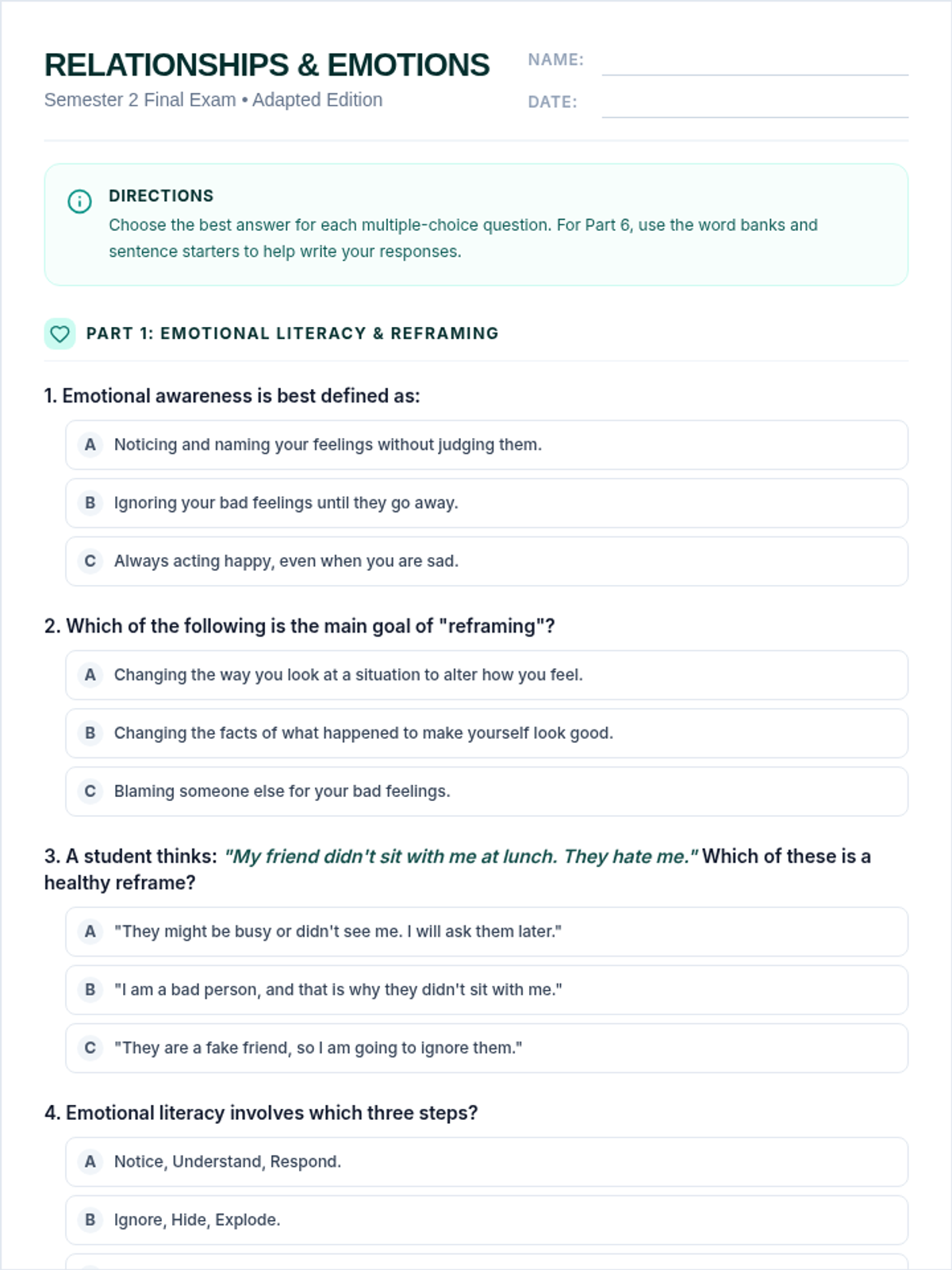
This lesson contains the adapted final exam for the Relationships and Emotions curriculum, offering customized cognitive and reading supports for students with diverse learning needs.
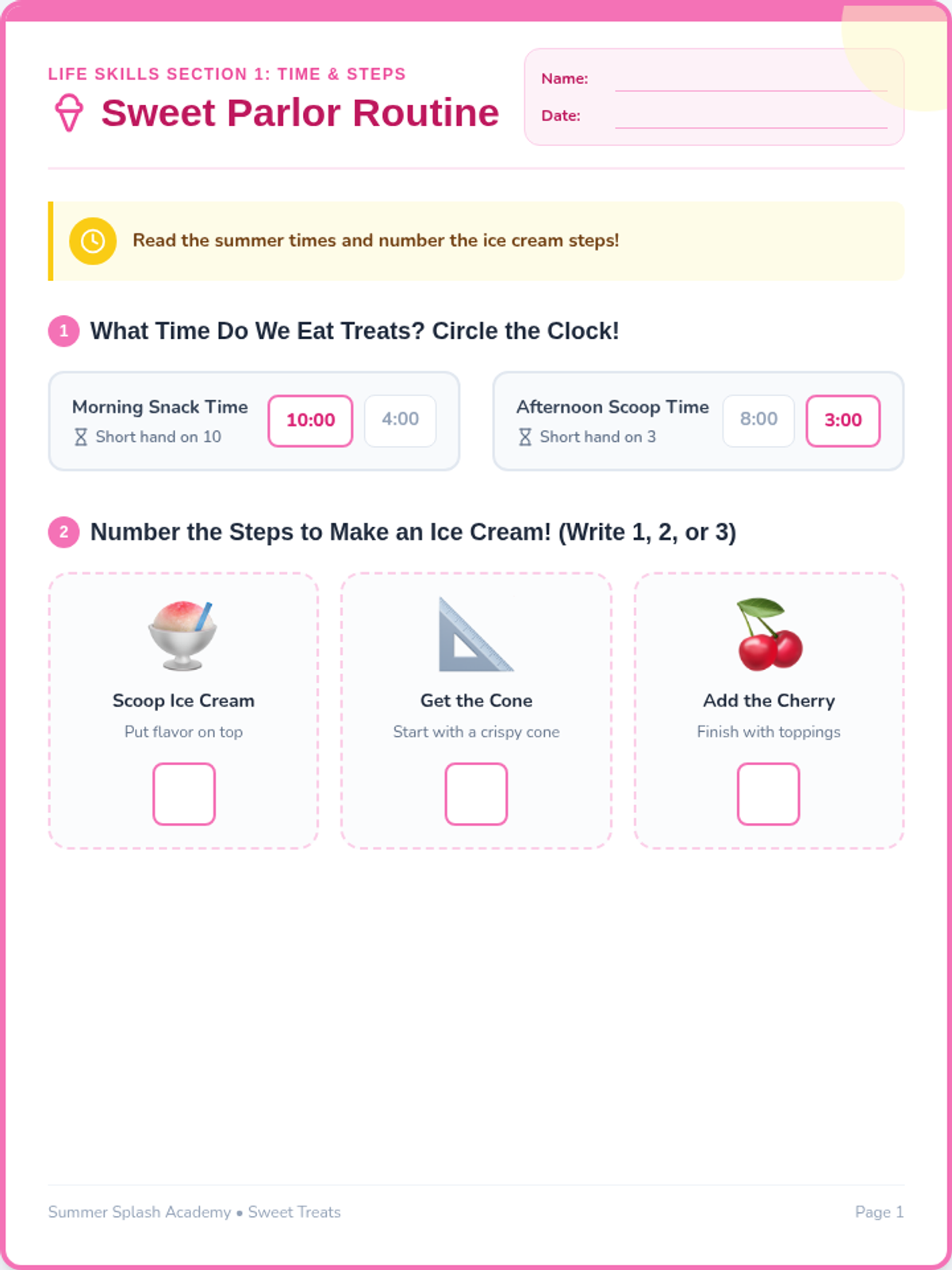
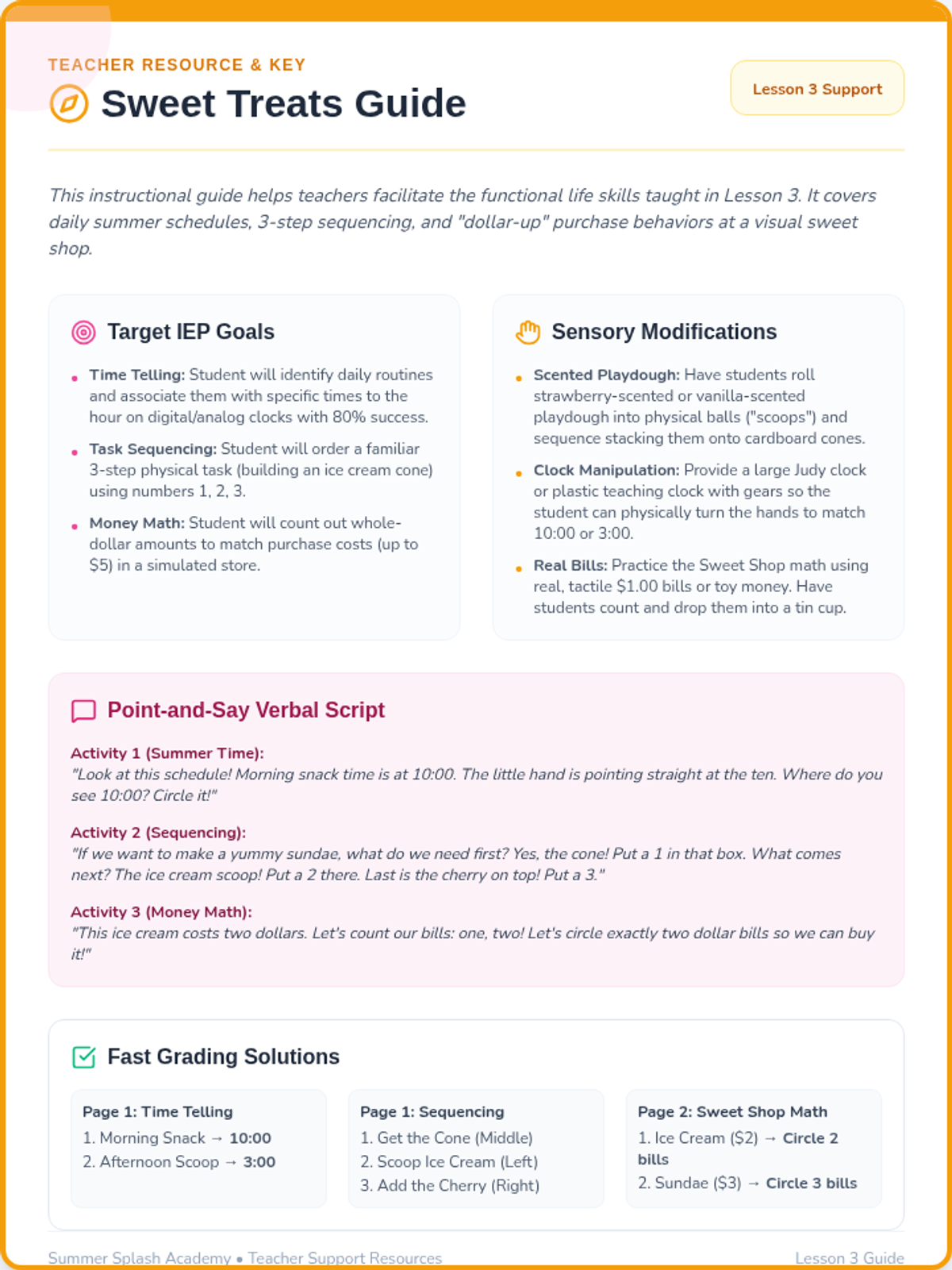
Develops functional basic life skills using ice cream themes. Students learn daily summer routines, practice telling time, complete an ice cream sequencing activity, and practice basic money math at a visual ice cream parlor.
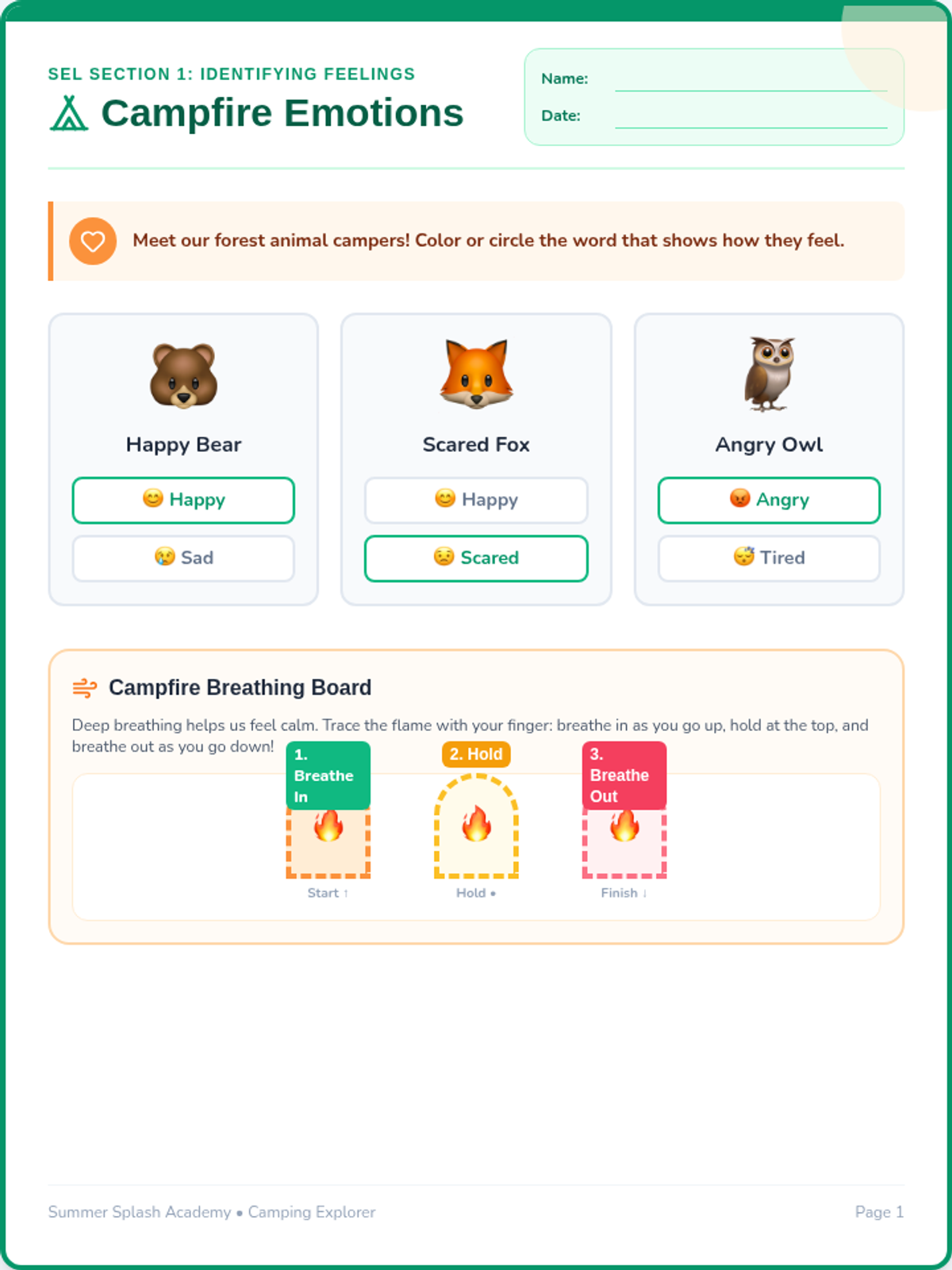
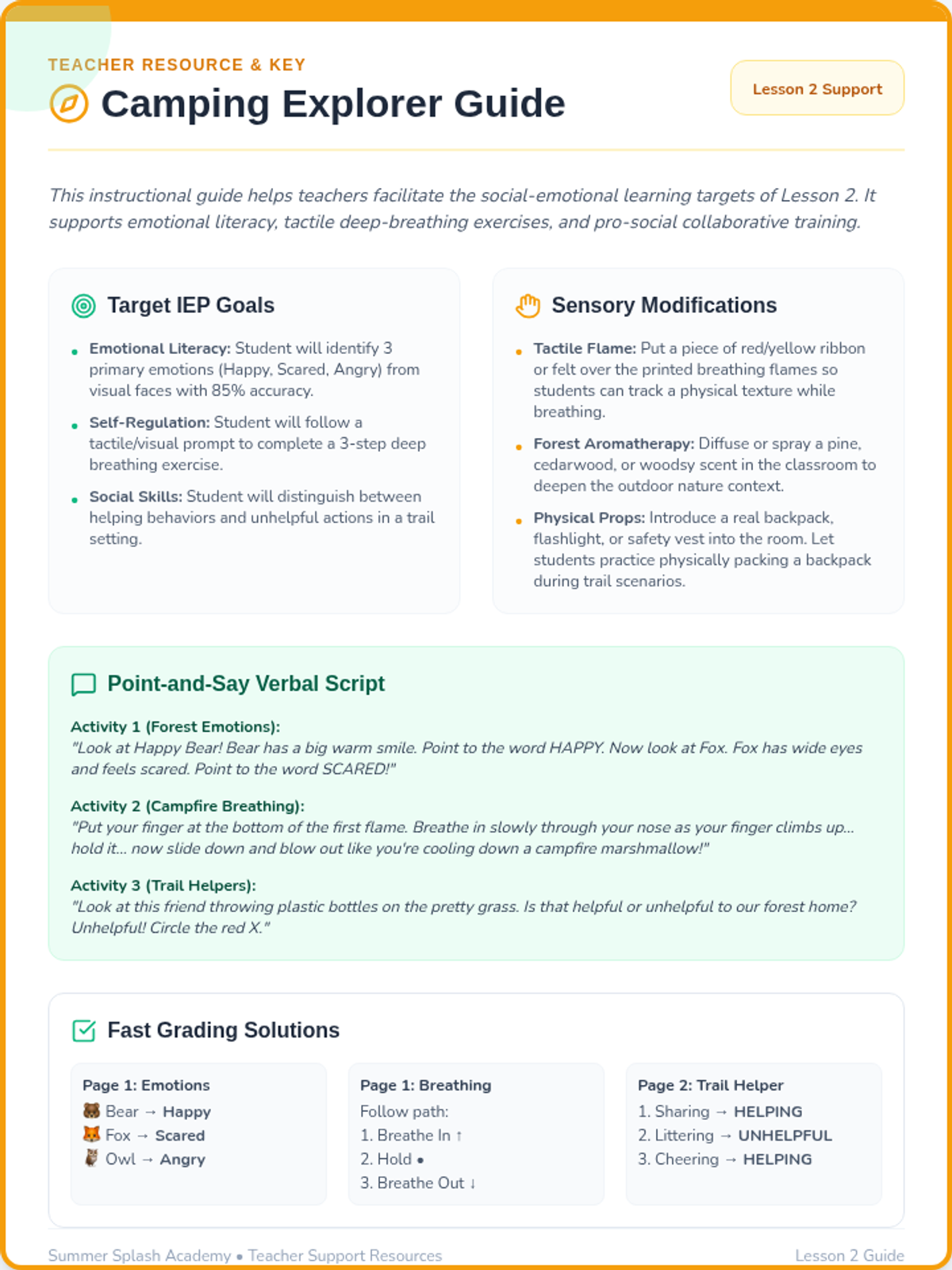
Focuses on social-emotional learning through outdoor themes. Students practice identifying camper emotions, discovering self-regulation strategies with a 'campfire breathing' activity, and understanding positive social interactions on the trail.
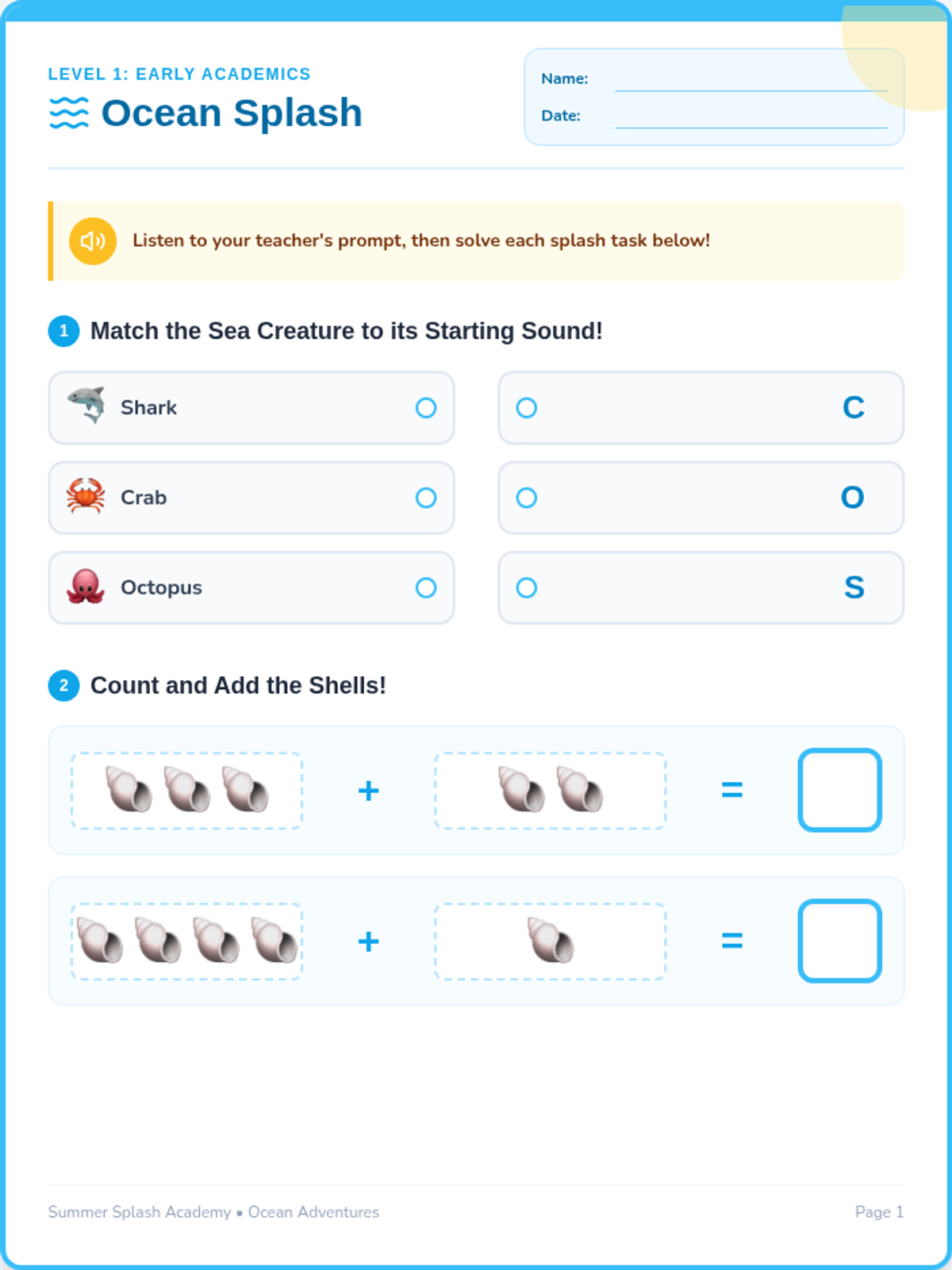
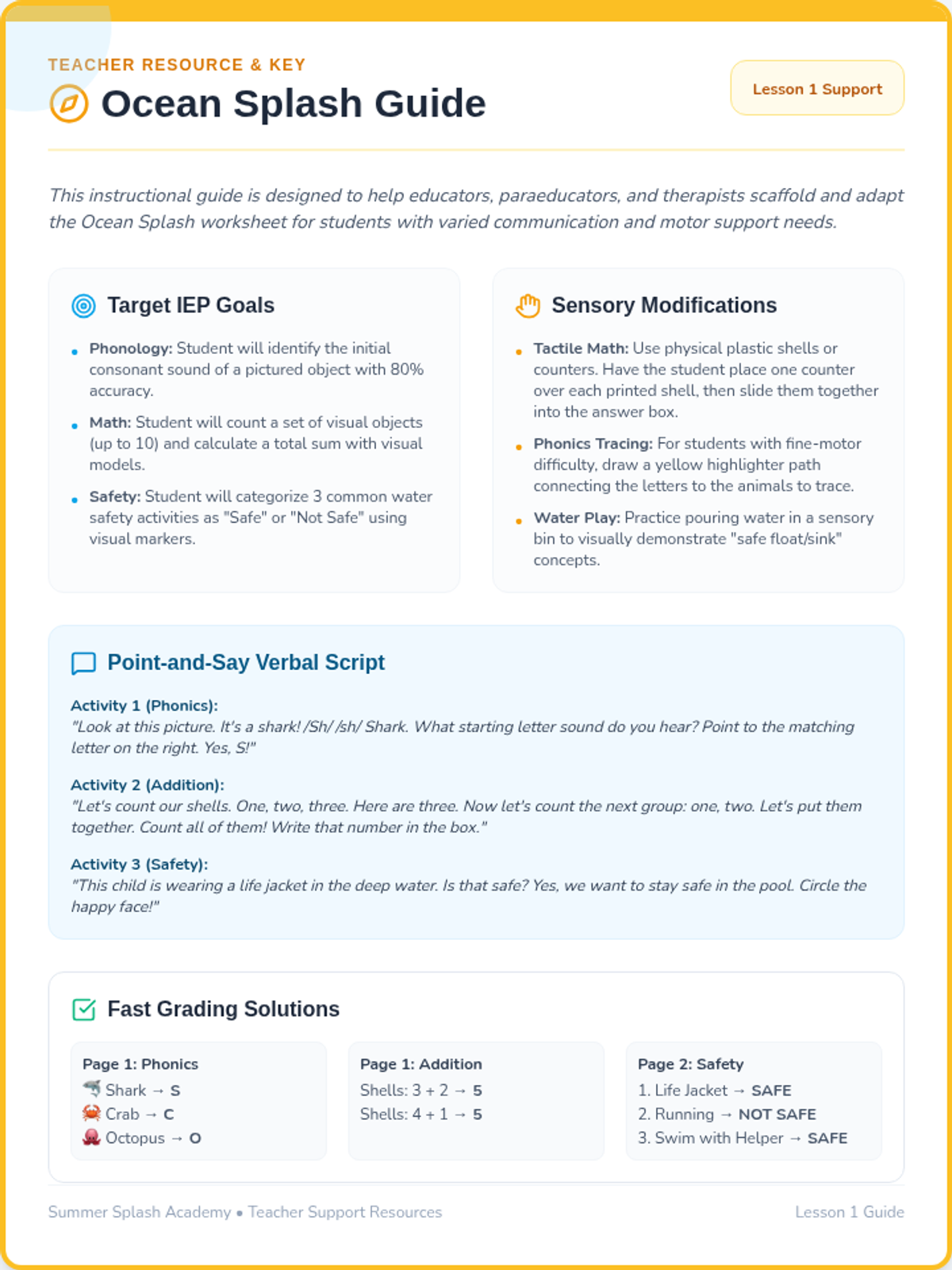
Explores beach and ocean life while strengthening early academic skills. Students practice single-digit starfish addition, phonetic letter sound matching with sea creatures, and basic water safety rules through high-contrast visual worksheets.
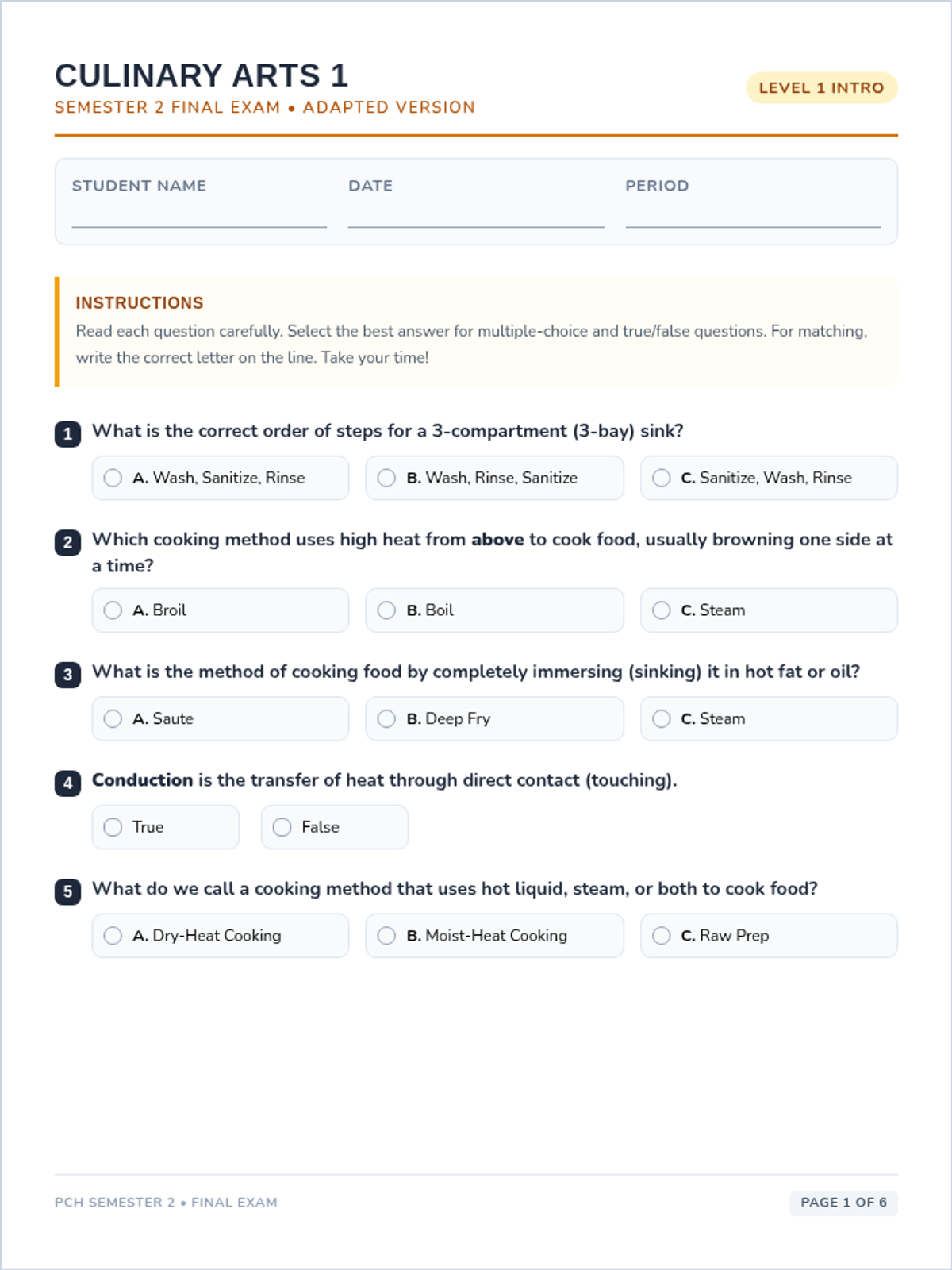
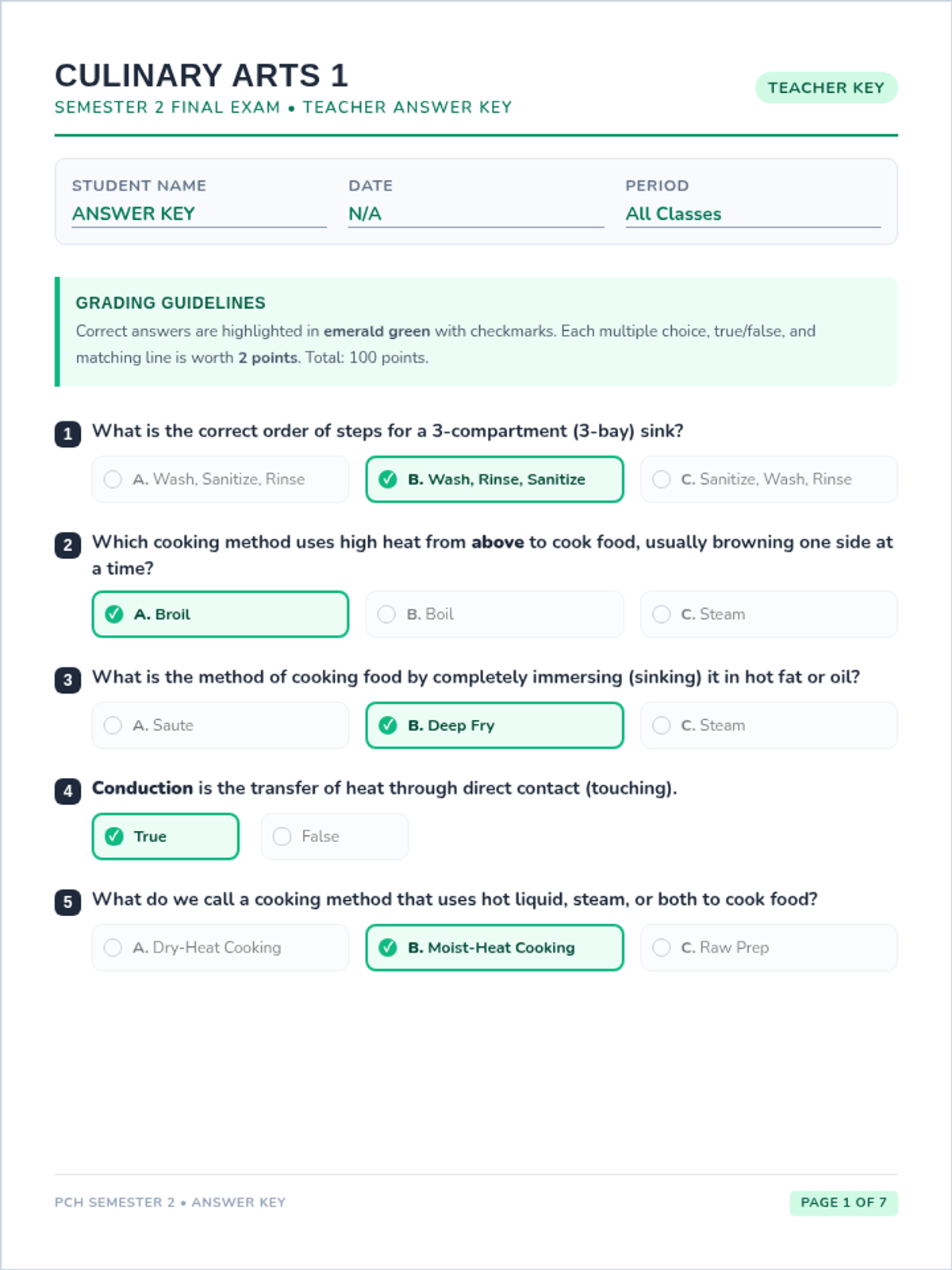
An adapted culinary arts final exam and teacher key for Level 1 introductory students, featuring simplified language, reduced multiple choice options, and scaffolded matching questions.
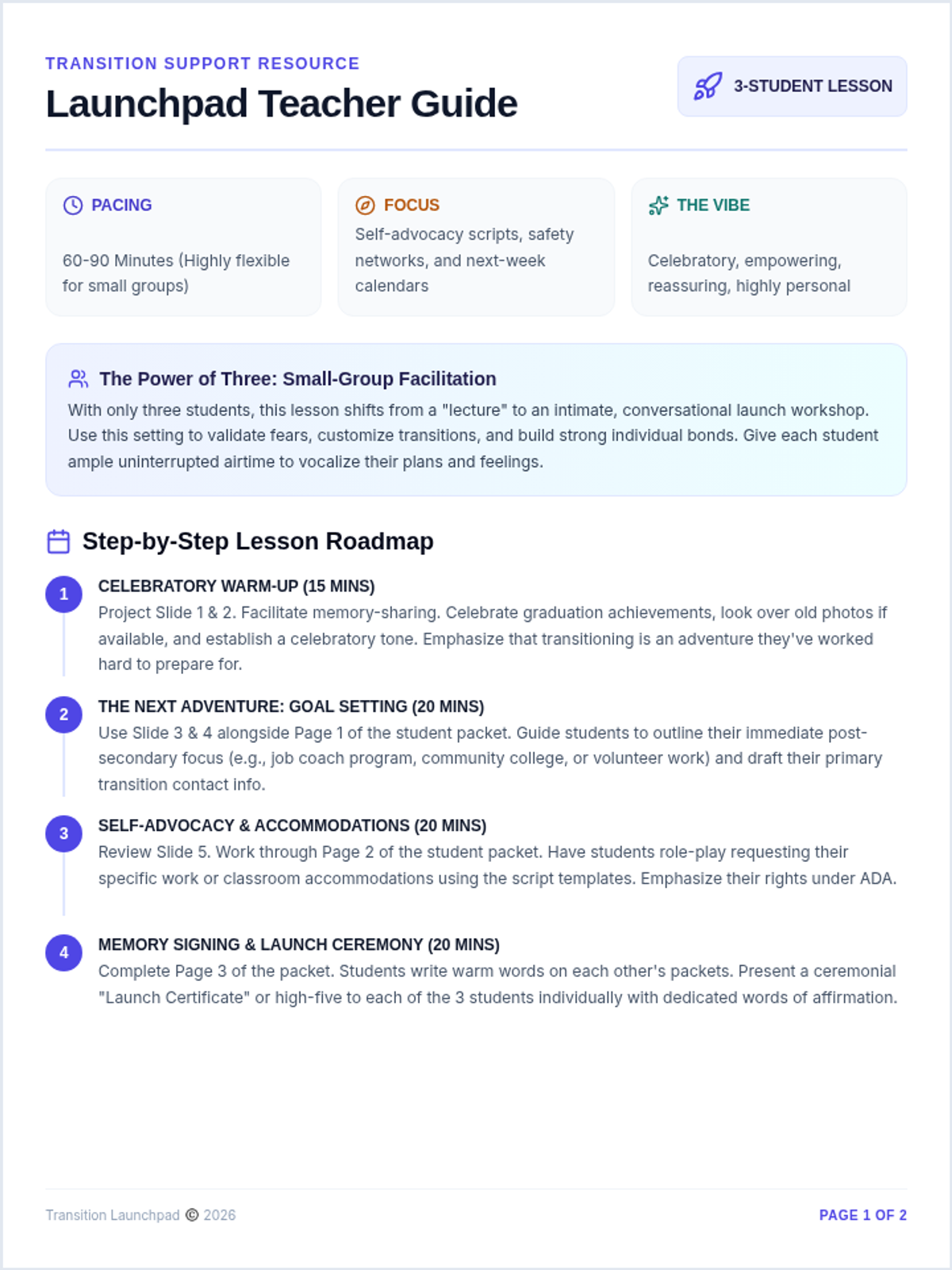
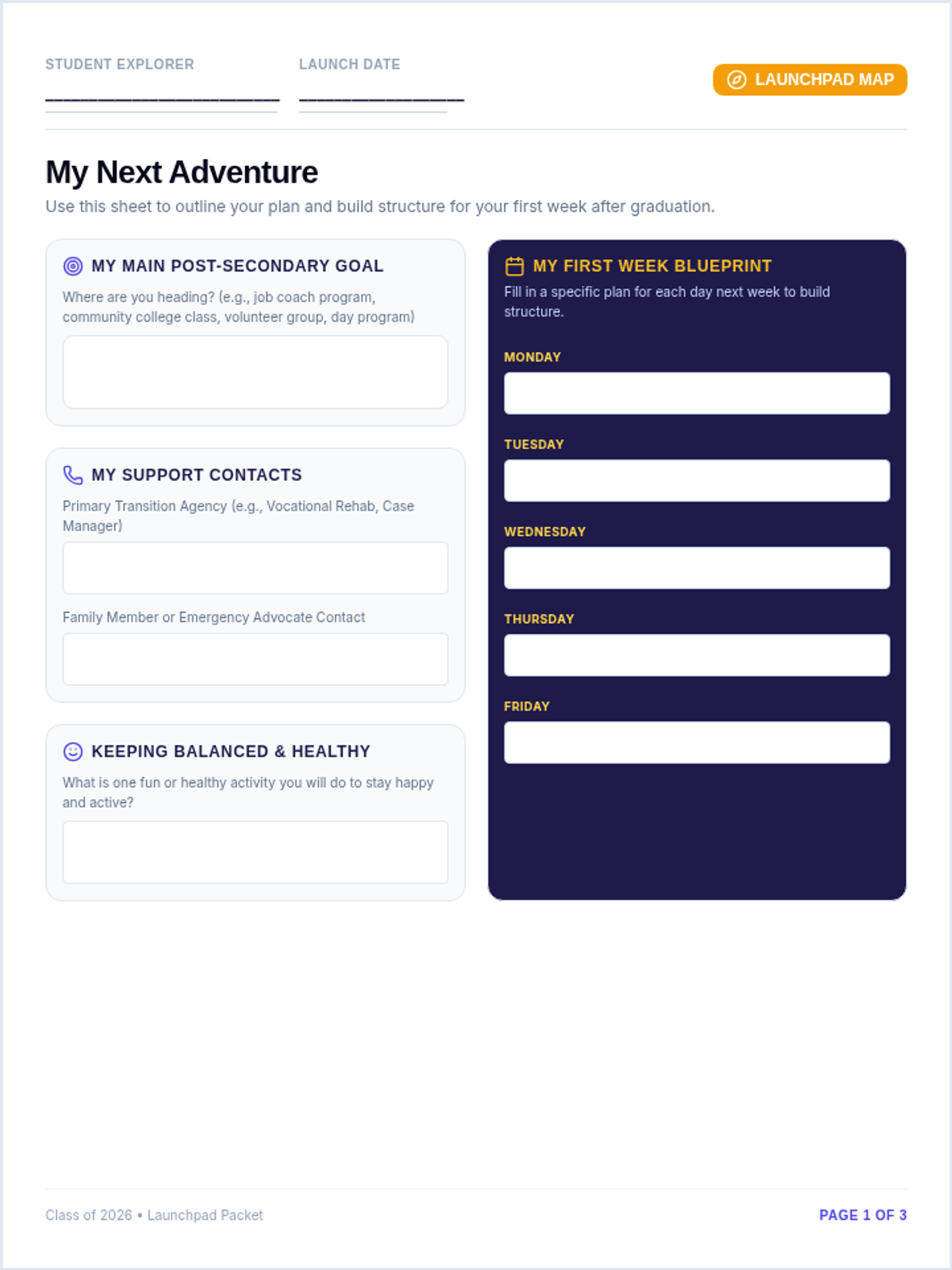
A celebration and action-planning lesson for high school special education students on their final transition day, focusing on personal achievements, self-advocacy scripts, and building concrete next-week schedules.
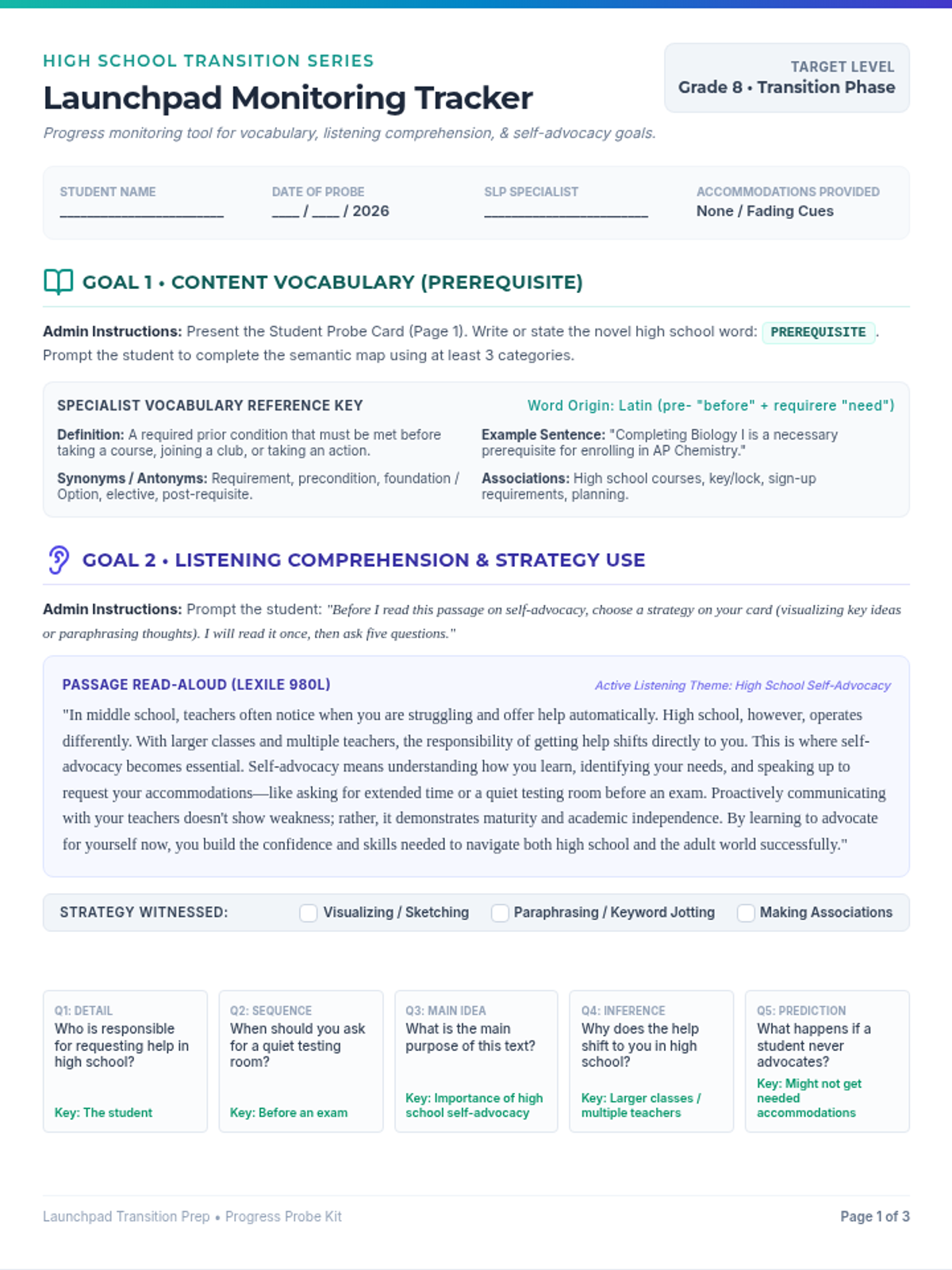
A comprehensive speech-language therapy progress monitoring kit tailored for 8th-grade students transitioning to high school. The kit focuses on content vocabulary, listening comprehension with active strategy use, and transition-oriented self-advocacy.