Teaches the strategy of chunking and categorization to help the brain process larger amounts of information more efficiently.
Week 4 focuses on Planning through the 'Master Chef' lens. Students break down complex, multi-step meal preparation tasks into sequenced steps, organize resources with grocery lists, and practice backward planning to ensure mission success.
A speech therapy session focusing on oral speaking clarity and peer feedback using a recording studio theme. Students practice speech rate, volume, and articulation.
Week 7 of the Executive Functioning module, focusing on Working Memory. Students learn strategies to hold and manipulate 'data streams' using chunking, visualization, and external systems.
This lesson helps 6th grade students understand ADHD medication management, specifically focusing on how Methylphenidate (stimulants) and Guanfacine (non-stimulants) work individually and together to support focus, emotional regulation, and school success.
Focuses on external supports like checklists and planners to reduce working memory load and build lasting habits.
Explores visualization techniques and mnemonics as 'mental snapshots' to help information stick in the brain's workbench.
Introduces the concept of working memory using the 'Brain Workbench' analogy and helps the student identify their own memory strengths and challenges.
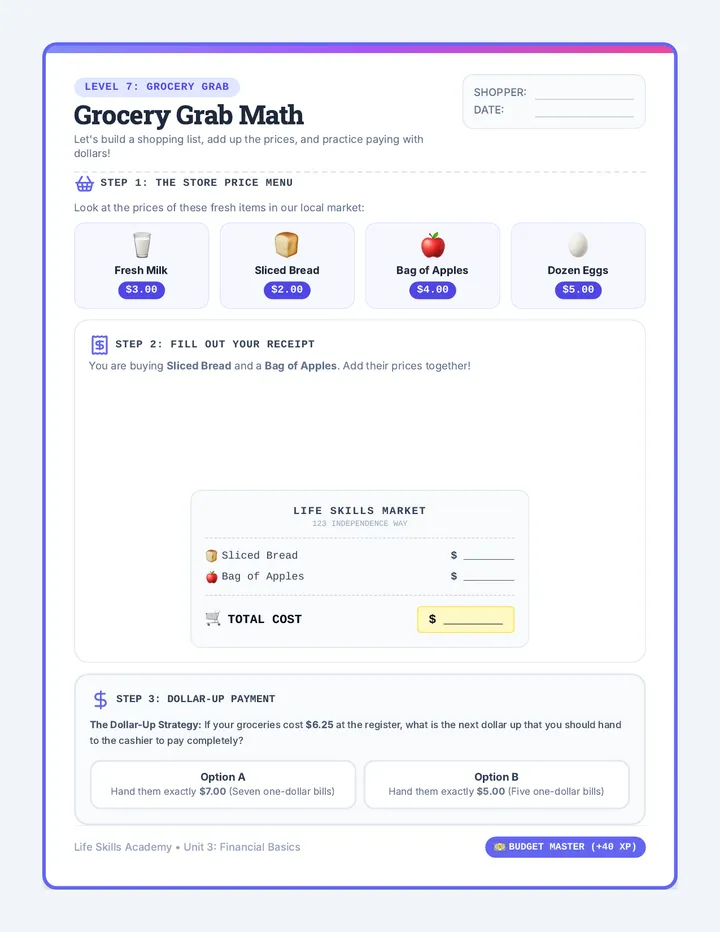
A comprehensive transition lesson focused on functional money skills for independent living. Students practice coin/bill identification, making purchases, and basic budgeting through hands-on activities and real-world scenarios.
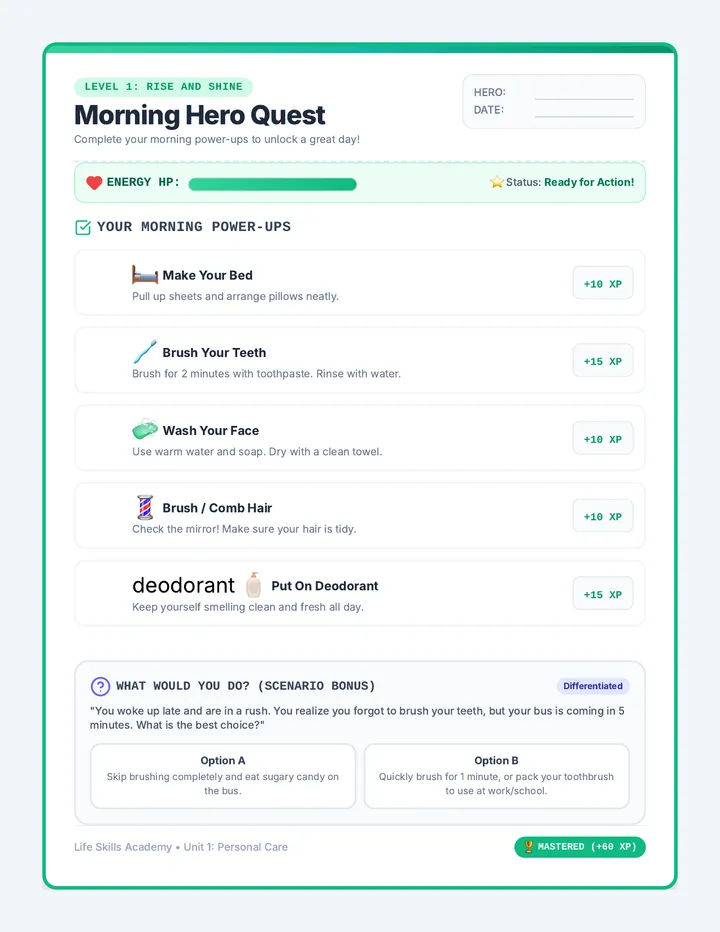
A comprehensive health and hygiene lesson designed for students with special needs, featuring visual schedules, social stories, and step-by-step guides to master handwashing, dental care, nutrition, and self-awareness of illness.
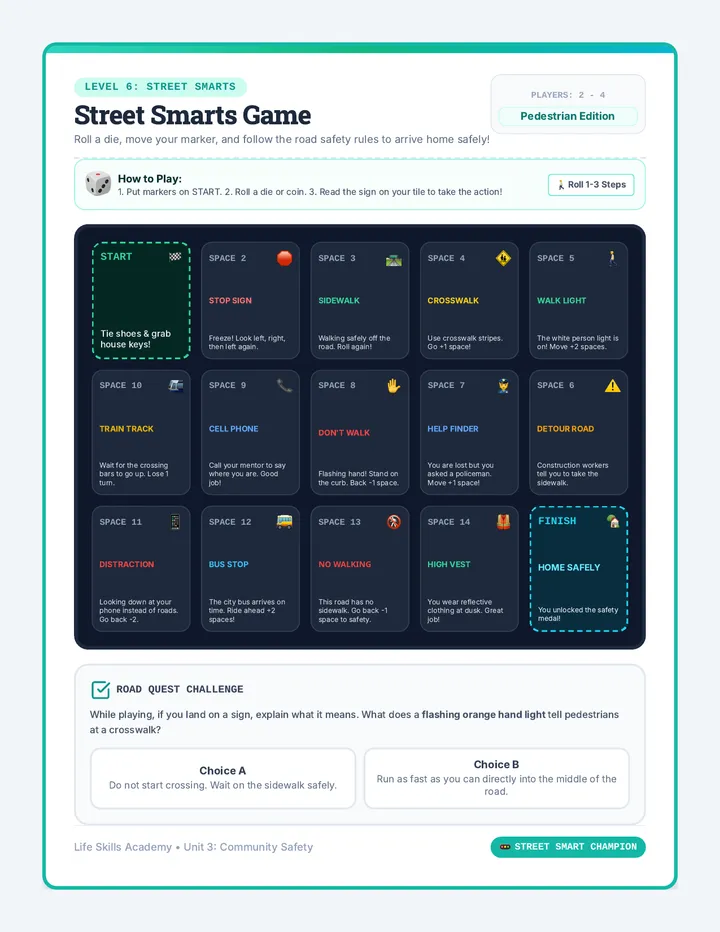
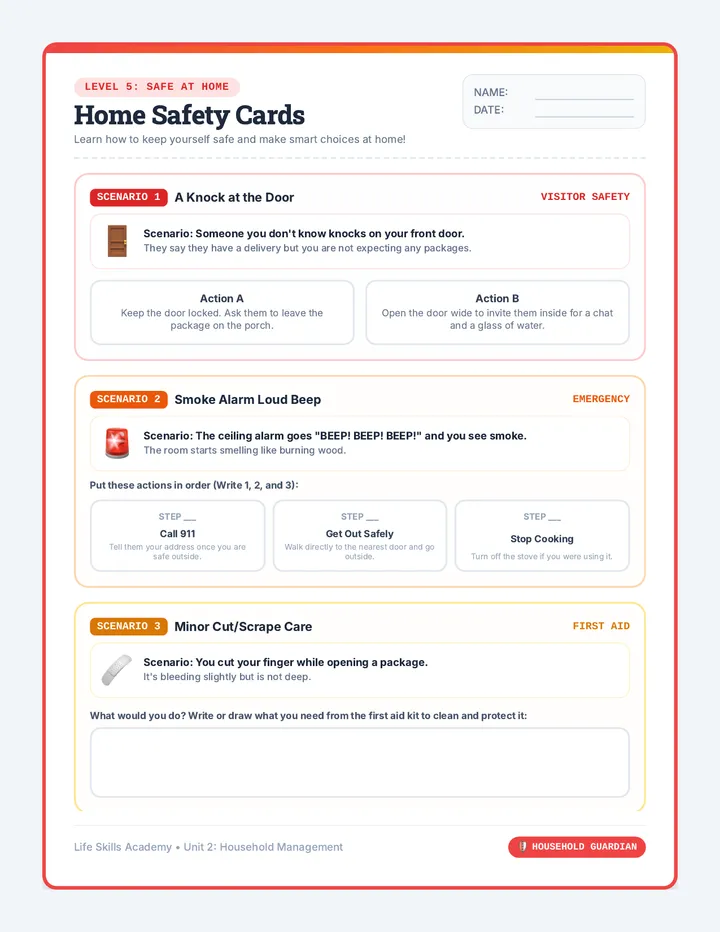
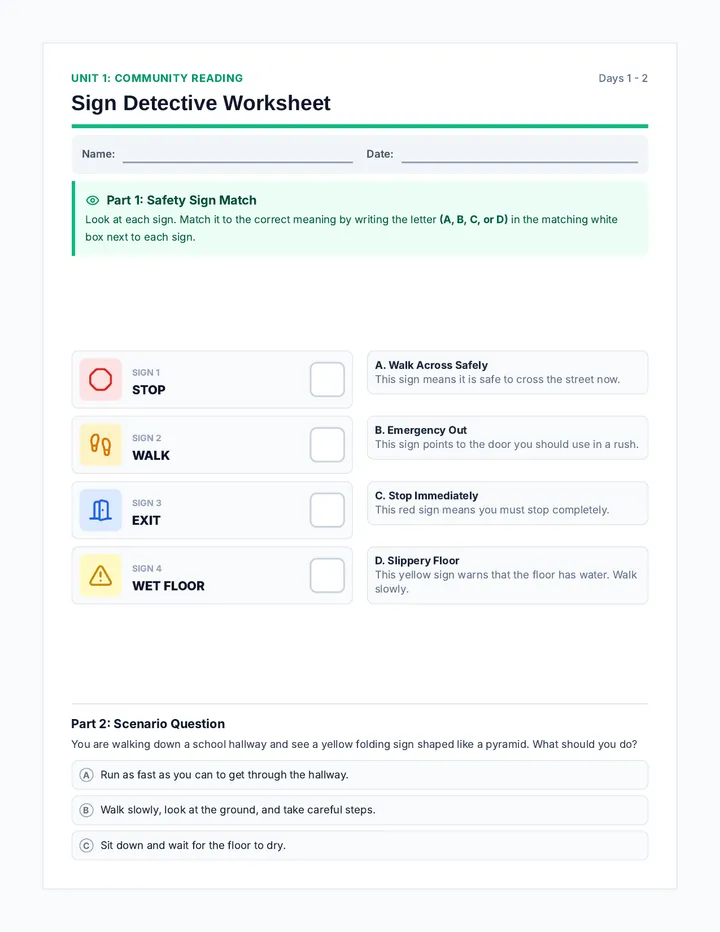
A comprehensive community safety lesson for SPED students focusing on pedestrian safety, situational awareness, and emergency protocols through visual aids and role-play.
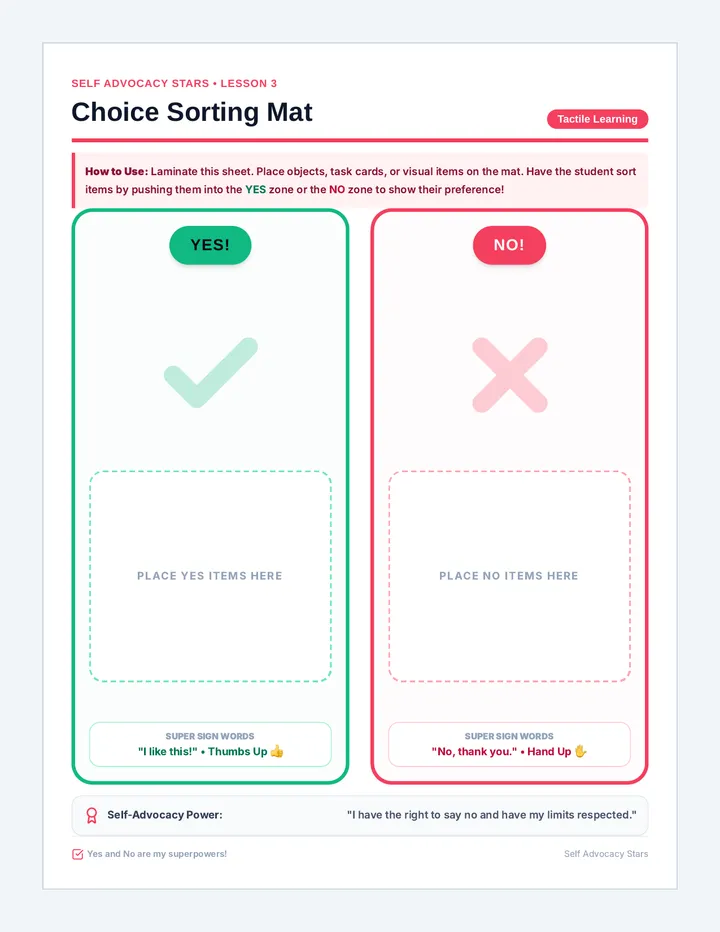
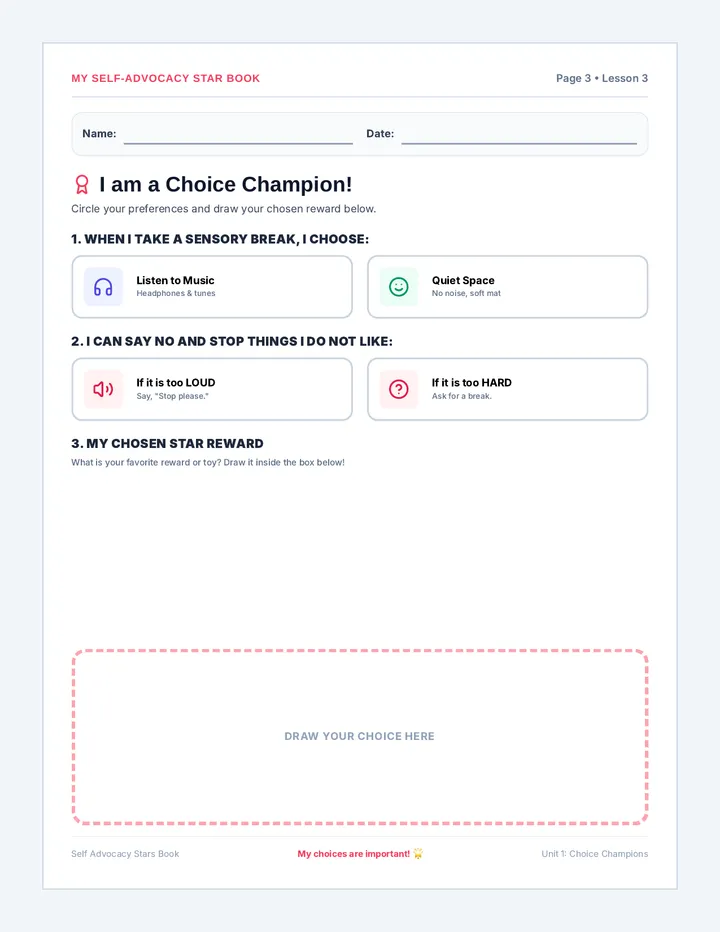
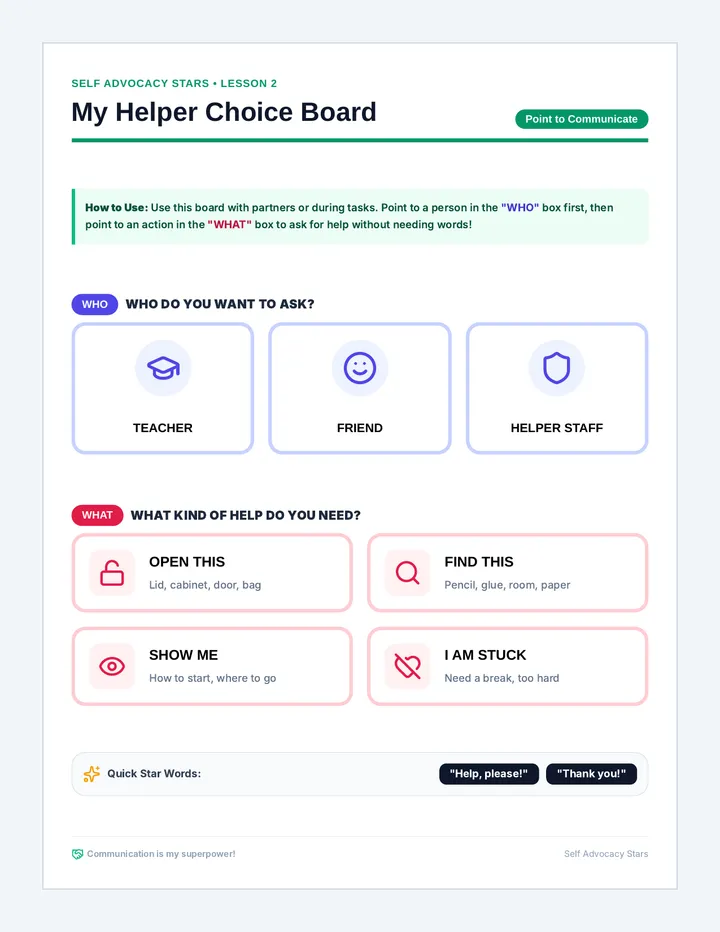
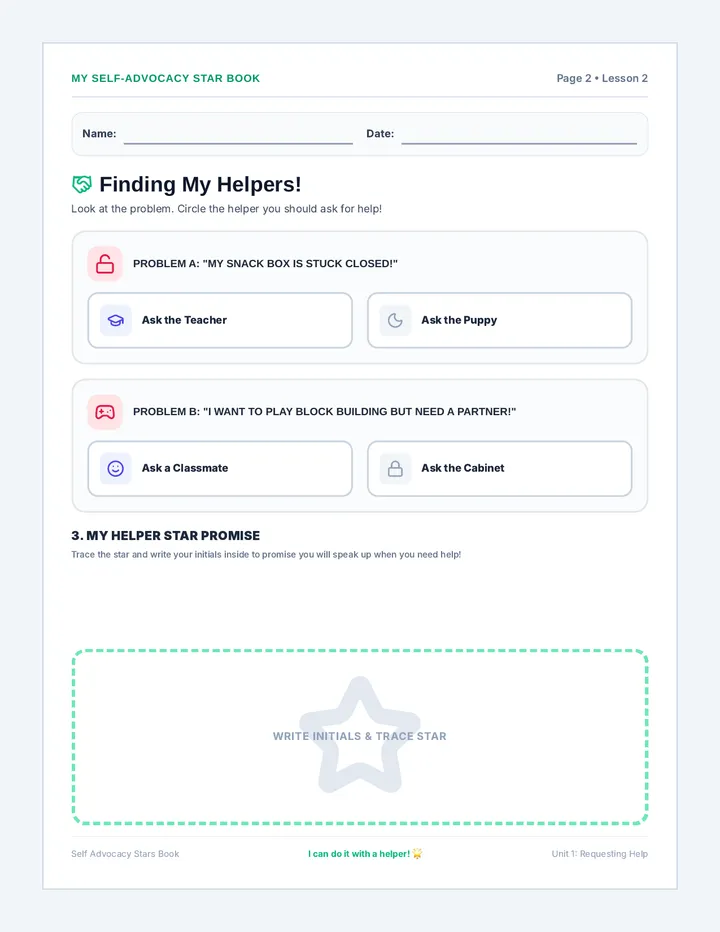
This lesson focuses on the foundational skills of requesting, refusing, and choice-making for students with significant disabilities. It utilizes visual supports and AAC strategies to empower students to express their needs and preferences effectively.