A dedicated hub for sequence-level evaluations, including the Placement Mission (pre-assessment) and the Final Graduation (post-assessment).
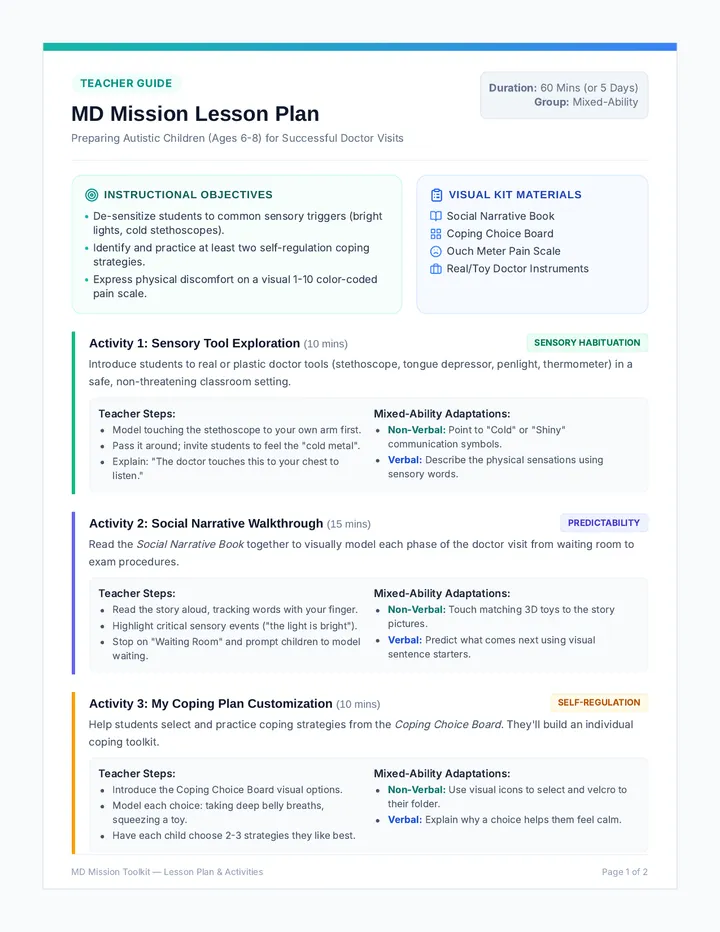
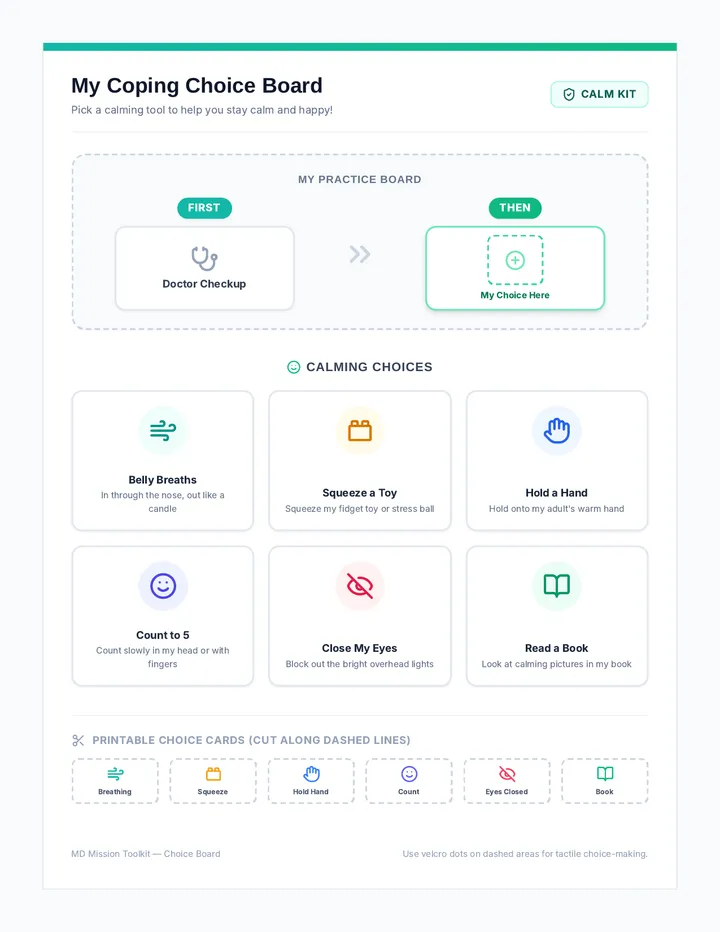
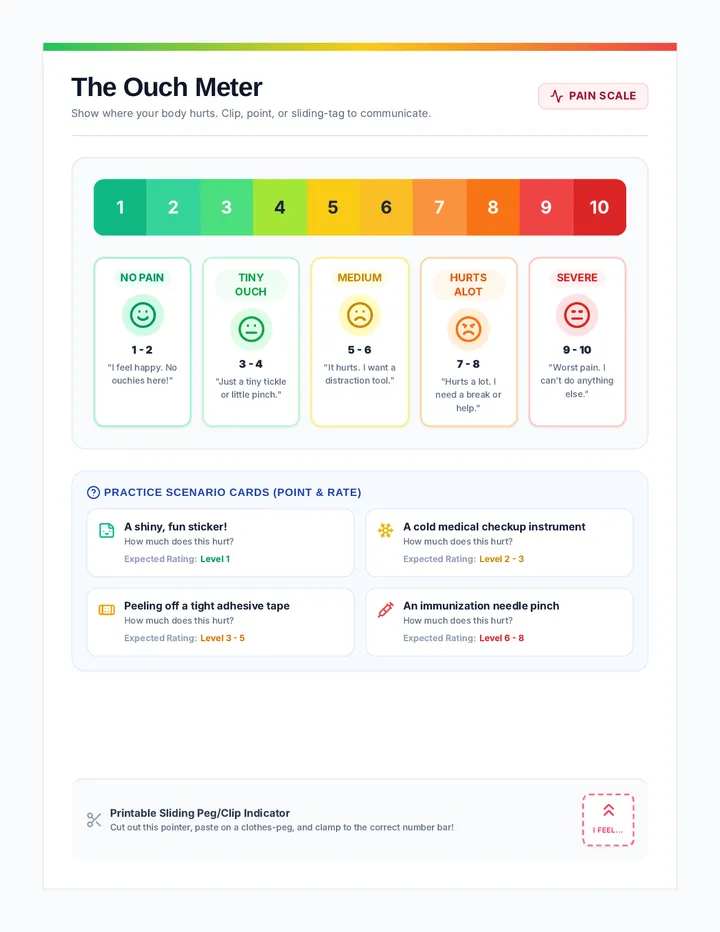
A comprehensive lesson containing visual supports and activities to prepare children with autism (ages 6-8) for doctor visits, focusing on sensory expectations, coping strategies, and pain communication.
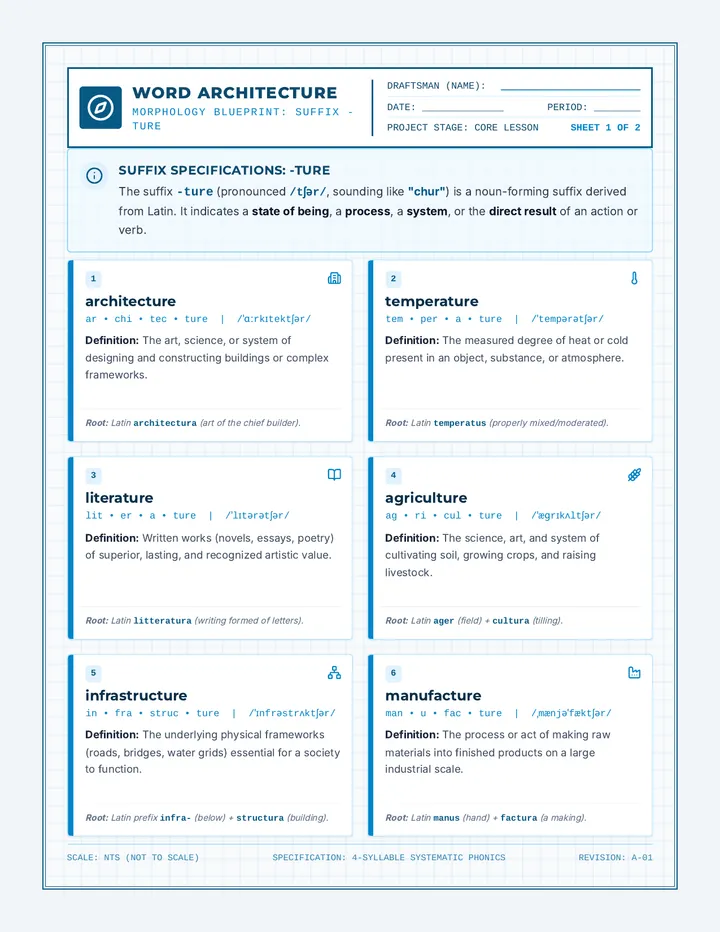
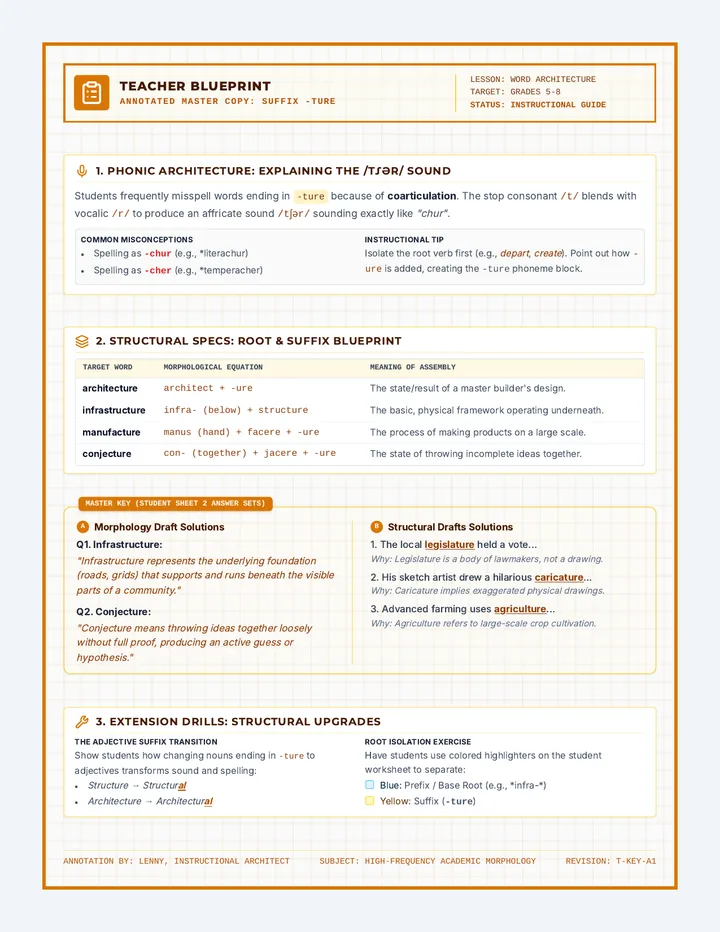
A middle school vocabulary lesson exploring 3-to-4 syllable academic words ending in the suffix -ture. Students examine pronunciation, morphological structure, definitions, and applications through a technical drafting/blueprint theme.
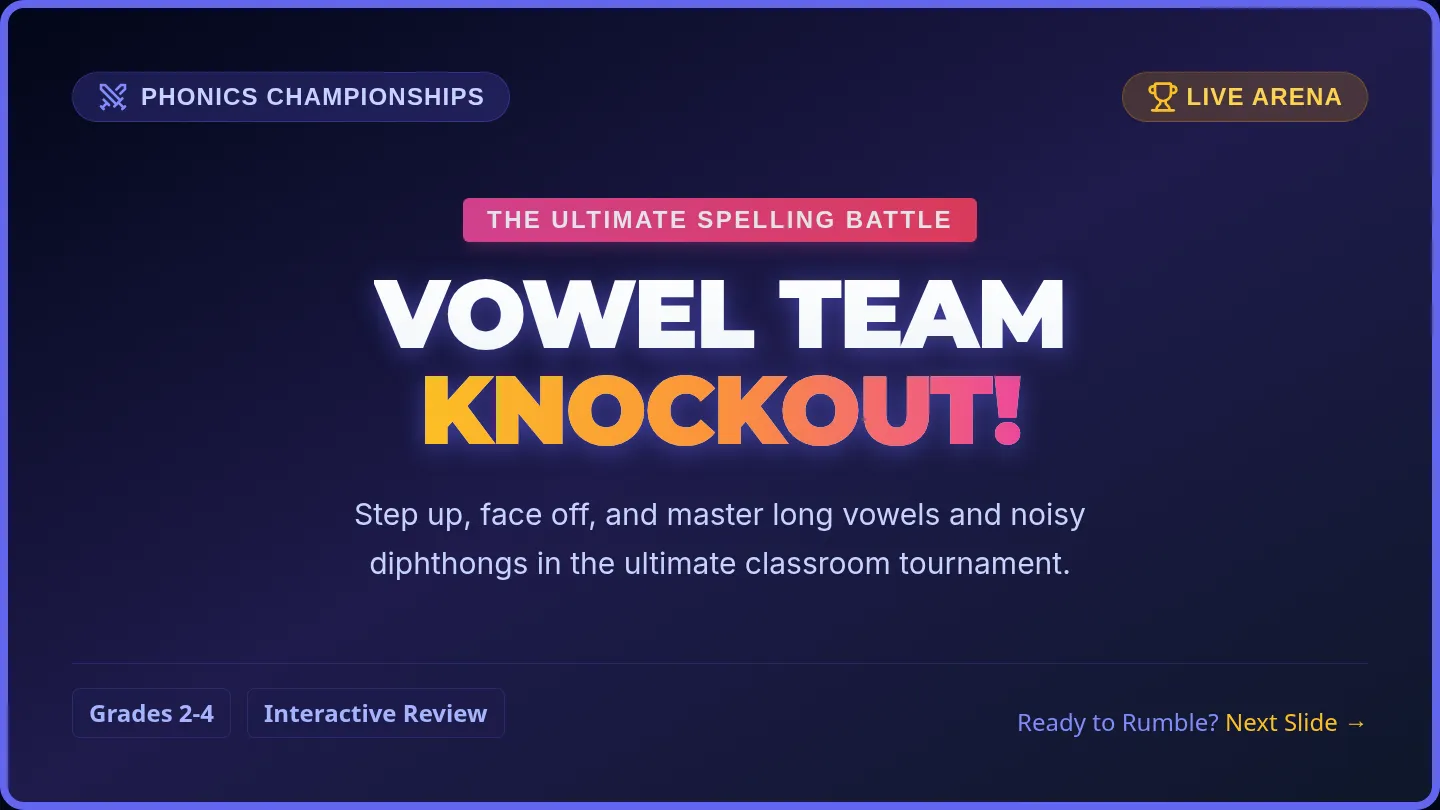
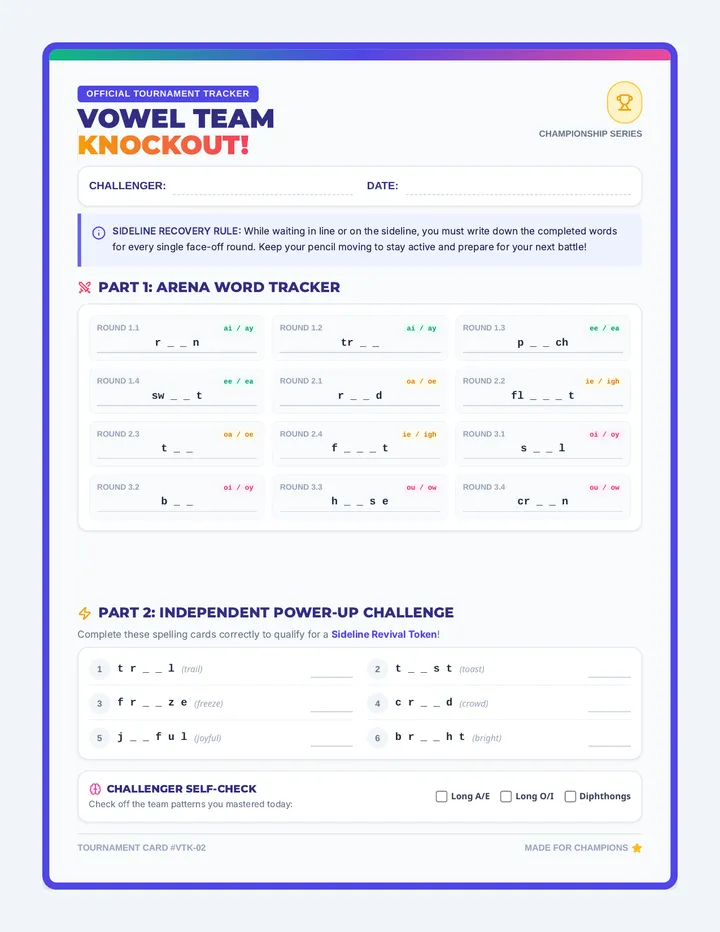
An energetic classroom phonics lesson where students compete in a friendly Knockout tournament to master vowel teams and diphthongs. Includes interactive instructional and gameplay slides, plus a student tracking sheet.
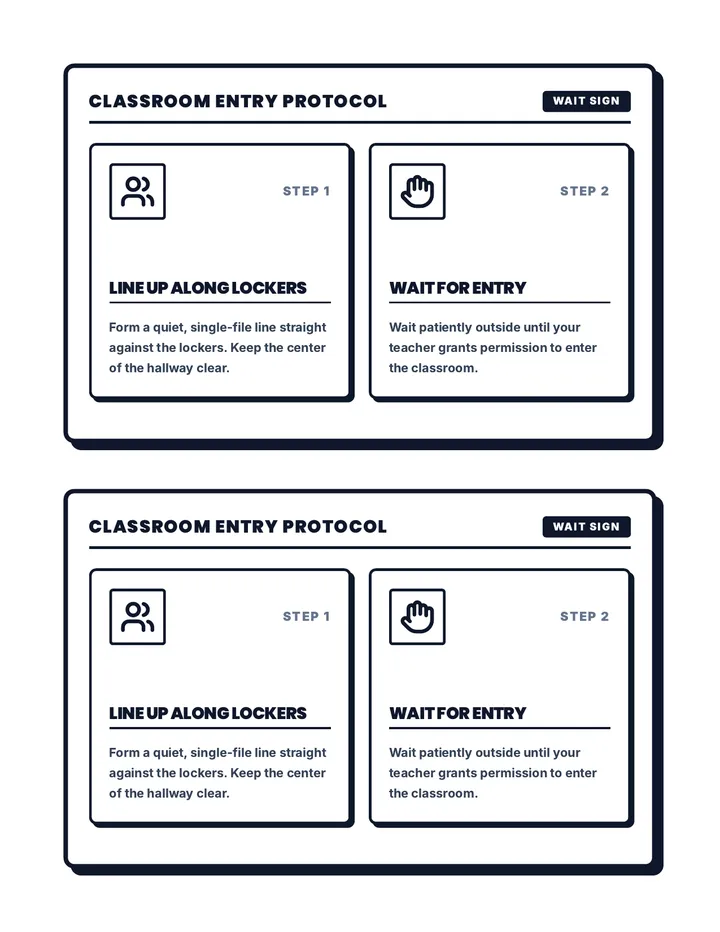
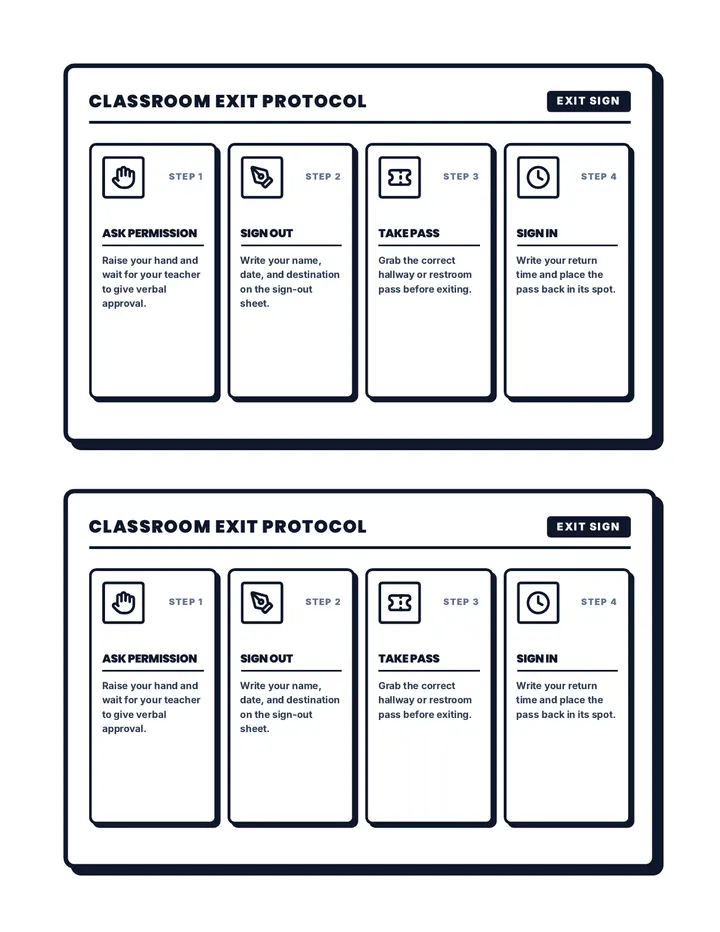
A collection of matching visual aids and signs to help manage classroom routines and expectations, including entry and exit procedures.
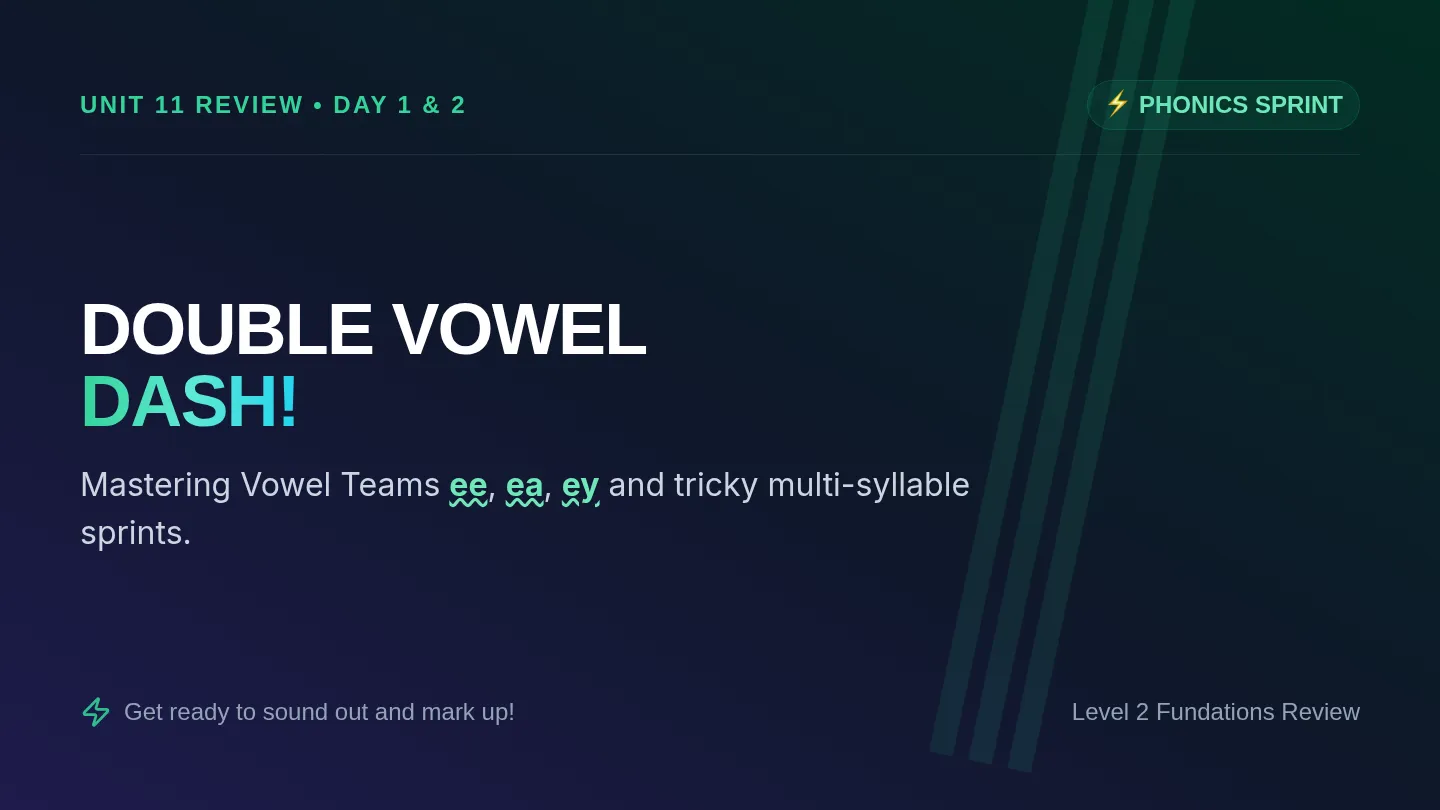
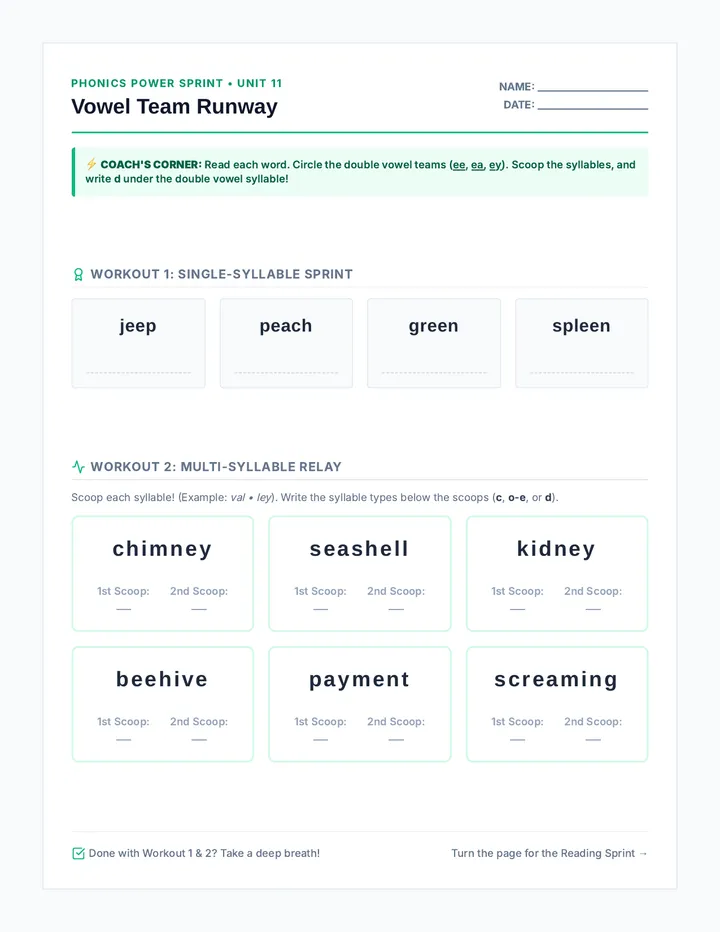
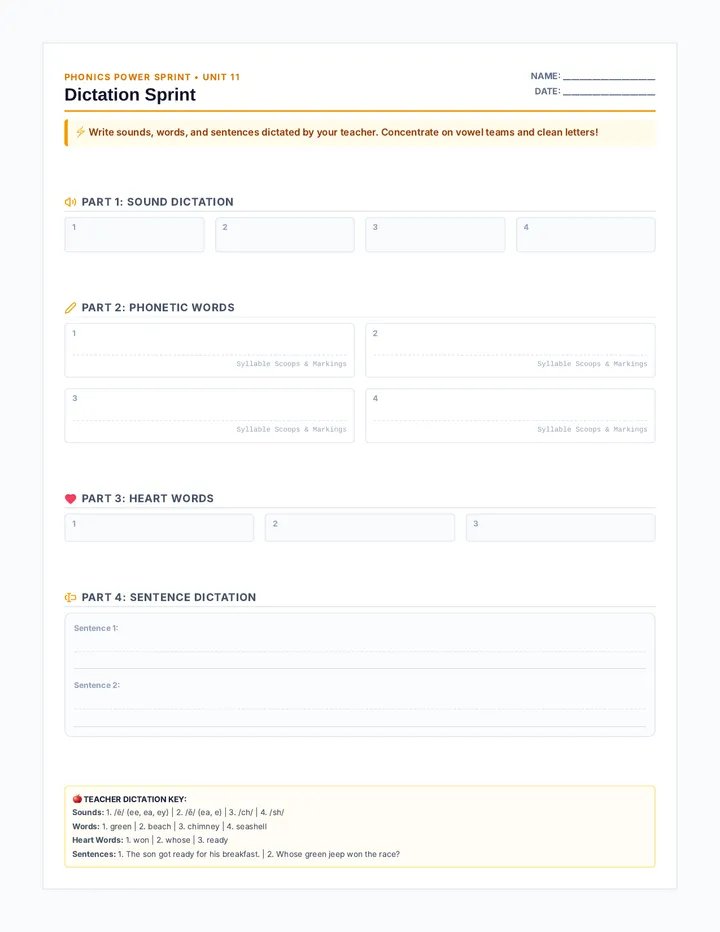
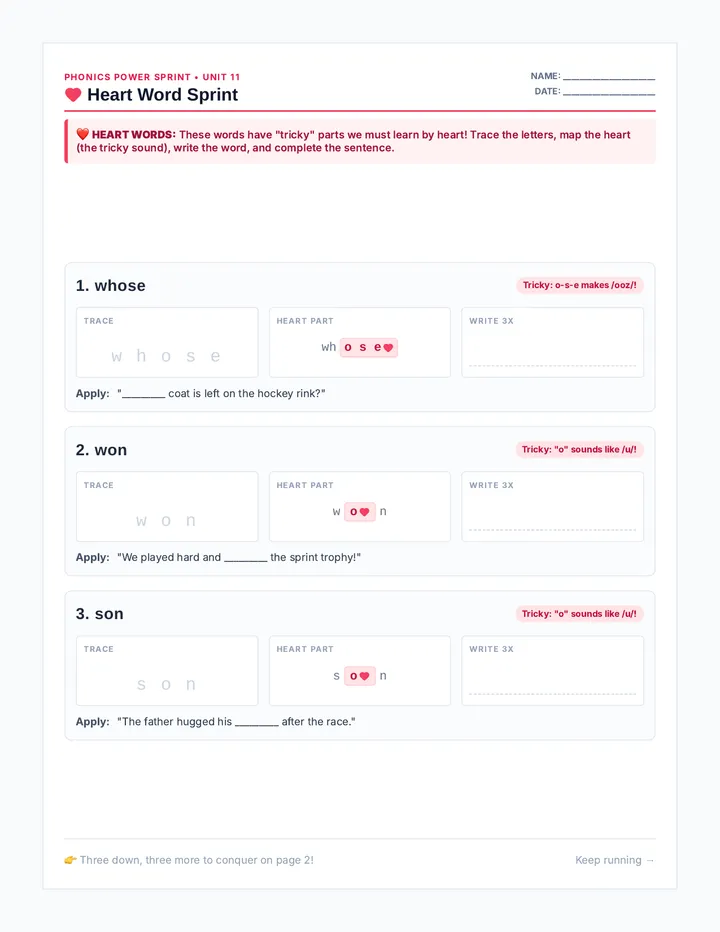
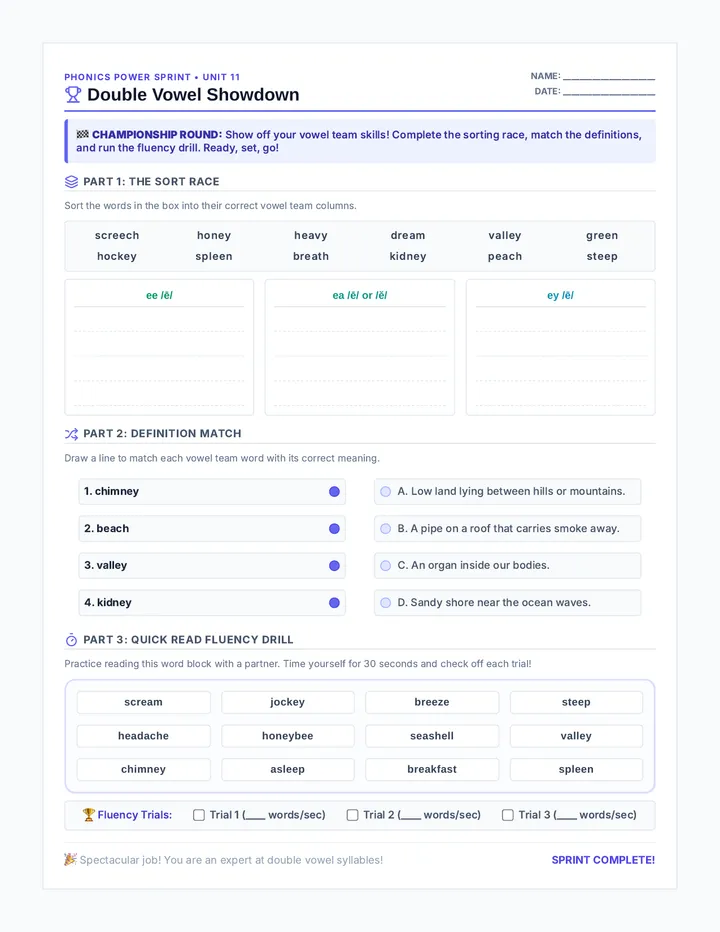
An intensive review of the double vowel teams 'ee', 'ea', and 'ey' in single and multi-syllabic words. This lesson compresses Unit 11 into a high-octane 1.5-day cycle featuring direct instruction, decodable text practice, and multi-sensory heart word spelling.
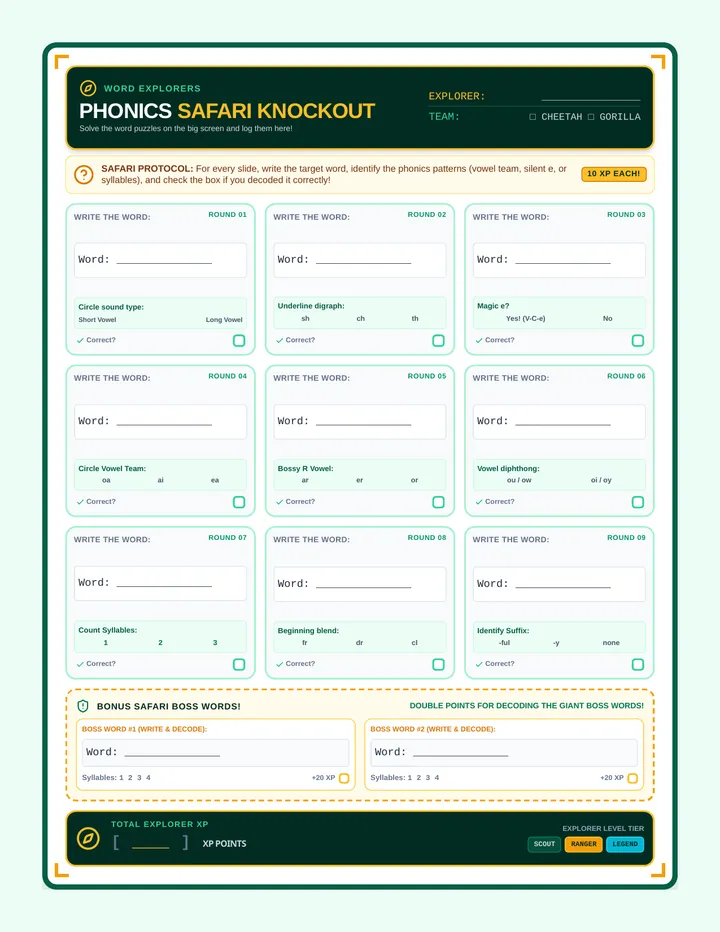
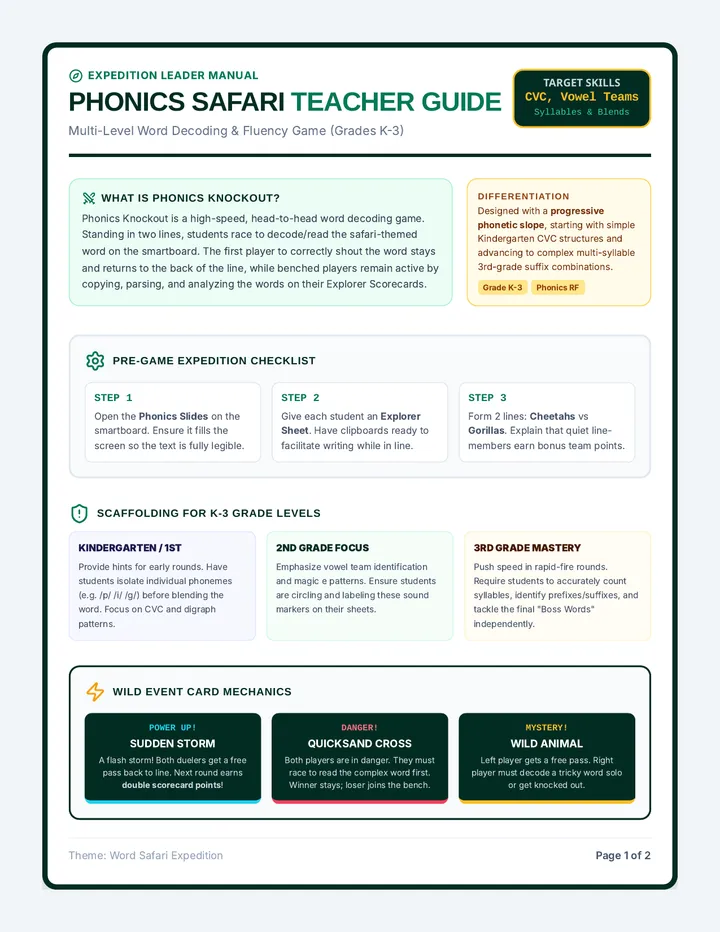
A high-energy, wild safari-themed classroom game for K-3 students focusing on key phonics skills including CVC words, silent 'e', vowel teams, and multi-syllable decoding. This lesson includes a widescreen smartboard presentation, a teacher facilitation guide with word keys, and an active-participation student tracker sheet.
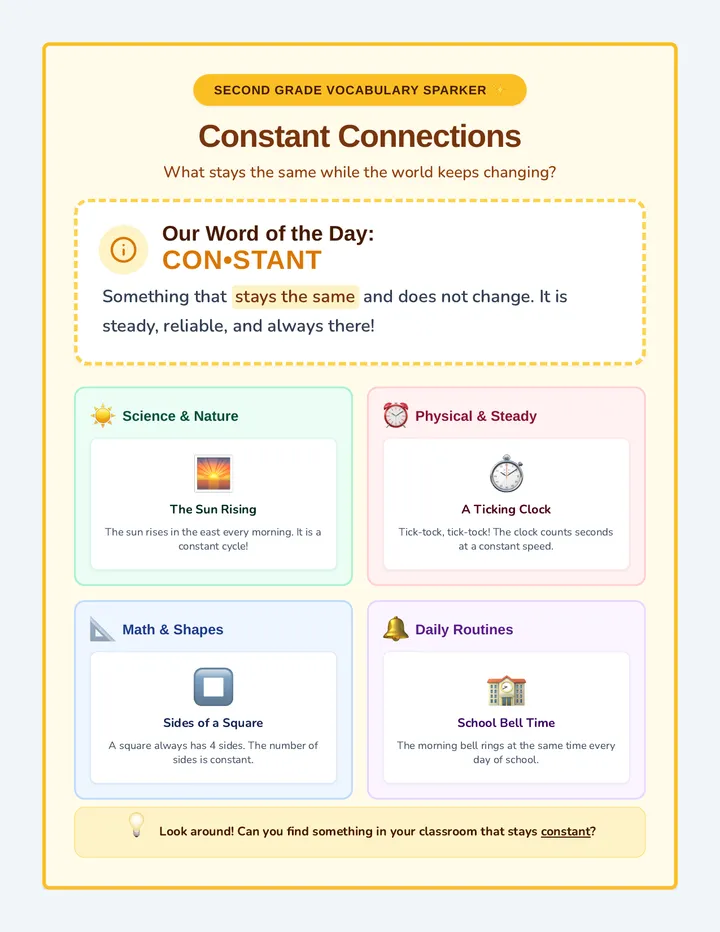
A second-grade vocabulary lesson introducing the word 'constant' through everyday examples in science, nature, math, and daily routines. Students engage with pocket-chart visual matching cards and an interactive sorting worksheet.
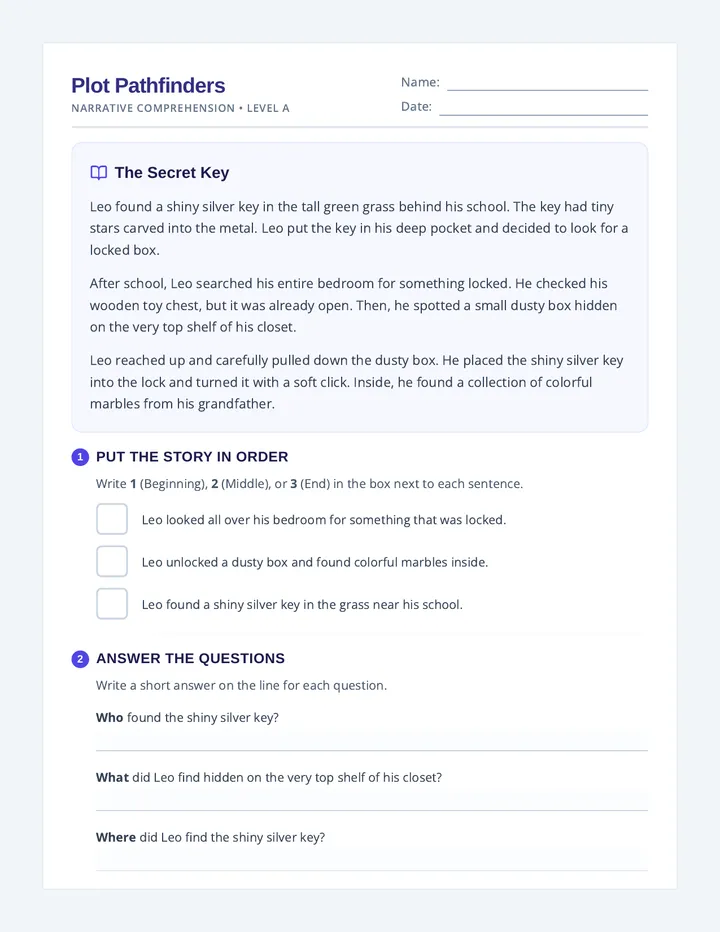
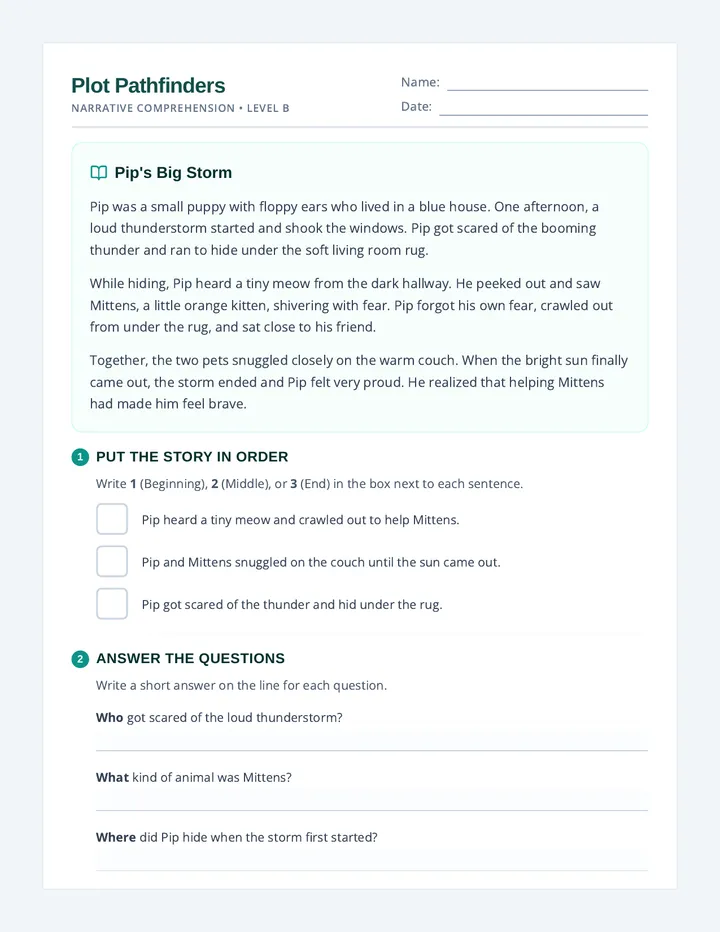
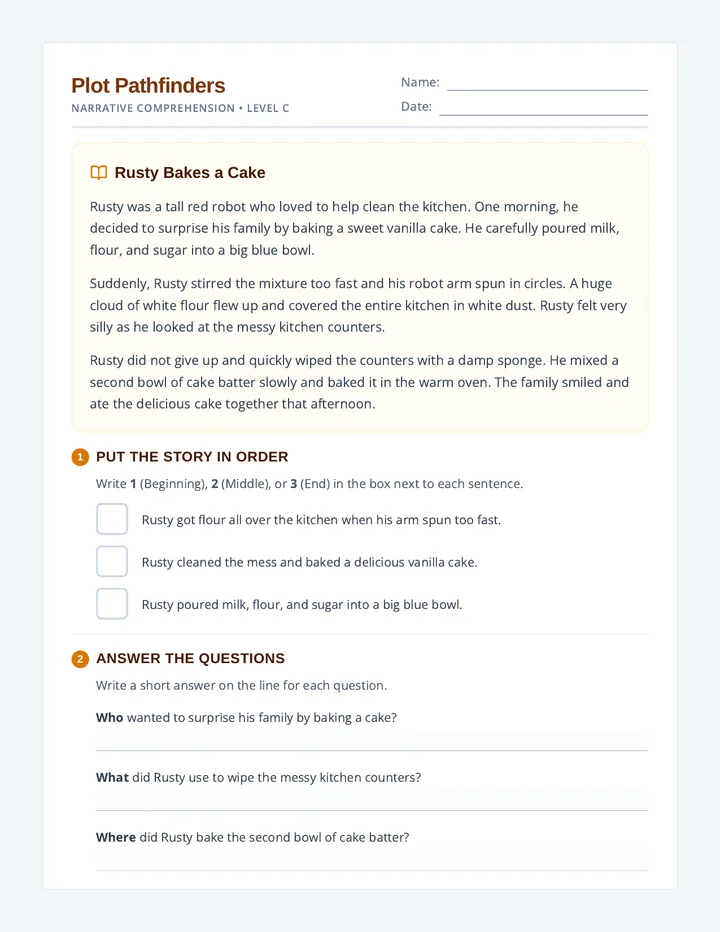
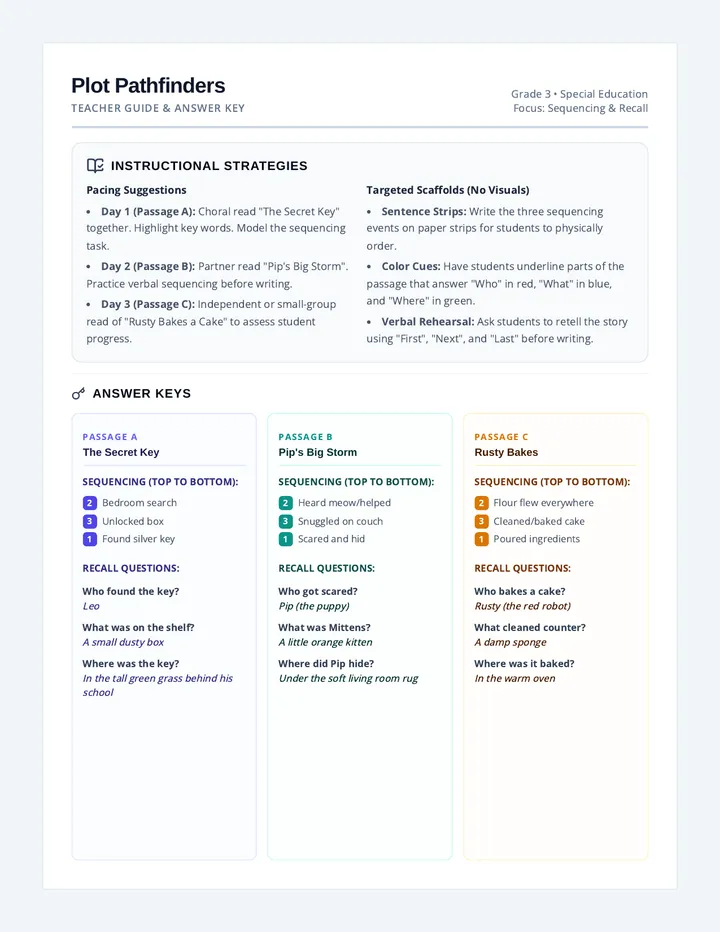
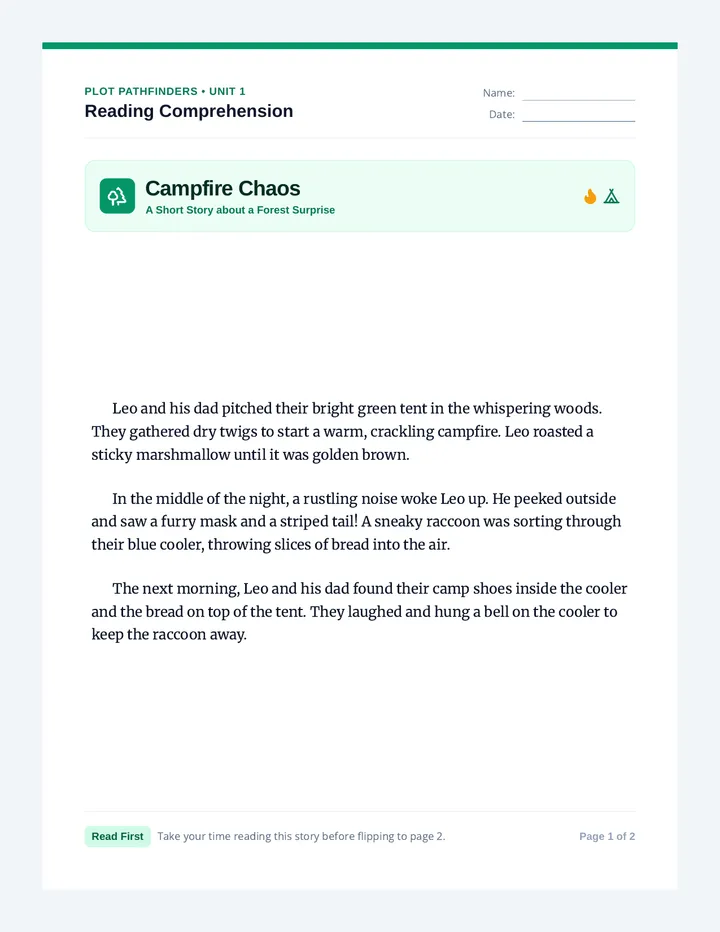
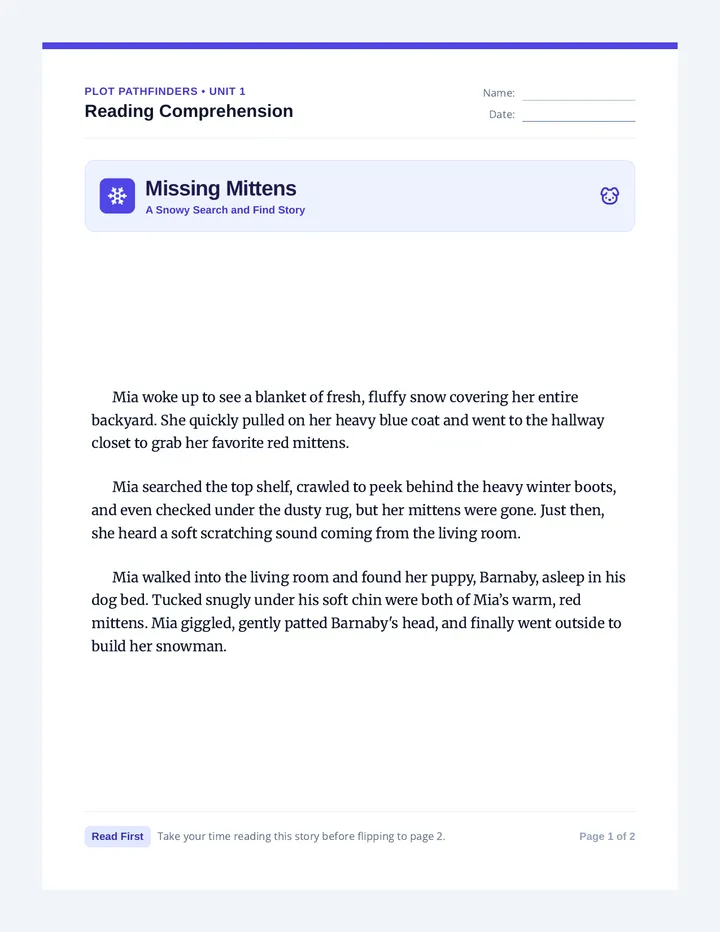
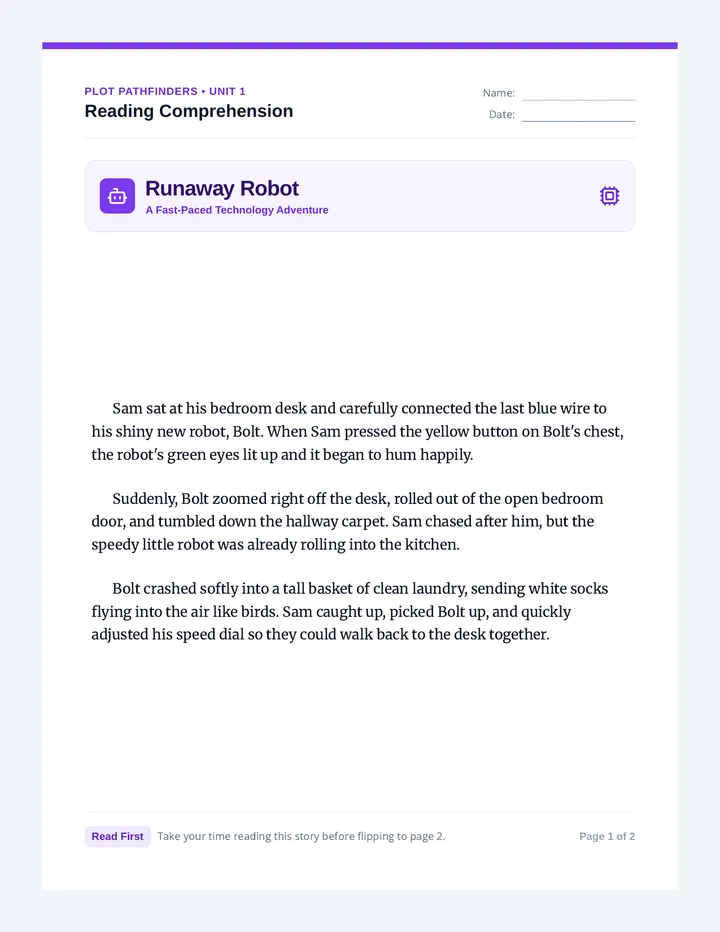
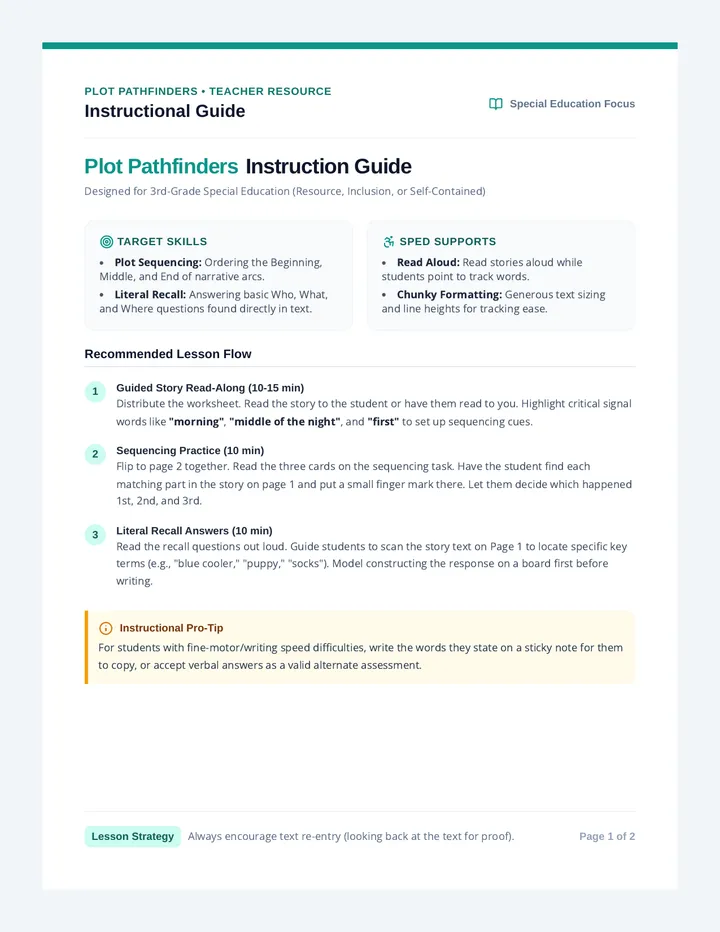
A reading comprehension lesson designed for 3rd-grade special education. It includes three narrative passages with three paragraphs each, focusing on sequencing events and literal recall questions (who, what, where).
A reading comprehension lesson focused on narrative sequencing and simple literal recall for 3rd-grade special education students. Features three engaging, three-paragraph short stories with tailored open-ended questions.
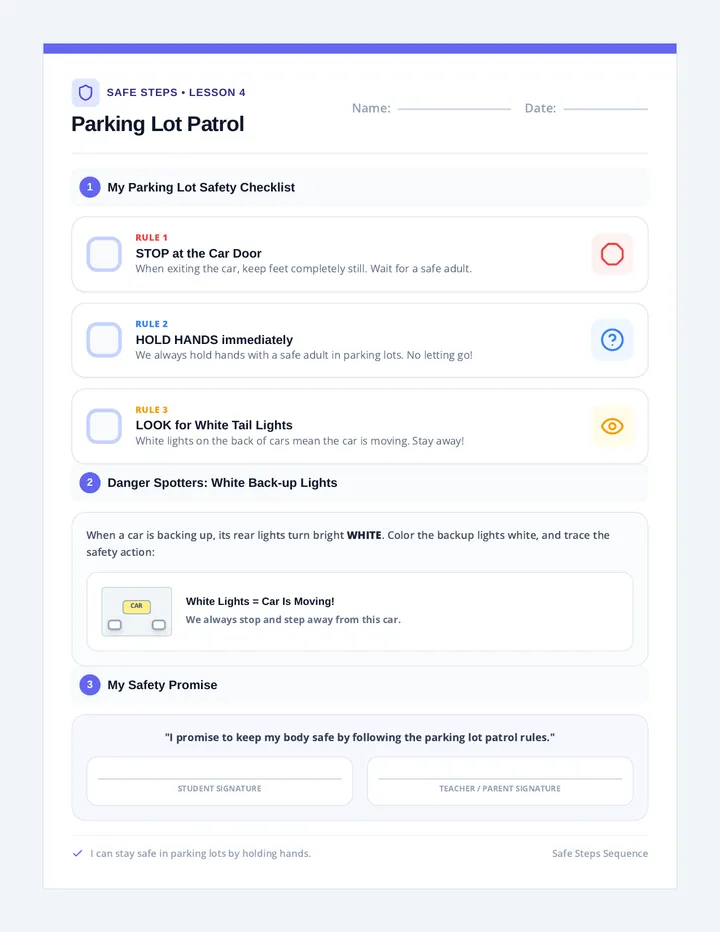
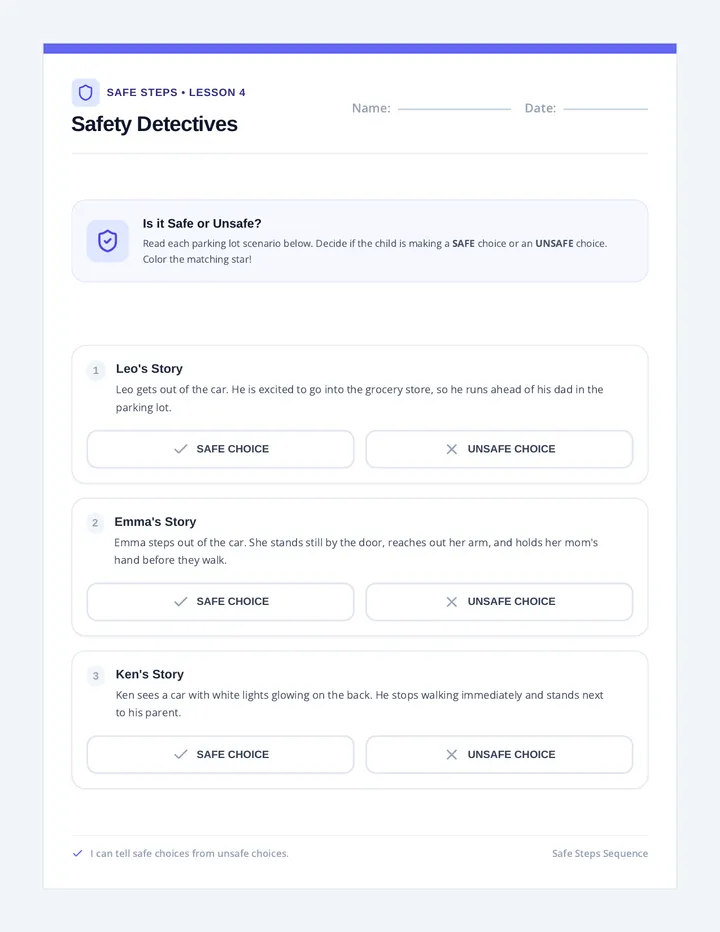
A structured, action-oriented lesson to teach parking lot safety rules, emphasizing the "Stop, Look, Hold Hands" routine and staying next to the vehicle.
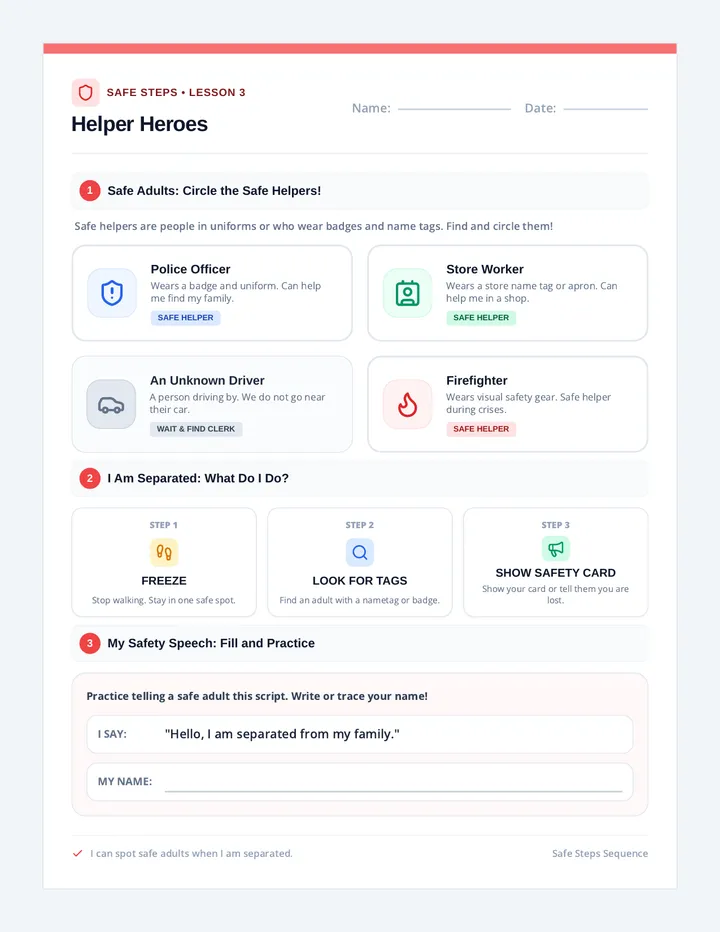
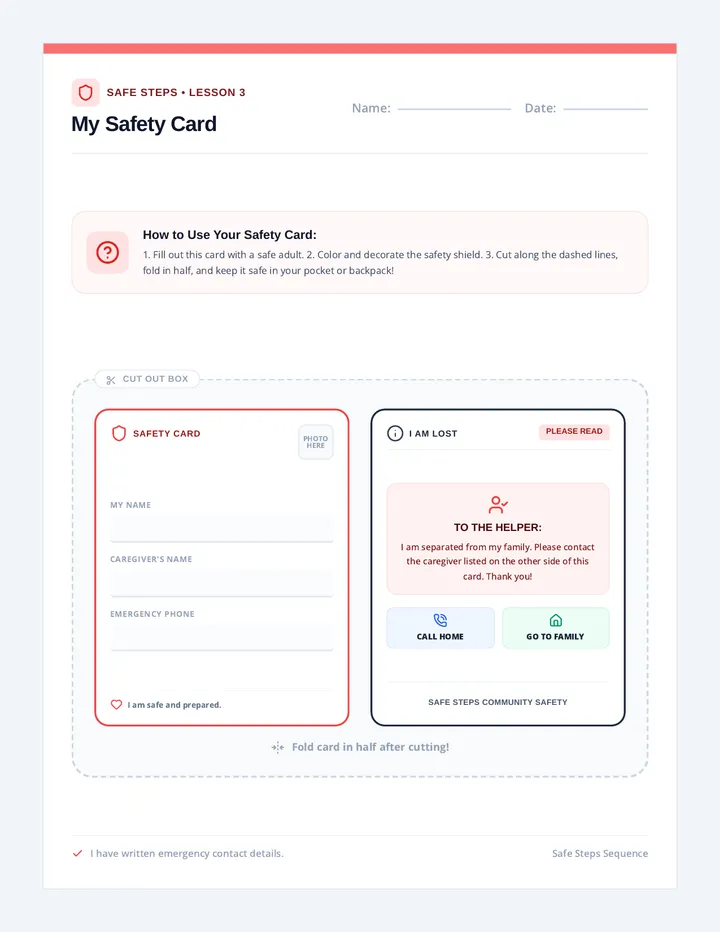
A concrete, sensory-friendly lesson teaching children how to identify "safe adults" (police officers, store employees) and use structured communication routines if separated from a caregiver.
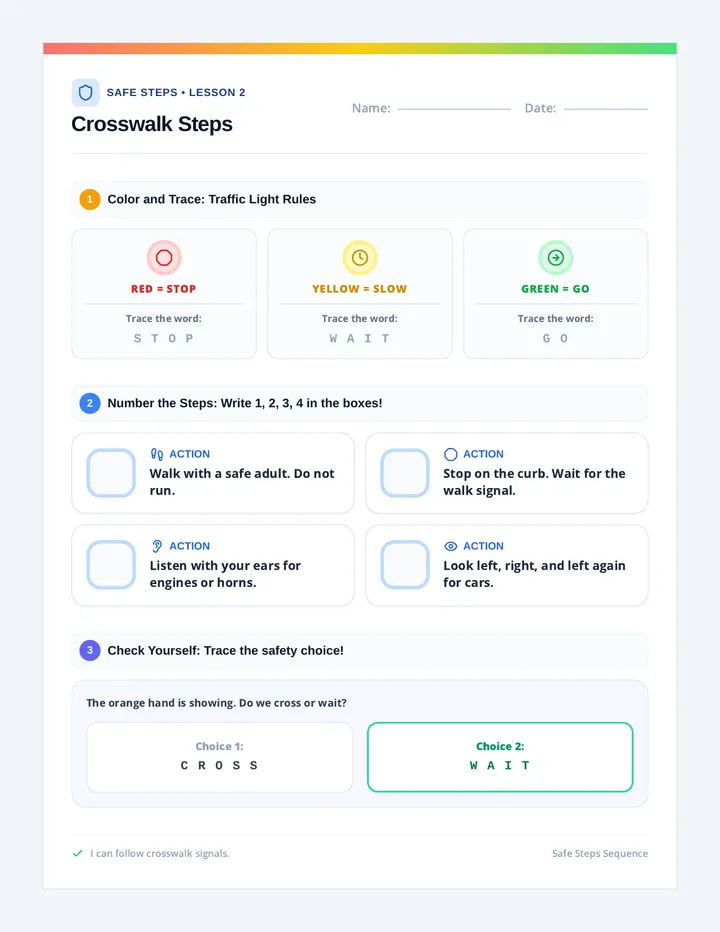
A highly visual, structured lesson focusing on understanding traffic lights, pedestrian crosswalk signals, and the action-steps for crossing the street safely.
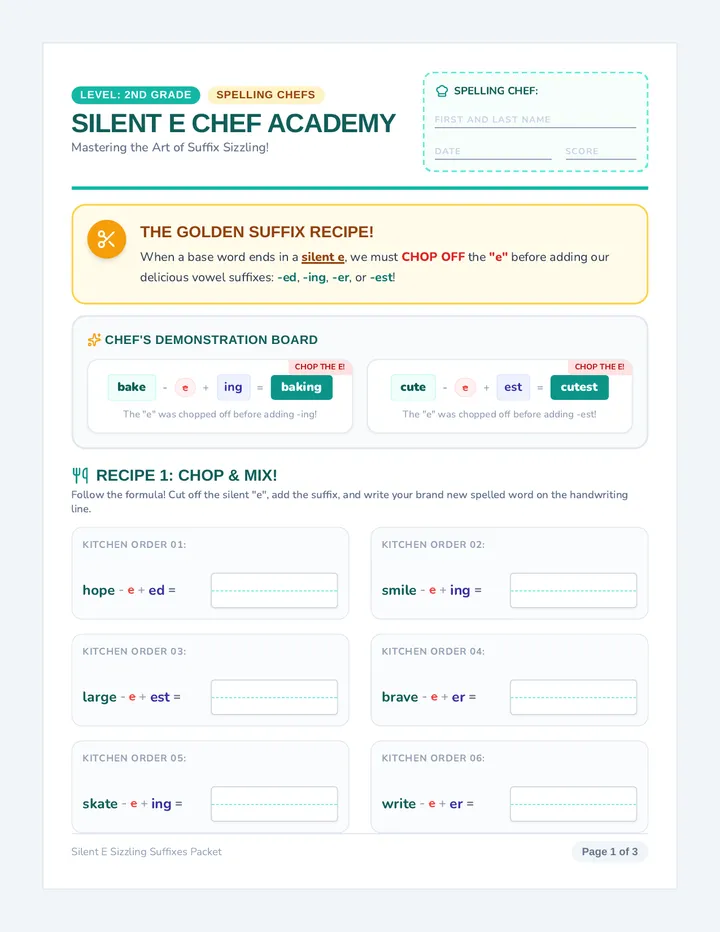
A spelling lesson for second graders focused on dropping the final silent 'e' before adding vowel suffixes (-er, -est, -ed, -ing) using a fun kitchen/chef theme.
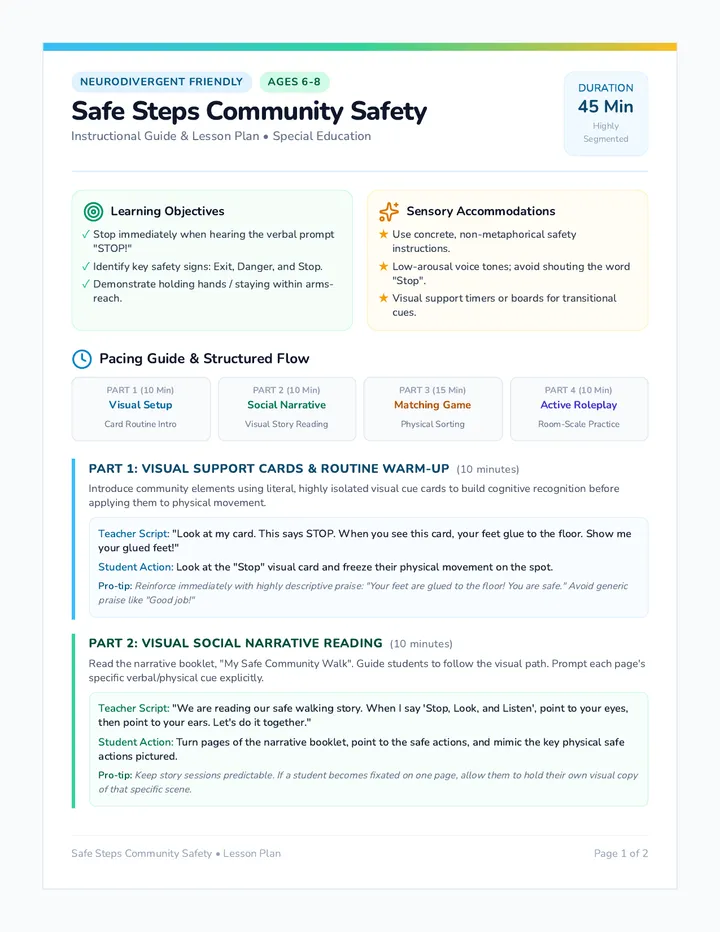
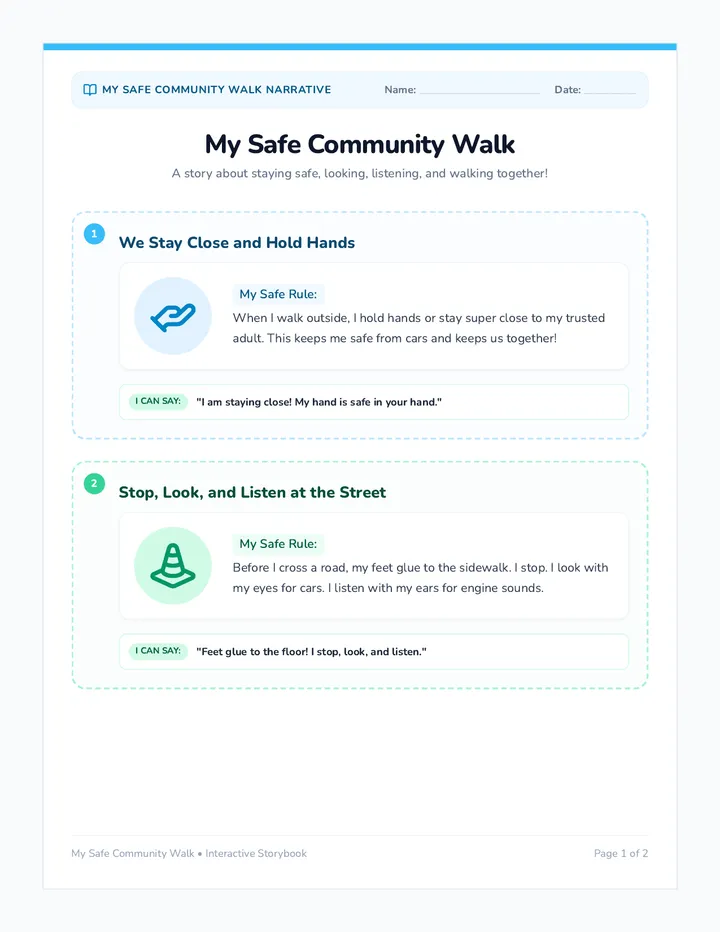
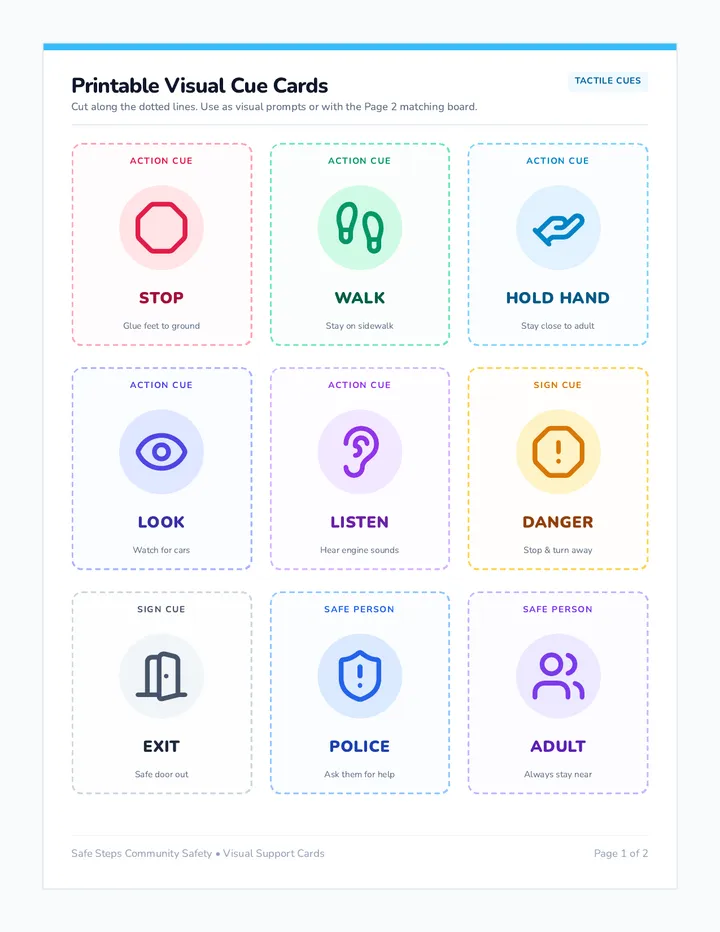
A highly structured, sensory-friendly lesson designed for children aged 6-8 with autism to learn and practice critical community safety directions through social narratives, visual support cards, and hands-on matching games.
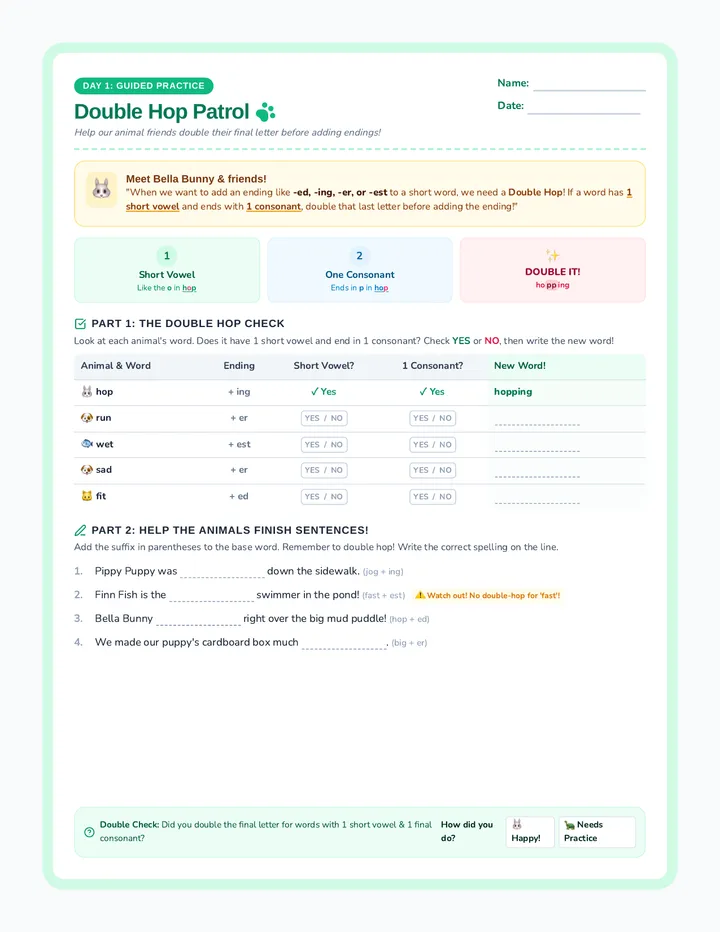
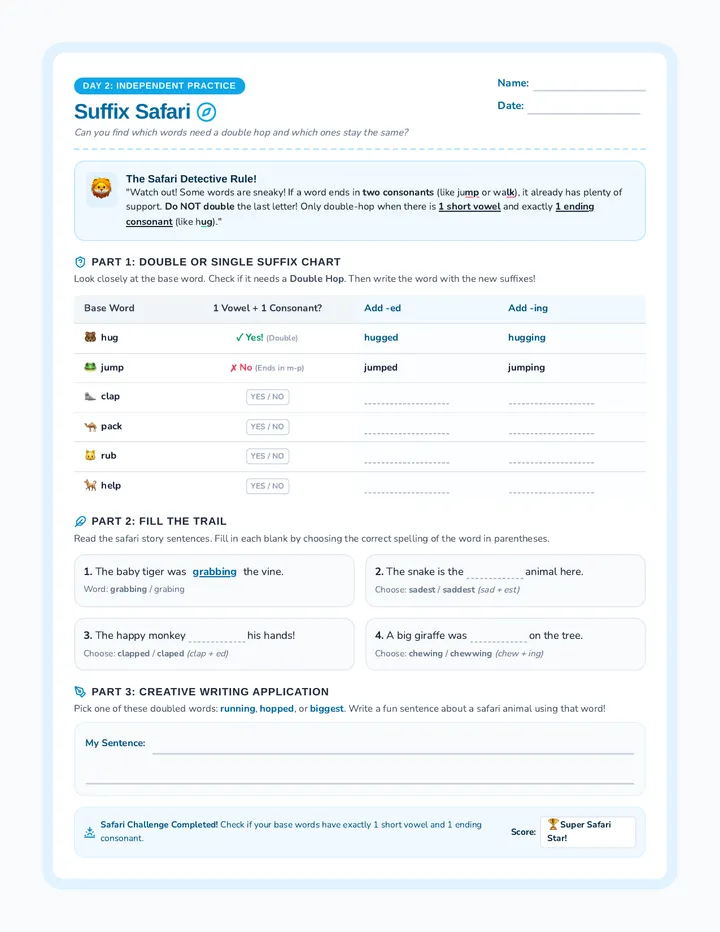
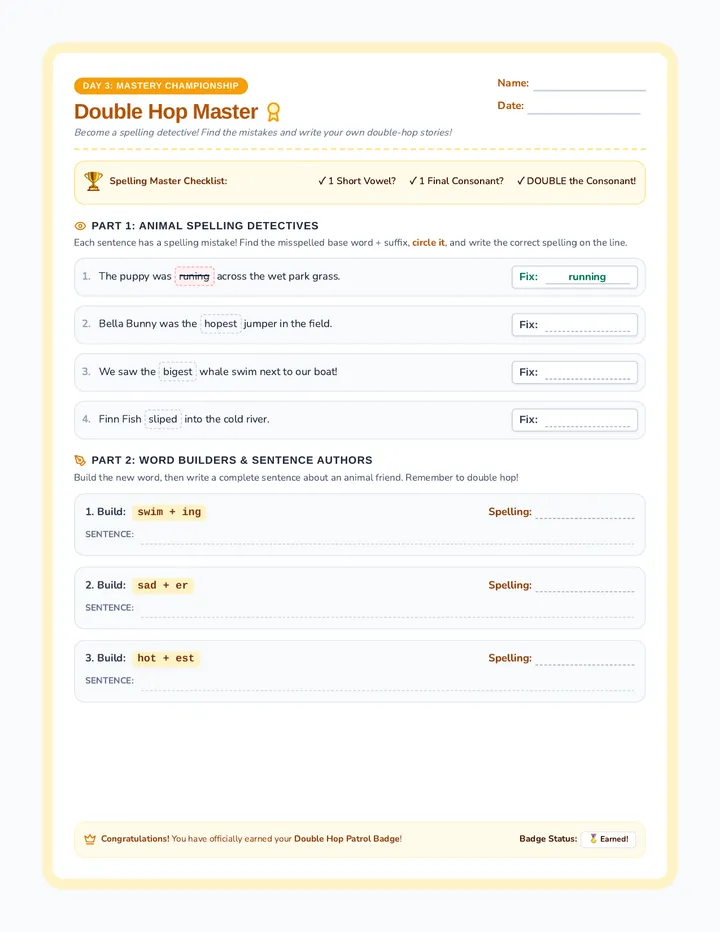
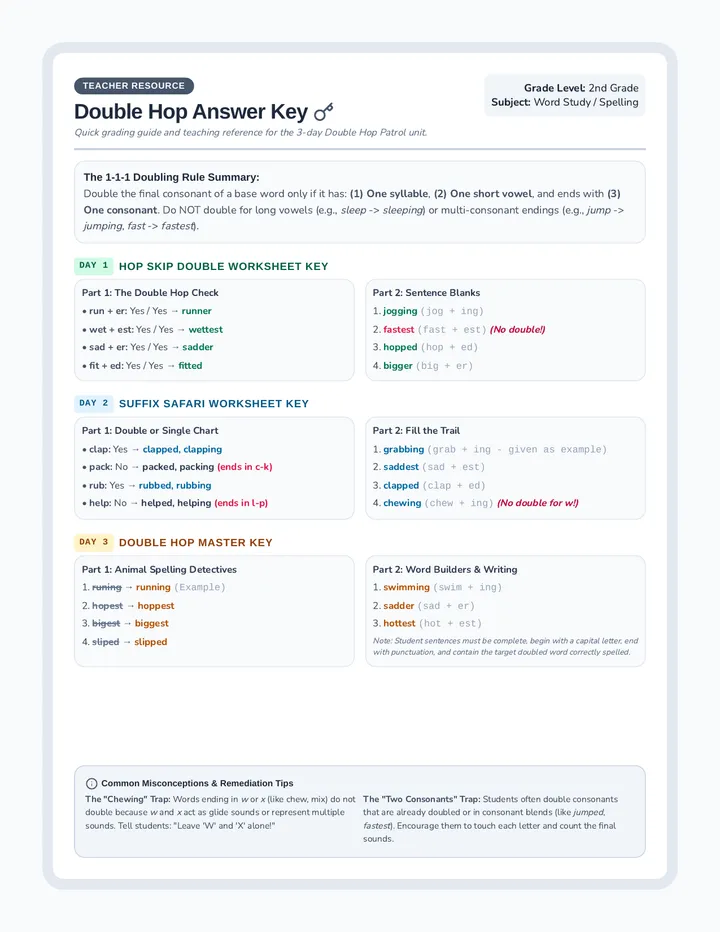
A multi-day 2nd-grade spelling and word study unit focused on the consonant-doubling rule when adding suffixes -er, -est, -ed, and -ing. Features an engaging 'Animal Adventures' theme with hopping bunnies, running puppies, and swimming fish to help students master the spelling rules through guided and independent practice.
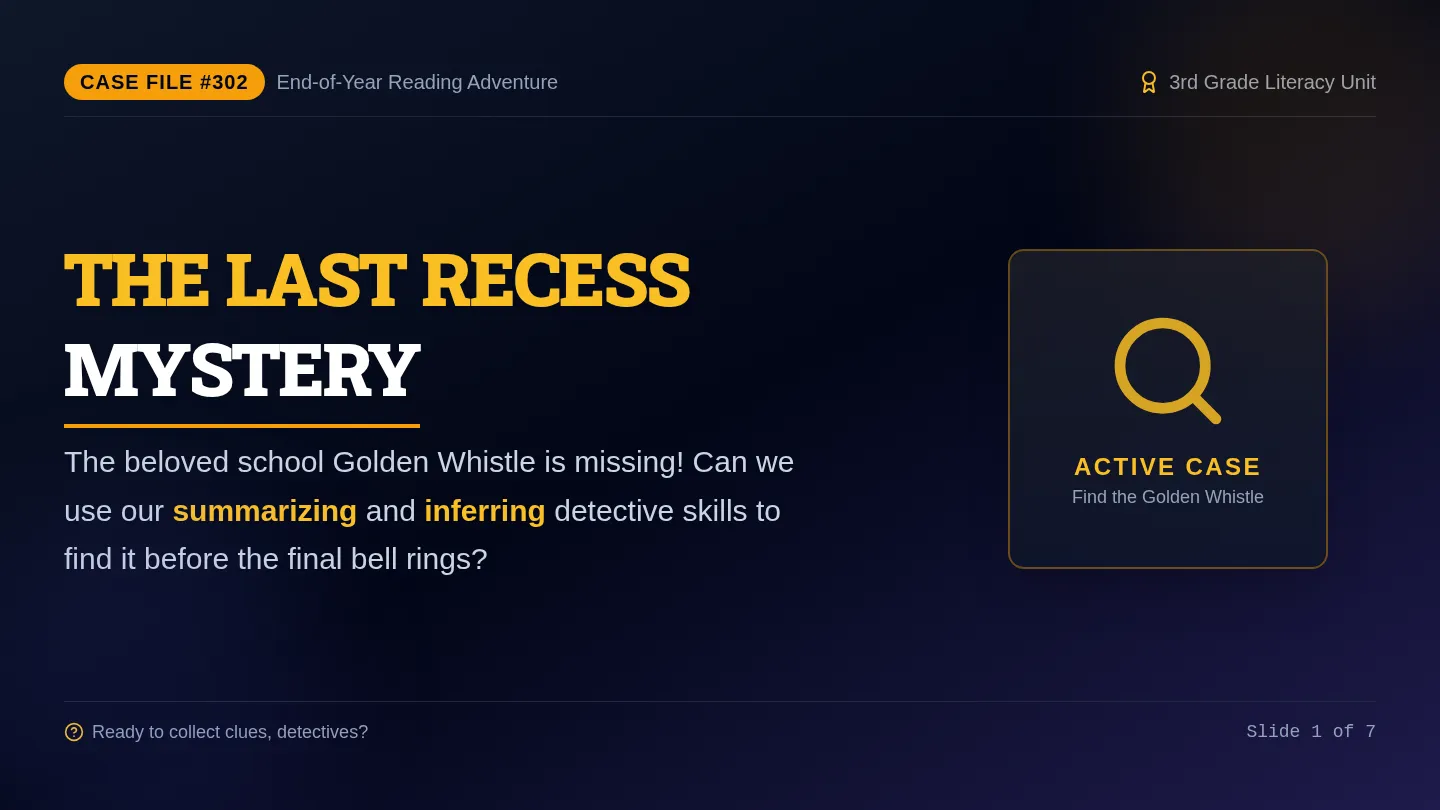
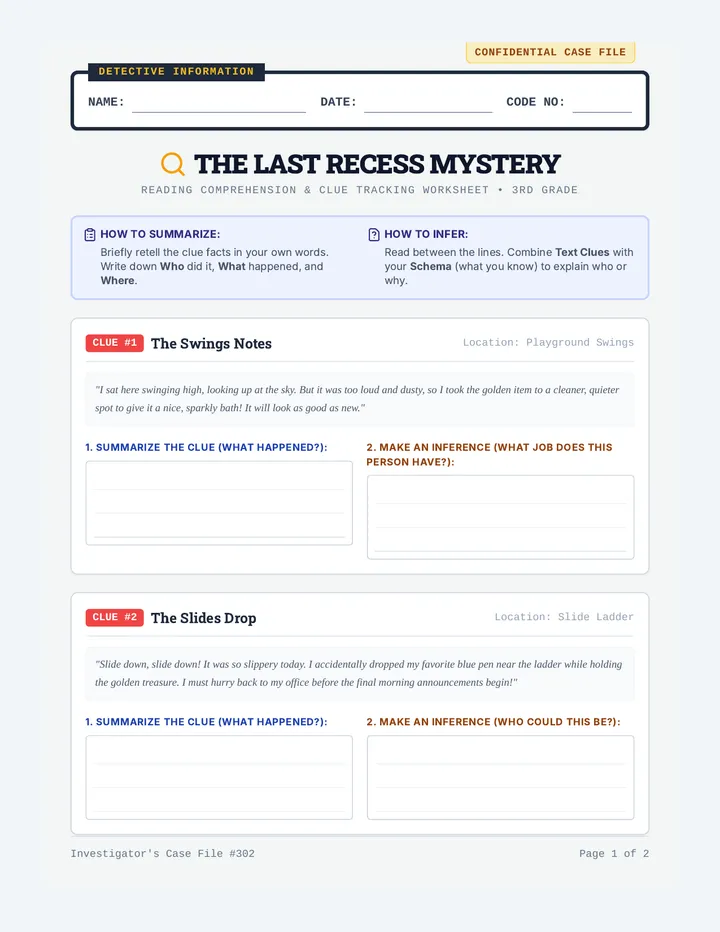
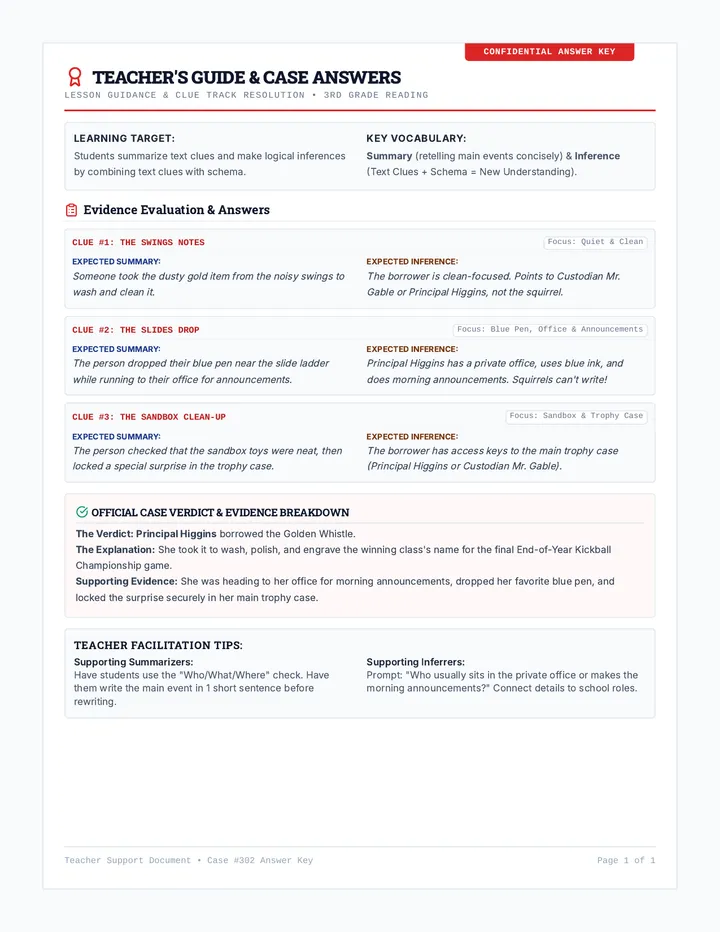
A third-grade reading lesson centered on an end-of-year mystery. Students learn and practice summarizing and making inferences by examining clues around the playground to locate a missing playground item before the last recess ends.
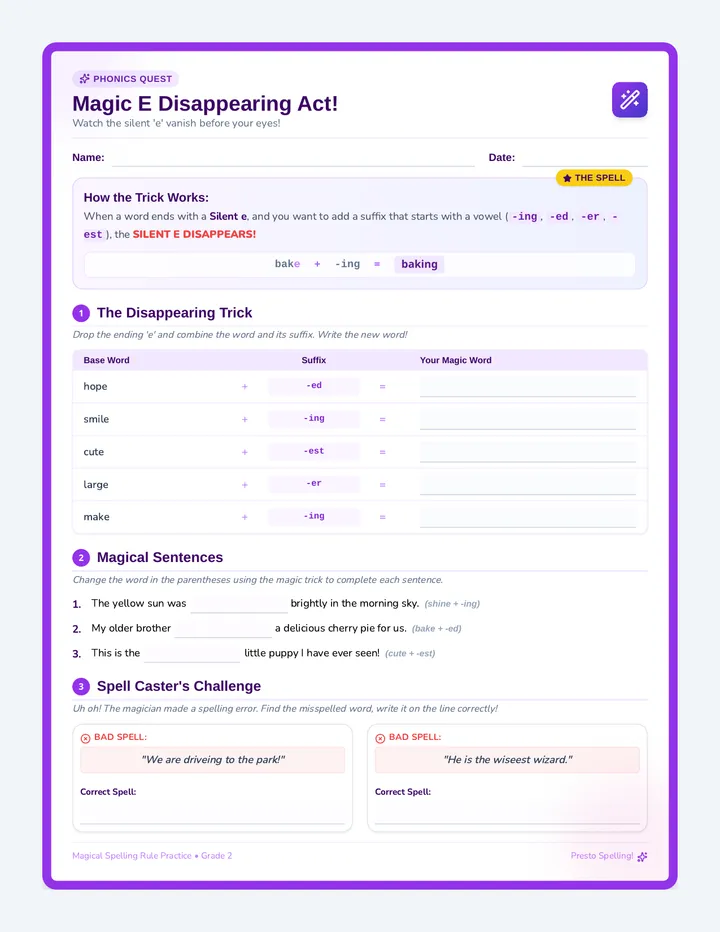
A 2nd grade phonics lesson focused on the spelling rule of dropping the silent 'e' before adding vowel suffixes (-ing, -ed, -er, -est). The lesson includes a high-engagement magical-themed worksheet and a corresponding teacher answer key.
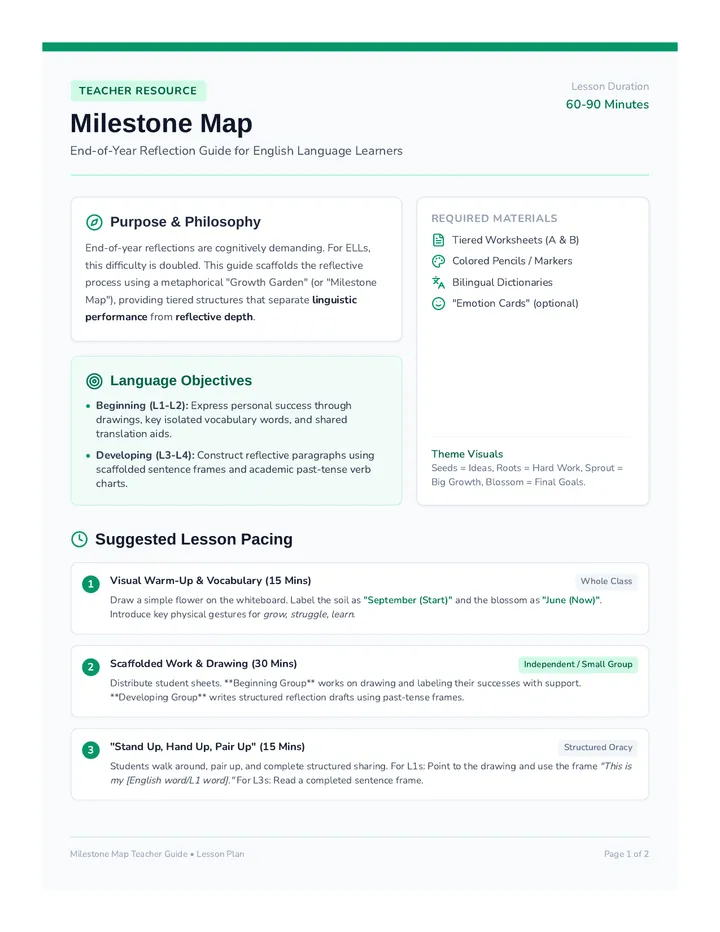
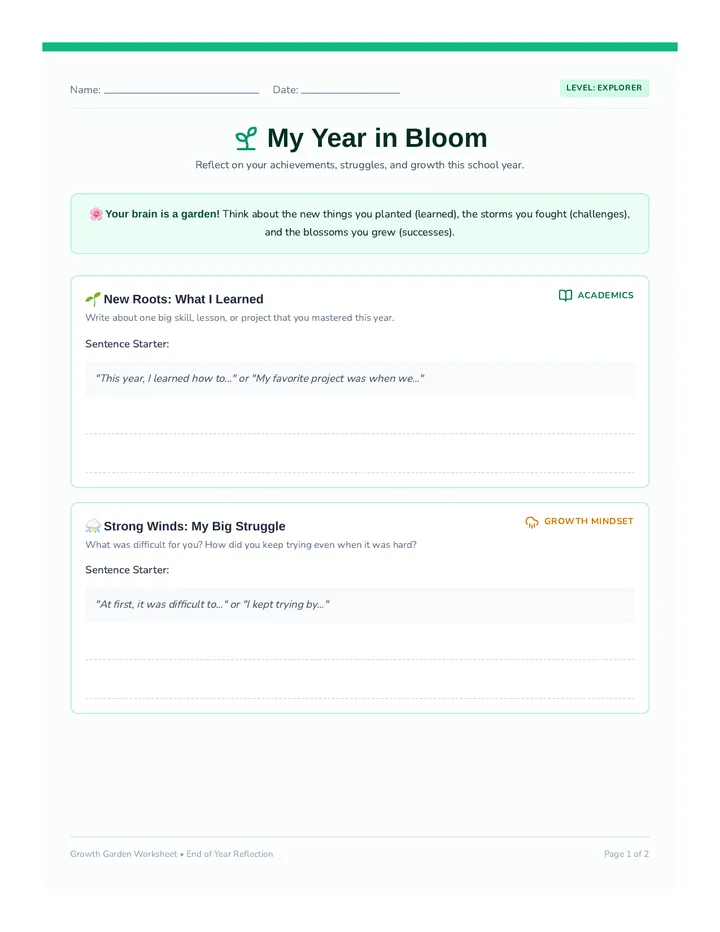
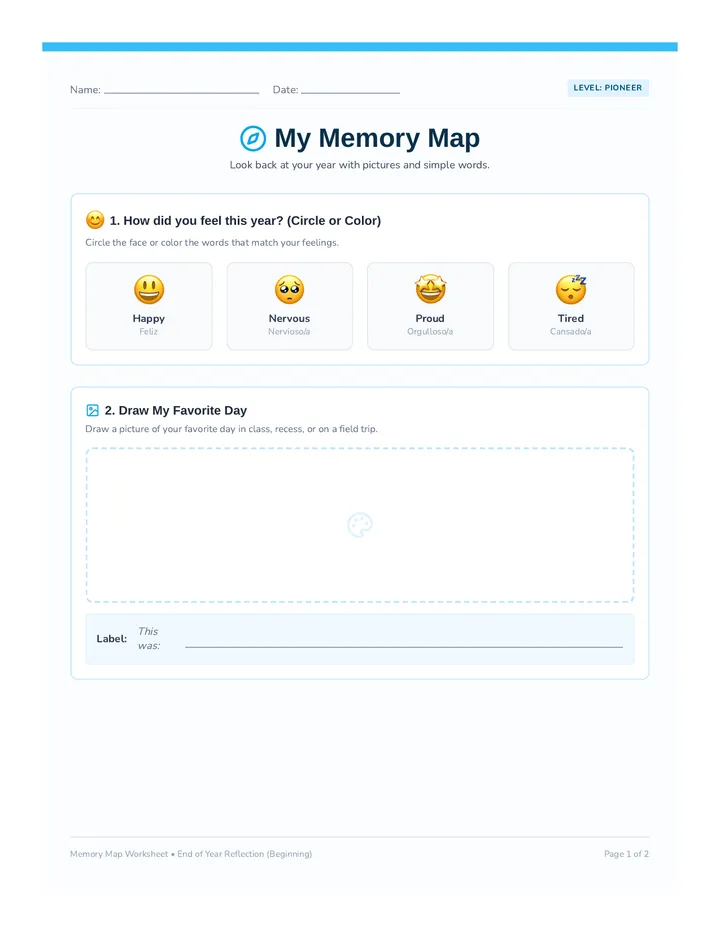
An end-of-year reflection lesson designed specifically for English Language Learners, featuring tiered worksheets for Beginning/Entering and Developing/Expanding levels, supported by a detailed facilitator guide.
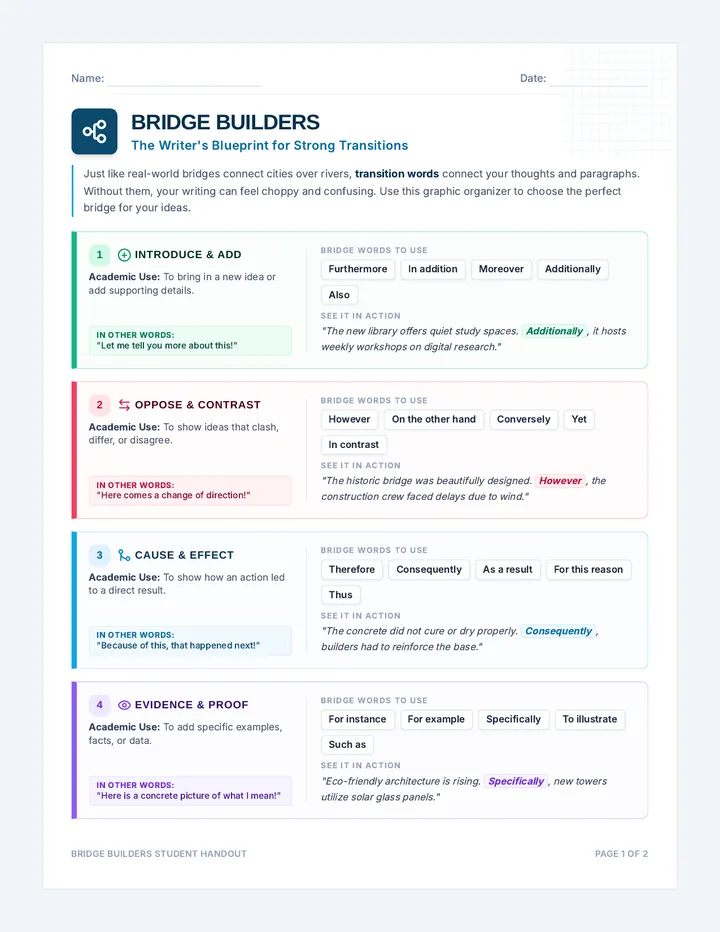
A comprehensive lesson focused on understanding and applying transition words to build logical, smooth connections between ideas in writing.
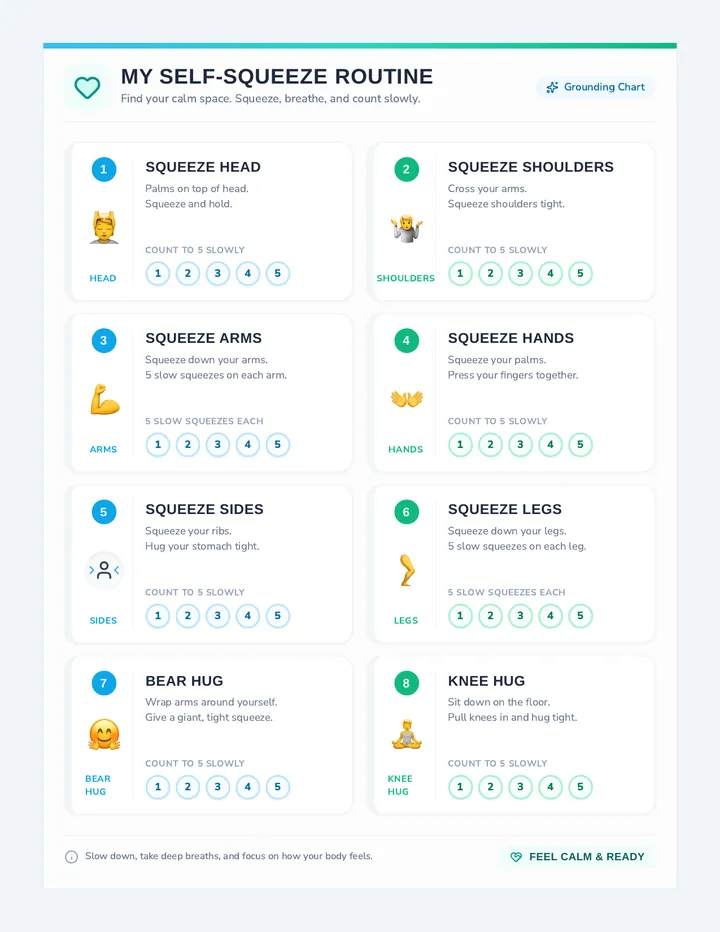
A pediatric grounding and sensory regulation lesson featuring a self-squeeze physical therapy routine to help students self-soothe and calm down.