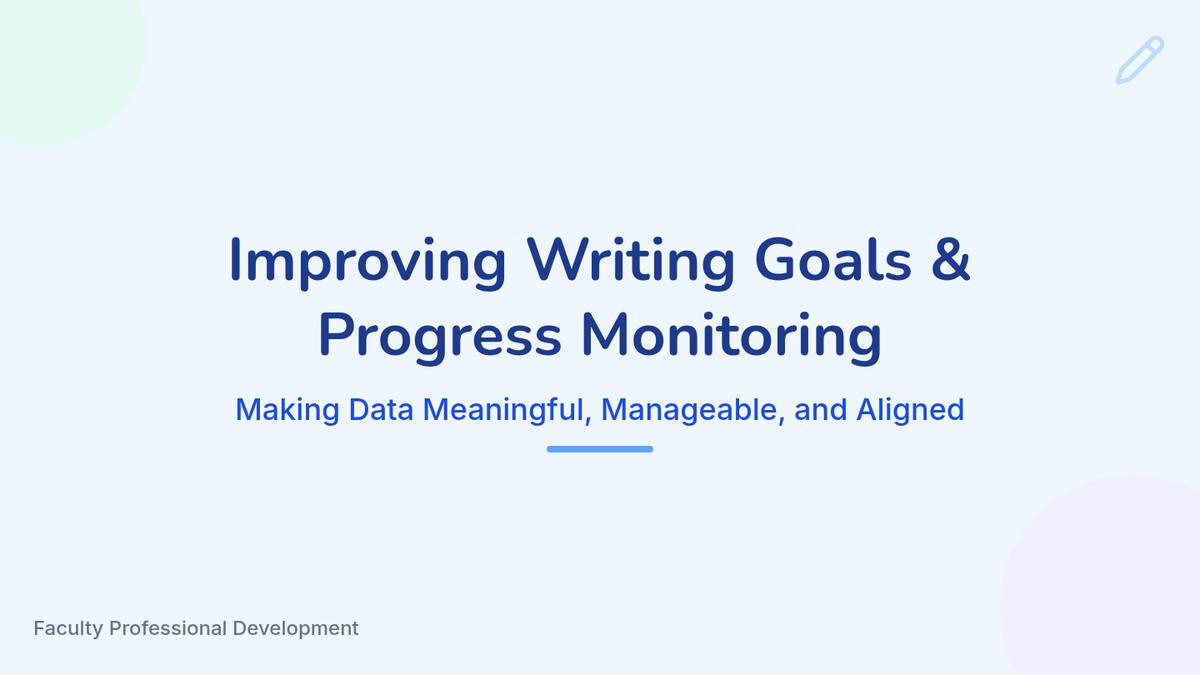
A high-level system overview handout for teachers explaining the writing goal shifts, mastery criteria, and the 1-4 scoring scale.
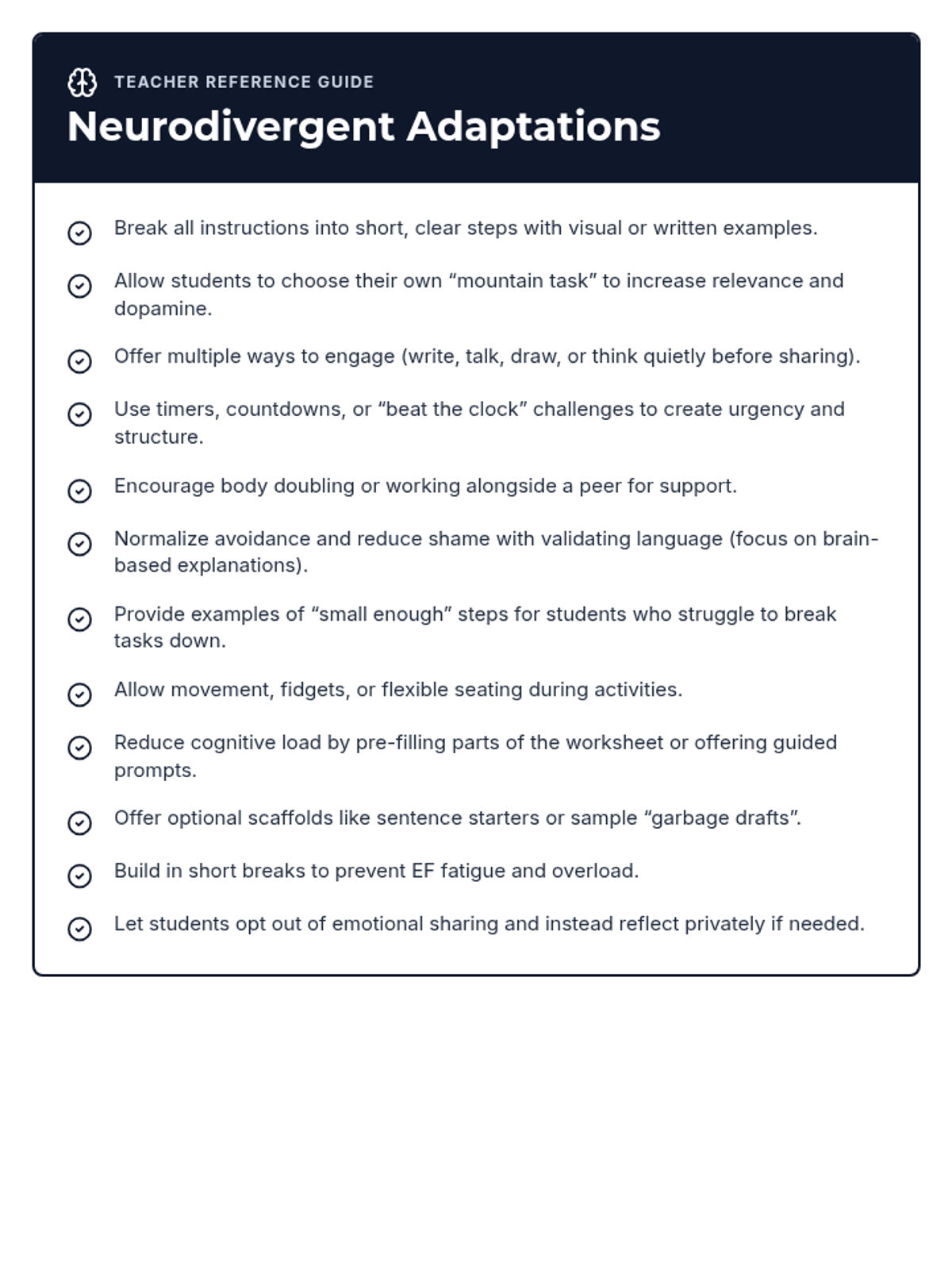
A black-and-white professional reference sheet for educators listing neurodivergent-friendly classroom adaptations, optimized for simple printing.
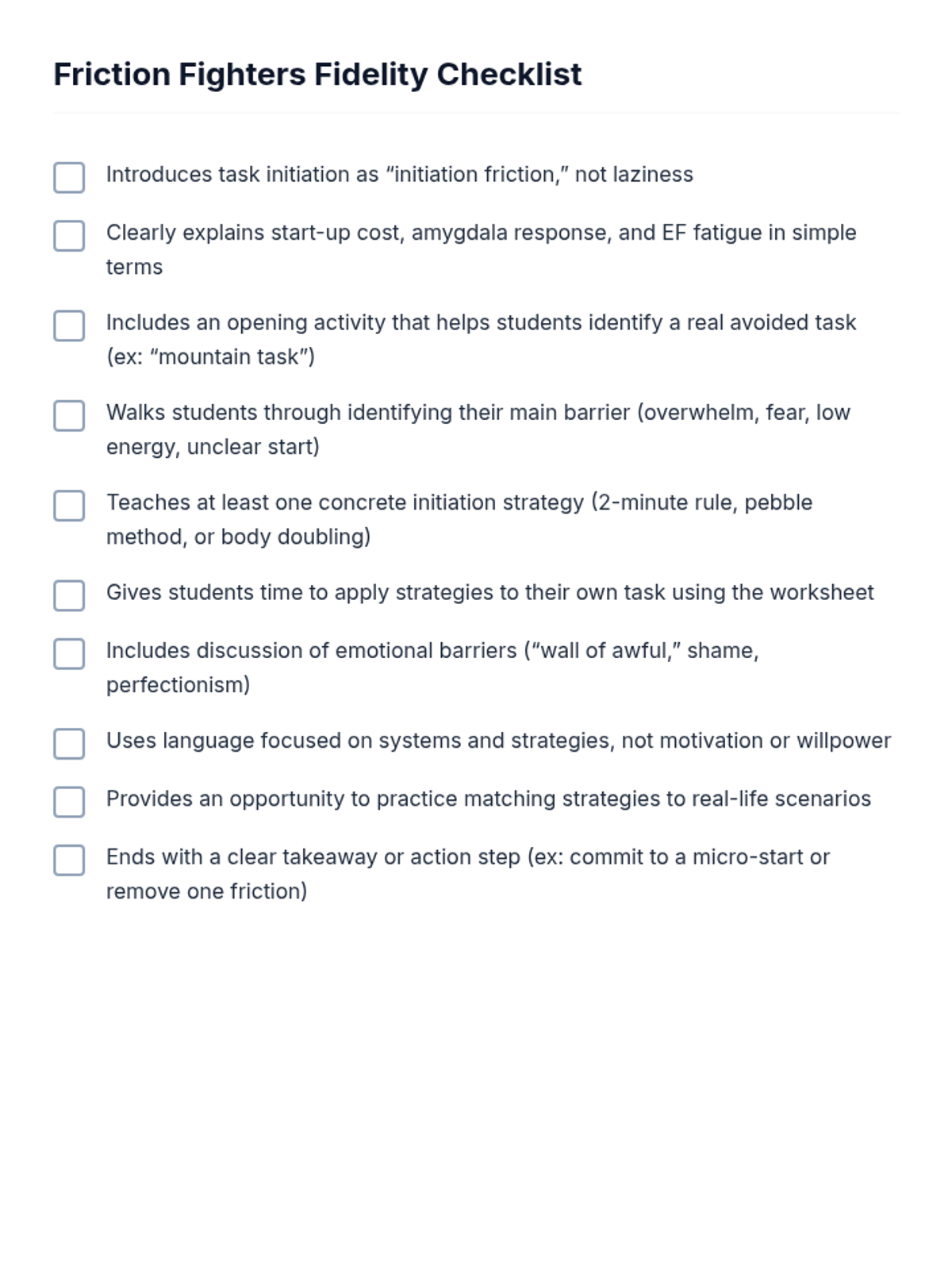
A clean, minimalist fidelity checklist featuring the core 10 criteria without any identifying fields or extra sections.
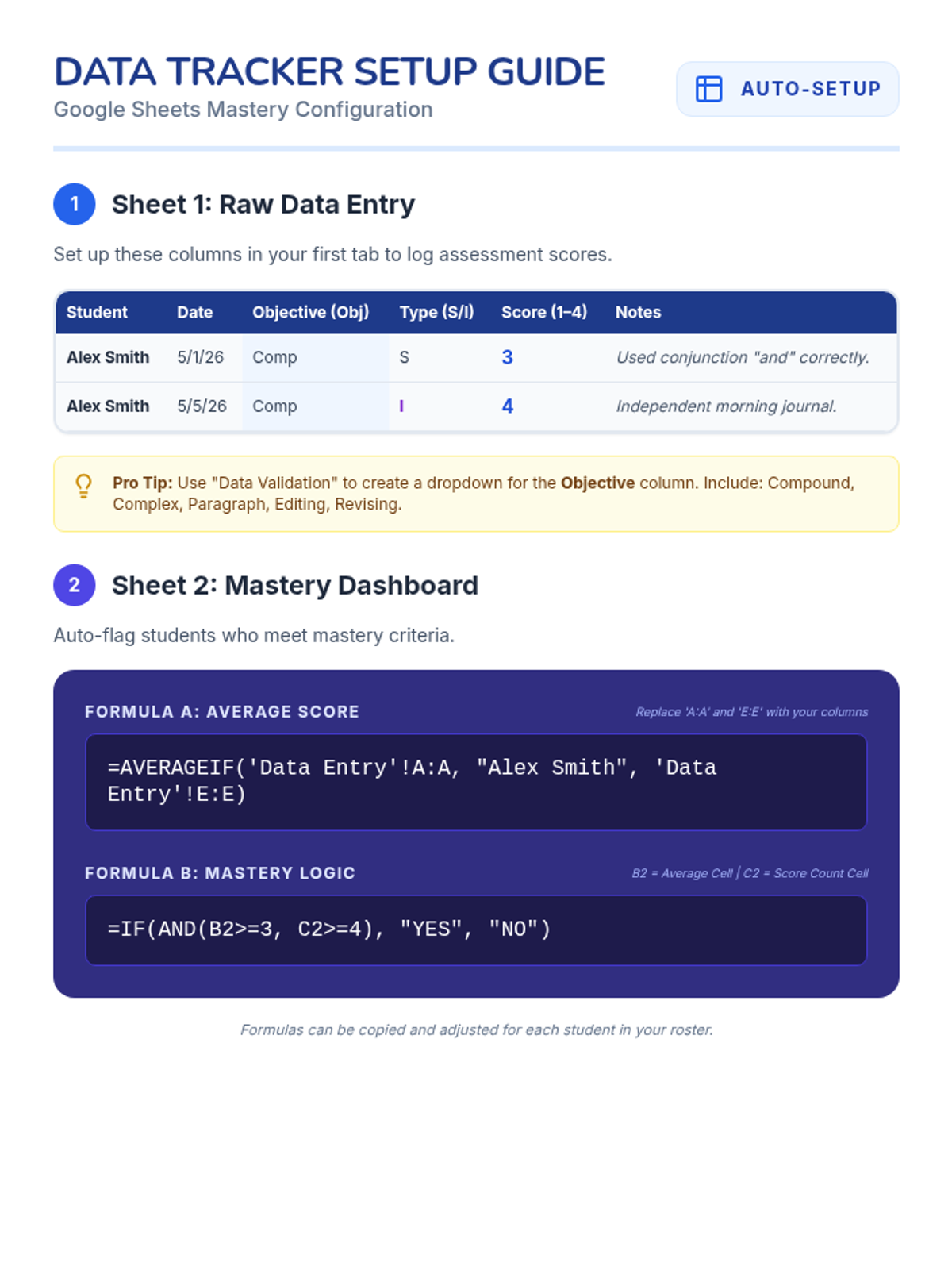
A teacher resource guide for setting up a Google Sheets data tracker with formulas for monitoring writing goal mastery.
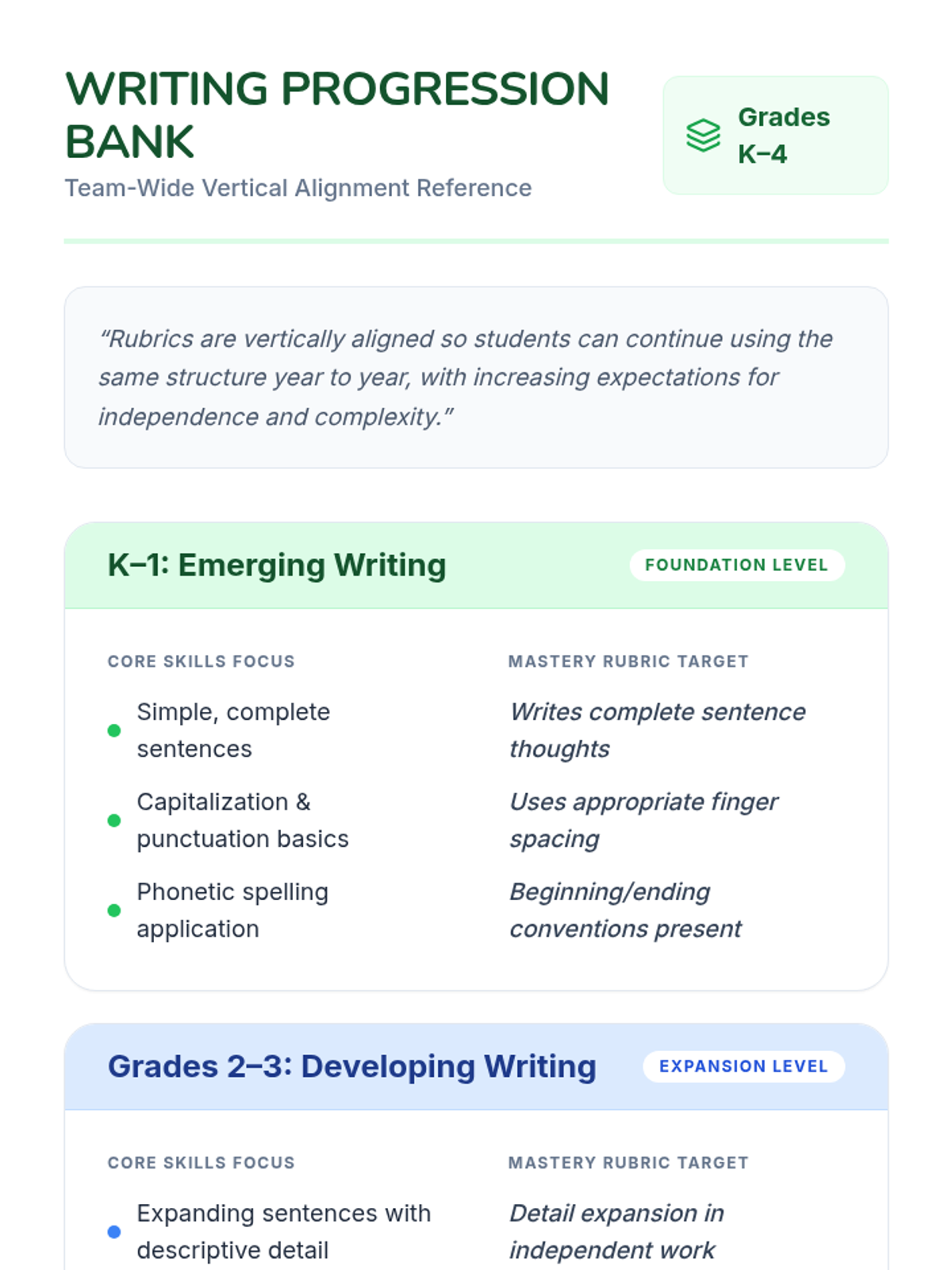
A vertical alignment reference guide showing writing focus areas and rubric goals across grades K-4.
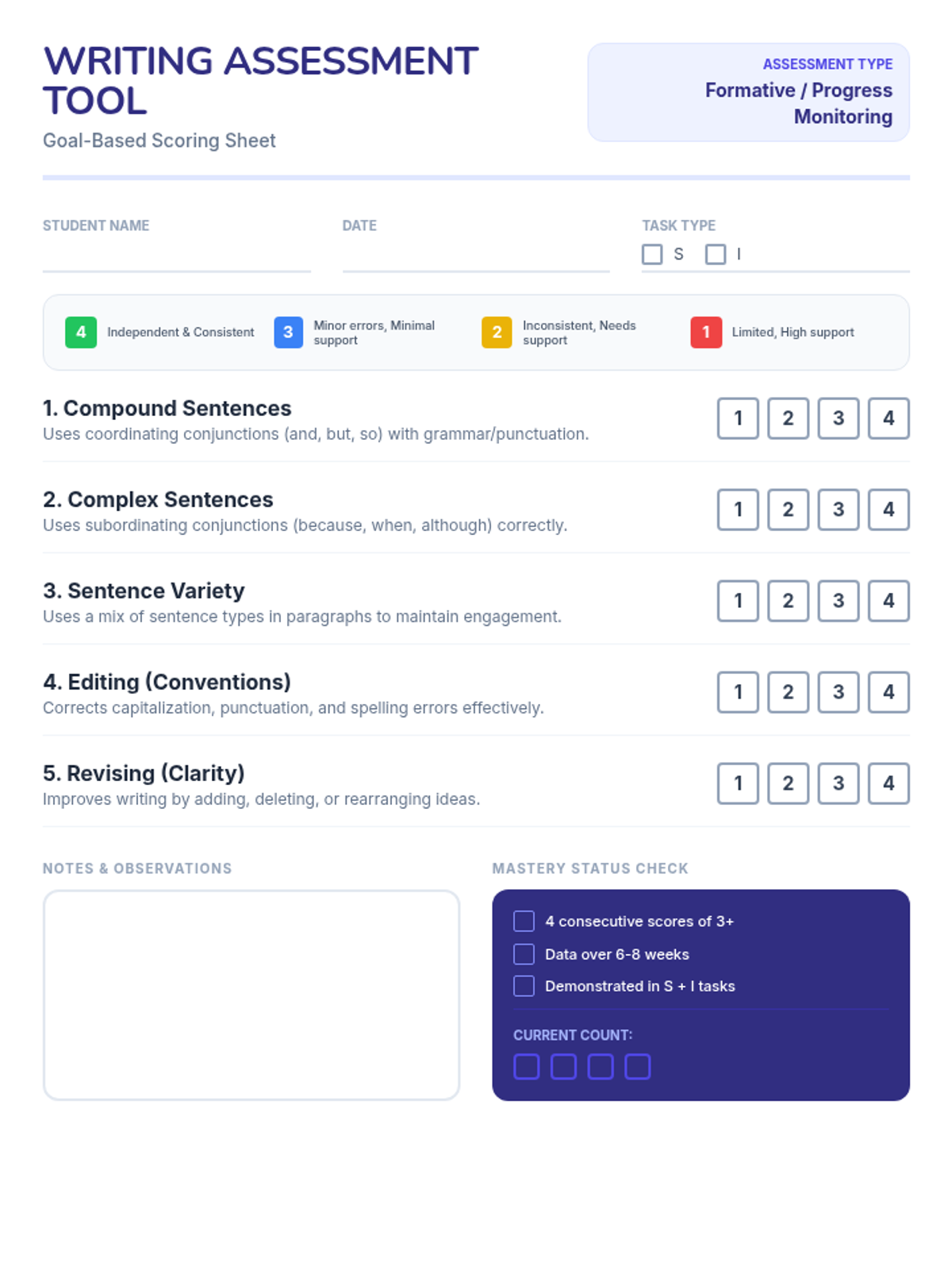
A clean, 1-page printable scoring sheet for individual students covering five key writing goals and conventions.
A polished 7-slide presentation deck incorporating team-wide vertical alignment, mastery checks, and a teacher support toolkit.
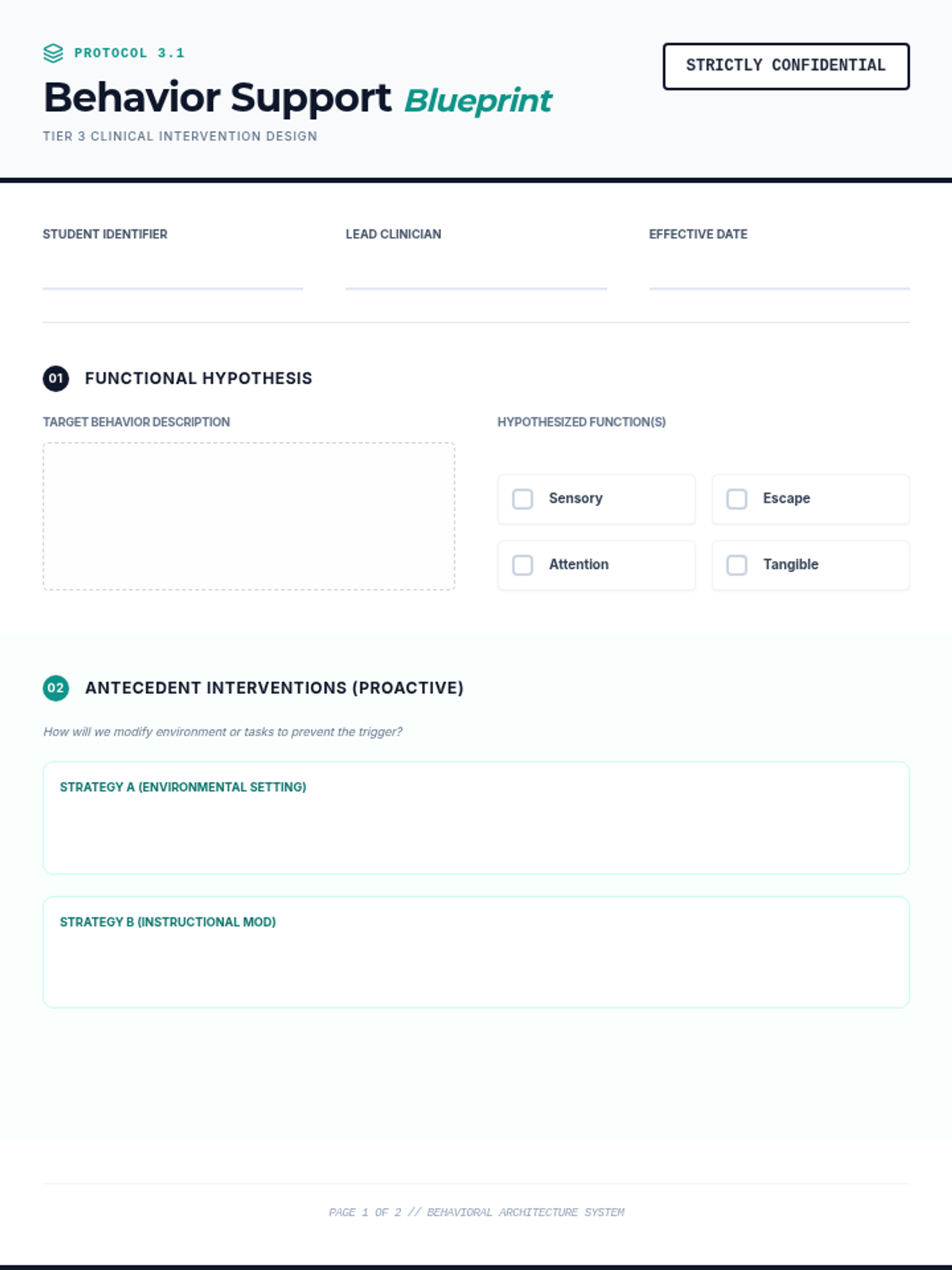
A formal template for designing individualized Tier 3 behavior support plans, including sections for functional hypothesis, antecedent interventions, replacement behaviors, and response protocols.
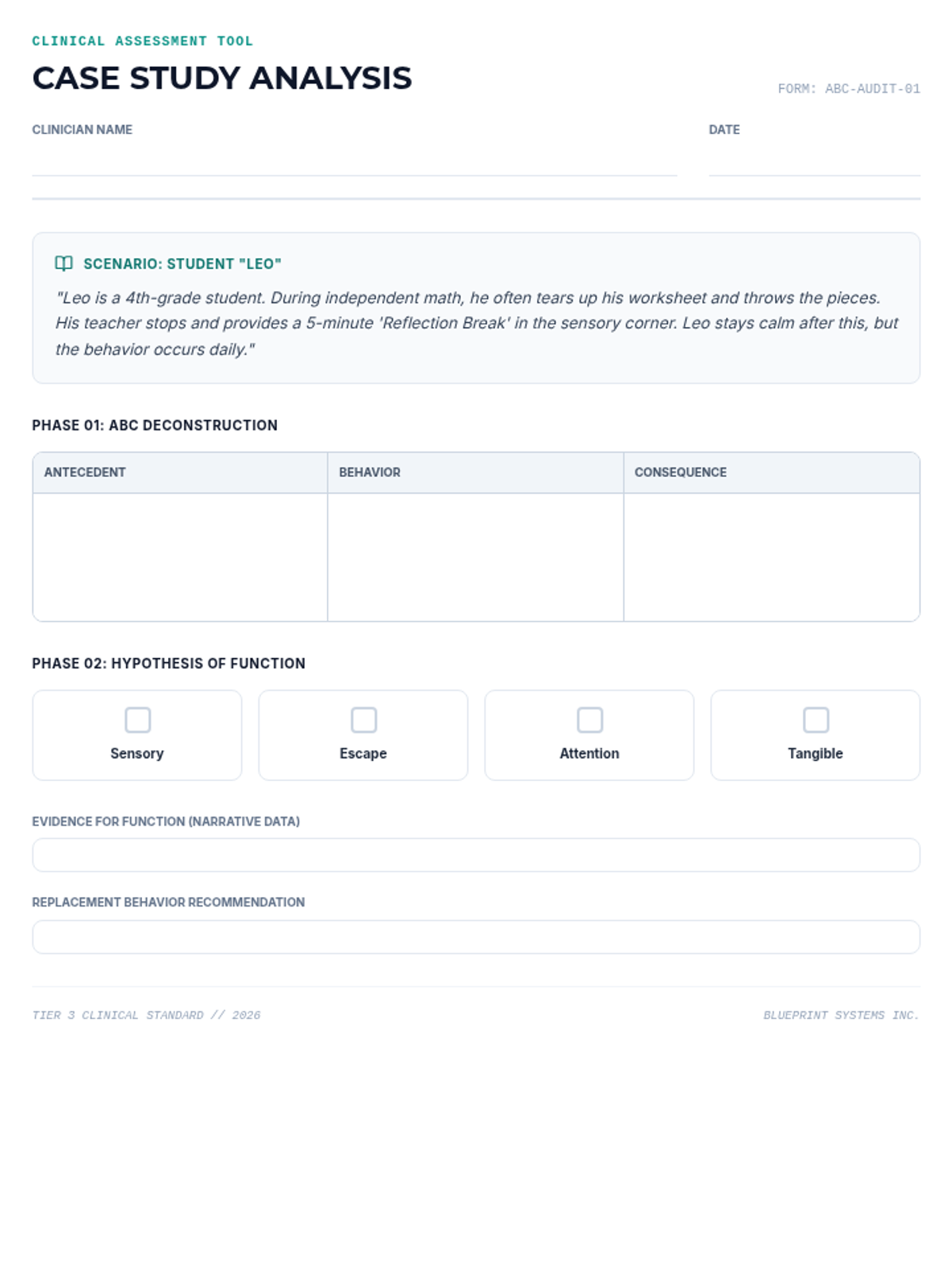
A practice worksheet for clinical staff to practice identifying Antecedents, Behaviors, and Consequences, and determining the function of a behavior based on a case study.
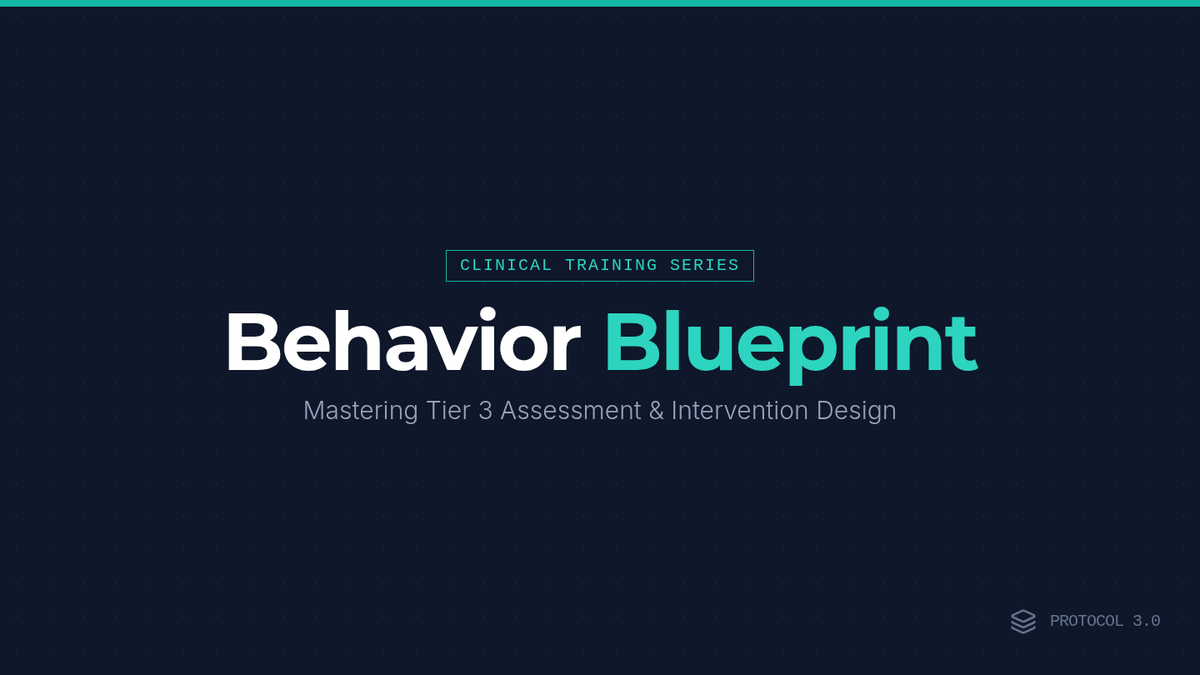
A professional 8-slide presentation for clinical staff training on Tier 3 behavior support, focusing on functional assessment (ABC model), the four functions of behavior, and intervention design.
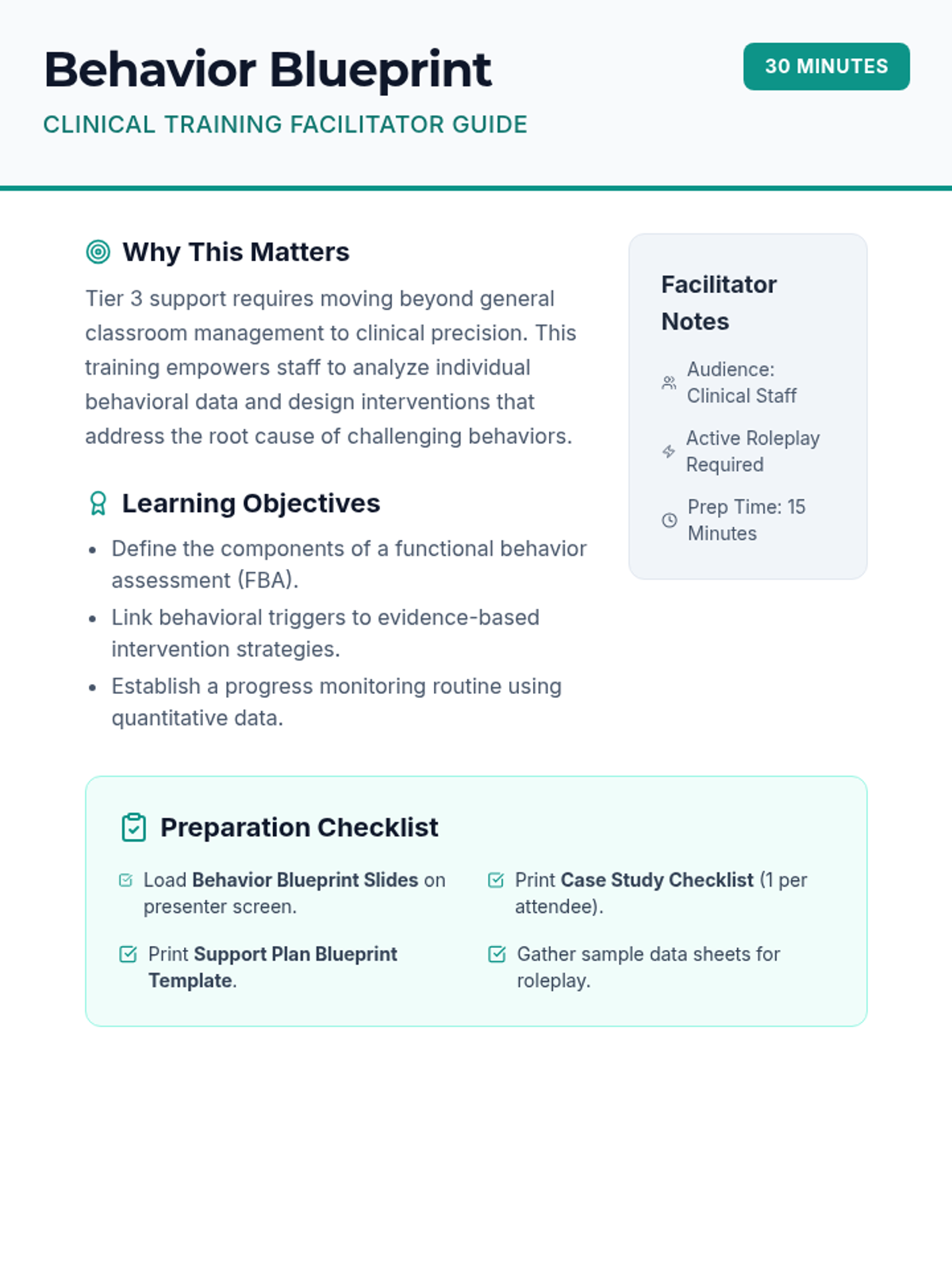
A revised facilitator guide for Tier 3 behavior support training, outlining a 30-minute clinical professional development session focused on functional assessment and individualized intervention design.
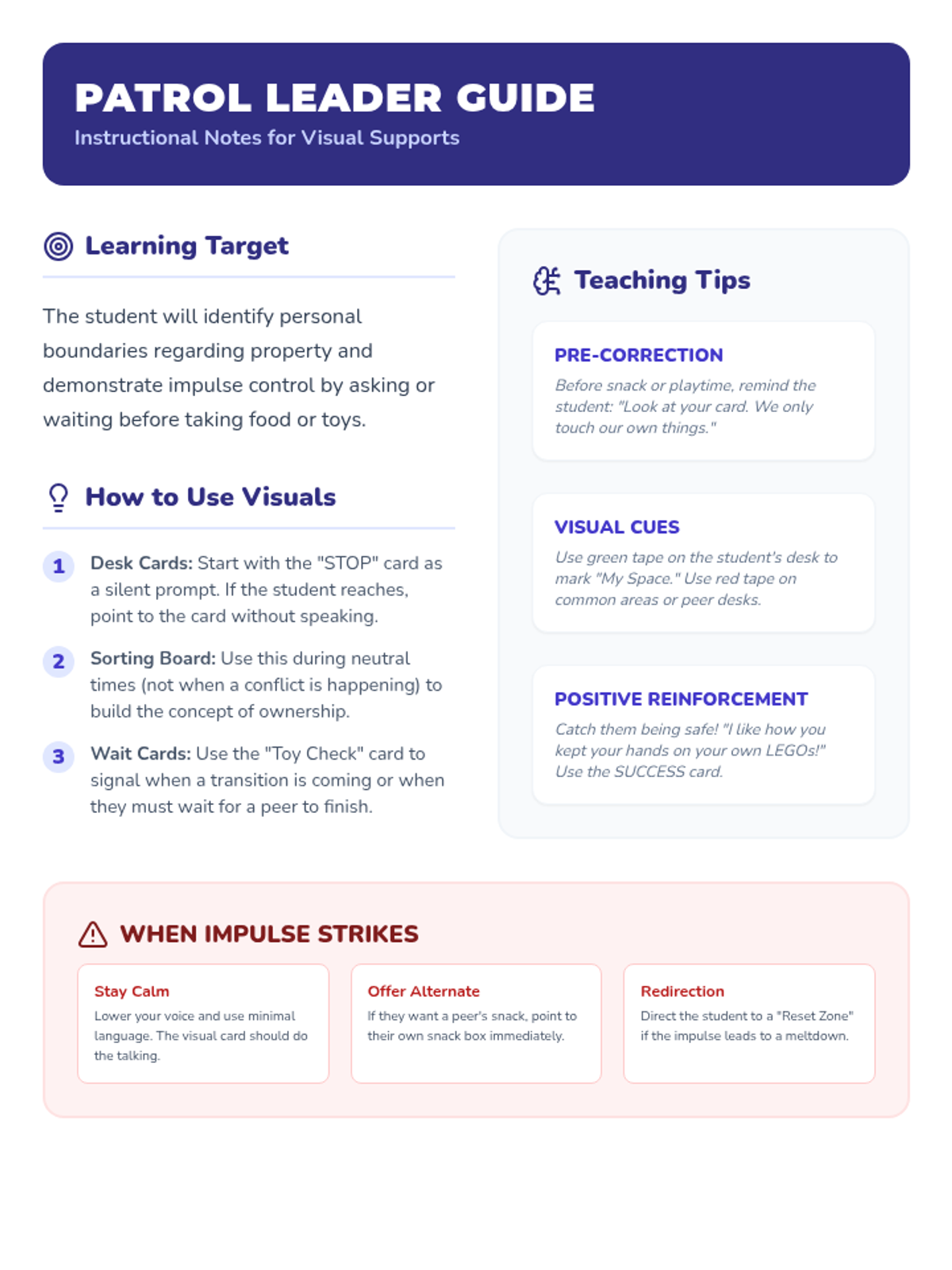
A guide for educators with strategies on how to implement visual property reminders, troubleshooting tips for impulsive behaviors, and positive reinforcement techniques.
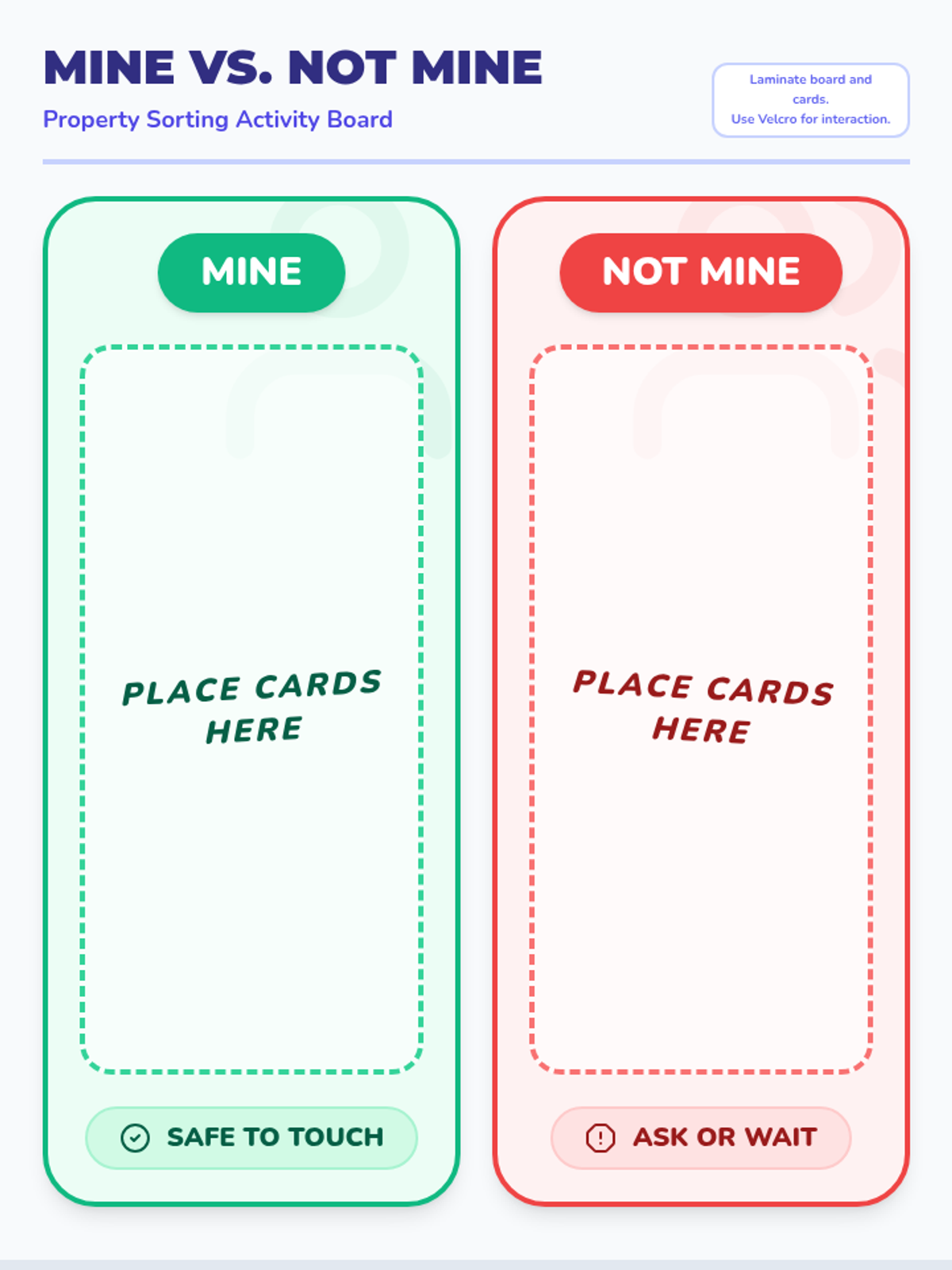
An interactive sorting activity board with 8 item cards (food and toys) to help students distinguish between their own property and things that belong to others.
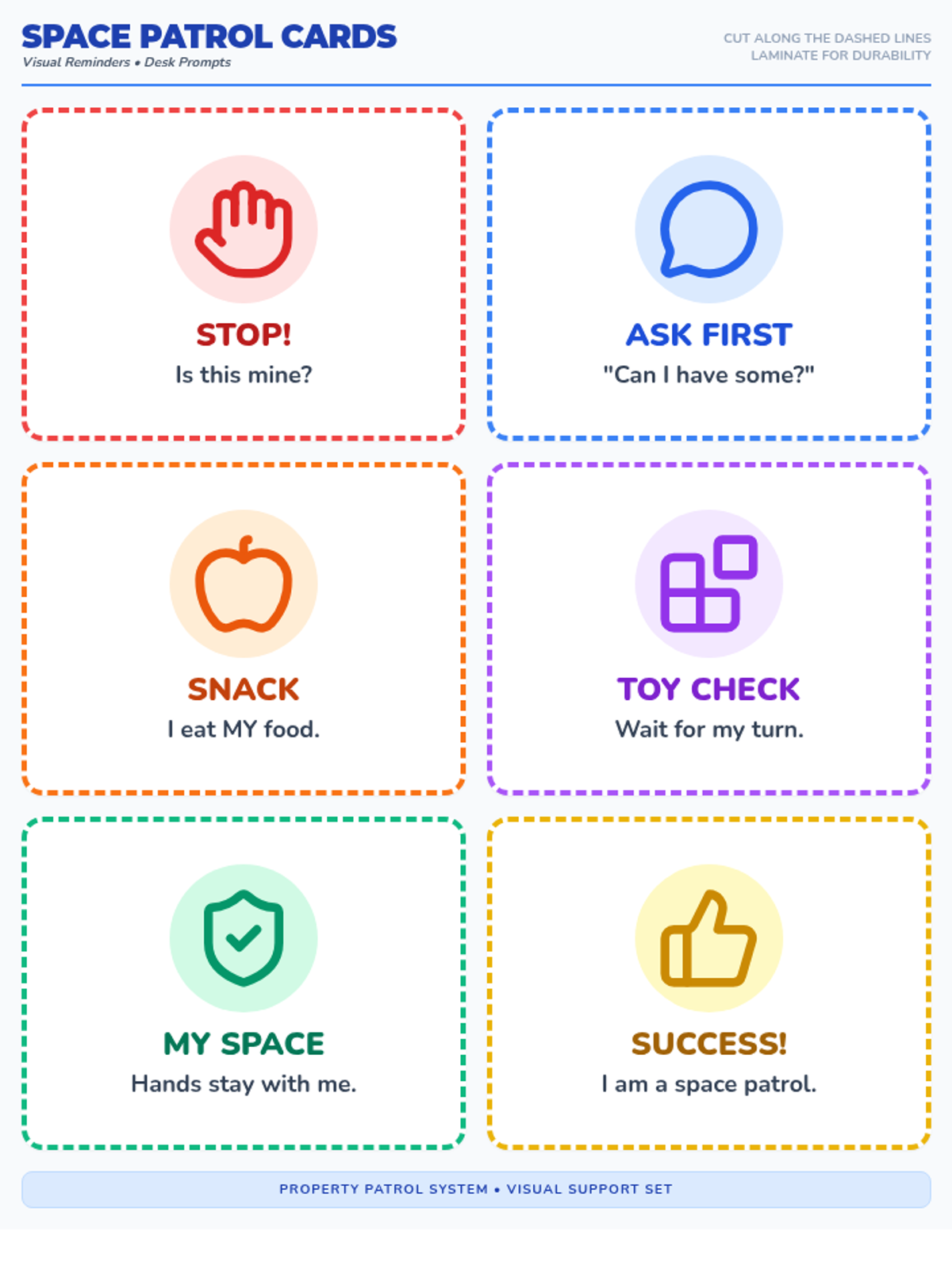
A set of six high-contrast visual reminder cards designed to be used as desk prompts or on a lanyard to help students practice impulse control and property boundaries.
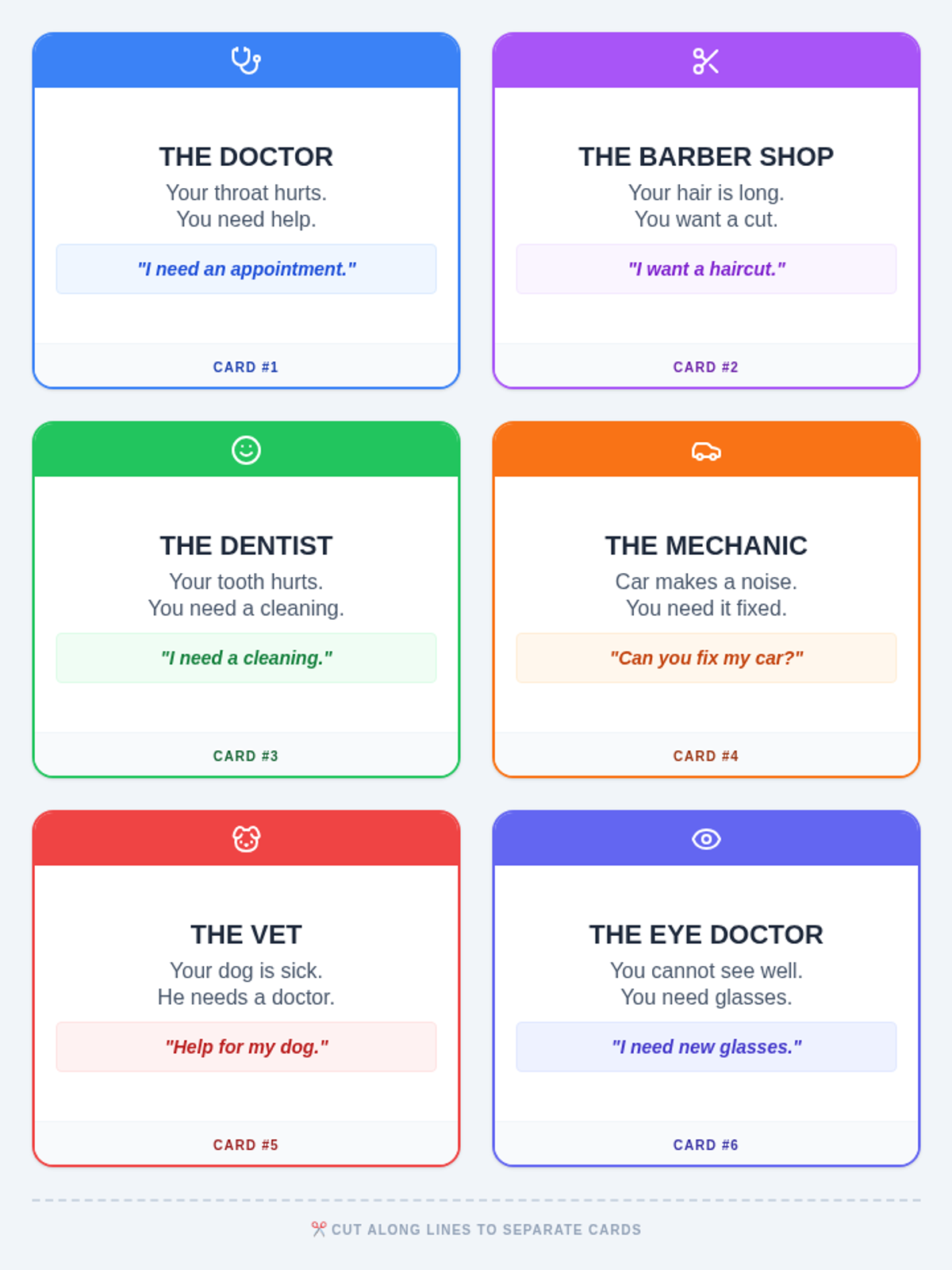
A set of 6 roleplay scenario cards focused exclusively on doctor's office visits, designed for practicing phone scheduling and self-advocacy.
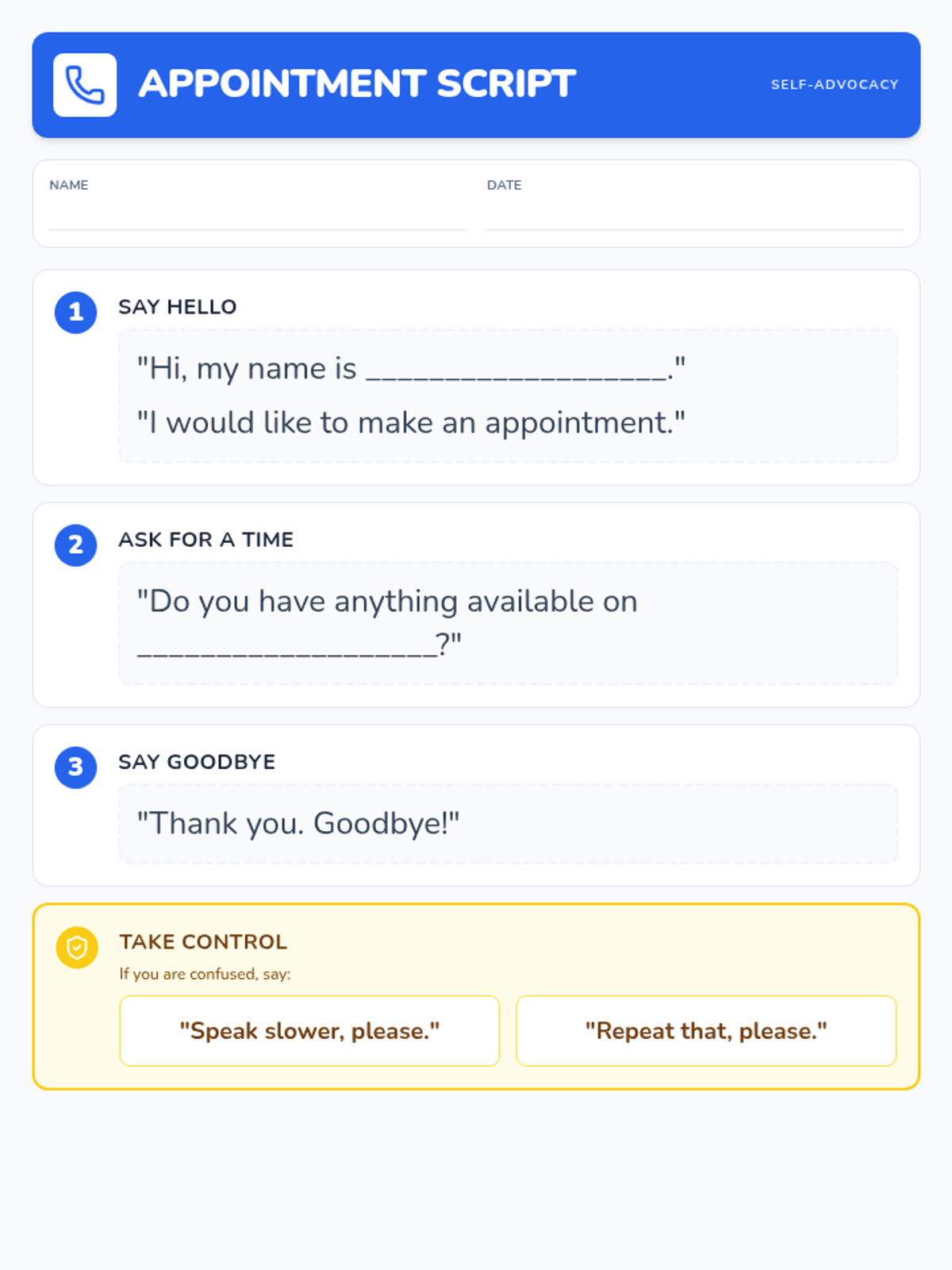
A simplified, one-page visual phone script for students to use when specifically practicing scheduling doctor appointments, featuring large text and clear self-advocacy phrases.
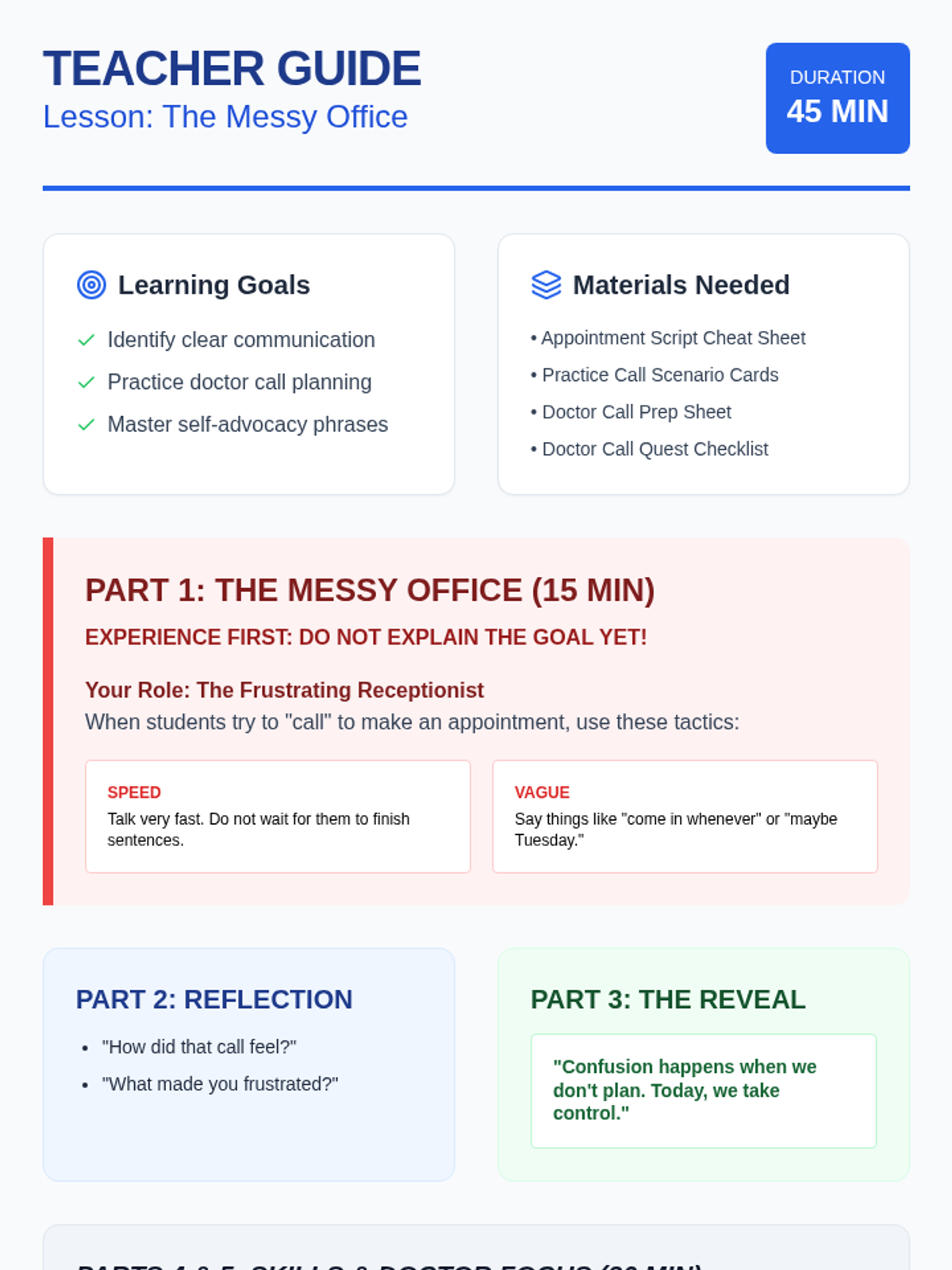
A teacher-facing guide for the "Messy Office" lesson, specifically focused on doctor's office appointments, outlining the "Experience First" methodology.