A worksheet for students to practice and identify how pitch, volume, and tempo change the meaning of neutral phrases in different scenarios.
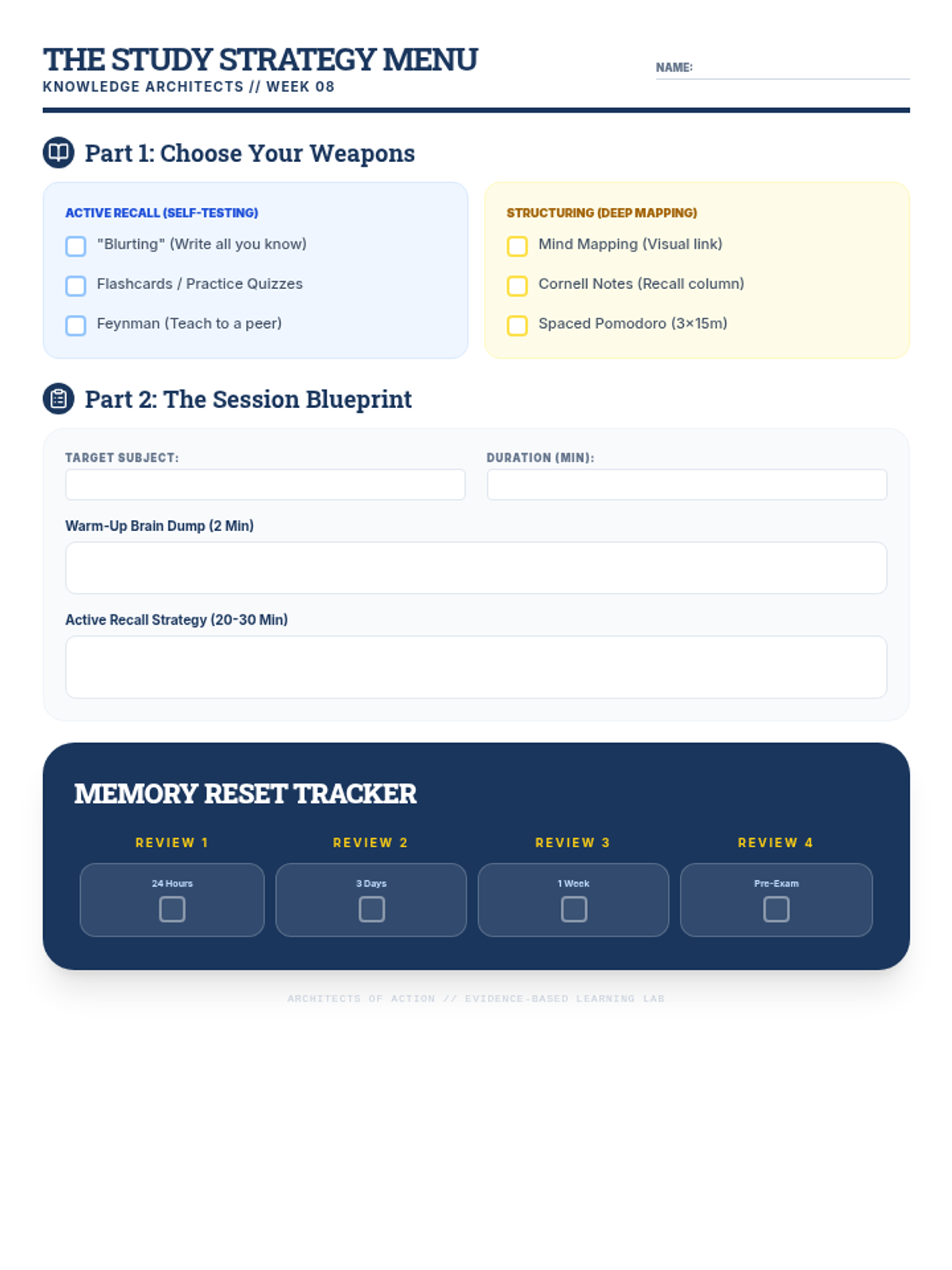
A study strategy handout for students to plan evidence-based study sessions using active recall and spaced repetition. Revised to fit on a single page with improved contrast and spacing.
Slide deck for Week 8 focusing on evidence-based study strategies like active recall and spaced repetition. Revised for better text spacing and layout.
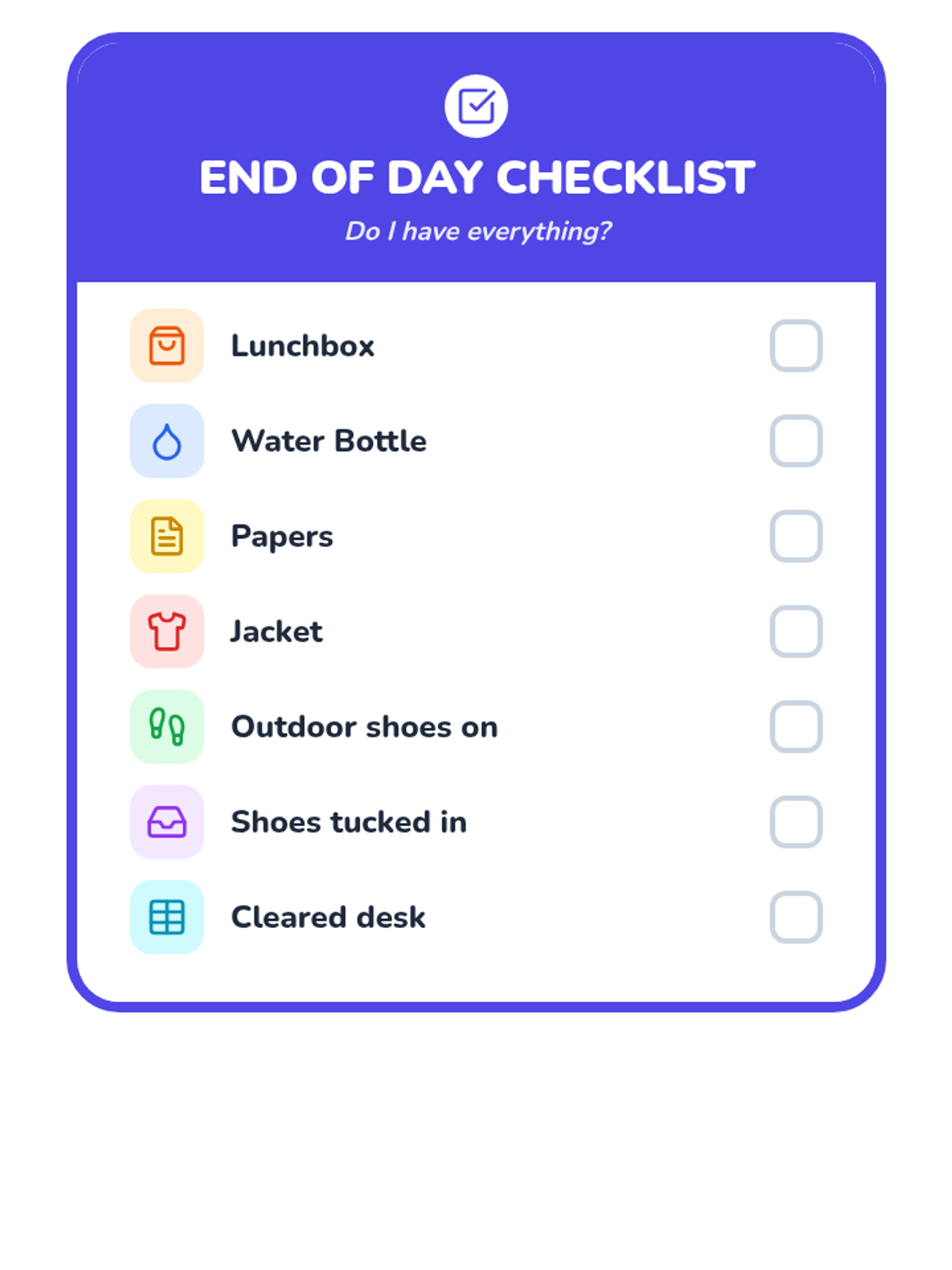
A bold, vertical "End of Day Checklist" for a student cubby. It includes visual icons for lunchboxes, water bottles, papers, jackets, shoes, and a cleared desk.
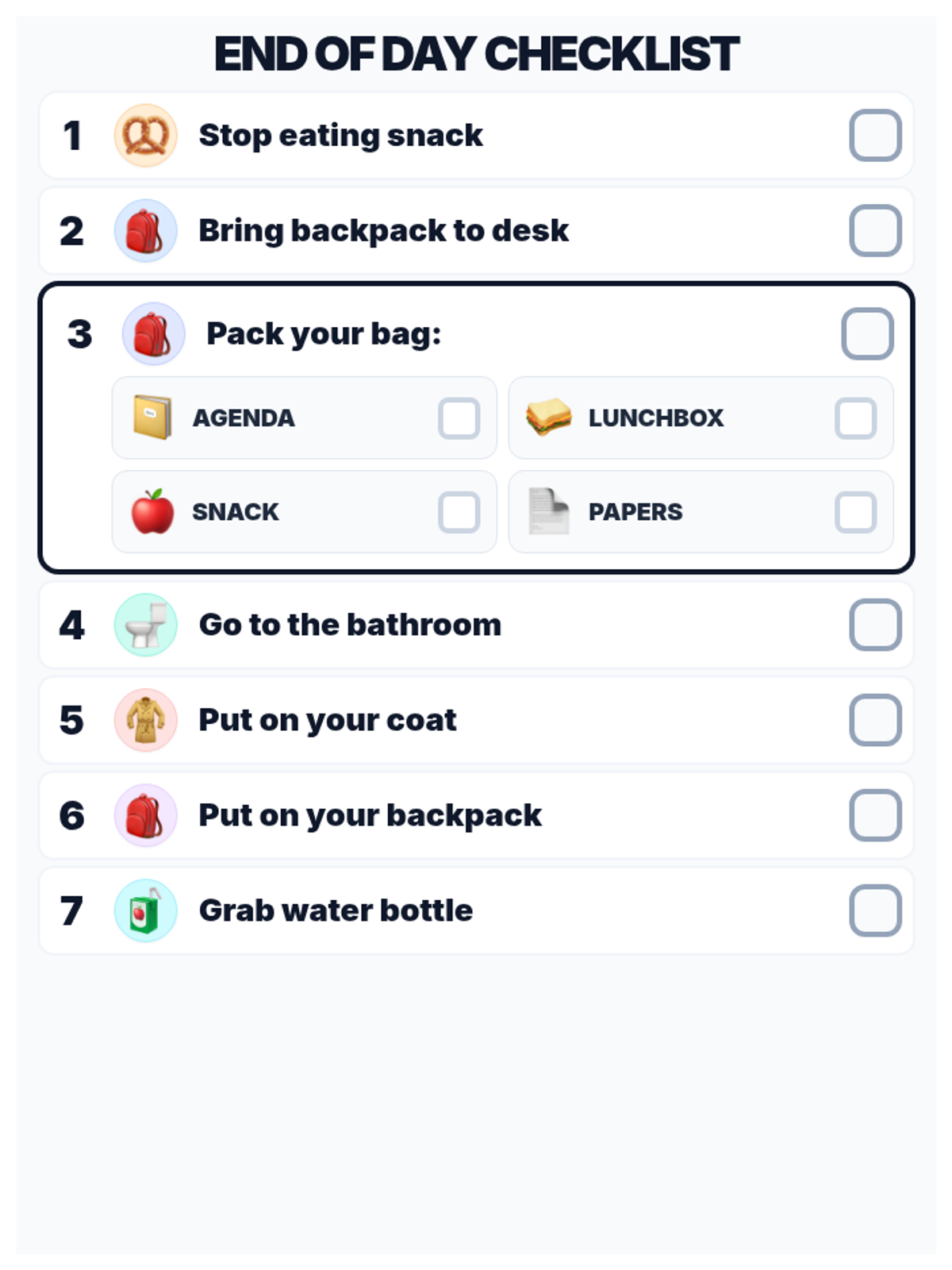
A high-contrast, clean end-of-day checklist for children. Features large text, colorful sticker-style icons, and a dedicated sub-checklist for packing essentials. Designed for independence with clear checkboxes for every task.
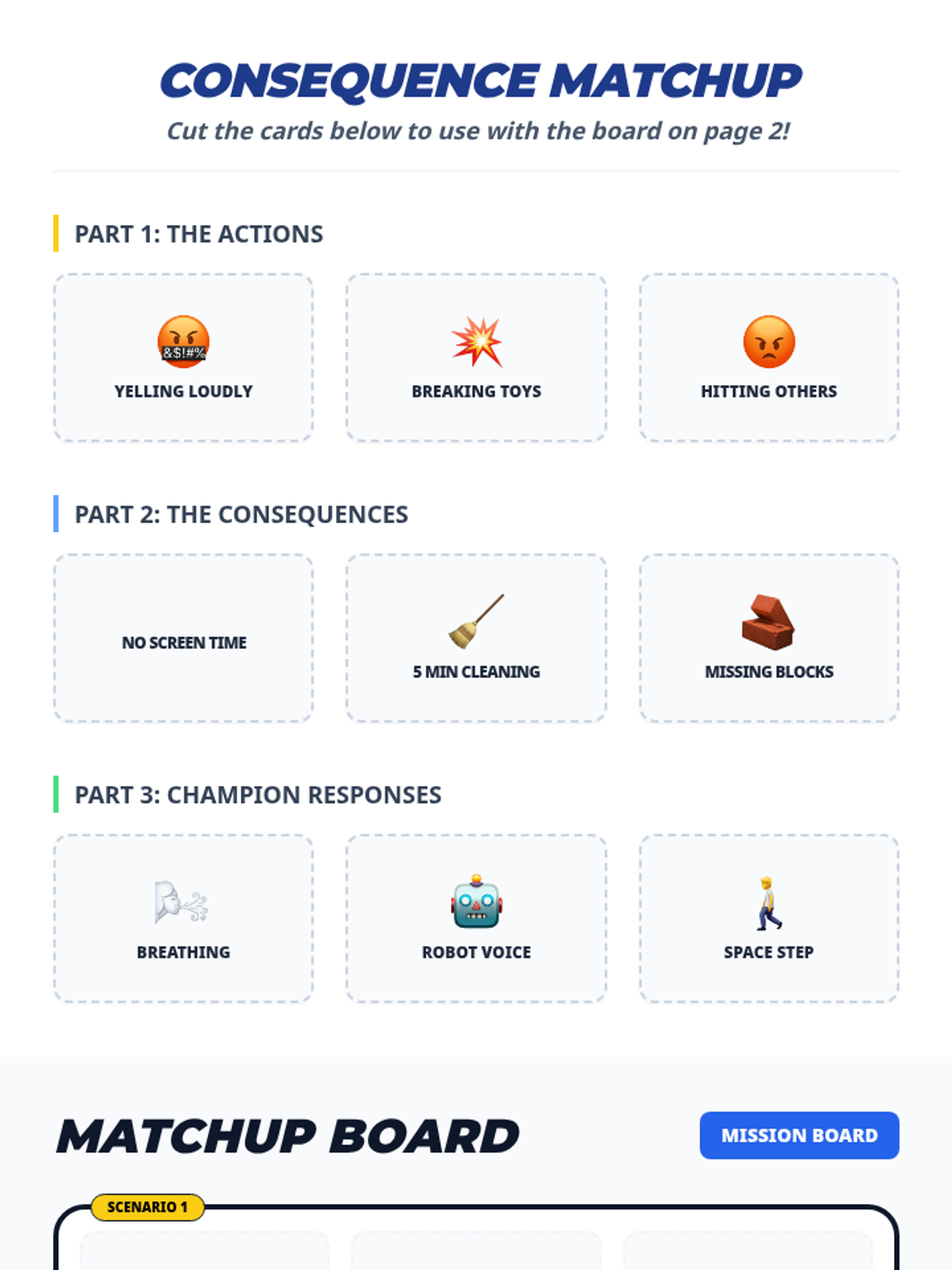
A hands-on matching activity for students to link specific behaviors (actions) with logical consequences and productive, calm self-regulation responses.
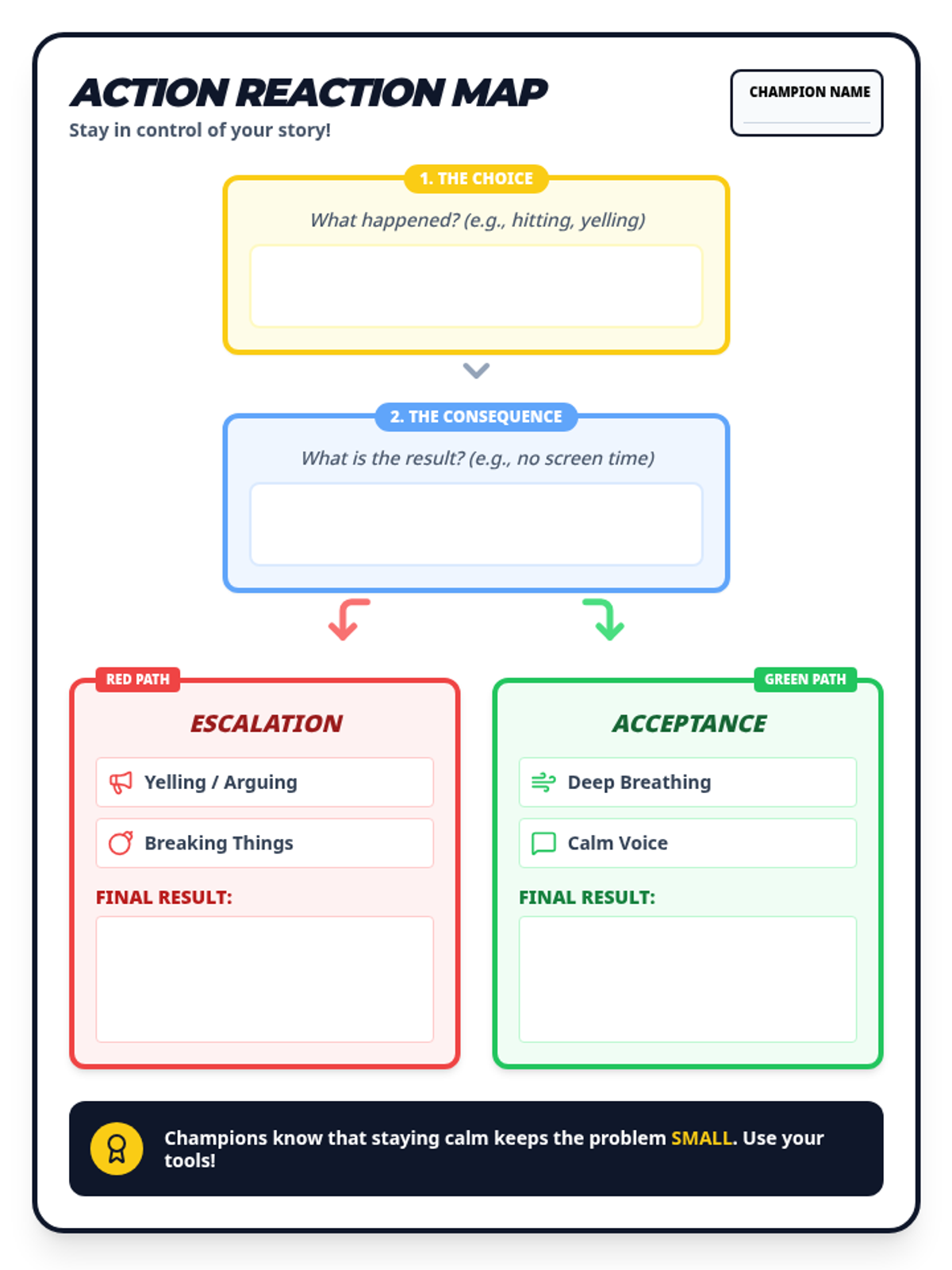
A visual graphic organizer (consequence map) for students to trace the path between an action, its consequence, and the two possible ways to react (escalation vs. acceptance).
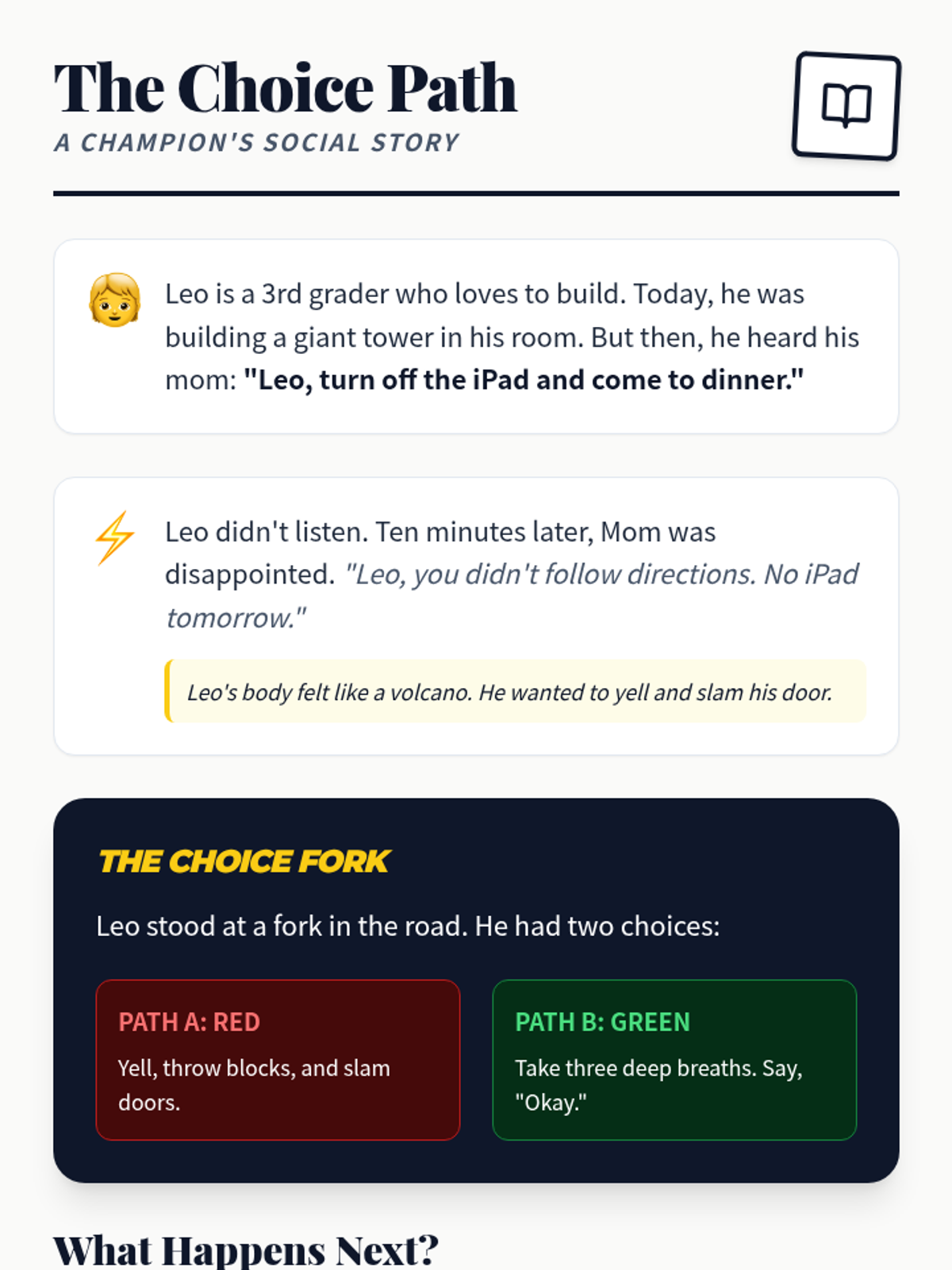
A two-page social story focusing on a relatable scenario (iPad time) and the diverging results of escalated vs. calm reactions, specifically addressing property destruction and yelling.
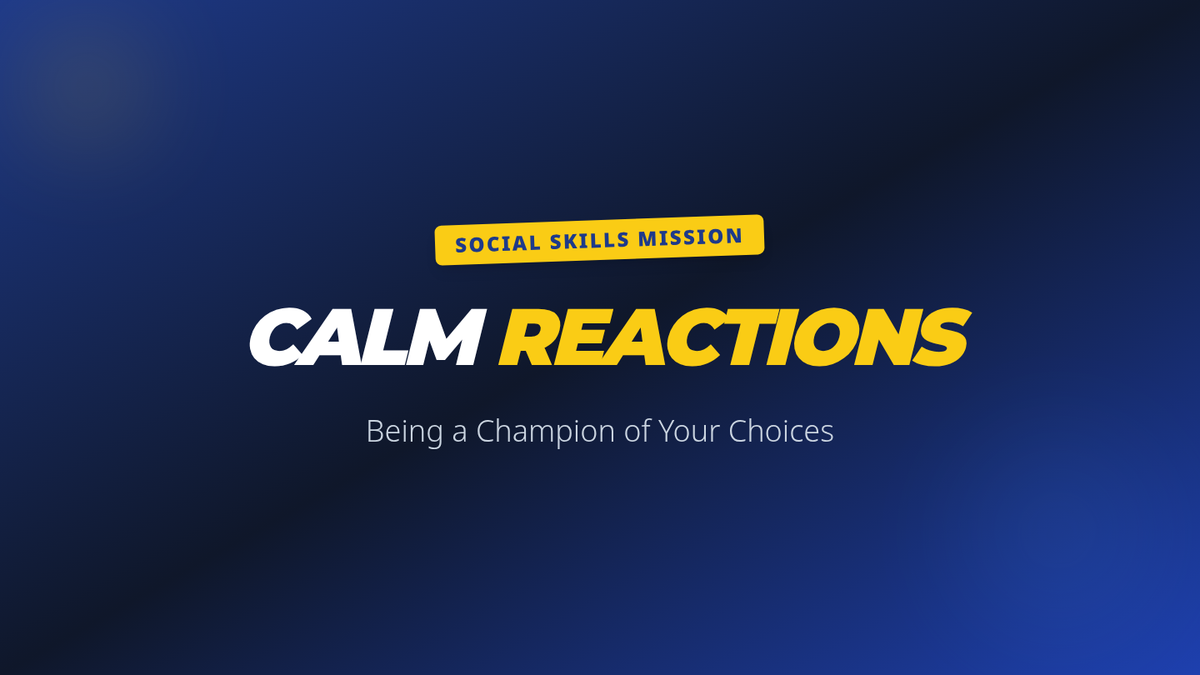
A 6-slide visual presentation for teaching students with ADHD the difference between escalated and calm reactions to consequences, including specific self-regulation tools.
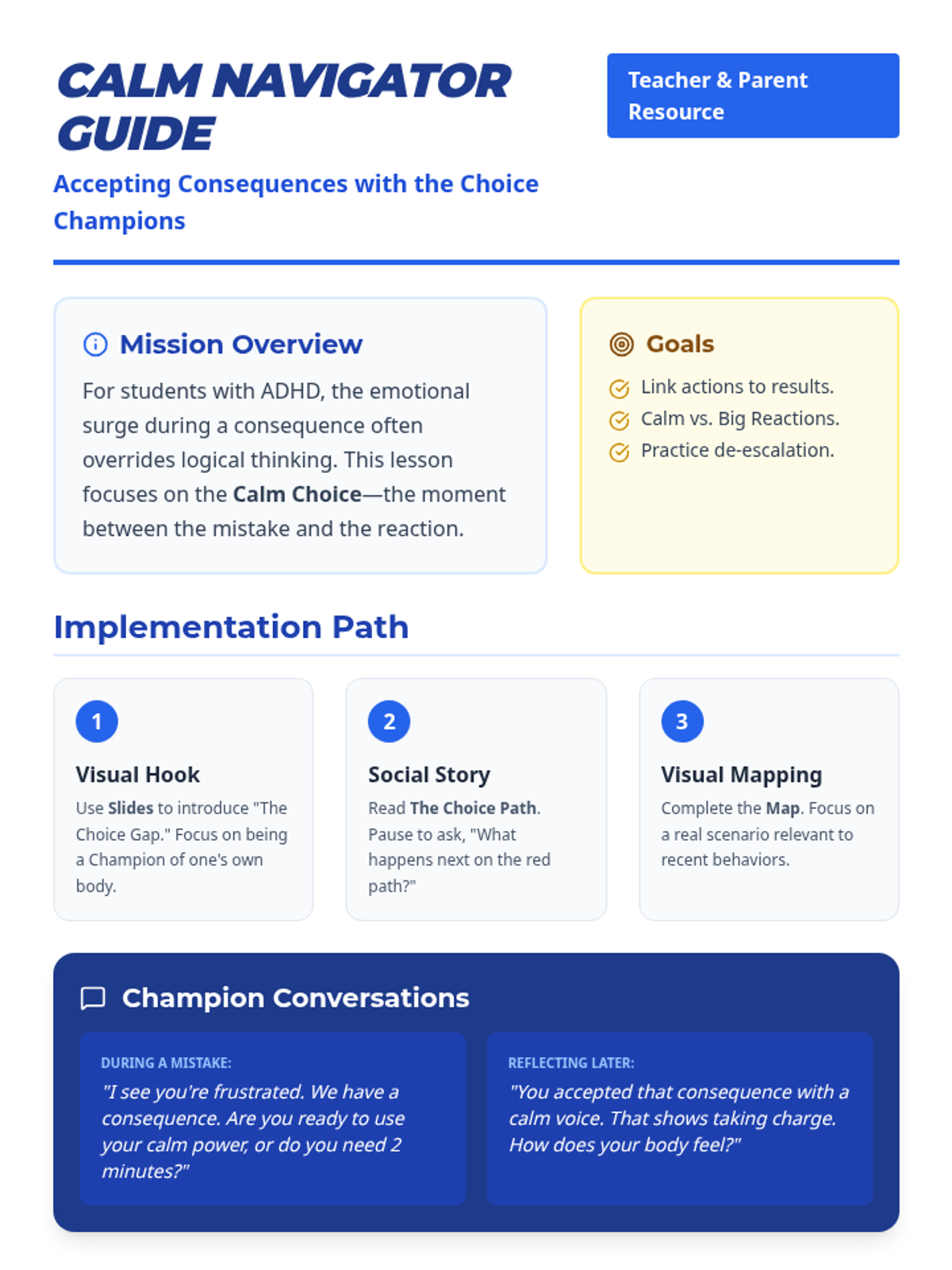
A 2-page teacher and parent guidance document providing implementation steps, discussion prompts, and behavioral strategies for teaching calm reactions and consequence acceptance.
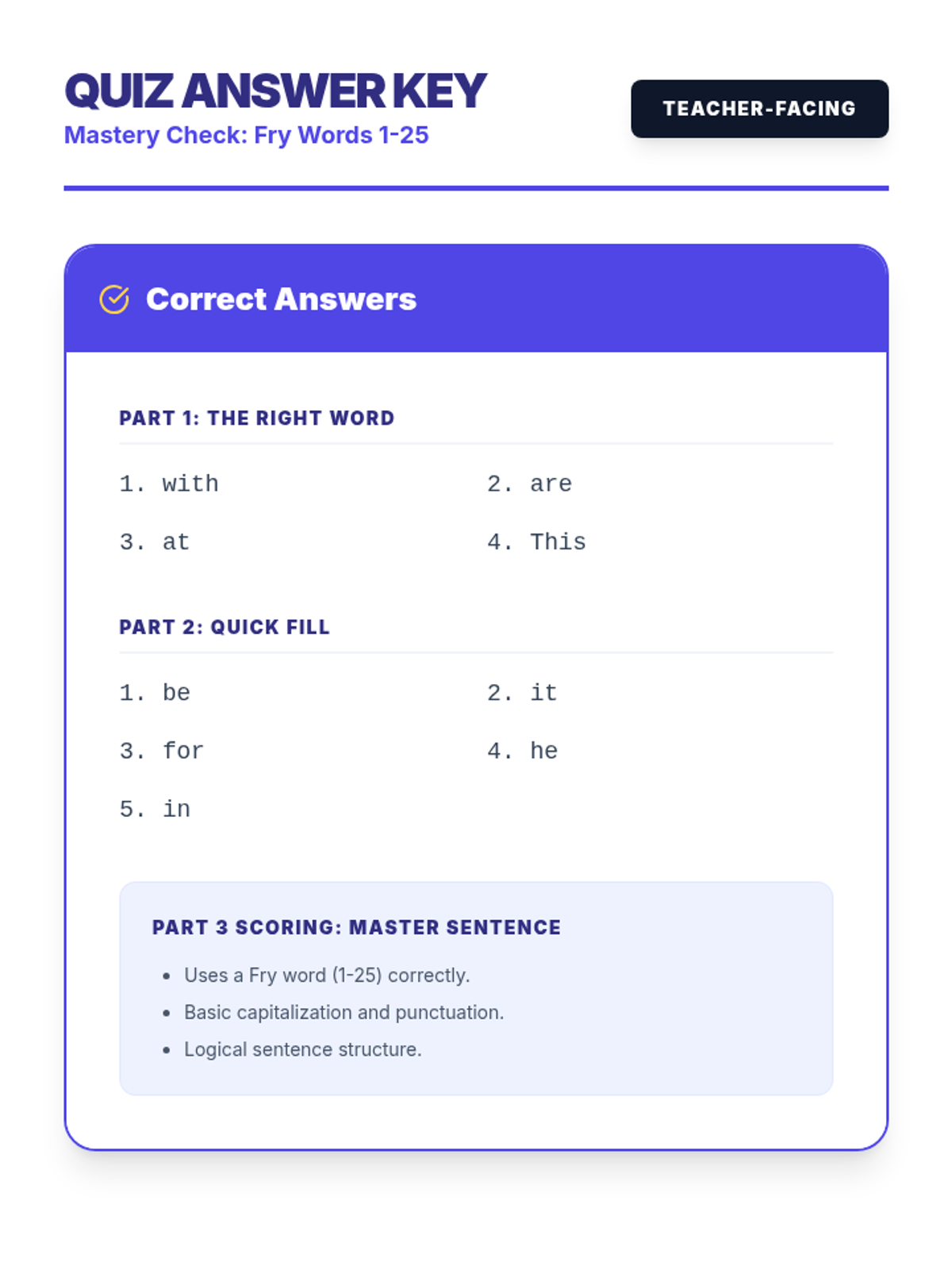
An answer key for the Fry Words 1-25 Cumulative Quiz, including scoring criteria for the creative writing section.
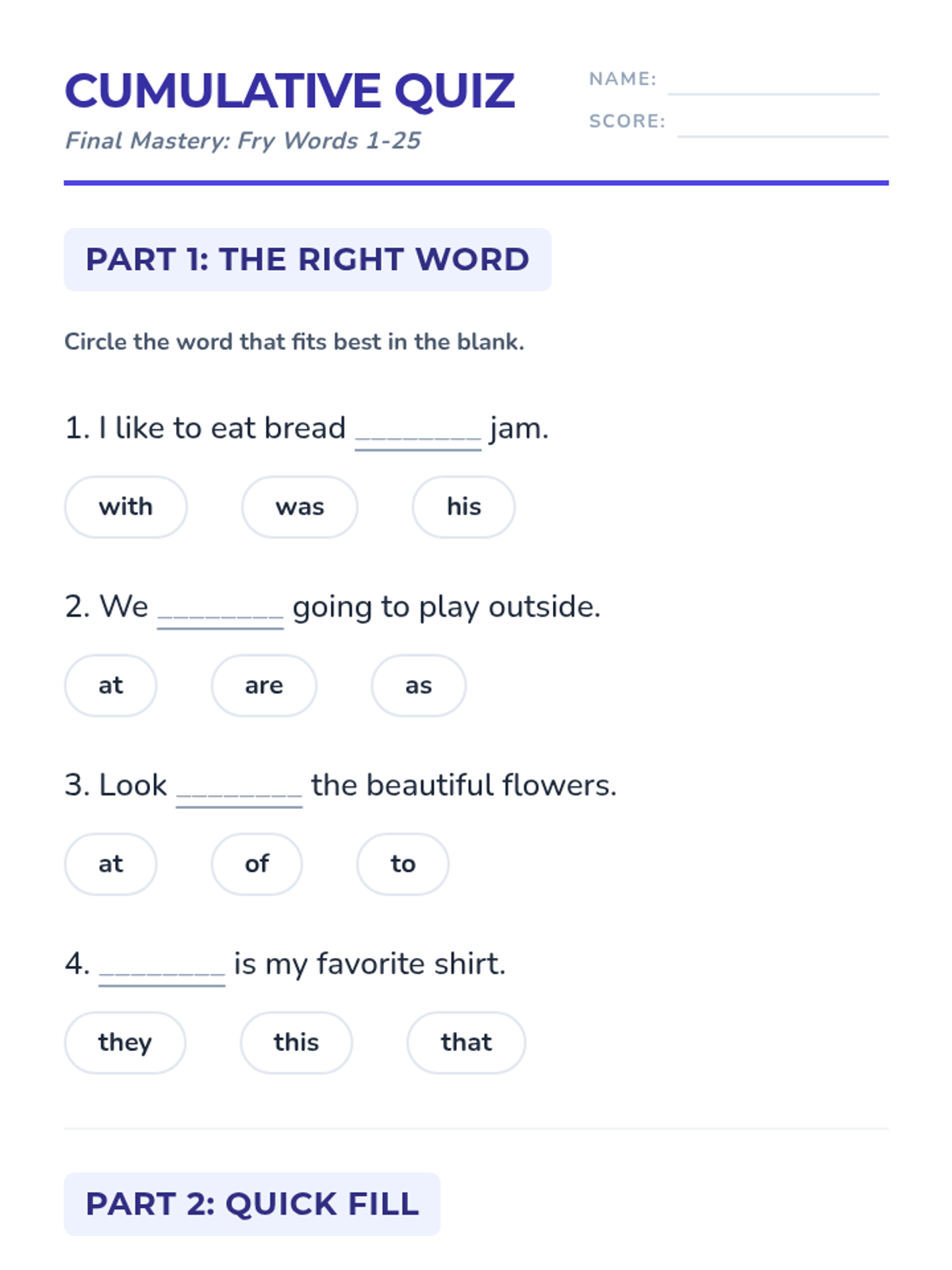
A cumulative quiz for Fry Words 1-25, featuring multiple choice, fill-in-the-blank, and creative writing sections for foundational literacy assessment. Optimized for readability and pagination.
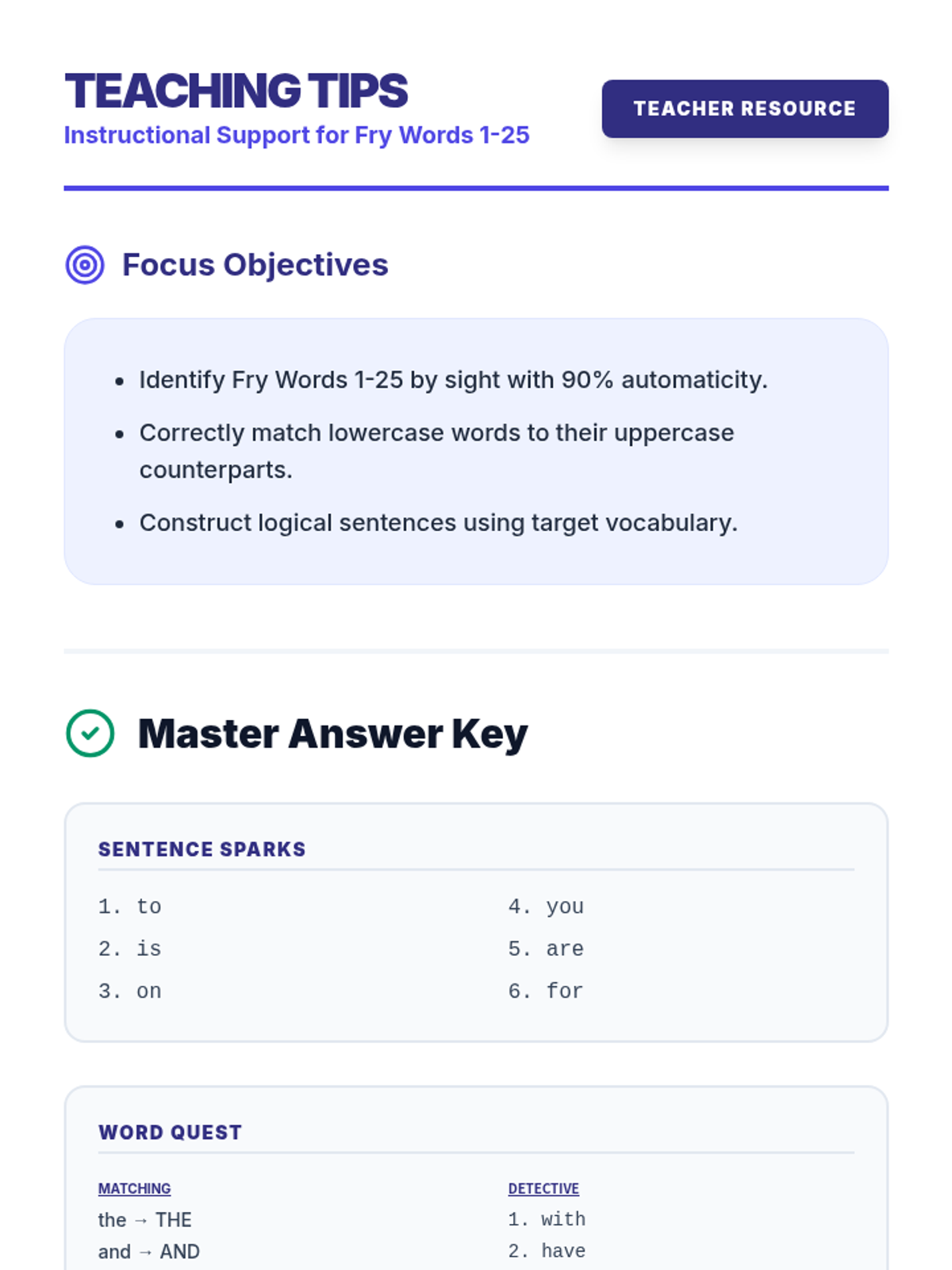
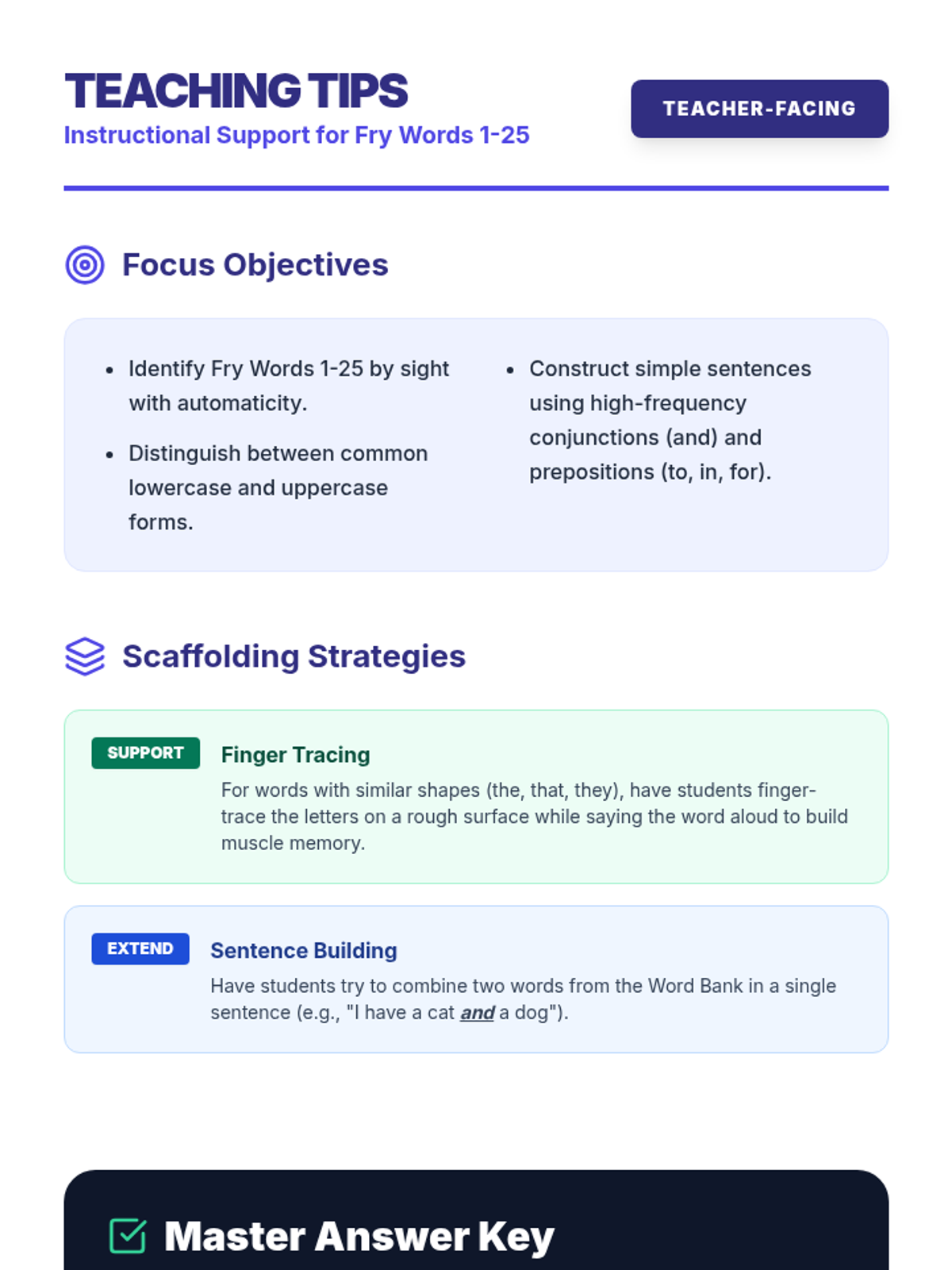
A comprehensive teacher's guide for the Fry Words 1-25 lesson, featuring instructional strategies and a consolidated answer key optimized for single-page viewing.
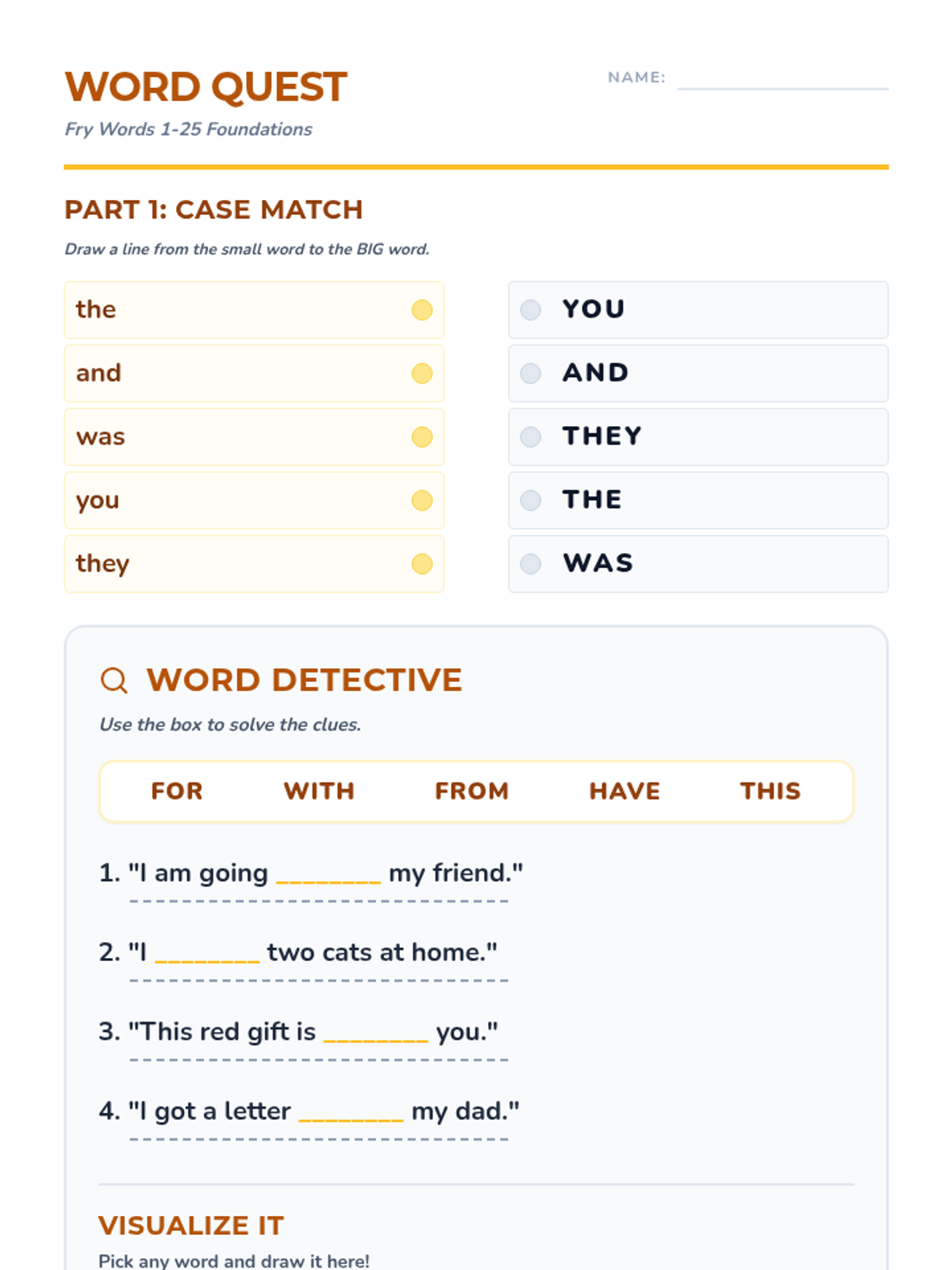
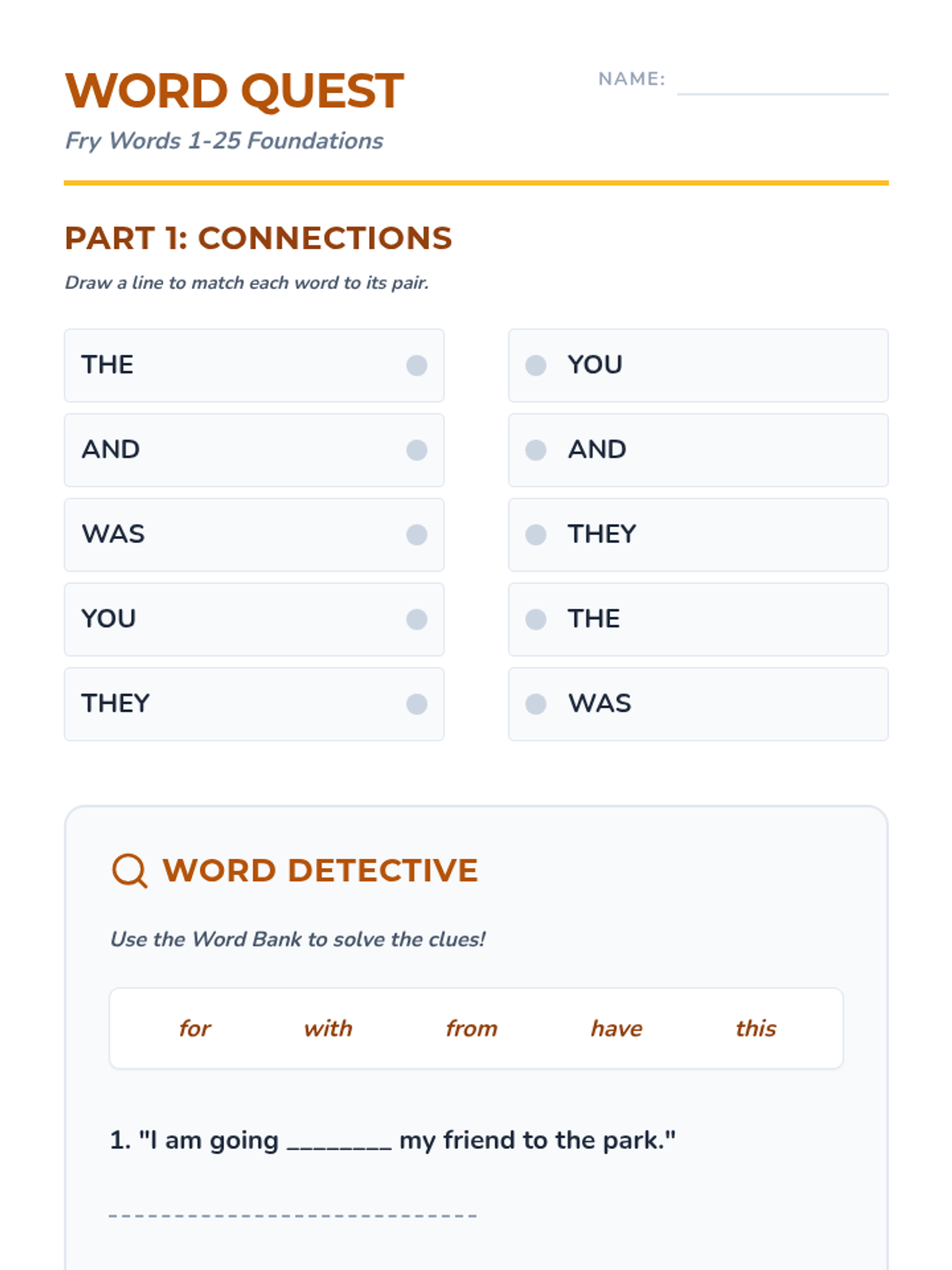
A vocabulary activity for Fry Words 1-25, including uppercase-lowercase matching and contextual clue identification to build word recognition. Optimized for pagination and task clarity.
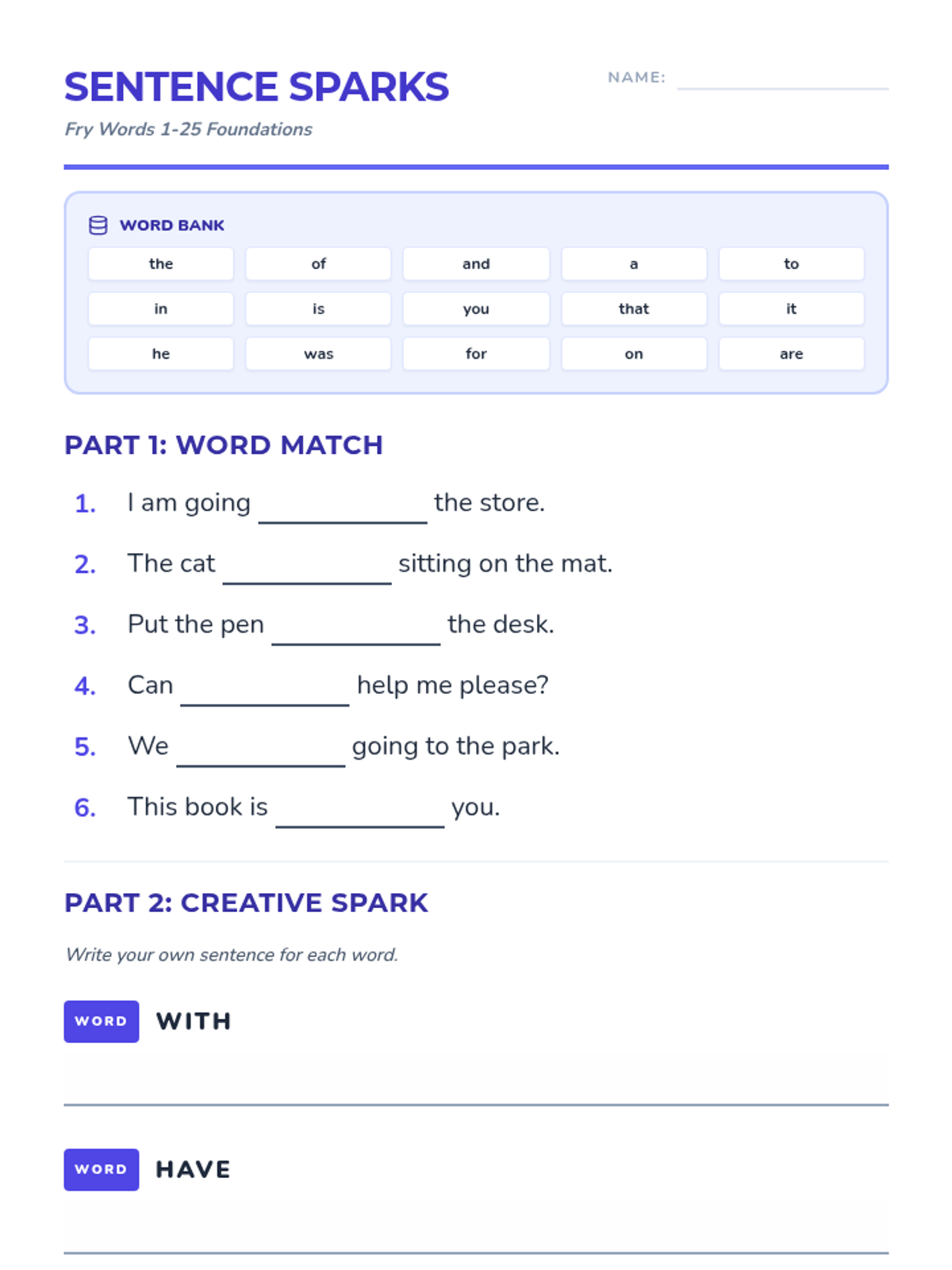
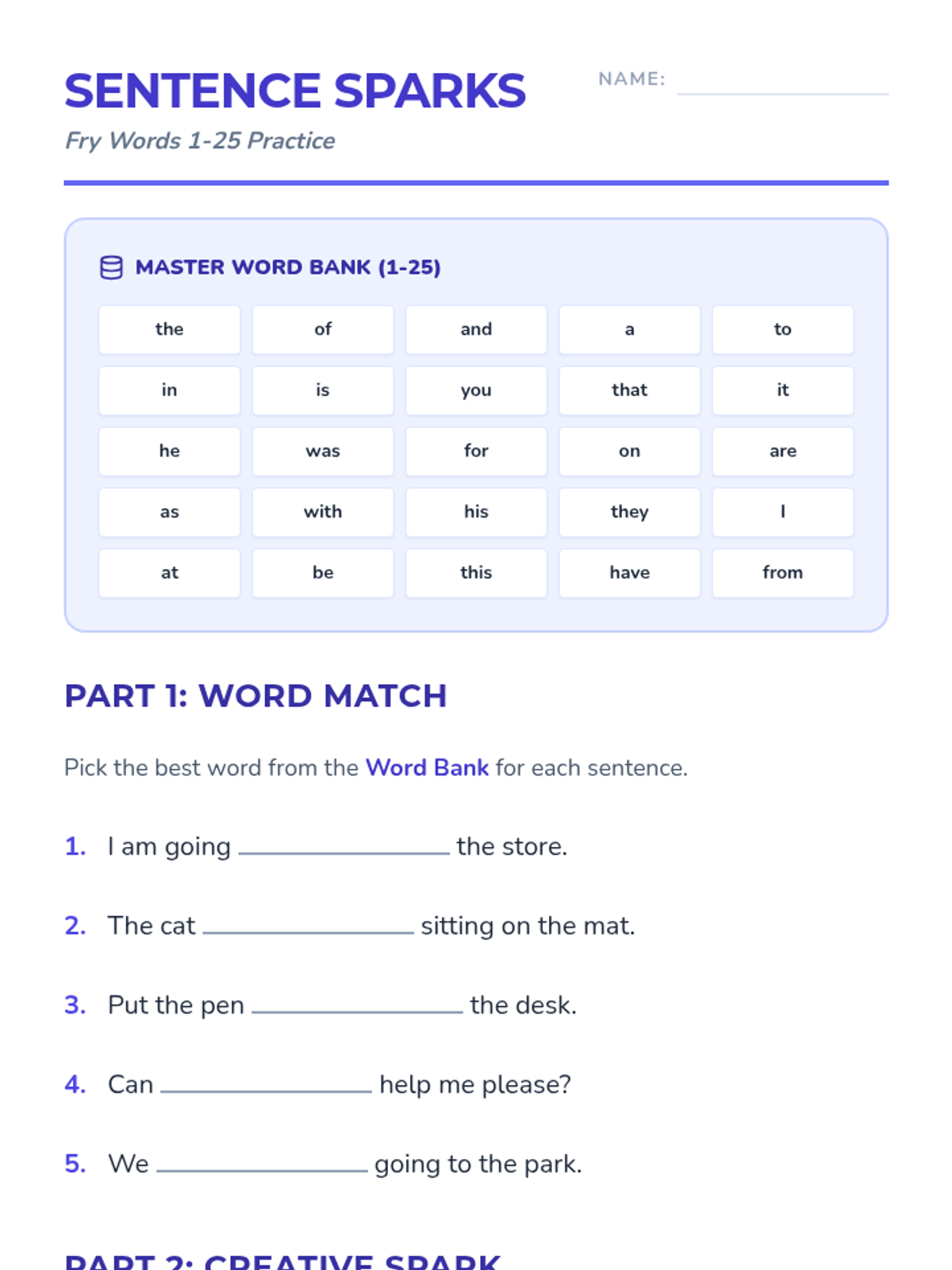
A sentence practice worksheet for Fry Words 1-25, featuring fill-in-the-blank exercises and creative sentence writing with primary-style guided lines. Optimized for layout and pagination.
An introductory slide deck for the first 25 Fry Sight Words, featuring large, high-contrast text and simple example sentences for foundational literacy support. Optimized for readability and layout consistency.
A comprehensive teacher's guide for the Fry Words 1-25 lesson, featuring instructional strategies, high-contrast differentiation tags, and complete answer keys.
A vocabulary activity for Fry Words 1-25, including uppercase-lowercase matching and contextual clue identification to build word recognition.
A sentence practice worksheet for Fry Words 1-25, featuring fill-in-the-blank exercises and creative sentence writing with guided lines.
An introductory slide deck for the first 25 Fry Sight Words, featuring large, high-contrast text and simple example sentences for foundational literacy support.
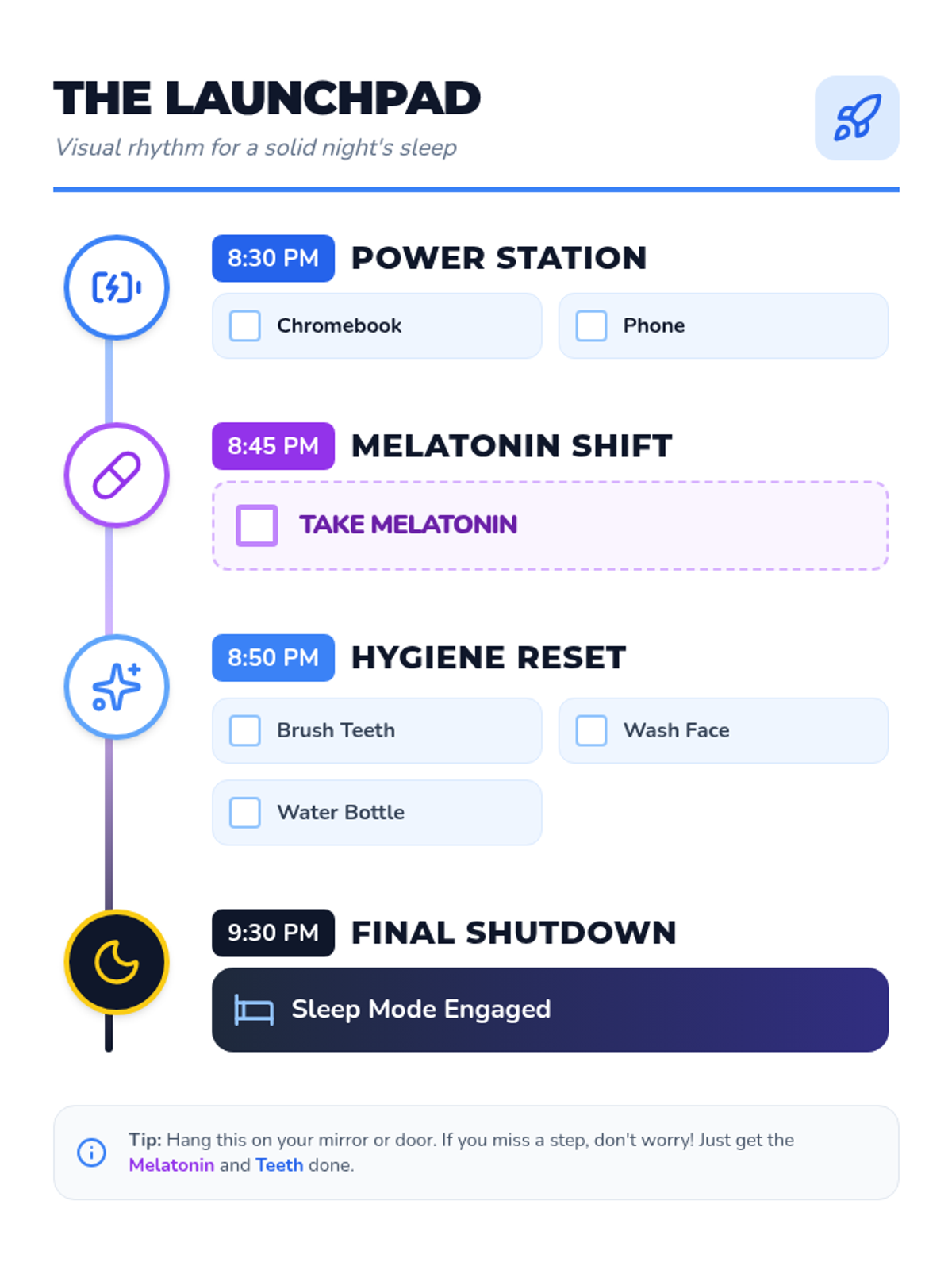
A high-contrast visual schedule for a teenager's bedroom, now updated with a blue and purple color scheme and a simplified routine that prioritizes essential hygiene and sleep preparation.
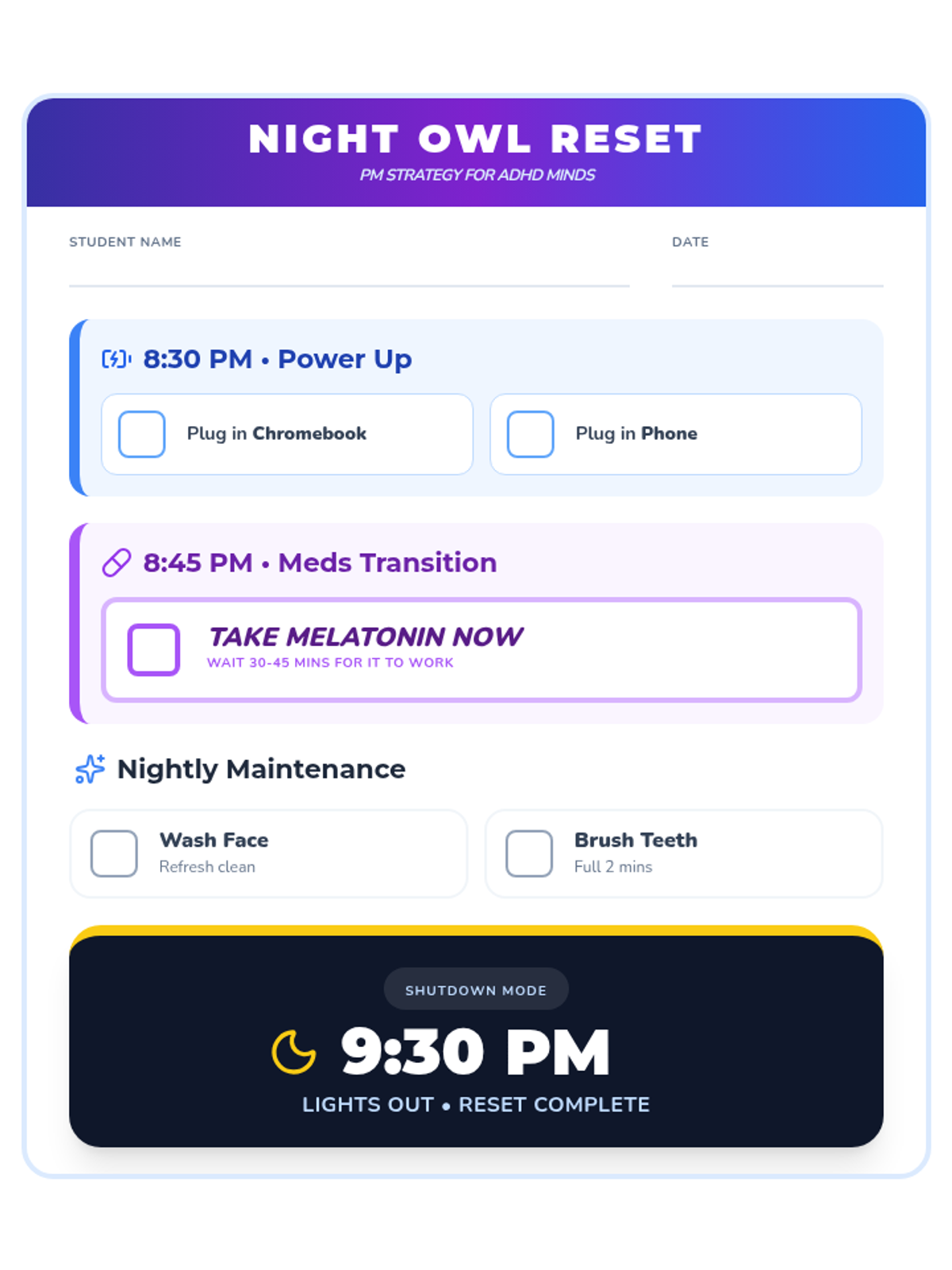
An updated nightly routine checklist for teenagers with ADHD, now featuring a purple and blue color scheme and a streamlined task list focused on hygiene and device management.
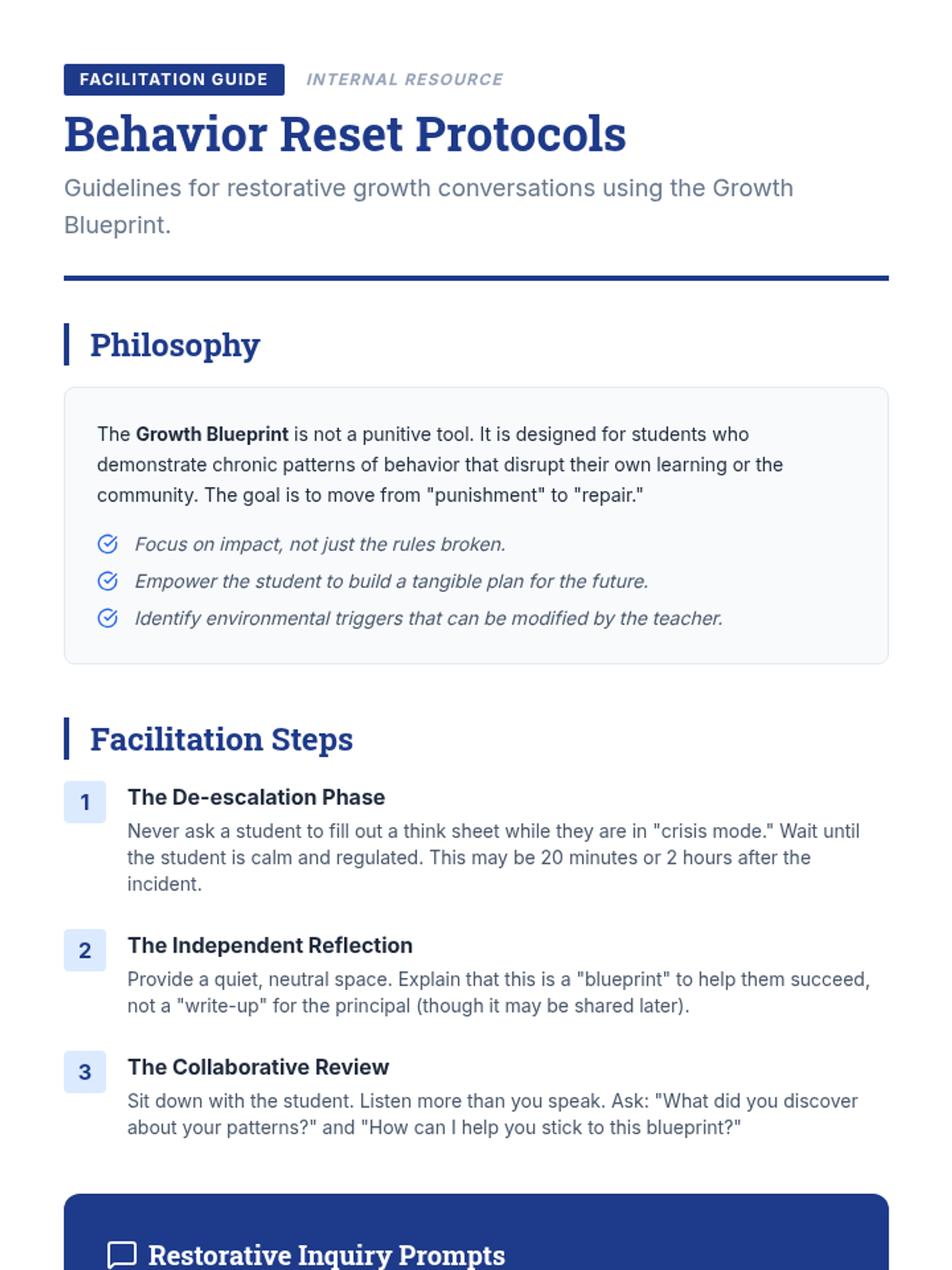
A comprehensive guide for teachers on facilitating restorative behavior conversations. It includes philosophy, step-by-step implementation, discussion prompts, and strategies for tracking long-term progress.
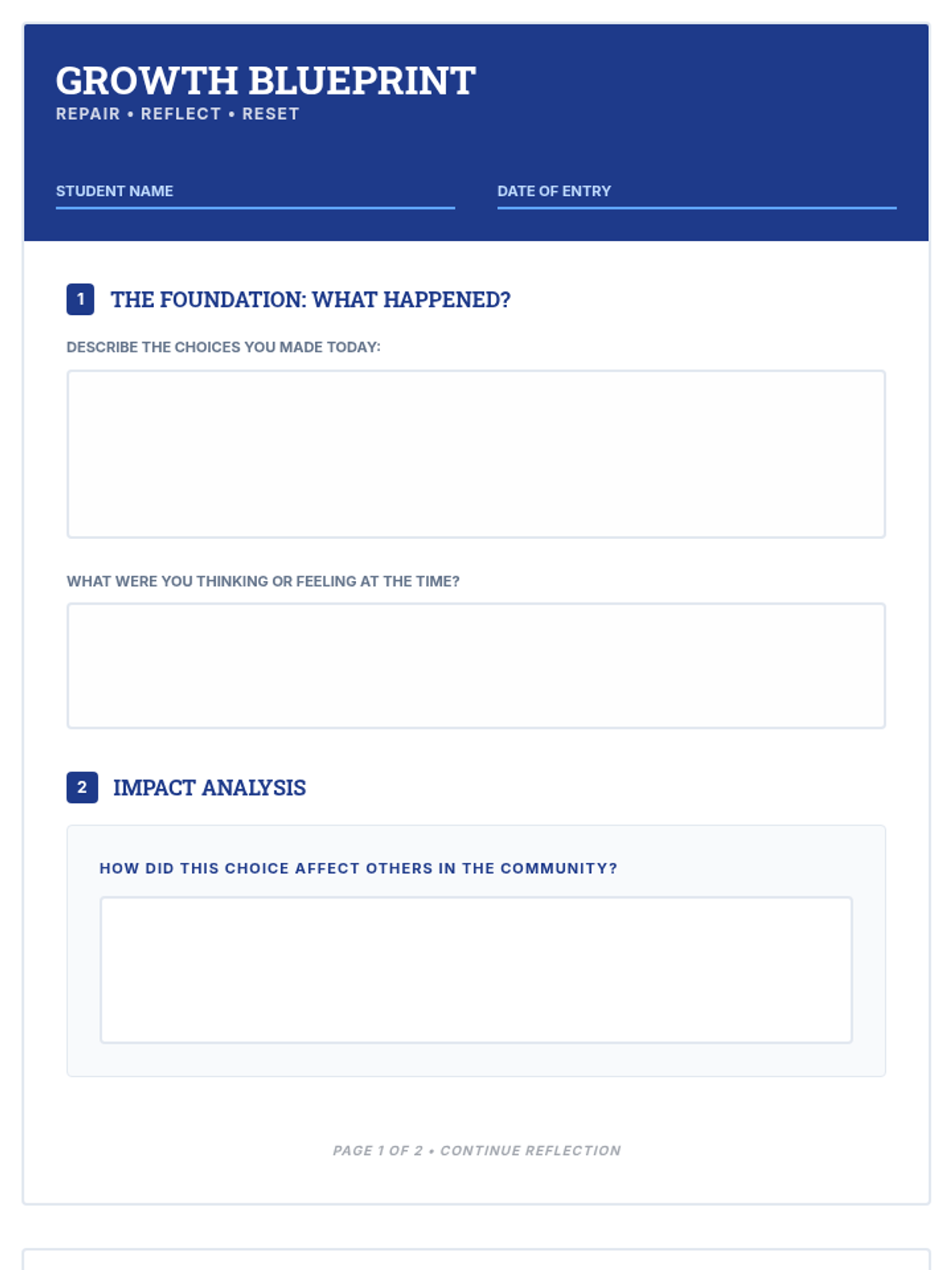
A restorative behavior reflection sheet designed for students to analyze chronic patterns and create a 'blueprint' for future success. It includes sections for incident description, impact analysis, trigger identification, and goal setting.
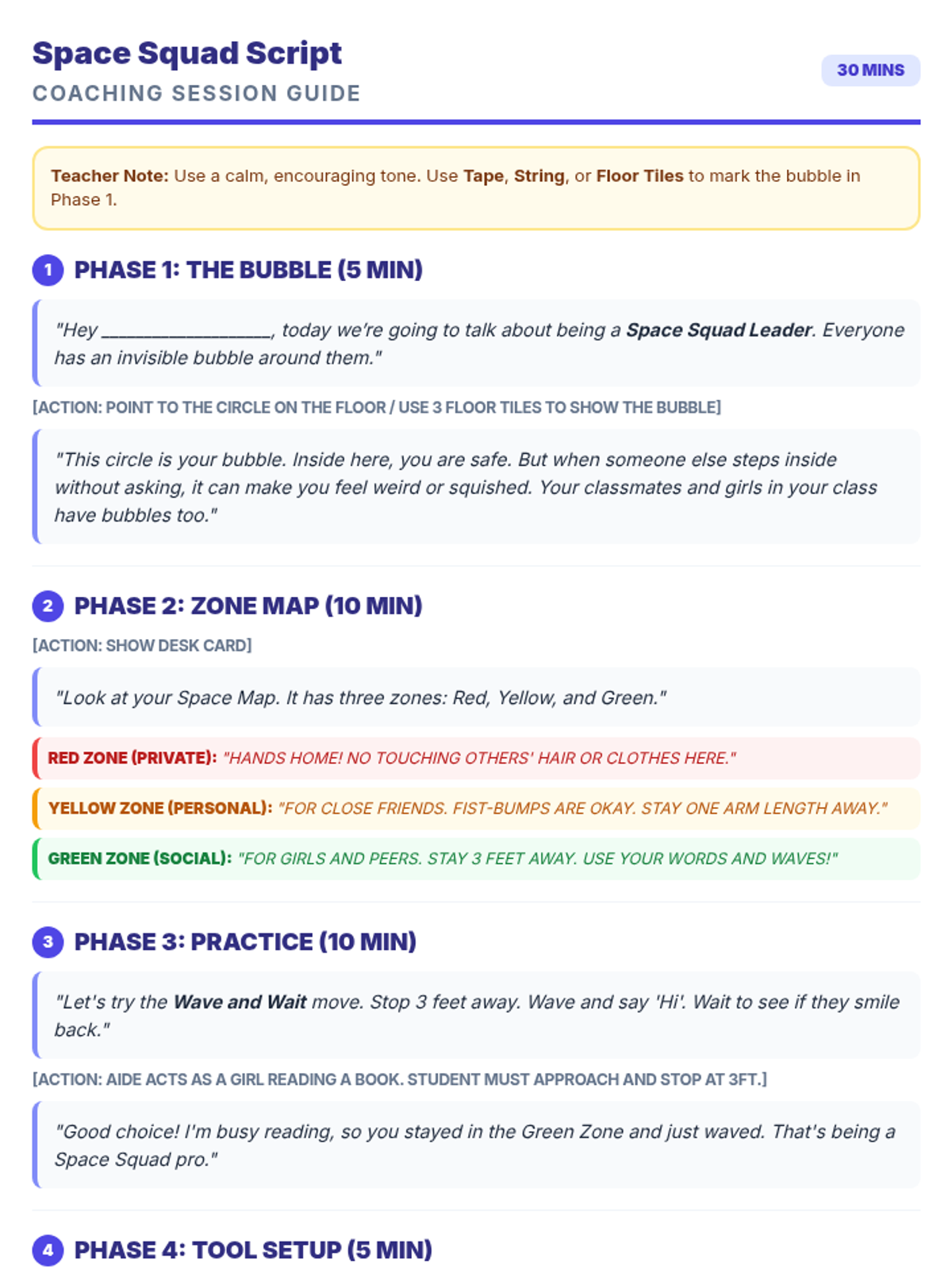
An instructional script for a 1-on-1 coaching session, providing word-for-word guidance on teaching personal space zones and appropriate social interactions to a student with Autism. Updated to include classroom-friendly visual markers.
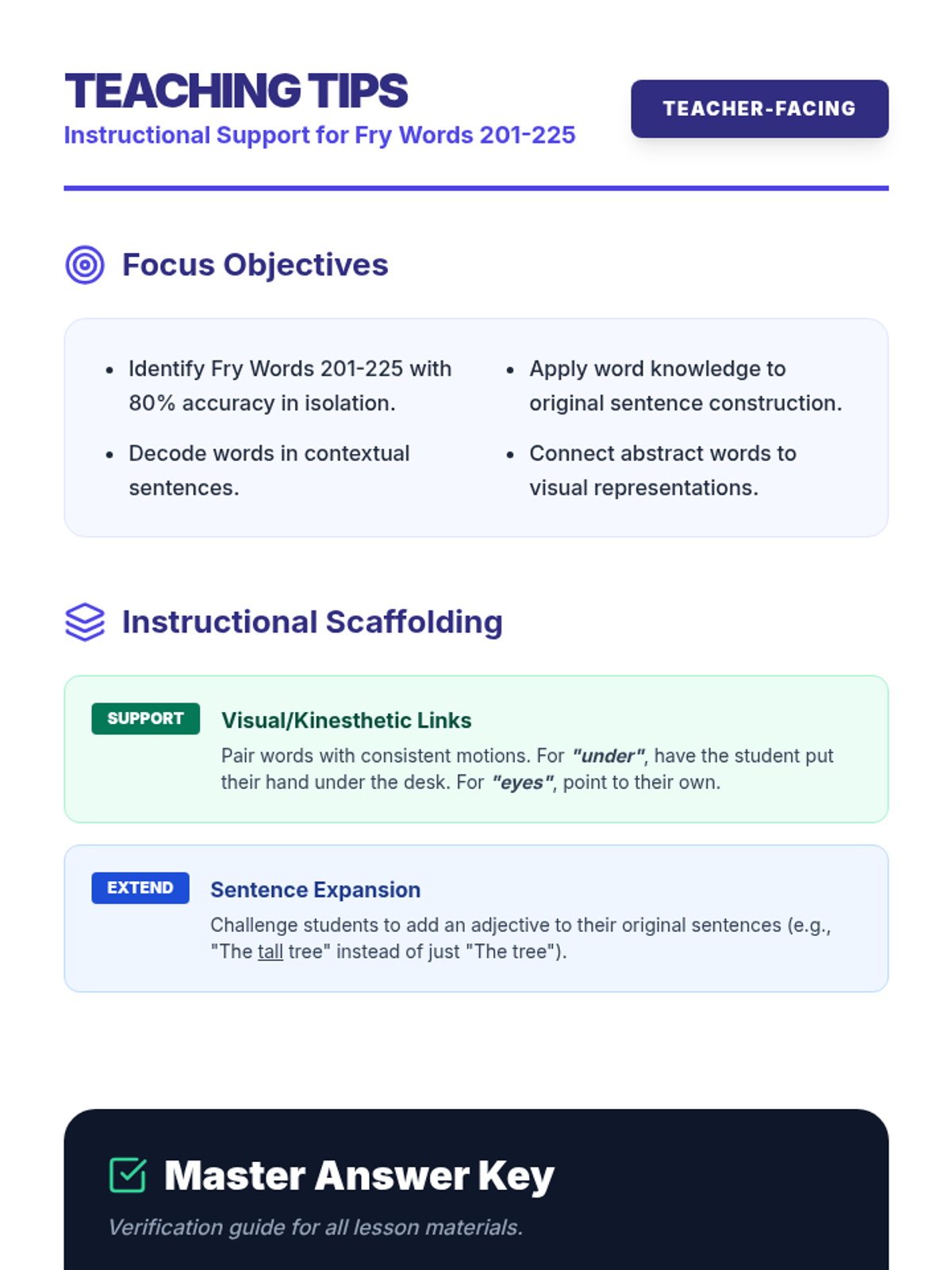
A comprehensive teacher's guide for the Fry Words 201-225 lesson, featuring instructional strategies, high-contrast differentiation tags, and complete answer keys.
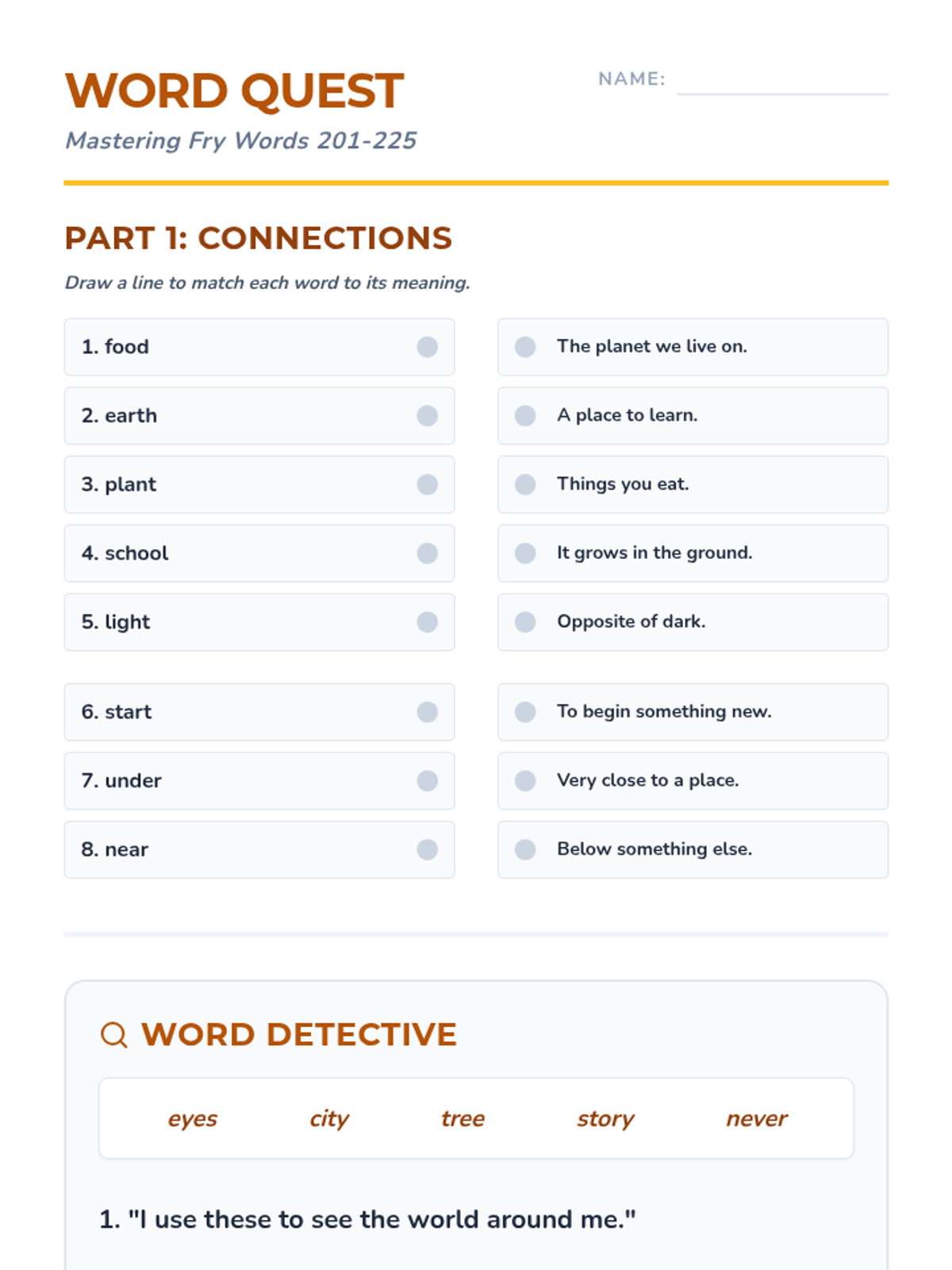
A revised vocabulary activity covering Fry Words 201-225 with expanded word coverage, longer writing spaces, and improved instructions.
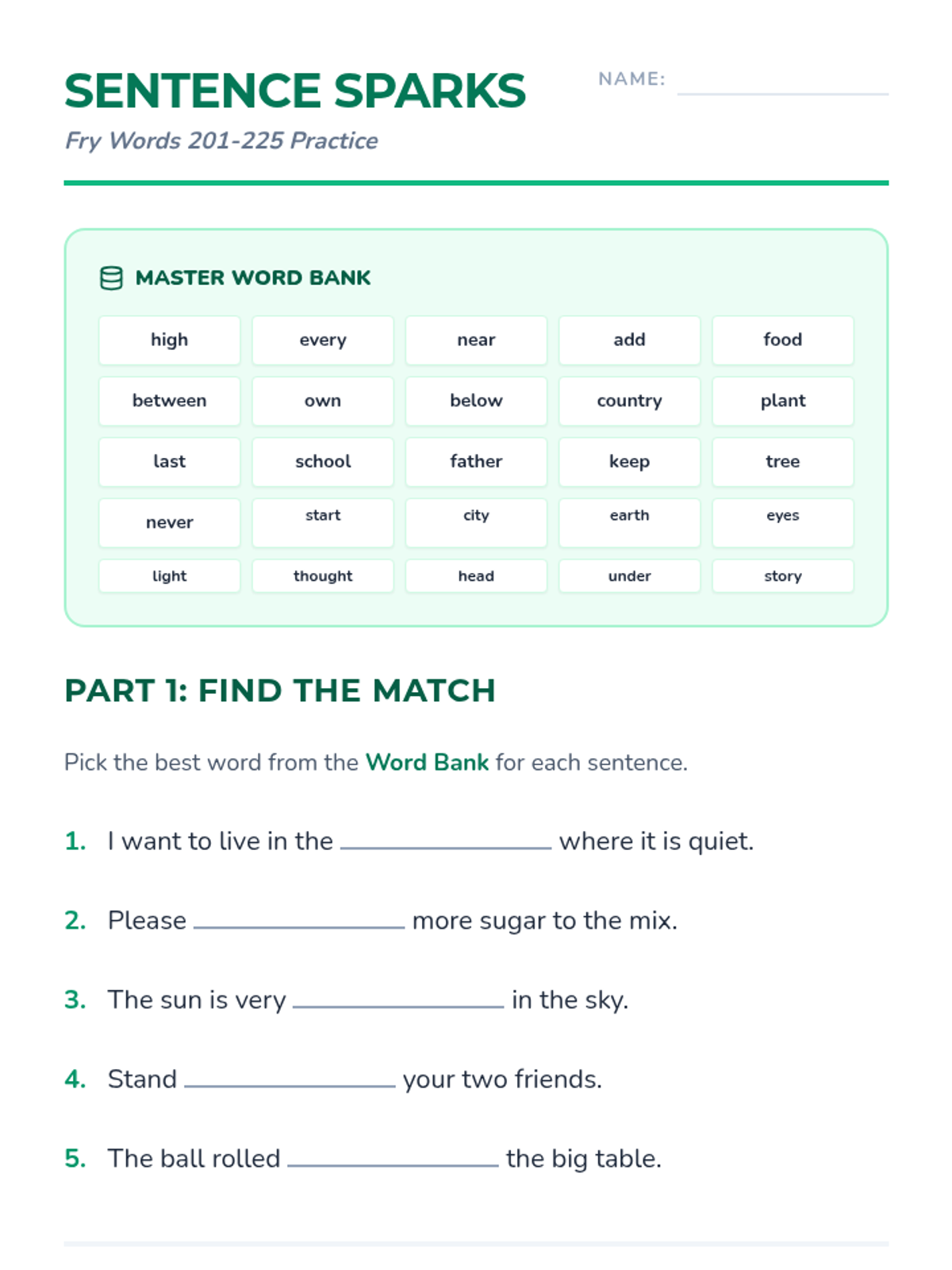
A finalized sentence practice worksheet for Fry Words 201-225 with corrected word lists, improved handwriting space, and fixed page flow for easy printing.
An introductory slide deck for Fry Sight Words 201-225, featuring standardized large text, simple context sentences, and visual structure optimized for readability.
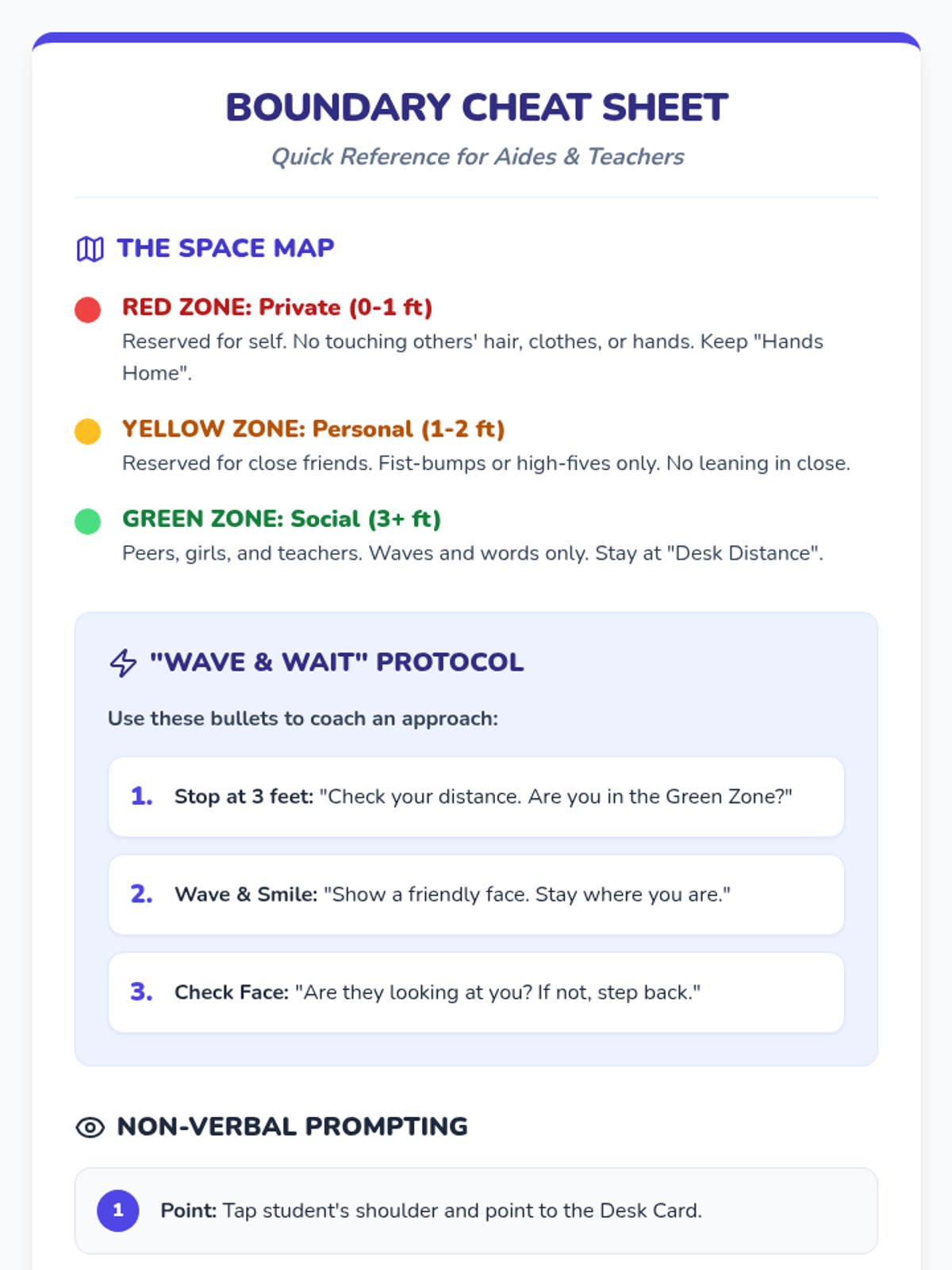
A concise bullet-point reference guide for teachers and aides to use as a cheat sheet for boundary coaching and non-verbal prompting.
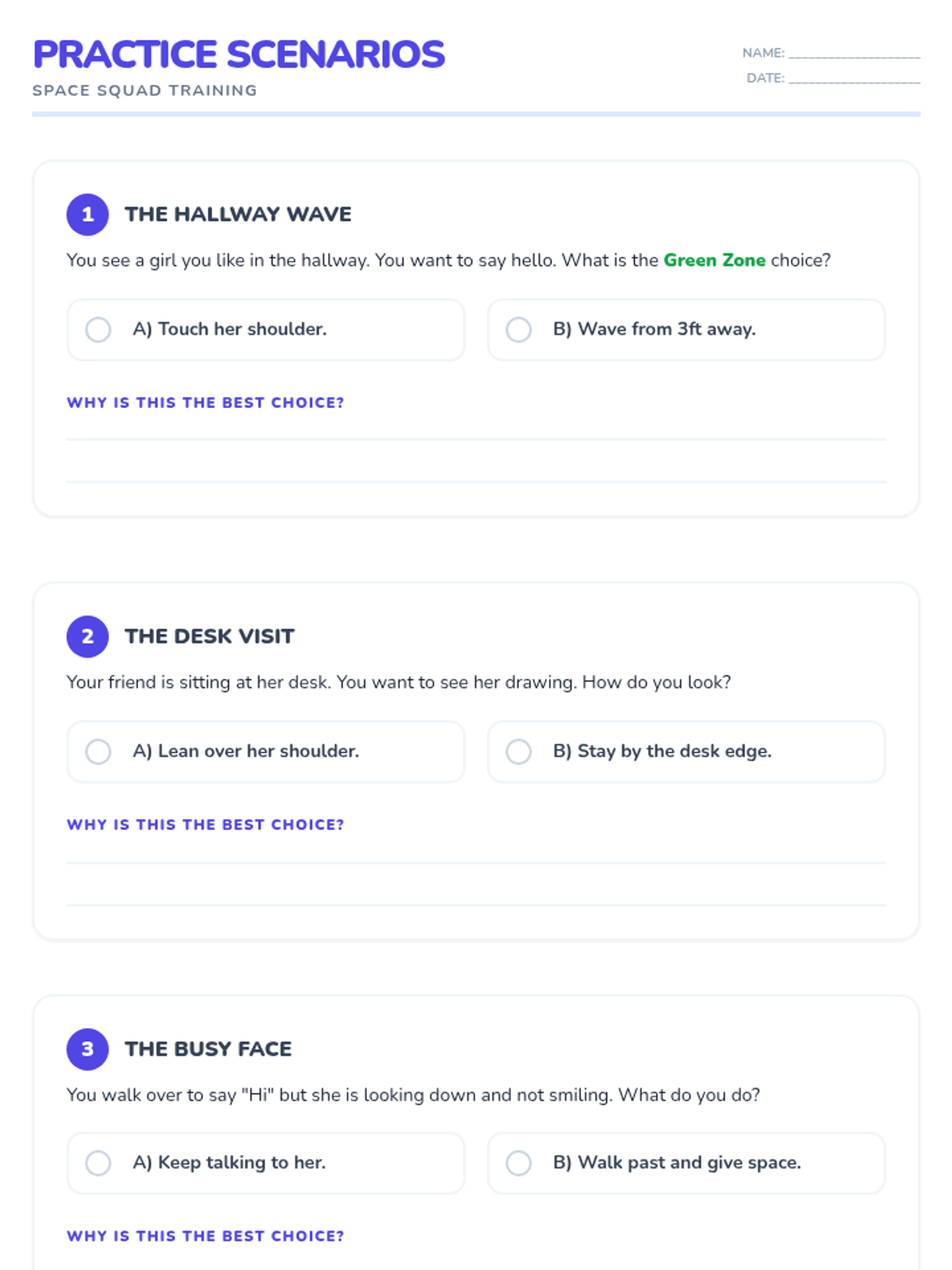
A student activity sheet with four social scenarios focused on practicing personal space boundaries in the classroom.
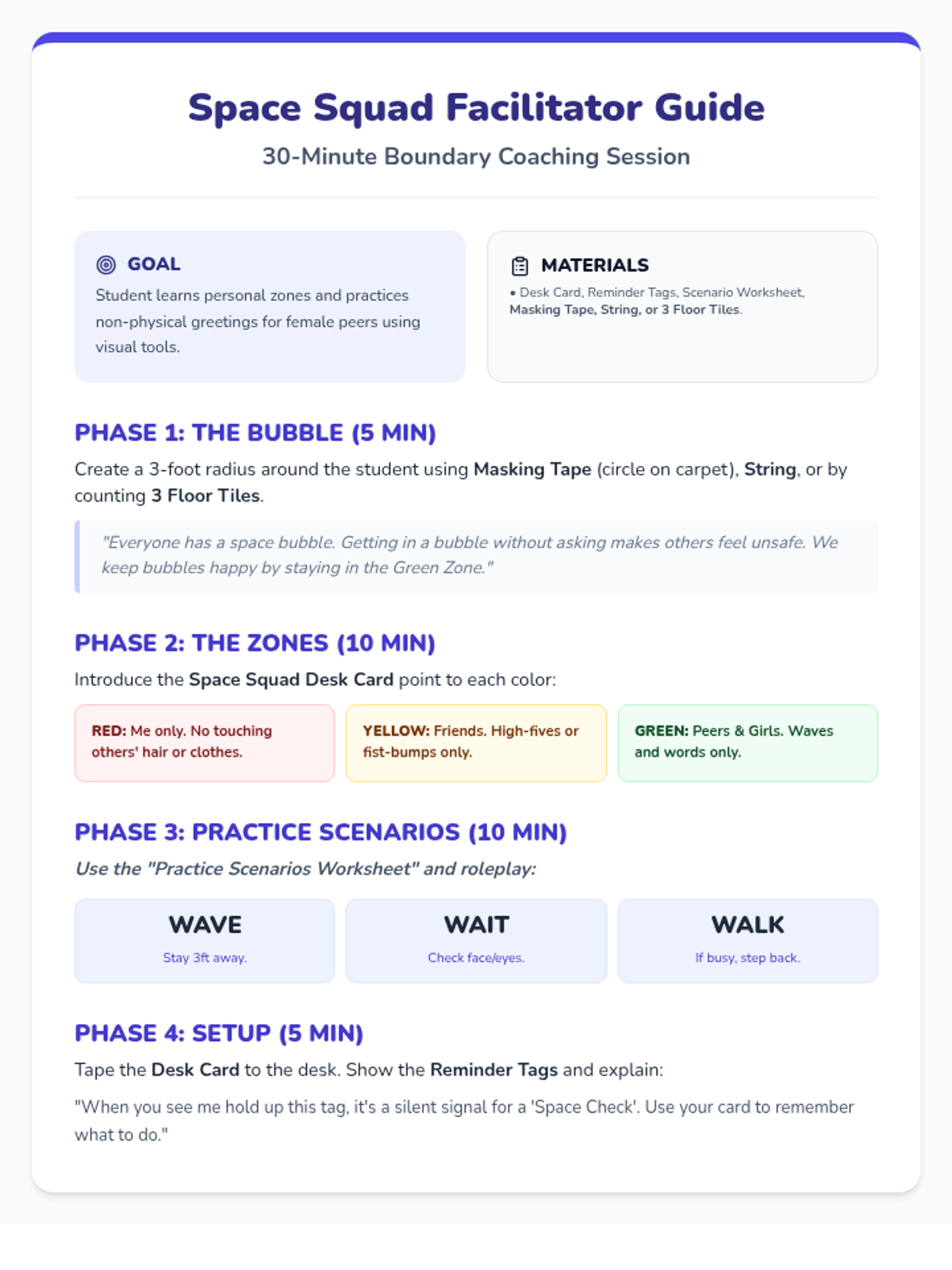
A teacher/aide facilitation guide outlining the 30-minute lesson structure, key concepts, and instructions for using the visual boundary tools. Updated to include common classroom alternatives for visual space markers.
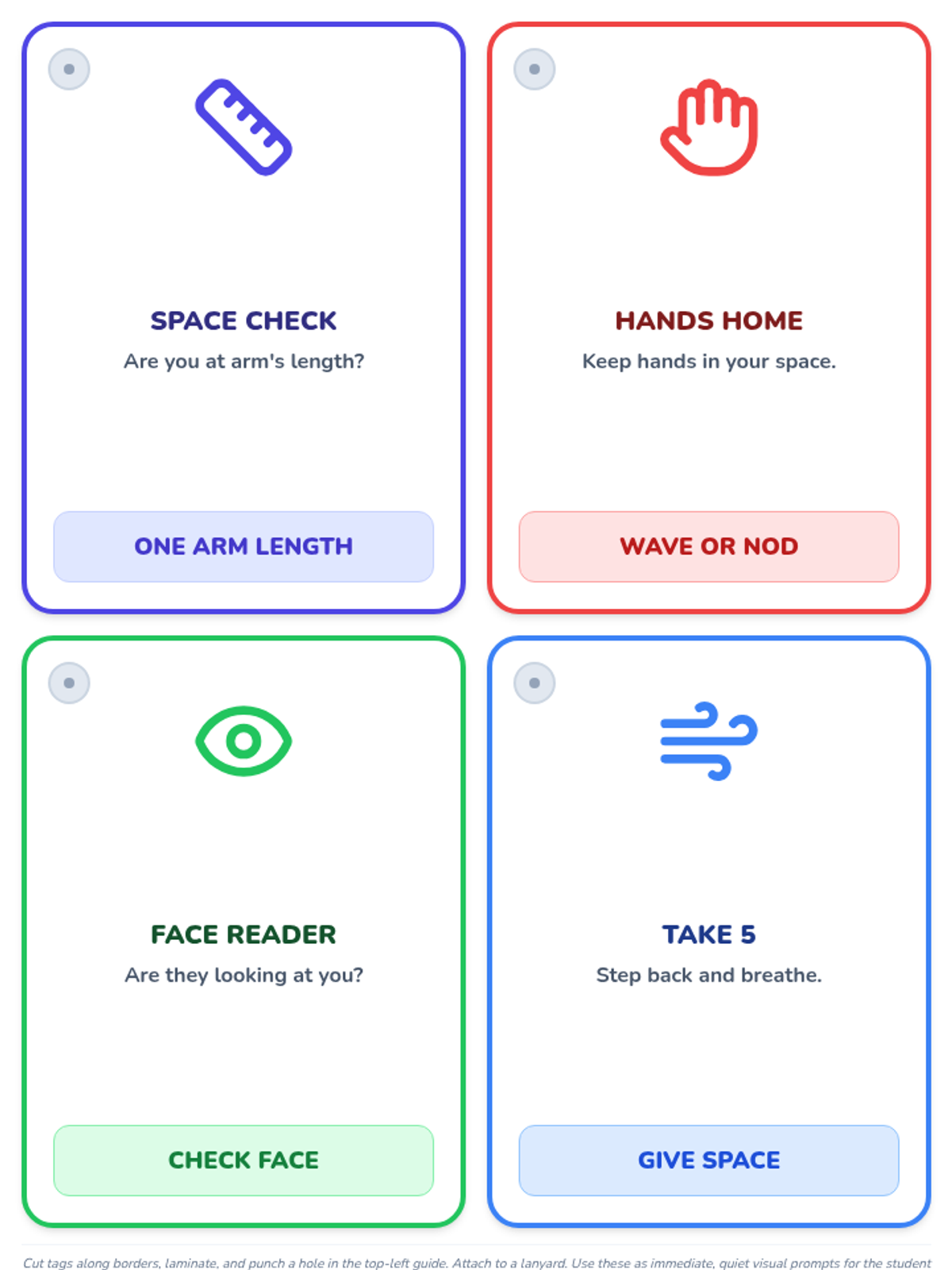
A set of four visual reminder tags for an aide to use as quick, non-verbal prompts for a student to check their distance and physical boundaries.
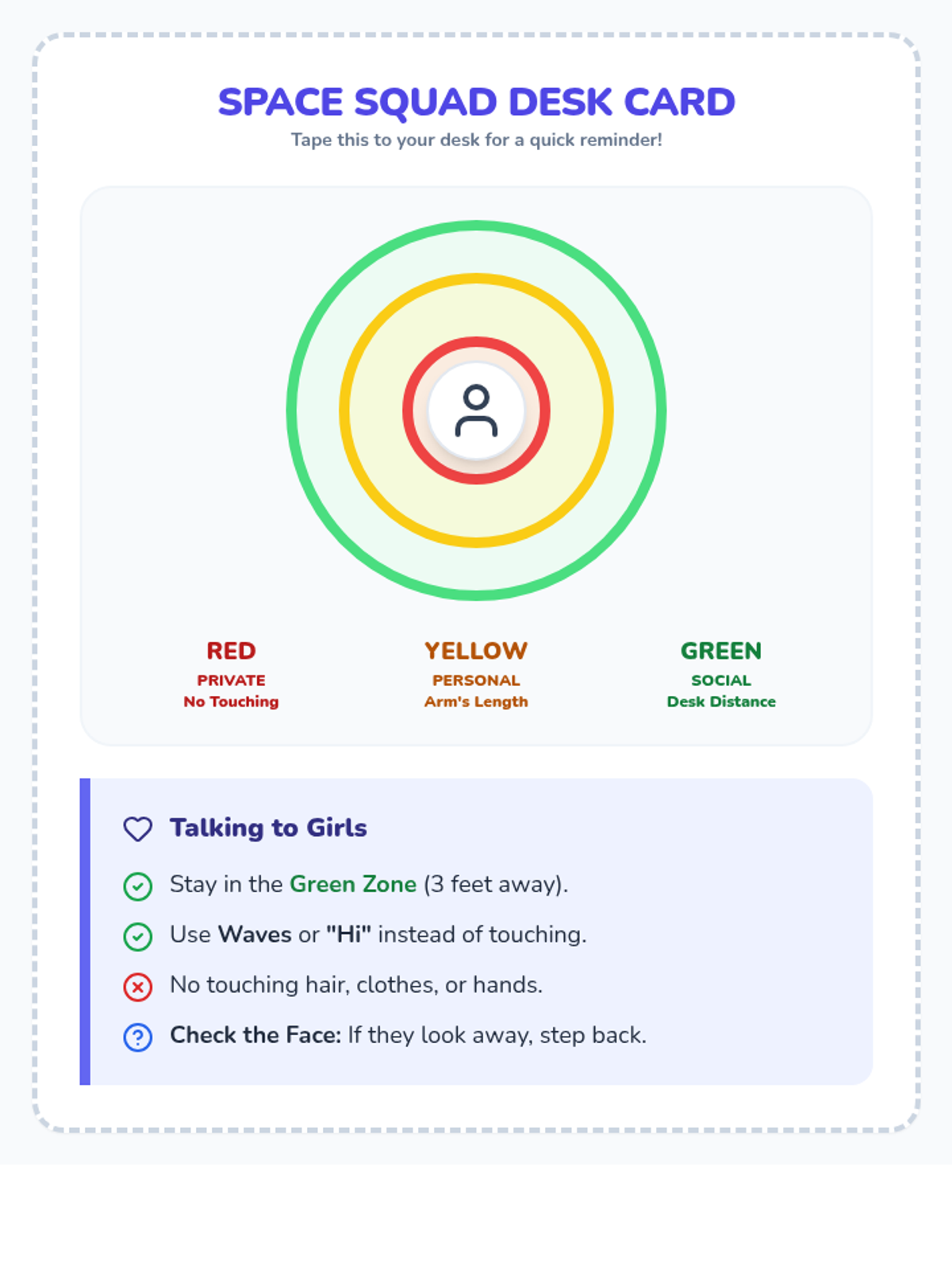
A visual desk reference card for a student to use as a reminder of personal space zones and appropriate interaction rules for peers and girls in the classroom.