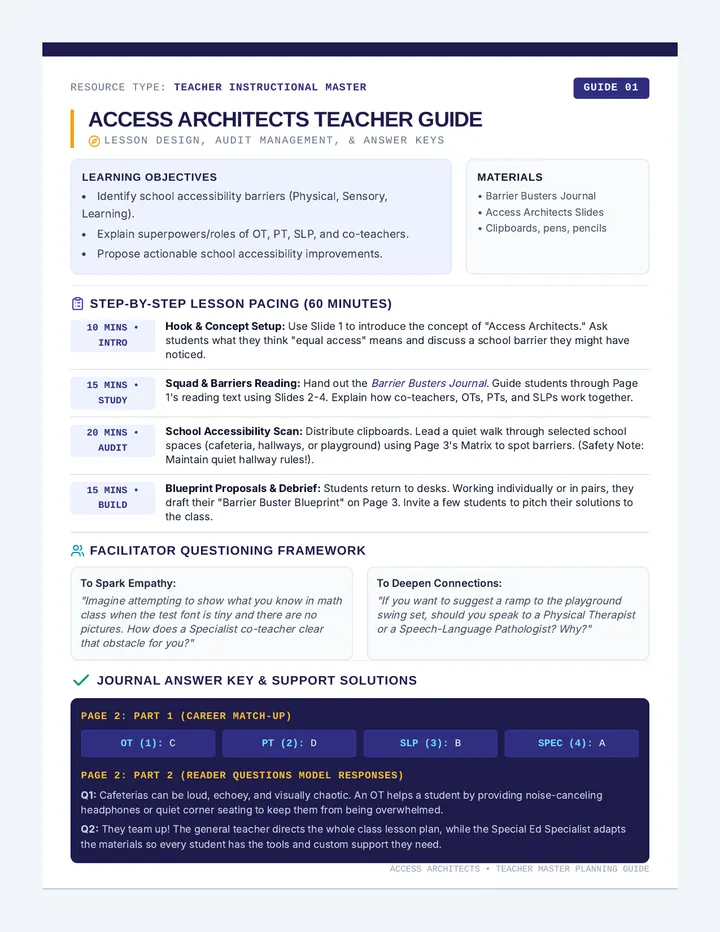
A comprehensive teacher guide for the Trait Detectives lesson, featuring pacing, differentiation strategies, and learning objectives for special education classrooms.
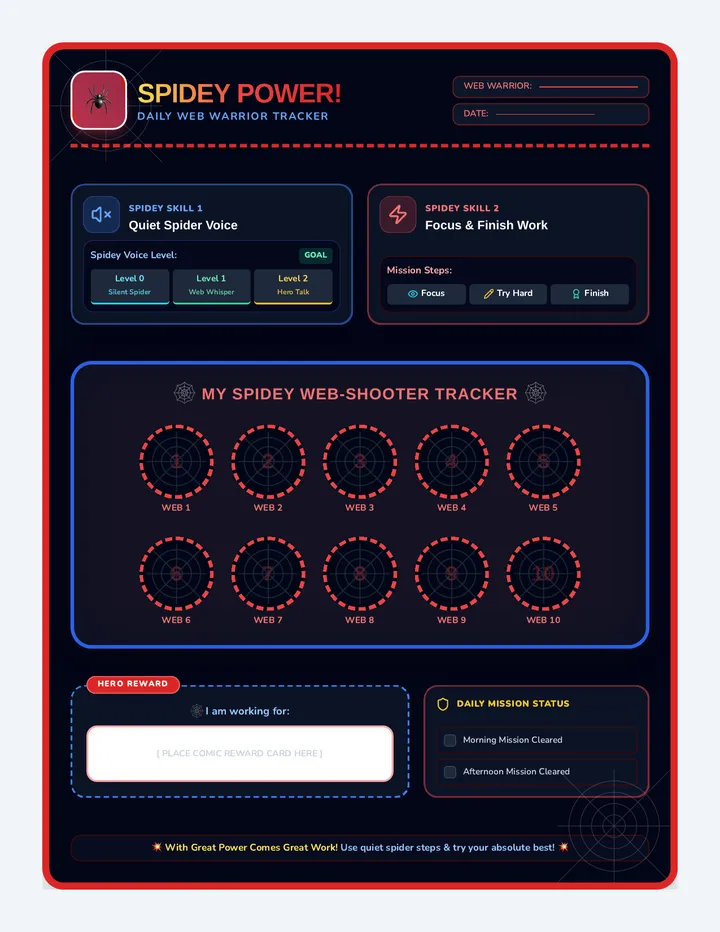
A progress-tracking reward map for students to visualize their task completion and advocacy usage. Features a game-board style path with specific advocacy milestones and milestone unlock slots. Updated for single-page print optimization and improved path logic.
An expanded set of visual advocacy cards (12 total) including level 1 needs/resets, level 2 environmental adjustments, and level 3 complex communications like clarification and emotional transparency. Now features a comic-scaffolded design for higher engagement.
A comic-strip based activity workbook for a student to practice self-advocacy, task completion, and emotional expression through narrative missions. Includes pre-drawn scaffolding elements like silhouettes and speech bubbles to lower engagement barriers. Now includes expanded missions for identifying triggers and group advocacy.
A teacher facilitation guide for using the Hero Chronicles comic-based workbook, specifically focusing on the "Tell Before Leaving" advocacy skill and utilizing partial comic scaffolding. Now includes facilitation for Level 3 complex advocacy and emotional transparency.
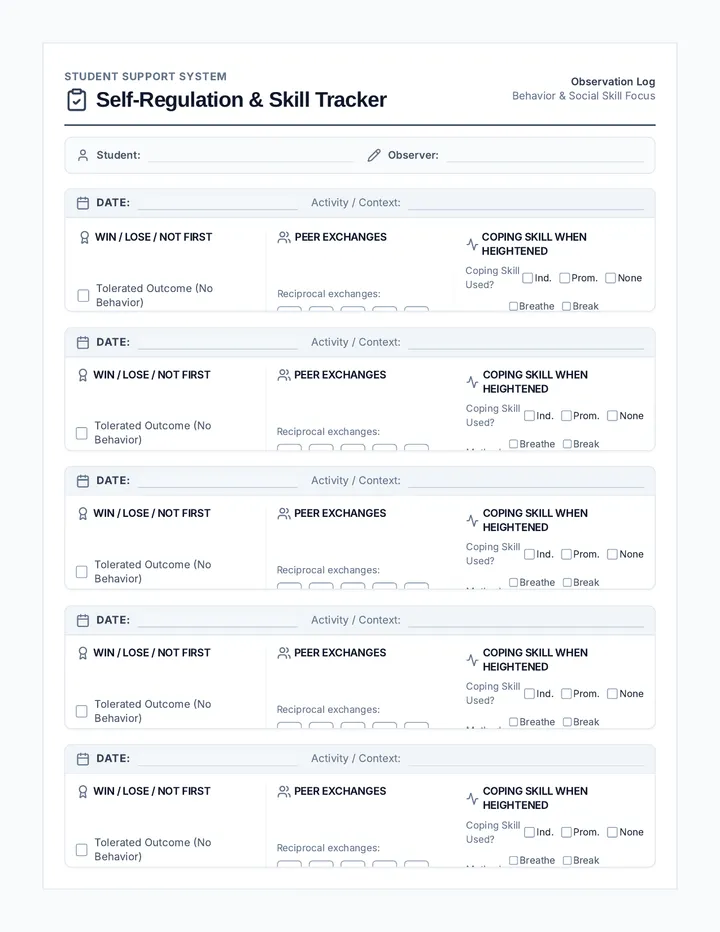
A professional behavior tracking document with specific definitions for refusal behaviors (saying no, pushing papers) and replacement behaviors. Features a 9-row frequency tracking table and a dedicated summary notes section at the bottom for detailed observations.
A social story booklet focusing on the steps for choosing, buying, and waiting to pay for a souvenir in Washington, D.C. gift shops.
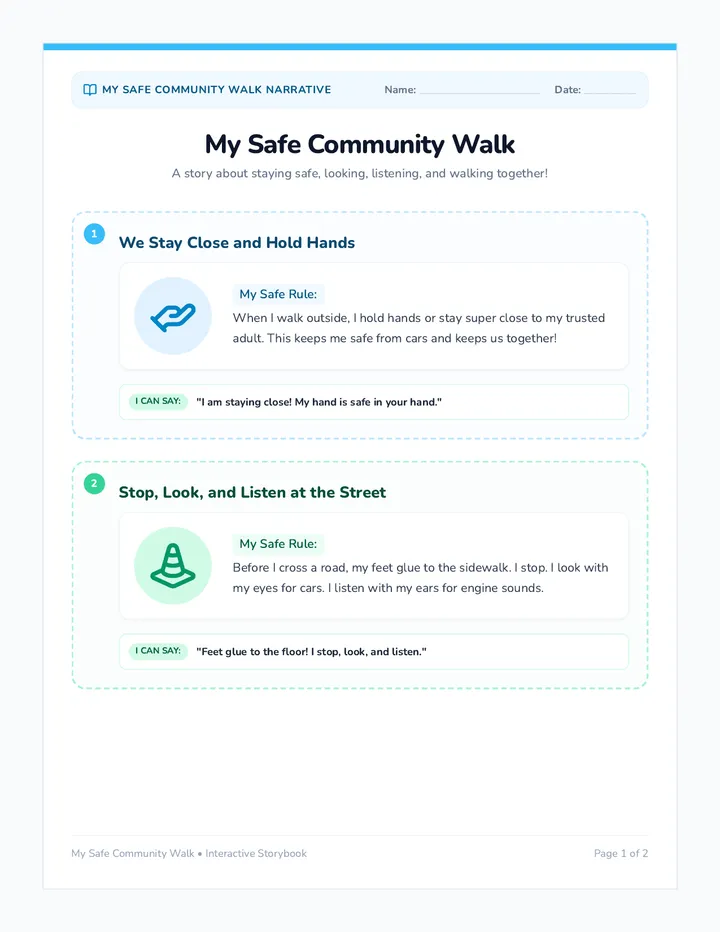
A social story booklet focusing on museum manners, including quiet voices, walking feet, looking with eyes, and staying with the group.
A social story booklet explaining safety rules, noise levels, and behavior expectations for the bus ride from Grafton to Washington, D.C.
A single-page visual checklist for students to track appropriate behaviors including bus rules, manners, flexibility, and sun safety during their Washington, D.C. trip.
A social story booklet addressing walking endurance, staying hydrated, wearing sun protection, and staying with the group during the hot D.C. field trip.
A social story booklet focusing on restaurant manners, patience while waiting for tables and food, and flexibility during the D.C. field trip.
A teacher-facing resource providing a 5-day pacing guide, instructional strategies for scaffolding research, and a success criteria checklist. Updated to reflect the increased requirement for fun facts.
A structured 2-page writing outline with large sentence starters. Updated to include two distinct fun fact starters and consistent header styling across both pages. Fixed page break issues and increased line spacing for handwriting.
A 4-page student research packet featuring sections for appearance, habitat, diet, and life cycle. Updated with three specific fun fact entry areas to encourage deeper research and improved vertical spacing for handwriting. Fixed potential page overflow on the final page.
Advanced answer key for the revised Syllable Safari workbook, providing correct syllable splits, encoded words, and comprehension answers.
Revised student workbook for the Syllable Safari intervention, featuring 4 days of decoding, encoding, and sentence reading activities, culminating in a 128-word reading passage. Improved page breaks, darkened labels for photocopying, and added more writing space. Each day starts on a fresh page.
A revised comprehensive 20-minute teacher manual for a 4-day intervention on open-syllable word patterns, featuring detailed instructional routines, phonemic awareness warm-ups, and dictation sentences. Fixed page breaks and added Day 4 passage text.
Answer key for the Syllable Safari student workbook, providing correct syllable splits, encoded words, and comprehension answers.
A student workbook for the Syllable Safari intervention, featuring 4 days of decoding, encoding, and sentence reading activities, culminating in a 128-word reading passage. Revised for better page breaks and consistent letter spacing in decoding activities.
A comprehensive 4-day teacher intervention manual for 3rd-grade reading intervention, detailing lesson plans for open-syllable word patterns (CV-CV, CV-CVC, V-CV) with specific targets and success criteria. Revised for better page breaks and layout consistency.
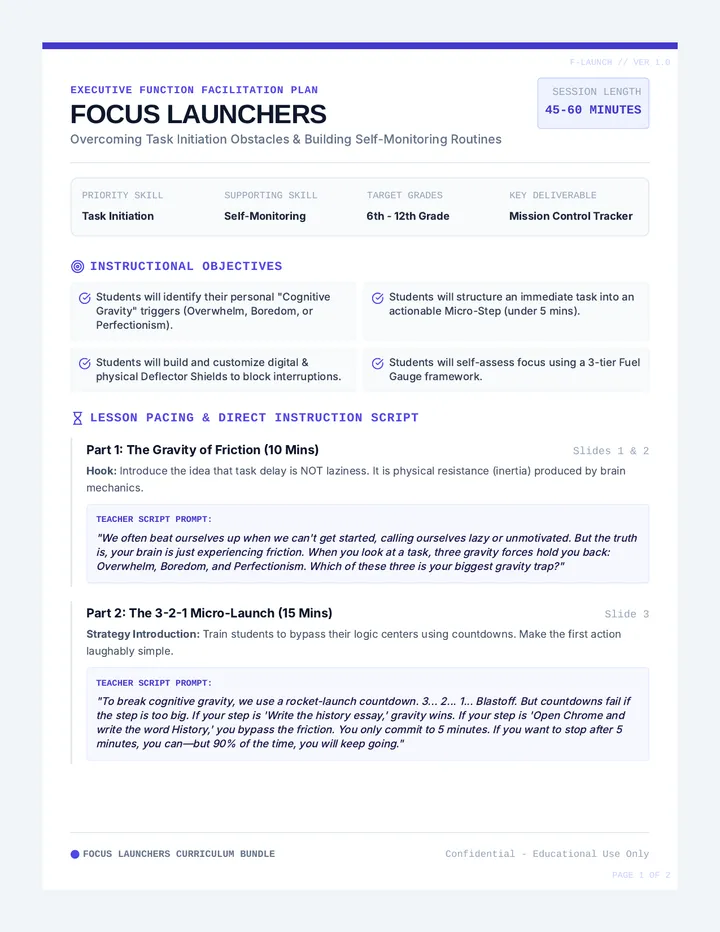
A facilitation guide for teachers on how to effectively use the Brain Boss executive functioning tools. Includes implementation strategies for task initiation, time management, and scaffolding techniques for middle schoolers.
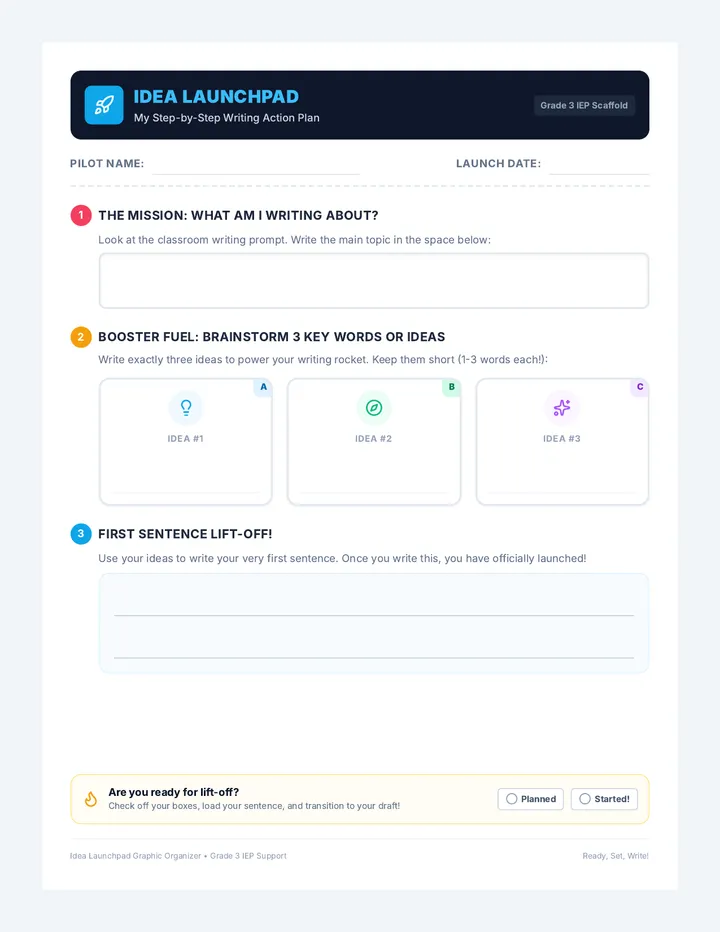
A visual daily schedule template for middle schoolers. Features time slots with icons for various subjects and activities, plus an "Energy Level" battery to help students predict and manage their cognitive load throughout the day.
A weekly assignment tracker for middle schoolers that emphasizes time estimation, start dates, and problem-solving strategies. Includes a "Fuel Needed" scale for effort estimation and flexible thinking tips.
A set of printable desk strips designed for middle schoolers to manage morning arrivals and afternoon departures. Features visual checklists for organization, task initiation prompts, and an emotional regulation check-in.
A teacher-facing data collection tool for tracking student progress on prosody goals, including trial-by-trial recording for volume, placement, and intonation with space for cueing levels and percentage calculation.
A student-facing activity sheet for practicing prosody skills, featuring dedicated sections for volume control, articulatory precision (starts and finishes), and intonation patterns with visual cues.
Instructional slides for teaching speech prosody, focusing on volume (The Volume Knob), articulatory placement (The Sound Map), and intonation (The Pitch Rollercoaster) within a recording studio theme.
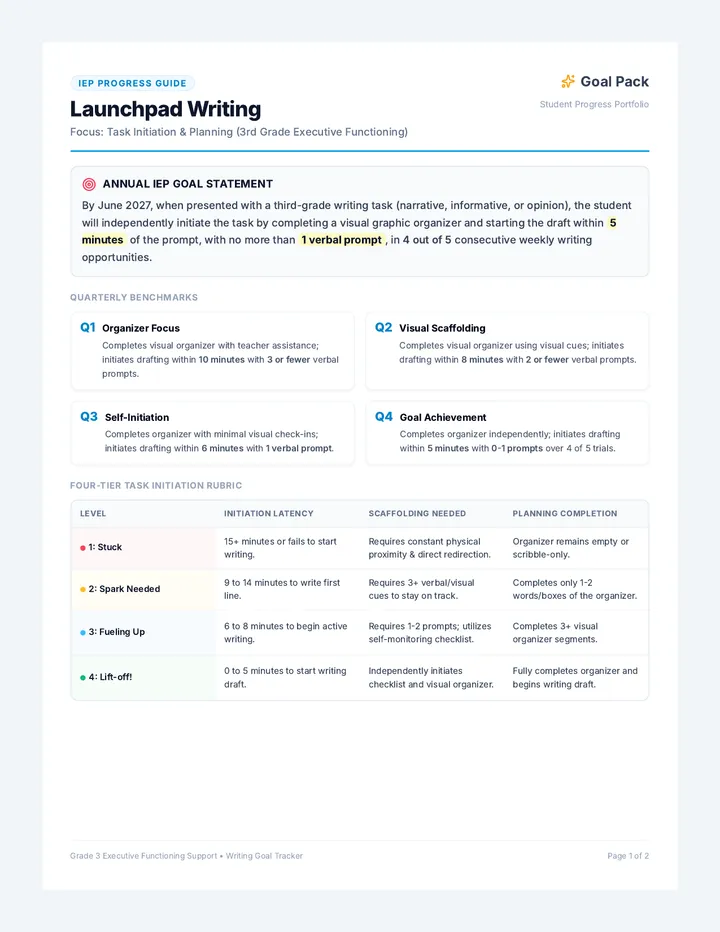
A teacher-facing guide that details the formal IEP goal, broken-down skills (volume, articulatory placement, and intonation), suggested benchmarks, and standardized cueing strategies.
An annotated, parent-friendly sample IEP document that explains the key sections of an Individualized Education Program using a fictional student example.
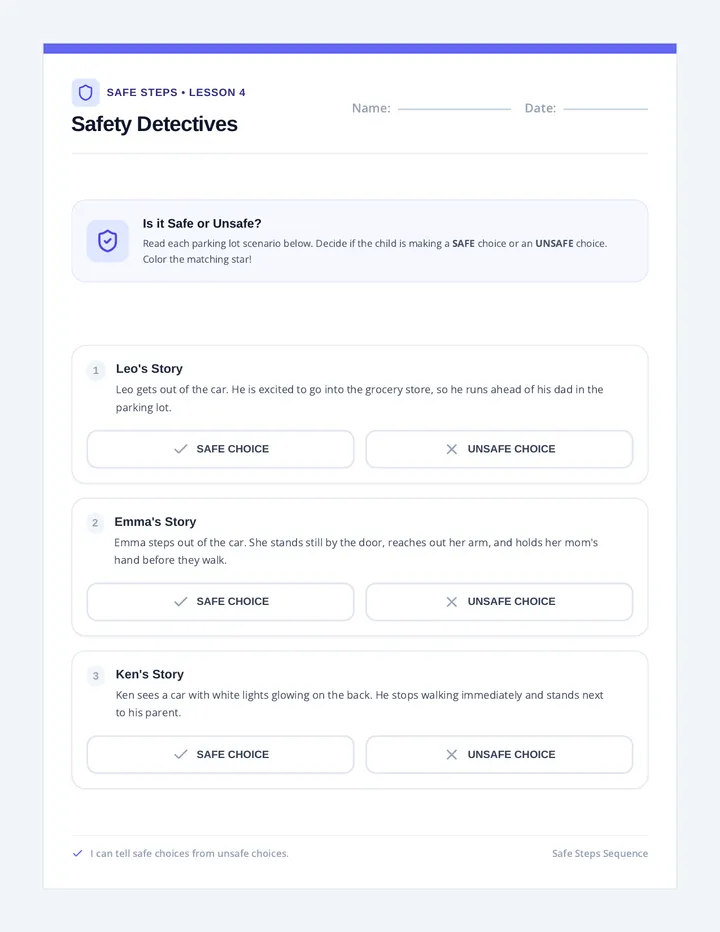
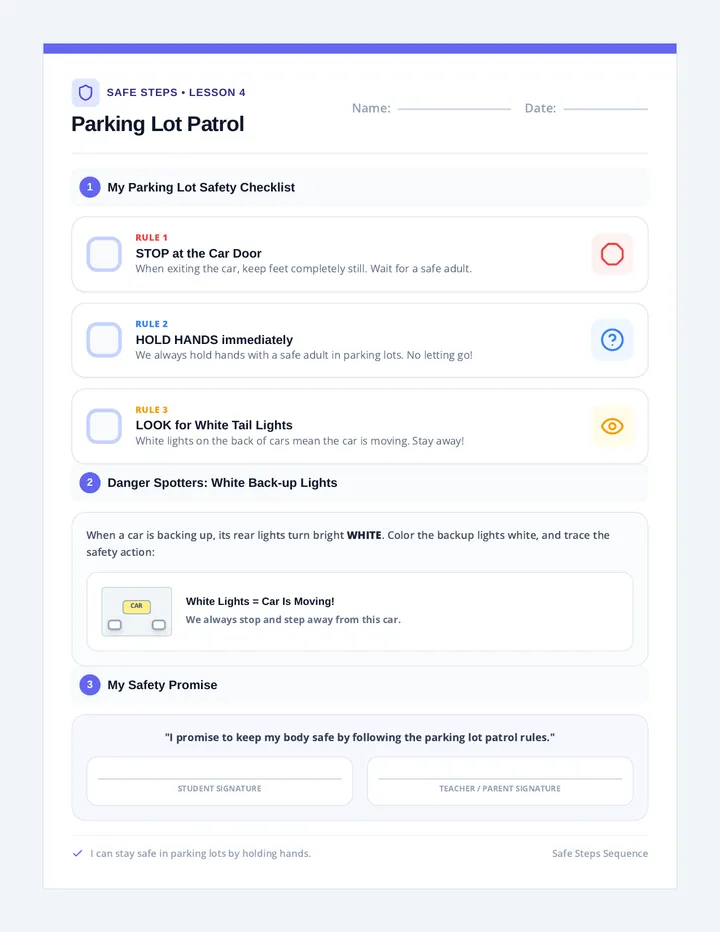
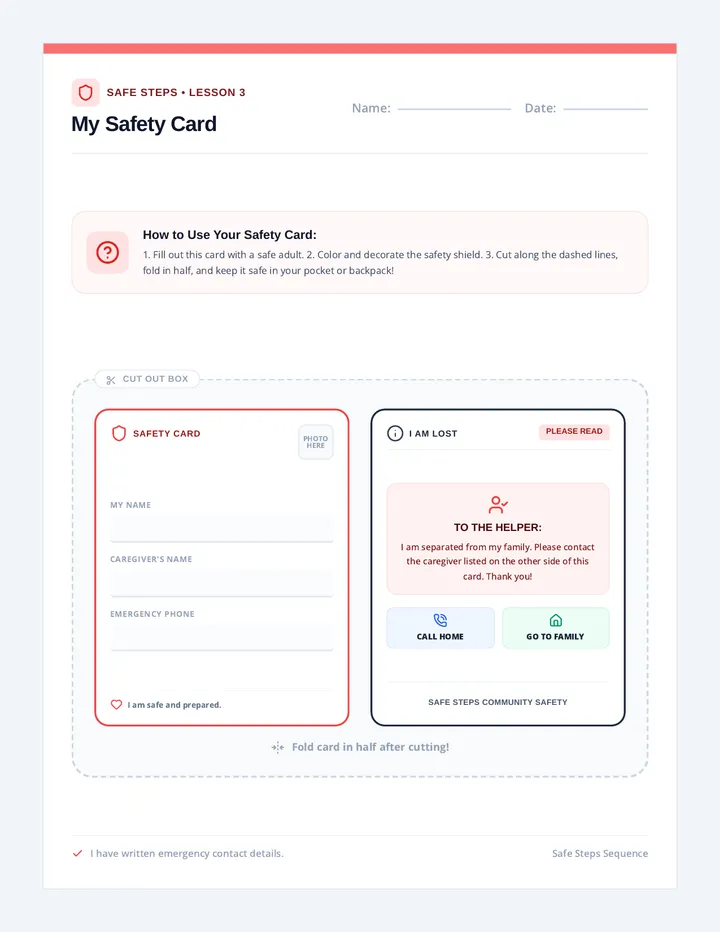
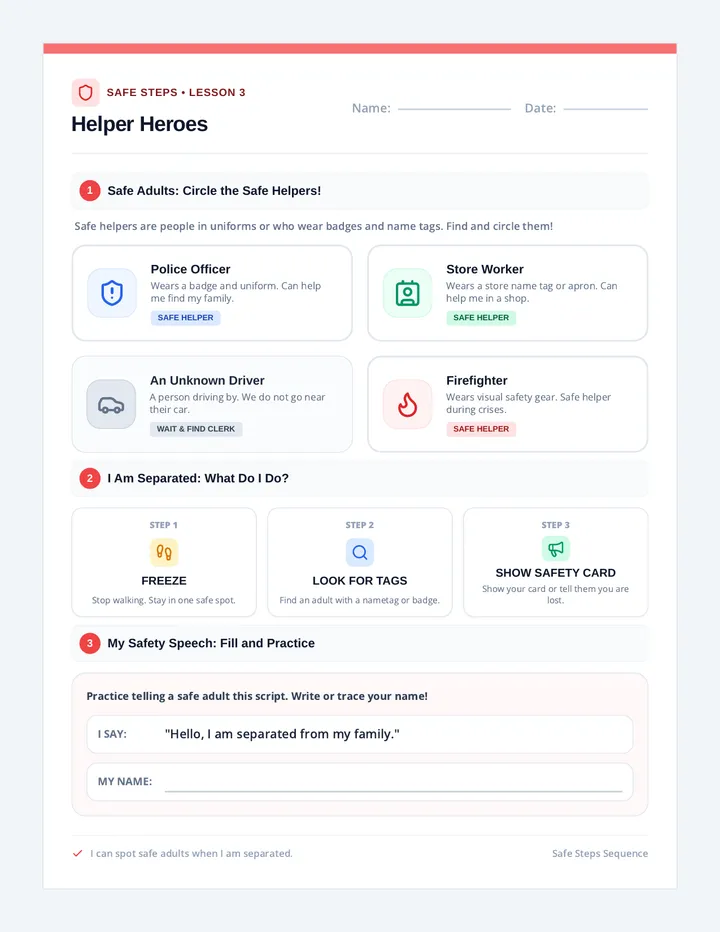
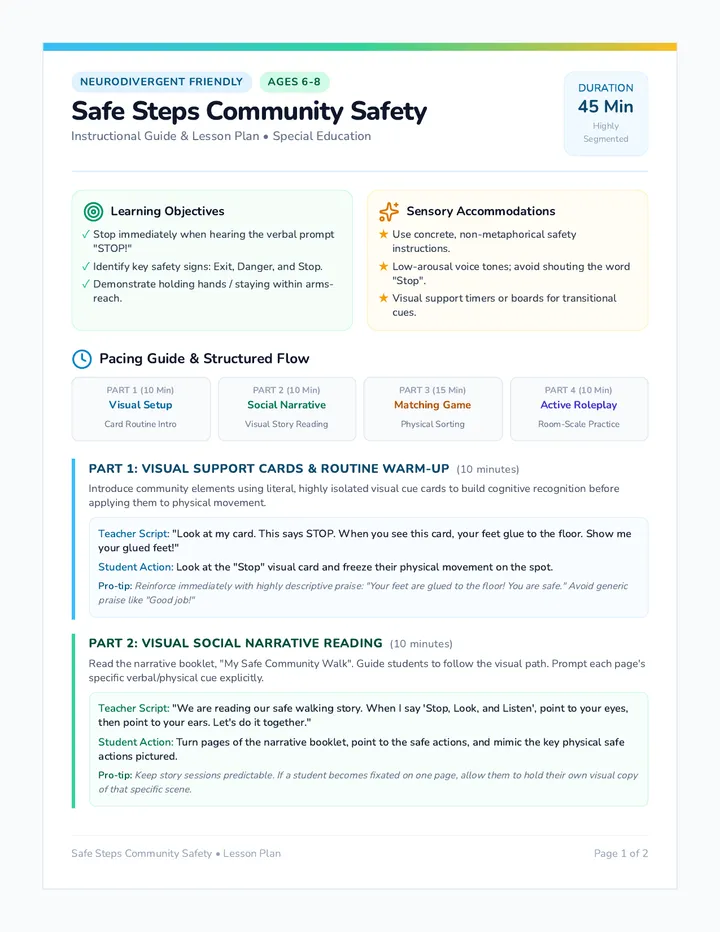
A comprehensive teacher guide for facilitating the 'Safety Signals' game, including lesson objectives, vocabulary, facilitation steps, and a detailed, multi-page answer key with discussion points.