A practice worksheet for graduate students to draft 'Think Aloud' scripts for various navigation scenarios. Focuses on articulating semantic logic and modeling navigation recovery after errors.
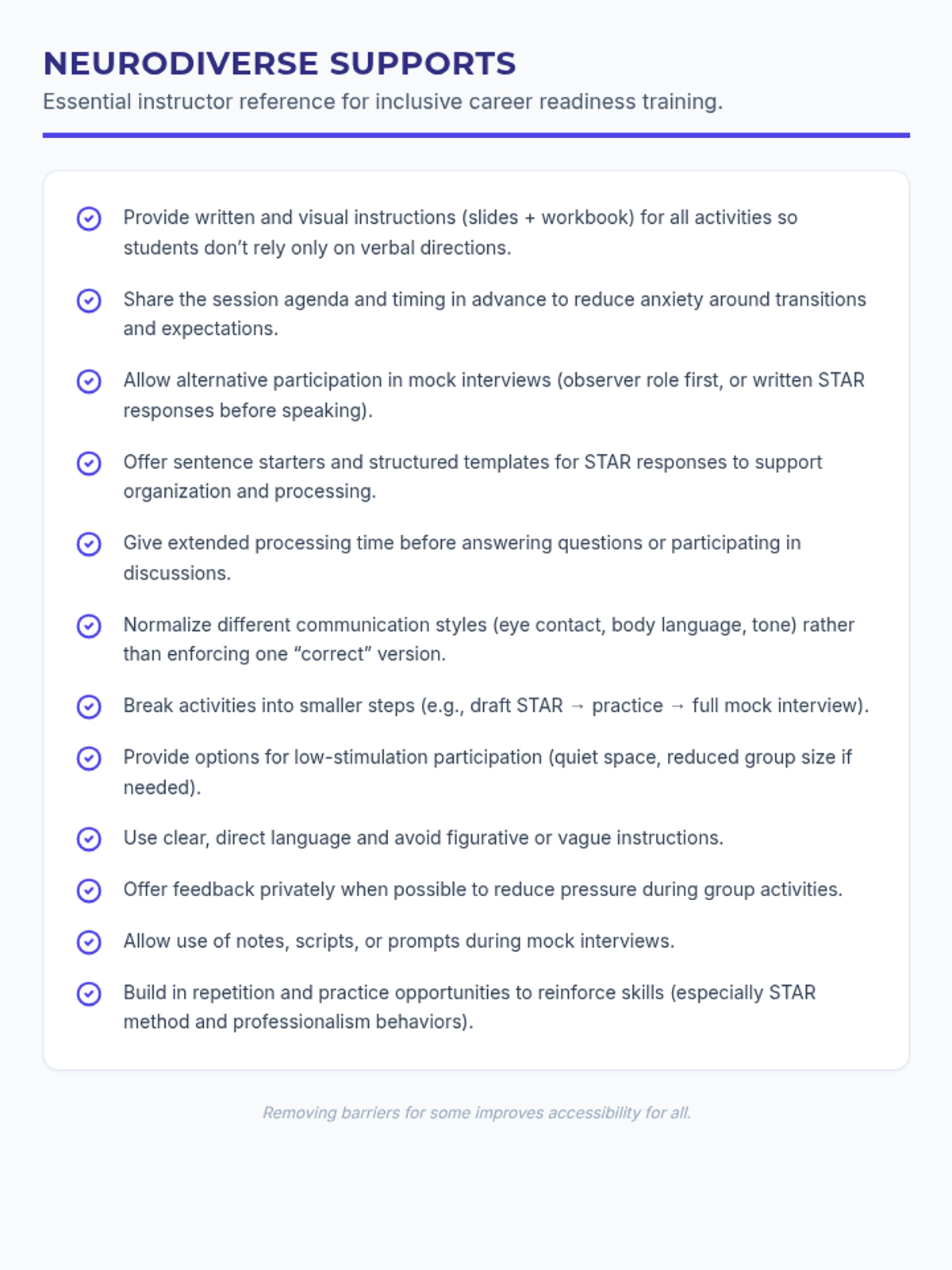
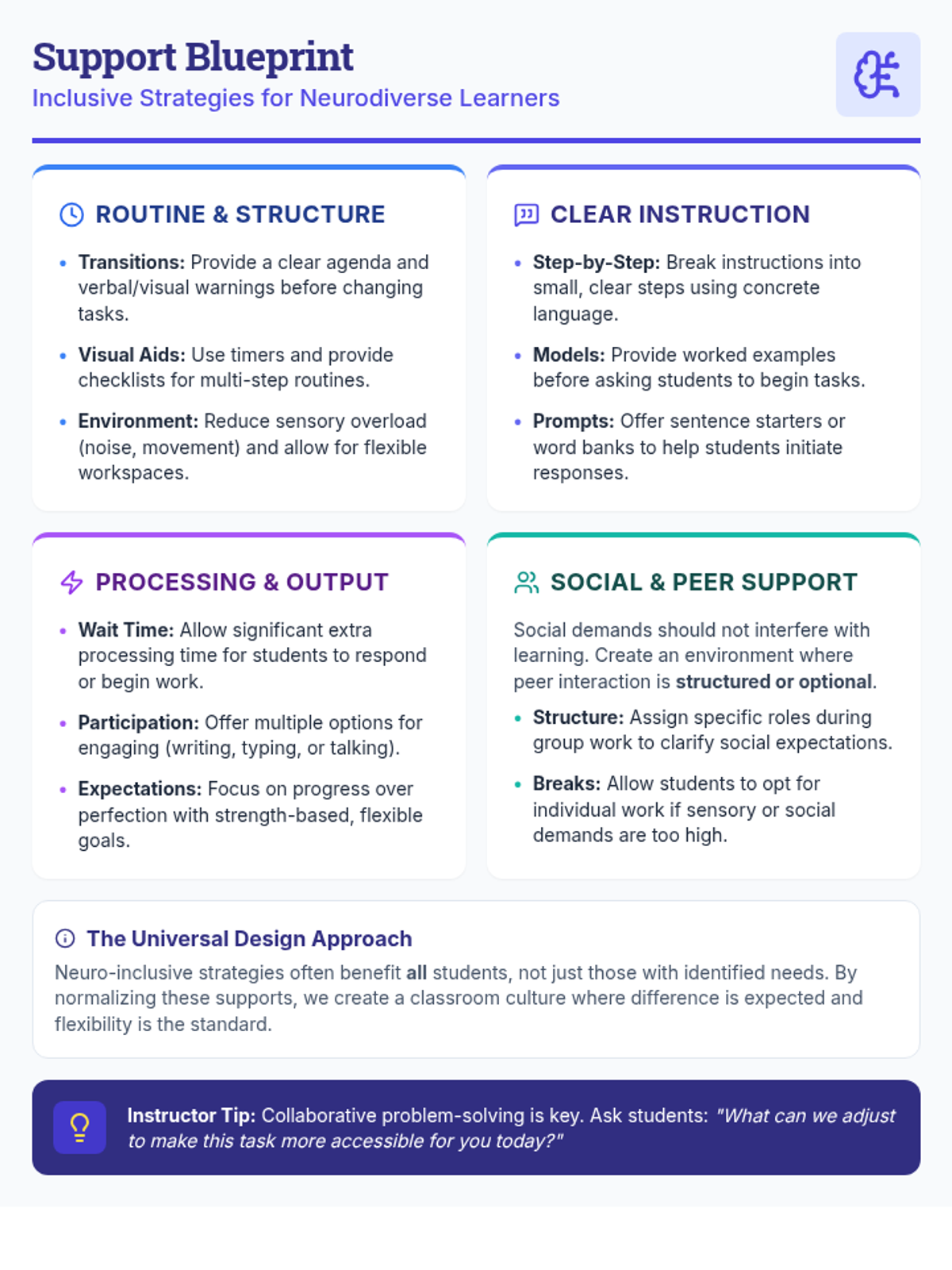
A clean, simple reference sheet for instructors listing key neurodiverse supports for the classroom.
A single-page printable reference sheet for instructors detailing various neurodiverse support strategies categorized by routine, instruction, and environment. It features a clean, professional layout with instructional tips and pedagogical insights.
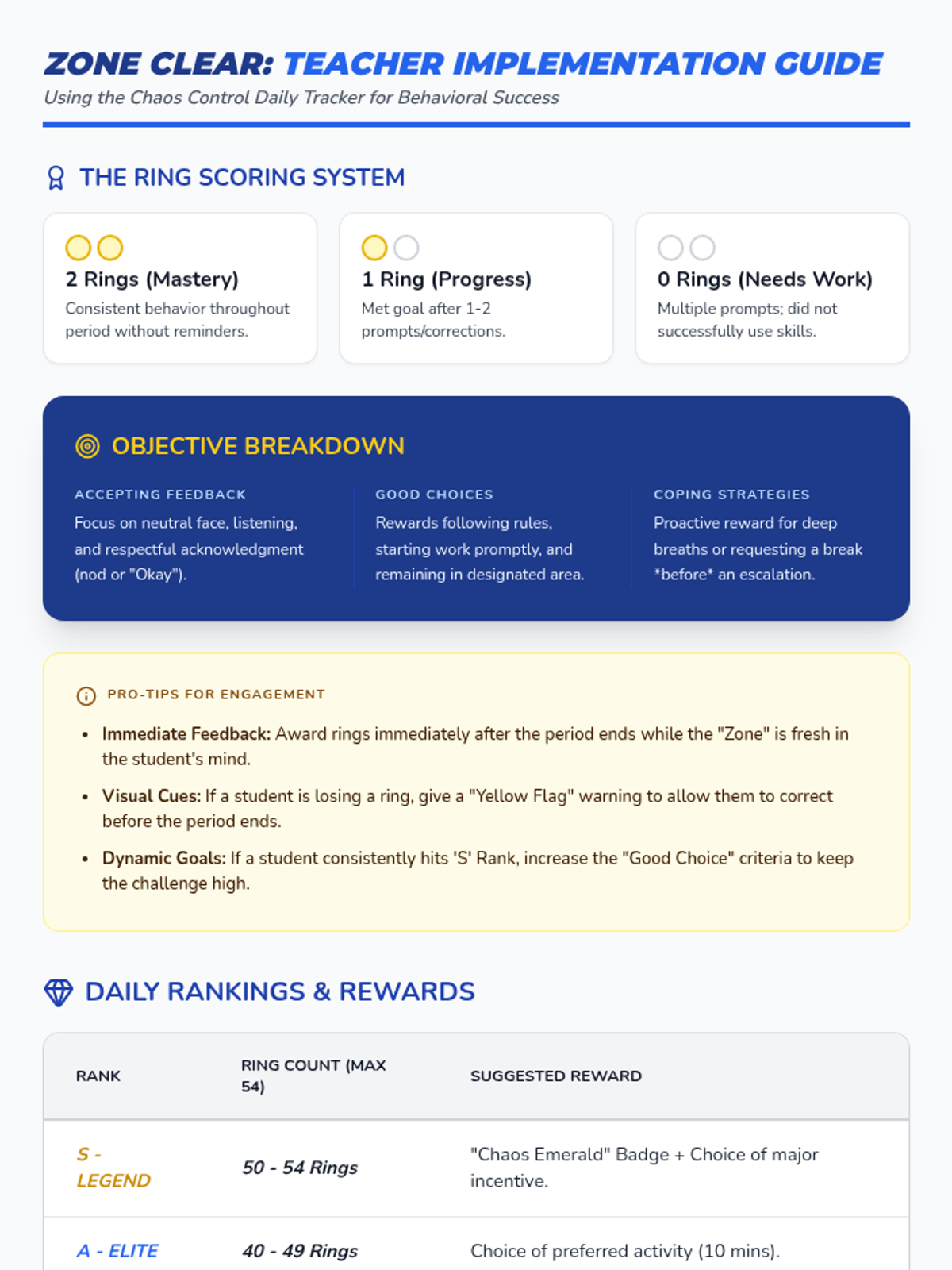
A teacher's guide for implementing the Sonic-themed behavior tracker, including a detailed ring-based scoring rubric, behavioral objective breakdowns, and a suggested rewards/ranking system. Updated for better contrast and layout.
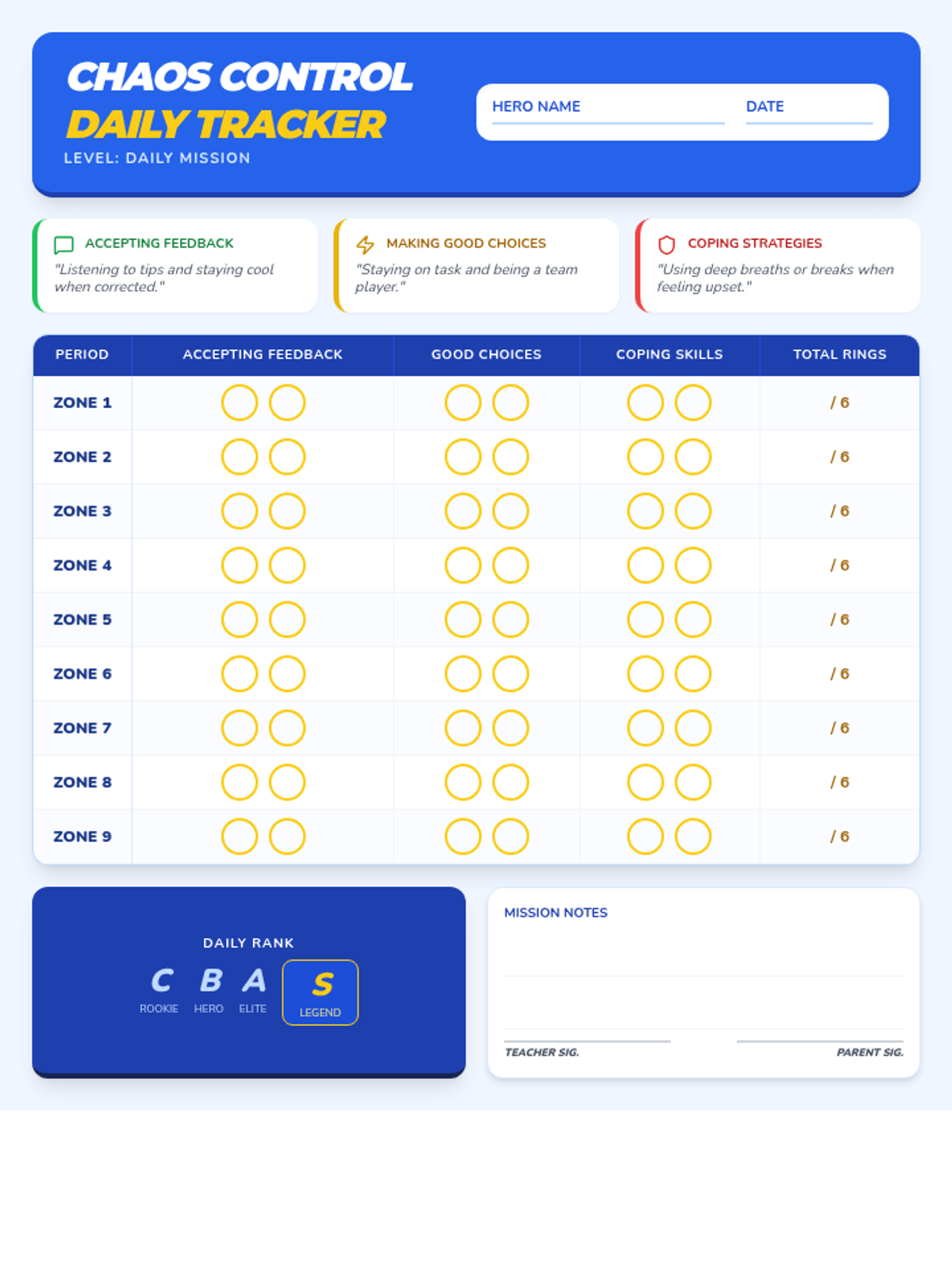
A high-energy, Sonic-themed behavior tracking sheet for 9 periods. It features "Zone" based tracking for accepting feedback, making good choices, and using coping strategies with a ring-based scoring system and end-of-day ranking. Updated to fit on one page.
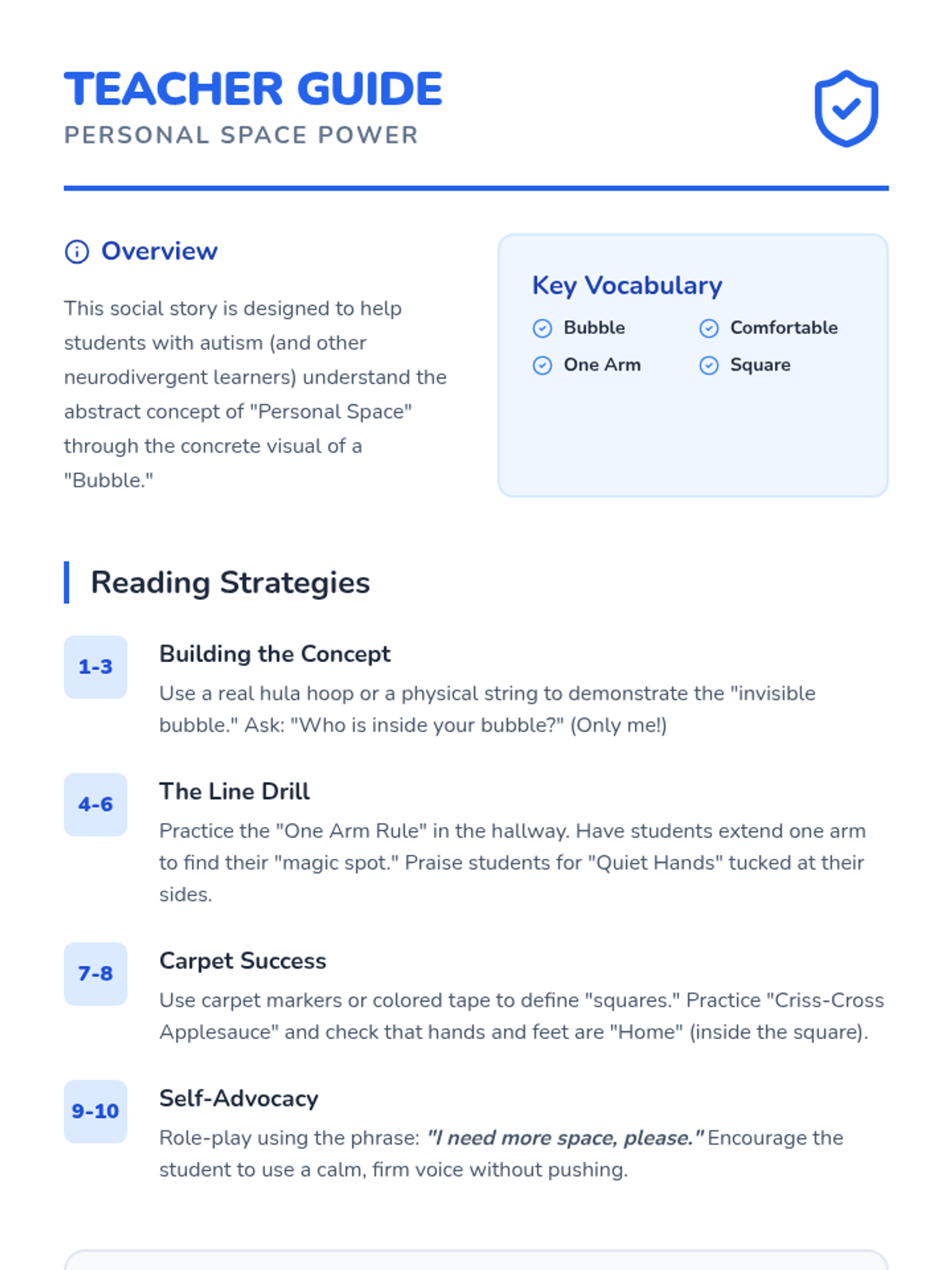
A teacher facilitation guide for the "Space Bubble" social story, including reading prompts, vocabulary, physical activity suggestions, and differentiation strategies for students with autism.
A 10-page printable social story booklet designed for students with autism. It uses simple language and clear visual icons to teach the concept of "personal space bubbles" when standing in line and sitting on the carpet.
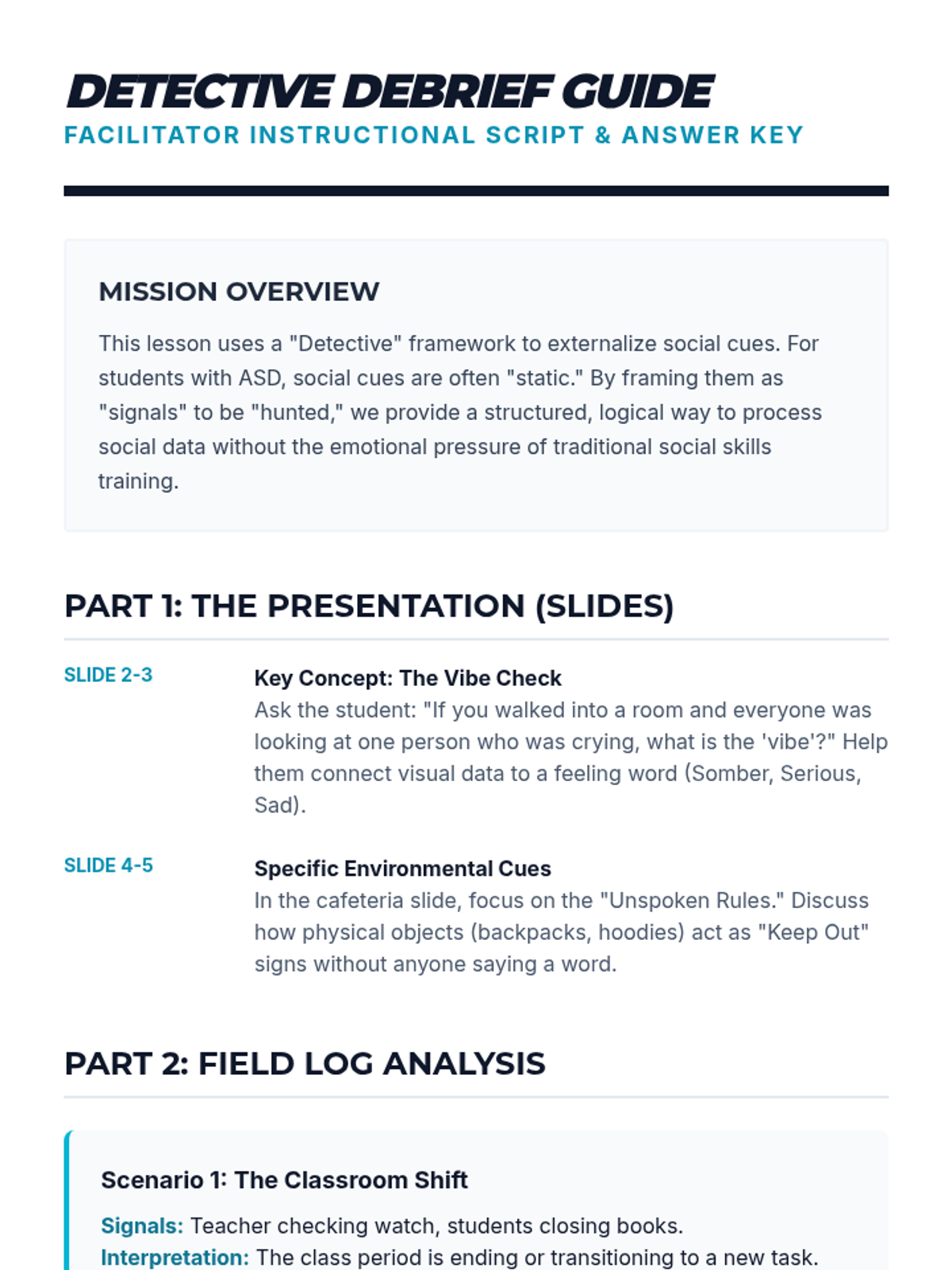
A teacher-facing guide providing instructional strategies, an answer key for the field log, and role-play scripts to practice situational awareness in real-time.
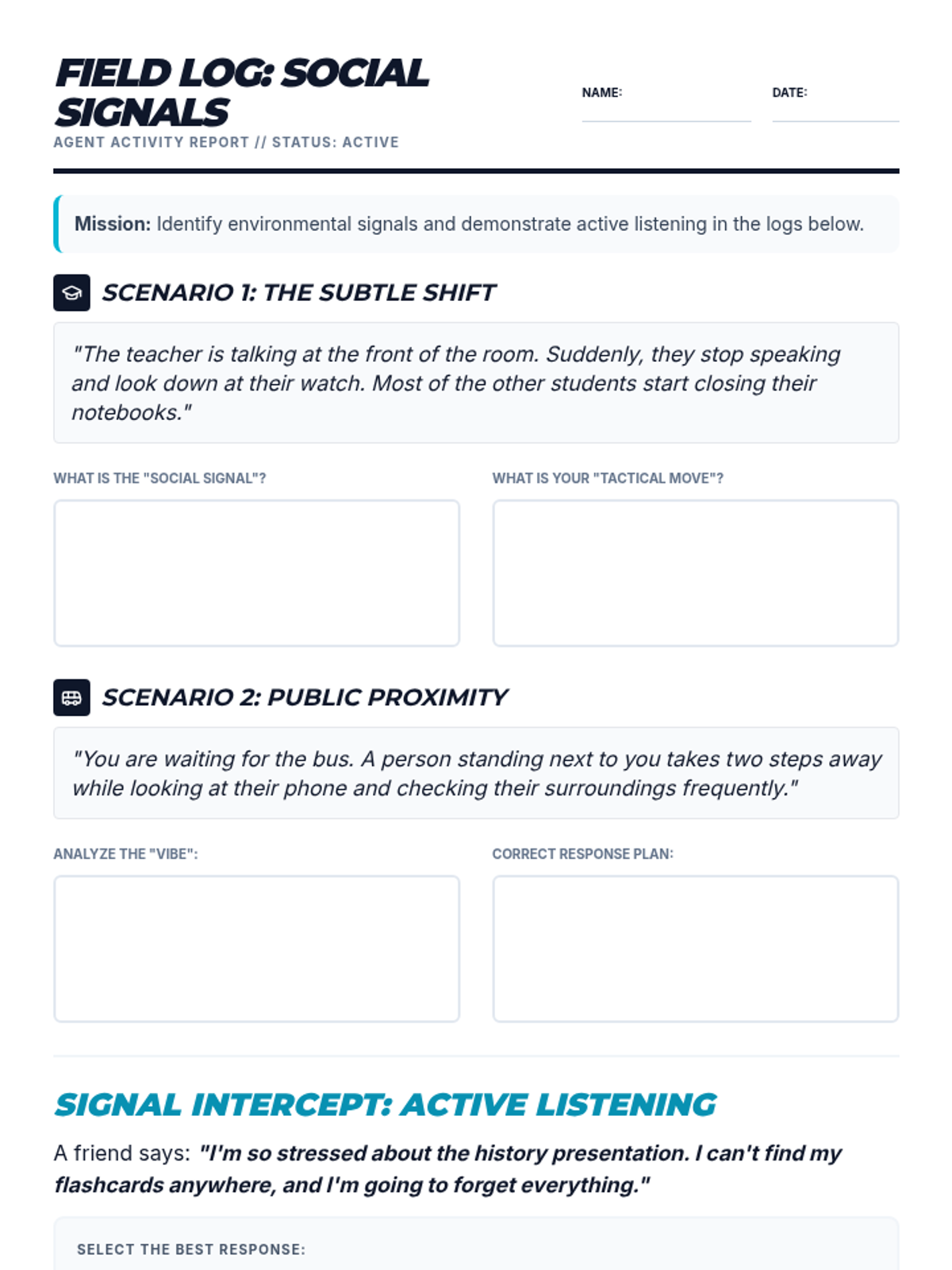
A field log style worksheet where students analyze social scenarios in classroom and public settings, choosing appropriate responses and justifying their choices.
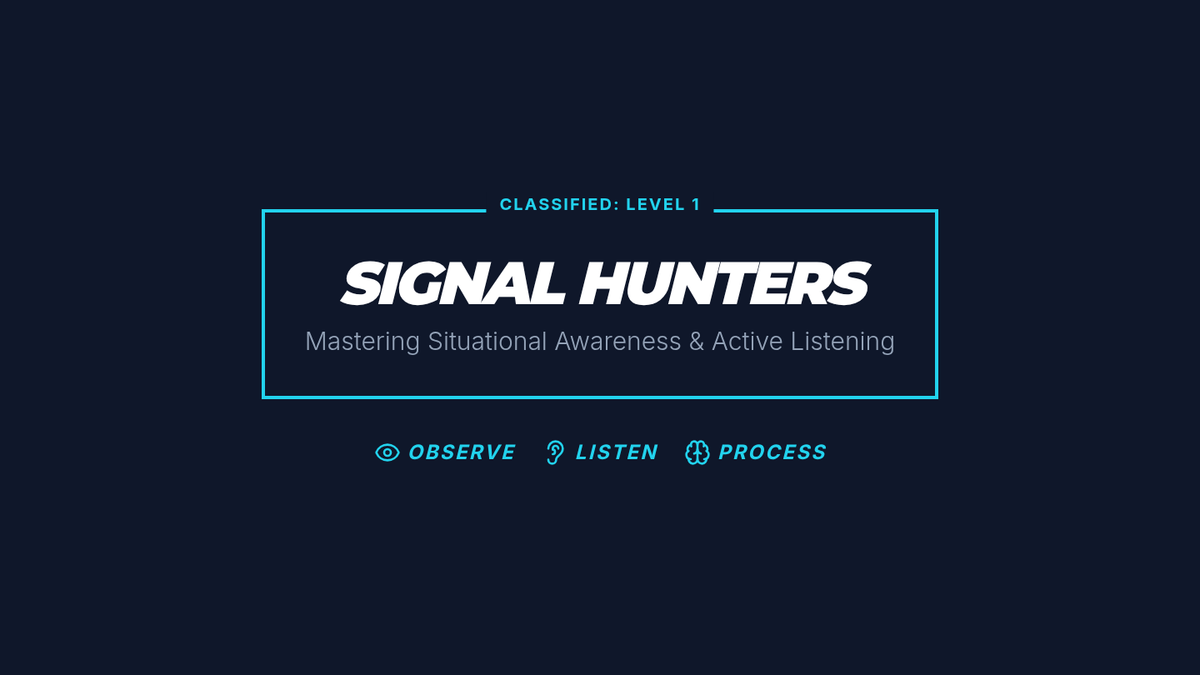
A visually engaging slide deck for teens that uses a 'Social Signal Hunter' theme to teach situational awareness and active listening across classroom, cafeteria, and public settings.
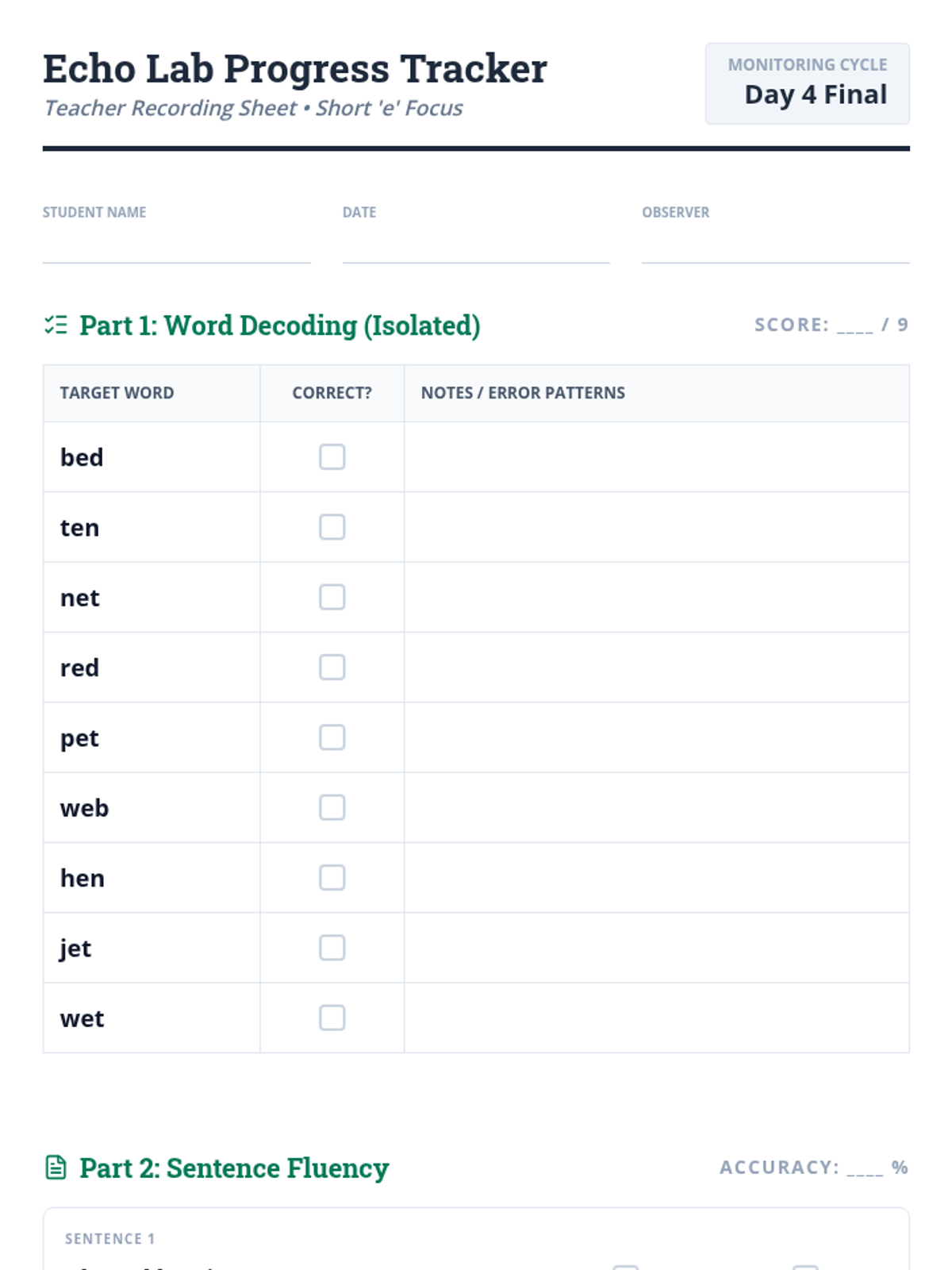
A teacher-facing progress monitoring tool for Day 4. It includes a scoring table for isolated CVC words and a sentence reading fluency checklist that aligns with the student assessment. Revised for better layout and more note-taking space.
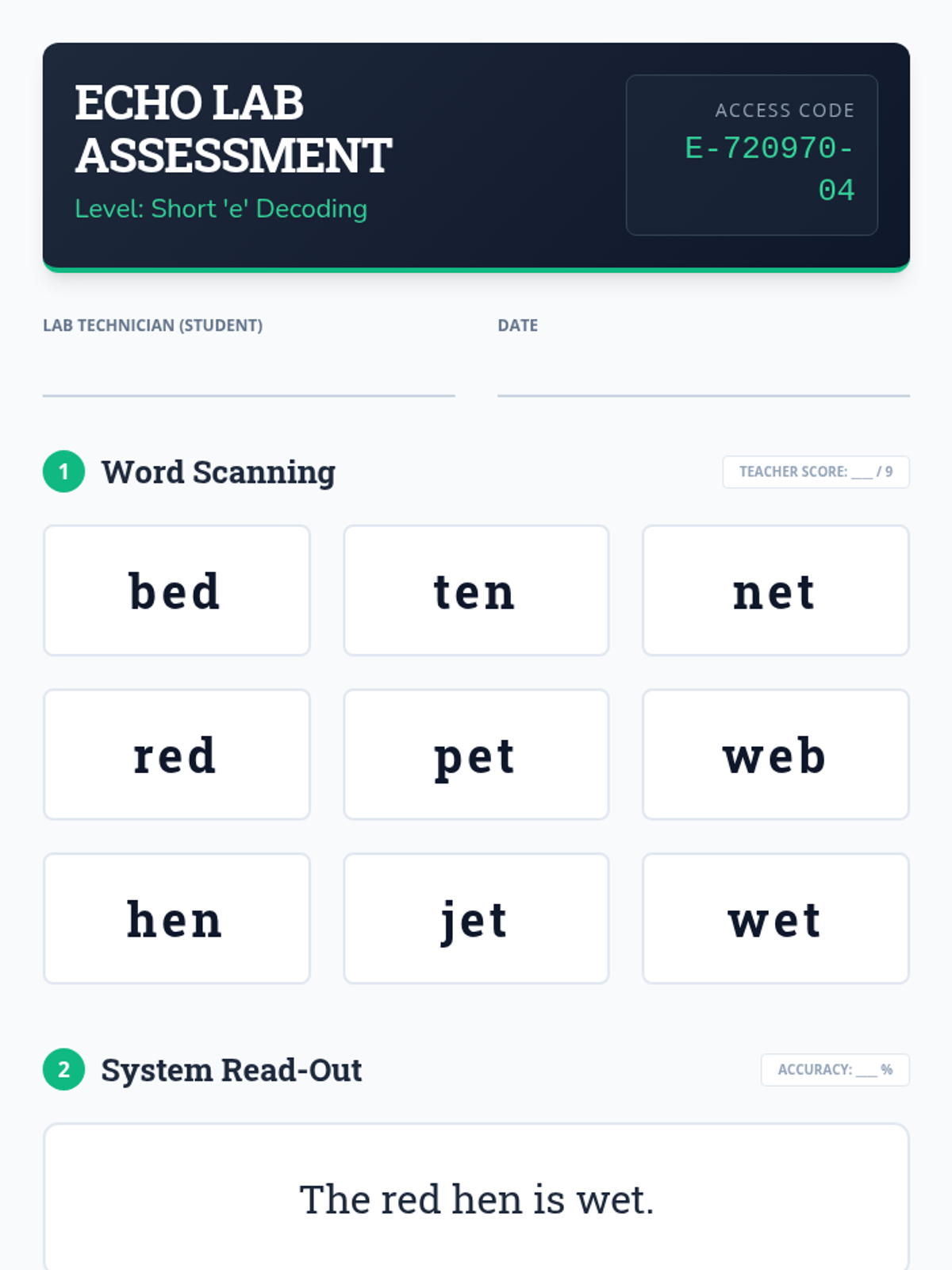
A student-facing assessment sheet for Day 4, featuring large, clear short 'e' CVC words and sentences for decoding progress monitoring. Designed with a high-contrast lab theme. Revised to improve authentic testing (no telegraphed target words) and layout.
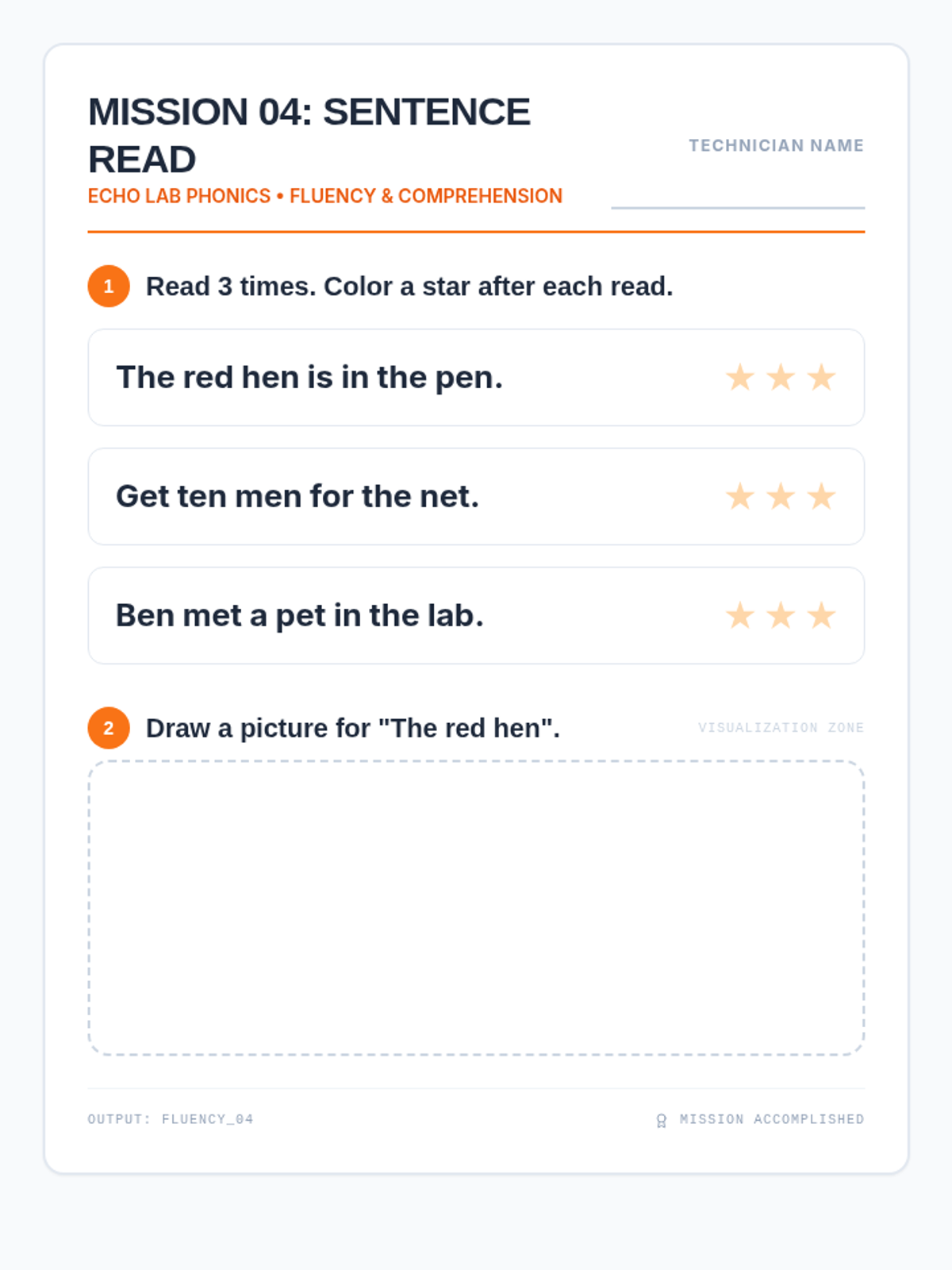
A Day 4 student worksheet for fluency practice. Revised to fix page break issues with the drawing box and improve visibility for handwriting/drawing.
Visual support for Day 4, focusing on sentence reading and fluency. Features a 'Reading Protocol' (Slow, Medium, Fast) and highlighted target sentences.
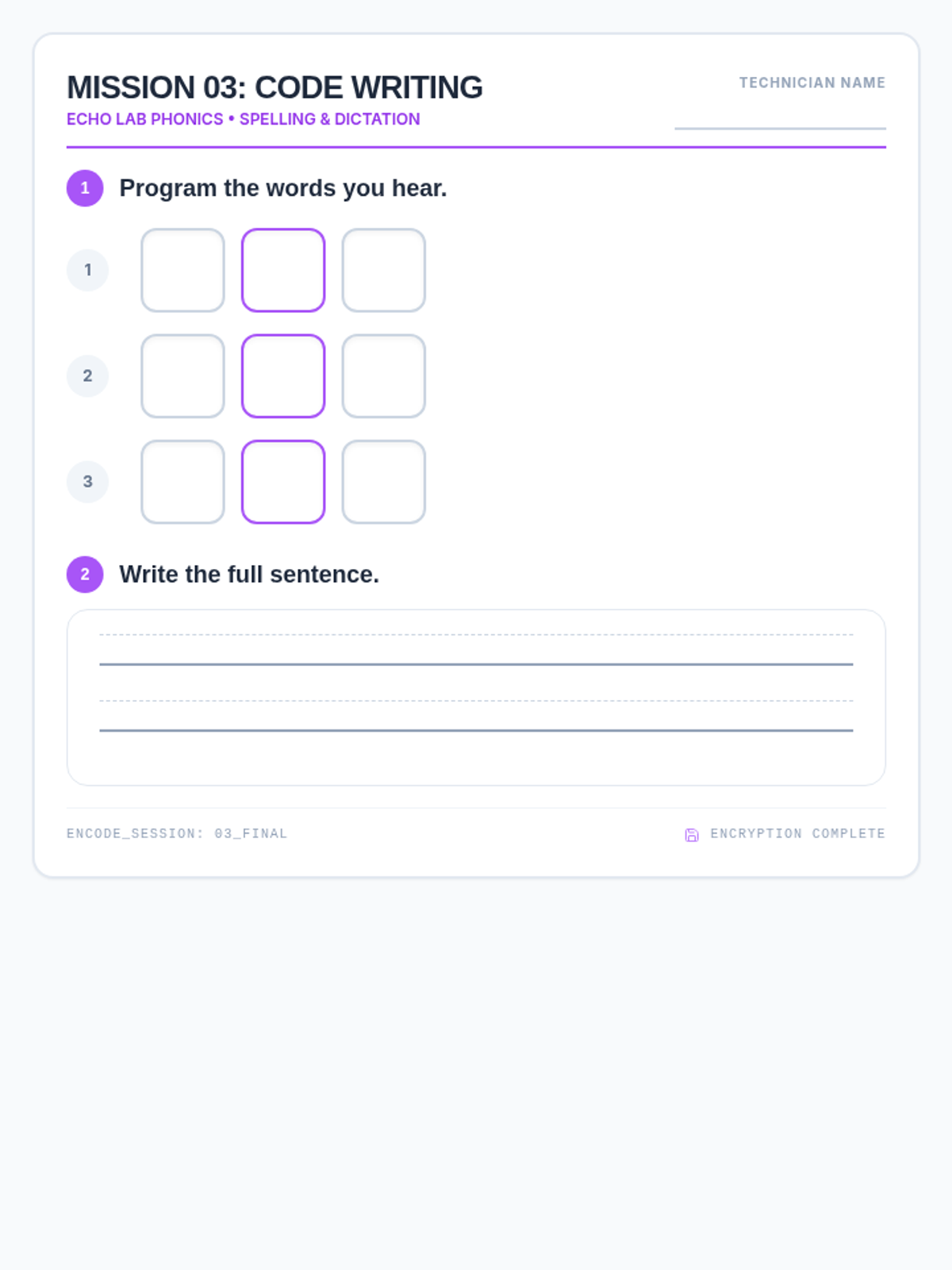
A Day 3 student worksheet for encoding. Revised with increased line spacing, dotted midlines for handwriting, and white backgrounds in all boxes.
Visual support for Day 3 dictation. Revised to improve contrast and add the dictation word list for the teacher.
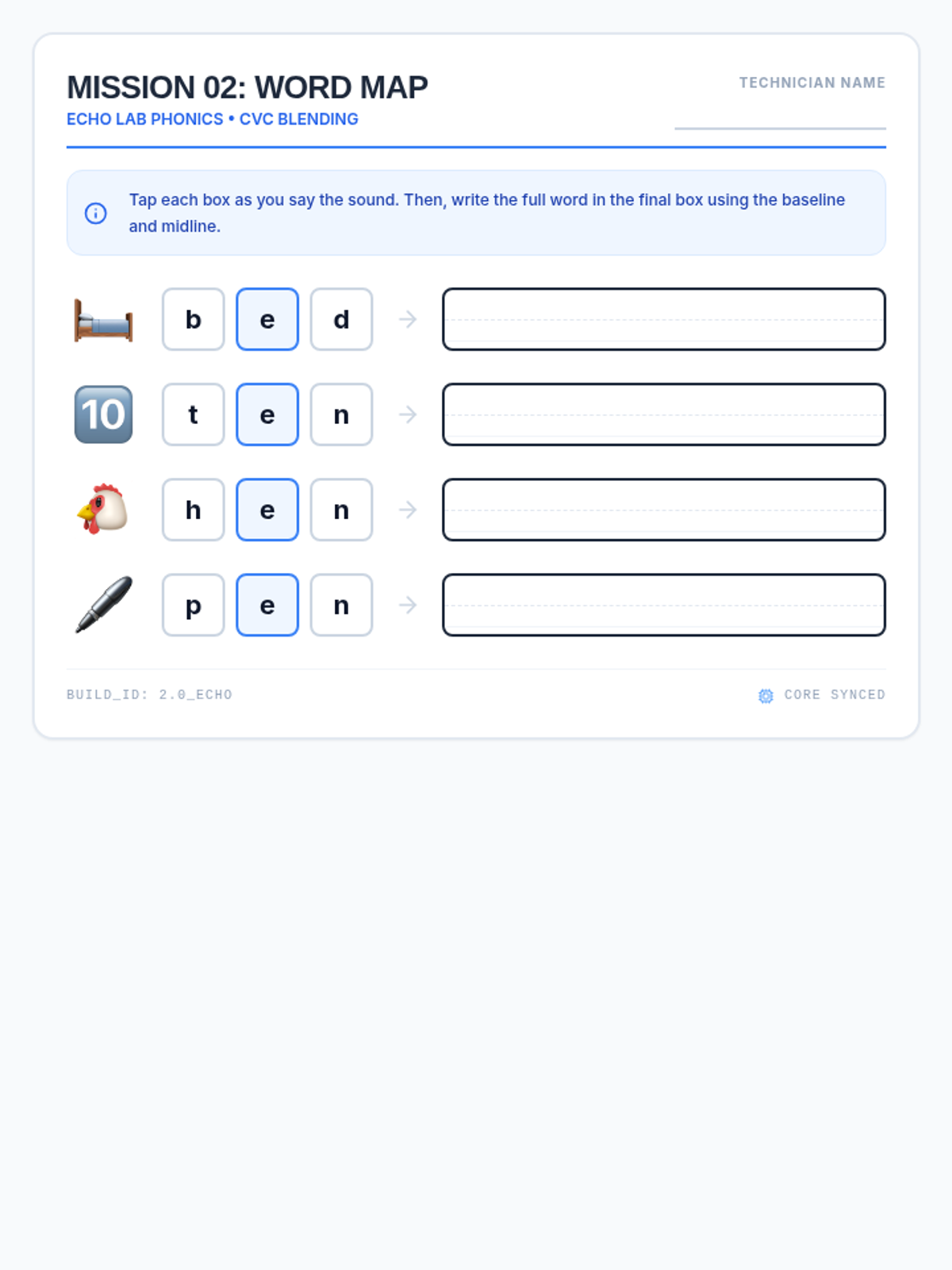
A Day 2 worksheet for students to practice blending and writing CVC words. Revised with white handwriting backgrounds for better pencil contrast and ensured icons render.
Visual support for Day 2, focusing on continuous blending. Revised to use a continuant sound (m) for blending demonstration and expanded word lists.
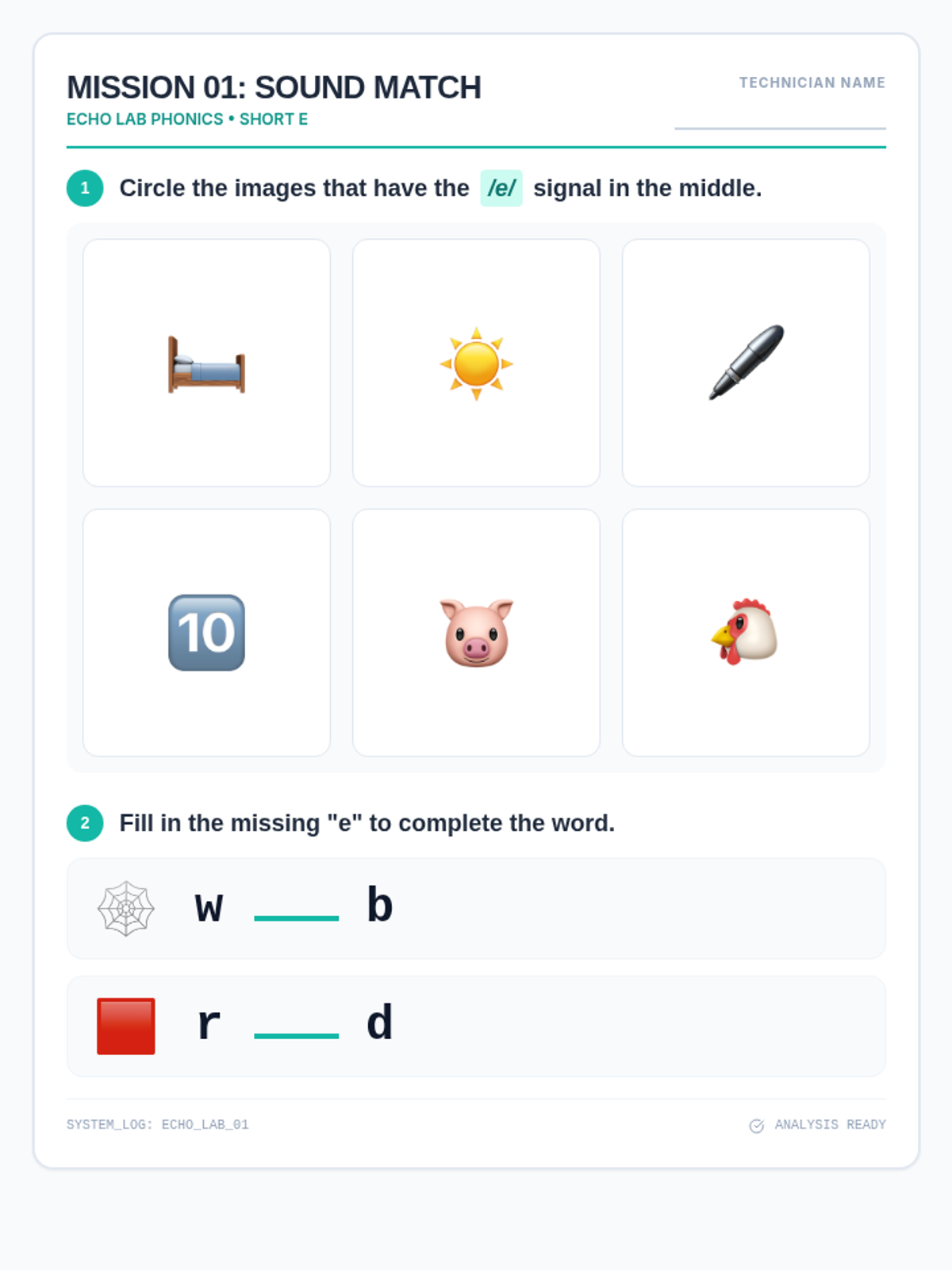
A student worksheet for Day 1, featuring medial sound identification. Revised to fix "net/web" confusion, improve contrast, and ensure it fits on a single page.
Visual support for Day 1 of the Echo Lab phonics sequence, focusing on identifying the short 'e' sound. Revised to ensure Slide 4 is balanced and Slide 3 contrast is clear.
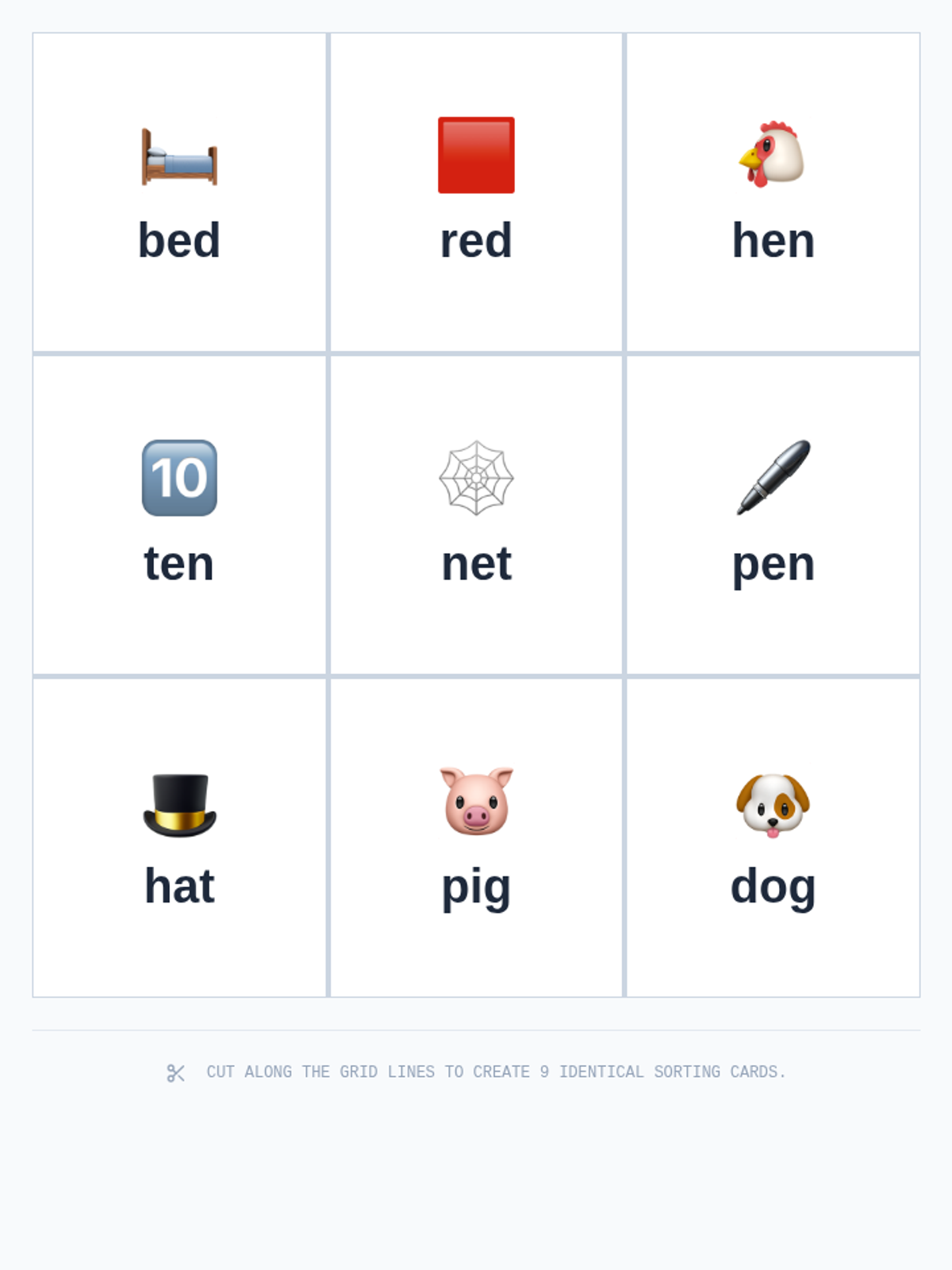
A set of visual phonics cards for sorting activities, featuring short 'e' CVC words and distractors. Revised to be visually uniform and remove category labels to ensure students sort by sound.
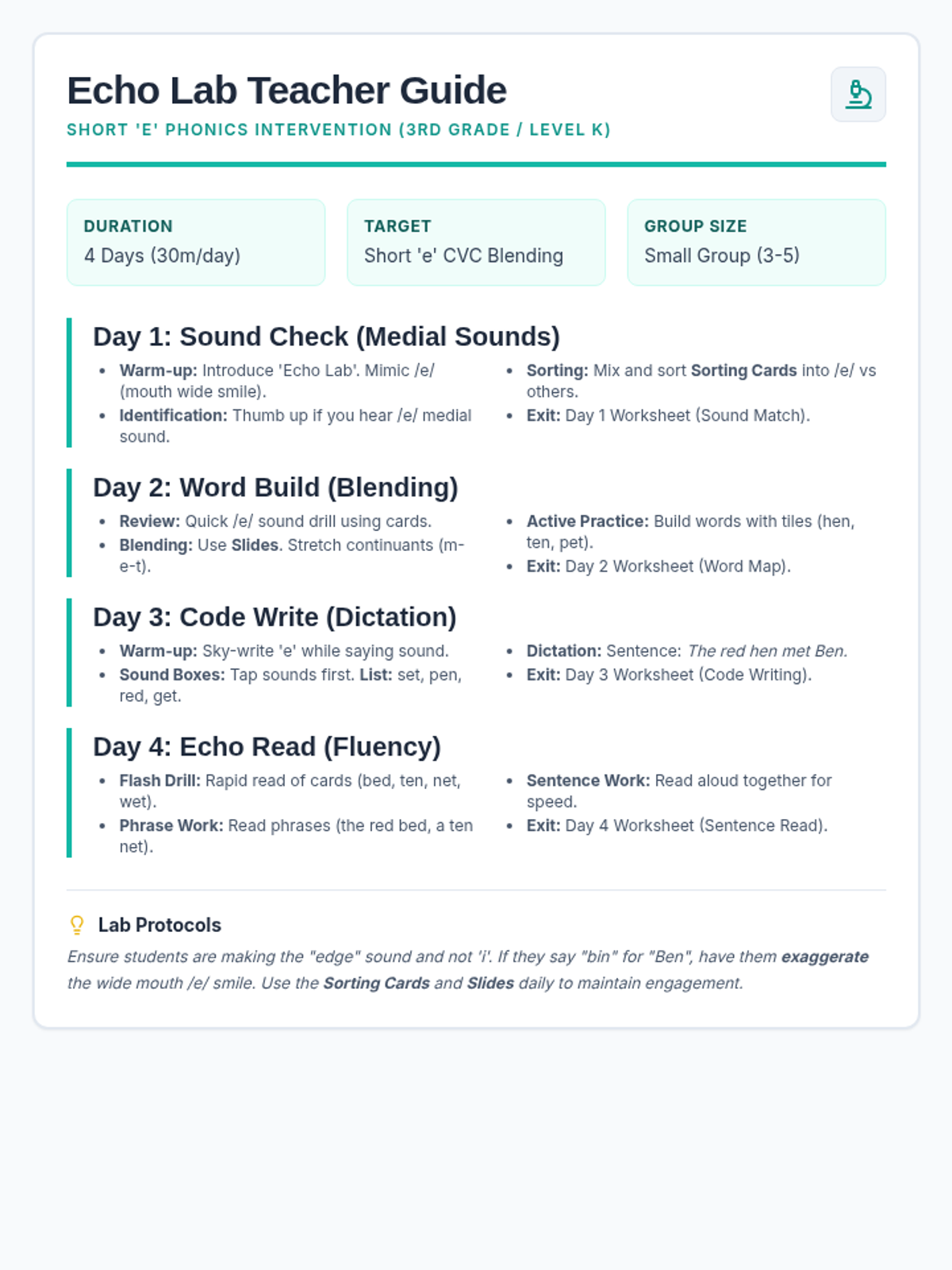
A comprehensive instructional guide for teachers, outlining a 4-day small group phonics intervention for short 'e'. Includes warm-ups, blending activities, and dictation protocols. Revised to ensure Day 4 fits on one page.
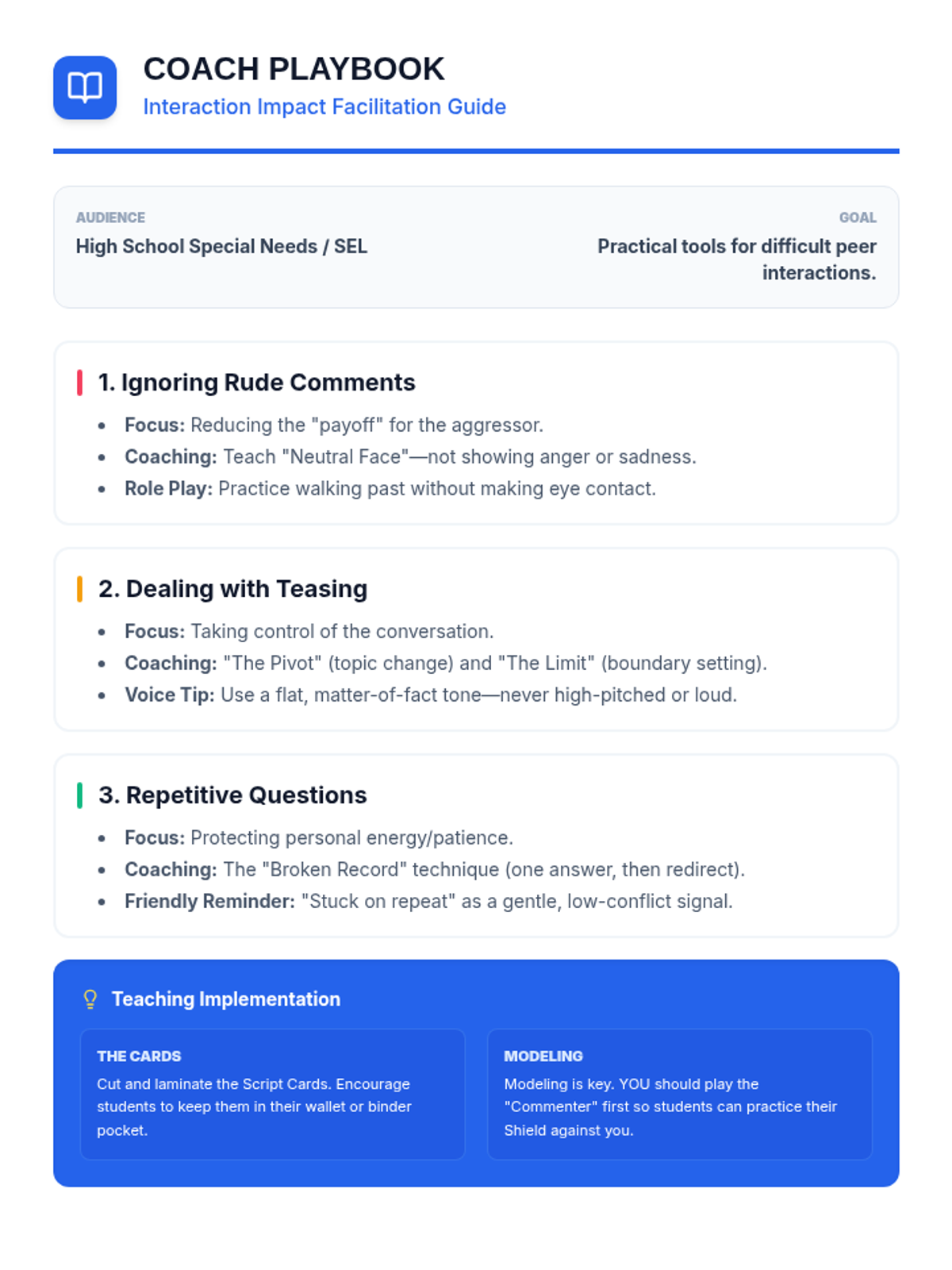
A facilitator's guide for teachers to deliver the Interaction Impact lesson, including coaching tips for each social strategy and implementation advice.
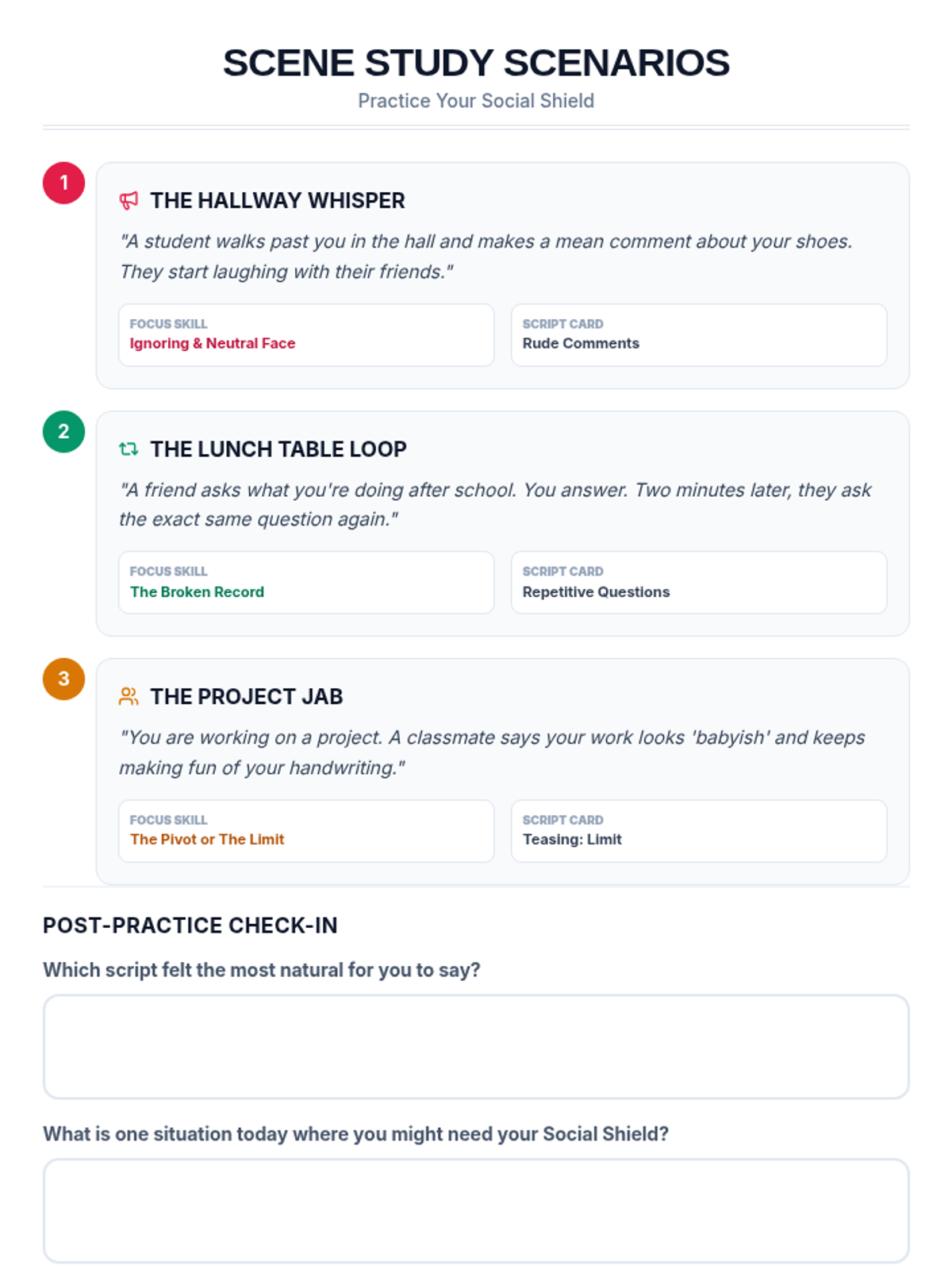
Relatable role-play scenarios for high school students to practice social strategies in common school settings like hallways, lunchrooms, and classrooms.
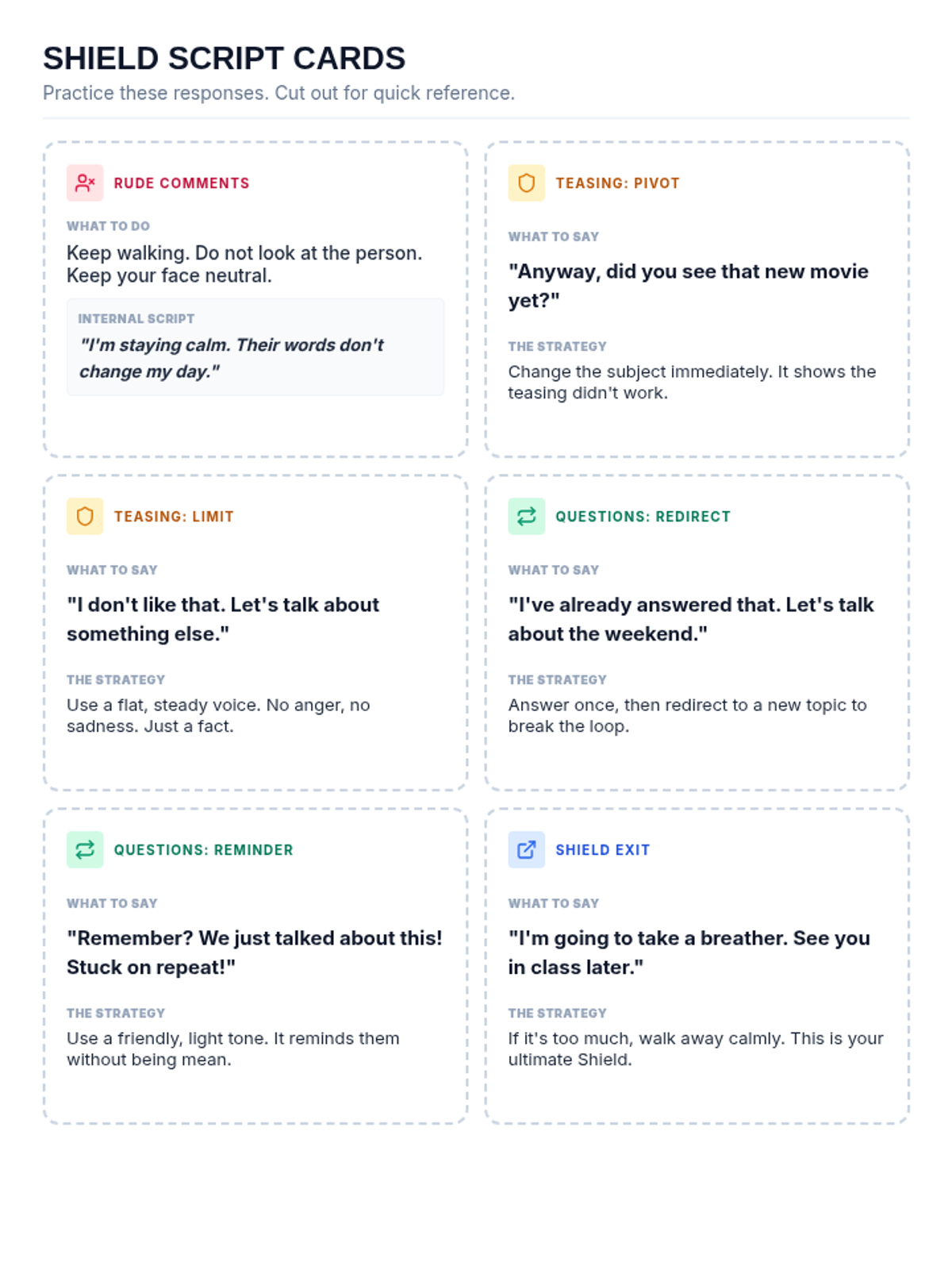
A set of 6 printable social script cards providing high school students with specific language and strategies for navigating difficult peer interactions.
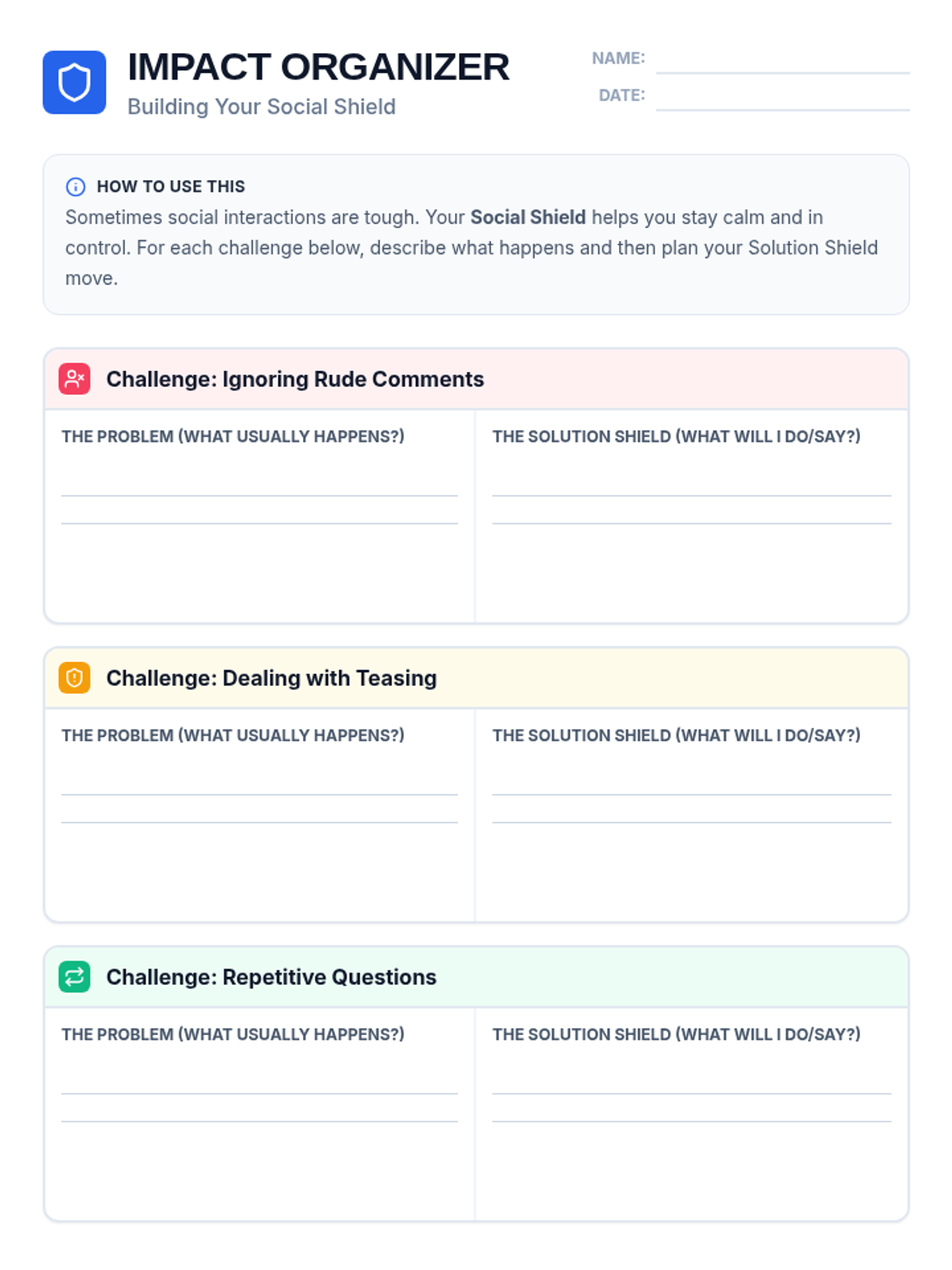
A problem/solution graphic organizer designed for high school students with special needs to map out social strategies for handling difficult peer interactions.
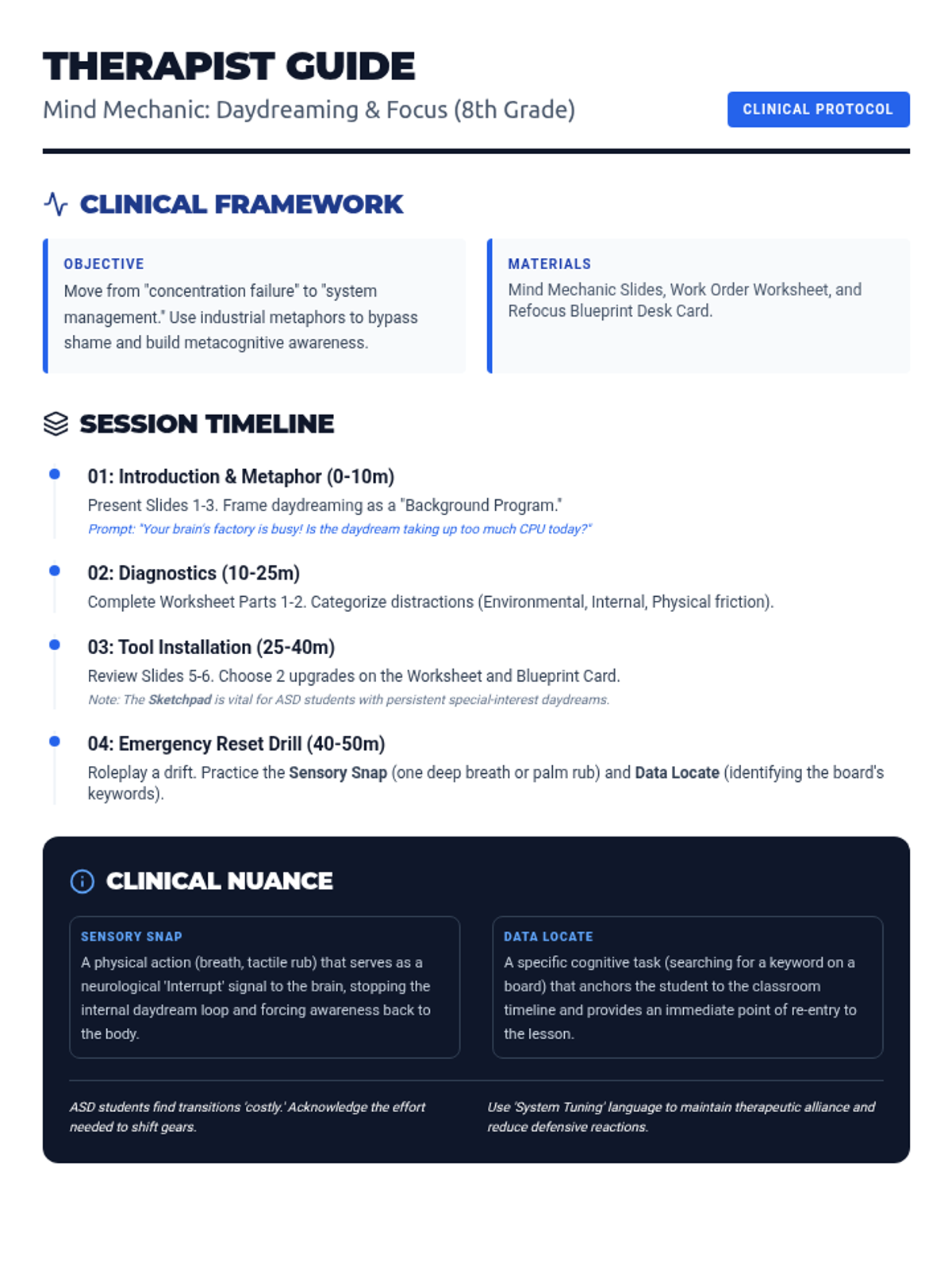
A detailed therapist facilitation guide with clinical rationale, session pacing, talking prompts, and role-play instructions for the "Mind Mechanic" session.
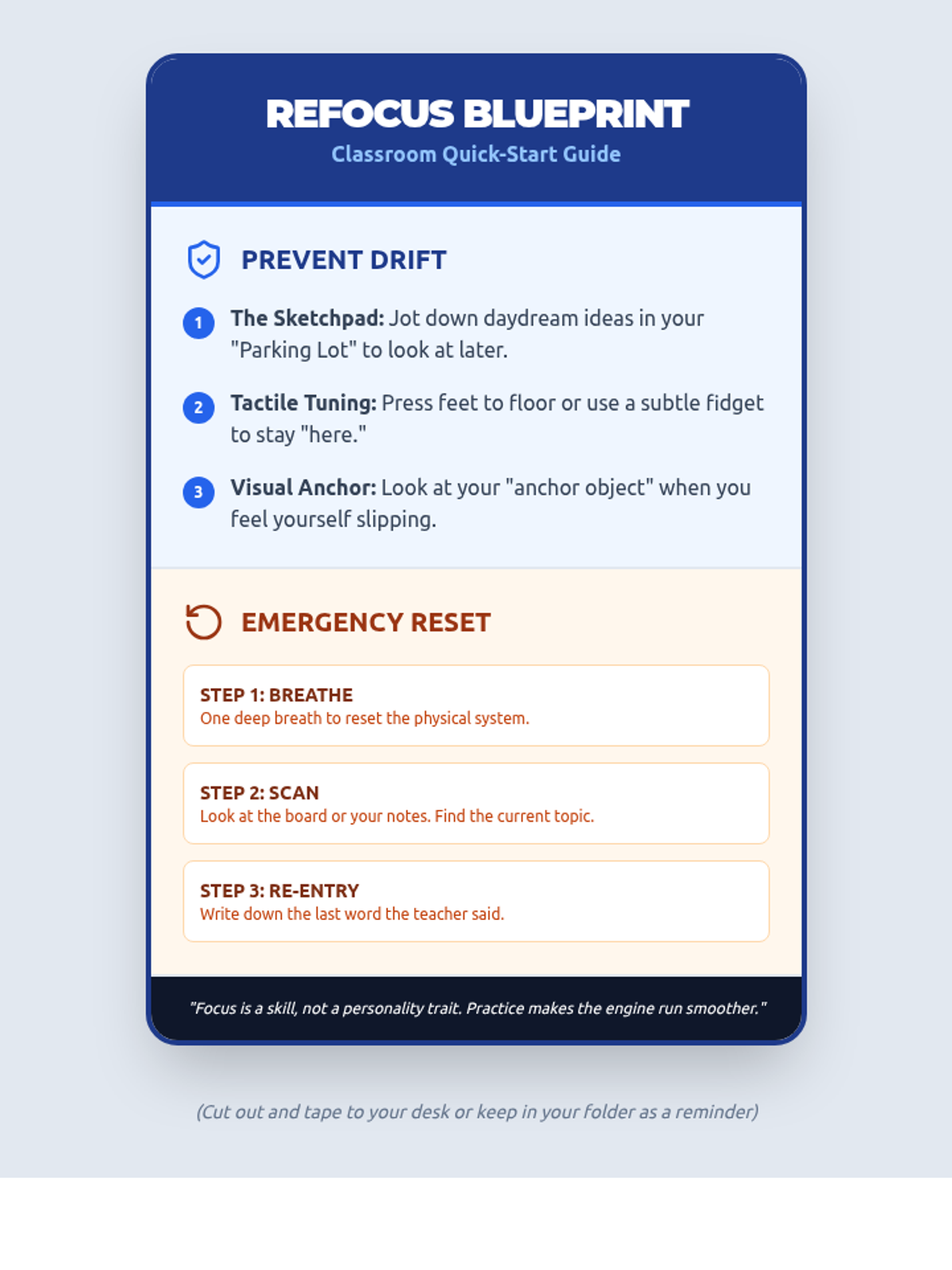
A compact, visual reference card for students to keep at their desks, outlining specific strategies for staying focused and performing an "emergency reset" when daydreaming.
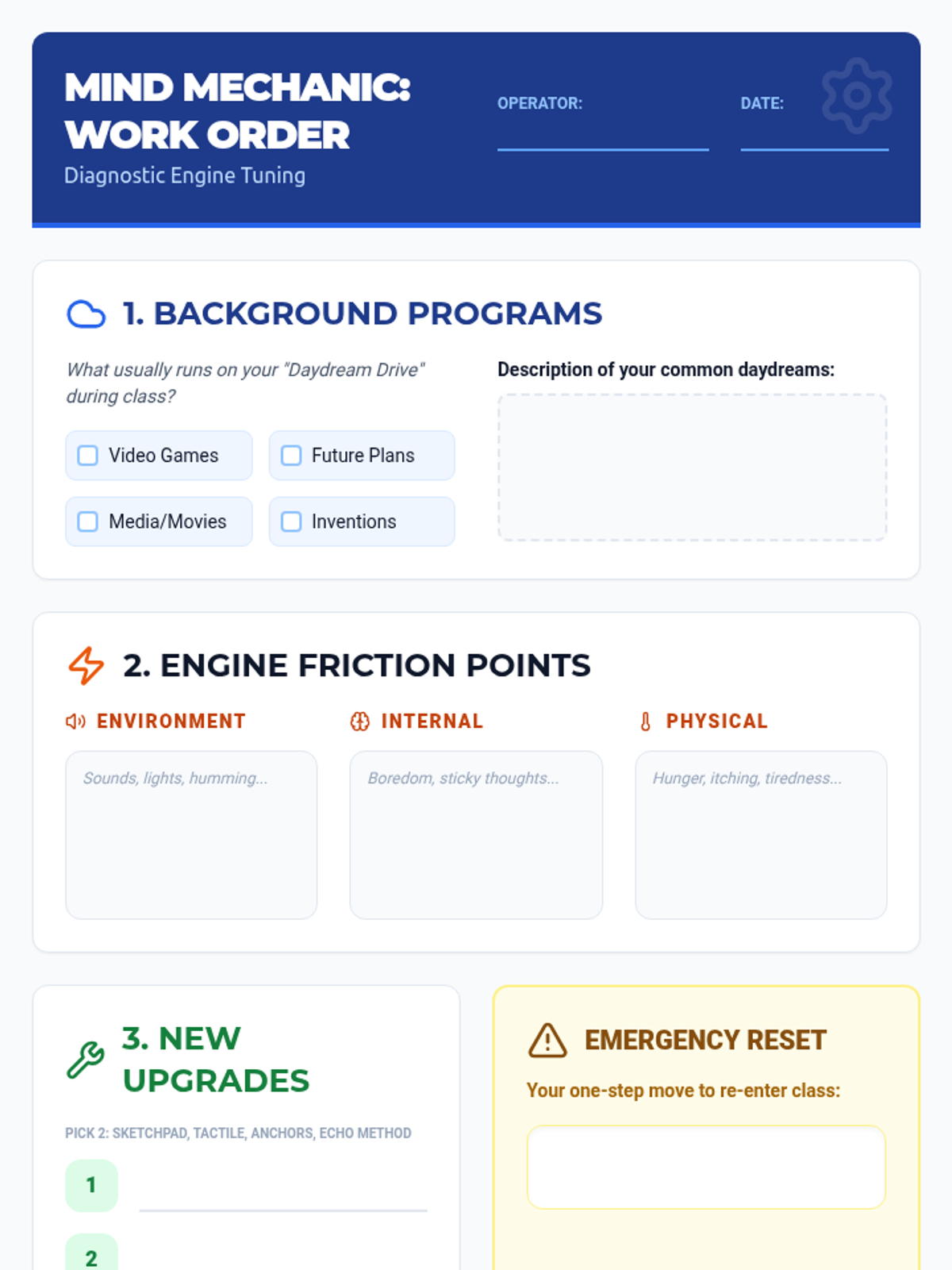
A student-facing diagnostic worksheet that helps neurodivergent students identify their "daydream drives" (background programs) and focus "friction" points, with space for custom strategy selection.
A visually engaging 8-slide presentation with a "Mind Mechanic" industrial blueprint theme, designed to guide a therapy session for an 8th-grade student on daydreaming and concentration strategies.
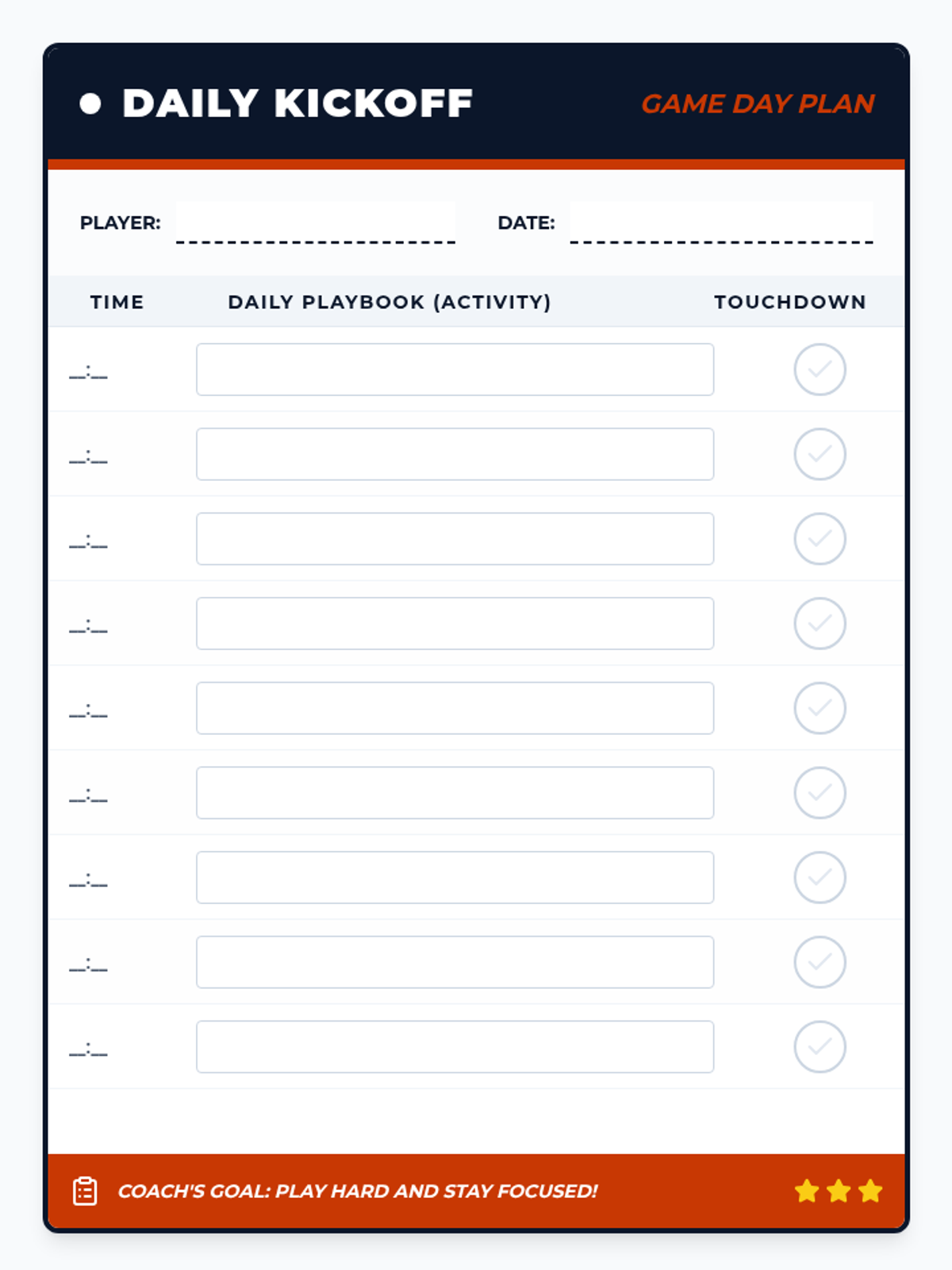
A Chicago Bears themed daily schedule template with a 'Daily Kickoff' header. Includes a printable board for writing or placing icons and a second page with 16 school-activity tokens. Updated with better contrast for printing.
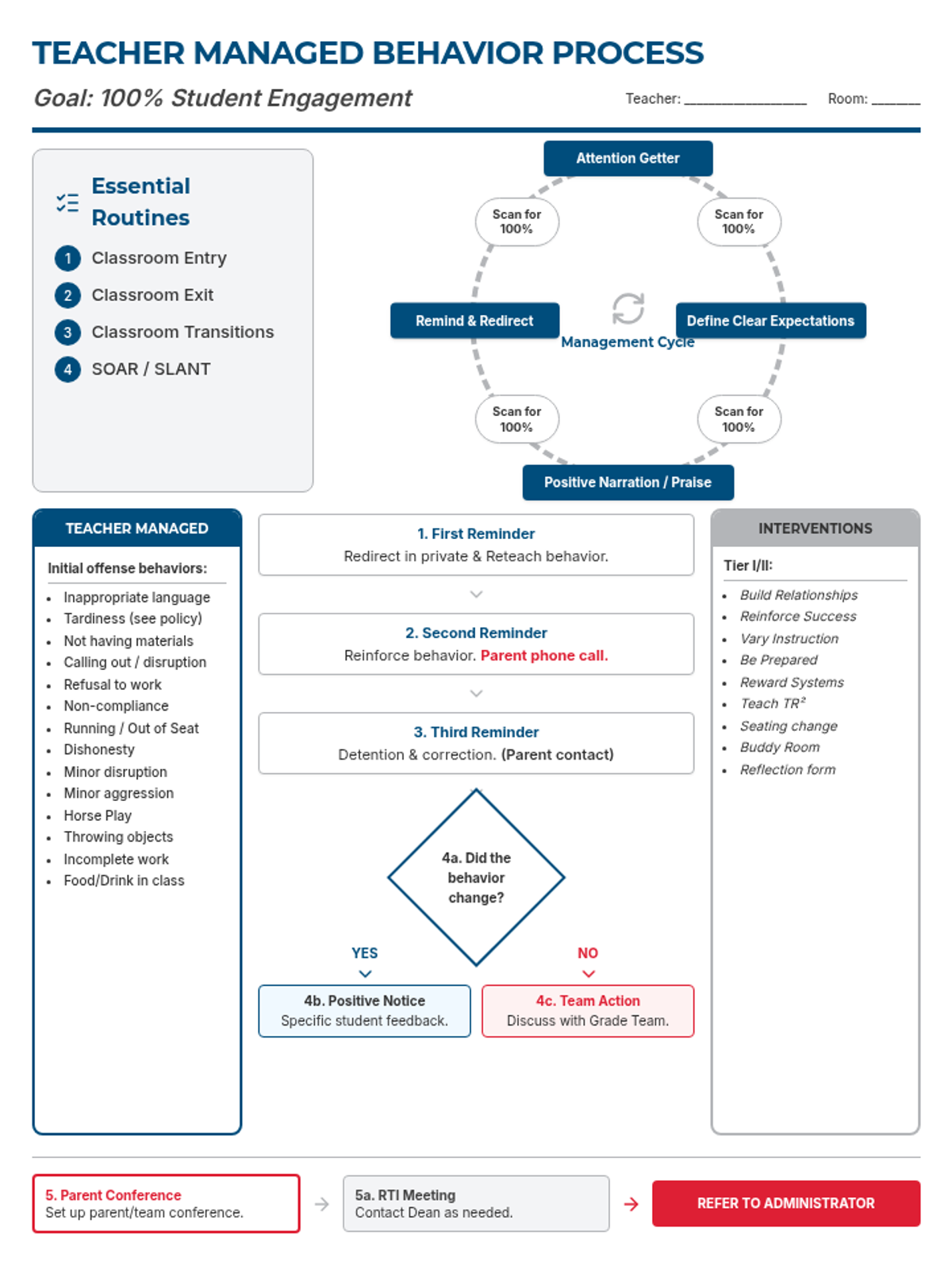
A professional 2-page behavior management process guide featuring the Irving ISD logo. Page 1 outlines the teacher-managed response cycle (with a red Attention Getter box) and flowchart, with the behavior change decision boxes moved under Box 5 and a clear return arrow from "Behavior Changed" back to Step 4b. Page 2 covers office-managed protocols and administrative actions.
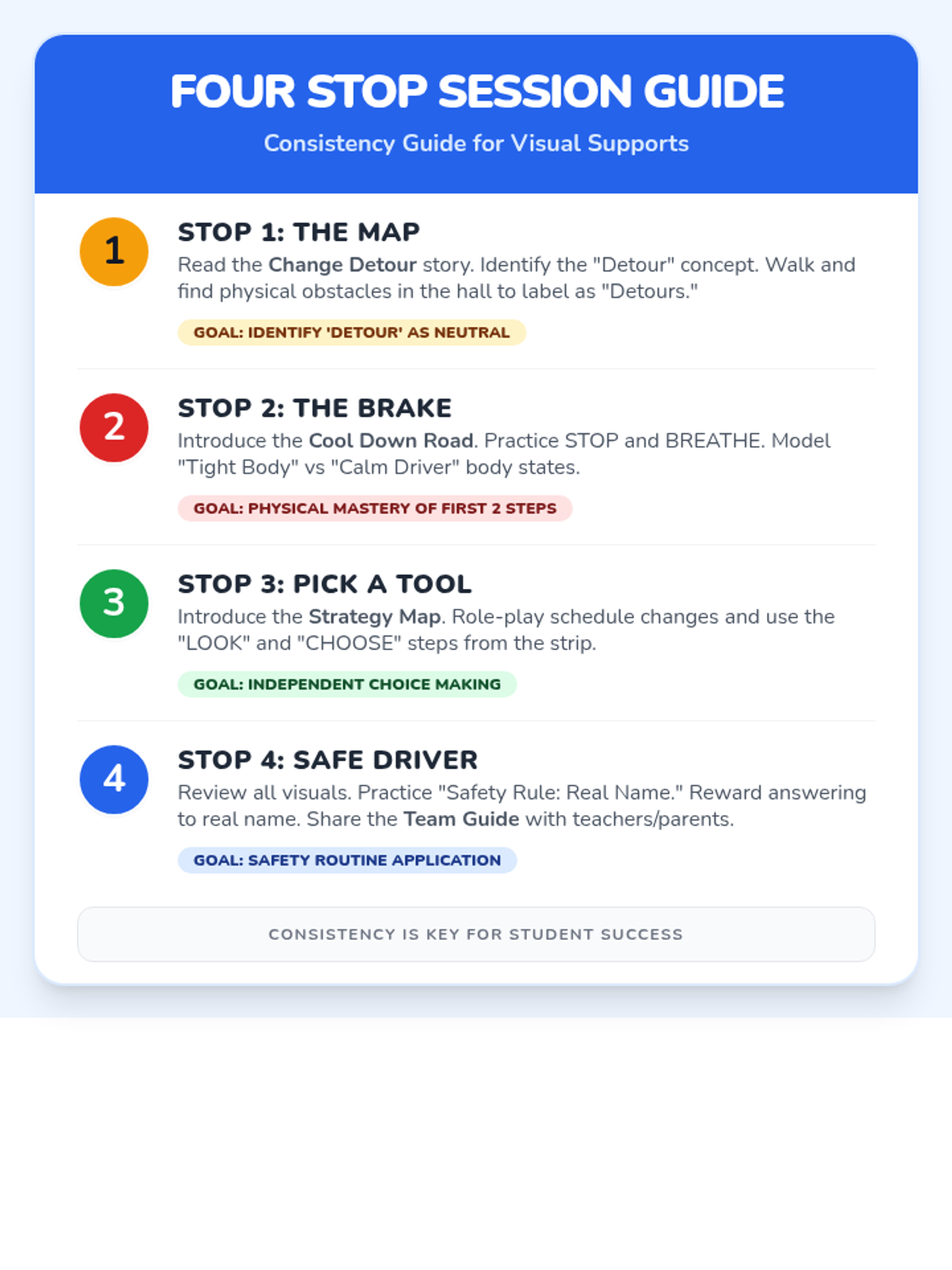
A structured 4-session pacing guide for delivering the "Flexible Routes" intervention, revised to fit on one page with fixed contrast and typos.
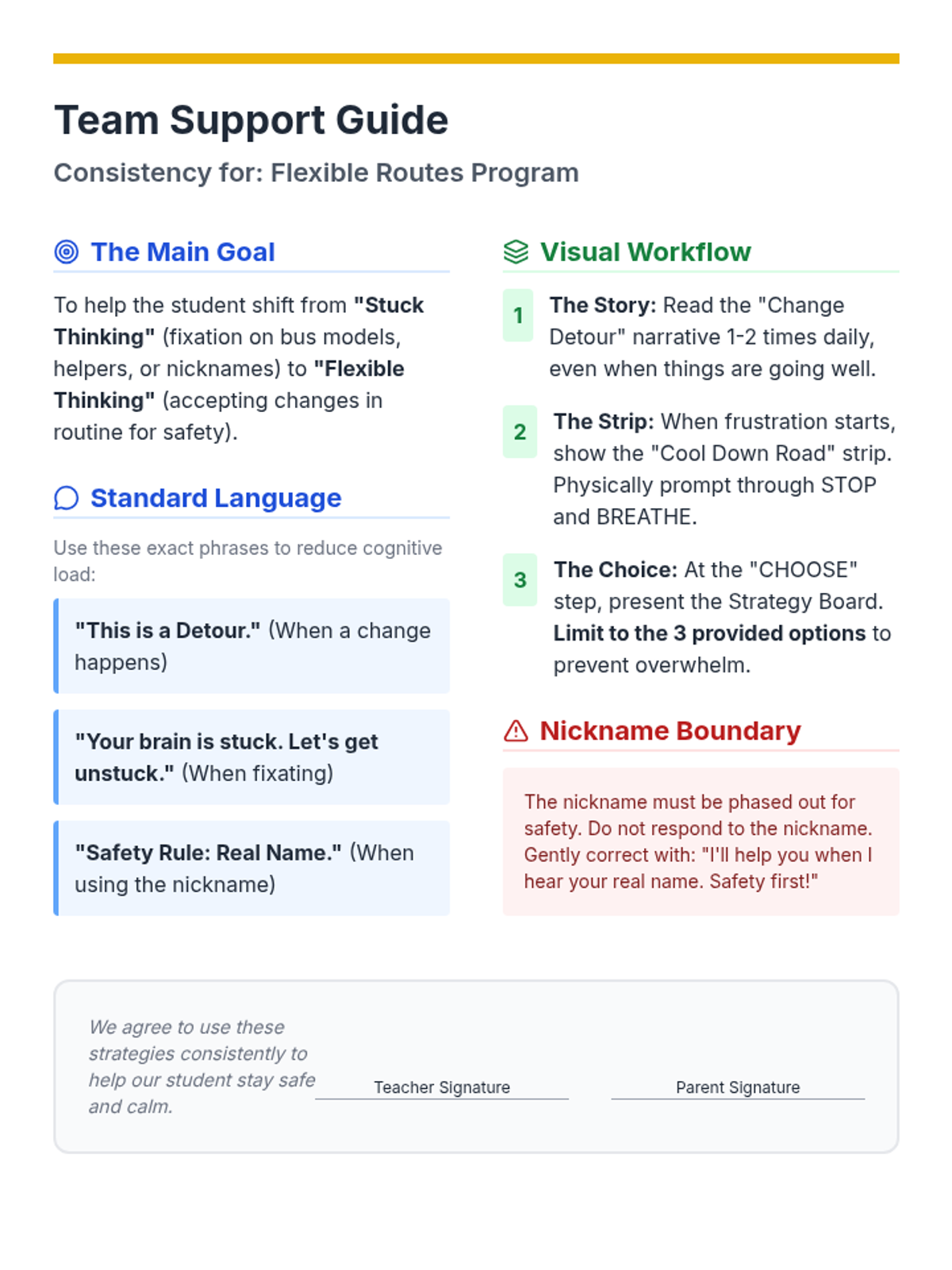
A guide for teachers and parents to ensure consistent use of terminology and visual aids for the "Flexible Routes" intervention. Includes standard phrasing and safety protocols regarding the student's nickname.
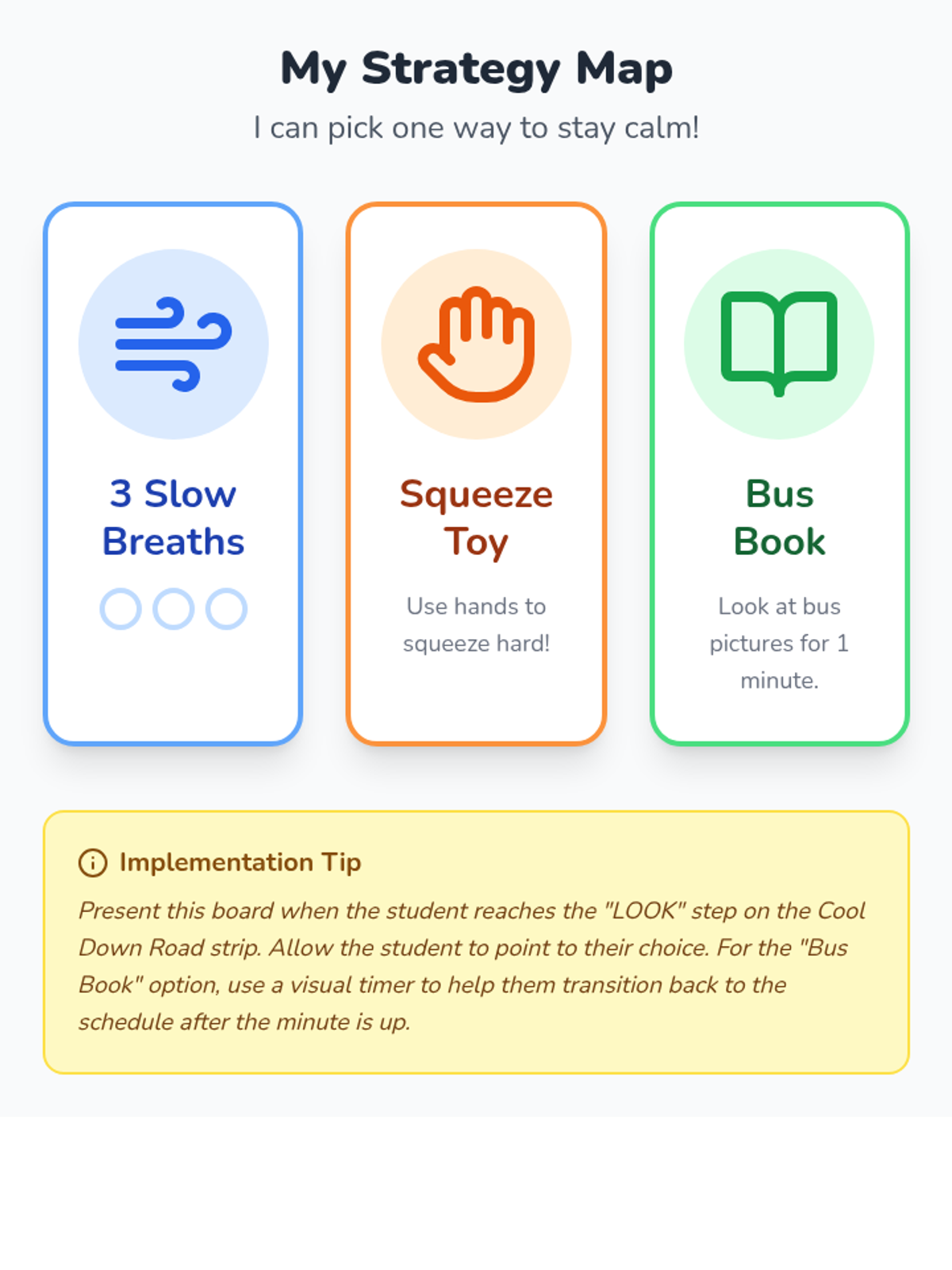
A choice board featuring three simple coping strategies (Breathing, Squeezing, and a Timed Interest Break) with high-contrast visuals for a student with limited communication.
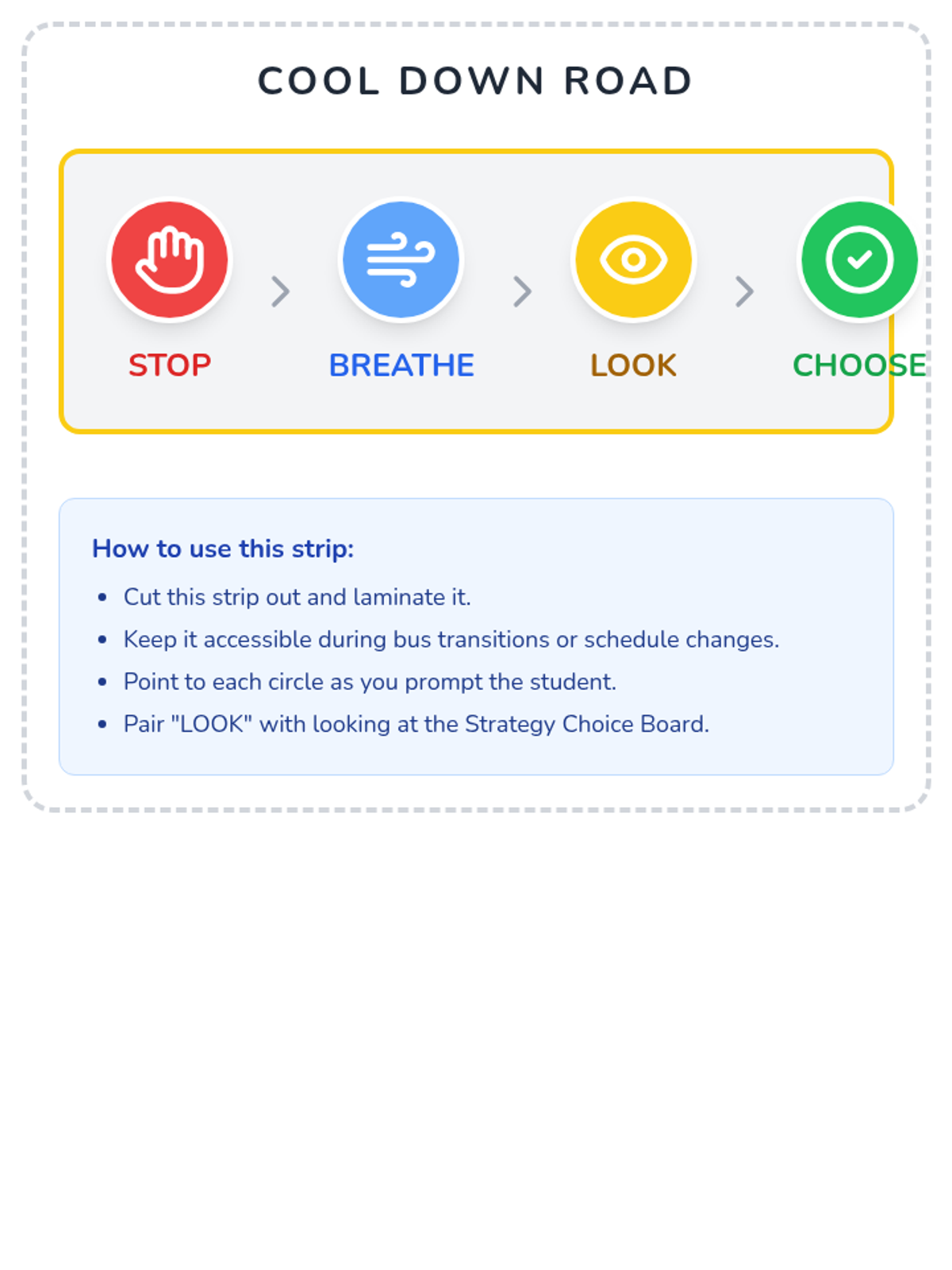
A visual calming strip for an elementary student to follow during moments of frustration or fixation, featuring four simple steps: Stop, Breathe, Look, and Choose.
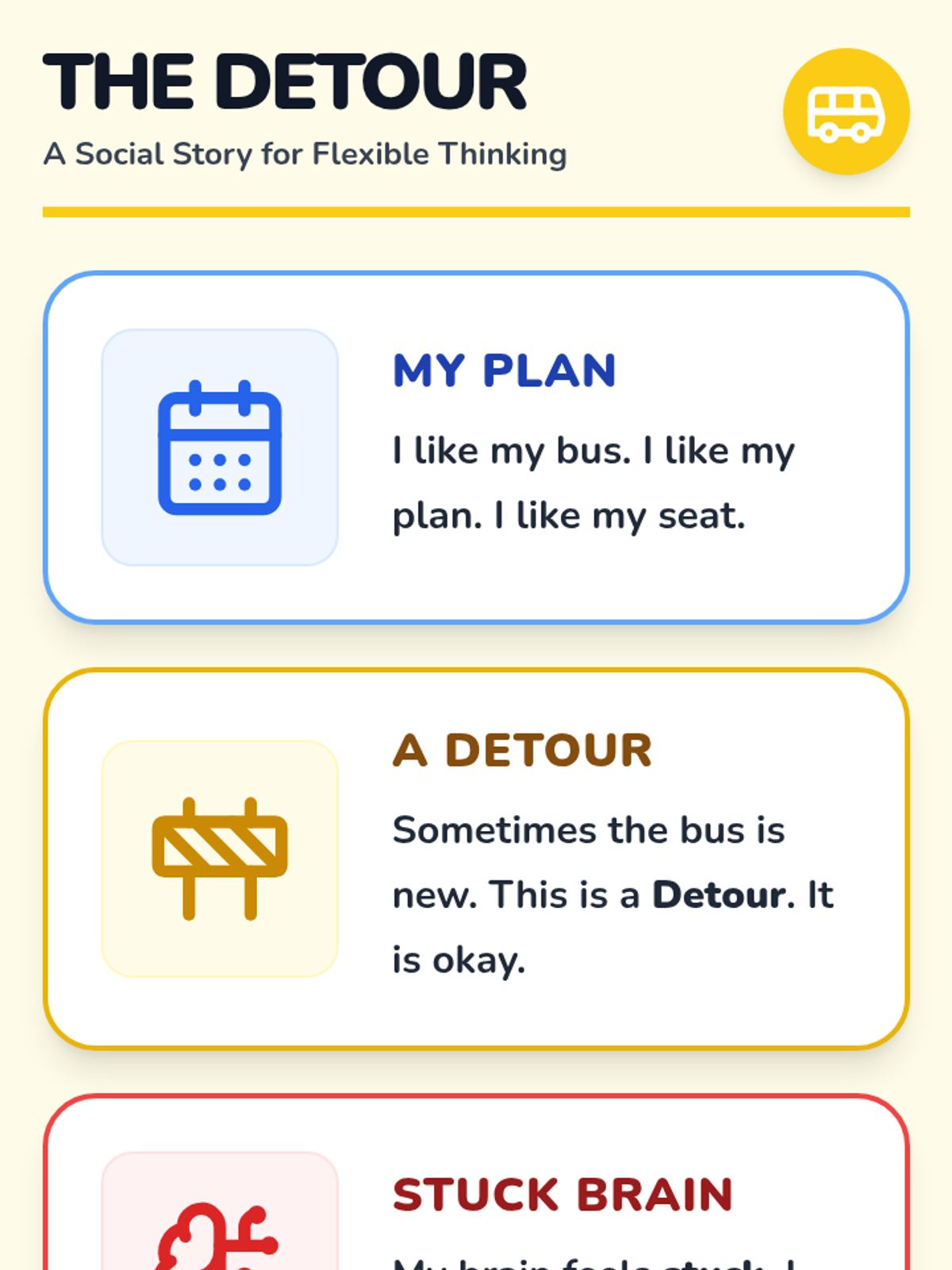
A simple social narrative for an elementary student with ASD/OCD tendencies, using a bus-themed metaphor to explain schedule changes, "stuck" thinking, and the importance of using a real name for safety. Revised with much larger visuals, higher contrast, and simplified text.
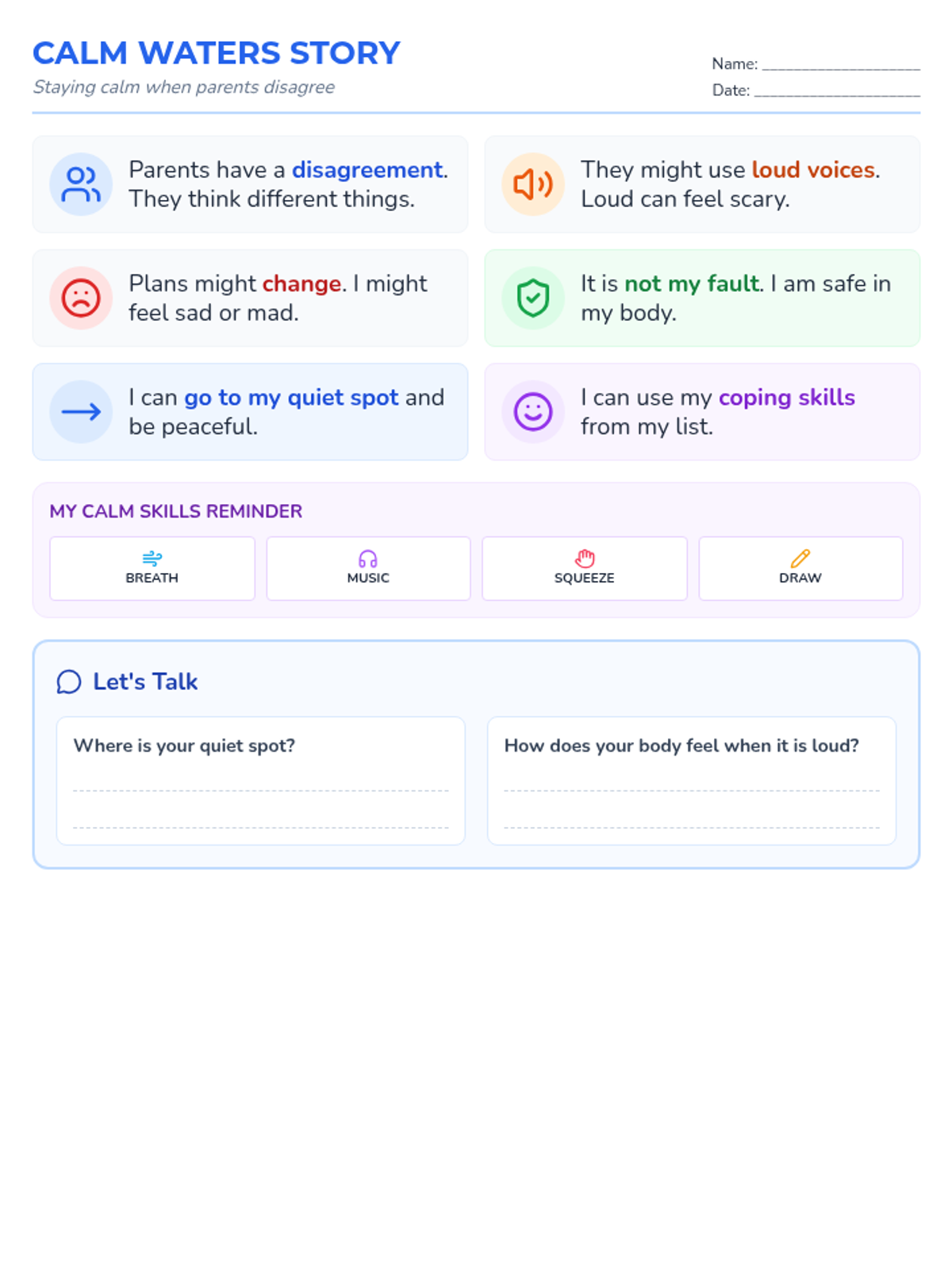
A symbol-supported social story for 8th-grade students with ID, focusing on emotional regulation during parental disagreements. Features a integrated skills reminder and expanded multi-line response areas. Revised for one-page fit.
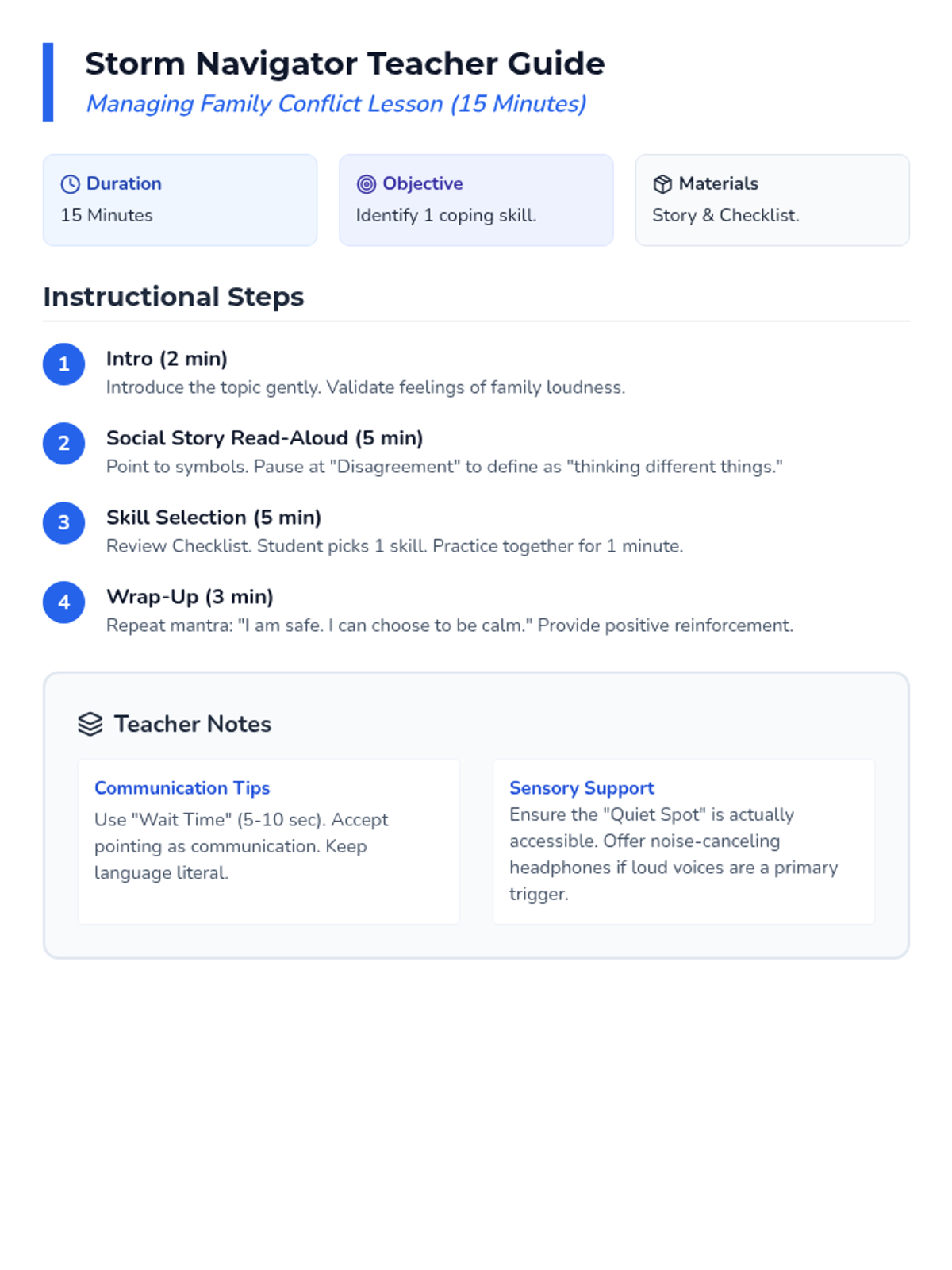
A teacher's guide for a 15-minute social-emotional learning session focused on family conflict and coping skills for students with intellectual disabilities. Revised to fit one page.
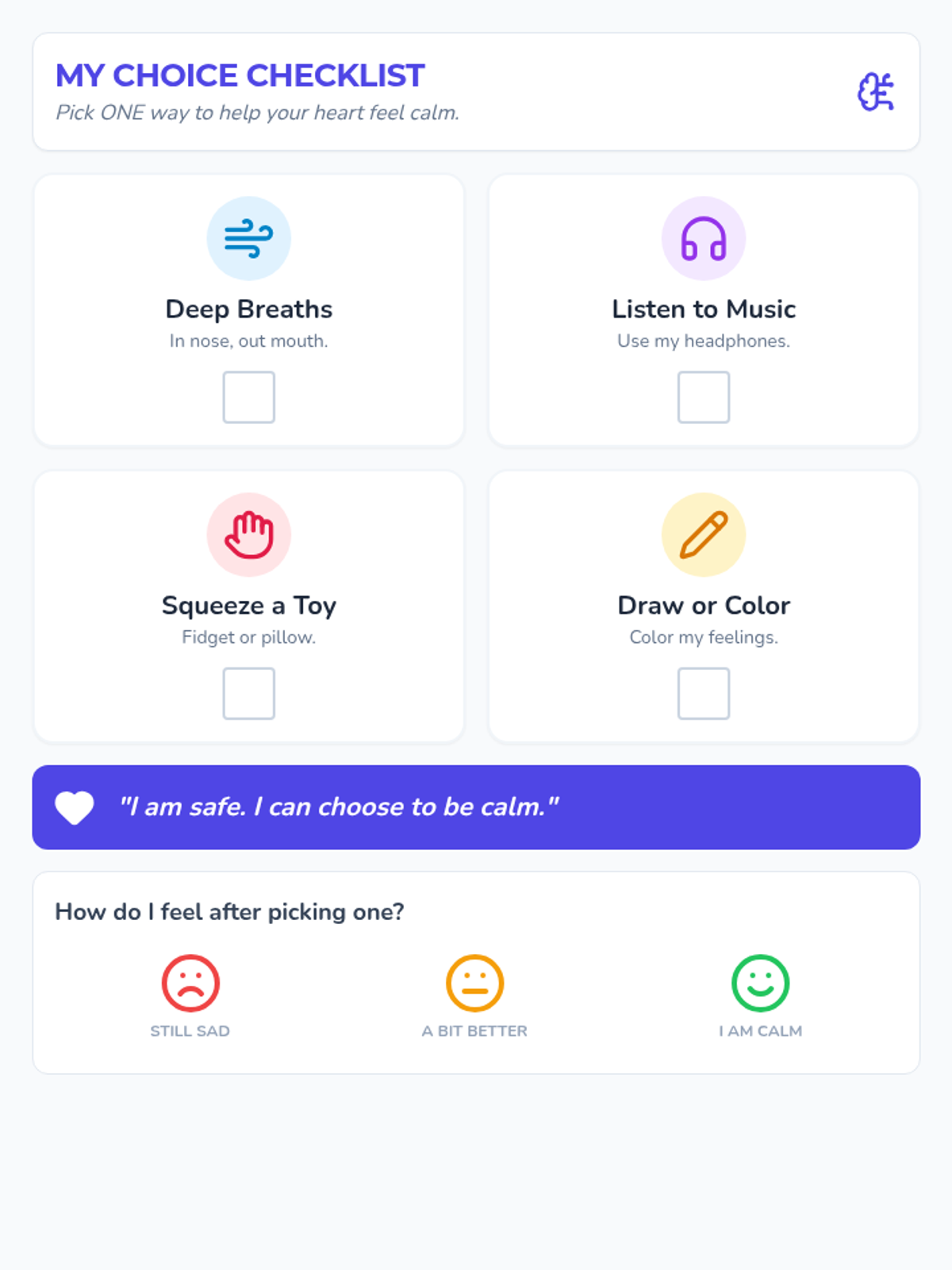
A visual, symbol-supported coping skills checklist to help students with intellectual disabilities select an appropriate self-regulation strategy. Revised to fit one page with improved visibility.