A high-impact instructional slide deck for the Suffix Lab lesson, focusing on visual decoding strategies for -s, -es, and -ed endings with large, accessible text and clear rules.
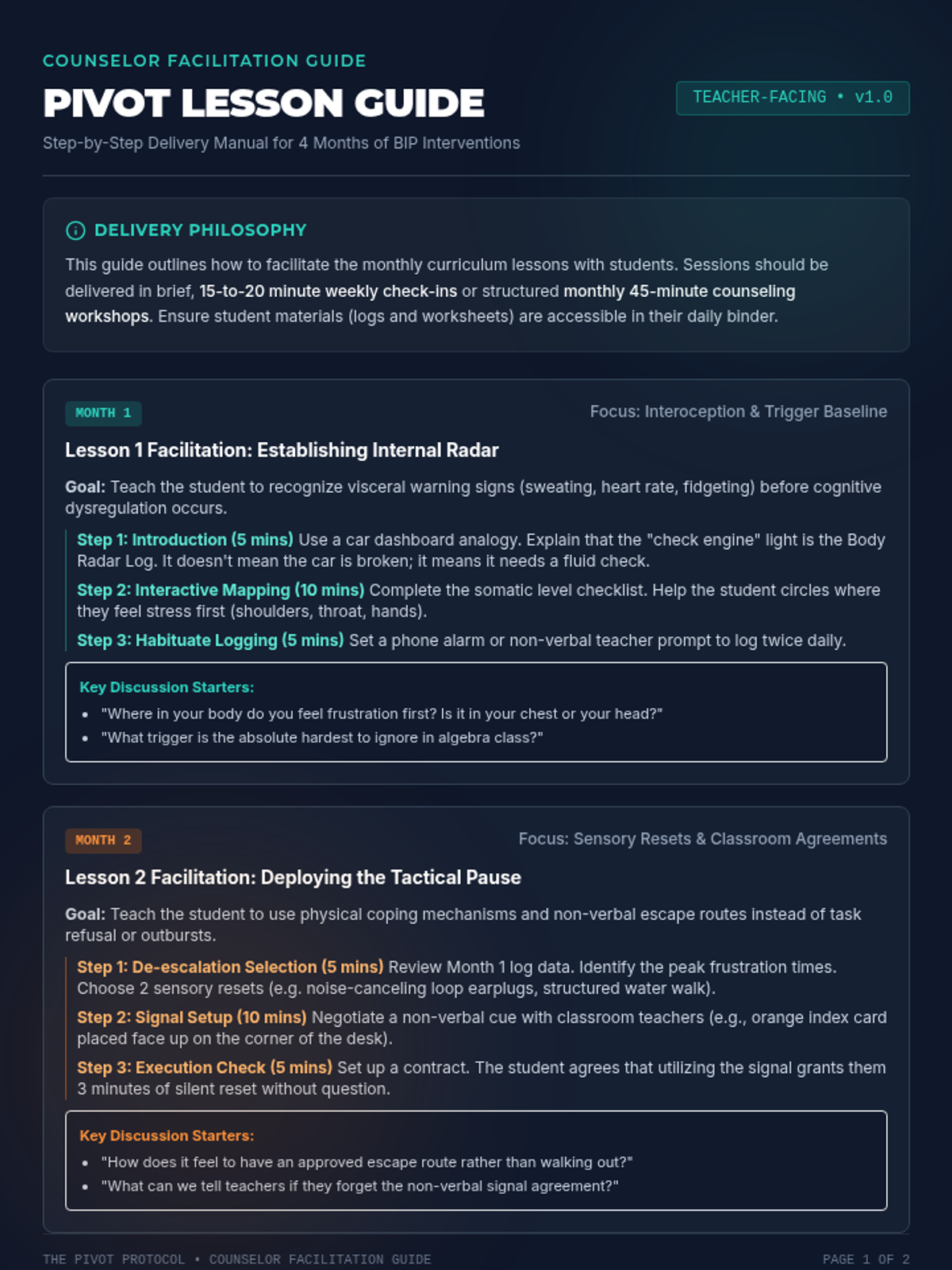
A visual reference guide for 9th-grade students to identify the root cause of their task avoidance and select specific ADHD-friendly strategies like body doubling, the 5-minute rule, or gamification to get started.
A daily visual schedule template designed for 9th-grade students with ADHD, featuring a task shredder for breaking down large projects, a visual timeline, and a dopamine reward menu to combat task avoidance.
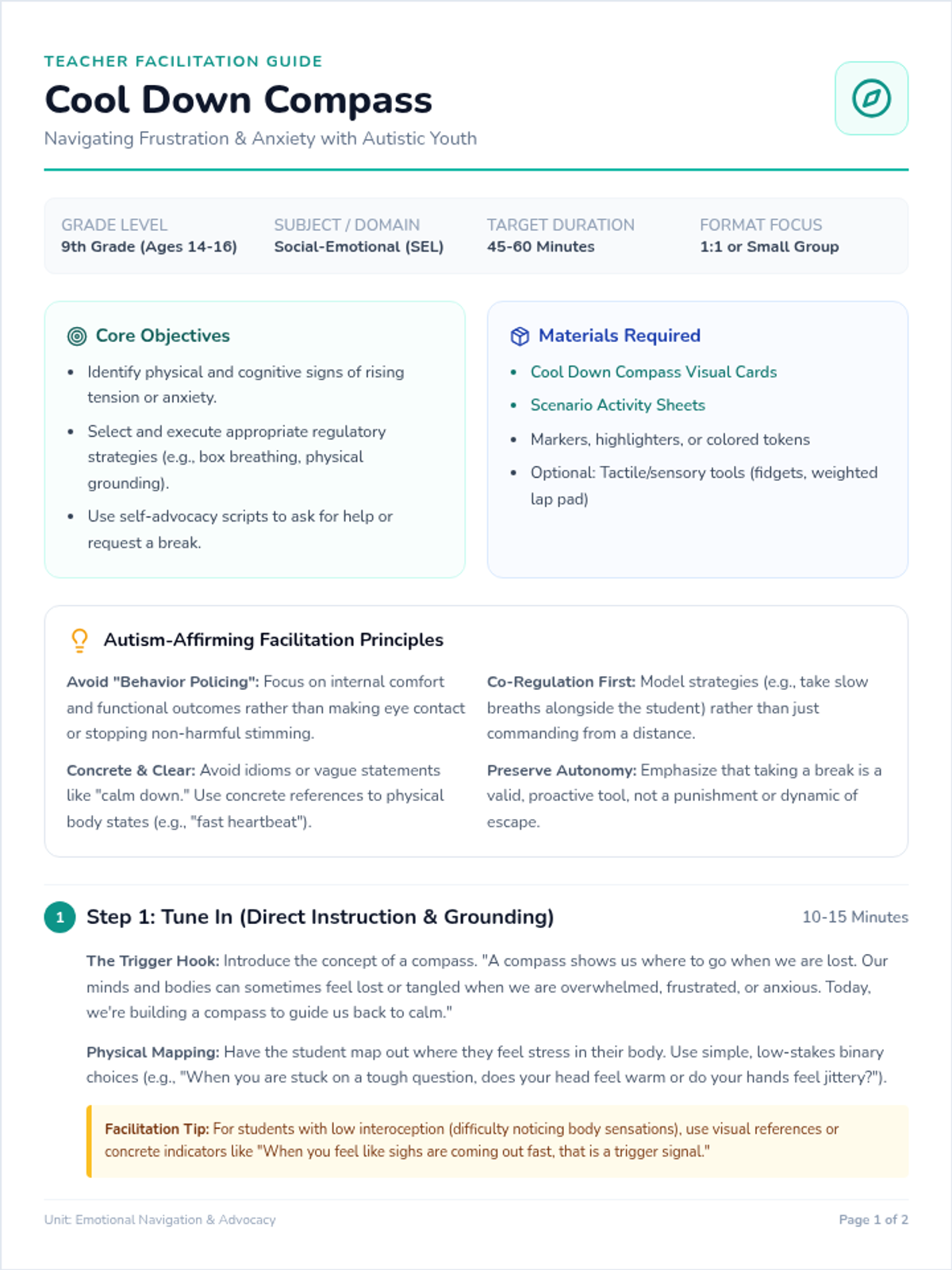
A professional teacher's guide for facilitating restorative conversations after a behavioral incident. It includes the purpose of reflection, implementation steps, and a restorative questioning framework.
A detailed, two-page restorative reflection form designed to help students analyze the impact of their actions, take another's perspective, and identify concrete steps for repairing harm after a specific incident.
A modified, low-text worksheet for The Giver focusing on the concept of Sameness and Jonas's feelings, featuring large visuals and minimal decoding requirements.
A graphic-novel style summary of Chapters 1 and 2 of The Giver, using high-impact visuals and simple sentence structures for low-decoding students.
High-contrast, picture-based vocabulary cards for key terms in The Giver, designed to provide visual anchors for students with decoding challenges.
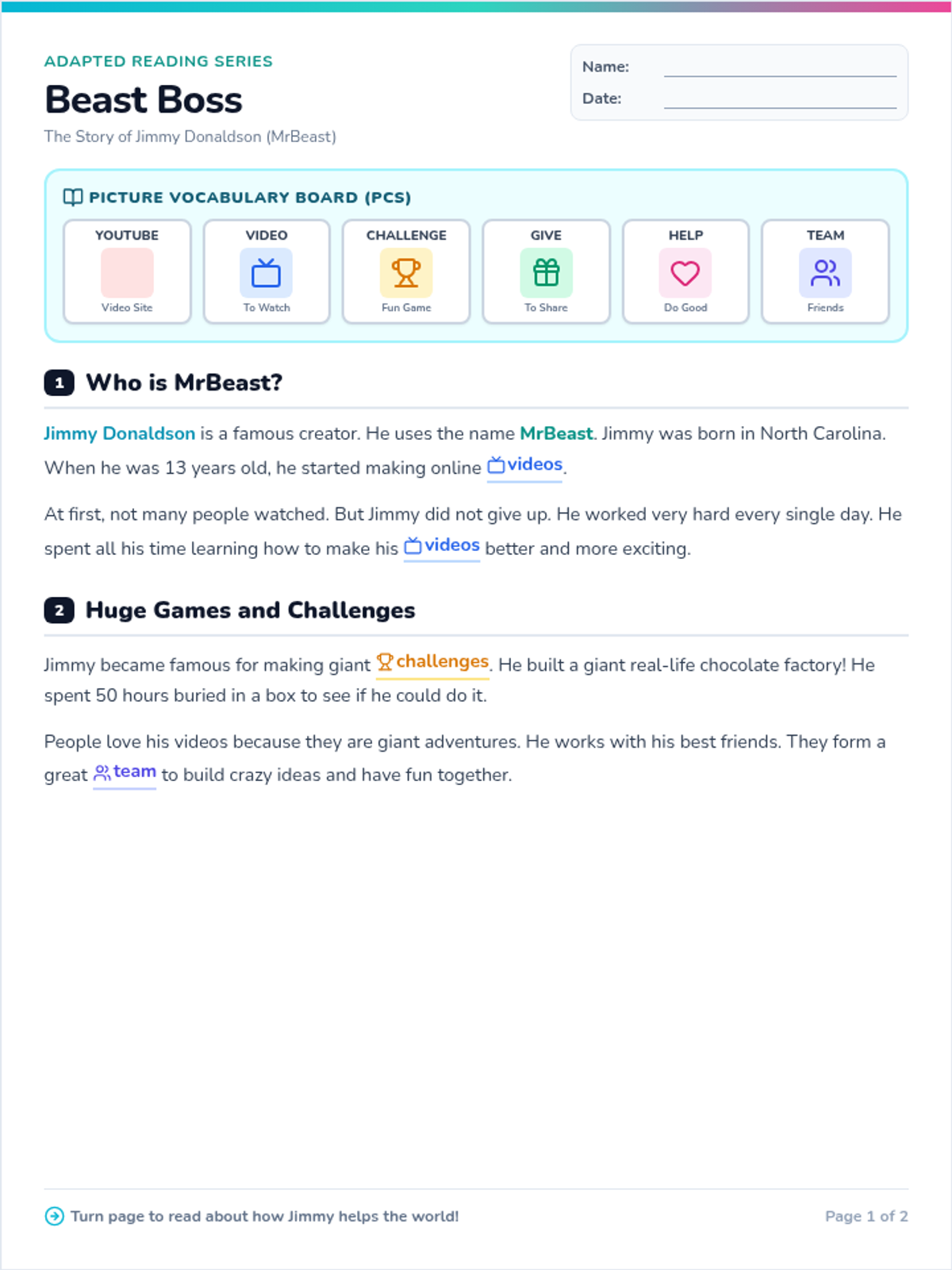
A visually impactful slide deck introducing the world of The Giver, focusing on the concepts of Community and Sameness with large text and clear icons for accessibility.
A comprehensive teacher's guide for reading The Giver (Chapters 1-2) aloud, including specific discussion prompts and instructional strategies tailored for students with low decoding levels but high cognitive engagement.
A teacher's guide for implementing the Routine Rituals lesson. It includes instructional steps, preparation tips, and differentiation strategies specifically for teaching life skills to teenagers.
A planning questionnaire for life skills students to specify their hygiene routine needs. This "mini questionnaire" format allows students to select items and specify preferred brands or styles, and includes choices for shower/bath timing and method. Now optimized for handwriting space, accessibility, and contrast.
A minimalist, age-appropriate morning and night routine template for high schoolers. It features empty dashed boxes for students to glue images of hygiene steps, organized in AM Refresh and PM Reset columns. Increased to 7 slots per side to accommodate more steps. Now includes the user-requested motivation checklist with improved accessibility.
A technical-themed log for students to track sensory load levels, tool deployment success, and environmental stability without traditional 'goal-setting' or 'feelings-based' language.
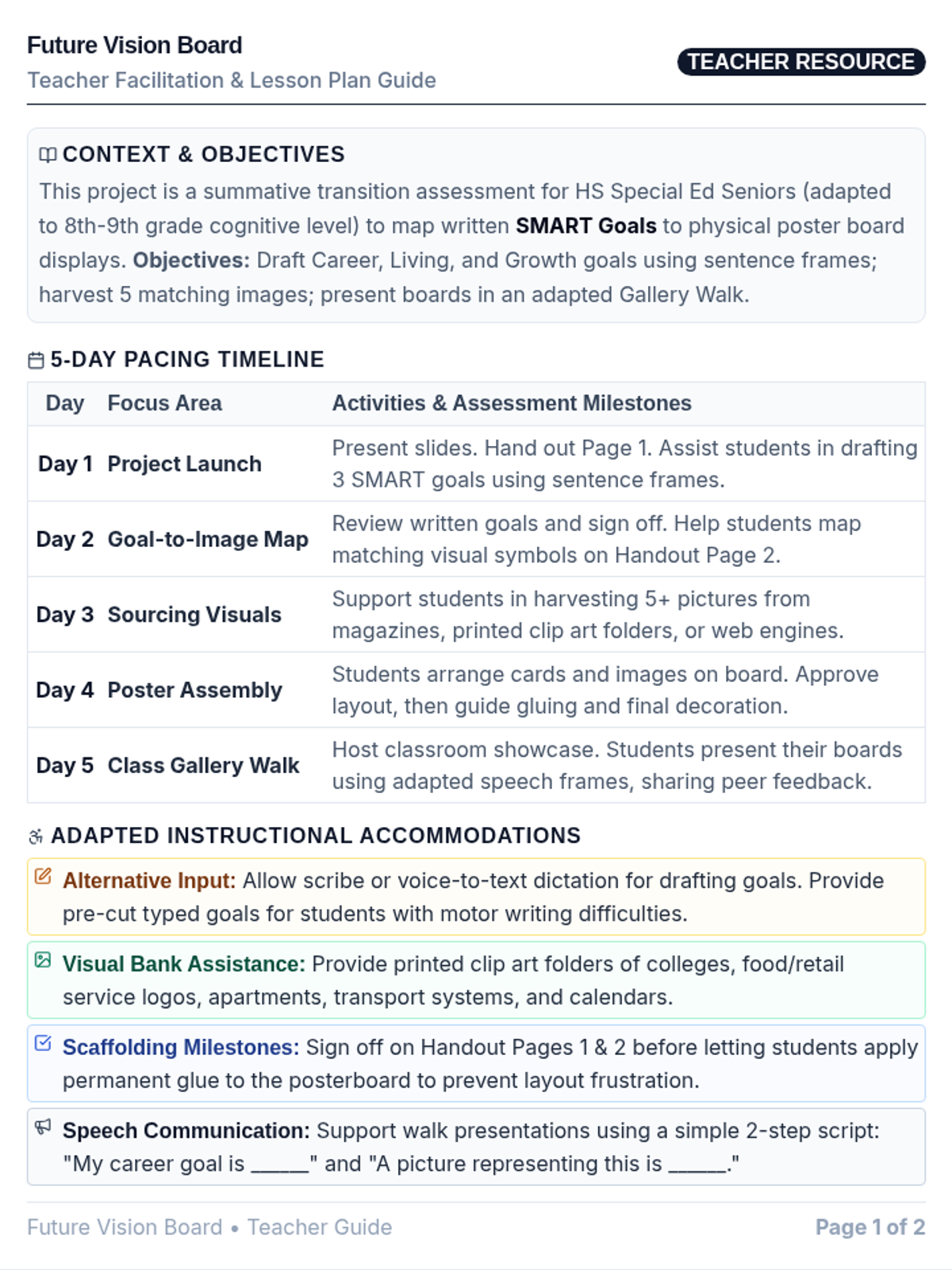
A teacher-facing guide outlining how to support a student with sensory and social anxiety in PE. It focuses on accommodations like 'sensory shielding' and 'reset protocols' while suggesting grading modifications that avoid performance-based pressure.
Printable, discrete communication cards that provide the student with pre-written scripts for managing sensory and social needs in the gym without verbalizing complex feelings.
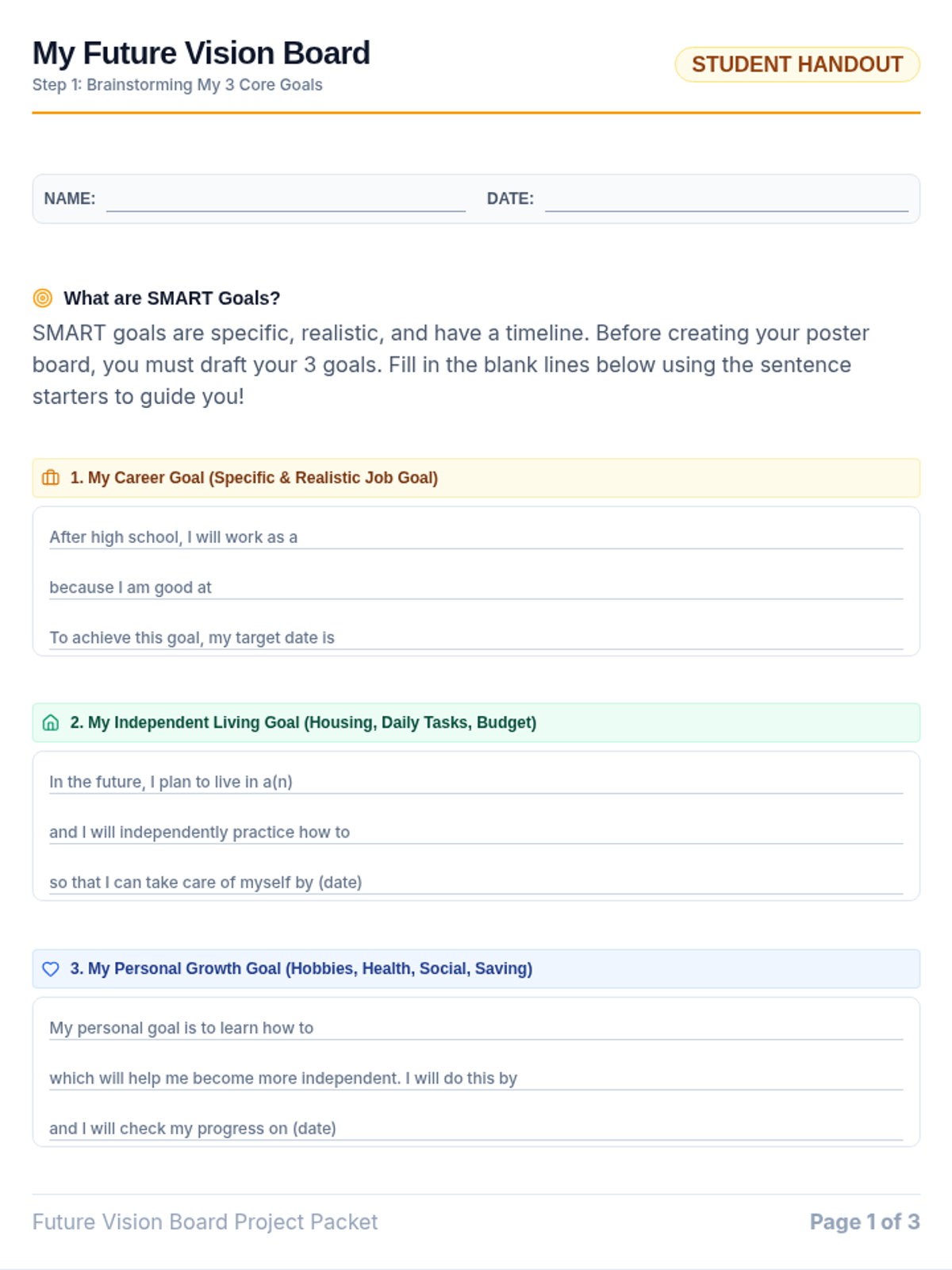
A tactical-themed worksheet that allows the student to map sensory triggers and select management strategies without traditional 'goal-setting' language. It focuses on environmental data and technical solutions.
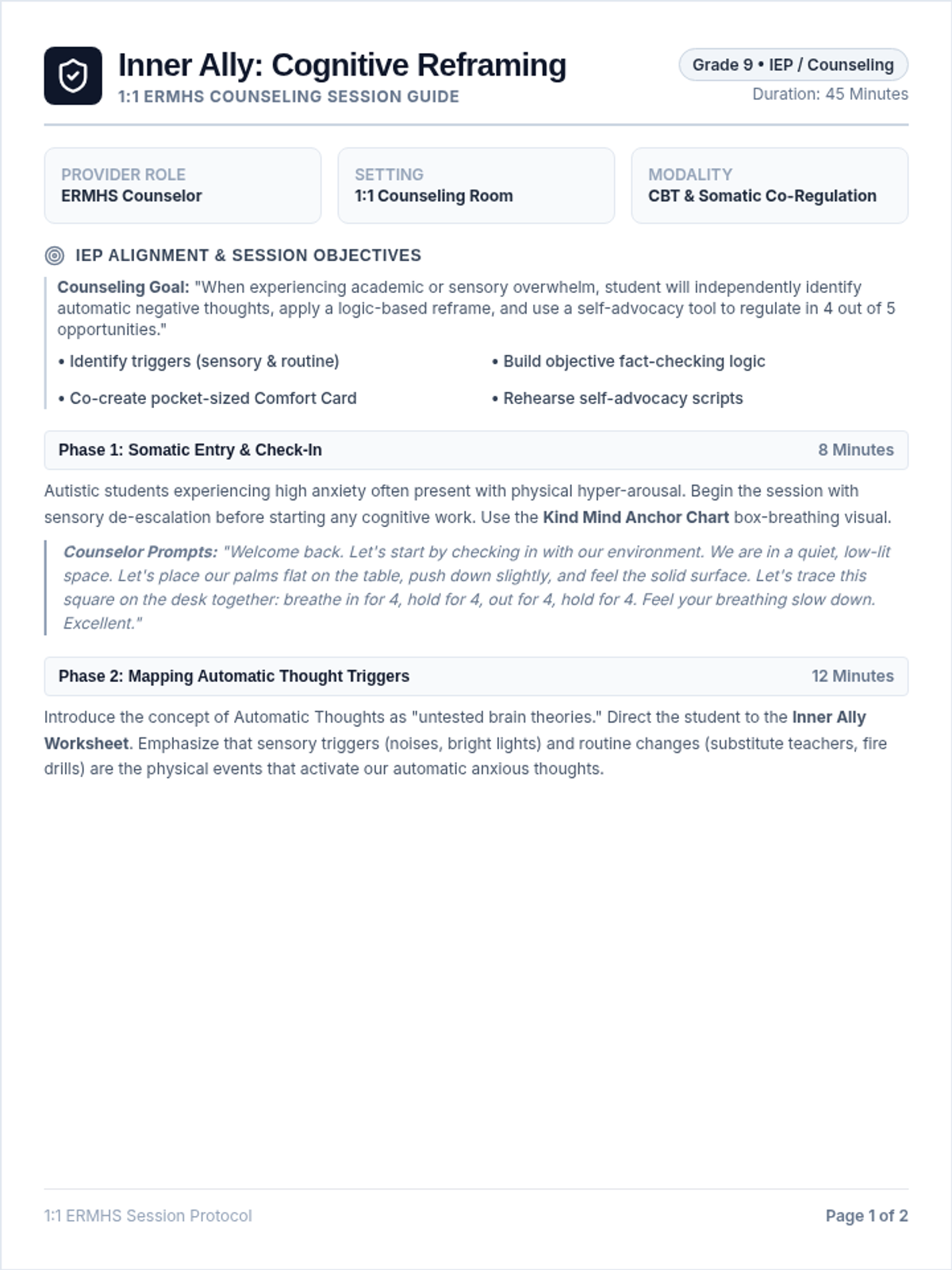
A visual presentation introducing a sensory-aware and low-social-pressure approach to PE for students with sensory overstimulation and social anxiety. It frames self-regulation as 'calibration' and 'stealth mode' to bypass the student's aversion to goal-setting.
A precise high-school level answer key with brief instructional explanations for teacher use.
A sophisticated 10-question high-school level quiz focusing on neurobiology, dopamine, cognitive overload, and EF strategies.
A high-school level cognitive flexibility activity focusing on procrastination, critical feedback, and semantic set-shifting. Terminology aligned with the "Brain HQ" presentation. Fits on 1 page with large work areas.
A high-school level working memory worksheet featuring advanced inverse processing, mental sorting of task priorities, and dual-task screen-time calculations.
An expanded 10-slide high-school level presentation covering neurobiology, working memory, dopamine, screen time impacts, and practical organization strategies. Explicitly aligned with the "Plan B, C, D" terminology from the Pivot activity.
A comprehensive high-school level teacher facilitation guide for the 'Brain Upgrade' lesson, including pacing, talking points, and a materials checklist. Explicitly aligned with the visual slides and individual activities.