A two-page print-ready adapted reading handout featuring a highly simplified biographical article about MrBeast, built-in picture communication support (PCS) cards, a simplified visual graphic organizer, and identical-style comprehension questions.
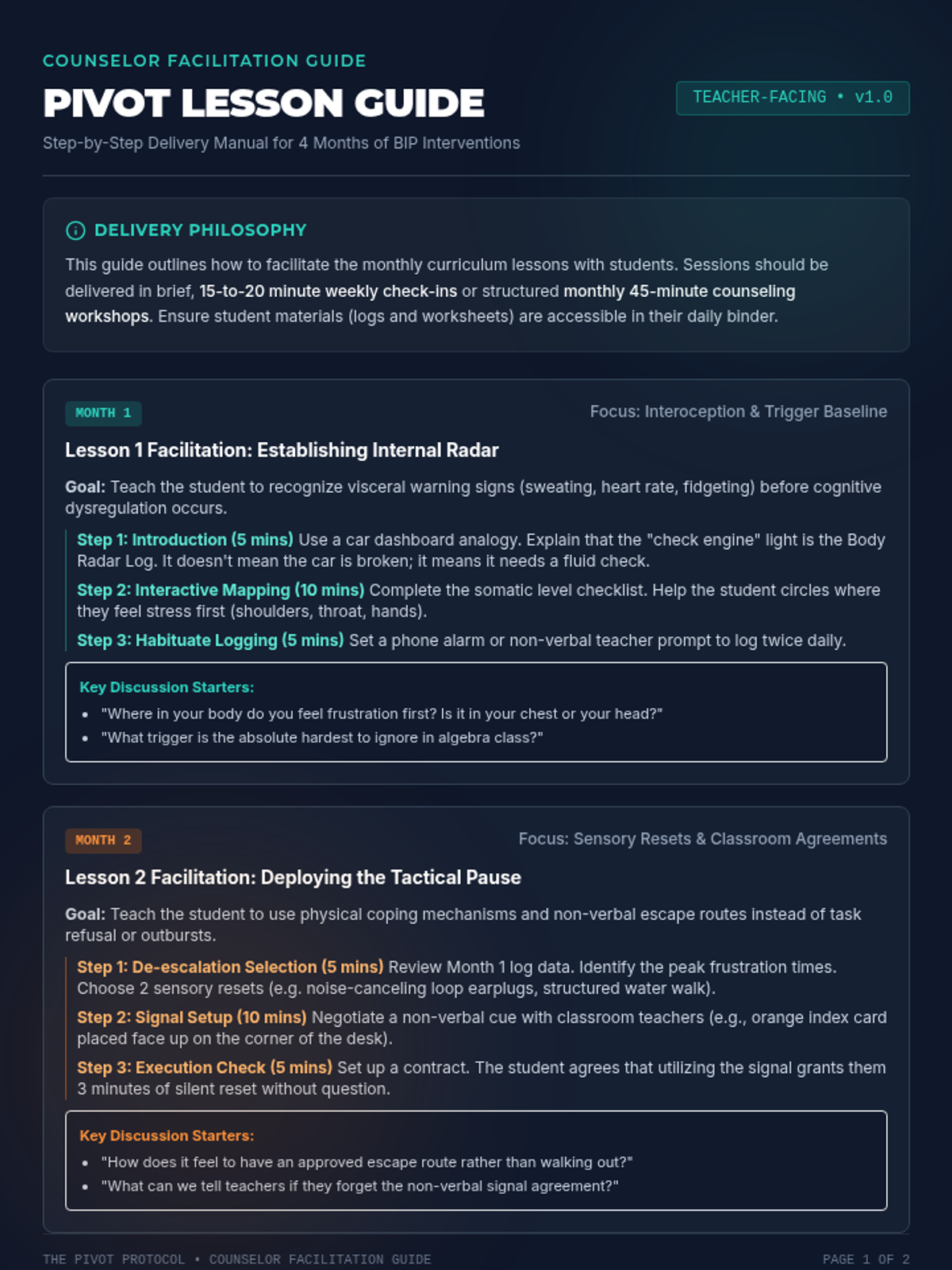
A comprehensive lesson facilitation guide for school counselors and special educators. Provides step-by-step instructions, discussion questions, role-play prompts, and BIP data tracking review methods for Months 1 through 4.
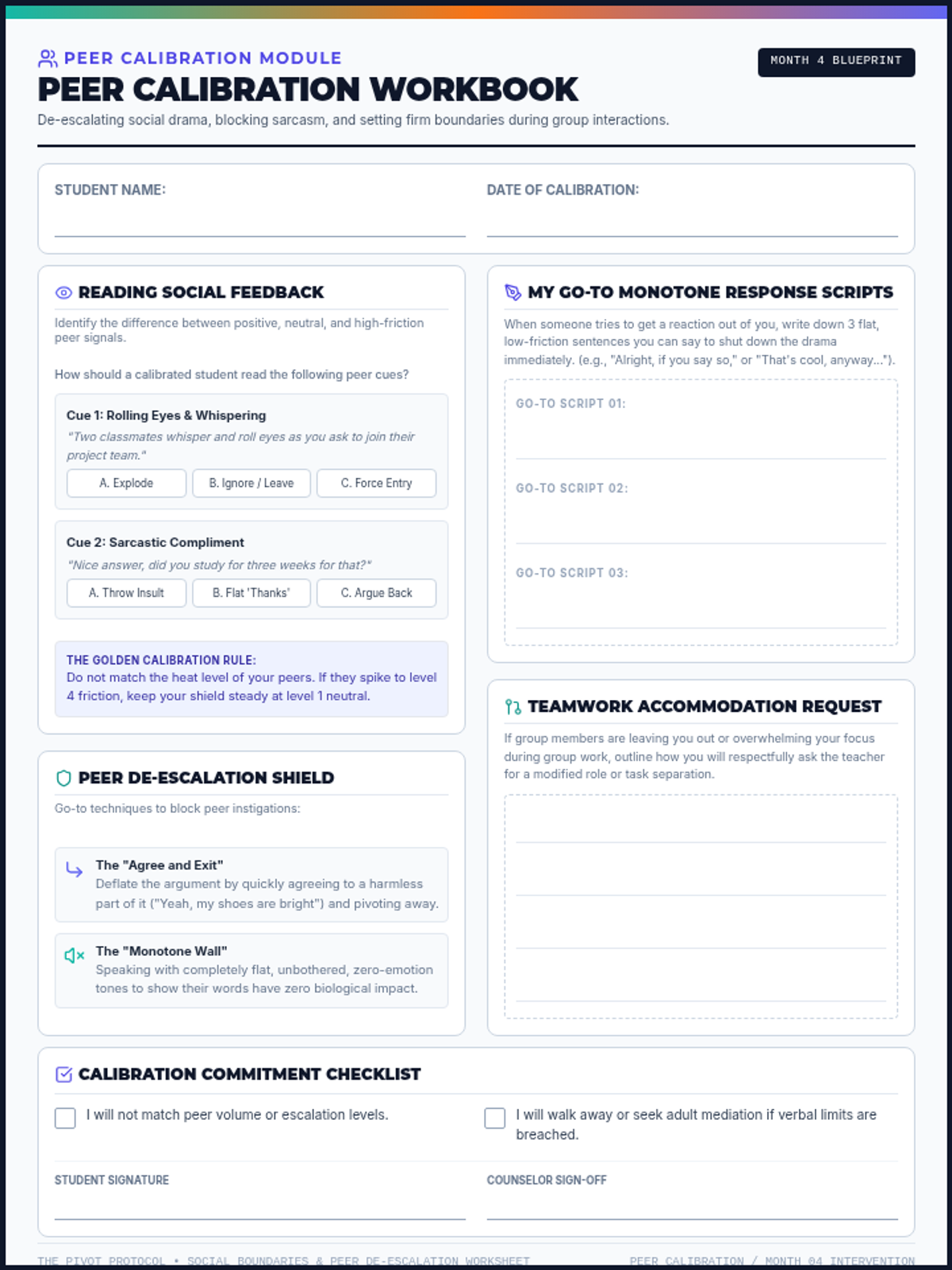
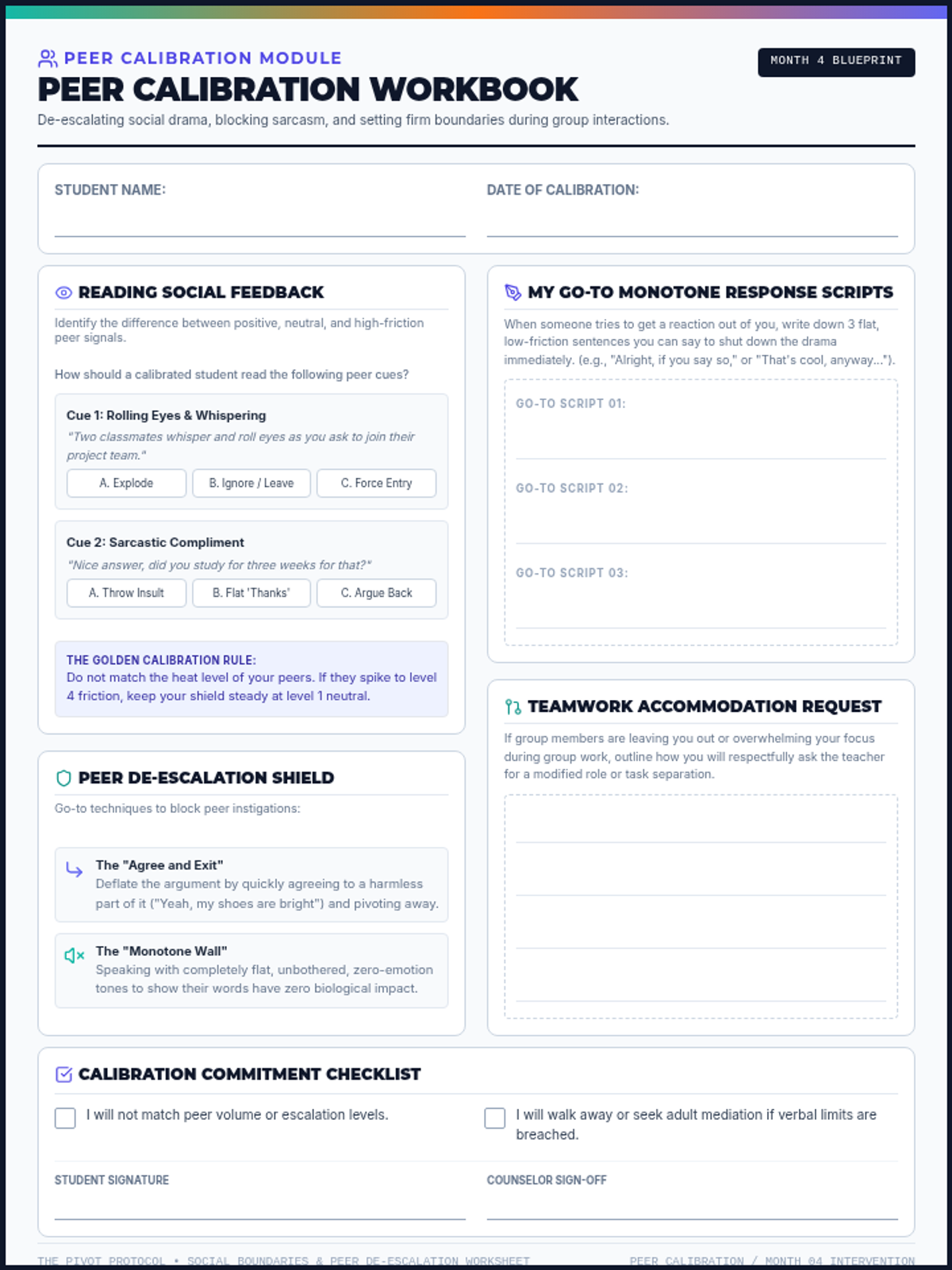
An interactive student workbook sheet for Month 4 (Peer Calibration). Guided exercises help high school students dissect social tension, map passive/reactive/calibrated feedback, and script their own peer de-escalation responses.
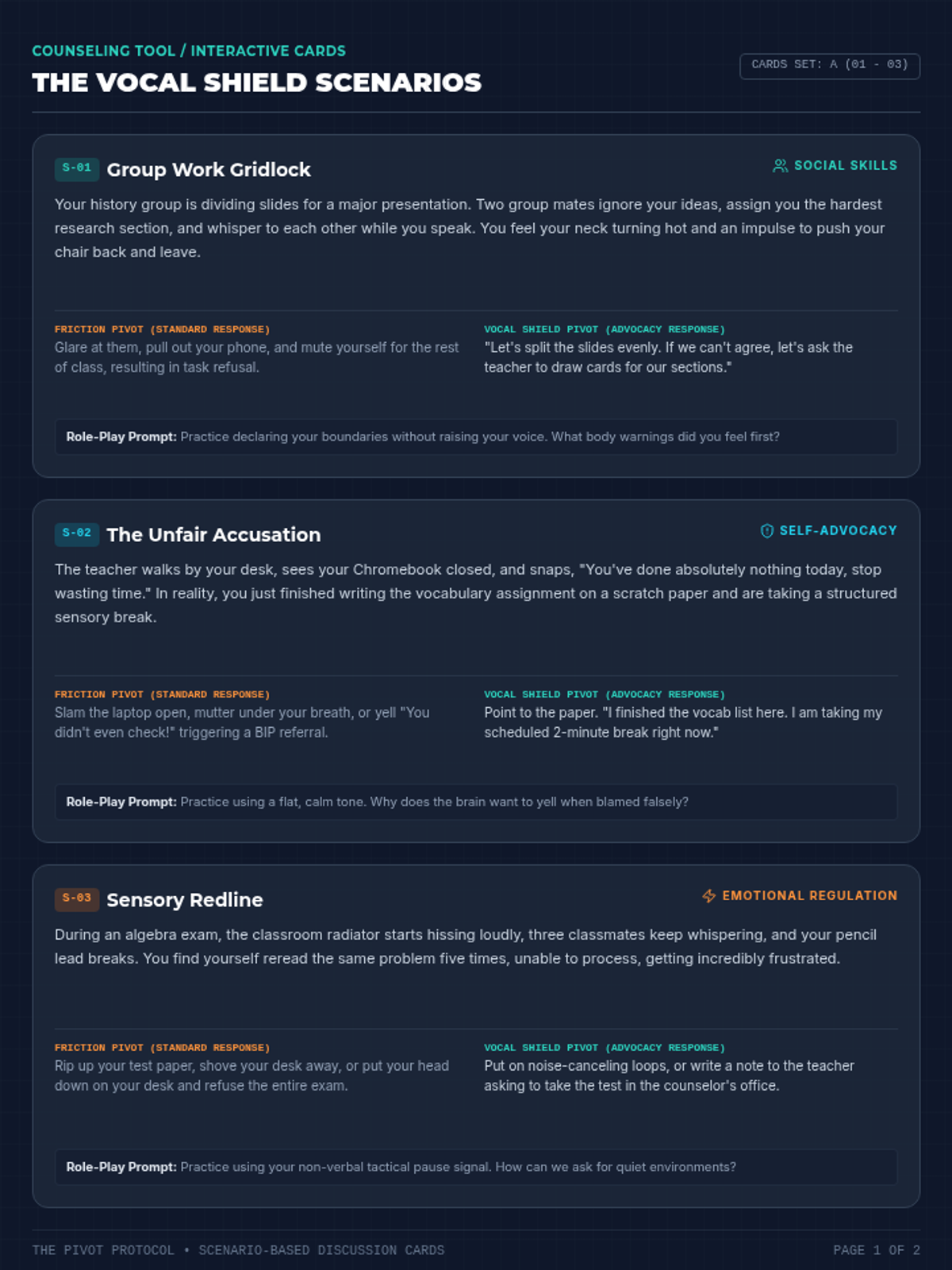
A set of printable, scenario-based discussion and role-play cards designed to build self-advocacy, conflict resolution skills, and frustration tolerance in high schoolers with ADHD.
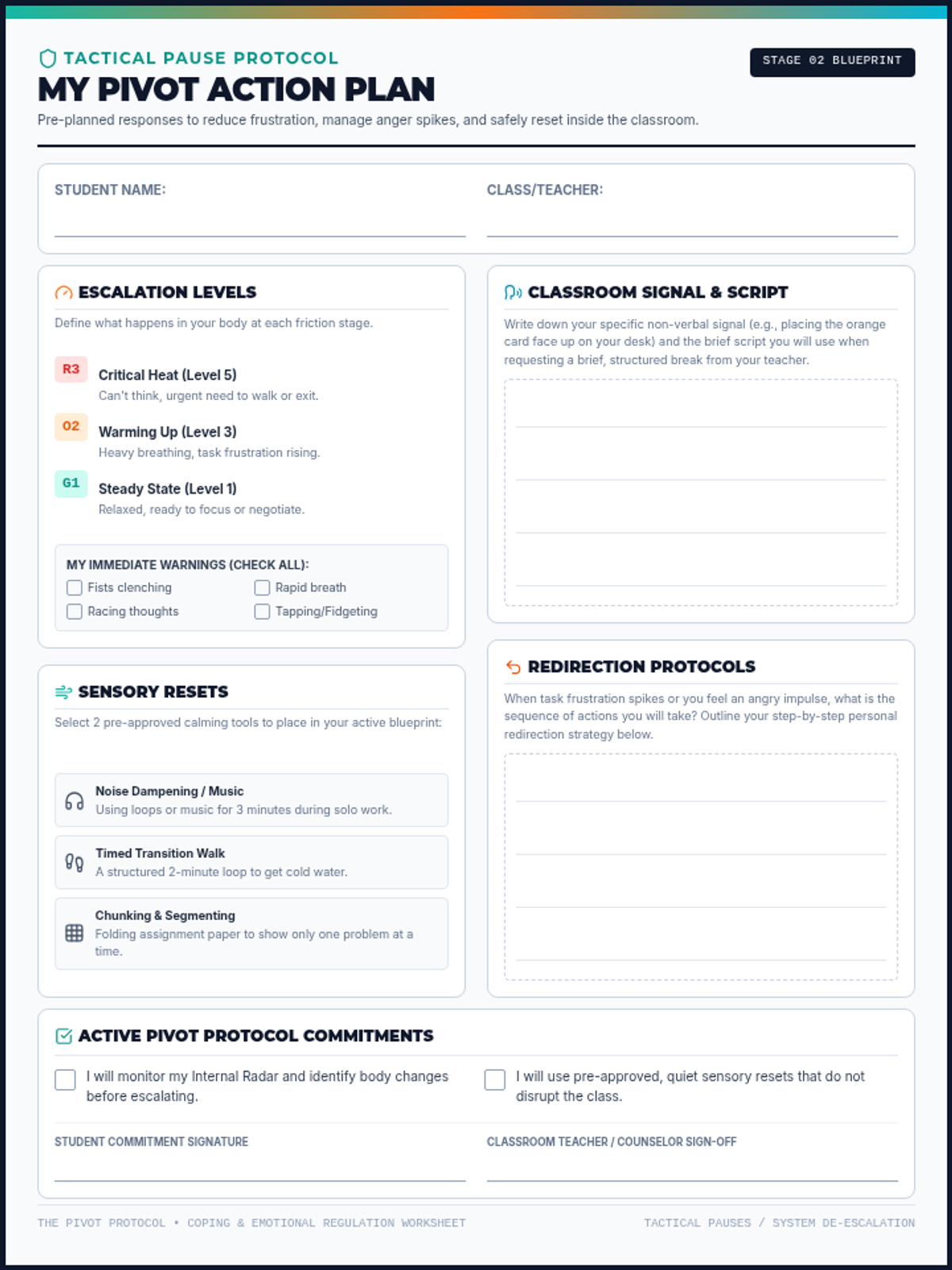
An interactive student worksheet to build a personalized 'Tactical Pause Action Plan.' Helps students identify personalized sensory coping strategies, sensory resets, and negotiate non-verbal classroom cues.
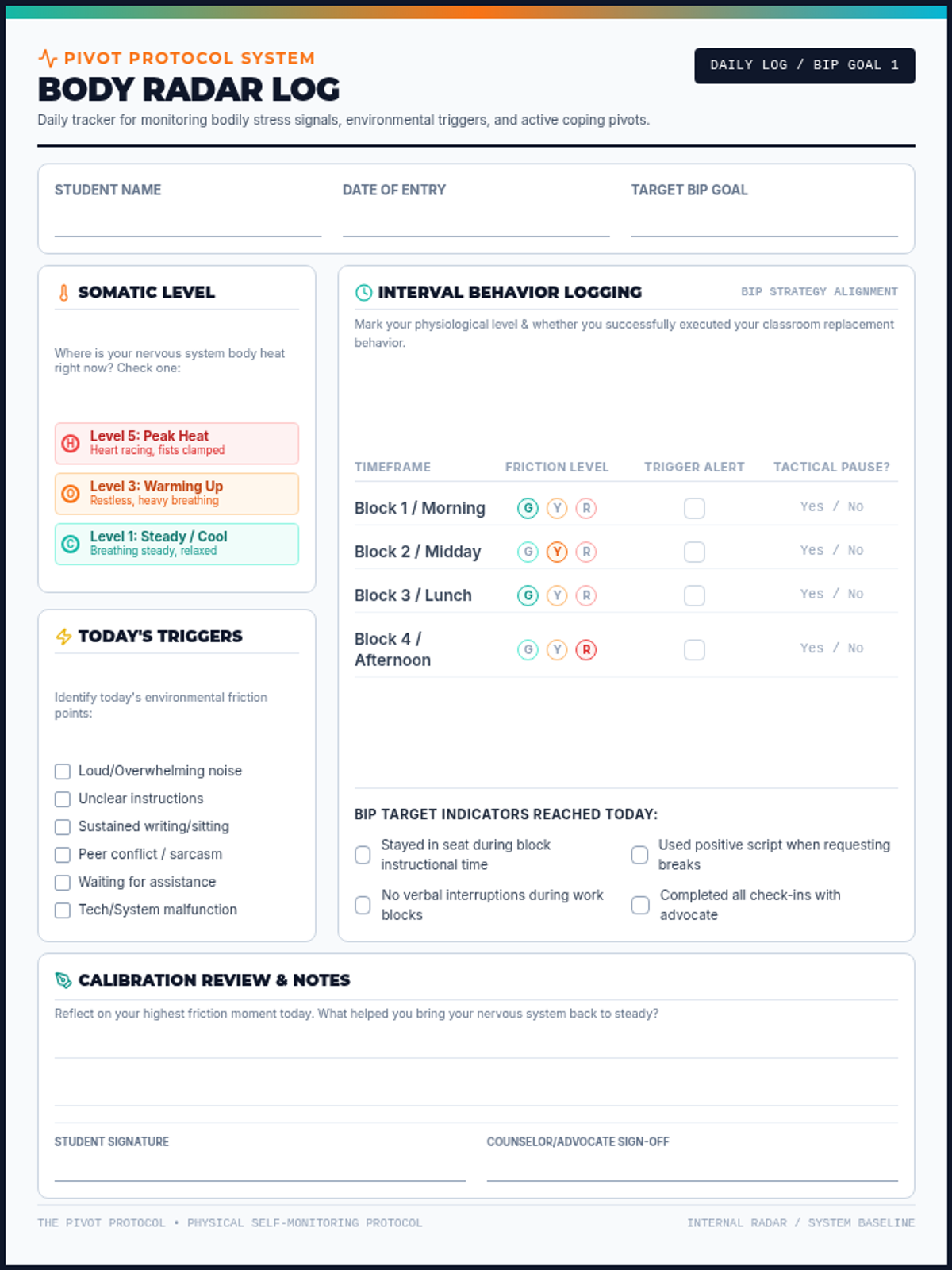
A physical student daily self-monitoring log to track bodily markers of stress, sensory triggers, and positive BIP behavior indicators. Features clean, handwriting-friendly tracking sections.
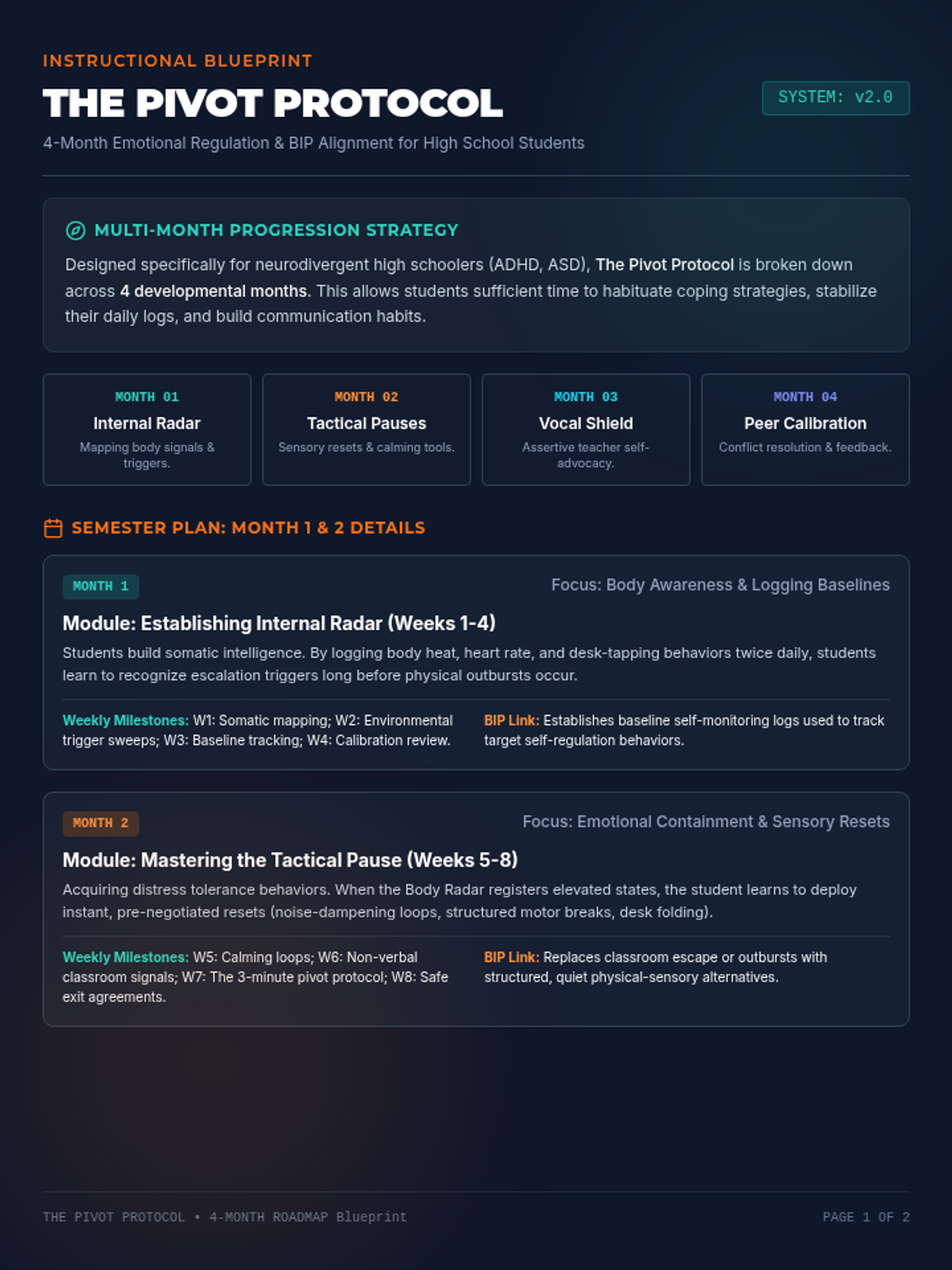
An expanded 4-month curriculum roadmap designed for high school counselors and educators. Outlines monthly themes, weekly goals, BIP target alignment strategies, and neurodivergent-affirming coping interventions.
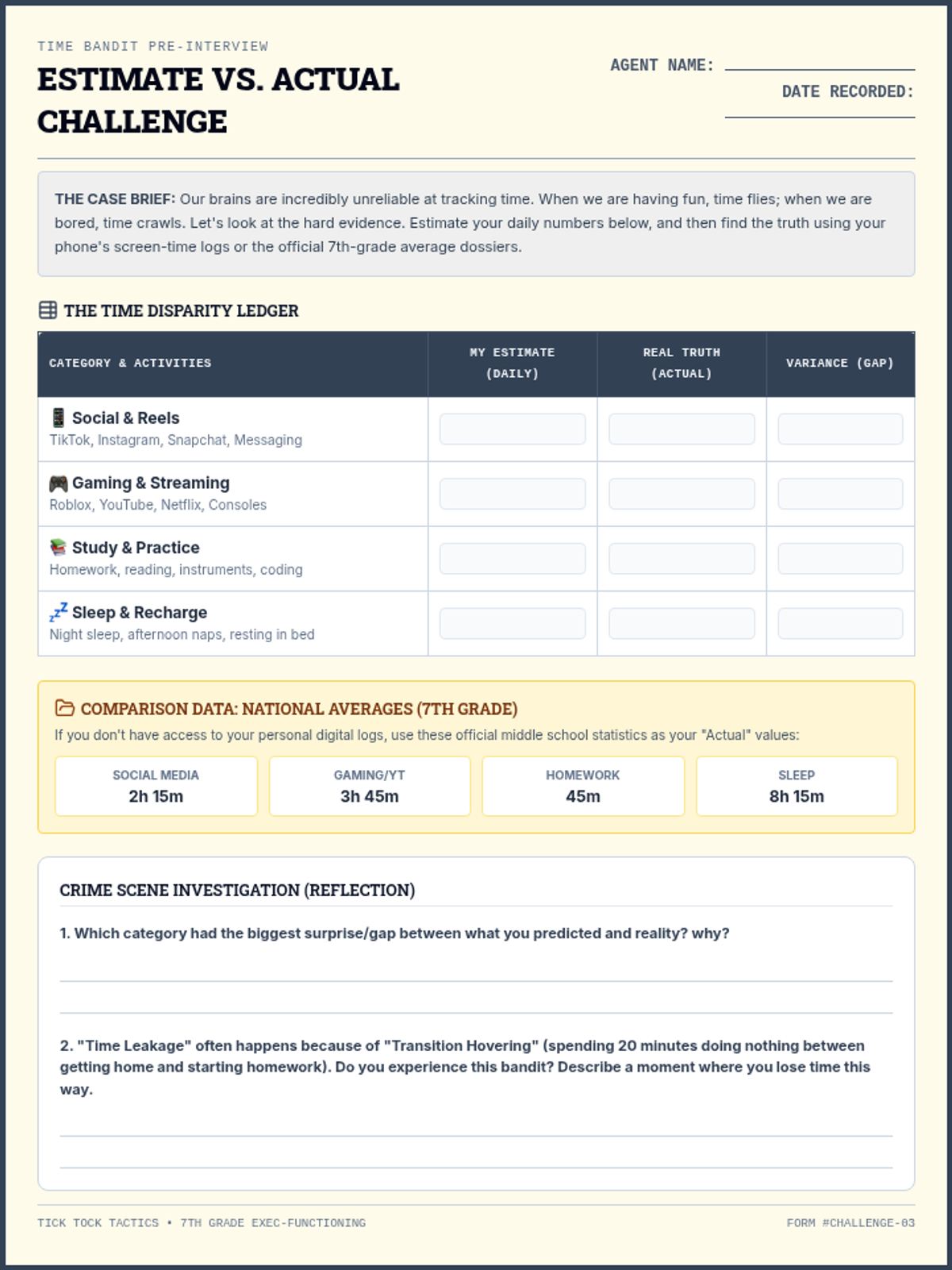
A single-page student activity sheet comparing predicted time allocations for screen use, sleep, and studying against actual tracking data and national middle school benchmarks.
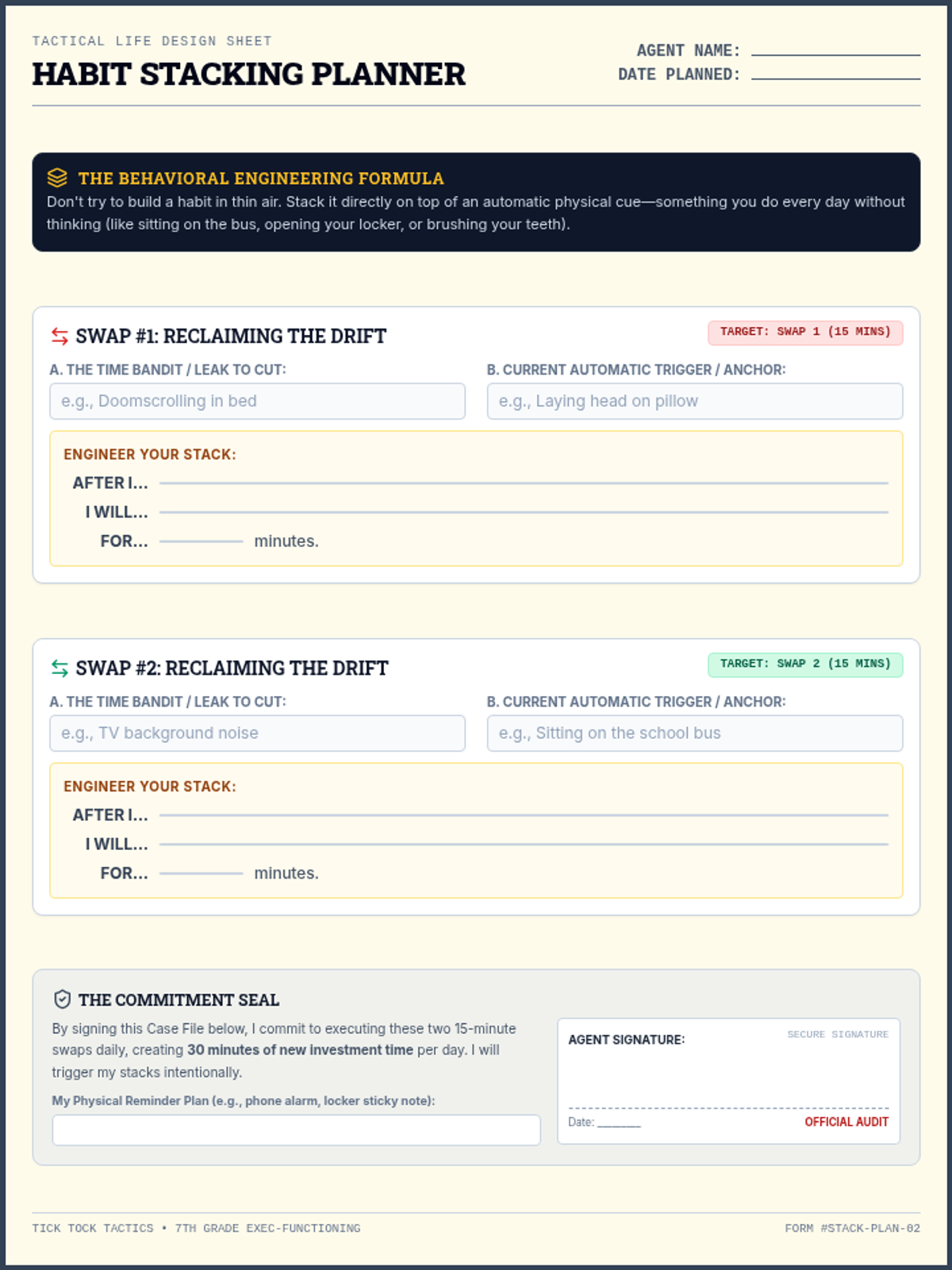
A creative, single-page student planning worksheet utilizing the atomic habit formula to design and commit to two 15-minute time-reclamation swaps.
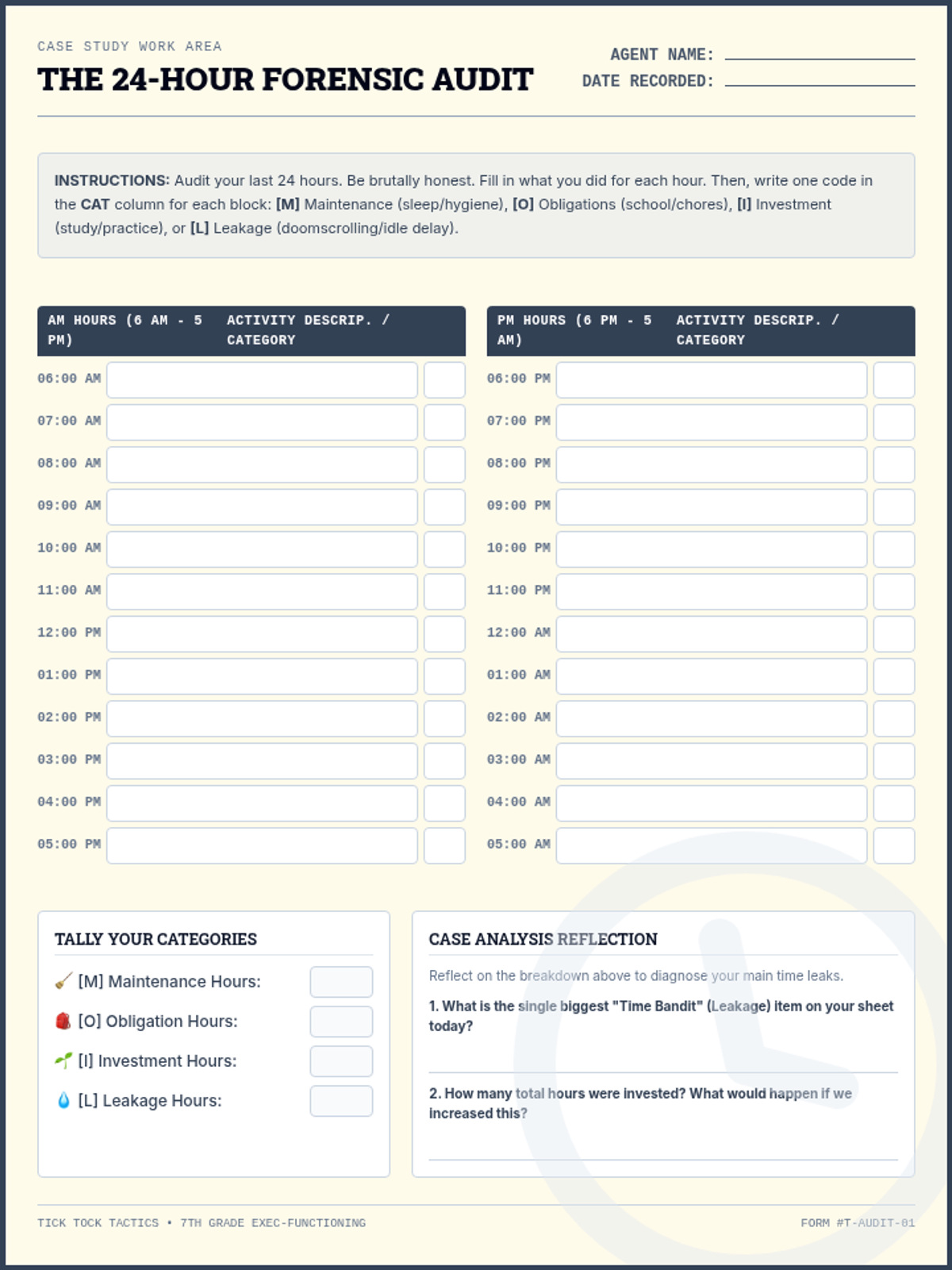
A highly structured, single-page student time-tracking worksheet featuring a dual-column 24-hour daily grid and an hourly category tally box.
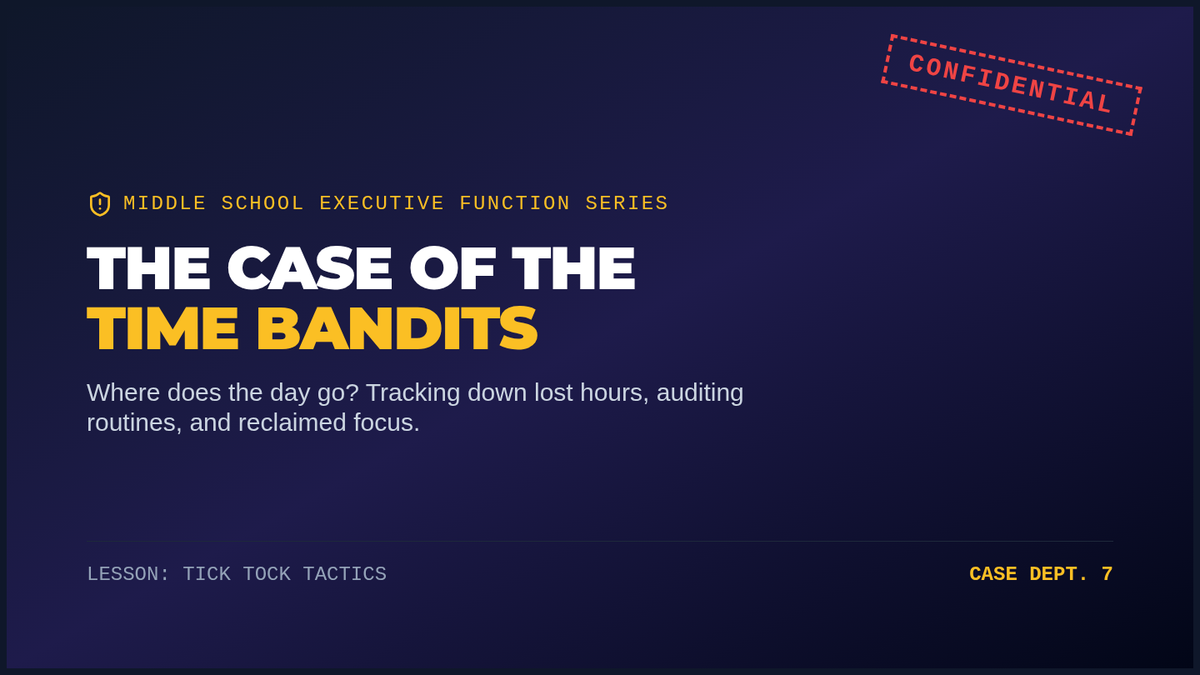
A sleek, high-visibility 6-slide presentation designed to introduce students to time categories, the screen time illusion, and the mechanics of habit stacking.
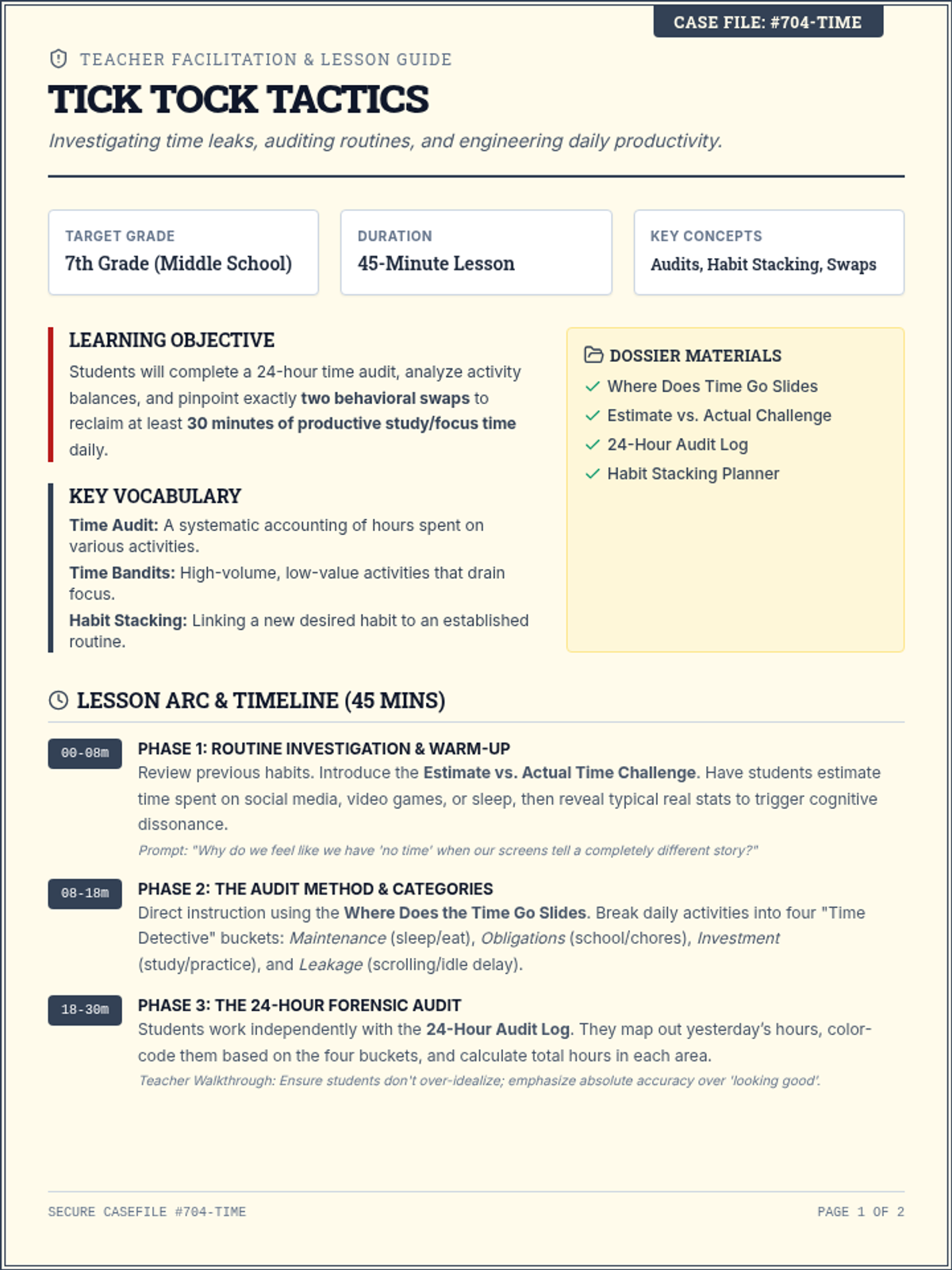
A comprehensive 2-page teacher-facing delivery guide featuring a lesson timeline, facilitation tips, discussion prompts, and differentiation strategies for teaching time audits and habit stacking.
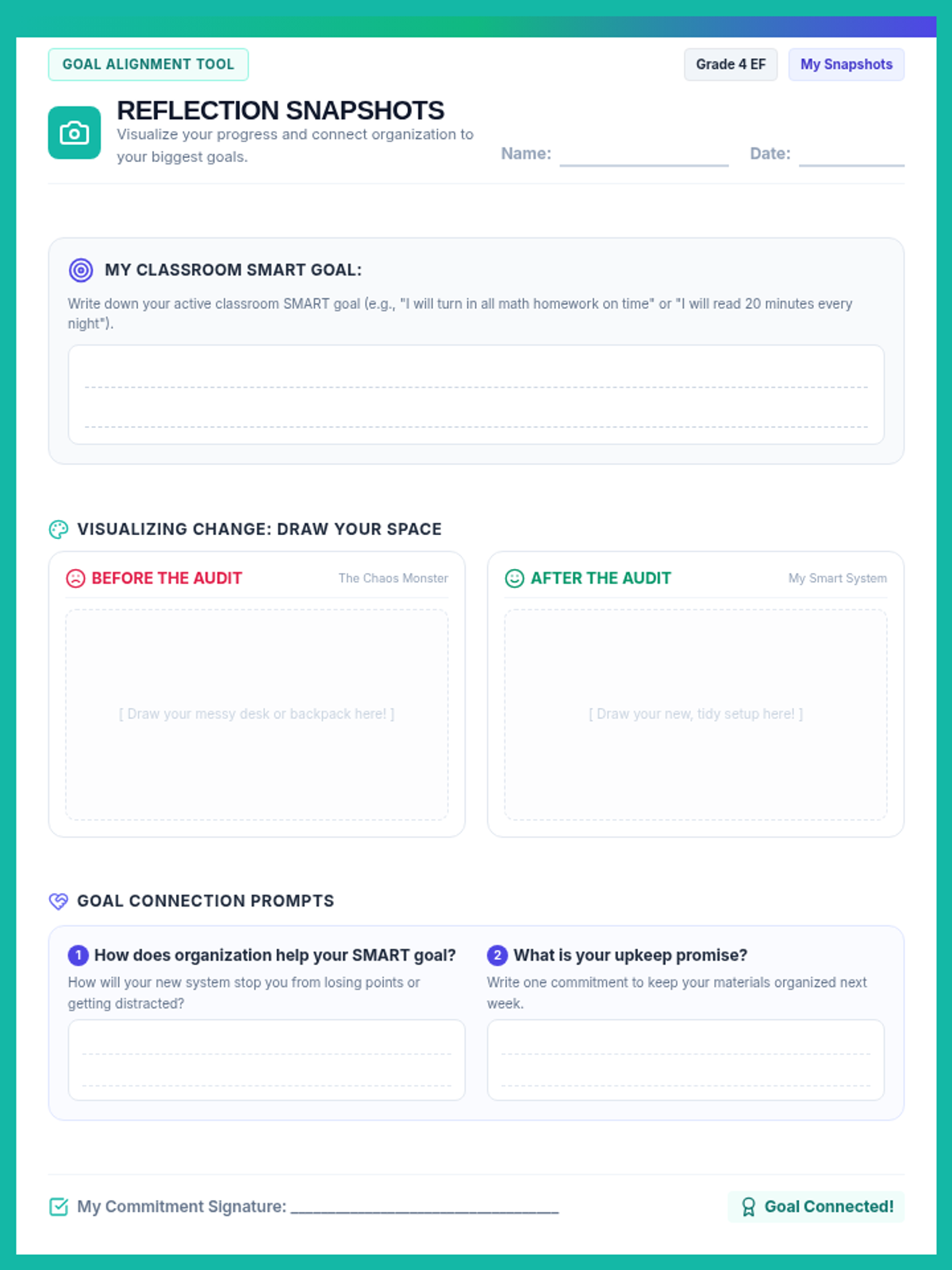
A 1-page student reflection worksheet allowing students to visualize their organization journey (Before vs. After) and connect materials management to their specific academic or behavioral SMART goals.
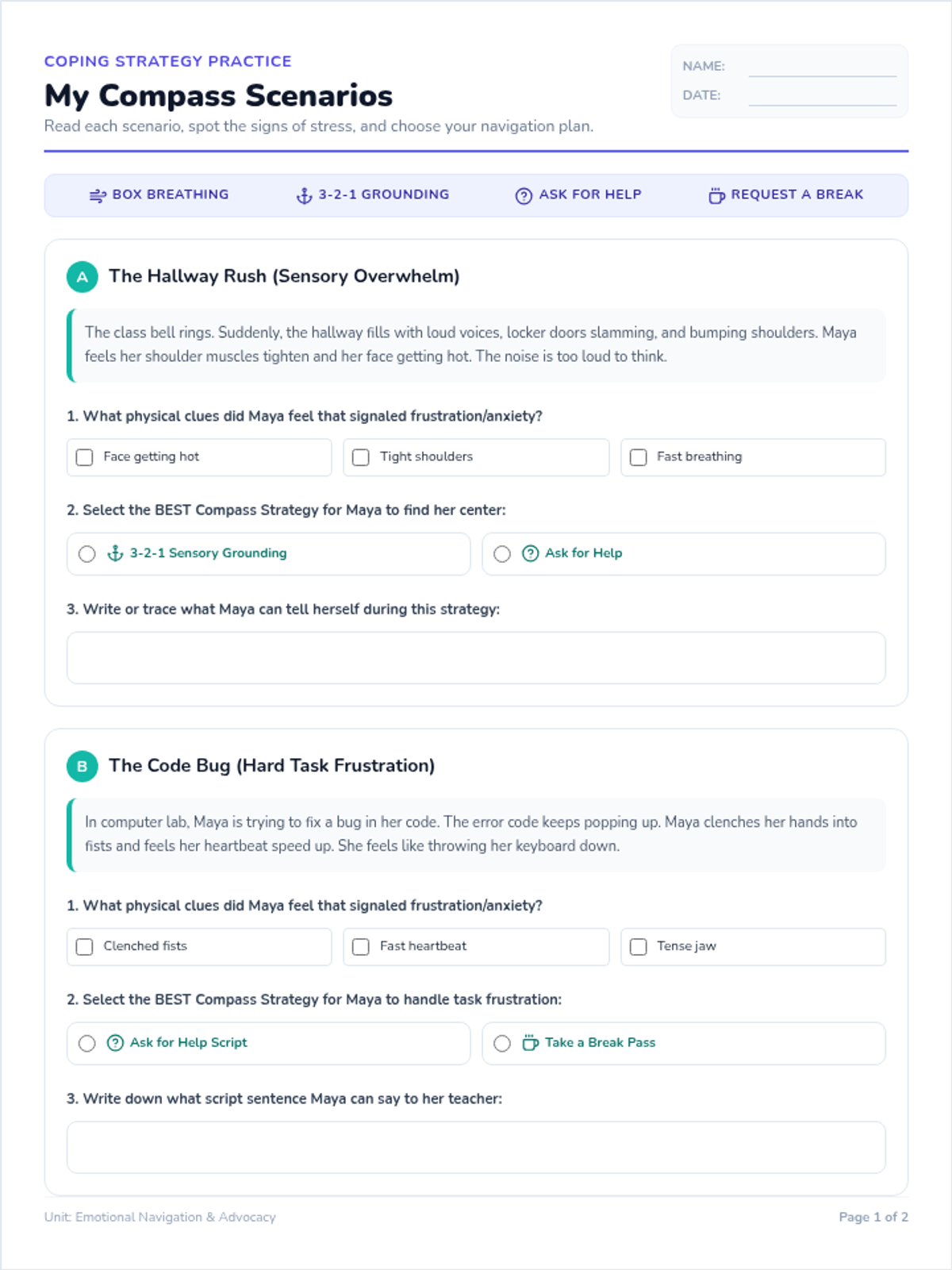
A 2-page student-facing scenario activity worksheet. It walks 9th-grade students through real-world high school scenarios of anxiety and frustration, helping them identify physiological triggers and choose from their Cool Down Compass strategies.
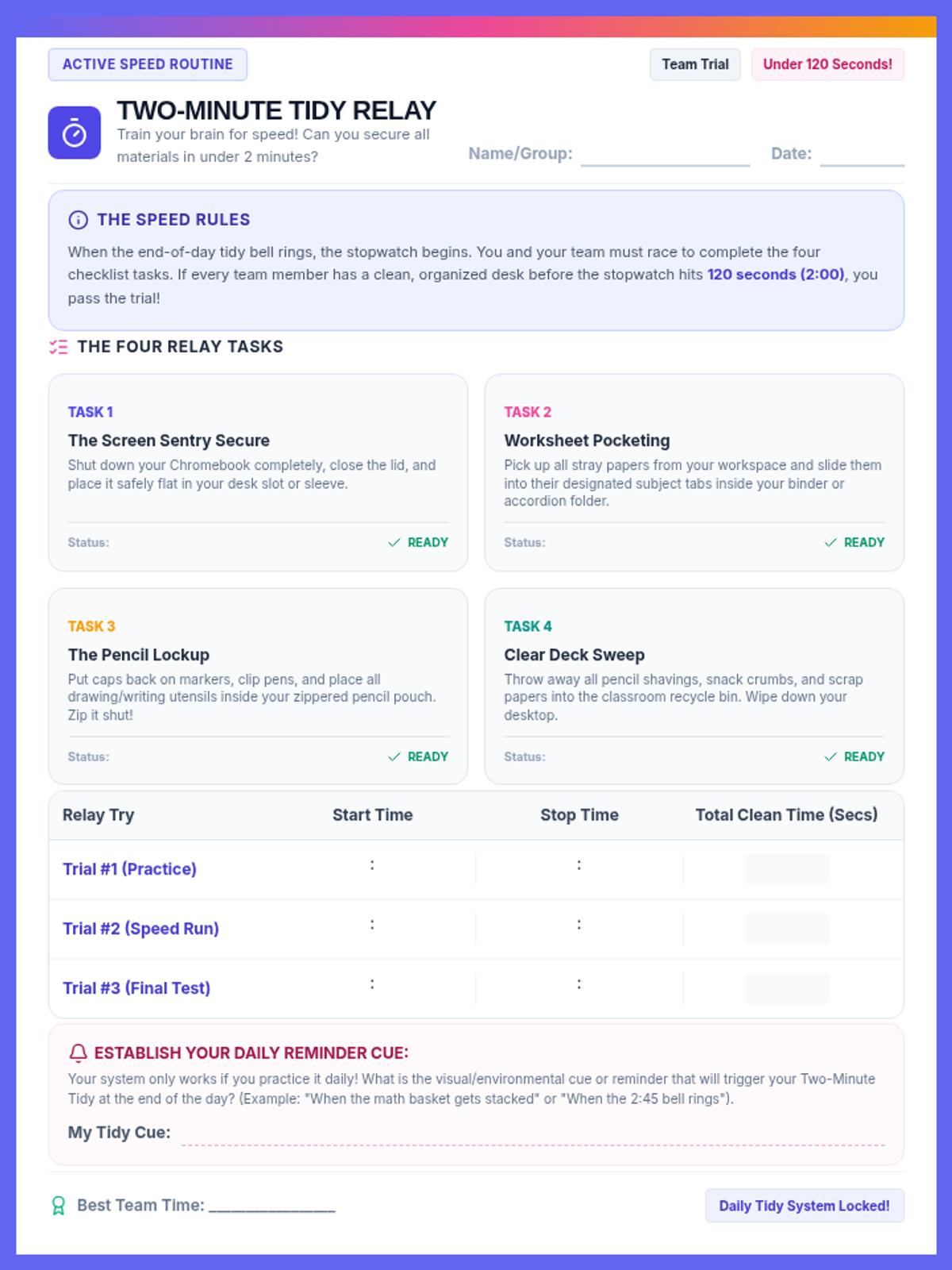
A 1-page student and teacher active game card for practicing the Two-Minute Tidy routine. Features structured time-trial slots, task-based checklists, and daily cue-setting prompts.
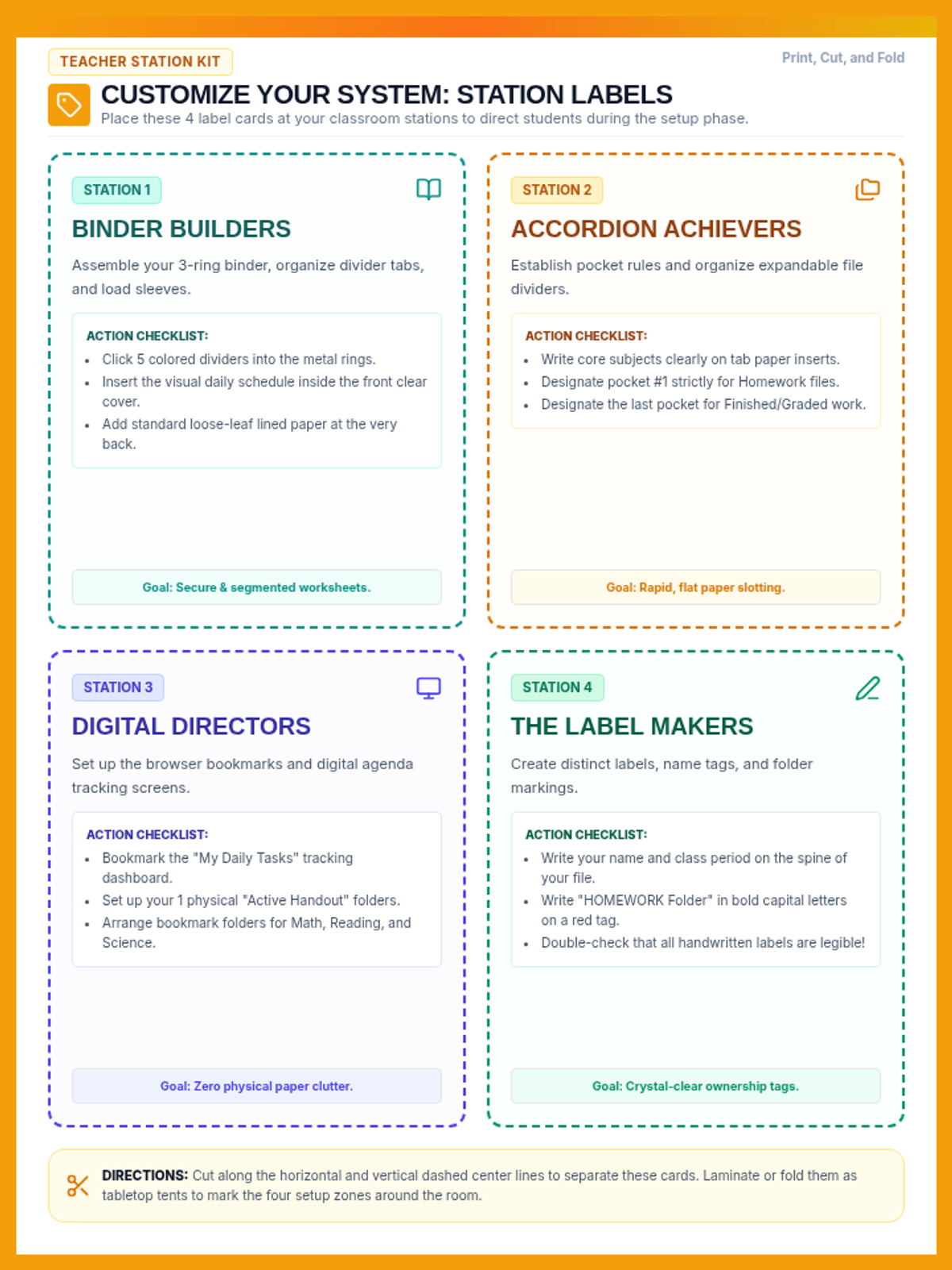
Classroom station cards/labels (such as Binder Builders, Accordion Achievers, Digital Directors, and Label Makers) designed to guide small groups through setting up their chosen organization system.
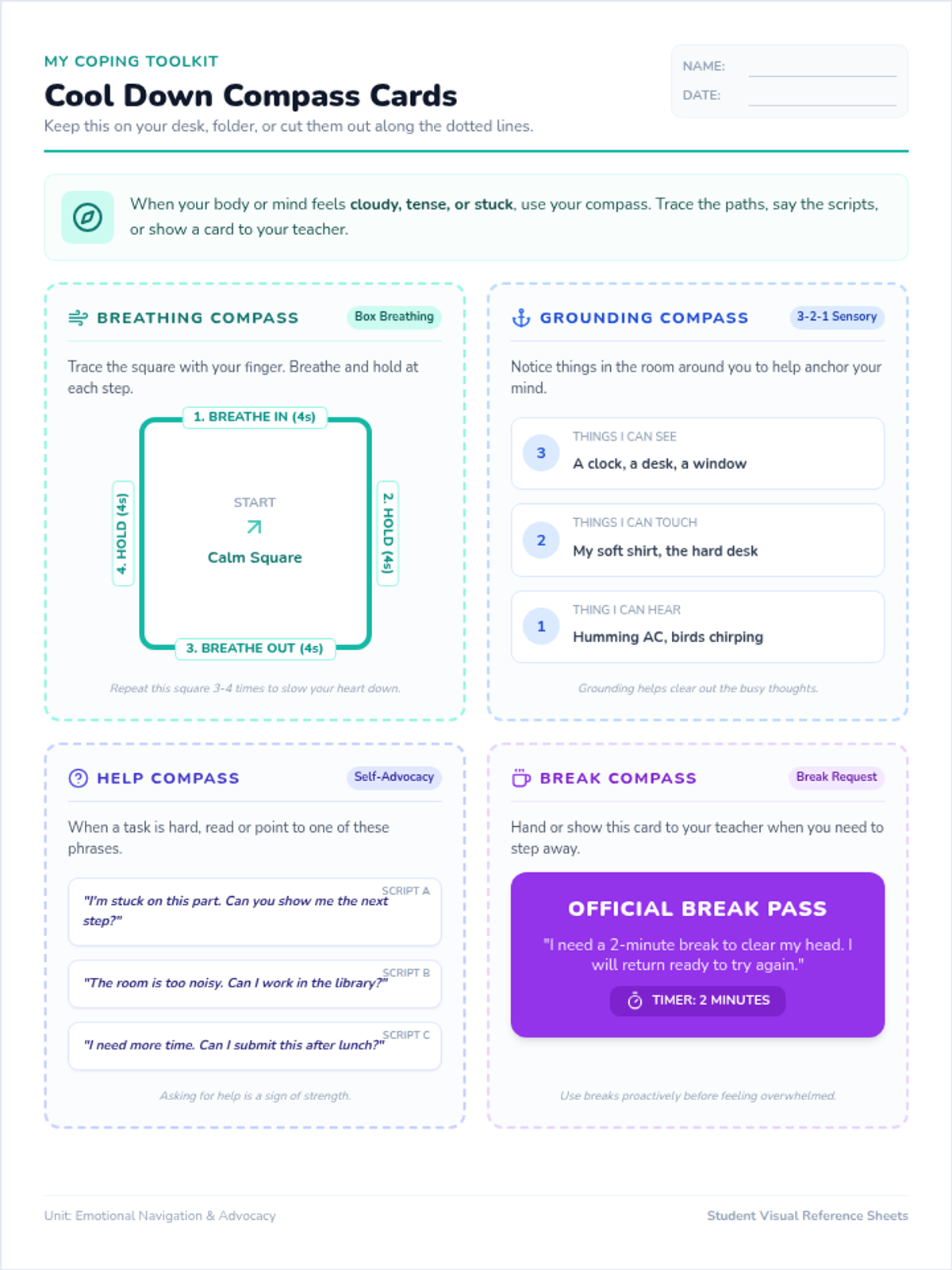
A highly visual, soothing, and structured student-facing reference card sheet. It features four distinct visual coping strategy cards (box breathing, sensory grounding, help scripts, and break passes) designed with clear paths, simple steps, and calming graphics for 9th-grade autistic students.
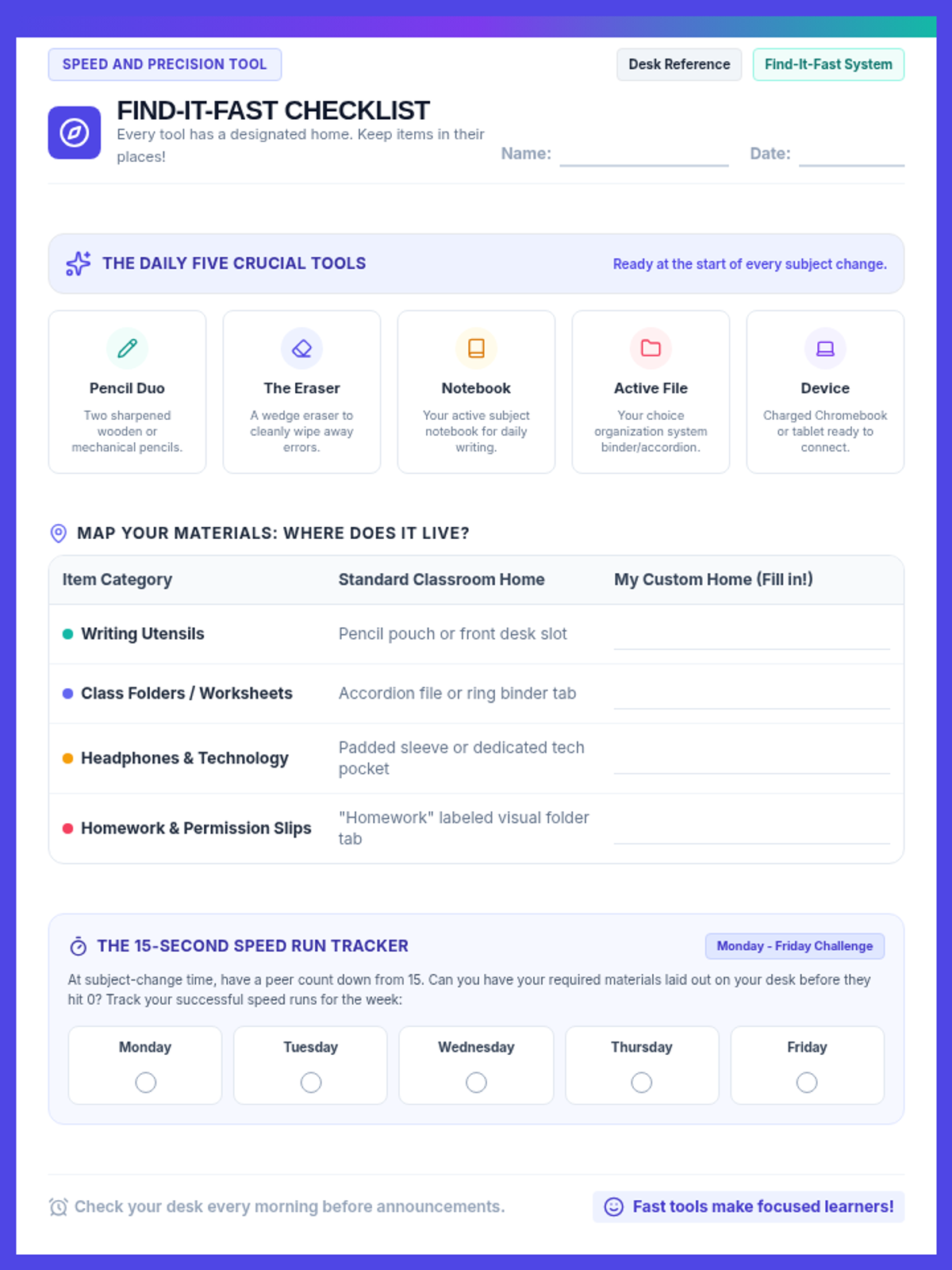
A 1-page daily desktop reference checklist helping 4th-grade students keep track of their essential daily learning supplies, their designated locations, and visual indicators.
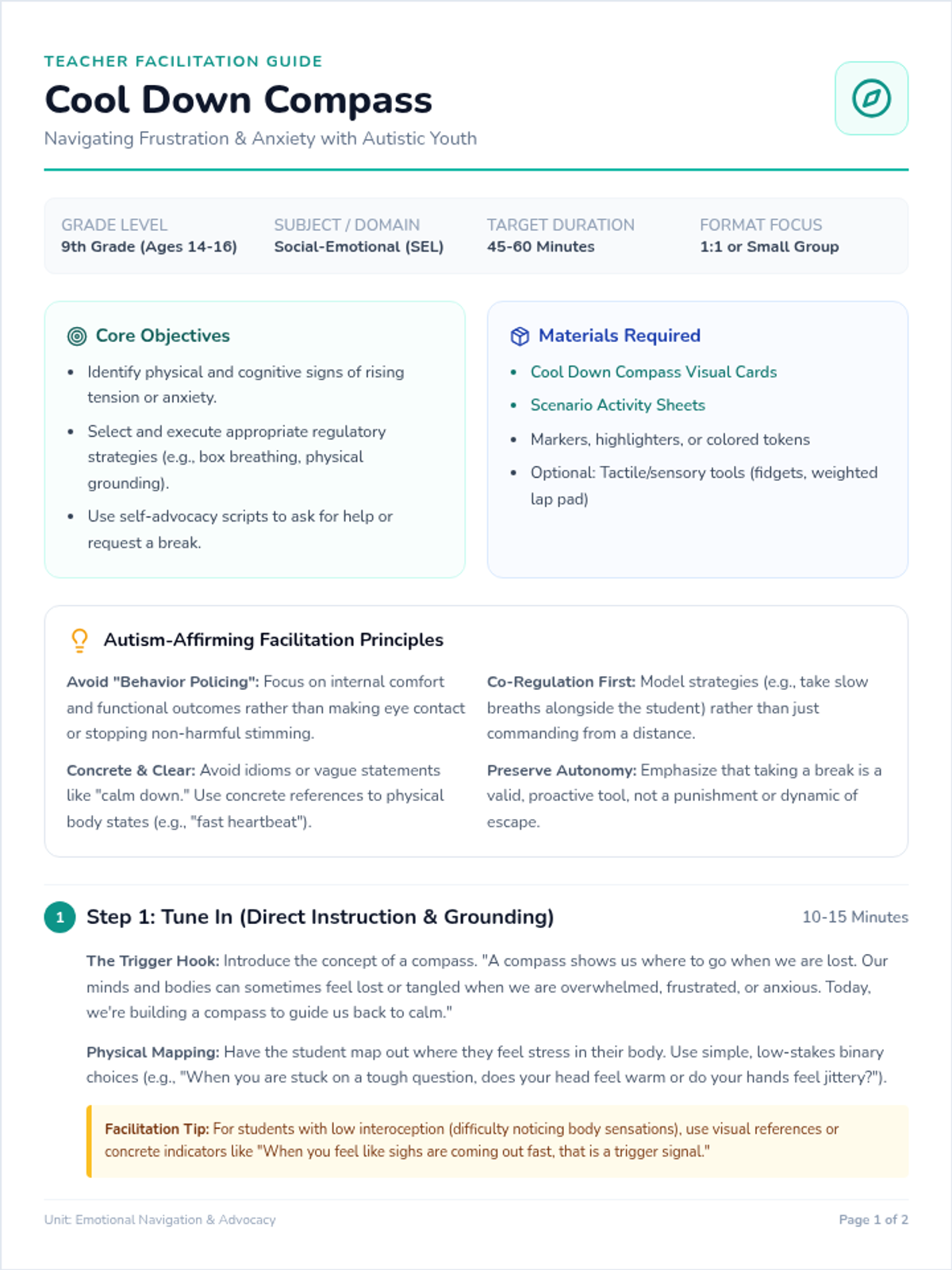
A structured, teacher-facing facilitation guide and lesson plan designed for educators supporting 9th-grade autistic students. It details specific instructional steps, neurodivergent-affirming strategies, and pacing instructions for teaching self-regulation and self-advocacy.
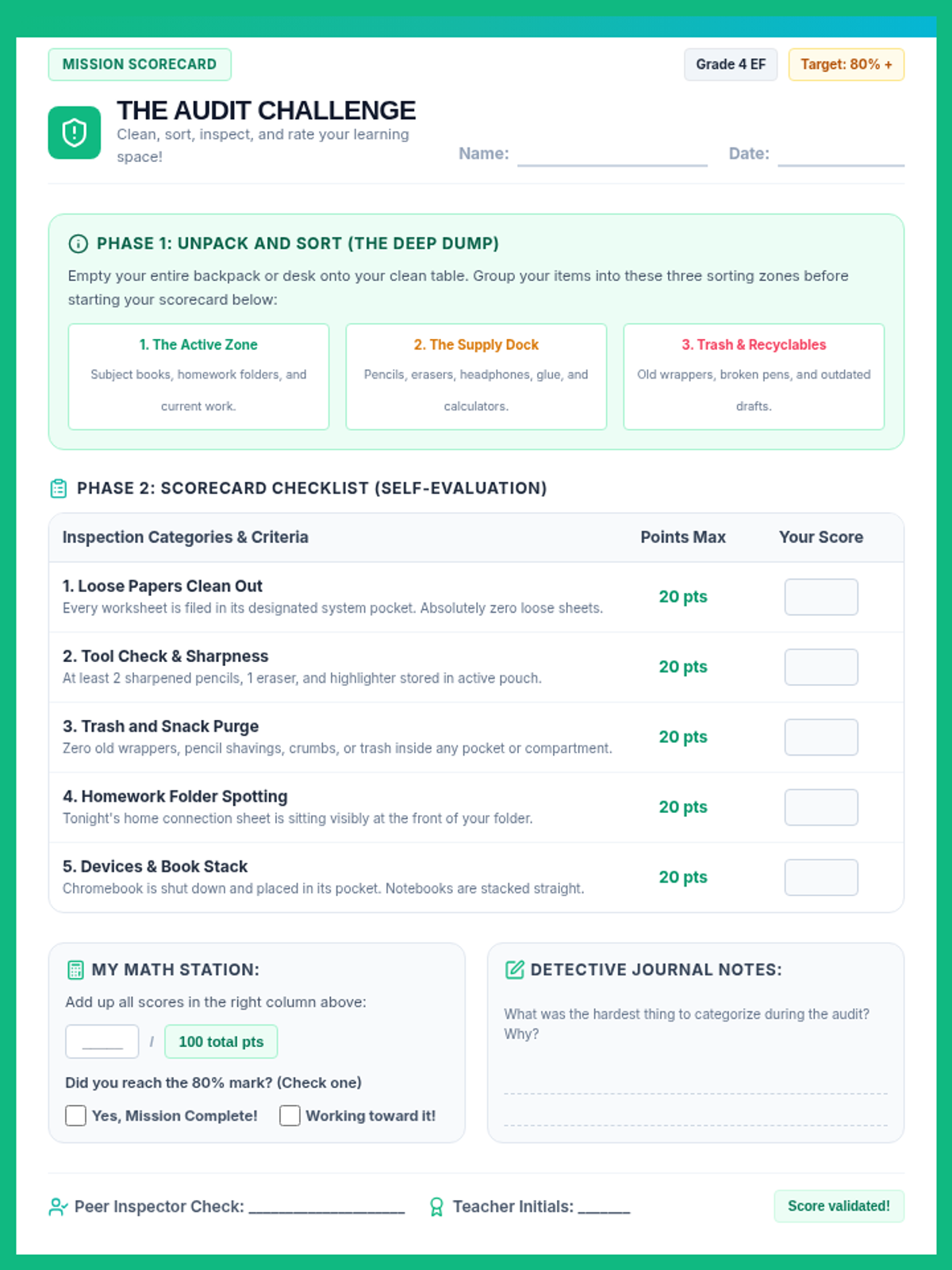
A student checklist and scorecard for auditing backpacks or desks, allowing 4th-grade students to score their organization, track missing items, and calculate their final percentage.
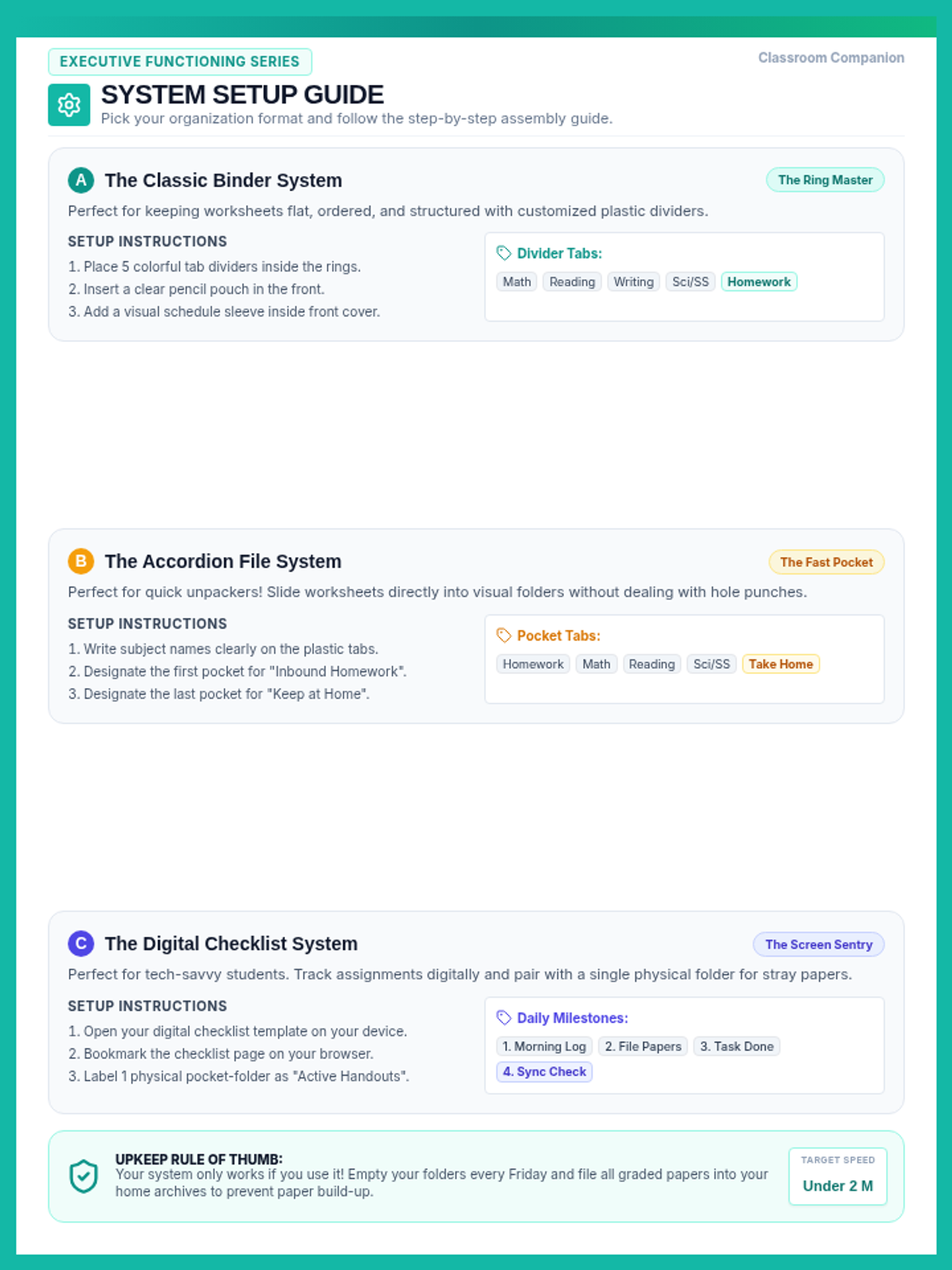
A 1-page visual instruction sheet and checklist helping 4th-grade students set up their chosen organization system (Classic Binder, Accordion File, or Digital Tracker) with clear physical labels and tabs.
Interactive and energetic presentation slides for the 'Organized and On Top' lesson. Features bright, high-contrast layouts guiding 4th-grade students through selecting an organization system, performing a backpack/desk audit, and practicing the Two-Minute Tidy routine.
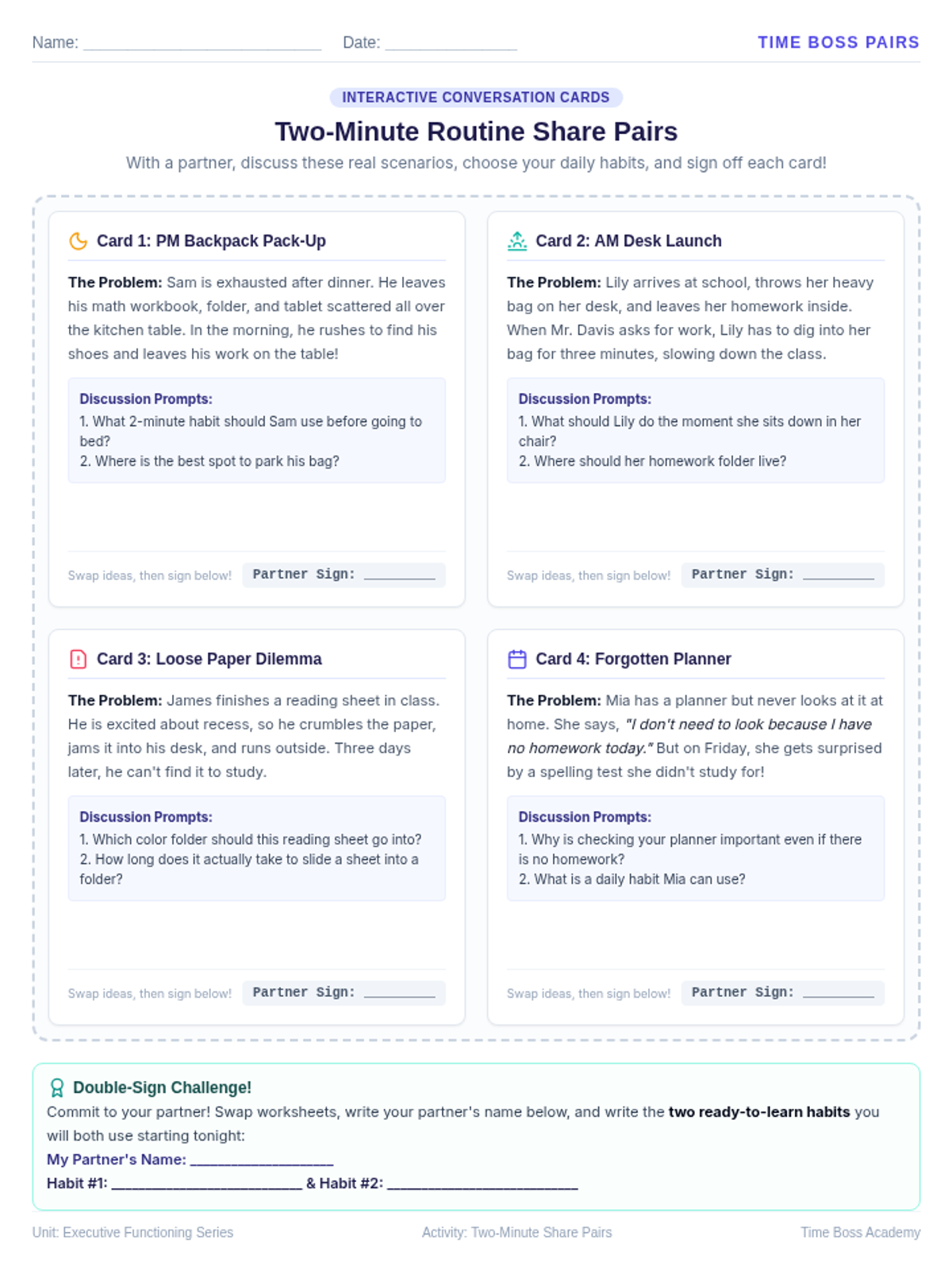
A set of four interactive, cuttable conversation cards for pairs to troubleshoot real-world daily routines and material challenges. Each card includes scenarios, discussion prompts, and a partner sign-off box.
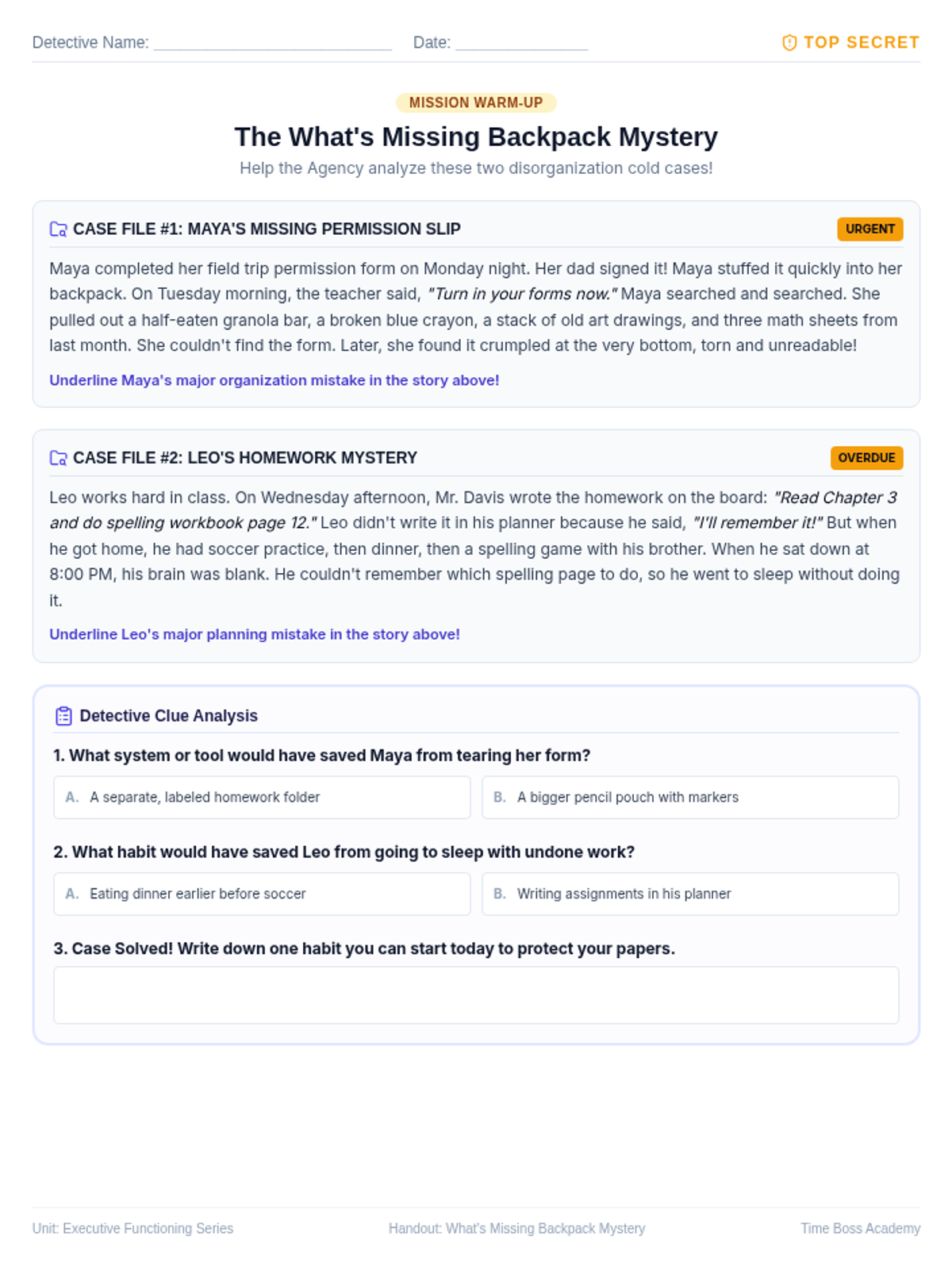
An engaging, detective-themed warm-up worksheet for students to diagnose and analyze organization challenges in two short case files. It establishes the context for why organization systems are essential.
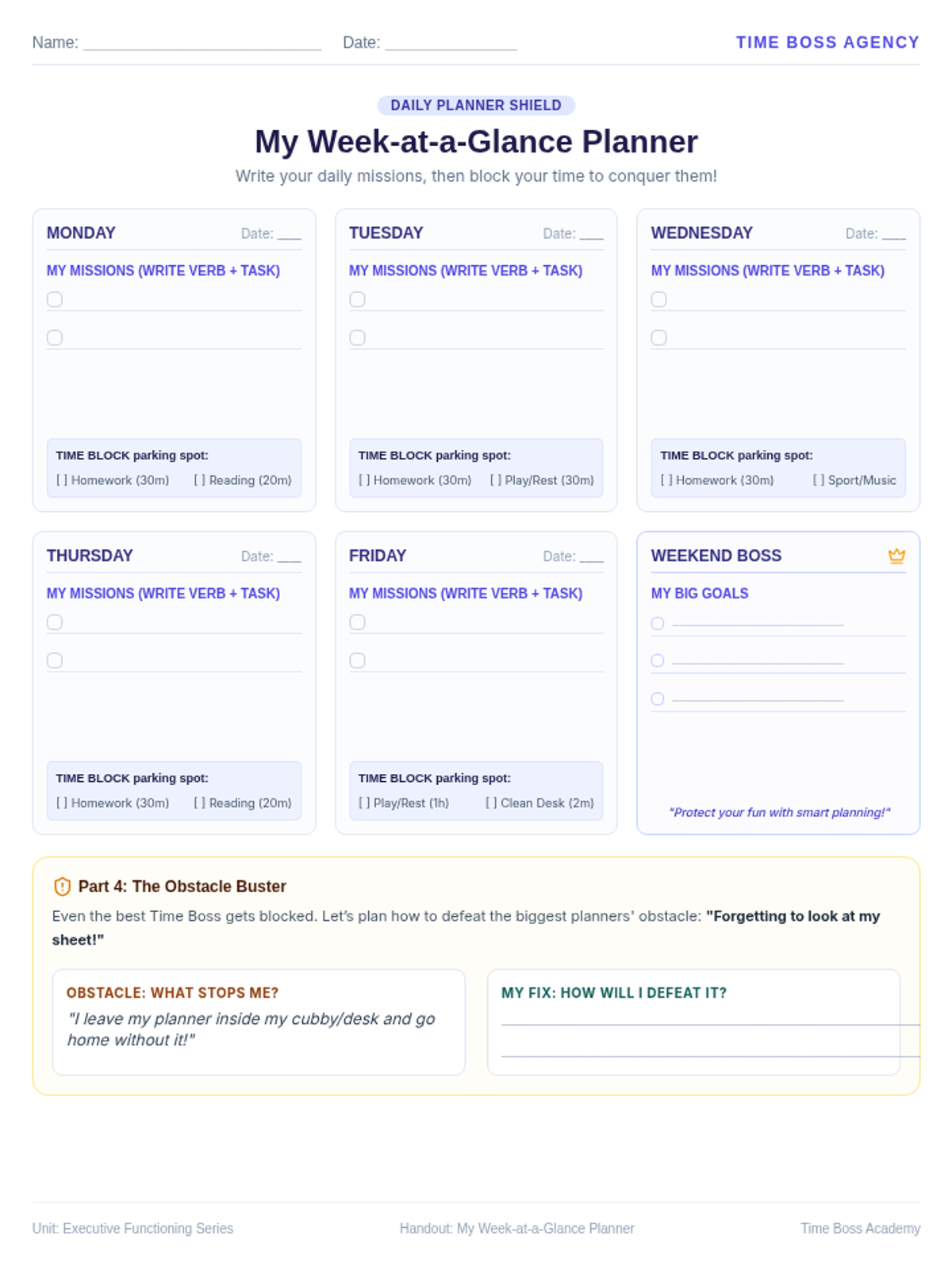
A student-facing weekly planner sheet with spaces for task lists, daily time blocks, and a dedicated 'Obstacle Buster' brainstorming section. Formatted as a high-contrast grid to scaffold third-grade planning habits.
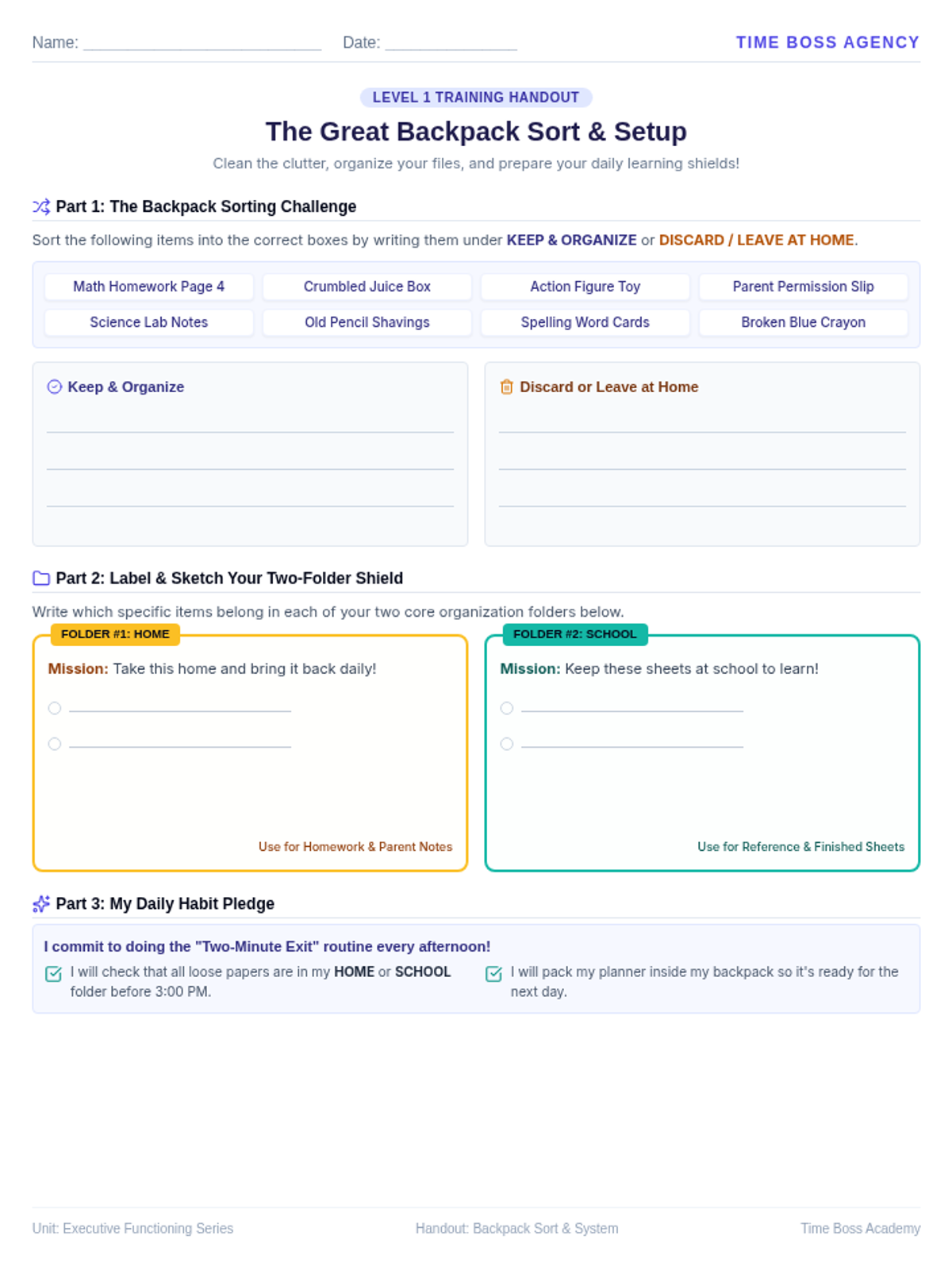
A student-facing handout for categorizing workspace and backpack materials, plus a guide to establishing the two-folder system. It features clear sorting columns and label templates for students to master backpack hygiene.
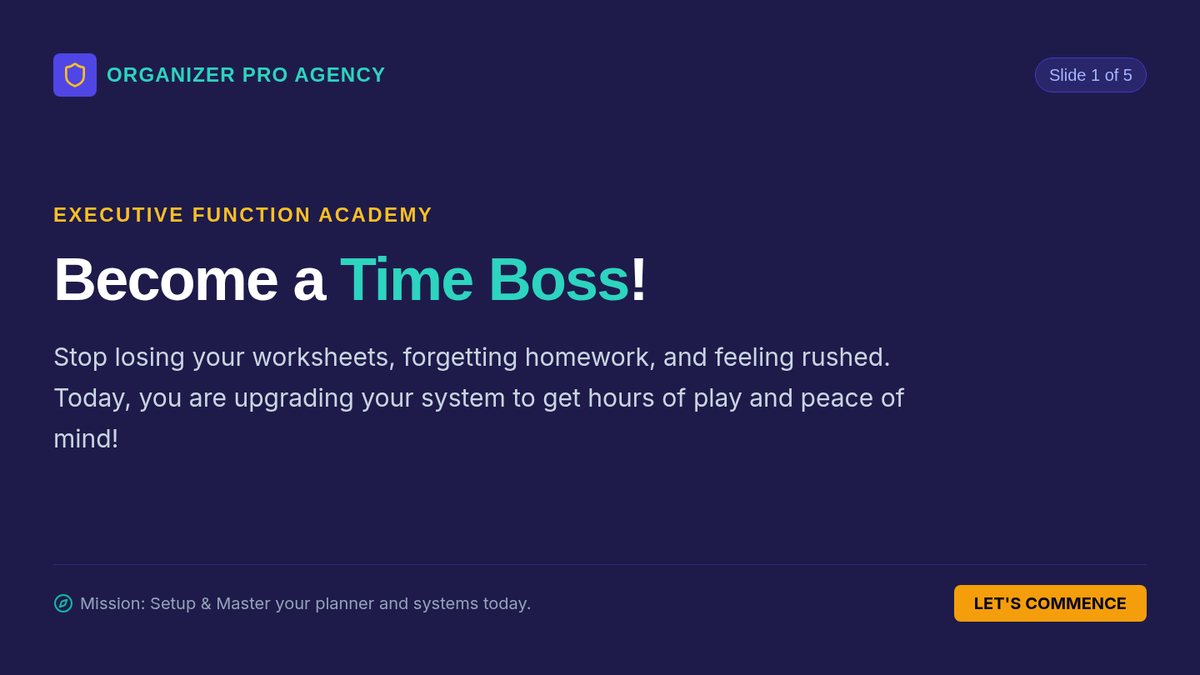
A high-impact, 5-slide visual presentation for teaching planner usage, time blocking, and the two-folder organization system. It features large text (minimum 24px), clean structures, and a 'Time Boss Agency' theme.
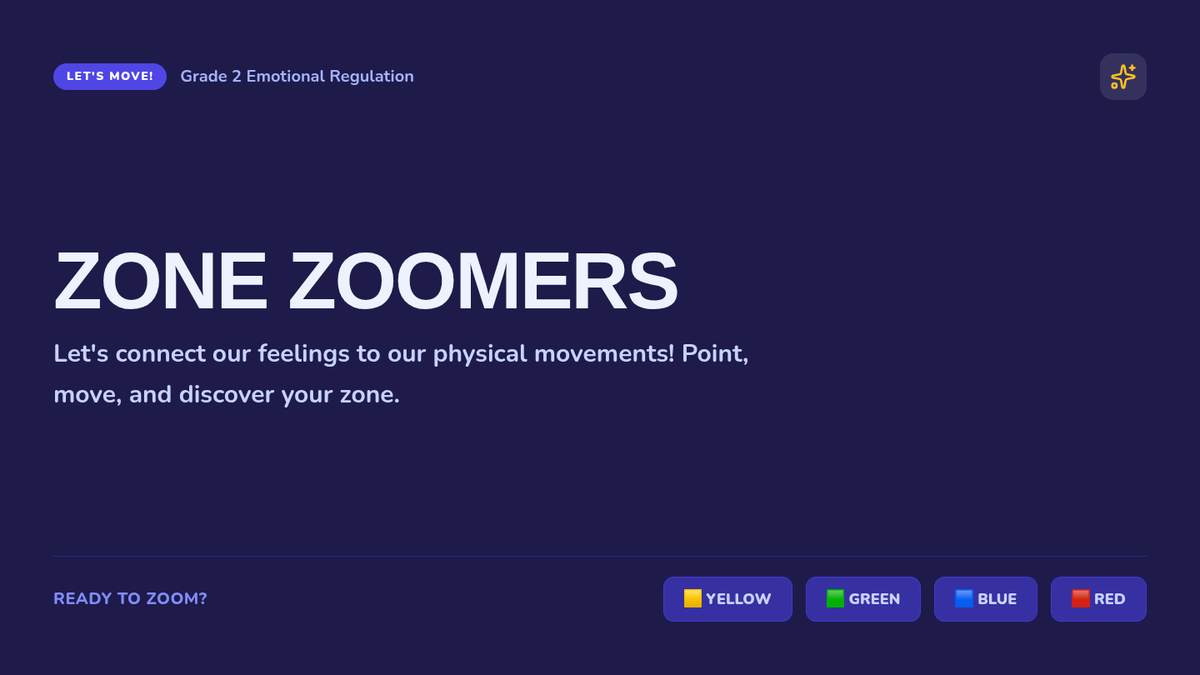
An interactive slide deck featuring 7 high-contrast, large-font visual slides. Each slide supports teacher-led instruction, models specific gross motor activities for the Blue, Green, Yellow, and Red zones, and includes giant, interactive-style mock AAC overlays for on-screen touch communication.
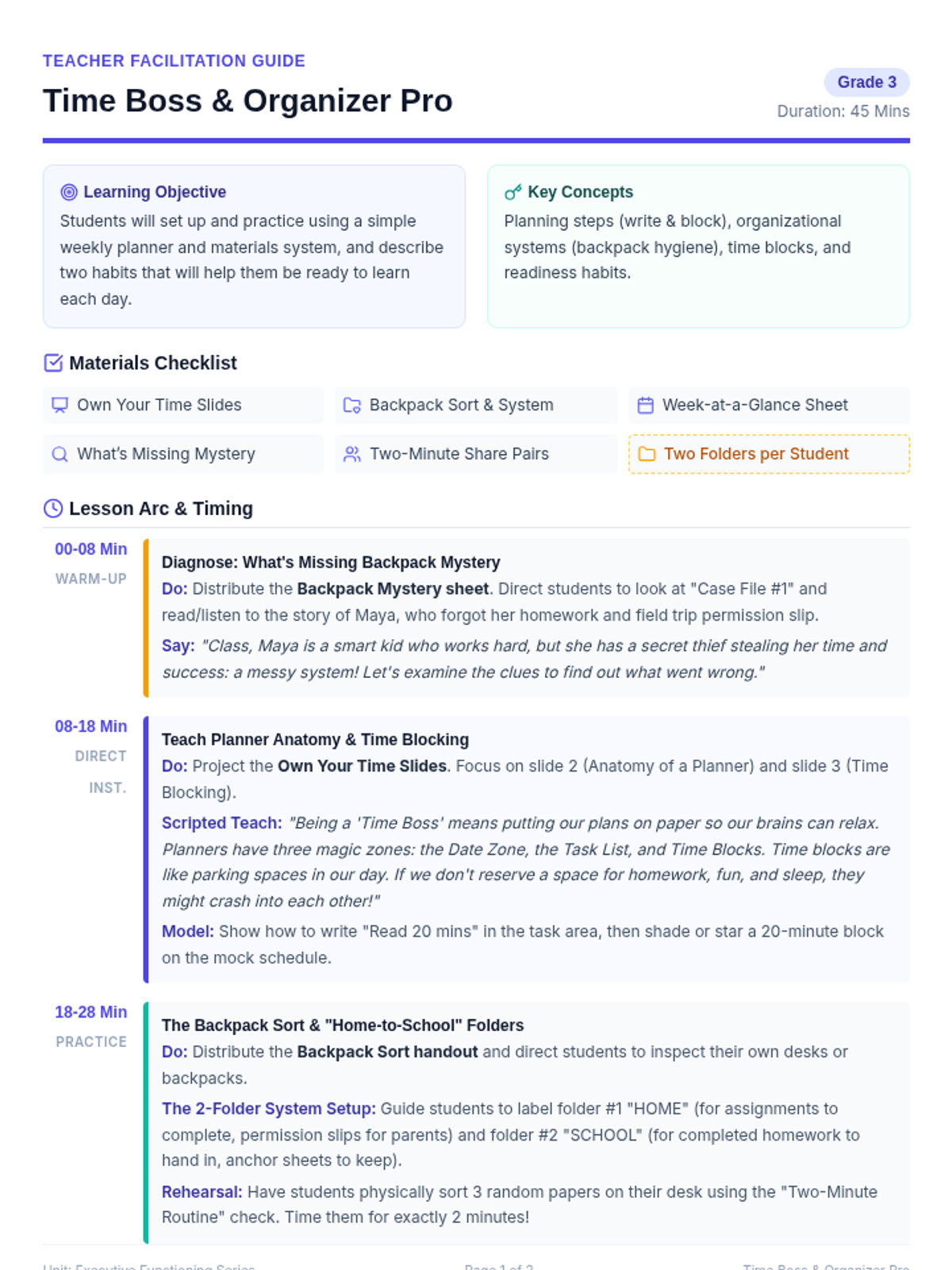
A comprehensive, two-page teacher facilitation guide for the 'Time Boss and Organizer Pro' lesson. It details the 45-minute lesson arc, teacher scripts, materials checklist, student misconceptions, and differentiation strategies for third-grade executive functioning.
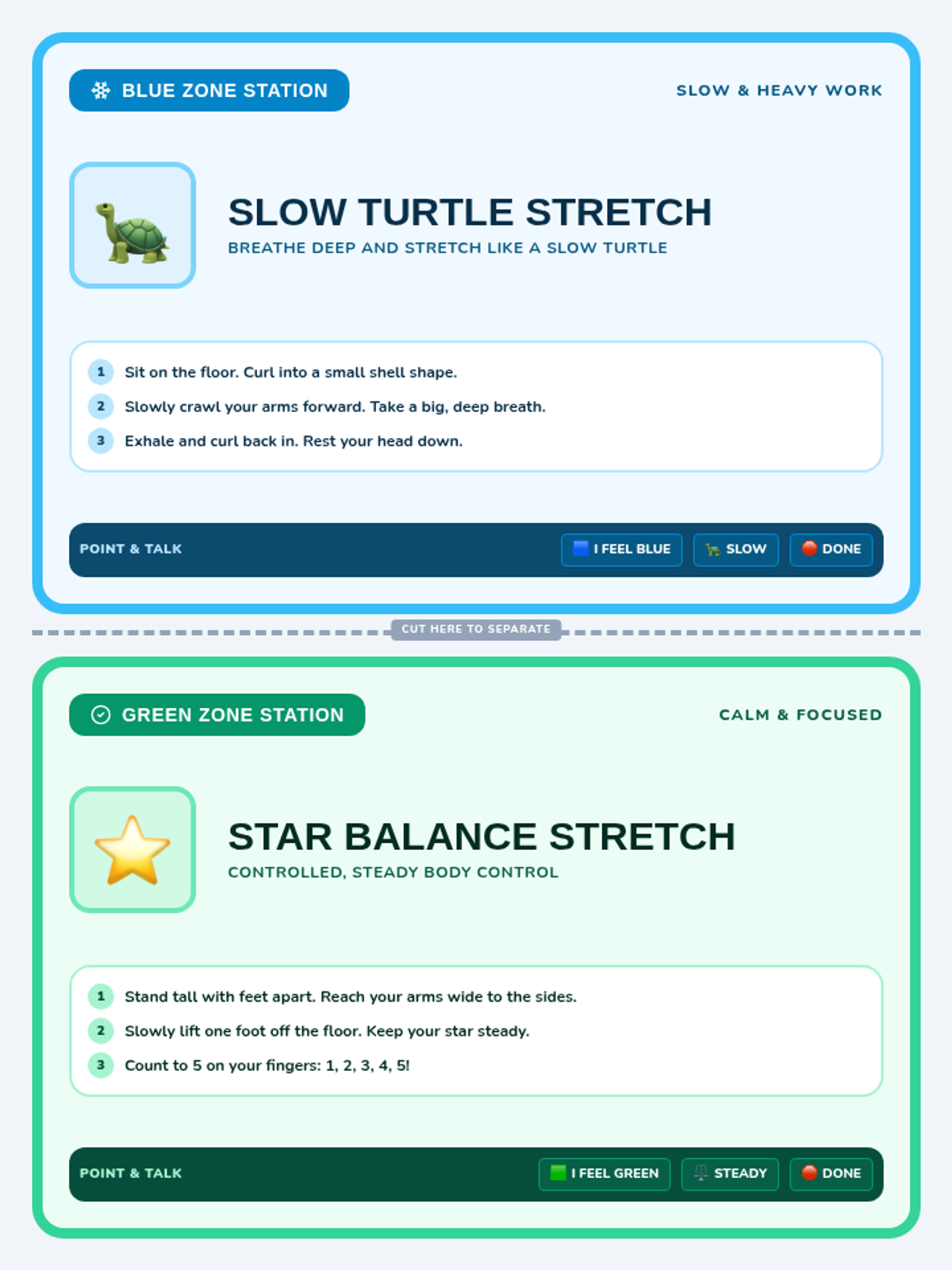
Printable, color-coded station signs for the Blue, Green, Yellow, and Red zones. Each card outlines a specific gross motor activity (Turtle Stretch, Star Balance, Bunny Hops, and Bear Crawls) accompanied by high-contrast mock AAC icons to assist nonverbal communication.
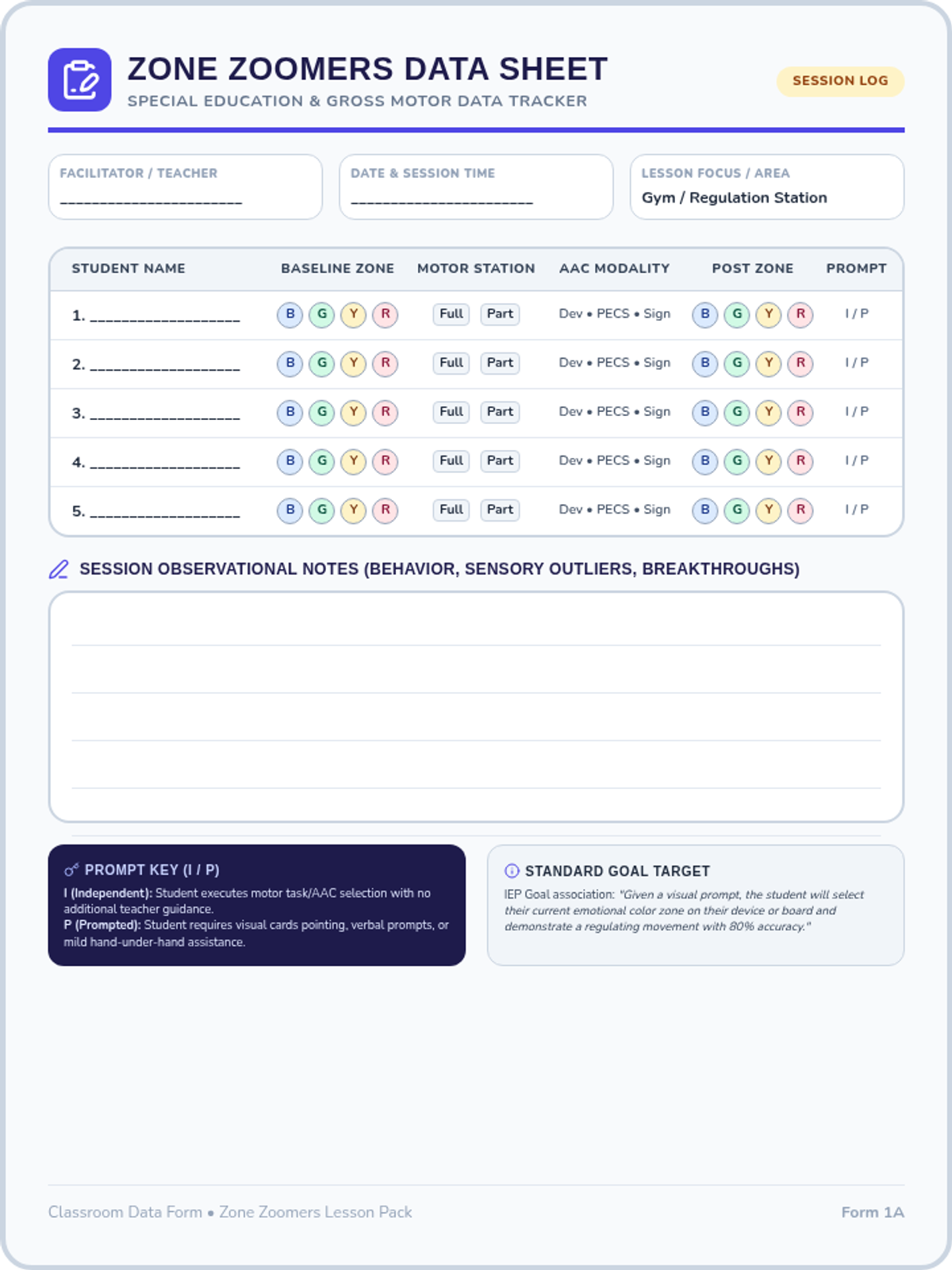
A printable student data tracking sheet designed for educators and classroom paraprofessionals. It enables quick, structured data entry on student emotional baselines, gross motor participation levels, AAC modality usage, and post-activity regulation states.
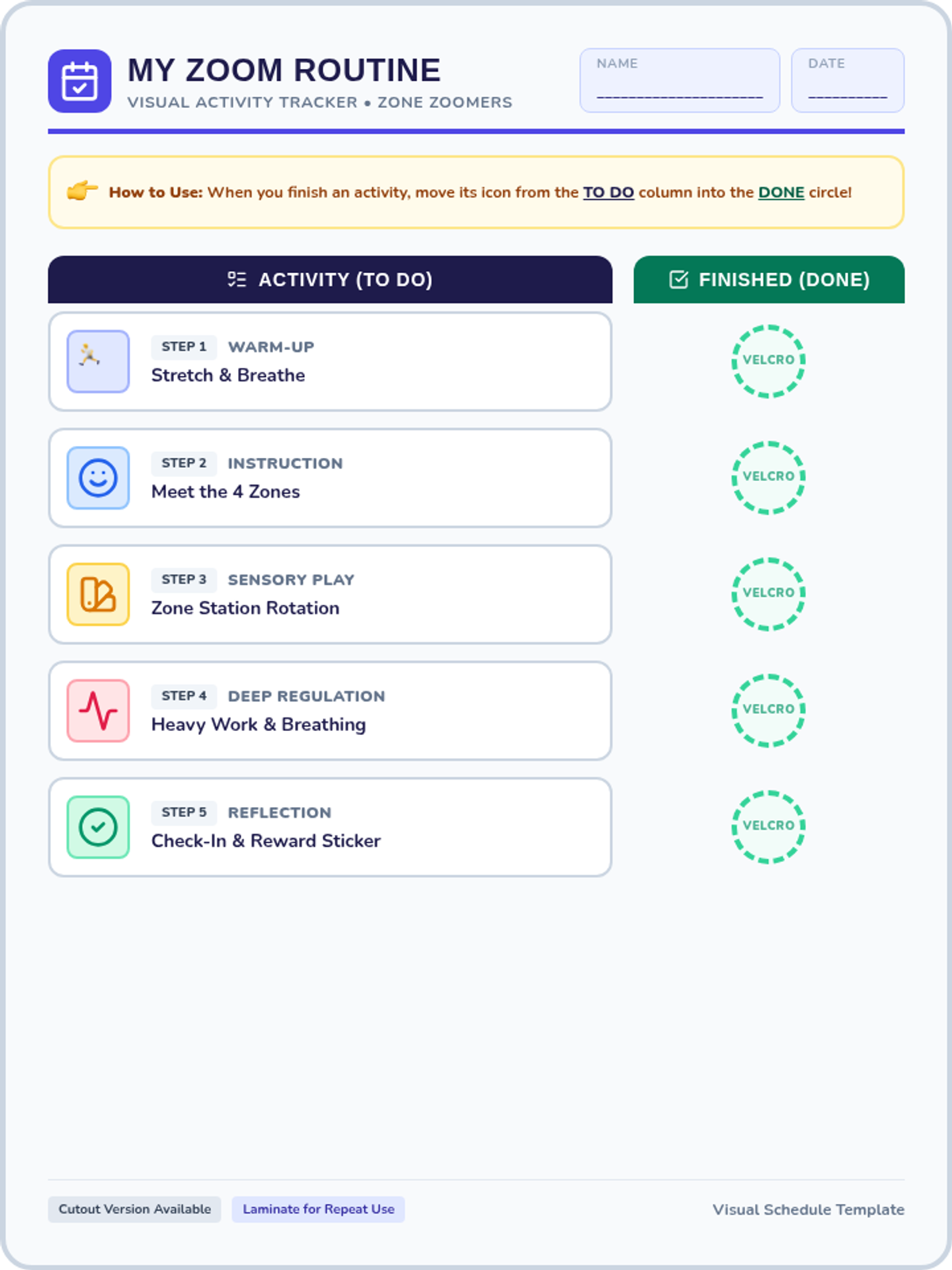
A highly structured, visual schedule document designed for nonverbal/autistic students. It utilizes simple PECS-style icons and a tactile 'To Do' vs 'Done' board layout to help students independently track their progress through the Zone Zoomers lesson.
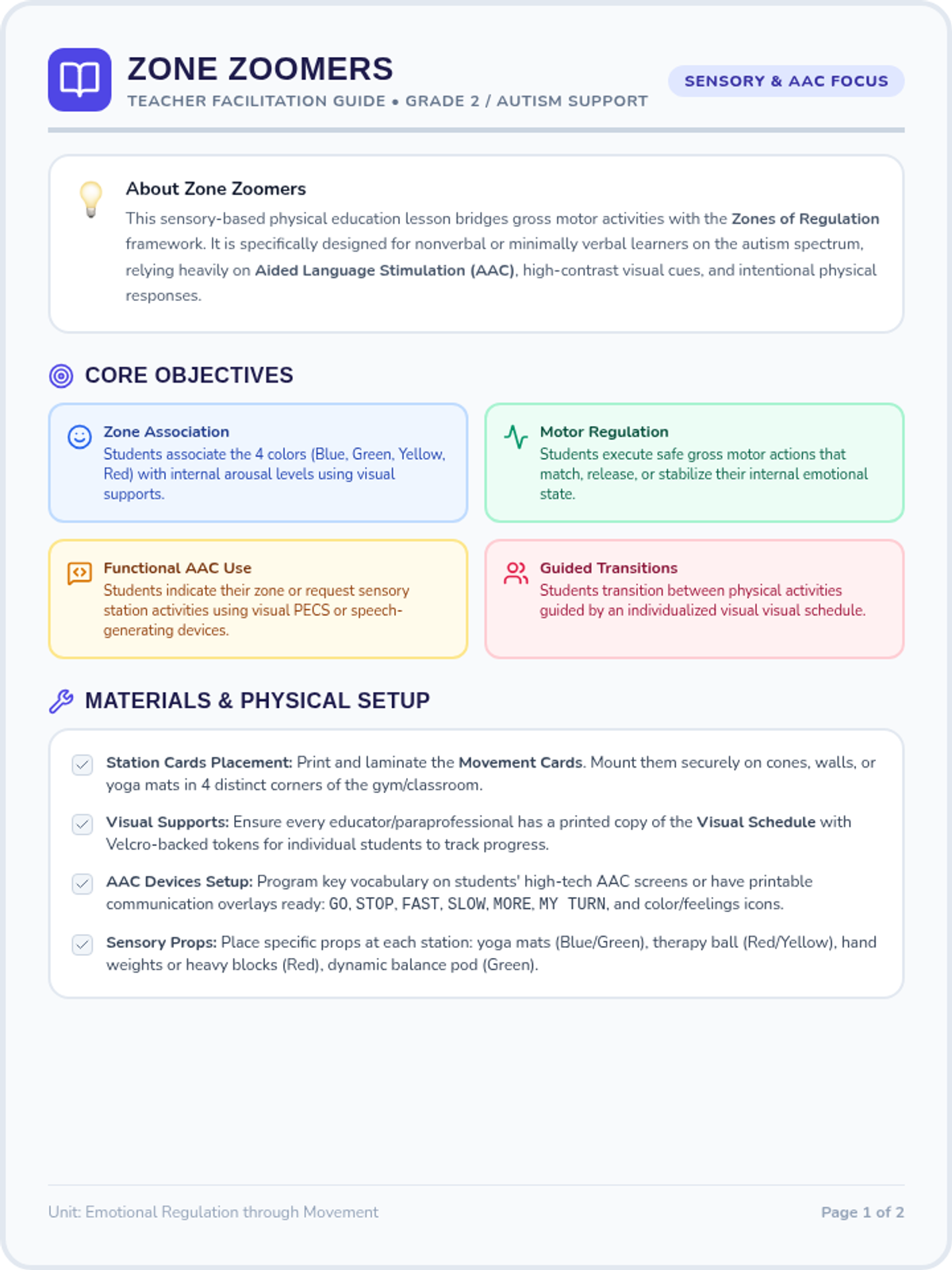
A comprehensive, step-by-step teacher facilitation guide for Zone Zoomers. It includes core objectives, pacing, specific gross motor activities mapped to each emotional zone, and concrete instructions for utilizing Aided Language Stimulation (AAC) and physical supports.
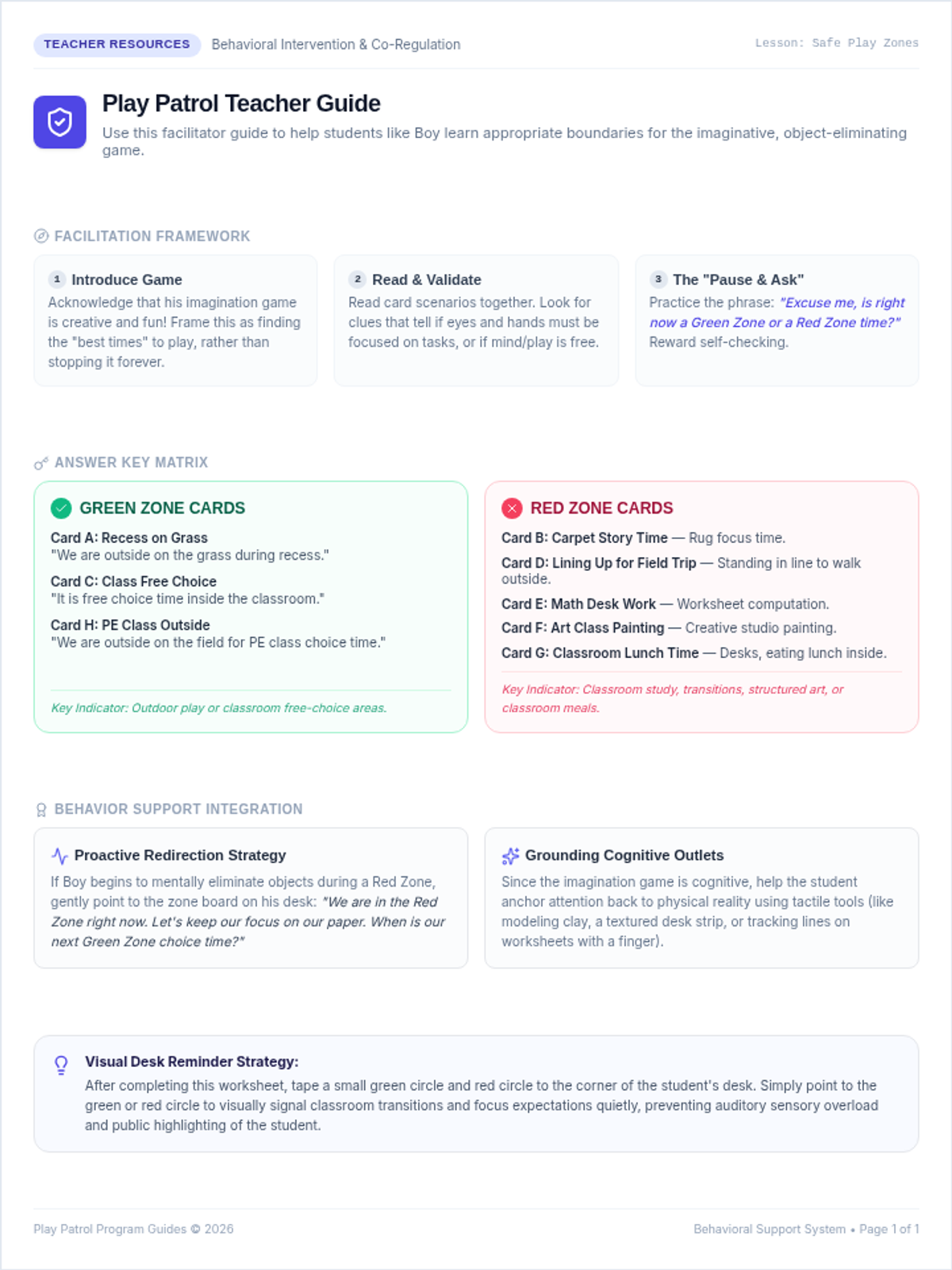
A 1-page classroom facilitator guide and answer key for the "Play Patrol Sorting Worksheet". Features a structured lesson delivery framework, reflection questions, an answer matrix for Cards A-H, and visual boundary strategies to support the student's sensory/behavioral needs.
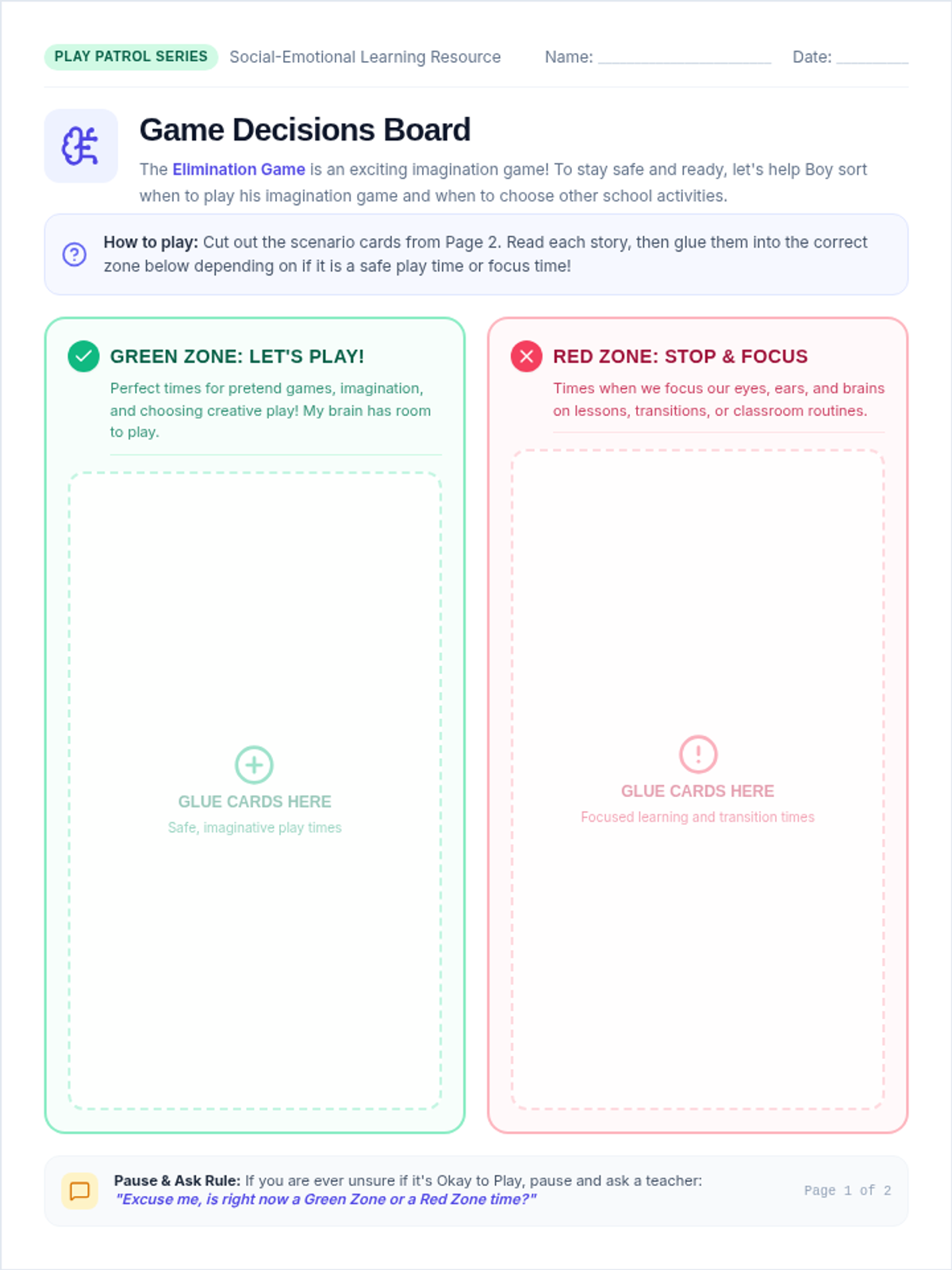
A 2-page print-ready interactive sorting worksheet about the "elimination game". Page 1 features the Green Zone (Okay to Play) and Red Zone (Stop and Focus) sorting board, while Page 2 provides 8 structured, single-line social narrative scenario cards to cut and paste.
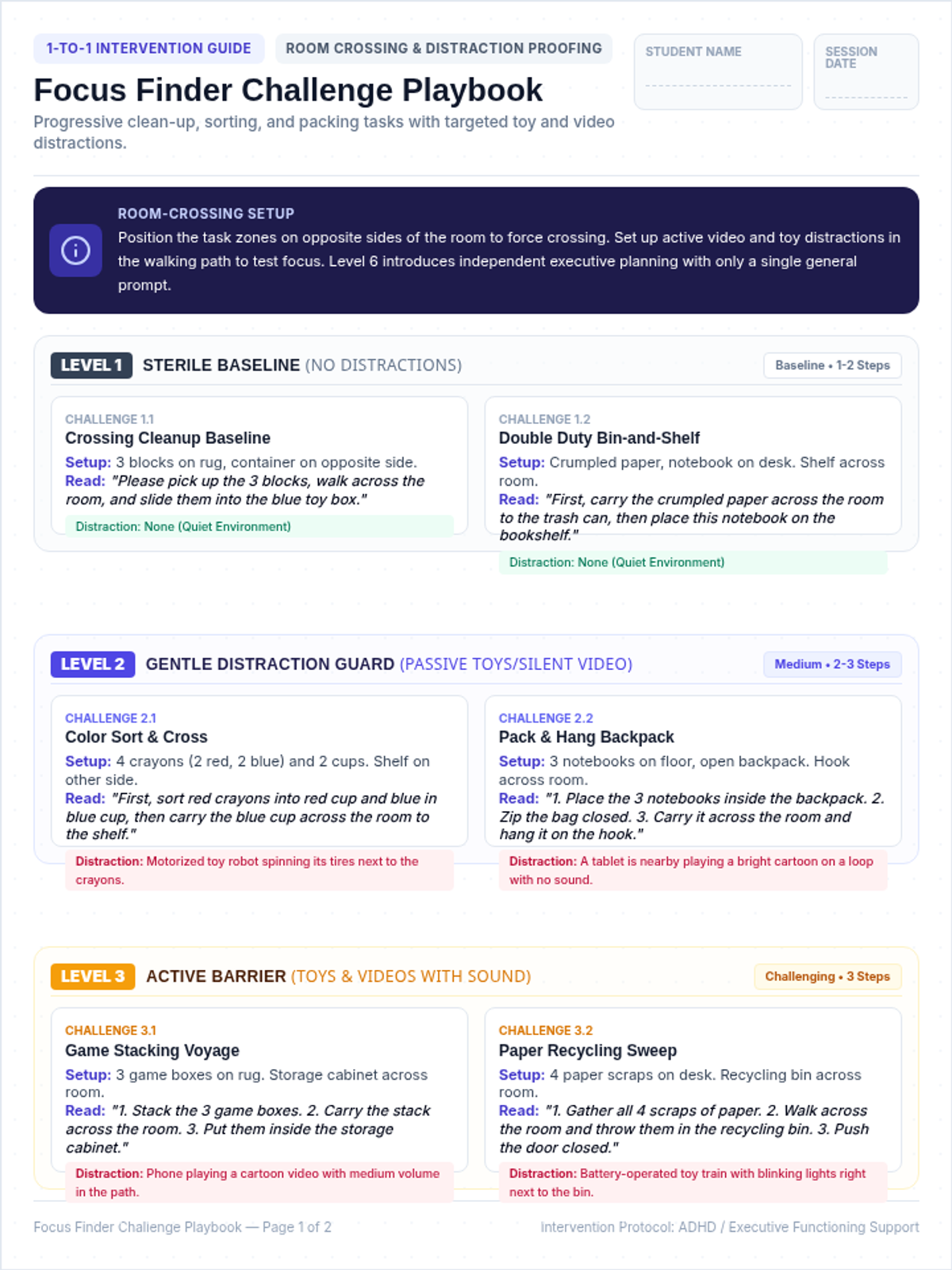
A professional 2-page printable challenge guide for teachers with setup instructions and read-aloud scripts. Upgraded to include Level 6 (The Independent Sweep), where students must plan and execute a full room cleanup independently with just a single general prompt under intense simultaneous toy and video distractions.
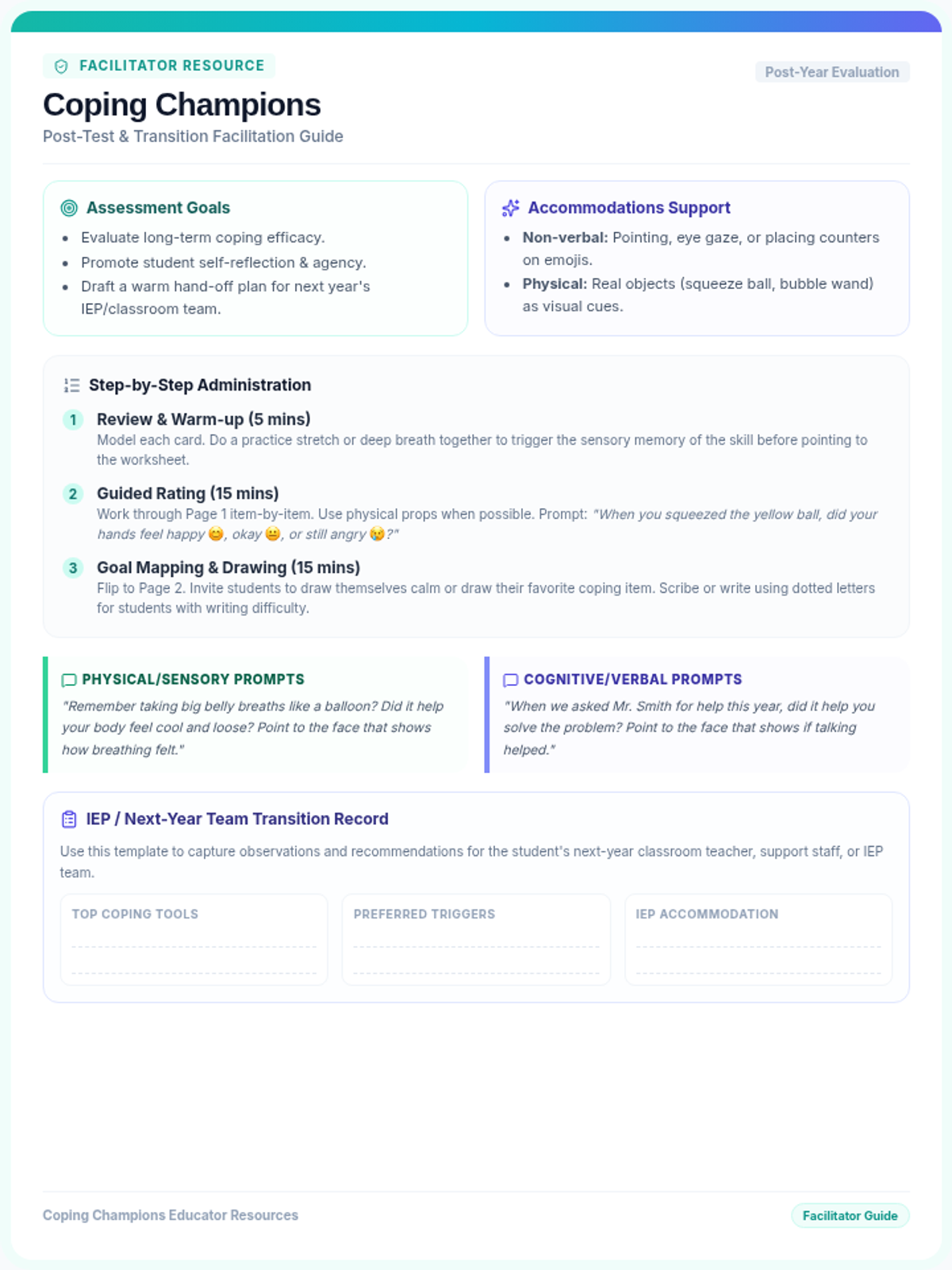
A professional, 1-page teacher guide and facilitation tool containing step-by-step administration scripts, differentiated prompting support, and an observation checklist to help educators effectively administer the post-test and plan for the next school year.
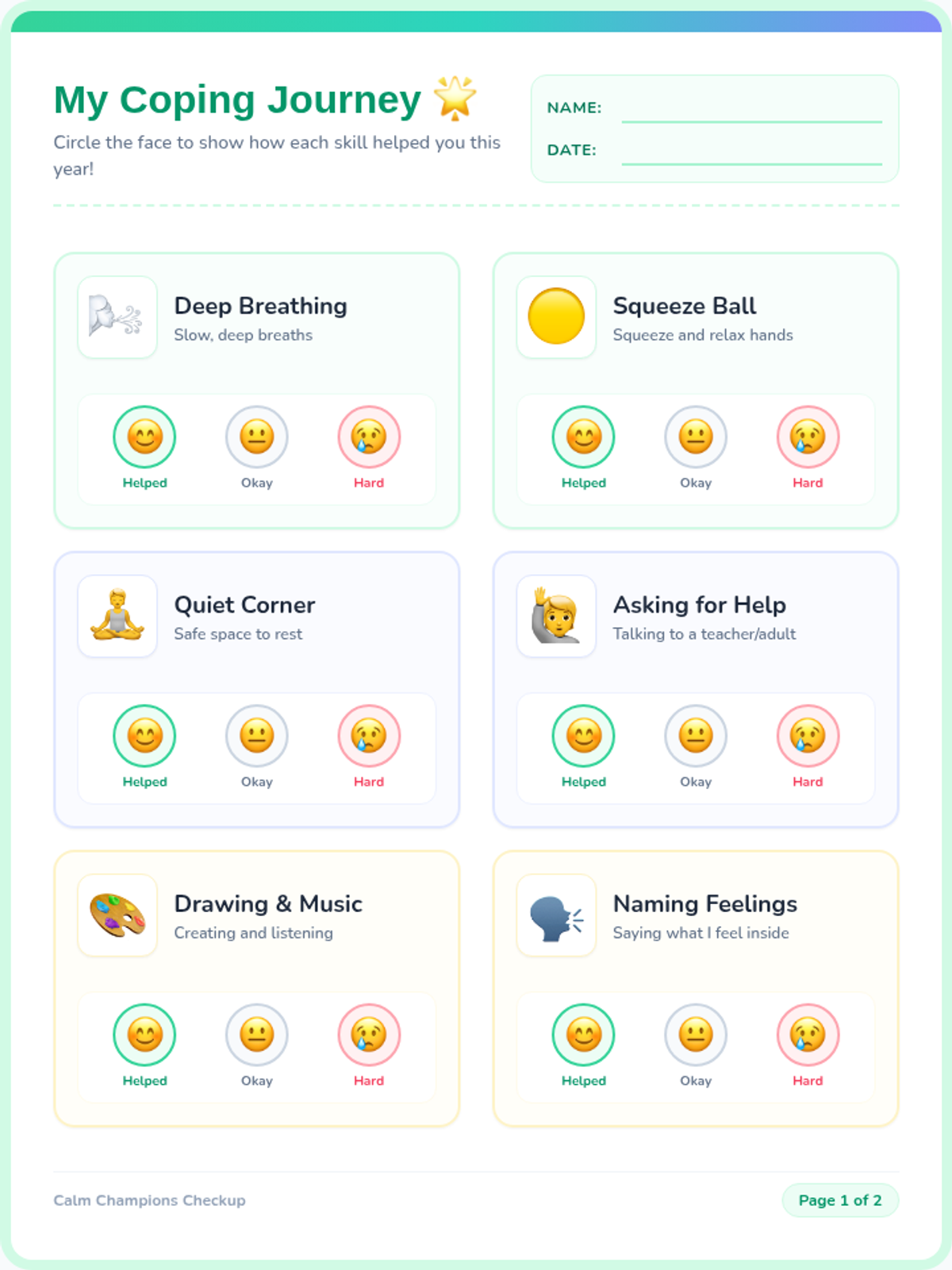
A print-ready, highly visual coping skills post-test and goal-setting worksheet designed for students with lower cognitive abilities, featuring large fonts, friendly emojis, and structured spaces for circling, writing, and drawing.
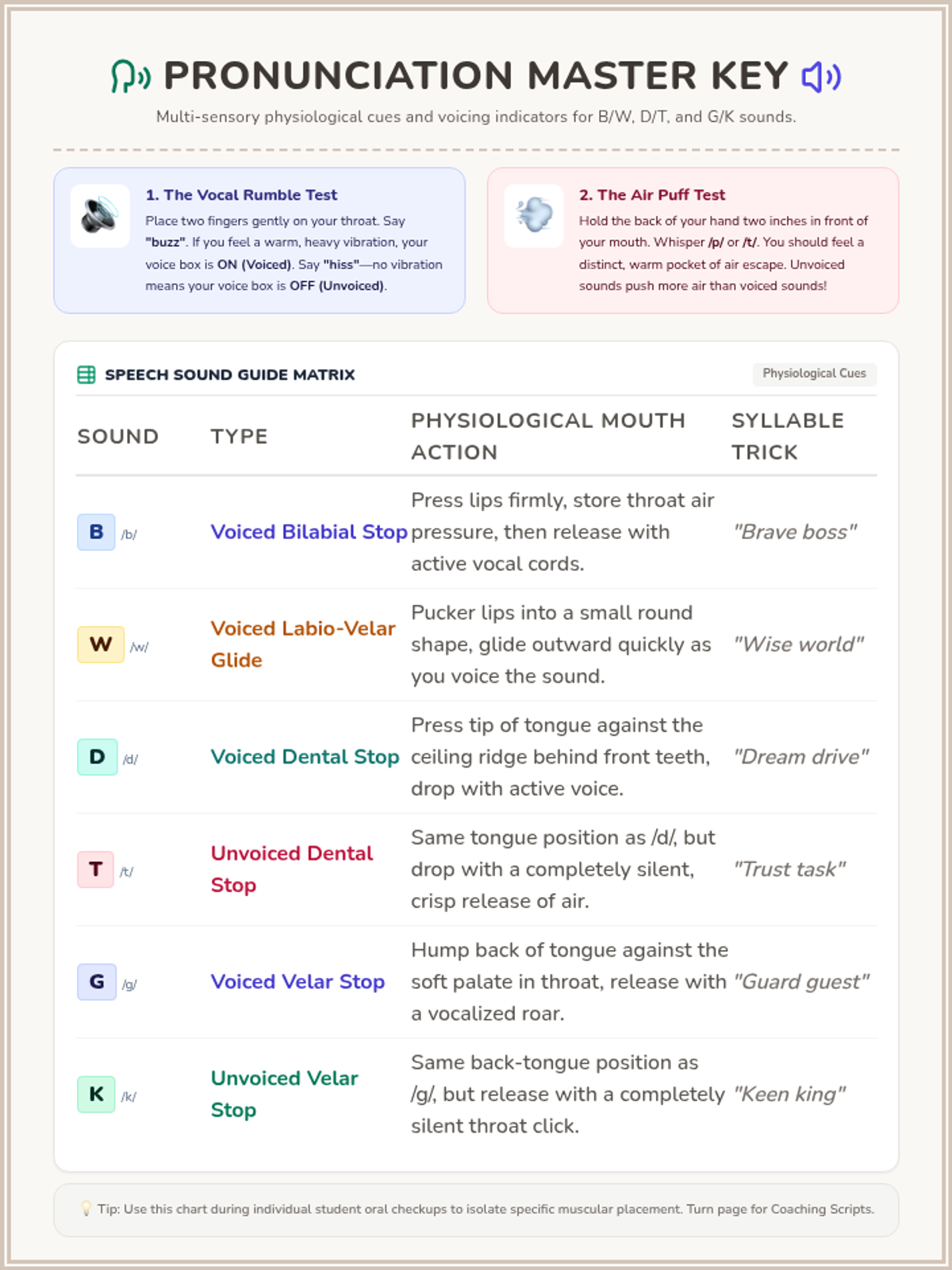
A master multi-sensory speech sounds pronunciation guide for teachers and students. Provides physiological cues, voicing tests (puff and rumble), and positive coaching scripts for B/W, D/T, and G/K sounds.
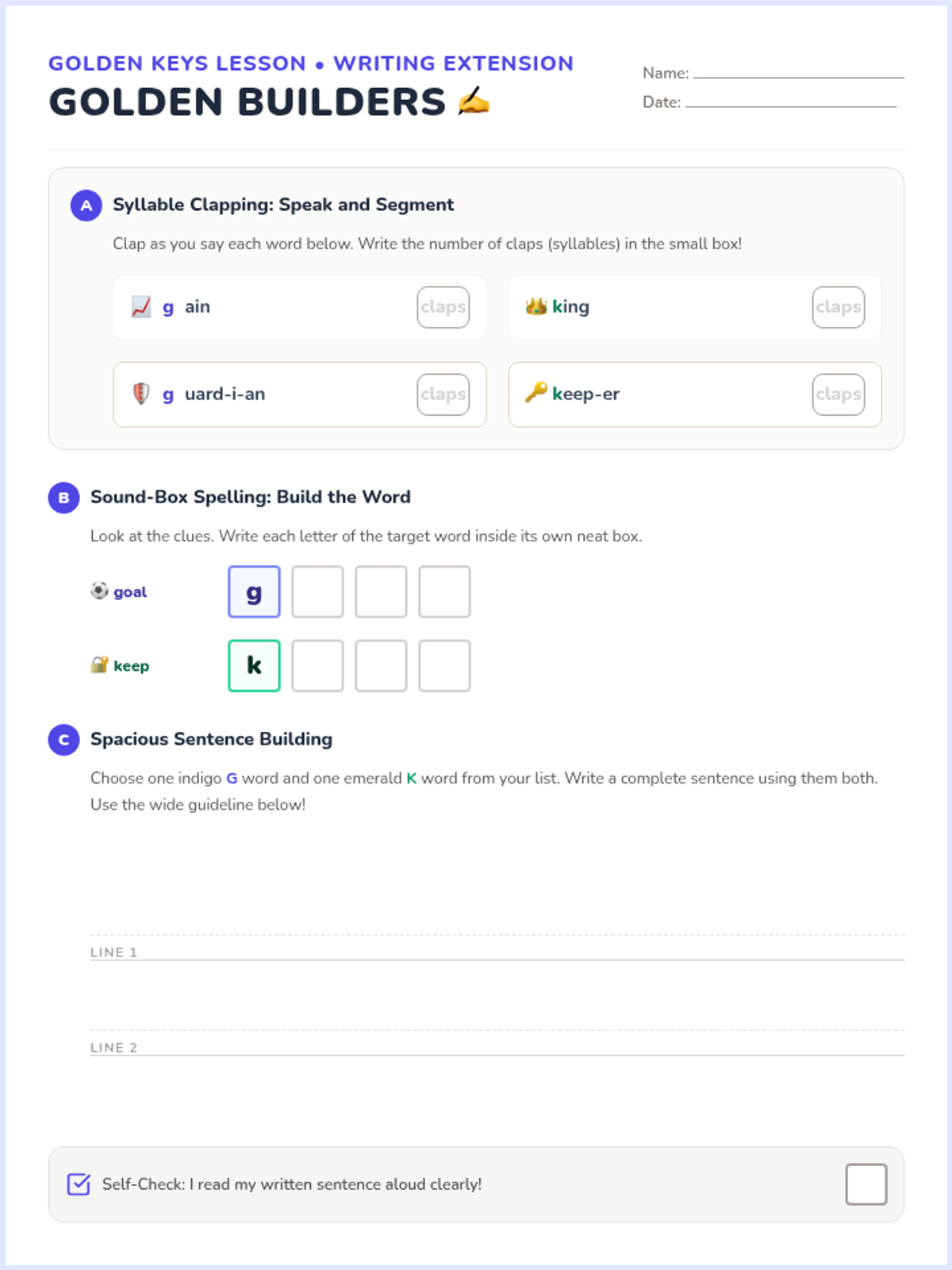
A multi-sensory spelling and writing worksheet for letters G and K. Includes syllable clapping, word builders, and creative sentence-writing with spacious writing guidelines to prevent visual crowding.
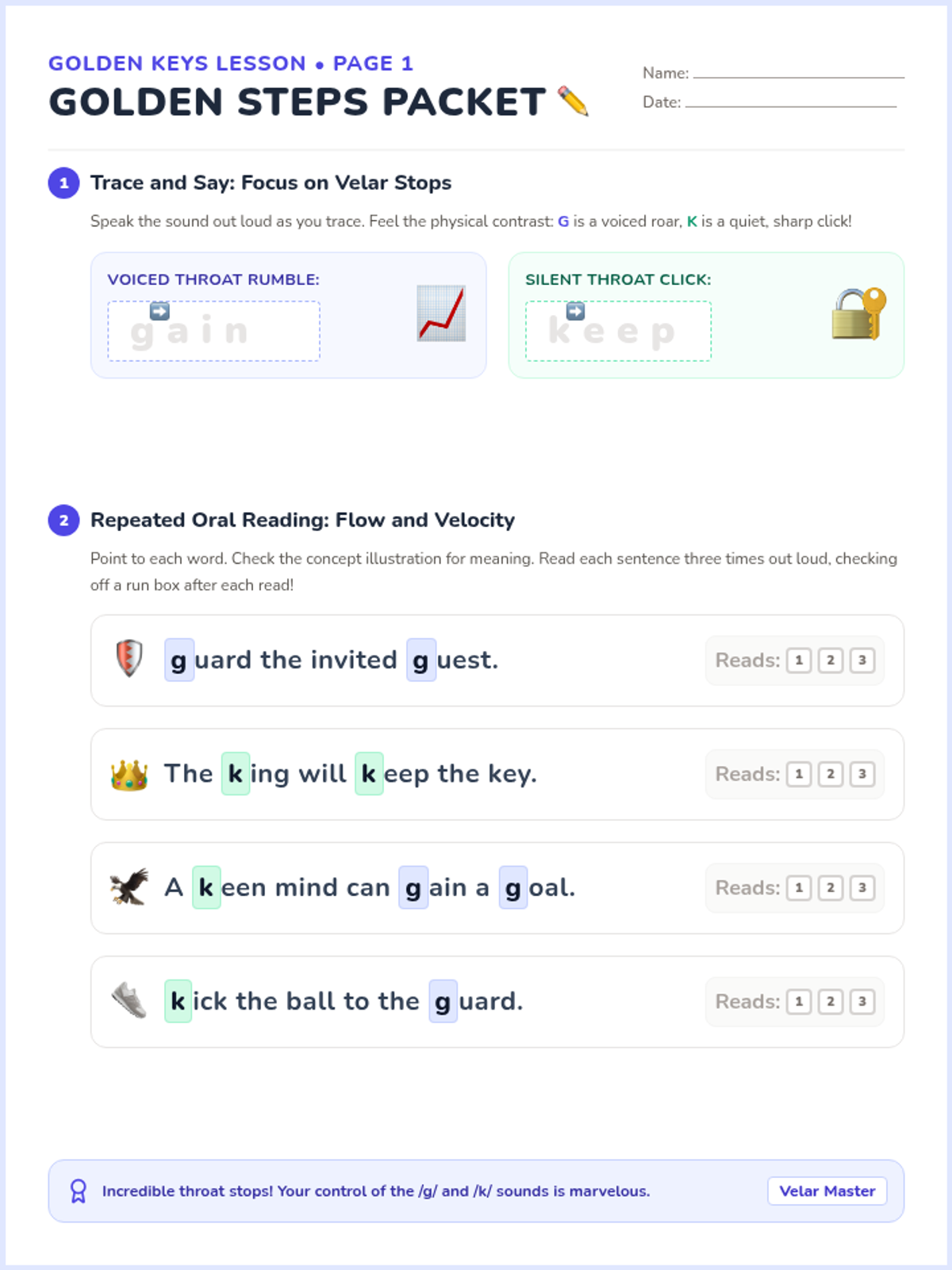
A 2-page dyslexia-friendly structured routine packet for letters G and K. Page 1 offers structured trace, read, and repeated reading check-offs. Page 2 provides an oral reading assessment with a built-in teacher evaluation rubric.
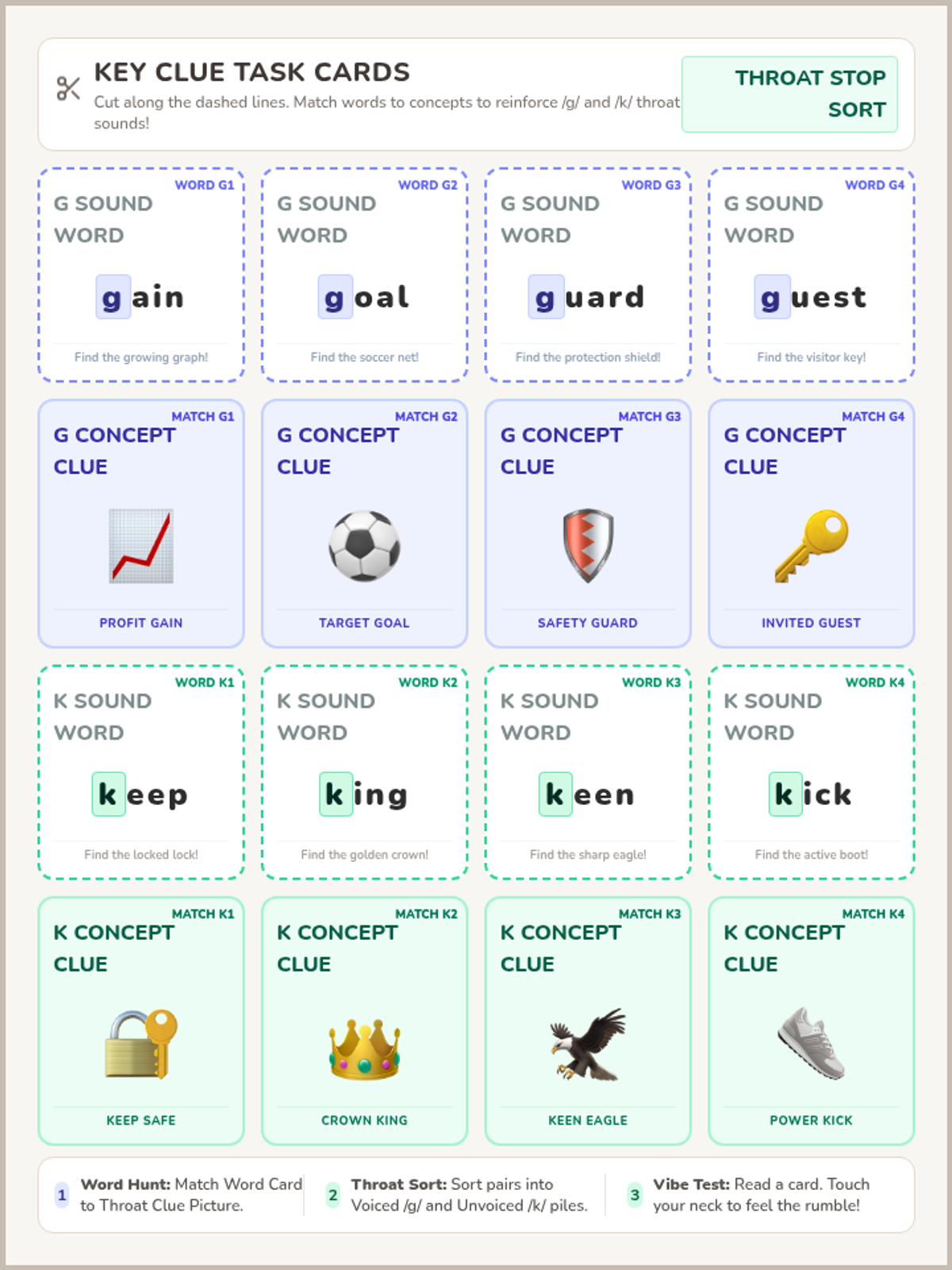
A printable sheet of 16 double-coded matching task cards for letters G and K. Features 8 word cards and 8 matching high-contrast picture cards, split between indigo-themed G words and emerald-themed K words.
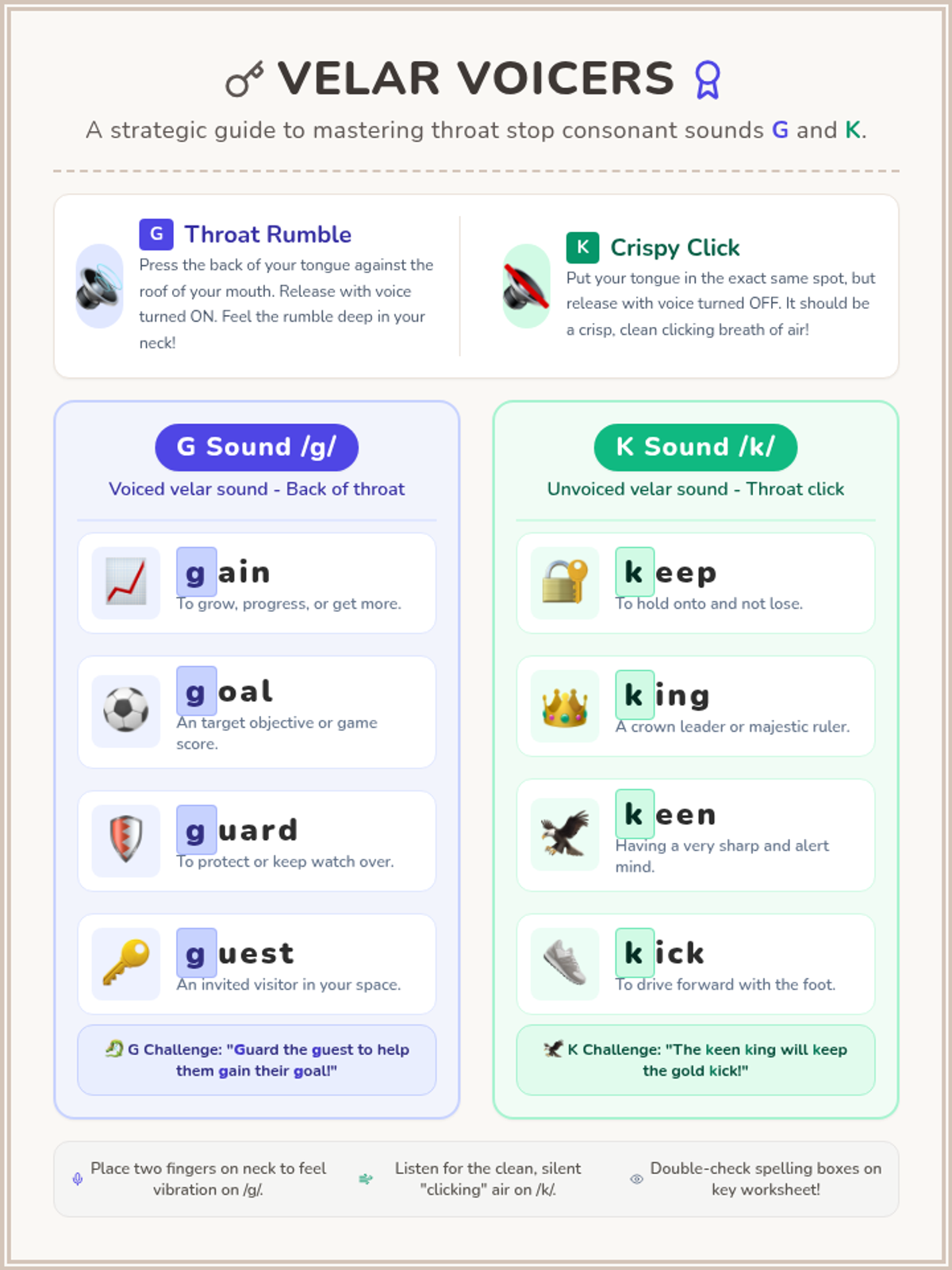
A color-coded visual reference anchor chart for letters G and K. Contrasts voiced /g/ and unvoiced /k/ mechanics with high-interest vocabulary (gain, goal, guard, guest, keep, king, keen, kick) and speech-therapy guides.
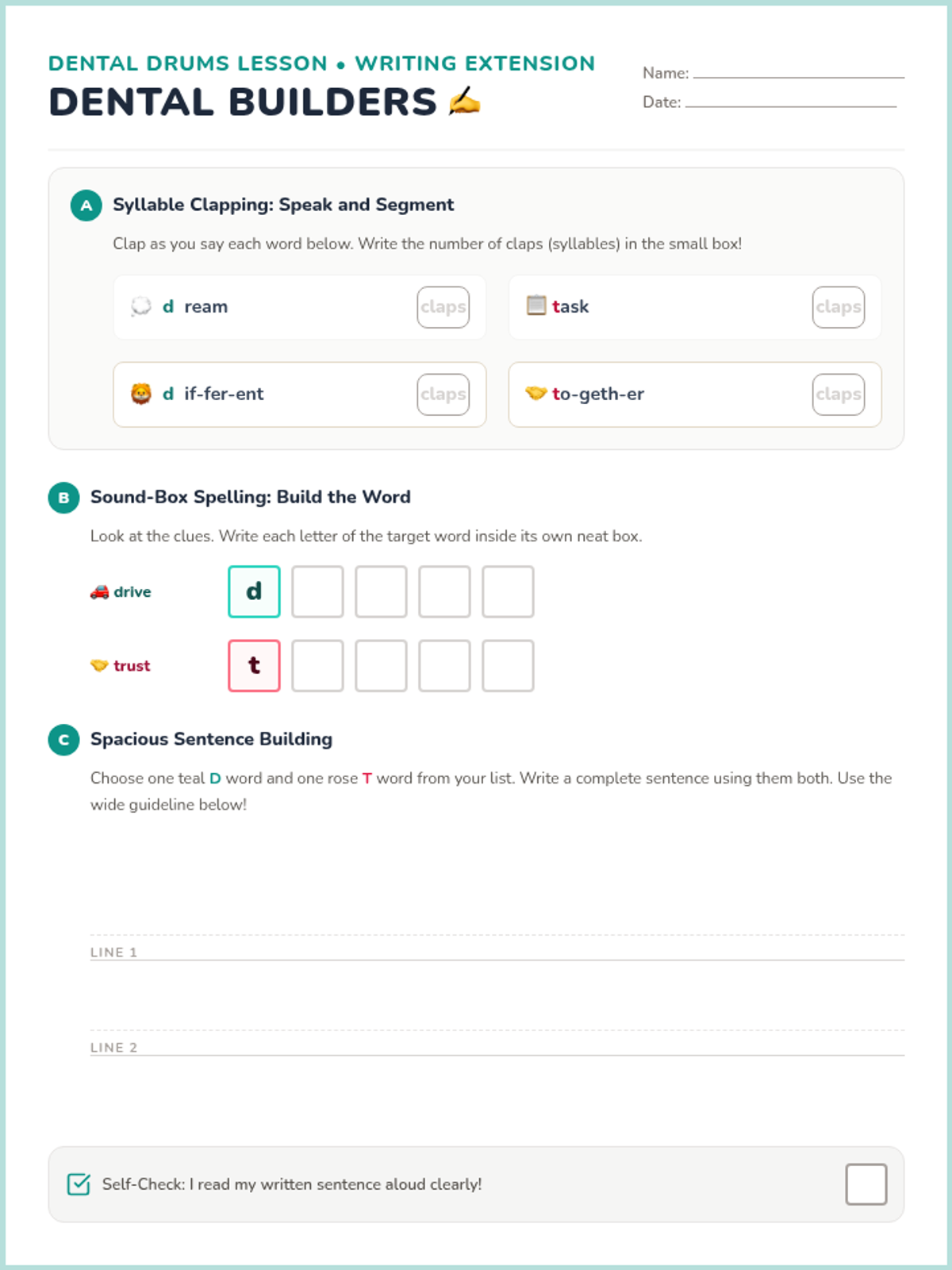
A multi-sensory spelling and writing worksheet for letters D and T. Includes syllable clapping, word builders, and creative sentence-writing with spacious writing guidelines to prevent visual crowding.