An exit ticket for students to self-assess their understanding of the agenda strategy and identify specific application moments. Revised with duplicate content for efficiency and improved legibility.
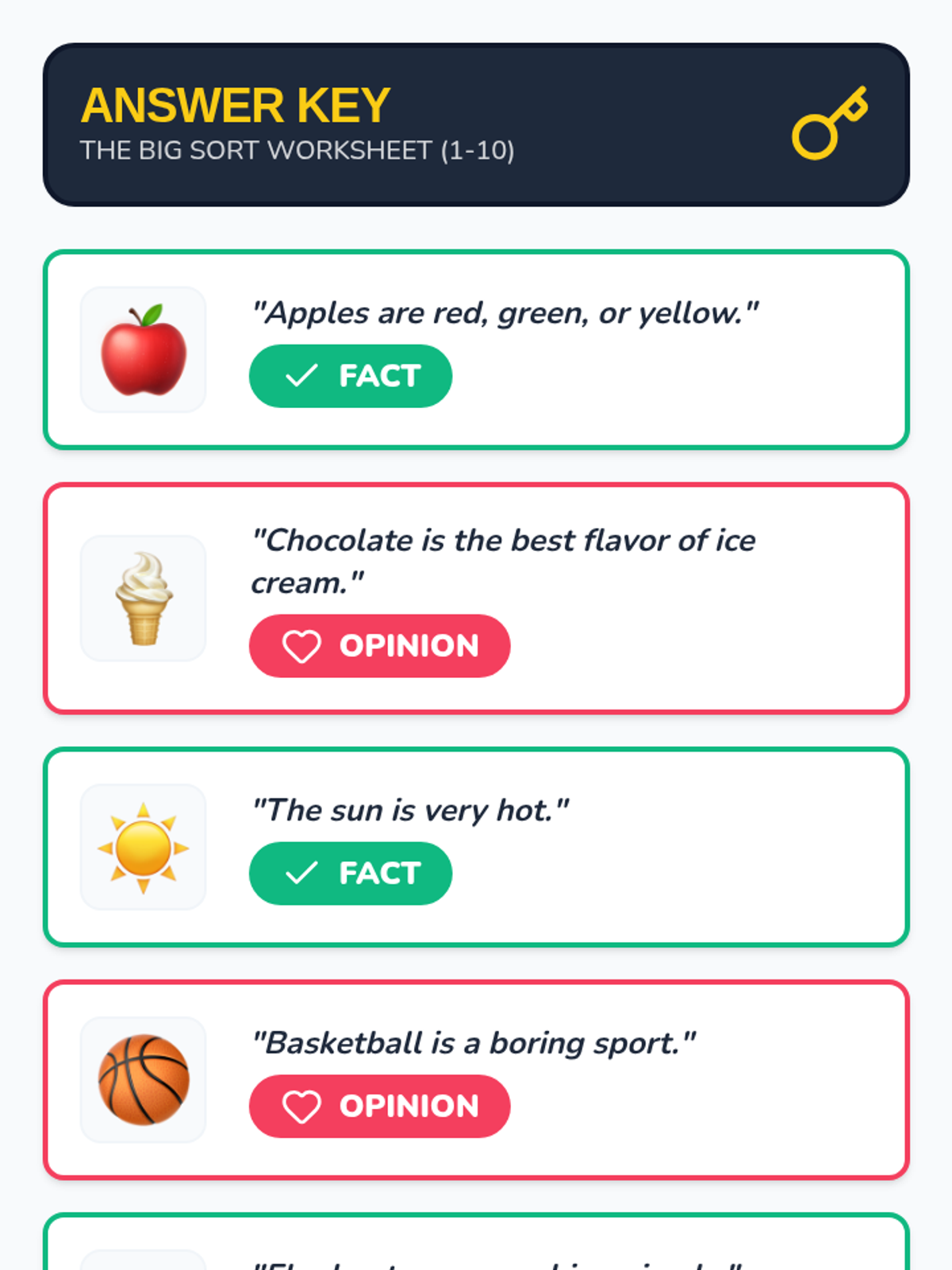
A teacher-facing answer key for The Big Sort Worksheet, providing clearly marked correct answers for all 10 practice items with bold visual indicators and helpful facilitation tips.
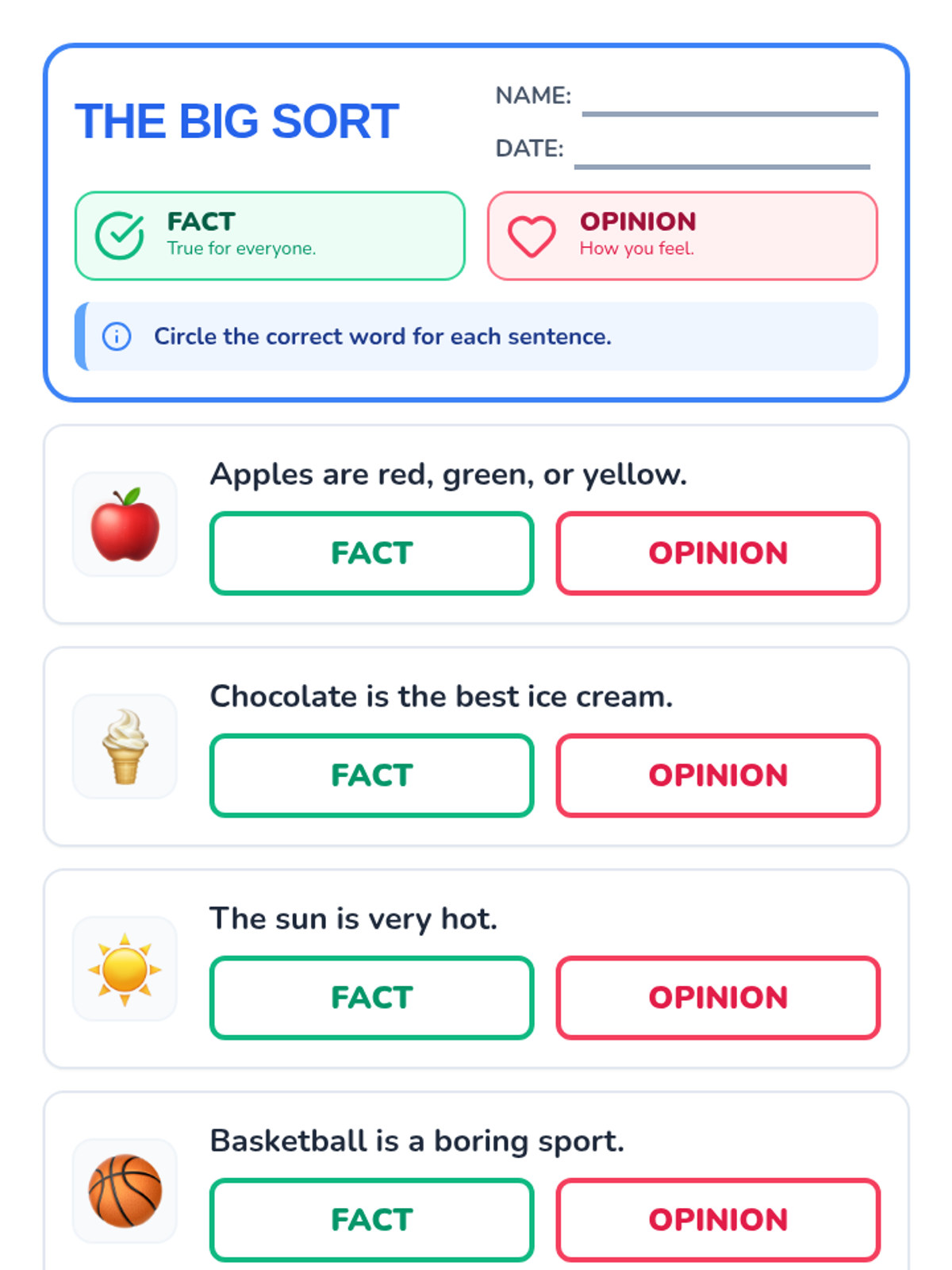
A visual sorting worksheet where students distinguish between facts and opinions. Each question features a clear emoji, a simple statement, and two large, high-contrast buttons (Fact/Opinion) for easy selection, tailored for students with intellectual disabilities. Now expanded with 10 total practice items.
A 7-slide introductory presentation explaining the difference between facts and opinions for students with intellectual disabilities. It uses high-contrast visuals, simple language, and large icons to help students understand that opinions are feelings while facts are universal truths.
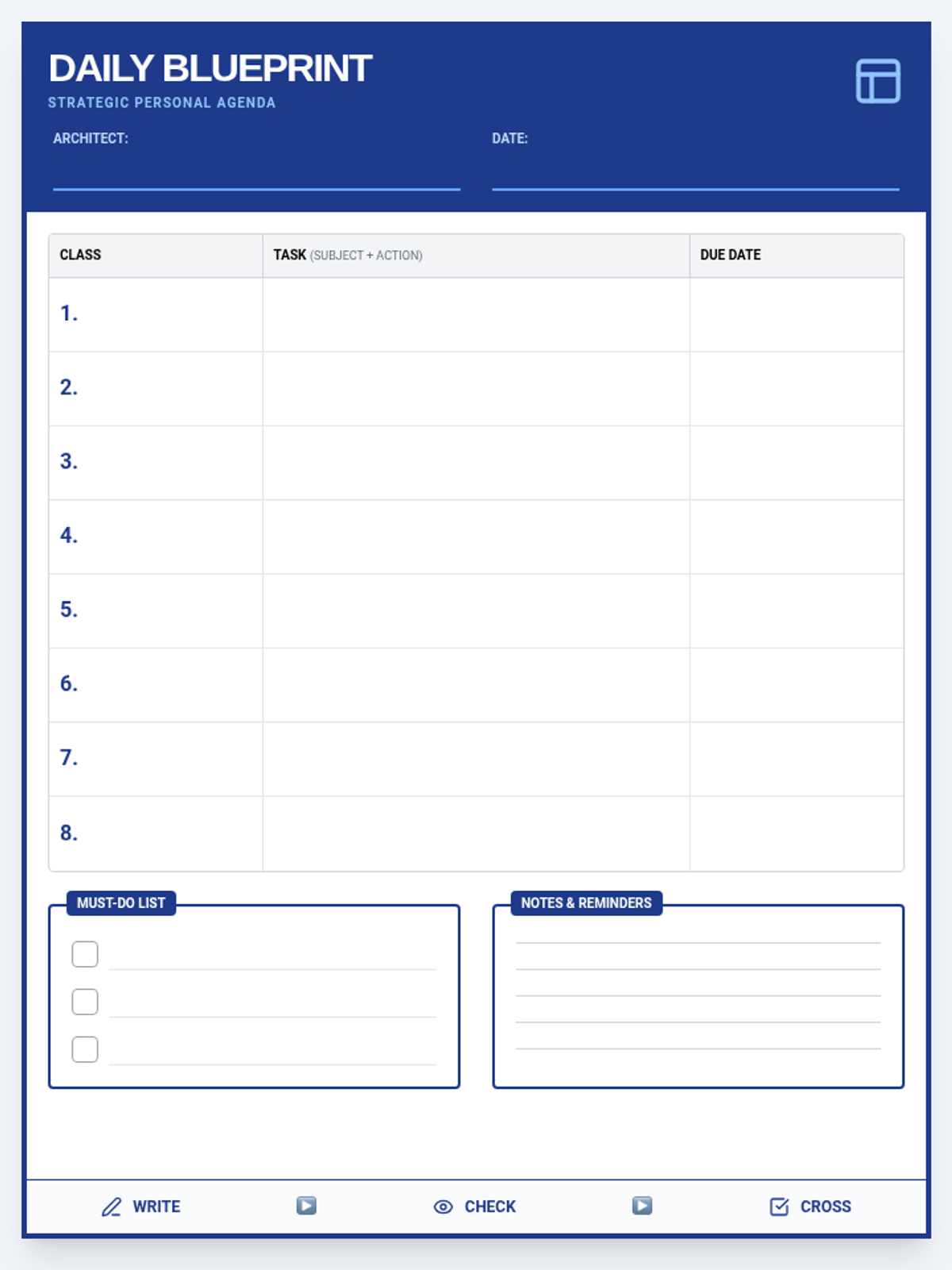
A structured daily agenda template for students, featuring a class schedule table, a "Must-Do" priority list, and the "Write-Check-Cross" strategy reminder. Revised to fit on a single page with improved note space and legible handwriting lines.
A high-contrast, visual slide deck for 10th grade SPED students focusing on the "Write-Check-Cross" agenda-keeping strategy. Revised for maximum legibility.
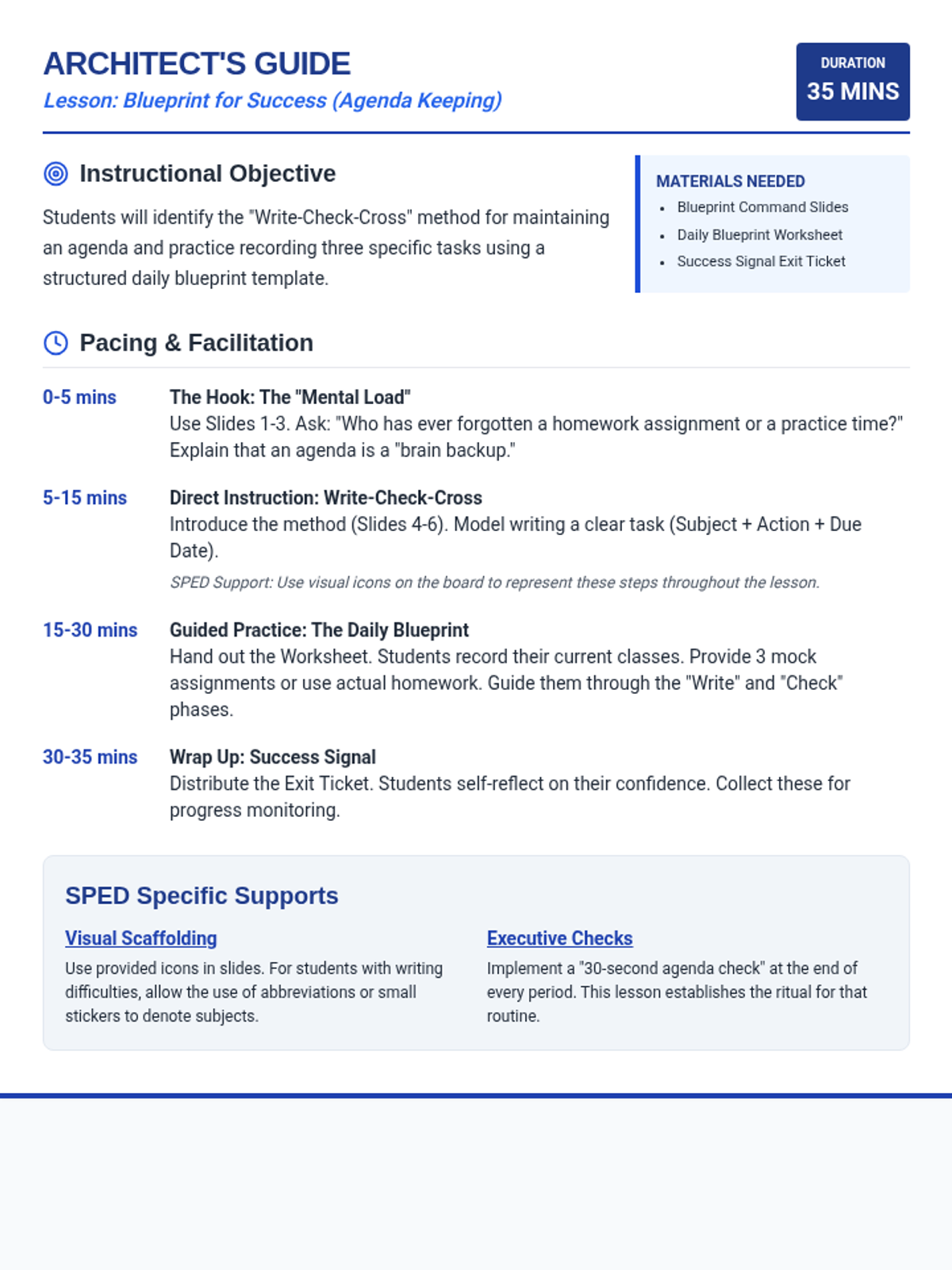
Teacher guide for the Blueprint for Success lesson, including pacing, facilitation tips, and specific SPED accommodations for teaching agenda-keeping skills. Revised to fit on a single page.
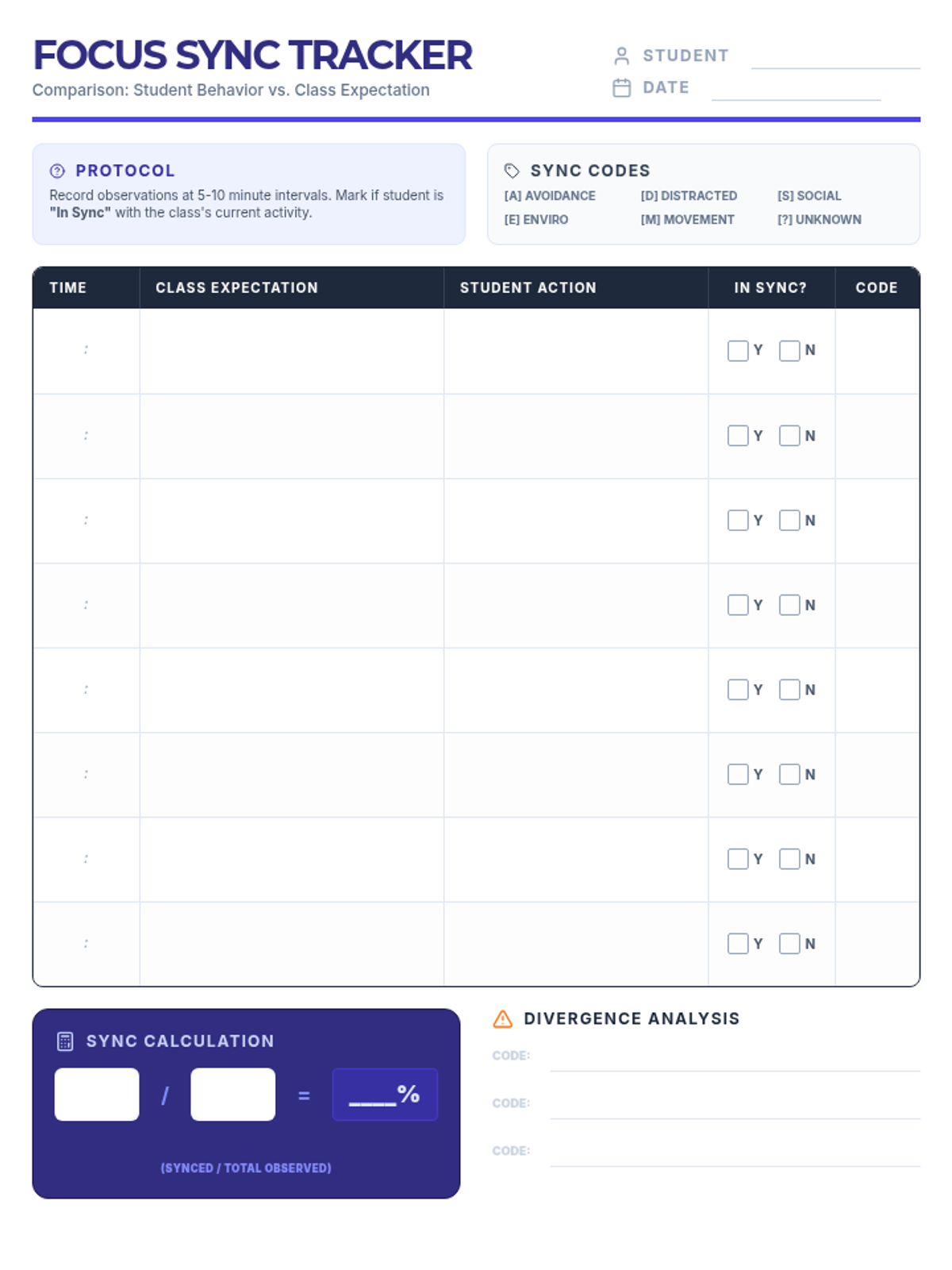
An observation tool for comparing a student's actions against classroom expectations at specific time intervals to determine alignment and identify off-task patterns. Updated for improved handwriting space and readability.
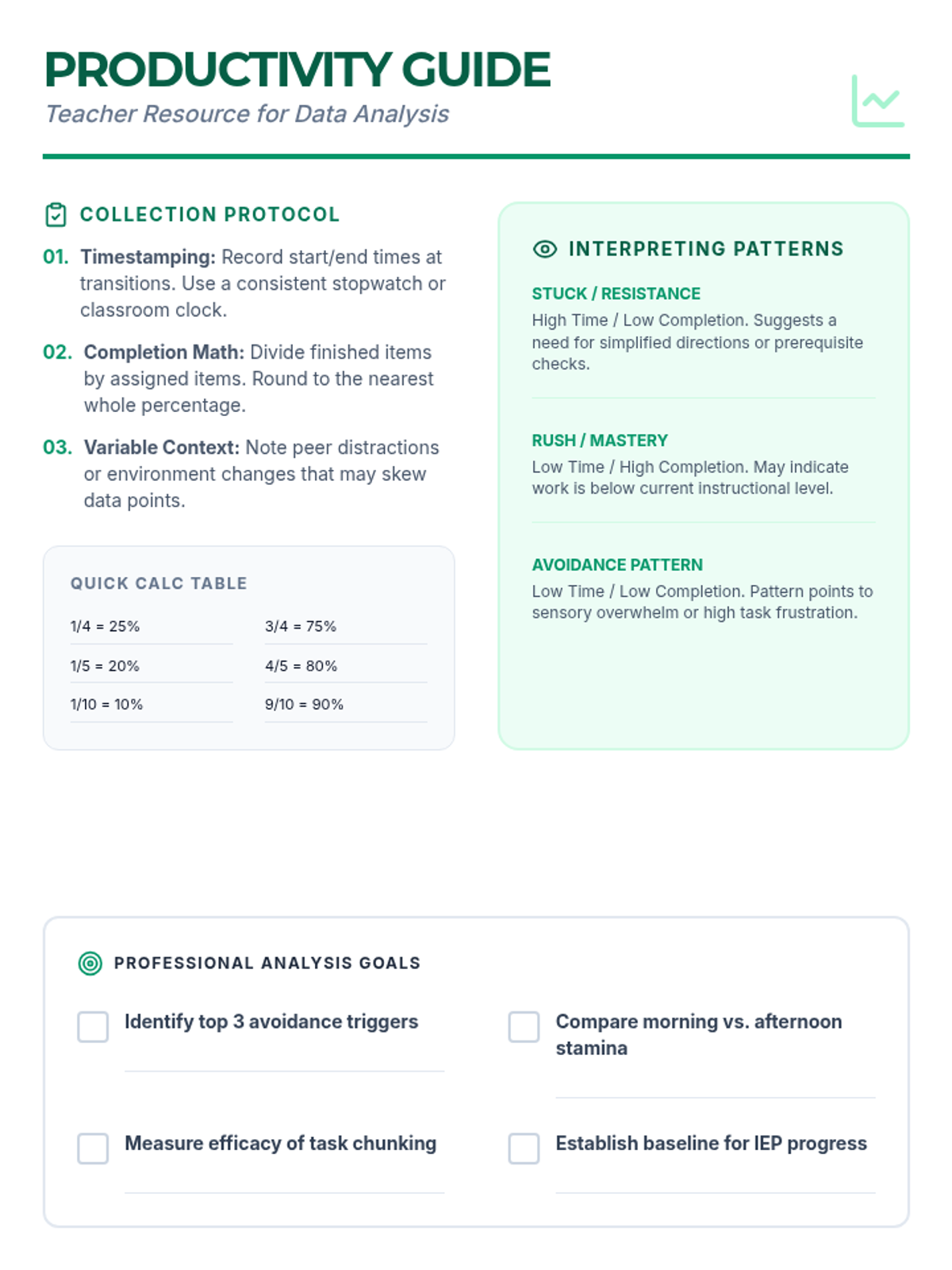
A teacher's guide for calculating percentages and analyzing time-on-task data. Includes a class snapshot table and professional analysis goal-setting. Updated for page alignment and handwriting clarity.
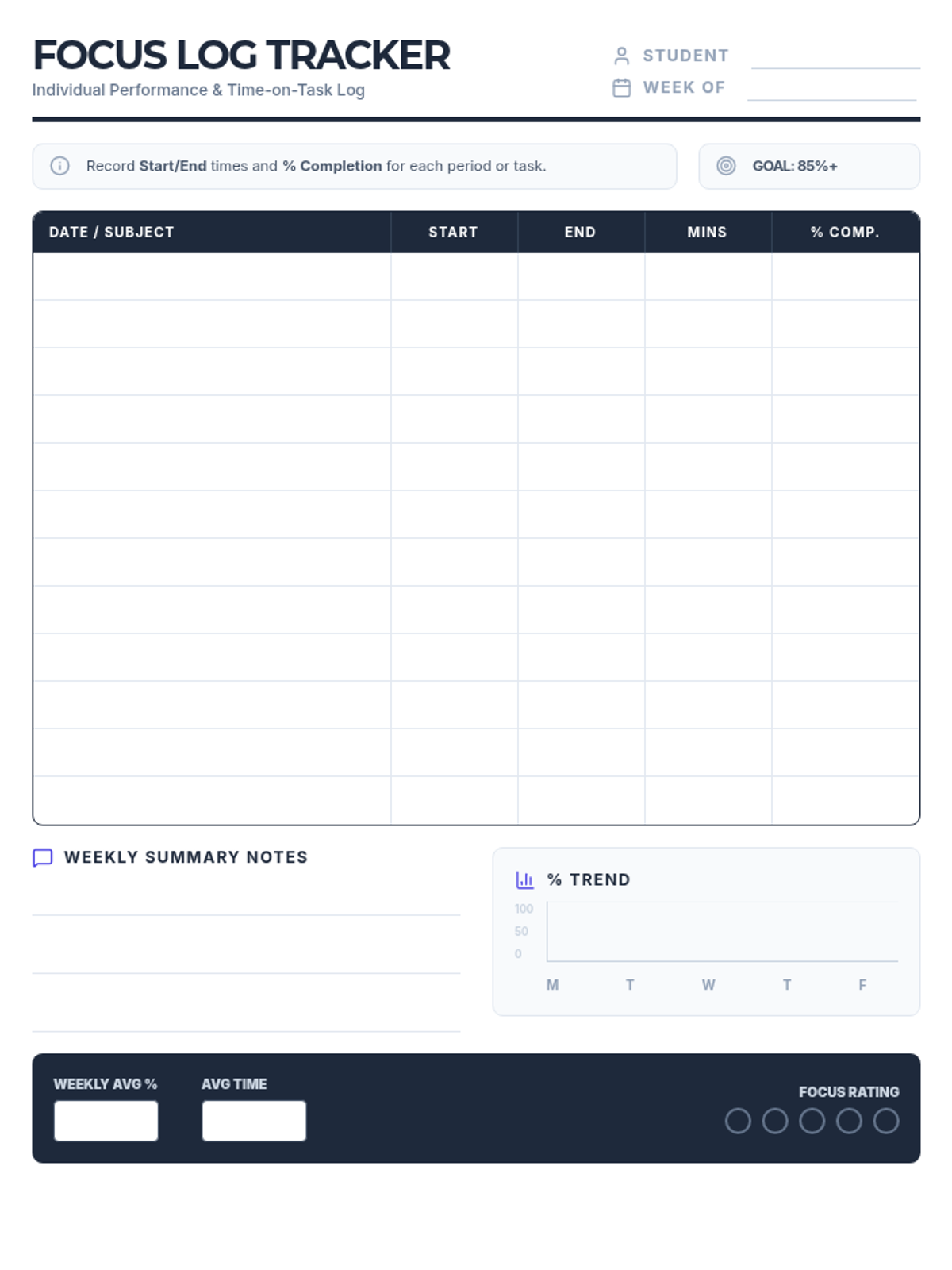
An individual student tracking sheet for recording start times, end times, and percentage of work completed across various tasks. Updated for single-page efficiency with 12 logging rows.
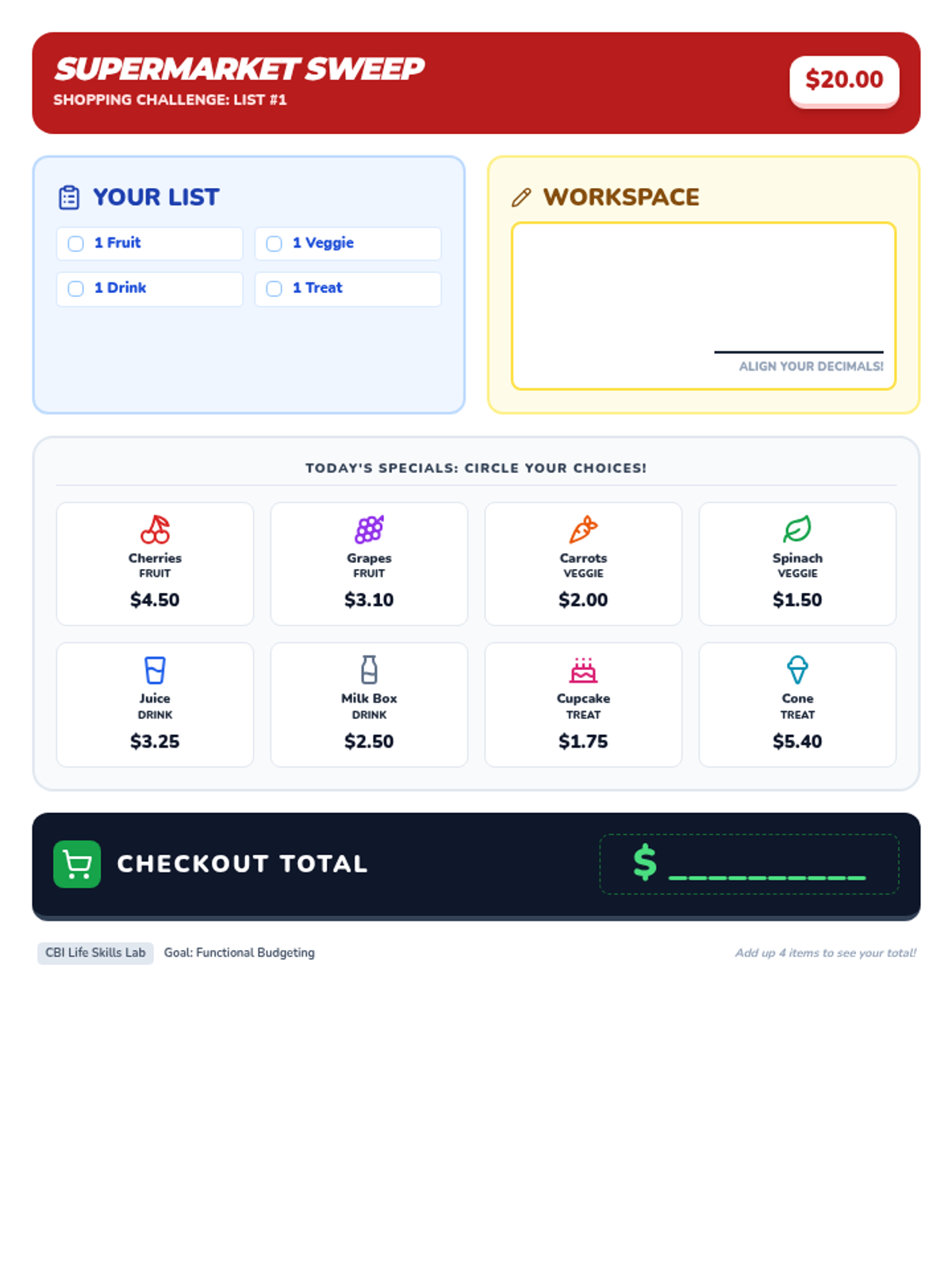
A simulation activity where students fulfill a shopping list using a $20 budget. Updated with an expanded addition workspace and balanced item choices (2 options for each category) to better support independent practice.
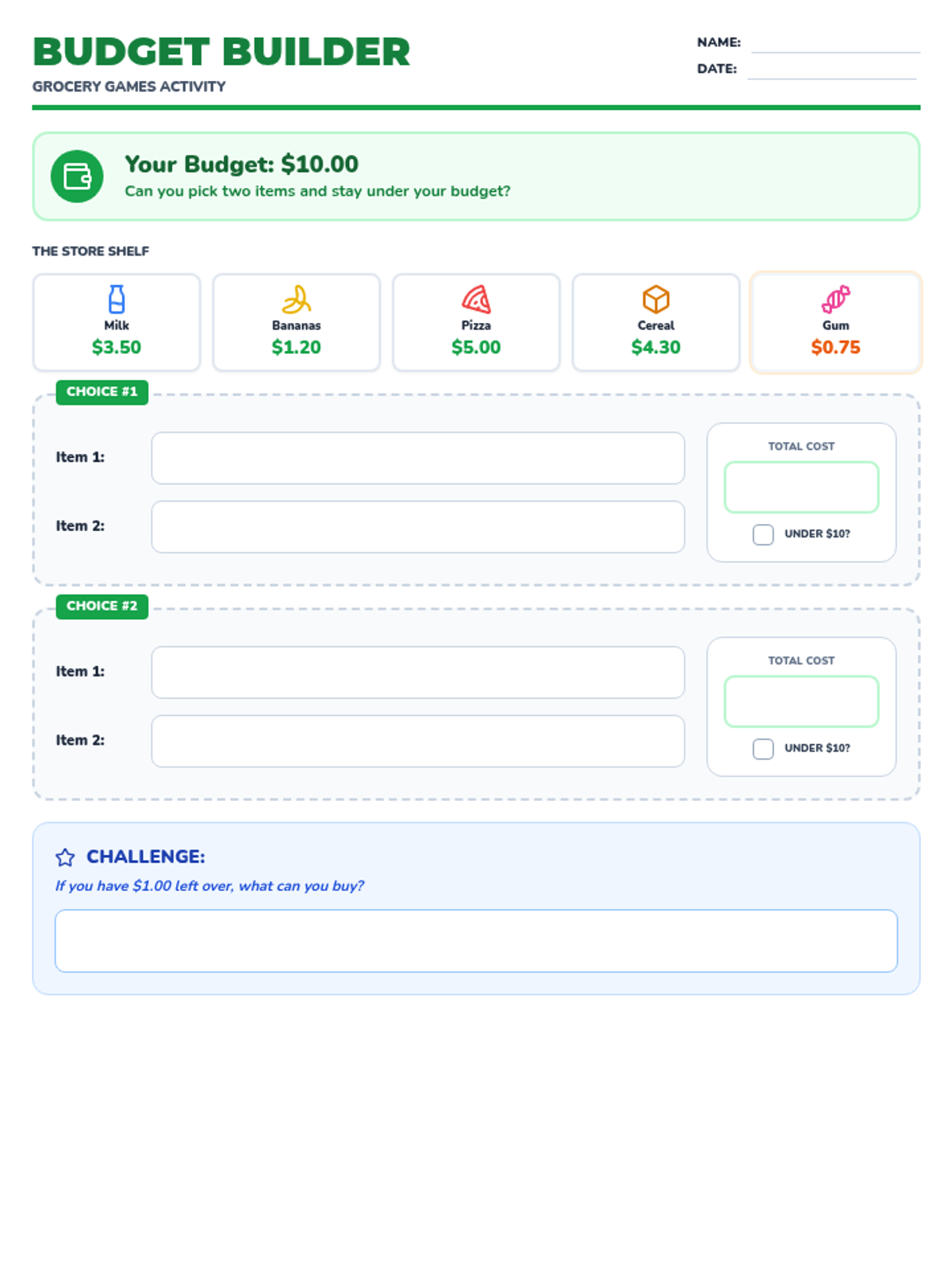
A worksheet for practicing simple addition and budgeting, where students select two items from a visual menu and calculate if they stay under a $10 budget. Updated to include all sections on one page and a small-cost item for the challenge question.
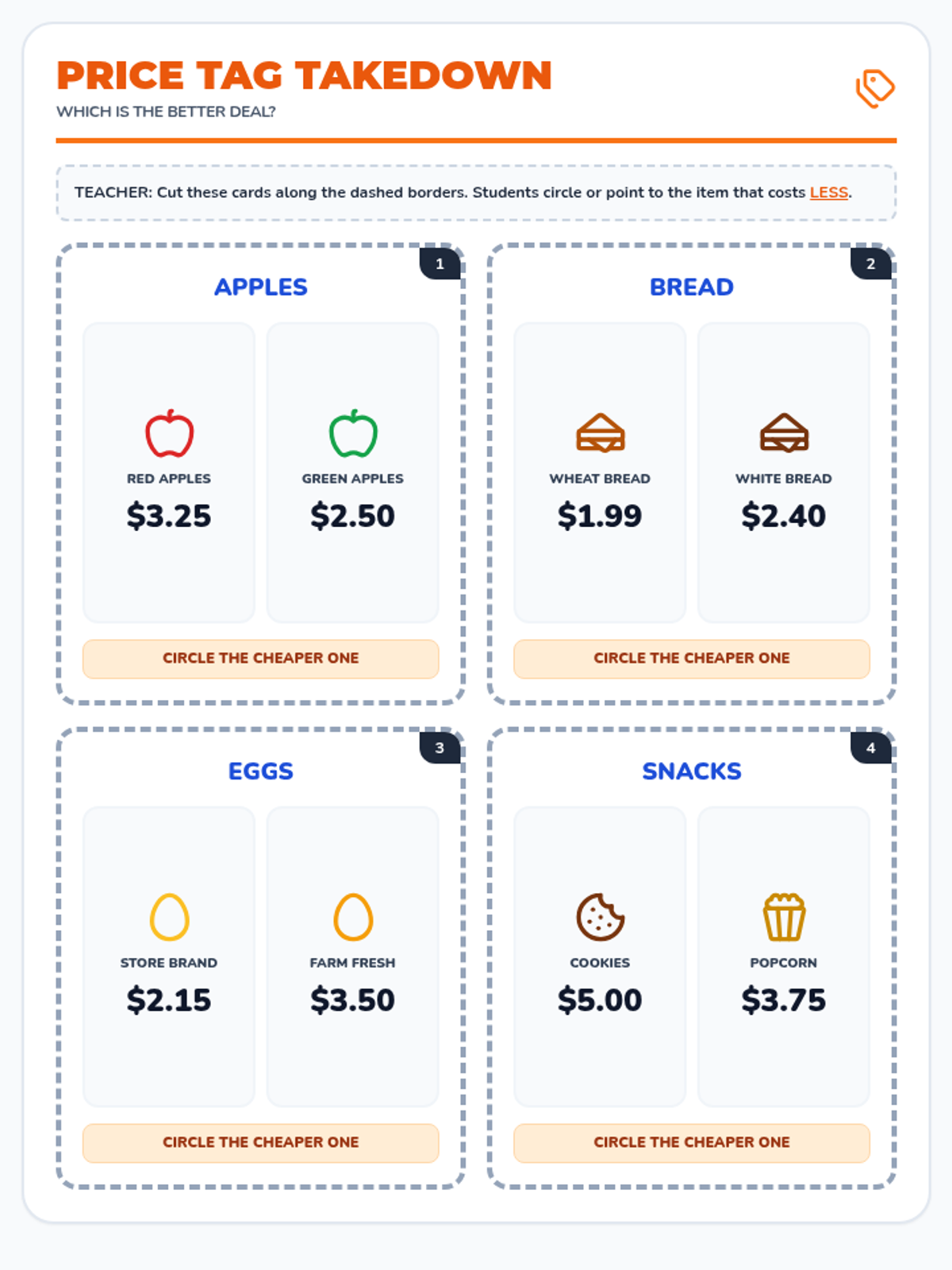
A set of printable task cards where students compare two grocery items and identify which one is cheaper to practice price comparison skills. Card 3 has been updated to compare comparable quantities of eggs for consistent skill practice.
Engaging slides introducing price tags, comparing deals, and the importance of budgeting for grocery shopping.
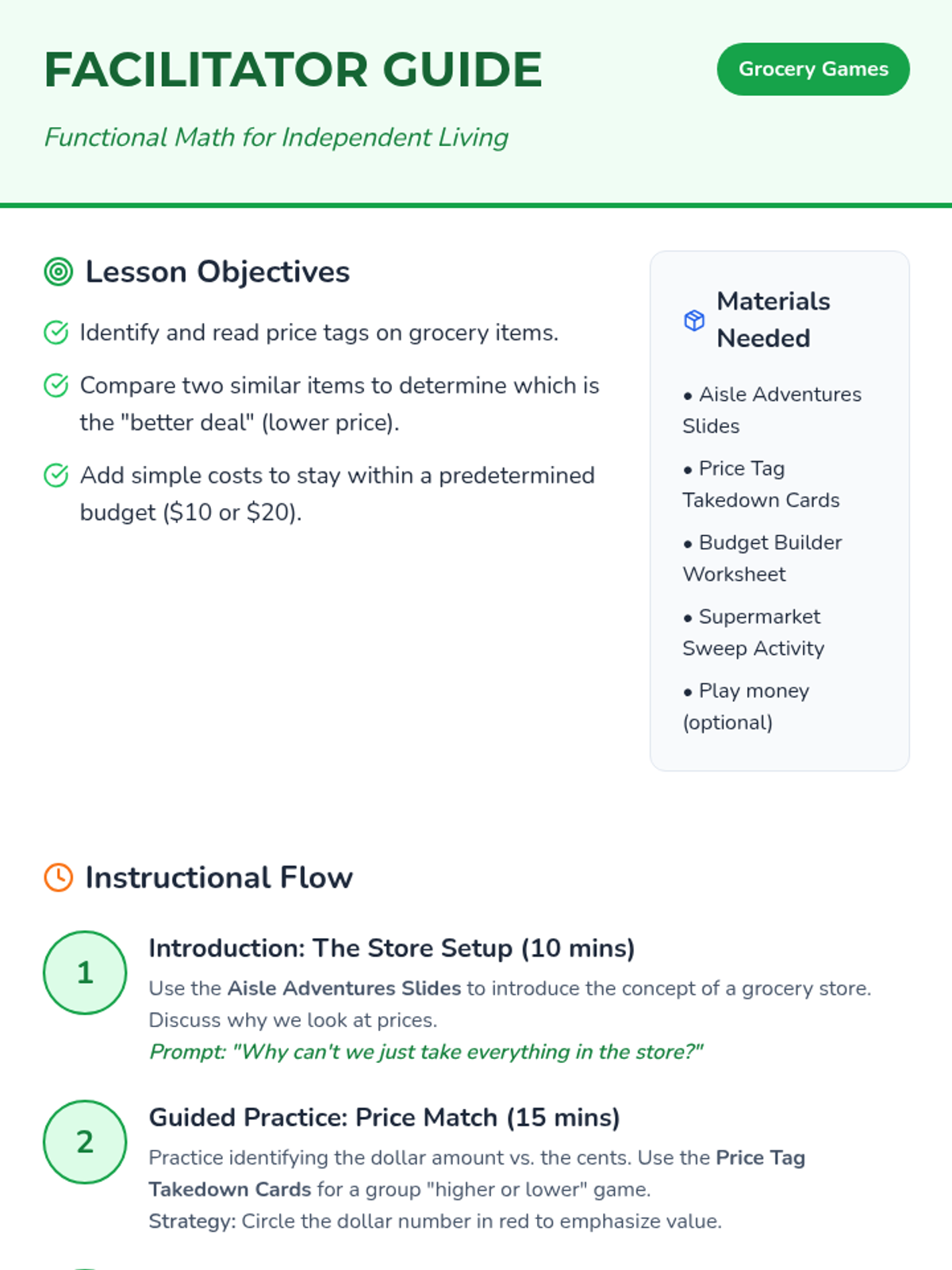
A comprehensive lesson plan for teachers, outlining objectives, pacing, and differentiation strategies for teaching functional grocery store math.
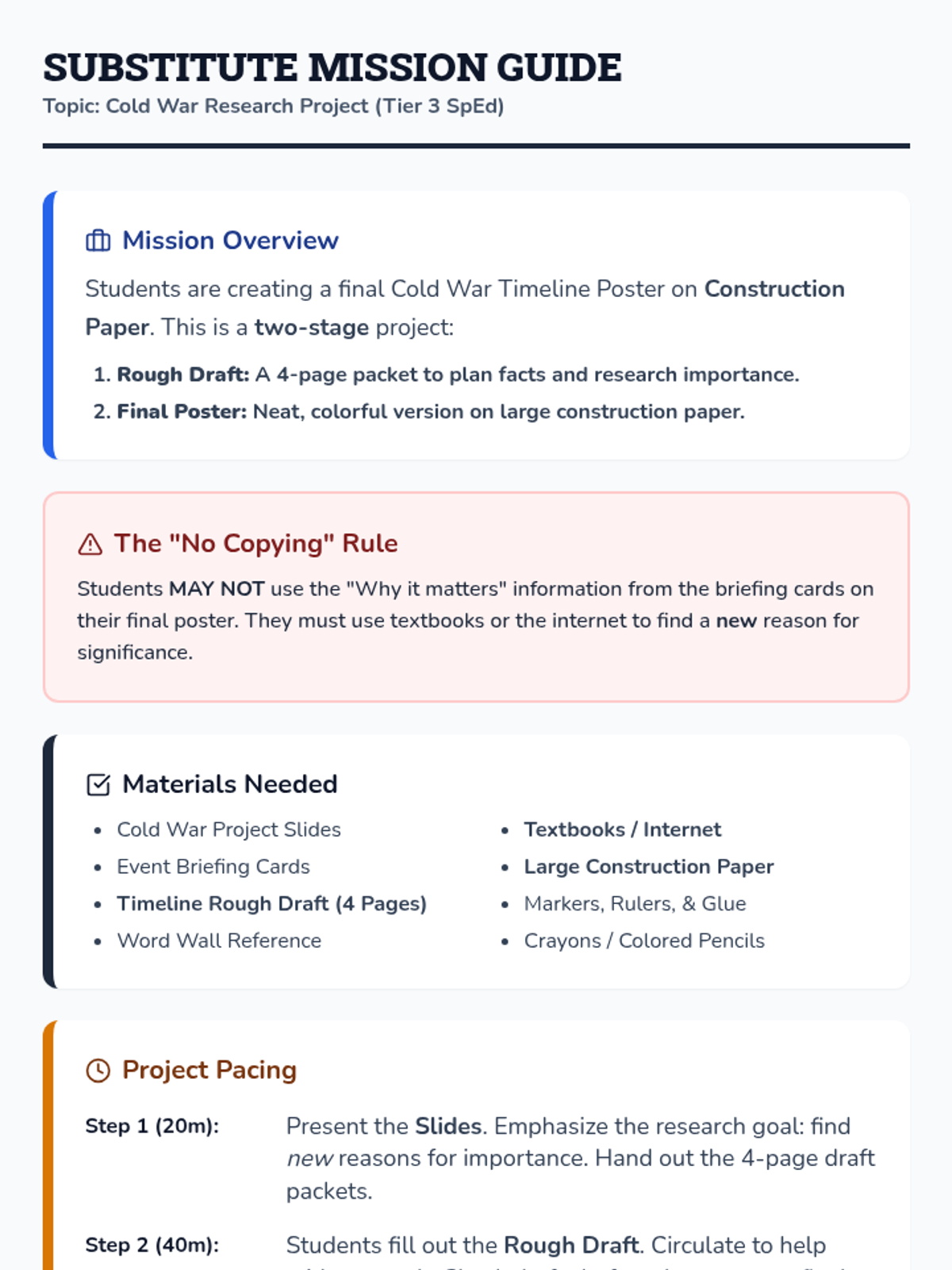
A detailed facilitation guide for substitute teachers, providing a lesson summary, research focus, pacing guide, and specific SpEd-focused teaching tips for the two-stage Cold War timeline project. Revised to include the rough-draft-to-final-poster workflow.
An instructional slide deck designed for a substitute teacher to present a Cold War timeline project. Updated to include a two-stage mission: using briefing cards for a rough draft and research (books/internet) for a final construction paper poster. Includes "Research Challenge" prompts for each of the 10 events.
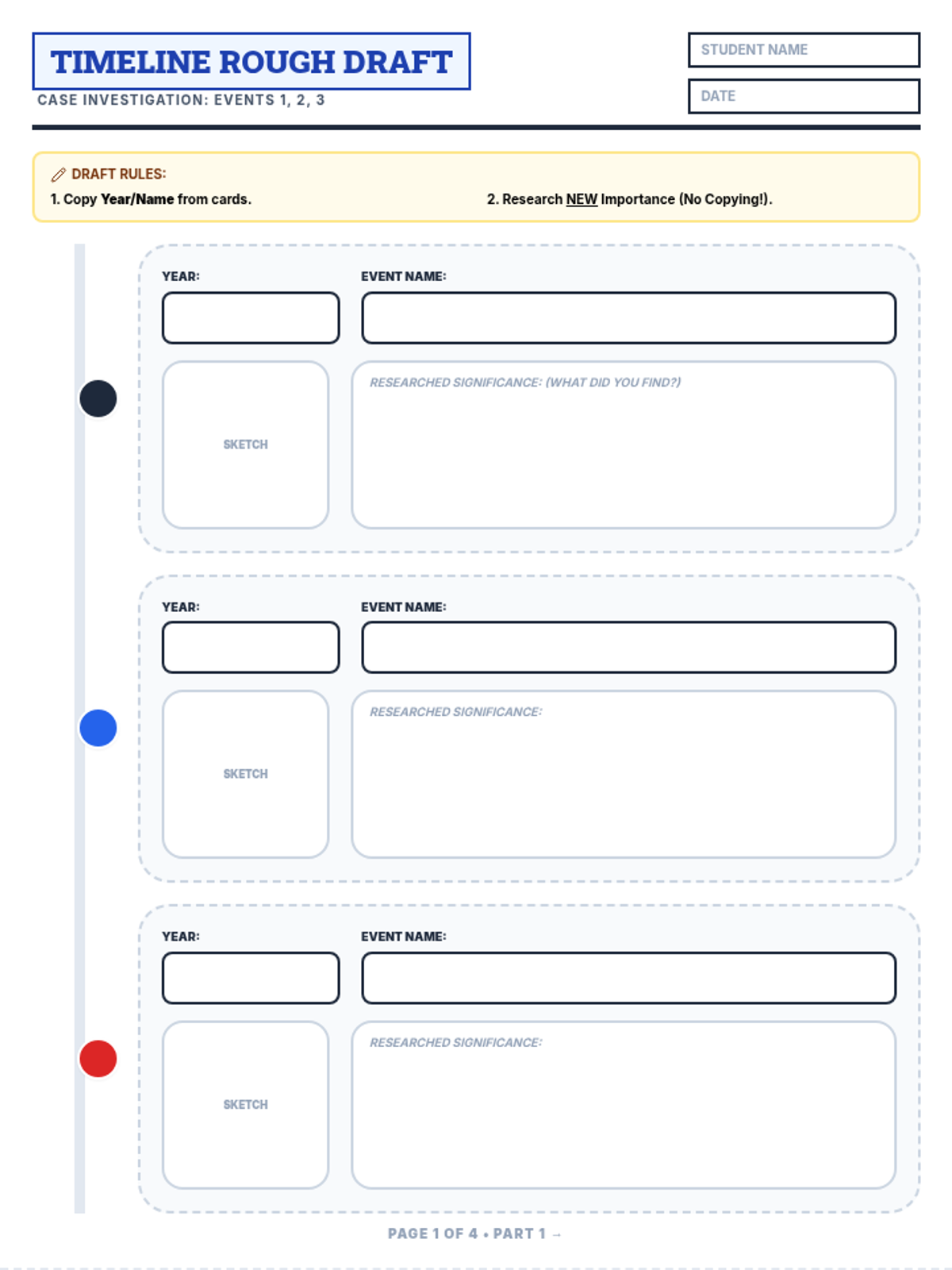
A 4-page rough draft template for the Cold War timeline project. Provides significantly larger work areas for sketching and researched significance for each of the 10 events. Tailored for Tier 3 SpEd students with expanded writing space and defined input boxes.