A teacher-facing answer key for The Big Sort Worksheet, providing clearly marked correct answers for all 10 practice items with bold visual indicators and helpful facilitation tips.
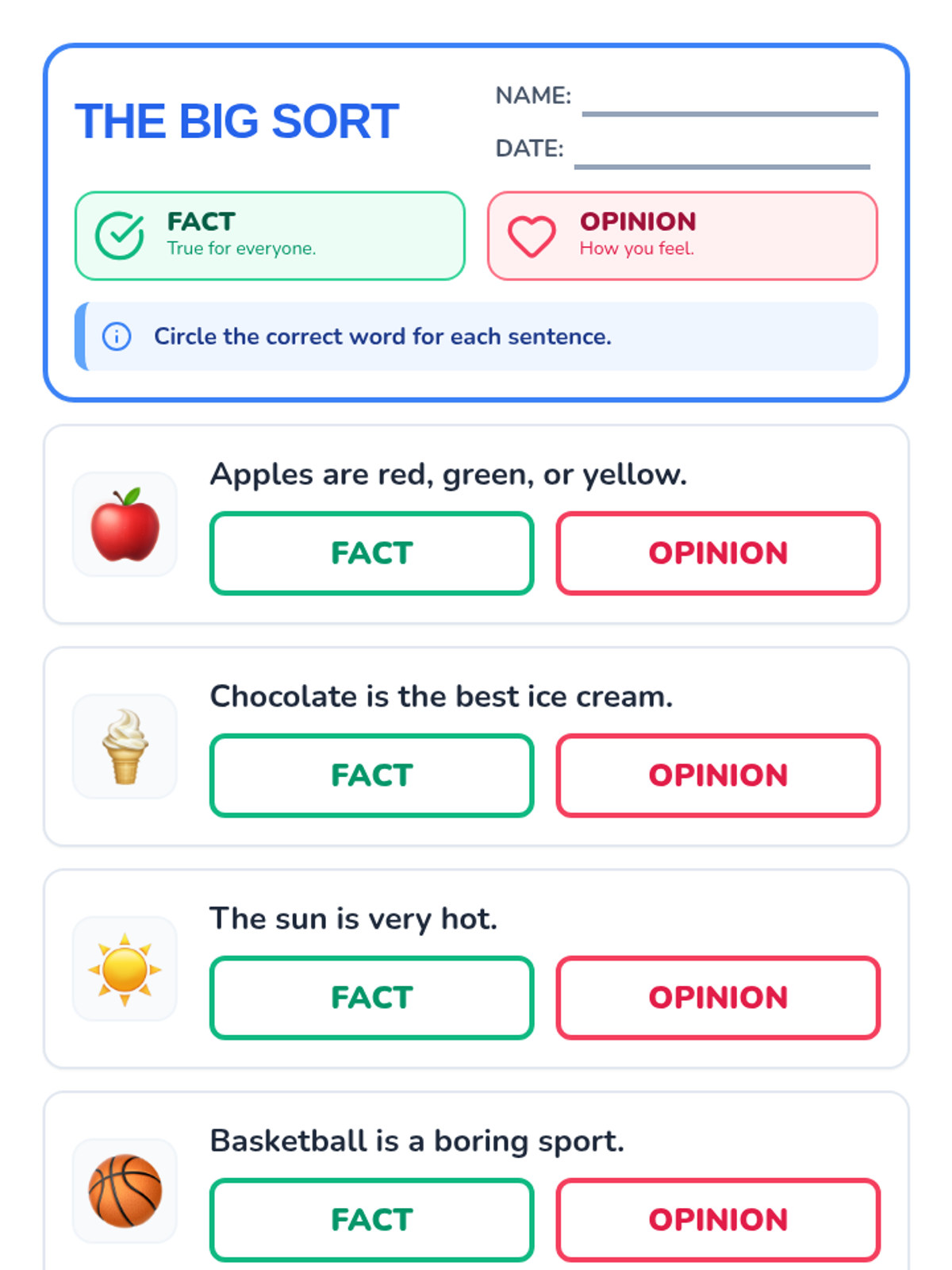
A visual sorting worksheet where students distinguish between facts and opinions. Each question features a clear emoji, a simple statement, and two large, high-contrast buttons (Fact/Opinion) for easy selection, tailored for students with intellectual disabilities. Now expanded with 10 total practice items.
A 7-slide introductory presentation explaining the difference between facts and opinions for students with intellectual disabilities. It uses high-contrast visuals, simple language, and large icons to help students understand that opinions are feelings while facts are universal truths.
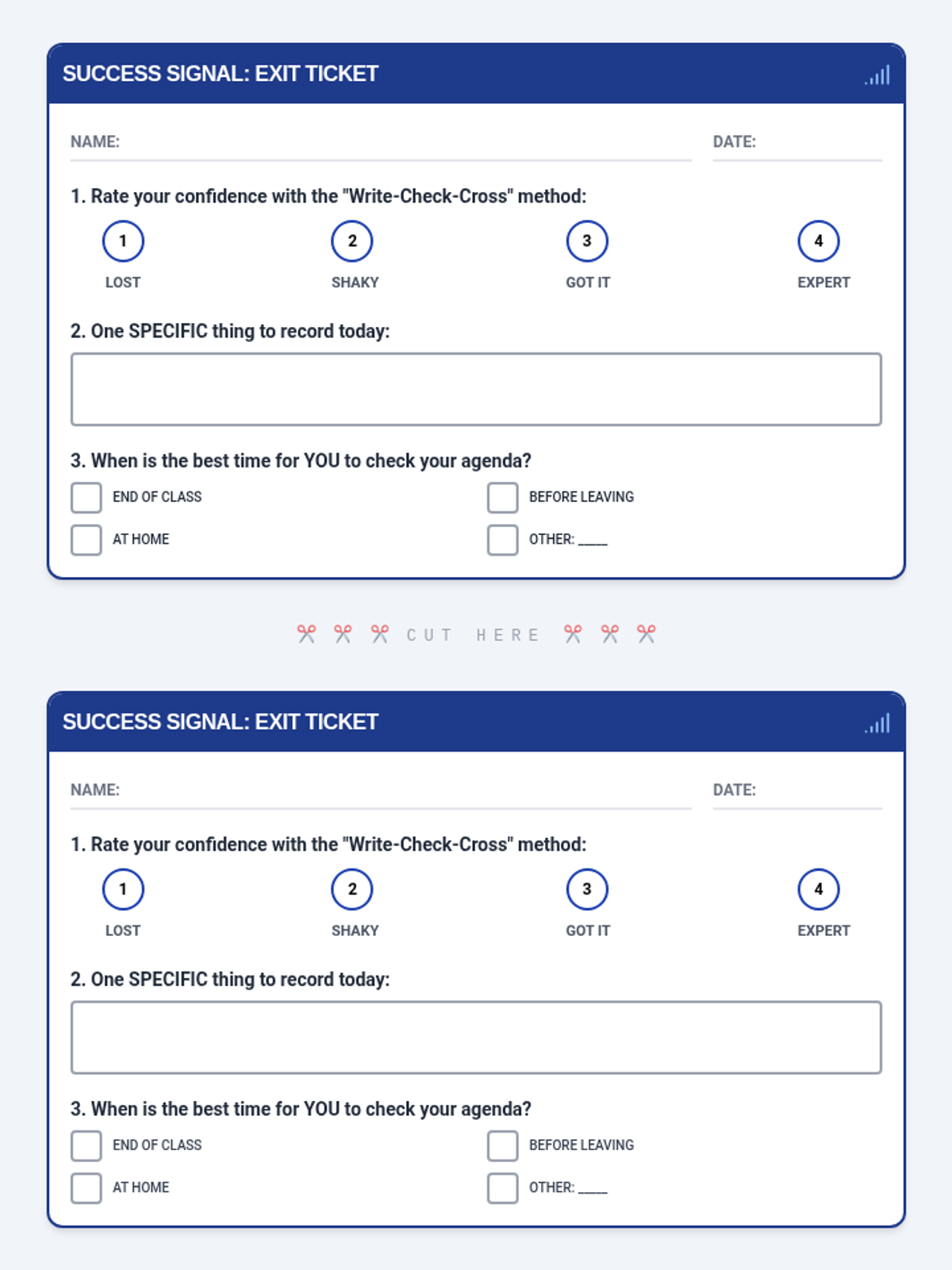
An exit ticket for students to self-assess their understanding of the agenda strategy and identify specific application moments. Revised with duplicate content for efficiency and improved legibility.
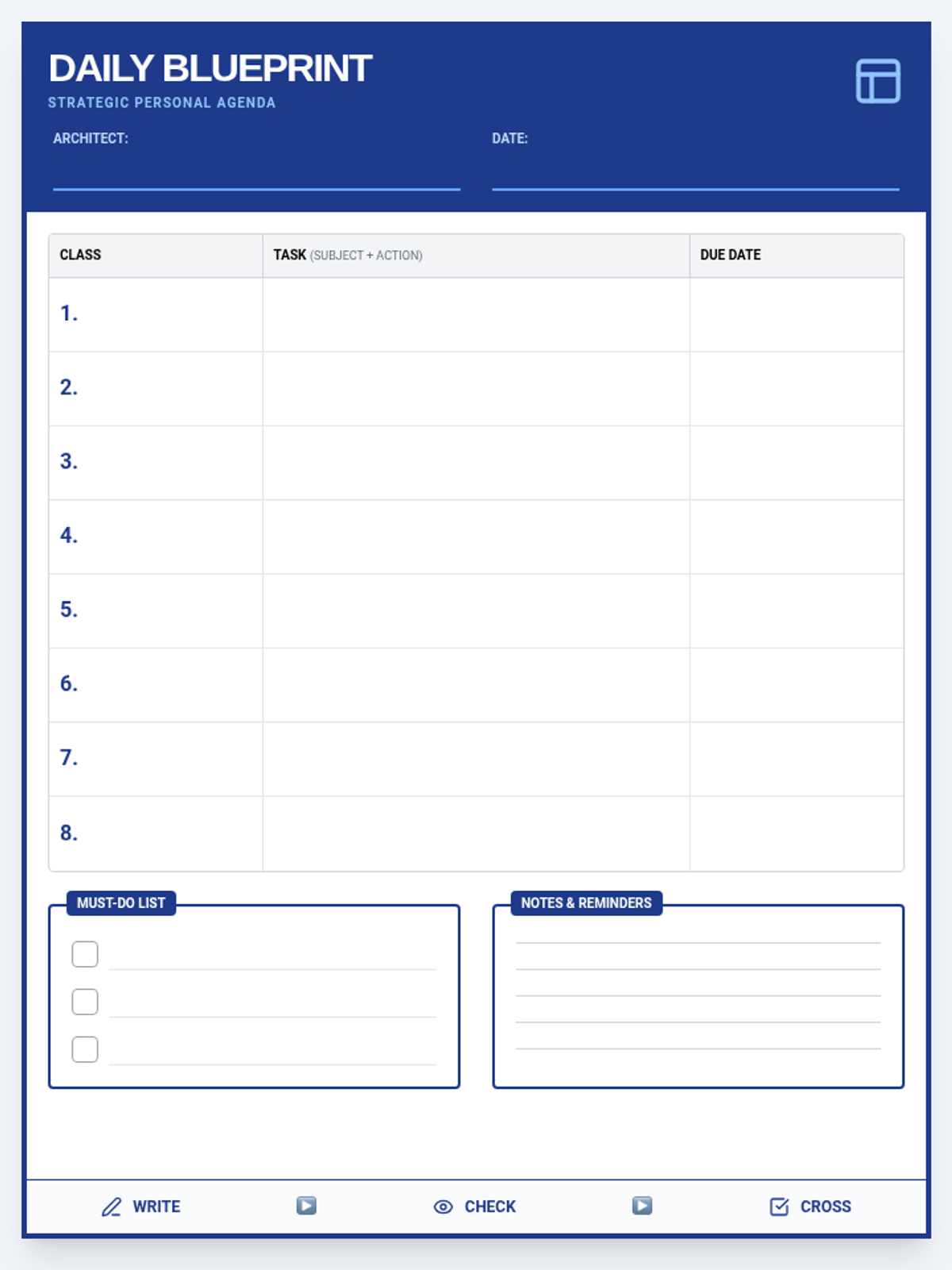
A structured daily agenda template for students, featuring a class schedule table, a "Must-Do" priority list, and the "Write-Check-Cross" strategy reminder. Revised to fit on a single page with improved note space and legible handwriting lines.
A high-contrast, visual slide deck for 10th grade SPED students focusing on the "Write-Check-Cross" agenda-keeping strategy. Revised for maximum legibility.
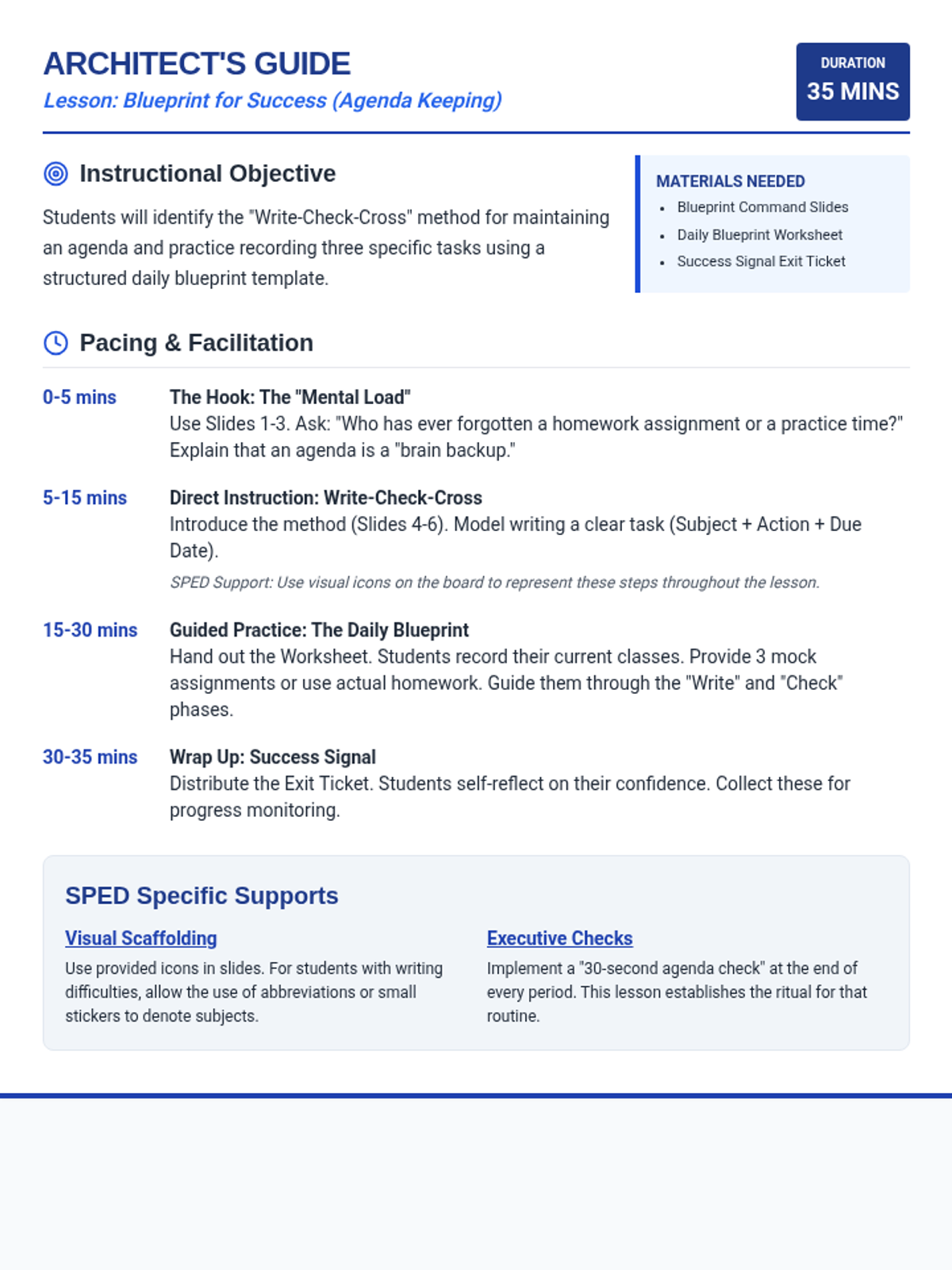
Teacher guide for the Blueprint for Success lesson, including pacing, facilitation tips, and specific SPED accommodations for teaching agenda-keeping skills. Revised to fit on a single page.
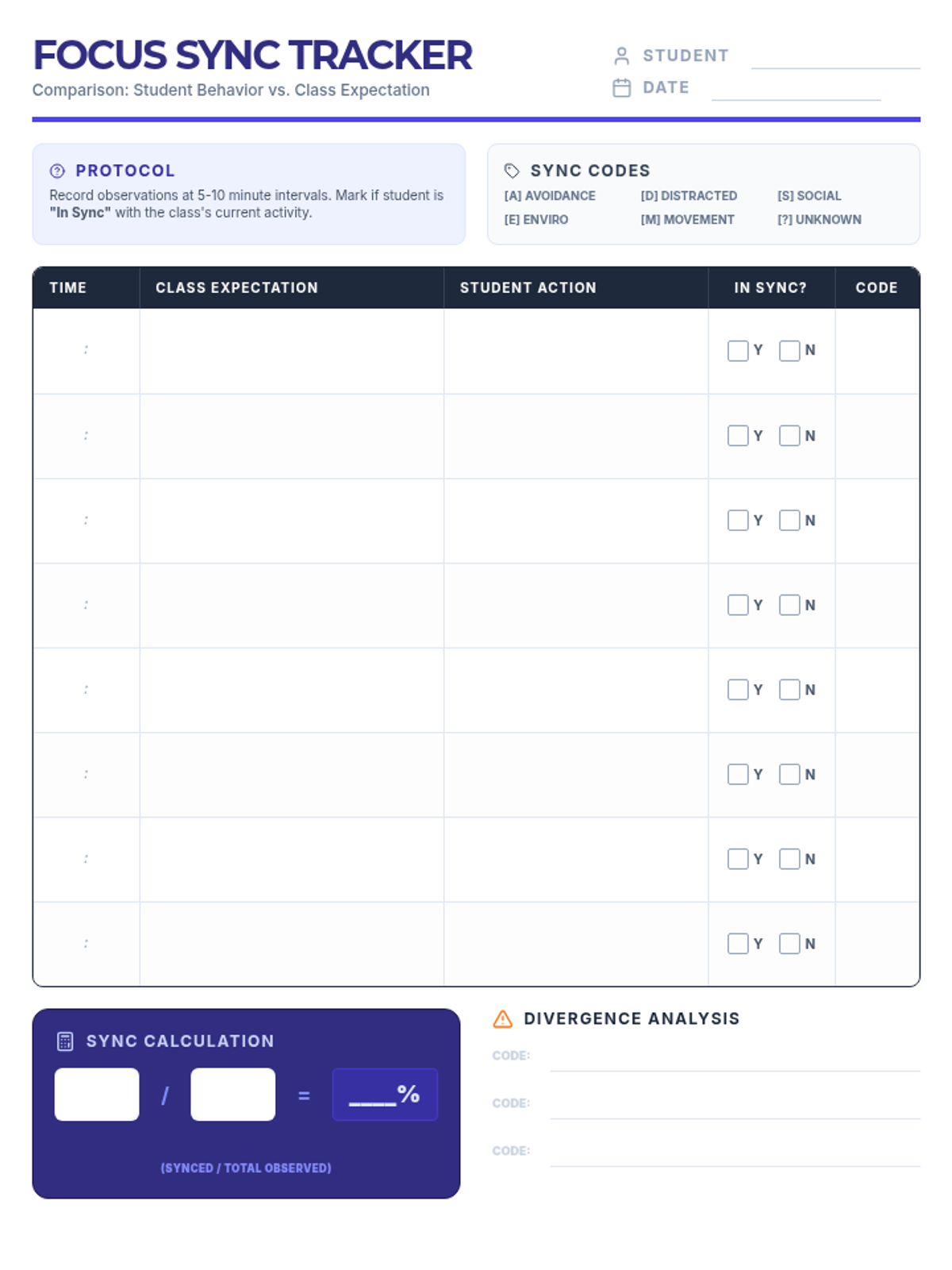
An observation tool for comparing a student's actions against classroom expectations at specific time intervals to determine alignment and identify off-task patterns. Updated for improved handwriting space and readability.
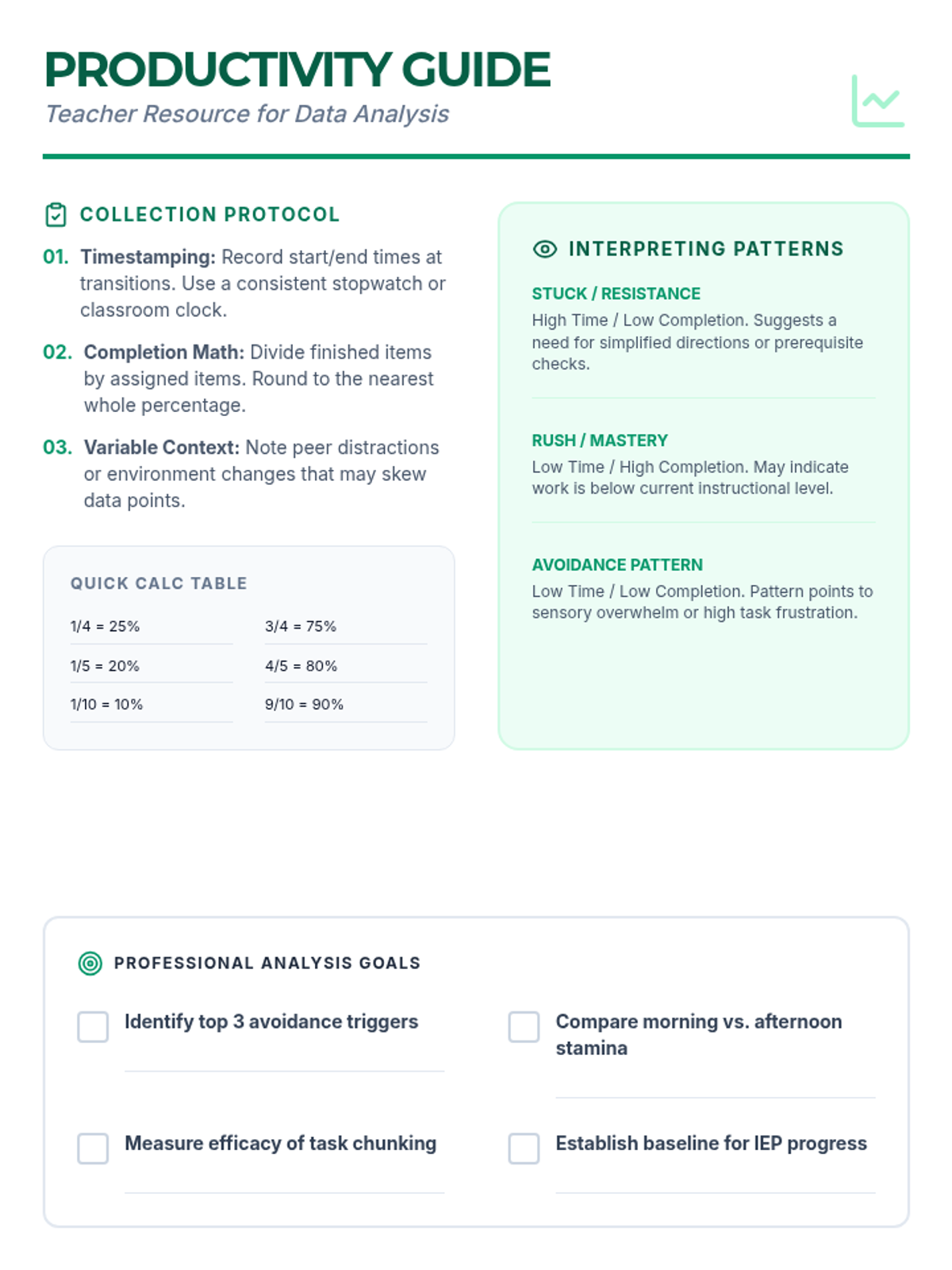
A teacher's guide for calculating percentages and analyzing time-on-task data. Includes a class snapshot table and professional analysis goal-setting. Updated for page alignment and handwriting clarity.
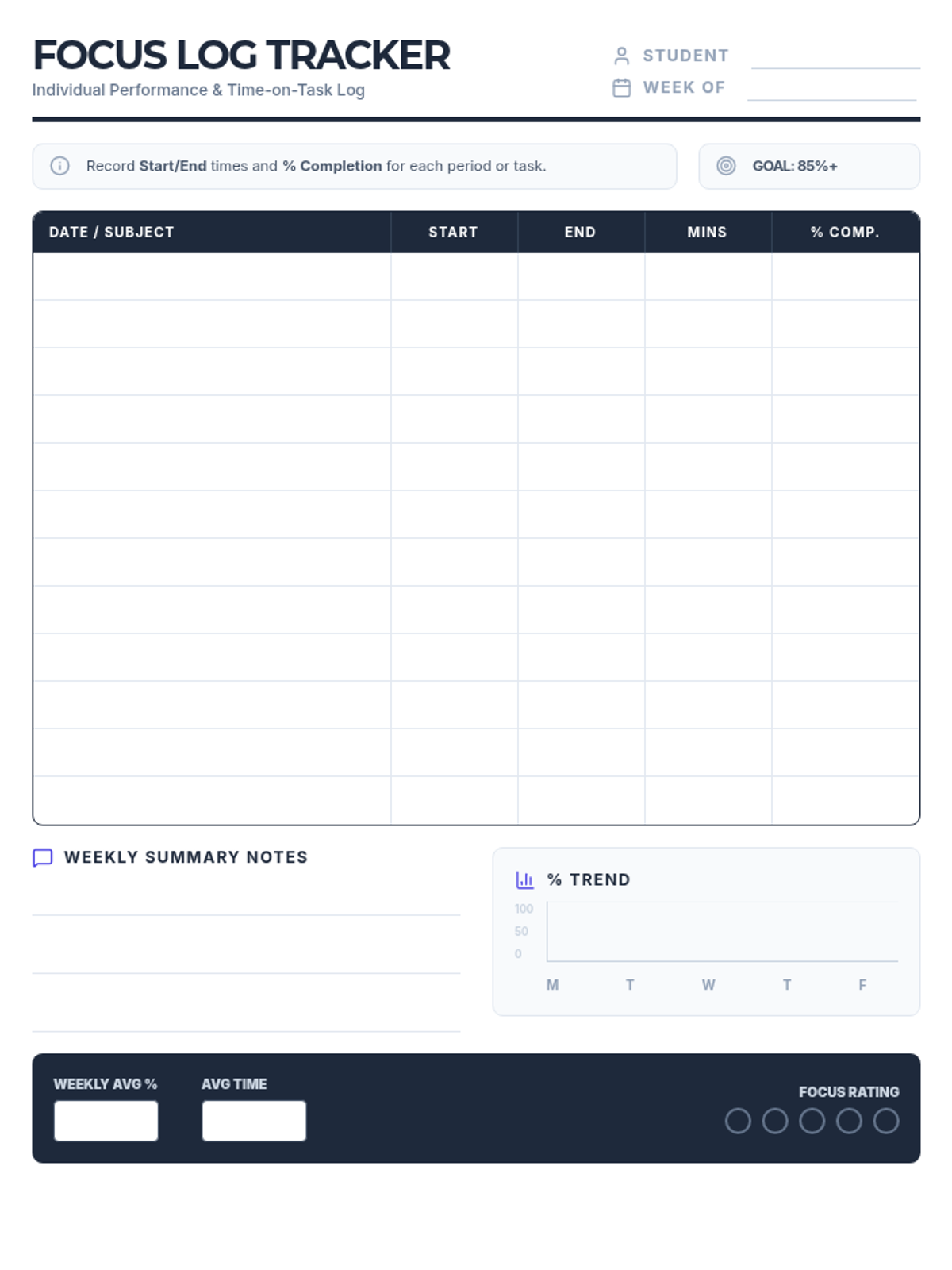
An individual student tracking sheet for recording start times, end times, and percentage of work completed across various tasks. Updated for single-page efficiency with 12 logging rows.
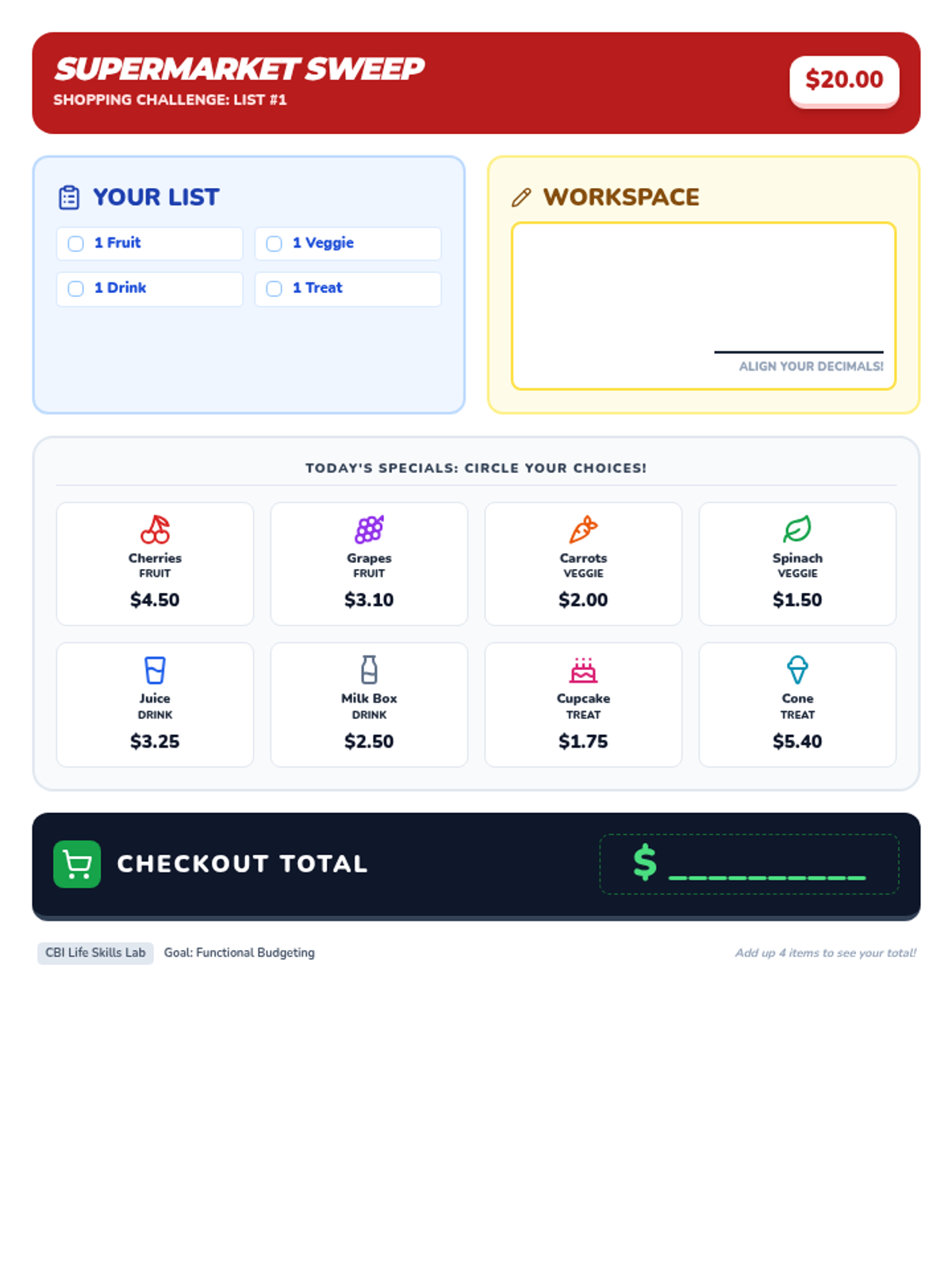
A simulation activity where students fulfill a shopping list using a $20 budget. Updated with an expanded addition workspace and balanced item choices (2 options for each category) to better support independent practice.
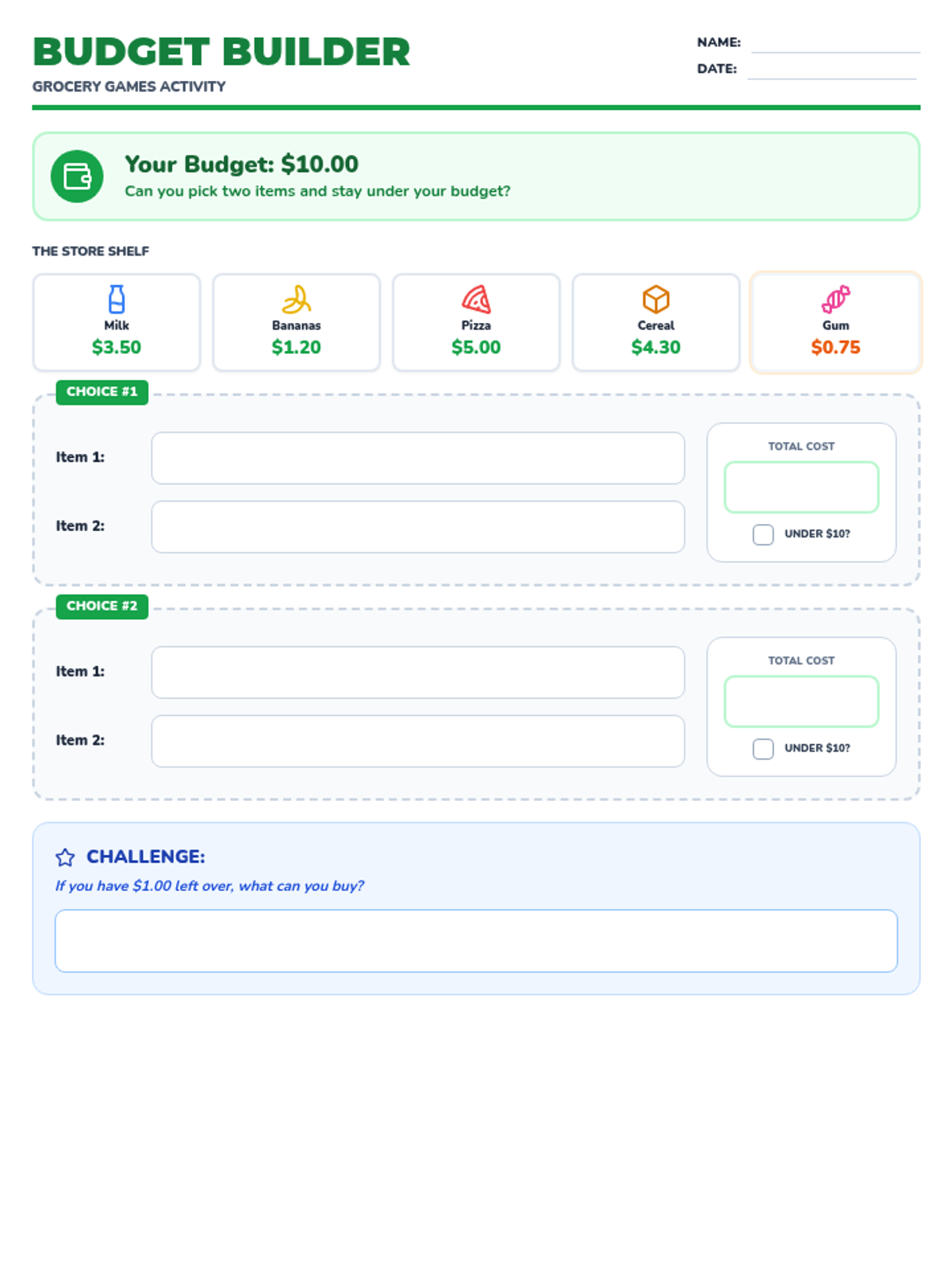
A worksheet for practicing simple addition and budgeting, where students select two items from a visual menu and calculate if they stay under a $10 budget. Updated to include all sections on one page and a small-cost item for the challenge question.
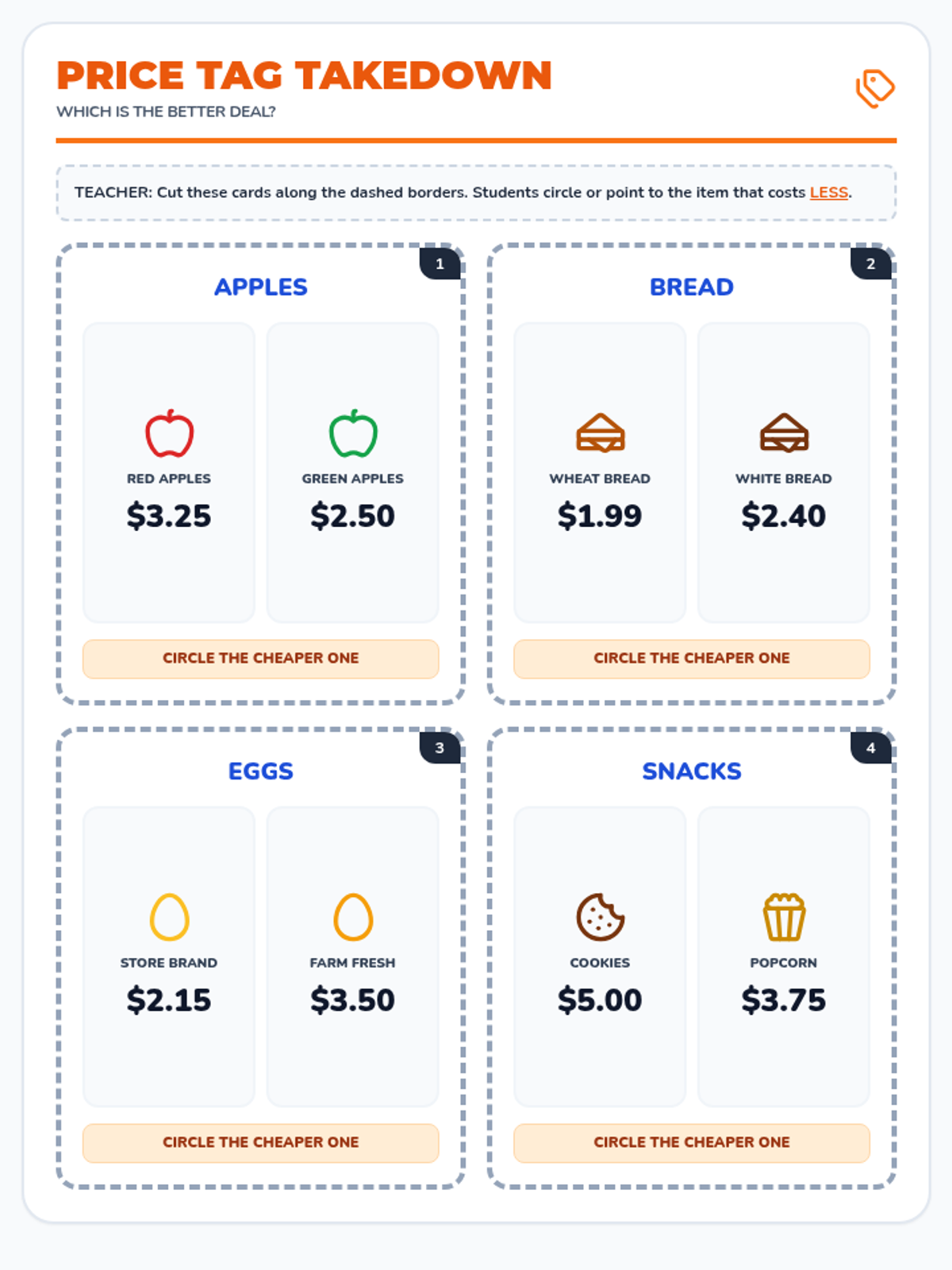
A set of printable task cards where students compare two grocery items and identify which one is cheaper to practice price comparison skills. Card 3 has been updated to compare comparable quantities of eggs for consistent skill practice.
Engaging slides introducing price tags, comparing deals, and the importance of budgeting for grocery shopping.
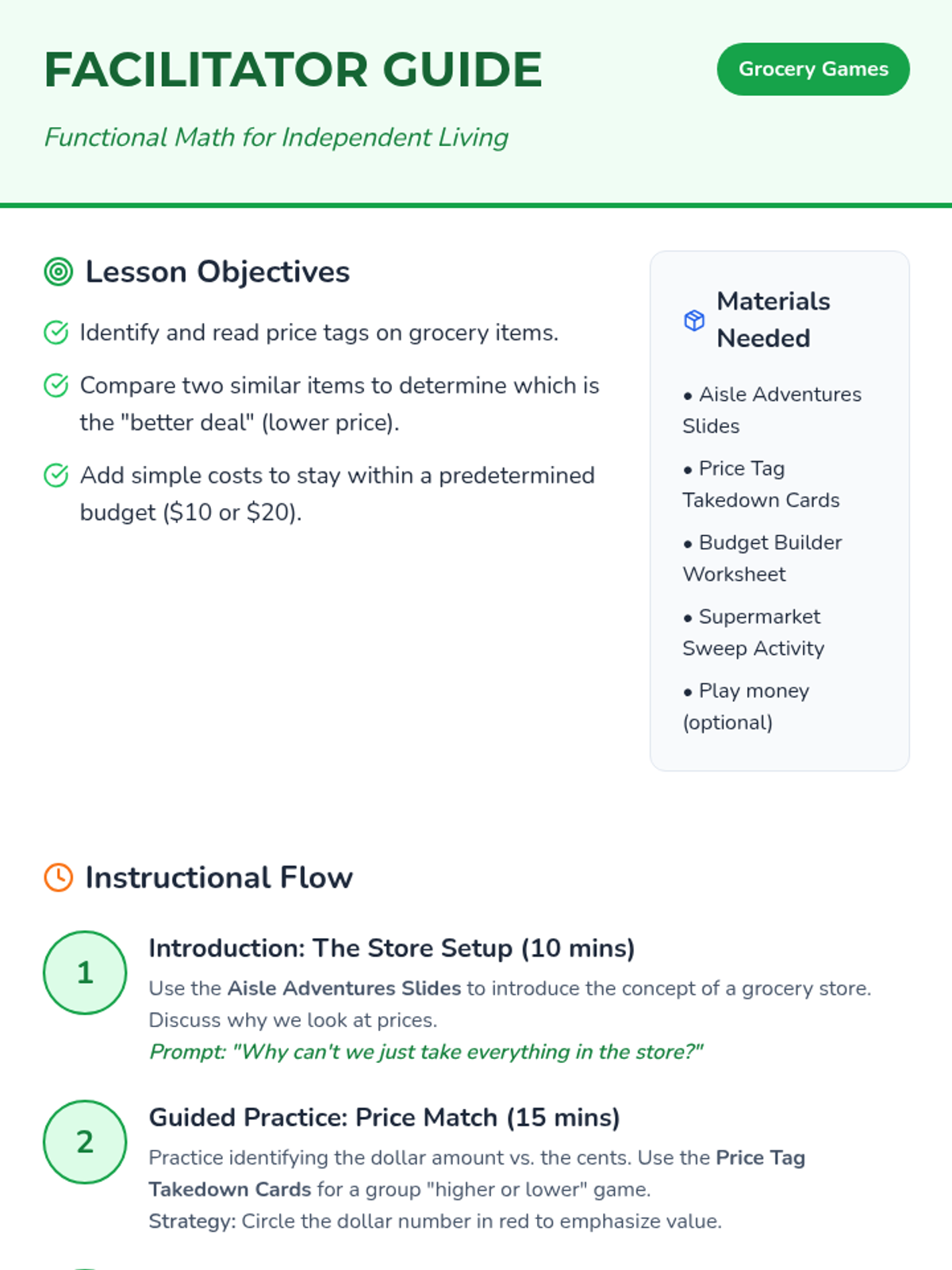
A comprehensive lesson plan for teachers, outlining objectives, pacing, and differentiation strategies for teaching functional grocery store math.
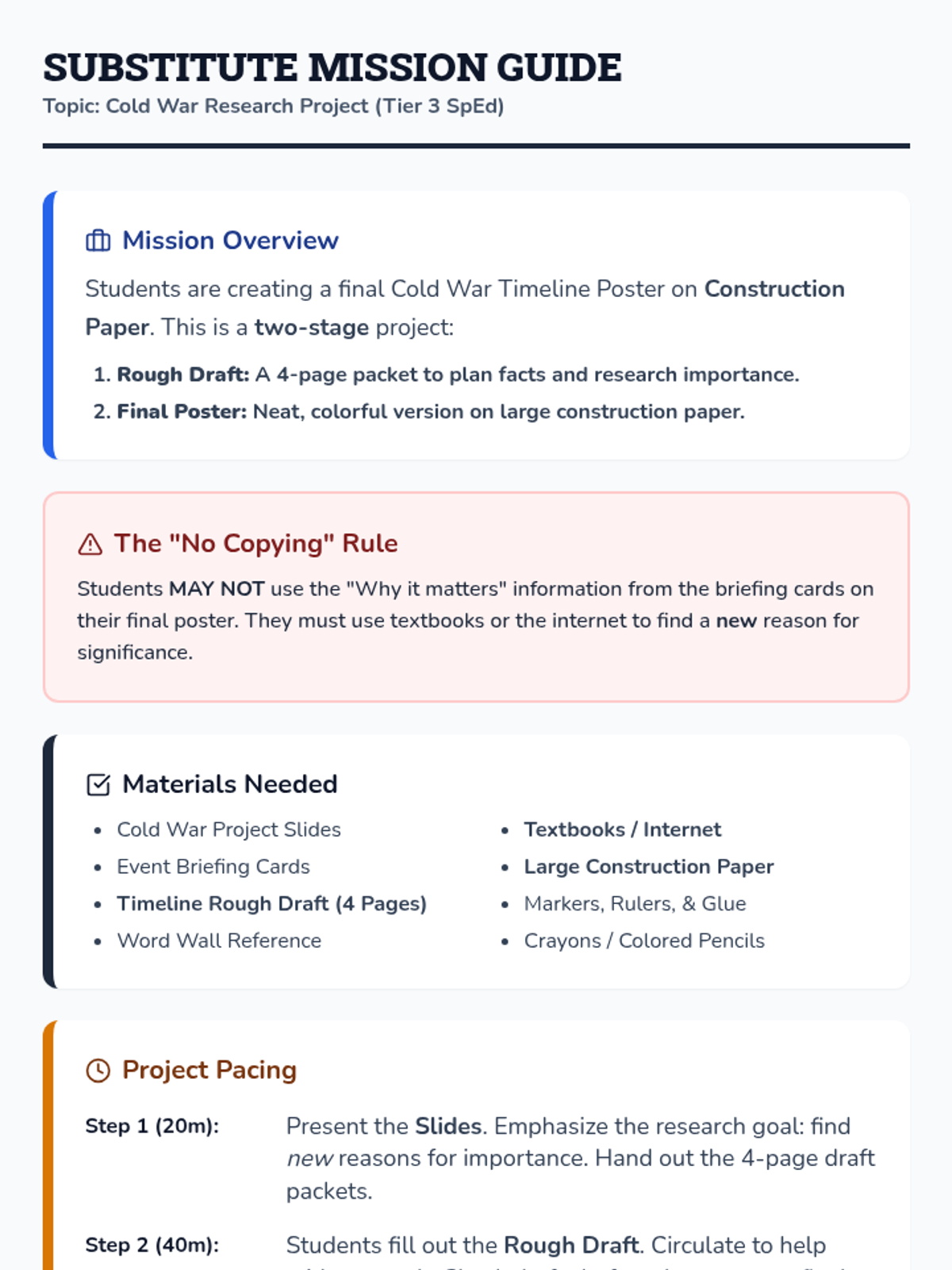
A detailed facilitation guide for substitute teachers, providing a lesson summary, research focus, pacing guide, and specific SpEd-focused teaching tips for the two-stage Cold War timeline project. Revised to include the rough-draft-to-final-poster workflow.
An instructional slide deck designed for a substitute teacher to present a Cold War timeline project. Updated to include a two-stage mission: using briefing cards for a rough draft and research (books/internet) for a final construction paper poster. Includes "Research Challenge" prompts for each of the 10 events.
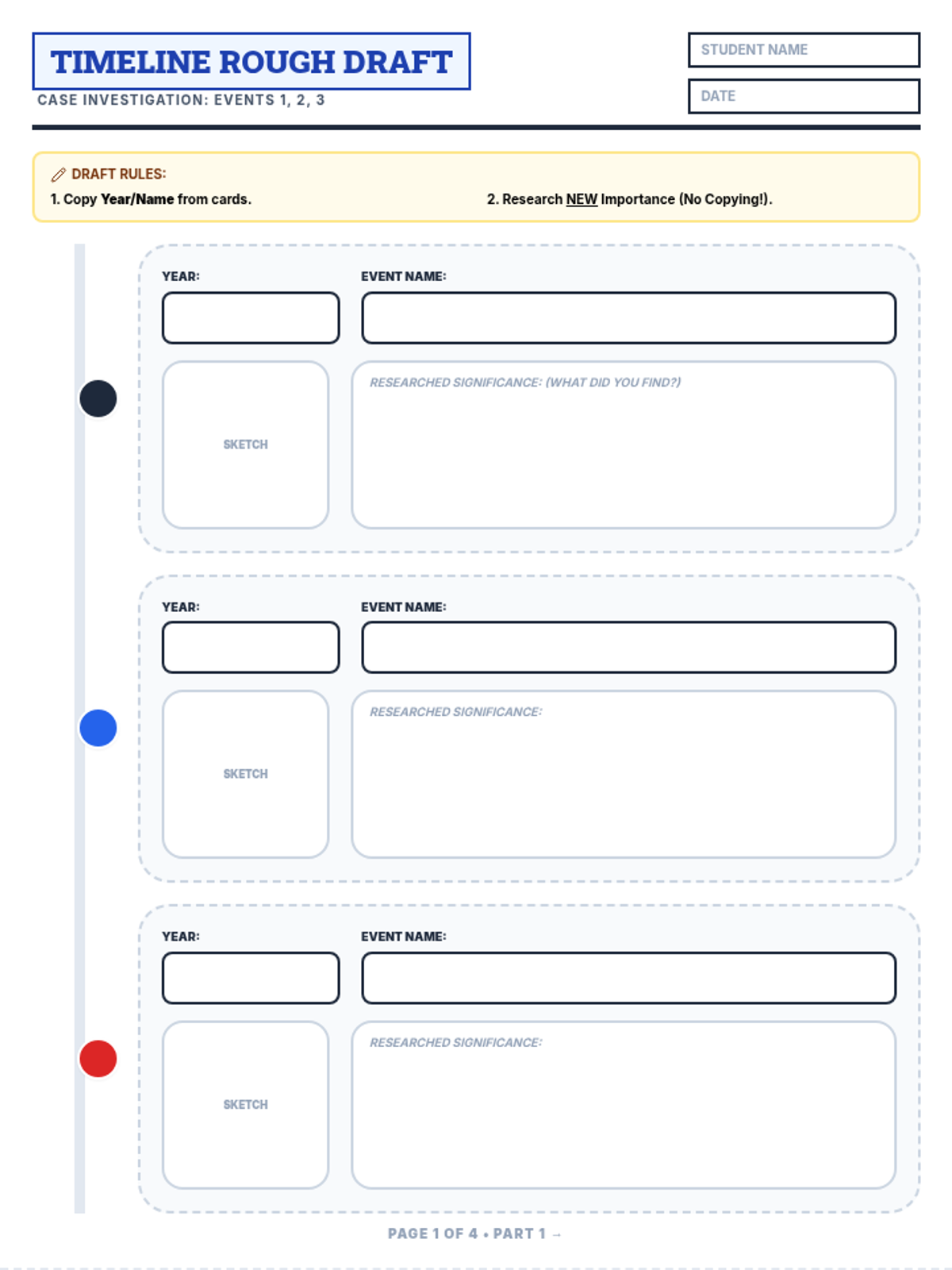
A 4-page rough draft template for the Cold War timeline project. Provides significantly larger work areas for sketching and researched significance for each of the 10 events. Tailored for Tier 3 SpEd students with expanded writing space and defined input boxes.
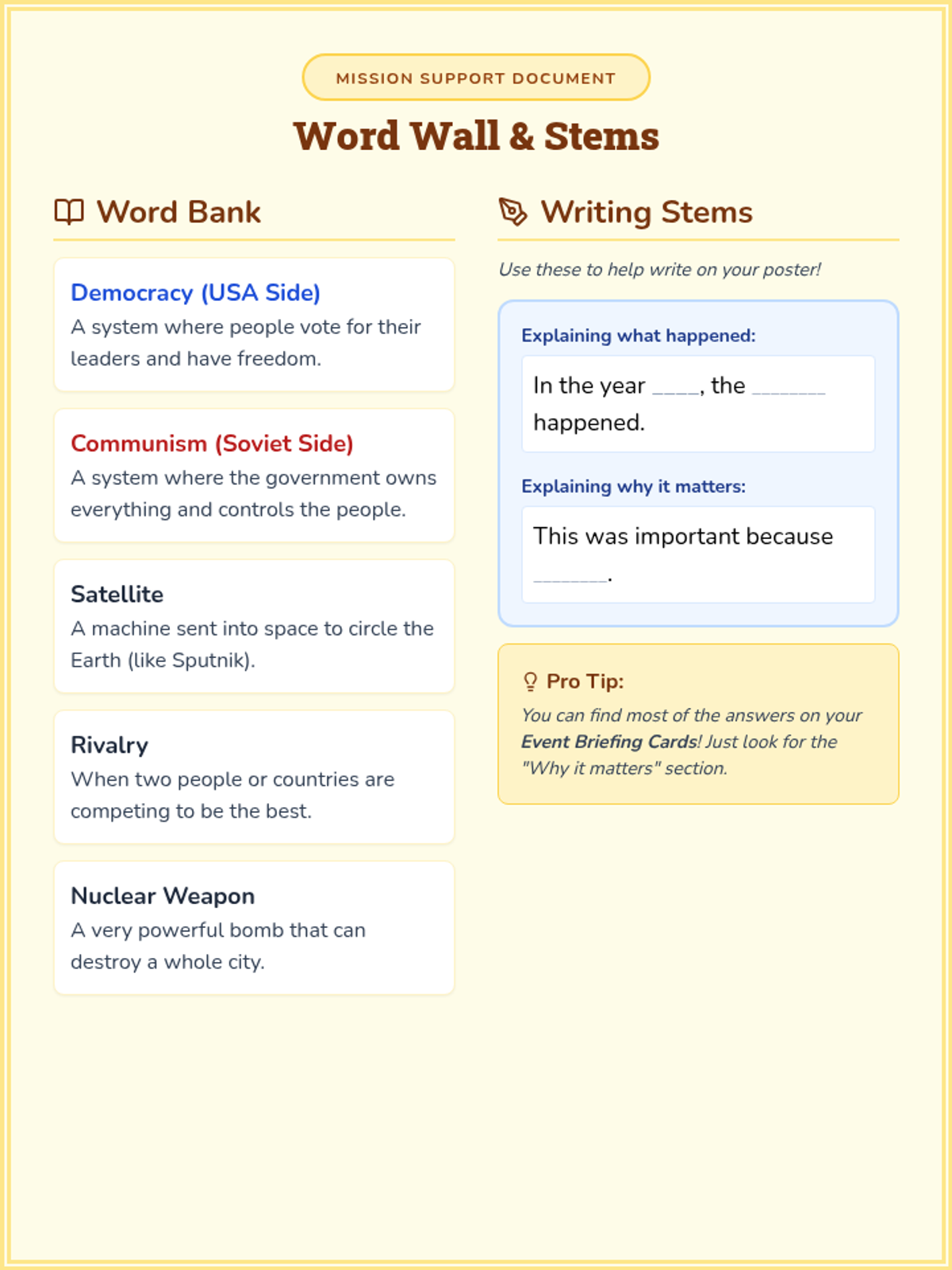
A reference sheet for Tier 3 SpEd students containing simplified Cold War vocabulary definitions and sentence stems to assist with timeline writing tasks. Revised for better page fitting.
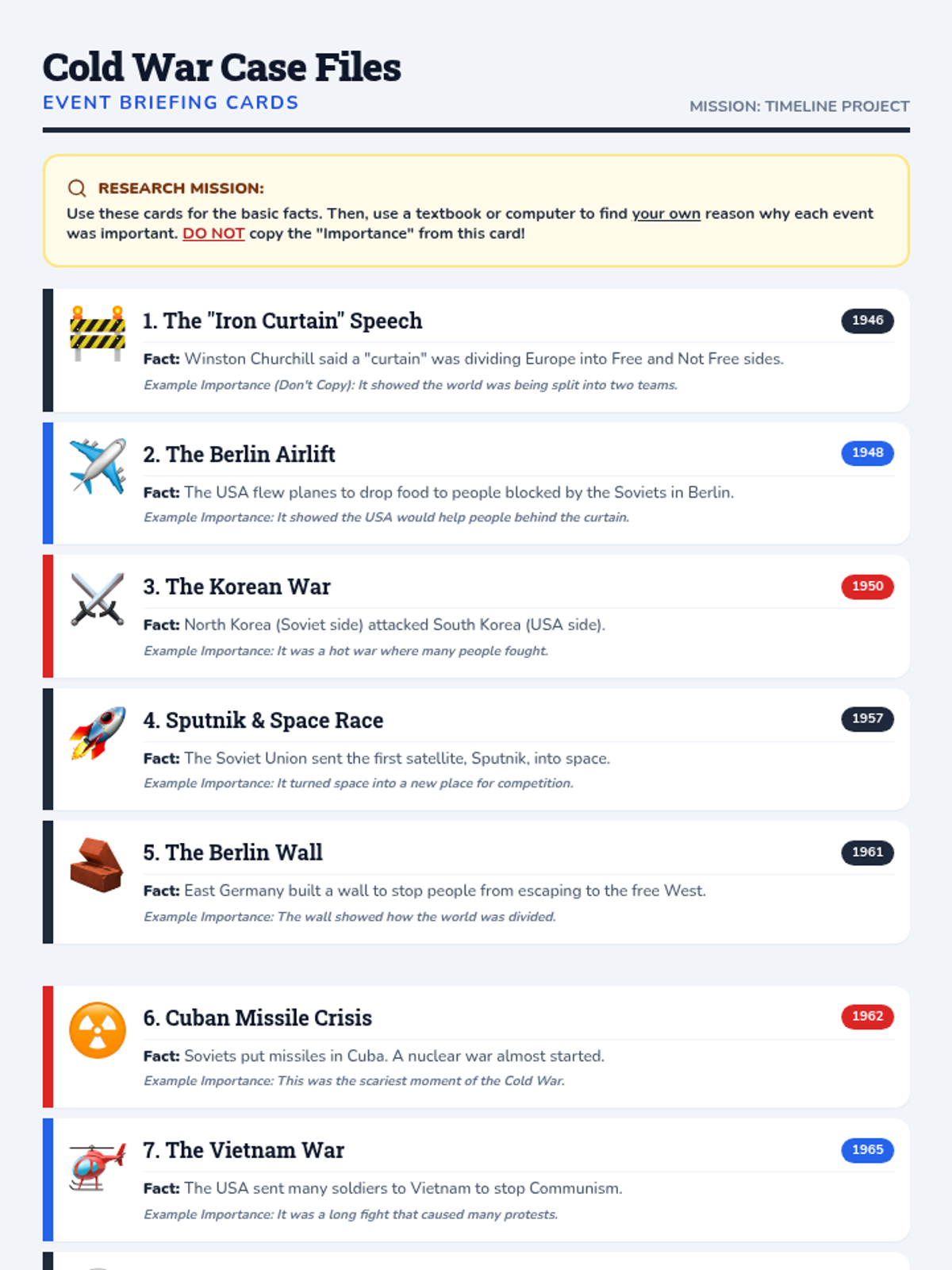
A set of 10 simplified event cards for the Cold War, featuring dates, descriptions, and significance statements with visual emoji support for Tier 3 SpEd students. Revised for improved layout and contrast. Includes mini-glossary for student support.
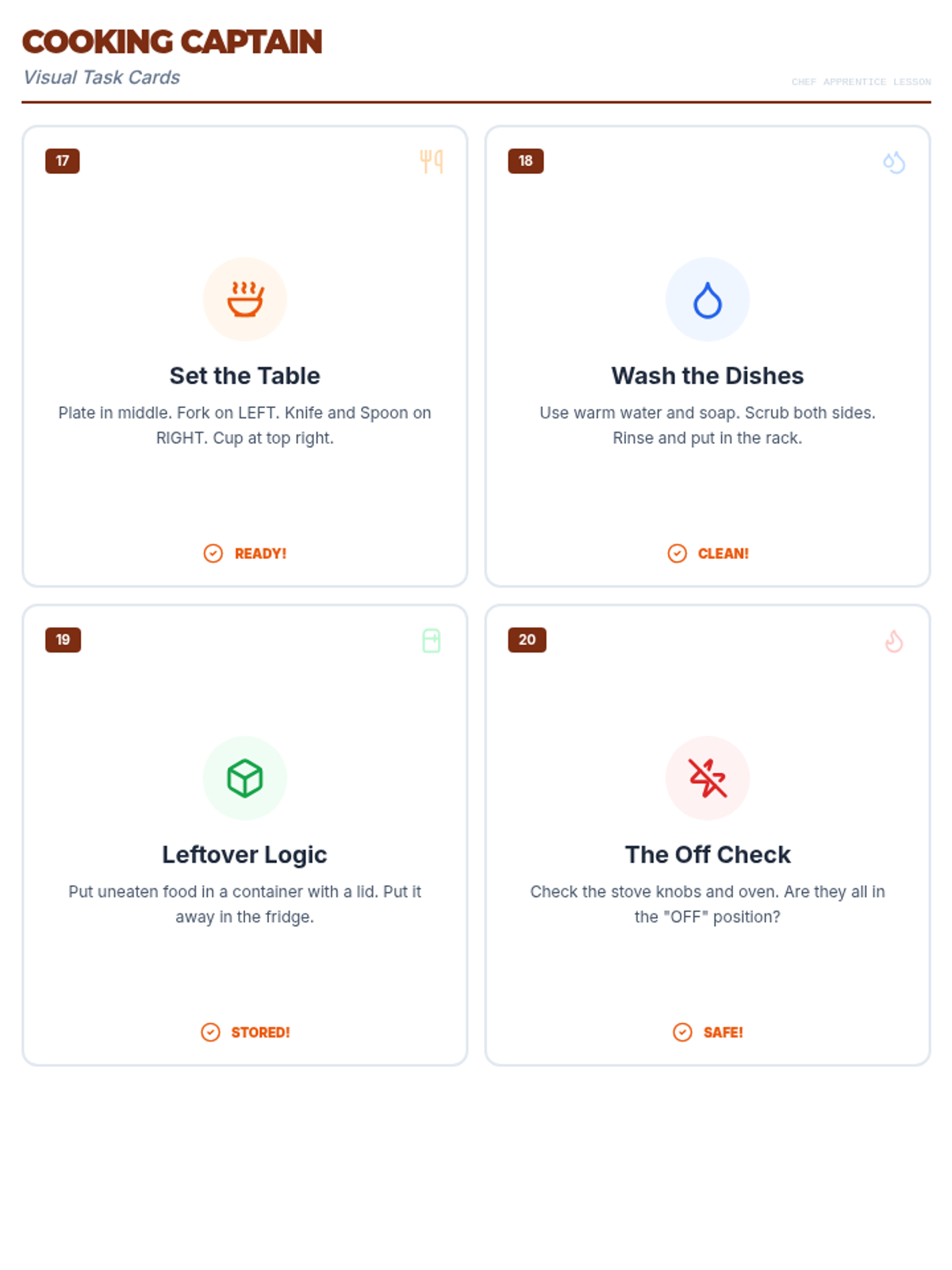
Four task cards for kitchen management: setting the table, washing dishes, storing leftovers, and final safety checks.
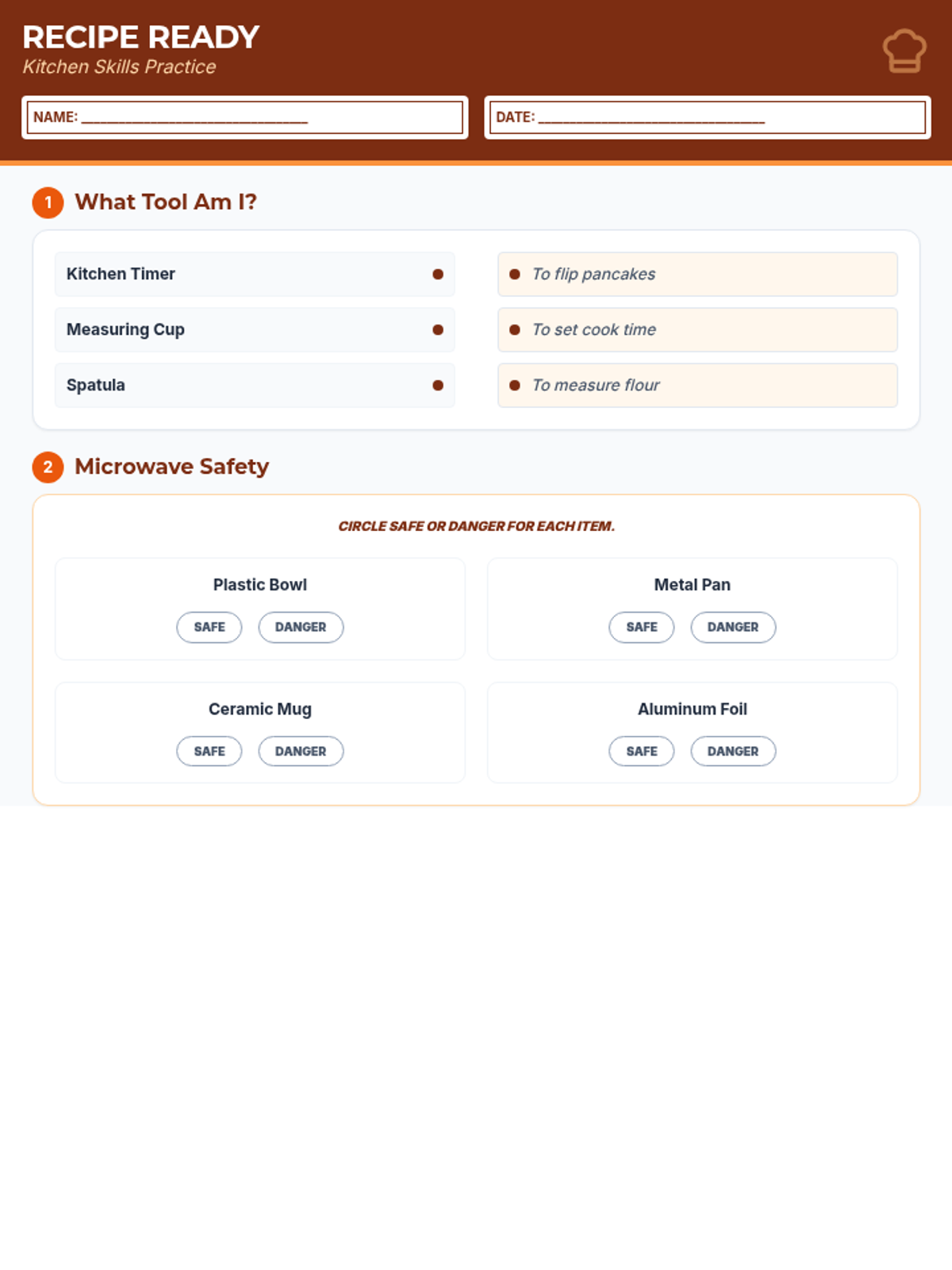
A kitchen skills worksheet covering tool matching and microwave safety (identifying microwave-safe vs. dangerous items).
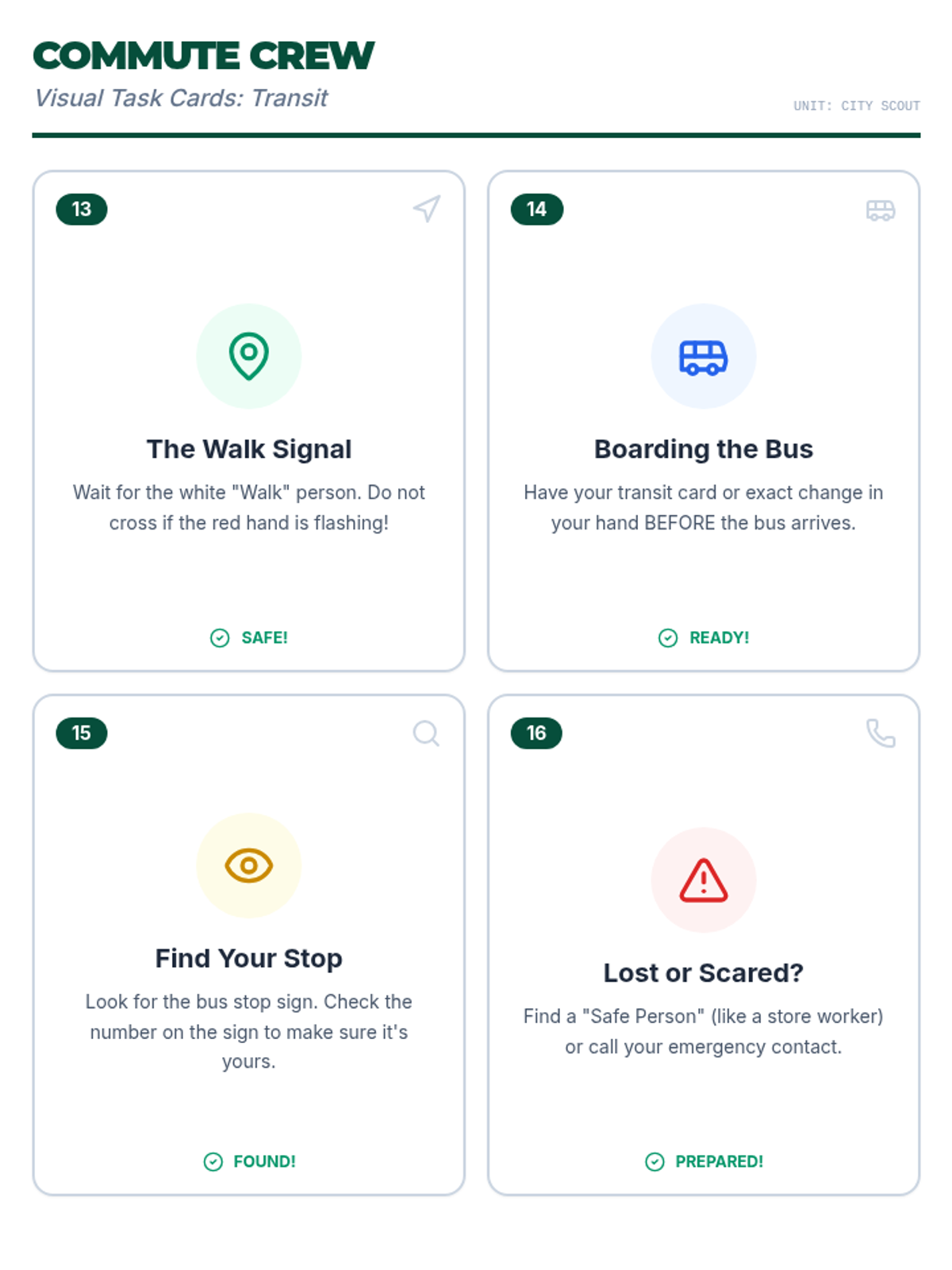
Four task cards for community navigation, focusing on crossing signals, bus boarding, stop identification, and seeking help.
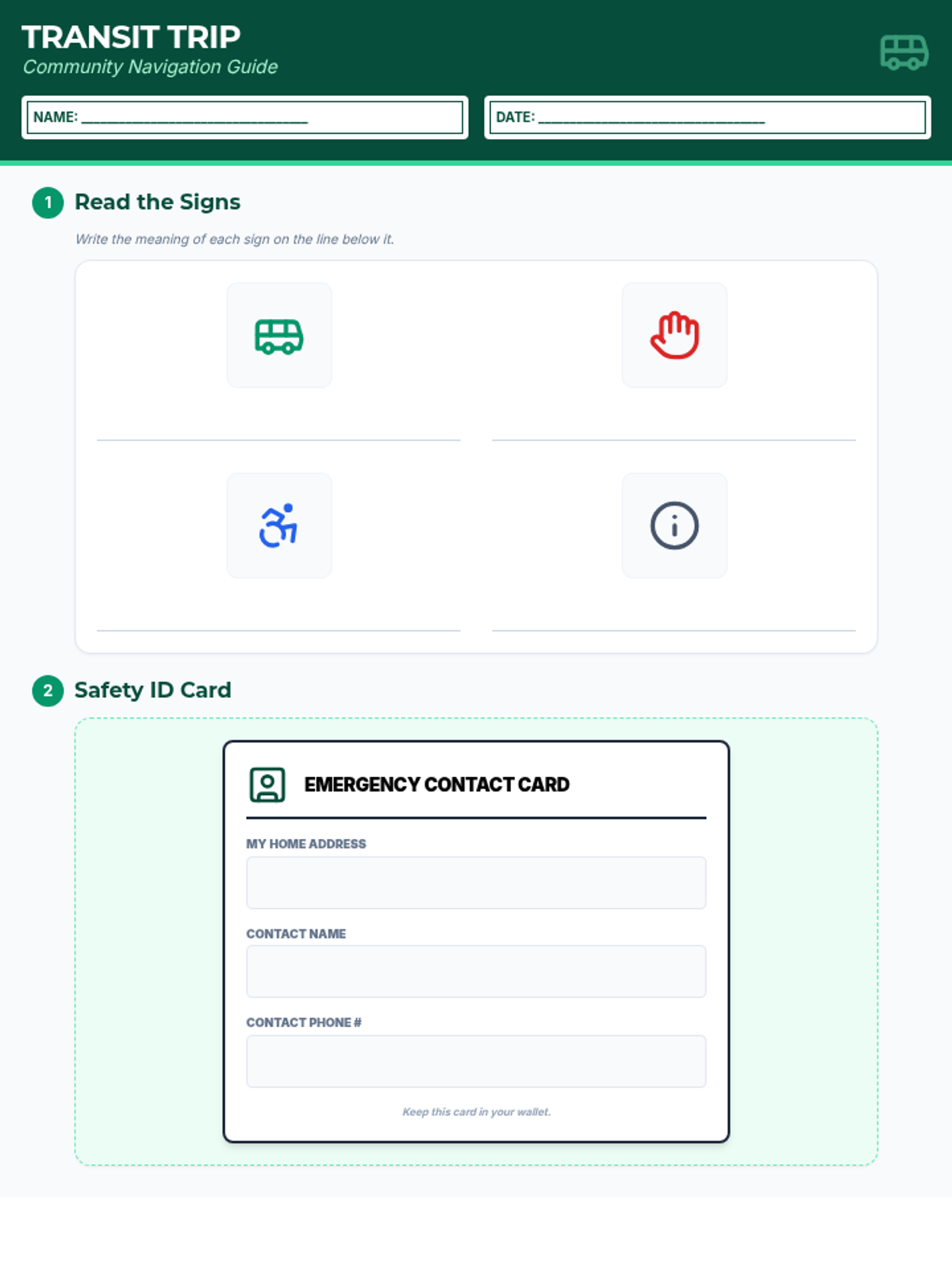
A community navigation worksheet featuring sign identification and an emergency contact card for students to complete.
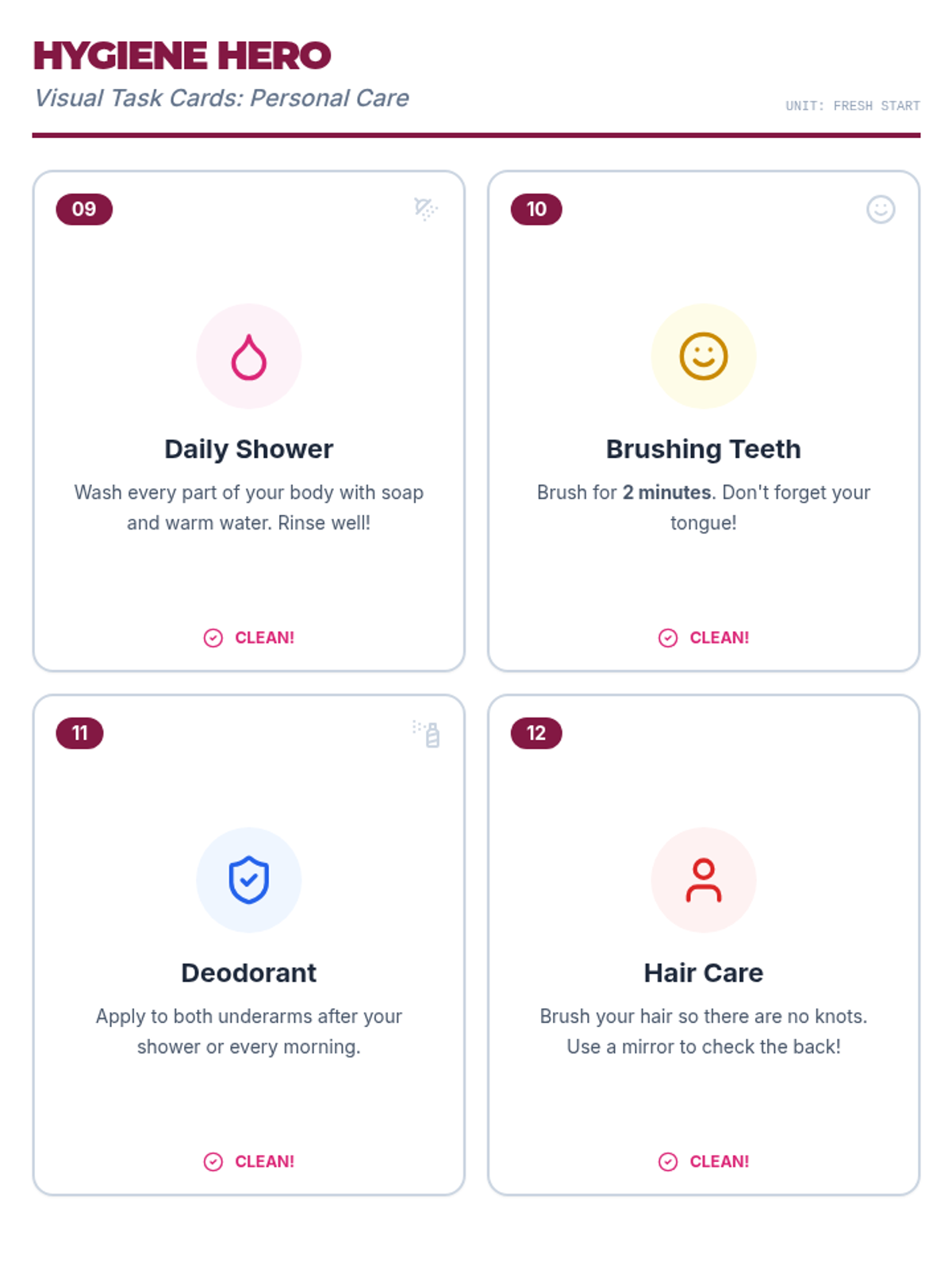
Four task cards detailing critical hygiene steps: showering, teeth brushing, deodorant application, and hair care.
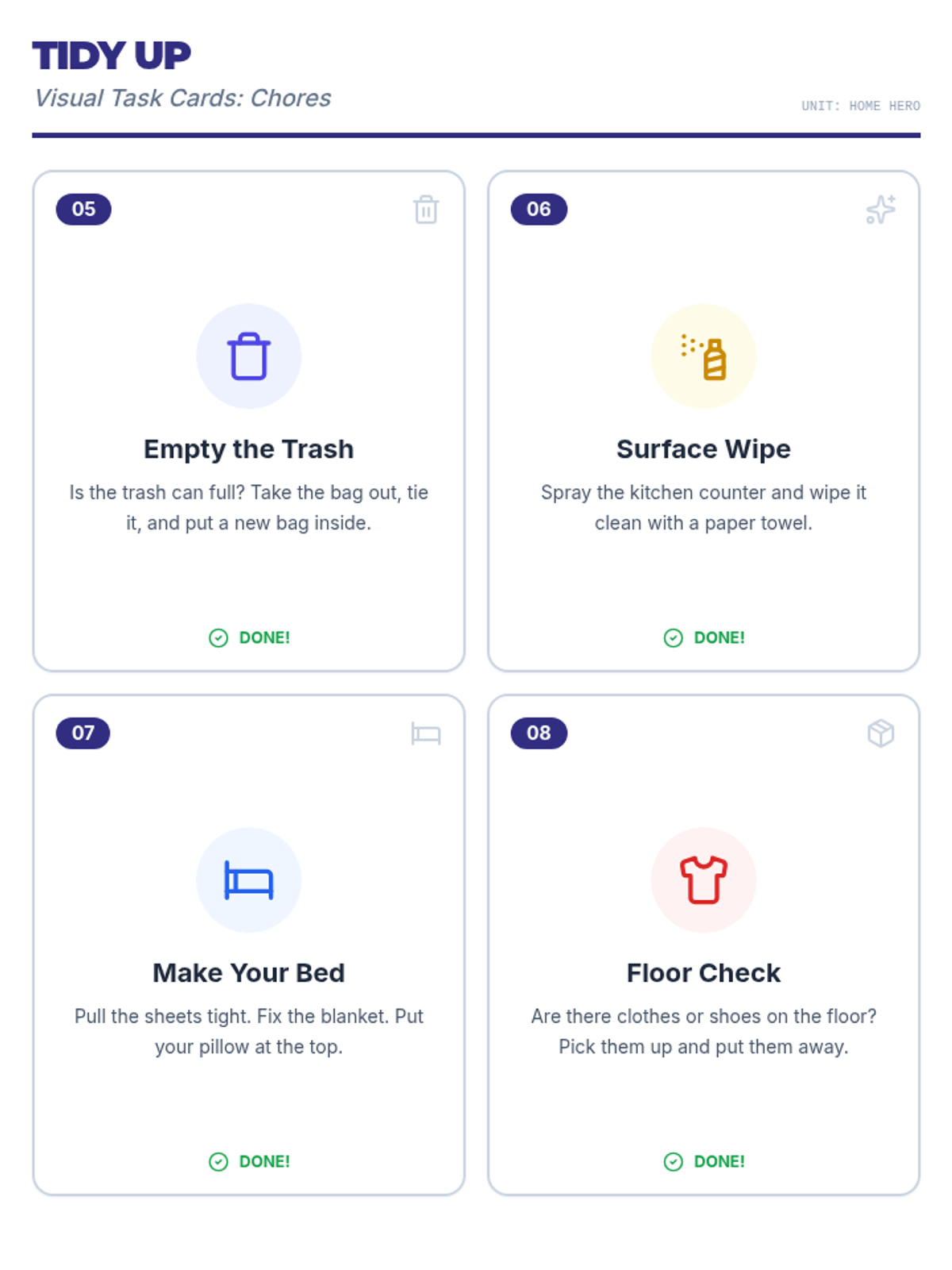
Four actionable task cards for essential household chores: trash disposal, surface cleaning, bed making, and tidying floors.
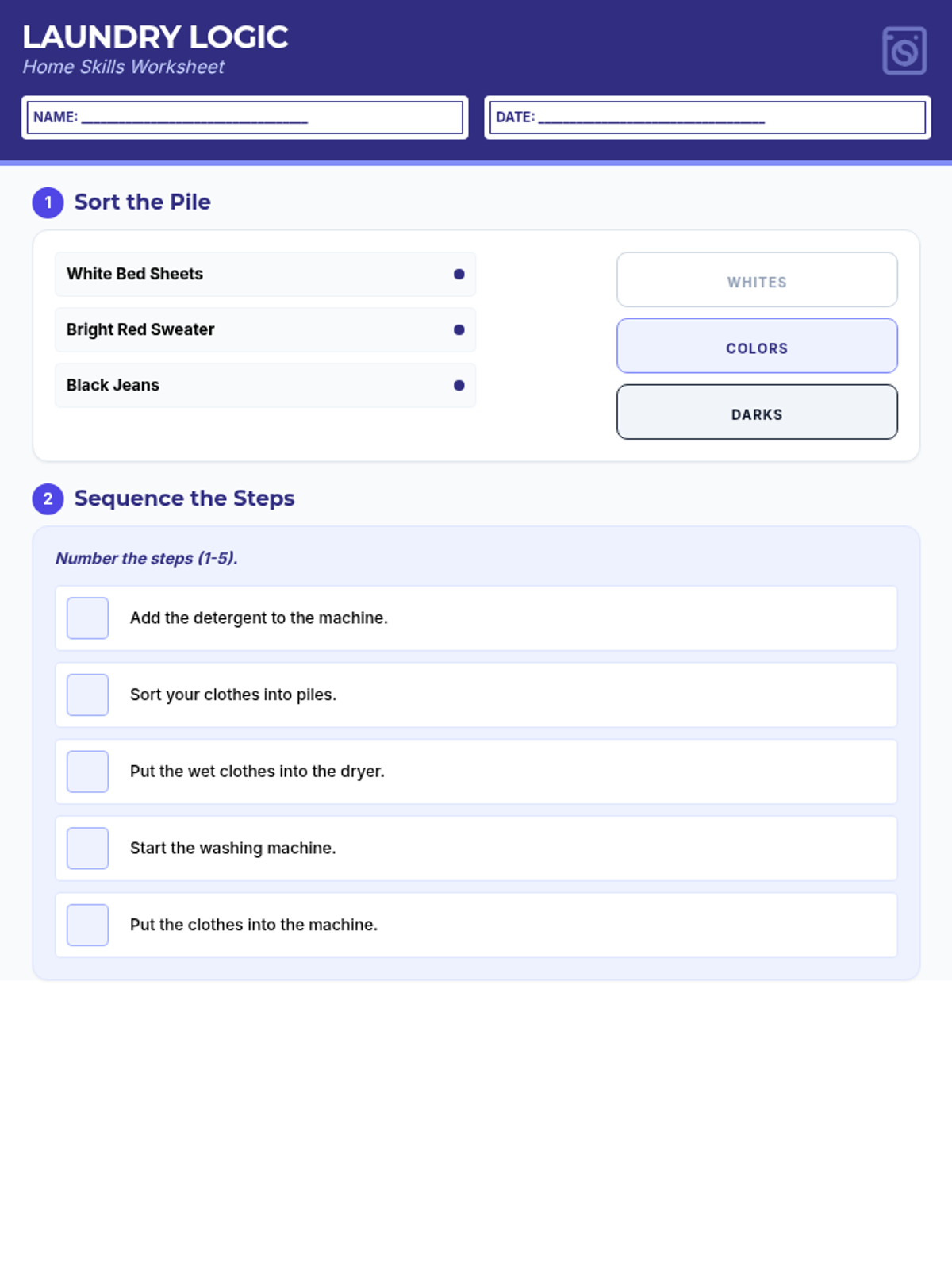
A one-page visual laundry worksheet focusing on sorting clothes by color and sequencing the steps of using a washing machine.
A 4-slide instructional presentation covering laundry sorting, cleaning tool identification, chemical safety, and daily/weekly chore schedules.
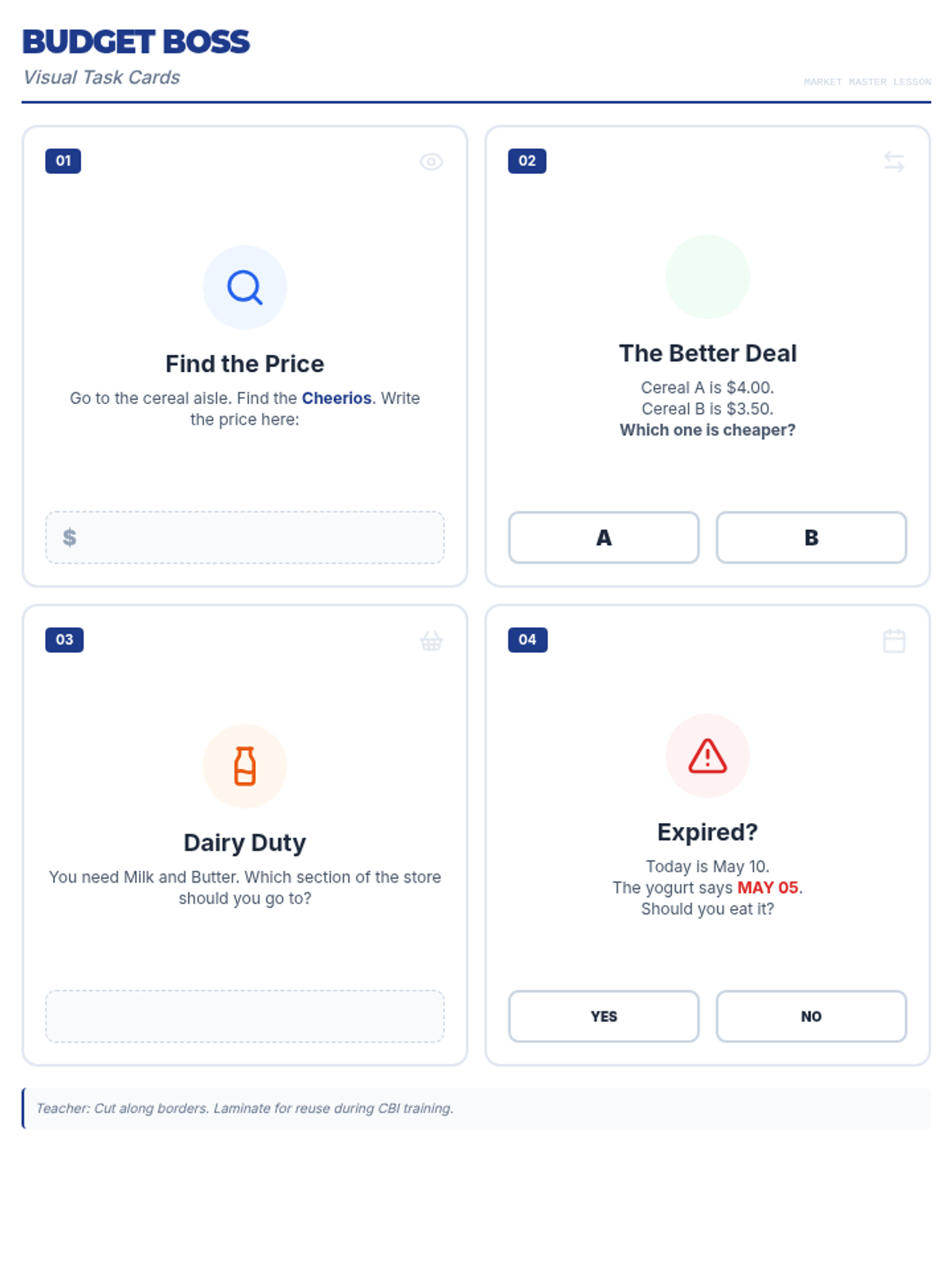
Four visual task cards for hands-on shopping practice, covering price finding, comparisons, store navigation, and checking expiration dates.
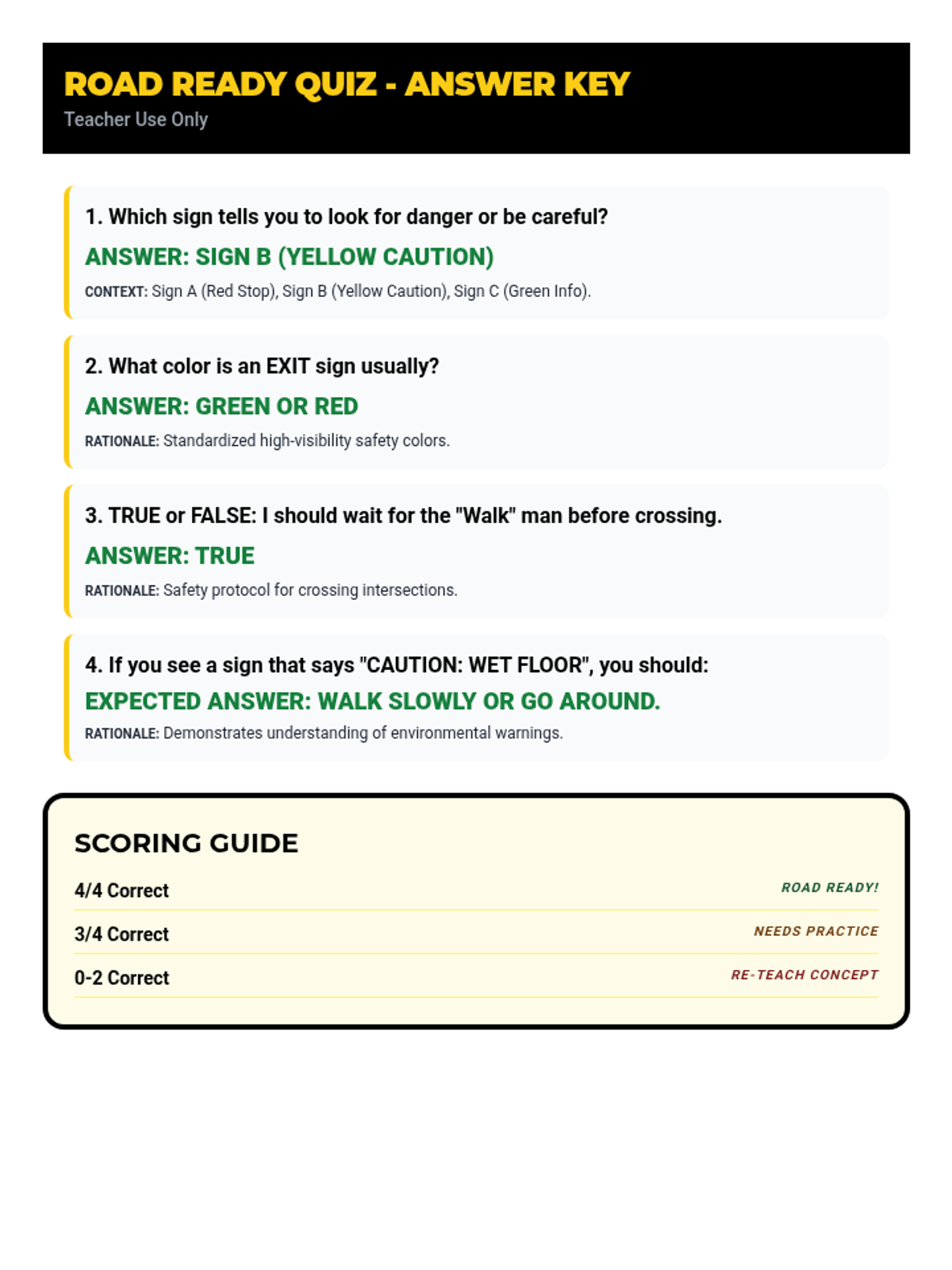
The teacher's answer key for the Road Ready Quiz, including rationales for each answer and a scoring guide for assessing student performance.
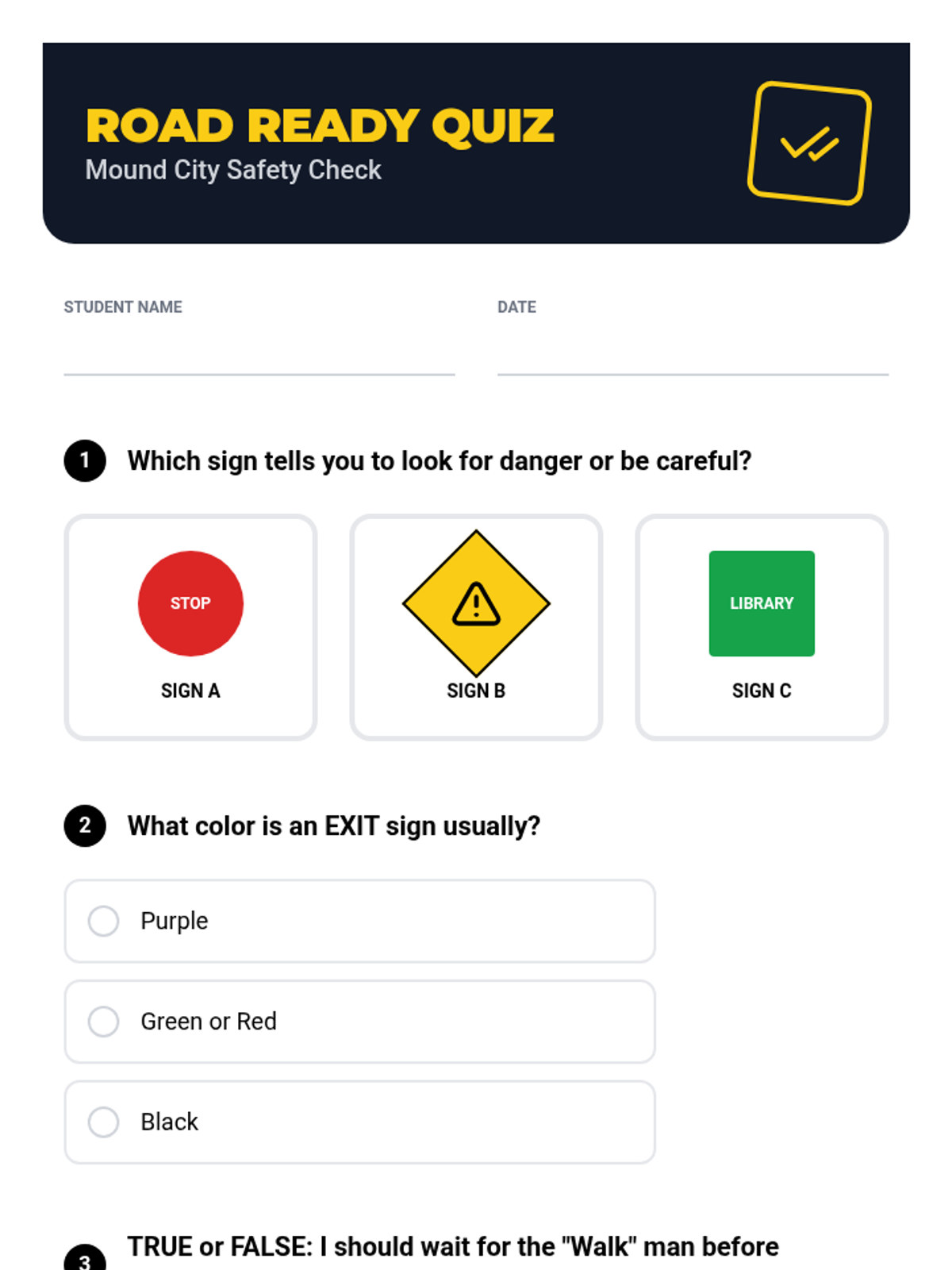
A summative assessment for the Mound City Community Bridge lesson, testing students on sign recognition, color associations, and safe community behaviors.
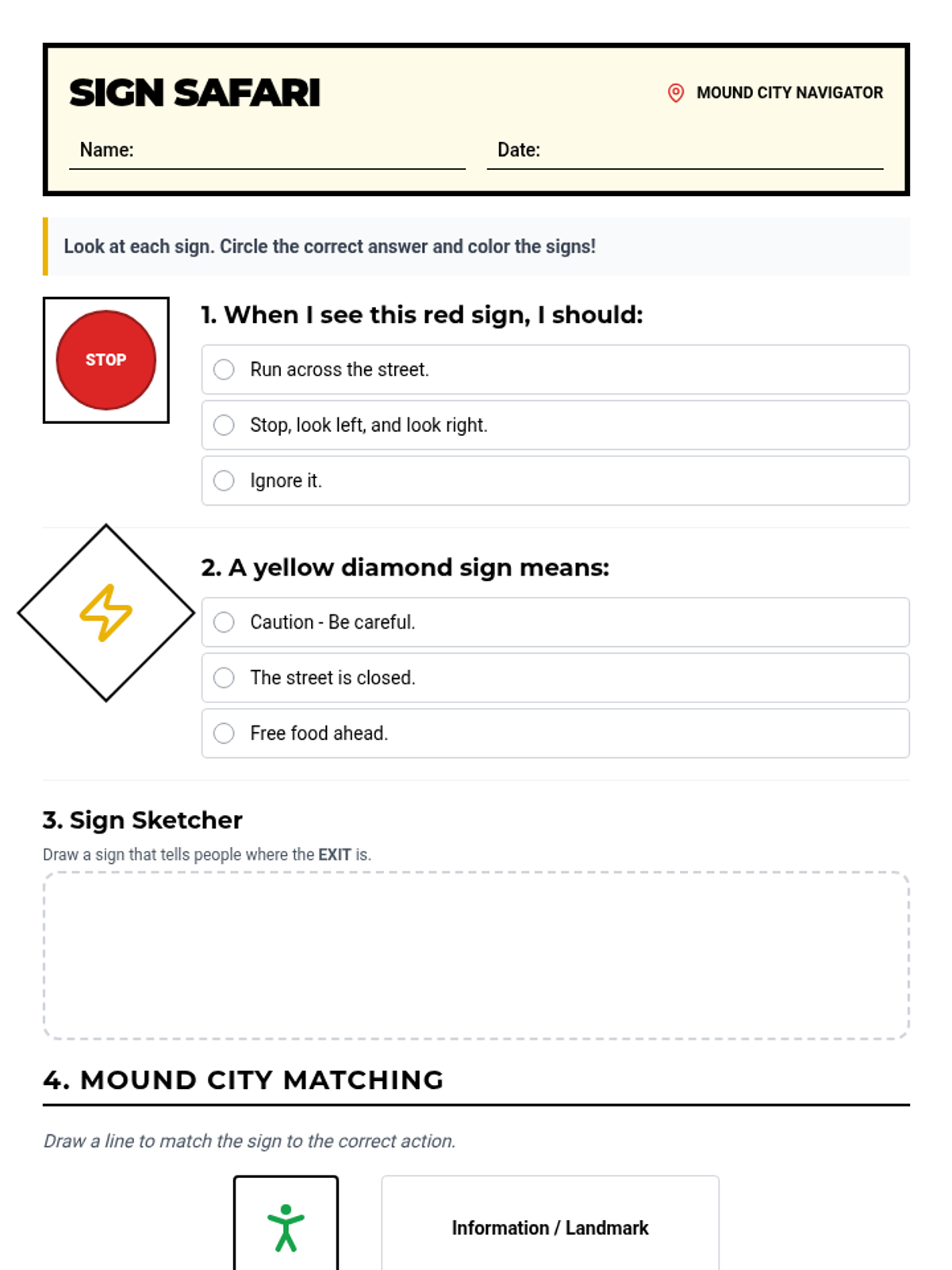
A functional literacy activity sheet where students identify safety signs, interpret their meanings through multiple choice, draw an exit sign, and complete a matching exercise.
A high-contrast visual slide deck for Mound City students, introducing core environmental print like Stop, Caution, Walk/Wait, and Exit signs with bold icons and clear text.
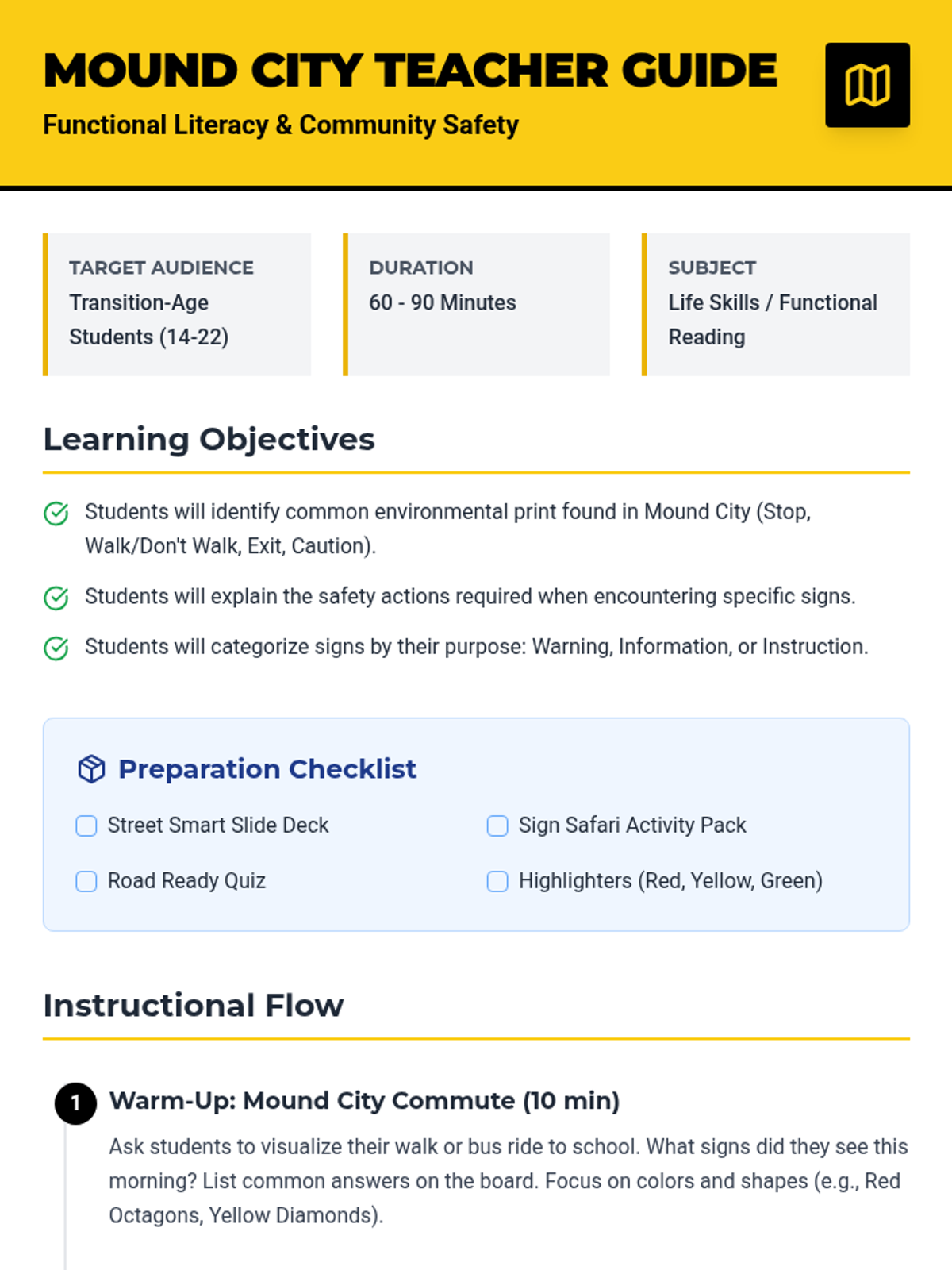
A comprehensive teacher guide for the Community Bridge lesson, featuring instructional steps, teacher scripts, and accommodation strategies for teaching functional literacy and community safety.
A visual presentation for teaching the coordinate plane to IEP students, featuring large-print vocabulary definitions, step-by-step reading and plotting guides, and a check-for-understanding challenge.
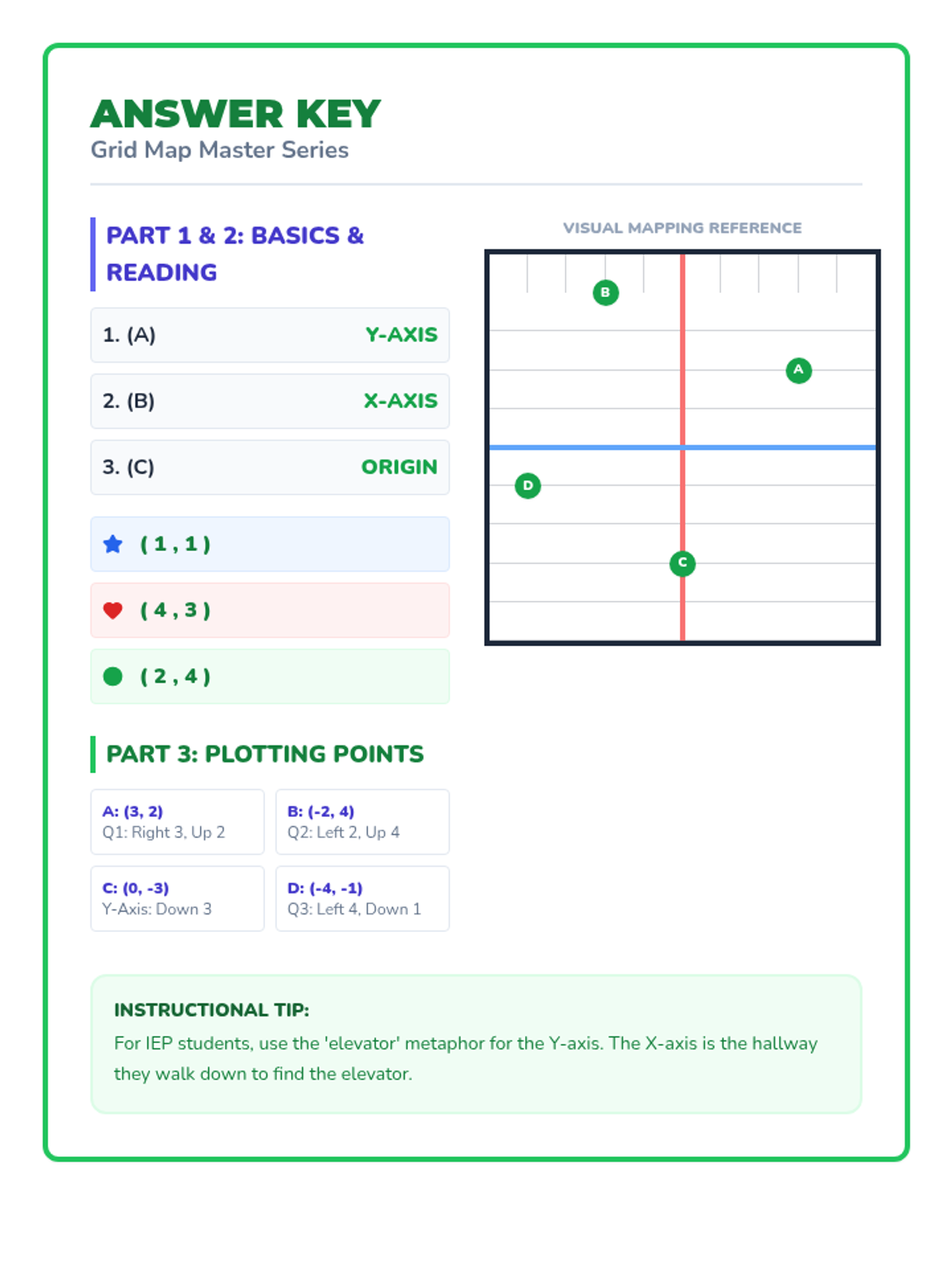
An answer key for the Point Finder Guided Worksheet, providing clear, color-coded answers for easy teacher reference.
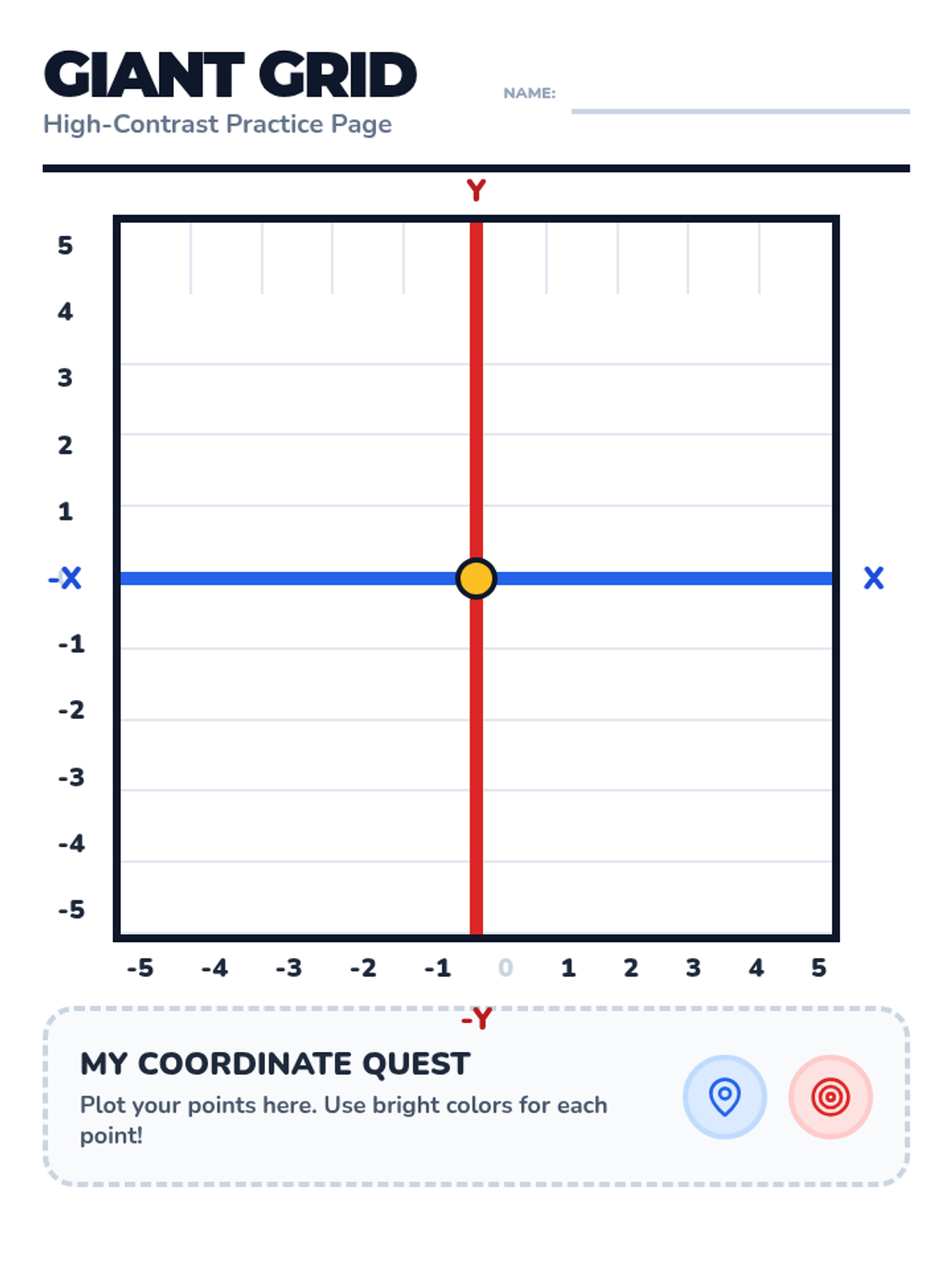
A high-contrast, large-print practice grid for the coordinate plane with thick axis lines and oversized numbers, designed for IEP students who need more physical space and clarity.
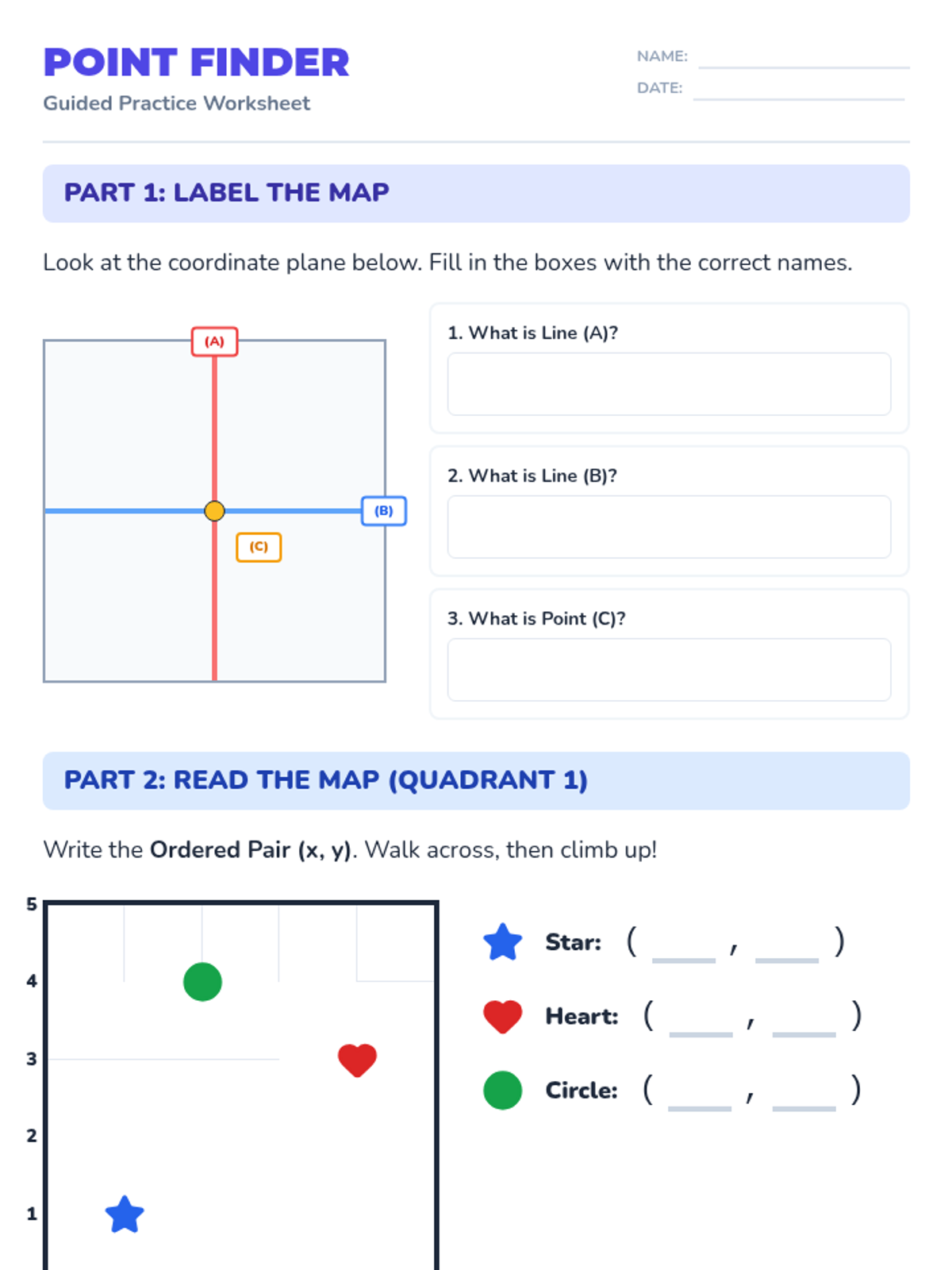
A step-by-step guided practice worksheet for the coordinate plane, covering vocabulary, reading points in Quadrant 1, and plotting points in all four quadrants with large print and visual aids for IEP students.
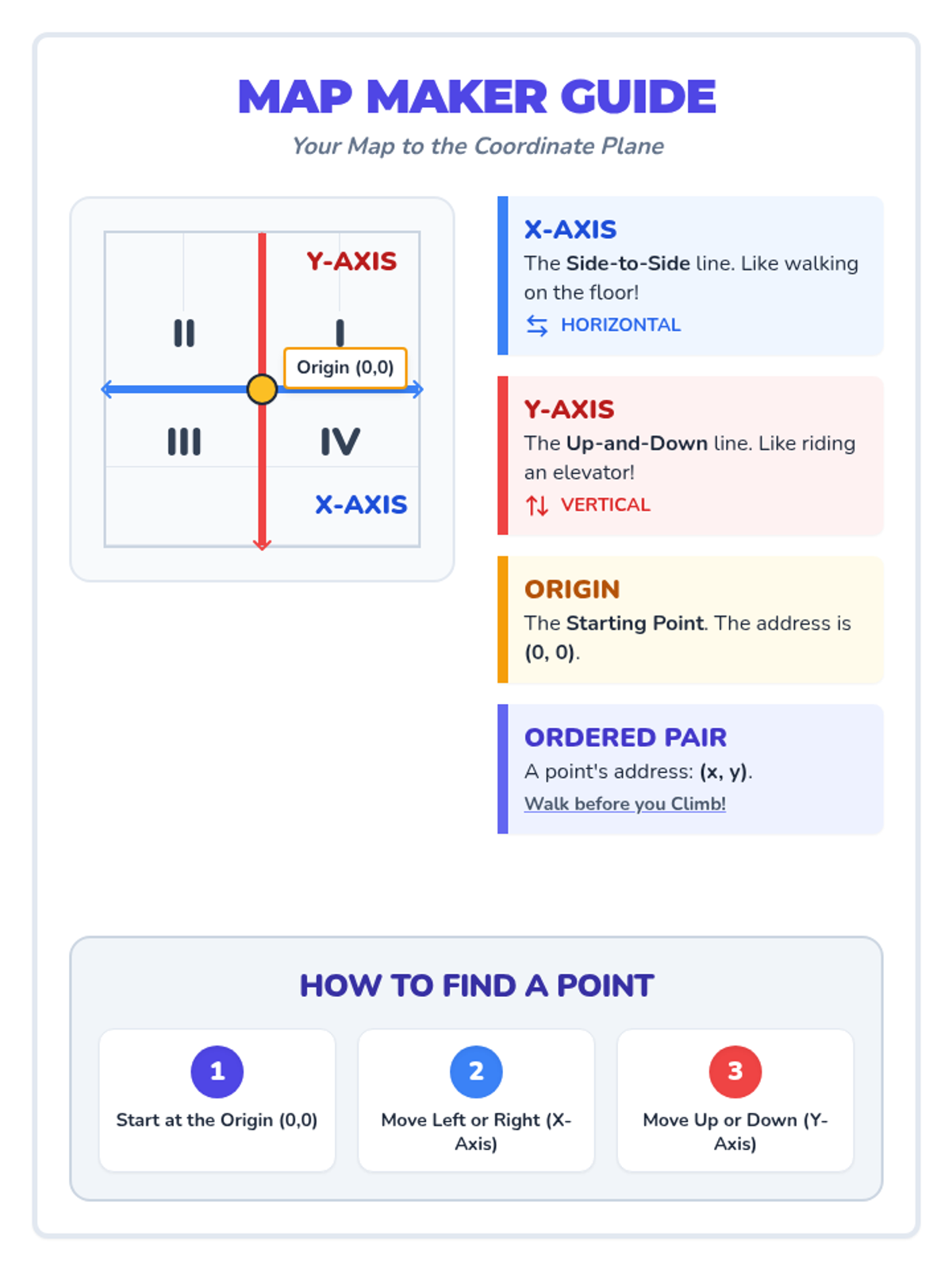
A vocabulary anchor chart for the coordinate plane featuring visual definitions of the x-axis, y-axis, origin, and ordered pairs with color-coded cues for IEP students.
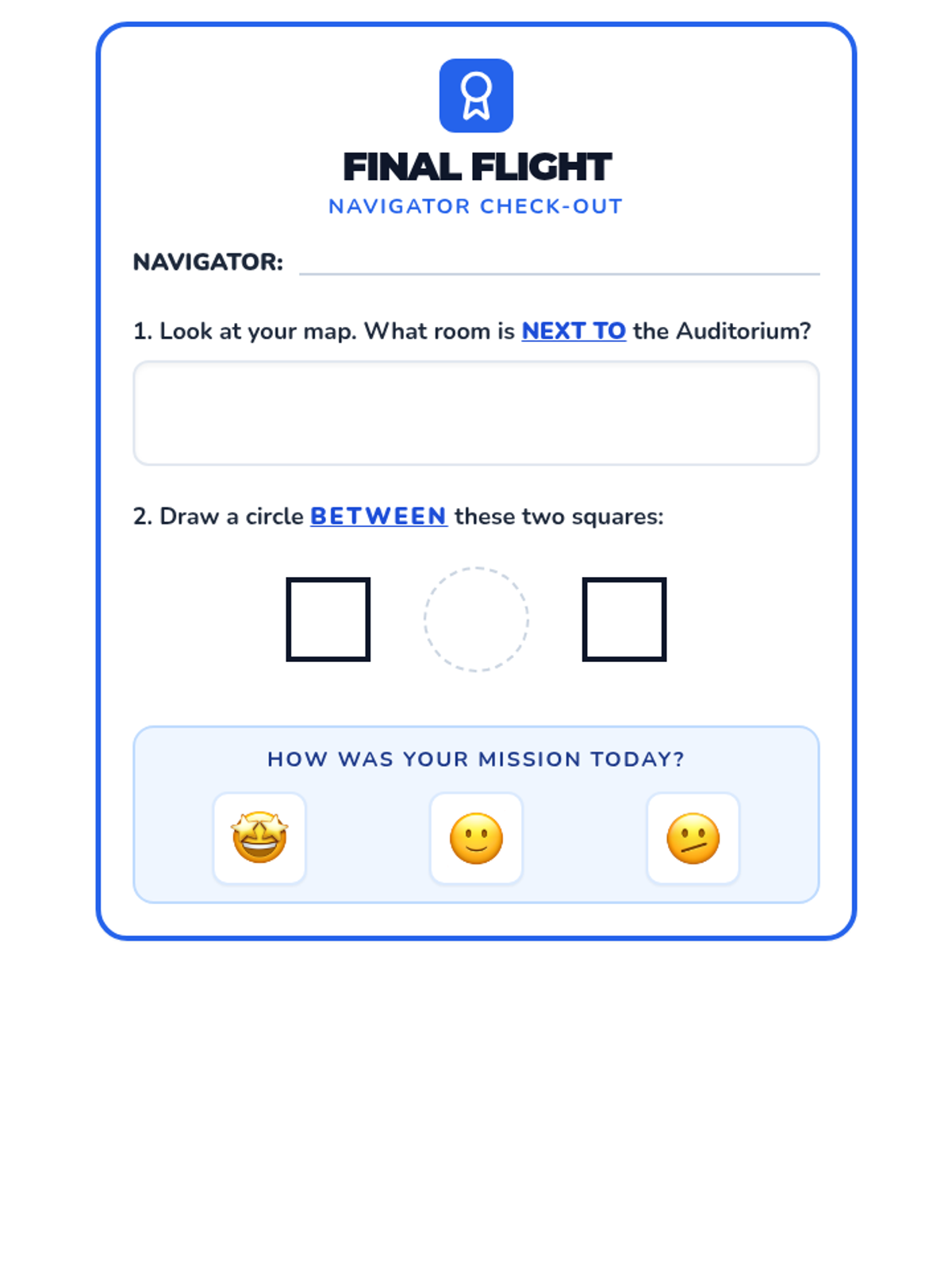
A visually engaging exit ticket for Essential Skills students. Removed placeholder text, fixed page break issues, and ensured white backgrounds for student work areas.
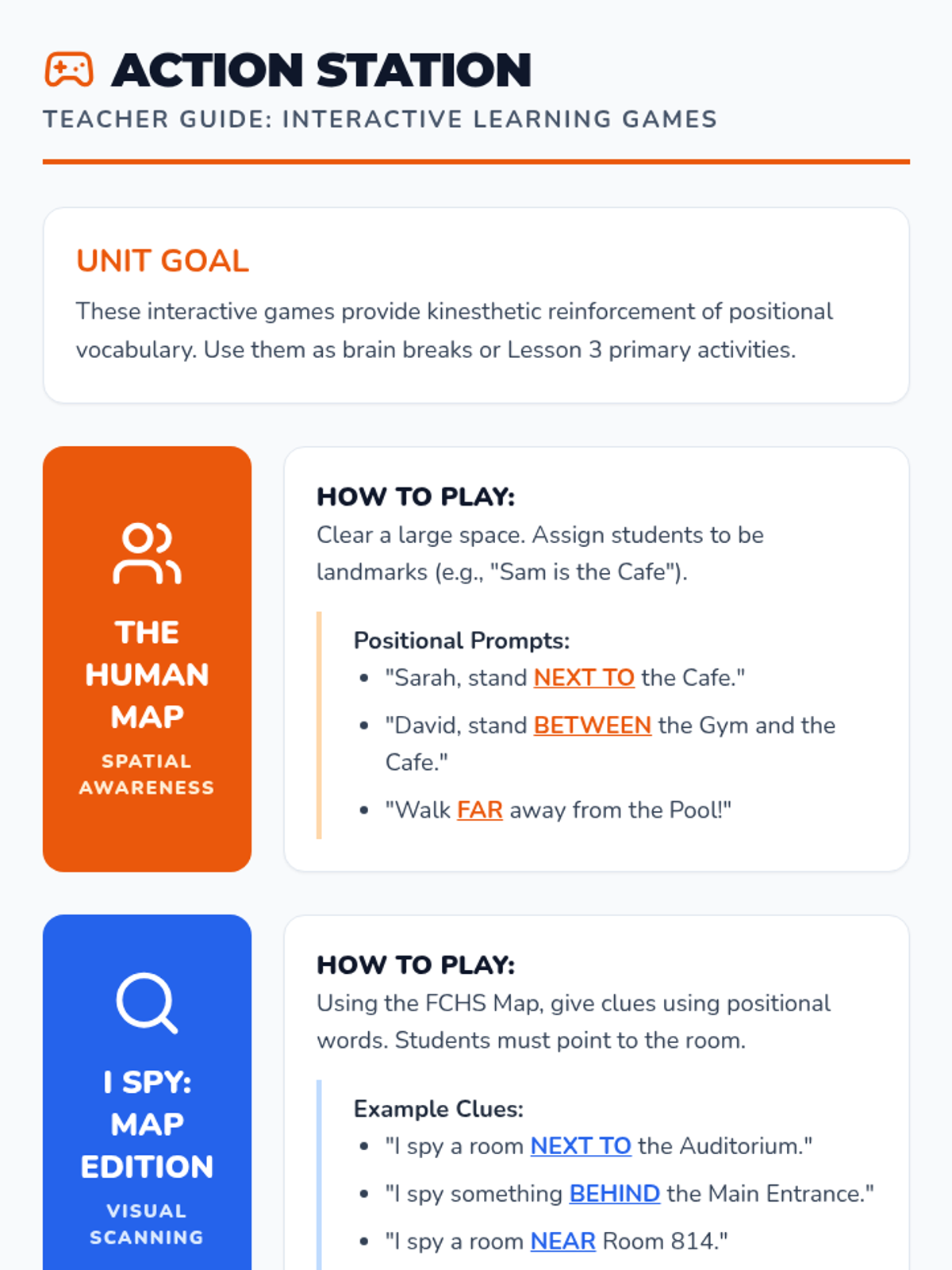
A detailed teacher's facilitation guide for interactive games. Fixed page breaks, improved contrast for accessibility, and ensured specific map locations are used.
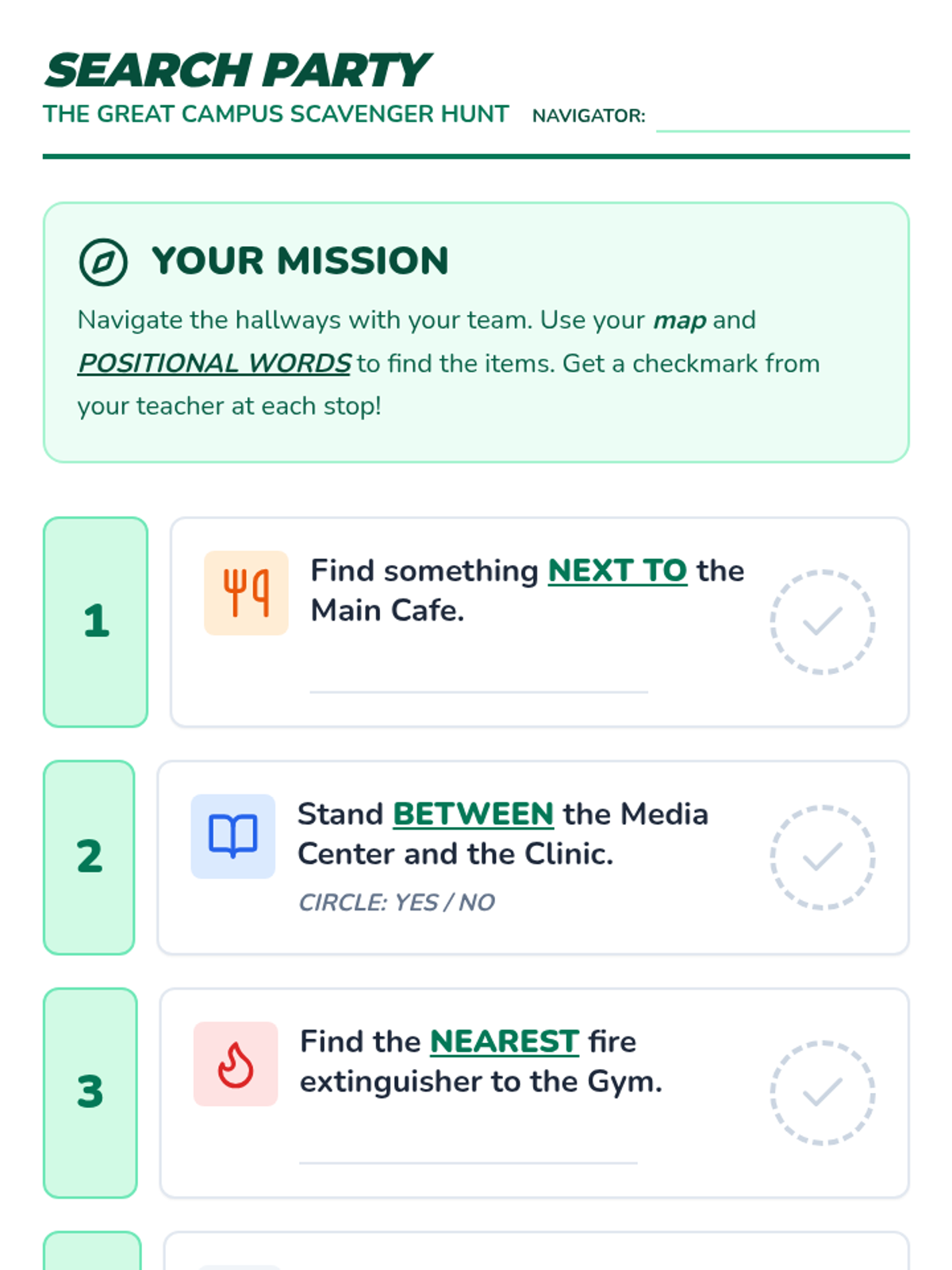
A high-energy scavenger hunt worksheet for Essential Skills students. Fixed page breaks, added visual icons for each task, and increased contrast on checkmark areas.
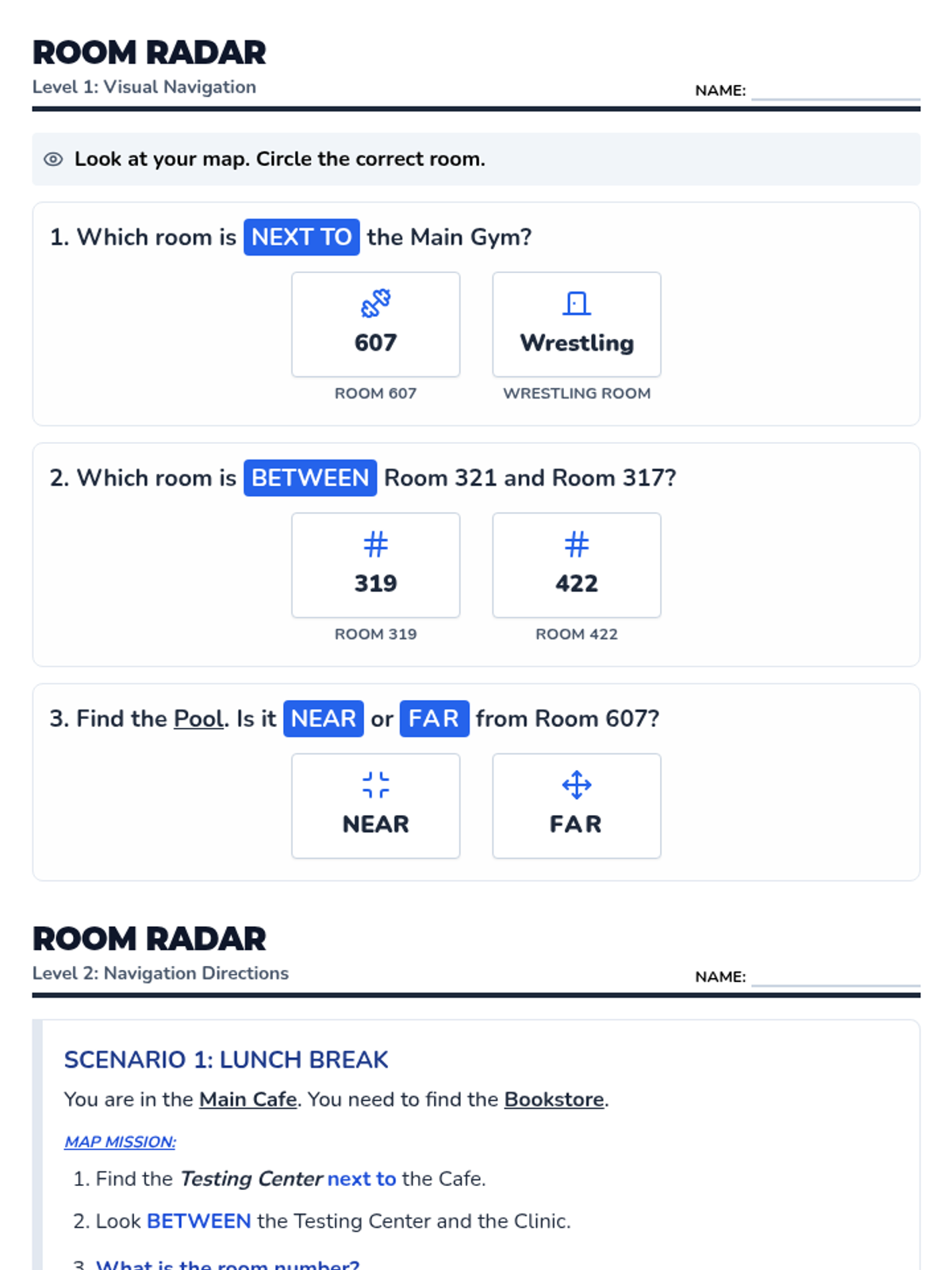
A tiered worksheet for Essential Skills students practicing map navigation. Fixes page breaks, removes placeholder text, and adds visual icons to Level 1 choices.
An instructional slide deck designed for high school Essential Skills students, introducing positional vocabulary using the Franklin Central High School map. Improved contrast and added zoomed visuals for clarity.
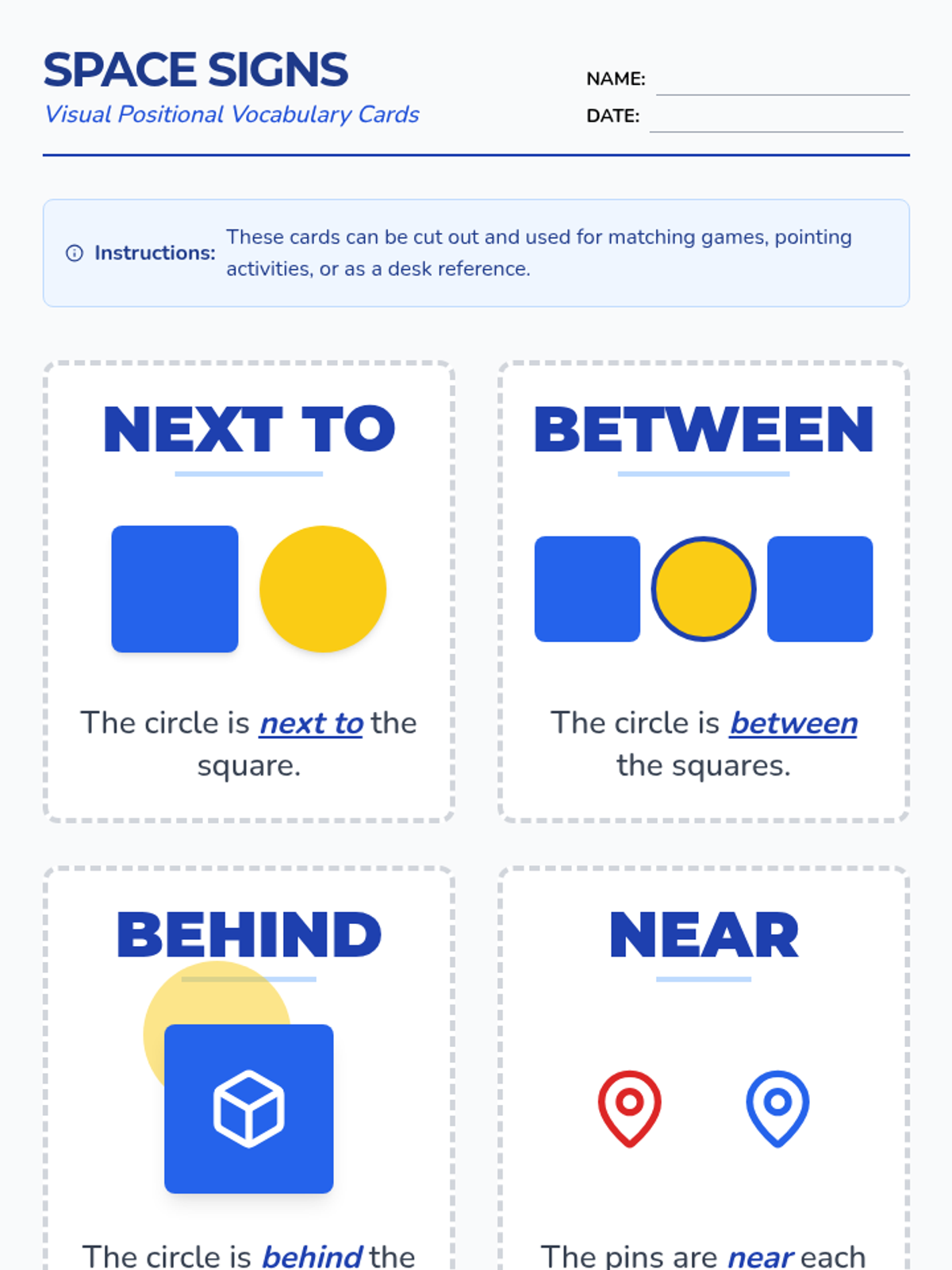
A set of positional vocabulary flashcards featuring visual icons, bold text, and example sentences to support Essential Skills students with varying literacy levels. Fixes page break issues and card consistency.