A student-facing script draft sheet for speech therapy. Includes writing lines, a practice checklist, and tips for speech preparation.
A three-page strategy reference kit for Task Initiation. Includes a 'Common Obstacle Bosses' menu, a 'KISS' deep dive, and the 'Attack Choice' protocol (Eat the Frog vs. Climb the Ladder). Designed for student binders as a permanent self-help tool.
A condensed one-page parent guide for Week 5: Task Initiation. Explains the 'Boss vs. Power-Up' lesson and providing practical at-home transfer tips and specific YouTube video resources.
Personal mission planning worksheet for independent work. Students identify a real-life 'avoidance' task, diagnose the specific 'Boss' obstacle, and select a 'Power-Up' strategy and a 'KISS' tiny first step to build momentum.
Small group activity featuring 9 relatable task initiation crisis scenarios. Groups act as 'Skill Detectives' to diagnose the 'Obstacle Boss' and prescribe the correct 'Power-Up' strategy to build momentum and start the task.
A high-impact 16:9 slide deck for the Week 5 Task Initiation lesson. Reframes procrastination as 'Obstacle Bosses' and strategies as 'Power-Ups' using a video game theme. Includes visuals for the 4 core strategies: KISS, Spice It Up, Body Double, and Race the Clock.
A four-page comprehensive teacher guide for Week 5: Task Initiation. It features a Learning Target, timed instructional flow, detailed strategy breakdown (Bosses vs. Power-Ups), YouTube intelligence resources, and robust classroom transfer routines. Layout optimized to prevent text cutoff.
Instructional guide for Week 2, covering digraphs and trigraphs with specific phonetic rules and teacher scripts for explicit instruction.
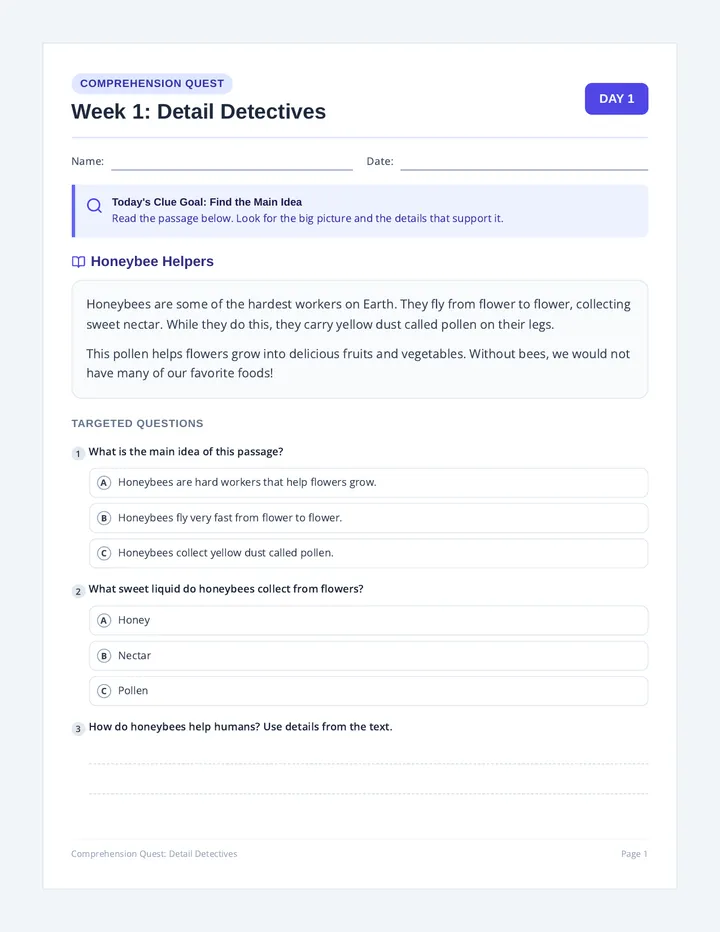
A student-facing workbook for Week 1, including a mission-themed cover, orthographic mapping boxes for CVC and CVCC words, and a decodable passage with comprehension questions.
A comprehensive 5-day instructional guide for teachers, focusing on short vowel CVC, CVCC, and CVCCC patterns. Includes daily lesson breakdowns, scripted teaching tips, and sight word lists for Tier 3 intervention.
A set of visual prompt cards and a token board designed to reinforce the behavioral expectations of sitting and working for students with limited verbal skills.
An instructional guide for teachers and aides, providing strategies, scripts, and implementation tips for using the social story effectively with students.
A visual slide deck featuring a simple social story for students with limited verbal skills, focusing on the expectations and positive outcomes of staying in their seat during work time.
A consolidated single-page playbook combining the hockey-themed coping choice board and the daily task tracker for easy student access.
A comprehensive teacher guide for implementing the Ice Time Tactics system, featuring metaphors, scripted prompts, and instructional strategies.
A daily tracking sheet for students to log their classroom tasks as 'goals' or 'assists' across three periods of the school day.
A visual choice board featuring hockey-themed coping strategies like 'The Zamboni Breath' and 'Power Play Focus' to help students self-regulate in the classroom.
A teacher guide for facilitating the Studio Speech session. Includes a step-by-step process for script drafting, recording, and feedback, plus common misconceptions.
A visual presentation for a speech therapy session with a recording studio theme. Introduces speech goals (rate, volume, articulation) and how to use the peer feedback rubric.
A teacher-facing session log to track multiple students' progress in speech therapy. Includes columns for rate, volume, and articulation.
A student-facing peer feedback rubric for speech therapy, focusing on rate, volume, articulation, and clarity with a fun recording studio theme. Includes visual star ratings for students to circle.
A staff guide providing strategies, implementation steps, and practice scenarios for using the Message Meter infographic in an adult group home setting.
A visual infographic using a "Message Meter" theme adjusted for adults in a group home to help them categorize communication needs into urgent, non-urgent, and social categories, optimized to fit on a single page.