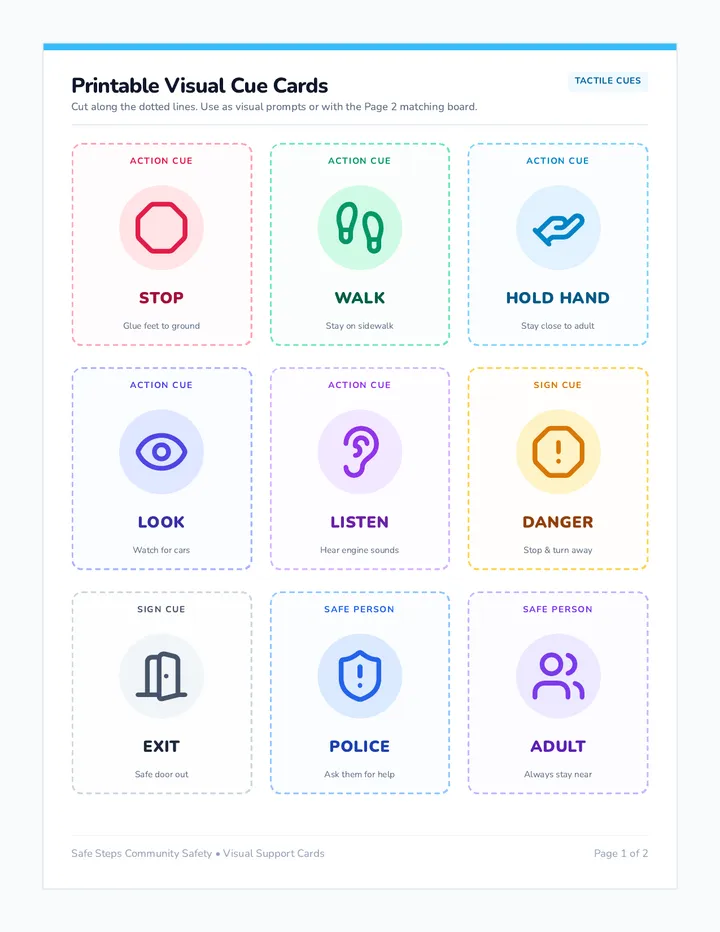
Instructional slide deck for teaching social skills to students with special needs, featuring visual cues for conversation, body language, personal space, and cooperative play.
Three short stories focusing on short vowel sounds (A, I, and E), with interactive identification tasks to build medial vowel phonemic awareness.
Two vowel anchor charts: a comprehensive "Vowel Voices" overview for all five sounds, and a "Tricky Pairs" chart for distinguishing /e/ and /i/.
A comprehensive cut-and-paste sorting activity for all five short vowel sounds, featuring labeled mats and 10 visual cut-out items.
Engaging slides for short vowel intervention, featuring the "Magic Five" anchors, mouth position checks for /a/ and /i/, and a focus on the tricky /e/ vs /i/ distinction.
A specialized 5-day teacher's guide for short vowel intervention, focusing on phonemic awareness, mouth positioning, and distinguishing between similar sounds like /e/ and /i/.
A collection of three short, repetitive stories focusing on the consonant sounds B, P, and D, with specific identification tasks for student interaction.
Two high-impact anchor charts for consonant sounds: "Lip Poppers" (voiced vs. unvoiced) and "Continuous Sounds" (stretching the sounds).
Large, colorful consonant flashcards for small group instruction, featuring B, P, D, and T with visual anchors and bold lettering.
A cut-and-paste sorting activity focusing on the consonant sounds B, P, D, and T with visual icons and labeled mats.
Interactive slides for teaching consonant sounds, focusing on lip-poppers (B/P), look-alike letters (B/D), and continuous sounds (S/Z) with visual anchors.
A comprehensive 5-day teacher's guide for consonant sound intervention, featuring daily lesson focuses, instructional strategies for tricky pairs, and activity suggestions.
A condensed one-page parent resource that concisely explains the Mission Control finale, provides at-home EF transfer strategies, includes a learning target, and provides specific YouTube video resources.
A set of 9 picture cards for Week 2, focusing on 4-phoneme words with initial and final blends (CCVC and CVCC). Designed for auditory-only phonemic awareness practice.
A set of 9 high-contrast picture cards for Week 1, featuring common CVC words for sorting and segmenting activities. No text is included on the cards to maintain focus on phonemic awareness.
A celebratory certificate for students who complete the 2-week Sound Lab intervention, recognizing their mastery of 3 and 4-phoneme structures.
A student-facing sound mapping mat for 4-phoneme words, designed for Week 2 of the intervention. Features 4 Elkonin boxes and a blending track.
A student-facing sound mapping mat for 3-phoneme words, designed for Week 1 of the intervention. Includes Elkonin boxes and a blending track.
Small group instructional cards for Week 2 (Days 6-10), focusing on initial and final blends, 4-phoneme segmenting, and advanced manipulation tasks.
Daily instructional cards for Week 1 (Days 1-5), providing specific word lists and teacher scripts for initial, final, and medial isolation, as well as blending and segmenting 3-phoneme words.
A master 10-day pacing guide for the Sound Lab intervention, detailing daily focuses for 3 and 4-phoneme skills, along with a data tracking log.
A two-per-page exit ticket for the final Executive Functioning review lesson, designed for quick student reflection on personal strengths, growth areas, and practical tools learned.
A three-page independent project worksheet for the 'Brain Blueprint', providing a learning target and massive writing space for goals, obstacles, and EF strategies.
Four high-detail 'Crisis Management' challenge cards for small group work, now split into individual pages with explicit page-break classes to provide massive workspace and ensure zero mid-card page breaks during printing.
A high-impact 16:9 slide deck for the Executive Functioning review lesson, featuring a 'Mission Control' theme, visuals for all 9 core skills (fixed overflow), and a new Learning Target slide.
A four-page comprehensive teacher guide for the EF finale, featuring a learning target, instructional flow, facilitation support, and classroom transfer activities.
An adapted 5-page therapeutic booklet for students with autism, featuring simplified language, larger visual icons, and choice-based activities (matching and circling) to reduce linguistic and cognitive load.
A set of 8 portable strategy cards designed to be cut out and laminated, providing students with autism immediate visual cues for coping strategies.
A 5-page therapeutic booklet for students with autism focusing on emotion identification, coping strategies, and personal calm-down planning through visual aids and drawing activities.
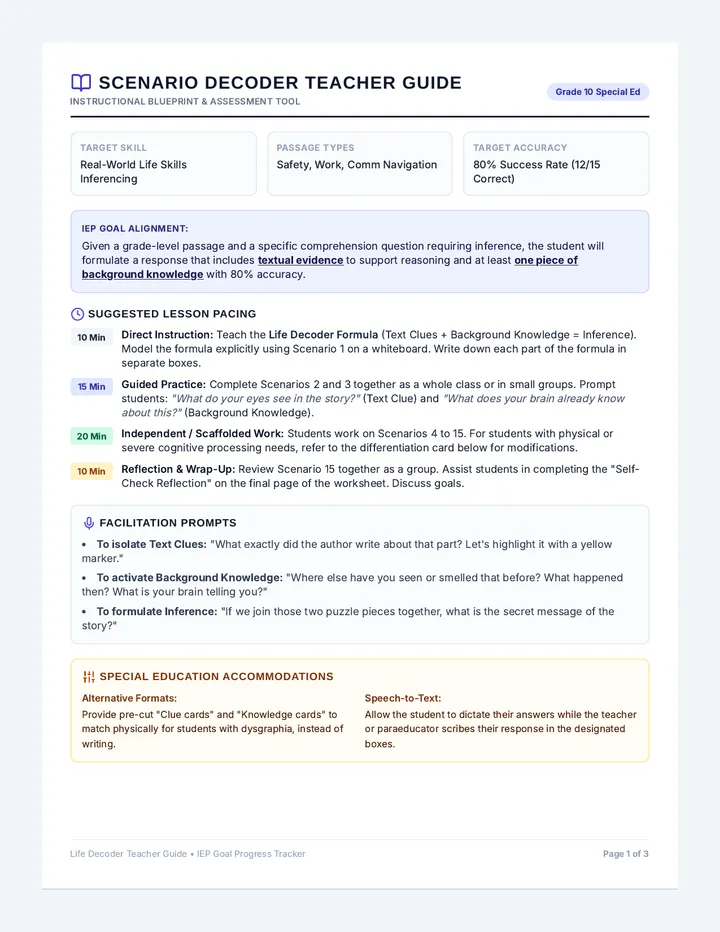
A teacher facilitation guide for the Control Center Basics lesson, providing instructional strategies, reinforcement schedules, and tips for supporting students with cognitive impairment.
A visual anchor chart designed to be printed and displayed in the classroom. It clearly illustrates the four main self-control goals with large icons and simple 'I' statements.
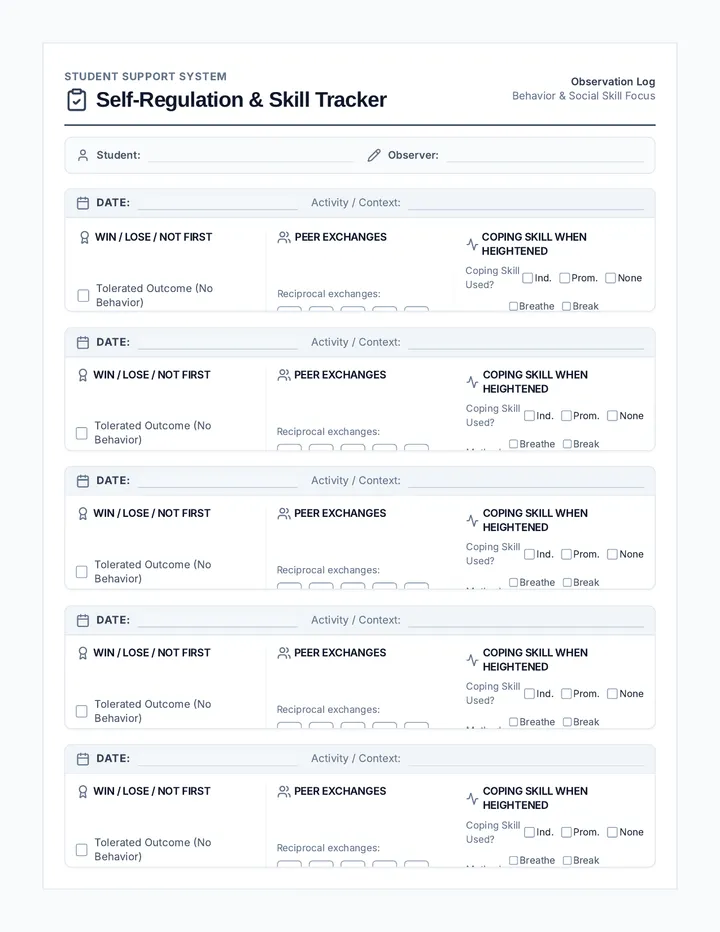
A behavior tracking chart styled as a 'Daily Flight Plan'. It allows students and teachers to track four specific self-control goals (hands/feet, hand-raising, staying in seat, and calm body) across various school activities.
Worksheets with visual scenarios for practicing self-control. Students choose between a 'Control Center' choice and a disruptive choice across various classroom situations like hand-raising, staying in seat, and managing frustration.
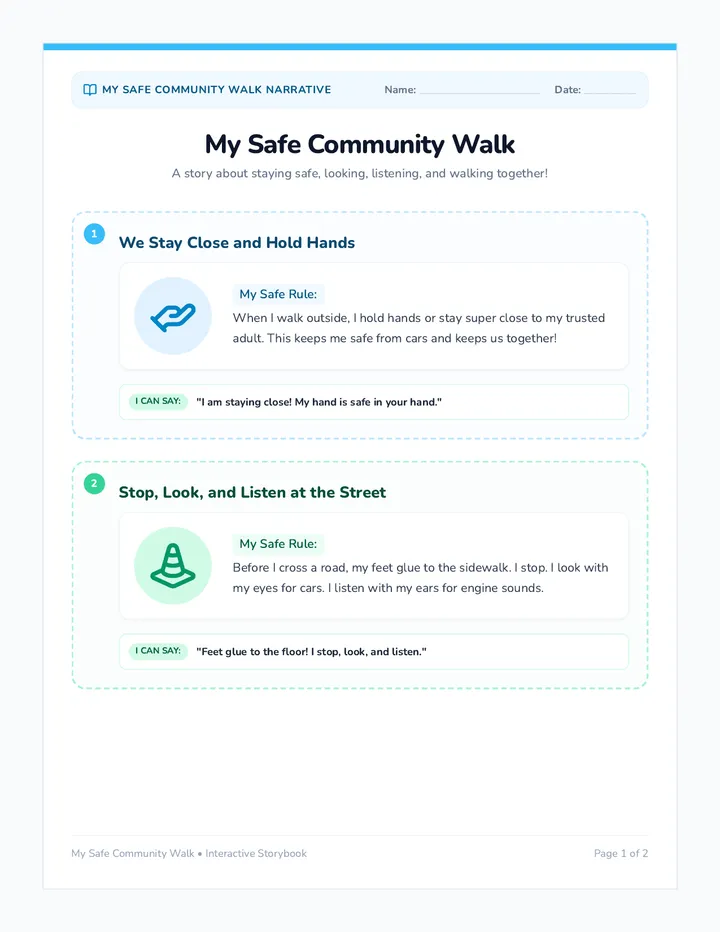
A printable social story with large icons and simple sentences that explains the 'Control Center' concept of self-control, focusing on hand-raising, staying in seat, and managing frustration.
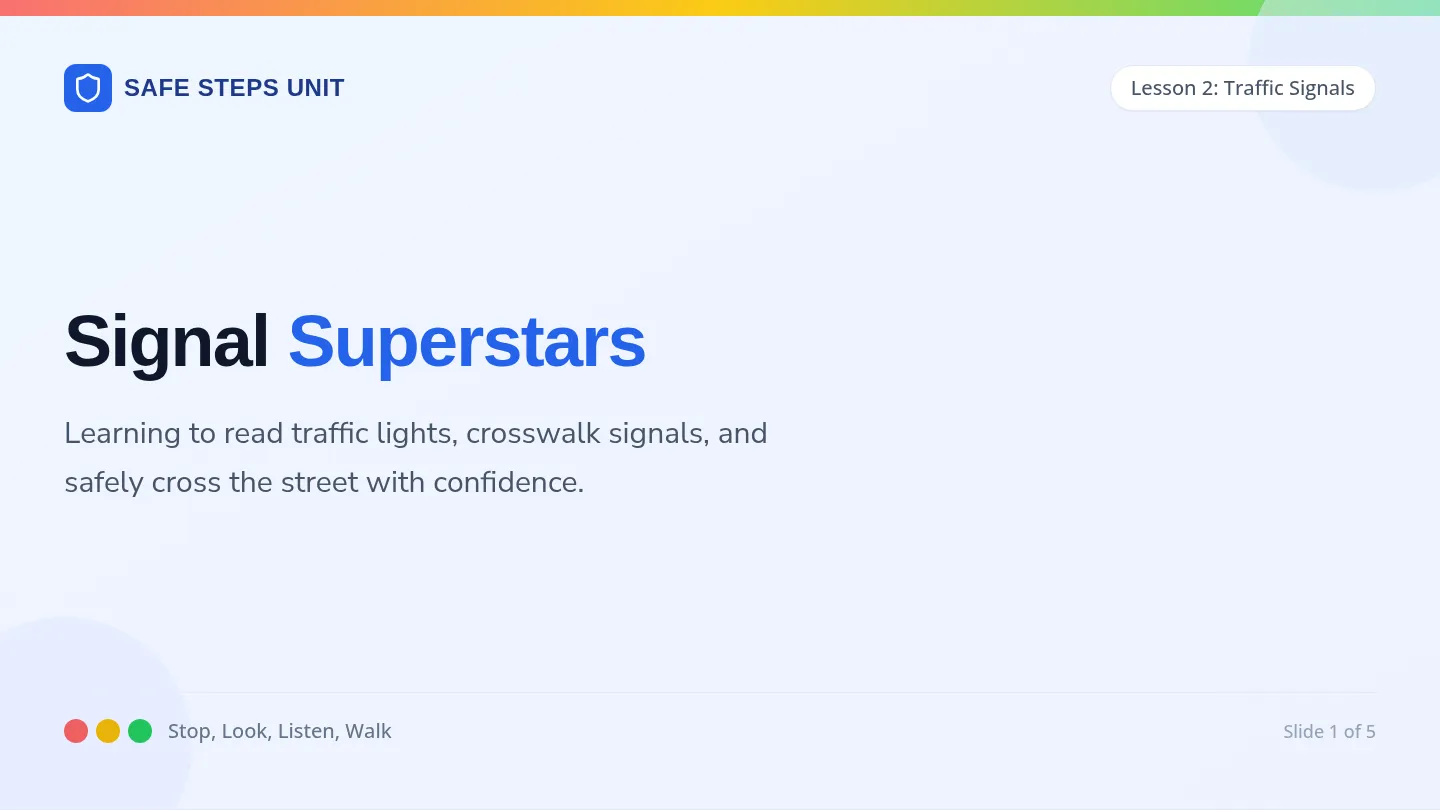
An interactive slide deck introducing the 'Control Center' concept of self-control. It features large text, clear icons, and visual guides for keeping hands/feet still, raising hands, staying in seats, and using a 'pause button' for big emotions.
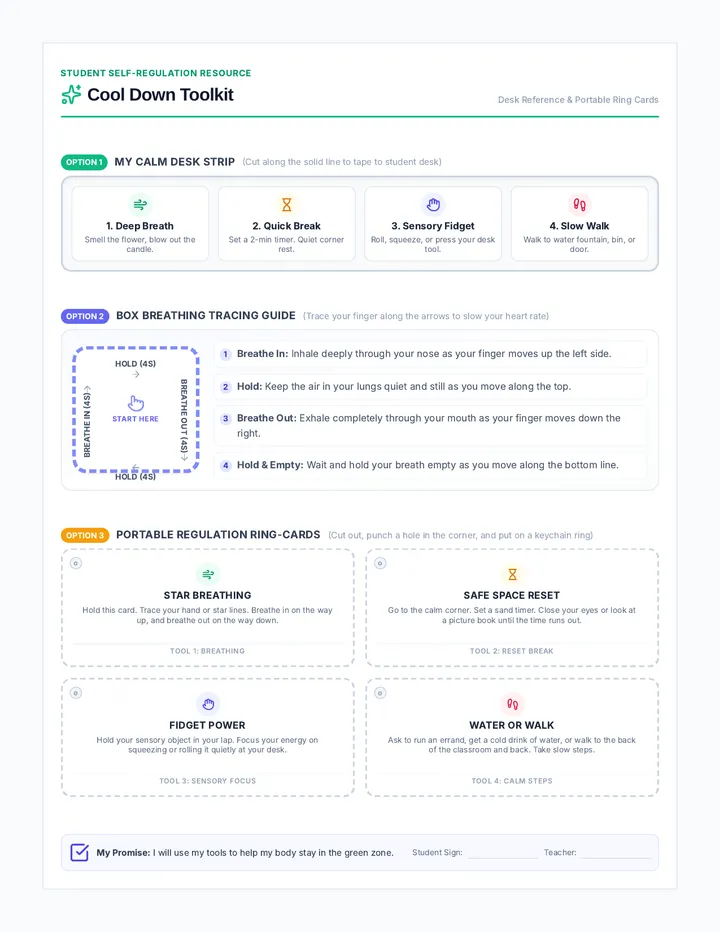
A visual aid poster for a calm-down corner, featuring simple numbered steps, emotional check-ins, and coping strategies with large icons for 4th-grade students.
A visual worksheet featuring coping strategies with simple icons and text, including a space for students to identify and draw their preferred calm-down method.
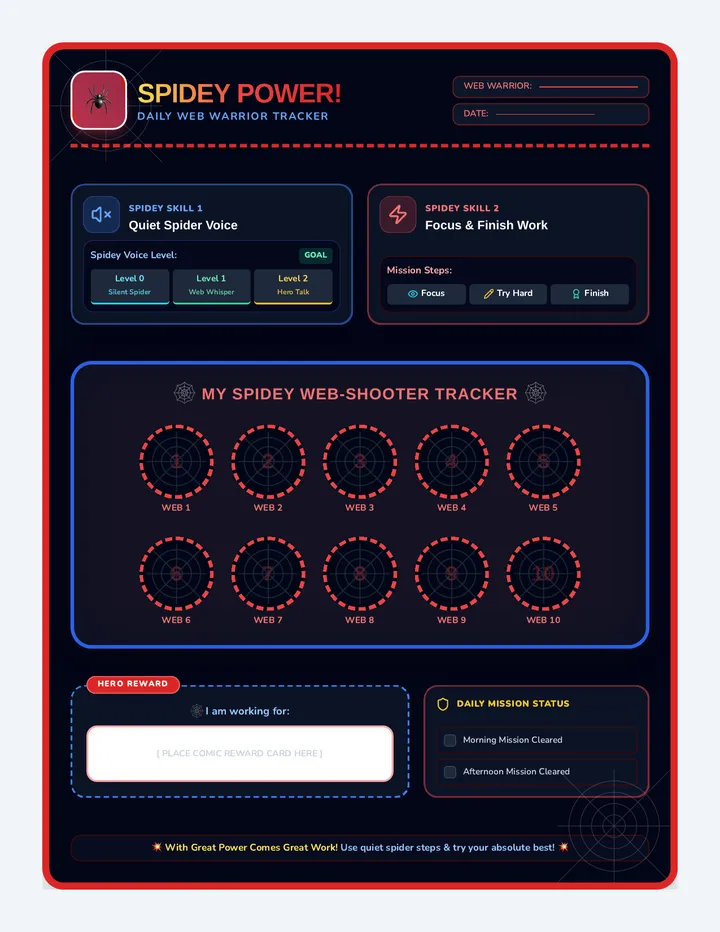
A visual behavior tracking chart for self-monitoring daily self-control skills, divided by time of day with simple icons for 4th-grade students.
A simplified social story designed for a 4th-grade student with limited cognitive skills, focusing on managing frustration, waiting, asking for breaks, and handling changes.
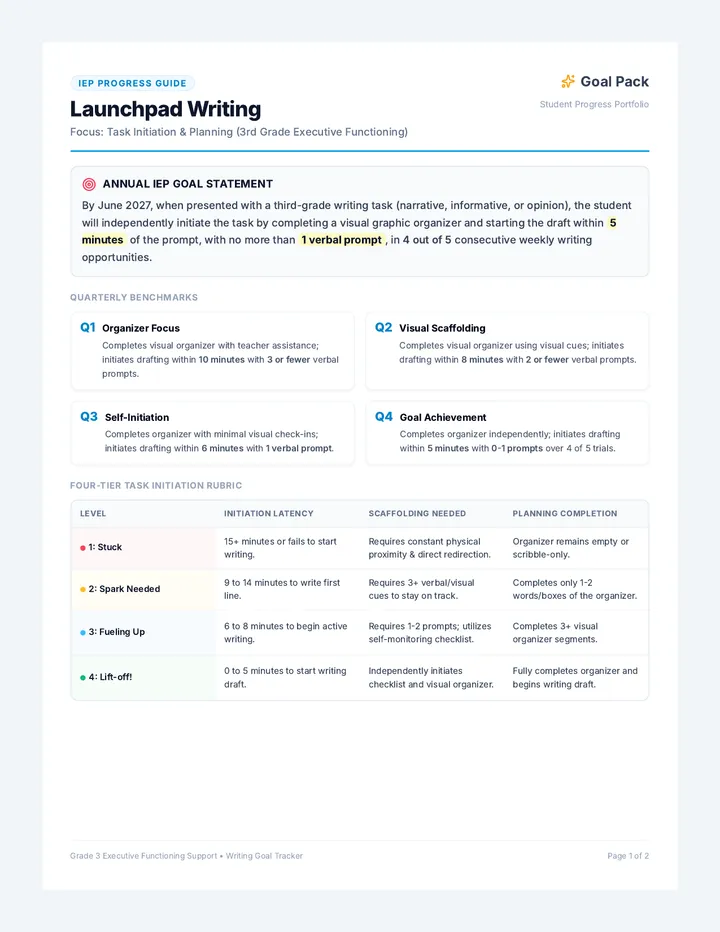
A comprehensive assessment rubric for evaluating student semantic networking responses. Features criteria for functional utility, physical schema, spatial context, and lexical precision on a 4-point scale.
A reusable semantic mapping graphic organizer for high school students. It features a central node for an item name and three radiating sections for Function, Appearance, and Location, designed with a modern blueprint aesthetic.
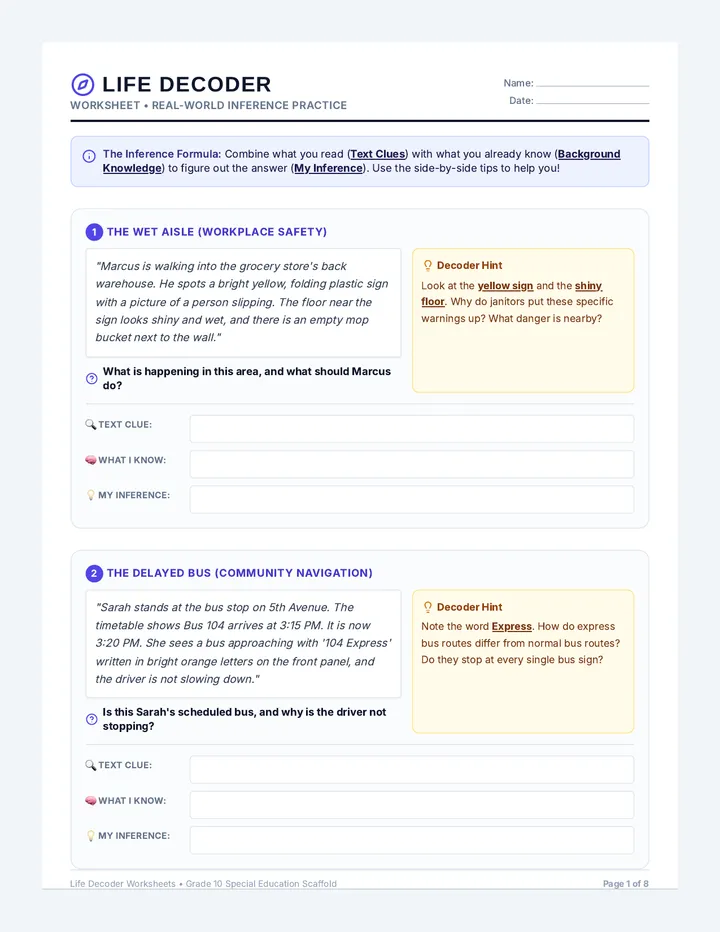
A structured worksheet for students to record their descriptions of seven items. It includes a clear example, specific prompts for function, appearance, and location, and a final reflection question.
A high-impact visual presentation featuring seven items for students to describe using the semantic networking framework of function, appearance, and location. Includes a modeled example and clear visual prompts to guide high school learners.
An answer key for the Street Wise Worksheet, providing clear guidance for teacher assessment.
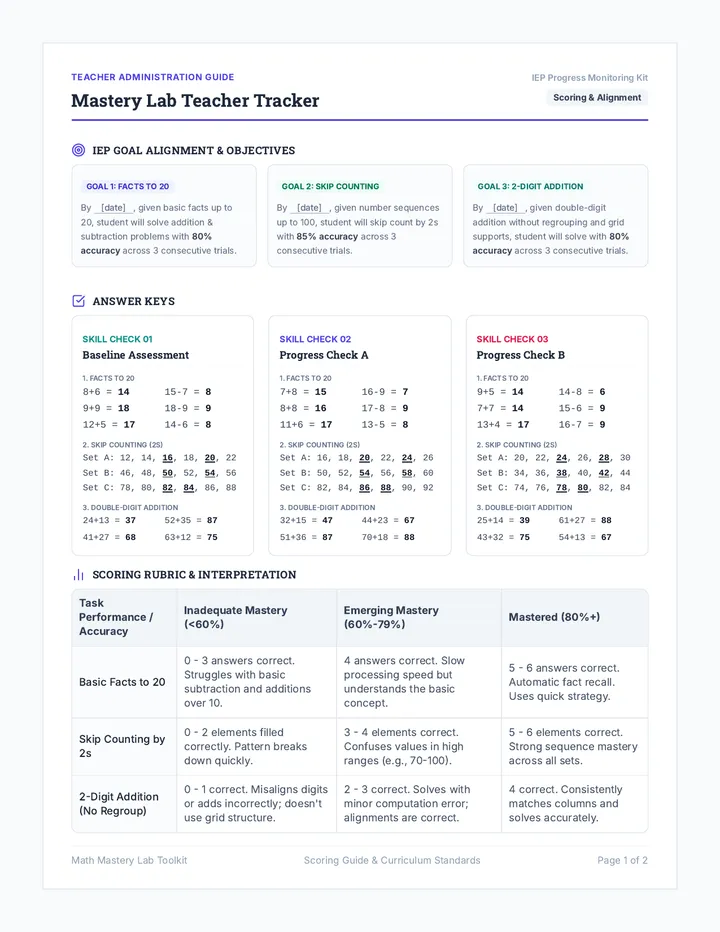
A comprehensive answer key for the Coin Match and Shopping List worksheets, providing clear solutions for teachers to use during grading or student self-correction.
An answer key and grading guide for the Job Ready Journal, providing clear visual solutions for the behavior sorting activity and grading notes for teacher use.