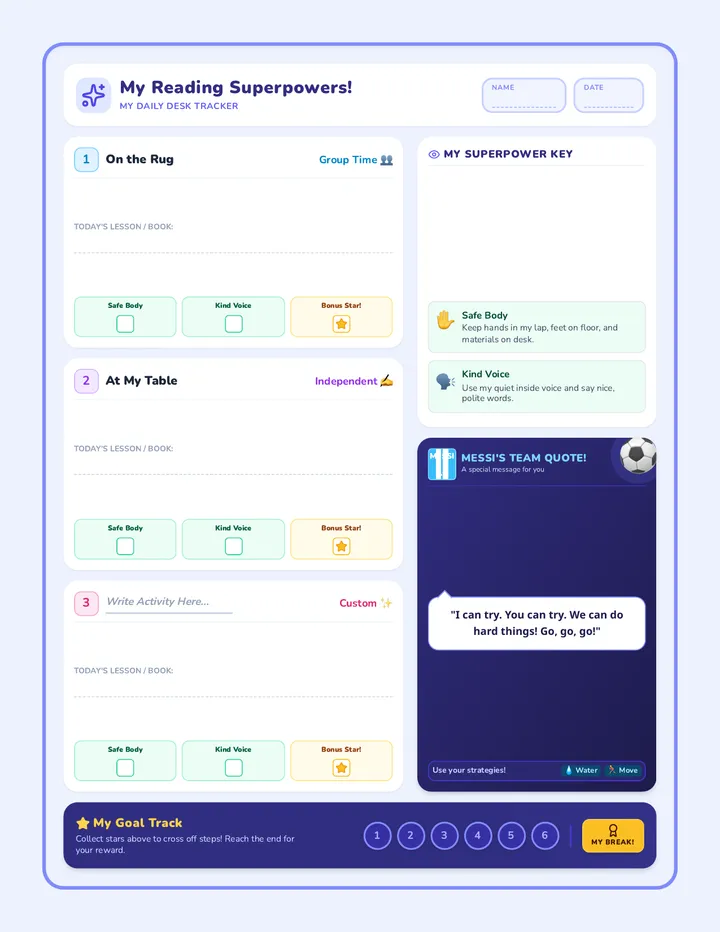
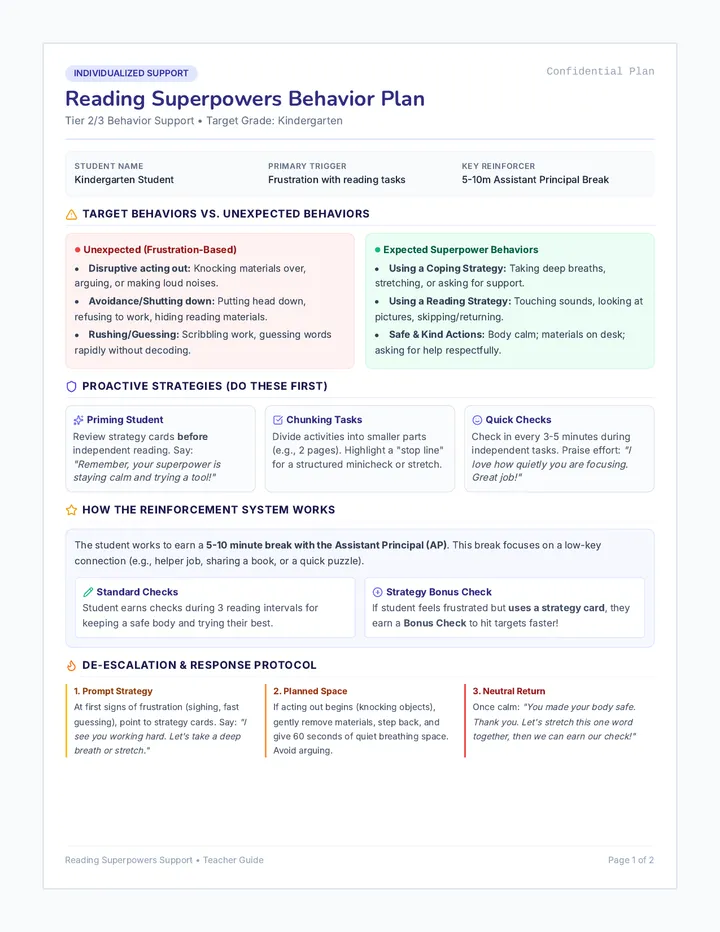
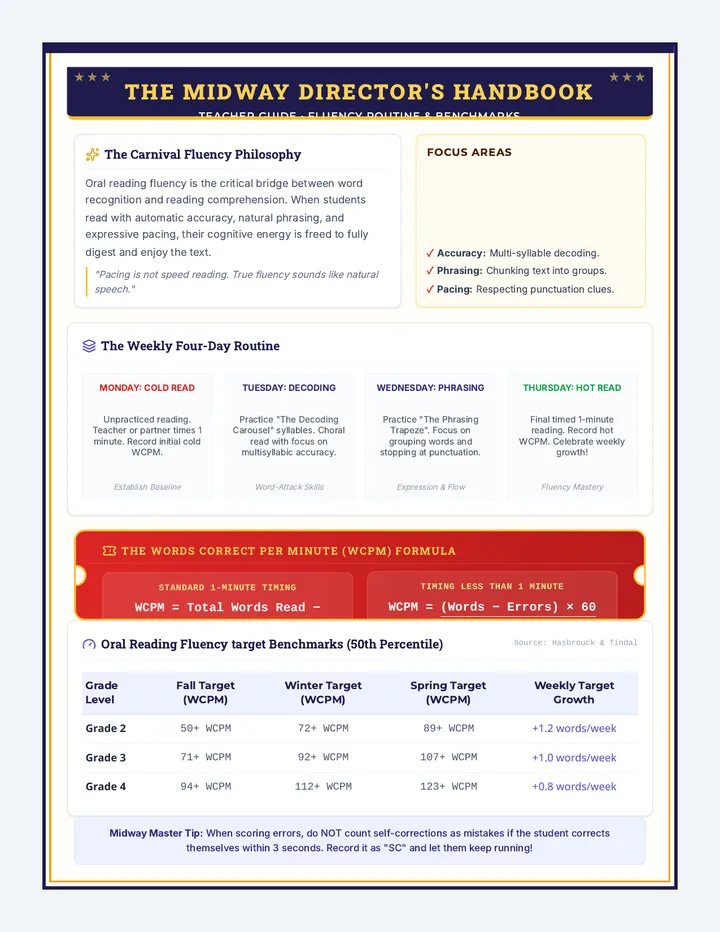
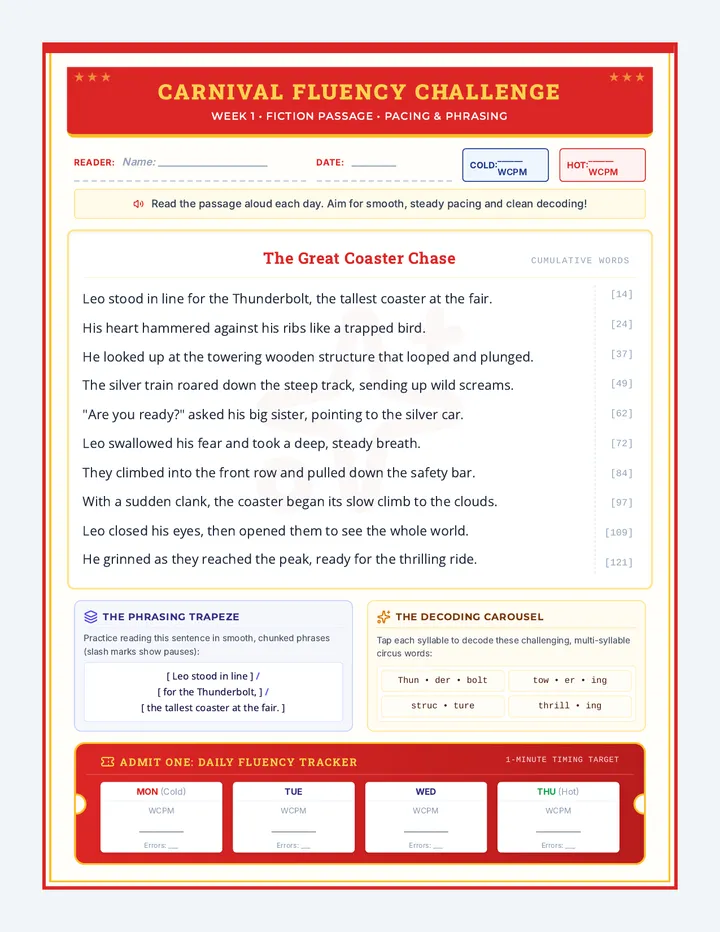
An independent phonics practice log for adults, featuring daily tasks like word families, digraph identification, and functional sight word speed drills. Now formatted across two pages for better daily focus.
A detective-themed reflection sheet for students to assess their confidence and application of the RT vs. TQ test-prep strategy.
A set of 10 printable question cards for the sorting activity, featuring dashed lines for cutting and subtle visual icons for scaffolding.
A detective-themed sorting mat for students to categorize test questions as 'Right There' or 'Thinking' during the Question Detectives lesson.
A comprehensive teacher guide for the Question Detectives lesson, including pacing, a hook script, instructional tips, and discussion prompts tailored for a 6th grade SPED environment.
A visually engaging slide deck designed for 6th grade SPED students, using a detective theme and real-world analogies to teach the difference between 'Right There' and 'Thinking' questions. Includes a specific visual equation for 'Thinking' questions combining text evidence and personal knowledge.
A teacher assessment tool to evaluate student oral presentations based on sequencing (temporal connectors), descriptive language, and oral fluency.
A differentiated storyboard worksheet for Grade 1 students to plan their family tradition narrative, featuring space for drawing, writing, and a descriptive word bank.
A visual presentation for Grade 1 students to introduce the concept of family traditions, model temporal connectors (First, Next, Last), and provide vocabulary for describing people and settings.
A facilitation guide for teachers to deliver a Grade 1 lesson on family traditions, featuring WIDA standards alignment, language functions/features, and differentiated support strategies.
A student-facing goal-setting sheet where they record their 10-week writing objective and select a personal focus area to work on during the intervention.
A formal pre/post assessment document designed to measure student progress in paragraph organization, logical sequencing, and sentence variety using a farm-themed prompt.
A high-density one-page reference chart for teachers summarizing WIDA Key Language Uses and language features across proficiency levels 1-5.
A high-impact instructional presentation for teachers, explaining the WIDA Key Language Uses and providing specific Grade 1 examples and scaffolding strategies for each curriculum unit.
A comprehensive, two-page landscape-oriented table that enhances the Grade 1 scope and sequence by integrating WIDA Key Language Uses (Inform, Narrate, Argue, Explain) and proficiency-leveled language features, while separating oral and writing projects into distinct columns as requested.
A final writing sheet with spaced lines for students to write their radiant paragraphs, including a peer feedback section for 'Glows and Grows'.
A visual presentation deck for the 10-lesson intervention, covering paragraph structure, transitions, compound sentences, and the overall writing goals.
A self-assessment checklist for students to use during the editing process, focusing on paragraph organization, sentence variety, and logical flow.
A sentence frame reference sheet providing students with sentence starters, transition words, compound sentence connectors, and varied openers to enhance their writing.
A graphic organizer designed as a 'Barn Door Planner' to help students organize their 1-3-1 paragraphs, with specific sections for topic, details, and conclusion.
An anchor chart visualizing the 'Paragraph Web' structure, including the 1-3-1 sentence rule and tips for creating 'radiant' writing through sentence variety.
A comprehensive 10-lesson intervention guide for teachers, outlining daily objectives, teaching strategies, and pacing for the Charlotte's Web themed writing unit.
An annotated version of the Unit 1 Part 1 scope and sequence, visually mapping WIDA Narrate functions and highlighting specific instructional extension points for proficiency levels 2-4.
A teacher-facing instructional guide providing specific language extensions for EL proficiency levels 2-4, organized by the WIDA Narrate functions.
A crosswalk table mapping the WIDA Narrate standards to the specific components of Unit 1 Part 1, highlighting where functions and features appear in the existing curriculum.
A unit-by-unit planning guide that integrates all original curriculum details (vocabulary, phonics, grammar) with specific WIDA ELD Standards and Language Expectations.
A comprehensive multi-page master curriculum roadmap for Grade 1, integrating all original curriculum details (vocabulary, phonics, grammar, projects) with WIDA Key Language Use alignments.