Teacher facilitation guide for Lesson 1, including lesson timing, key vocabulary, instructional sequence for the 'Mental Workbench' hook, and differentiation strategies.
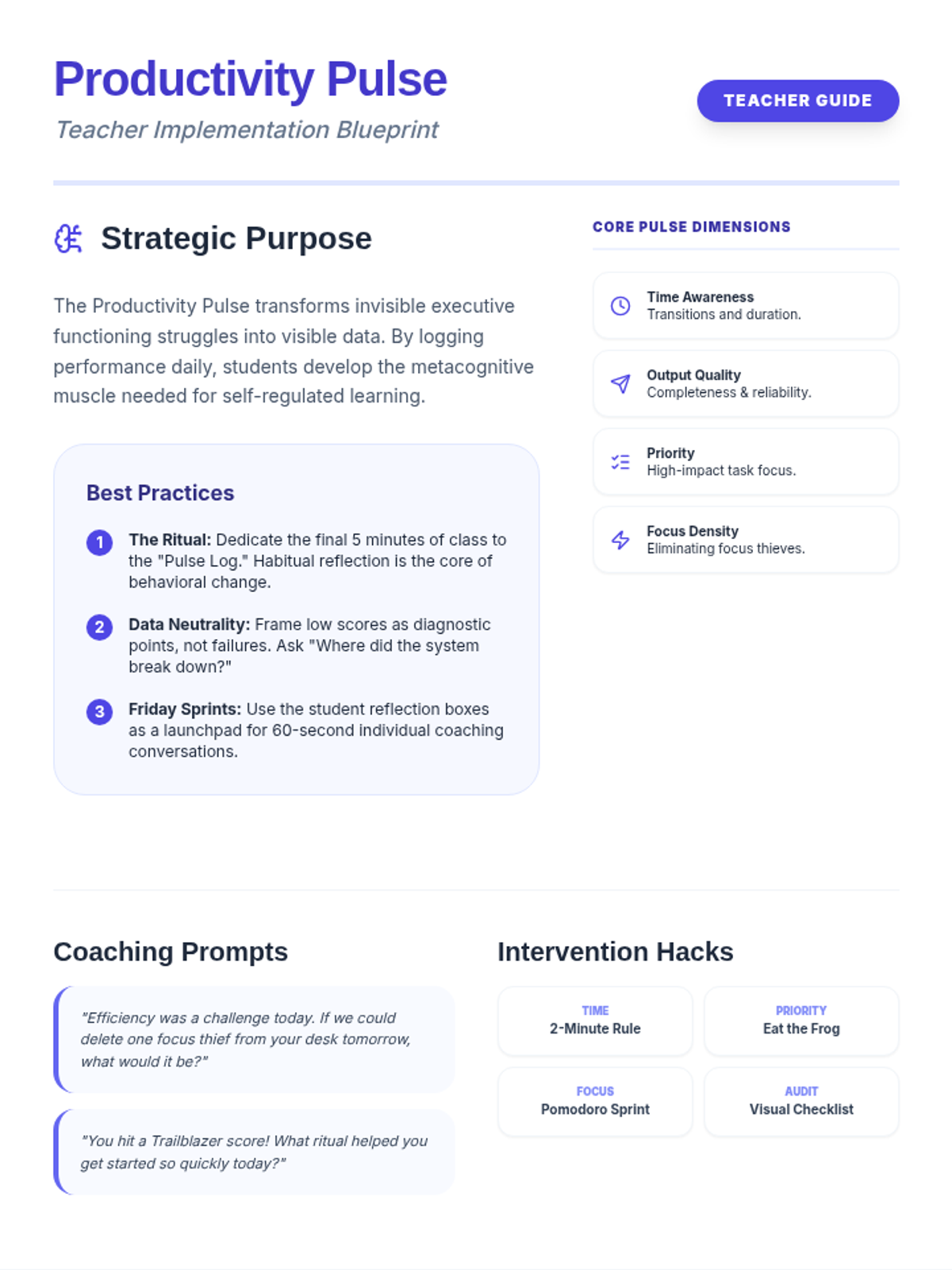
A comprehensive three-page toolkit including a teacher implementation guide, a daily performance log with a visual tracker, and a growth-focused 5-point proficiency rubric for executive functioning skills.
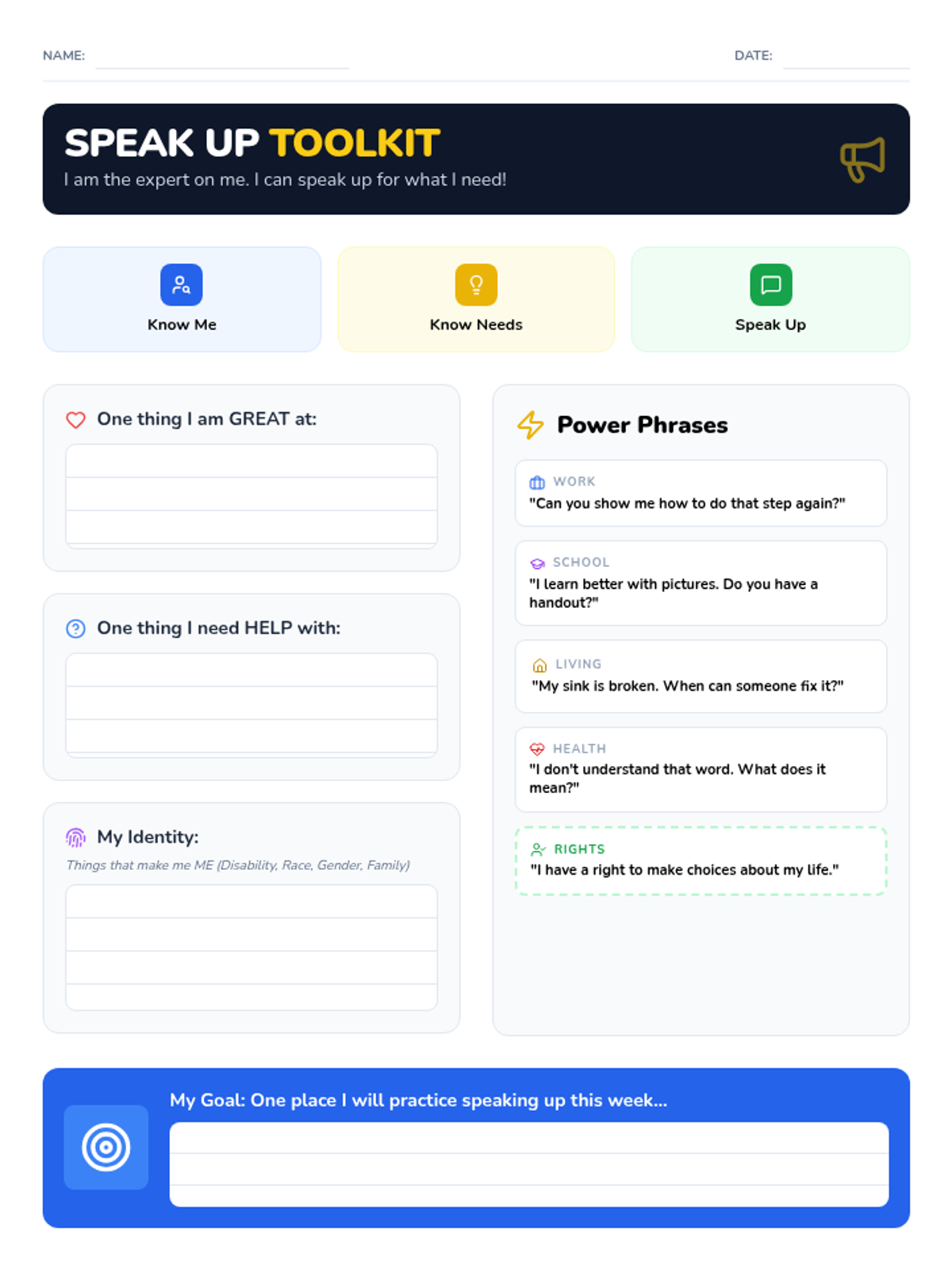
A student-facing printable handout that serves as a self-advocacy toolkit. It features 'Power Phrases' for common transition scenarios and provides designated spaces for students to reflect on their strengths, needs, and personal goals.
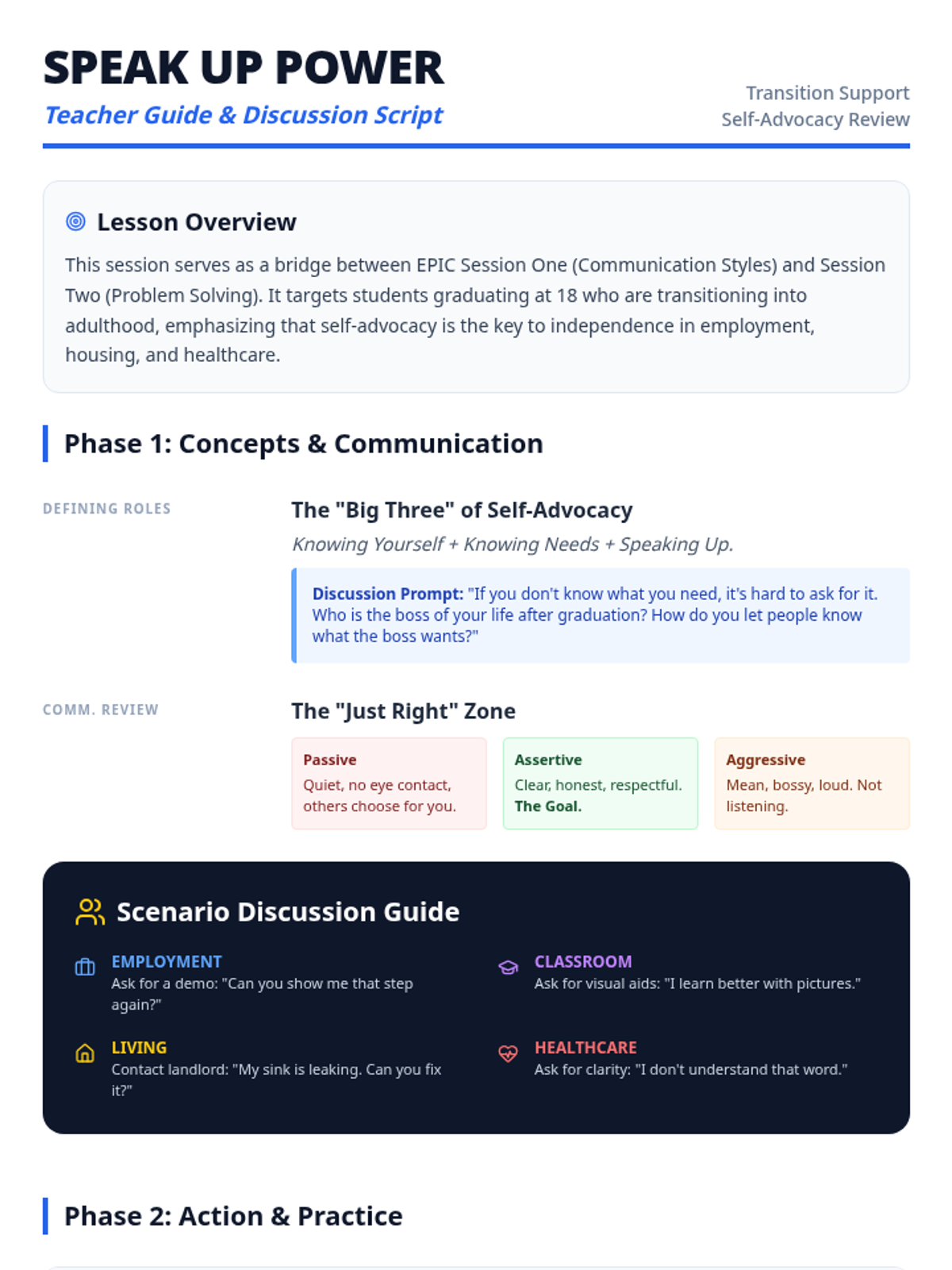
A comprehensive facilitator guide for teachers to deliver the Speak Up Power lesson. It includes instructional strategies, discussion prompts for each scenario, adaptations for students with intellectual disabilities, and a suggested script.
A 10-slide interactive presentation designed for high school students with intellectual disabilities to review self-advocacy concepts. It includes definitions, communication styles, and practical 'What would you do?' scenarios for employment, living, education, and healthcare.
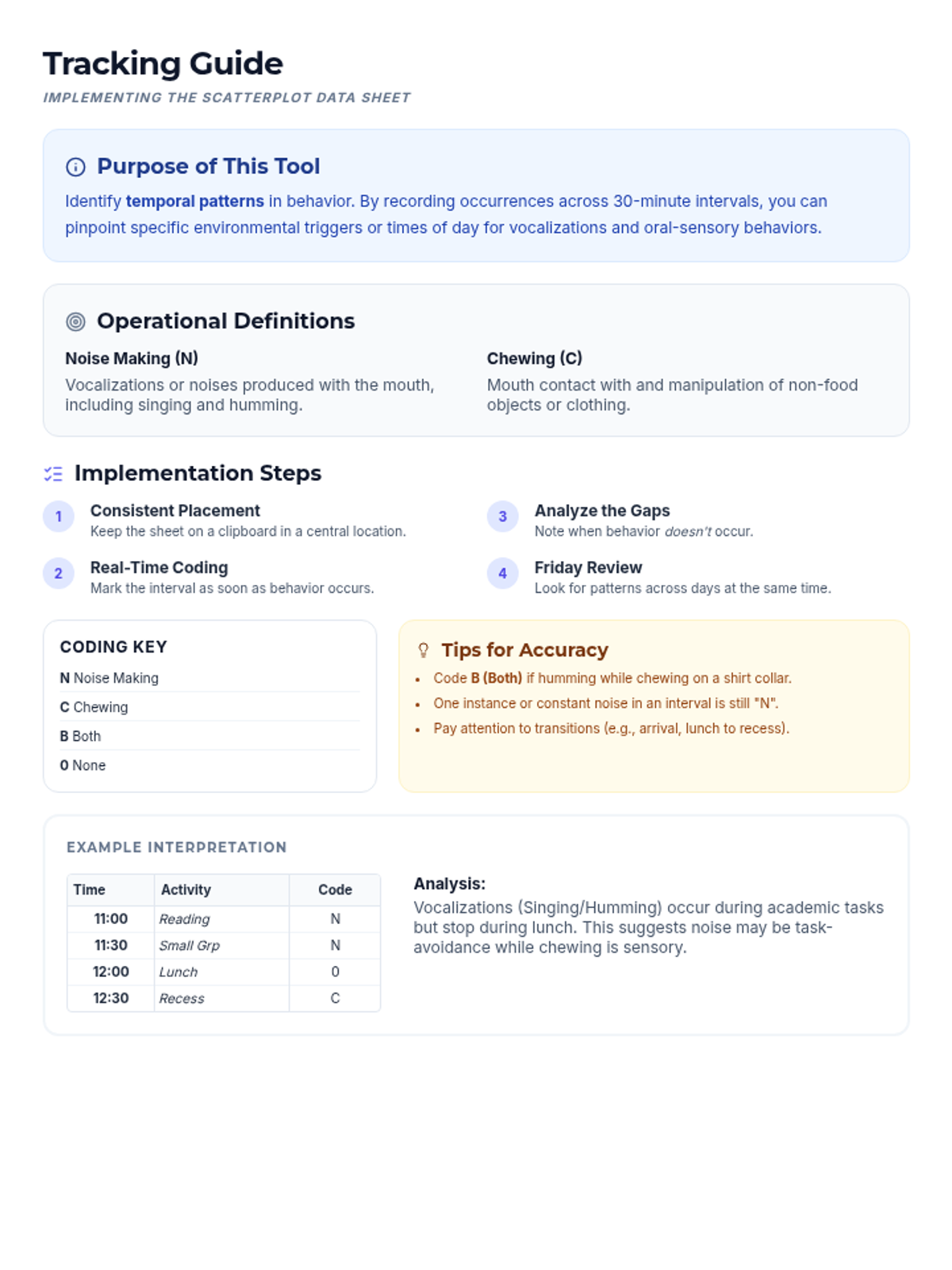
A teacher-facing resource explaining how to effectively implement and analyze the Scatterplot Data sheet, updated with refined behavioral definitions.
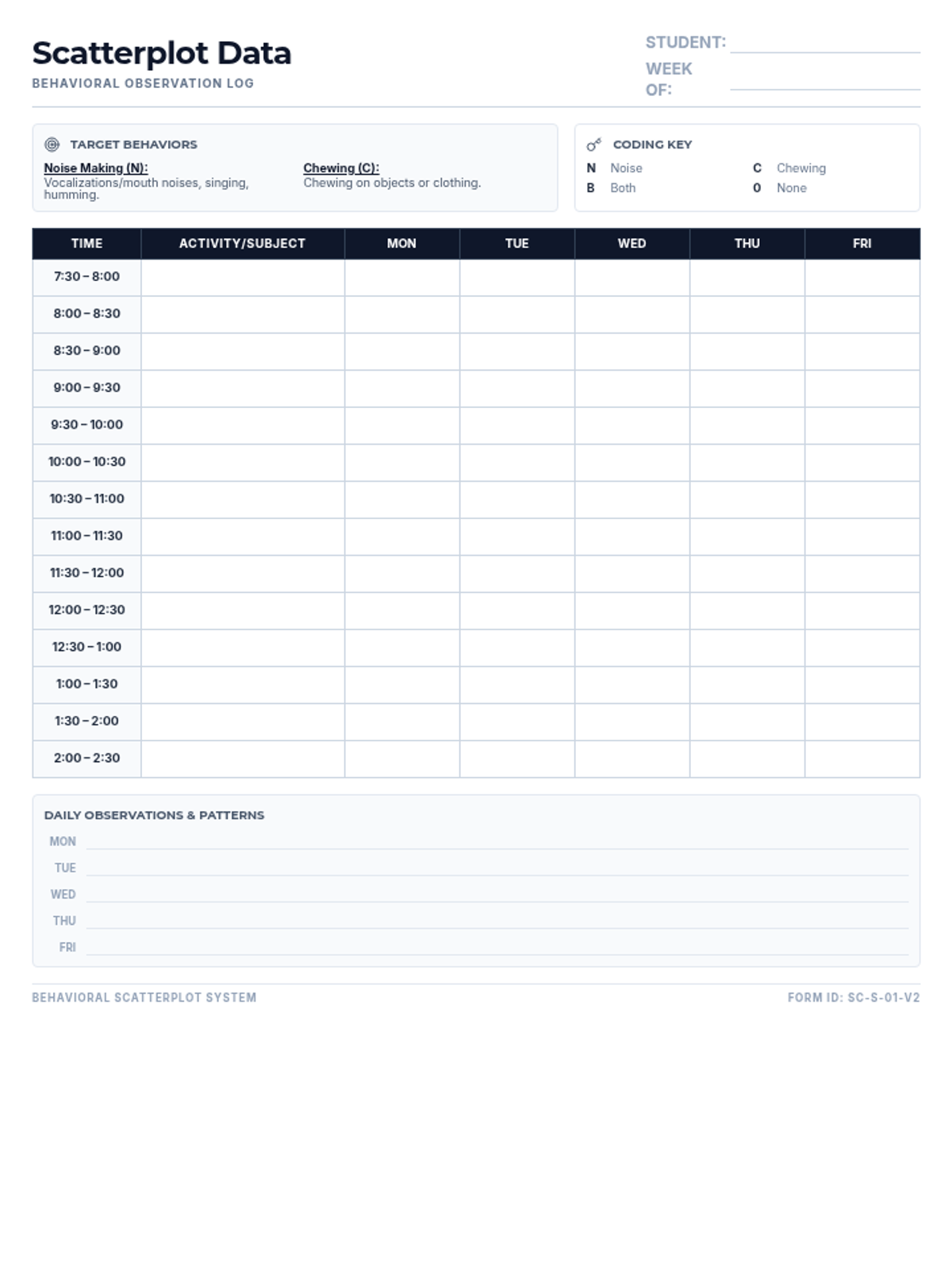
A professional scatterplot data sheet designed to track noise-making (vocalizations, mouth noises, singing, humming) and chewing (objects or clothing) behaviors in 30-minute intervals.
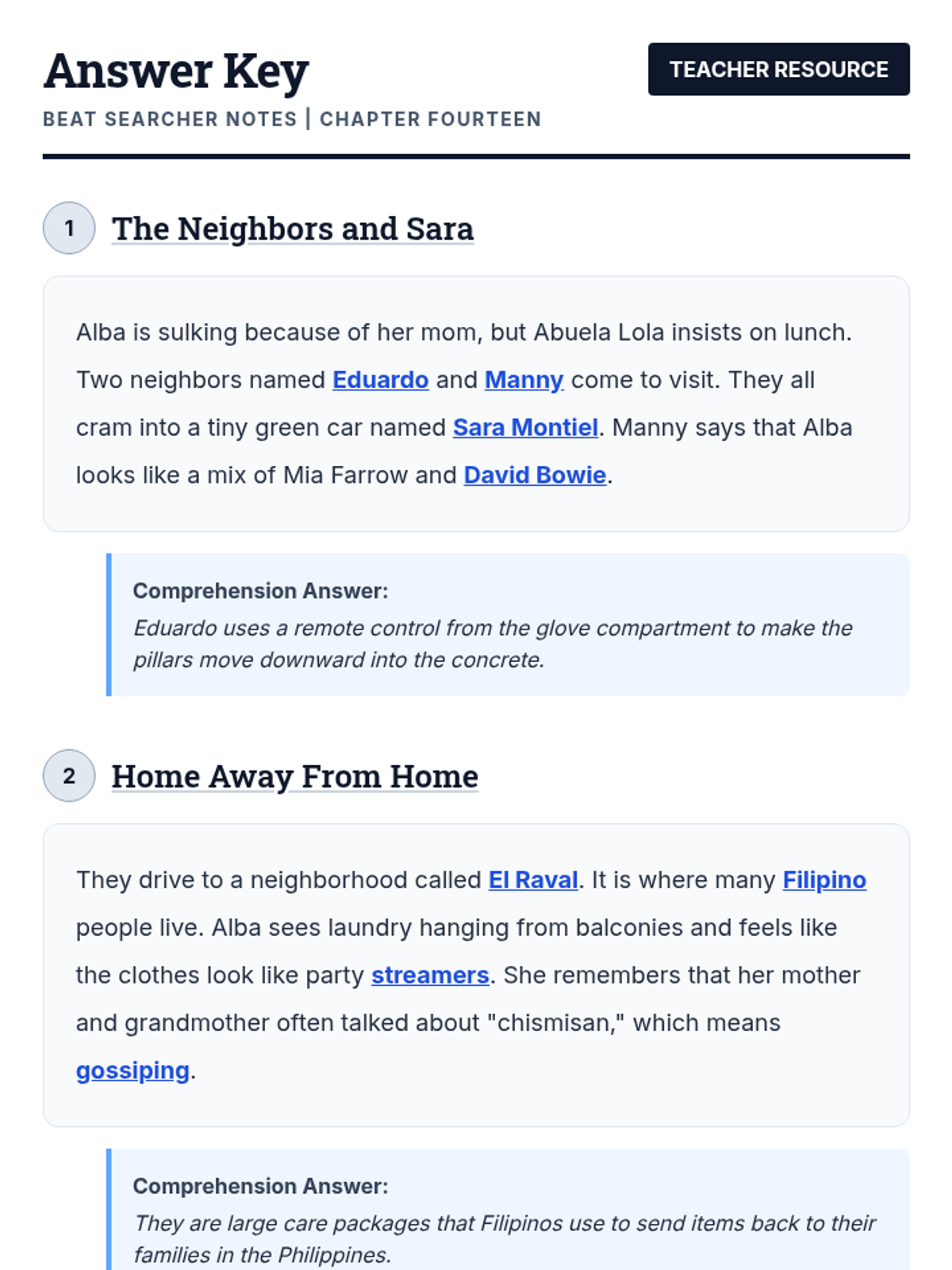
Teacher's answer key for the Chapter 14 note sheet, providing correct fill-in-the-blank responses and sample comprehension answers. Revised to ensure consistent page breaks.
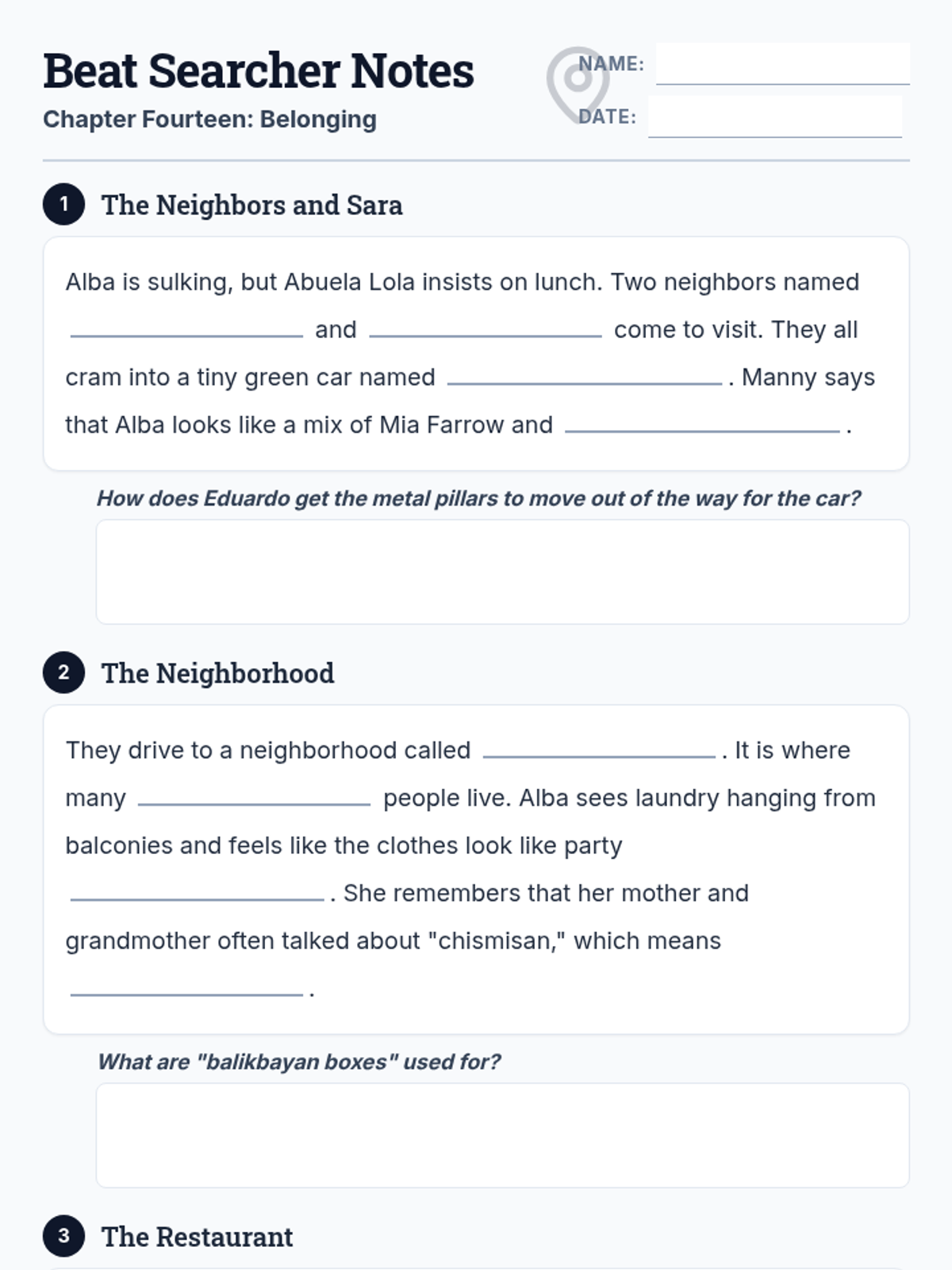
A sequenced guided note sheet for Chapter 14, featuring fill-in-the-blank summaries and targeted comprehension questions designed for special education support. Revised to fit on a single page with better spacing and handwriting room.
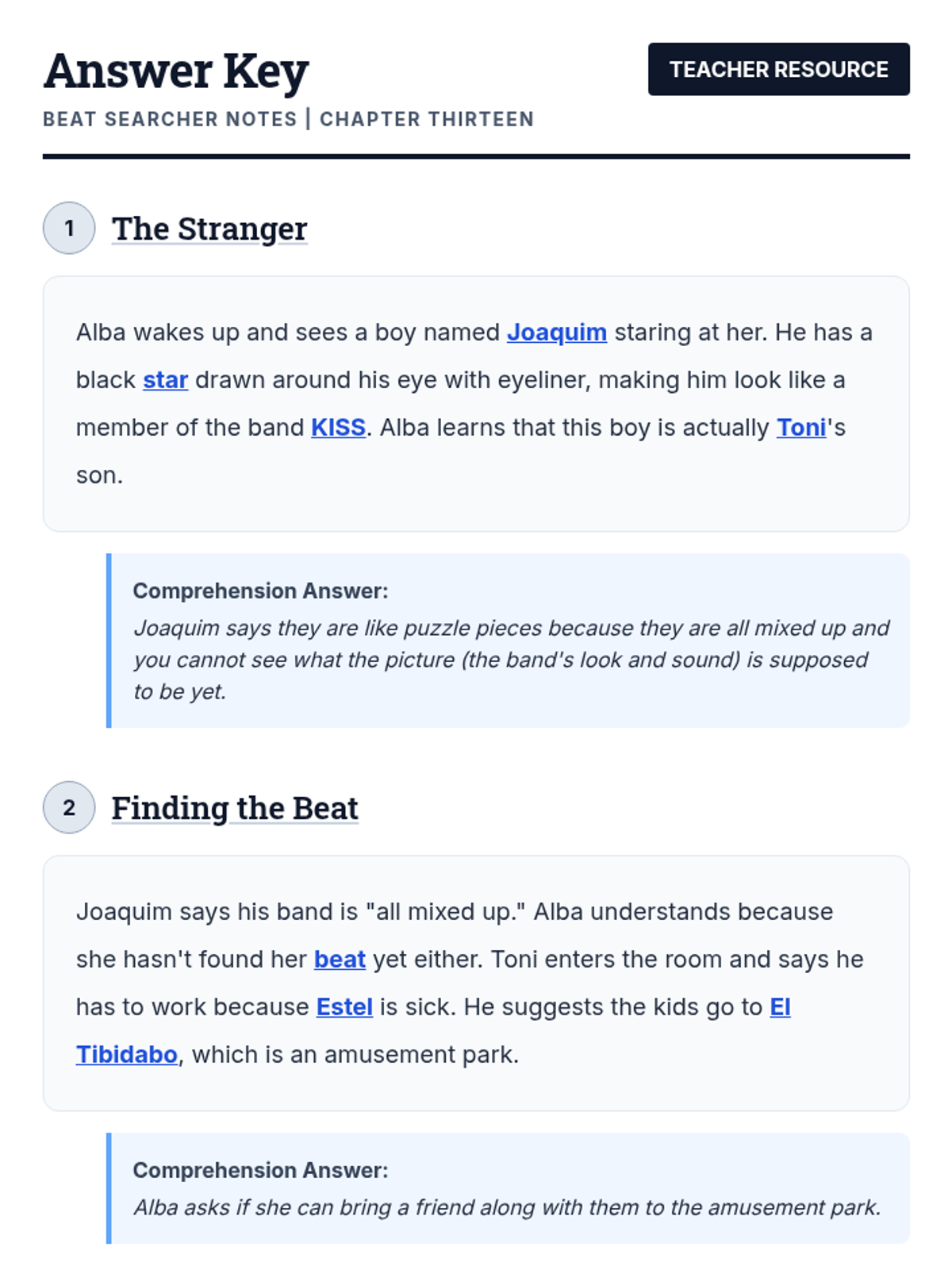
Teacher's answer key for the Beat Searcher Notes Worksheet, providing the correct fill-in-the-blank responses and sample answers for the comprehension questions.
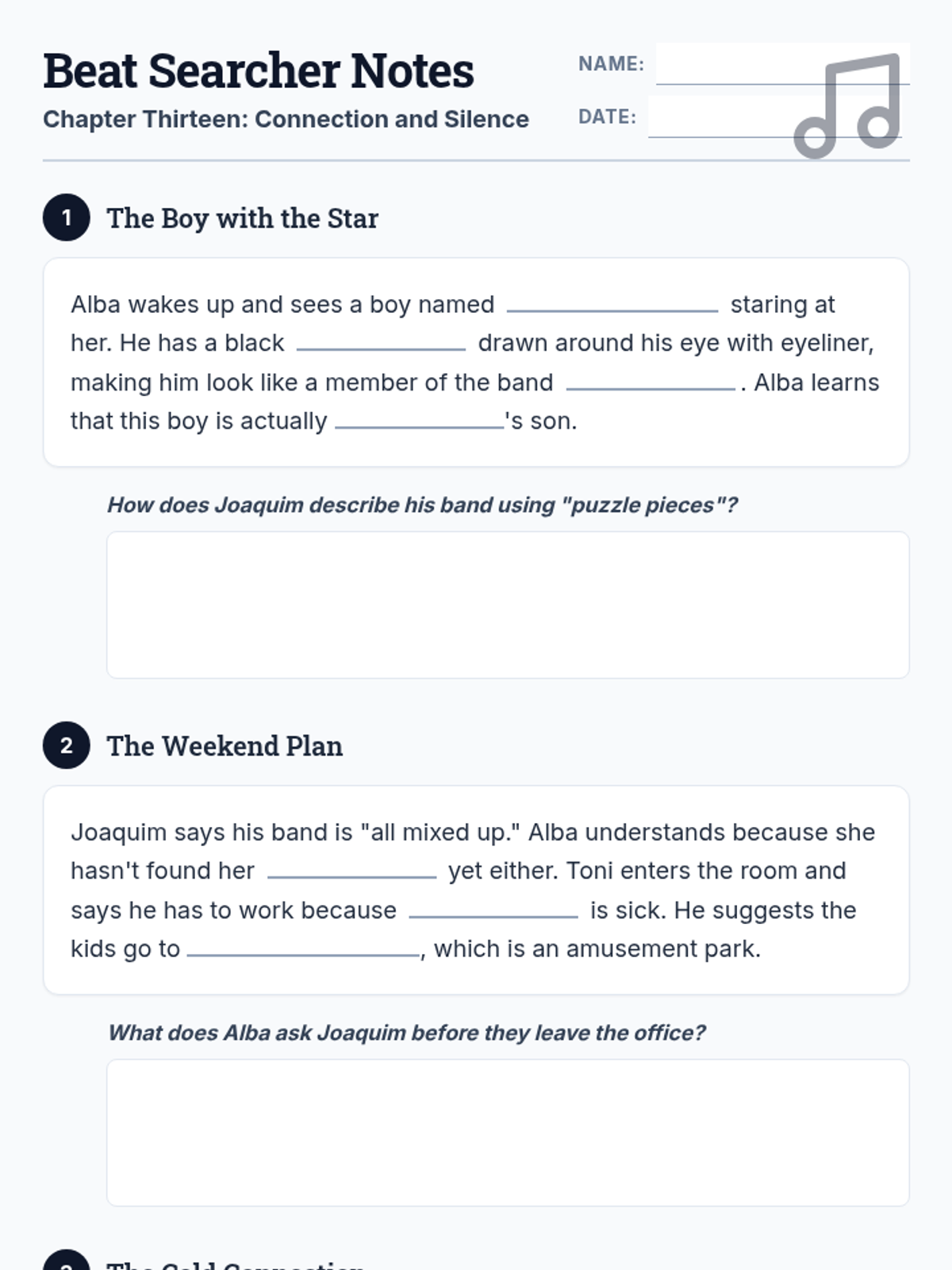
A sequenced guided note sheet for Chapter 13, featuring fill-in-the-blank summaries and targeted comprehension questions designed for special education support. Revised to improve page breaks, text alignment, and layout density to fit on fewer pages.
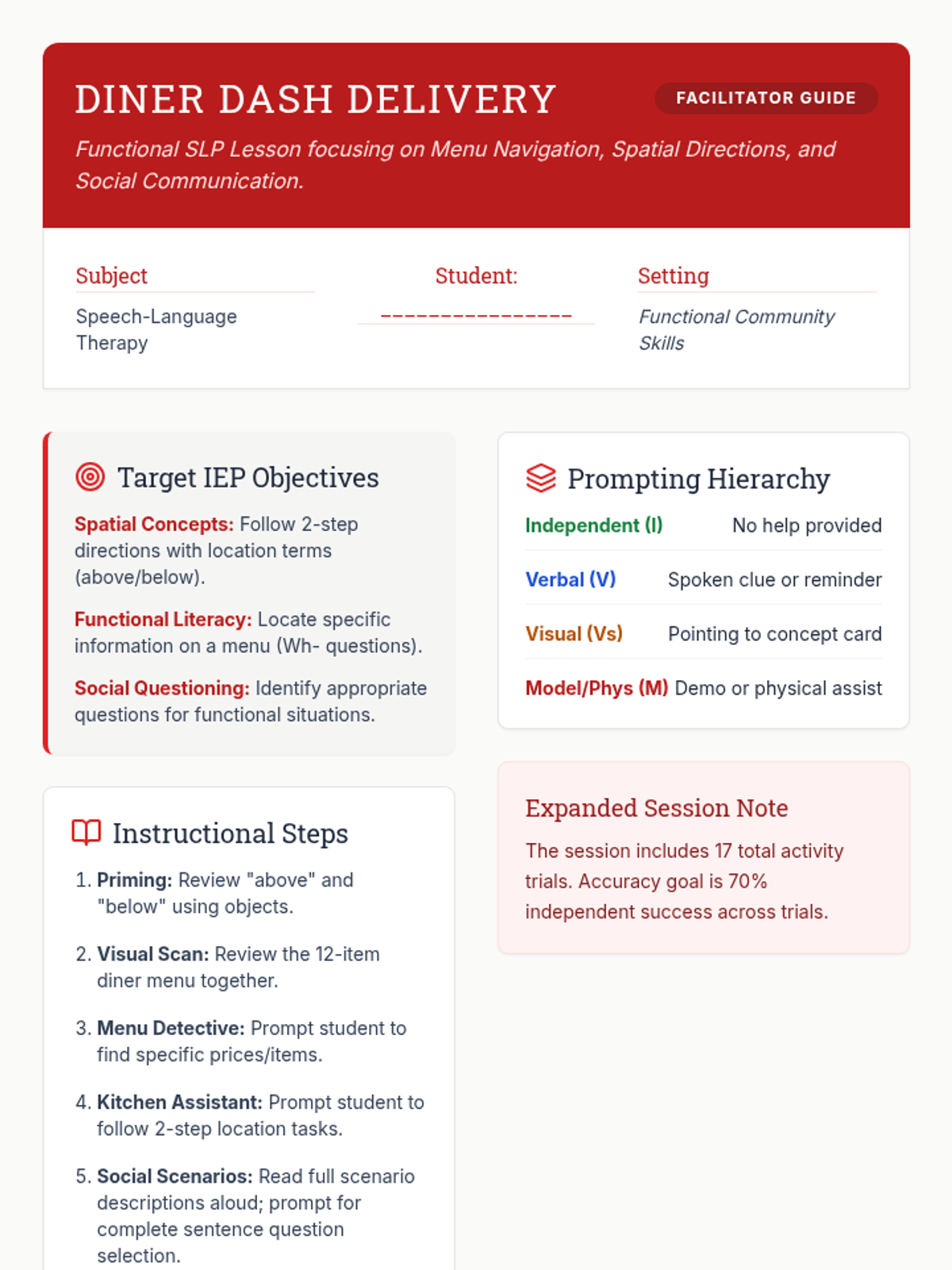
A comprehensive teacher lesson plan and data tracking sheet for a functional SLP lesson. Includes a reference menu and tracking for 17 total trials across spatial, literacy, and social communication goals. NOW UPDATED FOR EXPANDED MENU.
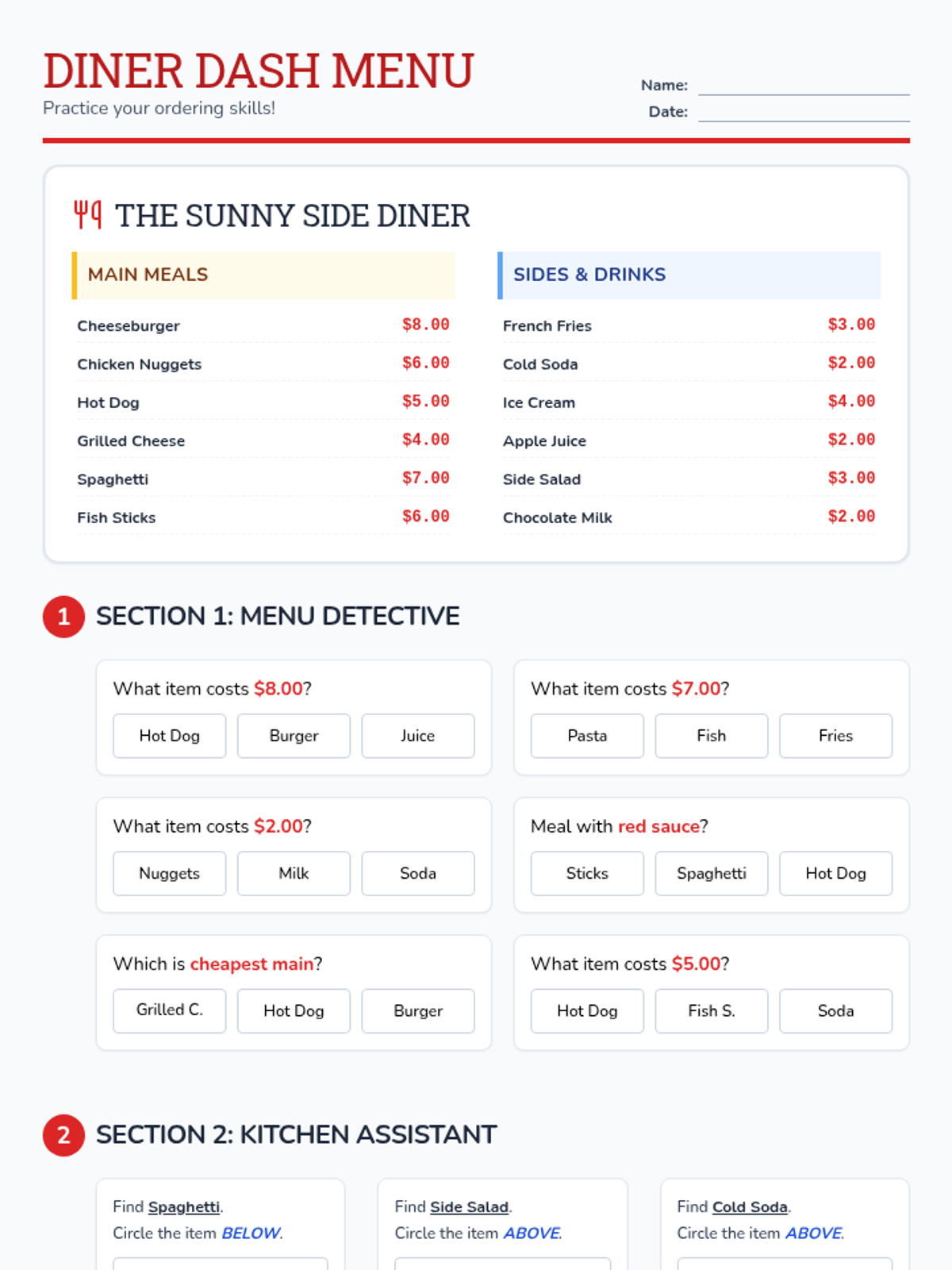
A visual restaurant worksheet for middle school students with autism, focusing on menu reading, following 2-step location directions (above/below), and choosing appropriate social questions. Includes 6 Menu Detective questions and 6 Kitchen Assistant tasks with enlarged font sizes and clear spatial logic.
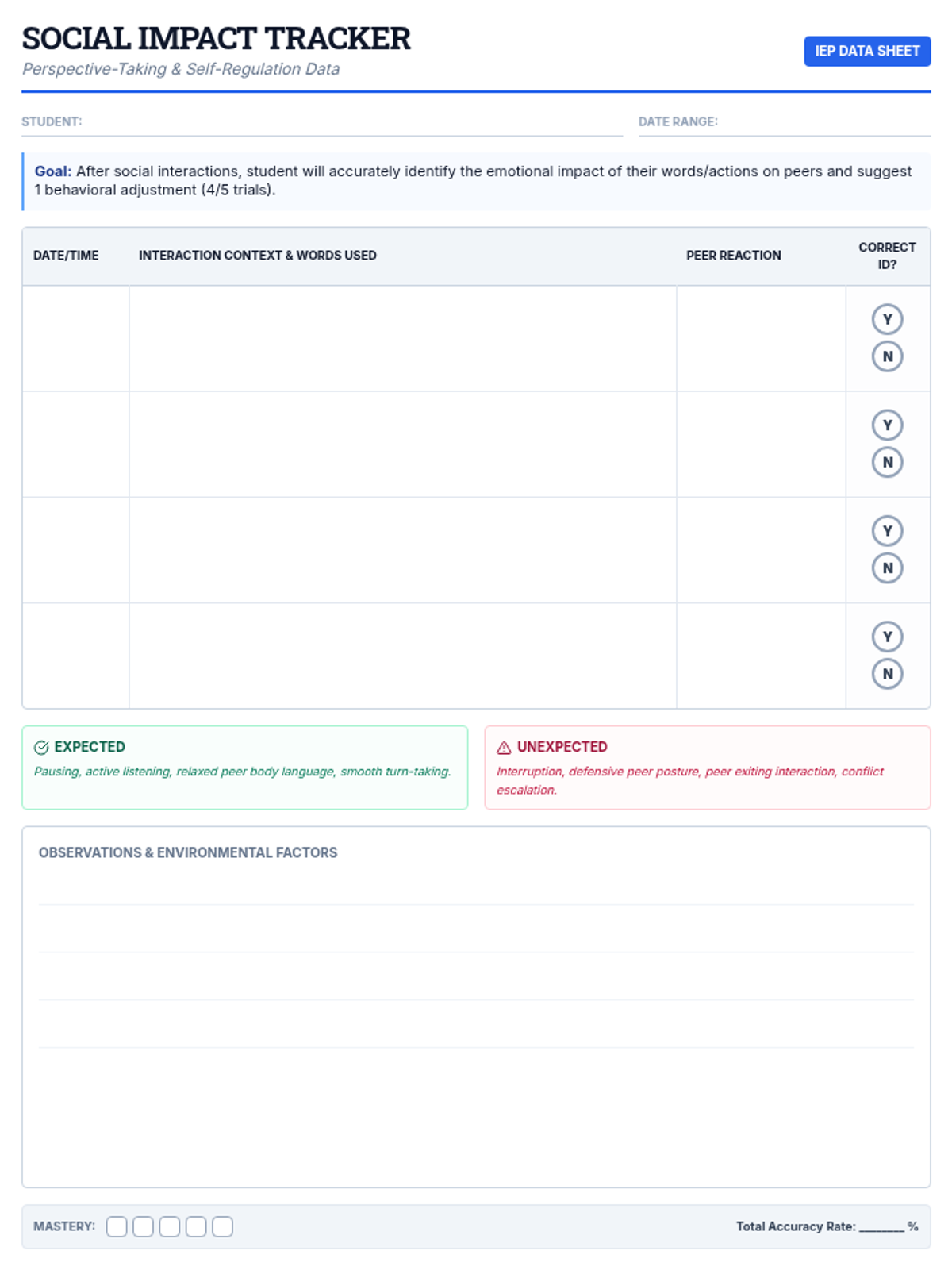
An updated IEP goal data tracking sheet for social-emotional learning. It features a streamlined, single-page layout with a structured data table for tracking perspective-taking, a circling-based accuracy key, and condensed behavior outcome references for easier teacher use.
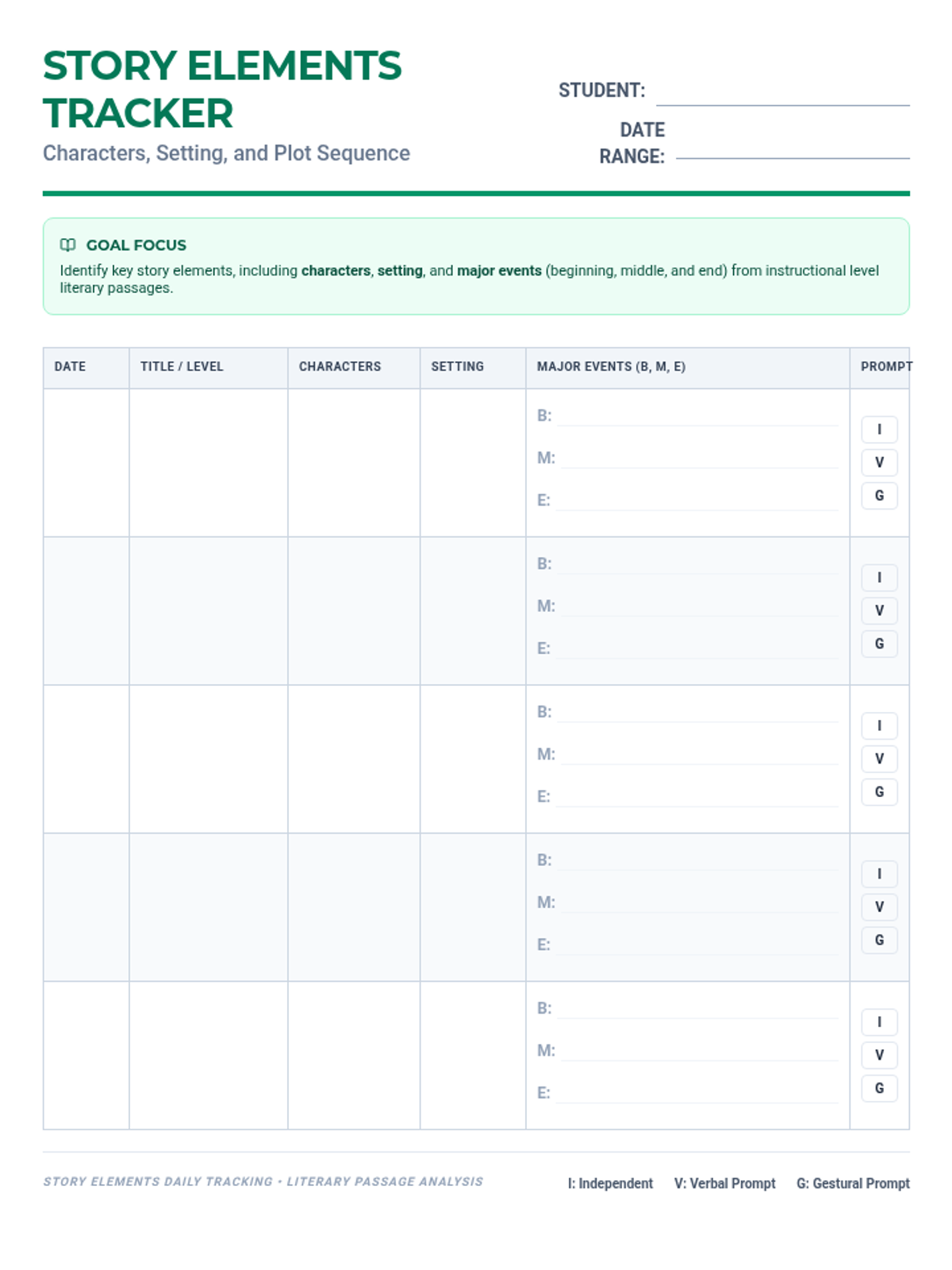
A targeted daily tracking sheet for identifying characters, setting, and plot sequence (Beginning, Middle, End) in literary texts. Includes dedicated space for each element and a prompt level key.
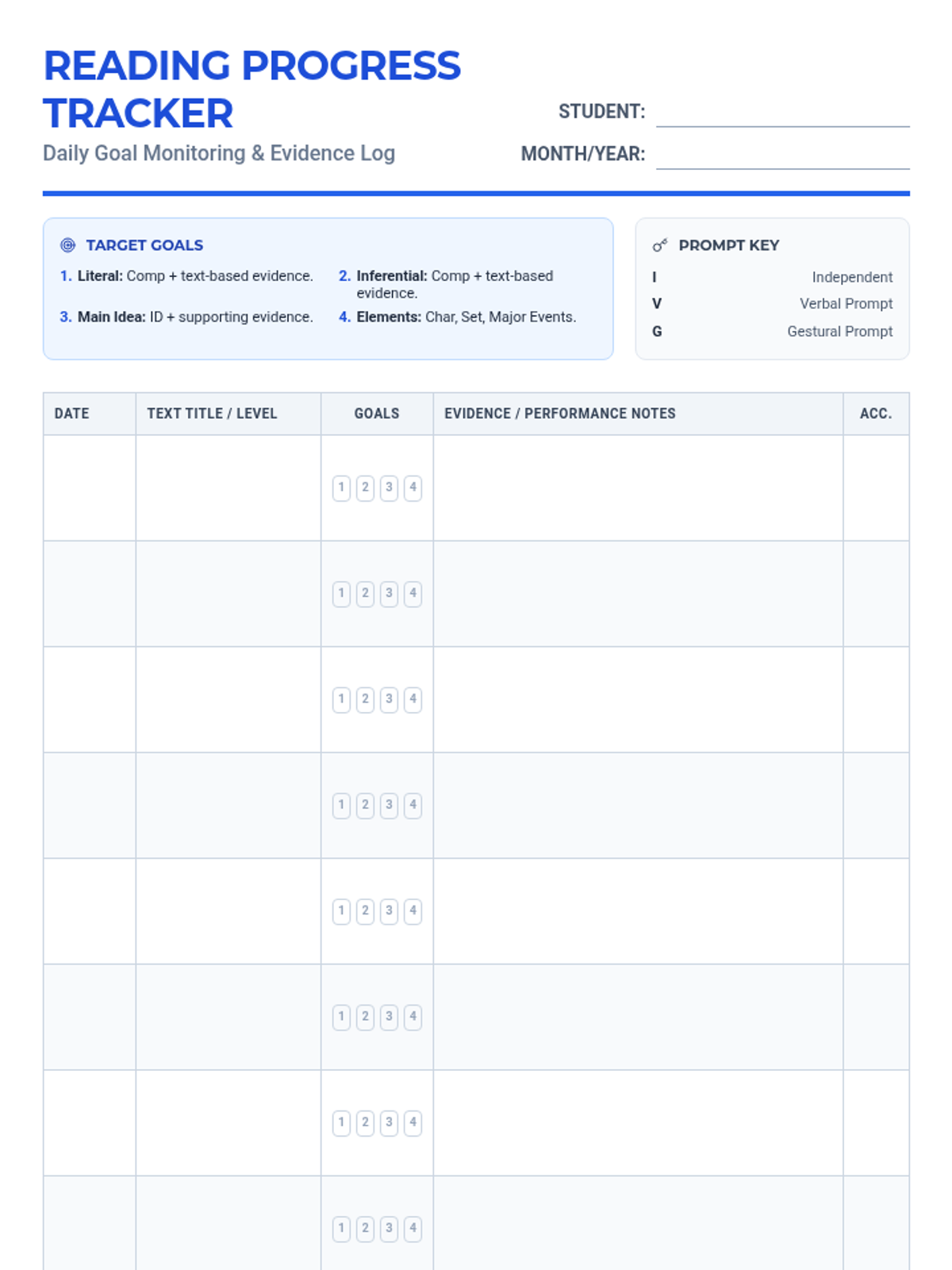
A professional daily tracking data sheet for monitoring four specific reading comprehension goals, including literal/inferential comprehension, main idea, and story elements. Increased space for evidence notes and consolidated reference key.
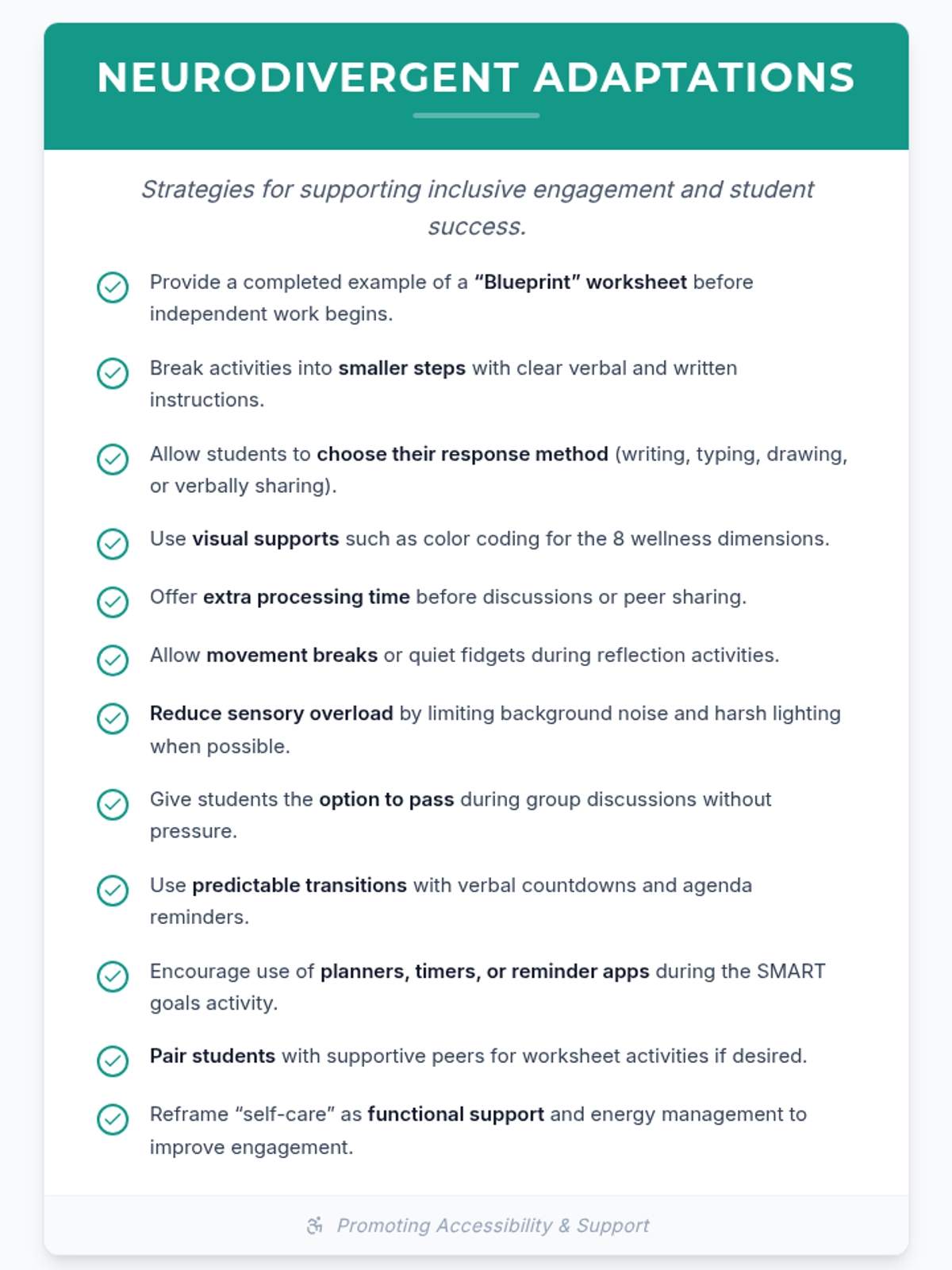
A clean, professional checklist of neurodivergent adaptations for teachers, styled to match the provided attachment with high-contrast teal headers and visual checkmark icons. Adjusted for single-page fit.
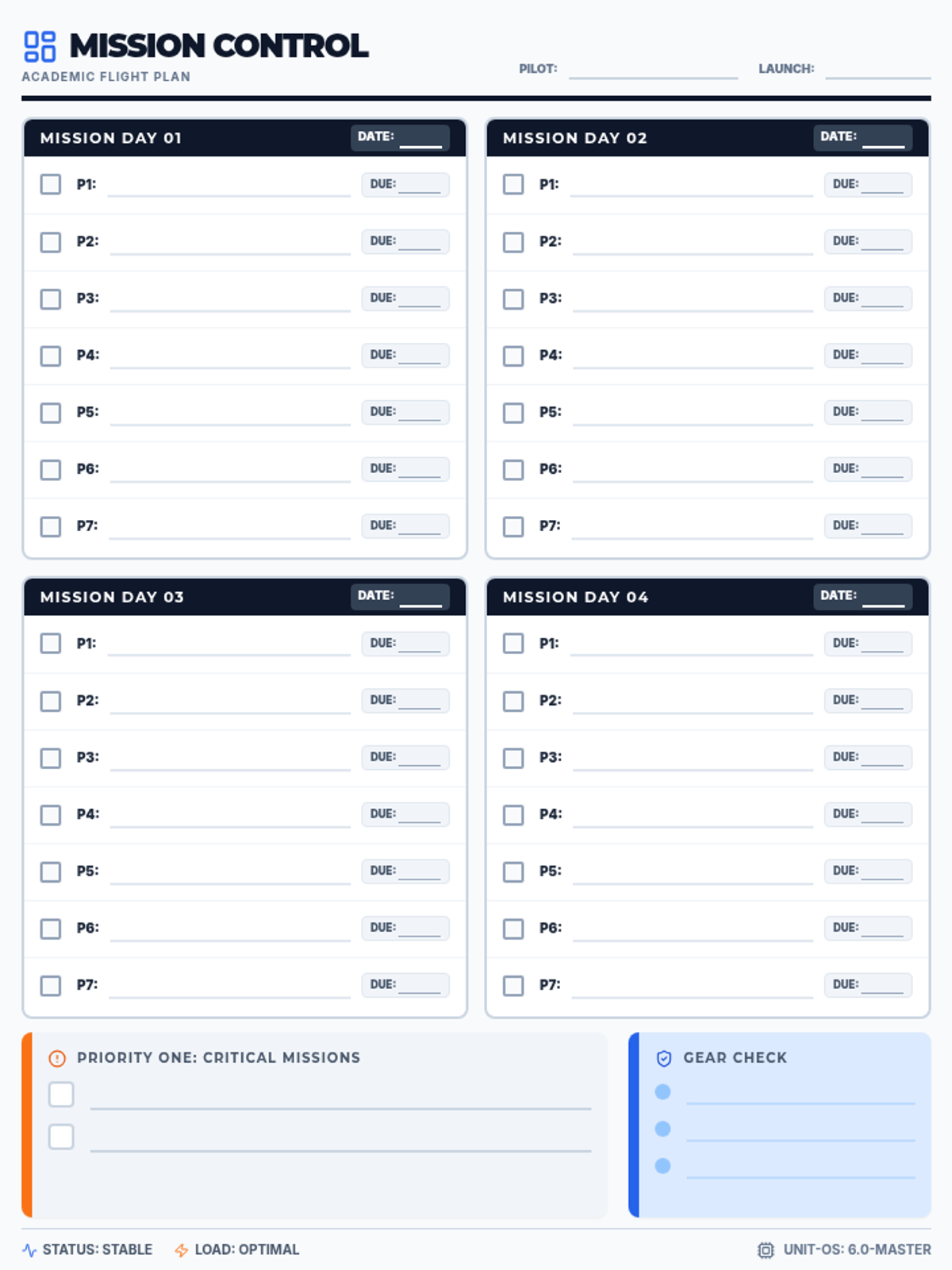
A 4-day academic organizer designed for students with executive functioning challenges, featuring a structured 7-period grid for tracking assignments and due dates within a 'Mission Control' theme.
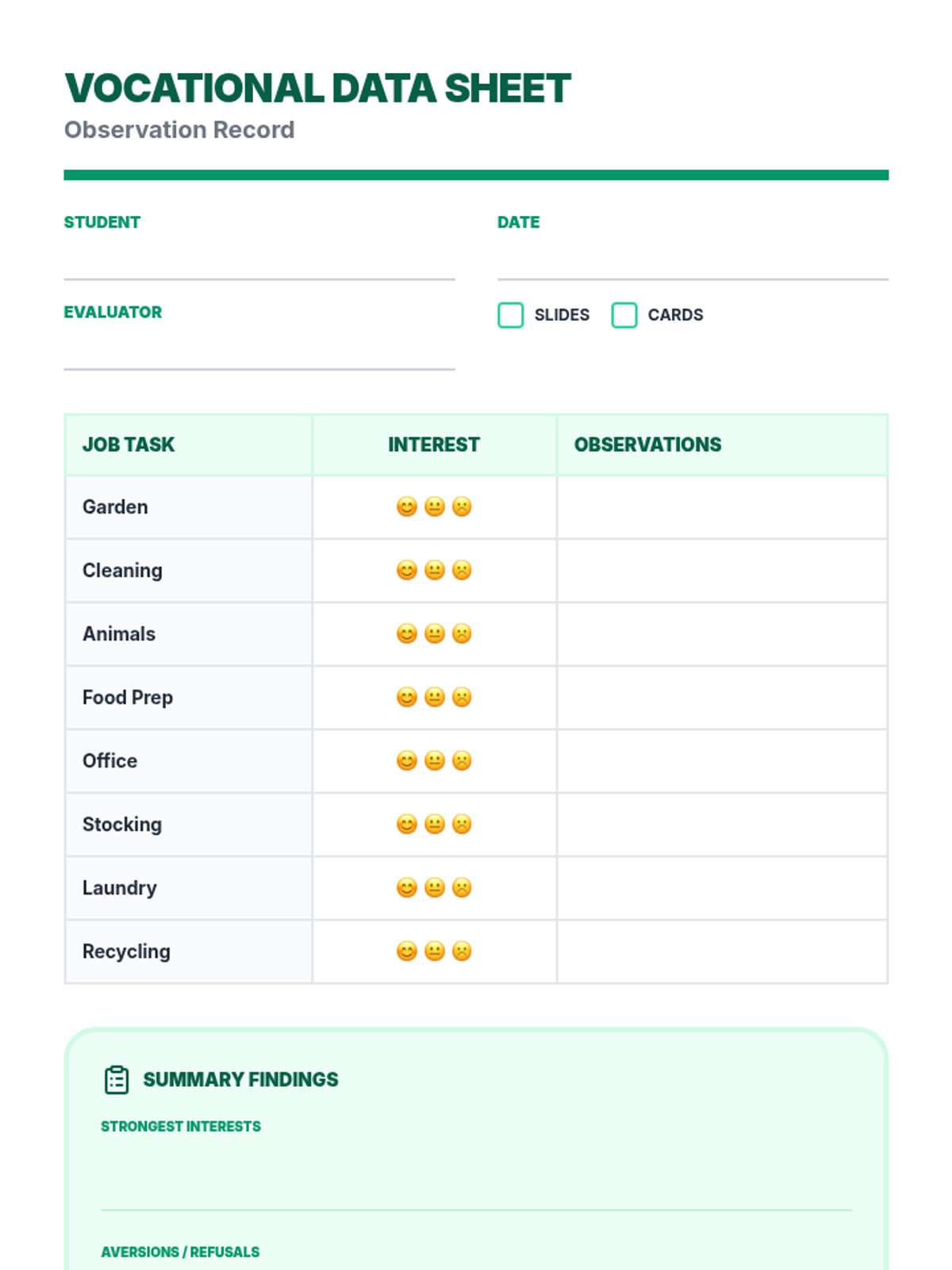
A teacher-facing data sheet used to record observations, engagement levels, and preferences of nonverbal students during the interest inventory process.
Large, printable vocational cards designed for physical sorting activities, helping nonverbal students communicate preferences by placing cards in "Like" or "Don't Like" containers.
Interactive visual slides designed for 1-on-1 or group interest assessments, featuring high-contrast job icons and large, clear choice buttons.
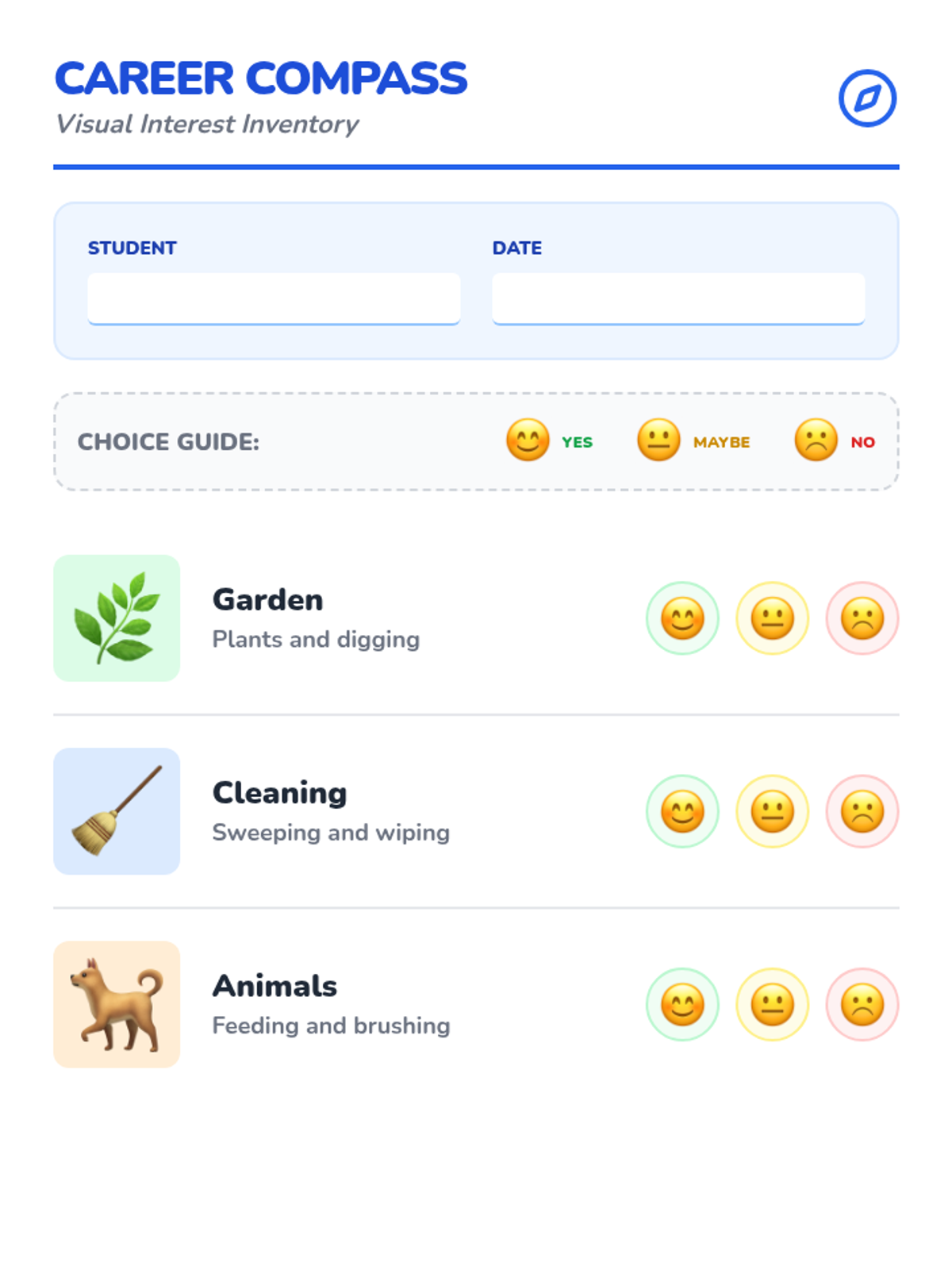
A highly visual, reading-free vocational interest inventory worksheet with large icons and emoji-based rating scales for students to indicate their job preferences.